TWENTY THOUSAND FEET

Illustration: Shyam G Menon

Illustration: Shyam G Menon

“ How are conditions up the mountain?’’ I asked, lifting my head from the stoop caused by the heavy backpack.

“ Not bad, lot of snow,’’ the athletic foreigner returning from Stok Kangri said, “ it’s all about timing and acclimatization really.’’ He looked at me squinting from strain. “ Are you acclimatized?’’ “ Oh yes,’’ I replied vaguely, “ have been around in Ladakh for almost two weeks.’’ “ Well, good luck then.’’ He walked on. It took me a few seconds to straighten up, feel the backpack’s load transfer to my hips and proceed slowly up the trail. That pack had no business being so heavy. All it carried was personal gear – water, sleeping bag, plastic mountaineering boots, crampons and ice axe. Yet it felt dead heavy.

I was tired. The trail within ran back to Mumbai. Freelancing had changed my life. In times of inflation, my income reduced to a trickle. All I could do to keep the creeping sense of failure at bay was maintain another busy schedule around whatever I liked doing. Loneliness took hold. That was when Choszang Namgial, who I had worked with on a high altitude trek before, called up. He remembered my desire to visit Leh, attempt Stok Kangri. A Ladakhi, he was heading home in June to work the tourist season there. It appeared fine opportunity to find subjects for writing. Ladakh with few people in vast cold desert was engaging counterpoint to crowded Mumbai.

I met Choszang in Delhi. We traveled by road to Ladakh, via Manali. On reaching Leh, I walked around for several days, meeting people and learning about their life. I spent time with Choszang’s family at his village. In Leh, I sipped lemon-tea and gazed at Stok Kangri in the distance. There was nothing to my activity that qualified to be acclimatization of the sort mountaineers desire. I was a wanderer with pen and note pad. Then a chance emerged to visit Pangong Lake. It was a surreal place; an expanse of blue water surrounded by barren brown hills. Couple of tea stalls, a curio shop, tents to stay in; groups of motorcycle riders living that much published image of travel in emptiness. An early morning, I jogged along the lake side and scrambled up the nearby hill. It felt good. However, neither that exertion nor the days spent walking around Leh did anything to radically change my condition baked by sedentary journalist lifestyle. Having been on expeditions before, I knew I was going in ill prepared. I felt thankful that Choszang and his friend would be accompanying me to Stok Kangri.

The day before going to Stok village, we went with all relevant documents to the local mountaineering administrator, an elderly mountaineer of much repute called Sonam Wangyal. He had climbed Everest and also featured in those expeditions undertaken jointly by Indian intelligence agencies and Central Intelligence Agency (CIA) of the US in the 1960s, to Nanda Devi and Nanda Kot. Those were the years following China’s nuclear test in Tibet. The Nanda Devi expedition subsequently gathered controversy after it became known that a listening device powered by a radioactive fuel source, had been lost on the mountain. The story spawned media articles, books. Wangyal went over my papers. He wore a disinterested look on his face. It made me fear that the dreaded bureaucratic axe was about to fall on my request for permission to climb Stok Kangri. Then he suddenly looked up at Choszang and asked, “ He is Indian, isn’t he? Go…go…this is your country. Enjoy your climb!’’ The response delighted me. Mountaineering in India has long been wrapped up in permit raj and bureaucracy.
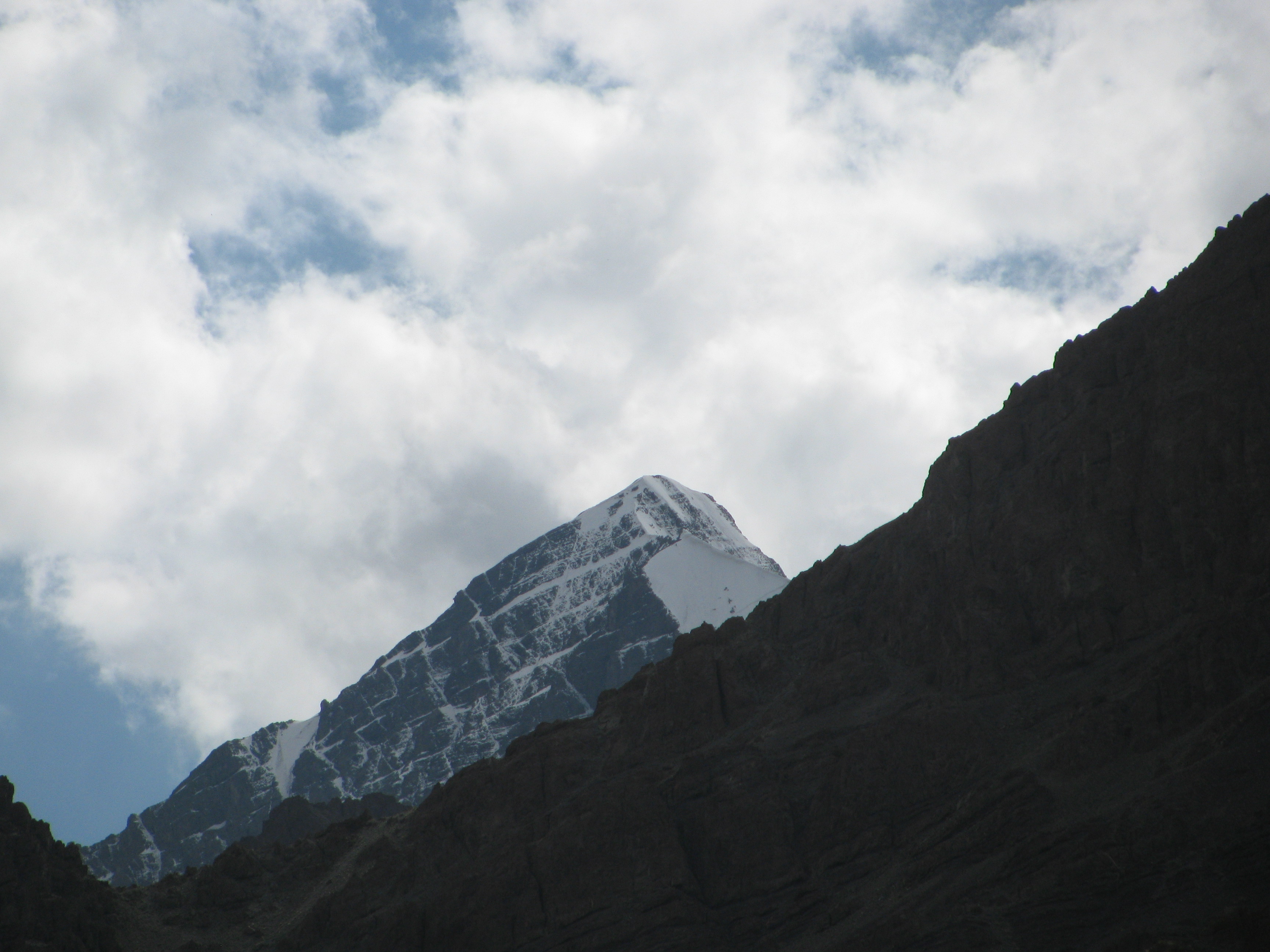
Stok Kangri (Photo: Shyam G Menon)

Stok Kangri (Photo: Shyam G Menon)

Ever since I got to the top of an 18,500 ft-high un-named peak in the Zanskar Himalaya with my climbing club in 2004, I had wanted to clear 20,000ft. Eventually, I decided on the 6153m-high Stok Kangri, often dismissed by mountaineers for being a non-technical peak climbed by many. In the macho world of climbing, `non-technical’ is a major differentiator. It means that a given climb doesn’t engage the use of much gear. That is like being a boy in shorts amid muscled men with boots, ropes, helmets, machined metal components and all. As if this wasn’t enough, Stok Kangri had been climbed by many availing guided ascents. Mention its name to climbers; they look down their nose and sneer. I never told anyone of my choice but the likely criticism nagged in my head. At my club for instance, what a person liked to do had long been superseded by whether the mission was significant and challenging from climbing’s perspective.

Looking back, I think I chose Stok Kangri for two reasons. First, my technical skills are limited; my physical fitness is more stretchable. So trysts with altitude made greater sense than agonizing over undoable vertical. Second, hanging out with climbers had dented my self confidence; battered my self esteem. A lot of it was my overactive mind. But some of it was definitely due to the climbing environment I was in. It wasn’t helping me. In fact, I had had to take time out and repair my self esteem. My Stok Kangri climb therefore commenced in Mumbai itself, erecting a protective barrier around my personal wish. Slowly I developed my defense – a person’s dream is a person’s dream and should be impervious to the comments of others. If others could be adamant about superlatives on vertical terrain and see that as sole perspective worth having, I had every right to enjoy the less than vertical! What I did not know was that in the thick of my rebellion, I was indulging my desire for distinction. It was vanity versus vanity. And in my case, a progressively tattered vanity for I was on the trail to Stok Kangri Base Camp (BC), hauling a heavy backpack of exhaustion. The cumulative effect of sedentary life, poor food intake, depression and a mind overactive through freelance writing – all had hit me.

Late in the evening I called it quits just short of BC. I was too tired to cover the remaining three hundred meters or so. We camped there. It was trifle funny for above the adjacent ridge we could see people moving around at BC. They must have wondered why a tent had been set up so close, yet far and definitely not at the same address as everyone else was. We formally moved to BC the next morning for a good rest. I needed rest. That day in 2009 I knew how much my life had changed since the earlier Zanskar expeditions. I felt something had drastically gone wrong. I could neither forget the job security I had left nor could I whole heartedly embrace the insecurity I had traded it for. I was the classic in-between case and dwelling on it in remoteness depressed me further.

Exhaustion however has a bright side. It is a great leveler; demolishes barriers, extinguishes pride. That and the general love for wilderness got me talking to the group of foreigners sharing the trail. At BC, we all met in one of those parachute tents that dot Himalayan trails, serving tea and food. The names have since dimmed in my mind, but there were people from Germany, England, US, Mexico and Netherlands. There was the former member of the British sport climbing team on her first foray to a 6000m peak. There was the former British banker, who had served in the property end of the business and seen it tank in the recession. He had then become a banking consultant to the shipping trade. But in the aftermath of the economic crisis triggered by sub-prime lending, banks became risk averse. Shipping on the other hand was a cyclical business. Eventually, he looked at his accumulated savings and said – let’s go climbing. That’s how he ended up at BC. One of the climbers had a particularly touching story. She liked climbing. After her husband fell ill, she had given up climbing to take care of him. Probably realizing the irreversibility of his ailment, the man later told her: don’t waste your life, live it. That’s the story as I recall it from imperfect memory. Early dinner done, everybody retired for a few winks of sleep.
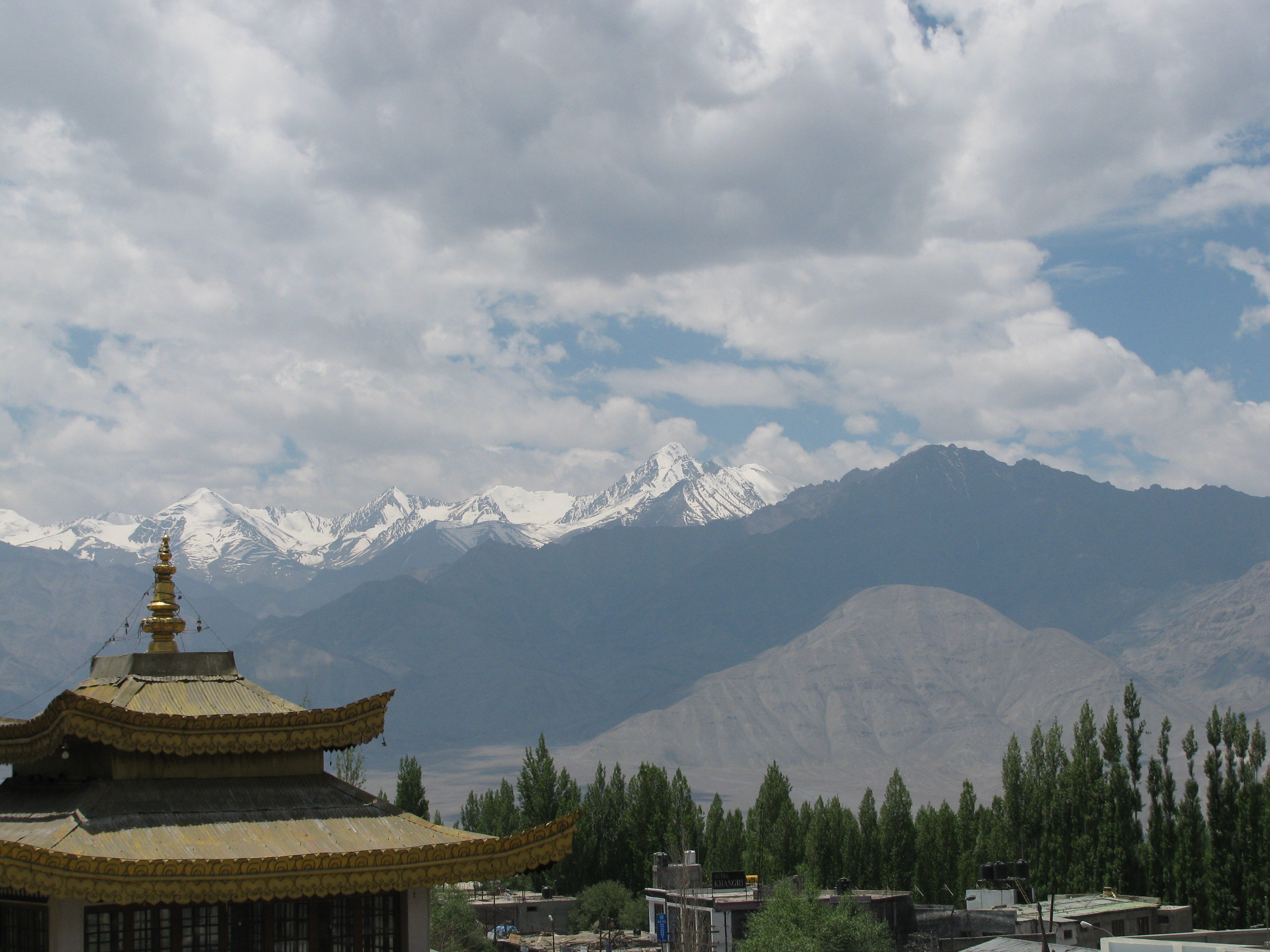
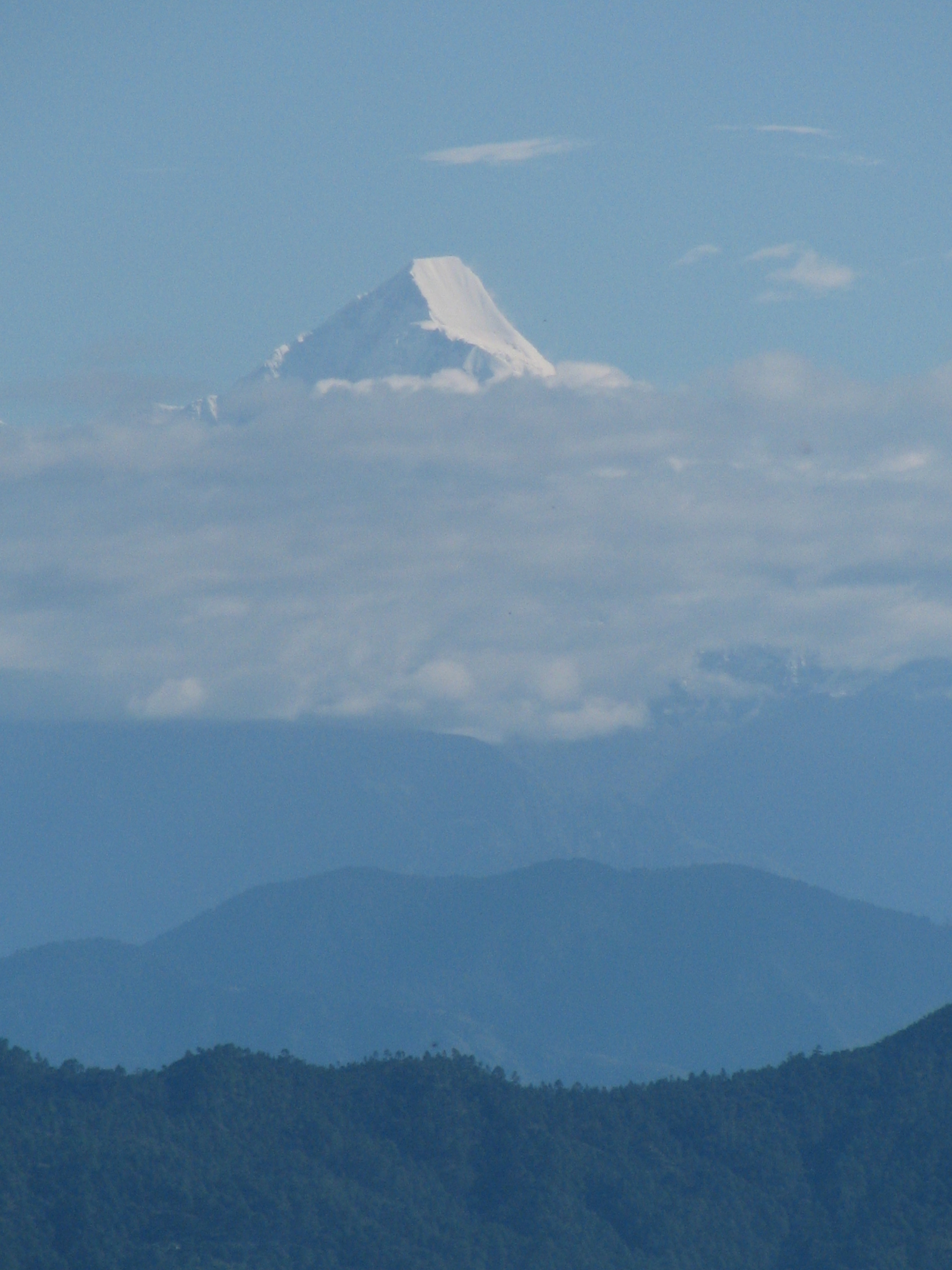
Stok Kangri; the view from Leh (Photo: Shyam G Menon)

Stok Kangri; the view from Leh (Photo: Shyam G Menon)

Past midnight we started for the summit, having dispensed with the idea of putting up an intermediate higher camp. It was snowing lightly and for me, rather cold. Within minutes of leaving BC, the water flow from my hydration pack froze. For the next four to five hours until the sun induced thaw, there was no water to drink. I could probably have drunk straight from the pack’s bladder but the one occasion I took my gloves off to adjust my trekking poles, my hands turned numb with cold. We kept a steady, slow pace. In a previous season, Choszang had climbed the peak nine times with clients. This season, he was already booked for another two. I wasn’t surprised when he told me that he wanted to do something else than just go up and down Stok Kangri and other trails in Ladakh.

Around day break, we found ourselves past the usual location of the intermediate higher camp and looking up the final slopes of the peak. To reduce my tiredness, Rigzin who was Choszang’s friend, had put my boots and crampons in his rucksack. We conferred for a while on the fate of that baggage. I was fairly adept at kicking and cutting steps on snow to ascend and on Stok Kangri I was anyway following Choszang’s lead. We had made decent progress. So we decided to forget the boots and crampons and left Rigzin’s sack on a rocky ridge to be picked up on the descent. By now the sun was up. With it came the reflected glare from snow and a new problem. I couldn’t find my sunglasses. Embarrassed I said, “ let’s call it off, no glasses.’’ Choszang and Rigzin looked at me astonished. I searched again; found the glasses. Momentarily, I must confess, I had wished that the lack of glasses would be viable excuse for great mountaineer to hide his exhaustion and be off this peak that many climbed. Now I was back in play.

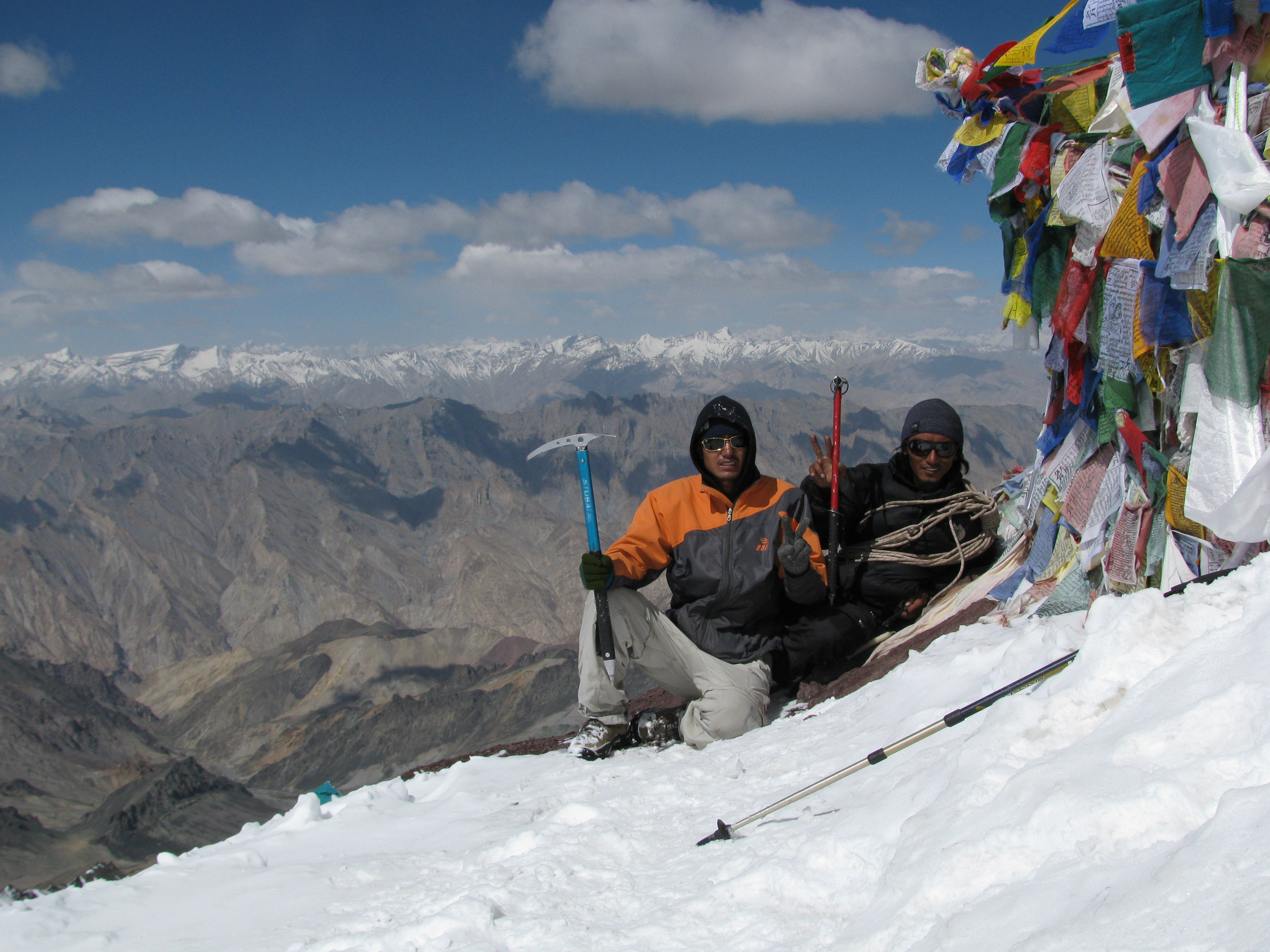
Atop the last shoulder of the peak, before its summit pyramid, we decided to make tea. My small MSR stove went to work, melting snow for water. That tea was rejuvenating. The next half hour was careful going. Verglas – a glassy coating of ice on rocks – can be quite tricky. At around 8.45AM Choszang and Rigzin greeted the summit with loud Buddhist chants and an offering of a prayer flag. The duo couldn’t resist flair in the summit photo; in went the unused rope and our ice axes. The summit had a low wall of wind beaten snow and rock, beyond it the other side of the peak plummeted in a severe fashion. In the distance one could see Leh, its airport. I felt nothing of that 20,000ft obsession in my head. There was no elation, just thoughts of descent. Coming off the summit pyramid, we stood at the edge of the peak’s main face. Getting up that had been a series of traverses; now it lowered off in one swoop. It was an inviting glissade of few hundred feet save the first quarter, which ran steep. We shot off on our butts using ice axes for brakes; it saved much time. Back in Leh, I got myself an airline ticket to Delhi and stared down from the plane at the sea of snow covered peaks wondering where in that wilderness my first summit in Zanskar would be. Three days later, I was in Mumbai with resolution taken to eat at any cost. Without food there is no climbing.

Most people come to Stok Kangri to access 20,000ft. It is as simple as that. In 2011, I reached the top a second time. In the months after my first trip, I had regularly worked in the outdoors. I was in much better shape. This time, I could go along as an unpaid help, serving a team of clients. We stopped some distance away from the summit as we felt the freshly deposited snow wasn’t well settled. On return, I spoke briefly to Sonam Wangyal about a new lot of over one hundred peaks opened up for climbing in Ladakh. They were yet to catch the fancy of climbers. Stok Kangri on the other hand, had become probably India’s busiest peak, a money spinner for authorities. Its attraction was the combination of a not-so-difficult climb and breaching 20,000ft. Indeed in 2011, the mountain’s base camp resembled a small city of tents. There were so many people out for an easy shot at distinction. Wangyal seemed tad disappointed by this limited appreciation of mountaineering. Next door to Stok Kangri is Gholap Kangri, which is slightly technical at the top and overall, below 20,000ft in altitude. Very few people go there. Everyone, including me, wanted 20,000ft. I listened to Wangyal. He was right. Vanity-climbs distort the purity of climbing.
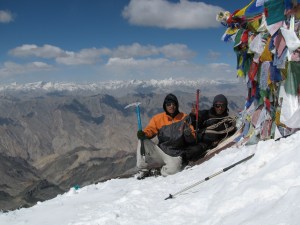
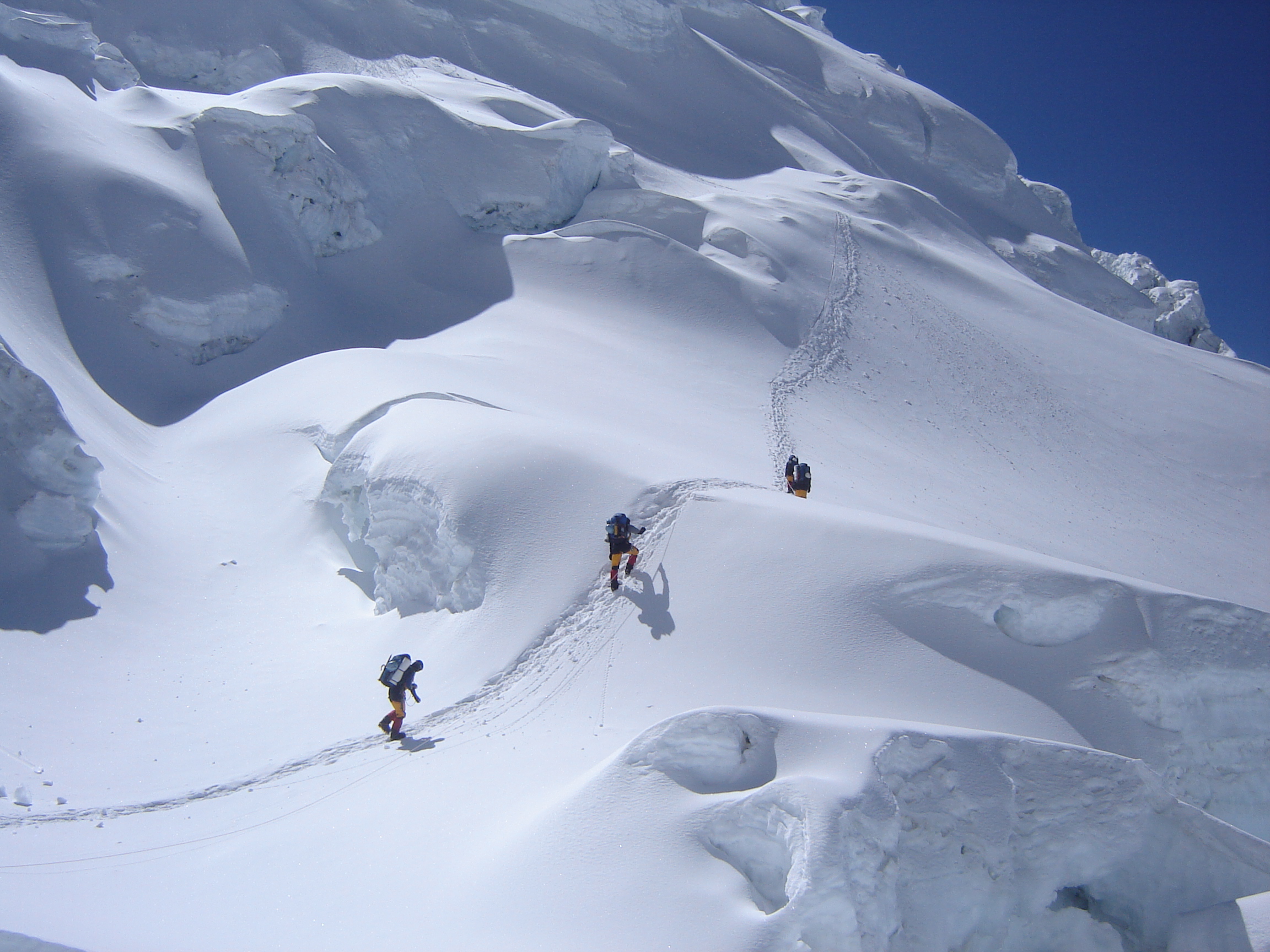
Choszang and Rigzin on the summit (Photo: Shyam G Menon)

Choszang and Rigzin on the summit (Photo: Shyam G Menon)

I didn’t tell that a few months after the 2009 climb, I was whipped by a 19,500ft-high peak in Uttarakhand, which I confidently went for having tasted 20,000ft on Stok Kangri. It was the first expedition I planned to a considerable extent. We got lashed by heavy rain, heavy enough to wash off approach trails and dump a lot of snow higher up. That delayed progress. It robbed us of adequate working days on the mountain. We reached high camp amid snowing. To reduce equipment weight at higher altitudes, I had left our second tent at lower camp. I crammed four people into a 3-person-tent at high camp. Short of space to lie down, I sat up much of the night. Outside, the snowing continued. Early next morning, one of us woke up too disinterested to proceed anymore. His boot laces had also frozen wire-like in the cold; they resembled the antlers of a deer. The remaining three, who went for the summit, were dismissed through a combination of difficult access, avalanching slopes (due to fresh snow) and no more days left to wait for the terrain to settle down. We turned back. It was a humbling experience. After that whipping, I stopped caring how high or low a mountain is. Every mountain region, every mountain therein – is unique. I also provide for time on the mountain and leave it to the peak to decide whether I should summit or not.

In one of my later trips to Ladakh, I came across signs of Stok Kangri’s traditional image in climbing, potentially changing. There were young Indian climbers, who spoke not of merely ascending the peak but ascending it by particular routes. Just as your fine day on a peak with summit gained is not how that peak is year round, every mountain feels different along its different climbing routes (Polish climbers in the Himalaya added winter ascents too, to the equation. For more, please visit https://shyamgopan.wordpress.com/2013/08/11/an-interview/). I am not a fan of speed climbing but I heard people talk of fast ascents up Stok Kangri. Months later on the Internet, I read about two young Indian women who climbed the peak alpine style with no porters or guides. These are all interesting departures from the norm. On my last visit to Leh, after a couple of days spent looking at Stok Kangri from town, I cycled to Stok village and had a cup of tea at one of the restaurants climbers frequented. I remembered Choszang and Rigzin, the trudge up the mountain and a cup of tea brewed high on its slopes. That was enough to make me happy. I then slowly cycled back.

(The author, Shyam G Menon, is a freelance journalist based in Mumbai. A slightly different and abridged version of this article was published in the anthology ` Aloft @ the Indian Himalaya’ anchored by Rana Chawla. Details about this book can be had at https://www.facebook.com/aLoftAtTheIndianHimalaya)

RUNNING IN THE HILLS

Illustration: Shyam G Menon

Illustration: Shyam G Menon

An evening in Ranikhet, four of us went for a run.

It was past 5 PM.

We made for one of the quiet side roads.

We ran past the holiday huts of the army, down a few bends to the first of the `Old Grant Bungalows’ on that road, called so for their origin in British India times. It had just rained. There was a light chill in the air. The leafy vegetation around, the trees lining the quiet road and the road itself gave off that typical post-rain smell. Several turns away at the entrance to the Chevron Rosemount hotel, one of their dogs barked to announce the approaching runners. Used to seeing runners on that road every morning, it first resorted to barking and then settled down by the roadside.

Two turns away, we passed the house of a friend who was a naturalist. Wonderful address for someone so – I always thought. We ran past the small trail cutting up the hillside, which we take when the daily run has to be kept short. This evening was different. We had resolved to run a longer distance, run the full length of the road and then turn off to Mall Road and Meghdoot Hotel.

Another turn went by on the quiet road; then another. Finally we went past Adhikari Lodge, an old bungalow reportedly owned by a Mumbai business family who visit Ranikhet on and off. Although there were houses here, this area, compared to other portions of the road, was trifle more densely green. Four pairs of legs hit the ground rhythmically in slow run. Wind in the hair; nippy air on the face, a breathing that said `I am breath,’ in the chest.

At the next turn, the first runner stopped. The rest of us caught up in one to two seconds.

Walking diagonally across the sheltered road, with its back to us and seemingly no bother for its surroundings now invaded by humans – was a leopard. We watched it in absolute amazement. For all of us, it was the first sighting of a leopard so; free and unfettered. I suspect it was my shoe moving ever so slightly against the sand on the tarred road that created the faint noise – whatever, the leopard caught wind of something behind. It broke its leisurely walk to glance behind its left shoulder, sensed the four humans and in a couple of elegant bounds was up the other side of the road and lost to the dense vegetation between the road and the households beyond.

We stood there speechless.

It took a while for things to sink in.

Slowly, our awe struck faces broke into smiles. We shook hands.

Then we resumed our slow run.

Leopards are not unusual in Ranikhet. But here’s the key according to my friend Ravi – don’t go looking around for the animal. I know quite a few people, including me, who went looking for leopard and never saw one. It was as though the shy animal read your mind and stayed away or you were too deliberate that your search affected your prospects. You know, too desirous of what you want that you become this big solid mass disturbing the universe’s subtle arrangement. Expect nothing and lo and behold, the universe rewards you. Leopard was the last thing on our minds that evening we ran. We saw one!

Illustration: Shyam G Menon

Illustration: Shyam G Menon

I sometimes get outdoor work in Kumaon (the eastern half of Uttarakhand). That’s how I land up in Ranikhet, helping out at the India branch of the National Outdoor Leadership School (NOLS http://www.nols.edu). I have a regular running route; the earlier mentioned road; voila, my name for it – Leopard’s Walk. Past where we saw the leopard, that quiet road continues on; it skirts one side of the local tourist rest house property and eventually joins the road to the Jhoola Devi temple, in front of the West View hotel. From here you can either turn towards Meghdoot Hotel or take another quiet, isolated road, often carpeted by dry leaves and run all the way to the temple avoiding the main road. Some colleagues from the school choose to run further. There is a military check post at the temple and a stiff ascent of several kilometres that takes you to Chaubatia on top of the hill. The place is home to one half of Ranikhet’s sprawling military base. To my knowledge Ranikhet is one of the very few towns, maybe the only one in India that is home to two army regiments – the Kumaon Regiment and the Naga Regiment. Being military cantonment and located away from the normal Nainital-Almora route, Ranikhet has a quietness that is disturbed only by tourists and visitors. That’s why I like my morning run here. It is also why I rarely speak of it – for these days to speak of the solitude in some place is to invite its violation. Reduced shelf life is contemporary media’s gift to existence.

For a relatively small town, Ranikhet has many people running. Most obvious and most regular are the soldiers. They fall into three categories – two, I profile below and a third general variety closer to jogging for fitness than running. On the road, the first group typically manifests as an approaching rustle ahead of me or behind me. Either way, they whiz past for they seem to be a dedicated team of endurance runners. They commence a run together; warm up exercises, stretches et al and then progressively spread out in accordance with individual pace. However they are never so spread out that the tail end doesn’t see the leader; their average pace is pretty good. Their youth and fitness crunches me like a tank running above the head of someone in a lowly trench. I have also occasionally met a slightly slower lot, who like to remain clustered as a distinct group. They run like a herd. My deduction is – they are the boxing team. It is nice to think of all these probabilities as one gets overtaken, lapped, left in the dust and forgotten, all the while happy for it as the morning air is much cleaner than the average Indian city’s, there is very little traffic and the early morning hours are enjoyably cold.

Ranikhet’s civilian runners appear to fall into two categories. There are some who run regularly. More important – every now and then the number of civilians running goes up. When the numbers go up, you know bharti or army-recruitment is due. You find such preparatory running all over Kumaon; daily run done, candidates from everywhere converge at Ranikhet for that is where bharti happens. No army for me. I am the wandering, peace-loving middle aged soul, timid enough to avoid gladiators of all sorts and embrace a refuge, a trench. Much before I started running, I ran away – that’s the truth. Put an urban gladiator in front of me, I will run away again. I usually run alone in Ranikhet and when I have had company, it has been from the outdoor school. For some time, till he got married, Harish Singh was regular company. Indeed he was there when we saw the leopard. Twice, a local taxi driver with affection for running came running by and said – let’s go together. Narayan Singh (I think that was his name) was fine company for those two days. Once in a while, you see another visitor like me savoring the different ambiance of running in the hills. But that’s rare and I don’t blame those who choose to rest in their hotel rooms or go for leisurely walks instead. Fact is – the urban life is tougher, including the running therein. Back from the hills and running in Mumbai, I am exhausted in just one day coping with the heat and humidity; my respect for everyone sweating it out in the city.

Whether I like it or not, the urban trend of organized running is catching on in the hills. From Leh to Mussoorie and places in between, there are staged events with calendar dates, gladiators and all. But I am partial to the unnoticed variety wherein running (I call my version of it – trotting) becomes a means to get around. The enjoyment I have had from this is immense and seductive enough to leave me with shin splints; that classic outcome of overdoing things. Plus, the terrain is undulating; there are long ascents and descents. That adds to the strain, which you don’t notice till injury settles in, well and truly in love with your shin. Still, unplanned running is fun.

Once Ravi and I were in a car headed to Tehri for a conference. Our accommodation was at Chamba, which is up a hill from Tehri. It was a long drive from Ranikhet to Tehri and by evening, as we reached Tehri, Ravi was bored. He asked Dinesh, our driver, to stop the car and pulled out his unicycle. I changed to running shoes. We reached Chamba in style, a small traveling circus of sorts, runner in front; unicyclist behind. In Ranikhet, Ravi is often called ` circus uncle.’ Mountaineer, cyclist and outdoor educator, he maintains a small collection of cycles – MTBs, recumbent bikes and unicycles.

Several days before Chamba, I had another impromptu, engaging run, rather trot – from Ranikhet to Katpudia (please try https://shyamgopan.wordpress.com/2013/08/03/katpudia/ for a story on Katpudia), which is slightly less than half way to Almora. Near Majkhali, I met the army regulars. As always, they checked me out – who is this terribly slow, old chap trotting by? Fit as a fiddle, their pace was whiz-class; they crushed me, tank-like. New element was – at the tail end of the contingent was their coach, on a cycle, periodically shouting, “ bhaag!’’ Rush hour went by thus and my cocoon of quiet refuge in the hills (call it trench), returned. I trotted to Katpudia, had a cup of tea at the local tea shop and took the share-taxi back to Ranikhet.

The most satisfying run I have done in the hills so far was in Munsyari, from the town to Kalamuni Pass and back. The credit for getting me started on this goes to Love Raj Singh Dharmshaktu. As of 2014, he had climbed Everest five times besides ascending many other peaks in the Indian Himalaya (please visit https://shyamgopan.wordpress.com/2014/07/10/everest-to-the-east/).

Illustration: Shyam G Menon

Illustration: Shyam G Menon

In June 2014, I was in Munsyari to write about Love Raj and every morning we used to run together. That season, our turn-around point had been Betuli Dhar, which is little over the half way mark to Kalamuni. Four months later, the whole route to Kalamuni and back, happened. It being late October, this was a much colder run with ones shoes getting wet six times in all as you have that many instances of stream-crossing (basically streams flowing over and across the road) to do. My face was numb from the early morning chill and cold. But as the sun rose over the Himalaya, I was blessed by sweet warmth. Blessed is the word, for every time I experience such sunshine in the mountains, I fold my hands in namaste to the sun. The preceding cold seemed just the right setting in retrospect – without cold, would you value warmth? In such life by opposites, is the joy of the outdoors. To see the leopard, you shouldn’t seek it. To run well, you should enjoy, not be deliberate. The best advice I ever received in the outdoors is this: if you are not having fun, then something is wrong.

My idea was to have a cup of tea at the tea shop near the temple at Kalamuni Pass and then run back to Munsyari. But the tea shop was closed. I heard voices at the temple and approached. A Rasputin like-baba and three others, were making rotis. They beckoned me in. “ Sit; sit, would you like a smoke?’’ the baba asked cupping his hands to show the usual technique for smoking charas. I laughed comparing my state and need with the offer. “ No sir, I don’t smoke. But a cup of tea would be more than welcome,’’ I replied. “ Roti?’’ he asked. “No, thank you, just tea,’’ I said. Fortified by that excellent tea, I ran back to Munsyari and the beginning of yet another case of shin splints that would have me off running altogether by December.

So I sit, grounded, in Mumbai.

But there is one good thing about shin splints and no running.

I write.

(The author, Shyam G Menon, is a freelance journalist based in Mumbai. The story of the leopard was published as a small piece in The Hindu Business Line newspaper and on the Facebook page of NOLS India. In terms of distances, it is roughly 15km uphill from the Tehri reservoir to Chamba; it is 15km uphill from Munsyari town [7000ft] to Kalamuni Pass [9000ft], up and down is 30km.)

THE STORY IN A MESSAGE

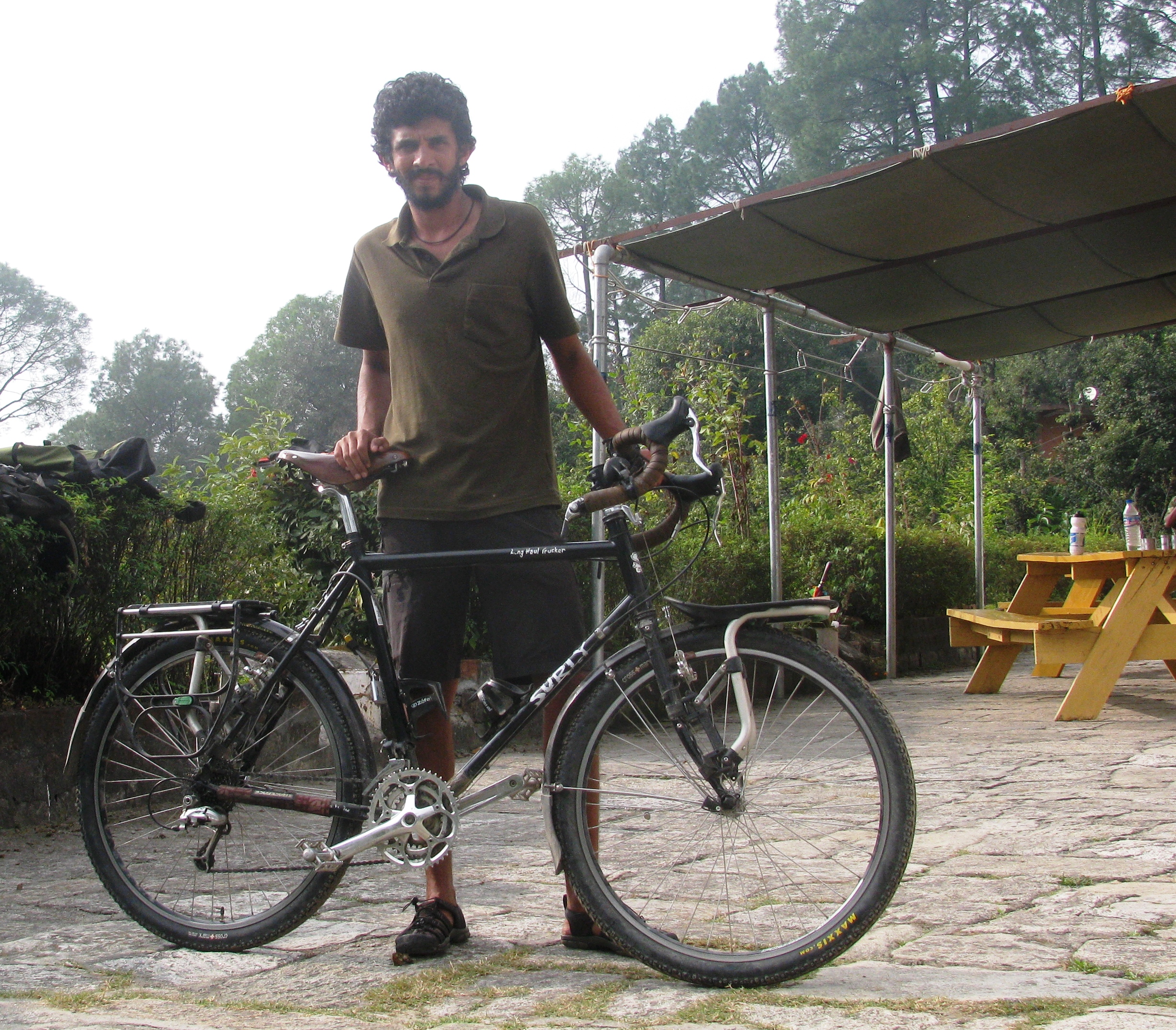
Ganesh Nayak with his bicycle at the NOLS India base in Ranikhet (Photo: Shyam G Menon)

Ganesh Nayak with his bicycle at the NOLS India base in Ranikhet (Photo: Shyam G Menon)

Late November 2014, my mail to Ganesh Nayak elicited the same automated message that had originally prompted this story.

A day later, he replied:

I just got back from a mind blowing trip to Muktinath (Annapurna). WOW! It blew my mind! The Himalaya here is so different from what I have been used to in India. The pine forests and snow are so close here. As I made my way towards Muktinath, the environment was very similar to Leh but there was plenty of water from all the icecaps, making human habitation possible. Ladakh in comparison had been sparsely populated. However, both have a charm of their own.

I did some initial research before heading in and knowing that there was a ton of cheap teahouses on the way, I went in with a very light weight-setup. I was as light as a cloud and just floated up to 3700m (Muktinath) from 820m (Pokhara). There is no way I am going back to loaded touring after this.

I am right now in Thamel and I am heading out in a bit to try and sell as much of my gear as it is possible for me to do. That should add some weight to my depleting kitty. My bike is in need of servicing and I am getting one done today.

Anyways, after leaving Ranikhet, it was tough going for a bit. I had been surrounded by people for a while and suddenly I found myself riding alone. That was a bit difficult. But once I entered the Terai of Nepal, I was again surrounded by people all the time. There are as many bicycles there as people and I had people riding by my side throughout the day – from school girls to army men to granddads and grandmas.

I am heading back to India after this. I didn’t have a plan as such until a couple of days ago. On a book shelf in Pokhara, I came across Anne Mustoe’s ` Two Wheels in the Dust.’ I am currently reading this book and will probably base my route back to Manipal on this.

Earlier this year, when Ganesh Nayak applied for the fall season Wilderness First Responder (WFR) course at the India branch of the National Outdoor Leadership School (NOLS http://www.nols.edu/), the office immediately got a sense of person and predicament.

Applications typically entailed a few more instances of correspondence between NOLS India and the applicant, ironing out details. In Ganesh’s case, Ravi Kumar, Director, NOLS India recalled, the office was treated to an automated message informing that he was out on a long trip and would respond as and when he could. In the world of adventure and personal discovery, which is what NOLS is, the required flexibility is extended; not to mention – the erratic correspondence kindles curiosity for the story behind the message.

The story reached Ranikhet, in time for the WFR, on a Surly bicycle. It was the classic touring model with black steel frame, Brooks saddle, pannier racks up front and behind, gears and that generally solid appearance designed to crunch months and miles. Ganesh was riding in from Mussoorie.

It was almost two months since he had begun his odyssey – a cycle trip along the Himalaya.

What made the story particularly engaging for this author, an Instructor-In-Training (IIT) just back at NOLS India from a long hike with the fall semester course and discovering a Surly on the premises were Ganesh’s demeanor and his journey to a dream he never thought existed in his head.

Some years ago, Ganesh, now 32, was at a low point in life. Born and brought up in Manipal in southern India, the electronics engineer had taken to drinking and was generally adrift. He knew he had got it all wrong but getting out of the funk required a road map and such maps don’t visit any of us easily.

Somewhere in that troubled phase, he purchased an ordinary bicycle.

For the next six months, he rode it around; progressively realizing that riding long on a bicycle is what he wanted to do.

What happened next may seem mad but Ganesh talked of it in an utterly composed manner.

After much research and study, he bought his first geared bicycle – the Surly. It cost him over 100,000 rupees. That is expensive by Indian standards but it is not a very significant amount in these days of rising salaries in urban India and willingness among young Indians to put money behind their dreams as people in other countries have done for long. Instead, what struck home as really significant was Ganesh’s decisiveness. He felt confident of vaulting straight from six months with a modest, regular bicycle to an iconic make because he concluded that the dream evolving upstairs in his head could settle for nothing less.

Surly it had to be.

After buying the new cycle in Bangalore, Ganesh interned briefly with a city based-cycling outfit, at that time called, Cyclists For Life. He learnt how to repair and maintain his bicycle. Ganesh’s first test with the Surly was a trip of around 250 kilometers in his home state, Karnataka. He started at Manipal; proceeded to Agumbe, a place identified with rain forests and much remembered as a protected sanctuary for the King Cobra, then cycled north from there before turning south towards Kollur and Manipal.

By now feeling ready for his first long trip, he cut lose to earn the needed freedom – he resigned his job. Earlier this year, he began his journey at Srinagar in the North Indian state of Jammu & Kashmir (J&K). Since then he had cycled through J&K (including much time in Ladakh), Himachal Pradesh and parts of Uttarakhand to reach Ranikhet. “ I had heard of the WFR from another cyclist who did it earlier. That’s how I decided to enrol. I also knew that I would bump into more people given to adventure and travel if I attended the course. That was an added attraction,’’ Ganesh said. His batch of students for the WFR turned out to be a diverse mix, drawn from India, Indonesia, Malaysia, USA, UK and Canada.

First aid course done, Ganesh planned to briefly hike in the Gangotri area with some of his course mates, return to Ranikhet and recommence his journey, cycling on to Nepal, Sikkim and Bhutan. While North East India was originally part of his itinerary, Ganesh felt that by the time he completed the current leg of his trip, his resources may be stretched. He may have to return to Manipal to piece together funds for the remaining part of the journey. Reality bites, dreams notwithstanding.

Ganesh’s trip engaged for yet another reason.

His daily cycling route in the Himalaya hadn’t been held to ransom by some iron clad objective to cycle along a fixed route chosen in advance. He wasn’t out to prove anything. There wasn’t a goal beyond question or negotiation. He allowed himself to be led by conversation with local people and developments along the way. Thus, in Ladakh, he and another cyclist from Chennai opted off the regular cycling route and tagged along with an enterprising horseman to do a largely off-road section, lasting several days. Ganesh liked this excursion and other similar ones availed along the way, immensely. This angle made his trip more organic and less of an imposition in search of achievement.

In the process, he discovered differences between the people of the plains and those from the mountains; in particular – glimpses of that fabled simplicity, sincerity and spirit of sharing associated with residents of the Himalaya. “ Even my Hindi has improved,’’ he said, recalling conversations sustained for long and time spent living with local people. Both in the Himalaya and in other places that he cycled through in South India, he had instances of being helped and saved from getting lost by people he met on the way.

As he spoke, one sensed a bit of the magic he had experienced since buying a cycle, months ago in the depths of a funk.

“ I now feel more connected to life,’’ Ganesh said.

That was a couple of months ago.

Several days later, I was in Ranikhet preparing to head out on a trek, when a familiar rider on familiar black touring cycle slowly drifted down the road to Khairna. We exchanged pleasantries. Back from his trip to Gangotri side, returned to saddle and minus his beard and moustache, Ganesh was pedalling off to Nepal. Ahead lay Pokhara, Muktinath and the automated message I got before his eventual update.

(The author, Shyam G Menon, is a freelance journalist based in Mumbai. He also works periodically with NOLS India. A portion of this article without the update in italics had been posted earlier on the Facebook page of NOLS India. )

JOHAR’S JUNE

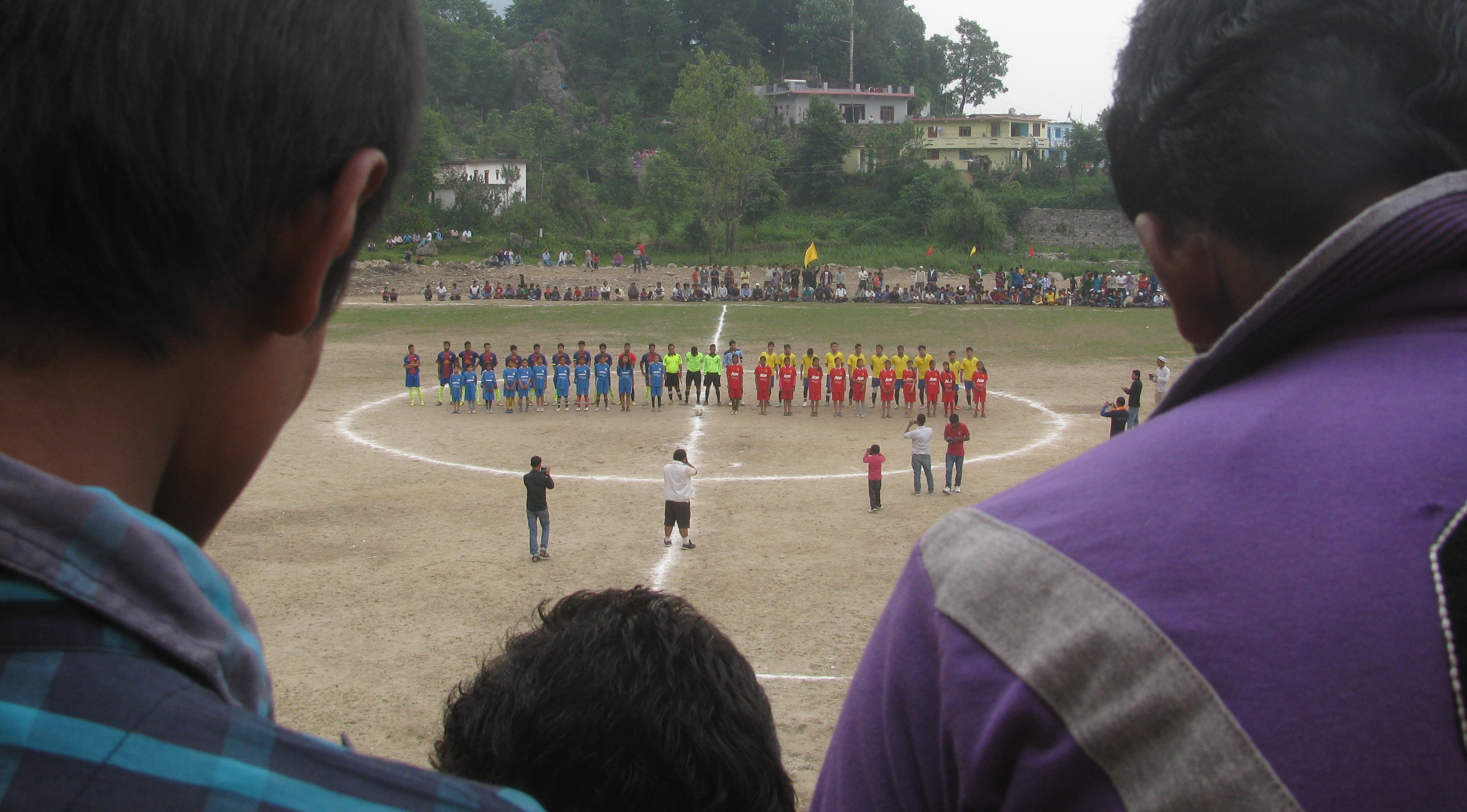
Teams line up before the football final (Photo: Shyam G Menon)

Teams line up before the football final (Photo: Shyam G Menon)

For a fortnight every June, a playground in Munsyari draws crowds of people.

They are residents of Kumaon’s Johar Valley and members of its far flung diaspora. Kumaon is the eastern half of the Indian state of Uttarakhand; Munsyari is in north eastern Kumaon.

June is Johar’s month of annual get together.

The magnet is that playing field.

June 2014, it hosted competitions in various sports. Evenings featured football, coincidentally befitting the times, for as the local competition peaked to final by mid-June, in far away Brazil the 2014 FIFA World Cup got underway. It became Munsyari’s season of football within global season of football.

Munsyari’s football however went beyond the sport.

Over 60 years ago, in 1953, a group of students from the Johar Valley studying in Almora, started the Johar Club. Their idea was to get together, keep the Johar in them alive through sports. Thus was born the tournament. The first sport it featured was volleyball. For the next three years, this annual ritual was hosted in Almora. In 1956, it shifted to Munsyari. It has remained there since.

According to Sriram Singh Dharmshaktu, Secretary, Johar Club, the inaugural tournament in Almora drew half a dozen teams or so. By 1956, this grew to around 20, mostly local; including teams from villages like Darkot, Bunga, Sarmoli, Suring, Dumar and Jalat. The variety of sports also grew to encompass volleyball, football, carom, chess, table tennis, badminton etc. Soon, teams from outside Munsyari started coming; among them – Lucknow, Delhi, Bageshwar, Thal and Didihat. No matter where a team was from, one thing stayed common – its members hailed from the Johar Valley.

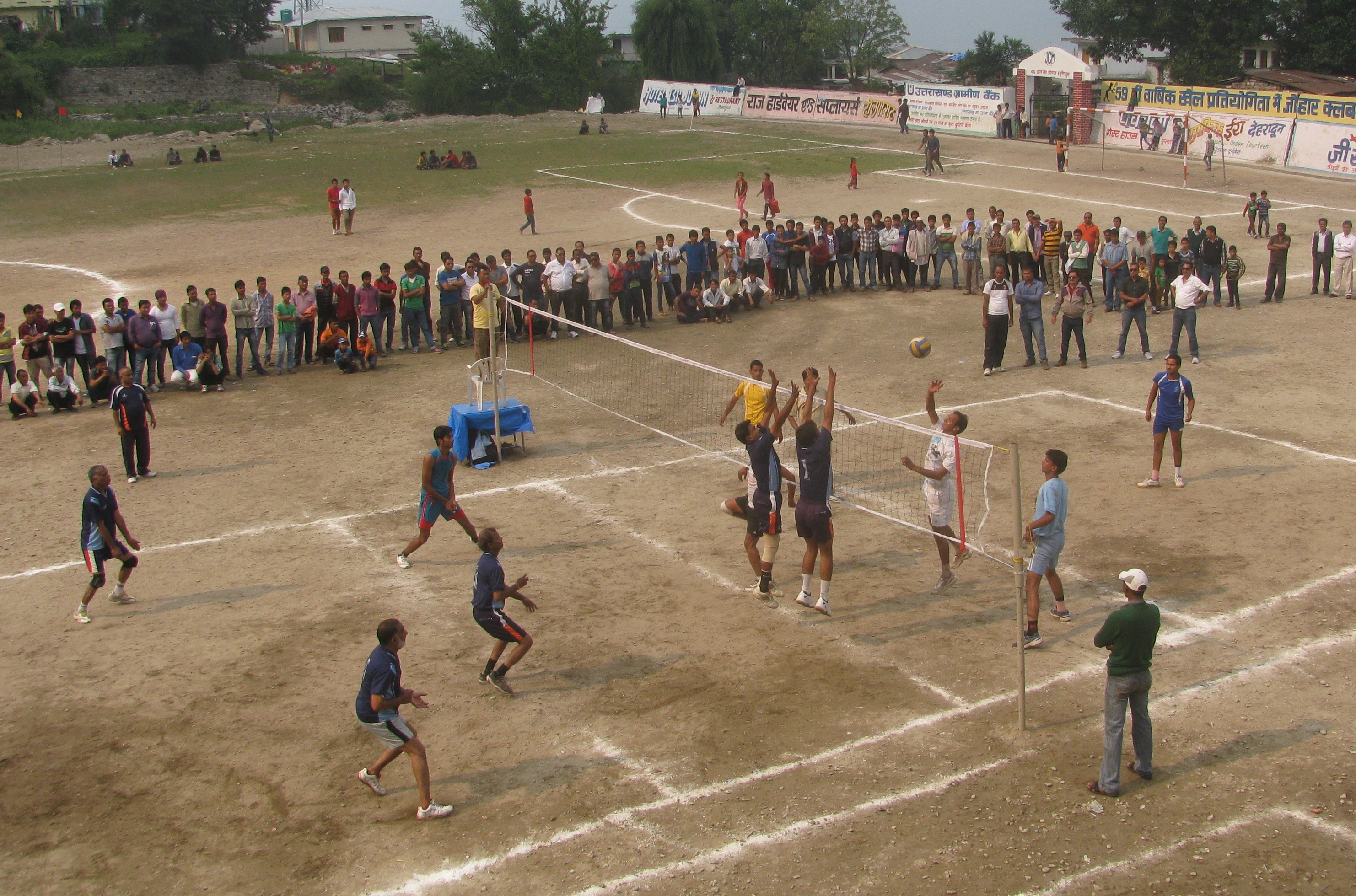
This year (2014), the tournament had 16 senior teams and 15 junior teams, including school teams. For the first time the event also featured girls’ teams with four teams registered to play football. These all girl-outfits were named after well known adventurers – Bachendri Pal, Chandraprabha Aitwal, Sabita Dhapwal and Reena Kaushal Dharmshaktu. Further, in what was probably recognition of the growing popularity of running in India, there was a 15 kilometre-run from Munsyari to Darkot and back. There is no age restriction for senior teams. It was visible for example in the volleyball final, where a mix of youth and age fought an engaging match.

In the Himalaya, cricket is popular. If you are frequent hiker, you would have seen villagers playing the game. A good hit typically travels down several terraced fields or tiered slopes of a hillside. The fielder chases the ball and often disappears from view in the undulating, steep terrain. A powerful throw from below returns the ball to frantic teammates on the pitch. The fielder then climbs back up. In a single game, there would be many players repeating this process many times over. In mountains, big, flat spaces are hard to find. Some villages are lucky. They have a playing field. There are regular inter-village cricket tournaments. Shields and trophies find pride of place in a victorious village; I recall seeing a big shield displayed at a village temple in the western part of Garhwal bordering Himachal Pradesh. I also remember youngsters’ sorrow at a Kumaon village, after the nearby river which flooded in monsoon, washed off a portion of their flat field.

Probably because cricket has its own established circuit, the sport wasn’t part of the Johar Club’s annual tournament. Big ticket sport here was football, followed by volleyball.

Volleyball final in progress (Photo: Shyam G Menon)

Volleyball final in progress (Photo: Shyam G Menon)

Munsyari is small enough for most people to know each other. Well known mountaineer and Padma Shri recipient in 2014, Love Raj Singh Dharmshaktu, hails from Johar. June was his month to be home too. A local hero and chief guest for an evening’s football, he was formally received in town and taken in procession to the stadium. Years ago, Love Raj had been on a team playing football at the same annual event. Ahead of the match, oblivious of the gathered crowd, his little son had fun kicking the football around in the stadium.

On the day of the football final, the two finalist teams walked down the bazaar road to the stadium, with their supporters – one team accompanied by a traditional Kumaoni band, the other by a school band. The small stadium was full of people. Houses nearby had people on balconies and roof tops just as they do for cricket matches in Mumbai. There were people watching from roads uphill and some poised on top of rocks. There was no dearth of flourish either for the final ended in a penalty shoot-out with goal keeper for hero, a trend that would repeat at World Cup matches weeks later. Interestingly, for a long time, the football here couldn’t accommodate teams of 11 players each due to lack of space. In 1970, with help from residents, the playground was enlarged. Team size went up from nine to 11.

Preparations for the annual tournament commence in April-May. People contribute; some financially, others help with the organizing. With so many landing up, it also becomes an occasion to meet friends and relatives. At heart, the tournament is a reunion.

The annual community reunion around sport in Johar, reminded of a similar event elsewhere.

Far to the south, in Coorg (Kodagu), there has been the tradition of an annual field hockey festival. It was started in 1997. In the past, the region has been famous for talented field hockey players and a typical tournament saw people who had played at state, national and international level turn up to represent their families (please visit this link: https://shyamgopan.wordpress.com/2013/08/22/field-hockeys-family-festival/). A difference between Johar and Coorg was – in Johar, team identity spanned roots in Johar for those from the diaspora and participating as visiting teams, to specific villages and institutions (schools for example) in Johar for local teams. Either way, it was link to a place. In Coorg, the idea of roots went deeper to teams arranged under family names.

(The author, Shyam G Menon, is a freelance journalist based in Mumbai. An abridged version of this article was published in The Telegraph newspaper)

A BOOK ON MOUNTAINEERING’S HOLY GRAIL

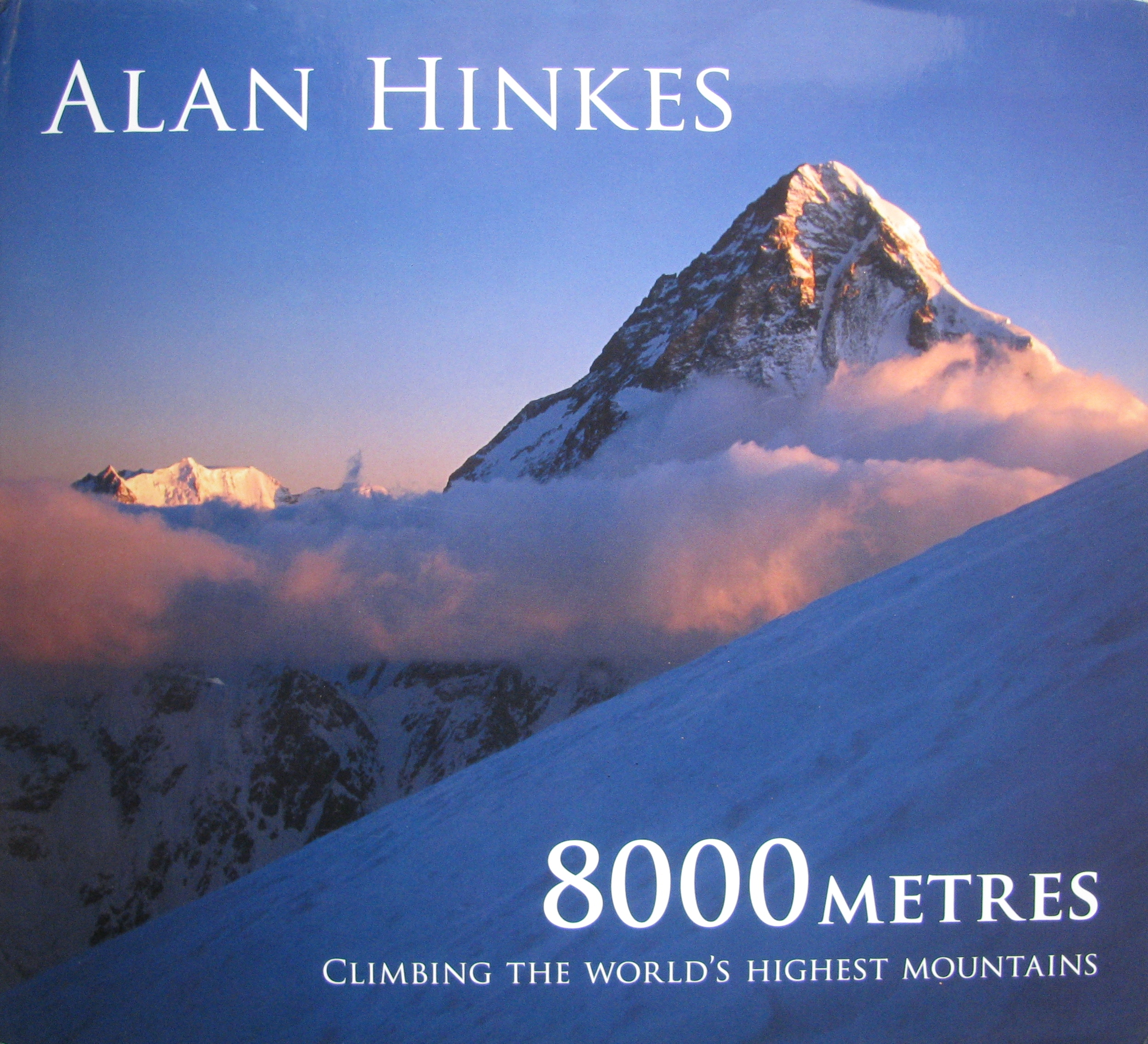
???????????????????????????????Alan Hinkes’ book, ` 8000 Metres – Climbing the World’s Highest Mountains,’ should make a fine addition to the library.

Hinkes is the first British mountaineer to have climbed all the fourteen 8000m-peaks.

On the Internet, his achievement is sometimes qualified as “ disputed,’’ the ascent of Cho Oyu being case in point. Hinkes mentions reaching the mountain’s vast summit and walking around to ensure that there isn’t any higher to go. All this is in semi white out condition with reduced visibility. Views of other major peaks, useful to establish proof of summit, remain elusive. Hinkes is also alone at this stage of the climb. “ I did not bother to take any photos. There was nothing to see and I was more concerned with finding my way back before I became trapped in a full whiteout or deadly snowstorm,’’ he writes in his book.

Among the fourteen 8000m-peaks, Cho Oyu is often described as the easiest. Hinkes’ chapter on Cho Oyu begins thus: Categorizing any 8000m peak as `easy’ or referring to an `ordinary’ or ` normal’ route to the summit, is a contradiction in terms. There is nothing easy or normal about any 8000m mountain. Each of the fourteen giants represents a serious undertaking with different characteristics, dangers, difficulties and local weather patterns, and none should be underestimated.

In the eyes of the sport’s high priests, the situation on Cho Oyu may have inspired lack of precision in summit claimed. But it takes nothing away from Hinkes’ book, which strikes a fine balance between coffee table book and account of life in mountaineering, especially that recap of fourteen 8000m-peaks climbed over eighteen years, entailing twenty seven attempts in all. Towards the end of the book, Hinkes says that the fourteen 8000m-peaks are dangerous, that he climbed them for himself and not for money and therefore even guiding on those peaks for money isn’t worth risking his life again. The only mountains from the fourteen that he may consider climbing again are Everest (to which he returned) and Cho Oyu.

The book’s biggest strength is simplicity in the story telling. It is unpretentious. This is complemented by large and beautiful photographs backed by an uncluttered layout. The images give you a genuine sense of place without complicated camera work to distract from what is being shown. Hinkes’ photography is crisp and clean. The book has a nice architecture in terms of written content. Having devoted the introductory chapter to describing his affection for adventure and the evolution of his career in climbing, Hinkes keeps the accounts of his climbs straightforward and bereft of searching philosophy. He speaks matter of fact, mostly devoid of the dramatic, adding a touch of drama only where it seems relevant. Each story of climbing an 8000m-peak is followed by a smaller chapter on an interesting aside. The latter ranges from the photo of his daughter that he carried to mountain summits (it also gave him something to look forward to after the summit and kept him focused on descending safely), to profiles of Jerzy Kukuczka, Kurt Diemberger and Reinhold Messner, the correct clothing for high altitude mountaineering, his food habits on expeditions, ` the death zone’ as extreme high altitude is popularly called and dealing with death in a dangerous sport.

We live in an age, where mountaineering narratives are many. The media gaze has spared no landscape. Some would say – as early victim of media in adventure, the snowy, windswept heights of our planet suffer from a fatigued idiom of expression. If despite that, we still indulge media, then it must be conceded – content matters now more than ever before. Details like perspective, craft and lightness of handling, previously overlooked, have emerged differentiator for our tired senses. This book, at once serious for the subject it handles and enjoyably light in treatment, lives up to that more comfortable aesthetic.

For the average Indian like me, it is an expensive book.

(The author, Shyam G Menon, is a freelance journalist based in Mumbai. This is a slightly edited version of a review originally written for the Himalayan Club Journal, Volume 69)

EVEREST TO THE EAST

Here’s a story originally published in 2013.

It has been updated for developments since then.

Nanda Kot (Photo: Shyam G Menon)

Nanda Kot (Photo: Shyam G Menon)

At 6861m, Nanda Kot is the highest peak in the impressive arc of mountains guarding the Pindari Glacier area in Kumaon. On the map, this place falls in the eastern half of the Indian state of Uttarakhand through which the Central Himalaya passes.

In 1989, a youngster from Kumaon’s Munsyari region – to the east of Nanda Kot and not far from the Nepal Himalaya – reached the summit of the peak with a team from Lucknow, the city where he studied.

Willing to do anything to be on a mountaineering expedition, he had literally worked his way to the summit doing all sorts of jobs for the expedition. Atop Nanda Kot, he was happy for mission accomplished. He had no idea of what lay ahead, for although at ease at altitude reaching thus far had been quite a journey for the young man hailing from Bona, a village 2200m up in the Kumaon Himalaya and roughly 35 km away from Munsyari. He knew he wanted to return to mountaineering but just then it all seemed too much for him. Certainly he doesn’t recall giving any special attention to the eastward stretch of the Himalaya moving into Nepal, where on the edge of that country and Tibet towered the world’s highest peak.

On Kanchenjunga (Photo: courtesy Love Raj Singh Dharmshaktu)

On Kanchenjunga (Photo: courtesy Love Raj Singh Dharmshaktu)

Nanda Kot was the young man’s first expedition. Life continued nondescript. He did his `adventure course’ from the office of UP Tourism’s Officer on Special Duty (OSD) in Uttarkashi (those were the days of undivided Uttar Pradesh [UP], when the yet-to-be Uttarakhand was still part of the large state of UP). The facility provided a taste of adventure to school students; teachers, young people. He worked there as a help earning Rs 75 daily. In 1990, he did his Basic Mountaineering Course from the town’s Nehru Institute of Mountaineering (NIM), following it up with courses in Advanced Mountaineering, Search & Rescue and Method of Instruction. In 1992, he found berth on an expedition to the 7516m-Mamostong Kangri in Ladakh. Returning from Ladakh he moved to the 6236m-Nanda Bhanar, reaching near the summit with an expedition from Lucknow.

On Kanchenjunga (Photo: courtesy Love Raj Singh Dharmshaktu)

On Kanchenjunga (Photo: courtesy Love Raj Singh Dharmshaktu)

In 1997, the young man was Liaison Officer for a British expedition to the 6309m-Nanda Ghunti, led by Martin Moran. That trip exposed him to alpine style ascents which typically feature a small team with little hired help and climbers doing everything themselves. He then rushed to Gangotri where a team from Mumbai engaged in a set of pre-Everest climbs had asked him to join them. Their invitation is a complicated story, the crux of which was his role some time before in trying to retrieve the body of a Mumbai mountaineer. Eventually, the body was not retrieved but word reached Mumbai of the helpful young man. So, when Mumbai put together its first civilian expedition to Everest (Tata Group was the main sponsor) under the leadership of Rishikesh Yadav, our young man was made team member. Months later, in 1998, two summit windows would open up for the Mumbai team during their climb from the Tibet side. In the first, Surendra Chavan, then working for Tata Motors, would reach the summit of Everest (8848m). In the second, a young man, who almost ten years before had been on Nanda Kot stood at the world’s highest point. Expedition over, he returned to his job at the OSD. But Everest and Love Raj Singh Dharmshaktu had commenced a journey.

May 2013 marked sixty years since the first ascent of Everest by Tenzing and Hillary. In a world where people are introduced as `Everester so-and-so,’ Love Raj carried his life in mountaineering lightly on his shoulders. For one, he doesn’t call himself `Everester.’ He is very unassuming, walking casually with slightly stooping shoulders, at peace with the world – which was how he walked in to the office of the Indian Mountaineering Foundation (IMF) in New Delhi, March 2013. People said hello and as we sat in the cafeteria for an interview, an official wished him luck for an upcoming trip to Everest and requested him to look after the others too for he was by now among the most experienced climbers in India for attempting Everest. Should that trip happen, it would be Love Raj’s seventh shot at the summit. He was already the first Indian to have successfully climbed Everest four times.

Love Raj on the summit of Everest (Photo: courtesy Love Raj Singh Dharmshaktu)

Love Raj on the summit of Everest (Photo: courtesy Love Raj Singh Dharmshaktu)

Everest is probably the best studied 8000m-peak. `Wired’ should be the word, for its normal climbing routes have been so well mastered by commercial agencies that save for vagaries of weather and the trade’s own avarice causing congestion and accidents on the mountain, well performing clients are nearly assured of a summit. An Assistant Commandant with the Border Security Force (BSF), some of Love Raj’s successful ascents were on the normal route. But look closer and it isn’t that simple. He tried and lost on the less wired tough routes. Point is – he tried. In 1999, noted mountaineer Santosh Yadav led an Indian expedition to Everest’s Kangshung Face, among the toughest mountain faces in the world. Love Raj was part of it. Between Camp 2 and Camp 3 he was hit by a falling stone that smashed his goggles and injured his eye. He had to be evacuated. In 2001, Loveraj was back on Everest, again on a route on the East Face in a team led by Santosh Yadav. The team got to the highest point yet reached on that route, he said. Meanwhile with the BSF, he climbed Satopanth (7075m), Kamet (7756m), Mana (7274m) and Abi Gamin (7355m). In 2006, he reached the top of Everest with a BSF expedition. In 2008, on another BSF expedition, he successfully climbed Kanchenjunga (8586m). In 2009, as climbing leader on NIM’s Everest expedition, Loveraj reached the summit for a third time. His fourth time on the summit of Everest was in May 2012, part of the Eco Everest Expedition organized by Nepal’s Asian Trekking with a berth for himself sponsored by Woodland, the well known shoe and apparel brand. On this trip, one that also cleaned up the mountain, Love Raj did more than the regular clean-up procedures, picking up garbage even from the approaches. He also attempted to climb without using bottled oxygen but eventually submitted to its use from higher camps.

Love Raj Singh Dharmshaktu (Photo: Shyam G Menon)

Love Raj Singh Dharmshaktu (Photo: Shyam G Menon)

A superlative known worldwide, Everest attracts for the glory it promises. Successful climbers become famous. Pay Rs 13-15 lakhs (1300000 to 1500000), another Rs 2.5 lakhs or so for equipment – all this is accessible, courtesy a commercial trip. This has diluted the sheen of Everest. However from a climber’s perspective, Everest is any day challenging and particularly challenging along its less climbed faces where few trophy hunters go. For example, Love Raj believes that Kanchenjunga is a technically difficult (he also loved its isolation with no other team around) but safer climb than Everest. Accounts of Everest’s East Face are replete with avalanches and seracs while on its normal route lay the Khumbu Icefall. So why does he keep going back? Love Raj attributes that to a desire to test himself, Everest being well known (he doesn’t deny that) and the fact that some of the opportunities he got were to climb from less attempted faces. Both the East Face expeditions, he said, progressively leached fear away from him as he improved his technical skills. Most important, Love Raj credits his good fortune at being able to visit Everest repeatedly, to his humility, born from a hard life in the mountains. “ I struggled in life. No work on any expedition was below my dignity to do. That baked my character and even now I don’t hesitate to do any work on an expedition. I know struggle and I know when someone else is struggling,’’ he said. Asked for his impression, Rishikesh Yadav, who led the 1998 Everest expedition described Love Raj as “ tough, dedicated and resourceful.’’ Love Raj is a recipient of both the IMF Gold Medal and the Tenzing Norgay Adventure Award.

Bona, the village where Love Raj grew up (Photo: Shyam G Menon)

Bona, the village where Love Raj grew up (Photo: Shyam G Menon)

Interview over, we had lunch at a restaurant nearby. I found that Love Raj had turned forty just the previous day. He talked affectionately of his new born son. His wife Reena is a mountaineer, an outdoor educator (she has worked with the US based-National Outdoor Leadership School [NOLS]) and the first Indian woman to ski to the South Pole. Life had come a long way since Nanda Kot. On the evening of May 21, 2013, I chanced to call up Reena in Delhi. According to her, early that morning, around 6 AM, Love Raj reached the summit of Everest; his fifth successful climb to the top of the peak. The news arrived through agencies in Kathmandu, she said.

In 2014, Love Raj was one of the recipients of the annual Padma awards for civilians, given by the central government. He got a ` Padma Shri.’

For all that happened since 1989, he doesn’t recall paying any special attention to the eastward stretch of the Himalaya, from the top of Nanda Kot.

He had been just happy for first mountain summit reached.

Please note: the height of peaks are as mentioned in Wikipedia and the Himalayan Club Journal.

(The author, Shyam G Menon, is a freelance journalist based in Mumbai. This article was originally published in 2013 in The Hindu newspaper.)

SHIPTON & TILMAN

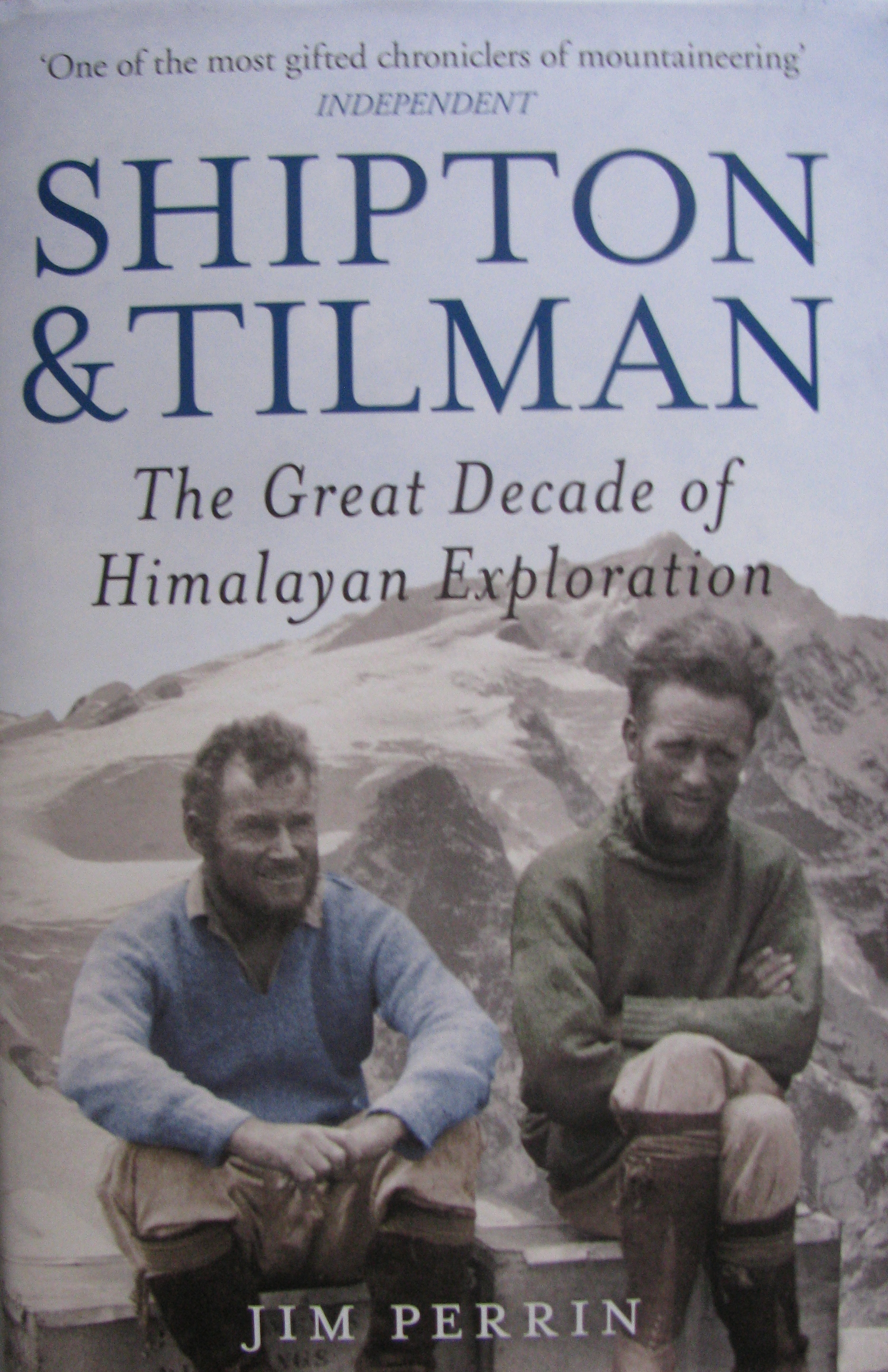
`Shipton & Tilman,' the book by Jim Perrin.

`Shipton & Tilman,’ the book by Jim Perrin.

The day I went to interview Jim Perrin, I forgot to bring my camera.

Unusual for mid-February, it had rained. It felt like early September, the relatively weak, tapering part of monsoon with grey sky and reluctant sun. In his room at the Royal Bombay Yacht Club, Jim sat facing the rain tinged light of the window. Beyond it was the road leading to the Gateway of India. The light filtering in graced the room, built big to colonial dimension and still preserved in the old style.

Jim rested his back on one armrest and slung his legs over the other. He recalled his life writing about climbers. In that borderland of writing and climbing, one of the things he ended up doing was writing obituaries. He wrote many.

Then, there are those three books, conceived long ago as a trilogy, each representing an influential person or phase in British climbing.

John Menlove Edwards the subject of the first book in the series had been a gifted rock climber and writer. Don Whillans, the topic of the second book in the trilogy, personified the gate crashing outsider. Until then, mountaineering had been the preserve of an elite, class conscious imagination. Whillans gate crashed the party but the very force that made him would also be his undoing. Jim, a rock climber in his younger days, knew Whillans. The overcast sky dispatched a pool of diffused light to where Jim sat. I tried my best to focus on Jim talking but my mind couldn’t help regretting the photograph of writer in that room, missed.

Few hours after our chat, Jim received the Kekoo Naoroji Award from the Himalayan Club, for his third book – the last of the trilogy – on the remarkable partnership between Eric Shipton and Bill Tilman. In India, the duo are best remembered as explorers of the Himalaya, two mountaineers who worked together to fashion an approach to the iconic 7816m-high Nanda Devi. That peak is the heart beat of Kumaon. In August 1936, Tilman and Noel Odell would become the first party to summit the peak. Although he partnered Tilman in finding a route to Nanda Devi (it sits well guarded by a wall of other high mountains), Shipton had opted for Everest, when this eventually successful expedition came by. He never reached Nanda Devi’s summit. But Shipton-Tilman was more than Nanda Devi.

Mountaineering is a harsh sport. Sure there is what nature throws at you. But there is also the mix of personal ambition and high adventure through natural hazards faced, which forces an evaluation of self and others that is heartless and very often, the stuff of anger, regret and acrimony. Egos clash. Teams break up. Many times, friendship and break-up have happened all in the space of one expedition. Shipton-Tilman was different. Their friendship endured and even after the two men – each quite different from the other in terms of character and yet somewhere similar – stopped climbing together, they maintained their mutual respect. For many Indian mountaineers in their middle age now or past it, Shipton-Tilman is the ideal. Further their legacy is in a class of its own. The books they wrote together and separately are considered classics of outdoor writing.

I read my first Tilman in my forties much after the world of climbing had been invaded by modern media leading us to believe that nobody told climbing’s story as well as we did. That’s the mark of our times. Reading Tilman was an invitation to correct such arrogance. His writing engaged and the imagination in it captivated for the questions it posed and the style it adopted so many years ago. It was humbling.

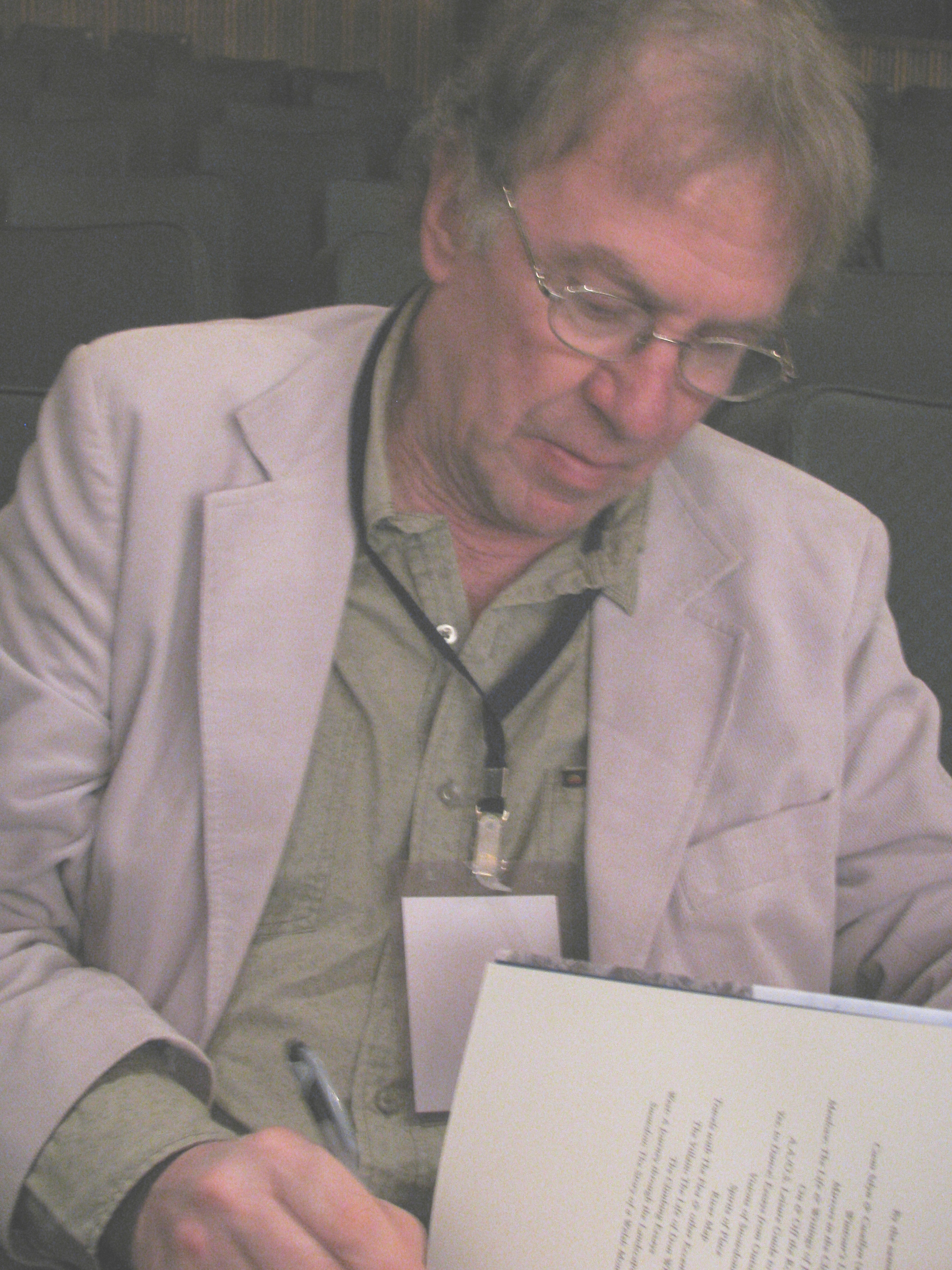
Jim Perrin (Photo: Shyam G Menon)

Jim Perrin (Photo: Shyam G Menon)

Core to the world of mountaineering and aside from their lasting partnership, Shipton-Tilman are remembered for a couple of other reasons. First, they are among the last classical explorers of the Himalaya and the exploration of a route to Nanda Devi was one fantastic story. Second, while the mountaineering style between the great wars of the twentieth century endorsed both the ideals of empire and climbing in military style-expeditions, this twosome ventured forth in lean teams, interacted with the local people and lived off the land. Today we call such lean climbing – alpine style ascents. The British mountaineering establishment of the days when Shipton-Tilman climbed couldn’t gauge the potential impact of their style, till fault and criticism progressively caught up with the practice of giant expeditions. As empire faded, so did the reverence for old siege and assault styles. But Shipton-Tilman lived on as `alpine.’ From a writer’s perspective, these two men pose a unique challenge. Despite books they wrote and books about them, there is little providing insight into their formative years. In their accounts, both men don’t indulge this angle. In reality, Shipton’s childhood and youth are relevant to understand him as is Tilman’s military experience during World War I. One took his chances with women; the other was called misogynist. Jim tries to explain the two characters well, with detailed research and at times, educated guess based on personal knowledge. For instance – he knew Tilman.

After approximately a third of the book read and the rest skimmed through to confirm its flavour, Jim Perrin’s book came across as a study. It is not the typical climbing story. The narrative of the Shipton-Tilman climbs is already out there. Jim’s is a writer’s journey into their separate stories, their separate characters, their association as a team and what they possibly meant in their writings (Jim puts it in perspective). It is also therefore a book based on many other books. So, more than climbing, it is literature and scholarship, a valuable insight into the greatest partnership in mountaineering. According to Jim, the book had been thirty years in the making. Asked why he restricted himself to writing on British climbers, he said that he preferred to write on subjects he knew. To me, that’s one more reason as to why Jim’s book matters.

When we finished chatting and it was time for lunch, I recommended a well known upmarket restaurant in Colaba. He agreed to it but then asked, “ Can I get aloo paratha?’’ So we ended up in a decidedly less expensive place, filled with chatter, tea and Indian food. Days later as I started reading Jim’s book, I noticed how it began with deep appreciation for the aloo paratha and tea he had enjoyed, at a dhaba near Gaumukh.

(The author, Shyam G Menon, is a freelance journalist based in Mumbai)

INTERVIEW WITH ADRIEL CHOO

Adriel Choo (Photo: Shyam G Menon)

Adriel Choo (Photo: Shyam G Menon)

Adriel Choo of Singapore was winner in 2013 and 2014 of the Master’s Round at the annual Girivihar Climbing Competition in Mumbai. The 25 year-old has been a member of Singapore’s national team. His best performance so far has been securing gold and bronze at the ASEAN Climbing Circuit and the 26th SEA Games in 2011, respectively. At world level competitions his best standing to date has been 11th place at the 2012 IFSC World Championships in Paris.


Adriel agreed to be interviewed for this blog.


Excerpts:   


When did you start climbing? What sustained your interest?


I started climbing in 2006 during my junior college days. I was first attracted to the “wow” factors of climbing, seeing professionals jumping around and doing unbelievable things on the walls and I wanted to be just like them. After a few years I began to see that this sport is a journey of discovery, understanding the whole dynamics of my body’s movement and how it reacts to different moves and positions. This led to my quest to become a new and improved climber every day.


How long did it take you to make it to the national squad? How often do you travel overseas to compete?


I first represented the state at the Asian Youth Championship held in Singapore in 2007. However, my participation there was nothing more than mere exposure to the regional scene. I truly began representing Singapore as a national athlete when I was training for the 26th SEA Games and the Asian Climbing Circuit in 2011. I mainly do bouldering and speed climbing where my interests and abilities are. I do not compete overseas regularly due to lack of financial support. But I try to join at least one major competition a year to see how far I can push myself in the international scene.


These are some of the overseas competitions I have been to in recent years:


  • IFSC Climbing World Cup 2013 (China and Korea)
  • IFSC Climbing World Championship 2012 (Paris)
  • 26th SEA Games 2011 (Indonesia)
  • ASEAN Climbing Circuit 2011 (Malaysia)
  • Indonesia Open X-Sport Championship (IOXC) 2011 (Indonesia)


Do you have a regular coach?


I do not have a regular coach. Everything is self-managed from head to toe. I do my own research for training knowledge and measure my progression against stronger others.


If an aspiring competition climber asks you what are the key aspects to focus on in training, what would you say?


Understand your body’s movements and identify your strengths and weaknesses. I believe in climbing with your strengths and working on your weaknesses to support your strengths. For example, I am particularly weak in my crimp-strength. I know I am barely strong enough to sustain considerable time on crimps unlike other climbers and so I always try to get over it fast and focus more of my energy on completing the rest of the boulder problem with my strengths in dynamic and coordinated movements.


How important is it for a competition climber to keep participating in competitions at home and overseas? Does the relevant training include getting familiar with competitions through frequent exposure to the format and learning to be comfortable with it?


That is definitely so.  Many athletes get stage fright whenever they are up on the wall because they are afraid of failing in front of everyone watching the competition. However, we must recognize that failure is part of the whole competition package and you can only get better if you learn from your mistakes and not go into every competition worrying about the same things. Take for example speed climbing. It is a fixed format and athletes training on it would have done it thousands of times and can even do it with their eyes closed. However when you shift them from training ground to a world cup scene, everything changes. The audience is larger; the weather is different, how you feel when climbing is different, your warm up regimes might need to be tweaked – the list goes on. This applies to bouldering and lead climbing too. More exposure will keep the athlete comfortable with new but similar environments and it will work to the athlete’s advantage.


You mentioned how failure is part of the competition package and how climbers must learn from their mistakes. Sitting in the audience, one sees climbers getting frustrated when problems can’t be solved. How do you personally cope with fear of failure and frustration?


Being unable to solve a boulder problem can indeed be frustrating. How you handle that frustration is something different and needs practice. You can channel that ferocity into your strength; you see this whenever somebody screams at the crux of a boulder problem. Yet he is focussed and alert in all aspects and not consumed by the frustration. This needs practice.


Adriel at the 2014 Girivihar Climbing Competition (Photo: Sharad Chandra)

Adriel at the 2014 Girivihar Climbing Competition (Photo: Sharad Chandra)

What is your normal day like in Singapore? Do you climb every day? Is there a training pattern you follow?


I am still studying and so my training days can get pretty erratic. Generally, I will have 3-4 sessions a week, 1-2 hours of focused training per session. I go to the climbing gym knowing what I need to accomplish for the day. Time is really short sometimes and you need to be disciplined enough to do only what you need to do. Before competition season I focus on getting physically fit and supplement it with injury prevention exercises so that my plans to train are not hampered by injury. During competition season I translate my physical fitness to climbing fitness by accumulating greater volume of climbing, making only good attempts on every boulder problem and learning from my mistakes.


Unlike many countries that have been traditionally home to climbing through rocks and mountains in their backyard, Singapore is very small in size. It has a population of roughly 5.3 million people (source: Wikipedia) and is highly urbanized. Can you tell us something about the Singapore climbing scene – how is it structured; what is the scale of infrastructure available? How is the national team chosen in Singapore?


We have around five climbing gyms in Singapore and a very, very small natural rock area at a place called the Dairy Farm. Because we lack natural rock to climb, most of the training people do are on plastic. Onsight Climbing Gym is the biggest climbing gym in Singapore to date, with full size competition walls for lead, speed and boulder. We have about ten boulder competitions and less than five high wall competitions (both lead and speed) on a national level, annually. We used to have a league based on points system similar to the one used at the world cups but that is no longer present. Regarding the national team, we do not have a fixed team right now due to complexities. Nonetheless, everyone is focusing on their own training and development.


Was the league based on points system helpful to grow climbing and competition climbing? Why was it discontinued?


I believe the league in Singapore was used to help the community identify consistently well performing athletes and perhaps act as a platform to push forth a case to the federation or other organizations to send athletes overseas for competitions. However although it might spur on budding climbers to push standards and match up with the top athletes, I believe the system tends to benefit the competitive community more than the general climbing community. The general climbing community is more leisure-driven and perhaps another system that involves group benefits might be better. 


When it comes to climbing natural rock or attempting long routes on natural rock, where do you go to? Hampi in India is known as a bouldering location internationally. Is that a place you would like to visit sometime?


I have been only to the Grampians in Victoria, Australia. Rock trips overseas don’t come often because they are expensive but I hope to go to other places to attempt some top tier boulders if I can. I have heard of Hampi and would like to visit it one day of course! Hopefully it will happen sooner.


Can you give us your estimation of the Asian climbing scene – which countries are the power houses in climbing today going by the results reported at the various Asian competitions?


There are a few outstanding athletes from the South East Asian climbing scene, namely from Indonesia, Malaysia, Thailand and Singapore.


What keeps you going in climbing – the fun, the competition or something else?


I love climbing competitions and I always look forward to joining one! The fun comes when each attempt really matters. Completing a boulder problem in just one attempt is truly satisfying!


(The author, Shyam G Menon, is a freelance journalist based in Mumbai. Thanks to Sharad Chandra for allowing the use of a photo taken by him.)

BEYOND GANESHA (UPDATE)

Kilian at work on the route next to Samsara (Photo: Shyam G Menon)

Kilian at work on the route next to Samsara (Photo: Shyam G Menon)

On February 25, after the three part series `Beyond Ganesha’ was published on this blog, Kilian Fischhuber responded to a mail I had sent earlier.

I had asked him whether he had a rough idea of the grades for the two new routes he had created. He said, “ I have tried both routes. The left one seems possible but I think we need Adam Ondra for it…. The other route, next to Samsara, I was close to doing it but in the end I didn’t. I am not absolutely sure about the grade. This comes usually during the process of trying and is normally decided after the climb has been done. But I think it will be around 8c+.”

The “left’’ route Kilian cites, is the route shown in the photo featuring Kilian that you find in part three of the series.

As Kilian’s mail shows, for now Ganesha remains the hardest sport route in India. Initial estimates of Ganesha’s grade too had been around 8c+. It was fixed at 8b+ after being fully climbed.

The potential for routes harder than Ganesha seems to be there in Badami.

(The author, Shyam G Menon, is a freelance journalist based in Mumbai)

BEYOND GANESHA – PART 1

Climbing in Badami (Photo: Shyam G Menon)

Climbing in Badami (Photo: Shyam G Menon)

This article in three parts is a composite of two distinct narratives, one in normal text and the other, in italics.

The story of Badami is as layered as its sedimentary rock.

If you are used to the Himalaya or even the Western Ghats, then, on the approach to Badami from Hubli, you wouldn’t expect anything that hints `hill.’ The world is flat and open to the sun. Vegetation is the stuff of hardy scrubs; large fields, still standing patches of sunflower, dry sugarcane and the occasional tree. Massive bony oxen pull carts; buffalos saunter by, dogs have their tongues hanging out trying to stay cool. It is hot. Sun burnt farmers, old women with dry wrinkled skin. Tractors join the traffic. Dust rises easily. It is January. I can imagine what peak summer would be, here. More important for climber, there is not an iota of hill anywhere. Then at one bus stand en route, you see an isolated rocky outcrop next door. Slowly, as the bus moves on, you start seeing similar isolated outcrops, at best a long wall and all no more than a few hundred feet high. Reach Badami and the rock walls there are high but not tremendously so. They are beautiful. Badami’s story lay in the subtext. If the Himalaya is famous for its marine fossils, dating back to the ancient Tethys Sea, then here, it is the other extreme.

According to Dr Shrinivas V. Padigar, Head of the Department of Ancient Indian History and Epigraphy, Karnatak University, Dharwad, the rock at Badami contains no fossil record as it dates back to the Precambrian period, or simply put, a time when no complex life forms existed. Accounting for roughly 7/8th of Earth’s history, the Precambrian period ended around 540 million years ago. Respect for Badami’s rock thus stems from a dimension different from physical properties. It is frozen time. To imagine such antiquity, you should take a peek at the shape of continents and where India was in the Precambrian period. If the world’s highest mountains – the Himalaya – were formed after India drifted at a speed that is superfast by continental drift standards and smashed into the Eurasian plate, then the India of the Precambrian period hadn’t dreamt the Himalaya. India’s northward drift started only 140 million years ago. The Himalaya, the child of India’s collision with Eurasia, is much, much younger.

Simply put, the rock at Badami is OLD.

Badami and Hampi attract rock climbers.

Both places are in Karnataka, South India.

They are separated by 146 kilometres, small enough for climbers fuelled by passion, to cover for a taste of both worlds. Hampi is strongly identified with bouldering, the art of climbing boulders with little gear – just a pair of climbing shoes, crash pad to cushion one’s fall, chalk to keep the hands sweat-free and a friend to `spot’ you. Badami has bouldering plus a wealth of longer routes for sport climbing, which entails rope, pre-fixed bolts in the rock, more climbing gear than used in bouldering and definitely a second climber to `belay.’ Badami offers beautifully weathered sandstone (we call everything here sandstone but as geology shows, it is more complicated). Badami’s stone is kind on climbers’ fingers. Climbing in Hampi is done on granite. It shreds skin.

Badami has several popular climbing areas. From past visits, I remember crags named Indian Alley, Ganesh Plateau, Temple Area and Badami Deluxe. Today, at any one of these known climbing spots, you will see several bolted sport climbing routes. N. Ravi Kumar, who hails from Bangalore and is currently Director of NOLS India, was among the early climbers frequenting Badami. According to him those days, there was nothing on the approach to the Badami Deluxe and Temple Area crags, save a house and the small facility of the General Thimayya National Academy of Adventure (GETHNAA). Where several shops and houses now stand there was nothing. All the initial climbing was traditional (trad) in style, using removable protection as opposed to permanent protection. “ There were no bolts then,’’ he said. It changed with sport climbing’s ascent in India. One of the great attractions of sport climbing is that thanks to prefixed protection (expansion bolts), climbing lines are possible on rock faces otherwise devoid of adequate features to host trad gear (an overview of the various styles in climbing can be had from the September 2013 post Climbers in the Big Wall Mirror [Part Two]. It can be accessed either through the blog’s archives or simply click on this link: https://shyamgopan.wordpress.com/2013/09/).In turn, that makes moves in sport climbing pretty difficult because tackling potentially sketchy rock faces is built-in into the ethos of this discipline.

The rock face hosting Ganesha (Photo: Shyam G Menon)

The rock face hosting Ganesha (Photo: Shyam G Menon)

In late January 2014, as I stood in Badami facing the orange glow of its sandstone rock walls, my attention was on a rock overhang far to the right near the Temple Area crag. Bit over one kilometre from the local bus depot, tucked into the curve of the rock was a sport climbing route called Ganesha, sometimes, Ganesh. In climbing, routes have names. Graded 8b+ in terms of climbing difficulty on the French scale, Ganesha was right then the toughest among known, graded sport climbing routes in India. Ganesha was bolted some years ago by Alex Chabot, a champion climber from France. Its first ascent happened probably in 2011; the credit went to French climber Gerome Pouvreau. In Rohit Chauhan’s guidebook to climbing in Hampi and Badami, Ganesha’s grade was speculated as 8c or 8c+. This publication was the first guidebook for this area. Rohit recalled it as a rather lonely endeavour. Encouragement and support came from just a handful of people. A few overseas friends and Delhi-based climber-businessman, Mohit Oberoi, backed him. At that time however, Ganesha was yet to be fully climbed. Rohit said in a recent email from Spain that he had to count on estimation by others familiar with the Ganesha project, for a sense of the new route’s grade. As often happens in climbing, there is a gap between the perception of a route in project stage, and reality. The right grade is a consensus among climbers who climbed the route fully. Multiple ascents over a period of time then lower the grade. 8b+ is what Ganesha earned after first ascent; it is what it still has for grade.

The rocky hill dominating Badami’s landscape is part of the ` Kaladgi Series’ stretching from Kaladgi to Gajendgragad – that’s what I gathered locally. The most ancient of the rocks in this region is probably the batch of sedimentary rock in the vicinity of Kuligeri Cross, a place that you pass by en route to Badami. For a lay person like me seeking to know Badami, the age of the rock is however only one half of the fascination. As climber, the Badami rocks are my favourite. Something about them matches the enjoyment from climbing and the engagement with rock, I seek. But I am no geologist. I don’t know how to distinguish a rock of recent origin from Precambrian. My perception as I climb is tactile; touch and feel. Badami’s rocks are like fine sandpaper yet firm. Plus, they are wonderfully eroded into all sorts of cuts, grooves, pockets and jug holds, not to mention – slippery smooth in some areas. In popular lore, the agent that caused all this – from sedimentation to sculpting – is said to be water with one theory being that this area was below water once. Today’s Badami is quite inland from the sea (it is approximately 250 kilometres by road from Goa on India’s west coast); it is also 1923 feet up from sea level. There is even a rock arch of sorts, the remains of powerful weathering, some say by water – you can see its scaled down model in the local archaeological museum. How and where do we position water in Badami’s geological history?

I contacted Dr Navin Shankar, a geologist now working as Research Specialist with Excelsoft Technologies Pvt Ltd, an e-learning company in Mysore. According to him the Badami rock formations date back to the Proterozoic era, around 1.6 billion to one billion years ago. Within the Precambrian (4.6 billion years ago to about 540 million years ago), this would qualify to be in the second half. The Proterozoic period is divided into three stages. The time of formation of the Badami rocks corresponds roughly to the middle stage – the Mesoproterozoic, noted as the first age from which a fairly reliable record of the Earth’s geological history survives. Wikipedia describes this period as still poorly understood despite critical changes to the chemistry of our seas, the sediments of the earth and the composition of air. It is also the dawn of life, the age of development of sexual reproduction in micro organisms, very important for complex life forms yet to come.  And if you thought ` life’ here means life as we know it, please note: oxygen levels of the time may have been about one per cent of today’s and slowly rising. It was a very different Earth.

Badami as seen from the top of the adjacent hill (Photo: Shyam G Menon)

Badami as seen from the top of the adjacent hill (Photo: Shyam G Menon)

The north and north-eastern segments of peninsular India had witnessed mountain building activity in the Mesoproterozoic period. This involved subduction of the margins of plate boundaries complemented by intraplate extensional tectonics resulting in the formation of a series of intracratonic basins, namely the Kaladgi formation. As per information on the Internet, intracratonic basins are a type of sedimentary basin. They form within stable continental interiors. They are typically shallow, circular in shape and have long histories of relatively slow subsidence. Over time, the intracratonic basins were overlain by sedimentary rocks and sediments. “ The rocks from the Mesoproterozoic age in the Badami area have been categorized under the Kaladgi Supergroup, further classified into Badami and Bagalkot groups,’’ Dr Shankar said. The Badami group comprises horizontally bedded multiple sequence of arenite and shale with limestone in small amounts. These sedimentary rocks and sediments are found in a large area of horizontally bedded ferruginous arenites from the north-western tip of Raichur district to Bijapur, Belgaum and beyond into Maharashtra state. The Bagalkot group consists of two mega cycles of repeated sequence of argillite followed by chemogenic precipitates predominantly of sandstone and dolomite with quartzite and conglomerate forming the base.

Standing in today’s Badami, it is hard to visualize this geological story. It is flat all around with a few rocky hills. Where are the sedimentary basins? To notice the ancient basins, which can be several kilometres long and wide, we have to get a bird’s eye view; a topographic picture of the region. In that, Dr Shankar said, the basins emerge. Further, some basins are now below the layers accumulated on top. By nature basins are depressions and water collects in depressions. The basins may have held water in the ancient past contributing to the submersion story. However in the vast scale of geological time, water isn’t sole agent forming, compacting and sculpting sedimentary rocks. Theoretically, wind and glaciers also perform that function although glaciers had no role in Badami. Into this, mix a later development. Badami now stands on the Deccan plateau. This large plateau formed around 60-70 million years ago through volcanic eruptions lasting several thousand years, some say, when India drifted over the Reunion Hotspot. The Deccan is a massive feature, much younger than Badami’s rocks but one that adds to the geological influences a scientist must sift through to understand still older times.

(……TO BE CONTINUED)

(The author, Shyam G Menon, is a freelance journalist based in Mumbai.)