PATTERNS

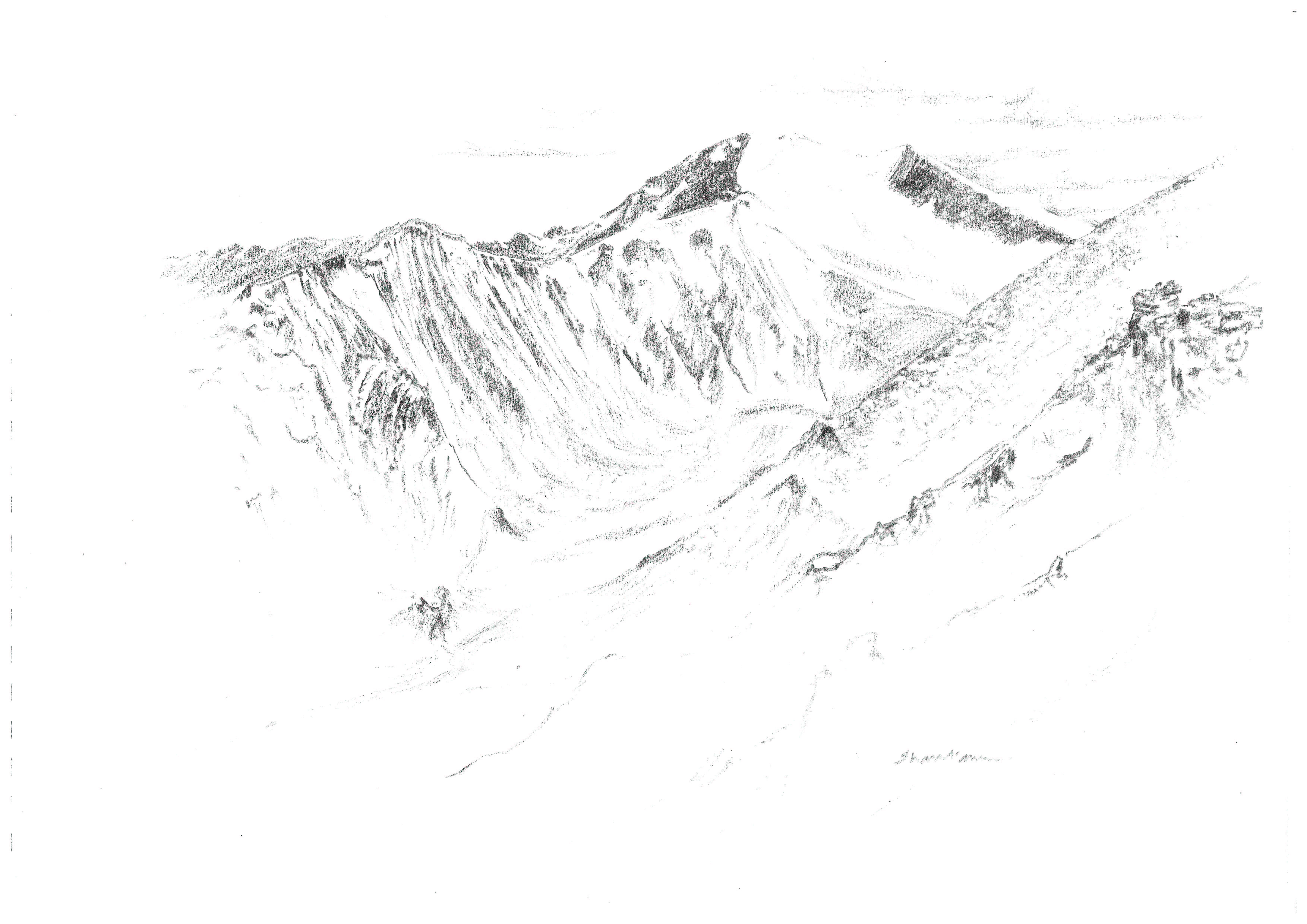
Illustration: Shyam G Menon

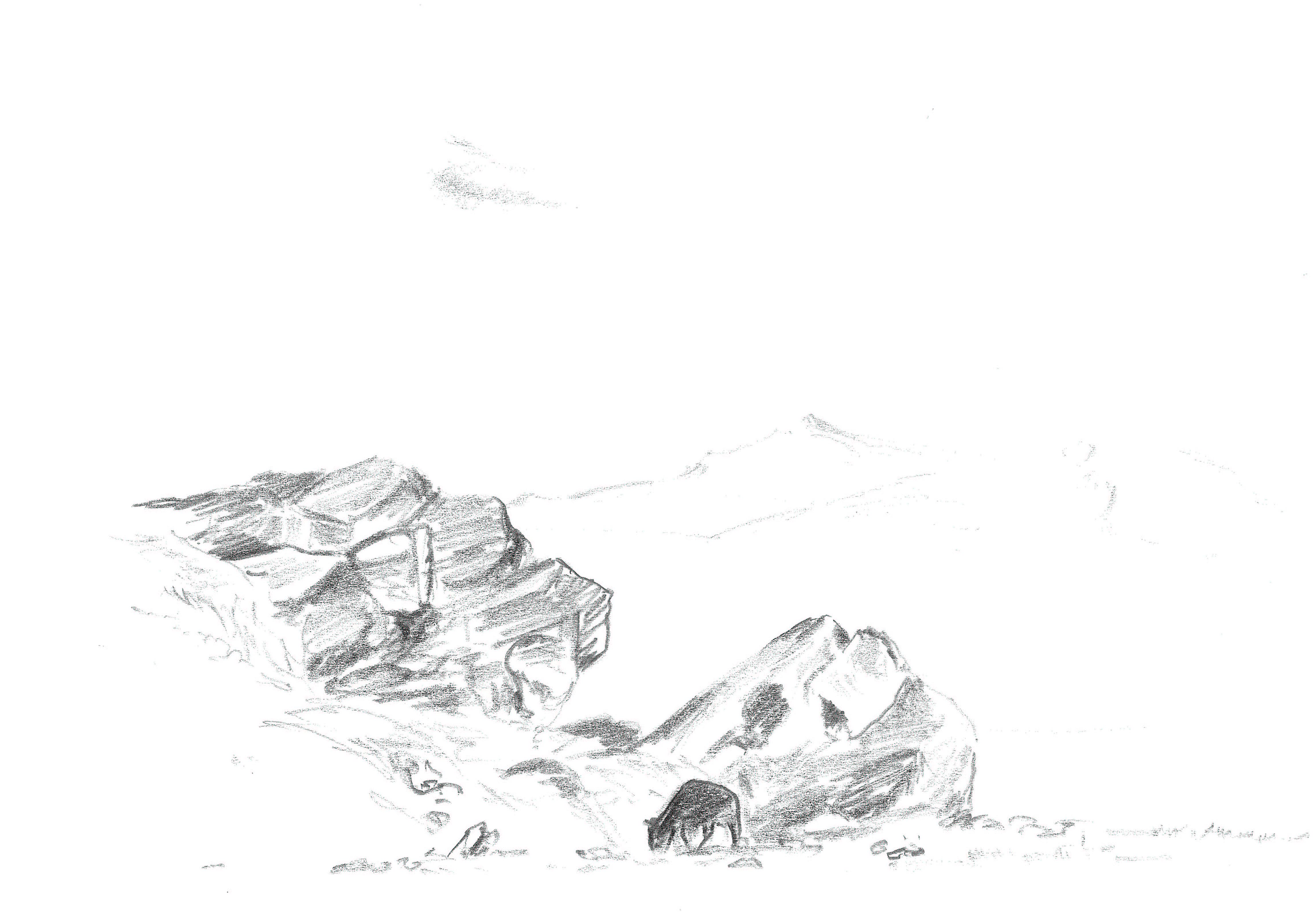
Illustration: Shyam G Menon

Article on Philip Earis and his many interests: science, change ringing, stepwells, solar lighting, running and a proposed seaside promenade for Mumbai.

The caretaker of the premises appeared hesitant.

We wanted to see the bells atop the church tower. We had read about them, the subject we were writing about knew of the bells and had mentioned it. Effort made to go up the tower and see the bells may aid the writing – so we felt. We left it at that. If we are meant to see the bells, the universe will make it happen.

The bells were a unique lot. According to reports, they may have been originally meant for a British tradition called ` change ringing.’  The bells don’t work anymore the way they were intended to. Some crucial parts were never installed; some of the components have jammed through disuse. Of eight bells in there, only one has been operated in recent times. In olden days, church bells served two functions – they marked the passage of time; they brought the devout to church. Suspended high above ground in a tower, the sound of the bells was expected to travel far. But there was a limitation. Although the bell was at a height, its mouth typically faced the interiors of the tower with the result that the sound it produced wasn’t travelling out effectively. Wikipedia says change ringing started in England in the early 17th century following the invention of the `full-circle tower bell.’ This innovation allowed bells to swing almost 360 degrees from a fulcrum. The mechanism allowed the mouth of the bells to rotate up; a chime produced so traveled out from the tower. Each bell produces a different sound / strike note. What this note is depends on the size, shape and metallurgy of the bell. Every time a clapper hits one particular bell, the strike note will be the same.
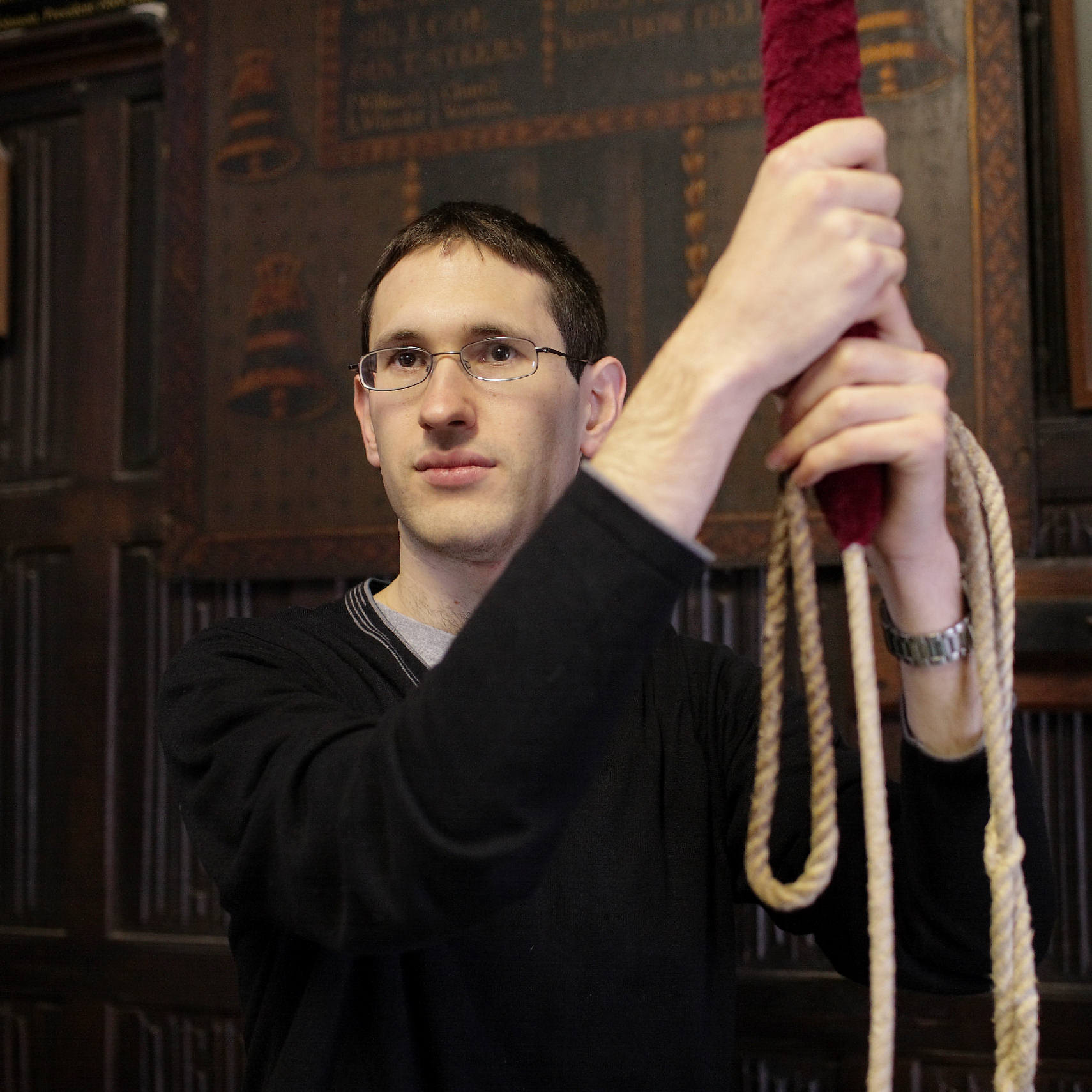
Philip in the ringing room of the 12 bell-tower in Cambridge, UK (Photo: courtesy Philip Earis)

Philip in the ringing room of the 12 bell-tower in Cambridge, UK (Photo: courtesy Philip Earis)

Change ringing is based on a sequence of permutations of different notes; thus a composition involving eight notes, requires eight bells. Hanging from the centre of a bell, the clapper takes a very small – yet measurable – period of time, to hit the bell’s metal side. If the bell is big, located up in a tower and rung using ropes from below, then this time gap between intent in the head and actual chime must be mastered, particularly if you are creating a pattern of sounds with others ringing other bells in the tower alongside. Imagine maintaining the sequence for hours. That is the challenge at the heart of change ringing. Besides mouth-up position allowing the chime to travel far, the full-circle tower bell also provided more refined control over chiming. An idea of long aural sequences played with bells, so far imagined in the head began to manifest physically as change ringing. Change ringing is also done with smaller hand held bells. Videos of change ringing available on the Internet, show people working with bells of various sizes, the ringers knowing exactly which bell and what chime to produce for given sequence / composition. It is an activity seemingly imbued with patterns; mathematical patterns.
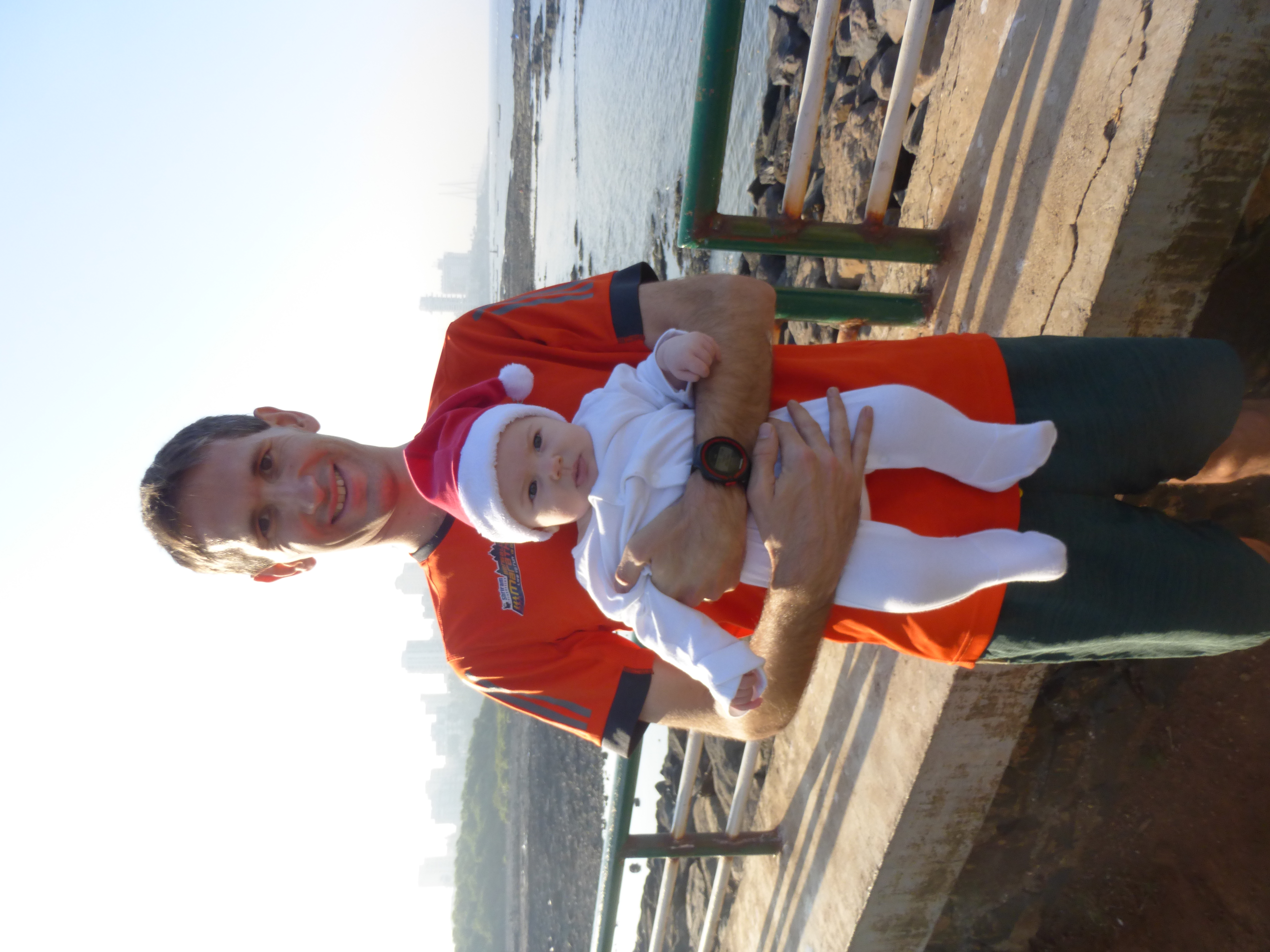
Philip with his daughter at the Joggers Park in Bandra, Mumbai; a Christmas Day.

Philip with his daughter at the Joggers Park in Bandra, Mumbai; a Christmas Day.

England continues to be the centre of the change ringing tradition. In tune with wherever the British went, traces of change ringing can be found across the world. Some time back, an Englishman, staying at Bandra in Mumbai, visited the church we were at and went up the tower to inspect the bells. “ Yes, yes, I know him…a tall, thin person. They just had a baby,’’ the caretaker said. As of June 2016, Philip Earis was part of a small team that holds a world record in change ringing – the longest continuous bell ringing performance. It was done in England, with hand held bells. Philip was born in Huddersfield, a town in West Yorkshire, England. Wikipedia pegs the population of Huddersfield at 162,947 as per 2011 census. The son of a vicar and a teacher, he majored in Physics from Cambridge. “ I was enjoying science broadly, not so much in the narrow aspect,’’ he said, a morning at his apartment in Bandra. Following his studies, Philip went into science publishing. “ My role was to network with scientists and have them write for the journal I was working for,’’ he said. Philip managed a portfolio of seven journals. “ I was never into sports. I didn’t enjoy physical education in school. I did a bit of cycling – that’s all,’’ he said. Philip did try running. But he would get exhausted. Eventually a friend advised: take it easy, take up running slowly. About five to six years ago, he started running regularly, covering roughly six kilometres daily in Cambridge. What brought out the runner in Philip was probably the similarity between change ringing and rhythmic running. Both Philip and his wife, Jennifer (they met as students [she studied mathematics] in Cambridge; they got married in 2011) were into change ringing. The act of ringing a bell repeatedly with perfect timing and in harmony with others to create an enduring aural pattern requires discipline, focus and empathy for a meditative state of mind. The mind settles into a pattern punctuated by periodic change to patterns. Running is not radically different from this. Striding is a pattern; the mind visualizes a given distance overall and alters the patterns you settle into accordingly. And at the back of it all, as with sustaining the effort of bell-ringing for hours is the challenge of sustaining the running for hours over a long distance. It is mind over matter. Both are mind games. Besides Philip, another person from the world record holding-change ringing group is into running. Yet another is an avid hill walker.
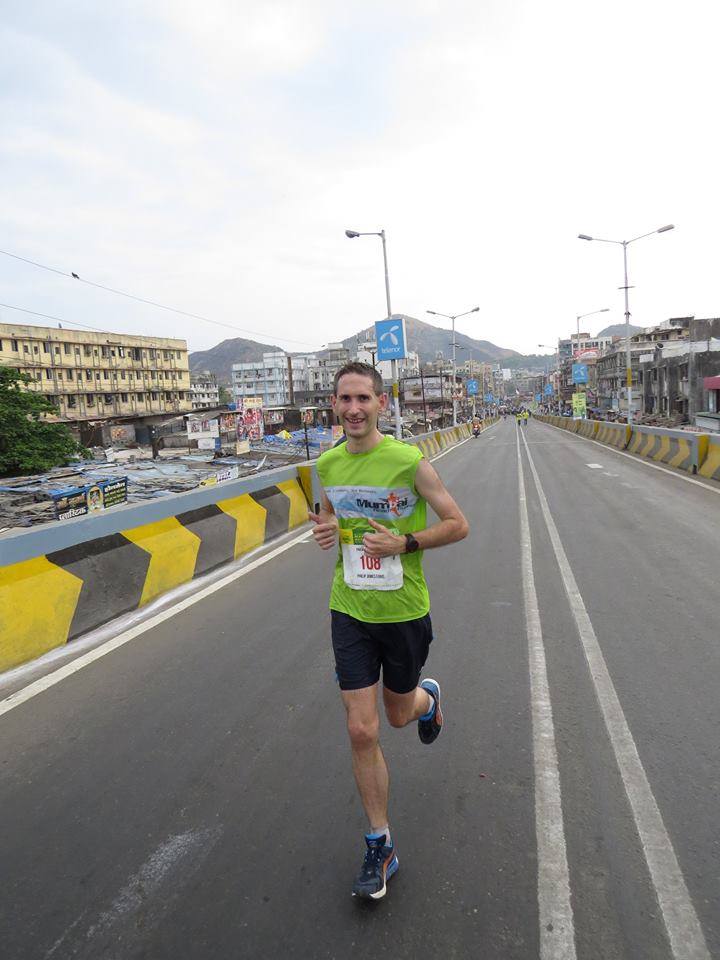
Philip running the Vasai-Virar Mayor's Marathon (VVMM) near Mumbai (Photo: courtesy Philip Earis)

Philip running the Vasai-Virar Mayor’s Marathon (VVMM) on the outskirts of Mumbai (Photo: courtesy Philip Earis)

In 2013, Philip and Jennifer shifted to Mumbai, where Jennifer would start an actuary practice for PriceWaterHouseCoopers. Philip left his original publishing job. But he had in place his contact with scientists and an appetite to know better, scientists in India, even attempt solutions for local problems that he came across. “ From the outset itself, we wanted to be immersed in India. We didn’t want to be surrounded by a corporate or expat bubble,’’ he said adding, “ coming to Mumbai with a fresh pair of eyes has been helpful. I guess people have an unquestioning attitude at times. A fresh pair of eyes that way can be helpful.’’ One of the areas he got involved in was solar energy. Another area of interest was mapping the existence of stepwells in India and creating a web atlas for them (www.stepwells.org). A May 2016 article in Mid-Day said that in eight months, Philip was able to collate information on about 300 stepwells. He estimates that their total number in India should be around 1500; many of the known ones are in a state of neglect. The Archaeological Survey of India (ASI) has reportedly preserved only 46. Stepwells worked primarily as reservoirs. But given the temperature at the bottom of a stepwell was sometimes up to six degrees lower than at the top, they were also meeting places for people. Over time, depleting water table caused by overuse of ground water and ruin through neglect caught up with India’s stepwells. Many have gone dry. The state of neglect increased under British rule; they considered water from stepwells to be unhygienic.
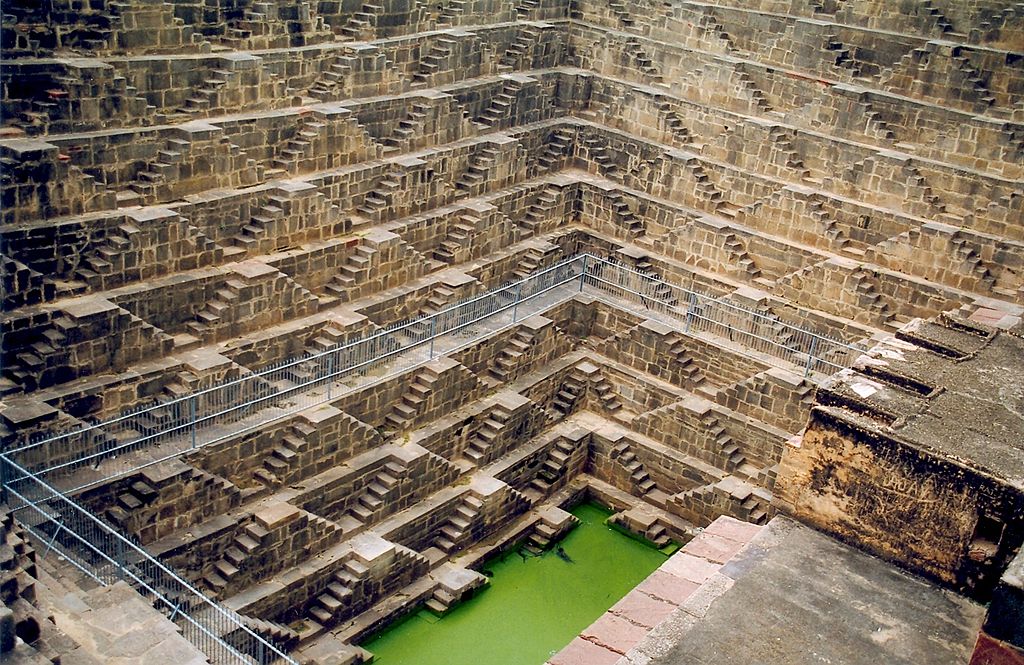
The Chand Boari stepwell in Rajasthan. This photo is used for representation purpose only (Photo: Doron, commons.wikimedia.org)

The Chand Baori stepwell in Rajasthan. This photo is used for representation purpose only (Photo: Doron, commons.wikimedia.org)

While in the article Philip has described his interest in stepwells for the Indian solution to an Indian problem (water scarcity) they are, in the context of change ringing, it is hard not to ignore the precise mathematical architecture and repetitive visual patterns that characterize a typical Indian stepwell. Change ringing generates mathematical patterns in the aural dimension. Philip described in a nutshell the change ringing world record he was part of: There were three participants, each ringing two bells, so six bells in total. With six bells, there are 6*5*4*3*2*1 = 720 different sequences where each bell rings once and once only (`permutations’), for example: 123456 or 214365 or 365241 etc. An `extent of a method’ is a way of arranging the sequences such that all 720 permutations appear once and once only. In the record breaking-performance, we rang 100 different extents of methods. According to the historical requirement for change ringing peals, all methods have to be strictly committed to memory beforehand (no memory aides are allowed) and the whole performance must be rung continuously without any hesitation or break. So the big challenge was to continuously recall a memorized sequence for 24 hours at a fast pace and without any breaks. 

On the first Sunday of every month, the running group, Mumbai Road Runners (MRR), have their monthly half marathon from Bandra in the suburbs to NCPA in South Mumbai. It is usually well attended. Slow, struggling runners, the authors choose to start earlier than the rest. The first of the runners coming from behind typically catch up with our huffing and puffing selves on Worli sea face. Lost to their rhythm, they overtake smoothly and proceed on, leaving writers in the dust. Among them would be Philip, now recognized as one of the finest amateur distance runners in the city, in his age group. His first race in Mumbai was ` Footsteps for Good,’ a ten kilometer-run organized by the British High Commission. In 2014, he ran his first Standard Chartered Mumbai Marathon (SCMM), which was also his first full marathon. “ The first half was fine, the second half was messy. I had to do a bit of walking,’’ Philip said. He then ran the half marathon in Bengaluru in 2014, repeated the SCMM full marathon in 2015, ran the full marathon at Vasai-Virar in 2015 and the full at SCMM in 2016. In between he also ran the Mumbai Ultra, his first attempt at distances exceeding the full marathon’s length. “ I would like to run some of the longer distances,’’ he said.
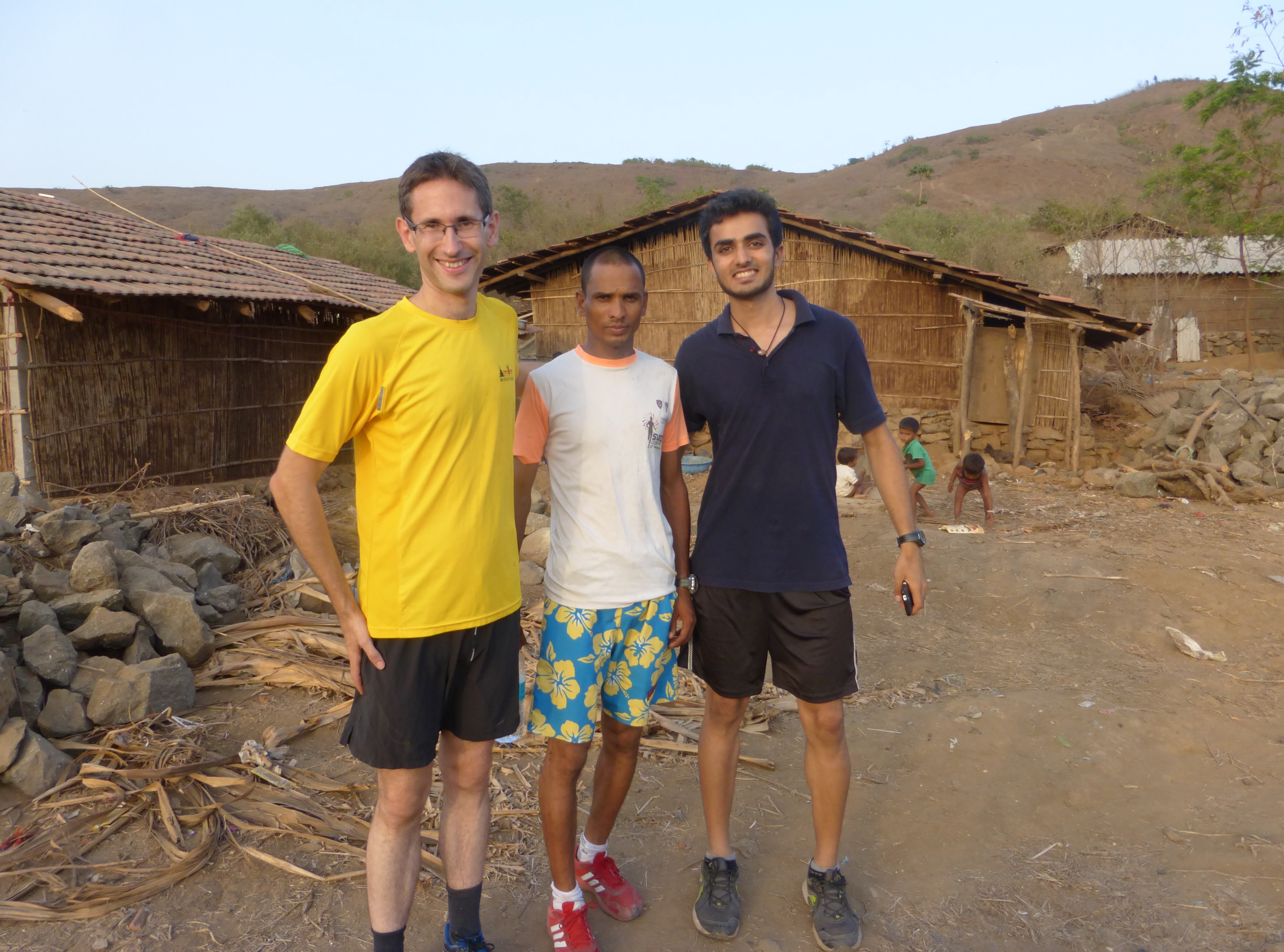
Philip (left) with Kamlya Bhagat (centre) and Aditya Shroff at Kamlya's village (Photo: courtesy Philip Earis)

Philip (left) with Kamlya Bhagat (centre) and Aditya Shroff at Kamlya’s village (Photo: courtesy Philip Earis)

Fanaswadi (aka Fanaswadi-Valap) is a small dusty settlement some distance from Panvel on the outskirts of Mumbai-Navi Mumbai. In the summer of 2015, we reached Fanaswadi to meet Kamlya Bhagat. A runner hailing from poor circumstances (in 2016 he won the SCMM half marathon in his age group), he was financially challenged. During the course of the conversation, he mentioned how other runners had helped with shoes and registration fee for races. One such intervention by fellow runners could be seen in the space outside his small house and the trail leading up to it – a series of solar powered lamps. Fanaswadi didn’t have electricity. Solar lamps made sense. That was where we first heard of the English runner dabbling in solar energy; subsequent enquiry yielded the name – Philip Earis. A July 2015 article in DNA newspaper about Philip further pointed out that his work had brought lighting to slums in Worli, the Bandra Reclamation area, Gilbert Hill in Andheri and Prabalgad, a village off Panvel albeit in a direction different from Fanaswadi. In the months that followed, Philip’s name would emerge in not only such assistance provided but also in cases of introducing deserving athletes from poor backdrops to Mumbai’s running community. Dnyaneshwar Morgha is an example. Philip described how he met Dnyaneshwar:  I first met Dnyaneshwar at the end of a half marathon in Bandra in December 2014.  I was originally supposed to be running in the race myself, but the day before the race the organizers phoned me up to say regretfully they were disqualifying me, and they feared any non-Indians running could be a safety risk and need extra permission etc.  As the race was taking place near my apartment I went along anyway to watch and cheer on the runners.  The winner was this very small and young runner, who glided along at great speed and seemingly effortlessly. His huge talent was obvious to see, and yet it was also apparent from a quick conversation with him afterwards that he had so much untapped potential – he didn’t have any coaching and wasn’t even really following a training plan.  I tried to get his details but there was some mistake in the phone number, and it took me a further year to finally track him down. Philip believes that India has a lot of talent in distance running but it needs to be discovered and nurtured. Resource crunch aside, an overview of the Cambridge Half Marathon he provided, hints at the difference in running between here and overseas. Cambridge, where Philip commenced his running, had an ambiance conducive for running. Wikipedia pegged the 2011 population of Cambridge at 123,867 including 24,488 students. Having become a regular runner, Philip once participated in the Cambridge Half Marathon. “ Nearly 7000 people took part in it, which is high if you compare it with the total population of Cambridge. What’s more – the average finishing time is under two hours,’’ he said.
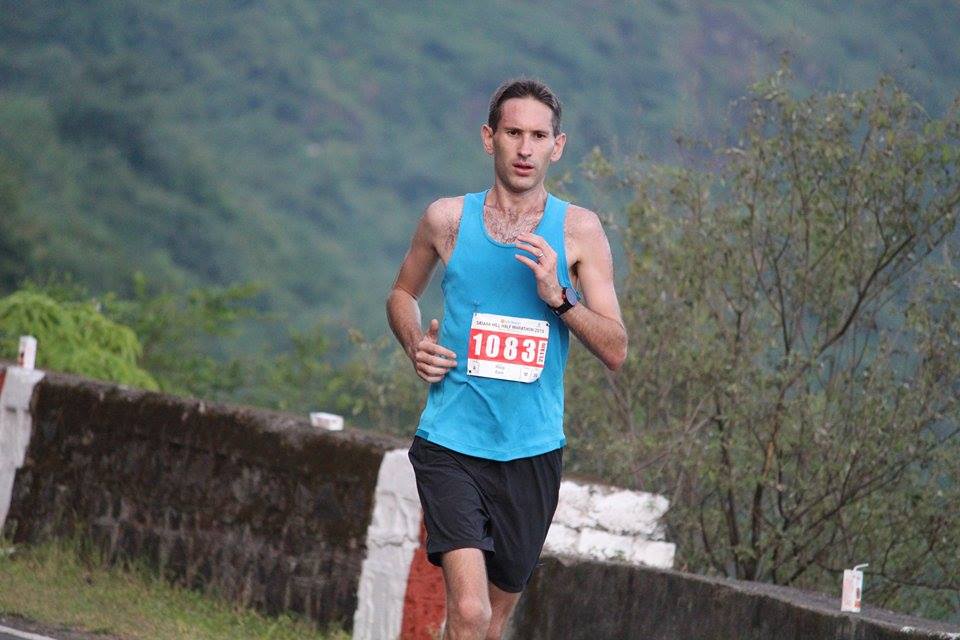
Philip at the Satara Hill Marathon (Photo: courtesy Philip Earis)

Philip at the Satara Hill Marathon (Photo: courtesy Philip Earis)

Following Asia’s largest marathon settling in as annual event, Mumbai has become India’s running city. However, for all that reputation, Mumbai running is despite the city’s congestion and traffic. While SCMM happens once a year, events like MRR’s Bandra-NCPA run (and others of the same ilk) keep the running movement alive. Mumbai is a coastal city. On the map, the route from Bandra to NCPA would seem a run by the sea. In reality it is not so. With several million people in the city and residences, office complexes, apartment blocks and slums packed into limited area you are visibly by the sea at only four spots on MRR’s iconic monthly half marathon. You have a small bit of polluted estuary near Mahim, the Worli sea face, the Haji Ali stretch and finally Marine Drive. Unlike Mumbai, many other coastal cities have successfully maintained seaside promenades. Philip’s “ fresh pair of eyes’’ helped. In league with the Observer Research Foundation (ORF), Philip has a project submitted to municipal authorities for a long seaside promenade on Mumbai’s west coast that would be aesthetic, engaging local communities and open for running, walking and cycling. Called `BayLine,’ it visualizes a 15m-wide, 24km-long pedestrian pathway along the seashore, linking Haji Ali and Versova in the city. The proposal is rooted in the observation that 52 per cent of daily trips in Mumbai are done on foot with pedestrians accounting for 58 per cent of accident deaths – that underscores the need for pedestrian focused infrastructure, which the BayLine is. According to Philip, much of the connectivity for creating this promenade already exists. The onus of seeing BayLine through may now shift at least in part to the local running community (who along with communities residing by Mumbai’s sea coast, walkers and cyclists would be among stakeholders), for Philip Earis and family are due to return to England by mid-2016. MRR has dedicated the Bandra-NCPA run of June 5, 2016, to Philip.
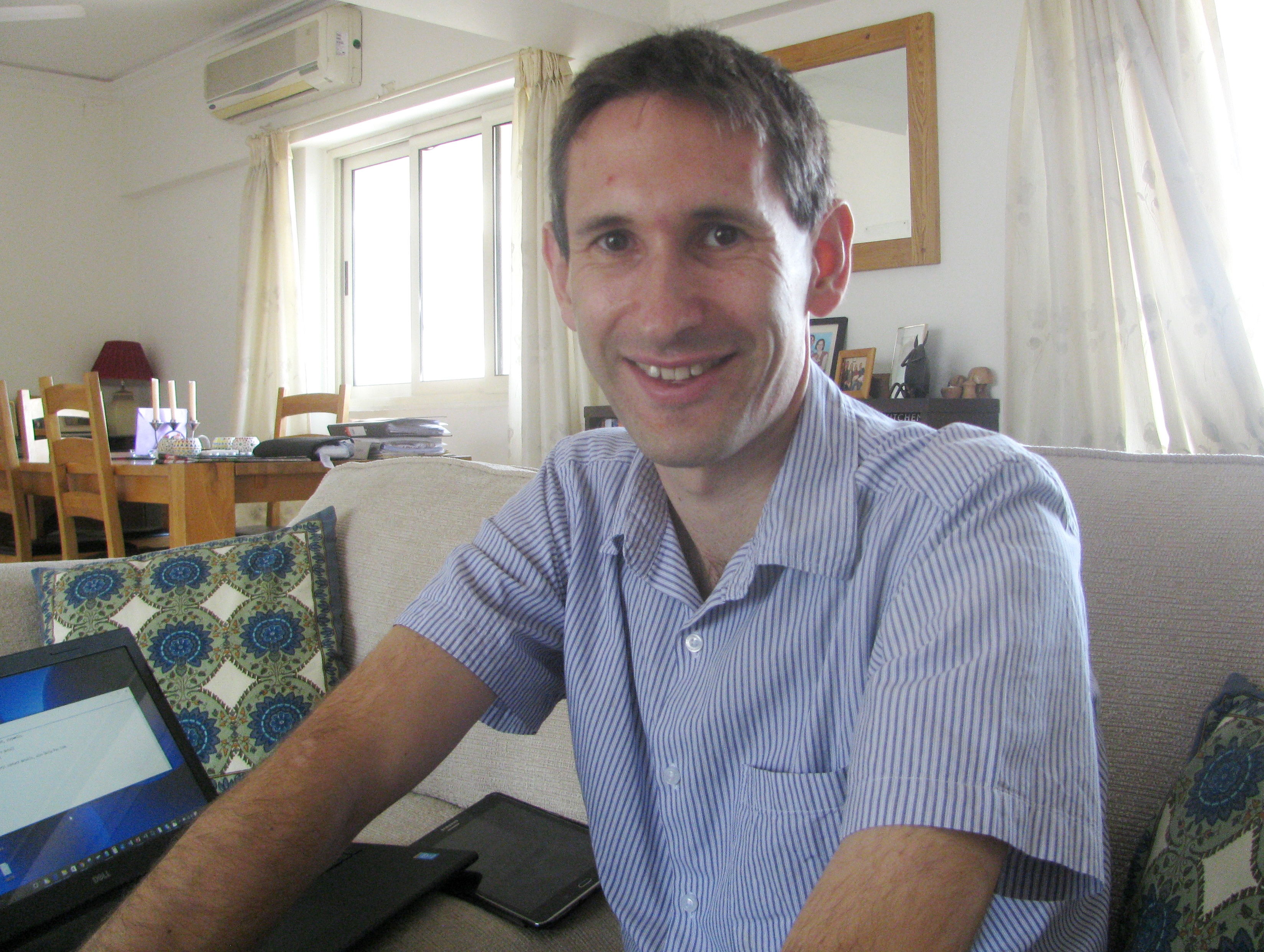
Philip Earis (Photo: Shyam G Menon)

Philip Earis (Photo: Shyam G Menon)

We asked Philip what his impressions were of running in Mumbai; what he would like to remember? He responded: My biggest impression is of the dedication and determination of runners here.  Mumbai is a very hard city to run in – the heat and humidity are invariably tough, and sometimes almost impossibly so.  The traffic, badly-paved surfaces, air pollution, and lack of open space and good running routes all pose many problems.  And yet thousands of runners still motivate themselves to get up before dawn and incorporate running into their busy lives. The enthusiasm shown by runners – of all speeds – is inspiring.   It is wonderful to see the ongoing growth in running culture in the city.  My twin hopes are that this growth can both continue and ensure the running community is more reflective of the city’s population as a whole (recreational running is currently skewed towards the wealthy and well-educated strata of society), and moreover that runners can join together and make their voices heard to push for a much better deal: more open space, better runner-friendly facilities (like the BayLine), and a focus on reducing Mumbai’s dangerous levels of air pollution.

The caretaker of the church listened as we said Philip would soon return to England and we needed to write an article, for which the excursion up the bell tower would help.  “ Come,’’ he said. The church was closed. He brought forth a set of keys and opened the main door giving us a glimpse of the lovely interiors within. Immediately to the right of the main door was a small passageway, spiraling tightly in claustrophobic diameter to the top. It had steep steps. Roughly two floors up, the steps yielded to a rusty ladder, above which was a cobwebbed platform of steel with more stairs going up the church tower. Some bit of continued climbing and one stood right below the heavy bells, made in England over a century ago.  We were inside the bell tower of Afghan Church in South Mumbai’s Colaba.

(The authors, Latha Venkatraman and Shyam G Menon, are independent journalists based in Mumbai.)
 

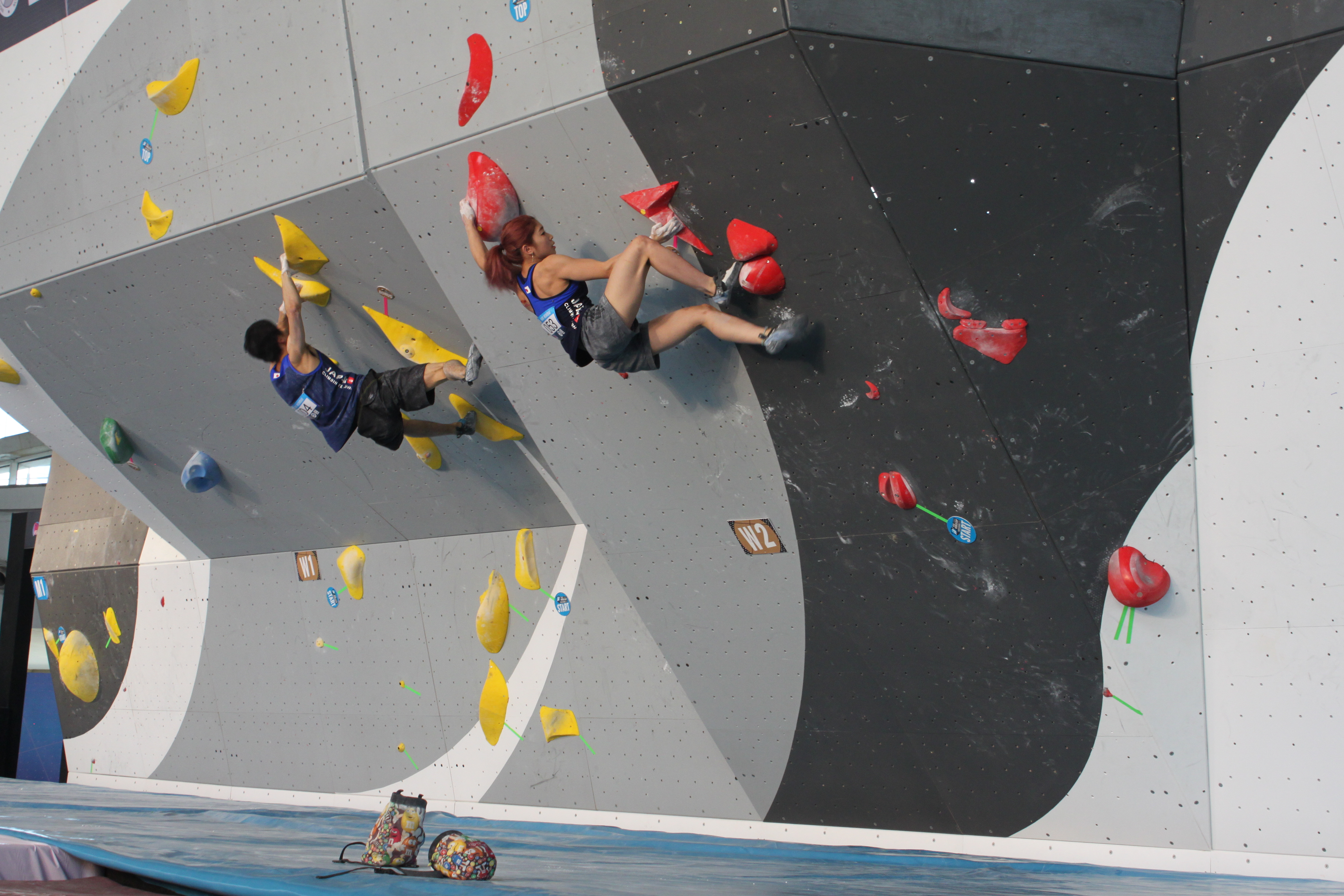
IFSC WORLD CUP, NAVI MUMBAI – DAY 2

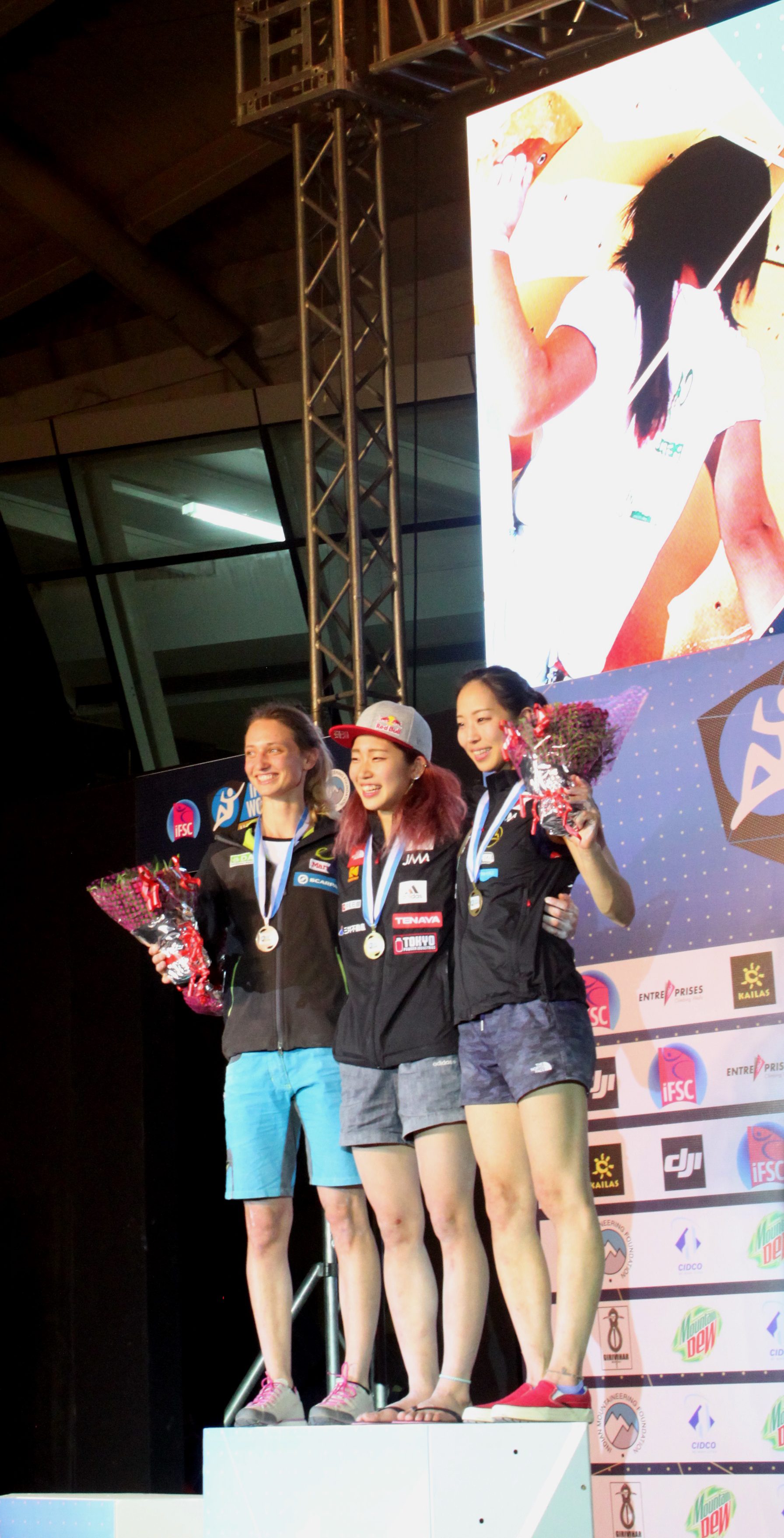
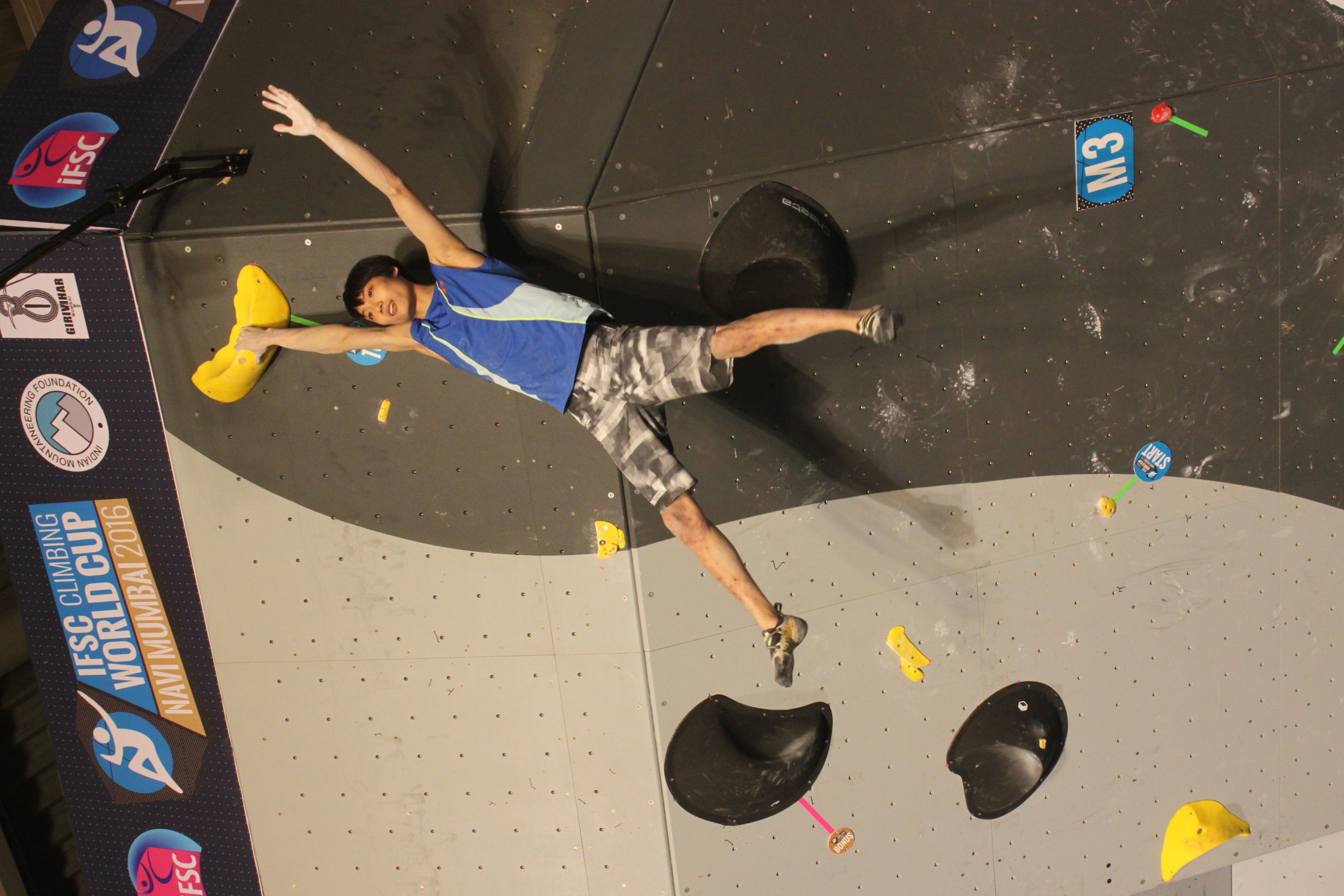
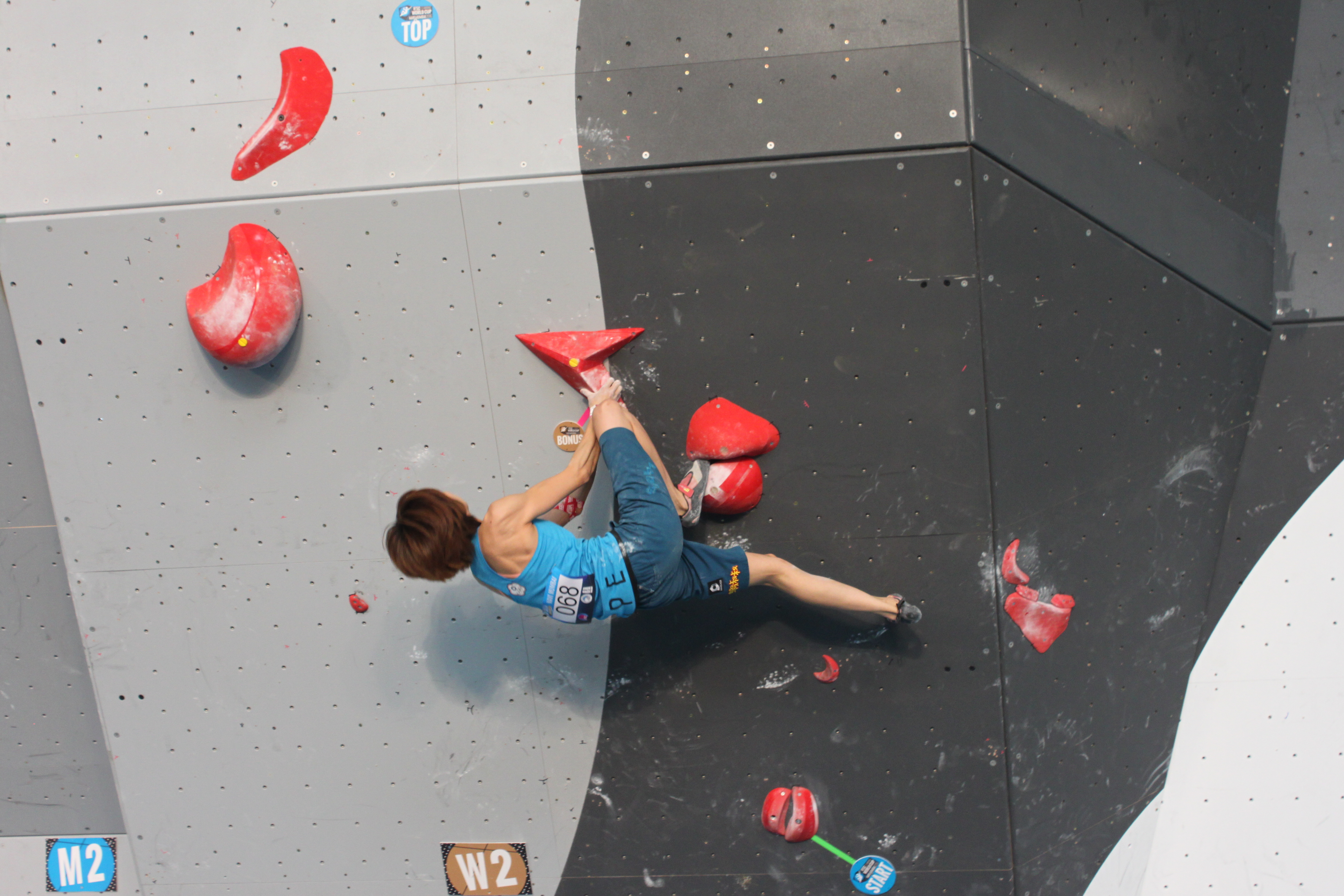
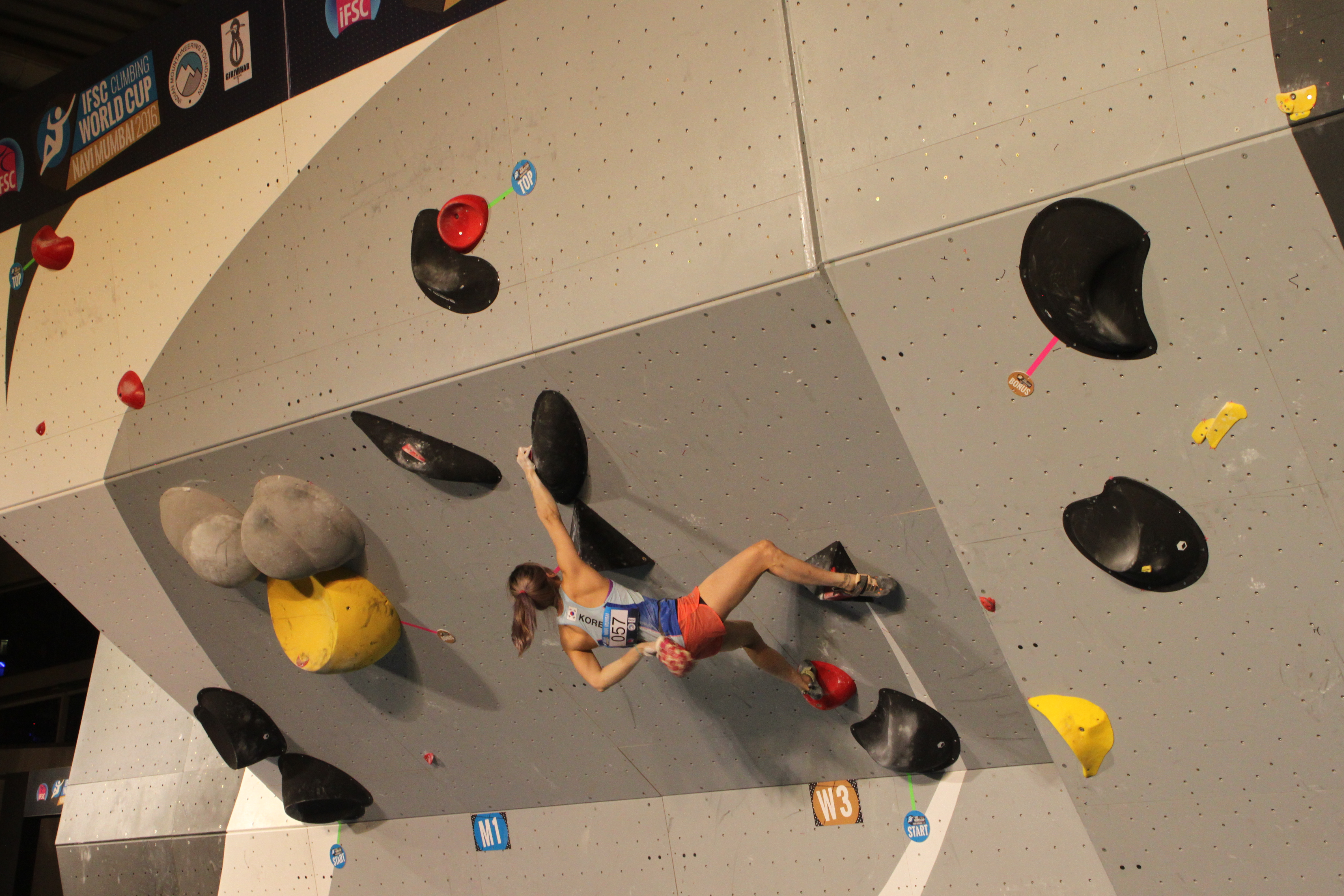
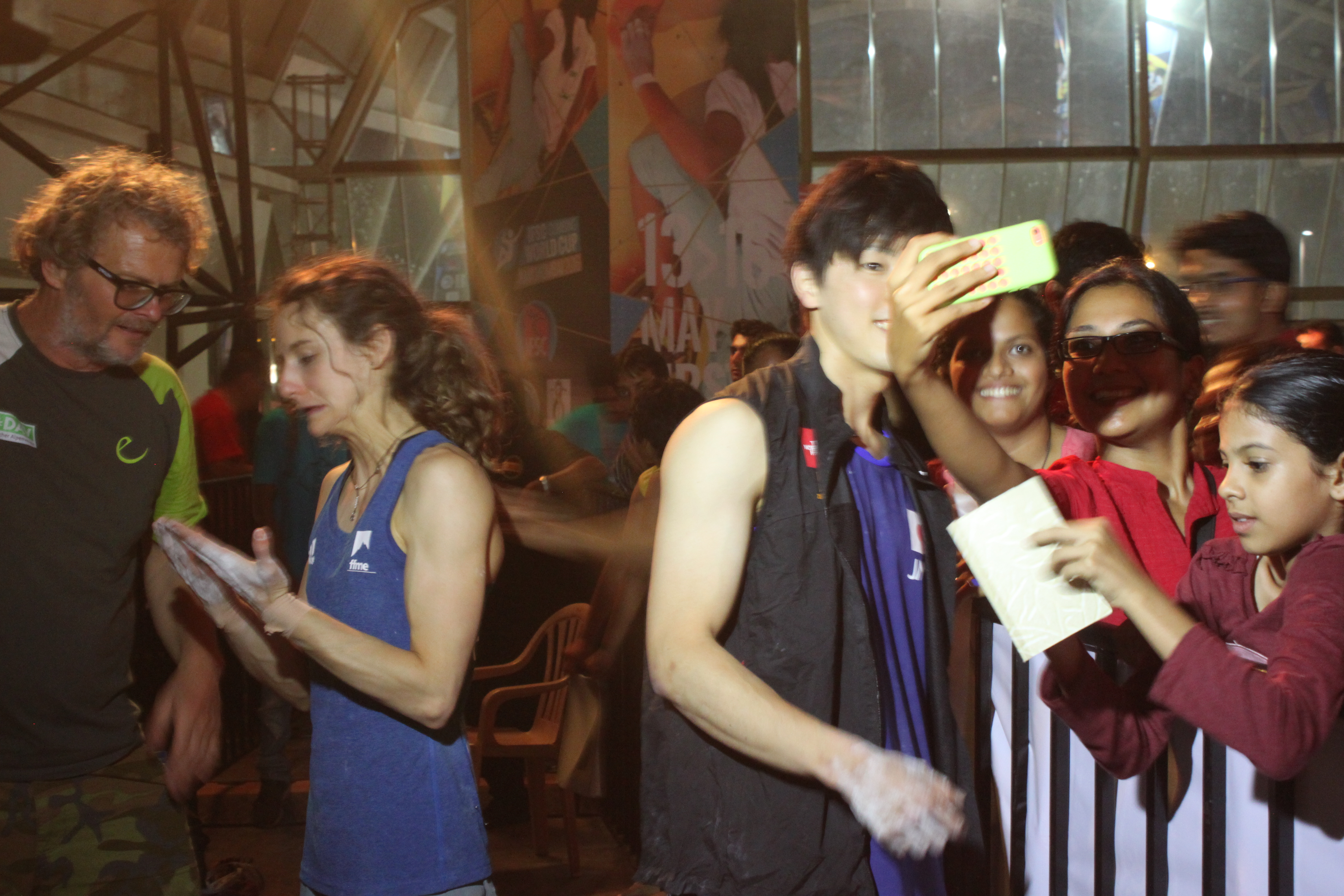
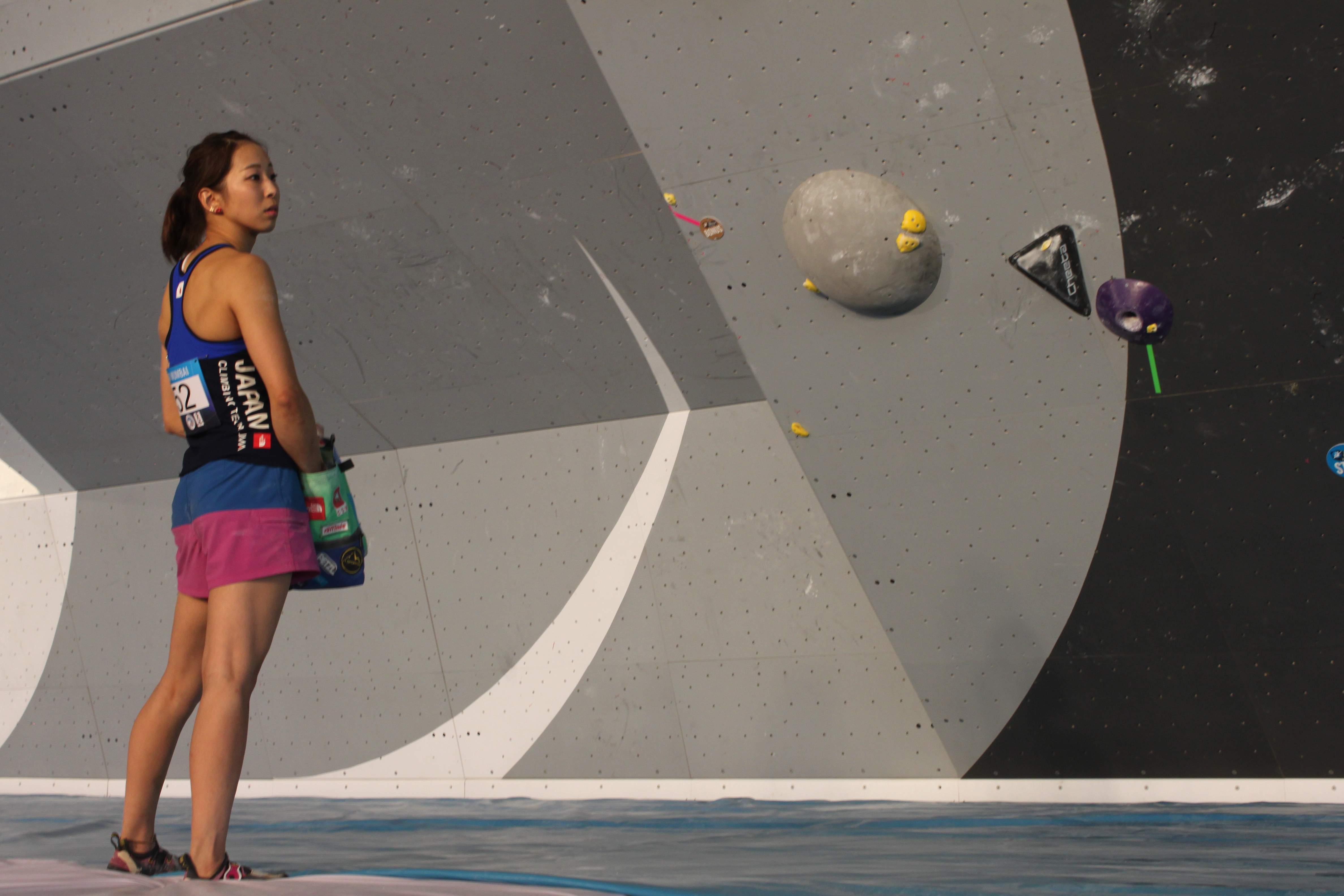
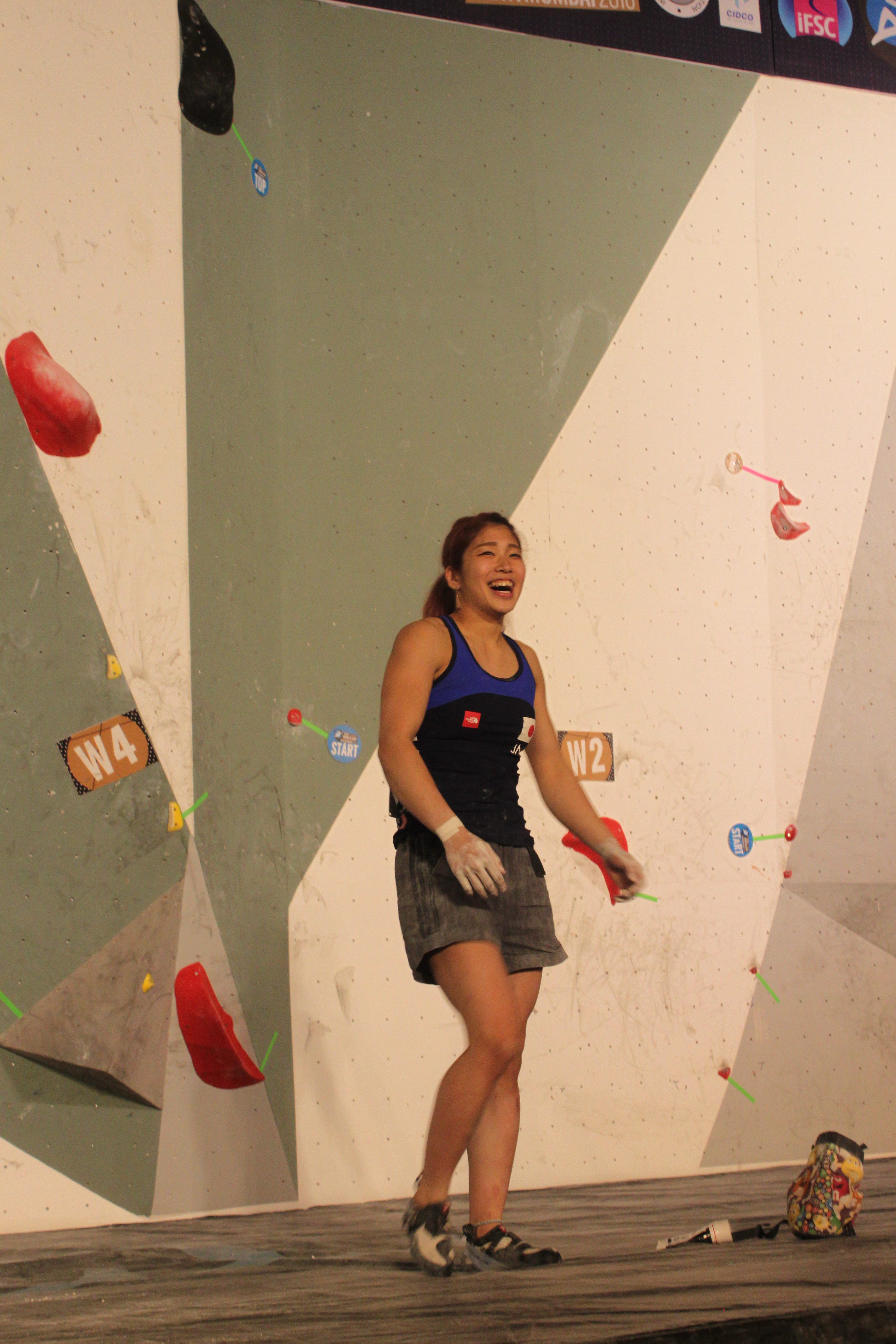
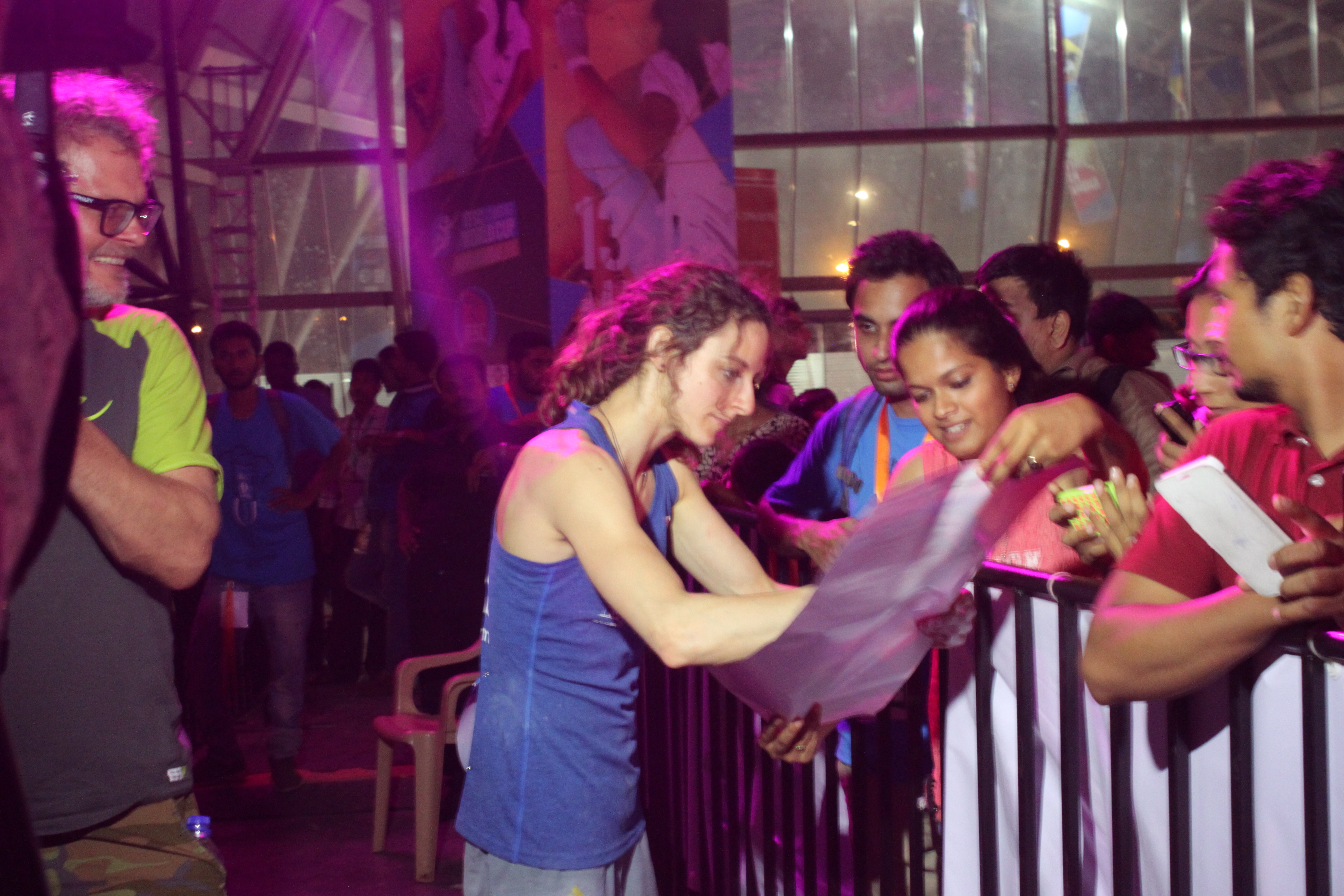
Miho Nonaka after the last boulder problem at the 2016 IFSC World Cup in bouldering held in Navi Mumbai (Photo: Shyam G Menon)

Miho Nonaka after the last boulder problem at the 2016 IFSC World Cup in bouldering held in Navi Mumbai (Photo: Shyam G Menon)

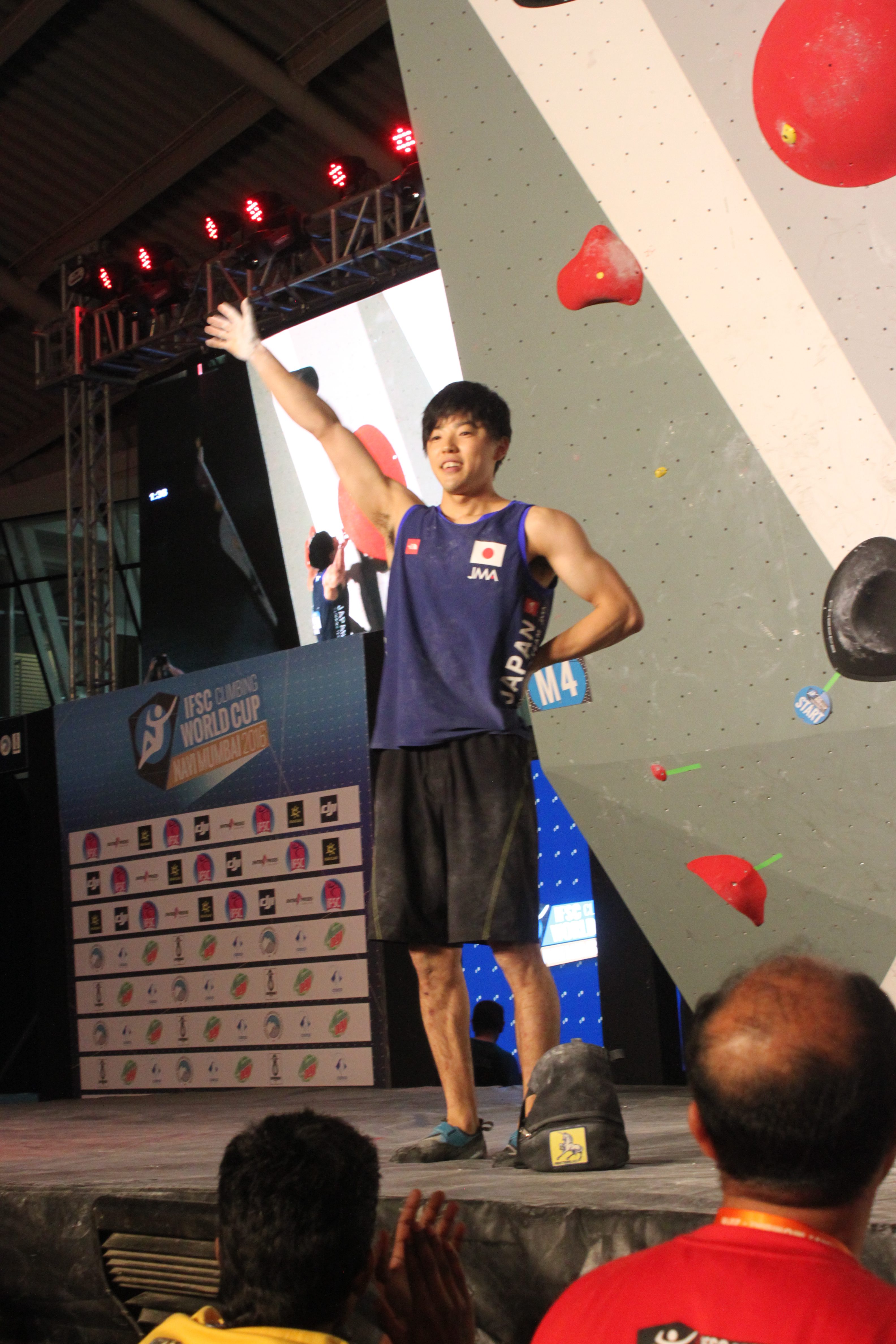
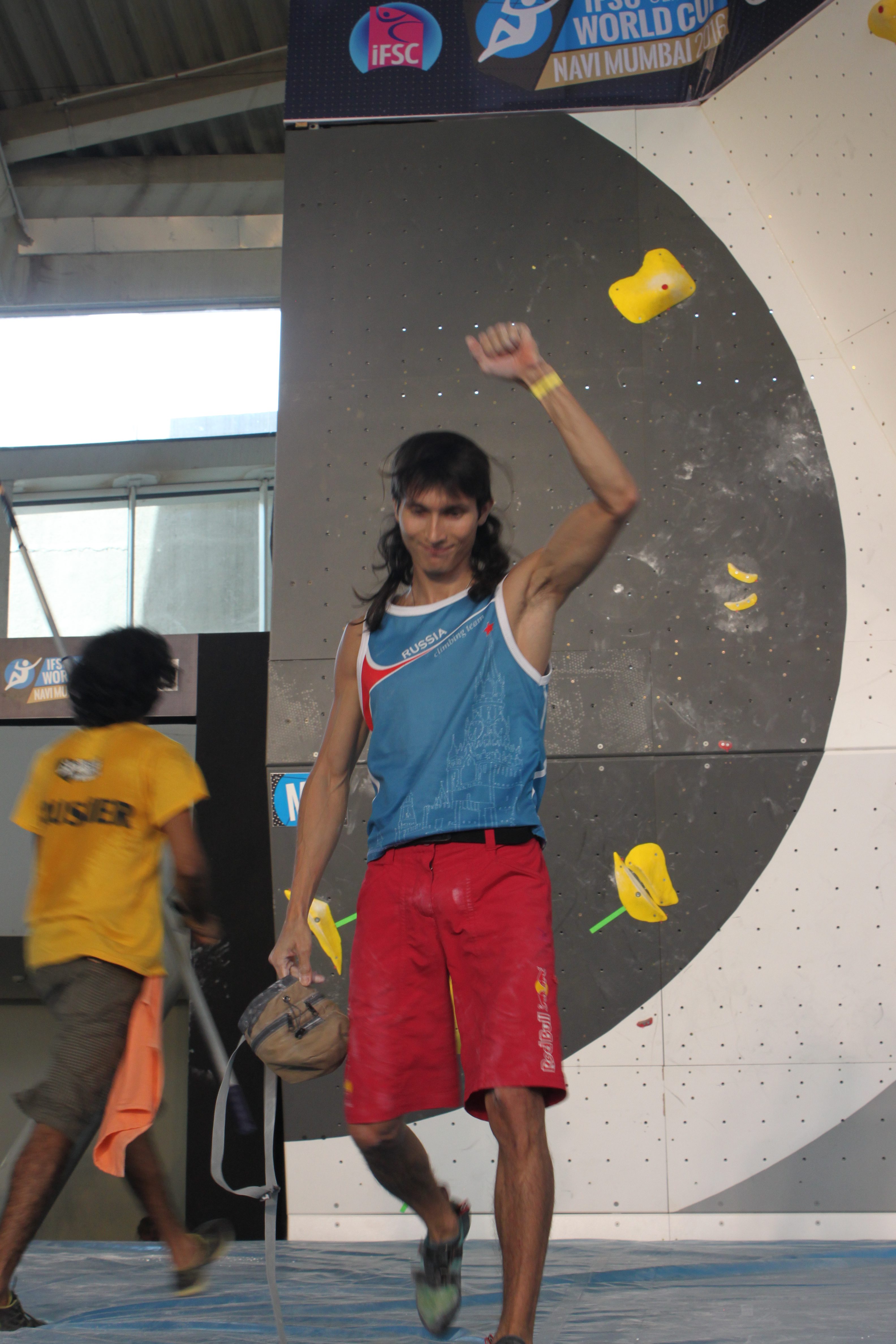
Kokoro Fujii after the last boulder problem at the 2016 IFSC World Cup in bouldering held in Navi Mumbai (Photo: Shyam G Menon)

Kokoro Fujii after the last boulder problem at the 2016 IFSC World Cup in bouldering held in Navi Mumbai (Photo: Shyam G Menon)

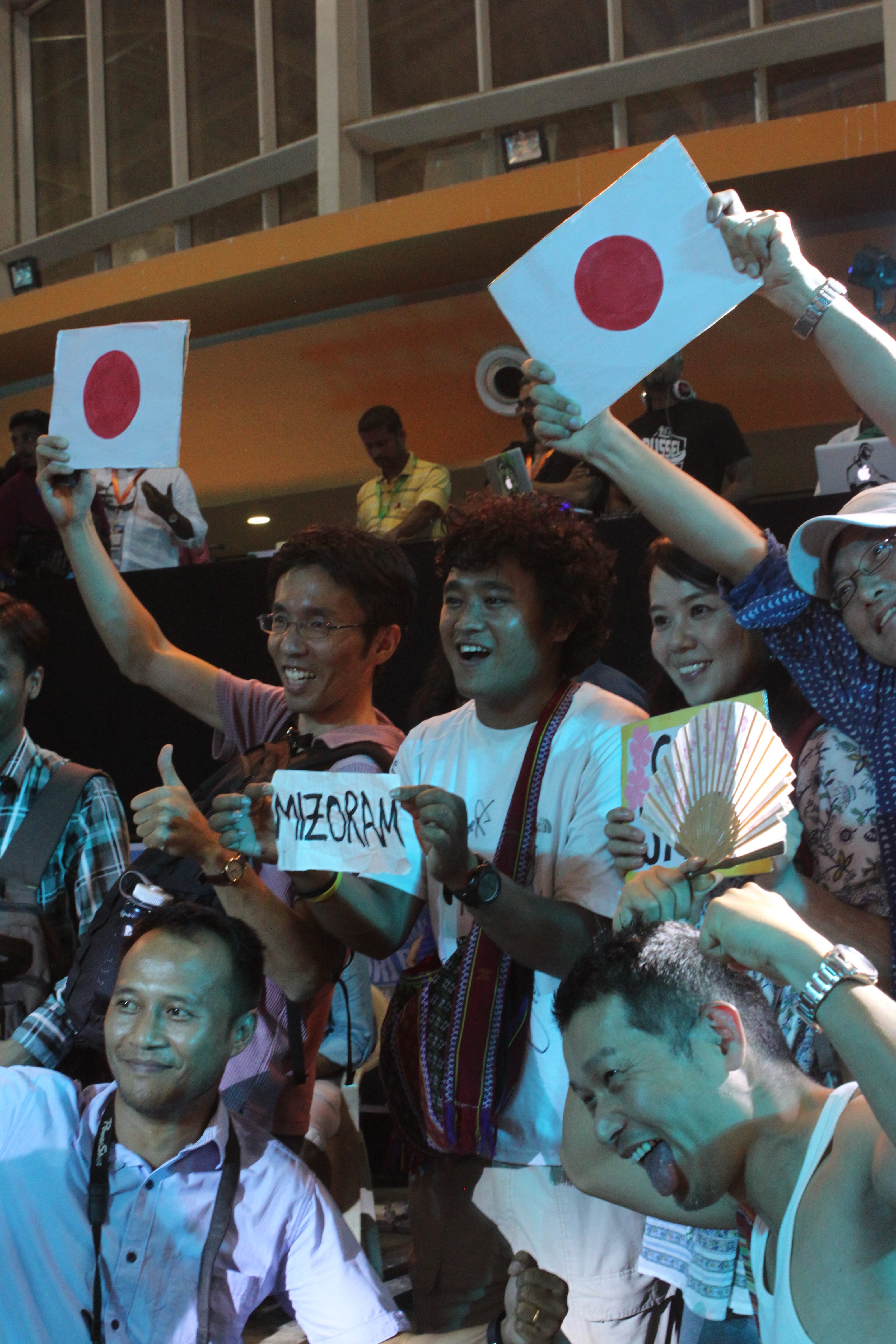
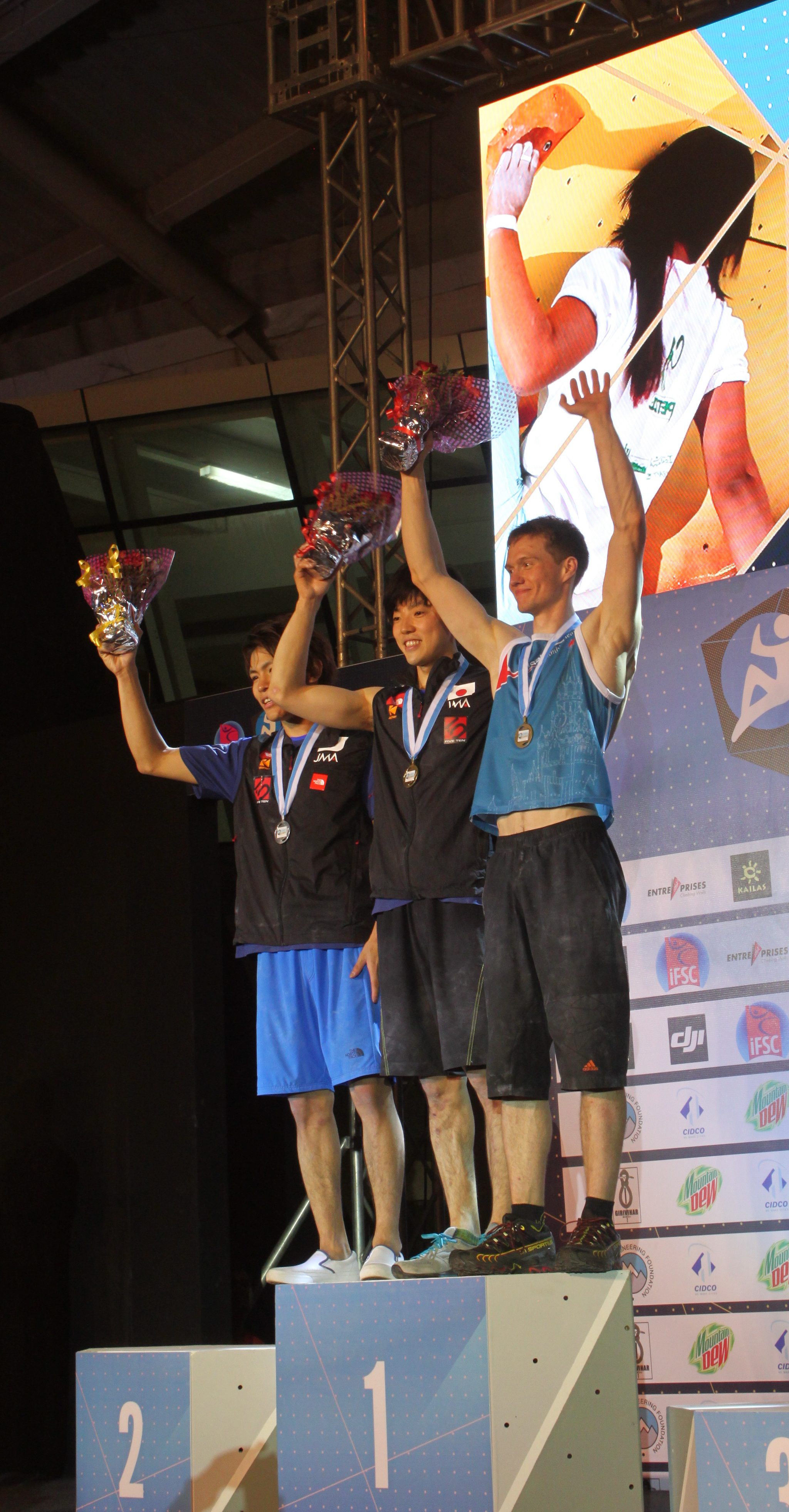
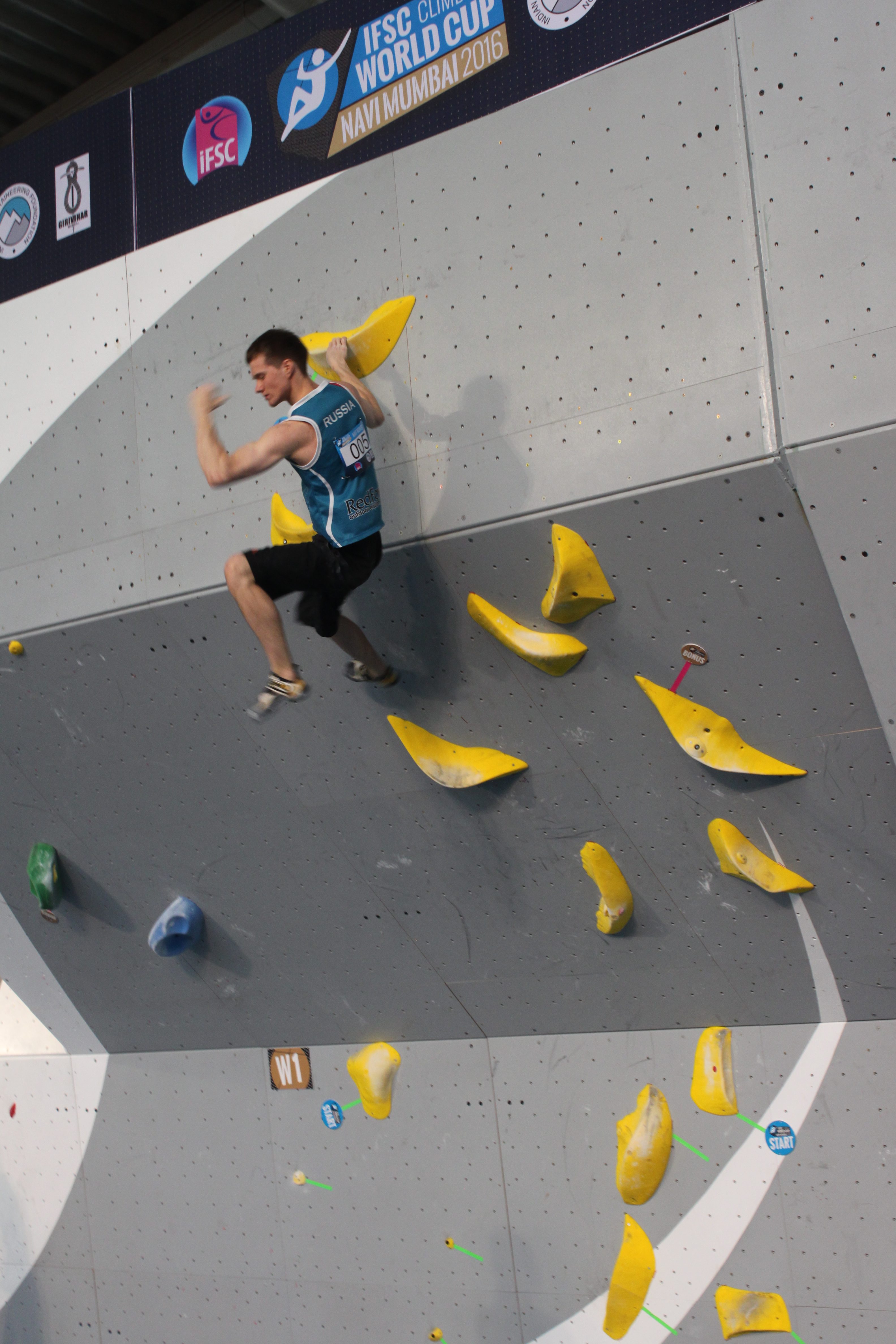
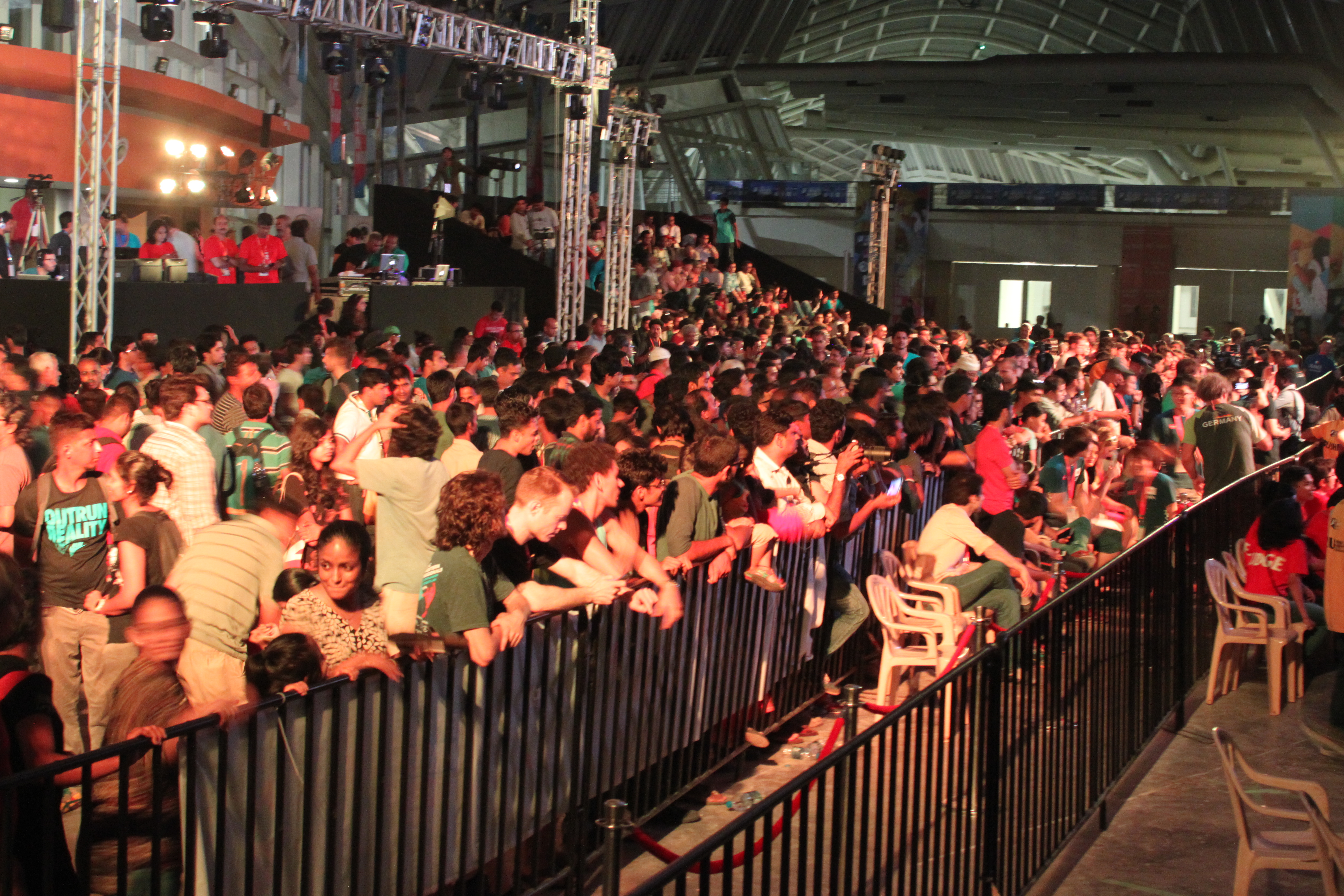
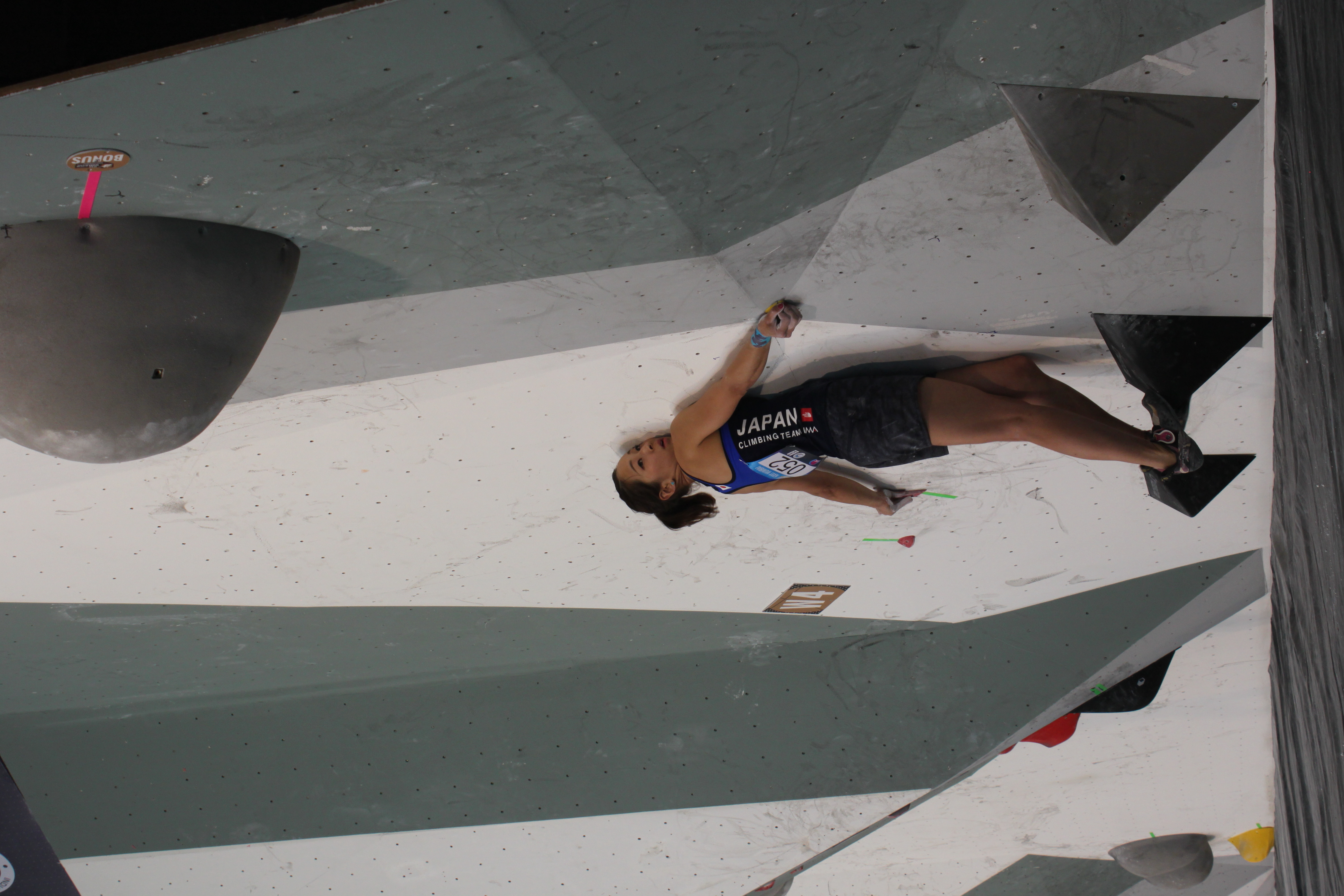
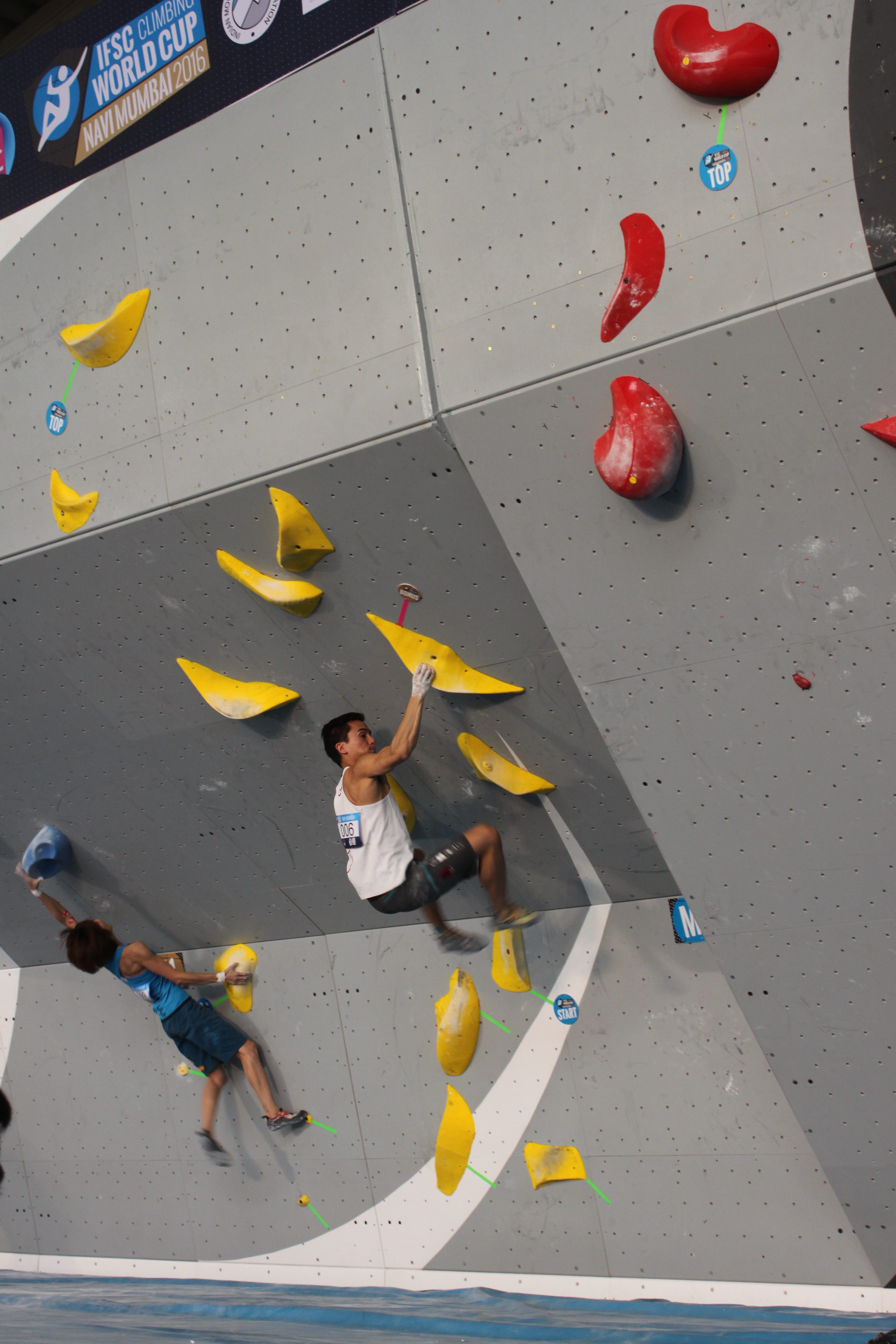
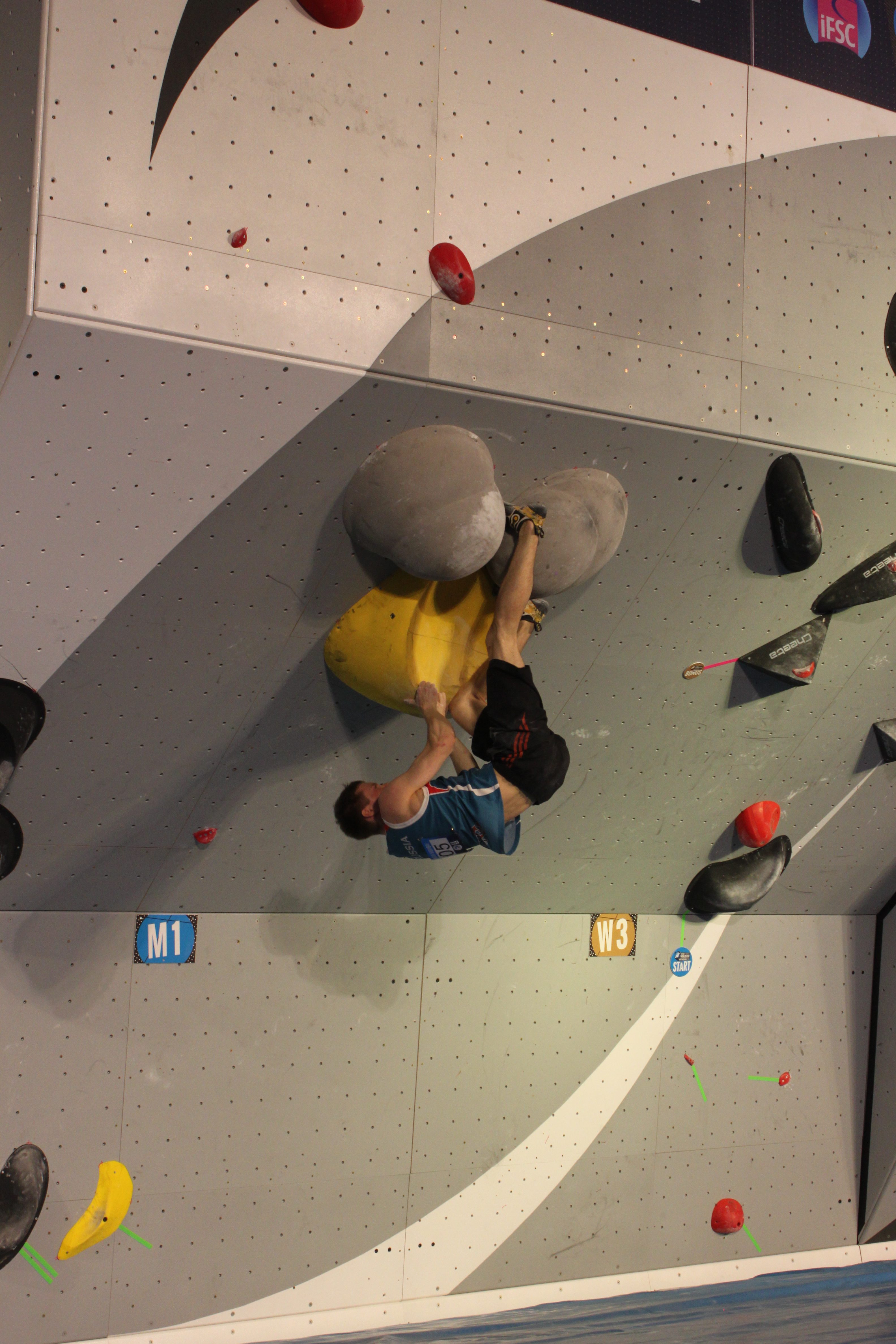
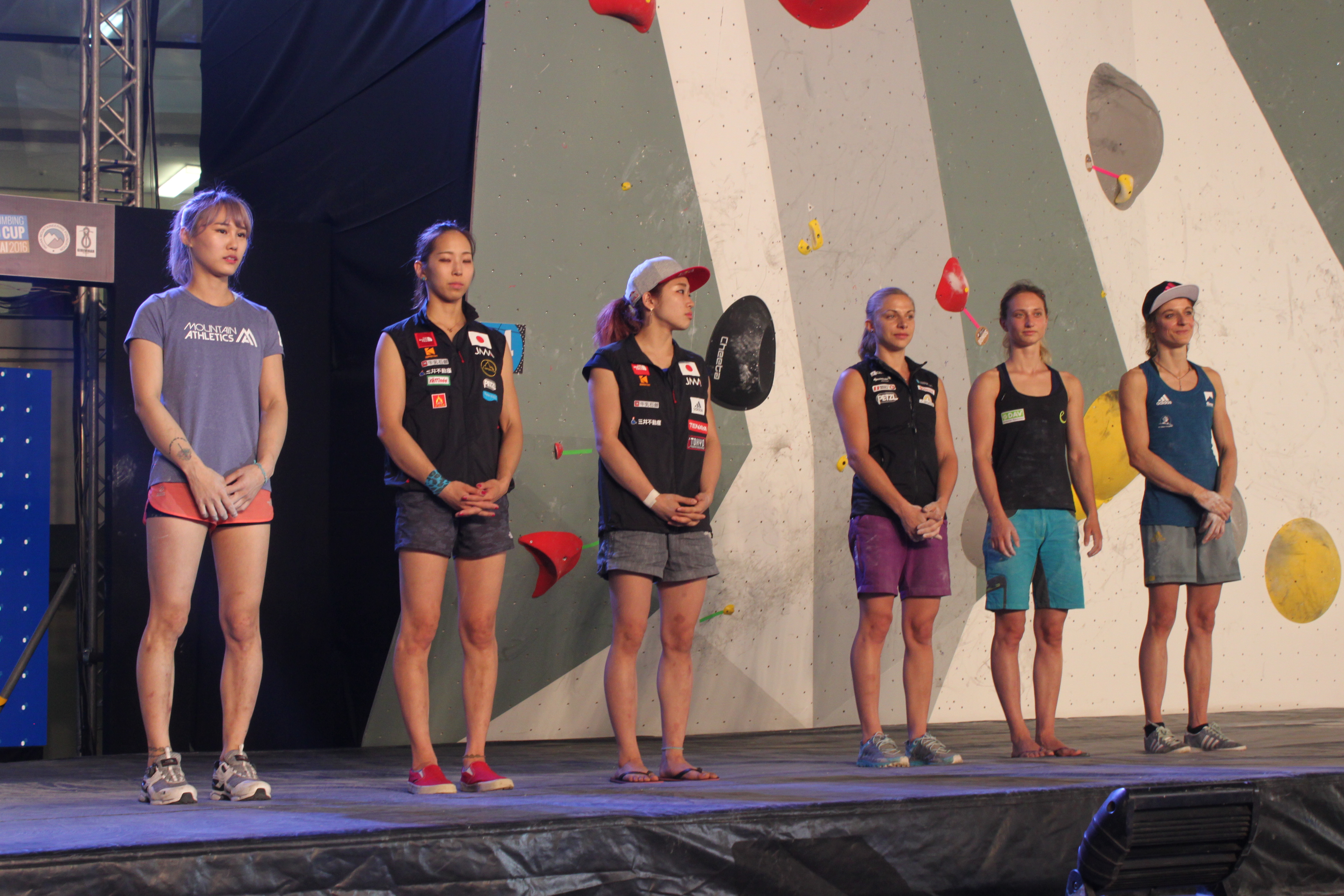
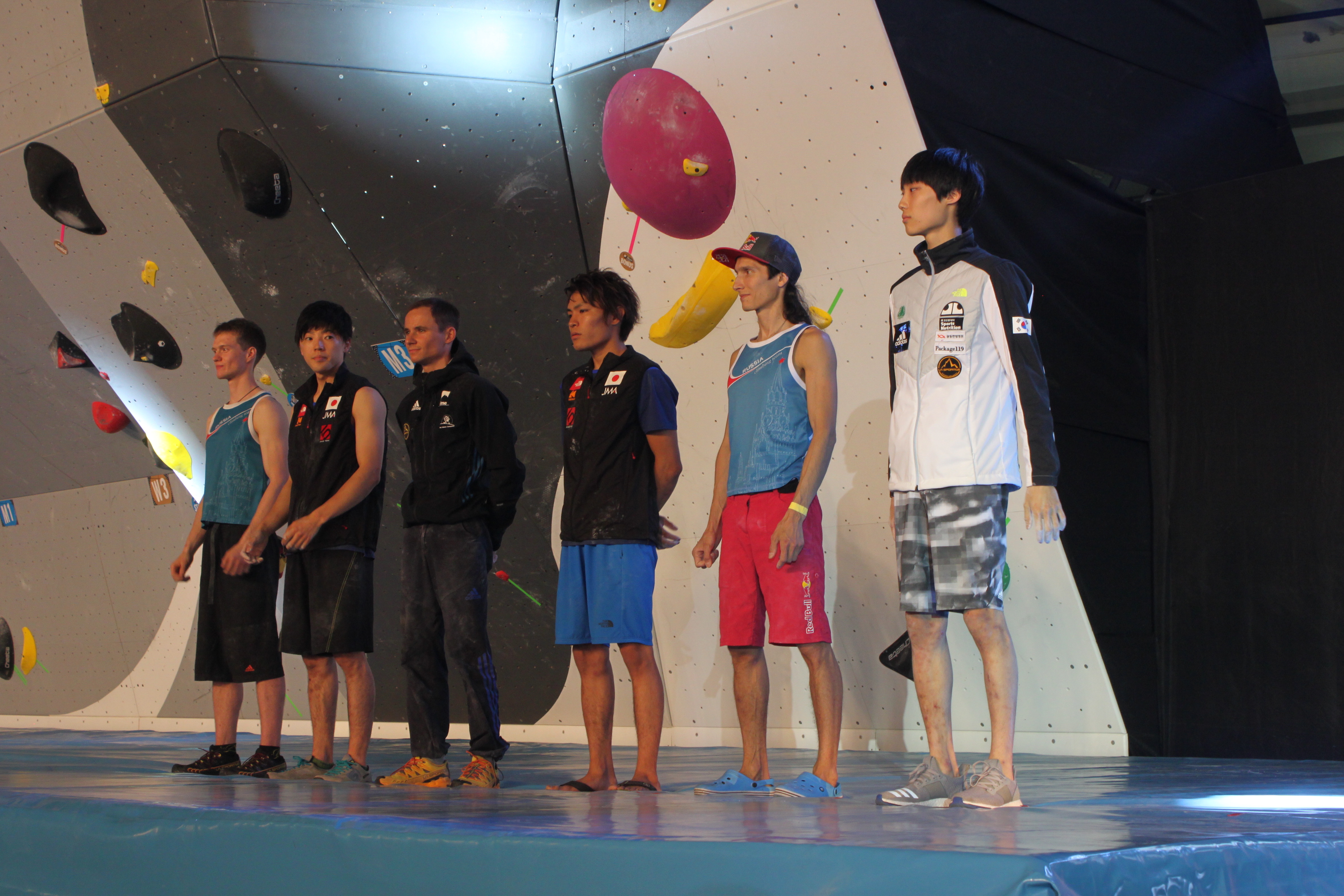
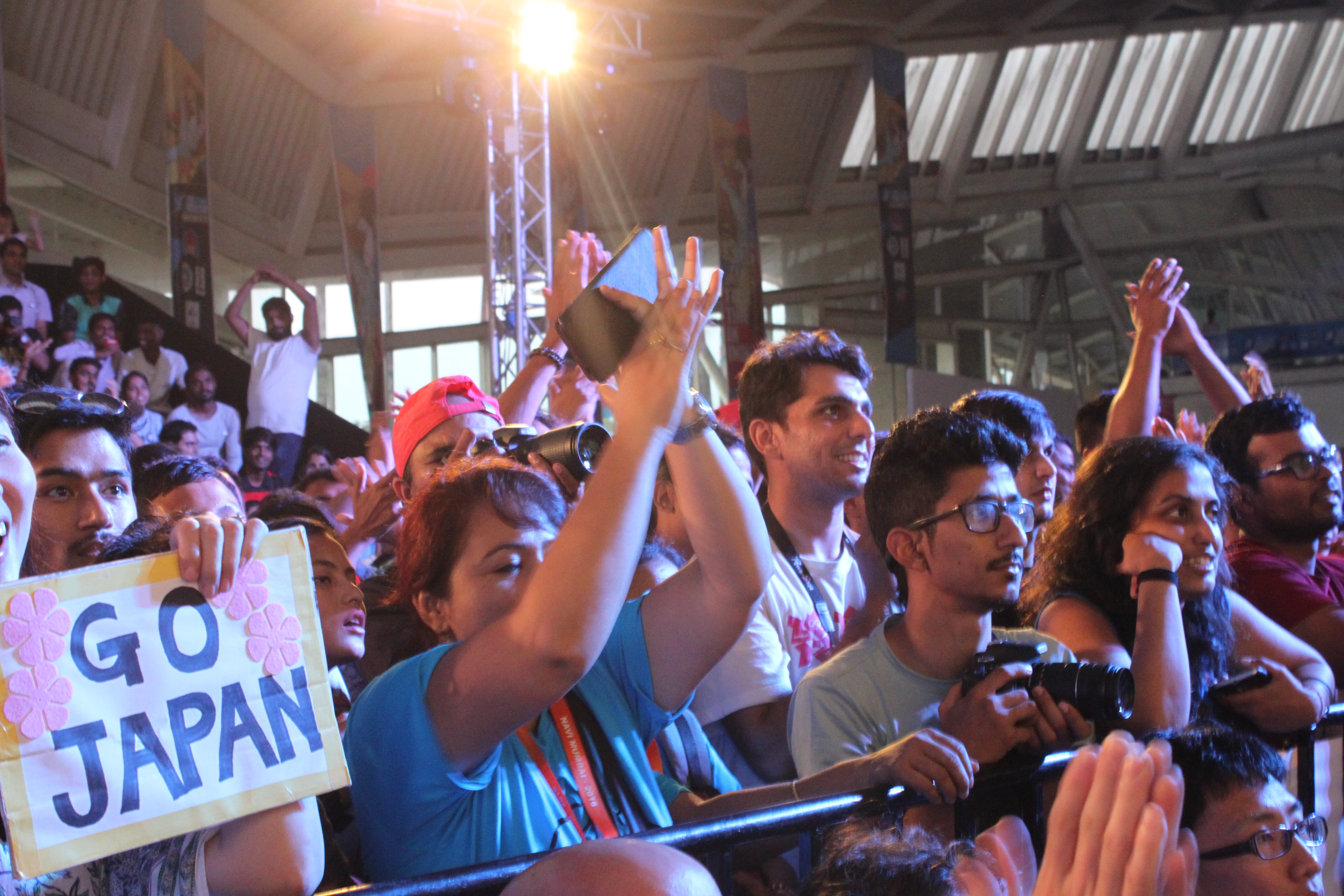
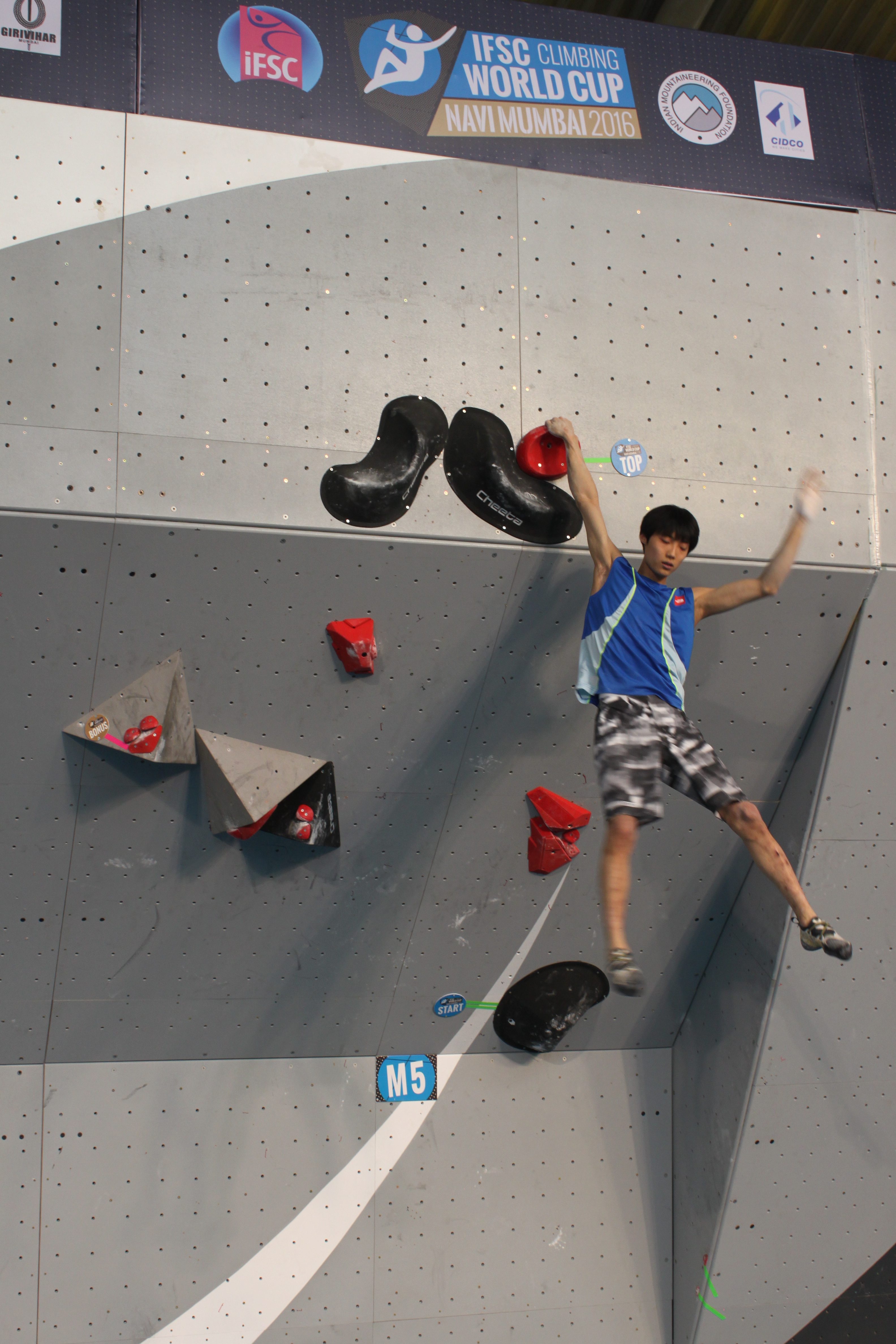
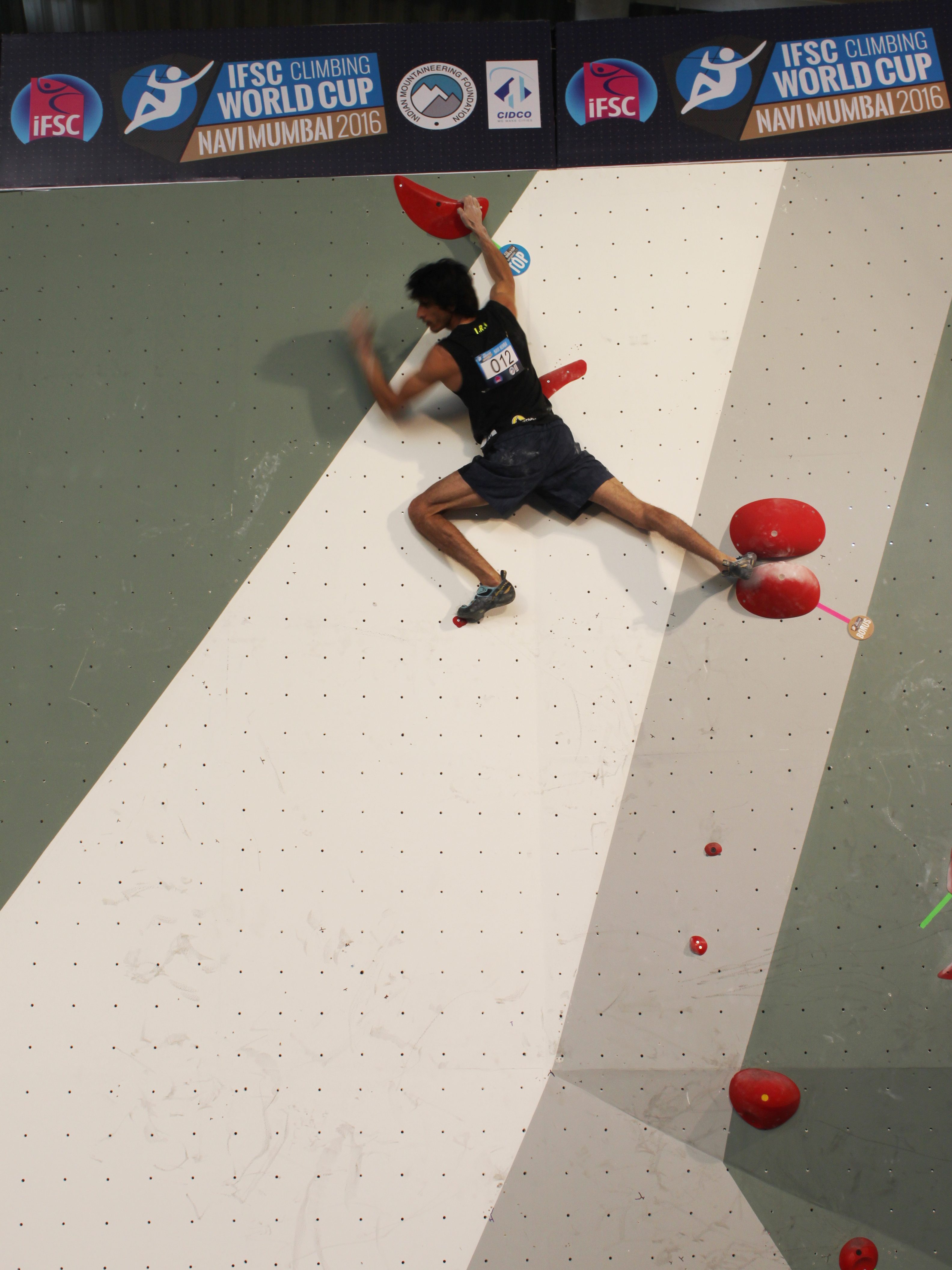
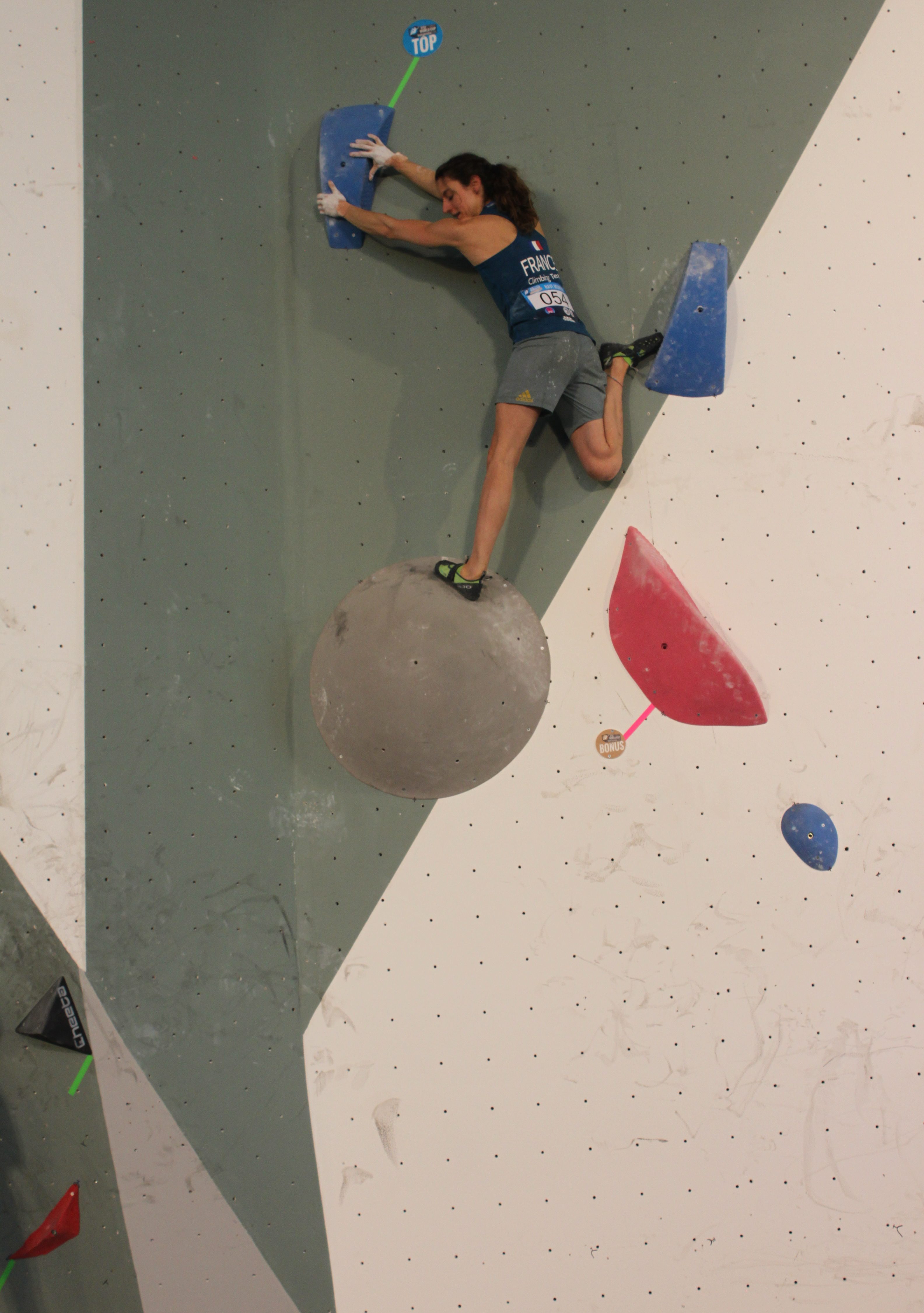
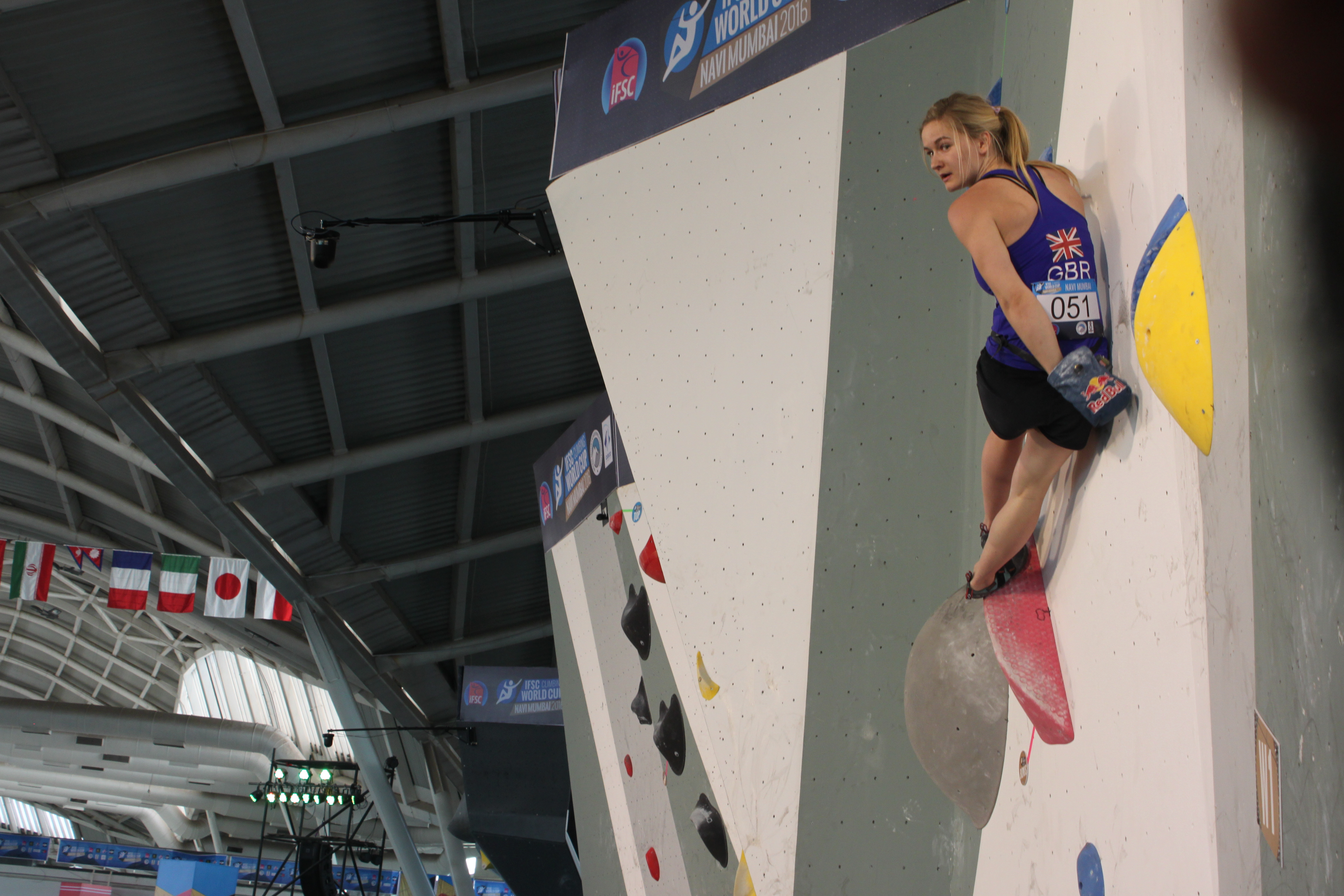
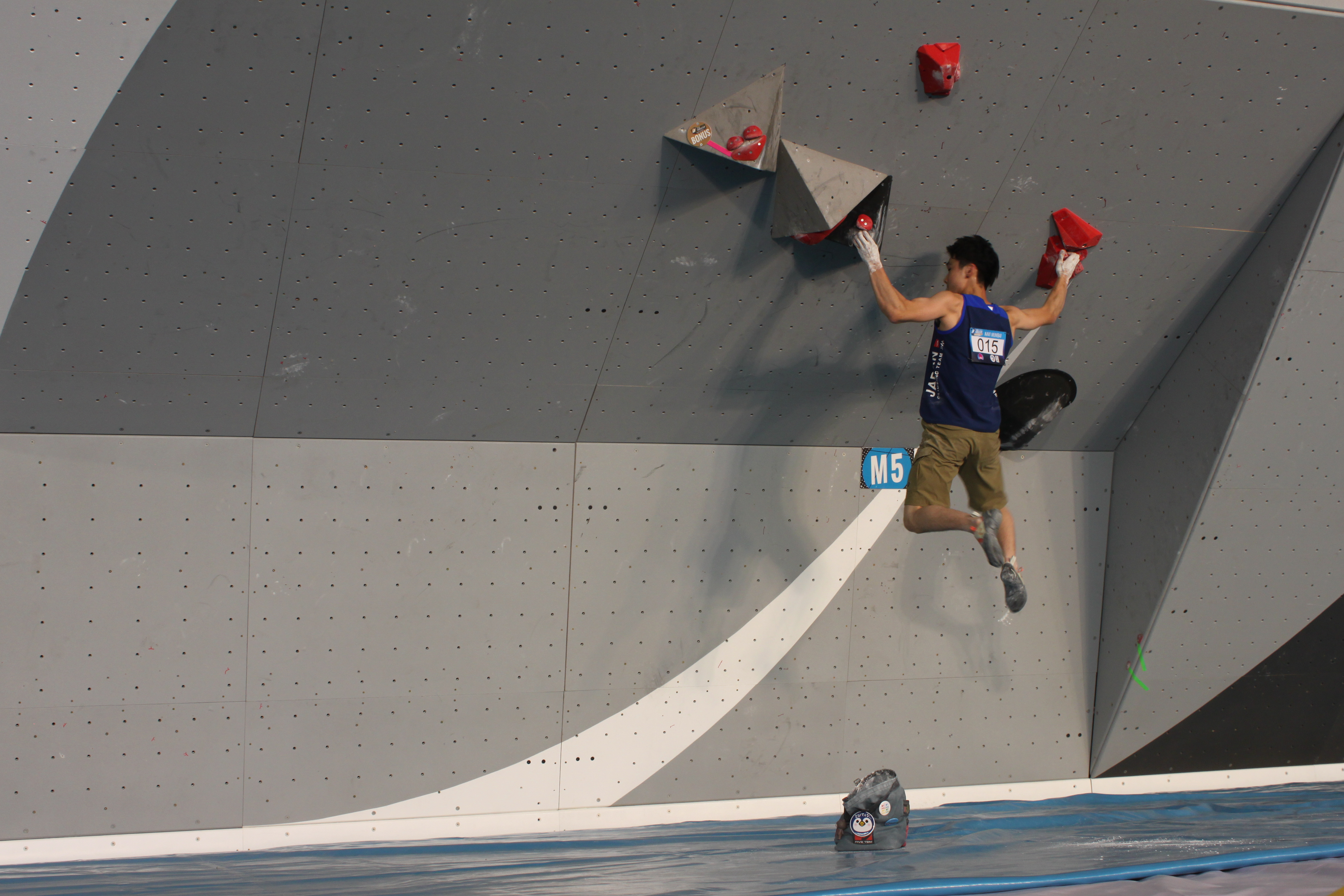
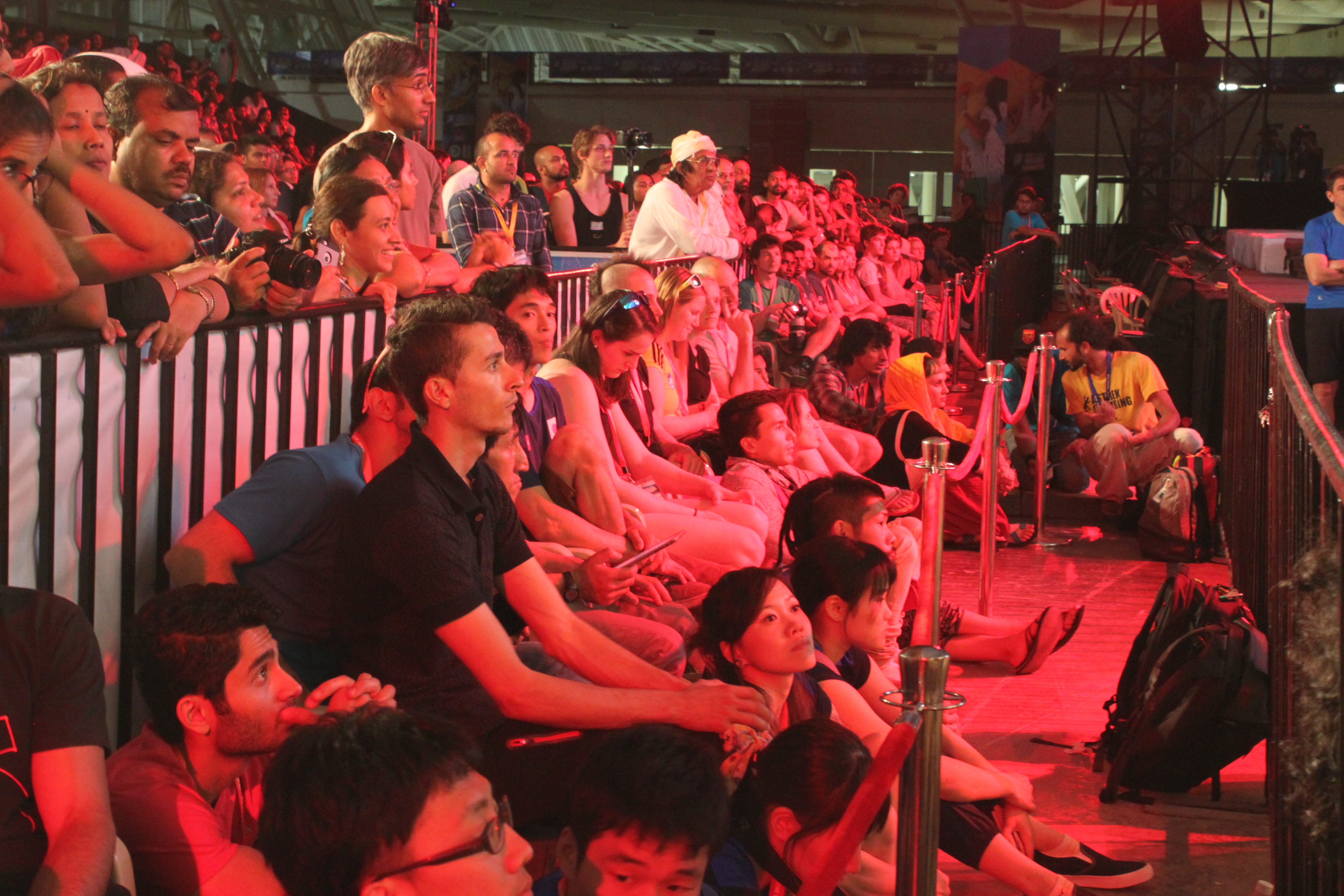
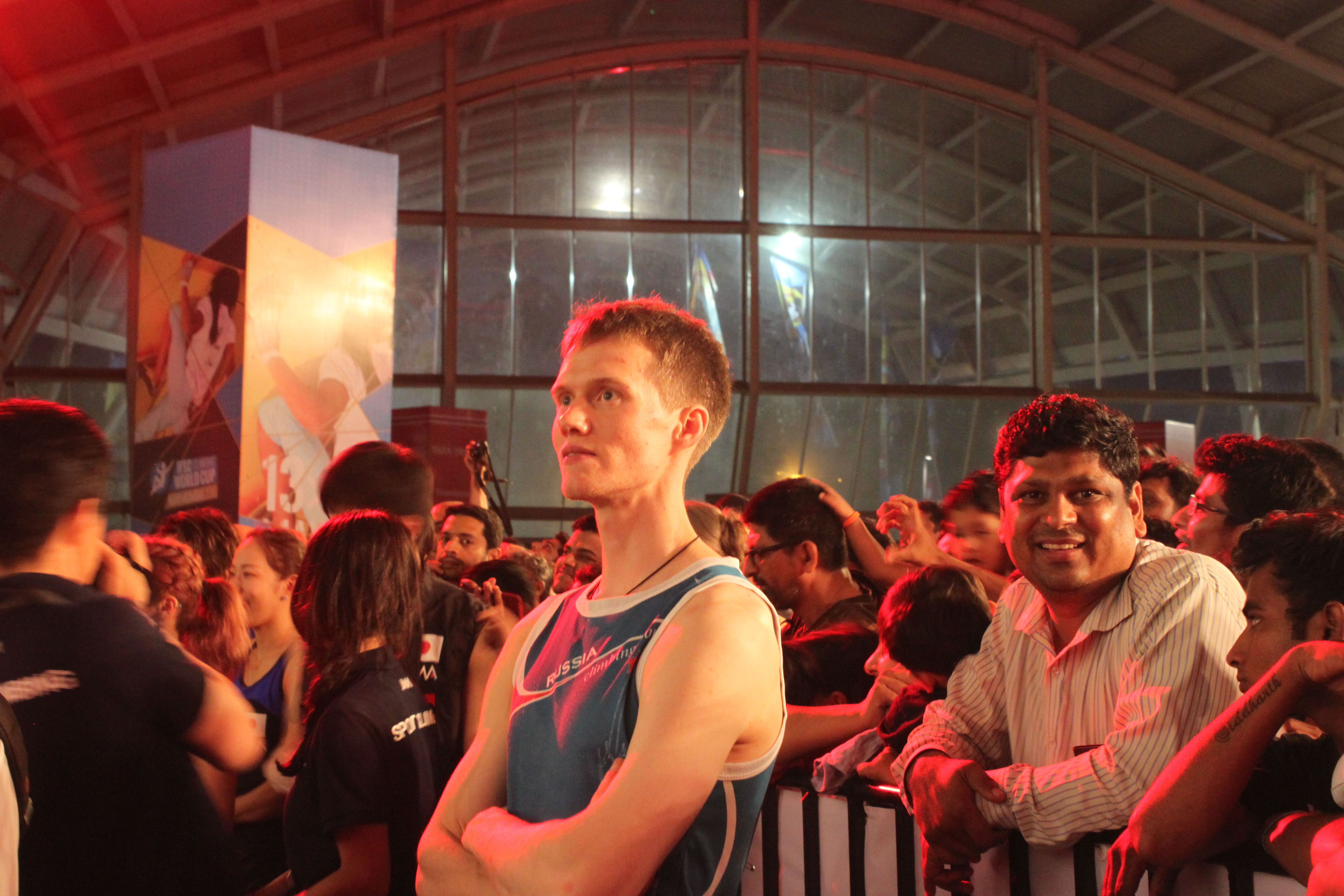
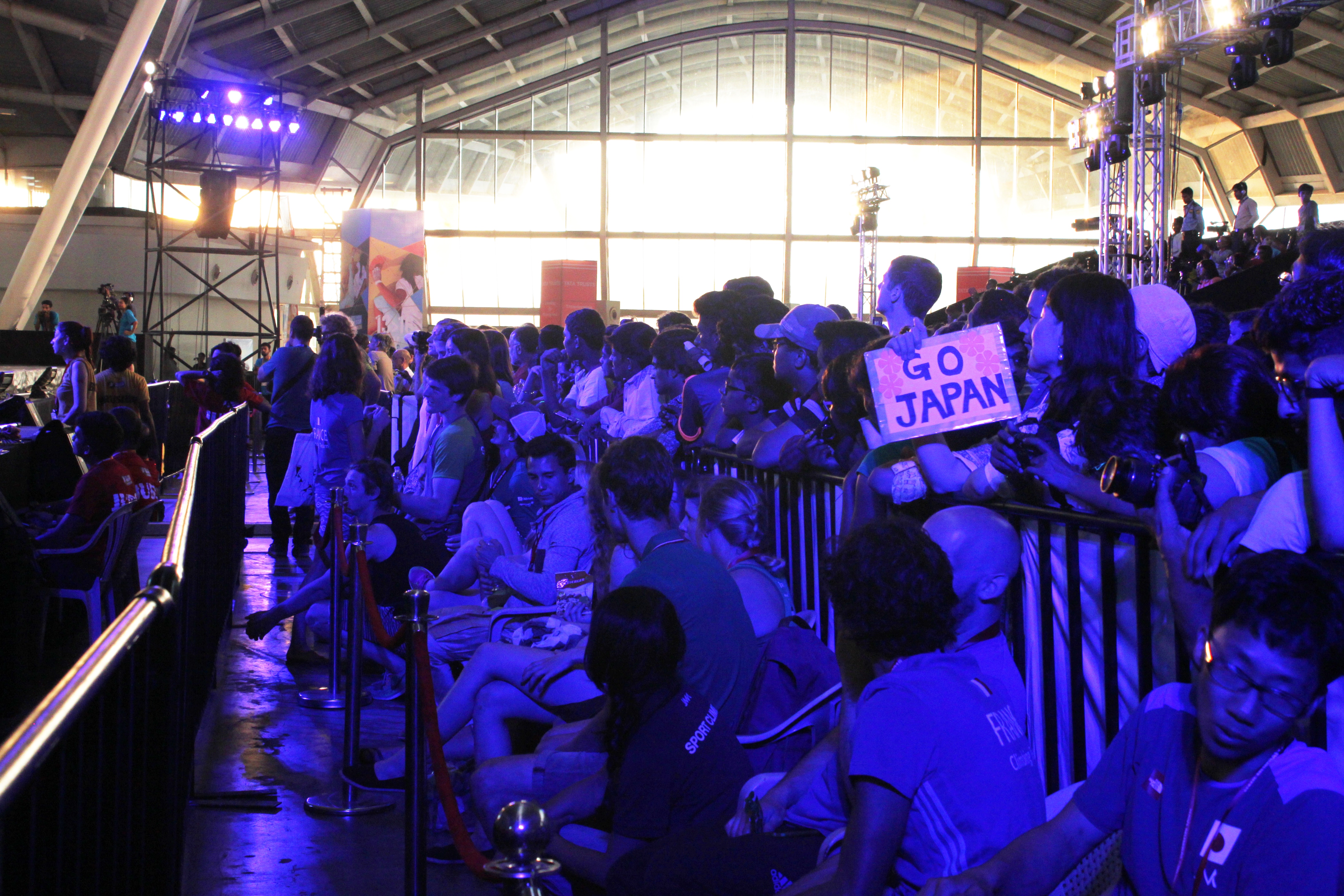
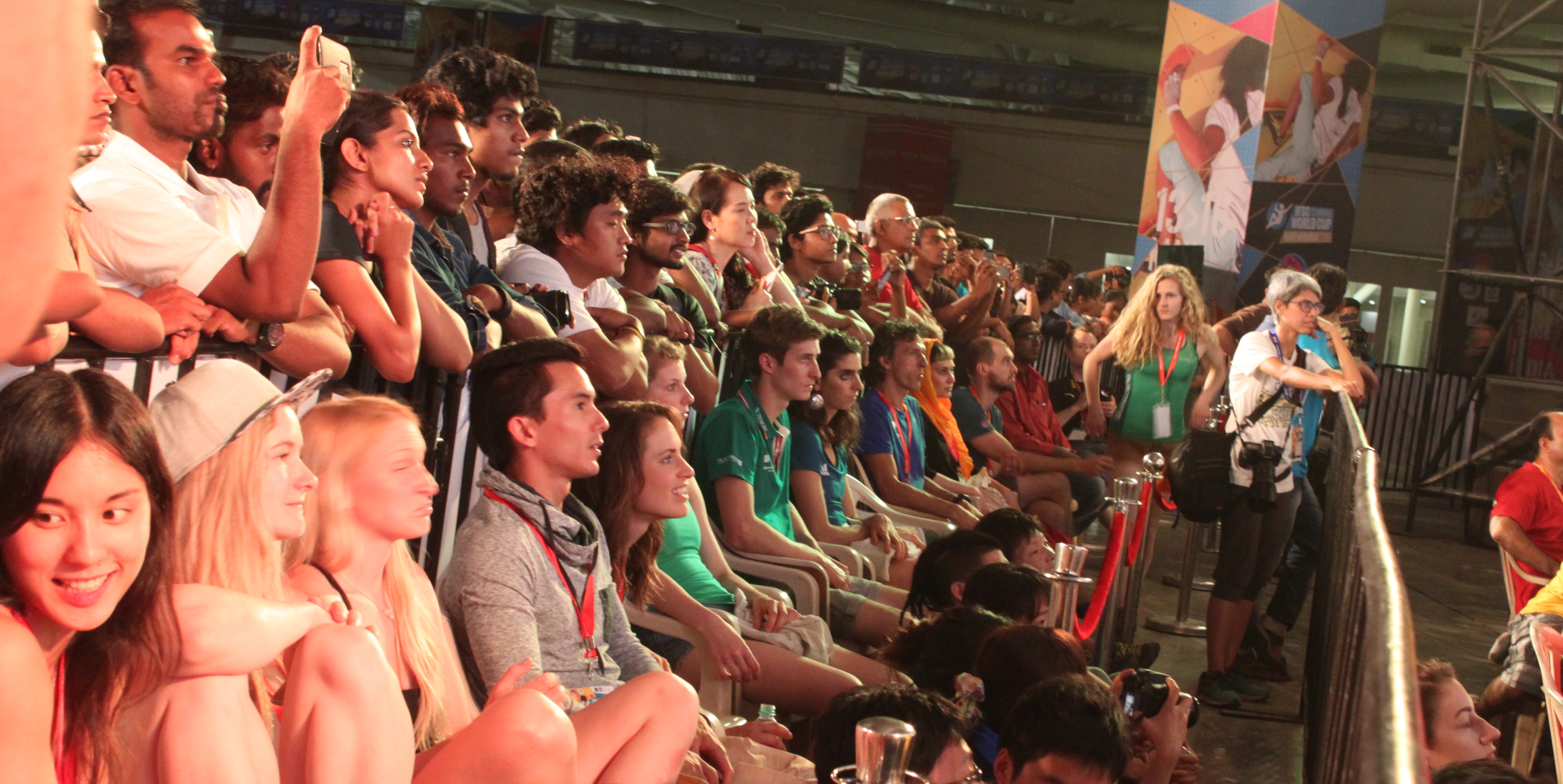
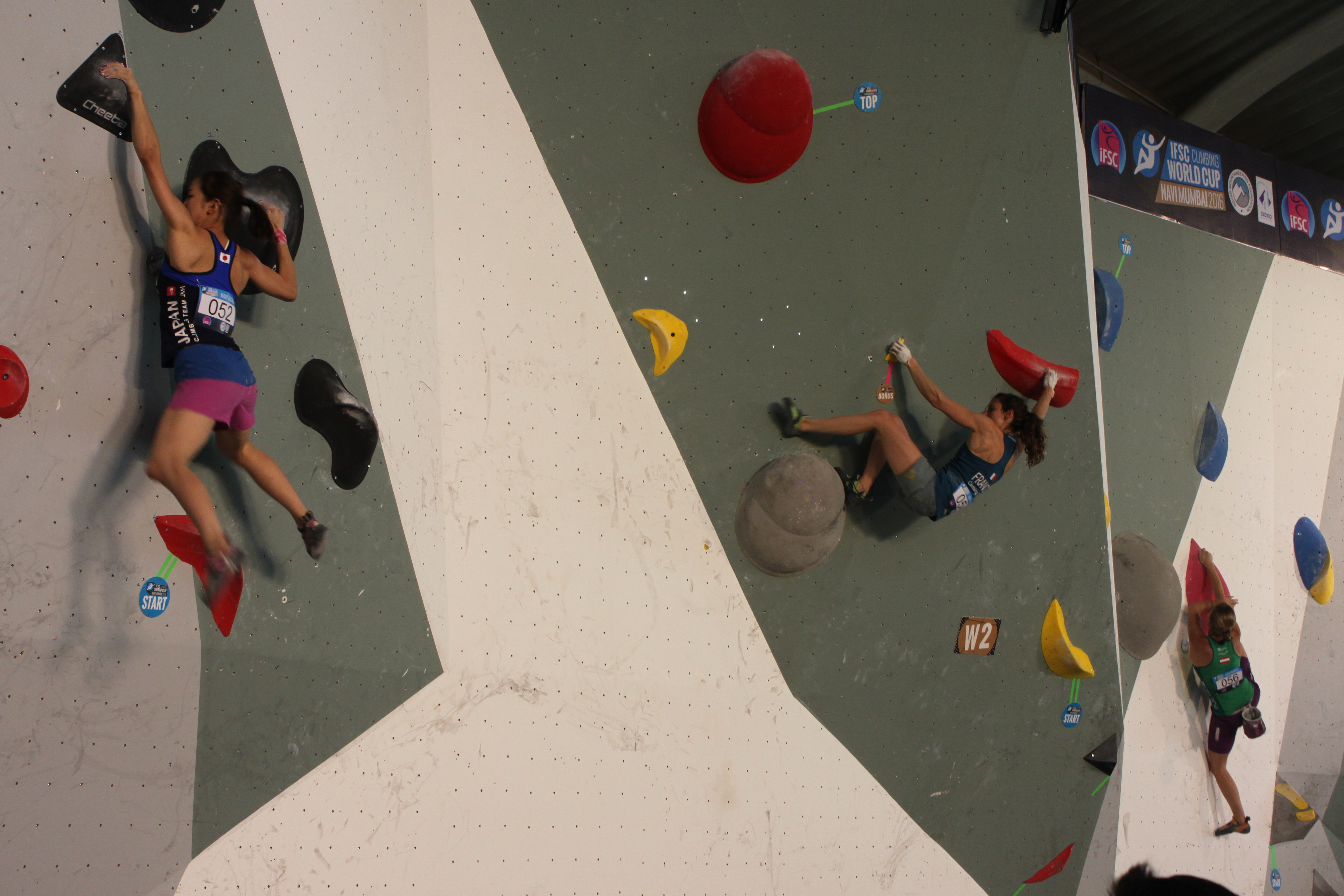
The Japanese secured four of the six podium positions on offer at the 2016 IFSC World Cup in bouldering, in Navi Mumbai on Sunday.  The men’s category was won by Kokoro Fujii of Japan, with second and third positions going to Tomoa Narasaki (Japan) and Alexey Rubtsov (Russia) respectively.  In the women’s segment Miho Nonaka of Japan finished in first place followed by Monika Retschy (Germany) and Akiyo Noguchi (Japan) in that order. Earlier, six athletes each from the men’s and women’s categories made it to the finals. Besides those mentioned in the podium finishes, others in the list of finalists were Rustam Gelmanov (Russia), Jongwon Chon (Korea), Jeremy Bonder (France), Melissa Le Neve (France), Sol Sa (Korea) and Katharina Saulwein (Austria). The semis saw some upsets. Among those who didn’t make it to the finals were Jan Hojer (Germany), Sean McColl (Canada) and Shauna Coxsey (Great Britain).  Being Sunday, there was a sizable audience at the venue and they cheered the climbers through the competition.

Following the Navi Mumbai World Cup, the top five athletes in terms of their ranking in the currently underway-2016 bouldering season were Kokoro Fujii (Japan / 255 points), Alexey Rubtsov (Russia / 242), Tomoa Narasaki (Japan / 218), Rustam Gelmanov (Russia / 216) and Jan Hojer (Germany / 168). The top five among women were Shauna Coxsey (Great Britain / 337), Melissa Le Neve (France / 258), Miho Nonaka (Japan / 254), Akiyo Noguchi (Japan / 212) and Monika Retschy (Germany / 172). As regards national team standings, Japan led the field with 793 points followed by France (712), Great Britain (612), Russia (424) and Austria (288). Interestingly in combined rankings (across sport climbing’s various disciplines) for the ongoing 2016 World Cup season, the leader in the men’s category by a wide margin was Sean McColl (Canada / 144).

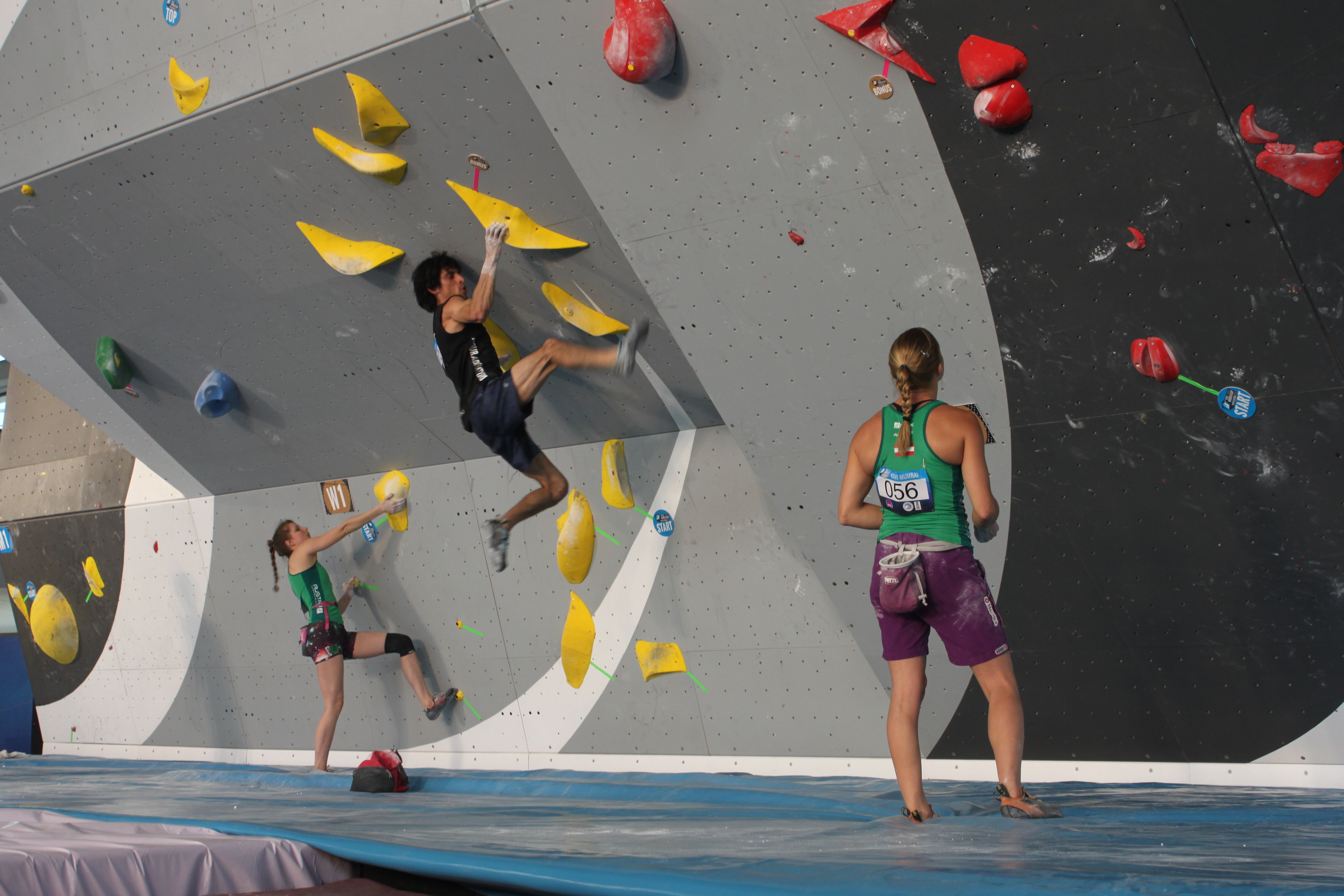
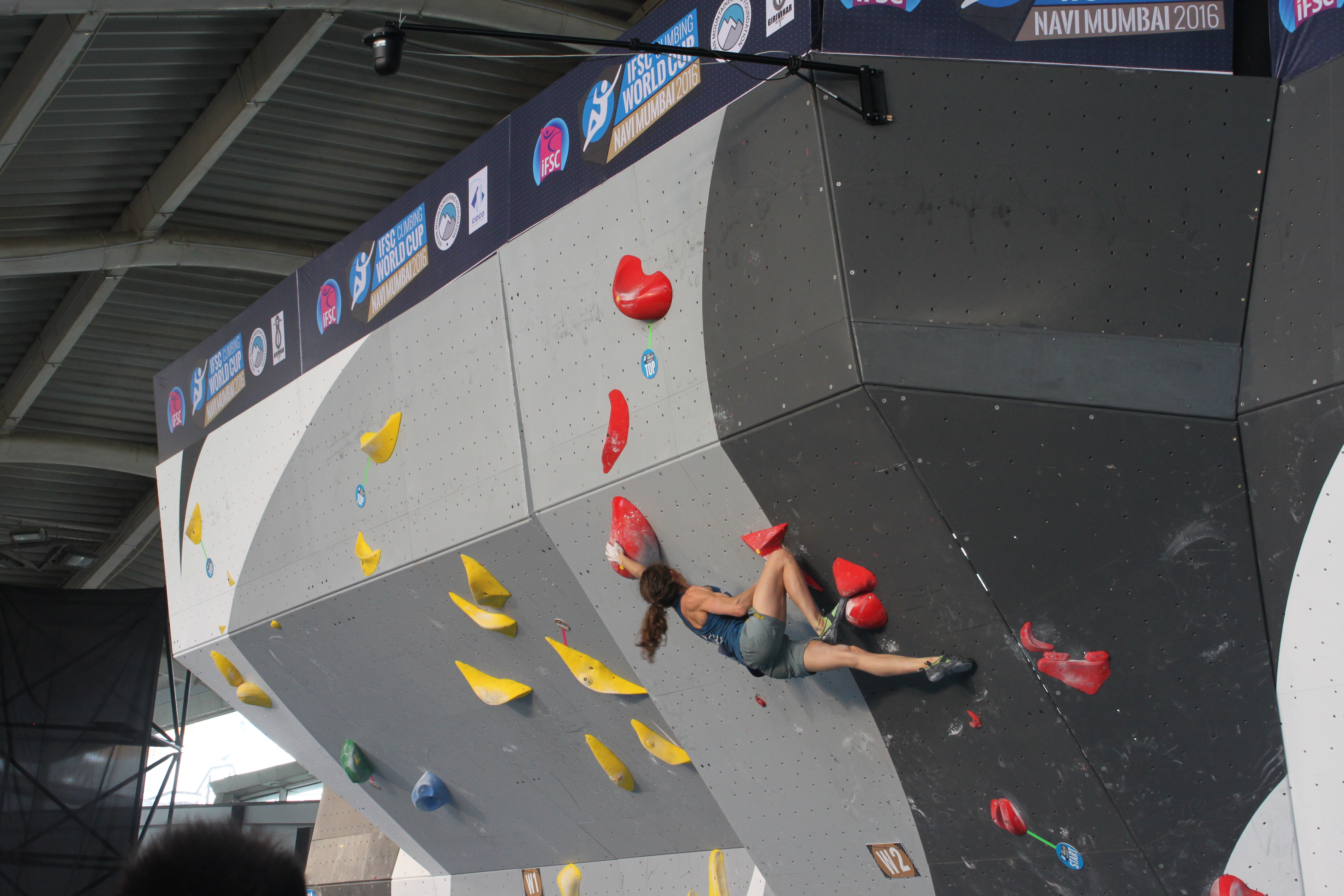
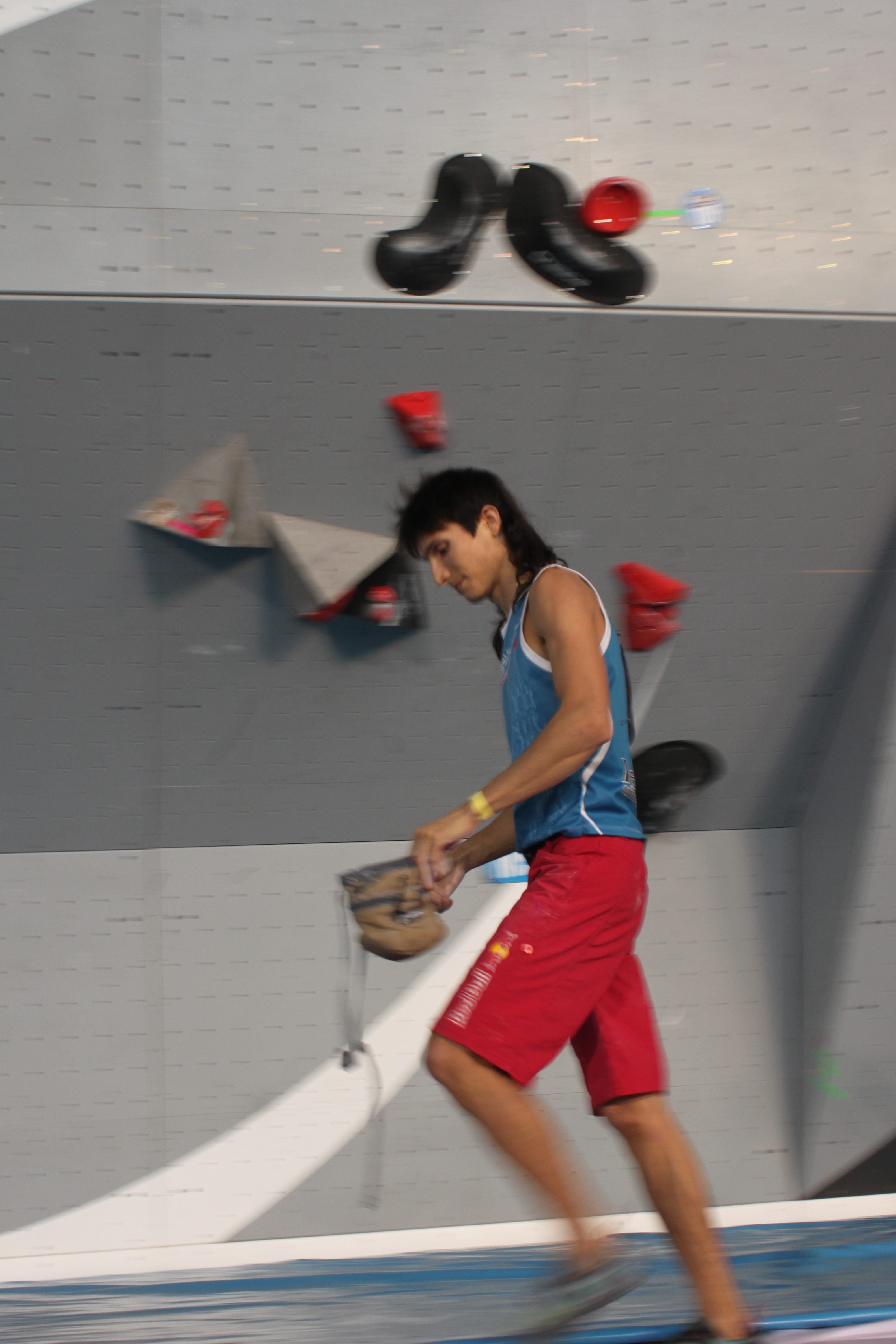
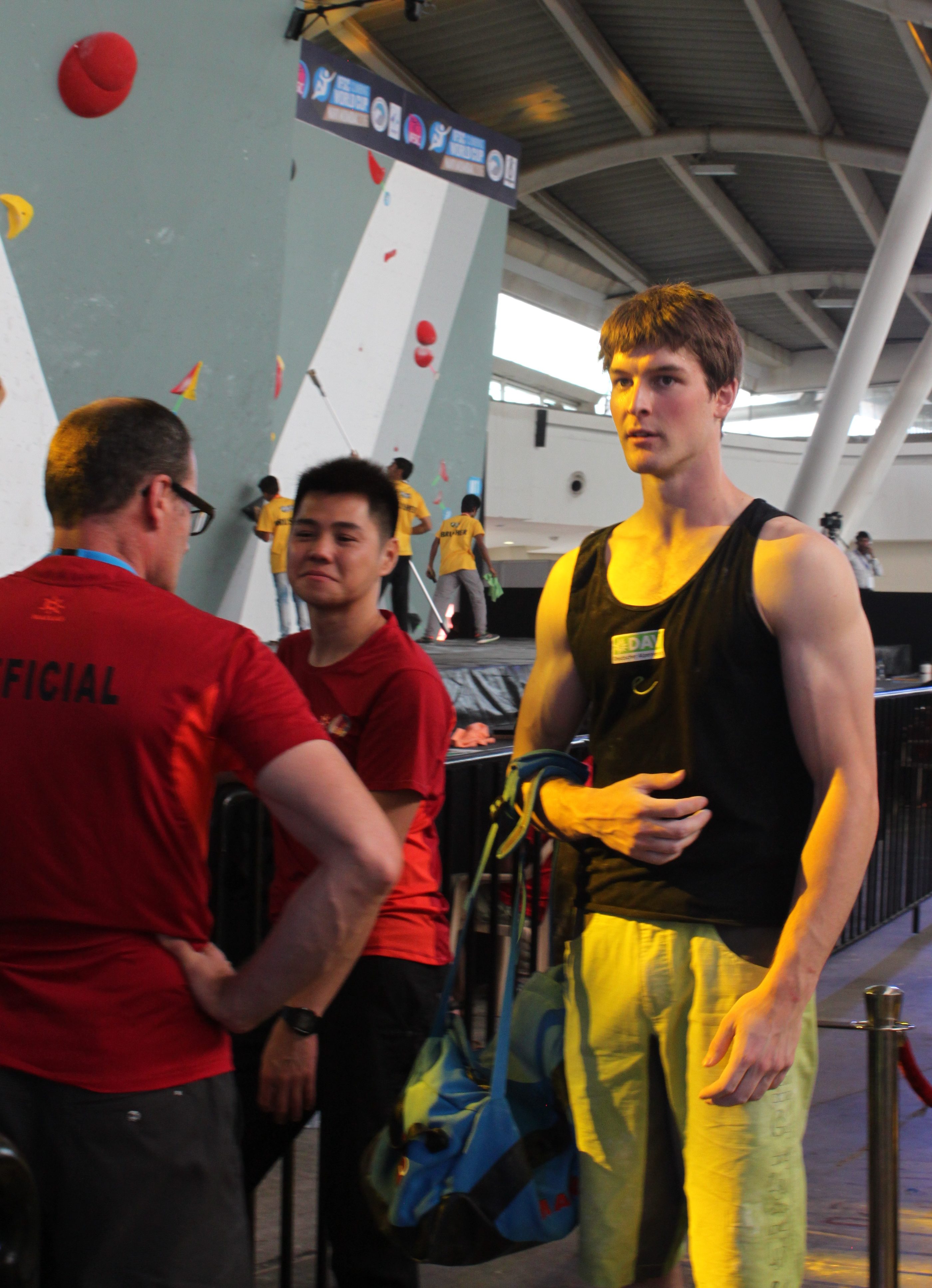
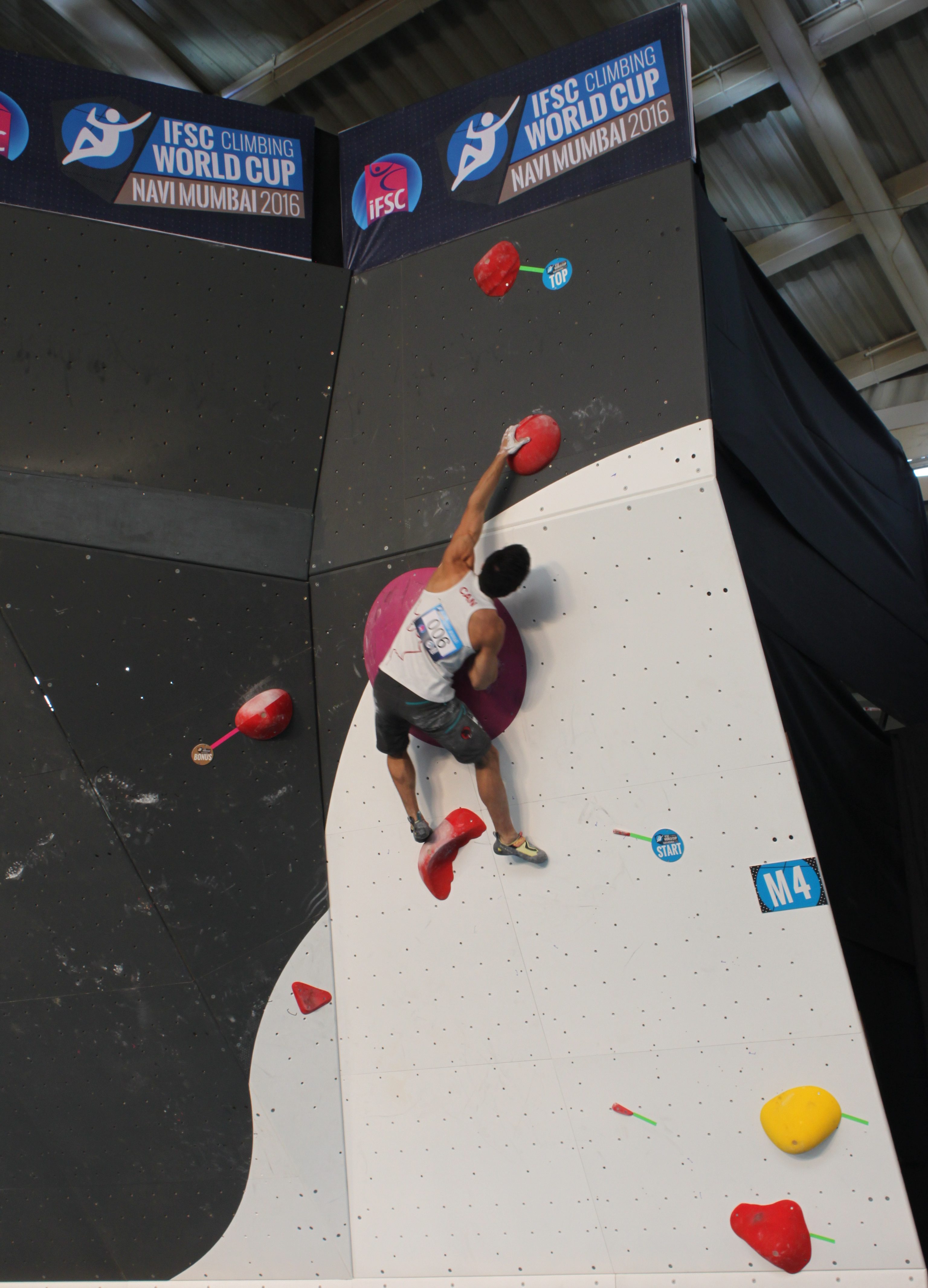
Here are a few photos from day two of the recently held World Cup in Navi Mumbai:

day two-7day two-9day two-8

day two-1day two-12day two-15day two-6day two-18day two-13day two-21day two-17day two-16day two-20day two-14day two-25day two-29day two-19day two-22day two-23day two-2day two-4day two-5day two-30day two-26day two-10IMG_9903IMG_0059

(The author, Shyam G Menon, is a freelance journalist based in Mumbai. All the photos used in this article were taken by him. He would like to thank Pravin Shinde for permitting the use of his camera for the days of the World Cup.)

IFSC WORLD CUP, NAVI MUMBAI – DAY 1

Photo: Shyam G Menon

Photo: Shyam G Menon

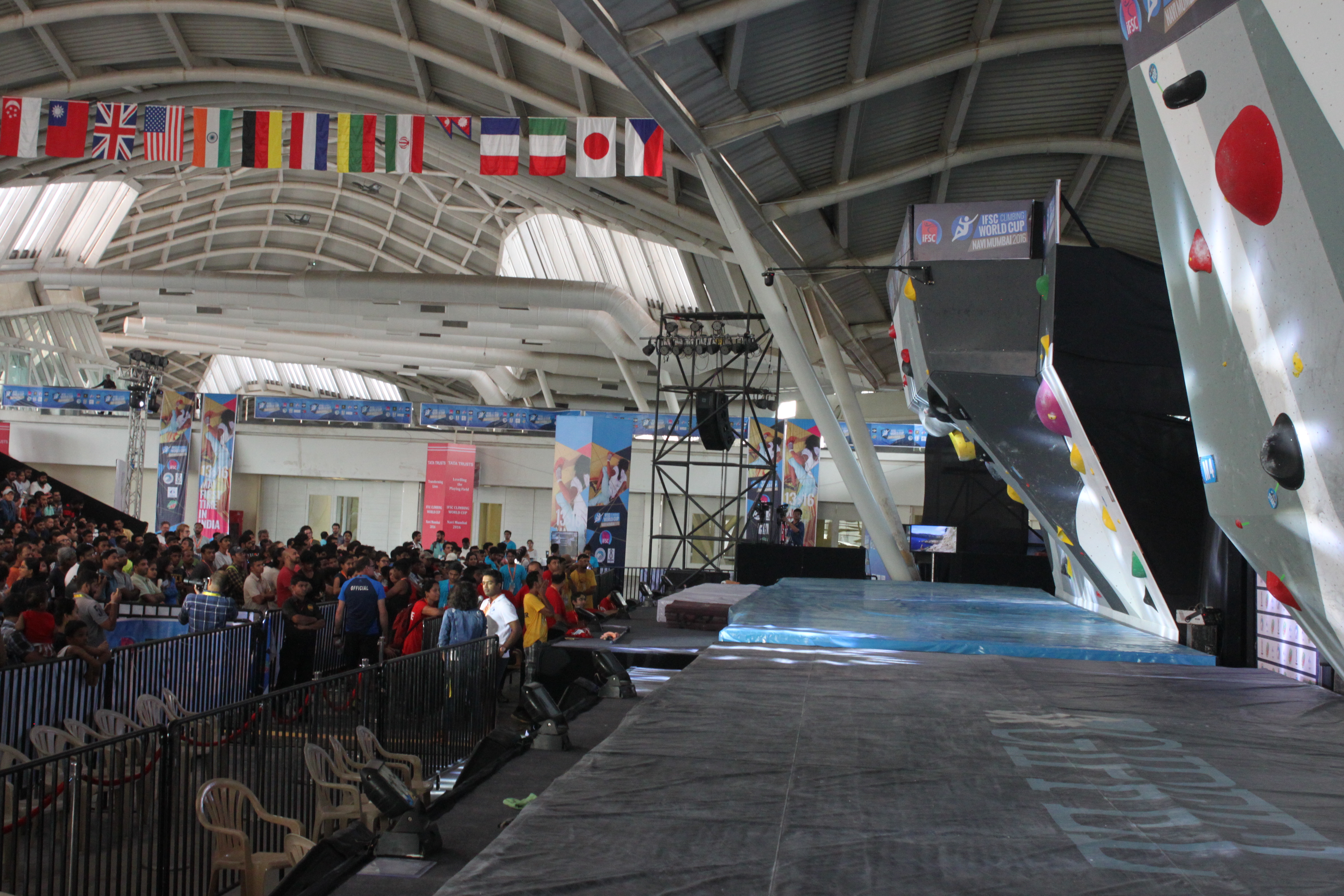
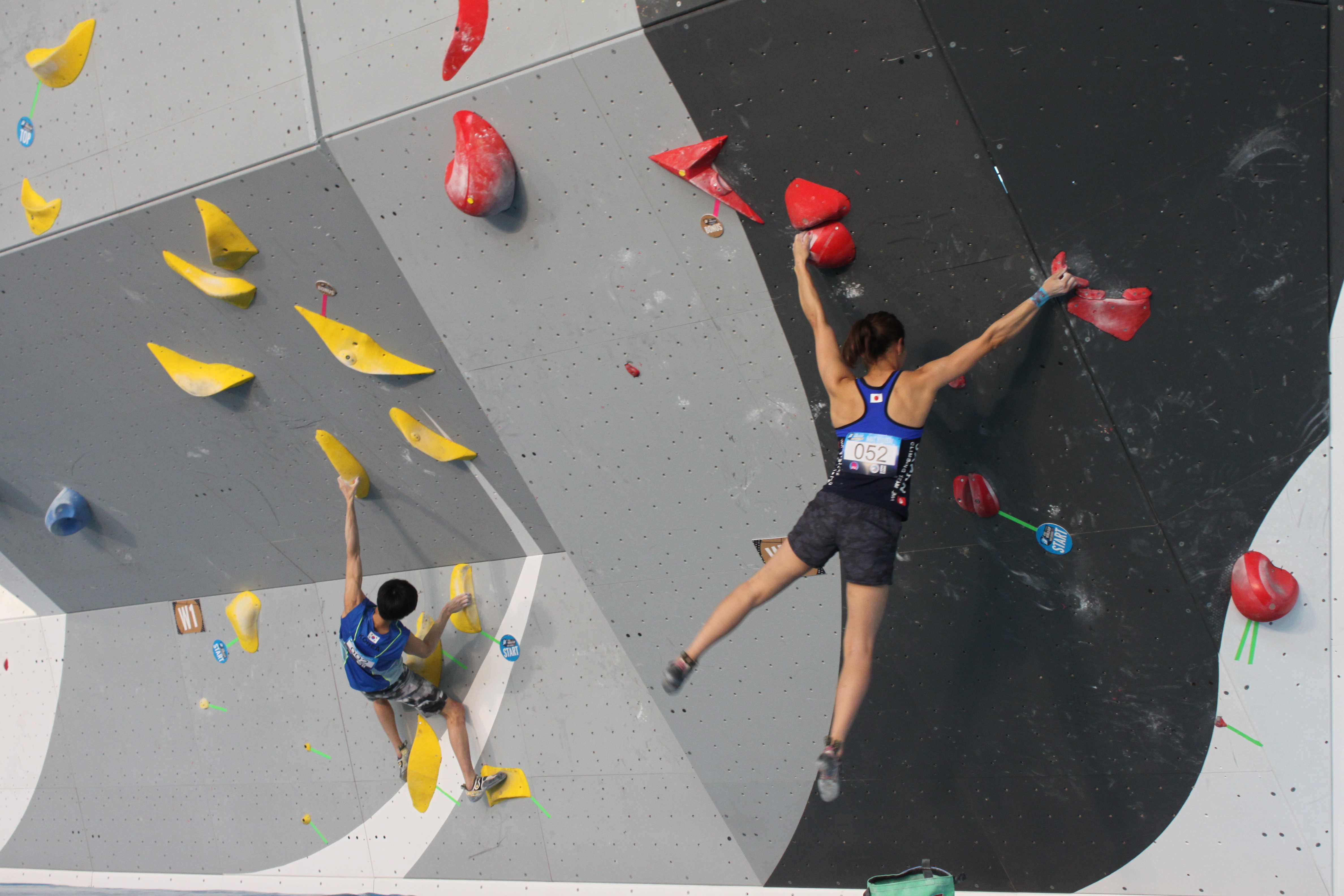
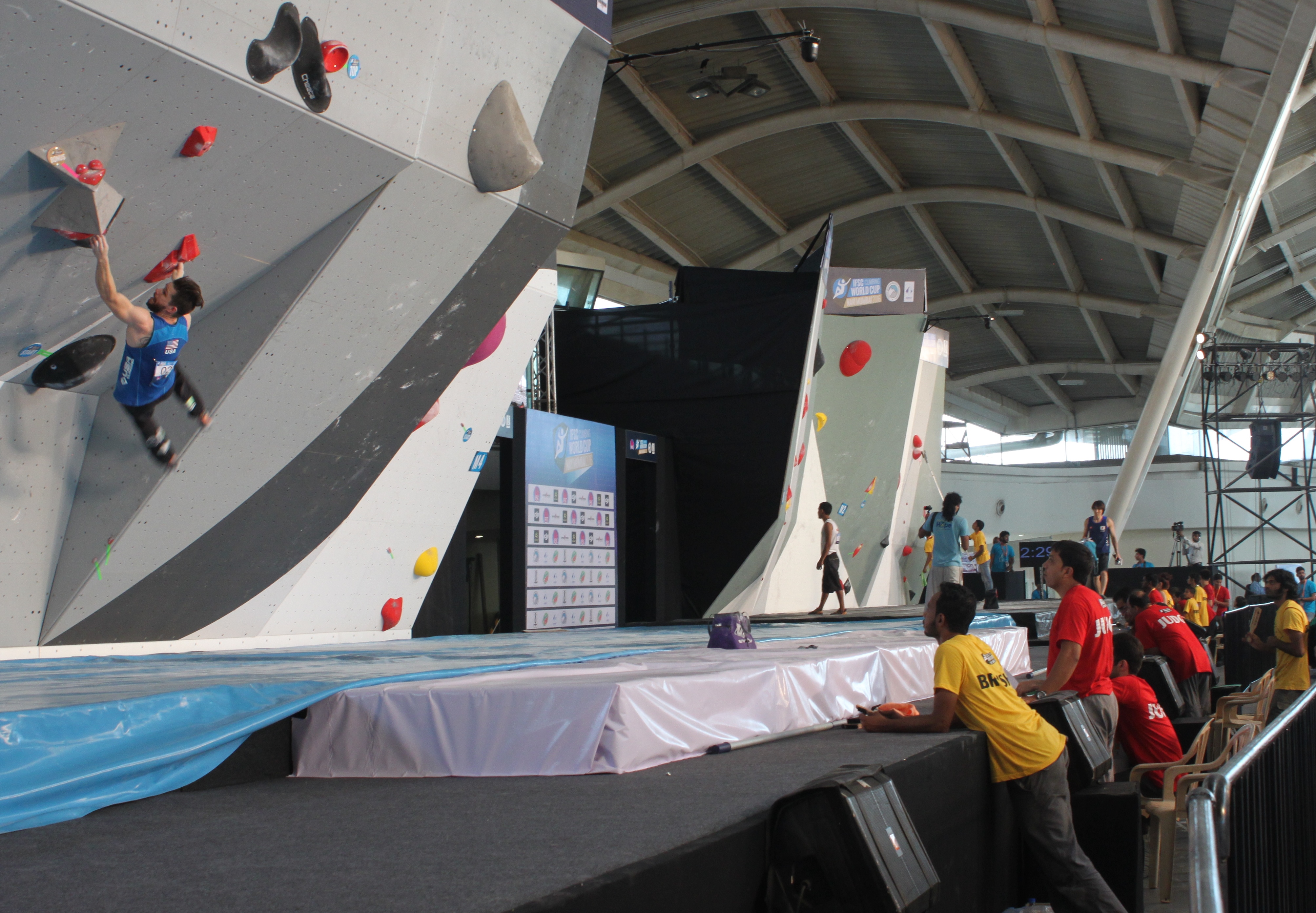
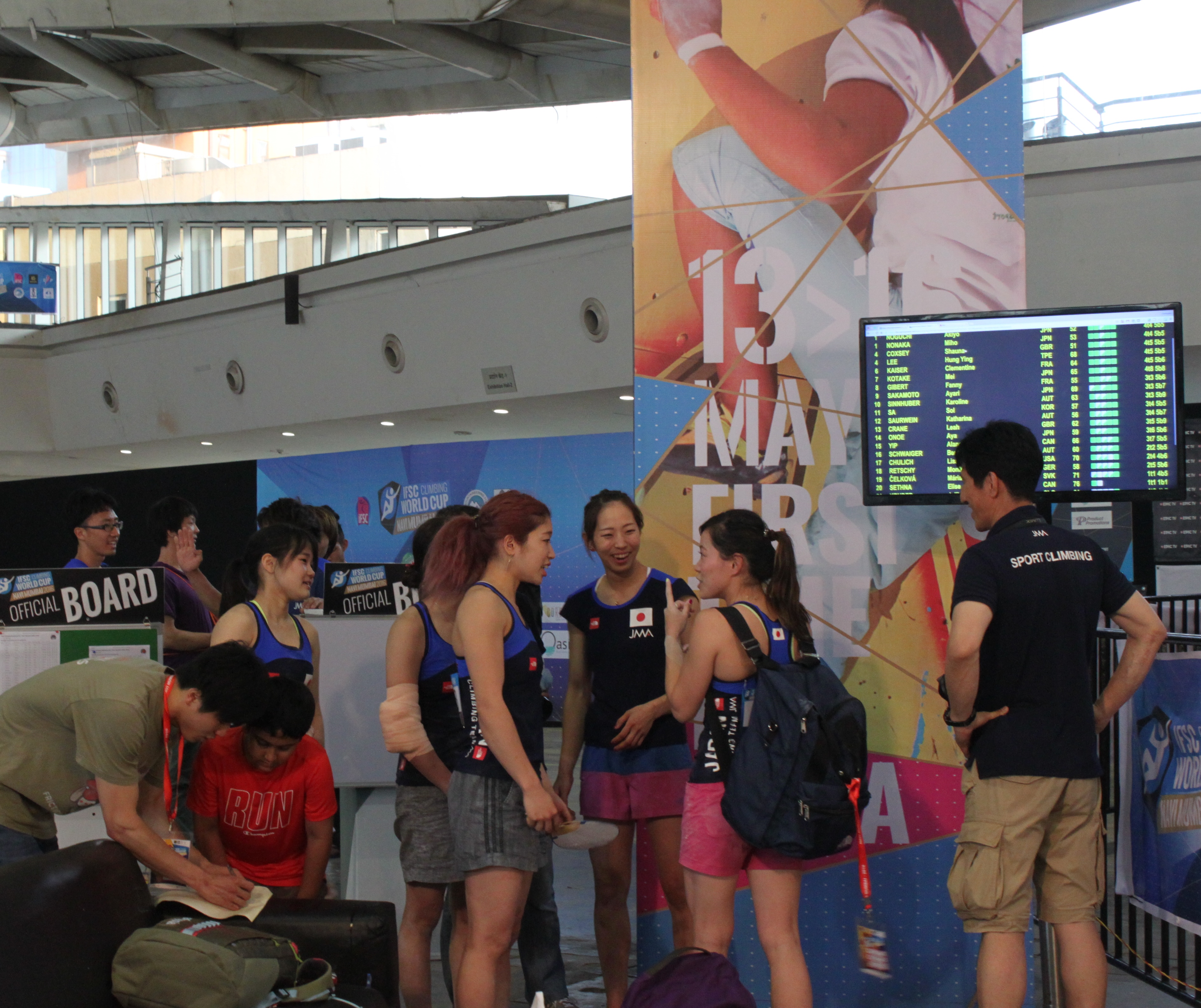
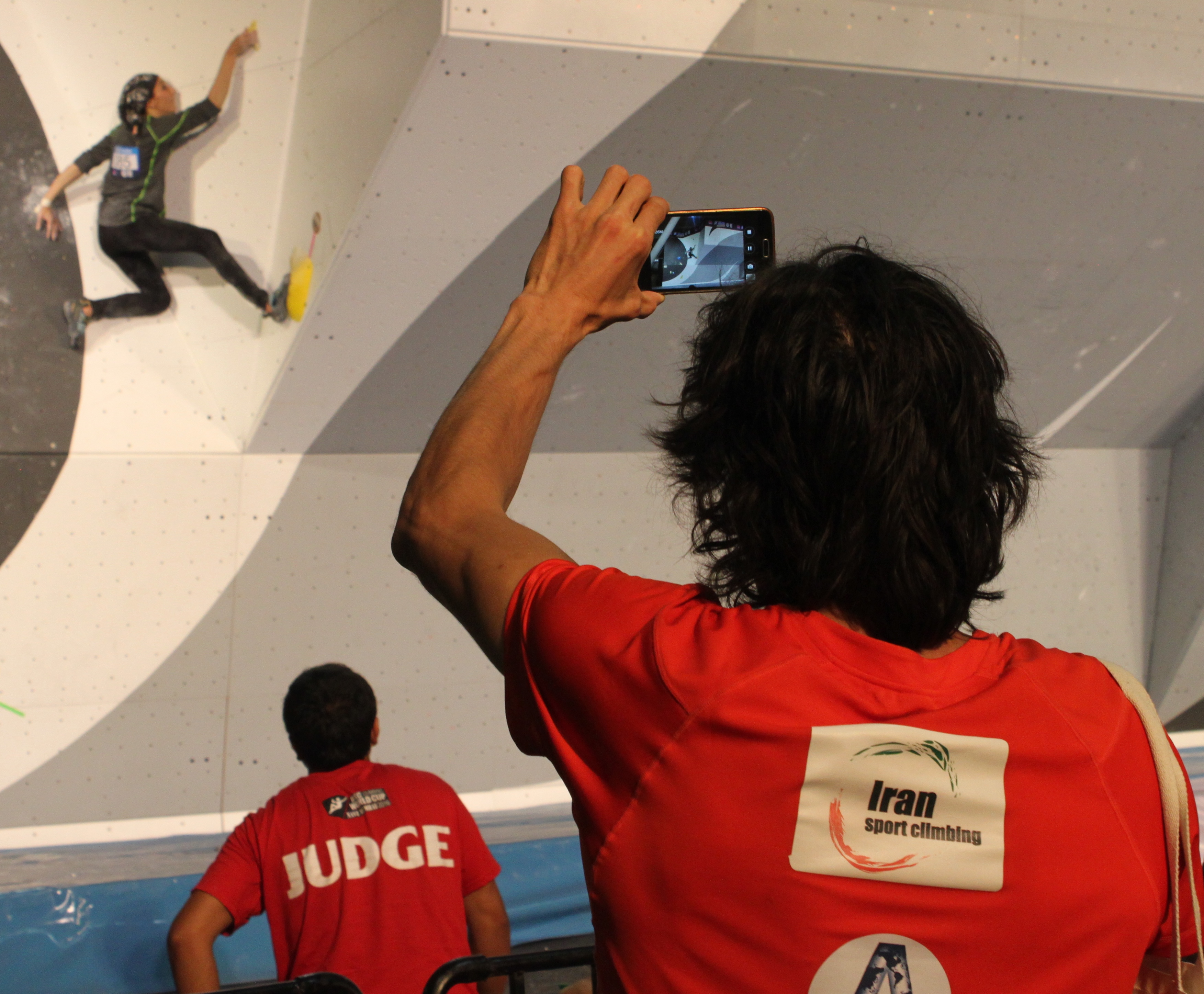
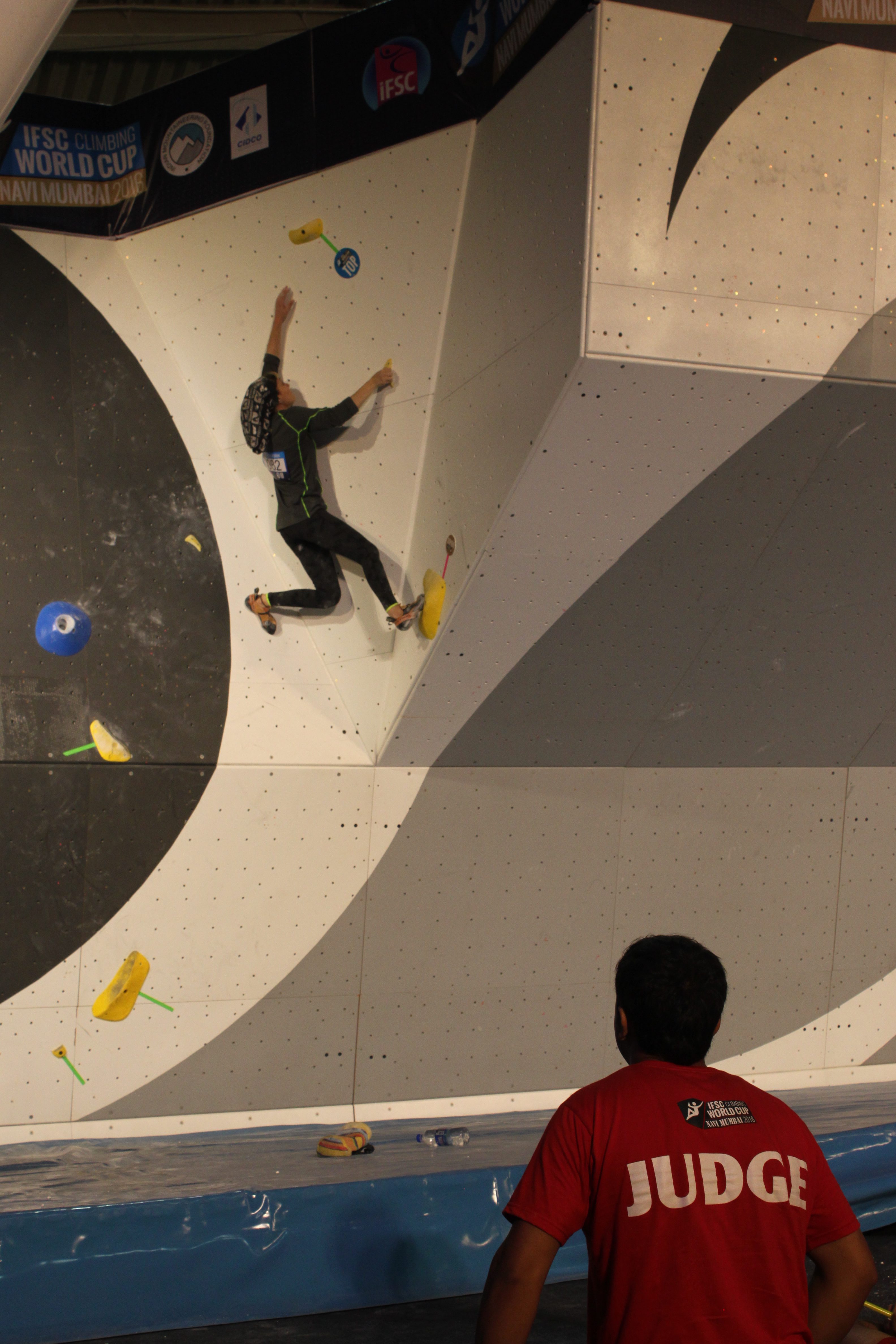
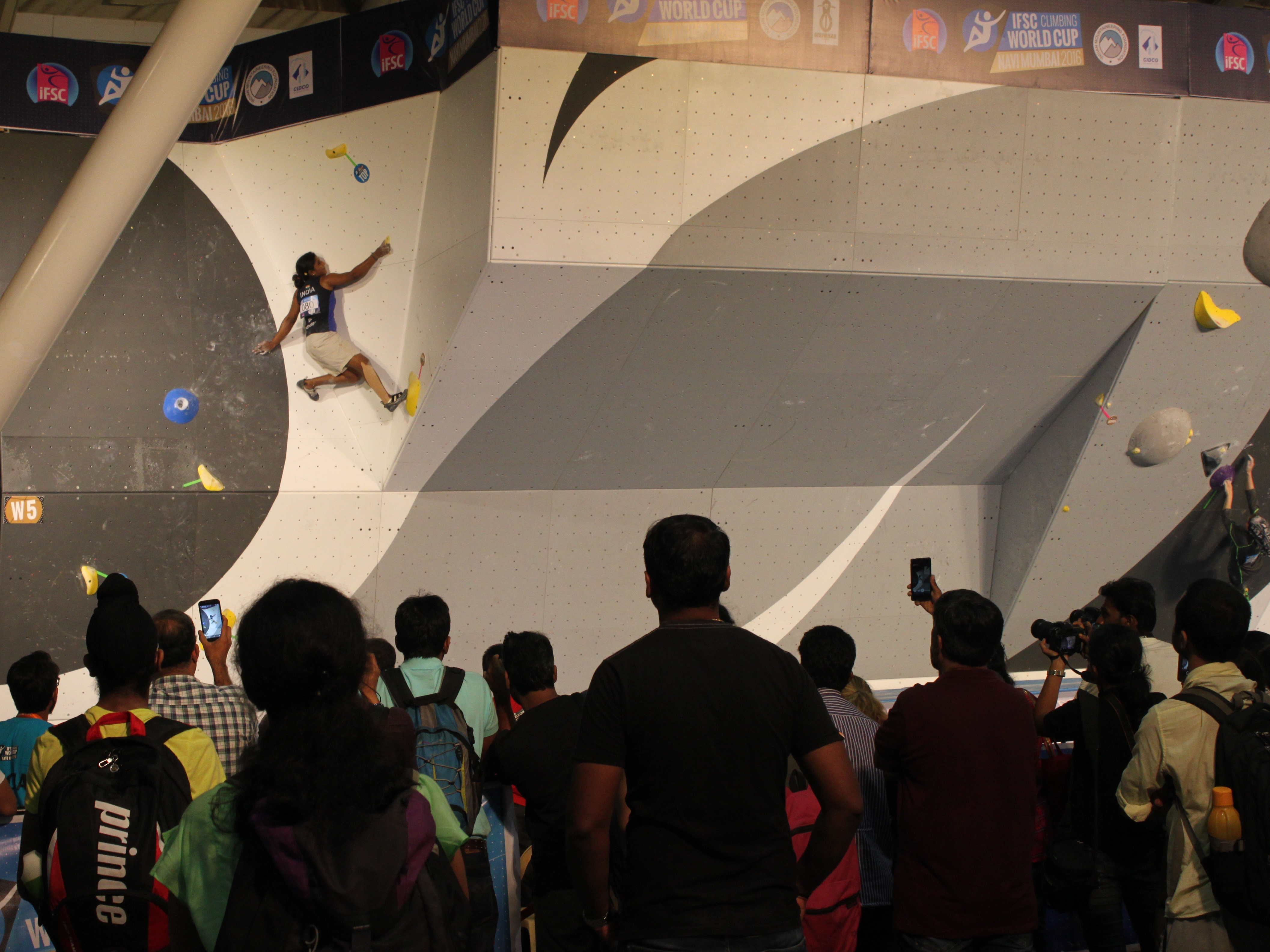
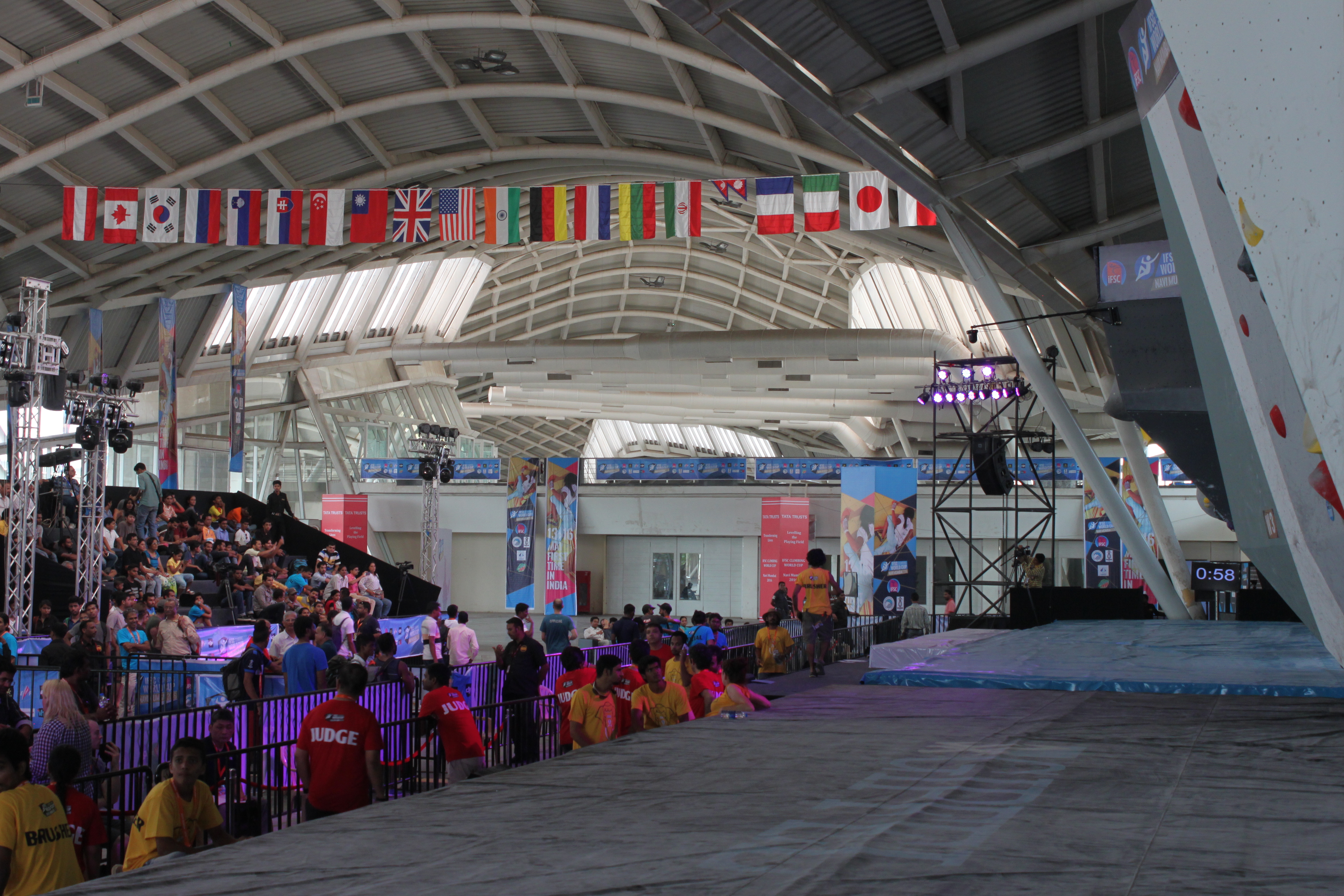
Forty climbers – 20 each in men and women – have qualified for the semifinals of the 2016 IFSC World Cup in bouldering being held in Navi Mumbai. There were no major upsets. The top three in the qualifying round for men were Jeremy Bonder (France), Jongwon Chon (Korea) and Kokoro Fujii (Japan); in the women’s segment the top three were Melissa Le Neve (France), Akiyo Noguchi (Japan) and Miho Nonaka (Japan). As many as eight Japanese climbers made it to the semifinals in the men’s section. Iran, Russia and Germany had two climbers each in the semis while France, Korea, Slovakia, Canada, Czech Republic and Austria had one climber each. Of the 20 women climbers who moved up to the semis, five were from Japan, four from Austria, three from France, two each from Great Britain and Canada and one each from Chinese Taipei, Korea, USA and Germany. The semifinals and finals will be held on May 15. Saturday is a working day for many. Despite this, the opening day of the World Cup was attended by a good number of people. Please find below some photographs from Day 1:

day one-1day one-2day one-3day one-4day one-5day one-15day one-17day one-13day one-16day one-8day one-20day one-25day one-24day one-22day one-19day one-23day one-27

(The author, Shyam G Menon, is a freelance journalist based in Mumbai. All the photos used in this article were taken by him. He would like to thank Pravin Shinde for allowing the use of his camera for the days of the World Cup.) 

INDIAN CLIMBING’S PROBLEMS OF A DIFFERENT SORT

Photo: Shyam G Menon

Photo: Shyam G Menon

In climbing, problems are on the wall.

In Indian climbing, problems exist off the wall too.

Nothing was more evocative of what happened to the Indian team at the 2016 IFSC World Cup in bouldering in Navi Mumbai, than this remark by a team member: it is easy to don the country’s colours; doing justice to it is another. This is my last bouldering competition at this level. If you participate, you must prepare well first. Else, don’t participate. It was said honestly, sincerely. Being host country, India fielded one of the biggest contingents. None of the Indian athletes made it past the initial qualifying round. Not that the qualifying round at a World Cup is easy; it is difficult by domestic climbing standards. But a miracle was hoped for by many in the Indian climbing community given a World Cup had come to India.

The climbers in the team provided many reasons. Although it was known that a World Cup was scheduled to be held in India, team selection and training didn’t happen well in advance. While the last national championship in climbing took place in the last quarter of 2015, team selection for the World Cup was done only by April 2016. Actual training, team members said, would have spanned a fortnight at best. A couple of them also availed loans and spent money from their own pocket to attend a climbing competition in Singapore. They thought it would help. According to some of the team members I spoke to, what is missing in India is a whole ecosystem that prepares you for competition climbing. To begin with, there are very few Indians travelling abroad to participate in international competitions, essential if a climber is to shoulder the pressure that comes with competing in an arena filled with people. The more you compete, the better you become at handling the pressure. Second, you need competent route setters at home who will challenge you and push you in line with the type of routes seen at competitions. “ You need a good coach, you need a good route setter,’’ one of them said.

Third, while the route setter can imagine, the software in the mind transforms to hardware on the wall through a bank of climbing holds. Software and hardware are mutually connected. There are no big climbing gyms in India; certainly none of the sort that can be compared to the facilities some of the foreign athletes train at. This leads us to a fourth point – Indians get to touch for the first time, many of the holds and voluminous features used on climbing walls only when they travel to compete overseas or a World Cup comes to town as it did in May 2016. They are not familiar with certain types of holds, especially the big volume holds and features, which typically cost more to purchase in the market and which are found more and more on contemporary competition routes. Foreign athletes on the other hand are so familiar with some of these holds that they are able to guess well on seeing a hold, which part of it may be capable of hosting grip. As was evident on the opening day of the Navi Mumbai World Cup, Indian climbers lose time figuring out how to grip a hold or feature, often at the starting portions of a climbing route. Fifth, traveling abroad and participating in competitions is an expensive proposition. Few Indians have the financial muscle for this. Some, including those driven by passion and borrowing for the purpose, manage to compete overseas. Going there for a precious learning experience denied at home, they return with few discernible results that home federation and sponsors can take notice of. As Indian climbers participate in international competitions without being able to make an impression, the outcome reinforces the feeling in officialdom that the whole exercise of going to World Cups is basically futile. “ This becomes a vicious cycle. Unless you support the athlete consistently and for long, he or she is not going to gain experience and without experience you cannot hope to make an impression at competitions like the World Cup,’’ a team member said.

Lack of resources is typical of developing economies. One of the interesting things happening in climbing is that even as it is recognized as a sport with European roots, at present its growth is driven a lot by the Asian market. Affordability cannot be ignored in such contexts. The Navi Mumbai World Cup is itself an example of this drift – climbing’s rising popularity in Asia helps endorse the case for a World Cup in India. At the same time, budgetary constraints saw one of the walls used in the competition being fabricated locally. That is the affordability paradigm at work. Sean McColl is Athlete President in the Athlete Commission, which represents the interests of climbers in the World Cup circuit. I asked him if any athlete exchange programs or special funds to train athletes from the developing world were being thought of as climbing journeys to new geographies. He said nothing has been thought of yet. Potential reasons for it ranged from a lot of the administrative and developmental work in climbing being done on a voluntary basis to the athletes’ own busy schedules. However the IFSC, he said, does what it can to spread the software of climbing, like courses for judges; the rationale being that if climbing infrastructure and know-how grow, then climbing of good quality will follow. As my question was posed against the backdrop of Indian climbers and their feeling that lack of competition experience was doing them in, Sean highlighted another angle: Asian teams like those from Japan and Korea, have had athletes come for their first World Cup and yet make an impression. He had a point. For instance, climbers from Iran are familiar to the Mumbai climbing community thanks to the previous visits they made to participate in the Girivihar annual climbing competition. Iran had two athletes in the men’s semifinal. Singapore’s Ashraf is similarly known to the Mumbai crowd. Although he didn’t reach the semis, he put up a creditable performance. “ It may also be a case of having to work on strength,’’ Sean said as he prepared to leave the venue late evening, having watched the women’s qualifying round.

In the audience at Navi Mumbai, witness to the collapse, was a large contingent of sports administrators and officials overseeing Indian climbing. One thing is clear. The time for excuses is over. Indian climbing either gets its act together and goes about improving the quality of climbing or stays content hosting World Cups. A rising generation wants creative thinking and results to show so that they can stand shoulder to shoulder with the best in the world. The journey will be tough. But the least everyone can do is – make it happen.

(The author, Shyam G Menon, is a freelance journalist based in Mumbai.)
“ CLIMBING IS ALWAYS EVOLVING” – SEAN MCCOLL

world cup-14

Sean McColl (Photo: Shyam G Menon)

Born 1987, Sean McColl began climbing in 1997. He has been competing for the past 18 years. Hailing from North Vancouver in Canada, he was the Canadian youth champion every year from 1999-2005. Since he started competing in the World Cup circuit, he has won four events (two in lead climbing, two in bouldering) and been on the podium another 23 times. Sean is one of those rare multi-disciplinary athletes in the complete sense. According to Wikipedia, he was overall winner in the men’s category in 2014 and runner-up in 2011, 2012 and 2013. He represents the athletes’ interests in the competition climbing world. In Navi Mumbai to participate in the 2016 IFSC World Cup in bouldering, he spared time to reply to the following questions from this blog:

You have been in competitive climbing for a long time; your first gold medal at the Youth World Championships was in 2002. How did your life in climbing move towards competition climbing? Was it intentional or something that happened along the way?

I have by nature always been quite a competitive person. Growing up, I loved sports and when I found climbing I was naturally drawn towards competitions. Winning my first World Championships in 2002 helped fuel my drive and love for competitions even more. I still love competing! There is nothing quite like it.

Was being at the Youth World Championships a fine stepping stone for you to graduate to the senior circuit, involving the IFSC World Cups and the World Championships? How long did it take for you to find your groove in the senior circuit?

Being involved in youth climbing helped me drive my passion. It also helped that because I was climbing during my growth years my muscles were driven more towards that of a climber. Someone who didn’t start climbing till 20 might have a harder time forcing their bodies towards that of an athlete. Finding my groove on the open circuit took quite a few seasons and that was before there was ANY infrastructure in place. In Canada, we still struggle to have good training for athletes after their junior days, but with the Olympic bid, my fingers are crossed that everything will get brought to a new level.

In the many years you have been at World Cups and World Championships, who are the boulderers who have earned your respect – the ones you felt were a class apart? 

There are many boulderers that have since retired and some still on the circuit that I sincerely respect. To name them all without forgetting one is too risky. The person who I looked up to the most in my incremental years was Kilian Fischhuber of Austria. His patience, precision and strength in the most clutch of times are inspirational.

How intense is life in the World Cup and the competition climbing circuit particularly for athletes participating in more than one discipline like you? Does a full season take a toll on the body, not to mention repeating it year after year? Right now, are there too many World Cups or is the number apt?

I find the balance of world cups in a year, very good. This balance is carefully kept and with my position as Athlete President on the Athlete Commission, I have a big hand in debating in which order and when competitions are held. It is a balance between event organizers, the national federations, the IFSC and the athletes. Without one of these parts, competitions will not be at the standard that we strive for.

The season takes a big toll on the body, and even more so when you do multiple disciplines. I have always had the goal of doing both disciplines because I don’t like to be labelled as a certain type of climber. I am just in love with climbing and all of its aspects.

Is there anything that apex organizations like the IFSC should keep in mind from the athletes’ perspective, when they design their annual calendar of events? Is there anything they are missing now?

As Athlete President, they hold my opinion (and that of all climbers through me) in very high esteem. They count on me to bring the voice of all climbers to the board of the IFSC. When they are lacking in certain areas I device strategies to not only solve the issue but make things better. Climbing is always evolving.

You have competed and won in all three disciplines – lead climbing, speed climbing and bouldering. Are these naturally synergic; how did you manage to keep them synergic in terms of both training for the event and competing? And most important – how did you contain the resultant wear and tear on your own self?

I find that there is minimal wear and tear on myself by doing all three disciplines. As I said previously, I want to be the best climber that I can be and not be labelled as a certain type of climber. I want to be an elite athlete, not only a lead climber. I like the stamina of lead climbing, mixed with the raw strength of bouldering mixed with the fast precision of speed climbing.

Looking back, is there anything you would have done differently as a competition climber?

As my crew of friends live by: “No Regrets!’’

Sean McColl (Photo: Shyam G Menon)

Sean McColl (Photo: Shyam G Menon)

Besides being a successful competition climber, you have also been a coach. What would you tell young people taking to the sport of climbing? 

I would tell them to find something in climbing that they truly love, and follow it. A coach can only bring a competitive climber so far. The willingness to get better must be rooted in the athlete. Training is not something that you do in a day, a week or month but a yearly sequence of events that shape you as an athlete.

What is your personal view on the potential debut of climbing at the Olympics? Do you also share the concerns expressed by some others with regard to the Olympic ideal reportedly seeking to recognize the best overall climber from a sport that has three distinct disciplines? Will recognition of an overall winner – something similar to being a decathlete – dilute respect for competence in the individual disciplines?

I am very excited about the possible inclusion of sport climbing in the Olympic Games. In an ideal world, we would have been given eight medals (speed; boulder, lead, combined) for both men and women. Unfortunately, the IFSC was only offered two and I agree that an overall competition will show the strength of each discipline without leaving anything out. Assuming we get the vote in August, it will not matter which `discipline’ is eventually chosen for the Olympic Games, the whole sport will be brought upwards by the decision. The end goal would be to have the eight medals I referred to offered for the 2024 games! Fingers crossed.

(The author, Shyam G Menon, is a freelance journalist based in Mumbai.)
IT’S TIME FOR ART

From the 2014 edition of Girivihar's annual climbing competition, the series that paved the way for a World Cup in India (Photo: Shyam G Menon)

From the 2014 edition of Girivihar’s annual climbing competition, the series that paved the way for a World Cup in bouldering in India (Photo: Shyam G Menon)

Updates from May 13, the eve of the IFSC World Cup in bouldering at Navi Mumbai, will be appended suitably to the article titled `IFSC World Cup: Countdown Begins in Navi Mumbai,’ posted earlier. Please visit this article and that, for a comprehensive overview. 

“ All we need is a watch painted on that hold and it would be like Salvador Dali’s painting,’’ I told Prashant.

We sat on the stands, two fans of climbing observing route setters at work on a climbing wall.

If earlier in this blog I called their work, art, it is for a valid reason. A climbing wall; sculpted and painted imaginatively and sporting colorful holds and features, resembles abstract art. Tad, like an Alexander Calder piece, albeit frozen still, stuck to a surface. A climber weaving his way up, adds mobility to the installation effect. The route setter’s intervention is where competition climbing on artificial walls, makes the transition from the cold nuts and bolts of the wall’s engineering, to the art of its facade. In some ways, it encapsulates the peculiar attraction climbing offers – it is math and art at once, it is disciplined training and intuition, it is straight lines and fluidity. It is time, for India’s first World Cup in bouldering; 82 athletes have registered (17 from India, the rest from overseas), the competition commences in Navi Mumbai tomorrow, May 14.

The last couple of days in the run up to the World Cup were a bit tense.

The most critical piece of hardware at a climbing competition is the wall. The marine container bearing one of the walls for the World Cup – a bouldering wall dispatched by one of the biggest names worldwide in the business of climbing walls, shipped in from their facility in China – was brought straight to the venue from the port. Much was expected from this imported wall. Made by an experienced company it was to be benchmark. Upon assembling however, challenges cropped up. There were issues with aligning the wall to the stage, there were mismatched components and some nuts and bolts had not been included in the shipment. After a year spent preparing for the World Cup, this was a disappointing moment for all. It cast a pall of gloom at the venue. But not for long. The manufacturer’s technician and event organizers put their heads together and came up with an optimal solution. The mismatched portions of the modular wall were rectified locally. The team of climbers entrusted with installing the two walls, got cracking. They got the wall’s base aligned. The installation of frames and panels started. Issues with fit and finish emerged. Raju, the carpenter who has regularly contributed to Girivihar’s walls, was recruited to assist with some of the panels. Eventually the imported wall was up. The lengthy process delayed the wall becoming available for the route setters to work on it. By noon May 11, the route setters, having already done much work on the locally fabricated wall which was in place earlier, commenced their work on the imported wall, designing climbing routes the moment a face was ready. By late evening May 12, the imported wall hummed with route setters’ activity. DJ and music system had arrived at the venue; music fueled the route setters’ work and Prashant was lost in his favorite song playing on the big speakers – Metallica’s Nothing Else Matters.

From the 2014 edition of Girivihar's annual climbing competition (Photo: Shyam G Menon)

From the 2014 edition of Girivihar’s annual climbing competition (Photo: Shyam G Menon)

Christophe Billon, IFSC’s Technical Director for the World Cup, is the person who has final say on competition proceedings. I asked him what he thought of the two walls. To begin with he pointed me to the fact that the two subjects in focus were bouldering walls, which, unlike lead climbing walls, don’t go up very high. That makes challenges in design and fabrication easier to handle. He couldn’t immediately recall previous instances wherein the IFSC had gone along with a locally fabricated wall for a World Cup. Navi Mumbai that way appeared to be treading less visited terrain if not breaking new ground. Although he had asked for a couple of changes here and there, on the whole, he felt that the locally fabricated wall was stable and well built. “ Its fit and finish is good,’’ he said. The imported wall, he conceded, had ended up a bit of a disappointment. But the silver lining is that the two walls are so different in shape and character that taken together, a rich variety of climbing routes to challenge the athletes is possible. “ In combination, the two walls work well,’’ he said.

The Navi Mumbai edition of the IFSC World Cup in bouldering is the first World Cup being held in India. The World Cup in climbing is a series of competitions held annually in various countries, under the aegis of the International Federation of Sport Climbing (IFSC). Each edition culminates in podium finishes with points accumulated to crown overall winners by the end of every series. The Navi Mumbai edition, organized by the Indian Mountaineering Foundation (IMF) and Girivihar, falls close to the middle of the series currently underway. In trends so far this World Cup-season, the women’s field has been dominated by Shauna Coxsey of Great Britain, who with her last win at Chongqing in China, has notched up an incredible four straight wins. Although she is at present leader by a sizable margin, there are strong, experienced climbers like Akiyo Noguchi of Japan in the field. With only less than half the journey done so far, much can change going ahead. In contrast, the men’s segment appears filled with closely matched competitors; consequently, it has been a see-saw battle in the run up to Navi Mumbai. Although a host country in 2016, sport climbing has a relatively recent history in India. The 17-member Indian team at the Navi Mumbai World Cup includes some of the best young climbers in the country.

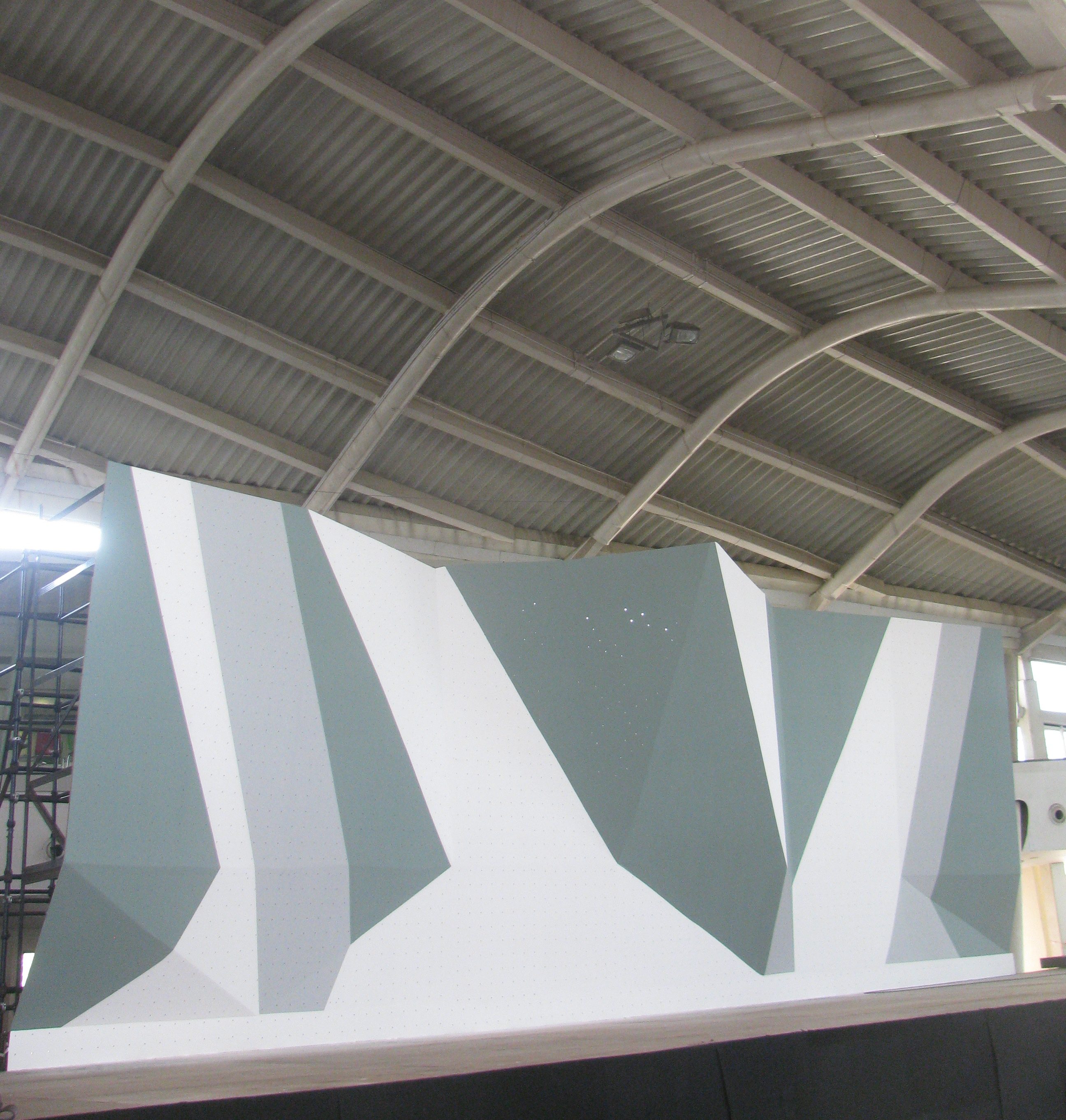
The finished wall, painted and ready for the route setters to start their work (Photo: Shyam G Menon)

The wall that was locally fabricated for the World Cup, painted and ready for the route setters to begin their work (Photo: Shyam G Menon)

While IMF is the host federation, the work at ground level has been done by Girivihar, Mumbai’s oldest mountaineering club. CIDCO, the agency which designed and built Navi Mumbai, extended their Exhibition Centre in Vashi as venue for the World Cup. There were many challenges along the way, the most consistent of which was perhaps, funding. To address the resource crunch, one of the climbing walls was locally fabricated to IFSC standards. A round of crowd funding was done. In the final stretch of preparations, Tata Trusts stepped in with a financial grant. That was oxygen. From the confines of a hot, sweaty warehouse in Taloja, the locally made wall traveled in dismantled form to the venue in Vashi and was put together at site. Painted and with route setters working on it fixing colorful holds and features, it looked every bit the art work, climbing walls remind of. Two evenings later, the imported wall joined in, providing company.

It’s time for the athlete’s art.

(The author, Shyam G Menon, is a freelance journalist based in Mumbai.)
THE PUZZLE MAKERS

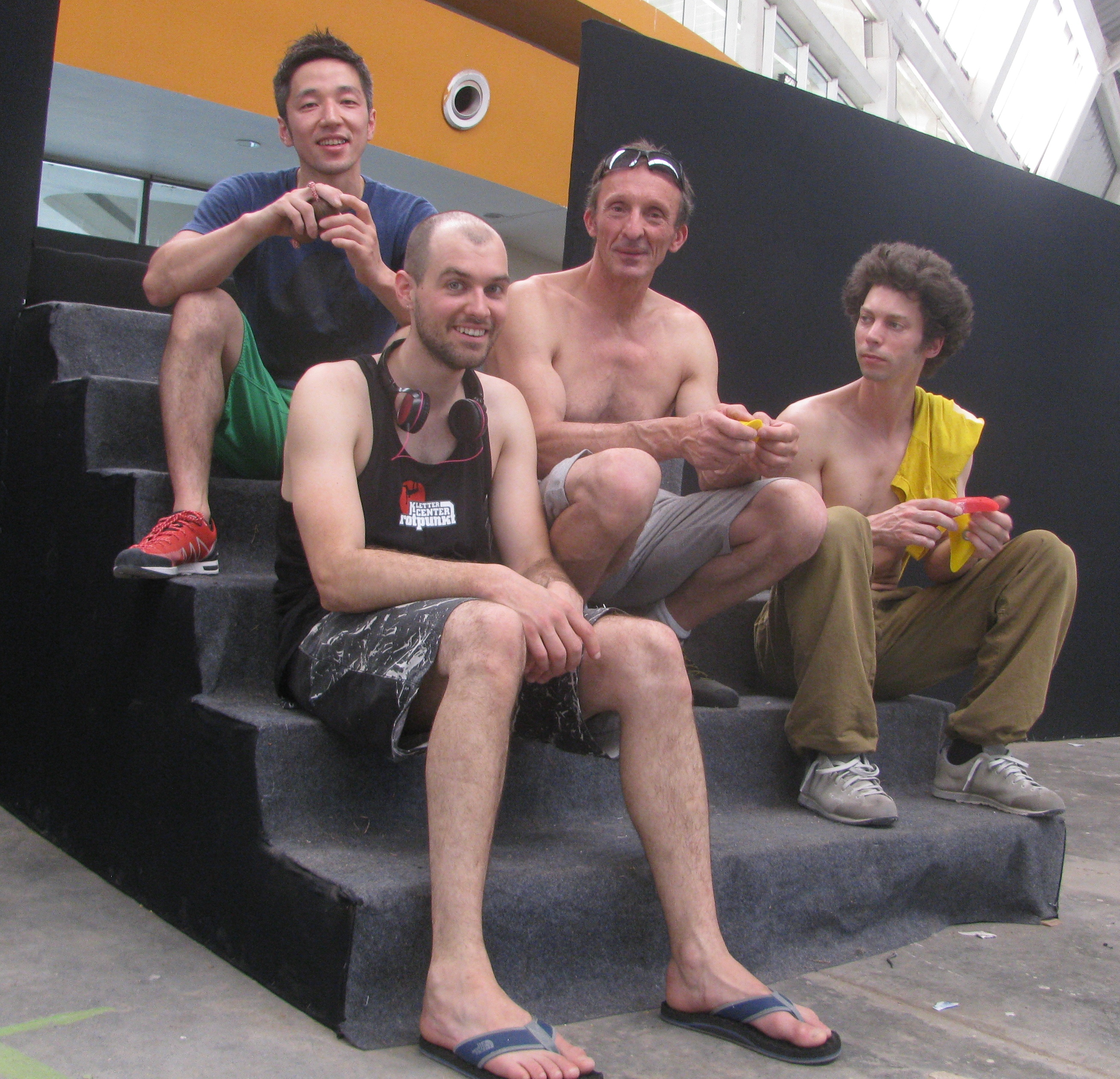
From front left: Mathias Woitzuck, Gen Hirashima, Laurent Laporte and Manuel Hassler (Photo: Shyam G Menon)

From front left: Mathias Woitzuck, Gen Hirashima, Laurent Laporte and Manuel Hassler (Photo: Shyam G Menon)

May 8 was a hot day.

At the venue of the upcoming World Cup in Navi Mumbai, the shade of CIDCO’s Exhibition Centre and sunlit day outside harbored an indistinct disparity. It was warm even in the shade. Warm enough for two of the four gentlemen, waiting for a climbing wall to be ready, to take off their T-shirts. A third, who had visited India before and climbed at Hampi and Badami, had chosen a vest over a T-shirt. Manuel Hassler, Mathias Woitzuck, Laurent Laporte and Gen Hirashima, hailing from Switzerland, Austria, France and Japan respectively, formed the four member-route setting team dispatched by the International Federation of Sport Climbing (IFSC) to the Navi Mumbai World Cup. Praveen C.M, one of the best sport climbers in India, was expected to join as a fifth member.

Manuel was Chief Route Setter; Gen and Praveen, aspirant route setters wishing to grow their skills by working with the experienced. Laurent was the most experienced; he had begun route setting for international competitions conducted by sport climbing’s apex federation, at a time when the IFSC wasn’t yet born and sport climbing was still overseen by the UIAA, currently dedicated to mountaineering. The wall imported for the competition, had arrived and not been installed yet. The quartet admired the locally fabricated wall from far; they checked it up close. Then, the inevitable happened – they imagined routes on it. Doing so, they moved their arms to reach non-existent holds, raised their legs to step on invisible footholds and let the body flex this way and that for balance, generally swaying like ballet dancers.

Four components complete a World Cup ecosystem – athletes, route setters, judges and spectators. You have a good competition, when all four blend beautifully. Of these four, the one role functioning akin to a sensitive instrument gauging the ecosystem is the route setter. All serious route setters are themselves good climbers. That’s because a sense of body movement is critical to set routes that challenge climbers. But here’s the interesting thing. Most of us equate challenge and difficulty with moves requiring strength to execute. However, strength and power and are only two of the several aspects shaping a good climber. A good climber is a composite of many other talents too including the ability to solve a set of climbing moves that resemble a problem on a route; climbing creatively, handling the overall pressure of competition and taking risks while climbing.

When route setters stare at a blank wall defined yet only by its angled faces, they can imagine different configurations of climbing holds and features on it, to create routes. They work once a wall is ready to host climbing holds. When they work, designing a collection of routes ahead of competition, access to the wall is restricted. No photography is permitted because these routes are the puzzles at the heart of a competition. But it isn’t as simple as accumulating a bank of puzzles, tucking it away and monotonously pulling it out one by one from the kitty during the course of a competition. Route setters sway like grass in the wind for a valid reason. They sense which way the wind is blowing at a competition underway. Their imagination and response to real time stimuli is what keeps a competition entertaining. That means you may pull out routes from your kitty but the going will be dynamic, with changes in response to a live situation and state of competition. According to the team now in Navi Mumbai, route setting at the start of the World Cup season is a bit of a guessing game for the athletes are returning from a break and well deserved rest after the preceding competition season. You give challenges and gauge response for a sense of where the field stands. As the season progresses, the vagaries slowly fade and trends creep in. The athletes warm up to peak performance. The route setters draw into their bank of routes and play the virus in the system, keeping the going edgy and unpredictable with their creativity in route setting, building each competition to an interesting final. While doing so, they also listen to local stimuli, which is where the spectators matter.

The finished wall, painted and ready for the route setters to start their work (Photo: Shyam G Menon)

One of the walls for the World Cup, painted and ready for the route setters to start their work. This wall was fabricated locally (Photo: Shyam G Menon)

Spectators nowadays fall into two categories – there is the audience physically present at an event; there is the global audience available through live-streaming over the Internet (the Navi Mumbai World Cup will be streamed live). An engaged audience, aware of climbing and its nuances eminently adds to the quality of proceedings. Marathon events worldwide are remembered by the cheering runners receive. As in running, competition climbers love support and encouragement. It motivates them to perform. It builds a climbing competition’s ecosystem. It is among stimuli, the route setters in the wings listen to. Since variety and edginess are essential ingredients for enjoyable competition, route setters too are used with discretion. One team doesn’t do the route setting for a whole World Cup season. The IFSC has its list of qualified, experienced route setters and multiple teams work on the many competitions of a World Cup season. This ensures that a single line of imagination does not dominate the routes set for a season. Each of the four route setters now in Navi Mumbai, have their individual preferences as regards climbing problems and climbing styles. They work as a team to make sure that all this is available at hand as ingredients and yet no one climbing style or type of problem unnecessarily dominates and characterizes a competition. This versatility – the desire to have a diverse tool box for one’s work – appeared kept alive by the individual route setter too. Laurent for instance, was clear that he valued having his personal climbing straddle both lead climbing and bouldering without entrapment in one.

As regards concerns – thoughts weaned from the experience of having set routes for many years – they said that perhaps the competition season’s length needs revisiting. Climbing is a demanding sport. As anyone who has attempted a challenging climbing route will tell you, the act drains you. Athletes on the competition circuit are climbing as best as they can; one competition after another. While the World Cup at Navi Mumbai is focused on bouldering, there are athletes taking part in both bouldering and lead climbing. It elicits a toll as the season progresses and in a circuit where athletes are one of the fundamental building blocks, tired athletes can affect that all important ecosystem. Should there be fewer competitions so that the ecosystem stays robust? – That could become something to think of. In the same vein, another important factor which may impact the route setter’s art is climbing’s potential debut at the Olympics. While details are not yet known, what has so far appeared in the media, seems to indicate a drift to acknowledging the best climber overall as the Olympic ideal. Competitive climbing currently straddles three distinct categories – lead climbing, bouldering and speed climbing. Like the temptation in science for a theory of everything, it will be interesting to see how the journey to the Olympics influences the route setter’s art.

(The author, Shyam G Menon, is a freelance journalist based in Mumbai.)
 

“ GET INSPIRED BY OTHER CLIMBERS, YET GO YOUR OWN WAY’’ – KILIAN FISCHHUBER

Kilian Fischhuber (Photo: Shyam G Menon)

Kilian Fischhuber (Photo: Shyam G Menon)

Born in Waidhofen/YBBS on Aug 1st, 1983, moved to Innsbruck in 2002 and started career as a professional climber; 1.75m tall and best known for a versatile style of climbing with penchant for powerful and dynamic moves. Relaxed but determined in approaching goals; foremost relaxed……

The above is how Kilian Fischhuber has described himself on his website. One of bouldering’s most successful competition climbers with quite a few victories at the World Cup and European championships to his credit, Kilian is from Austria. No stranger to India and Indian climbers, he has climbed in Hampi and Badami. In the run up to the first World Cup in bouldering to be held in India (at Navi Mumbai, May 14-15, 2016), Kilian granted an interview by email to this blog. Excerpts:  

What are your memories of your first World Cup?

My first World Cup was in 1999. I travelled to France for rock climbing in Ceuse, Orpierre and the like. I joined the event in Gap without any expectations or pressure. There was no such thing as an Austrian team. As far as I remember, my friend Reini Fichtinger who I was travelling with also competed. I ended up 22nd and thought there might be a potential to enter the finals (at that time, 20 people went to the second round which was the finals).

You are one of the most successful competition climbers in bouldering. What did you do to stay fit and competitive? How much time did you invest in climbing? People spend hours at offices. Can you tell us how a day in climbing’s office was like, for you, in your World Cup years?

I trained more in my early twenties; less later. I needed to build up strength and work on my weaknesses. By the time I turned 25 I had developed a solid climbing style and was one of the stronger athletes in the field. The years after that I profited most from my experience and trust in oneself.

Climbing is a powerful sport, taking breaks is necessary and rock climbing can help you develop your technique and style. I usually trained five times week. Always two days on, one day rest.

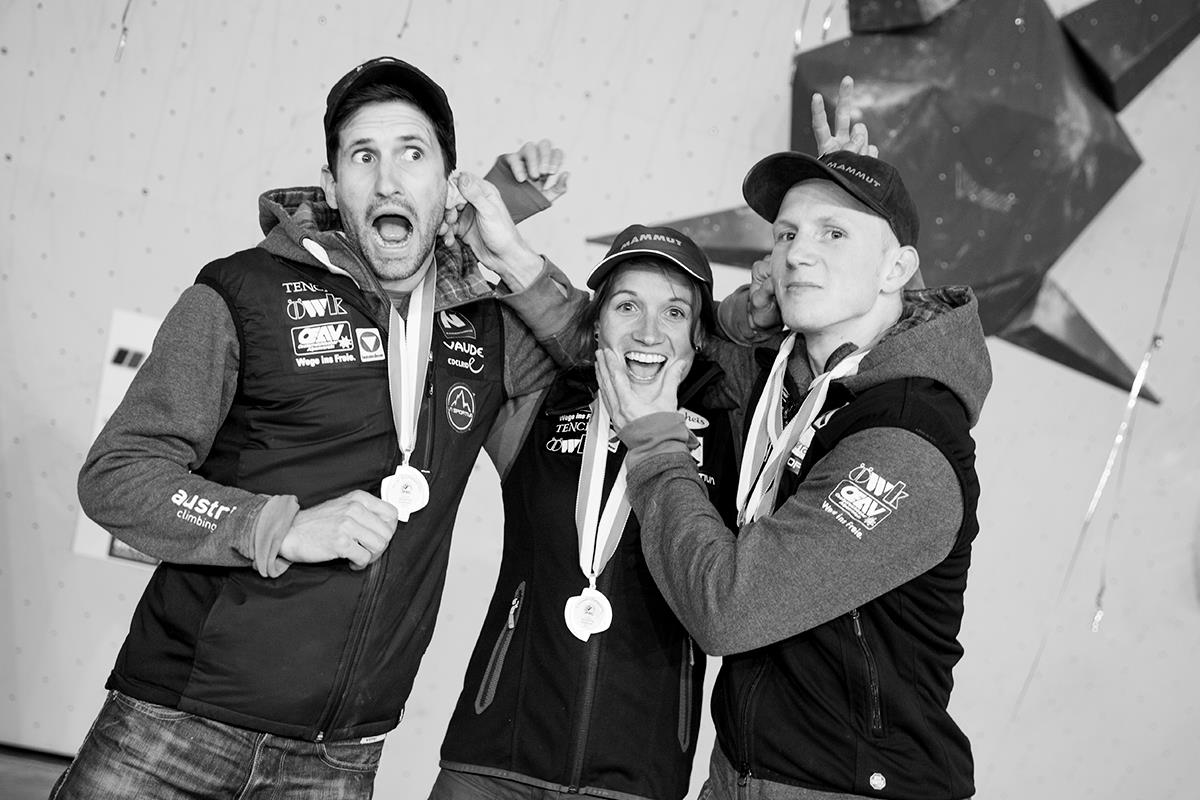
Kilian Fischhuber, Anna Stohr and Jakob Schubert (Photo: courtesy Kilian Fischhuber)

Kilian Fischhuber, Anna Stohr and Jakob Schubert (Photo: courtesy Kilian Fischhuber)

Which were your finest moments in the sport at the competition level?

That would be – winning my first World Cup by a large margin in Erlangern, Germany in 2005, becoming European Champion in 2013 and winning my last World Cup in Innsbruck, Austria in 2014.

How intense is the competition at the World Cup? Were you and your fellow climbers at World Cups always competitors seeing each other so, or did you pick up good friendships that have stayed strong past your competition years?

I always saw the other competitors as people to learn from. At the end of a round you were in a good position if you performed well, no matter what the others did. In climbing you don’t have a direct opponent. You are challenged by the `problem’ / route and yourself.

What does ` competition’ mean to you? Do you see it as a phase in an athlete’s life or is it what you always live by? If it was a phase, then what is the driving force for you in climbing nowadays?

I probably did 100+ World Cup events and I feel confident saying that I am not a competitive person, I actually shy away from comparison. Competing was always a sort of game, interaction with others and yes, a challenge. The uncertainty and the pressure to perform well at a certain moment of time always held something alluring for me. Nevertheless, I am glad I got rid of the pressure.

Can you explain what difference you find between competition climbing, done typically on artificial walls, and climbing in the open, on natural rock as you do often now? Is there a drift to the purer ethic in this and is the purer ethic being out, free and climbing rock?

For me, both are climbing. I prefer climbing outside, especially when combined with trips and longer stays. But gym climbing can also be very entertaining. I am against a strict classification that goes hand in hand with how to value what.

While it is good to be sponsored, as a competition climber how did you handle the knowledge that sponsorship is dependent on performance and if performance falls, sponsors may stay away? Was that ever a source of pressure?    

Well, sometimes, especially when under-performing you might feel pressure. In my case though, I could always rely on sponsors who saw beyond single achievements. Most of the companies have been supporting me for more than five years. Long term cooperation definitely helps to reduce the pressure.

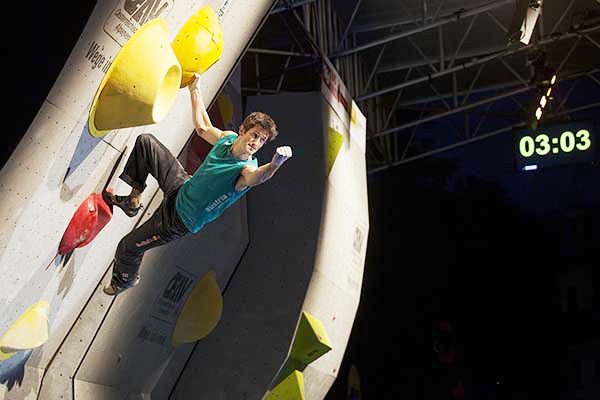
Kilian Fischhuber at an earlier edition of the World Cup (Photo: courtesy IFSC)

Kilian Fischhuber at an earlier edition of the World Cup (Photo: courtesy IFSC)

You were a top athlete in a sport that wasn’t part of the Olympics. If all goes well, climbing may debut at the 2020 Tokyo Olympics. Do you see climbing’s entry into the Olympics as a major development? If so, what impact will it have on the sport?

This will very much depend on how climbing will be implemented in the Olympic circuit. If the IFSC prefers to push for an Olympic discipline that has never been tried and does not exist, then I see it rather critically.

The first set of young people aspiring to be full time climbers has just emerged in India.  Some of them will be participating in the Navi Mumbai World Cup. What advice would you give them, both in terms of how to handle themselves at top level competitions like the World Cup and in terms of making climbing their profession?

Get inspired by the other climbers, yet go your own way. Don’t be pushy but take your time. In competition climbing a lot depends on experience, hence time is of the essence.

What climbs occupy you nowadays? When do we see you in India next?

I am currently teaching in high school, I even showed my students some pictures of Hampi and Badami. I will climb professionally again after July, when school ends. I hope to make it back to Badami in December.

(The author, Shyam G Menon, is a freelance journalist based in Mumbai. Please visit the Ganesha series of articles on this blog for more on Kilian Fischhuber.)

TWO FILMS

Illustration: Shyam G Menon

Illustration: Shyam G Menon

I watched The Jungle Book for the first time in Bengaluru.

A successful animation film with several re-releases to its credit, I saw the movie in the early 1980s. It was screened at Rex Theatre on Brigade Road. I recalled this ahead of watching the film’s 2016 version at Mumbai’s Sterling Theatre, replete with 3D animation and contemporary movie stars providing voice to the characters. Further, keeping aside Jason Scott Lee’s Mowgli from the 1994 version, the main protagonist of Rudyard Kipling’s book was a human being on screen and not an animated character. While some people have said that the old 2D animated version is their preferred benchmark, things have changed for me – I embrace Jon Favreau’s creation as benchmark in my times with one difference: I thought Baloo’s song (The Bare Necessities) was more enjoyable in the earlier film. Maybe it’s because I was a lot younger then, less cynical, less critical and more spontaneous. Years later, as life took its twists and turns, among them bringing me to the outdoors and the mountains – I have often wondered: if not the bare necessities, what is it that I am seeking?

Image: courtesy Disney India

Image: courtesy Disney India

One knew that after Richard Parker, the tiger in Life of Pi, Shere Khan would be convincing despite animation. What one did not anticipate was Idris Elba. His Shere Khan remains for me, a force haunting Kipling’s jungle. From the menace Elba creates, flows the dark, ominous mood of the film, a trait that sets it apart from the more child friendly approach of the earlier version. But then, today’s child growing up with smartphone, is also arguably a more media immersed junior, for whom the earlier film may at best be fodder for a submission in class on how technology evolved. Of the people who voiced the characters in the earlier movie, only George Sanders was known to us at that time. In days preceding the Internet, old film magazines brought home Hollywood and Sanders was there in some of the issues I used to thumb through. Even then, a few of the voice actors in The Jungle Book, including Sanders, were no more by the time the curtain raised that evening at Rex Theatre. In the 2016 version, I could appreciate the main voices for these were actors of my time. I could also appreciate what seemed to me paradoxical choices that clicked beautifully. Thus for instance, Ben Kingsley’s voice – even and measured in how it registers aurally, seemed apt choice for Bagheera. Christopher Walken as King Loius – I wasn’t sure. Till I experienced it and felt the psychopath sort of terror – so not Shere Khan like – that Walken’s laidback, negotiator of a voice can bring. Bill Murray as Baloo was a breeze. What didn’t convince was Kaa, the python. It had one mesmerizing scene all to itself and then, was gone.

Above all, this will be for me a Neel Sethi movie. After seeing the earlier version, I was left with memories of Bagheera, Shere Khan and Baloo. With the 2016 version, Mowgli joins that list. Sethi does not essay his role harking of innocence. He brings an element of smart contemporary youngster to the frame, creating in the process, a bridge between city and jungle. I suspect, for a generation experiencing The Jungle Book in the age of reading’s progressive decline and walking as they do through its plot with Sethi’s Mowgli for company, Favreau and Disney may have replaced Kipling as creator of the story. In the business of making an impression, that is a measure of how effective you were.

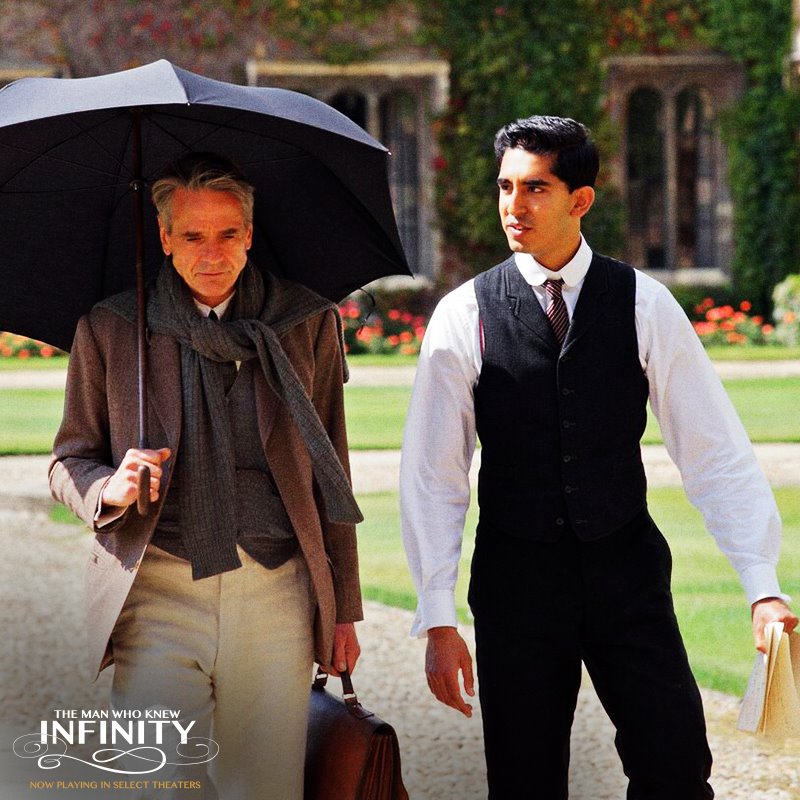
In the latter half of the 1980s, I saw a remarkable film at a film festival in Thiruvananthapuram. I went to see The Mission because of Robert De Niro but came off knowing the talents of Roland Joffe and Jeremy Irons as well. For me, Irons is among the great classically trained British actors of his generation; the sort with commanding screen-presence. Indeed in his case, that presence literally lurks in the frame waiting to explode. A few things define the Irons of cinema – an apparent discipline, intensity and voice. It is hard to have him in a supporting role and not lose the film to him. But if you are a film buff, you don’t mind that for losing a film to an actor of Irons’ calibre is rarely a bad experience. That’s what happened with Race; that’s what happened with The Man Who Knew Infinity. In the latter, it also helped flesh out and establish the respective characters of G.H. Hardy (played by Irons) and S. Ramanujan (played by Dev Patel), not just for the individuals they were but also the backdrops shaping them.

Jeremy Irons (left) and Dev Patel in The Man Who Knew Infinity (Please note: this photo was downloaded from the Facebook page of the movie.)

Jeremy Irons (left) and Dev Patel in The Man Who Knew Infinity (Please note: this photo was downloaded from the Facebook page of the movie.)

I do not know much about Ramanujan beyond what I gleaned of him from the film. In the movie, he comes across as gifted in an almost mystic way; his mathematics by intuition versus Hardy’s math by proof, his tendency to spontaneously get started on equations and that dialogue – that his goddess, Namagiri, puts numbers on his tongue. There is always a bit of struggle in how the visual arts and directors, actors therein, portray genius. A similar struggle exists in The Man Who Knew Infinity and Ramanujan occasionally felt contrived. At times the mathematician’s earnestness, isolation and genius seemed tad overboard in the portrayal. But then like I said, I don’t know how Ramanujan behaved in real life. Those who researched know best. Wikipedia describes Ramanujan as an autodidact, a person who is self-taught. A lacuna to my mind, in the film, was the dearth of material on how Ramanujan reached the level of proficiency in mathematics he had by the time he wished to publish. That proficiency may have drawn much from things deeply experiential, like the relationship between self and ecosystem with math embedded in its living traditions. Equally, in conservative society with life and lifestyle rigidly defined, the abstract world of numbers may become a liberating private refuge. All this went unexplored in the film, which starts with the adult Ramanujan finding a mentor in his boss, Narayana Iyer.

Matthew Brown’s movie was more about the Hardy-Ramanujan-Cambridge equation. Not for a minute am I saying that the Cambridge chapter is unimportant or uninteresting. The characters in that chapter have been presented well; the ambiance created by Hardy, J. E. Littlewood and Bertrand Russell is wonderful. Had it not been for them, we won’t have Ramanujan the way he is known today. Still, Cambridge is where the man was vindicated; he was formed elsewhere. Can a story of genius vindicated be complete if the formation of genius is not explored? This film deserves to be seen. Reports said that the movie was a challenge to make because funding was hard to come by. It is a good effort and as usual, Irons is a class act.

(The author, Shyam G Menon, is a freelance journalist based in Mumbai.)       
WAKING UP TO A SECOND CHANCE

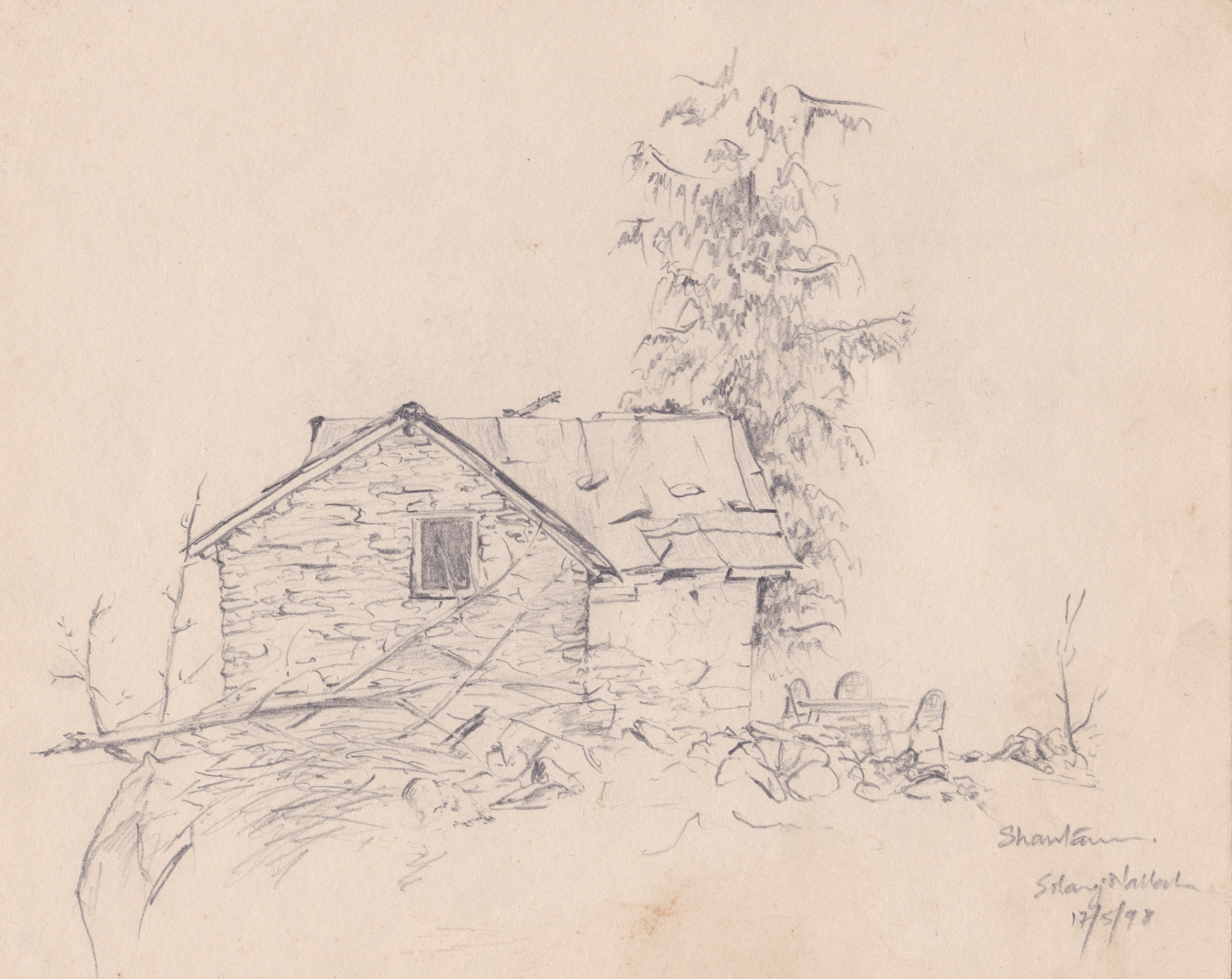
The outdoors is not about achievement; it is about being there. Senior NOLS instructor, Shantanu Pandit, sketched this temple in Solang Nallah, Himachal Pradesh, years ago when he was a leading the hiking and camping season there for Mumbai based-outdoor company, Countryside (Illustration: courtesy Shantanu Pandit)
The outdoors isn’t all about achievement. It is also about being there and taking in worlds different from what one is used to. Senior NOLS instructor, Shantanu Pandit, sketched this house in Solang Nallah, Himachal Pradesh, years ago when he was leading the hiking and camping season there for Mumbai based-outdoor company, Countryside (Illustration: Shantanu Pandit)

This article is about a NOLS course I did in 2011. Shantanu Pandit helps bring in a touch of the mountains with his sketches. NOLS courses in India are held in Uttarakhand.

It had been a hard walk.

Not so much for the terrain or the duration. It was the weight in my backpack. I wasn’t used to hauling so much. Plus there was fatigue and ego. Once again in the outdoors, I was on the wrong side of age. I was among the oldest in my batch, if not the oldest. Anger, kindled from an earlier mountaineering course at an Indian institute, where everything had been partial to its dominant age group of the early twenties – worked its way into my blood. New to altitude and snow, I felt I was denied training and instead parceled off into existence as mediocre specimen. The word for it was `grade’; it graced everyone’s certificate like pedigree. From that certificate flowed, for all practical purposes, mountaineering’s hierarchy in India. Not again such imprisonment by grade, I said, as I pulled hard and raced off from everyone else on the first day of a Trip Leader India (TLI) course with the India branch of the National Outdoor Leadership School (NOLS).

Some hours earlier, we had been dropped off on the approach to Karmi village in Kumaon, the eastern half of the Indian state of Uttarakhand. It was hilly all around. As the crow flies, the snow-capped peaks of the Himalaya were not far off. It was day one. The jeeps left and a sense of you-are-on-your-own descended. We would be out for a little less than one month. Just then, the end seemed long way off. I looked at my course mates. Two or three were faces familiar from previous trips to the outdoors. The rest were strangers. The course began systematically with instructors emphasizing foot care (that’s the part of the anatomy you would use the most on a long hike), hydration and periodic breaks for refreshment. But I was in a different world haunted by old memories. I am unsure whether I adhered to the instructors’ advice. I saw the course as another tsunami of youth at my heels, waiting to sink my ship. Evening we halted to camp, gathering in a circle as NOLS loves to do. I remember sitting down on my backpack, in that circle. Then the world tilted like a ship deck heaving in stormy sea. Eventually the ship turned turtle and a peaceful darkness took hold.

On my NOLS course, my planned redemption from `B’ grade at old mountaineering institute, I had fainted!

Damn.

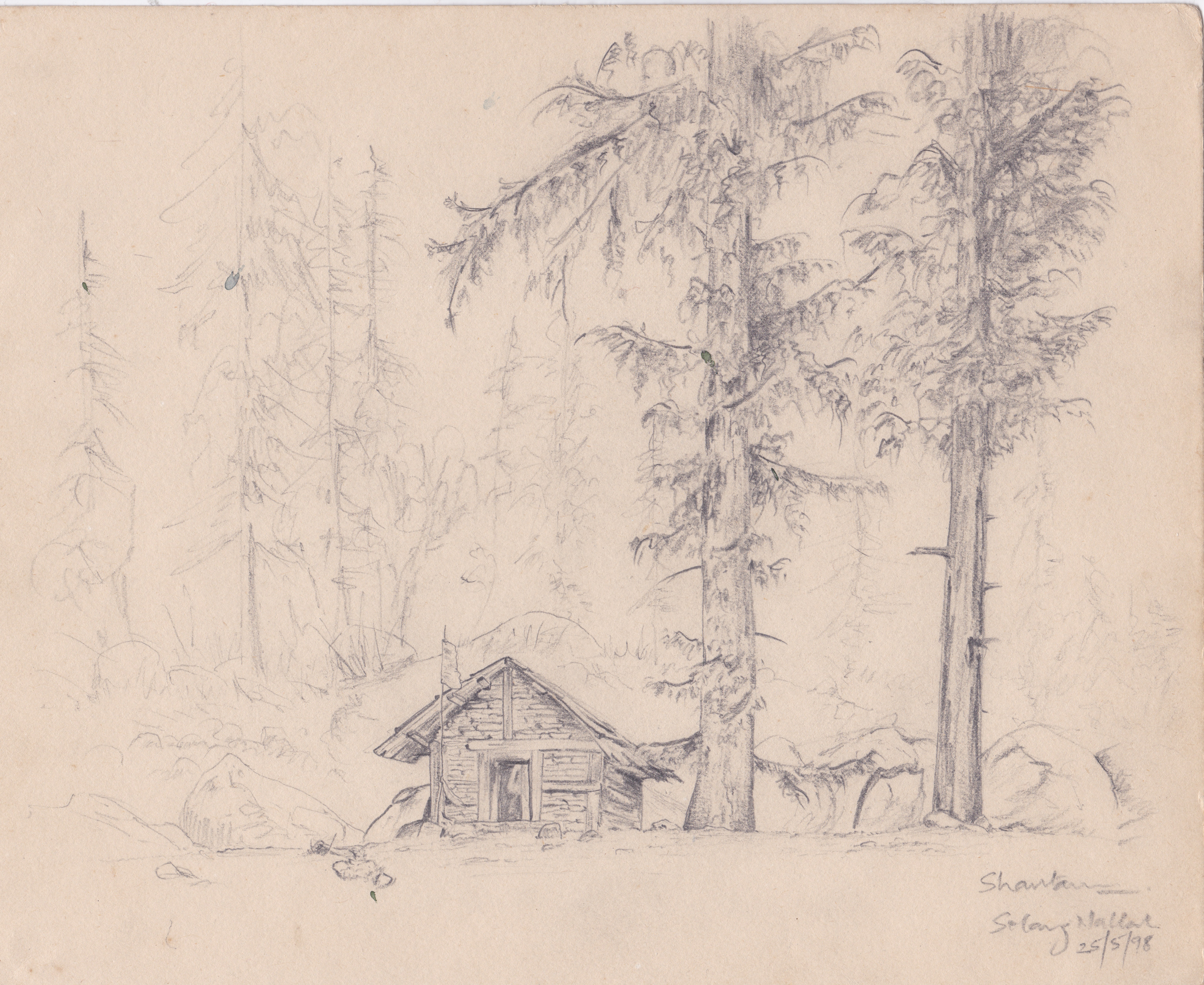
A temple in Solang Nallah, Himachal Pradesh (Illustration: courtesy Shantanu Pandit)

A temple in Solang Nallah, Himachal Pradesh (Illustration: Shantanu Pandit)

We had been divided into tent groups. Each group was self-sufficient in shelter, food and cooking equipment. I don’t quite remember where I woke up or who I saw first. Was it my tent mates? Was it my instructors peering down at me? Anyway, I was told I came around to my senses, with some chocolate. That evening my tent mates quietly took care of me. Nobody made an issue of the fainting spell; nobody bothered me unnecessarily. I introspected, tracing the episode to both old anger and perhaps more importantly, long hours chair-bound before the computer, back in Mumbai where I eked out a living as freelance journalist. Not only had that life been increasingly sedentary but income had drastically dropped too, affecting nutrition. Once a rock climbing addict, I was forced to reduce my visits to the crags after I lost my erstwhile disciplined life to incessant typing. Typing for my life I would say, because as freelancer I was paid only as per what I wrote; there is no salary or security. Now I was paying for it. In my tent, I felt like an idiot. I expected to be sent out, packed back to the NOLS India base in Ranikhet. Such was the legacy of the old mountaineering course in my head. The outdoors is all about performance, right?

Mercifully, that didn’t happen.

We had three instructors. The course leader was Margo van den Berg, an American of Dutch origin. Competent climber, she kept a studied distance from all till we approached course’s end. She carried a sketchbook in which she collected drawings of outdoor scenes. If I recall right, she also liked to dance and did something similar to a polka once. The second instructor was Ariel Greene; American, strong hiker, well read and majored in literature, also accomplished musician. A rather quiet individual, he was capable of engaging conversation on subjects that captured his interest. The third was Pranesh Manchaiah; Indian, at that time one of the best rock climbers in the country. He was very approachable and the active interface of the instructor team with the students. They must have discussed my case. The next morning, they made sure to check on me. I also knew I was probably being observed. But that was it – day two, kicked off like any other day. I had made a mistake. It seemed alright. What mattered more was – would I learn from my mistake?

I liked that approach, that second chance.

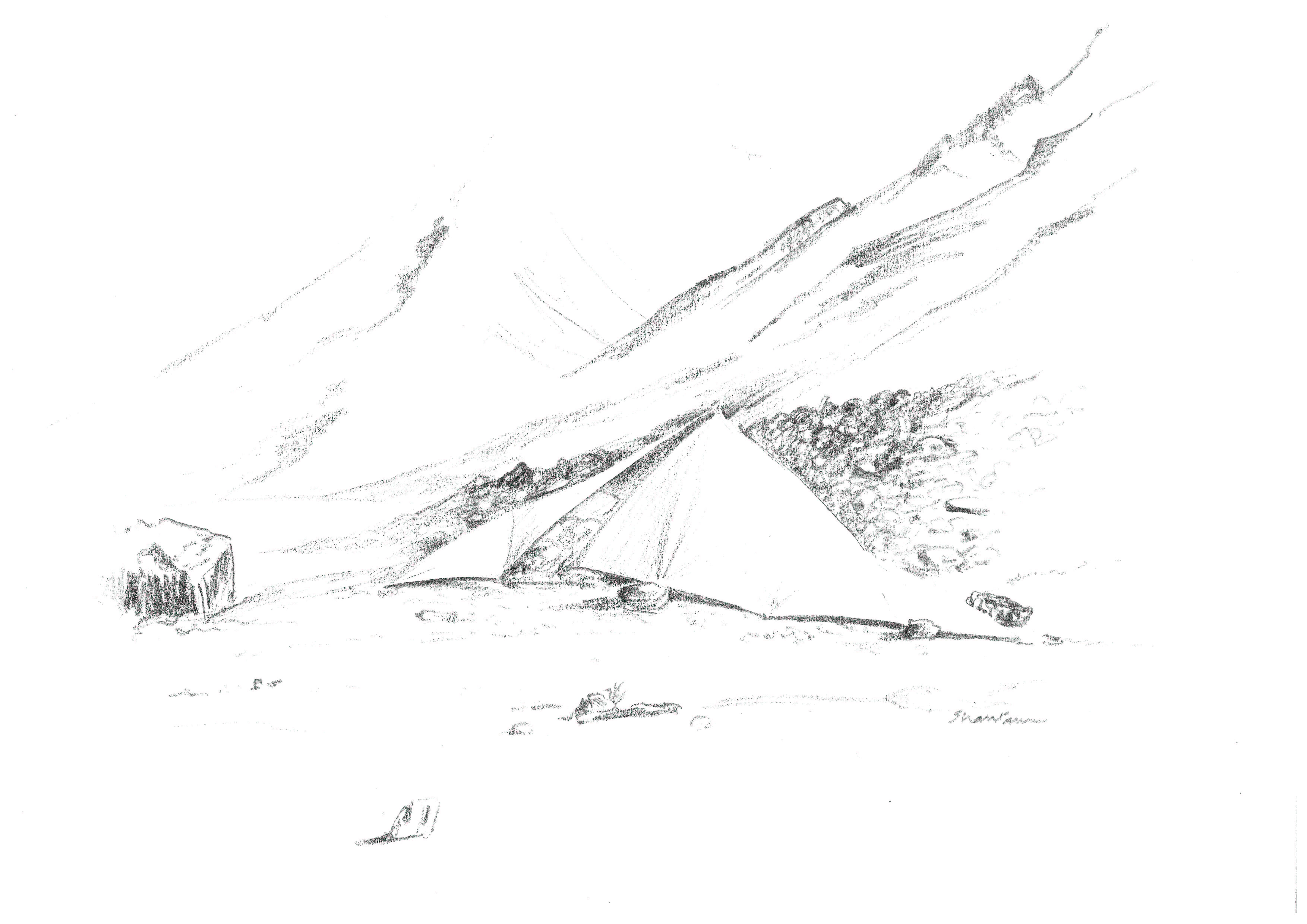
Kitchen tent, from a trip in Ladakh years ago (Illustration: courtesy Shantanu Pandit)

Kitchen tent, from a trip in Ladakh years ago (Illustration: Shantanu Pandit)

I sorely needed it. The combination of mountaineering institute, climbing club and my own limitations as climber had jammed me into a funk. An unexpected high altitude hike with a friend, who was a NOLS instructor and the way he taught me some simple steps in snow craft, got me thinking of this outdoor school. How about doing a NOLS course? – I thought. I started with a first aid course, which made sense for I was already working occasionally as an outdoor educator. Even in that course, taught at Ranikhet, the NOLS teaching style stood out. A typical class was of modest size, not the too many which characterized Indian scenarios. Modest size meant better attention and observation. There was fun. Yet there was a high degree of personal ownership among all. That dreaded word `grade,’ which plagued my old mountaineering course wasn’t prominent. The times it grew prominent were when Indian students featured it in their private discussions for we worship life by degrees, grades and such licenses for exclusivity ingrained in us. Worse, unable to live without A, B and C grades for distinction, we focus our teaching efforts on the most promising. At my old mountaineering institute, I remember explicit encouragement and support for the naturally talented, while the stragglers lived like failures. The NOLS faculty on the other hand, seemed to see teaching as exactly that – teaching those who don’t know. Indeed I would say, the less you know something, the better a NOLS course works for you, provided you are there to learn. At the end of the first aid course, there was a test. It went by like a breeze for free of fearing grade and genuinely wanting to be good at what we did, we had studied well every day. Each of us got a certificate valid for two years. NOLS was clear that rusted skills didn’t mean much. After two years, you re-certify.

My experience of the first aid course made me curious. The school’s philosophy seemed to agree with my own belief – you are as good as how often you are in the outdoors, not what grade you hold from an old course at mountaineering institute. I also liked the reduced machismo in the air. Quite unlike the Indian habit of viewing the outdoors as domain of the tough and seeking champions in everything, the tenor at NOLS seemed to be to make people comfortable in the outdoors with the champion bit, left for personal pursuit. What they did was put the basics like risk assessment, camping skills, navigation and Leave No Trace in place. In India, NOLS ran mountaineering and backpacking courses. The regular courses have one major drawback. They are expensive. However the Indian branch had a local outreach programme structured for educators – that’s the one I chose to do after my first aid course.

The first time I heard of NOLS was at my longstanding mountaineering club in Mumbai. We were on a diet of regular rock climbing in the local hills with occasional visits to climb mountains in the Himalaya. We were a rough, tough lot, shaped by climbing and eminently capable of turning our backs on anyone who deemed us crazy. We had need only for each other. What we didn’t know was how much that made us inward looking, measuring everything and everyone through the prism of climbing and to that extent, not different from settled society which views the world through the prism of well settled life. We often poked fun of NOLS, which seemed tame with its emphasis on safety, risk assessment et al and its pronounced appreciation for hiking as right context to teach outdoor curriculum. Climbers look down on hikers. In the company of my club, I submitted myself to measurement by climbing grade, worshiped super humans and wept at my measly strengths in the field. There was also another reason, I guess, why NOLS was looked at the way it was, in the Mumbai climbing circles I was exposed to. Clubs are a great way to start off something. But over a period of time, they can lose the ability to be self critical and become a self righteous fold of the mutually familiar. At the time I did my course, I found NOLS quite different compared to the outdoor club and mountaineering institute, I was coming from.

View from Khardung La, Ladakh (Illustration: Shantanu Pandit)

View from Khardung La, Ladakh (Illustration: Shantanu Pandit)

On our NOLS course, we had contour maps, compasses to orient them; indeed compasses using which we could have gone through the old routine of bearing and back bearing – the works, tying ourselves up in a math most of us hate. At NOLS, past map-orientation, our instructors encouraged us to keep the compass aside. A major component of navigation was observation of context. We slowly learnt to pick out features from the surrounding geography and locate them on the map. Looking around became important. As you looked up from traditional entrapment by performance and immediate world, you saw mountains, passes, even your fellow students. Throughout my NOLS course, I struggled with navigation (I still do). It was an indication of how much I had to get away from tunnel vision and impatience. I remembered my first mountaineering expedition in the Zanskar Himalaya, where I had once spent a long time frantically looking for the rest who had moved fast and disappeared from sight. Since then, having people ahead and within sight had been my map, my sense of security. Now map in hand, I was looking around, using my head even as it loathed math.

Mountains are lovely classrooms. Long hiking days and path-finding often threw up fantastic junctures for an instructor to intervene. Entrusted with responsibility and beset with error and challenge, the students opened up to learning. We learnt to work as a team, co-operate and have fun. I recognized this fun quickly as the inexplicable bonhomie I knew from my climbing crags, that sheer delight of being in the outdoors with others who love it. Describing it is difficult, probably not required. The difference on the NOLS course was this – we discovered it wasn’t magic but something we could create. We were not annoyingly judgmental. We were accommodating, willing to explain our problems with the world and each other, contributing thus to a quality missed in Indian education – a safe learning environment.

For example, I was, still am, a very average cook. But even the worst cook gains confidence and tries to improve when your turn to cook is accompanied by supportive tent mates and cooking is part of field curriculum being taught. That said, for many Indians, cooking is akin to the loss of vertical as stamp of high adventure. What has cooking – usually identified with the ladies – got to do with the macho outdoors? In Indian context with premium on masculinity, it takes the sheen off adventurer expected to handle nothing but ropes and gear. Cooking at NOLS addressed a very fundamental point – if you can’t take care of yourself in the outdoors, how can you say you are adventurer chasing peak, pass or summit? If you exist, your chance of reaching the destination is more. On such simple things ranging from cooking to personal hygiene, listening to team members and learning to lead, ran a NOLS course. The concept of self-sustained expeditions, which form the backbone of all NOLS experiences, is perfect backdrop for these dynamics to unravel.

A scene from Ladakh (Illustration: Shantanu Pandit)

A scene from just outside Karzyok, Ladakh (Illustration: Shantanu Pandit)

Many days of hiking went by. Roughly put, our route ran east from Karmi towards Munsyari, hugging modest elevation but having enough rough terrain to make the hiking experience span walking on proper trail to bushwhacking. Doing the latter with students as navigators and instructor passively accompanying till the evolving situation warranted intervention, we had some long strenuous days. Split every morning into self-contained hiking groups, I remember one extended day that slowly slid to late evening, destination not yet reached and students beginning to get nervous. Margo who walked with us was however cool. She occasionally checked the geographical features around to gauge direction, played silent spectator to our team management and scouting trips and when darkness approached, stayed calm for after all we were a self-contained group. It brought alive that load in my backpack as my survival kit and not excuse to show-off my ability to haul weight. As things turned out, my group did reach the assigned camping spot to a warm welcome of flying snow balls from the rest of the batch, arrived earlier. It was early summer in the Himalaya. Snow was around in shaded areas and the higher reaches of our route. Often, it rained, making the world wet-cold. Our last camp was at Dhapa, high on the banks of the Goriganga near Munsyari. By then we had crossed two other major river valleys en route, those of the Pindar and Saryu rivers, besides other minor valleys identified with local streams. Every time we climbed up from a valley to height, we would see the snow clad Kumaon Himalaya not far away.

Slowly but steadily, I had become fit as a fiddle; happy to be out. I could have turned around and asked the guy who fainted – are you me? The near 25 kilo-backpacks were a load, no doubt. But we knew the pattern – it weighed most just after re-ration and tapered slowly towards the next re-ration. So we cooked and ate. We attended classes despite weather gone bad, wearing rain coats, puff jackets and wind cheaters under a tarp propped up by tree branches and trekking poles, for shelter. We saw each other in the light of headlamps. We waded through cold streams, kicked steps on snow and bushwhacked. At camps, we took classes; something, anything that you could share with your fellow students or teach them. From strangers, we evolved to friends. I remember young Zanskar, who thanks to his familiarity with Kumaon, was a walking encyclopedia on local flora and fauna. I remember Joshi, who everyone remembers, for the rhododendron-paratha he made. I remember quiet, solid Soumitra. I remember the ever upbeat Amrit. I remember Vinay, Anish, Stanzin, Kamakshi, Tara, Hitendra, Ravi, Manjunath, Shaleel. We got along well.

Then one day, close to course’s end, your instructor – they assigned one as mentor for each student – met up with you to discuss evaluation and grade. I appreciated the personal meeting, the discussion and the detailed evaluation with explanations. A, B, C or shades in between – they told you why. Most important – it wasn’t a certificate that dovetailed as input for a bureaucratic administration of access to the mountains, saying: a person with this grade can do this, that grade can do only so much…so on and so forth. They weren’t gifting me a straight-jacket for life as the Indian mountaineering institute did. The NOLS certificate felt like an evaluation in time, a snapshot in life. What a snapshot shows of you at 20 isn’t how you would be at 40, which in turn may not be how you are at 60. Life is a journey. It is for you to decide what to do with it. A snapshot isn’t all of your life at one go. It is just a slice, a pointer.

I liked that.

I felt free.

(The author, Shyam G Menon, is a freelance journalist based in Mumbai. This article was developed from a piece originally written and published in The Outdoor Journal [http://www.outdoorjournal.in/] in early 2014. My gratitude to Shantanu Pandit for asking me about the old article and making me want to share it afresh.)