WILLIAMS

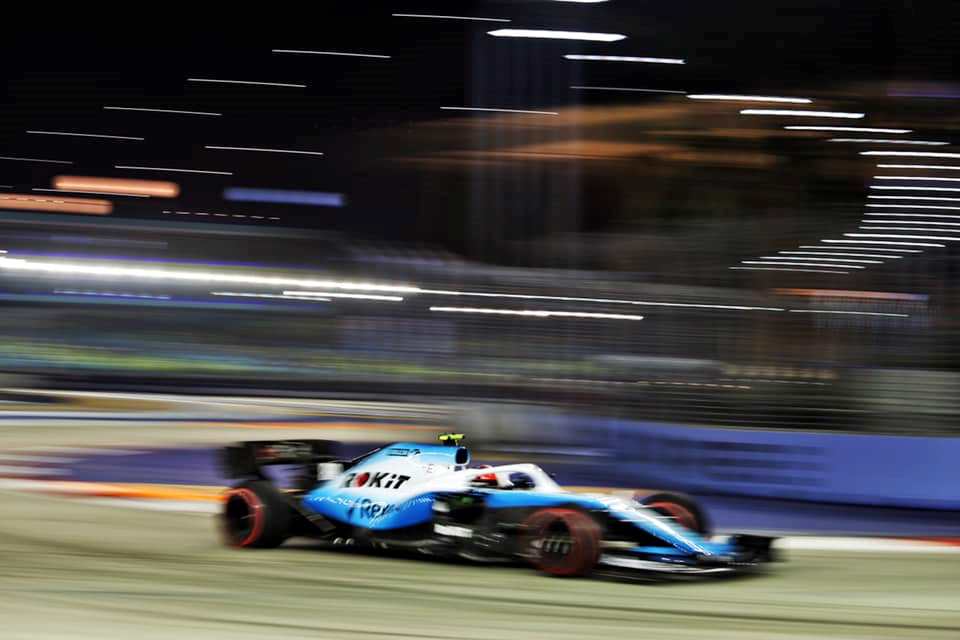
This image was downloaded from the Facebook page of the racing team and is being used here for representation purpose. No copyright infringement intended.

“ In the end, if you are a racer, you are a racer. It’s a bug. It gets to you.’’ – Frank Williams

It was one of those coincidences.

The day I finished watching the 2017 documentary film Williams on Netflix, news broke that the Formula One racing team – it was in talks to rope in an investor – had been acquired by an American investment firm: Dorilton Capital.

Reports said, the name of the team based in Grove, UK, will continue unchanged. That should make anyone admiring passion and independence, happy, for Williams is one of the great stories of Formula One; great not just by performance but the determination it showed to keep going despite the odds. Given it was languishing in the lower half of the points table these past few years one may call the acquisition news of August 21, 2020 as expected. That would be a cold way of looking at things. What genuinely matters is the retention of the Williams name. If you take it off, a whole angle disappears from Formula One; that of the independent teams, founded and surviving not on the strength of capital, but interest in the sport.

A good documentary film is like that book you purchase despite everything gone online. There is something of a lasting value to it. The film Williams falls in that category. It tells the story of the Formula One racing team bearing that name and in the process gifts you insight into the sport, a man who became an institution in it, the people around him and how that life in racing left its mark on all of them. Motor racing is an expensive sport. Frank Williams wasn’t born into wealth or high society. He was attracted to cars from a very young age and instead of pursuing higher education, struck out on his own, including dabbling in auto parts and performance cars. Much of his earnings, dovetailed into Frank’s single minded focus on racing. His was a case of passion building a journey step by step, till following a stint as racer himself Frank eventually builds a Formula One team; the one carrying his name.

The film – like all films working within the limit of its length – is tad sketchy on the travails Frank faced in the initial years and for sure they would have engaged, for he is an outsider in a capital intensive sport ruthlessly partial to performance. It goes on from there to cover the first set of race victories that the team enjoys, including in between the early success (with Pierce Courage as driver) and the later poor showing and subsequent divestment to a Canadian investor. By the time the season that saw the investor come aboard, concludes, Frank is shut out from his own factory. It sinks him into a depression of sorts, release from which occurs only with a return to pursuing his dream of racing by starting a new team with Patrick Head. A few years into the championship victories that come the team’s way, Frank Williams suffers an accident. It leaves him a quadriplegic.

To adequately comprehend what this loss of mobility meant, one must note – Frank’s other great interest was running. He was into running marathons. Frank fights his way back to being by the race track and watching his team at work, from a wheel chair. The team he co-founded would win nine constructors’ championships and seven drivers’ championships at Formula One, as of August 2020. It is a journey entailing tonnes of human experience ranging from Frank’s early struggles to keep the team going, the drivers who race for him, the great drivers who lost their lives doing so, the scars it leaves on the team principal and eventually, his own accident off the track. Yet for all this drama, Frank Williams is a person totally lost to racing and his mission of managing a Formula One team. He lives and breathes that life.

The lives of intense people in intense sports, has often been the subject of riveting books in the biographical space. Less heard of, but as important – if not more important – have been the accounts of those who inhabited the surrounding ecosystem, without who, very likely the main protagonist wouldn’t have accomplished as much as he / she did. Among great stories told in mountaineering, has been the the sport as beheld by mountaineers’ spouses. They are as much affected by the risk associated with the sport; they are also among those enduring an utterly changed life when accident strikes leaving climber maimed or dead. What renders solidity to the documentary Williams is the inclusion of the memoirs of Virginia Berry, Frank’s late wife and the presence in the film of his daughter Claire Williams, who becomes deputy team principal. Virginia helps with resources in Frank’s struggling days; she is the one who takes care of him after his accident. Her memoirs – it runs like a spine for the narrative – serves as useful material to highlight the human story behind an obsession with racing; the toll it takes on a family.

I watched Williams after viewing Formula 1: Drive to Survive and A life of Speed: The Juan Manuel Fangio Story (in that order) – all on Netflix. It was a trinity that helped put the sport often rendered remote and extreme by its glossy marketing, in perspective. Just one observation: as an independent team that built its own cars, cut a reputation for itself at Formula One, had its share of struggles raising resources and even became a publicly listed company, the story of Williams exceeds the dimension of a documentary film. It should be a mini-series.

(The author, Shyam G Menon, is a freelance journalist based in Mumbai.)

A LIFE OF SPEED: THE JUAN MANUEL FANGIO STORY

This image was downloaded from the Facebook page of the film and is being used here for representation purpose. No copyright infringement intended.

“ Trying to be the best in everything? I agree with that. But never believe you are the best.” – Fangio

There is sport as we know it today and there is sport as it used to be. It sounds clichéd. I know. But an overview of the contrast is essential grounding as otherwise we would be building castles in the air. Somewhere in the first quarter of the 2020 Netflix documentary A Life of Speed: The Juan Manuel Fangio Story, former Formula One world champion Mika Hakkinen describes his experience of driving the car Fangio raced in, “ it is amazing, the effort it takes to drive the car.’’

Fangio’s heydays on the circuit were in the 1950s. The Argentine driver was Formula One world champion five times, a record subsequently beaten by Michael Schumacher. He raced with four teams – Ferrari, Alfa Romeo, Maserati and Mercedes Benz. But it is the state of racing he endured that amazes above all else. Fangio’s early promise was in football. After completing his military service, he opened a garage and in 1936, commenced a career in racing, driving a Ford that he had rebuilt. That last bit is a defining characteristic of Fangio’s approach to the sport.

A modern Formula One race is for instance a demonstration of how a team works like an orchestra, perfectly conducted. While the young drivers push their cars to dizzying speed, what matters equally is the efficiency of support crew during pit stops. If you watch a pit stop in slow motion, it is a lesson; both in terms of the coordination displayed right then and the thought, preparation and rehearsing that may have gone into it. Fangio’s formative years were in South America’s touring road races. As some of the early footage in the documentary shows, racers at such events drove carrying spare parts and extra cans of gasoline. There was no support crew, no teams of mechanics on call to address a breakdown. The typical driver was a combination of driving and maintenance skills.

This backdrop, from which Fangio came, contrasts the imagery of modern day circuit racing, where every ingredient is handled as distinct silo with specialists for the purpose. Indeed a distinction mentioned in the documentary about Fangio is his ability to race at Formula One, comprehending the limits of his car and try preserving it to the end. He knew how to sense the thin line separating an engine pushed to the limit from potential breakdown. The above quality made Fangio the sort that worked collaboratively with his team. You see in the documentary the early form of the pit stop. In those days of Formula One, a crew of mechanics dedicated to each car wasn’t available. When signing up with the final team of his Formula One career, a clause Fangio wrangles is that his car would have a dedicated mechanic.

Further, one of the hallmarks of modern day motor racing is the high level of driver safety afforded by advancements in technology. I watched the documentary on Fangio after savoring the Netflix series on Formula One’s 2018 and 2019 seasons. The latter had spectacular accidents with cars flying due to the force of impact. In all those accidents – except one – the driver concerned emerged unscathed. Such advancements in technology were not there in Fangio’s days. Accident fatality rate was high. It was humbling to listen to racing greats like Jackie Stewart and Alain Prost recall in the documentary, the number of fellow drivers killed. Having said that, it also appears to have been a gentleman’s age compared to the cut throat competition of today. At one of the races, Fangio’s car develops a flaw that cannot be rectified. He finishes the race and wins it in a car that a team mate gladly surrendered for his use.

Fangio’s story is also different from a couple of other angles.  The current line-up of drivers in Formula One is young. Fangio was middle aged by the time he got to Formula One. Here’s what Wikipedia’s page on Fangio says: Fangio was the oldest driver in many of his Formula One races, having started his Grand Prix career in his late 30s. During his career, drivers raced with almost no protective equipment on circuits with no safety features. Formula One cars in the 1950s were very fast, extremely physically demanding to drive; races were much longer than today and demanded incredible physical stamina. Tyres were cross-ply, and far less forgiving; treads often stripped in a race, and spark plugs fouled.    There were, of course, no electronic aids or computer intervention. At the end of a GP, drivers often suffered blistered hands, caused by heavy steering and gear changing.  Fangio was born in 1911. His first time at the World Championship of Drivers was at the 1950 British Grand prix; he was 39 years old then. His last time on the circuit was at the 1958 French Grand Prix; aged 47. His success with a variety of teams also stands out. Few drivers have repeated that since.

There is a point in the film on Fangio, when Juan Manuel Fangio II (Fangio’s nephew and a former auto racing champion himself) says, “ if you want to be efficient in today’s cars you need precision. If you wanted to be efficient in the cars from the 50s, you needed art. Now like I always say, if you add precision to the art from the 50s, the result is a world champion. If you add art to today’s precision, the result is also a world champion. So what we need to do is to add to each period what that period was missing.’’ A Life of Speed: The Juan Manuel Fangio Story is available on Netflix. It is an engaging documentary to watch before or after the Netflix series on the 2018 and 2019 Formula One seasons. It doesn’t matter whether your understanding sprouts up from the seed or downward from the tree branches; what is important is that it has roots.

(The author, Shyam G Menon, is a freelance journalist based in Mumbai.)

FORMULA 1: DRIVE TO SURVIVE

Illustration: Shyam G Menon

For a long time I was cold to Formula One. So why am I writing a review about a documentary series on the event? That’s because the said series has been crafted superbly and walks a thin line, which in retrospect I find, explains why I was unmoved by the sport and why I believe, I have begun to understand it.

If there is one word I would use to describe the 2019 Netflix series Formula One: Drive to Survive, it is: pressure. That attribute fills every ounce of the sport. For me, it worked as key unlocking a puzzle. My tryst with Formula One was as visits to the home of a gainfully employed friend, who, aside from time spent with family and friends, breathed the corporate life. Every time I was at his house watching a TV screen showing cars going round and round on a circuit, I would wonder: what’s so great about this?

A freelance journalist with feet in wider reality (and not owning a car to boot), I found the sport to be a rich man’s game; one that cost big money to host and wherein, the equivalent of a backpack damaged while hiking or a shoe worn out by running, was a smashed up car. When that happened, they just threw away the broken parts, found new ones and continued driving or, they wrote off cars and rolled in new ones. It appeared sheer materialistic excess. Perhaps I was being needlessly judgemental; committing that classic human error of looking for meaning where there is none. Anyways, something wasn’t connecting. All the while, my friend’s eyes stayed glued to the telecast.

Watching the Netflix series and stumbling upon pressure as the missing link eluding me, I felt the puzzle explained. The whole paradigm of high performance cars, quick driver reflexes, million dollar investments and large companies for players is accompanied by both prospects of tremendous possibility and, accountability. The result is a pressure cooker environment in sport that isn’t any different from the regular corporate ambiance. There is a hill (a points table) to climb every season and the urge, clearly, is to reach the top. The racing team may have the driver for poster boy and popular star. But given there are two drivers in each team and they must prove their mettle to stay indispensable, the mutual competition and insecurity can eat their innards. The real power is the team principal and the power behind the power is brand and financier; none of this – rules and variables influencing rules – lost on those accepting corporate logic. Very often, the fate of otherwise talented drivers is decided by this brew. I think I now understand why Formula One attracted my friend and others like him. Besides being intense sport, it probably endorses the professional space they inhabit.

I also understood the specific visceral pulls working within that larger attraction, the biggest of which is the raw act of driving at very high speed. At such speeds the stimuli we normally process for making decisions, appear and disappear like a flash. Given there are 20 drivers in all at the teams, there are 19 others (call them projectiles) besides you, processing stuff at manic pace on a given circuit. Things can go wrong in seconds. It is intense. The kinetic presence of other drivers around you, their capacity for individual madness, the challenges of each course and the fact that your skilled driving notwithstanding, your car is only as good as its support by other team members – all this, authors a dynamic environment, one that is pretty much like a car engine; a symphony of several components, a sum total of parts. It is innovation, coordination and discipline. It parallels corporate in attributes and instinct. It is said of some sports that it is meant for adrenaline junkies. I would say this one is for the pressure junkies. Being in a Formula One cockpit – be it driver’s seat (where the action is) or that of the team principal (where strategy is) – is a test of how much pressure you can take.

The beauty of this Netflix documentary series about the 2018 and 2019 Formula One seasons is how it has captured and delivered the thin line defining the sport, accurately. It has little flab in narration this side or that of the line it is treading. It stays taut; drives home that pressure. This is an eminently watchable series. However expect no great investigation of the sport or effort to contextualize it beyond racing circuit. This is a collaboration between Netflix and Formula One. It makes you feel that it hits hard but actually plays by the rules; which the way the series has turned out, isn’t bad at all.

(The author, Shyam G Menon, is a freelance journalist based in Mumbai.)          

RECORD HEAT IN DEATH VALLEY

Illustration: Shyam G Menon

Thanks to the famous Badwater Ultramarathon, Death Valley is known to running communities worldwide.

Among the hottest places on the planet, it is a desert valley in eastern California, in the northern Mojave Desert. The Badwater Basin in Death Valley is the point of lowest elevation in North America; it is 282 feet below sea level. Death Valley is roughly 136 kilometers east-south east of Mt Whitney, which at 14,505 feet is the point of highest elevation in the contiguous United States (the US excluding Alaska, Hawaii and other offshore territories). The Badwater Ultramarathon commences in Badwater Basin and proceeds to Whitney Portal, the trail head for Mt Whitney at 8360 feet. Several runners from India have participated in the 217 kilometer-ultramarathon, considered one of the toughest events in its genre.

On August 17, 2020, the BBC reported that temperature in Death Valley hit a scorching 54.4 degrees centigrade. Subject to verification, this may be the highest reliably recorded temperature on Earth. It has happened amid a heat wave on the US west coast. There is mention on the Internet of a still higher temperature – 56.6 degrees centigrade – recorded in Death Valley in 1913. The BBC report says, some experts consider that to be unreliable data.

Death Valley is the dry desert it is because it lay in the rain shadow region of four major mountain ranges. This forces moisture laden air coming in the from the Pacific, to shed its water content as rain or snow on the western slopes of the ranges. By the time these air masses reach Death Valley there is little moisture left to grace the region as precipitation. Other factors also contribute to the dryness. They include the valley’s surface experiencing intense solar heating, the area trapping warm air, warm air from nearby regions moving in and the phenomenon of warm foehn winds. According to Wikipedia, the period from 1931-1934 was the driest on record with only 16 millimeters of rain received.

(The author, Shyam G Menon, is a freelance journalist based in Mumbai.)         

TOKYO OLYMPICS: INDIA’S MARATHON ELITE AND THE SEARCH FOR VIABLE OPPORTUNITIES TO QUALIFY

Illustration: Shyam G Menon

It is only a handful of athletes. But what they have to attempt is a challenging task; match a longstanding national record and then improve it by another 30 seconds. All this must be accomplished in one or two races during the winter of 2020-2021. Will we set them up for it?

On August 12, 2020, the Paris Marathon became the latest mass participation event in running, to embrace cancellation for the year. It was initially postponed. In August, the organizers disclosed they had decided to cancel.

Earlier on July 28, World Athletics informed that the Virgin Money London Marathon, due to take place on October 4, is committed to working with World Athletics to promote the opportunity to athletes around the world and assist with their travel challenges so they can participate in London and achieve their Olympic qualifying time. It was also mentioned that World Athletics will try something similar with the ADNOC Abu Dhabi Marathon. The move followed concerns over the lack of qualifying opportunities that may be available for road athletes before the qualifying period for the rescheduled Olympics, finishes on May 31, 2021. On August 6, the organizers of the London Marathon informed that the 2020 edition of the race will be held as an elites-only affair; there will be no amateur runners participating.

The cancellation of races worldwide, caused by the COVID-19 pandemic, has become a problem for marathon runners wishing to qualify for the Olympics. While the decision of World Athletics to work with the London Marathon and the ADNOC Abu Dhabi Marathon is related to this issue, two events don’t satisfy the need of all athletes. The London Marathon is scheduled for early October while the one in Abu Dhabi is normally held in December. To utilize these events properly, you have to be in good form by then.

The qualifying time for the men’s marathon at the Tokyo Olympics is 2:11:30. This means that any Indian male marathoner seeking qualification has to smash the longstanding national record of 2:12.00. On March 17, 2019, T. Gopi had completed the Seoul Marathon and qualified for the 2019 World Championships (Doha, Qatar) in 2:13:39. That is the closest anyone has come to the 1978 national record set by the late Shivnath Singh in Jalandhar. As of August 2020, some of the country’s top marathoners were at various stages of recovery from injury. This blog spoke to Nitendra Singh Rawat, T. Gopi and Srinu Bugatha – all of them elite marathoners; two of them have represented India at the Olympics, all three have been podium finishers in the Indian elite category at some of the country’s best marathons including the Mumbai Marathon. They felt that targeting the London Marathon of October 2020, as opportunity to qualify, wouldn’t be the best option.

Recovering from injury and regaining the old tempo in training takes some time. Additionally, under normal circumstances an endurance athlete shifts between races in the plains, training center and locations for special training like those at high altitude, seamlessly. With pandemic protocols, these inter-state movements risk quarantine. The current period is thus far from perfect environment. Given the training regimen they have been traditionally used to, two to three months of diligent preparation suffices to get back to shape. But it is already past mid-August. October is too close for them to return to form, especially for a national record-breaking effort. Going by the options World Athletics presented in their July statement, this shrinks window of opportunity to the ADNOC Abu Dhabi Marathon, which has the advantage of being in India’s neighborhood. The problem then is – if you fail there, you are out; unless, more windows of opportunity open up, ideally in the first quarter of 2021.

The general tenor one could glean in race organizing circles in India was that by the last quarter of 2020, some level of activity should return to sports. Even if India chooses to be conservative in recommencing sporting activity (at the time of writing, the country had cumulatively recorded the third highest number of COVID-19 cases worldwide), for needs like top talent wishing to qualify for the Olympics, opportunities to run may open up in the Middle East. As one race organizer said, “ If ADNOC Abu Dhabi is held as scheduled, it may encourage the Dubai Marathon of January to examine its options.’’ But there is a catch. Nobody is saying yet that when events revive it will be in the mass participation format. The London Marathon – like the 2020 Tokyo Marathon of March – will be an elites-only affair. Asked if the elites-only model may work with events in India, the race organizer admitted it will be tough because sponsors may not be interested during financially difficult periods like the present. Same could hold true elsewhere in the world. If you want to help athletes qualify for the Olympics, then either a sponsor has to be sufficiently supportive or a national federation – like World Athletics did – must notice the situation, go the extra mile and make those opportunities happen. “ An additional window will be helpful,’’ K.C. Ramu, former elite marathoner and now Srinu Bugatha’s coach, said.

Amid times of international travel deemed risky and need for athlete to preserve health as best as possible, domestic opportunities to qualify for the Olympics attract. Unfortunately, the Mumbai Marathon (January) and the New Delhi Marathon (National Marathon / February) which have traditionally served as qualifying grounds for various events, are not perceived as well-suited for the purpose. Mumbai’s weather conditions have rarely been ideal for top notch running. The city marathon’s course has a hill; it is not the flat, fast type that runners seek when chasing a qualifying mark. Delhi has better weather conditions than Mumbai in the winter months (keeping aside the problem of air pollution) and a flatter course. But there is a portion of the course having too many twists and turns. This assessment won’t sit well with some observers. And there is a valid reason for it – every male winner (overall winner) of the Mumbai Marathon since 2011, has timing below 2:11:30. The latest course record, set in January 2020, is 2:08:09. What are Indian athletes complaining of then? All one can say in defence, is that as a country we are not yet in the same league as those churning out such timings although Shivnath Singh touched 2:12:00 once. Additionally, Singh’s record, unbroken since 1978, makes breaking it a project of sorts. “ How many Indian athletes are we talking of as those eligible to try qualifying for the Olympics; four or five at best? It makes better sense to have them fly overseas and qualify,’’ the race organizer said. He clearly has a point, if decision is left to economics and scale.

Illustration: Shyam G Menon

However, a race to qualify for the Olympics doesn’t have to be as elaborate as your regular road race. The upcoming London Marathon for instance, has an altered blueprint for 2020.  According to the statement of August 6, put out by the event’s organizers, “ elite races for men, women and wheelchair athletes will take place on an enclosed looped course in St James’s Park in a secure biosphere (a contained safe environment like that of Formula 1 and England cricket) with times being eligible for Olympic qualification.’’ This means the course can be smaller than usual and repeated as a loop to meet the distance required; something similar to Eliud Kipchoge’s iconic run in Vienna last year, when he dipped below the two hour-barrier. A well-organized race, oriented towards qualifying with pacers to ensure required momentum – this was the wish list. “ Even a good five kilometer-course that can be repeated as a loop will do. February-March should be the cut-off period, not beyond that,’’ Nitendra said. Depending on whether you can locate a good enough course, how motivated a national federation is and how supportive sponsors can be, this should be feasible in India.

Amid pandemic will we go the extra mile for the marathon and a handful of our elite athletes?

(The author, Shyam G Menon, is a freelance journalist based in Mumbai.)   

JOSHUA CHEPTEGEI SETS NEW WORLD RECORD IN 5000M

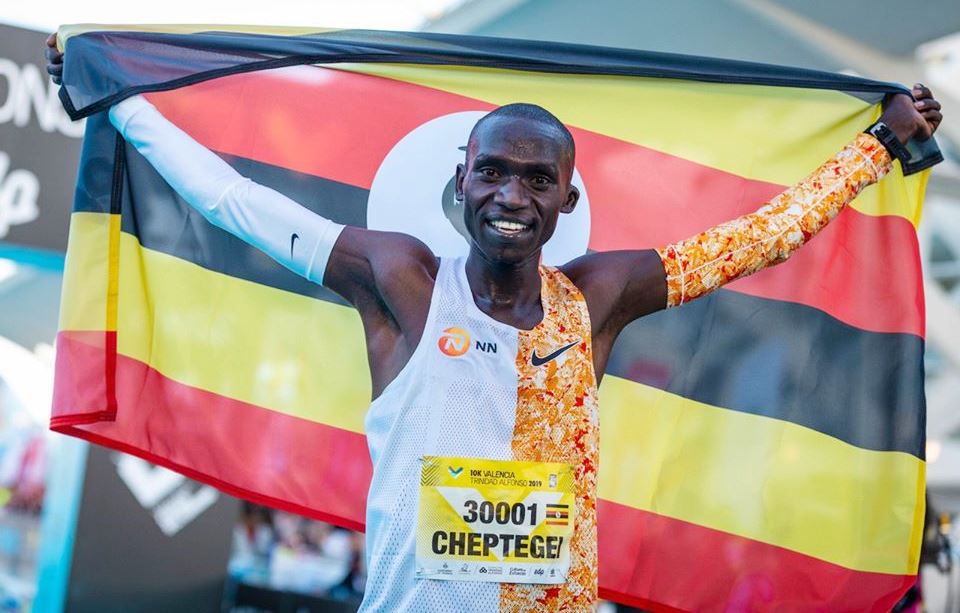
Joshua Cheptegei. This photo was downloaded from the Facebook page of the athlete and is being used here for representation purpose. No copyright infringement intended.

The first major record in distance running amid the COVID-19 pandemic and despite it, happened on the night of August 14, 2020 with a new world record scripted in the men’s 5000 meters on track.

Six months after he set a world record in the 5-kilometers road race, Ugandan ace Joshua Cheptegei took down a 16 year old track record in the 5000m to blaze home in 12:35:36 at the Wanda Diamond League meet in Monaco. Cheptegei’s new world record (it is subject to the usual ratification procedure) improves upon the earlier mark set by Ethiopia’s Kenenisa Bekele.

In its report, World Athletics described Cheptegei’s performance as “ the return of international athletics.’’ The COVID-19 pandemic has played havoc with the world of sports; the Tokyo Olympic Games had to be postponed and in athletics, many events and road races were cancelled. Worse, the advent of disease protocols, lockdown and training in the new normal had affected the regular regimens of athletes worldwide. Competitions started trickling back in very few numbers and to few spectators at stadiums, only in the past couple of months. “ It took a lot of mind setting to keep being motivated this year because so many people are staying at home but you have to stay motivated. I pushed myself, I had the right staff with me, the right coach. I’m also usually based in Europe, but being based in Uganda with my family was actually great,’’ Cheptegei was quoted as saying in the report, available on the website of World Athletics.

The Ugandan athlete tackled the 5000m track event in style. On the eve of the competition he made it clear that he looked forward to setting a new world record – and he did just that. Weather conditions were not ideal.  “ The pace was so fierce that Cheptegei had run out of pacemakers by half way and the only other man in sight was Kenya’s Nicholas Kimeli. Within a lap the genial but ambitious Ugandan was alone in his quest for immortality, pressing on remorselessly with metronomic 61-second laps,’’ World Athletics said in its report. Cheptegei now holds the world record for the distance across both track and road.

On February 16, 2020, he had clocked 12 minutes 51 seconds at the Monaco Run 5km. He shaved 27 seconds from the previous record of 13:18 set by Kenya’s Rhonex Kipruto en route to his 10km world record in Valencia on January 12. Cheptegei was gold medalist in 10,000m at the 2019 World Championships in Doha, Qatar; he won silver in 10,000m at the 2017 World Championships in London and had placed first in 10km at the 2018 World Cross Country Championships held in Aarhus, Denmark.

(The author, Shyam G Menon, Is a freelance journalist based in Mumbai.)  

SPORTS GETS A MENTION

Illustration: Shyam G Menon

After raising hopes in June ahead of its release, the National Educational Policy 2020 as currently available on the website of the Ministry for Human Resource Development, restricts mention of sports to little over a paragraph.

On Pages 12 and 13, under the sub-section titled Experiential Learning, the policy says, “ sports-integration is another cross-curricular pedagogical approach that utilizes physical activities including indigenous sports in pedagogical practices to help in developing skills such as collaboration, self-initiative, self-direction, self-discipline, teamwork, responsibility, citizenship etc. Sports-integrated learning will be undertaken in classroom transactions to help students adopt fitness as a lifelong attitude and to achieve the related life skills along with the levels of fitness as envisaged in the Fit India Movement. The need to integrate sports in education is well recognized as it serves to foster holistic development by promoting physical and psychological well-being while also enhancing cognitive abilities.’’

A quick perusal of the document did not reveal any reference to sports more prominent than this, elsewhere in the text. The Fit India Movement referred to in the policy was launched on August 29, 2019 by Prime Minister Narendra Modi. It is a nation-wide campaign aimed at encouraging people to include physical activities and sports in their everyday lives. The educational policy document (as available on the Internet) is divided into four parts – school education, higher education, other key areas of focus and making it happen. The reference to experiential learning including the paragraph on sports-integration is under school education. The part titled other key areas of focus, has sub sections devoted to professional education, adult education and lifelong learning, promotion of Indian language, arts and culture, technology use and integration and online and digital education: ensuring equitable use of technology. It had no sub-section on sports.

The National Education Policy 2020 received cabinet approval on July 29. On June 11, 2020 media reports had quoted the Union Minister for Sports, Kiren Rijiju, saying that sports is set to become part of educational curriculum.

(The author, Shyam G Menon, is a freelance journalist based in Mumbai.)

TEAM FOR IAU VIRTUAL RUN ANNOUNCED

Illustration: Shyam G Menon

A second team representing AFI has also been announced

Nine men and nine women will run for India in the IAU 6 Hour Virtual Global Solidarity Run scheduled to take place from 6AM to 12PM on August 29, 2020.

The event put forth by the International Association of Ultrarunners (IAU), features member federations worldwide nominating teams to participate. In its outline for the event, available on the IAU website, IAU has said that athletes may run indoors or outdoors but would need to record their performances on one of the many sports platforms like Strava or Garmin. Federations or their nominated team manager would need to verify and check their athletes’ performances and then submit the tabulated results to the IAU. “ There will not be a ranking list as this is a run signifying global solidarity among the ultrarunning family,’’ the IAU write-up said.

Among other details it informed member federations, “ athletes must run at any time in one continuous six-hour block over the weekend August 29th / 30th in your own time zone. Results will not count for publication if they are done outside of these designated dates. If your country allows athletes to compete together, you may have your own race and / or virtual race with a specific start time. Otherwise athletes can compete either indoors or out in their own space but must record the activity and give your nominated team manager those results.  The results should be submitted to the IAU no later than September 1st.’’

According to a press release from the Athletics Federation of India (AFI), the Indian runners selected to participate are: women – Anju Saini, Aparna Choudhary, Ashwini Ganapathi, Bindu Juneja, Darishisha Iangjuh, Deepti Chaudhary, Hemlata, Nupur Singh and Shyamala S; the men’s team includes Abhinav Jha, Amit Kumar, Binay Sah, Geeno Antony, Hemant Singh, Pranaya Mohanty, Sunil Sharma, Suraj Chadha and Tlanding Wahlang.
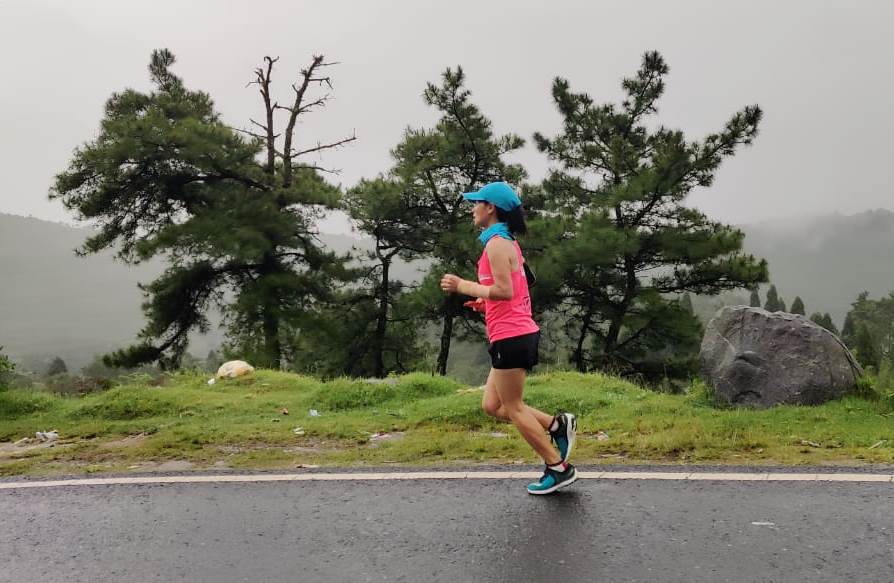
While IAU had offered each member federation the possibility of their run taking place in one location if required, Sunil Chainani, member of the committee appointed by AFI to oversee the selection of Indian ultra teams, said that given the ongoing pandemic, Indian runners will be running at their respective locations.  “ We decided to give priority to safety,’’ he said of the decision not to assemble in one place. COVID-19 cast its shadow in other ways too. Some runners who wished to apply and participate couldn’t do so because their locality had containment zones limiting the space available for them to run. Others were concerned about running for six hours in their respective locations because running outdoors – in the form of daily exercise – is allowed only for lesser duration during the pandemic. The selectors also did not want anyone pushing themselves unnecessarily. “ The lockdown has affected everyone’s training and we don’t want runners straining themselves. We wish to keep our athletes safe,” Sunil said.

According to the IAU website, there will be a category within the run called President’s Club. It encompasses the leadership of member federations and select personalities who have contributed to the sport.  “ The Presidents Club team signals to the global ultrarunning family that we are all in this together. It also serves as a motivation to all our athletes to see their federation leadership participating with them in this endeavor. The team also includes selected personalities who have done an outstanding job promoting the sport globally,’’ Nadeem Khan, president, IAU has been quoted as saying on the association’s website. Adille Sumariwalla, president, AFI, features in the President’s Club list.

Also running on August 29 will be a second team of ultrarunners, this one representing the AFI. The corresponding virtual event’s name is AFI 6-Hour Solidarity Run. The revised criteria for applying to the team (as available on the AFI website), was: for women – 155 kilometers covered in 24 hours, 100 kilometers done in 10:45 or 500 trail-ITRA points accumulated as of date; for men – 195 kilometers covered in 24 hours, 100 kilometers done in 9:45 or 600 trail-ITRA points (any one of these norms had to be satisfied to apply). The idea of a second team was to increase participation in the event and generate greater interest in the sport, Sunil said. As per a recent AFI press release (essentially an update to the earlier one), the members of the team for the AFI 6-Hour Solidarity Run are Ajit Singh Narwal, Badal Teotia, Manoj Kuthupady Bhat, Nishu Kumar, Sandeep Kumar, Santosh Gowda, Sikander Lamba and Velu Perumal.

 (The author, Shyam G Menon, is a freelance journalist based in Mumbai.)
AT A GLANCE / AUGUST 2020

Illustration: Shyam G Menon

Sports functions of up to 100 persons allowed from September 21

Under guidelines for further relaxation of lockdown in areas outside containment zones, the central government in its order dated August 29, 2020 has allowed sports functions involving up to 100 persons, from September 21, 2020 onward.

“ Social / academic / sports / entertainment / cultural / religious / political functions and other congregations with a ceiling of 100 persons, will be permitted with effect from 21st September, 2020 with mandatory wearing of face masks, social distancing, provision for thermal scanning and hand wash or sanitizer,’’  one of the sub sections of the order said.

Swimming pools will however continue to remain closed.

AFI defers start of national competitions

The competition committee of Athletics Federation of India (AFI), at its meeting of August 28, 2020, decided to defer the start of national competitions.

According to a related press release, AFI had been hoping to resume competitions on September 12, 2020 with an AFI Grand Prix in Patiala. “ It would be advisable if the coaches redraw the training schedules of athletes. We are now looking at October end or early November for some competitions for seniors and late November for juniors,” AFI president, Adille J. Sumariwalla was quoted as saying. The National Open Athletics Championships, slated for September 20 to 24 and the Federation Cup, due from October 5 to 9, have also been postponed, the statement said.

Illustration: Shyam G Menon

Mumbai Ultra takes a break, organizes blood donation drive for Independence Day

Under normal circumstances, Independence Day would be the time for Mumbai’s annual rendezvous with the Mumbai Ultra. This year, the 12-hour run is taking a break due to the ongoing COVID-19 pandemic and has organized instead a blood donation camp.

The camp will be held on August 15, 2020 at Veer Savarkar Smarak Bhavan, Shivaji Park, Mumbai, for a period of 12 hours from 8AM to 8PM.

“ We had to cancel this year’s ultra-running event because of the pandemic. As we have been associated with Tata Memorial Hospital for the past few years, I decided to call them and inform them about the cancellation. The director of the hospital spoke about the shortage of blood and asked us if we can organize a blood donation camp,” Naveen Hegde, one of the organizers of Mumbai Ultra, said.

The event’s organizing team then set about working on the logistics for the blood donation drive. Naveen expects around 500 people to come forward for donating blood. At the time of writing, over 450 people had registered to donate blood. Those seeking to register can get the relevant details on the event’s Facebook page.

If held, the 2020 edition of Mumbai Ultra would have been the seventh edition of the event.

Cancellation of the 2020 Ladakh Marathon now spans all race categories

The organizers of the Ladakh Marathon have confirmed that the cancellation of the 2020 edition of the event now spans all race categories.  On July 2, they had informed that the main Ladakh Marathon had been cancelled owing to COVID-19 but the two elite races in its fold – Khardung La Challenge and Silk Route Ultra – were under “ review” with a final decision expected by end-July.

A statement dated August 10, 2020, now available on the event’s website says that the cancellation includes Khardung La Challenge and Silk Route Ultra. “ The 9th edition of the Ladakh Marathon scheduled for 10 – 13 September has been cancelled because of the COVID-19. All six races – Marathon, Half Marathon, 10 km, 5 km, 72 km ultra Khardungla Challenge and 122 km Silk Route Ultra stand cancelled for the year 2020.’’

It attributed the cancellation to the situation around COVID-19 and the India-China border tensions of the past few months. Ladakh is close to the international border. “ After undertaking a risk-assessment exercise a collective decision was taken to cancel the 9th edition of the Ladakh Marathon as the well-being of our runners, the residents of Ladakh, our volunteers and staff remains our top priority,’’ the statement said, adding, “ all confirmed registrations for the 9th edition of the Ladakh Marathon have been automatically transferred for a period of two years to 2021-2022.’’

Illustration: Shyam G Menon

2020 Paris Marathon cancelled

The 2020 Schneider Electric Marathon de Paris has been cancelled.

“ After having tried everything to maintain the event, we, alongside the Ville de Paris, feel obliged to cancel the 2020 edition of the Schneider Electric Marathon de Paris and the Paris Breakfast Run. Faced with the difficulty that many runners, especially those coming from abroad, had in making themselves available for the 14th / 15th November, it was decided that it would be better and simpler for those concerned if we organised the Schneider Electric Marathon de Paris in 2021,’’ an official statement dated August 12, 2020, available on the event website, said.

“ Those who were signed up for this year’s edition are, if they wish, already signed up for the 2021 edition. If not, they will benefit from a voucher, the value of which being equal to however much was spent on the bib and extra options or a reimbursement after a period of 18 months,’’ the statement said adding, “ we will be working side-by-side with the Ville de Paris to put on a 2021 edition that brings together the most passionate runners on the most beautiful streets in the world.’’

Reminder from World Athletics on the need to stick to shoe regulations

World Athletics has reminded that the recently introduced Rule 5 pertaining to the sole height of shoes will need to be adhered to if the results at national championships and domestic competitions are to be recognized by it.

“ As more athletes around the world return to the track for national championships, one-day meetings and other record-breaking attempts, World Athletics has issued a reminder to Area Associations and Member Federations today about the recently introduced Rule 5, governing competition shoes. The amended rule, which puts a sole height limit of 25mm on all shoes worn in track events of 800m and above in distance (including Steeplechase), came into force on 28 July 2020, when it was published. The rule does not prevent a road running shoe from being worn on the track but a 30mm or 40mm road running shoe cannot be worn for track events because of the 25mm limit. As this is a transition period, all results currently in the World Athletics database will be processed, but any result of an individual athlete who has worn non-compliant shoes for the race will be marked “Uncertified” (“TR5.5”). In the case of National Championships and other domestic competitions, for results to be validated and recognised by World Athletics for statistics purposes, such competitions must be held under World Athletics Technical Rules and Competition Rules. This means that Rule 5 of the Technical Rules must be applied in full for the competition results to be recognised by World Athletics as valid. To preserve the integrity of national records and statistics, the responsibility lies with the Member Federation to ensure that all athletes, officials and competition organisers are fully aware that Rule 5 of the Technical Rules will be applied in full. If a Member Federation or competition organiser permits an athlete to compete in non-compliant shoes, then the athlete’s individual results from the competition will be marked in World Athletics’ records and statistics as ‘Uncertified (‘TR5.5’) i.e. invalid. In some cases, this may apply to the entire race. Results achieved before 28 July, where an athlete has worn a shoe above the current track limits, are valid provided the results were achieved in shoes that complied with the sole thicknesses in the previous rule. For example, if an athlete wore 40mm non-spike shoe on the track or 30mm spike between 31 January 2020 and the notification and publication of change of rules on 28 July 2020, then the competition result is valid. The list of shoes that were submitted to World Athletics by manufacturers for assessment, and have been approved, will be published on World Athletics’ website shortly to assist Athletes, Member Federations, Technical Officials and meeting organisers,’’ a statement dated August 10, 2020, available on the website of World Athletics said.

World Athletics publishes list of approved competition shoes

World Athletics has published the list of approved competition shoes, following the amendments to Rule 5 of the Technical Rules announced on 28 July 2020.

The list has been compiled following introduction of the requirement on 31 January 2020 that any new shoe an athlete proposes to wear in international competitions needs to be assessed by World Athletics.

According to a press release dated August 13, 2020, available on the website of World Athletics, “ the list does not contain every shoe ever worn by an athlete but it does include some older models of shoes that manufacturers sent to World Athletics for assessment by its independent expert. The position with older shoes that are not on the list is that they still need to comply with the rule going forward. The athlete, or their representative, will need to ensure their older shoe complies with Rule 5.13 in terms of the maximum sole thicknesses for their specified event and any inserted plate or blade, including spike plates if relevant.

“ Under Rule 5 of the Technical Rules, athletes (or their representative) have the responsibility to provide World Athletics with specifications of the new shoes the athlete proposes to wear in competition. World Athletics accepts shoe specification and samples submitted by manufacturers for further examination. If there is doubt about a shoe (particularly shoes that no other athlete has) then athletes, officials and meeting organisers should first refer to the approved list.

“ If the competition referee has a reasonable suspicion that a shoe worn by an athlete might not comply with the rules then at the conclusion of the competition the referee may request the shoe be handed over for further investigation by World Athletics.

“The list of approved shoes will be updated regularly to reflect any new information received.’’

The list of approved shoes (as of August 13, 2020) is available as a link on the above cited press release, on the website of World Athletics.

(The authors, Latha Venkatraman and Shyam G Menon, are independent journalists based in Mumbai.)

CITIZEN K

This image was downloaded from the film’s Facebook page and is being used here for representation purpose. No copyright infringement intended.

For many of us, lockdown has been an opportunity to reflect.

Among other things, you think of the meaning of life. Lockdown has been a bit like the prisoner’s existence except there was neither crime committed nor sentence decreed. But the effect was similar – the limits of our wanderings shrank and a prison cell took shape. Luxuries waned. For the first time, many of us understood what incarceration is. We started to value freedom. In literature, denial of freedom on scale is usually associated with totalitarian regimes. The dissidents imprisoned for their protest and later released or rendered martyrs for the cause, inspire governments promoting freedom and liberal views. This has been the cycle of events regularly portrayed in political literature.

It was curiosity of this sort that attracted me to the documentary film Citizen K. Plus the fact that as of 2020, democracy is in one of its most imperiled phases with growing sections of humanity only too willing to waive individual rights and instead regiment to preen as human shoal. Why do we do so? Why do we turn our backs on the lessons of history and play into the hands of potentially losing liberal government and personal freedom, both of which we know, are hard to restore once lost? For those like me, valuing freedom and appreciating it for exactly what it is, 2020 has been a bleak but thought provoking landscape.

So what is Citizen K all about? This 2019 documentary film deals with Russia; to be precise, the period following the collapse of the Soviet Union. It tracks the story of Mikhail Khodorkovsky, erstwhile billionaire and among the richest men in Russia who belongs to the first generation of business oligarchs that arose from the ashes of Communism. Doing so, it gives us an inside view of how the phenomenon of Russian oligarchs came about; how that crony capitalism spread roots. Today we accept this well entrenched symbiosis between business oligarchs and politics in Russia as how the country is. The film shows you why and how it came about. It then leads you to the unsaid fault lines that shouldn’t be crossed in this arrangement. Khodorkovsky – a top oligarch – commits the error of voicing political opinion. This makes him appear a threat to Vladimir Putin, president of the country, whose rise was engineered by the oligarchs but who has since become his own master. In due course, Khodorkovsky is arrested and sent to jail. His giant oil company is merged with state owned enterprise. The billionaire’s wealth shrinks. A long drawn out legal battle to free him follows, much of it trashed by the state’s counsels. Eventually as part of his image building exercise, Putin embarks on a series of amnesties and freeing Khodorkovsky is one of the things he does. With life in Russia too dangerous for him, the businessman shifts overseas. He recasts himself as a political campaigner and emerges over time, a major critic of Putin’s administration.

Neither of the two main protagonists in this drama are angels. Khodorkovsky is a former oligarch, whose rise to riches will remain questionable. Such questions haunt Russian fortunes built up in the period around the Soviet Union’s fall. It was a case of a country that knew little of modern capitalism having lived behind the Iron Curtain for decades, suddenly required to put in place a new economic system using whatever it had at its disposal. The period following the disintegration of the Soviet Union was one of desperation and inequality, during which, the oligarchs exploited common people to corner shares of public enterprise. Through such beginnings in capitalism, Khodorkovsky created the bank that would later become his vehicle for building the oil company – Yukos. Putin on the other hand, was a candidate supported by the oligarchs in the wake of Communist echoes reviving in the declining years of the Boris Yeltsin era. He becomes president, does good work but also goes on to become an institutional entity that stalks the land like an unshakable, permanent political presence. Elections are held but it is a trumped up ecosystem in which the opposition is lame and you can’t be sure whether it is independent or propped up by the ruling formation for illusion of democracy. This predicament is Citizen K’s story.

It is an interesting documentary for multiple reasons, the most prominent of which, is a product of our times. There are shades of Russia – its penchant for personality cult, rule by strongman and appetite for business oligarchies – surfacing in other countries. The larger trend is what attracted me to Citizen K as a viewer; this issue of similarity in political aspiration across countries (it is a model going around), none of it healthy for freedom, economic equality and democracy. This is a film that makes you reflect on our age of undemocratic politics, the cult of political personalities and billionaire businessmen and ordinary people split between support for this formation and opposition to it, split between support for rule with an iron fist and rule by liberal government. Good documentaries hold a mirror to existence. Citizen K does just that. The film is available on Amazon Prime.

(The author, Shyam G Menon, is a freelance journalist based in Mumbai.)