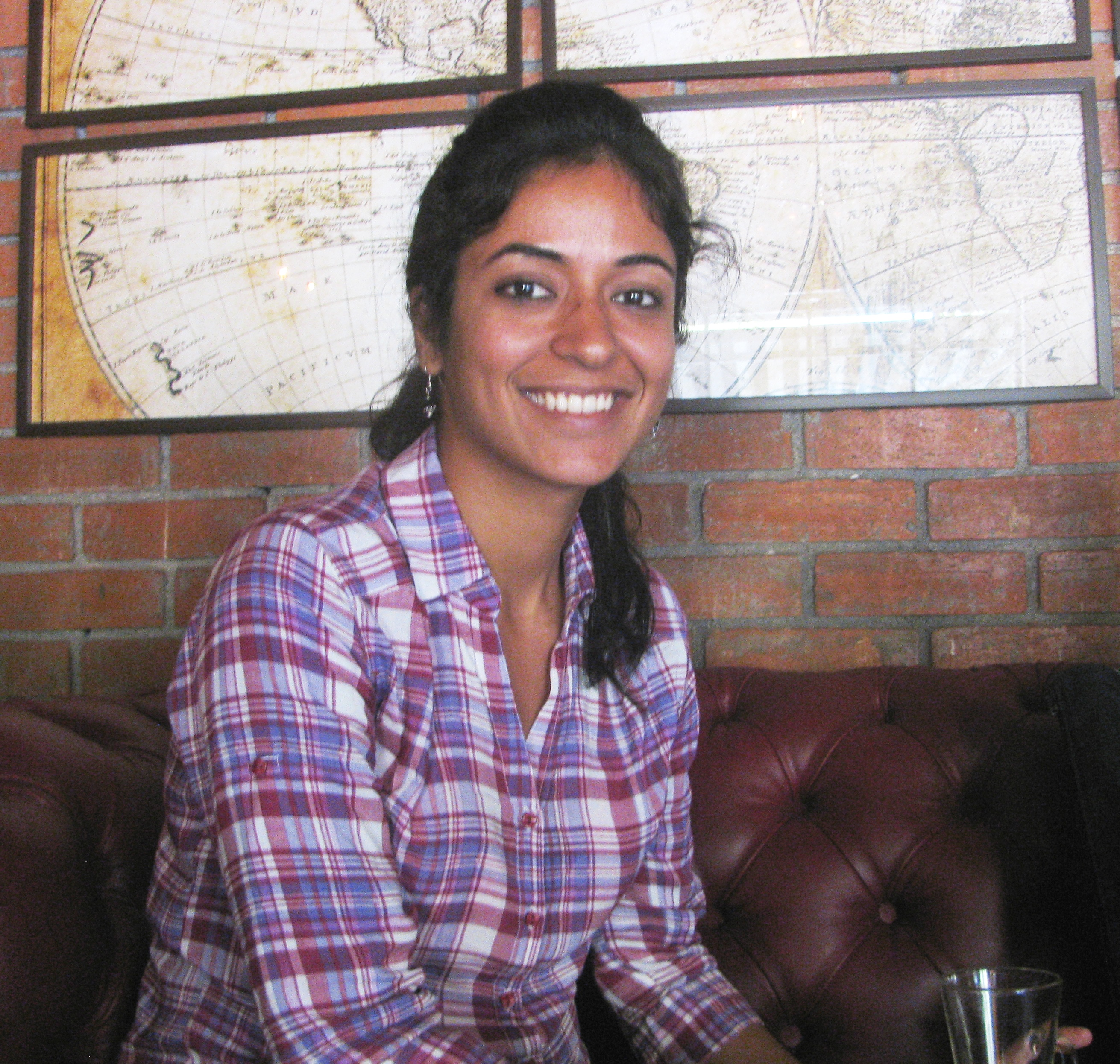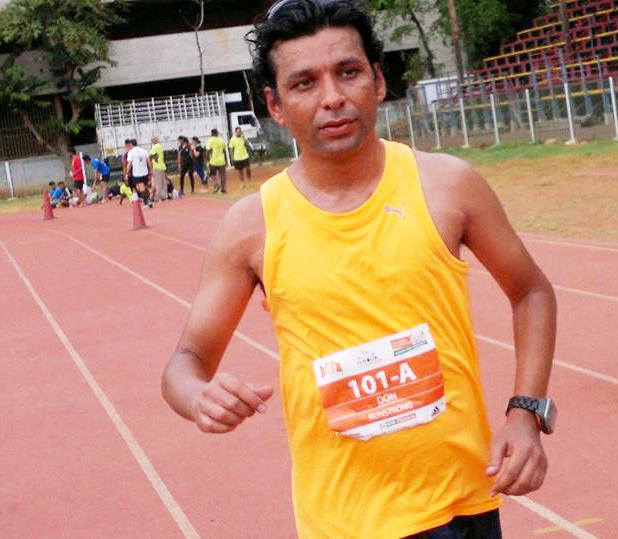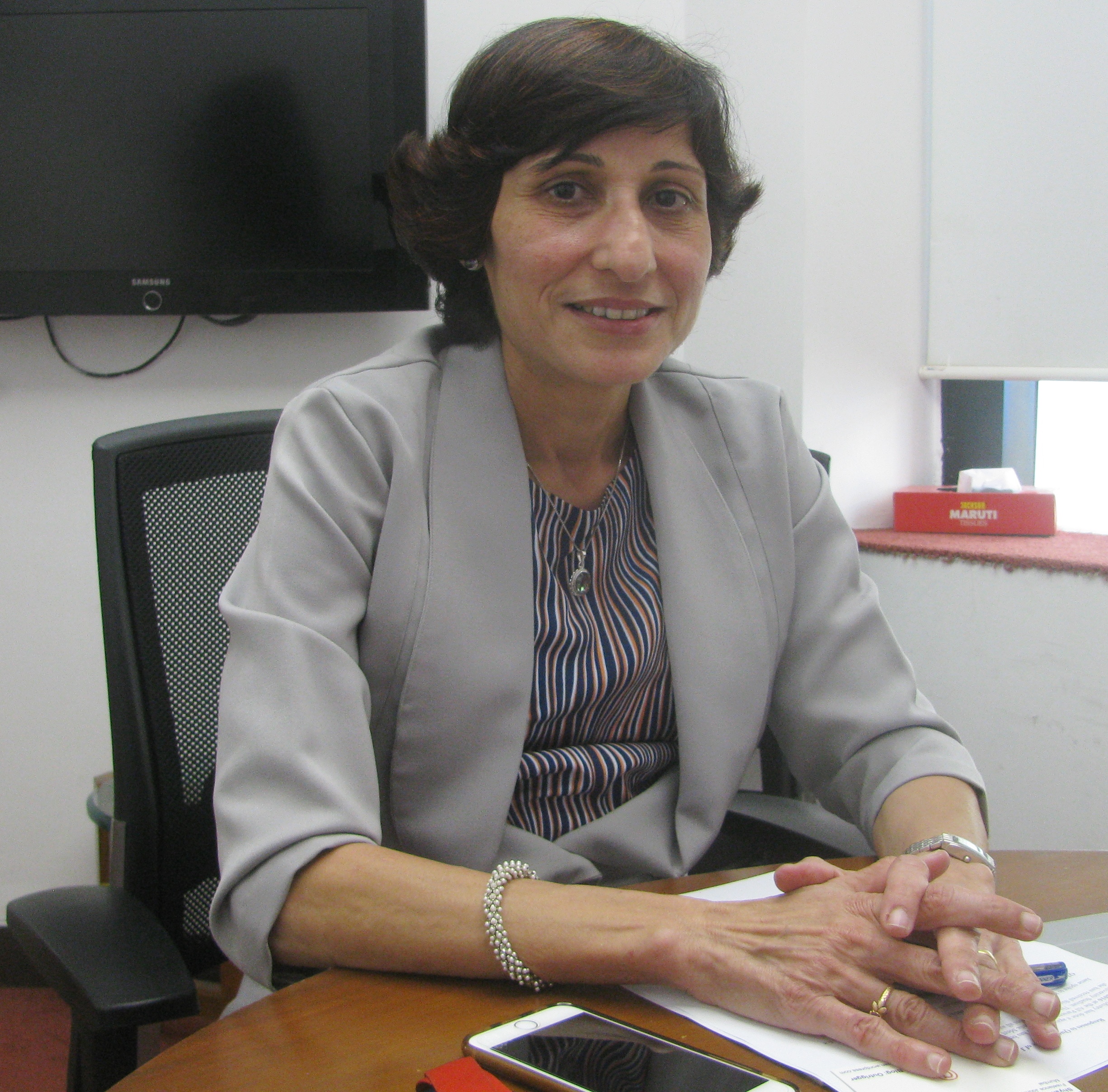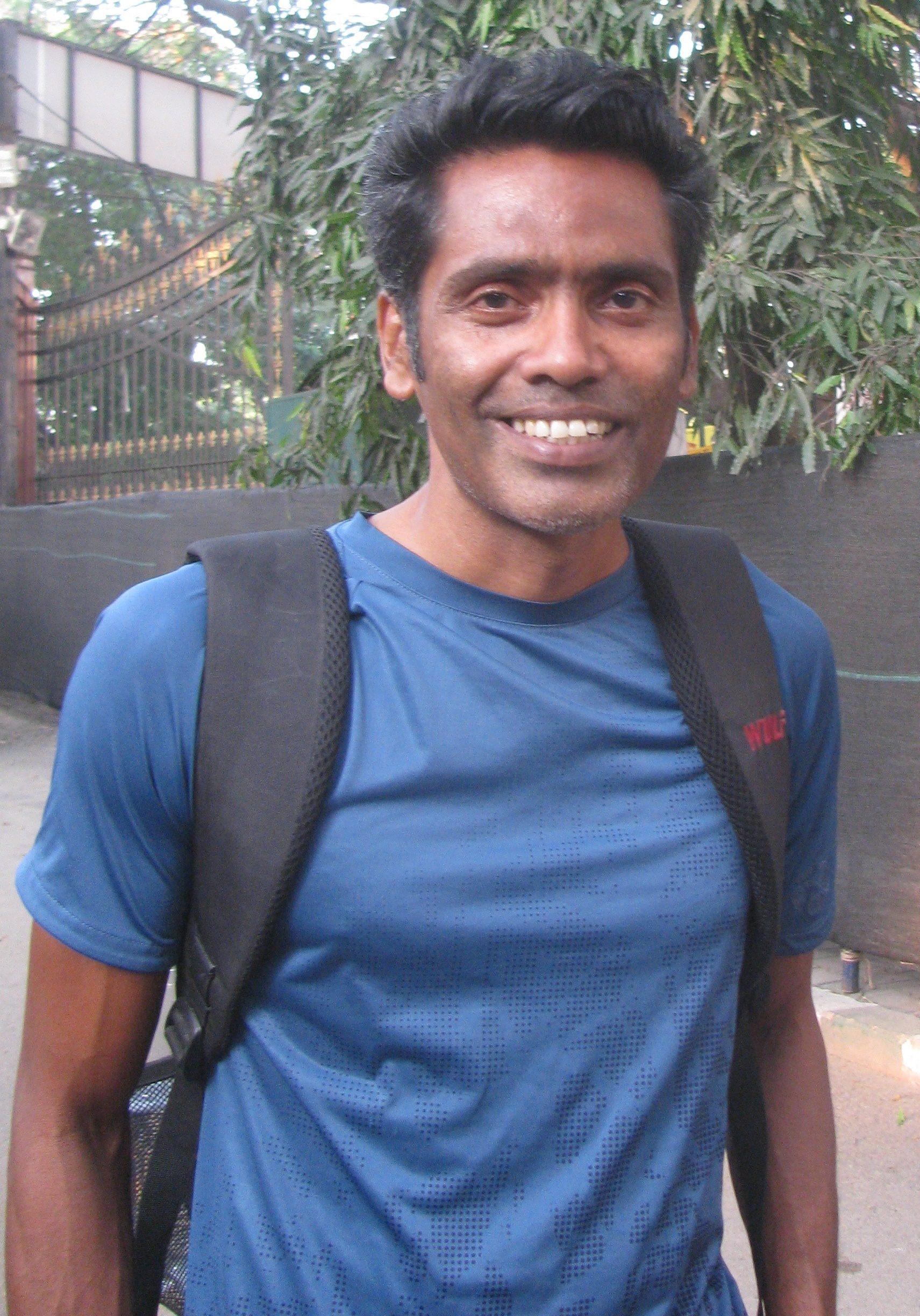
2018 TMM / PODIUM MUSINGS

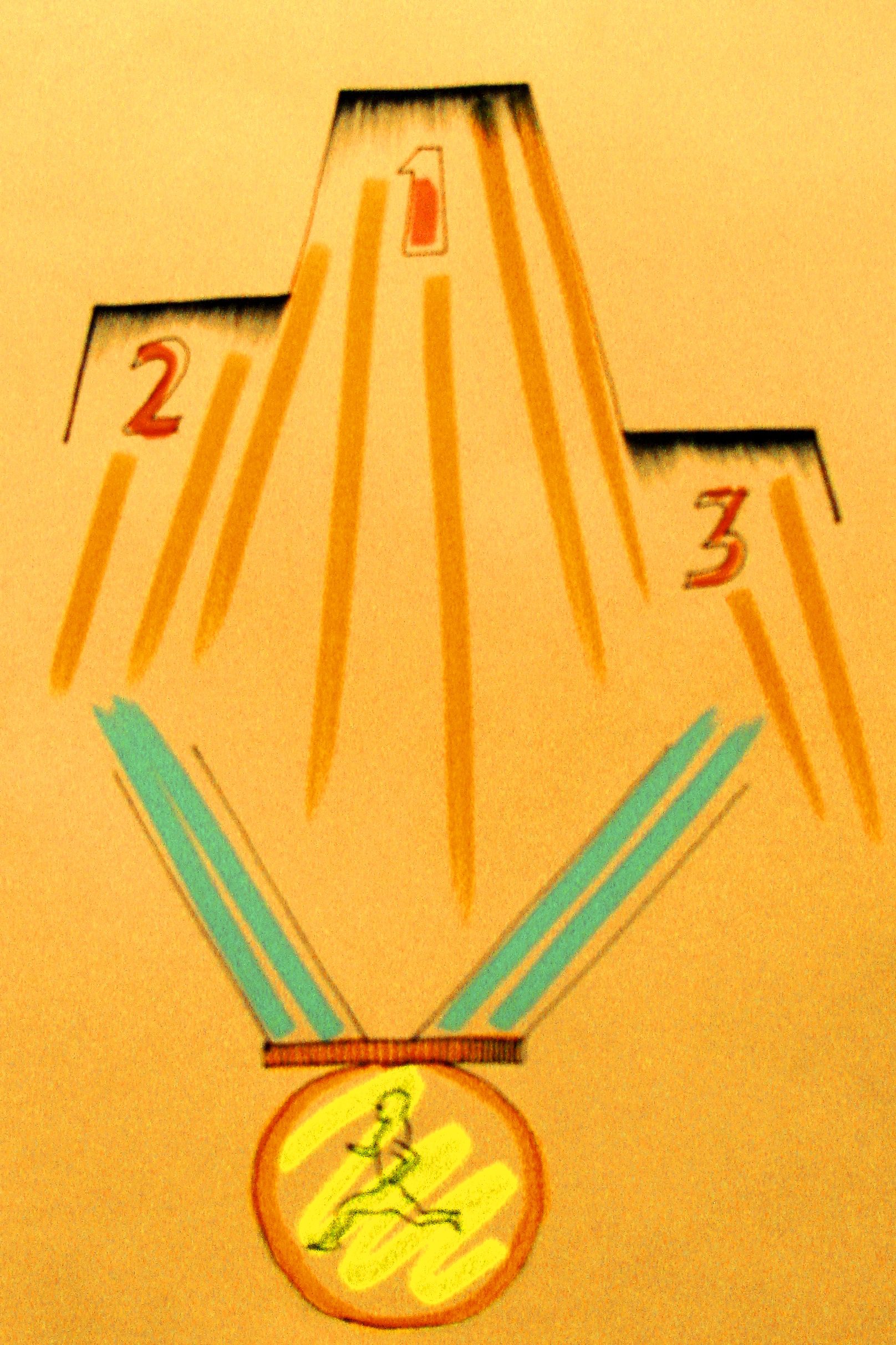
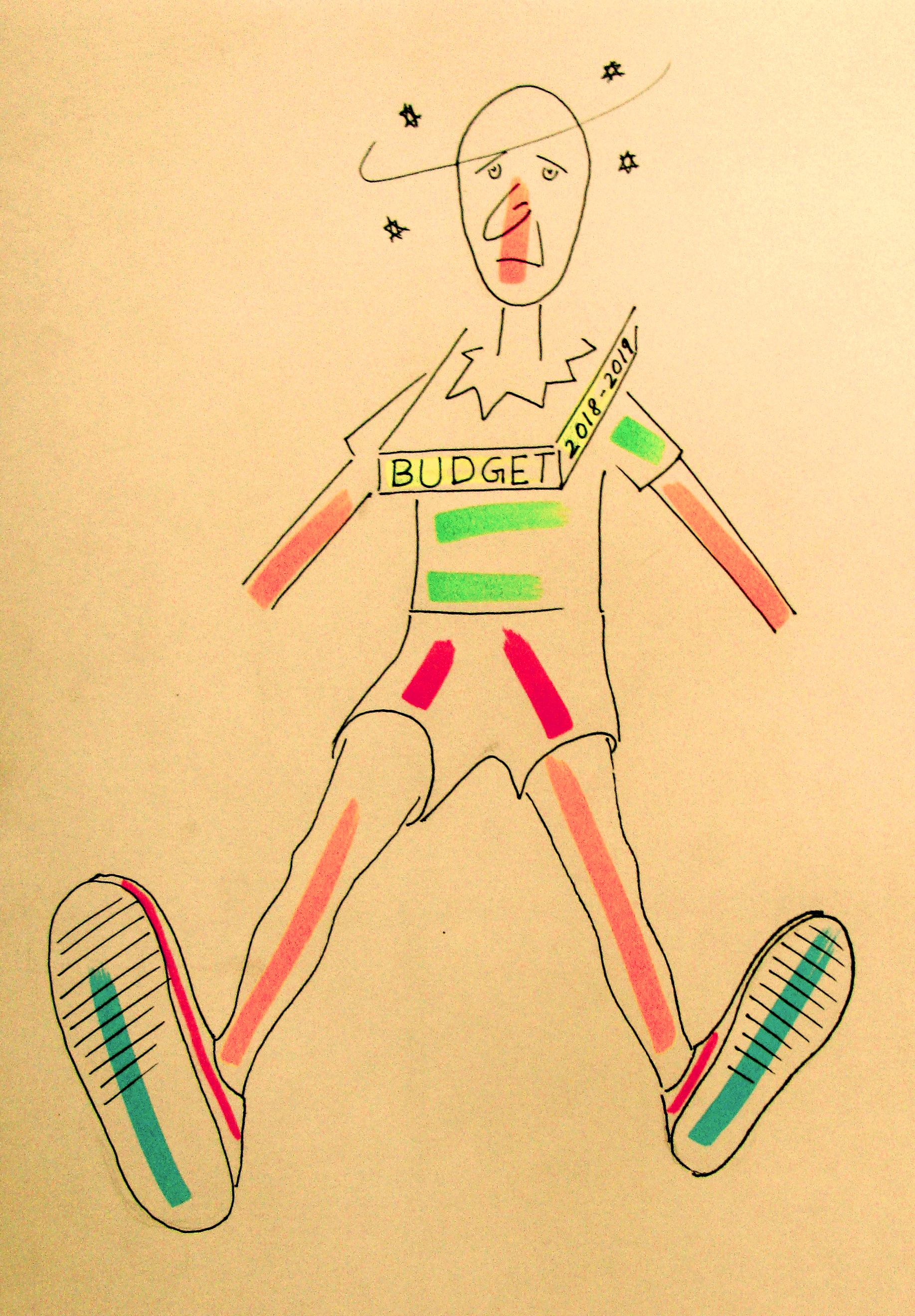
Illustration: Shyam G Menon

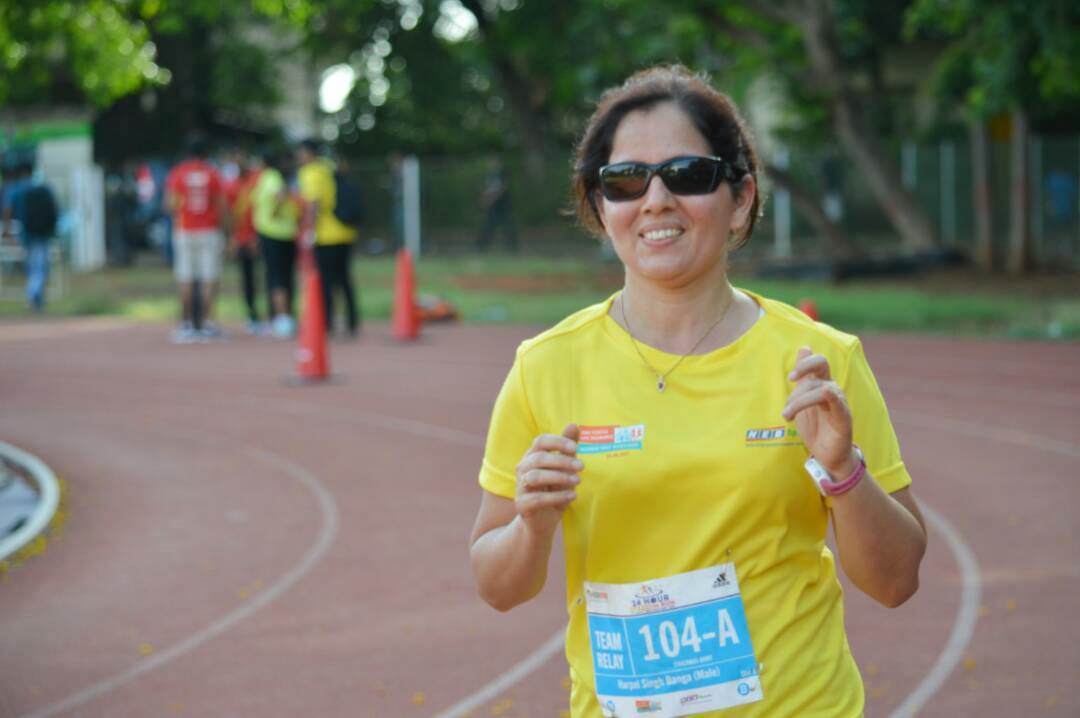
This year, close to 45,000 people participated in the Tata Mumbai Marathon (TMM), Asia’s biggest in terms of participation and prize money. A growing marathon, in its fifteenth year amid Indian matrix of population and congestion, the event has its share of fatigue around the edges. Should it keep adding numbers or should it emphasize performance? While reinvigorating the Mumbai marathon is a matter for the organizers to mull over, runners continue to find the event a magnet. For the seasoned, it is an annual pilgrimage. For others, it is a rite of passage. Either way, they arrive. At the end of every edition, a few people find themselves on the podium. We spoke to a mix of runners, elite and amateur, who secured podium finish at 2018 TMM. Those featured: T Gopi, Nitendra Singh Rawat, Thomas Bobby Philip, Sabhajeet Yadav, Bhasker Desai, Vaijayanti Ingawale, Manoj Rane, Pervin Batliwala, K.C.Kothandapani, Simta Sharma, Dnyaneshwar Tidke, Khurshid Mistry and Idris Mohamed. Please scroll down to read what each person had to say.

Prepared Well And Finished First, Still It Could Have Been Better

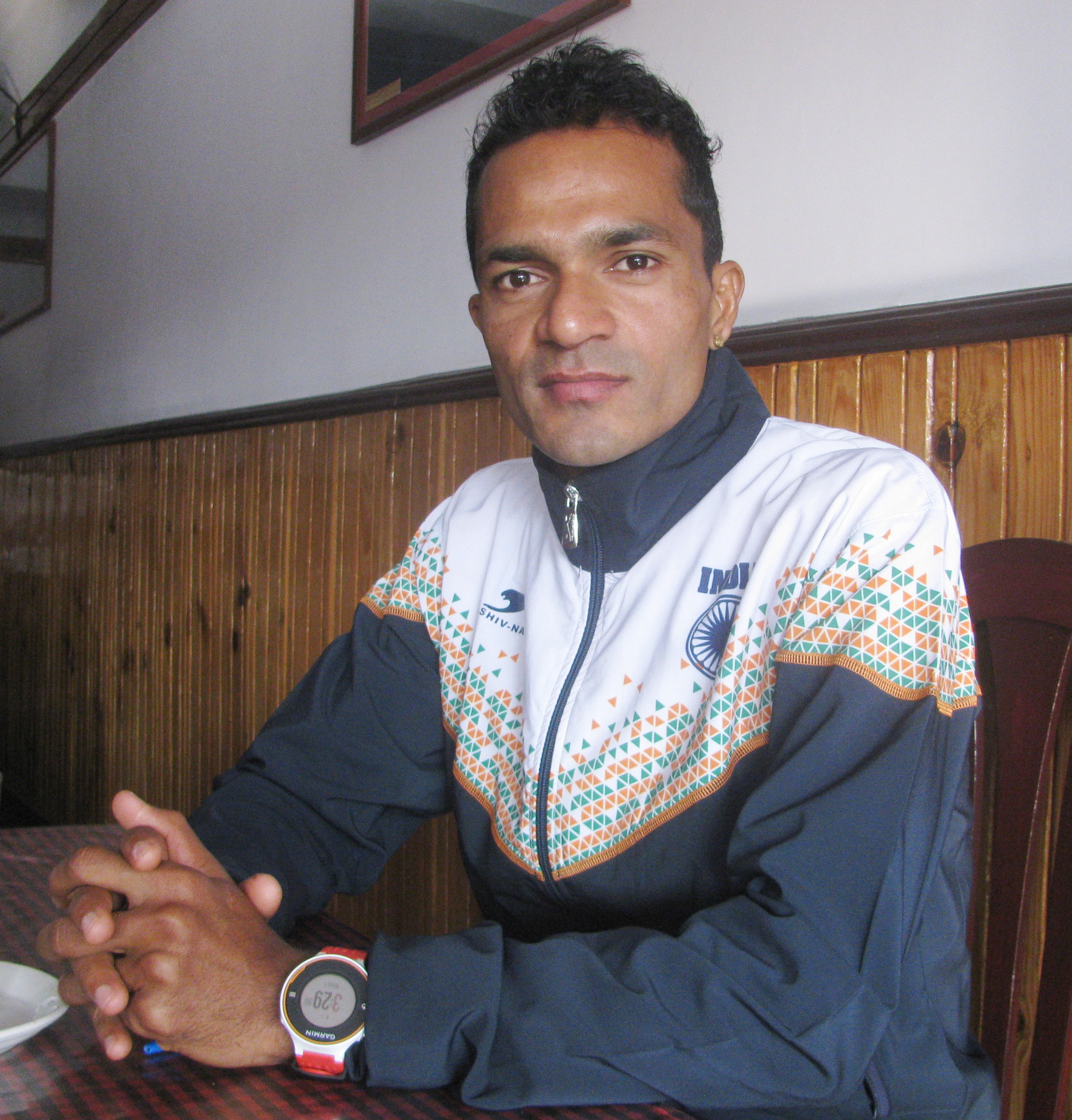
T Gopi (Photo: Shyam G Menon)

Thonakal Gopi: A relatively recent entrant to the marathon, Gopi was a pacer who amazed everyone by finishing second among Indian elite runners at the 2016 Mumbai marathon. The effort had earned the army runner a berth to run the full marathon at the Rio Olympics, which he did completing the discipline in 2:15:25, placing a creditable 25th. In November 2017, Gopi was in the news for winning the Asian Marathon Championship, the first Indian male athlete to do so. On January 21, 2018, at the Tata Mumbai Marathon (TMM), he placed first in the full marathon under the Indian elite category for men. He covered the 42 km-distance in 2:16:51 tad slower than his 2016 timing of 2:16:15. It was a tight finish with fellow army runner Nitendra Singh Rawat battling him to the line. That evening Gopi spoke to this blog. “ If I compare the outcome of today’s run with how much I practised, then I don’t think it is quite up to the mark. After the Asian Marathon Championship I got only a month or so to prepare. Despite limited time, I prepared well. Compared to that, I feel my performance wasn’t as good as it should have been. It didn’t match my expectations. There were some reasons for it – roughly ten days before reaching Mumbai I had pain in my hamstring and shin bone. There was the change in weather to deal with. Road condition also matters. I am not talking of ups and downs, I am referring to how even the road surface is. All this may have contributed. We had a pacer till around the 32 km-mark. Until the 27th kilometer, the pace was good; we seemed to be on par with the record. But after that for the next five to six kilometers, the pacer became trifle slow. Once he faded, it was only Nitin (Nitendra Singh Rawat) and I. I was leading but I couldn’t push alone. I think Nitin was also in the same position. In that last 10-12 kilometers, the run suffered some loss of quality. Overall therefore, the result wasn’t as I would have liked it to be,’’ Gopi said.

Another Podium But Is Anyone Listening?

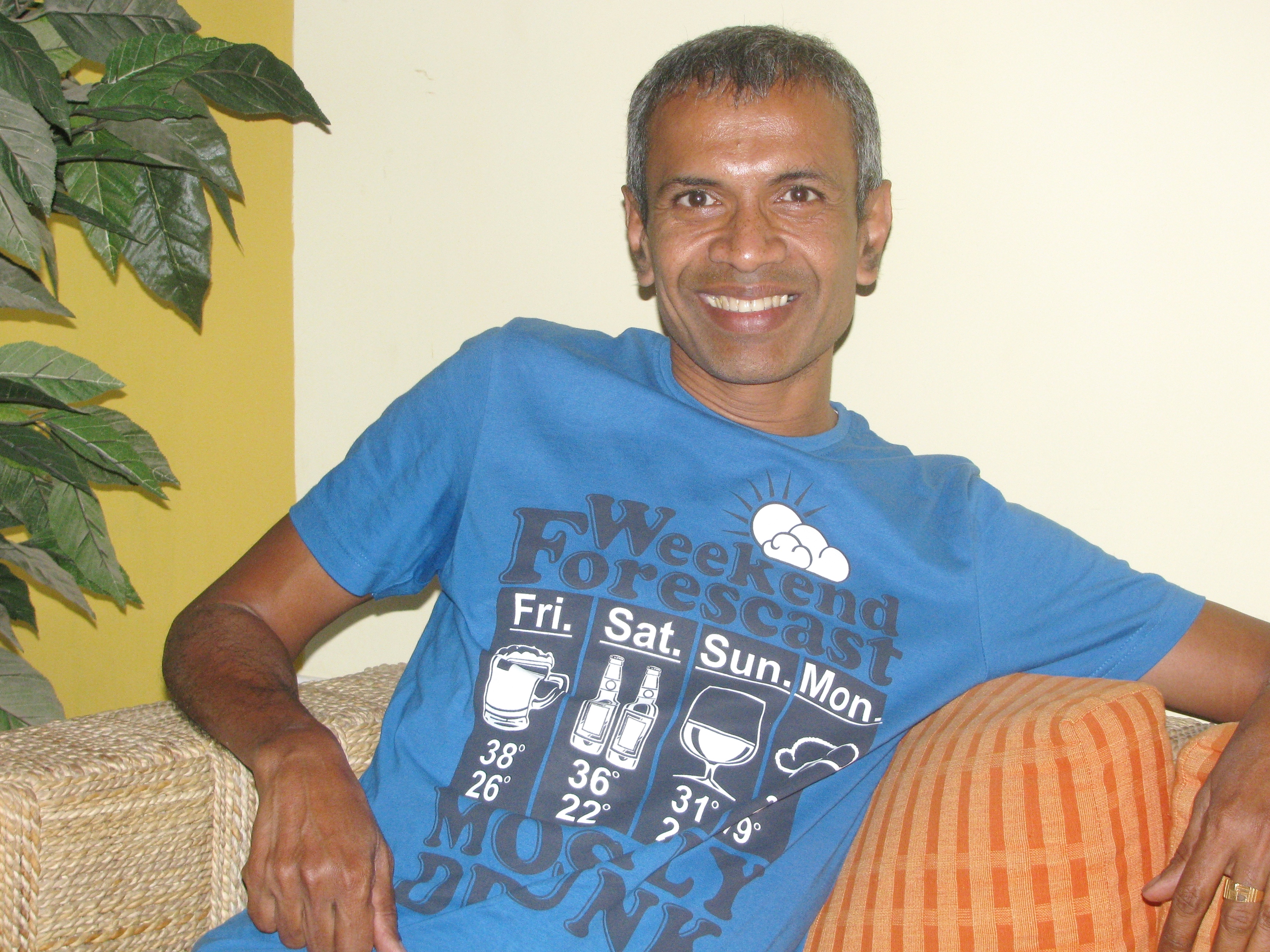
Nitendra Singh Rawat (Photo: Shyam G Menon)

Nitendra Singh Rawat:  Winner of the Indian elite category at the 2016 edition of the Mumbai marathon, Nitendra Singh Rawat was subsequently unlucky at the Rio Olympics, where injury hampered his performance. He finished 84th in the field. It was a costly injury, for the talented runner – he had set a course record at the 2016 Mumbai marathon – found himself out of the national camp. In early November 2017, when this blog caught up with him, Nitendra was training in Ranikhet, home of the the Indian Army’s Kumaon Regiment, to which he belonged. He was determined to make a comeback. Days later, on November 19, he produced his first major victory in a while, smashing the course record and bagging the title in the men’s Indian elite category at the 2017 Airtel Delhi Half Marathon (ADHM). Soon afterwards, talking to the media, he said that he had aimed to win the race and prove that he belonged to the national camp. At the 2018 TMM, Nitendra finished a close second to Gopi, completing the full marathon in 2:16:54. A day after the race, he spoke to this blog about his outing at TMM. He said he had been running a full marathon at competitive level after a long time. He also wanted to make sure that he does not injure himself afresh. Repeating a point he had made before the media after the race, he said that chances of chasing the course record would have been brighter if the race had commenced tad early. Late start means the runners are pushing their limits in warm weather. Asked if he was now back in the national camp, Nitendra said that was yet to happen. He had trained for TMM at Ooty, renting his own accommodation and practising with other elite runners. He planned to return to Ooty.

Sub-Three Maintained

Thomas Bobby Philip (Photo: Shyam G Menon)

Thomas Bobby Philip: At the 2017 Mumbai marathon, this runner from Bengaluru – running in the 50-55 age category – had finished the full marathon in 2:58:46. This year he improved his timing some more, covering the 42 km-distance in 2:57:17 to place second in his category (50-54 years). The performance notwithstanding, Bobby said that the passage to TMM had been challenging. In mid-October 2017 Bobby was laid low by viral fever. “ It drained me out,’’ he said. Coming up was the New York marathon. He had made all bookings and arrangements to run there. It was too late to back out. Somehow he ran it straining his calves and quads in the process. He finished the New York marathon in 3:13. He took at least two weeks to recover from the effort. “ Overall, I could not prepare well for TMM,’’ he said, adding, “ eventually it was just my mental strength plus a lot of pushing that yielded the improvement in timing by about 90 seconds.’’ If you go through the TMM podium finishes, you will notice that Bobby’s is the last sub-three performance among men securing a place on the podium. In the age categories following his, timings are in the three hour realm and beyond. What should also interest is that his timing is better than at least four podium finishes in age categories noticeably younger than his. Bobby believes that given the improving performances reported by Indian runners, sub-three performances in the amateur category are set to rise. It won’t be a novelty any more. TMM over, Bobby – in a practice he has followed for long – will reduce mileage and focus on intensity to get ready for the TCS 10K in Bengaluru. Thereafter, he will focus on both increased mileage and intensity as the year builds up to the next TMM. These two events are the pivots around which Bobby structures his year in running.

A Seventh Win In The Bag And How!

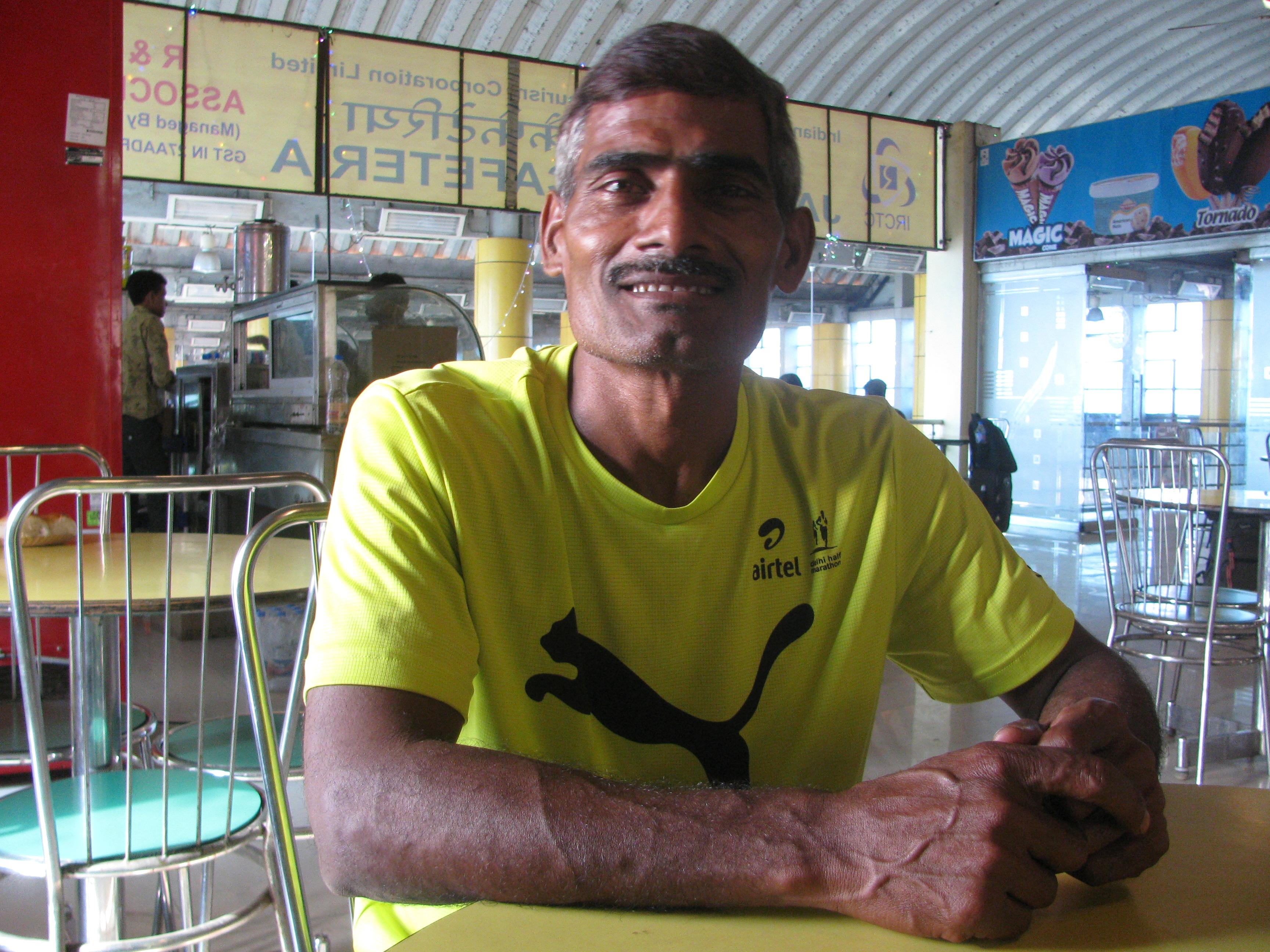
Sabhajeet Yadav (Photo: Shyam G Menon)

Sabhajeet Yadav: Marathon organizers don’t ask him how he reaches the start line. So this year too, the farmer from Dabhiya – winner six times in his age category at the Mumbai marathon – stuck to a practice that has come to be characteristically Sabhajeet. On the trip to Mumbai from Uttar Pradesh, his train was terribly late. He reached the city January 19, late at night. He stayed with a friend in Aarey Colony. Next day he collected his bib from the TMM pre-race expo at Bandra-Kurla Complex. That was when Ramavtar Rajbhar of Gorakhpur called. Both men knew each other from previous editions of the Mumbai marathon. According to Sabhajeet, Ramavtar had been a podium finisher in the half marathon some years ago. Their discussion on the phone revolved around a simple topic – what’s the best way to ensure that you are at the start line on time? “ For me, the choice is simple. I come to Mumbai to run the marathon. So the closer you are to the start line, the better it is,’’ Sabhajeet said. Focused on reporting to the race on time and having no desire to be delayed by any of Mumbai’s traffic snarls or rail problems, he has in the past slept at the city’s Chhatrapati Shivaji Maharaj Terminus (CSMT). The railway terminus is stone’s throw from the start line of the full marathon. It took no time for the two men to agree that the railway station seemed apt solution for their concerns. Later that day, eve of the race, they met in the vicinity of CSMT; Ramavtar had brought with him one more person, a runner from Sholapur. Making a slight departure from tradition, the three runners slept on the footpath near Azad Maidan. “ You can call it sleep but it wasn’t exactly so,’’ Sabhajeet said smiling. A footpath is rarely quiet. Given other footpath dwellers around, he admitted to being tad worried about his bag containing his belongings, none of it luxury and all pertaining to what he required for the race. According to Sabhajeet, the trio spent the night in a haze of light sleep and talk about running, how race day might be and how to tackle the race. Early morning it was a short hop from footpath to start line. Three hours, 29 minutes and 12 seconds after the full marathon commenced, 62 year-old Sabhajeet Yadav had registered a seventh win in his category, the 60-64 years age group. As he slowly advances in age, Sabhajeet has modified the mix of events he participates in – he now runs more half marathons and a few handpicked full marathons, the latter being typically the full marathons of Mumbai and Bengaluru. Besides the seven podium finishes he has accumulated at the Mumbai marathon, he has had seven podium finishes at the Airtel Delhi Half Marathon (ADHM) and three podium finishes at TCS 10K. “ I would like to go for Masters Athletics,’’ he said. Should that ever happen, his wish is to run the classic middle distance disciplines. “ I think my chances are strong there,’’ he said. And what if he qualifies to represent the country in Masters? What if he has to travel abroad? “ I will have to go with others as I don’t speak English and won’t be able to manage alone,’’ Sabhajeet said. Aside from well-wishers like Mumbai based-runner Bhasker Desai, who has stood by him and supported him, Sabhajeet has no sponsors. No manufacturer of running gear, no shoe company, none have come to his assistance despite his collection of podium finishes and a style of running that anyone would applaud. And as said, organizers don’t ask him where he slept or how well. Prize money is important for Sabhajeet. “ We grow wheat. Last year the crop was alright as should be this year for rains were good. But the thing with farming is that much of the produce is consumed at home and earnings from any surplus sold is typically ploughed back into the farm,’’ he said illustrating his financial predicament wherein prize money from running matters. On the morning of January 23, he met this blog for a chat at Mumbai’s Lokmanya Tilak Terminus from where the train he was booked on – Chhapra Express – was due to depart. He had three big bags in his hands; a fourth one – a small rucksack – hung on his shoulder. The big bags had been given to him by people from his part of UP, living in Mumbai. They contained gifts to be reached to families residing in three different villages not far from Dabhiya. “ My bag is this small one,’’ Sabhajeet said pointing to the rucksack. Coffee and conversation later, he walked off to board his train. He was scheduled to return in February for the half marathon in Thane.

A Well Organized Race, No Complaints Whatsoever

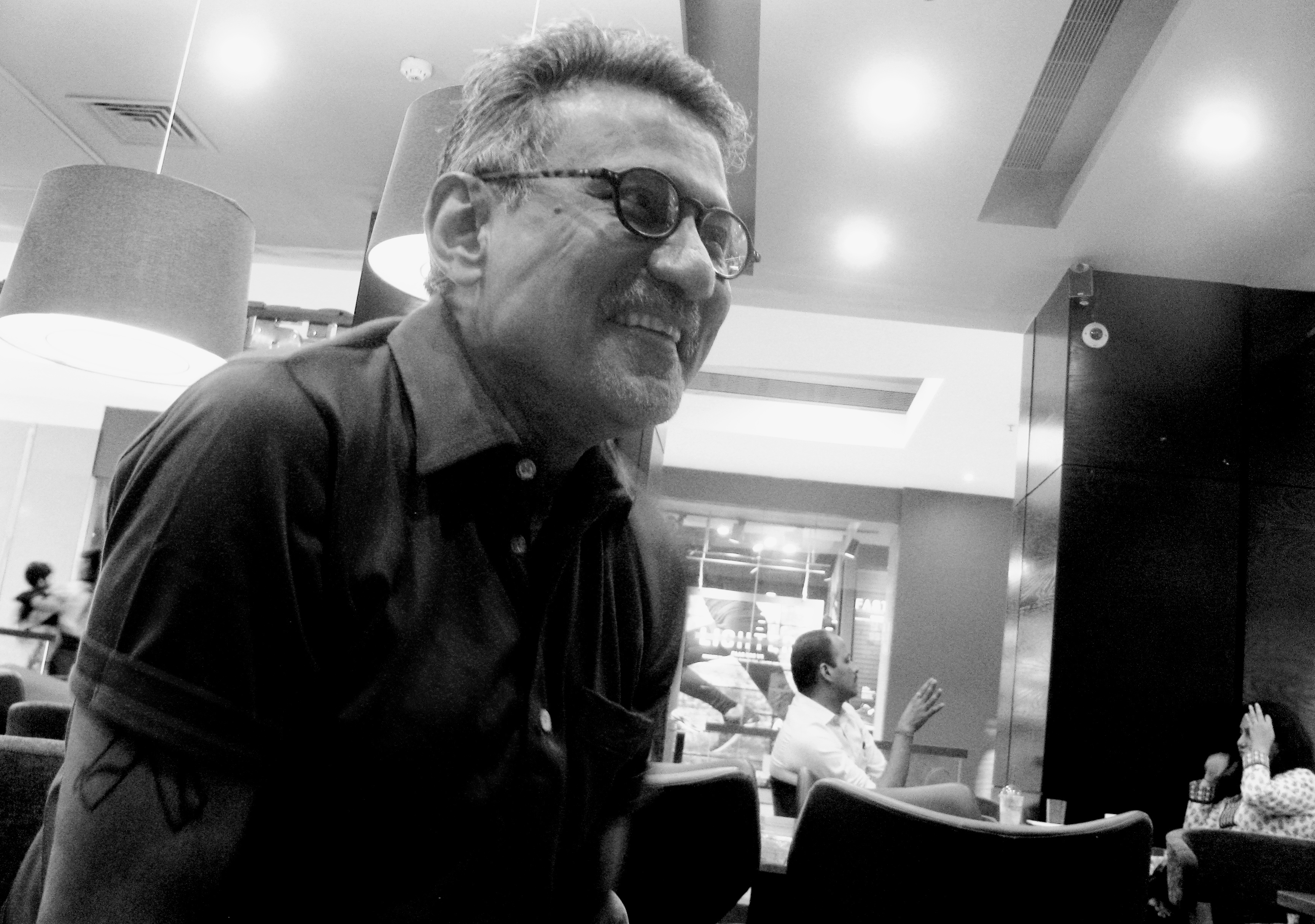
Bhasker Desai (Photo: Shyam G Menon)

Bhasker Desai: Every year, Bhasker spends much time travelling. He makes it a point to be in Mumbai for the annual marathon. He has been running the Mumbai marathon regularly since 2006 and has among his milestones in running, a clutch of 2-3 podium finishes at the event. He has run at several races abroad. But Mumbai is home. That makes the city’s annual marathon, special. Bhasker hasn’t run the full marathon for almost two years. The full marathon needs dedicated training, something he finds difficult to do as he is always on the move. Preference has been for the half. “ I take every day as it comes’’ Bhasker said, admitting alongside that he likes it when he is rewarded with good timing. At 2018 TMM, he finished first in his category (65-69 years) in the half marathon with timing of 1:50:01. “ I am happy overall. Everything at the race was well organized. I have no complaints whatsoever,’’ Bhasker said.

On Target

Vaijayanti Ingawale (Photo: courtesy Vaijayanti Ingawale / Facebook page)

Vaijayanti Ingawale: This was her second marathon at this event. “ I must say it went off very well for me. So far, I have done three marathons, one of them at Sydney, last year. This time around in Mumbai I was familiar both with my ability and the marathon’s course, as I had run the event in January 2017,’’ Vaijayanti said. Her target was to get a sub 4:20. She was able to do that with correct pacing. “ I don’t use any gadgets. I plan my timing for each 10 km-segment. I progressed fairly well as per plan although there were temptations to surge ahead every time you saw someone familiar overtake you. However I did not push myself. I faced no issues at all and the overall arrangement including hydration was well organized,’’ Vaijayanti said. She won the full marathon in her age category (60-64 years) with timing of 4:19:56. “ This time around I trained very systematically and focused a lot on strengthening. I also rearranged my work hours so that I could devote some time to train,’’ she said. According to her, the Mumbai marathon has its own charm. “ There is so much support and encouragement from people. The course is not a very challenging one. I have participated in runs in Sydney, Hawaii and Malaysia and I must say they are organized quite professionally. In places like Sydney and Hawaii the culture of fitness is very strong. Here, the awareness towards long distance running is increasing slowly. I want to now attempt longer distances. I plan to do a 50 km run at Borivali National Park in February,’’ she said.

Berlin On The Cards

Manoj Rane (Photo: by arrangement)

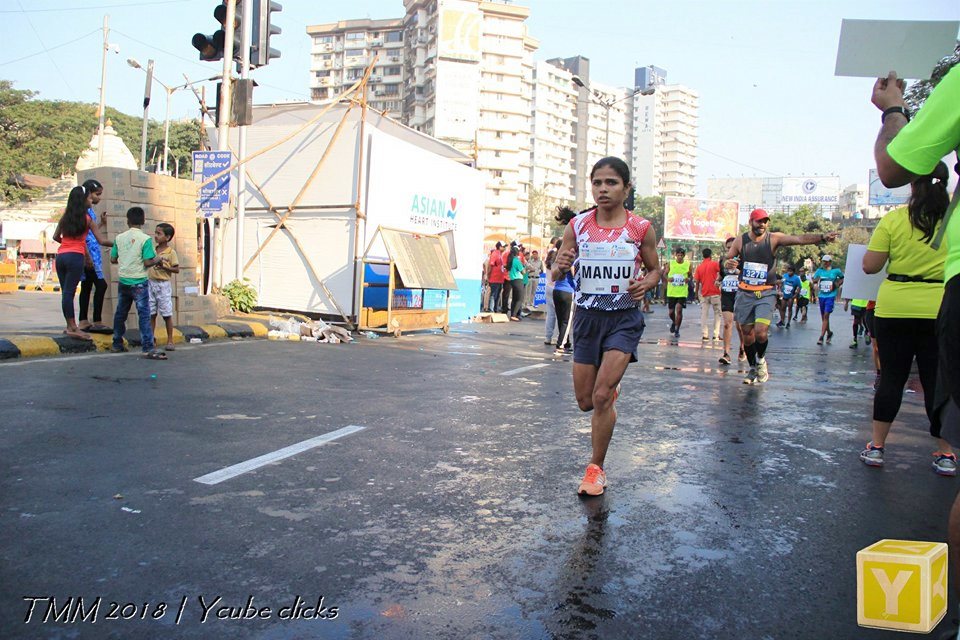
Manoj Rane: “ For this year’s TMM I trained hard for the three months preceding the event. During this time, I got a personal best timing in the half marathon. I also did all my long runs after 8 AM, logging 350-360 kilometers every month from October to December 2017. I felt TMM was better than the earlier Standard Chartered Mumbai Marathon in terms of route and hydration. But I did run into a wall of half marathon runners right from Pedder Road till CSMT. That slowed me down. I completed 30 kilometers in 1:56 and was targeting to end the run with timing of 2:45-2:46. But the sharp turns in the last one kilometer made it difficult to maintain the pace. My next runs are the Shirdi Half Marathon and New Delhi Marathon in February. Later this year, in September, I will be attempting the Berlin Marathon. My plan is to attempt Boston Marathon and New York Marathon in 2019,’’ Manoj, who secured second position in the 2018 TMM-full marathon in the age category of 25 to 29 years, said. He completed the distance in 2:47:53.

Satisfied Despite Minor Setback

Pervin Batliwala (Photo: Shyam G Menon)

Pervin Batliwala: Sometimes the unexpected strikes. Pervin is a strong runner; veteran of many Mumbai marathons. “ This time I had a problem. Just one week before TMM, I had to be on antibiotics. That left me feeling a bit weak,’’ she said. At 2018 TMM, Pervin finished second in her age category (60-64 years) in the full marathon with timing of 4:21:02. In 2017, when she placed first in her category, she had finished in 4:28:46. “ So its okay,” Pervin said. She had no complaints with race arrangements except for the condition of a stretch of road, which was part of the marathon route. The road at Babulnath, close to where she stays, had been repaired days before the marathon and for some reason its surfacing was left in a poorly finished manner. “ Otherwise, everything was good,’’ she said. Asked about the last stretch of the marathon’s route being changed due to metro work, she said it may have affected some of the elite athletes. But it was most unlikely to make any difference to amateurs. Going ahead, Pervin is due to run the London Marathon in April.

In India, Mumbai Marathon Is Best

K.C. Kothandapani (Photo: Shyam G Menon)

K.C. Kothandapani: Formerly with the Indian Air Force and now among Bengaluru’s best known coaches, Kothandapani finished third in the full marathon in the age group of 60-64 years, at 2018 TMM.  He completed the distance in 3:33:25. “ My run could have been better but for cramps in my left calf muscle at the 20 kilometer-mark. After that it was a struggle. Nevertheless, I was able to achieve my targeted timing of 3:35. In fact, I was able to better it. This time around I did not face the problem of half marathon runners coming in the way of full marathoners. Every year, this is a major issue for marathon runners. This time the organizers had marked a separate lane for marathoners in the last two kilometers. Of course, this must have benefited runners finishing before 3:35 hours. Later they kept the lane free for elite runners. Last year, I did four marathons – Mumbai in January, Tokyo in February, Chicago in October and New York in November. At these destinations, weather and crowd support was extremely favorable. Crowd support is there until the end of the race. In India, Mumbai is the best in terms of support and cheering. This is my eighth outing at the Mumbai marathon. Over these years, competition has increased hugely especially in age categories like 60 to 64 years. Competition among women runners has also gone up. Road quality is not bad though much of the roads that we run on are made of concrete, which is not good for the joints. My next event is the National Masters Meet at Kanteerava Stadium in Bangalore. I will be attempting the 5000 meters, 10,000 meters and the 2000 meters-steeple chase in my age category. I had qualified for this during last month’s state Masters’ Meet. Once this is done, I will focus on training for Boston Marathon, which is on April 16, followed by Big Sur Marathon in California, on April 29.

The Expo Changed Her Mind

Simta Sharma (Photo: Shyam G Menon)

Simta Sharma: “ I was not planning to run this time. I was recovering from an attack of dengue. But when I went to the expo to collect my bib I changed my mind and decided to attempt the race,’’ Simta said. According to her, the 2018 TMM was a great experience. “ In the first two kilometers, I was running alongside the pack of 9-10 elite women athletes. In the third kilometer I overtook them and it stayed so until the tenth kilometer, when they just flew ahead. I could not keep up with their pace,’’ she said. Simta finished second in her age group (30-34 years) in the half marathon with timing of 1:36:11. “ During my training I did feel the impact of dengue as I was not able to keep my pace up at race-pace levels. Also, during TMM, the fag end of the race was tough for me as I kept getting stitches in my stomach,’’ she said. She found the overall arrangements including hydration quite good. “ Cheering was fantastic. I must have heard my name being called out by supporters and runners at least 25-30 times right from Worli until the end of the race,’’ she said. This is my second Mumbai marathon. The last one was in 2016 when I was pacing a friend. I am quite happy with my timing. For me the running season is over with this event. I will now focus on strength training and 10 kilometer-runs,’’ she said. In 2017, Simta had won the Wipro Chennai Marathon in open category.

Not His Finest Finish But Its Podium Still

Dnyaneshwar Tidke (This photo has been downloaded from Dnyaneshwar’s Facebook page.

Dnyaneshwar Tidke: Although he did not have a strong finish this time, Dnyaneshwar could secure a place on the podium. “ I started cramping at the 17 kilometer-mark. This is the first time I got cramps in my entire running career. Initially, I tried to overlook it by running continuously. I did not want to stop. But the cramps kept getting worse. Until 32 km I was able to maintain my target pace but the last 10 km was tough. I took 45 minutes to finish the last 10 km,’’ Dnyaneshwar said. He finished the 2018 TMM full marathon in third position in his age category (40-44 years) with timing of 2:55:44. “ My practice was good but I suffered a knee injury at the Delhi half marathon. I lost 15-20 days resting after this injury. I was worried that my knee may pose problems but it held up well,’’ he said. Mumbai marathon is an important event for him. “ The problem that I faced in the just ended race was wading through a sea of half marathon runners during the latter part of the course. This time during the final stretch I found many wheelchair participants on the course and I had to make my way through them,’’ he said. Dnyaneshwar has run the Boston marathon twice. “ Overseas, marathons are managed very professionally. Basically, there needs to be integration between the civic body and other authorities to help manage a marathon, which is an important event for any city,’’ he said. Dnyaneshwar’s immediate plan in running is to focus on his training and then pay attention to coaching.

A Good Race But Please Don’t Throw Those Bottles On The Course

Khurshid Mistry (Photo: Shyam G Menon)

Khurshid Mistry: “ My run went off very well,’’ Khurshid said. She finished second in her age category (50-54 years) at the 2018 TMM half marathon with timing of 1:54:41. According to her, the 5:40 AM start for half marathon runners was very beneficial for early finishers. “ The arrangements for TMM were superb. All details were attended to very well. This time running was easy, public support along the course was fabulous. Mumbai Road Runners had some cheer zones, which was a very good thing for runners. Also, signs and route indicators were very prominent all over the place. There was not much crowding at start this time around. I enjoyed the run thoroughly and I did not have any problems whatsoever,’’ she said. As much of her training for distance running is done on Mumbai roads Khurshid is quite familiar with the marathon’s route. “ That’s a major advantage for us Mumbaikars. I find the Mumbai marathon course moderately challenging. One has to plan the pace correctly. For half marathon runners, as soon as we start, we get the gradient of the Bandra-Worli sea link. This time around the sea link was well lit up but the distressing fact was that runners were throwing bottles right on the course making running difficult,’’ she said. For now, TMM is her last long distance event. “ I will be shifting to training for sprinting as I have events coming up in March and April,’’ she said.

Podium Again But Date With Full, Missed

Idris Mohamed (Photo: Shyam G Menon)

Idris Mohamed: In the 2017 edition of the Mumbai marathon, Idris had finished second in his age category (45-50 years) in the half marathon. For the following year in Mumbai, he had set his eyes on the full marathon, something he wanted to do before he turns 50 in May 2018. Idris is at a running event almost every weekend; half marathons dominate the menu. Scheduling a full marathon in between is tricky because it impacts his running calendar with races back to back. As things played out, he had to settle for yet another half marathon at 2018 TMM. On the bright side, he completed the discipline in 1:22:30, which is a two minute-improvement over his timing in 2017. Once again, he finished second in his category. Speaking to this blog on Republic Day (January 26), some days after TMM, Idris said he was due to run a half marathon in Tirunelveli that weekend and then follow it up with the much awaited full marathon, which now stands reserved for the IDBI Full Marathon in Kolkata. Full done, Idris was slated to participate in the National Masters Meet wherein he will compete in the 800 meters, 1500 meters, 5000 meters and 10,000 meters. Should he make it through, then the next step would be the World Masters Athletics Championship scheduled to be held in Spain. As for his half marathon at 2018 TMM he said, “ I am happy with my performance. Everything went smoothly. Perhaps the only issue was those additional turns towards the end as the route was changed owing to ongoing metro work,’’ he said. Asked about hydration, he said he didn’t face any problems because at his pace in the half marathon, he needs to depend on just two aid stations. Overall, Idris said, he didn’t sense any major difference between the 2017 edition of the Mumbai marathon and its reincarnation as TMM.

(The authors, Latha Venkatraman and Shyam G Menon, are independent journalists based in Mumbai.)

MUMBAI MARATHON: 15 YEARS OLD AND EVOLVING

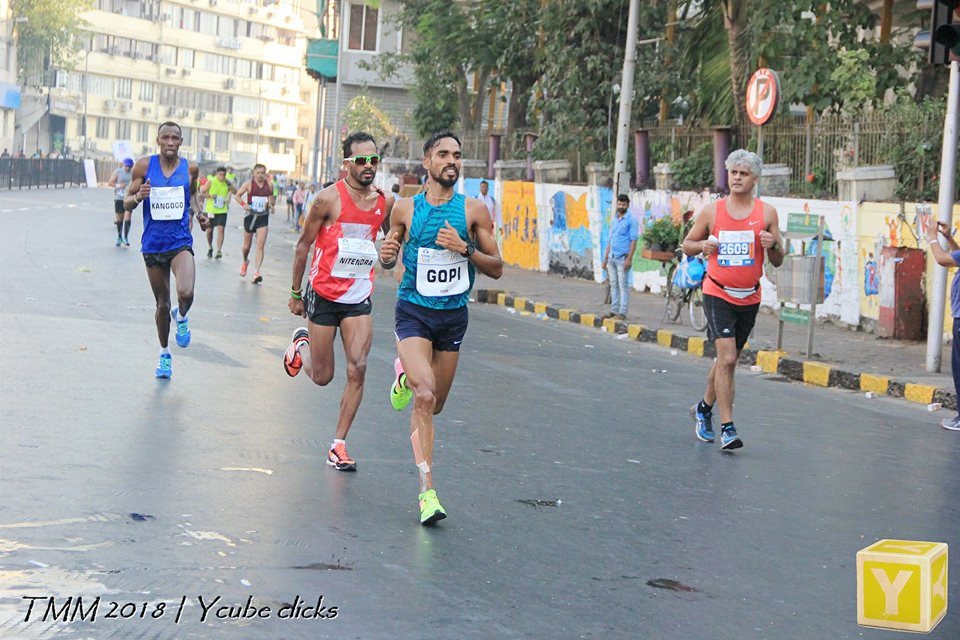
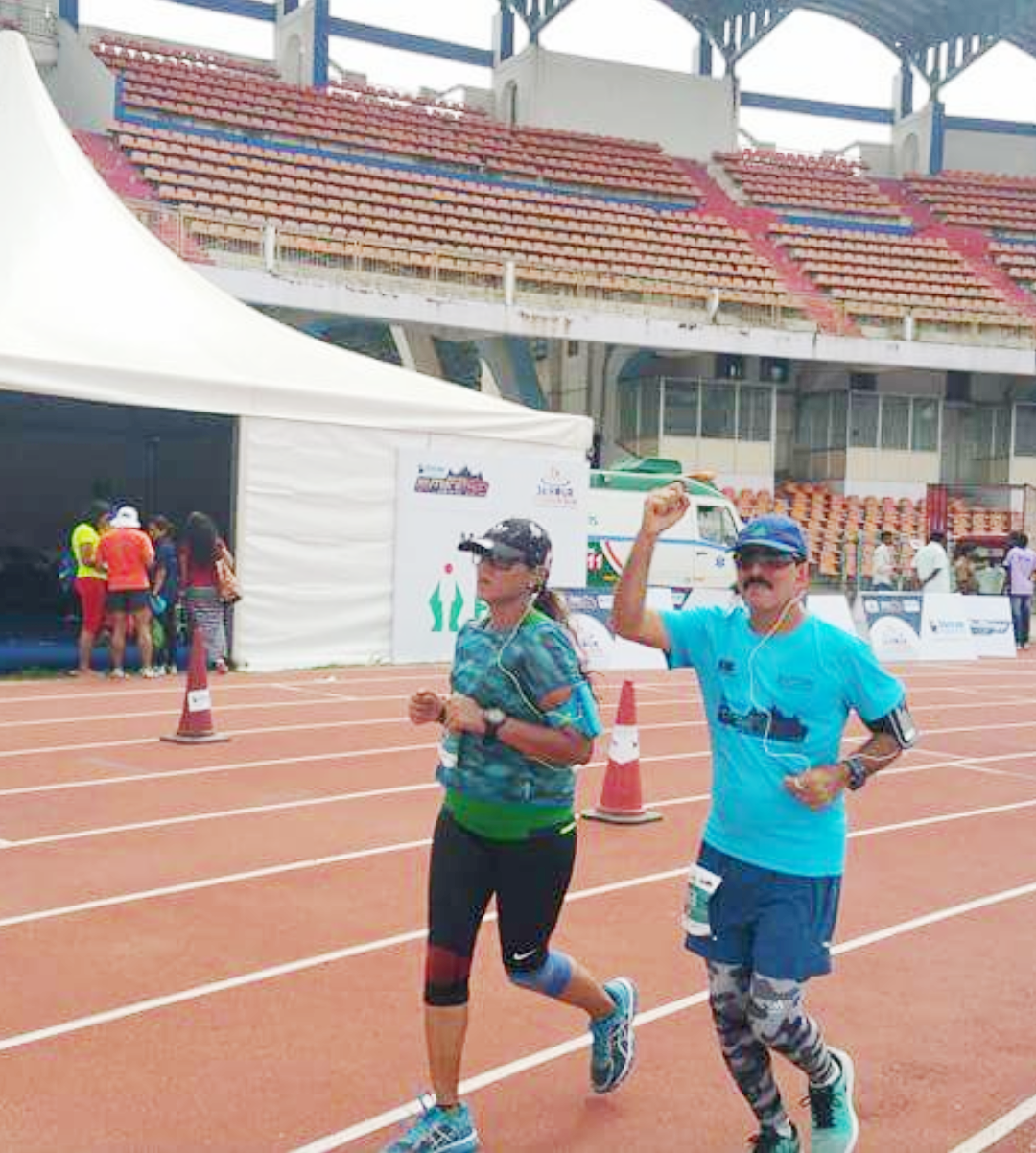
Indian elite runners Gopi T (center, blue T-shirt) and Nitendra Singh Rawat at 2018 TMM; they finished first and second respectively in their category (Photo: courtesy Yogesh Yadav)

The 2018 edition of the Mumbai marathon was significant for the change in title sponsorship. The era of association with Standard Chartered Bank ended. In early August 2017, it was officially disclosed that the Tata Group had signed a ten year-deal to be title sponsor of the event.

Both Standard Chartered and Tata have a history of sponsoring marathons. A London headquartered-bank with operations mostly in Asia, Africa and Middle East, Standard Chartered sponsored a string of marathons spanning the above mentioned regions. In March 2017, news reports said the bank’s financial woes had prompted it to pull out of the Mumbai marathon. This January as the 2018 Mumbai marathon was underway there were seasoned runners trading the annual pilgrimage of running it for a shot at the Dubai marathon, which incidentally remains sponsored by Standard Chartered. The two events are separated by less than a week. However Tata is bigger fish in the world of marathons. The prime mover within its fold as regards marathons is IT major, Tata Consultancy Services (TCS); the TCS website has a section devoted to sports sponsorship. Peruse it and you will see the company associated with a clutch of major international foot races. It is title sponsor for the marathons of Mumbai, New York and Amsterdam. It is title sponsor of the world’s largest cross country race in Lidingoloppet, Sweden, the presenting and technology partner for The Australian Running Festival and technology partner for the marathons of Boston, Chicago, London and Singapore.

Thanks to the ascent of city marathons, the number of recreational runners in India has been growing steadily. For the 2018 edition of the Mumbai marathon (the first time it was sponsored by Tata), some 45,000 people registered successfully. Standard Chartered did valuable service supporting the Mumbai marathon through its early years but as one among several foreign banks operating in India, its footprint is modest. Tata is household name in India. The above reasons – Tata’s familiarity with the world of marathons and the name being well known in India – made the title sponsorship deal of August 2017 interesting and couched in possibilities.

2018 TMM (Photo: courtesy Yogesh Yadav)

In the world of sponsorship, marathon falls in the category of participative sport. A big share of sponsorship money in our times flows into spectator sports. Conceptually, they are descendants of the old Roman arena. You have immediate arena and extended arena afforded by broadcast media, mainly television channels and live-streaming on Internet. The cumulative audience here is enormous, running into tens of thousands and in some cases, millions. Cast at the deep end of competition, spectator sports tend to stay distanced from viewer. Like a mountain climb, the few that make it to the summit become the stuff of everyone else’s admiration. You relate to the excitement vicariously. Participative sports attract in a different way. They invite you to participate, experience directly. Unlike in spectator sports where teams and team members are famous and the rest stay anonymous viewers, in participative sport everybody participating has an identity. Once you have registered for a marathon, there is a run-up to actual event, which may be anything from a couple of weeks to couple of months. During this time, there is periodic correspondence between organizer and participant. There is acknowledgement of registration, confirmation of participation, reminders, invitation to pre-race expo and finally the expo, where many of the sponsors known until then as digital images in correspondence, manifest physically. The exercise provides a dimension of interface rarely found in spectator sport; the engagement in participative sport resembles direct marketing, closer perhaps to discreet direct marketing. It even graduates to real involvement for with products like running gear and shoes; the participant has a personal need he tries to satisfy given race approaching. Equally as regards services like registration process, app based-tracking (which allows runner’s progress to be tracked by family and friends), result and timing details wherein technology partners matter, efficiency is quickly felt and appreciated. Repeat registrations make the relationship with event, stickier. While this is the architecture of engagement, sponsors of marathons rarely – probably never – talk of it as a marketing exercise. Corporate backers of running – given health benefits associated with running and the satisfaction participants draw from completing a race – position it as avenue to give back to workforce and community. Gains to brand profile accrue obliquely.

On the street, there were expectations when Tata assumed title sponsorship of the Mumbai marathon. Besides the familiarity Tata has with marathons in US and Europe, their sponsorship of the Mumbai marathon was seen as homecoming. Tata’s headquarters are in Mumbai. For some runners this blog spoke to, the change in title sponsorship wasn’t significant because event implementation is by Procam. In their eyes, the title sponsor was funds provider. Many others though sensed potential for change. But they couldn’t gauge what is realistically possible and not. The feedback we got from a mix of runners and marketers we spoke to on the change in title sponsor for the Mumbai marathon, was that these are early days. The January 2018 edition of Tata Mumbai Marathon (TMM) was mere months after Tata assumed title sponsorship. The 2018 TMM saw a new timed 10 km-race, introduced. Also debuting was the `inspiration medal’ for full marathon finishers. Going ahead, best practices from Tata-backed races overseas, could be infused into TMM, those we spoke to felt.

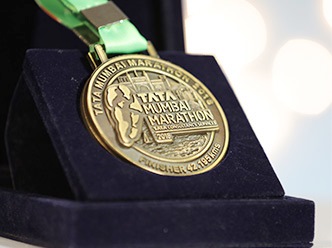
This image was downloaded from the TMM website. It is being used here for representation purposes only.

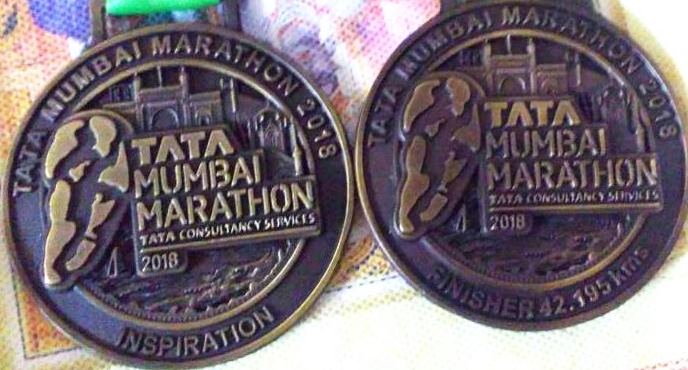
The 2-in-1 `inspiration medal,’ one for finisher to keep, the other for potential gifting to someone who mattered in runner’s journey to completing the full marathon (Photo: courtesy Mani Iyer)

At the Nariman Point office of Chlorophyll Innovation Lab, Chitresh Sinha CEO & Head Innovation shared the story behind the `inspiration medal’ introduced in 2018. Different from the standard advertising agency or consultancy, Chlorophyll Innovation Lab is a brand innovations collective that works with brands, evolving technologies, art and social impact to “ bring alive innovation in integrated ways.’’ Procam, organizers of the Mumbai marathon, is one of its clients. According to Chitresh, between 150,000-200,000 people apply for TMM, which is also the single largest platform to raise funds for charity in India. “ Brand value is more at the human level than as return on investment for association with a running event,’’ he said. Studies have shown that people decide to attempt a marathon for factors ranging from the health benefits of running and sense of achievement to the meditative quality of running. “ Why do they wish to repeat it? That is the interesting part – they do so because it changes their life,’’ he said quoting examples of runners who kicked addictions and bad habits, grew closer to their families and found time for their children because their life transformed through training to run. For such reasons, it is not possible to benchmark the dazzling world of spectator sport with participative sport. “ Spectator sport is all about eyeballs. Its real impact on people’s lives is limited,’’ Chitresh said. If you want visibility and have a specific window of time assigned for gaining it, then investing in spectator sports makes sense. With participative sports, you stay invested longer but you reap an enduring bond. Currently India has around 1-1.5 million runners and 800 odd timed races. Chitresh said, Procam wishes to see the overall number of runners (across India) grow to 20 million in the next five years or so. That means the idea of running must spread quietly and convincingly. The social aspect of running was the premise from which Chlorophyll Innovation Lab recommended the `inspiration medal,’ a composite of two medals in one. A typical city based-runner, balancing work and life, is often seen off to training by wife and children. An early breakfast for instance, requires more than one pair of hands in Indian households. An early departure for training is a team effort by family. If you have a medal that is a composite of two separate medals and you can peel one off to gift it to somebody who played a pivotal role in making you a runner, then it helps endear running to more people.

As with many sports events, TMM straddles a fine divide between participation and performance. It takes both to shape an event’s stature. Not all runners we spoke to in Mumbai were enthused by the `inspiration medal.’ Some of them wished that improvements to TMM stay focused on running and runners’ needs, a view that is also partly fueled by Tata’s international presence in marathon events. If you imagine down running’s alley, the possibilities one can speculate, are dime a dozen. Which of the lot is practical enough to implement? That challenges. Consensus among those we spoke to was that improvements to how TMM is arranged and managed plus infusion of technologies relevant to running could be a realistic expectation over the next few years. Anything more, likely takes more than just Tata.

Elite runners at 2018 TMM (Photo: by arrangement)

TMM is recognized as the flagship running event in India. “ A distant second to the Mumbai marathon would be the one in Bengaluru,’’ a leading amateur athlete (name withheld as we promised him anonymity for this conversation) said. “ There is a depth of awareness about the annual marathon in Mumbai that you don’t find in other Indian cities. When I landed in Mumbai to run the 2018 TMM, even my taxi driver knew that the marathon was due. Among major marathons, this is without doubt the best organized race in India. But if you are talking of positioning Mumbai in the same category as Boston and New York because Tata is now involved, then we are a long way off. First those events are far older than TMM. They have evolved that much more. Second, those are cities which view their annual marathon as an important fixture in the annual calendar. Over there, the civic apparatus works in tandem with runners and organizers to make a city’s annual marathon happen successfully. That is running culture – and in that, India is far behind,’’ he said. Major cities overseas get their marathon act together because running is integral to how they imagine lifestyle. Will Tata’s assumption of title sponsorship, make the collective effort to host Mumbai’s annual marathon more convergent towards its goal of a good experience, year after year? Will Mumbai formally identify itself with running and its annual marathon?

Cheering is a critical component of any marathon’s ecosystem and when it comes to city marathons, it is a window to meeting the host. The Boston Marathon, world’s oldest annual marathon, began in 1897. That makes it 121 years old. Indians who have run in Boston speak of it as a memorable experience, cheering playing no small part in it. At 15, TMM is definitely past infant stage. On January 21, 2018, just beyond the Mumbai marathon’s finish line, I met a city based-full marathoner who felt that cheering along the marathon’s route had come down. That is hard to believe given so much said day in and day out about the spirit of Mumbai. It is a fact that while running, runners dwell in a `zone’ in the head; cheering doesn’t register always. Still did this runner notice something many of us didn’t or preferred to overlook in our affection for the city? Can there be initiatives that make spectators and non-runners feel invested in the annual outing? A city that loves its marathon must never stop exploring how the experience can be improved for success can stagnate and novelty can fade.

Fifteen years old and growing, the evolution of the Mumbai marathon will be worth watching.

(The author, Shyam G Menon, is a freelance journalist based in Mumbai.)       
LADAKH RUNNERS: THE STORY IS IN THE DETAILS

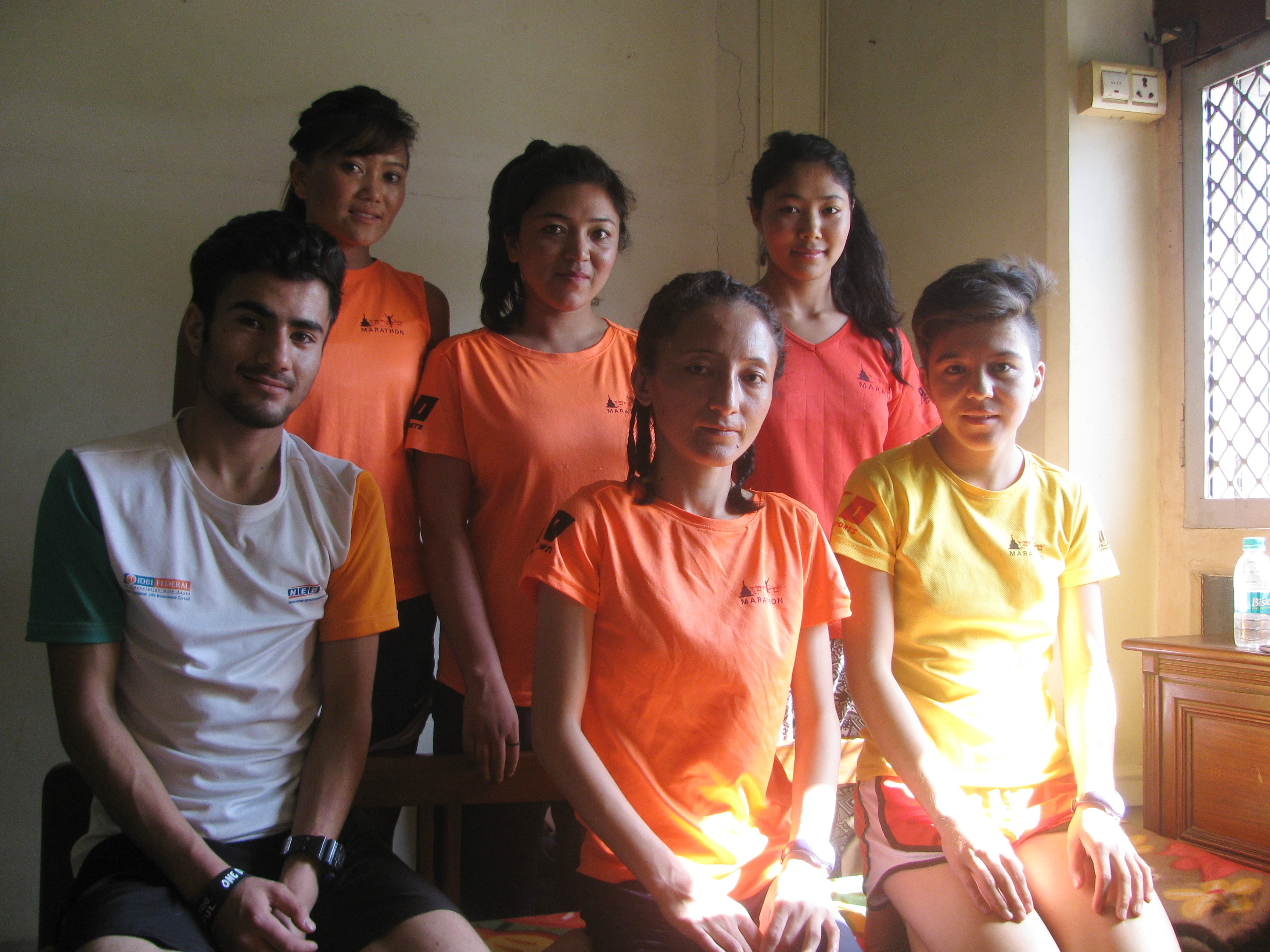
Some of the runners from Ladakh (Photo: Shyam G Menon)

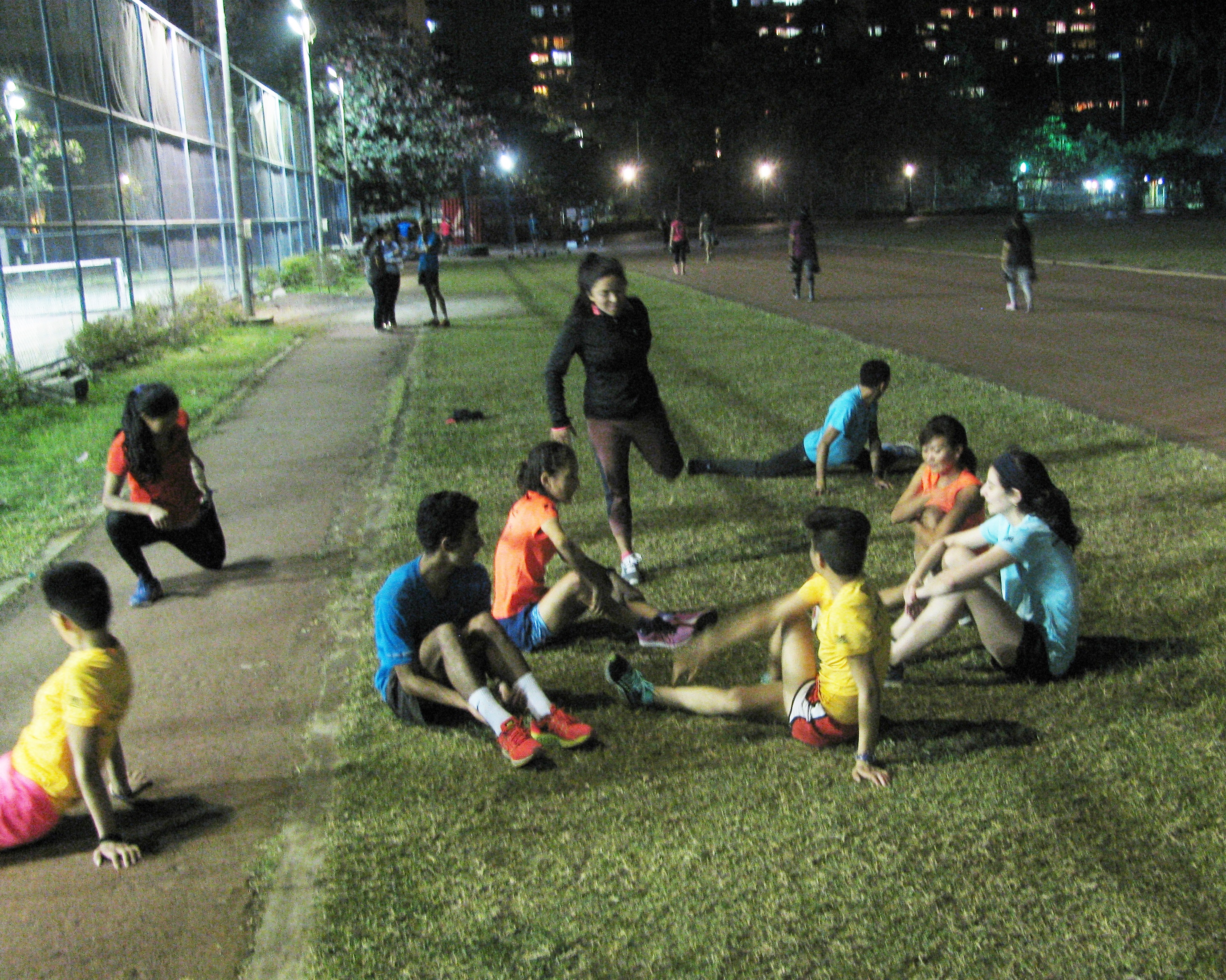
Mumbai’s Priyadarshini Park is an oasis in concrete jungle. The composite of park and sports complex includes among other facilities, a 400 m-running track. The place is right next to the sea. Its three days after the 2018 Tata Mumbai Marathon (TMM); over five years since `jhuley’ became part of the city’s marathon season-vocabulary. The runners from Ladakh – the team that visits Mumbai every year to run TMM – kept jogging on the track. They had one more event to participate in – the Thane Hiranandani Half Marathon – before returning to Leh and winter. Savio D’Souza, leading city based-coach sat by the track observing the runners. “ Their progress must be seen in the right perspective,’’ he said.

Cut back to four hours earlier, same day afternoon, when this blog caught up with the team at their apartment near Mumbai’s Chhatrapati Shivaji Maharaj Terminus (CSMT). In total, the 2018 team from Ladakh featured 10 people, nine of them designated runners. Four of the lot, two men and two women – among them, Jigmet Dolma and Tsetan Dolkar scheduled to be in the Indian elite category at TMM – had left Leh on November 13 for the annual pilgrimage to run at various marathons in India. Their first halt was the 2017 Airtel Delhi Half Marathon (ADHM), which Jigmet completed in 1:26; Tsetan in 1:29. They then moved to Darjeeling, where they trained for a few weeks before traveling to Kolkata to run the Tata Steel 25K. At this event, Jigmet finished in 1:46; Tsetan in 1:49. From Kolkata, they reached Mumbai on December 21, exactly a month before the 2018 TMM. Meanwhile another group of six athletes left Leh on December 19. They joined the four already in Mumbai, on December 22. The team trained with Savio. At the apartment, Jigmet, Tsetan, Sonam Chuskit and Tashi Lodol put their heads together to estimate how many podium finishes the team must have earned at the various races they participated in, since the annual trip to Mumbai’s marathon commenced in 2013. They could recollect 9-10 podium finishes. 2018 has proved to be a reality check; a year of learning. Although their performance has been improving with experience, as of late January with the Thane race alone remaining, there had been only one podium finish – Sonam Chuskit placing third in her age category in the full marathon at TMM. Last year they had two podium finishes at TMM. At 2018 TMM, the team suffered an unexpected setback.

Jigmet and Tsetan run together. “ We are always alongside for much of a race, breaking free and going for the finish only in the concluding portion,’’ Tsetan said. Their timings betray the strategy. They are usually separated by a minute or two, sometimes seconds. On January 21, 2018 while running TMM’s full marathon, Tsetan had a packaged drink from one of the aid stations at the 21 km-mark. Five minutes later, she threw up. Although she footed it to the finish, she was not feeling good at all. Past the finish line, she threw up again. Needless to say her timing went for a toss; she finished in 4:21. Used to running with Tsetan, Jigmet’s progress was also disturbed. She had targeted hitting the half way-mark in 1:30 but found herself four minutes slower. “ I became tense,’’ she said. She finished in 3:13, placing ninth among Indian elite women. At the 2017 edition of the Mumbai marathon, she had placed third in the same category. “ Don’t go by the position she got. Jigmet’s timing has improved year on year; her timing at 2018 TMM was better than in 2017. The difference is in 2018, we had a much more competitive field,’’ Savio said. 2018 will witness two major international events in sport (relevant to Indian athletics) – the Commonwealth Games due in Australia and the Asian Games scheduled in Indonesia. Given this, the elite field in the Indian category at TMM, was quite competitive this year. For the Ladakhis, this is a reality check five years into their commencement of running TMM. “ For the first two years in that we had no training. We were merely running at events. Less than three years ago, we started training with Savio sir. It is only from then that we have had the benefit of structured training, including an idea of how to train in the months we are in Ladakh,’’ Tsetan said. Savio expects the field to be competitive for the 2019 TMM too, as by then Indian athletics would be in the run up to the 2020 Tokyo Olympics.  What makes Savio happy is the story in the details. First, ever since he stepped in to coach, the timings of his Ladakhi trainees have vastly improved. Second, a runner like Jigmet may have missed the podium at 2018 TMM but she improved upon her timing from 2017 and is within striking distance of runners ranked above her up to fourth and fifth positions. The gap in timings in this bunch is narrow. Savio maintained that his consistent instruction to trainees is to focus on one’s own performance. “ We wish to run again at TMM,’’ Jigmet said.

The Ladakhi team’s annual trip to run at events like ADHM and TMM has been put together by Rimo Expeditions, organizers of the Ladakh Marathon. According to Savio, there are valid reasons for the runners from Ladakh seeking to showcase their performance at TMM. Usually the progression of an athlete to national camp happens through a circuit that starts with selection at district level and then graduates to representing the state. When I asked the Ladakhi runners about this pattern of progression, they said that district level selection has either been erratic or when it happened, the graduation to representing the state wasn’t there. Ladakh is the eastern part of Jammu & Kashmir (J&K), a state troubled by militancy in its western half. The state is administered from the west; the bulk of its political imagination resides there. One of the runners I spoke to recalled that when he secured district level selection in Leh “ even officials from the Sports Authority of India were present.’’ Sports Authority of India (SAI) is known to do talent scouting. However beyond that selection, nothing happened. With that regular route of progression – district level-state level-national camp – blocked, sole option for Ladakhi runners is to vindicate themselves at the major marathon events of the plains. “ This is the avenue they have,’’ Savio said. He hopes the national camp selectors are watching these events. “ Hope’’ – that is the word he used. He saw the tough field his trainees faced at 2018 TMM as a necessary learning; part of the journey.

The team at Priyadarshini Park, with other runners (Photo: Shyam G Menon)

According to Savio, as dwellers of altitude, athletes from Ladakh have endurance. What they lack are two things. First, they need to get used to competition and competition in the elite category can be quite tough. “ There can be no comparison between how well I can train them using whatever I have at my disposal and how well an athlete in the national camp is trained, given the superior coaches and facilities they have,’’ Savio, a former national marathon champion himself, said. Second, the Ladakhi runners have to improve their speed. A significant drawback here is that Leh does not have a running track. “ Speed training on roads is not good for the legs. Roads are hard surfaces. If you don’t have a proper running track, you need at least a mud track. That’s what we are trying to locate in Leh so that once they go back to Ladakh these runners can continue their speed work-out. On my last visit to Leh, we shortlisted a couple of locations,’’ Savio said. For the interim, there is Mumbai’s Priyadarshini Park.

As marathon coach, Savio perceived other limitations too restricting runners’ progress. “ We need a few more races in Ladakh spanning a mix of distances from 10K and up. This will get more young Ladakhis interested in running,’’ Savio said. But even if you do that, it addresses only part of the issue. Once they finish their twelfth standard, most Ladakhi youngsters shift to Jammu, Chandigarh or Delhi – all at lower altitude – for university education. Ladakh does not have good education infrastructure. Although born to the mountains, a mountain dweller, if he / she stays away from the mountains for long, takes a while on return to altitude, to acclimatize and regain peak performance. Savio believes that if you are a competitive runner, one targeting national camp and so on, it makes sense to be in Ladakh, studying and training; not away from Ladakh losing a vitality the region gifts you. Most of the runners reaching Mumbai from Leh have been podium finishers at the Ladakh Marathon. “ If he goes back right now and runs the Ladakh Marathon, he may not get a podium finish. He has been away from Ladakh for a long time,’’ Savio said pointing to one of the trainees and highlighting in the process, the two distinct environments that need to be managed for Ladakhi runners to succeed.

(The author, Shyam G Menon, is a freelance journalist based in Mumbai.)                           
2018 TATA MUMBAI MARATHON

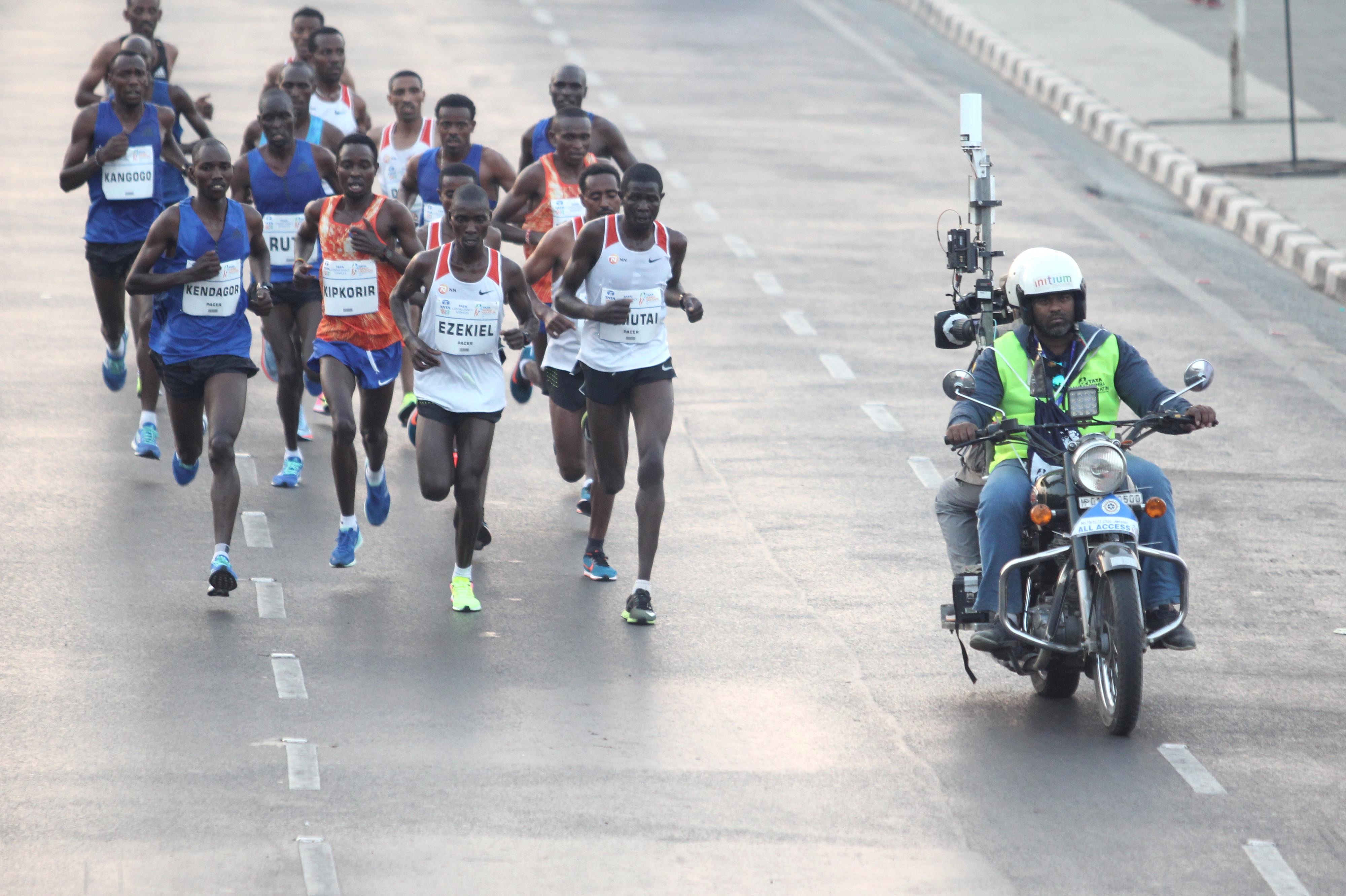
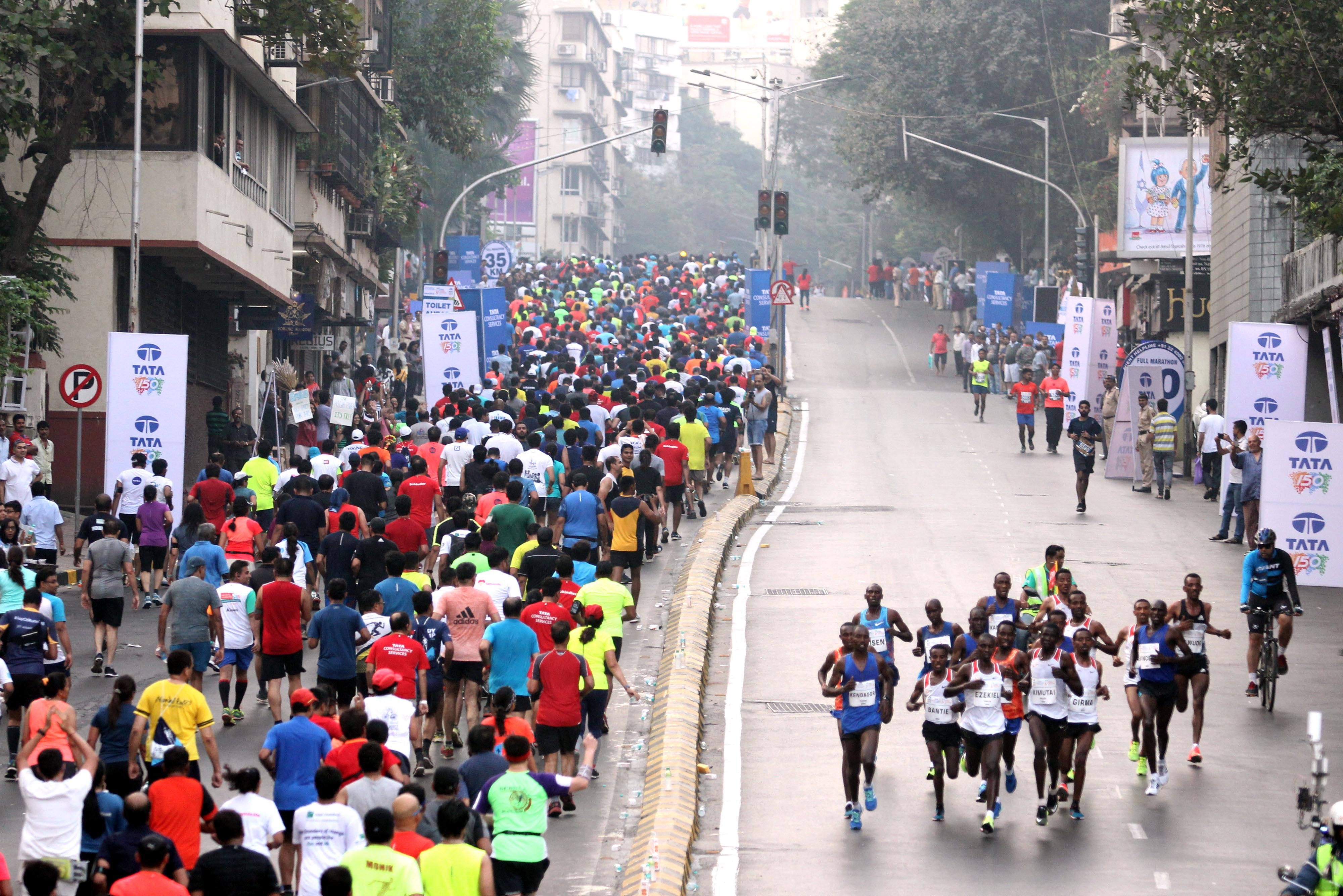
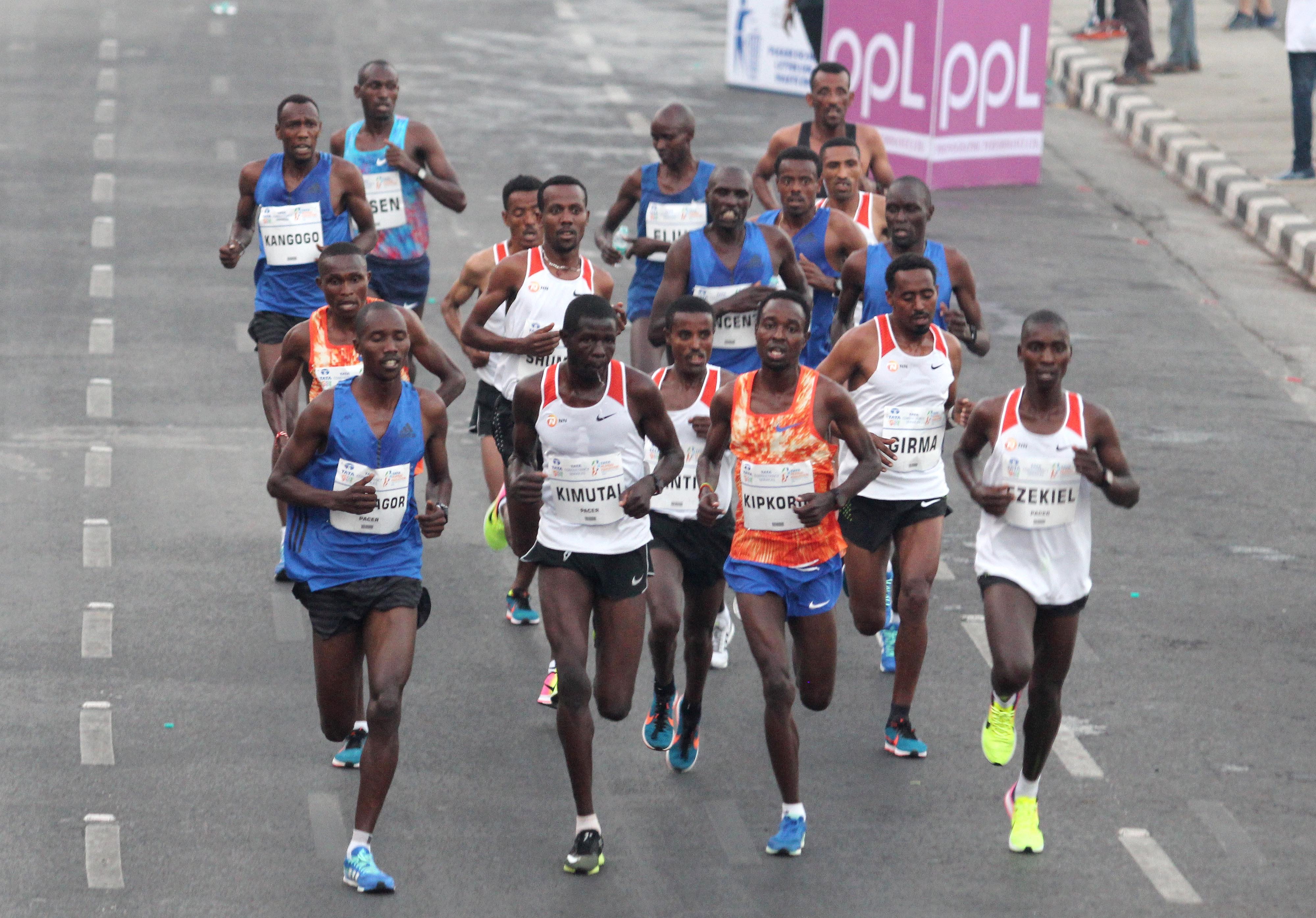
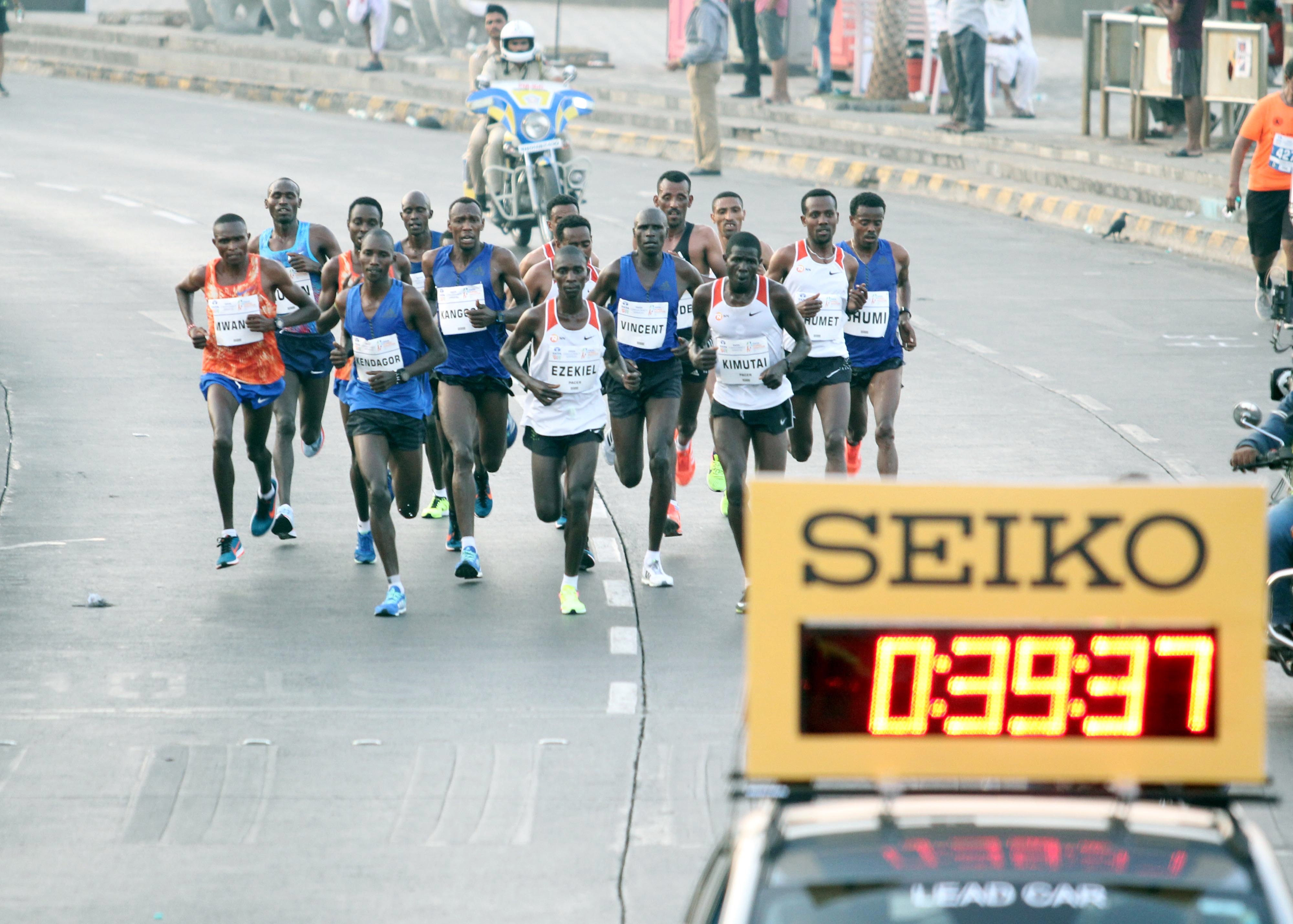
The 2018 Tata Mumbai Marathon (TMM) in progress; elite contingent on the right (Photo: by arrangement)

Thousands participated in the 2018 Tata Mumbai Marathon (TMM) held on January 21.

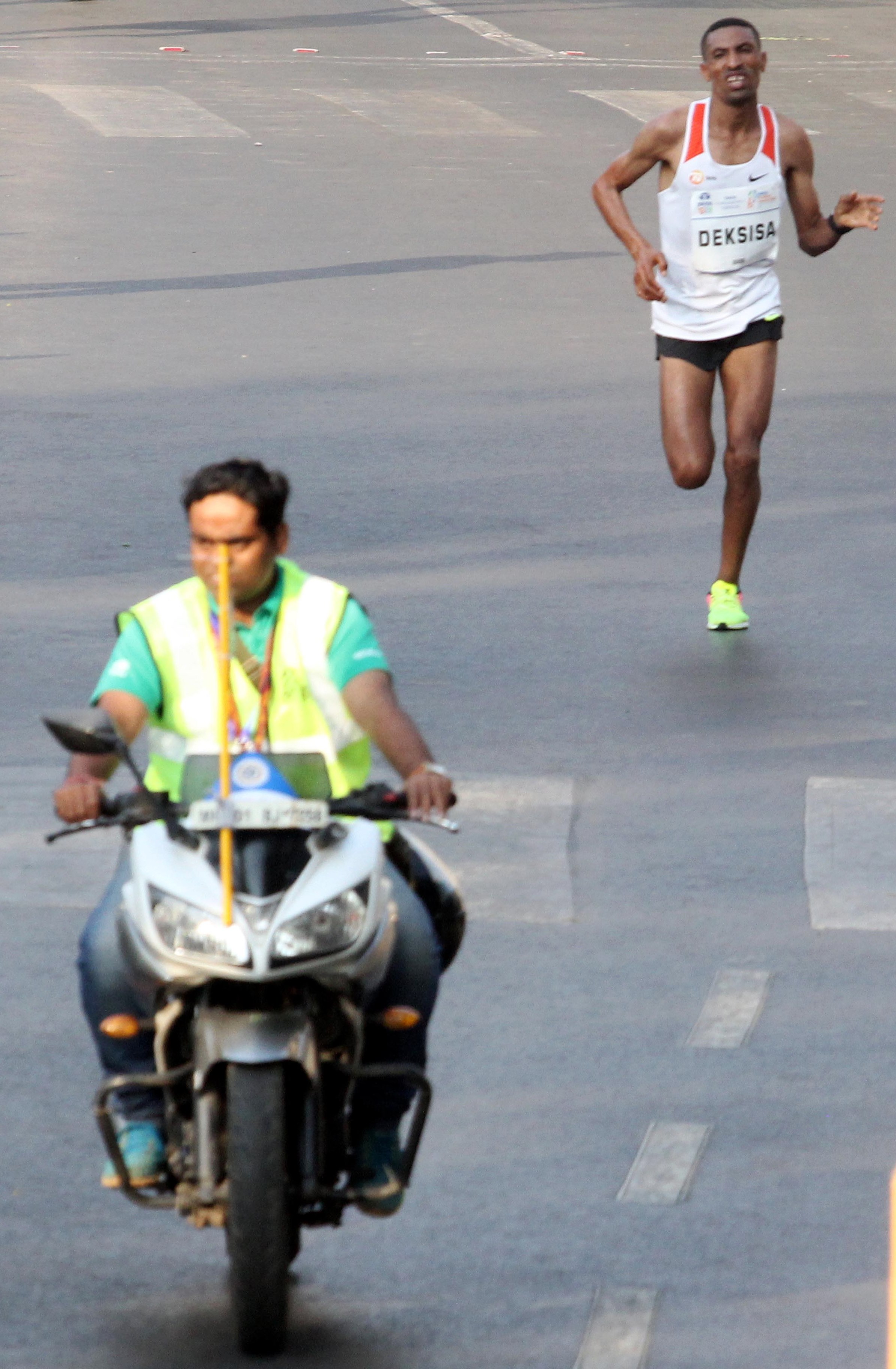
The overall winner in the men’s category of the full marathon was Ethiopia’s Solomon Deksisa who finished in 2 hours 9 minutes and 34 seconds. The overall winner in the women’s category of the full marathon was Amane Gobena, also from Ethiopia. She finished in 2:25:49. In men, the second and third position went to Shumet Akalnaw and Joshua Kipkorir respectively, while in women, the corresponding podium finishers were Bornes Kitur and Shuko Genemo.

2018 TMM; some of the elite athletes (Photo: by arrangement)

Among Indian elite athletes, Gopi Thonakal finished first in the full marathon for men with a timing of 2:16:51. He was closely followed by Nitendra Singh Rawat who finished in 2:16:54. Srinu Bugatha placed third with a timing of 2:23:56. In the Indian women’s category of the elite section, Sudha Singh finished first in the full marathon with a timing of 2:48:32. She was followed by Jyoti Gawte (2:50:47) and Parul Chaudhary (2:53:26).

2018 TMM; some of the elite athletes (Photo: by arrangement)

The first Mumbai Marathon was held in 2004. This year marked the fifteenth edition of the annual event and the first time it was sponsored by Tata. In early August 2017, it was officially disclosed that the Tata Group had inked a ten year deal to be title sponsors of the marathon replacing Standard Chartered Bank. TMM is the biggest marathon in Asia in terms of participation and prize money. Going ahead, managing the emergent maturity of the fifteen year-old event and setting an engaging direction for it, will be among challenges for the organizers.

Solomon Deksisa running at the 2018 TMM (Photo: by arrangement)

The just ended TMM had for the first time, a timed 10 km-race in addition to the regular half marathon and full marathon.  Given ongoing work related to building Mumbai’s metro, the marathon’s route near Chhatrapati Shivaji Maharaj Terminus (CSMT) – it represents the concluding stage of the half marathon and the beginning and concluding stages of the full marathon – had to be altered.

(The authors Latha Venkatraman and Shyam G Menon are independent journalists based in Mumbai.) 

AFTER THE RACE, THE JOURNEY

Meenal Kotak (Photo: Shyam G Menon)

Meenal Kotak ran her first half marathon in 2013. Since then she has been running much longer distances and, running a lot. This is her story – the mistakes she made, the projects she got into, the milestones she logged.

Early November 2017. The smoky haziness of Delhi’s smog was there even in the walkways of Connaught Place. It was a relief to step in from smog into the controlled atmosphere of the café Meenal Kotak had called from. She was on home turf; apparently a familiar customer at this café and others in the vicinity.

“ I come from a family of chartered accountants,’’ she said. Her father is a CA, who subsequently became partner in a firm of chartered accountants. His four sisters are also chartered accountants. Born 1980, Meenal grew up in an ambiance in which studies were clear priority. There was no sport. She was on the heavier side and by class twelve, weighed 70-75 kilos. Upon completing her graduate studies in Commerce (Hon) from Delhi’s Jesus and Mary College, she wanted to join the Indian Administrative Service (IAS). But when she got down to preparing for it, she found the syllabus incompatible with her nature. “ I am a very structured person. I need a plan. The syllabus for IAS was too vast,’’ she said.  On the other hand, the road to being CA seemed just her style. “ I am more of a hard worker than a smart worker,’’ she said. The effort and hard work required to clear her CA exams also resulted in a collateral gain – she lost weight, dipping to around 50 kilos. She used to study standing up. If she sat, sleep set in.

By 2004, Meenal finished her CA studies. She joined Citibank, working in corporate banking from 2004 to 2007. Alongside the inevitable tendencies of India spread its tentacles. Well-educated, well-placed young woman must marry. In family of CAs priority was CA for husband. The approach was arranged marriage. So, matrimonial columns in the media were diligently perused and every Saturday was set aside for meeting prospective candidates over a cup of coffee. Sometimes, there would be two dates. The location for many of these dates was the cafes of Connaught Place, Meenal said laughing. Eventually she met Sachin Kotak from Mumbai; a product of the Indian Institute of Management (IIM) Ahmedabad and working with Boston Consulting Group (BCG). They got married in 2007.

Meenal at her first 24 hour-run, on trail in Bengaluru’s Hennur forests (Photo: courtesy Meenal)

Post-marriage, Sachin had to shift to Germany on a training program. Meenal resigned her job and went along to Berlin. Sachin’s weekdays were spent in Oslo. To keep herself occupied, Meenal commenced learning German, biking and salsa. Then at Sachin’s suggestion, she decided to do a MBA. She cleared the required exams and joined Mannheim Business School, which had an exchange program with IIM Bengaluru. In a reversal of sorts, Sachin moved back to India after a year. Meenal, now a MBA student, stuck on in Germany. By 2009 end, her course completed, Meenal joined Sachin in Mumbai. The shift cost her any opportunity she may have enjoyed in campus placement. A few other parameters had changed – she weighed 85 kilos, had hyperthyroidism and allergic asthma. In 2010, the couple moved back to Delhi, where Meenal went to work at her father’s firm – Dhamija Sukhija & Co; it was into audit and taxation. It was also the start of another trial. The Delhi she was returning to didn’t feel like the Delhi she had left. Air pollution levels had picked up and Meenal was asthmatic.

Meenal’s brother – according to her, he was always sure he wanted to join his father’s work – had become CA and joined Dhamija Sukhija & Co. For Meenal, the firm was a tough environment initially. “ Small companies are always on cost saving mode. My work experience started at Citibank. I got even more used to corporate attitudes after marriage, not to mention, life in Germany. At my father’s firm, even interactions had to be face-to-face, not email. The initial phase was therefore testing,’’ Meenal said. After two years, she started to enjoy her work. By 2012-2013, she had also joined a gym to shed weight. As her weight slowly dropped and her back problems too reduced, Meenal became a regular 10 km-runner on the gym’s treadmill. “ I was very comfortable in that sweaty environment,’’ she said. Then a friend registered her for one of the editions of the Airtel Delhi Half Marathon (ADHM). The year was 2013, month – December. She secured a sub-two hour finish in her very first half marathon, her first outing as `runner.’ ADHM was a turning point. “I was never an outdoors person but that half marathon was a liberating experience. It was both stress buster and challenge. When it ended, a race ended for me and a journey began. There has been no looking back since,’’ Meenal said. The discovery of a running ecosystem also helped. According to Meenal, when she ran her first ADHM, the first shock she had was – Delhi has so many runners! That was potential support group for the journey ahead.

Meenal at her first 12 hour-stadium run in Bengaluru (Photo: courtesy Meenal)

Not long after ADHM, she got a timing of 1 hour 49 minutes at a half marathon in Jaipur. She was a podium finisher. Then she learned an important lesson. In April 2014 she suffered a patella injury, a consequence of doing too much too soon. Further, lost to the joy of running, she had overlooked other ingredients that mattered – stretching, strengthening and yoga. Her doctor, Dr Rajat Chauhan, advised her to reduce her pace. Meanwhile, Meenal had registered for the upcoming full marathon in Hyderabad. In 2014 she joined Delhi Runners’ Group (DRG), where one of those she met was Spanish runner, Alfredo Miranda, known to assist fellow runners improve their running. “ He is my mentor,’’ Meenal said. Given full marathon signed up for, Meenal tagged along with Alfredo for long runs. Eventually she completed the Hyderabad marathon in 4 hours 46 minutes. Just before the Hyderabad event, she chanced to read Amit Seth’s book on running Comrades in South Africa. The idea of ultramarathon, appealed. Comrades in mind, she signed up for the Bangalore Trail Ultra scheduled for November 2014. She enrolled for the 75 km-category, which entailed running three loops of 25 km each. Completing the distance in 10 hours13 minutes, Meenal had a podium finish at the event (according to her that was a course record). She was amazed by the progress in her running but not everyone was happy. Alfredo had drawn up a running plan for her; she hadn’t followed it. Dr Chauhan, who she had consulted following patella injury wasn’t amused one bit. He pointed out that Meenal was breaking rules on two fronts – she was ramping up distance too fast and her pace wasn’t slow yet.

On its website, Mayo Clinic describes bursitis as a painful condition that affects small, fluid-filled sacs called bursae that cushion the bones, tendons and muscles near joints. Bursitis occurs when bursae become inflamed. The most common locations for bursitis are in the shoulder, elbow and hip. Three to four days after the Bangalore Trail Ultra, Meenal developed bursitis in the hip. Comrades was off. Even ADHM seemed a question mark. Despite painful hip, Meenal ran the 2014 ADHM, completing it in 2 hours 05 minutes. But she suffered an asthma attack en route. “ I didn’t know what was happening,’’ she said of that phase with multiple problems piling up. Amid this she realized that the hip genuinely needed recovery. “ Alfredo hit the nail on the head when he pointed out that many of those who ran the Bangalore Trail Ultra and still did ADHM comfortably had been running for long. Their recovery system was in place,’’ she said. Meenal accepted the need for course correction. She rested for over two months. She didn’t even run on treadmill. Instead, she did strengthening exercises. In May 2015, she went for the 12 hour-stadium run in Bengaluru. In the run up to the event, she read the book by Anand Anantharaman who ran a half marathon on every continent. She asked herself: why not an ultra on every continent? At the May 2015 stadium run, she emerged a podium finisher. Since then, Meenal has been running only ultramarathons. Although anything exceeding marathon distance qualifies to be ultramarathon, in practice they come in varied formats. Some are supported long distance runs starting at point A and finishing at point B; some are on road, some are off road (trail running), some are self-supported and some – like stadium runs – are run as multiple repeats of a loop. There are runs measured by distance, where time is more a byproduct and runs measured by time where distance is byproduct. Each type of run brings its own challenge. Outdoors can be challenging because it is raw nature. But experiencing difficult terrain and weather is what motivates some runners. Loops at stadiums are in comparison more contained environment, but they can be trying for the monotony they inflict on runner unprepared for it. How do you sustain the same route for hours on end? Meenal said she likes enduring loops like those found in stadiums and specially assigned circuits. In November 2015, she completed the 24 hour-run as part of Bangalore Trail Ultra, upping the challenge from running for 12 hours, to 24 hours.

Meenal and Commodore Joginder Chandna, during a 36 hour-stadium run in Bengaluru (Photo: courtesy Meenal)

The ultramarathon is unique in that it often features dedicated support crew. Staged events typically come with their own support crew but the nature of ultramarathon is such that sometimes runners have people close to them, at hand for any required assistance. Those knowing runner well are also best placed to anticipate his / her needs or point out when things are going wrong. Sachin – at the time of writing he was a partner and managing director at BCG – became Meenal’s support crew. “ He is always there for my major ultramarathons,’’ she said. According to Sachin, he has no background in sports. The drift to being support crew was natural; it’s what good friends do for each other. Notwithstanding his considerable experience as Meenal’s support crew, Sachin still doesn’t run. “ I am a consultant. That’s what I do for a living,’’ he said in jest, explaining his link to running. Meenal is also among those who enjoy running with others. “ I can’t run alone, I need company,’’ she said. One of her regular friends in running has been Commodore Joginder Chandna. “ He is always calm and composed yet has the hunger for miles,’’ she said.

According to Commodore Chandna, he must have begun running seriously around the same time Meenal did. His first official half marathon was at the 2013 Standard Chartered Mumbai Marathon (SCMM – now called Tata Mumbai Marathon / TMM). At a DRG run in Delhi, around 2014, he met Meenal. “ She sets these huge targets and personal goals,’’ Commodore Chandna said. The second time they met, Meenal introduced him to the Sandakphu 70 Mile Himalayan Race, she was planning to go for. Such distances were new for Commodore Chandna but Meenal convinced him to attempt it. The two trained together for it although eventually that race didn’t happen due to the Nepal earthquake. That was the beginning of a partnership in running. From then till the time the naval officer left Delhi, the duo ran several ultramarathons on the domestic circuit together. Commodore Chandna said that Meenal’s propensity for big targets had an impact on his running too. “ I would have otherwise remained a runner of half marathons,’’ he said. Commodore Chandna’s first full marathon was at the 2015 SCMM (now TMM); in Meenal’s company, he has run several ultramarathons. According to him, Meenal typically ended a race already planning the next one. He felt that tendency to plan and set goals, was a product of the combined natures of Meenal and Sachin.

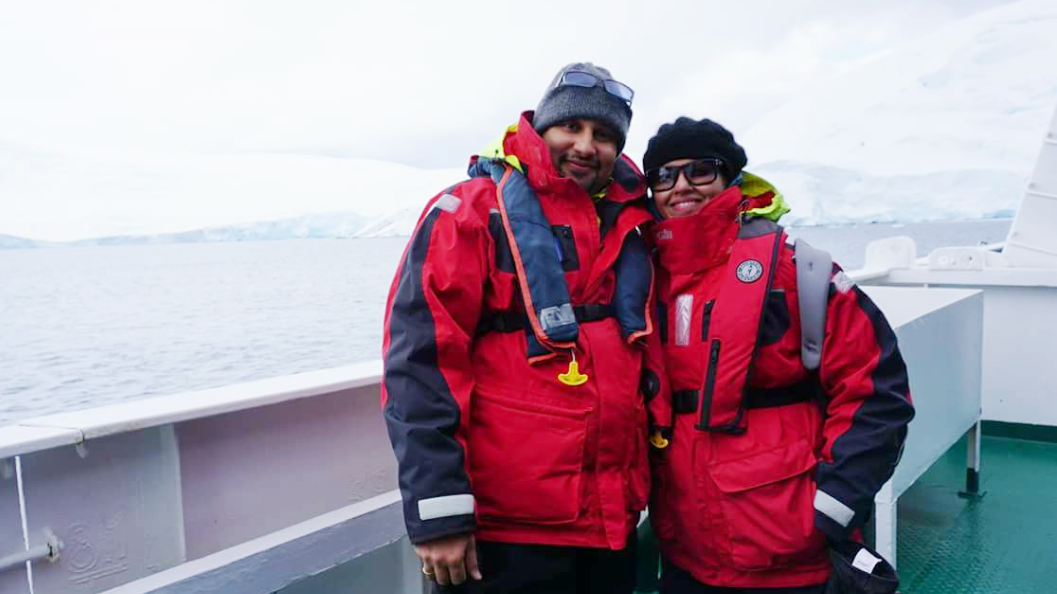
Sachin and Meenal on the ship to Antarctica (Photo: courtesy Meenal)

In 2016, Meenal decided to do a full marathon in Antarctica; that being logistically the most difficult in her plan to do an ultra in all the continents. She practised for it at her local park in Delhi; she wore layers of clothing during her practice runs to mimic how she would be running in Antarctica.  For the event, Sachin and Meenal travelled to Buenos Aires in Argentina and from there to Ushuaia, Tierra del Fuego. At Ushuaia, commonly regarded as the southern most city in the world, they boarded a ship to Antarctica. The event she had signed up for on the frozen continent featured a 7.5 km-loop. The course began and ended at the Russian base but passed close to the Uruguayan, Chilean and Chinese bases. “ The course was windy; slippery ice trail and the temperature ranged from minus 30 to minus 40 degrees centigrade,’’ Meenal said. She had on five upper body layers and four lower body layers plus balaclava, three caps, four socks, mittens, gloves, hand-warmers, toe-warmers – the works. The plan was to finish running at the event (it was a marathon) and then put in an additional eight kilometers to make it an ultramarathon. However as soon as the event finished and she paused to have water and take a few photographs, her body slipped into hypothermia. She started shivering. She was moved to the ship followed by a change of attire from sweaty layers to fresh ones. Meenal completed those critical eight kilometers in the ship’s gym.

Meenal and Commodore Chandna with the three service chiefs – Air Chief Marshal Birender Singh Dhanoa, Admiral Sunil Lanba and General Bipin Rawat – on Army Day, at Amar Jawan Jyoti, India Gate, New Delhi. The duo ran 21 half marathons in the days between Navy Day and Army Day (Photo: courtesy Meenal)

The next event she registered for was a 24 hour-run organized by Sri Chinmoy Marathon Team in Basel, Switzerland. With the run scheduled for May 2017 and Meenal’s regular running partner Commodore Chandna shifted to Kochi, she began looking for anyone equally committed to running, to train with. The person she turned to was Mamta Jaiswal. She had first met the software engineer, younger to her by a decade, during a project to run 42 km for ten days. On one of those days, the club Mamta was member of – Sunday Run Club – offered support. At that time, Mamta was a casual runner, doing distances of five and ten kilometers. She didn’t know anything about the ultramarathon. Impressed by Meenal, she asked if she could run with her. “ Meenal has a very positive attitude. She said – why not?’’ Mamta recalled. That was the beginning of her journey in distance running. Mamta’s first ultra was the Shimla Ultra; the list has been steadily growing. Asked if she saw herself as an ultrarunner now, she said, “ if you ask me whether that is how I see myself, I would say: I have a lot of hard work to do before I can call myself so.’’ When Basel loomed, Meenal asked Mamta if she would be interested in running at Basel. The two began training together in Delhi. “ This was my toughest training period. I wished to ramp up mileage, I also wanted to do a 100 miler in Europe,’’ Meenal said. Mamta traveled with her to Basel. It was the first time Indian women were coming all the way from India to participate in the event. “ Everything went alright for the first four hours. Then I started to cramp,’’ Meenal said. Sachin was not around as support crew. The event’s physio advised that she pack up. Meenal nevertheless managed to cover 153 km in 24 hours. She and Mamta placed third; this was despite the duo slipping to sixth position in between. However one goal stayed beyond reach on that trip – Meenal couldn’t secure her first 100 miler. In May 2017, she also participated in the 24 hour-stadium run in Mumbai, logging 137.6 km.

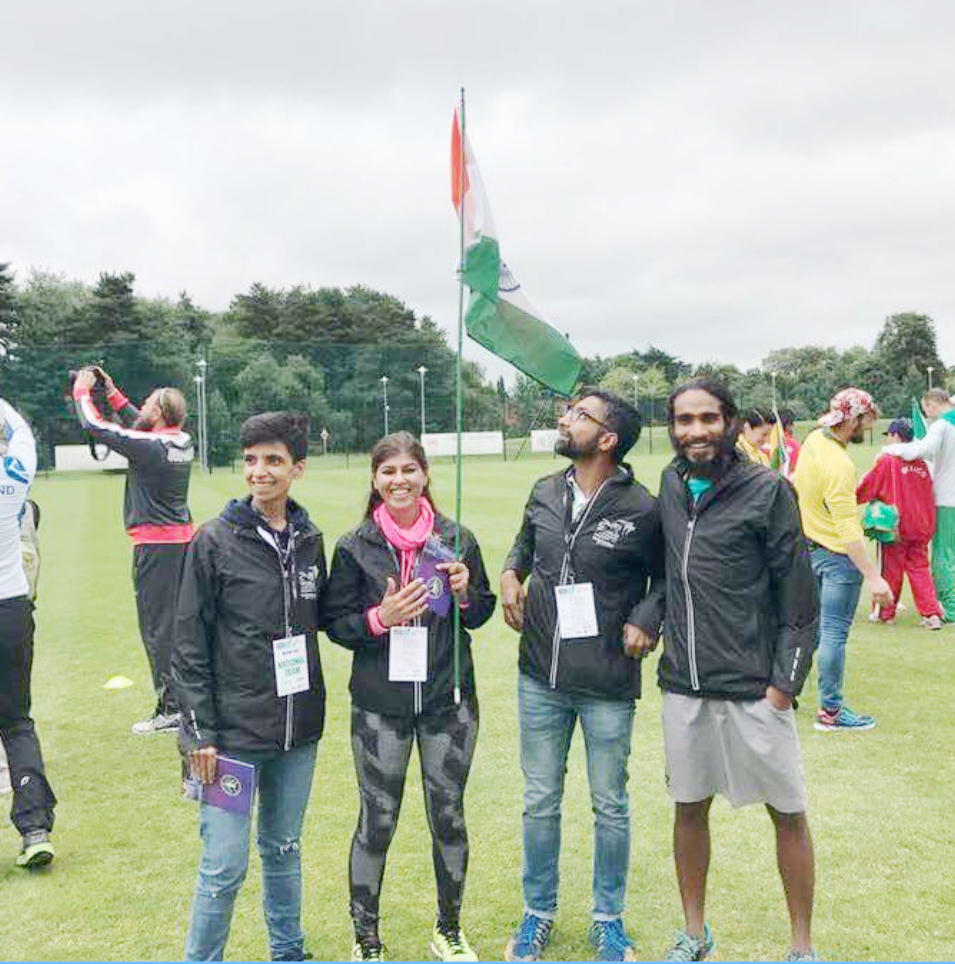
(From left) Aparna Chowdhury, Meenal, Ullas and Kieren D’Souza at Belfast (Photo: courtesy Meenal)

In June 2017, Meenal got the opportunity to participate at the 24 Hour World Championship held in Belfast. It is an event organized by the International Association of Ultrarunners (IAU) and held every two years. It is the only IAU event with a limited time format as opposed to being distance-based. In India, the ultramarathon had for long not been recognized formally under the many disciplines of running. According to Meenal, that situation changed mainly due to the efforts put in by Peter D’Souza, whose son Kieren is among India’s most promising young ultrarunners. The Athletics Federation of India (AFI) came around to recognizing the sport. This recognition was critical for Indian athletes participating in the event at Belfast. The course at Belfast was a 1.1 km loop; it was almost flat. As of 2017, the course record for women was 252.205 km set in 2013 by Mami Kudo of Japan (she was IAU’s athlete of the year for 2012 and 2013) at Steenbergen in Netherlands. At the event in Belfast, two women participated from India – Meenal and Aparna Chowdhury. They represented a country still new to ultrarunning and within that, having a small pool of woman ultrarunners. “ We knew we were nowhere globally but at the same time, not so very nowhere,’’ Meenal, who hadn’t run her first 100 miler till the Belfast event, said. All teams came with their own support crew, some comprehensive and drilled to perfection. For the four runners from India – besides Meenal and Aparna there were two male runners, one of who was Kieren D’Souza – Sachin was crew.

He recalled the disparity between the Indians and the others. Some of the support crew had their own physiotherapist, doctor, even dietician. Their runners had perfected their diet for such races; they also knew how to eat and drink on the go. Excuses like I don’t want to drink now or eat now – they don’t feature. What to eat and when to eat have been worked out and the support crew makes sure it happens. It enhances the number of good hours a runner enjoys. “ They have a plan,’’ Sachin said of those teams. The difference lay in the style of approach for the domestic ultrarunning circuit in India has similar 12 hour and 24 hour-runs to serve as launch pad. Traveling with Meenal, Sachin has been to several of these events. Unfortunately in India, he believes, runners don’t attach adequate priority to perfecting their on-course food intake and hydration while the presence of aid stations and the way they are managed, are taken lightly. Runners overlook timely replenishment of calories burnt and aid stations don’t proactively engage. Result – when it’s time for cutting edge competition like a world championship, there’s no plan anyone is used to, leave alone got perfected. At Belfast, Meenal completed the event with 160.4 km logged; Aparna logged 169.

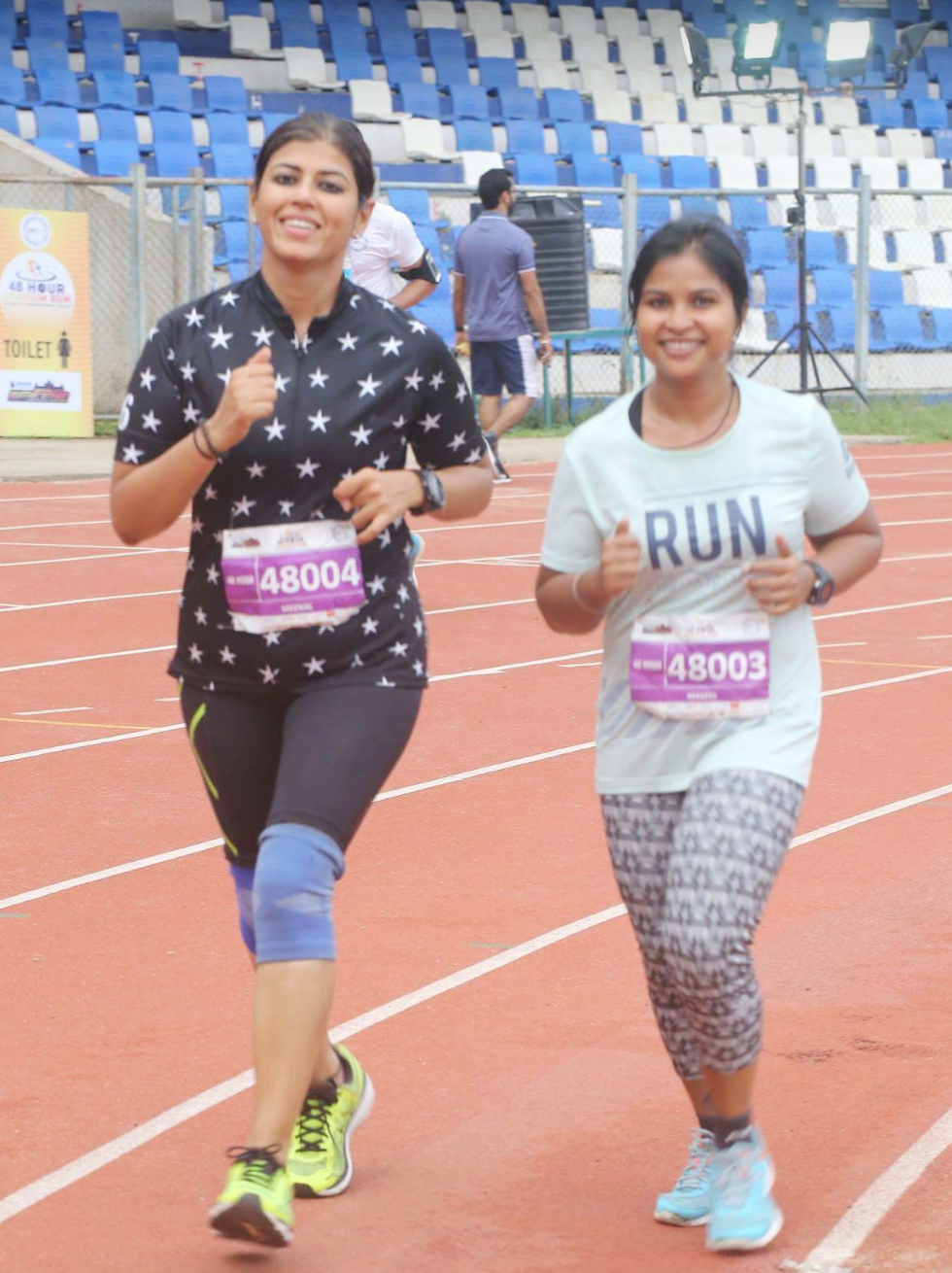
Meenal with Mamta Jaiswal at the 48 hour-stadium run in Bengaluru (Photo: courtesy Meenal)

In August 2017, Bengaluru was host to a 48 hour-run. Meenal and Mamta decided to attempt it; their plan was to run together and set a new record, potentially admissible in the Limca Book of Records. By the end of 48 hours at the event, they had logged 251.6 km. Meenal plans to apply for the record under the partnership category. Running together with someone and crucially, coordinating it such that milestones reached are officially recognized as shared is not easy. It requires synchronization. This is possible when you are running loops but sustained synchronization amid runner progressively exhausted by each loop run, is challenging. “ More than commitment I would say it is the need of the hour,’’ she said placing her partnership with Mamta in the context of problems women –runners included – face in India. “ Meenal gives me energy. It is always pleasant to run with her,’’ Mamta said. At the time of writing, the next major event Meenal had in mind as part of her plan to run an ultra on every continent was a 24 hour-stadium run in Australia, due March 17-18, 2018.

On the average, Meenal ran a hundred kilometers in Delhi every week. Every two weeks the mileage built up, peaked, plateaued and then lowered. She ran five to six days per week. One day was reserved for strength training, another, for rest. What hung like a Damocles Sword was that winter smog. Meenal keeps inhaler at hand but combating environment worsening through human activity, is hardly the focus any runner seeks. It’s one of the great paradoxes of life – the refined ethic endurance sport gifts the individual and the toxicity of our collective existence we seem to have no solution for.

(The author, Shyam G Menon, is a freelance journalist based in Mumbai. This article is based mostly on a conversation with Meenal Kotak. Details of events and timings at races are as provided by interviewee.) 

A MOUNTAINEER AND HIS PLAYGROUND

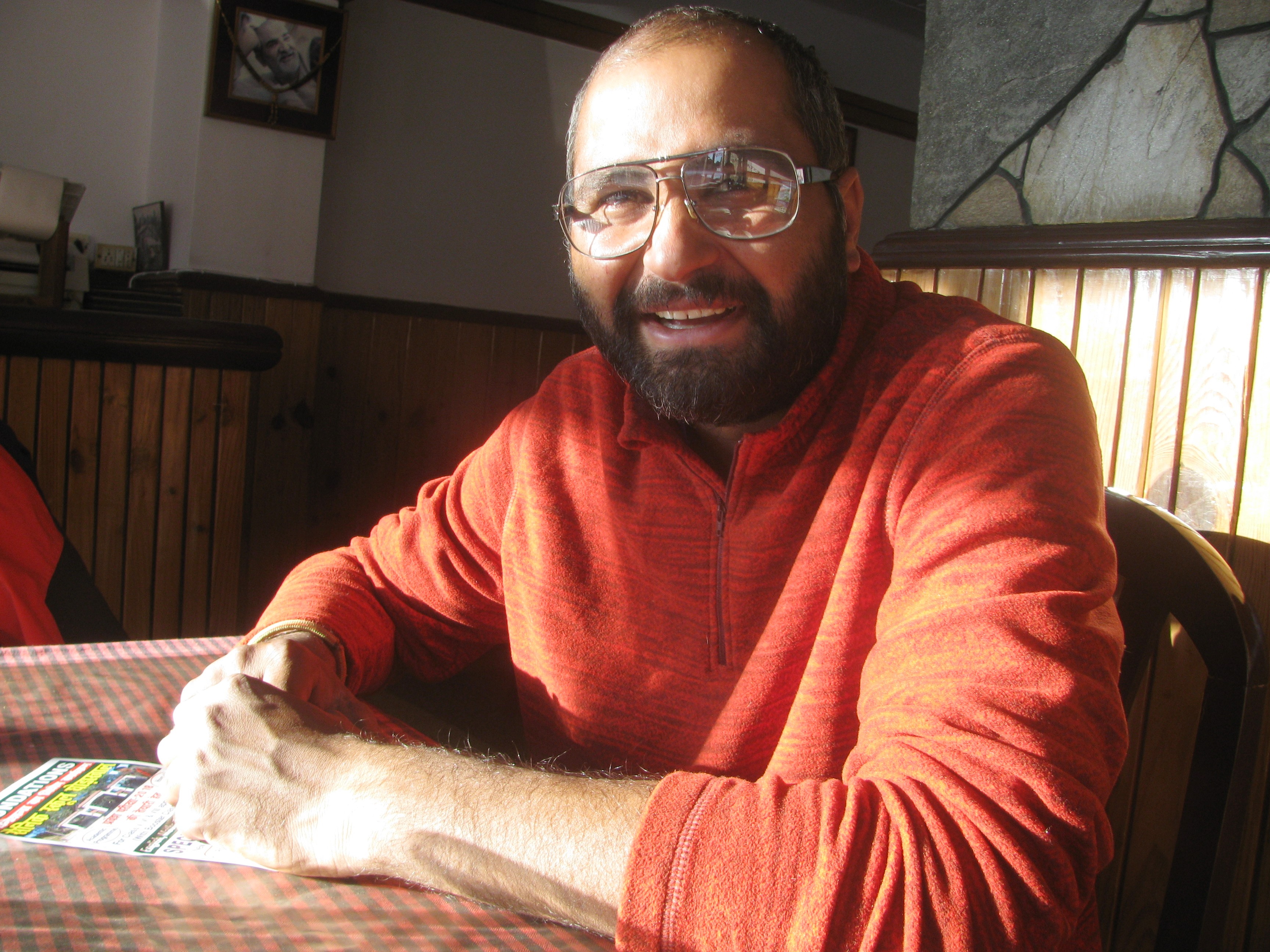
Dhruv Joshi (Photo: Shyam G Menon)

Dhruv Joshi didn’t run after big, costly peaks and foreign landscapes. Instead, he favored peaks that interested him. Two other angles engage in Dhruv’s journey. The expeditions he has been responsible for, are mostly alpine style or using small teams. As yet, these trips have frequented the area around Nanda Devi in Uttarakhand, the state he hails from.

In India, the C certificate is a document coveted by members of the National Cadet Corps (NCC).

When it comes to recruitment in the armed forces, C-certificate holders have an edge over other candidates.

Dhruv Joshi wasn’t short of reason to attempt joining the forces. He hailed from Uttarakhand, a state were employment in the military and paramilitary is widespread. His father had retired as head constable in the Border Security Force (BSF) and the person he looked up to – his uncle, Colonel J. C Joshi – was an illustrious army officer, reputed in the country’s mountaineering establishment. Col Joshi had been part of many climbing expeditions in the Himalaya, served as commandant of the High Altitude Warfare School and been the second principal of the Nehru Institute of Mountaineering (NIM). Born November 1981 in Almora, Dhruv had grown up with some of the best views of the Himalaya for company. The peaks were visible in the distance from Dhruv’s house. His uncle told him the names of some of the mountains. Instances like an accident on Maiktoli in the early 1990s and a ringside view of his uncle coordinating rescue operations brought the specter of mountaineering home (at that time, Col Joshi was in Nainital and secretary of the Nainital Mountaineering Club).

Tackling the tricky ridge on Nanda Khat (Photo: courtesy Dhruv Joshi)

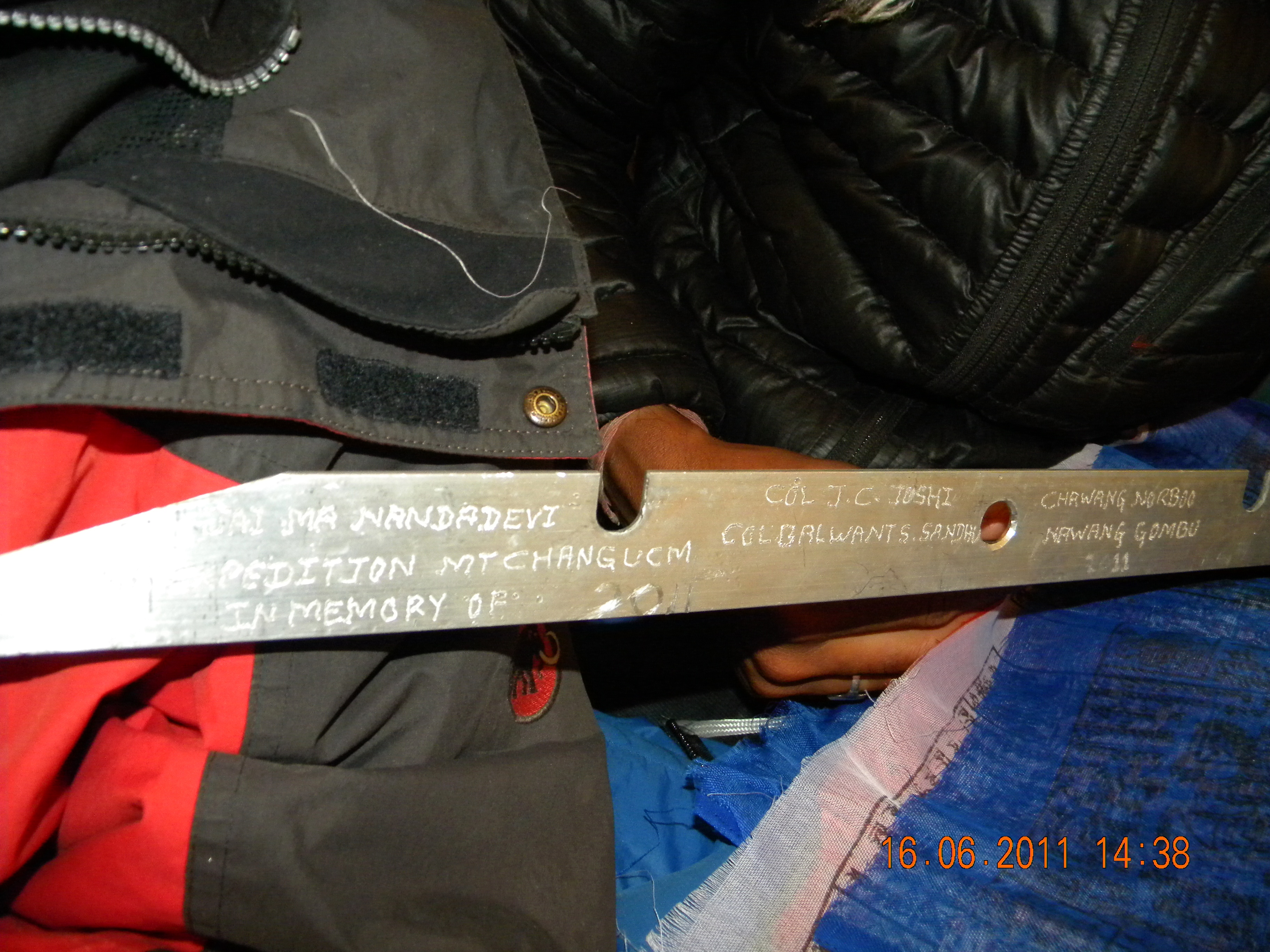
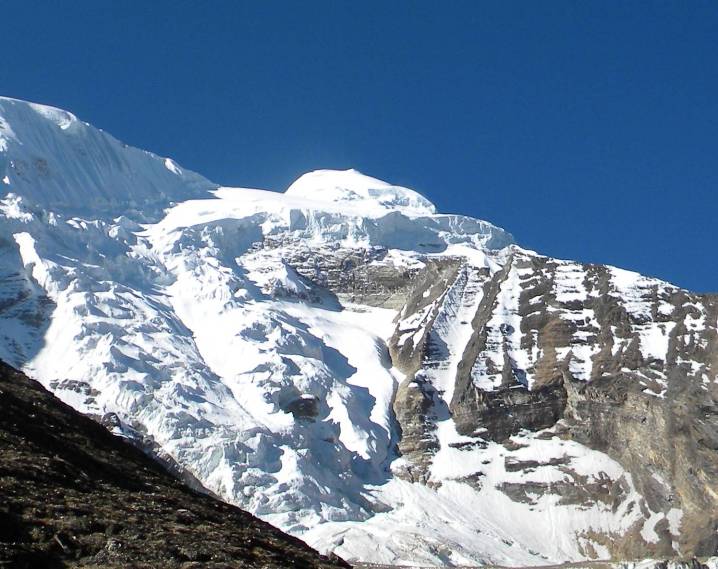
In 1996, at Col Joshi’s suggestion, Dhruv went on a trek to Pindari Glacier, organized by Altitudes High Adventure. The trek culminates in an arc of mountains, which as any mountain lover would tell you is impressive for the proximity to peaks it rewards the hiker. It is also noteworthy for another factor – the mountains here are linked to the architecture of peaks that shape the location of Nanda Devi, at 25,643 feet, the second highest peak in India and among the world’s most beautiful. A twin peaked-mountain, its western summit is the main one; the eastern summit – referred to as Nanda Devi East – is lower at 24,390 feet. In mountaineering Nanda Devi is revered for some interesting attributes. Access to the mountain is tough and took long to be figured out. Very few mountains have the magnificent setting it has, surrounded by high peaks providing a protective wall. Twelve of these peaks exceed 6400 meters (approximately 21,000 feet) in elevation. Further, Nanda Devi rises steep and high from the glacier at its immediate south western base. This rise measures about 10,800 feet and occurs over a span of 4.2 kilometers making the mountain pretty steep to climb. The Pindari Glacier hike ends just beyond the rim of the outer wall of peaks guarding Nanda Devi. The peaks at hand here include Baljuri, Panwali Dwar, Nanda Khat, Changuch and Nanda Kot of which Panwali Dwar and Nanda Khat are categorized as on the outer wall of the Nanda Devi sanctuary while Nanda Kot is just outside it. In between this arc of peaks lay Traill Pass; it links the Pindari Valley to Milam and Munsyari. Standing at Zero Point, where the hike to Pindari Glacier concludes, the most dominant peak would seem to be Changuch (20,741 feet). It showed up prominently in photos Dhruv took. When he shared the images with Col Joshi, the veteran mountaineer said that it hadn’t been successfully climbed yet. Dhruv remembers telling himself that he should take a shot at it some time. Right then however, he hadn’t done any mountaineering course and Col Joshi had been periodically reminding him of the need for it. The impetus manifested when despite C certificate, Dhruv’s attempts to join the army and be like his uncle, failed. In all he made seven attempts to enlist; all of them to the same disappointing result. It was time to look at life differently.

By 2004, having completed his BSc from Kumaon University and elected to do his MCA through correspondence course from the Indira Gandhi National Open University (IGNOU), Dhruv found himself in Delhi. In 2005, he eventually got around to doing his Basic Mountaineering Course from NIM. Same year, thanks to his uncle, he attended celebrations around the fortieth anniversary of the first Indian ascent of Everest (Col Joshi had been on that team). At that function in Delhi, he met Junko Tabei, the Japanese mountaineer who became first woman to ascend Everest and Maurice Herzog, the French mountaineer who in 1950 became the first person to climb an 8000 meter-peak when he and Louis Lachenal reached the summit of Annapurna in Nepal. For young man dreaming mountains and recently trained in the sport by mountaineering institute, this was interesting. Dhruv also met Col J.S. Dhillon, at that time principal of the Himalayan Mountaineering Institute (HMI) in Darjeeling. In March-April 2006, Dhruv did his Advanced Mountaineering Course from HMI. It was however a year of tragedy in the family. Col Joshi’s wife passed away, he was diagnosed with cancer and an aunt met with an accident (she too would pass away). On the way back from HMI, Dhruv spent time in Faridabad with his cousin, Vikram (Col Joshi’s son). Not long afterwards, in April itself, Col Joshi passed away in Almora. That was a trying period – three deaths in the family in a year. Dhruv shifted back to Almora. By then he was also through with those appearances before the Service Selection Board (SSB) for potential recruitment in the army. In May 2006, erstwhile army aspirant found himself working with a group of school children at an outdoor camp organized by Altitudes. Dhruv liked the experience.

On Changuch (Photo: courtesy Dhruv Joshi)

Around this time, he had begun checking out the expeditions being planned by Indian Mountaineering Foundation (IMF). IMF is the nodal organization in India for mountaineering in the Himalaya. Besides administering the sport, permitting expeditions and monitoring them, it also runs its own expeditions. Dhruv was sure that he wasn’t keen on sport climbing (which too the IMF administers); he wanted to be out on expeditions in the Himalaya. The call came a year or so later. Dhruv was working a program at a school in Coimbatore in South India, when the IMF informed him of his selection for an expedition to climb Panwali Dwar (21,860 feet), under the leadership of Col Vijay Singh Thakur. In May-June 2007, along with other team members, Dhruv was tasked with specific responsibilities; the preparatory phase at IMF lasted almost two weeks. Panwali Dwar is a lovely triangle of a peak with a prominent notch interrupting the straight upward sweep of one of its ridges. Out on the mountain, the team climbed up to the notch but had to turn back from there due to bad weather. Soon afterwards, Dhruv travelled to Ladakh. This time, in one of those moves people wishing to be at altitude do – they work any role they get just to be in the mountains – he had joined an expedition to Chamser Kangri (21,775 feet) as a High Altitude Porter (HAP). Work as HAP typically means you get a chance to climb the peak. Although he climbed Chamser Kangri, Dhruv didn’t find it challenging. It made him think of Panwali Dwar. The peak in Ladakh and the one in Kumaon were similar in height but Panwali Dwar was a challenging climb. Needless to say, thoughts of Changuch too returned. It was yet to receive a first Indian ascent. There had been a joint expedition to the peak by the IMF and Indian Navy; it resulted in two casualties.

Amid this, in 2008, Dhruv was assigned an IMF expedition to Maiktoli (22,320 feet), led by Col Vijay Singh Thakur. Maiktoli, which is on the outer wall of the Nanda Devi sanctuary, is approached through the Sundardunga Valley. Just as Changuch dominates Zero Point, Maiktoli dominates Sundardunga. Dhruv fell into the bergschrund of the mountain’s glacier when a snow bridge snapped under the combined weight of person and load. Stuck some seven feet below in the crevasse, he remembers sensing void below. Somehow he climbed back up. This was followed by bad weather and an avalanche. Eventually, having made it as high as 6200 meters (20,340 feet) or so on the peak and beset with corniced ridges ahead, the expedition turned back. It was yet again an unsuccessful trip but for a change, this one had yielded learning. In 2009, Dhruv applied afresh to the IMF for a seat on any of its expeditions. In the interim, he went on expeditions to Shitidhar (17,224 feet) and Ladakhi (17,536 feet) in Himachal Pradesh; in both cases his role ended with being at summit camp. When IMF finally called, it was to inform that he had been assigned to a joint BSF-IMF expedition to Plateau Peak (26,679 feet) in Ladakh. Among those on this trip was Loveraj Singh Dharmshaktu, a BSF officer who would go on to be the Indian climbing Everest the most number of times. It was a big team; Dhruv remembers knowing many of them from before – they were either from the hills (like him) or former course-mates from mountaineering institutes. Plateau Peak was an unclimbed peak then. In the month-long expedition, the team made it up to around 6800 meters (22,310 feet) before turning back.

View of Nanda Devi from the upper slopes of Changuch (Photo: courtesy Dhruv Joshi)

The name of British mountaineer, Martin Moran, is well known in Kumaon. In May-June 2009, Dhruv’s pet project, Changuch, received its first ascent from a team led by Martin. In August 2009, aware of Dhruv’s obsession with the peak, Altitudes – the company he worked for – launched an expedition to Changuch. The team made it up to Advanced Base Camp (ABC) at 14,670 feet. “ There is a rock wall here, which is tackled to make one’s way to Traill Pass. You climb this and then cross to the other side for the route to Changuch. We couldn’t find the proper route,’’ Dhruv said. The expedition turned back. In the heavy snowfall that followed, some of the porters ran away. Supplies were not consolidated. It was a tough situation. Somehow they wound up the trip and came down. Dhruv’s employer, the owner of Altitudes, assured him that they would return to attempt the peak again. All that Dhruv could think of was – so many expeditions done and still only one easy peak – Chamser Kangri – for summit. It hurt.

Dhruv wrote to Martin Moran explaining that he had been on expeditions including an aborted trip to Changuch. So, could he work for Martin? The reply he got suggested that he try and be liaison officer for Martin’s upcoming expedition to Satopanth (23,212 feet). In the meantime, in 2010, Dhruv noticed an option put up on the IMF website. The agency was asking visitors to suggest peaks to attempt. Dr Anil Gurtoo – whom Dhruv knew from before – had been tasked with leading an IMF expedition. Together, Dr Gurtoo and Dhruv selected Nanda Khat (21,690 feet), which stands between Panwali Dwar and Changuch on the arc of mountains at Zero Point near Pindari Glacier. Selection of peak done, Dhruv left for NIM to do his course in search and rescue. His mind was however on the proposed expedition. Almost every day, from the institute, he called up Dr Gurtoo to discuss the upcoming expedition which by now, had been approved by IMF. Conscious of his track record with only Chamser Kangri for successful ascent, Dhruv looked to Nanda Khat with hope. He knew that chances of successful summit were there. From previous trips to Pindari Glacier and higher up, he already knew the route to Camp 1. “ It seemed doable and I needed a successful summit badly,’’ Dhruv said. From his course-mates at NIM’s search and rescue course, he roped in Bharat Bhushan and Takpa Norbu (Takpa was also Dhruv’s batch-mate for basic mountaineering course). He also consulted the late C. Norbu, a senior instructor at NIM and among the best instructors the Indian mountaineering fraternity has known, for other potential candidates. The next addition was Chetan Pandey from Almora. New IMF rules required that woman mountaineers be mandatorily included. Three years earlier, in 2007, Dhruv had met Wallambok Lyngdoh at IMF. Now, given his need to know more about a woman climber from Meghalaya in India’s north-east, he called up Meghalaya Rock Climbing and Mountaineering Association and to his surprise, Wallambok answered the phone. The latter not only provided the needed details but also joined the team himself.

The snow stake which was left on the summit of Changuch. It has engraved on it, the names of senior mountaineers, to whom the expedition was dedicated (Photo: courtesy Dhruv Joshi)

The Indian style of climbing has traditionally featured large expeditions. Some military and paramilitary expeditions have even smacked of siege. Veteran mountaineer, Col. B.S. Sandhu, who was overseeing the Nanda Khat expedition, wanted the team to attempt the peak alpine style. This meant minimum support staff overall with climbers doing everything themselves on the mountain. As Dhruv had predicted, progress was smooth till ABC near the rock wall above Pindari Glacier. It took them three days to clear the wall. On top was a big glacial plateau. Weather was rough on June 22, 2010. Dhruv decided to make an all-out attempt for the summit. Nanda Khat has four summit humps of which, the third is the actual summit. Upon reaching the first of these summits they discovered that the approach to the second was along a knife edge-ridge. They sat astride it and traversed roughly half of the ridge on their butts; potential fall looming to either side. Around 4 PM they reached the actual summit. From that high point, Dhruv recalls, they looked towards Changuch and Nanda Kot, seeking climbing routes on their slopes. Then, the weather deteriorated. There was thunder and lightning and static electricity could be felt. About 8.30 PM they were able to get back on their return route; they were back in camp by midnight. Altogether, the summit bid took roughly 21 hours and thirty minutes. It was realized later that at least a part of the route taken by the team was new; no one had done that traverse earlier. It was now time for the Satopanth expedition with Martin Moran. “ Martin talks little. He is usually a serious person,’’ Dhruv said. He went with Martin and his team to Garhwal. As it turned out, bad weather ensured that Martin’s expedition to Satopanth in September 2010 was denied summit. But Dhruv considers the opportunity he got to see Martin’s management of the expedition, a chance to learn. Martin gifted him a small tent, ideal for bivouac. It was apt for mountaineer aspiring to repeat Martin’s ascent of Changuch.

In the light of the successful ascent of Nanda Khat, Dr Gurtoo recommended to IMF that Dhruv be made an expedition leader. In March 2011, Dhruv was in Faizabad when he got the call from IMF confirming his appointment. He was to lead an expedition to Changuch. “ The Pindari Valley has been kind to me. That’s where my first real summit happened and I also got opportunity to work for the first time as deputy leader and leader,’’ Dhruv said. For the Changuch expedition, Dhruv didn’t have to look far for team. He had a tried and tested team from the Nanda Khat ascent. Further, Dr Gurtoo was scheduled to lead a team to Nanda Bhanar (20,459 feet) nearby. That put old friends in the same neighborhood. Given Dhruv’s Changuch expedition was a case of attempting its first successful ascent by an Indian team and first successful attempt from the Pindari Glacier side, he got to pick his team members first. He retained Bharat, Takpa, Wallambok and Chetan. Dr Anand Vaidya from the old Maiktoli expedition came aboard as team doctor. Total team strength was eight. There were no HAPs. They hired one person for the kitchen and three helpers for the passage to Zero Point. Dr Vaidya, one team member and the lone person on kitchen duty stayed put at ABC. The rest moved up self-sustained. The route up to Camp 1 was the same as used for the Nanda Khat expedition. At summit camp, Dhruv’s walkie-talkie stopped working as did his watch and altimeter. They found there, a snow stake from Martin Moran’s expedition, which they retained as memento. The team pitched two tents – a three man-tent and the tent Martin had gifted. For summit attempt, they left the summit camp at 11.30 PM. One team member stayed back at summit camp to keep refreshments ready for the summit party when they return. The summit of Changuch was reached at 9.50 AM on June 17, 2011. For Dhruv, it was a longstanding dream coming true. “ There are two ramps before the summit. At the first ramp, Wallambok said that it was his father’s death anniversary. The rest of the team therefore asked him to go ahead. All four of us – Wallambok, Bharat, Chetan and I – reached the top. Everyone cried. Takpa was last person up. He was bewildered to find a party of grown-ups crying on the summit,’’ Dhruv said laughing. Given Nanda Kot was covered in clouds it was difficult to compose a photograph as proof of ascent. So they left behind Takpa’s prayer flag and a snow stake with the names of senior climbers they had dedicated the climb to, inscribed on it. By 11 AM they commenced return. Takpa’s prayer flag could be seen through a zoom lens from lower camp. Dhruv dedicated the climb to Col. Joshi, Col. B.S. Sandhu, Nawang Gombu and C. Norbu. Their names feature on the snow stake left on the summit of Changuch. Dhruv didn’t rest content with Changuch in the bag.

Kuchela Dhura (Photo: courtesy Dhruv Joshi)

One of the peaks visible from Changuch summit camp was Kuchela Dhura (20,650 feet). It extends at a tangent from the Nanda Kot massif, on the Munsyari side of the Pindari-Munsyari divide. It was unclimbed. Access would be through Lawan Glacier; the glacier is fed by the snows of Kuchela Dhura, Nanda Kot (22,510 feet), Changuch, Nanda Lapak (18,970 feet), Peak 6041 and Nanda Devi East.  Dhruv’s proposal for an expedition to attempt Kuchela Dhura in 2012 was approved by the IMF. An eight member team including Takpa, Chetan, Bharat, Wallambok and Dhruv was pieced together. At the same time, Dr Gurtoo took a four person team to Nanda Kot. Base Camp for Kuchela Dhura was established on flat ground near Naspanpatti on the way to Nanda Devi East Base Camp. Kuchela Dhura was totally new on climbing’s radar; no previous climbing data existed. The team decided to access the peak via its col with Nanda Kot, which had been the route of an old Japanese attempt on Nanda Kot. Summit camp was set up on the col at “ roughly 6200 meters,’’ ie around 20,300 feet. “ It was a very windy camp and most members were not feeling well,’’ Dhruv said. Two members descended to lower camp. Of the remaining, Bharat left after one night.

On summit day, Dhruv and Wallambok proceeded to the summit. “ It was a sharp ridge; quite unlike topographic maps would have you imagine. From the summit camp, summit should have been approximately four kilometers away horizontally. We covered roughly three kilometers. Then we found ourselves on the lip of a big V-shaped cleft. To get across that gap, you had to climb down and then climb back up. It was lose rock. We deemed it unsafe. So we returned to camp,’’ Dhuv said. On return, Dhruv and Wallambok were dispatched on an IMF expedition to climb Rimo I in Ladakh. The expedition had its highest camp at 7020 meters (23,031 feet), then, turned back owing to bad weather. Soon after the 2012 failed bid on Kuchela Dhura, Dhruv submitted fresh mountaineering proposals to IMF including another attempt on Kuchela Dhura. In 2012 December, Dhruv tried a winter ascent of Baljuri (roughly 19,500 feet). It is the smallest of the peaks in the arc at Zero Point in Pindari Valley. The attempt failed. He would try the peak unsuccessfully in September 2015 and April 2016. On all occasions bad weather forced him to give up. Small or big, a peak can be challenging when it wants to.

In Indian arranged marriages, once the parents have spoken to each other, the prospective bride and groom are set up for a face to face meeting in the presence of elders. On May 23, 2013, as part of a proposed arranged marriage, Dhruv went to see a girl. That ritual done he departed next day to take a client across Traill Pass, which lay between Nanda Devi and Changuch at a height of 17,428 feet. The team spent three days at Base Camp during which time the client retired from the attempt but urged that the rest of the team proceed up the pass. On the sixth day the team – now three people; Dhruv, Bharat and Vineet Kumar Saini – climbed the rock wall above Pindari Glacier. On the seventh they crossed Traill Pass. By the tenth day, they were in Munsyari. “ It was all alpine style,’’ Dhruv said. They got back to Delhi to news of the Kedarnath floods. In August 2013, the second attempt on Kuchela Dhura got underway. Dhruv was leader; Wallambok, deputy leader. Others in the team included Vijay Singh Rautela, Chitramohan, Vineet, Ram Singh Lodha, Karan Kumar and Dr Vaidya. They decided to attempt the peak via a different route. They decided to attempt it along a hanging glacier that dropped down from the summit. This way, the V-shaped cleft and its unstable rock, could be avoided. They successfully crossed the glacier and established summit camp on the col leading to the main summit. On September 6, 2013, past 8.20 AM, the team reached the summit in white out conditions. Two months later, in November 2013, Dhruv got married to Meenakshi, who he had met just before leaving for Traill Pass. He had told her in jest that he would marry her if he successfully crossed the pass.

Climbing Kuchela Dhura. The climbers are visible as specks in the top half of the picture; their rope is the faint red line down the middle of the snow clad face (Photo: courtesy Dhruv Joshi)

In May-June 2014, Dhruv was back, this time attempting Latu Dhura. Information on the Internet puts the height of this peak at 6392 meters (20,971 feet). Part of the idea behind this attempt was to recce potential routes on Nanda Devi East. Besides Dhruv, the team included Bharat, Vineet and Karn Kowshik. There were also members drawn from a recent outing with the IMF. The Latu Dhura expedition was unsuccessful courtesy unstable ice. According to Dhruv, Latu Dhura remains candidate for another attempt, another time. Also on the list of mountains to attempt are Nanda Devi East and several of the unclimbed spurs on the outer wall of the Nanda Devi sanctuary. Nanda Devi East rises on the eastern edge of the sanctuary wall and is open to climbing from the eastern side. “ My dream project – that would be traversing the ridge linking Nanda Devi main summit to its east summit,’’ Dhruv said. Nanda Devi sanctuary is a restricted area. At the time of writing this article, it was well over three decades since the mountain – religiously important locally and home to a fragile ecosystem – had been closed for climbing. For the present, Dhruv had a more realistic project to chew on – winter ascents. In 2016, he started an outdoor company, Himalpinist, along with Vijay Singh Rautela and Vineet Kumar Saini. Dhruv reasons that during the company’s many treks in the Johar Valley he should be able to position gear and what he needs for a winter climb of nearby peaks, aptly, in advance. Then during winter, he should be able to come in light and try ascending the peaks, alpine style.

(The author, Shyam G Menon, is a freelance journalist based in Mumbai. Height of peaks is as available on the Internet. This article is based mostly on a conversation with Dhruv Joshi.)          

NANDA DEVI / CLIMBERS’ PERSPECTIVE

Harish Kapadia (Photo: by arrangement)

Harish Kapadia is among India’s best known explorers of the Himalaya. Trekker, mountaineer and author of many books, he was awarded the Patron’s Medal of the Royal Geographic Society. More recently he was conferred the Piolet d’Or Asia Lifetime Achievement Award by the Union of Asian Alpine Associations. He was Honorary Editor of the Himalayan Club Journal for over three decades. He spared time to talk to this blog about Nanda Devi. The interview helps anchor other articles on climbs of Nanda Devi and peaks in the vicinity, hosted on this blog. Excerpts from a chat in December 2017:

What makes Nanda Devi unique among mountains?

Nanda Devi and the sanctuary the mountain is located in, is roughly speaking shaped like an `E,’ albeit a curved one, not angular. Nanda Devi main and east peaks form the middle slash. The mountain is surrounded by a wall of high peaks. If I remember right, on the average that wall is around 21,000 feet high and it has approximately 20 peaks above 20,000 feet in elevation. Within the walled area there are four major glaciers. Their meltwater comes out through the Rishi gorge. It is very deep and tough to navigate. It took a long time to find the way in; Bill Tilman and Eric Shipton eventually accomplished the task in 1934. All this makes the mountain special. Further, locally, the mountain is treated as a goddess. It is seen as a bliss giving goddess. The cold winds blowing in from the high plateau of Tibet are blocked by Nanda Devi and the wall of peaks surrounding the mountain. Some of it falls as precipitation and snow in the Nanda Devi sanctuary. As a result of this blocking of winds, Uttarakhand and the plains of Uttar Pradesh are shielded from cold conditions that could have affected the region’s agriculture. This role of Nanda Devi and the surrounding peaks can be understood better from Tibet, where they show up on the Indian side as a barrier. You can see this from the foot of Kailash.

Are there other peaks with a similar setting or is Nanda Devi unique in terms of the immediate surrounding geography?

I would say Nanda Devi is unique.  There are other mountains with adjacent peaks and the appearance of a group. But nowhere do you have a sanctuary like this. In fact, thanks to the peculiarity of its local geography and layout, the Nanda Devi sanctuary has its own weather system. Clouds from the outside traveling at a height of up to 17,000-18,000 feet cannot enter the sanctuary due to the surrounding mountain wall. However, by afternoon on most days, clouds funnel in from lower altitudes through the passages and saddles in this mountain architecture causing rain and snow in the sanctuary. By evening, things clear up.

You have been fortunate to spend time inside the sanctuary. Can you describe the experience?

The route is challenging but beautiful. From Malathuni Pass you descend 4000-5000 feet to Dibrugatta and then you go all along the Rishi Gorge. The path is steep. As you enter the Rishi Gorge, you have to climb a stiff rock wall posing nasty consequences should you fall. You enter the sanctuary from the west. From there you proceed inside. It is a very nice, beautiful area. Because of the clouds coming in, everyday afternoon it would rain and snow. By 3 or 4 PM, it would clear up. We used to call this the matinee show. On one occasion we were in the sanctuary to climb Devtoli peak, which stands on the southern sanctuary wall. Having climbed it from inside the sanctuary, we decided to delay our return to camp because we didn’t want to be caught in the matinee show. So we waited on the summit, till the weather cleared up below.

In mountaineering, how prized is it to climb Nanda Devi and do the traverse between the main peak and the east peak?

That traverse is an absolutely challenging experience. It has been done only once before by an Indo-Japanese team. Earlier, an Indo-French team had tried it but they did not succeed. The Japanese did it in a thorough fashion. The traverse is very unique. But otherwise, the east peak has been climbed several times now; the main peak has also been climbed four to five times. The sanctuary has been closed since 1983. Had it been open, more people would have attempted the summit. The reason given for closing the sanctuary was – environment. Successive expeditions had contributed to garbage accumulating in that pristine area. It cannot be denied. But a part of the reason for closing the sanctuary would have been the failed attempt to install a nuclear powered device on top of Nanda Devi by a joint Indo-American team in the 1960s. It was an enterprise undertaken by the intelligence agencies of both countries. China was conducting its nuclear tests in Tibet and the idea was this device on top of Nanda Devi would be able to detect any such test. If there is a nuclear explosion, then the isotope on Nanda Devi would react – that was the logic. While they were taking the device up, bad weather set in. Monsoon was approaching. So they cleared a platform on the mountain’s slopes and secured the device there, planning to return in autumn to recommence their efforts. When they returned in autumn, the device was missing. This was in 1965-66. For the next decade they kept on looking for it. I suspect this issue of the missing nuclear device may have played a role in the closure of the sanctuary. A similar nuclear powered device was eventually installed on top of Nanda Kot. It was removed after a few years, given new technologies for monitoring had developed by then.

After the Nanda Devi sanctuary staying closed for years, I was leader of a team from the Indian Mountaineering Foundation (IMF) that went in to take stock of the situation. We found few signs of the sanctuary having been actually closed to people from the outside, despite it being officially shut. The trails leading to Nanda Devi appeared regularly used and there were multiple trails even within the sanctuary. The sanctuary has four sections. Seeing how poorly the closure had worked, I asked subsequently that at least a limited number of mountaineering expeditions – say not more than two teams per section of sanctuary per year – be officially permitted with adequate regulations in place. A few officially permitted teams in the sanctuary from time to time would also serve to keep an eye on what was going on. But the suggestion was not approved by state authorities. Alongside there is also the prevailing decision by Parliament that the sanctuary be closed. A generation or two of Indian mountaineers have lost their chance to see the main peak up close.

Given its height from bottom to top and the gradient of climb, is Nanda Devi among the tougher mountains to climb?

One of the tougher mountains – yes it is. Is it the toughest? No. However one needs to draw a distinction between known routes on the mountain and unclimbed ones. One of the ultimate ascents in my opinion – waiting still to happen – is the climb of the west face of Nanda Devi. From bottom to top, this should be in excess of 10,000 feet. It is steep rock. The north face of the mountain is also difficult. But it was climbed by the Americans. The regular route on the main peak is tough but not impossible. And that traverse – that is yet to be repeated. The traverse linking the two summits is two kilometers long and at an average height of 22,000 feet. It is very challenging.

There are some other fantastic climbing challenges also remaining in the Indian Himalaya. In Ladakh you have one of the faces of Saltoro Kangri II. That peak is hard to access for climbing because it is right on the border. Then, there is a peak called Hawk on the Siachen Glacier.

(This interview is not wholly verbatim. The original text, which was conversational in nature, was edited for focus on Nanda Devi, particularly the mountain from a mountaineer’s perspective. The edited text was approved by Mr Kapadia before being published here. The author, Shyam G Menon, is a freelance journalist based in Mumbai.)
NANDA DEVI / ACCOUNT OF A 1981 EXPEDITION

Nanda Devi as seen from BrijGanj Dhura (15,308 feet), the pass between Ralam and Milam valleys. To the left is Nanda Devi East (24,390 feet) and to its immediate right is Nanda Devi Main / West (25,643 feet). This photo was taken in mid-October 2011 (Photo: Punit Mehta)

This article provides the account of a 1981 expedition to Nanda Devi undertaken by the Indian armed forces. The expedition by paratroopers was led by Major K. I. Kumar KC; Captain Lakha Singh was deputy leader. It featured two teams. Group Captain P. Venugopal SC (Retd), who served several years as Chief Instructor of the Paratroopers Training School, was leader of the team attempting the main summit (25,643 feet). Wing Commander Unni Krishnan Palat SC (Retd) was part of the team attempting Nanda Devi East (24,390 feet). In events that unfolded, he had to assume a leadership role on the east peak. Also on the expedition’s agenda was doing the traverse linking the two peaks, the first time an exclusively Indian expedition would be trying it. Across both peaks, the expedition suffered casualties; five climbers lost their lives. Nanda Devi is one of the tougher mountains to climb. The approach to the mountain is difficult; once accessed, the climb is steep and challenging

The 1981 expedition was among the last climbing the mountain from inside the sanctuary and among the last to attempt the mountain’s main summit in the era the main peak was open for mountaineering. In 1982, the Nanda Devi National Park was established. In 1983 the Nanda Devi Sanctuary was closed to mountaineering expeditions. With that, civilian access to the main summit ceased. In 1988, the Nanda Devi National Park was declared a UNESCO World Heritage Site. Nanda Devi East remains open for climbing; its climbing route can be accessed from outside the sanctuary wall. In 1993, a 40 member-team of the army’s Corps of Engineers was given special permission to climb Nanda Devi. Group Captain Venugopal’s account of the 1981 expedition was published as part of an interview with him, in the annual magazine of Sri Shankara College, Kalady, where he had studied years ago. He provided me a copy of the magazine to flesh out a narrative besides noting down his observations and mailing them across. Wing Commander Palat wrote about his experience in one of the brochures brought out by his unit. He scanned and mailed that across to refer, edit and publish afresh. The following narrative is a mix of all three inputs. For ease of reading, after formal introduction stating rank, military personnel have been referred to by name. The reference by name is also in part to remain true to the tenor of Palat’s narrative, which was based on his expedition diary. – Shyam G Menon

In 1981, the Indian Army’s paratroopers launched an expedition to scale both Nanda Devi West and East and traverse the ridge linking the two summits. The traverse, at an altitude of over 22,000 feet, had been done only once before, by an Indo-Japanese team in 1976. According to Venugopal, an Indo-French team tried to climb the two peaks and do the traverse in May 1975. They climbed both the peaks but failed to execute the traverse. There were two attempts made on June 18 and 19; both had to be abandoned owing to bad weather.

At the time the 1981 project was announced, Unni Krishnan Palat was a Parachute Jump Instructor. He was selected as a climber along with his colleague Venugopal. Besides K.I. Kumar, Lakha Singh, Venugopal and Palat, other members of the team included Deputy Leader Namgyal, Phurba Dorji; Captain Srivastava, Captain Premjit Rokhpa, Captain Shekhawat, Captain P.D. Punekar (medical officer), Lieutenant Chib, Asst Political Leader Nima Tashi of the Special Frontier Force and a few more climbing members and members of support staff. In all, the party consisted of 20 climbing members plus support staff and high altitude porters, Venugopal said recalling the expedition.

Group Captain P. Venugopal SC (Retd) (Photo: Shyam G Menon)

The team left Agra – where the Paratroopers Training School is – by road on August 18 and reached the village of Lata near Joshimath, on August 22. On August 27, an advance party led by Lakha Singh and consisting of four climbers and 80 porters left Lata for Base Camp, a ten day-trek. The rest departed for Base Camp on September 1. Base Camp was established by September 12, on the glaciers of Nanda Devi South Basin at a height of 16,000 feet. The expedition was split into two teams; one to attempt the higher main summit and the other for the lower east summit.

The Indian Mountaineering Foundation (IMF) had a team of men and women in the sanctuary attempting the main peak. This was an important expedition. According to Venugopal, in 1949, after seeing Nanda Devi in the Indian Himalaya, American mountaineer Willie Unsoeld had decided to name his daughter after the mountain. Twenty seven years later, he came to Nanda Devi, co-leader of an expedition attempting the peak. His daughter Nanda Devi Unsoeld, who was part of the expedition, died on that trip.  Consequently it was popularly believed that the mountain will not receive woman climbers on its top. IMF’s mixed expedition of 1981, aspired to put the first set of Indian women on the summit of Nanda Devi; something it eventually did successfully. The presence of that team on the mountain meant shortage of space to pitch tents, from Camp 2 upward. The paratroopers’ expedition being military was told to delay its departure. “ We were asked not to proceed beyond Base Camp till September 25 or till the other expedition returned, whichever happened earlier,’’ Venugopal noted in the interview he gave his old college. The delayed departure meant they could end up climbing in harsh conditions.  In additional observations he mailed in, Venugopal noted that from mid-August onward, temperatures inside the Nanda Devi sanctuary drop drastically with winds at higher altitudes picking up speed, often creating jet streams. Beyond mid-September, it becomes very tough to stay inside the sanctuary due to sub-zero temperatures, high wind speed and white-out snow conditions.

Unlike on the west peak, there was no embargo on the army expedition attempting Nanda Devi East. The team therefore decided to focus first on Nanda Devi East, opening the route and sending up supplies and men. Palat was with the Nanda Devi East team.

By September 14, Prem’s party established Camp 1. Palat set off to Camp 1 from Base Camp with a load at 0600 hours. “ I appreciated the efforts of Prem and Dorji better when I carried a load myself on a route threatened by falling rocks with at its end, a steep climb of almost 800 feet up to Longstaff Col,’’ he noted. The next day, the complete Nanda Devi East party moved out of Base Camp to a Dumping Point below Longstaff Col. Dorji and Palat went up at 1630 hours. When they emerged from their tents at Base Camp, Palat recalled, Sherpas Pasang and Sonam coming to see them off; they had a flask of hot tea and insisted on carrying their backpacks. After accompanying the two climbers for half the distance, they gave them tea, embraced them and went back down wishing us luck. Longstaff Col (19,390 feet) is integral to climbing Nanda Devi East. It is a saddle on the ridge between Nanda Devi East and Nanda Khat and was first climbed by Dr T.G. Longstaff along with two Swiss guides in 1905. A rather poignant video on the garbage left behind by previous expeditions shot by Anindya Mukherjee during his 2014 expedition to Nanda Devi East (available on YouTube) provides a feel of Longstaff Col. The ridge is narrow here. Longstaff Col connects to the South Ridge climbing route on Nanda Devi East. The South Ridge route was pioneered by Polish climbers in 1939. Following the closure of the Nanda Devi sanctuary to mountaineering expeditions, Longstaff Col has been accessed from the Lawan glacier side, which falls outside the outer wall of the sanctuary. A doctor, explorer and mountaineer, Longstaff is also regarded as the first person to climb a peak of over 7000 meters, when in June 1907 he reached the summit of Trisul (23,360 feet). Trisul is part of the ring of peaks protecting the Nanda Devi sanctuary.

Wing Commander Unni Krishnan Palat SC (Retd) (Photo: by arrangement)

On September 16, while doing a load ferry to Camp 1, a falling stone hit Palat on the stomach. The team decided to stop all movement in the stone fall-area by 1000 hours as the place was dangerous once snow, which holds rocks in place, began melting in the day’s warmth. Palat shifted the temporary camp at Dumping Point, further away from the mountain slope. It was a sound decision. A few days later, an avalanche hit the old site. Then the challenge the mountain posed began to slowly reveal itself. Further climbing became extremely difficult as the fixed ropes got buried in snow. On September 17, it started snowing at 1000 hours. Progress of Sri’s party opening route to Camp 2 was also rendered slow, given bad weather. The next day, Palat went up with another load to Camp 1. Ferrying load on the tough route began taking a toll. Two climbers fell sick and returned to Base Camp.

Tashi and Palat were to lead two different parties. But both were left with only two climbers. So on September 18, Palat decided to go up to Camp 1 and replace a climber who was stuck there after losing his crampons. He decided to form a new party at Camp 1 with himself, Tashi and Sherpas, Tshering and Phurba. He set off alone from Dumping Point at 0800 hours and made it to Camp 1 in three hours. Two tents perched precariously on the narrow ridge. That was the camp site. On either side were sheer falls. On September 20, he moved up to Camp 2 at an altitude of 21,000 feet with his team under white-out conditions. “ We dug up the snow and cleared a small area to pitch our two 2-person tents to establish Camp 2. Cooking with a pump stove with no pin was tough. So we had Tibetan tea and biscuits and retired,’’ Palat wrote in his diary.

Over September 21 to 25, the team opened the route and fixed ropes between altitudes of 21,000-23,000 feet. It was not easy. “ Strong wind and continuous snowfall made things worse. Irritation came in the form of load and rations not coming up from lower camps. Plus, there was the loss of our only good ice hammer in a crevasse. We all looked forward to our 1800 hours radio contact with Base Camp and other camps perched on the main and east peaks. When that happened, there was exchange of notes and jokes and pep talk to boost morale. Sometimes Prem played tunes on his mouth organ,’’ Palat noted. On September 22, they stumbled upon an old Japanese camp buried in the snow. They kept working their way up the sharp ridge leading to the peak, establishing Camp 3 by September 25.

The next day, Prem’s party went up to occupy Camp 3 and open the route to Camp 4. Palat descended to Camp 2 to ferry load. By September 28, it was snowing heavily. It snowed so heavily through the night that Palat feared his tent may collapse under the weight of snow. Venugopal from the Nanda Devi main summit team and Prem from Camp 3 reported similar foul weather. To be watchful of when working in the mountains, especially amid snowfall and bad weather, is frostbite. It occurs when cold temperature causes skin and other tissue to freeze. Hands, feet and face are most commonly affected. Not to be confused with frostbite and according to Wikipedia, capable of affecting individuals with a predisposition for it, is chilblains. It is tissue damage caused by exposure to cold and humidity. To his horror Palat discovered that Camp 3 did not have a first aid kit. So he inquired from the doctor at Base Camp details to prevent frostbite. On September 29, Prem’s party moved up to occupy Camp 4. “ We did a ferry for them. I was getting worried that my team mates and I may not have enough strength left in us after such regular load-carrying above 22,000 feet,’’ Palat wrote. Next day, he went up to Camp 4 with load. By then two of Prem’s party had chilblains. They descended to Camp 3 with the others and then further down to Base Camp.

With Camp 4 in place, the summit was beginning to look realistic. On October 2, Prem and party came down to Camp 3 to rest, prior to their summit attempt. A day later, on October 3, Prem, Phu Dorji and a Sherpa went up to occupy Camp 4. But the third member returned soon complaining of chilblains. Prem’s party was reduced to two people.  On the morning of October 4, Palat dispatched a climber to join Prem before the summit attempt. “ But to our amazement, we discovered through our binoculars, early morning, two tiny specks moving towards the summit. They were Prem and Phu Dorji. Soon clouds enveloped the whole area. That was the last we saw of them,’’ he wrote in the article. That evening, there was no radio contact from the two climbers. Panic gripped the expedition, especially the Sherpas and porters, who considered it a bad omen and wanted to be off the mountain. A search and rescue mission was immediately planned.

Nanda Devi Main / West and Nanda Devi East (right). Purple dots below the east peak denote where the bodies of Captain Premjit Rokhpa and Phurba Dorji were spotted just above the mouth of a crevasse (Photo: courtesy Group Captain Venugopal [Retd])

Early morning, October 5, Palat moved up to Camp 4 with three members. The going was tough. The wind velocity had reached 100 kmph (jet stream effect) at that time. “ Very often we had to lie flat on the ice and anchor ourselves with our axes, to avoid being blown off the mountain. We staggered into Camp 4 at 1600 hours. Camp was just a two-person tent. We realized that Prem and Dorji had not gone prepared to endure the night. They hadn’t taken feather clothing for use in sub-zero temperature. I radioed the situation to Base Camp. I volunteered to conduct a search for the missing climbers. The leader cautioned us of the adverse weather and the danger to our own lives. Five of us spent a cold, sleepless night at 23,400 feet in the two-person tent,’’ he recalled.

On October 6, the team searched for the two missing climbers at an altitude of 23,800 feet. All that they found was Prem’s blood stained balaclava and Dorji’s ice axe (although their bodies were subsequently spotted using binoculars, they could not be retrieved as the climbers had fallen into an inaccessible area prone to frequent rock fall and avalanche). That evening Palat radioed his leader about his plans to attempt the summit the following day. “ He tried to dissuade me saying that the main concern was to retrieve all climbers to the safety of Base Camp. I realized that winter had approached the mountains and an attempt would have to be done immediately or we wouldn’t get another chance. Ultimately, I got my leader’s consent,’’ Palat said. Up at 4 AM the next day, Palat and his team had some Viva and pre-cooked chappathi, little realizing that would be their only meal for the next 30 hours. By the time the four of them put on crampons and roped up, it was 0700 hours. They made it to the slope above their camp in good time. There were two humps to negotiate on the ridge they were following. By 1130 hours they had only got past the first one. Our progress became slow. By 1300 hours they crossed the second hump and were on the snow field right below the summit. The summit ridge was steep. “ We dragged ourselves up and reached the top of Nanda Devi East at 1415 hours. The descent to Camp 4 was equally painful as we were thoroughly exhausted and it was getting quite cold. By 1900 hours we reached Camp 4. To our horror we found that Sri’s party of five was already there and squeezed into the two-person tent, the only shelter available. That night all of us piled on top of each other in a tent meant for just two. Melting snow was out of question. We went hungry and thirsty. In the bargain, I suffered frostbite,’’ Palat wrote.

The next day, Palat’s team descended to Camp 2 where to their relief they found food and a stove. Upon reaching Base Camp he was evacuated quickly to Bareilly Military Hospital and then to Army Hospital, Delhi. On October 9, Sri and his party of four climbers reached the summit of Nanda Devi East. It had its share of tragedy. Dayachand slipped out of his tent at Camp 4 and suffered a fatal fall.

Meanwhile on the main peak (west summit) of Nanda Devi, Venugopal’s team – as was expected of them – had stayed focused on route-opening and setting up Camp 1. By around the time the east summit bid was nearing the top, Venugopal had managed to lead his team of four to Camp 3 (23,000 feet) on the main peak. They got stuck there for four days due to white out conditions and raging wind. He got chilblains and returned to Base Camp for medical attention. Deputy Leader Lakha Singh and Havildar Kushal Singh climbed up to Camp 4 (24,100 feet). There, they got stuck for the next nine days. They had no food and water. Successive teams attempting to reach Camp 4 were beaten back by the weather. Many got injured. After recovering from chilblains, Venugopal led another team of four to Camp 4 on the ninth day in an attempt to rescue those at Camp 4. “ That night a badly dehydrated, blistered and frostbitten Kushal Singh arrived outside my tent and collapsed. I nursed him through the night. He informed us about the demise of Captain Lakha Singh at Camp 4 due to exhaustion and dehydration. Meanwhile another of my team members developed frostbite while yet another person vomited blood. At daybreak I instructed the sick team members to descend to the safety of lower camp. Then I singlehandedly evacuated Kushal Singh and reached him to the lower camp. He survived,’’ Venugopal said in the interview he gave the college magazine.

Nanda Devi Main / West as seen from the slopes leading to Ghia Vinayak (15,551 feet) in Central Garhwal, connecting the Alaknanda and Mandakini valleys. This photo was taken in end-October 2012 (Photo: Punit Mehta)

The following day, they formed a team of four with Venugopal as leader and climbed back up to Camp 3. The other members were Ki Kami, Sepoy Wangdu and Naik Gyarsi Ram, who was Venugopal’s trainee. The weather cleared up. They moved up to Camp 4. On October 16, while engaged in the summit bid and a mere 400 feet short of the main summit, Venugopal who had been experiencing blurred vision, became totally snow-blind. According to Wikipedia, snow blindness or photokeratitis is a painful eye condition caused by exposure of insufficiently protected eyes to ultraviolet (UV) rays. The website of World Health Organization (WHO) links the level of exposure, to the sun’s height (UV levels are most during mid-day and in summer), latitude, cloud cover, altitude (thinner atmosphere means less filtration of UV rays), the level of ozone and ground reflection. High in the mountains, the two factors catalyzing photokeratitis are altitude and ground reflection. While with every 1000 meters of altitude gained, the UV level rises 10-12 per cent due to thinner atmosphere, snow reflects as much as 80 per cent of UV rays.  Snow blindness is similar to a sunburn of the cornea and conjunctiva and is not usually noticed until several hours after exposure. Speaking to this blog, during the interactive composition of this article, Venugopal said that he had mistaken his progressively depleting vision to be a case of deteriorating weather. Eventually, he could see nothing. “ About 400 steps short of the summit,’’ while attempting to clip in and climb up, the anchor of the fixed rope came lose and he rolled down about 100 feet. He survived. His teammates offered to come down and take him up to the summit but he declined their offer. “ It was one of the most difficult decisions I have made. We had been climbing for nine hours and were exhausted. If the rest took me up, they would put their lives too in risk. I did not call off the climb because I knew it would be unfair on the others. The wind was blowing at 80-90 kmph. I told them to tie me to a rock and encouraged them to proceed,’’ he said. He told those proceeding ahead to keep photos as proof of summit for skepticism was bound to be high of summit reached in such conditions, so late in the season. One of the members came down and tied him to a rock. Then, those three proceeded to the summit. They returned to where the leader was, “ in about half an hour to 45 minutes,’’ Venugopal wrote in.

Their problems didn’t end there. Venugopal was blind and frostbitten on toes, fingers, nose and ears. While bringing him down tied to a rope, Naik Gyarsi Ram unclipped himself at one point, slipped and fell to his death. Venugopal survived two more falls but broke a rib. He decided to call off the descent. They spent the night in the open, exposed to minus 35 degrees ambient temperature and wind speed much in excess of 100 kmph. Factoring in wind chill, the actual cold felt by the body would have been significantly more. Thanks to their layered high altitude clothing and feathered jacket and trousers, they survived. “ It took another six days to crawl down the mountain and be evacuated by helicopter to the safety of the plains. Fifteen to twenty days after the accident, I regained my vision fully. After five months of hospitalization, three surgeries and partial loss of eight fingers and toes, I was back on my feet again. Six months later, I successfully argued my case with the medical board to upgrade me to a fit para jump medical category,’’ Venugopal said.

(Group Captain P. Venugopal (Retd) now lives in Bengaluru; Wing Commander Unni Krishnan Palat [Retd] lives in Kochi. The original articles they provided access to were edited into one composite text. Where required, portions were tweaked to keep the narrative focused on mountaineering and sense of context and individual. The priority has been to feel the mountain and what altitude entails; not obsess with summit. The resultant text – essentially the portions based on their earlier writings – was played back to both former air force officers before being published on this blog. The author, Shyam G Menon, is a freelance journalist based in Mumbai.)
CLIMBING BALJURI

On the way from Base Camp to Camp 1. The area around Zero Point can be seen to the center and right of center of the picture (Photo: courtesy Araib Hasan)

Some of Baljuri’s taller neighbors are counted among the peaks protecting the Nanda Devi sanctuary. Baljuri is a shade short of 6000 meters in elevation. That doesn’t make every attempt on it a guaranteed success. Mountains have their ways. In September 2017, a group of friends set out to climb the peak. They made it to the top.   

It was October 2017; festive season.

The shops in the mall were on overdrive to sell and a compere in the adjacent lobby was going ballistic about some contest underway. You shouted to be heard over the din but the din had a habit of suddenly ending when the compere zipped her mouth. That left you temporarily stuck in high decibel. You correct volume to suit revised ambiance and the compere would launch afresh shattering the equilibrium. How quiet it must have been on Baljuri – I thought. That’s the thing about a trip to the mountains. Crowds thin out. Araib Hasan, who worked at a bank in Mumbai, was just back from Baljuri.

Four friends; two had done their mountaineering course, an expedition to climb their first peak. They picked Baljuri. At roughly 19,500 feet, it is the smallest of the major peaks arrayed at Zero Point near Pindari Glacier. Small needn’t mean easy. In the mountains, a successful ascent is a case of many attributes working in your favor. Among them – you should feel good, the weather and conditions on the mountain must be supportive and costly mistakes shouldn’t be committed.

Just above Camp 1, on the way to Camp 2. The peaks in the backdrop are Changuch and Nanda Kot (Photo: courtesy Araib Hasan)

Araib hails from Bageshwar. It is the big town closest to Pindari Valley. Growing up in Kumaon, home to some of the best mountain views in India, Araib wished to climb at least some of the peaks around. In 2016, he came to know of Baljuri; a less highlighted peak from the region but one that is suitable for those making their initial forays into mountaineering. The team included his friends Adil, Nitin and Girish. They started out from Bageshwar on September 25, 2017 hoping to complete the expedition in 8-9 days. For guide, they had Lakshman Singh from the village of Wacham in Pindari Valley. The climbing boots, crampons and gaiters they needed for the expedition – they rented it from Uttarkashi’s Nehru Institute of Mountaineering (NIM). As a precautionary measure and to help acclimatize, Araib said, the team members took Diamox, the medication meant for altitude sickness. Typically, expeditions avoid use of such medicines on the approach and instead rely on adequate days on the trail and slow gain of altitude to acclimatize.

Camp 2; person in the picture is Nitin. Baljuri Col is to the right of the snow covered hump in the background (Photo: courtesy Araib Hasan)

By September 28, the team was at Base Camp, just across the river from Zero Point. Here, they met Dhruv Joshi, mountaineer from Almora. He was leading a team to Traill Pass. For a visitor to Zero Point, Baljuri, Panwali Dwar (21,860 feet) and Nanda Khat (21,690 feet) would seem as though they are rising from the same mountain massif – they are set almost in a line. The peaks are located high above and recessed, from Base Camp. The first stage of accessing the peaks is to get oneself to Camp 1, above the immediate mountain face providing backdrop for Base Camp. En route to Camp 1 the team met another group of climbers, originally headed for Traill Pass but after that attempt got aborted, settling for a shot at Baljuri Col instead. According to Dhruv, a little appreciated detail about Traill Pass is that while many people try crossing it, the success rate is not correspondingly high. On September 29, Araib’s team reached Camp 1. Here, the peaks appear more fleshed out; they seem distinct. While in the past, this area is known to have feature snow, this time around there was no snow. Next day, the team moved to Camp 2 just below the col linking Baljuri and Panwali Dwar. The route to Baljuri’s summit lay along this col.

View from just below the summit of Baljuri. The lovely triangular peak is Panwali Dwar; behind it can be seen the twin summits of Nanda Devi (Photo: courtesy Araib Hasan)

October 1 was to be summit day. Araib’s group set out from Camp 2 at 5.30 AM. There was deep snow for a while but overall they took less than an hour to reach the col. According to Araib, the route they took commenced a bit toward the side of Panwali Dwar and ran diagonally up to the col, avoiding the glacier’s bergschrund below. On the col, they paused to rest, melt water and have some hot drinks. From the col to Baljuri’s summit, it was a gentle slope albeit clad in deep snow and in portions, crevassed. The summit ridge, Araib said, was not very wide at start but quite broad leading on. Given Baljuri stands on the divide between Pindari and Sundardunga, the team could see Maiktoli (22,320 feet), the peak which dominates Sundardunga. They couldn’t see Nanda Devi from the col, Araib said. For that, another 300 meters or so of elevation gain was needed. Three team members – Araib, Adil and Nitin reached the summit at around 12.55 PM. From the summit, Nanda Devi was visible. They could also see towards Changuch and Nanda Kot. The team stayed for about 20 minutes on the summit; then turned back. On the return leg, Araib said, they had to be very careful while descending from the col to Camp 2, as the line of fall here leads to the bergschrund.

Baljuri was Araib’s first peak. Before this trip he had hiked a lot, having done treks like Roopkund, Pin Parvati, Mayali Pass and Auden’s Col. Dhruv led his team across Traill Pass successfully. An experienced climber, he has a unique link with Baljuri. He attempted Baljuri in December for a taste of climbing in winter. A further two attempts in April and September were also made. On all occasions, he was beaten back by bad weather. At the time of writing this article, a successful summit for him on Baljuri, was still awaited. Small or big, prevailing conditions can make a peak challenging.

(The author, Shyam G Menon, is a freelance journalist based in Mumbai.)    
DEFINING 50

Sundaresan Renganathan (Photo: Shyam G Menon)
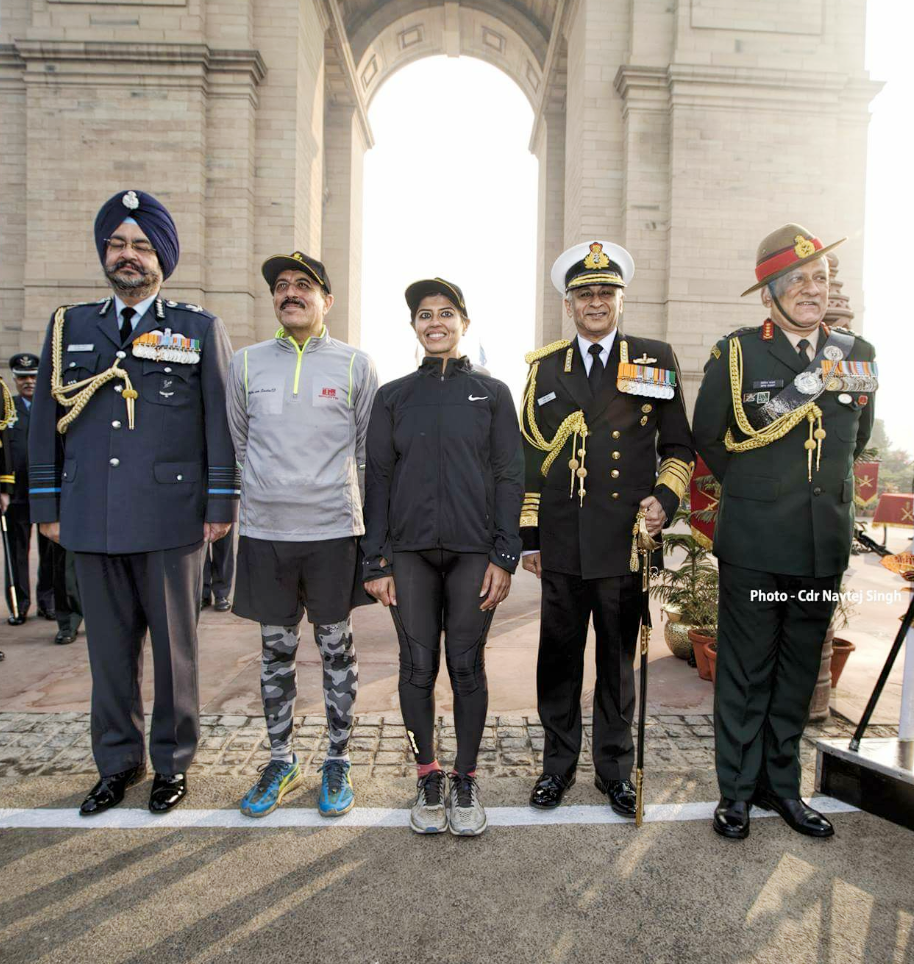
Lieutenant Colonel Sundaresan Renganathan (Retd) set out to make his fiftieth birthday different and meaningful. This is his story.

Towards the finish line of the Western Naval Command Navy Half Marathon on November 19, 2017, two siblings ran side by side the last kilometer of their respective runs.

Saroja Narasimhan was completing her 10 km-race while her brother Sundaresan Renganathan, a retired army officer, was finishing his fiftieth marathon in fifty weeks with just that day between him and his fiftieth birthday.

Age is usually treated as just another number. But fifty has a special ring to it. For Sundaresan, 50 was sufficient reason to do something. “The thought that came to my mind was – why not run 50 marathons in 50 weeks and conclude it just before I turn 50?” he said.

On November 19, 2017, Sundaresan was up by 1 AM at his house in Kharghar, one of the prominent townships of Navi Mumbai.  Given the event he was running was a half marathon organized by the Western Naval Command, it became essential  that he run a half marathon in advance so that his day’s run would measure up to a full. Sundaresan’s run therefore started at 3 AM. He had the company of a few runners, who volunteered to run the distance from Navi Mumbai’s Vashi to Mumbai’s Bandra-Kurla Complex, the starting point of the navy half marathon.

Sundaresan with his sister and brother in law, at a pre-race day function in Kargil (Photo: courtesy Sundaresan)

Apart from Saroja, many of his family members, friends and batch mates from the army turned up to cheer him at the finish line.

“What can I say? He is my mentor. It’s great to run with your guru. He is my baby brother but in running he is my motivator and my guru,” Saroja said. Now 61 years old, she was nudged into running at the age of 58, by Sundaresan.

The idea of being a runner, reached Sundaresan late. While in the army, for 13 years he was posted to Jammu & Kashmir with stints in Siachen, Poonch, Doda and Srinagar. There was adequate trudging up and down the mountains that served him as endurance training. Amid this, over 1500 kilometres away in Mumbai, in 2004, the Mumbai Marathon, sponsored by Standard Chartered bank, made its debut. Sundaresan was posted at Pathankot then. His sister-in-law called him to tell him about Mumbai Marathon. “The idea got into my head,” Sundaresan said of how his running started.

Born 1967 in a family of six siblings, Sundaresan was not actively involved in competitive sports in his schooling days at AFAC School in Chembur, a suburb of Mumbai. Following school, he joined SIES College to secure a degree in chemistry. He was into sports including some bit of running in a rather informal way, nothing competitive ever.

From a stadium run in Delhi, the seventh marathon from his planned 50 (Photo: courtesy Sundaresan)

While many of his classmates were making furious attempts at going overseas, mainly the U.S., to pursue further studies, Sundaresan, readied himself to join the armed forces. “During my college years I was active in NCC and I was sure that I wanted to join the army,” he said. He was commissioned into the Rajput Regiment, an infantry regiment of the Indian Army. There, he stayed for 23 years, before seeking voluntary retirement as Lieutenant Colonel.

For much of his years in service, active participation in any official sport was not possible but the accent on fitness was strong. In 2008, he got posted to Mumbai. Given residence in South Mumbai’s Colaba there could not have been more appropriate moment and location to start running. Sundaresan registered for the 2009 Mumbai Marathon to run his first timed half marathon. That trend continued into 2010’s Mumbai Marathon as well. Soon after that he wanted to move into the full marathon and was aiming to run the full marathon at the 2011 edition of Mumbai Marathon. But his initiation into the full happened in 2010 September when he ran the Kaveri Trail Marathon. This was followed by another full marathon in December, the Sabarmati Marathon.

In Mysuru with Ajit Thandur and other runner; Mysuru was was host for the twenty second run (Photo: courtesy Sundaresan)

In 2010, he chanced upon Amit Sheth’s book, Dare to Run, on running the Comrades in South Africa and immediately decided to attempt this iconic ultramarathon.  Comrades is the world’s oldest ultramarathon and now it’s biggest. At present, nearly 20,000 people run this ultramarathon every year. They come from different countries. The race alternates every year between uphill and downhill with the former measuring 87 km and the latter, 89 km. Founded as a war memorial, over time Comrades has acquired the reputation of being a fantastic event, remembered for the bonhomie, crowd support and cheering.

In 2012, Sundaresan retired from the army. Jobs in the private sector that came his way were primarily for heading security. He worked for ITC Grand Central Hotel, Panoramic Group and had a short but tight stint at the Board for Control of Cricket in India (BCCI) in connection with the T 20 World Cup and IPL 2016. During these years, he never let go of his desire to run Comrades and registered for the 2016 edition of the run. This edition was the downhill version.

To get the final confirmation for the run he had to secure sub-five hour timing in the marathon. For someone who was running the marathon in excess of five hours, he had to first focus on sub-five hour timing. He eventually achieved it at the 2016 Mumbai Marathon where he finished 42.2 kilometers in 4:36:49.

“I took tips from many of the runners who had attempted Comrades. Satish Gujaran was one of them. But I did not have a structured training program,” he said. Satish, an ultrarunner will be attempting his ninth consecutive Comrades in June of 2018.

With Major D.P. Singh from the run in Sikkim, Sundaresan’s favorite from the 50 marathons he ran (Photo: courtesy Sundaresan)

Some amount of training was already behind Sundaresan by the time he finished the 2016 Mumbai Marathon. From February to April of 2016, he was tied up with work, as part of his assignment for BCCI, for T20 cricket World Cup followed by IPL 2016 season which runs through April and May of every year.

Heading security, he was required to travel to various destinations where the teams were playing. “I used to get up at 2 AM to do my running,” he said. During his hotel stays he did something unusual. He would enter the hotel’s swimming pool not to swim but to run the length of the pool. “I did all of two long runs. One of 54 km and the other of 56 km in February and March,” he said.

Sundaresan says he enjoyed Comrades thoroughly. According to him, it is a “should go” event for ultramarathoners. “It’s a fun event but yes one should go prepared,” he said. He completed the run with a timing of 11:52:54 hours, within the final cut-off of 12 hours.

Five months before his Comrades attempt, Sundaresan had already discussed the idea of running 50 marathons in 50 weeks with a couple of runner friends.

Once back from South Africa, he started developing his plan, which included listing out all running events through the year across the country and accounting for the weeks when there would be no marathon events especially during the summer months.

With Colonel Sandeep Madan at the marathon in Nainital, the thirty eighth from the planned 50 (Photo: courtesy Sundaresan)

With Dipak Suryavanshi, runner from Nashik, at the Shimla Tuffman run, the twenty seventh marathon for Sundaresan from his planned 50 (Photo: courtesy Sundaresan)

Funding was a major requirement and Sundaresan realized that he would have to dip into his earnings. Once family (wife and daughter) and siblings’ approval was sought he went about diligently writing to companies including sporting entities to seek funds. “I wrote to many companies and also to some sports companies. Nobody responded positively,” he said. After six marathons, Global Group of Companies agreed to pick up his air fare for travel to marathons across the country.

Alongside, he also thought of running for a cause – raising funds for the families of martyred soldiers. His endeavor got a name thereby – Run with a Soldier, Run for a Soldier. The cause of his run brought in some incentives. At some running events, organizers waived off his registration fee and also offered accommodation.

He embarked upon his run on December 11, 2016 with the Vasai-Virar Mayor’s Marathon. For the next 49 weeks, Sundaresan was crisscrossing the country to run marathons where marathons were available or running two half marathons where the event was a half marathon.

Sundaresan traveled to various destinations to run his marathons – Kargil, Ahmedabad, Hyderabad, Chennai, Bengaluru, Pune, Mumbai, Guwahati, Dehradun, Sikkim, Manipur, Rookee, Raipur, Matheran, Kochi, Saputara and Shimla among others. The aim was to cover as many states as possible.

“Fifty weeks is a huge time period. Anything could have gone wrong during this period. Thankfully, family support was superb,” says Sundaresan, who often left on Friday for his outstation marathons and returned on Monday, missing weekend with family.

Paying respects to his late father with a sign of `20′ after the run in Guwahati, the twentieth run from the planned series of 50. Sundaresan lost his father just days before the event (Photo: courtesy Sundaresan)

During these weeks of running, Sundaresan experienced two setbacks. On April 20, 2017, he lost his father. “It was a Thursday and on Friday I was scheduled to leave for Guwahati for the twentieth marathon on Sunday, April 23. That evening after the cremation was completed, the extended family came together to goad him to go for his run and his mother was duly informed. “She told me, go and run. Your father’s blessings will be with you,” Sundaresan said.

The second setback came during the 44th week when he woke up with viral fever. Slated to leave for Pune, he had to cancel his run and also had to skip the next week’s marathon at Surat. Over the next two weeks he decided to run four marathons to cover up the loss of the previous two weeks.

He rates his best marathon to be the one in Sikkim in May, when the army went all out to make arrangements for the run from Changu Lake to Gangtok. “There was no organized run in Sikkim. But I chose to run here to get a break from running in in the May heat,” he said. India’s first blade runner Major D.P. Singh, retired army officer, ran with him a distance of about 25 km.

With wife and daughter after SCMM, typically a family outing. For Sundaresan, this was his sixth marathon from the 50 (Photo: courtesy Sundaresan)

Among the running events he went to, he rates the Dream Runners’ Half Marathon of 2017 held in Chennai as the best half marathon event. Of course, he had to run a half marathon before the event to make it a full marathon. “I started running from Valsaravakkam at 2:30 AM and then joined the starting line of the half marathon,” he said. The distance from Valsaravakkam to the starting line is 18 km and he covered the balance 3 km running around at the start point. The toughest marathon was the Tuffman Shimla Trail Marathon where the entire route was trail with good amount of elevation. One of those who had a ringside view of Sundaresan’s project was Dhaval Ajmera, Executive Sous Chef at ITC Grand Central. “When I met Lt Col Sundaresan, who was the head of security at ITC Grand Central, I realized that he was into running. I was already into running. We started running together. I was quite comfortable and it was great fun running together. Even after he quit his job at ITC and moved out to another job, we continued running together. He told me about his plan to run 50 marathons in 50 weeks.  I have been able to help him to some extent. I ran with him some distances in couple of his marathons, including the final one at Navy Half Marathon. He was quite dedicated to the cause of his run,’’ Dhaval said.

With family and course mates after the fiftieth run, which was melded into the Western Naval Command Navy Half Marathon in Mumbai (Photo: courtesy Sundaresan)

In the initial weeks of the 50 marathons in 50 weeks-challenge, Sundaresan added a couple of short practice runs in between his marathons. But as the weeks went by he dropped it to a single run and finally gave up running for practice. Instead he focused on strengthening and stretching, which, he believes, stood him in good stead over the 50 weeks. He did not sustain any injury. Averting injury was high on his priorities. He made sure he ran slowly and at events, never more than the marathon distance he was required to meet. He was assailed by cramps only in two of his marathons – one at Matheran, the other was the navy half marathon.

Sundaresan was able to raise Rs 27 lakh for martyred soldiers. Twenty seven families were chosen to be given one lakh rupees (Rs 100,000) each. “ The money is in the process of being disbursed,” he said. The pattern used for raising funds and disbursing them was simple. Given Global Group of Companies was the main sponsor, Global Foundation became the temporary repository of funds raised. They would then make out the payment as required to Sundaresan, for onward disbursement. The beneficiaries – families of martyred soldiers – were identified with the help of the army; Sundaresan contacted the commanders of the units he had served with for the same. Most of the 27 families identified had members – since martyred – serving with the Rajput Regiment. A few are connected to Rashtriya Rifles.

At the finish line of the final marathon at Mumbai’s Bandra-Kurla Complex, Sundaresan felt happy that the project had ended smoothly. “The credit for this goes to my army training,” he said.

(The author, Latha Venkatraman, is an independent journalist based in Mumbai. This article is based on a conversation with Sundaresan Renganathan. Except for the first photo, all the other photos used herein were downloaded from Sundaresan’s Facebook page and used with his permission.)