REMEMBERING ZORBA

???????????????????????????????Here’s an article originally published in 2012.

Seen from far, a glass of Gold Coin apple juice and a glass of whisky are not all that different. I was just about in high school. Apple juice in hand I sat in the living room of my uncle’s house in Kochi as he and my father shared a drink. On a shelf by the side, a turntable marked 33 rotations per minute. From the kitchen, the aroma of my aunt’s cooking wafted in. I don’t recall when the song was first played or what attracted me to it. But it was a request my uncle always obliged whenever we visited – Frank Pourcel’s orchestra playing `Zorba’s Dance.’

The song opened haltingly, then picked up speed and exploded to madness. There was something masculine about it. Not in a gruff, rough fashion but in a demented sensitive way lost on today’s competitive world. This song bothered about person and universe. That seemed to be its attitude – to hell with everyone and everything! It wasn’t long before my uncle spoke of Anthony Quinn and the film Zorba the Greek. He owned two versions of the title song– the Purcell and there was another energetic rendition with trumpets. I remained partial to Purcell. The original score was played with a plucked instrument, something I discovered much later.

For several years thereafter I knew nothing more of Zorba. Then one of the video libraries back home began accumulating titles from the black and white past of cinema. That library is no more there in Thiruvananthapuram but I still remember my membership number. From there I got a VHS copy of Zorba the Greek. The transition from imagery inspired by music to the actual story was jolting. I had built up this notion of Zorba as a dancing, vivacious Greek but not factored in the ambience he lived in or the story told as interaction between the two. This was serious cinema, story set in Crete far off from the US and its glamorous studios. I watched the film several times, burning into my head the mad face of Zorba; the writer Basil, played by Alan Bates and the pathos that surrounded Lila Kedrova’s Madame Hortense. I was amazed by how striking Irene Papas looked on black and white film and touched by the story of the widow – it was a universal story of the lone woman and the scene of Mavrandoni killing her could have been from anywhere. Equally universal I felt was the decline of man when in a group as personified by the villagers’ attitude towards the widow and the utter superficiality of human belonging as evidenced by the villagers stripping the Hortense residence of all things useful upon the lady’s demise.

The film was a turning point for many of its cast. The role of the santuri-playing Zorba was reckoned to be the zenith of Anthony Quinn’s career. It earned him an Oscar nomination although the two Oscars he got were as supporting actor in earlier films, Viva Zapata and Lust for Life. For Lila Kedrova, the role of Madame Hortense defined her Hollywood career. She won a best supporting actress Oscar. Alan Bates became much remembered as the gentle writer in the shadow of Quinn’s eccentric Zorba. For Irene Papas, the 1964 film cemented her presence in international cinema following as it did her appearance in The Guns of Navarone three years earlier. The film was arguably the most important one in the career of director, Mihalis Kakogiannis, also known as Michael Cacoyannis. He was nominated in three categories, including best director but did not win an Oscar. Composer Mikis Theodorakis, a noted political figure in Greece, has to his credit a vast repertoire of music. Zorba’s Dance remained his most memorable film score. That fantastic piece of music did not merit an Oscar nomination. However, two other Oscars did grace this unforgettable film – best art direction and cinematography. What I hadn’t tasted as yet was the original creative work behind it all – the novel by Nikos Kazantzakis. This famous Greek writer, who narrowly missed out the 1957 Nobel Prize for literature to Albert Camus, had to await the release of the Kakogiannis film to be world renowned.
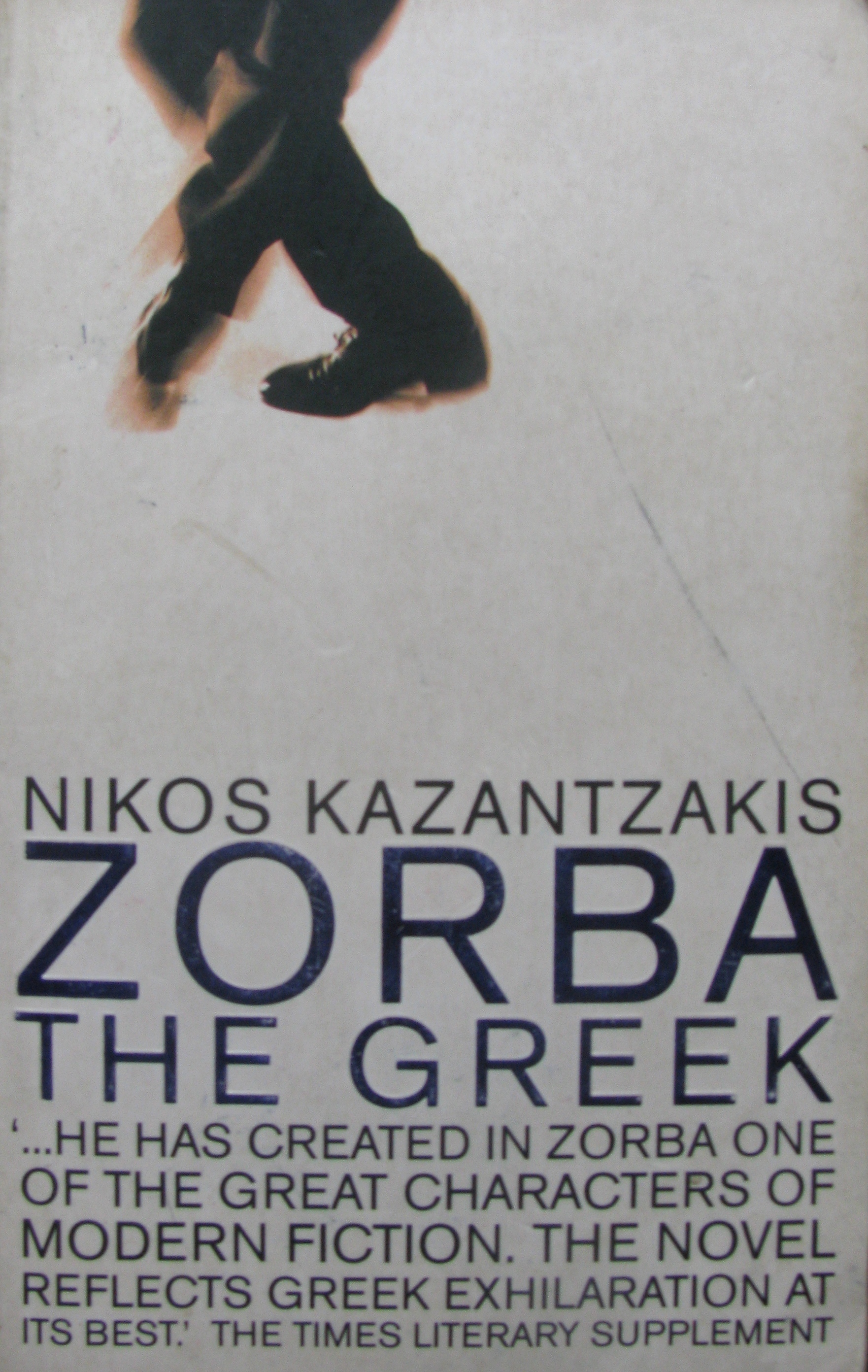
???????????????????????????????Several years went by. I was now journalist, probably as old as Basil (unfortunately not as rich to spare money for mining) and walking around Mumbai (an island like Crete), when I spotted a tattered copy of Kazantzakis’ book with one of the second hand booksellers at Flora Fountain. It was musty yellow, had fallen apart and the previous owner had stuck it up with cello tape. It was published by Ballantine Books and likely hailing from the fourteenth edition of the novel printed in February 1969 for right on top of the front cover, above a dancing Zorba, was the announcement, “ the smash Broadway musical!’’ After its success on screen, Zorba had two runs on Broadway and the book’s cover seemed to indicate the first from November 1968 to August 1969 with Herschel Bernardi as Zorba and Maria Karnilova as Madame Hortense. In the second avatar that ran from October 1983 to September 1984, Anthony Quinn and Lila Kedrova essayed on stage the characters made famous by them on celluloid. That old book was how I finally got around to reading the story of Alexis Zorba.

On the very first page was an abstract from Time magazine: “ who is Zorba? He is everyman with a Greek accent. He is Sinbad crossed with Sancho Panza. He is the Shavian Life Force poured into a long, lean, fierce-mustached Greek whose 65 years have neither dimmed his hawk eyes nor dulled his pagan laughter. Author Kazantzakis tried to kill him off in a letter. But he reckons without his own talent. He has created Zorba, but he cannot kill him.’’ From The Nation: “ Wonderfully moving, superbly written. Zorba belongs in the gallery of sainted rascals.’’ And on the back cover, the Saturday Review said: “ Alive with energy…Earthy and Rabelaisian – a strange journey into a haunting, wild and poetical conception of life.’’ The book was a splendid read. A few more years lapsed before I picked up a VCD of the film. Later, I bought a brand new copy of the book just in case my vintage edition fragmented for good.

I wonder what attracts me to Zorba. Maybe it’s that he broke free of people and became a person. Maybe it’s the specter of life laid bare. Madame Hortense and the widow – they are hauntingly that. They could be any of us despite changed times. Similar unchanged truth – the human insecurity that underlies man’s ornate constructions, echoes in Zorba’s irreverence for religion. Then there is Zorba’s view of life at large from women to writing. I can’t help liking Zorba. I love the music, the book and the film. Not to mention, that golden brown glow of apple juice in a glass long, long ago, among my first instances of being treated as a person.

(The author, Shyam G Menon, is a freelance journalist based in Mumbai. This article was published in The Hindu newspaper.)
EVEREST TO THE EAST

Here’s a story originally published in 2013.

It has been updated for developments since then.

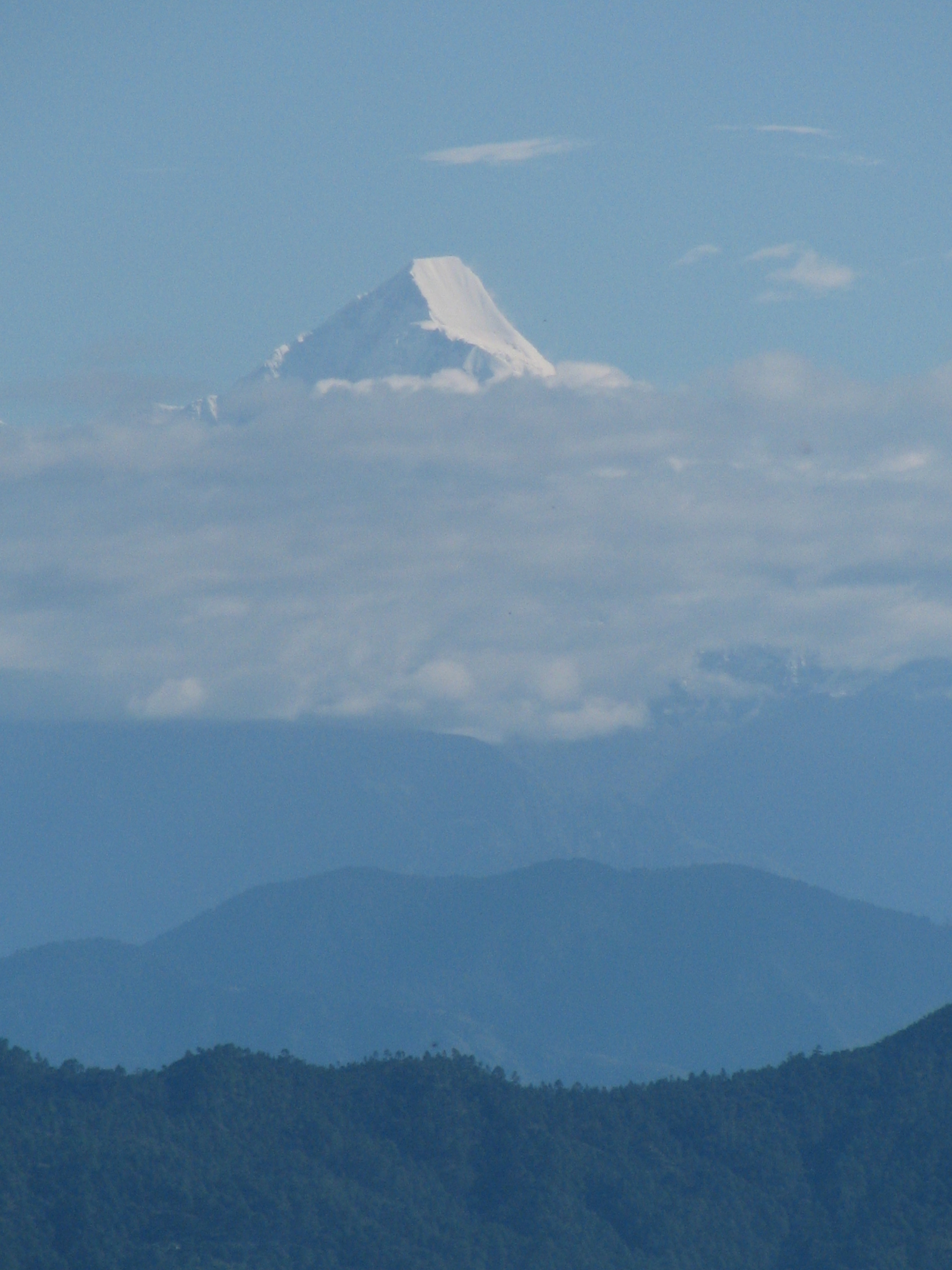
Nanda Kot (Photo: Shyam G Menon)

Nanda Kot (Photo: Shyam G Menon)

At 6861m, Nanda Kot is the highest peak in the impressive arc of mountains guarding the Pindari Glacier area in Kumaon. On the map, this place falls in the eastern half of the Indian state of Uttarakhand through which the Central Himalaya passes.

In 1989, a youngster from Kumaon’s Munsyari region – to the east of Nanda Kot and not far from the Nepal Himalaya – reached the summit of the peak with a team from Lucknow, the city where he studied.

Willing to do anything to be on a mountaineering expedition, he had literally worked his way to the summit doing all sorts of jobs for the expedition. Atop Nanda Kot, he was happy for mission accomplished. He had no idea of what lay ahead, for although at ease at altitude reaching thus far had been quite a journey for the young man hailing from Bona, a village 2200m up in the Kumaon Himalaya and roughly 35 km away from Munsyari. He knew he wanted to return to mountaineering but just then it all seemed too much for him. Certainly he doesn’t recall giving any special attention to the eastward stretch of the Himalaya moving into Nepal, where on the edge of that country and Tibet towered the world’s highest peak.

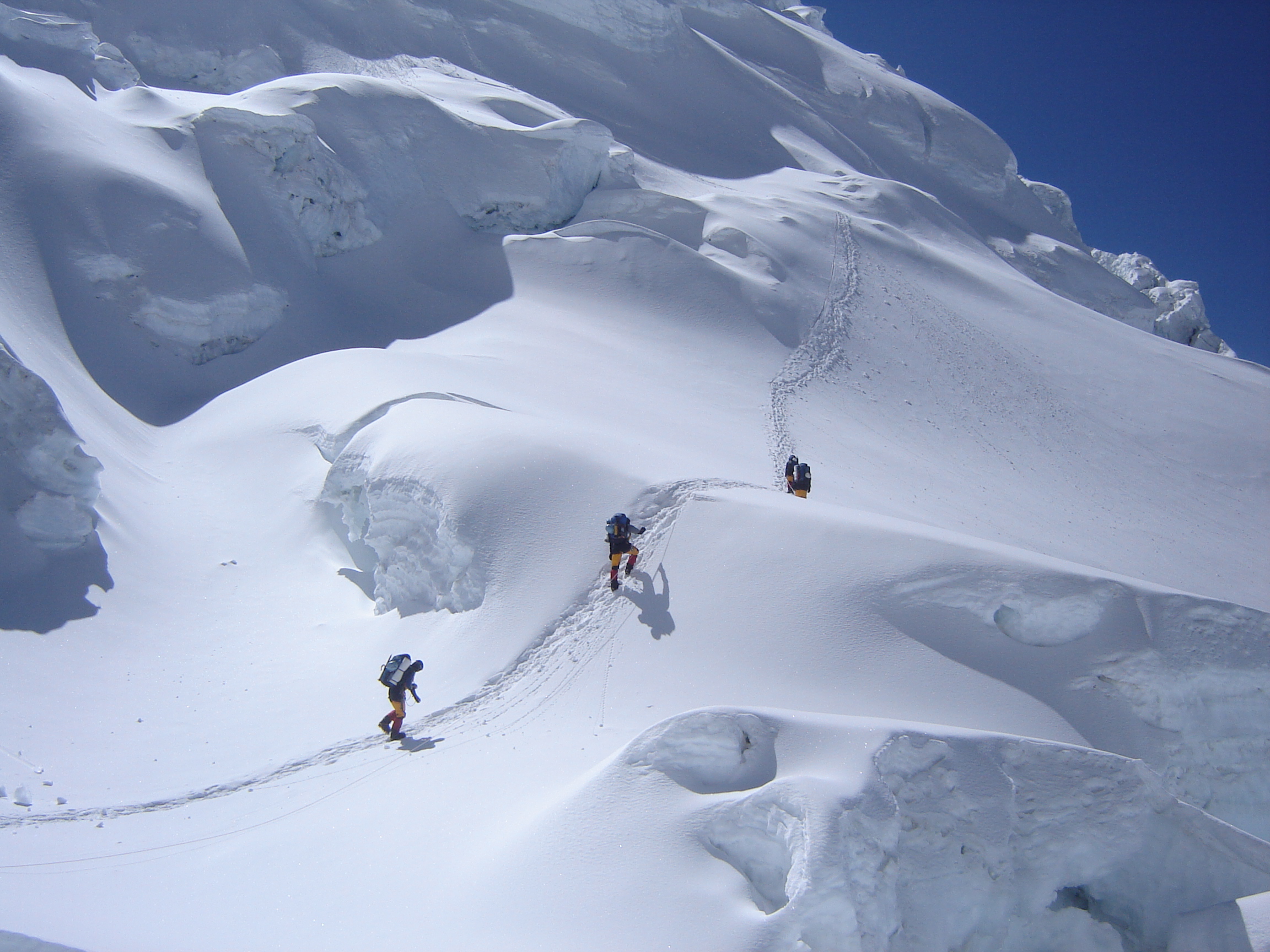
On Kanchenjunga (Photo: courtesy Love Raj Singh Dharmshaktu)

On Kanchenjunga (Photo: courtesy Love Raj Singh Dharmshaktu)

Nanda Kot was the young man’s first expedition. Life continued nondescript. He did his `adventure course’ from the office of UP Tourism’s Officer on Special Duty (OSD) in Uttarkashi (those were the days of undivided Uttar Pradesh [UP], when the yet-to-be Uttarakhand was still part of the large state of UP). The facility provided a taste of adventure to school students; teachers, young people. He worked there as a help earning Rs 75 daily. In 1990, he did his Basic Mountaineering Course from the town’s Nehru Institute of Mountaineering (NIM), following it up with courses in Advanced Mountaineering, Search & Rescue and Method of Instruction. In 1992, he found berth on an expedition to the 7516m-Mamostong Kangri in Ladakh. Returning from Ladakh he moved to the 6236m-Nanda Bhanar, reaching near the summit with an expedition from Lucknow.

On Kanchenjunga (Photo: courtesy Love Raj Singh Dharmshaktu)

On Kanchenjunga (Photo: courtesy Love Raj Singh Dharmshaktu)

In 1997, the young man was Liaison Officer for a British expedition to the 6309m-Nanda Ghunti, led by Martin Moran. That trip exposed him to alpine style ascents which typically feature a small team with little hired help and climbers doing everything themselves. He then rushed to Gangotri where a team from Mumbai engaged in a set of pre-Everest climbs had asked him to join them. Their invitation is a complicated story, the crux of which was his role some time before in trying to retrieve the body of a Mumbai mountaineer. Eventually, the body was not retrieved but word reached Mumbai of the helpful young man. So, when Mumbai put together its first civilian expedition to Everest (Tata Group was the main sponsor) under the leadership of Rishikesh Yadav, our young man was made team member. Months later, in 1998, two summit windows would open up for the Mumbai team during their climb from the Tibet side. In the first, Surendra Chavan, then working for Tata Motors, would reach the summit of Everest (8848m). In the second, a young man, who almost ten years before had been on Nanda Kot stood at the world’s highest point. Expedition over, he returned to his job at the OSD. But Everest and Love Raj Singh Dharmshaktu had commenced a journey.

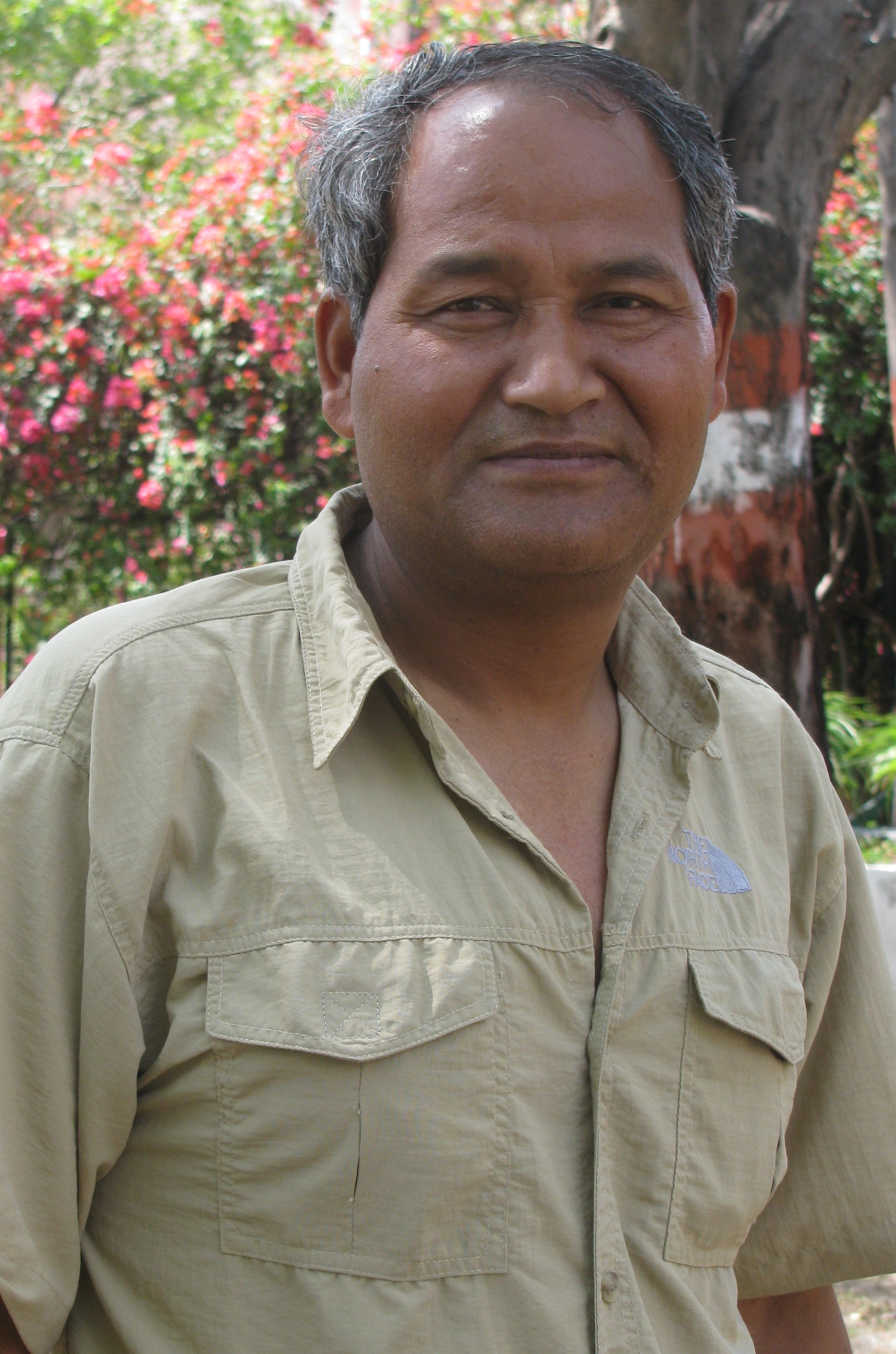
May 2013 marked sixty years since the first ascent of Everest by Tenzing and Hillary. In a world where people are introduced as `Everester so-and-so,’ Love Raj carried his life in mountaineering lightly on his shoulders. For one, he doesn’t call himself `Everester.’ He is very unassuming, walking casually with slightly stooping shoulders, at peace with the world – which was how he walked in to the office of the Indian Mountaineering Foundation (IMF) in New Delhi, March 2013. People said hello and as we sat in the cafeteria for an interview, an official wished him luck for an upcoming trip to Everest and requested him to look after the others too for he was by now among the most experienced climbers in India for attempting Everest. Should that trip happen, it would be Love Raj’s seventh shot at the summit. He was already the first Indian to have successfully climbed Everest four times.

Love Raj on the summit of Everest (Photo: courtesy Love Raj Singh Dharmshaktu)

Love Raj on the summit of Everest (Photo: courtesy Love Raj Singh Dharmshaktu)

Everest is probably the best studied 8000m-peak. `Wired’ should be the word, for its normal climbing routes have been so well mastered by commercial agencies that save for vagaries of weather and the trade’s own avarice causing congestion and accidents on the mountain, well performing clients are nearly assured of a summit. An Assistant Commandant with the Border Security Force (BSF), some of Love Raj’s successful ascents were on the normal route. But look closer and it isn’t that simple. He tried and lost on the less wired tough routes. Point is – he tried. In 1999, noted mountaineer Santosh Yadav led an Indian expedition to Everest’s Kangshung Face, among the toughest mountain faces in the world. Love Raj was part of it. Between Camp 2 and Camp 3 he was hit by a falling stone that smashed his goggles and injured his eye. He had to be evacuated. In 2001, Loveraj was back on Everest, again on a route on the East Face in a team led by Santosh Yadav. The team got to the highest point yet reached on that route, he said. Meanwhile with the BSF, he climbed Satopanth (7075m), Kamet (7756m), Mana (7274m) and Abi Gamin (7355m). In 2006, he reached the top of Everest with a BSF expedition. In 2008, on another BSF expedition, he successfully climbed Kanchenjunga (8586m). In 2009, as climbing leader on NIM’s Everest expedition, Loveraj reached the summit for a third time. His fourth time on the summit of Everest was in May 2012, part of the Eco Everest Expedition organized by Nepal’s Asian Trekking with a berth for himself sponsored by Woodland, the well known shoe and apparel brand. On this trip, one that also cleaned up the mountain, Love Raj did more than the regular clean-up procedures, picking up garbage even from the approaches. He also attempted to climb without using bottled oxygen but eventually submitted to its use from higher camps.

Love Raj Singh Dharmshaktu (Photo: Shyam G Menon)

Love Raj Singh Dharmshaktu (Photo: Shyam G Menon)

A superlative known worldwide, Everest attracts for the glory it promises. Successful climbers become famous. Pay Rs 13-15 lakhs (1300000 to 1500000), another Rs 2.5 lakhs or so for equipment – all this is accessible, courtesy a commercial trip. This has diluted the sheen of Everest. However from a climber’s perspective, Everest is any day challenging and particularly challenging along its less climbed faces where few trophy hunters go. For example, Love Raj believes that Kanchenjunga is a technically difficult (he also loved its isolation with no other team around) but safer climb than Everest. Accounts of Everest’s East Face are replete with avalanches and seracs while on its normal route lay the Khumbu Icefall. So why does he keep going back? Love Raj attributes that to a desire to test himself, Everest being well known (he doesn’t deny that) and the fact that some of the opportunities he got were to climb from less attempted faces. Both the East Face expeditions, he said, progressively leached fear away from him as he improved his technical skills. Most important, Love Raj credits his good fortune at being able to visit Everest repeatedly, to his humility, born from a hard life in the mountains. “ I struggled in life. No work on any expedition was below my dignity to do. That baked my character and even now I don’t hesitate to do any work on an expedition. I know struggle and I know when someone else is struggling,’’ he said. Asked for his impression, Rishikesh Yadav, who led the 1998 Everest expedition described Love Raj as “ tough, dedicated and resourceful.’’ Love Raj is a recipient of both the IMF Gold Medal and the Tenzing Norgay Adventure Award.

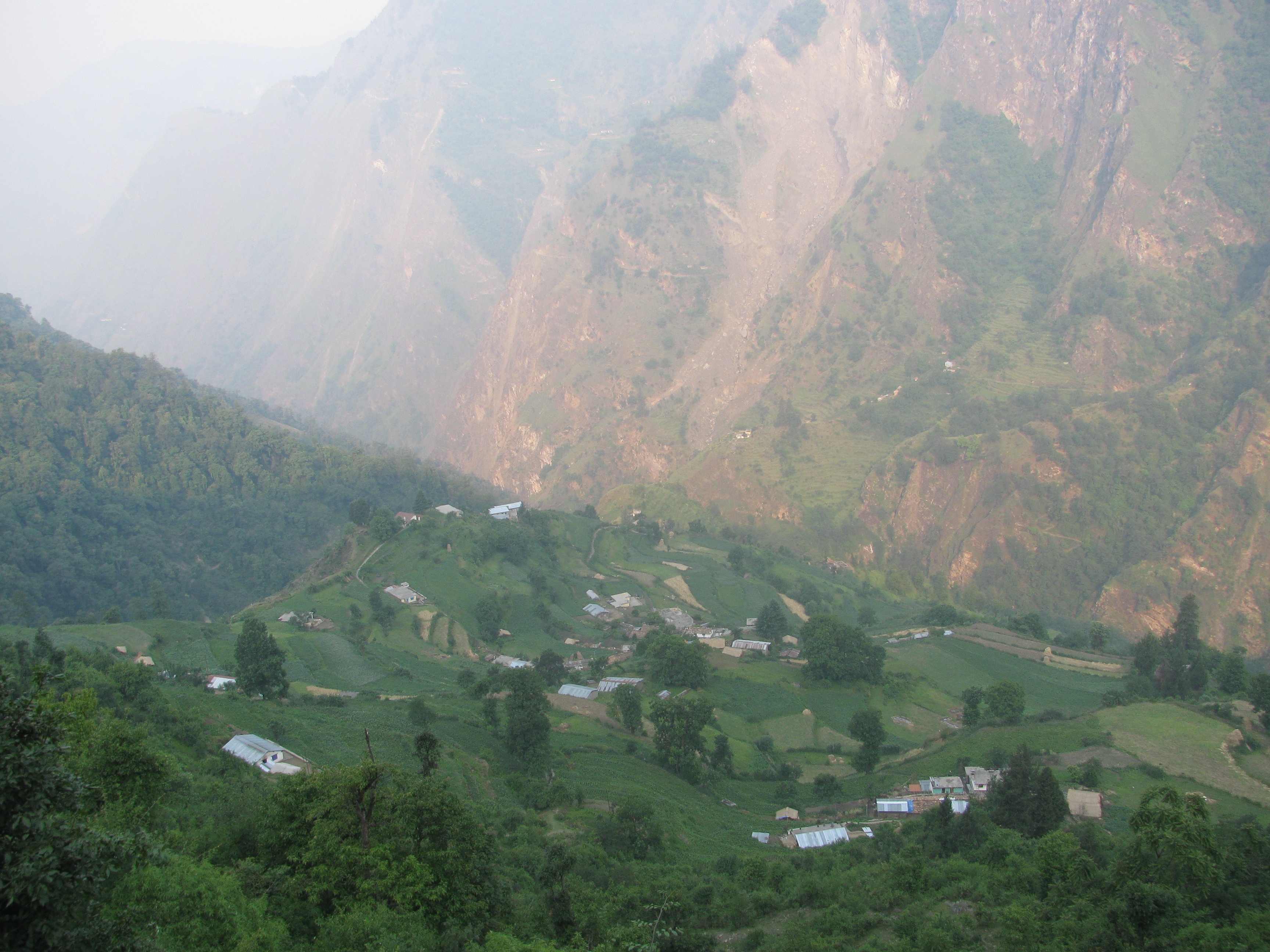
Bona, the village where Love Raj grew up (Photo: Shyam G Menon)

Bona, the village where Love Raj grew up (Photo: Shyam G Menon)

Interview over, we had lunch at a restaurant nearby. I found that Love Raj had turned forty just the previous day. He talked affectionately of his new born son. His wife Reena is a mountaineer, an outdoor educator (she has worked with the US based-National Outdoor Leadership School [NOLS]) and the first Indian woman to ski to the South Pole. Life had come a long way since Nanda Kot. On the evening of May 21, 2013, I chanced to call up Reena in Delhi. According to her, early that morning, around 6 AM, Love Raj reached the summit of Everest; his fifth successful climb to the top of the peak. The news arrived through agencies in Kathmandu, she said.

In 2014, Love Raj was one of the recipients of the annual Padma awards for civilians, given by the central government. He got a ` Padma Shri.’

For all that happened since 1989, he doesn’t recall paying any special attention to the eastward stretch of the Himalaya, from the top of Nanda Kot.

He had been just happy for first mountain summit reached.

Please note: the height of peaks are as mentioned in Wikipedia and the Himalayan Club Journal.

(The author, Shyam G Menon, is a freelance journalist based in Mumbai. This article was originally published in 2013 in The Hindu newspaper.)
OLD WEATHER NO MORE

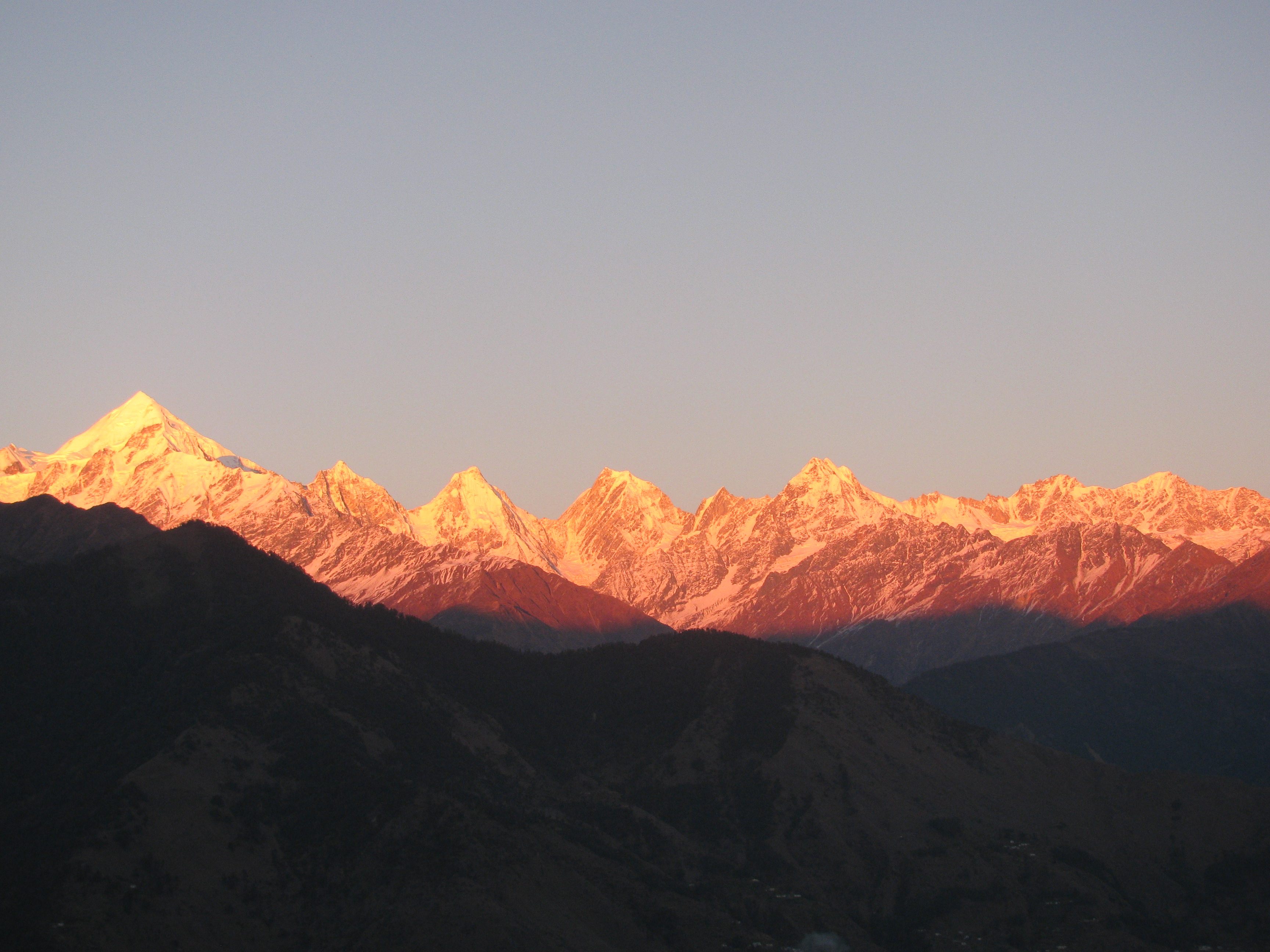
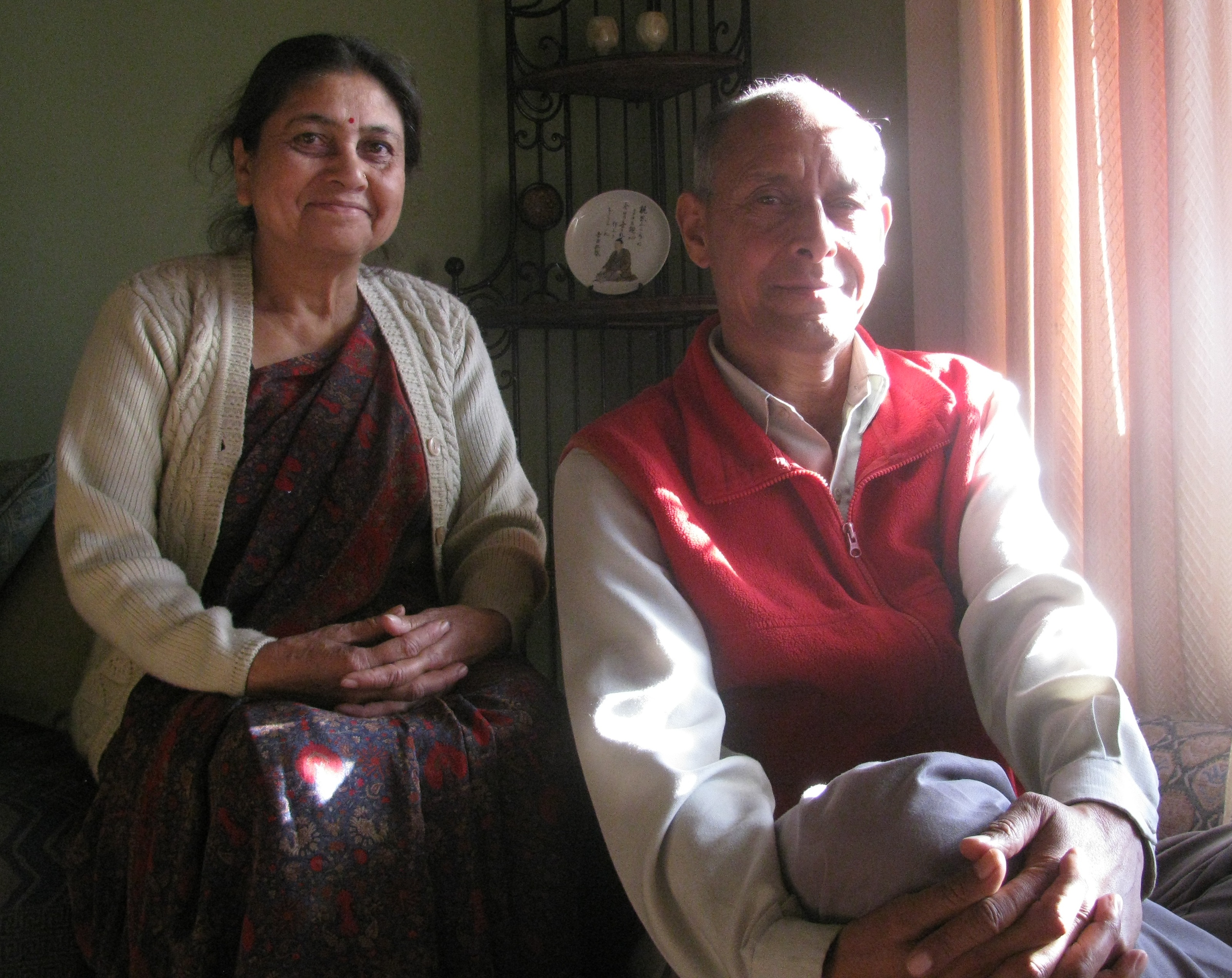
Panchchuli range at Munsyari; the normal view on a clear evening. (Photo: Shyam G. Menon)

Panchchuli range at Munsyari; the normal view on a clear evening. This picture was taken in fall 2013 (Photo: Shyam G. Menon)

July 2nd; it finally rained in Mumbai.
One hopes it is the monsoon.
Hope is a good word.
The morning run was wonderful.
Drenched in steady rain, shoes soaked by water collected on the road.
The following is an account from earlier days.

At his house in upper Paton, next to the trail leading to eastern Kumaon’s Ralam Valley, Kharak Singh empathized with the weather beaten hikers relishing the roti and daal his family had made.

Over a long trek of 44 days, threading various trails from Garhwal to Kumaon, we had precipitation in some form – rain, hail or snow – for some duration, everyday, for more than 30 days. Only the balance was totally precipitation free days. Singh was a friend, known well to one of us. In Paton, we decided to say hello and seek a break from our daily routine of cooking food. During dinner, he listened to our story. “ The weather has become unpredictable,” Singh said shaking his head.

Late-May 2014: Families in Paton were gearing up for their annual migration to higher pastures and farm lands. In summer they move up; in winter, they move down. Even the local school – teacher, students, books et al – migrates to premises higher up in Ralam for 3-4 months. Kharak Singh’s family was preparing to shift. Provisions had been bought. Two days after we had dinner at Singh’s house, we found pack loads for horses, mules and goats being readied. A white ram bolted trying to shake off the gunny bag strapped to its back. It ran around the house, ran circles around trees. Kharak Singh laughed; his grandchildren even more. The mirth hid a reality. “ We are already ten days late,” he said attributing the delay in migration to the fickle weather and untimely showers.

Snow at Sundardunga, March 2014 (Photo: Shyam G Menon)

Snow at Sundardunga, March 2014 (Photo: Shyam G Menon)

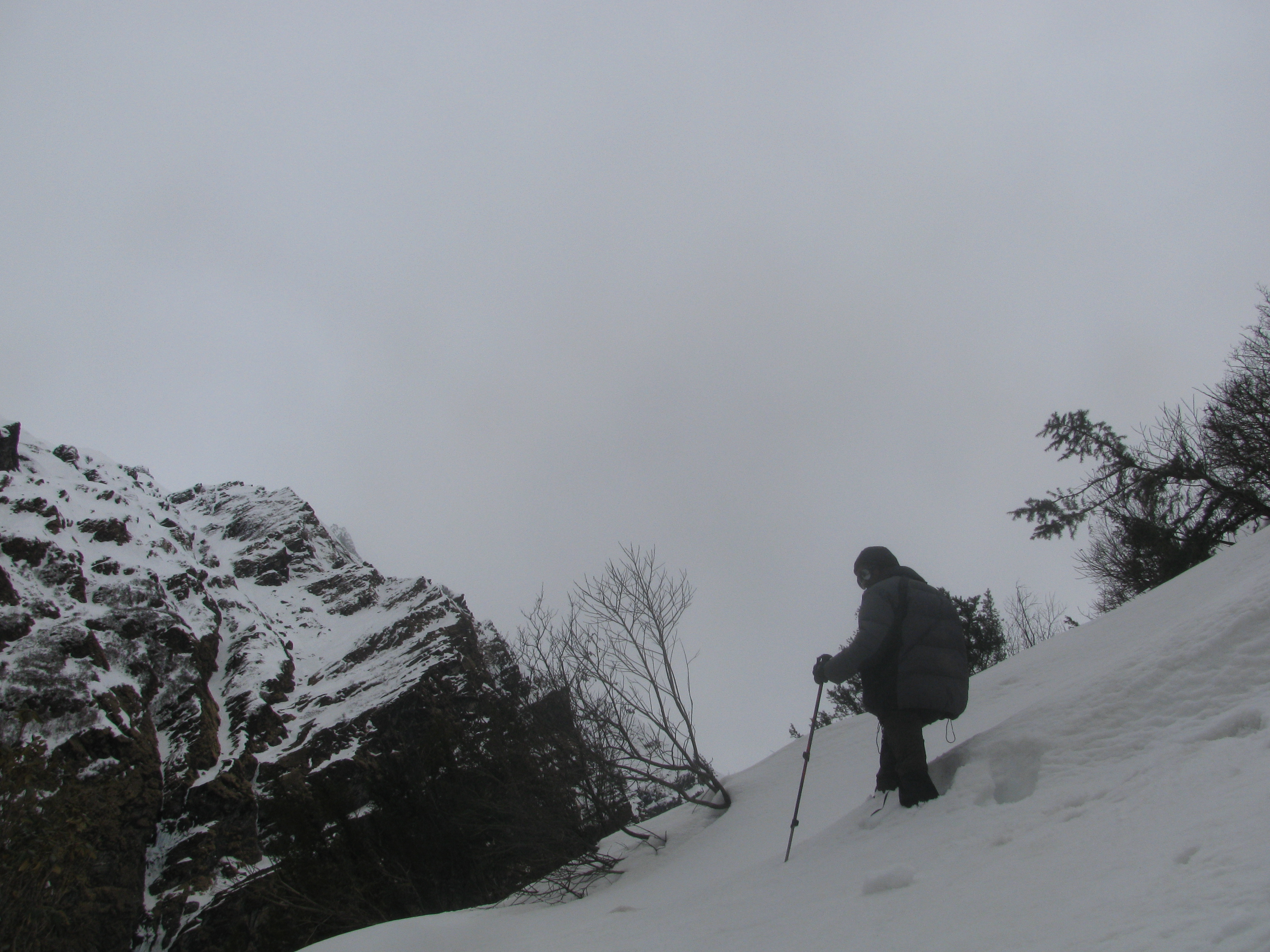
Similar to what we experienced in the early part of our hike, precipitation had apparently occurred here in the East Kumaon hills too. Then it gave way to welcome warmth, which grew to an unexpected heat. March to June is traditionally the Indian summer. In the Himalaya and while hiking there, it is never exactly so. The occasional shower characteristic of specific valleys, is a given. Further, it snowed well last winter. In early March, on a hike preceding the current hike, some of us had post-holed through thigh deep snow at places known to host snow at around 11,000 feet. With heavy pack on one’s back and leg stuck thigh-deep in gaps between boulders and tree roots concealed by snow, often, there was no way out except to slowly wriggle the leg free. It also rained in March making for a cold, wet environment.

By April-May and with the rains still around, villagers expressed concern at what the unseasonal showers meant for farming. In Namik, a villager quipped that life in Uttarakhand was beginning to resemble Chirapunji’s, once the wettest place on Earth. That was an exaggeration likely inspired by rain induced-calamity, a regular feature in recent years in the Himalaya. In 2013, hundreds of pilgrims had died in Uttarakhand following cloud burst and flood. It haunts. The worry colours comments about the weather. Not everyone inconvenienced by weather counted on pilgrimage and tourism for sustenance. Farmers were more matter of fact. One late evening at Bhainsia Kharak, a high altitude pasture between the Saryu and Ramganga valleys, we met a group of villagers with a goat in tow. Their agenda was literally down to earth. As the goat wandered around eating grass and licking our backpacks, the villagers informed that the animal was to be sacrificed to appease the local gods and usher in fair weather for agriculture. Unseasonal rain wasn’t good for crops in the field. “ Everything will be fine from tomorrow onward,” one of them assured.

The next day dawned clear. At the nearby mountain pass, we came across the villagers, idling after the early morning sacrifice. Then over the next couple of days, the rising heat grew so annoying that we found ourselves praying for a cold shower. It came, the sacrifice on Bhainsia Kharak notwithstanding.

“ I don’t know what’s going on but nowadays when it rains, it pours and when it is expected to be warm, it is hot,” Kharak Singh said. His observation seemed closer to fact; that’s the shift in weather pattern happening. As the heat increased, dust and smoke invaded the high ranges. It was the likely product of distant forest fires, perhaps smog from the plains too. After some days, the persistent heat culminated in rain. The cyclical process was classic high-mountain but the intensity of wet and warmth had changed. Post rain, the suspended dust settled. From a ridge overlooking the Goriganga River and the trail to Milam Glacier on the opposite side, we appreciated the visual relief. It was beautiful mountain world revealed.

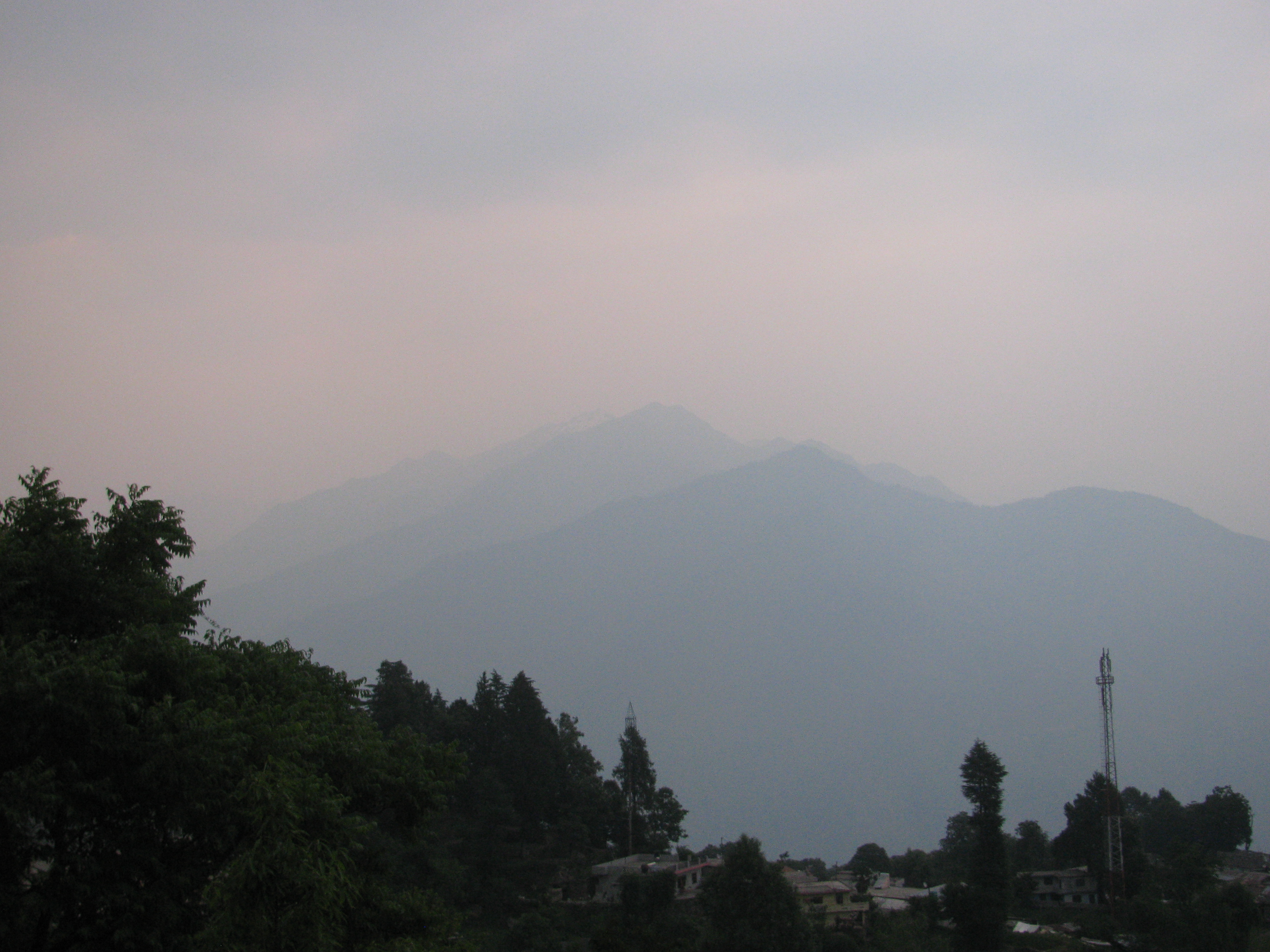
Munsyari, second week of June 2014. Somewhere behind that haze is Panchchuli (Photo: Shyam G Menon)

Munsyari, second week of June 2014. Somewhere behind that haze is Panchchuli (Photo: Shyam G Menon)

We got back to a Delhi boiling in the 40s (centigrade). Two days later, a dry, summer storm slammed the capital city. The world darkened with approaching dust and foliage swayed as though a T-Rex from Jurassic Park was ripping through it. Precipitation was little but the high speed-wind felled trees. The next day’s paper said: nine dead. Outside my room with ceiling fan, the scorching Delhi summer continued. Some days later in Ranikhet, I got my first ringside view of a forest fire. I felt the hot wind from the fire, in my face. I saw dry vegetation burn with a crackling sound. I had long known that pine forests are homogenous. The acidic pine needles fall on the ground and make it inhospitable for other plants and trees. They discourage variety in vegetation. Now I learnt another dimension – dry pine needles burn easily. Add to it, pine cones (they burn well) and hillsides; you have a fire that reminds of medieval wars, when armies used to roll down barrels of burning oil and tar. “ Pine cones roll off and spread fire. That’s why, sometimes, a forest fire on a hillside spreads in discontinuous ways,’’ Thakur Singh explained. We had come to assist a neighbour whose house was in the path of fire. When we poured water on the spreading forest fire it merely paused and smoked before resuming its wind aided advance. An hour later, the wind stopped and with it, the fire subsided; then died. Apart from an abandoned house with roof covered in pine needles, everything else survived safe. The forest floor was black. A dozen human beings, neighbours turned fire fighters, wiped the sweat off their brows. They had seen such fire before; they will see it again.

Typically the monsoon reaches India in June. It is both a life giver and a complex weather phenomenon formed through developments straddling a vast span of the globe. Early June, news reports talked of a monsoon, likely below normal. To blame is El Nino in the far off Pacific near Chile. Impacted, is South Asia half a world away. Such is the networked architecture of the planet’s weather! Illogical and lacking science it may be – but on the trail, we had speculated during rainy days whether such untimely and enduring showers in summer could mean a weak monsoon later. We are not meteorologists; just hikers.

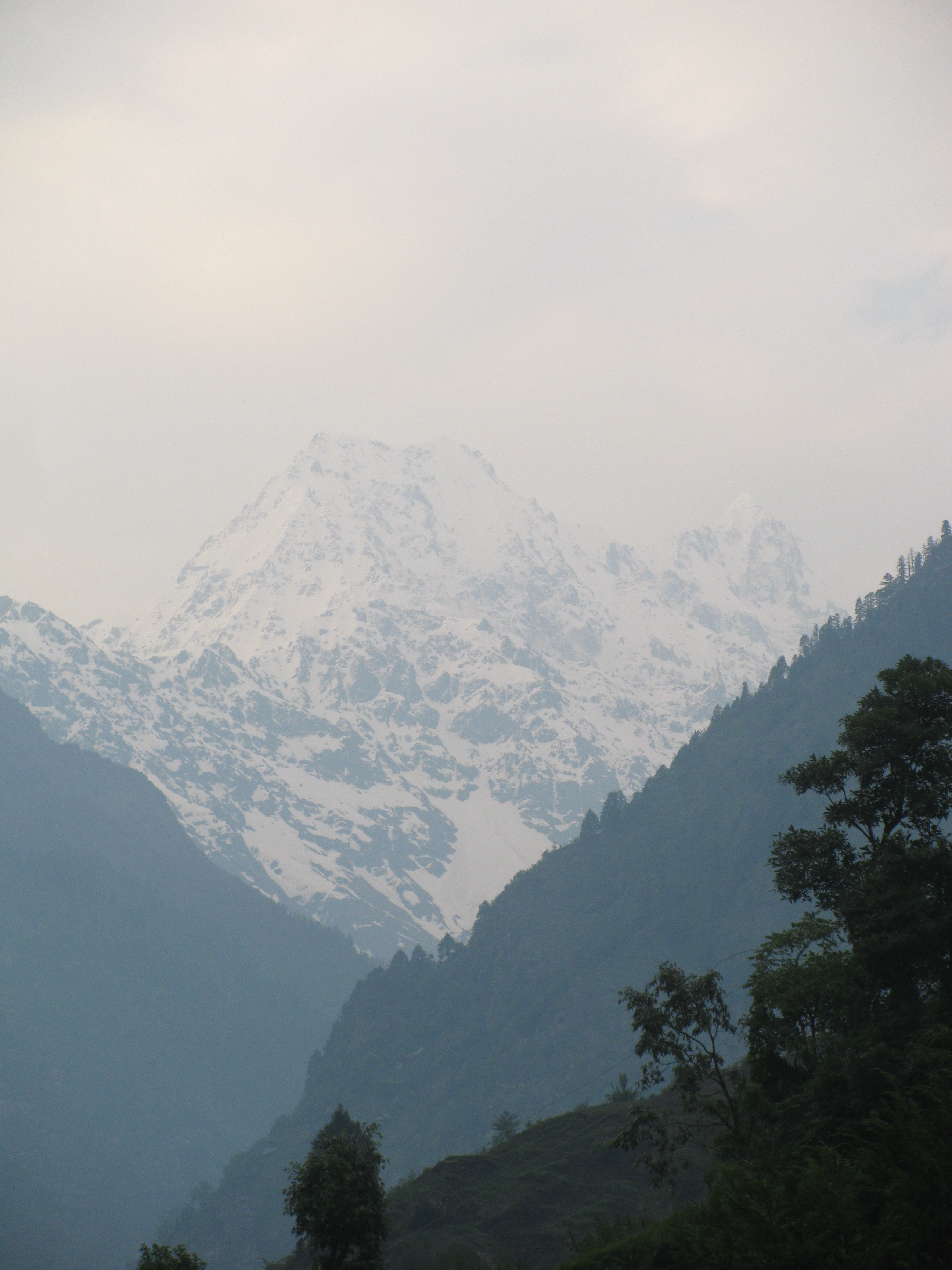
When the haze briefly cleared at Bona (Photo: Shyam G Menon)

When the haze briefly cleared at Bona (Photo: Shyam G Menon)

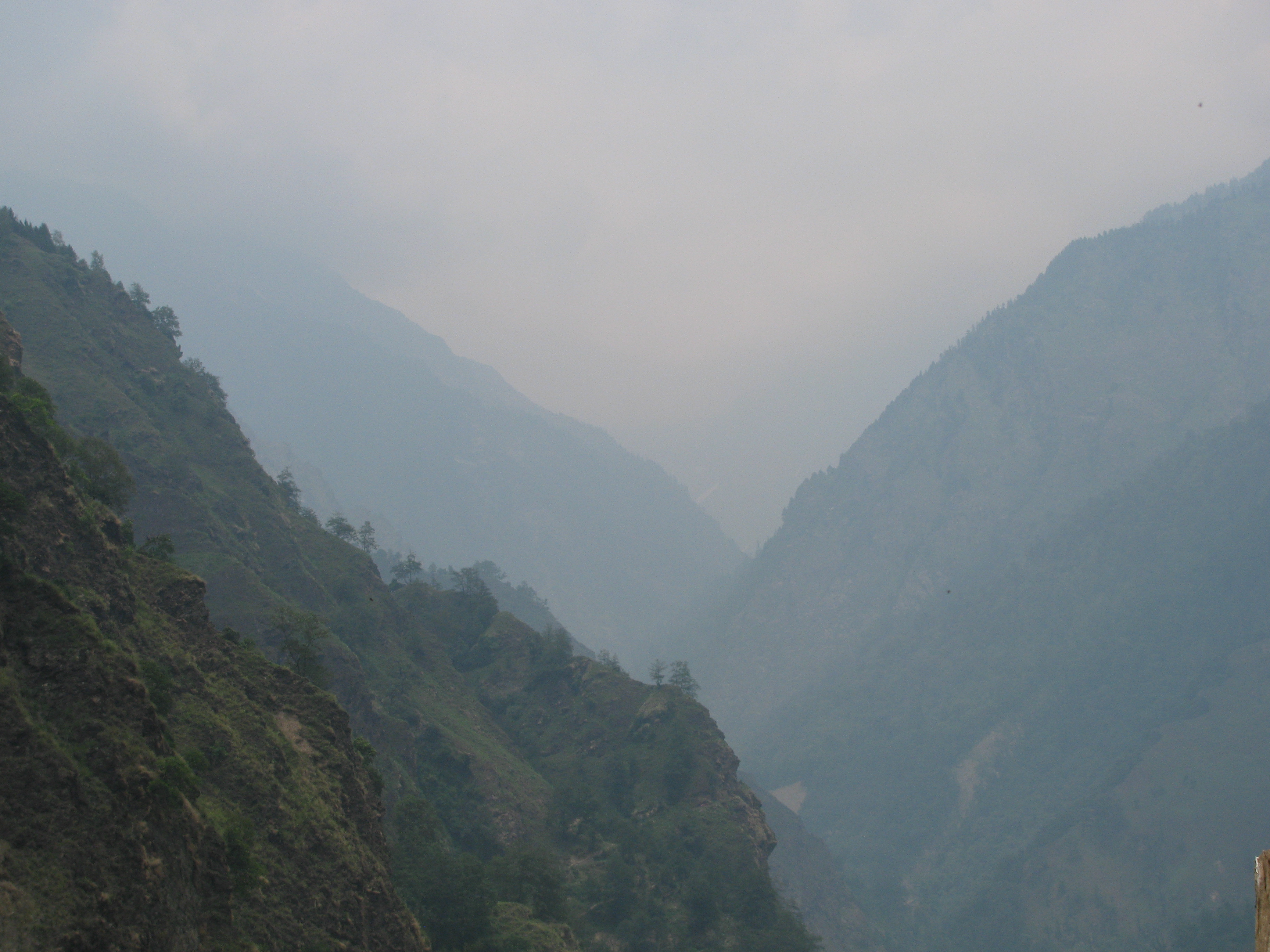
Bona's view; lost to haze again (Photo: Shyam G Menon)

Bona’s view; lost to haze again (Photo: Shyam G Menon)

Munsyari is famous for its view of the Panchchuli range. June second week: There is no trademark Panchchuli in Munsyari’s scenery. Instead, there is a thick haze. The Panchchuli is a major mountain range in these parts with the highest peak rising to over 22,000ft. They are also a marvellous sight. The haze had spray-painted them out. In the journey to this corner of Kumaon, I had seen table fans in the rooms and shops of the lower hills. Bageshwar had been baking hot and with erratic electricity supply to boot. Feeling stuffy, I had got out of my oven of a tiny lodge-room and walked aimlessly on the street. Yet Munsyari’s loss captivated. A whole mountain range wiped out from view said something of our dry, dusty summer. It was the same at Bona village, closer to the high mountains, from where you normally glimpse, at the apex of Penagad (a local name for the adjacent stream and its valley), a small portion of the range. An evening shower (the typical local outcome of extended heat) bared the peaks upstream, till the haze swallowed it again by next afternoon. Mathura Devi, longstanding resident of the village said, “ It is hotter than before, the haze is more and when it rains, it is heavier than before.”

The observation sounded familiar.

It is old weather no more.

Yet in this country, we have people who doubt climate change.

Maybe they live in climate controlled-rooms. Nobody outside and moving escapes the weather.

End June: am back in Mumbai. Aside from weak drizzle, that too just once or twice, there has been no rain here. As if with great difficulty, the sky occasionally gathers grey and then all the clouds blow away. Marine Drive resembles a magnificent amphitheatre for the city’s famous bay and its sky above. During monsoon, that sky is brooding dark; the sea, it lashes against the sidewall and sprays those walking by in foam. This time, the sea was calm; the sky, a vast vacant expanse in which a few clouds casually sailed by. Over June 1st to 25th, the deficiency in rainfall in India was around 40 per cent. Latest forecasts cited potential monsoon recovery by July 6th. The past few years have been years of economic inflation with price rise for one reason or another. Anyone would tell you that a weak monsoon could mean a bad year for agriculture with potential impact on food prices, in a country where food prices anyway rise thanks to hoarding. Amidst this worry, the government gifts the country a stiff hike in rail fares and then partially rolls it back. Inflation is like climate change. You don’t feel it in controlled atmospheres afforded by money and power. I am sure that as with climate change, there are people around asking – inflation? What inflation?

Meanwhile, there was news from Assam in North East India: a relentless downpour and flash floods in Guwahati.

(The author, Shyam G Menon, is a freelance journalist based in Mumbai. An abridged version of this article was published in The Telegraph newspaper.)

SHIPTON & TILMAN

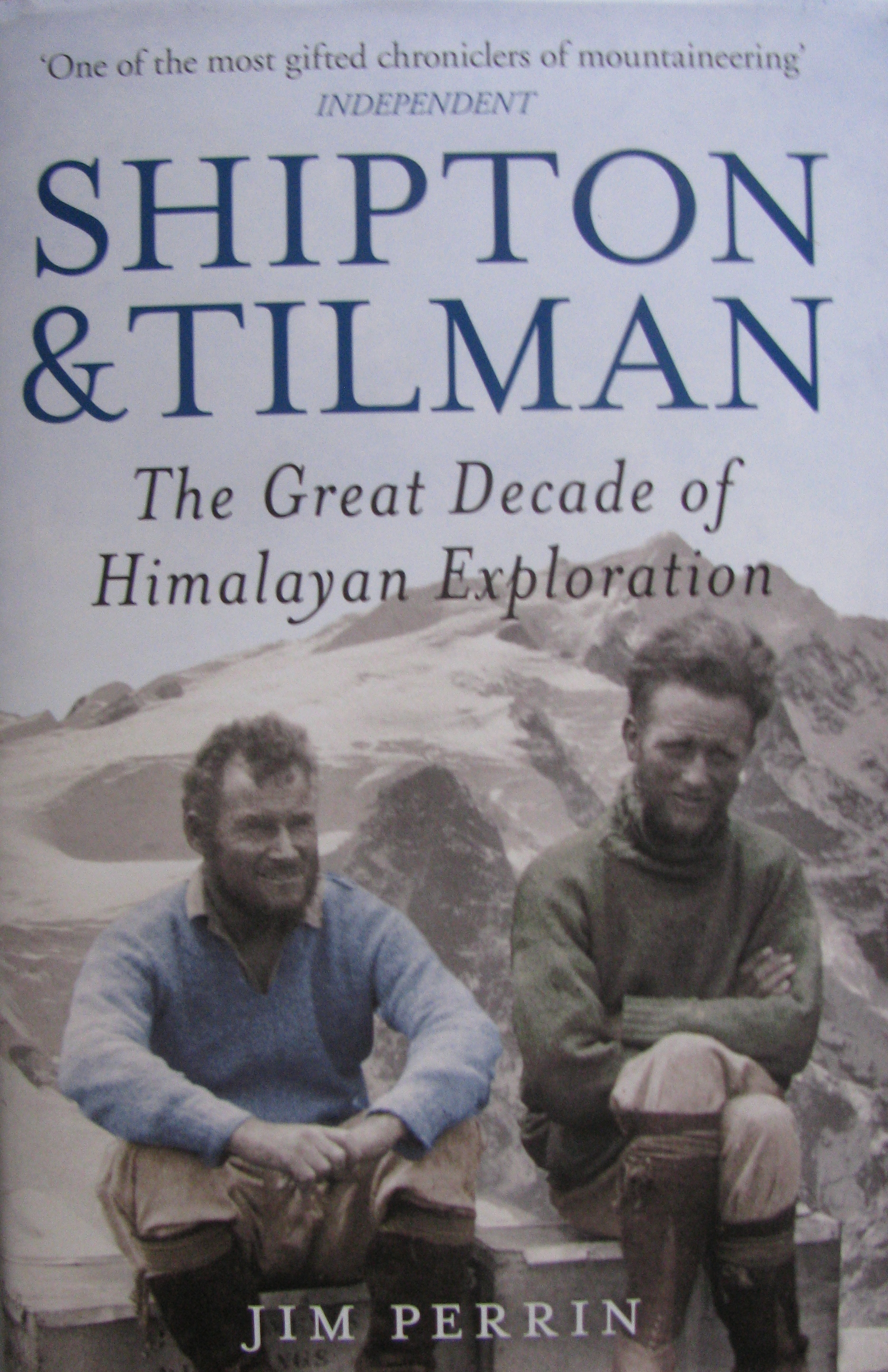
`Shipton & Tilman,' the book by Jim Perrin.

`Shipton & Tilman,’ the book by Jim Perrin.

The day I went to interview Jim Perrin, I forgot to bring my camera.

Unusual for mid-February, it had rained. It felt like early September, the relatively weak, tapering part of monsoon with grey sky and reluctant sun. In his room at the Royal Bombay Yacht Club, Jim sat facing the rain tinged light of the window. Beyond it was the road leading to the Gateway of India. The light filtering in graced the room, built big to colonial dimension and still preserved in the old style.

Jim rested his back on one armrest and slung his legs over the other. He recalled his life writing about climbers. In that borderland of writing and climbing, one of the things he ended up doing was writing obituaries. He wrote many.

Then, there are those three books, conceived long ago as a trilogy, each representing an influential person or phase in British climbing.

John Menlove Edwards the subject of the first book in the series had been a gifted rock climber and writer. Don Whillans, the topic of the second book in the trilogy, personified the gate crashing outsider. Until then, mountaineering had been the preserve of an elite, class conscious imagination. Whillans gate crashed the party but the very force that made him would also be his undoing. Jim, a rock climber in his younger days, knew Whillans. The overcast sky dispatched a pool of diffused light to where Jim sat. I tried my best to focus on Jim talking but my mind couldn’t help regretting the photograph of writer in that room, missed.

Few hours after our chat, Jim received the Kekoo Naoroji Award from the Himalayan Club, for his third book – the last of the trilogy – on the remarkable partnership between Eric Shipton and Bill Tilman. In India, the duo are best remembered as explorers of the Himalaya, two mountaineers who worked together to fashion an approach to the iconic 7816m-high Nanda Devi. That peak is the heart beat of Kumaon. In August 1936, Tilman and Noel Odell would become the first party to summit the peak. Although he partnered Tilman in finding a route to Nanda Devi (it sits well guarded by a wall of other high mountains), Shipton had opted for Everest, when this eventually successful expedition came by. He never reached Nanda Devi’s summit. But Shipton-Tilman was more than Nanda Devi.

Mountaineering is a harsh sport. Sure there is what nature throws at you. But there is also the mix of personal ambition and high adventure through natural hazards faced, which forces an evaluation of self and others that is heartless and very often, the stuff of anger, regret and acrimony. Egos clash. Teams break up. Many times, friendship and break-up have happened all in the space of one expedition. Shipton-Tilman was different. Their friendship endured and even after the two men – each quite different from the other in terms of character and yet somewhere similar – stopped climbing together, they maintained their mutual respect. For many Indian mountaineers in their middle age now or past it, Shipton-Tilman is the ideal. Further their legacy is in a class of its own. The books they wrote together and separately are considered classics of outdoor writing.

I read my first Tilman in my forties much after the world of climbing had been invaded by modern media leading us to believe that nobody told climbing’s story as well as we did. That’s the mark of our times. Reading Tilman was an invitation to correct such arrogance. His writing engaged and the imagination in it captivated for the questions it posed and the style it adopted so many years ago. It was humbling.

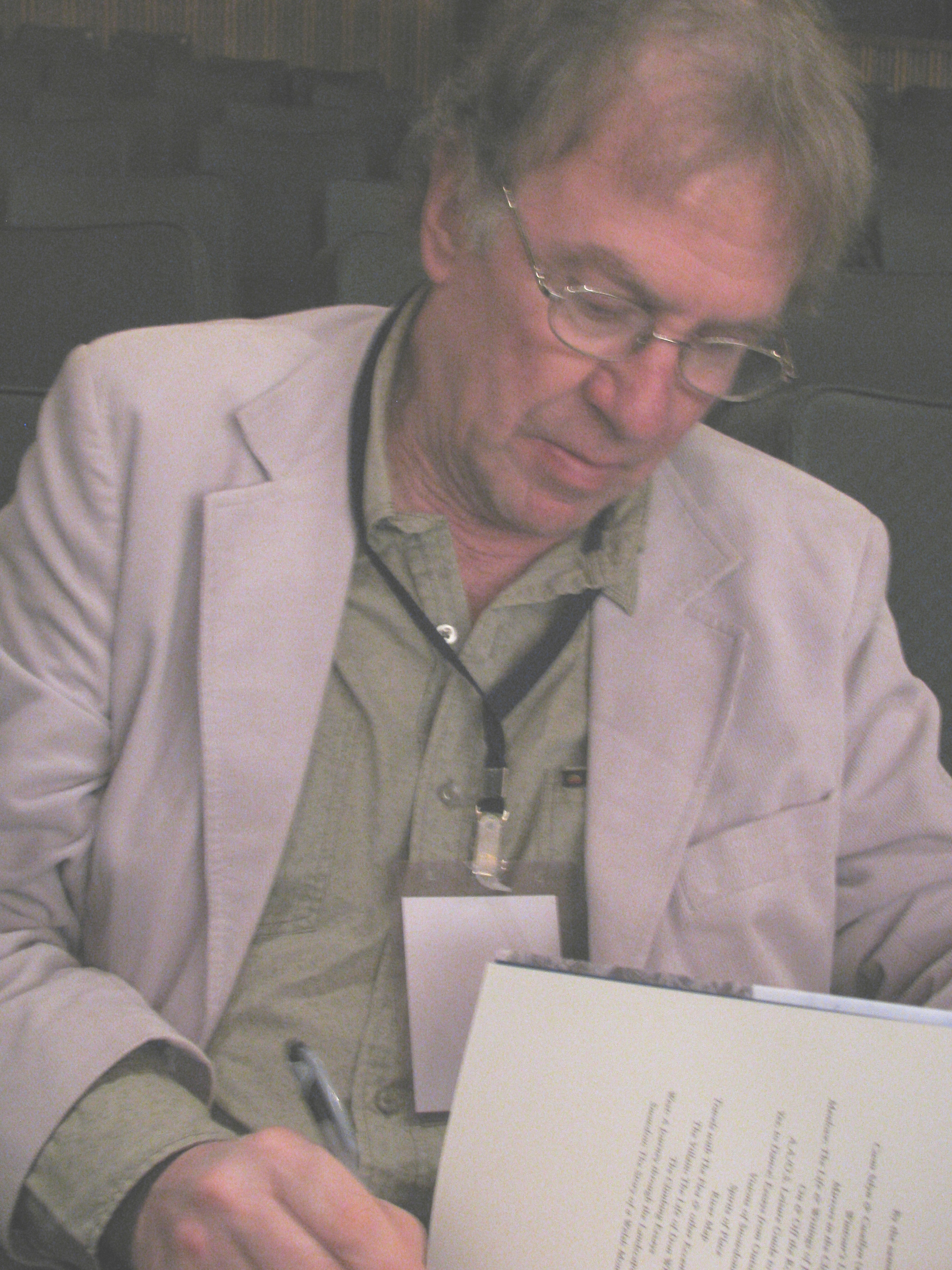
Jim Perrin (Photo: Shyam G Menon)

Jim Perrin (Photo: Shyam G Menon)

Core to the world of mountaineering and aside from their lasting partnership, Shipton-Tilman are remembered for a couple of other reasons. First, they are among the last classical explorers of the Himalaya and the exploration of a route to Nanda Devi was one fantastic story. Second, while the mountaineering style between the great wars of the twentieth century endorsed both the ideals of empire and climbing in military style-expeditions, this twosome ventured forth in lean teams, interacted with the local people and lived off the land. Today we call such lean climbing – alpine style ascents. The British mountaineering establishment of the days when Shipton-Tilman climbed couldn’t gauge the potential impact of their style, till fault and criticism progressively caught up with the practice of giant expeditions. As empire faded, so did the reverence for old siege and assault styles. But Shipton-Tilman lived on as `alpine.’ From a writer’s perspective, these two men pose a unique challenge. Despite books they wrote and books about them, there is little providing insight into their formative years. In their accounts, both men don’t indulge this angle. In reality, Shipton’s childhood and youth are relevant to understand him as is Tilman’s military experience during World War I. One took his chances with women; the other was called misogynist. Jim tries to explain the two characters well, with detailed research and at times, educated guess based on personal knowledge. For instance – he knew Tilman.

After approximately a third of the book read and the rest skimmed through to confirm its flavour, Jim Perrin’s book came across as a study. It is not the typical climbing story. The narrative of the Shipton-Tilman climbs is already out there. Jim’s is a writer’s journey into their separate stories, their separate characters, their association as a team and what they possibly meant in their writings (Jim puts it in perspective). It is also therefore a book based on many other books. So, more than climbing, it is literature and scholarship, a valuable insight into the greatest partnership in mountaineering. According to Jim, the book had been thirty years in the making. Asked why he restricted himself to writing on British climbers, he said that he preferred to write on subjects he knew. To me, that’s one more reason as to why Jim’s book matters.

When we finished chatting and it was time for lunch, I recommended a well known upmarket restaurant in Colaba. He agreed to it but then asked, “ Can I get aloo paratha?’’ So we ended up in a decidedly less expensive place, filled with chatter, tea and Indian food. Days later as I started reading Jim’s book, I noticed how it began with deep appreciation for the aloo paratha and tea he had enjoyed, at a dhaba near Gaumukh.

(The author, Shyam G Menon, is a freelance journalist based in Mumbai)

WALKING WITH NAIN SINGH

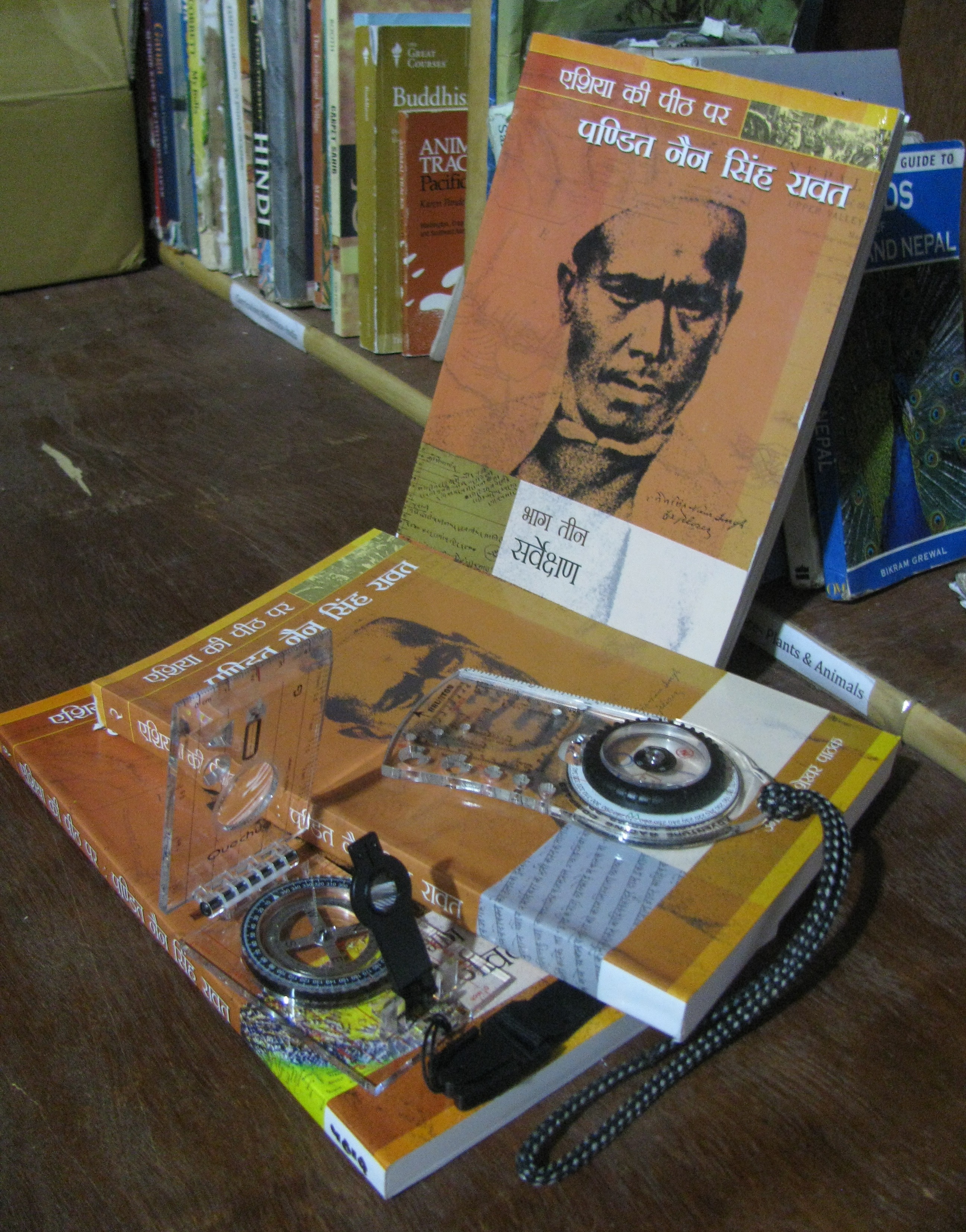
The books on Nain Singh Rawat published by PAHAR (Photo; Shyam G Menon)

The books on Nain Singh Rawat published by PAHAR (Photo: Shyam G Menon)

In the early 1970s, Dr Shekhar Pathak and Kundan Singh Rawat were students at Almora.

Pathak was the editor of the college magazine.

When it was his turn to write as contributor, Kundan submitted a piece titled simply: ` Nain Singh Rawat CIE.’

That was Pathak’s introduction to Kundan’s less known side – he was the great grandson of Nain Singh Rawat, one of the Pundit brothers from Kumaon’s Johar valley near Munsyari, famous for the work they did in mapping and documenting Tibet.

In the early nineteenth century, the British were hungry for cartographic details of a mysterious Tibet closed to Europeans. The desire for information was catalysed by the Great Game, that shadow dance of mutual intrigue enacted by Russia and Britain to extend their influence in Asia, particularly the Himalaya and Central Asia. Each worried that the other would dominate the region; their competition made little known kingdoms and places on the map, suddenly important. The effort to know these places triggered exploration and military campaigns, altogether lasting approximately a century. The work Nain Singh and his fellow surveyors produced dwarfs political motives that may be attributed to their journeys. It brought to light many details of the Himalaya, like the eastern course of the Tsangpo useful to establish that this big river in Tibet and Assam’s Brahmaputra were one and the same. Nain Singh travelled in disguise usually as a Tibetan monk, surveyed without complicated instruments and concealed the data in prayer wheels. He trained to walk with strides of a particular length always so that distances could be measured. Unlike travel for leisure, which is what many of us do, this was dedicated, disciplined work. Years later, when Sir Francis Younghusband led British forces to Lhasa, his surveyors would discover that Nain Singh’s records were accurate and reliable despite the few resources he worked with.

Pathak had been previously drawn to Nain Singh Rawat during his periodic visits to the office of `Shakti,’ a newspaper published from Almora. Their calendar had featured important personalities of Kumaon; including Nain Singh Rawat and Kishen Singh Rawat, the best known of the Pundits. `Pundit,’ a title conferred on teachers, was how the British addressed their Hindu surveyors. Kundan’s article interested Pathak. He helped edit the piece, little knowing where the curiosity would take him.

In October 1973, Pathak trekked to the Pindari Glacier and wrote a travelogue, later published in `Shakti.’ It quoted from the book `One Dimensional Man’ by Herbert Marcuse. The article was seen by Sunderlal Bahuguna, closely identified with the Chipko Movement, one of the most important environmental campaigns of modern India. In December 1973, Bahuguna spun the idea of a walk from Askot to Arakot, an east-west traverse of the Central Himalaya region now falling in the state of Uttarakhand. To maximize the education and awareness about villages and people en route, it was decided that participants – including Pathak – would carry no money. Although Pathak couldn’t do the route entirely given his college exams, four people – Kunwar Prasun, Shekhar Pathak, Shamsher Bisht and Pratap Shikhar – walked much of it during May-July 1974. By December that year, Pathak had joined the Kumaon University to teach history. He was based mostly in Nainital; he would take his PhD in 1980 and go on to become one of the best known historians from Kumaon.

The interest in Nain Singh Rawat continued.

In 1975, `Saaptahik Hindustan,’ a weekly magazine, carried an article by Dr Ram Singh, then a lecturer in Hindi literature with keen interest in history, on Nain Singh Rawat. The article quoted from the explorer’s diaries. This was the first time Pathak heard of Nain Singh’s diaries. According to Pathak, Kabindra Shekhar Upreti, who had taught many years in lands inhabited by the Bhotias, was instrumental in bringing the diaries to light. He was principal of the Government Intermediate College in Munsyari, when somebody showed him the diaries. After retirement, Upreti, moved to Nainital bringing along with him the two Nain Singh diaries. “ Seeing the diaries was a revelation,’’ Pathak said. The first of these diaries was quite autobiographical providing previously unknown vignettes of the explorer’s early years including his father’s life. Upreti had taken care to wrap the old diaries in a piece of cloth, a level of care that does not appear to have graced all subsequently recovered vestiges of Nain Singh’s work. The year was probably 1976. Nainital had Nain Singh’s diaries, a community of intrigued researchers and no photo copying machines to make copies of the diaries for study and ensure that the originals were undisturbed.

By 1982, Pathak would be a founder of the People’s Association for Himalaya Area Research (PAHAR). This organization brings out a publication called PAHAR, of which Pathak is founder editor. Kamal Joshi, a keen trekker, student of chemistry and later photo editor of PAHAR, was at hand to help when the Nain Singh diaries reached a Nainital with no photo copiers around. He set up a temporary dark room and photographed and printed each page of the diary, probably a hundred in all. Over three years – 1976, 1977 and 1978 – Pathak, his wife Dr Uma Bhatt – she is a Hindi scholar – and their friends, wrote Nain Singh’s diary on paper. Now they were getting an insight into the person and for Uma, a way to look at the explorer through his language and style of writing. According to her, Nain Singh wrote in a form of Hindi that can be described as `Khadi Boli,’ which is not chaste Hindi but a Hindi mixed with Persian words. It is a more spoken form of the language and to that extent probably easily connecting to an audience. “ Nain Singh’s diaries can be considered to be one of the first such travelogues in Khadi Boli Hindi,’’ she said.

Dr Uma Bhatt and Dr Shekhar Pathak (Photo: Shyam G Menon)

Dr Uma Bhatt and Dr Shekhar Pathak (Photo: Shyam G Menon)

In 1978, another diary surfaced at the house of a freedom fighter. This time, it wasn’t in Nain Singh’s hand writing, it had been copied and translated into English. Half of this diary was personal; another half was related to his first trip into Tibet. But there were sections missing. All the diaries were typed out. In 1985, one of Nain Singh’s diaries – on his second journey to Tibet – was published as a seven part-series in `Nainital Samachar,’ a local fortnightly. In 1986, Pathak presented a paper on the importance of vernacular diaries with Nain Singh’s work as case in point, at the Indian History Congress. PAHAR, the journal, also published portions of the explorer’s diaries. In 1985, `Himalaya Today’ published a long article on Nain Singh Rawat authored by Dr Pathak and Dr Uma Bhatt.

Years of seeking to know about Nain Singh’s life made Pathak look for details wherever he went. In 1984 on a repeat of the earlier Askot to Arakan walk, at Madkot village, he was shown the original primer for surveying – a text book for surveyors – which Nain Singh had written and was published by the Survey of India in 1871. In 1994, while on a visit to Pakistan, some German friends helped him access relevant portions of the seven-volume report of the Schlagintweitt Brothers, German geographers with who Nain Singh had done his first trip of exploration in the Himalaya. The full report of the Schlagintweit Brothers, Pathak saw some years later in Stockholm and still later, at the Survey of India. In 1991, Pathak himself went to Kailas Manasarovar; in 1996 and in 2006 he visited Lhasa, in 2002 he visited parts of Tibet to the north of Everest (he crossed from the Nepal side). The eastern extreme of Nain Singh’s travels – the subject of his epic last journey from Ladakh to Tawang – Pathak managed to get some idea of that in 1992-1993, through visits to Arunachal Pradesh. Some of these trips, Pathak said, had been emotional. Eventually, as a researcher at the Delhi based-Nehru Memorial Museum and Library, Pathak gained access to the Survey of India archives at Dehradun and records at their old office in Kolkata (Calcutta).

In 2006, PAHAR published a three volume set called `Asia Ki Peeth Par’ (On the Back of Asia: life, explorations and writings of Pundit Nain Singh Rawat) compiling Nain Singh Rawat’s diaries and the reports on his journeys submitted by the British. Nain Singh was born in the same year as the Royal Geographical Society was founded. The Society awarded him the Patron’s Medal in 1877. In deliberations preceding this and to impress upon the Society the magnitude of this exploration by a non-European, Col Henry Yule, who would be vice president of the Society from 1887 to1889, argued that Nain Singh’s contributions were best compared in the western world to the likes of David Livingstone and “Grant,’’ most likely James Augustus Grant.

Kundan Singh Rawat, the man responsible for inspiring Dr Pathak’s forty year-old journey with Nain Singh Rawat’s story, is no more. In 2004, the Indian government brought out a postage stamp featuring Nain Singh. Despite books by Dr Pathak, Dr Uma Bhatt and others, including mention in popular books by foreign authors on the Great Game and the exploration of the Himalaya, Nain Singh Rawat remains little known outside the state of Uttarakhand.

(The author, Shyam G Menon, is a freelance journalist based in Mumbai. This article is adapted from earlier pieces he wrote for the Facebook page of NOLS India and The Hindu newspaper.)
 

INTERVIEW WITH ADRIEL CHOO

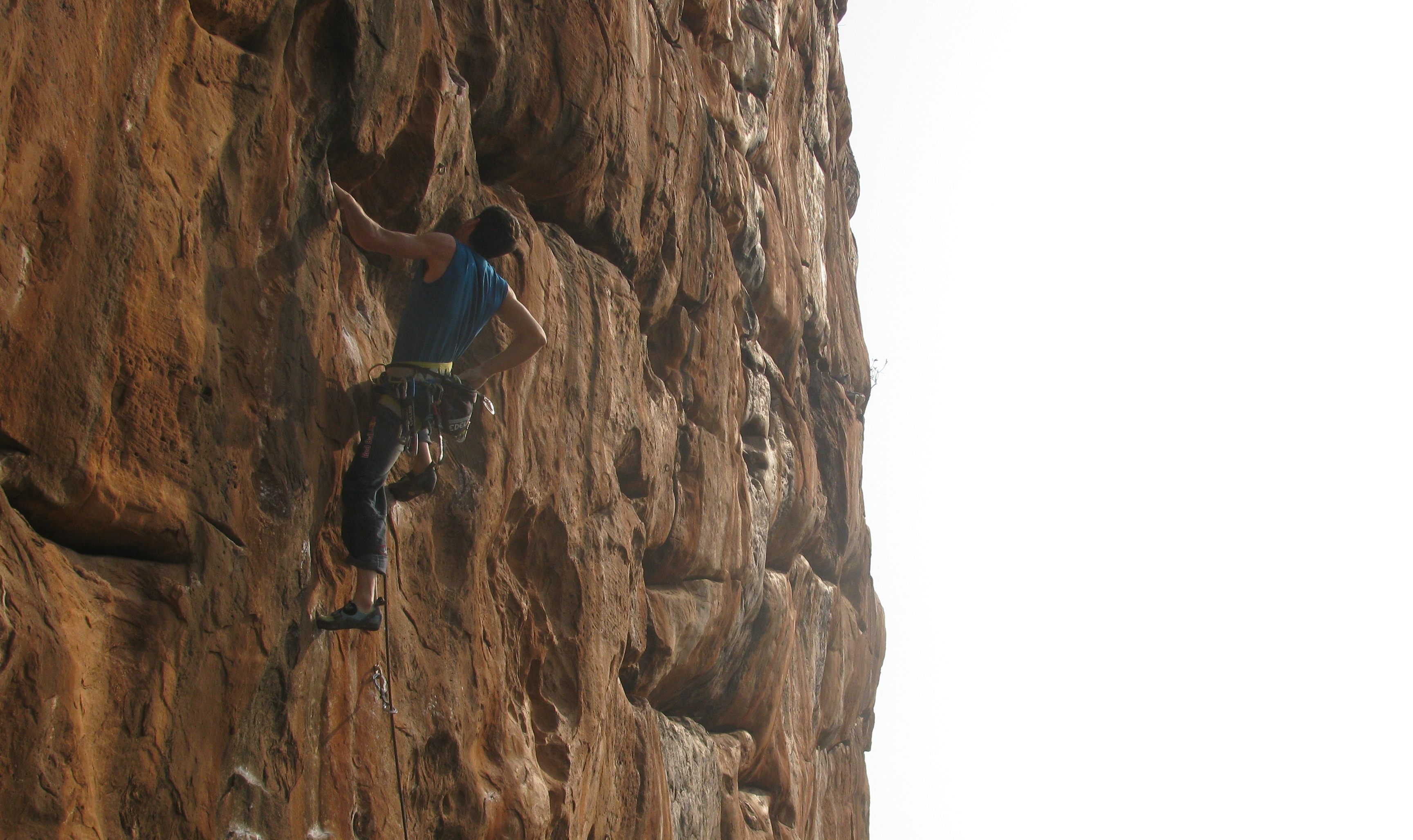
Adriel Choo (Photo: Shyam G Menon)

Adriel Choo (Photo: Shyam G Menon)

Adriel Choo of Singapore was winner in 2013 and 2014 of the Master’s Round at the annual Girivihar Climbing Competition in Mumbai. The 25 year-old has been a member of Singapore’s national team. His best performance so far has been securing gold and bronze at the ASEAN Climbing Circuit and the 26th SEA Games in 2011, respectively. At world level competitions his best standing to date has been 11th place at the 2012 IFSC World Championships in Paris.


Adriel agreed to be interviewed for this blog.


Excerpts:   


When did you start climbing? What sustained your interest?


I started climbing in 2006 during my junior college days. I was first attracted to the “wow” factors of climbing, seeing professionals jumping around and doing unbelievable things on the walls and I wanted to be just like them. After a few years I began to see that this sport is a journey of discovery, understanding the whole dynamics of my body’s movement and how it reacts to different moves and positions. This led to my quest to become a new and improved climber every day.


How long did it take you to make it to the national squad? How often do you travel overseas to compete?


I first represented the state at the Asian Youth Championship held in Singapore in 2007. However, my participation there was nothing more than mere exposure to the regional scene. I truly began representing Singapore as a national athlete when I was training for the 26th SEA Games and the Asian Climbing Circuit in 2011. I mainly do bouldering and speed climbing where my interests and abilities are. I do not compete overseas regularly due to lack of financial support. But I try to join at least one major competition a year to see how far I can push myself in the international scene.


These are some of the overseas competitions I have been to in recent years:


  • IFSC Climbing World Cup 2013 (China and Korea)
  • IFSC Climbing World Championship 2012 (Paris)
  • 26th SEA Games 2011 (Indonesia)
  • ASEAN Climbing Circuit 2011 (Malaysia)
  • Indonesia Open X-Sport Championship (IOXC) 2011 (Indonesia)


Do you have a regular coach?


I do not have a regular coach. Everything is self-managed from head to toe. I do my own research for training knowledge and measure my progression against stronger others.


If an aspiring competition climber asks you what are the key aspects to focus on in training, what would you say?


Understand your body’s movements and identify your strengths and weaknesses. I believe in climbing with your strengths and working on your weaknesses to support your strengths. For example, I am particularly weak in my crimp-strength. I know I am barely strong enough to sustain considerable time on crimps unlike other climbers and so I always try to get over it fast and focus more of my energy on completing the rest of the boulder problem with my strengths in dynamic and coordinated movements.


How important is it for a competition climber to keep participating in competitions at home and overseas? Does the relevant training include getting familiar with competitions through frequent exposure to the format and learning to be comfortable with it?


That is definitely so.  Many athletes get stage fright whenever they are up on the wall because they are afraid of failing in front of everyone watching the competition. However, we must recognize that failure is part of the whole competition package and you can only get better if you learn from your mistakes and not go into every competition worrying about the same things. Take for example speed climbing. It is a fixed format and athletes training on it would have done it thousands of times and can even do it with their eyes closed. However when you shift them from training ground to a world cup scene, everything changes. The audience is larger; the weather is different, how you feel when climbing is different, your warm up regimes might need to be tweaked – the list goes on. This applies to bouldering and lead climbing too. More exposure will keep the athlete comfortable with new but similar environments and it will work to the athlete’s advantage.


You mentioned how failure is part of the competition package and how climbers must learn from their mistakes. Sitting in the audience, one sees climbers getting frustrated when problems can’t be solved. How do you personally cope with fear of failure and frustration?


Being unable to solve a boulder problem can indeed be frustrating. How you handle that frustration is something different and needs practice. You can channel that ferocity into your strength; you see this whenever somebody screams at the crux of a boulder problem. Yet he is focussed and alert in all aspects and not consumed by the frustration. This needs practice.


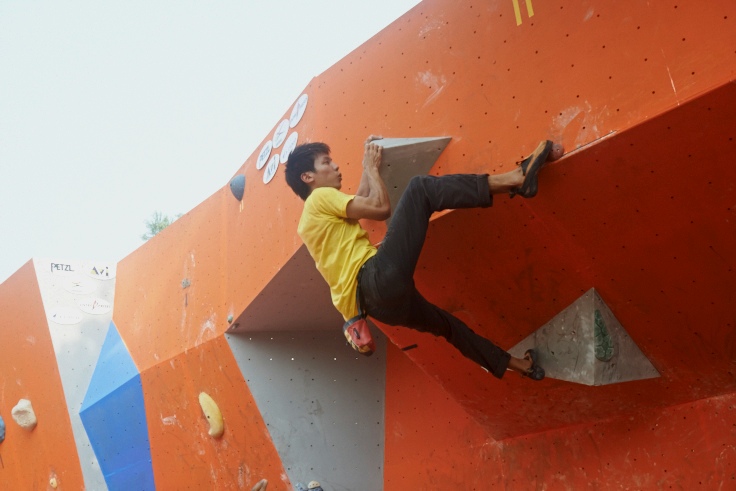
Adriel at the 2014 Girivihar Climbing Competition (Photo: Sharad Chandra)

Adriel at the 2014 Girivihar Climbing Competition (Photo: Sharad Chandra)

What is your normal day like in Singapore? Do you climb every day? Is there a training pattern you follow?


I am still studying and so my training days can get pretty erratic. Generally, I will have 3-4 sessions a week, 1-2 hours of focused training per session. I go to the climbing gym knowing what I need to accomplish for the day. Time is really short sometimes and you need to be disciplined enough to do only what you need to do. Before competition season I focus on getting physically fit and supplement it with injury prevention exercises so that my plans to train are not hampered by injury. During competition season I translate my physical fitness to climbing fitness by accumulating greater volume of climbing, making only good attempts on every boulder problem and learning from my mistakes.


Unlike many countries that have been traditionally home to climbing through rocks and mountains in their backyard, Singapore is very small in size. It has a population of roughly 5.3 million people (source: Wikipedia) and is highly urbanized. Can you tell us something about the Singapore climbing scene – how is it structured; what is the scale of infrastructure available? How is the national team chosen in Singapore?


We have around five climbing gyms in Singapore and a very, very small natural rock area at a place called the Dairy Farm. Because we lack natural rock to climb, most of the training people do are on plastic. Onsight Climbing Gym is the biggest climbing gym in Singapore to date, with full size competition walls for lead, speed and boulder. We have about ten boulder competitions and less than five high wall competitions (both lead and speed) on a national level, annually. We used to have a league based on points system similar to the one used at the world cups but that is no longer present. Regarding the national team, we do not have a fixed team right now due to complexities. Nonetheless, everyone is focusing on their own training and development.


Was the league based on points system helpful to grow climbing and competition climbing? Why was it discontinued?


I believe the league in Singapore was used to help the community identify consistently well performing athletes and perhaps act as a platform to push forth a case to the federation or other organizations to send athletes overseas for competitions. However although it might spur on budding climbers to push standards and match up with the top athletes, I believe the system tends to benefit the competitive community more than the general climbing community. The general climbing community is more leisure-driven and perhaps another system that involves group benefits might be better. 


When it comes to climbing natural rock or attempting long routes on natural rock, where do you go to? Hampi in India is known as a bouldering location internationally. Is that a place you would like to visit sometime?


I have been only to the Grampians in Victoria, Australia. Rock trips overseas don’t come often because they are expensive but I hope to go to other places to attempt some top tier boulders if I can. I have heard of Hampi and would like to visit it one day of course! Hopefully it will happen sooner.


Can you give us your estimation of the Asian climbing scene – which countries are the power houses in climbing today going by the results reported at the various Asian competitions?


There are a few outstanding athletes from the South East Asian climbing scene, namely from Indonesia, Malaysia, Thailand and Singapore.


What keeps you going in climbing – the fun, the competition or something else?


I love climbing competitions and I always look forward to joining one! The fun comes when each attempt really matters. Completing a boulder problem in just one attempt is truly satisfying!


(The author, Shyam G Menon, is a freelance journalist based in Mumbai. Thanks to Sharad Chandra for allowing the use of a photo taken by him.)

BEYOND GANESHA (UPDATE)

Kilian at work on the route next to Samsara (Photo: Shyam G Menon)

Kilian at work on the route next to Samsara (Photo: Shyam G Menon)

On February 25, after the three part series `Beyond Ganesha’ was published on this blog, Kilian Fischhuber responded to a mail I had sent earlier.

I had asked him whether he had a rough idea of the grades for the two new routes he had created. He said, “ I have tried both routes. The left one seems possible but I think we need Adam Ondra for it…. The other route, next to Samsara, I was close to doing it but in the end I didn’t. I am not absolutely sure about the grade. This comes usually during the process of trying and is normally decided after the climb has been done. But I think it will be around 8c+.”

The “left’’ route Kilian cites, is the route shown in the photo featuring Kilian that you find in part three of the series.

As Kilian’s mail shows, for now Ganesha remains the hardest sport route in India. Initial estimates of Ganesha’s grade too had been around 8c+. It was fixed at 8b+ after being fully climbed.

The potential for routes harder than Ganesha seems to be there in Badami.

(The author, Shyam G Menon, is a freelance journalist based in Mumbai)

BEYOND GANESHA – PART 1

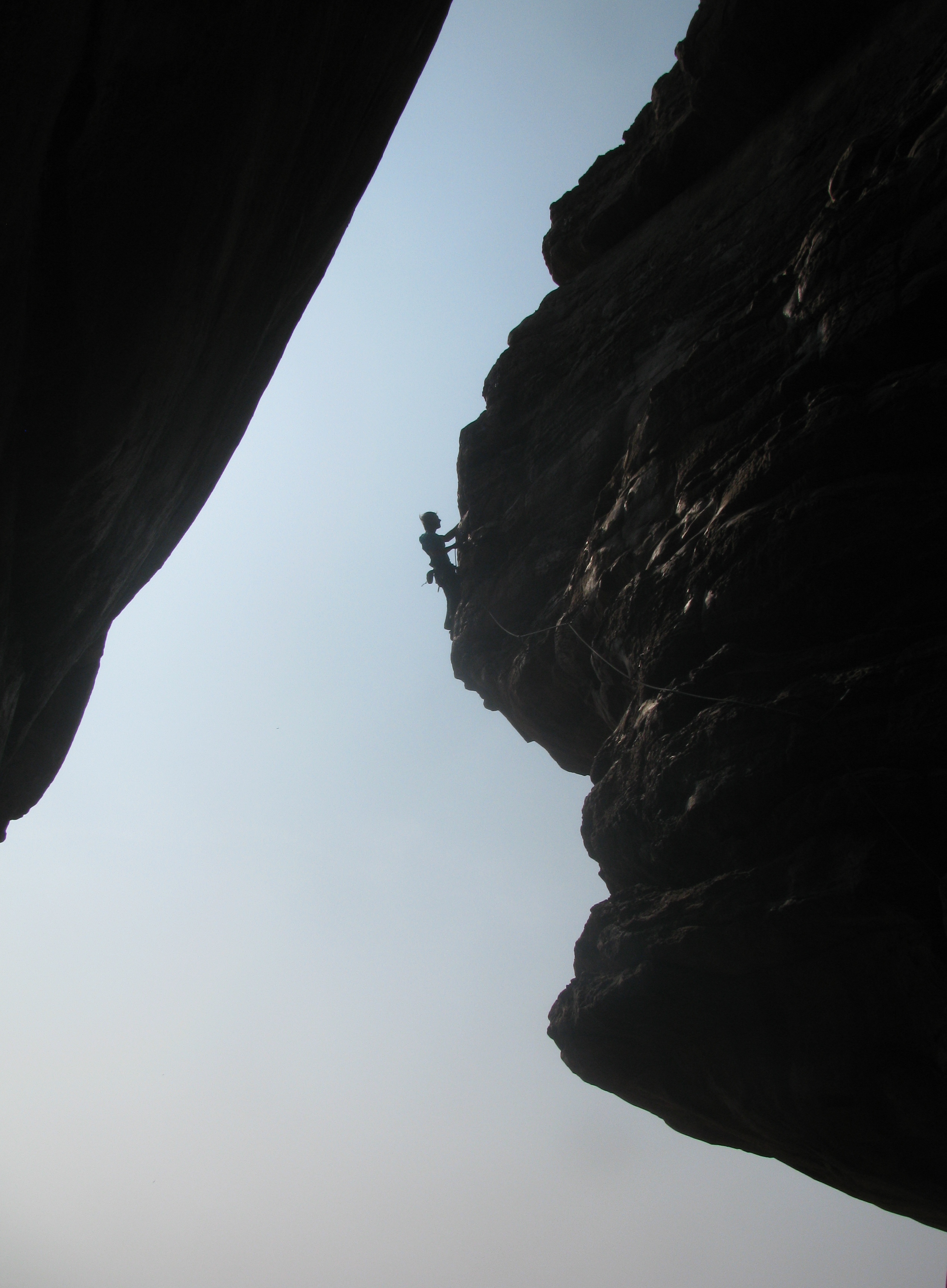
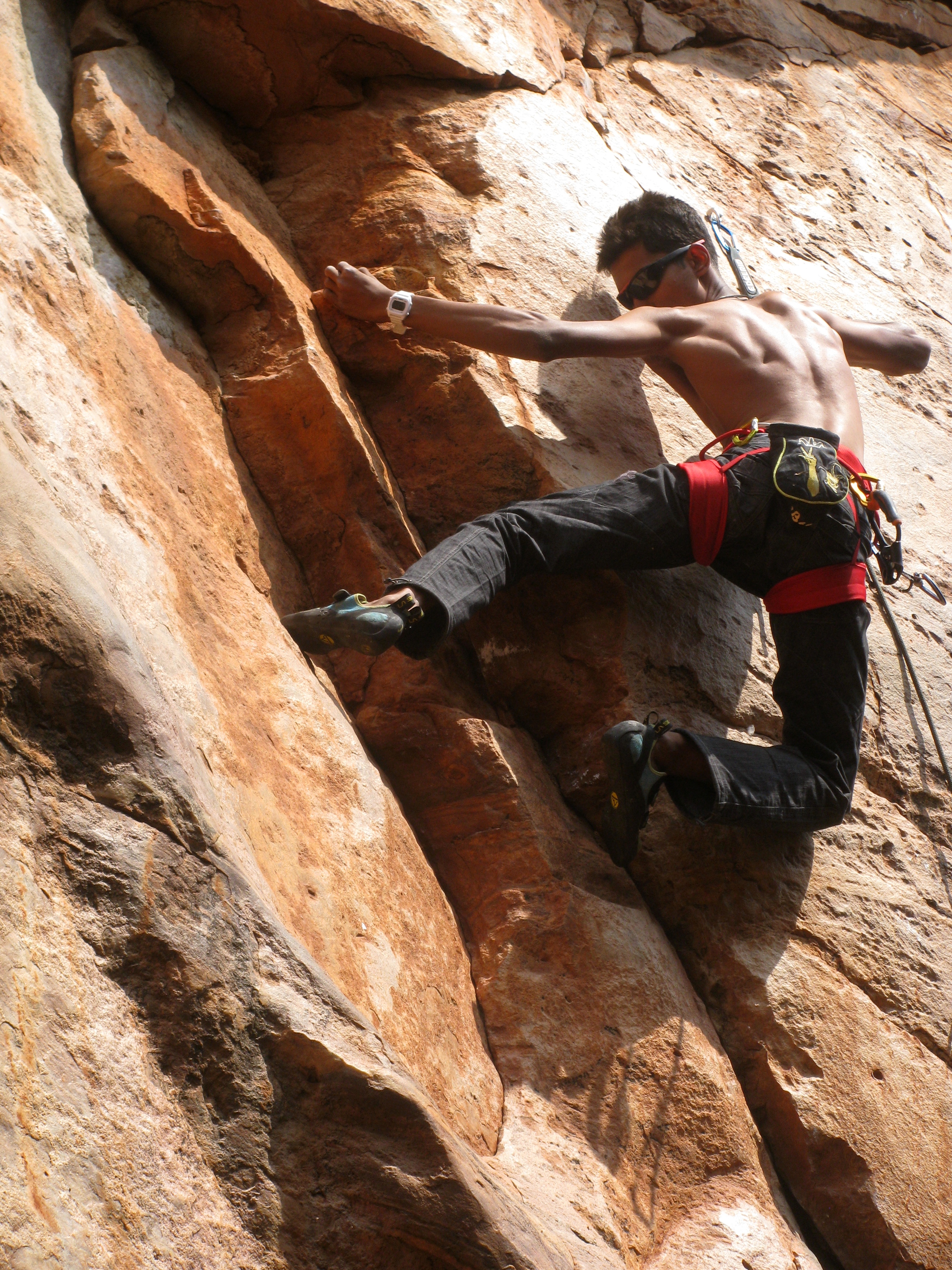
Climbing in Badami (Photo: Shyam G Menon)

Climbing in Badami (Photo: Shyam G Menon)

This article in three parts is a composite of two distinct narratives, one in normal text and the other, in italics.

The story of Badami is as layered as its sedimentary rock.

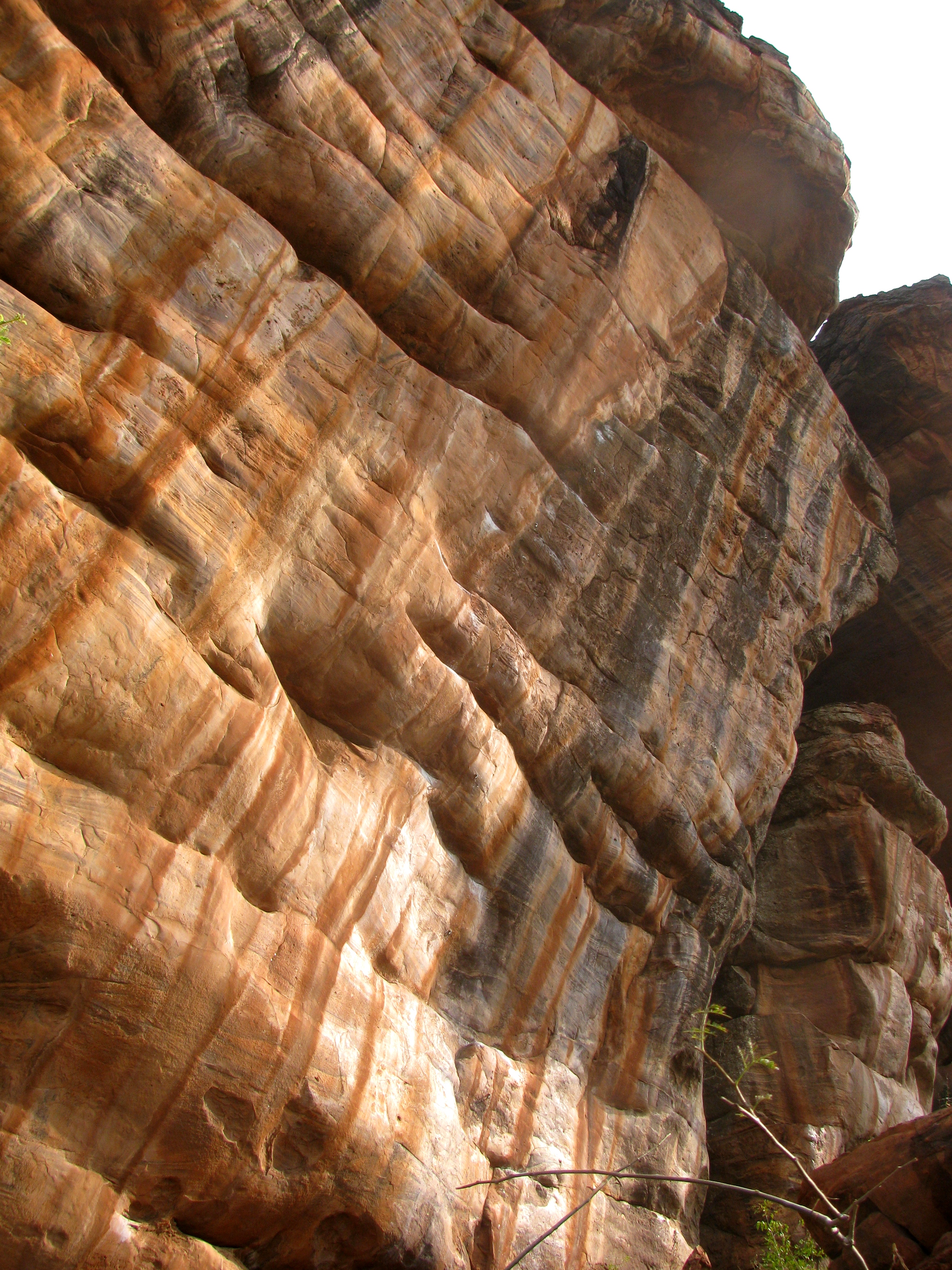
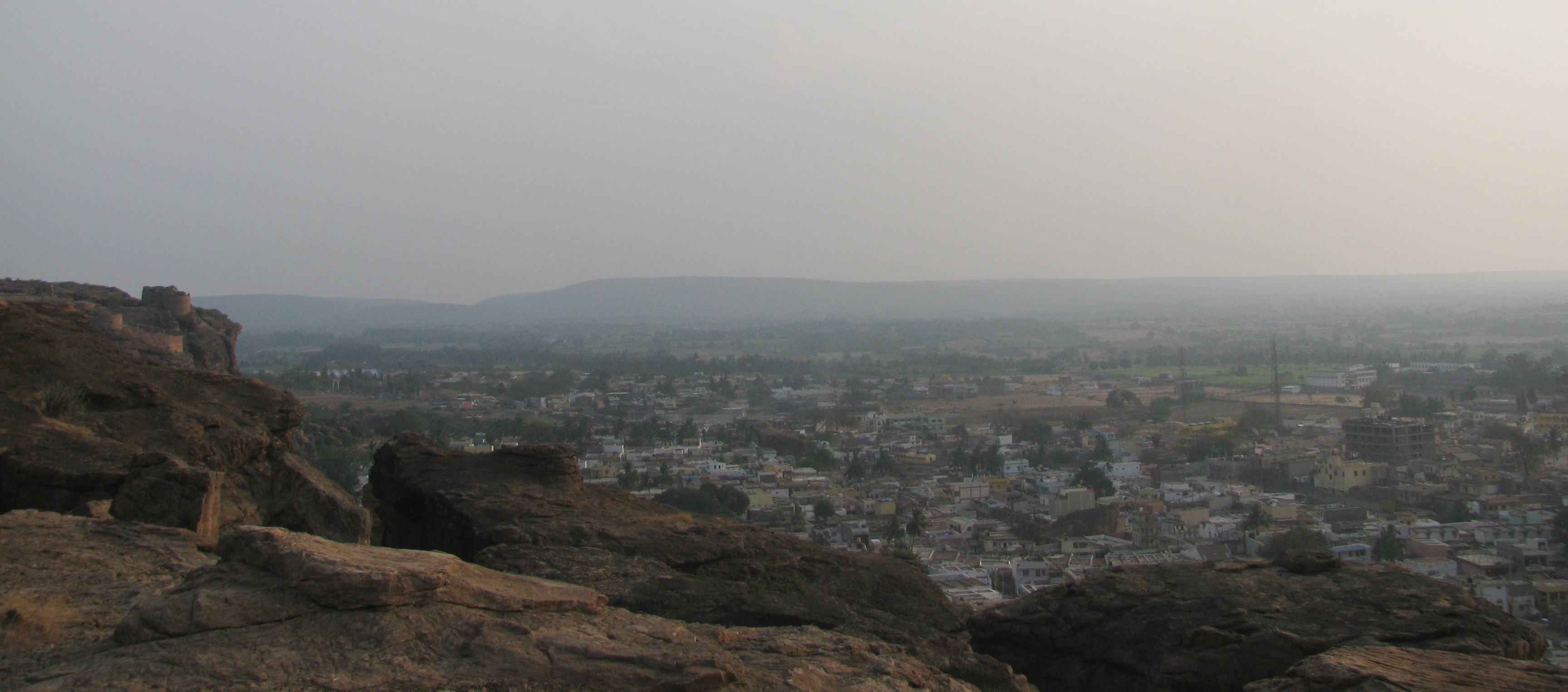
If you are used to the Himalaya or even the Western Ghats, then, on the approach to Badami from Hubli, you wouldn’t expect anything that hints `hill.’ The world is flat and open to the sun. Vegetation is the stuff of hardy scrubs; large fields, still standing patches of sunflower, dry sugarcane and the occasional tree. Massive bony oxen pull carts; buffalos saunter by, dogs have their tongues hanging out trying to stay cool. It is hot. Sun burnt farmers, old women with dry wrinkled skin. Tractors join the traffic. Dust rises easily. It is January. I can imagine what peak summer would be, here. More important for climber, there is not an iota of hill anywhere. Then at one bus stand en route, you see an isolated rocky outcrop next door. Slowly, as the bus moves on, you start seeing similar isolated outcrops, at best a long wall and all no more than a few hundred feet high. Reach Badami and the rock walls there are high but not tremendously so. They are beautiful. Badami’s story lay in the subtext. If the Himalaya is famous for its marine fossils, dating back to the ancient Tethys Sea, then here, it is the other extreme.

According to Dr Shrinivas V. Padigar, Head of the Department of Ancient Indian History and Epigraphy, Karnatak University, Dharwad, the rock at Badami contains no fossil record as it dates back to the Precambrian period, or simply put, a time when no complex life forms existed. Accounting for roughly 7/8th of Earth’s history, the Precambrian period ended around 540 million years ago. Respect for Badami’s rock thus stems from a dimension different from physical properties. It is frozen time. To imagine such antiquity, you should take a peek at the shape of continents and where India was in the Precambrian period. If the world’s highest mountains – the Himalaya – were formed after India drifted at a speed that is superfast by continental drift standards and smashed into the Eurasian plate, then the India of the Precambrian period hadn’t dreamt the Himalaya. India’s northward drift started only 140 million years ago. The Himalaya, the child of India’s collision with Eurasia, is much, much younger.

Simply put, the rock at Badami is OLD.

Badami and Hampi attract rock climbers.

Both places are in Karnataka, South India.

They are separated by 146 kilometres, small enough for climbers fuelled by passion, to cover for a taste of both worlds. Hampi is strongly identified with bouldering, the art of climbing boulders with little gear – just a pair of climbing shoes, crash pad to cushion one’s fall, chalk to keep the hands sweat-free and a friend to `spot’ you. Badami has bouldering plus a wealth of longer routes for sport climbing, which entails rope, pre-fixed bolts in the rock, more climbing gear than used in bouldering and definitely a second climber to `belay.’ Badami offers beautifully weathered sandstone (we call everything here sandstone but as geology shows, it is more complicated). Badami’s stone is kind on climbers’ fingers. Climbing in Hampi is done on granite. It shreds skin.

Badami has several popular climbing areas. From past visits, I remember crags named Indian Alley, Ganesh Plateau, Temple Area and Badami Deluxe. Today, at any one of these known climbing spots, you will see several bolted sport climbing routes. N. Ravi Kumar, who hails from Bangalore and is currently Director of NOLS India, was among the early climbers frequenting Badami. According to him those days, there was nothing on the approach to the Badami Deluxe and Temple Area crags, save a house and the small facility of the General Thimayya National Academy of Adventure (GETHNAA). Where several shops and houses now stand there was nothing. All the initial climbing was traditional (trad) in style, using removable protection as opposed to permanent protection. “ There were no bolts then,’’ he said. It changed with sport climbing’s ascent in India. One of the great attractions of sport climbing is that thanks to prefixed protection (expansion bolts), climbing lines are possible on rock faces otherwise devoid of adequate features to host trad gear (an overview of the various styles in climbing can be had from the September 2013 post Climbers in the Big Wall Mirror [Part Two]. It can be accessed either through the blog’s archives or simply click on this link: https://shyamgopan.wordpress.com/2013/09/).In turn, that makes moves in sport climbing pretty difficult because tackling potentially sketchy rock faces is built-in into the ethos of this discipline.

The rock face hosting Ganesha (Photo: Shyam G Menon)

The rock face hosting Ganesha (Photo: Shyam G Menon)

In late January 2014, as I stood in Badami facing the orange glow of its sandstone rock walls, my attention was on a rock overhang far to the right near the Temple Area crag. Bit over one kilometre from the local bus depot, tucked into the curve of the rock was a sport climbing route called Ganesha, sometimes, Ganesh. In climbing, routes have names. Graded 8b+ in terms of climbing difficulty on the French scale, Ganesha was right then the toughest among known, graded sport climbing routes in India. Ganesha was bolted some years ago by Alex Chabot, a champion climber from France. Its first ascent happened probably in 2011; the credit went to French climber Gerome Pouvreau. In Rohit Chauhan’s guidebook to climbing in Hampi and Badami, Ganesha’s grade was speculated as 8c or 8c+. This publication was the first guidebook for this area. Rohit recalled it as a rather lonely endeavour. Encouragement and support came from just a handful of people. A few overseas friends and Delhi-based climber-businessman, Mohit Oberoi, backed him. At that time however, Ganesha was yet to be fully climbed. Rohit said in a recent email from Spain that he had to count on estimation by others familiar with the Ganesha project, for a sense of the new route’s grade. As often happens in climbing, there is a gap between the perception of a route in project stage, and reality. The right grade is a consensus among climbers who climbed the route fully. Multiple ascents over a period of time then lower the grade. 8b+ is what Ganesha earned after first ascent; it is what it still has for grade.

The rocky hill dominating Badami’s landscape is part of the ` Kaladgi Series’ stretching from Kaladgi to Gajendgragad – that’s what I gathered locally. The most ancient of the rocks in this region is probably the batch of sedimentary rock in the vicinity of Kuligeri Cross, a place that you pass by en route to Badami. For a lay person like me seeking to know Badami, the age of the rock is however only one half of the fascination. As climber, the Badami rocks are my favourite. Something about them matches the enjoyment from climbing and the engagement with rock, I seek. But I am no geologist. I don’t know how to distinguish a rock of recent origin from Precambrian. My perception as I climb is tactile; touch and feel. Badami’s rocks are like fine sandpaper yet firm. Plus, they are wonderfully eroded into all sorts of cuts, grooves, pockets and jug holds, not to mention – slippery smooth in some areas. In popular lore, the agent that caused all this – from sedimentation to sculpting – is said to be water with one theory being that this area was below water once. Today’s Badami is quite inland from the sea (it is approximately 250 kilometres by road from Goa on India’s west coast); it is also 1923 feet up from sea level. There is even a rock arch of sorts, the remains of powerful weathering, some say by water – you can see its scaled down model in the local archaeological museum. How and where do we position water in Badami’s geological history?

I contacted Dr Navin Shankar, a geologist now working as Research Specialist with Excelsoft Technologies Pvt Ltd, an e-learning company in Mysore. According to him the Badami rock formations date back to the Proterozoic era, around 1.6 billion to one billion years ago. Within the Precambrian (4.6 billion years ago to about 540 million years ago), this would qualify to be in the second half. The Proterozoic period is divided into three stages. The time of formation of the Badami rocks corresponds roughly to the middle stage – the Mesoproterozoic, noted as the first age from which a fairly reliable record of the Earth’s geological history survives. Wikipedia describes this period as still poorly understood despite critical changes to the chemistry of our seas, the sediments of the earth and the composition of air. It is also the dawn of life, the age of development of sexual reproduction in micro organisms, very important for complex life forms yet to come.  And if you thought ` life’ here means life as we know it, please note: oxygen levels of the time may have been about one per cent of today’s and slowly rising. It was a very different Earth.

Badami as seen from the top of the adjacent hill (Photo: Shyam G Menon)

Badami as seen from the top of the adjacent hill (Photo: Shyam G Menon)

The north and north-eastern segments of peninsular India had witnessed mountain building activity in the Mesoproterozoic period. This involved subduction of the margins of plate boundaries complemented by intraplate extensional tectonics resulting in the formation of a series of intracratonic basins, namely the Kaladgi formation. As per information on the Internet, intracratonic basins are a type of sedimentary basin. They form within stable continental interiors. They are typically shallow, circular in shape and have long histories of relatively slow subsidence. Over time, the intracratonic basins were overlain by sedimentary rocks and sediments. “ The rocks from the Mesoproterozoic age in the Badami area have been categorized under the Kaladgi Supergroup, further classified into Badami and Bagalkot groups,’’ Dr Shankar said. The Badami group comprises horizontally bedded multiple sequence of arenite and shale with limestone in small amounts. These sedimentary rocks and sediments are found in a large area of horizontally bedded ferruginous arenites from the north-western tip of Raichur district to Bijapur, Belgaum and beyond into Maharashtra state. The Bagalkot group consists of two mega cycles of repeated sequence of argillite followed by chemogenic precipitates predominantly of sandstone and dolomite with quartzite and conglomerate forming the base.

Standing in today’s Badami, it is hard to visualize this geological story. It is flat all around with a few rocky hills. Where are the sedimentary basins? To notice the ancient basins, which can be several kilometres long and wide, we have to get a bird’s eye view; a topographic picture of the region. In that, Dr Shankar said, the basins emerge. Further, some basins are now below the layers accumulated on top. By nature basins are depressions and water collects in depressions. The basins may have held water in the ancient past contributing to the submersion story. However in the vast scale of geological time, water isn’t sole agent forming, compacting and sculpting sedimentary rocks. Theoretically, wind and glaciers also perform that function although glaciers had no role in Badami. Into this, mix a later development. Badami now stands on the Deccan plateau. This large plateau formed around 60-70 million years ago through volcanic eruptions lasting several thousand years, some say, when India drifted over the Reunion Hotspot. The Deccan is a massive feature, much younger than Badami’s rocks but one that adds to the geological influences a scientist must sift through to understand still older times.

(……TO BE CONTINUED)

(The author, Shyam G Menon, is a freelance journalist based in Mumbai.)

BEYOND GANESHA – PART 2

Tuhin in action (Photo: Shyam G Menon)

Tuhin in action (Photo: Shyam G Menon)

An early morning, I walked away from the Badami bus depot towards the local APMC (Agricultural Produce Market Committee) office on the outskirts of town. From here a dusty road branched off to the left, through an archway, onto the nearby hill – it was the way to the Temple Area crag and Ganesha. A young man by the roadside saw me approach, backpack and all. “ Hello,’’ he said. I returned the greeting. “ You…climber?’’ he asked. What do you say, if you used to climb but haven’t done so for a long time? Besides, this whole business of defining climber and seeming one irritated me. I am sure the young man didn’t mean it so but I was already agitated with my thoughts. I smiled and shook my head. “ Climber – that word is for better others. I am simply in search of Ganesha,’’ I said. “ Oh, Ganesha project – it is right over there,’’ he said pointing to a rock face. It was a fine morning and the young man appeared a nice person to talk to. “ What do you do?’’ I asked. “ I am a climbing guide,’’ he said. That was new development for in none of my previous visits to Badami had anyone offered such an introduction. I met him a few more times later, at the crags, where he was with clients. He had been climbing for the past two years. Resident of Badami, he stayed in a house right where I met him, just inside the archway, close to the GETHNAA facility, not far from Ganesha. His name was Ganesh.

I was in Badami to learn more about another person, young like Ganesh.

Eighteen year-old Tuhin Satarkar from Pune, climbed Ganesha on December 14, 2013. He became the first Indian to complete an 8b+ route in India. He is the only climber supported by Red Bull yet in India. Internationally, Red Bull sponsors many athletes, among them climbers. “ Indian climbers have the strength and endurance required for demanding routes. What we lack is technique,’’ Tuhin said.

Tuhin Satarkar (Photo: Shyam G Menon)

Tuhin Satarkar (Photo: Shyam G Menon)

Although climbing infrastructure has improved in India, a huge gap exists between here and overseas. For example, take artificial climbing holds (with rising urbanisation, climbing on artificial walls has become the popular entry for youngsters into rock climbing) – big volume holds, features etc are still only trickling into India. On the other hand, they are the stuff of new routes at world cups and world championships, Tuhin said. We were in the restaurant of a hotel in Badami. The young man’s laptop had a prominent Red Bull sticker; he also offered me a can of the drink. In retrospect, a Red Bull sponsored-trip to climb in Austria and Italy with well known Austrian climber Kilian Fischhuber, in November 2013, may have helped improve his climbing and equip him for the unexpected December-rendezvous with Ganesha. Until this trip, Tuhin’s hardest climb had been a sport route called `Jackpot’ (7b to 7b+) at Sinhagad in Pune. During the 15-20 days spent climbing in Europe, he did his first 8a, a route in Italy. The tryst with Ganesha materialized after Paige Classen, an American climber who became the first woman to climb Ganesha, sought his help for her climbing project. Otherwise, Ganesha hadn’t been on Tuhin’s mind. In 2012, he had attempted the route, climbing up to the fourth clip (bolt plus quick-draw placed for protection) before giving up.

On India’s climbing scene, Tuhin is unique. At the decade old-Girivihar Climbing Competition in Navi Mumbai, I have seen him climb when still a school kid, moving over the years from junior category to senior. His parents are climbers. His father Vikas is a noted rock climber in Pune. While many young Indian rock climbers struggle to explain what they do – not to mention, why they do what they do – to their family, Tuhin had the required ecosystem at hand. He started climbing from age seven, growing up in a house with a climbing wall. His first climbing competition was in 2002, an event on the Pimpri-Chinchwad climbing wall in Pune. In 2007, he finished second at the nationals in the under-14 category. That was when he decided to take up climbing seriously; not so much as career as to climb seriously. Somebody he looked up to those days was Vaibhav Mehta, then living in Mumbai and leading a pack of sport climbers, the first bunch of climbers from the region to treat climbing as the only thing they wanted to do. Improving over the years, Tuhin became part of India’s youth team visiting championships in Singapore (2011) and Iran (2012). The Red Bull-sponsorship happened thanks to his participation in the Girivihar Climbing Competition, in a year when the company was one of the sponsors. As Navin Fernandes, Red Bull’s Athletes Specialist based in Mumbai, pointed out – Tuhin fit in well with Red Bull’s approach of investing in athletes when still quite young. Support from Red Bull commenced in 2013. Currently Tuhin is what you could call a professional climber; he climbs just as someone else goes to work in an office. Climbing is what he does every day. In India, Badami is his favourite climbing spot. He also claims to have been a fan of Alex Chabot, watching his videos, much before the French climber visited India and bolted a route named Ganesha.

Badami: stone, temples and caves (Photo: Shyam G Menon)

Badami: stone, temples and caves (Photo: Shyam G Menon)

Less than a kilometre from Ganesha as the crow flies is Vidyanagar, a residential colony. Everyone remembers a teacher. I had no problem finding the house of Dr Sheelakant Pattar. Now retired, he used to teach at the local school and college. More important, although majored in science, he is a history buff who took his doctorate in studies pertaining to Badami. According to him the oldest reference to Badami lay in Ptolemy’s works, where the name ` Badamoi’ has been mentioned. This is however contested. Dr Padigar feels that while the reference may exist, there is no certainty yet that Badamoi is Badami. What we do know is that there was a settlement here preceding Badami’s ascent in history. Before we talk of that ascent, let’s shift firmly from Precambrian to the age of human civilization and imagine Badami as a settlement near a rock hill characterized by steep walls. It is the 6th century AD. The political landscape of the neighbourhood is authored by such local dynasties / kingdoms as Kadamba, Vishnukundit, Kadachuri, Maurya (not the Maurya of Ashoka) and Nala. Enter, the Chalukyas. Who they were and where they came from appears still a matter of debate, for I came across different views. But the ascent of Badami – then known as Vatapi – under the Chalukyas, owes much to a strategic vision that both Dr Pattar and Dr Padigar pointed out – available readymade in the steep rock walls of Badami was a natural fort. All you had to do was fill in the gaps, which the Chalukyas did; such forts are generically called `Giridurg’ in these parts. In 543 AD, Vatapi burst upon the scene as the capital of the Chalukyas, a dynasty that would eventually become very powerful and influential in the history of this region. Indeed, in present day Badami, many commercial establishments choose to sport ` Chalukya’ in their name; some others fancy ` Pulakeshin,’ that being the name of the dynasty’s greatest king. Dr Pattar provided a bird’s eye view of Badami’s fortification thus: not far from the town is the Malaprabha River, a tributary of the river Krishna (compared to the age of the rocks in Badami, this river originating from the Western Ghats is very young – studies show it is only 40,000 years old). An invading army would have had to first cross the river, then, they would have to tackle what would have been those days a stretch of forest from the river to the fort, before attacking the fort built on steep rock walls. Although the Pallavas, who competed with the Chalukyas for influence in the region, did seize Vatapi briefly and today’s climbers with their modern climbing gear can scale the walls, by the imagination of the 6th century AD, the place must have seemed secure.

The blitz gang. From left - Madhu, Adarsh, Ajij, Gaurav, Tuhin and Sandeep (Photo: Vinay Potdar)

The blitz gang. From left – Madhu, Adarsh, Ajij, Gaurav, Tuhin and Sandeep (Photo: Vinay Potdar)

In mid January 2014, Vinay Potdar, friend and climber, reached Belapur in Navi Mumbai to assist at the annual Girivihar Climbing Competition (for more on the competition, please see earlier posts on this blog – 2014 Girivihar Climbing Competition / Daily Report, 2014 Girivihar Climbing Competition / Countdown and A Competition’s Solo Climb). He was coming straight from days spent climbing in Hampi. Vinay was intrigued by a certain development. Soon after Tuhin’s success on Ganesha and around the same time, in a blitz of sorts, across bouldering and sport climbing, across Hampi and Badami, a handful of young Indian climbers, ranging in age from sub-20 to early-20, cruised past the 8-mark. There was Guarav Kumar (from Delhi)  and Madhu C.R (Bangalore) polishing off Samsara (8a) in Badami, Ajij Shaikh (Pune) pulling off two 8a boulder problems – The Diamond and The Middle Way – in Hampi and Sandeep Maity (Delhi) doing the last two boulder problems plus Black Moon (8a) in Hampi. The Middle Way was made iconic by Chris Sharma of the US, who featured it in `Pilgrimage,’ a film on him climbing in Hampi. The question isn’t so much about who climbed what first or whether some of these routes were done before by others. Making a claim or telling the world of what you did is an option exercised by people in media ridden-world. It is not an expectation set by climbing. What interests more, therefore, is the spectre of a bunch of people, cracking a certain level of difficulty coincidentally around December 2013-January 2014. Mohit Oberoi who runs the Adventure 18 chain of shops that retail adventure gear has longstanding experience in both sport climbing and competition climbing. He attributed the emergent shift to greater availability of climbing infrastructure (artificial climbing walls) and properly graded routes in India. In the past, Mohit himself had climbed close to the 8-level but overseas. The critical element in the new development, he emphasised, is Indians breaching the 8-mark in India. Twenty years ago, the toughest graded climbs by Indians in India were in the early sevens. “ What we are seeing is a much awaited shift,’’ Mohit said.

(……TO BE CONTINUED)

(The author, Shyam G Menon, is a freelance journalist based in Mumbai.)

BEYOND GANESHA – PART 3

Kilian Fischhuber at work on a new route in Badami (Photo: Shyam G Menon)

Kilian Fischhuber at work on a new route in Badami (Photo: Shyam G Menon)

The most obvious thing in Badami is its beautiful rock walls.

They not only have this orange-ochre colour, but with the right sunshine, at the right time – they are also dramatic.

Badami’s ancient stone temples and caves add to the scene.

If stone is so obvious, you would think – Badami’s story should be one of stone. That is true but it isn’t wholly so, for as with many organized settlements, the oldest constructions found here are of brick. Dr Padigar attributes this to a rather universal trend – in human civilization, stone and the lifeless initially went hand in hand. Much before people built with stone to live in such buildings, they used stone to build tombs, reserving bricks for inhabitable spaces. In India, the taboo was first broken by Buddhism. A lot of early cave and stone structures in the country is Buddhist in origin. Hinduism followed in adopting the practice. In the Badami region – there are caves and temples here – the oldest caves are Hindu. This aside, Badami’s story in stone goes all the way back to crude stone implements from the dawn of human settlement (these tools are displayed at the local archaeological museum). From such antiquity it spans right up to the glory of stone temples under the Chalukyas. The oldest stone implements discovered date back to about 100,000 years ago, part of what is called by archaeologists as a `stone line’ (suggesting the level of open ground at a time when stone age people would have been active here), a metre and a half below the ground in Lakhmapur. Like Precambrian giving way to eras of complex multi cellular life, from these small, isolated stone implements, human craftsmanship graduates over the years to construction. What is on show in the later and more complex architectural history of the region is the craft of working soft stone. In South India, working hard stone like granite has been the domain of the Tamil kingdoms further south and south east from Badami. Thus the hard granite of Hampi wasn’t exploited by the Chalukyas although Hampi is just 145 kilometres away from Badami. On the other hand, some of the temples of Hampi are built of soft stone brought in from elsewhere. The first detailed report about the stone monuments of Badami-Pattadakal-Aihole is the 1874-work by James Burgess. There is also an earlier photo album-like publication by Meadows Taylor. As medium for craftsmen to work on, Dr Padigar believes that the stone of Badami proper was probably the best in the region; the sandstone here is firm despite being sedimentary in origin. “ The Aihole version tends to crumble,’’ he said. How the soft stone-craft flourished in Badami has interesting angles. Although Badami had trade guilds, guilds of architects, craftsmen and artists don’t seem to have existed – Dr Padigar said. By the Chalukyan era, there were many talented architects in town; some of them were brought from outside Badami as well. Ilkal in the region, has the widest variety of stones and a particular monument in Nandwadagi is unique for converging a variety of stones into one building.

An architect or craftsman in the Chalukyan era wasn’t a specialist devoted to one medium or style. They had to have expertise across mediums – from stone to metal, be versatile. They even had duties as soldiers in war. As regards artistic style, one of the engaging points according to Dr Padigar, is that in the Badami-Pattadakal-Aihole region (collectively called Badami for the purpose of explaining history in this article), you find doses of North Indian architectural styles in the ancient stone buildings. You also find local architects (their names are there in inscriptions) – some of who built without patron for given project – evolving their own hybrid style. For art and architecture, the area was thus a melting pot, a case of north meeting the south. In all of ancient India, the Gupta period is deemed the Golden Age in terms of art and architecture. Dr Padigar thinks that the Chalukyas were much inspired by what was happening in the north and central parts of India and sought to showcase something similar in Badami. He isn’t surprised by the resultant synthesis because even in still older times, as when the great king Ashoka ruled vast parts of India, Badami and its neighbourhood was under the administrative influence of the northern empires. In fact, the range of artistic influences that converged in Badami under the Chalukyas only add to the academic curiosity to find out where these people hailed from. Was there something to the story of their life before Badami that shaped in them the urge to synthesize at a new capital rising from the dust? All this reminded me of my own experience doing a story on Hindustani classical music in North Karnataka (please see earlier post of January 2, 2014: Hubli-Dharwad: Life after the Legends accessible on this link: https://shyamgopan.wordpress.com/category/music/). The question there too had been why Hindustani classical music flourished in Hubli-Dharwad but not further south, say in Mysore, famed for supporting the arts.

Tuhin Satarkar climbing n Badami (Photo: Shyam G Menon)

Tuhin Satarkar climbing in Badami (Photo: Shyam G Menon)

Tall and lanky, Tuhin’s hands and legs reach far on rock. This shapes his climbing style. His successful climbs become projects entailing homework for others with a different climbing style. I recall Gaurav Kumar telling me that he would have to work to climb Ganesha as the route isn’t his style. And climbers do that – every style, every human size has its strengths, ability to innovate. According to Tuhin, Ganesha has strenuous moves at start, cruises through the middle and near the finish poses a battle with fatigue. At the bottom of Ganesha to take a photograph of the climbing route, all I saw was an overhang; the route seemed like ascending the edge of a mild mushroom. As elsewhere in Badami, on Ganesha too, chalk marks on rock betrayed the holds, the features – the key to tackling the route’s challenge. More accurately, one half of the key; the rest is climber. What is a key if you don’t know how to use it?

Through late January to early February 2014, Tuhin and Kilian Fischhuber have been climbing in Badami. Kilian climbed Ganesha soon after arrival. I hung around watching some of their later projects. When I left Badami, two new routes were in the testing stage. One, next to Samsara, had been climbed in sections and was awaiting all the sequences to be sewn up in one flow; the other – on a nearby overhanging rock face – kept defeating the climbers with a very strenuous move in the middle. The unsaid quest across these routes, that tantalizing thought beyond enjoying climbing was – are there routes in Badami exceeding Ganesha in difficulty? Will India get an 8c or 8c+; will we touch the 9-mark? Today the toughest sport climbing routes in the word are in Spain and Norway, both graded 9b+, both climbed by the 20 year-old Czech rock climber, Adam Ondra. The ascent in Spain took him weeks of work.

Amazingly, what the Chalukyas laboured to create by way of influential empire was lost in no time once their power waned. In the sweep of history, Badami’s decline resembles stone dropped in water; as sudden as its appearance as the Chalukya capital, except – the decline is despite new found prominence as capital. As the Chalukyas fade, so does Badami. Post Chalukyas, it came under the orbit of the Rashtrakudas, the Hoysalas, the Vijayanagar kingdom, the Adil Shahi rulers, the Mughals, the Marathas, the British – on to present day India. Everyone who followed the Chalukyas left their mark, but none like the Chalukya.“ Chalukya craftsmanship is in a class of its own,’’ Dr Padigar said. According to him, while there are monuments in Badami hailing from the well known Vijayanagar period, in terms of craftsmanship they don’t match what was achieved 800 years earlier under the Chalukyas. Today Badami sees life as a hot, dusty town framed by timeless sandstone. The town’s architecture is characterized by the characterless architectural mess of modern India, old buildings and new, a clash of concrete, metal, paint and glass. Traffic on its main road has grown. Cell phone towers have appeared and like elsewhere in India, here too, there are those with one hand stuck to the ear, phone sandwiched in between. On the street’s edge, bull dozers are forever tearing down something. Life goes on amid gaping holes in concrete and twisted steel rods puzzled for logic. A man stood on half a balcony and calmly sipped tea observing the rubble. Monkeys sat on roof tops. Pigs ran around and a dark muck lurked in open sewers.

Kilian Fischhuber (Photo: Shyam G Menon)

Kilian Fischhuber (Photo: Shyam G Menon)

Not all climbers like Badami. I have noticed that.

Many prefer Hampi, reportedly more relaxed and at home with climbing compared to this town.

For the faithful, Badami is the home of sandstone and that route called Ganesha.

In climbing, nothing comes to you and your comfort zone. You have to venture out. Kilian is from Innsbruck in Austria. I asked Kilian what he thought of Badami. “ This is a great place to climb. Good rocks and good routes. My only problem is with the heat,’’ he said one evening, on the winding path to the Temple Area. It was a team composed of three people in the main – Kilian, Tuhin and Johannes Mair, who handled photography and film making. A typical day featured Tuhin climbing and Kilian belaying, or vice versa, with Johannes perched on nearby rock or dangling from a rope, filming the scene. Once in a while, Johannes too climbed. Over an evening and the following morning and evening, I watched Kilian and Tuhin work the two newly bolted routes. Would they be tougher than Ganesha? – I wondered. In sport climbing, the nature of the animal is such that the question can’t be avoided. Climbers I spoke to in Mumbai (where some of the blitz gang had gathered for the 2014 Girivihar Climbing Competition) felt that routes tougher than Ganesha existed in Badami.

Third week of February, I checked with Tuhin to know what happened after I left Badami. Both the new routes, he said, have remained work in progress. Kilian almost completed a climb of the route next to Samsara. But then almost, isn’t the same as completed. And with neither route fully done, it is probably correct not to guess their grade yet. 

The search is on for beyond Ganesha.

(CONCLUDED)

(The author, Shyam G Menon, is a freelance journalist based in Mumbai. He would like to acknowledge the help provided by Dr Shrinivas Padigar, Dr Sheelakant Pattar, Dr Navin Shankar, Vinay Potdar and Dr Sambhu Pankicker towards writing this piece.)