2014 GIRIVIHAR CLIMBING COMPETITION / COUNTDOWN

???????????????????????????????Please note: The 2014 Girivihar Climbing Competition concluded on January 26. This post pertains to preparations ahead of competition. It provides insight in this regard. Just after the regular updates, you will find a simple primer to understand how the competition format works in climbing.

The eleventh edition of the annual bouldering competition hosted by Mumbai’s oldest mountaineering club, Girivihar, is scheduled over January 23-26, 2014, at CBD Belapur, Navi Mumbai.

It is an open competition.

As usual, the organizers expect participants from India and overseas.

For more on the history and evolution of this annual event, readers can see the story ` A Competition’s Solo Climb’ posted on Outrigger in August 2013.

Those wishing to participate in the upcoming edition should report to the venue on January 22.

On January 23 and 24, you have the master’s round. January 25 is for amateur climbers.

On the last day, January 26, Republic Day, the wall will be open for the general public to try their hand at climbing. This will be in the form of a workshop on climbing for citizens. 

Details can be had at www.girivihar.org
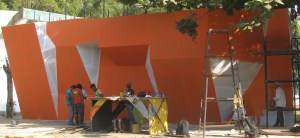
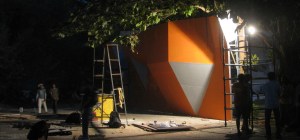
shyam-blog-edit-gv-comp-2014-6shyam-blog-edit-gv-comp-2014-2shyam-blog-edit-gv-comp-2014-3

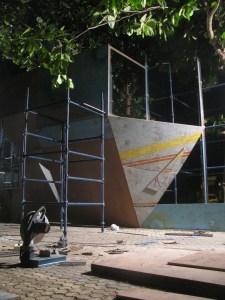
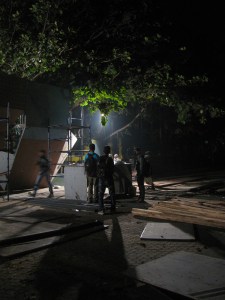
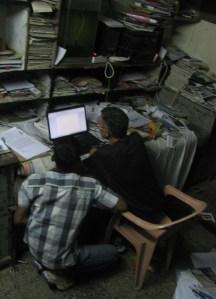
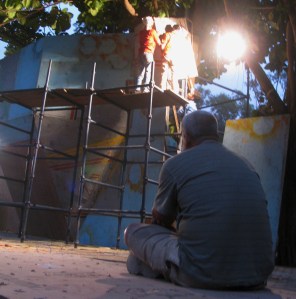
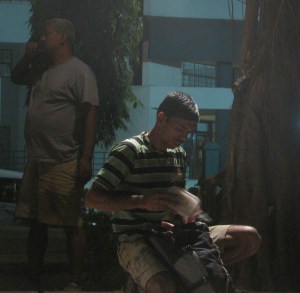
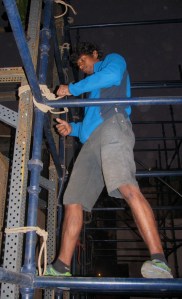
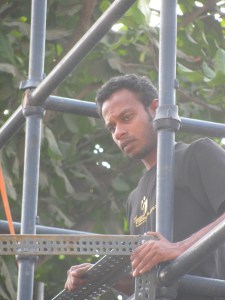
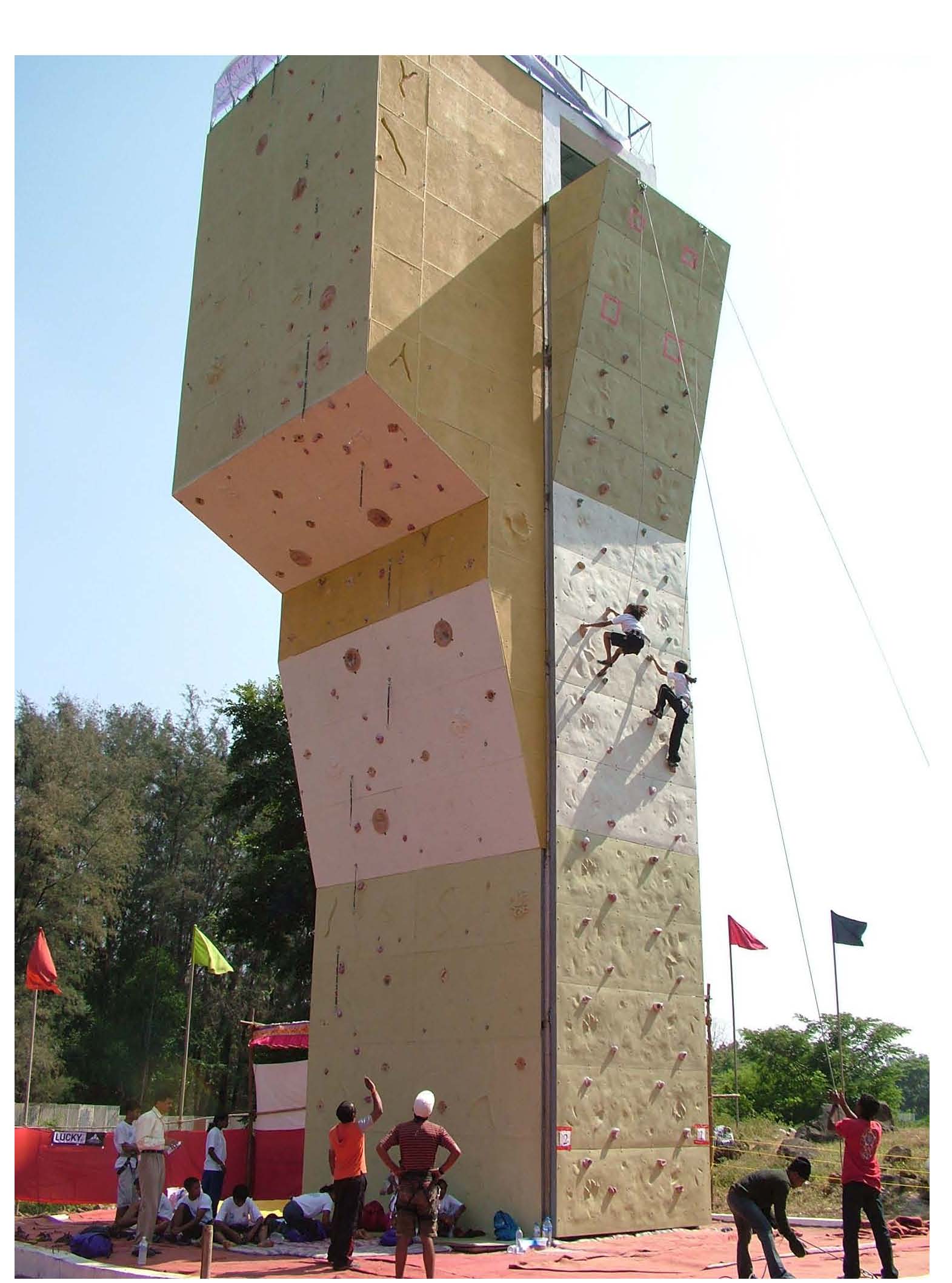
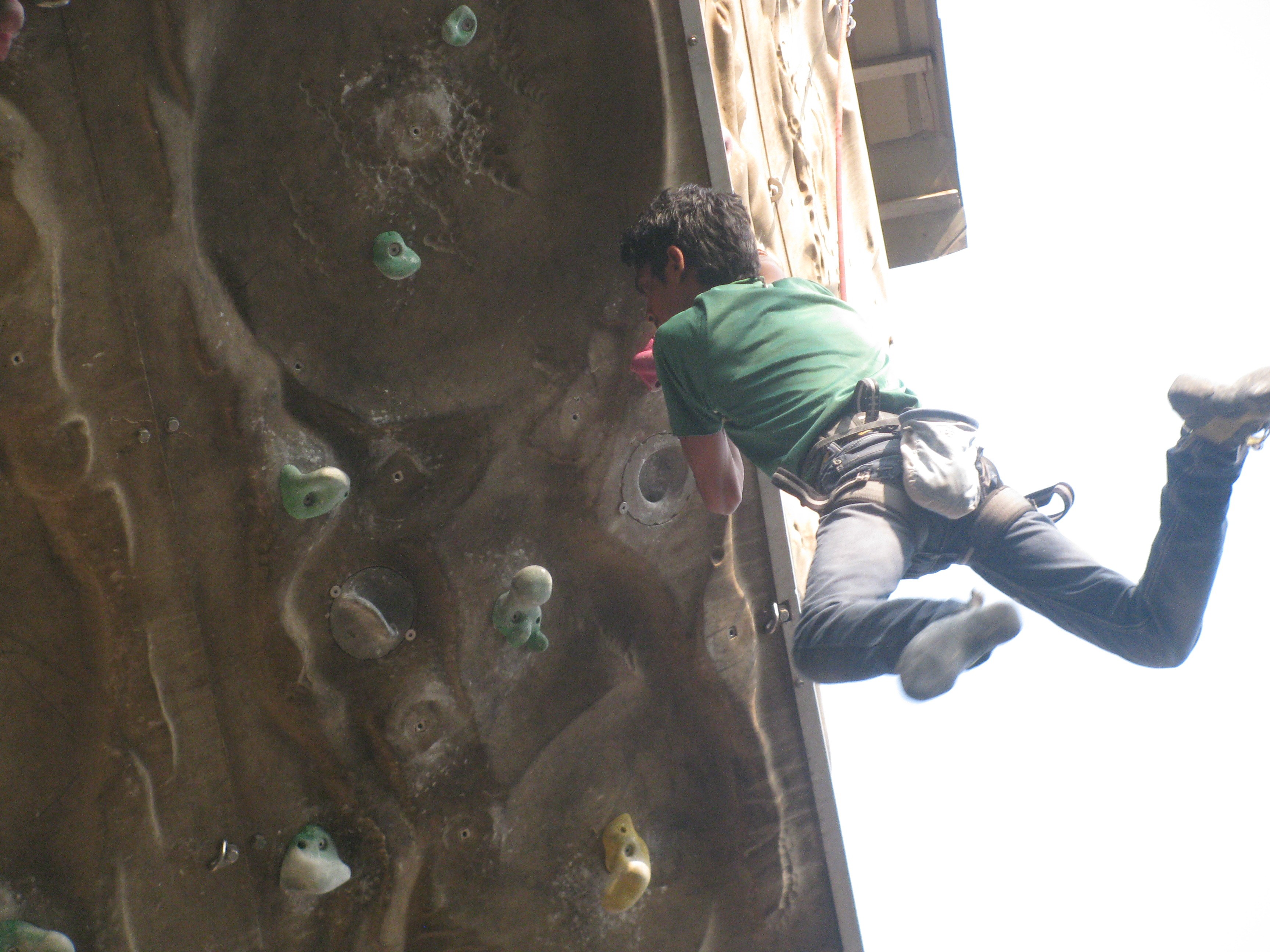
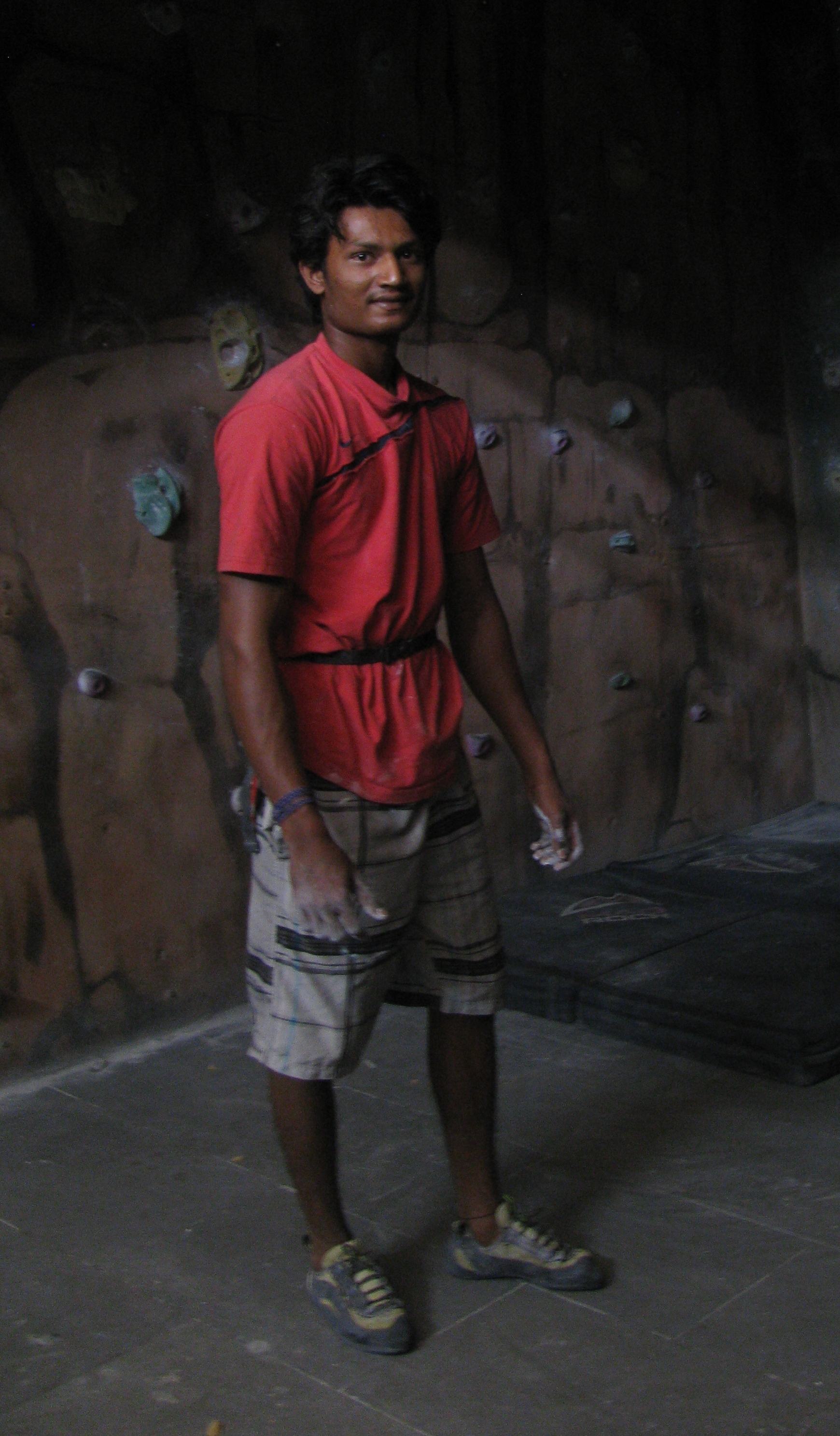
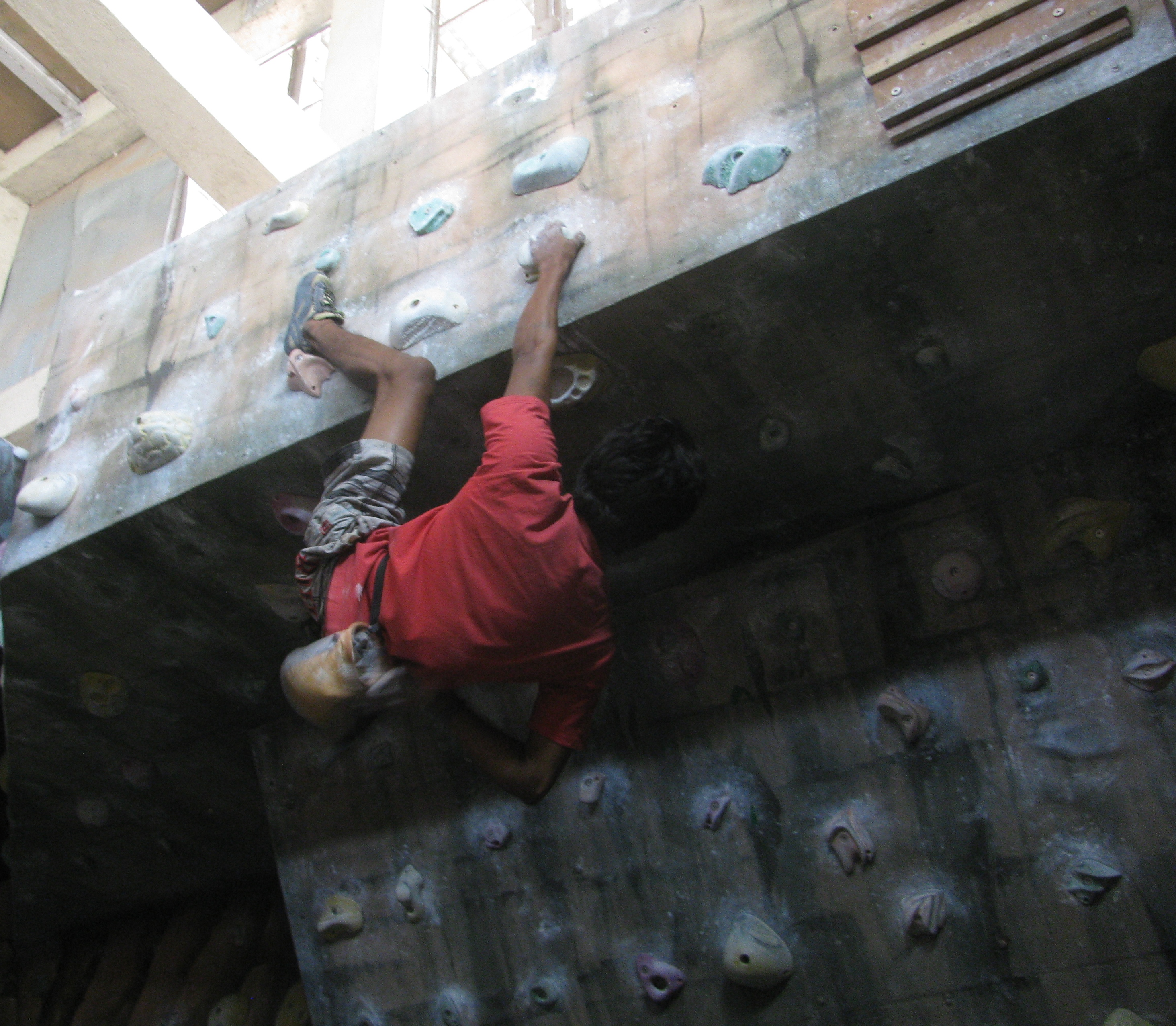
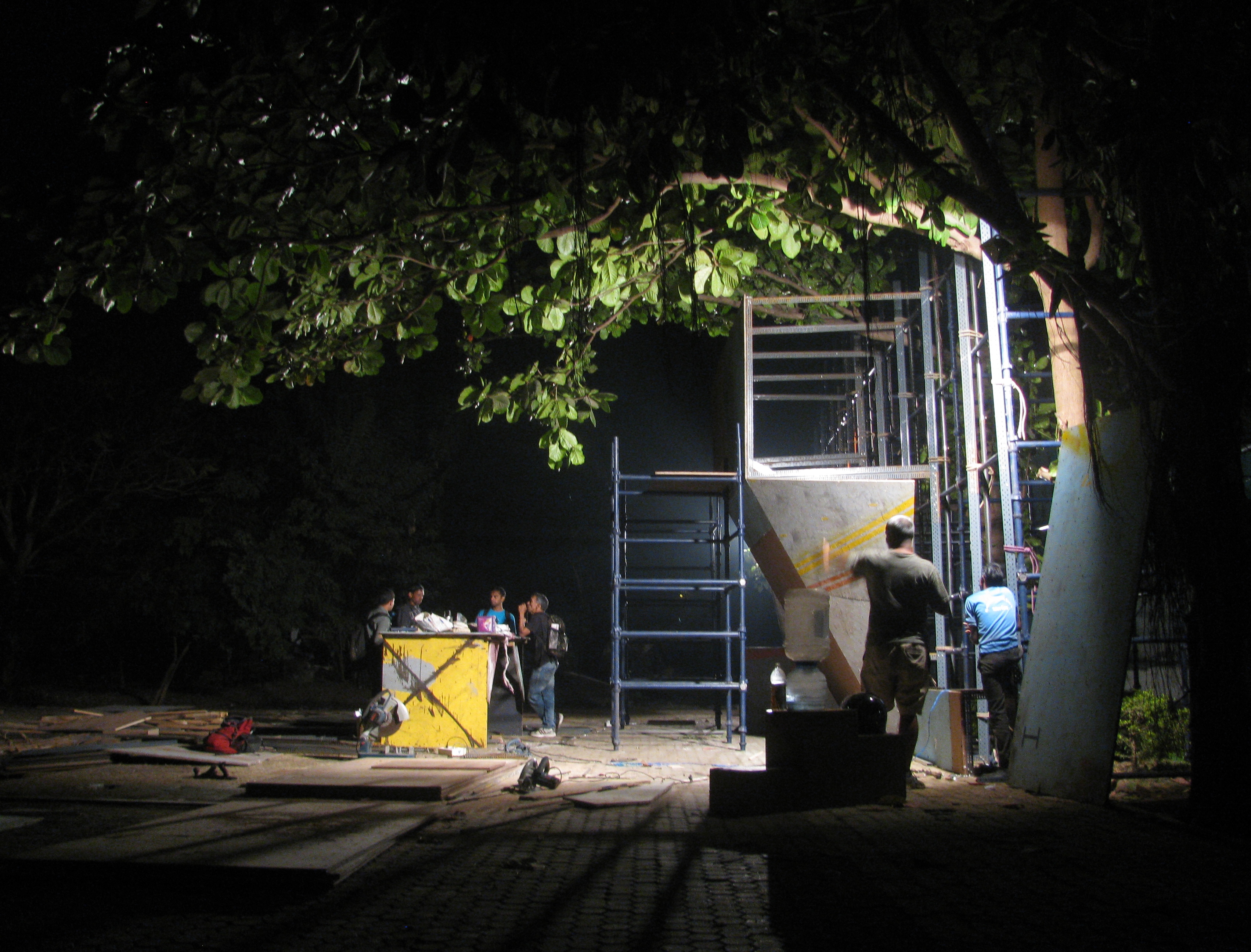
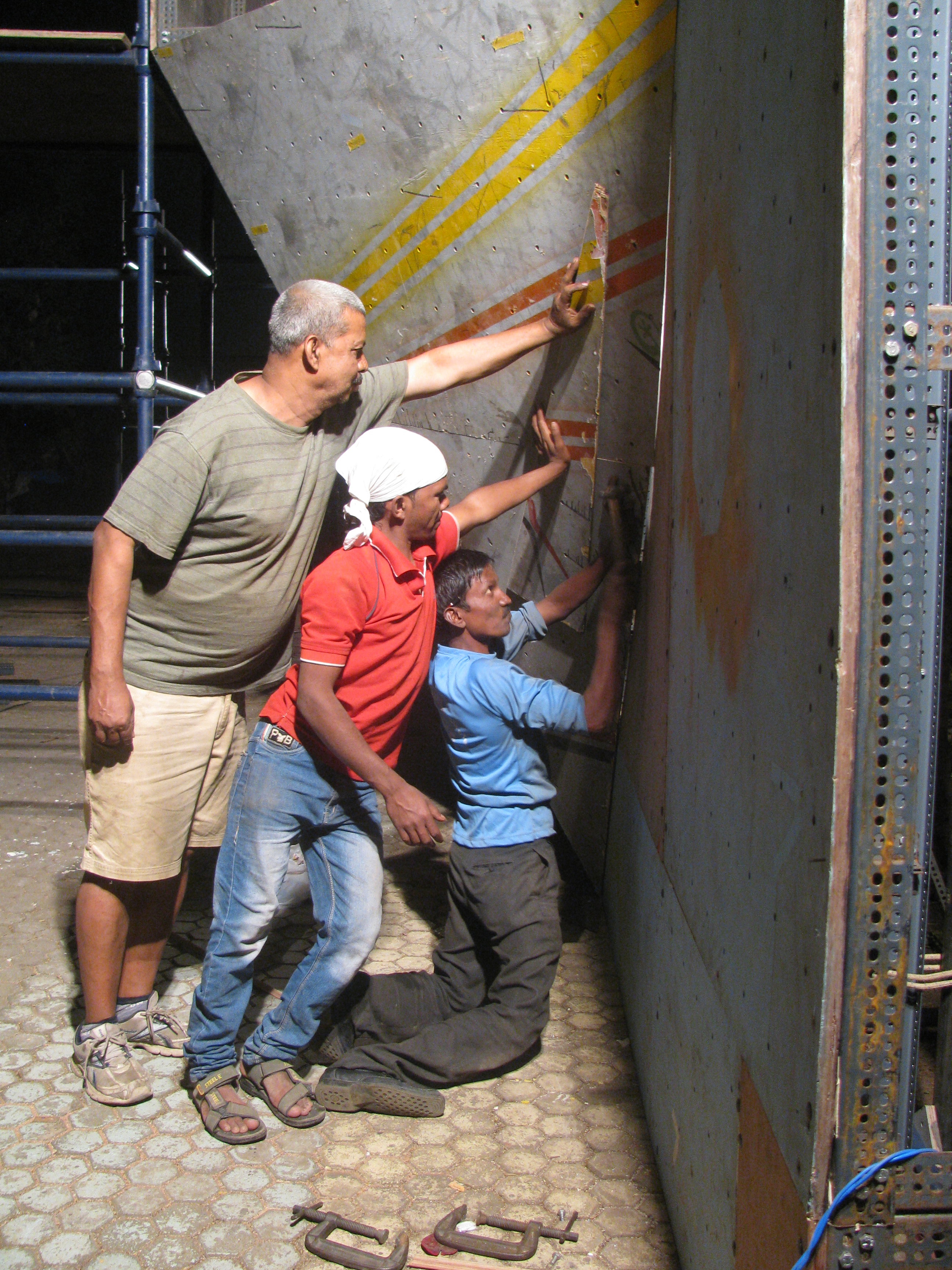
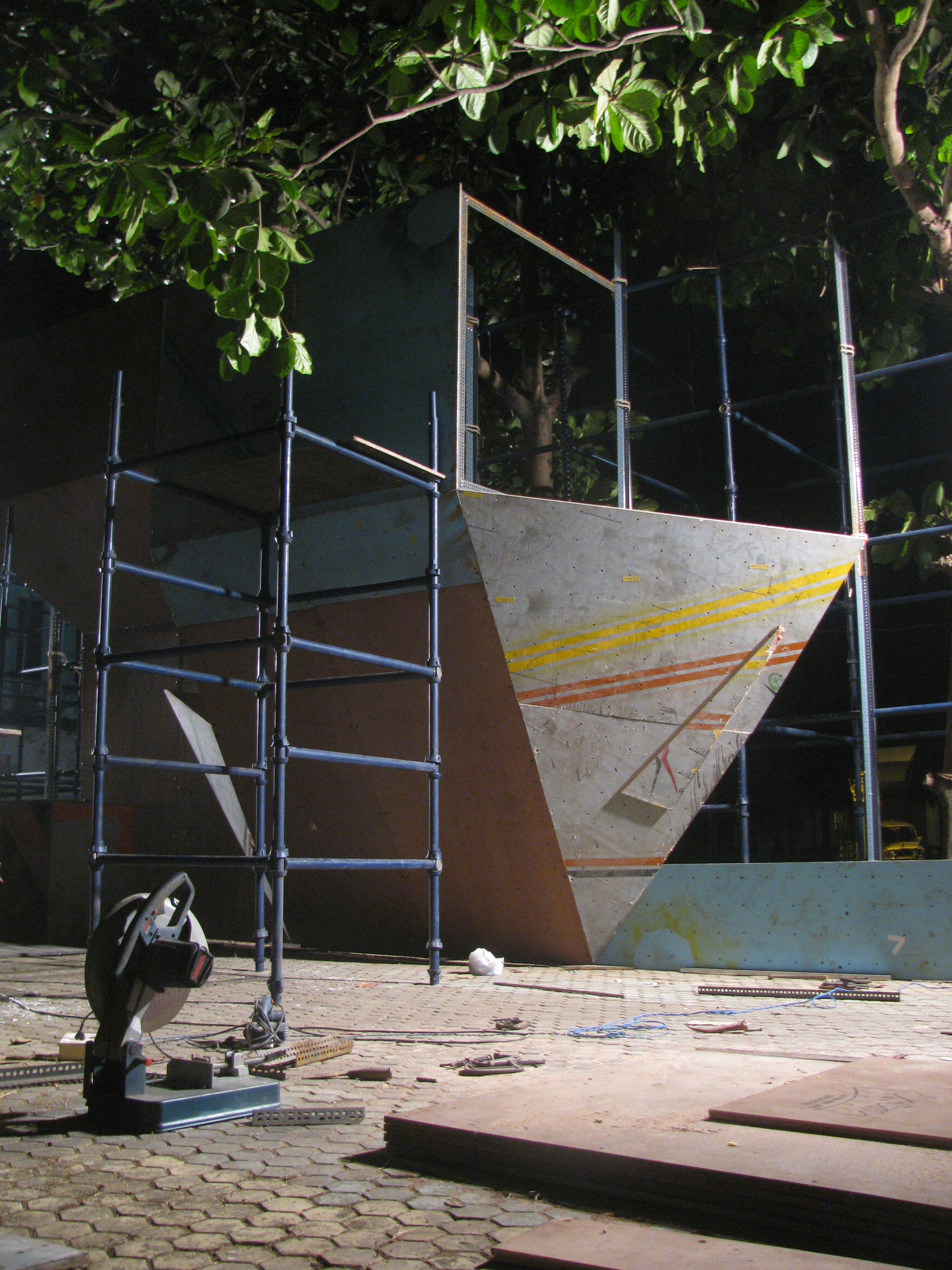
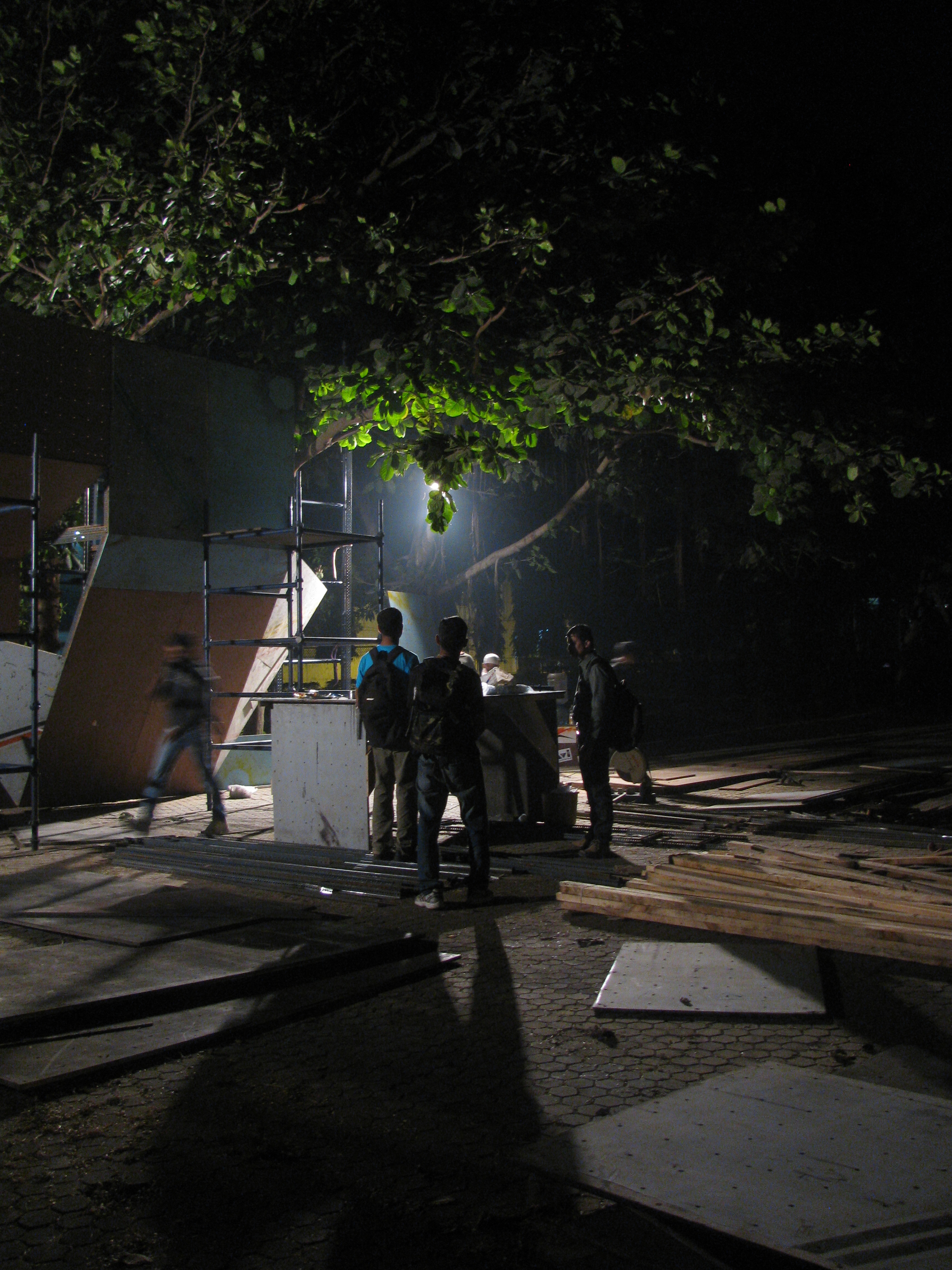
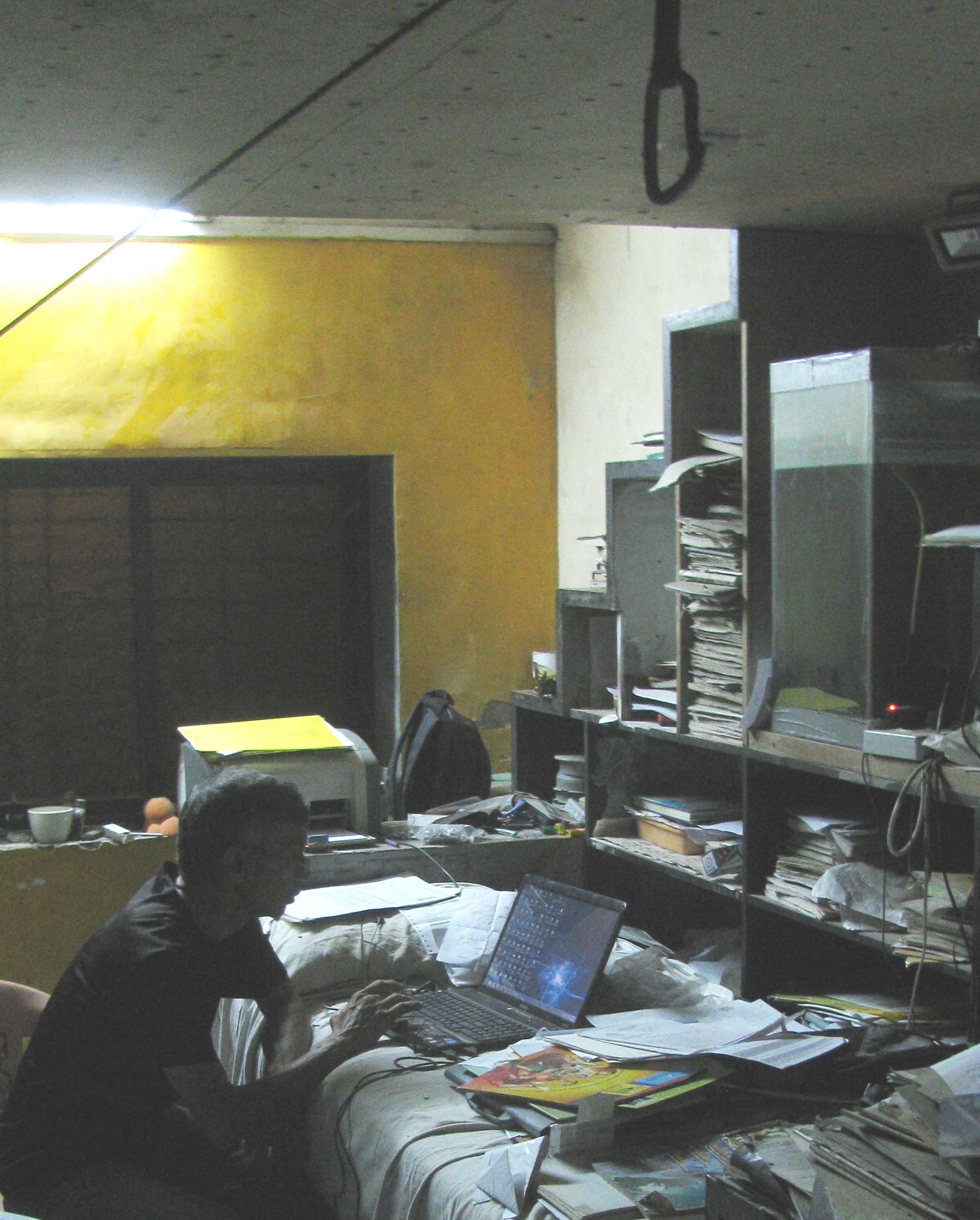
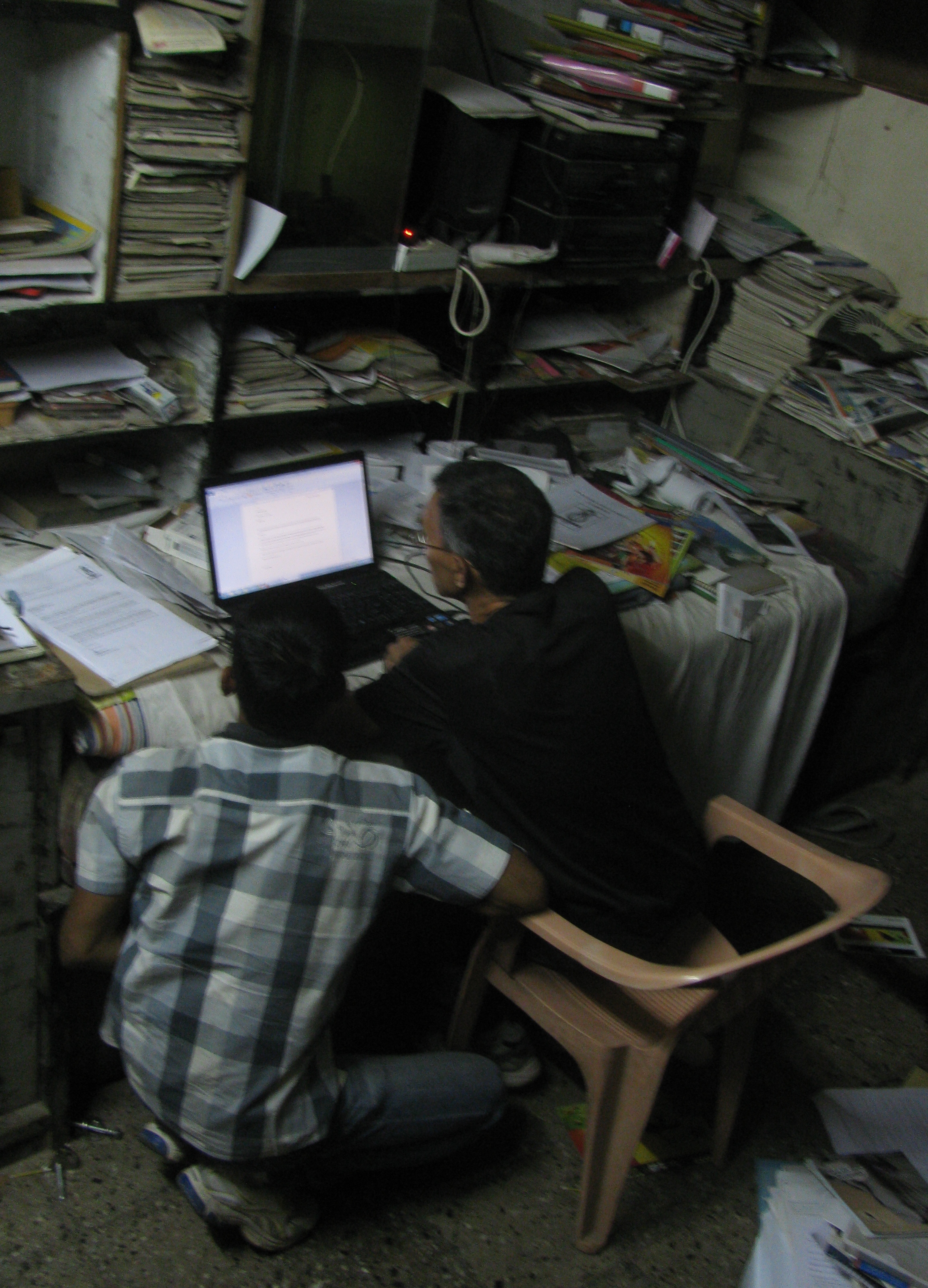
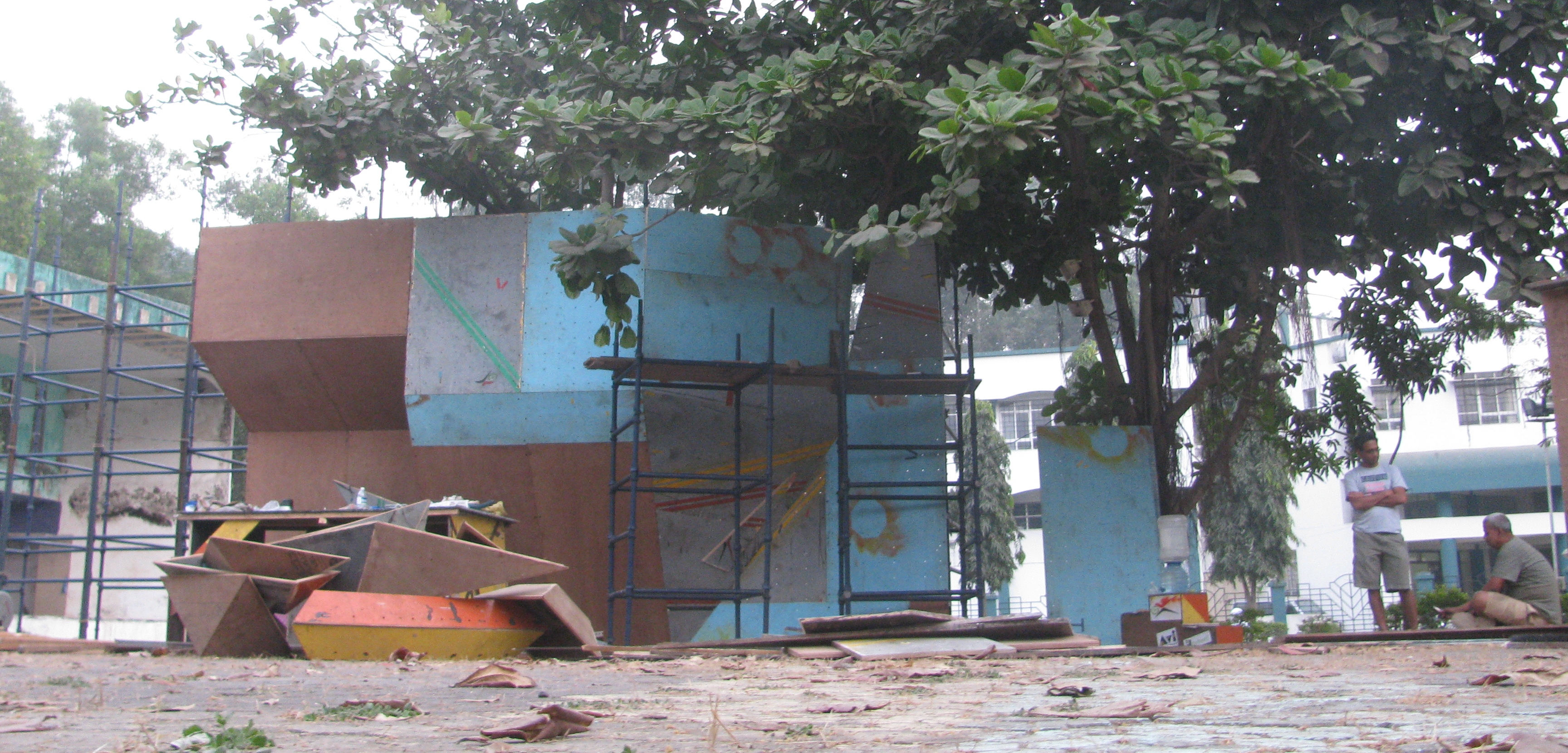
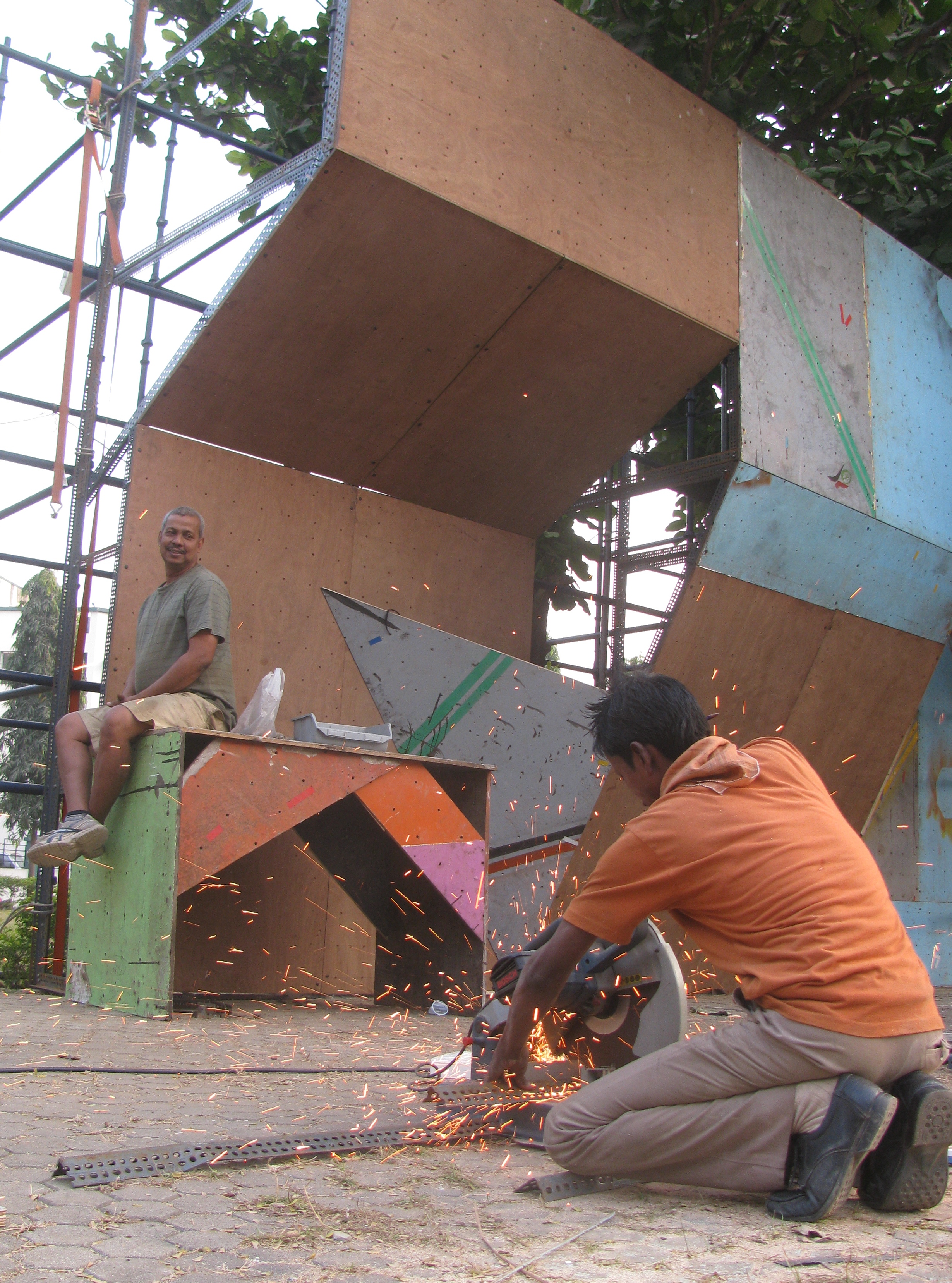
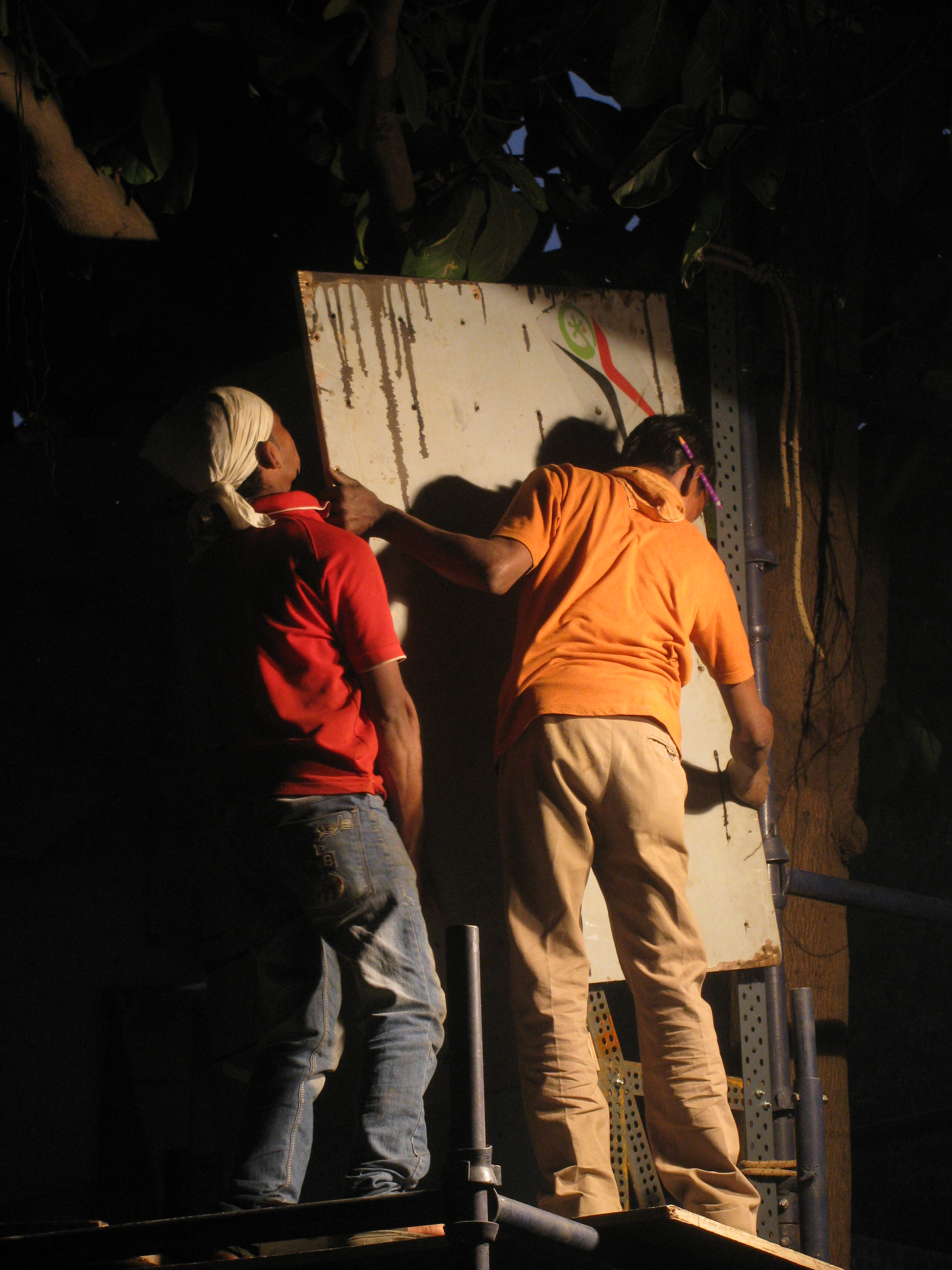
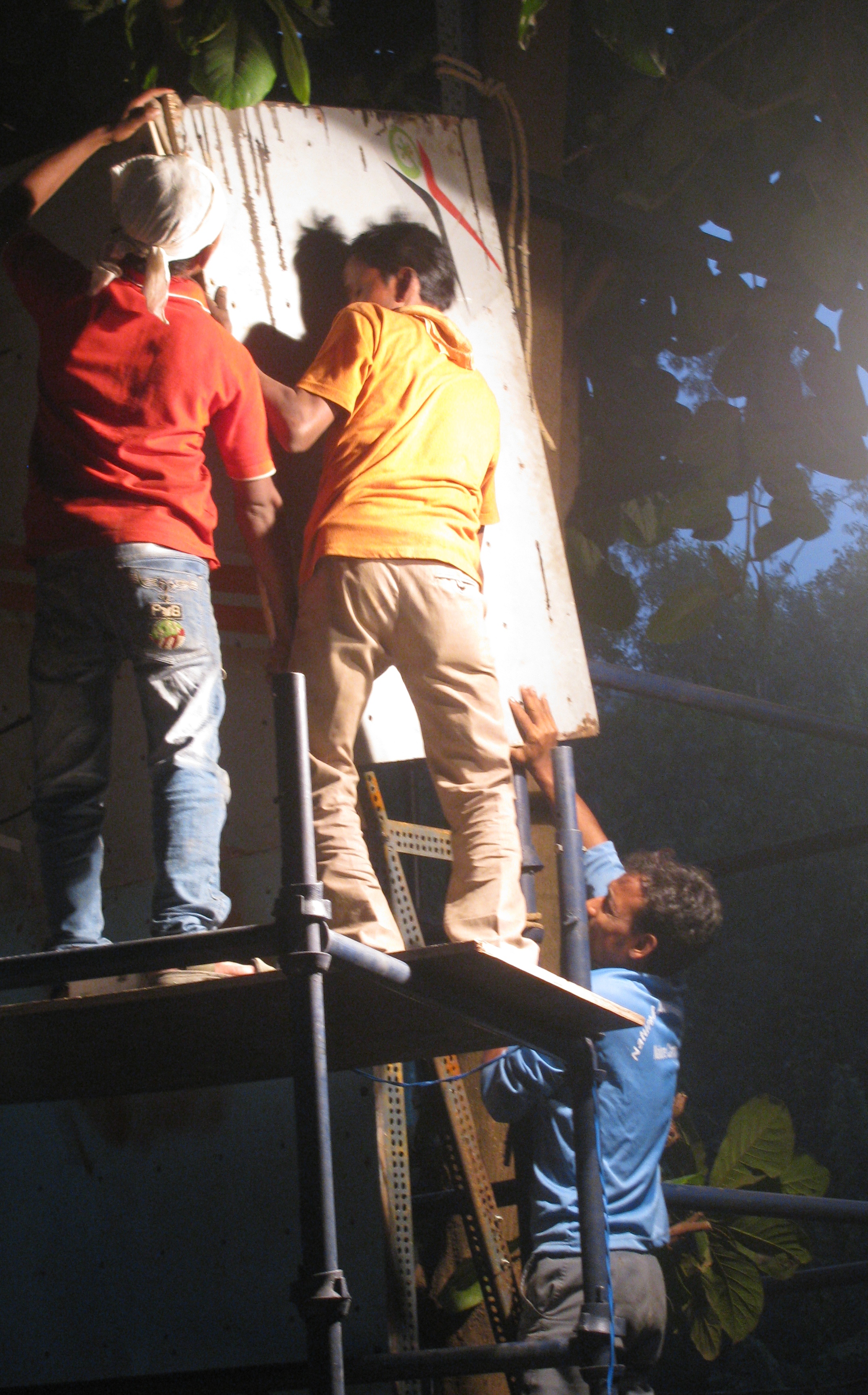
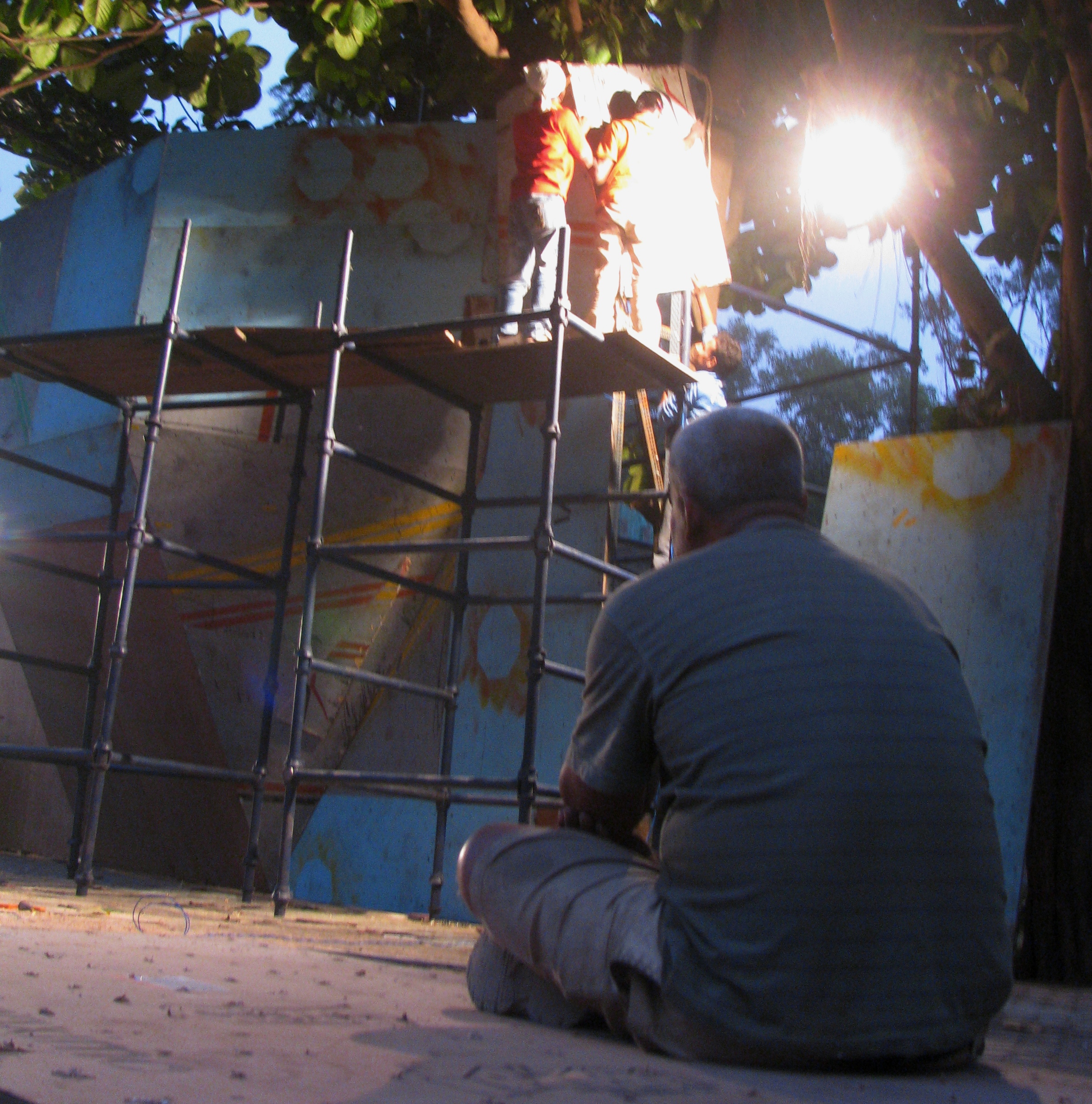
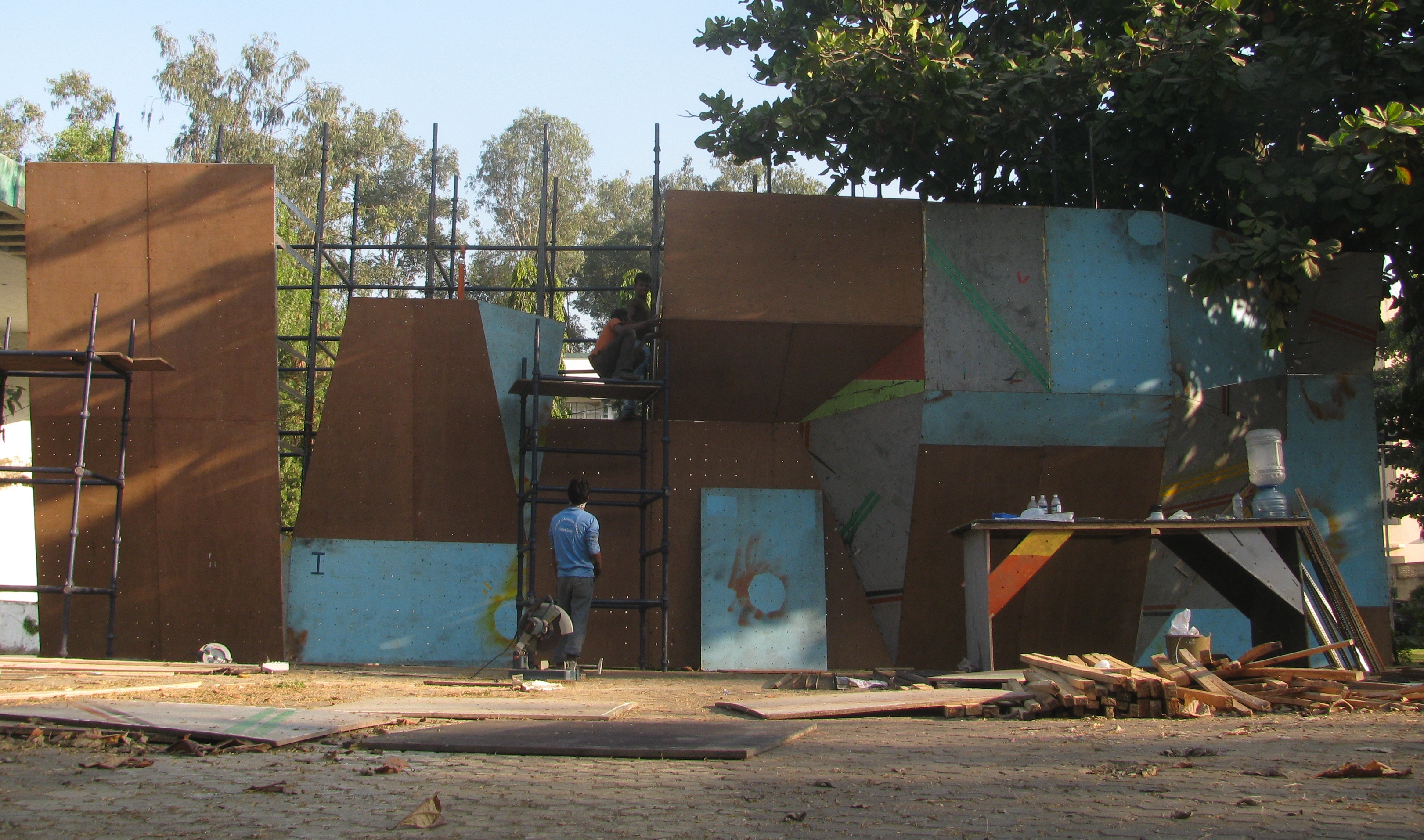
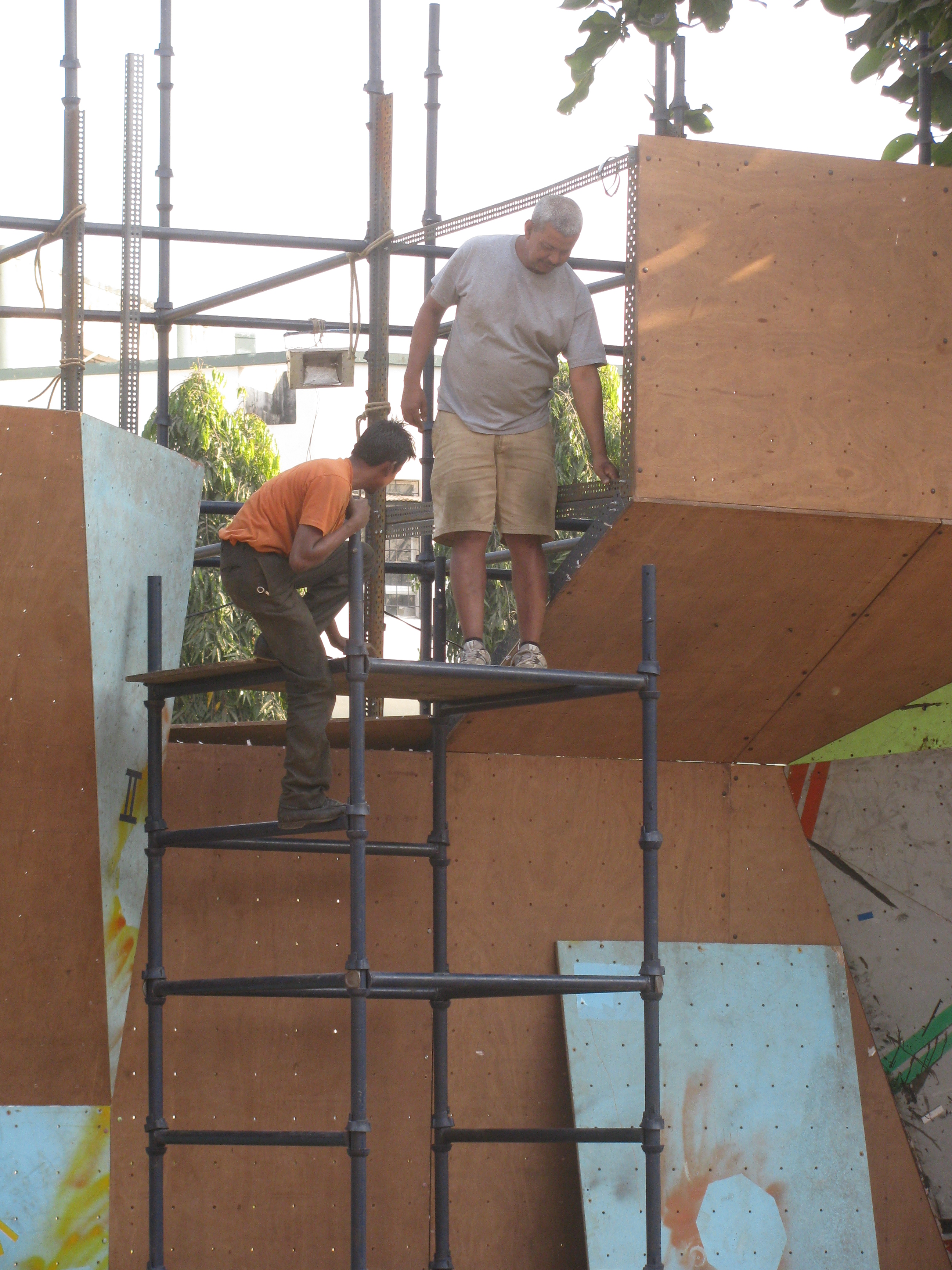
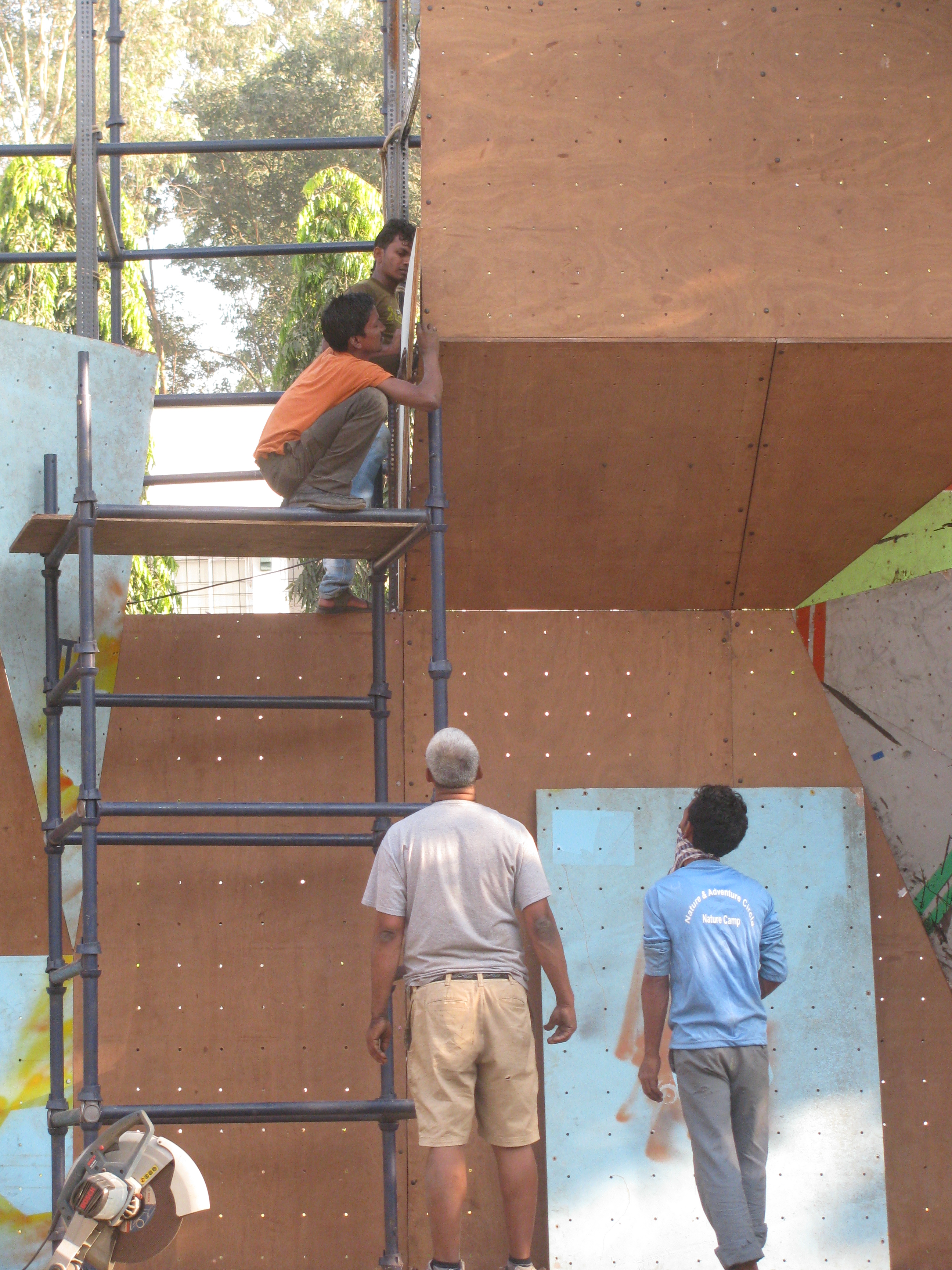
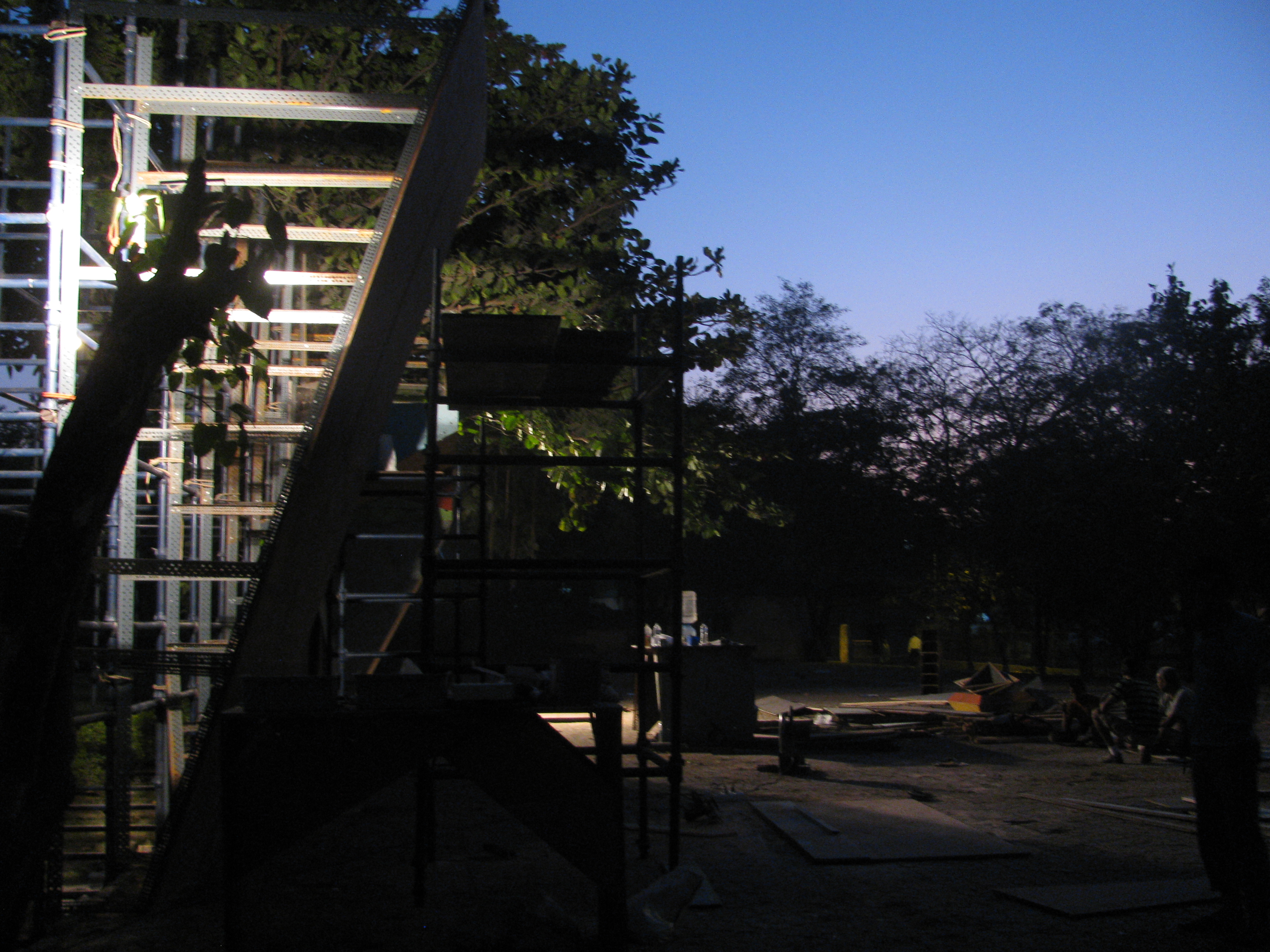
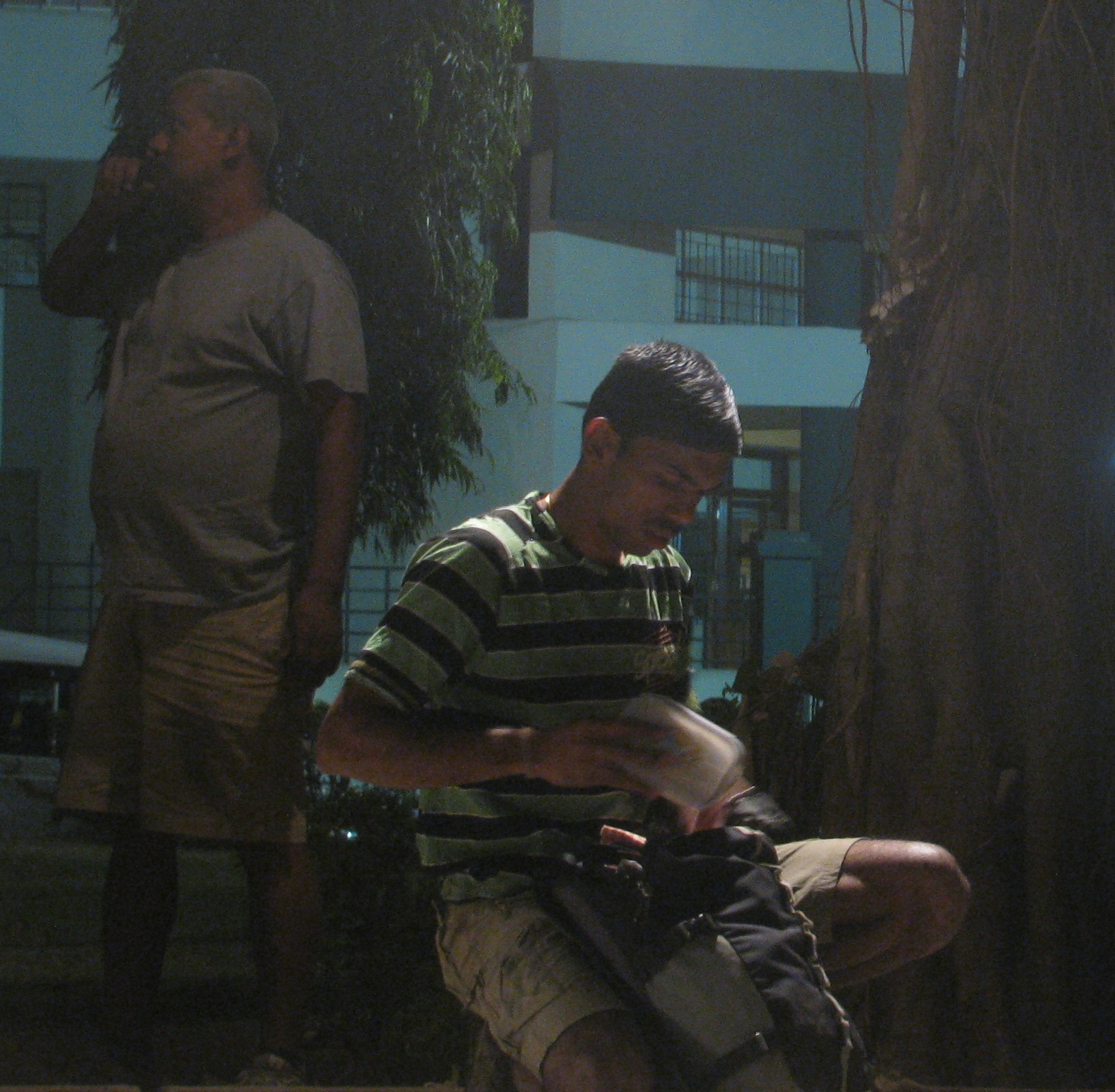
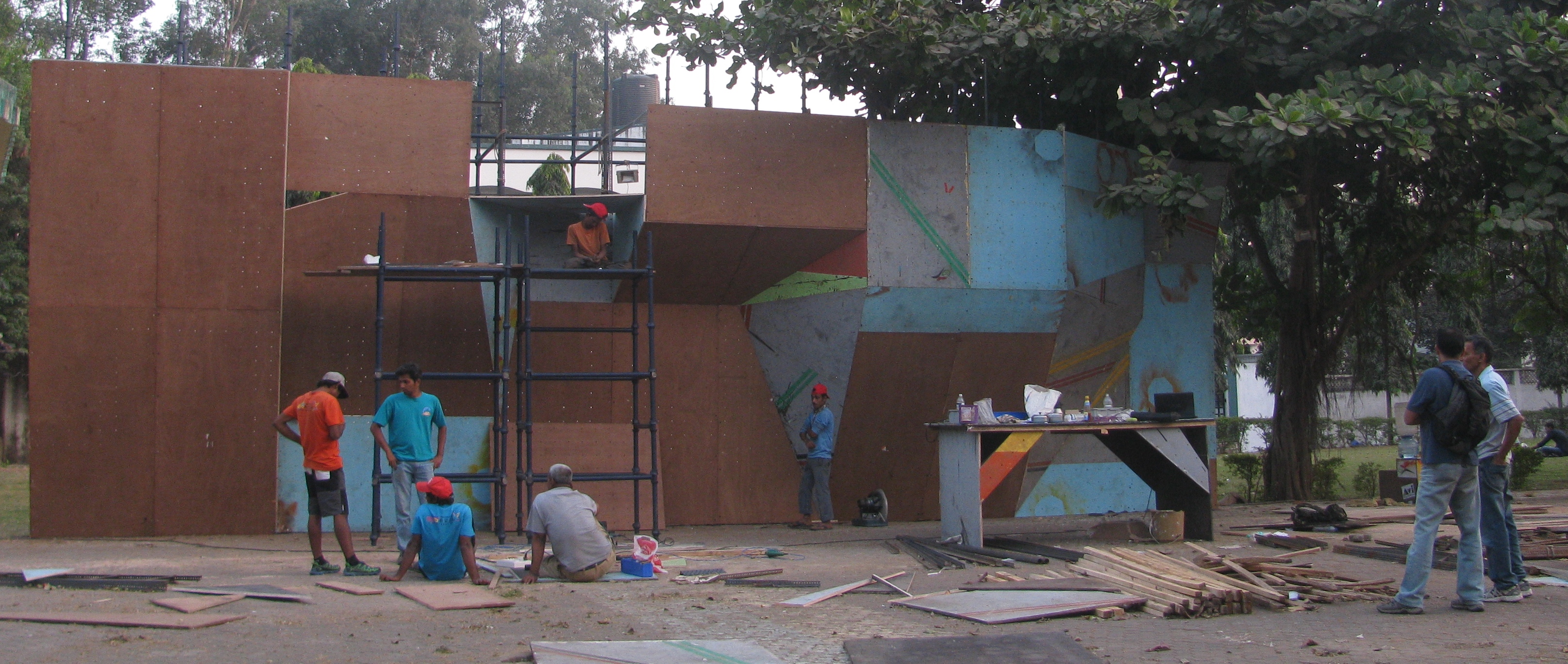
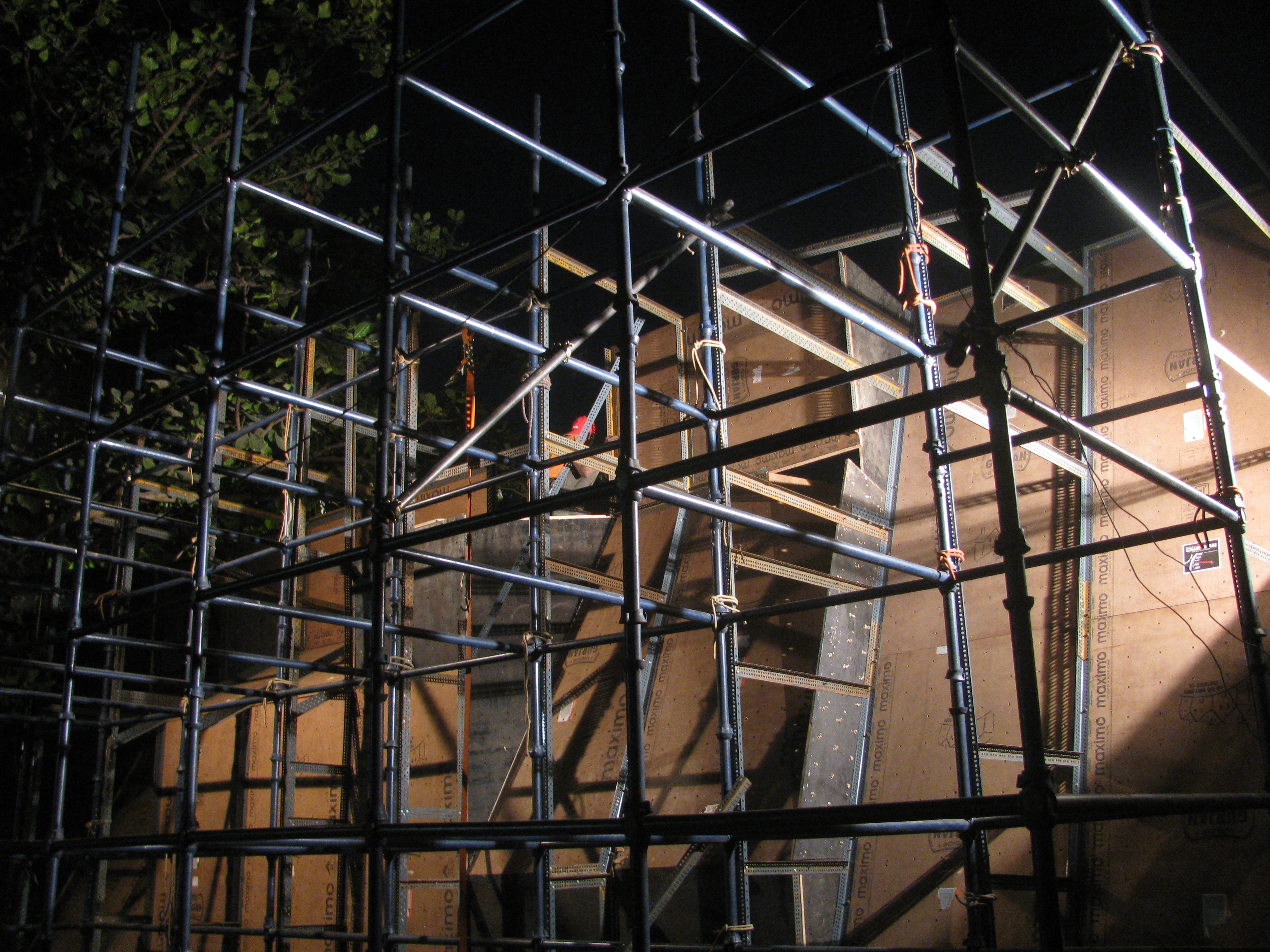
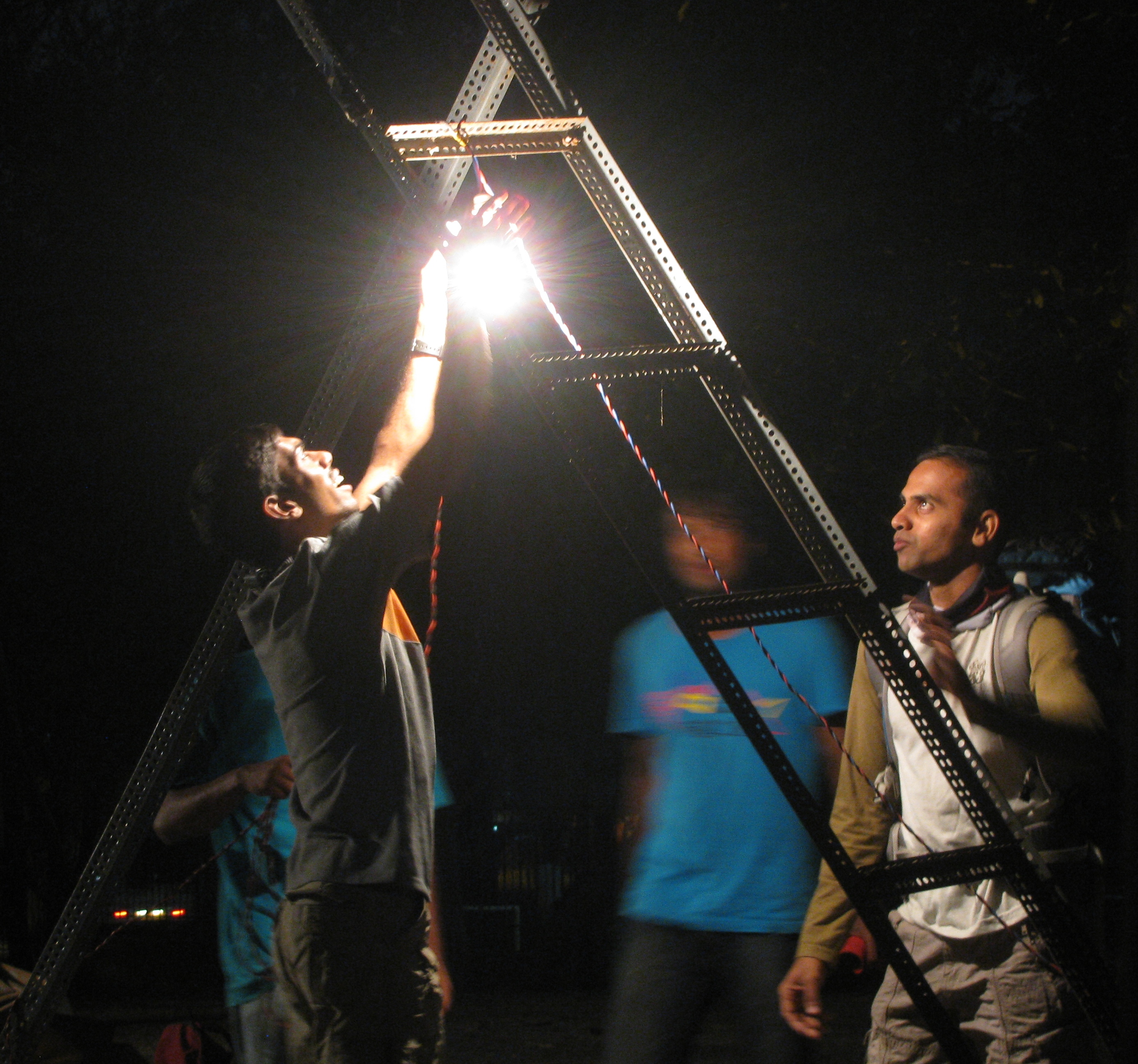
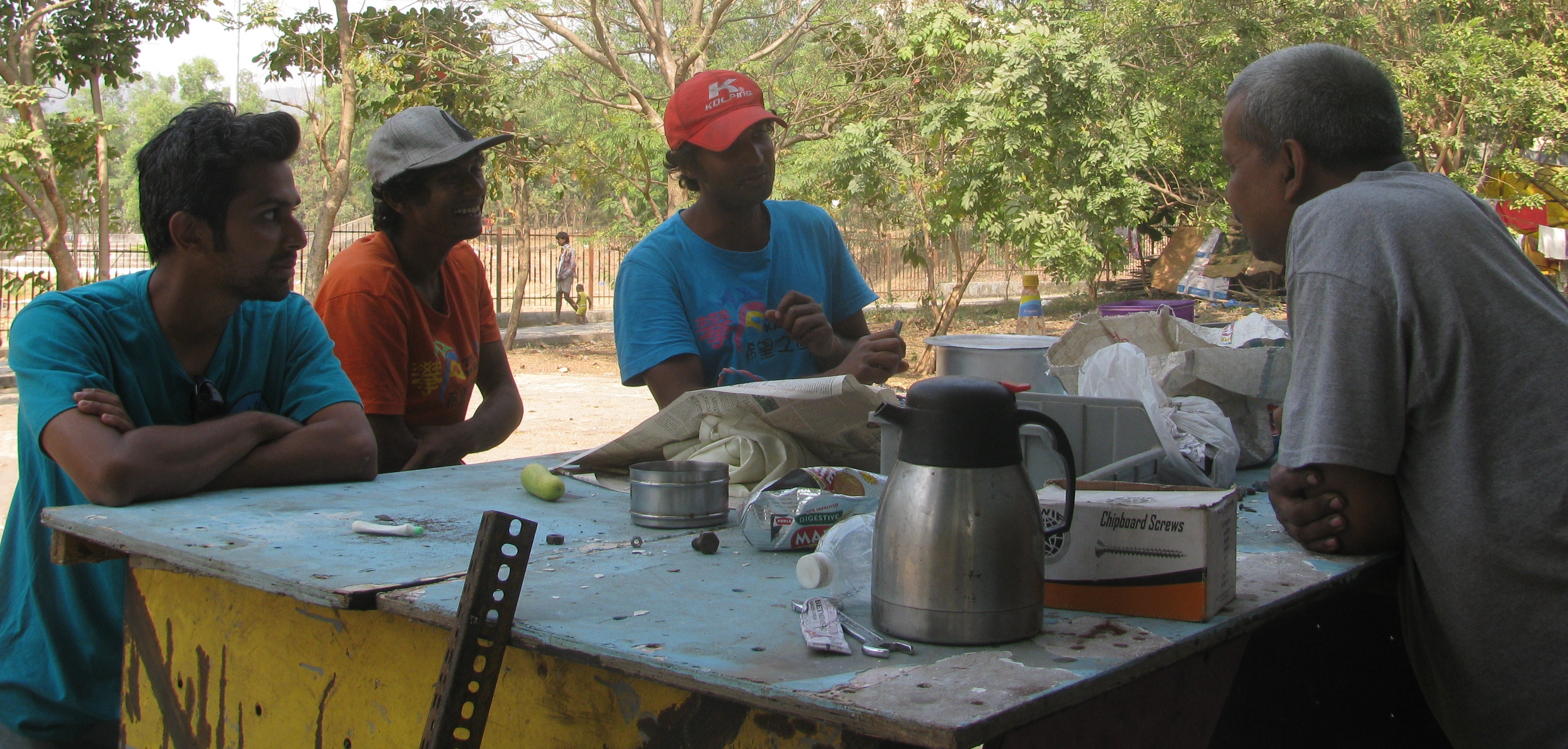
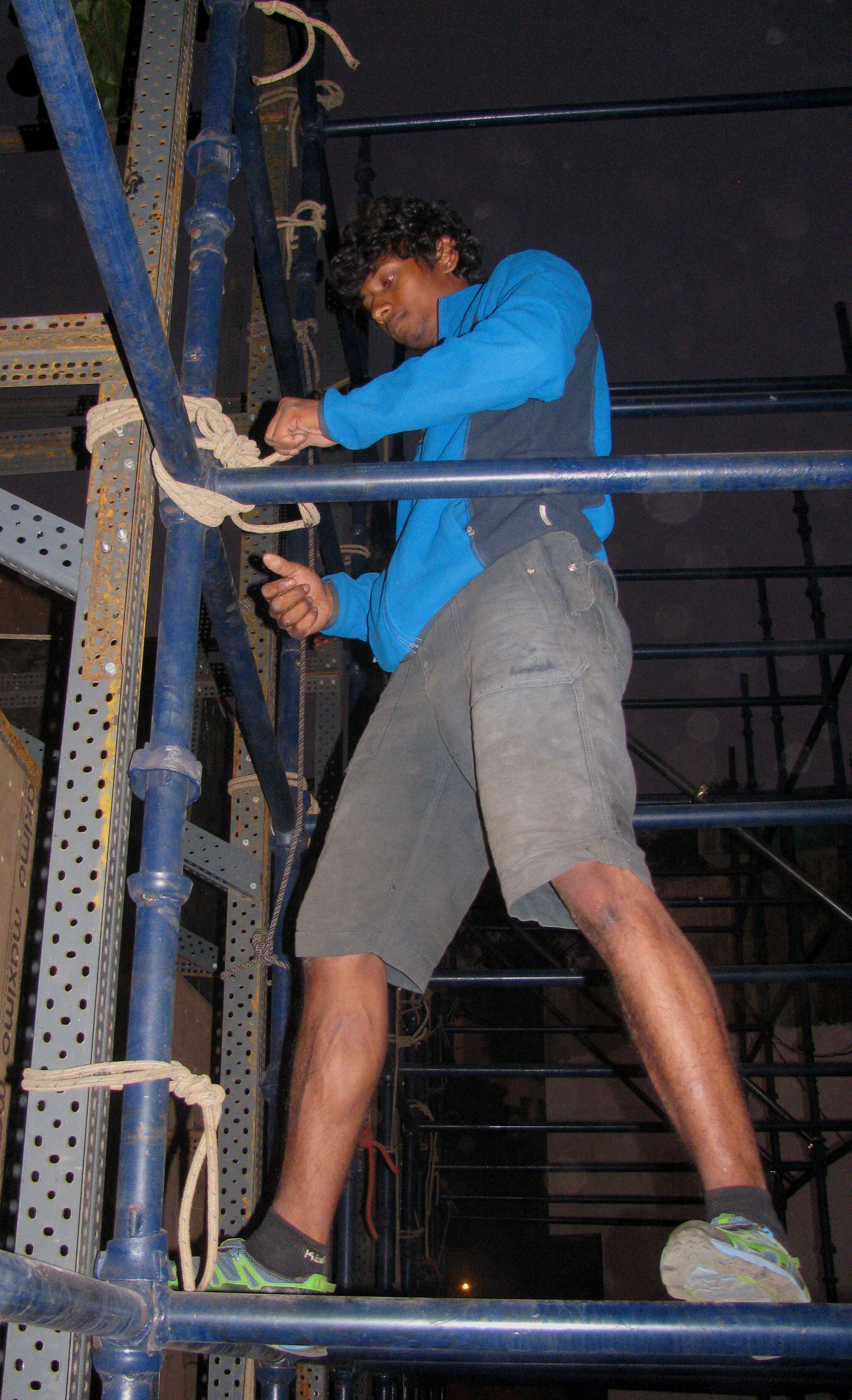
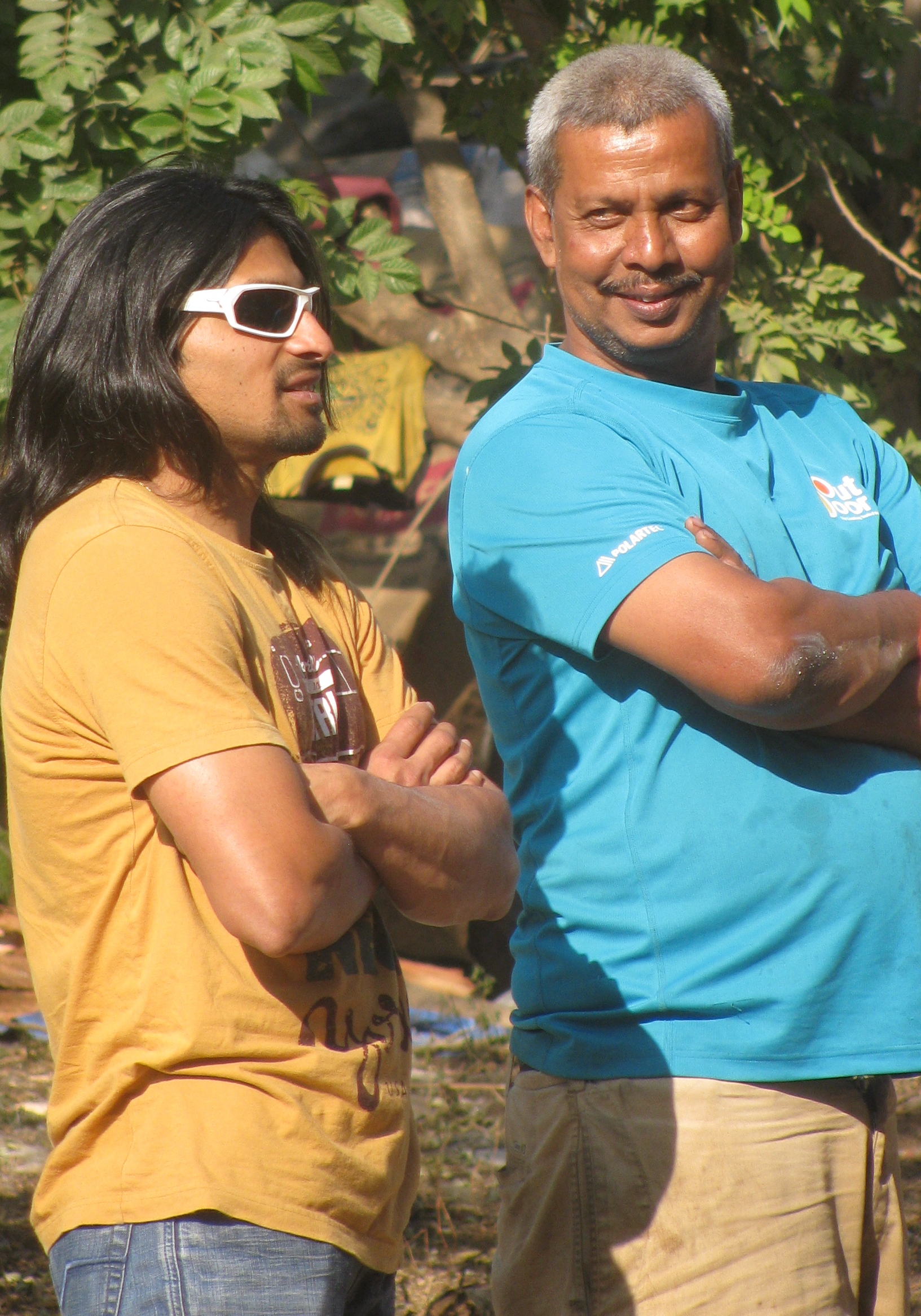
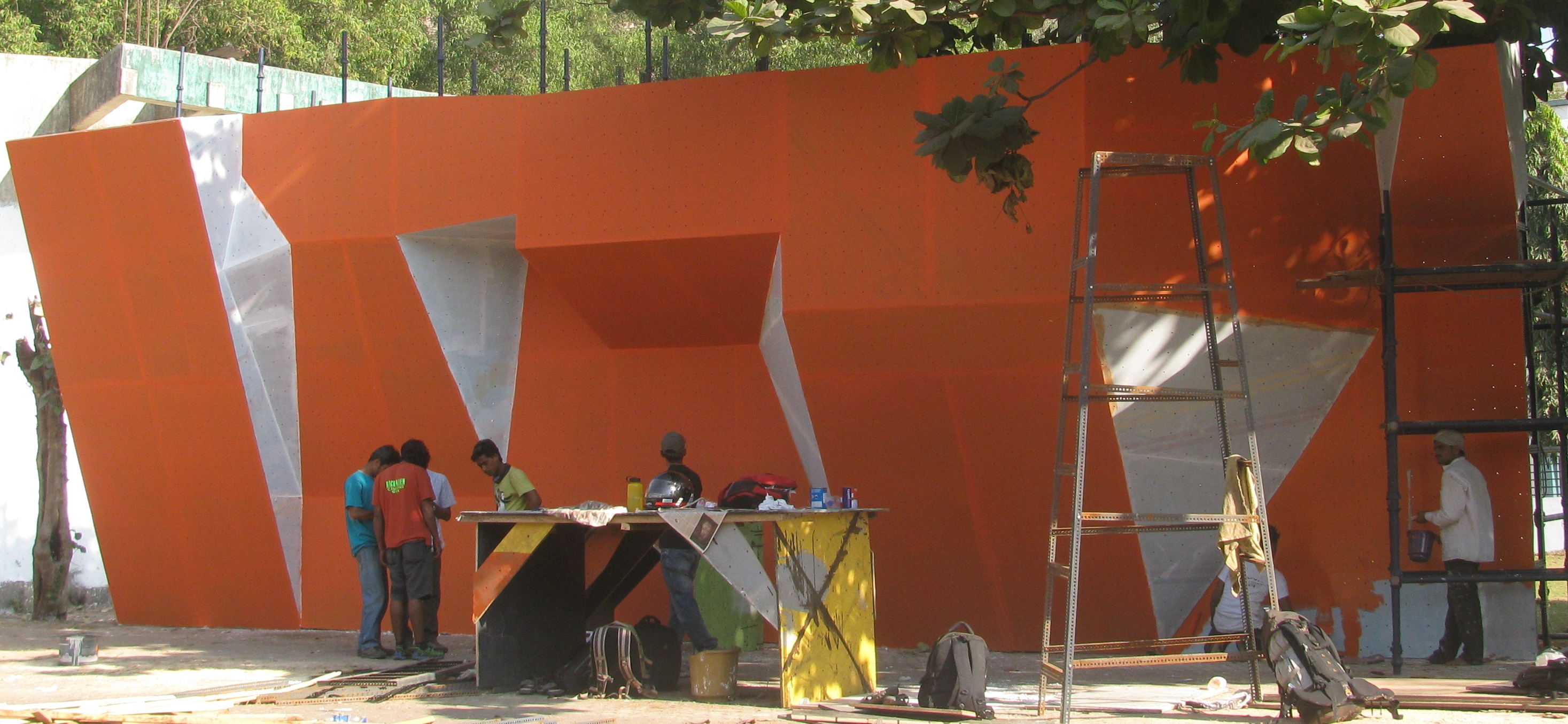
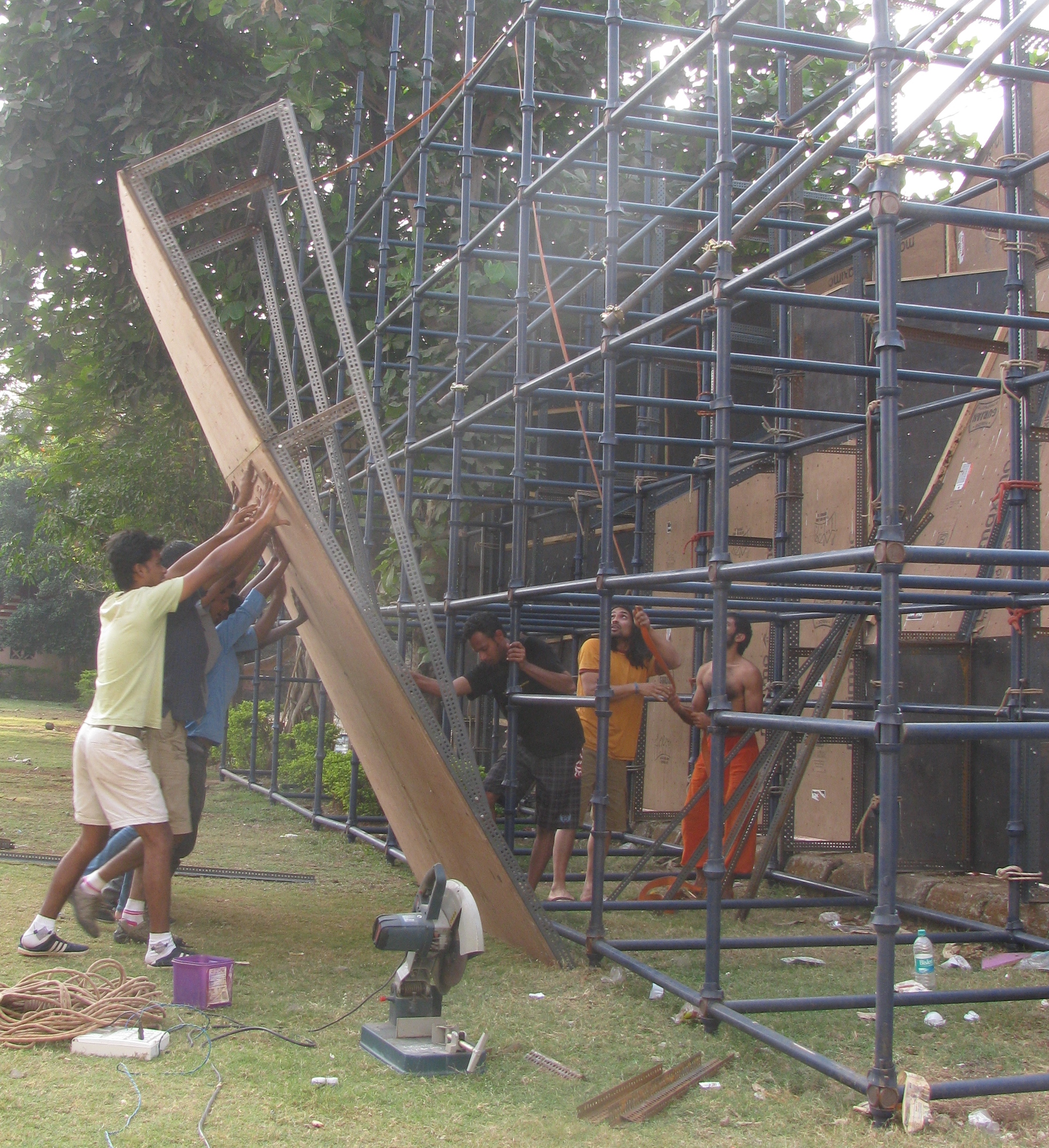
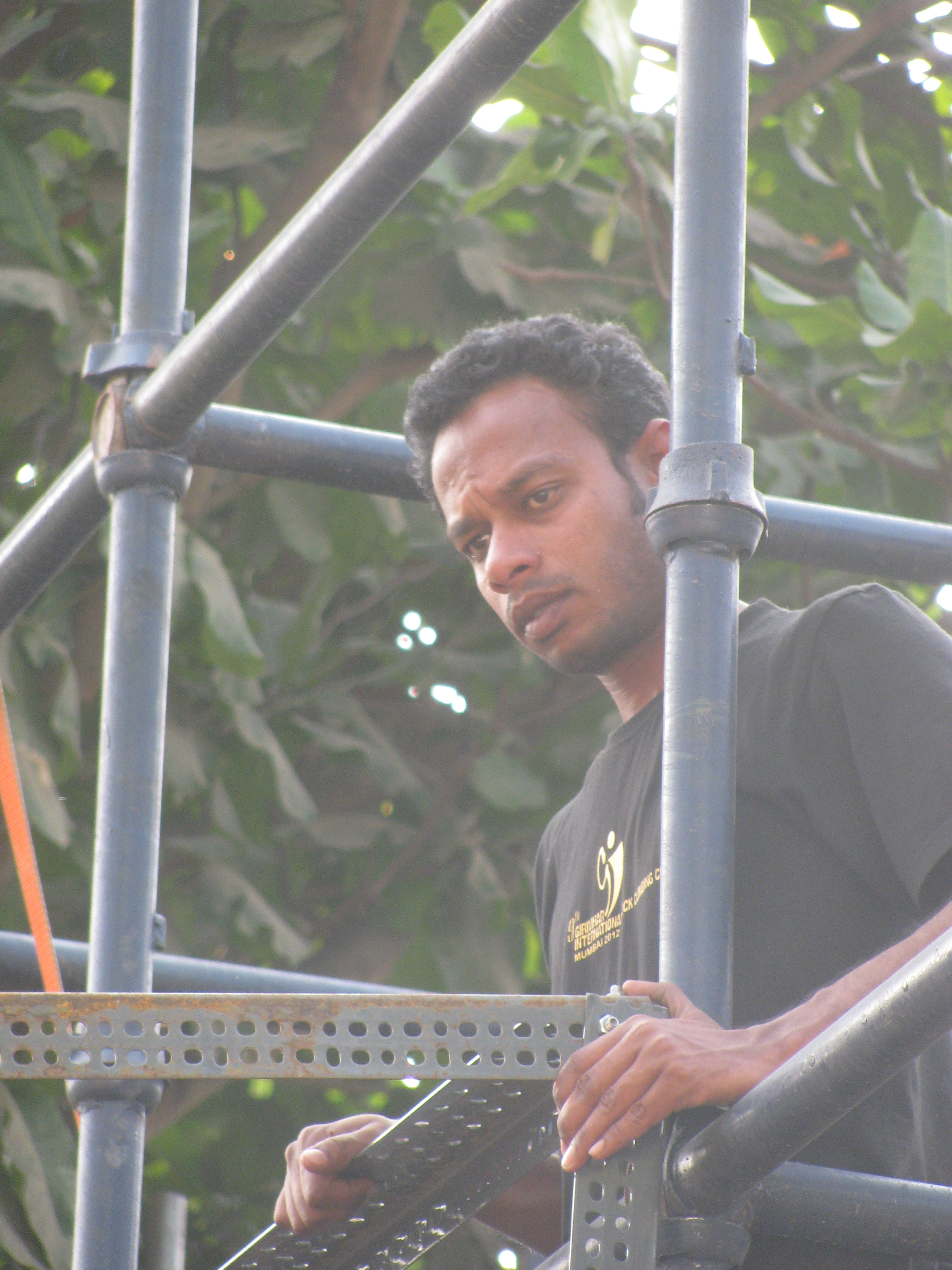
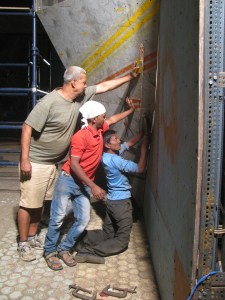
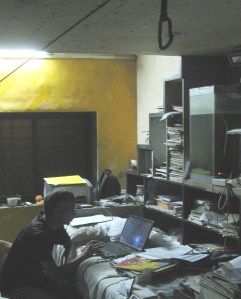
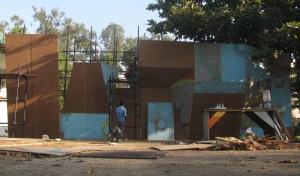
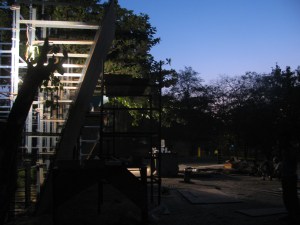
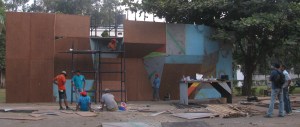
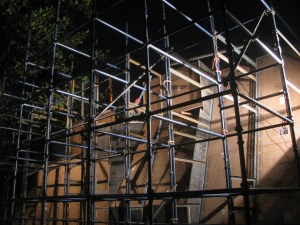
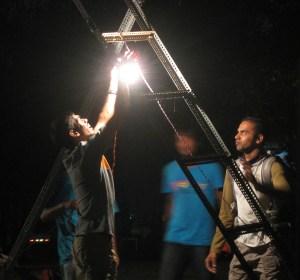
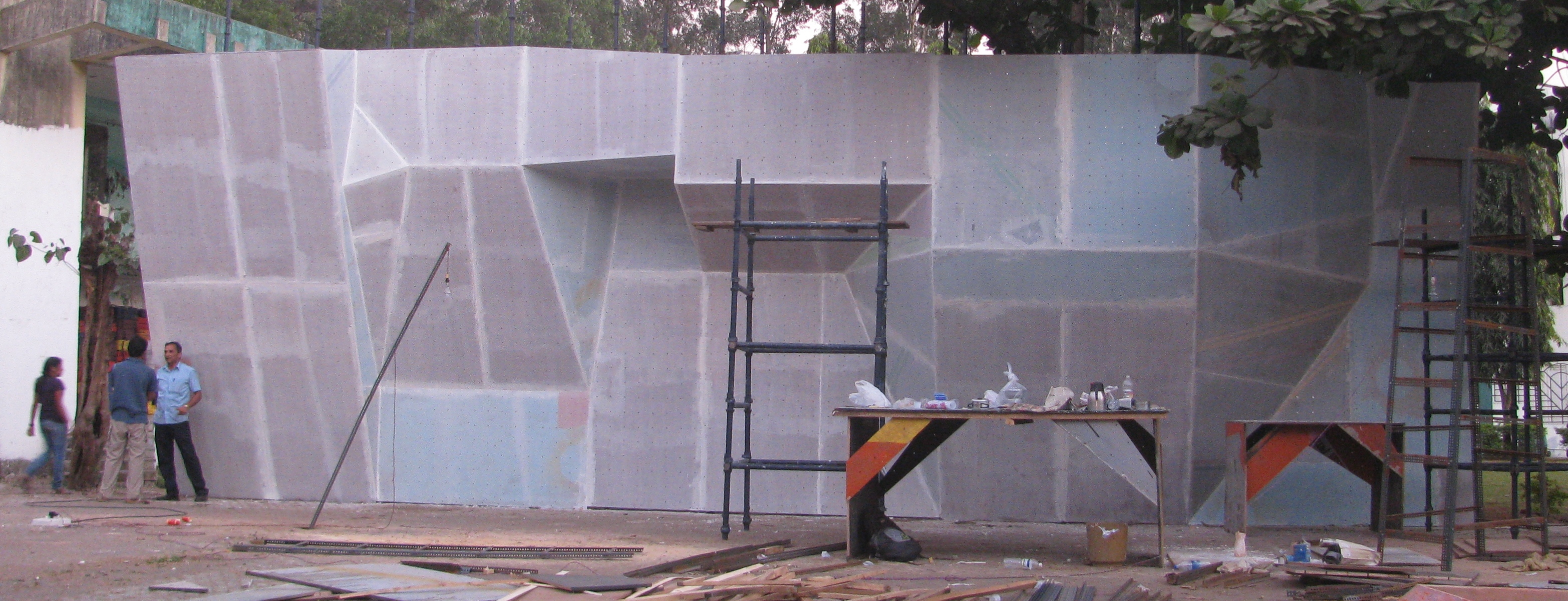
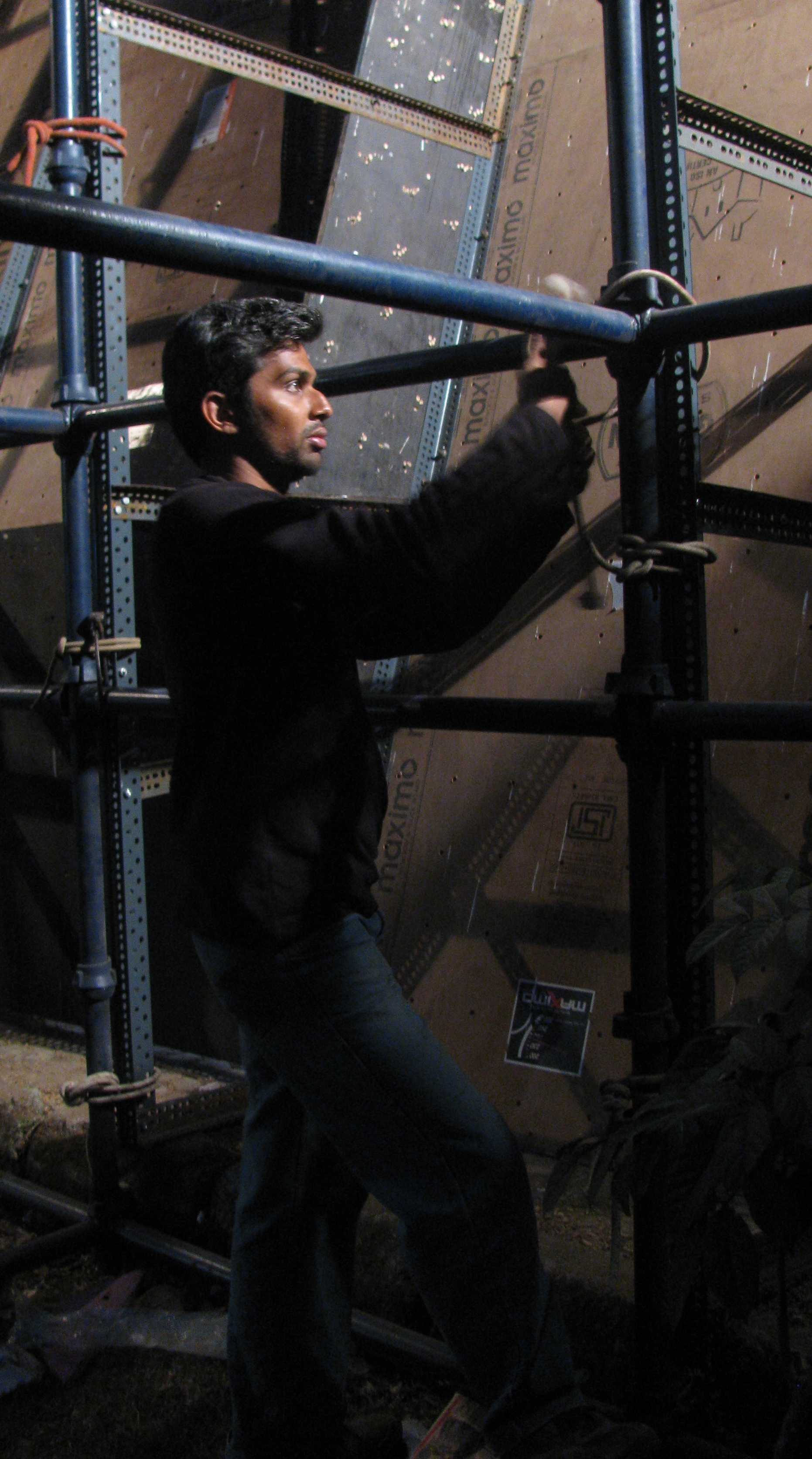
Work on this year’s climbing wall and other competition related formalities has begun (please see photos herein).

Abhijit Burman, Franco Linhares and Vivek Thakur have become busy.

Vaibhav Mehta should arrive in a few days.

Rohan Gawand and Sandesh Palshetkar dropped by to help.

 The countdown has begun.
??????????????????????????????????????????????????????????????

As Franco said when I spoke to him on Monday (January 13), for climbers it is that time of the year when “ all roads lead to Belapur!’’
???????????????????????????????Update 1 / January 14: Tuesday was a day of festivals in India.

According to newspaper reports, there were five happening at once.

Early evening, the stadium near the competition venue at Belapur was in celebratory mood, hosting games ranging from cricket to kabaddi.

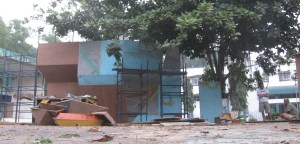
Amid that, work on the climbing wall continued.

Abhijit Burman (aka Bong) was at the venue, as was Prashant Venugopal, who informed freelance journalist living out all days as same, that Tuesday was holiday. It added to the pleasure of meeting friends and the cups of tea, Bong handed out.

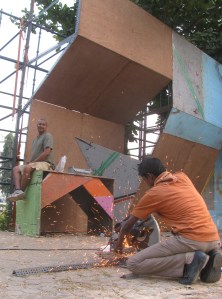
The w???????????????????????????????all’s size is now clear from the framework built to support it. According to Bong, the wall for 2014 will be the biggest constructed yet for the Girivihar competition. It is marginally longer than what has been installed before.
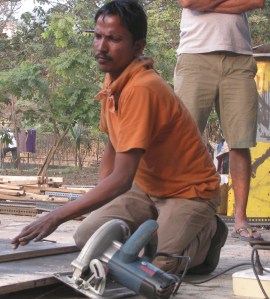
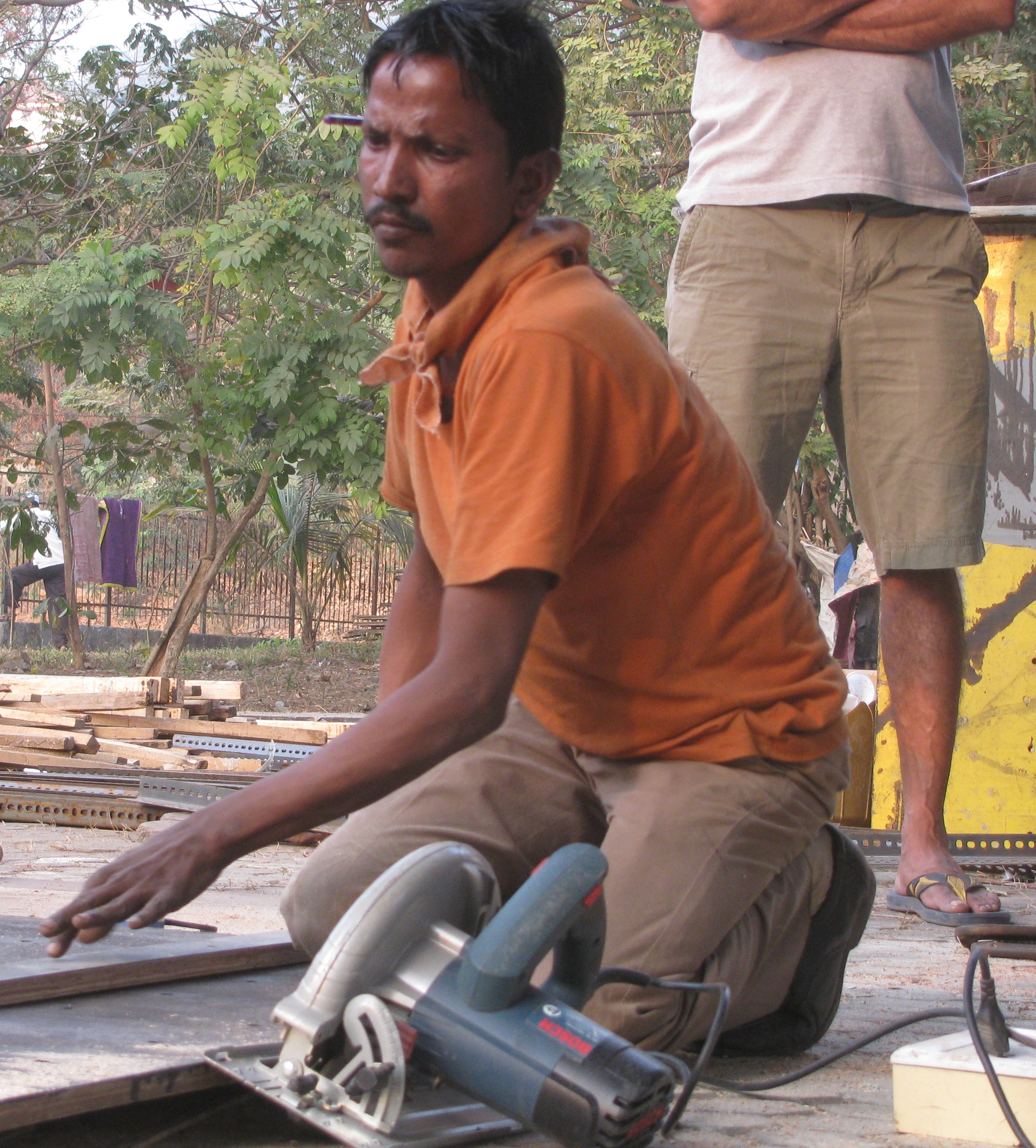
A familiar face to anyone who has witnessed the previous competitions is Raju, the carpenter.

For the first few years, the wall was built in-house by climbers along with Bong’s architect-brother Indrajit. Slowly, as the overall work around the competition grew, carpenters arrived.

Raju, who hails from Chhapra in Bihar, first worked on the annual wall in 2009. From then on, he has been a regular sight at every edition. This time, he has two people to assist. On Tuesday, every tea break featured Bhojpuri songs played from the trio’s mobile phones.
??????????????????????????????????????????????????????????????

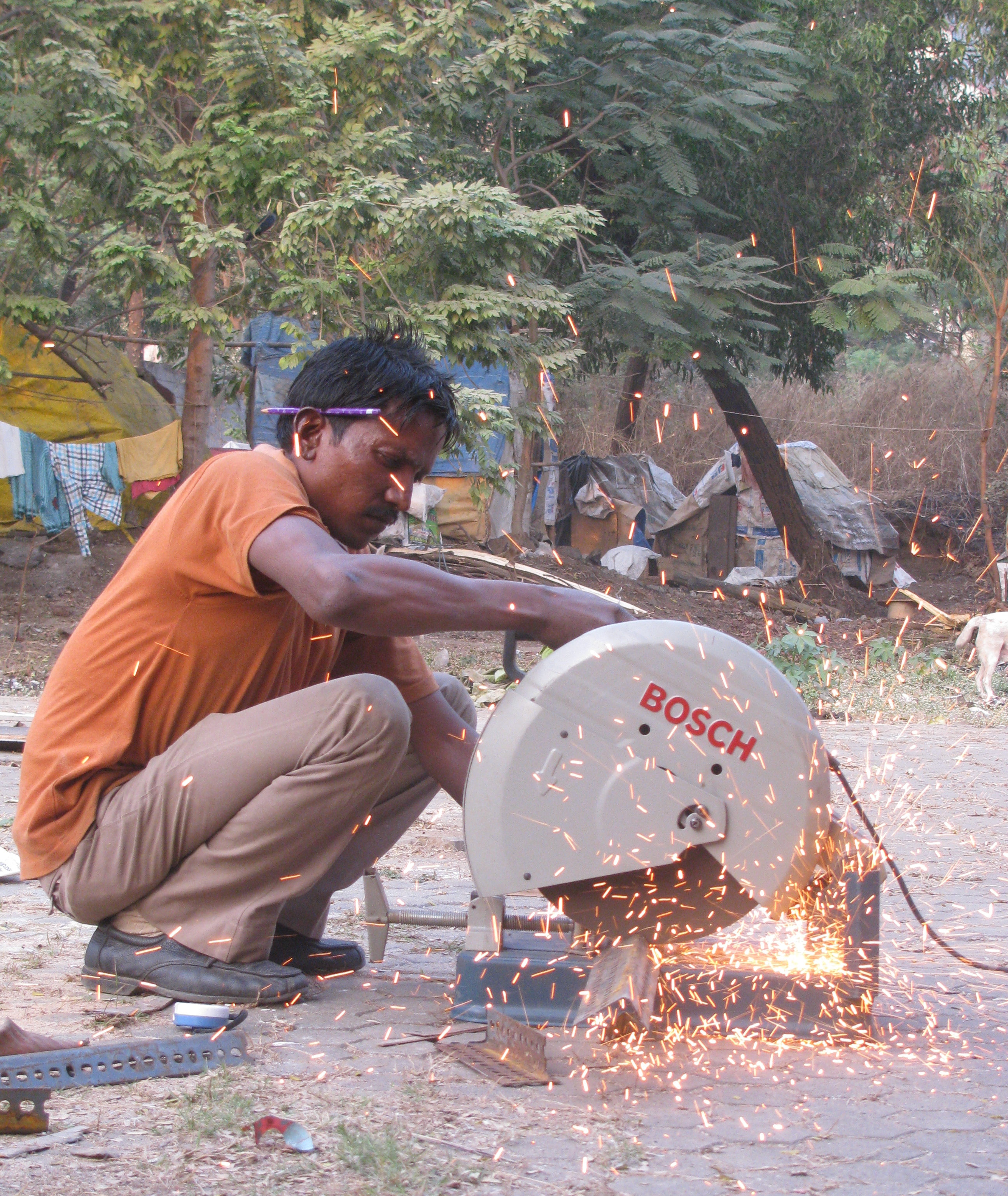
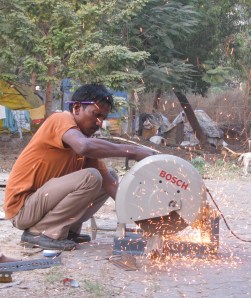
The wall-building work has got considerably mechanised. As sparks flew from the metal cutter slicing its way through a slotted angle-frame, Bong recalled how in the early years of the competition, all they had was the hacksaw blade and several blades broken every edition by a lot of metal to cut.
shyam-blog-edit-gv-comp-2014-9??????????????????????????????????????????????????????????????

Now, the shift to the venue ahead of competition includes all required raw materials to build the wall, an array of hand held machines for cutting and drilling and – a small kitchen installed next door to keep the tea and biscuits coming for those working. It may not seem much but eleven years ago, the entire event was just a thought in the head.
shyam-blog-edit-gv-comp-2014-12Old timers would recall Bong’s first house in Belapur, small in size and rendered smaller still by the climbing equipment – even a climbing wall – cramped into it. There, in the banter preceding and following the weekend assembly for climbing at the Belapur crags, the competition had taken shape. If I recall correctly, once formally discussed and cast as something to do, the first edition happened within a couple of months’ time. The response encouraged sufficiently to keep the show going year after year. Prashant had been one of those contributing to the prize money for the first edition. “ That is certainly one of the best investments I made,” he said.
???????????????????????????????Update 2 / January 16: The wall’s shape is slowly beginning to unravel.

About 60 per cent of its overall appearance – minus coat of paint – seems to be in place.

A climbing wall’s mind – what it uses to stump the climber with – is its holds, its features. Their shape, how they are placed and crucially, what type of hold or feature turns up where on given climbing route decide the challenge. So, 60 per cent overall appearance now visible at site, says nothing of what the prospective climbing could be. The route is a secret known only to the Chief Route Setter. Belapur awaits Vaibhav Mehta.
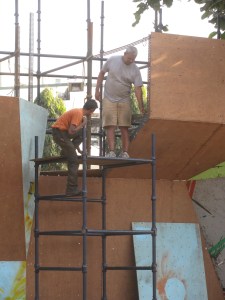
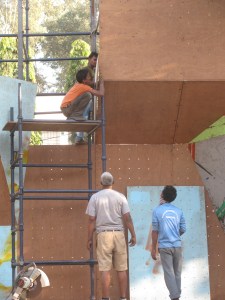
shyam-blog-edit-gv-comp-2014-16shyam-blog-edit-gv-comp-2014-17Constructing the wall is hard work; both actually building it and the supervision of the task. I suspect, just as with mountain, few will remember these aspects. Ever heard of a mountaineer who pauses to wonder how the mountain came to be? Eventually, our wall too will be all about climber and to a lesser degree, climbing. Such is the human mind! Watching a wall take shape, that does make one feel trifle sad.

January 16 felt another typical day at the wall.

The core team was there; Franco till late afternoon, Vivek Thakur arrived late evening. Bong is permanent fixture as is Raju, the carpenter and his team. For freelance journalist, time was marked by catching up on old stories and discussions about life (the world according to middle aged climbers!), periodically interrupted by quick fire shyam-blog-edit-gv-comp-2014-19exchanges between Bong and Raju.???????????????????????????????
The latter successfully executed a delicate cut with saw on plywood as Bong watched with bated breath. He then looked Bong in the eye and claimed, “ I can now cut anything!’’ We laughed. On another occasion, Raju installed a panel, then looked at the shape of the wall around him as though trying to solve a jigsaw puzzle and proceeded to tell Bong what he thought his next moves would be. Bong smiled, walked up to him and asked, “ you can now anticipate what is on my mind, can’t you?’’  

Thus, slowly but steadily, with much fun and banter in between, the wall comes up for what it hopes will be a good response to the competition, from climbers.
???????????????????????????????Update 3 / January 17: Work on the wall has progressed well.

The facade was nearing completion as of late evening.

The painters were set to take over, next day.

Once the wall’s front face is fully up, the building team will busy itself providing more structural strength through slotted angle-frameworks for roofs and other panels besides more linkages between the wall and the scaffolding behind.   

When it started years ago, this annual Girivihar competition was wholly on natural rock. The climbing crags of Belapur are located along the slopes of an amphitheatre of hills. This is where the bulk of the club’s weekend climbs used to happen. It is also home to the club’s annual rock climbing camp that trains newcomers to the sport. Both arms of this arc-like landscape were tapped for rocks to climb, later compete on. On one occasion, the competition stepped out from this area to the nearby Khargar hill road as well. But that was just once for an impressive route there couldn’t be availed again.
shyam-blog-edit-gv-comp-2014-23A few years into holding the competition, the first set of artificial walls for the event made a shy debut. They were housed indoors and if I remember right, were held in place with ropes. Soon, these walls transitioned to not just being located outside but they also replaced natural rock to be the prime medium for the competition.

The structure of these walls betrayed the competition’s home grown flavour. The wall was mounted on a framework of slotted angles but it was held in place by bamboo scaffolding. Amid climbing sessions, rope and bamboo tended to loosen. It required tightening. The lack of elegance did nothing to dampen the competition (national champions, strong climbers from overseas and even a world champion visited Belapur to climb or set routes during this phase). But tightening the bamboo structure wasn’t fun. Bamboo gave way to steel framework. While all this may seem trivial, for a home grown competition, each change meant rethinking funds and finding ways to make scarce money happen. The next stage was to graduate from renting the steel scaffolding to owning it so that recurrent cost in every edition of the event was contained at least to that extent. In this, Mangesh Takarkhede, who had been winner in the competition before, helped. Today, it’s a presentable grid of metal behind the wall.
???????????????????????????????For Girivihar and climbing in Belapur, the annual competition is a get-together of climbers, a reaffirmation of the joy in climbing.

Befittingly therefore, Vinay Potdar, Sandeep Maity and Rahul Ranjan reached Belapur early today (January 17), from days spent climbing in Hampi.
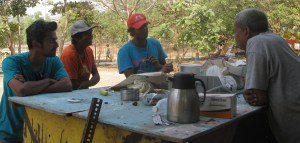
???????????????????????????????By evening, Sandeep Bhagyawant, Rohan Gawand and Vivek Thakur arrived. Franco, at site since afternoon, stayed busy liaising with local authorities. Shantanu Pandit dropped by.

So far, everything has been on schedule.

Update 4 / January 18: You could say the wall is ready. ???????????????????????????????

For the wall-building team, only minor structural work remains.

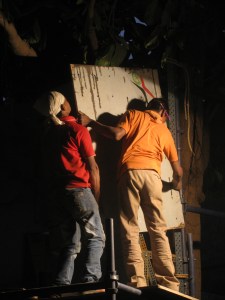
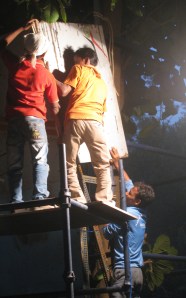
The painters have given the facade an initial base layer.

Colours are yet to come.

Late evening when the painters left, the wall was white; like climbers’ chalk.
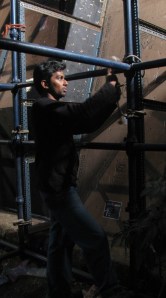
??????????????????????????????????????????????????????????????This is the first time in the history of artificial walls at the Girivihar competition that work on a wall has concluded this early, ahead of schedule.

“ We began work earlier than usual,’’ Bong said.

Now it is up to those executing the remaining jobs to maintain that efficiency and sustain the relatively relaxed atmosphere. Needless to say, smoothly working systems make the competition enjoyable.   
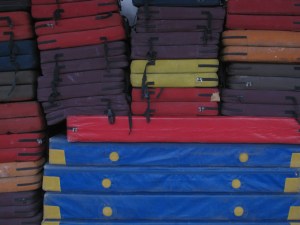
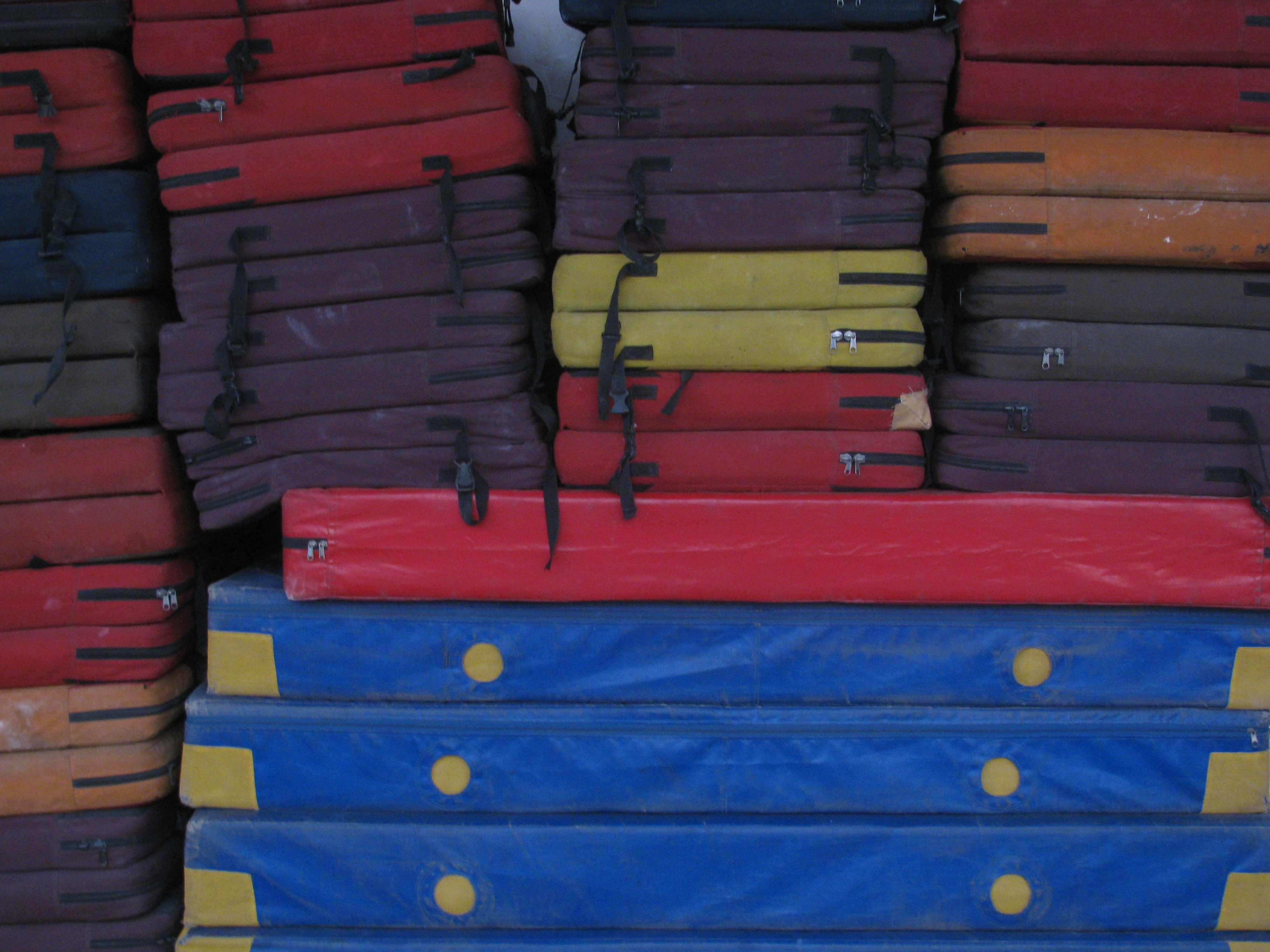
shyam-blog-edit-gv-comp-2014-25On the stage adjacent to the venue, was a collection of crash pads, neatly stacked. Thanks to Ajith Bhobate, they were moved here today from the Poddar College climbing wall maintained by Girivihar. More such pads are due; they are used to cushion falls from the climbing wall once the event gets underway. It is that time of the year when crash pads catch taxis, suburban trains, squeeze into three wheelers and ride pillion on two wheelers – to be useful in Belapur.

Update 5 / January 19: I guess today, despite the wall gaining colours, it should take a back seat.
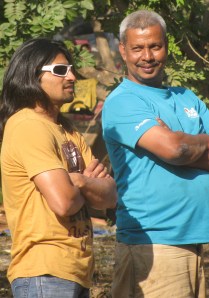
???????????????????????????????Vaibhav Mehta has landed.

When the first edition of the Girivihar climbing competition was conceptualised over a decade ago, it was in no small measure due to the rise of a new generation of climbers in Mumbai. They embraced sport climbing. That lot was headed by Vaibhav; other prominent names were Sandeep Varadkar, Shyam Sanap and Mangesh Takarkhede. Not only did they push sport climbing, they were also so fiercely given to climbing that it was pretty much what they did for main activity. Suddenly, climbing wasn’t merely hobby. Bong, a technician by profession, was willing to piece together the competition’s infrastructure. These climbers brought the passion and critically, the attraction for others of their generation to turn up in Belapur.

Vaibhav –he ran a climbing gym in Leh (Ladakh) for a couple of years – now lives in France, a country strongly identified with climbing. He is the competition’s Chief Route Setter.
???????????????????????????????His old friends – Sandeep, Shyam and Mangesh – turn up to work alongside at the annual competition. Like Bong, Vaibhav and Co has been another building block of the event. The wall will understand if I said that the wall isn’t main news today. That would be: Vaibhav is here.       

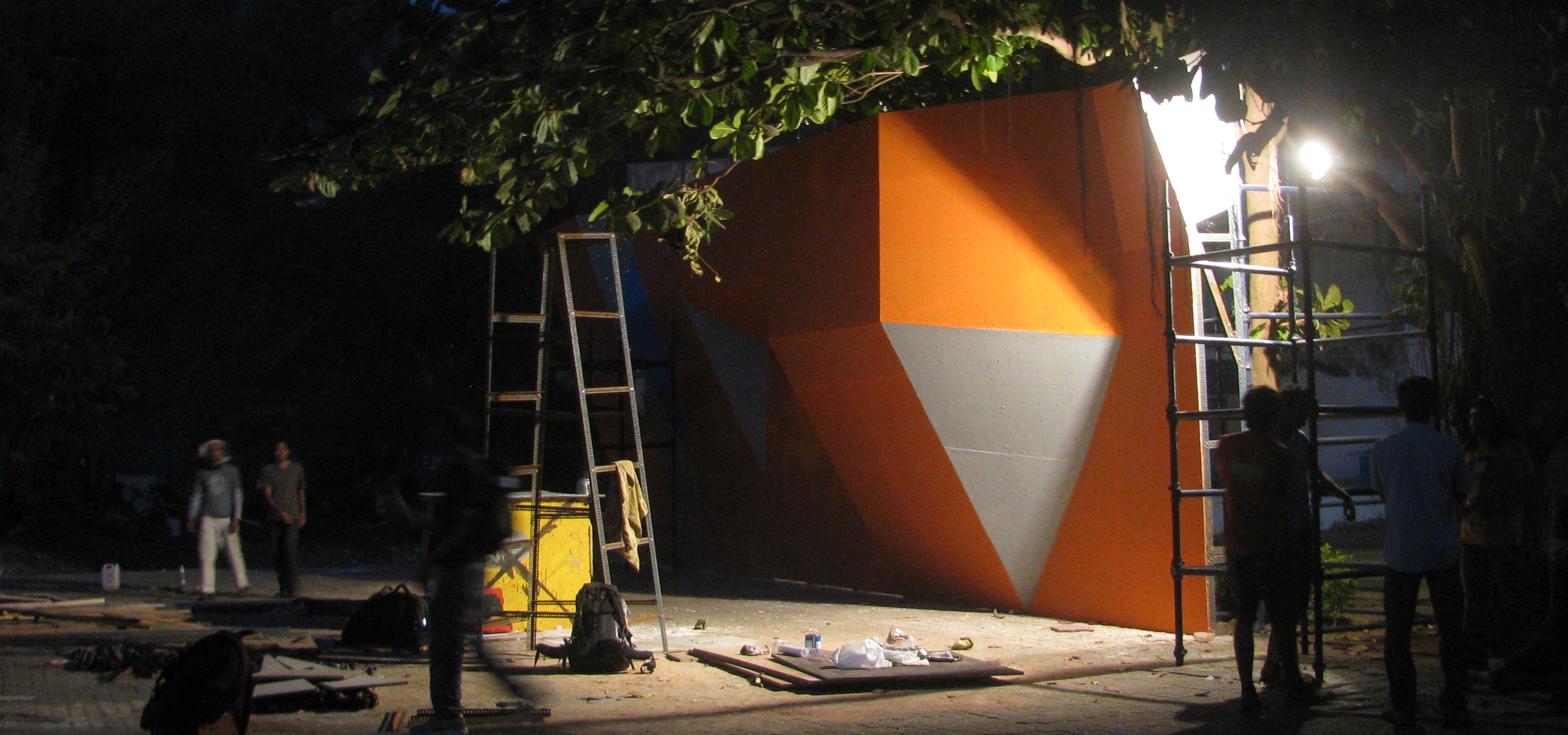
As for the wall – its facade has been painted orange, grey and blue.

Also arrived today, were more crash pads and several plastic bins filled with climbing holds.
???????????????????????????????Meanwhile, the team of club members who will manage the show got around to discussing other aspects vital to the event, ranging from registration formalities to accommodation.

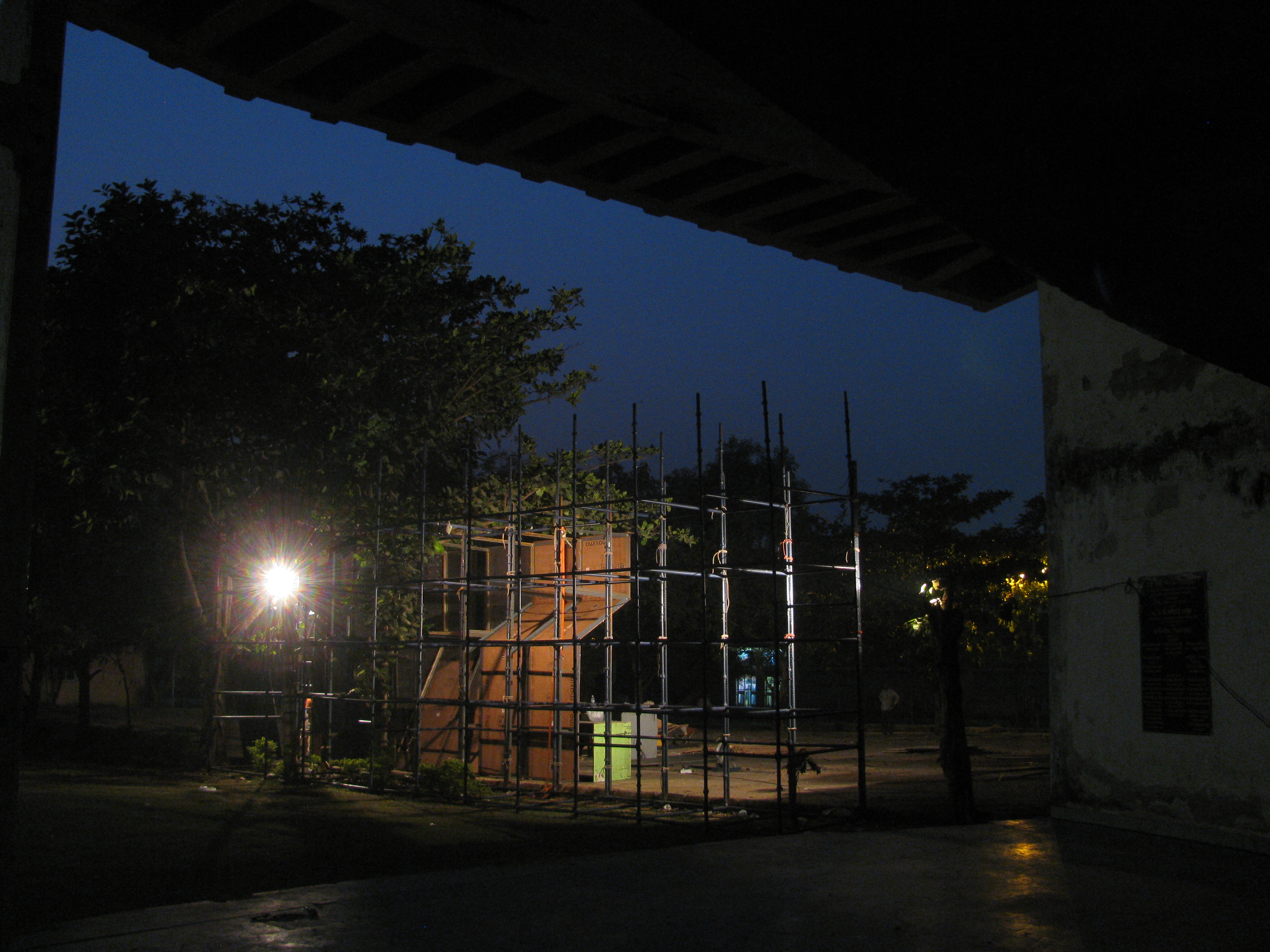
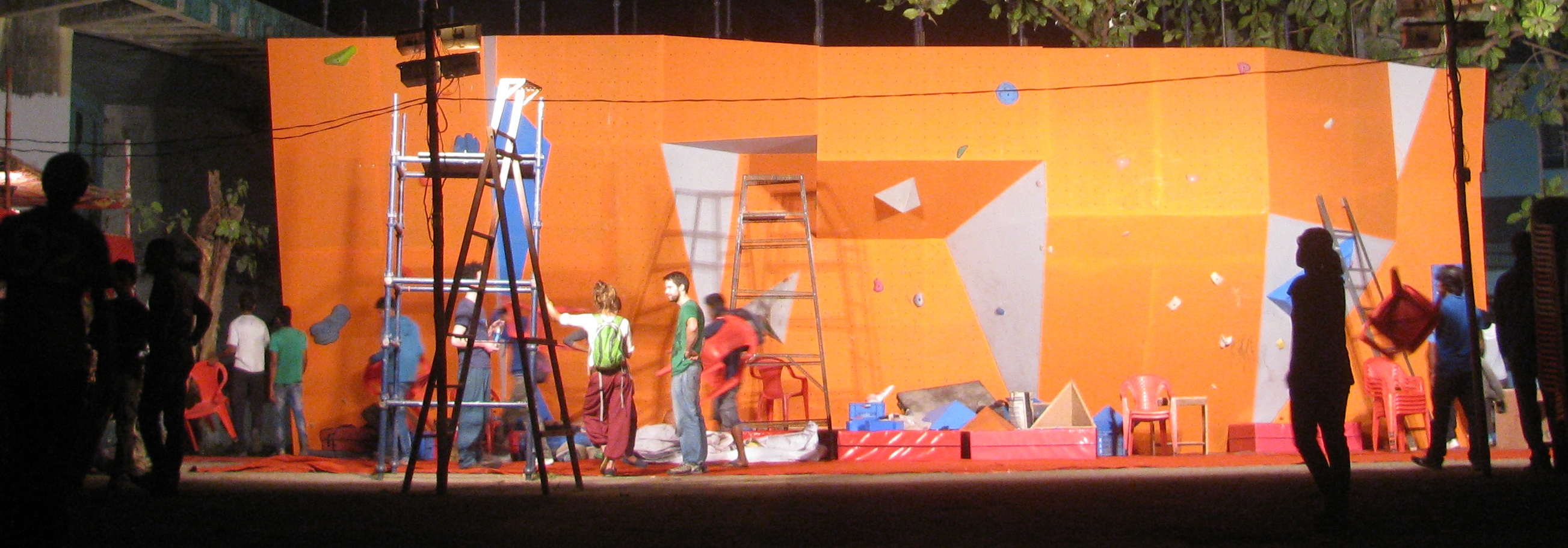
Update 6 / January 20: The photo says it all.

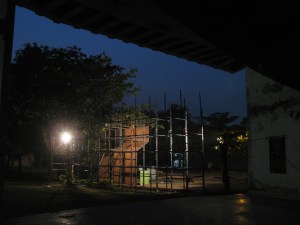
Late evening; a climbing wall painted orange, grey and blue shines under arc lights.
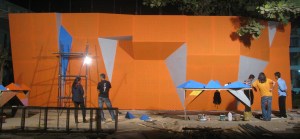
???????????????????????????????It gleams impervious to crunch hour approaching.

There are pending tasks; that inevitable last minute rush to face.

The drift to upcoming competition is now palpable.

Update 7 / January 21: The day began with worry.

It rained.

Coming to think of it, yesterday (January 20) had been cloudy. If I remember right, the sun never broke through.

But who would anticipate rain in January in Mumbai?

They wouldn’t have in Belapur.

What’s happening to the orange wall? – I thought.

Late afternoon, Belapur.

A shy sun is out in the sky.

The wall was as orange, grey and blue as ever.

Pretty much the same as it was last night.

Good.
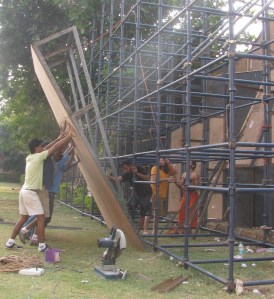
??????????????????????????????? shyam-blog-edit-gv-comp-2014-35The team got the warm up-wall in the isolation area, ready. That will be used by climbers waiting in isolation for their names to be called out to emerge and climb. A warm up-wall keeps them going.

Late evening, work on setting up all the boulder problems required for the various stages of the competition got underway.

Watching it was an engaging experience. It reminded me of days in climbing gone by. A set of portable speakers played wonderful music. Chief Route Setter, Vaibhav and his team stayed intensely focused on their task; the music amply aiding the creative yet acutely action-oriented atmosphere. They set routes, attempted them, discussed difficulty levels. Once a problem has been finalized, the climbing holds used to make it are removed and the wall returned to its original look. But because the boulder problems so designed must remain confidential until disclosed for competition and since problems in the making can give away information on how to climb them, we have no photographs of the wall’s facade today.

Its the wall’s Houdini Phase; there, yet not there – disappeared!

Update 8 / January 22: Relatively peaceful day, despite it being eve of competition.

Outstation participants have begun arriving. A few had landed on January 21.

By 8.30PM today, 25-30 competitors had registered, mostly for the Master’s category.

There was dinner for all at the venue, including the participants who have reached Belapur.

The competition management team held a meeting. Specific responsibilities – ranging from judging to cleaning holds, spotting and supervising isolation – were allotted.

As mentioned earlier, the first set of boulder problems were prepared on the wall, January 21st night. A boulder problem once approved is documented and removed. Tonight, after all the participants have retired to their rooms, the wall was slated to come alive again, as the Chief Route Setter and his team continue their work. That wonderful music would be back, the climbing shoes would be out, hands would be chalked and a bliss hold-to-hold would descend.
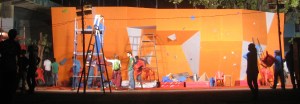
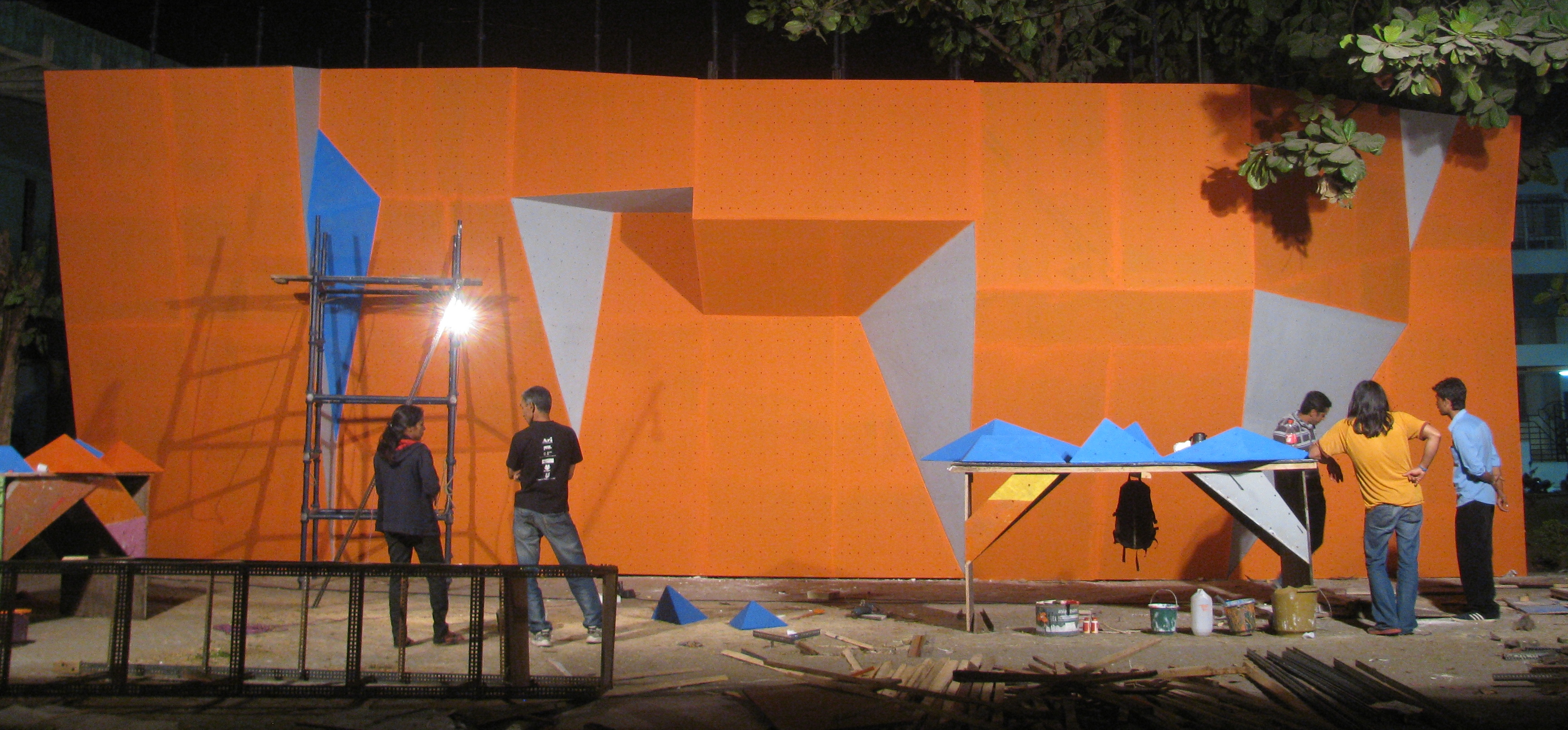
???????????????????????????????The competition begins tomorrow, January 23.

Before I sign off, a photo of the wall, clicked late evening today when participants were allowed to be there for registration and dinner. This photo was taken with the Chief Route Setter’s permission.

Good luck for the competition and happy climbing!

 CLIMBING COMPETITION EXPLAINED

For those readers who wish to understand what happens during a climbing competition, here’s a simple primer. It avoids complicated details and speaks of the main points that matter:
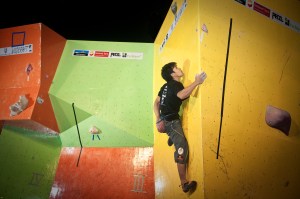
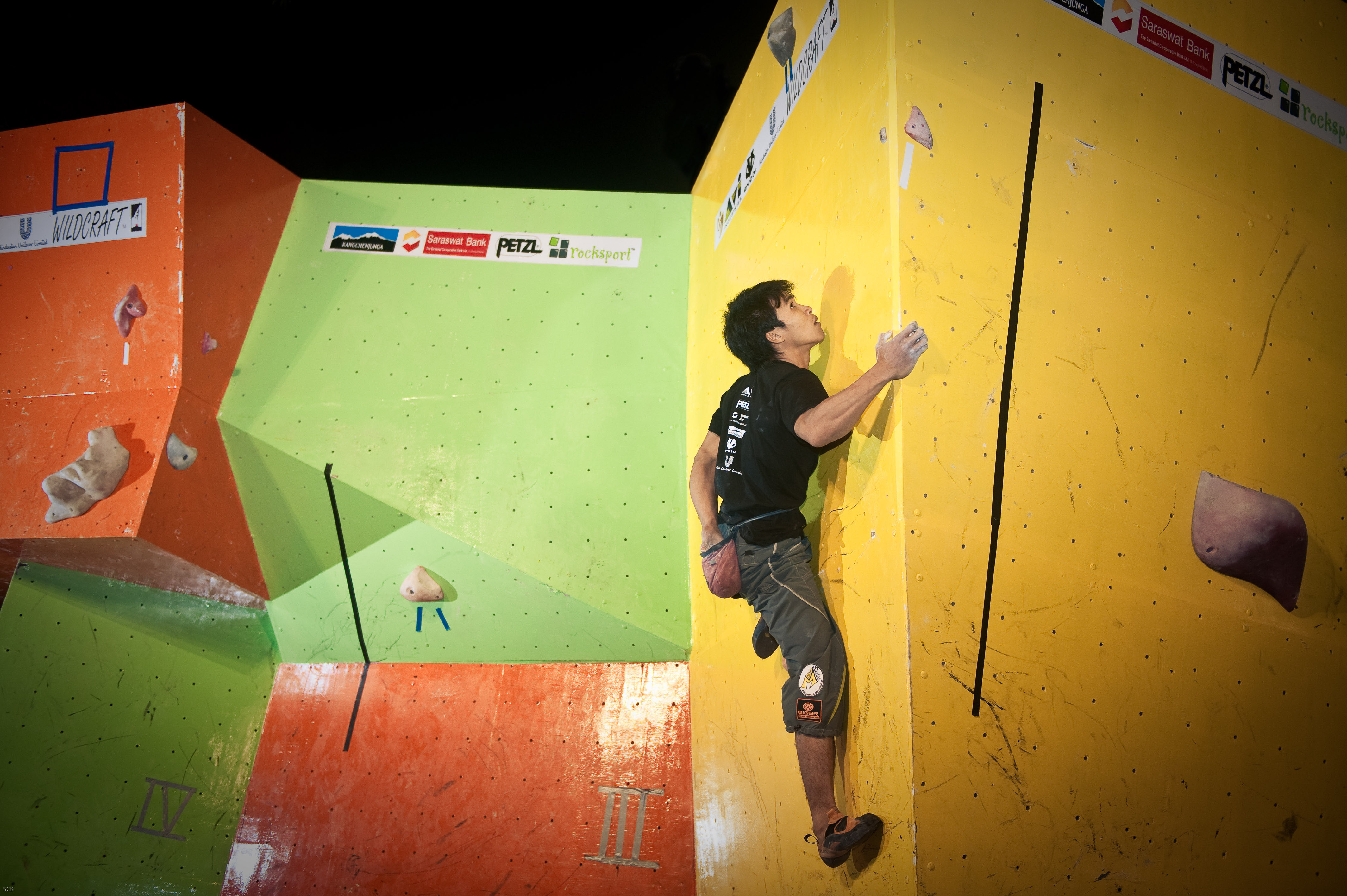
bl-gv-pix-2The Girivihar competition has two categories in the main – women and men. The event starts with these two groups in mind and evolves separate sub-categories based on age (under-sixteen and above) depending on the number of participants. If a potential sub-category has too few participants, it gets merged with a suitable another.  

A climbing competition on an artificial wall (like the one at the Girivihar event) typically involves tackling a boulder problem that has been designed by the route setter. To retain the element of surprise and newness, every round of competition begins with ` isolation.’ Akin to extempore speech contests, when you are taken aside, given the subject and told to prepare your speech in five minutes, here, the competitors sit in isolation away from the wall while the route is readied. This is followed by the chance to observe / study your route before you climb; it happens differently for the qualifying rounds and the finals. In the qualifying rounds the acts of observing / studying a route and climbing it, get clubbed together. You do it at one go, emerging from isolation when your name is called, observing the route and then attempting it. However in the finals, participants come out together from isolation to observe the route, then return to isolation and emerge one by one to climb. In the finals, the two acts of observing / studying a climbing route and climbing it, are treated distinctly.

The wall is composed of multiple faces and each face has a route to be attempted for participant to formally finish a full round of attempts. Therefore, he / she is entitled to five minutes of climbing a face on the wall followed by five minutes of rest before attempting the next face. The ability to tackle a route is a combination of how well you imagine it in terms of climbing moves in your head and how well you actually execute the plan you conceived. Therefore, when more than one competitor is out in front of the wall, the one taking rest has to sit facing away from the wall. This is to ensure that the one taking rest does not see another competitor climb a route he / she is expected to attempt. In the finals, since there is separate time awarded to observe / study each face, the time participants get to climb is regarded as four minutes plus. That `plus’ runs for as long as the participant takes to finish his last attempt begun within assigned time limit.  

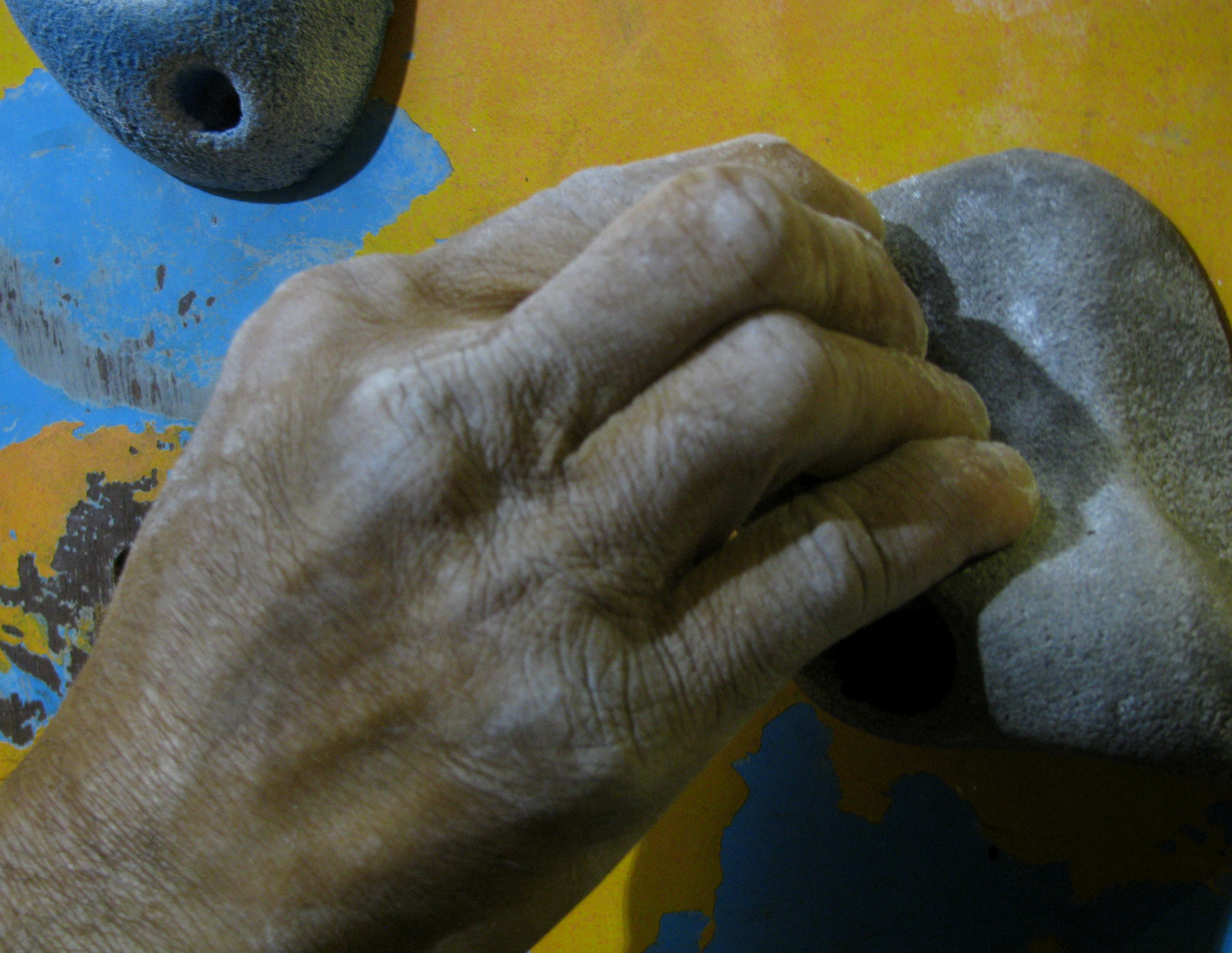
When climbers are observing a route, you will often see them move their arms and imitate grips with their fingers, as though engaged in a climb. This is done to physically ingrain / memorize the sequence of moves, they figured out by observing with their eyes while still on the ground. Once the participant emerges from isolation to climb, he / she is considered to have started climbing the moment a classic three point-contact with both feet off the ground, happens on the wall. This is noted as one attempt. The participant can have any number of attempts within the allotted time.

While the above are the basic rules, from the judges’ perspective, when the competition gets intense or climbers are evenly placed, smaller details will matter profoundly. For example, how many attempts you took to climb a route, how far you reached on a route – all this and more will be factored in for distinction. An interesting angle herein is the use of the `zone’ concept. Under this, on some exceptionally difficult routes that participants are struggling to finish, a participant, while unsuccessful at gripping the final hold and moving up, may manage to touch the final hold and keep his / her fingers there for a while to establish how far he / she reached.  

In the last edition of the Girivihar competition, there were climbing routes ranging in difficulty from sub-6 to mid-7 on the French grading scale. There is never prior indication of what to expect in terms of grades at a competition as that is a dynamic equation between the Chief Route Setter and the calibre of participants. The Chief Route Setter gauges the gathered climbing talent and improvises accordingly. That said, grade itself is a funny thing; it tells you much of the science climbing has become (with its ability to award numbers to difficulty) and how relative (art – you could say) it still is for the numbers are a matter of perception. Thus, once a route is designed, the Chief Route Setter and his trusted team (in other words – more than one person) attempt / climb the route for a feel of what it is. Together and after adequate deliberation, they assign grade. Equally, once a route of challenging grade has been climbed many times over, it is not seen to retain its original grade. On natural rock, this degradation is even physically tangible in the form of accelerated weathering of tough holds into easy ones, courtesy several climbers passing through. On artificial walls where holds can be replaced, it is more a case of the how-to-do knowledge becoming available. This how-to-do element is referred to in climbing parlance as the `beta’ of a route.   

The above is a simple guide to understanding how a climbing competition works. The proposed citizen’s workshop of January 26, the last day of the 2014 Girivihar Climbing Competition will be a useful programme to attend for more on this subject and plenty more related to climbing.

(The author, Shyam G Menon, is a freelance journalist based in Mumbai. All the photos featured here were taken by him.)

HUBLI-DHARWAD: LIFE AFTER THE LEGENDS

BEST WISHES FOR 2014.

HERE’S A STORY, ORIGINALLY WRITTEN IN 2011. IT HAS BEEN UPDATED TO PROVIDE LINK TO MORE RECENT TIMES.

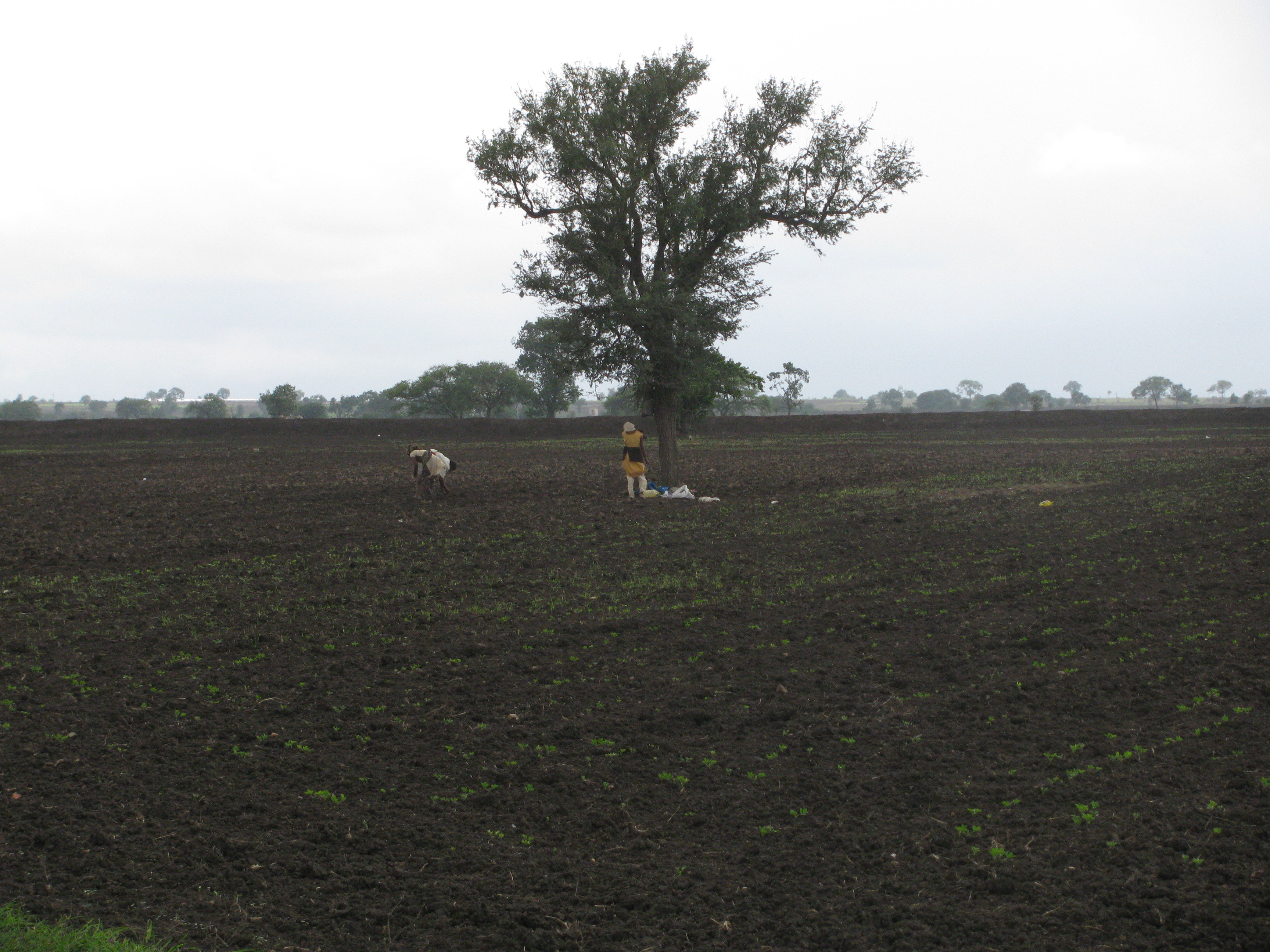
Landscape: fields of North Karnataka (Photo: Shyam G Menon)

Landscape: fields of North Karnataka (Photo: Shyam G Menon)

End October 2013.

At a concert organized by the Mumbai-based Khayal Trust, Pandit Venkateshkumar took the stage. A Hindustani classical vocalist, he was assertive, subtle, strong and delicate, the discerning use of these abilities making his interpretation of compositions, engaging. I can’t identify raagas; I simply like or dislike music – any music – as aural experience. In the outdoors, I have tracked rivers – from relatively calm flow in the foothills to turbulent upstream and almost inaudible trickle at source – noticing how their character changes. Venkateshkumar’s singing had something of that. He seemed to be singing from a bigger understanding of subject and not merely indulgence in the specific; it wasn’t a section of the river amplified ignoring the whole, it was the whole. On stage, neither was his support crew behaving like sycophants unto him nor was he synthetic in his encouragement of them. A singular chemistry prevailed – chemistry by music. No drama, no playing to the galleries – the proof of the pudding was my brain, soothed to peace; a connection to its home – the universe – made.

This was the second time I heard Venkateshkumar and the first time I was inside the auditorium when he sang.  The previous occasion had been a well attended modest sized gathering in the Mumbai suburb of Chembur. The venue, mere hall and no sophisticated auditorium, was filled to capacity. Chairs outside had also been taken. People stood patiently; listening as attentively as they would, had they been on a seat within. I joined them. Why should anything else matter if the music is good?

The first time I met Venkateshkumar was before I heard him sing.

It was 2011.

Along with good friend Latha Venkatraman, a journalist who has learnt classical music for many years, I was exploring a story in northern Karnataka, way south of Mumbai.    

On January 24, 2011, Pandit Bhimsen Joshi passed away.

With that India lost its most famous voice.

His was a mad, rough edged-reaching out; different from other contenders to be India’s voice and certainly quite apart from that other tradition of Indian classical music – Carnatic. I like to let go (it is also what I find most challenging and what I do the least). In contrast, Carnatic seemed perfect and deliberate, a sort of antidote to madness. Bhimsen Joshi hailed from Gadag, next door to Hubli-Dharwad in North Karnataka. Born there, he was bitten by the music bug, travelled through India in search of a guru and was finally directed to Sawai Gandharva in nearby Kundgol itself. The rest is legend amply conveyed by the great man’s music. What intrigued me was Hubli-Dharwad. Music lovers there sometimes called the place a LOC (Line of Actual Control) between Hindustani music and Carnatic. Yet within Hindustani classical, it is unique for not only being the southern outpost of the tradition but also, a reclusive, defiant, academically inclined ambience that cares more for dedication and purity than the market.

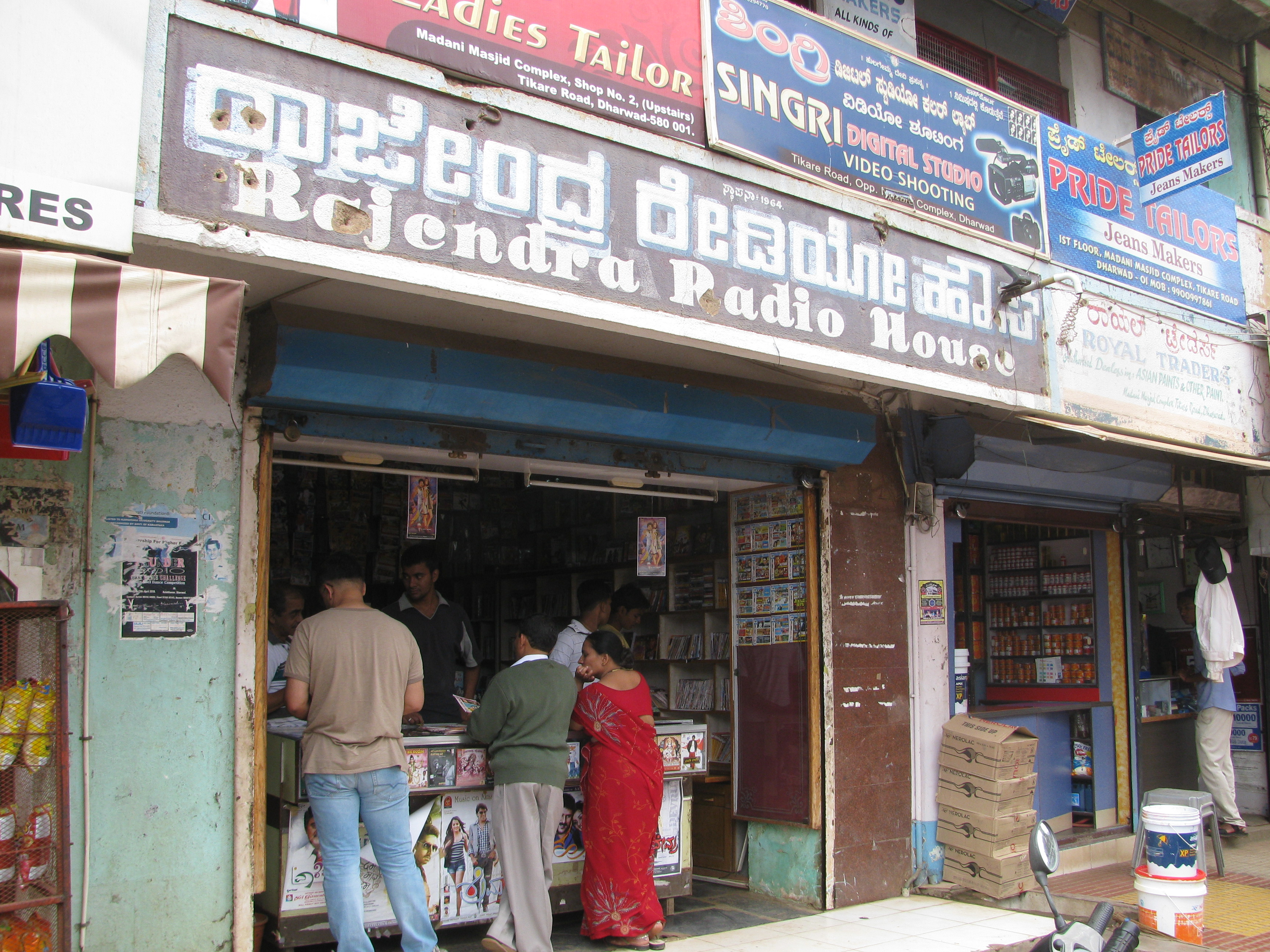
Rajendra Radio House, Dharwad (Photo: Shyam G Menon)

Rajendra Radio House, Dharwad (Photo: Shyam G Menon)

Geographically the region bridges that portion of Karnataka which is home to the wet, green hills of the Western Ghats and the start of the Deccan plateau with its imposing flatness. To one side, in the rainy season, the lush vegetation is so pronounced that it contrasts crops like cotton and chilli, typically associated with frugal water intake, grown on the other side. The Hubli-Dharwad region, once part of the Vijayanagar Empire, was subsequently in the possession of rulers from both Karnataka and   Maharashtra. Until 1955, it was part of Bombay Presidency. Hubli, the commercial hub of North Karnataka, is a major cotton market and centre for a variety of agricultural produce. At the vegetarian restaurant of Ananth Residency hotel, I asked for North Karnataka food. It wasn’t available; recommended instead was “ Veg Rajasthani,’ something possibly evocative of the region’s place in trade. The leading brands of Dharwad pedha were Thakur and Mishra, neither of them surnames indigenous to the area yet now synonymous with pedha. Hubli was also where the typical motifs of Indian urban life were taking hold. There were shopping malls, stores with walls of flashing TV screens, ATMs and hotels. Then another LOC of sorts divided it from Dharwad, 20 kilometres away. The local transport bus took you through a busy road with 40 kilometre-speed limit. Approximately three quarters of this travel done, at Navalur as people would later tell me, the atmosphere changed to charming old world flavour. You entered Dharwad.

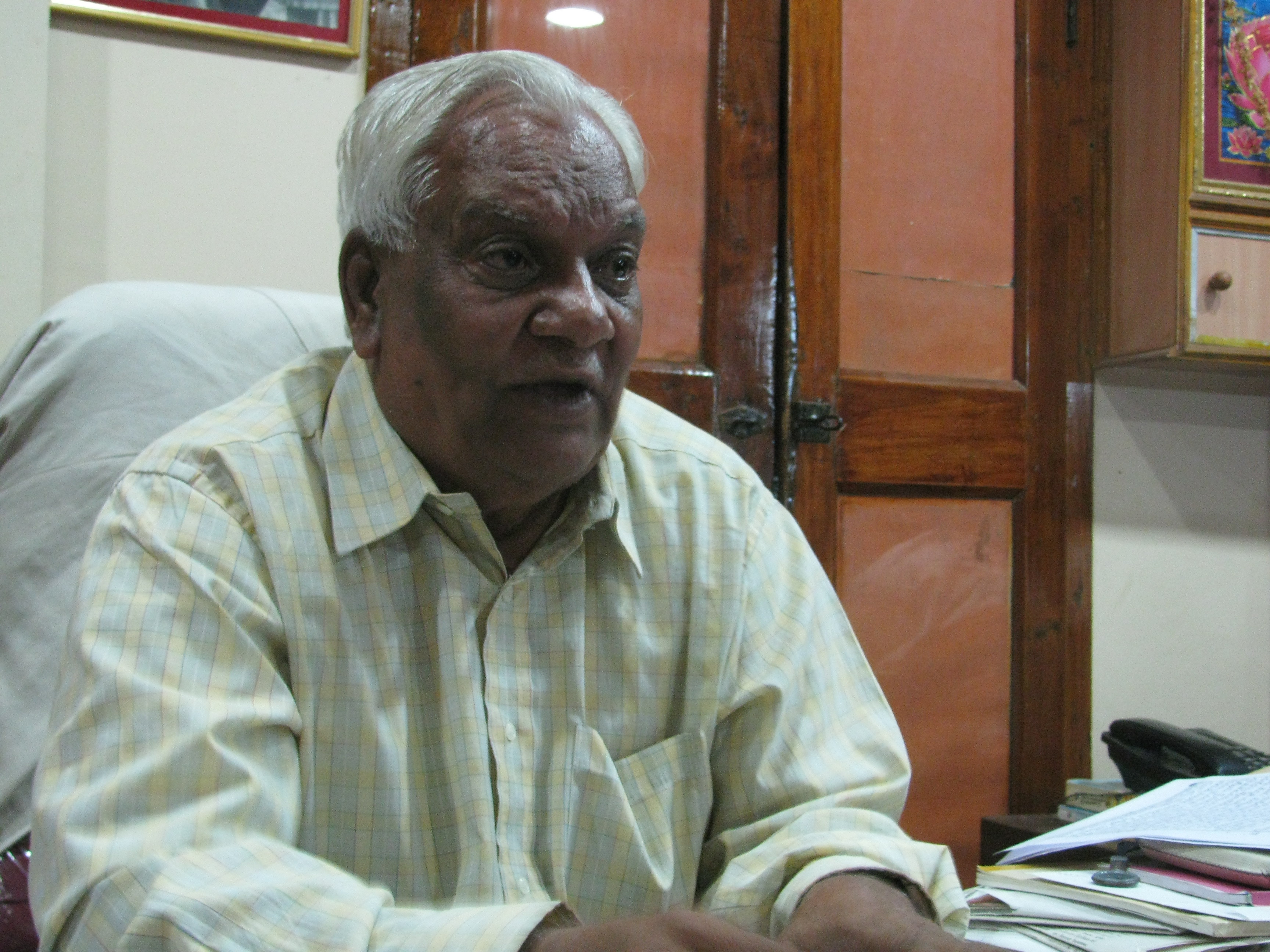
Ramakant Joshi (Photo: Shyam G Menon)

Ramakant Joshi (Photo: Shyam G Menon)

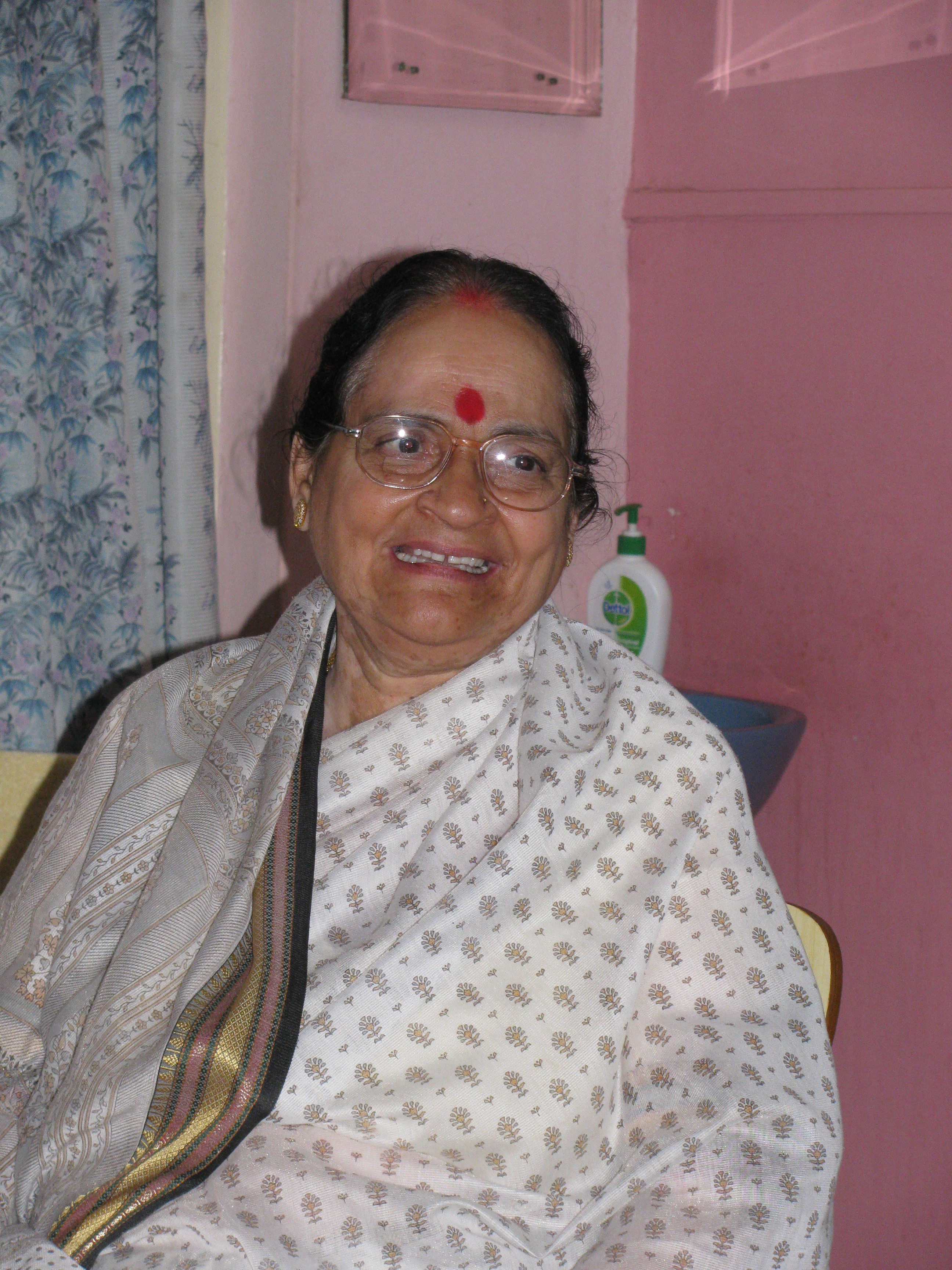
As pronounced as Hubli’s commercialism, was Dharwad’s conservative, academic tenor. Its prominence in history was as an educational hub, the place where people from North Karnataka, Goa and Southern Maharashtra came to study. According to Ramakant Joshi, Editor-Publisher, Manohara Granth Mala, it was Dharwad’s educational backdrop along with an existing culture of theatre and literature that provided a fertile substratum for Hindustani classical music to flourish. The office of this publishing house founded on August 15, 1933 (those days August 15 signified the birthday of Sri Aurobindo) was lined with Kannada books and located in an old room above Subhas Road. Ramakant Joshi is Bhimsen Joshi’s cousin. Unlike in Hubli, in Dharwad, you found shops that hadn’t changed for decades. You bought classical music CDs at Rajendra Radio House, run by Basavaraj V. Kotur, who informed that the shop started in 1964 had been one of the first four music stores in Karnataka. Only two shops from that four remain. There was also relevant change – the Srujana auditorium, where many concerts are held, had been refurbished with help from Nandan Nilekani, former CEO of Infosys and currently chairman, Unique Identification Authority of India (UIDAI). Dharwad looked peaceful, there was plenty of greenery and the people you spoke to had a conservative demeanour but amazed by their quiet erudition on chosen subjects. Here a musician or music lover might confidently tell you that he or she is known in the neighbourhood. As we discovered, that wasn’t always true but it was a measure of how comfortable you could be, pursuing the classical arts in this town. Neela Kodli was easy to talk to. In between she went to the kitchen to make tea. Like many of us she hummed a tune, except it was a classical composition. Neela Kodli is the daughter of Mallikarjun Mansur. A singer in the shadow of a famous father, she was modest about her abilities.

Neela Kodli (Photo: Shyam G Menon)

Neela Kodli (Photo: Shyam G Menon)

There were few concerts in Dharwad that June. It was the rainy season. Otherwise, we were told, you found one or two every week. The vast majority of these concerts were free. “ There is no problem doing an early morning practice session here. In fact, if they don’t hear me practise, my neighbours ask – didn’t you practise today?’’ Vijaykumar Patil, an upcoming Hindustani vocalist said. With so many singers and musicians around, it was possible for a music lover to strike a rapport and sit in on their evening training sessions even if all he had was a love for music. `Kansens’ (those with good ear for music) have always been as important as `Tansens’ in Dharwad. This coupled with resident music gurus and new music schools helped create an audience for Hindustani classical music. In turn, that made performing in Hubli-Dharwad, a prized opportunity for visiting artistes. You knew you were singing to those who knew the subject. Applause here became highly valued. Raghavendra Ayi, Secretary, Sitar Ratna Samiti, provided an example of how Dharwad responded to music. Following Bhimsen Joshi’s demise, it was decided to organize an eight day music programme from February 27 to March 6 that year, in his memory. Many of the performers were young artistes. With expenditure projected to touch two lakh rupees (Rs 200,000), the organizers made an appeal for contributions. The amount thus collected exceeded a lakh, most of it donated by individual music lovers. “ To survive, any art requires janaashraya. The days of rajaashraya are over,’’ he said. (Jana in Indian languages refers to people; Raja refers to king and Aashraya means dependence or in the context of art, patronage.)
The Vijayanagar Empire had a strong role in the evolution of South India’s Carnatic music. The famous composer Purandara Dasa was born in modern Shivamoga district and spent his final years at Hampi, next door to the Hubli-Dharwad region. His compositions are sung by Hindustani classical vocalists. One version has it that Swami Haridas, teacher of Tansen, was a disciple of Purandara Dasa. Thus music was always around in these parts. Hubli-Dharwad’s ascent in Hindustani classical music happened with the decline of the Mughal Empire up north. As the empire weakened, the singing tradition of its court moved first to princely states in North India. Then as British influence gained in those princely states, the drift to the south started. Abdul Karim Khan was a famous singer of the Kirana Gharana, one of the schools of singing within Hindustani classical music. He was court singer in Baroda state. On his way to the court of the Mysore kings, who were patrons of classical music, he regularly halted in Hubli-Dharwad. In his book `Karnataka’s Hindustani Musicians,’ author Sadanand Kanavalli has particularly noted the role of the Mysore king, Krishnaraj Wodeyar IV. Mysore continues to this day as a major centre for Carnatic music. It was that less known intermediate halt en route, Hubli-Dharwad, which developed into the southern outpost of Hindustani classical music. Through the years music researchers have wondered what worked to Hubli-Dharwad’s favour. In a November 2009 issue of `Sangeet Natak,’ a newsletter from the Sangeet Natak Akademi, Tejaswini Niranjana, outlining her proposed research into these questions noted that some of  “ the common and (uncommonsensical) answers’’ included Abdul Karim Khan’s visits, the pleasant weather in Dharwad, the large number of Maharashtrians there who were music patrons, the influence of  Marathi culture in the form of Marathi plays having Hindustani music with Kannada plays subsequently derived from them and even the chillies and spicy food of North Karnataka that cleared the throat. “ The answers are inadequate even on their own terms. If Abdul Karim Khan’s final destination was Mysore and he went there frequently, why did he not teach disciples there?’’ she asked.
Nadgir family house, Kundgol (Photo: Shyam G Menon)

Nadgir family house, Kundgol (Photo: Shyam G Menon)

Among the most important institutions that patronised Hindustani classical music was an old house at Kundgol, once part of the princely state of Jamkhandi. Not far from Hubli, Kundgol and several other surrounding villages used to be under the control of the land-owning Nadgir family, who were patrons of music. Abdul Karim Khan visited here. More importantly for North Karnataka’s music, Abdul Karim Khan’s most famous student Ramachandra aka Rambhau Kundgolkar was born in Kundgol. Later called Sawai Gandharva, he had a pivotal role in the history of North Karnataka’s Hindustani music. His life was entwined with the Nadgir family. He taught music at the old house; this was where Bhimsen Joshi and Gangubai Hangal learnt. We met Babasaheb Nadgir and his son, Arjun Nadgir, who live there. Every year since 1952, the family has been organizing a music festival currently

Babasaheb Nadgir and Arjun Nadgir (Photo: Shyam G Menon)

Babasaheb Nadgir and Arjun Nadgir (Photo: Shyam G Menon)

called the Nanasaheb Nadgir Smrithi Sangeeth Utsav. Hundreds of people turn up to hear this 24 hour-performance, which lasts through the night. The house is as it used to be, so much so that an entire audience crammed onto its many floors to hear the concert has triggered worries of the 400 year-old building collapsing. The architecture is typically old fashioned featuring a courtyard within. The musicians practise in an inner chamber and then perform on stage inside the house, adjacent to the courtyard and below a bust of Sawai Gandharva. It is tradition kept alive purely through family initiative and at considerable cost. The Nadgir family and a few close friends spent up to one and a half lakh rupees (that was the figure when I visited); they didn’t seek donations. Arjun was working on proper institutional shape for the funding so that it self-sustained. The family had dreams of starting a music school. Kundgol also had another music festival in Sawai Gandharva’s memory.  Several noted Hindustani classical artistes – Bhimsen Joshi, Basavaraja Rajguru, Gangubai Hangal, Kumar Gandharva, Mallikarjun Mansur, Pandit Jasraj, Prabha Atre, Feroz Dastur, Puttaraj Gawai – they have all performed at Nadgir Wada. For many who go to sing there, the very act of performing in a house where legends lived is overwhelming. The artistes are paid for travel cost; they get nothing else. “ The ambience is special,’’ Jayateerth Mevundi, a prominent vocalist from the younger generation, said.  

Jayateerth Mevundi (Photo: Shyam G Menon)

Jayateerth Mevundi (Photo: Shyam G Menon)

Given Abdul Karim Khan as the historical prompter for Hindustani music’s arrival in Hubli-Dharwad, the region became the southern home of the Kirana Gharana, a style with origins in Uttar Pradesh. But you also find in Hubli-Dharwad other styles like the Jaipur Gharana and the Gwalior Gharana. They co-exist. From Abdul Karim Khan down, we hear of several important names. Broadly speaking, they can be divided into two categories – the legendary performers from Hubli-Dharwad and the great teachers like Sawai Gandharva. For a tradition of music to grow you need both these categories. As you ask around, you realize that great performers were not necessarily great teachers just as great teachers were not necessarily great performers. The great performers were five – Gangubai Hangal, Bhimsen Joshi, Mallikarjun Mansur, Kumar Gandharva (he was born near Belgaum and later moved to Madhya Pradesh) and Basavaraj Rajguru. Of them, one – Gangubai Hangal – was a phenomenon. Her influence exceeded the world of music. In Hubli, we just had to ask for the late singer’s house and the autorickshaw driver knew where to go. Her house had become part museum. Gangubai Hangal had to overcome many social challenges to become the renowned singer she was. In later years, she did not hesitate to be a social activist for causes she believed in. It was exceptional in that, it took a classical vocalist out from the conventional image of exclusivity and singing for patrons, to being one with the masses. Consequently if anyone from the legendary five has become close to an institution in Hubli-Dharwad, it ought to be Gangubai Hangal. There was however one problem. With Bhimsen Joshi’s demise, the last of those five greats passed away. Further, except for Basavaraj Rajguru, none of the others were credited with robust teaching.  They left behind few disciples. That’s why Hubli-Dharwad was suddenly important for anyone interested in Hindustani classical music, like me. The phase of the legends was over. Will the region continue to maintain its strong position in musical tradition?

Veereshwar Punyashram, Gadag (Photo: Shyam G Menon)

Veereshwar Punyashram, Gadag (Photo: Shyam G Menon)

The Veereshwar Punyashram in Gadag appeared a blend of religion, community and music; an official brochure informed that the presiding pontiff was seen by devotees as “ a walking God on the Earth.’’ Looking past its prime when I was there in 2011, this institution was founded by Panchaxari Gawai, a blind prodigy in classical music. Over the years, the ashram accepted many poor, often visually and physically challenged children and trained them in classical music. Basavaraj Rajguru was Panchaxari Gawai’s student. Following Panchaxari Gawai’s death in 1944, Puttaraj Gawai took charge. He became blind through treatment for an eye problem in his childhood but later amazed as vocalist and musician.

Venkateshkumar (Photo: Shyam G Menon)

Venkateshkumar (Photo: Shyam G Menon)

Venkateshkumar – he teaches at a music college in Dharwad and is acknowledged to be among the finest Hindustani vocalists today – was Putturaj Gawai’s student. Born in Lakshmipur village near Bellary, Venkateshkumar was thirteen years old when he was brought to the ashram in 1968. He studied there for eleven years, maintaining a rigorous training schedule and learning 25-30 raagas from his guru. Even after Venkateshkumar left the ashram his interaction with his guru continued till Puttaraj Gawai was ninety years old. Puttaraj Gawai died in 2010. In 2011, across the school and the college on its premises, there were nearly 800 students.       

Kalkeri Sangeet Vidyalaya (Photo: Shyam G Menon)

Kalkeri Sangeet Vidyalaya (Photo: Shyam G Menon)

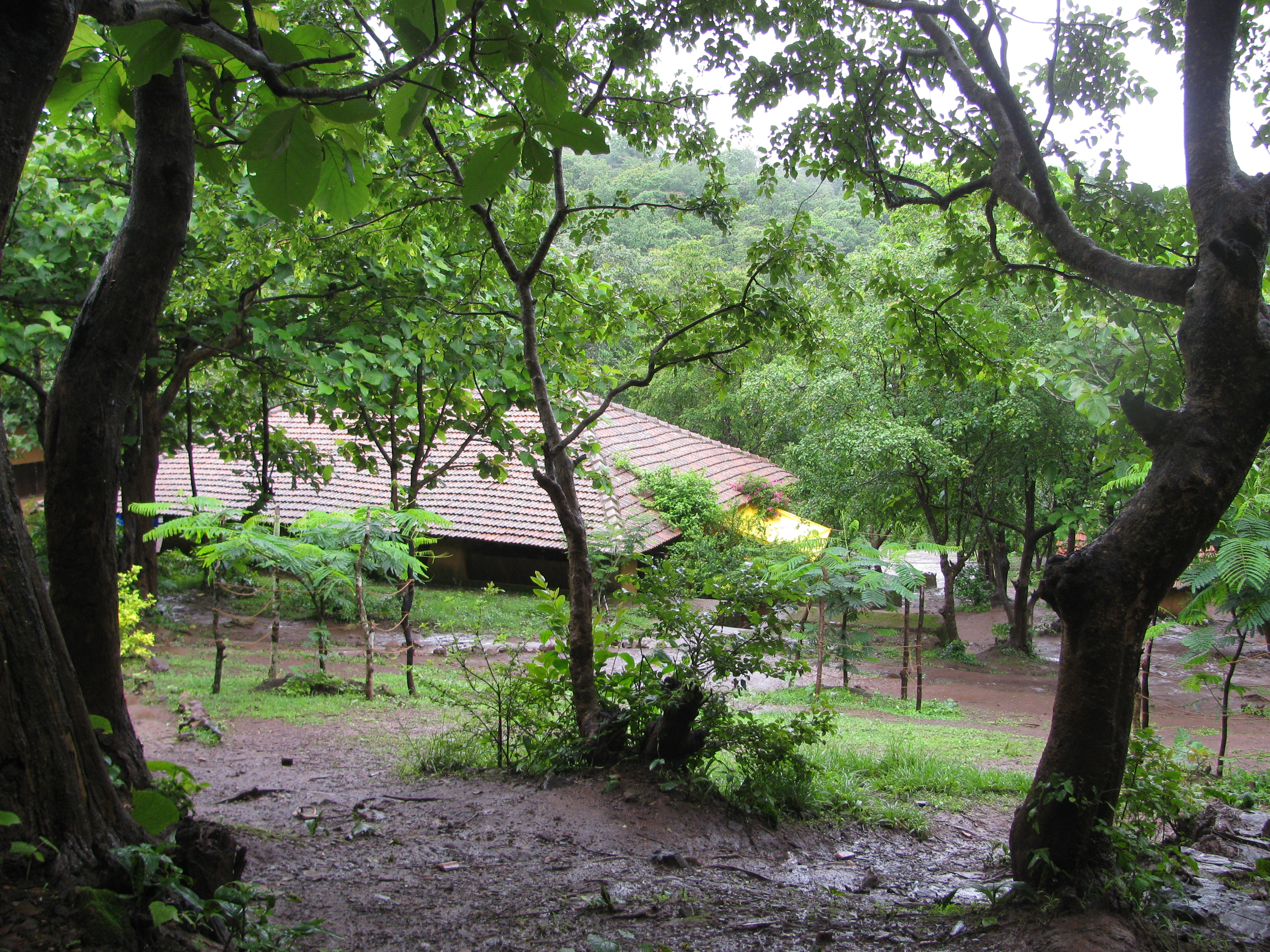
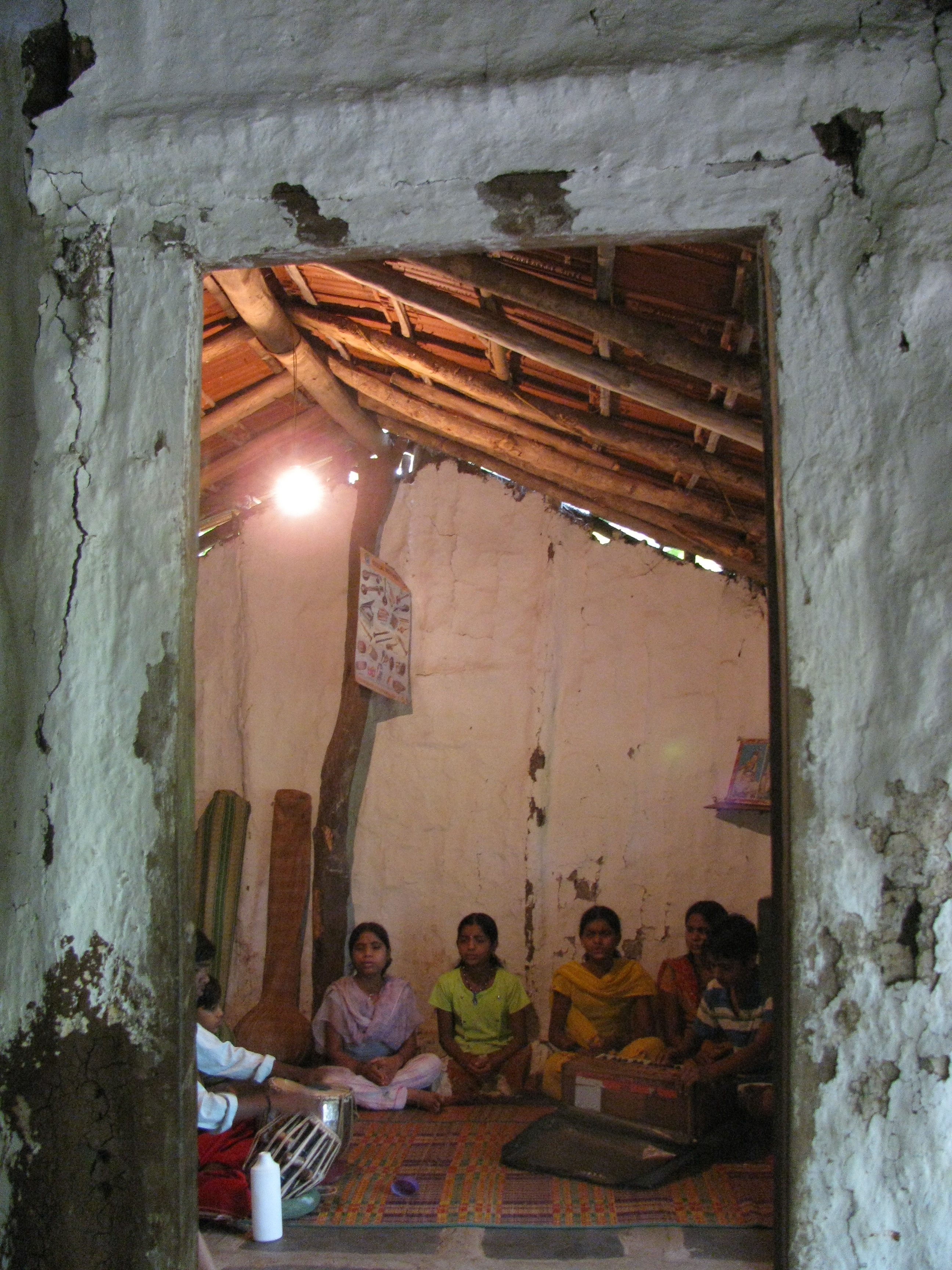
Following their studies, some students of the ashram had become teachers at the Kalkeri Sangeet Vidyalaya. Begun by Agathe and Mathieu Fortier, a Canadian couple who liked India and its tradition of Hindustani classical music, the school was located almost an hour away from Dharwad in geography that was the exact opposite of the Gadag-Kundgol belt. Here the land was hilly with red earth muddied by heavy rains and densely vegetated to the point of seeming forest. The school was in the woods, a collection of eco-friendly structures with 185 students and 43 full time staff. According to Adam Woodward, Director, the admission process tried to ensure that only the neediest students got through. The students paid no fees. They did a mix of music, dance and formal studies. Many of the children we met spoke Hindi and English (at any given time the school has about a dozen

Students singing at the Kalkeri Sangeet Vidyalaya (Photo: Shyam G Menon)

Students singing at the Kalkeri Sangeet Vidyalaya (Photo: Shyam G Menon)

volunteers from overseas), something useful to link training in classical art forms to the outside world. Its present location was second stop for the school. Previously it was at a leased farm in Kalkeri. The owner wanted to sell the property. Seeing its good work, the local village authorities granted it the current land. With time and growth, this had become inadequate and the school was looking for bigger, more permanent premises in the region. The Kalkeri Sangeet Vidyalaya is part of a unique organizational structure authored by its founders. Mathieu and his brother Blaise set up Young Musicians of the World (YMW) in Canada. Every year, as of 2011, it managed two fund raising concerts abroad to collect funds for the school in Kalkeri. This aside, the objective was to open similar schools elsewhere in the world; there were ongoing talks in France to start a music school for the Romany gypsies. Another location interesting YMW was, Mali in Africa. The eventual idea was to have music exchange programmes and concerts. To enable this, YMW required the Kalkeri school, indeed any school it started, to slowly become self reliant in funding. Moves were afoot to make this happen.

The third institution we saw was expected to formally start work from July 1, 2011. Named after Gangubai Hangal it was a modern gurukul set up by the Karnataka government on the outskirts of Hubli. It could accommodate 36 students and their teachers. The gurukul pattern finds considerable respect among musicians in Hubli-Dharwad as one of the ingredients separating the performing artiste from the merely trained artiste. As many people pointed out, the music schools and colleges were important to create a learned audience for Hindustani classical. The performing artiste however needed a guru who knew him or her well; understood the student’s abilities, role modelled and confronted them with challenges. It was one-on-one education, an apprenticeship. According to Manoj Hangal, Gangubai Hangal’s grandson, the government announced five crore rupees (Rs 50 million) and five acres of land for the project in 2005. “ All approvals came within three days,’’ he said. Six gurus of different gharanas were each planned to teach six students for 3-4 years. The teachers expected at the gurukul included Prabha Atre and N. Rajam. There would be visiting faculty from other universities. The emphasis was on creating performing artistes; that meant a student cannot enrol for any other academic programme. Total government expense for the impressive campus had touched eight crore rupees (Rs 80 million) and there would be recurrent expenditure of Rs 15 lakhs (Rs 1.5 million) to maintain it. “ We want public access to the gurukul,’’ Manoj Hangal said pointing out how that only fit in with the reputation and legacy of Gangubai Hangal in Hubli-Dharwad. 

Manoj Hangal (Photo: Shyam G Menon)

Manoj Hangal (Photo: Shyam G Menon)

So would these training schools, music colleges and the large number of students, ensure that Hubli-Dharwad continued to generate fantastic performing artistes?

Between talent and recognition lay the market.

Hubli-Dharwad is an intriguing symbiosis of dedicated training away from market forces and giants born from that discipline who became icons in the far away markets of Mumbai, Kolkata and Delhi. With Bhimsen Joshi’s demise, the days of those legends had seemingly ended. There was a robust new generation in Hubli-Dharwad. “ I am confident we will be able to fill the vacuum,’’ Kaivalya Kumar Gurav, an established vocalist and teacher, said. But for many others, with so much of change authored by not just music, the market loomed in the distance like an inorganic entity speaking a different language. If you looked back to the previous three generations or so of Hindustani classical performers, each generation had found the proverbial wind beneath the wings in factors ranging from royal patronage to the ascent of radio and recorded music. The first now belongs to a bygone era; the latter two are now past their prime. What survives is the impact of all this on the market – better awareness of classical music with the masses and support of music by the `classes.’ Opportunities are available. Question is – who gets them in these years of survival through smartness? Does smartness constitute music and how smart should Hubli-Dharwad be when its beauty, perhaps uniqueness, is that it has been distant from the market?

One problem you hear is how major public performances have got dominated by the same, few names. Sponsors rule the big concerts in the metros (although Hubli-Dharwad has a tradition of concerts organized by aficionados willing to contribute for the purpose, sponsorship has arrived here too). Big ticket sponsors, seek the maximum bang for their buck and it often means, correspondingly less concern for upcoming talent within the music world. Result – they plonk for the established names, setting in motion a vicious cycle of promoting the same names, even their children. Travelling through Hubli-Dharwad, this new age networking and success by successful networking saddened me because North Karnataka not only produced great musicians in the past but some of them – like Gangubai Hangal –  questioned tradition and confronted the social networks and privileges of their era. The citation for the 1989 Ustad Hafiz Ali Khan Award, given to Gangubai Hangal, began with this sentence, “ you are among the legendary group of women who braved social scorn and ridicule in establishing classical music as a noble profession for women in modern India.’’ Now as we celebrate the age of the social network and as the social network becomes the new tradition, talent has become secondary again. We haven’t changed; we seem to simply reinvent the old. At Gadag, we ran into young Ayyappaiah Halagalimath who learnt classical music at the Veereshwar Punyashram and went on to complete his MA in Music with top honours. A student of Venkateshkumar, he was guest lecturer at the same college where the maestro worked. Like many who studied at the ashram, Ayyappiah hailed from a poor family. He has performed in big cities. But lacking good Hindi and English, he was hemmed in by his inability to tap the social network. That worry was writ large on his face. Between talent and recognition, there is the market; there is that network. It plagues every field and as the network grows in importance, I wonder – are the best in every field necessarily what the commercial network showcases as the best, the most successful? 

The gurukul named after Gangubai Hangal, in Hubli (Photo: Shyam G Menon)

The gurukul named after Gangubai Hangal, in Hubli (Photo: Shyam G Menon)

A common way of introducing upcoming music talent to the market is by clubbing their performance with that of a big brand musician. So you have that half hour or one hour at start by a mid-level artiste and then a performance by the big brand who the sponsor thinks is the real talent. According to musicians, although intended to help, this practice simply institutionalises upcoming talent as secondary to established names. Because it is presented as upcoming talent requiring a walking stick (the established big musician), it reinforces the paradigm of sponsor deciding talent as opposed to the audience doing the same. Differently put, in the name of the market we may be belittling the intelligence of the audience in the age of janaashraya. Why not let the audience choose? But then how perfect are choices by audience? At stake amidst sponsors and the market compulsions of media formats (like reality TV shows) claiming to represent popular tastes, are entire crafts. “ One of my students topped a reality show. Now all his singing is for the channel. Reality programmes make you a success prematurely,’’ a senior artiste and teacher, said. Arguably, all media – including this blog – is imperfect, to the extent that an article or a photograph or a TV programme is usually a slice of something, never the evolving whole or the whole in the context of everything else. And if, for alternative, you choose to merely stream real life as media, you miss intellect – which is a serious drawback in today’s media filled-world. Reduced by media to voyeurism, abject competition and consumerism, we succeed more and more with lesser and lesser dimensions in the head. We become dumb? I suspect so.

Prof Vasant Karnad (Photo: Shyam G Menon)

Prof Vasant Karnad (Photo: Shyam G Menon)

A point that frequently surfaced in discussions on what shaped the performing artiste was how the legends became what they were despite few raagas taught by their gurus. The rest was dedicated, hard work. Over eight years, Abdul Karim Khan taught Sawai Gandharva just three raagas. His rationale was – if the student understood those three well, he would pick up the rest. Sawai Gandharva taught Bhimsen Joshi three raagas. Nothing happens without personal drive. “ There can be many students but there is only one disciple,’’ Professor Vasant Karnad, well known musician, music critic and teacher, and elder brother of Jnanpith Award winner-Girish Karnad, said. Legends are not born from a market state of anything. How long will it be before the next Gangubai Hangal or Bhimsen Joshi?

Between the two, the next Gangubai Hangal would be a litmus test for Hubli-Dharwad. It was a question nobody could offer convincing explanation for – why haven’t there been great women singers from Hubli-Dharwad other than the legendary Gangubai Hangal? Some cited marriage, family responsibilities et al. At least one school official that we spoke to confirmed that convincing families in villages of the practical use of an education in music was difficult and within that, getting the girl child enrolled was more so. It seemed the other side of conservative society, which by virtue of its conservatism steels an individual’s resolve to pursue his or her talent but also leaves many in the dust. Finally, there was the concern over where the general drift in the world was headed and what that meant for Hubli-Dharwad. “ With the growth of industry, the cultural milieu will fade. Formerly we used to say that food and knowledge should never be bargained or sold. Today, they have become the most important items of business,’’ Ramakant Joshi said.  

I got back to Mumbai. Freelance journalist’s article was published. In August 2011, Professor Vasant Karnad passed away. He had been a delight to talk to during the brief while we met him. We remain grateful for that conversation, the opportunity to meet him. End-October 2013; backstage in Mumbai, Pandit Venkateshkumar recognized us from the old visit (in 2011, we had gone to his house in Dharwad). We exchanged greetings. Established singers, aspiring ones and students of music had already flocked to him after the concert. I am none of that. I identify with his music thanks to what is at once a restlessness and peace, found in the outdoors. It inhabits many fields and I suspect that the word in English which comes closest to describing the condition is – seeking. A mind cast so finds peace in sense of universe.

Music, the outdoors – it is all One.

(The author, Shyam G Menon, is a freelance journalist based in Mumbai. He would like to acknowledge the help provided by Latha Venkatraman, journalist and student of Hindustani classical music, towards writing this article. A portion of this article pertaining to the Kalkeri Sangeet Vidyalaya was published as an independent piece in The Hindu Business Line newspaper. A slightly abridged version of the entire story was published in Man’s World magazine.)  

A DIWALI MORNING

Illustration: Shyam G Menon

Illustration: Shyam G Menon

Sharp 7AM.

My hard earned dream crumbled.

A whole film of imagined life stopped playing with that cracker blast announcing Diwali.

Lights came on in the theatre. I stirred in the seat I had snugly settled into, rubbed my eyes and gazed back at the projection room. Despite my best attempts, those shafts of light failed to return. Damn! What had I been doing? Was I singing to the heroine? Was I lone ranger on wild landscape? Was I delivering an inspiring speech? Hell, there was neither memory of where I had been nor depth of sleep remaining to transport self to oyster of imagination. It was all truly shattered.

A second blast went off.

I was now one hundred per cent awake.

I stay on the ground floor. The faint smell of burning chemical – that unmistakable smell of Diwali – drifted in. “ Happy Diwali,’’ I mumbled to myself and pressed my face into the pillow hoping that the harder I pressed my face into the foam, it would become a bomb-proof, puffy barrier shielding me from the nuisance outside the window. A third cracker went off, this one with a hiss and a fizz, a bang gone dud. “ Bet that was a quality certified manufacturer,’’ I muttered, recalling the emergent claim in cracker advertisements.

The kid wasn’t discouraged.

I heard the sound of feet shuffling outside. His movements paused as he focused on lighting the next cracker, lovingly packaged a thousand kilometres away and dispatched here to blow up my sleep. Was he writing: ` to uncle with love’ on it before going bang? Then I heard him sprint to safety. I looked at the ceiling: would it be bang gone dud or BANG? The question mark felt like that infamous scene of Russian roulette from `The Deer Hunter.’ With Indian quality standards, claimed certification to boot, you could never be sure how the next blast would be. I held my breath; counted the seconds. Then I hit the pillow. BOOM! This one shook me. I was now sitting on the bed, my hair on end like Dr Emmet Brown from `Back to The Future.’  I could visualize a piece of burnt paper scribbled ` to uncle with love,’ drifting down from the ceiling in Diwali-smelling room.

I don’t burst crackers.

From the balcony, I briefly watched the proceedings. The kid had been joined by his friends. Against a background score of blasts laced by shouts of appreciation to bangs delivered as such, I made some coffee. What to do? I turned on the computer. In the time taken for it to boot, I recalled a conversation overheard at Chembur station, the previous night. A Malayali man was explaining the scale of Diwali in these parts of India, to somebody back home. “ It is trifle dull this year. I guess common people don’t have money to splurge. Crackers are expensive. But everyone will be active tomorrow and day after, that’s for sure,’’ he said.

In India, a cracker is a frame of mind, like spicy food made hotter with chillies and more chillies. Reason escapes it. Over the past couple of days, Dalal Street, where the city’s stock brokers went, had been doing the same thing. The economy had done badly; politics was lousy, jobs were hard to come by, there was inflation on the streets, elections were due and if they cared – freelance journalist was on his last legs. Yet, Jeejeebhoy Towers, home to Mumbai’s stock exchange, boomed. What was it celebrating? I have no idea. Maybe I should interview the kid. I suspect his reasoning and the market’s would be the same.

The computer booted.

I logged in.

There was nothing on the mail; nobody saying hello. Diwali felt like bang gone dud. Or maybe, they were all busy celebrating and would get down to remembering world, later. Guess you got to be a kid bursting crackers or a trader on Dalal Street to feel BANG! BANG! on Diwali.

From a corner of the mind, `Kill Bill’ and Nancy Sinatra crept in.

Bang bang, he shot me down

Bang bang, I hit the ground

Bang bang, that awful sound

Bang, bang, my baby shot me down

I tuned into an Internet radio station. What should I listen to? Upstairs stayed silent, indifferent. Old faithful, I decided, and clicked on `blues,’ then, `blues rock.’ Lazer Lloyd sang “ why Mr Politician, why do you lie to me?’’  It seemed pretty apt for country sailing into elections. In my suburb, overlooking clusters of shops selling crackers were posters of local politicians supporting Diwali celebrations. They smiled like benevolent patriarchs. Or, gazed unsmilingly like visionaries deciding my tomorrow, certainly their profitable tomorrow. On the radio, Stevie Ray Vaughn, Joe Bonamassa, Gary Moore and Otis Taylor took stage. Then, Etta James belted out, “ the blues is my business and business is good.’’

I started typing this article.

The coffee soothed. The sentences formed. The blues struck a chord.

Suddenly, life seemed good.

Thank you kid for the wake up blast, I thought.

(The author, Shyam G Menon, is a freelance journalist based in Mumbai)

SAGAR PARIKRAMA / SAILING AROUND THE WORLD, ALONE

Illustration: Shyam G Menon

Illustration: Shyam G Menon

Outrigger presents the story of Sagar Parikrama – a project by the Indian Navy to execute the first solo circumnavigation of the planet in a sail boat by an Indian. The navy achieved its objective, following it up with a solo nonstop circumnavigation as well.

Scroll down to read from part one of the story, to part five. Part four is an interview with Vice Admiral (Retd) Manohar Awati, main architect of the project. Part five is a note from the author.

SAGAR PARIKRAMA – PART 1

ALONE ON THE WORLD’S OCEANS

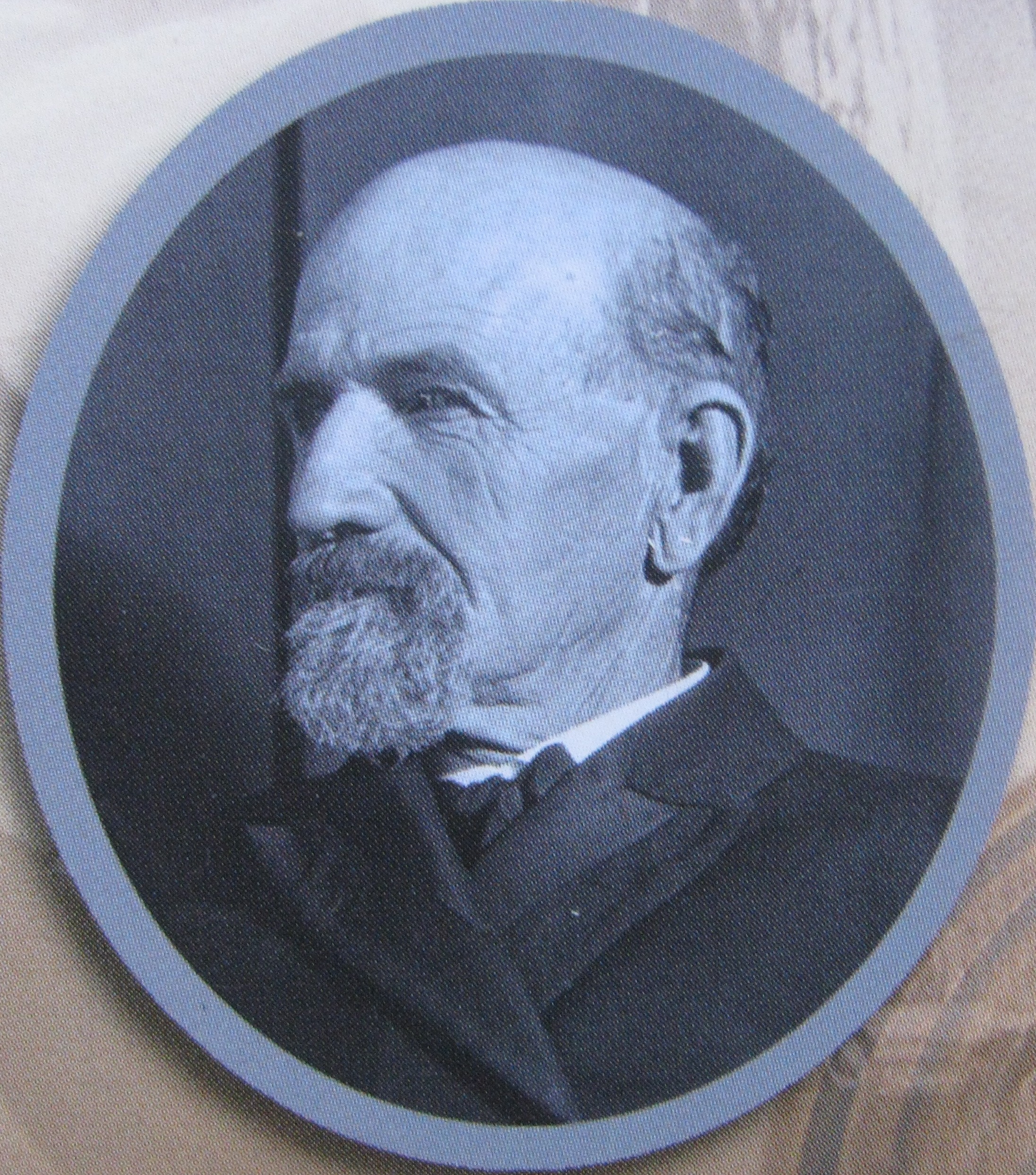
Captain Joshua Slocum (Image: from the cover of his book)

Captain Joshua Slocum (Image: from the cover of his book)

The story of Captain Joshua Slocum stuns.

Over three years spanning 1895-98, Slocum became the first man to circumnavigate the globe alone. Hailing from Nova Scotia, he was a veteran sailor, his association with the sea beginning when yet a young lad. Slocum became a captain, even owning a ship in part. He appears maritime survivor in the classical sense. Once, shipwrecked in South America, he built a new vessel and sailed back to the North with his family. But he remained a man of sail and when the age of steam navigation dawned, Slocum’s relevance faded. That was when he saw the `Spray,’ rebuilt her and over three years, sailed the sloop around the world, alone. His book on the voyage, written with little drama, presents itself to the reader as an understatement. In 1909, aged 65 and now known for his solo circumnavigation, the captain embarked on another solo project in the Spray – exploring rivers in South America. He wasn’t seen again and was eventually declared dead as of November 14th that year. The oceans cover approximately 71 per cent of the Earth’s surface. They hold 97 per cent of the planet’s water. The total volume of our oceans is about 1.3 billion cubic kilometres and its average depth is 12,080 feet with a maximum depth of 35,994 feet. It is home to many species. Climate as we know wouldn’t exist without the oceans. The Pacific Ocean is bigger than the Earth’s land masses combined. The Southern Ocean, essentially the southern waters of the world’s oceans leading up to Antarctica, poses some of the harshest weather conditions at sea.

Yet Slocum, sailing alone, never knew how to swim.

London. 1948.

A bombed out Europe was trying to reconstruct. For the 21 year-old Indian officer, newly commissioned in the then Royal Indian Navy, it was a good time to be in London attending a course at the Royal Naval College. He was feted everywhere he went simply because, in the eyes of the English, the Indian Army had fought well in the defence of Empire. India had become independent. But there was no bitterness towards the country; in fact great things were expected of her.  It was also hoped that the proposed republic would stay within the Commonwealth. One day, out on a walk in the city, the officer bought a book from a footpath bookseller somewhere near Charing Cross in west London.

It was Slocum’s book `Sailing Alone around the World.’ 

Vice Admiral (Retd) Manohar Awati (Photo: Shyam G Menon)

Vice Admiral (Retd) Manohar Awati (Photo: Shyam G Menon)

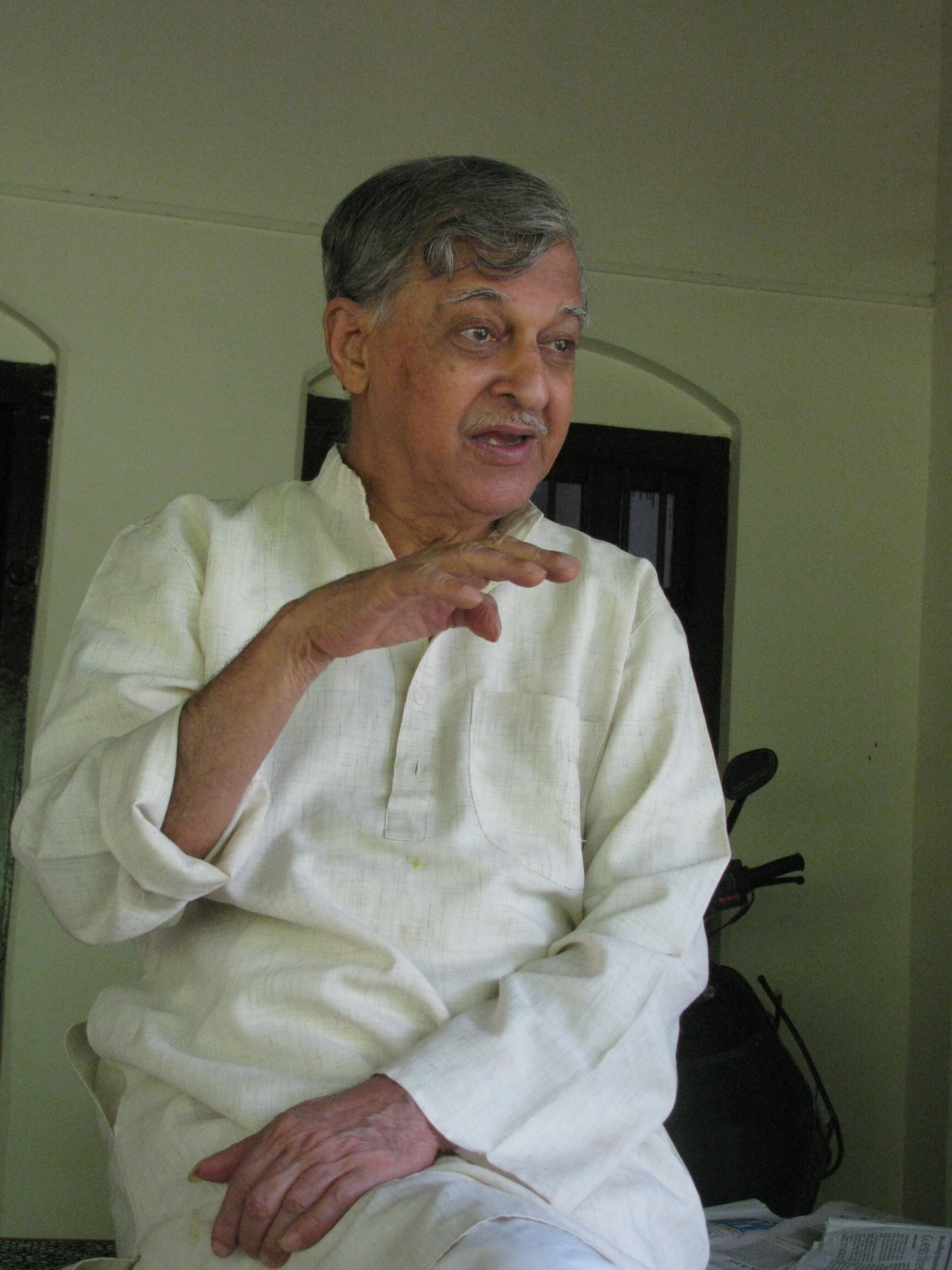
Returning to India, the officer had a great career in the Indian Navy. He was awarded the Vir Chakra and eventually retired as Vice Admiral after many distinguished posts held including Commander-in-Chief, Western Naval Command. “ From 1946 to 1983 I was busy being a good officer,’’ Vice Admiral (Retd) Manohar Awati said laughing, this June, at the Indian Navy Watermanship Training Centre (INWTC), Mumbai. Post retirement, in the early 1990s, Awati, who was passionate about sailing, approached leading companies to sponsor an Indian solo circumnavigation project. Estimated project cost then was roughly two crore (twenty million) rupees; a crore for the boat, the rest for the voyage. Save some interest shown by Godrej, Awati’s appeal to corporate India fell on deaf ears. Same time, mountaineering was finding support from private patrons. “ The Indian mind is not naturally sea friendly,’’ Awati said. He wrote to the Chief of Naval Staff. No luck there too. The risk involved in sailing solo caused trepidation. Then in 2005-2006, a former cadet of his, Admiral Arun Prakash, who had become the navy chief, responded. Awati proposed a revised budget of four crore rupees and one condition – the boat should be built in India. Within two months the navy chief secured defence minister Pranab Mukherjee’s approval for six crore rupees. The navy sent out an `India General’ – a signal to all hands – seeking volunteers for the project. The book Awati bought 58 years ago in London was at last, coming alive in an Indian edition of solo circumnavigation – Sagar Parikrama. But even within the navy this was easier said than done.

Three sail boats from the Indian armed forces – Tarangini, Samudra and Trishna – had sailed around the world earlier. But they don’t qualify for pure circumnavigation under sail as they could use the diesel engines aboard and their routes did not exclude straits and manmade canals. Besides, Awati’s Sagar Parikrama project was going to be solo. That made a huge difference. Although the Indian Navy has a tradition of sail boats, short-handed sailing or sailing with less than the full complement of crew was not a practice. The navy’s voyages were typically team efforts and the purpose of sailing in the curriculum was to forge team spirit. That made solo circumnavigation, requiring sustained personal sustenance at sea, a major leap in mindset and skill. Look landward and you see this in mountaineering, where the bulk of ascents by the Indian armed forces are full blown assaults by large teams.

Commander Dilip Donde (Photo: Lt Commander Abhilash Tomy)

Commander Dilip Donde (Photo: Lt Commander Abhilash Tomy)

Commander Dilip Donde loved to sail.

He used to be the First Mate on INS Tarangini. He is a clearance diver as well. According to Wikipedia, the clearance diver “ was originally a specialist naval diver who used explosives underwater to remove obstructions to make harbours and shipping channels safe for navigation. Later, the term grew to encompass more naval underwater work.’’ Donde was stationed in the Andamans. He was in Mumbai on a sailing assignment when at a function where the navy chief was present, he was asked by the officer tasked with finding a candidate for Sagar Parikrama whether he wished to volunteer (incidentally this officer had been Donde’s diving instructor and knew his abilities pretty well). Donde did exactly that. “ I just volunteered, just jumped in,’’ he recalled. Then, the fullness of what he had got himself into, dawned. There wasn’t anything in the sailing he had done so far that prepped him to be a solo sailor of such long distances. He spent a few days with Awati, gauging the depth of his new project to dive into it, and then commenced building it up from scratch.

If there is one thing about clearance divers, used to doing work underwater themselves, it is that they don’t mind muddying their hands. Solo sailing values this trait. Transferred to INWTC in Mumbai so that he could execute the project, Donde found a resource person in Sir Robin Knox-Johnston, the first man to do a solo nonstop circumnavigation. Donde met up with Sir Robin in the UK, worked alongside for six weeks and sailed with him from the UK to Spain to help him prepare for an upcoming voyage. In the process he got a ringside view of the solo long distance sailor. Now Donde had to make his boat. Vessel matters; humanity’s first recorded circumnavigation was the product of one ship, from four, surviving intact.

Three hundred and seventy six years before Slocum’s voyage, in 1519, Ferdinand Magellan sailed out from Seville, Spain, seeking a westward passage to the spice-wealth of Asia. He crossed into the Pacific Ocean via the Strait of Magellan, both names, his legacy. The Portuguese explorer was killed in the Philippines, before completing his journey. The expedition lost two ships, a third was damaged. The fourth – the Victoria – with 18 survivors aboard, led by Juan Sebastian Elcano, returned to Spain completing the first known circumnavigation. Thereafter up until Slocum, the story of circumnavigation is without any particularly riveting milestone save the magnificence of travel, hazards of long voyages, nations trying to repeat the feat of Magellan’s crew, men dying from disease and men losing their lives to other men as the impetus for many ocean journeys was commerce and commerce meant competing and confronting to own sea lanes and profitable landmasses. During this period the Drake Passage was found, Martin Ignacio de Loyola became the first person to circumnavigate in both directions, William Dampier became the first person to circumnavigate thrice and Dolphin became the first ship to survive two circumnavigations. While Louis de Bougainville, the first woman to circumnavigate the globe had to do so disguised as a man, the voyage of Fabian Gottlieb von Bellingshausen and Mikhail Lazarev managed something more than just circumnavigation; they sighted Antarctica. One circumnavigator, during this period, arguably brought home a scale of sailing, seafaring and exploration not seen before – Captain James Cook. Our idea of the Pacific owes a lot to Captain Cook’s journeys. What’s the Pacific alone when people have sailed around the world? – You may ask. Remember this – you can put all the world’s continents in the Pacific and still there will be more sea than land. That’s a measure of the world Captain Cook brought to public attention. Slocum however, stripped circumnavigation of imperial ambition, politics and expedition. He took it to the realm of lone man and the sea. In Chapter 2 of his book, he announces his plan with crushing ordinariness, “ At last the time arrived to weigh anchor and get to sea in earnest. I had resolved on a voyage around the world, and as the wind on the morning of April 24, 1895, was fair, at noon, I weighed anchor, set sail and filled away from Boston, where the Spray had been moored snugly all winter.’’ 

Sir Robin Knox-Johnston (Illustration: Shyam G Menon)

Sir Robin Knox-Johnston (Illustration: Shyam G Menon)

According to the list of solo circumnavigators available on Sir Robin’s website, for almost four decades after Slocum’s voyage in 1895-98, there wasn’t anyone successfully finishing a solo trip. From one voyage in the 1930s, it gradually rises in frequency each decade. In 1966, Sir Francis Chichester sailed the Gipsy Moth IV around the world with just one halt – Sydney (I remember, when I was a child, my paternal grandfather read a book about this voyage. It was borrowed from Thiruvananthapuram’s British Library). It inspired a new Holy Grail – circumnavigating solo and nonstop. In 1968 Sir Robin did just that in a legendary Sunday Times sponsored-race, the subject of Peter Nichol’s book ` A Voyage for Madmen.’ For the one man who finished the race and another who could have had he wanted to, their boats were as crucial as their own skills at sea.

“ The sort of boat I wanted for a round-the-world voyage would have to be seaworthy and easy to handle. She would also have to be robust, and not at all complicated, and as I wanted to make a fast passage she would have to be long on the waterline, since it is upon length here that the theoretical maximum speed of a hull is dependent. She would also have to be ridiculously cheap to construct as I did not have a lot of money to spend. This, of course, is what every prospective boat owner is after: the impossible for the ridiculous.’’ – Sir Robin, in his book: ` A World of My Own.’ Money remained a problem and Sir Robin eventually raced with the `Suhaili,’ a wooden ketch built earlier in Mumbai, when he was posted there. She was hardly the swift vessel a race around the world demanded. But she was sturdy, capable of steady sailing.

Almost four decades later Donde, having volunteered for the Indian Navy’s Sagar Parikrama project, expected as much from the boat in his thoughts. She must be reliable – a safe vessel to sail in. She had to be “ idiot proof’’ – Donde’s description for how forgiving she had to be to the first time circumnavigator’s potential mistakes. Only next did other parameters matter, speed being one, for which she could be long. The navy approached the reputed Dutch boat designing firm -Van de Stadt, explained their need and secured the rights to build a model called the ` Tonga 56,’ a 56 feet-long sloop that was essentially designed for charter trips. Alongside, the navy also dispatched a team to short-list competent boat yards in India, where the vessel may be built.

(…..TO BE CONTINUED)

(The author, Shyam G Menon, is a freelance journalist based in Mumbai.)       

SAGAR PARIKRAMA – PART 2

TWO SOLO VOYAGES, BACK TO BACK

Illustration: Shyam G Menon

Illustration: Shyam G Menon

Diwar Island is accessed by ferry from Old Goa.

Long ways off from where you land on the other side, is Naroa (pronounced Narwa) and further on is the point where the Konkan Railway’s bridge spans across the Mandovi River. From a passing train, if you look seaward, right below at the edge of Diwar Island, you will see the boat yard started eighteen years ago by Ratnakar Dandekar and his wife. Called Aquarius Fibreglass, the company traditionally made small crafts. They had just burnt their fingers building a big 20 metre-vessel for a state government with the associated rigmarole of delayed payments et al, when the naval team arrived to find out if they could be short listed for not just a long 56 feet-vessel for government but a sail boat at that. Dandekar is an instrumentation engineer. His father is a naval architect. None at Aquarius had built sail boats before.

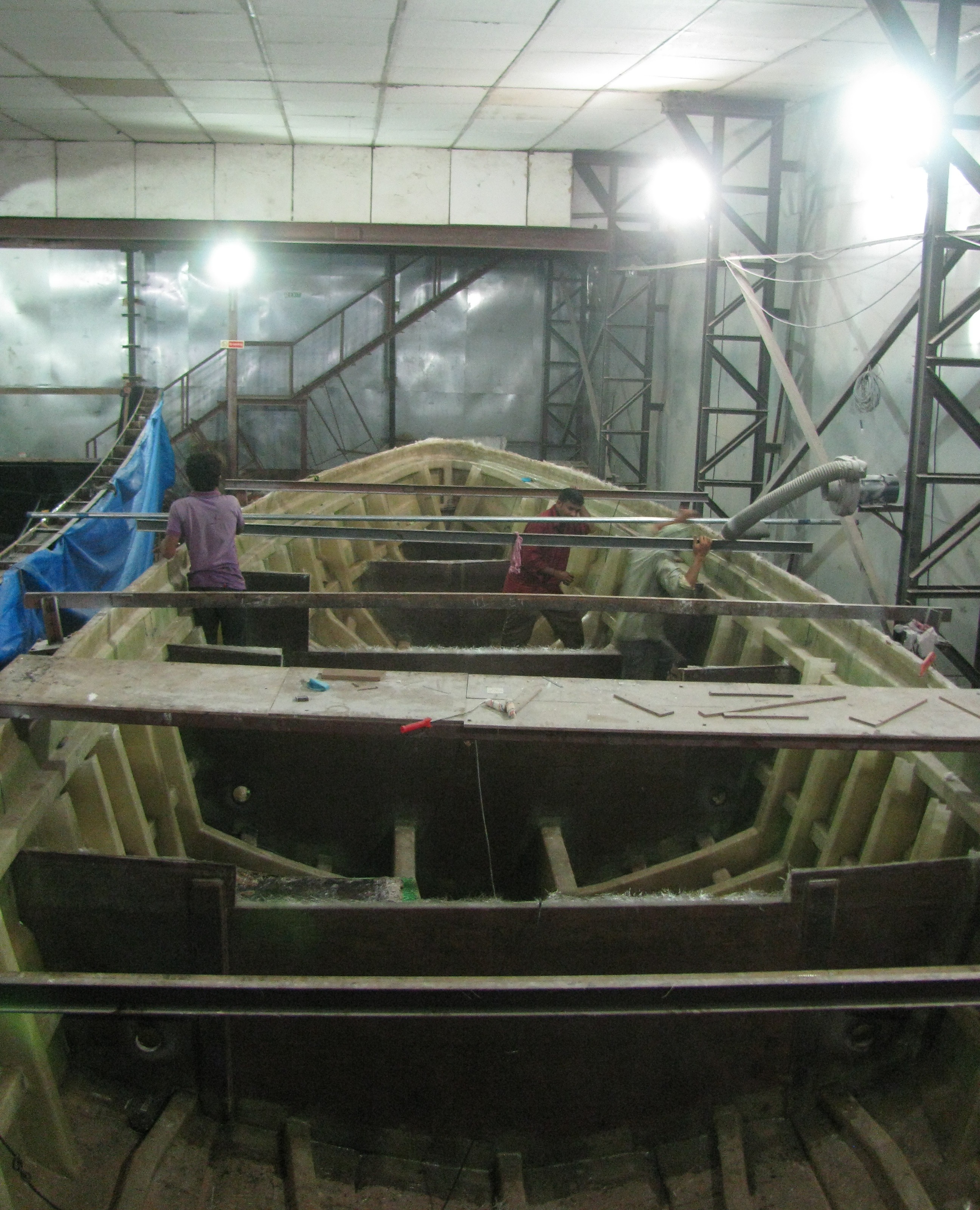
Building sail boats require skill. Very simply it can be explained so – a boat with an engine will power its way through water even if its design and fabrication is bad; a boat powered by sail must be sensitive to the wind, harness it and translate that energy to effortless movement on water, which means everything from concept to construction, matters. Because of this, it is also said in builders’ circles that should a sailing voyage succeed, then the sailor gets all the credit but should one fail or the sailor be lost, then all the fault is heaped on the boat builder. Of four Indian boat builders that the navy subsequently short listed, only one had built a sail boat before. In what is probably testimony to the challenge in making sail boats – particularly one for solo circumnavigation – the experienced builder never submitted a bid in the ensuing tender process. Aquarius won as its bid was the lowest. Dandekar recalled the navy asking him to reduce his quote further! He had a year to deliver the boat he knew nothing of. Indeed on the other side of the tender process too, experience was as blank. Donde set a tight budget and delivery schedule based on his own learning-on-the-run. “ We were like the proverbial blind men and the elephant,’’ Dandekar said. Like others in the Sagar Parikrama project, working by imagining, he read Sir Robin’s book to get an idea of sailing solo and what all can potentially go wrong with a sail boat at sea on such a demanding voyage. That done, he took a decision – since this was totally new territory for Aquarius, he would stick to loyally executing the Tonga 56 design. The navy’s agreement with Van de Stadt required periodic inspection by the designer. They deputed Dutch boat builder and consultant, Johan Vels. 

Ratnakar Dandekar (Photo: (Shyam G Menon)

Ratnakar Dandekar (Photo: (Shyam G Menon)

Inside Aquarius Fibreglass (Photo: Shyam G Menon)

Inside Aquarius Fibreglass (Photo: Shyam G Menon)

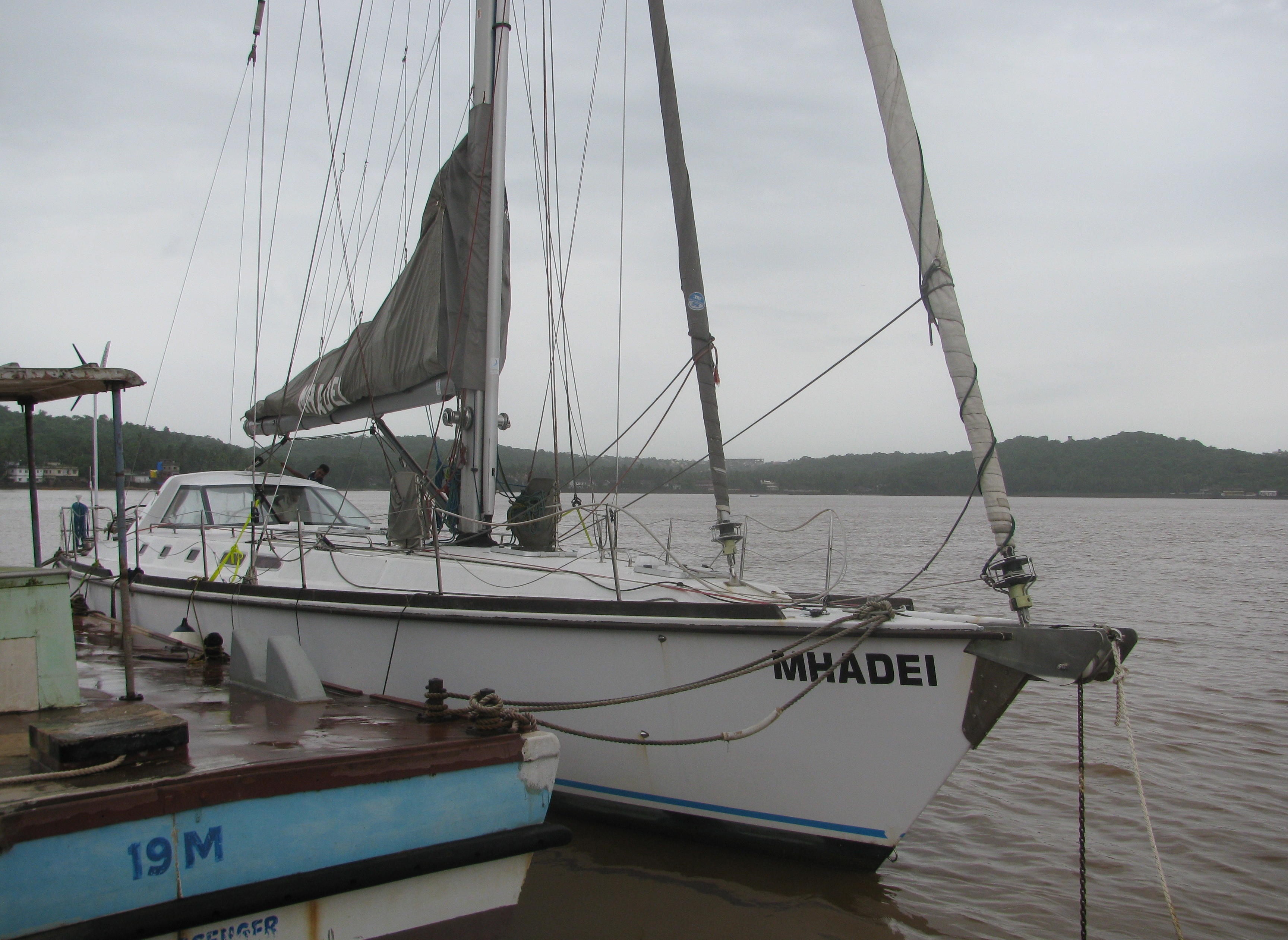
Aquarius’s first order for a sail boat entailed cost that exceeded its then annual turnover. Banks helped with loans. Materials were procured. For strength, the boat’s hull was made as a sandwich of three layers – 3mm fibreglass, 35mm red cedar wood and 3mm fibreglass. For Dandekar, the hull was wake-up call. The wood had 74 per cent humidity against the stipulated 12 per cent. In nature, the required reduction would take years to happen; artificially hurried, three months. Ovens were set up. “ That was when I realized I had to start learning and be totally dedicated,’’ Dandekar said. He was hands-on, working with his staff. Donde camped in Goa for much of the duration of building. Challenges continued. The boat’s keel was of steel with nine tons of lead within. The yard hadn’t handled molten lead before. Dandekar learnt how to do it at a friend’s battery making-facility at Vasai near Mumbai. Once back in Goa, the Aquarius team poured the nine tons, two kilos at a time using a ladle. Sometimes they overworked and committed errors due to strain. In such a case of oversight, the rudder was fitted improperly first; days were lost correcting it. Donde then laid down a rule – work hard but rest as well. Although building to given design, the boat’s interiors were altered to be functional and useful to the crew. As construction progressed, the visiting Vels monitored quality. Eventually, he felt they had a good boat going. After the Mhadei (another name for the river, Mandovi) was launched, she was taken to moorings beyond the road bridge to Panjim to get her mast fitted. The 24 metre high-mast arrived in two pieces and in accordance with sailing’s accrued wisdom of the years, is held in place less by fixtures at the bottom and far more by the strength of its rigging; basically tensioned stays and ropes running from the mast to the sides of the boat. She then proceeded for her mandated two months of testing by Donde and crew. Sir Robin also joined in for an initial trial run. Following a trip to Colombo, the navy team sailed her short-handed to Mauritius, the first time the navy did short-handed sailing. Then Donde sailed her back to India, alone – his first solo voyage and a first for the country.

The world is a free place to every explorer’s imagination and next to the sky the sea is visibly freest of all. However if you want your circumnavigation to be officially accepted by sailing’s connoisseurs, there are parameters to follow. The trip heads for the southern hemisphere and its vast oceans free of intervening land masses. The voyage must cover minimum 40,000 kilometres (21,600 nautical miles), it should avoid the world’s straits and man-made canals, grace three great capes (Cape of Good Hope, Cape Leeuwin and Cape Horn), it spends time in the feisty Southern Ocean with its Roaring Forties and the Furious Fifties, endures the vastness of the Pacific, crosses all meridians and journeys north to cross the Equator at least twice. The course is typically eastward to take advantage of the Westerlies. For emphasis on sail, engines in sail boats must be used sparingly (ex: you can use it to get in and out of a crowded marina). Sailing in days preceding engines and norms by sports bodies, Slocum first crossed the Atlantic. He travelled from North America to Gibraltar in Europe where he was warned of the pirates of the Red Sea. So from Gibraltar he sailed down the Atlantic, escaped a chase by pirates off the North African coast, touched Brazil, went onward to the Strait of Magellan near Cape Horn (navigating this strait can be more harrowing than the Horn) and west into the Pacific. Like Magellan, he sailed against prevailing winds.  

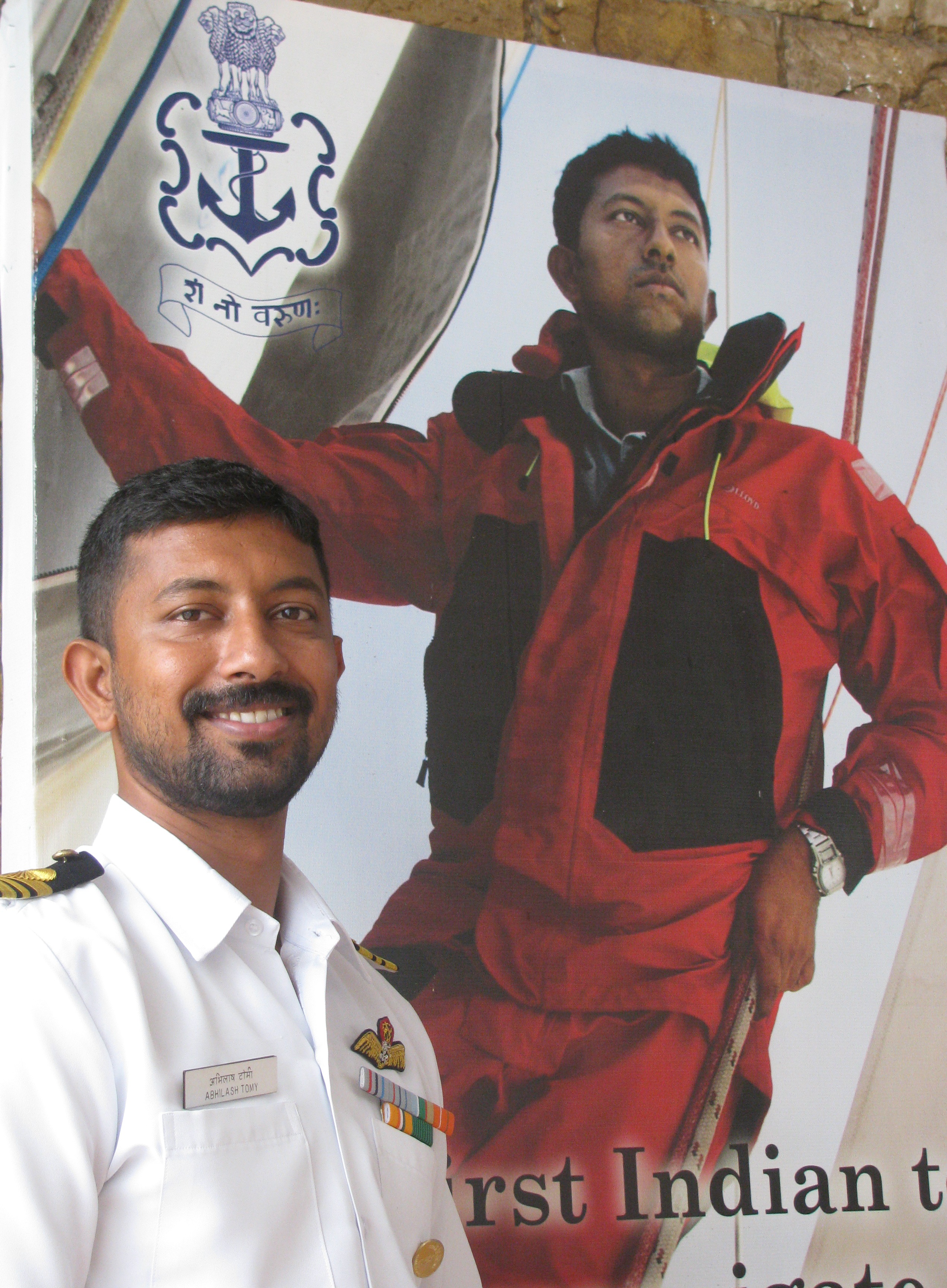
Lt Commander Abhilash Tomy (Photo: Shyam G Menon)

Lt Commander Abhilash Tomy (Photo: Shyam G Menon)

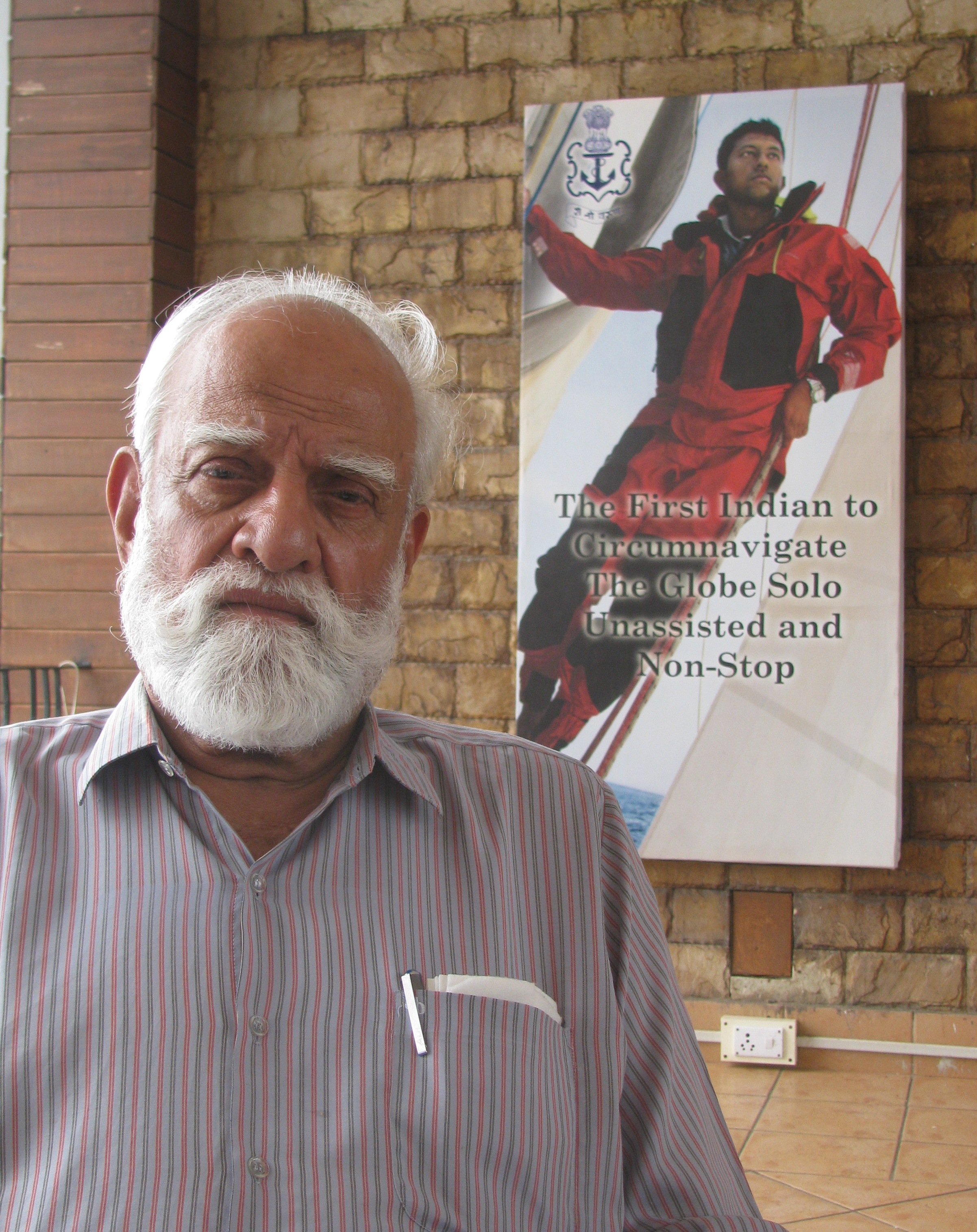
Donde embarked on his circumnavigation voyage on August 19, 2009 and returned on May 19, 2010. For India, he is the pioneer. An unassuming individual, his successful solo voyage around the globe with four halts, seasoned the boat and the team behind Sagar Parikrama.  It was history for the Mhadei too. The India built-Mhadei became the first Tonga 56 to do a successful solo circumnavigation. Things did go wrong. But she didn’t fail to bring her sailor back, safe. The team’s confidence grew. Towards the end of Donde’s voyage, Awati had proposed upping the ante to a solo, nonstop circumnavigation for next project. This, as per sailing’s norms, required to be unassisted in the physical sense.  Lt Commander Abhilash Tomy, for long part of the Sagar Parikrama team, was ideal candidate. A maritime reconnaissance pilot and sailing aficionado, he had been Donde’s support crew, meeting him at Fremantle, Lyttleton, Falkland Islands and Cape Town during the circumnavigation. Tomy was an active sailor from his training days at the Naval Academy. After commissioning as a pilot, he was selected to the navy’s shooting team. He left it. Shooting’s target oriented approach failed to attract as much as the romanticism of sailing. Twice he got lost – first at Jamnagar when he and a couple of others spent a night adrift at sea in damaged sail boats; the second time, in Mumbai, when a capsized boat couldn’t be corrected and the outgoing tide swept Tomy right out of the bay, into the outer sea where he floated till rescued. He had met Donde briefly a few times before but got to know him at a sailing event in Simonstown, South Africa, where Tomy won a competition. Later when the navy dispatched another `India General’ seeking an assistant for Donde in Sagar Parikrama who would also be stand-by, Tomy volunteered.    

Tomy’s previous sailing had been mostly on small vessels. Sagar Parikrama’s big boat and longer trips initially challenged. He was frequently sea-sick. His first solo sail was a trip in the boat from Cape Town to India. He got sea-sick but realized that solo sailor was the weakest link aboard and had better learn to function. Once back in Goa, he took to living in the Mhadei as a means to get used to what would be his new home. Then sailing out from Goa on November 1, 2012, he returned five months later as the first Indian to have done a solo, nonstop circumnavigation. To his advantage, Tomy had a boat that had gone through its teething troubles and performed well. “ Commander Donde’s voyage was tougher than mine,’’ he said. When you catch Awati, Donde and Tomy together, it is an ambiance of informal talk, leg pulling and camaraderie shaped by Sagar Parikrama. In their respective blogs, written as they sailed, Donde’s style is easy and forgiving; the younger Tomy gets there as the voyage progresses.

Mhadei at berth in Goa (Photo: Shyam G Menon)

Mhadei at berth in Goa (Photo: Shyam G Menon)

A solo voyage in the 21st century is very different from Slocum’s.

Navigating in the age of sextant, Slocum often preferred `dead reckoning,’ a technique that was still older. Although he made ample stops, at sea he was truly alone. He communicated with passing ships and boats by drawing close and shouting above the waves. He had no engine, no radio. If something went wrong, the solo sailor was utterly single-handed in finding solution. Sagar Parikrama had Global Positioning System (GPS), satellite phone, radio, Internet on tap and an INMARSAT Mini-C that automatically transmitted its position at fixed intervals. During Commader Donde’s trip (the first Indian solo circumnavigation) the boat’s autopilots broke down in the Pacific. But as someone tracking his blog reminded – you have an online audience, including those who sailed long distances in similar boats and therefore able to imagine a potential fix.

For Donde and Tomy, the word for what the rest of us calls loneliness is – solitude. You have to learn to handle it; not let the mind go into a downward spiral. In the 1968 Sunday Times-race, Donald Crowhurst (he was born in India) embarked on his voyage in a hurriedly built trimaran. His boat developed problems. This was atop the business troubles he already faced. He wanted a win badly to revive his business fortunes. From England, the farthest he went was the Falkland Islands but he conveyed to the world an impression of setting speed records and circumnavigating. His logbooks grew thick with poetry, philosophical speculation and eventually, a self-manufactured delusion that justified exiting this existence for the perceived higher challenge of what lay beyond. The story is there in the book by Nicholas Tomalin and Ron Hall. Crowhurst wasn’t aboard his boat found adrift in the Atlantic. He is believed to have committed suicide. At the other end was Bernard Moitessier. Coming off Cape Horn in his yacht built of boilerplate steel, the Frenchman, running close second to Sir Robin and at times thought to win, traded competition and record for the romanticism of voyage. He sailed on to Tahiti without turning north to England. In sailing, Cape Horn is iconic. Moitessier became famous even before the 1968 race, for enduring a terrible storm there. Like `Everester,’ there exists the reference, `Cape Horner.’ As with any weather pattern, you can cross it under milder conditions. But the Horn is usually intense with winds denied passage by the Andes, funnelling into the gap between South America’s tip and Antarctica. Then there are the storms off South Africa and the powerful Agulhas Current. On Sagar Parikrama’s boat, a deck eye of 8mm metal was twisted open in one of the Southern Ocean storms. At sea, boats sometimes have their sails ripped; masts broken. “ The sea is unforgiving,’’ Awati said.

Inside the Mhadei (Photo: Shyam G Menon)

Inside the Mhadei (Photo: Shyam G Menon)

By the second half of the 20th century very busy shipping lanes would dissect waters above the Southern Ocean. Peter Nichols, sailing solo across the Atlantic, remarks how dangerous, containers fallen into the sea could be for a small sail boat like his. You can hit containers; other boats, maybe a ship. Big ships take time to slow down, alter direction. Small sail boats rarely show up on their radar and while looking out from the bridge of a giant ship, small boats are lost in the vastness of heaving sea. Nichols sailed across the Atlantic, coping with a failed marriage and hoping to sell off in the US, the sail boat he and his wife had been closely attached to. En route, the boat developed leaks. One of the most touching moments in Nichols’s story is when he is saved by a big ship. On the one hand, the vessel responded to pleas from something as insignificant as solo sailor on vast ocean. On the other hand, as it drew close, it crunched the fore part of the small sail boat without even feeling it. Furious, Nichols tries to kick the huge steel monster away. From Slocum to Donde and Tomy, one responsibility continuing unchanged is – on a boat somebody has to be on watch always and when you are alone, sleep becomes little. Sleep deprivation can cause hallucination. Meanwhile solitude breeds the community of one. Across accounts by solo sailors you find the story narrated with individual donning multiple roles. The chef served a fantastic meal and the crew appreciated it – is one and the same person wearing two hats. It is poignant and amusing. Donde and Tomy are two of just over 200 sailors who circumnavigated alone. More people have been to space. Lots more have climbed Everest to date, the majority of them likely helped up by hired guides. Yet man on Everest attracts people’s attention more. It is an anthropological puzzle, this difference in human approach to water and depth and mountain and height. Maybe Desmond Morris has an explanation?

Meanwhile, India’s officialdom left its characteristic imprint. The tender documents inadequately described the Mhadei as a yacht, when the larger picture was attempting a first in circumnavigation for India with the learning experience therein; all this on a tight budget. After the Mhadei was handed over to the navy, Aquarius which made the boat to schedule was raided by tax officials seeking excise duty payment for the `yacht.’ On their heels came the customs. “ They were only following the law,’’ Dandekar said. The navy spoke up. Although he got back what he was forced to pay, Dandekar wishes this hadn’t happened in an otherwise absolutely engaging project. He has no hesitation in acknowledging how much the Mhadei changed Aquarius. The yard’s ability has been vindicated. Where there used to be just one boat building-shed before, more have come up on the premises. Company turnover has risen. Aquarius looks busy. There is even an aluminium hull getting ready although in the cyclical pattern of the boat building industry, the company which sub-contracted that order to Aquarius sank into financial difficulty leaving Dandekar with the hull. But he is happy that he knows aluminium too, now. That’s his attitude. “ Building the Mhadei was a big achievement. There aren’t too many yards that can claim to have built a sail boat, which did two back to back circumnavigations,’’ Dandekar said. 

(….TO BE CONTINUED)

(The author, Shyam G Menon, is a freelance journalist based in Mumbai.)       

SAGAR PARIKRAMA – PART 3

POPULARIZING SAILING

Illustration: Shyam G Menon

Illustration: Shyam G Menon

The Indian Navy is the only navy in the world to officially do solo circumnavigation and solo nonstop circumnavigation.

Specific to the navy, Sagar Parikrama’s impact may be threefold. First, greater interest in sailing in India automatically means bigger share than before in the civilian mind for the navy. This is helpful for recruitment and goodwill. Second, the average navy sailor imagines his theatre of operation in terms of his own country; the country’s immediate seas, his ship and given mission. Now there is a larger awareness brewing in the navy of oceans and weather patterns beyond. Not to mention, a proven example that Indians in a sail boat can endure what the seas throw at them. Third, solo circumnavigation is all about endurance. The typical sailor in our navy considers 15-20 days at sea as long. The circumnavigation voyages by Donde and Tomy lasted months. That’s proof of what is possible; it can inspire mindset change. “ I want to see an Indian circumnavigate Antarctica. The conditions there would be trying – ice floes; icebergs, cold temperatures, high seas and winds,’’ Awati said, gazing seaward. For him, Sagar Parikrama is the beginning of a revolution, a revolution of Indian mindset by the sea.

Centuries ago, powered by sail, the Indian east coast had spawned empires that touched South East Asia. In Beypore, Kerala, building wooden ships called the ` Uru’ has long been a traditional art. `Suhaili,’ the wooden ketch in which Sir Robin circumnavigated the globe, solo and nonstop was built in Mumbai, mostly at a yard then called Colaba Workshops. Now with Mhadei, the boat used for Sagar Parikrama, built by Aquarius Fibreglass, Goa, India has proven competence in fibreglass boats. We are the world’s biggest democracy with a coastline of over 7500 km, a history of maritime trade that stretches back to well before Christ, and a track record in fine boat building. Yet civilian interest in sailing is abysmal compared to the length of India’s coastline and its population.

In many adventure sports, the armed forces led the way in India. Reasons for this could be several, but mainly two. First, there is general aversion to adventure – call it zone of discomfort – among Indians. Decades ago, the religious taboo attached to crossing the seas made anyone going overseas impure. Nowadays, it is over-protective parents and their reluctance to accept anything risky. This plagues even the armed forces. Awati recalled his days as Commandant of the National Defence Academy (NDA) when parents would object to certain exercises he introduced saying it was dangerous. “ My standard reply to that was – if not now, your boy will face it later, so why not now and get used to it?’’ When Donde was sailing, ahead of him in the Pacific Ocean was Jessica Watson, a young Australian, yet to turn 17. Her circumnavigation was questioned by purists based on a technical flaw; she failed to connect two antipodal points on the planet, which some people consider a must for pure circumnavigation. Notwithstanding these critics, her solo voyage around the world – from Sydney to Sydney – at that age, remains a fact. It is certainly debatable whether she should have circumnavigated when still so young but contrast her backdrop with the average Indian life – her family lived on a boat for five years, the children being schooled via distance education as they sailed.

Second, in direct proportion to how the majority obsesses with well settled life, our armed forces are seen as the ones enshrining qualities that the rest lacks. In our compartmentalised view of society, the forces are licensed to adventure. Vicariously, they complete us. Third, capital used to be a major problem. Expeditions are capital intensive. Even today civilian expeditions struggle to find resources. For the armed forces, it is a case of approving project and sanctioning budget internally. Compared to scattered resources in the civilian realm, the armed forces represent focussed delivery.

With economic liberalization and rising affordability levels, civilian participation in adventure sports is now slowly rising in India. Bulk of it hardly delves deep into what adventure is. In fact, taken to its extreme as philosophy, adventure even shuns the media and the world, preferring its own trajectory. Moitessier is great example. He no doubt tickled the media with his eccentricity. But he sailed on his terms. One of his sentences from the voyage, rivets, “ I no longer know how far I have got, except that we long ago left the borders of too much behind.’’ Moitessier seems the hermit of the seas; at home on it. Past Cape Horn, Tomy said, he had a spell of depression and went drifting off northward in the Atlantic. He knew the remaining eastbound leg was a sail home. He didn’t want that. He wanted to keep going. Or sample what Peter Nichols says about Sir Francis Chichester. According to him, by the late 1960s, trans-Atlantic sailing races resembled motor racing. It had become the turf of young sailors, the races were very competitive. With competition the races became expensive, teams splurged on ever fancier boats. The importance of sponsors increased and with it sailing became the ability “ to navigate the tide rips and currents of commercial sponsorships.’’ Sir Francis and others like him sought a different canvas. In 1966, he sailed off the competitive confines of Atlantic racing and circumnavigated the globe with just one stop; Sir Robin took it to nonstop. Can we get the essence of sailing, across to an Indian audience without loss in translation?

Illustration: Shyam G Menon

Illustration: Shyam G Menon

Sailing is much more than sailing to win a race. As you research route, weather conditions and prepare for voyage – it becomes an exploration of life and the planet. It is education. Awati lives in Satara. He likes to talk of a school student there, who tracking the Mhadei’s journey, could tell the retired admiral the names of all the three great capes correctly. Or sample this – a fine example of what a good old fashioned adventure, cast the classical way can inspire people to do. On hearing of Swapnali Dhabugade, I requested her for a chance to meet. We talked over a cup of tea at a cafe near Vashi station. A cost accountancy student from Mumbai, Swapnali read about Sagar Parikrama in mid-September 2012. She isn’t sure what caught her fancy but suspects it was `solo,’ a situation so different from the average Indian life crammed with people. Intrigued, she got in touch with Tomy, travelled to Goa with her friend Mugdha Chavan, went aboard the Mhadei, then visited Aquarius Fibreglass and met Ratnakar Dandekar. In mid-December she met Donde. She attended Sir Robin’s lecture at the Maritime History Society. With help from friends and family, Swapnali pieced together a ` Sagar Parikrama Awareness Programme,’ primarily for secondary school students as the voyage fitted in well with geography classes at school. She and her friends made 17 presentations in Mumbai and Jalgaon reaching out to 2685 young people, many of who subsequently tracked Tomy’s blog. Schools covered included the 100 year-old King George School where Awati is alumni. The navy responded, presenting a letter of appreciation to the whole team. In April this year, Swapnali took her interest further ahead, doing a basic course in sailing from a private sailing school. 

To be the popular movement Awati hopes Sagar Parikrama will be, then whoever pushes it – navy or otherwise – will have to imagine a transference mechanism for the idea of sailing; one that is broad-based and adequately contemporary. Today’s society is diverse in terms of who wants to learn something, when they wish to learn and how they learn. Even the same person learns differently at different stages in life. Anyone who can learn a bit typically aspires to go the whole hog if the bug bites deep enough. The Himalaya has a total length of 2500km. India’s coastline is three times longer at 7500km. Sailing’s vast playground makes it a democratic urge, brings it closer to running an outdoor club, in terms of ideal operating ethic. Currently India’s yacht clubs – some of them teach sailing – are elite addresses, carried over from the colonial era or newly created for fashionable social apartness. A few private sailing schools have opened. There is also the National Cadet Corps (NCC). If Sagar Parikrama inspires at large, then sailing will face the same crossroad as mountaineering in India did – should it grow top-down with regulation and bureaucracy (as mountaineering chose to) or should it foster enthusiasm at ground level (as running and outdoor clubs did), work to make sailing popular?

Awati said, “ top-down won’t work.’’ Tomy however emphasised the need to retain aspiration. Asked if making the sail boat cheaper is central to popularising the sport, he quipped, “ do you think if boats are affordable people will sail?’’ According to Tomy, sail boats have become affordable with India’s economic growth but more importantly, you must want to be a sailor. The sea should catch your fancy. There is no substitute for that; it is what makes you aspire. Tomy has a point for beyond constraints of affordability, there is a fundamental urge – a curiosity for the medium – that has remained absent in India. Thus for instance, the Mhadei, while certainly vindicating Aquarius’s competence to the Indian Navy and thereby in vessel construction for military / paramilitary purposes, does not automatically open up business in sailing yachts for Dandekar. There are two to three reasons. First, sailing is very under developed in India with little civilian interest. So a big enough local market isn’t there yet. Second, the current market is for luxury yachts bought by the wealthy. For this group, it counts to say that their yacht was imported or built at some particular foreign yard. Third, thanks to our erstwhile economic controls, the trend of yacht-building shifting to new geographies as a matter of overseas enterprises seeking cost effectiveness, bypassed India and went to countries like Sri Lanka and Thailand. For now, Aquarius’s competence in yacht-building seems as much an island as Diwar. Looking down from your train window you may thus not see a great financial story. But for sure, that’s where the Mhadei was built, where history was made.  On their part, Donde has written a book on his voyage, while Dandekar plans a Sail Training Association with the Sagar Parikrama team.

Commander Dilip Donde, India’s first solo circumnavigator, was awarded the Shaurya Chakra; the Tenzing Norgay National Adventure Award, the MacGregor Medal and deemed the National Offshore Sailor of the Year. Lt Commander Abhilash Tomy, India’s first solo nonstop circumnavigator, got the Kirti Chakra, the Tenzing Norgay National Adventure Award and the title of National Offshore Sailor of the Year. At the time of writing this article, he was also the only Indian to be inducted into The International Association of Cape Horners.

(PLEASE SEE PART FOUR OF THIS SERIES TO READ THE INTERVIEW WITH VICE ADMIRAL [RETD] MANOHAR AWATI)

(The author, Shyam G Menon, is a freelance journalist based in Mumbai.)       

SAGAR PARIKRAMA – PART 4

INTERVIEW WITH VICE ADMIRAL (RETD) MANOHAR AWATI


Vice Admiral Manohar Awati retired from the Indian Navy in 1983. He was last the Commander-in-Chief of the Western Naval Command, the sword arm of the Indian Navy. He is the main architect of Sagar Parikrama, having imagined the project, kept it alive and seen it through. Now 87 years old, he is an inspiration to talk to. He was kind enough to grant an interview for this blog.


Excerpts:


Vice Admiral (Retd) Manohar Awati (Photo: Shyam G Menon)

Vice Admiral (Retd) Manohar Awati (Photo: Shyam G Menon)

You kept the idea of Sagar Parikrama alive through decades in service and several years in retirement. What are your thoughts from that journey?


I kept plodding and trying to elicit some interest in the voyage I had in mind for so long, with the navy and the corporate world. No one seemed to be interested in sailing. Many said that I was being too ambitious for India, that we as Indians were neither too happy nor too felicitous with the sea. Many quoted historical reasons for this attitude towards the sea. The risks were too high, almost incomprehensible for a nation where the young had shunned making a career at sea for so long, a thousand years to be precise. It is not as if Indians were afraid of the sea. They could not have been that. Look at the thriving fishing industry and so many poor littoral people like the Kharvas of the Gujarat coast finding employment with international shipping companies as Khalasis. Almost as many Konkan Musalmans served as firemen in the engine rooms of these ships. They were all competent seamen, much sought after by the companies for their competence and loyalty. But turn to the Indian middle class – it was zilch; an amazing paradox.


I am not a sociologist but I am a history buff, aware therefore of the ban imposed on embarking upon the sea about a thousand years back by a zealous religious leader on pain of losing caste. Now in those days one protected one’s caste with one’s life, if need be. There could be no compromise in a society which held caste dearer than life itself.  You may remember Bal Gangadhar Tilak subjected himself to rigorous ritual cleansing after his return from the Round Table Conference in London in the early twentieth century because of the pollution his person had suffered crossing the ocean! I have a niggling feeling that many upper caste Hindus in India have not quite rid themselves of the stigma of going afloat. Parental permission is still residual in many families to boys, and increasingly girls now, from taking up a career at sea. We do not take part in any numbers, in recreation upon the waters of our ocean even as throngs go off sailing during weekends in the west, especially in Western Europe and America. The sea has been a part of their lives for centuries even as we Indians distanced ourselves from it.


The sea was very much a part of Indian awareness in the ancient days of Meluha, the country of the Indus Delta, the civilisations of Mohen-jo-Daro, of Dholavira, as also of the east coast later during pre-Ashokan times. That awareness continued through Buddhist India, its association  of the Sangha, the trade guilds which came up to advance maritime trade through ship and cargo insurance and the myriad activities that go with trading across the oceans, the Blue, not just along the Brown water coasts. The Buddhist Jatakas are full of great voyages, of shipwrecks through storms, of pirates and pillage at sea and much else, including the riches which were the result of that trade despite the vicissitudes. The sea carried India’s very considerable and very rich trade.


We have almost forgotten that centuries back this country enriched itself from trade across the seas carried by ships built along our coast – especially the west coast – from shipbuilding teak which grew in the forests backing the coast. Today the descendants of the great Mesthries (shipwrights) of the past seek employment with the Sheikhs of Araby because the government cannot find any use for their once applauded art. Shameful! In the Middle Ages our seamanship and ship management had atrophied so low through disuse that several coastal principalities had to employ Arabs as the Shah Bandars ( port officers ) of their harbours and ports to keep trade flowing. Any wonder then that the Arabs had a monopoly of trade with India? It was the Muslim Arab who the Christian Portuguese wished to remove as an impediment. That prompted them to their adventures by sea, the discovery of the Cape route to the riches of Inde.


As late as 1850, twenty seven per cent of world trade was India’s share. What is it today? Less than one per cent! How and why did this slide happen? The European colonisers had their share in this collapse, no doubt. But the main cause was India distancing herself from the sea which surrounds it on three sides, as a result of some religious belief to do with caste and such other nonsense in a caste ridden society, which by then, as a result of a long bout of slavery, had quite possibly turned on itself, like some desperate, depressed individual. Distancing herself from the sea was an act of near suicide for the nation. We have not yet recovered from that act.


There has to be; there must be – a revival if we are ever to grasp the nettle of a great nation. We have to revive ourselves at sea by an effort to be friends with that great, all encompassing, yet fickle medium which governs life on this planet. Let people remember – no sea, no climate and therefore no life as we know it. 


Illustration: Shyam G Menon

Illustration: Shyam G Menon

You structured the project such that the first Indian to sail solo around the world would do so in a boat built in India. In an era when many people question the need to reinvent the wheel what made you insist on building the boat here?


It is not really a question of reinventing the wheel.


No two circumnavigator boats are the same, from Robin’s wooden Suhaili, to the trimarans, to all things fibreglass and now carbon fibre, all the way to my Mhadei. Every boat built has own character; its handling peculiarities, its survivability in extreme weather conditions. I wanted the boat to be built in India because at one go I would demonstrate an Indian’s ability to go round the world solo and bring to the notice of the world the abilities of the Indian boat carpenter whose reputation around our ocean and beyond was so very enviable for so long. He was invited abroad for advice and supervision of ships built of timber. The watertight- ` Wadhera Joint’ for joining wooden planks, was invented in India. It needed no caulking. It is difficult to fashion; therefore not cost effective. Sagar Parikrama is remarkable because aside from the Dutch design it was an Indian enterprise. The high value instrumentation was of course, imported from Europe.


What next for Sagar Parikrama?


I now look forward to the first Indian woman circumnavigator, in my life time. At 87 that may appear to be a little unlikely. I am optimistic. We have taken the first steps. There are volunteers from among the women officers of the navy. There are Dilip and Abhilash who will carry my ambition to fruition. There are several in the business of directing the Service, especially in the navy’s HRD, who think as I do. I am therefore, hopeful. 


After that I want an Indian to circumnavigate Antarctica, solo.


What is your advice to those planning adventure activities?


I say: plan a real whammy activity, not some common or garden stuff. It is how you tackle the danger therein that is the core value of real adventure. Adventure must offer a challenge to your character, the character of those who participate in it, whether it is a solo or a group affair. It becomes training in leadership where leadership stands for example and willingness to take calculated risks which demand decision on the spur of the moment.

Are there values in expedition planning and execution, which civilians can learn from the armed forces? If so, in your observation and seeing the state of affairs in the civilian realm, what would be the most important traits for a civilian expedition to copy?

The most important trait for civilians to copy from the military is surely and above everything else, discipline.

Staying power is next, once you have decided what the purpose and aim of your expedition is.

An adventure expedition needs to have an aim. It should not be some purposeless ramble.

Of course a ramble has its own value in getting out in the country, observe nature or just breathe in the ozone and get a feeling of wellness. But a serious adventure MUST have a purpose and it must involve serious challenge. Otherwise it becomes an empty adventure, adventure in name only. An adventure activity must help to build or bolster character, character which matters in civic life and in nation building. We in India are seriously devoid of people who have character. Character means willingness to shoulder responsibility, ability to make decisions and lead by personal example. Regrettably, apart from a few, I cannot name anyone in India with these qualities. Among those who are under fifty, I cannot think of a single person.

In a manner of speaking, Sagar Parikrama is a good example of civil-military interface. It delivered. But then I was fortunate in both the military man, Dilip and the civilian, Ratnakar. It just happened. Coincidence ? May be. I do not believe in coincidences. If you plan and push with a purpose, then usually the right people come in. Once, Ratnakar’s mother told me, “ Admiral I was not sure of this mad project of yours, that it would ever come off or happen. But when I saw three mad people come together, I started thinking otherwise.’’ Wise and observant words from a worldly wise lady! There are huge possibilities in defence for civil-military symbiotic relationship for the good of the nation. It is waiting to be fully exploited. A small beginning has been made. It must be widened, exploited to advantage. Whoever takes the lead in doing this – it has to be done from the highest level in government and in corporate bodies – will have to tread on many toes and old corns, disregard the nay-sayers.

By all means let us begin with adventure activities, real adventure, if we dare.

(PLEASE READ PART FIVE OF THIS SERIES FOR THE AUTHOR’S NOTE ON SAGAR PARIKRAMA)


(The author, Shyam G Menon, is a freelance journalist based in Mumbai. This interview was done by email.)

SAGAR PARIKRAMA – PART 5

AUTHOR’S NOTE                      

Illustration: Shyam G Menon

Illustration: Shyam G Menon

Bang in the middle of the Pacific Ocean is the island of Tahiti.

When European ` discoverers’ reached this island in the heart of Pacific wilderness in the eighteenth century (Tahiti was sighted by Europeans in the sixteenth or seventeenth century), there were men and women already there. How did the first people reach Tahiti? Science deems Africa’s Great Rift Valley as the evolutionary ground of our species. Our ancestors are said to have walked out from Africa. In that case, humanity’s first sea-crossing may have been the Red Sea, from near the Horn of Africa to West Asia. Those days, the water level in the Red Sea was low. Journeying on, humankind would reach the edge of East and South East Asia. Water levels were low here too, exposing that much more land (now reverted to below water) and rendering distances by sea, so much less. Slowly our ancestors navigated across the nearby seas all the way to Australia. Measured against the impatience of our times, this journey out of Africa, took a long time to be completed. Human settlement of Tahiti though seems to have been a later day affair.

If you check the map, Tahiti would appear as a dot in an ocean of blue.

According to Wikipedia, the first people on Tahiti hailed back to early residents of South East Asia. They arrived through an emigration in stages over the years, reaching Tahiti around 200BC on outrigger canoes. These are canoes having one or more lateral support floats fitted to one side of the main hull or both sides. They are paddled or sailed. Outrigger canoes are a part of the maritime heritage of Polynesia and South East Asia, having played a major role in the settlement of far flung islands and transport in general. Interestingly, Wikipedia also says that it was an emigration on outrigger canoes sailing west from South East Asia that brought human settlers to Madagascar over 350BC-550AD. That’s a long, long time since humans crossed the Red Sea eastward from mainland Africa which lay just across the Mozambique Channel from Madagascar. Emigration from mainland Africa to Madagascar followed this initial settlement. On the map, the emigration from Borneo to Madagascar would appear a crossing of the Indian Ocean – on outrigger canoes!

These early voyagers had no Wikipedia to tell them of Tahiti and Madagascar; no GPS to navigate accurately, no infallible yachts or ships as we do at present. Once gone, did they know how to get back to that thing called home, which rules, haunts and shapes us in this age of identity by settled life? Or was it all about reaching new land for new life? Take what I wrote with a pinch of salt – and the genuinely curious, please, I encourage you to read and research yourself – for my intention is not to teach you flawless history, anthropology and geography. My intention is merely to make you think. A slow and patient (not fast and impatient) gaze at the planet and its cultures would tell you that people tackled fantastic challenges long before us. Historians and archaeologists may sift through traces of human existence to give you proof of the world’s earliest sailors, the oldest boat etc. But it doesn’t tell us everything about the adventurers of yore, for quite likely, more have disappeared without trace than the few whose names survive thanks to some trace. What lives on is their legacy. It survives in humankind’s continued affair with the sea and the shape of boats, still traceable to the wisdom of ancient voyages.

Illustration: Shyam G Menon

Illustration: Shyam G Menon

Land was once as awesome as the sea. Today, land lay known and exploited. Its great adventures have largely reduced to the stuff of commercial expeditions, sponsored thrills and people competing to prove, “ I can also do it’’ or “ I can do better.’’ Out in the blue and deep below it, for no better reason than that fewer people court that vastness, so much bigger than land – a sense of self and adventure in their original tenor probably exists. During the 1968 race, Sir Robin Knox-Johnston, short of money, sailed out in the ` Suhaili.’ Far out in the Atlantic, she started taking in water. He had to fix the problem, narrowed down to an issue of caulking, by carrying out repairs from under the water. For this, he had to dive into the sea and be below the boat, repairing it while the vessel slowly sailed on. Most sailors worry if their boat would drift away leaving them behind. Sir Robin was in the habit of enjoying a daily swim, diving off the bowspirit, swimming as the boat floated past and eventually helping himself back aboard using a rope trailed from its stern. Shift context and sample this from an evening, late October 2013. Lights dimmed at Mumbai’s Sterling theatre and a film commenced that was weirdly silent for the visual spectacle, which was its opening frame. For the next 90 minutes it kept the audience spell bound with deft use of aural and visual technologies and a continuous dramatic interplay of, sound and silence, movement and stillness. Befitting the medium in which the story was set, we rotated, spun and revolved in a vastness brought alive so, for the first time on big screen. As I write this, Alfonso Cuaron’s much acclaimed movie `Gravity,’ is still running in Mumbai theatres. On Earth, only the sea comes close to space in terms of distances, depth, 360 degree-expanse, the sense of being afloat and the complexities of survival in a medium that isn’t as much man’s home as terra firma is. The sea is the world’s great wilderness, till space takes over. Already you can see the similarities: `ship,’ `vessel,’ `craft,’ the relation between person and ship, the endurance required for long stints aboard  – the words and ideas are common to both fields noticeable for their power to make the human being feel small.

Sagar Parikrama impressed me for the sheer scale of the experience it put the two naval officers through. It also impressed as subject ranging from the sea’s spread on the planet to its human history. Seventy per cent of the planet; deep enough to sink the highest mountains and home to fantastic natural forces, not to mention experiencing it at the pace of sail. Despite 21st century, the story still felt like revisiting books from the exploratory phase of land. Early Everest expeditions had to tackle the nuts and bolts – explore an approach to the peak, study the effects of altitude on the human being, fashion oxygen cylinders, design appropriate clothing etc – not much different from Commander Dilip Donde commencing expedition work from scratch, his interaction with Sir Robin and of course, Aquarius Fibreglass building the Mhadei in Goa. When it came to Lt Commander Abhilash Tomy, the challenges were likely more internal to self, for the defining difference had moved to nonstop circumnavigation. In all this work from researching route to boat and self, much was already known and there were templates for everything. But the approach was classical – as Vice Admiral Awati wanted it to be.

From a more short term, practical angle, nothing can be more effectively metaphorical of the relation between us and India than a boat at sea. The reason the Mhadei mattered so much for Sagar Parikrama, is because it was the vessel that would take a human being around the planet and bring the person back, safely. That’s why Ratnakar Dandekar’s role was pivotal. Like all sailors and particularly solo sailors, Commander Dilip Donde and Lt Commander Abhilash Tomy, during their voyages, devoted attention to the needs and requirements of the boat. The Mhadei was all that stood between them and the deep. If they maintained the Mhadei well, their chances of sailing safely were that much stronger.

Isn’t that true of a boat called India, too?

(CONCLUDED)

(The author, Shyam G Menon, is a freelance journalist based in Mumbai. Abridged versions of the main article comprising parts one, two and three of this series, and abstracts from it, were published in The Hindu newspaper, The Hindu Business Line newspaper and Man’s World [MW] magazine.)

GRAVITY

Illustration: Shyam G Menon

Illustration: Shyam G Menon

It’s straightforward and simple.

If you haven’t seen the film ` Gravity’ yet, then see it.

Gravity is the sort of film that comes along once in a long while.

I found it remarkable for the following reasons:

So far, most movies about space that I have seen, fall into two categories.

There is the genre, which embraced the perception of space as science fiction fantasy. It told great stories set therein. The imagination, while bringing into play everything that humankind knew of space, stretched it a wee bit more, sometimes a lot more, for the heck of story. But these films were often far in excess of what our actual ventures into space have been. In these flights of fancy, human beings travelled through the solar system, hurtled through black holes and visited other galaxies, even as the farthest a human being ever got to, remained the moon. Cut to the other genre of being more realistic and telling stories within the realm of actual human exploration – we in India often felt left out because in tune with reality, all those stories had to be necessarily about foreigners at work; their sagas, their travails, their victories. A certain late astronaut called Shariff singing an Indian film song in orbit or George Clooney commenting on the beauty of a sunrise over the Ganges do nothing to stoke South Asian excitement for Gravity. The film worked because it was gutsy enough to keep space its real hero. At one stroke, it eliminated the petty divides inspired by human life on the planet and brought home a reality beyond the capacity of our different languages to describe. I felt, Gravity took the human being out of space and prepped us for a medium as it is.

Experiencing Alfonso Cuaron’s film was fantastic. There have been many films that exploited modern cinema’s technology to the hilt. A new sound system would come screaming in; a wide screen would be shown such that we are dwarfed to shifting in our seats for seeing it end-to-end. This film had no such agenda. Gravity’s opening sequence in a typical Mumbai theatre yet to stop chatting, reminded me of Steven Spielberg’s `Saving Private Ryan.’ That was the first film I saw, where the filmmaker, telling a story from the point of view of the soldier in battle, showed action all around with no sound. Such numbness happens in war; the film brought it home. After years used to Star Trek, Star Wars, Aliens and the like, the abject silence of Gravity’s space took time getting used to. But once it gripped, you wanted it to remain so for you realized that unlike before, here, you were dealing with the real stuff. I wonder what the more mainstream filmmakers will do about space now that its silence has hit the theatres and the audience didn’t walk away! I also hope this will become a trend going ahead – a cleansing of big media experience to restore an experience of world that is greater than humanity’s media.

Not many films have succeeded in breathing its context into every frame as Gravity did. Emmanuel Lubezki’s cinematography was calm and restless at once, weaving us in and out through twists and turns, for space is 360 degree-expanse on every axis.  It was like being in a washing machine and that is close enough but not fully accurate description. Finally, Gravity wasn’t without sound. Where required it had that and dialogue. In fact, it had music. Except – Steven Price’s music didn’t ever intrude. It stayed in the backdrop like a grinding saw of tension, picking up momentum as the film approached climax, which was most acceptable aesthetically for the climax was a descent to Earth and its environment, including capacity for sound. One day, maybe Cuaron or somebody else will show us the reverse – music petering out in tune with an ascent to space; a loud background score fading to stillness or receding to the very electronic sound of music in an astronaut’s earphones while space rules awesomely silent all around.

See Gravity; experience a shift in perspective.                                                   

(The author, Shyam G Menon, is a freelance journalist based in Mumbai)