GEOFFREY KAMWOROR SETS NEW HALF MARATHON WORLD RECORD

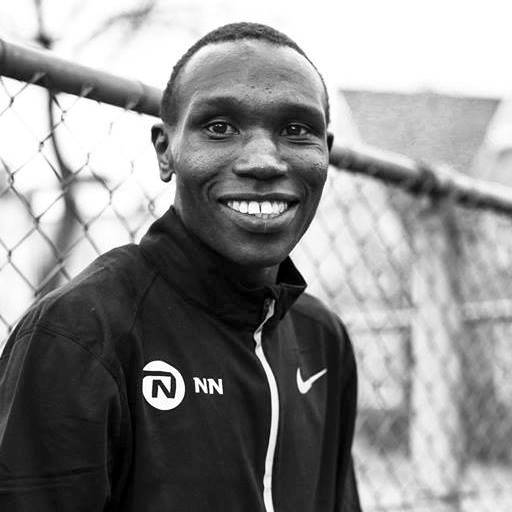
Geoffrey Kamworor (This photo was downloaded from the athlete’s Facebook page)

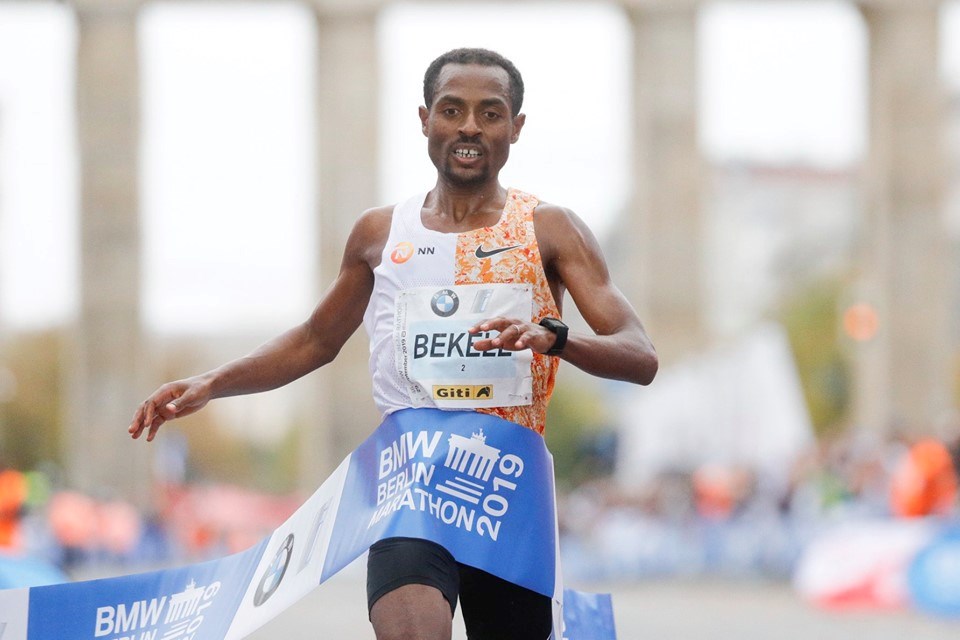
Kenya’s Geoffrey Kamworor has set a new world record at the 2019 Copenhagen Half Marathon.

He finished the race in 58 minutes and one second (58:01), bettering the previous world record in the half marathon by 17 seconds. The earlier record (58:18) was held by Abraham Kiptum of Kenya; it was set at the Valencia Half Marathon last year.

The new record is “ subject to the usual ratification procedure,’’ the International Association of Athletics Federations (IAAF) noted in its statement (dated September 15, 2019) on the subject.

The Copenhagen Half Marathon is an IAAF Gold Label Road Race.

Kamworor is a known face in India having finished on the podium at past editions of the Airtel Delhi Half Marathon and the TCS World 10k.

What makes Kamworor’s performance doubly significant is that besides breaking the world record, his participation in Copenhagen appears to have been a conscious choice over competing in the 2019 IAAF World Athletics Championships to be held in Doha later this month.

“ It is very emotional for me to set this record. And doing it in Copenhagen, where I won my first world title, adds something to it,” Kamworor, 26, was quoted as saying in the IAAF report. In his tweet congratulating Kamworor, fellow Kenyan and world record holder in the marathon, Eliud Kipchoge said, “ a huge congratulations to @GKamworor! So proud to see you run this world record. Great planning, preparations, teammates, coaching and management is equal to record breaking.”

According to Wikipedia, Geoffrey Kipsang Kamworor, hailing from the village of Chepkorio in Kenya’s Rift Valley Province, first competed abroad in 2010. He was the 2011 World Junior Cross Country Champion. He later won the World Half Marathon Championships three times in a row from 2014 to 2018 (the championships were held in 2014, 2016 and 2018). He also won the World Cross Country Championships in 2015 and 2017.

He won his first World Marathon Major – the New York City Marathon – in 2017.

Among other events, he had podium finishes at the Airtel Delhi Half Marathon in 2011 (00:59:31), 2013 (00:59:30) and 2014 (59:07). In 2012, he won the TCS World 10k in Bengaluru, covering the distance in 28 minutes. He also won it in 2014 (27:45) and 2018 (27:59).

Copenhagen had been the scene of the first of Kamworor’s three world half-marathon titles.

Outside of his appearances at the World Half Marathon Championships, the 2019 Copenhagen Half Marathon was Kamworor’s first 13.1-mile race since November 2014, the IAAF statement pointed out.

According to it, five other men finished inside 60 minutes at the event. Bernard Kipkorir of Kenya placed second in 59:16 followed by Ethiopia’s Berehanu Wendemu Tsegu (59:22) and Kenya’s Edwin Kiprop Kiptoo (59:27).

In the women’s race, Ethiopia’s Birhane Dibaba (2018 Tokyo Marathon champion) finished first in 1:05:57. It was a personal best (PB) for her and the second fastest time at the event after the course record (1:05:15) set by Ethiopian born Dutch athlete, Sifan Hassan last year. That had been a new European record. Evaline Chirchir of Kenya (1:06:22) placed second and Dorcas Tuitoek (1:06:36), also of Kenya, third.

(The author, Latha Venkatraman, is an independent journalist based in Mumbai.)

2019 UTMB / TALKING TO SCOTT HAWKER

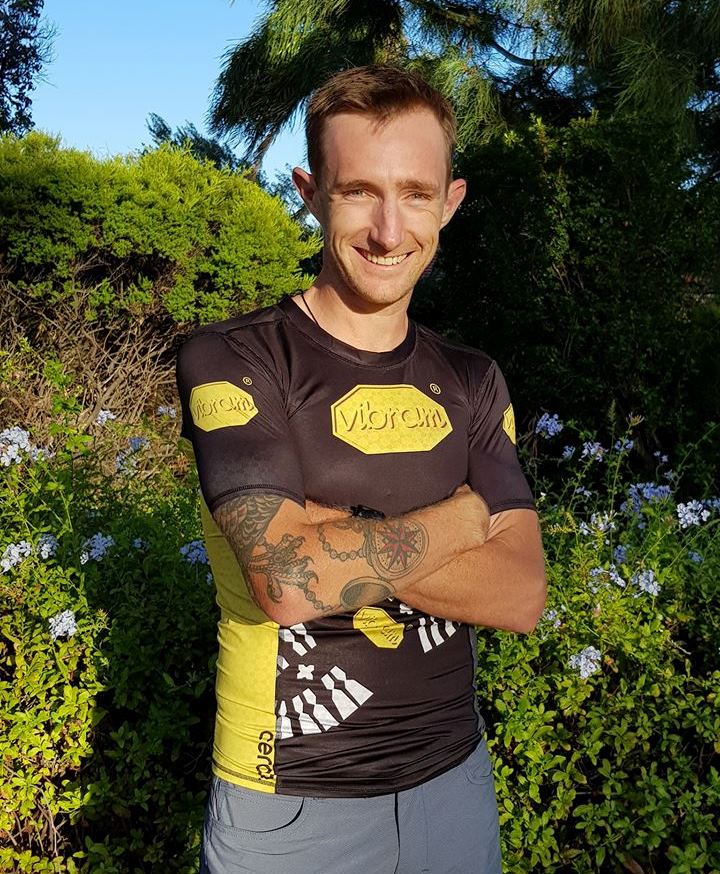
Scott Hawker (This photo was downloaded from the Facebook page of the athlete)

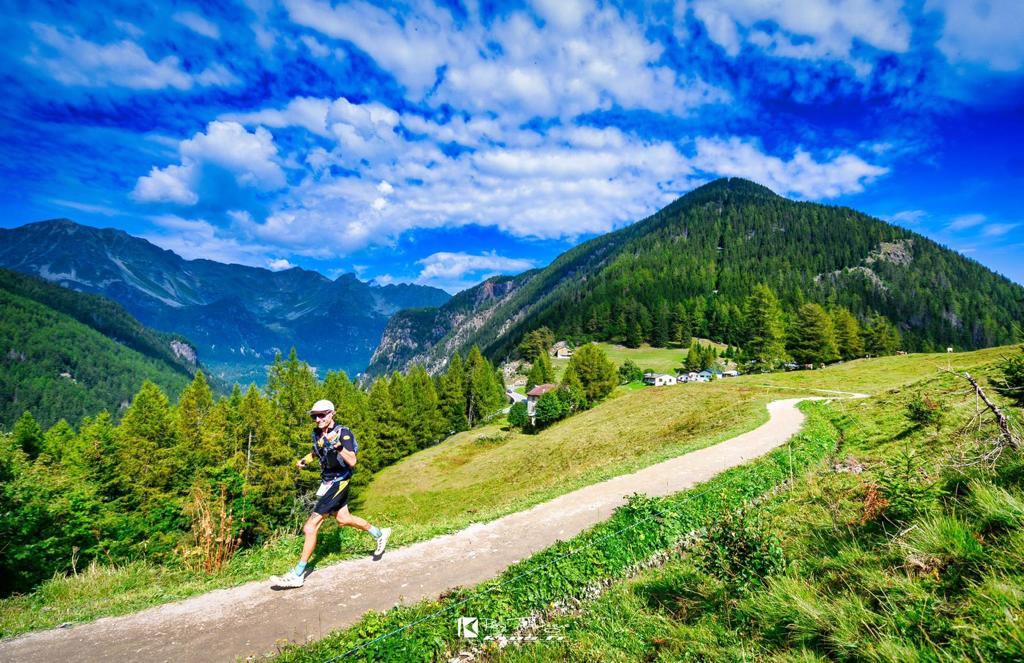
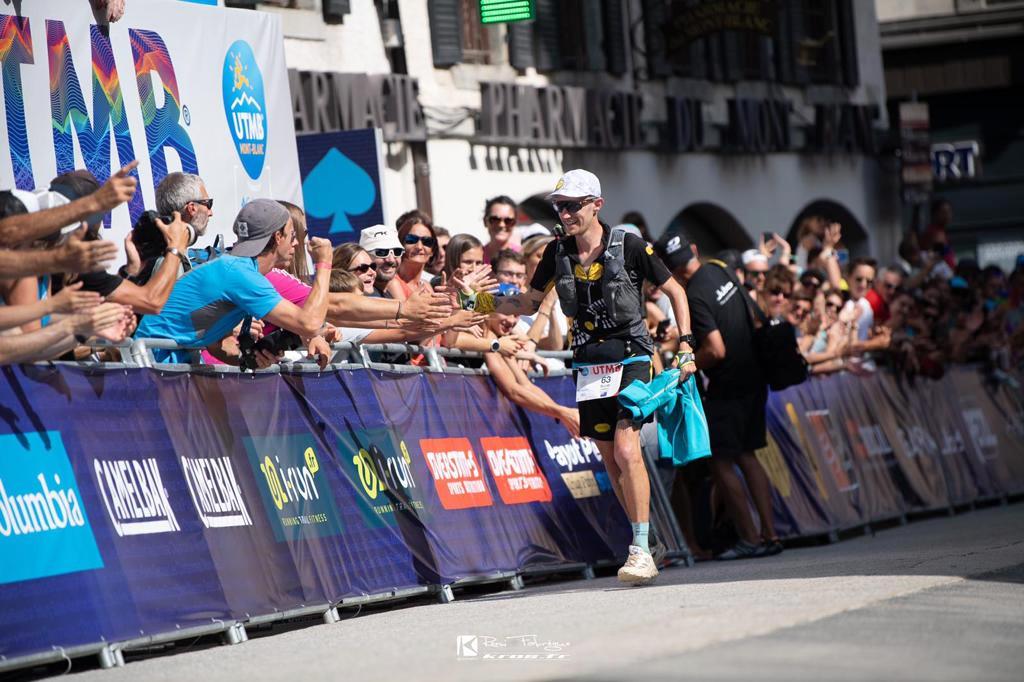
The Ultra Trail du Mont-Blanc (UTMB) is among the most coveted races in the international ultra-running calendar. It is a difficult race, run in the European Alps. The course length is approximately 171 kilometers and the total elevation gain amounts to 32,940 feet. It is also among the largest ultra-races of its type with hundreds of runners converging every year at Chamonix in France, for what is essentially a week-long festival of running with races over various distances. UTMB is the flagship race. Ultra-runner, Scott Hawker, secured a podium finish at the 2019 edition of Ultra Trail du Mont Blanc (UTMB). Scott has been rated among the leading trail runners from New Zealand. He has featured in the top bracket at well-known trail races. He placed third at 2019 UTMB, covering the distance in 21 hours, 48 minutes, four seconds (21:48:04). Scott spared time to respond to queries from this blog:

How do you normally plan your calendar every year? How many races do you typically participate in every year and do you follow any pattern like orienting the progression towards a major event? For example, if you are doing UTMB, do you structure the rest of the year such that you save yourself for UTMB?

Yes this year was all about UTMB. I raced less this year than in previous years. And I had a pretty quiet few months race wise leading into UTMB so I could focus on training and preparing as best as I could.

In one of your post-race interviews after 2019 UTMB, you have hinted at the return of an old injury in the early part of the race. Do you suspect you were overdoing things in the preceding years? You have also mentioned of struggling to get the right diet / nutrition in place. Can you give us an idea of these years, what was going wrong and how you corrected the situation?

The niggle / injury I’ve been dealing with for a couple of years is some sciatic nerve/ hamstring pain… with it being more nerve related it’s a little up and down. It hadn’t been an issue for a few months but reared its ugly head at UTMB after Saint Gervais.

My race day nutrition just wasn’t working for me in 2018, too many gels / chews and sweet items were causing a massive thirst and I basically ended up needing to drink too much fluid, which would then cause havoc in my stomach on downhills with the sloshing in the guts.

From 2019 UTMB (Photo: courtesy Scott Hawker)

How did you plan your approach to 2019 UTMB? How many events did you participate in prior to this in 2019 and which ones did you choose? Was your approach to the 2019 edition of the event, significantly different from how you approached it in 2017?

As mentioned above, I raced a lot less this year and the races I did do were shorter distance events than in previous years…

I ran in the HK100 in January, Mt Solitart Ultra 45km in April, the Retezat 28km Skyrace in June, Lavaredo Ultra Dolomites 87km in June, the Grossglockner Ultra 50km in July and then UTMB. The spacing between these races enabled me to recover well post-race and then kick back into training.

Going into UTMB this year, what was your pre-race expectation and strategy? How had you planned to run the race?

Pre-race I was hoping to sneak into the top 10 and maybe top five if on a good day… My plan was to stick around some runners who I felt would run a typically smart race. The pace in the beginning 10km was quite slow compared to previous years so I found myself in the top five athletes from early on.

In post-race interviews you have mentioned that the first half of the race was a struggle for you. What happened; what went wrong, what caused things to go wrong? How did the situation change in the second half; what made things change? 

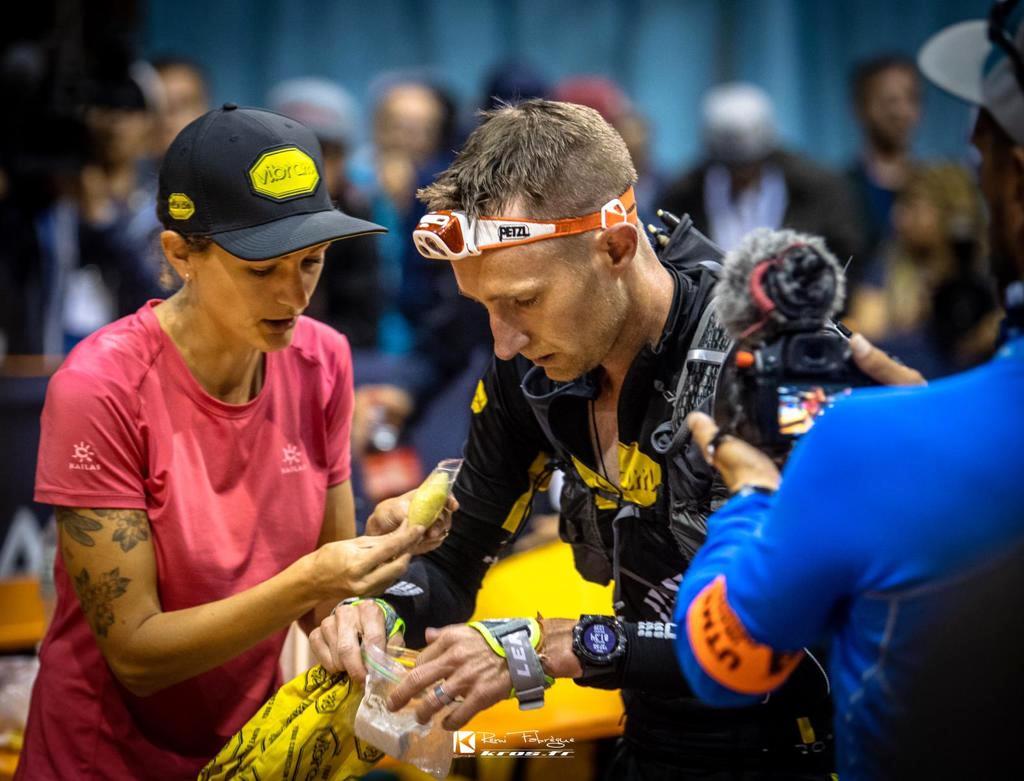
Yes, the hamstring / sciatic pain came back and didn’t enable me to run freely in the opening 50km until Les Chapieux. I was walking down some of the descent resigned to the fact I was going to pull out as the race I was hoping for and what I wanted to achieve here, was gone. It was when my good friend Harry Jones came in to the checkpoint and said to try again as there was so much time to go that I decided to shuffle out of the aid station and try to get to Courmayeur. I was doing a nerve stretch I do a lot (every 10-12mins) and I think the super easy 5km descent was maybe enough to take some of the load off my hamstring. I was then able to start running without pain.

From 2019 UTMB (Photo: courtesy Scott Hawker)

The UTMB is run in the European Alps. You hail from New Zealand, home to the Southern Alps. Are there any challenges by way of terrain / weather conditions that you face running in the mountains of Europe or are the challenges faced more personal than related to environment?

The mountains in NZ are so similar to the mountains around Mont Blanc. I feel really at home in Chamonix. There’s probably a balance of environmental and physical challenges one faces at UTMB.

Can you give us an overview of your early life in New Zealand – which part of the country do you hail from, what is the topography there like, when did you get into running and most importantly, when did you get into ultra-running? Was there any specific instance / development that made you realize you will be good at ultra-running?

I played soccer when i was younger to a provincial and national level. As kids, my parents would take me and my brother hiking and on adventures. So I found a love for nature and the outdoors from a young age.

As a kid, I seemed to always be the fitter guy in the team and the one who was running later in the matches. Once I started doing multisport races in the mountains I realized I could move well through the mountains and combining that with good fitness – it was a good match for ultramarathon running.

What attracts you to trail and ultra-running? Can you give us an idea of your training – is it structured and supervised by a coach or has it been mostly a case of you discovering what works best for you?

The mountains, the solitude but also the companionship while training and racing with friends. Also it’s a sport I can share somewhat with my wife and daughter as part of the process, which is an amazing experience.

My coach David Roche from SWAP has been guiding me since March this year, he’s been monumental in helping me develop as an athlete and get to where I am now. The exciting part is we’re only getting started.

From 2019 UTMB (Photo: courtesy Scott Hawker)

As a runner, how long did it take for you to find sponsors? At what point in your running career did they start showing interest?

Around 2014 I picked up my first sponsors. I’m so thankful to be supported by such amazing brands as VIBRAM, CamelBak, Kailas and Naked Running Band.

At present your year is split into a first half spent training and racing in Australia and a second half devoted to racing in other parts of the world. How has this mix worked for you? Does that first half spent in Australia provide you with adequate opportunities and adequately diverse terrain to train in?

Being able to spend time in NZ and Australia and then the race season in Europe is a blessing. The mountains of Australia are so different from almost everything I’ve raced on in Europe so it’s hard to translate what I train in there to Europe but the trails are equally as beautiful and fun.

What is your plan going forward? Which other events do you have in mind for 2019 and 2020? Are there any changes you wish to attempt to your current paradigm of running in terms of type of events, nature of terrain and distances run?

I have 3 races remaining in 2019, the UTLO in Italy, the Mogan Ultra in China and then Maesalong Trail in Thailand. All these races are for fun and events my sponsors support. In 2020, I would like, at this stage to be back at UTMB but the rest of the calendar is undecided as yet.

(This interview was done via email. The interviewer, Latha Venkatraman, is an independent journalist based in Mumbai.)

GREAT NORTH RUN / BRIGID KOSGEI SMASHES WOMEN’S COURSE RECORD

Brigid Kosgei (This photo was downloaded from the Facebook page of London Marathon and is being used here for representation purpose. No copyright infringement intended.)

Kenya’s Brigid Kosgei set a new course record in the women’s half marathon, at the 2019 Great North Run in UK. She covered the distance in one hour, four minutes and 28 seconds (1:04:28), shattering the previous record held by Mary Keitany (1:05:39 / also of Kenya) by more than a minute. The men’s half marathon at the event was marked by Britain’s Mo Farah winning his sixth consecutive title; he finished in 59 minutes, six seconds (59:06).

Kosgei’s course record is better than the existing world record – 1:04:51 – set by Kenya’s Joyciline Jepkosgei at the Valencia Half Marathon in October 2017. However owing to technical reasons, the new mark may not qualify to be a world record. The problem lay in the Great North Run’s course. The International Association of Athletics Federations (IAAF) noted in its weekend round-up of road races, “ as a point-to-point course and slightly downhill, it’s not valid for record purposes, but that shouldn’t take away from the performance by the 25-year-old Kenyan who dominated the race from the outset.’’

According to it, IAAF regulations (for the performance to be ratified as a world record) require that the start and finish points on the course, measured along a theoretical straight line between them, should not be further apart than 50 per cent of the race distance. It is also required that the overall decrease in elevation between start and finish should not exceed an average of one meter per kilometer. “ The Great North Run is contested on a point-to-point course with elevation loss of 30.5m and a start / finish separation of more than 75 per cent,’’ the statement pointed out.

As per published media reports, Kenya swept the top four positions in the women’s half marathon at the 2019 Great North Run. Magdalyne Masai finished second, Linet Masai placed third and Mary Keitany, fourth. In the men’s race, Ethiopia’s Tamirat Tola finished second while Abdi Nageeye of Netherlands placed third. Britain’s Callum Hawkins was fourth.

Prior to 2019 Great North Run, Kosgei was known best for her finishes at the Chicago and London marathons. She placed second among women in the 2017 Chicago Marathon, second in the 2018 London Marathon, first in the 2018 Chicago Marathon and first in the 2019 London Marathon. Going by information available on Wikipedia, Kosgei has finished in top two at eight of the nine marathons that she has run in her career.

The Great North Run is the largest half marathon in the world. It takes place every September in North East England. It was first staged in 1981. As of 2019, Kenyan men had been won the race 14 times; Kenyan women – 12 times.

(The author, Shyam G Menon, is a freelance journalist based in Mumbai.)

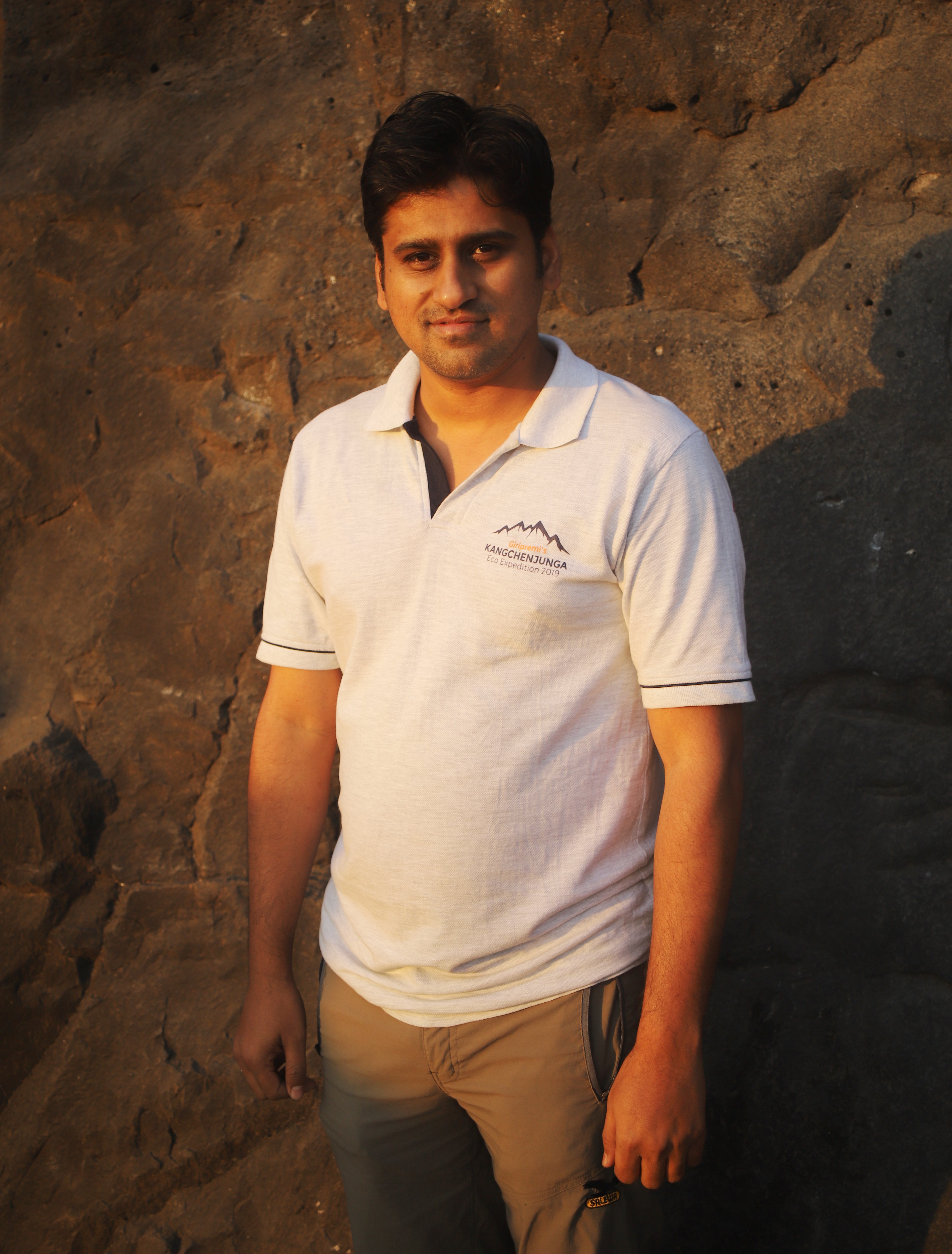
A PUNE CLUB AND ITS TRYST WITH 8000M

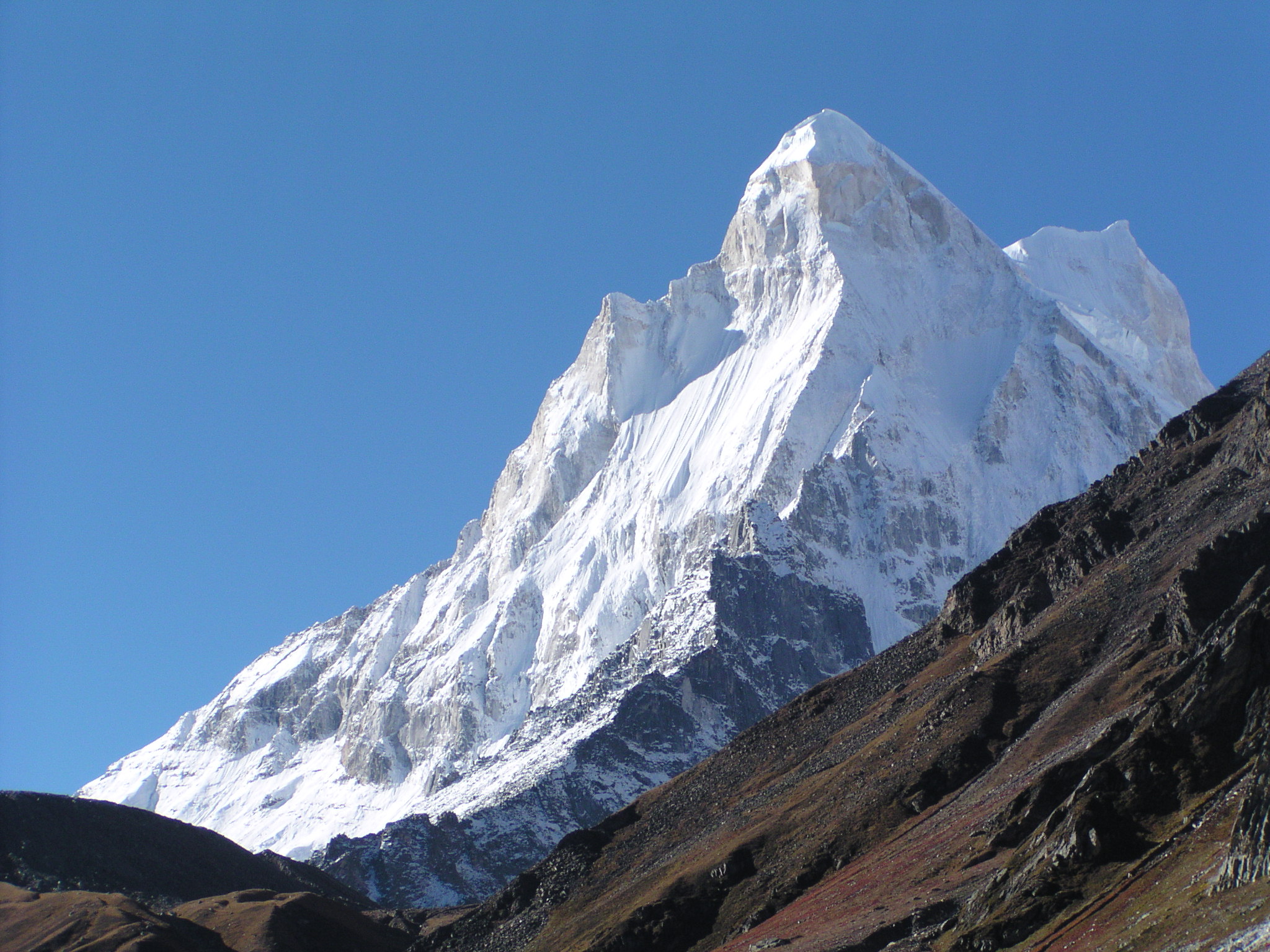
Mt Shivling (6543m / 21,466 feet). It was after an expedition to Shivling in 2007 that Giripremi’s string of expeditions to 8000m peaks, started (Photo: courtesy Giripremi)

Climbing an 8000m peak is a major project. A project to climb all the fourteen 8000m peaks is in a league by itself. Aside from the climbing, crucial aspects therein are – project structure, funding and management. Pune-based mountaineering club Giripremi and its senior mountaineer, Umesh Zirpe, have been tackling this challenge for a while now. Here’s a snapshot of how the engagement with 8000m came about and how they managed repeated expeditions to high altitude.  

Shivling, the 21,466 feet-high peak in the Garhwal Himalaya, is among the most beautiful mountains in the world.

It resembles a rugged pyramid. While ascents along steep ridge lines visible on the mountain’s popular pictures have won climbers the highest accolades in mountaineering, its regular climbing route moves up the mountain’s bulk that lay behind its well-known visage. But regular route or not, any climb on Shivling entails technical climbing. It is not an easy peak, modest elevation notwithstanding. In 2007, Pune-based mountaineering club, Giripremi, marked its silver jubilee celebration with an expedition to climb Shivling.

According to Umesh Zirpe, senior member of Giripremi, when the expedition returned to Pune after the climb, there were interactions with the public. At one such meeting, a woman held forth on her relative who had just been on a pilgrimage called Char Dham in the lower Himalaya. To her mind, Char Dham and attempting Shivling represented the same level of objective difficulty – it was all similar; all Himalaya. For Umesh, who had plans for more expeditions, the interaction was both reason to feel aghast and a lesson in marketing. Funding mountaineering expeditions has been traditionally difficult for civilians in India. It is an expensive sport entailing costly equipment, travel to remote places and eventually a method of team-work wherein the hard work of many will put a handful on coveted summit. It is also a fringe sport in India with proper awareness of climbing restricted to those who have been out in the mountains. In their ranks Shivling is hugely respected. Move away from that niche to larger world, and knowledge of technical climbing and other objective difficulties faced at elevation, fade. How do you raise funds for mountaineering if the public’s knowledge of climbing is limited?

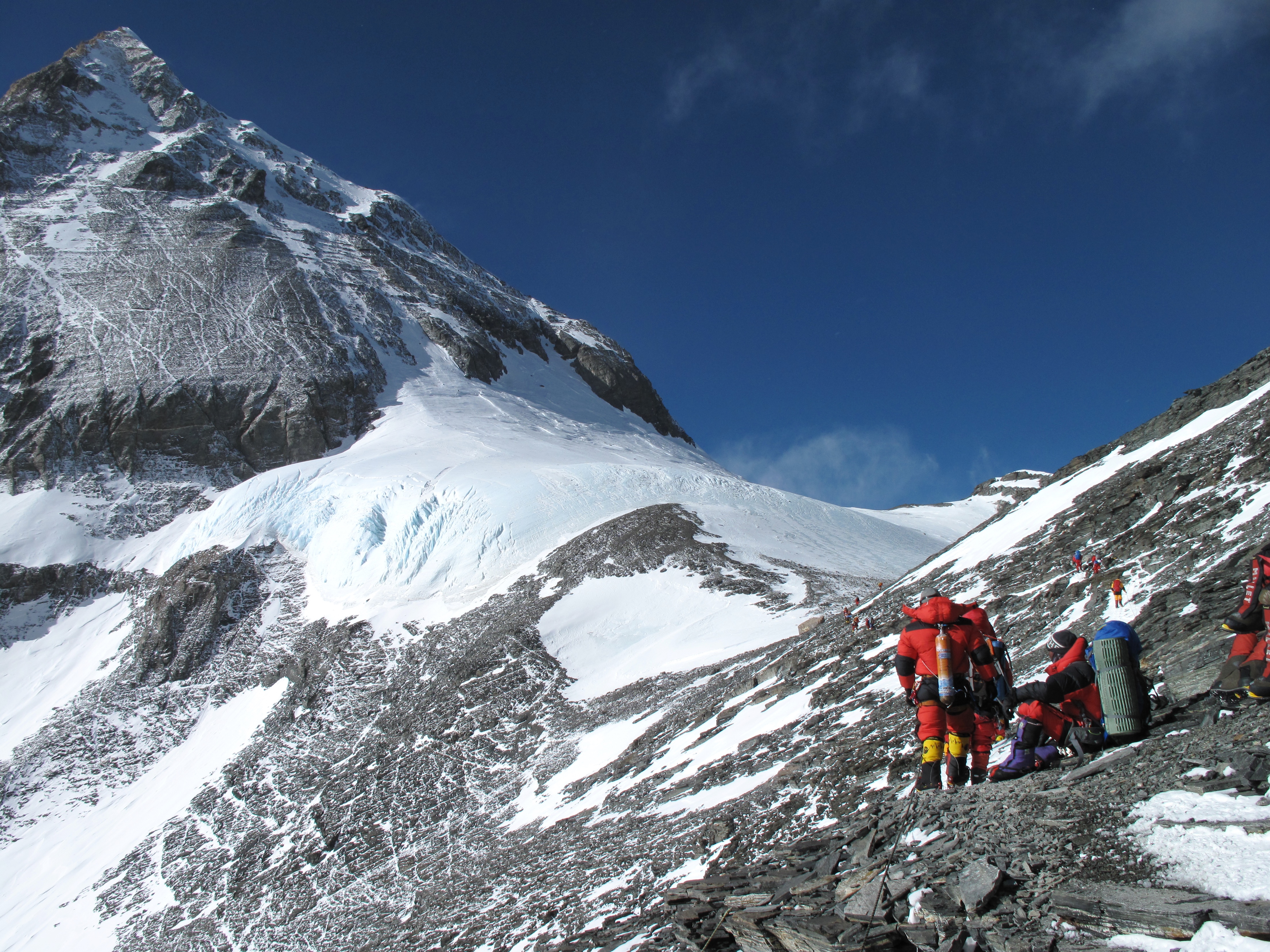
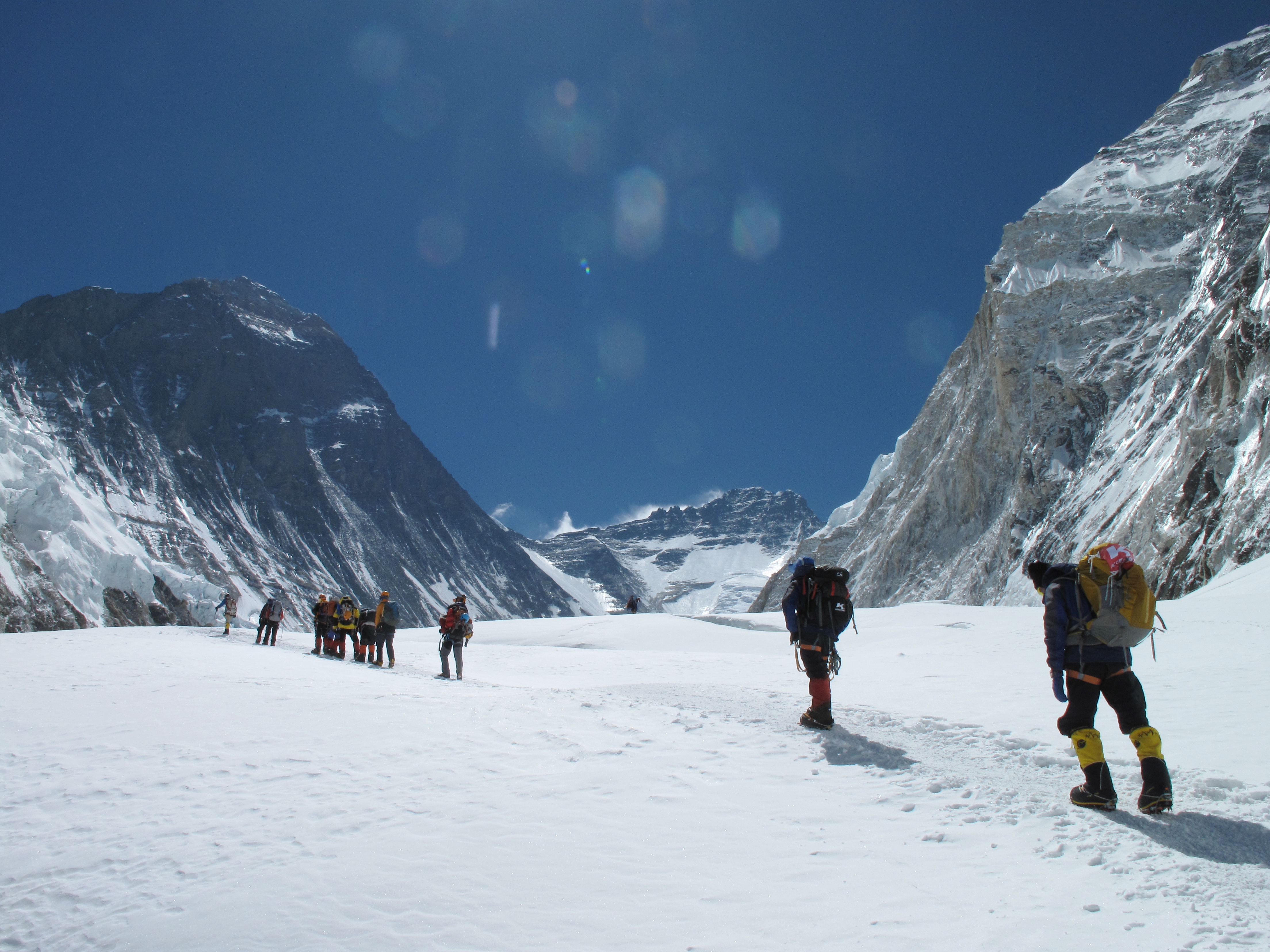
South Col, Everest (Photo: courtesy Giripremi)

The Indian state of Maharashtra (where Pune is) had a successful civilian expedition to Everest in 1998; it was called Tata Everest Expedition, named so after the main sponsor. One of the expedition’s two members reaching the summit of Everest – Surendra Chavan – was from Giripremi. By 2007, mountaineering in India was increasingly aware of objectives like the many challenging peaks of medium elevation in the Himalaya (overlooked through obsession with Everest) and the much prized goal among mountaineers worldwide of climbing the planet’s fourteen 8000m peaks. Not to mention – Seven Summits, the quest to reach the highest point on every continent. Umesh’s vision was to attempt good climbs, go for the 8000m peaks and promote mountain sports on a large scale so that it got noticed. To do any of this you need funds. Problem was – in the public’s perception height of peak was everything. Therein nothing beats Everest (8848m / 29,029 feet) although as guided ascent by its regular route, the mountain is not ranked a major challenge by climbers. Still, as the woman at the public interaction proved, the world was blind to mountaineering’s details. All it asked was: how high did you climb? Space probes journeying far from Earth sometimes exploit the proximity of celestial objects to propel themselves onward. It is called gravitational sling-shot, gravity assist maneuver or swing-by. Umesh knew after that public interaction, Giripremi would have to be sling-shot on its journey by Everest. The club should first summit Everest and bring mountaineering closer to the public, if they are to become interested in more such big projects. Right then, in Maharashtra’s mountaineering circles that approach seemed regressive. Especially since Giripremi had just returned from Shivling, a peak genuinely respected by climbers. But then marketing has its rules and those rules are decided by the market.

Umesh joined Giripremi in 1986. He was into rock climbing; he also did his mountaineering courses from government-run institutes in the Himalaya. When the Shivling expedition occurred he was already some 20 years old at the club. A tax consultant by profession, he had become one of Maharashtra’s most successful expedition leaders with major peaks climbed by his teams (eight of these expeditions were to 8000m peaks). He had also been conferred the state’s Shiv Chhatrapati Award. Giripremi is at present Maharashtra’s most accomplished mountaineering club by a wide margin. The journey started in 2007 when after Giripremi’s return from Shivling and that session spent listening to Char Dham, steps commenced for a club expedition to Everest. “ I decided that mountaineering required the hue of a brand; something that draws the attention of the public. We will tell the people what the sport is. I was certain that I wanted to leverage Everest to popularize mountaineering,’’ he told this blog, July 2019, at Giripremi’s office in Pune. The planned Everest expedition featuring 13 members was estimated to cost Rs 3.5 crore (1 crore = 10 million). The number of climbers was large for a reason. Umesh wanted to avoid that classic mountaineering endgame of only a handful reaching the top. It kept a few in the limelight; the others faded to backdrop.

Umesh Zirpe (Photo: courtesy Giripremi)

The expedition budget initially shocked Giripremi. Back in 1998, a smaller budget for Everest had nearly gone unmet and the eventually successful expedition was a case of last minute bail-out by the leading Indian business conglomerate, Tata. Giripremi’s biggest budget till its Everest expedition was the just preceding trip to Shivling; that cost Rs 10 lakhs (1 lakh = 100,000). Umesh also wanted an altered approach to expedition. “ Usually in our expeditions a bunch of climbers did everything from beginning to end. By the time they reached the peak, they were tired. I didn’t want that, I wanted my climbers to be able to focus on their training and climbing,’’ Umesh said. He called for a meeting of mountaineers from Maharashtra. Around 125 people turned up to help the Everest expedition and spread word about the need for funds. In the fund raising campaign that followed, Umesh estimates that close to 25,000 people extended support. The campaign also had hooks built in. For instance, there was a trek arranged to the top of Kalsubai (5400 feet), Maharashtra’s highest peak. More than 470 people signed a banner kept on the summit; it would travel with the Giripremi team to Everest Base Camp. Specifically with regard to his climbing team, Umesh demanded commitment of two years from every member. Six people resigned their jobs to comply. The expedition members took to staying at the Giripremi office (while Umesh did not articulate it as such, others this blog spoke to said that this would have helped the team bond and know each other better). Aside from regular training, they also had sessions for meditation and breathing exercises. “ Roughly 80 per cent of funds for this expedition came from individual contributions. About 20 per cent was from company sponsorships,’’ Umesh said. It is a critical ratio. For in its progressive change over the years lay the contours of the machinery Umesh and Giripremi were putting in place. On May 19, 2012, eight members of Giripremi’s team reached the top of Everest. After the expedition, the attitude was one of objective met. For Umesh, it was launch pad for the next stage – attempt the planet’s fourteen 8000m peaks.

Last section before summit of Makalu (Photo: courtesy Giripremi)

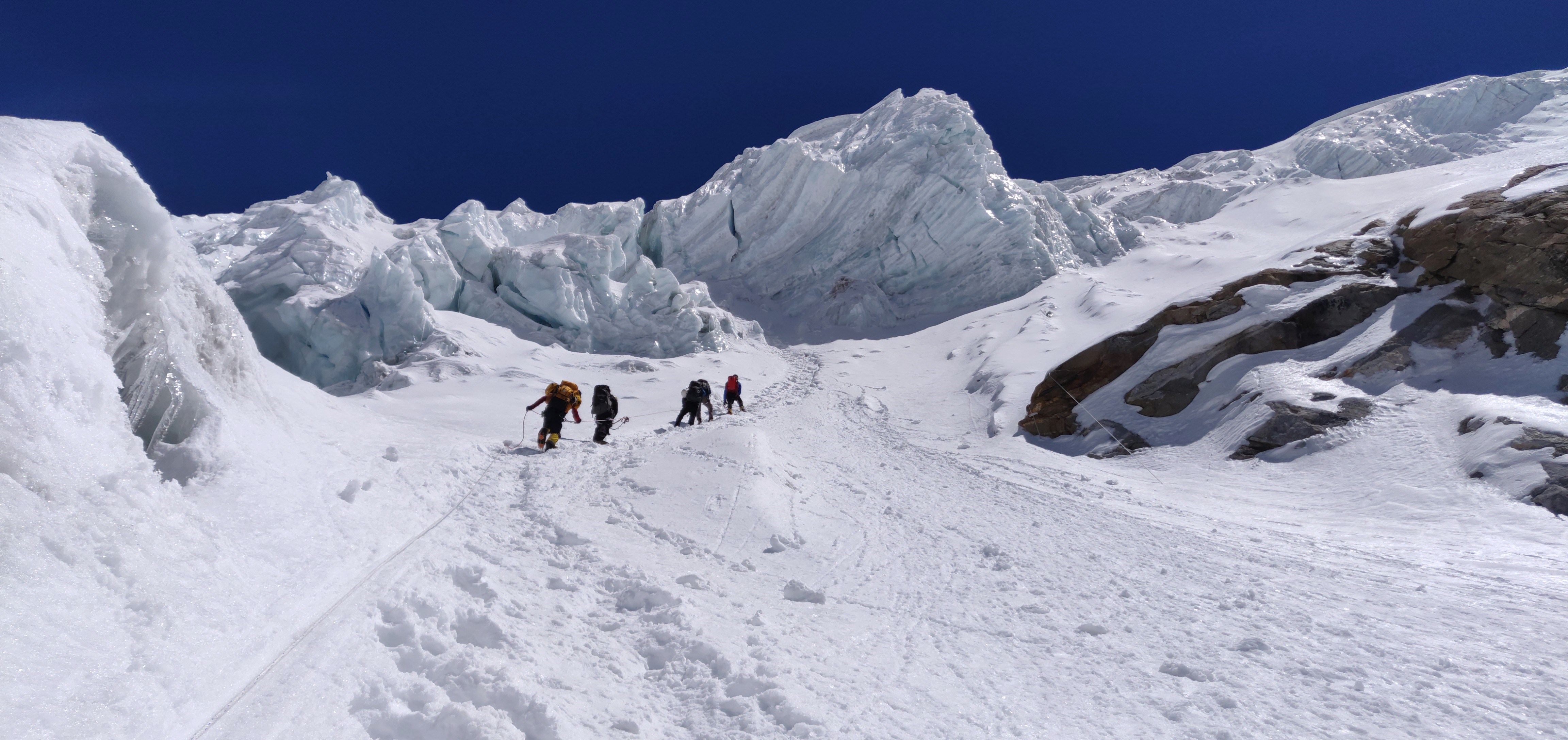
The next peak the club focused on was Lhotse (8516m / 27,940 feet). It is adjacent to Everest and given some members from the 2012 Everest expedition hadn’t been able to top out, this expedition was made a joint Lhotse-Everest expedition. The previous success on Everest helped. Company sponsorships were more. According to Umesh, the ratio of financing for the new expedition settled at 60 per cent from individual contributions and 40 per cent from companies. In mid-May 2013, up on Everest, the team’s progress was hampered by unexpected bad weather at Camp 4. Descending to lower camps and then returning in fair weather was not an option as the Sherpas accompanying the team made it clear that in such weather conditions a descent would be descent for good. There would be no coming back up. Given oxygen supply was dwindling alongside, Umesh volunteered to go down; it would spare bottles for the others. On May 17, three Giripremi climbers reached the top of Everest. Same day, Ashish Mane from the club, reached the summit of Lhotse. The club now turned its attention to Makalu (8485m / 27,838 feet). In the Makalu expedition which followed in 2014, Ashish Mane became the first Indian civilian to reach the summit. In 2016 Giripremi had successful expeditions to Cho Oyu (8188m / 26,864 feet / two persons summited) and Dhaulagiri (8167m / 26,795 feet / Prasad Joshi became the first Indian civilian to summit the peak). In 2017, Giripremi reached the top of Manaslu (8163m / 26,781 feet) with two members summitting. Then in May 2019, it planted ten club members on the top of Kanchenjunga (8586m / 28,169 feet). “ That leaves Shishapangma and Annapurna from the list of 8000m peaks accessible to Indians,’’ Umesh said. The remaining peaks are in Pakistan Occupied Kashmir. Giripremi plans to attempt Shishapangma in 2020.

Ashish Mane; he reached the top of five 8000m peaks besides being the first Indian civilian climber to summit Makalu (Photo: courtesy Giripremi)

With this journey since the 2007 Shivling expedition, club member Ashish Mane has the distinction of reaching the top of five 8000m peaks (Everest, Lhotse, Makalu, Manaslu and Kanchenjunga). Others from the club with the distinction of summiting at least two 8000m peaks include Ganesh More, Dr Sumit Mandale, Bhushan Harshe, Anand Mali, Rupesh Khopade and Krushna Dhokale. From an organization perspective (which is the thrust of this article) there are trends to note. When you ask about Umesh in mountaineering circles, you hear him described as someone focused on what needs to be done and a manager of people who connects with others. By his own admission, he has gone out of his way to ensure that his team members are properly taken care of; at one point he even met a company CEO to secure employment for a climber so that the latter could continue training for one of Giripremi’s expeditions in peace. You sensed premium for loyalty in the operating ambiance. There are also other vignettes of the style of project execution and attention to keeping constituents happy. Giripremi has done social work in the Everest region. Project Shivaji was launched for the welfare of the Sherpa community in the Solukhumbu valley; Mt Everest is located in the northern part of Solukhumbu district. In 2012, a statue of the Maratha warrior king Chhatrapati Shivaji was installed at Gorakshep (16,942 feet), on the way to Everest Base Camp. Three years later, the club did relief work when Nepal was hit by a major earthquake in April 2015 (it did so at times of calamity in other parts of the Himalaya too – in Uttarakhand [2013] and Ladakh [2010]).

Still, what matters more from the perspective of repeating expeditions to major peaks is how well the project model transitions to stable funding. As subject, sustainable funding of expeditions has often been glossed over at India’s outdoor clubs. Good climbing clubs are a composite of considerable experience in the outdoors plus a convergence of people having different professional skills. With good leadership, mechanisms can be evolved and institutionalized to set up funds devoted for expeditions that a club can periodically dip into; at the very least, make the hunt for funds easier to handle. However, the traditional tendency at clubs has been to address expeditions as they arise. Once an objective is decided, the scramble for funds starts again, from scratch. At Giripremi, you notice departure from this attitude; you detect different pattern.

Prasad Joshi; first Indian civilian climber to summit Dhaulagiri (Photo: courtesy Giripremi)

As of 2019, Giripremi had organized more than 40 expeditions to the Himalaya (source: information provided in a diary brought out by the club). Somewhere along the way, the resource base available for Giripremi to play with began to change. Arguably the toughest part of life by expedition is getting started; that is when inertia is highest. Once the ball gets rolling, it develops its own momentum. The growing confidence and familiarity with solving problems become lubricant for journey’s progress. Through the club’s earlier expeditions, including the ones to Shivling and Everest, Giripremi built up a stock of mountaineering gear. Once bought, this equipment is good for several expeditions. Consequently such capital costs slowly declined with each expedition. The club’s budget for Everest in 2012 may have been Rs 3.5 crore. But according to Umesh, Lhotse-Everest settled at around Rs 90 lakhs and Makalu at Rs 60 lakhs. The budget for Cho Oyu and Dhaulagiri was one crore rupees; for Kanchenjunga, a major peak with time consuming access, the budget was Rs 1.57 crore. These figures must be read alongside location of peak, logistics and expedition size.

Further the ratio in funding between individual contributions and corporate sponsorships changed more from where it was by Lhotse-Everest. For the Makalu expedition it was 50:50. “ Now, we are at around 20:80, with 80 being corporate sponsorship,’’ Umesh said. Without doubt the Pune environment has contributed to this pattern of progressively institutionalized funding. After the successful 1965 Everest Expedition sponsored by the Indian Mountaineering Foundation (IMF), the early fulcrum of civilian mountaineering in India was Kolkata. The city and the state of West Bengal have many mountaineering clubs and they are known to have traditional strength in collecting funds through individual contributions. But well-oiled club machinery devoted to systematically targeting big budget 8000m peaks and repeating expeditions of that magnitude year after year (as Giripremi did) is rarely heard of. One likely reason for this – as per those familiar with the West Bengal mountaineering scene that this blog spoke to in Mumbai – was the lack of resource-rich clubs. West Bengal has a community that backs mountaineering and donates at the individual level to assist expeditions. But clubs backed by organizations / patrons with deep pockets, are few. Equally, once past the threshold of support by individual donors, expeditions don’t have a large base of companies to turn to, locally. As aggregators of people and resources, companies have the financial strength to sponsor expeditions on a scale individual contributions pooled-in, would find tough to match. Major companies (and companies in general) capable of vaulting civilian expeditions into the big budget league are more in western India.

Beholding peaks (from left to right): Everest, Lhotse and Nuptse (Photo: courtesy Giripremi)

At Giripremi’s 8000m expeditions, the drift to more and more company provided-funds was likely made possible by some structural changes in overall model. Around the time of the club’s Manaslu expedition, those working on the 8000m peaks project started an 8000-er club. By all accounts, in terms of economic background, this club is a notch above the regular outdoor club. “ Currently this small club has about 85 individuals and eight companies as members,’’ Umesh said. Members of this niche club get to hire equipment from the cachet of gear accumulated by Giripremi through sustained mountaineering. They can also avail facilities from another initiative commenced by Giripremi – the Guardian Giripremi Institute of Mountaineering (GGIM). In a national climbing ecosystem with leading government run mountaineering institutes located in the north, GGIM is Maharashtra’s first establishment in that role. The institute has a battery of services. As per its website, the institute – its advisory board has officials from the IMF and India’s mountaineering institutes – offers adventure courses, treks and hikes, mountaineering expeditions, tour of the Sahyadri for expats and adventure programs for companies. In August 2016, it launched a rescue co-ordination center for adventure enthusiasts landing in trouble in the state’s Sahyadri range. According to Umesh, Giripremi is a NGO while GGIM is a NGO under the Companies Act. GGIM is operated in league with the business group – Guardian Corporation; the latter’s involvement falls in the category of Corporate Social Responsibility (CSR). GGIM has tangible services to offer individuals and companies. In turn, that shared ecosystem, the goodwill it generates and the many people and companies it touches, is available to assist Giripremi’s expeditions. Not just that; as Umesh pointed out, GGIM has provided full time employment to some whose first love is climbing and the outdoors; they have been thus spared the need to struggle for livelihood in contexts they don’t fit in as well. One more point qualifies Giripremi’s funding model. Their backers are usually medium sized companies, not large ones. Umesh explained the reason. “ Large companies have more capital. But it is also true that decisions in such environments take time because the owners or really top officials, who decide on sponsoring expeditions, are far up in the hierarchy from the levels you get to speak to. On the other hand, at medium sized companies, this distance is less. You get to speak to owners. We typically speak to a basket of medium sized companies,” Umesh said.

Giripremi’s 8000m expeditions, essayed with Sherpa-support,  are not unquestioningly lauded by all in the climbing fraternity. For sure these expeditions are not in the same league as the alpine ascents, winter ascents and ascents up difficult routes done by some other countries. But it is a significant beginning and everyone this blog spoke to said, disagreements aside, credit must be given where it is due. Mumbai-based mountaineer, Rajesh Gadgil is a senior member of The Himalayan Club, one of the oldest and most respected institutions in mountaineering. “ I may have my differences of opinion in terms of what constitutes a great climb. But I cannot overlook a few important factors in the Giripremi story. First, they have been very consistent with their visits to the Himalaya. Second, they systematically groomed a new generation of climbers. Umesh is the expedition leader. His team belongs to a younger generation and that speaks volumes about how the club has operated, bridging generations. This is not a case of one group of people excelling and the club declining after they are gone. They have transmitted the enthusiasm onward. Third, they availed the same support systems as anyone else seeking to climb the high Himalaya. Yet, even as accidents occurred for others, Giripremi expeditions have returned safely from altitude, year after year.” Mountaineering circles recalled that there was a time long ago, when a set of tragic reversals in the Himalaya saw Giripremi reviewing its engagement with the world’s highest mountain range. The club eventually resolved to continue its expeditions to the Himalaya. The present track record follows that introspection, those this blog spoke to in Mumbai, said.

According to Umesh, the selection procedure followed for the Pune club’s 8000m expeditions is strict. A high level of physical fitness is demanded from participants. This is complemented by much training and preparation. “ Before each major expedition I travel to the location concerned to see for myself what the place is like and to develop a first hand idea of what safety and rescue measures we should have in place. We go in with Plan A, Plan B – like that. Finally, there is God’s grace,” Umesh said. Rajesh pointed out that steps like expedition members working and staying together at the Giripremi office would have introduced a degree of mutual familiarity in advance; something critical when it comes to intervening and assisting in hostile environments like high altitude. “ You typically listen to those you know. When you have known somebody for long, you trust their judgement,” he said. One classic occasion, when this mutual trust and respect becomes important is when people are told to descend for safety, much against their own wishes and perception of self. Timely descent from altitude has often saved lives.

On Kanchenjunga; approaching Camp 4 (Photo: courtesy Giripremi)

Umesh’s real legacy in Indian civilian mountaineering is most probably the systems and structures he evolved, which bring an element of sustainability – including sustainable funding – to mountaineering expeditions. Unfortunately even as he and Giripremi have emerged successful, the model they used may be a tough act to follow. Umesh’s journey started with Everest selected as objective for very practical reasons. At that time – Giripremi’s Everest expeditions happened in 2012 and 2013 – there were eyebrows raised in Maharashtra’s climbing circles over this continued pursuit of Everest, a much climbed peak and one associated strongly with commercial expeditions to boot. For mountaineers, the criticism was relevant. For the general public, it didn’t matter; in their eyes Everest was the pinnacle of mountaineering. To their credit, Giripremi successfully transitioned the public attention on their projects provided by Everest, to projects involving other peaks. However, by 2019, Everest, which kick-started the 8000m journey of Giripremi and Umesh, had fallen in public perception. There was yet again a season of high number of mountaineering deaths and most importantly a bulk of the blame was heaped on too many people lured to attempt the peak because the normal route is not very hard to do. If you can afford to pay the required money, guiding companies take you up. Queues built up at altitude when conditions turned adverse affecting climbers’ progress. Inexperienced climbers added to the mess. The long wait and exposure to the elements took its toll; people died. The media glare on Everest and the many stories told has meant the magic of Everest dimmed proportionately. The media has also brought to light the high levels of garbage collected and brought back from Everest at the end of each climbing season. It is likely that now if you say you are planning Everest, at least some may ask: can’t you spare it? Don’t you have another peak to try?

Simply put, it will be difficult to make Everest the sling-shot it was for Umesh and Giripremi.

What can you use other than Everest?

Time will tell.

(The author, Shyam G Menon, is a freelance journalist based in Mumbai. This article is based on a conversation with Umesh Zirpe in Pune. Further conversation for building context and adding shades to debate was provided by others hailing from Mumbai’s climbing circles.) 

AT A GLANCE / SEPTEMBER 2019

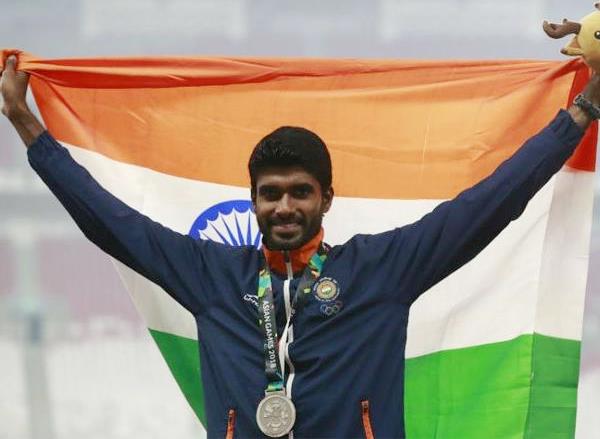
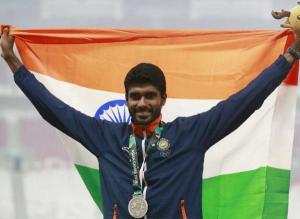
Jinson Johnson (This photo was downloaded from the athlete’s Facebook page and is being used here for representation purpose)

Jinson Johnson sets new national record in 1500m

Indian middle distance runner Jinson Johnson set a new national record in 1500m for men when he placed second in the discipline at ISTAF Berlin on Sunday (September 1, 2019).

Gold went to Joshua Thompson of the US. Cornelius Tuwei of Kenya placed third.

A specialist in the 800m and 1500m, Jinson clocked three minutes, 35.24 seconds in Berlin, media reports said. The earlier national record was 3:37.62, also in his name; it was set at a competition in Netherlands in June.

With Sunday’s second place finish, Jinson has qualified to participate in the 2019 IAAF World Athletics Championships due in Doha, Qatar, later this month, the Athletics Federation of India (AFI) confirmed in a tweet.

According to Wikipedia, the Internationales Stadionfest (ISTAF) is an annual track and field athletics meet held at the Olympiastadion in Berlin. Since 2010, the event has been part of the IAAF World Challenge meetings, the second tier of global one day athletics events.

Jinson also holds the national record in 800m; 1:45.65 set at the National Inter-State Championships held in Guwahati in June 2018.

This photo was downloaded from the Facbook page of the IAAF World Championships and is being used here for representation purpose. No copyright infringement intended.

Kenya’s Ruth Chepngetich is world champion in women’s marathon

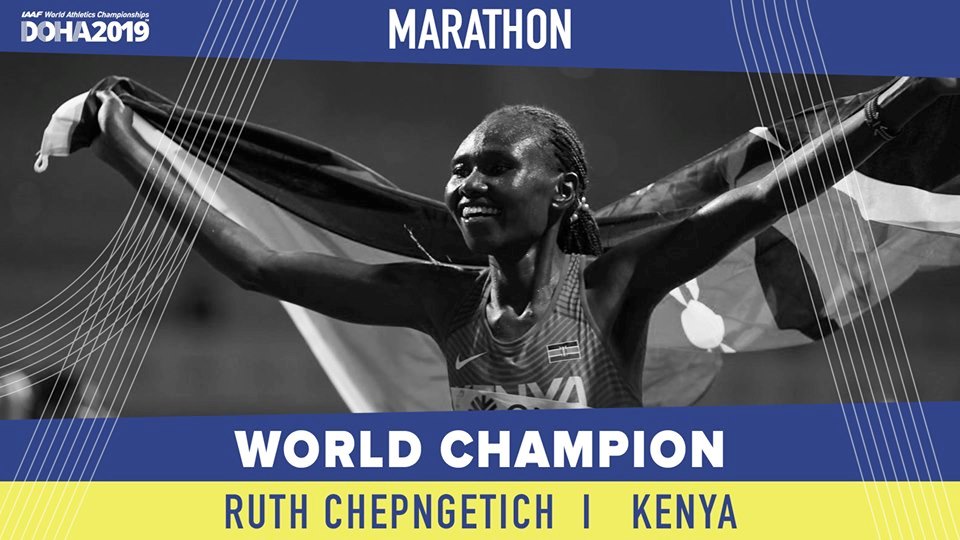
Kenya’s Ruth Chepngetich struck gold in the women’s marathon at the 2019 IAAF World Athletics Championships which got underway in Doha on September 27.

Running in hot and humid weather conditions, she covered the distance in 2:32:43.

It was the first time a marathon was being run at midnight at a world championship. The choice of that hour was to beat the region’s warm weather. “ On this occasion the challenge was about endurance rather than speed as the race began in temperatures officially estimated at between 30 and 32.7 Centigrade, and humidity of 73 per cent,’’ a report on the IAAF website about the 25 year old-Kenyan athlete’s run, said.

According to it, Bahrain’s Rose Chelimo took silver with timing of 2:33:46 while bronze went to Namibia’s Helalia Johannes, who finished in 2:34:15.

Earlier this year, Ruth Chepngetich had topped the women’s segment of the 2019 Dubai Marathon, with finish time of 2:17:08. She has a personal best of 1:05:30 in the half marathon and 31:12 over the 10 kilometers.
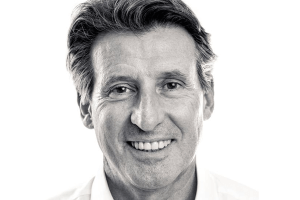
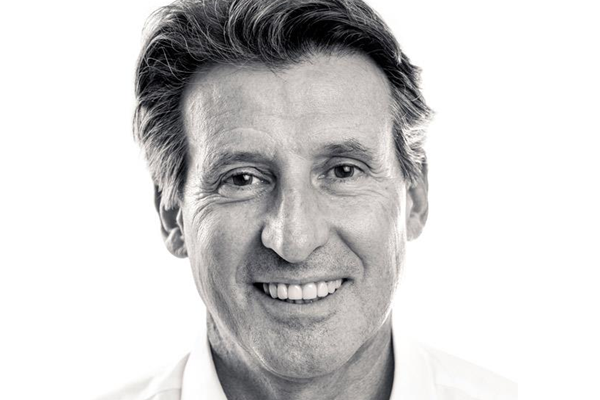
Sebastian Coe, president, IAAF (This photo was downloaded from the IAAF website).

Sebastian Coe gets second term as IAAF president, Adille Sumariwala reelected to IAAF Council

Sebastian Coe has been re-elected to a second term as president of the International Association of Athletics Federations (IAAF), a tweet from the apex body for world athletics, said on September 25, 2019.

He was elected unopposed.

Ximena Restrepo has been voted the first female vice president of the IAAF.

Joining her as IAAF vice presidents are Sergey Bubka, Geoffrey Gardner and Nawaf Bin Mohammed Al Saud.

The newly elected IAAF Council members include Hiroshi Yokokawa, Antti Pihlakoski, Anna Riccardi, Nan Wang, Adille Sumariwalla, Nawal El Moutawakel, Abby Hoffman, Sylvia Barlag, Alberto Juantorena, Willie Banks, Raul Chapado, Dobromir Karamarinov and Beatrice Ayikoru, further  tweets by on the subject by IAAF, said.

AFI announces national team for 2019 IAAF World Athletics Championships in Doha

The Athletics Federation of India (AFI) selection committee has picked a 25-member national team including 16 men and nine women for the 2019 IAAF World Championships to be held in Doha, Qatar, from September 27 to October 6.

According to a statement from AFI (dated September 8), the team is as follows:

Men: Jabir MP (400m hurdles), Jinson Johnson (1500m), Avinash Sable (3000m steeplechase), K T Irfan and Devender Singh (20km race walk), Gopi T (marathon), Sreeshankar M (long jump), Tajinder Pal Singh Toor (shot put), Shivpal Singh (javelin throw), Muhammed Anas, Nirmal Noah Tom, Alex Antony, Amoj Jacob, KS Jeevan, Dharun Ayyasamy and Harsh Kumar (4 x 400m men’s & mixed relay).

Women: PU Chitra (1500m),Annu Rani (javelin throw), Hima Das, Vismaya V K, Poovamma M R, Jisna Mathew, Revathi V, SubhaVenkatsan, Vithya R (4 x 400m women’s & mixed relay).

While 400m runner Arokia Rajiv is unavailable due to injury, the selectors decided to discuss the case of javelin thrower Neeraj Chopra who is undergoing rehabilitation program after an elbow surgery, at a later stage. The selection committee approved the names of sprinters Dutee Chand (100m women), Archana Suseentran (200m women) and high jumper Tejaswin Shankar subject to invitation from IAAF based on their world rankings. The committee also decided to conduct confirmatory trial for quarter miler Anjali Devi for selection in the team in individual women’s 400m. The trial will be conducted on September 21 at NS-NIS Patiala.

The AFI selection committee meeting, chaired by Olympian Gurbachan Singh Randhawa, was attended by AFI President Adille J Sumariwalla, Chief Coach Bahadur Singh, Bahadur Singh Saggu, Krishna Poonia, Praveen Jolly,UdayPrabhu amd Paramjit Singh. Former Chief Coach JS Saini and Deputy Chief Coach Radhakrishnan Nair were special invitees, the statement said.
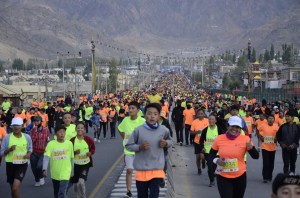
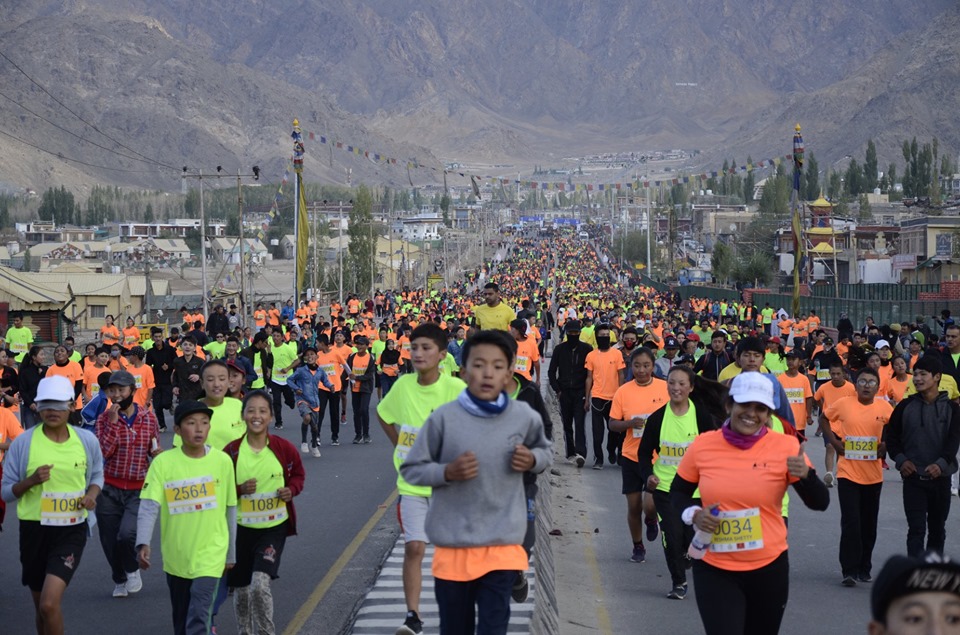
This photo was downloaded from the Ladakh Marathon Facebook page and is being used here for representation purpose.

Shabir Hussain, Jigmet Dolma take top honors in 2019 Ladakh Marathon

Shabir Hussain and Jigmet Dolma were winners of the men’s and women’s race respectively at the 2019 edition of Ladakh Marathon, held on September 8.

In the men’s race, Shabir Hussain breasted the finish tape in two hours, 56 minutes and 51 seconds. He was followed by Jigmet Norboo, who finished in 2:58:58. In third place was Manzoor Hussain with a timing of 3:04:37 hours.

Among women, Jigmet Dolma was the winner with a timing of 3:20:02 hours. Tsetan Dolkar placed second finishing in 3:22:37. In third place was Namgyal Lhamo, who clocked 4:09:38.

In the men’s half marathon segment, Suman Gurung won, crossing the finish line in 1:19:48 hours. Rajkumar Serma came in second with a timing of 1:20:51. Nawang Tsering finished third with a timing of 1:22:34.

In the women’s half marathon, the winner was Tashi Ladol (1:36:27). Stanzin Chondol (1:36:52) placed second and Disket Dolma (1:37:51), third.

Khardung La Challenge: Shabir Hussain, Christena Walter win

Shabir Hussain and Christena Walter were winners of the men’s and women’s race at the 2019 edition of the 72 kilometer-long Khardung La Challenge in Ladakh.

The race starts at Khardung village and about 60 kilometers of the route is above 4,000 meters.

Shabir Hussain finished the distance in six hours, 53 minutes and 34 seconds. Stanzin Norboo was the runner-up finishing just five seconds behind  the winner in 6:53:39 hours. In third place was Rigzin Norboo who finished the ultra-distance in 6:54:31 hours.

Among women, Christena Walter from Ireland was the winner finishing the race in 10:32:44 hours. In second place was Ashwini G, who finished in 10:39:25 hours. Rephica Becky Pde finished the race in third position with a timing of 11:36:50.

The event held on September 6, 2019 had a record number of 120 runners finishing the race within cut-off timing, the organizers of the event said.
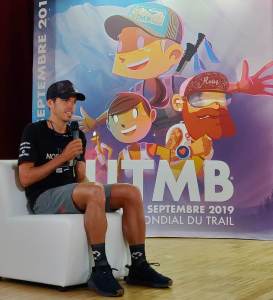
Pau Capell (This photo was downloaded from Twitter feed of UTMB)

Pau Capell of Spain, Courtney Dauwalter of US, win 2019 Ultra-Trail du Mont-Blanc

Spanish long-distance runner Pau Capell and American Courtney Dauwalter were winners of the men’s and women’s race at the 2019 Ultra-Trail du Mont-Blanc (UTMB).

UTMB is a single-stage mountain ultra-marathon; it is among the world’s best-known events of its type.

Pau Capell finished the 171 kilometer-UTMB course in 20 hours, 19 minutes and seven seconds.

Xavier Thevenard of France finished in 21:07:56 hours, nearly 49 minutes after Capell. Scott Hawker of New Zealand placed third with a timing of 21:48:04 hours.

In the women’s race, Courtney Dauwalter won with a timing of 24:34:26 hours. Kristin Berglund of Sweden finished in 25:34:12, an hour behind the winner. Spain’s Maite Maiora Elizondo ended in third position with a timing of 25:41:30.

In the overall ranking, Courtney’s position was 21.

In the 101 kilometer-CCC race (Courmayeur – Champex – Chamonix), the overall winner was Spain’s Luis Alberto Hernando Alzaga who finished the race in 10:28:49 hours. He was followed by Thibaut Garrivier of France who finished in 10:39:01. In third position was Jiri Cipa of Czech Republic. He finished the race in 10:45:37.
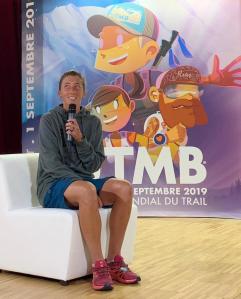
Courtney Dauwalter (This photo was downloaded from the Twitter feed of UTMB)

In CCC’s women’s race, Ragna Debats was the winner finishing in 12:10:33 hours. The runner-up was Amanda Basham of United States. She finished in 12:27:06. In third position was Camille Bruyas of France (12:34:26).

Spain’s Pablo Villa Gonzalez was the winner of the men’s race in the 145 kilometer-TDS race, completing it in 18:03:06 hours. In second position was Dmitry Mityaev of Russia (18:16:16) and in third position was Ludovic Pommeret of France (18:37:13).

In TDS women’s race, the winner was Audrey Tanguy of France (21:36:15). In second position was Hillary Allen of United States finishing in 21:52:46 hours and in third position was Kathrin Gotz of Switzerland (23:46:37).

Media technology at athletics events set to grow with 2019 Doha world championships

The International Association of Athletics Federations (IAAF), with its technology partners and suppliers, will be introducing an array of new cameras to provide innovative angles on the competition and behind-the-scenes pictures, at the 2019 IAAF World Athletics Championships due in Doha from September 27, 2019.

In collaboration with long-standing timing partner Seiko, IAAF Productions will launch the world-first technology of Block Cam at Khalifa International Stadium. Two miniature cameras have been installed in each starting block which will provide a new dimension to the coverage of the 100m and sprint hurdles, broadcasting pictures of athletes’ faces in the moments before they hear the starting pistol and capturing the explosion of energy as the athletes leave the blocks, an IAAF statement said.

According to the statement, the suite of new cameras being used by IAAF Productions will also include body cameras placed on officials (in the call room and officiating on the race walks course), drones, rail and wire cameras on the back straight, a rail camera in the tunnel between the warm-up track and stadium, a super slo-mo remote camera in the discus cage and hand-held cameras for athletes to take on victory laps.

The 2019 World Championships will also see a quantum leap forward in graphic production and analysis, using the combined expertise of Seiko, Hawkeye, Angular Velocity and Deltatre.

These will display the maximum speed reached by sprinters during a race, their finishing speed, the speed of take off in long jump, triple jump and pole vault, the distance achieved in each of the three phases of the triple jump, and the speed and angle of release of the long throws.

“ We’ve embraced innovation throughout the Championships, showing more behind-the-scenes footage from the moment the athletes arrive at the stadium, through their whole journey to the end of the Event – and with more than 130 cameras inside and outside the stadium, we can’t wait to broadcast these unique Championships to a prospective audience of more than a billion people,’’ Lord added.

India’s Ministry of Sports to create National Centres of Excellence

The Ministry of Sports will create 20 National Centres of Excellence to prepare athletes for the 2024 and 2028 Olympics.

According to media reports, each such centre will offer funds for four to six specific sports. The Union Minister for Youth Affairs and Sports, Kiren Rijiju, has urged state governments and corporates to develop sports centres.

Twenty facilities of the Sports Authority of India (SAI) have been identified as National Centers of Excellence. The centres are in Patiala, Trivandrum, Chandigarh, Sonepat, Lucknow, Guwahati, Imphal, Kolkata, Bhopal, Bengaluru, Mumbai and Gandhinagar plus Jawaharlal Nehru Stadium, Indira Gandhi Stadium, Major Dhyan Chand National Stadium,  Dr. Karni Singh Shooting Range, Dr. Shyama Prasad Mookherjee Swimming Pool Complex, all in Delhi; National Water Sports Academy (Khelo India), Alleppey, National Boxing Academy (Khelo India), Rohtak and National Wrestling Academy (Khelo India), Aurangabad, media reports said.

(The authors, Latha Venkatraman and Shyam G Menon, are independent journalists based in Mumbai.)

PAMELA CHAPMAN MARKLE / CHASING RECORDS IN HER AGE GROUP

Photo: courtesy Pamela Chapman Markle

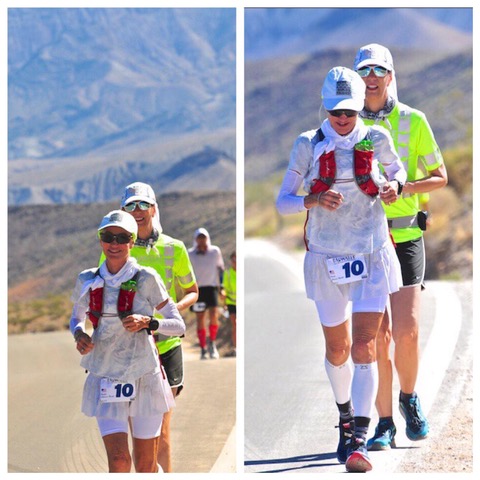
Sixty-three-year-old Pamela Chapman-Markle of the US broke the course record in her age category at the 2019 edition of Badwater 135. It was the fourth consecutive time she broke the age category course record at the ultramarathon. She finished with a timing of 34 hours and three minutes, bettering her own record of 34:30:53 hours set during the 2018 edition.

A nurse-anesthetist by profession, Pamela started racing at the age of 55. Her first race was a 100 miler. This interview provides an update to the last one we did, a year ago.

How was your running in the last one year? Was it good, satisfying; were there any setbacks?

It was indeed satisfying for me. My timing at races matters to me. There was nothing to really get depressed about.  I just work harder at training and come back with a vengeance. I did extremely well and am very blessed with how I have completed the races.

During this period you set new course records at several races. Can you detail some of them?

The new records are:

  1. 48 Hour (Across the Years) USATF age record of 153.271 (I was really sick and stopped nine hours early so I could have completed more miles ). I am repeating the 48 hour in November and hope to break the world record and break my 48 hour USATF Record.
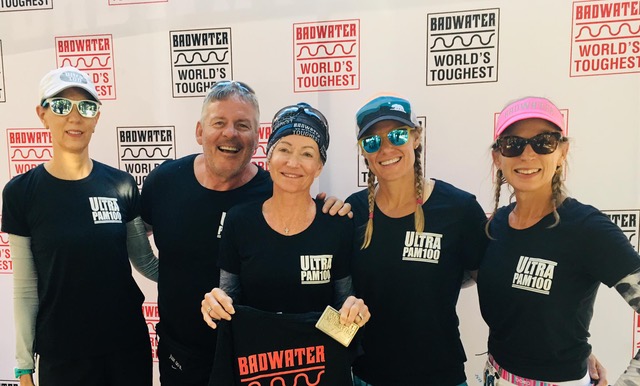
  2. Badwater Cape Fear, Badwater Salton Sea, and Badwater 135 – these three races are considered The Badwater ULTRA CUP. You consider the total time you ran to complete all three races; the winner does it the fastest.   I was the female winner.
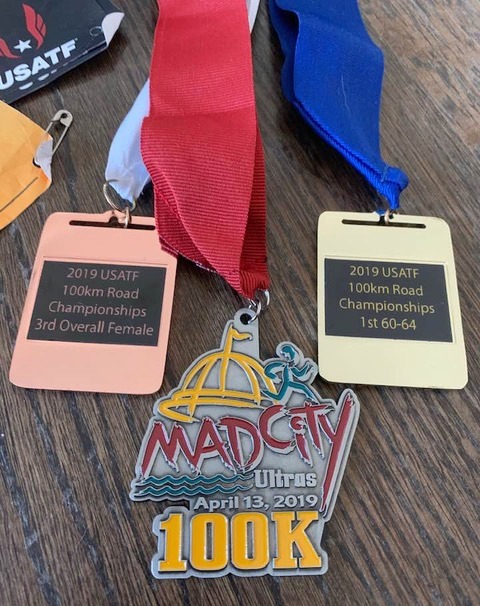
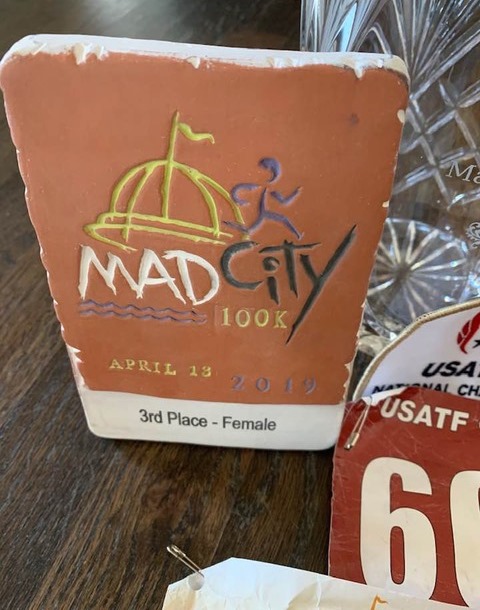
  3. Mad City 100K – overall USATF age group 100K national winner, 1st Masters, and 3rd overall female.
  4. Keys 100 – age course record
  5. Badwater 135 – new age group course record with a time of 34:03. I beat my record by almost 30 minutes.
  6. Six Days in the Dome – The Redux: 1st female, 2nd overall, 100K USATF Age Record, 12 Hour Age World Record – New USATF Record, 24 Hour USATF Record.

Photo: courtesy Pamela Chapman Markle

Have you incorporated any new elements into your running? How has your recovery been in the last one year after these long ultra-races?

I have done seven ultra-races, so far this year. I have incorporated more interval running. I also try to go to the hills in Austin twice a month.  My recovery has been excellent.  I am blessed to recover as well as I do.

I have started to add one day of strength training in my weekly schedule.  I feel this will help me in recovery.  As far as nutrition goes, I am still trying to figure that out!  For recovery, I am increasing the protein and vegetables in my diet.  As far as racing, I am still trying to figure that out.  I have not found anything that prevents GI distress in me.  Solid foods seem to help after 50 miles.  I will be joyous when this is figured out!

Can you describe your run at the 100K Mad City Ultra races? 

I had a great run until the last 20 miles.  My stomach was not feeling well and I went without fuelling that entire time. I slowed myself down quite a bit.  It was really cold there. I froze which I feel slowed me a bit.

Can you throw light on your 100 mile run at the USATF Championships?

I won the 100 Mile USATF Age Group Race.  I found out after the race that I missed the world record by 11 minutes. So I am challenging it at Tunnel Hill in November this year.

Photo: courtesy Pamela Chapman Markle

You have run Badwater multiple times. What brings you back to it; what makes you want to court it every year as a test of your ability?

I love Badwater in so many ways!  I feel it is a really difficult race to complete.  The challenge takes me back every year.  Not only is it the hottest part of the USA but the climbing from 282 feet below sea level to 8500 feet above and starting late at night to cover 135 miles is quite a challenge.  I really love the Badwater family and the people.

As someone who has run Badwater multiple times, are there any changes you notice to race conditions? Is Badwater warmer than before? At night during the race, is it colder than before? How was the 2019 experience?

For me – the weather in the 2019 experience was cooler than all the other times I have run the race; at night, and during the day.  The people who ran it for the first time had no idea that it was 10 degrees hotter in 2018.

You set a new course record this year. What made it possible? Did it have anything to do with your training or was it how you felt and performed during the race? Was there anything about the overall environment / race conditions that helped?

I believe I had a team that believed in my goal for Badwater.  They are a big part of why I set a new course record.  I fell and broke my nose at about mile 91 and had a slight concussion.  I was so nauseated and couldn’t hold anything down for the remainder of the race.  My team was awesome and forced me to take little sips of fluid until we finished.  My training is spot on now. This has been my fourth time running Badwater.  I will keep trying to better my time again and again!

When you choose your races do you have any preference in terms of weather and terrain? 

I would prefer hot road races but I hardly get to choose my weather or terrain.  I love mountain trail races but I do not live in the mountains.  I still try and race one or two a year.

I would love to start racing overseas.  India would be perfect for me.  I am going to investigate the runs and work some of them into my schedule hopefully in the next couple of years.

Photo: courtesy Pamela Chapman Markle

What are your plans going ahead?

I raced at Six Days in The Dome; 24 hours.  I beat the USATF record for 100K (10:47), I beat my USATF record in the 12 Hour (69 Miles) and this gave me the world age record. I PR’d my 100 miles time in 19:02, and won a USATF 24 hour record, running 118.76 miles.  I came in 1st female, 2nd overall racer.  I had a great race and know I can improve.  I did all this coming off only four weeks of racing Badwater 135.  My muscles were not fully recovered and I had pain from mile 25 on.  It was definitely a chore!  I ran with Zach Bitter and was able to be in the Arena when he won the World Record. That was so much fun! Then there is the Run Rabbit Run 100 Mile in September. No woman over 61 has ever completed this race and I intend to complete it. There is the Icarus 48 hours in Florida and Tunnel Hill 100 in November.  I plan to compete for world records at both.

(This interview was conducted by email. The author, Latha Venkatraman, is an independent journalist based in Mumbai. For more on Pamela Chapman Markle please try this link: https://shyamgopan.com/2018/08/11/dont-take-a-back-seat-just-because-you-are-getting-older-pamela-chapman-markle/)

“ IF YOU ARE MOVING, YOU ARE DOING IT’’

Arham Shaikh (Photo: Shyam G Menon)

In June 2019, a young cyclist from Pune found himself unexpectedly on the saddle at the 3000 miles (4800 km) long-Race Across America (RAAM). He had sought to crew for a team but found himself accepted as a racer. It was an unbelievable opportunity; he hadn’t trained for it, he was a fan among some of the world’s best ultra-cyclists and he was pedaling the same route they were on. Arham Shaikh recalls his RAAM experience and his journey in cycling so far.

In 1990, Colin Needham, an engineer working for computer giant HP in Bristol, started the Internet Movie Database (IMDb). It provides information on movies, TV programs, video games, home videos and content streamed online. Since 1998, IMDb has been owned by Amazon. The database has a page devoted to the top 25 Indian films based on sports. Placed eighth on the list as of August 2019, was the 1992 Hindi film Jo Jeeta Wohi Sikander, the highlight of which was a bicycle race.

RAAM 2019; cycling through Arizona (Photo: courtesy Arham Shaikh)

The movie was a hit at the Indian box office. Arham Shaikh wasn’t yet born when the film released. But it was this movie and its bicycle race that got the young man, born 1993 in Pune, wanting to do something in cycling. Getting to focus on the sport took a while. Growing up, he was into several activities. “ I believe it is one life and I have to do everything. If I am not learning I am as good as dead,’’ Arham said. Thanks to his being in the National Cadet Corps (NCC), his childhood lived up to that credo. He got to train in mountaineering; yachting, shooting and diving. As university student, he also got into rowing and kayaking. He was in the naval wing of NCC. His desire was to join the Indian Navy. But the fact that he ended up graduating in computer science as opposed to being an engineer restricted his prospects for selection by the navy. It must have hurt for Arham had even been best NCC cadet at the all India level, once. However that cycling bug didn’t let go. It hung on.

RAAM’s route from the US west coast to the east ( Photo: courtesy Arham Shaikh)

Arham’s father initially worked in the hotel industry and later, with the Baba Kalyani group of companies. His mother worked for Tata Motors. When he was in seventh standard, they bought him his first road bike – a BSA Mach 1. He asked his school coach what he should do to train and become a good cyclist. It was an unusual request; school coaches in India are typically generalists. Coach and ward had to figure out their way. Sole phase of proper structured intervention in between was a month when Arham trained at Kreeda Prabodhini in Pune’s Balewadi Sports Complex. They trained competitive cyclists. Then in tenth standard, Arham finished on the podium at a national level road race. He was promised a good road bike at home but funds crunch ensured it remained a mirage. A few years later his brother acquired a Hercules hybrid. Hitting the roads with that, Arham gradually got introduced to the culture of randonneuring, which had by then taken roots in Pune. Although he tagged along on his own with the riders, he didn’t do a BRM officially at this stage. He was a bit too casual and unorganized in his cycling gear to meet the safety standards demanded by the organizers. They recognized his earnestness but politely emphasized safety more.

Arham (left) at a pre-race interview for television, in San Jose (Photo: courtesy Arham Shaikh)

Towards the closing stages of graduation, Arham worked with the sole intention of saving enough money to buy a good road bike. He worked for a Pune based-bicycle retail shop called Cymour. Around this time, Divya Tate of Inspire India – she also oversaw randonneuring in India – had commenced the annual 400 mile (646 km) bicycle race called Deccan Cliffhanger. At a ride to Lonavala (a hill station roughly 65 kilometers from Pune) organized by Cymour, Arham got to meet Lt Col Srinivas Gokulnath. The latter asked Arham to crew for him at the 2014 Deccan Cliffhanger. Arham assembled the crew. Cymour helped Srinivas procure a new road bike – a Merida Scultura 300. “ It was a good race,’’ Arham said of the experience. That year, Chaitanya Valhal finished first; Srinivas placed second. Arham was sure he would try Deccan Cliffhanger sometime. Four months after he started working for Cymour, he received a Scott Speedster 30 as payment. Working for Cymour meant more than just getting that cycle. He learnt how to service and repair bikes, not to mention, he got insight into online sales. In 2015 Chaitanya became Arham’s coach. Arham went on to race at Deccan Cliffhanger in 2015, 2016 and 2017 – on all three occasions as part of teams (twice 2-person; once 4-person) he christened Relay Spirit; on all three occasions his team finished on the podium. He also made sure that besides participating in Deccan Cliffhanger, he crewed at one another race. The mix he followed every year was several short distance races, one ultra-distance event and an instance of crewing.

From the pre-race briefing session; Arham with members of Team Serpentine Golden Girls, a 4 person-relay team from UK competing in the 70-74 years age category at RAAM 2019. They had completed RAAM in 2008 earning the distinction of being the oldest female team to finish the race then. Unfortunately, although they cycled for seven days, 16 hours and 15 minutes covering 2673 miles in that while, they could not finish the 2019 edition of the race (Photo: courtesy Arham Shaikh)

Meanwhile the basket of races at Inspire India grew. In 2017, Arham thought of attempting Ultra Spice, at 1750 kilometers (it also has a 1000 km version), the longest race in their collection. But the dates clashed with a short distance race he had signed up for in Ahmedabad. There was also another event smoldering at the back of his mind; one he had heard spoken of a lot in the cycling circles around Inspire India – Race Across America (RAAM), the event entailing a ride, 4800 kilometers long, from the US west coast to the east. In 2017, Srinivas became the first Indian to complete RAAM solo; Amit Samarth became the first Indian to complete it solo on the very first attempt. At a subsequent party at Divya’s house, Srinivas shared his RAAM experience. Arham was in the audience. It added to the pull RAAM had on Arham. But embarking on a RAAM project was unthinkable for him just then; it cost a lot. A year later, in 2018, Amit successfully completed the Red Bull Trans-Siberian Extreme, a race over 9000 kilometers in length, almost twice as long as RAAM. Same year, Arham was asked if he would like to crew for Amit at Inspire India’s Great Himalayan Ultra. That good fortune of offers coming his way didn’t end there.

Arham with Pete Pensyres, winner of RAAM in 1984 and 1987. Pete held the record for being the fastest cyclist at the race for 27 years till in 2013, his record was broken by Christoph Strasser (Photo: courtesy Arham Shaikh)

In October 2018, Lt Col Bharat Pannu informed Arham that he was set to go for 2019 RAAM and as far as he was concerned, Arham was part of his core team for crewing. Arham likes everything at a race except driving the crew car, which he finds limiting as regards learning. Bharat assigned the responsibility of navigation and rider care to him. The team was well prepared. Bharat left a month ahead of everyone else for 2019 RAAM. He needed to train in the US, get used to cycling there and acclimatize. The first lot of the crew including Arham was scheduled to reach California ten days before the actual race, scheduled to start on June 11. Unfortunately Bharat had an accident while training. That ended his dream of participating in 2019 RAAM. It was a last minute setback bringing the curtains down on months of preparation. Tickets had been booked and all that was left for crew to do was, fly from India to the US. Instead of canceling his ticket, Arham decided to proceed to America. He planned to approach any other team requiring a hand in crewing. The logic was simple – crewing puts you in the front row to observe race and rider. It tells you how RAAM unravels, how the challenge impacts rider and crew. It is great experience to obtain especially if you have your own plans to attempt RAAM in the future.

Arham posted his offer and cycling resume on RAAM’s social media pages and community hang-outs. He even wrote to Christoph Strasser, among the world’s leading ultra-cyclists and winner of RAAM multiple times. Inspire India – connected as they are to the RAAM ecosystem – pitched in to help Arham secure an opportunity to crew with a team. Amit Samarth put in a word for Arham to one of RAAM’s all-time greats – Seana Hogan. Back in time, Amit had crewed for Seana. Around May 27-28, Seana called Arham. However Seana couldn’t confirm straight away. Then Dr Lam Do of Team SuperMarrow called. They were riding for a charitable cause. On their website, the team describes themselves thus: We are a team of relentless individuals, comprised of Leukemia patients, their families, and their physicians. Together we will race across America. We bike with the common mission to raise awareness for Leukemia, and to help diversify the Be The Match Registry by registering more potential donors. Team SuperMarrow supports Asian American Donor Program. All net proceeds will go to Asian American Donor Program to help support stem cell education and registration programs. Dr Lam Do asked if Arham was still available. Arham recalled what Dr Lam Do said, “ we will be honored if you come aboard and help our team to finish. Those were his words.’’ Team SuperMarrow was to be an eight person-relay team at RAAM. Arham’s role was to be assistant crew chief. SuperMarrow confirmed in five minutes.  RAAM was on, for Arham.

Arham on the De Rosa; near Wolf Creek Pass, RAAM 2019 (Photo: courtesy Arham Shaikh)

Next day, Seana called to confirm but it was too late. Arham recommended Ajay K, a teammate from Bharat’s crew for the job; he got it. A day before Arham was to leave, Dr Lam Do called telling him to pack his biking gear as well. Reason – Arham may have to race. Unlike attempting RAAM in solo category which requires prior qualification for eligibility, relay teams can pick up any cyclist they perceive as competent to be a team member. Nevertheless, Dr Lam Do’s announcement was a bolt from the blue. RAAM is a major race and Arham hadn’t trained at all. To compound matters, it was the month of Ramzan and its accompanying tradition of fasting was on. It isn’t the best period for a Muslim sportsperson to exert himself / herself. “ It was a weird time for me to say yes to racing,’’ Arham said. Five days after reaching the US, he was in Oceanside, California, fitted out in cycling gear and training with Team SuperMarrow. The team gave him a bike; it was a 54 centimeter-frame as opposed to his regular 52 centimeters. “ Usually cyclists take around three months to get acquainted with a new bike. I had eight days,’’ Arham said. On the bright side, he was given whatever gear he wanted. Back in Pune, only his parents and Chaitanya knew that he was going to cycle at RAAM. Chaitanya sent him a crash course on training.

From RAAM 2019; halting at a time station en route, to check-in. At right is Dr Lam Do, the team leader of SuperMarrow (Photo: courtesy Arham Shaikh)

On race day, having obtained official permission, Arham rode first with Kabir Rachure (rider from Navi Mumbai, he was attempting RAAM solo / he completed it successfully), then for 12 miles he rode with Christoph Strasser, a champion looked up to by many endurance cyclists in India. Team SuperMarrow was divided into two groups of four riders with four crew members; that’s eight cyclists riding on shift basis. One group completes its rotation first, then, the other follows. Arham was initially part of Team B therein. One member of Team B fell sick. Arham volunteered to do double shift. He was the youngest at 25 years of age; the rest were older ranging from 45 years to 72. The team’s previous experience in ultra-cycling was limited. The first few days were taxing. Mistakes happened. Past Durango, a team meeting was held to remind everyone of the need to work in harmony. At Wolf Creek Pass (10,856 feet; it is on the Continental Divide in the San Juan Mountains of Colorado), Arham’s exhaustion caught up with him. Some of his sessions on the saddle had been long. He was also doing night shifts. Amid this specter of inexperienced team whipping itself into shape, there was one positive. The team had provided Arham two bikes for the race. Both were top notch – a De Rosa and a Blue TT. “ They were the best bikes I had cycled in my life till then,’’ Arham said. Working diligently the team crossed all cut offs in time. RAAM spans the distance from Oceanside in California to Annapolis in Maryland. Arham got the honor of leading the team into Maryland. In all, they took eight days, two hours and 19 minutes to complete RAAM. It was well within the nine days cut-off period allotted to relay teams at the event. Team SuperMarrow raised a good amount towards charity, Arham said.

Team SuperMarrow; soon after they successfully completed RAAM in relay format (Photo: courtesy Arham Shaikh)

2019 RAAM had been a learning experience for the Pune based-rider. It more than met his expectations. He anticipated crewing; instead, he got to race and finish as part of a relay team. At the time he spoke to this blog in July 2019, Arham was planning to attempt Dunes, a RAAM qualifier race scheduled for mid-September 2019. He was preparing to do that solo. Also in mind was a Half Ironman in 2020; maybe the one in Dubai. Plus, there was the idea of taking a shot at the Great Himalayan Ultra. Of Dunes and solo rides, he said, “ I don’t have the training yet to do a solo. I have to work on my patience. Ultras are not about going fast; it is about being consistent. That’s what I learnt from 2019 RAAM. If you are moving, you are doing it. Not to mention – stopping is also critical. RAAM shows you how small you are.’’

(The author, Shyam G Menon, is a freelance journalist based in Mumbai. This article is based on a conversation with Arham Shaikh in Pune.)            

TRAINING CAMP FOR ULTRA-RUNNERS CONCLUDES

From the training camp (Photo: courtesy Sunil Chainani)

A first ever training camp for national level ultra-runners wrapped up over the weekend in Bengaluru with the hope that athletes would follow up on what they learnt.

The week-long camp featured a broad-based approach to training, incorporating aspects related to techniques of running, strengthening, nutrition and physiotherapy, all of it to help address issues associated with running ultra-distances, Sunil Chainani, member, Ultra Running Committee of Athletics Federation of India (AFI), said.

“ We had a basic program that was common for all runners with strength training and one-on-one sessions with the running coach, nutritionist and the sports doctor,” Sunil, an ultra-runner and former national-level squash player, said. He was the main organizer and co-ordinator of the camp.

US based-coach, Anthony Kunkel, nutritionist Keertana and sports doctor Dr Sitaraman were an integral part of the camp. The camp found support from the top recreational runners of Bengaluru. With ultra-running picking up in recent times, a camp of this nature was the need of the hour. Indian athletes are now representing the country in international ultra-distance events.

Coach Anthony ran with the trainees, suggested modifications and changes in techniques based on one-on-one sessions with them, Sunil said. The focus was on individualised approach to training, nutrition and physiotherapy. A foot scan for each athlete was also carried out at Dr Sitaraman’s clinic to make an assessment of the kind of shoes to wear for races.

From the camp (Photo: courtesy Sunil Chainani)

“ The camp included runners selected to represent the country at international championships,’’ Gunjan Khurana said. The Surat-based runner will be representing India at the 2019 IAU 100 kilometer Asia Oceania Championships to be held on November 23, 2019 at Aqaba, Jordan.

Gunjan was the fastest runner among women from India at the 2019 Comrades Marathon (uphill version) in South Africa. She had completed the ultra-marathon in nine hours, 47 minutes and 42 seconds. Now 36, she started running five years ago. In 2017, she participated in the 100 kilometer-Summit Saputara run in Surat; she ran this race again in 2018.

“ The training camp was an eye-opener for me. We did a lot of running. The focus was on finding a balance between running, strength training and other aspects,’’ she said. Apart from all this there were heat sessions too wherein runners had to wear layers of clothing and run, Pranaya Mohanty, 29, said. He will be representing India in the 2019 IAU 24-hour World Championships to be held at Albi, France during October 26-27. Pranaya was earlier part of the Indian team at the 2018 IAU 24-hour Asia and Oceania Championships held at Taipei but as a stand-by member. This year, he is part of the team as a runner.

“ We had different types of training sessions – speed and slow runs, stride workout – apart from individual sessions with the coach, nutritionist and the sports doctor. We also had a running session at Nandi Hills on one of the days,’’ he said. The Bengaluru-based runner was focussed on cycling before he seriously got into running in 2018. At the 24-hour stadium run in Bengaluru in 2018, he logged 186.55 kilometers securing second position. In December 2018, Pranaya outdid himself at the 24-hour stadium ultra in New Delhi covering a distance of 206.8 kilometers.

“ The point we learnt at the camp was how to ensure a right combination of running and strength training. It is important to train smart and not merely hard,’’ Apoorva Chaudhary said. Gurgaon-based Apoorva’s foray into running was as recent as 2017. “ In December 2015, I met Kavitha Kanaparthi in Bengaluru during the making of a film on her and thereby, got to know of Globeracers. In February 2016, I volunteered for Run of Kutch. In August 2016, I again volunteered for the Himalayan Crossing,’’ she said.

From the camp (Photo: courtesy Sunil Chainani)

Apoorva, now 28, started running short distances of three and five kilometres. Her first half marathon was in December 2017 when she participated in Adidas Uprising in Delhi. She ended up on the podium with a timing of 1:59:12. Sometime in early 2018, she met Kanan Jain, a young ultra-runner, who is also part of the national squad for the 2019 IAU 24-hour World Championships. “ He is very young and was already into ultra-running. He urged me to attempt an ultra-running event. I was flabbergasted at his suggestion. I was still figuring things out about running and not yet aware of many concepts about the sport,’’ Apoorva said.

She ran the 50k Tuffman Mashobra in June 2018, covering the distance in 6:03:56 hours. Two months later at the 12-hour Bengaluru stadium run, she topped the podium clocking a distance of 99.76 kilometers. In December of the same year, at the 24-hour stadium ultra in Delhi, she created a national record with a distance of 176.8 kilometers. Apoorva is now part of the team representing India at the 24-hour World Championships in France in October 2019.

The just ended training camp did not include trail ultra-runners as the 2019 Trail World Championships is already over. Also, trail runners will require a different approach to training, Sunil said. “ A training camp for ultra-runners is essential but the real test is how well the athletes follow up on the training advice and how it translates into performance at the international arena,” he added.

(The author, Latha Venkatraman, is an independent journalist based in Mumbai.)
A CHILDHOOD DREAM AND THE LIFE IT GAVE

Catherine Stefanutti; occasion: completion of swim from Jersey to France (Photo: courtesy Catherine)

This is an article by invitation. Catherine Stefanutti is a South African swimmer based in England. An experienced Channel swimmer, she was a valuable late entrant to Team HOPE, the group of swimmers from Mumbai who successfully crossed the English Channel in relay format in July 2019. Here Catherine writes about how her love for open water swimming started, her journey to date in the field and suggestions she has for those planning to attempt the English Channel.

It was more than four decades ago that my coach in South Africa showed his squad of swimmers a newspaper article about somebody who had just swum the English Channel. I was then 12 years old. I instinctively told him that one day, I too would achieve the crossing. Growing up in South Africa, there was a lot of focus on sport within schools. There was a strong competitive environment between schools and good opportunities to participate at a reasonably high level. Born into a family of swimmers, I was a reasonably good swimmer and did swim competitively in my youth. I did well in competitions although not at the level of my siblings. My brother Andy for instance, swam for South Africa.

Andy was a really talented all round swimmer. He held South African national school records for several years in the 200m and 400m Individual medley and 100m and 200m butterfly.  He was selected for the South African team in the late seventies, a notorious time when South Africa was banned from the Olympics. Unfortunately  because of this Andy and other South African sportspersons never had the chance to participate in this great international arena. After school, Andy’s swimming talent took him to Indiana University in America, where he trained with coach Doc Counsilman (also coach to the US Olympic team, including Mark Spitz). He later moved to Louisiana University to complete his degree in Geology and continued to swim for the university squad until his final months of study, when he gave up swimming to focus on academics.

Notwithstanding my stated objective of crossing the English Channel, in my late teens, I gave up swimming. As I got older and moved on to university, the hours spent pounding up and down a pool lost appeal, and gradually fizzled out.

Andy, Christine and Catherine after their swim across the English Channel (Photo: courtesy Catherine Stefanutti)

Many years later, I moved to England. My sister Christine encouraged me to give open water swimming a shot. Christine had been participating in open water events in South Africa for a few years. It had rekindled her love for swimming and she was doing very well.  When she suggested that I join her for an event at London’s Docklands, I loved the idea.  I went for a few refresher sessions with my kids’ swimming teacher and took it from there.  I surprised myself by swimming the event in good time and so the journey began.That was the beginning of my journey to open water swimming. We – Christine and I – commenced by entering organized events like the Great London Swim, South Africa’s Midmar Mile and various Thames River swims. From that, we progressed to sea swims. Soon, we were looking for bigger challenges. The first of these was the Hellespont Europe to Asia swim in Turkey. A couple of years later, we swam the slightly easier Bosphorus (Asia to Europe). Then I swam the 17 km-length of Lake Windermere.

Meanwhile the old promise of crossing the English Channel resurfaced. Even with all the open water swimming I had done, this was an enormous challenge. What changed the equation was the realisation that the Channel could be swum in relay format. I felt sure that doing it this way was manageable and would ` tick the box,’ to fulfil my childhood dream. In 2014, Christine and I, along with a friend, joined a charity team to swim across the Channel as a six person-relay. Crossing done and that box in mind ticked, I was back in 2015, this time as part of a five person-relay team assembled by my coach Tracey Baumann. In 2016, I returned again for a third crossing. The occasion was special; it was a three person-relay team featuring my sister, my brother and I. Notwithstanding these three relay crossings there was still a niggle that I knew would go away only if I attempted a solo . The one thing that stood between me and the solo, was utter fear. I lacked confidence. Yet I knew alongside that I would nurse regret if I didn’t try.

Catherine; from her solo swim across the English Channel (Photo: courtesy Catherine Stefanutti)

I needed tiered progress to my objective. Emma France, a Channel swimmer who runs the Dover Channel Training group, suggested that I build up my confidence by first swimming from Jersey to France, a shorter, gentler crossing (approx. 26 km). Jersey is a British Crown dependency located near the coast of Normandy, France. Among islands in the Channel, it is second closet to France after Alderney. In August 2017 I successfully did this crossing in a time that surprised me and built my confidence. Still I was hesitant to book a slot for an English Channel crossing. So instead, I booked to swim around Jersey in July 2018.  This is an iconic 65 km swim; it is very tough but aided by the fast-moving tides around the island. No sooner had I booked this swim than Emma France approached me to say that somebody had cancelled their slot with Channel Pilot Neil Streeter and she was offering first option to take the place.  That was an offer I couldn’t refuse (English Channel swims are heavily booked, and one normally has to book with a pilot at least two years in advance). I was now faced with the challenge of two major swims booked within two weeks of each other – the enormity of this task was just the push I needed to focus and prepare.

The bulk of my training was on weekends, with the Dover Channel Training Group in Dover. They offer endurance training and full support for aspiring Channel swimmers. The training was complemented by a few sessions with their sister group, Durley Sea Swims, set on the South Coast in Bournemouth. The support given by these groups was invaluable. On 13 July 2018 I successfully swam around Jersey. Exactly three weeks later, I fulfilled my lifelong dream of swimming from England to France, crossing the English Channel solo.

All sports come with associated community of aficionados. It is no different in open water swimming. You meet people sharing the same interest in swimming and wishing to tackle objectives therein. In 2019, Team HOPE from India due for an attempted crossing of the Channel in July confronted an unexpected development. Theirs was a four person-relay. One of their swimmers – Samiir Wheaton – had to withdraw leaving them a swimmer short. Mere weeks remained to allotted time frame for the crossing. Given the limited time it seemed wise to scout for a replacement in the UK. A swimmer from there would be already used to the cold Channel waters. If someone was recruited in India then that person would have to go through the whole process of training in cold water; he / she would also have to do the obligatory two hour-qualifying swim in 16 degrees Celsius water. Against this backdrop, my friend Deepthi Indukuri, who is a Total Immersion swim coach in Mumbai, asked me if I would be interested to join Team HOPE as Samiir’s replacement. I saw it as a wonderful opportunity to get back into the English Channel.

Catherine after her solo swim to France (Photo: courtesy Catherine Stefanutti)

Many people think that if you have swum the Channel solo then a four person-relay should be easy. This is certainly not the case. A Channel relay comes with different challenges to a solo and one should never underestimate how tough it is. I met my team (Team HOPE) – the others were Zarir Baliwalla, Moiz Rajkotwala and Sudarshan Chari – a few times in the days before the crossing. The weather was unstable that week and the swim kept getting postponed or called off. Such uncertainty causes a lot of angst for swimmers; they are forced to wait. Finally, on the evening of July 11, our pilot Reg Brickell gave the go-ahead to attempt the crossing early next morning. On July 12, the swim started just after sunrise in reasonable conditions, which gradually worsened as the day progressed. By the time the team reached the French shipping lane, the weather had changed dramatically.  A strong wind working against a strong tide created large waves causing boat and swimmers to be tossed around in the cold water. The team did what they had to – dig deep and push hard through the tides. Fifteen hours after we started from England, we eventually landed on a sandy beach in France.

What an adventure we had, what a team we made. We started as strangers and now have a lifelong bond through achieving this great challenge together. Indeed, one of the things I love most about the open water swimming community is how swimmers from around the world are brought together by circumstance.  For some reason, I have repeatedly found a connection with swimmers from India. Some years ago, I met Deepthi Indukuri in a Masters swimming group, while she was training to become a Total Immersion Coach.  Deepthi was in the UK at the time, completing her Master’s degree. When she returned to India, she retained her strong connection with the group.

Catherine with members of Team HOPE. From left: Moiz Rajkotwala, Zarir Baliwalla, Catherine and Sudarshan Chari (Photo: courtesy Catherine)

In 2017, I spent most weekends of the summer training with the Dover Channel Training community, training for my Jersey to France solo swim.  Here I met Sameer Patil who had taken a three month sabbatical to come and train in the UK, in preparation for his English Channel solo that September. Sameer and I regularly swam together, we were a similar pace and I enjoyed training with him. My approach to training can be rather casual but Sameer was extremely driven and focussed. This pushed me to work harder and I really benefitted from that. During the season, Sameer often encouraged me to think about swimming the English Channel solo, something I was still afraid to commit to.

On 16 September 2017 Sameer Patil successfully swam the English Channel. As is tradition, a Channel swimmer picks up a pebble on the beach where he or she lands and takes it home as a well-earned trophy.  However, Sameer landed on a sandy beach in the middle of the night; he could not find a pebble in the dark.  Before he returned to India, I told him that I would plan a day trip to France and find him a pebble on the beach where he landed. His answer to me was very clear: No Catherine, I want you to swim to France to get my pebble.  I can honestly say that his words stuck in my head and played a big role in my decision to go for it (I did swim to France and got us both a pebble).

I have had the pleasure of meeting several Indian swimmers who have come to train in Dover, including amazing swimmers like Vandita Dhariyal. I never expected to become part of an Indian team swimming the English Channel. It was a great honour for me when this opportunity arose. I became a proud member of Team HOPE.

Catherine swimming for Team HOPE (Photo: courtesy Catherine Stefanutti)

Suggestions for those aspiring to swim the English Channel

If you are interested in swimming the English Channel as a team or individual, the first step is to book a pilot and boat. There are two official Channel Swimming Organisations and each has a list of registered pilots.  Pilot information and contact details can be found on the websites of these organisations, either the Channel Swimming Association (www.channelswimmingassociation.com) or the Channel Swimming and Piloting Federation (www.cspf.co.uk).  Channel crossings are done from mid-June to end September so there are only a limited number of places.  People book their slots up to three years in advance, although if you want to go sooner it is worth contacting the pilots as they do sometimes have cancellations.  Both websites contain lots of vital and useful information about Channel swimming.

Once you have booked your swim, it is time to start with the preparation and training. Cold water acclimatisation is a big factor and it is advisable to start with short swims in very cold water, gradually building up to longer swims as the water warms up.  In India the biggest challenge is finding cold water.  Some Indian swimmers have attended cold water swim camps around the world whilst others will plan to spend time before their swim in the UK to swim with the Dover Channel Training group.  In order to swim the Channel, it is obligatory to complete a qualifying swim in water temperature below 16 degrees Celsius.  Relay swimmers need to complete a two hour-qualifying swim, whilst solo swimmers need to complete six hours.  Training should be a combination of long swims as well as regular pool training and general fitness.

Channel swimmers’ tradition – signing on the wall of Fleurs pub in Dover (Photo: courtesy Catherine Stefanutti)

Swimming in a relay is great preparation for a solo swim as you will experience the conditions and challenges of the English Channel first hand. Obviously a solo swim is more demanding than a relay, both physically and mentally. However, both have unique challenges and a relay should never be underestimated.  A relay requires team members to swim in rotation till reaching France.  This means doing an hour of swimming, getting out, warming up and preparing to enter the cold water again for the next hour swim; repeating this until you reach France.  There are stringent rules to adhere to in order for the swim to be recognised.  Each time you return to the water, you need to prepare mentally for the hour ahead.  Whilst on the boat a big challenge is seasickness.  Pilot boats are small vessels travelling at a swimmer’s pace, which means a lot of rocking motion and many relays have been aborted due to swimmers being too ill to carry on. Preparing for this is essential and there are various medications available. These need to be tested for side effects beforehand.  Most crossings will involve swimming in the night and swimmers will need to prepare mentally for this.

It is beneficial to train in conditions similar to the Channel but it is not always practical to do so. It is a good idea to join open water swimming groups and take every opportunity to swim in open water.  It is also useful to become part of a Channel swimming community through social media as you can always draw on other people’s experiences and expertise.  Dover Channel Training is a good example of such a group, as is the Outdoor Swimming Society.

(The author, Catherine Stefanutti, is a Channel swimmer based in England. She is “ a full time mum (two teenagers), part time swimming teacher and company director for our family construction business.’’ For more on Team HOPE please try this link: https://shyamgopan.com/2019/06/29/a-relay-swim-across-the-english-channel/)

WORLD BY CYCLING

Photo credit: Chenthil Mohan / Photo: courtesy Rutuja Satpute

Born into a family, where the father was a well-known cyclist, Rutuja Satpute was brought up to follow suit. Years later, the 25 year-old has consistently finished on the podium at national level competitions and won the same award her father was once bestowed with. But she has also seen the gap between Indian cyclists and those overseas, not to mention – the difference in how cycling is perceived here and abroad. Having done one trip to Belgium with the Indian Cycling Project, she hopes for more. 

“ Where are you off to now?’’ the young man before me asked. We had just finished a conversation; material to use for an article on cycling. I returned note book and pen to my bag and took out the cellphone to check for next address. We were at a café with a wonderful setting.  It was on the sixth floor of a building. Right below was a busy road, as much a sight for sore eyes as any traffic filled-road in any Indian city. But from where we were, the eye caught none of that mess and instead gazed across landscape turned green, courtesy monsoon. You were in Pune and yet, not there. “ I am heading to Khilarewadi,’’ I said, mentioning the name of the person I intended to meet as well. He nodded his head. “ Now that’s somebody genuinely accomplished. She has a solid track record,’’ he said.

Rutuja with her father, Sanjay Satpute (Photo: courtesy Rutuja Satpute)

In Khilarewadi, it wasn’t difficult locating Sanjay Cycles. It was a small house, part of several in a row, each row separated by a small path. Two road bikes stood stacked to one side. Hrishikesh informed his sister that the journalist, who had called earlier, had come. It was a tiny room. There was an adjacent kitchen. Right next to where I sat was narrow staircase leading to room above. There, I was told – the family’s remaining cycles were stored. It was an interest for the sport commencing with Sanjay Satpute, Rutuja’s father. He is a former national level cyclist, champion in time trial and mass start and state award (Shiv Chhatrapati award) winner.  He worked at Hindustan Antibiotics and also coached at Pune’s Balewadi Sports Complex. Now he runs a bicycle service center. His daughter followed in his footsteps. “ I grew up watching my father and his love for cycling,’’ Rutuja Satpute, born 1994, said. But it wasn’t a dive straight into cycling. Sanjay wanted her to first acquire stamina. So even as a small child she was enrolled for swimming and running at the city’s Deccan Gymkhana following which, she was introduced to the triathlon. By the time she was in mid-school she was participating in triathlon competitions in her age category.

Photo: courtesy Rutuja Satpute

Around 2006, she moved to focus on cycling. The 12 year-old needed a road bike. Sanjay made her one; a steel road bike. He had also fabricated a helmet for himself. He passed that on to his daughter. The steel steed was her ride for the next few years. She took it to her first bicycle races. Given keen competition, it is no longer possible to thoroughly discount the importance of technology in cycling. What bike you are using matters when it comes to improving efficiency in a sport where each second counts. Saint-Etienne is a city in eastern central France, on the trunk road connecting Lyons and Toulouse.  Some consider it the capital of the French bicycle industry. The city hosts a stage of the annual Tour de France. It is also home to wheel manufacturer Mavic and frame builders, Motobecane and Vitus. After a few years spent pedaling the steel road bike, Rutuja got a Vitus – it was yet again a bike that her father used. By the time she was in high school, she got her first major victory – in time trial – in the under 15 years-category, a first place in the 7km-individual time trial at the 14th Road National Championships held in Thiruchengode, Tamil Nadu. Thereafter podium finishes were steady.

Upon completing her seventh standard, Rutuja joined Kreeda Prabodhini and shifted to the sports hostel at Balewadi. It is where some of the city’s major sports facilities are clustered. This move provided her formal coaching; it also brought her closer to the local velodrome, which has a concrete cycling track. Years earlier, when she was a small child frequenting the Deccan Gymkhana, she used to swim and exercise regularly after school hours. Once cycling entered the frame (cycling was typically in the early morning hours), she progressively dropped off both swimming and running. Swimming lingered around as cross training. At the sports hostel, her day commenced at 4 AM. The students would assemble by 6 AM and till 8.30 AM, they engaged in physical training. Around 2.30 PM they would return from school and at 4 PM, they engaged again in physical training (Rutuja called it “ ground work’’) till 6.30 PM. In Rutuja’s case, the training was mostly oriented towards cycling. Actual cycling happened on the road and at the velodrome. Weekly mileage in cycling was not much. She confessed to there being a gap between her capabilities and expectations compared to other girls around. The reason was simple – she hailed from a family that was into cycling. She had a sense of what lay ahead and how hard that progression would be. So in training, she benchmarked herself to what the boys did. “ I tried to keep up with them,’’ Rutuja said.

Photo credit: Chenthil Mohan / Photo: courtesy Rutuja Satpute

Roughly a year later (following the 2007 nationals at Thiruchengode), at the 2008 national competition held in Jamkhandi, Karnataka, she secured two gold medals in under-15 – in time trial and mass start. Given this performance, she was given the opportunity to try her hand at competing with the seniors. A couple of more years and at the 2011 nationals held in Pune, Rutuja, competing in under-17, won gold in the time trial with timing that was “ on par with seniors.’’ At a subsequent national level competition held in Rohtak however, she had to settle for bronze. The new one piece cycling costume she had been given lacked adequate padding. It affected performance.  Nevertheless that bronze medal represented her first podium finish in the senior category. Somewhere during this journey, she also got her third bicycle – a Cannondale road bike. It was obtained second-hand. The frame had a minor crack, which Sanjay repaired for her. She rode that to two gold medals at competitions. When this blog met her, Rutuja wasn’t using the Cannondale anymore given the repaired frame. But it was still around. The bike was subsequently replaced with a Merida. “ The bikes are stored upstairs,’’ she said pointing to the staircase close to where I sat.

Photo: courtesy Rutuja Satpute

Rutuja was at Balewadi from 2009 to 2015. In women’s time trial and mass start, strong competition those years was offered by Kerala, Manipur, Haryana and Punjab. In 2012, Rutuja was selected to the Indian camp for the first time. She was one of three girls from Balewadi selected so. The camp, meant for the 2013 Asian Championships, was held in Shilaru, Himachal Pradesh. But by November 2012, Rutuja was out of it. Following her performance at the open trials in Delhi in January 2013, she regained her place. The Asian Championships of March 2013 was her first taste of international competition. “ It was a good experience,’’ she said. It was equally humbling. She finished 34th in the mass start held at the Formula One race track near Delhi. She was behind the cyclist who finished first by nearly seven to eight minutes. On the other hand, the gap between her and fellow Indian cyclists was in the range of 15-30 seconds. Of six Indian women who started the race, only three finished, among whom, Rutuja was second. But there was a footnote – while the Indian men had an opportunity ahead of competition to cycle on the F1 track and get a feel of it, the women enjoyed no such privilege. Roughly six months later, in September, at the ACC Track Asia Cup held at Suphanburi, Thailand, Rutuja was part of the Indian team securing bronze in team sprint. Through all this, the Cycling Federation of India (CFI) did not send her for any coaching overseas. She trained as best as she could in India – her father oversaw it when she was in Pune, other coaches supervised her training when she was part of the Indian camp.

Rutuja, cycling in Belgium (Photo credit: Chenthil Mohan / Photo: courtesy Naveen John)

In 2014, she secured first place at one of the editions of the Pune Bicycle Championships. It caught the attention of Pune-based bicycle company Giant Starkenn. They gifted a mountain bike; later at her request, she was given a Giant Propel road bike. Her collection besides the Giant, now include cycles from Raleigh, Vitus, Cannondale, Fuji and Merida; the Fuji was issued by the Balewadi sports facility. Our conversation was briefly interrupted by a client arrived to ask about bicycle servicing. Rutuja moved out to speak to the lady. “ I can take apart bicycles and put them back together. I can do repairing and servicing,’’ she said on return. The bicycle servicing facility Sanjay started has evolved into a family affair. According to Rutuja, she and Hrishikesh (he used to be a competition cyclist till a respiratory problem ended the journey; he now works with an airline company) help out. They have about 200-250 clients and rainy season is busy time for the business. One of the challenges in deep passion for something is bridging the gap between need dictated by interest and money to spend. Cycling is an expensive interest to sustain. The network of clients earned by servicing bicycles has occasionally pitched in to help with resources for family into cycling, Rutuja said. She mentioned new wheels for her bike, acquired so. In 2016, at the national competition held in Pathanamthitta, Kerala, Rutuja won two gold medals. Following this, Giant Starkenn invited her to a training camp in Ooty. Among cyclists she met there was Naveen John, based in Bengaluru and known to explore avenues to being competent professional cyclist. A motivated, driven personality, he had begun visiting Belgium – among the cradles of competitive cycling in Europe – and taking part in the races there called kermesse. It was part of Naveen’s Indian Cycling Project (ICP).

From the ICP trip to Belgium (Photo credit: Chenthil Mohan / Photo: courtesy Naveen John)

A month after the Ooty camp, Naveen invited Rutuja to join the team proceeding to Belgium for the annual pilgrimage. She was reluctant; if she went, she would be traveling alone with no guardian or chaperone. “ My family was bound to object. Women don’t usually take such initiatives in our society,’’ she said. Naveen spoke to Sanjay. In February 2017, it was decided that she can proceed to Belgium. As first step, she headed to a camp in Bengaluru anchored by Naveen; she also participated in one of the regular races of the Bangalore Bicycle Championships (BBCH). In July she left for Belgium. It was her first trip overseas. From Mumbai, she flew to Dubai and onward to Brussels. In all, Rutuja spent three months in Belgium. She participated in three level-2 kermesse races for women. In the first kermesse, she exited in the first round. In the second, she completed two rounds and then dropped off. In the third, of 16 rounds to complete, she finished nine. Belgium was opportunity to sit up and take note of several things. To begin with, separate paths for bicycles and the general respect given to cyclists were vastly different from the Indian environment where the culture of rat race corrodes and corrupts everything. “ They also have more races overseas. The standards at these races are quite high. Further the schedule of races is known well in advance. When you have a reliable calendar of events like that, cyclists are able to plan their year. They can decide what events to prepare for. It is something we don’t have in India. The CFI is now making an effort to change that and bring in a proper calendar,’’ Rutuja said. But the real take home from Belgium, was realizing how cyclists pushed themselves there. A month after the whole Belgium visit, it was back to reality, taking part in the nationals at Jamkhandi. Rutuja secured gold.

Photo credit: Chenthil Mohan / Photo: courtesy Rutuja Satpute

At the time of meeting her in July 2019, Rutuja’s last major competition had been the 2017 Track Asian Championships, where the Indian team placed fifth. She also took part in the ACC Track Asia Cup (2014, 2015, 2016 editions) where she won one silver and two bronze medals. In February 2016, at the South Asian Games held in Guwahati, she was part of the team securing gold in the 40 kilometer-team time trial. In March 2018, she got the same state award – Shiv Chhatrapati award – that her father had got earlier. Two months later, she underwent surgery to correct a back problem. It took her three months to recover. Towards end-August she resumed training. At the 2018 National Road Championships held at Kurukshetra, Haryana, she managed to get a bronze medal. Early 2019, at the All India Inter-University competitions held in Amritsar, Punjab, she won two gold medals – in the individual time trial and the team time trial. Her resume featuring a long list of events participated in, was crammed with podium finishes. In all  (across individual and team events) she had won 14 gold medals, 10 silver and nine bronze at the national level; one gold, two silver and three bronze at the senior international level and four gold, three silver and four bronze at the university level.

As of July 2019, Rutuja had completed her first year in B.P.Ed (physical education) from Guru Nanak Dev University. Focused on road cycling, she wasn’t interested in tackling the really long distances of ultra-cycling. “ I have not tried doing any BRMs,’’ she said. As for Belgium, Rujuta hoped to repeat the trip.

(The author, Shyam G Menon, is a freelance journalist based in Mumbai. This article is based on a conversation with Rutuja Satpute.)