THE NEW NORMAL AND THE RELEVANCE OF CLUBS

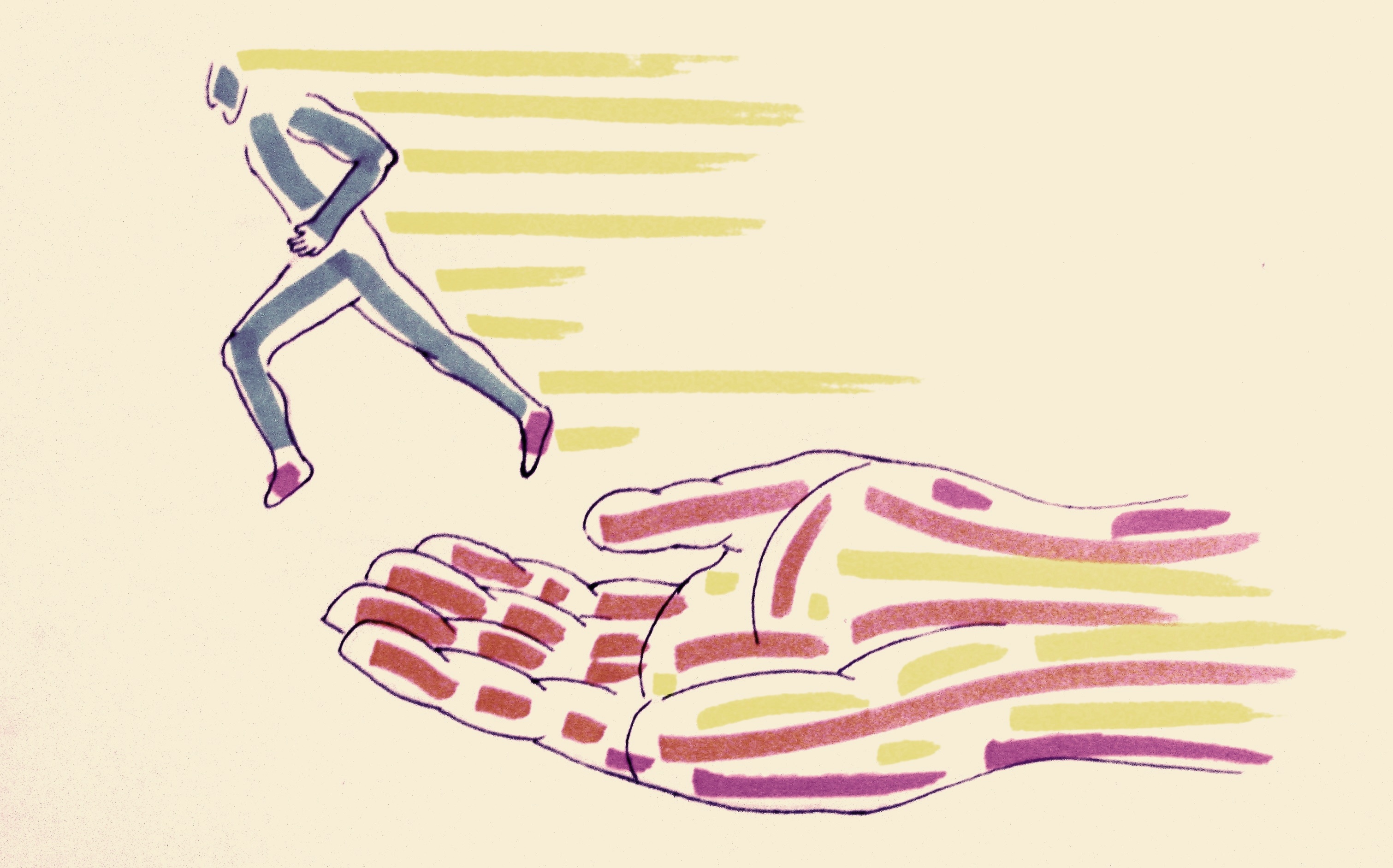
Illustration: Shyam G Menon

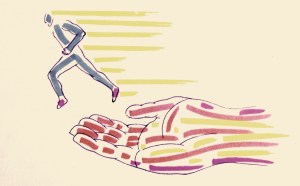
Properly used, clubs can be the avenue to teach the new normal of sport with COVID-19 protocols mixed in. This article compares the organizational structure of two sports in India – hiking / climbing and amateur running – to illustrate what is possible with grassroots level outfits.

Running is an old sport.

As popular movement, it is young in India.

The country’s outdoor clubs are probably older than its running clubs.

The example of climbing

Given the risk associated with climbing and mountaineering, the sport features many protocols. Although the Indian Mountaineering Foundation (IMF) and the training institutes for mountaineering played a role, fact is the bulk of climbing – especially rock climbing – owes its growth to small groups of outdoor enthusiasts typically ordered into clubs. It is thanks to them that the basic techniques of climbing got disseminated in the domestic climbing ecosystem.  In some of these clubs, the pursuit of knowledge exceeds what you find at the training institutes, which tend to settle into an ambiance of employment. For instance, it was the passion for sport climbing among a handful of members at Girivihar that saw the Mumbai-based club organize a decade of domestic sport climbing competitions and eventually two editions of the IFSC World Cup in bouldering. Suffice to say, clubs are the immune system of sport; they spread the joy of activity and teach its techniques.

Organizations dedicated to risk management and safety in adventure activity have begun to emerge (Maharashtra Adventure Council [MAC] is an example). Thanks to digital age, these new organizations have established direct link with hikers and climbers. Information can be communicated directly to individuals bypassing clubs. However, you learn by doing. When it comes to ground level implementation of protocol and developing familiarity through practise, the clubs cannot be ignored. That’s because they are the ones leading hikes and climbs on a regular basis. It is a lot like the ongoing battle with COVID-19 itself; it isn’t so much top-down as it is bottom-up featuring simple precautionary measures diligently observed at individual level to keep you safe.

Illustration: Shyam G Menon

The challenges and how climbing’s structure can help

In an article dated March 24, 2020 that appeared on the Rock and Ice website, Peter Beal outlined what COVID-19 could mean for rock climbing. He wrote that a lot of public lands (earlier accessed for climbing) could be temporarily shut and the closure of climbing gyms and their business models shaken up by the virus may mean bleak investment scenario for the segment. Not all such businesses will survive. In an article dated April 29, 2020, which appeared on the website of Climbing, Bennett Slavsky, summed up reasons why climbing outdoors was discouraged amid the pandemic. “ A key component is so that climbers don’t travel from densely populated, highly infected regions to remote climbing destinations, introducing it to smaller local communities that lack robust medical facilities. Climbers can also spread the disease to one another while sharing ropes, climbing the same routes, or just being in close proximity at crags,’’ he noted. Sociability, so far a fun element in sport, may take a hit as physical distancing becomes necessary protocol. Vulnerable in this regard in climbing, could be bouldering, the sport’s most sociable format. Further, a simple visualization of potential scenarios will make you aware of operational difficulties in the field, particularly in contexts where outdoor activity is commercial or supervised with onus resting on a service provider. For instance, while wilderness first aid courses can prep you to recognize symptoms and activate relevant protocols in the outdoors, unlike in earlier cases where a single patient was evacuated and the rest continued hiking, COVID-19 demobilizes a whole group because every reported case is treated as patient plus contacts. Is this risk, commercially viable? Already there is talk among adventure tour operators of small companies being particularly vulnerable in the current downturn. “ Currently there are too many ifs and buts. There is a threshold that must be crossed. There is both the need for a certain level of pick up in traffic and comfort with overall environment before these outdoor activities can resume at sustainable scale,’’ Vaibhav Kala, founder of Aquaterra Adventures, one of India’s biggest adventure tour companies, said. As and when authorities allow operations to restart, small customized trips featuring limited number of people from one family or a close group of friends may be the genre first off the block, he added. That was the view from the commercial side.

Like many sports waiting to emerge from the shadow of COVID-19, climbing and hiking will have to come up with its share of disease related protocols for the short to medium term. The International Climbing and Mountaineering Federation (UIAA), global climbing’s apex body, has a COVID-19 Crisis Consultation (CCC) task force and webpage devoted to the pandemic. Indian climbing has at least two organizations capable of accessing international expertise on subjects close to its heart – the IMF and the Himalayan Club. The IMF has a circular from early April, albeit tucked into its news archives, providing overview of the COVID-19 situation. A director of MAC said that the council is aware of challenges to the field posed by COVID-19. For the commercial side of adventure activities in India, there is the Adventure Tour Operators Association of India (ATOAI). For ground level coaching of hikers and climbers, there are the mountaineering institutes and the outdoor clubs. Many outdoor clubs are members of IMF and state level adventure associations. Point is, theoretically speaking; the domestic world of climbing and hiking has a structure – an edifice – through which important information about the sport may be transmitted to ground level. It is possible to source relevant protocol and coach people in it down the line so that at the very least, those who report for activity as and when it is permitted are aware of the full ramifications of the new normal. Emphasis on “ theoretically speaking.’’

Illustration: Shyam G Menon

Running can learn from climbing’s organizational structure

Indian distance runners have long held promise on the international stage – the late Shivnath Singh had finished eleventh in the marathon at the 1976 Montreal Olympics; T. Gopi placed 25th in the marathon at the 2016 Rio Olympics besides being Asian champion in 2017. Elite athletes have their protocols addressed by organizations like the Sports Authority of India (SAI) and Athletics Federation of India (AFI). In fact, on the eve of lockdown, news reports mentioned guidelines issued by government to elite athletes on how to manage themselves amid pandemic. On March 28, 2020, The New Indian Express carried an interview with Volker Herrmann, AFI’s high performance director on lockdown regimens suggested for the elites.

What about the vast number of amateur runners?

As in climbing, running too has its clubs. Running is the bigger sport by a wide margin. It has annual events participated in by tens of thousands of people. With COVID-19 around, that size and scale of running also proved to be its Achilles Heel. Mass participation made it vulnerable before a virus with insatiable appetite for new hosts and pace of infection to match. Predictably, as the disease spread worldwide, major marathons got cancelled or postponed. Amateur running is more or less in hibernation. So far, amateur runners in India appear to have addressed lockdown in a fairly efficient decentralized, democratic fashion with leading coaches and runners offering advice online on how to stay fit and remain promising for the times when lockdown eventually relaxes. But there is a gap as regards new normal, that time post-lockdown when everyday activity must respect safety protocols as well. Protocols have to be imagined well, possess a standardized core, be accessible to all and must be communicated clearly. In this, having an element of organizational structure helps for both conviction and communication.

Recently, after weeks of lockdown and battering by COVID-19, Spain allowed morning joggers back on the road. It was done with safety protocols in place. Mark Steven Woolley is a retired ultramarathon runner living in the southern part of Spain. “ Everyone is pretty respectful of the distances and makes space for everyone to pass. The MTBs and runners share the same trails. It’s very cordial and relaxed,’’ he wrote in to this blog about the new normal requiring physical distancing. Mark – he has been finisher at major ultramarathons including La Ultra The High – is currently experimenting with mountain biking. From Czech Republic, elite athlete Adam Ondra shared with the world, a picture of him back to climbing outdoors. Climbing magazine reported of select crags reopening in Canada and Austria with COVID-19 protocols to be observed alongside. None of these predicaments are comparable with India’s, a crowded country of 1.3 billion people. However, if we go by these precedents (strictly as potential pattern), then, much before running returns as event, our right to run or walk in the morning will be restored. This will be accompanied by need for protocols, especially physical distancing. If one imagines further, weeks of such cautious return to activity could lead to resurrection of the old informal monthly group runs. It makes sense to try an event after observing how these informally organized runs play out.

Illustration: Shyam G Menon

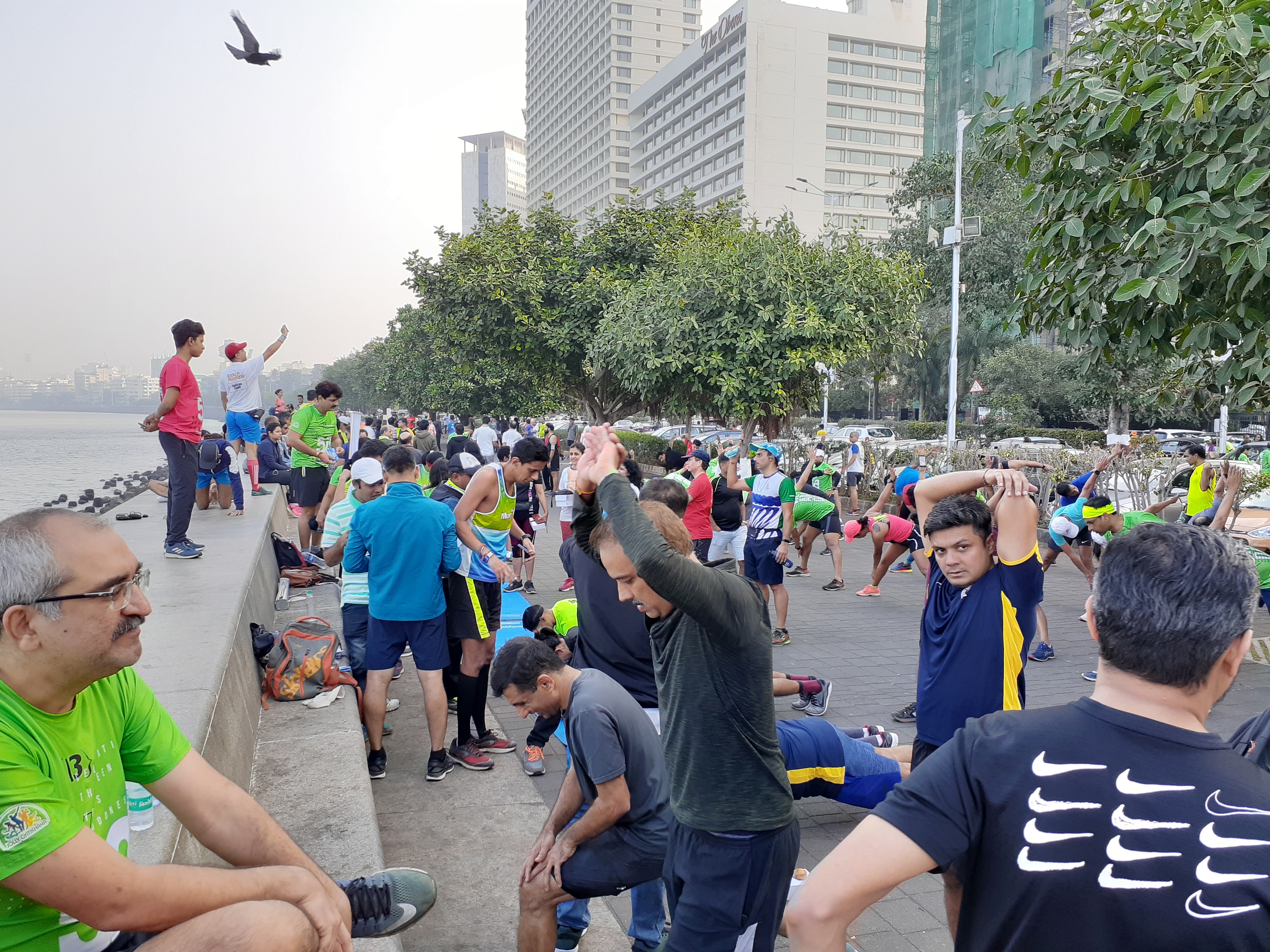
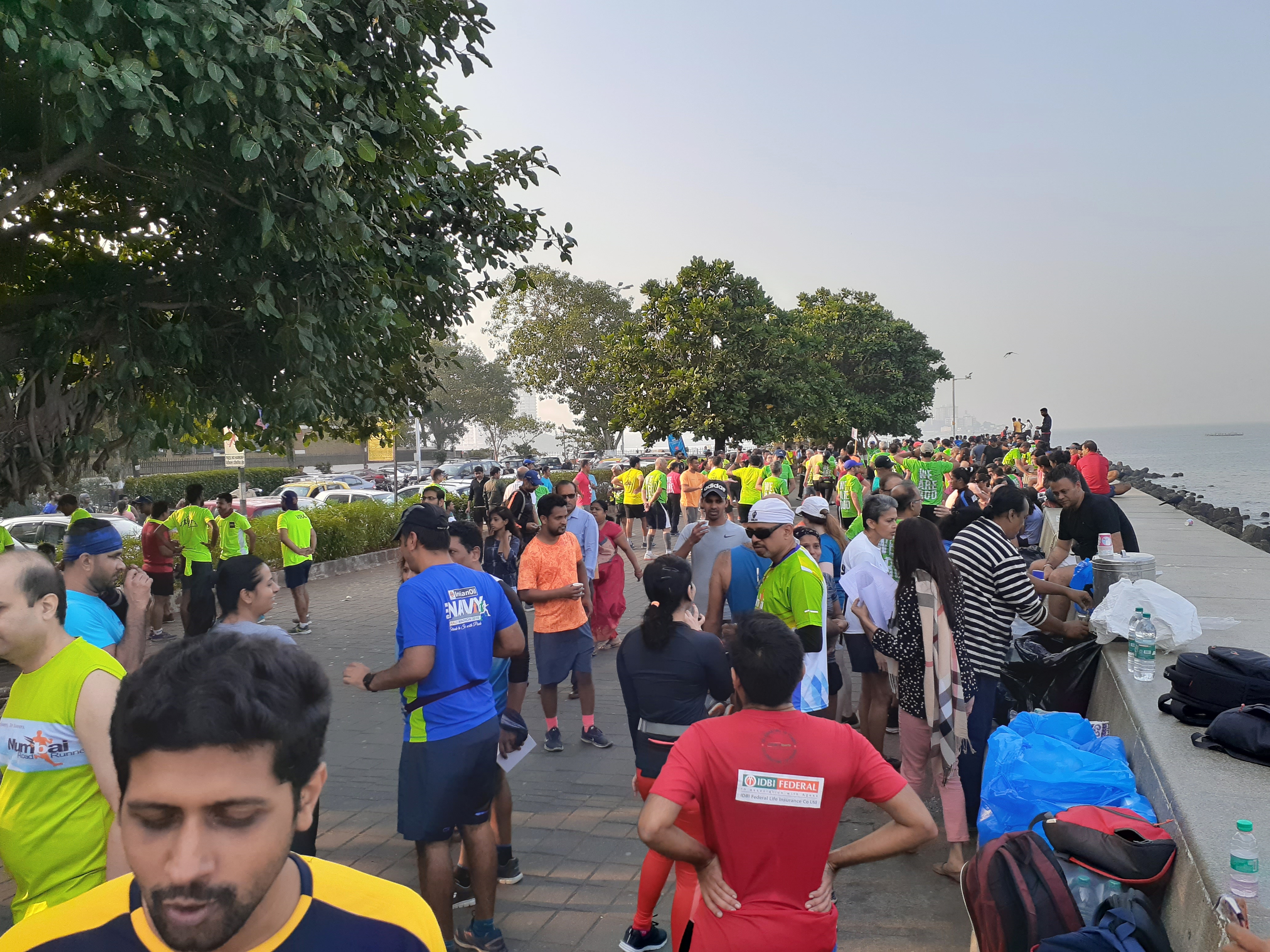
In Mumbai, group runs used to be overseen by major running clubs like Striders, Mumbai Road Runners and groups built around well-known coaches. If clarity is available early enough on what the disease related safety protocols to follow (specific to running) are, then these runs (they may not remain as clustered and sociable as before) can become opportunity to perfect new protocols like physical distancing and acquaint runners with them. They can help ensure that as and when events resurface, those who register are familiar with the new normal. Running has in its ranks those from the medical profession. Evolving correct protocols and disseminating it shouldn’t be tough provided a communication structure is in place. The question amid pandemic is – does amateur running in India have an edifice whereby a standard set of protocols recommended from the top is assured percolation to the bottom? Does amateur running in India have an apex body (that can decide on standardized protocols) with large city based-clubs and smaller ones positioned below, all linked for ease of communication? Inquiries revealed that the answer for now is – no; there isn’t any such structure. Without this structure (at least at big city or regional level), the clubs risk being left to their own imagination, when it comes to new normal and relevant protocols. It results in poor use of a valuable asset. There was also concern on how well the informally organized runs may serve to introduce the new normal because, in India, the sociability of running has always been a major attraction. Isn’t there something for amateur running in India to reflect on, in all this? Of relevance is also the architecture displayed by World Athletics in its move some time back to set up a medical task force for races. The task force saw collaboration between World Athletics and the International Institute for Race Medicine (IIRM).

A word of caution

Human beings are suckers for power and authority. If you allow organizations to grow in influence or exceed their mandate, you will kill the natural freedom of sport. Focus will then shift from sport to regulation and soon, to politics. The best type of organization is one that steps up when intervention is needed and steps back when its intervention is no longer required. Under all circumstances, the feel of organization and intervention must be light. Else, instead of addressing virus, you defeat sport.

(The author, Shyam G Menon, is a freelance journalist based in Mumbai. The above article has been presented here in the interest of thought and discussion. The author is not an expert in climbing, hiking, running or healthcare.)

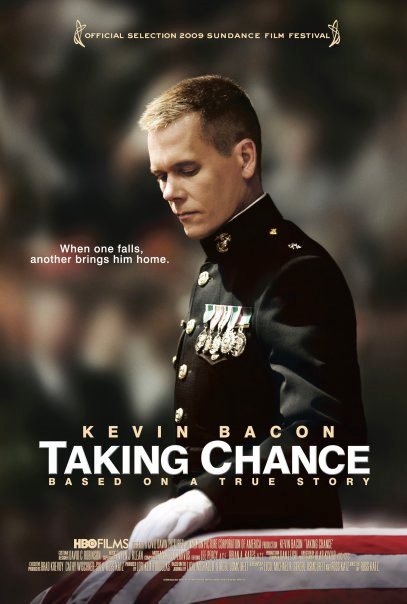
TAKING CHANCE

This image was downloaded from the Facebook page of the film. No copyright infringement intended.

I had no expectations when I clicked on ` Taking Chance’ on the streaming platform, Disney-Hotstar.

I was well, taking a chance.

The 2009 television film was based on a true story. It portrays the experiences of Marine Lt Col Michael Strobl as he escorts the body of fallen Marine PFC Chance Phelps (posthumously promoted to lance corporal) back to his hometown in Wyoming from the war in Iraq.

Aside from a black screen with just audio betraying the sounds of war at start, there is no depiction of war in the film. It is all about chronicling the movement of a body accompanied by escort to its eventual resting place at a cemetery.

Kevin Bacon as Lt Col Strobl speaks only as needed. If you didn’t know the actor from earlier films, the movie would have felt 80 per cent like a documentary, which it is not. It is a recreated account, filmed almost like a documentary and the effect of that economy in narrative style and idiom is stunning.  On the one hand, it is a truthful representation of how the body of a fallen soldier is escorted home in the US. You see the attention to detail as the body is made ready for transport at the mortician’s. The film’s story is also a bit extraordinary for it is not routine for the body of a PFC to be escorted by an officer. Lt Col Strobl volunteers for the job and the journey becomes an insight – for protagonist and audience alike – into how the civilian environment responds. At every juncture people seem quick to understand; they know protocol, they display their concern for the military, show their respect for fallen soldier.

For Lt Col Strobl, the journey also serves as opportunity to reflect because unlike the soldier he is taking home, following action in the First Gulf War he had asked for and got a desk assignment in the US to be close to his family. He feels ashamed of that and admits the same to a veteran of the Korean War he meets in Wyoming. The latter tells him not to feel so; he is as good a soldier as the one who lost his life in the line of duty and there is nothing to be ashamed of in loving one’s family. The revelation for me in this film was about how much set traditions tell stories by themselves. You don’t have to wrestle with life and squeeze out a narrative. Sometimes, life speaks. All that the film maker has to do is listen and document. The resultant idiom is frugal and apolitical. That is what makes ` Taking Chance’ brilliant. There is no question of the film having conveyed anything except what it said. It is a passive form of film making – maybe even an active choice to stay passive – and won’t meet the requirements of every story. But after years of the media squeezing out stories from life, this approach felt refreshing, relaxed and dignified.

` Taking Chance’ will remain one of the best films I have seen in recent times; recent because I was seeing it more than a decade after it was released. Besides the very structure and production quality of the film, there is another reason for my feeling so. The film is proof of the power of economy in military narrative. People love their soldiers. They always will. You don’t need to remind them. Civilians live ordinary lives. But as Lance Corporal Chance Phelp’s journey showed, they will emerge from the woodwork to honor the fallen.

(The author, Shyam G Menon, is a freelance journalist based in Mumbai.)

LOCKDOWN & ME / COACHES SPEAK

Illustration: Shyam G Menon

Information from around the world suggests that sporting events may reappear in the months ahead but scale of participation could be limited. Race organizers have responded in different ways. With events featuring more than 5000 persons prohibited in Germany till October 24, the 2020 Berlin Marathon scheduled for September was called off. A similar ban on large scale events in France till mid-July, saw the 2020 Tour de France postponed to August-September. Meanwhile it was reported (The Guardian, April 24, 2020) that the organizers of the London Marathon – postponed to October due to COVID-19 – are not ruling out an edition restricted to just elites. In March this year, the 2020 Tokyo Marathon was run with only elite athletes. All this puts corresponding reality check on expectations in India, where what was initially a three-week lockdown was subsequently extended to May 3 and then further to May 17. At the same time, amateur athletes appear to have transitioned from initial discomfort with altered pattern of life to evolving routines and staying engaged despite lockdown.  Their initiative notwithstanding, fact remains, there is only so much you can do amidst restricted life. We spoke to a few coaches (running, cycling & swimming) and a physiotherapist for their take on the predicament:    
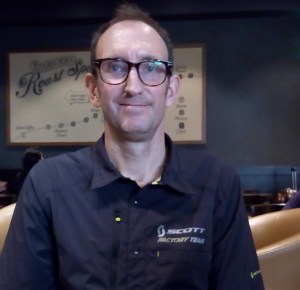
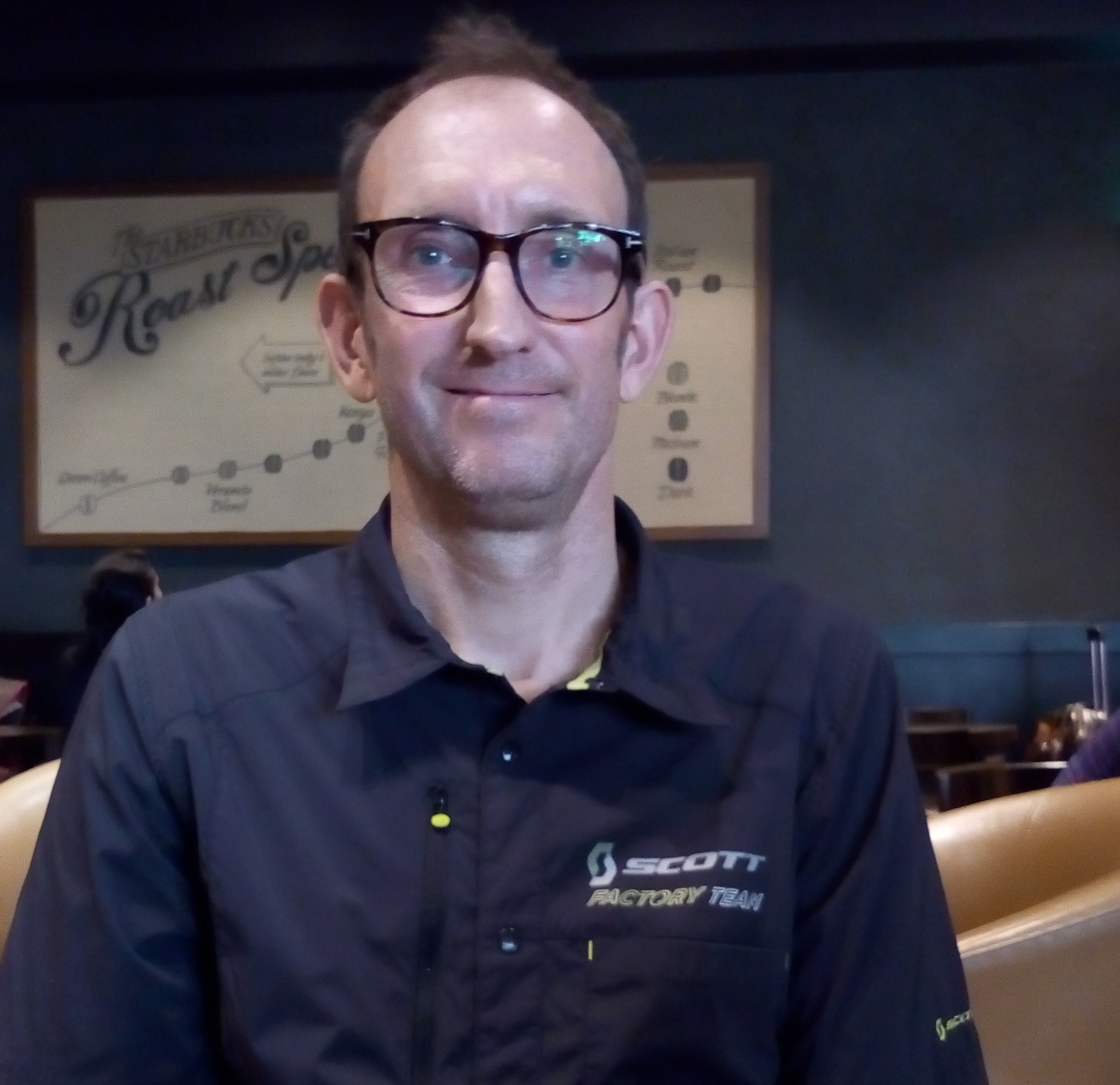
Nigel Smith (Photo: Shyam G Menon)

Nigel Smith

“ The health of our cyclists is our number one priority,’’ Nigel Smith, Head Coach of Kanakia Scott Racing Development, said of training plans amid lockdown. Initially when the lockdown was presented as 21 days long, planning had been on those lines with focus on endurance, speed and strength. At the time of writing, that original 21-day lockdown stood extended to May 17 with people keeping their fingers crossed on how things may play out thereafter for the various zones identified on the basis of disease intensity. Not to mention – potential for relapse and what action may be taken thereby. In short, things are still very unclear as regards when normalcy may return and outdoor activity may resume. According to Nigel, it should perhaps be accepted as a given that all cyclists in India are going to lose some of their endurance, speed and strength during the period of lockdown. “ We have to manage that decline and keep it as low as possible,’’ he said.

Manage – that is the correct word for although cyclists are fortunate to have home trainers that helps keep them in the saddle and pedaling, it cannot be a complete replacement for the outdoor experience. The advantage of the home trainer is its contained environment permitting measurement of all parameters from heart rate to power output. “ But one thing you find hard to do is riding long,’’ Nigel said. Thanks to ambiance with less distraction, an hour on the home trainer is roughly equal to an hour and a half spent cycling outdoors. “ I have been pushing our cyclists to do around two hours, which approximates three hours in the outdoors. That is the sensible limit. Beyond that it is a struggle to stay motivated on the home trainer,’’ he said. He has given his cyclists drills which peak at around 200 rpm; he has also devised strength drills that involve pedaling in high gear with high resistance. “ It becomes a muscular, strength driven drill,’’ he said. While the app Zwift has found popularity with cyclists during lockdown, Nigel is not a fan of using it in excess. As coach, he has his own plans that demand specific performance from cyclist as per schedule. “ A big week for us typically entails riding for 18-20 hours. That means there will be two to three rides of 4-5 hours each. The joy in Zwift is the immersive ambiance it provides; it could be tackling a particular route virtually or racing with others. When you do too much of that, on the days you must deliver as per training schedule you may find yourself tired,’’ Nigel said, adding over-training and injury should be avoided during lockdown. Sleep, rest, recovery – all these matter.

In fact, he encourages avenues to reduce stress. “ One of my cyclists is looking after a pair of baby squirrels that were abandoned by their parents. He speaks to me about it. I find that the act of caring for those squirrels makes him happy. Another cyclist loves to read books. He finds that a nice way to relax. Yet another is into chess,’’ Nigel said. As coach, he has the ability to monitor online how his cyclists are training. Given the current environment he is gentler with feedback. “ Normally I would be a little harder with them. Now I am softer and more collaborative,’’ he said.

Nigel appeared at ease with lockdown’s progression. He didn’t seem to be in any hurry to get it over with and return to cycling outdoors. As and when things restart, there will be matters of safety to self and others to consider and protocols to follow. “ Sport is a privilege. There are several other issues that matter more. I would want my riders to lead by example,’’ he said.
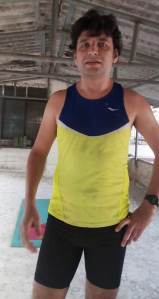
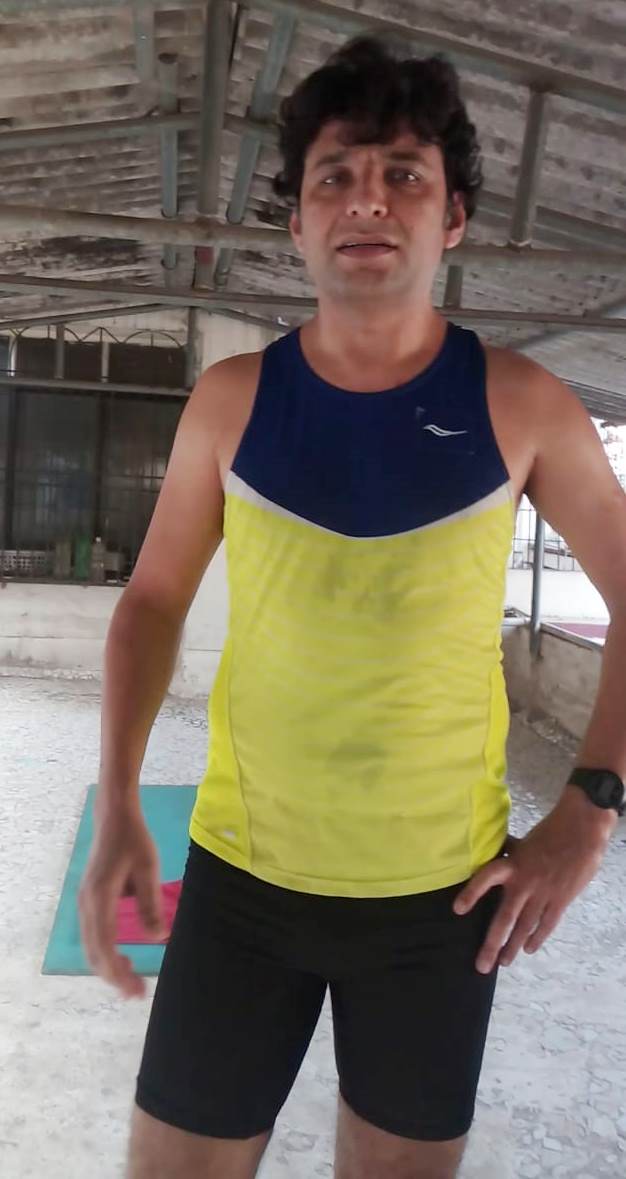
Dnyaneshwar Tidke (Photo: courtesy Dnyaneshwar)

Dnyaneshwar Tidke

Among the best known amateur runners in the Mumbai region, Dnyaneshwar Tidke aka Don, is a coach with Life Pacers, a Navi Mumbai-based fitness and marathon training group. When the first 21 day-lockdown was announced by the government, Don embarked on a 21-day workout plan.

“ I would post a list of exercises and follow it up with a video representation of the workouts on the Whatsapp group of trainees,” Dnyaneshwar said. Many of the trainees would meticulously follow the schedule and report back on their progress. Most of the runners in his group are otherwise engaged full-time in their work and fitness including running is largely a recreational activity. “ Now, they are confined to their homes, probably bored and consuming more calories than usual. They need something to sustain. These workouts will help them stay motivated. The best part of the lockdown is the access to home-cooked food and rest,’’ he said.

When the lockdown got extended, Dnyaneshwar opted to pose a challenge in the fitness / workout plan, asking runners to follow a schedule with reps and sets. “ I do not encourage running indoors,’’ he pointed out. Among ways the lockdown can be endured is to make sure that whatever exercise regimen one is following does not become monotonous. Don has been experimenting with suitable methods. Given he deals with two training groups in the Navi Mumbai region, he sometimes encourages a friendly online competition among those participating in the workout sessions. He has also assigned an exercise to every letter in the alphabet. When the name of a popular athlete is selected, a sequence of exercises becomes visible. “ The idea is to have some fun,’’ Dnyaneshwar said. But all can’t be left to such tactics. With no clarity on racing calendar and no races thereby to pick for goal, there is an element of self-motivation required to endure lockdown. “ You have to tell yourself that you are doing these workouts for your own health, to stay fit and be in good condition for as and when the situation alters and you are able to run again,’’ he said.
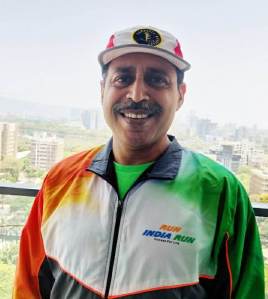
Samson Sequeira (Photo: courtesy Samson)

Samson Sequeira

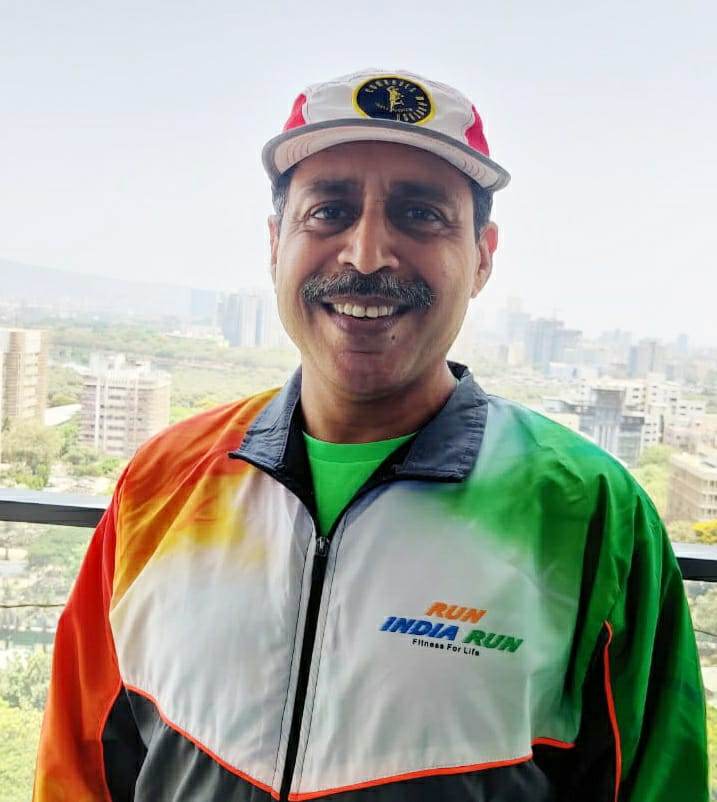
Samson Sequeira, coach at Run India Run, a Mumbai-based marathon training group, does not recommend running indoors. “ Suddenly, in this lockdown phase there is this new fad of running inside the house. It can cause structural damage to the body and weaken some of the muscles,’’ he said. Also, many people running indoors are transitioning to barefoot running, which can have an impact because of the sudden change in style.

According to him, in the initial phase of the lockdown, runners were not sure how to continue with their fitness program. Being used to running outside, focusing attention on a home-based workout was not easy for all.  “ I made about six videos which address various aspects of training with varying degrees of difficulty,’’ Samson said.

The key message from Samson to his trainees is that focusing on other aspects of training will augur well in the long run. “ There will not be a marathon anytime soon. Therefore, there is nothing to worry about immediately,” he said.
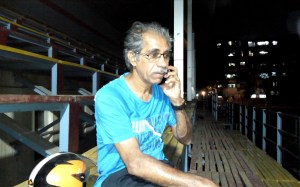
Savio D’Souza (Photo: Shyam G Menon)

Savio D’Souza

Mumbai-based coach Savio D’ Souza anchors the marathon training group, Savio’s Stars. A former national champion in the marathon, he put the current predicament in perspective using a few simple points taken from the running calendar and everyone’s experience as recreational runners. The lockdown in India commenced in late March. “ April-May is peak summer. During that time, most people don’t run much. Besides these months also coincide with the school vacation period and are usually the time people take holidays. At present nobody is traveling on holiday. Everybody is locked down. But the fact remains these are not highly active months in the running calendar. Even if these months were normal and our group was running as usual, we would be doing only short easy runs. So the loss due to lockdown isn’t much,’’ he said. Second, there is the issue of what you should be doing, cooped up as you are in your apartment or house. To that, Savio pointed out that the right approach would probably be for recreational runners to catch up on what they often fail to do – do some strength training. “ We just keep on running and running, neglecting to do the recommended exercises. Now is a good time to do all that. You may not be able to run but you can look at the present situation as opportunity to do the exercises you typically overlook,’’ he said. For his own trainees, Savio said he has left them with simple exercises to pursue during lockdown.

Asked about the trend of people covering long distances indoors, Savio said that it is not up to him to question what anyone wishes to do. But he illustrated the context. In thickly populated metros like Mumbai, it is the odd person who can afford a spacious apartment or a private courtyard. Most people live in small spaces. Depending on location and severity of lockdown, the predicament has also meant access denied to what little courtyard is there in housing societies. This means you end up running within your house, in very limited space. It contrasts our natural understanding of what a run is. But what about the worry in restless mind that if you don’t push yourself during lockdown you risk fading by the time normalcy returns? Savio feels that when the lockdown is lifted and recreational runners are allowed back on the road (as and when that happens) everyone will be starting from basics. People will need to gradually train their way up. “ All of us will have to do that anyway,’’ he said about the inescapable curve. That’s why investing in what you normally ignore – strength training and general fitness, and keeping the load mild so that injury is avoided, makes sense. Where this approach may differ is in the case of elite athletes. But as Savio pointed out, even in the case of Olympics postponed, the lead time is not a few months; it is a whole year. That is oblique acknowledgement of training processes needing time to deliver.

Savio’s trainees include the runners from Ladakh, who have over the years become a familiar sight in Mumbai in the months around the annual Mumbai Marathon. “ They are now doing easy workouts in Ladakh. Given lockdown, there is no point in me sending them a training plan at this stage. We will wait and see how their lockdown evolves and then decide what to do,’’ Savio said.
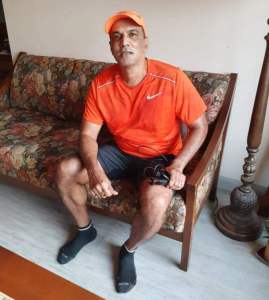
Daniel Vaz (Photo: courtesy Daniel)

Daniel Vaz

Daniel Vaz, coach with Road Burners, a marathon training group, has developed seven home workout plans that are based on running and work the same muscles used while running outdoors. “ These workouts are a combination of cardio exercises, which help elevate heartbeat and focus on endurance and strength building,” Daniel said.

Two key workouts designed by Daniel are called Locomotive Breath and Mojo Rising, both names inspired by popular rock music. Locomotive Breath is a single from Jethro Tull’s 1971 album Aqualung; it was among the band’s largest selling albums. As reinterpreted by Daniel, Locomotive Breath is a workout that helps elevate heartbeat, addresses functional aspects of running and trains the muscles in the same way a run would.

The name Mojo Rising is drawn from Mr Mojo Rising, the anagram of rock star, Jim Morrison; it also featured famously in the hit song by Doors: L.A. Woman. The intensity of the workout christened so by Daniel is akin to a weekend’s long run. “ Runners who are used to big mileages are able to do some of these workouts with short rest periods,” he said.

Daniel has also promoted skipping. Some of the workouts featuring skipping, help keep the sense of challenge going during times of lockdown, he pointed out. “ During the lockdown, I have actually not taken a day’s break from workout. I found that it is possible to take rest anytime during the day as we are now home bound. Earlier, the rest day was mandatory as most runners were involved in full-time job apart from running,” he said.
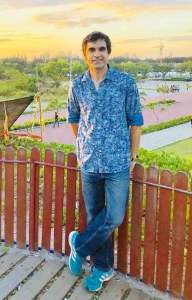
Ashok Nath (This photo was downloaded from Ashok Nath’s Facebook page)

Ashok Nath

Many of Ashok Nath’s mentees are doctors and most are over 40 years of age. “ They are slowly discovering that there is life beyond racing and competition,” the Bengaluru-based coach and mentor, said of life under lockdown.

Ashok devised five versions of quarantine workouts suitable for runners in his group. It addresses their diverse capabilities. He also sent a questionnaire to each of his mentees to make an assessment. Based on the feedback the workouts were adjusted for each of the mentees. Some people have space to run; they have access to stairs, terrace or a gym. “ There are six drills one can do on the stairs including speed workout, strength training and long run among others,” he said.

Skipping is another workout that most people can do. “ As there are no running events for the next few months, there is no pressure to be ready for races,” Ashok said. He does not recommend running inside the house. Running inside the house requires constant attention; it does not make for a pleasant experience. “ Running has three phase – warm-up, zoning out and fatigue. Running inside the house does not allow the runner to disassociate from the surroundings,” he said. This is the time to focus on bio-mechanics and strength, he pointed out. Maintaining a certain level of fitness is adequate at the current juncture especially given the absence of any immediate races, he said. For elite runners, the approach would probably be different as running is their main activity.

Asked how one can stay motivated amidst lockdown and no clarity on the return of races, Ashok said that a bit of self-motivation should help. Two things matter in this scenario. The first is hope or that proverbial light at the end of the tunnel. “ I think most runners are past the initial phase of discomfort with the lockdown. They have since settled into some schedule or the other. There is also the emergent feeling that we are beginning to see the light at the end of the tunnel. That helps for motivation,’’ he said. Second, of further assistance in this regard, is the shared feeling of everyone being in the same boat so far. Self-motivation may be called for if the region you are in takes longer to become normal.
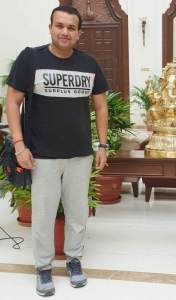
Gokul Kamat (Photo: courtesy Gokul)

Gokul Kamat

The lockdown has been hard on swimmers. While cyclists can partly compensate for open road denied with their home trainers and runners have found a poorer version of the cyclist’s panacea by logging miles inside their houses, swimmers have lost access to swimming pools with nothing to properly compensate. Gokul Kamat, head coach in swimming and head of the sports complex at Fr Agnel Multipurpose School, an educational institution in Vashi, Navi Mumbai, known for its strength in swimming, said that those training there have been told to follow three points. The first is to make sure there is no undue weight gain during lockdown. Second, they have been provided exercises, which can be done freehand or with minimal equipment at home. “ Some of these workouts are designed to get their heart rate up; some are for improving muscle strength,’’ Gokul said. Additionally, the trainees have the option of joining their coaches on interactive video-based training sessions. How much will this compensate for lack of access to the pool? “ Honestly, not much. But the point is – swimmers know these exercises and do them even otherwise to stay in shape. If they keep doing these workouts during lockdown, then, as and when normalcy returns and pools reopen, they would take less time to regain their regular form,’’ Gokul said.
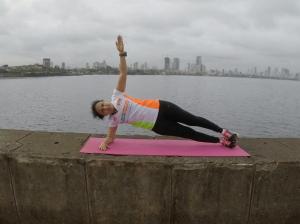
Suchita Varadkar (Photo: courtesy Suchita)

Suchita Varadkar

Ever since the lockdown commenced, Suchita Varadkar, coach, Frontrunners, a running and fitness group, has shifted to online sessions five times a week. Prior to lockdown, Suchita held sessions three times a week for each of the two Mumbai-based groups of Frontrunners.

“ We have opted for the pro version of Zoom for the current daily sessions. These sessions incorporate various elements of fitness including yoga, cardio workout, tabata and strength training,” she said. To keep the group motivated, she has initiated a plank challenge, which entails increasing the workout by ten seconds every day.

“ Also, once a week we do Suryanamaskars and we have been increasing the count of the sets every week,” she said. Suchita is also not a fan of running indoors. “ This is a good time to improve strength training so that runners are better geared for running as and when it resumes,” she said.
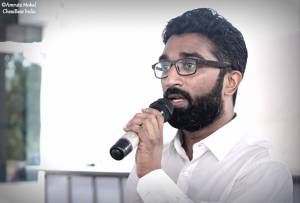
Dr Abhishek Bangera (Photo: courtesy Dr Bangera)

Dr Abhishek Bangera

The active lifestyle-ecosystem is never complete without a physiotherapist. Mumbai-based Dr Abhishek Bangera is a familiar face at marathons and endurance events in the city; his team of physiotherapists can be seen managing the recovery station at various meets. When lockdown manifested with physiotherapy clinics shut alongside, it meant all those wedded to the active lifestyle finding their physiotherapist out of reach. It was a critical link suddenly gone missing from the active lifestyle-ecosystem, even as amateur athletes tried their best to stay active pursuing workouts and such. What do you do if you hurt yourself or messed up pushing beyond advisable limit?

Following lockdown, Dr Bangera shifted to keeping in touch with patients online. He regularly texted useful advice and commenced the option of tele-consulting. At the time of writing (by when lockdown had been extended to the middle of May), he was hoping to restart his practice. This blog’s specific query to him was about precautions to be taken while staying active at home in an environment where injury can’t be addressed as easily as before.

Dr Bangera then shared a portion of text he had dispatched earlier to his online community:

With all the inspirational home workout videos, HIIT routines, asanas, indoor running stats etc being posted everywhere, a word of caution and a word of reassurance follows: While it is good that you have taken the initiative to maintain or start with your physical fitness, if it’s a new type of physically taxing activity that you were not used to prior to the quarantine lockdown, you need to be cautious. The things, to look out for to avoid injury:

Do not skip warm up and cool down. Understand the correct form of exercises. Don’t be overconfident / over enthusiastic in your ability to perform. Avoid jerky ballistic movements. Activity should be upgraded gradually. Avoid sharp pivoting turns while walking / running indoors. Avoid hard landing during aerobics and running. Don’t fall for challenges out of peer or self-induced pressure for posting the next post or to indulge in one-upmanship. Consider one-to-one supervised and individualized tele-classes with your trainer.

(The authors, Latha Venkatraman and Shyam G Menon, are independent journalists based in Mumbai.)

WHEN SOME OF US LOST SCREEN SPACE

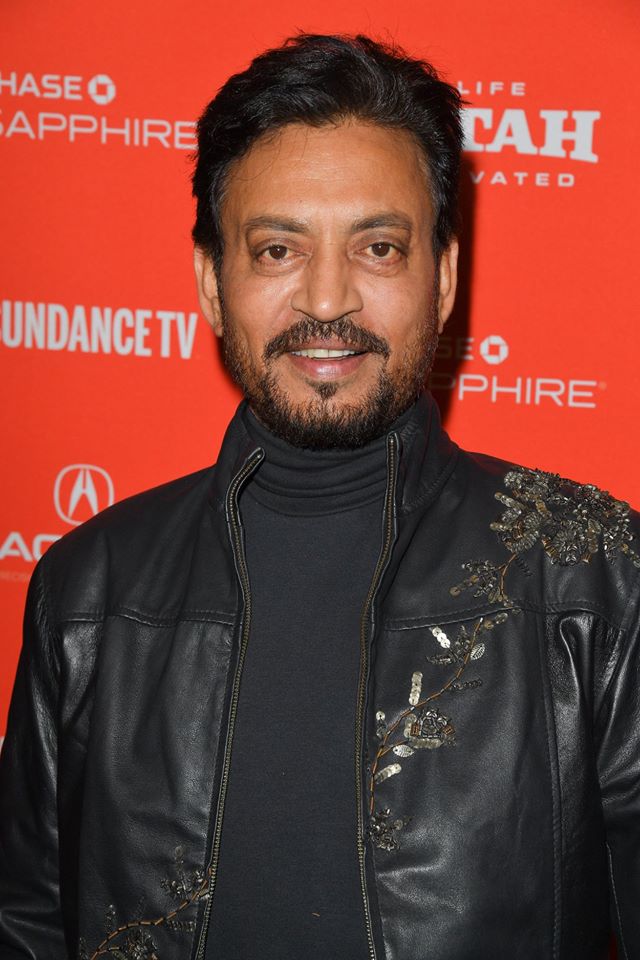
Irrfan Khan (This photo was downloaded from the actor’s Facebook page. No copyright infringement intended)

What makes a good actor?

There is no one answer.

For the generation preceding mine, a great film and actor therein usually entailed drama. The elders grew up imagining family, men who protected, provided and were larger than life. When things became emotional in story (which was quite often) their actors sang, danced or emitted fiery dialogue, mediums within medium to amplify the drama. The realities shaping me were different. The world had become so overcrowded and competitive, that playing the old role of guardian either drained you or distracted you from better things to do. Women had become assertive and independent.  Not everyone dreamt of raising family. Many of us were no longer galloping on horseback for conquest and imagery. We didn’t want to. It wasn’t irrelevant for human being to right-size, even down-size and be part of the woodwork. We existed and were noticed only when we let ourselves be.

Needless to say, with this for my reality, I generally avoided Bollywood, still pushing king sized life. Not to mention – those inevitable song and dance routines, big, fat weddings and stylized feudalism. There were exceptions but you know what exception means; it isn’t the rule. One such exception was the 2012 movie – ` Paan Singh Tomar.’ That was the first time, I really noticed Irrfan Khan or maybe I should say he let me notice him. It was a good film (its production quality could have been better) and for me, easier to digest than the muscular, sharp-edged format the Milkha Singh biopic of 2013 embraced. Set in the past with matching period quality to movie, the sight of Irrfan Khan running on track harked of the simple, understated elegance seen earlier in films like ` Chariots of Fire.’ As the film on the athlete-turned-bandit faded from my memory, so did thoughts of Irrfan Khan. It was easy to live with his performances. He was already appearing in foreign productions – by end 2012 there were the ` The Namesake,’ ` Slumdog Millionaire,’ ` The Amazing Spiderman’ and ` Life of Pi’ – and his restrained style never threatened to settle like a big star or unquestionable institution in my head. In September 2013 a remarkable and utterly down to earth movie, ` The Lunchbox,’ released. It was a delightful film. I still recall leaving the theater thinking how beautiful Nimrat Kaur looked and with Irrfan Khan’s Saajan Fernandes, comfortably etched in my conscience as character emerging from Mumbai’s woodwork to grab my attention and then, disappearing back into it. That emergence and disappearance is just what life in big city is. Two years later, in 2015, it was ` Piku.’

By now, there was a pattern defining Irrfan Khan to me. He was a talented actor with capacity not to have any of his performances rest heavily on my mind. His was the very opposite of the dramatic dialogues to self in mirror, dialogues with God and eloquent speech before villain that were the hallmark of old Bollywood and still refused to vacate space totally. Irrfan felt light. Even the foreign productions he acted in were executed differently from traditional expectations. In years gone by, it was assumed that the barrier between Indian actors and opportunities in Hollywood was language; how you spoke English. Native diction was leveraged to either show servility and backwardness or invite mockery. Irrfan’s roles paid scant respect to that concern. He spoke English in the foreign productions confidently and as best as he could without straining to sound Hollywood-ish. You saw him hold his ground. From trying to impress, we appeared shifting to substance; defying stereotypes. For me, as viewer, that was yet another instance of him reflecting changed realities.

Another way of putting it would be: Irrfan was fantastic at being us; faceless and nameless with subtleties for high points, a dead eyed look to seem insensitive or a reluctant smile to convey connection and empathy. Like good writing, he went beyond immediate business paradigm deciding fame and reward, and perfected the craft. No fat, just lean delivery – that became his style. Embellishment was there, but sparse. He was a natural at working magic with less. All of this completely contrasted Bollywood’s known idiom of cliché and exaggeration passed off as acting. The last film starring Irrfan I saw was ` Karwaan.’

Irrfan Khan was in many ways, the cure Bollywood sorely required. Select vernacular film industries in India had already experimented with reality and changed. But a large section of Bollywood as well as portions of vernacular film industry reluctant to severe their umbilical cord with the old, were still battling inertia. They continued subjecting change to tradition and market, a situation aptly summed up by the late Rishi Kapoor when he pointed out that the market gets what it wants. The likes of Irrfan and the films they elected to act in conveyed hope of change. With Irrfan’s passing on April 29 a section of us – a section often denied expression by Bollywood – lost its face on screen.

(The author, Shyam G Menon, is a freelance journalist based in Mumbai.)
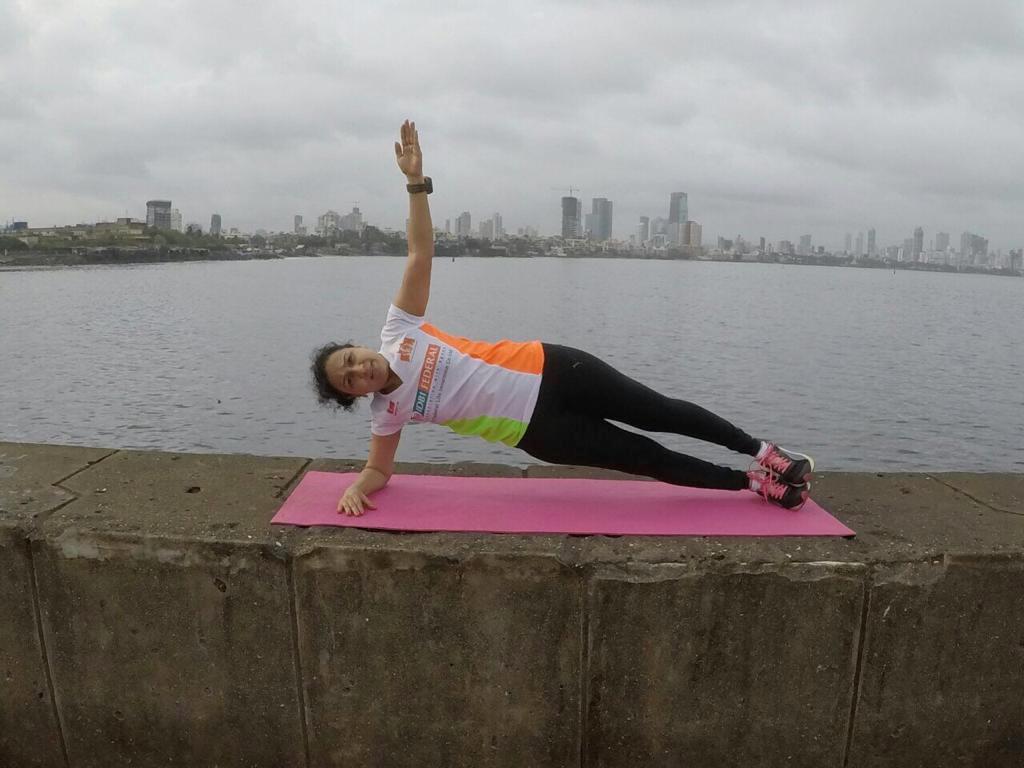
 

LESS FOOTBALL, MORE HISTORY BUT ENGAGING NONETHELESS

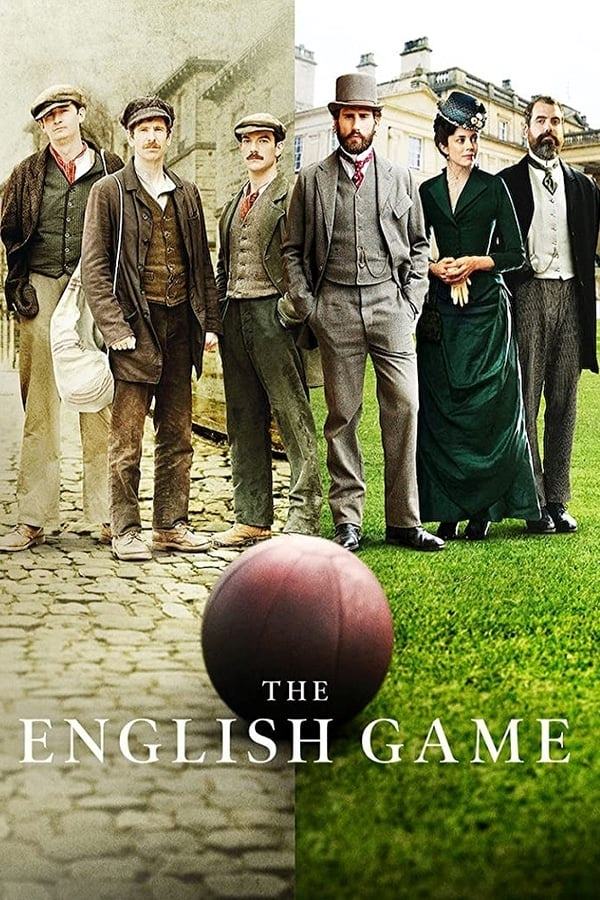
This photo was downloaded from the Facebook page of the TV series. No copyright infringement intended.

In 1999, actor-producer-director Robert Elmer Balaban asked film director, Robert Altman, if they could collaborate on a country house murder mystery. Altman chose Julian Fellowes, British actor and writer, to prepare the screenplay. The result was the 2001 movie, ` Gosford Park.’ Besides being murder mystery, it was a study of the British class system of the 1930s as outlined by the owners of the country house, their guests – all of them upper class and wealthy – and the staff taking care of their needs. Featuring an ensemble cast, the film was a commercial success. It was nominated for seven Academy Awards and won Fellowes an Oscar for Best Original Screenplay.

Almost 20 years later, the Fellowes touch – reminiscent of Gosford Park’s class study – may be tangibly felt in the TV series ` The English Game,’ released on Netflix in March 2020. The series wherein Fellowes has contributed to both writing and production, examines British football of the 1870s. At that time, it was a game controlled by the upper classes with social confrontation brewing thanks to an army of talent assuming shape in the ranks of the working class. The upper class, cocooned in tradition and comfort, treats the game as an extension of their lifestyle and licence to dominate. The working class, struggling to make ends meet, sees it as avenue for self-expression, an opportunity to level the social field and increasingly, as means to move up in life. At the heart of that last option is the early lot of talented players, paid money to represent working class teams. Given prevailing rules (it is the years before professional players became acceptable), such deals have to be kept a secret and when eventually sniffed out, critics view it as contamination of sport by commerce. Today, professional players and club transfers are part of football. The story as told by the TV series unfolds through an array of characters representing the class divide along with three footballs teams illustrating the predicament – Old Etonians, Darwen FC and Blackburn.

I haven’t seen ` Gosford Park.’ But the urge to read about that film and catch what little I could of it from the Internet was pronounced because well into ` The English Game’ it became evident that it wasn’t about football wizardry; it was about showing us a stage in the game’s evolution in the UK. The beautiful game is here a vehicle for acquainting us with a slice of old history, well emphasized therein being the class divide of early football and how view of world by sport eventually shifts perspective for those loving the game. Talent knows no class and you cannot stop the march of talent. ` The English Game’ is a well-made, well-acted series that should additionally interest audiences in India for a small detail tucked away in two inaccuracies related to the sport’s history, cited on Wikipedia.

The first inaccuracy in depiction of historical facts relates to overall time. The series gives the impression that its narrative happens in one season while in reality Ferguson Suter – one of the two main protagonists – took six seasons to be part of a FA Cup winning side. Second at the time of the incidents portrayed, Blackburn (shown as one team in the series) had two teams – Blackburn Olympic and Blackburn Rovers. The former is noteworthy as the first team from the north of England and the first from a working class backdrop to win the FA Cup, the country’s leading competition. This occurred in 1882-83. But Blackburn Olympic did not enjoy such success afterwards. The following year Blackburn Rovers won in the final and in the year after that, Olympic lost to Rovers in the second round. When the Football League was formed in 1888 with rule alongside that there could be only one club from each town or city participating, it meant Olympic out and Rovers in for Blackburn. In September 1889, Olympic shut down. In 2010, the Indian conglomerate V. H. Group with headquarters in Pune, bought Blackburn Rovers for 23 million pounds.

All in all, ` The English Game’ is a series worth watching. It captures a period of transition in the game; a transition well encapsulated by Suter’s observation in the series that if Blackburn isn’t allowed to play (over hired players present in its line-up) then those suffering won’t be just the players but also working class supporters, who after days of arduous work look forward to world recast by the talent of their local football team. See this series for early English football and a sense of what changed it. Not to mention – amid the wealth and big stars of today’s football, the series reminds you who actually forms the bedrock of support for the game.

(The author, Shyam G Menon, is a freelance journalist based in Mumbai.)
FROM NOWHERE TO MILLIONAIRE

This photo was downloaded from the Facebook page of the TV series. No copyright infringement intended.

Among the many types of stories out there, the one about the underdog has always appealed.

We like a win. When the journey to victory is a case of clawing your way up from the bottom of the heap, we applaud. That’s the attraction in such stories.

The TV series ` Self Made: Inspired by the Life of Madam C. J. Walker,’ released in March 2020 on Netflix falls in this category. It tells the story of Madam C. J. Walker (born Sarah Breedlove), the first self-made African American woman millionaire in the US. The series is based on the biography, ` On Her Own Ground,’ by A’Lelia Bundles.

The TV series picks up Sarah Breedlove’s story at that stage in her life when she is trying to sell Addie Monroe’s “ Magical Hair Grower’’ in St Louis, Missouri. The year is 1908. A washerwoman, struggling to make ends meet, we are told through flashback that Sarah had suffered from severe dandruff and hair loss. It was a condition commonly found in the community, particularly among its poor sections having no access to good quality housing. To compound matters, her then husband – John Davis, was abusive. That’s when she meets Addie Monroe, also African American, who has a cream she made that can fix the hair problem. It works for Sarah. Impressed, she takes it upon herself to be a saleswoman for Addie but the latter – she is much better looking than Sarah and believes that looks matter for selling products – discourages the washerwoman and tells her to stick to her existing profession. This angers Sarah. She creates her own line of products, which given her new marriage to Charles Joseph Walker is sold under the brand: Madam C. J. Walker. That’s also how Sarah who begins to identify herself more and more with her work to the expense of all else, prefers to be called.

The story revolves around Madame Walker’s struggles as a woman, a woman of color and a wife, to steer her business to success. Funding is a big challenge. Hair care products for colored women don’t appeal to the men who control money.  Further, she is an unheard of woman and enjoys no recommendation from well-known names in society. But that does not dilute her drive. Sarah does not hesitate to dream of building up scale – setting up a factory – and becoming a millionaire like some men had already done in the US. The obsession creates rifts between her and her husband (Charles Joseph Walker is her third husband). And all the while there is the competition posed by the better looking Addie and her hair care products. She is as ambitious as Sarah and willing to play dirty to achieve her ends. Sarah’s story is as much rags to riches as it is a close look at old school capitalism. Above all it gives you a peek into what enterprise meant to a woman – a colored woman – those days; the difficulties she faced and the resolve she had to dip into to motivate self and achieve.

The casting is spot on and Octavia Spencer has done a damn good job, essaying the lead role of Sarah aka Madam C.J. Walker. The travails faced by the woman entrepreneur come through. However it must be pointed out that the narrative in the TV series is not completely true; some liberties have been taken with the characters. For example, Addie Monroe is a fictional character based on Addie Malone, who actually existed and was among the earliest African American woman millionaires. In real life, Addie – she too was in hair care products – is not said to have been as villainous as she is made to seem in the series. Also, Sarah’s daughter is portrayed as a lesbian in the series; in real life, that wasn’t the case. Wikipedia mentions both these departures from the truth.  The departures add spice to the story, especially the competition between the two women entrepreneurs, which provides palpable tension for several episodes of the series.

There is also a mild absence of the regular magic you associate with underdog stories mainly because Madam Walker’s character is firmly rooted in the human. We see her marriage to Charles Joseph Walker fail; as she becomes more involved with her work, he feels neglected and indulges in adultery. He also demands his share of importance given the business bears the Walker surname although the hard work and relentless commitment to enterprise is mostly his wife’s. It would seem the price every independent woman hauling the cross of tradition is forced to pay. But despite her own ascent through unflinching focus on business, Sarah ends up demanding a baby from her daughter for a business without heir is journey without purpose and continuity. Fiction or otherwise, at that point the modernity and liberalism you associate with the Madam Walker story falters before it is restored to dignity through recourse to adoption.

All in all, a fantastic story and a pretty well made TV series. It is recommended viewing, whether you have ample hair on your head or much less like me.

(The author, Shyam G Menon, is a freelance journalist based in Mumbai.)       
MEDICAL TASK FORCE TO PREVENT DISEASE OUTBREAK AT MASS PARTICIPATION ENDURANCE EVENTS

Illustration: Shyam G Menon

World Athletics and the International Institute for Race Medicine (IIRM) will together set up a medical task force to provide endurance events that include mass gatherings with the necessary guidelines to prevent outbreak of infectious diseases.

The move follows the spread of COVID-19 worldwide. Major events in sport ranging from international marathons to Tour de France and the 2020 Tokyo Olympics were postponed as a result.

According to a statement dated April 17, 2020, available on the website of World Athletics, the Outbreak Prevention Taskforce, led by World Athletics (Health and Science Department) and the IIRM, will include the Medical Chairs or representatives of the International Cycling Union (UCI), International Ski Federation (FIS), International Triathlon Union (ITU), International Paralympic Committee (IPC) and World Rowing (FISA), as well as Professor Brian McCloskey of the Centre on Global Health Security, Royal Institute of International Affairs (Chatham House), an independent expert in outbreak prevention and member of the WHO Novel Coronavirus-19 Mass Gatherings Expert Group.

The task force will be served by an advisory group, which will include representatives of industry, private companies, sponsors, partners, and media. “ We are forming this taskforce to bring together key representatives from all parts of the endurance sports world to help find solutions and create viable and appropriate guidelines for participants of mass sports events, event staff, volunteers, and the community at large. COVID-19 has been the stimulus for the formation of this taskforce, however, many event organisers have also had to deal with Norovirus and other contagious diseases during the staging of events and this taskforce will help create guidelines to help reduce the risk of infection,” Dr Stephane Bermon, Director of the Health and Science Department at World Athletics, was quoted as saying in the statement.

The Outbreak Prevention Taskforce has the following objectives:

  • Disseminate recommendations to prevent disease outbreaks in mass gatherings.
  • Provide race organisers and sport governing bodies with guidelines, including a risk assessment tool dedicated to determining the outbreak risk, mitigation plans, and suggestions of contingency plans.
  • Advise mass races, organisers and sport governing bodies on how to plan a return to normal activities in the aftermath of the COVID-19 outbreak or similar future situations.
  • Collect and analyse data to determine if COVID-19 survivors have increased risk of developing illness or injury when participating in endurance events and / or vigorous activity and amend best practices based on this analysis.

The Outbreak Prevention Taskforce will hold its first meeting during the week of 20th of April with the aim of producing guidelines as soon as reasonably possible, the statement said.

World Athletics is the apex body for athletics, globally. IIRM has its roots in the American Road Racing Medical Society (ARRMS) formed in 2003 as a division of the former American Running Association. ARRMS later developed a partnership with the Matthew Good Foundation and the Good Family from the UK. The organization was subsequently renamed IIRM.

(The author, Shyam G Menon, is a freelance journalist based in Mumbai.)
COOLER

Illustration: Shyam G Menon

The other day I found myself thinking of the 1963 film ` The Great Escape.’

I saw it as a schoolboy. I also remember a book – it was a compilation of articles from Readers Digest – procured by my cousin’s family, which narrated the real story that inspired the movie. The film was hugely popular. For me, the bulk of its appeal revolved around Captain Virgil Hilts, the character played by Steve McQueen. I was too young to understand the gravity of war and the value of freedom. To my schoolboy brain, the act of tunneling one’s way to freedom from a Nazi prison camp resembled a cat and mouse game; an exciting one. It was another dimension added to the war comics and adventure novels that boys of that age indulged in. I loved the footage of Steve McQueen trying to escape on a motorcycle.

As I aged, the list of war movies I saw grew and my perspective became more critical. Both The Great Escape and films made so attributing a brand of smart bravery to the main protagonists, lost some of their old sheen. I began suspecting an element of playing to the box office in the film, which despite the holes critical gaze pokes in it, ranks even today among my all-time favorites.  Impressions from childhood are difficult to alter!

The Great Escape slipped into my imagination recently, in an unexpected way.

Cambridge dictionary describes the usage “ having a ball’’ so: to enjoy yourself very much. According to the website theidioms.com, “ having a ball’’ has its origin in the British culture of throwing balls (dances) in the 1900s. “ They would throw one to get to know each other in the society, show off their wealth or merely to have some fun in the times where entertainment as such, was not given priority in daily lives,’’ the website explained. If that be true, then in my opinion, that is a rather late association of the word `ball’ with fun. According to Wikipedia, the first authoritative knowledge of the earliest ballroom dances was recorded in the 16th century. On the other hand, by virtue of the fact that it moves, rolls, flies through the air and represents tremendous possibilities, the idea of ball as used in games, is older. From animals to human beings, everybody has fun with a ball. Its irresistible. Ideally, “ having a ball’’ should have originated from that simple, easily accessed fun; not some stylized dance. But then ` ideally’ is well just that and etymology is not always rooted in the ideal.

As the lockdown due to COVID-19 graduated from novelty to routine with commensurate alteration to the human experience alongside, I realized that I didn’t have a ball in the house. Given life in apartment complex, a tennis ball would have been apt. Bouncing it off the ground or a wall, while likely nuisance to the neighbors, has a calming influence. Not to mention – it improves eye muscle coordination and is, fun. Somewhere deep in the brain, a neuron fired and Steve McQueen’s Captain Virgil Hilts floated up in the imagination. Frequently dispatched to solitary confinement, Hilts – in the movie – was called “ The Cooler King’’ (cells holding just one prisoner were called coolers).  He would go in with baseball glove and ball, sit on the floor and pass his time bouncing the ball off the cooler’s wall. That’s how the movie signs off too. After most of those who escaped are killed or returned to camp, Hilts is locked up once again in the cooler. The guard, who is walking off after putting the prisoner in his cell, pauses to listen to the sound of ball hitting the wall.

This film poster was downloaded from the Internet. It is being used here for representation purpose. No copyright infringement intended.

Released in June 1963, The Great Escape became one of the biggest hits of the year. It won Steve McQueen the silver prize for best actor at the 3rd Moscow International Film Festival. Over time the movie – it was directed by John Sturges – acquired the reputation of being a classic.

In May 2006, The Guardian published an obituary for Squadron Leader Eric Foster. It noted how on the night of March 24, 1944, roughly 76 years in the past from our times lost to lockdown, Stalag Luft III near Sagan (north of Breslau, now Wroclaw in Poland) became venue of the biggest British led Prisoner of War (PoW) breakout during the Second World War. Three tunnels were dug – Tom, Dick and Harry – with Harry (the longest tunnel) accounting for 76 escapees. Three made it home, the rest were captured. Of them, 50 were killed. The story became well-known after the publication in 1951 of Paul Brickhill’s book: The Great Escape. The movie was partly based on the book. Eric Forster served as adviser to the filmmakers; he had been PoW at Stalag III but was not part of the famous escape. However the obituary mentioned at least three other attempts to escape from various PoW camps after Foster’s plane was shot down in June 1940 and he was taken prisoner. There were instances of solitary confinement. According to the obituary, he eventually faked madness and was repatriated home in 1944.

The Great Escape’s Captain Virgil Hilts is a fictional character.

Foster’s experience served as background material for the character.

Squadron Leader Eric Foster died on March 26, 2006, aged 102.

(The author, Shyam G Menon, is a freelance journalist based in Mumbai.)     

LOCKDOWN BLUES

Illustration: Shyam G Menon

One talent that is a blessing in times of lockdown is the ability to play music.

Ahead of COVID-19, the world was a very busy place. Not having time for anything other than work was perceived as sign of person’s success or potential for success. As lockdown took hold, many of us were thrust into the unfamiliar territory of having time, not knowing what to do with it and even if you did repeating some routine or the other, not knowing how to manage the monotony. Being creative – like being able to compose music – can be a gift for such challenging times. It keeps you engaged.

In early April, Mumbai-based rock climber Franco Linhares, shared a video of him essaying bouldering moves using the furniture at his house. Given their appetite for climbing moves and tendency to infuse daily view of world with hunt for such possibility, climbers have been known to ascend the outside of buildings (it is called buildering) and attempt complicated moves on chairs and tables. It is a way of challenging oneself and having some fun. Franco, 69, titled his simple video devoid of any background score: Lockdown Blues.

The name begged music for not only is the blues an engaging genre of music but the present times of people restricted to their homes for weeks to prevent infection is a study in pathos. It is perfect substratum for the blues. Decades ago, the genre was born from the suffering of people working the plantations and railroads of the US. Few styles in western music pour forth human emotion and feelings, likes the blues does. No matter how politically correct you wish to be about lockdown, there is no denying the human experience as you sit cooped up in your house, weathering the hours and days while a virus stalks the spaces beyond, you once roamed. Why not sing about it?

Late that evening, Franco sent across one more video. This time, it was Ernest Flanagan singing Lockdown Blues, lyrics credited to Prabhakar Mundkur. A subsequent search on the Internet yielded further perspective. Lockdown Blues appeared to be a generic series inspired by pandemic with plenty of versions and no genuinely convincing beginning to the trend (to borrow virus jargon: it may have an index case but I couldn’t trace it). The versions available ranged from raw, bare and personal in the tradition of the blues, like Prabhakar’s (uploaded on YouTube April 5, 2020) and Ernest’s (uploaded on YouTube April 10, 2020) to humorous, reflective and musical-like as Dominic Frisby’s (premiered March 31, 2020) to upbeat, sounding like a band and close to studio quality as the version performed by Shannon Rains (uploaded on YouTube, April 3, 2020). Plus the search yielded a Wikipedia page for a song called “ Lockdown Blues’’ by Danish band Iceage but it released on April 2, 2020, by when thousands of people had already endured lockdown for weeks in various parts of the world, some of them likely singing about it too. In fact, on April 9, 2020 Tamil rapper Arivu posted a feisty number titled “ Vanakkam Virus,” his take on the lockdown and its impact on the economically disadvantaged. By mid-April major names in the music industry overseas, were also getting into the act of connecting with world under lockdown. There was the One World: Together at Home Concert organized in collaboration with Lady Gaga that saw many artistes take part. There was also news from Pink Floyd that starting April 17, the band will stream its full length archival concerts for free, every Friday.

A longstanding pianist and jazz musician in Mumbai, Ernest is known to pen poems and lyrics on a frequent basis. He likes it when lines rhyme. On the internet you come across videos posted by friends, of them singing his songs. Associated in the past with well-known names in the Indian jazz scene, Ernest’s last job was with the financial institution IL&FS. Until it sank into troubled times, with corresponding retrenchment of employees, Ernest had been pianist playing every evening at the lobby of the institution’s headquarters in Mumbai. “ It was a dream job,’’ he said. He lost it in December 2018. A year and three months later, India was in lockdown to combat COVID-19. Ernest was no stranger to the blues. On YouTube, you will find a delightful little blues number he wrote and sang called ` Kickback Blues,’ posted October 2019 on the Jazz Goa account. Naturally, he channeled the lockdown experience. “ I wrote my version of Lockdown Blues and sent it to some of my friends hoping they would sing it. For some reason, nobody took it up,’’ Ernest said when contacted in mid-April. In the meantime, ad industry veteran Prabhakar Mundkur wrote his version of Lockdown Blues and posted a video. It was a brief take (about a minute and a half); it was also rather bare in terms of arrangement. Ernest then sang his version of Prabhakar’s song.

He introduced two differences. Being adept at keyboards he was able to infuse the song with that impression of band playing along.  He also added some lines to the lyrics. Ernest’s version is longer and its lyrics have a circular structure with the whole song running like a conversation with a nurse; a cry for help. Someone who likes to do things well, Ernest said he was not happy with the audio quality. He wished he had access to a studio (Kickback Blues, which has superior audio quality, was recorded in a studio). “ For Lockdown Blues I had to sing with one hand on the keyboards and the other pressing the recording icon on the mobile phone screen,’’ he said, adding, “ there’s only so much you can do from home.’’

(The author, Shyam G Menon, is a freelance journalist based in Mumbai. Thanks to Franco Linhares for sparking off this rendezvous with the Lockdown Blues.) 

WHEN PRIZE MONEY DRIES UP

Pratibha Nadkar (Photo: courtesy Pratibha)

Road races have been cancelled or postponed due to COVID-19. Lockdown has meant challenging times for those who counted on races to win prize money and augment their income. For them, racing wasn’t just recreational running; it was part of livelihood.

Amateur runner Pratibha Nadkar had a cracker of a running season over the past six months. According to her, of the 28 events she participated in, she secured podium finishes in her age category at 26.

For Pratibha, the prize money translates into a a few months of reasonably good earnings. She depends mainly on prize money to survive. A resident of Mumbai, Pratibha started running little over three years ago. She started with runs over five and ten kilometers and then gradually progressed to longer distances. She followed a hectic training and racing schedule until the lockdown to combat COVID-19 forced her to stop running on the roads. Confined to her tiny quarters in a settlement in Chembur, Mumbai, she now follows online training sessions. “ In terms of money, I am comfortable for the next two months. I do not want to think about the scenario of an extended lockdown,’’ Pratibha said early April 2020. Even if the lockdown ends she could be staring at challenging times for there will be a time lag before races commence afresh.

Pratibha was a middle-distance runner during her school days at Ahmednagar. She ran distances of 800, 1500 and 3000 meters. “ I went up to national level but once school was over, my sporting activity came to a halt,” she said. Post-school days, Pratibha came under family pressure to get married. The resultant marriage ended in separation as her husband was an alcoholic. “ We separated when my son was barely 11 months old,” she said. Many years later her husband passed away in an accident. Left to fend for herself, she had to look for employment as house help. She later joined a troupe as a singer and did some stage shows to complement her income. Subsequently, she took to running and started enrolling for races. Quite often, she finished on the podium with corresponding monetary gains.

“ As stage shows began hampering my training to run, I reduced my appearances at shows. Also, stage shows started to dwindle. My focus shifted to marathon running. It was my only means to earn money,” Pratibha said. At the 2020 edition of Tata Mumbai Marathon (TMM), Pratibha ran the 10 km-race and finished third. Three weeks later, she ran the 10 miler at the Maharashtra Police International Marathon and finished in second position. “ I don’t have any sponsor. I pay and register for the races that I participate in. Many times, there was tax deduction in the prize money,” she said. She is hoping her 20-year-old son finds employment. “ There are some jobs that may open up due to the current COVID-19 outbreak,” she said hopefully.

Sabhajeet Yadav, a farmer from Dabhiya, Jaunpur in Uttar Pradesh, supplements his farm income with prize money earned from marathons. He has been podium finisher in his age category, multiple times, at TMM and other leading events. At the 2020 edition of TMM, Sabhajeet secured an age category silver in marathon. He confines his appearance to a few key races where his chances of age category podium are healthy. Contacted in early April, he was busy with the harvest of his wheat crop. “ Once the harvest is completed, I will have to store the surplus produce at home as the mandis (markets) are closed due to lockdown,” he said. “ It will be a while before I step out of my village to participate in marathons,” he said.

At Vikramgad, a little over 100 kilometers away from Mumbai, Dnyaneshwar Morgha was in the same boat. He is a regular podium finisher in the open category in the half marathon and shorter distances. Prize money augments his earnings from agriculture. Thanks to the family owning land, which they cultivate, they had enough to sustain through the lockdown. But selling agricultural produce in the market like before had become tough due to lockdown. The story was slightly different for Panvel-based runner and regular podium finisher in his age category, Kamlya Bhagat. He said there wasn’t much he could get from his patch of farm land. On the bright side, he was getting a small salary from the school he worked for. But there was prize money won in the months before lockdown that he hadn’t yet received. “ With no races now and for the months ahead, it will be tough,’’ he said.

Elite runner Jyoti Gawate will be short of earnings this year as several key marathons have been cancelled. At the 2020 edition of TMM, Jyoti had finished second among Indian elite women. Being an elite runner, her prize money is higher than that of amateur podium finishers. But even as she stares at a tough year ahead, there is prize money earned last year that is yet to be received. According to her coach, Ravi Raskatla, Jyoti was overall winner among women at a marathon in Mohali in 2019. The organizers have made no effort to pay the prize money of Rs 200,000. He said there is worry about the absence of earnings from running events, both in terms of unpaid dues and how the months to come will play out. He coaches a team of athletes, some of who secure podium finishes. “ Jyoti has been supporting some of these athletes,” he said.

Seema Verma (Photo: courtesy Seema)

Like Pratibha, Sabhajeet, Dnyaneshwar and Kamlya, there are runners, who participate in events with the aim of making a living from podium finishes or use the additional earnings to complement their regular income. For them, the lockdown and the way COVID-19 has derailed a whole running season is felt the same way others who lost jobs or had to temporarily shut down businesses experience difficulty.

Seema Verma, a resident of Nalasopara, a distant suburb of Mumbai, is largely dependent on earnings from podium finishes. Abandoned by her husband some years ago, she worked as a domestic help for many years, before she commenced recreational running. The sport and its races was avenue to claw her way back into the daily game of survival. Past mid-March 2020, everything changed. By then COVID-19 was firm reality in India; the nation slid into lockdown. “ I never thought I would be in this situation. I cannot ask anyone for help as the scenario is bleak for all,” she said.

Given India’s harsh summer, the marathon season ends in February. It resumes in June (under normal circumstances) after a hiatus of three months with events designed around running in the rain. “ But, there are many small running events that are held through the summer months. They offer prize money of Rs 2000-5000. That is of great help to runners like me,” she said. All those summer races have dried up thanks to COVID-19. Early April, Seema was confined to her house and spending time on household work apart from working out indoors. “ I don’t think there will be any races for a long time. We may see some races towards the end of the year,” she said.

(The author, Latha Venkatraman, is an independent journalist based in Mumbai.)