2020 VIRTUAL BOSTON MARATHON / POST RUN ROUND UP

Illustration: Shyam G Menon

The 2020 edition of Boston Marathon, originally slated to be held in April and later rescheduled to September, was held as a virtual race over the period September 5 to 14. Runners who had qualified to run at the actual event and registered for the same, were given the option of running the virtual Boston Marathon. The Covid-19 pandemic prompted the organizers of the event, Boston Athletic Association (BAA), to convert it into a virtual race.

We spoke to some of the runners from India, who participated in the virtual race. To mention in particular are two points given the run happened in the shadow of pandemic and lockdown had hampered the regular training of runners. The timings reported are decent despite above said handicaps and at least in Pune and Bengaluru, running groups scouted a good location for the virtual run and backed it with hydration support, even some cheering.
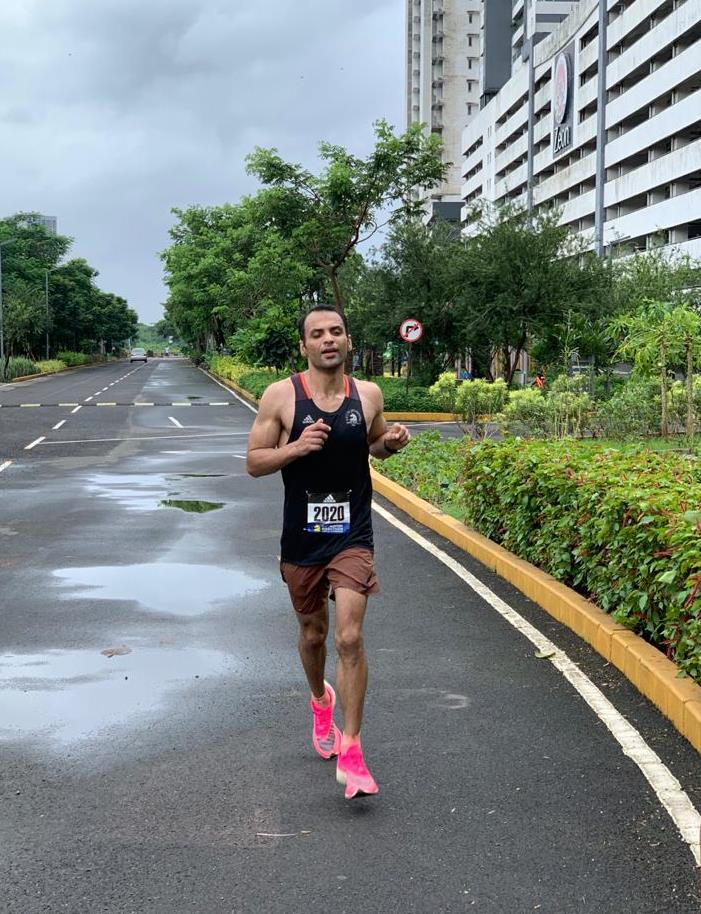
Himanshu Sareen (Photo: courtesy Himanshu)

The virtual Boston Marathon was an opportunity for Himanshu Sareen to run a marathon after more than a year. His last marathon was in April 2019. The Mumbai based-amateur runner was set to participate in the Tokyo Marathon, Barcelona Marathon and Boston Marathon in 2020. All these events were cancelled and Boston Marathon was converted into a virtual race. Had the actual race taken place, it would have been his third Boston Marathon.

Himanshu’s training in the months preceding the virtual Boston Marathon was focused on two aspects – general fitness and improving speed. “ My coach Ashok Nath drafted a multi-pronged training plan that incorporated speed, fitness and participation in virtual races,” Himanshu said.

For the virtual event, he chose to run close to his place of stay. “There are two roads of one kilometer each in my neighborhood. My plan was to run on these roads in a loop,” he said. The window for the virtual run spanned September 5 to 14; you could run anytime within these dates.
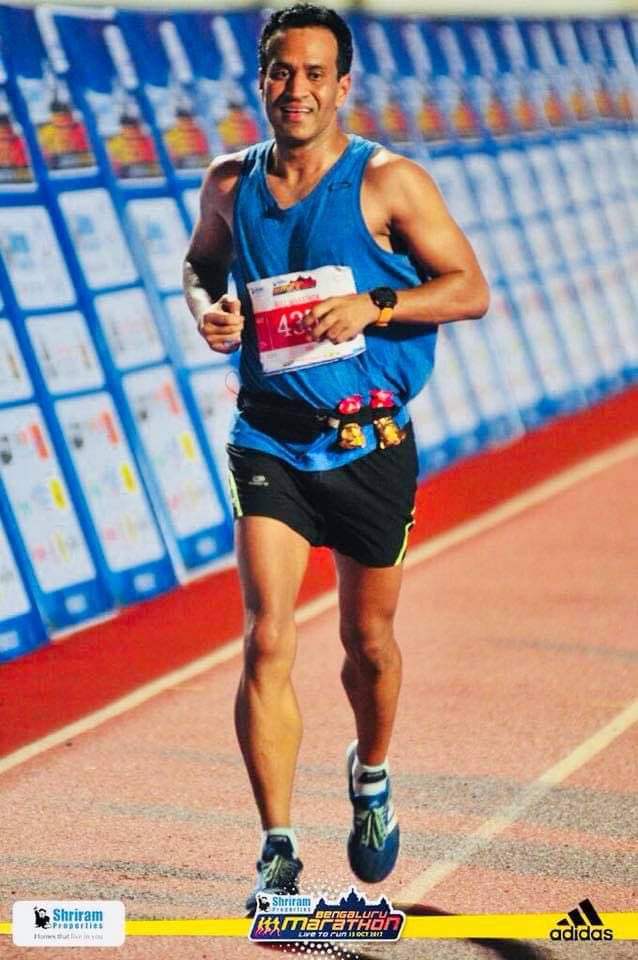
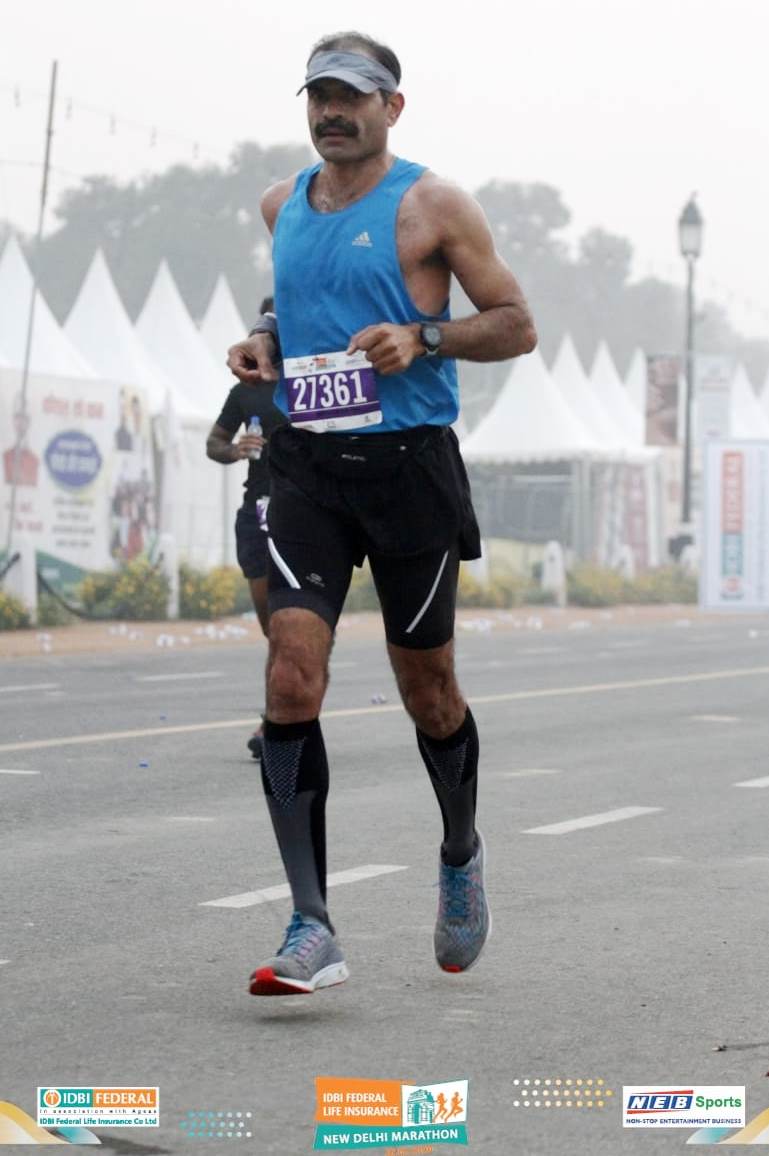
Syed Atif Umar (Photo: courtesy Syed Atif Umar)

Running on September 13, 2020, Himanshu commenced his marathon a little after 6AM. Initially he had to restrict himself to a 500 meter-loop as overnight rains had resulted in puddles on one of the roads.

“ I ran quite strongly till the 26 kilometre mark. After that I slowed down as I was going too fast. Mumbai’s weather is not conducive for running fast. The second half of the run was tough,” he said. In the early phase of the run, he supported himself with water and energy drinks stationed along the loop. But soon some runners, the security guards of his building and his wife Shweta joined in to help; they handed out hydration. Himanshu completed his marathon in 2:58. He is now set to run the virtual New York City Marathon.

Bengaluru-based Syed Atif Umar had registered to run his first Boston Marathon this year. Like many others he had to eventually opt for the virtual race. Atif has been running for the last 10 years. He has participated in many races including marathons and the occasional ultramarathon.
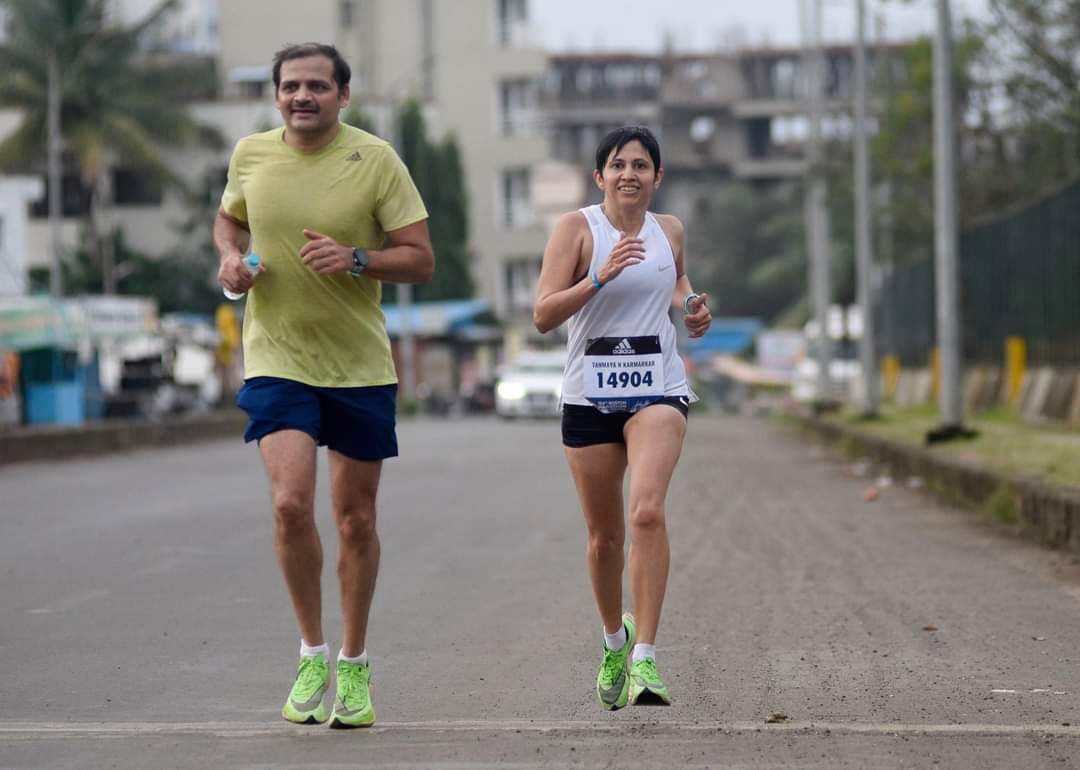
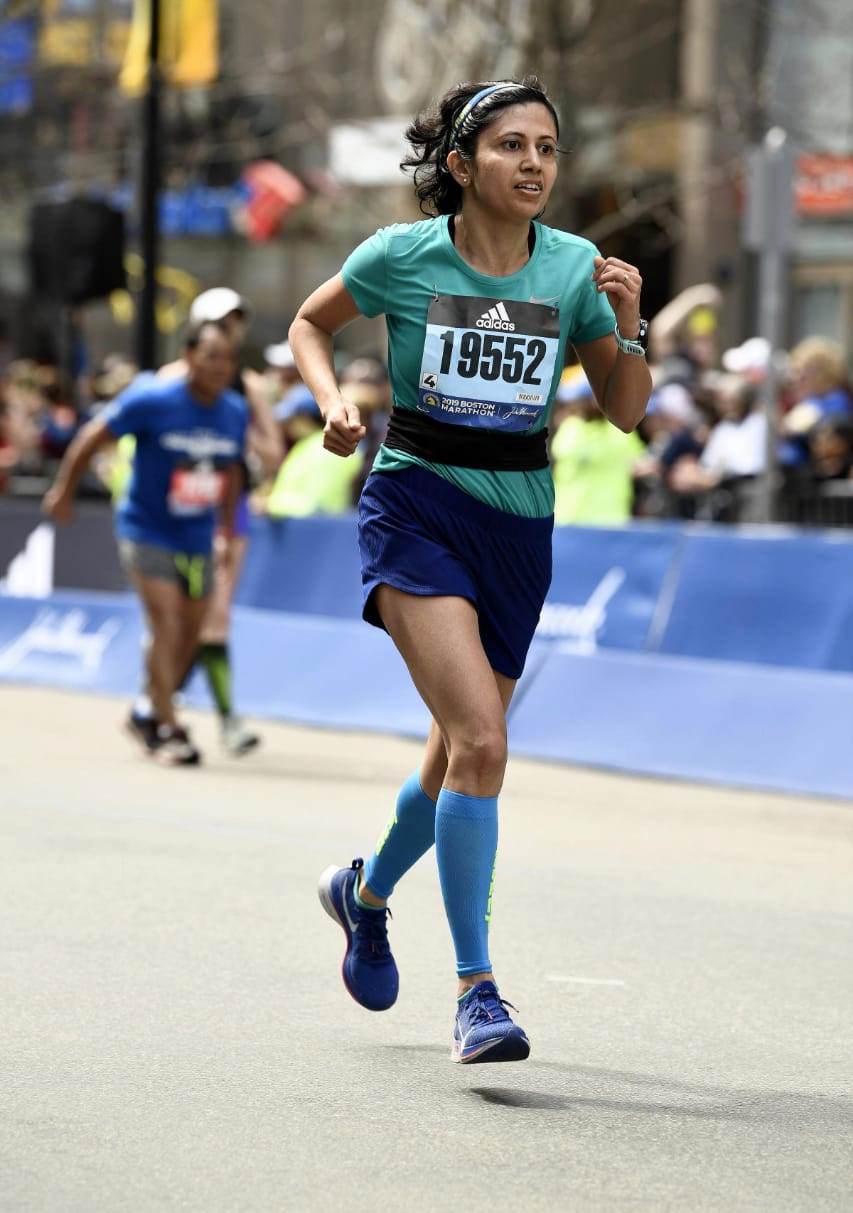
Tanmaya Karmarkar (right) with Amod Bhate (Photo: courtesy Tanmaya)

He chose to run the virtual Boston Marathon on his treadmill. “ I created a playlist with 42 songs,” he said. He completed the marathon in 2:56:42, a new personal best for him. His previous best for the marathon was 3:01 early this year.

Pune-based runner, Tanmaya Karmarkar had planned to run at a pace of 4.40. She was going as per her pace plan but around the 14th kilometer, she started to feel sick after she consumed her second gel. Her pace progressively declined. Tanmaya switched to water and began to feel better.

A running group in Pune had chalked out a route for the virtual Boston Marathon runners. It entailed running along a flat 10 kilometer-loop. “ Weather was quite hot and humid. We had to keep pouring water on ourselves to stay cool,” she said.
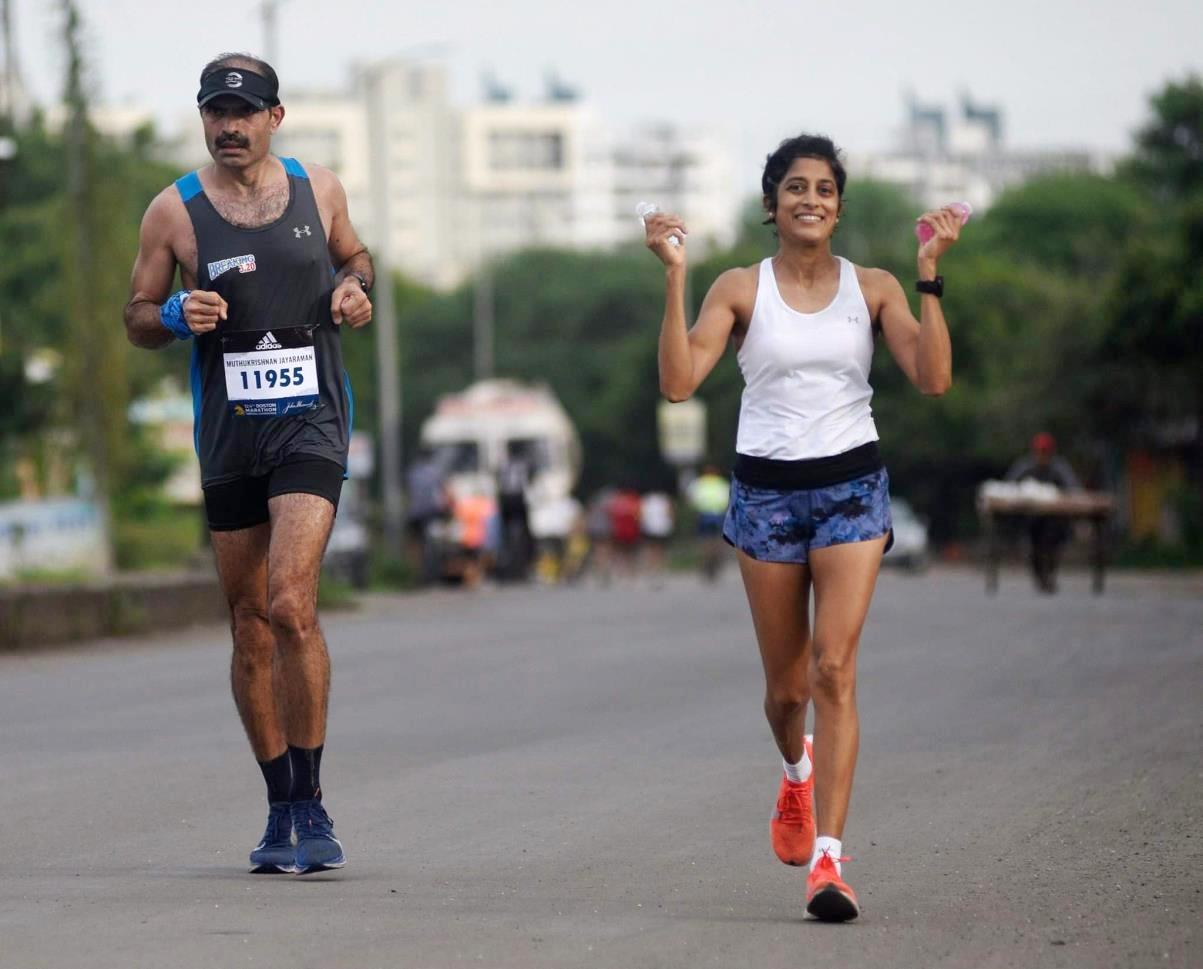
Muthukrishnan Jayaraman (left) with Kavitha Reddy (Photo: courtesy Muthukrishnan Jayaraman)

According to her, the support of other runners and friends was invaluable. “ Many people went out of their way to help me. Even people I met for the first time were all out to support us – I am really grateful and touched by this gesture from fellow runners,” she said. She finished the run in 3:27:43.

Army doctor and recreational runner, Colonel Muthukrishnan Jayaram, decided to run the virtual Boston Marathon in Pune. The city’s weather and the fact that a local runners’ group had organized support for those participating in the virtual Boston Marathon prompted him to travel to Pune from Delhi for the run.
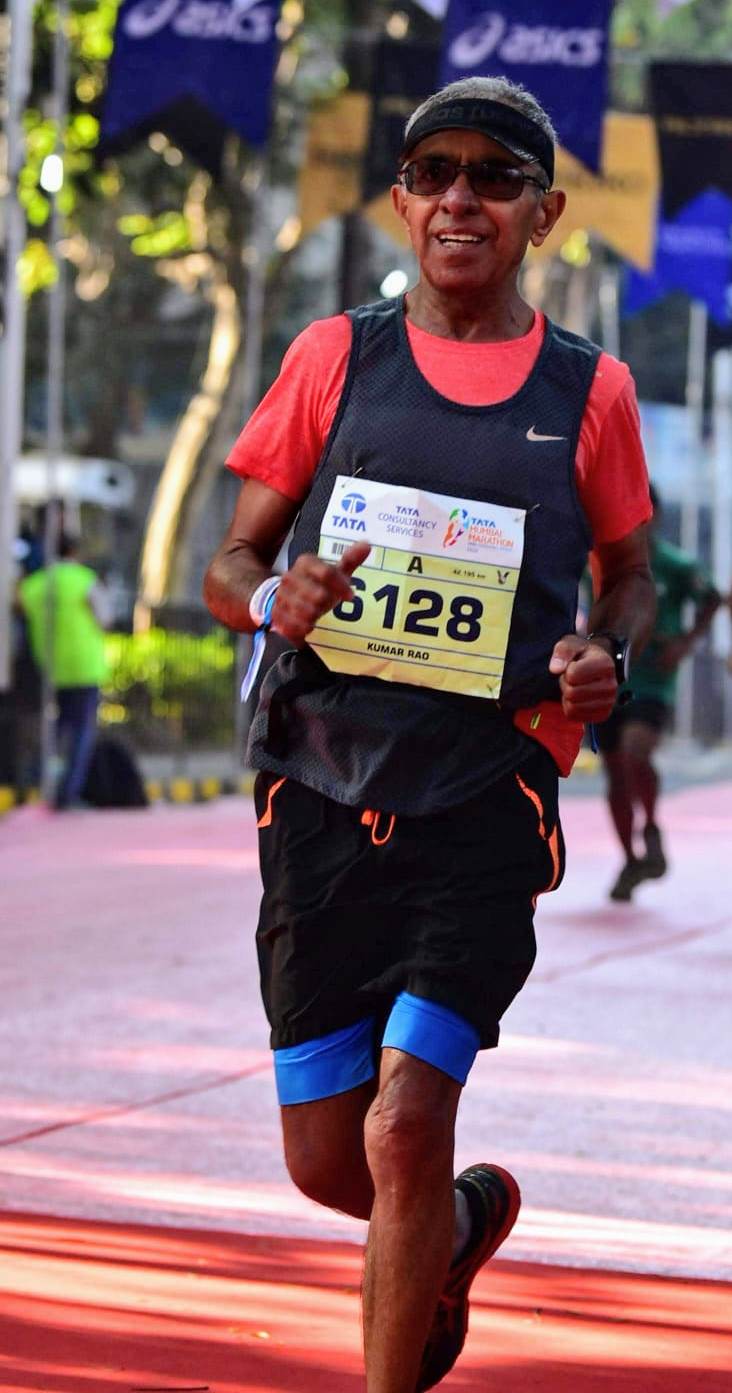
Kumar Rao (Photo: courtesy Kumar Rao)

He started the run at 4.30AM running along the earlier mentioned flat 10 kilometer-loop. After the first loop, he was paced by runners Krishna Sirothia and Kavitha Reddy. “ Although tired, I was happy I did not have any aches and was able to gather pace through the last miles to finish within my intended target,” he said. He finished the marathon in 3:47:43.

Septuagenarian Kumar Rao had trained moderately well for the virtual Boston Marathon. Running on his treadmill, he had a good run over the first 25 kilometers. But subsequently, some stomach discomfort and cramps forced him to mix the running with walking. “ After about 33 kilometers, I began to have difficulty in running tall. I changed my shoes. However it gave me just minor relief,” he said. He covered the distance in 4:24:36.

A notable aspect in Pune and Bengaluru was how runners approached the virtual run in a structured way, finding a good loop that they can run on and then backing it with hydration support and fellow runners to extend the occasional need for pacing and motivation. They even had bibs, banners and an element of cheering. In Pune, a group of runners decided to organize a support-run for those running the virtual Boston Marathon. Kavitha Reddy, one of the country’s best recreational runners, was among those helping out with this informal arrangement. “ It was a small gesture to make it a memorable run for those participating in the virtual Boston Marathon,” Kavitha said. Some of the runners helped in printing flex tapes to impart the feel of a real race. “ It was easy to manage the logistics for this run as the number of runners was small,” Kavitha said.
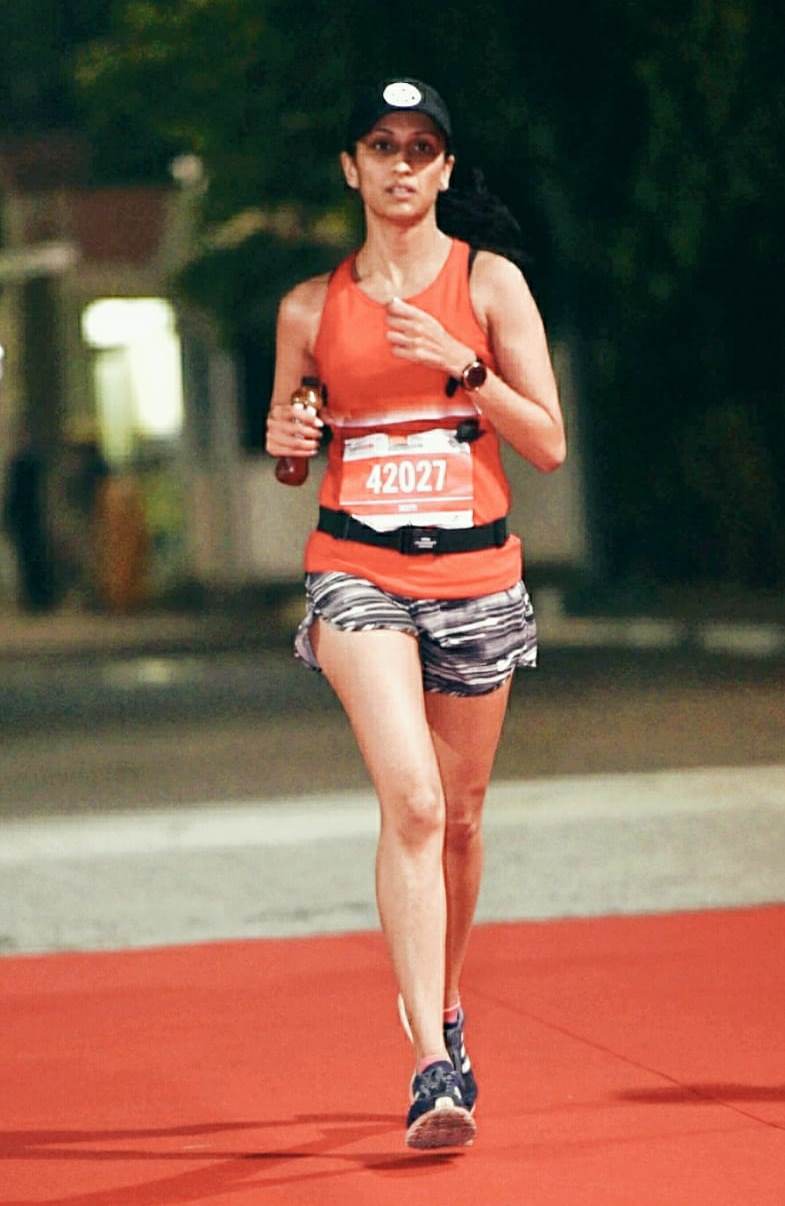
Deepti Karthik (Photo: courtesy Deepti)

In Bengaluru, Pacemakers, a marathon training group, had been organizing training runs with hydration support for its runners periodically. In August, the group had organized a 21 kilometer-training run for its members. “ These runs were organized primarily to keep the runners motivated,” Deepti Karthik said. Five runners from the group were running the virtual Boston Marathon. The team at Pacemakers thought it fit to organize a similarly supported training run that would also cater to the Boston Marathon runners. “ A couple of runners from outside Bengaluru who were running the virtual Boston Marathon also joined in,” Deepti said. Members of Pacemakers volunteered to manage the hydration support. “ We followed all safety norms needed for this pandemic. We ensured that there was no contact during the handing out of hydration. Also, we chose a route with wide roads and minimum traffic to help maintain adequate physical distance between runners,” she said.

Running in Bengaluru, Deepti commenced her virtual Boston Marathon at 4:45AM on September 13, 2020. Weather was conducive with light drizzle throughout the duration of her run. But she had some stomach issues during the run. Runners were slated to run along a 5.6 kilometer-loop; the loop was later extended to 10.5 kilometers. “ Every 2.5 kilometers, there was a hydration station. Also, volunteers and even people to cheer you on made the entire experience a happy one,” she said. She finished the run in 4:13:31.

Bengaluru-based runner, Murthy R K, decided to run the virtual Boston Marathon near his place of residence at Kanakpura Road.
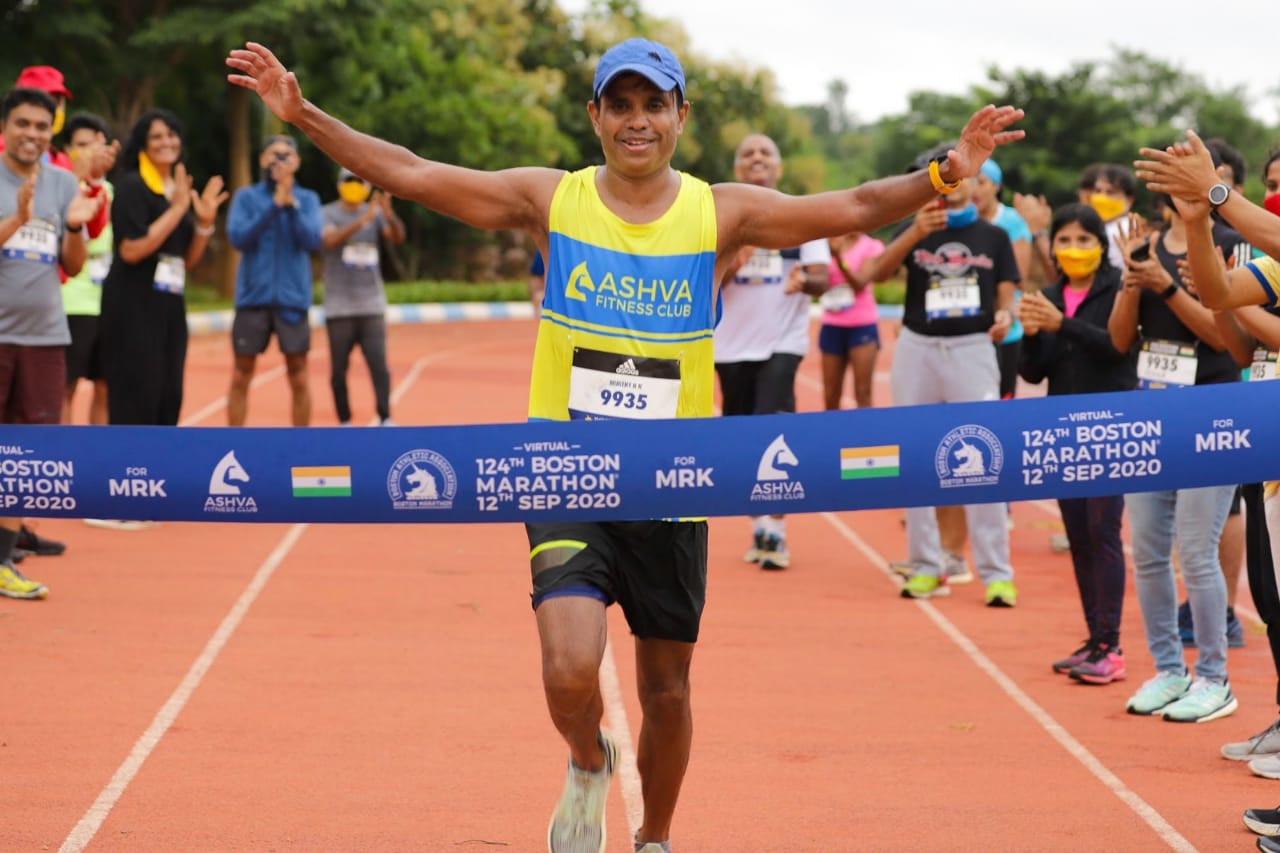
Murthy R. K (Photo: courtesy Murthy)

He had scheduled his run for September 12, 2020. Founder of Ashva Fitness Club, Murthy and his team created bibs and posters for the run. On September 12, Murthy ran the marathon, supported by many of his team members. But cramps during the run forced him to pause for breaks; he finished in 3:28.

Unhappy with his timing, Murthy decided to make one more attempt two days later, on September 14, the last day of the virtual Boston Marathon. He set out early and opted to run in a new residential area close to his home. He took a break every 10 kilometers.  “ At the 36 kilometer-mark, I began to feel the cramps coming on. I just told myself I have only six kilometers to go,” he said. He finished the run in 3:10:09, a new personal best.

(The author, Latha Venkatraman, is an independent journalist based in Mumbai.)
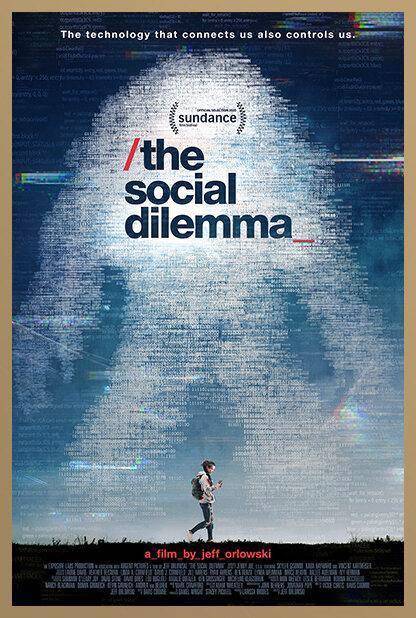
THE SOCIAL DILEMMA

This image was downloaded from the film’s Facebook page and is being used here for representation purpose. No copyright infringement intended.

It is often said in journalism that the best stories are those that were right before our eyes but missed being told and therefore stayed unknown till reported.

This line of perception works magnificently for the 2020 documentary The Social Dilemma.

We know its subject and core argument well but decline to examine them because we are too immersed in digital world to wish for an autopsy of that existence. You can blame the avoidance of close inspection on convenience, benefits (including monetary ones) accruing from networking, personal benefits outweighing concerns of damage – whatever you want. Fact is the avoidance of seeing our digital world as exactly what it is has created an even greater dearth of articulation around the problems it poses. It is a case of not desiring to talk and therefore, not possessing the means for it. All communication in this regard is still born or ritualistic.

Compounding the issue is the tyranny of life by business model. Business models bring their own compulsions partial to monetization and are often dismissive of humaneness and human interface. Not to mention, the generation bridging world without furious digitization and the one born to it, hasn’t arguably respected its intuition or spoken up enough. Later generations are therefore growing up with the phenomenon of digitization internalized; they are increasingly bereft of alternative perspective.

As some would argue, the core issue in the wake of world swept by technology and money is brutal dominance by one type of imagination. It has become such a plague that countering it is a massive challenge; the challenge begins with the very format for questioning dominance – it isn’t enough that you complain, you must speak the language of those inflicting the damage and present the case for correction in their idiom. This has for long been the gap between problem and solution; the ones experiencing the problems are wired one way, the ones authoring the problems and who are also expected to fix it, are wired another way. The gap has also eroded the merit of intuition, reducing what you feel in your bones to the status of an evolutionary discard. The only way out in this battle of competing convictions is if whistle blowers and other such concerned individuals in the technology-money establishment speak up. They know how their edifice works, what its wiring and jargon are. Getting such folks to speak up and anchor the documentary is this film’s biggest strength. You hear it from the horse’s mouth. Revelations like successful technology managers ensuring that their children have only limited access to mobile phones while the rest of the world bundled as market is encouraged to do the opposite, exposes the hypocrisy.

Not surprisingly, their articulation wouldn’t seem entirely complete in establishment’s eyes. The troubles dissidents nurse about the establishment and the absence of comprehensive solution they hint at betray potential dead end. We are too deep into the tunnel to withdraw; plus let’s not forget – the technology explosion provided real benefits too. So, where do we draw the line and how? Except in the case of one or two of those interviewed, solutions are not forthcoming. But that isn’t bad at all for the questioning and the reluctance to blindly toe establishment’s line that it inspires, are the missing link, the long awaited check. Will it work? Or will it be another call in the dark? Only time will tell. The Social Dilemma is one of the best documentaries in recent times about our digital, networked world and the problems it poses.

This is a very timely film; available on Netflix.

Watch it.

(The author, Shyam G Menon, is a freelance journalist based in Mumbai.)            

AS PREMIUM BICYCLE SALES GAIN, SCOTT LAUNCHES NEW MODELS IN INDIA

SCOTT Spark RC 900 (Photo: courtesy SCOTT India)

SCOTT Sports India has launched the SCOTT Spark series of mountain bikes in India.

According to an official press release made available on September 16, 2020, the launch includes the SCOTT Spark RC 900 Team, one of the most decorated full-suspension bikes, ridden by the likes of Nino Schurter, a winner at the Olympics, and Kate Courtney, a World Cup champion. “ The bike is a super light, super-aggressive steed that pedals with incredible efficiency and is priced at INR 369,900,’’ the statement said.

The launch follows an increase in demand for performance-oriented premium bikes in the price range of two to ten lakh rupees. When contacted, an official spokesperson informed that while the Spark RC 900 Team is currently available in India, the rest of the models in the range are available on request.

“ We’ve seen unprecedented demand in premium bicycles over the last few months. While fitness is the key driver, a lot of demand is specific to performance and high-quality components, and these bikes cost anywhere between 2 lakhs to 10 lakhs. At SCOTT, we always believe in bringing the best in innovation, technology, and design to someone equally passionate. And that’s why we are planning to introduce a higher number of performance-oriented bikes in India over the next few months,” Jaymin Shah, Country Manager, SCOTT Sports India, was quoted as saying in the press release.

“ We’ve seen an increase in demand for performance-oriented cycles, not only in the mountain bike category but also for road and gravel bike category. For instance, we received multiple orders for the SCOTT Addict RC series that are priced between 5 lakhs to 6 lakhs,” he added.

In the wake of COVID-19 pandemic there has been an increase in bicycle sales globally. Cycling is environment friendly personal transport; it is also an exercise contributing to good health.  Many cities overseas have actively encouraged citizens to cycle and walk instead of taking out motor vehicles.

(The author, Shyam G Menon, is a freelance journalist based in Mumbai.)

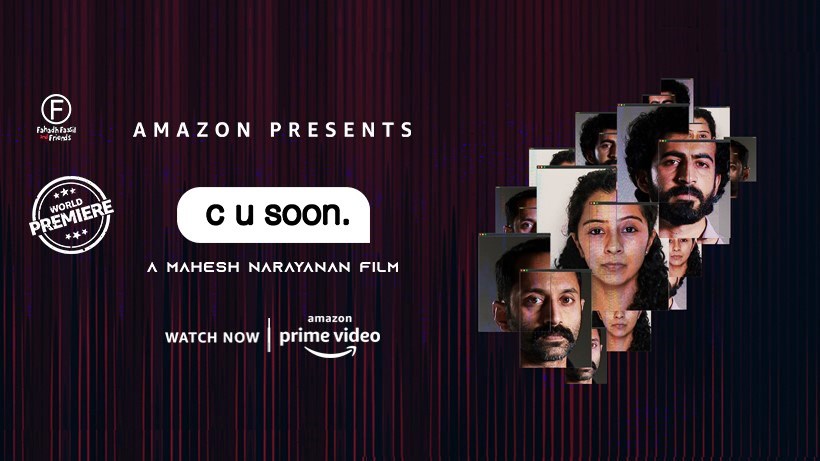
C U SOON

This image was downloaded from the film’s Facebook page and is being used here for representation purpose. No copyright infringement intended.

For some time now, Malayalam films have played around with new topics, engaging characters and different styles of narration.

Still I wasn’t sure how I would weather C U Soon, despite the 2020 movie being repeatedly recommended by a good friend. I had heard of its narrative style dominated by computer and mobile phone screens and its largely indoor ambiance. None of this works with me. It’s the sort of blend that triggers a mental claustrophobia. Not to mention, I would be watching it in COVID-19 times after months of being confined to one’s apartment and the immediate neighborhood. Would I want the same restricted ambiance and submergence of life in things digital, served up on screen for my entertainment too? Paradoxical as that may seem, it sums up life over the past several months. If there is anything I want, it is to get out and magically go back to the life I once had.

So it was with much trepidation that I got around to sampling C U Soon one day. As it happened – I watched it in one go. It held my attention. The idiom worked – it was something I didn’t expect; the experience left me amazed. In retrospect, I think it was the novelty of the format, a plot good enough to sustain viewing and a particularly good performance by Darshana Rajendran with Fahadh Faasil, Roshan Mathew and Amalda Liz anchoring the rest that did the trick. It was a taut film with little flab; it sped along under its own steam.

Wikipedia provides the production timeline of the film, described as India’s first “ computer screen film.’’ According to it, in June 2020 Mahesh Narayanan (he wrote the film’s screenplay) announced that his next venture would be an experimental film. The movie would be shot on a mobile phone and the location would be an apartment. Filming was completed in August; the film released on Amazon Prime in September. It is thus very much a child of pandemic and the progressively relaxing phase of lockdown; a milestone of sorts in domestic film making, I would imagine.

That’s more than one reason to see it.

(The author, Shyam G Menon, is a freelance journalist based in Mumbai.)

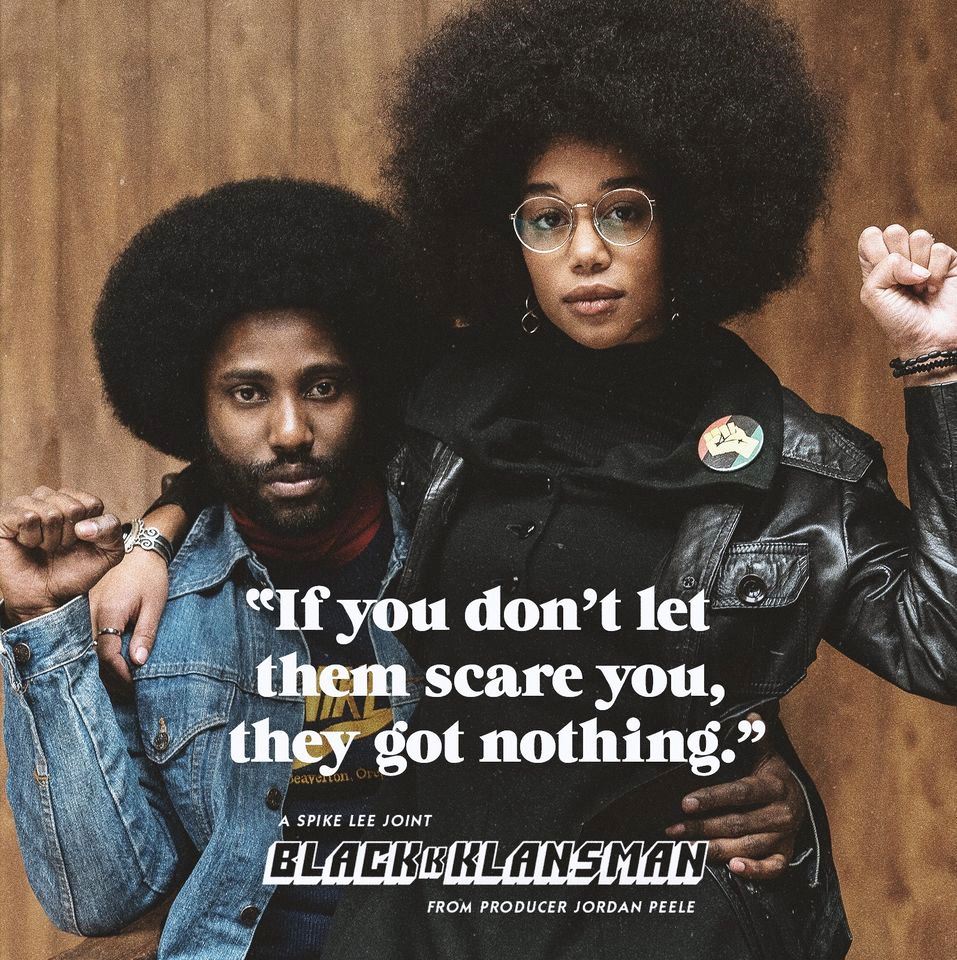
BLACKKKLANSMAN

This image was downloaded from the Facebook page of the film and is being used here for representation purpose. No copyright infringement intended.

BlacKkKlansman tells the real life story of an African American undercover detective of the Colorado Springs police department who, along with his colleagues, manages to infiltrate and expose the local chapter of the Ku Klux Klan (KKK). That’s the film’s summary as gleaned from the Internet after I watched it. I saw the movie with no idea of what lay ahead, except curiosity to know what a film with Adam Driver in the lead cast, held. The incredible story was therefore a complete discovery.

Directed by Spike Lee, the film – it won the Grand Prix at the 2018 Cannes Film Festival and an Academy Award for best adapted screenplay – is well made with a sense of underlying tension running all through. It features John David Washington in the role of Ron Stallworth, the undercover cop. Although based on the book by Stallworth, the script has plenty of departures from it; there are liberties taken. So what we end up with is a blend of fact and fiction, none of which however, takes away from the utter audacity of the main plot. This is a film about racism; it is also one that exposes the ridiculousness of presumptions and stereotyping. Plus it is a reminder that notwithstanding exposes of this sort, racism continues to tarnish human society.

My first instinct after watching BlacKkKlansman was to search for the 1988 film Mississippi Burning. It happens – you watch one film and then you develop this urge to revisit something similar you watched years ago. My memory of the Alan Parkin classic starring Gene Hackman and Willem Dafoe was frayed at the edges; refreshing it seemed apt. Unfortunately I couldn’t locate it on any of the streaming platforms I have access to. But based on what I remember, my assessment is – that is a film with a more serious, gripping ambiance. It deals with an incident but equally highlights the issue. Spike Lee’s film is more specific to incident and has its moments of abject nervousness and statement of things as they are. But the overall delivery is accompanied by a stylized swag, which even if it is ephemeral and fleeting, tends to somehow sap the gravity of the whole. But it’s an interesting film overall; not to mention – Harry Belafonte in what should to be his first appearance in a feature film since Bobby of 2006.

This is a film worth watching; available on Netflix.

(The author, Shyam G Menon, is a freelance journalist based in Mumbai.)      

IT’S TIME FOR THE VIRTUAL BOSTON MARATHON

Illustration: Shyam G Menon

The Boston Marathon, held every year in April, inspires hundreds of runners around the world to qualify for it and participate. Its 2020 edition was cancelled owing to the COVID-19 pandemic, the first such cancellation in the history of the 124 year-old event.

In lieu of the real race, the Boston Athletic Association (BAA) has offered the virtual Boston Marathon experience. Running the virtual Boston Marathon won’t fully compensate for missing the actual event and the ambiance it is famous for. It will be akin to a long training run, some of the runners we spoke to, said. The promise of a finisher’s medal is a positive in the package. Under the circumstances, the virtual run is the best alternative available.

Around the world, runners are planning to partake in the event in small groups with runs over short loops to maintain the protocols necessary for these times of pandemic. Training for the virtual event, some said, has not been close to levels seen ahead of real races. Participating in the virtual run is aimed at keeping motivation levels high. Meanwhile pending further notice, registration for the 2021 edition of the Boston Marathon has been postponed. The report concerned may be accessed on this blog under the post titled: At a Glance / September 2020.

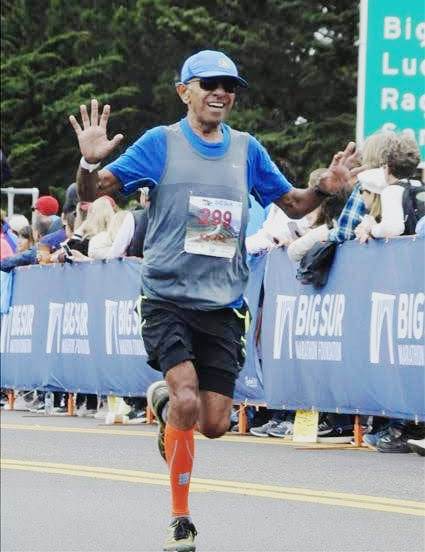
Muthukrishnan Jayaraman (Photo: courtesy Muthukrishnan Jayaraman)

The 2020 edition of Boston Marathon was to be Colonel Muthukrishnan Jayaraman’s first Boston Marathon outing.

An army doctor, Muthukrishnan had qualified for Boston Marathon three times. He was able to get a berth in the 2020 edition of the race. Boston Marathon has stringent entry norms and attracts some of the best amateur marathon runners from around the world.

Initially slated to be held on April 20, 2020, the race was postponed to September 14, 2020. But with mass participation events being cancelled due to the COVID-19 pandemic, the organizers opted to hold it as a virtual race, which can be run anytime during the period September 5 to 14.

A resident of Delhi, Muthukrishnan was able to train moderately well. “ But obviously, the training is not with a target in mind. Also, it has not been as strict as it would have been for a real race,” he said. Muthukrishnan will be travelling to Pune to do his Boston Marathon virtual run on September 13, 2020.

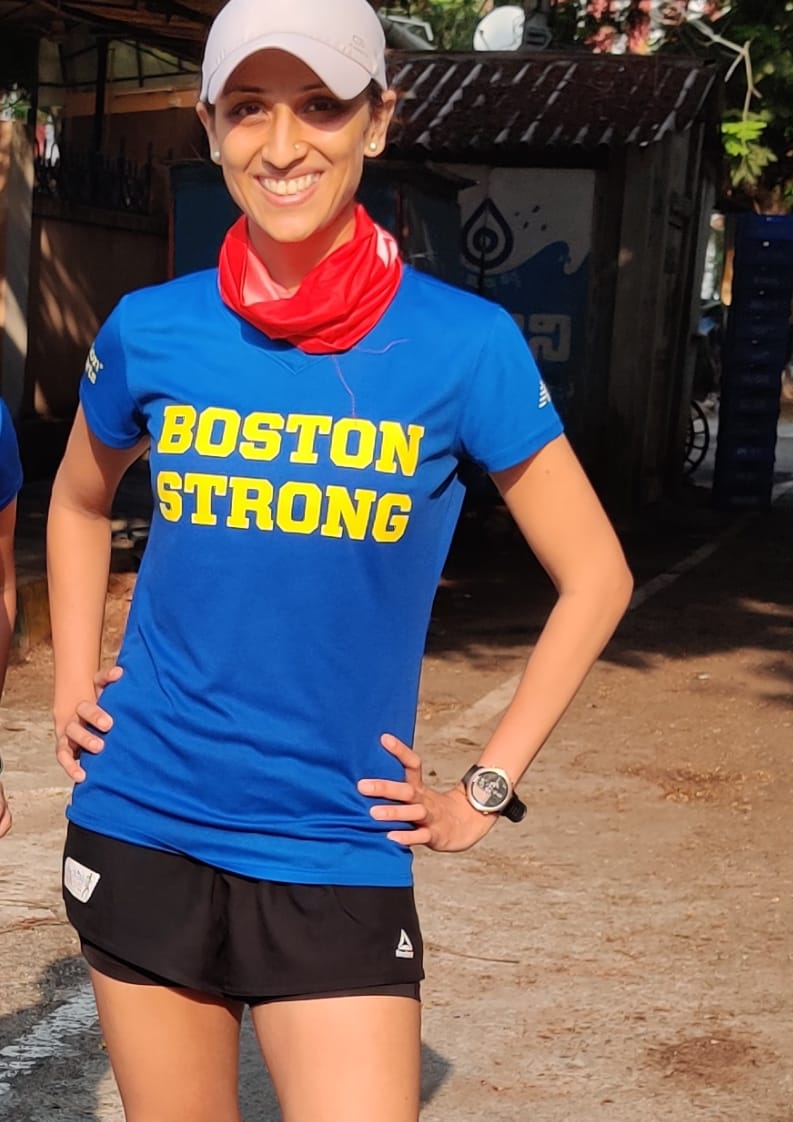
Tanmaya Karmarkar (Photo: courtesy Tanmaya)

Pune-based Tanmaya Karmarkar was to run her second Boston Marathon this year. With the event cancelled, she settled for running the virtual race. “ I have been doing training runs through this lockdown but structured training commenced only a month ago,” she said. She decided to run the virtual race as it would give her an opportunity to run an event in the absence of any physical races in the near future.

She along with a few Pune-based runners has chosen a route that offers a 10.5 kilometer-loop. Muthukrishnan will be joining these runners in Pune. Boston Marathon’s virtual event is open only to runners who had registered for the 2020 edition. They were required to register again for the virtual event.

The virtual Boston Marathon taking place from September 5 to 14, allows participants to run on treadmill or outside. The marathon has to be completed in six hours. Performance in the virtual marathon will not be accepted as qualification for Boston Marathon 2021.

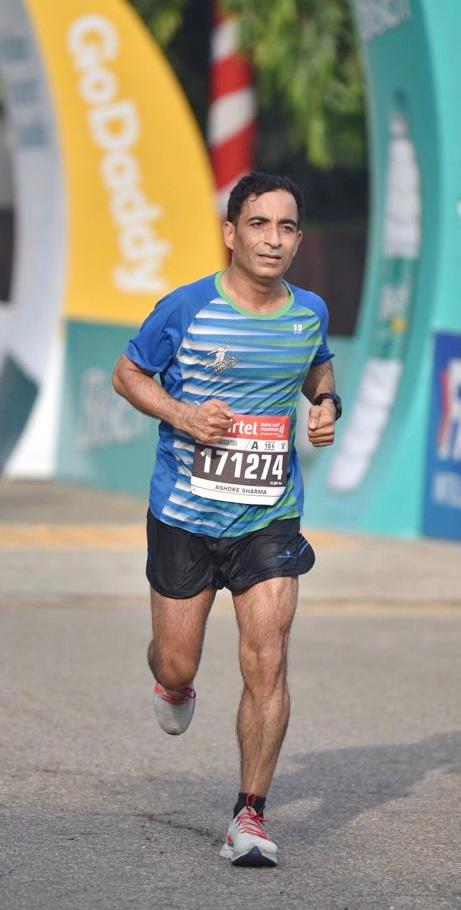
Ashoke Sharma (Photo: courtesy Ashoke)

Ashoke Sharma, a Gurgaon-based recreational runner, was to run his first Boston Marathon this year. His training for the virtual event has not been as meticulous as it would have been for an actual race. The weather in Gurgaon was also far from conducive to do race pace training, he pointed out.

“ My aim is to complete the run,” he said. Ashoke will be travelling to Bengaluru to do the virtual Boston Marathon. He plans to run the marathon on a route charted by the Bengaluru-based marathon training group, Pacemakers. “ I think they have chosen a traffic-free route near the airport,” he said. Once done with Boston Marathon, Ashoke will be stepping up his training for the virtual New York City Marathon.

Like Ashoke, Wing Commander Parag Dongre (retd) was also set to run his first Boston Marathon this year. Parag had trained for the April race and then resumed training after lockdown induced-break, for September’s virtual event. “ In Pune, we lost some days of training because of another stringent lockdown spanning 15-20 days,” Parag said.

Parag Dongre (Photo: courtesy Parag)

“ Training runs are often done in the company of many runners but because of the physical distancing norms, we had to run alone. I have done a few 30 km and 35 km training runs all by myself,” Parag said.

At the time of writing, he was yet to decide on the date of his virtual Boston Marathon. Post retirement from the Indian Air Force, he works as a helicopter pilot for B.G. Shirke Construction Company. “ I am waiting for my duty schedule to come up before I decide my day for running,” he said.

“ My training has been okay though not as well as I would have liked it to be,” Deepti Karthik, a recreational runner based in Bengaluru, said. The 2020 edition of Boston Marathon was to be her first appearance at the race. “ The virtual Boston Marathon is obviously not the same as the real race. At best, it may feel like a long training run,” she said. Deepti will be running the virtual event on September 13, along with other runners of Pacemakers.

Deepti Karthik (Photo: courtesy Deepti)

“ Pacemakers has chosen a route near the airport for the virtual event. Runners will be running in a loop of 5.6 km,” she said.

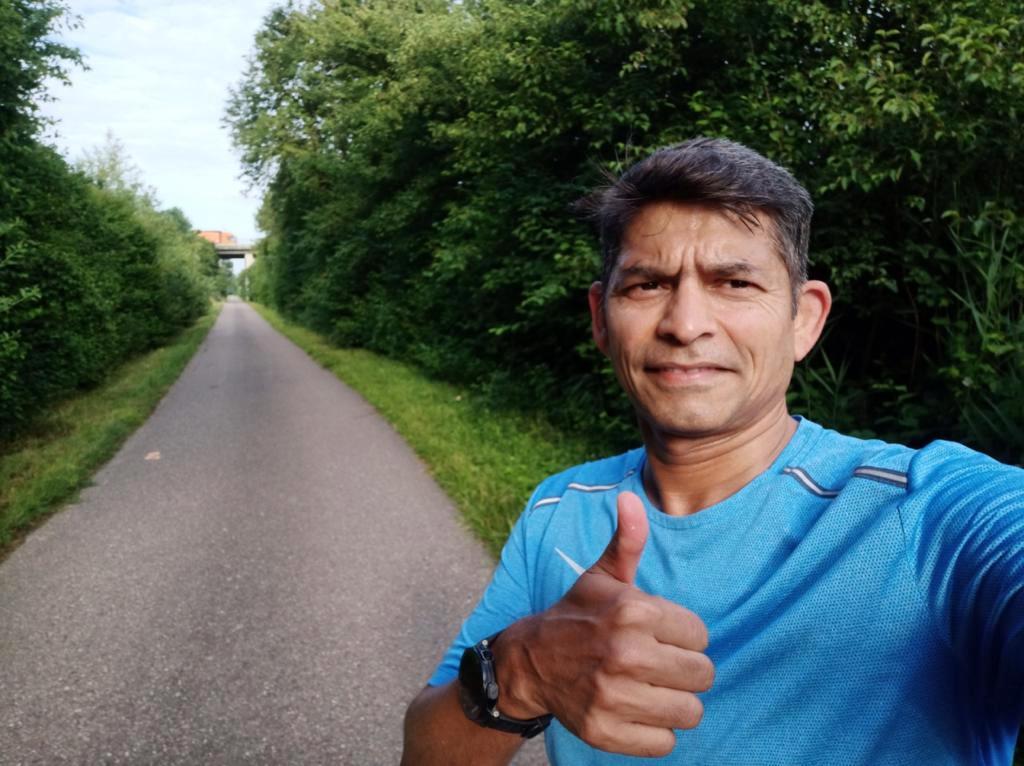
Kumar Rao, also from Bengaluru, will however be running on his treadmill. “ I will be running on the treadmill on September 12. I use the Stryd footpod with Garmin 935 for accurate measurement of pace and distance,” he said.

His training for this virtual race was entirely on the treadmill at home. “ I am looking to improve on last year’s timing of 3:59:33 hours and the age group rank of 18,” he said adding that he would work on a 3:55 finish. He just completed 10 weeks of specific training for this marathon. His training volume has been around 75 to 85 km per week. Kumar has also registered for the virtual New York City Marathon.

Kumar Rao (Photo: courtesy Kumar Rao)

The pandemic related lockdown forced Kumar to train entirely indoors on his treadmill. He complemented it with home-based fitness programs including strength training. He plans to step outside for his training runs once he is done with the virtual Boston Marathon.

Murthy R K, also from Bengaluru, plans to run the virtual race on September 12. Murthy’s training for the run has been moderately good though not as good as it would have been for the real event. He plans to run the virtual race without any target in mind. Murthy had been training hard for several years to qualify for the Boston Marathon. He was able to obtain a berth for the 2020 edition of the race but unfortunately the event got cancelled due to COVID-19. Disappointed, Murthy decided to run the virtual race instead. “ I do not have any target in mind. Nevertheless, I plan to do a good run,” he said.

(The author, Latha Venkatraman, is an independent journalist based in Mumbai.)

A WEEKEND OF WORLD RECORDS

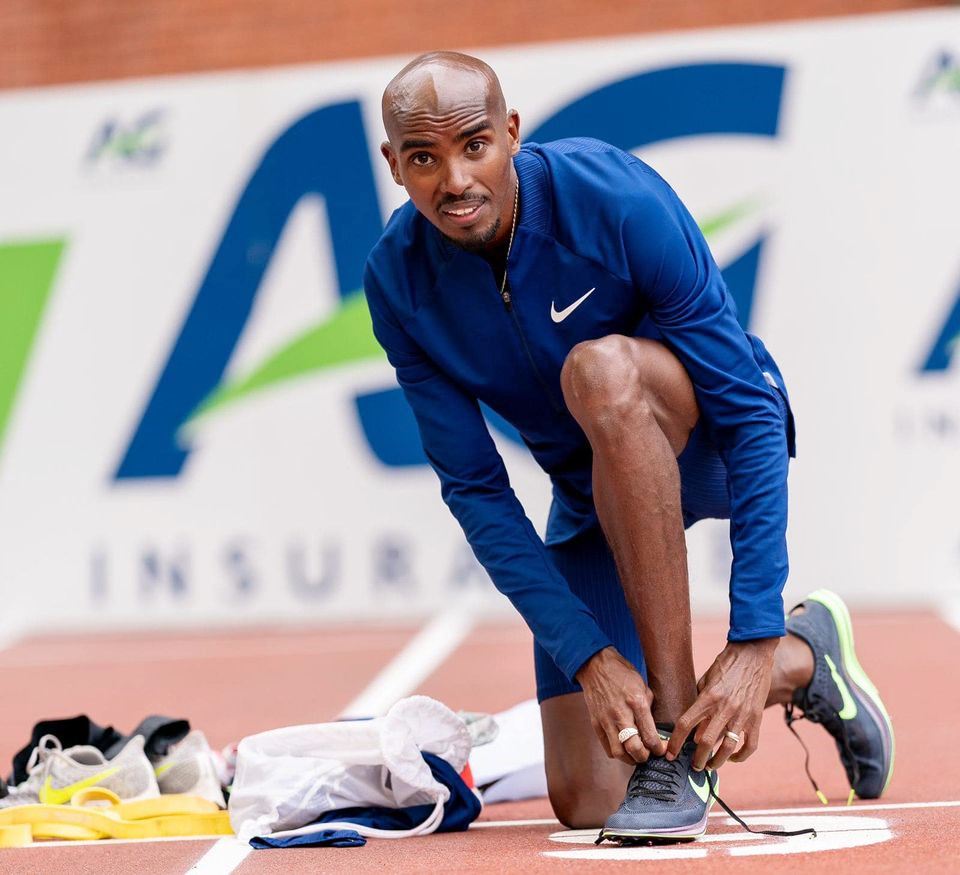
Mo Farah; this photo was downloaded from the athlete’s Facebook page and is being used here for representation purpose. No copyright infringement intended.

Great performances from Mo Farah, Sifan Hassan and Peres Jepchirchir

A world still in the shadow of COVID-19 isn’t stopping top athletes from smashing records. Three world records tumbled over September 4 and 5, 2020.

As per reports available on the website of World Athletics, Britain’s Mo Farah and Sifan Hassan of the Netherlands set world one hour-records in their respective gender categories at the Wanda Diamond League exhibition meet at the King Baudouin Stadium in Brussels, Belgium, on September 4.

Farah, a multiple world and Olympic champion set a new mark of 21,330m – bettering the 2007 mark of 21,285m set by Ethiopia’s Haile Gebrselassie. Somali-Belgian athlete, Bashir Abdi finished second, eight meters behind.  However, while he was leading the race, Abdi lowered the world best for 20,000 meters from 56:26 to 56:20.2. In her race, Sifan Hassan, the Dutch world 1500m and 10,000m champion, touched 18,930 meters in one hour, beating the existing mark of 18,517 meters set by Ethiopia’s Dire Tune in 2008, the report said.

Same day in Prague, Peres Jepchirchir of Kenya broke the “ women-only race world record in the half marathon,’’ another report on the website said.

According to it, on September 5, the 26-year-old Kenyan clocked 1:05:34 for the distance improving upon the previous record of 1:06:11 set by Netsanet Gudeta of Ethiopia at the World Half Marathon Championships in 2018.

All the new timings reported are subject to the usual ratification process.

(The author, Shyam G Menon, is a freelance journalist based in Mumbai.)
FREEDOM

Photo: Shyam G Menon

I don’t know about you, but the one thing I cannot live without is music.

It has been my constant companion through ups and downs in life.

Music complements the other thing I value greatly – freedom.  Increasingly humanity has shrinking respect for freedom. It is being swept aside by the march of money. There have been many songs about freedom. No I am not talking of patriotic songs. I am talking of songs that celebrate freedom as an attribute to be cherished without need for any cause. Freedom does not require a reason to be important; it is important as it is. Why else would the physical universe be so immense? Why else, when we are in chains, do we have the ability to close our eyes and find that same universe within?

Everybody has their favorite song evoking freedom. I don’t dig lyrics much. I am more somebody who identifies with songs because they attract aurally. You find release. For a long time – practically since the first time I heard it in the late 1980s when the album The Joshua Tree was released, U2’s Still Haven’t Found What I’m Looking For stayed with me, an anthem for existence. In later years, Traffic’s Dear Mr Fantasy became a favorite, especially the live version by Steve Winwood and Eric Clapton from their concert at Madison Square Garden with its soaring lead guitar. Amidst pandemic and lockdown, Chris Rea’s Set Me Free emerged another favorite. Hope you like it.

(The author, Shyam G Menon, is a freelance journalist based in Mumbai.)
WFH DAYS

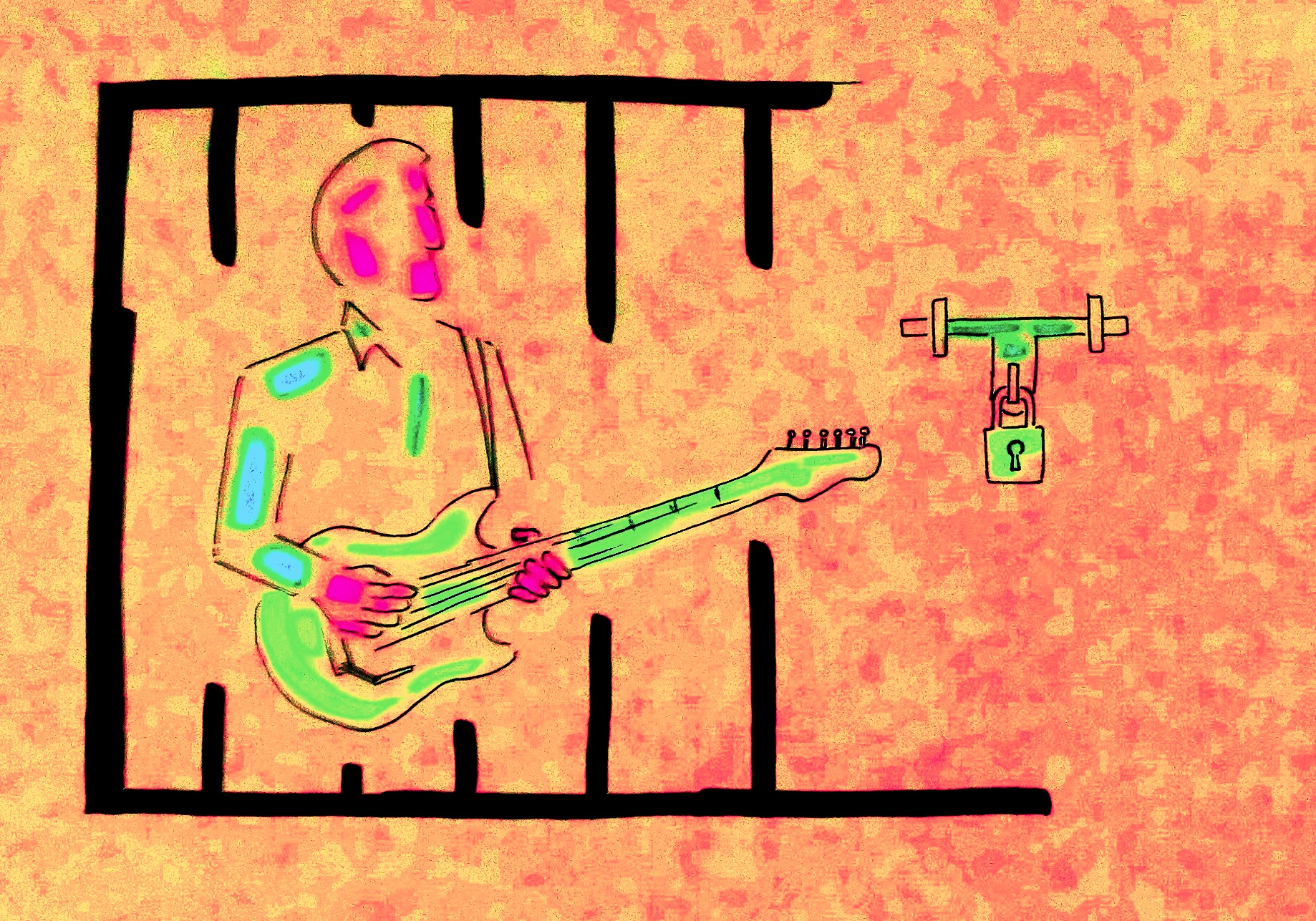
Illustration: Shyam G Menon

Among major shifts accompanying COVID-19 and lockdown was Work from Home (WFH). Initially it was heralded as the digital future. Now, we are worried if it may end up an annoying blend of neither the best of office nor the best of home.

Over the past few months, periodic interactions with friends and relatives threw up concerns about WFH; especially long hours of work given employee is anyway at home and available on call. The boundary between home and office has increasingly blurred. With time we may retract to a more enlightened form of WFH. However, there are challenges. Currently, there is more money in an inch of technology than a mile of human life. In world by money, we just can’t be sure what will eventually triumph. In the meantime, as with many things beyond our control, the best option we have is to laugh at our predicament.

The recent past has for some reason drawn me closer to the music of Chris Rea, the British rock and blues artiste. His debut album was in 1978. In the late 1980s, somebody gifted me his album: Dancing with Strangers. It had the hit song Let’s Dance. From then on, I have listened to his work on and off. But of late, I have grown to genuinely appreciate his style. A talented guitarist, he keeps his music simple. His compositions often evoke a sense of space and momentum (a good example being that beautiful song: Set Me Free). I like this idiom of peaceful, spatial and moving in a world becoming more and more complicated and congested.

Working on It was a song he released in 1989.

Here are the lyrics:

Oh how I’d love it girl, just you and me

Take the day and fly

But oh this job, it’s got the best of me

Tell you why, tell you why

Somebody above is in a desperate state

Some kind of urgency, the kind that won’t wait

I say tomorrow, he say today

And the man in my head well he tell me no way

Keep working

I got eight little fingers and only two thumbs

Will you leave me in peace while I get the job done

Can’t you see I’m working

Oh, oh I’m working on it

Oh, oh I’m working on it

Well they’re coming from above me

And they’re coming from below

Yea they’re in there right behind me

Everywhere that I go

And my buddy, he’s screaming down the telephone line

He say gimme, gimme, gimme

I say I ain’t got the time

Oh, oh can’t you see I’m working on it

Oh, oh I’m working on it…

A few days ago as I revisited this old song, I felt it could be an anthem for our WFH days.

Use good headphones, speakers.

Turn up the volume.

Bass matters.

Amidst WFH, shake a leg.

Enjoy.

(The author, Shyam G Menon, is a freelance journalist based in Mumbai.)
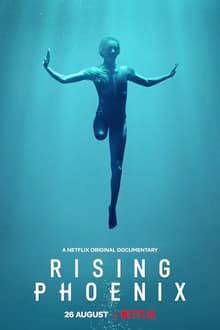
RISING PHOENIX

This image was downloaded from the Facebook page of the film. It is being used here for representation purpose. No copyright violation intended.

Many of us would know the name: Pierre de Coubertin.

How many of us have heard of Ludwig Guttmann?

The first is considered the father of the modern Olympic Games. The second is among those responsible for the Paralympic Games. In recent decades, the Paralympic Games have been typically held in the same host city as the Olympics, after the main event has concluded.

As you learn more about it, you realize that there is practically nothing to qualify the Paralympics as less than the Olympics unless your judgement is based on notions of mainstream, normal and majority – all of which nudge imagination towards a sense of physical and mental ideal. If challenge, hard work and determination are what author great stories from the Olympics, then such attributes are equally strong at the Paralympics. In fact, challenge may be more because the athletes overcome tremendous physical and mental hurdles before they are able to perform, leave alone finish on the podium. Yet the story of the Paralympic Games and that of the athletes participating in it, have always lived in the shadow of main and ideal.

This is what makes the 2020 documentary film Rising Phoenix essential viewing for anyone fond of sports. It gives you an inside view of the Paralympic Games – its genesis under the leadership of people like the German born British neurologist, Guttmann and the struggles the organizers and participating athletes endured in their life. It tells you of the step motherly treatment traditionally meted out to the Paralympic Games by society, which saw them as a cosmetic ritual – sort of corporate social responsibility – balancing the perception of the Olympic Games instead of genuinely valuing the drive, energy and commitment of the differently abled athletes. The Soviet Union, host of the 1980 Moscow Olympics, declined to stage the Paralympic Games; it was subsequently held in Arnhem, Netherlands. More recently in the run up to the 2016 Rio Olympic Games, the Paralympic Games were nearly canceled for want of funds. There have been other similar examples of cavalier treatment – instances of the Paralympic Games held to very few spectators in the stadium – as well as islands of endearing support like the 2012 Games staged in London. The Games in London is the largest Paralympics held to date with a record 2.7 million tickets sold. At Rio too, once the Paralympic Games got underway there was tremendous enthusiasm and crowd support; over two million tickets were sold.

While the modern Olympic Games held under the auspices of the International Olympic Committee, began in 1896, the Paralympic Games – as an athletic event for the disabled, coinciding with the Olympic Games – started only in 1948, when British World War II veterans participated in the International Wheelchair Games in London. The Paralympics acquired its distinct stature as an apex championship open to those other than war veterans, only in 1960 (Stoke Mandeville Games, Rome; it is seen as the first Paralympic Games). Its Olympic year editions started being held just after the quadrennial Olympic Games in the same host city or country as the Olympics, in the years following the Rome event and more reliably so by the late 1980s. As per data available on Wikipedia, India has participated in 24 editions of the Summer Olympics to date and won 28 medals in all (it hasn’t won a medal yet in the Winter Olympics, although it took part in 10 editions). It participated in 11 Summer Paralympics (it hasn’t participated in the Winter Paralympics yet) and won 12 medals, including four gold.

Rising Phoenix is available on Netflix. Among the athletes featured in it are Tatyana McFadden (she has participated in both summer and winter Paralympics with the bulk of her medals won in the wheelchair track and field category; she has also won elite marathons in the wheelchair segment), Bebe Vio Beatrice (wheelchair fencing), Jonnie Peacock (running), Ntando Mahlangu (running and long jump), Ryley Batt (wheelchair rugby), Cui Zhe (powerlifting), Ellie Cole (swimming) and Matt Stutzman (archery). Each of them comes alive as a composite of personal story, interview and footage of training for their sport and actual performance at the Paralympics.

Don’t miss this film.

(The author, Shyam G Menon, is a freelance journalist based in Mumbai.)