ULTRA-RUNNING / FIRST INTERNATIONAL MEDAL FOR INDIA AND A NEW WOMEN’S RECORD

Illustration: Shyam G Menon

At the 2018 International Association of Ultra Running (IAU) 24 Hour Asia & Oceania Championships held in Taipei in the first week of December, Ullas Narayana covered 250.3 kilometers and bagged a bronze medal, India’s first international medal in ultra-running, an official statement from Athletics Federation of India (AFI), said.

Competing in the same event, Sunil Sharma completed 202.6 kilometers to help India secure a bronze medal in the team event.

According to information on the International Amateur Athletics Federation (IAAF) website, twenty-one women and 25 men were slated to compete in the championship, representing Australia, Chinese Taipei, Japan, India, Jordan, Mongolia, New Zealand and The Philippines. India and Jordan were marking their debut at the continental event. In all, 65 runners – including those competing in the open race – were scheduled to take part.

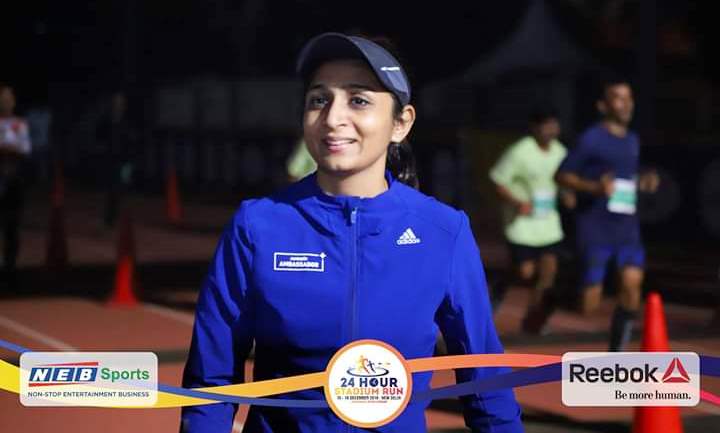
Days after the event in Taipei, at the NEB 24 Hour Stadium Run held under the aegis of AFI over December 15-16 at the Jawaharlal Nehru Stadium in New Delhi, Apoorva Chaudhary created a new national best covering 176.8 kilometers in the women’s 24-hour event.

Apoorva Chaudhary (Photo: courtesy Sunil Shetty / NEB Sports)

It was only her third ultramarathon.

She became the fourth Indian woman to run more than 100 miles (160 kilometers) in 24 hours after Meenal Kotak (175.4 kilometers), Hema Saini (172.3 kilometers) and Aparna Choudhary (169.2 kilometers).

The AFI statement also informed that Pranaya Mohanty from Bengaluru – in another 24 hour-race – had become the third Indian to exceed 200 kilometers in the men’s category, covering 206.8 kilometers.

(The author, Shyam G Menon, is a freelance journalist based in Mumbai.)

THREE YEARS AND RAAM

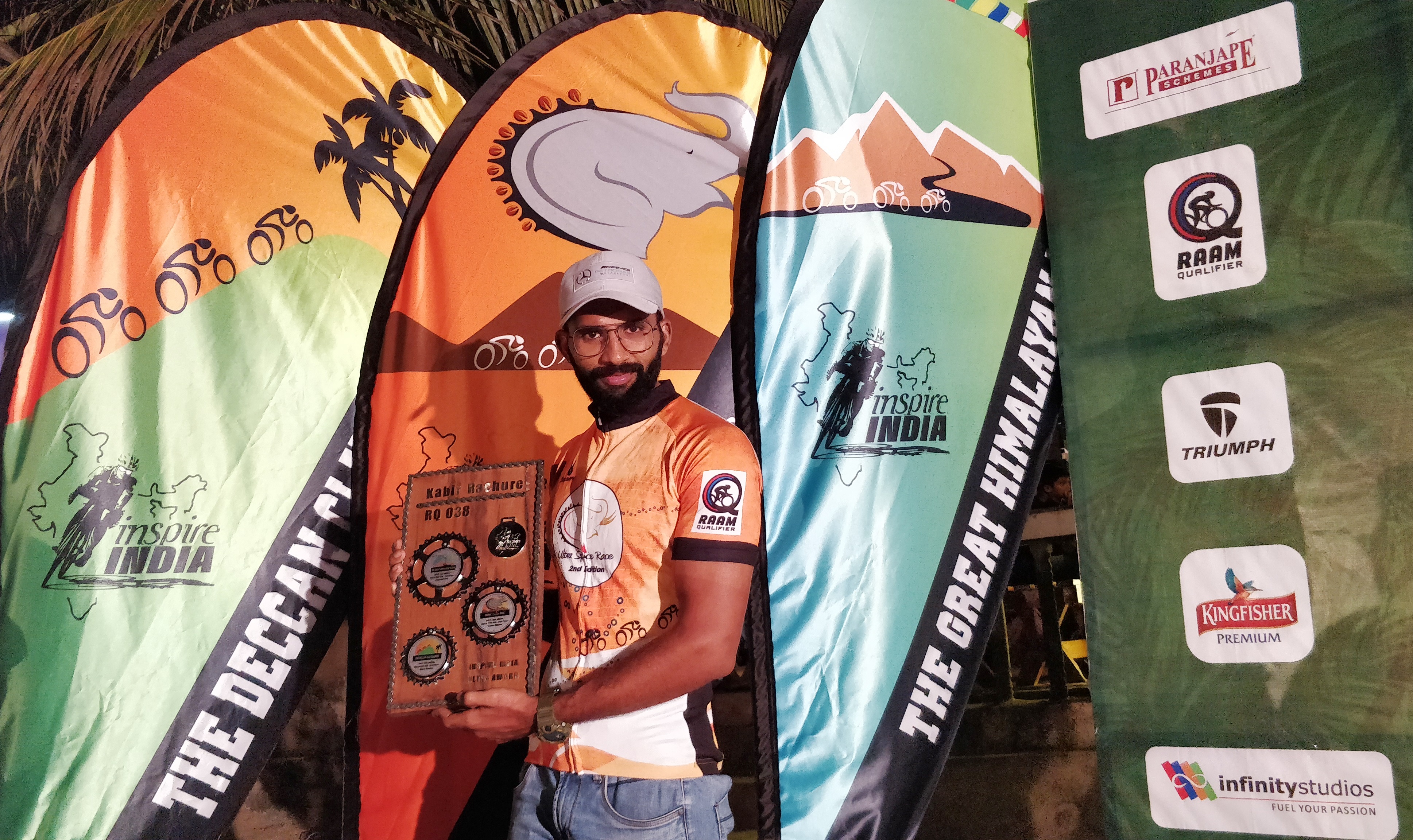
Kabir Rachure (Photo: (Shyam G Menon)

In 2017, we saw an Indian cyclist complete Race Across America (RAAM) solo, for the first time. He was followed to the finish line same year by another Indian who became the first from the country to complete RAAM solo in his first attempt. The new challenge is improving the time Indians have taken to complete the race solo. Not to mention – for anyone participating, completing RAAM within cut-off is itself a challenge because it is a test of rider and support crew. Among those in the fray for 2019 RAAM is Kabir Rachure, a lawyer from Kharghar, Navi Mumbai. His support crew will be anchored by his sister, Sapana. This is their story:  

In 2015, a young man walked into the Vashi shop of Everest Cycle Co and picked up a popular Firefox hybrid model called Momentum. He wanted to get into cycling. It is something his sister too remembers; the explanation he offered then was very much rooted in recreational cycling. What unfolded was different. Three years later, Kabir Rachure is gearing up for Race Across America (RAAM), one of the toughest endurance races in the sport.

Kabir was born 1990 in Udgir town of Maharashtra’s Latur district. His parents are farmers. His father is additionally a political worker; he was once attached to political circles around George Fernandes, the prominent Indian politician and trade unionist who served as minister in the central government. Kabir grew up in Udgir. He did his schooling there till the twelfth standard. For sports, he indulged in kabaddi and cricket. After twelfth, he shifted to Navi Mumbai. His elder sister, a lawyer, was practising at the High Court in Mumbai. Kabir followed in her footsteps. He studied LLB and upon completing it in 2013, joined his sister’s practice. Between reaching Navi Mumbai and becoming a lawyer, a small but significant shift happened in Kabir’s life. He began working out in the gym. Alongside, he also commenced running ten kilometers every alternative day. Today, fellow cyclists reckon that physical fitness has played a role in Kabir’s relatively rapid progress in cycling. Back in the days when he began frequenting the gym, it was the time of triathlon’s ascent in urban India. There was the triathlon as emergent picture of fitness for those who cared to be in outdoor sports; there was also news of Indians completing Ironman events. In particular, Kabir recalls the story of Milind Soman, model, actor and triathlete. It was amid these new trends and his curiosity for them that Kabir bought the Firefox Momentum.

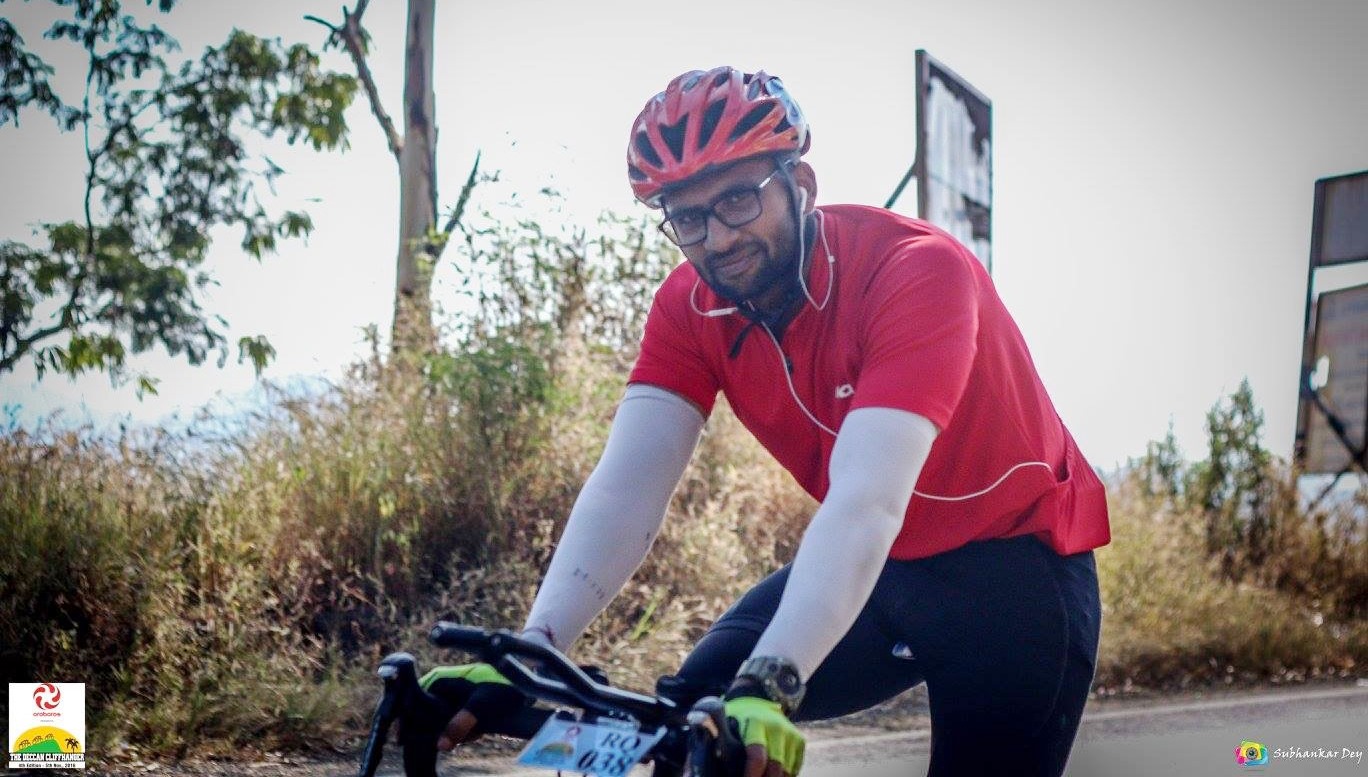
Kabir; from 2018 Deccan Cliffhanger (Photo: courtesy Kabir Rachure)

In August 2015 Kabir did his first ride of some distance – from Kharghar (where he stayed) in Navi Mumbai to Chembur in Mumbai, and back. The following week, he embarked on a ride in excess of 100 kilometers. He was targeting 180 kilometers but after 12 hours of cycling, found himself at the 150 kilometer-mark. Young and impatient, Kabir decided that the fault was cycle’s – he had underperformed because his bicycle wasn’t good enough. Some days later he was at Everest Cycle Co to service his bike, when shop personnel told him of BRM (Brevets des Randonneurs Mondiaux). A brevet is the name given to a randonneuring event, which in turn is a long distance cycling sport with origins in audax cycling. Enrolling for a 200 kilometer-BRM, Kabir covered 100 kilometers in approximately four and half hours and the whole course in 10 hours, 40 minutes. In December 2015, within months of buying his first bicycle as an adult, Kabir completed the 300 kilometer BRM – from Mumbai to Nashik and back – in 17 hours of cycling. “ Now I was pretty confident of both my interest in cycling and my ability in the sport,’’ he said. In January 2016, he registered for the 600 kilometer brevet from Mumbai to the hill station of Mahabaleshwar and back. There he met with the first reality check to his rapid progression. He had to withdraw from the ride at around 400 kilometers. It was DNF (Did Not Finish). “ I lacked experience and mental strength. I was also very bad on climbs,’’ Kabir said.

Kabir with his sister, Sapana. She anchors his support team at races (Photo: courtesy Kabir Rachure)

There is a seven year age gap between Kabir and his elder sister, Sapana Rachure. She always looked out for Kabir. Mumbai’s community of lawyers has for long harbored some serious cyclists. One of them who had been on the Mumbai-Mahabaleshwar-Mumbai BRM told Sapana, “ your brother cycles well despite having only a hybrid. Imagine what he would do if he has a road bike.’’ Sapana was aware of Kabir purchasing the Momentum and thereafter participating in cycling events. When he bought the Momentum, he had told her that it was for recreational cycling. The comment by fellow advocate hinted to Sapana that something bigger was likely afoot; something that held promise. Sapana had no background in sports or cycling. She asked Kabir about the DNF, why it had occurred and what a road bike is. When he outlined the limitations the hybrid posed, she said, maybe they should spend and get a road bike. With her support, Kabir invested in a brand new road bike – a Scott Speedster, which he picked up from the Seawood outlet of Everest Cycles dedicated to selling performance and lifestyle bikes. He then registered for the 600 kilometer-BRM organized in Nashik by Dr Mahendra Mahajan. In 2015, Mahendra and his elder brother, Dr Hitendra Mahajan, had been the first Indians to complete RAAM in the US, as team of two cyclists. “Dr Mahajan was an inspiring person,’’ Kabir said. This brevet was Kabir’s introduction to RAAM; the race in the US would become a subject of great interest to him. He completed the 600 kilometer BRM within cut-off, in 39 hours and 52 minutes but not before he realized that he had much work to do improving his efficiency on climbs. “ I was still struggling on ascents,’’ he said. BRM done, Kabir got down to researching RAAM. The process brought him to Deccan Cliffhanger (DC). It is a 646 kilometer-long race organized annually on the Pune-Goa route, which serves as one of the qualifiers for RAAM in India. At the time Kabir came across information on DC, he had eight months left to prepare for the event’s upcoming 2016 edition.

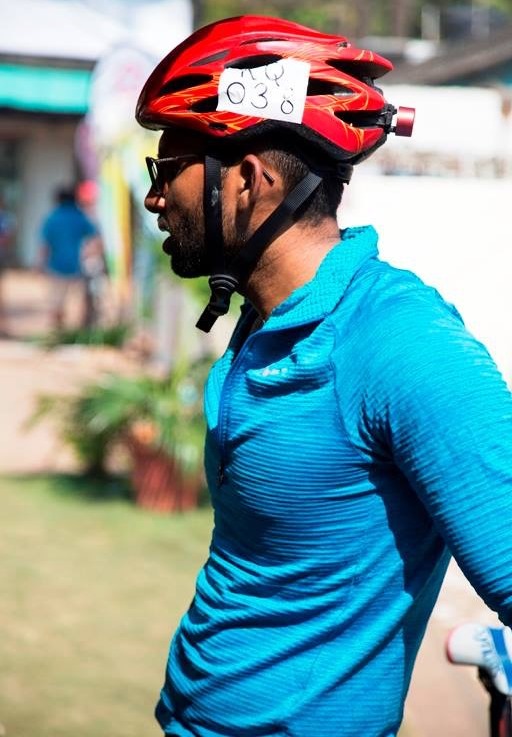
From the 2016 edition of Deccan Cliffhanger (Photo: courtesy Kabir Rachure)

In July-August 2016, Kabir registered for the event. He trained mostly by going for BRMs. Plus he put in some extra effort in the run up to DC. One person he had got to know of while searching for information on DC, was Samim Rizvi. Samim, who grew up in Mumbai and later relocated to Bengaluru, was among first riders from India to attempt RAAM solo. Unfortunately despite several attempts, completion within cut-off has eluded Samim. The best he managed at RAAM was a finish slightly outside cut-off time. However he was a pioneer as regards RAAM attempts from India. Samim was there for the 2016 DC. This RAAM qualifier (RQ) was Kabir’s first tryst with a supported race; one in which rider had to have crew, trailing him in a vehicle (brevet in contrast is self-supported but given it is not a race features camaraderie and informal support among riders). When Kabir spoke of DC at home, Sapana knew that she had to stand by him; pitch in to support. She decided to anchor his support crew for DC. She and two of his trusted friends – Tushar and Ratnadeep; all of them lawyers – assumed the role. None of them were cyclists. They had little idea of what crewing for ultra-cycling entailed. “ As lawyers, our first instinct was to study the rules of the event so that Kabir does not get penalized for flouting any norms. Aside from knowing those rules, we had no idea of what support crew in ultra-cycling must do. We learnt on the go,’’ Sapana said.

Kabir; after completing the 2016 edition of Deccan Cliffhanger. He missed RQ by 28 minutes that year (Photo: courtesy Kabir Rachure)

Serious cyclists, particularly those into competitions, use cycling shoes. These shoes typically have stiff soles and rigid upper; they help transfer power efficiently to the pedals and also assist in keeping the legs free of cramps. They come with cleats and the lock-in facility the shoes offer with compatible pedals, keeps cyclist’s legs firmly connected to the pedal. This arrangement engages muscles in the legs more comprehensively. A full rotation of the bicycle’s crank involves downward and upward movement. Cycling without specialized shoes, most of us deliver the downward thrust and count on the momentum of repeated movement to keep the upward half of the rotation going. The upward half is not a conscious pull. With shoes that lock-in, the upward movement becomes a pull making cadence so much more efficient. The 2016 DC was Kabir’s first race with cycling shoes on. The race started well for him. The crew trailed him taking care of food and hydration, counting on Kabir to tell them what he wanted. “ There was none of the gravity of ultra-cycling and the close attention to food and hydration one must give. Close to lunch time we asked Kabir what he wished to eat and he said, maybe rice and lentils. We stopped to pack him lunch at a roadside dhaba. During that period Kabir was cycling alone for about 45 minutes with little to eat and just one bottle of water on him. When we stopped to have lunch, we found a tree with shade and sat down to eat as in a picnic,’’ Sapna said.

From 2018 Ultra Spice (Photo: courtesy Kabir Rachure)

After 300 kilometers, Kabir developed pain on his right knee. One likely reason for the trouble was – he hadn’t got used to shoes with cleats. Cycling shoes, the lock-in mechanism, finding a sweet spot to deliver thrust in the arrangement – all this takes a while to figure out. In activities like running and cycling, which feature movements repeated over a long period of time, small niggles and flaws can work their way up to becoming bigger concerns. Slowly the pain Kabir felt in his knee started worsening. The knee gathered swelling making progress difficult. At the same time, parachuted into crewing with no prior experience of it, Sapana had not studied route details or asked around for the same. Trusting their sense of geography, the crew kept telling tired cyclist that he was heading from high Deccan plateau to Goa by the sea and therefore, it should be all descent closer to finish. What they didn’t know was that the race harbored climbs even in its closing stages. One hour before cut-off, Kabir had 32 kilometers left to cover in the race. At this point, he was forced to slow down. The knee was in a very bad shape. He completed the race well within Inspire India’s cut-off time of 38 hours but missed qualifying for RAAM by 28 minutes. He was quite upset by the outcome. That year, Samim too didn’t finish DC. Meeting Samim at DC, however helped Kabir get more information about the race in distant US – RAAM. Notwithstanding failure to qualify, the RAAM project was on.

Cooling off; from 2018 Ultra Spice (Photo: courtesy Kabir Rachure)

Ultra-cycling is engaging drama. The long distance involved along with variations in terrain, weather and overall condition of rider make it an interplay of variables and thereby distinct from a regular time trial. Ultra-cycling events don’t end in a few minutes or few hours like time trials and short road races do. They can stretch for long hours, days, sometimes weeks. In ultra-cycling, support crew is important. One reason for this is that ultra-cycling events can push rider to the edges of his / her mental equilibrium. Their capacity to take sound decisions may become suspect. Support crew that keep their wits about themselves and think for rider and team, is crucial under such circumstances. Kabir had developed a good rapport with Dr Mahendra Mahajan. When the Mahajan brothers decided to attempt a long ride along the Golden Quadrilateral – a highway network (approximately 5900 kilometers long) connecting the large cities of Mumbai, Bengaluru, Chennai, Kolkata and Delhi – Kabir was included in the support team. The ride was in relay format; similar to how the brothers had executed their ride as two-person team at 2015 RAAM. “ The Mahajan brothers completed this ride in 10 days, eight hours. This experience was an eye opener. It provided me insight into how people work as a team, how determined riders and crew can be. The experience helped me mature in my perspective towards endurance cycling,’’ Kabir said.

Kabir with his support crew at one of the editions of Ultra Spice (Photo: courtesy Kabir Rachure)

In the meantime, Samim had resolved to try RAAM in 2017. He asked Kabir to be part of his crew. Mahendra Mahajan supported the idea. He felt that if Kabir intended to attempt RAAM at some time, then getting a taste of what it is like to crew at the race would be valuable experience. For team heading to ultra-cycling events, it is important to have an idea of challenges along the route. For this, riders do considerable research. But nothing beats being on the route earlier for an understanding of what to expect while racing. RAAM aspirant crewing at the event ahead of participating as racer is therefore common practice. Crewing for other cyclists, not only shows you how rider fares as race progresses, it also tell you how support team works and provides you a window to see what the management and logistics challenges are.

That year, Col Srinivas Gokulnath of the Indian Army (he was based in Nashik) and Dr Amit Samarth from Nagpur were also among solo riders attempting RAAM. As it turned out, Srinivas (2017 was his second attempt at RAAM) became the first Indian to complete RAAM solo (11 days, 18 hours, 45 minutes) while Amit became the first Indian to finish it in his very first solo attempt (11 days, 21 hours, 11 minutes). Samim unfortunately suffered a DNF in the initial stages of the race, somewhere past 900 kilometers. The DNF spelt premature end to Kabir’s stint at crewing. Advised by Mahendra Mahajan to not give up the opportunity he had to see the race route; despite Samim’s DNF, Kabir took a car and went as far as Durango in Colorado before heading back to California and thereafter, India.

From 2018 Ultra Spice (Photo: courtesy Kabir Rachure)

Now fired by his own RAAM dreams, Kabir on return to Mumbai began pestering Divya Tate of Inspire India (organizers of DC) with queries on how best to prepare for DC. He wanted that RQ – finish within 32 hours at DC – badly. Among riders at 2017 DC was Amit Samarth, who just a few months earlier, had completed RAAM. At the 2017 edition of DC, near Mahabaleshwar, Kabir’s crew told him that only Amit and Akshay Chowgule were ahead of him on the route. As the race progressed, Akshay had to exit because of disqualification. Catching up with Amit, Kabir knew, was out of the question. Amit is a strong, motivated cyclist. Towards the final 100 kilometers of the race, Yagnesh Ahir from Ahmedabad also got ahead of Kabir. But Kabir secured third place and a finish in 28 hours, 50 minutes. He had his RQ. Divya reminded him that his journey was only starting. She asked him to attempt another event she was organizing – Ultra Spice; from Goa to Ooty and back. The approaching edition would be the second of Ultra Spice and nobody had completed the race yet. Early 2018, there were five participants for Ultra Spice – Srinivas, Lt Col Bharat Pannu, Sumit Patil, Vasant Manivanan and Kabir. Kabir’s support crew for the event included Mohan Subramanyam, a senior cyclist from Bengaluru who was quite familiar with the Ultra Spice-route and Peeyush Manjrejkar and Dibyojyoti Banerji (he is Kabir’s brother in law), both ultra-runners from Navi Mumbai. At about 1200 kilometers into the race, Kabir’s team got a call from Divya asking if they had seen Bharat; she had been unable to contact his team. When they finally met him, Bharat was not doing well. So they continued, keeping Bharat in eyesight till around 90 kilometers to the finish line, when Kabir pulled ahead. Kabir completed the 1750 kilometer-race in 112 hours, 51 minutes placing second. This was yet another RQ; he was now eligible for a couple of attempts at RAAM.

From the 2018 edition of Deccan Cliffhanger (Photo: courtesy Kabir Rachure)

By now, Kabir’s cycling was on a different plane. In April 2017, he had met Miten Thakkar, a certified cycling coach based in Mumbai. Miten (he has coached the Mahajan brothers) is now Kabir’s coach. Miten brought structure and focus to Kabir’s training. Besides such aspects like interval training, tempo rides and endurance rides, Kabir’s training also paid attention to improving his VO2 max and strengthening muscle groups relevant to cycling. On the equipment side, the number of cycles in his inventory rose. Besides the Scott Speedster, he now owns another four road bikes. The purchases have been done paying attention to the need for specialist racing bikes and endurance bikes at events like RAAM, which present variation in terrain. For racing he has a Specialized Alize and a Lapierre Air Code; for endurance, he has a Lapierre Pulsium and a Colnago C60. In May 2018, Divya spoke to Kabir of a new race she was organizing in Ladakh called Himalayan Ultra. Altitude has for long been a fascination when it comes to structuring running events in India; this was to be cycling’s equivalent. For the 2018 inaugural edition of Himalayan Ultra, there were five participants in all including Amit, Sumit Patil and Kabir. The cut-off time for the race spanning Leh-Kargil-Leh was 37 hours. There was also mandatory sleep time of three hours; it was the first RQ in India with sleep time required so. Kabir availed that sleep time at Kargil after cycling in from Leh. On the return leg, he overtook Amit, who wasn’t in good shape. Kabir won the race in 33 hours, 20 minutes (excluding mandatory sleep). “ This race has been a source of strength for me in the approach to RAAM,’’ Kabir said. But it was Amit who did the incredible. Not feeling well he had to take time off for medical attention. He returned to the race and finished it in second place, covering the distance within cut-off.

At 2018 Deccan Cliffhanger (Photo: courtesy Kabir Rachure)

A week before we met for conversation in the Navi Mumbai township of Kharghar, Kabir placed third in the November 2018 edition of DC. On the radar next was, 2019 Ultra Spice in January and then, 2019 RAAM in the US. For RAAM, Kabir hopes he can improve the time Indians have taken so far to complete the race in the solo category. He would also like to feature among the faster rookies. His support crew will be anchored by Sapana. Her understanding of ultra-cycling has evolved much since that first DC. “ Looking back I tell people that they should never commit the errors we did then,’’ she said. Today, Sapana keeps herself informed as best as she can about ultra-cycling and races therein. So far she has been crew chief for Kabir at five ultra-cycling events and in four of them, he had podium finish. For 2019 RAAM her priorities include making sure race rules are observed without fail (RAAM is a stickler for rules, especially those related to safety), proactively dealing with hydration and nutrition and ensuring everyone in the team is on the same page. Besides Sapana; Tushar, Ratnadeep, Peeyush and Dibyojoyti will also be there in Kabir’s 2019 RAAM crew.

RAAM is an expensive affair. In addition to multiple bikes and sustained training, it requires a whole team and hired support vehicles traveling the breadth of the US from the west coast to the east. Kabir hasn’t found any sponsors for his RAAM effort yet. He believes that sponsors will back athlete only after a big race done. The initial struggle is yours to bear. So for his first big race – RAAM – he plans to rely on personal funds and crowd funding. Besides sponsorship also brings pressure; the sort that can distract you from the main job of focusing on race, sticking together as team, keeping cyclist going for several days through challenging conditions and reaching the finish line within cut-off time.

Kabir will leave for the US in early May 2019, a month before RAAM.

Update: Late January 2019, Kabir completed the 1750 kilometer-category of Ultra Spice in 100 hours 34 minutes to place second.

(The author, Shyam G Menon, is a freelance journalist based in Mumbai.)                

TOR DES GEANTS / “ IT’S SOMETHING ELSE’’

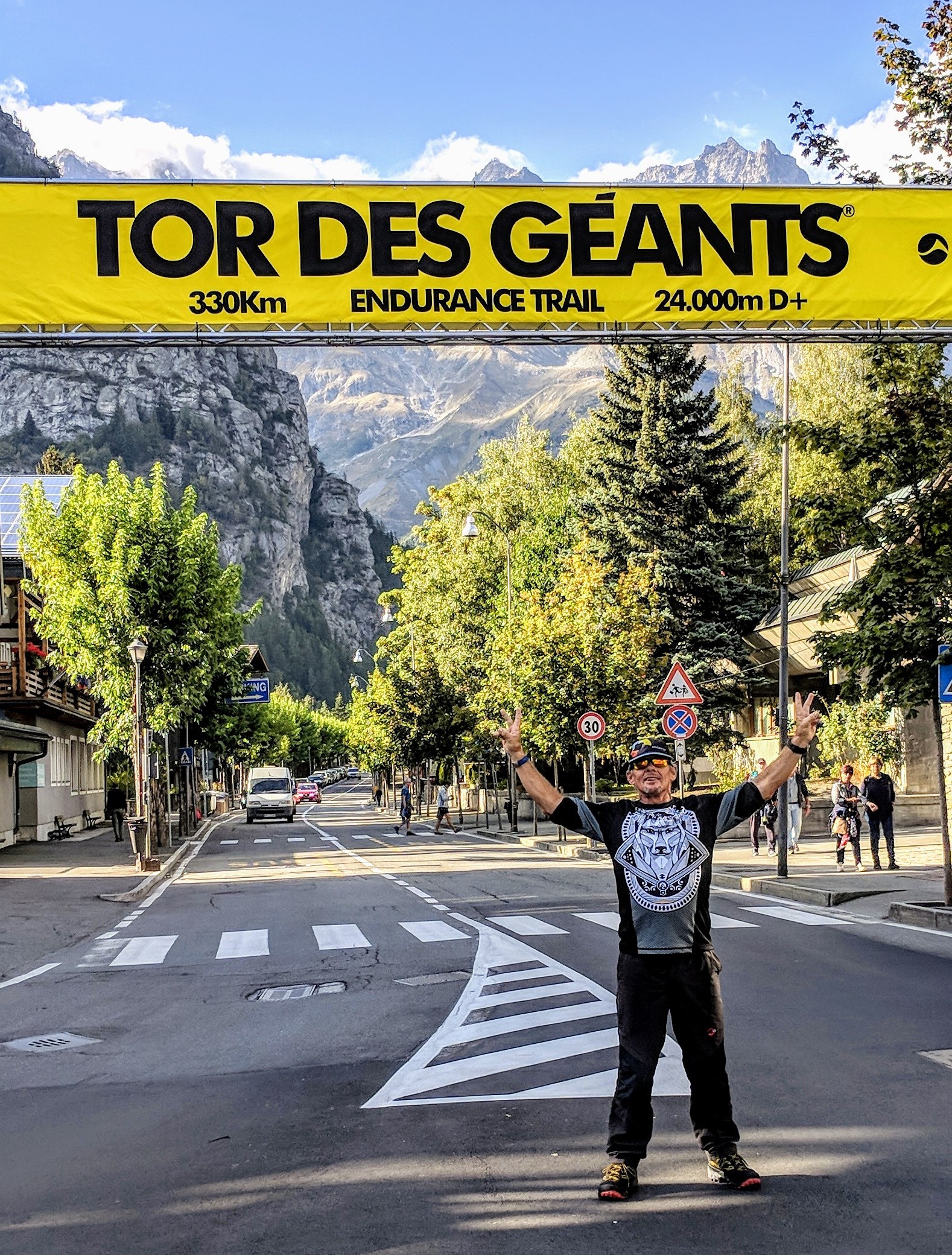
Grant Maughan; at 2018 Tor des Geants (Photo: courtesy Grant Maughan)

2018 has been a packed year for endurance athlete, Grant Maughan. Some of the races he participated in (Barkley, Last Annual Vol State, Badwater 135, Angeles Crest 100) and his ascent of Everest – he has written about, on this blog. In September he was at the 2018 edition of Tor des Geants in Italy’s Aosta Valley. In this article by invitation, Grant describes his experience at the punishing race:

It probably sounds clichéd, but Tor des Geants is about the toughest race out there.

Everything about it is on the cusp of extreme: distance, elevation, altitude, weather, sleeplessness, etc. At 330 kilometers (+200 miles) and with over 24,000 meters (+80,000 feet) of climbing it’s something for the die-hards. By the way, the climbing is hard but not as hard as the 24,000 meters of descent which threaten to turn your legs into pool noodles and afterwards into petrified wood.

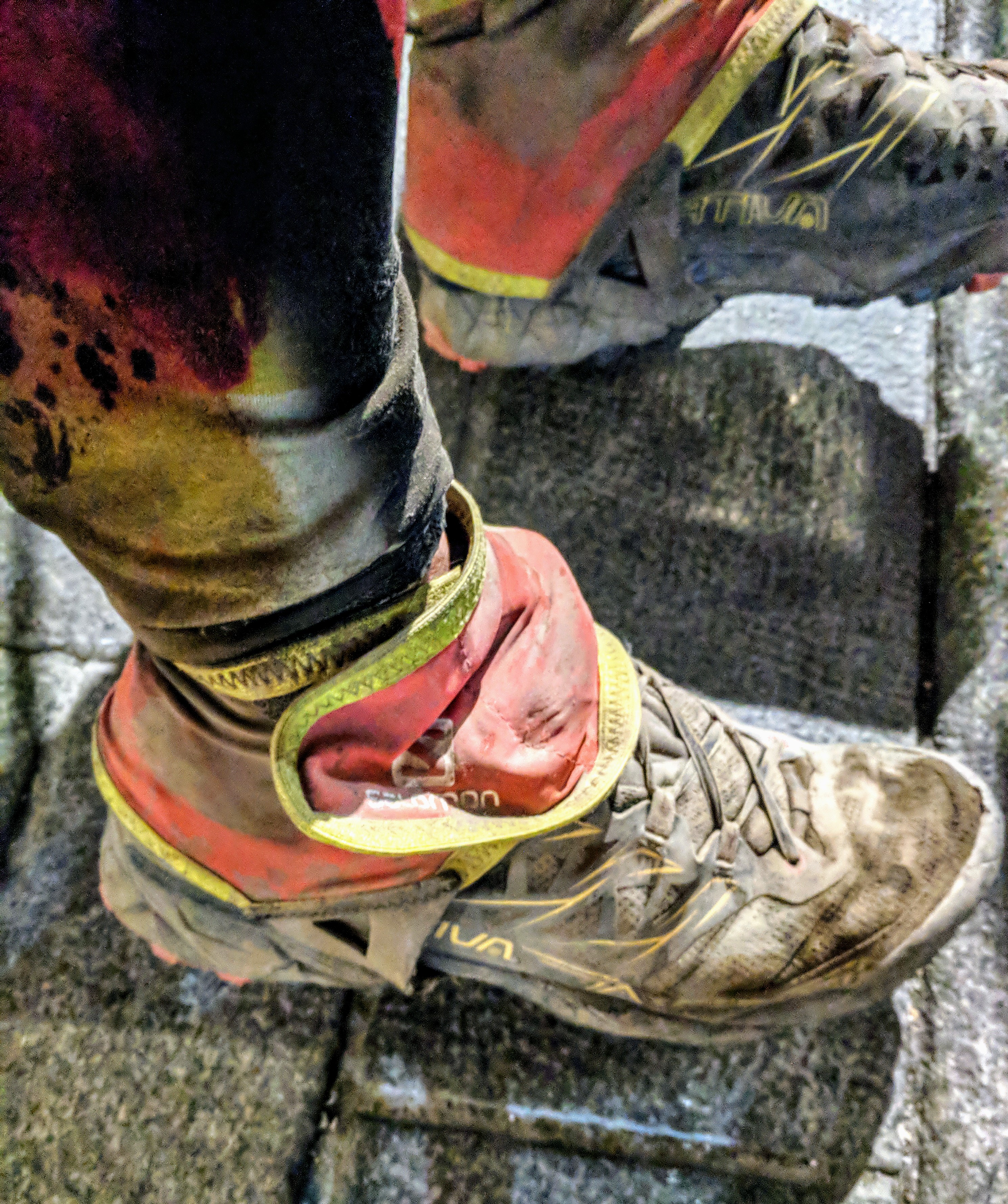
The Tor takes a toll (Photo: courtesy Grant Maughan)

The time limit is 150 hours, which may sound generous but in fact means most have to hustle. The course is basically a saw-toothed up and down of robust towering mountains that lead you over high exposed cols (saddles, passes), across high vales and into deep verdant valleys. There are some sketchy airy sections to tip toe around, semi via ferrata fixed rope / cable / steel steps and steep slippery downhills covered in small pebbles that act like ball bearings under your trail shoes threatening to send you surfing off precipices like a late paddle into a dredging wave at Teahupo’o. I heard of one major accident. Surprisingly, not others…

The sleep deprivation is probably the most difficult for the majority of runners. You have to sleep at some point and are not supposed to bivy on the trail. But some of the aid stations were full of sleeping people meaning you had to keep going. I didn’t sleep for the first two days after being told “no space” many times and told I couldn’t even rest my head on the table at aid stations. At some points I thought it seemed dangerous to send people over high passes in the middle of the night when they were weaving and stumbling from lack of sleep. I grabbed a couple of hours here and there and managed to keep semi alert though you never feel on top of it.

Photo: courtesy Grant Maughan

It was warm this year and a couple of days were downright sizzling. I have never sweated so profusely while climbing and spent days in sodden clothing and shoes. As soon as you stop you get chilled at altitude and night time was very uncomfortable in damp clothing. You become so putrid you can hardly stand yourself. There are opportunities to clean up at the “Life Bases” (major aid stations) where your one drop bag is transported after leaving the previous one. But these are 50 kilometers apart which can take a long time to get to in this sort of terrain.

After a huge year of events I just plugged along and tried to stay consistent, which seemed to work just fine. I found my fitness actually changed whilst underway. But my feet felt like I had stepped in a couple of bear traps and then dipped them in volcanic lava. They were in agony. My hands also suffered from clutching the trekking poles and I still have a lot of numbness a week later. I took a couple of good diggers, which is not hard to do in the technical terrain and took bark off many limbs. The best one was on the first downhill when I went over head first in a rock field and a Frenchman picked me up by the scruff of my neck out of the boulders. He asked me what I was doing and I told him my shoes were too big and I tripped over the toes (not too far from the truth)…

Photo: courtesy Grant Maughan

The scenery is jaw-dropping in the Italian Alps and the quaint ancient villages interspersed in the middle of towering spires of granite and lush green fields is something to see, even with bleary eyes. Entire towns are involved in this race when it comes through. It’s very heartening to have their help and support when you are depleted and alone for days.

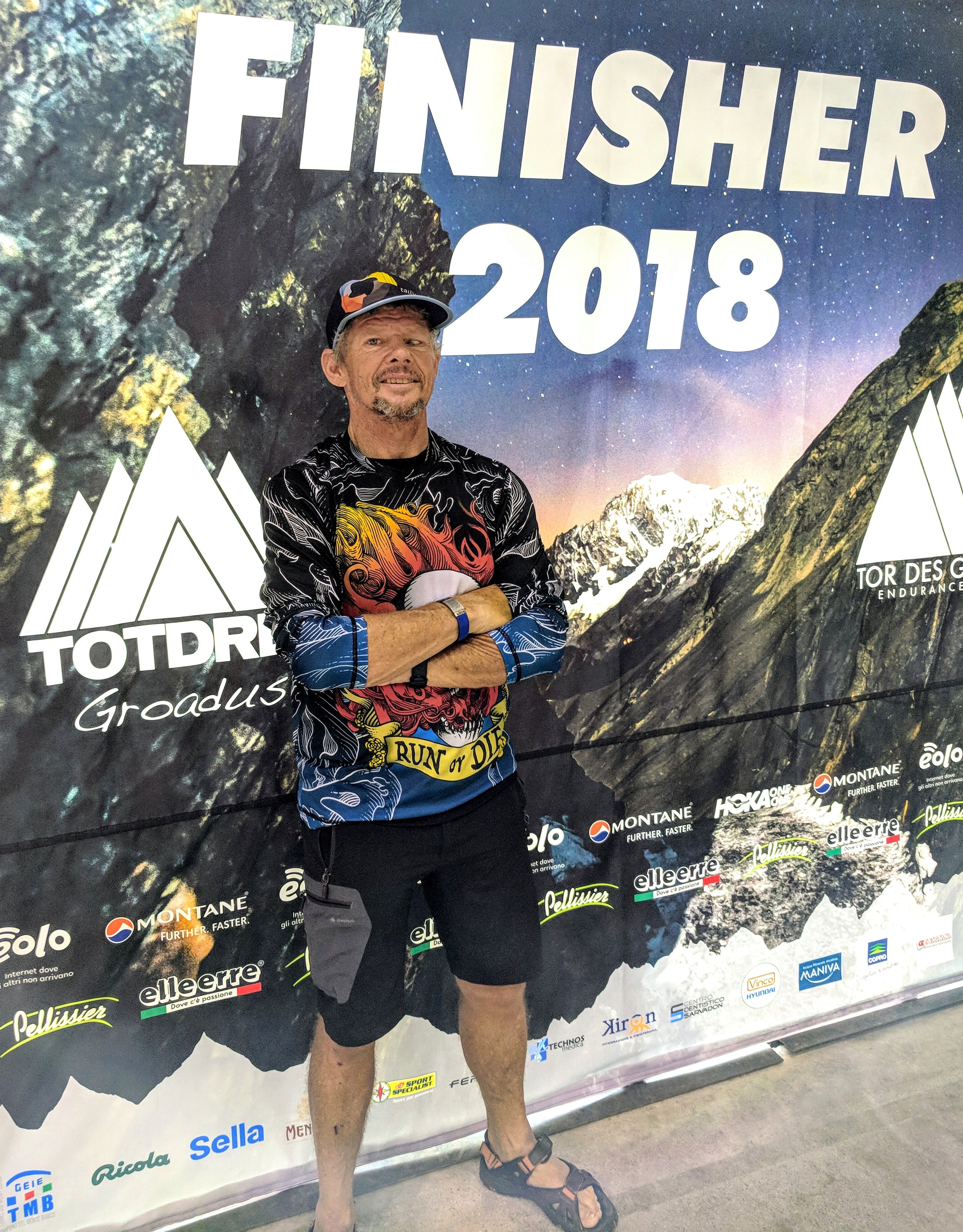
It took me over 133 hours to finish and I didn’t spend much time lingering. I came off the last mountain in the middle of the night listening to my trekking poles “tic, tic” on cobblestones along darkened lanes. The final stretch through the esplanade under the soft glow of lights as locals and supporters cheered and back slapped me was humbling indeed. It’s always good to finish but in this case I could hardly go any further. Jobie (Susan Jobe Maughan) met me at the end and I limped over to the local pub where the owner bought us a beer and a Lemoncello. After one I could hardly talk. I literally slept for days afterwards…

Tor des Geants, it’s something else.

(The author, Grant Maughan, is a freelance super yacht captain and endurance athlete. A prolific ultra-runner, in 2016, he was joint winner in the 333 kilometer category of La Ultra The High held annually in Ladakh. Please look up the blog’s story list and archives for earlier articles by Grant and an interview with him.)

INDIAN CYCLING LEAGUE / PLANNING TO START BY END-2019

Illustration: Shyam G Menon

Riyaz A. Batey is Managing Director of Unique Fitness Pvt Ltd and Director, Golden Bird Sports and Adventure Pvt Ltd. The latter entity – Golden Bird – has an agreement with Cycling Federation of India (CFI) to organize an Indian Cycling League (ICL), which will feature a crop of velodrome based-races annually. Mr Batey spoke to this blog recently about ICL.

Excerpts:   

Can you explain the reasons that prompted the concept of Indian Cycling League?

I used to be a cyclist participating in competitions. I represented the country from 1989 to 1992. Later I joined my father’s business. After 2010 I felt that I should do something because cycling – as sport – had given me a lot. That’s how I met up with the Cycling Federation of India (CFI), the state level association and started doing whatever I could do – like sponsor teams and provide equipment. Then we found that the riders were good but unfortunately due to lack of financial support, there were other elements missing.  If the riders get financial support; they get into teams, there are good foreign riders coming over to ride here, our riders get to ride abroad and the two practise together – then, we could potentially reach another level. That’s how we got around to approaching the CFI and they were happy to offer us rights to the league. The idea is to not only support the riders but also the technicians, the coaches – they would get more awareness and opportunities.

When was the agreement with CFI signed?

We had the agreement in place in 2017. Prior to that, we talked to them for almost a year. We discussed how the league should be, when the league should start, what teams to have, what kind of riders to take aboard. There are more than 17 different verticals in track racing. The league had to be within the velodrome because only then can you adequately address issues like broadcasting.  For this, it had to be inside a velodrome rather than on the road. We had to however trim the competition verticals because there is always time constraint. The national championship takes five days. That won’t work. So we cut down the events to seven from 17 – these are the more aggressive, compact, viewer friendly races.

Have you got your broadcast partner in place?

No. Right now – no. We are talking to a couple of broadcasters. We have already met the sports minister and he said he would like to support the initiative. It is not easy to find sponsors for events in cycling in India. So we have to also look for support from government.

Who are the constituents expected to put in resources for the league?

We are looking for private resources in the main. The government already conducts the national championship and regional championships like the Asian championship. A league is a private initiative and the government cannot do much; they will have their reservations. We are therefore looking more towards private companies.

What is the feedback so far?

A few corporates are interested. Indian riders are now performing well in the international arena. So, private companies are interested in supporting a cycling league.

Is the decision to keep ICL velodrome-based also inspired by the fact it leads to better capacity utilization of sports infrastructure; not to mention – the infrastructure pays back instead of merely consuming resources?

That is very true. We have 12 velodromes in the country of which 11 have concrete surface. The Delhi velodrome is an excellent velodrome. But that is only one. For a variety of reasons not all of the velodromes we have are maintained well. Riders are not able to train on them. Once we get into ICL, we would like to make sure that the velodromes hosting events are in good condition. Our events are not going to be centered in Delhi. For ICL, we hope to have events in Ludhiana, Jaipur, Thiruvananthapuram, in Assam…..

Given not all velodromes are in good shape, how many of the 12 do you plan to use for ICL?

In the initial phase we will have our events in Delhi, Ludhiana, Hyderabad and Thiruvananthapuram. In phase two, we will add Jaipur, maybe Amritsar.

There is a difference in quality between the Delhi velodrome and the rest. How will you accommodate that in the standardization of parameters for ICL?

Delhi’s is one of the best velodromes; it is centrally air conditioned and with wooden track, the sort used in international circuits at present. Broadcasting facilities are inbuilt. If I compare it with the best from the rest, like Jaipur, Ludhiana or Thiruvananthapuram, then obviously there is a gap – the others are open, the track is made of concrete. We need to do something about it. If we organize ICL including these other velodromes, then we enhance the possibility of addressing the gap between them and Delhi.

Riyaz A. Batey (Photo: by arrangement)

Would the idea at ICL be to use the concrete velodromes for the initial rounds and host the finals in Delhi?

Correct. Our plan for 2019 is to start in Ludhiana, work our way to the other cities and conclude with finals in Delhi. To begin with, we will have four disciplines, each at a particular location with velodrome and then have the finals of all four in Delhi. You must also think of logistics. The whole team involved will be large. Taking the caravan across the country will be a challenge. So in the beginning, we would like to keep the distances for transport as compact as possible. Our contract is for 20 years – 10 plus 10 – once ICL stabilizes, we can think of expanding the number of cities it goes to.

There is obviously a contract fee you pay CFI. I suppose that is locked in for 20 years….

It is locked in for 10 years after which it is open to renegotiation.

Would the processes and composition of league at ICL be similar to the leagues we now have in other sports? Will there for instance be player auctions?

We won’t have auctions for the first two years. One reason is that cycling is as yet, a niche sport in the country. Those putting in the money to form teams may not have much of an idea about who are the best cyclists around. The organizers of ICL will therefore make and supply the teams initially for a fixed rate. From the third year onward, we will have auctions. The teams will have some sort of geographical identity – they can represent cities or states. Currently we are looking at 10-12 teams to start with.

Even as you select the team in the initial stage, will the rider have the option of choosing the geography he / she would like to represent?

No, we are not putting up that option right now. At present in Indian cycling, a few states are very strong. Andaman; Kerala, Punjab, Maharashtra – they are strong in track cycling. We need to distribute it and make teams balanced. If I give them category `A’ riders, then I should make sure they also get category `C’ riders. There was a selection process in Delhi and we have shortlisted 150 national riders. Each team will have four international riders – two male, two female – and 11 national riders. The international riders will be there from the start. We have already spoken to good international riders from UK, France and Australia.

If you delay the auction process to the third year then what incentive do you offer an international rider?

They will be on a fixed fee. See the thing is – even the best international riders are not known here. In 2011, we had a race in Mumbai called Tour de India. The organizers got 11 good pro teams. Radio Shack – they have been winners at Tour de France – the whole `A’ category team was here in Mumbai. Nobody knew them.  That’s why we want two years to grow familiarity with the sport and spread the idea of ICL around before any auction.

When do you expect ICL to start?

We are targeting end of 2019. There are UCI (Union Cycliste Internationale) events which happen every year. We have to make sure that ICL does not clash with our national championship and any major events of the UCI.

Given the international calendar of events and the national calendar, does it appear possible that ICL can settle into a fixed time frame annually?

That is the idea. As a CFI event, ICL will be part of the CFI calendar. Three years down the line our wish is that it becomes part of the UCI calendar as well. But yes, it needs some time; it needs to grow and prove that it is an event of quality.

There are CFI events in this country and non-CFI ones. Some events from the latter category are pretty robust. I have heard of CFI discouraging participation at non-CFI events. At the end of the day, talent is talent, whether it be with CFI or otherwise. Will cyclists appearing for ICL be discouraged from participating in non-CFI events?

ICL will be conducted under CFI. We will have riders who are licensed with CFI. So it will be mostly riders who are representing the state, part of the national team or part of the national academy. Apart from them there are riders who are not part of this fraternity. They are welcome to showcase their talent. If they are good enough we wouldn’t mind taking them. But if you take velodrome based-racing, then nobody else apart from CFI, conducts such races in the country. The selection process is open to anyone capable of the required timing. That said; there is a hierarchy of selection, which is followed all the way to being part of the national team. Thus if you are in Mumbai and wish to represent Maharashtra, you have to contact the Maharashtra Cycling Association. This hierarchy will be respected at ICL.

What if somebody comes from non-CFI backdrop and makes the cut for ICL at open trials. Will he / she then be barred from returning to the non-CFI racing they used to do?

We are not going into such details. What we are saying is – you carry your license; there is a cycling license issued by the UCI through the CFI and the state body then gives it to you. That license allows you to ride anywhere across the globe. Nobody can restrict you.  We follow guidelines given by the UCI and CFI. Our races are going to be in velodromes.

(The author, Shyam G Menon, is a freelance journalist based in Mumbai.)

TURNING POINT

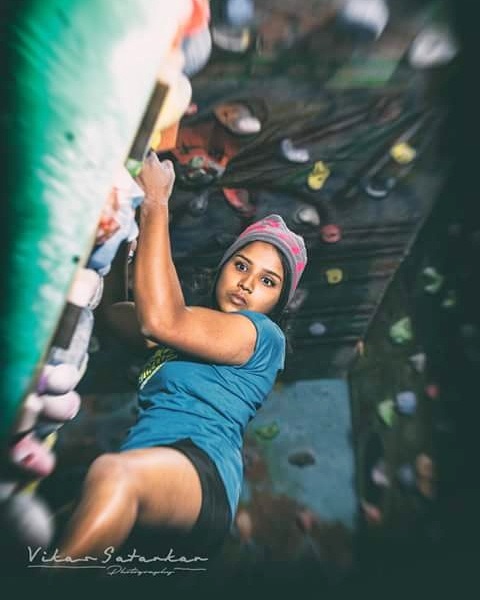
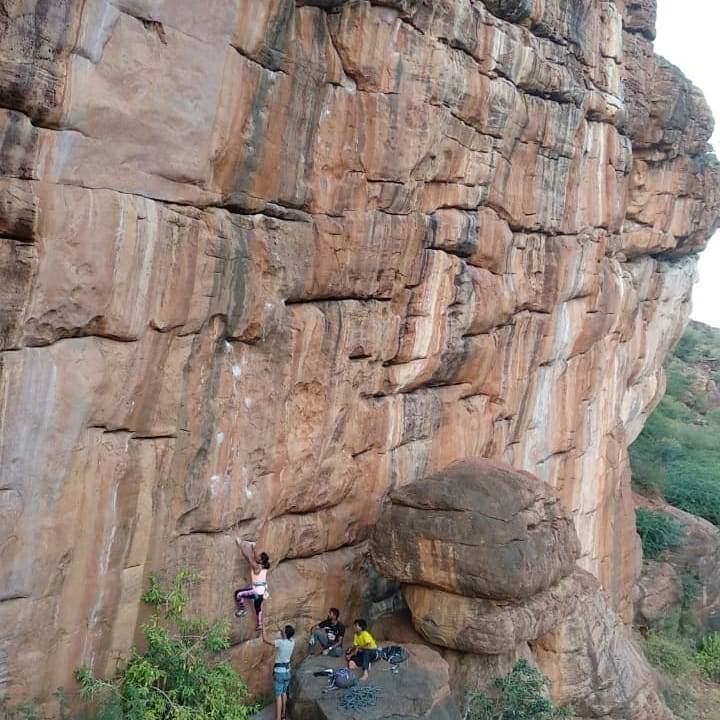
Siddhi Manerikar (Photo credit: Vikas Satarkar / Photo courtesy: Siddhi Manerikar)

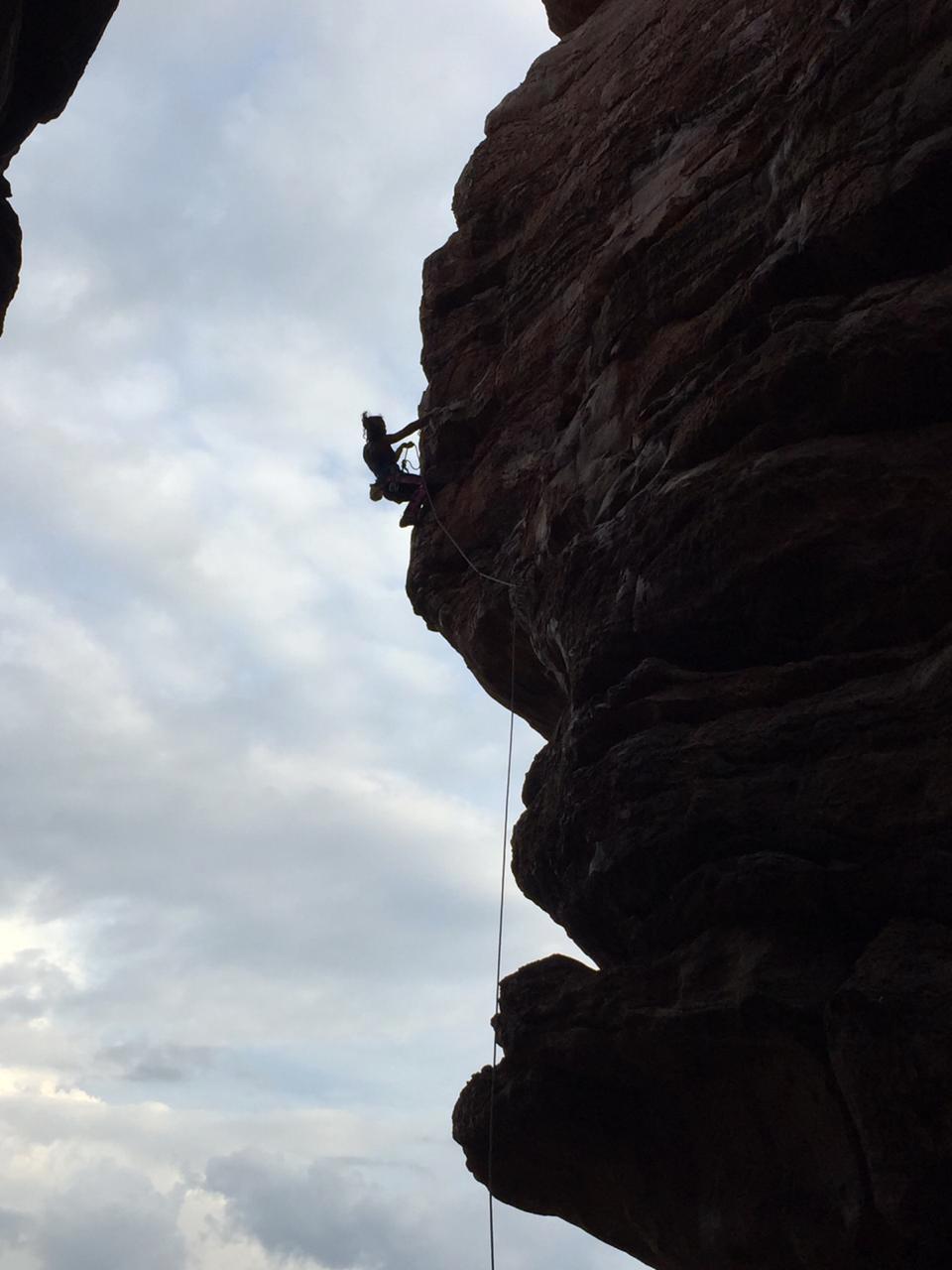
An evening in Badami; a tough sport route climbed. It seems turning point to a competition climber. Will it usher in change? And if so, change of what sort? This is the story of Mumbai’s Siddhi Manerikar, her recent ascent of Samsara and what she thinks of it.

In Hinduism and Buddhism, Samsara denotes the cycle of death and rebirth.

There is an element of eternity and entrapment in what the concept implies. It is definitely other worldly, a dimension of understanding removed from the present. It also smacks a bit of climber’s high; all intense and immediate during a climb, very other worldly at the end of it.

Tucked away from public view, on the rear side of one of the rock massifs constituting Badami’s unforgettable architecture of rock, is a climbing route called Samsara. At 8a, in terms of difficulty of climbing, it is among the hardest routes in the area; at the time of writing, Ganesha on the way to Samsara was still lord of Badami’s sport routes at 8b+. On November 7, 2018, as her friends watched, a young woman from Mumbai made her way up Samsara. Over the past two days, she had focused on just that route and practised its moves many times, ironing out niggles and paying attention to details. This was her last day in Badami from given visit; her last shot at Samsara. Besides what she had personally discovered about the route through repeated attempts, tucked away in the mind was also tips from friends on how best to tackle Samsara. Some of them had assembled below to watch the climb. It was evening.

A sport climbing route of 11 clips (quickdraws placed for protection), Samsara’s crux lay in the initial stage, following which, the next challenge is a slightly long run-out between the fifth and sixth clips. You clear that and find yourself facing a pretty tricky set of last moves for finish. It was nearly dark by the time climber topped the route. Reporting the climb, The Outdoor Journal pointed out that while any claim of it being the toughest sport route yet climbed by an Indian woman can’t be validated for want of proper record keeping locally in the sport, Siddhi Manerikar has set the bar high for her peers.

Climbing in Badami (Photo: courtesy Siddhi Manerikar)

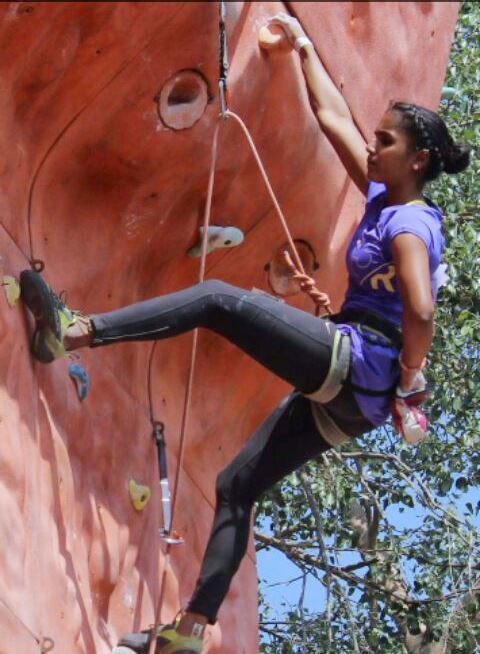
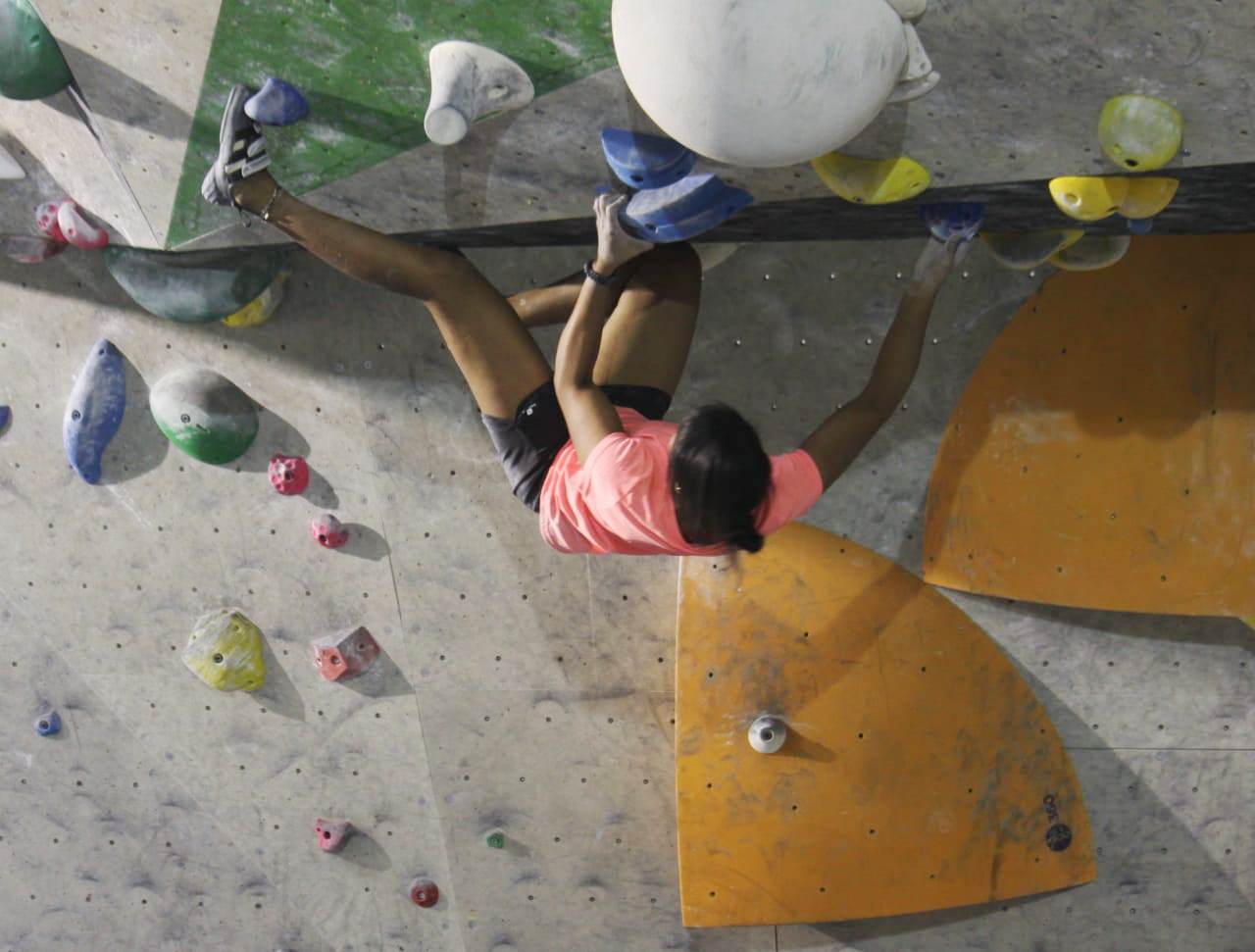
An intense game was underway on the cricket field opposite Poddar College in Matunga. The game was on the main pitch. Around it several other matches and training sessions carried on. “ Can’t you see?’’ a woman accompanying her daughter to cricket practice shouted as a cricket ball landed close by.  “ Sorry aunty,’’ the youngster responsible said, apologetically indicating that he had caught the ball on the upper portion of his bat and thereby, the lack of control in the strike. He grinned at the daughter; she grinned back. It was another Mumbai evening, business as usual in India’s cricket capital. But these days, not everyone falls for cricket. “ I always wanted to do something different. People queue up, to play cricket and football. Climbing in comparison appeared quite different,’’ Siddhi said. She belongs to a new generation of climbers, who grew up almost wholly in an ecosystem of competition climbing.  “ What happened in Badami is a departure from the norm in my life,’’ she said. We were at a café close to Poddar College and its small climbing wall, regular hangout for some of the city’s promising young climbers. It was early December; almost a month since that climb of Samsara.

Siddhi was born 1996 close to 500 kilometers away from Mumbai in Sindhudurg district, at a village called Shiroda. She is the elder of two children. Her father is a priest; her mother, a housewife. When Siddhi was around three years old, the family shifted to Mumbai, residing thereafter at Goregaon in the city. She attended Nandadeep Vidyalay, a school that coincidentally hosted one of the earliest climbing walls to come up in Mumbai – a wall built in memory of Arun Samant, an accomplished rock climber and mountaineer, who was one of Mumbai’s best in the field. He passed away in the Himalaya in 1999. His family constructed the wall in 2003. Built of ferrocement, the school’s wall cannot be compared to the walls of modern climbing competitions. But as an early wall and still the only one of some significant size around with dedicated community to match, it has the distinction of having shaped many of Mumbai’s young competition climbers. Siddhi was in seventh standard when the teacher in charge of sports at the school, asked for students interested in climbing. She enlisted for practice and pretty soon fell in love with climbing. Her coaches were Pramod Chavan and Rahul Pendse. Aside from climbing on the wall, Siddhi had occasional stints of climbing on natural rock at the nearby Borivali National Park. But by and large for this phase and phases to follow – it was the wall at the school that dominated her life. There was little of moving around within Mumbai to climb at different crags, something others into climbing regularly did.

Photo: courtesy Siddhi Manerikar

Siddhi’s first climbing competition was the 2010 edition of the national open climbing competition organized by Girivihar, Mumbai’s oldest mountaineering club. This annual competition held continuously for about a dozen years was responsible for increasing curiosity for competition climbing in Mumbai. Ahead of climbing, contestants are kept in isolation. “ The Girivihar competition was my first taste of isolation. I didn’t know that climbers would be required to sit so ahead of competition, away from everyone else. I grew tense and anxious. It was only when I appeared before everyone to climb that I relaxed,’’ Siddhi said recalling that first outing. At the school wall she was among promising climbers. The coaches took note. Following the Girivihar competition, Rahul dispatched her to Badami for a training camp conducted by the Indian Mountaineering Foundation (IMF) ahead of the Asian Youth Championship. “ My climbing was utterly basic at this point. The camp was a good experience. The coach in charge was Keerthi Paes,’’ Siddhi said. By 2011 (in ninth standard now and competing in junior category), she was at her first zonal competition (west zone). It serves as selection ground for the nationals. At the national competition which followed, she placed seventh. Then at a national open climbing competition held in Ooty, she placed sixth in lead climbing. “ I participated in lead and did alright because that and bouldering was what we could do at the school wall. I used to get selected for speed climbing but our wall didn’t have a route dedicated to speed climbing. Those days, the star shaped holds you find in speed climbing were also not available in India. However I have no regret at drifting away from speed because my climbing style is more static than dynamic. It needs to change and I am currently transforming it slowly,’’ Siddhi said.

2011 was a year of improvement for her. Back in Badami for that year’s IMF training camp, Siddhi attempted a tough route called Badami Pillar. She made it quite some ways up, impressing herself and her coaches. Called subsequently for a climbing camp in Delhi, she got selected to the team headed to Singapore, for the 2011 Asian Youth Championship. “ It was a major development in my life – to be going abroad. But I was still a school kid and not mature enough to comprehend the gravity of getting to represent one’s country,’’ she said. Following the selection, a plethora of challenges commenced. Siddhi was a minor with no passport. Her parents had no passport. She had just entered tenth standard, a milestone year in Indian education with attendant rigmarole of coaching classes to do well in academics. The paperwork to secure passport was particularly tough because her father didn’t own a house in Mumbai. On top of it, her younger brother – he isn’t physically robust – came down with kidney ailment. Caught in all this, Siddhi was unable to attend the pre-Asian championship training camp in Bengaluru. Rahul trained her at the school wall. Eventually, six days prior to departure her passport came through. Siddhi flew to Bengaluru, joined the rest of the team and proceeded to Singapore. She participated in lead climbing. She was eliminated before the semi-final. “ In my eyes, I did well. All my training had been on the school wall,’’ she said. Later that year, she secured her first medals at the national climbing competition; silver medal each in lead and bouldering. Then she stopped climbing to concentrate on her board exams. She passed with a score of 72 per cent overall. Starting from scratch again after the break, she failed to secure a berth in the Indian team for the 2012 Asian Youth Championship. There were no medals at the nationals too. Much of 2012 was a disappointing blank.

Photo: courtesy Siddhi Manerikar

By January 2013, she was back to winning ways with podium finish at a competition organized by GETNA. Then familiar pattern repeated – camp at Badami and selection for the 2013 Asian Youth Championship at Surabaya, Indonesia. She was one of three girls selected that year in overall team of nine. The outcome in Indonesia was encouraging. She reached the final and placed fourth in lead climbing. In February 2014, her twelfth standard board exams were a slightly tense phase for Siddhi. After all the climbing that happened earlier, she had just a month to prepare. In the middle of the exam schedule, her father suffered a heart attack and was hospitalized. She passed the exams, securing 65 per cent marks. That year Rahul pushed to have a team of two climbers from the school wall – Siddhi and Akash Gaikwad – appear at the World Youth Competition due in France. The IMF’s regular calendar features only participation in the Asian Youth Championship. Rahul managed to rope in sponsors but according to Siddhi, the team’s application for visa got rejected. Luckily the Asian Continental Championship was scheduled to take place in Lambok, Indonesia, ten days later. The team headed there. Siddhi made it as far as the semi-final in lead climbing. She participated in bouldering but didn’t go past first round. After Indonesia, Siddhi participated in the west zone competition where podium finish for her, had become routine. This 2014 edition of the zonal competition was the first time her parents watched her climb. Siddhi’s parents never went to see her climb at the school wall. They didn’t object to her interest in climbing. Her parents had one condition – be good at studies too, which she was. Support for climbing was provided quietly. Her mother was particularly supportive. “ My father supported but he wasn’t demonstrative about it. Speaking in terms of the character he wished to see in me – he wanted me to have my feet on the ground,’’ she said. Those frequenting Mumbai’s climbing competitions remember Siddhi as climber free of parental entourage. It is usually she and friends.

Following the zonal competition witnessed by her parents, Siddhi secured gold in lead climbing and silver in bouldering at the national competition. “ That was my first gold at the nationals,’’ she said. In 2015, she headed to Arco in Italy for the World Youth Championship and competed to no significant outcome in lead climbing and bouldering. “ I was not happy with my performance,’’ Siddhi said. Later that year, after the annual participation in west zone competition, she proceeded to Pune to train for the nationals. There at the popular climbing gym called Rock Aliens, she suffered a fall while climbing and twisted her ankle resulting in injury to the ligament. There were two days left to nationals in Delhi. After consulting her family doctor, she climbed at the nationals. The injured ankle and foot was swollen. So she wore a shoe of bigger size on that foot. She borrowed her friend’s shoe for the purpose; luckily it was same make and model as her own. Siddhi secured silver in lead climbing. She couldn’t do justice to her shot at bouldering because she was becoming increasingly scared of aggravating her injury. After the 2015 nationals, she took a break of four months to recover. There was a reason for participating in the nationals at any cost. The first IFSC World Cup in bouldering to be held in India – organized by Girivihar – was due in 2016 in Navi Mumbai. Thanks to her performance in lead at the nationals and likely based on her earlier performance as well, Siddhi got a berth in the Indian team for the 2016 World Cup.

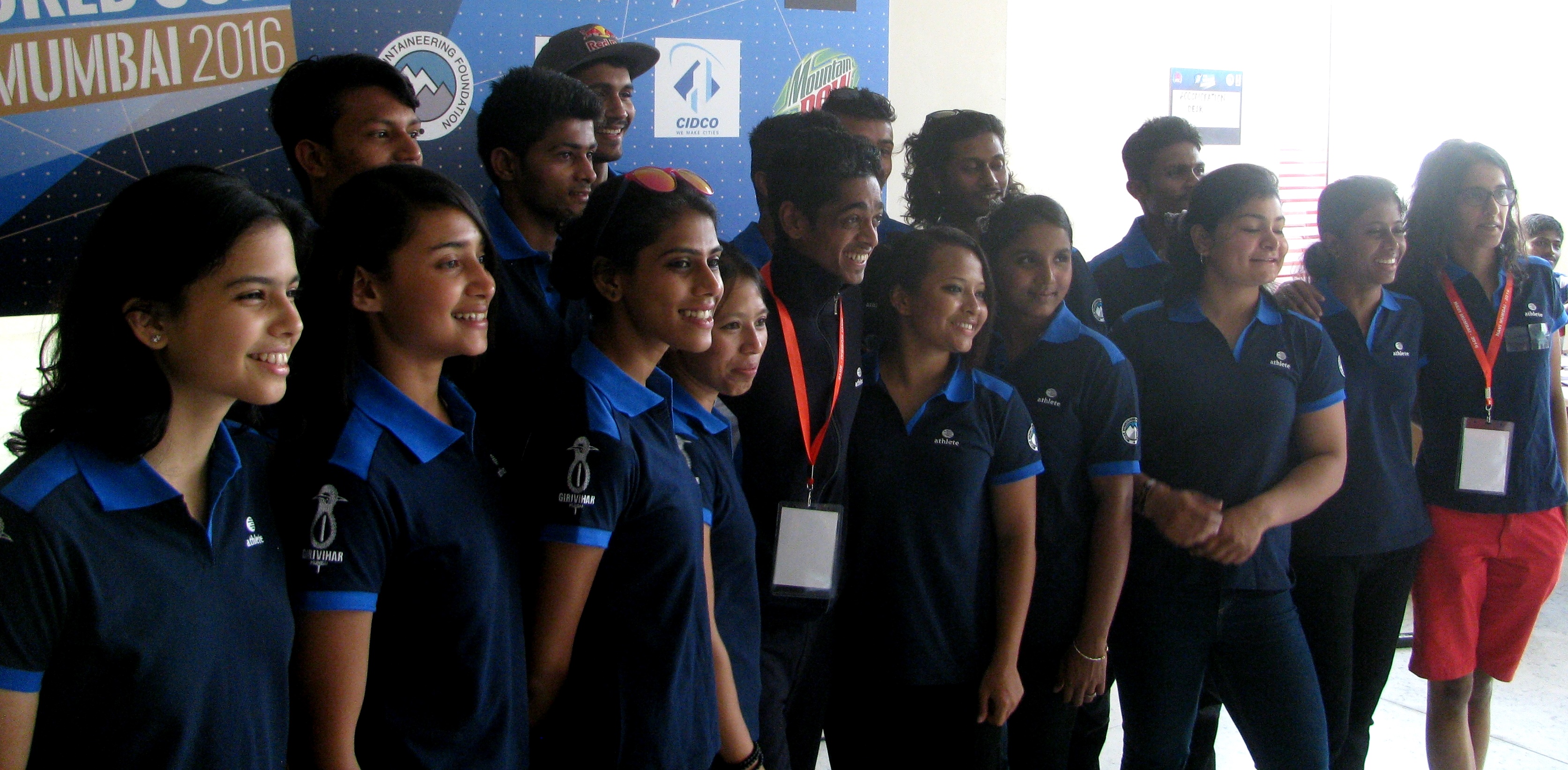
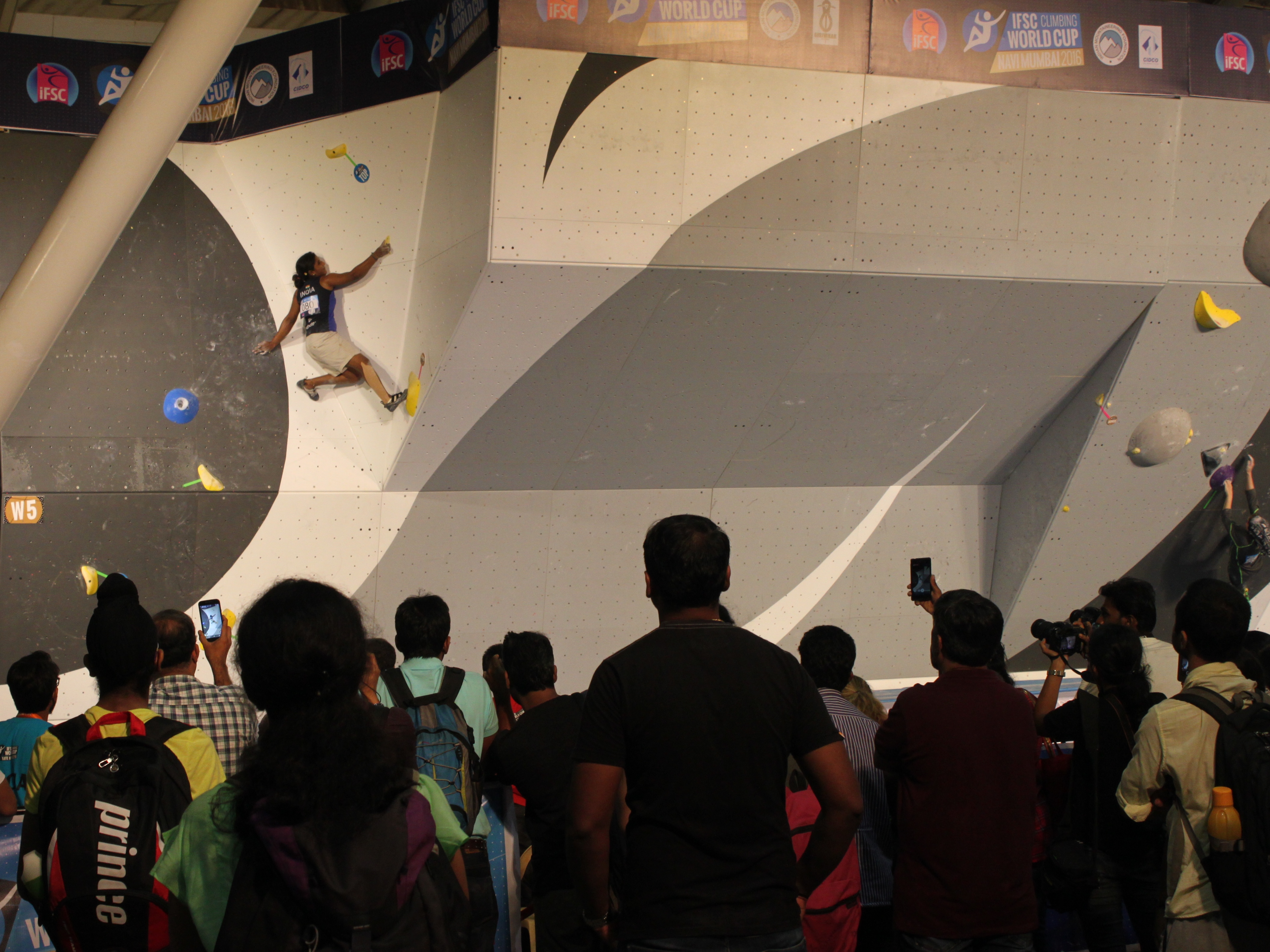
The Indian team for the 2016 IFSC World Cup in Navi Mumbai (Photo: Shyam G Menon)

Two editions of the IFSC World Cup in bouldering were held in Navi Mumbai – in 2016 and 2017. As host nation, India sent big teams to both events. But the outing was hardly memorable. According to Abhijit Burman aka Bong, who was closely associated with the two world cups, the qualifying round had featured routes within a range of 7a to 8a. Yet no Indian climber made it past the first round. The two events are arguably valuable reminders for Indian climbing, on both the need to improve and how to improve. Siddhi took consolation in a small detail – she was ranked 28th in the field at the 2017 World Cup in Navi Mumbai and for that one year, her name too featured in the list of those ranked for that World Cup season. Ahead of the 2017 World Cup in Navi Mumbai, the Indian team had enjoyed a stint of training in Slovenia. Siddhi was among those who went. She was unable to take full advantage of the visit because according to her, she was still worried about her ankle and the worry was pushing her into being cautious while climbing. But Slovenia was excellent window to see how training for climbing is done overseas. Among things she noticed – the notion of this climbing route for men and that, for women wasn’t there. Everyone attempted the same routes irrespective of how easy or difficult they were. There was only competence to aspire for, gain and improve.

Some from the senior lot tracking climbing in Mumbai felt that Siddhi has potential but the generation of Indian woman climbers she belongs to requires steeling by more intense competition. According to them, the earlier generation of woman climbers – names like Shanti, Archana, Valsala and Dasini among them – were almost evenly matched (each noted for strength in some particular department) and competing together long enough to be shaped by such ecosystem. Results in their time were hard-fought. For the current generation, well matched field hasn’t graced every competition, they argued. In Mumbai, Siddhi is ahead of the field in women’s climbing. For her own improvement, she requires more good climbers around so that the ecosystem is competitive – this was their observation. I also came across a suggestion for those chasing harder climbs: if you break new ground climbing a hard grade, then repeat it. Climb the route twice so that the outcome is yours to own.

Siddhi in action at the 2016 IFSC World Cup in Navi Mumbai (Photo: Shyam G Menon)

2017 was the beginning of a slump in climbing for Siddhi. Given her semester exams in November 2017, she couldn’t train well for that year’s nationals. There were no medals. Next year, 2018; the nationals were split into six events – two each for lead, bouldering and speed climbing – spread through the year. In the middle of that calendar – in April – Siddhi had the final exams of her graduate studies. Along the way there was silver and bronze picked up at two lead climbing events as part of the nationals. But she still wasn’t feeling energized about her climbing. It was at this juncture that her friends from the Poddar College wall put together a trip to Badami. Siddhi joined them. Upon reaching Badami, they lost no time starting their climbs. “ I had no plans or goals. I have always liked Badami and the only thing I wished for was to spend time climbing sandstone there,’’ Siddhi said. She climbed some of the easy routes around. Then one of her friends, Dhaval Sharma, suggested that she attempt Samsara.

Early morning November 5, she went with Vasant Kadre – he had attempted Samsara before – to try the route. Vasant climbed and put quickdraws in place. Siddhi top roped it; dissecting the whole climb into sections, practising each section and then linking it all into a sequence.  Later, all of evening, she rested. November 6 early morning, she returned to Samsara. This time, Vasant completed the route successfully. Siddhi practised the moves again. She felt better. That evening, with Shubham Jagtap belaying, she tried Samsara again on lead. She was leading on natural rock after a long time. Between the fifth and sixth clip, where run-out is tad long, she sensed that old worry of potential ankle injury returning. “ The ankle injury was playing on Siddhi’s mind. She was concerned that it may repeat should she fall,’’ Shubham said. When you fall in sport climbing, the arc of the fall with distance from last protection clipped into as radius, draws the climber back to the wall / rock face being ascended. All this happens quickly and as climber closes back in on rock, it is the legs that are wielded in front to absorb impact. Siddhi’s worry was relevant. To her credit, she practised every section of the route thoroughly. She is a short climber. The moves to tackle each section – what climbers call beta; is influenced by their physicality. Moves needn’t be the same for everyone. Each climber has to figure it out based on his / her ability, skills and physical dimension. “ Siddhi figured out the beta herself. We didn’t tell her anything,’’ Shubham, who has climbed Samsara, said. Given all the good attempts were happening by evening, Siddhi decided to assign final attempt for next evening.

Samsara; starting the climb (Photo: courtesy Siddhi Manerikar)

The morning of November 7, her last day in Badami on that visit, she had another practice session on the route. November 7 evening, with Shubham belaying again, Siddhi formally attempted Samsara on lead. According to Shubham, there were three attempts that evening. In the first one, she fell from the ninth clip. In the second, she fell from the third clip. At this point she was a bit shaken. After resting for ten minutes, she tried again. This time Siddhi sent Samsara (in climbing, sending a route means successfully completing it). On tough routes, muscles get pushed to the limit. Climbers are prone to take rest or shake off lactic acid accumulation on their limbs. This may happen just after clipping in to quickdraw close by. For a climb to be accepted as clean, at such instances of rest and shaking off pumped muscles, climbers must not take advantage of the belay and transfer their weight to it. Shubham said that Siddhi’s weight was never felt on the rope. “ It was a smooth climb. There was no downgrading of the route,’’ he said. It was late evening by the time Siddhi’s third attempt – the successful one – concluded. Light was now low. Unfortunately the lack of adequate light left its imprint on photographs clicked of the final stages of the climb, her friends said. Samsara done, Siddhi left Badami for Mumbai the next day, as scheduled.

For Siddhi, Badami is special. It has been her favorite natural rock-fix, away from the artificial walls and competitions she grew up with. “ In November 2018, I came to Badami from a slump in climbing. The success on Samsara therefore feels good. It also feels like a turning point. My life so far has revolved around competitions and preparing for them. Samsara brought me back to natural rock. I will continue to compete but there is now the desire to do more climbs on natural rock, in the outdoors. Samsara happened at the right time,’’ Siddhi said. As for plans ahead – she wishes to attempt Samsara again; do it a second time. On the career front, now that she has completed graduation, her wish is to appear for the Combined Defence Services (CDS) exam.

(The author, Shyam G Menon, is a freelance journalist based in Mumbai. This article is based on a conversation with Siddhi Manerikar. Podium finishes and competition details are as stated by her.)  

SCOTT SPORTS INDIA LAUNCHES ITS FIRST ROAD BIKE TEAM

Nigel Smith, Head Coach, with the cyclists selected to be part of the Scott Racing Development road bike team in India (Photo: Shyam G Menon)

Globally, Scott’s sporting segments span cycling, motorsports, running, winter sports and outdoor. With a road bike team in place in India, the company plans to introduce similar initiatives in motorsports and running as well. 

Scott Sports India today announced the launch of its first road bike team in the country.

Called Scott Racing Development, the team currently has three young cyclists. Their presentation to the media and public happened at the 2018 India Cycling Festival in Mumbai.

Prior to team formation, Scott Sports India had conducted trials involving over 200 participants from across the country. From their ranks, Sandesh Sedekar (20), hailing from Mumbai and now living in Goa, Monty Choudhary (23) hailing from Meerut and currently residing in Ghaziabad and Jehaan Panjuani (23) hailing from Mumbai and living there, got selected. “ The three road cyclists will be incubated to the Scott Racing Development training programme on a long term basis, to participate as a team in 8-10 races in India as well as 2-3 international races,’’ a related statement from the company said.

According to it, the coaching plan will focus on both physical and tactical aspects. While the physical emphasis would be on effective training as well as improvement of technique; tactical would focus on developing a race strategy and adapting to conditions. In addition, the riders will be guided on understanding performance data to help manage their training and results.

“We’re looking to put in place a structure and process that is rider-focused but ultimately gives the rider the tools and responsibility to deliver. I believe the team approach has a lot of advantages and our selection process also focused on building a team as opposed to finding individuals. We felt this group had the right dynamics to work as a team, with each one capable of handling physical responsibilities that maximise each rider’s opportunity to improve. It’s a performance-oriented programme and each year we will look to add to the team by conducting trials and reach out to an ever-wider group of young cyclists. Over time, our goal isn’t only to expand the team, but to also start picking younger talent. In the UK, academy training typically begins at age 14 and that allows them to continually have a pool of talented competitive riders,’’ Nigel Smith, Head Coach, said in the statement.

 “This is the first time a global cycling brand has launched a long term training programme for cycling in India. We’ve been supporting athletes over the years, including a future stars programme focused on U-18 cyclists. We realised that while there was potential, the lack of a structured, team-oriented training programme acted as a barrier both for growth of the sport and athlete to take the next step. A holistic development approach will help the sport make its mark in the country, as the focus is both on training and performance. The team will participate in both Indian and international races over the course of the year,’’ Jaymin Shah, Country Head, Scott Sports India, has said.

The team will provide riders with the full range of necessary equipment for an elite cyclist as well as aid them in relocation, including employment opportunities, until they progress to the next step. “We believe that this program will truly allow us to be a catalyst of change at the grassroots level of the sport in the country. Our goal over the next 3-5 years is to build an elite team and expose more cyclists to this culture for it to be a viable career opportunity. Thus, launching a team was the essential step in that direction, as it also allows for building the sport commercially. Globally, cycling is seen as an attractive sport for brands, both in terms of visibility and reaching a targeted audience. To make elite cycling sustainable, we’ll also be focusing on that aspect by giving brands the opportunity to partner with a niche, but fast-growing sport,’’ Jaymin Shah said in the statement.

Going ahead, Scott Sports India aims to launch similar programmes for motorsports and running, the statement said.

(The author, Shyam G Menon, is a freelance journalist based in Mumbai.)

THE HIGH GETS LONGER

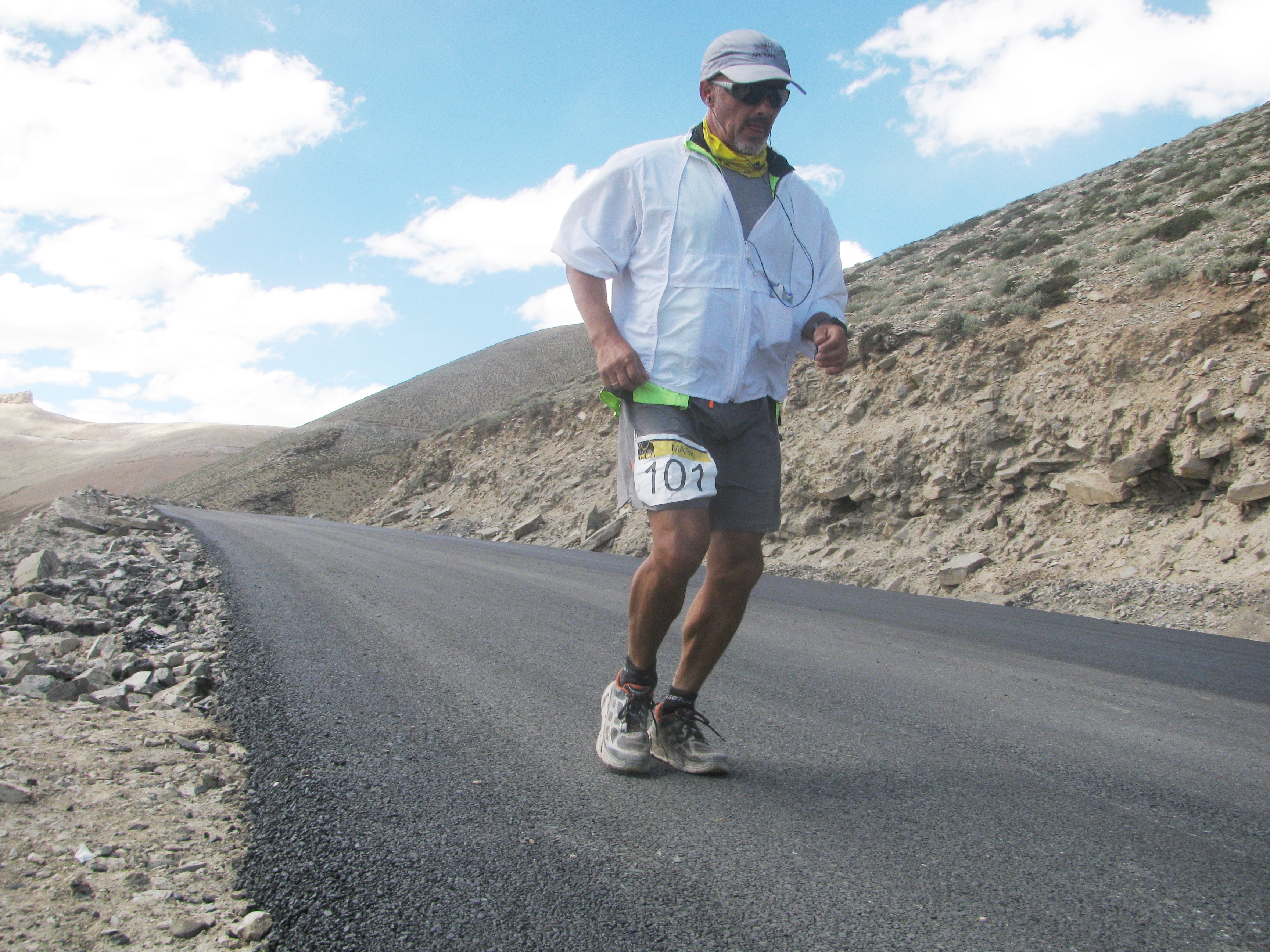
Mark Woolley on his way to completing the 333km category of La Ultra The High, 2016 edition (Photo: Shyam G Menon)

Come 2019, La Ultra The High, the well-known ultramarathon at altitude in Ladakh, will feature 555 kilometers to be run in five and a half days as the longest race in its repertoire. At the lower end of the scale, it will debut that year, a 55 kilometer race.

The new distances are in addition to the existing ones. Previously the longest race at the event was 333 kilometers and the shortest, 111 kilometers with a 222 kilometer-category in between. Starting in Lakzung, a village in Nubra Valley, the ultramarathon’s route includes the high mountain passes of Khardung La (17,700 feet), Wari La and Tanglang La. Asked if there were races elsewhere packing altitude, multiple mountain passes, variations in weather conditions and now distance in excess of 500 kilometers as La Ultra The High does, Dr Rajat Chauhan, event founder and race director said, “ We were already in a league of our own at 333 kilometers.’’

The 555 kilometer-run has generated excitement. “ I would love to try 555. Not sure if I will be able to make it there in 2019 but it is on my radar,’’ Grant Maughan, who was joint winner with Jovica Spajic in the 333 kilometer-race at La Ultra The High in 2016, said when contacted.

There is no change in acclimatization schedule or medical protocols for 555 kilometers, which – like the 333, will be run in a single stage. The same acclimatization schedule and protocols as applied to 333 kilometers continue for this as well. In the case of 55 kilometers, those enrolling and accepted will require to reach Ladakh at least five days prior to the event. “ We are encouraging them to arrive earlier still if they can afford to,’’ Dr Chauhan said. The 55 kilometer-race will begin at 1.5 kilometers ahead of the old finish line of the 222-run (Serthi Circle), go up to Wari La and have its finish line at the same point as the current 222 does. The 555 will start with everyone else at Lakzung, proceed the whole length of the 333-run’s course and then retrace the route back to Leh to finish at the current finish line of the 111 kilometer-run at Shanti Stupa.

As per the official website of the race, its sister event Garhwal Runs, which is qualifier for the 111 kilometer-discipline at La Ultra The High, will have a 33 kilometer race to serve as qualifier for the new 55 kilometer-run. For 555 kilometers, a prospective candidate should have run either 222 kilometers or 333 kilometers previously at La Ultra The High. Other cases wherein candidates have run such distances under conditions relevant to the Ladakh event will be looked into. But that will be “ consideration,’’ not accompanied by assured acceptance.

La Ultra The High commenced in 2010 as a 222 kilometer-race. Over a period of time, it added runs spanning 333 kilometers and 111 kilometers as well. Alongside Garhwal Runs was also brought in as a qualifier event for La Ultra. Initially dominated by foreign runners, in the last few years, the number of Indian participants at the event has been rising. According to the race website, in 2018, there were three Indian finishers and one just over cut-off time, in the 333 kilometer-category. The decision to add a 555 kilometer-race comes on the back of these developments. Not to mention – the 2019 edition will mark a decade of holding the race.

In an article published on this blog in July 2015, Dr Chauhan had indicated that there are proposals for a 555 kilometer-category (the article can be accessed on this link: https://shyamgopan.com/2015/07/29/too-ultra-for-sponsors/) Notwithstanding the challenge it offers and the appeal it poses to devotees of the ultramarathon, the event is yet to find a major sponsor.

(The author, Shyam G Menon, is a freelance journalist based in Mumbai.)

VEDANGI’S QUEST / INDIA STAGE COMMENCES

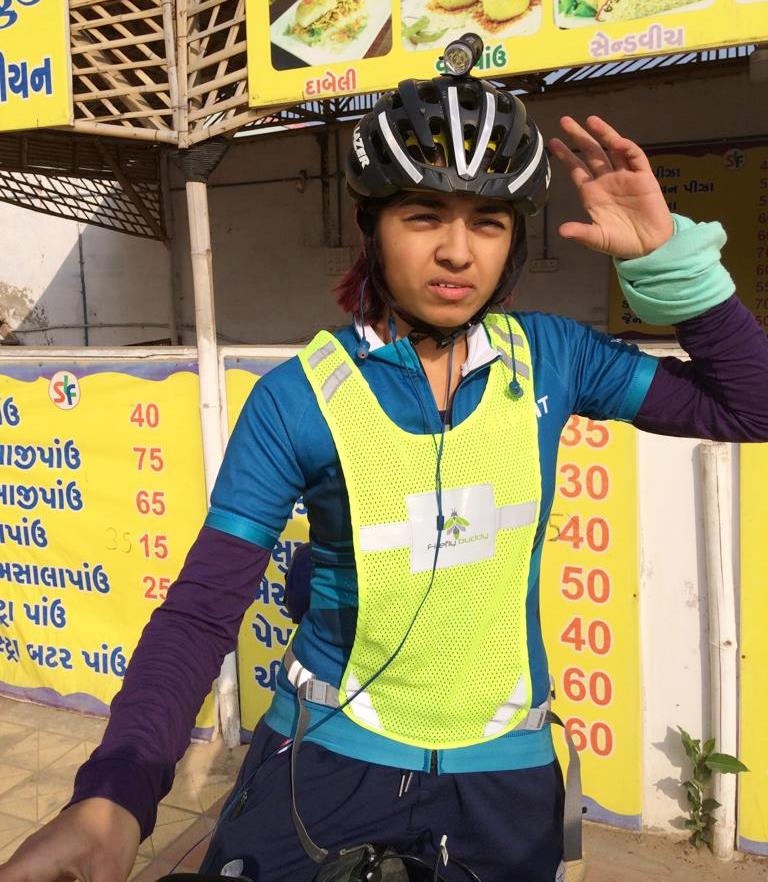
Vedangi Kulkarni / India stage (Photo: courtesy Vivek Kulkarni)

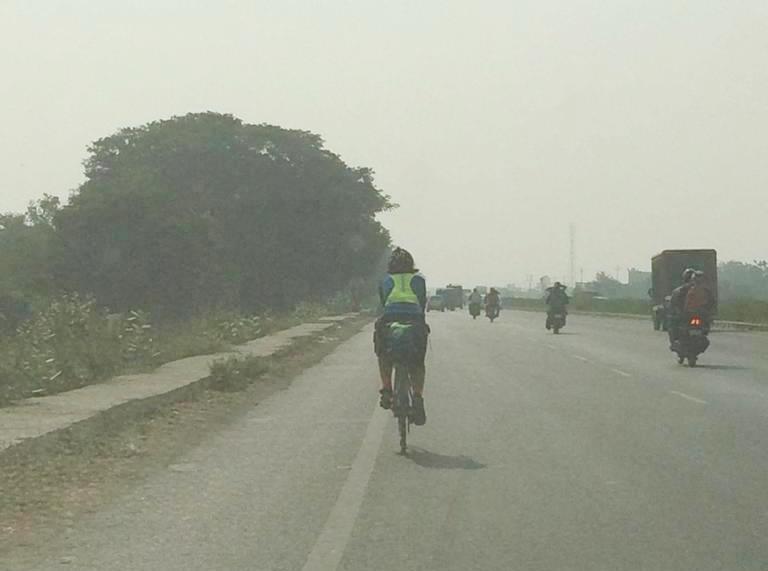
Into the last few thousand kilometers of her journey cycling around the planet, 19 year-old Vedangi Kulkarni has reached India. The Indian chapter of the circumnavigation project is currently underway.

Vedangi Kulkarni, currently on a quest to circumnavigate the planet solo and unsupported on a bicycle, began the Indian leg of her trip today (December 2, 2018) from Bareja near Ahmedabad in Gujarat.

“ She started cycling at 10 AM,’’ her father, Vivek Kulkarni said.

According to him, the likely route ahead for the young cyclist will be Ahmedabad – Vapi – Pune – Kolhapur – Panaji – Mangalore – Kozhikode – Thiruvananthapuram – Kanyakumari – Tirunelveli – Madurai – Tiruchirapalli – Chennai – Bhubaneshwar – Kolkata. The Indian leg of the circumnavigation trip follows several days spent cycling in Russia.

India stage underway (Photo: courtesy Vivek Kulkarni)

Vedangi commenced her journey in Perth, Australia on July 17. She has since cycled in Australia, New Zealand, Canada, Europe and Russia. The original plan was to move to Mongolia from Russia. That has been replaced with kilometers to be logged in India. Besides conforming to certain other parameters, full circumnavigation entails cycling approximately 29,000 kilometers. Last reported on this blog (on November 25, when she was cycling in Russia) Vedangi was estimated to have covered around 23,500 kilometers. A Google search for the distance from Ahmedabad to Kanyakumari showed it as 2163 kilometers while that from Kanyakumari to Kolkata was shown as 2365 kilometers. Taken together, it is more than 4500 kilometers. December 2 marked 138 days since Vedangi started out from Perth. For circumnavigation to be complete, she has to end her journey at the place where she commenced it.

For further information on Vedangi’s journey please visit this link: https://shyamgopan.com/2018/11/25/vedangis-quest-russian-leg-nears-completion-india-next/. More related articles – from the time she commenced her journey – are available in the blog’s story list. They can also be accessed by scrolling down.

 (The author, Shyam G Menon, is a freelance journalist based in Mumbai.)  

VEDANGI’S QUEST / RUSSIAN LEG NEARS COMPLETION, INDIA NEXT

Vedangi Kulkarni (This photo was downloaded from Vedangi’s Facebook page)

By November 24, fourteen days remained to match the existing record for fastest solo unsupported circumnavigation by a woman on a bicycle. Having been slowed down by an unfortunate mugging incident in Spain, matching the record is not a priority at this stage of the ride; successfully completing solo circumnavigation is. At the time of writing, the young cyclist was riding through the world’s biggest nation by land area; that too as the fabled Russian winter sets in. Record or none, Vedangi – she had cycled roughly 23,500 kilometers as of November 24 – has done a fantastic job.

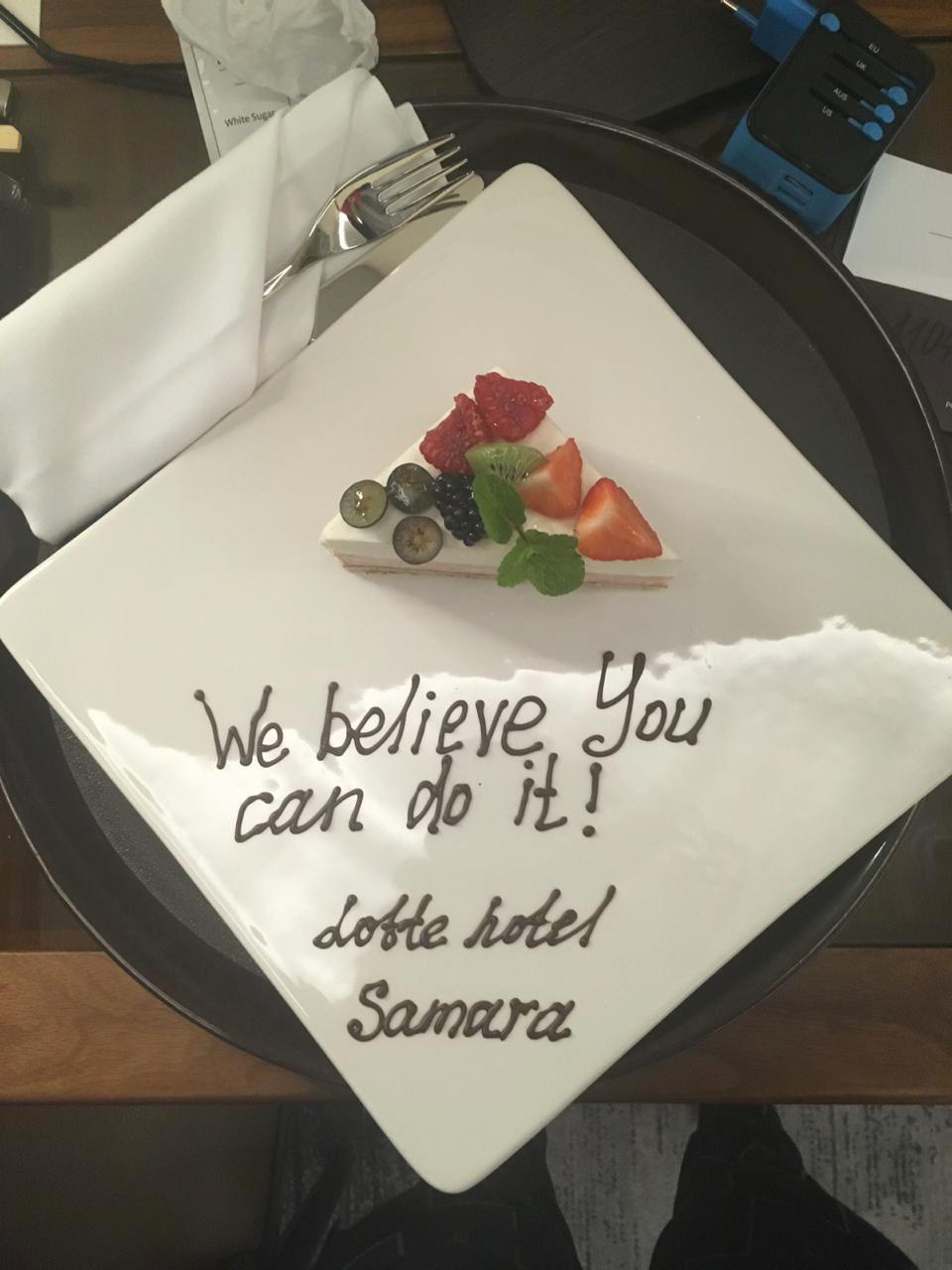
Vedangi Kulkarni, currently on a quest to circumnavigate the planet on a bicycle, reached Samara on November 24. Samara is in the southeastern part of European Russia. It is at the confluence of two rivers – Volga and Samara. According to her father Vivek Kulkarni, the 19 year old-cyclist has now pedaled approximately 23,500 kilometers across the planet since her solo unsupported circumnavigation attempt commenced in Perth, Australia on July 17.

A warm welcome in Samara, Russia; the hotel Vedangi elected to stay at baked a cake for her (Photo: courtesy Vivek Kulkarni)

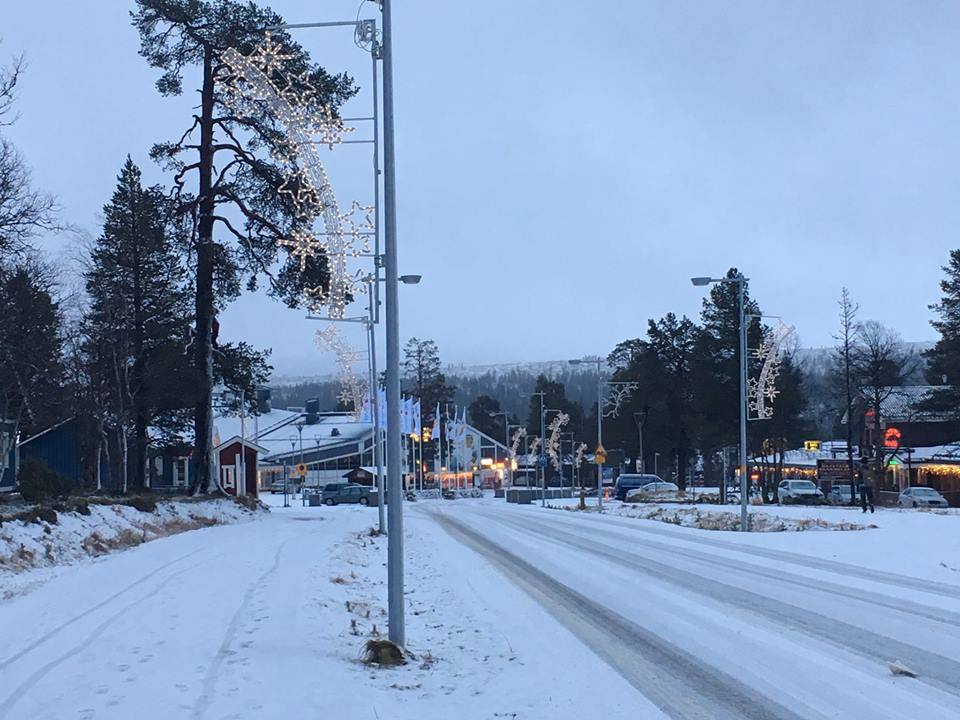
Vedangi reached Finland in early November but given her visa for entry into Russia had expired she had to wait till a fresh visa was issued. The new visa was received on November 17. By the evening of November 21, she was in Moscow, having cycled the distance of 1100 kilometers from Helsinki to the Russian capital in that while. Given winter, she was cycling in pretty cold conditions, Vivek said. From Moscow, Vedangi cycled to St Peterburg and onward to Tver and Samara. From Samara, she is expected to cycle to Ufa, the capital of Russia’s Bashkortostan province. It has an airport. By the time she reaches Ufa, Vedangi would have covered about 3000 kilometers in Russia, leaving approximately 4000 kilometers left overall to qualify for circumnavigation. Signifying change of plan, Vivek said that Vedangi won’t be heading to Mongolia and would instead cover most of the last few thousand kilometers in India. Besides factors related to visa, one reason for the change in plan was that she would have had to cycle through Siberia to reach Mongolia and temperatures would be quite cold at this time of the year. Since she began her circumnavigation from Perth in an easterly direction, the same direction would have to be generally followed for the route she chooses to be on in India as well. At the time of writing, the exact route was yet to be finalized. Given her circumnavigation would be complete only at Perth, there would be a small distance left for finish in Australia.

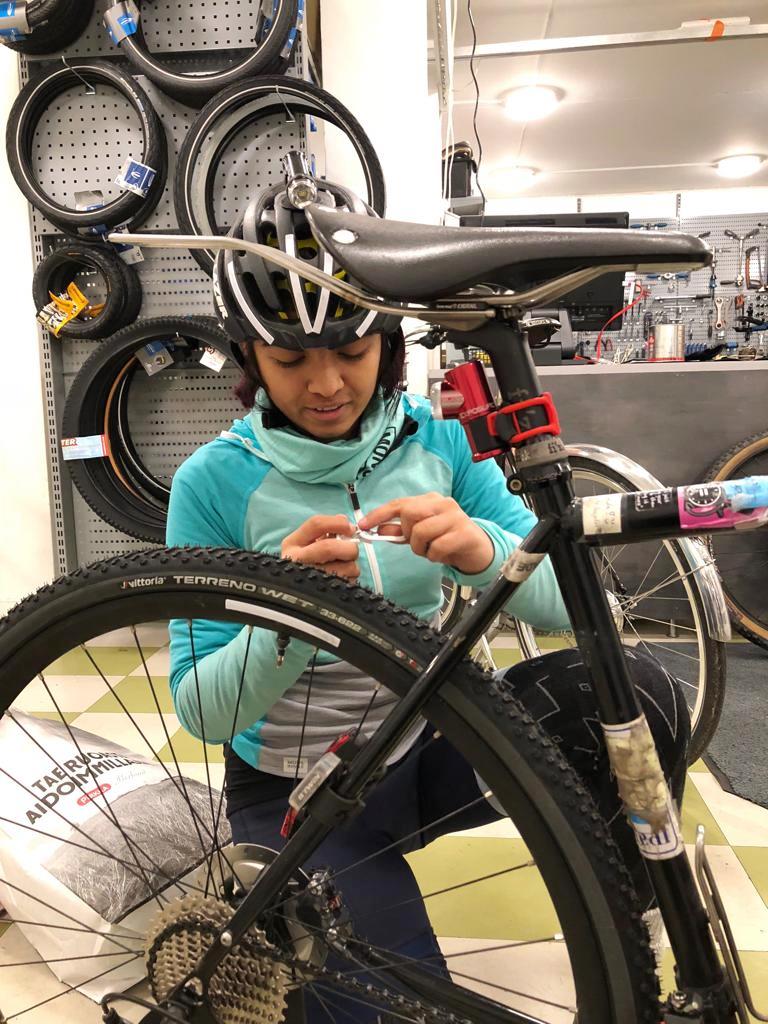
Attending to her bicycle (Photo: courtesy Vivek Kulkarni)

According to Vedangi’s website, November 24 marked 130 days since she began her circumnavigation trip. When she started out, the trip was a quest to become the fastest woman cyclist to accomplish solo, unsupported circumnavigation. For that she would have to better the record held by Italy’s Paola Gianotti. In 2014 Paola cycled the distance – although not in consecutive stages – in 144 days. As per Vedangi’s website, the circumnavigation trip entails cycling 18,000 miles (roughly 29,000 kilometers). Vivek said that completing full circumnavigation in the remaining 14 days is not a priority because unexpected hiccups along the way had upset some of the earlier cast plans.  Focus now is on getting the job done. When she completes her circumnavigation, Vedangi would be the youngest to do it solo and unsupported and the first Indian woman accomplishing it, Vivek said.

Vedangi’s journey has not been entirely smooth. There were unexpected challenges. The last reported one was a mugging incident in Spain that left the young cyclist injured and quite rattled. She described her experience on her Facebook page (you can also read about it in previous articles about Vedangi on this blog; please scroll down to access the relevant piece). At the time of that post, Vedangi was more than 17,500 kilometers into her circumnavigation trip and had already cycled across Australia, New Zealand, Canada and Portugal. In the process, she crossed both the antipodal points advised under circumnavigation rules – the first was Auckland in New Zealand and the second, Madrid in Spain. Cycling in Spain (before reaching Spain she also had a brief spell of cycling in Iceland) was to be followed by passage through France, Belgium, Germany, Denmark, Sweden, Finland, Russia and Mongolia. “ I had reached the halfway point at 14,432 kilometers in 55 days,’’ she wrote, adding that her experience with people worldwide had been mostly “ extraordinary.’’

This photo was downloaded from the Facebook page of Vedangi Kulkarni.

“ Given the incident (in Spain) and the concussion she suffered, she had to take it easy for some days. In that period her daily mileage fell,’’ Vivek had said then. Several days later, as he spoke of Vedangi’s arrival in Samara, Vivek said that Russia had so far been a happy, enjoyable experience for cyclist passing through. She got water and tea from the police and people traveling in cars stopped to quiz her about her world tour. The hotel she went to in Samara baked a cake for her; gestures that mean much for lone cyclist and parents tracking her progress from far. Language is not a barrier to find love from people, Vivek texted.

Vedangi, 19, is currently a student at Bournemouth University, UK. She spent some part of her early childhood in Panvel (not far from Mumbai); later she attended Jnan Prabodhini school at Nigdi near Pune. Her family now resides in Kolhapur. The circumnavigation plan assumed shape sometime in September-October 2017. Vedangi’s circumnavigation attempt will take her across 14-15 countries, the final number depending on how the route is affected by visa availability. A film is being made on her journey. There is a film crew meeting her at various points on the way.

(The author, Shyam G Menon, is a freelance journalist based in Mumbai.)

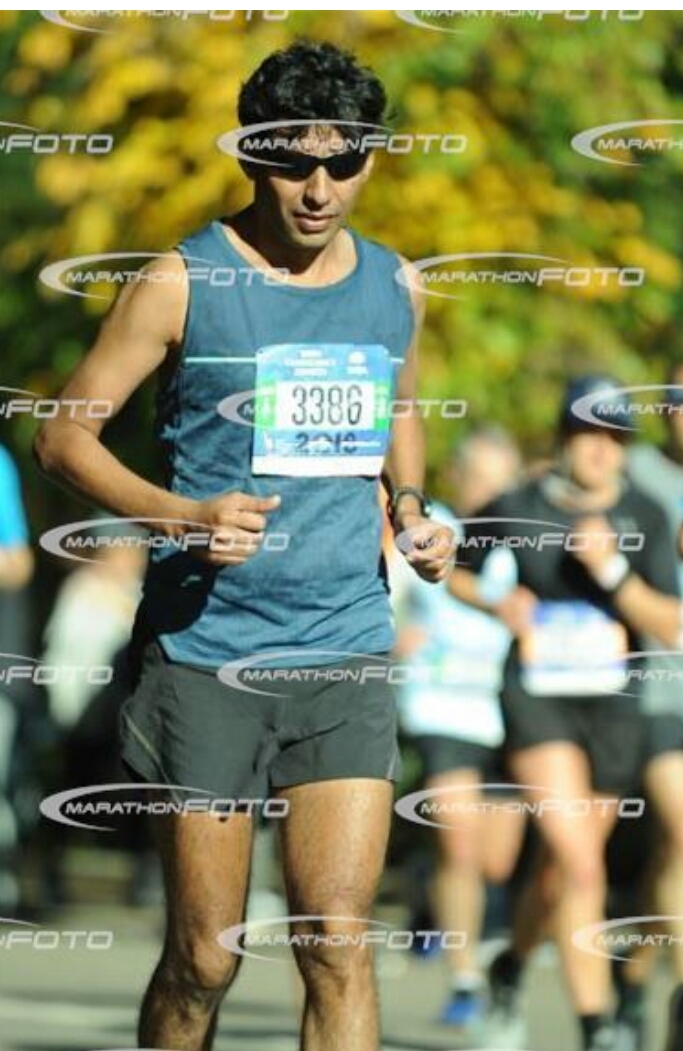
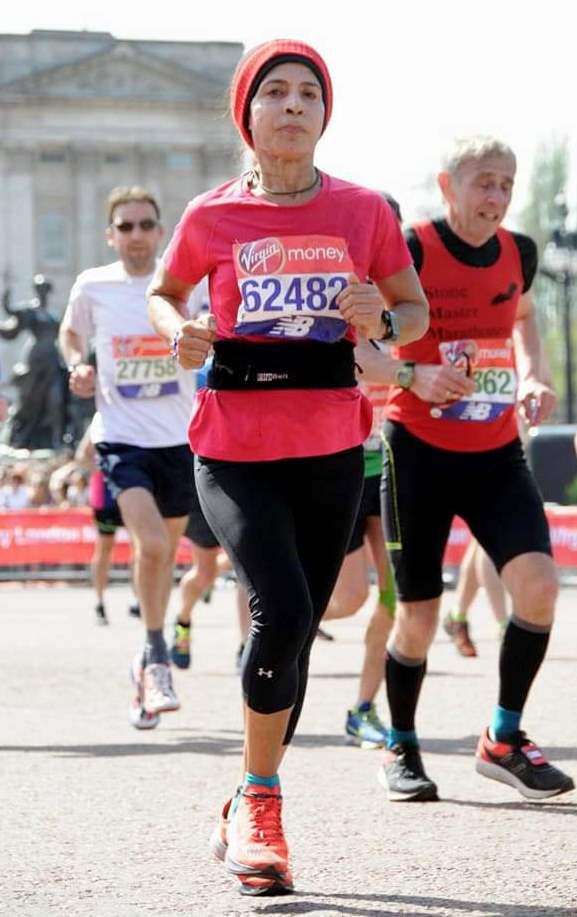
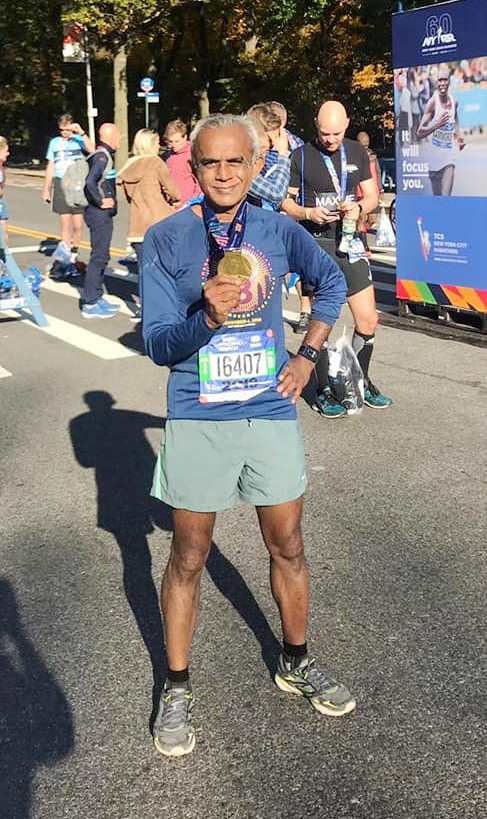
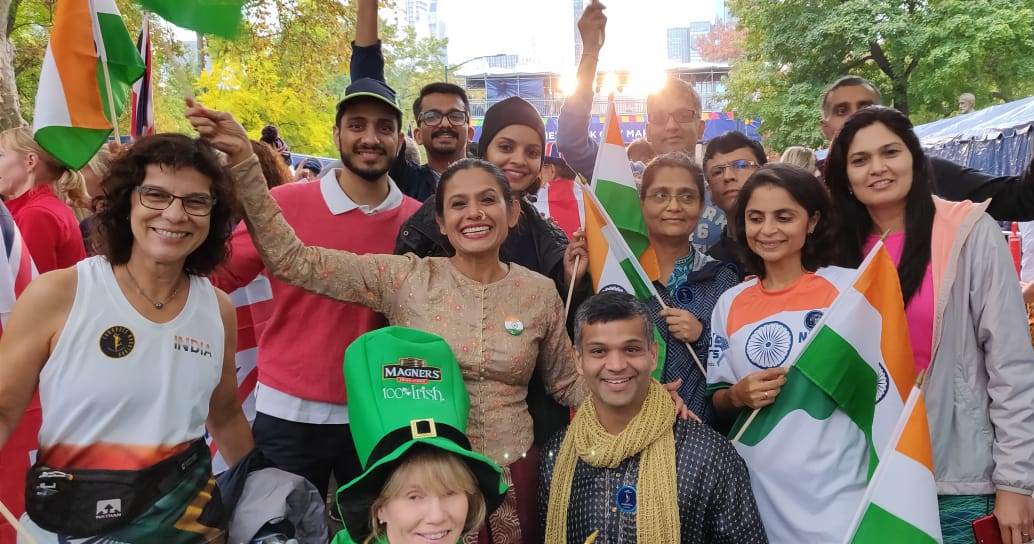
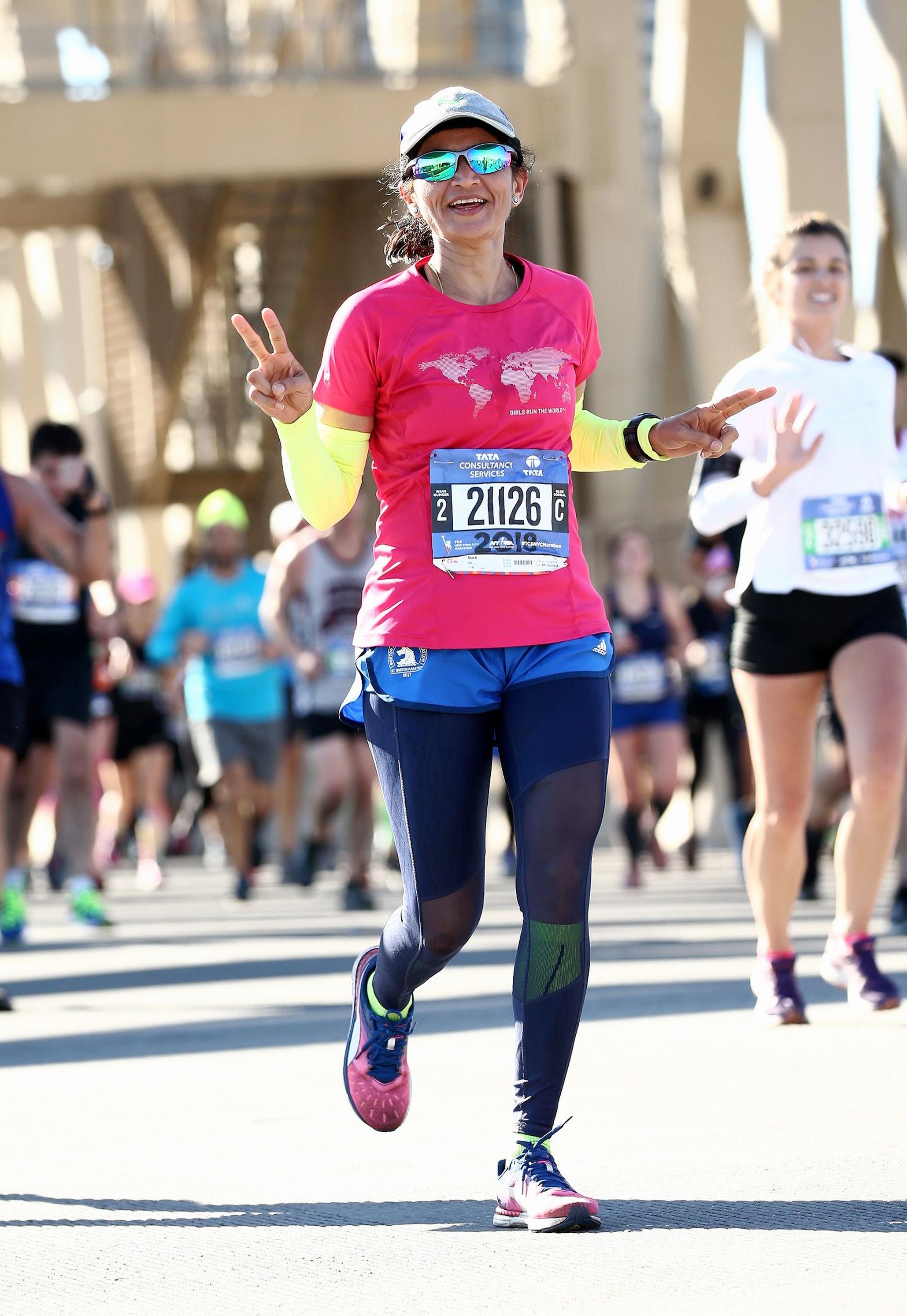
2018 NEW YORK CITY MARATHON / ENJOYABLE EVENT, MIXED FORTUNES FOR RUNNERS FROM INDIA

Photo: courtesy Deeptha Raghunath

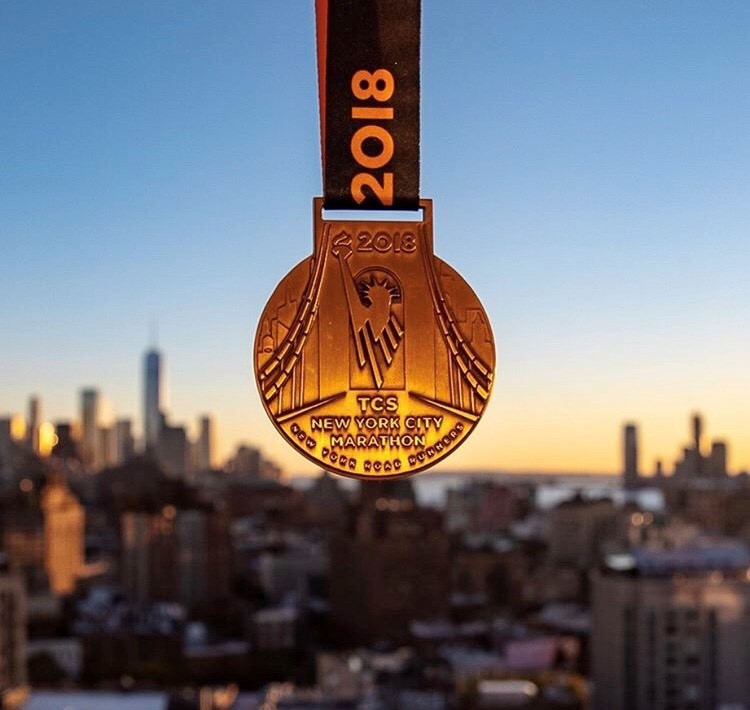
The 2018 TCS New York City Marathon got over recently. According to available figures, 52, 812 runners finished it. The event is part of the World Marathon Majors; from among the races constituting the majors, the course at New York is comparatively tough. As running grows in India, running the marathon majors has become a fancy with many. There were runners from India traveling to New York to participate in the 2018 edition of the city’s annual marathon. Like all sports, running has its highs and lows. The highs need no explanation; good timing and ` personal best’ (PB) feature in the popular perception of high. Also finding place therein are race ambiance, cheering and definitely, the sheer pleasure of having run, PB or none. The downs are usually related to hiccups in training that upset race preparation, vagaries in weather on race day and injury; coping with the after effects of injury or picking one up / aggravating an existing one during a race. You then hope to do better next time. The 2018 New York City Marathon saw all this in Indian runners. We spoke to a few of those who went to New York, about their experience:
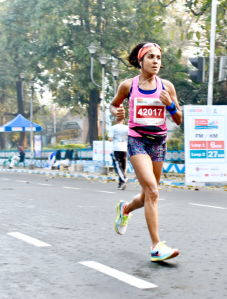
Anjali Saraogi / file photo (Photo: courtesy Anjali Saraogi)

Anjali Saraogi

The New York City Marathon of 2018 was a very enjoyable experience for me. Weather was perfect for a marathon. The course was undulating and hence not boring.

After I got my entry confirmation in February 2018, I commenced training diligently for this race. However in August I was laid low by a severe attack of dengue and unable to train for an entire month. This was a huge setback resulting in immense loss of fitness, stamina and speed. It also caused a major gap in my training. Following this setback, chasing any great timing at the New York City Marathon was no longer my goal. I decided to just run and enjoy the marathon without a target.  I finished in 3:24:12 hours.

I enjoyed the run as I was under no pressure to complete within a set time. Dengue had affected my joints. I am still coping with some remnant joint pain. Had I not suffered a hamstring injury due to sacroiliac joint weakness, I would have enjoyed the race even more.

This event has incredible crowd and spectator support. The volunteers, security and the NYPD go out of their way to assist runners. It’s a glorious experience. The energy in the race is electrifying and encouraging.

It’s not important for me to run all the marathon majors. I had wanted to run NYC Marathon ever since I heard that it was a challenging course.

I started running in November 2015. I have since enjoyed running the 2016 Bank of America Chicago Marathon, Tata Mumbai Marathon of 2017 and 2018, the 2017 Comrades, Airtel Delhi Half Marathon of 2016 and 2017, Tata Steel Kolkata of 2016 and 2017, 2018 Garhwal Run (Dehradun to Dhanaulti / qualifier for La Ultra), 100k World Championship 2018 and 2018 Changan Ford Ultra 50k.

At present, my focus is rest and recovery. I would like to improve my strength and joint health, flexibility and mobility.

I am looking forward to 2019 Boston, which will hopefully be a race where I can aspire to improve my timing.

I ran the Changan Ford Ultra Challenge 50, less than 10 days before NYC Marathon.  It was an extremely challenging hilly course, in hot humid weather. It was hard and took all of me to complete. I clocked a time of 4:22:22 hours, ranking 35 out of 115 men and women. I was pleased with the result. I participated in this event since the NYC race was not by then a race for me to achieve any goal at.

In September 2018, I participated in the 100k World Championship in Croatia, clocking a time of 9:40 hours. It was an extremely hard race for me since I had barely recovered from dengue and hadn’t trained well for it. Hence, the result was disappointing but it was a memorable experience. I learnt a lot and it was wonderful pushing my limits and evolving as a runner.
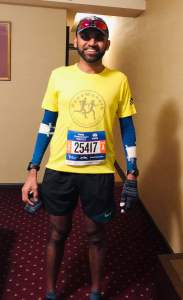
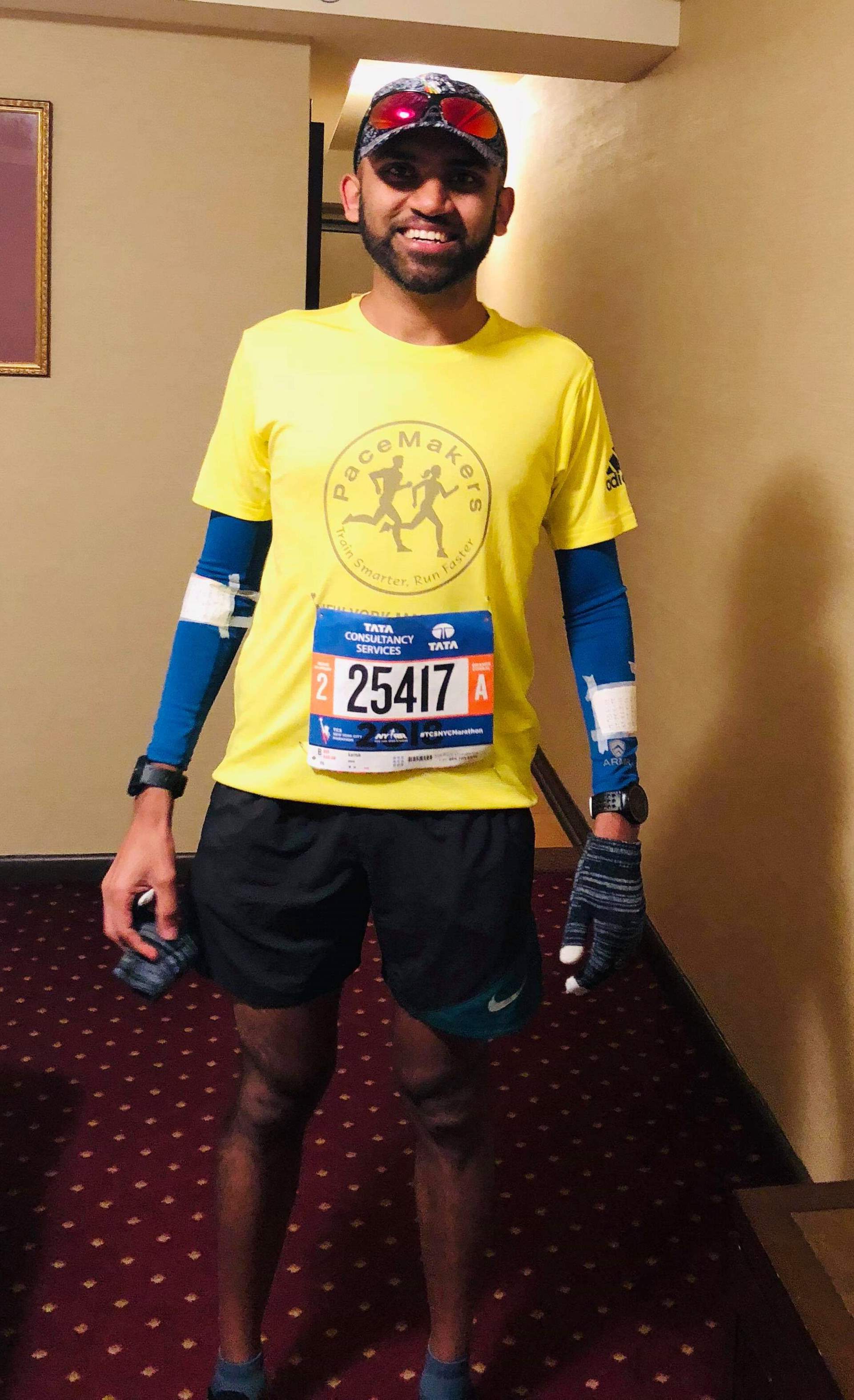
Karthik Anand; geared up for 2018 TCS New York City Marathon (Photo: courtesy Karthik Anand)

Karthik Anand

For the first time in my world majors so far, I was pacing a friend – Deeptha Raghunath – for a sub-four hour finish at the New York City Marathon.

It was a stress free run for me.

I enjoyed it.

Weather was perfect. The course was indeed a tough one compared to the other world majors but I had trained on hilly terrain specifically for this. So the race went as per our expectations. My target was a sub-four hour finish and I managed to finish the run in 3:55:38 hours.

This run was part of my plan to finish the six world majors by April 2019. I have now successfully completed five world majors and will head for my last world major from the list – London Marathon, in April 2019. I have completed five world majors so far – Berlin, Tokyo, Chicago, Boston and New York.

Going ahead, I will be doing IDBI Delhi Marathon in February 2019 and London Marathon in April 2019.
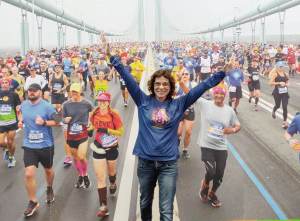
Pervin Batliwala; from the pre-race expo of the 2018 TCS New York City Marathon (Photo: courtesy Pervin Batliwala)

Pervin Batliwala

I had a great time traveling to New York and running the marathon. New York City Marathon was a difficult race with quite a lot of uphill sections as there are many bridges along the way. There was some shortfall in my training as I lost four weeks due to injuries – stiff back and tight abductor muscles.

On the day of the race, we had to leave at 5:30 AM. My corral was starting at 11 AM. When we landed in the holding area it was cold and then it started to get warm. So I got out of my track-pants. But closer to the race start, the temperature started to drop. I got back into my track-pants and I ended up running the marathon in them. It wasn’t easy doing so. After 28 kilometers I resorted to walk-run. In fact, I walked quite a lot. This was the first time ever that I walked during a marathon.

Overall, the experience was great. I finished in 4:29:48 hours. My coach was happy with my performance.

Three factors that did not go well for me was the shortfall in my training, the five-hour wait at the holding area that took a toll on me and my running attire.

NYC Marathon is a very well organized run with superb cheering.

Now, I will be doing a couple of half marathons. I plan to follow it up with a 2 kilometer-swim.
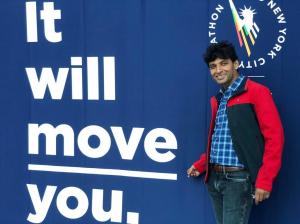
Dnyaneshwar Tidke; 2018 TCS New York City Marathon (Photo: courtesy Dnyaneshwar Tidke)

Dnyaneshwar Tidke

I was in real good shape during the Airtel Delhi Half Marathon held on October 21, 2018. But soon after the event I started to feel discomfort on the outside of my right knee. When I tried to bend my knee I felt pain. I rested for two days and then went for a 20 kilometer-run.  At the end of that training run my knee felt locked and it swelled up. I did some icing but to no avail. I visited the doctor. It was initially diagnosed as an ACL (Anterior Cruciate Ligament) injury. Once I was back from New York I did a MRI and the problem was diagnosed as meniscus tear.

I wanted to cancel my trip to New York. I tried to cancel my tickets but realized that I was going to lose a huge amount of money. I then, decided to go and see if I can manage to run the marathon. Also, the pain had eased a bit.

Upon reaching the US, I stayed with a friend Manjunath Bhat, who lived 78 miles away from the start line of the race. On the day of the New York City Marathon, we headed out at 3 AM. The start of the race was at Staten Island and the finish, at Central Park. Weather on the day of the run was quite good with temperatures in the range of 10-14 degrees Celsius.
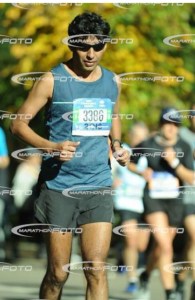
Dnyaneshwar Tidke; 2018 TCS New York City Marathon (Photo: courtesy Dnyaneshwar Tidke)

I started the run slowly. Within the first kilometer we get a bridge with some incline. I did fine during the incline but during the decline, I felt some discomfort in my knee. At around 14-16 kilometers I started to get terrible knee pain. I continued running but after 22 kilometers I had to slow down. Between 25 and 35 kilometers I jogged. After 35 kilometers I was unable to jog as my knee would get locked. I started walking. But that wasn’t easy either. I started to get cramps in my shoulder, stomach and calves while walking. At every point during the run I felt there were at least 1000 runners ahead of me and 1000 behind me. The last seven kilometres of the marathon felt never-ending. I have not walked at any run since 2011. I finished NYC Marathon in 4:03:51 hours, way outside my personal best of 2:53 hours.

I will definitely go back to run the New York City Marathon. It is a very well organized race, the course is beautiful and markings were accurate with the blue line laid out all through the course. Hydration and refreshment support during the run was excellent. Cheering was also good.

My priority now is to recover and heal. I require surgery to correct the knee issue. Next on the cards are 2019 Mumbai Marathon and the 2019 Boston Marathon. I won’t be able to run Mumbai Marathon.

(Author’s note: the surgery mentioned above was done in mid-November. Dnyaneshwar is now recovering.)
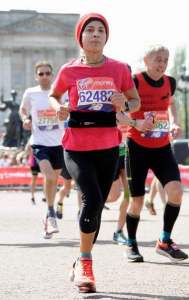
Lata Alimchandani (Photo: courtesy Lata Alimchandani)

Lata Alimchandani

This is my fourth world marathon major. I have completed Berlin, Chicago and London so far.

At New York City Marathon, on the morning of the run it was quite cold. Then it turned warm before reverting to cold. That’s typical New York weather. I had lived in New York for some time so I was aware of how the weather behaves.

The run started well. I was doing good pace. I wanted to run fast in the beginning when my energy levels are good. At 25 kilolmeters I started to feel hungry and looked for food at support stations. I managed to get a banana but I had to stop to eat it, so I lost some time. I also lost some time at a couple of other water stations. The course, also, is a little tough. I finished in 4:11:50 hours, a personal best. Though I could have finished in better timing I am happy with the run. My training was brief; for about five weeks but still quite good.

In September 2018, I had participated in the World Masters Athletics Championship in Spain. I came back on September 17 and started my training for NYC Marathon. Because of this marathon I had to give IDBI Half Marathon and the Airtel Delhi Half Marathon a miss.

I started running in 2013. My first event was Pinkathon (10 kilometers) held in December 2013.

Going forward I will be doing the half marathon at Vasai Virar Mayor’s Marathon and Mumbai Marathon.  I am likely to run Tokyo Marathon in February 2019 and Boston Marathon in April 2019.
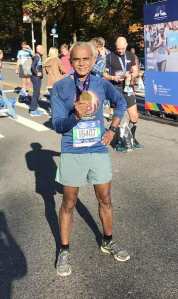
Siddesha Hanumanthappa; 2018 TCS New York City Marathon (Photo: courtesy Siddesha Hanumanthappa / Facebook)

Siddesha Hanumanthappa

Just a week before New York City Marathon, I ran a 10 kilometer-race in Philadelphia. I ran well finishing the race in 46 minutes and ended up with a place on the podium in the senior category. But it was very cold with temperatures around 3 degrees Celsius with winds at 20 miles per hour accompanied with rains. I picked up a cold and a bad cough and chest congestion. A week prior to that, I had also suffered a fall in the bathroom hurting my spine and resulting in a stiff back.

Therefore, at NYC Marathon, I had no specific time target. I just wanted to finish the run in sub-4 hours. I ended the run with a timing of 3:55:33 hours. I am happy with my timing. My personal best is 3:24 hours. I have also finished Boston Marathon twice with timings of 3:36 and 3:37 hours.

My training for NYC Marathon was not quite up to the mark. I was not able to focus on speed. Instead, I focused on endurance. My training was aimed at completing the run. It was not centered around pace. Just a day before the marathon, I did a quick five kilometer-run to verify my capability and finished it with a pace of five minutes, five seconds per kilometer. I was, therefore, confident of a sub-four finish.

NYC Marathon is an amazing event. The whole city celebrates and Manhattan is shut down.  The entire running route is taken over by police. It is like being part of a mini universe as New York is akin to a mini universe. The entire route is jam packed with people cheering, singing, dancing and encouraging runners. There are bands playing all along the way and there was loud music as well.  The bridges are the only places where there were no people as they are not allowed there. There are about five bridges in all on the route. You feel so happy and energized running in this city.

NYC Marathon has the best cheering spectators among the world marathon majors. It is also the toughest among the six majors, I think. You never know what is coming your way as you progress along the route here. The bridges have gentle inclines and gentle declines and that can be quite deceiving.

It is an extremely well-organized event and you just flow with the crowd. There are signboards, markers, hundreds of volunteers and police personnel. I feel it is much better organized compared with Boston Marathon. At NYC Marathon, there are different types of runners because the entry is lottery-based. I totally forgot myself because of the cheering and the enthusiasm of the volunteers.

I have done Boston Marathon twice and now NYC Marathon. In 2019, I hope to do Berlin Marathon and Chicago Marathon back to back. I may end this year with one more marathon locally.

I don’t train specifically for an event. My training is uniform throughout the year. On an average I log about 105-110 kilometers per week.
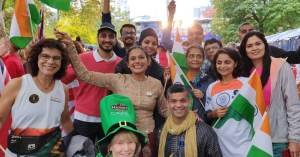
Pervin (left), Chitra (center); pre-race parade, 2018 TCS New York City Marathon (Photo: courtesy Chitra Nadkarni)

Chitra Nadkarni

I marvel at the sheer logistics of how New York City manages such a huge running event. New York City Marathon had over 52,000 runners. Yet it was organised so well.

Pre-race day events and race day events were superb. I excitedly participated in the pre-race country wise parade and was so proud to walk with the Indian flag. I met many other runners from India and Indians living abroad who were running this race.

I had done Chicago Marathon three weeks earlier and had come back to India before leaving again for New York. I had little time to shrug off jet lag and body ache and be in good form for New York.

The race day in New York was beautiful. It was cold in the beginning but the sun was up and there was clear blue sky. My coach and I had decided to go for 4:10 finish time and at the expo I had picked up a pace plan accordingly.

I was very apprehensive about the route because it is undulating terrain and there were many flyovers. I started my race with extra layers and shed them when I had warmed enough. I ran sensibly till the half way mark because I was advised at the expo that the second half is tougher than the first. The last 200 meters was also a climb and Central Park was one undulating route. But I stayed true to the pace plan and finished in 4:09:32 hours. I am very happy with my timing.

I have just one marathon major – Tokyo, left. I would love to finish it in 2019.

Going ahead, my to do list includes full Ironman and Masters.
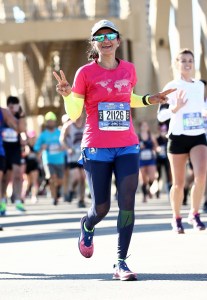
Kranti Salvi; 2018 TCS New York City Marathon (Photo: courtesy Kranti Salvi)
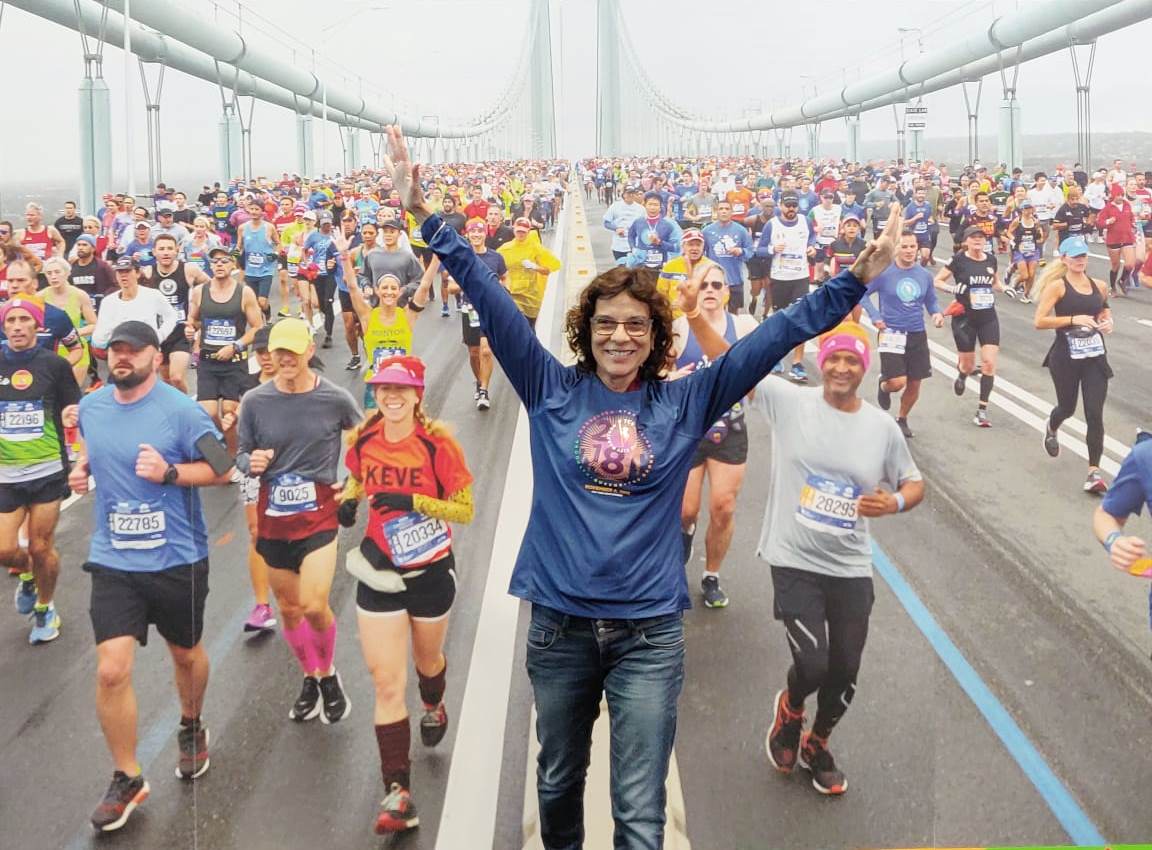
Kranti Salvi

I had run Berlin Marathon seven weeks before New York City Marathon. I ran in a saree, becoming the fastest woman to do so. My original plan was to come back from the German city and take two weeks to recover before I commence training for NYC Marathon. But that was not to be. After I landed in Mumbai, I was flooded with requests for interviews, both by print and broadcast media, for my feat: running in a saree at Berlin. I also got invitations for felicitation functions, many of which I had to turn down.

During one such interview, I had to wear my nauvari saree (traditional Maharashtrian saree) and do a short run for a video shoot. But I tripped and fell, badly bruising my knee. My injury was quite bad and that put a stop to my training. The doctor, I went to, said the injury would take six weeks to heal. I was on antibiotics to help the healing of the wound. Two weeks before NYC Marathon, I also got flu. With all these, I just resorted to slow jogs as part of my training.

During my travel to New York, I had stomach distress on the flight. I had to miss the pre-race day parade.

On race day, I woke up at 3 AM. Getting to the race venue was an experience. There were thousands of people on the roads from early morning. Everywhere, there were queues – for buses that transport you to start line, queues at toilets.

I started the run slowly as my aim was just to finish the marathon. NYC Marathon is like a river of people – hundreds of runners and thousands of spectators cheering you. Despite my stomach issue, I did not feel tired. I did not get any cramps either. I finished the run in 3:56:29 hours. I guess running the Berlin marathon was my training for NYC Marathon.

I will be doing Chicago Marathon in October of 2019. In the following year, I hope to do Tokyo Marathon and London Marathon.

(The author, Latha Venkatraman, is an independent journalist based in Mumbai.)