“ EVERY RACE COUNTS’’ / TALKING TO KIEREN D’SOUZA

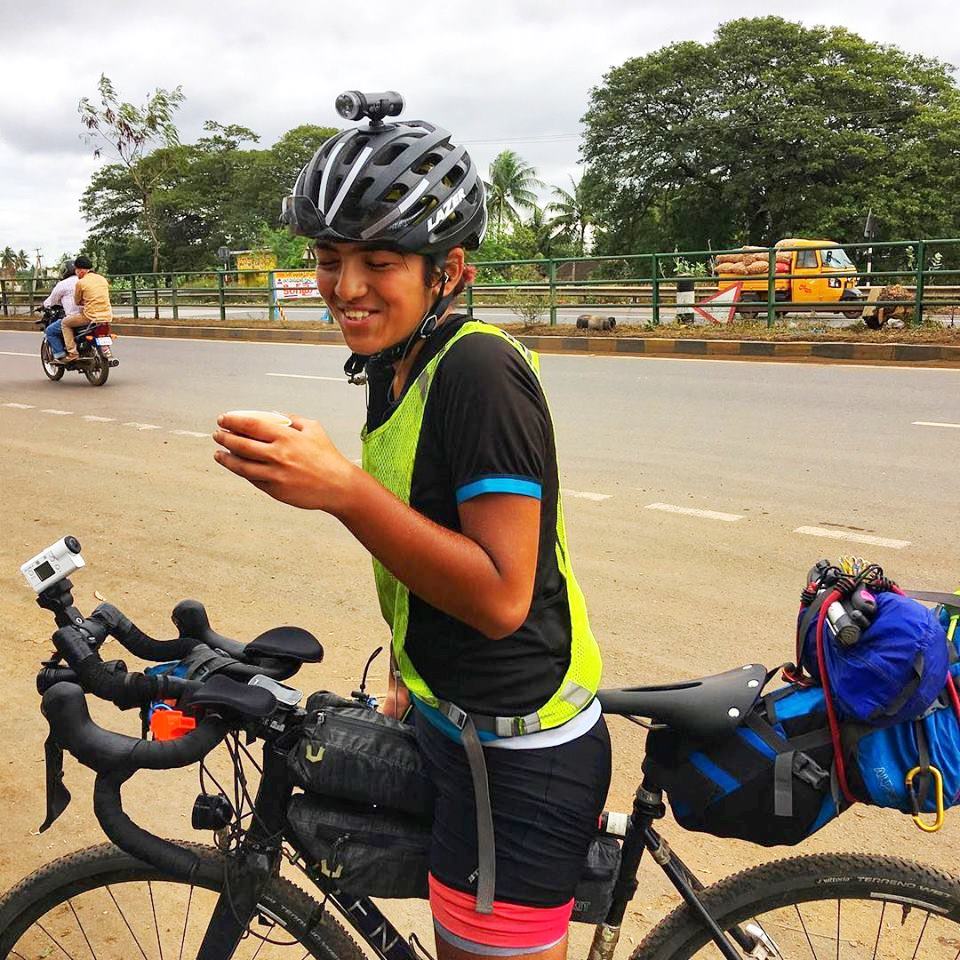
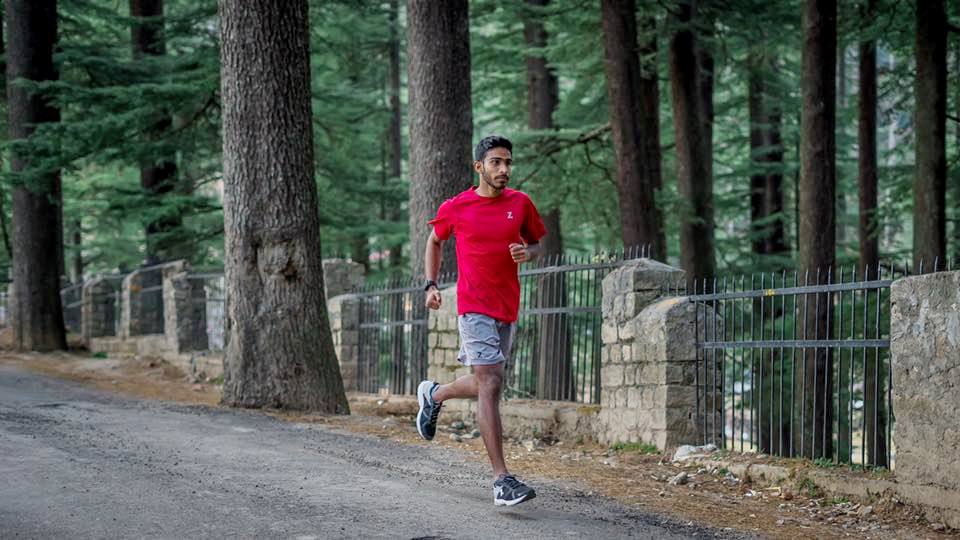
Kieren D’Souza (This photo was downloaded from Kieren’s Facebook page.)

Kieren D’Souza is among India’s promising, young ultra-runners. He has consciously chosen to make a livelihood from running; he does it as a full time job much the same way many of us go to office. Increasingly partial to trail running, he lives and trains in Manali, where the Himalaya provides the sort of landscape and environment for running, he identifies with. Kieren has been to ultramarathon races abroad, including the world championships. A regular visitor to the Tata Mumbai Marathon (TMM) as part of his association with the pain relief gel-brand Volini, he spared time at the 2019 TMM expo to talk to this blog about his experience, living off running. Excerpts:

It was in 2012 that you ran your first ultramarathon in Bengaluru. Roughly four years later in Leh, by the time you won the 111 kilometer-category of La Ultra The High in 2016, you had begun setting yourself up as a full time runner; someone hoping to provide for oneself through running. How has the journey been so far at a personal level and in terms of supporting yourself financially?

As a journey it has been perfect. I don’t wish I was doing anything else. I resolved to run full time in 2014; I got around to doing so in 2015. Every day has been a blast. I don’t remember having so much fun. That way it has been brilliant. As regards the goals I had set for myself – it has been slow but consistent progress. I am not where I want to be yet, but I am climbing up the ladder. I wish it were faster, though. On a financial level – a life of this sort has meant a lot of work. There is a lot of running around, a lot of approaching people and a lot of disappointments. You have to work with people, companies and brands. I understand that I have to work with them and I was mentally prepared for it when I started this journey. It has been a lot of hard work and definitely not the easiest thing.

Did you have a full understanding of what making a career of running entails, when you embarked on this journey in 2014-15?

Did I know that it would be hard to make money? Yes, I knew that. Did I know it would be so hard? I did not know that. It’s been a lot harder than what I thought, I guess. There are some similarities in what companies are looking for, but essentially every company looks for something different. Even people within companies look for different things. It is not the easiest to reach out to people. Finding the right contact is tough. Everything has been a process – from learning who to reach out to and having them respond to you. If I get a reply from some of the people I got in touch with, I am most excited. It may not even materialize into anything but just getting response; sometimes those are the most exciting things. Most of these exchanges – 99 per cent of it – don’t convert into an association. But having said that, the fact is – I need to do this. Nobody else is going to do this for me.

We are right now at the expo preceding the 2019 Tata Mumbai Marathon (TMM). If you keep aside the elite foreign athletes attending the race and you look at the Indian elite – most of them; are gainfully employed with one organization or another. Then there are some from the amateur category who race because prize money complements earnings from other sources or in some cases, is the only source of livelihood they have. In India, you don’t yet come across athletes who consciously run full time for livelihood or support themselves completely through running’s ecosystem.

That’s one thing I tell others – I can think of very few people who are living off only running. I mean there are the elite athletes but they are usually working with the armed forces, railways or the state-owned oil companies. They are supported by these organizations. That makes the choice I made tough, but I am okay with it.

There is the conventional logic that if you have a hobby you like, then you support it with earnings from some other source. There is also the argument that if your hobby – or an activity you genuinely like – becomes your source of livelihood, then it starts losing the fun originally associated with it. Have you ever felt so?

No. Like I said – last four years of doing this, I never thought on any day that I should be doing something else. I can’t think of sitting at a desk right now. I live in Manali and I love getting out every single day. I was talking to a friend a little earlier and he was saying that when I get back, it may be snowing and there won’t be much running I can do. It does not deter me. I will probably pack a bag; wear my boots and hike six hours every day. I don’t care. I love to get out. At the heart of it what I enjoy is – getting out and moving. Running is the simplest way of supporting it; it is accessible to me everywhere.

To labor the point a bit more in the interest of clarity – conventional Indian logic encourages you to secure yourself first and then take your chances. Are you the sort who believes that the chances must be availed first, security will follow?

I guess I was born with the spirit of adventure and running is taking me there. Back in 2013 -14, the running circle I was in had a lot of people who were in their thirties, forties and fifties. Even today many of my friends are much older than me. From their ranks, there were those quitting jobs – good corporate jobs – and getting into other things that interested them. When I thought of taking on running full time, I was at a cross road – either do it now when I am 21–22 (his age then), when I have fewer responsibilities and can take such risk or wait till I reached 45–50, which was 25–30 years away. I was not very keen to wait till 50. Maybe I would have got married, had children and got everything sorted out; but by the time everything gets sorted out, I would have also been way older. I had worked for a year before I made my decision and I knew I wouldn’t last at a desk job. I also did not want to become old and then look back and regret not having done what I wanted to. The assurance of security was not there when I made up my mind, but then I had to take the plunge – it was not a blind one, the future looked blurred, but I knew where I wanted to go, so I took the plunge.

The ultramarathon used to be associated with the older lot of runners. Now you have a lot of young runners entering the sport and they are setting new standards of performance. In your travels overseas you would have met some of these young runners, who like you, are into the sport full time. When you compare the ecosystem of support they enjoy and what you have here, what are the elements missing?

There isn’t a clear, black and white answer for this. In places where the sport and sporting culture is more established, there are a lot of other things – there are running stores, cycling stores; people can work in these kind of stores, you can avail coaching at colleges, schools etc. So there are ways to make money off the sport. If you are really good there are people who get sponsorship. I think we lack this ecosystem here. We have few running stores still in India. There is a big difference between how stores here and overseas work; there is difference in the operational style of running communities too. I don’t think a runner here goes to a running store to pick up a shoe. They will probably ask another runner. Slowly all that is changing; the opportunities are opening up. At the same time, it would be incorrect to assume that the going is easy for runners overseas. It is hard work for them too.
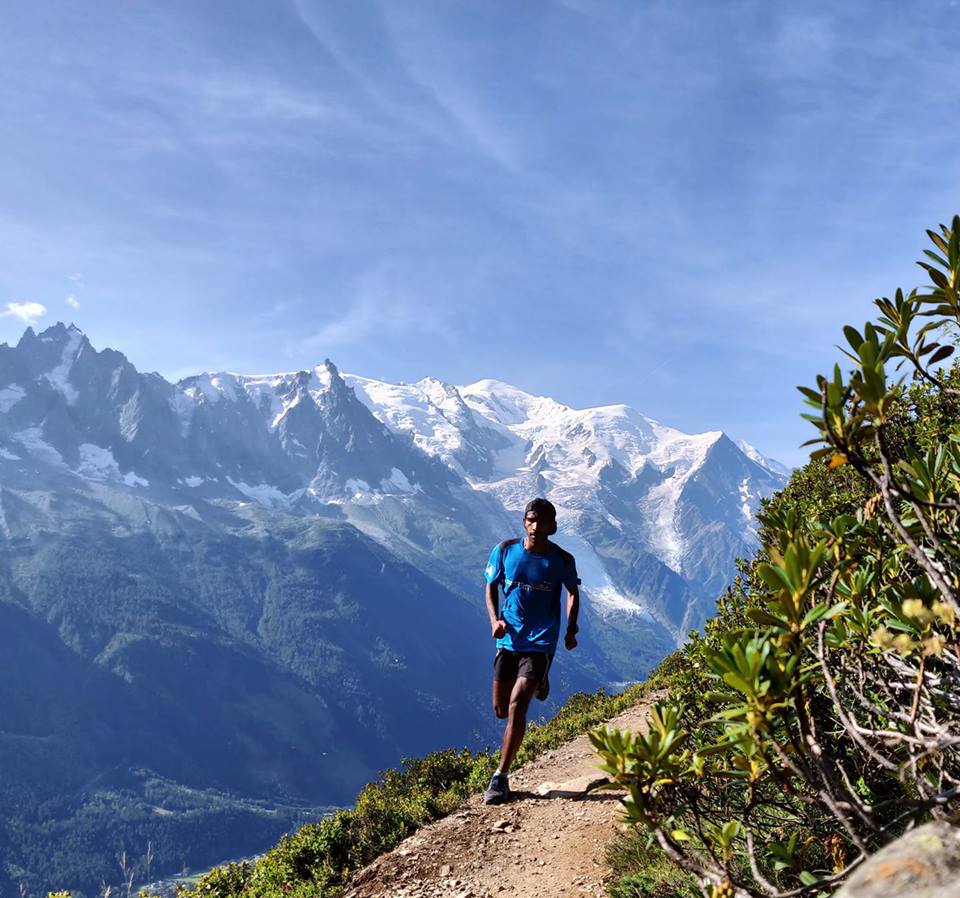
Kieren D’Souza (this photo was downloaded from Kieren’s Facebook page.)

Within the world of running would you say the ultramarathon is among disciplines that are hard to find sponsorships in?

It is a much smaller sport than road running. However, there is more sponsorship available now than before. The sport is growing.

At the end of the day, people are going to notice only the performance – typically the time a runner took to cover given distance. How you got there, whether you ran full time or part time, recedes in relevance. How does your choice of running full time then justify itself?

Because I am running full time, I have lot more at stake. I approach every race, very seriously. I don’t take any race for granted. You won’t see me going and doing a fun run or racing just for the heck of it. I plan things out because every race matters for me. Every race counts. In the grand scheme of things, when you are looking at performance, every race counts. When I am running I think about all this. When I fare badly, it definitely goes through my head. When I do well, it goes through my head. When you are not doing well and you have all this at stake, you have to control your thoughts and be in the moment. When you are doing well you can’t be just flying as well. You got to be in the moment. The things at stake prompt me to work hard. Still, I also slack off. But I don’t like it; I hate slacking off. The structure I work in adds a lot of pressure, most of it – me putting it on myself. None of this is however a burden on me. I enjoy getting out and doing it.

You have participated in ultramarathons overseas; you have also been to the world championships. How do Indian runners compare with talent overseas? What are the specific ingredients missing when training here?

I won’t be able to talk about specific ingredients because as runners, we are all different. But in general, in the sport we are way behind where the rest of the world is. For me personally, every race has been an opportunity to learn.

Specifically about you: what is the catching up you require to do?

I am still behind the winners, right? So – what is it that I must do to get faster? Getting faster – that is the basic thing.

Are you your own coach?

I have always been my own coach. I did train with Pace Makers for a year or so. But other than that I have been on my own. Probably that is also one reason why my progress has been slow. Maybe it would have been faster if I worked with a coach. But I don’t think we have a coach in India who can help me with trail running or ultra-running. The people you could work with are online. I am not excited to work with someone online. I interact with a lot of runners and discuss my training with them. If I feel I need to, I then make adjustments to the training plan accordingly. I was also working a lot with Henrik Westerlin, discussing my training plan and following some things he had shared with me last year.

We have the problem of the urban paradigm with its traffic, pollution, people and congestion, sparing no part of this country for long. Even Manali has changed over the years. Do you think you may have to shift elsewhere to train; maybe even move out of India?

I lived in Europe for a few months last year. The thing I miss the most in India is the company and the quality of athletes I got to train with overseas. The congestion aspect – I can work around it. Particularly because I am in Manali; if I was in the cities it would have been a different case. In Manali, I stay clear of the town. If I ever move out of Manali it will be to avoid the growing congestion but that thing about company – that will still be missing.

(The author, Shyam G Menon, is a freelance journalist based in Mumbai.)

JOVICA SPAJIC AMONG WINNERS AT ARROWHEAD 135

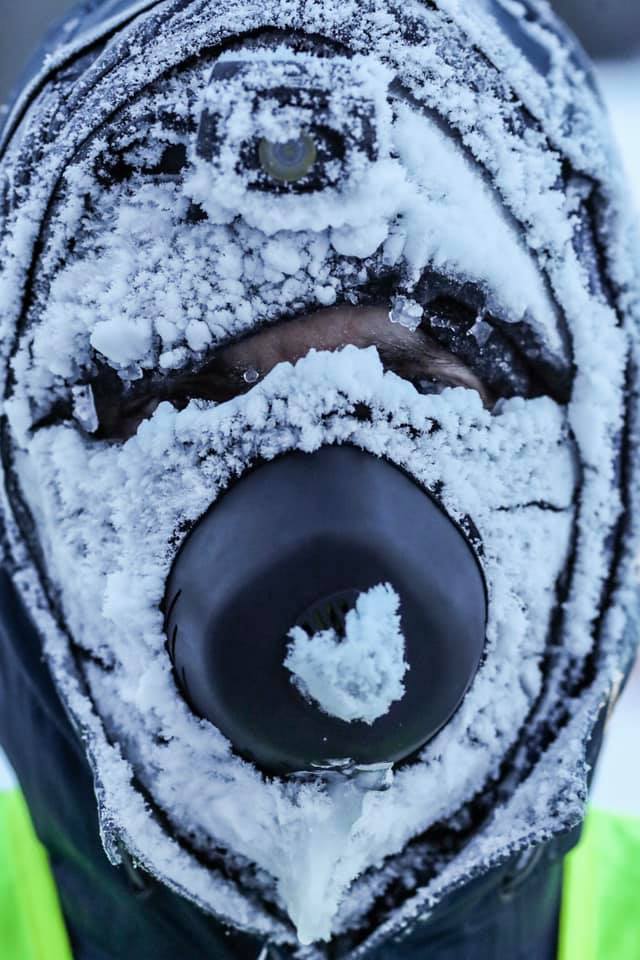
Jovica Spajic (Photo: Shyam G Menon)

Serbian ultra-runner, Jovica Spajic was among winners at the 2019 edition of Arrowhead 135 in Minnesota, noted for the very low temperatures in which the race happened, this January end.

As per results available on the race website, he was joint winner along with Scott Hoberg of the US. They finished the 135 mile race in 36 hours, nine minutes. The winner among women was Faye Norby of the US with a timing of 48:34:00. Jovica, Scott and Faye were listed in the supported category of runners. Jeff Leuwerke of the US, finished first in the unsupported category of runners. He too completed in 48:34:00.

Readers in India may recall Jovica from the 2016 edition of La Ultra The High, the ultramarathon held annually in Ladakh. In 2016, Jovica had been joint winner with Grant Maughan in the 333 kilometer-category of the event (for more on that race please click here: https://shyamgopan.com/2016/09/16/the-captain-the-teacher-the-warrior-and-the-businessman/). Finishing eighth overall among runners (as Faye and Jeff were joint sixth) was Ray Sanchez with timing of 49:33:00. Back in 2011 he had finished second in La Ultra The High, at that time 222 kilometers at its longest. Grant Maughan commenced 2019 Arrowhead in the unsupported category but pulled out later.

This photo was downloaded from the Facebook page of Arrowhead 135 and is being used here for representation purpose only. No copyright infringement intended.)

Arrowhead 135 is among the toughest endurance races. “ It is a human powered ultramarathon taking place in the coldest part of winter in the coldest city in the lower 48 states. Our average finish rate is less than 50 per cent; the finish rate for new racers is much lower. 2014 finish rate was 35 per cent,’’ the race website said. The 2019 race categories included bicycle, ski, foot and kick-sledding. Runners may be supported or unsupported.

Late January 2019 the media had reported of very cold conditions in the US caused by the polar vortex. Its impact was felt at Arrowhead 135 too. According to Runners World, temperatures this year at Arrowhead were as low as minus 30 degrees Fahrenheit (minus 34.44 degrees Celsius). It said that this year 146 participants started the race. USA Today, which pegged wind chill during the race at “minus-68’’ reported that only 52 of the 146 participants finished the race, a completion rate of 36 per cent.

(The author, Shyam G Menon, is a freelance journalist based in Mumbai.)
2018 GGR / JEAN-LUC VAN DEN HEEDE OF FRANCE WINS

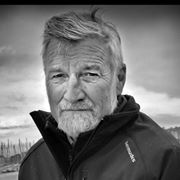
Jean-Luc Van Den Heede (This photo has been downloaded from the Facebook page of the French skipper and is being used here for representation purpose only. No copyright infringement intended.)

Jean-Luc Van Den Heede of France has won the 2018 Golden Globe Race (GGR) entailing solo nonstop circumnavigation of the planet in a sailboat.

According to news reports on January 29, 2019, the 73 year-old who spent close to 212 days (211 days, 23 hours, 12 minutes and 19 seconds to be exact) alone at sea in his boat – Matmut, was welcomed back at Les Sables d’Olonne in western France by Sir Robin  Knox-Johnston, the winner and sole finisher of the original 1968 edition of the race. Besides winning 2018 GGR, Van Den Heede is also now the oldest sailor to complete solo nonstop circumnavigation, reports said.

The French skipper had built up a formidable lead in the race since August 2018. However following a storm in the Pacific Ocean with damage to his mast, he had been forced to sail more cautiously, a move that affected his speed.  At one point he reportedly thought of halting in Chile for repairs, which would have taken him out of the main race and shifted him to the Chichester class reserved for those making one stop. But he avoided doing so, electing instead to continue the voyage with adjustments to his rigging. Later he also served a time penalty at sea for improper use of his satellite phone.

These developments allowed second placed Mark Slats of the Netherlands to gain on him narrowing the gap between their two boats – both Rustler 36 yachts – considerably.

News reports indicate that it may now be the turn of Slats to serve out a time penalty after his expedition manager contacted him directly about an approaching storm in the Atlantic. Such direct contact is not permitted under race regulations. As of late evening January 29 in India, the live tracker available on the GGR website showed Slats close to the Spanish coast and approximately 358 nautical miles away from the finish line in France.

Estonian skipper Uku Randmaa is in third position in the race while Istvan Kopar of USA is running fourth. Tapio Lehtinan of Finland is in fifth place. There is considerable distance between Slats and Randmaa; at the time of writing, the latter was 3520 nautical miles from the finish line on the French coast.

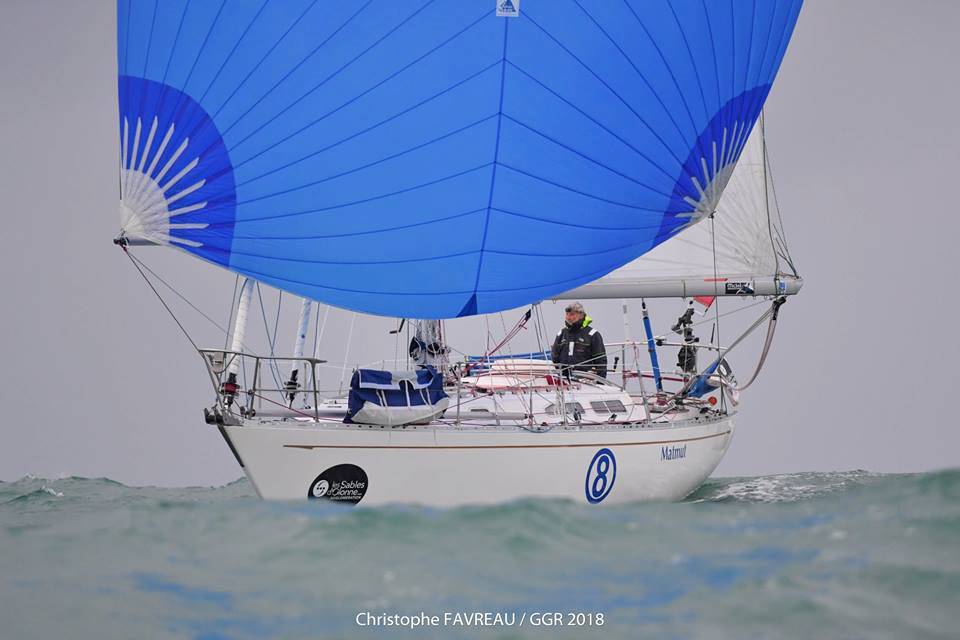
Matmut and her skipper (This photo was downloaded from the Facebook page of GGR. No copyright infringement intended.)

The 2018 GGR commenced from Les Sables d’Olonne on July 1, last year. The race was unique for pegging technology levels aboard participating boats at the same level as that prevailed in 1968. It was widely perceived as a return to purity in sailing. Of 18 skippers who commenced the race, only five remain in the main race at present. The rest have either retired from the race or shifted to the Chichester class.

Well known Indian skipper Commander Abhilash Tomy KC was among participants in the 2018 GGR. However he had to retire from the race following a severe storm in the southern Indian Ocean that dismasted his sailboat, the Thuriya, and left him injured. He was later rescued and upon return to India underwent surgery for the back injury. At the time of storm and accident, Abhilash was placed fourth in the race.

Update: News reports said that Mark Slats completed his solo non-stop circumnavigation on January 31, 2019 to finish second in 2018 GGR. He spent 214 days alone at sea. However a 36 hour-penalty incurred for direct communication with his team manager will have to be additionally factored in, bringing the total number of days to 216, the reports said. According to it, among those who received him at Les Sables d’Olonne was Jean-Luc Van Den Heede, the winner of 2018 GGR.

(The author, Shyam G Menon, is a freelance journalist based in Mumbai.)
 

SPOTLIGHT ON THERMAL STRESS / IMPACT ON SPORT EVENTS

Illustration: Shyam G Menon

This study posted on the IAAF website required little effort to catch one’s attention, especially after a Mumbai Marathon in warm conditions. It speaks of the 2020 Tokyo Olympics but essentially sensitizes all to the importance of choosing carefully the time frame of an event in times of climate change and where stress by weather is expected, how it may be managed.

On January 21, coincidentally a day after many sweated it out at the annual Mumbai Marathon in warm conditions, the International Association of Athletic Federations (IAAF) hosted on its website the summary of an engaging study meant to be a tool in managing thermal stress at sport events.

The study titled Quantifying Thermal Stress for Sport Events – The Case of the Olympic Games 2020 in Tokyo, pointed out that the upcoming  Olympics sits bang in that period of the year when hot weather prevails strongest in the Japanese capital. The researchers who include Paolo Emilio Adami, manager of IAAF’s Health & Science Department, has emphasized that the intention of the authors is “ not to prove a specific location unsuitable to host a sport event but rather to provide decision makers with a useful methodology to assess the prevailing conditions and take timely action in order to allow for a safe participation for athletes as well as spectators.’’

To put things in perspective, this blog elects to highlight a point the study’s authors have mentioned – large sport events like the Olympics typically happen in the summer months, the reason for which maybe their origin in Europe. In Europe, the summer season affords the largest share of thermally comfortable hours. But then, the whole world is not Europe and the Olympics moves from one location to another.

In the paper’s abstract, the authors have said that it is important for event organizers and medical staff to know whether a competition is happening at a time and place with extreme weather, or in general not appropriate weather and climatic conditions. To determine this, two factors have to be included when establishing the effect of atmospheric conditions on visitors and athletes – climatic conditions based on long term data and quantification of extreme events, like heat waves. The impact of environment on human thermal comfort includes meteorological and non-meteorological factors. Some of the meteorological measures are severely impacted by local environment; within this, the study mentions the capacity of urban environments to generate modifications “ by morphology and the surface properties of various specific elements and their configurations.’’ The latter refers to micro climatic variations urban landscapes can prompt. However the micro climate can also be modified by planning solutions that reduce heat load on humans attending the event.

The study is anchored around a couple of relevant indices. The first – Physiological Equivalent Temperature (PET) is one of the most commonly used indices in the field of human thermal comfort. It is defined as “ the air temperature at which, in a typical indoor setting (without wind and solar radiation), the energy balance of the human body is balanced with the same core and skin temperature as under the complex conditions to be assessed.’’ Like most complex thermal indices, PET is dependent on meteorological input parameters like air temperature, vapor pressure and wind speed as well as information about local radiation fluxes, the paper said. The second index anchoring the research is Modified Physiological Equivalent Temperature (mPET). It is based on classic PET but comprises a multi-mode heat transport model and a self-adapting clothing model. It also contains improved consideration of humidity. For the specific case of Tokyo as venue for 2020 Olympics, the study used meteorological data spanning August 1966 to June 2018 in 3h resolution provided by a meteorological station in the center of Tokyo.

According to the study, the very time of the 2020 Olympics from July 24 to August 9 can be deemed the hottest throughout the year. “ Both PET and mPET indicate increasingly warmer conditions for the time from 24th of July to the 6th of August and slightly cooler conditions on average for the 8th and 9th of August,’’ it said. Hours with PET of 35 degrees Centigrade and above are most frequent in July and August, where they are found between 9 AM and 3 PM. However on the average, even at nighttime, conditions in Tokyo may be perceived as warm in August.

The researchers conclude (based on results) that determining the right period for hosting sport events requires meteorological input data covering a long period of time, “ at least 30 years (as recommended by WMO), in high temporal resolution.’’ Analysis that is based on monthly resolution and average values cannot provide appropriate information.

“ In times of global climate change and urban areas being affected the most, it should be stated that most recent data should be used in order to account for changing frequency and intensity of heat waves and the recent development of the urban canopy influencing the urban heat island effect,’’ the paper said. Thermal stress in terms of heat stress can be reduced by either moving the date of an event or carefully setting the time of day an activity is slated for. The study was focused on visitors originating from Europe. It works for people from other regions with similar thermal climatic conditions. It can be adapted for people from still other regions by using a different assessment scale representative of corresponding climatic conditions.

The study made two other interesting observations:

Readings from a single meteorological station – as in the Tokyo case study – cannot be deemed representative of a whole city or urban area like Japan’s capital. Input parameters for thermal indices as well as the indices themselves are modified significantly by the urban environment and show “ strong variation in short distances of few meters.’’ Provided know-how as well as input data is available, the results can be further improved by considering actual local conditions using a “ building-resolving urban climate model.’’ Second, in terms of vulnerability to thermal stress, the study pointed out that visitors and tourists are more vulnerable than athletes. This is due to the shorter time for acclimatization they typically go with and lack of information on how to counter the effects of heat. Athletes on the other hand, tend to arrive a few days prior to competition allowing for progressive acclimatization with slow increase of exercise load up to the day of competition.

“ To allow for a safe participation in sport events, it is recommended that athletes arrive at the competition at least two weeks prior to the event. When arriving on the site of the event in advance is not possible, acclimatization should take place in an environment with similar climatic conditions to the final destination,’’ the study said.

(The author, Shyam G Menon, is a freelance journalist based in Mumbai.)       
2018 GGR / INTO THE FINAL PHASE

Illustration: Shyam G Menon

The 2018 Golden Globe Race (GGR) has entered its final phase.

It is poised to see its first finisher in the next couple of weeks.

By the second week of January 2019, of 18 skippers at the start of the race, only five remained in the main race. Of them, four – Jean-Luc Van Den Heede, Mark Slats, Uku Randmaa and Istvan Kopar – were back in the Atlantic having sailed that much around the world.

As per updates on the race website, 73 year old-French skipper Jean-Luc Van Den Heede sailing Matmut, a Rustler 36 Masthead sloop, was in the lead. He was followed by Dutch skipper Mark Slats with Uku Randmaa (Estonia) and Istvan Kopar (USA) trailing him in that order.

Both Van Den Heede and Slats – the two are incidentally sailing identical Rustler 36 yachts; Slat’s boat is called The Ohpen Maverick – were at latitudes corresponding to North Africa on the map. At one point in the race, the French skipper held a massive lead of more than 2000 nautical miles over his nearest competitor. That has since declined. Media reports said that Van Den Heede damaged his mast in a storm; the boat got tilted badly and in the process the mast took a beating resulting in slackened rigging. Although he made temporary repairs at sea and avoided diverting to Valparaiso in Chile for repairs ashore (which would have shifted him from the main race to the Chichester class assigned for those availing one stop), he has had to subsequently proceed in a more measured fashion. Later, he served an 18 hour-penalty for improper use of satellite phone and has also had to put up with a windless, calm sea in the North Atlantic. Thanks to all this, Slats has been closing the gap.  Checked on January 11, 2019, distance to finish (DTF), for Van Den Heede was 1943.5 nautical miles. For Slats, it was 2133.9 nautical miles.

The 2018 GGR began July 1 from Les Sables-d’Olonne, a seaside town in western France. The race involves solo nonstop circumnavigation in a sailboat with technology aboard participating vessels pegged at levels which prevailed in the first GGR of 1968.

The 1968 GGR had only one finisher – Sir Robin Knox Johnston of UK in the India-built Suhaili. It was the world’s first solo nonstop circumnavigation in a sailboat. Sir Robin completed his journey in 312 days. Compared to this, Van Den Heede and Slats were at their earlier mentioned positions in the North Atlantic by the 194th day (as per GGR website) of the race. Van Den Heede holds the current world record for single-handed westabout circumnavigation. According to information on Wikipedia, the westward route for circumnavigation is harder as it faces the dominant winds and currents. There are fewer attempts in this direction. In 2004, Van Den Heede completed this route in 122 days, 14 hours and three minutes.

(The author, Shyam G Menon, is a freelance journalist based in Mumbai. For more on 2018 GGR please go through the blog’s list of recent posts, explore Sagar Parikrama in the categories section, visit the blog’s archives or simply scroll down to see earlier posts.)

THE ARCHITECT

Divya Tate (Photo: Shyam G Menon)

As of 2019, Divya Tate’s company – Inspire India – was organizing three annual events in long distance cycling that are qualifiers for Race Across America (RAAM). She is also national representative from India for audax cycling, the culture of brevets (BRMs). Known for the events she anchors and her experience with long distance bicycle races, Divya however relates to cycling in a much wider sense.

For freelance journalist exploring the small universe of ultra-cycling in India, especially the segment dealing with brevets and races designed to serve as qualifiers for Race Across America (RAAM), it didn’t take long to notice a common intersection for several individual story lines – Divya Tate.

Three of India’s RAAM qualifiers are organized by Inspire India, the company she helms. She also oversees the India chapter of randonneuring, the sport of long distance cycling with roots in audax cycling.

Divya however is not all about cycling or sports.

Divya and children on her bicycle; from an old article that appeared in Times of India (Image: courtesy Divya Tate)

Born 1966 in Nagpur, she learnt to cycle when she was around 9-10 years of age. She recalls that her parents – her father served in the Indian Air Force (IAF) – were having a lunch party at home when that specific moment of riding her bicycle independently, arrived. “ It was euphoric,’’ she said. Cycling was part of her general love for the outdoors, something you found plenty of in life spent with the defence forces; most air force stations Divya traveled to with her family had its share of open spaces. That view of world narrowed when her father after leaving IAF joined Air India and the family shifted to Mumbai. The long shadow of roads dominated by traffic and life gone indoors in concrete jungle loomed. Worse, probably in anticipation of city life and its restrictions, her cycle was sold off. “ My access to the outdoors was lost,’’ she said. She counted her days to freedom. Once she passed out from A.F. Petit School in Bandra, she attended junior college at St Xaviers and then proceeded to study architecture at Rachana Sansad. In 1991-1992, she finally got the liberation she sought from Mumbai’s congested environment with limited access to the outdoors. She moved to Pune.

Cycling to Junnar (Photo: courtesy Divya Tate)

Within a few weeks, she bought herself a bicycle – a Hercules Rock Shox, a model hailing from the early generation of geared bikes sold in India. It was pretty heavy too. Mumbai life had taken its toll. “ My first ride on that bike was horrendous. I could barely cycle five kilometers and I was done,’’ Divya said. But she took to riding it regularly, the daily jaunts fueled in part by some other developments in her life. “ At this point, I was in a bad marriage,’’ she said. Besides being a source of enjoyment, cycling was also good therapy taking the mind off problems at hand and reconnecting individual with universe. She periodically took time out to ride in the countryside around Pune. These were the years preceding Internet forums and networked groups in sports. Divya was oblivious of any keenly interested leisure cyclists around. There were of course those into bicycle racing. A focused lot, their company wasn’t Divya’s cup of tea; at least then. For her, being in the saddle was invitation to take a wider view of life, contact with nature and existence restored. After her second child was born, her marriage broke up. In 1998, she called it quits on that front. “ I had to start from scratch. Cycling played a big role in helping me maintain equanimity and have a sense of resolve. I was literally in a pea-soup fog kind of situation,’’ she said. A simple contraption composed of frame on two wheels and powered by rider’s effort, the bicycle spelt independence for Divya at this financially tough juncture in her life. Her children were in kindergarten. Often, she dropped them off on her bicycle. According to her these trips on the cycle were great for parent-child bonding.  By the time they were 7-8 years old, the children too had their cycles and were spending time with Divya in the outdoors. From where she stayed in Pune, to where the roads gracing the countryside commenced, wasn’t a long way off. “ We spent much time outdoors,’’ she said.

From a bicycle tour in India (Photo: courtesy Divya Tate)

Interestingly, following her divorce, Divya veered off architecture. She got deeply involved with environmental work including volunteering for the purpose. Then, after a visit to a farm she cycled to Junnar and wrote about it. It was her first article getting published in the media. Environmental work, cycling, writing – it became a pattern. “ Nobody did it back then. Cycling opens up your mind. If you look at it, you will notice a link between cycling and environmental activism,’’ Divya said. Back in college, she used to make earrings out of wire and junk and sell them. Later she got around to working with mosaic. Around the time her marriage broke up, she took to mosaic work more. “ I gave up my architectural practice and took up creative work. I enjoy aesthetically pleasing work. I actually discovered that we could live and be happy on very little. A lot of people get trapped in material life,’’ she said. It wasn’t long before this exploratory streak dislodged established practices in other areas of her life. The next bastion to fall was medicine; she weaned her family off allopathic drugs. “ Eventually I was beginning to see the cracks in our educational system. We seem to make people for an industrial environment. Education was one more institution after marriage and allopathic medicines that I was disagreeing with. I ended up divorcing that too,’’ Divya said laughing.

From a trip in Europe (Photo: courtesy Divya Tate)

Around the time her children were in the fourth-fifth standard, she pulled them out from school. Thereafter it was homeschooling. The homeschooling community was very small those days; in Pune she could locate only two other families who had opted to do so. Divya believes that nature has wired all human beings to learn. Human beings are like sponges. It is teaching that is unnatural. “ The institution of education as we have it suffers from agenda. People are being taught for a purpose. My kids will manage. I just have to have the confidence that they will. Today, the obsolescence of education as we know it is becoming really evident. Now it is more about how you think and how you use it. The former edifice is crumbling. It is good to see that,’’ she said. This activist edge is visible in Divya’s perception of cycling too. Somewhere around the time of her divorce, she had attended a Critical Mass meeting in Pune. Critical Mass is an event usually organized on the last Friday of every month; it has no stated agenda except for cyclists to assemble at assigned hour and place and cycle through city / town streets. It began in 1992 in San Francisco and according to Wikipedia, a decade later the events were being organized in over 300 cities worldwide. Although its participants have argued that Critical Mass should be viewed as a celebration, it has been described as a monthly protest by cyclists to reclaim roads. Her interest in Critical Mass provides insight into how Divya relates to the world of cycling. For her it exceeds immediate physical activity and acquires the dimension of a whole way of life. That is uncommon in India’s amateur cycling and running scene, where philosophies built around activity is still the refuge of only a few. For the vast majority, sport remains action; an adrenalin-rush even as life continues mainstream, materialistic and motorized.

At India’s first BRM in 2010 (Photo: courtesy Divya Tate)

The ascent of social media brought BRMs (the brevets of randonneuring) to Divya. Here too, the activist in her wouldn’t take things lying down. When she first stumbled upon BRMs in an Internet chat, it was packaged as something that “ separated the men from the boys.’’ She couldn’t let that pass. She signed up for the brevet. “ In all fairness when I signed up, that sentence was removed,’’ she said. Until then she had only done bike packing trips including in France (about which she wrote in the media). She borrowed a friend’s bike for the ride in France; all her trips in India were on steel bikes. “ The BRM I signed up for was a 200 kilometer-one. There were 3-4 of us who went from Pune to Mumbai for it. I finished the BRM within cut-off but not gloriously,’’ she said. What that event did was make her aware of longer BRMs – those spanning 300,400, 600 and 1200 kilometers (the last mentioned being in France).  She wished to do it but wasn’t mentally prepared to trade in her view of wider universe for the typical cyclist’s narrower, competitive view. She recalled a meeting of brevet enthusiasts she hosted at her house in Pune where she was struck by the nature of conversation – it was all about training and technicalities. “ It didn’t seem my scene. I just wander around the countryside on my bicycle,’’ she said. On the other hand, somebody like Alan Tonkin who had done Paris-Brest-Paris (PBP) twice wasn’t built like a cyclist. It made her think she should also be able to do PBP. Given you had to become a super randonneur (SR – doing brevets of all the major distances in the same year), she registered for a 300 kilometer-BRM. It took her two attempts to complete it successfully.

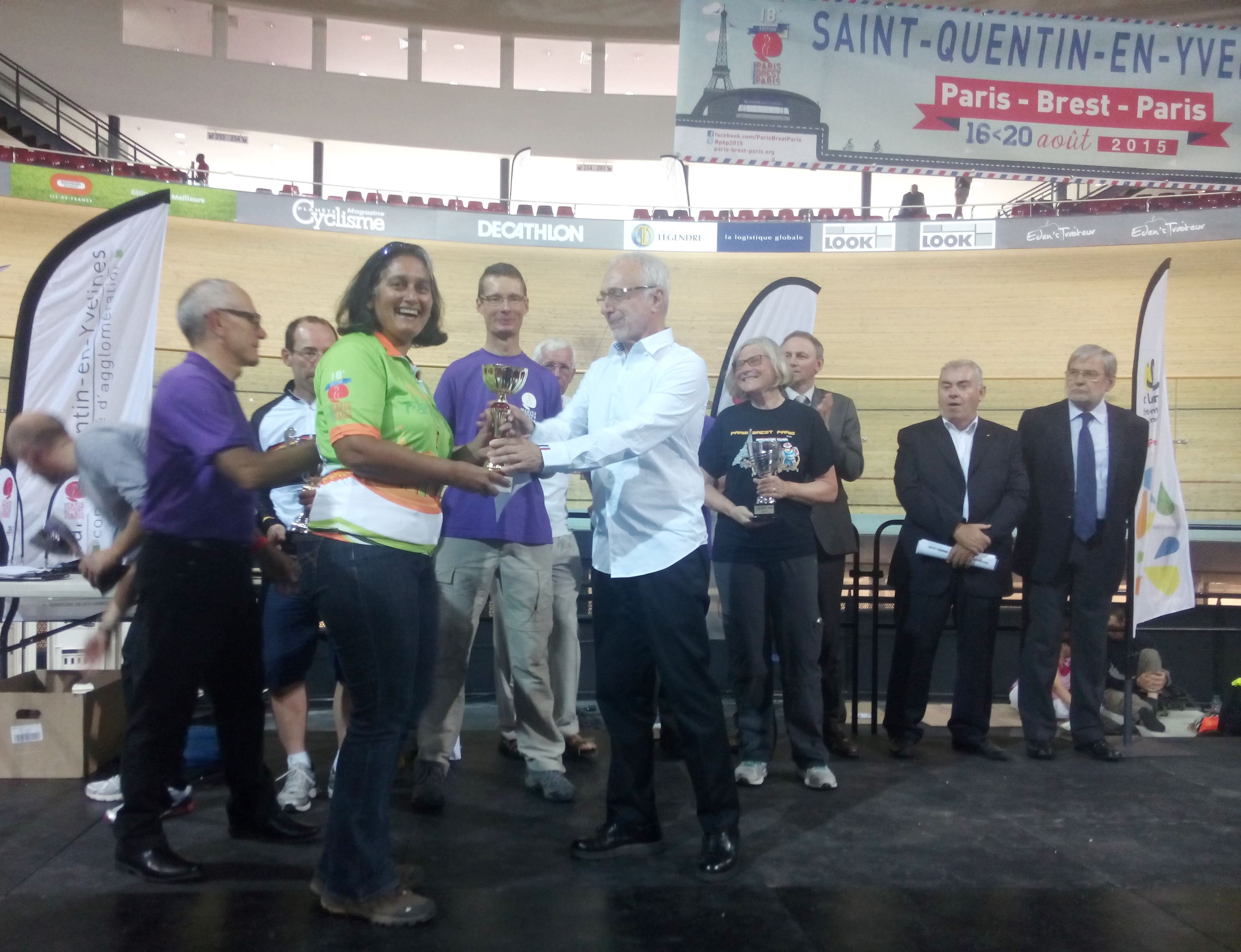
Receiving an award at 2015 PBP after India registered the highest membership growth in audax community worldwide (Photo: courtesy Divya Tate)

Randonneuring itself was nascent in India at this time. Brevets of all distance categories were not yet around. BRMs were begun in the country by Satish Patki, longstanding cyclist from Mumbai. Slowly and rather unexpectedly, Divya found herself entrusted with organizing the events; by 2010 she ended up organizing India’s first 400 kilometer-BRM. She also completed the ride within cut-off. Next she organized a 600 kilometer-BRM from Pune to Kolhapur and back. This one, she couldn’t participate in because she broke her knee cap ahead of the event. Divya secured success in the 600 kilometer-brevet in 2011 becoming the first Indian woman to become SR. That year she headed for PBP.

2015 PBP; part of the Indian team (Photo: courtesy Divya Tate)

The run up to PBP had showed her that a cycling community existed in India. In Paris, amid some 5500 SRs gathered for PBP, the magnitude of the community she had come to belong to grew even further. “ It wasn’t just event organization; there was also the people who turned up all along the way to support. It was an incredible welcome, a link to like-minded community. For me, it was another phase of transformation,’’ Divya said. In 2011, of 15 people from India who participated in PBP, only two finished within cut-off. The rest, including Divya, ended up Did Not Finish (DNF). That year end, Divya became national representative for audax activities in India. The growth in audax cycling since has been significant. In 2011, BRMs were held at 3-4 locations (cities of origin). Now (early 2019) it is close to 60 cities and towns. Cumulative membership at all these locations has crossed 10,000.  “ Of that, about 5000 should be active,’’ she said.

Fred Boethling, president, RAAM, during his visit to Deccan Cliffhanger (Photo: courtesy Divya Tate)

Among the cyclists Divya met at one of the early BRMs organized in Pune, was Samim Rizvi from Bengaluru. Samim had attempted RAAM. He was a pioneer from India. “ That was the first time I heard of RAAM,’’ she said. In 2012, she went to crew for Samim at RAAM. “ I saw a fabulous event. I also saw a lot of people from BRM culture because there is this overlap between brevets and ultra-cycling,’’ she said. On the other hand, there was little of that overlapping in India. Simultaneously, there was growing interest in RAAM in India probably because of Samim’s repeated attempts and also the unsuccessful bid by Sumit Patil. Divya crewed at RAAM on more occasions – in 2012, 2013, 2014, 2015 and 2016. In 2013, she attended a RAAM seminar for crew and racers. Besides RAAM, she has crewed at Race Around Europe in 2015 and Race Around Austria in 2016 and 2017.

Officiating at 2014 RAAM; with Joe Barr at the finish (Photo: courtesy Divya Tate)

“ My attitude was – this is not rocket science. This is something that can be learnt and shared with community back home in India. What we needed to do was get rid of our chalta hai approach. That won’t work at RAAM,’’ she said. By the end of 2013, she was convinced that the ecosystem of ultra-cycling races and races to qualify for RAAM (RAAM qualifiers – RQ) in India deserved to grow bigger. In February 2014, she organized the first edition of Deccan Cliffhanger (DC) connecting Pune and Goa.  It added to the number of RQ races in India. In 2015, Fred Boethling, president of RAAM, visited India to see that year’s DC. Same year in the world of BRMs – the other cap Divya wears, 60 people from India participated in PBP. Approximately 33 per cent of them finished the race, she said. She also collected an award at that edition of PBP for India registering the highest growth in membership in the audax community worldwide.

From Race Around Austria (Photo: courtesy Divya Tate)

Apart from organizing DC, Divya has been promoting the need for cyclists to get familiar with crewing. Ultra-cycling becomes successful only when cyclist and crew work together efficiently. “ At 645 kilometers, DC completed within assigned cut-off qualifies you for RAAM. But it does not prepare you for RAAM. I have been telling people right from day one that crewing is important. If you are going to take on a monster race like RAAM then at least go and see what the monster is before you take it on – right?’’ she said. DC concludes every year with an informal sharing of experiences. Divya also got around to holding seminars in Pune on the subject of crewing. But that sharing and talking wasn’t enough. You needed a multi-day race with distance to match that would drive home the need for cyclist and crew to work together. “ That’s how Ultra Spice was born,’’ she said of the second race Inspire India started. Against DC’s 645 kilometers, Ultra Spice – another RQ, it goes from Goa to Ooty and back – spans 1750 kilometers.

Deccan Cliffhanger (Photo: courtesy Divya Tate)

As yet Inspire India’s flagship is DC. According to Divya, it is not a money spinner. “ Not many ultra-cycling events worldwide make money. Only the top 10-20 per cent will find sponsors,’’ she said. Further in DC’s case, as the most attended race in the Inspire India fold, it also offsets the losses other races – like Ultra Spice – must endure before they stabilize. To compound matters, 2017 was a tough year. Even as race revenues grew only organically, the events had become bigger and Divya also did more seminars. Atop that stretched situation, India’s newly introduced tax regime – GST, made its presence felt. That year DC faced a big financial loss despite hike in registration fee for participants. The loss was avoided by another hike in fees in 2018. Divya’s appetite for races however didn’t stop with two on limited budget.

The route used for Ultra Spice (Photo: courtesy Divya Tate)

According to her, when Fred Boethling visited in 2015, she had said that she would add a new race every other year. In April 2018, while driving in Coorg with a colleague from Inspire India who had just opened a hostel in Ladakh, she decided to commence an ultra-cycling event in Ladakh. “ We decided in April, did the recce in June and held the race in September. Among the world’s ultra-cycling events, this is the one at the highest elevation,’’ she said of the 600 kilometer (372 miles)-Himalayan Ultra. The event is the first RQ with mandatory sleep time, a measure introduced to guard against the effects of altitude. Steps are afoot to increase the distance at Himalayan Ultra, maybe add another 300 kilometers.

Himalayan Ultra (Photo: courtesy Divya Tate)

A few things strike you when you enter Divya’s apartment in Pune. There are houses and there are homes; this one felt like home, it had a lived in feel to it. You also sensed use of space and design. To one side, separated by glass door, was a room containing stuff that went into organizing bicycle races. There were banners, posters, fluorescent vests for visibility in traffic and those plastic cones kept on roads to mark space. Stacked against the wall were three bicycles; an Orbea cyclocross model, a Trek MTB and an Orbea road bike. A fourth one – a Ridley road bike stripped to its frame – was suspended from the ceiling. Divya’s son was into racing; he has been part of the Maharashtra state cycling team. As the races in the Inspire India fold grow, Divya’s motivation to host is as usual – universal. The Indian environment is a composite of contemporary generation in the midst of thousand year-old memories of how life must be lived. With such conservatism around, living a life of one’s choice is daily battle. Divya has had her fair share of struggle in this regard. But as most people know, directly confronting set beliefs in India merely cements it further. What works is the oblique approach; alternative lifestyle incentivizing a different stream of thoughts and priorities with much patience shown to let it sprout roots. Life by cycle is alternative. Hopefully, that alters our imagination. “ I see whatever I am doing as vehicle for social transformation,’’ Divya said. She may have stopped being architect in the conventional sense. But the flair survives, in another field.

(The author, Shyam G Menon, is a freelance journalist based in Mumbai.)            
GORAN KROPP / A RIDE AND A CLIMB

Illustration: Shyam G Menon

Sometimes an expedition attracts because of how it was imagined. Assigning purpose – engaging in adventure for this cause or that – is well heard of. But what about the quality of adventure itself? For example, the Indian Navy’s Sagar Parikrama project engaged beyond circumnavigation because the sail boat at its center was made in India. It wasn’t just competence at sailing that was being put to test; it was a test of competence at boat-building too. As people try various permutations and combinations, we look at an individual – now no more – who did something interesting years ago.

The first time I came across Goran Kropp was in Jon Krakauer’s book Into Thin Air, which narrated the events leading to the death of several climbers on Everest in 1996.

I read the book years ago.

Grasping the full magnitude of Kropp’s adventure was beyond me then. I was focused on Krakauer’s narrative, Everest and climbing. Many years later, I looked up Kropp again on Wikipedia. He had died in 2002, aged 35, some six years after the events of Into Thin Air.

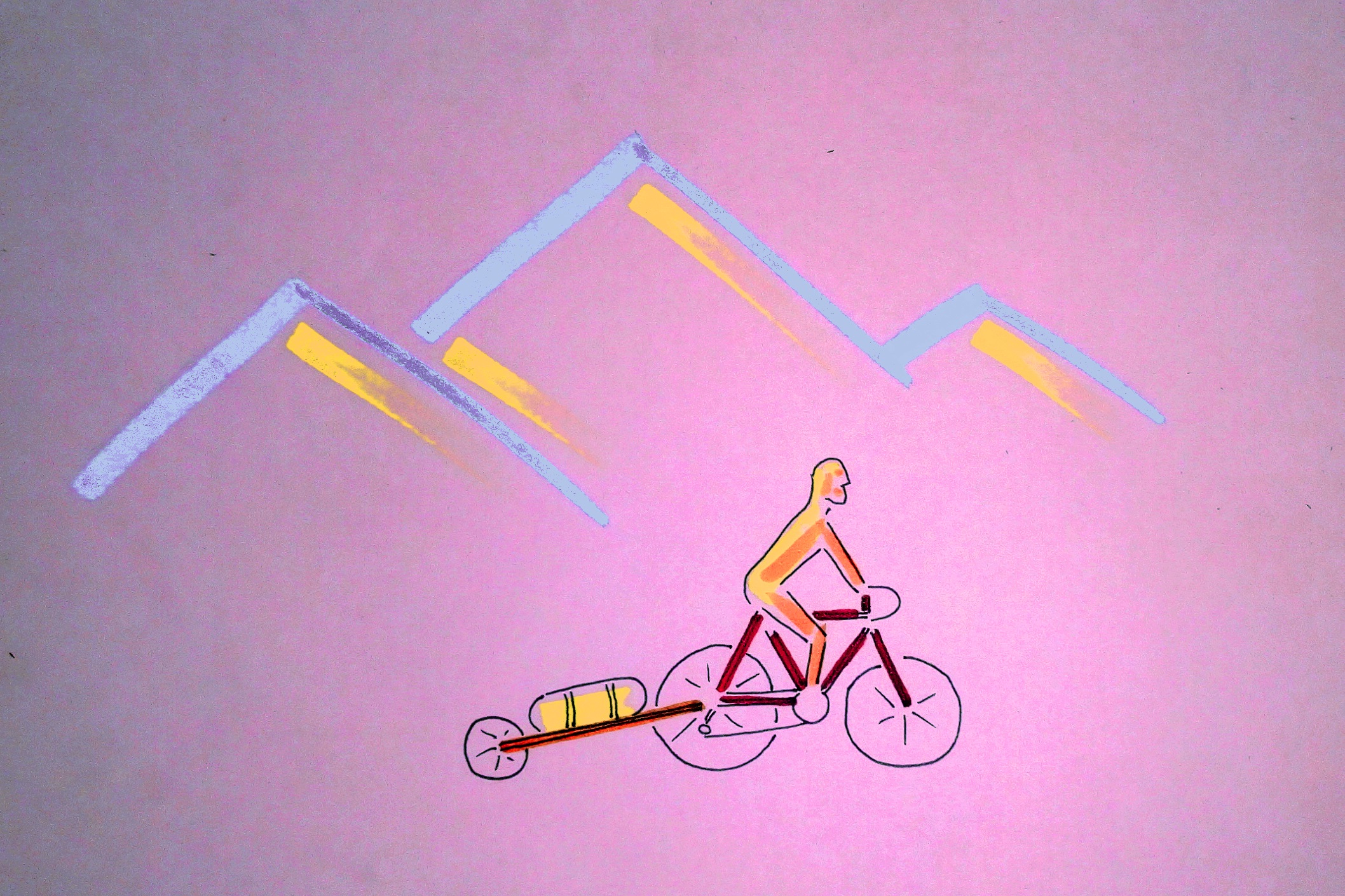
Back in 1996, Kropp packed all his gear and equipment on to a trolley, attached it to a specially designed bicycle, pedaled all the way from Sweden to Nepal, climbed Everest without bottled oxygen or guides and then, cycled part of the way back home. This time, as I read it in renewed light, the enormity of Kropp’s adventure hit home; along with the sustained use of human powered-locomotion in what he accomplished on that trip. A photo on the relevant Wikipedia page showed him cycling with trolley attached. The page informed that he left Stockholm for Nepal on October 16, 1995 with 235lb (106kg) of gear and food. There was no mention of when he reached Kathmandu; the page said that he reached Everest Base Camp (EBC) in April 1996. Besides climbing Everest successfully in 1996, Kropp ascended it again in 1999.

Everest wasn’t the only milestone in Kropp’s brief life. The first major peak he climbed was Lenin Peak (23,405 feet) on the border of Tajikistan and Kyrgyzstan; this was in 1988. The following year he climbed five peaks in South America, three of them more than 6000 meters in elevation. In 1990, Kropp and Danish climber Rafael Jensen reached the summit of Muztagh Tower (23,861 feet), a tough peak from the 7000m-category, in Pakistan. Then he climbed Pik Pobeda (24,406 feet) in Kyrgyzstan. In 1992, he reached the top of Cho Oyu (26,864 feet); Wikipedia mentions: he drove his Range Rover all the way to Nepal; it was perhaps prelude of things to come.

1993 was likely Kropp’s defining year. In some ways, what he accomplished in this year makes his 1996 adventure that much more solid, for Everest although very high and tough for anyone to climb, is not counted by mountaineers among the truly hard 8000m peaks, particularly when attempted via its regular routes. K2 (28,251 feet) on the other hand, is rated a really hard climb. In 1993, Kropp climbed K2 solo and without using bottled oxygen. Same year he also climbed Broad Peak (26,401 feet); Wikipedia describes it as “ a fast, nonstop solo climb.’’

Kropp was born, December 11, 1966. After finishing school, he had served in the Swedish military with the Parachute Regiment, a special operations unit. He died September 2002, from head injuries sustained in a fall while ascending a climbing route in Vantage, Washington. Accounts of his expeditions – especially that combination of a long bicycle ride and a mountain climb – survive.

(The author, Shyam G Menon, is a freelance journalist based in Mumbai.)   
VEDANGI’S QUEST / 29,000 KM IN SIGHT, 16 KM RESERVED FOR FLAG-IN AT PERTH

Vedangi Kulkarni; from the India segment of her journey (Photo: Sumit Patil / This photo has been downloaded from the Facebook page of Sumit Patil)

As of December 22 morning, Vedangi Kulkarni currently attempting solo circumnavigation of the world unsupported on a bicycle, had 235 kilometers left to complete the India leg of her journey.

She was expected to finish the India segment in Kolkata, later in the day.

According to Vedangi’s website 158 days have passed since she started her journey from Perth Australia.

Her father, Vivek Kulkarni, informed that by the time she reaches Kolkata, Vedangi would have covered 29,000 kilometers as per the rules of circumnavigation. She will leave 16 kilometers to cycle in Perth, the starting point of her journey.

The segment of her trip cycled in India saw some route changes. She was earlier expected to head straight south from Ahmedabad (where she commenced the India leg) to Kerala and onward to Kanyakumari, which she did not. Instead, having cycled from Ahmedabad to Bharuch, Thane, Nigdi (Pune), Kolhapur, Belgaum, Davengere, Tumkur and Bengaluru, she moved towards Chennai and Nellore; eventually making her way to Kolkata.

Vedangi reached India after cycling through Australia, Canada, Europe and Russia.

The change presented by the Indian environment featured in one of her Facebook posts.

Not long after starting the India leg, she wrote, “ current stats suggest that I only have a little less than 3000 km to go. But by the looks (and feel) of it, none of it is coming easy. It’s all chaotic, in every imaginable way. I’ve got the sun furiously shining over me, burning my desire to cycle or digest food properly, especially after my body getting used to the sub-zero Russian winter and I have got the crazy traffic coming from all over making it impossible to switch off even for a second into peaceful auto-pilot mode.’’ Much later as she reached Andhra Pradesh, Cyclone Phethai caught up with her forcing cyclist to take a day off given the weather. In its aftermath and nearing the end of her circumnavigation project, she noted, “ I now know that I’m ready for anything and everything that comes my way, physically or mentally. There’ll always be a way to reach the goal, and not give up. As they say, fall down seven, stand up eight, eh? So we’ll be back on road tomorrow, now that the cyclone has passed and get those long miles in! The finish is so close yet so far!!’’

When she pedals into Kolkata, Vedangi – 19 years old and currently attending university in the UK – would be on the cusp of making history. Upon project completion in Perth, she will be the youngest to accomplish solo unsupported circumnavigation on a bicycle and the first Indian woman to do so, Vivek had said earlier.

Update: Vedangi has reached Kolkata, Vivek informed early morning December 23.

(The author, Shyam G Menon, is a freelance journalist based in Mumbai. This report will be updated once Vedangi reaches Kolkata. For more on Vedangi please refer the blog’s story list, select from archives or simply scroll down.)

TOR DES GEANTS / “ IT’S SOMETHING ELSE’’

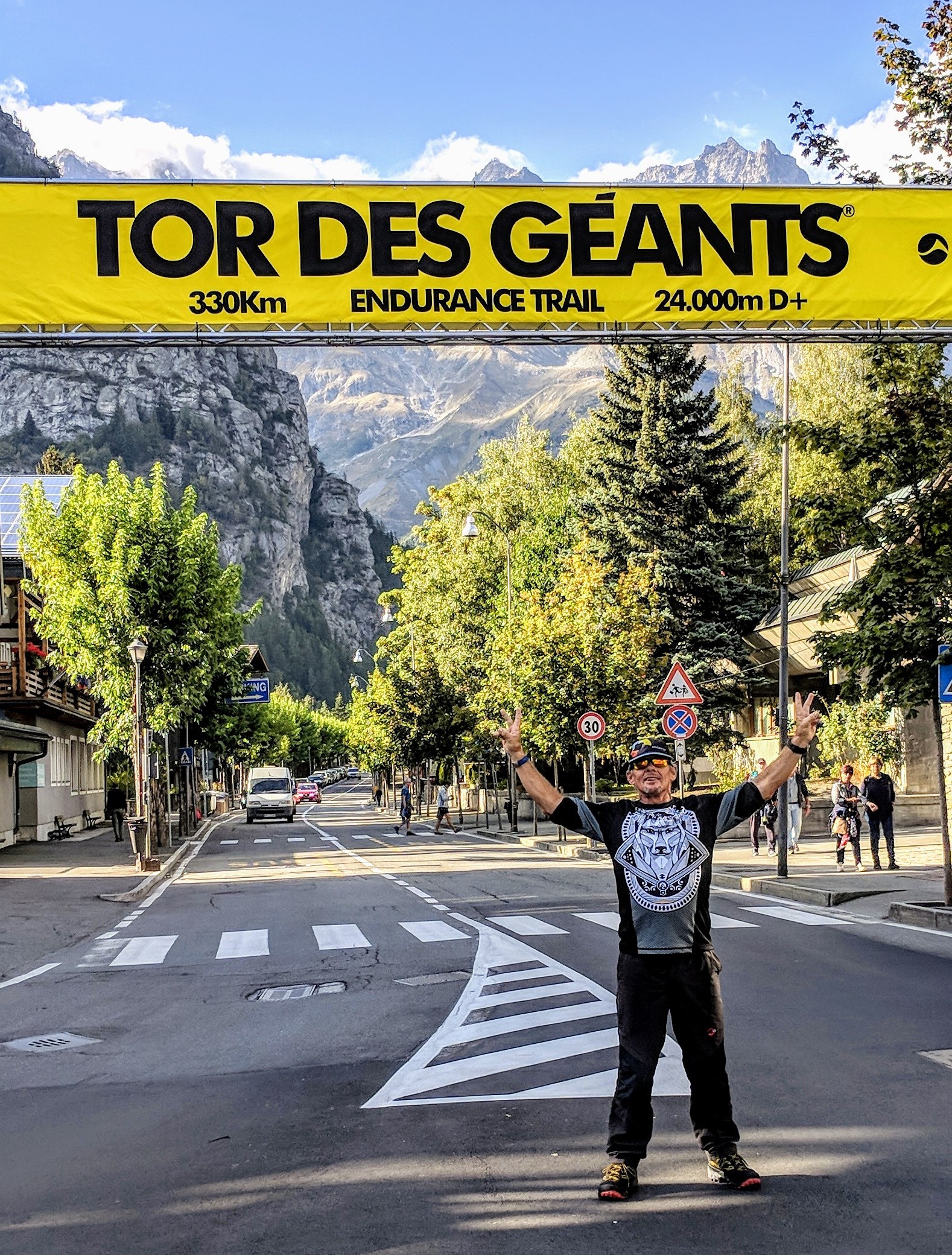
Grant Maughan; at 2018 Tor des Geants (Photo: courtesy Grant Maughan)

2018 has been a packed year for endurance athlete, Grant Maughan. Some of the races he participated in (Barkley, Last Annual Vol State, Badwater 135, Angeles Crest 100) and his ascent of Everest – he has written about, on this blog. In September he was at the 2018 edition of Tor des Geants in Italy’s Aosta Valley. In this article by invitation, Grant describes his experience at the punishing race:

It probably sounds clichéd, but Tor des Geants is about the toughest race out there.

Everything about it is on the cusp of extreme: distance, elevation, altitude, weather, sleeplessness, etc. At 330 kilometers (+200 miles) and with over 24,000 meters (+80,000 feet) of climbing it’s something for the die-hards. By the way, the climbing is hard but not as hard as the 24,000 meters of descent which threaten to turn your legs into pool noodles and afterwards into petrified wood.

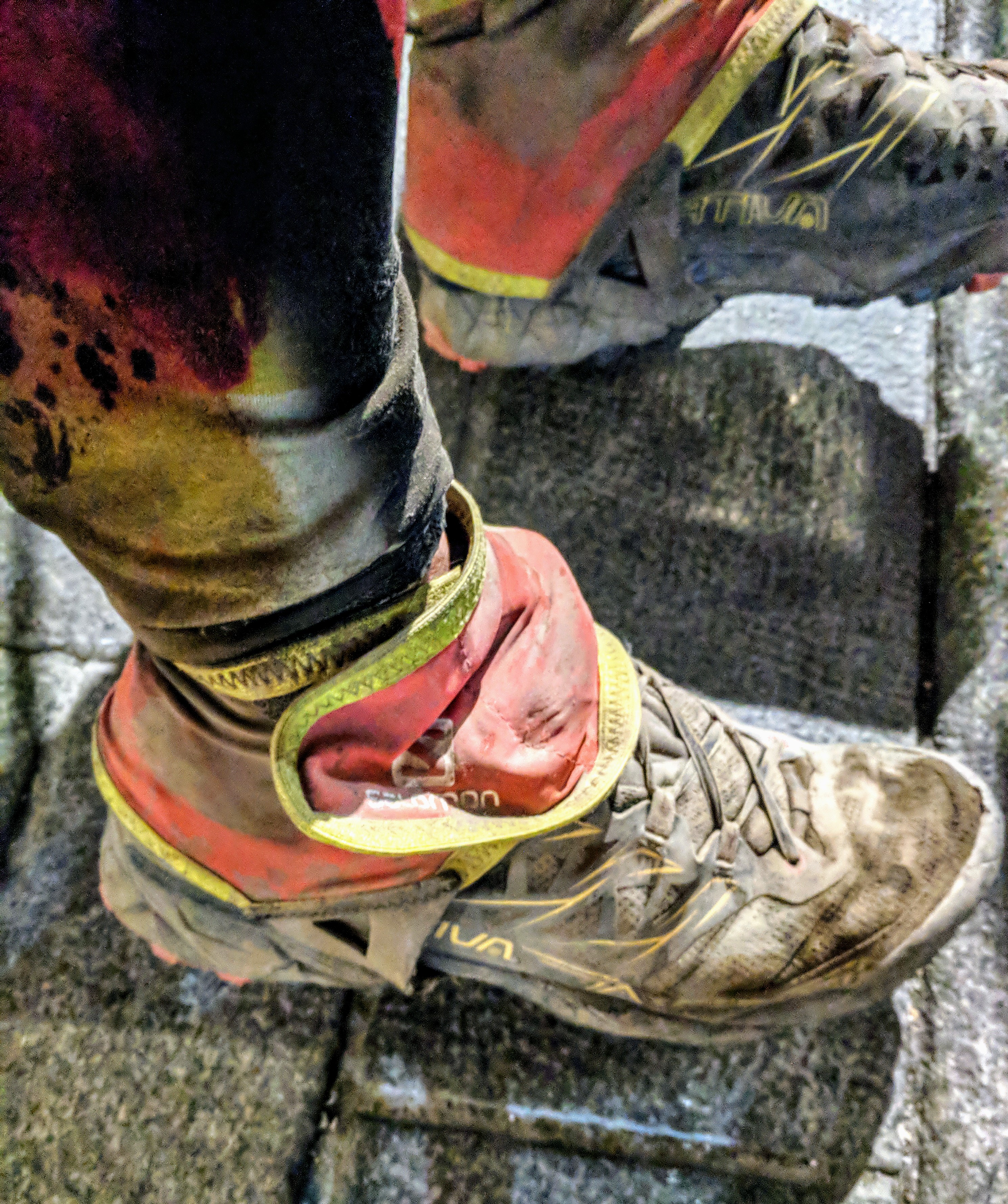
The Tor takes a toll (Photo: courtesy Grant Maughan)

The time limit is 150 hours, which may sound generous but in fact means most have to hustle. The course is basically a saw-toothed up and down of robust towering mountains that lead you over high exposed cols (saddles, passes), across high vales and into deep verdant valleys. There are some sketchy airy sections to tip toe around, semi via ferrata fixed rope / cable / steel steps and steep slippery downhills covered in small pebbles that act like ball bearings under your trail shoes threatening to send you surfing off precipices like a late paddle into a dredging wave at Teahupo’o. I heard of one major accident. Surprisingly, not others…

The sleep deprivation is probably the most difficult for the majority of runners. You have to sleep at some point and are not supposed to bivy on the trail. But some of the aid stations were full of sleeping people meaning you had to keep going. I didn’t sleep for the first two days after being told “no space” many times and told I couldn’t even rest my head on the table at aid stations. At some points I thought it seemed dangerous to send people over high passes in the middle of the night when they were weaving and stumbling from lack of sleep. I grabbed a couple of hours here and there and managed to keep semi alert though you never feel on top of it.

Photo: courtesy Grant Maughan

It was warm this year and a couple of days were downright sizzling. I have never sweated so profusely while climbing and spent days in sodden clothing and shoes. As soon as you stop you get chilled at altitude and night time was very uncomfortable in damp clothing. You become so putrid you can hardly stand yourself. There are opportunities to clean up at the “Life Bases” (major aid stations) where your one drop bag is transported after leaving the previous one. But these are 50 kilometers apart which can take a long time to get to in this sort of terrain.

After a huge year of events I just plugged along and tried to stay consistent, which seemed to work just fine. I found my fitness actually changed whilst underway. But my feet felt like I had stepped in a couple of bear traps and then dipped them in volcanic lava. They were in agony. My hands also suffered from clutching the trekking poles and I still have a lot of numbness a week later. I took a couple of good diggers, which is not hard to do in the technical terrain and took bark off many limbs. The best one was on the first downhill when I went over head first in a rock field and a Frenchman picked me up by the scruff of my neck out of the boulders. He asked me what I was doing and I told him my shoes were too big and I tripped over the toes (not too far from the truth)…

Photo: courtesy Grant Maughan

The scenery is jaw-dropping in the Italian Alps and the quaint ancient villages interspersed in the middle of towering spires of granite and lush green fields is something to see, even with bleary eyes. Entire towns are involved in this race when it comes through. It’s very heartening to have their help and support when you are depleted and alone for days.

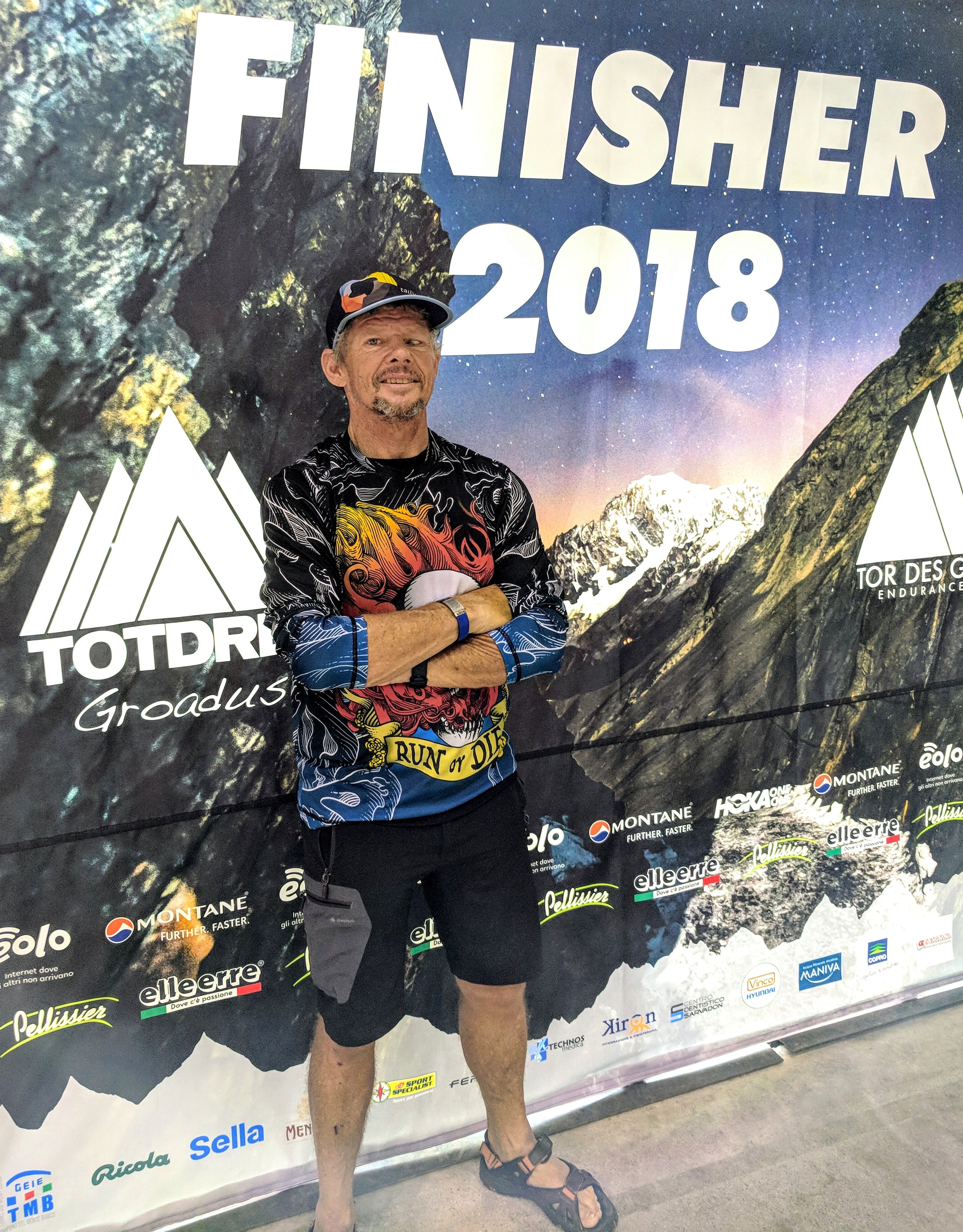
It took me over 133 hours to finish and I didn’t spend much time lingering. I came off the last mountain in the middle of the night listening to my trekking poles “tic, tic” on cobblestones along darkened lanes. The final stretch through the esplanade under the soft glow of lights as locals and supporters cheered and back slapped me was humbling indeed. It’s always good to finish but in this case I could hardly go any further. Jobie (Susan Jobe Maughan) met me at the end and I limped over to the local pub where the owner bought us a beer and a Lemoncello. After one I could hardly talk. I literally slept for days afterwards…

Tor des Geants, it’s something else.

(The author, Grant Maughan, is a freelance super yacht captain and endurance athlete. A prolific ultra-runner, in 2016, he was joint winner in the 333 kilometer category of La Ultra The High held annually in Ladakh. Please look up the blog’s story list and archives for earlier articles by Grant and an interview with him.)

VEDANGI’S QUEST / INDIA STAGE COMMENCES

Vedangi Kulkarni / India stage (Photo: courtesy Vivek Kulkarni)

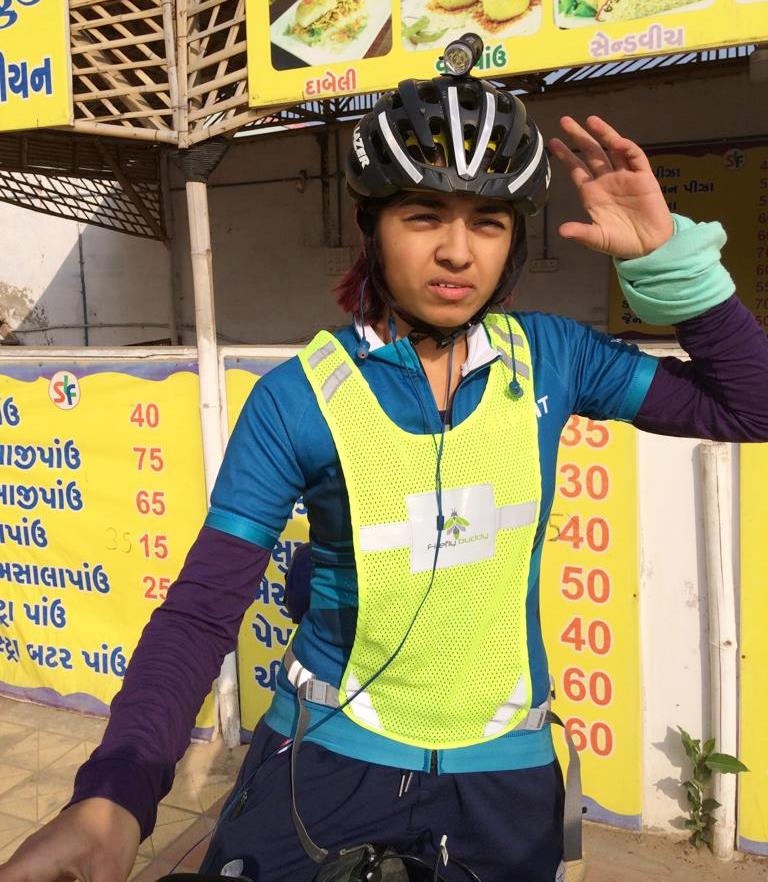
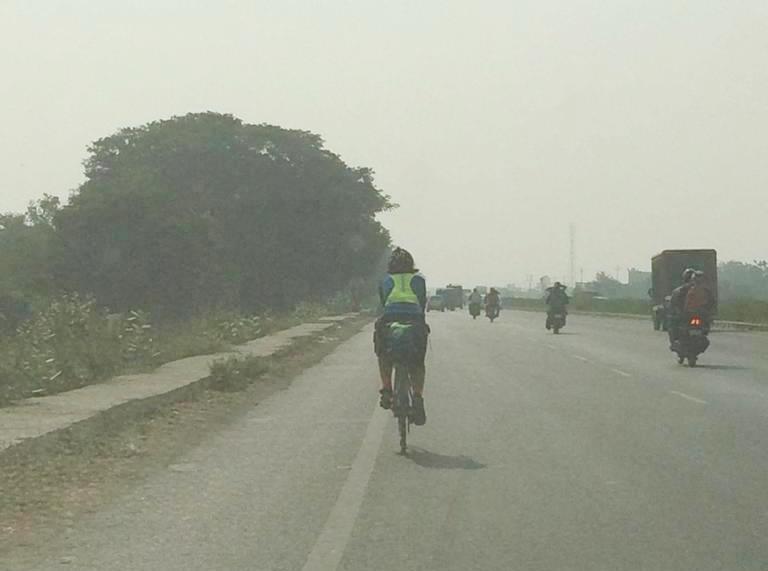
Into the last few thousand kilometers of her journey cycling around the planet, 19 year-old Vedangi Kulkarni has reached India. The Indian chapter of the circumnavigation project is currently underway.

Vedangi Kulkarni, currently on a quest to circumnavigate the planet solo and unsupported on a bicycle, began the Indian leg of her trip today (December 2, 2018) from Bareja near Ahmedabad in Gujarat.

“ She started cycling at 10 AM,’’ her father, Vivek Kulkarni said.

According to him, the likely route ahead for the young cyclist will be Ahmedabad – Vapi – Pune – Kolhapur – Panaji – Mangalore – Kozhikode – Thiruvananthapuram – Kanyakumari – Tirunelveli – Madurai – Tiruchirapalli – Chennai – Bhubaneshwar – Kolkata. The Indian leg of the circumnavigation trip follows several days spent cycling in Russia.

India stage underway (Photo: courtesy Vivek Kulkarni)

Vedangi commenced her journey in Perth, Australia on July 17. She has since cycled in Australia, New Zealand, Canada, Europe and Russia. The original plan was to move to Mongolia from Russia. That has been replaced with kilometers to be logged in India. Besides conforming to certain other parameters, full circumnavigation entails cycling approximately 29,000 kilometers. Last reported on this blog (on November 25, when she was cycling in Russia) Vedangi was estimated to have covered around 23,500 kilometers. A Google search for the distance from Ahmedabad to Kanyakumari showed it as 2163 kilometers while that from Kanyakumari to Kolkata was shown as 2365 kilometers. Taken together, it is more than 4500 kilometers. December 2 marked 138 days since Vedangi started out from Perth. For circumnavigation to be complete, she has to end her journey at the place where she commenced it.

For further information on Vedangi’s journey please visit this link: https://shyamgopan.com/2018/11/25/vedangis-quest-russian-leg-nears-completion-india-next/. More related articles – from the time she commenced her journey – are available in the blog’s story list. They can also be accessed by scrolling down.

 (The author, Shyam G Menon, is a freelance journalist based in Mumbai.)