BEYOND GANESHA (UPDATE)

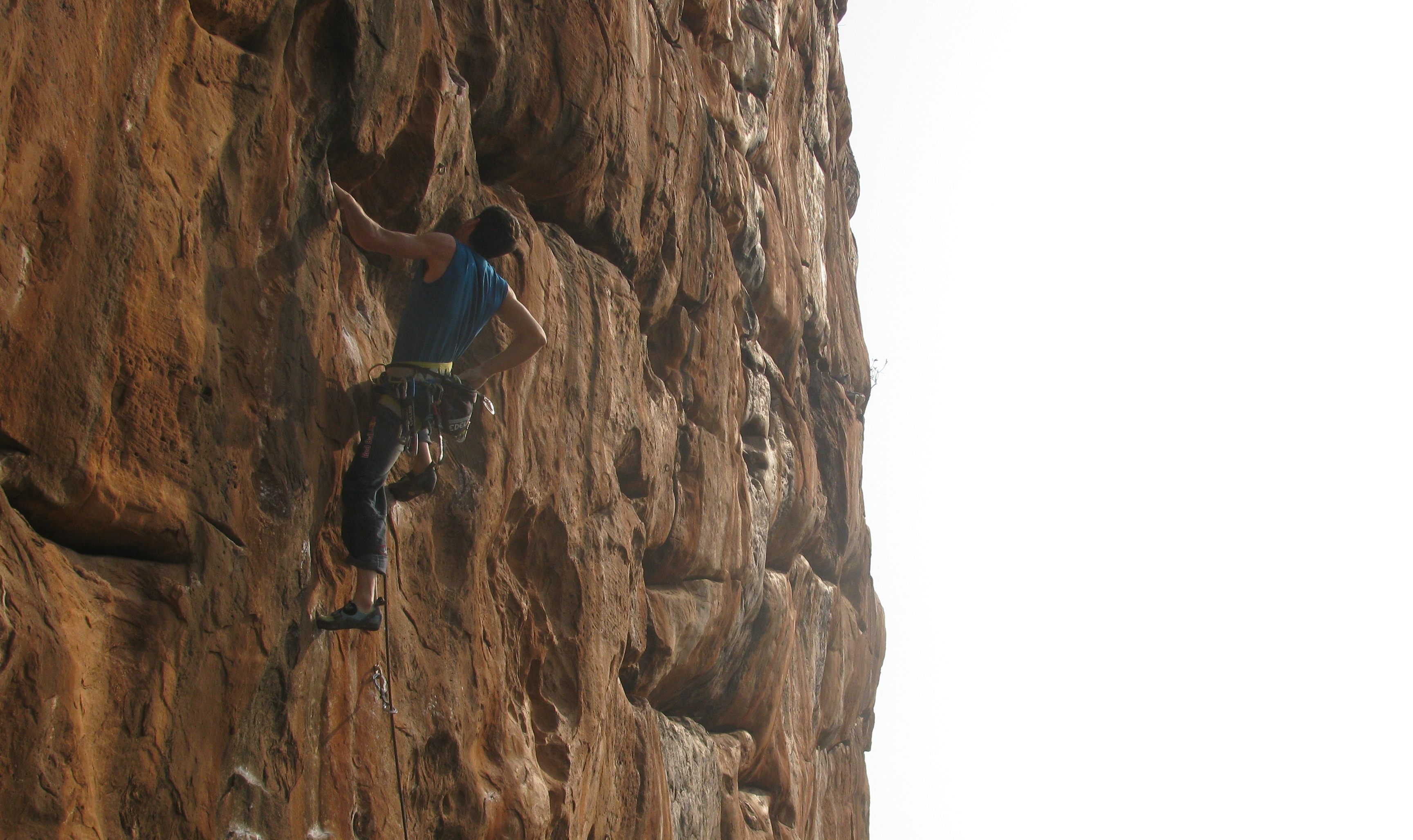
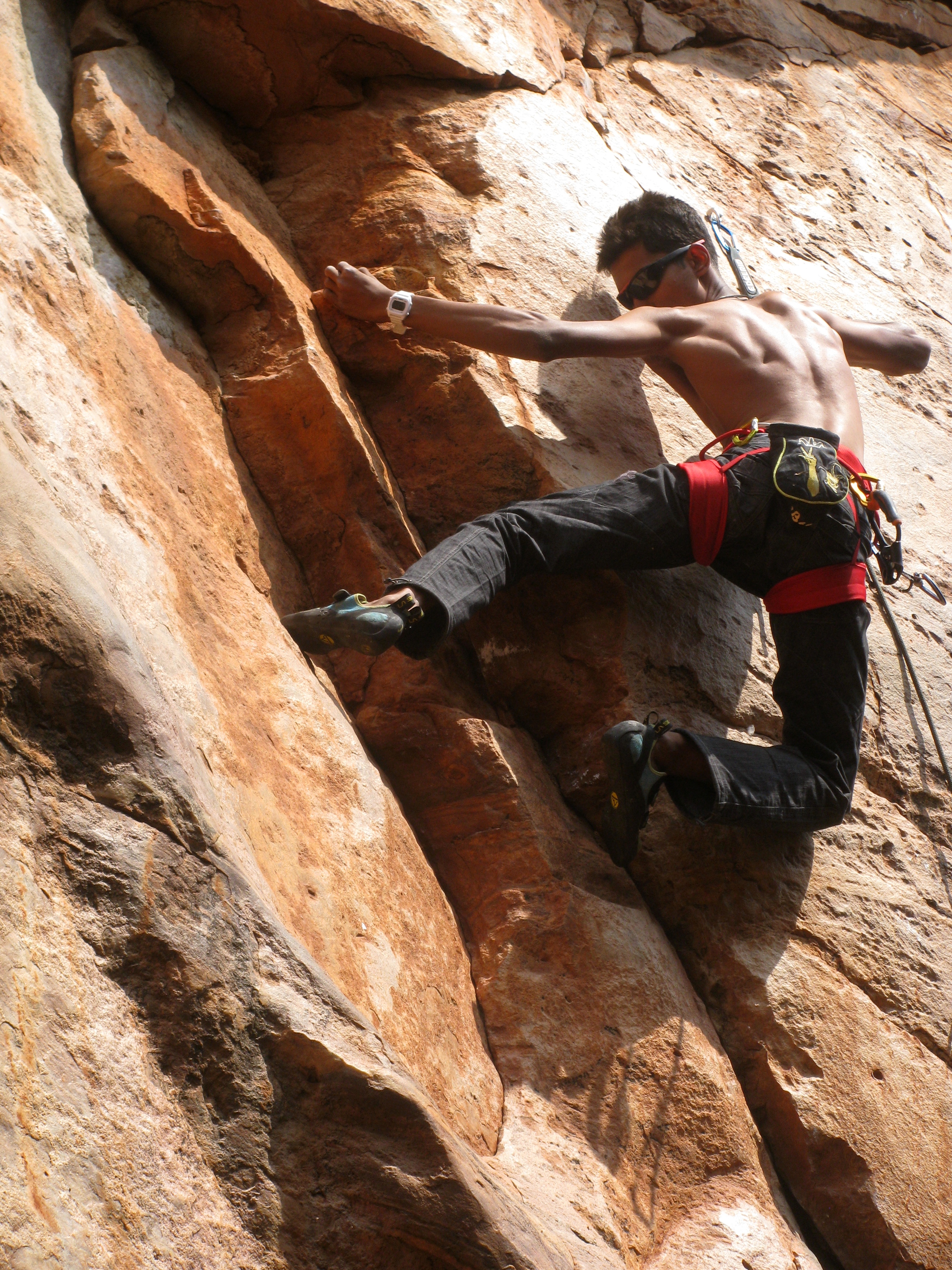
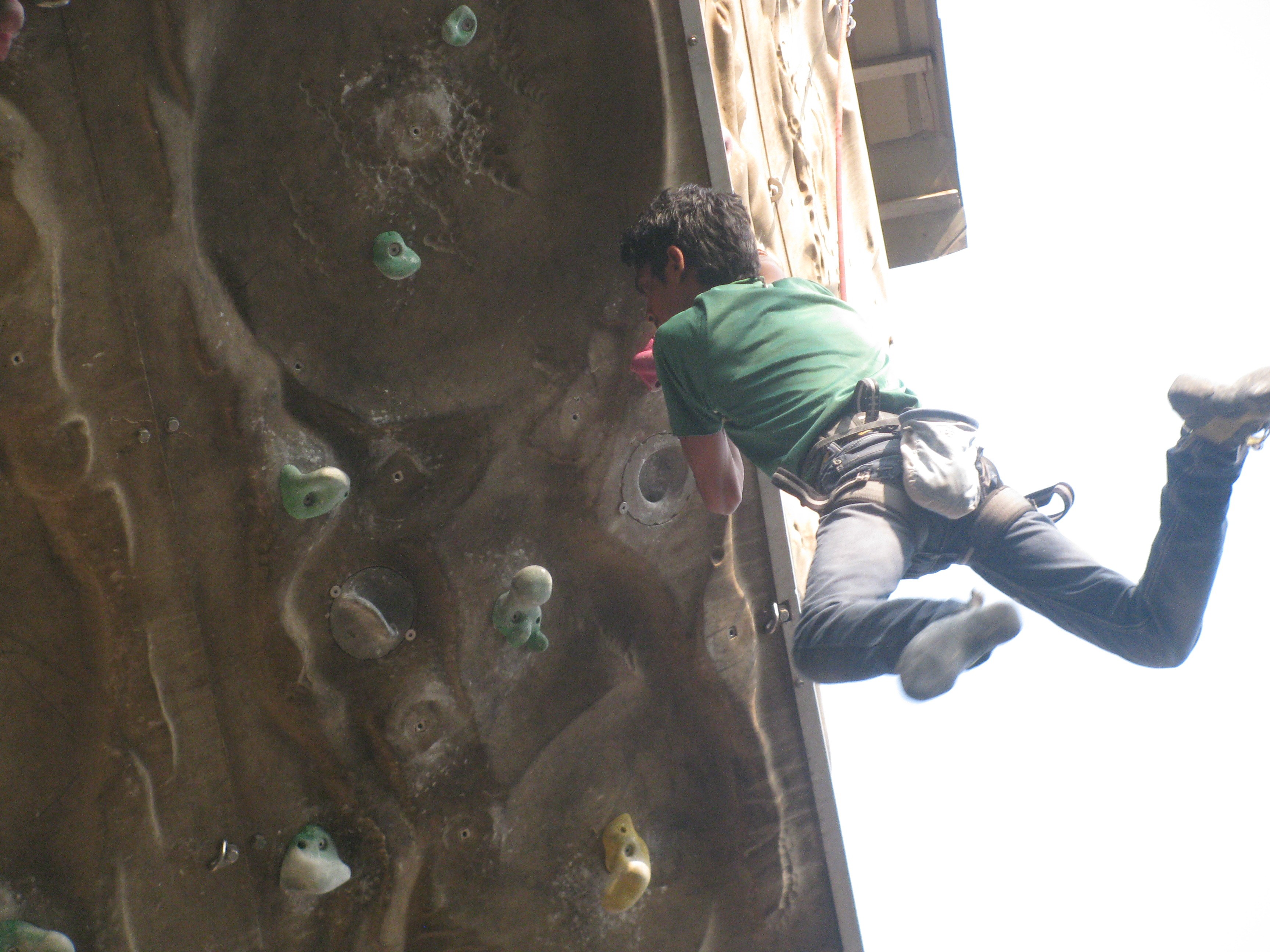
Kilian at work on the route next to Samsara (Photo: Shyam G Menon)

Kilian at work on the route next to Samsara (Photo: Shyam G Menon)

On February 25, after the three part series `Beyond Ganesha’ was published on this blog, Kilian Fischhuber responded to a mail I had sent earlier.

I had asked him whether he had a rough idea of the grades for the two new routes he had created. He said, “ I have tried both routes. The left one seems possible but I think we need Adam Ondra for it…. The other route, next to Samsara, I was close to doing it but in the end I didn’t. I am not absolutely sure about the grade. This comes usually during the process of trying and is normally decided after the climb has been done. But I think it will be around 8c+.”

The “left’’ route Kilian cites, is the route shown in the photo featuring Kilian that you find in part three of the series.

As Kilian’s mail shows, for now Ganesha remains the hardest sport route in India. Initial estimates of Ganesha’s grade too had been around 8c+. It was fixed at 8b+ after being fully climbed.

The potential for routes harder than Ganesha seems to be there in Badami.

(The author, Shyam G Menon, is a freelance journalist based in Mumbai)

BEYOND GANESHA – PART 1

Climbing in Badami (Photo: Shyam G Menon)

Climbing in Badami (Photo: Shyam G Menon)

This article in three parts is a composite of two distinct narratives, one in normal text and the other, in italics.

The story of Badami is as layered as its sedimentary rock.

If you are used to the Himalaya or even the Western Ghats, then, on the approach to Badami from Hubli, you wouldn’t expect anything that hints `hill.’ The world is flat and open to the sun. Vegetation is the stuff of hardy scrubs; large fields, still standing patches of sunflower, dry sugarcane and the occasional tree. Massive bony oxen pull carts; buffalos saunter by, dogs have their tongues hanging out trying to stay cool. It is hot. Sun burnt farmers, old women with dry wrinkled skin. Tractors join the traffic. Dust rises easily. It is January. I can imagine what peak summer would be, here. More important for climber, there is not an iota of hill anywhere. Then at one bus stand en route, you see an isolated rocky outcrop next door. Slowly, as the bus moves on, you start seeing similar isolated outcrops, at best a long wall and all no more than a few hundred feet high. Reach Badami and the rock walls there are high but not tremendously so. They are beautiful. Badami’s story lay in the subtext. If the Himalaya is famous for its marine fossils, dating back to the ancient Tethys Sea, then here, it is the other extreme.

According to Dr Shrinivas V. Padigar, Head of the Department of Ancient Indian History and Epigraphy, Karnatak University, Dharwad, the rock at Badami contains no fossil record as it dates back to the Precambrian period, or simply put, a time when no complex life forms existed. Accounting for roughly 7/8th of Earth’s history, the Precambrian period ended around 540 million years ago. Respect for Badami’s rock thus stems from a dimension different from physical properties. It is frozen time. To imagine such antiquity, you should take a peek at the shape of continents and where India was in the Precambrian period. If the world’s highest mountains – the Himalaya – were formed after India drifted at a speed that is superfast by continental drift standards and smashed into the Eurasian plate, then the India of the Precambrian period hadn’t dreamt the Himalaya. India’s northward drift started only 140 million years ago. The Himalaya, the child of India’s collision with Eurasia, is much, much younger.

Simply put, the rock at Badami is OLD.

Badami and Hampi attract rock climbers.

Both places are in Karnataka, South India.

They are separated by 146 kilometres, small enough for climbers fuelled by passion, to cover for a taste of both worlds. Hampi is strongly identified with bouldering, the art of climbing boulders with little gear – just a pair of climbing shoes, crash pad to cushion one’s fall, chalk to keep the hands sweat-free and a friend to `spot’ you. Badami has bouldering plus a wealth of longer routes for sport climbing, which entails rope, pre-fixed bolts in the rock, more climbing gear than used in bouldering and definitely a second climber to `belay.’ Badami offers beautifully weathered sandstone (we call everything here sandstone but as geology shows, it is more complicated). Badami’s stone is kind on climbers’ fingers. Climbing in Hampi is done on granite. It shreds skin.

Badami has several popular climbing areas. From past visits, I remember crags named Indian Alley, Ganesh Plateau, Temple Area and Badami Deluxe. Today, at any one of these known climbing spots, you will see several bolted sport climbing routes. N. Ravi Kumar, who hails from Bangalore and is currently Director of NOLS India, was among the early climbers frequenting Badami. According to him those days, there was nothing on the approach to the Badami Deluxe and Temple Area crags, save a house and the small facility of the General Thimayya National Academy of Adventure (GETHNAA). Where several shops and houses now stand there was nothing. All the initial climbing was traditional (trad) in style, using removable protection as opposed to permanent protection. “ There were no bolts then,’’ he said. It changed with sport climbing’s ascent in India. One of the great attractions of sport climbing is that thanks to prefixed protection (expansion bolts), climbing lines are possible on rock faces otherwise devoid of adequate features to host trad gear (an overview of the various styles in climbing can be had from the September 2013 post Climbers in the Big Wall Mirror [Part Two]. It can be accessed either through the blog’s archives or simply click on this link: https://shyamgopan.wordpress.com/2013/09/).In turn, that makes moves in sport climbing pretty difficult because tackling potentially sketchy rock faces is built-in into the ethos of this discipline.

The rock face hosting Ganesha (Photo: Shyam G Menon)

The rock face hosting Ganesha (Photo: Shyam G Menon)

In late January 2014, as I stood in Badami facing the orange glow of its sandstone rock walls, my attention was on a rock overhang far to the right near the Temple Area crag. Bit over one kilometre from the local bus depot, tucked into the curve of the rock was a sport climbing route called Ganesha, sometimes, Ganesh. In climbing, routes have names. Graded 8b+ in terms of climbing difficulty on the French scale, Ganesha was right then the toughest among known, graded sport climbing routes in India. Ganesha was bolted some years ago by Alex Chabot, a champion climber from France. Its first ascent happened probably in 2011; the credit went to French climber Gerome Pouvreau. In Rohit Chauhan’s guidebook to climbing in Hampi and Badami, Ganesha’s grade was speculated as 8c or 8c+. This publication was the first guidebook for this area. Rohit recalled it as a rather lonely endeavour. Encouragement and support came from just a handful of people. A few overseas friends and Delhi-based climber-businessman, Mohit Oberoi, backed him. At that time however, Ganesha was yet to be fully climbed. Rohit said in a recent email from Spain that he had to count on estimation by others familiar with the Ganesha project, for a sense of the new route’s grade. As often happens in climbing, there is a gap between the perception of a route in project stage, and reality. The right grade is a consensus among climbers who climbed the route fully. Multiple ascents over a period of time then lower the grade. 8b+ is what Ganesha earned after first ascent; it is what it still has for grade.

The rocky hill dominating Badami’s landscape is part of the ` Kaladgi Series’ stretching from Kaladgi to Gajendgragad – that’s what I gathered locally. The most ancient of the rocks in this region is probably the batch of sedimentary rock in the vicinity of Kuligeri Cross, a place that you pass by en route to Badami. For a lay person like me seeking to know Badami, the age of the rock is however only one half of the fascination. As climber, the Badami rocks are my favourite. Something about them matches the enjoyment from climbing and the engagement with rock, I seek. But I am no geologist. I don’t know how to distinguish a rock of recent origin from Precambrian. My perception as I climb is tactile; touch and feel. Badami’s rocks are like fine sandpaper yet firm. Plus, they are wonderfully eroded into all sorts of cuts, grooves, pockets and jug holds, not to mention – slippery smooth in some areas. In popular lore, the agent that caused all this – from sedimentation to sculpting – is said to be water with one theory being that this area was below water once. Today’s Badami is quite inland from the sea (it is approximately 250 kilometres by road from Goa on India’s west coast); it is also 1923 feet up from sea level. There is even a rock arch of sorts, the remains of powerful weathering, some say by water – you can see its scaled down model in the local archaeological museum. How and where do we position water in Badami’s geological history?

I contacted Dr Navin Shankar, a geologist now working as Research Specialist with Excelsoft Technologies Pvt Ltd, an e-learning company in Mysore. According to him the Badami rock formations date back to the Proterozoic era, around 1.6 billion to one billion years ago. Within the Precambrian (4.6 billion years ago to about 540 million years ago), this would qualify to be in the second half. The Proterozoic period is divided into three stages. The time of formation of the Badami rocks corresponds roughly to the middle stage – the Mesoproterozoic, noted as the first age from which a fairly reliable record of the Earth’s geological history survives. Wikipedia describes this period as still poorly understood despite critical changes to the chemistry of our seas, the sediments of the earth and the composition of air. It is also the dawn of life, the age of development of sexual reproduction in micro organisms, very important for complex life forms yet to come.  And if you thought ` life’ here means life as we know it, please note: oxygen levels of the time may have been about one per cent of today’s and slowly rising. It was a very different Earth.

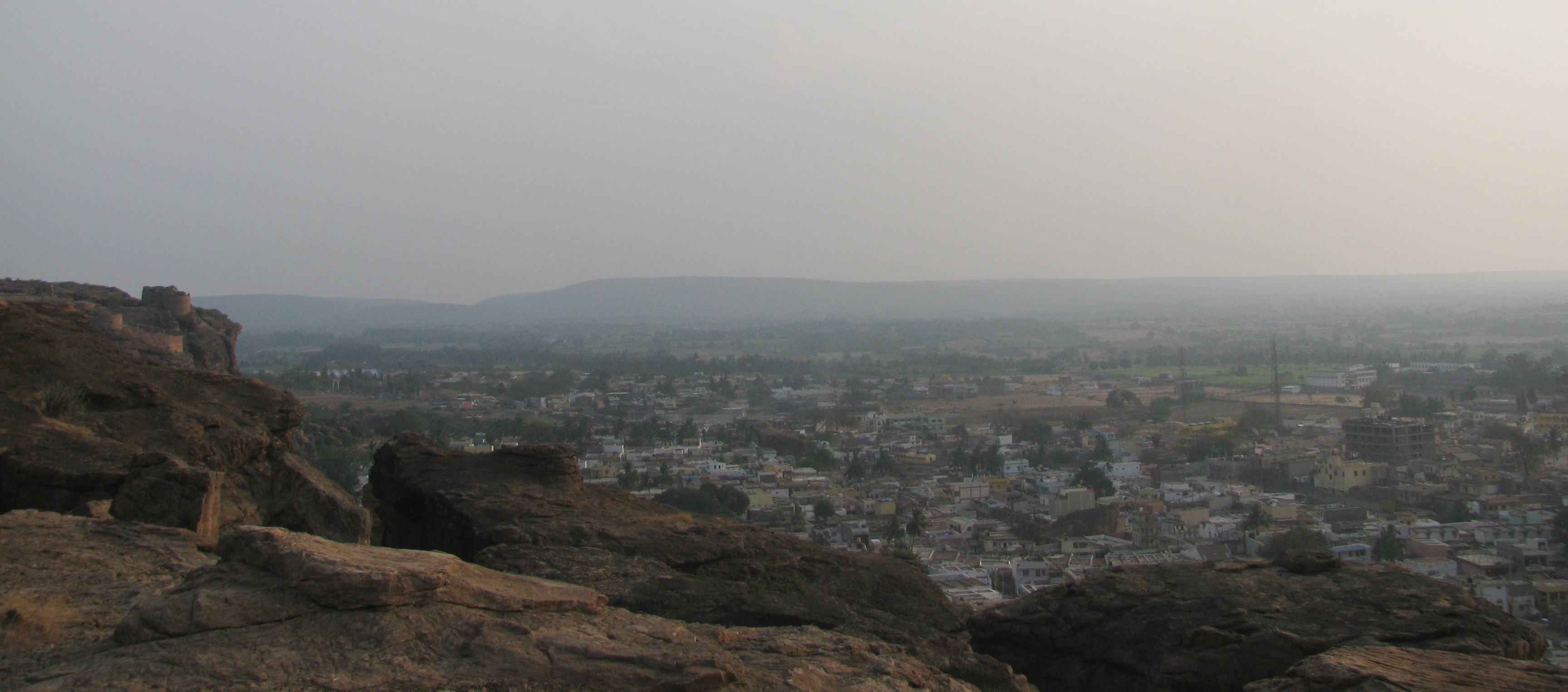
Badami as seen from the top of the adjacent hill (Photo: Shyam G Menon)

Badami as seen from the top of the adjacent hill (Photo: Shyam G Menon)

The north and north-eastern segments of peninsular India had witnessed mountain building activity in the Mesoproterozoic period. This involved subduction of the margins of plate boundaries complemented by intraplate extensional tectonics resulting in the formation of a series of intracratonic basins, namely the Kaladgi formation. As per information on the Internet, intracratonic basins are a type of sedimentary basin. They form within stable continental interiors. They are typically shallow, circular in shape and have long histories of relatively slow subsidence. Over time, the intracratonic basins were overlain by sedimentary rocks and sediments. “ The rocks from the Mesoproterozoic age in the Badami area have been categorized under the Kaladgi Supergroup, further classified into Badami and Bagalkot groups,’’ Dr Shankar said. The Badami group comprises horizontally bedded multiple sequence of arenite and shale with limestone in small amounts. These sedimentary rocks and sediments are found in a large area of horizontally bedded ferruginous arenites from the north-western tip of Raichur district to Bijapur, Belgaum and beyond into Maharashtra state. The Bagalkot group consists of two mega cycles of repeated sequence of argillite followed by chemogenic precipitates predominantly of sandstone and dolomite with quartzite and conglomerate forming the base.

Standing in today’s Badami, it is hard to visualize this geological story. It is flat all around with a few rocky hills. Where are the sedimentary basins? To notice the ancient basins, which can be several kilometres long and wide, we have to get a bird’s eye view; a topographic picture of the region. In that, Dr Shankar said, the basins emerge. Further, some basins are now below the layers accumulated on top. By nature basins are depressions and water collects in depressions. The basins may have held water in the ancient past contributing to the submersion story. However in the vast scale of geological time, water isn’t sole agent forming, compacting and sculpting sedimentary rocks. Theoretically, wind and glaciers also perform that function although glaciers had no role in Badami. Into this, mix a later development. Badami now stands on the Deccan plateau. This large plateau formed around 60-70 million years ago through volcanic eruptions lasting several thousand years, some say, when India drifted over the Reunion Hotspot. The Deccan is a massive feature, much younger than Badami’s rocks but one that adds to the geological influences a scientist must sift through to understand still older times.

(……TO BE CONTINUED)

(The author, Shyam G Menon, is a freelance journalist based in Mumbai.)

BEYOND GANESHA – PART 2

Tuhin in action (Photo: Shyam G Menon)

Tuhin in action (Photo: Shyam G Menon)

An early morning, I walked away from the Badami bus depot towards the local APMC (Agricultural Produce Market Committee) office on the outskirts of town. From here a dusty road branched off to the left, through an archway, onto the nearby hill – it was the way to the Temple Area crag and Ganesha. A young man by the roadside saw me approach, backpack and all. “ Hello,’’ he said. I returned the greeting. “ You…climber?’’ he asked. What do you say, if you used to climb but haven’t done so for a long time? Besides, this whole business of defining climber and seeming one irritated me. I am sure the young man didn’t mean it so but I was already agitated with my thoughts. I smiled and shook my head. “ Climber – that word is for better others. I am simply in search of Ganesha,’’ I said. “ Oh, Ganesha project – it is right over there,’’ he said pointing to a rock face. It was a fine morning and the young man appeared a nice person to talk to. “ What do you do?’’ I asked. “ I am a climbing guide,’’ he said. That was new development for in none of my previous visits to Badami had anyone offered such an introduction. I met him a few more times later, at the crags, where he was with clients. He had been climbing for the past two years. Resident of Badami, he stayed in a house right where I met him, just inside the archway, close to the GETHNAA facility, not far from Ganesha. His name was Ganesh.

I was in Badami to learn more about another person, young like Ganesh.

Eighteen year-old Tuhin Satarkar from Pune, climbed Ganesha on December 14, 2013. He became the first Indian to complete an 8b+ route in India. He is the only climber supported by Red Bull yet in India. Internationally, Red Bull sponsors many athletes, among them climbers. “ Indian climbers have the strength and endurance required for demanding routes. What we lack is technique,’’ Tuhin said.

Tuhin Satarkar (Photo: Shyam G Menon)

Tuhin Satarkar (Photo: Shyam G Menon)

Although climbing infrastructure has improved in India, a huge gap exists between here and overseas. For example, take artificial climbing holds (with rising urbanisation, climbing on artificial walls has become the popular entry for youngsters into rock climbing) – big volume holds, features etc are still only trickling into India. On the other hand, they are the stuff of new routes at world cups and world championships, Tuhin said. We were in the restaurant of a hotel in Badami. The young man’s laptop had a prominent Red Bull sticker; he also offered me a can of the drink. In retrospect, a Red Bull sponsored-trip to climb in Austria and Italy with well known Austrian climber Kilian Fischhuber, in November 2013, may have helped improve his climbing and equip him for the unexpected December-rendezvous with Ganesha. Until this trip, Tuhin’s hardest climb had been a sport route called `Jackpot’ (7b to 7b+) at Sinhagad in Pune. During the 15-20 days spent climbing in Europe, he did his first 8a, a route in Italy. The tryst with Ganesha materialized after Paige Classen, an American climber who became the first woman to climb Ganesha, sought his help for her climbing project. Otherwise, Ganesha hadn’t been on Tuhin’s mind. In 2012, he had attempted the route, climbing up to the fourth clip (bolt plus quick-draw placed for protection) before giving up.

On India’s climbing scene, Tuhin is unique. At the decade old-Girivihar Climbing Competition in Navi Mumbai, I have seen him climb when still a school kid, moving over the years from junior category to senior. His parents are climbers. His father Vikas is a noted rock climber in Pune. While many young Indian rock climbers struggle to explain what they do – not to mention, why they do what they do – to their family, Tuhin had the required ecosystem at hand. He started climbing from age seven, growing up in a house with a climbing wall. His first climbing competition was in 2002, an event on the Pimpri-Chinchwad climbing wall in Pune. In 2007, he finished second at the nationals in the under-14 category. That was when he decided to take up climbing seriously; not so much as career as to climb seriously. Somebody he looked up to those days was Vaibhav Mehta, then living in Mumbai and leading a pack of sport climbers, the first bunch of climbers from the region to treat climbing as the only thing they wanted to do. Improving over the years, Tuhin became part of India’s youth team visiting championships in Singapore (2011) and Iran (2012). The Red Bull-sponsorship happened thanks to his participation in the Girivihar Climbing Competition, in a year when the company was one of the sponsors. As Navin Fernandes, Red Bull’s Athletes Specialist based in Mumbai, pointed out – Tuhin fit in well with Red Bull’s approach of investing in athletes when still quite young. Support from Red Bull commenced in 2013. Currently Tuhin is what you could call a professional climber; he climbs just as someone else goes to work in an office. Climbing is what he does every day. In India, Badami is his favourite climbing spot. He also claims to have been a fan of Alex Chabot, watching his videos, much before the French climber visited India and bolted a route named Ganesha.

Badami: stone, temples and caves (Photo: Shyam G Menon)

Badami: stone, temples and caves (Photo: Shyam G Menon)

Less than a kilometre from Ganesha as the crow flies is Vidyanagar, a residential colony. Everyone remembers a teacher. I had no problem finding the house of Dr Sheelakant Pattar. Now retired, he used to teach at the local school and college. More important, although majored in science, he is a history buff who took his doctorate in studies pertaining to Badami. According to him the oldest reference to Badami lay in Ptolemy’s works, where the name ` Badamoi’ has been mentioned. This is however contested. Dr Padigar feels that while the reference may exist, there is no certainty yet that Badamoi is Badami. What we do know is that there was a settlement here preceding Badami’s ascent in history. Before we talk of that ascent, let’s shift firmly from Precambrian to the age of human civilization and imagine Badami as a settlement near a rock hill characterized by steep walls. It is the 6th century AD. The political landscape of the neighbourhood is authored by such local dynasties / kingdoms as Kadamba, Vishnukundit, Kadachuri, Maurya (not the Maurya of Ashoka) and Nala. Enter, the Chalukyas. Who they were and where they came from appears still a matter of debate, for I came across different views. But the ascent of Badami – then known as Vatapi – under the Chalukyas, owes much to a strategic vision that both Dr Pattar and Dr Padigar pointed out – available readymade in the steep rock walls of Badami was a natural fort. All you had to do was fill in the gaps, which the Chalukyas did; such forts are generically called `Giridurg’ in these parts. In 543 AD, Vatapi burst upon the scene as the capital of the Chalukyas, a dynasty that would eventually become very powerful and influential in the history of this region. Indeed, in present day Badami, many commercial establishments choose to sport ` Chalukya’ in their name; some others fancy ` Pulakeshin,’ that being the name of the dynasty’s greatest king. Dr Pattar provided a bird’s eye view of Badami’s fortification thus: not far from the town is the Malaprabha River, a tributary of the river Krishna (compared to the age of the rocks in Badami, this river originating from the Western Ghats is very young – studies show it is only 40,000 years old). An invading army would have had to first cross the river, then, they would have to tackle what would have been those days a stretch of forest from the river to the fort, before attacking the fort built on steep rock walls. Although the Pallavas, who competed with the Chalukyas for influence in the region, did seize Vatapi briefly and today’s climbers with their modern climbing gear can scale the walls, by the imagination of the 6th century AD, the place must have seemed secure.

The blitz gang. From left - Madhu, Adarsh, Ajij, Gaurav, Tuhin and Sandeep (Photo: Vinay Potdar)

The blitz gang. From left – Madhu, Adarsh, Ajij, Gaurav, Tuhin and Sandeep (Photo: Vinay Potdar)

In mid January 2014, Vinay Potdar, friend and climber, reached Belapur in Navi Mumbai to assist at the annual Girivihar Climbing Competition (for more on the competition, please see earlier posts on this blog – 2014 Girivihar Climbing Competition / Daily Report, 2014 Girivihar Climbing Competition / Countdown and A Competition’s Solo Climb). He was coming straight from days spent climbing in Hampi. Vinay was intrigued by a certain development. Soon after Tuhin’s success on Ganesha and around the same time, in a blitz of sorts, across bouldering and sport climbing, across Hampi and Badami, a handful of young Indian climbers, ranging in age from sub-20 to early-20, cruised past the 8-mark. There was Guarav Kumar (from Delhi)  and Madhu C.R (Bangalore) polishing off Samsara (8a) in Badami, Ajij Shaikh (Pune) pulling off two 8a boulder problems – The Diamond and The Middle Way – in Hampi and Sandeep Maity (Delhi) doing the last two boulder problems plus Black Moon (8a) in Hampi. The Middle Way was made iconic by Chris Sharma of the US, who featured it in `Pilgrimage,’ a film on him climbing in Hampi. The question isn’t so much about who climbed what first or whether some of these routes were done before by others. Making a claim or telling the world of what you did is an option exercised by people in media ridden-world. It is not an expectation set by climbing. What interests more, therefore, is the spectre of a bunch of people, cracking a certain level of difficulty coincidentally around December 2013-January 2014. Mohit Oberoi who runs the Adventure 18 chain of shops that retail adventure gear has longstanding experience in both sport climbing and competition climbing. He attributed the emergent shift to greater availability of climbing infrastructure (artificial climbing walls) and properly graded routes in India. In the past, Mohit himself had climbed close to the 8-level but overseas. The critical element in the new development, he emphasised, is Indians breaching the 8-mark in India. Twenty years ago, the toughest graded climbs by Indians in India were in the early sevens. “ What we are seeing is a much awaited shift,’’ Mohit said.

(……TO BE CONTINUED)

(The author, Shyam G Menon, is a freelance journalist based in Mumbai.)

BEYOND GANESHA – PART 3

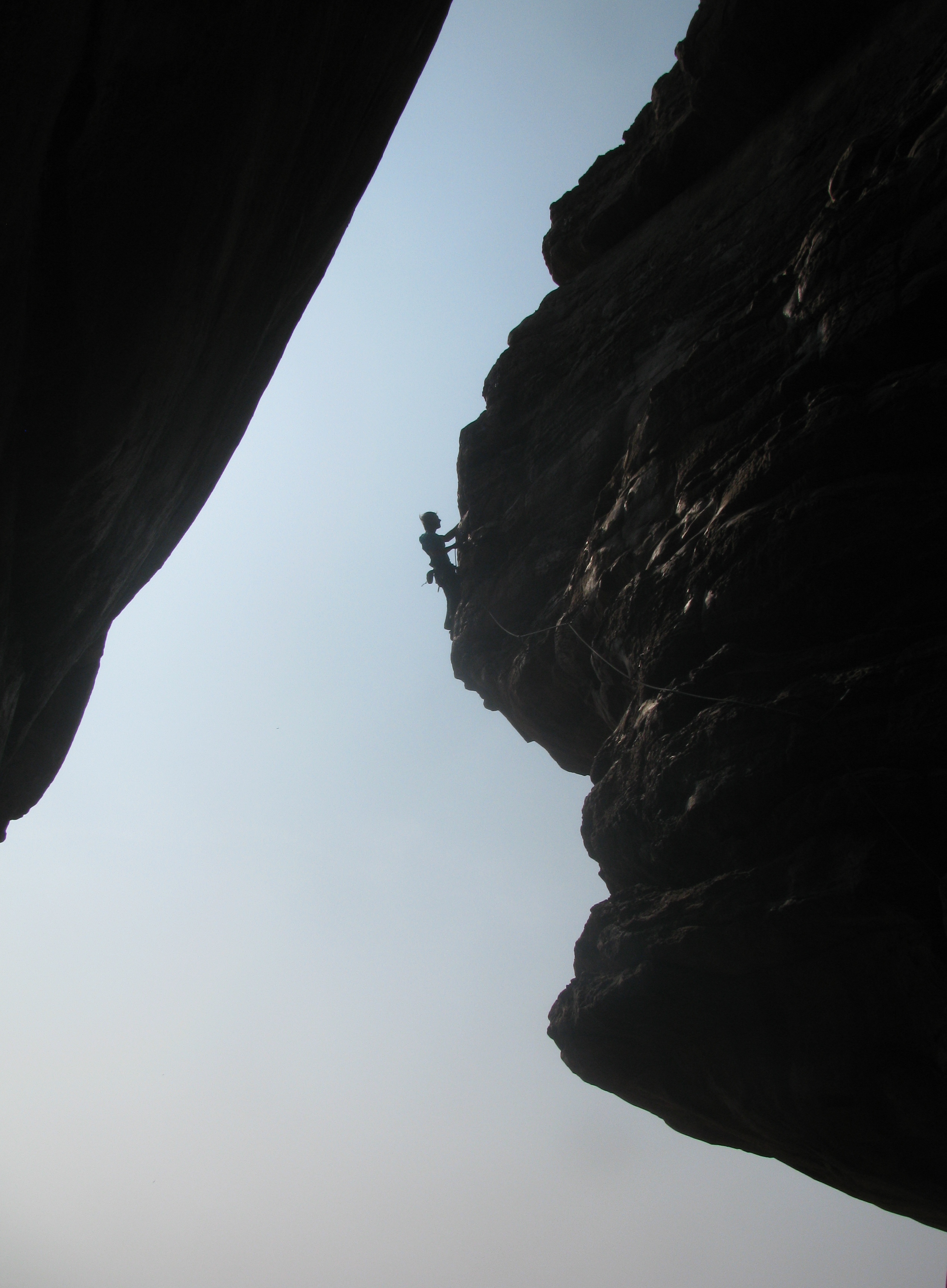
Kilian Fischhuber at work on a new route in Badami (Photo: Shyam G Menon)

Kilian Fischhuber at work on a new route in Badami (Photo: Shyam G Menon)

The most obvious thing in Badami is its beautiful rock walls.

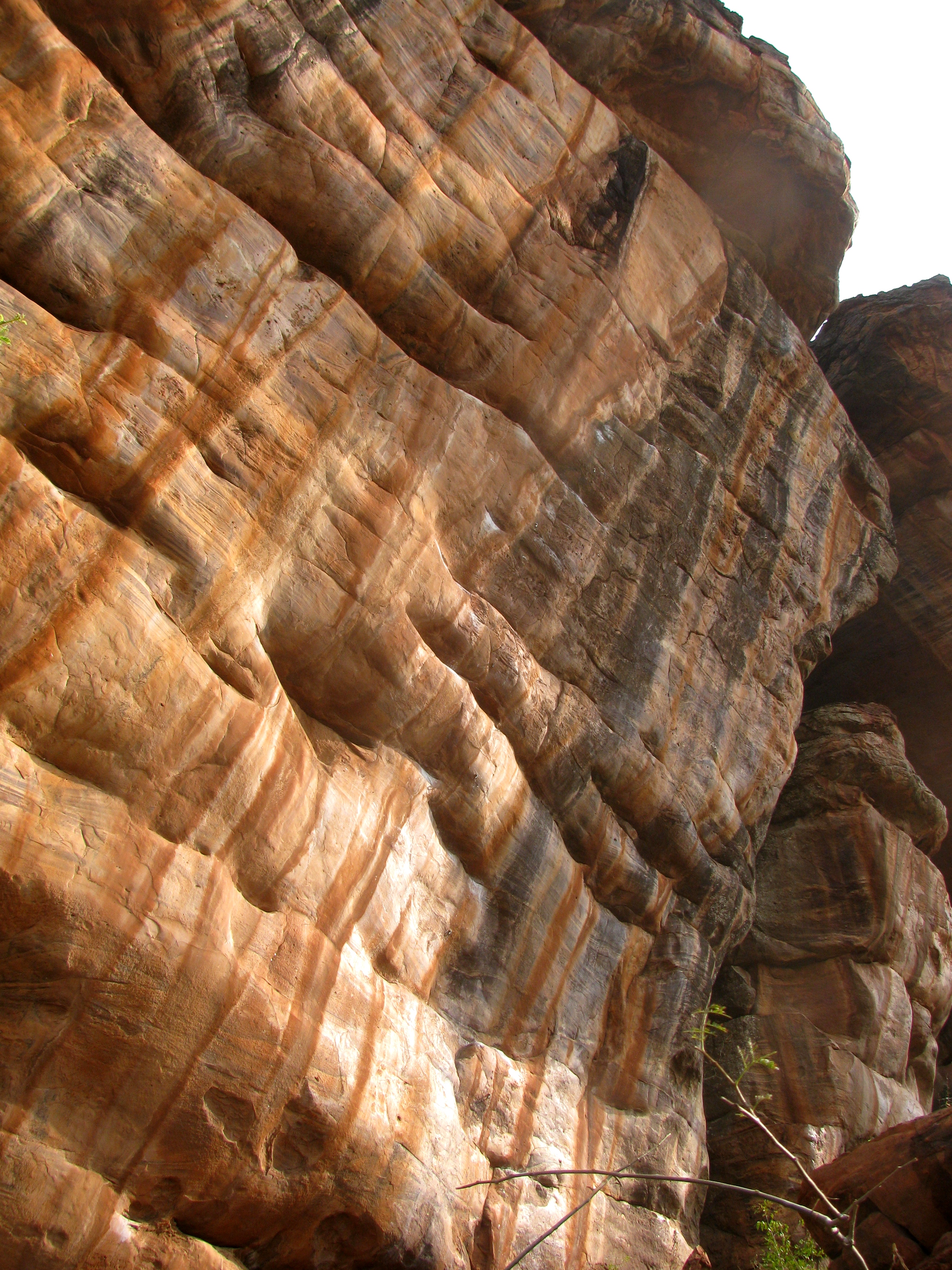
They not only have this orange-ochre colour, but with the right sunshine, at the right time – they are also dramatic.

Badami’s ancient stone temples and caves add to the scene.

If stone is so obvious, you would think – Badami’s story should be one of stone. That is true but it isn’t wholly so, for as with many organized settlements, the oldest constructions found here are of brick. Dr Padigar attributes this to a rather universal trend – in human civilization, stone and the lifeless initially went hand in hand. Much before people built with stone to live in such buildings, they used stone to build tombs, reserving bricks for inhabitable spaces. In India, the taboo was first broken by Buddhism. A lot of early cave and stone structures in the country is Buddhist in origin. Hinduism followed in adopting the practice. In the Badami region – there are caves and temples here – the oldest caves are Hindu. This aside, Badami’s story in stone goes all the way back to crude stone implements from the dawn of human settlement (these tools are displayed at the local archaeological museum). From such antiquity it spans right up to the glory of stone temples under the Chalukyas. The oldest stone implements discovered date back to about 100,000 years ago, part of what is called by archaeologists as a `stone line’ (suggesting the level of open ground at a time when stone age people would have been active here), a metre and a half below the ground in Lakhmapur. Like Precambrian giving way to eras of complex multi cellular life, from these small, isolated stone implements, human craftsmanship graduates over the years to construction. What is on show in the later and more complex architectural history of the region is the craft of working soft stone. In South India, working hard stone like granite has been the domain of the Tamil kingdoms further south and south east from Badami. Thus the hard granite of Hampi wasn’t exploited by the Chalukyas although Hampi is just 145 kilometres away from Badami. On the other hand, some of the temples of Hampi are built of soft stone brought in from elsewhere. The first detailed report about the stone monuments of Badami-Pattadakal-Aihole is the 1874-work by James Burgess. There is also an earlier photo album-like publication by Meadows Taylor. As medium for craftsmen to work on, Dr Padigar believes that the stone of Badami proper was probably the best in the region; the sandstone here is firm despite being sedimentary in origin. “ The Aihole version tends to crumble,’’ he said. How the soft stone-craft flourished in Badami has interesting angles. Although Badami had trade guilds, guilds of architects, craftsmen and artists don’t seem to have existed – Dr Padigar said. By the Chalukyan era, there were many talented architects in town; some of them were brought from outside Badami as well. Ilkal in the region, has the widest variety of stones and a particular monument in Nandwadagi is unique for converging a variety of stones into one building.

An architect or craftsman in the Chalukyan era wasn’t a specialist devoted to one medium or style. They had to have expertise across mediums – from stone to metal, be versatile. They even had duties as soldiers in war. As regards artistic style, one of the engaging points according to Dr Padigar, is that in the Badami-Pattadakal-Aihole region (collectively called Badami for the purpose of explaining history in this article), you find doses of North Indian architectural styles in the ancient stone buildings. You also find local architects (their names are there in inscriptions) – some of who built without patron for given project – evolving their own hybrid style. For art and architecture, the area was thus a melting pot, a case of north meeting the south. In all of ancient India, the Gupta period is deemed the Golden Age in terms of art and architecture. Dr Padigar thinks that the Chalukyas were much inspired by what was happening in the north and central parts of India and sought to showcase something similar in Badami. He isn’t surprised by the resultant synthesis because even in still older times, as when the great king Ashoka ruled vast parts of India, Badami and its neighbourhood was under the administrative influence of the northern empires. In fact, the range of artistic influences that converged in Badami under the Chalukyas only add to the academic curiosity to find out where these people hailed from. Was there something to the story of their life before Badami that shaped in them the urge to synthesize at a new capital rising from the dust? All this reminded me of my own experience doing a story on Hindustani classical music in North Karnataka (please see earlier post of January 2, 2014: Hubli-Dharwad: Life after the Legends accessible on this link: https://shyamgopan.wordpress.com/category/music/). The question there too had been why Hindustani classical music flourished in Hubli-Dharwad but not further south, say in Mysore, famed for supporting the arts.

Tuhin Satarkar climbing n Badami (Photo: Shyam G Menon)

Tuhin Satarkar climbing in Badami (Photo: Shyam G Menon)

Tall and lanky, Tuhin’s hands and legs reach far on rock. This shapes his climbing style. His successful climbs become projects entailing homework for others with a different climbing style. I recall Gaurav Kumar telling me that he would have to work to climb Ganesha as the route isn’t his style. And climbers do that – every style, every human size has its strengths, ability to innovate. According to Tuhin, Ganesha has strenuous moves at start, cruises through the middle and near the finish poses a battle with fatigue. At the bottom of Ganesha to take a photograph of the climbing route, all I saw was an overhang; the route seemed like ascending the edge of a mild mushroom. As elsewhere in Badami, on Ganesha too, chalk marks on rock betrayed the holds, the features – the key to tackling the route’s challenge. More accurately, one half of the key; the rest is climber. What is a key if you don’t know how to use it?

Through late January to early February 2014, Tuhin and Kilian Fischhuber have been climbing in Badami. Kilian climbed Ganesha soon after arrival. I hung around watching some of their later projects. When I left Badami, two new routes were in the testing stage. One, next to Samsara, had been climbed in sections and was awaiting all the sequences to be sewn up in one flow; the other – on a nearby overhanging rock face – kept defeating the climbers with a very strenuous move in the middle. The unsaid quest across these routes, that tantalizing thought beyond enjoying climbing was – are there routes in Badami exceeding Ganesha in difficulty? Will India get an 8c or 8c+; will we touch the 9-mark? Today the toughest sport climbing routes in the word are in Spain and Norway, both graded 9b+, both climbed by the 20 year-old Czech rock climber, Adam Ondra. The ascent in Spain took him weeks of work.

Amazingly, what the Chalukyas laboured to create by way of influential empire was lost in no time once their power waned. In the sweep of history, Badami’s decline resembles stone dropped in water; as sudden as its appearance as the Chalukya capital, except – the decline is despite new found prominence as capital. As the Chalukyas fade, so does Badami. Post Chalukyas, it came under the orbit of the Rashtrakudas, the Hoysalas, the Vijayanagar kingdom, the Adil Shahi rulers, the Mughals, the Marathas, the British – on to present day India. Everyone who followed the Chalukyas left their mark, but none like the Chalukya.“ Chalukya craftsmanship is in a class of its own,’’ Dr Padigar said. According to him, while there are monuments in Badami hailing from the well known Vijayanagar period, in terms of craftsmanship they don’t match what was achieved 800 years earlier under the Chalukyas. Today Badami sees life as a hot, dusty town framed by timeless sandstone. The town’s architecture is characterized by the characterless architectural mess of modern India, old buildings and new, a clash of concrete, metal, paint and glass. Traffic on its main road has grown. Cell phone towers have appeared and like elsewhere in India, here too, there are those with one hand stuck to the ear, phone sandwiched in between. On the street’s edge, bull dozers are forever tearing down something. Life goes on amid gaping holes in concrete and twisted steel rods puzzled for logic. A man stood on half a balcony and calmly sipped tea observing the rubble. Monkeys sat on roof tops. Pigs ran around and a dark muck lurked in open sewers.

Kilian Fischhuber (Photo: Shyam G Menon)

Kilian Fischhuber (Photo: Shyam G Menon)

Not all climbers like Badami. I have noticed that.

Many prefer Hampi, reportedly more relaxed and at home with climbing compared to this town.

For the faithful, Badami is the home of sandstone and that route called Ganesha.

In climbing, nothing comes to you and your comfort zone. You have to venture out. Kilian is from Innsbruck in Austria. I asked Kilian what he thought of Badami. “ This is a great place to climb. Good rocks and good routes. My only problem is with the heat,’’ he said one evening, on the winding path to the Temple Area. It was a team composed of three people in the main – Kilian, Tuhin and Johannes Mair, who handled photography and film making. A typical day featured Tuhin climbing and Kilian belaying, or vice versa, with Johannes perched on nearby rock or dangling from a rope, filming the scene. Once in a while, Johannes too climbed. Over an evening and the following morning and evening, I watched Kilian and Tuhin work the two newly bolted routes. Would they be tougher than Ganesha? – I wondered. In sport climbing, the nature of the animal is such that the question can’t be avoided. Climbers I spoke to in Mumbai (where some of the blitz gang had gathered for the 2014 Girivihar Climbing Competition) felt that routes tougher than Ganesha existed in Badami.

Third week of February, I checked with Tuhin to know what happened after I left Badami. Both the new routes, he said, have remained work in progress. Kilian almost completed a climb of the route next to Samsara. But then almost, isn’t the same as completed. And with neither route fully done, it is probably correct not to guess their grade yet. 

The search is on for beyond Ganesha.

(CONCLUDED)

(The author, Shyam G Menon, is a freelance journalist based in Mumbai. He would like to acknowledge the help provided by Dr Shrinivas Padigar, Dr Sheelakant Pattar, Dr Navin Shankar, Vinay Potdar and Dr Sambhu Pankicker towards writing this piece.)     

THE STORY OF `PSYNYDE’

Here’s a story from 2013.

It has been updated to include developments till January 2014.

Vinay in action.

Vinay in action.

Vinay is rarely on the ground.

In photographs, he is usually cyclist airborne.

Either that or, he is a streak of dust gathering speed as he rolls down an  inclined hillside, probably prelude to a launch. When I met him in early 2013, Vinay Menon’s reputation could be summed up as – he is forever jumping off things. That’s how he described himself, “ I am always jumping off something or the other.’’ On the Internet he had a following. He was considered to be the best `free rider’ in India. Mountain biking has several disciplines under it – Dirt Jumping, Slope Style, Trials, Cross Country, Four X, All Mountain, Endurance, Street and Free Riding among them. Of these, free riding values self expression and creativity, being a demonstration of what the rider can do with his bicycle, skills and terrain. Although he respects all disciplines and indulges in several, Vinay’s forte is free riding.  As yet there didn’t seem to be anyone around in India who was pushing the sport as Vinay did. Driven, his efforts had got him travelling overseas, meeting and interacting with international cyclists that he looked up to – names like Brett Tippie and Dan Cowan. Closer to my world of writing, Vinay was also Deputy Editor of the Indian cycling magazine `Free Rider.’ I first met him in Mumbai, when he was passing through town, part of a long, north-south ride with clients.

During the brief chat, I heard of Praveen.

Welcome to the story of Psynyde.

We shift to Pune, western India’s adventure capital. Like Bangalore further south, it has that change effecting-matrix of educational institutions with students from all over and a young mobile workforce at engineering companies and IT outfits, exposed to trends elsewhere and open to trying out new things. Praveen picked me up around lunch time. He drove his car slowly to a Subway outlet. We found ourselves a table. Then, Praveen sat nervously, his eyes on the bicycle mounted on the car’s back, the car visible through the eatery’s glass doors. That bicycle was seriously precious. It was the reason for our conversation. The road outside was busy. It doesn’t take much to flick a light road bike off a car’s back or do something to damage it. Praveen’s nervousness was understandable. A little later, if I remember correctly, he managed to keep the bicycle in safer territory, near a security guard. That done, he relaxed.

Praveen and Vinay

Praveen and Vinay

Vinay got interested in mountain biking in the mid-1990s. By then, Praveen Prabhakaran, was already an established addict of the sport in Pune. Both mentioned Sameer Dharmadhikari, then at Mumbai IIT, who was committed to mountain biking and was a pioneer of sorts. A complete idea of the sport was yet evolving. The youngsters used Indian cycles and existing trails on nearby hills. They banked on overseas mountain biking magazines, the occasional video and TV program for a sense of what to do. But as Praveen and company rode hard, jumped and abused their bikes in an effort to be like the foreign riders, one constant prevailed – they frequently damaged their cycles which were not designed for such riding or such levels of abuse. Needing spare parts frequently, Praveen sold old newspapers to raise funds. Naturally, there was a limit to such funding. On the other hand, there seemed to be no end to how much a dedicated cyclist could push his cycle to repair. Slowly Praveen’s interest drifted from pushing the ante in his chosen sport to tinkering with cycles. How do you make them suited for the sport; how can they stand up to abuse?

In his first experiment, Praveen took a rigid frame Indian mountain bike (MTB) and made it into a dual suspension cycle, subsequently named (perhaps aptly) `Frankenstein.’ Then, the story gets wilder. In his second such modification – this time a friend’s Indian dual suspension-MTB that wasn’t compressing properly – he outfitted the cycle with Bajaj M80 suspensions altering the whole cycle in the process. “ It worked!’’ he said. And as things got wilder like this, he understood the interdependence of bicycle dimensions, engineering and components. A bicycle is a wholesome organic unit; you don’t simply take one element out and stick another in. A commerce graduate into 3D animation but no backdrop in engineering, Praveen steadily moved to making bicycles – in the literal sense of making; that is, manufacturing them – his life’s aim. When in his animation career, he got laid off at one of the biggest companies around, he said enough is enough and launched headlong into what he always wanted to do – make performance bicycles.

The Subway was now busy with office goers come to eat. Vinay had joined us. We seemed misfits in the suddenly emergent purposeful corporate-ambiance of the restaurant – the restless dreamer who makes cycles, the long haired-cyclist whose sense of career may puzzle regular office goers and freelance journalist, who may be fashionably free but is forever short of money.  Back to the story – Vinay’s trajectory had progressed differently from Praveen’s. He was hard core mountain biker, very much into riding and skills. Unlike Praveen he hadn’t shifted focus to obsessing with the mechanics of bikes although that day in 2013 he owned nine cycles, some of them top notch. But having pushed bikes to the limit, he too had a feeling of what they were and could be. Praveen’s craze to craft performance bikes appeared synergic with Vinay’s hard riding. They seemed an ideal combination of designer-craftsman and tester.

What next?

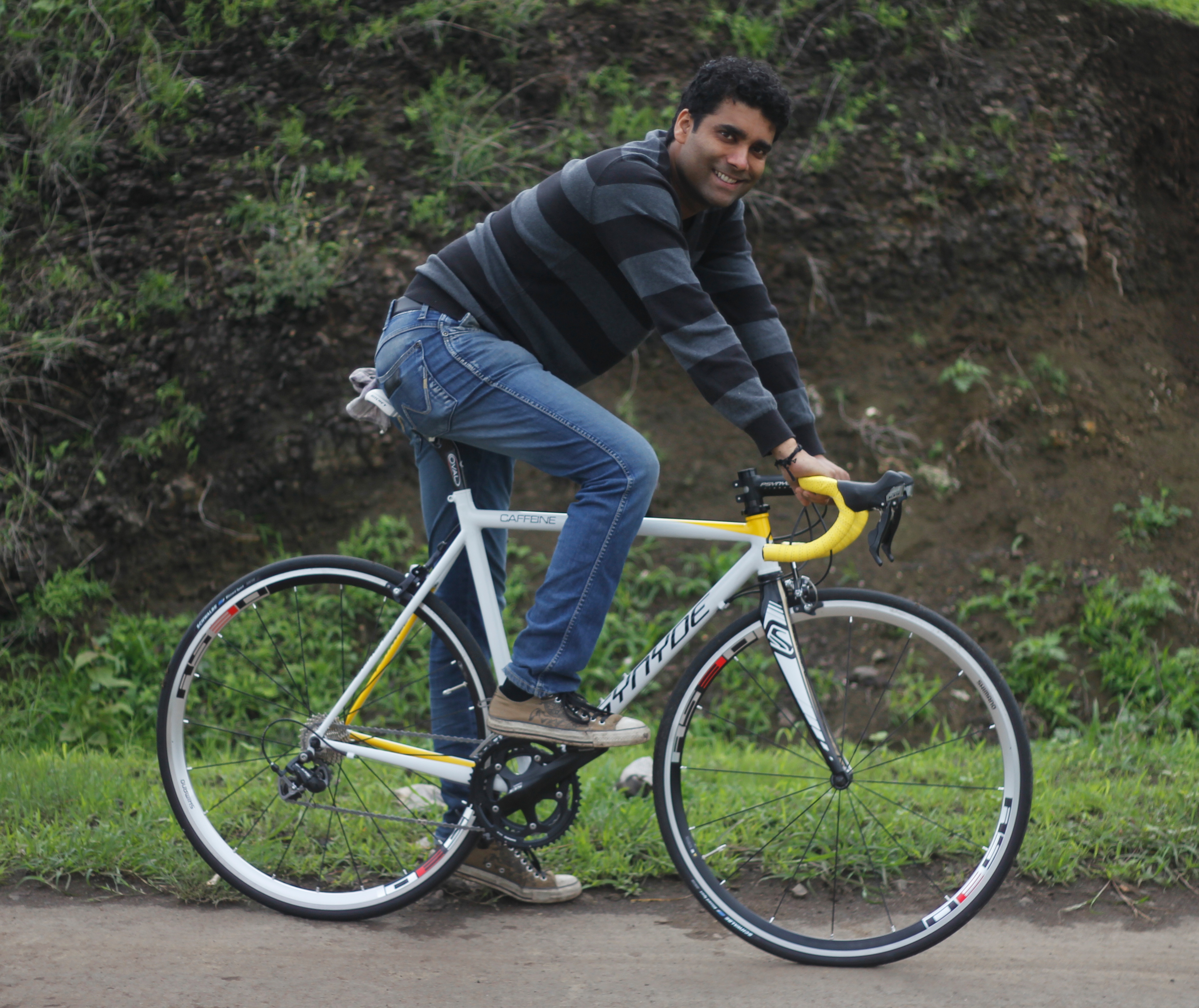
Praveen with the Psynyde Caffeine.

Praveen with the Psynyde Caffeine.

Enter `Psynyde’ – that’s what the two named their fledgling enterprise. To start with, Praveen underwent customized training in Computer Aided Design (CAD) and focussed his initial manufacturing efforts on bicycle components like stems, seat clamps and bash rings. Vinay tested it. He also gave it to his cyclist friends overseas for testing. Feedback was encouraging. While this was on, Praveen began designing a bicycle. The two friends agreed that their first hand built-Psynyde bike should be a road bike because mountain biking was yet in its infancy in India. Not to mention, MTBs are more complicated to make. Praveen did considerable homework. There was the research on materials, sourcing the materials (triple butted niobium steel alloy from Italy), selecting tubes of the right strength, relating tubes to preferred ride quality, learning frame geometry, adapting the geometry to suit rider dimensions and mastering the art of joining tubes to make the frame. If required, the erstwhile 3D animator also makes the cycle’s fork from 4130 chromoly (chromium molybdenum alloy) steel. The bike debuted in July 2012. Two cycles made so far and two underway it had found customers in Pune, Bangalore and Andaman and Nicobar islands. Save some specialized tasks like brazing, Praveen did most of the work. Home doubled up as workshop. And in case you hadn’t guessed it yet – that was a Psynyde mounted to the back of Pravin’s car. The specific model, which he had chosen to retain for personal use, was called `Caffeine.’

The typical customer in this niche category is a serious cyclist, who knows the difference that right sized frame, correct geometry and good quality materials bring to performance. “ I believe we are the first in India to custom-build high performance bikes using high quality materials,’’ Praveen said. The Psynyde bike costs more than a similar looking off-the-shelf bike but is cheaper than comparable custom built cycles overseas. If all goes well, from measuring the customer for optimum frame size to delivering the bicycle, it takes approximately 1-2 months. The ` performance’ segment that Praveen referred to was his chosen differentiator’ there were others also building bikes. A March 2010 news report mentioned Zubair Lodhi and Faisal Thakur in Mumbai, who made customized, sometimes theme based-bicycles. In 2011 and 2012 The Hindu reported about Bangalore based-Vijay Sharma who made eco-friendly cycles using bamboo. Psynyde, Praveen said, customized for high performance. That’s the underlying philosophy. Vinay as tester, emphasized the intended direction.

Traditionally in India, the bicycle models produced by a handful of mass manufacturers have been staple diet. The companies making these cycles owed their DNA to controlled economy, not DNA in performance biking. It was mass manufacturing. Simply put, it meant – they made, you bought unquestioningly. Slowly – and perhaps one should say: reluctantly, for portions of the market were far ahead of the companies in terms of imagining cycling – that has changed. The leading bicycle companies have introduced new indigenous models besides importing cycles from overseas (please see the story: Cycling’s Second Youth posted in August 2013 on Outrigger, for an overview of the Indian bicycle market / industry). Still, a company can rarely match the deep end experience that enthusiasts cobble together. At Psynyde, you have two young cyclists using their knowledge and field experience to build performance cycles. Overseas such teams have birthed strong brands. Dig into bicycling history and you will stumble on brands whose genesis can be traced back to small enterprises, often founded by cycling enthusiasts. However small these early Indian attempts in the niche maybe it’s hard to ignore the passion. Before me was a young man, old enough to be as well employed as anyone in Pune’s corporate crowd. He could have been one of those breezing into the Subway outlet and eating a meal over corporate gossip or plotting next move in corporate career. Yet he had made cycling his life. The other person had chucked up his last job and walked into a crazy dream of making bicycles that had somehow lingered eternal in the head. I repeatedly asked Praveen how he, a 3D animator, learnt about materials, fabrication and welding techniques, normally seen as the turf of bicycle factories. He said if you are determined, you learn. Perhaps I also overlooked the nature of the bicycle – it is technology and simplicity at once. Years ago, the first bikes pedalled by these two Pune cyclists had been Indian makes. Those cycles are the guinea pigs that triggered a journey, which from another perspective is a measure of how different the new market is, compared to the old one. Not surprisingly, a news report from April 2012 said that the two dominant domestic players – Hero and TI – planned to introduce customization. But no matter what big companies do, the beauty I found in this story of two cyclists was quite simply that they did what they liked. They pursued it diligently, seriously.

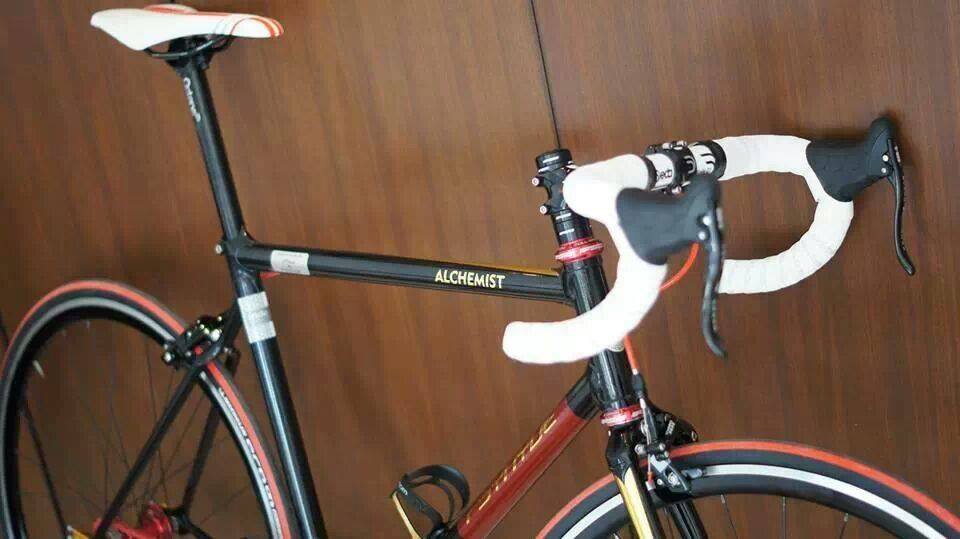
The Psynyde Alchemist

The Psynyde Alchemist

January 2014.

Praveen and I met in Pune for an update on the old story. As said, the first bike model – a road bike – was called Caffeine. I remember it as precious strapped to car’s back. The second model was a cyclocross (looks like a road bike but can go off road too) called `Hammerhead’ and sold to the client in Andaman & Nicobar. The new models due – thanks to orders received – included the track bike `Alchemist,’ fashioned from stainless steel. There is the planned touring MTB named `Jaisalmer,’ which will be a mix of MTB frame in steel and touring essentials like rack mounts at the front and back for luggage. Also planned is a rather ambitious dual suspension MTB, which Praveen reckons will be his toughest assignment yet. It will be partly made of aluminium, the first time Praveen will work with that material. The designer and builder of cycles had also got himself a new job as photographer; something he said was necessary for income even as he kept building cycles.    

That’s the story of Psynyde.

(The author, Shyam G Menon, is a freelance journalist based in Mumbai. This is the expanded version of an article previously carried in The Hindu and Man’s World. The photos used herein were provided by Vinay and Praveen.)      

AN EXPERIMENT IN PUNE – PART 1

???????????????????????????????

In 1997, two climbers from Pimpri-Chinchwad near Pune visited Bikaner in Rajasthan, at that time the only town in western India to have an artificial climbing wall.

Bikaner represented the new face of climbing. Its wall was ambassador for sport climbing, especially competitive climbing. Artificial walls were common overseas. Yet in the world’s second most populous country with a rising tide of urbanization and growing chunk of youth in its demography, the late 1990s played host to only a few isolated walls. Mumbai, India’s biggest city had none; as did Pune. On the other hand, away from the Himalaya, Maharashtra was among states actively engaged in rock climbing and mountaineering. It had a tradition of climbing rock faces and pinnacles in the Sahyadri (Western Ghats). In 1988, it had produced the first civilian expedition to an 8000m-peak with climbers reaching above 8000m on Kanchenjunga before retreating. A year after Shrikrishna Kaduskar and Surendra Shelke visited Bikaner – in 1998 – the first Maharashtrian would reach the top of Everest. Sport climbing especially competition climbing on artificial walls – was a missing piece in the state’s climbing mosaic.

Shrikrishna Kaduskar (Photo: downloaded from Facebook page)

Shrikrishna Kaduskar (Photo: downloaded from Facebook page)

Shrikrishna and Surendra resolved to get their home town a climbing wall. However they had more than a wall in mind. They had fashioned an approach – what they felt was best suited to both popularize a culture of climbing walls and keep them easily accessed by the public. Pimpri-Chinchwad, just outside Pune city, was the industrial hub of the region, home to many big engineering and manufacturing companies. It also had one of the wealthiest municipal corporations in India. On return to Pune, the duo submitted a proposal to the Pimpri-Chinchwad Municipal Corporation (PCMC) to build a wall. Then and now, climbing was and is a small sport in India, challenged for financial support. Shrikrishna and Surendra had set themselves a particularly tough assignment for not only were they seeking infrastructure in climbing, they were also seeking its approval and execution by local government. They ran from table to table and meeting to meeting, pushing things through with sheer passion till at last – in 2001, the wall came up near the Annasaheb Magar Stadium in Pimpri-Chinchwad. En route, they also addressed a related problem. Climbers are notoriously self-centred. Selfish would be wrong word to use, for that they aren’t. The thing is – climbing by its very nature is all about limiting the world to immediate environment. Climbers are doers. If you don’t climb, there isn’t any climbing – it is that simple. This often limits the merit they see in imagining / co-operating beyond immediate goal to be achieved. Consequently, the culture of outdoor clubs, mountaineering clubs and climbing clubs in India are full of stories on how they couldn’t come together on one platform to get important things done. Egos intervene. Personalities clash. Shrikrishna and Surendra belonged to a particular club – the Moraya Giri Brahman Sanstha. They knew the wall would succeed only if they got everyone aboard. So, the duo worked towards forming the Pimpri-Chinchwad Mountaineering Association (PCMA), comprising participation from all clubs. PCMA became the active face of the wall, running day to day operations. Looking back, you could say this was how the story of competition based-sport climbing in Pune began. And certainly therein, the story of a group of youngsters, first appearing on the scene as school students, later fetching podium finishes at national level competitions.

To those in Pimpri-Chinchwad, sport climbing was both new sport and a spectacle in the neighbourhood, for there is something intrinsically fascinating about climber moving up a wall. It contrasts one’s own safe stance on the ground and climber’s progression up vertical surface, so unnatural to the human being. The PCMC climbing wall, like any other, had fixtures on it – there were artificial holds; metal anchors, metal nuts and bolts. Additionally, when climbers arrived to practise, there would be their belongings ranging from water bottles to wallets, karabiners and other hardware kept by the side. The wall had no lockers. Not even for the group gear used on the wall. Everyday Shrikrishna brought group gear to the wall and took it back. The wall’s locality was not far from urban slums and its typically desperate population, growing up in denial, seeking the slightest route to scarce money. Theft became common. Personal belongings were lost. Climbing holds disappeared from the wall, as did nuts and bolts and sometimes, anchors. The thieves had no idea what the metal devices were meant for or even the actual composition and value of its expensive alloys. It was sold as scrap for a quick buck. On the other hand, it is the stated policy of any local government building infrastructure that access to the facility should be equal for all and it should benefit the local community. Slowly, the youngsters hanging around, unable to contain their curiosity, began climbing. “ For us, it was also definitely a way to get around the problem of theft. As their ownership of the activity increased, the locals urged those stealing to stop doing so. They knew who were doing it,’’ Shrikrishna said. I remember the PCMC wall as a simple, tall structure with a climbing wall on only one side of its framework (later a second wall was added). Next to it was the local swimming pool owned by the municipality. Between the two facilities was a long, low granite wall, basically the edge of the land on which the pool stood. This stone wall was also used by the climbers. They traversed it – hanging on with finger tips and perched on their toes – building up endurance. Typical of India, this creative mix of available options confidently hosted new ideas. It was all fuelled by interest, raw interest. During my days in climbing several years ago, I attended a clinic on sport climbing here. That was the first time, I saw the PCMC wall.

Surendra Shelke (Photo: courtesy Shrikrishna)

Surendra Shelke (Photo: courtesy Shrikrishna)

In 2002, wall in place, Pimpri-Chinchwad hosted its first west zone competition. Those going in for the final rounds at the nationals were selected through zonal competitions. That was the norm. Around 370 participants arrived at the PCMC wall. In the ensuing competition, not one climber from Maharashtra qualified for the nationals. It was a humbling experience, one that showed where the state stood in the sport. But a large competition in town had its own silent impact. “I saw that 2002 competition and decided to start climbing,’’ Suresh Kohare, who hails from an underprivileged backdrop in the neighbourhood of the wall, said. He joined the ragtag bunch of climbers from the local community, now regularly climbing and slowly maturing. The training at the wall was totally free of cost. “ We charged them nothing,’’ Shrikrishna said. As the abilities of these youngsters became visible, Shrikrishna and Surendra visited the localities they came from, convincing people to send their children to climb. Luckily, there was one participation model available to tap and which the PCMC to its credit, made available. The municipal corporation ran schools in the region and most of the underprivileged students studied at PCMC schools. These schools had policies in place to promote participation in sports. The PCMC formally recognized climbing as a sport to support at its schools. To this date, it is the only municipal corporation in India to have done so, Shrikrishna said. That recognition for climbing also meant students good at the sport merited financial support – for example, they got a nominal travel and daily allowance when they travelled to other places to participate in climbing competitions.

As they visited the students’ houses, tackling the parents was hard work for Shrikrishna and Surendra. There was the obvious risk all parents saw in climbing and in the subsequent quest to affix responsibility they saw Shrikrishna and Surendra as where the buck stopped. The PCMC had students sign an indemnity bond but in reality parents saw the duo as being responsible. Needless to say, this was dicey. But the duo persisted as there was underlying passion to do something in and for climbing. Then there was the whole question of – what do you get from climbing? Remember, these are questions posed by people already living utterly difficult lives, in localities beset with social problems ranging from drinking to gambling. According to Shrikrishna, some of the best climbers that the PCMC wall produced never advanced further because their family compulsions saw them trade climbing for regular means of livelihood. Nevertheless, from 2002 onward, the duo ensured that a team of 30-40 local students participated at every annual west zone competition. The experiment secured result in 2005, when for the first time, two or three climbers from the PCMC wall, graduated to participate in the nationals with Somnath Shinde emerging a medal winner in lead climbing in the junior category. Following this, Shrikrishna and Surendra began to think – why not use the PCMC wall-model to set up more walls in Pune, even elsewhere in Maharashtra?

The PCMC wall in better times (Photo: courtesy Shrikrishna)

The PCMC wall in better times (Photo: courtesy Shrikrishna)

In 2005, they – under the aegis of the PCMA – submitted a proposal to the Pune Municipal Corporation (PMC). In 2008, after much scouting, the duo was shown some vacant space in the premises of the Shri Shivaji Vyayam Mandir in Pune’s Shivajinagar. It wasn’t perfect for the space assigned for the wall was trifle cramped. But Shivajinagar was centrally located. Plus they got complete support from the local representative to the PMC, Balasaheb Bodake. In 2010, the Shivajinagar wall opened. It has both lead climbing and speed climbing walls. Soon after inauguration it shut shop for 3-4 months as the PMC took that long to approve the rates the PCMA could charge those reaching the facility to climb. By then, there was also another sad story to cope with. The old PCMC wall, from where this whole story commenced, had shut down reportedly due to the corporation insisting that the PCMA assume onus for security as well and not just daily operations. This caused a drift. Shut down and neglected, things have again gone missing from the old wall, Suresh said. Climbers from the PCMC wall now travel to Shivajinagar in Pune, to climb. On the bright side – there is one full fledged sport climbing wall available for use. Talks are on to restart the PCMC wall, Shrikrishna said.

(…..TO BE CONTINUED)

(The author, Shyam G Menon, is a freelance journalist based in Mumbai)

AN EXPERIMENT IN PUNE – PART 2

???????????????????????????????Early January 2014.

It is supposed to be winter in Pune.

Strangely, it is pleasant and there is no need for a sweater. Global warming, I tell myself. It is an odd world, mine. There was right then freezing cold in the US, complaints of cold winter from North India, yet this lack of cold in Pune, 1800ft up from sea level. I am at the Shivajinagar wall to meet Ajij Shaikh, perhaps the best result yet from the original PCMC experiment. To talk, we go inside the wall. The design of this wall included what was amiss at the PCMC wall. Here you have rooms to store equipment under lock and key. The first floor appeared make-shift stay-over for climbers. They rested between climbs on a row of crash pads; tired, sleepy youngsters, seemingly oblivious to everything except life lived hold-to-hold. The second floor was a bouldering gym. Then, you had the ladder well leading straight up to the top of the wall, helpful to install climbing ropes et al. The whole thing reminded me of a tree house. Perfect getaway, if all you wanted to do in life was climb, rest, climb, rest…so on. Ajij, 22 years old, is here every day. As are other promising climbers like 18 year-old Vicky Bhalerao. Both these names as well as some others from Pune, were familiar to me from their regular participation at the annual climbing competition held by Girivihar in Mumbai.

Ajij owes a lot to yoga – that is clear.

Ajij Shaikh (Photo: Shyam G Menon)

Ajij Shaikh (Photo: Shyam G Menon)

He began his story so, remembering Vivek Sable, his yoga teacher at school in Sant Tukaram Nagar. He recalled the yoga sessions, his competence at it and eventually his participation in yoga competitions right up to representing Maharashtra at national level contests. “ It made my body flexible,’’ he said. Sometime in middle school, he reached the PCMC wall for a week of climbing. At its end there was an inter-school climbing competition and Ajij topped it in the under-13 category. One of the coaches at the wall, Sudhir Tambe, told him that he showed promise. But for the next two years Ajij, never returned. He was doing too many things – from yoga to athletics – and fitting the climbing wall into his daily schedule starting from home in Mahatma Phule Nagar was too tough. Ranjith Shinde, who was also coach at the PCMC wall, was the next person to remind Ajij to climb regularly. This led to a participation in the zonal competition. However it was after he finished schooling that Ajij got around to speaking seriously to Ranjith and expressed his intention to climb competitively. Unfortunately by then, the PCMC wall had closed. So he started climbing outdoors; this included the environs of Duke’s Nose (a prominent rock feature near Lonavala), the Plus Valley area and rocks near Ferguson College in Pune. There was also a small artificial wall in Pune, he could access.

Rock climbing is done with special climbing shoes with rubber soles that generate adequate friction besides holding the foot in such a way that the climber is able to direct his power to the big toe. Ajij and his companions from similar underprivileged backdrop had none of these luxuries. He climbed with Fitness shoes, a tight fitting women’s shoe from Bata, which in appearance, resembled a climbing shoe. The lack of personal equipment made competitions attractive. Typically at events like the annual climbing competition held by Mumbai’s oldest mountaineering club, Girivihar, climbing gear was part of prizes given away. However with practically no personal gear, the prizes that Ajij and his friends won were never kept personal. They were shared with anyone from the group competing at high level and needing good equipment. In turn, this meant that wear and tear of equipment, like climbing shoes, was pretty fast. When it came to personal equipment, it was therefore like being on a treadmill.

In 2008, Ajij reached his first nationals. It was his last year in the junior category. In Delhi, he saw Praveen C.M, a gifted climber from Bangalore, triumph in the senior’s lead climbing, speed climbing and bouldering competitions. Ajij was in awe of Praveen. He was also cast into a deeply introspective mood, which reminded him of his personal background and left him in tears. “ I cried,’ he said. Ajij was the eldest of three children; his father – now moved to Saudi Arabia – ran a small hair cutting saloon in Pimpri. He didn’t talk much of his family but when asked he admitted that they don’t quite know what climbing is or what he does despite trophies in the house. The family was poor. They lived in one room. Had things gone on as they do in such underprivileged circumstances, he would have been forced to quit studies by the seventh standard and seek work. Seventh standard was a Damocles Sword. Ajij thinks it was yoga that saved him. He travelled to participate in yoga competitions and that exposed him to places and people away from Pune. It helped him convince his family that he should remain at school, something useful when it came to his later interest in climbing. Such passing details gave me the impression that the 22 year-old had grown to being a bit of an island. According to Ajij, 2008 was his year of change. Among other things, he resolved to face his life thinking positively and figuring out how to improve his climbing, including fundamentals – he actually had a fear for heights.

Ajij on the PMC wall (Photo: Shyam G Menon)

Ajij on the PMC wall (Photo: Shyam G Menon)

In 2010, the Shivajinagar wall was built. Ajij took up a job at the wall, looking after day to day operations. What it really did was keep him at the wall for long hours of practice. By this time, he was also focussed on only yoga and climbing having realized the value in pruning down many interests to a few he could properly handle. In between, to make ends meet, he worked with wedding caterers helping to serve food and clean up after functions; he also worked at private companies doing odd jobs like packing. In 2010, he came third in a competition in Mumbai. Then there was an open national competition (not the formal nationals, which requires selection through zonals) at Mussoorie, where Ajij was second and Praveen was third. He smelled potential – he could do something. On return from Mussoorie, he intensified his practice. Besides practising at the Shivajinagar wall, including at the bouldering gym on the second floor inside the wall, Ajij also did extended endurance sessions on the granite wall near the old PCMC climbing wall. He qualified at the zonal competition in Bhopal and headed to Delhi for the nationals. In the initial rounds, he did badly and scraped through to the finals. Then he amazed everyone to emerge first in the senior’s lead climbing event. He repeated this triumph in 2011, 2012 and 2013 – making him a four time national champion.

In 2012, Ajij participated in the World Championships in France. It was the first time he flew in an aeroplane, his first time overseas, including catching trains in France and reaching eventual destination; all this, alone. The experience overwhelmed. He arrived too late for one event and messed up his chances in the other. Managing France with no French and just some English to get by was difficult. Overwhelmed – was the word. He breathed easy when Viraj Bhide, a climber from Mumbai studying in Paris, intervened. In 2013, Ajij participated in the Asian Championship in Iran. He hopes to travel to Spain in 2014 to participate in the next World Championship. According to him, he received no help from any sponsor, for these trips. Friends and others helped with money; he also borrowed. Later, he worked with outdoor companies to pay off what he owed people. “ I don’t have any regular sponsor. What I have understood is that you need to be set up for it properly,’’ he said, trifle bitterly.

Ajij has a point. There are others who have managed to get support even though their ranking at the nationals in their respective sport hasn’t been first. In the youngster’s eyes, they had a good “ set up’’ and hence the progression to sponsorship. But there is also the angle that youngsters tend to expect more from the world without proper self assessment first. Thanks to proliferating media, the sport has become very brand driven. Top brands are coveted. “ A sportsman in need must be willing to go along with whoever offers support even if the brand that needs him is still a struggler,’’ a senior climber said. Interestingly, Ajij did make one observation – he does not feel comfortable with climbing as imagined by sponsors. He does not like the compulsion to prove because you have sponsor to impress. He would rather just climb. That’s spiritually close to the sport’s ethic and undeniably the purest approach. But it is likely impractical – at the very least, tough – in modern competitive sport. It can be circumvented only if the public domain is dynamic in financial assistance, which is doubtful. Not to mention – climbing itself is not prominent in India, gets easily misinterpreted and yet more than any other activity captures the idea of victory with its imagery of climber moving up. “ When we go abroad, we are expected to bring back medals. But people should understand the difference in resources and training between here and overseas. They must also understand that the more you travel around and compete, the more comfortable you become with the competition format. That is critical to perform well,’’ he said.

Vicky Bhalerao (Photo: Shyam G Menon)

Vicky Bhalerao (Photo: Shyam G Menon)

This problem aside, what exactly did climbing mean for Pune’s underprivileged youngsters, now successfully pushing their names in sport climbing?

We were all now sitting in front of the Shivajinagar wall. With the question of what climbing meant for them, the youngsters hit a wall; the sort of wall that thought typically runs into in a sport too action oriented to think. Does this regimen of action help you forget your troubles, the hard life back home? – I asked. “ That is probably true,’’ Vicky, who was sitting near Ajij, said softly. Vicky finished third in senior’s lead climbing at the last nationals. He has previously been national champion in junior and sub junior categories. Earning a podium finish at the nationals in his debut year as senior, he is considered to be a strong talent, somebody to watch out for. When I met Suresh, he too had felt that line of reasoning may be correct. Being at the climbing wall and climbing helped you forget other depressing things. It kept you in the zone, you had fun.

Vicky in the bouldering gym within the PMC wall (Photo: Shyam G Menon)

Vicky in the bouldering gym within the PMC wall (Photo: Shyam G Menon)

Suresh also told me of what happened to Somnath Shinde. Working with an adventure gear company, Somnath used to help maintain a climbing wall at the premises of the Indian Army’s Bombay Engineering Group (BEG), in Pune. Soon he expressed a desire to join the army. His first attempt failed. He succeeded in the second attempt. Now he represents the army at climbing competitions. Similarly, another talented climber from the group, Indraneel, had moved to Surat, to manage a climbing wall at a school there.

For the older Shrikrishna who along with Surendra imagined the PCMC and PMC walls, climbing faded from his life, prematurely. That’s the price he paid for devoting time to grow climbing. “ In the outdoor community, everybody wants to climb. Nobody wants to do the kind of work Surendra and I have been doing. If we had a hundred people ready to undertake such work, things would have been different and I would still be climbing. So the complaint that government does little for the sport is only partly correct. We are the ones who hardly do anything,’’ he said.

That’s something to think of.

 (CONCLUDED)

(The author, Shyam G Menon, is a freelance journalist based in Mumbai)

HUBLI-DHARWAD: LIFE AFTER THE LEGENDS

BEST WISHES FOR 2014.

HERE’S A STORY, ORIGINALLY WRITTEN IN 2011. IT HAS BEEN UPDATED TO PROVIDE LINK TO MORE RECENT TIMES.
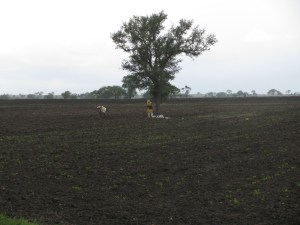
Landscape: fields of North Karnataka (Photo: Shyam G Menon)

Landscape: fields of North Karnataka (Photo: Shyam G Menon)

End October 2013.

At a concert organized by the Mumbai-based Khayal Trust, Pandit Venkateshkumar took the stage. A Hindustani classical vocalist, he was assertive, subtle, strong and delicate, the discerning use of these abilities making his interpretation of compositions, engaging. I can’t identify raagas; I simply like or dislike music – any music – as aural experience. In the outdoors, I have tracked rivers – from relatively calm flow in the foothills to turbulent upstream and almost inaudible trickle at source – noticing how their character changes. Venkateshkumar’s singing had something of that. He seemed to be singing from a bigger understanding of subject and not merely indulgence in the specific; it wasn’t a section of the river amplified ignoring the whole, it was the whole. On stage, neither was his support crew behaving like sycophants unto him nor was he synthetic in his encouragement of them. A singular chemistry prevailed – chemistry by music. No drama, no playing to the galleries – the proof of the pudding was my brain, soothed to peace; a connection to its home – the universe – made.

This was the second time I heard Venkateshkumar and the first time I was inside the auditorium when he sang.  The previous occasion had been a well attended modest sized gathering in the Mumbai suburb of Chembur. The venue, mere hall and no sophisticated auditorium, was filled to capacity. Chairs outside had also been taken. People stood patiently; listening as attentively as they would, had they been on a seat within. I joined them. Why should anything else matter if the music is good?

The first time I met Venkateshkumar was before I heard him sing.

It was 2011.

Along with good friend Latha Venkatraman, a journalist who has learnt classical music for many years, I was exploring a story in northern Karnataka, way south of Mumbai.    

On January 24, 2011, Pandit Bhimsen Joshi passed away.

With that India lost its most famous voice.

His was a mad, rough edged-reaching out; different from other contenders to be India’s voice and certainly quite apart from that other tradition of Indian classical music – Carnatic. I like to let go (it is also what I find most challenging and what I do the least). In contrast, Carnatic seemed perfect and deliberate, a sort of antidote to madness. Bhimsen Joshi hailed from Gadag, next door to Hubli-Dharwad in North Karnataka. Born there, he was bitten by the music bug, travelled through India in search of a guru and was finally directed to Sawai Gandharva in nearby Kundgol itself. The rest is legend amply conveyed by the great man’s music. What intrigued me was Hubli-Dharwad. Music lovers there sometimes called the place a LOC (Line of Actual Control) between Hindustani music and Carnatic. Yet within Hindustani classical, it is unique for not only being the southern outpost of the tradition but also, a reclusive, defiant, academically inclined ambience that cares more for dedication and purity than the market.
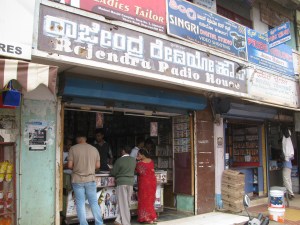
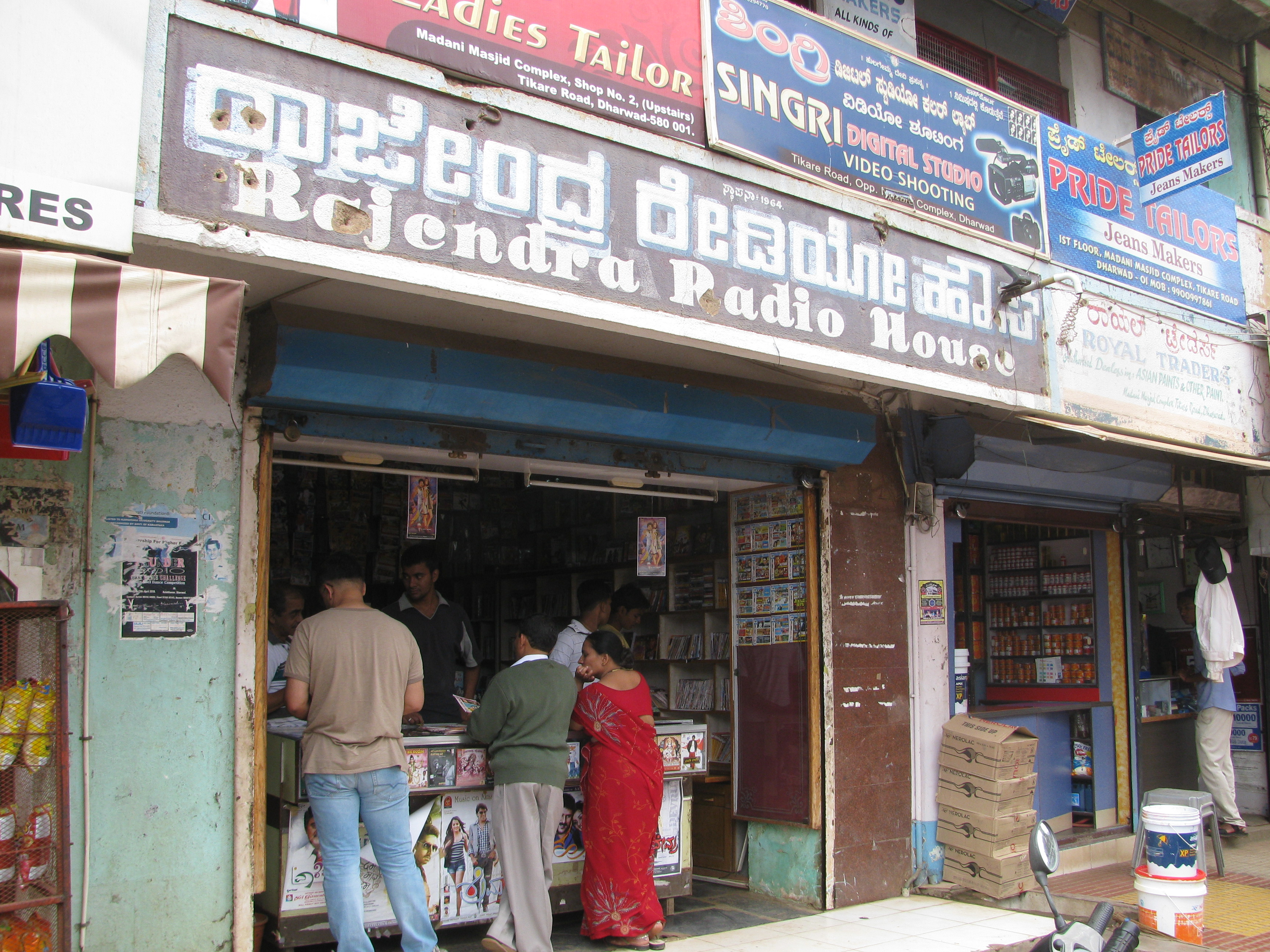
Rajendra Radio House, Dharwad (Photo: Shyam G Menon)

Rajendra Radio House, Dharwad (Photo: Shyam G Menon)

Geographically the region bridges that portion of Karnataka which is home to the wet, green hills of the Western Ghats and the start of the Deccan plateau with its imposing flatness. To one side, in the rainy season, the lush vegetation is so pronounced that it contrasts crops like cotton and chilli, typically associated with frugal water intake, grown on the other side. The Hubli-Dharwad region, once part of the Vijayanagar Empire, was subsequently in the possession of rulers from both Karnataka and   Maharashtra. Until 1955, it was part of Bombay Presidency. Hubli, the commercial hub of North Karnataka, is a major cotton market and centre for a variety of agricultural produce. At the vegetarian restaurant of Ananth Residency hotel, I asked for North Karnataka food. It wasn’t available; recommended instead was “ Veg Rajasthani,’ something possibly evocative of the region’s place in trade. The leading brands of Dharwad pedha were Thakur and Mishra, neither of them surnames indigenous to the area yet now synonymous with pedha. Hubli was also where the typical motifs of Indian urban life were taking hold. There were shopping malls, stores with walls of flashing TV screens, ATMs and hotels. Then another LOC of sorts divided it from Dharwad, 20 kilometres away. The local transport bus took you through a busy road with 40 kilometre-speed limit. Approximately three quarters of this travel done, at Navalur as people would later tell me, the atmosphere changed to charming old world flavour. You entered Dharwad.
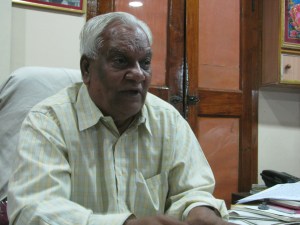
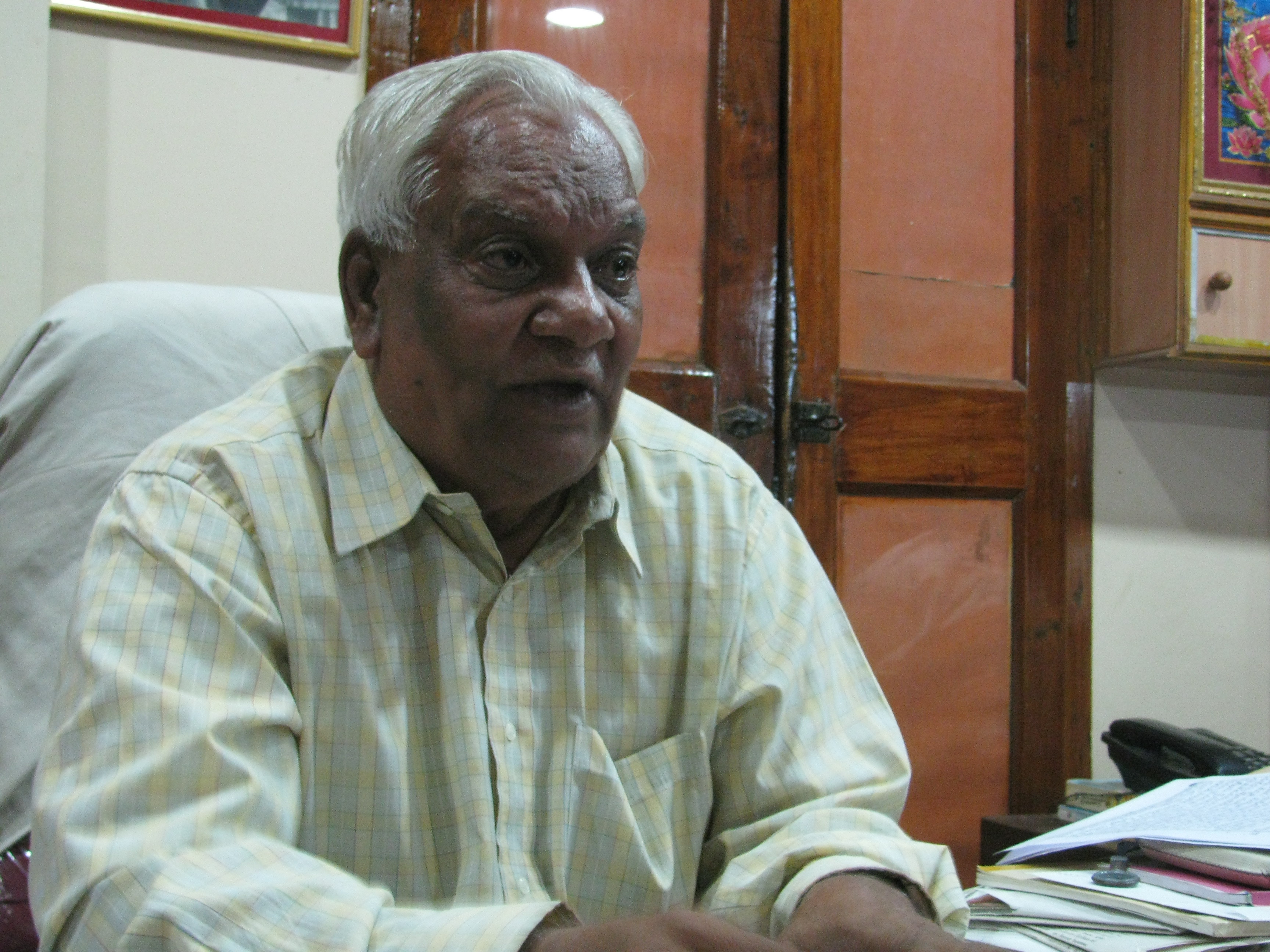
Ramakant Joshi (Photo: Shyam G Menon)

Ramakant Joshi (Photo: Shyam G Menon)

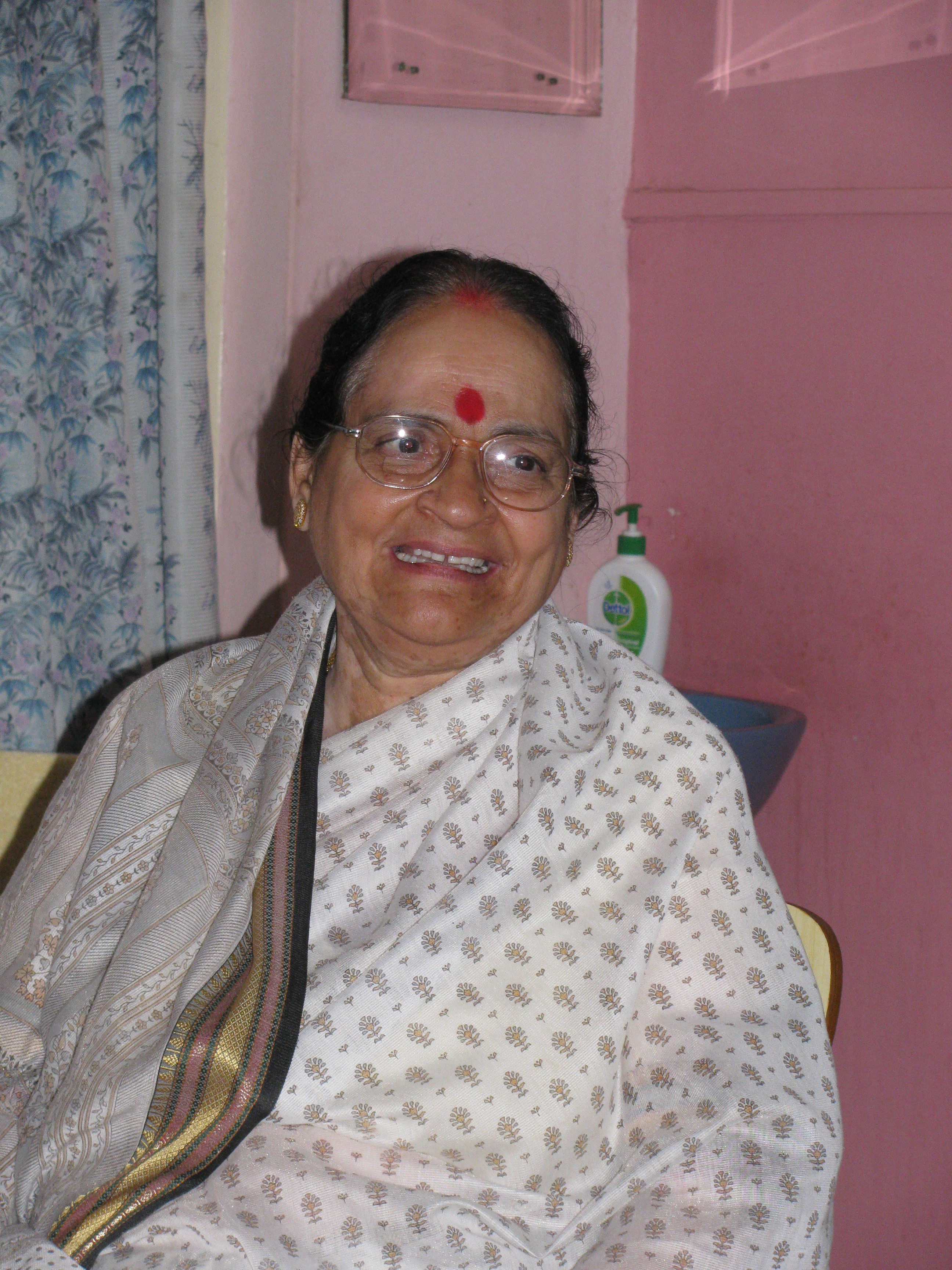
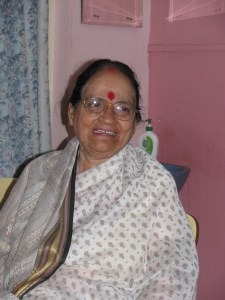
As pronounced as Hubli’s commercialism, was Dharwad’s conservative, academic tenor. Its prominence in history was as an educational hub, the place where people from North Karnataka, Goa and Southern Maharashtra came to study. According to Ramakant Joshi, Editor-Publisher, Manohara Granth Mala, it was Dharwad’s educational backdrop along with an existing culture of theatre and literature that provided a fertile substratum for Hindustani classical music to flourish. The office of this publishing house founded on August 15, 1933 (those days August 15 signified the birthday of Sri Aurobindo) was lined with Kannada books and located in an old room above Subhas Road. Ramakant Joshi is Bhimsen Joshi’s cousin. Unlike in Hubli, in Dharwad, you found shops that hadn’t changed for decades. You bought classical music CDs at Rajendra Radio House, run by Basavaraj V. Kotur, who informed that the shop started in 1964 had been one of the first four music stores in Karnataka. Only two shops from that four remain. There was also relevant change – the Srujana auditorium, where many concerts are held, had been refurbished with help from Nandan Nilekani, former CEO of Infosys and currently chairman, Unique Identification Authority of India (UIDAI). Dharwad looked peaceful, there was plenty of greenery and the people you spoke to had a conservative demeanour but amazed by their quiet erudition on chosen subjects. Here a musician or music lover might confidently tell you that he or she is known in the neighbourhood. As we discovered, that wasn’t always true but it was a measure of how comfortable you could be, pursuing the classical arts in this town. Neela Kodli was easy to talk to. In between she went to the kitchen to make tea. Like many of us she hummed a tune, except it was a classical composition. Neela Kodli is the daughter of Mallikarjun Mansur. A singer in the shadow of a famous father, she was modest about her abilities.
Neela Kodli (Photo: Shyam G Menon)

Neela Kodli (Photo: Shyam G Menon)

There were few concerts in Dharwad that June. It was the rainy season. Otherwise, we were told, you found one or two every week. The vast majority of these concerts were free. “ There is no problem doing an early morning practice session here. In fact, if they don’t hear me practise, my neighbours ask – didn’t you practise today?’’ Vijaykumar Patil, an upcoming Hindustani vocalist said. With so many singers and musicians around, it was possible for a music lover to strike a rapport and sit in on their evening training sessions even if all he had was a love for music. `Kansens’ (those with good ear for music) have always been as important as `Tansens’ in Dharwad. This coupled with resident music gurus and new music schools helped create an audience for Hindustani classical music. In turn, that made performing in Hubli-Dharwad, a prized opportunity for visiting artistes. You knew you were singing to those who knew the subject. Applause here became highly valued. Raghavendra Ayi, Secretary, Sitar Ratna Samiti, provided an example of how Dharwad responded to music. Following Bhimsen Joshi’s demise, it was decided to organize an eight day music programme from February 27 to March 6 that year, in his memory. Many of the performers were young artistes. With expenditure projected to touch two lakh rupees (Rs 200,000), the organizers made an appeal for contributions. The amount thus collected exceeded a lakh, most of it donated by individual music lovers. “ To survive, any art requires janaashraya. The days of rajaashraya are over,’’ he said. (Jana in Indian languages refers to people; Raja refers to king and Aashraya means dependence or in the context of art, patronage.)

The Vijayanagar Empire had a strong role in the evolution of South India’s Carnatic music. The famous composer Purandara Dasa was born in modern Shivamoga district and spent his final years at Hampi, next door to the Hubli-Dharwad region. His compositions are sung by Hindustani classical vocalists. One version has it that Swami Haridas, teacher of Tansen, was a disciple of Purandara Dasa. Thus music was always around in these parts. Hubli-Dharwad’s ascent in Hindustani classical music happened with the decline of the Mughal Empire up north. As the empire weakened, the singing tradition of its court moved first to princely states in North India. Then as British influence gained in those princely states, the drift to the south started. Abdul Karim Khan was a famous singer of the Kirana Gharana, one of the schools of singing within Hindustani classical music. He was court singer in Baroda state. On his way to the court of the Mysore kings, who were patrons of classical music, he regularly halted in Hubli-Dharwad. In his book `Karnataka’s Hindustani Musicians,’ author Sadanand Kanavalli has particularly noted the role of the Mysore king, Krishnaraj Wodeyar IV. Mysore continues to this day as a major centre for Carnatic music. It was that less known intermediate halt en route, Hubli-Dharwad, which developed into the southern outpost of Hindustani classical music. Through the years music researchers have wondered what worked to Hubli-Dharwad’s favour. In a November 2009 issue of `Sangeet Natak,’ a newsletter from the Sangeet Natak Akademi, Tejaswini Niranjana, outlining her proposed research into these questions noted that some of  “ the common and (uncommonsensical) answers’’ included Abdul Karim Khan’s visits, the pleasant weather in Dharwad, the large number of Maharashtrians there who were music patrons, the influence of  Marathi culture in the form of Marathi plays having Hindustani music with Kannada plays subsequently derived from them and even the chillies and spicy food of North Karnataka that cleared the throat. “ The answers are inadequate even on their own terms. If Abdul Karim Khan’s final destination was Mysore and he went there frequently, why did he not teach disciples there?’’ she asked.
Nadgir family house, Kundgol (Photo: Shyam G Menon)

Nadgir family house, Kundgol (Photo: Shyam G Menon)

Among the most important institutions that patronised Hindustani classical music was an old house at Kundgol, once part of the princely state of Jamkhandi. Not far from Hubli, Kundgol and several other surrounding villages used to be under the control of the land-owning Nadgir family, who were patrons of music. Abdul Karim Khan visited here. More importantly for North Karnataka’s music, Abdul Karim Khan’s most famous student Ramachandra aka Rambhau Kundgolkar was born in Kundgol. Later called Sawai Gandharva, he had a pivotal role in the history of North Karnataka’s Hindustani music. His life was entwined with the Nadgir family. He taught music at the old house; this was where Bhimsen Joshi and Gangubai Hangal learnt. We met Babasaheb Nadgir and his son, Arjun Nadgir, who live there. Every year since 1952, the family has been organizing a music festival currently
Babasaheb Nadgir and Arjun Nadgir (Photo: Shyam G Menon)

Babasaheb Nadgir and Arjun Nadgir (Photo: Shyam G Menon)

called the Nanasaheb Nadgir Smrithi Sangeeth Utsav. Hundreds of people turn up to hear this 24 hour-performance, which lasts through the night. The house is as it used to be, so much so that an entire audience crammed onto its many floors to hear the concert has triggered worries of the 400 year-old building collapsing. The architecture is typically old fashioned featuring a courtyard within. The musicians practise in an inner chamber and then perform on stage inside the house, adjacent to the courtyard and below a bust of Sawai Gandharva. It is tradition kept alive purely through family initiative and at considerable cost. The Nadgir family and a few close friends spent up to one and a half lakh rupees (that was the figure when I visited); they didn’t seek donations. Arjun was working on proper institutional shape for the funding so that it self-sustained. The family had dreams of starting a music school. Kundgol also had another music festival in Sawai Gandharva’s memory.  Several noted Hindustani classical artistes – Bhimsen Joshi, Basavaraja Rajguru, Gangubai Hangal, Kumar Gandharva, Mallikarjun Mansur, Pandit Jasraj, Prabha Atre, Feroz Dastur, Puttaraj Gawai – they have all performed at Nadgir Wada. For many who go to sing there, the very act of performing in a house where legends lived is overwhelming. The artistes are paid for travel cost; they get nothing else. “ The ambience is special,’’ Jayateerth Mevundi, a prominent vocalist from the younger generation, said.  
Jayateerth Mevundi (Photo: Shyam G Menon)

Jayateerth Mevundi (Photo: Shyam G Menon)

Given Abdul Karim Khan as the historical prompter for Hindustani music’s arrival in Hubli-Dharwad, the region became the southern home of the Kirana Gharana, a style with origins in Uttar Pradesh. But you also find in Hubli-Dharwad other styles like the Jaipur Gharana and the Gwalior Gharana. They co-exist. From Abdul Karim Khan down, we hear of several important names. Broadly speaking, they can be divided into two categories – the legendary performers from Hubli-Dharwad and the great teachers like Sawai Gandharva. For a tradition of music to grow you need both these categories. As you ask around, you realize that great performers were not necessarily great teachers just as great teachers were not necessarily great performers. The great performers were five – Gangubai Hangal, Bhimsen Joshi, Mallikarjun Mansur, Kumar Gandharva (he was born near Belgaum and later moved to Madhya Pradesh) and Basavaraj Rajguru. Of them, one – Gangubai Hangal – was a phenomenon. Her influence exceeded the world of music. In Hubli, we just had to ask for the late singer’s house and the autorickshaw driver knew where to go. Her house had become part museum. Gangubai Hangal had to overcome many social challenges to become the renowned singer she was. In later years, she did not hesitate to be a social activist for causes she believed in. It was exceptional in that, it took a classical vocalist out from the conventional image of exclusivity and singing for patrons, to being one with the masses. Consequently if anyone from the legendary five has become close to an institution in Hubli-Dharwad, it ought to be Gangubai Hangal. There was however one problem. With Bhimsen Joshi’s demise, the last of those five greats passed away. Further, except for Basavaraj Rajguru, none of the others were credited with robust teaching.  They left behind few disciples. That’s why Hubli-Dharwad was suddenly important for anyone interested in Hindustani classical music, like me. The phase of the legends was over. Will the region continue to maintain its strong position in musical tradition?
Veereshwar Punyashram, Gadag (Photo: Shyam G Menon)

Veereshwar Punyashram, Gadag (Photo: Shyam G Menon)

The Veereshwar Punyashram in Gadag appeared a blend of religion, community and music; an official brochure informed that the presiding pontiff was seen by devotees as “ a walking God on the Earth.’’ Looking past its prime when I was there in 2011, this institution was founded by Panchaxari Gawai, a blind prodigy in classical music. Over the years, the ashram accepted many poor, often visually and physically challenged children and trained them in classical music. Basavaraj Rajguru was Panchaxari Gawai’s student. Following Panchaxari Gawai’s death in 1944, Puttaraj Gawai took charge. He became blind through treatment for an eye problem in his childhood but later amazed as vocalist and musician.
Venkateshkumar (Photo: Shyam G Menon)

Venkateshkumar (Photo: Shyam G Menon)

Venkateshkumar – he teaches at a music college in Dharwad and is acknowledged to be among the finest Hindustani vocalists today – was Putturaj Gawai’s student. Born in Lakshmipur village near Bellary, Venkateshkumar was thirteen years old when he was brought to the ashram in 1968. He studied there for eleven years, maintaining a rigorous training schedule and learning 25-30 raagas from his guru. Even after Venkateshkumar left the ashram his interaction with his guru continued till Puttaraj Gawai was ninety years old. Puttaraj Gawai died in 2010. In 2011, across the school and the college on its premises, there were nearly 800 students.       
Kalkeri Sangeet Vidyalaya (Photo: Shyam G Menon)

Kalkeri Sangeet Vidyalaya (Photo: Shyam G Menon)

Following their studies, some students of the ashram had become teachers at the Kalkeri Sangeet Vidyalaya. Begun by Agathe and Mathieu Fortier, a Canadian couple who liked India and its tradition of Hindustani classical music, the school was located almost an hour away from Dharwad in geography that was the exact opposite of the Gadag-Kundgol belt. Here the land was hilly with red earth muddied by heavy rains and densely vegetated to the point of seeming forest. The school was in the woods, a collection of eco-friendly structures with 185 students and 43 full time staff. According to Adam Woodward, Director, the admission process tried to ensure that only the neediest students got through. The students paid no fees. They did a mix of music, dance and formal studies. Many of the children we met spoke Hindi and English (at any given time the school has about a dozen
Students singing at the Kalkeri Sangeet Vidyalaya (Photo: Shyam G Menon)

Students singing at the Kalkeri Sangeet Vidyalaya (Photo: Shyam G Menon)

volunteers from overseas), something useful to link training in classical art forms to the outside world. Its present location was second stop for the school. Previously it was at a leased farm in Kalkeri. The owner wanted to sell the property. Seeing its good work, the local village authorities granted it the current land. With time and growth, this had become inadequate and the school was looking for bigger, more permanent premises in the region. The Kalkeri Sangeet Vidyalaya is part of a unique organizational structure authored by its founders. Mathieu and his brother Blaise set up Young Musicians of the World (YMW) in Canada. Every year, as of 2011, it managed two fund raising concerts abroad to collect funds for the school in Kalkeri. This aside, the objective was to open similar schools elsewhere in the world; there were ongoing talks in France to start a music school for the Romany gypsies. Another location interesting YMW was, Mali in Africa. The eventual idea was to have music exchange programmes and concerts. To enable this, YMW required the Kalkeri school, indeed any school it started, to slowly become self reliant in funding. Moves were afoot to make this happen.

The third institution we saw was expected to formally start work from July 1, 2011. Named after Gangubai Hangal it was a modern gurukul set up by the Karnataka government on the outskirts of Hubli. It could accommodate 36 students and their teachers. The gurukul pattern finds considerable respect among musicians in Hubli-Dharwad as one of the ingredients separating the performing artiste from the merely trained artiste. As many people pointed out, the music schools and colleges were important to create a learned audience for Hindustani classical. The performing artiste however needed a guru who knew him or her well; understood the student’s abilities, role modelled and confronted them with challenges. It was one-on-one education, an apprenticeship. According to Manoj Hangal, Gangubai Hangal’s grandson, the government announced five crore rupees (Rs 50 million) and five acres of land for the project in 2005. “ All approvals came within three days,’’ he said. Six gurus of different gharanas were each planned to teach six students for 3-4 years. The teachers expected at the gurukul included Prabha Atre and N. Rajam. There would be visiting faculty from other universities. The emphasis was on creating performing artistes; that meant a student cannot enrol for any other academic programme. Total government expense for the impressive campus had touched eight crore rupees (Rs 80 million) and there would be recurrent expenditure of Rs 15 lakhs (Rs 1.5 million) to maintain it. “ We want public access to the gurukul,’’ Manoj Hangal said pointing out how that only fit in with the reputation and legacy of Gangubai Hangal in Hubli-Dharwad. 
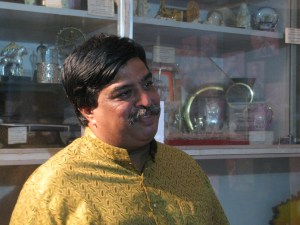
Manoj Hangal (Photo: Shyam G Menon)

Manoj Hangal (Photo: Shyam G Menon)

So would these training schools, music colleges and the large number of students, ensure that Hubli-Dharwad continued to generate fantastic performing artistes?

Between talent and recognition lay the market.

Hubli-Dharwad is an intriguing symbiosis of dedicated training away from market forces and giants born from that discipline who became icons in the far away markets of Mumbai, Kolkata and Delhi. With Bhimsen Joshi’s demise, the days of those legends had seemingly ended. There was a robust new generation in Hubli-Dharwad. “ I am confident we will be able to fill the vacuum,’’ Kaivalya Kumar Gurav, an established vocalist and teacher, said. But for many others, with so much of change authored by not just music, the market loomed in the distance like an inorganic entity speaking a different language. If you looked back to the previous three generations or so of Hindustani classical performers, each generation had found the proverbial wind beneath the wings in factors ranging from royal patronage to the ascent of radio and recorded music. The first now belongs to a bygone era; the latter two are now past their prime. What survives is the impact of all this on the market – better awareness of classical music with the masses and support of music by the `classes.’ Opportunities are available. Question is – who gets them in these years of survival through smartness? Does smartness constitute music and how smart should Hubli-Dharwad be when its beauty, perhaps uniqueness, is that it has been distant from the market?

One problem you hear is how major public performances have got dominated by the same, few names. Sponsors rule the big concerts in the metros (although Hubli-Dharwad has a tradition of concerts organized by aficionados willing to contribute for the purpose, sponsorship has arrived here too). Big ticket sponsors, seek the maximum bang for their buck and it often means, correspondingly less concern for upcoming talent within the music world. Result – they plonk for the established names, setting in motion a vicious cycle of promoting the same names, even their children. Travelling through Hubli-Dharwad, this new age networking and success by successful networking saddened me because North Karnataka not only produced great musicians in the past but some of them – like Gangubai Hangal –  questioned tradition and confronted the social networks and privileges of their era. The citation for the 1989 Ustad Hafiz Ali Khan Award, given to Gangubai Hangal, began with this sentence, “ you are among the legendary group of women who braved social scorn and ridicule in establishing classical music as a noble profession for women in modern India.’’ Now as we celebrate the age of the social network and as the social network becomes the new tradition, talent has become secondary again. We haven’t changed; we seem to simply reinvent the old. At Gadag, we ran into young Ayyappaiah Halagalimath who learnt classical music at the Veereshwar Punyashram and went on to complete his MA in Music with top honours. A student of Venkateshkumar, he was guest lecturer at the same college where the maestro worked. Like many who studied at the ashram, Ayyappiah hailed from a poor family. He has performed in big cities. But lacking good Hindi and English, he was hemmed in by his inability to tap the social network. That worry was writ large on his face. Between talent and recognition, there is the market; there is that network. It plagues every field and as the network grows in importance, I wonder – are the best in every field necessarily what the commercial network showcases as the best, the most successful? 
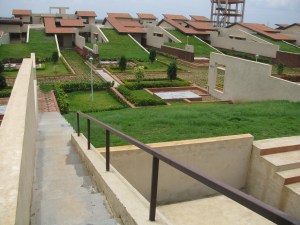
The gurukul named after Gangubai Hangal, in Hubli (Photo: Shyam G Menon)

The gurukul named after Gangubai Hangal, in Hubli (Photo: Shyam G Menon)

A common way of introducing upcoming music talent to the market is by clubbing their performance with that of a big brand musician. So you have that half hour or one hour at start by a mid-level artiste and then a performance by the big brand who the sponsor thinks is the real talent. According to musicians, although intended to help, this practice simply institutionalises upcoming talent as secondary to established names. Because it is presented as upcoming talent requiring a walking stick (the established big musician), it reinforces the paradigm of sponsor deciding talent as opposed to the audience doing the same. Differently put, in the name of the market we may be belittling the intelligence of the audience in the age of janaashraya. Why not let the audience choose? But then how perfect are choices by audience? At stake amidst sponsors and the market compulsions of media formats (like reality TV shows) claiming to represent popular tastes, are entire crafts. “ One of my students topped a reality show. Now all his singing is for the channel. Reality programmes make you a success prematurely,’’ a senior artiste and teacher, said. Arguably, all media – including this blog – is imperfect, to the extent that an article or a photograph or a TV programme is usually a slice of something, never the evolving whole or the whole in the context of everything else. And if, for alternative, you choose to merely stream real life as media, you miss intellect – which is a serious drawback in today’s media filled-world. Reduced by media to voyeurism, abject competition and consumerism, we succeed more and more with lesser and lesser dimensions in the head. We become dumb? I suspect so.
Prof Vasant Karnad (Photo: Shyam G Menon)

Prof Vasant Karnad (Photo: Shyam G Menon)

A point that frequently surfaced in discussions on what shaped the performing artiste was how the legends became what they were despite few raagas taught by their gurus. The rest was dedicated, hard work. Over eight years, Abdul Karim Khan taught Sawai Gandharva just three raagas. His rationale was – if the student understood those three well, he would pick up the rest. Sawai Gandharva taught Bhimsen Joshi three raagas. Nothing happens without personal drive. “ There can be many students but there is only one disciple,’’ Professor Vasant Karnad, well known musician, music critic and teacher, and elder brother of Jnanpith Award winner-Girish Karnad, said. Legends are not born from a market state of anything. How long will it be before the next Gangubai Hangal or Bhimsen Joshi?

Between the two, the next Gangubai Hangal would be a litmus test for Hubli-Dharwad. It was a question nobody could offer convincing explanation for – why haven’t there been great women singers from Hubli-Dharwad other than the legendary Gangubai Hangal? Some cited marriage, family responsibilities et al. At least one school official that we spoke to confirmed that convincing families in villages of the practical use of an education in music was difficult and within that, getting the girl child enrolled was more so. It seemed the other side of conservative society, which by virtue of its conservatism steels an individual’s resolve to pursue his or her talent but also leaves many in the dust. Finally, there was the concern over where the general drift in the world was headed and what that meant for Hubli-Dharwad. “ With the growth of industry, the cultural milieu will fade. Formerly we used to say that food and knowledge should never be bargained or sold. Today, they have become the most important items of business,’’ Ramakant Joshi said.  

I got back to Mumbai. Freelance journalist’s article was published. In August 2011, Professor Vasant Karnad passed away. He had been a delight to talk to during the brief while we met him. We remain grateful for that conversation, the opportunity to meet him. End-October 2013; backstage in Mumbai, Pandit Venkateshkumar recognized us from the old visit (in 2011, we had gone to his house in Dharwad). We exchanged greetings. Established singers, aspiring ones and students of music had already flocked to him after the concert. I am none of that. I identify with his music thanks to what is at once a restlessness and peace, found in the outdoors. It inhabits many fields and I suspect that the word in English which comes closest to describing the condition is – seeking. A mind cast so finds peace in sense of universe.

Music, the outdoors – it is all One.

(The author, Shyam G Menon, is a freelance journalist based in Mumbai. He would like to acknowledge the help provided by Latha Venkatraman, journalist and student of Hindustani classical music, towards writing this article. A portion of this article pertaining to the Kalkeri Sangeet Vidyalaya was published as an independent piece in The Hindu Business Line newspaper. A slightly abridged version of the entire story was published in Man’s World magazine.)  

COFFEE WITH THE BEAST

Illustration: Shyam G Menon

Illustration: Shyam G Menon

Several months ago, we were walking around Matunga in Mumbai when near Madras Cafe and Mysore Cafe we hit a zone filled with the aroma of filter coffee.

I like coffee.                                 

I could have tracked the aroma like a sniffer dog to the origin.

Imagine a man sniffing so and finding his way straight into a cafe, onto a chair, maybe all the way into the kitchen, into the coffee section and right next to the person making coffee. The person turns around and finds a face close to him that is all nostrils flared to smell and eyes shut contemplating visions inspired by the aroma! Startled – depending on his nerves, that may be an understatement of likely reaction. Like many good things in life monetized by man to beyond reach, coffee too is increasingly the stuff of world apart. Tracking coffee’s aroma could mean invitation to puncture your purse handsomely. These days, memories of my airport nightmares with coffee intervene and discipline the olfactory excitement. A cup of coffee costs over a hundred bucks at the airport. For no good reason save long held perception of air travel as sign of success – that’s the tragedy. Bigger tragedy is that there are people willing to, often craving to, indulge such imagery.

The aroma of coffee at Matunga first reminded me of the tricky airport. Then, it provoked anticipation of fancy coffee shop packed with youngsters enjoying more pocket money than I earned as income. We called it new India. Time to look away – I told myself. That was when I saw a board on the pavement saying `kaappi,’ which was how coffee was called in South India, where the brew had traditionally been popular. “ Hold on,’’ my senses ordered, checking the airport imagery. Board said ` kaappi’ not `cappuccino.’ It felt encouraging. This was probably an entrepreneur yet untouched by new India or someone defiantly opposing it, a revolutionary of the old order still fighting for the cause of affordable `kaappi.’ I went closer; a smaller sign within the shop said: introductory offer – filter coffee for ten rupees.

Red flag in the face of the airport bull!

I dove in.

My friend followed.

The shop was just a few days old. We settled into our chairs, appreciated the ten rupee-coffee and took in that outpost of a rapidly fading world. In my head a revolution bloomed. From that shop a movement for cheap coffee shall roll out onto the streets of Matunga, spread across Mumbai, shame those vendors at the airport and eventually warm a whole world. There was something fundamentally wrong in pricing the basic things of life so high and then calling it economic growth. I asked the young entrepreneur how much he would sell the coffee for, once the introductory phase got over. “ Maybe fifty?’’ he mused. I nearly spilled my filter coffee. Then I reasoned – revolution in new era would be different, pricier. Besides, fifty was better than hundred. In the preceding months, inflation having routed India’s ten and twenty rupee-currency notes had begun gnawing away hungrily at the edges of fifty, sending shivers down the spine of a hundred. Fifty rupees seemed okay although it made you wonder how expensive life until then would seem if viewed at current cost. Years ago at home in Kerala, I would ask for coffee or tea and it just appeared; no questions asked. Thousands of rupees had gone into keeping me alive. My parents must have struggled. Given our new consumerist ways, millions were probably going into keeping a new generation alive. The same way I never thought of all this when growing up, I am sure today’s youngsters don’t think of all this.

The aroma of coffee at Matunga first reminded me of the tricky airport. Then, it provoked anticipation of fancy coffee shop packed with youngsters enjoying more pocket money than I earned as income. We called it new India.

I resumed sipping the brew.

The shop was tiny.

If I walked six paces I would hit the wall.

“ Can’t you price a big cup for fifty and retain a smaller cup for ten, even twenty?’’ my friend asked.

“ That’s possible. But we have to pay forty thousand as rent here,’’ the young man said. I am recalling that figure from memory. Take it as near about.

My revolution died.

A populace roaring “kaappi, kaappi’’ was replaced by a muffled `kaappi’ lost amid roars of `cappuccino,’ `espresso,’ `Ethiopian,’ `Columbian’ and imported what not. The idea of `kaappi’ won’t lend itself it to ridiculous pricing to cover costs. The idea of fancy coffees will. That’s why they proliferate, even if it meant drinking the unfamiliar and saying: wow! I knew that everywhere in India, the beast of real estate lurked nearby. But still – for the sake of that young man, I felt like telling the beast, “ come on man give us a break!’’ I felt ashamed of the legacy of my generation; even that of my parents’ generation.  No matter what the reason, what legacy is it to have the beast shaping every step of the way? In India real estate was an absolutely cynical equation constantly benefiting from the country’s immense population. Packaged as great investment, it is essentially the cynical endorsement of a fundamental truth you need no brains to gauge. With so many standing on it, land automatically turned precious in India.  A roof above your head became a race with one’s purse, the needs of others and the speculation and avarice of more others who saw it as opportunistic investment. These trends shaped imagination and an Indian life had become the stuff of living by such opportunistic imagination. You could almost say – to be born, was to immediately abet opportunism for you represented a new set of wants in what was already a casino of wants. What legacy is it to suck the world clean of enjoyable life leaving mercantilism behind? Like residue on a kitchen sieve, a boring mercantile mentality would be the residue of our times should somebody sieve our existence.

I felt sorry for the young man. He wanted to serve us coffee. We wanted it too. It was such a simple thing. But all of us – customer and service provider – seemed alive in the wrong time for simplicity. The young man looked trifle uncertain as my friend quizzed him of plans ahead. “ Maybe I will sell fruits alongside. No; idli, vada and upma, some cookies too. I have a kitchen,’’ he said pointing to what seemed no more than a small stone slab fixed to the side wall. He had forty thousand to pay every month; plus raw material cost, labour cost and then, hopes of own income. It was a tall order. He smiled as he spoke. We smiled encouragingly.

Before we left, we wished him luck. 

I felt sorry for the young man. He wanted to serve us coffee. We wanted it too. It was such a simple thing. But all of us – customer and service provider – seemed alive in the wrong time for simplicity.

I wondered what the beast sipped – coffee; tea, cocoa, hot chocolate? If it had shape, I would have hit it with whatever I had – my bag, umbrella, whatever. But I knew that the beast would only be amused. It would turn around and ask, “ why hit me when self flagellation is what you need to do?’’ Outside the small shop, we melted into the evening’s whirlpool of people and traffic at King’s Circle. It resembled the swirls in a giant cup of frothy brew, stirred with spoon for someone to drink. I could imagine the beast readying for its invigorating, daily sip of crowded, congested us. We were its affordable ` kaappi.’ Thanks to us, its ways seemed guaranteed.

A week ago, I walked by the same place in Matunga.

Neither young man nor coffee shop was around.

(The author, Shyam G Menon, is a freelance journalist based in Mumbai. A smaller version of this article was published in The Hindu Business Line newspaper.)
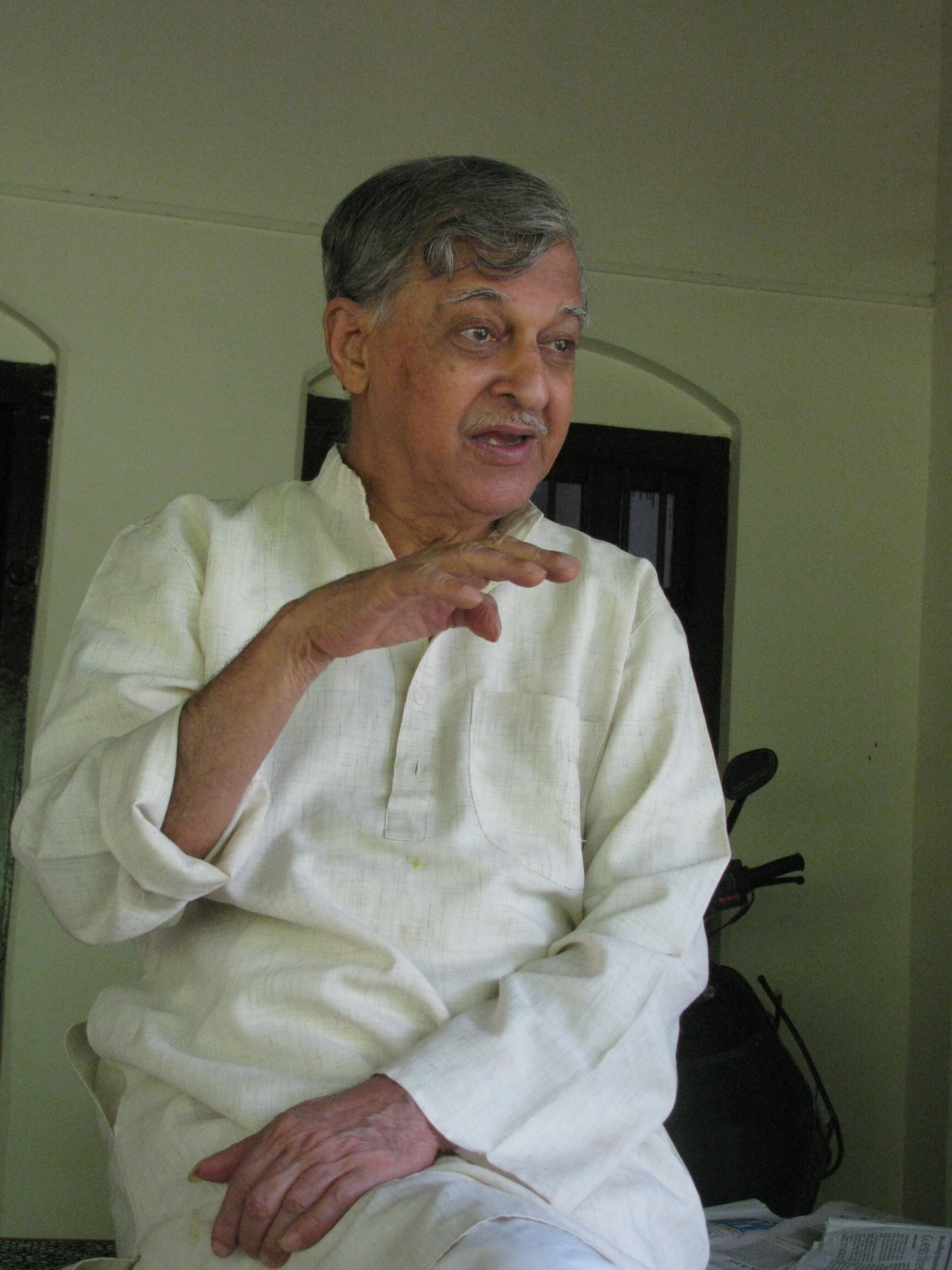
TWO TRAINS

Illustration: Shyam G Menon

Illustration: Shyam G Menon

The express train was soon cruising.

About twenty minutes out of Howrah, the pretty young woman on the seat opposite me exchanged her assigned berth with the middle aged housewife gazing disinterestedly at the world outside. Right upper berth gained, she hauled herself up to its privacy. The housewife on the left lower berth put on a sick expression; the sort that requires no hospitalization, merely attention, a little fussing over. Her husband, a businessman bound for Bhiwandi, rubbed his sleepy eyes and worked the cell phone. The morning sunshine on the side lower berth – the short one parallel to the aisle, if you know the anatomy of a typical Indian railway coach – bothered him. It was settled quickly. There was an exchange of berths with a less tired middle aged man, owner of the right lower berth in the main coupe. Within the air conditioned compartment, the latter immediately spread out railway bed sheets to mark his new acquisition warmed by sunshine. He sat on the compact berth with his back to the aisle, cross legged, staring at the passing landscape like a trader in his shop awaiting customers. I wondered what he would sell; sunshine perhaps? Bottled sunshine to cure the world’s problems; a shop laden with shiny glass bottles flashing by in an express train. All this – exchange of berth and setting up shop – happened in five minutes.

The Bhiwandi bound-husband was now seated next to me.

He gave me pleading looks.

“ Which is your berth?’’ he eventually asked.

“ I suppose you want to sleep,’’ I said, trifle annoyed at this rapid collapse of people around me.

He nodded like a neglected child.

The wife, probably angry with him and his cell phone, had already gone to sleep, blanket over her head.

I knew it was my turn to move.

I was on the Duronto Express; non-stop from Howrah in Eastern India to Mumbai on the west coast, save a technical halt at Bilaspur in the country’s middle. The train had just been introduced. It was fast by Indian standards but certainly not so by standards elsewhere. The Indian Railways meant a lot in India. It was one of the world’s biggest railway networks with portions – like the Mumbai suburban system – ranking among the busiest worldwide. The Railways meant so much that they struggled to keep pace with the demands India’s huge population heaped on it. Right now as I edit this piece, relentless inflation, unstable oil prices, the depreciation of the Indian rupee leading to costlier imports – all have conspired to make road and air travel expensive for the average Indian. Under such circumstances, the country counts on its government owned-railways to guarantee affordable transport. It may be over two decades since economic liberalization started and we may be now trillion dollar economy. But if you want to meet India, you still have to take a train. On busy routes, tickets are usually hard to find unless you book early. Speed can’t be a priority on overcrowded rails. What could be done instead and which the Railways do despite protests, is reduce halts en route for semblance of super fast and express travel. My Duronto Express was unique for its single halt, that too, technical. The train was painted in strange fashion; its facade sported illustrations of meadows, forests and trees as though a child had sketched it. At that time, if I recall right, it was the only Duronto in the country. Now there are several.

It may be over two decades since economic liberalization started and we may be now trillion dollar economy. But if you want to meet India, you still have to take a train.

Non-stop rail travel made the experience a bit like an intercontinental flight minus pretty air hostesses and luxury. You felt trapped in a long, air conditioned tube of an ecosystem. Half an hour from Howrah, with me now on the left upper berth, our coupe settled into the pattern it would hold till Mumbai next day. I read the biography of Slovenian mountaineer Tomaz Humar till my eyes ached; then I listened to rock music till my ears throbbed, after which I tested my left leg to see how long it could bear the cold blast from the overhead AC duct. With people genuinely asleep or lazing around on the lower berths, tea, breakfast and lunch – everything was had sitting in C-shape on the upper berth. Bored, I looked towards the pretty young woman who had occupied the right upper berth. She was busy talking on her cell phone. I began praying that the instrument would conk off forcing her to seek conversation elsewhere. She was the only one around doing anything more than eating, sleeping, eating and sleeping, even if the difference was endless whispered nothings to her boyfriend over that phone

My mind drifted to the Kamrup Express. Two weeks earlier, life aboard that train had been as different as alive from comatose.

I had the lower berth on the left. Seated opposite was an elderly trader headed for Guwahati. In half an hour he found devoted following in a young man from the same community, employed with an engineering firm. An extended family tree was discussed; shared branches located. They conversed like two cozy birds on the same branch dipping into that tradition of centuries of unchanged sunrise and sunset. Somehow Indian conversations – especially those tinged by mercantilism – drift to endorsing unchanged society. I suspect money likes to keep everything else the same so that it multiplies undisturbed. That’s why, if you sit in on it, conversation among traders can seem depressingly mono-cropped. It’s shaped to single dimension. Knowing the state of my purse, I end up feeling that I have no future. Not that other Indians make it any easier; money is obsession everywhere here. The compartment’s aisle stayed busy with soldiers visiting coupes hosting friends. It was probably their last socializing before dispersal to far flung military camps. The army had a strong presence in North East India. The lone person from the air force sat tracking the stations to his halt; it was his first time in Assam. A cell phone blared Malayalam film songs from the next coupe, while not far off Tamil held forth. The Marwari engineer sat reading a book called Making Breakthrough Innovation Happen by Porus Munshi. It fetched a strange visitor from the next coupe. Taking charge of the book the man said, “ I am a Lieutenant Colonel in the army. Promoted out of turn; all my batch mates are still major.’’ I remember that introduction for its utter strangeness. Later, he kept calling up people – I suspect from the conversation, they told him to spare them the trouble. Past midnight, he was still getting ticked off, offering a quick, “ okay, ta-ta, bye-bye, good night, sweet dreams, ‘’ to every person slamming the phone down. The last time I saw him, he was sitting alone on the coach attendant’s seat near the wash basin, cell phone in hand, train’s rhythm on rail for company.

Illustration: Shyam G Menon

Illustration: Shyam G Menon

Early next morning from New Jalpaiguri onward, the train became a bazaar. It was an invasion of vendors. My favorite was a man selling popcorn, peanuts, roasted green peas and a whole lot of similar eatables. His signature call was, “ ta-ta-time, pa-pa-pass.’’ Put together that became `time pass,’ the Indian solution to tackle many things in daily life – from delays caused by gargantuan bureaucracy  and the queues of huge population to a moment of restless standstill in cities of constant rush. He also had soft items for “ old men with no teeth,’’ crunchy ones for the young and peanuts, sold as catalyst for conversation between lovers. The sales pitch in the latter attracted questions. “ Nowadays people overlook peanuts and talk on the cell phone. With phones you need towers and signals to talk to your lover, peanuts need none of that, ‘’ the vendor explained before moving off to another chant of, “ Ta-ta-time, pa-pa-pass.’’ What amazed was the array of goods sold by these vendors – there were pen drives, flash lights, film rolls, mobile chargers, mobile batteries, cameras, watches, track suits, massagers, foot pumps, flasks, jackets, hand held sewing machines, DVDs, carpets. China had changed even vendors on trains; their talk was now peppered with megabyte, cyber, digital, MP3, I-Pod and like. Some of the vendors were dexterous; the gamcha vendor was a heap of clothes on two legs, as was the carpet seller. The soldier from the upper berth, traveling to Dimapur, struck a deal with the young engineer to buy DVDs. Using the engineer’s laptop, they scanned disc after disc for good, pirated prints till it drew loud protests from the vendors. “ You are scanning all my discs and buying only one. I would have sold ten by now,’’ a vendor remarked as a coupe-load of people helped the soldier bargain down DVD price from Rs 60 to Rs 20. Half way through the exercise, the engineer, mindful of new found uncle nearby, reduced his involvement to pure technical assistance with no say in film selection. Curious, I thumbed through the soldier’s selection. It ranged from 3 Idiots and Avatar to Emmanuelle and riskier beyond. Uncle looked stoically into the distance. The engineer buried his nose in his book.

The train was now two and a half hours late and politely making way for every other train to pass us by. Occasionally, when we had the benefit of a platform nearby, we got off to stretch our legs. “ That’s the Amritsar train, that’s the Rajdhani express,’’ the ticket inspector would clarify oblivious of our self-arrest. He was like a railway historian giving us a guided tour of the why, how and several other qualities of a journey disrupted. Standing so, on the platform at Barpeta Road, I saw a man wearing a T-shirt that said, “ Japan-US at war, 104 die in Hawaii raid, McArthur in Australia.’’ It appeared topical for the only region in India to have experienced real fighting in World War II. The Battle of Imphal and the Battle of Kohima were major turning points. As the crow flies, Imphal and Kohima were not hugely distant from where I was although actual travel along hill roads meant distances in the North East were often deceptive. The T-shirt also appeared topical, given the purpose of my trip to Assam and from there to Arunachal Pradesh to write about the Stilwell Road. The train crawled on. A harried coach attendant arrived muttering, “ people give me thousand rupee-notes and demand a bottle of water. What am I to do?’’ The matter was giving him a headache. As if to soothe his headache, the China connection made itself heard once again; a blind vendor produced three different sized-vials of “ China Vicks.’’ Meanwhile, the upper berth bearing the DVD obsessed-soldier, emitted kung fu shouts, bomb blasts, machine gun fire and full throated passion. The laptop stayed up there with the soldier through the day; the engineer sat reconciled to Porus Munshi. At night, our coupe converted into a cinema theater, laptop on the small folding table with soldiers from nearby coupes converged there to watch 3 Idiots. Film over, a bizarre incident occurred. A passenger woke up from deep slumber inquiring why he was on the train. Co-passengers comforted him and hushed him back to sleep. Morning brought mist, winter chill and Tinsukhia. As with several stations before from Barpeta Road to Guwahati, I got off the train to `set foot’ on a platform I may not see again. It was my little conquest-of-Everest act. It was also perhaps a measure of my meek character for the truth was I was still in India. Yet these were parts I hadn’t been to before. Indeed one of the things I discovered as I grew up was how little I knew of anything in India; I didn’t even know my neighborhood well. In the desperate Indian life, we reach other countries before we discover the places we were born in. In middle age, I was doing what I should have done earlier. After Tinsukhia, we moved on tracks bordering a road beside tea estates, to Dibrugarh. I remember looking at those tea estates on vast, relatively flat ground and wondering how different they seemed from Kerala’s tea estates situated on hillsides. Somewhere out there, not far, lurked the architect of Assam’s geography – the mighty Brahmaputra; a river wide enough in parts to seem a small sea.

As with several stations before from Barpeta Road to Guwahati, I got off the train to `set foot’ on a platform I may not see again. It was my little conquest-of-Everest act. It was also perhaps a measure of my meek character for the truth was I was still in India.

Luckily for me, the young woman on the Duronto Express was as bored as I was. She was moving to Mumbai on work. Conversation served well to distract her from the approaching huge city she had transited through before but had never wanted to live in. Now she was going to live there. She seemed happy to talk. I missed that vendor on the Kamrup Express. He could probably teach a marketing lesson or two to the Railways on the real USP of the non-stop Duronto Express.

Introduce peanuts for a start?

(The author, Shyam G. Menon, is a freelance journalist based in Mumbai. A smaller version of this article was published in The Hindu Business Line newspaper.)