THE STORY IN A MESSAGE

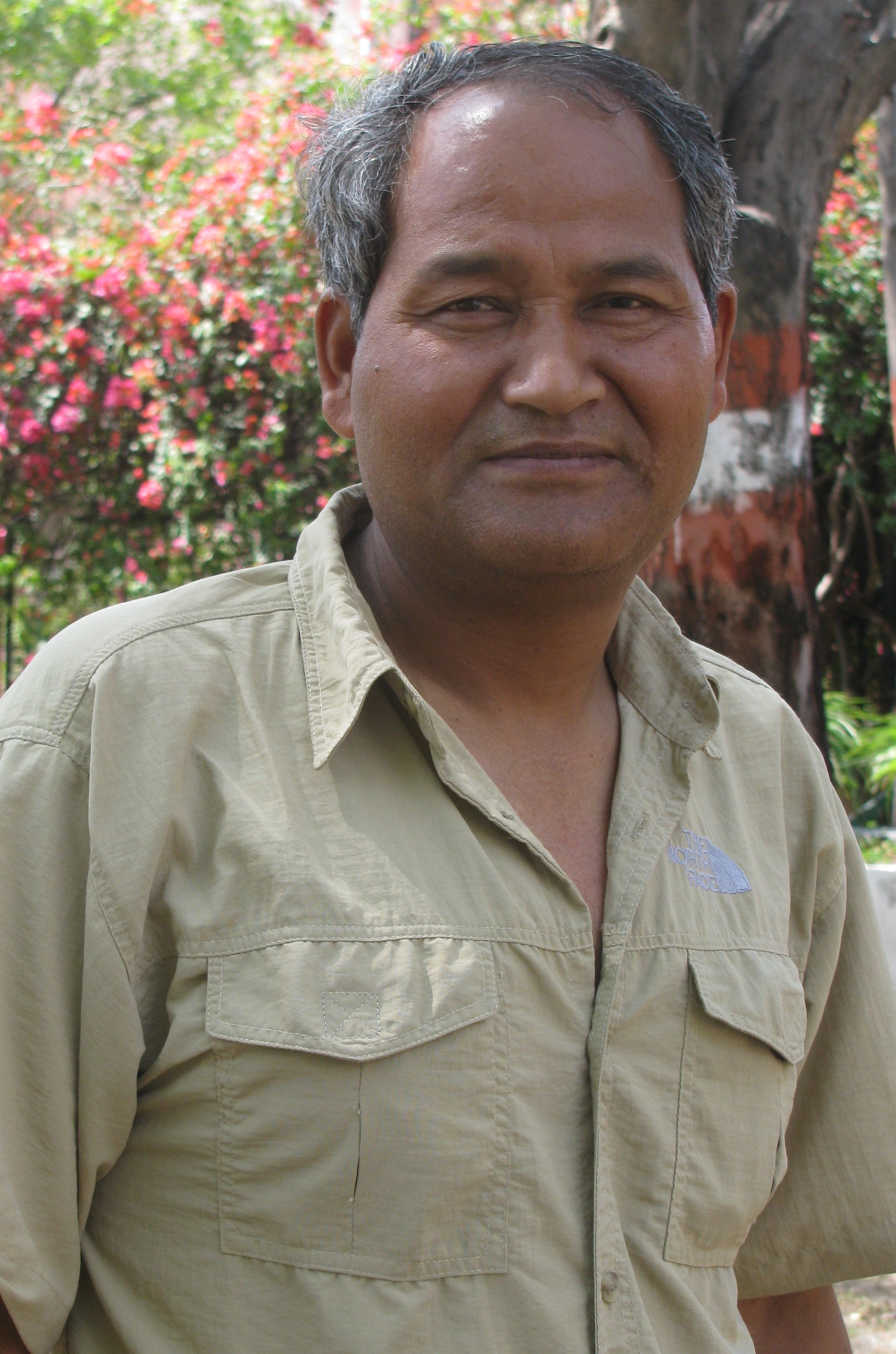
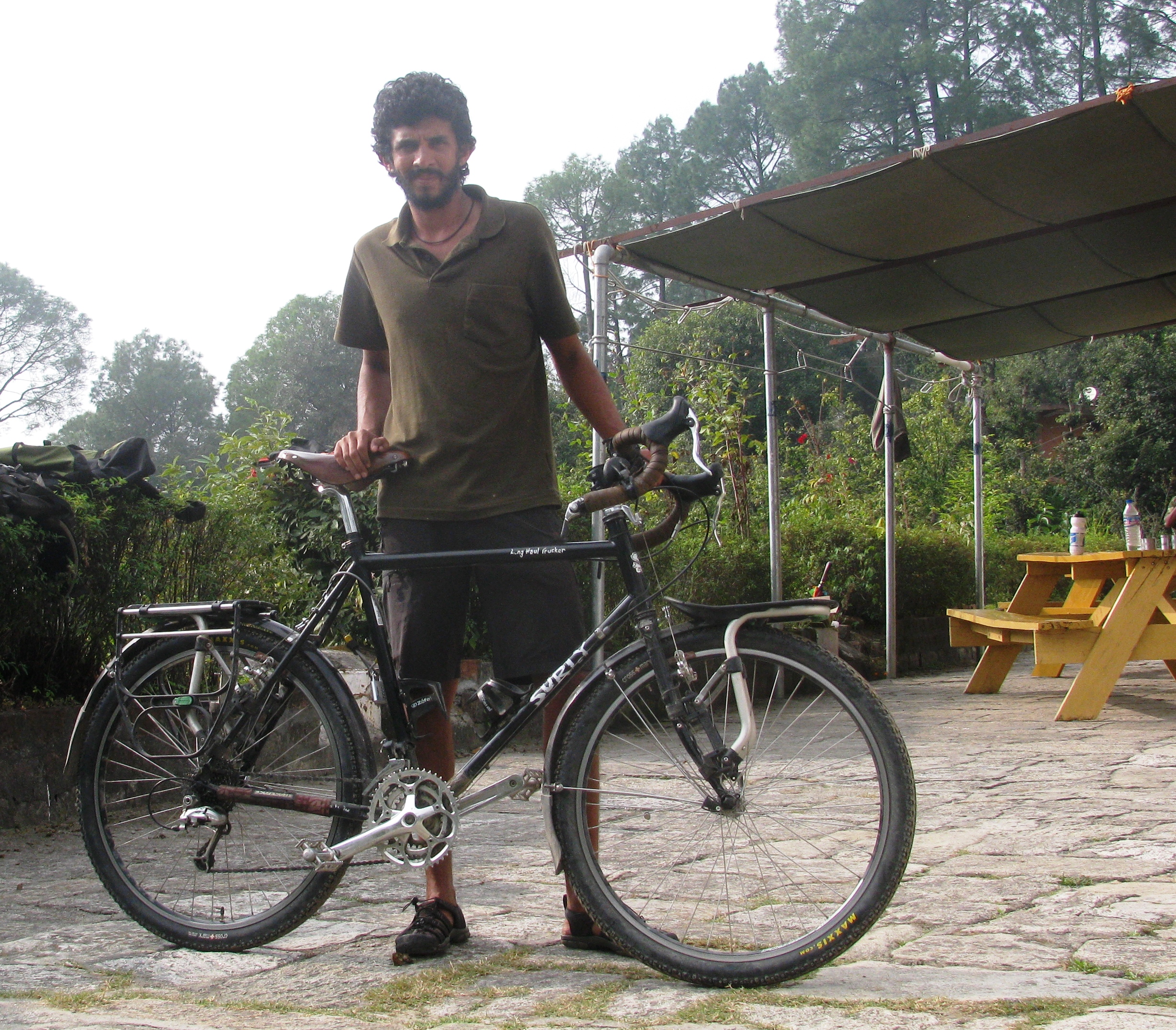
Ganesh Nayak with his bicycle at the NOLS India base in Ranikhet (Photo: Shyam G Menon)

Ganesh Nayak with his bicycle at the NOLS India base in Ranikhet (Photo: Shyam G Menon)

Late November 2014, my mail to Ganesh Nayak elicited the same automated message that had originally prompted this story.

A day later, he replied:

I just got back from a mind blowing trip to Muktinath (Annapurna). WOW! It blew my mind! The Himalaya here is so different from what I have been used to in India. The pine forests and snow are so close here. As I made my way towards Muktinath, the environment was very similar to Leh but there was plenty of water from all the icecaps, making human habitation possible. Ladakh in comparison had been sparsely populated. However, both have a charm of their own.

I did some initial research before heading in and knowing that there was a ton of cheap teahouses on the way, I went in with a very light weight-setup. I was as light as a cloud and just floated up to 3700m (Muktinath) from 820m (Pokhara). There is no way I am going back to loaded touring after this.

I am right now in Thamel and I am heading out in a bit to try and sell as much of my gear as it is possible for me to do. That should add some weight to my depleting kitty. My bike is in need of servicing and I am getting one done today.

Anyways, after leaving Ranikhet, it was tough going for a bit. I had been surrounded by people for a while and suddenly I found myself riding alone. That was a bit difficult. But once I entered the Terai of Nepal, I was again surrounded by people all the time. There are as many bicycles there as people and I had people riding by my side throughout the day – from school girls to army men to granddads and grandmas.

I am heading back to India after this. I didn’t have a plan as such until a couple of days ago. On a book shelf in Pokhara, I came across Anne Mustoe’s ` Two Wheels in the Dust.’ I am currently reading this book and will probably base my route back to Manipal on this.

Earlier this year, when Ganesh Nayak applied for the fall season Wilderness First Responder (WFR) course at the India branch of the National Outdoor Leadership School (NOLS http://www.nols.edu/), the office immediately got a sense of person and predicament.

Applications typically entailed a few more instances of correspondence between NOLS India and the applicant, ironing out details. In Ganesh’s case, Ravi Kumar, Director, NOLS India recalled, the office was treated to an automated message informing that he was out on a long trip and would respond as and when he could. In the world of adventure and personal discovery, which is what NOLS is, the required flexibility is extended; not to mention – the erratic correspondence kindles curiosity for the story behind the message.

The story reached Ranikhet, in time for the WFR, on a Surly bicycle. It was the classic touring model with black steel frame, Brooks saddle, pannier racks up front and behind, gears and that generally solid appearance designed to crunch months and miles. Ganesh was riding in from Mussoorie.

It was almost two months since he had begun his odyssey – a cycle trip along the Himalaya.

What made the story particularly engaging for this author, an Instructor-In-Training (IIT) just back at NOLS India from a long hike with the fall semester course and discovering a Surly on the premises were Ganesh’s demeanor and his journey to a dream he never thought existed in his head.

Some years ago, Ganesh, now 32, was at a low point in life. Born and brought up in Manipal in southern India, the electronics engineer had taken to drinking and was generally adrift. He knew he had got it all wrong but getting out of the funk required a road map and such maps don’t visit any of us easily.

Somewhere in that troubled phase, he purchased an ordinary bicycle.

For the next six months, he rode it around; progressively realizing that riding long on a bicycle is what he wanted to do.

What happened next may seem mad but Ganesh talked of it in an utterly composed manner.

After much research and study, he bought his first geared bicycle – the Surly. It cost him over 100,000 rupees. That is expensive by Indian standards but it is not a very significant amount in these days of rising salaries in urban India and willingness among young Indians to put money behind their dreams as people in other countries have done for long. Instead, what struck home as really significant was Ganesh’s decisiveness. He felt confident of vaulting straight from six months with a modest, regular bicycle to an iconic make because he concluded that the dream evolving upstairs in his head could settle for nothing less.

Surly it had to be.

After buying the new cycle in Bangalore, Ganesh interned briefly with a city based-cycling outfit, at that time called, Cyclists For Life. He learnt how to repair and maintain his bicycle. Ganesh’s first test with the Surly was a trip of around 250 kilometers in his home state, Karnataka. He started at Manipal; proceeded to Agumbe, a place identified with rain forests and much remembered as a protected sanctuary for the King Cobra, then cycled north from there before turning south towards Kollur and Manipal.

By now feeling ready for his first long trip, he cut lose to earn the needed freedom – he resigned his job. Earlier this year, he began his journey at Srinagar in the North Indian state of Jammu & Kashmir (J&K). Since then he had cycled through J&K (including much time in Ladakh), Himachal Pradesh and parts of Uttarakhand to reach Ranikhet. “ I had heard of the WFR from another cyclist who did it earlier. That’s how I decided to enrol. I also knew that I would bump into more people given to adventure and travel if I attended the course. That was an added attraction,’’ Ganesh said. His batch of students for the WFR turned out to be a diverse mix, drawn from India, Indonesia, Malaysia, USA, UK and Canada.

First aid course done, Ganesh planned to briefly hike in the Gangotri area with some of his course mates, return to Ranikhet and recommence his journey, cycling on to Nepal, Sikkim and Bhutan. While North East India was originally part of his itinerary, Ganesh felt that by the time he completed the current leg of his trip, his resources may be stretched. He may have to return to Manipal to piece together funds for the remaining part of the journey. Reality bites, dreams notwithstanding.

Ganesh’s trip engaged for yet another reason.

His daily cycling route in the Himalaya hadn’t been held to ransom by some iron clad objective to cycle along a fixed route chosen in advance. He wasn’t out to prove anything. There wasn’t a goal beyond question or negotiation. He allowed himself to be led by conversation with local people and developments along the way. Thus, in Ladakh, he and another cyclist from Chennai opted off the regular cycling route and tagged along with an enterprising horseman to do a largely off-road section, lasting several days. Ganesh liked this excursion and other similar ones availed along the way, immensely. This angle made his trip more organic and less of an imposition in search of achievement.

In the process, he discovered differences between the people of the plains and those from the mountains; in particular – glimpses of that fabled simplicity, sincerity and spirit of sharing associated with residents of the Himalaya. “ Even my Hindi has improved,’’ he said, recalling conversations sustained for long and time spent living with local people. Both in the Himalaya and in other places that he cycled through in South India, he had instances of being helped and saved from getting lost by people he met on the way.

As he spoke, one sensed a bit of the magic he had experienced since buying a cycle, months ago in the depths of a funk.

“ I now feel more connected to life,’’ Ganesh said.

That was a couple of months ago.

Several days later, I was in Ranikhet preparing to head out on a trek, when a familiar rider on familiar black touring cycle slowly drifted down the road to Khairna. We exchanged pleasantries. Back from his trip to Gangotri side, returned to saddle and minus his beard and moustache, Ganesh was pedalling off to Nepal. Ahead lay Pokhara, Muktinath and the automated message I got before his eventual update.

(The author, Shyam G Menon, is a freelance journalist based in Mumbai. He also works periodically with NOLS India. A portion of this article without the update in italics had been posted earlier on the Facebook page of NOLS India. )
WHY OUTDOORS?

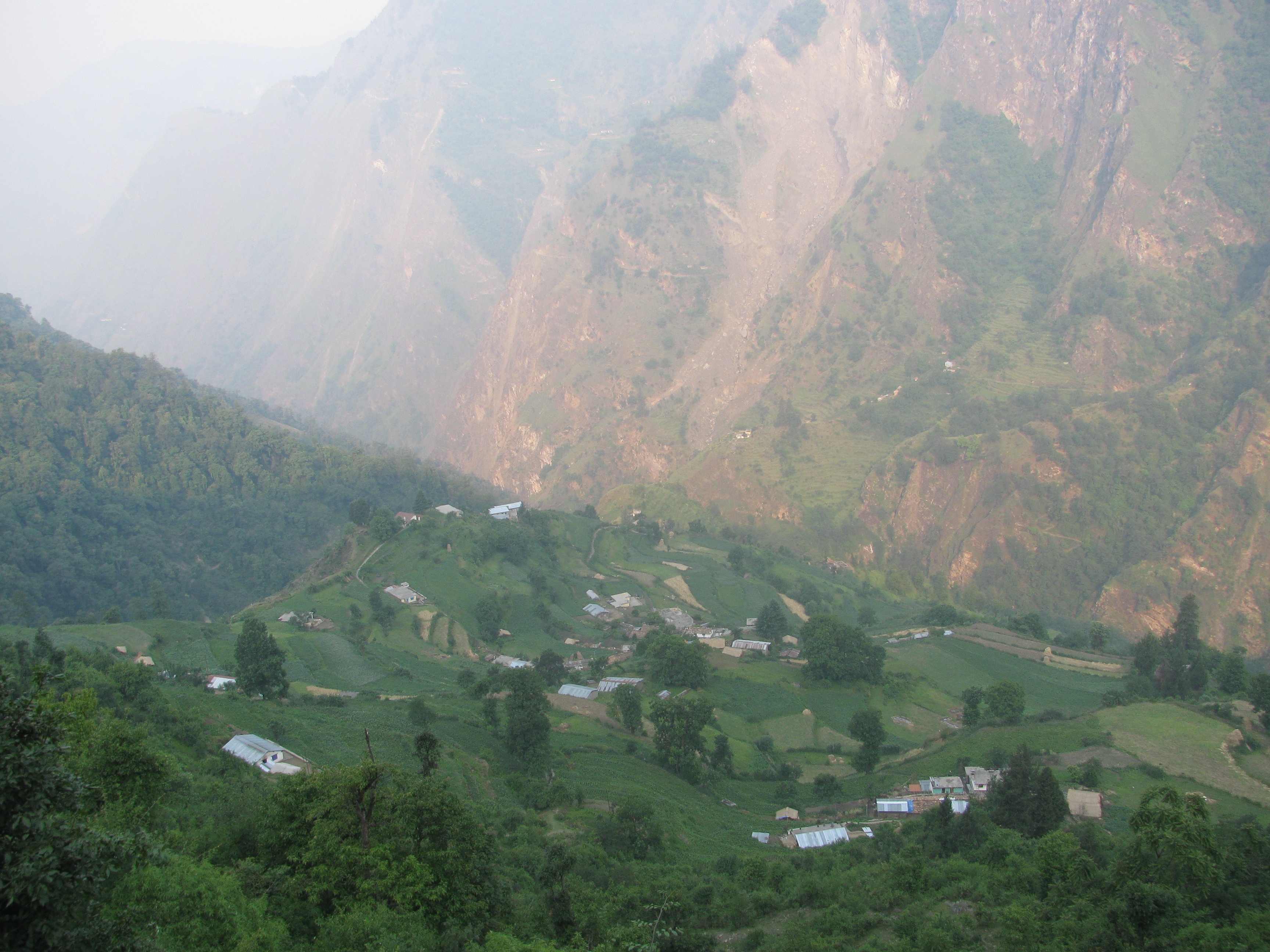
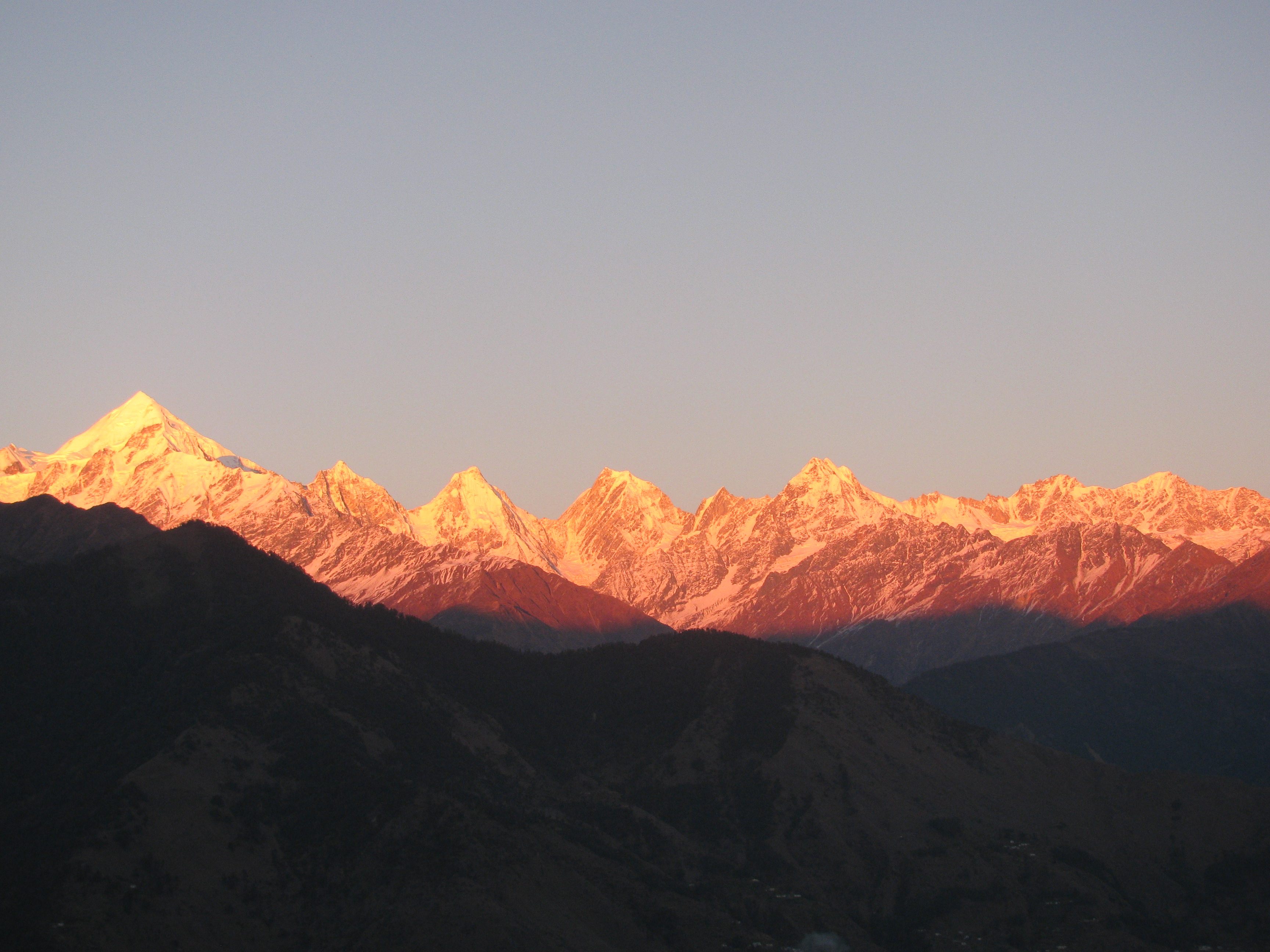
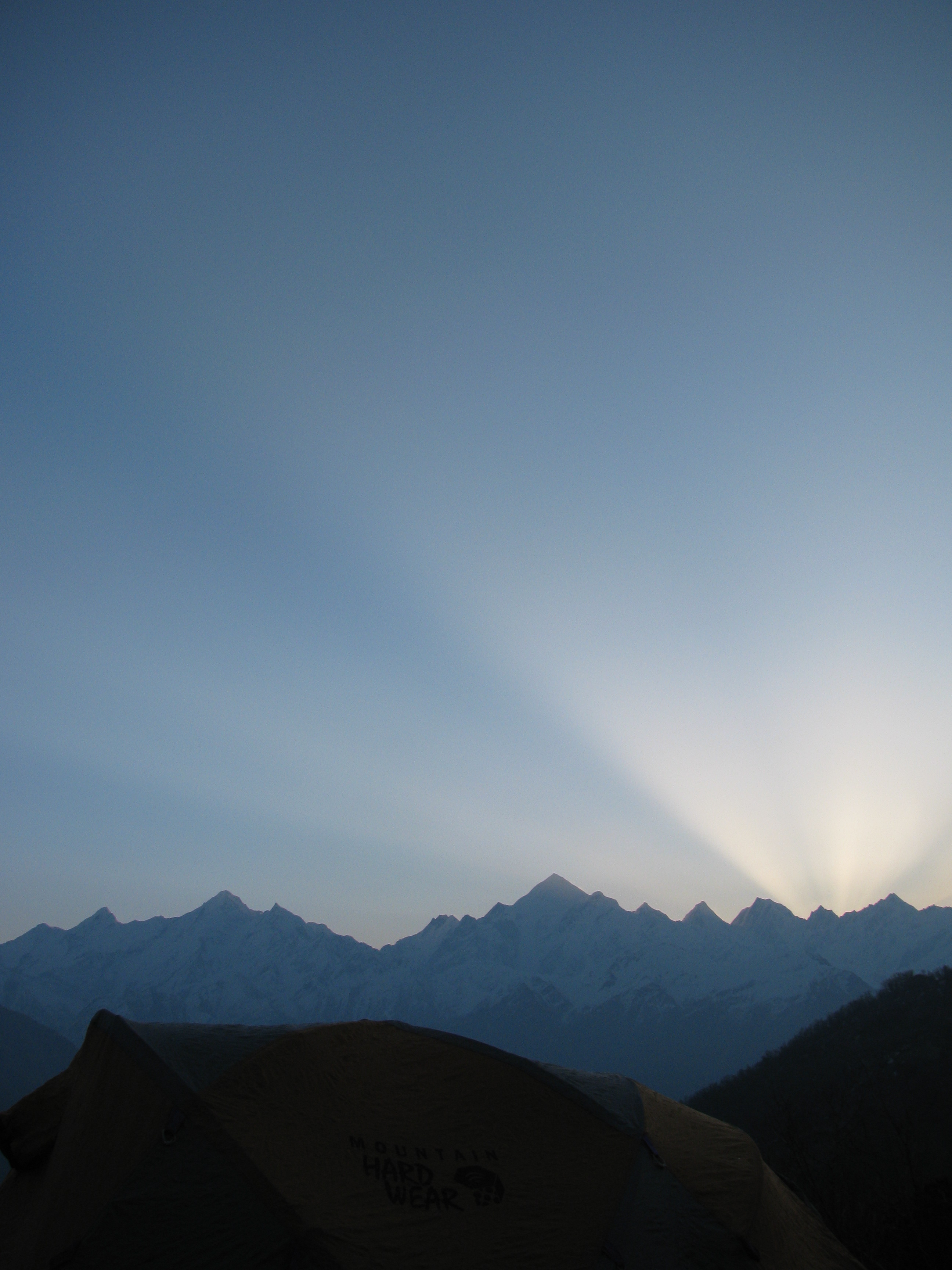
Sunrise; near Munsyari, Kumaon (Photo: Shyam G Menon)

Sunrise; near Munsyari, Kumaon (Photo: Shyam G Menon)

The question launched an expedition in the mind.

Why do I frequent the outdoors?

For a couple of months, the required articulation got bogged down in bad weather. Metaphorically, that is. Then one day, you are gifted with clear skies and off you went for the summit you sought, the high pass you wished to cross or you simply saw the landscape for what it is. The skies cleared the other day as I watched the John Ford classic ` The Man Who Shot Liberty Valance.’

We live in times bombarded by media. The bulk of the movies we see have contexts more complicated than a growing settlement called Shinbone and what happens when a lawyer, a violent outlaw and the only man in town the gunslinger avoided, meet. Even with two of those men fancying the same woman, Ford’s movie was still devoid of clutter. Its clarity appeared enhanced by old world black and white. Film making is an aesthetic. I am not going to refer the dictionary to tell exactly what `aesthetic’ is. I will go with my understanding – it is a balance; an elegant equilibrium.

I remember a day in the Upper Rupin Valley. It was 2008, I think. A friend who was veteran of the outdoors and I, someone yet to fathom his need for the outdoors, were camped there. It was just two of us – two human beings in vast mountainous landscape. A nearby trail brought an occasional villager who paused for conversation and tea. Otherwise, it was just landscape and you.

Years ago, after finishing studies (rather, leaving some of it incomplete) I had left home to make a career. I worked my butt off. Over a decade later, I seemed to be doing well. That was the least expected of you – you had to do well. Nobody asked what you did. But you had to do well. Men disappeared to reappear years later, `doing well,’ prerequisite for next step – being well settled. They sported designation; importance, money and were expected not to have time for anything but career. Women, it seemed, liked their men so. It reinforced the urge to do well. My focus was always on several things. Actually, I lacked focus. But then I also knew that while you can’t have a good photograph without focusing, a photograph isn’t everything the photographer saw. The camera misses more world than it captures. Isn’t that true of human focus and life as well?

In late 2006, I was around sixteen years old as journalist and approximately ten years old as outdoor enthusiast. They were definitely two separate schools of thought and experience. Something snapped in me. I resigned my job and stopped `doing well.’ Two years afterwards, recast as freelance journalist and in the Rupin Valley, I was still a Doubting Thomas. What had I done with my life? I was free of the traditional parameters measuring life. But equally, I felt alone. Well settled and majority are brothers in arms. It was lesson well learnt.

My first day in Rupin Valley was a trial. Although I was already years old in outdoor activity by then, I had been trekking to gain a certain fort or pass, climbing rock to accomplish a certain route or mountaineering to reach a summit (in my case, any easy summit). As in the urban rat race, quest in the outdoors too, was an objective. Without objective, there is no conquest. How can you tell yourself you did well if there is no conquest? Life was a minor detail compared to discussions on route, particular climbing moves, gear specifications etc. It was like going to office.

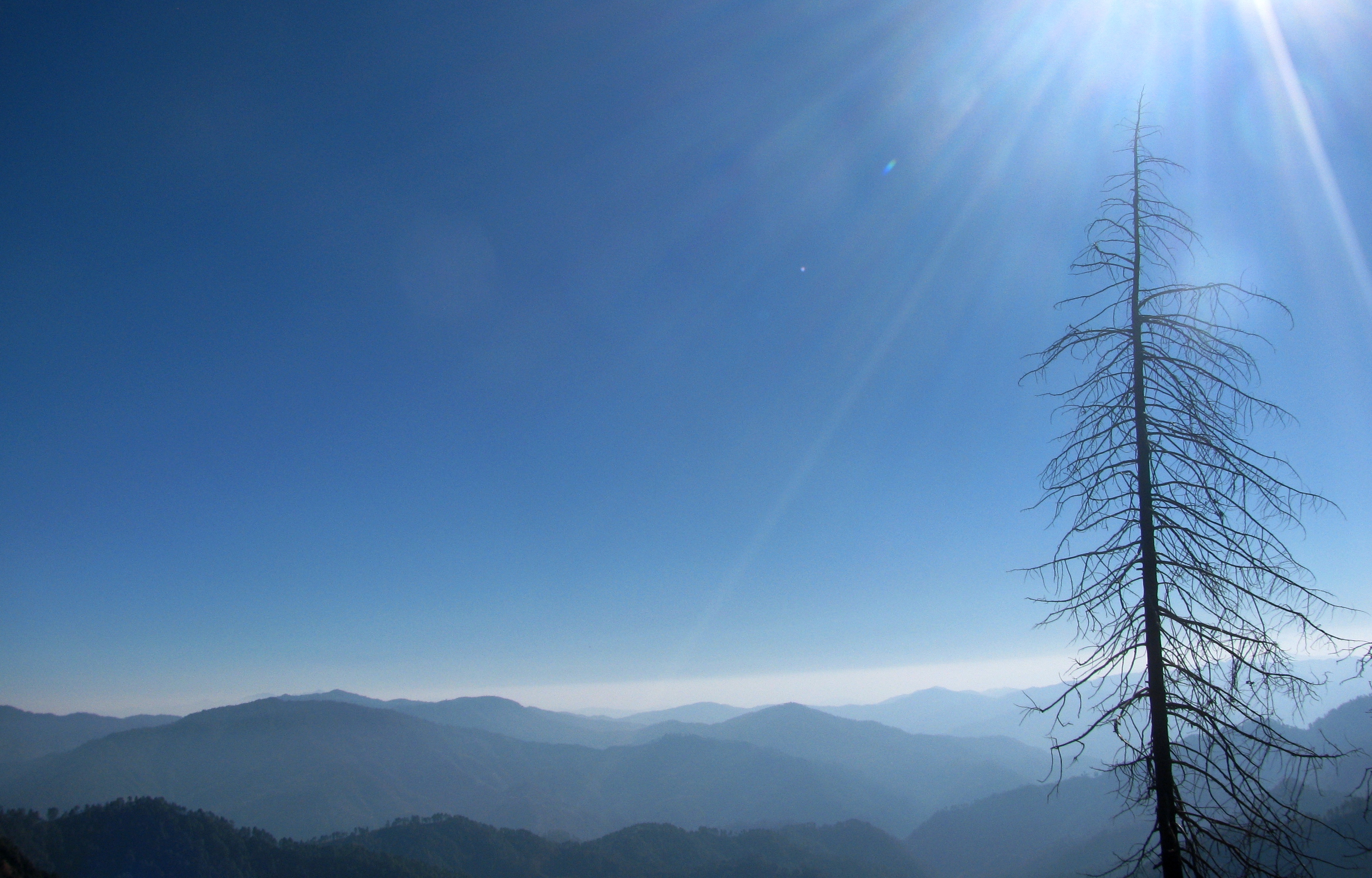
The view from a little used road en route to Lansdowne in Garhwal, part of a 2013 cycle trip-route (Photo: Shyam G Menon)

The view from a little used road on the way to Lansdowne in Garhwal, part of a 2013 cycle trip-route (Photo: Shyam G Menon)

In Rupin Valley, the biggest challenge that confronted my friend and I was to keep a fire going for it was raining. We were short on fuel and therefore needing some assistance from the twigs and driftwood lying around. Much of it was wet. Without fire, there would be no food. Without food there would be no energy and without energy, no Rupin Pass to cross. Each was an objective no doubt but certainly not the sort of objectives that defined the `doing well’- paradigm.

Back home in Kerala, it was common to say that if you didn’t study and turned loser, you could end up running a tea shop or a hotel in the nearby junction. In the Rupin Valley, exactly those talents mattered. A cup of hot tea in cold weather felt good; if you were a good cook, the talent kept you alive. What was all that `doing well’-thing? – I thought. Eventually when I reached Rupin Pass, walking leisurely through high mountains and snowfields with none of the urgency and panic of doing well-world, I was one happy man. I never forget the cup of coffee I had atop that pass. The 2008 trek stripped my life to the uncluttered aesthetics of John Ford’s movie.

A delicate balance characterizes the outdoors. Much before we enter the frame, we see the scene from far. Right from start, what subconsciously drew me to the outdoors was a simple equation – the vastness of space and the limited supply of people in it. It took camping in the Rupin Valley and a genuine feel of the slow life along with it for the sub conscious to speak above the clamour for outdoors as conquest and apartness, which was how the urban rat race preferred it. In the years since Rupin Pass, the outdoor aesthetic, now no more ashamed of being a voice in me, sharpened further. I now have limited fascination for the politics of human clusters; the money and the competition it can’t live without. I am not a fan of giant population and population laundered to seemingly benign interpretations like `market’ and `tomorrow’s workforce.’

I have come to believe that what we call life is a perception by aesthetic. Life needs space, not the over-crowding we have done in India. Life needs space for our thoughts in the mind, not the daily schizophrenia we unleash with too many people breathing down our necks. Life needs to be felt, not overwhelmed by consumerist excess, competition or the struggle to survive as is the case today.

The outdoors is the refuge of a clarity that is not needed if your objective is to win in the rat race.

I like that clarity.

That’s why I frequent the outdoors.

(The author, Shyam G Menon, is a freelance journalist based in Mumbai. This is a slightly altered, longer version of an article originally published in the Economic & Political Weekly.)

JOHAR’S JUNE

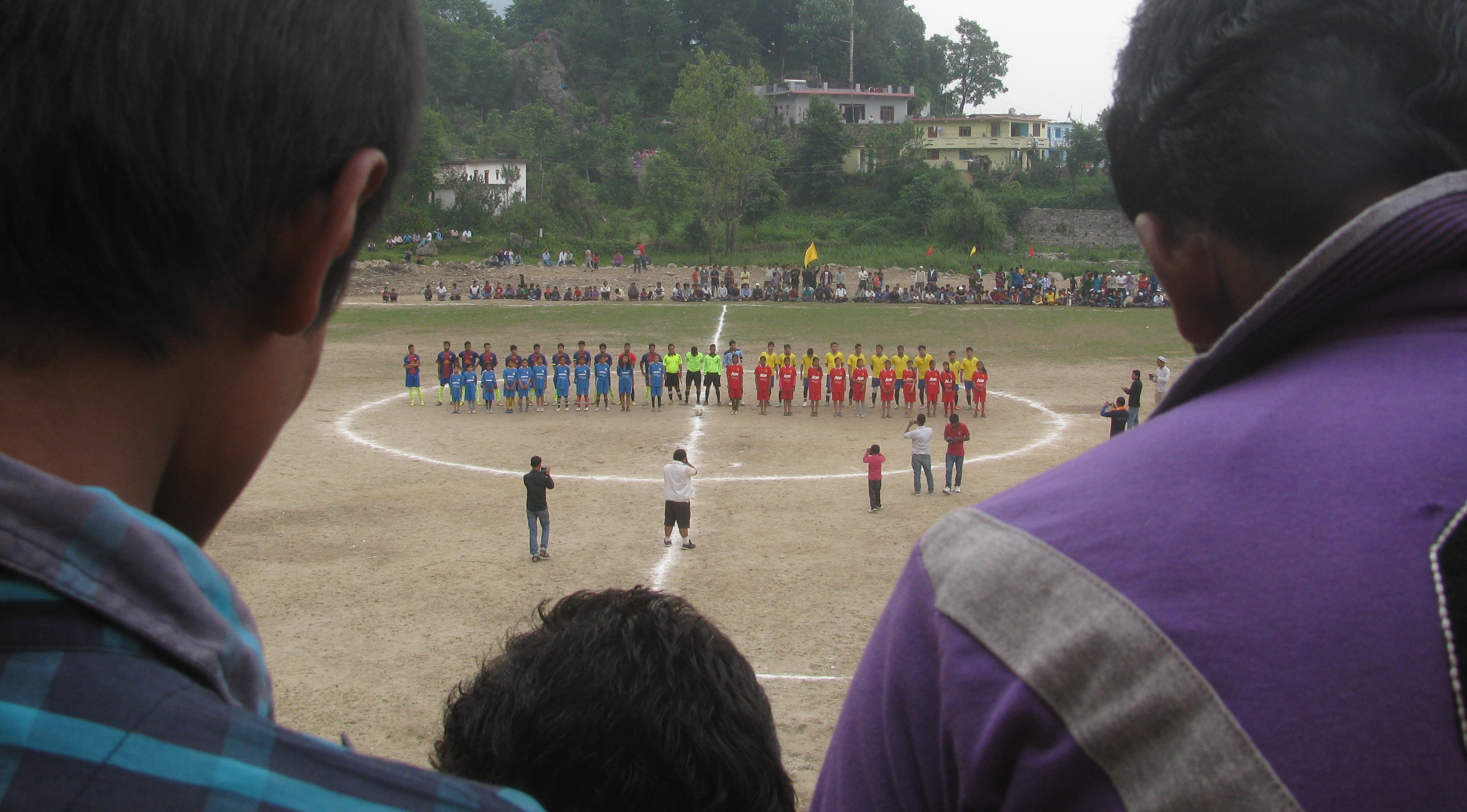
Teams line up before the football final (Photo: Shyam G Menon)

Teams line up before the football final (Photo: Shyam G Menon)

For a fortnight every June, a playground in Munsyari draws crowds of people.

They are residents of Kumaon’s Johar Valley and members of its far flung diaspora. Kumaon is the eastern half of the Indian state of Uttarakhand; Munsyari is in north eastern Kumaon.

June is Johar’s month of annual get together.

The magnet is that playing field.

June 2014, it hosted competitions in various sports. Evenings featured football, coincidentally befitting the times, for as the local competition peaked to final by mid-June, in far away Brazil the 2014 FIFA World Cup got underway. It became Munsyari’s season of football within global season of football.

Munsyari’s football however went beyond the sport.

Over 60 years ago, in 1953, a group of students from the Johar Valley studying in Almora, started the Johar Club. Their idea was to get together, keep the Johar in them alive through sports. Thus was born the tournament. The first sport it featured was volleyball. For the next three years, this annual ritual was hosted in Almora. In 1956, it shifted to Munsyari. It has remained there since.

According to Sriram Singh Dharmshaktu, Secretary, Johar Club, the inaugural tournament in Almora drew half a dozen teams or so. By 1956, this grew to around 20, mostly local; including teams from villages like Darkot, Bunga, Sarmoli, Suring, Dumar and Jalat. The variety of sports also grew to encompass volleyball, football, carom, chess, table tennis, badminton etc. Soon, teams from outside Munsyari started coming; among them – Lucknow, Delhi, Bageshwar, Thal and Didihat. No matter where a team was from, one thing stayed common – its members hailed from the Johar Valley.

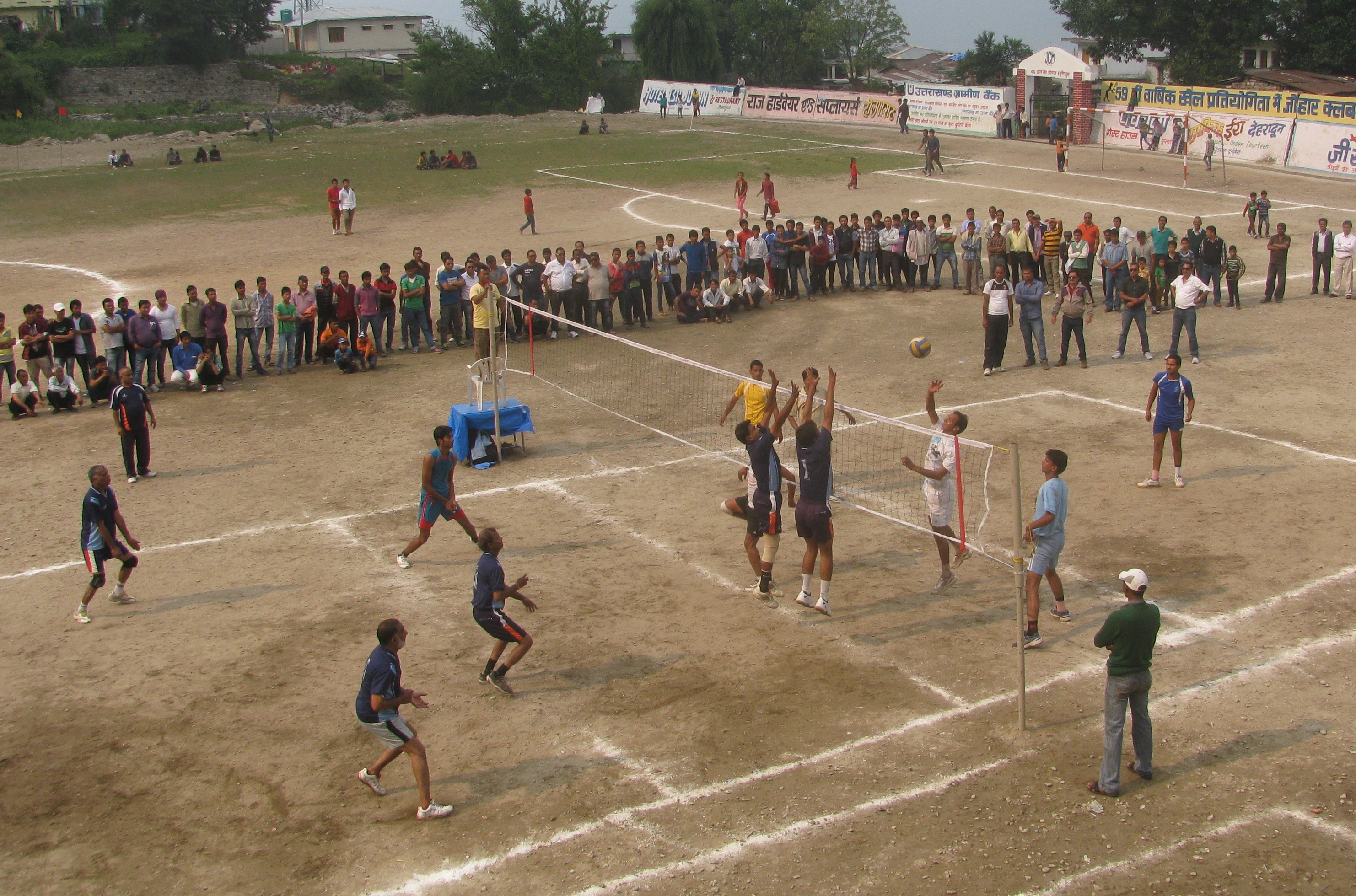
This year (2014), the tournament had 16 senior teams and 15 junior teams, including school teams. For the first time the event also featured girls’ teams with four teams registered to play football. These all girl-outfits were named after well known adventurers – Bachendri Pal, Chandraprabha Aitwal, Sabita Dhapwal and Reena Kaushal Dharmshaktu. Further, in what was probably recognition of the growing popularity of running in India, there was a 15 kilometre-run from Munsyari to Darkot and back. There is no age restriction for senior teams. It was visible for example in the volleyball final, where a mix of youth and age fought an engaging match.

In the Himalaya, cricket is popular. If you are frequent hiker, you would have seen villagers playing the game. A good hit typically travels down several terraced fields or tiered slopes of a hillside. The fielder chases the ball and often disappears from view in the undulating, steep terrain. A powerful throw from below returns the ball to frantic teammates on the pitch. The fielder then climbs back up. In a single game, there would be many players repeating this process many times over. In mountains, big, flat spaces are hard to find. Some villages are lucky. They have a playing field. There are regular inter-village cricket tournaments. Shields and trophies find pride of place in a victorious village; I recall seeing a big shield displayed at a village temple in the western part of Garhwal bordering Himachal Pradesh. I also remember youngsters’ sorrow at a Kumaon village, after the nearby river which flooded in monsoon, washed off a portion of their flat field.

Probably because cricket has its own established circuit, the sport wasn’t part of the Johar Club’s annual tournament. Big ticket sport here was football, followed by volleyball.

Volleyball final in progress (Photo: Shyam G Menon)

Volleyball final in progress (Photo: Shyam G Menon)

Munsyari is small enough for most people to know each other. Well known mountaineer and Padma Shri recipient in 2014, Love Raj Singh Dharmshaktu, hails from Johar. June was his month to be home too. A local hero and chief guest for an evening’s football, he was formally received in town and taken in procession to the stadium. Years ago, Love Raj had been on a team playing football at the same annual event. Ahead of the match, oblivious of the gathered crowd, his little son had fun kicking the football around in the stadium.

On the day of the football final, the two finalist teams walked down the bazaar road to the stadium, with their supporters – one team accompanied by a traditional Kumaoni band, the other by a school band. The small stadium was full of people. Houses nearby had people on balconies and roof tops just as they do for cricket matches in Mumbai. There were people watching from roads uphill and some poised on top of rocks. There was no dearth of flourish either for the final ended in a penalty shoot-out with goal keeper for hero, a trend that would repeat at World Cup matches weeks later. Interestingly, for a long time, the football here couldn’t accommodate teams of 11 players each due to lack of space. In 1970, with help from residents, the playground was enlarged. Team size went up from nine to 11.

Preparations for the annual tournament commence in April-May. People contribute; some financially, others help with the organizing. With so many landing up, it also becomes an occasion to meet friends and relatives. At heart, the tournament is a reunion.

The annual community reunion around sport in Johar, reminded of a similar event elsewhere.

Far to the south, in Coorg (Kodagu), there has been the tradition of an annual field hockey festival. It was started in 1997. In the past, the region has been famous for talented field hockey players and a typical tournament saw people who had played at state, national and international level turn up to represent their families (please visit this link: https://shyamgopan.wordpress.com/2013/08/22/field-hockeys-family-festival/). A difference between Johar and Coorg was – in Johar, team identity spanned roots in Johar for those from the diaspora and participating as visiting teams, to specific villages and institutions (schools for example) in Johar for local teams. Either way, it was link to a place. In Coorg, the idea of roots went deeper to teams arranged under family names.

(The author, Shyam G Menon, is a freelance journalist based in Mumbai. An abridged version of this article was published in The Telegraph newspaper)

A TREK AND A TEA STORY – PART 1

On Ponmudi (Photo: Shyam G Menon)

On Ponmudi (Photo: Shyam G Menon)

This article weaves two narratives – the one in normal text focuses on a trek; the other in italics, talks about tea estates.

It is an old story said in three parts. A lot may have changed since it was first written in 2009. A quick reality check was done through return to context in August 2014, which is appended as `Post Script.’ However, it is a limited update. Readers are requested to keep that in mind.

In the beginning of the nineteenth century, the plantation industry reached Kerala on India’s south western coast.

First in was coffee in Wayanad, the north Kerala district bordering Karnataka. This area used to belong to the erstwhile Madras Presidency. There were three potential sources of manpower for the estates. Of them, the tribal people flatly refused to work on the plantations seeing it as an invasion of their forests. The people from the Malabar region were averse to such work. Imported labor from Tamil Nadu provided the solution.

By 1866 more than 200 coffee estates were operating in Wayanad, two thirds of that owned by Europeans, the rest by investors from the coastal towns. Twenty two years later, news came of blight on the coffee plants in Kerala. It was believed to have arrived from plantations in Sri Lanka; in any case, much of the state’s coffee was destroyed by 1876. Experiments with other crops like cinchona, as replacement for coffee, proved discouraging. Eventually tea moved in; coffee continued to have a presence in Wayanad. Although the British East India Company’s first foray into tea in South India happened in the 1840s, large scale production of tea in Kerala commenced only after the coffee blight. Tea had to be necessarily large scale compared to coffee. As a crop it required regular human intervention. These interventions were affordable only if the scale of cultivation was large. The heart of the state’s tea country then was Peermedu. Later it was the undulating hills of Munnar.

The last major cash crop to reach Kerala and its hills was rubber at the turn of the twentieth century. With this, save the apex portion which was off limit by law, it was theoretically possible to clothe a Kerala hill in estates – rubber at low altitude, coffee at mid altitude and tea at high altitude. One definite casualty of this was the traditional forest aesthetic. From natural and heterogeneous, the idea of greenery became acceptable even if it was manmade and homogenous.

When my cousin Rajeev comes home on vacation from the US, we usually go on a hike. That’s how Agastyakoodam entered the frame.

At Neyyar Dam near Thiruvananthapuram in Kerala I got my first real look at Agastyakoodam peak. The face it presented to Neyyar Dam was beautiful, a perfect triangle. Agastyakoodam had always been there in the backdrop at Thiruvananthapuram, spoken of in hushed tones of respect. To see Agastyakoodam you had to be on the terrace of an ideally located house in the city and have a clear day. Slightly foggy or sky laden with rain clouds – you missed it. For the child in you, that added to the myth. I grew up in Thiruvananthapuram. So the myth was a big deal.

In the late 1980s, I remember listening in awe as a friend who was senior to me, prepared to join the annual pilgrimage up the 6237 ft high-peak. Nobody called it a trek; indeed there was no trekking in popular perception then. You went up a hill for pilgrimage. Then in January 2009, three of us – Rajeev, his nephew Gokul and I – decided to do the Agastyakoodam hike ahead of the annual pilgrimage. Booking the trek through the forest department turned out to be a small expedition. It was a whole day’s trip to Peppara and back; that was where we had to pay the fees and register our names.

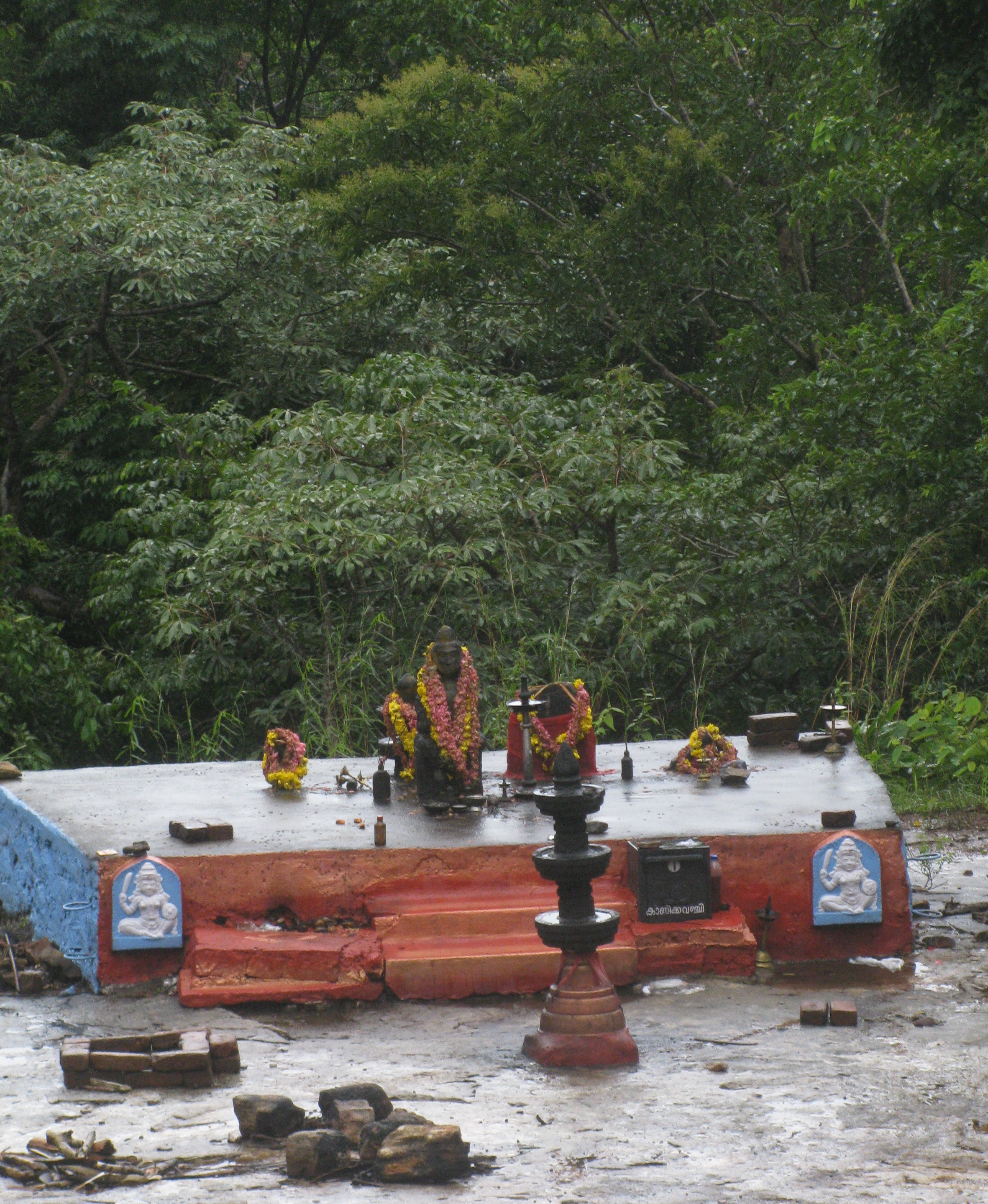
Half way along the narrow forest road to the Peppara Dam and its warden’s office, Shahajad who was driving our hired three-wheeler stopped the vehicle to put some money in a box kept in front of a temple. It was one of the most beautiful sights. Besides the small box and a multi-tiered, soot-stained traditional lamp fixed to the ground, there was nothing to mark a temple there. But the atmosphere was exceptionally divine in a quaint, primeval way. It was set by four to five lovely trees called chempakam in Malayalam. They have a sprawling shape, the trunk acquires a silver color and in full bloom, has dainty white flowers. A week later at the botanical gardens adjacent to the Thiruvananthapuram zoo, I could gather the actual name for the tree – Eezhachempakam, Plumeria rubra Linn also called Temple Tree. In that small clearing filled with white sand, by the road in Peppara, the trees had woven a magnificent aura – if one’s gaze turned heavenward in the temples of the plains, then in the temples of the hills and forests, I felt a sensation of being embraced by nature.

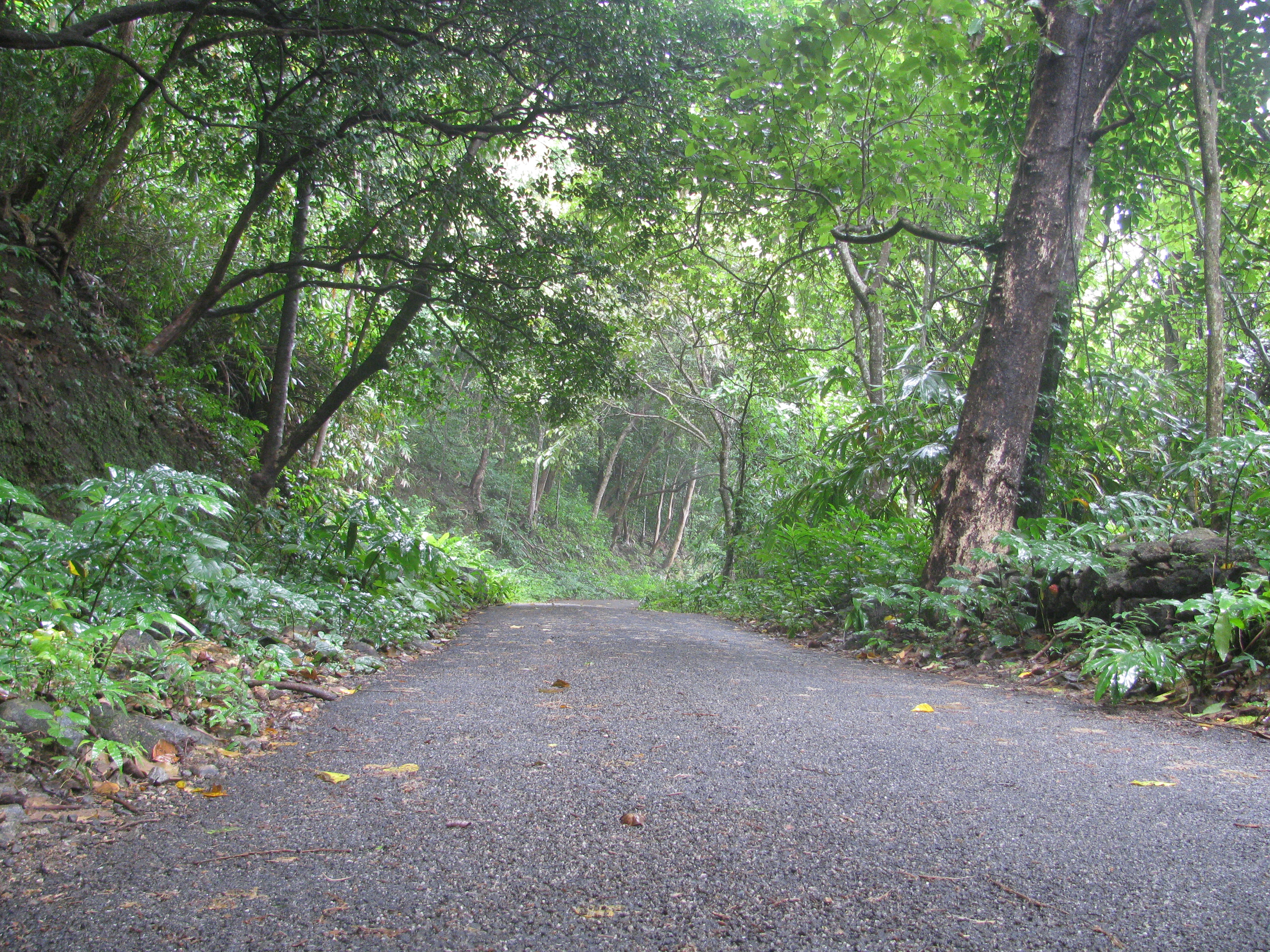
The road to Ponmudi (Photo: Shyam G Menon)

The road to Ponmudi (Photo: Shyam G Menon)

Early next morning, all geared up for the multi-day hike, we met our guides – Binu and Raju; both from the Kani community. They were adivasis; tribal people, initially stiff and quiet but soon warming up to conversation after a round of hot tea at a smoky restaurant opposite the Bonaccord bus stop. That was in fact the end of the winding road. Nearby were tea estates. I knew at least one another similar road, leading to Ponmudi (3609ft), which highlighted a little known dimension of Thiruvananthapuram – you could land in tea country, less than two hours from Kerala’s capital city.

By 2009 (actually earlier), Thiruvananthapuram’s tea estates, likely the southern-most in India, were in trouble. It was a picture of neglect. Bonaccord epitomized it. The resident tea factory was in a state of disrepair and the tea bushes in their neglected condition had reverted to being an extension of jungle.

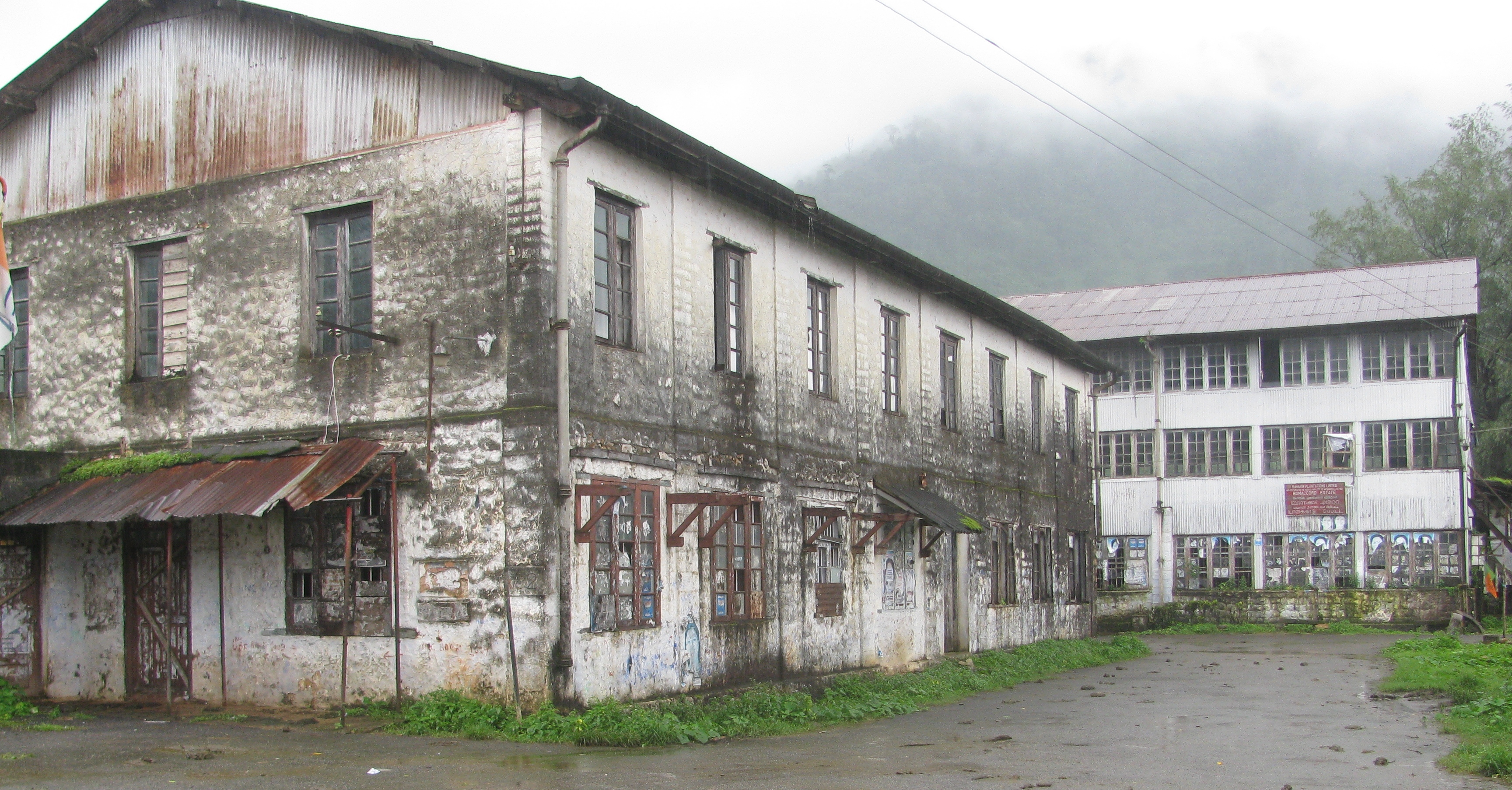
Bonaccord appeared trapped in a time warp on the peripheries of Thiruvananthapuram. It had sat there while the lands way below went through political upheavals rendering the area likely unviable for commercially successful tea cultivation. Now the tea factory was a ghost of its former self. Three floors high and the length of three tennis courts, it sported shattered glass panes and rusting metal; at one end was a room full of silent machinery that had ground to a standstill long ago. The day I was there, four to five officers sat settling accounts in a sun-lit room on the ground floor. The floor of the adjacent hall featured a spread of freshly plucked tea leaves. The company owning the estate no more worked the processing factory; it simply transported the leaves to distant Vandiperiyar and sold it.

For quite a while on the well marked trail, the plantation culture from the foothills of Agastyakoodam lingered. There were minor trails once used by Englishmen to move around, places where they used to rest and long forgotten horse trails with water halts for the animal. Raju and Binu proceeded at a brisk pace; like a pair of men out on work or going to the market. They had appeared clad in shirt and lungi, rubber slippers on the feet and crucially no rucksack for either. For guides everything else was forgivable but unprotected feet and no rucksack was questionable. So I had taken most of our provisions away from them and put it in my rucksack. In due course the duo laundered my lack of protest at the additional labor into a desire for carrying load. “ Sir likes to carry all the weight,’’ Raju said. Binu nodded his head approvingly. Ever heard that – a paying client who loves to haul load?

This was typical Kerala and the contrast the situation posed with treks up north where clients walked swinging their hands while porters lugged massive loads, was rather stark. But then on the other hand I reasoned, just as cuisine is different from state to state, so had to be the people and their mentality. There was nothing in this duo that betrayed a willingness to genuflect or be servile. Lungi tucked high to keep it out of the way they conversed about the world and set an impatient pace that soon had me, my rice and my vegetables frying in the heat and sweat. The trail, pounded by several years of pilgrims’ passage, was firmly etched into the hill slope. We passed a prominent stream en route – it was the beginning portions of the Karamana River which flowed downstream through the heart of Thiruvananthapuram city. A sole leech made its presence felt on Rajeev’s leg; the blood sucker had quenched its thirst long ago, bloated and fallen off, leaving behind a tiny bleeding wound. In days to come, that wound would itch. A leech bite is like a love affair. It can take a few days to get over the visitation – you bleed, you scratch, you reopen the wound, you scratch, till all that imprints the leech into your memory.

…..to be continued

(The author, Shyam G Menon, is a freelance journalist based in Mumbai)

A TREK AND A TEA STORY – PART 2

On Ponmudi (Photo: Shyam G Menon)

On Ponmudi (Photo: Shyam G Menon)

The story of these southern Kerala tea estates go back several decades. It showed up on the Internet in a 1914 edition of Southern India: Its History, People, Commerce and Industry; a book compiled by Somerset Playne, J.W. Bond and edited by Arnold Wright. As I found out later the book which details the initial phase of South Indian estates had become essential reference for plantation companies in the Ponmudi region to establish their origin.

According to it, The Ponmudi Tea and Rubber Company Ltd was formed in 1900. The property consisted of three estates – Ponmudi, Bon-Accord and Braemore, all of which were in the district of Ponmudi in the native state of Travancore. The estates spanned an area of 3276 acres with the cultivated portion totaling 1710 acres, featuring tea and rubber. Mr J.S. Valentine, the managing director, had arrived in India in 1875. At that time, the area was planted with coffee but all that coffee was lost in the blight that hit Kerala’s coffee. Subsequently in 1884, tea was planted in Ponmudi and in portions of the other properties. The climate was good for tea; the rainfall of almost 160 inches experienced annually was heaviest in June, July, August, October and November. The yield of tea was highest in Ponmudi followed by Bon-Accord and Braemore in that order. In January 1915, when these observations about the estates were penned, the region had about 1510 acres under tea and 200 acres under rubber at the three estates. There were tea factories at all three properties and the produce was shipped under the company’s brand through the ports of Kochi and Tuticorin for sale in London. Two thousand laborers worked in the plantations; they were drawn equally from Malabar, south Travancore and Tinnevely, the Tirunelveli district of present day Tamil Nadu. Mr Valentine lived in Ponmudi, Mr R. Ross with Mr David Welsh, assistant, was in charge at Bon-Accord and Mr I.R.N. Pryde looked after Braemore. The company’s registered office was at 4 Lloyd’s Avenue, London.

The three estates are now separate. They draw their lineage from the Ponmudi Tea and Rubber Company. When I was a school student in Thiruvananthapuram, the Ponmudi area was identified with tea and as I understood in retrospect from my inquiries, foreign managers were still there. They were present in Ponmudi till the late 1970s. It was also from these parts that I first heard the name Birla. Jayasree Tea, a company belonging to the B.K. Birla group and a leading tea company in India, had come to own a plantation called Merchiston in Ponmudi. But there was trouble brewing, scripted possibly by paradigm problems visiting the tea business in the state. In fact, while I was still living in Thiruvananthapuram and yet to be journalist, reports had commenced of labor problem and slow decay at the tea estates.

Gangs of forest workers were preparing the trail for the upcoming season. Here and there, they had set fire to dry grass in a controlled fashion. Our guides stopped to talk to their colleagues. On one such occasion, we had walked ahead and paused to pick up a hollow plant stem, hacked and lying on the ground. It was a fascinating object, like a green telescope tube. Just then the guides appeared. “ Did you cut it?’’ Raju asked a tad belligerent in tone.

Neither the query nor the tone should have surprised us. The forests around Agastyakoodam have been known for long as a treasure trove of medicinal plants. Years ago, it used to be casually explained; people would link the incidence of medicinal plants in the region to the apothecary traits of sage Agastya himself. But the present day global pharmaceutical industry has no appetite for either myth or nature. For it, the undiscovered potential of the plant wealth of Agastyakoodam posed clear commercial value. Its exploitation could be restrained or properly administered only by the rule of relevant laws, something quite distant to the tribal world of the Kani community. Rumors abounded of plants smuggled out for analysis.

Even the comparatively successful story of the endurance drug Jeevani was not spared controversy. The discovery of its existence or rather that suspicion of something like it which precedes all real discovery, had been in circumstances very similar to what we found ourselves in. A group of scientists were out in the Agastyakoodam forests, their guides like ours, walking briskly ahead mile after mile. The guides were hardly tired while the team behind was getting progressively exhausted. They noticed that the Kani men were chewing something, which on inquiry turned out to be the leaf of a plant locally known as Aarogyappachcha. From it, scientists of the Tropical Botanical Garden and Research Institute near Thiruvananthapuram created the medicine, Jeevani. Although the Jeevani business model was eventually recognized internationally as a role model in its category, sharing the profits from manufacturing the drug with the Kani community, whose natural home land the Agastyakoodam forests were, there was controversy later when a US company patented the drug in that country. The tribal community – as evidenced by the attitude of our two guides – appeared to have learnt the value of cautious dealings with the outside world. “ We were ignorant,’’ Binu said.

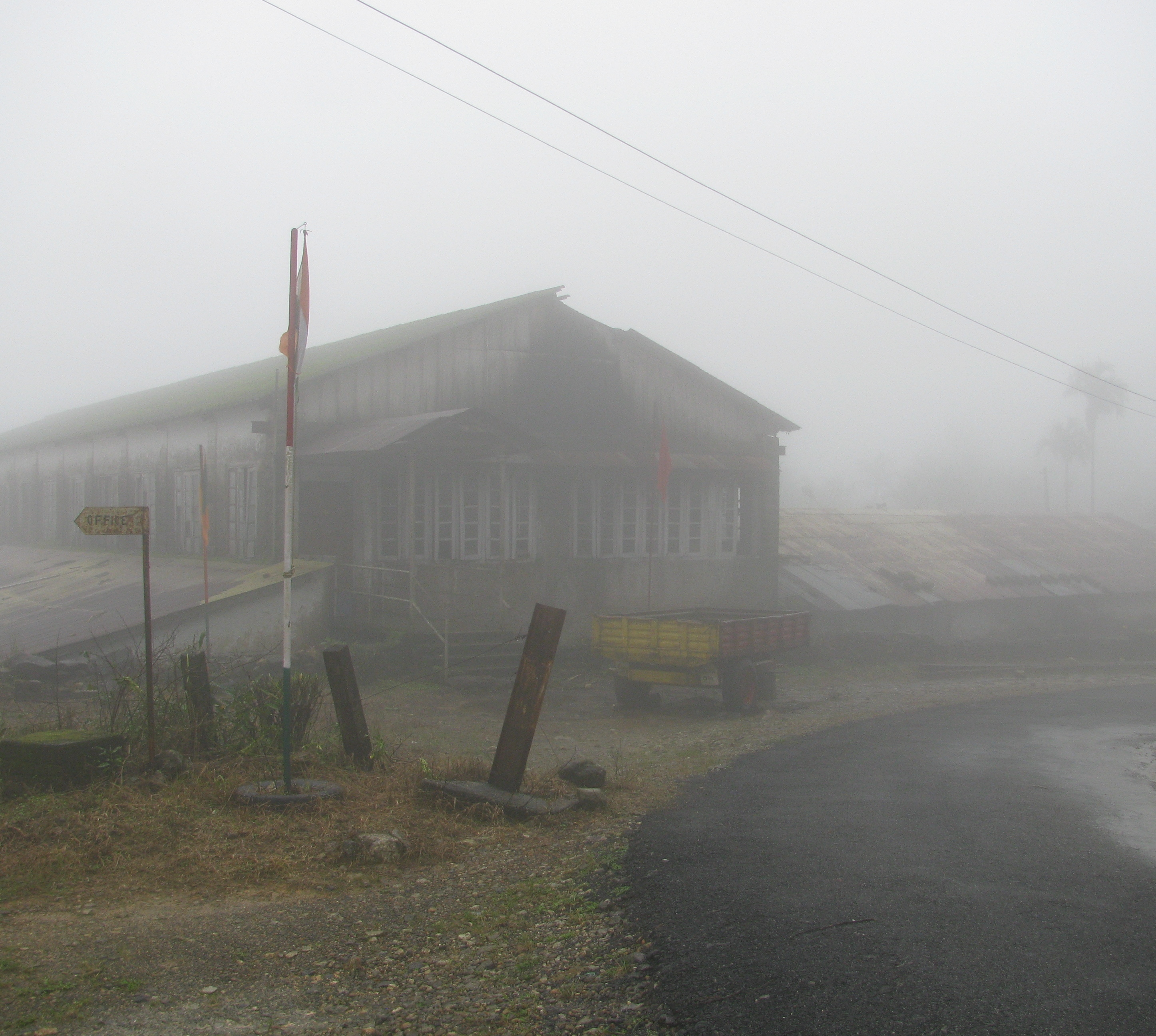
The office of the old tea factory at Ponmudi (Photo: Shyam G Menon)

The office of the old tea factory at Ponmudi (Photo: Shyam G Menon)

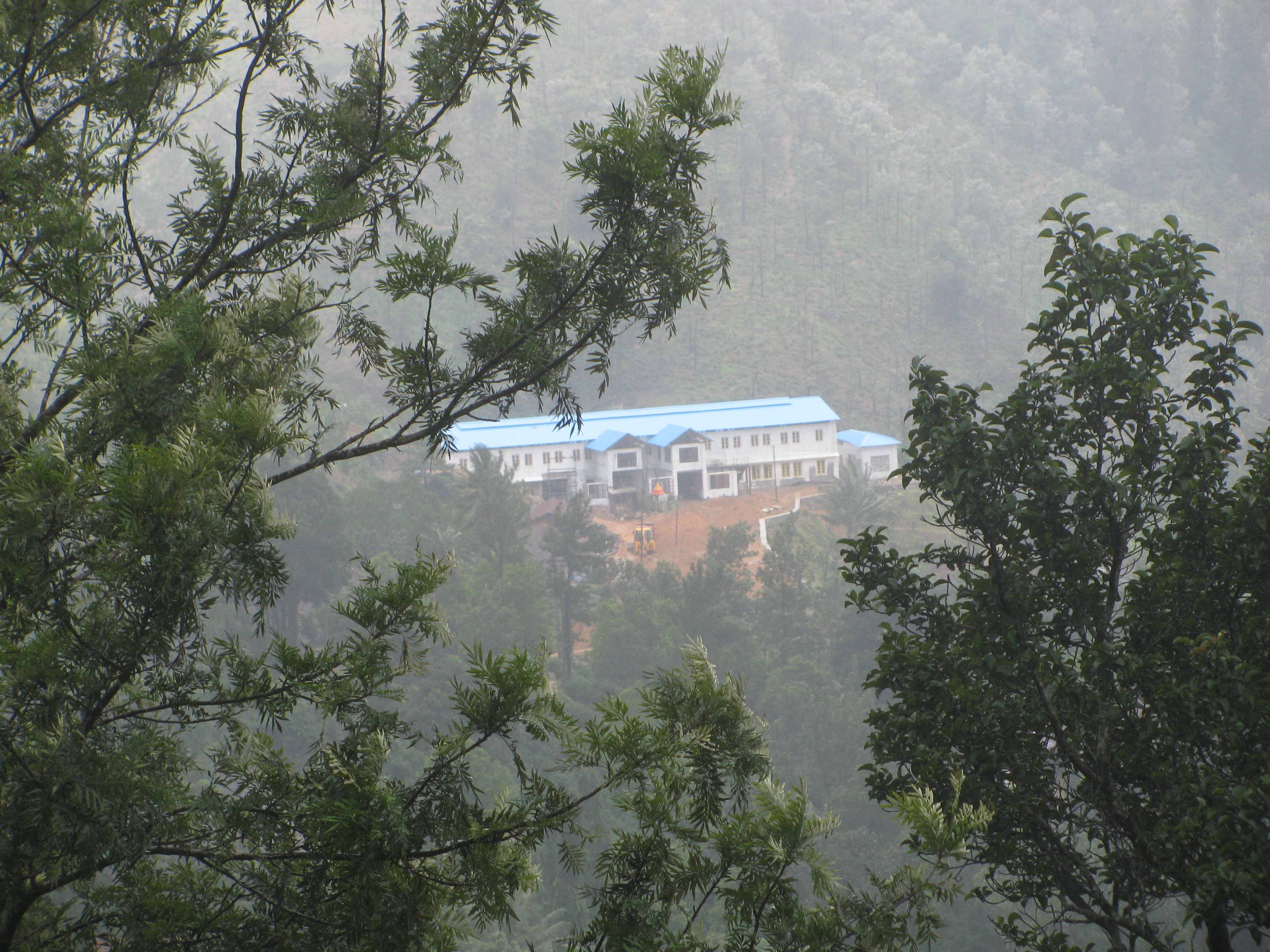
The Merchiston factory near Ponmudi (Photo: Shyam G Menon)

The Merchiston factory near Ponmudi (Photo: Shyam G Menon)

The Bonaccord factory (Photo: Shyam G Menon)

The Bonaccord factory (Photo: Shyam G Menon)

At the root of the tea estates’ problems was Kerala’s entry, some seventy five years after tea plantations reached the state, into an era of turbulent politics and social upheavals. One of the lasting legacies of this trend, ironically a byproduct of increased awareness, has been a level of politicization often deemed excessive for the common good. In this atmosphere, the plantation industry was one of the state’s largest tax payers and also one of its biggest employers. Political parties with their compulsion to cultivate vote banks rarely saw beyond these two obvious attributes – one of the largest tax payers and one of the biggest employers.

The mood in January 2009 at the plantation offices I visited in Thiruvananthapuram was hardly upbeat. Tea prices were down; input costs – a chunk of that labor cost – had gone up and labor productivity was low. Within labor cost, the argument from the planters was that the fixed components had risen handsomely while the variable parts, linked to productivity, moved up sluggishly. Also traceable in the economics was a logic rooted in the very nature of tea and mentioned at the time of its arrival in Kerala – the regular human intervention warranted for its cultivation demanded economies of scale alongside for affordability. The south Kerala plantations were neither very big nor was their produce high on the pecking scale at tea auctions. A cursory inquiry with tea brokers in Kochi in 2009 revealed that in general the teas from Munnar ruled the top in local auctions while the south Kerala estates stayed at the bottom in terms of price and quality. It was not hard to comprehend why the pincer bit hard at Ponmudi.

In 2009, of the big names in the Thiruvananthapuram region, only one tea plantation company seemed to be working normally, free of controversy. Its focus was organic tea, something the others were yet to deem commercially viable although improving end product price through imaginative value addition seemed the only way out from prevailing predicament. But this company too had temporarily run into a glitch courtesy the Forest Department whose office was situated not far from that of the plantation company’s in the city. In rules produced some years ago to define forest lands, the department had drawn survey lines through estate tracts befuddling the owners. For the company it suddenly became questionable to weed its contested plantation for that could amount to deforestation. That was the dilemma in 2009 at what seemed the less troubled tea company of the lot.

About three hours into the hike, we broke free of dense forest into a patch of tall grasses with scattered trees. From here the Agastyakoodam peak towered in the distance; its long flanks made us wonder if the goal of reaching the top by evening was feasible. It was now noon and the sun was harsh. Just then the walk entered open terrain with nothing for shade. It was only after half an hour slogging through the heat and glare that the trail reentered shaded forest. When it did the going was suddenly steep. The combination of heat and steepness was rather dehydrating and it was a tired group that hit the forest rest house by late afternoon. We would be staying here for the night. Right in front of the building, the peak loomed big, that same perfect triangle as seen from Neyyar Dam. Now you could see it in detail and if you were given to climbing, read that rock face for vertical lines to the top.

Bags lightered, we decided to push on and reach the top by evening. Getting back through forest at night may be difficult but we had torches and our guides appeared confident of navigating. You could say that the real climb up Agastyakoodam is the hike beyond the rest house, whatever had been traversed till then was the stuff of foothills. Binu pointed to a distant streak of red on the peak’s rock face. He claimed that the ooze, locally called kanmadam, held medicinal properties. What he said next was hard to swallow – that the king cobra loved to taste it. It was a fantastic image – mysterious red ooze from rock as favored food for the world’s longest poisonous snake. Wasn’t it a bit too fantastic? I left it at that.

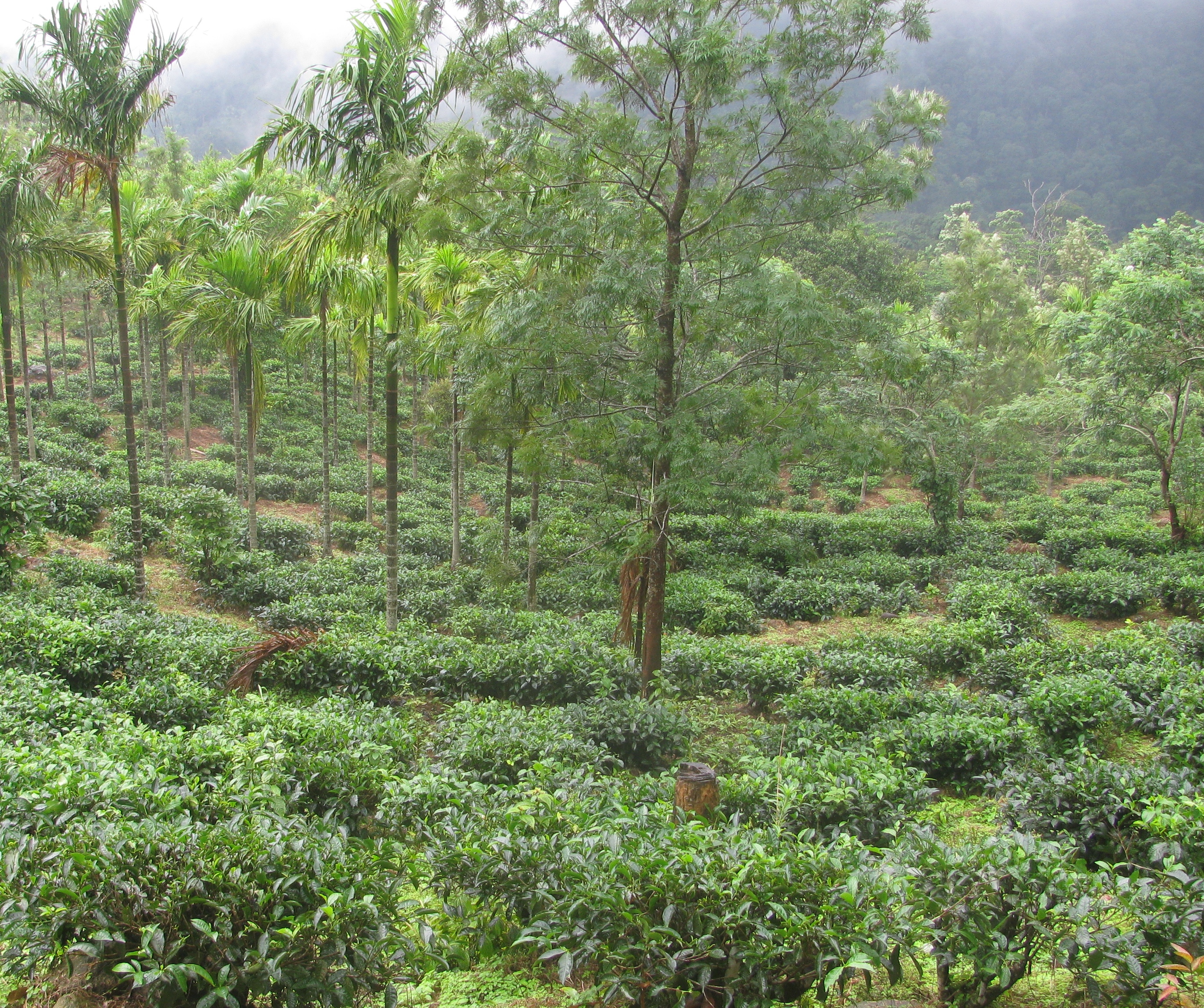
Tea gardens near Ponmudi (Photo: Shyam G Menon)

Tea gardens near Ponmudi (Photo: Shyam G Menon)

The trail was now getting steep and narrow featuring stray deposits of elephant dung. The watchman at the rest house had warned that a few elephants were present in the locality. An hour later, we were at the mountain’s shoulder, its rocky apex sat like a solid hump to the right; it was a sheer drop on the side facing the rest house below. The boundary line separating the states of Kerala and Tamil Nadu ran along the mountain’s ridge. It was carved into the rocks, these separate loyalties – the sea shell emblem of Kerala and a sort of arrow mark for Tamil Nadu, which the two Kani men called “ kozhikkalu’’ or chicken leg. Back in Thiruvananthapuram, this arrow mark failed to convince learned people for they said the Tamil Nadu emblem had traditionally been the temple tower; unless the tower got simplified to an arrow mark. From the mountain’s shoulder you could comfortably gaze into Tamil Nadu, the nearest town that side being Ambasamudram. The path up from the shoulder was a mix of rock strewn gully and a steep, narrow path.

Half way up the path, we saw fresh elephant dung. The contrast it presented was hard to ignore. How could such a massive beast pick its way up so small a path? Elephants are capable of some gingerly done walking but this appeared to indicate a truly nimble specimen. Binu however treated it as normal. As we prepared to tackle the rock patches above, we heard some trumpeting in the distance. The rock patch was fun; it is bound to be so for anyone acquainted with climbing. There was a stout rope fixed to a thicket but if you are familiar with walking on angled rock and have a trekking pole for friend, then the rope is not required there or anywhere on the final ascent. On the other hand what you feel while walking up on two legs on that slab is a notion of poise and fresh air, a sense of freedom, a sense of having finally broken through dense vegetation and being able to see unhindered for miles.

The peak here has two neighbors – Athirumala, located in line with the boundary dividing the two states and having a name derived from the Malayalam word athiru, meaning boundary. The other was a fierce mountain with five summits all of them sharp pinnacles. The entire formation stood like an arrogant upward thrust from the forest floor. The Kani men called it Anchilappothi and it reminded me of those spires in Patagonia and Karakorum that the world’s best rock climbers go to attempt. Perhaps a smoother version for these tall pinnacles didn’t seem as jagged or rugged. “ Nobody goes there,’’ Binu said, as we stood looking at those pointed peaks, from the top of Agastyakoodam. There was nothing on the summit of our peak save a couple of more rock engravings to denote the state boundary, a solitary idol of the sage Agastya and items of worship replete with left over offerings. The idol matched the description of the sage in Hindu mythology as a small, stout person. Agastya though, was a powerful sage, one of the most powerful in the list of Indian hermits. Two things characterize his story – a fantastic birth and continued mention across the ages, making him some sort of an eternal being. In between was the tale of him taming a fast growing mountain in central India, the Vindhya. When Vindhya threatened to exceed the Himalaya in height, the gods sought Agastya’s help – so goes the story. The sage who was proceeding south asked the mountain to reduce its height for him to cross and keep it that way till he returned. Agastya never returned; he stayed south. The belief is that he built his hermitage in the forests around the Agastyakoodam hill. As for Vindhya, it remains to date a set of hills, smaller than even the Western Ghats.

…..to be continued

(The author, Shyam G Menon, is a freelance journalist based in Mumbai)

A TREK AND A TEA STORY – PART 3

The road to Bonaccord (Photo: Shyam G Menon)

The road to Bonaccord (Photo: Shyam G Menon)

The Merchiston estate was sold off by the Birlas.

In 2009, its new owner was embroiled in controversy for agreeing to sell a portion of the estate to the Indian Space Research Organisation for the proposed Indian Institute of Space Science and Technology. Away from its newly acquired place in politics, the estate had other interesting angles to offer. If you search for the Merchiston name on the Internet, one of the links would take you to a historical castle in Edinburgh, Scotland, likely built in the 1450s and home to the Clan Napier. Of relevance to Kerala’s capital city, Lord Napier of Merchiston was a title in the peerage of Scotland. The Merchiston castle was the birthplace of John Napier, most famous Napier of the lot, Eighth Lord of Merchiston and famous Scottish mathematician with major contributions to the subject, including logarithm. He was also interested in theology, predicting an end for the world around 1700. The world and Merchiston survived that year. The Tenth Lord Napier was Francis Napier, a prominent diplomat who served as the Governor of Madras Presidency and was for a brief while, acting Viceroy to India. The beautiful museum building at Thiruvananthapuram was named after him. Does that angle matter anymore for anything Merchiston in Thiruvananthapuram? I don’t know; history and heritage rarely count these days.

The Bonaccord estate had been through trying times. According to a September 2007 news report in the local edition of The Hindu, “ the laborers said that the 450 employees of the estate were rendered jobless after the management abandoned the estate and left the state five years ago. ` Following a government sponsored settlement in April this year, the management agreed to resume operations. But they failed to honor the agreement. The leaders of some of the trade unions appropriated the returns from the estate, leaving the workers in the lurch,’ they said.’’ Some degree of activity had since returned to Bonaccord; it was there to see in the few people at work and the tea leaves gathered for transport to the market in Vandiperiyar. Binu who did all kind of casual jobs for a living had occasionally worked on the tea estates. He corroborated the story of unions at Bonaccord demanding a slice from a poor worker’s pay. Pasted on the walls, in a Bonaccord starved of work and income, was a poster demanding contributions for building a brand new trade union office in the nearby city. The starkness of its demand was vivid in that air pregnant with the silence of unemployment.

From the management of the Braemore estate, a more relevant and believable argument on the future of the southern plantations appeared. The young chief executive, having illustrated the ills ailing the industry, chose to work within them for a short term gaze at the future. When I met him in 2009, his tea operations at Braemore had been suspended since 2003 owing to lack of skilled hands and poor economics. With city nearby and educational facilities and better work opportunities to be had, people continuing in estate work, had dipped in that region. Tea, for sure in its non-mechanized form in Kerala, would remain labor intensive and costly. Rubber on the other hand, was easier to grow and required less attention. It can’t go to the altitudes inhabited by tea but certainly its acreage could increase, progressively replacing tea in lower belts. The south Kerala plantations are anyway at lower altitudes compared to Munnar.

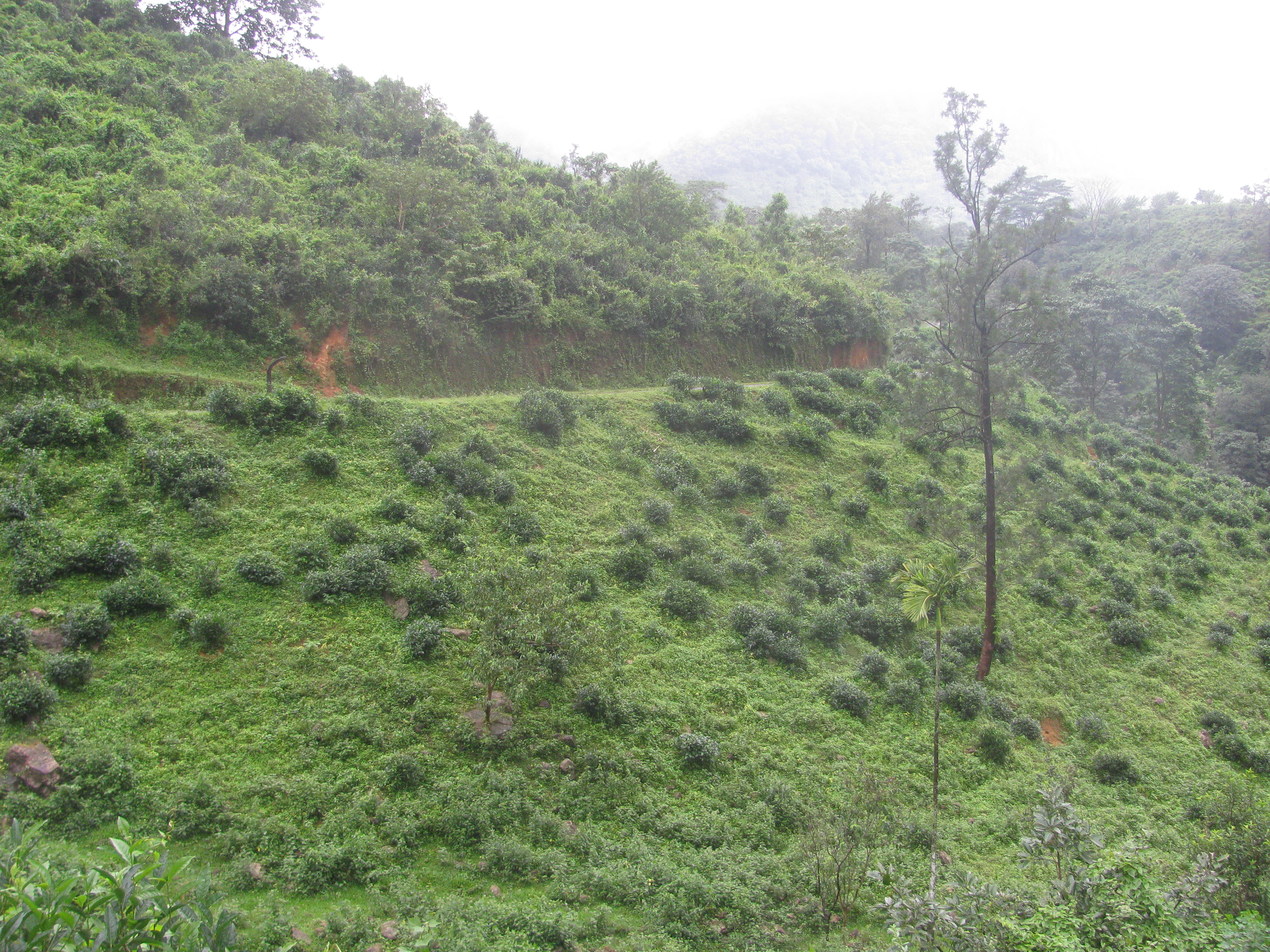
Tea bushes seen lost to weeds and undergrowth on the approach to Bonaccord (Photo: Shyam G Menon)

Tea bushes seen lost to weeds and undergrowth on the approach to Bonaccord (Photo: Shyam G Menon)

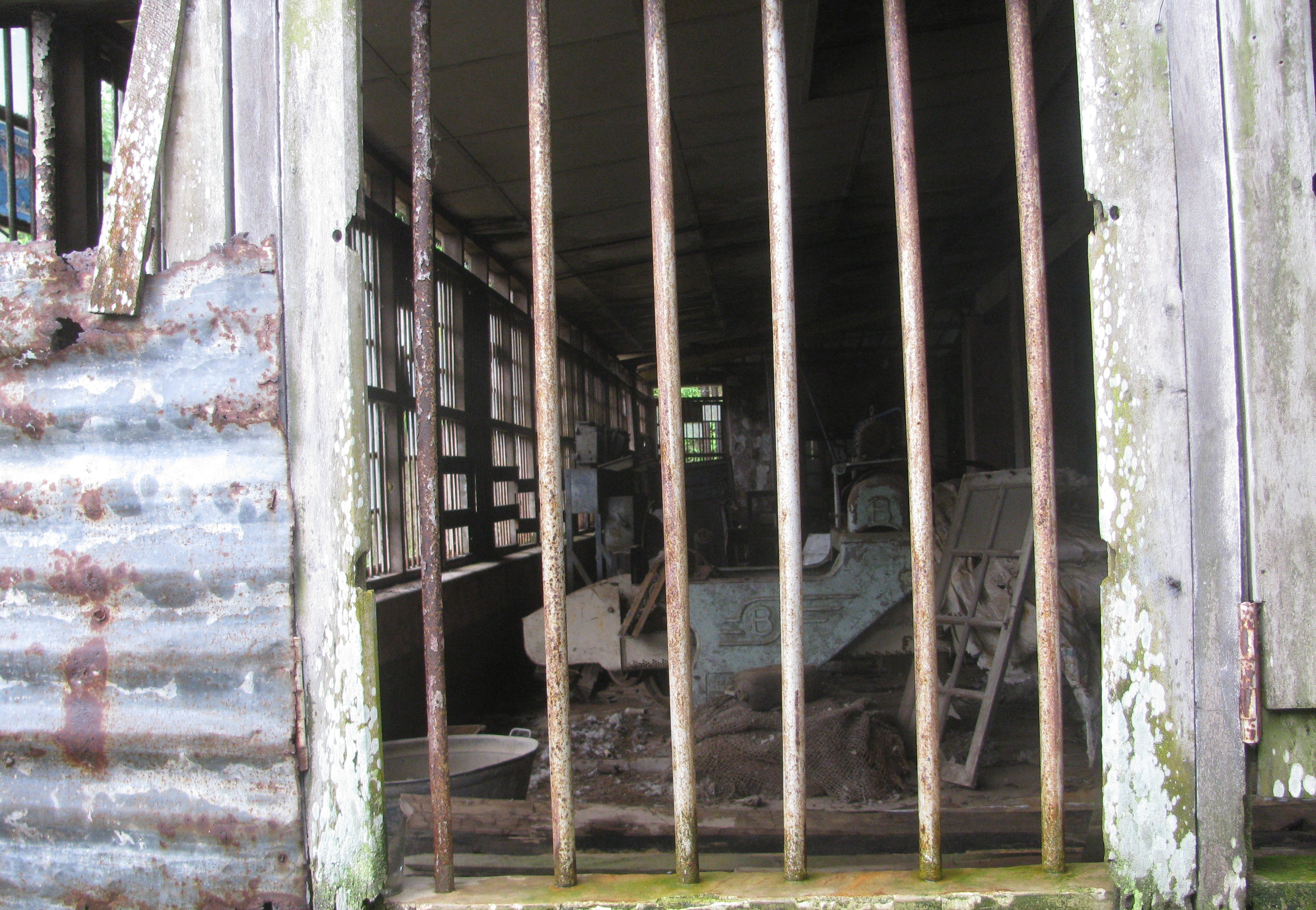
The old tea factory at Bonaccord (Photo: Shyam G Menon)

The old tea factory at Bonaccord (Photo: Shyam G Menon)

According to Binu, elephants wandered right up to the windy top of Agastyakoodam. I looked astonished at him and then towards the rock slab we had come up by. Was it that king cobra talking again? “ Elephants have their routes for coming up. Reaching here is not beyond them,’’ he said. But there was a catch – it wasn’t the normal elephant; it was a smaller, more compact one. Back in Mumbai, I searched for information on the small, hill dwelling elephant Binu had talked about and was treated to a surprise. Pygmy elephants have been reported from both Africa and Asia. The sole claim in India, unsubstantiated yet, was from the forests around Peppara, exactly where Agastyakoodam stood. The claim had come from the Kani tribe and the animal in question was locally called Kallaana. In Mumbai, a visit to the Bombay Natural History Society [BNHS], which has its team of wildlife experts, served to merely underscore the unsubstantiated nature of the claim. The whole argument about pygmy elephants, an official at BNHS felt, may be a case of mistaken identity. Juvenile male elephants are often kicked out from herds. Seen during their wanderings they would be both smaller in size and seemingly of a different type given their isolated life. Was the nimble kallaana then just a juvenile aana or elephant on its way to being a regular, big pachyderm?

Late afternoon, the next day, we were back in the smoky teashop at Bonaccord. It was tea, bread and omelet for everyone for a three day hike completed in a day and a half. It was also a return with vengeance to urban ways. Raju, searching for his mobile number to give me, got confused with the numbers of three SIM cards that he owned. More than a week later, one quiet night in Kozhikode, over four hundred kilometers north of Thiruvananthapuram, my phone came alive with a triumphant voice from near Agastyakoodam, “ sir, this is my number!’’

Small temple near Bonaccord (Photo: Shyam G Menon)

Small temple near Bonaccord (Photo: Shyam G Menon)

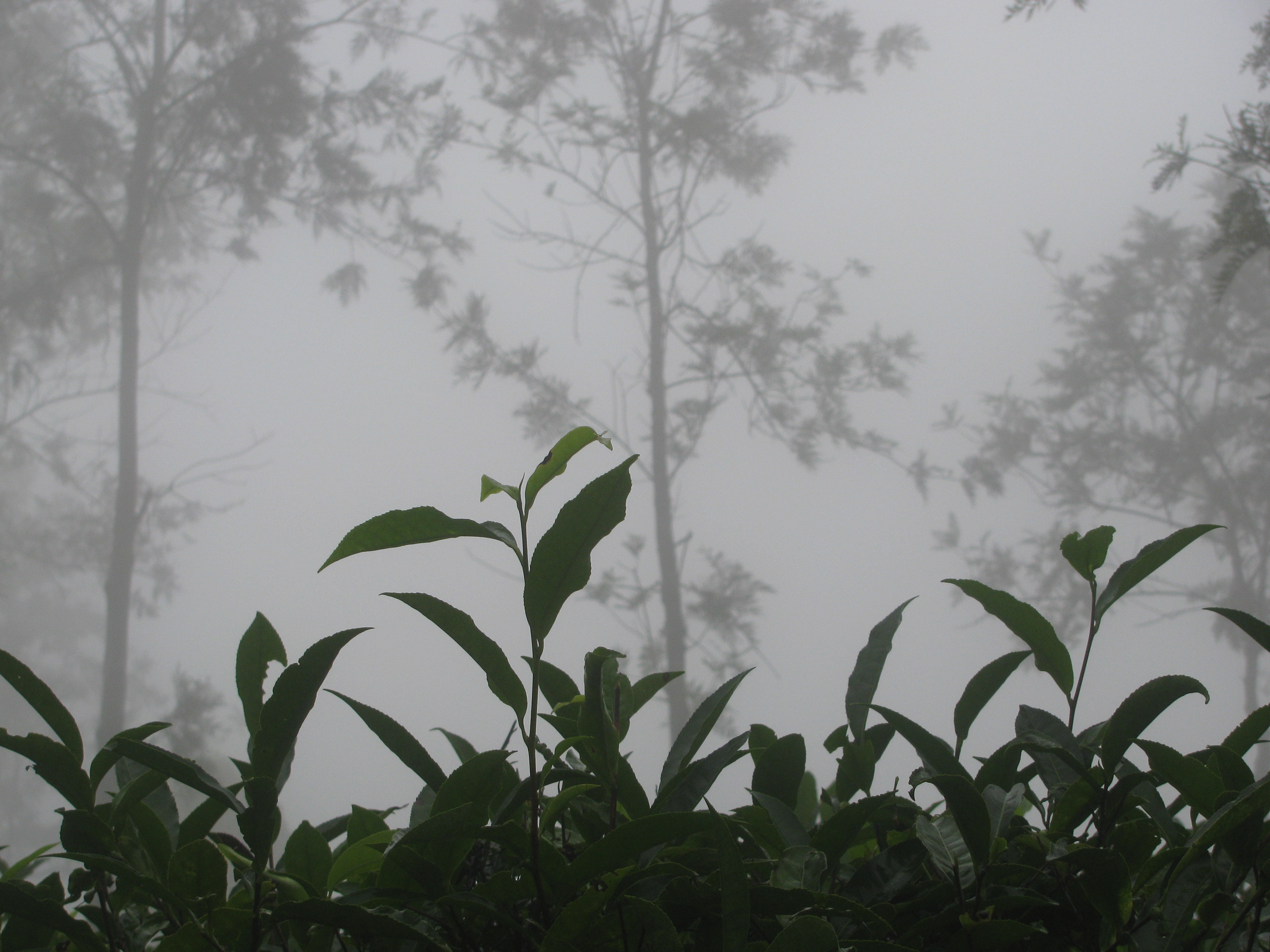
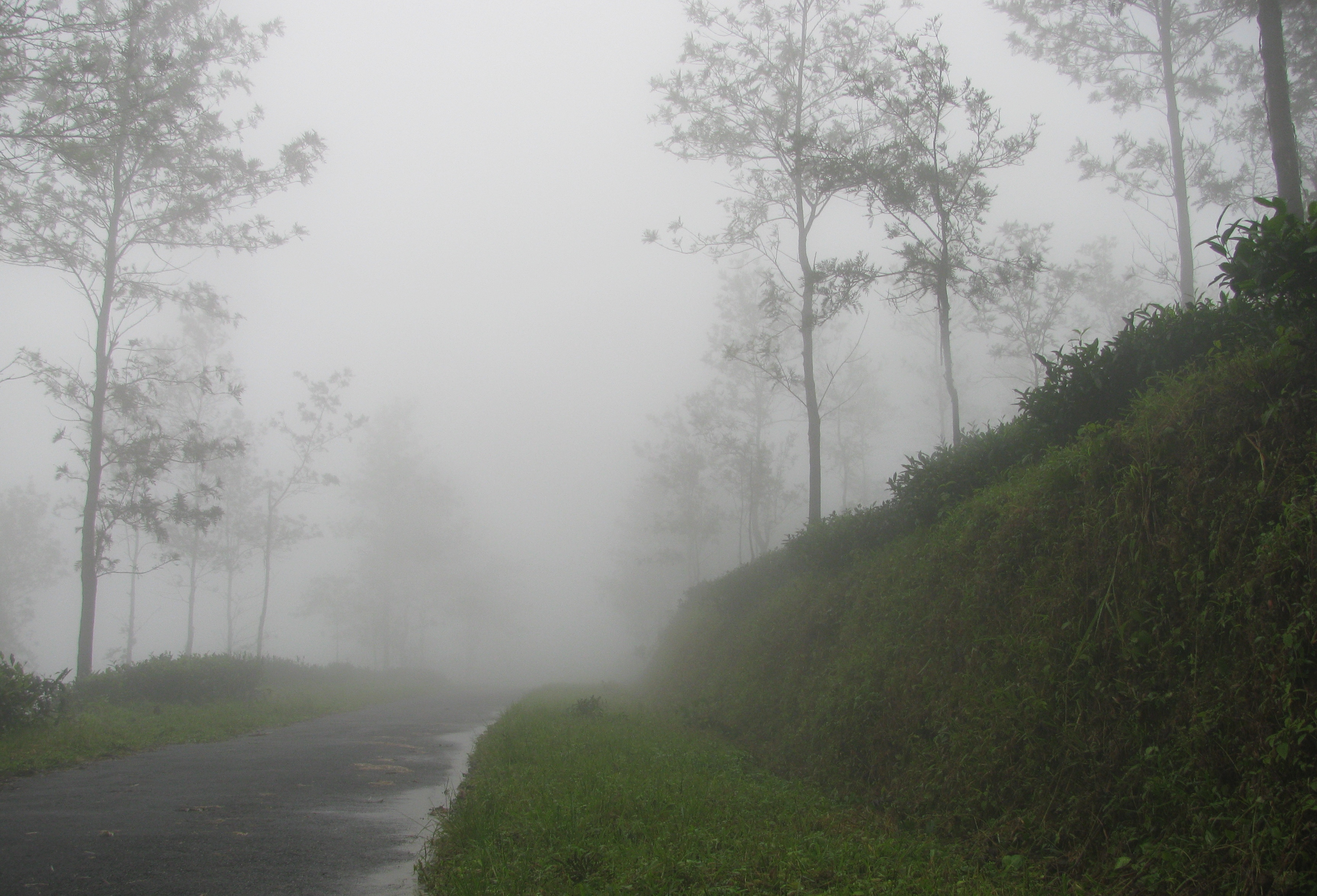
Post Script: The above was written in 2009. In the months that followed I misplaced the photographs I took during the trek. I have no photo of Agastyakoodam with me. In August 2014, while on a visit home, I decided to revisit the story and the tea estates, mainly for pictures. I didn’t have the time to meet officials at tea companies in the city but one very rainy day in early August (not the ideal time for photography I concede) I did find myself back in the tea estate-foothills. No trek; just looking around. Ponmudi was enveloped by dense fog. In that ambience, the office of the old tea estate emerged like a vision from the misty past. Kutty, who worked at the Merchiston estate and who I met on the road, told me that a new factory was being built at Ponmudi. If so, I never reached that far for up until the old office all I saw was that office and attempted new construction so lost to vegetation that it seemed abandoned. According to Kutty, Merchiston was running well. We stood at a bend on the road and watched its factory. It had a fresh coat of paint and blue sheets for roof. It was easily the most visible building around. I didn’t go to Braemore. The only time I was there was many years ago, when a walk to a beautiful stream found me standing not far from its tea factory.

Bonaccord in August 2014 was old story with new twists. Private vehicles on the road to the tea factory were being discouraged, probably due to the problem of revelers and drunken picnickers, the perennial headache of the Indian outdoors. We are a people with zero affection for solitude. At the old teashop, I met 62 year-old Soman who had commenced work at the estate as a temporary hand when he was 17. He said that years ago itself, some of the heavy machinery at the tea factory was removed and taken off. Work continued in fits and spurts, the whole area steadily sliding alongside to being museum piece. In one of those classical vignettes from colonial stories, Soman said that the daughter of a former European manager had come to visit the place of her childhood. She reached Bonaccord with old photos to locate names and faces. “ They met some of the old timers, took new photos and left,’’ he said. Right then in August 2014, the dispensation was – workers had assumed responsibility for small parcels of land. They plucked tea leaves and brought it to the factory, from where, as in 2009, it traveled to Vandiperiyar. That fetched some earnings. Not far from the teashop, tea bushes stood grossly neglected with thick intervening vegetation. The shop owner served me black tea. From worry over lack of work and entrapment in unemployment, Bonaccord seemed to have drifted to indifferent listlessness. Soman said that hearing of the workers’ condition, people – including those from overseas – had offered assistance. Some came with food, others brought clothes. “ Why should we leave? Here we have good drinking water; there are no mosquitoes, somebody helps once in a while. We get by,’’ he said. Soman claimed he did not own a house. But he could stay at the workers’ quarters. Amazingly he said that he swallows his complaints before the tea factory owners for they seemed to him, a class apart. “ You don’t feel like saying anything,’’ he said.

Outside, the rain fell steadily on that hill side with forgotten tea bushes and equally forgotten buildings, its crowning glory being a tea factory with shattered windows and rusted machinery.

It was quiet, peaceful world.

Concluded

(The author, Shyam G Menon, is a freelance journalist based in Mumbai)

REMEMBERING ZORBA

???????????????????????????????Here’s an article originally published in 2012.

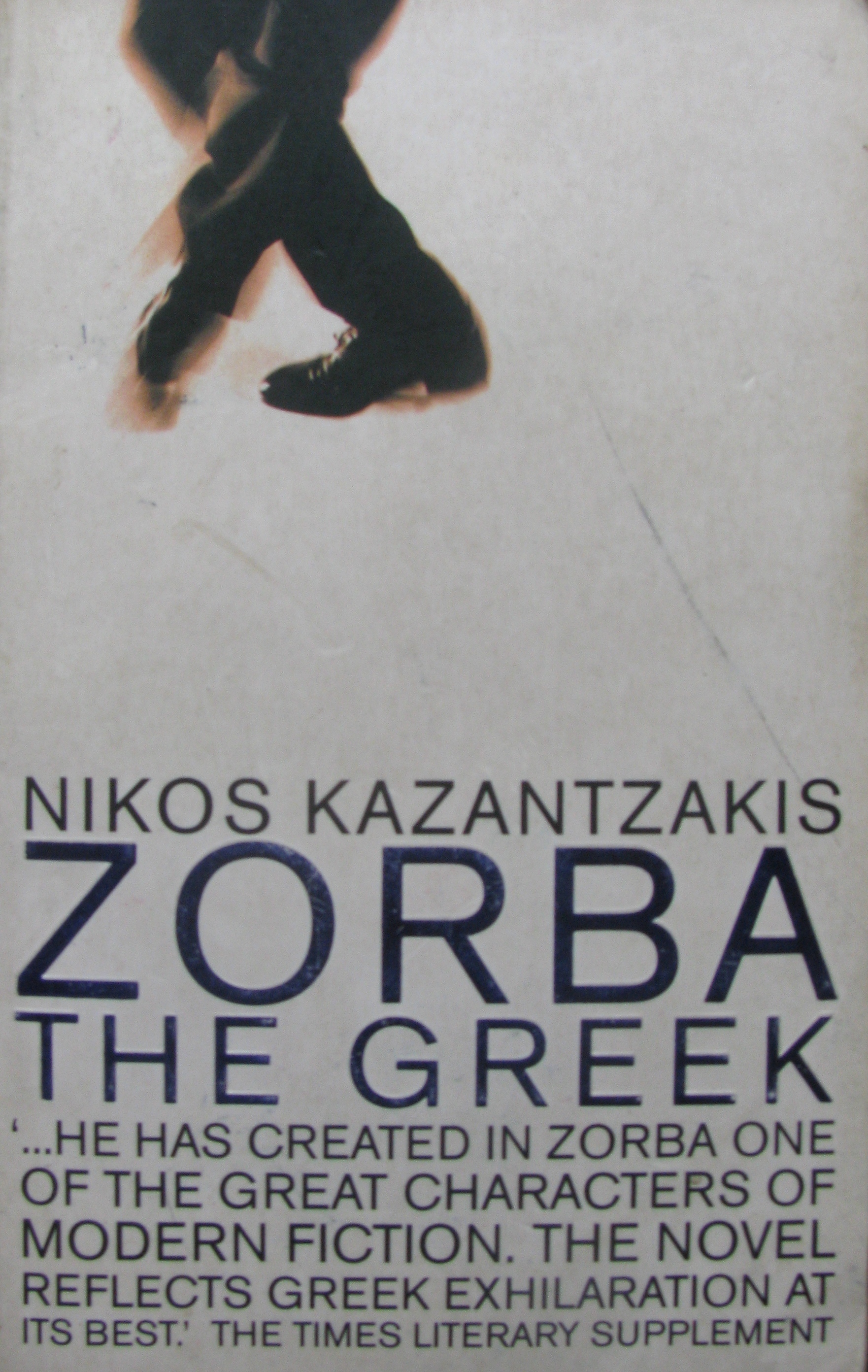
Seen from far, a glass of Gold Coin apple juice and a glass of whisky are not all that different. I was just about in high school. Apple juice in hand I sat in the living room of my uncle’s house in Kochi as he and my father shared a drink. On a shelf by the side, a turntable marked 33 rotations per minute. From the kitchen, the aroma of my aunt’s cooking wafted in. I don’t recall when the song was first played or what attracted me to it. But it was a request my uncle always obliged whenever we visited – Frank Pourcel’s orchestra playing `Zorba’s Dance.’

The song opened haltingly, then picked up speed and exploded to madness. There was something masculine about it. Not in a gruff, rough fashion but in a demented sensitive way lost on today’s competitive world. This song bothered about person and universe. That seemed to be its attitude – to hell with everyone and everything! It wasn’t long before my uncle spoke of Anthony Quinn and the film Zorba the Greek. He owned two versions of the title song– the Purcell and there was another energetic rendition with trumpets. I remained partial to Purcell. The original score was played with a plucked instrument, something I discovered much later.

For several years thereafter I knew nothing more of Zorba. Then one of the video libraries back home began accumulating titles from the black and white past of cinema. That library is no more there in Thiruvananthapuram but I still remember my membership number. From there I got a VHS copy of Zorba the Greek. The transition from imagery inspired by music to the actual story was jolting. I had built up this notion of Zorba as a dancing, vivacious Greek but not factored in the ambience he lived in or the story told as interaction between the two. This was serious cinema, story set in Crete far off from the US and its glamorous studios. I watched the film several times, burning into my head the mad face of Zorba; the writer Basil, played by Alan Bates and the pathos that surrounded Lila Kedrova’s Madame Hortense. I was amazed by how striking Irene Papas looked on black and white film and touched by the story of the widow – it was a universal story of the lone woman and the scene of Mavrandoni killing her could have been from anywhere. Equally universal I felt was the decline of man when in a group as personified by the villagers’ attitude towards the widow and the utter superficiality of human belonging as evidenced by the villagers stripping the Hortense residence of all things useful upon the lady’s demise.

The film was a turning point for many of its cast. The role of the santuri-playing Zorba was reckoned to be the zenith of Anthony Quinn’s career. It earned him an Oscar nomination although the two Oscars he got were as supporting actor in earlier films, Viva Zapata and Lust for Life. For Lila Kedrova, the role of Madame Hortense defined her Hollywood career. She won a best supporting actress Oscar. Alan Bates became much remembered as the gentle writer in the shadow of Quinn’s eccentric Zorba. For Irene Papas, the 1964 film cemented her presence in international cinema following as it did her appearance in The Guns of Navarone three years earlier. The film was arguably the most important one in the career of director, Mihalis Kakogiannis, also known as Michael Cacoyannis. He was nominated in three categories, including best director but did not win an Oscar. Composer Mikis Theodorakis, a noted political figure in Greece, has to his credit a vast repertoire of music. Zorba’s Dance remained his most memorable film score. That fantastic piece of music did not merit an Oscar nomination. However, two other Oscars did grace this unforgettable film – best art direction and cinematography. What I hadn’t tasted as yet was the original creative work behind it all – the novel by Nikos Kazantzakis. This famous Greek writer, who narrowly missed out the 1957 Nobel Prize for literature to Albert Camus, had to await the release of the Kakogiannis film to be world renowned.

???????????????????????????????Several years went by. I was now journalist, probably as old as Basil (unfortunately not as rich to spare money for mining) and walking around Mumbai (an island like Crete), when I spotted a tattered copy of Kazantzakis’ book with one of the second hand booksellers at Flora Fountain. It was musty yellow, had fallen apart and the previous owner had stuck it up with cello tape. It was published by Ballantine Books and likely hailing from the fourteenth edition of the novel printed in February 1969 for right on top of the front cover, above a dancing Zorba, was the announcement, “ the smash Broadway musical!’’ After its success on screen, Zorba had two runs on Broadway and the book’s cover seemed to indicate the first from November 1968 to August 1969 with Herschel Bernardi as Zorba and Maria Karnilova as Madame Hortense. In the second avatar that ran from October 1983 to September 1984, Anthony Quinn and Lila Kedrova essayed on stage the characters made famous by them on celluloid. That old book was how I finally got around to reading the story of Alexis Zorba.

On the very first page was an abstract from Time magazine: “ who is Zorba? He is everyman with a Greek accent. He is Sinbad crossed with Sancho Panza. He is the Shavian Life Force poured into a long, lean, fierce-mustached Greek whose 65 years have neither dimmed his hawk eyes nor dulled his pagan laughter. Author Kazantzakis tried to kill him off in a letter. But he reckons without his own talent. He has created Zorba, but he cannot kill him.’’ From The Nation: “ Wonderfully moving, superbly written. Zorba belongs in the gallery of sainted rascals.’’ And on the back cover, the Saturday Review said: “ Alive with energy…Earthy and Rabelaisian – a strange journey into a haunting, wild and poetical conception of life.’’ The book was a splendid read. A few more years lapsed before I picked up a VCD of the film. Later, I bought a brand new copy of the book just in case my vintage edition fragmented for good.

I wonder what attracts me to Zorba. Maybe it’s that he broke free of people and became a person. Maybe it’s the specter of life laid bare. Madame Hortense and the widow – they are hauntingly that. They could be any of us despite changed times. Similar unchanged truth – the human insecurity that underlies man’s ornate constructions, echoes in Zorba’s irreverence for religion. Then there is Zorba’s view of life at large from women to writing. I can’t help liking Zorba. I love the music, the book and the film. Not to mention, that golden brown glow of apple juice in a glass long, long ago, among my first instances of being treated as a person.

(The author, Shyam G Menon, is a freelance journalist based in Mumbai. This article was published in The Hindu newspaper.)

EVEREST TO THE EAST

Here’s a story originally published in 2013.

It has been updated for developments since then.

Nanda Kot (Photo: Shyam G Menon)

Nanda Kot (Photo: Shyam G Menon)

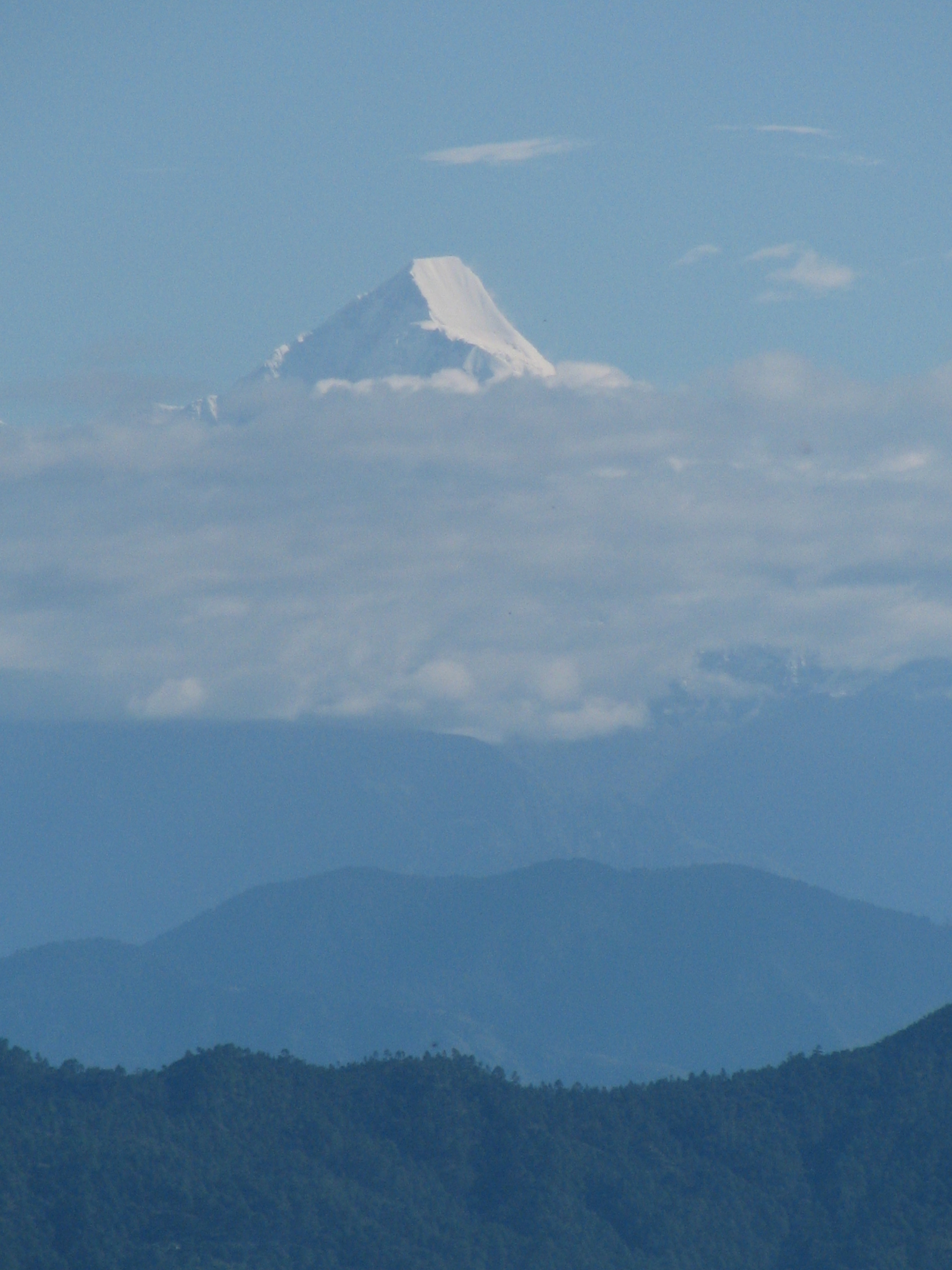
At 6861m, Nanda Kot is the highest peak in the impressive arc of mountains guarding the Pindari Glacier area in Kumaon. On the map, this place falls in the eastern half of the Indian state of Uttarakhand through which the Central Himalaya passes.

In 1989, a youngster from Kumaon’s Munsyari region – to the east of Nanda Kot and not far from the Nepal Himalaya – reached the summit of the peak with a team from Lucknow, the city where he studied.

Willing to do anything to be on a mountaineering expedition, he had literally worked his way to the summit doing all sorts of jobs for the expedition. Atop Nanda Kot, he was happy for mission accomplished. He had no idea of what lay ahead, for although at ease at altitude reaching thus far had been quite a journey for the young man hailing from Bona, a village 2200m up in the Kumaon Himalaya and roughly 35 km away from Munsyari. He knew he wanted to return to mountaineering but just then it all seemed too much for him. Certainly he doesn’t recall giving any special attention to the eastward stretch of the Himalaya moving into Nepal, where on the edge of that country and Tibet towered the world’s highest peak.

On Kanchenjunga (Photo: courtesy Love Raj Singh Dharmshaktu)

On Kanchenjunga (Photo: courtesy Love Raj Singh Dharmshaktu)

Nanda Kot was the young man’s first expedition. Life continued nondescript. He did his `adventure course’ from the office of UP Tourism’s Officer on Special Duty (OSD) in Uttarkashi (those were the days of undivided Uttar Pradesh [UP], when the yet-to-be Uttarakhand was still part of the large state of UP). The facility provided a taste of adventure to school students; teachers, young people. He worked there as a help earning Rs 75 daily. In 1990, he did his Basic Mountaineering Course from the town’s Nehru Institute of Mountaineering (NIM), following it up with courses in Advanced Mountaineering, Search & Rescue and Method of Instruction. In 1992, he found berth on an expedition to the 7516m-Mamostong Kangri in Ladakh. Returning from Ladakh he moved to the 6236m-Nanda Bhanar, reaching near the summit with an expedition from Lucknow.

On Kanchenjunga (Photo: courtesy Love Raj Singh Dharmshaktu)

On Kanchenjunga (Photo: courtesy Love Raj Singh Dharmshaktu)

In 1997, the young man was Liaison Officer for a British expedition to the 6309m-Nanda Ghunti, led by Martin Moran. That trip exposed him to alpine style ascents which typically feature a small team with little hired help and climbers doing everything themselves. He then rushed to Gangotri where a team from Mumbai engaged in a set of pre-Everest climbs had asked him to join them. Their invitation is a complicated story, the crux of which was his role some time before in trying to retrieve the body of a Mumbai mountaineer. Eventually, the body was not retrieved but word reached Mumbai of the helpful young man. So, when Mumbai put together its first civilian expedition to Everest (Tata Group was the main sponsor) under the leadership of Rishikesh Yadav, our young man was made team member. Months later, in 1998, two summit windows would open up for the Mumbai team during their climb from the Tibet side. In the first, Surendra Chavan, then working for Tata Motors, would reach the summit of Everest (8848m). In the second, a young man, who almost ten years before had been on Nanda Kot stood at the world’s highest point. Expedition over, he returned to his job at the OSD. But Everest and Love Raj Singh Dharmshaktu had commenced a journey.

May 2013 marked sixty years since the first ascent of Everest by Tenzing and Hillary. In a world where people are introduced as `Everester so-and-so,’ Love Raj carried his life in mountaineering lightly on his shoulders. For one, he doesn’t call himself `Everester.’ He is very unassuming, walking casually with slightly stooping shoulders, at peace with the world – which was how he walked in to the office of the Indian Mountaineering Foundation (IMF) in New Delhi, March 2013. People said hello and as we sat in the cafeteria for an interview, an official wished him luck for an upcoming trip to Everest and requested him to look after the others too for he was by now among the most experienced climbers in India for attempting Everest. Should that trip happen, it would be Love Raj’s seventh shot at the summit. He was already the first Indian to have successfully climbed Everest four times.

Love Raj on the summit of Everest (Photo: courtesy Love Raj Singh Dharmshaktu)

Love Raj on the summit of Everest (Photo: courtesy Love Raj Singh Dharmshaktu)

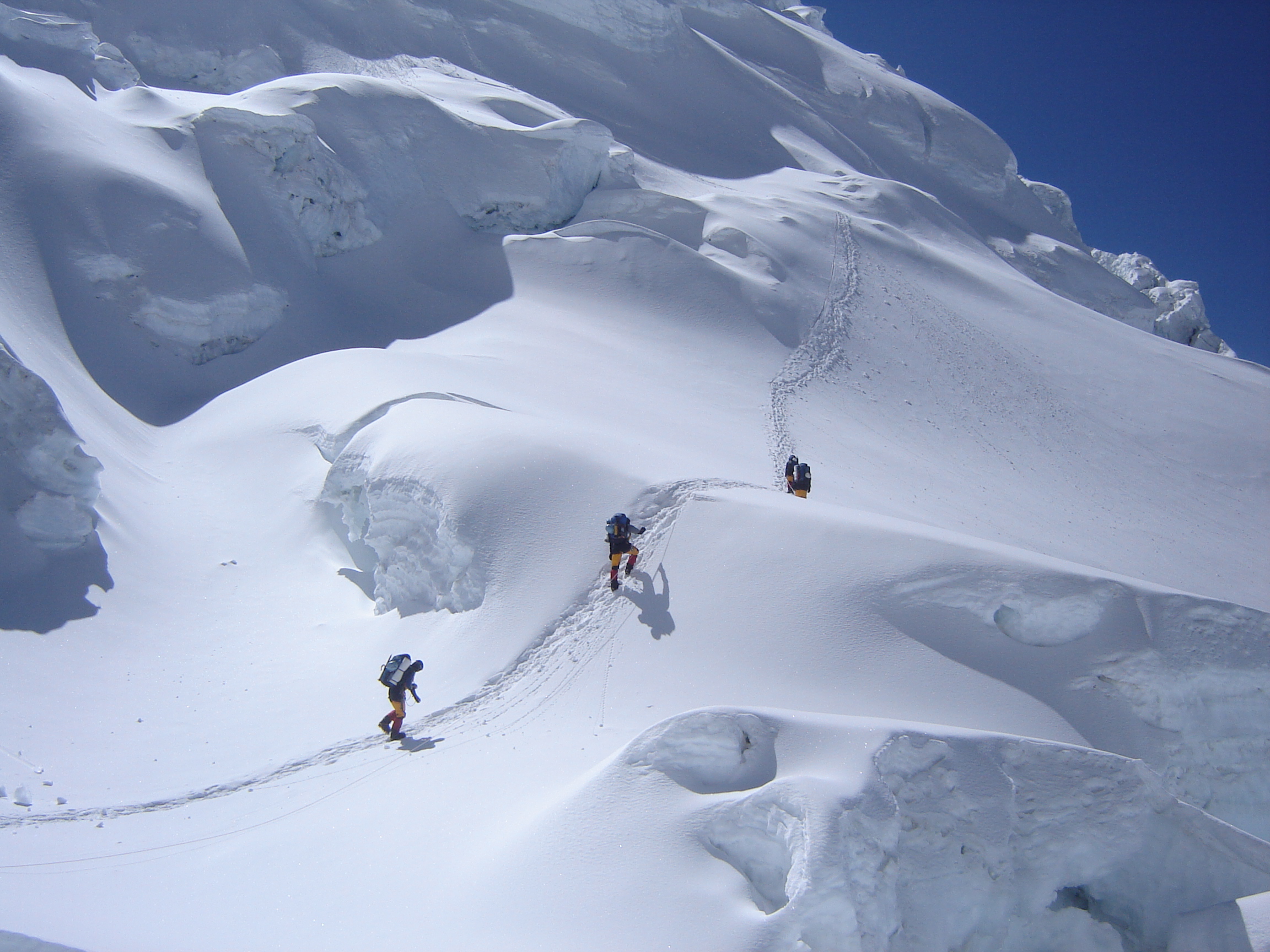
Everest is probably the best studied 8000m-peak. `Wired’ should be the word, for its normal climbing routes have been so well mastered by commercial agencies that save for vagaries of weather and the trade’s own avarice causing congestion and accidents on the mountain, well performing clients are nearly assured of a summit. An Assistant Commandant with the Border Security Force (BSF), some of Love Raj’s successful ascents were on the normal route. But look closer and it isn’t that simple. He tried and lost on the less wired tough routes. Point is – he tried. In 1999, noted mountaineer Santosh Yadav led an Indian expedition to Everest’s Kangshung Face, among the toughest mountain faces in the world. Love Raj was part of it. Between Camp 2 and Camp 3 he was hit by a falling stone that smashed his goggles and injured his eye. He had to be evacuated. In 2001, Loveraj was back on Everest, again on a route on the East Face in a team led by Santosh Yadav. The team got to the highest point yet reached on that route, he said. Meanwhile with the BSF, he climbed Satopanth (7075m), Kamet (7756m), Mana (7274m) and Abi Gamin (7355m). In 2006, he reached the top of Everest with a BSF expedition. In 2008, on another BSF expedition, he successfully climbed Kanchenjunga (8586m). In 2009, as climbing leader on NIM’s Everest expedition, Loveraj reached the summit for a third time. His fourth time on the summit of Everest was in May 2012, part of the Eco Everest Expedition organized by Nepal’s Asian Trekking with a berth for himself sponsored by Woodland, the well known shoe and apparel brand. On this trip, one that also cleaned up the mountain, Love Raj did more than the regular clean-up procedures, picking up garbage even from the approaches. He also attempted to climb without using bottled oxygen but eventually submitted to its use from higher camps.

Love Raj Singh Dharmshaktu (Photo: Shyam G Menon)

Love Raj Singh Dharmshaktu (Photo: Shyam G Menon)

A superlative known worldwide, Everest attracts for the glory it promises. Successful climbers become famous. Pay Rs 13-15 lakhs (1300000 to 1500000), another Rs 2.5 lakhs or so for equipment – all this is accessible, courtesy a commercial trip. This has diluted the sheen of Everest. However from a climber’s perspective, Everest is any day challenging and particularly challenging along its less climbed faces where few trophy hunters go. For example, Love Raj believes that Kanchenjunga is a technically difficult (he also loved its isolation with no other team around) but safer climb than Everest. Accounts of Everest’s East Face are replete with avalanches and seracs while on its normal route lay the Khumbu Icefall. So why does he keep going back? Love Raj attributes that to a desire to test himself, Everest being well known (he doesn’t deny that) and the fact that some of the opportunities he got were to climb from less attempted faces. Both the East Face expeditions, he said, progressively leached fear away from him as he improved his technical skills. Most important, Love Raj credits his good fortune at being able to visit Everest repeatedly, to his humility, born from a hard life in the mountains. “ I struggled in life. No work on any expedition was below my dignity to do. That baked my character and even now I don’t hesitate to do any work on an expedition. I know struggle and I know when someone else is struggling,’’ he said. Asked for his impression, Rishikesh Yadav, who led the 1998 Everest expedition described Love Raj as “ tough, dedicated and resourceful.’’ Love Raj is a recipient of both the IMF Gold Medal and the Tenzing Norgay Adventure Award.

Bona, the village where Love Raj grew up (Photo: Shyam G Menon)

Bona, the village where Love Raj grew up (Photo: Shyam G Menon)

Interview over, we had lunch at a restaurant nearby. I found that Love Raj had turned forty just the previous day. He talked affectionately of his new born son. His wife Reena is a mountaineer, an outdoor educator (she has worked with the US based-National Outdoor Leadership School [NOLS]) and the first Indian woman to ski to the South Pole. Life had come a long way since Nanda Kot. On the evening of May 21, 2013, I chanced to call up Reena in Delhi. According to her, early that morning, around 6 AM, Love Raj reached the summit of Everest; his fifth successful climb to the top of the peak. The news arrived through agencies in Kathmandu, she said.

In 2014, Love Raj was one of the recipients of the annual Padma awards for civilians, given by the central government. He got a ` Padma Shri.’

For all that happened since 1989, he doesn’t recall paying any special attention to the eastward stretch of the Himalaya, from the top of Nanda Kot.

He had been just happy for first mountain summit reached.

Please note: the height of peaks are as mentioned in Wikipedia and the Himalayan Club Journal.

(The author, Shyam G Menon, is a freelance journalist based in Mumbai. This article was originally published in 2013 in The Hindu newspaper.)

OLD WEATHER NO MORE

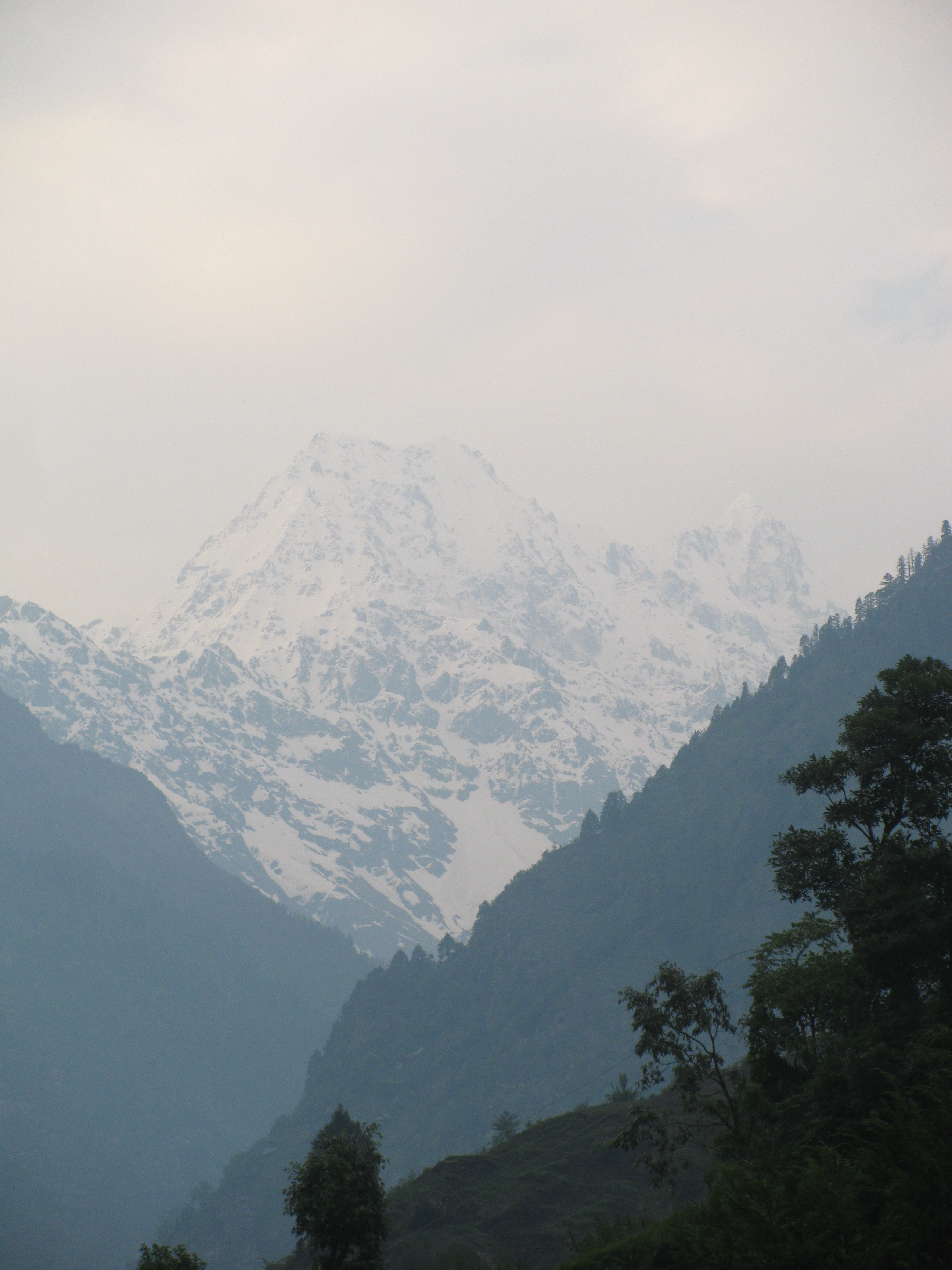
Panchchuli range at Munsyari; the normal view on a clear evening. (Photo: Shyam G. Menon)

Panchchuli range at Munsyari; the normal view on a clear evening. This picture was taken in fall 2013 (Photo: Shyam G. Menon)

July 2nd; it finally rained in Mumbai.
One hopes it is the monsoon.
Hope is a good word.
The morning run was wonderful.
Drenched in steady rain, shoes soaked by water collected on the road.
The following is an account from earlier days.

At his house in upper Paton, next to the trail leading to eastern Kumaon’s Ralam Valley, Kharak Singh empathized with the weather beaten hikers relishing the roti and daal his family had made.

Over a long trek of 44 days, threading various trails from Garhwal to Kumaon, we had precipitation in some form – rain, hail or snow – for some duration, everyday, for more than 30 days. Only the balance was totally precipitation free days. Singh was a friend, known well to one of us. In Paton, we decided to say hello and seek a break from our daily routine of cooking food. During dinner, he listened to our story. “ The weather has become unpredictable,” Singh said shaking his head.

Late-May 2014: Families in Paton were gearing up for their annual migration to higher pastures and farm lands. In summer they move up; in winter, they move down. Even the local school – teacher, students, books et al – migrates to premises higher up in Ralam for 3-4 months. Kharak Singh’s family was preparing to shift. Provisions had been bought. Two days after we had dinner at Singh’s house, we found pack loads for horses, mules and goats being readied. A white ram bolted trying to shake off the gunny bag strapped to its back. It ran around the house, ran circles around trees. Kharak Singh laughed; his grandchildren even more. The mirth hid a reality. “ We are already ten days late,” he said attributing the delay in migration to the fickle weather and untimely showers.

Snow at Sundardunga, March 2014 (Photo: Shyam G Menon)

Snow at Sundardunga, March 2014 (Photo: Shyam G Menon)

Similar to what we experienced in the early part of our hike, precipitation had apparently occurred here in the East Kumaon hills too. Then it gave way to welcome warmth, which grew to an unexpected heat. March to June is traditionally the Indian summer. In the Himalaya and while hiking there, it is never exactly so. The occasional shower characteristic of specific valleys, is a given. Further, it snowed well last winter. In early March, on a hike preceding the current hike, some of us had post-holed through thigh deep snow at places known to host snow at around 11,000 feet. With heavy pack on one’s back and leg stuck thigh-deep in gaps between boulders and tree roots concealed by snow, often, there was no way out except to slowly wriggle the leg free. It also rained in March making for a cold, wet environment.

By April-May and with the rains still around, villagers expressed concern at what the unseasonal showers meant for farming. In Namik, a villager quipped that life in Uttarakhand was beginning to resemble Chirapunji’s, once the wettest place on Earth. That was an exaggeration likely inspired by rain induced-calamity, a regular feature in recent years in the Himalaya. In 2013, hundreds of pilgrims had died in Uttarakhand following cloud burst and flood. It haunts. The worry colours comments about the weather. Not everyone inconvenienced by weather counted on pilgrimage and tourism for sustenance. Farmers were more matter of fact. One late evening at Bhainsia Kharak, a high altitude pasture between the Saryu and Ramganga valleys, we met a group of villagers with a goat in tow. Their agenda was literally down to earth. As the goat wandered around eating grass and licking our backpacks, the villagers informed that the animal was to be sacrificed to appease the local gods and usher in fair weather for agriculture. Unseasonal rain wasn’t good for crops in the field. “ Everything will be fine from tomorrow onward,” one of them assured.

The next day dawned clear. At the nearby mountain pass, we came across the villagers, idling after the early morning sacrifice. Then over the next couple of days, the rising heat grew so annoying that we found ourselves praying for a cold shower. It came, the sacrifice on Bhainsia Kharak notwithstanding.

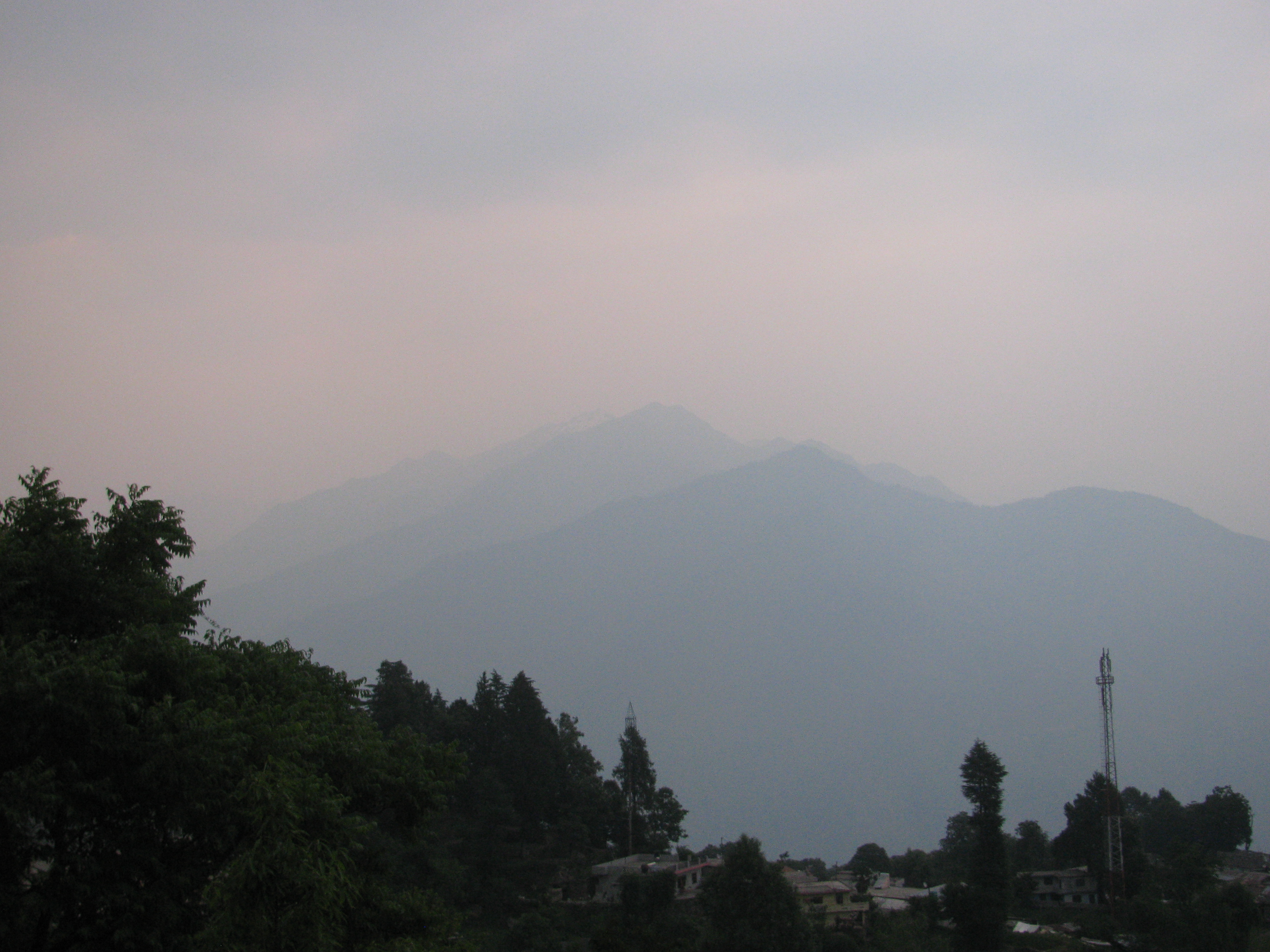
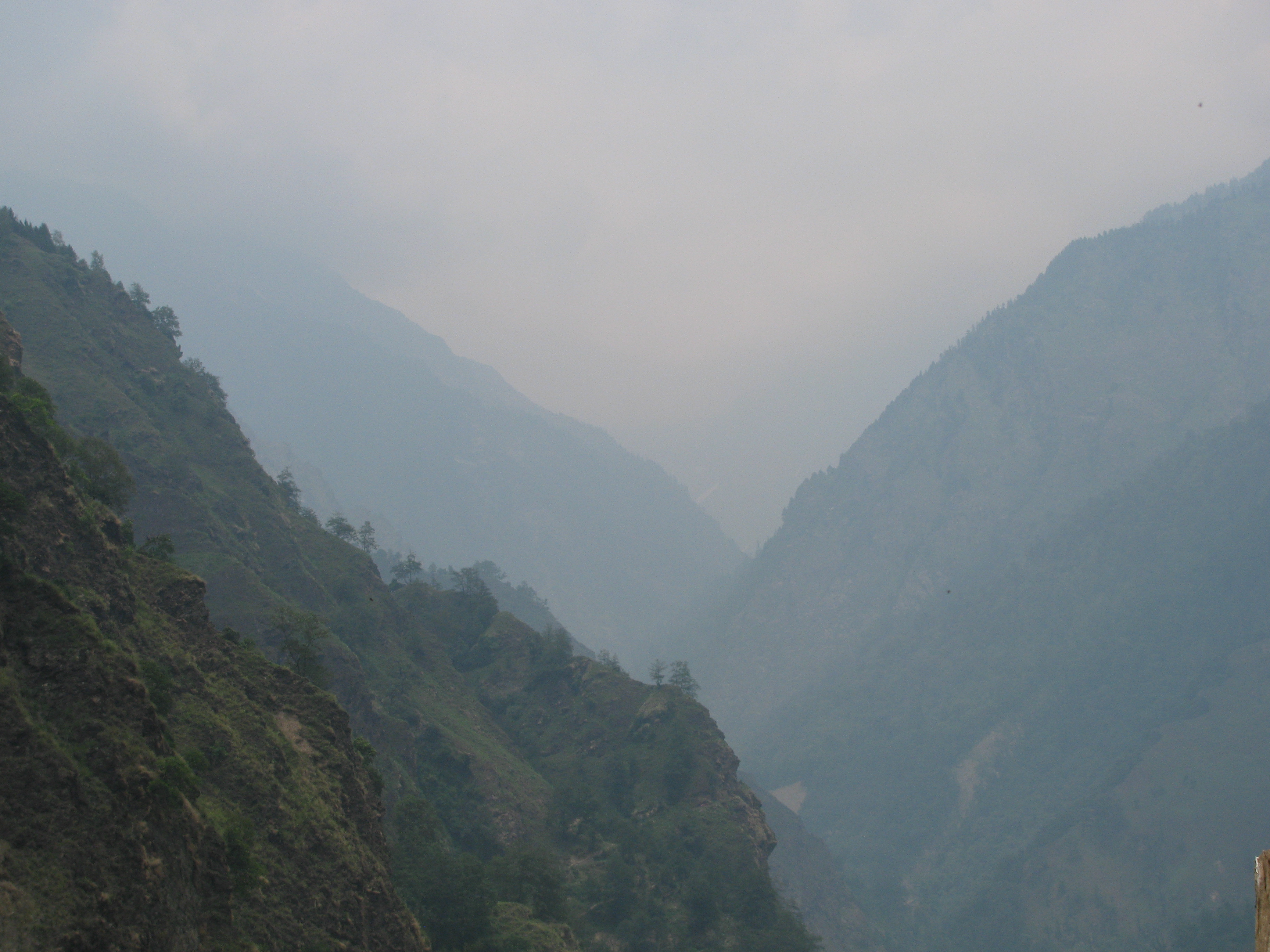
“ I don’t know what’s going on but nowadays when it rains, it pours and when it is expected to be warm, it is hot,” Kharak Singh said. His observation seemed closer to fact; that’s the shift in weather pattern happening. As the heat increased, dust and smoke invaded the high ranges. It was the likely product of distant forest fires, perhaps smog from the plains too. After some days, the persistent heat culminated in rain. The cyclical process was classic high-mountain but the intensity of wet and warmth had changed. Post rain, the suspended dust settled. From a ridge overlooking the Goriganga River and the trail to Milam Glacier on the opposite side, we appreciated the visual relief. It was beautiful mountain world revealed.

Munsyari, second week of June 2014. Somewhere behind that haze is Panchchuli (Photo: Shyam G Menon)

Munsyari, second week of June 2014. Somewhere behind that haze is Panchchuli (Photo: Shyam G Menon)

We got back to a Delhi boiling in the 40s (centigrade). Two days later, a dry, summer storm slammed the capital city. The world darkened with approaching dust and foliage swayed as though a T-Rex from Jurassic Park was ripping through it. Precipitation was little but the high speed-wind felled trees. The next day’s paper said: nine dead. Outside my room with ceiling fan, the scorching Delhi summer continued. Some days later in Ranikhet, I got my first ringside view of a forest fire. I felt the hot wind from the fire, in my face. I saw dry vegetation burn with a crackling sound. I had long known that pine forests are homogenous. The acidic pine needles fall on the ground and make it inhospitable for other plants and trees. They discourage variety in vegetation. Now I learnt another dimension – dry pine needles burn easily. Add to it, pine cones (they burn well) and hillsides; you have a fire that reminds of medieval wars, when armies used to roll down barrels of burning oil and tar. “ Pine cones roll off and spread fire. That’s why, sometimes, a forest fire on a hillside spreads in discontinuous ways,’’ Thakur Singh explained. We had come to assist a neighbour whose house was in the path of fire. When we poured water on the spreading forest fire it merely paused and smoked before resuming its wind aided advance. An hour later, the wind stopped and with it, the fire subsided; then died. Apart from an abandoned house with roof covered in pine needles, everything else survived safe. The forest floor was black. A dozen human beings, neighbours turned fire fighters, wiped the sweat off their brows. They had seen such fire before; they will see it again.

Typically the monsoon reaches India in June. It is both a life giver and a complex weather phenomenon formed through developments straddling a vast span of the globe. Early June, news reports talked of a monsoon, likely below normal. To blame is El Nino in the far off Pacific near Chile. Impacted, is South Asia half a world away. Such is the networked architecture of the planet’s weather! Illogical and lacking science it may be – but on the trail, we had speculated during rainy days whether such untimely and enduring showers in summer could mean a weak monsoon later. We are not meteorologists; just hikers.

When the haze briefly cleared at Bona (Photo: Shyam G Menon)

When the haze briefly cleared at Bona (Photo: Shyam G Menon)

Bona's view; lost to haze again (Photo: Shyam G Menon)

Bona’s view; lost to haze again (Photo: Shyam G Menon)

Munsyari is famous for its view of the Panchchuli range. June second week: There is no trademark Panchchuli in Munsyari’s scenery. Instead, there is a thick haze. The Panchchuli is a major mountain range in these parts with the highest peak rising to over 22,000ft. They are also a marvellous sight. The haze had spray-painted them out. In the journey to this corner of Kumaon, I had seen table fans in the rooms and shops of the lower hills. Bageshwar had been baking hot and with erratic electricity supply to boot. Feeling stuffy, I had got out of my oven of a tiny lodge-room and walked aimlessly on the street. Yet Munsyari’s loss captivated. A whole mountain range wiped out from view said something of our dry, dusty summer. It was the same at Bona village, closer to the high mountains, from where you normally glimpse, at the apex of Penagad (a local name for the adjacent stream and its valley), a small portion of the range. An evening shower (the typical local outcome of extended heat) bared the peaks upstream, till the haze swallowed it again by next afternoon. Mathura Devi, longstanding resident of the village said, “ It is hotter than before, the haze is more and when it rains, it is heavier than before.”

The observation sounded familiar.

It is old weather no more.

Yet in this country, we have people who doubt climate change.

Maybe they live in climate controlled-rooms. Nobody outside and moving escapes the weather.

End June: am back in Mumbai. Aside from weak drizzle, that too just once or twice, there has been no rain here. As if with great difficulty, the sky occasionally gathers grey and then all the clouds blow away. Marine Drive resembles a magnificent amphitheatre for the city’s famous bay and its sky above. During monsoon, that sky is brooding dark; the sea, it lashes against the sidewall and sprays those walking by in foam. This time, the sea was calm; the sky, a vast vacant expanse in which a few clouds casually sailed by. Over June 1st to 25th, the deficiency in rainfall in India was around 40 per cent. Latest forecasts cited potential monsoon recovery by July 6th. The past few years have been years of economic inflation with price rise for one reason or another. Anyone would tell you that a weak monsoon could mean a bad year for agriculture with potential impact on food prices, in a country where food prices anyway rise thanks to hoarding. Amidst this worry, the government gifts the country a stiff hike in rail fares and then partially rolls it back. Inflation is like climate change. You don’t feel it in controlled atmospheres afforded by money and power. I am sure that as with climate change, there are people around asking – inflation? What inflation?

Meanwhile, there was news from Assam in North East India: a relentless downpour and flash floods in Guwahati.

(The author, Shyam G Menon, is a freelance journalist based in Mumbai. An abridged version of this article was published in The Telegraph newspaper.)

WALKING WITH NAIN SINGH

The books on Nain Singh Rawat published by PAHAR (Photo; Shyam G Menon)

The books on Nain Singh Rawat published by PAHAR (Photo: Shyam G Menon)

In the early 1970s, Dr Shekhar Pathak and Kundan Singh Rawat were students at Almora.

Pathak was the editor of the college magazine.

When it was his turn to write as contributor, Kundan submitted a piece titled simply: ` Nain Singh Rawat CIE.’

That was Pathak’s introduction to Kundan’s less known side – he was the great grandson of Nain Singh Rawat, one of the Pundit brothers from Kumaon’s Johar valley near Munsyari, famous for the work they did in mapping and documenting Tibet.

In the early nineteenth century, the British were hungry for cartographic details of a mysterious Tibet closed to Europeans. The desire for information was catalysed by the Great Game, that shadow dance of mutual intrigue enacted by Russia and Britain to extend their influence in Asia, particularly the Himalaya and Central Asia. Each worried that the other would dominate the region; their competition made little known kingdoms and places on the map, suddenly important. The effort to know these places triggered exploration and military campaigns, altogether lasting approximately a century. The work Nain Singh and his fellow surveyors produced dwarfs political motives that may be attributed to their journeys. It brought to light many details of the Himalaya, like the eastern course of the Tsangpo useful to establish that this big river in Tibet and Assam’s Brahmaputra were one and the same. Nain Singh travelled in disguise usually as a Tibetan monk, surveyed without complicated instruments and concealed the data in prayer wheels. He trained to walk with strides of a particular length always so that distances could be measured. Unlike travel for leisure, which is what many of us do, this was dedicated, disciplined work. Years later, when Sir Francis Younghusband led British forces to Lhasa, his surveyors would discover that Nain Singh’s records were accurate and reliable despite the few resources he worked with.

Pathak had been previously drawn to Nain Singh Rawat during his periodic visits to the office of `Shakti,’ a newspaper published from Almora. Their calendar had featured important personalities of Kumaon; including Nain Singh Rawat and Kishen Singh Rawat, the best known of the Pundits. `Pundit,’ a title conferred on teachers, was how the British addressed their Hindu surveyors. Kundan’s article interested Pathak. He helped edit the piece, little knowing where the curiosity would take him.

In October 1973, Pathak trekked to the Pindari Glacier and wrote a travelogue, later published in `Shakti.’ It quoted from the book `One Dimensional Man’ by Herbert Marcuse. The article was seen by Sunderlal Bahuguna, closely identified with the Chipko Movement, one of the most important environmental campaigns of modern India. In December 1973, Bahuguna spun the idea of a walk from Askot to Arakot, an east-west traverse of the Central Himalaya region now falling in the state of Uttarakhand. To maximize the education and awareness about villages and people en route, it was decided that participants – including Pathak – would carry no money. Although Pathak couldn’t do the route entirely given his college exams, four people – Kunwar Prasun, Shekhar Pathak, Shamsher Bisht and Pratap Shikhar – walked much of it during May-July 1974. By December that year, Pathak had joined the Kumaon University to teach history. He was based mostly in Nainital; he would take his PhD in 1980 and go on to become one of the best known historians from Kumaon.

The interest in Nain Singh Rawat continued.

In 1975, `Saaptahik Hindustan,’ a weekly magazine, carried an article by Dr Ram Singh, then a lecturer in Hindi literature with keen interest in history, on Nain Singh Rawat. The article quoted from the explorer’s diaries. This was the first time Pathak heard of Nain Singh’s diaries. According to Pathak, Kabindra Shekhar Upreti, who had taught many years in lands inhabited by the Bhotias, was instrumental in bringing the diaries to light. He was principal of the Government Intermediate College in Munsyari, when somebody showed him the diaries. After retirement, Upreti, moved to Nainital bringing along with him the two Nain Singh diaries. “ Seeing the diaries was a revelation,’’ Pathak said. The first of these diaries was quite autobiographical providing previously unknown vignettes of the explorer’s early years including his father’s life. Upreti had taken care to wrap the old diaries in a piece of cloth, a level of care that does not appear to have graced all subsequently recovered vestiges of Nain Singh’s work. The year was probably 1976. Nainital had Nain Singh’s diaries, a community of intrigued researchers and no photo copying machines to make copies of the diaries for study and ensure that the originals were undisturbed.

By 1982, Pathak would be a founder of the People’s Association for Himalaya Area Research (PAHAR). This organization brings out a publication called PAHAR, of which Pathak is founder editor. Kamal Joshi, a keen trekker, student of chemistry and later photo editor of PAHAR, was at hand to help when the Nain Singh diaries reached a Nainital with no photo copiers around. He set up a temporary dark room and photographed and printed each page of the diary, probably a hundred in all. Over three years – 1976, 1977 and 1978 – Pathak, his wife Dr Uma Bhatt – she is a Hindi scholar – and their friends, wrote Nain Singh’s diary on paper. Now they were getting an insight into the person and for Uma, a way to look at the explorer through his language and style of writing. According to her, Nain Singh wrote in a form of Hindi that can be described as `Khadi Boli,’ which is not chaste Hindi but a Hindi mixed with Persian words. It is a more spoken form of the language and to that extent probably easily connecting to an audience. “ Nain Singh’s diaries can be considered to be one of the first such travelogues in Khadi Boli Hindi,’’ she said.

Dr Uma Bhatt and Dr Shekhar Pathak (Photo: Shyam G Menon)

Dr Uma Bhatt and Dr Shekhar Pathak (Photo: Shyam G Menon)

In 1978, another diary surfaced at the house of a freedom fighter. This time, it wasn’t in Nain Singh’s hand writing, it had been copied and translated into English. Half of this diary was personal; another half was related to his first trip into Tibet. But there were sections missing. All the diaries were typed out. In 1985, one of Nain Singh’s diaries – on his second journey to Tibet – was published as a seven part-series in `Nainital Samachar,’ a local fortnightly. In 1986, Pathak presented a paper on the importance of vernacular diaries with Nain Singh’s work as case in point, at the Indian History Congress. PAHAR, the journal, also published portions of the explorer’s diaries. In 1985, `Himalaya Today’ published a long article on Nain Singh Rawat authored by Dr Pathak and Dr Uma Bhatt.

Years of seeking to know about Nain Singh’s life made Pathak look for details wherever he went. In 1984 on a repeat of the earlier Askot to Arakan walk, at Madkot village, he was shown the original primer for surveying – a text book for surveyors – which Nain Singh had written and was published by the Survey of India in 1871. In 1994, while on a visit to Pakistan, some German friends helped him access relevant portions of the seven-volume report of the Schlagintweitt Brothers, German geographers with who Nain Singh had done his first trip of exploration in the Himalaya. The full report of the Schlagintweit Brothers, Pathak saw some years later in Stockholm and still later, at the Survey of India. In 1991, Pathak himself went to Kailas Manasarovar; in 1996 and in 2006 he visited Lhasa, in 2002 he visited parts of Tibet to the north of Everest (he crossed from the Nepal side). The eastern extreme of Nain Singh’s travels – the subject of his epic last journey from Ladakh to Tawang – Pathak managed to get some idea of that in 1992-1993, through visits to Arunachal Pradesh. Some of these trips, Pathak said, had been emotional. Eventually, as a researcher at the Delhi based-Nehru Memorial Museum and Library, Pathak gained access to the Survey of India archives at Dehradun and records at their old office in Kolkata (Calcutta).

In 2006, PAHAR published a three volume set called `Asia Ki Peeth Par’ (On the Back of Asia: life, explorations and writings of Pundit Nain Singh Rawat) compiling Nain Singh Rawat’s diaries and the reports on his journeys submitted by the British. Nain Singh was born in the same year as the Royal Geographical Society was founded. The Society awarded him the Patron’s Medal in 1877. In deliberations preceding this and to impress upon the Society the magnitude of this exploration by a non-European, Col Henry Yule, who would be vice president of the Society from 1887 to1889, argued that Nain Singh’s contributions were best compared in the western world to the likes of David Livingstone and “Grant,’’ most likely James Augustus Grant.

Kundan Singh Rawat, the man responsible for inspiring Dr Pathak’s forty year-old journey with Nain Singh Rawat’s story, is no more. In 2004, the Indian government brought out a postage stamp featuring Nain Singh. Despite books by Dr Pathak, Dr Uma Bhatt and others, including mention in popular books by foreign authors on the Great Game and the exploration of the Himalaya, Nain Singh Rawat remains little known outside the state of Uttarakhand.

(The author, Shyam G Menon, is a freelance journalist based in Mumbai. This article is adapted from earlier pieces he wrote for the Facebook page of NOLS India and The Hindu newspaper.)