TAKING CHANCE

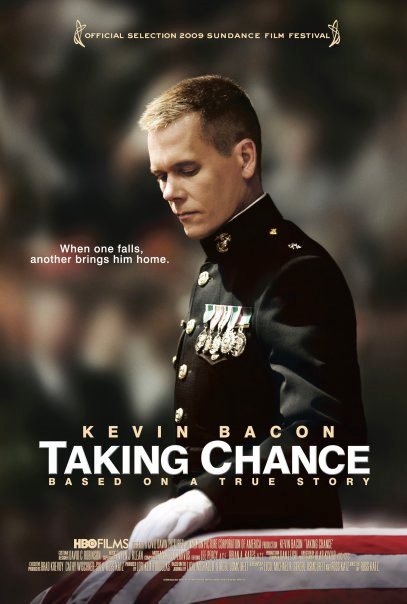
This image was downloaded from the Facebook page of the film. No copyright infringement intended.

I had no expectations when I clicked on ` Taking Chance’ on the streaming platform, Disney-Hotstar.

I was well, taking a chance.

The 2009 television film was based on a true story. It portrays the experiences of Marine Lt Col Michael Strobl as he escorts the body of fallen Marine PFC Chance Phelps (posthumously promoted to lance corporal) back to his hometown in Wyoming from the war in Iraq.

Aside from a black screen with just audio betraying the sounds of war at start, there is no depiction of war in the film. It is all about chronicling the movement of a body accompanied by escort to its eventual resting place at a cemetery.

Kevin Bacon as Lt Col Strobl speaks only as needed. If you didn’t know the actor from earlier films, the movie would have felt 80 per cent like a documentary, which it is not. It is a recreated account, filmed almost like a documentary and the effect of that economy in narrative style and idiom is stunning.  On the one hand, it is a truthful representation of how the body of a fallen soldier is escorted home in the US. You see the attention to detail as the body is made ready for transport at the mortician’s. The film’s story is also a bit extraordinary for it is not routine for the body of a PFC to be escorted by an officer. Lt Col Strobl volunteers for the job and the journey becomes an insight – for protagonist and audience alike – into how the civilian environment responds. At every juncture people seem quick to understand; they know protocol, they display their concern for the military, show their respect for fallen soldier.

For Lt Col Strobl, the journey also serves as opportunity to reflect because unlike the soldier he is taking home, following action in the First Gulf War he had asked for and got a desk assignment in the US to be close to his family. He feels ashamed of that and admits the same to a veteran of the Korean War he meets in Wyoming. The latter tells him not to feel so; he is as good a soldier as the one who lost his life in the line of duty and there is nothing to be ashamed of in loving one’s family. The revelation for me in this film was about how much set traditions tell stories by themselves. You don’t have to wrestle with life and squeeze out a narrative. Sometimes, life speaks. All that the film maker has to do is listen and document. The resultant idiom is frugal and apolitical. That is what makes ` Taking Chance’ brilliant. There is no question of the film having conveyed anything except what it said. It is a passive form of film making – maybe even an active choice to stay passive – and won’t meet the requirements of every story. But after years of the media squeezing out stories from life, this approach felt refreshing, relaxed and dignified.

` Taking Chance’ will remain one of the best films I have seen in recent times; recent because I was seeing it more than a decade after it was released. Besides the very structure and production quality of the film, there is another reason for my feeling so. The film is proof of the power of economy in military narrative. People love their soldiers. They always will. You don’t need to remind them. Civilians live ordinary lives. But as Lance Corporal Chance Phelp’s journey showed, they will emerge from the woodwork to honor the fallen.

(The author, Shyam G Menon, is a freelance journalist based in Mumbai.)

WHEN SOME OF US LOST SCREEN SPACE

Irrfan Khan (This photo was downloaded from the actor’s Facebook page. No copyright infringement intended)

What makes a good actor?

There is no one answer.

For the generation preceding mine, a great film and actor therein usually entailed drama. The elders grew up imagining family, men who protected, provided and were larger than life. When things became emotional in story (which was quite often) their actors sang, danced or emitted fiery dialogue, mediums within medium to amplify the drama. The realities shaping me were different. The world had become so overcrowded and competitive, that playing the old role of guardian either drained you or distracted you from better things to do. Women had become assertive and independent.  Not everyone dreamt of raising family. Many of us were no longer galloping on horseback for conquest and imagery. We didn’t want to. It wasn’t irrelevant for human being to right-size, even down-size and be part of the woodwork. We existed and were noticed only when we let ourselves be.

Needless to say, with this for my reality, I generally avoided Bollywood, still pushing king sized life. Not to mention – those inevitable song and dance routines, big, fat weddings and stylized feudalism. There were exceptions but you know what exception means; it isn’t the rule. One such exception was the 2012 movie – ` Paan Singh Tomar.’ That was the first time, I really noticed Irrfan Khan or maybe I should say he let me notice him. It was a good film (its production quality could have been better) and for me, easier to digest than the muscular, sharp-edged format the Milkha Singh biopic of 2013 embraced. Set in the past with matching period quality to movie, the sight of Irrfan Khan running on track harked of the simple, understated elegance seen earlier in films like ` Chariots of Fire.’ As the film on the athlete-turned-bandit faded from my memory, so did thoughts of Irrfan Khan. It was easy to live with his performances. He was already appearing in foreign productions – by end 2012 there were the ` The Namesake,’ ` Slumdog Millionaire,’ ` The Amazing Spiderman’ and ` Life of Pi’ – and his restrained style never threatened to settle like a big star or unquestionable institution in my head. In September 2013 a remarkable and utterly down to earth movie, ` The Lunchbox,’ released. It was a delightful film. I still recall leaving the theater thinking how beautiful Nimrat Kaur looked and with Irrfan Khan’s Saajan Fernandes, comfortably etched in my conscience as character emerging from Mumbai’s woodwork to grab my attention and then, disappearing back into it. That emergence and disappearance is just what life in big city is. Two years later, in 2015, it was ` Piku.’

By now, there was a pattern defining Irrfan Khan to me. He was a talented actor with capacity not to have any of his performances rest heavily on my mind. His was the very opposite of the dramatic dialogues to self in mirror, dialogues with God and eloquent speech before villain that were the hallmark of old Bollywood and still refused to vacate space totally. Irrfan felt light. Even the foreign productions he acted in were executed differently from traditional expectations. In years gone by, it was assumed that the barrier between Indian actors and opportunities in Hollywood was language; how you spoke English. Native diction was leveraged to either show servility and backwardness or invite mockery. Irrfan’s roles paid scant respect to that concern. He spoke English in the foreign productions confidently and as best as he could without straining to sound Hollywood-ish. You saw him hold his ground. From trying to impress, we appeared shifting to substance; defying stereotypes. For me, as viewer, that was yet another instance of him reflecting changed realities.

Another way of putting it would be: Irrfan was fantastic at being us; faceless and nameless with subtleties for high points, a dead eyed look to seem insensitive or a reluctant smile to convey connection and empathy. Like good writing, he went beyond immediate business paradigm deciding fame and reward, and perfected the craft. No fat, just lean delivery – that became his style. Embellishment was there, but sparse. He was a natural at working magic with less. All of this completely contrasted Bollywood’s known idiom of cliché and exaggeration passed off as acting. The last film starring Irrfan I saw was ` Karwaan.’

Irrfan Khan was in many ways, the cure Bollywood sorely required. Select vernacular film industries in India had already experimented with reality and changed. But a large section of Bollywood as well as portions of vernacular film industry reluctant to severe their umbilical cord with the old, were still battling inertia. They continued subjecting change to tradition and market, a situation aptly summed up by the late Rishi Kapoor when he pointed out that the market gets what it wants. The likes of Irrfan and the films they elected to act in conveyed hope of change. With Irrfan’s passing on April 29 a section of us – a section often denied expression by Bollywood – lost its face on screen.

(The author, Shyam G Menon, is a freelance journalist based in Mumbai.)


LESS FOOTBALL, MORE HISTORY BUT ENGAGING NONETHELESS

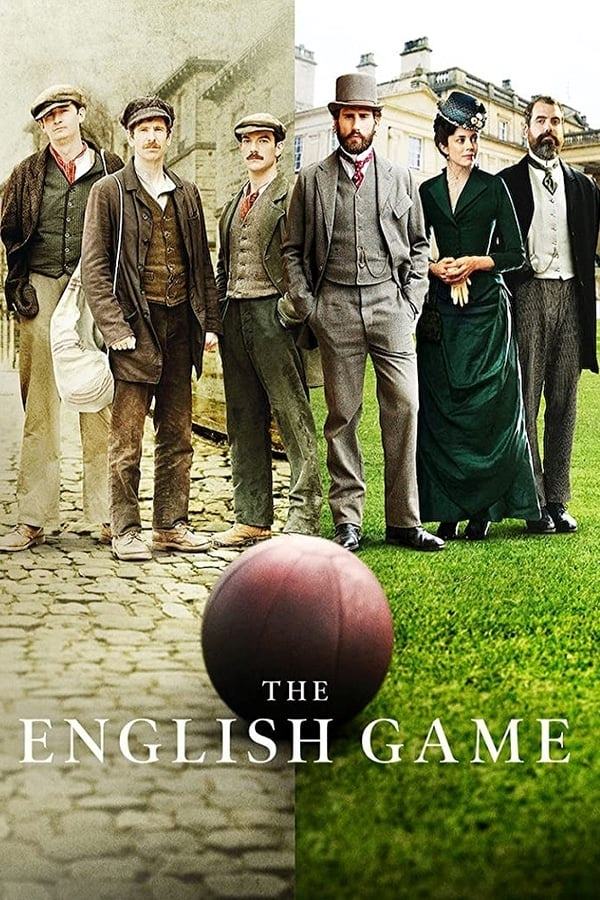
This photo was downloaded from the Facebook page of the TV series. No copyright infringement intended.

In 1999, actor-producer-director Robert Elmer Balaban asked film director, Robert Altman, if they could collaborate on a country house murder mystery. Altman chose Julian Fellowes, British actor and writer, to prepare the screenplay. The result was the 2001 movie, ` Gosford Park.’ Besides being murder mystery, it was a study of the British class system of the 1930s as outlined by the owners of the country house, their guests – all of them upper class and wealthy – and the staff taking care of their needs. Featuring an ensemble cast, the film was a commercial success. It was nominated for seven Academy Awards and won Fellowes an Oscar for Best Original Screenplay.

Almost 20 years later, the Fellowes touch – reminiscent of Gosford Park’s class study – may be tangibly felt in the TV series ` The English Game,’ released on Netflix in March 2020. The series wherein Fellowes has contributed to both writing and production, examines British football of the 1870s. At that time, it was a game controlled by the upper classes with social confrontation brewing thanks to an army of talent assuming shape in the ranks of the working class. The upper class, cocooned in tradition and comfort, treats the game as an extension of their lifestyle and licence to dominate. The working class, struggling to make ends meet, sees it as avenue for self-expression, an opportunity to level the social field and increasingly, as means to move up in life. At the heart of that last option is the early lot of talented players, paid money to represent working class teams. Given prevailing rules (it is the years before professional players became acceptable), such deals have to be kept a secret and when eventually sniffed out, critics view it as contamination of sport by commerce. Today, professional players and club transfers are part of football. The story as told by the TV series unfolds through an array of characters representing the class divide along with three footballs teams illustrating the predicament – Old Etonians, Darwen FC and Blackburn.

I haven’t seen ` Gosford Park.’ But the urge to read about that film and catch what little I could of it from the Internet was pronounced because well into ` The English Game’ it became evident that it wasn’t about football wizardry; it was about showing us a stage in the game’s evolution in the UK. The beautiful game is here a vehicle for acquainting us with a slice of old history, well emphasized therein being the class divide of early football and how view of world by sport eventually shifts perspective for those loving the game. Talent knows no class and you cannot stop the march of talent. ` The English Game’ is a well-made, well-acted series that should additionally interest audiences in India for a small detail tucked away in two inaccuracies related to the sport’s history, cited on Wikipedia.

The first inaccuracy in depiction of historical facts relates to overall time. The series gives the impression that its narrative happens in one season while in reality Ferguson Suter – one of the two main protagonists – took six seasons to be part of a FA Cup winning side. Second at the time of the incidents portrayed, Blackburn (shown as one team in the series) had two teams – Blackburn Olympic and Blackburn Rovers. The former is noteworthy as the first team from the north of England and the first from a working class backdrop to win the FA Cup, the country’s leading competition. This occurred in 1882-83. But Blackburn Olympic did not enjoy such success afterwards. The following year Blackburn Rovers won in the final and in the year after that, Olympic lost to Rovers in the second round. When the Football League was formed in 1888 with rule alongside that there could be only one club from each town or city participating, it meant Olympic out and Rovers in for Blackburn. In September 1889, Olympic shut down. In 2010, the Indian conglomerate V. H. Group with headquarters in Pune, bought Blackburn Rovers for 23 million pounds.

All in all, ` The English Game’ is a series worth watching. It captures a period of transition in the game; a transition well encapsulated by Suter’s observation in the series that if Blackburn isn’t allowed to play (over hired players present in its line-up) then those suffering won’t be just the players but also working class supporters, who after days of arduous work look forward to world recast by the talent of their local football team. See this series for early English football and a sense of what changed it. Not to mention – amid the wealth and big stars of today’s football, the series reminds you who actually forms the bedrock of support for the game.

(The author, Shyam G Menon, is a freelance journalist based in Mumbai.)

FROM NOWHERE TO MILLIONAIRE

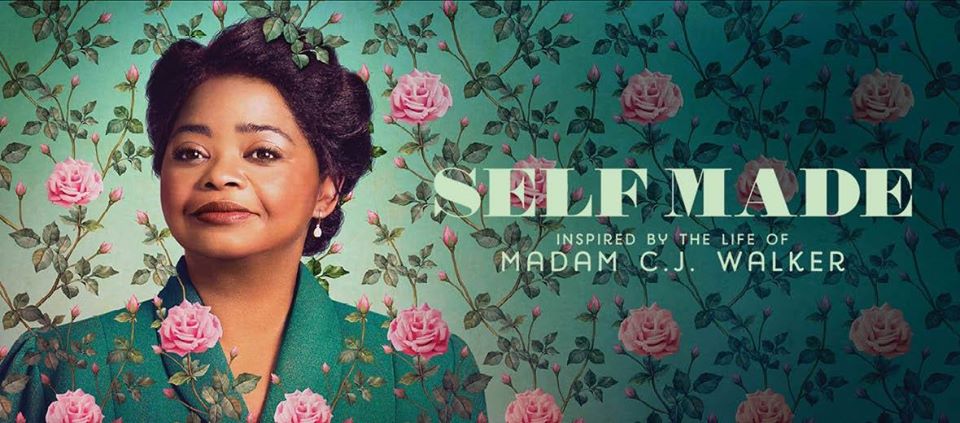
This photo was downloaded from the Facebook page of the TV series. No copyright infringement intended.

Among the many types of stories out there, the one about the underdog has always appealed.

We like a win. When the journey to victory is a case of clawing your way up from the bottom of the heap, we applaud. That’s the attraction in such stories.

The TV series ` Self Made: Inspired by the Life of Madam C. J. Walker,’ released in March 2020 on Netflix falls in this category. It tells the story of Madam C. J. Walker (born Sarah Breedlove), the first self-made African American woman millionaire in the US. The series is based on the biography, ` On Her Own Ground,’ by A’Lelia Bundles.

The TV series picks up Sarah Breedlove’s story at that stage in her life when she is trying to sell Addie Monroe’s “ Magical Hair Grower’’ in St Louis, Missouri. The year is 1908. A washerwoman, struggling to make ends meet, we are told through flashback that Sarah had suffered from severe dandruff and hair loss. It was a condition commonly found in the community, particularly among its poor sections having no access to good quality housing. To compound matters, her then husband – John Davis, was abusive. That’s when she meets Addie Monroe, also African American, who has a cream she made that can fix the hair problem. It works for Sarah. Impressed, she takes it upon herself to be a saleswoman for Addie but the latter – she is much better looking than Sarah and believes that looks matter for selling products – discourages the washerwoman and tells her to stick to her existing profession. This angers Sarah. She creates her own line of products, which given her new marriage to Charles Joseph Walker is sold under the brand: Madam C. J. Walker. That’s also how Sarah who begins to identify herself more and more with her work to the expense of all else, prefers to be called.

The story revolves around Madame Walker’s struggles as a woman, a woman of color and a wife, to steer her business to success. Funding is a big challenge. Hair care products for colored women don’t appeal to the men who control money.  Further, she is an unheard of woman and enjoys no recommendation from well-known names in society. But that does not dilute her drive. Sarah does not hesitate to dream of building up scale – setting up a factory – and becoming a millionaire like some men had already done in the US. The obsession creates rifts between her and her husband (Charles Joseph Walker is her third husband). And all the while there is the competition posed by the better looking Addie and her hair care products. She is as ambitious as Sarah and willing to play dirty to achieve her ends. Sarah’s story is as much rags to riches as it is a close look at old school capitalism. Above all it gives you a peek into what enterprise meant to a woman – a colored woman – those days; the difficulties she faced and the resolve she had to dip into to motivate self and achieve.

The casting is spot on and Octavia Spencer has done a damn good job, essaying the lead role of Sarah aka Madam C.J. Walker. The travails faced by the woman entrepreneur come through. However it must be pointed out that the narrative in the TV series is not completely true; some liberties have been taken with the characters. For example, Addie Monroe is a fictional character based on Addie Malone, who actually existed and was among the earliest African American woman millionaires. In real life, Addie – she too was in hair care products – is not said to have been as villainous as she is made to seem in the series. Also, Sarah’s daughter is portrayed as a lesbian in the series; in real life, that wasn’t the case. Wikipedia mentions both these departures from the truth.  The departures add spice to the story, especially the competition between the two women entrepreneurs, which provides palpable tension for several episodes of the series.

There is also a mild absence of the regular magic you associate with underdog stories mainly because Madam Walker’s character is firmly rooted in the human. We see her marriage to Charles Joseph Walker fail; as she becomes more involved with her work, he feels neglected and indulges in adultery. He also demands his share of importance given the business bears the Walker surname although the hard work and relentless commitment to enterprise is mostly his wife’s. It would seem the price every independent woman hauling the cross of tradition is forced to pay. But despite her own ascent through unflinching focus on business, Sarah ends up demanding a baby from her daughter for a business without heir is journey without purpose and continuity. Fiction or otherwise, at that point the modernity and liberalism you associate with the Madam Walker story falters before it is restored to dignity through recourse to adoption.

All in all, a fantastic story and a pretty well made TV series. It is recommended viewing, whether you have ample hair on your head or much less like me.

(The author, Shyam G Menon, is a freelance journalist based in Mumbai.)       

COOLER

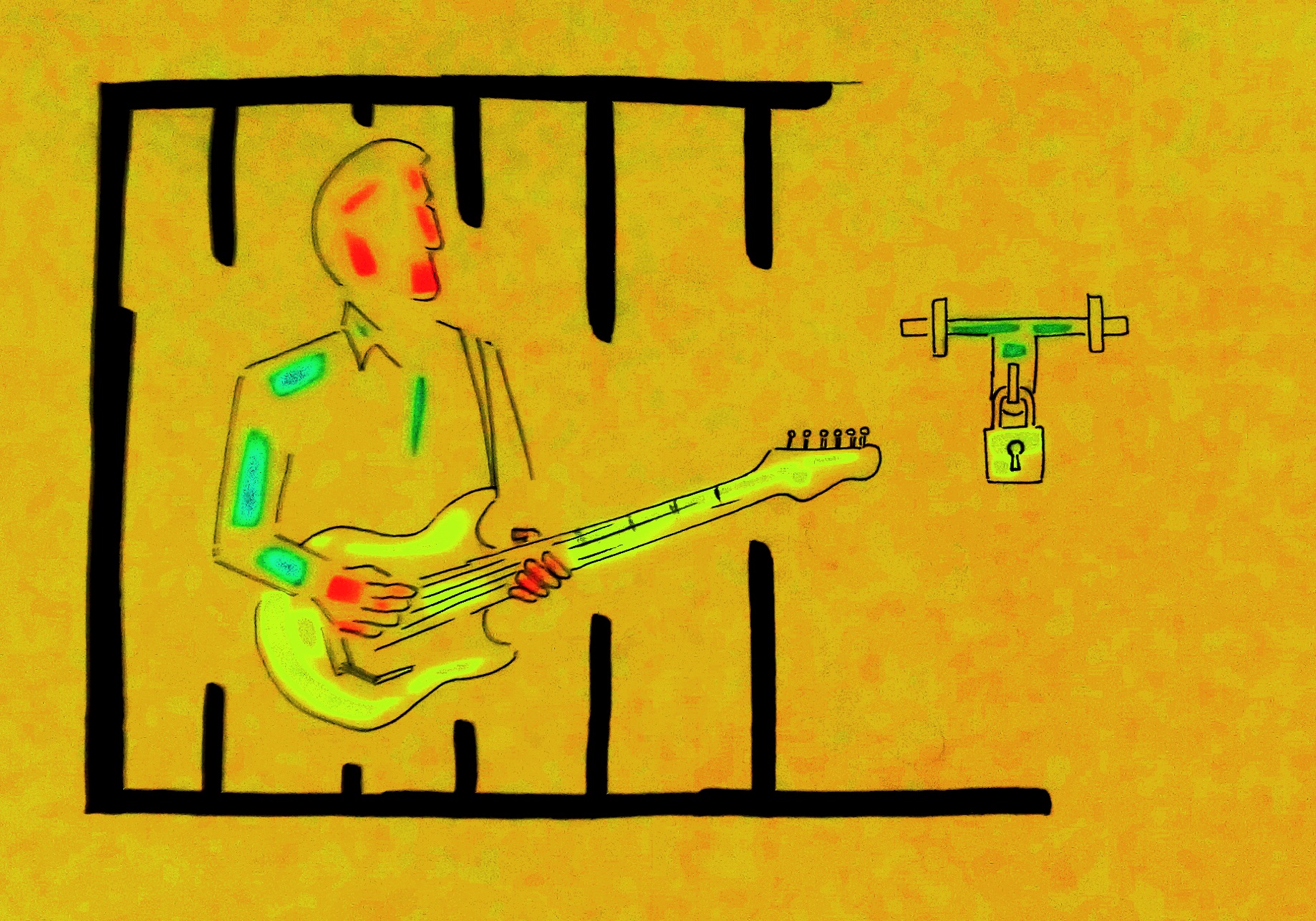
Illustration: Shyam G Menon

The other day I found myself thinking of the 1963 film ` The Great Escape.’

I saw it as a schoolboy. I also remember a book – it was a compilation of articles from Readers Digest – procured by my cousin’s family, which narrated the real story that inspired the movie. The film was hugely popular. For me, the bulk of its appeal revolved around Captain Virgil Hilts, the character played by Steve McQueen. I was too young to understand the gravity of war and the value of freedom. To my schoolboy brain, the act of tunneling one’s way to freedom from a Nazi prison camp resembled a cat and mouse game; an exciting one. It was another dimension added to the war comics and adventure novels that boys of that age indulged in. I loved the footage of Steve McQueen trying to escape on a motorcycle.

As I aged, the list of war movies I saw grew and my perspective became more critical. Both The Great Escape and films made so attributing a brand of smart bravery to the main protagonists, lost some of their old sheen. I began suspecting an element of playing to the box office in the film, which despite the holes critical gaze pokes in it, ranks even today among my all-time favorites.  Impressions from childhood are difficult to alter!

The Great Escape slipped into my imagination recently, in an unexpected way.

Cambridge dictionary describes the usage “ having a ball’’ so: to enjoy yourself very much. According to the website theidioms.com, “ having a ball’’ has its origin in the British culture of throwing balls (dances) in the 1900s. “ They would throw one to get to know each other in the society, show off their wealth or merely to have some fun in the times where entertainment as such, was not given priority in daily lives,’’ the website explained. If that be true, then in my opinion, that is a rather late association of the word `ball’ with fun. According to Wikipedia, the first authoritative knowledge of the earliest ballroom dances was recorded in the 16th century. On the other hand, by virtue of the fact that it moves, rolls, flies through the air and represents tremendous possibilities, the idea of ball as used in games, is older. From animals to human beings, everybody has fun with a ball. Its irresistible. Ideally, “ having a ball’’ should have originated from that simple, easily accessed fun; not some stylized dance. But then ` ideally’ is well just that and etymology is not always rooted in the ideal.

As the lockdown due to COVID-19 graduated from novelty to routine with commensurate alteration to the human experience alongside, I realized that I didn’t have a ball in the house. Given life in apartment complex, a tennis ball would have been apt. Bouncing it off the ground or a wall, while likely nuisance to the neighbors, has a calming influence. Not to mention – it improves eye muscle coordination and is, fun. Somewhere deep in the brain, a neuron fired and Steve McQueen’s Captain Virgil Hilts floated up in the imagination. Frequently dispatched to solitary confinement, Hilts – in the movie – was called “ The Cooler King’’ (cells holding just one prisoner were called coolers).  He would go in with baseball glove and ball, sit on the floor and pass his time bouncing the ball off the cooler’s wall. That’s how the movie signs off too. After most of those who escaped are killed or returned to camp, Hilts is locked up once again in the cooler. The guard, who is walking off after putting the prisoner in his cell, pauses to listen to the sound of ball hitting the wall.

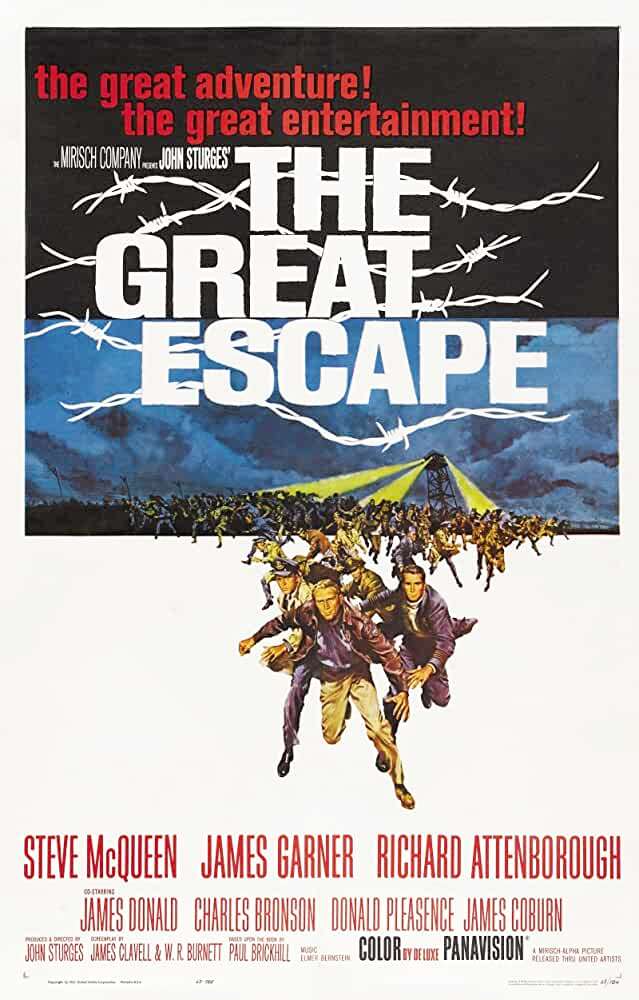
This film poster was downloaded from the Internet. It is being used here for representation purpose. No copyright infringement intended.

Released in June 1963, The Great Escape became one of the biggest hits of the year. It won Steve McQueen the silver prize for best actor at the 3rd Moscow International Film Festival. Over time the movie – it was directed by John Sturges – acquired the reputation of being a classic.

In May 2006, The Guardian published an obituary for Squadron Leader Eric Foster. It noted how on the night of March 24, 1944, roughly 76 years in the past from our times lost to lockdown, Stalag Luft III near Sagan (north of Breslau, now Wroclaw in Poland) became venue of the biggest British led Prisoner of War (PoW) breakout during the Second World War. Three tunnels were dug – Tom, Dick and Harry – with Harry (the longest tunnel) accounting for 76 escapees. Three made it home, the rest were captured. Of them, 50 were killed. The story became well-known after the publication in 1951 of Paul Brickhill’s book: The Great Escape. The movie was partly based on the book. Eric Forster served as adviser to the filmmakers; he had been PoW at Stalag III but was not part of the famous escape. However the obituary mentioned at least three other attempts to escape from various PoW camps after Foster’s plane was shot down in June 1940 and he was taken prisoner. There were instances of solitary confinement. According to the obituary, he eventually faked madness and was repatriated home in 1944.

The Great Escape’s Captain Virgil Hilts is a fictional character.

Foster’s experience served as background material for the character.

Squadron Leader Eric Foster died on March 26, 2006, aged 102.

(The author, Shyam G Menon, is a freelance journalist based in Mumbai.)     

LOCKDOWN BLUES

Illustration: Shyam G Menon

One talent that is a blessing in times of lockdown is the ability to play music.

Ahead of COVID-19, the world was a very busy place. Not having time for anything other than work was perceived as sign of person’s success or potential for success. As lockdown took hold, many of us were thrust into the unfamiliar territory of having time, not knowing what to do with it and even if you did repeating some routine or the other, not knowing how to manage the monotony. Being creative – like being able to compose music – can be a gift for such challenging times. It keeps you engaged.

In early April, Mumbai-based rock climber Franco Linhares, shared a video of him essaying bouldering moves using the furniture at his house. Given their appetite for climbing moves and tendency to infuse daily view of world with hunt for such possibility, climbers have been known to ascend the outside of buildings (it is called buildering) and attempt complicated moves on chairs and tables. It is a way of challenging oneself and having some fun. Franco, 69, titled his simple video devoid of any background score: Lockdown Blues.

The name begged music for not only is the blues an engaging genre of music but the present times of people restricted to their homes for weeks to prevent infection is a study in pathos. It is perfect substratum for the blues. Decades ago, the genre was born from the suffering of people working the plantations and railroads of the US. Few styles in western music pour forth human emotion and feelings, likes the blues does. No matter how politically correct you wish to be about lockdown, there is no denying the human experience as you sit cooped up in your house, weathering the hours and days while a virus stalks the spaces beyond, you once roamed. Why not sing about it?

Late that evening, Franco sent across one more video. This time, it was Ernest Flanagan singing Lockdown Blues, lyrics credited to Prabhakar Mundkur. A subsequent search on the Internet yielded further perspective. Lockdown Blues appeared to be a generic series inspired by pandemic with plenty of versions and no genuinely convincing beginning to the trend (to borrow virus jargon: it may have an index case but I couldn’t trace it). The versions available ranged from raw, bare and personal in the tradition of the blues, like Prabhakar’s (uploaded on YouTube April 5, 2020) and Ernest’s (uploaded on YouTube April 10, 2020) to humorous, reflective and musical-like as Dominic Frisby’s (premiered March 31, 2020) to upbeat, sounding like a band and close to studio quality as the version performed by Shannon Rains (uploaded on YouTube, April 3, 2020). Plus the search yielded a Wikipedia page for a song called “ Lockdown Blues’’ by Danish band Iceage but it released on April 2, 2020, by when thousands of people had already endured lockdown for weeks in various parts of the world, some of them likely singing about it too. In fact, on April 9, 2020 Tamil rapper Arivu posted a feisty number titled “ Vanakkam Virus,” his take on the lockdown and its impact on the economically disadvantaged. By mid-April major names in the music industry overseas, were also getting into the act of connecting with world under lockdown. There was the One World: Together at Home Concert organized in collaboration with Lady Gaga that saw many artistes take part. There was also news from Pink Floyd that starting April 17, the band will stream its full length archival concerts for free, every Friday.

A longstanding pianist and jazz musician in Mumbai, Ernest is known to pen poems and lyrics on a frequent basis. He likes it when lines rhyme. On the internet you come across videos posted by friends, of them singing his songs. Associated in the past with well-known names in the Indian jazz scene, Ernest’s last job was with the financial institution IL&FS. Until it sank into troubled times, with corresponding retrenchment of employees, Ernest had been pianist playing every evening at the lobby of the institution’s headquarters in Mumbai. “ It was a dream job,’’ he said. He lost it in December 2018. A year and three months later, India was in lockdown to combat COVID-19. Ernest was no stranger to the blues. On YouTube, you will find a delightful little blues number he wrote and sang called ` Kickback Blues,’ posted October 2019 on the Jazz Goa account. Naturally, he channeled the lockdown experience. “ I wrote my version of Lockdown Blues and sent it to some of my friends hoping they would sing it. For some reason, nobody took it up,’’ Ernest said when contacted in mid-April. In the meantime, ad industry veteran Prabhakar Mundkur wrote his version of Lockdown Blues and posted a video. It was a brief take (about a minute and a half); it was also rather bare in terms of arrangement. Ernest then sang his version of Prabhakar’s song.

He introduced two differences. Being adept at keyboards he was able to infuse the song with that impression of band playing along.  He also added some lines to the lyrics. Ernest’s version is longer and its lyrics have a circular structure with the whole song running like a conversation with a nurse; a cry for help. Someone who likes to do things well, Ernest said he was not happy with the audio quality. He wished he had access to a studio (Kickback Blues, which has superior audio quality, was recorded in a studio). “ For Lockdown Blues I had to sing with one hand on the keyboards and the other pressing the recording icon on the mobile phone screen,’’ he said, adding, “ there’s only so much you can do from home.’’

(The author, Shyam G Menon, is a freelance journalist based in Mumbai. Thanks to Franco Linhares for sparking off this rendezvous with the Lockdown Blues.) 

A CURTAIN FROM THE PAST

Illustration: Shyam G Menon

Will lock down alter how we like to see films?

It is a curtain I distinctly remember.

Huge, suspended from several feet above the ground with vertical columns of stitching gathering folds towards the bottom. Each horizontal fold resembled a concave arc. The bottom of the curtain had tassels. Every line of stitching, running down from the top ended in a small red light. At the appointed hour, the auditorium lights faded; the chatter in the audience receded to a hush, an instrumental hit – usually by The Ventures – played and the curtain with red lights rose slowly, revealing white screen behind. There was drama to it and a sense of magic about to visit enveloped us.

This is among my strong memories from childhood and it played out every time we visited a clutch of cinemas owned by the same promoter, in Thiruvananthapuram, Kerala. After every show, the curtain was brought down and the next screening commenced with that mood-setting, repeated. Truth be told, I have to juggle my memory to remember the many films seen. But the sight of that curtain embellished with red lights, going up to engaging music – I don’t forget.

In the roughly five decades that have followed since, my generation saw the cinema experience transform. As it drifted from passion to business, one of the first casualties was that curtain. Among the last songs that I recall, played specifically for the curtain, was the theme from the 1971 movie `Shaft’ and selections from Giorgio Moroder and Kraftwerk. Then, the attention to detail began fading and the curtain rose amid general chatter in the hall, pop hits of the day playing in the backdrop. Eventually the curtain stayed up day-long or rose for each screening with no fanfare. By then probably, the movie theater had become the business model of today; milking a piece of built-up real estate for revenue.

The multiplex trend took long to reach India and Kerala. But once it did, after some time spent savoring our first lot of two screen-cinemas, we moved fast to establishments with multiple screens. Where refreshment used to be a cup of tea or samosa grabbed during intermission, a whole industry of refreshments came to roost on the premises. The sound of chips beings crunched and fingers groping popcorns in cardboard boxes became part of viewing. Cellphone calls also entered the frame. Meanwhile ticket prices altered dramatically.

Years ago, there used to be the front row seats, first class, balcony, dress circle and boxes. As a school boy supported by parents, I enjoyed the balcony perspective with family.  By high school and college, when friends grew more important than family and the idea of supporting oneself was gradually instilled, balcony gave way to first class and front row. Employed, one reverted to balcony and even sampled dress circle and box. As multiplexes grew, the seating system lost its linkage to tradition. There were no fancy names for seats connecting cinema to the tradition of theater; only distinction by capacity to afford. The richest lounged on deck chair-like seats eating popcorn and slurping soft drinks. Those unable to afford as much, took the other seats. A family of four visiting the theater could easily cost a thousand bucks now. My first job in the late 1980s paid that much as monthly salary.

Cinemascope and 70mm were high technology in my childhood (in fact, black and white films were still around). Today, despite the proliferation of mobile phones for distraction, the cinema house is a veritable convergence of technology albeit tastelessly executed; its curtain raising-moment is a thundering cacophony of audio advertising the power of resident sound system. Where starting a theater was once linked to passion for medium, owners transformed to large companies owning multiplex chains.

The competition among theaters and its competition with other audiovisual platforms like streaming have been fueled by both convenience and immersive viewing experience. Arguably the need for countering an array of distractions is more with streaming platforms; a mobile phone for instance is usually in shared or public space and if you are seeing a film, it has to compete for your attention suitably. The influence of this authorship was visible in streamed content, which typically tended to be more weaponized (designed to grab attention) than content intended solely for the theaters.

Until the last Academy Awards, streaming platforms were kept at a distance by the film fraternity. The 92nd Academy Awards took place on February 10, 2020. At that time, going by what has been reported from China, a nation known for its secrecy, COVID-19 was two to three months old. A month later, on March 11, the World Health Organization (WHO) said that the disease, which now spanned many countries, could be called a pandemic.

By late March 2020, large numbers of people worldwide were in a state of lock down to check infection. With social distancing advocated, cinema halls were forced to shut. On the other hand, streaming platforms became busy; television, computer, tablet and mobile phone had become the new cinema hall. The disease’s impact on the global box office was estimated at a few billion dollars. Multiplex chains were in financial distress. Newly released films that saw their theater run threatened by COVID-19 were quickly shifted to streaming platforms. Some others decided to release straightaway on streaming platforms. There is hope that when the present health crisis is past, people may revert to theaters. We are bound to have differing opinions on that. While history shows instances of crisis easing to a return of the old, crisis also leaves its imprint.

A key aspect deciding the future of cinema halls will be the quality of viewing experience. We definitely crave immersion. But it is abjectly incorrect to argue that all content becomes immersive when shifted to big screen. A film like 2013’s `Gravity’ certainly comes alive on big screen. But there are hundreds of other titles, you can comfortably watch on the cell phone without diluting the experience. Further, with the proliferation of technology and conveniences ranging from snacks to waiters serving you at your seat, the movie theater is not anymore a temple for immersive experience. It is a business model. The audience is a study in profitable distraction. Nowadays, great theater experience also has much to do with who you were lucky enough to have as audience alongside.

Another shift has been of the generational sort. A generation of youngsters out there used to life with mobile phone, don’t appear to have any problem focusing amid multiple stimuli. Seen so, the pairing of mobile phone and decent headphones isn’t too bad a deal for immersive experience. You can sit by yourself and see what you want. It reduces the cinema hall to tradition and traditions fade or settle to being optional.

Maybe it’s time for digital curtain on small screen, set to music of your choice.

(The author, Shyam G Menon, is a freelance journalist based in Mumbai.)

LIMITLESS

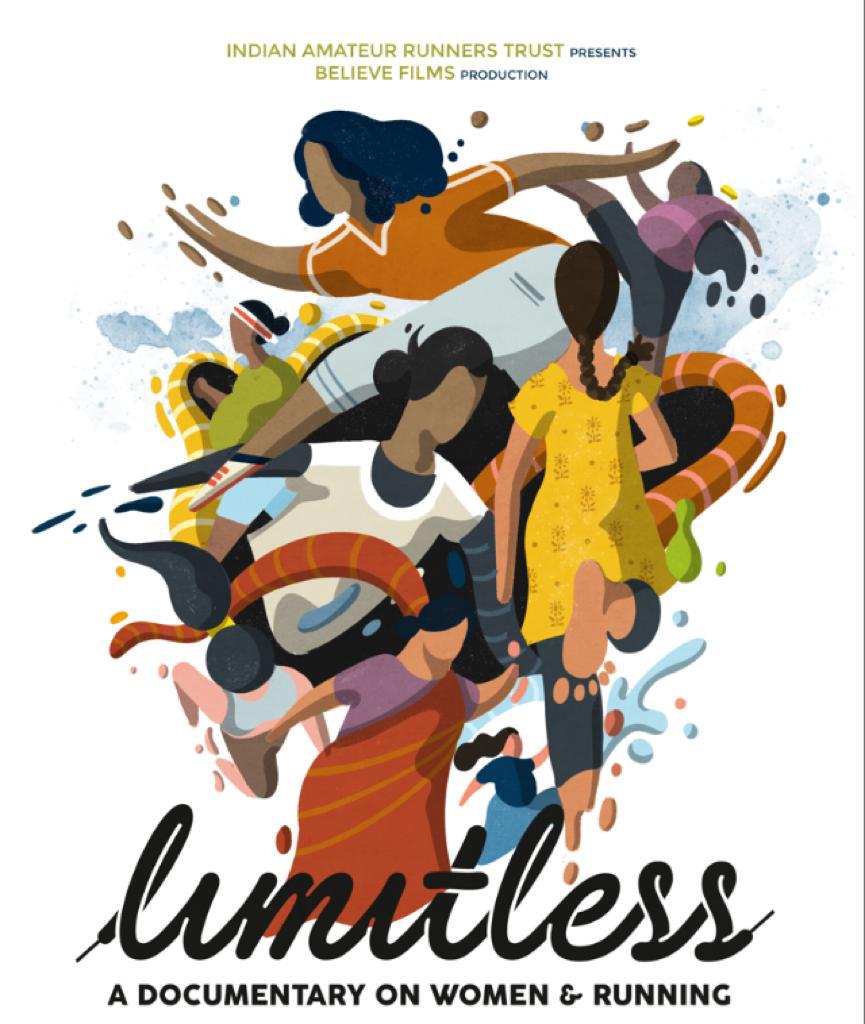
Limitless; film poster

Every morning you see people running. Seen as movement, it is near similar. As story, each runner is different. Limitless, a film about women and running, chronicles a few of these stories. We spoke to some of the amateur runners featured in it and the team behind the film.

In February 2019, Seema Verma participated in the 50 kilometer-race at Tata Ultra Marathon in Lonavala, near Mumbai. She finished third in her age category of 18-44 years.

Currently a resident of Nallasopara, Seema, 37, was left to fend for herself by her husband. He deserted her. She worked as a domestic help for several years eking out a living for herself and her son. In the early days, she had to lock her toddler son at home and go to work. In the documentary film Limitless, she breaks down as she reminisces about those traumatic days.

The film (currently available on Netflix) features the stories of eight women and their foray into running. Seema is one of them. She started running in 2012; around the same time, she also started learning karate. Her employer introduced her to the concept of marathon.

She took to running seriously and over the years has managed to get podium positions in some of the races that she participated in. She has now stopped working as a home worker and focuses on training for middle-distance and long-distance running. She is currently sponsored by EbixCash World Money. The prize money that she earns from running races helps supplement her income.

Seema Verma (Photo: courtesy Seema)

Going ahead, she was slated to run the 2019 edition of Vasai Virar Mayor’s Marathon and the 2020 edition of Tata Mumbai Marathon. She is on the constant lookout for running events where the possibilities of podium finish are high.

Kolkata-based Anuradha Dutt started running in 2011. “ Running is the best thing which happened to me after our son came into our lives. It keeps me positive, sane and most importantly it has made me fearless,’’ she said. Encouraged by her husband, she was one of the early women in town to take to wearing sports bra and shorts for running. Women would often come up to her and compliment her for her fit body and attire. “ A couple of years ago at a race in Mumbai an unknown lady came up to me at the finishing line and praised me for carrying my stretch marks so gracefully,’’ she said.

Anuradha wants to train harder and ensure that she stays injury free in the process. She is the Project Co-ordinator of Interlink Calcutta, an institution for the differently abled. “ Running is a form of therapy for differently abled students and more students taking to running keeps them positive and strengthens their self-belief,’’ she said.

Viji Swaminathan, a Chennai resident, was worried about her weight, which led to confidence issues. “ I weighed over 100 kilograms. I decided to start walking. While walking I would run from one lamppost to the next and slowly got into running,’’ she said. Running was the best thing that happened to Viji, a classical dancer. She was never into sports. Her first running event was Bengaluru 10K, held in May 2012. Two months later, she participated in Airtel Delhi Half Marathon (ADHM).

Viji Swaminathan (Photo: courtesy Viji)

“ My best running years were during 2012-2014. After 2015, I have been plagued by injuries,’’ she said. Nevertheless, running is an integral part of her life now. She also has a fitness group, UNIS (Unleash your Inner Strength) Running, aimed at a lifestyle focussed on being fit.

Anuradha and Viji are among the other women featured in the documentary film, Limitless, which showcases stories of women from varying backgrounds; the challenges and triumphs they faced during their foray into running. The other woman runners featured in the documentary are Karishma Babbar, Mandira Singh, Monica Becerril Mehta, Sharada Venkataraman and Saloni Arora.

Limitless was conceptualised and funded by IART (Indian Amateur Runners Trust). The finance for the film was arranged through an informal crowd-funding approach. IART put out a call across India to women to write in their stories about running. Women from across the country wrote in to share their experiences and these were curated in a manner that showcased a diverse mix of stories from different cities and socio-economic backgrounds, said Vaishali Kasture, amateur runner, corporate executive and trustee of IART.

Vrinda Samartha (Photo: Latha Venkatraman)

“ Women face a lot of constraints and challenges in everything, especially in running. Every time a woman gets out on a training run, she has to manage many things on the home front – plan food, manage school-going children or adolescents and sometimes elderly parents, not to mention – manage their own employment,’’ said M.S. Dileepan, amateur runner and trustee of IART. Shooting the film was a logistics challenge as the team had to work on a shoe-string budget with hired equipment. “ Each of the shooting schedules had to be completed in a limited time,’’ Vaishali said.

IART did most of the work for the production and exhibition of the film, said Ashok Nath, Bengaluru-based running coach and trustee of IART. The trust arranged for all approvals, organised fall film premiers and media meets. The production work was assigned to Believe Films, a film production house. The film has found fresh momentum after its debut on Netflix in October this year, its director Vrinda Samartha said.

(The author, Latha Venkatraman, is an independent journalist based in Mumbai.)

THE PURSUIT OF ENDURANCE

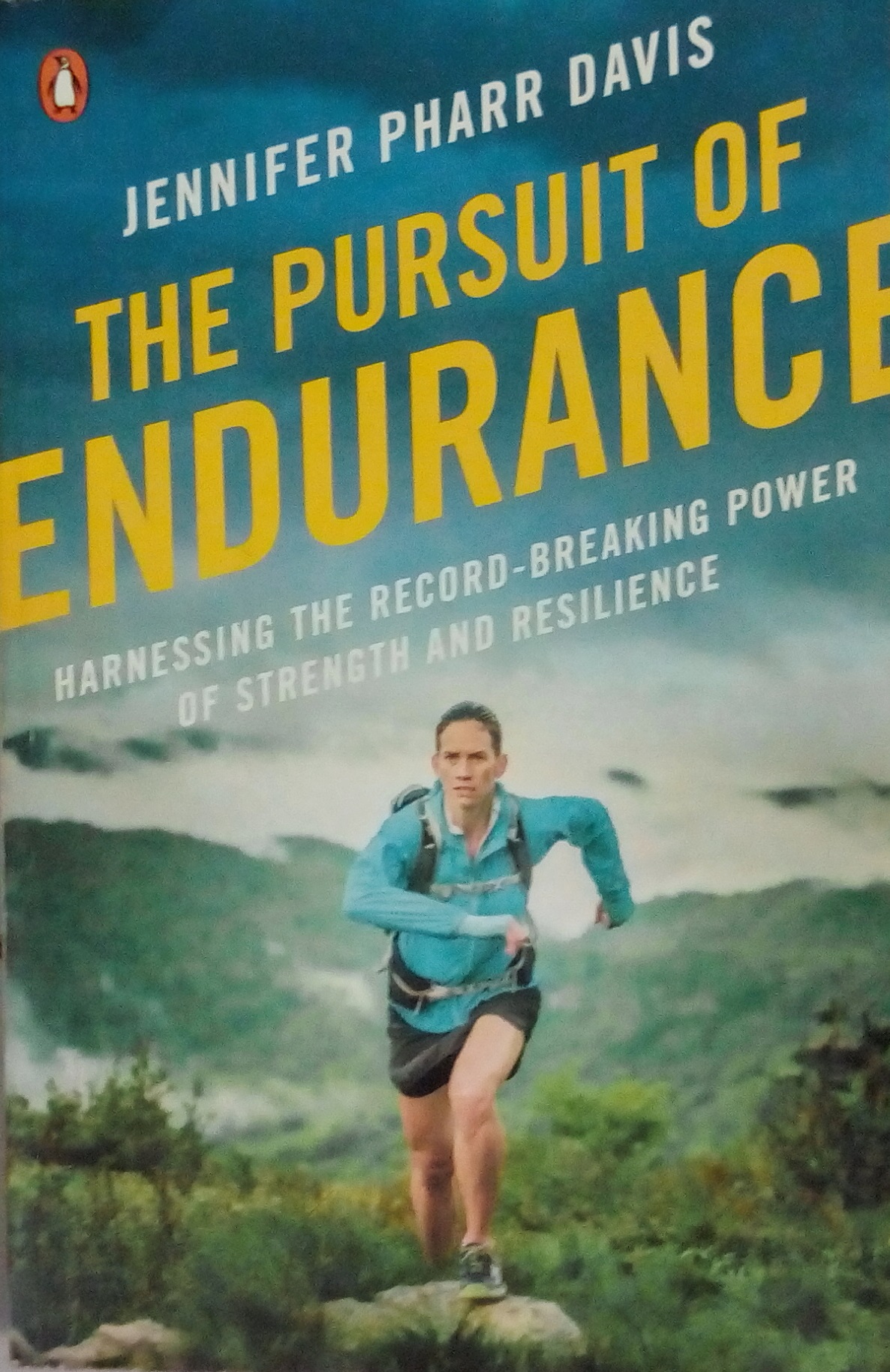
A book you come to love is a product of how good it is and what frame of mind you were in, when you picked it up. Here’s one of the most remarkable books I read in recent times:

At roughly 3500 kilometers, the Appalachian Trail is among the longest trails in the US. Jennifer Pharr Davis’s book The Pursuit of Endurance is about the little known craze of setting the Fastest Known Time (FKT) on long distance trails like the Appalachian and Pacific Crest. These are feats of extreme endurance. The best of the lot – Pharr Davis among them – average close to 50 miles (approximately 80 kilometers) of hiking a day for several weeks. In 2011, she set the unofficial FKT for the Appalachian Trail: 46 days, 11 hours and 20 minutes.

There are quite a few things that are beautiful about this book. It is not cast in a how-to-do-it fashion. Instead, it provides detailed portraits of some of the record holders – their background, their eccentricities, their approach to the trail, how many times they attempted new FKTs, how they succeeded – and through that provides a view, obliquely, of what it takes to do thru-hikes and FKTs. Each of these hikers is a personality distinct from the other. But there are some common strands. Approaching its subject so, the book makes these long distance hikes less of performance and more of a way of life. The protagonists are not angels; they compete, they scheme, they do many of the things you and I carry around in our heads as we try to get ahead of the rest. The difference is – they own up their nature. Pharr Davis’s book gives you a sense of competitors bared and to that extent, humanity restored.

That said, let me add – there is strategy and performance in this book. But it doesn’t hit you the way it does in a book written with the corporate side of running in mind. This is not stuff harking of ready; set, come on team, let’s go do it-sort of approach. This book is pretty down to earth. Sample this: I believed that consistent output over a prolonged period would be more efficient than short bursts of speed followed by lengthier rests. In other words, I wanted to hike, not run. I rationalized that walking would mean less impact on my joints, a reduced risk of falling and decreased recovery time; it just seemed like a more natural way to cover more than two thousand miles. In Pharr Davis’s book, strategy and performance are tempered by humility and honesty. Things go wrong on the trail and the paragraphs devoted to it hold nothing back about how setbacks and frailties unravel. That is exactly how it is when you are out hiking by yourself, pushing your limits. Although the Appalachian Trail has facilities for trekkers to halt and replenish along the way, a hike for FKT has none of the support found in regular ultramarathons. Once in several days, you rendezvous to meet with friend or family member to resupply and take stock of progress. Else, you are alone on the trail; wilderness and other hikers passing through, for company. Unlike city marathons and staged events where the human being assumes center stage, in wilderness, nature’s presence is larger than lone hiker can hope to be. That is also what makes these FKTs interesting. You cope with yourself and whatever happens for weeks. It teaches you nuggets rarely found in other books. For example – the difference between failure and stopping.

But the best aspect of this book was something else.

Thanks to the sort of world we live in with things in clearly identifiable silos, borderlands and transition zones have lost their attraction. Running means Usain Bolt and Eliud Kipchoge; it is distilled spectacle of performance with all else conspiring to support the act. You don’t have the luxury of controlled ambiance in hiking. To that extent, for some of us, the variables nature throws our way while hiking are distraction from aspiring for peak performance. For such perspective, hiking – like walking – is distinctly less glamorous than running. Yet for those loyal to the slow lane, one truth has been evident for long. You can go to the gym and shock your muscles into shape or as seen in the case of those doing physically strenuous jobs; you can embrace a life of physical toil and be in shape without seeking it, maybe even without knowing it. Similarly you can hike enjoying the solitude and the outdoors and having done it for long, develop a bank of endurance.  But say that in the world of running and you may find your audience peeling off because as I said earlier, we live in a world in which the value of overlapping borderlands is poorly appreciated. Endurance has become firmly identified with running, cycling, swimming, triathlon etc. It takes a story about some elite athlete from Africa and how he / she walked long distance to school as a child, to remind us of the miracles walking can accomplish. Not to mention – the independence and self-reliance, hiking and the outdoors instills in you.

Pharr Davis is unapologetic of her love for the outdoors and hiking. Born to a family that valued the outdoors, she grew up around camps. Later she lived the active life. According to Wikipedia, she has hiked over 14,000 miles (more than 22,530 kilometers) on six different continents. In 2008, she set the record for the fastest Appalachian Trail hike by a woman – 57 days and eight hours. In 2011, she set the fastest time for both men and women on that trail (mentioned earlier in this review); the record was broken in 2015 by the well-known ultramarathon runner, Scott Jurek who covered the distance faster by three hours and 12 minutes. Juxtapose that improvement in timing on Pharr Davis popularly described as a long distance hiker and Jurek as an ultramarathon runner; it tells us something of the endurance levels of both. It tells us something of what hiking can be. You can’t help but commit some of Pharr Davis’s observations in the book, to memory: Hiking is not escapism; it’s realism. The people who choose to spend time outdoors are not running away from anything; we are returning to where we belong. And: I felt I was also tapping into something primal that said I am beautiful because I endure.

I found this book on the shelves of Modern Book Centre, that wonderful bookshop in Thiruvananthapuram, Kerala. Anoop, who oversees the shop, remembered my taste in reading and pointed it out to me. It is a great book to have and lovely antidote for sport in present times lost to measuring and achieving. Its narrative has the quality of an embrace; just what you wish for from nature when you veer off human hive and step on to the trail. It makes endurance, relevant.

(The author, Shyam G Menon, is a freelance journalist based in Mumbai.)   
FREE SOLO WINS OSCAR FOR BEST DOCUMENTARY

The world of climbing won’t forget the 2019 Academy Awards ceremony.

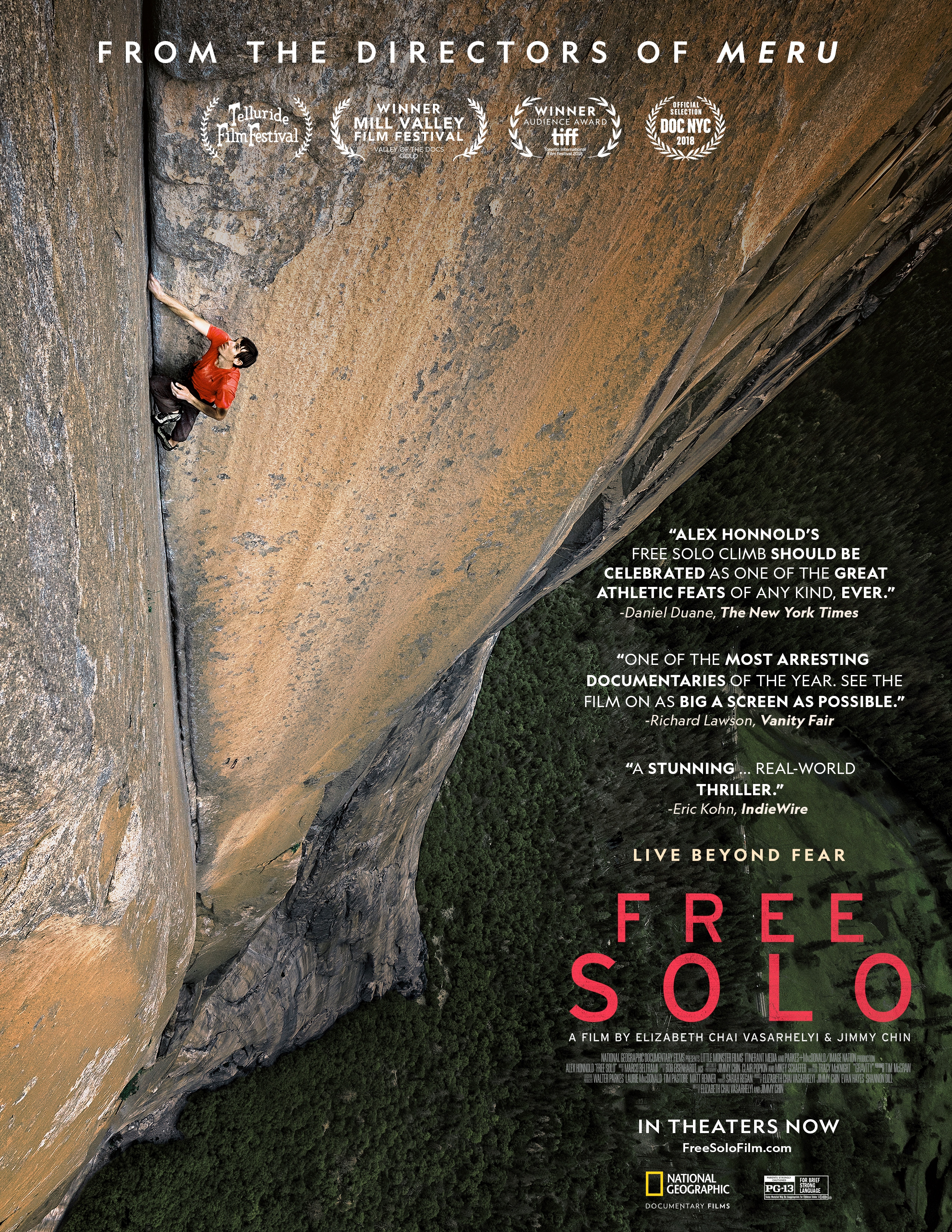
The movie Free Solo which profiles rock climber Alex Honnold, won the Academy Award for best documentary feature. Alex Honnold is noted for his stunning free solo ascents; basically solo climbs without using any ropes or climbing gear. All that he uses on these ascents from the litany of climbing paraphernalia are rock climbing shoes and climbing chalk, carried in a chalk bag.

Free Solo covers Honnold’s 2017 solo ascent of El Capitan’s Freerider route. El Capitan is a vertical rock formation, roughly 3000 feet high, in Yosemite National Park, US. It is a much revered objective in the world of big wall climbing.

The film is directed by Elizabeth Chai Vasarhelyi, a documentary filmmaker and Jimmy Chin, professional climber and skier who is also photographer for National Geographic. “ The film benefited from Honnold’s thoughtful charm on camera, and Chin and Vasarhelyi’s incredible access during Honnold’s years-long training process, including while he was thousands of feet off the ground without a rope,’’ Outside magazine observed in an article marking the Academy Award. The magazine described the movie as the first climbing film to receive such broad mainstream acclaim.

Free Solo was released in August-September 2018. According to Wikipedia, it has so far made 19.3 million dollars at the box office. The highest grossing documentary on IMDB is 2004’s Fahrenheit 9/11, directed by Michael Moore. It made 119.19 million dollars.

The 2019 Academy Awards ceremony – it honored the best films of 2018 – was held on February 24 (early hours of February 25 in India) at the Dolby Theater in Hollywood, US. For more on Alex Honnold please try this link: https://shyamgopan.com/2017/03/16/alone-on-the-wall/

(The author, Shyam G Menon, is a freelance journalist based in Mumbai.)