JUST MERCY

This image was downloaded from the film’s Facebook page and is being used here for representation purpose. No copyright infringement intended.

Let put it in plain and simple terms – some films are relevant.

Just Mercy is one.

Well-acted and directed, this 2019 film is based on the real life story of a person serving time on death row although he isn’t guilty of the crime he is accused of. It offers insight into the trumped up charges (how they were engineered) and the legal battle that followed to get him released, including the intimidating atmosphere lawyers endure to ensure justice. The film also informs you of how in many cases, death row became a parking spot for people dealt with unjustly by the system. Framed and with their appeals thwarted repeatedly by a prejudiced system, they languish in prison. It is the exceptional who hold themselves together in one piece.

The story is based in Alabama, US. For the contemporary viewer, it acquires impact given the ongoing Black Lives Matter movement and the simple fact that society anywhere on the planet is never far from the edge of injustice. It is a grim film particularly relevant for geographies that have seen or continue to see the type of forces portrayed in the plot. Above all, it tells why the law exists, what a lawyer means and that deep down, even the wrong doers tend to reflect and correct, however reluctantly that may be. But the price of such reluctance is steep. Innocents die while others rot in prison for years, for no fault of theirs except as the prosecution sometimes says (and gets away with): he had all the appearance of a guilty individual or all the signs of being a criminal. That dependence on perception conveniently overshadows the diligent lawyer’s question: where is the evidence?

Life in lockdown has stripped away my appetite for special effects and comic book heroes. They remind too much of excess. On the other hand, simple, bare films featuring people and their lives have been attracting as idiom for the times. It was that instinct, which made me click on Just Mercy when it showed up on Amazon Prime. It didn’t disappoint. And I didn’t mention that comic books-angle for nothing. The lead character – that of Bryan Stevenson, a lawyer – is played by Michael B. Jordan who has previously starred in Fantastic Four and Black Panther. Anchoring his legal firm – the Equal Justice Initiative – is Eva Ansley, portrayed by Brie Larson, known best for her role as Captain Marvel. Here, you see these actors for what they are genuinely capable of. Acclaimed for Ray, remembered for Django Unchained and with a detour to the Electro of Amazing Spiderman-2 in between, Jamie Fox plays Walter “ Johnny D” McMillian, the innocent man stuck in death row.

This is a film worth watching for what it is and to also reflect a bit on the many things the human being can be, ranging from the one who frames to the one who saves.

(The author, Shyam G Menon, is a freelance journalist based in Mumbai.)       
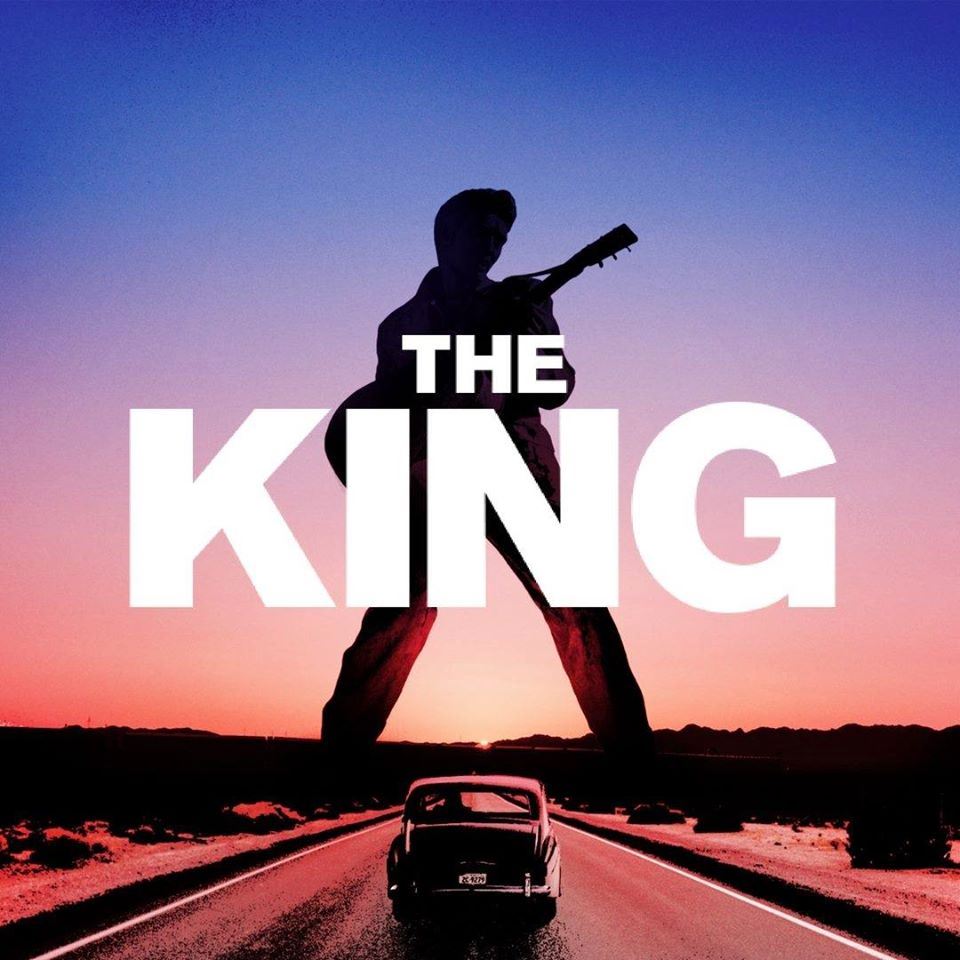
THE KING

This image was downloaded from the film’s Facebook page and is being used here for representation purpose. No copyright infringement intended.

Do you shape the journey or does the journey shape you?

That’s a question creative people often confront. I don’t know if the makers of the 2017 documentary The King had a theme to chase or whether the chase served up a theme. My hunch is it was more the latter. Whatever the reason, this is an outstanding documentary on a familiar subject – Elvis Presley.

There was no doubt in my mind as regards what the topic maybe, when I saw the film and its title show up on Netflix. Elvis is so strongly linked to that reference: the king; he is the king of rock `n’ roll. Most documentary films about rock stars end up a carefully struck balance between puff piece and their struggles, typically the product of complex life or acquired habits. What I didn’t anticipate in The King was the manner in which the documentary explored the origins of Elvis’s music, the social circumstances that led to him and not others being the king of that genre, the many ways in which his popularity was leveraged leaving him a brand and eventually a commodity and how all this probably reflected at a larger level, a nation’s aspirations hijacked by money and power and rendered hypocritical.

That’s a lot to squeeze into a documentary film of finite dimension. But The King pulls it off magnificently with its idiom of traveling through Elvis country in the king’s own Rolls Royce and chats with singers and actors recorded as they ride in the car. None of those participating in the documentary – they range from Ethan Hawke to Alec Baldwin, Mike Myers, Chuck D and Emmylou Harris – hold back on what they think of Elvis. This makes the film natural and engaging. The musical genres Elvis promoted were not new; some of his songs were sung by others earlier and sung pretty well too. Even the car comes in for scrutiny – if Elvis was as representative of the American Dream as he was marketed to be, why did he keep a Rolls Royce? It puts the spotlight on what ingredients constituted the Elvis phenomenon. How did genres and lines that were already existing become a hit when sung by him? And in proportion to how things worked for him, you realize why it didn’t work for others. Little by little, the film, as it unravels the imagery around Elvis, unravels alongside the progressive decline of the original American Dream – life, liberty and happiness. The values the country once evoked appear lost through emphasis of money, companies and empire building, not to mention the steady propagation alongside of misleading imagery by a powerful entertainment industry.  The picture of America became that latter synthetic facade. A yawning gap opened up between it and reality. The King is as much about Elvis as it is it about what happened to America.

A few things made this documentary interesting to watch. First, as viewer, you live in the present with questions about America born from the social inequality and turbulence you saw happening there over the past few years.  Second, as you deconstruct the Elvis-image you see how much the above mentioned situation has remained simmering and unchanged through all those years.  Third, this film is not only absorbing for its subject but also for how it was made. It has an organic, evolving-on-the-go feel, which – when you think about it – is possible only if the creative mind is complemented by courage. Finally, work of this sort makes you respect America. Such films – and others, more hard hitting and on more sensitive topics – wouldn’t be made if room for critical perspective shrank as it is has in some other democracies currently diluting freedom of expression.

This is a documentary worth watching.

(The author, Shyam G Menon, is a freelance journalist based in Mumbai.)     
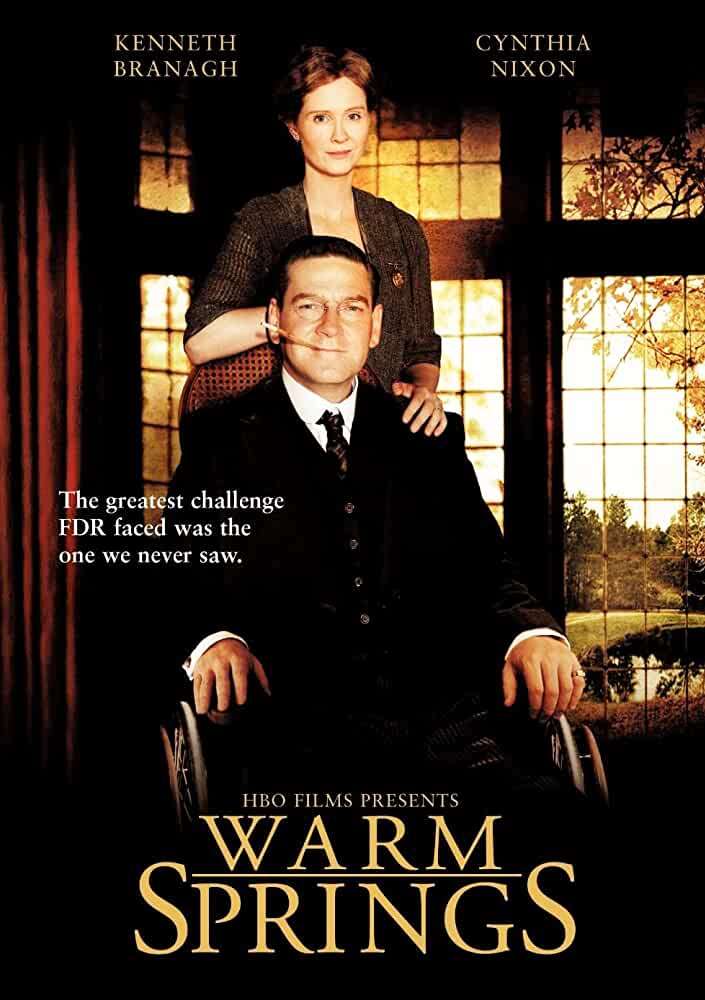
WARM SPRINGS

This image was downloaded from the Internet and is being used here for representation purpose. No copyright infringement intended.

As mentioned before on this blog, one of the lockdown induced-drifts I experienced was an appetite for films that told a human story in an uncluttered idiom, free of special effects. The algorithms at streaming media platforms are pretty good these days and soon enough, Disney-Hotstar recommended the 2005 television film Warm Springs. It proved to be a rewarding experience at many levels.

The film depicts a stage from the life of Franklin Delano Roosevelt, 32nd president of the United States. It picks up from the 1920 presidential election campaign, in which Roosevelt is the Democratic Party’s candidate for Vice President. At this point, Roosevelt is a picture of possibility. He hails from a well-known influential family, has had access to good education; is wealthy and married to Eleanor.  In the election however, his side loses. The Republicans gain a landslide victory. Roosevelt takes the defeat in his stride. It does little to dampen his spirit or invite introspection. He carries on as before, included therein being an affair with his wife’s secretary, Lucy Mercer. Eleanor discovers the affair and it causes severe strain on their marriage. A divorce is prevented by Roosevelt’s domineering mother, Sara.

Around this time, Roosevelt is struck by poliomyelitis. The disease leaves him paralyzed from waist down. Besides being a personal setback, the impact of paralysis is amplified by the effect it can potentially have on his political image and career. It seems the end of Roosevelt the politician. However, his political advisor Louis Howe believes, that needn’t be the case. In his assessment, the loss at the 1920 hustings had served to catapult Roosevelt to the national stage. He and Eleanor stand by Roosevelt during the period of his illness, drawing up plans to keep the extent of damage a secret and at the same time doing what they can to keep Roosevelt’s name afloat in political circles, including forays by Eleanor into the women’s suffrage movement. The film’s real story revolves around Roosevelt’s journey to a spa resort in Georgia and his subsequent stay there trying out hydrotherapy as means to improve his condition. Impressed by his progress and inspired by the people he meets, he decides to acquire the property in the hope of creating a center offering the therapy to those in need. It is a period that restores his faith in himself and also mends to an extent, the soured relationship with Eleanor. The film concludes with his return to active politics.

Aside from the fact that polio too is caused by a virus, what made this film relevant amidst COVID-19 lockdown, was Roosevelt’s tenure as president of the US and the curiosity to know what all went into making him the person he was. Beyond being the longest serving president of the US, Roosevelt is associated with his service to the nation during two critical periods – the Great Depression and World War II. The Great Depression began during the presidency of Herbert Hoover, with the Wall Street Crash of October 24, 1929. Roosevelt became president in the depths of the depression and it was under his leadership and the programs his government introduced, that America began clawing its way out of economic downturn. His interventions, while effective, were not welcomed by big business. The website whitehouse.gov notes, “ By 1935, the nation had achieved some measure of recovery, but businessmen and bankers were turning more and more against Roosevelt’s New Deal program. They feared his experiment, were appalled because he had taken the Nation off the gold standard and allowed deficits in the budget, and disliked the concessions to labor. Roosevelt responded with a new program of reform: Social Security, heavier taxes on the wealthy, new controls over banks and public utilities, and an enormous work relief program for the unemployed.’’

As an outside observer, you wonder – how did a person born and raised in elite circumstances come to embrace such an approach and lead his country out of an economic crisis? For me, now tackling the economic consequences of COVID-19 lockdown, that was the dominant instinct while watching Warm Springs (the film is named after the place where the spa resort stood), which scans a small but important phase of Roosevelt’s life. The film didn’t disappoint, unraveling in its sweep, the personal suffering Roosevelt endured on account of polio, the society he encountered in the conservative south, the fellow disadvantaged souls he attracted to the spa resort and the inclusive community he built there. As a politician, he was already a people’s man albeit withdrawn since the polio episode. In addition to his own transformation through hdrotherapy, what you notice in the film, is the change to the social circles he elects to connect with and learn from. You get a sense of cocoon breached and world seeping in. The film has a solid cast with Kenneth Branagh as Franklin Delano Roosevelt, Cynthia Nixon as Eleanor, Jane Alexander as Sara Delano Roosevelt, David Paymer as Louis Howe, Kathy Bates as Helena Mahoney and Tim Blake Nelson as Tom Loyless.

Warm Springs remained dear to Roosevelt’s heart. He died during his fourth term as president. He was in Warm Springs when the end came.

(The author, Shyam G Menon, is a freelance journalist based in Mumbai.)
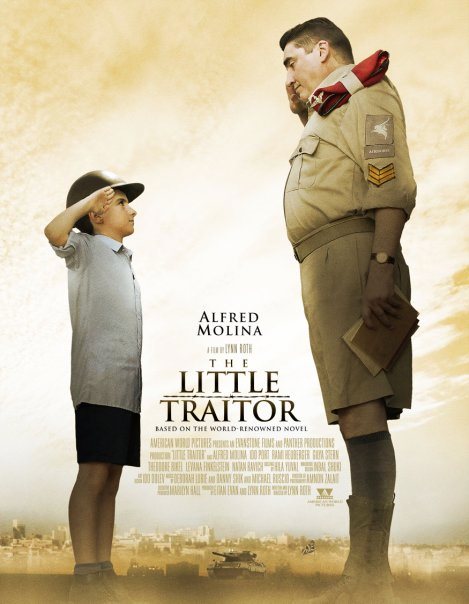
THE LITTLE TRAITOR

This image was downloaded from the film’s Facebook page and is being used here for representation purpose. No copyright infringement intended.

At the heart of elegance is simplicity.

When you have just one thing to say, things typically turn out well. When you have more than one thing to say, the game gets complicated. Not that simplicity loses its importance. Just that you have to analyze and delineate simplicity applicable across strands to link them all together.

The Little Traitor had its moments of doubt, when you thought it might derail and end up a mess. But it didn’t. Much of it thanks to the talent of a young actor called Ido Port supported magnificently by an equally competent cast led by Alfred Molina. This 2007 Israeli-American film, tells the story of Avi Leibowitz aka Proffy, whose family moved to Palestine after enduring the anti-Jew atrocities of World War II. The year is 1947. The region is controlled by the British and the modern nation of Israel is yet to be a reality.

For Proffy’s family, who have moved here with Israel in mind, the British presence is unacceptable. The youngster and his friends emulate the adults around them. They forge their own little conspiratorial circle, assume a cloak of secrecy and hatch plots designed to irritate the British and force them to leave. Life changes when Proffy is caught for being out during curfew by a British soldier, Sergeant Dunlop. The boy confronts the soldier with tenor molded by the adult world around him; he resonates defiance and anti-British sentiment. Dunlop though, proves to be the inquisitive self-critical sort with an appetite for learning. He seeks Proffy’s help to learn Hebrew and understand the writings of Judaism. For Proffy, it becomes opportunity to brush up on his English. Unknowingly the little boy finds in Dunlop, a person he can confide in and talk to comfortably, something his father, committed to Israel and cast on serious lines, has denied him. As his friendship with Sergeant Dunlop grows and he fails to report for his gang’s next mission, Proffy’s friends discover his proximity to the enemy soldier and brand him a traitor.

Into this simple story line, are added the strands of Proffy’s own growing up. Such layering in the narrative is made possible by the empathy Dunlop offers; it opens up room in the story for more than one of Proffy’s struggles. For a while, having enjoyed the simplicity of the film progressing on a single track – something you find in works from the Middle East and West Asia – you fear, it may end up a case of too many cooks spoiling the broth. Miraculously it doesn’t. Ido Port, his expression alternating between the puzzlement before questions; delight at the opportunity to know and the satisfaction of knowing, holds the narrative together with his portrayal of Proffy. The multiple strands blend and you end up with a heart-warming film. The movie is based on the novel, Panther in the Basement by Israeli author, Amos Oz.

The Little Traitor is currently available on Amazon Prime.

Try it.

(The author, Shyam G Menon, is a freelance journalist based in Mumbai.)             
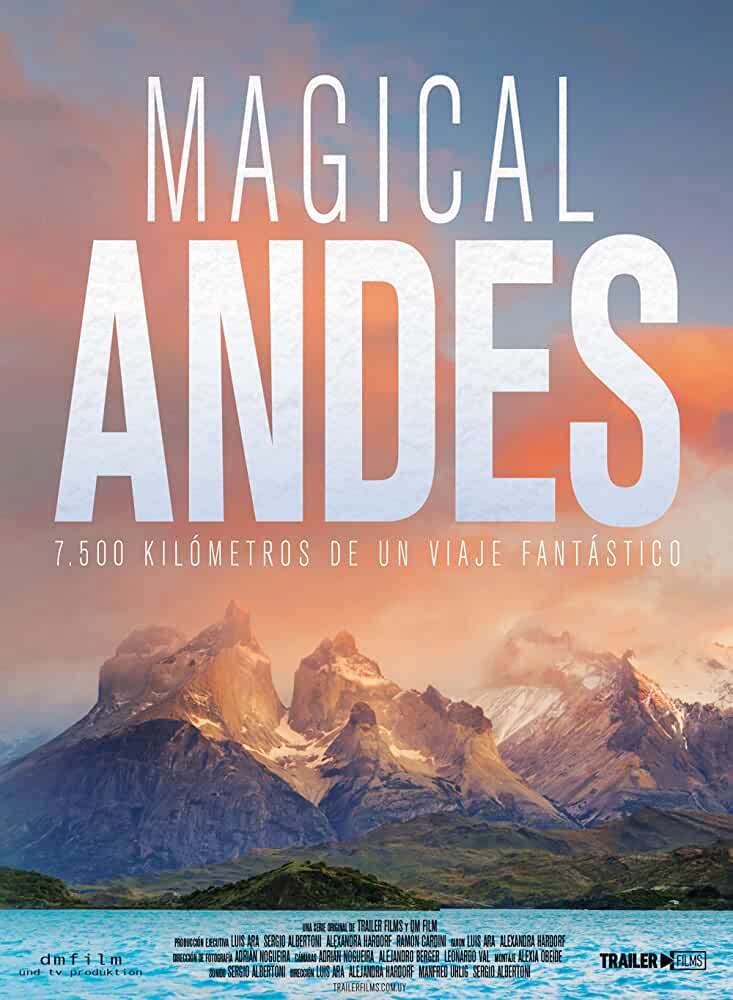
MAGICAL ANDES

This image was downloaded from the Internet and is being used here for representation purpose. No copyright infringement intended.

Sometimes there is a wealth of meaning in coincidence.

Mid-July, 2020 as one of India’s biggest online AGMs (Annual General Meeting) got underway – the company in question also seeing it as opportunity to showcase its technological capability – I was watching a docuseries set in distant South America.

From my little apartment that has been address cast in stone since the nationwide lockdown began, I traversed the 7000 kilometer-length of the world’s longest mountain chain, taking in a multitude of fantastic ecosystems and the people in their midst. Watching Magical Andes, currently available on Netflix, was without doubt an uplifting experience.  In my early fifties and freelance journalist to boot, I am resigned to the fact that I won’t see the places I have marveled at in the pages of books and the videos of the Internet. My earnings season on Earth is over. What I have left still, is an imaginative mind. Like the Andean Condor, recently reported in The Guardian as capable of flying 100 miles without flapping its wings, a window to the world’s wild places with few people therein, is a high that is strong enough to keep me happy for a few days. It gives me something to dream about; a counterpoint to latch on to and stay afloat in world locked down by virus.

To be honest, the 2019 docuseries although lovingly shot and narrated, is not exceptional. It is an edited view that diplomatically evades the negatives of life. Let’s face it; the countries the Andes passes through have known their share of trouble. At the same time, the series doesn’t drip sugary, like a tourist brochure trying to attract visitors. Its idiom stays midway between brochure and documentary. It is a nice balance of abject wilderness; wine country, adventure sports, Martian landscape valued in space research and a variety of human characters happy to be alive and working in the Andean environment. It is more or less a place as it is; emphasis on geography’s power to shape life. I don’t know how the series may work on the tourist but it worked well for this journalist. Had it been too journalistic with life’s troubles spewing forth, maybe it wouldn’t let the bird in me escape lockdown’s gravity and fly.

On that same note, the reason this docuseries engaged me at this juncture in time was the journey outdoors – albeit on the Internet – it offered, just when tech companies have been promising a contact-less future authored by data, digitization and advanced telecom. Those last three have few complaints about the lockdown upon us. No thoughts of whether we miss being human. They have the capital and political patronage to make things happen their way. So what if humanity can’t move about? We have you in the cross hairs and everything will be home delivered as long as you pay for it.

Well Magical Andes was a case of home delivery for me. But the good thing about documentaries of this sort is that they help me stay true to my wiring – life is outdoors; not indoors. Not to mention – there is a difference between future trends as sought by you and trends rendered inevitable by the power of corporate capital. The first is a choice; the second is an imposition. The first celebrates freedom; the second doesn’t care if world is free or not. Series seen, I am already off on 7000 kilometer-journey in my head, riding imaginary bike bought with imaginary money. I nurse a small fear though: how long before them with capital control the space between my ears as well? How long before they kill my imagination?

Magical Andes; try it, if you haven’t already.

(The author, Shyam G Menon, is a freelance journalist based in Mumbai.)
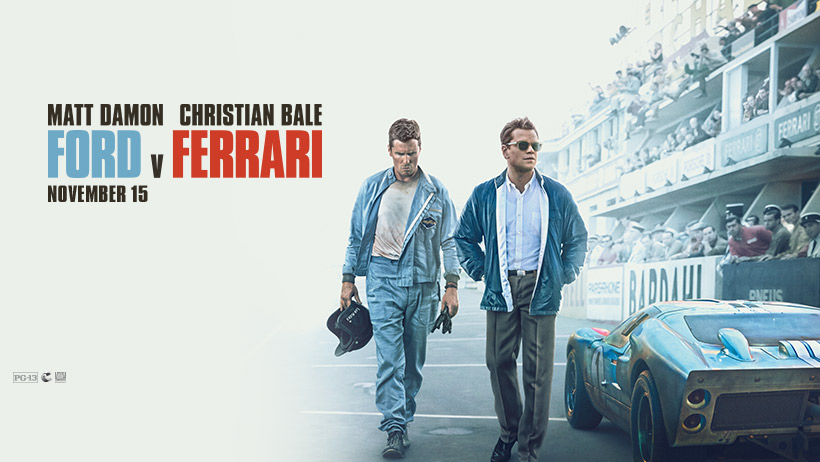
FORD v FERRARI

This photo was downloaded from the film’s Facebook page. It is being used here for representation purpose. No copyright infringement intended.

Or as some would say: the Holmes in Miles

The world’s best-known detective, Sherlock Holmes, has been interpreted in many ways in the retelling of his stories through the years.

Nowadays, what keeps us glued to his character is less the story and more the example he offers as a fellow loner in world by humans.

It is one of the less acknowledged facts of our furiously networked life – we are lonely. Within that, there is a clear intellectual loneliness starting to proliferate. The bulk of our livelihood and the process of making money, grow on organizations that are often dull for no better reason than that they are organizations or commercially motivated entities. Minds not conforming to this space become liability. Ranks are closed and formations tightened to weed out the unwanted. The consequent loneliness of those forced to right-size has typically no place to seek empathy from, except imaginary companions on the journey like Holmes.

Of all the works based on Holmes, the TV series Elementary comes closest to this paradigm (the older Granada series starring Jeremy Brett is top notch for its loyalty to Holmes as originally conceived by Sir Arthur Conan Doyle). In one of the episodes (Rat Race: season 1, episode 4), this subsurface spin even explodes to explicit articulation as Jonny Lee Miller’s Holmes puts a bunch of bankers in their place, informing them that he has no reason to stand in awe of their industry given he knows well what they do. Listening to it will make those of us who have experienced the coldness of money, happy. It endears as antidote because we live in a period where submission to collective (without adequate inquiry into how the collective operates) is fast becoming smothering ideal. Yet as creative content, Elementary weakens at this point because sometimes the punch in creativity is in how powerfully you wield subtlety for idiom.

That is why the film Ford v Ferrari, directed by James Mangold and currently available on Disney-Hotstar, felt excellent. It tells the real life story of Ford’s quest to perfect the Ford GT 40 and beat Ferrari at the 24 Hours of Le Mans endurance race in France.  With two solid actors – Christian Bale and Matt Damon – in the lead, there is little need for words to describe their effort. What kept me engaged was the brave balance the narrative struck between the innovation, design, engineering and testing that go into making superb cars and the brand-driven intellectual dullness of the capital-laden organizations, which get to build them.  It is a paradox coped with not just in the automotive business but across categories of business and on that count, the film appealed to me despite my attraction for cars not being high.

Ken Miles (played by Bale) is a maverick British race car driver and a struggling mechanic. He knows well how the machinery of a car harmonizes to produce cutting edge performance; he also knows how to harness all that energy like the conductor of an orchestra. For folks like him, the whole thing smacks of art and art is well, for art sake. You don’t cut corners and in your pursuit of a valued ethic, you call a spade, a spade. That isn’t how Leo Beebe (played by Josh Lucas), Ford’s senior vice president, given charge of the company’s racing division, imagines racing. For him, performance on the race track dovetails into feeding the Ford brand and pleasing his boss Henry Ford II. The corporate structure matters. Against this matrix, an eccentric like Miles is not team player enough. And so at the 1966 edition of Le Mans, Beebe recommends the unthinkable with the approval of Henry Ford II. Just when Ferrari’s challenge crumbles and Miles in his Ford GT 40 is firmly in the lead, Beebe tells Carroll Shelby (portrayed by Damon), entrusted with the project of defeating Ferrari, to inform Miles to slow down and finish along with the second and third placed Fords so that it is a great photo opportunity.  Three cars from the same stable cross the finish line together to embellish a brand. It is a terrible moment of averaging individual talent. It even results in fellow Ford drivers Bruce McLaren and Chris Amon being declared winners over Miles by an obscure technical detail (their cars commenced the race a few meters behind Miles’s in the starting order, so in the team finish, that got added in their favor), but the latter takes it in his stride. Miles thanks Shelby for the opportunity he got to race at Le Mans.

Miles’s graciousness masks the tragedy and abject injustice resident in that moment of a company’s triumph. It reminds us of the importance, capital and inevitability by dominance award corporates notwithstanding the human brain remaining unimpressed by such muscle. For a while, depending on what your own experience has been at the hands of organized world, you see Miles as not just race car driver but an emblem of talent scorned. In that universality of Miles’s character, this 2019 film soars beyond being merely a document on the Ford GT 40 and its defeat of Ferrari at an iconic race to being like that fat book compiling Holmes’s adventures you deem must-have in the book shelf. You know life’s disappointments will be many. Refuge to recover should always be at hand. See Ford v Ferrari, if you haven’t. Holmes, Miles – they are utterly different, yet somewhere similar for the reasons they appeal to us.

(The author, Shyam G Menon, is a freelance journalist based in Mumbai.)           
TIMMY FAILURE: MISTAKES WERE MADE

This image was downloaded from the Facebook page of the film and is being used here for representation purpose. No copyright infringement intended.

For some of us, lockdown has meant back to basics; courting the life simplified.

To put it in terms of cinema, I found myself avoiding many of the special effects laden, gizmo-totting stuff of recent years lauded for the billions they minted at the box office. Suddenly it felt too much for my ageing processor. Probably because there was anyway COVID-19 around to depress me, I also avoided dystopian themes – be it dystopia by futuristic technology and fascism, or dystopia by stories of annihilation and extinction, some of which incidentally showcase virus attacks. No thank you – one virus is enough. Instead, clean, uncluttered frames of nature and human stories began to appeal. Plus, I found myself happily watching films meant for children; they seemed unabashedly original.

When I read the synopsis of Timmy Failure: Mistakes Were Made on Disney-Hotstar, I wasn’t sure what I was getting into although I sensed the main protagonist with polar bear-partner had an inviting Calvin and Hobbes ring to it. I stared at the still photograph announcing the film for a while and then said, “ affirmative.’’ In I went into the world of Timmy Failure, a boy on the edge of entering middle school, living and breathing the life of a detective. He is very serious about the detective agency he runs from home in partnership with his polar bear-partner, Total; their agency is aptly called Total-Failure Inc. Timmy lives with his mother, who he is close to. Constantly seeing himself as professional detective running a sleuthing agency, he speaks the jargon, dreams of shifting into a bigger office and tells his mother who has a low paying job that his agency will hire her for ten times the salary. That is the Failure ecosystem and the incidents that unravel, form the film’s story. The film is based on Stephen Pastis’s book by the same name; Pastis has authored seven books in the Timmy Failure series.

I loved the movie for its wonderful mix of life and fantasy and its unapologetic portrayal of the same. That word – unapologetic – it is important because when you become middle aged like me and slowly shed the weapons and armour you accrued for living the adult life with its many exigencies (making sense being one), you fully appreciate the value of childhood. That was one phase when you could be yourself and not give a damn, which is the tussle dawning in Timmy’s life – he is on the verge of going to middle school and it could require sacrificing his detective business for the compulsions of normal life. Winslow Fegley plays the title role of Timmy and Ophelia Lovibond appears as his mother Patty (if you are a Sherlock Holmes fan, you will remember her as Kitty Winter from Elementary). Wallace Michael Shawn brings Timmy’s teacher, Frederick Crocus to life while Craig Robinson dons the role of his school counselor Mr Jenkins. The casting is perfect right down to Kei as Charles “ Rollo” Tookus, Timmy’s best friend. This 2020 film is directed by Tom McCarthy (he is a director, screenwriter and actor) whose previous work includes well known films like Up and Spotlight.

Let me restrict myself to saying just this much and suggest instead: watch the movie.

Try it.

(The author, Shyam G Menon, is a freelance journalist based in Mumbai.)
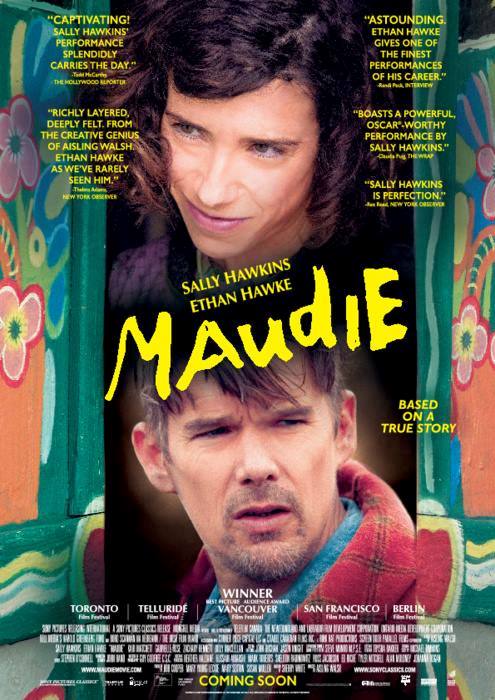
MAUDIE

This poster was downloaded from the Facebook page of the 2016 film. It is being used here for representation purpose. No copyright infringement intended.

The film ` Maudie’ came to me during the COVID-19 lockdown.

That made a difference.

It is like what happens when after years of consumerism, you are sat in a quiet spot free of such stimuli. First the starkness hits you. Then as the withdrawal symptoms ebb, you grow acquainted with newfound bareness. Later, your adaptation to bare environment authors its own Spartan idiom. You discover how effective the clarity is. Intended or otherwise, that is what I felt taking in this film set in Marshalltown, Nova Scotia. It’s was a refreshing idiom, a style gaining popularity as filmmakers search for a distilled simplicity to tell stories effectively in age of mind numbed by excess. The vignettes of hard rural life, the plain dwellings, frames with few people, moments conveyed in full and the spacious landscape alternating between an autumn-look and snow covered world, all add to the idiom’s effectiveness.

The film tells the story of Maud Dowley, who was born with birth defects and developed rheumatoid arthritis that eroded her mobility, particularly her ability to use her hands. You find her living with her aunt Ida. Maud is an awkward young woman with a physical language that hints of withdrawn life and shyness but a quiet demeanor that is as determined as those better born than her. While her personal story unfolds gradually through the twists and turns the narrative takes, what is clarified early on is her wish to take charge of her life instead of having others fit her into the generally accepted patterns of society. At the local store, she overhears Everett Lewis, a fish peddler, seeking a cleaning lady to take care of his house. Maud secures the position in exchange for room and board.

Thus begins an initially rocky but progressively affectionate relationship between the rough fish peddler and the awkward woman, who brings to bear on the man’s life a touch of color with her capacity to paint and a sense of order because she can write and keep accounts. In due course, Maud’s talent for painting – she graduates from simple drawings on the walls of the house to illustrated cards and paintings – becomes the stuff of income for the couple. Thanks to a few patrons and the news of her work spreading thereby, she becomes known. The couple gets married. You also see the role of provider slowly reversing; Maud becomes the busier half, Everett does most of the jobs around the house. From erstwhile lord of the house with Maud subservient to his commands, Everett transitions – at times grudgingly – to supporting Maud. It is an engaging study of character, all the way to film’s close. The 2016 movie is a biopic; it is based on the life of Canadian folk artist Maud Kathleen Lewis (nee Dowley).

Sally Hawkins (of ` Shape of Water’ fame) plays Maud while Ethan Hawke stars as her husband, Everett. It is a sterling piece of acting from Hawkins; Hawke supports well. Directed by Aisling Walsh, the film (I saw it on Netflix) builds up slowly and maintains a steady, unhurried pace. If you are the sort who has been using lockdown to reflect on life, then this film is a good watch. It stills life to moments and goes into the heart of what happiness is; how much of everything you need to be happy.

(The author, Shyam G Menon, is a freelance journalist based in Mumbai.)

LEAVE NO TRACE

This image was downloaded from the Facebook page of the 2018 movie. No copyright infringement intended.

A film with two good actors.

One of them, I was already familiar with from earlier movies watched.

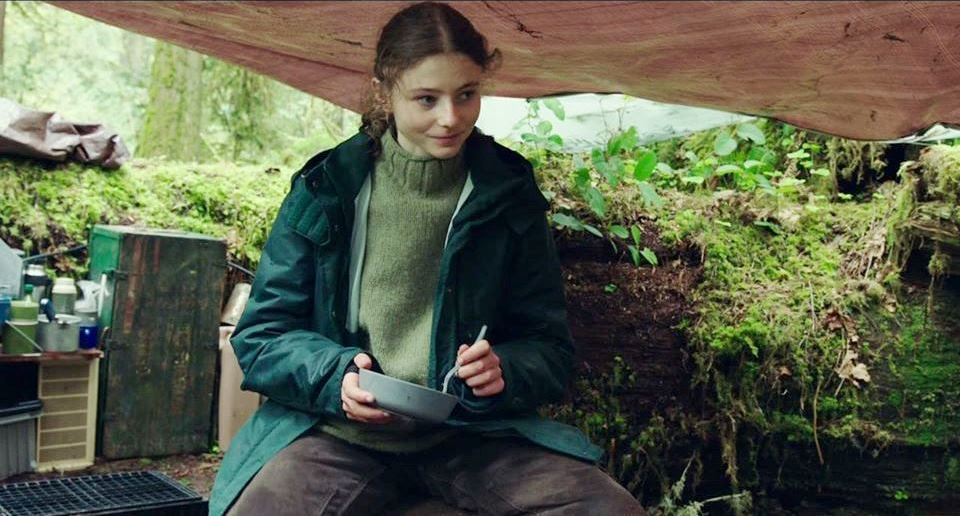
I had seen Ben Foster in the 2007 film ` 3:10 to Yuma’ and the 2015 movie on Lance Armstrong, ` The Program.’ I knew what to expect. Thomasin McKenzie was an unknown quantum. I hadn’t seen the 2014 concluding installment of ` The Hobbit’ trilogy or ` Jojo Rabbit’ of 2019. Seeing her confidently hold her place next to Ben Foster and in some ways, even set the tone for the lovely film I was watching, was a lesson in grace. The film was ` Leave No Trace,’ released in 2018 and since, highly acclaimed.

The film revolves around a father-daughter duo, who elect to live away from human settlements. The father is a war veteran with Post Traumatic Stress Disorder (PTSD); regular life is tough for him to endure. The daughter is home-schooled. She has a sense of awareness, sensitivity, independence and responsibility that can only be described as advanced for her years. They make their home, camped unseen in the depths of a forested park. It is illegal to do so, on public land. They take care to keep their presence invisible to others, except a few similarly camped on the periphery, who Will (the character played by Foster) sells painkillers to.

Thomasin McKenzie in Leave No Trace (This photo was downloaded from the Facebook page of the movie. No copyright infringement intended.)

The cocoon is disturbed after the daughter is noticed by a visitor. Authorities intervene. As the film illustrates the difficulty faced by the father-daughter duo trying to integrate into society as authorities wish them to, you wonder – why can’t otherwise peaceful people be left alone? The question becomes even more relevant as investigation by authorities reveals that the daughter has been brought up well. It becomes less a case of abnormality and more of incongruity with world as we know it. At the same time, it is also clear that the extreme lifestyle of the father-daughter duo is not ideal. It has its shortcomings and the daughter’s progressive choices reveal the balance with settled life she personally seeks; it is an equilibrium different from the harsh ethic pursued by the father escaping PTSD. It is a very reflective film; one that will be enjoyed in proportion to how much leash you gave yourself to question life.

Directed by Debra Granik, the movie (I saw it on Netflix) is affectionately shot. The two lead actors have done a brilliant job. Not having seen her work before, I found myself reading up on Thomasin McKenzie after watching ` Leave No Trace.’ She is without doubt, a major talent. As Will returns to life in wilderness, he is seen on the trail and then veering off it into the surrounding vegetation. It is an aerial shot that includes in its frame the sprawl of nature. The leaves and branches shake a while betraying person who stepped off trail. Then, the canopy reverts to what it was – a calm, green, cover; its secrets secure within its fold.

This is a beautiful film. See it.

(The author, Shyam G Menon, is a freelance journalist based in Mumbai.)      
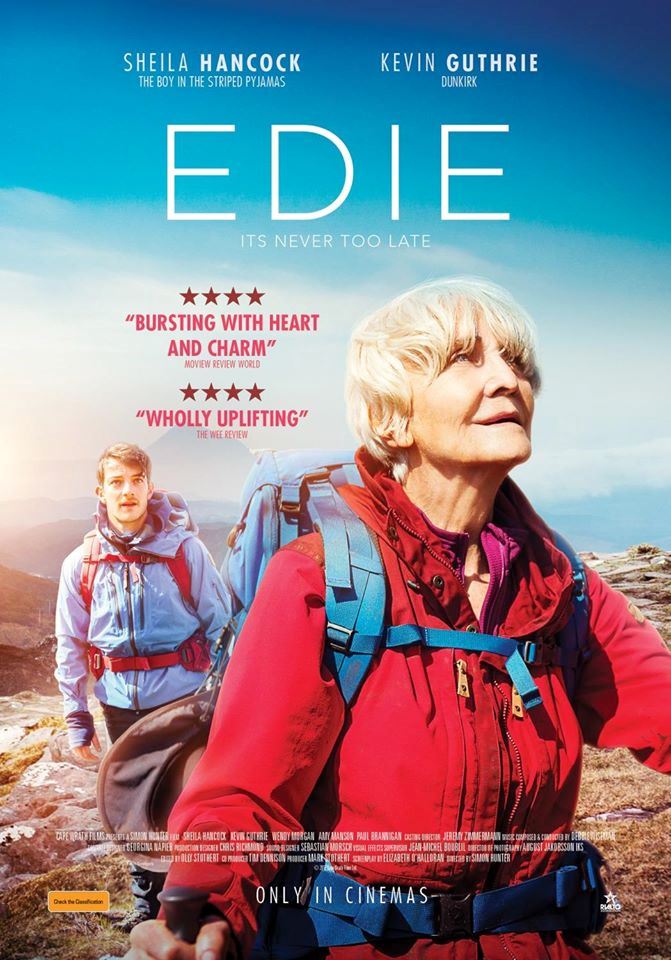
EDIE

This image was downloaded from the Facebook page of the film. No copyright infringement intended.

There is life, and then, there is how you should live life.

The first is a blend of existence as it is and world as perceived by our sense organs. The second is a blend of individual sensory perception and opinion from the human collective; in fact, more of the latter. Most of us get entangled with the second approach. We are busy living life as it should be lived. Till one day, you wake up and ask yourself: what did I do to my life? My one shot at existence?

That one day came to octogenarian Edith (Edie) Moore in the phase following her husband’s demise. Her daughter, with whom she has a strained relationship, plans to shift Edie to a retirement home. The elderly woman resents it. The juncture invites reflection. Following a wild childhood that she thoroughly enjoyed in the company of her father, Edie had got married to George, a man with a very controlling nature. Thanks to him, she had been unable to go on a climbing trip with her father to Suilven, a mountain in the Scottish Highlands. Two days after their argument on the subject, George got a blood clot that rendered him invalid; “ he never walked or talked for thirty years until he died. And dad died not long after George had his stroke. So that was that, I never went.’’ Edie took care of George and her daughter but in the process, was denied her own life. Now in her eighties and beset with her daughter’s plans for her, the widow decides to take up that old trip to Suilven.

This is the premise of the 2018 movie, ` Edie.’

It is a beautiful film with Sheila Hancock in the role of Edie and Kevin Guthrie (remember him from ` The English Game’?) as Jonny, a young man who offers to lead Edie up the mountain.  What makes this film particularly meaningful is the way the narrative mixes straightforward story telling with contemplation on what happens to us in life. Sometimes the choices we make, hijacks our journey to the expense of all other possibilities. This is what happened to Edie in her younger days. She was reduced to being care giver and taken for granted. In her old age, she is a concoction of the rage in discovering that her best years were wasted, the frustration of being unable to feel young again (and be honorably treated while trying it) and eventually, the delight in undertaking an almost monastic pilgrimage to Suilven, a motif capable of restoring dignity to her existence. This is not an outdoor film in which, the rules of wilderness are strict and unflinching. There is an element of affection for the main protagonist, a sense of nature and heavens being supportive. But it doesn’t matter for the underlying warmth and compassion of this movie shot in great landscape, is refreshing.

This is a good film to watch (I saw it on Disney-Hotstar) especially in these days of lockdown due to COVID-19. Stuck at home and counting the hours, we have been reflecting on life. There is an Edie in each of us, seeking release.

(The author, Shyam G Menon, is a freelance journalist based in Mumbai.)