WFH DAYS

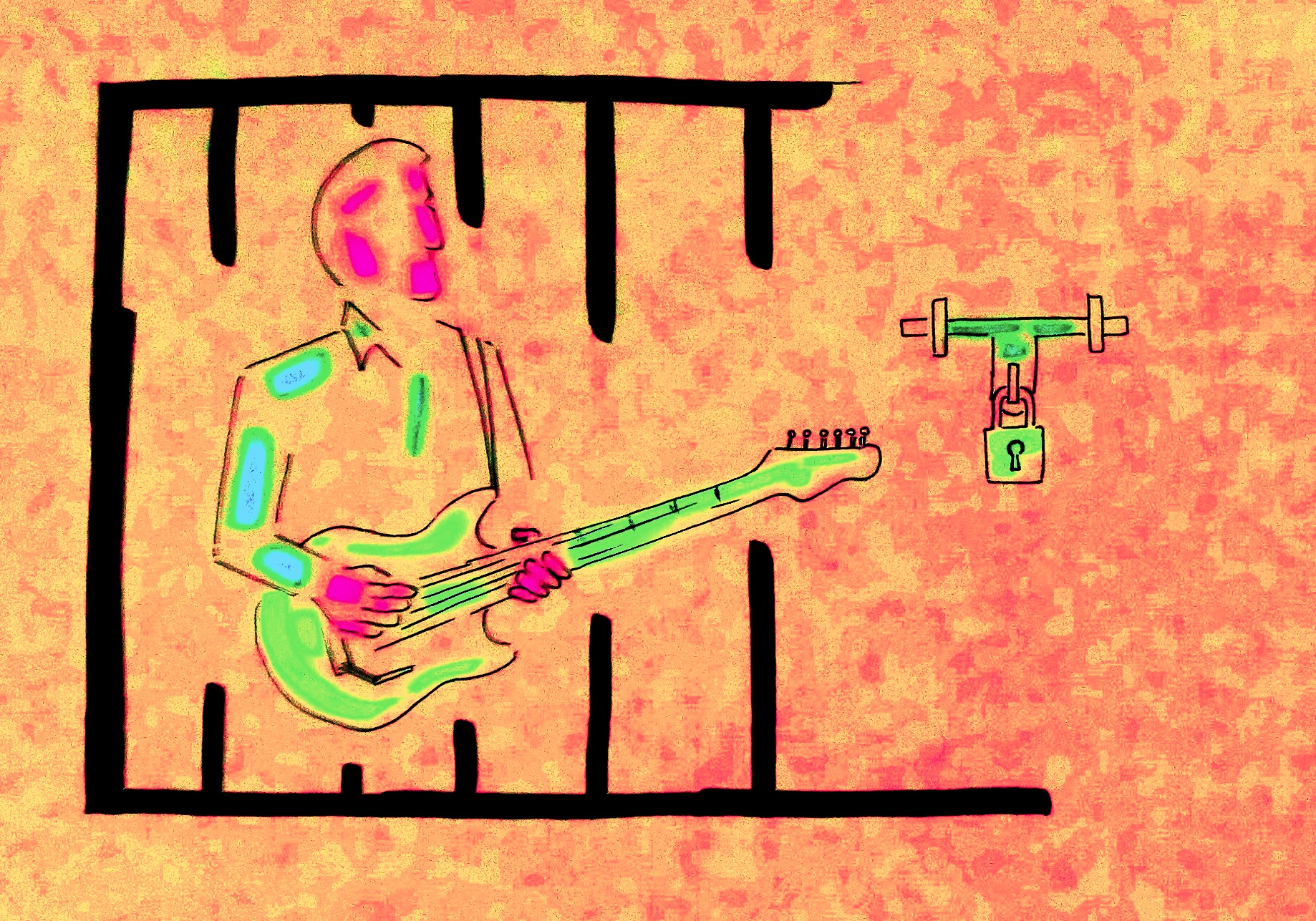
Illustration: Shyam G Menon

Among major shifts accompanying COVID-19 and lockdown was Work from Home (WFH). Initially it was heralded as the digital future. Now, we are worried if it may end up an annoying blend of neither the best of office nor the best of home.

Over the past few months, periodic interactions with friends and relatives threw up concerns about WFH; especially long hours of work given employee is anyway at home and available on call. The boundary between home and office has increasingly blurred. With time we may retract to a more enlightened form of WFH. However, there are challenges. Currently, there is more money in an inch of technology than a mile of human life. In world by money, we just can’t be sure what will eventually triumph. In the meantime, as with many things beyond our control, the best option we have is to laugh at our predicament.

The recent past has for some reason drawn me closer to the music of Chris Rea, the British rock and blues artiste. His debut album was in 1978. In the late 1980s, somebody gifted me his album: Dancing with Strangers. It had the hit song Let’s Dance. From then on, I have listened to his work on and off. But of late, I have grown to genuinely appreciate his style. A talented guitarist, he keeps his music simple. His compositions often evoke a sense of space and momentum (a good example being that beautiful song: Set Me Free). I like this idiom of peaceful, spatial and moving in a world becoming more and more complicated and congested.

Working on It was a song he released in 1989.

Here are the lyrics:

Oh how I’d love it girl, just you and me

Take the day and fly

But oh this job, it’s got the best of me

Tell you why, tell you why

Somebody above is in a desperate state

Some kind of urgency, the kind that won’t wait

I say tomorrow, he say today

And the man in my head well he tell me no way

Keep working

I got eight little fingers and only two thumbs

Will you leave me in peace while I get the job done

Can’t you see I’m working

Oh, oh I’m working on it

Oh, oh I’m working on it

Well they’re coming from above me

And they’re coming from below

Yea they’re in there right behind me

Everywhere that I go

And my buddy, he’s screaming down the telephone line

He say gimme, gimme, gimme

I say I ain’t got the time

Oh, oh can’t you see I’m working on it

Oh, oh I’m working on it…

A few days ago as I revisited this old song, I felt it could be an anthem for our WFH days.

Use good headphones, speakers.

Turn up the volume.

Bass matters.

Amidst WFH, shake a leg.

Enjoy.

(The author, Shyam G Menon, is a freelance journalist based in Mumbai.)
RISING PHOENIX

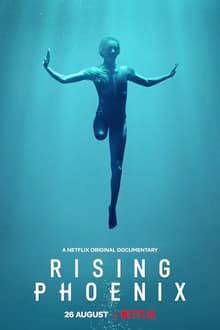
This image was downloaded from the Facebook page of the film. It is being used here for representation purpose. No copyright violation intended.

Many of us would know the name: Pierre de Coubertin.

How many of us have heard of Ludwig Guttmann?

The first is considered the father of the modern Olympic Games. The second is among those responsible for the Paralympic Games. In recent decades, the Paralympic Games have been typically held in the same host city as the Olympics, after the main event has concluded.

As you learn more about it, you realize that there is practically nothing to qualify the Paralympics as less than the Olympics unless your judgement is based on notions of mainstream, normal and majority – all of which nudge imagination towards a sense of physical and mental ideal. If challenge, hard work and determination are what author great stories from the Olympics, then such attributes are equally strong at the Paralympics. In fact, challenge may be more because the athletes overcome tremendous physical and mental hurdles before they are able to perform, leave alone finish on the podium. Yet the story of the Paralympic Games and that of the athletes participating in it, have always lived in the shadow of main and ideal.

This is what makes the 2020 documentary film Rising Phoenix essential viewing for anyone fond of sports. It gives you an inside view of the Paralympic Games – its genesis under the leadership of people like the German born British neurologist, Guttmann and the struggles the organizers and participating athletes endured in their life. It tells you of the step motherly treatment traditionally meted out to the Paralympic Games by society, which saw them as a cosmetic ritual – sort of corporate social responsibility – balancing the perception of the Olympic Games instead of genuinely valuing the drive, energy and commitment of the differently abled athletes. The Soviet Union, host of the 1980 Moscow Olympics, declined to stage the Paralympic Games; it was subsequently held in Arnhem, Netherlands. More recently in the run up to the 2016 Rio Olympic Games, the Paralympic Games were nearly canceled for want of funds. There have been other similar examples of cavalier treatment – instances of the Paralympic Games held to very few spectators in the stadium – as well as islands of endearing support like the 2012 Games staged in London. The Games in London is the largest Paralympics held to date with a record 2.7 million tickets sold. At Rio too, once the Paralympic Games got underway there was tremendous enthusiasm and crowd support; over two million tickets were sold.

While the modern Olympic Games held under the auspices of the International Olympic Committee, began in 1896, the Paralympic Games – as an athletic event for the disabled, coinciding with the Olympic Games – started only in 1948, when British World War II veterans participated in the International Wheelchair Games in London. The Paralympics acquired its distinct stature as an apex championship open to those other than war veterans, only in 1960 (Stoke Mandeville Games, Rome; it is seen as the first Paralympic Games). Its Olympic year editions started being held just after the quadrennial Olympic Games in the same host city or country as the Olympics, in the years following the Rome event and more reliably so by the late 1980s. As per data available on Wikipedia, India has participated in 24 editions of the Summer Olympics to date and won 28 medals in all (it hasn’t won a medal yet in the Winter Olympics, although it took part in 10 editions). It participated in 11 Summer Paralympics (it hasn’t participated in the Winter Paralympics yet) and won 12 medals, including four gold.

Rising Phoenix is available on Netflix. Among the athletes featured in it are Tatyana McFadden (she has participated in both summer and winter Paralympics with the bulk of her medals won in the wheelchair track and field category; she has also won elite marathons in the wheelchair segment), Bebe Vio Beatrice (wheelchair fencing), Jonnie Peacock (running), Ntando Mahlangu (running and long jump), Ryley Batt (wheelchair rugby), Cui Zhe (powerlifting), Ellie Cole (swimming) and Matt Stutzman (archery). Each of them comes alive as a composite of personal story, interview and footage of training for their sport and actual performance at the Paralympics.

Don’t miss this film.

(The author, Shyam G Menon, is a freelance journalist based in Mumbai.)
CHADWICK BOSEMAN IS NO MORE

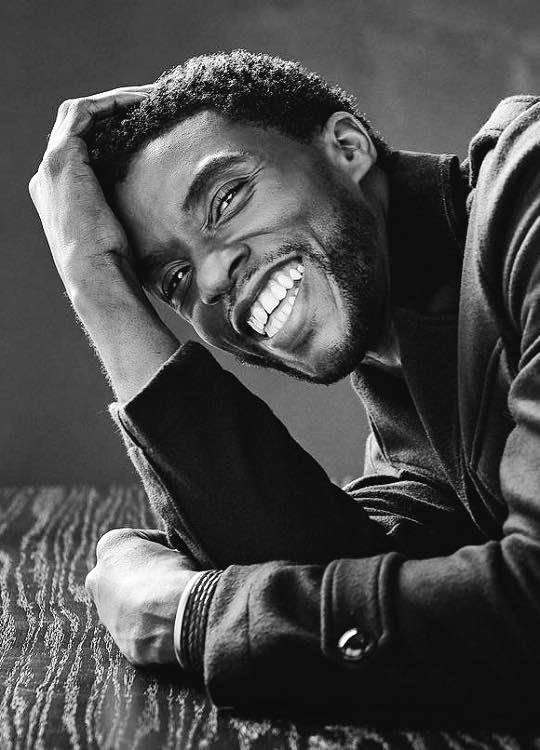
Chadwick Boseman. Photo credit: Sam Jones. This image was downloaded from the actor’s Facebook page and is being used here for representation purpose. No copyright infringement intended.

In June 2019, Hollywood actor, Denzel Washington, was awarded the Life Achievement Award of the American Film Institute (AFI).

Among those who spoke at the function was Chadwick Boseman, the actor we all remember for portraying the comic book hero, Black Panther.

At the AFI ceremony, Boseman recalled the time Phylicia Rashad, his teacher at Howard University, contacted Washington for assistance in funding the studies of nine theater students who had been accepted to a summer acting program at the British Academy of Dramatic Acting in Oxford. Washington agreed to help.

“ As fate would have it, I was one of the students that he paid for. Imagine receiving the letter that your tuition for that summer was paid for and that your benefactor was none other than the dopest actor on the planet. I have no doubt that there are similar stories at boys and girls clubs and theaters and churches across the country where I know you have also inspired and motivated others. An offering from a sage and a king is more than silver and gold. It is a seed of hope, a bud of faith. There is no Black Panther without Denzel Washington. And not just because of me but my whole cast, that generation stands on your shoulders. The daily battles won, the thousand territories gained, the many sacrifices you made for the culture on film sets through your career, the things you refused to compromise along the way, laid the blueprints for us to follow. And so now, let he who has awarded be awarded, let he who has given be given to. It is an honor to now know you, to learn from you and join in this work with you. May God bless you exceedingly and abundantly more in what’s in store than he ever has before. God bless you,’’ Boseman says in the video available on YouTube. A teary eyed Washington listens.

It’s now time to remember the one who remembered to say the above.

Chadwick Boseman died on August 28, 2020 after a four year-battle with cancer. He was 43.

The last film I saw featuring him was Spike Lee’s Da 5 Blood. Previously I had seen him in Black Panther and some of the films from the Avengers franchise. On Wikipedia, Boseman’s career in films spans 2008 to 2020. It was in 2016’s Captain America: Civil War that he essayed the role of Black Panther for the first time. It was his first film in a five picture-deal with Marvel. The 2018 film Black Panther would later cement his status; the film currently ranks fifth in Wikipedia’s list of the highest grossing superhero movies with over 1.34 billion dollars earned at the global box office.

News reports about Boseman’s demise mentioned that he had been battling cancer for the past four years. According to a brief statement on his passing, available on his Facebook page, movies like Marshall (2017) and Da 5 Blood (2020) were filmed in the period that he underwent surgery and chemotherapy. What I will remember him most for is the struggle and dignity resonant in the words he spoke at the 2019 AFI ceremony. It was easily one of the most graceful and touching speeches of that genre heard at award ceremonies. Among those present was Michael B. Jordan, Boseman’s costar in Black Panther, who essayed a memorable role in the 2019 film Just Mercy. In the AFI video, as Boseman concludes, the audience gives him a standing ovation. Roughly a year and two months later, he would be no more.

(The author, Shyam G Menon, is a freelance journalist based in Mumbai.)    
WILLIAMS

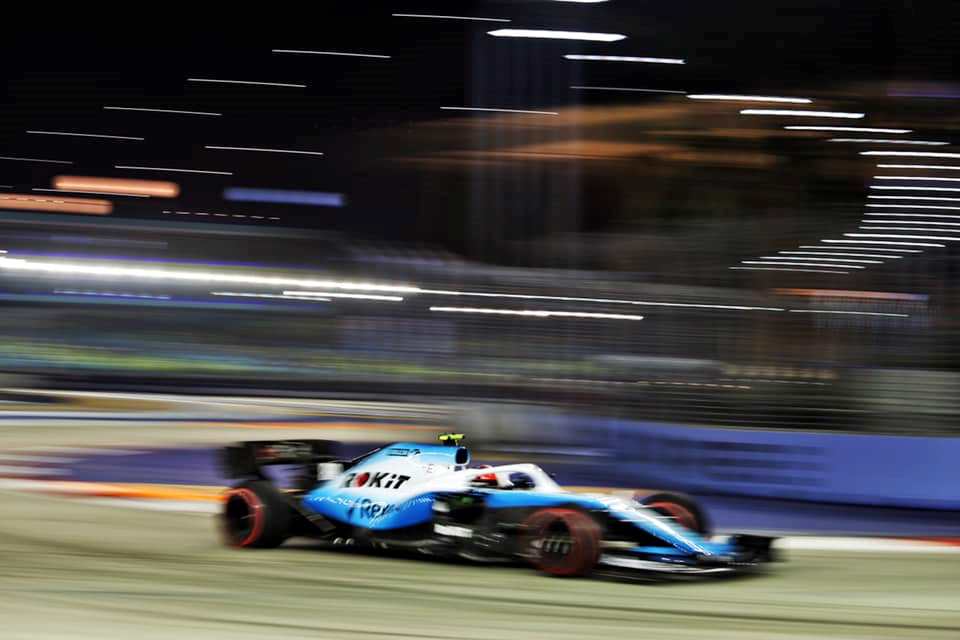
This image was downloaded from the Facebook page of the racing team and is being used here for representation purpose. No copyright infringement intended.

“ In the end, if you are a racer, you are a racer. It’s a bug. It gets to you.’’ – Frank Williams

It was one of those coincidences.

The day I finished watching the 2017 documentary film Williams on Netflix, news broke that the Formula One racing team – it was in talks to rope in an investor – had been acquired by an American investment firm: Dorilton Capital.

Reports said, the name of the team based in Grove, UK, will continue unchanged. That should make anyone admiring passion and independence, happy, for Williams is one of the great stories of Formula One; great not just by performance but the determination it showed to keep going despite the odds. Given it was languishing in the lower half of the points table these past few years one may call the acquisition news of August 21, 2020 as expected. That would be a cold way of looking at things. What genuinely matters is the retention of the Williams name. If you take it off, a whole angle disappears from Formula One; that of the independent teams, founded and surviving not on the strength of capital, but interest in the sport.

A good documentary film is like that book you purchase despite everything gone online. There is something of a lasting value to it. The film Williams falls in that category. It tells the story of the Formula One racing team bearing that name and in the process gifts you insight into the sport, a man who became an institution in it, the people around him and how that life in racing left its mark on all of them. Motor racing is an expensive sport. Frank Williams wasn’t born into wealth or high society. He was attracted to cars from a very young age and instead of pursuing higher education, struck out on his own, including dabbling in auto parts and performance cars. Much of his earnings, dovetailed into Frank’s single minded focus on racing. His was a case of passion building a journey step by step, till following a stint as racer himself Frank eventually builds a Formula One team; the one carrying his name.

The film – like all films working within the limit of its length – is tad sketchy on the travails Frank faced in the initial years and for sure they would have engaged, for he is an outsider in a capital intensive sport ruthlessly partial to performance. It goes on from there to cover the first set of race victories that the team enjoys, including in between the early success (with Pierce Courage as driver) and the later poor showing and subsequent divestment to a Canadian investor. By the time the season that saw the investor come aboard, concludes, Frank is shut out from his own factory. It sinks him into a depression of sorts, release from which occurs only with a return to pursuing his dream of racing by starting a new team with Patrick Head. A few years into the championship victories that come the team’s way, Frank Williams suffers an accident. It leaves him a quadriplegic.

To adequately comprehend what this loss of mobility meant, one must note – Frank’s other great interest was running. He was into running marathons. Frank fights his way back to being by the race track and watching his team at work, from a wheel chair. The team he co-founded would win nine constructors’ championships and seven drivers’ championships at Formula One, as of August 2020. It is a journey entailing tonnes of human experience ranging from Frank’s early struggles to keep the team going, the drivers who race for him, the great drivers who lost their lives doing so, the scars it leaves on the team principal and eventually, his own accident off the track. Yet for all this drama, Frank Williams is a person totally lost to racing and his mission of managing a Formula One team. He lives and breathes that life.

The lives of intense people in intense sports, has often been the subject of riveting books in the biographical space. Less heard of, but as important – if not more important – have been the accounts of those who inhabited the surrounding ecosystem, without who, very likely the main protagonist wouldn’t have accomplished as much as he / she did. Among great stories told in mountaineering, has been the the sport as beheld by mountaineers’ spouses. They are as much affected by the risk associated with the sport; they are also among those enduring an utterly changed life when accident strikes leaving climber maimed or dead. What renders solidity to the documentary Williams is the inclusion of the memoirs of Virginia Berry, Frank’s late wife and the presence in the film of his daughter Claire Williams, who becomes deputy team principal. Virginia helps with resources in Frank’s struggling days; she is the one who takes care of him after his accident. Her memoirs – it runs like a spine for the narrative – serves as useful material to highlight the human story behind an obsession with racing; the toll it takes on a family.

I watched Williams after viewing Formula 1: Drive to Survive and A life of Speed: The Juan Manuel Fangio Story (in that order) – all on Netflix. It was a trinity that helped put the sport often rendered remote and extreme by its glossy marketing, in perspective. Just one observation: as an independent team that built its own cars, cut a reputation for itself at Formula One, had its share of struggles raising resources and even became a publicly listed company, the story of Williams exceeds the dimension of a documentary film. It should be a mini-series.

(The author, Shyam G Menon, is a freelance journalist based in Mumbai.)
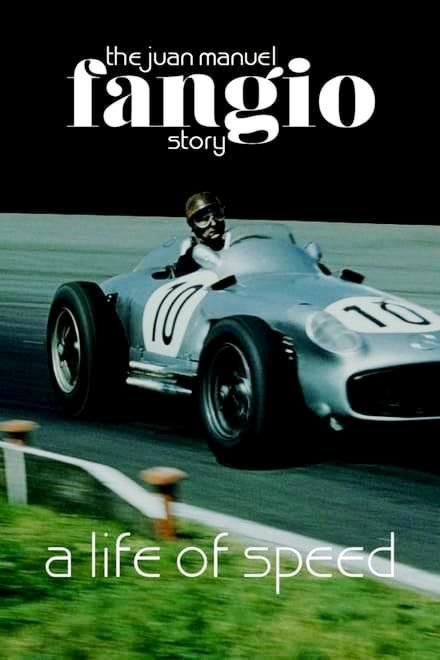
A LIFE OF SPEED: THE JUAN MANUEL FANGIO STORY

This image was downloaded from the Facebook page of the film and is being used here for representation purpose. No copyright infringement intended.

“ Trying to be the best in everything? I agree with that. But never believe you are the best.” – Fangio

There is sport as we know it today and there is sport as it used to be. It sounds clichéd. I know. But an overview of the contrast is essential grounding as otherwise we would be building castles in the air. Somewhere in the first quarter of the 2020 Netflix documentary A Life of Speed: The Juan Manuel Fangio Story, former Formula One world champion Mika Hakkinen describes his experience of driving the car Fangio raced in, “ it is amazing, the effort it takes to drive the car.’’

Fangio’s heydays on the circuit were in the 1950s. The Argentine driver was Formula One world champion five times, a record subsequently beaten by Michael Schumacher. He raced with four teams – Ferrari, Alfa Romeo, Maserati and Mercedes Benz. But it is the state of racing he endured that amazes above all else. Fangio’s early promise was in football. After completing his military service, he opened a garage and in 1936, commenced a career in racing, driving a Ford that he had rebuilt. That last bit is a defining characteristic of Fangio’s approach to the sport.

A modern Formula One race is for instance a demonstration of how a team works like an orchestra, perfectly conducted. While the young drivers push their cars to dizzying speed, what matters equally is the efficiency of support crew during pit stops. If you watch a pit stop in slow motion, it is a lesson; both in terms of the coordination displayed right then and the thought, preparation and rehearsing that may have gone into it. Fangio’s formative years were in South America’s touring road races. As some of the early footage in the documentary shows, racers at such events drove carrying spare parts and extra cans of gasoline. There was no support crew, no teams of mechanics on call to address a breakdown. The typical driver was a combination of driving and maintenance skills.

This backdrop, from which Fangio came, contrasts the imagery of modern day circuit racing, where every ingredient is handled as distinct silo with specialists for the purpose. Indeed a distinction mentioned in the documentary about Fangio is his ability to race at Formula One, comprehending the limits of his car and try preserving it to the end. He knew how to sense the thin line separating an engine pushed to the limit from potential breakdown. The above quality made Fangio the sort that worked collaboratively with his team. You see in the documentary the early form of the pit stop. In those days of Formula One, a crew of mechanics dedicated to each car wasn’t available. When signing up with the final team of his Formula One career, a clause Fangio wrangles is that his car would have a dedicated mechanic.

Further, one of the hallmarks of modern day motor racing is the high level of driver safety afforded by advancements in technology. I watched the documentary on Fangio after savoring the Netflix series on Formula One’s 2018 and 2019 seasons. The latter had spectacular accidents with cars flying due to the force of impact. In all those accidents – except one – the driver concerned emerged unscathed. Such advancements in technology were not there in Fangio’s days. Accident fatality rate was high. It was humbling to listen to racing greats like Jackie Stewart and Alain Prost recall in the documentary, the number of fellow drivers killed. Having said that, it also appears to have been a gentleman’s age compared to the cut throat competition of today. At one of the races, Fangio’s car develops a flaw that cannot be rectified. He finishes the race and wins it in a car that a team mate gladly surrendered for his use.

Fangio’s story is also different from a couple of other angles.  The current line-up of drivers in Formula One is young. Fangio was middle aged by the time he got to Formula One. Here’s what Wikipedia’s page on Fangio says: Fangio was the oldest driver in many of his Formula One races, having started his Grand Prix career in his late 30s. During his career, drivers raced with almost no protective equipment on circuits with no safety features. Formula One cars in the 1950s were very fast, extremely physically demanding to drive; races were much longer than today and demanded incredible physical stamina. Tyres were cross-ply, and far less forgiving; treads often stripped in a race, and spark plugs fouled.    There were, of course, no electronic aids or computer intervention. At the end of a GP, drivers often suffered blistered hands, caused by heavy steering and gear changing.  Fangio was born in 1911. His first time at the World Championship of Drivers was at the 1950 British Grand prix; he was 39 years old then. His last time on the circuit was at the 1958 French Grand Prix; aged 47. His success with a variety of teams also stands out. Few drivers have repeated that since.

There is a point in the film on Fangio, when Juan Manuel Fangio II (Fangio’s nephew and a former auto racing champion himself) says, “ if you want to be efficient in today’s cars you need precision. If you wanted to be efficient in the cars from the 50s, you needed art. Now like I always say, if you add precision to the art from the 50s, the result is a world champion. If you add art to today’s precision, the result is also a world champion. So what we need to do is to add to each period what that period was missing.’’ A Life of Speed: The Juan Manuel Fangio Story is available on Netflix. It is an engaging documentary to watch before or after the Netflix series on the 2018 and 2019 Formula One seasons. It doesn’t matter whether your understanding sprouts up from the seed or downward from the tree branches; what is important is that it has roots.

(The author, Shyam G Menon, is a freelance journalist based in Mumbai.)
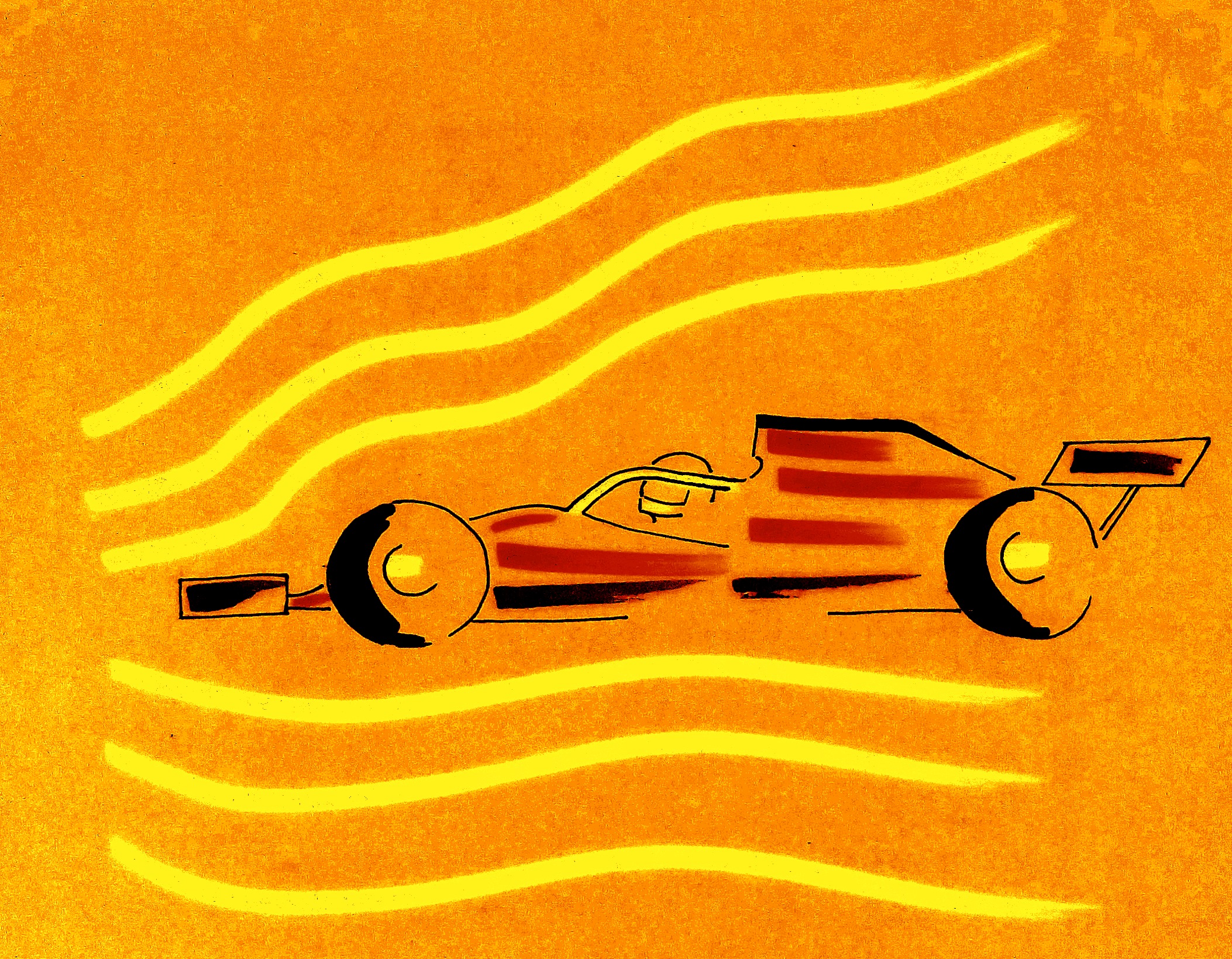
FORMULA 1: DRIVE TO SURVIVE

Illustration: Shyam G Menon

For a long time I was cold to Formula One. So why am I writing a review about a documentary series on the event? That’s because the said series has been crafted superbly and walks a thin line, which in retrospect I find, explains why I was unmoved by the sport and why I believe, I have begun to understand it.

If there is one word I would use to describe the 2019 Netflix series Formula One: Drive to Survive, it is: pressure. That attribute fills every ounce of the sport. For me, it worked as key unlocking a puzzle. My tryst with Formula One was as visits to the home of a gainfully employed friend, who, aside from time spent with family and friends, breathed the corporate life. Every time I was at his house watching a TV screen showing cars going round and round on a circuit, I would wonder: what’s so great about this?

A freelance journalist with feet in wider reality (and not owning a car to boot), I found the sport to be a rich man’s game; one that cost big money to host and wherein, the equivalent of a backpack damaged while hiking or a shoe worn out by running, was a smashed up car. When that happened, they just threw away the broken parts, found new ones and continued driving or, they wrote off cars and rolled in new ones. It appeared sheer materialistic excess. Perhaps I was being needlessly judgemental; committing that classic human error of looking for meaning where there is none. Anyways, something wasn’t connecting. All the while, my friend’s eyes stayed glued to the telecast.

Watching the Netflix series and stumbling upon pressure as the missing link eluding me, I felt the puzzle explained. The whole paradigm of high performance cars, quick driver reflexes, million dollar investments and large companies for players is accompanied by both prospects of tremendous possibility and, accountability. The result is a pressure cooker environment in sport that isn’t any different from the regular corporate ambiance. There is a hill (a points table) to climb every season and the urge, clearly, is to reach the top. The racing team may have the driver for poster boy and popular star. But given there are two drivers in each team and they must prove their mettle to stay indispensable, the mutual competition and insecurity can eat their innards. The real power is the team principal and the power behind the power is brand and financier; none of this – rules and variables influencing rules – lost on those accepting corporate logic. Very often, the fate of otherwise talented drivers is decided by this brew. I think I now understand why Formula One attracted my friend and others like him. Besides being intense sport, it probably endorses the professional space they inhabit.

I also understood the specific visceral pulls working within that larger attraction, the biggest of which is the raw act of driving at very high speed. At such speeds the stimuli we normally process for making decisions, appear and disappear like a flash. Given there are 20 drivers in all at the teams, there are 19 others (call them projectiles) besides you, processing stuff at manic pace on a given circuit. Things can go wrong in seconds. It is intense. The kinetic presence of other drivers around you, their capacity for individual madness, the challenges of each course and the fact that your skilled driving notwithstanding, your car is only as good as its support by other team members – all this, authors a dynamic environment, one that is pretty much like a car engine; a symphony of several components, a sum total of parts. It is innovation, coordination and discipline. It parallels corporate in attributes and instinct. It is said of some sports that it is meant for adrenaline junkies. I would say this one is for the pressure junkies. Being in a Formula One cockpit – be it driver’s seat (where the action is) or that of the team principal (where strategy is) – is a test of how much pressure you can take.

The beauty of this Netflix documentary series about the 2018 and 2019 Formula One seasons is how it has captured and delivered the thin line defining the sport, accurately. It has little flab in narration this side or that of the line it is treading. It stays taut; drives home that pressure. This is an eminently watchable series. However expect no great investigation of the sport or effort to contextualize it beyond racing circuit. This is a collaboration between Netflix and Formula One. It makes you feel that it hits hard but actually plays by the rules; which the way the series has turned out, isn’t bad at all.

(The author, Shyam G Menon, is a freelance journalist based in Mumbai.)          
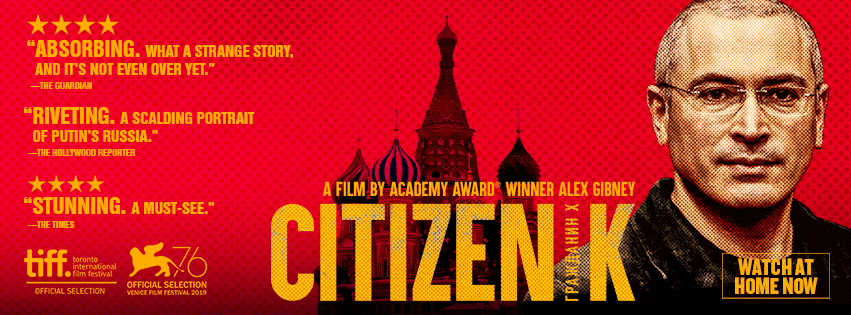
CITIZEN K

This image was downloaded from the film’s Facebook page and is being used here for representation purpose. No copyright infringement intended.

For many of us, lockdown has been an opportunity to reflect.

Among other things, you think of the meaning of life. Lockdown has been a bit like the prisoner’s existence except there was neither crime committed nor sentence decreed. But the effect was similar – the limits of our wanderings shrank and a prison cell took shape. Luxuries waned. For the first time, many of us understood what incarceration is. We started to value freedom. In literature, denial of freedom on scale is usually associated with totalitarian regimes. The dissidents imprisoned for their protest and later released or rendered martyrs for the cause, inspire governments promoting freedom and liberal views. This has been the cycle of events regularly portrayed in political literature.

It was curiosity of this sort that attracted me to the documentary film Citizen K. Plus the fact that as of 2020, democracy is in one of its most imperiled phases with growing sections of humanity only too willing to waive individual rights and instead regiment to preen as human shoal. Why do we do so? Why do we turn our backs on the lessons of history and play into the hands of potentially losing liberal government and personal freedom, both of which we know, are hard to restore once lost? For those like me, valuing freedom and appreciating it for exactly what it is, 2020 has been a bleak but thought provoking landscape.

So what is Citizen K all about? This 2019 documentary film deals with Russia; to be precise, the period following the collapse of the Soviet Union. It tracks the story of Mikhail Khodorkovsky, erstwhile billionaire and among the richest men in Russia who belongs to the first generation of business oligarchs that arose from the ashes of Communism. Doing so, it gives us an inside view of how the phenomenon of Russian oligarchs came about; how that crony capitalism spread roots. Today we accept this well entrenched symbiosis between business oligarchs and politics in Russia as how the country is. The film shows you why and how it came about. It then leads you to the unsaid fault lines that shouldn’t be crossed in this arrangement. Khodorkovsky – a top oligarch – commits the error of voicing political opinion. This makes him appear a threat to Vladimir Putin, president of the country, whose rise was engineered by the oligarchs but who has since become his own master. In due course, Khodorkovsky is arrested and sent to jail. His giant oil company is merged with state owned enterprise. The billionaire’s wealth shrinks. A long drawn out legal battle to free him follows, much of it trashed by the state’s counsels. Eventually as part of his image building exercise, Putin embarks on a series of amnesties and freeing Khodorkovsky is one of the things he does. With life in Russia too dangerous for him, the businessman shifts overseas. He recasts himself as a political campaigner and emerges over time, a major critic of Putin’s administration.

Neither of the two main protagonists in this drama are angels. Khodorkovsky is a former oligarch, whose rise to riches will remain questionable. Such questions haunt Russian fortunes built up in the period around the Soviet Union’s fall. It was a case of a country that knew little of modern capitalism having lived behind the Iron Curtain for decades, suddenly required to put in place a new economic system using whatever it had at its disposal. The period following the disintegration of the Soviet Union was one of desperation and inequality, during which, the oligarchs exploited common people to corner shares of public enterprise. Through such beginnings in capitalism, Khodorkovsky created the bank that would later become his vehicle for building the oil company – Yukos. Putin on the other hand, was a candidate supported by the oligarchs in the wake of Communist echoes reviving in the declining years of the Boris Yeltsin era. He becomes president, does good work but also goes on to become an institutional entity that stalks the land like an unshakable, permanent political presence. Elections are held but it is a trumped up ecosystem in which the opposition is lame and you can’t be sure whether it is independent or propped up by the ruling formation for illusion of democracy. This predicament is Citizen K’s story.

It is an interesting documentary for multiple reasons, the most prominent of which, is a product of our times. There are shades of Russia – its penchant for personality cult, rule by strongman and appetite for business oligarchies – surfacing in other countries. The larger trend is what attracted me to Citizen K as a viewer; this issue of similarity in political aspiration across countries (it is a model going around), none of it healthy for freedom, economic equality and democracy. This is a film that makes you reflect on our age of undemocratic politics, the cult of political personalities and billionaire businessmen and ordinary people split between support for this formation and opposition to it, split between support for rule with an iron fist and rule by liberal government. Good documentaries hold a mirror to existence. Citizen K does just that. The film is available on Amazon Prime.

(The author, Shyam G Menon, is a freelance journalist based in Mumbai.)   
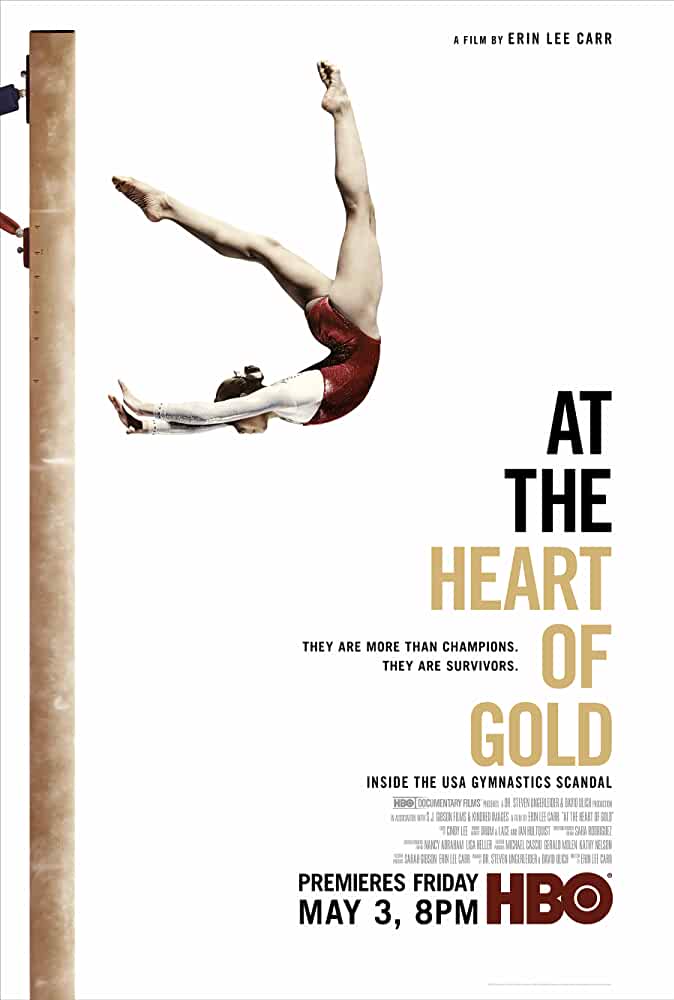
AT THE HEART OF GOLD

This image was downloaded from the Internet and is being used here for representation purpose. No copyright infringement intended.

Gymnastics was among sports included in the very first edition of the modern Olympic Games in 1896. Since then it has become a major fixture with plenty of medals to be won. All sports, in their pursuit of excellence, have evolved talent search and training suited to their needs. A hallmark of gymnastics in this regard, has been the practice of grooming talent from a very young age.

As we increasingly surrender our life to competition, the greater is our tendency to create institutions and approaches so comprehensively dedicated to the theme that they offer scope for violations of other sorts, to be overlooked; even hidden. Worse in tune with such adages as “ no pain, no gain,’’ the violated believe that what they suffered was part of the process of learning to excel. Until somebody – a whistle-blower – declines to see the goings on in that paradigm, calls a spade a spade and opens up.

That’s how the sex abuse scandal linked to USA Gymnastics was first reported in the media in 2016 and investigations commenced into the conduct of their national team doctor Larry Nassar resulting in his eventual imprisonment and sentencing. Others, who were part of the institutional structure and whose actions delayed inquiry and justice, have also not been spared. Wikipedia’s page on Larry Nassar says that more than 150 federal and state lawsuits were filed against him, Michigan State University (MSU), USA Gymnastics, the US Olympic Committee and the Twistars Gymnastics Club. The entire board of USA Gymnastics resigned; the president of MSU and its director for athletics also resigned.

The aforementioned incident is the subject of the 2019 documentary film At the Heart of Gold: Inside the USA Gymnastics Scandal. It is a comprehensive, sensitive account of the scandal. It focuses mostly on the cases surrounding Larry Nassar as that was the epicenter. The said offender and others like him could operate within a system where sport’s relentless pursuit of high performance and consequent traits like catch-them-young, meant the trainees were of an age when they lack the maturity to make informed judgements. That latter attribute – a social situation denying the young a say on what they feel – becomes in turn a shield in service of continuing the offence. Young gymnasts, who complained to officials concerned, saw their complaints ignored or treated cavalierly. As later depositions in court show, in some cases, even parents disbelieved their children. The mistrust caused strained relations between child and parent.

The film’s canvas includes the responsibility of major institutions and influential individuals within them, in prolonging the paradigm of abuse. It makes us think of the problem of institutional sensitivity tripped by focus on success and the perceived infallibility of those familiar for long to the system. The goal being chased and the experience (plus perhaps, the success) of those who went before, serve as prism trivializing the abuse that occurred. The all too often sold narrative is that success doesn’t come easy. What athlete experienced, suspected violation included, finds it tough getting past these walls and qualifying as complaint meriting serious attention. Slowly, what you overlooked gathers mass till one day you have a monster running amok and scars of damage all around. The cases that eventually tumbled out in the USA Gymnastics scandal spanned a couple of decades.

This is a relevant, insightful documentary. It is available on Disney-Hotstar.

(The author, Shyam G Menon, is a freelance journalist based in Mumbai.)
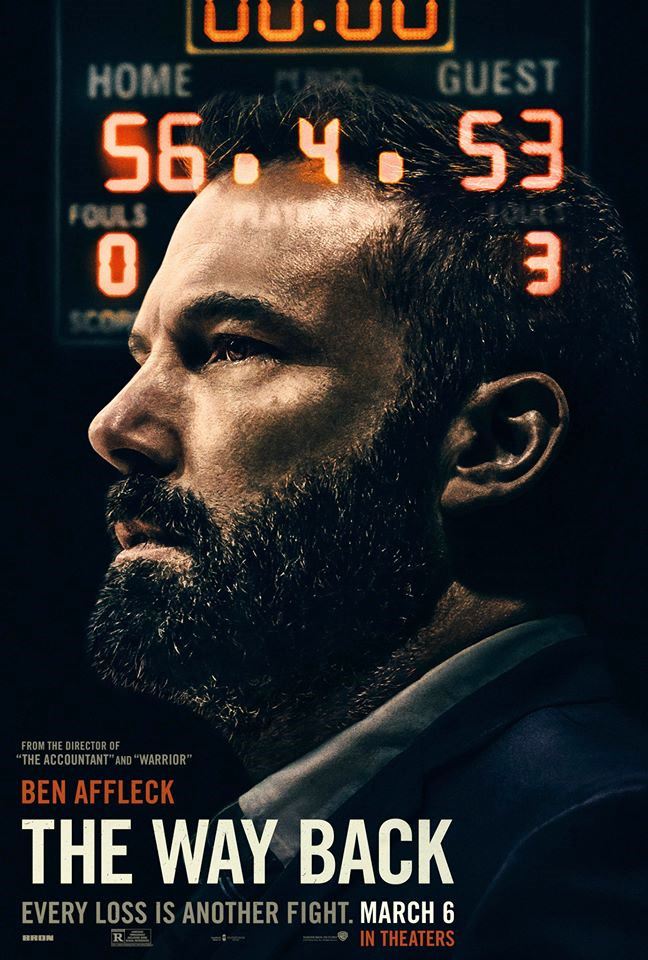
THE WAY BACK

This image was downloaded from the film’s Facebook page and is being used here for representation purpose. No copyright infringement intended.

Films on sports become memorable when they tell a unique story; tell a known story in engaging format, features great acting or hosts technical excellence like memorable cinematography.  A problem seen in this genre is herd behavior. When one model sells, others emulate by the dozen.  For instance, there is an element of fatigue brought by the innate need of these films to showcase motivation, teamwork and achievement. Even before story unfolds, you know what it’s going to be. That can be a damper.

The Way Back is a regular film anchored by the solid presence of Ben Affleck. The film revolves around a former, talented high school basketball player who has drifted off the sport and is then called in to coach a team from his old school. There is nothing new about the problems plaguing him, there is nothing new about the struggles of the young players he is asked to coach. What appears refreshing is the acceptance of known narrative and its handling with a steady hand rooted in reality. Unlike your average sports film, which tends to periodically court elation and uplifting sequences, this one remains a bit dark and grim. That is understandable because the coach has genuine problems to overcome. The bleakness of his world mixes with the goings on in the basketball court, making for an overall mood that rarely frees itself from the damage he has already done to himself and the damage yet to be. Doing so, it becomes a good document of what it means to live and be scarred by life (which in turn, makes you an effective teacher), what it takes to be a good coach and how accountable to wards and school, coaches have to be. That element of realism and ordinary world is this 2020 film’s strong point.

 Plus, Affleck turns in a convincing performance.

The film is available on Amazon Prime; worth watching.

(The author, Shyam G Menon, is a freelance journalist based in Mumbai.)  
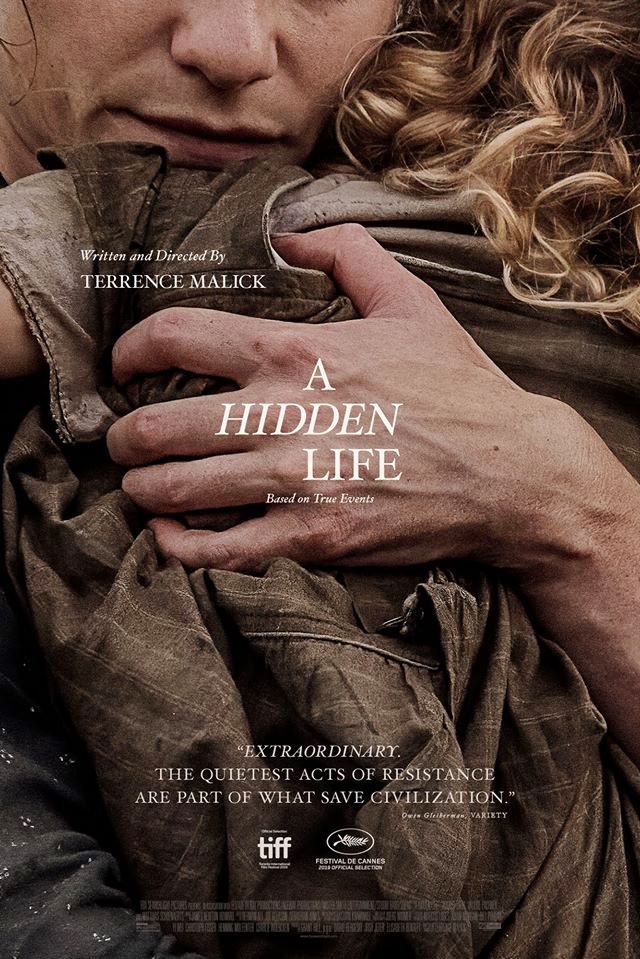
A HIDDEN LIFE

This image was downloaded from the Facebook page of the film. It is being used here for representation purpose. No copyright infringement intended.

The human world has two camps. One finds purpose and security in clustering together. The other acknowledges the vulnerability of being alone but attributes greater value to journey by oneself.

Most of us know World War II as a contest within human cluster between the Axis and the Allies. Both sides were regimented for the task; it was a case of armies clashing and even in the case of civilian resistance, they went by their identity as a group – the Resistance. That is what makes the case of Franz Jagerstatter interesting. He was an Austrian conscientious objector. Cambridge Dictionary explains the term as: a person who refuses to work in the armed forces for moral or religious reasons. Conscientious objectors don’t count on herd for support. Their protest is typically personal and done alone.

Franz and his wife Franziska live in the village of St Radegund in the mountains of Austria. They are farmers; it is a hard but happy life. Both are devout Catholics. The life of Franz and Franziska (Fani) are the subject of the 2019 Terrence Malick film A Hidden Life.

It is the age of Adolf Hitler’s Nazi Germany; its war machine and expansionism. People are ordered to serve in the Nazi army. According to Wikipedia’s page on Franz, when Germany annexed Austria in March 1938, he was the only person in the village to vote against the move in the plebiscite held that April. Franz reluctantly undergoes a round of military training. However the surrender of France in the initial phase of World War II and the realization of Nazi objectives till then sees Franz being allowed to return home. He abhors the Nazis; he dislikes their agenda. However the war doesn’t end with France’s surrender; it continues. When his fellow villagers succumb to the general trend, justify the war effort and indulge the ruling dispensation with greetings of “ hail Hitler,’’ Franz finds himself isolated. He occasionally makes his dissent publicly evident. Such instances mark him out as a traitor, a position that is – to his detractors – worse than enemy. All this, when he is guilty of no crime and his only fault is that he doesn’t tow the Nazi line. The resultant atmosphere is like an ever tightening noose around him and family; a sense of approaching gloom constantly creeping up on them. His wife stands by him. Eventually, Franz is ordered to report for work with the army. Although very attached to his family, he is sufficiently angered by the spinelessness all around, to report for duty with the explicit intention of making his dissent known to the authorities. Lined up for inspection after reporting, he stands out from among the recruits for not saying the ritual “ hail Hitler.’’ This and what happens thereafter, form the subject of the film, a biopic.

Terrence Malick is known for his visually impressive movies, often having strong philosophical and spiritual undertones. That idiom is strong in A Hidden Life. Every frame of the film captures your attention. Each of them is a study in poignant loneliness, which is the price human beings pay for standing by their beliefs.  Even in the utterly beautiful mountain landscape that embellishes many of the frames, the loneliness and vulnerability of the main protagonists shine through. You sense the abject difference between the spiritual meaning of existence as borne by the link between self and universe and the tiered descent to compromise that happens with higher and higher levels of human organization, from self to family, community and nation. There is no judgement by the film; there is just empathy. It is a study of predicament. There isn’t one moment when the director’s art flags. For the same reason, this isn’t an easy film to watch. It moves slowly, almost at the pace of human breath. I was patient. To my mind, notwithstanding its tragic story (not an easy trajectory to handle amidst depressing lockdown), A Hidden Life is one of the best films I have seen in recent times. It is memorable for its sheer quality and the periodic balancing of its tragic narrative with the love you sense in its carefully shot frames. It is also memorable for the relevance it holds for our times in the early decades of the twenty first century, when the tendency to worship massive human formations, fancy autocratic governments and force the individual to fall in line are all back in vogue.

Be patient with this film. Your patience will be rewarded.

The film is available on Disney-Hotstar.

(The author, Shyam G Menon, is a freelance journalist based in Mumbai.)