THE ASH EFFECT

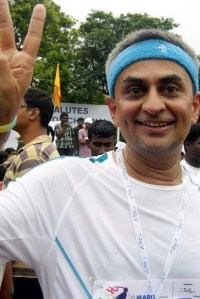
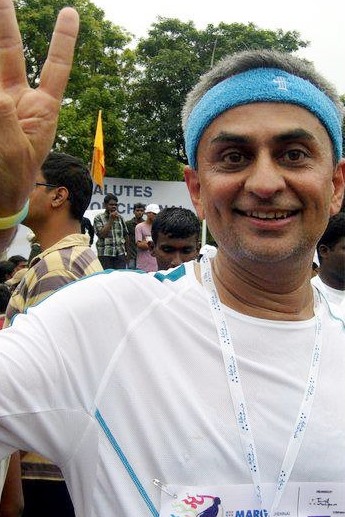
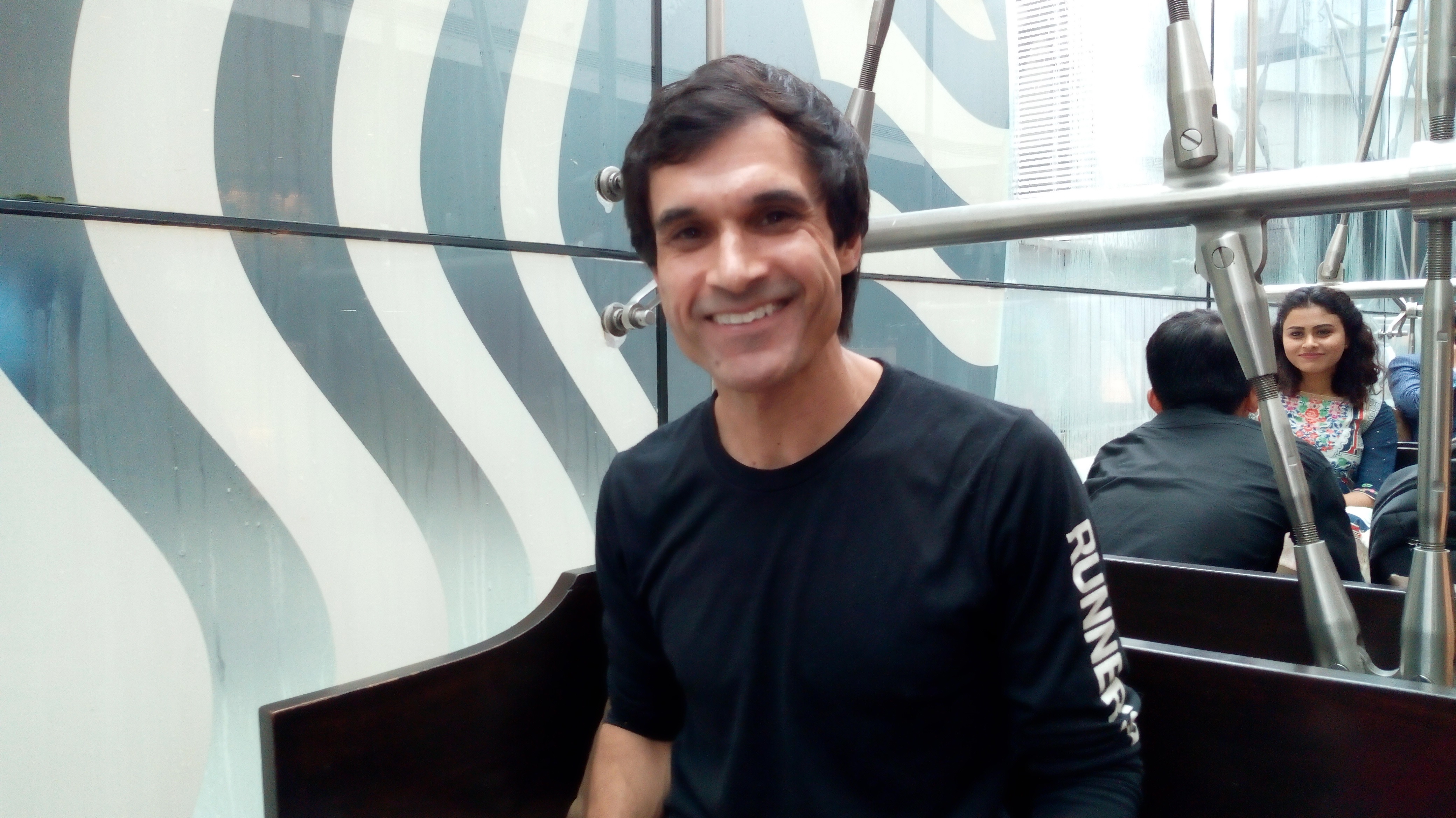
Ashok Nath (Photo: Shyam G Menon)

Ashok Nath has positioned himself as a mentor for runners. He brings to his mentoring, years of corporate experience, an attribute often associated with goal and focus. Yet he also says, “ there is no finite precise goal.” What he seeks is mindful running. 

In 2015, Colonel Muthukrishnan Jayaraman enrolled for a workshop on running.

He had been struggling to improve his running. For the next several months he kept the learnings from the workshop in mind and trained accordingly. At the 2016 Mumbai Marathon he lopped off 14 minutes from his previous year’s timing. That was significant. A month later, in February 2016, he decided to formally join the training program offered by Ashok Nath, who had conducted the 2015 workshop.

Ashok Nath, or Ash as he is popularly known, has been a recreational runner for most of his adult life. Long ago in Delhi, he would wake up at 5AM, read and then go for a run lasting about an hour. To him, it was an exercise to stay fit, nothing more, nothing less. “I never thought of myself as a runner,’’ he said. Years later, the marketing professional is into “mentoring’’ runners but there is a difference. He hasn’t scaled up his mentoring service; instead he has kept it small, premium and cast as “community’’. That brew is tad unusual in the Indian coaching scene, where the general trend is to scale up.  “ I call it the Run with Ash community,’’ Ashok, 56, said.

The youngest of three siblings, Ashok grew up in India, Bangladesh and Canada. His father was in the Indian Foreign Service. Although initially a student of science, Ashok commenced his career in market research. He then took his MBA in international marketing following which, he proceeded to work at a handful of well-known advertising agencies, among them – JWT, MAA Bozell, Rediffusion, Enterprise and O&M. “ My work has been mostly in advertising, public relations and consulting,’’ he said.

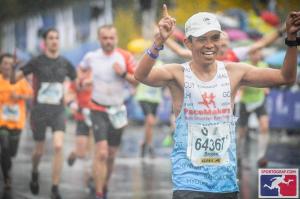
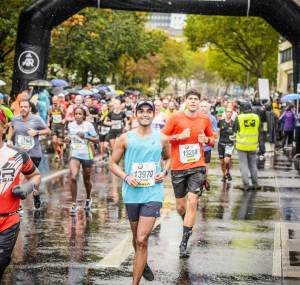
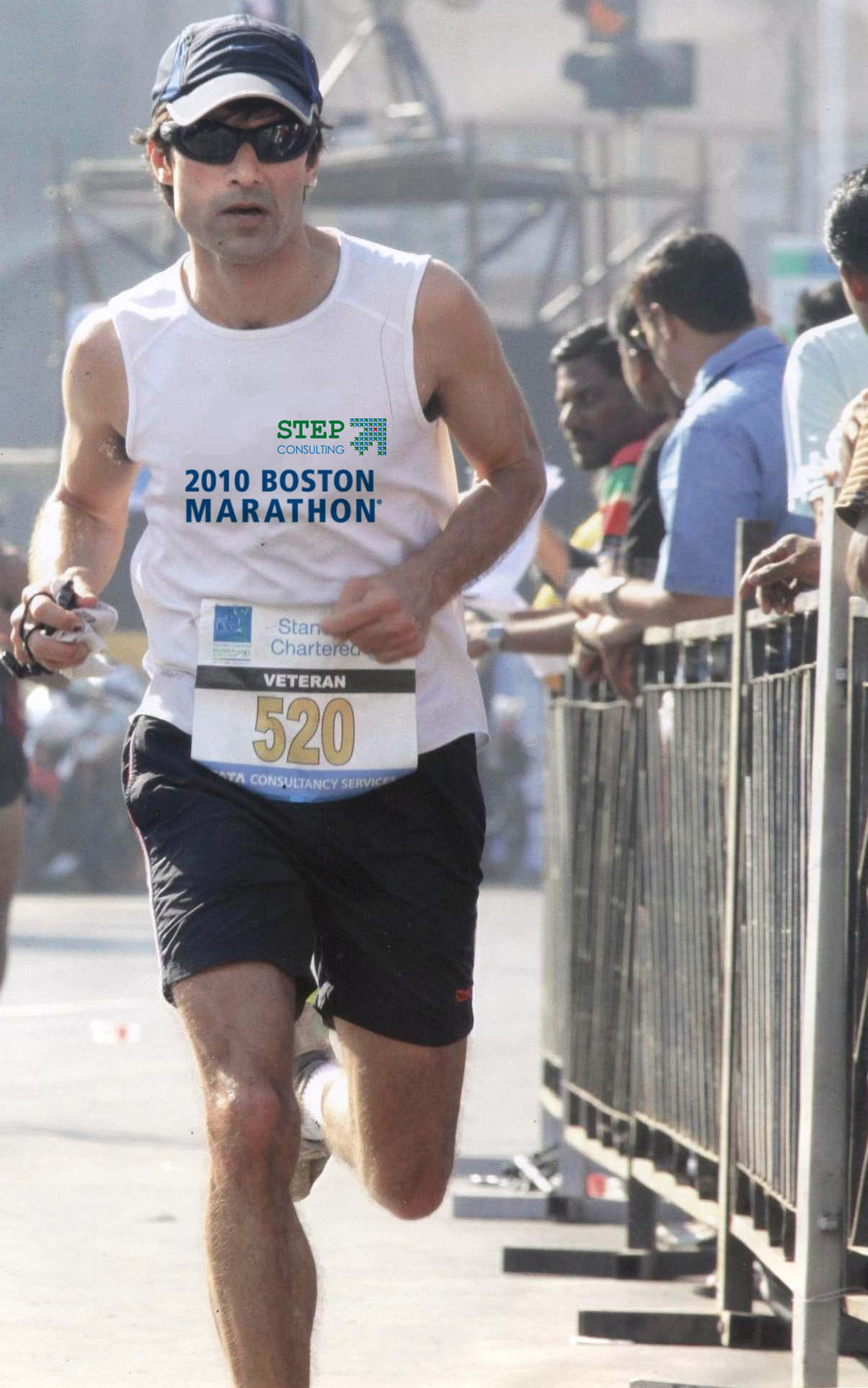
From one of the editions of the Mumbai Marathon (Photo: courtesy Ashok Nath)

In the early years of his career, Ashok was based in Delhi. He used to run regularly, typically loops at the Hauz Khas Rose Garden near the city’s Indian Institute of Technology (IIT). Occasionally, elite athletes who trained at the National Stadium close to city center would come to the park as part of their long run.  They saw him running in the park. They also got around to talking. It was window to a world of running beyond deer park and early morning runs. Those days major marathons in India were mainly two – there was the Rath Marathon in Delhi and the Pune International Marathon. The Rath Marathon used to pass by Ashok’s house. For two years he watched the race go by. Then notwithstanding the fact that he hadn’t formally participated in any such event before or trained for it, he registered for an edition of Rath. It was straight dive into the full marathon. “ It happened in 1984-85 and I finished the race in approximately three and a half hours. Then I went back home and slept the whole day,’’ Ashok said. By the standards of amateur runners in India, that is a decent timing, particularly for debut. Still, nothing changed in Ashok’s life. He continued to maintain the same schedules.  The following year, he again completed Rath in near similar time. For the next two years, he kept his connection with events alive, running half marathons.

By now the perspective in urban India was changing firmly. The economy had been opened up and thanks to industries like IT, the workforce was more mobile. People were spending years overseas on assignments, picking up active lifestyles there, returning to India and wanting to continue the same. In 2004, the Mumbai Marathon made its debut. Slowly but steadily it kick-started a running movement in India’s financial capital. More marathons started to come up in India. It triggered alongside an interest in running across the country.  Meanwhile, Ashok’s work took him from Delhi to the Middle East and eventually to Bengaluru. The southern city would bring him closer to running. In 2005, on a dare by an office colleague he enlisted for what was then called the Lipton Marathon. He ran the half marathon at the event in Bengaluru. Six months later, another half marathon happened. He went for that too, and clocked 1:18. In 2008, he registered for the Times Bangalore Marathon and commenced for the first time in his life, structured training with a race in view. He was originally enlisted to do the half marathon; on a week’s notice, he changed that to the full. On race day, he ran strong, staying within the top ten runners till the half way mark. At 25 kilometers, his legs felt as though laden with lead. He decided to walk the next five kilometers. Then he recommenced his running and finished like everyone else. It was a sobering experience.

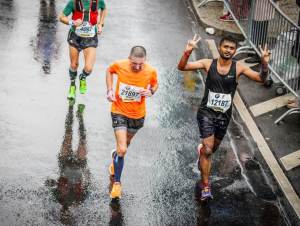
Photo: courtesy Ashok Nath

Around this time, Ashok was among a small group of runners who regularly interacted with Runners for Life (RFL).  He was slowly but surely getting increasingly attracted to the world around running. “ By 2010 I was thinking: enough is enough. I wanted to leave the corporate world,’’ he said. The advertising profession is famous for extended hours put in at office and much socializing within that ecosystem and immediately related ones. According to Ashok, even as an employee, he wasn’t the sort sticking past office hours at the companies he worked for. “ I give you eight hours of quality work. After that, I need my time,’’ he said. Happening regularly in those hours reserved for self, was his running. Notwithstanding the 2008 experience at the marathon in Bengaluru, Ashok continued to run and emerge a podium finisher in his age category at major Indian marathons like the Mumbai Marathon and ADHM.

For life ahead, he contemplated a mix of writing and running, doing something for the welfare of stray dogs and becoming guest faculty somewhere or being on the lecture circuit. It didn’t work out the way he wanted. The writing proved to be financially unrewarding. It entailed effort – sometimes you sat and wrote for a couple of days – but the payment was downright little. The guest faculty idea failed to gather traction because as Ashok found out, the general expectation in such opportunities was inputs leading to a job for listener. That is boring; it lacked dream. What remained was running. With a couple of friends he set up a company called Running Buddy Sports. Ashok was full time director. There was strong response from some senior fellow runners who were ready to invest in the venture. Running Buddy was meant to offer coaching for running, have a physiology lab and represent Runners World in India. They signed a MoU with Furman Institute of Running and Training (FIRST) to bring their program – Run Less, Run Fast – to India. They also explored tours around the marathon. A proper business study was done for and Running Buddy embarked on a pilot project. Then he pulled out. “ I realized this was going to be a 12 hour plus job. For most clients the convenient time would be early morning or evening. It meant my day would end up crazy. I didn’t leave my corporate job to do this,’’ Ashok said.  The venture shut shop before formal launch. It was back to square one.

Photo: courtesy Ashok Nath

Then Boston Marathon happened. “ Fellow runners would mention of this iconic race and how they aspired someday to participate. So I thought: why not?” Ashok said. He enrolled for the 2010 Boston Marathon but could not proceed beyond Frankfurt due to cancellation of flights, courtesy volcanic eruptions in Iceland. That year the eruptions at Eyjafjallajokull caused massive disruption of air traffic and several thousand runners were stranded. The Boston organizers took note and he was invited to run the marathon’s 2011 edition. In 2011, he ran and finished the marathon in three hours, eight minutes and 27 seconds. He qualified and registered for Boston Marathon ten times and ran it eight times. This includes his run at the event in 2013 – the year of the infamous bombing incident – when Ashok, at that time past 50 years of age, covered the distance in under three hours. According to him, at one point in time he even contemplated training to win the Boston marathon in his age group but realized that there was a serious downside. “ You can’t train and put in the serious hours of mentoring others. I would have had to take a break from work with no safety net. It didn’t make sense,” he said.

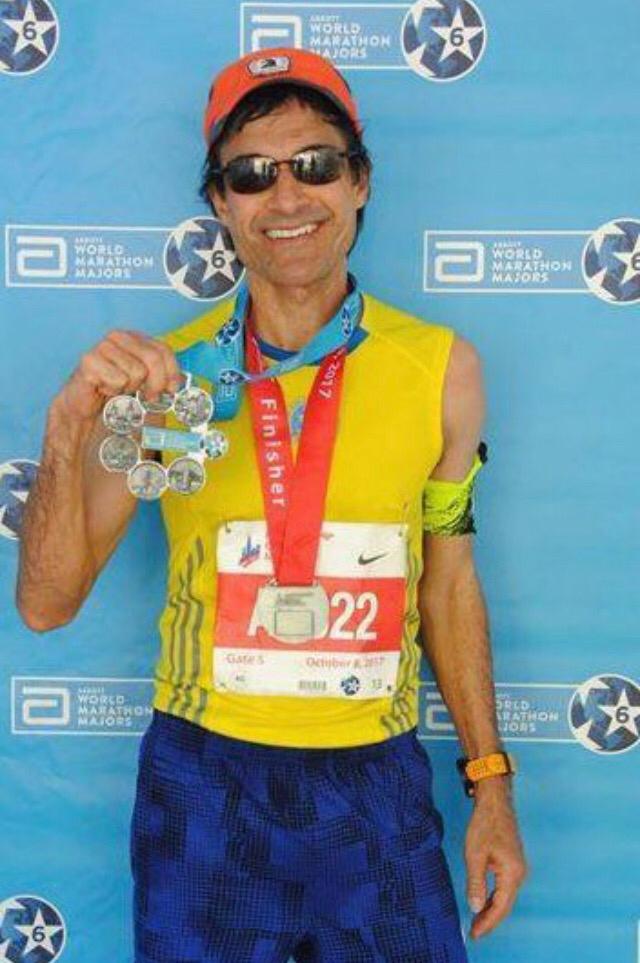
Ashok went on to participate in the other five World Major Marathons – Berlin Marathon, Chicago Marathon, London Marathon, New York City Marathon and Tokyo Marathon. He has also completed Comrades Marathon, an ultramarathon of 87-89 kilometers in South Africa, run between the cities of Durban on the coast and Pietermaritzburg at an elevation of 1955 feet. On his first attempt, Ashok slashed the then existing Indian record for the Comrades by an hour. He has finished within nine hours, earning the Bill Rowan Medal at the Comrades Marathon, four times. He is thinking of running Comrades at age 60. It is a thought. “ Will decide later,’’ he said.

Somewhere in the time between shutting down Running Buddy and the marathons he accumulated, Ashok decided to try starting an enterprise in running that entailed just him. “ Why should I throw away my three decades of corporate experience?’’ he asked. In 2012 he studied the market for running again and decided to focus on running technique. “ It’s a small pie. I didn’t want to eat into others’ business. And no one was thinking technique, it was just training and training,” he said. He decided to do workshops. “ I see myself in the knowledge space. I am not an operational person, I am not a coach but a mentor,’’ he said.

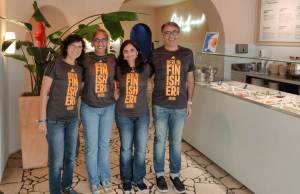
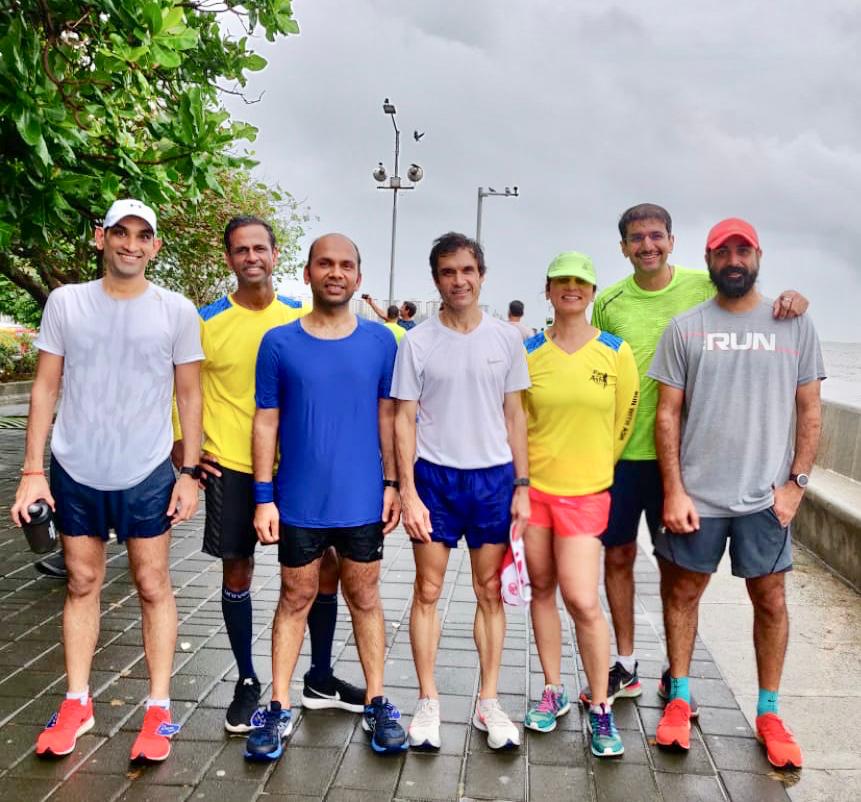
Ashok with some of his mentees at Mumbai’s Marine Drive (Photo: courtesy Ashok Nath)

This was the space Ashok worked in at the time this blog spoke to him. What appears remarkable is his positioning within that domain. The runners he assists are spread around India – Bengaluru, Chennai, Hyderabad, Kolkata, Mumbai, NCR, Pune, Surat and Vadodara, and abroad. Many of them are doctors. The numbers are intentionally modest, which is a departure from the usual coaching model found in India. Ashok has positioned himself as a premium service provider. “ There is a certain level of affluence and discipline required to afford me,’’ he said.

The workshops he held helped to find people interested in improving their running. That is the intake point, along with word-of-mouth referrals. Preliminary assessment of an individual includes submission of comprehensive paperwork that asks for body composition tests, blood tests, time trials, lifestyle, goals etc.  Ashok does not market a training program or model of mentoring that fits all. He uses his knowledge of running and experience in the sport as palate to dip into for a more customized approach. Roughly 70 per cent of the knowledge he shares is common for all mentees. The rest is customized to each one’s need and ability. The periodic assessments sent to mentees are also specific to individual. He admitted that while running may seem a freewheeling form of physical recreation, he is partial to the corporate approach which sees things as a sequence of input, processing and measurable output. Goals are defined to keep things measurable. He keeps the flock together with a community-touch including get-togethers and group runs. “ I am not looking at big numbers. My approach is low volume, high value.  If your training is made for you, you will enjoy it and if you enjoy, you will persist. Most of my mentees stick around for three years. Some have been around for six years,’’ Ashok said.

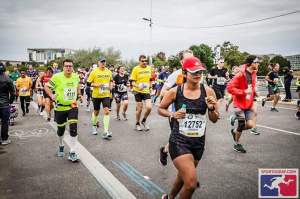
From one of the editions of the Kaveri Trail Marathon (Photo: courtesy Ashok Nath)

Anuradha Chari is a Bengaluru-based amateur triathlete, runner and banker. She is also one of Ashok’s new mentees. “ His style of mentoring is different. Instead of offering a tailor-made plan, he takes the effort to understand your goals and customizes the training plan,’’ she said. Anuradha has been into triathlons since 2016. Running is her weak discipline. She attended Ashok’s workshop in May 2019 and decided to enroll.  “Ashok emphasizes learning, a lot. He inculcates not just nutrition and exercise but also compassion and such other aspects. They slowly become a practice,’’ she said.

Colonel Muthukrishnan Jayaraman started running in 2010. He heard of Ashok Nath and met him a couple of times at running events. In 2015, he enrolled for his workshop. “ I was not finding any improvement in my performance. That’s when I decided to enroll for his workshop,’’ the army doctor said. “Ashok himself is a very good runner. He has a knack of identifying areas that need improvement. A major improvement in my performance was visible after I did his workshop,’’ the officer, an endocrinologist working at Army Hospital in Delhi, said. His marathon timing improved by 14 minutes to 3:43 hours at the 2016 edition of the Mumbai Marathon compared to how he fared at the previous edition. In February 2016, he enrolled with Ashok for long-term training. His timing kept improving and by the 2019 edition of the same event, he had bettered his timing to 3:17, his best for a marathon so far and a Boston Qualifier for 2020“ Ashok’s approach is technical. He keeps upgrading and updating the training plan introducing the concept of sports psychology and nutrition among other things, to us,’’ the colonel said.

Pune-based Tanmaya Karmarkar said she is more confident and stronger after signing up with Ashok. “ It is a seven-day program incorporating core, gym and running workout apart from mentoring sessions on nutrition and psychology. He also gives us books to help with overall development,’’ she said. She qualified for Boston in six months and will be running her second Boston Marathon in 2020.

From Comrades (Photo: courtesy Ashok Nath)

At the Mumbai airport café where this blog met him a couple of times over August-September 2019, Ashok’s confidence as mentor, took time buying into. The typical coach is a mix of former elite athlete (at least some formal background in sports) and matching certification. Ashok hasn’t been an elite athlete before. He has neither been coached nor is he a certified coach; he is not a doctor who is an expert on human physiology. What he has is structured corporate thinking; years of experience as a regular recreational runner, years of listening to his body, an attentive mind and the appetite to keep abreast of developments in the field. According to him, he reads a lot. He has been steady performer as recreational runner, has the experience of marathons here and overseas, assimilates ideas and has kept his own injuries to the minimum. “ I can count on the fingers of my one hand the number of times I have been to a physiotherapist in all these years,’’ he said. Injuries stem from multiple causes, not all of them physical. Mental well-being also matters. Needless to say, there are moments in his engagement with clients when Ashok’s mentoring would appear closer to life-coaching than coaching for a physical activity called running. And, he seems to have packaged it all successfully into a well-positioned product.

Despite leaning towards the corporate attitude of being focused, Ashok also says there is “ no finite precise goal.’’ He acknowledges that everything evolves with experience; what he may have said five years ago, needn’t be what he says now. “What I want to see at the end of the day is a mindful runner,’’ he said.

(The authors, Latha Venkatraman and Shyam G Menon, are independent journalists based in Mumbai.)

AT A GLANCE / OCTOBER 2019

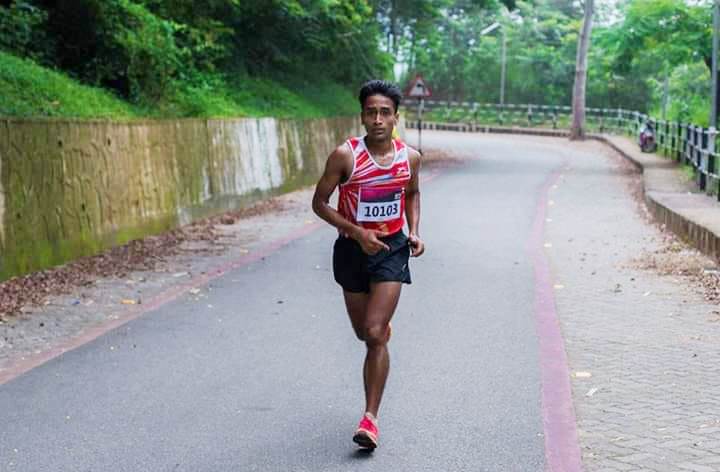
Bijay Deka

Bijay Deka, Laxmi win 2019 Shriram Properties Bengaluru Marathon

Bijay Deka is overall winner of the 2019 edition of Shriram Properties Bengaluru Marathon with a timing of 2:35:27.

He was followed by Koji Tanaka in second position with finishing time of 2:40:48. In third position was Mikiyas Yemata Lemlemu, whi finished in 2:45:08.

Earlier this year, Bijay who is from Assam, had topped the amateur category at the 2019 Tata Mumbai Marathon.

In the women’s race in Bengaluru, Laxmi crossed the finish line first with timing of 3:24:10. Shreya Deepak came in second with a timing of 3:36:38. In third position was Bengaluru-based runner Shilpi Sahu with a timing of 3:40:47.

In the half marathon segment, Isaac Kembol Mhemui finished in 1:12:04 to secure the winning position. Anbu Kumar came in second in 1:13:11 and Dhanesh came in third in 1:13:23.

Among women, Preenu Yadav was the winner with a timing of 1:28:56. Aasa T.P. came in second with a 1:29:28 finish and Smitha D.R. came in third with a timing of 1:33:46.

Weather was unusually warm for Bengaluru, said Shilpi Sahu, who finished third overall among women in the marathon. According to her, many runners struggled in the full marathon category because of the humidity.

She said she was surprised with her podium position. “ I can tolerate humidity and warm weather but my training mileage and long runs were not sufficient for this race,’’ she told this blog.

A barefoot runner, she did find some stretches along the route tough.

Nike Oregon Project closed down

Shoe giant Nike has shut down the Nike Oregon Project (NOP) after its head coach Alberto Salazar was banned for four years on grounds of doping violation.

NOP’s website and social media channel have been taken down, BBC reported, October 12.

Salazar’s ban followed an investigation by the US Anti-Doping Agency as well as a court battle.

Salazar plans to appeal against the ruling and Nike has said that it will support the appeal, the report added.

According to Wikipedia, NOP was a group created by Nike in 2001 in Beaverton, Oregon to promote American long distance running.

Germans take top honors at Hawaii Ironman World Championship; Jan Frodeno sets new course record

Triathlete Jan Frodeno of Germany set a new course record at the Ironman World Championship in Hawaii on October 12, 2019.

He completed the three disciplines – swimming, cycling and running – in seven hours, 51 minutes and 13 seconds, bettering the course record by over three minutes. The previous course record was set by the 2018 champion Patrick Lange, also from Germany.

For Frodeno, it was his third win at the world championship. The 2008 Olympic champion was followed by American Tim O’Donnell, who finished the course in 7:59:41. Germany’s Sebastian Kienle came in third with at 8:02:04.

The women’s race was won by Anne Haug. She is the first German woman to win the world championships in Hawaii.

Anne Haug finished the course in 8:40:10. British triathlete Lucy Charles-Barclay claimed the second spot with finish timing of 8:46:44 and Australian Sarah Crawley came in third with 8:48:13.

The race comprises 3.8 kilometers of swimming, 180 kilometers of cycling and 42.2 kilometers of running.

The defending champion from 2018, Patrick Lange, quit during the cycling segment due to fever.

Indian men’s and women’s 4x400m relay teams fail to make it to the final

India’s 4×400 relay teams – men and women – didn’t make it past the heats at the 2019 IAAF World Athletics Championships in Doha, Qatar.

Both heats happed on Day 9 of the event.

From the men’s heats, USA, Colombia, Italy, Great Britain, Jamaica, Belgium, Trinidad & Tobago and France made it to the final. The Indian team with a timing of 3:03.09 minutes placed seventh in a field of eight in heat 2. Overall, they finished 12th from among 15 teams that finished (Botswana was disqualified).

In the women’s heat, teams from Jamaica, Poland, Canada, USA, Great Britain, Ukraine, Netherlands and Belgium made it to the final. The Indian team finishing in 3:29.42 (a season’s best) placed sixth in a field of eight in heat 1. Overall, they were 11th from 15 teams that started.

It is worth noting that coming into the heats, both Indian teams had personal bests (PB) better than some of the toppers that eventually moved to the final. In the men’s category, the PB of the Indian men’s team (3:00.91) was better than that of Colombia and Italy. In the women’s category, the PB of the Indian women’s team (3:26.89) was better than the PBs of Netherlands and Belgium. In terms of season’s best (SB – it indicates whether a team maybe in peak form or not), the Indian men’s team’s SB of 3:02.59 wasn’t as good as that of any of the finalists. Same was the story on the women’s side.

Unlike what happened to the men’s and women’s teams, earlier in the Doha world championships, India’s 4x400m mixed relay team had made it to the finals. They finished seventh in a field of eight teams in the final with a season’s best timing of 3:15.77. Interestingly in the mixed relay, India’s original SB (that is, pre-world championship) of 3:16.47 was better than that of Jamaica, Great Britain, Brazil and Belgium all of who were among the eight teams (including India) that moved into the final. In the heat, India qualified for the final with a new SB of 3:16.14.

Irfan, Devender finish 27th and 36th in Doha

India’s Irfan K. T placed 27th and Devender Singh 36th in the men’s 20km walk at the 2019 IAAF World Athletics Championships in Doha, Qatar.

Altogether 52 race-walkers commenced the event held in warm, humid conditions; 32 degrees Celsius and 73 per cent humidity going by information available on the website of IAAF. Irfan finished in 1:35:21; Devender in 1:41:48. The race was won by Japan’s Toshikazu Yamanishi who took gold in 1:26:34. He was followed to the finish line by authorized neutral athlete Vasiliy Mizinov in 1:26:49. Sweden’s Perseus Karlstrom took the bronze in 1:27:00. Five athletes were disqualified. Seven did not finish the race.

“ I used a towel around my neck, and it made the race a bit easier. When I started to speed up after 7km I expected athletes to follow me. I was surprised and lucky nobody did. I wanted to walk faster in the final 3km but it was impossible. I hope this medal will give me a lot more confidence for Tokyo,” Yamanishi was quoted as saying in IAAF’s race report.

Irfan came to the 2019 world championships having already qualified for the 2020 Tokyo Olympics in the 20km race-walk. He was the first Indian athlete to qualify for the upcoming Olympics; he did that clocking 1:20:57 at the Asian Race Walking Championships, held in Nomi, Japan, where he placed fourth.

Avinash Sable (This photo was downloaded from the Facebook page of Athletics Federation of India [AFI]. It has been cropped for use here. No copyright infringement intended)

Avinash Sable sets new national record, makes it to the final in Doha

Avinash Sable has set a new national record in the 3000m steeplechase.

Running in the third heat of the discipline at the 2019 IAAF World Athletics Championships in Doha, Qatar, he crossed the finish line in 8:25:23 minutes, an improvement on the national record of 8:28:94 he had set earlier in March 2019 at the Federation Cup in Patiala.

The new record of October 1 was despite two setbacks Sable suffered on the steeplechase course for no fault of his. The incidents were successfully appealed by the Athletics Federation of India (AFI) paving the way for the athlete’s eventual inclusion in the final. AFI has tweeted the same.

Soon after the heat commenced, Takele Nigate of Ethiopia (he is the junior world champion in 3000m steeplechase) stumbled and fell taking down a couple of other athletes as well, among them, Sable. While all of them got up and resumed racing, some laps later, Nigate stumbled and slammed into the barrier at the water jump. Once again Sable was nearby. Nigate going down broke his rhythm and he had to pause and get over the barrier.

In spite of both these reversals, Sable managed to work his way back into the lead cluster dominated by the two Kenyan athletes – Conseslus Kipruto and Benjamin Kigen – and Hillary Bor of USA. An athlete passed over quickly in the pre-race introduction during race telecast, Sable’s advance to the lead group came in for mention in the race commentary.

The third heat was won by Kipruto, the defending champion, in 8:19:20 followed by Kigen and Bor; all of them automatically moved up to the finals. Sable finished seventh clocking 8:25:23, a new national record.  As per information on the IAAF website, Sable was overall twentieth in a field of 44 finishers spread across three heats. He did not initially qualify for the finals. However the AFI successfully appealed the setbacks he faced – they amounted to his passage being blocked for no fault of his – and Sable was included in the line-up for the finals, media reports quoting AFI’s tweet on the subject, said.

Hailing from Mandwa in Beed district, Maharashtra, Sable is the first steeplechaser from India to qualify for the IAAF World Athletics Championships after Dina Ram in 1991. His qualification for Doha happened at the March 2019 Federation Cup in Patiala.

P. U. Chitra gets a PB but fails to make it to semi-finals

Running in the second heat of the women’s 1500m at the 2019 IAAF World Athletics Championships in Doha, P. U. Chitra managed a personal best (PB) but couldn’t qualify for the semi-finals.

On October 2, Chitra finished in 4:11:10 minutes, placing eighth out of 12 athletes running that second heat. Overall, the Indian runner ended up 30 in a field of 35. The second heat was topped by Rababe Arafi of Morocco, who covered the distance in 4:08:32.

Chitra’s previous personal best was 4:11:55.

Hailing from Palakkad, Kerala, she had won gold in the same discipline at the 2019 Asian Athletics Championships held in Doha in April. Before that she had secured a bronze medal at the 2018 Asian Games and gold medals at the 2017 Asian Championships and 2016 South Asian Games.

No semi-final ticket for Jinson Johnson

Jinson Johnson finished tenth in the second heat of the men’s 1500m at the 2019 IAAF World Athletics Championships in Doha.

He won’t be in the semi-final.

Johnson appeared to go strong till the last lap of the race, when he began to fade and steadily slip to the rear of the lead group of runners. The second heat was topped by Timothy Cheruiyot of Kenya who clocked 3:36:82. Johnson finished in 3:39:86. He placed tenth in a field of 14 runners in the second heat. His timing in Doha was way outside his personal best in the discipline; 3:35:24 achieved September 1, 2019 in Berlin.

There was a fair amount of pushing and jostling in the heat Johnson was part of. In the first lap itself, the race commentator said that one athlete had taken a stumble. Soon after the bell for the final lap was sounded, Ethiopia’s Teddese Lemi maneuvered past Norway’s Filip Ingebrigtsen to join Cheruiyot in the lead. The Norwegian runner was seen putting out his hand and making contact with the Ethiopian, who fell a stride or so later. The commentator pointed out that it appeared an incident worthy of appeal. The Ethiopian who got up and continued to run, eventually completed in eleventh position.

The top six athletes from the heat qualified automatically for the semi-final.

Overall, across three heats in the men’s 1500m, 43 athletes took to the track on October 4, hoping to qualify for the semi-finals. Johnson’s timing placed him 34th in that larger field.

Nominees for World Athlete of the Year – male and female – announced  

The International Association of Athletics Federations (IAAF) has announced 11 male athletes and 11 female athletes as nominees for World Athlete of the Year in their respective gender category.

The award will be given at the 2019 World Athletics Awards ceremony in Monaco on November 23, separate official statements issued October 14 (for the male category) and 15 (for the female category), said.

The male nominees are: Donavan Brazier (USA): won world 800m title in a championship record of 1:42.34,won Diamond League title, won four of his five outdoor 800m races / Christian Coleman (USA): won world 100m title in a world-leading 9.76, won world 4x100m title in a world-leading 37.10, won four of his five races at 100m / Joshua Cheptegei (UGA): won world cross-country title in Aarhus, won world 10,000m title in a world-leading 26:48.36, won Diamond League 500m title / Timothy Cheruyiot (KEN): won world 1500m title, won Diamond League 1500m title, won 10 of his 11 outdoor races across all distances / Steven Gardiner (BAH): won world 400m title in 43.48, undefeated all year over 400m, ran world-leading 32.26 indoors over 300m / Sam Kendricks (USA): won world pole vault title, cleared a world-leading 6.06m to win the US title, won 12 of his 17 outdoor competitions, including the Diamond League final / Eliud Kipchoge (KEN): won London Marathon in a course record of 2:02:37, ran 1:59:40.2 for 42.195km in Vienna / Noah Lyles (USA): won world 200m and 4x100m titles, ran a world-leading 19.50 in Lausanne to move to fourth on the world all-time list, won Diamond League titles at 100m and 200m / Daniel Stahl (SWE): won the world discus title, threw a world-leading 71.86m to move to fifth on the world all-time list, won 13 of his 16 competitions, including the Diamond League final / Christian Taylor (USA): won the world triple jump title, won Diamond League title, won 10 of his 14 competitions / Karsten Warholm (NOR): won the world 400m hurdles title, undefeated indoors and outdoors at all distances, including at the Diamond League final and the European Indoor Championships, clocked world-leading 46.92, the second-fastest time in history.

The female nominees are:  Beatrice Chepkoech (KEN): won world 3000m steeplechase title in a championship record of 8:57.84, won Diamond League title, won seven of her eight steeplechase races / Shelly-Ann Fraser-Pryce (JAM): won world 100m and 4x100m titles in world-leading times of 10.71 and 41.44, won Pan-American 200m title, won seven of her 10 races at 100m / Katarina Johnson-Thompson (GBR): won world heptathlon title in a world-leading 6981, undefeated in all combined events competitions, indoors and outdoors, won European indoor pentathlon title with a world-leading 4983 / Sifan Hassan (NED): won world 1500m and 10,000m titles in world-leading times of 3:51.95 and 30:17.62, won Diamond League 1500m and 5000m titles, broke world mile record with 4:12.33 in Monaco / Brigid Kosgei (KEN): set a world record of 2:14:04 to win the Chicago Marathon, won the London Marathon, ran a world-leading 1:05:28 for the half marathon and 1:04:28 on a downhill course / Mariya Lasitskene (ANA): won world high jump title with 2.04m, jumped a world-leading 2.06m in Ostrava, won 21 of her 23 competitions, indoors and outdoors / Malaika Mihambo (GER): won world long jump title with a world-leading 7.30m, won Diamond League title, undefeated outdoors / Dalilah Muhammad (USA): broke world record with 52.20 at the US Championships, improved her own world record to win the world 400m hurdles title in 52.16, won world 4x400m title / Salwa Eid Naser (BRN):  won world 400m title in 48.14, the third-fastest time in history, won Diamond League title and three gold medals at the Asian Championships, undefeated at 400m outdoors / Hellen Obiri (KEN): won world cross-country title in Aarhus, won world 5000m title in a championship record of 14:26.72, ran a world-leading 14:20.36 for 5000m in London / Yulimar Rojas (VEN): won world triple jump title with 15.37m, jumped world-leading 15.41m to move to second on the world all-time list, won nine of her 12 competitions, including the Pan-American Games.

A three-way voting process will determine the finalists. The IAAF Council’s vote will count for 50 per cent of the result, while the IAAF Family’s votes and the public votes will each count for 25 per cent of the final result, the statements said.

Valary Jemeli Aiyabei sets new course record in Frankfurt

Kenya’s Valary Jemeli Aiyabei won the women’s category of the 2019 Mainova Frankfurt Marathon in a course record time of 2:19:10.

The 28-year-old Kenyan was paced by her husband Kenneth Tarus until he had to drop out at 15km because of stomach problems. Aiyabei however continued, going through halfway in 1:07:42. She eventually crossed the line in 2:19:10, improving the course record by 86 seconds, the race report available on the website of International Association of Athletics Federations (IAAF), said.

In the men’s race, Ethiopia’s Fikre Tefera broke clear from his compatriot Dawit Wolde to win by just two seconds in 2:07:08.

In the women’s category, Ethiopia’s Megertu Kebede took second place in a PB of 2:21:10. Defending champion Meskerem Assefa finished third in 2:22:14 ahead of European 10,000m champion Lonah Salpeter of Israel, who came home in 2:23:11. Among men, Wolde finished second behind Fikre and two seconds ahead of Aweke Yimer of Bahrain, in what was the closest finish ever in Frankfurt, the report said.

Teferi wins Valencia Half Marathon; Sifan Hassan falls, sees record hopes slip away

Ethiopia’s Senbere Teferi won the women’s category of the Medio Maratón Valencia Trinidad Alfonso EDP, in 1:05:32, a new Ethiopian record.

There was much attention on the event given Sifan Hassan of Netherlands reported to be targeting a new world record in the half marathon. However, at exactly 22:15 on the clock, Hassan tripped and fell hard, losing ground on the leaders. Even though the pacemakers didn’t seem to notice her fall, the European record-holder soon re-joined the lead group, the race report available on the website of International Association of Athletics Federations (IAAF), said. She finished second in 1:05:53. Kenya’s Joan Chelimo placed third in 1:06:09.

Ahead of the event, Hassan had sounded caution with regard to expectations of a new world record. She wasn’t sure how well her body may have recovered after the recent IAAF world championships in Doha.

In the men’s race at Valencia, Ethiopia’s Yomif Kejelcha won in 59:05. He was followed to the finish by Kenya’s Benard Ngeno who placed second in 59:07. Ethiopia’s Jemal Yimer placed third in 59:09.

(The authors, Latha Venkatraman and Shyam G Menon, are independent journalists based in Mumbai.)

TWO WORLDS

Illustration: Shyam G Menon

“ The runners of the Berlin Marathon 2019 should expect a wet track. The forecast for Sunday sees a few hours of rain for Berlin. On Saturday it will be partly cloudy, partly sunny. However, thunderstorms are expected from Saturday afternoon on. Meteorologists therefore give the athletes in the capital little hope for a finish in dry conditions on Marathon Sunday (29 September 2019). According to Deutscher Wetterdienst (DWD), it will be wet and cloudy. At first the meteorologists expect rain only in the northern half of Brandenburg, but in the course of the day the rain will spread to the south. The maximum temperature will be 21 degrees Celsius.’’ – This was the weather forecast for the 2019 Berlin Marathon as provided on the website berlin.de two days ahead of the event.

On Marathon Sunday Ethiopian running great Keninisa Bekele created history in Berlin. He ran the second fastest marathon on record, covering the distance in two hours, one minute and 41 seconds, a timing that was off the world record by just two seconds.  Ashete Bekere of Ethiopia won the women’s race; she completed in 2:20:14. It was also occasion for the winner of the first women’s marathon at an Olympic Games (1984, Los Angeles) to rejoice afresh. Sixty two year-old Joan Benoit Samuelson of the US, completed the 2019 Berlin Marathon in 3:02:21 breaking the World Masters Association record for the 60-64 years age category, news reports said. Berlin’s weather wasn’t comfortable and supportive for all. Among the runners from India that day in Berlin was Anjali Saraogi. She texted in that the temperature was alright but the rain bothered. “ I was feeling very cold and was shivering. The rain was terrible. But the volunteers were out braving the brutal weather and supporting us. Immense respect for that. The course was easy, that’s why we could all run in that rain,” she wrote.

Almost 5000 kilometers away it was a different thermal experience for race-walkers and marathoners at the 2019 IAAF World Athletics Championships as they battled the heat and humidity of Doha, Qatar. On Wikipedia, the average high temperature in September for Qatar is 39 degrees Celsius; the average low, 29 degrees. During the 2019 world championships, outdoor endurance events like the marathon and race-walk, were scheduled for midnight to escape the weather conditions. It was a first for the world championships. Aside from training to run in warm weather, athletes have to reset their wakefulness to coincide with night hours.

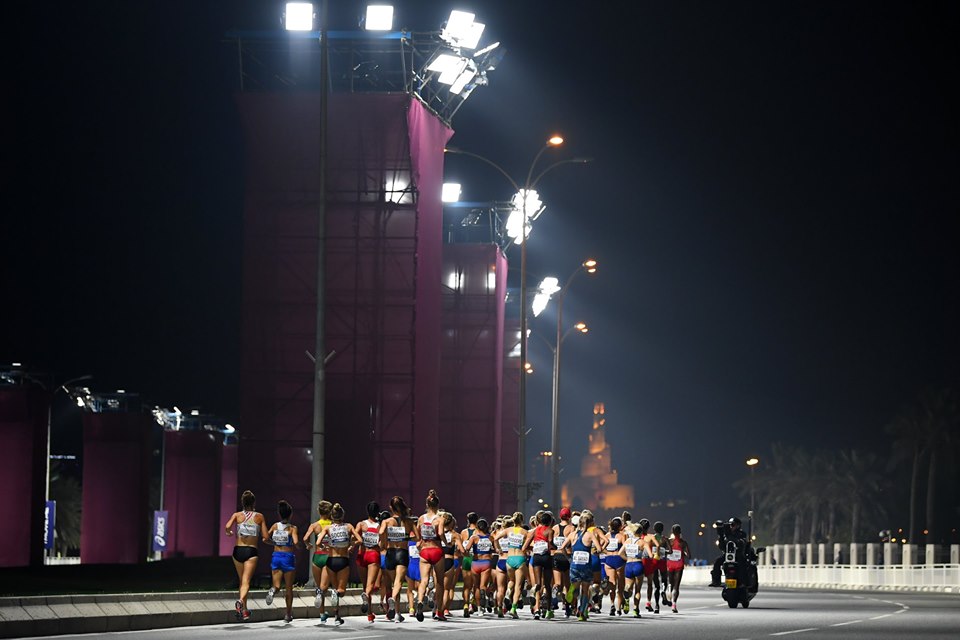
Midnight, September 27-28; the women’s marathon underway in Doha (This photo was downloaded from the Facebook page of IAAF and is being used here for representation purpose. No copyright infringement intended)

In the women’s marathon held in the intervening night of September 27-28, only 40 runners from the 68 who started the race, finished. The timing was slow. Ruth Chepngetich of Kenya was the winner; she covered the distance in 2:32:43, significantly slower than her personal best of 2:17:08 or for that matter, the winning time for women at the 2019 Berlin Marathon. According to IAAF reports, the race had begun in temperatures of 31-32 degrees and humidity of 73 per cent.  From the women’s marathon, a memorable photograph was that of a bunch of elite runners who quit midway, making it to the finish line in a golf cart. Some of the others who withdrew were stretchered off and at least one athlete spent some time under medical observation. “ Amid the havoc, Kenya’s Ruth Chepngetich emerged triumphant, claiming gold in two hours, 32 minutes and 43 seconds – the slowest ever World Championships winning time and more than 15 minutes slower than her personal best. The winner then collapsed some time after the race while talking to the media,” a report in UK-based publication The Telegraph, said. While deciding to proceed with the marathon, the authorities had backed it up with precautionary measures and support services matching the weather conditions. They followed the book. In January 2019, the IAAF itself had highlighted the issue of thermal stress, hosting on their website information about a study done ahead of the 2020 Tokyo Olympics and discussing the need for organizers of any sport event to have suitable protocols in place (https://shyamgopan.com/2019/01/25/spotlight-on-thermal-stress-impact-on-sport-events/).

Some of Doha’s race-walks were also slated to be held the same weekend as its women’s marathon. At a media interaction ahead of the 50 km race-walk; world record holder in the discipline, Yohann Diniz of France, minced no words in describing the weather conditions. In particular, he highlighted the contrast between the ambiance within the main stadium and the warm conditions outside. Within the stadium it was 24-25 degrees Celsius. His sport as well as the marathon, is held outside. The walkers had been taken for “ idiots,’’ the 41 year-old Frenchman was quoted as saying by the website france24.com. In the early hours of Sunday – the same Sunday that was Marathon Sunday in Berlin – Diniz was among those who didn’t finish the 50 kilometer-walk. It was won by Japan’s Yusuke Suzuki (the first world title for Japan in 50km race-walking; Suzuki is the world record holder in 20km race-walk) who told the media afterwards that he “ was just desperate to finish.’’ It was a relief to get it over with. Numbers don’t lie and as in the women’s marathon, the timing from the men’s 50km race-walk speaks for itself. Suzuki crossed the finish line in 4:04:20. Diniz’s world record, established in 2014 in Zurich, is 3:23:33. In the women’s 50km race-walk, the winning time for China’s Liang Rui was 4:23:26; the world record set by Liu Hong earlier in 2019 is 3:59:15. In the women’s 20km race-walk wherein China swept the podium, Liu Hong won in 1:32:54. The current world record held by Elena Lashmanova of Russia is 1:23:39.  There were those, who reacted differently too. After winning silver in the 50km race-walk for women, China’s Mocou Li told the IAAF’s official channel (she spoke through a translator), “ I am not so tired. But I feel that I cannot speed up; maybe because of the weather. This is not the worst of conditions for me. I feel relaxed today.’’

Illustration: Shyam G Menon

Television coverage of the 2019 IAAF World Athletics Championships has been spectacular. Technology made the coverage rich in terms of data, details and camera angles. You could conclude – even if athlete in one’s living room is mere pixels on screen, it made more sense to watch the world championships on television than in the stadium, where you wouldn’t get to see the action this close. The bulk of the telecast was around disciplines taking place in the main stadium. Technology works best in contained environments; containment is also part of the emergent business architecture of sport and media properties. The IAAF had informed well ahead that the media-technology mix in Doha would set new benchmarks. There were complaints too. Some athletes found the new block cameras (cameras attached to the starting block in sprint events) intrusive and unethical. On September 30, CNN reported that the IAAF had decided to restrict the use of images from these cameras after the German Athletics Federation highlighted the issue. Amid the emphasis on telecast, media reports said that the number of spectators at the stadium fell as opening weekend gave way to working week. Plenty of empty seats showed up on TV screens worldwide. Famous athletes had only family, friends and a modest clutch of spectators applauding them in the stadium. Questions were raised in social media on why the biennial athletics championship traveled to Doha.

According to published reports, the organizers then promised to make an effort to get more people in but pointed out alongside that a made-for-television schedule of events meant few wanted to stay that late into the night in the stadium. By Day 4 as endurance disciplines like the men’s 5000 meters final and the women’s steeplechase final got underway, there was a sizable presence of East African supporters in the stadium, to cheer. The atmosphere was festive. The Ethiopians; the Kenyans, the Ugandans – they got to celebrate their victory. Daniel Stahl of Sweden broke into a run and jumped over a hurdle as he celebrated his triumph in the men’s discus throw.  Mariya Lasitskene competing as an authorized neutral athlete and crowned world champion for the third time in the women’s high jump did a victory lap. For those looking at it all as panoramic story, it was also moment to reflect about weekend gone by. The strong performances and cheering within the stadium were a contrast to the struggles and timings reported in endurance sports staged outside.

(The author, Shyam G Menon, is a freelance journalist based in Mumbai.)

2019 BERLIN MARATHON / KENENISA BEKELE WINS, MISSES WORLD RECORD BY NARROW MARGIN

Kenenisa Bekele (This photo was downloaded from the Facebook page of Berlin Marathon and is being used here for representation purpose. No copyright infringement intended)

Ethiopian marathon great Kenenisa Bekele has won the 2019 Berlin Marathon in near world record time.

On Sunday (September 29, 2019) Bekele, 37, covered the course at Berlin – rated the fastest among the World Marathon Majors – in two hours, one minute and 41 seconds, just two seconds shy of the world record. Kenyan legend Eluid Kipchoge had set the current world record at the same event last year with a timing of 2:01:39.

Ashete Bekere of Ethiopia took top honors in the women’s race. She finished in 2:20:14. Of the six podium positions in the men’s and women’s race at Berlin, Ethiopians won five. They swept the men’s event and took the top two positions in the women’s.

Birhanu Legese finished behind Bekele in 2:02:48 while fellow countryman Sisay Lemma finished in 2:03:36 hours. In the women’s race, Ashete Bekere was followed by Mare Dibaba who finished in 2:20:21. Sally Chepyego of Kenya finished in third place with a timing of 2:21:06.

Bekele’s run was the second fastest to date in the history of the marathon.

“ I am very sorry. I am not lucky. But I still can do this. I don’t give up,’’ BBC quoted Bekele as saying in its report on the event.

His previous best in the marathon was 2:03:03, clocked while winning the 2016 edition of the Berlin Marathon. The winning performance at the same event on Sunday comes on the back of mixed fortunes since 2017. He dropped out of the 2017 Dubai Marathon past the halfway mark; he finished second at the 2017 London Marathon, sixth at the 2018 London Marathon and dropped out about a mile from the finish at the 2018 Amsterdam Marathon. In February 2019, he had withdrawn from the year’s Tokyo Marathon due to a stress fracture that was taking time to heal.

One of the all-time greats of distance running and much respected for his running form, Bekele holds the current world and Olympic records in the 5000m and 10,000m. According to Wikipedia, he is the most successful runner in the history of the IAAF World Cross Country Championships with six long course (12km) and five short course (4km) titles. At the 2009 IAAF World Championships held in Berlin, he became the first man to win both 5000m and 10,000m at the same championships.

 (The author, Latha Venkatraman, is an independent journalist based in Mumbai.)

KENYA’S RUTH CHEPNGETICH IS WORLD CHAMPION IN WOMEN’S MARATHON

This photo was downloaded from the Facebook page of the IAAF World Championships and is being used here for representation purpose. No copyright infringement intended.

Kenya’s Ruth Chepngetich struck gold in the women’s marathon at the 2019 IAAF World Athletics Championships which got underway in Doha on September 27.

Running in hot and humid weather conditions, she covered the distance in 2:32:43. Bahrain’s Rose Chelimo took silver with timing of 2:33:46 while bronze went to Namibia’s Helalia Johannes, who finished in 2:34:15.

It was the first time a marathon was being run at midnight at a world championship. The choice of that hour was to beat the region’s warm weather. “ On this occasion the challenge was about endurance rather than speed as the race began in temperatures officially estimated at between 30 and 32.7 Centigrade, and humidity of 73 per cent,’’ a report about the race and the 25 year old-Kenyan athlete’s winning run, available on the website of International Association of Athletics Federations (IAAF), said. A related BBC report pointed out that of 68 runners who started the race, 28 pulled out owing to the weather conditions. Among those pulling out was Britain’s Charlotte Purdue and Ethiopia’s Ruti Aga, winner at the 2019 Tokyo Marathon. The BBC report quoted Ethiopia’s marathon coach Haji Adillo Roba saying that they wouldn’t have run the race in such conditions in their country.

Ahead of the Doha championships kicking off, there were concerns that the women’s marathon may not be held as scheduled because of the prevailing warm weather. Eventually, the organizers decided to proceed with it. On September 27, the IAAF issued a press statement confirming the decision. “ The IAAF has today sent a letter to the entrants in the women’s marathon at the IAAF World Athletics Championships Doha 2019 confirming that the race will go ahead as planned this evening. The latest weather information confirms that the Wet Bulb Globe Temperature for tonight’s race will be at or below 30 degrees. This is within the range (28 to 30.9 degrees WBGT) that has been predicted and planned for in the past six months. Team leaders and team doctors were briefed about the conditions for the endurance events at the Technical Meeting yesterday. As of noon today, all 69 women who were on the start list two days ago remained scheduled to start the race (the final entry list of 71 athletes included two reserves),” the statement said.  Wet Bulb Globe Temperature (WBGT) is the recognized international standard for measuring heat, humidity and thermal stress conditions.  The IAAF Competition Medical Guidelines recommend that mitigation measures should be implemented in endurance events where the WBGT measure is over 28°C.

According to the statement, the IAAF and the Local Organizing Committee did everything possible to minimize the heat-related risks. Steps taken included running the endurance events at midnight, disseminating information to all member federations over the past six months, increasing the number of refreshment points along the course, over-scaling the medical plan for the endurance events, recruiting leading medical experts to be part of the medical team and maintaining communication between IAAF medical doctors and team doctors. It also informed that the IAAF Medical Delegate had reassured all competing athletes that the weather would be carefully monitored throughout the day and shared with the teams before the start of the race, to ensure the event is run at an acceptable level of health risk.

At the previous world championships held in London (2017), the women’s marathon had been a slow but keenly fought affair with Chelimo breasting the tape in 2:27:11, Kenya’s Edna Kiplagat placing second in 2:27:18 and Amy Cragg of the US finishing third with the same timing, 2:27:18. Earlier this year – in January – Ruth Chepngetich had topped the women’s segment of the 2019 Dubai Marathon, with finish time of 2:17:08, which is her personal best in the full marathon. She has a personal best of 1:05:30 in the half marathon and 31:12 over the 10 kilometers. Rose Chelimo has a personal best of 2:24:14 in the marathon; that of Helalia Johannes is 2:22:25.

The current Indian national record in the women’s marathon is 2:34:43 set by O. P. Jaisha at the 2015 World Championships in Beijing.

(The author, Shyam G Menon, is a freelance journalist based in Mumbai.)

2019 LA ULTRA THE HIGH / Q&A WITH JASON REARDON, WINNER 555KM RACE

Jason Reardon (This photo was downloaded from the athlete’s Facebook page)

Ever since it started in 2010, La Ultra The High, held annually in Ladakh, has remained a tough ultramarathon. Depending on the distance tackled, it is one long haul at altitude, up and over high mountain passes and a variety of weather conditions. The 2019 edition saw the following distance categories: 55km, 111km, 222km, 333km and 555km. The longest distance category therein – 555km – was won by Jason Reardon of Australia. He completed the footrace in 120 hours, 19 minutes. Besides enduring Ladakh’s average elevation (much of it is over 9800 feet), the 555km-route takes you over Khardung La (17,582ft), Wari La (approx 17,400ft) and Tanglang La (17,480ft) with the last two passes repeated on the return. Jason had won the event’s 222km race the previous year. A keen sportsman, former member of the Australian Special Forces and someone who saw his share of life’s highs and lows, Jason responded to queries from this blog. Here, he speaks of his background in sports, what brought him to ultra-running and the two occasions he raced at La Ultra The High:

In your resume you have mentioned that you grew up playing state level sports from the age of eight. Can you give us an idea of the place and environment you grew up in and what sports you played in this early yet formative years?

I grew up in Canberra, one of the smaller cities of Australia. I have two sisters. Our dad worked while mum looked after us and drove us to all our sports. I played baseball from the age of eight, right through to life as an adult. I coached junior teams when I was 18. I also played a lot of football and a little bit of rugby league, rugby union, volleyball, netball and cricket. I first represented my local area in T-Ball at age eight, nine and 10. I then travelled around Australia as part of the ACT State team from the age of 10 to 18. I was a very active kid and my family was very supportive of all my sporting endeavours.

Australia is known as a power house in sports. As someone who grew up in that country can you tell us how sports / interest in sports is treated at school level? Can you give us a feel of the ambiance at school level as regards sports?

As mentioned, I was in one of the smaller cities, so we didn’t get the same advantages of the bigger cities. But we were always encouraged to join school teams. My school was small, so we only had cricket and netball teams primarily, although one year we did have a rugby union team and I joined that team. Little Athletics was huge though, this is very big in all Australian schools. So I have always been into running. I was a good sprinter because I played baseball. I did well in the 100m and 200m events. I also did a bit of cross country but surprisingly as a kid, it was not my best running event, not like today where I can run forever. So basically our school was very supportive of kids playing sports and doing athletics.

Jason Reardon (This photo was downloaded from the athlete’s Facebook page)

You coached junior sports from a young age. Which sports / disciplines did you coach at this stage?

I coached my club level under-12 baseball team. This gave me the chance to teach kids everything I had learned. My team was undefeated for the first season and in both the seasons I coached; we won the competition, losing only two games in two years

At the age of 24 you enlisted in the Australian Special Forces. By 25, you were a commando. How long were you in the military? Did this phase contribute in any way to the abilities / endurance you have since shown at ultra races?

Yes, I joined when I was about 24 and spent 18 months completing all the necessary training from basic recruit school all the way up to and beyond Commando Selection. After I passed selection, I needed to qualify in all the various specialties. I believe my upbringing and my passion and drive in all my sports prepared me for commandos, which then also prepared me for the ultra events. The commandos reinforced everything I had already learnt, growing up. Each step in my life made me more resilient and mentally capable of doing the next challenge and that journey is still continuing today.

You went through depression and Post-Traumatic Stress Disorder (PTSD) after the demise of your child while away on exercise. You have said that it caught up with you years later and you resorted to fitness and running to cope with the predicament. How exactly did fitness and running help you change? Was fitness and running your first choice for a way out from the situation you found yourself in or was it a mix you found, having tried other alternatives? 

I went to some very dark places; turning to drugs and alcohol and a very destructive life. This continued for about two to three years, about three years after my son died. I went through some situations where I almost died from risky behaviour and these experiences helped me see that I needed to change and to make that decision. I met with a doctor who treated me after a suicide attempt. We spoke and worked out my passion in life; it always revolved around fitness and sport. We made a plan together to start using antidepressants to balance my moods and behaviour but I was clear I did not agree with medication and I wanted to be off these as soon as I could. We decided that I would start back at the gym and start running to have something to focus on. I used these goals to focus all my negative and positive energy. I also agreed to see a specialist and just talk about my situation which I did a number of times. After a while this new focus on my health and fitness started making quite a positive impact and I was feeling a lot better. Within about nine months after slowly coming off medication, I was free from any type of antidepressants and managing my behaviour and mood just like any other person. I still have days where I feel upset and negative, but now I am aware of seeing this happening and able to take steps to make myself feel better and stay on track

From Enduro (This photo was downloaded from Jason Reardon’s Facebook page)

How did you discover your capacity for tackling ultra-distances? Was it evident to you from start or was it something you discovered progressively, working your way up through the shorter distances? 

In 2010 I moved to Sydney and started working at a gym. In 2013, I was involved in a motor vehicle accident in South East Asia. This resulted in a fractured pelvis, punctured lung, head trauma, broken foot and other smaller injures. On my return I was warned by medical professionals that I may never have my full capabilities back and be able to run and be as fit as I previously was. I took this as just another obstacle and challenge to make myself into an even stronger person. Less than a year later I tried out for the Australian 24 hour-obstacle racing team. I performed well in the gruelling test and was quite successful though I didn’t make the cut for the team. I decided to race the 2014 Australian championships where I beat the other guys in the Australian team and came first in the first ever 24 hour-Australian obstacle event. I seem to do this often, do well in the inaugural events. That’s where it all grew from. So by not making the cut for the team – it just gave me the drive and lit the fire I needed to start this ultra journey. I continued with obstacle course racing until 2017 when I made the switch to ultra trail running. Each year I have pushed myself further into bigger and harder events. Each event is a stepping stone to a new challenge that is tougher than the last. My first ultra trail event was 100km. Since then I have done distances including 50km, 100km, 130km, 222km, and my longest – 555km.

You have mentioned that it was after winning the Australian titles for 24 hour obstacle course racing that your love for endurance races really took root. Can you elaborate on these races; how does a 24 hour obstacle course race work and what is it like to endure one? What did winning the Australian titles in 2014 tell you about yourself?

My first endurance event – the 24hr Enduro – was a 24 hour-obstacle race. The course is set up like a race track; it’s a 10km circuit with a central pit area where all our food, spare clothes, warm and wet weather gear and support crew are. There are a number of obstacles around the circuit, including water crossings, rope climbs, crawling, tunnels, sandbag carries, and more. You have 24 hours to do as many laps as you can. The event gets extremely cold during the night and then during the day it can be quite warm, so you are exposed to high and low temperatures. At night it is also necessary to wear a wetsuit to keep from getting hypothermia, so for a few hours participants are wearing wetsuits which slows the pace down and restricts full movement which adds even more fatigue to the body. As with all endurance events you mentally go through highs and lows. Further, not having the correct nutrition plan can quickly deplete your mental strength and capability. So it’s important to have the nutrition right as well.

Support teams play a vital role in keeping you positive and keeping you on track when you feel like quitting. I have witnessed many times runners wanting to quit but their crews push them back on to the course. When the race is over the support crew is always thanked for doing so as at times some runners wouldn’t finish if they had not been pushed back in.

I entered this race with no option other than to win in my mind; to complete the event and complete it in first place to show the Australian team they had not given me the credit I deserved. So by achieving my goal and being very new to not only obstacle course racing but endurance events as well, it cemented my belief that I am capable of anything I put my focus on. Finishing the race gave me more self-confidence and the belief that each person’s mind is so powerful and plays a role in our achievements every day. It gave me the fire I needed to pursue my endurance journey and get to where I am now.

From La Ultra The High (Photo: courtesy Jason Reardon)

In 2018, you won the 222km race at La Ultra The High in Ladakh. What made you choose this race as event to compete in? Did you have any prior experience running at altitude; how did you prepare yourself for it? How was the race experience?

I was looking for a new challenge and with some other things coming up in my life at the time I was starting to lose my spark and feeling a bit depressed. I knew what to look out for and knew I was not in a good space mentally. I chose to do this race after watching YouTube videos and seeing the extreme conditions and thinking, wow this is an epic challenge. I had never run at altitude before. We don’t have many mountains in Australia, and our highest is just more than half the height of Khardung La, the first mountain pass in La Ultra. I was in Thailand training as a sponsored athlete at Unit 27 for most of 2018. This was mainly strength based training, so I was a lot stronger and weighed a few kilograms more (81kg) than the average runner, who is probably about 65-70kg. So my training was mostly aimed towards being strong not light and fast. I had bought an altitude tent for this event, but it was in Australia, so I used it for about two months but not before the event. They say that training in extreme heat and humidity is the next best thing to prepare for altitude. That’s what I did. I made the most of the environment I was in.

On the second day after reaching Leh I thought I’d go do some stair running at Shanti Stupa, thinking I would go up and down about five or six times. I remember starting to run and getting about 40m into the 400m long stair run and having to stop and walk, thinking my heart was going to explode. I only did one repeat that day and thought to myself this is incredibly tough. There is no way I will be able to run this race. I spent the next two weeks doing small runs on the flat and on the stairs; I went for a two day-hike and up to the high pass about two times. At the time the race was starting I was feeling a lot better and confident that I had acclimatized better. I was able to run fairly well at altitude though I decided not to run too much anywhere above 4900m. I developed some gastro issues after blitzing the first 110km in about 15 hours. The second half of the race took me 31 hours to complete due to being sick. I finished the 222km event with a smile on my face and thinking how amazing that part of the world is and how lucky I was to experience the night skies of the Himalaya.

From La Ultra The High (Photo: courtesy Jason Reardon)

In 2019, you enrolled for the 555km race at La Ultra The High. Doing so, you vaulted over the 333km race in between. What was your thought process behind such a shift? 

I believe that if you have the mental capability to finish an ultra, say 100 miles or more, it’s just using that same mind and thinking those same positive thoughts that will get you to the finish of a much longer event. So I trained hard, accepted the fact that this was going to be a tough race and prepared my mind for that. There were definitely times I wanted to quit. But with good support and the ability to turn those thoughts around by thinking about why I am doing this and what drives me, I was able to complete the distance even though it was more than double my previous longest run

You won the 555km race at La Ultra The High in 2019. Can you tell us in detail how this race unfolded for you? What are the aspects that were particularly challenging for you in La Ultra The High’s 555km race? Do you plan to come back and try improving your time?

For me the biggest challenge initially was being able to afford the cost. After that, it was the pain in my knee early on in the race. I had severe knee pain about 250km into the event. After resting for an hour and taking some pain killers this went away never to return, thankfully. The hallucinations were always there after day three, but not so hard to deal with, there were just negative thoughts in my head due to my past and PTSD. I would think and imagine things that weren’t real. But I kept reminding myself that it was exactly that, not real. And I managed to hold myself together for the entire five days. The cold, rain, snow and heat were no trouble as I was ready for that possibility but silently hoping there were not too many extremes, which was obviously not the case.

Next year I have other events I would like to do, but I am planning to bring some other runners to La Ultra to be able to experience the amazing mountains. So if I come back it will be as support and coach to others. I may do it again in a few years and I believe I can definitely improve my time if that’s my goal. Even by just slowly running the last 10km instead of walking I could knock an hour off my total time.

Jason Reardon; from La Ultra The High (Photo: courtesy Jason)

Ultra races often require support crew. How did you go about finding the right persons for your support crew? Do you have people who figure regularly on your support crew? What was your experience with the support crews of 2018 and 2019 at La Ultra The High? 

In 2018 Carly was my support crew and she had crewed me in various events prior to that including some 24 hour obstacle course races and 100km ultra events. She did a good job and helped me stay on track especially when I was sick and having to stop regularly to attend to that. For the 555 I had no support crew from back home. I put out a call on social media. Freni from West India answered and said she would love to be part of the event, so I took her on board. Rimple was my other crew but between them they had no prior experience. They did the best they could for the first 24 hours but cut offs were too close and I was getting frustrated as I got more and more tired. At the 222km-mark I got a whole new support crew, I actually got two teams. Both support leaders had crewed before and even raced. So they knew exactly what was needed and what was involved. From that point on, there was less pressure on me to assist them. So I was able to focus purely on just the running side. This freed up a lot of my energy and I was able to make the next few cut-offs in just enough time to set me up for the finish.

So basically I didn’t know any of my crew well. We had all met over there and had to work it out on the go. All my crew were amazing and every single one of them did the best they could with the knowledge they had. I’m glad for all the help from everyone and their generosity and support. Ultra communities around the world are amazing for this very reason. Everyone just wants to help and will go out of their way to do so.

How do you evaluate yourself as an ultra-runner in terms of your strengths and weaknesses? Have you got all the details from – training to nutrition and the tackling of various stages during a race – sorted out or are there still unknowns? What are the variables?

I think I’m doing okay. I’m fairly new to the sport. There is still so much to learn, I think you could do these events your entire life and every single race will teach you many new things about the environment, how your body responds physically and about your resilience and mental capabilities. If you were an ultra runner and thought you knew it all you wouldn’t get very far or stay at the top of your game for long. Nutrition is always a hard one as so many factors come into play. There are temperature changes and other things like altitude, your current eating habits, past eating habits, how you feel, the amount of exertion, and many more. This, for me, is the hardest part to get right in all my events so far. And I was lucky to get it right at La Ultra. The key is to train for your next event exactly how you plan to run it, including food, hydration, altitude, ascent and descent, just everything. Really sit down and work it all out and if that race is really important to you then work out every tiny detail.

Jason Reardon; from La Ultra The High (Photo: courtesy Jason)

What are you planning next?

I have a race in Turkey on 27th September: the Lycian Way 100km. Then following that in November, the Spartan Ultra – 50km obstacle course race and Alpine Ultra Victoria Australia 160km. In December, there is the Al Marmoom Desert Ultra 110km and in February 2020, the Tarawera 100km. I also have a few others I’m planning on doing including UTMB 2020 which is the ultra trail race of all races.

You are pushing your limits. At the same time, how do you handle your setbacks and DNFs; how do you handle your injuries?

If a race doesn’t go to plan I’ll just sit down and work out where it went wrong and how I can improve it next time. I had a DNF last year at the Lycian Way in Turkey which I am doing again on 27th September. I’ve learnt from it and am going back to improve on last time. With regard to injuries, if you look after your body, you won’t get them. I plan my training accordingly and have lots of rest. If I’m feeling exhausted or not right I’ll have a few days off from training and get back to it later when I’m feeling better. Lots of people over-train, thinking that the more they do, the better they will be, when in fact that’s terrible thinking to have. You really need to plan and not overdo any of it. Nutrition, sleep and rest play a big part in recovery. If you don’t get these right; then your running and weights won’t work for you, 100 per cent. Nutrition and rest should be number one priority; after that, exercise. If I feel an injury coming on I’ll just force myself to have a week or two of down time and focus on something else.

(This interview was done via email. The interviewers, Latha Venkatraman and Shyam G Menon, are independent journalists based in Mumbai. For a detailed account of the 2016 edition of La Ultra The High, please click on this link: https://shyamgopan.com/2016/09/16/the-captain-the-teacher-the-warrior-and-the-businessman/)

NITENDRA SINGH RAWAT / LOOKING PAST INJURY

Nitendra Singh Rawat (Photo: Shyam G Menon)

For ace marathon runner Nitendra Singh Rawat, the countdown to the 2019 IAAF World Championships due in Doha, is occasion to reflect.  On September 9, thanks to injury, he had put out a Facebook post announcing withdrawal from preparations for the event.

“ I don’t know where I am getting it wrong in my training,’’ Nitendra, who is among India’s best long distance runners, told this blog in Bengaluru, some ten days after that post on social media. At the Sports Authority of India (SAI) facility, his daily schedule remained pretty much the same as when everything was fine and he was training systematically. There was an early morning dose of training, rest, strengthening exercises by early evening and another round of training after that. All this with one difference – given injury, the work load was light. The schedule was mixed with cross training and periodic visits to a trusted physiotherapist in the city. “ It is something like active rest. I am hoping to nudge the work load slightly higher next week, maybe try some jogging or light running,’’ he said.

Nitendra had qualified for the Doha World Championships at the 2019 Tata Mumbai Marathon (TMM), which he had won with a timing of 2:15:52 (he and Sudha Singh were the only Indian athletes qualifying so at 2019 TMM; Gopi. T made the mark at the 2019 Seoul Marathon). He had then headed to the 2019 London Marathon before settling down to a training schedule focused on Doha. “ I was doing well. The training during off season is very important when planning for major events,’’ Nitendra said. Then, the setback occurred. The injury started with discomfort in the hamstring. When exertion continues despite a muscle injured, other muscle groups that step in to compensate become affected.  The Facebook post had mentioned complete rest advised, following “ back hamstring and glutes injury.’’

The progression of injury sounded familiar. “ I was in the tapering phase of preparations for Doha and gearing up for the inter-state championships when I began sensing pain. The injury started to interfere with my training. I had no problem running for a long time. The issue was with interval training or if I stopped and resumed. I got to the point where normal movement started to hurt. There was a meeting to decide how athletes were faring. I told the authorities myself that I shouldn’t be in contention for Doha as I am injured. At such venues you have to try your best. You can’t do that if you are nursing injury,’’ Nitendra said.

Rest and recovery should heal the injury. However, looking ahead, he has to make some conscious choices. Athletes typically work back from goals. For all elite athletes the next big objective is the 2020 Tokyo Olympics. Its qualifying mark is tough. For the 2016 Rio Olympics, the qualifying time for male marathoners was two hours, 19 minutes. For the 2020 Tokyo Olympics, that has tightened to 2:11:30. In other words, any Indian male marathoner qualifying by virtue of timing for the event (there is also additionally, selection based on ranking) would have set a new national record in the discipline. The existing national record is 2:12:00.

From an athlete’s perspective what is it like attempting to bridge the gap between current Indian performance and 2:12:00? Is it too formidable a challenge? “ When I was in England for the London Marathon, I shared my room with an elite runner from Italy. At the race, he improved his timing by a couple of minutes or so. There are multiple, helpful factors that converge on race day making such improvements possible. You train hard but those supportive elements also have to manifest. How, when and where that happens is beyond my capacity to explain,’’ Nitendra said.

Photo: courtesy Nitendra Singh Rawat

With little over three months remaining for 2019 to conclude, the next big event in his mind was the annual marathon in Mumbai. Among Indian elite runners, Nitendra is both the defending champion and the course record holder at TMM. It is an event that is close to his heart. But in the run up to Tokyo, the catch is this – although TMM is an IAAF Gold Label race, the course is a tough one (even among the World Marathon Majors, it is to Berlin and its fast course that everyone heads if they are pursuing a record or personal best). Viewed so, Mumbai may not be among most obvious options if you are chasing that stiff qualifying mark for the Olympics. You have to include other options too in the basket of races for consideration. Ideally for a marathoner seeking berth at the Tokyo Olympics of July-August 2020, the last big competition can be upto three months prior to the Olympics, not closer than that, Nitendra said. You have time till then. There is some conscious choosing and planning, he will have to do.

“ All that, after I overcome this injured phase. Healing and recovery is top priority for now,’’ Nitendra said. There was interesting sub text on that front too. Hailing from Kumaon in Uttarakhand, Nitendra believes that he gathers more injuries when training in cities. “ I am not saying that I don’t get injured in the hills. But it seems to me that I get injured less there,’’ he said. He hopes to get back to the hills but maybe somewhere else, not Kumaon; Kumaon is home and being close to home could be distracting for athlete in training. He also hopes that sometime in the future he gets to coach others, including good amateur runners.

(The author, Shyam G Menon, is a freelance journalist based in Mumbai.)   

GEOFFREY KAMWOROR SETS NEW HALF MARATHON WORLD RECORD

Geoffrey Kamworor (This photo was downloaded from the athlete’s Facebook page)

Kenya’s Geoffrey Kamworor has set a new world record at the 2019 Copenhagen Half Marathon.

He finished the race in 58 minutes and one second (58:01), bettering the previous world record in the half marathon by 17 seconds. The earlier record (58:18) was held by Abraham Kiptum of Kenya; it was set at the Valencia Half Marathon last year.

The new record is “ subject to the usual ratification procedure,’’ the International Association of Athletics Federations (IAAF) noted in its statement (dated September 15, 2019) on the subject.

The Copenhagen Half Marathon is an IAAF Gold Label Road Race.

Kamworor is a known face in India having finished on the podium at past editions of the Airtel Delhi Half Marathon and the TCS World 10k.

What makes Kamworor’s performance doubly significant is that besides breaking the world record, his participation in Copenhagen appears to have been a conscious choice over competing in the 2019 IAAF World Athletics Championships to be held in Doha later this month.

“ It is very emotional for me to set this record. And doing it in Copenhagen, where I won my first world title, adds something to it,” Kamworor, 26, was quoted as saying in the IAAF report. In his tweet congratulating Kamworor, fellow Kenyan and world record holder in the marathon, Eliud Kipchoge said, “ a huge congratulations to @GKamworor! So proud to see you run this world record. Great planning, preparations, teammates, coaching and management is equal to record breaking.”

According to Wikipedia, Geoffrey Kipsang Kamworor, hailing from the village of Chepkorio in Kenya’s Rift Valley Province, first competed abroad in 2010. He was the 2011 World Junior Cross Country Champion. He later won the World Half Marathon Championships three times in a row from 2014 to 2018 (the championships were held in 2014, 2016 and 2018). He also won the World Cross Country Championships in 2015 and 2017.

He won his first World Marathon Major – the New York City Marathon – in 2017.

Among other events, he had podium finishes at the Airtel Delhi Half Marathon in 2011 (00:59:31), 2013 (00:59:30) and 2014 (59:07). In 2012, he won the TCS World 10k in Bengaluru, covering the distance in 28 minutes. He also won it in 2014 (27:45) and 2018 (27:59).

Copenhagen had been the scene of the first of Kamworor’s three world half-marathon titles.

Outside of his appearances at the World Half Marathon Championships, the 2019 Copenhagen Half Marathon was Kamworor’s first 13.1-mile race since November 2014, the IAAF statement pointed out.

According to it, five other men finished inside 60 minutes at the event. Bernard Kipkorir of Kenya placed second in 59:16 followed by Ethiopia’s Berehanu Wendemu Tsegu (59:22) and Kenya’s Edwin Kiprop Kiptoo (59:27).

In the women’s race, Ethiopia’s Birhane Dibaba (2018 Tokyo Marathon champion) finished first in 1:05:57. It was a personal best (PB) for her and the second fastest time at the event after the course record (1:05:15) set by Ethiopian born Dutch athlete, Sifan Hassan last year. That had been a new European record. Evaline Chirchir of Kenya (1:06:22) placed second and Dorcas Tuitoek (1:06:36), also of Kenya, third.

(The author, Latha Venkatraman, is an independent journalist based in Mumbai.)

2019 UTMB / TALKING TO SCOTT HAWKER

Scott Hawker (This photo was downloaded from the Facebook page of the athlete)

The Ultra Trail du Mont-Blanc (UTMB) is among the most coveted races in the international ultra-running calendar. It is a difficult race, run in the European Alps. The course length is approximately 171 kilometers and the total elevation gain amounts to 32,940 feet. It is also among the largest ultra-races of its type with hundreds of runners converging every year at Chamonix in France, for what is essentially a week-long festival of running with races over various distances. UTMB is the flagship race. Ultra-runner, Scott Hawker, secured a podium finish at the 2019 edition of Ultra Trail du Mont Blanc (UTMB). Scott has been rated among the leading trail runners from New Zealand. He has featured in the top bracket at well-known trail races. He placed third at 2019 UTMB, covering the distance in 21 hours, 48 minutes, four seconds (21:48:04). Scott spared time to respond to queries from this blog:

How do you normally plan your calendar every year? How many races do you typically participate in every year and do you follow any pattern like orienting the progression towards a major event? For example, if you are doing UTMB, do you structure the rest of the year such that you save yourself for UTMB?

Yes this year was all about UTMB. I raced less this year than in previous years. And I had a pretty quiet few months race wise leading into UTMB so I could focus on training and preparing as best as I could.

In one of your post-race interviews after 2019 UTMB, you have hinted at the return of an old injury in the early part of the race. Do you suspect you were overdoing things in the preceding years? You have also mentioned of struggling to get the right diet / nutrition in place. Can you give us an idea of these years, what was going wrong and how you corrected the situation?

The niggle / injury I’ve been dealing with for a couple of years is some sciatic nerve/ hamstring pain… with it being more nerve related it’s a little up and down. It hadn’t been an issue for a few months but reared its ugly head at UTMB after Saint Gervais.

My race day nutrition just wasn’t working for me in 2018, too many gels / chews and sweet items were causing a massive thirst and I basically ended up needing to drink too much fluid, which would then cause havoc in my stomach on downhills with the sloshing in the guts.

From 2019 UTMB (Photo: courtesy Scott Hawker)

How did you plan your approach to 2019 UTMB? How many events did you participate in prior to this in 2019 and which ones did you choose? Was your approach to the 2019 edition of the event, significantly different from how you approached it in 2017?

As mentioned above, I raced a lot less this year and the races I did do were shorter distance events than in previous years…

I ran in the HK100 in January, Mt Solitart Ultra 45km in April, the Retezat 28km Skyrace in June, Lavaredo Ultra Dolomites 87km in June, the Grossglockner Ultra 50km in July and then UTMB. The spacing between these races enabled me to recover well post-race and then kick back into training.

Going into UTMB this year, what was your pre-race expectation and strategy? How had you planned to run the race?

Pre-race I was hoping to sneak into the top 10 and maybe top five if on a good day… My plan was to stick around some runners who I felt would run a typically smart race. The pace in the beginning 10km was quite slow compared to previous years so I found myself in the top five athletes from early on.

In post-race interviews you have mentioned that the first half of the race was a struggle for you. What happened; what went wrong, what caused things to go wrong? How did the situation change in the second half; what made things change? 

Yes, the hamstring / sciatic pain came back and didn’t enable me to run freely in the opening 50km until Les Chapieux. I was walking down some of the descent resigned to the fact I was going to pull out as the race I was hoping for and what I wanted to achieve here, was gone. It was when my good friend Harry Jones came in to the checkpoint and said to try again as there was so much time to go that I decided to shuffle out of the aid station and try to get to Courmayeur. I was doing a nerve stretch I do a lot (every 10-12mins) and I think the super easy 5km descent was maybe enough to take some of the load off my hamstring. I was then able to start running without pain.

From 2019 UTMB (Photo: courtesy Scott Hawker)

The UTMB is run in the European Alps. You hail from New Zealand, home to the Southern Alps. Are there any challenges by way of terrain / weather conditions that you face running in the mountains of Europe or are the challenges faced more personal than related to environment?

The mountains in NZ are so similar to the mountains around Mont Blanc. I feel really at home in Chamonix. There’s probably a balance of environmental and physical challenges one faces at UTMB.

Can you give us an overview of your early life in New Zealand – which part of the country do you hail from, what is the topography there like, when did you get into running and most importantly, when did you get into ultra-running? Was there any specific instance / development that made you realize you will be good at ultra-running?

I played soccer when i was younger to a provincial and national level. As kids, my parents would take me and my brother hiking and on adventures. So I found a love for nature and the outdoors from a young age.

As a kid, I seemed to always be the fitter guy in the team and the one who was running later in the matches. Once I started doing multisport races in the mountains I realized I could move well through the mountains and combining that with good fitness – it was a good match for ultramarathon running.

What attracts you to trail and ultra-running? Can you give us an idea of your training – is it structured and supervised by a coach or has it been mostly a case of you discovering what works best for you?

The mountains, the solitude but also the companionship while training and racing with friends. Also it’s a sport I can share somewhat with my wife and daughter as part of the process, which is an amazing experience.

My coach David Roche from SWAP has been guiding me since March this year, he’s been monumental in helping me develop as an athlete and get to where I am now. The exciting part is we’re only getting started.

From 2019 UTMB (Photo: courtesy Scott Hawker)

As a runner, how long did it take for you to find sponsors? At what point in your running career did they start showing interest?

Around 2014 I picked up my first sponsors. I’m so thankful to be supported by such amazing brands as VIBRAM, CamelBak, Kailas and Naked Running Band.

At present your year is split into a first half spent training and racing in Australia and a second half devoted to racing in other parts of the world. How has this mix worked for you? Does that first half spent in Australia provide you with adequate opportunities and adequately diverse terrain to train in?

Being able to spend time in NZ and Australia and then the race season in Europe is a blessing. The mountains of Australia are so different from almost everything I’ve raced on in Europe so it’s hard to translate what I train in there to Europe but the trails are equally as beautiful and fun.

What is your plan going forward? Which other events do you have in mind for 2019 and 2020? Are there any changes you wish to attempt to your current paradigm of running in terms of type of events, nature of terrain and distances run?

I have 3 races remaining in 2019, the UTLO in Italy, the Mogan Ultra in China and then Maesalong Trail in Thailand. All these races are for fun and events my sponsors support. In 2020, I would like, at this stage to be back at UTMB but the rest of the calendar is undecided as yet.

(This interview was done via email. The interviewer, Latha Venkatraman, is an independent journalist based in Mumbai.)
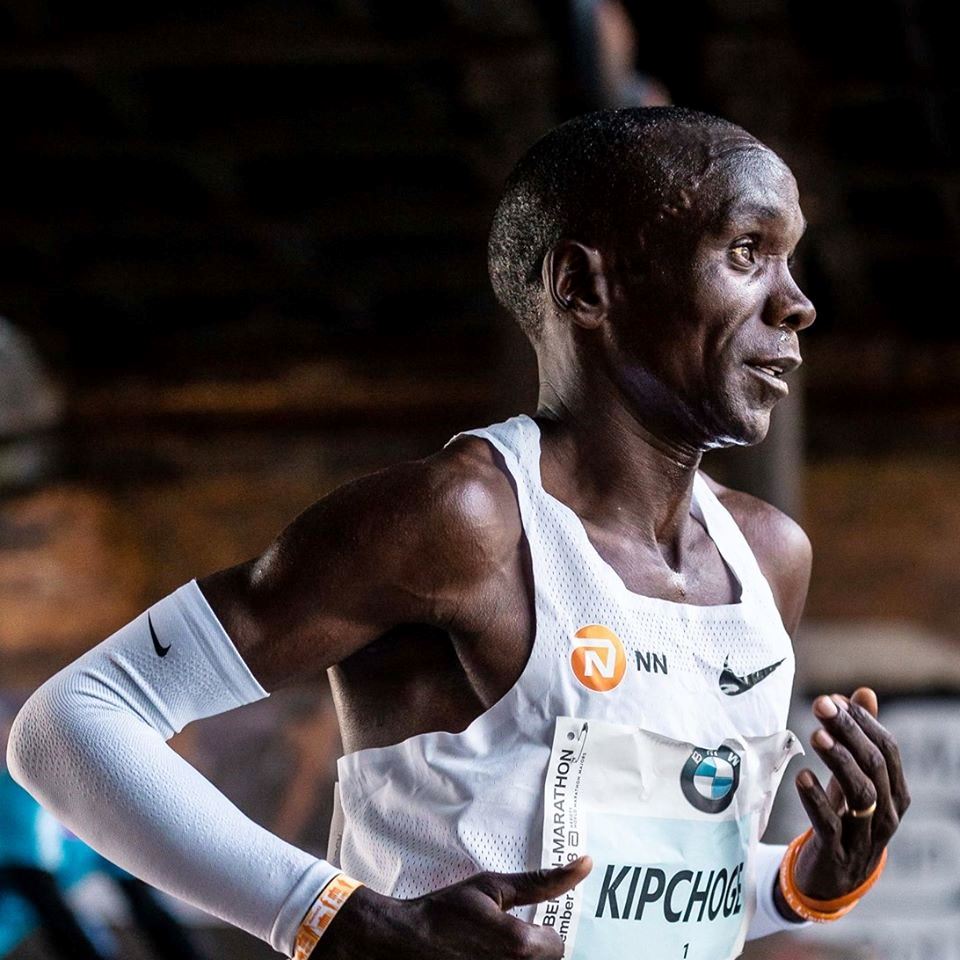
GREAT NORTH RUN / BRIGID KOSGEI SMASHES WOMEN’S COURSE RECORD

Brigid Kosgei (This photo was downloaded from the Facebook page of London Marathon and is being used here for representation purpose. No copyright infringement intended.)

Kenya’s Brigid Kosgei set a new course record in the women’s half marathon, at the 2019 Great North Run in UK. She covered the distance in one hour, four minutes and 28 seconds (1:04:28), shattering the previous record held by Mary Keitany (1:05:39 / also of Kenya) by more than a minute. The men’s half marathon at the event was marked by Britain’s Mo Farah winning his sixth consecutive title; he finished in 59 minutes, six seconds (59:06).

Kosgei’s course record is better than the existing world record – 1:04:51 – set by Kenya’s Joyciline Jepkosgei at the Valencia Half Marathon in October 2017. However owing to technical reasons, the new mark may not qualify to be a world record. The problem lay in the Great North Run’s course. The International Association of Athletics Federations (IAAF) noted in its weekend round-up of road races, “ as a point-to-point course and slightly downhill, it’s not valid for record purposes, but that shouldn’t take away from the performance by the 25-year-old Kenyan who dominated the race from the outset.’’

According to it, IAAF regulations (for the performance to be ratified as a world record) require that the start and finish points on the course, measured along a theoretical straight line between them, should not be further apart than 50 per cent of the race distance. It is also required that the overall decrease in elevation between start and finish should not exceed an average of one meter per kilometer. “ The Great North Run is contested on a point-to-point course with elevation loss of 30.5m and a start / finish separation of more than 75 per cent,’’ the statement pointed out.

As per published media reports, Kenya swept the top four positions in the women’s half marathon at the 2019 Great North Run. Magdalyne Masai finished second, Linet Masai placed third and Mary Keitany, fourth. In the men’s race, Ethiopia’s Tamirat Tola finished second while Abdi Nageeye of Netherlands placed third. Britain’s Callum Hawkins was fourth.

Prior to 2019 Great North Run, Kosgei was known best for her finishes at the Chicago and London marathons. She placed second among women in the 2017 Chicago Marathon, second in the 2018 London Marathon, first in the 2018 Chicago Marathon and first in the 2019 London Marathon. Going by information available on Wikipedia, Kosgei has finished in top two at eight of the nine marathons that she has run in her career.

The Great North Run is the largest half marathon in the world. It takes place every September in North East England. It was first staged in 1981. As of 2019, Kenyan men had been won the race 14 times; Kenyan women – 12 times.

(The author, Shyam G Menon, is a freelance journalist based in Mumbai.)