SAGAR PARIKRAMA / SAILING AROUND THE WORLD, ALONE

Illustration: Shyam G Menon

Illustration: Shyam G Menon

Outrigger presents the story of Sagar Parikrama – a project by the Indian Navy to execute the first solo circumnavigation of the planet in a sail boat by an Indian. The navy achieved its objective, following it up with a solo nonstop circumnavigation as well.

Scroll down to read from part one of the story, to part five. Part four is an interview with Vice Admiral (Retd) Manohar Awati, main architect of the project. Part five is a note from the author.

ABOUT A ROAD

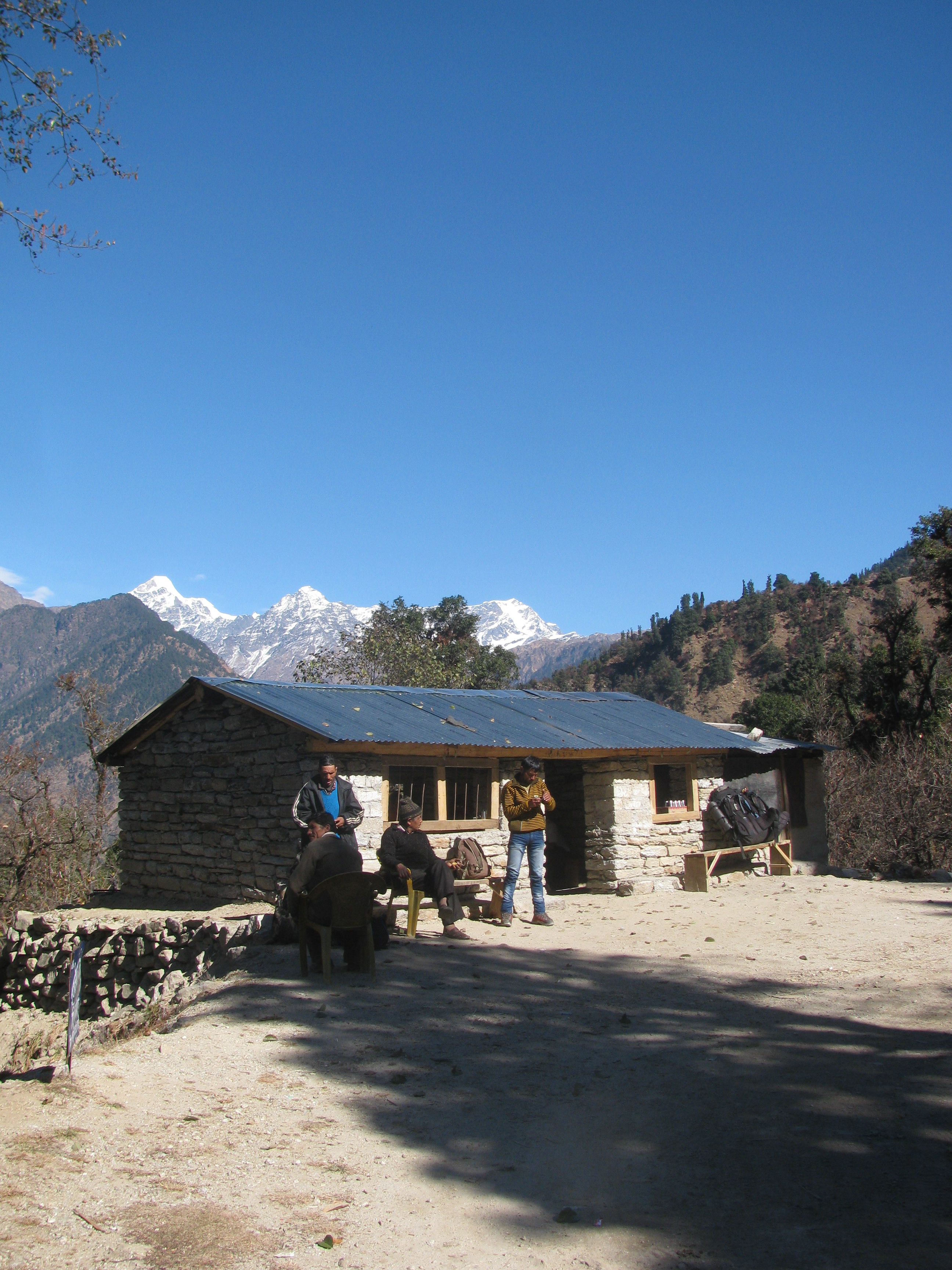
The teashop at Dhur (Photo: Shyam G Menon)

The teashop at Dhur (Photo: Shyam G Menon)

Thakur Singh worried if he would make it back to Ranikhet in time.

He was restless.                                                 

Hoshiar Singh on the other hand, cracked jokes. Pratap Singh laughed. Nearby, the chain smoking-teashop owner from Kharkia lit a beedie and responded frugally to his talkative host, the owner of the teashop near Dhur.

We were seven or eight people; maybe ten. Some enjoyed the sun. Others idled within the teashop. All were stuck at that bend on an empty, winding road. The stillness of afternoon overcame December morning-energies. We grew quiet, progressively drifting to the wisps of smoke leaving the Kharkia-teashop owner’s lips as sole sign of life in us.

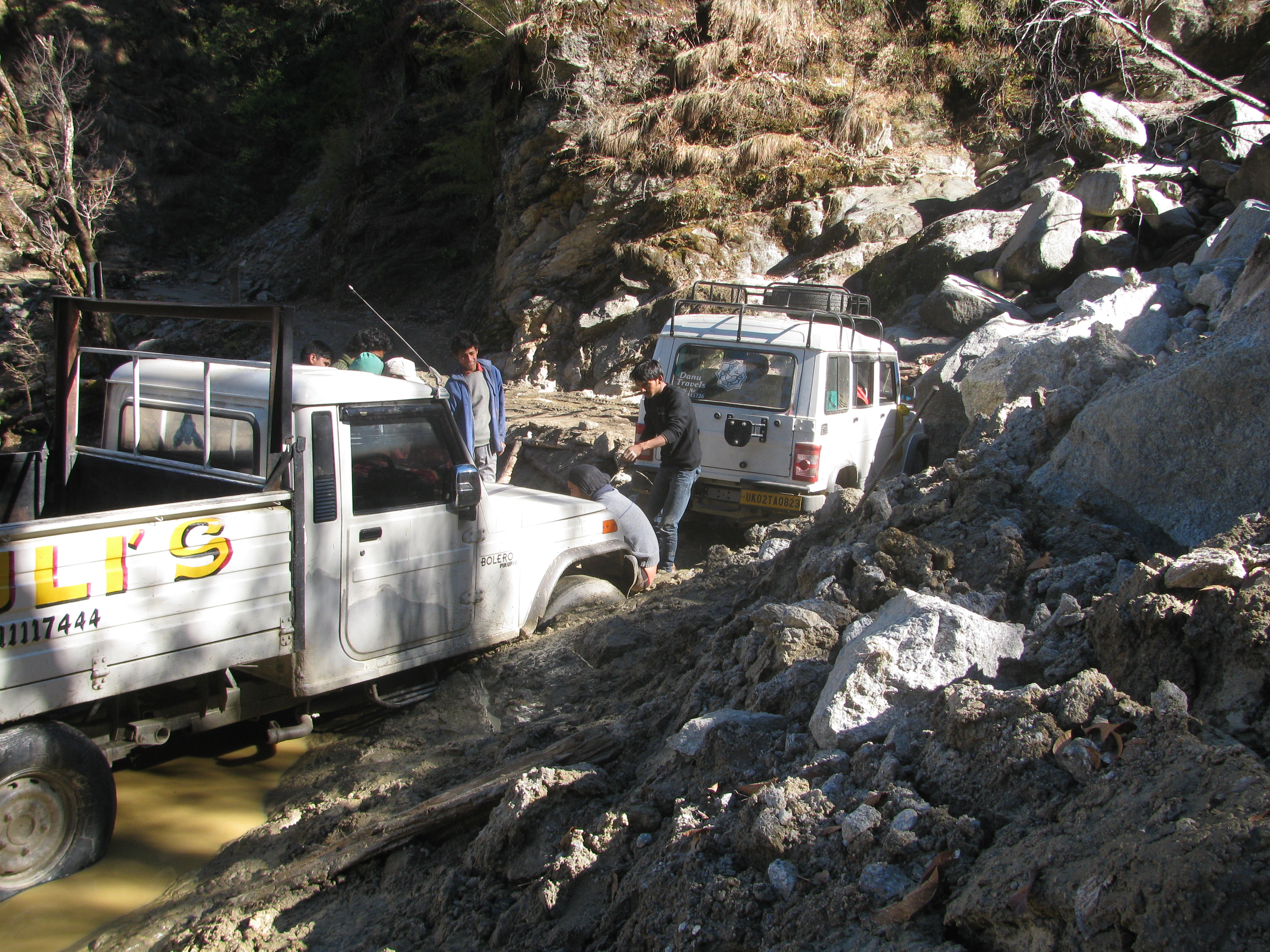
Just behind the teashop at the bottom of a cliff was the Pindar River. Up the valley, the chiselled summit of Nanda Kot, soared to over 6800m. The high ridge of Dhakuri, cloaked in winter’s first snow, wasn’t far off. But it was farther than before. That morning, we had traded the straightforward trail from Kharkia to Dhakuri and Song for the comfort of a jeep to Song. It was despite news at Kharkhia of a vehicle stuck in a landslide on the Kharkia-Song road. Mountain roads are unstable during rains and winter. Stranded in a gooey landslide, the driver had repeatedly tried freeing his vehicle only to see it sink deep. Night froze the mud cementing the jeep to position like a statue; a study in firmness for this otherwise infirm road. We drove up expecting to free the vehicle, clear the road and proceed to Bageshwar. We had along two jeeps to pull, ropes, steel cables, shovels, hired labour.  The labourers got tired of shovelling, the ropes and cables broke and the drivers got fed up. Maybe there was winter’s sloth at play. Add to that, a dash of hangover from the previous night. At least some of us, sleepy eyed and looking to get back to distant towns, had seen each other earlier at the marriage of a common friend in Khati. That village was an hour’s walk away from Kharkia, in the direction of the Pindari Glacier.

The jeeps from Kharkia returned home.

We walked past the landslide hoping that somebody would drive up from Song, discover the road block and ferry us back the forty odd kilometres of winding mountain road to the beginning of the descent to the foothills. But some of the vehicles plying daily were stranded on the Kharkia side of the landslide. That meant fewer jeeps to service the road. We flopped down at Dhur’s teashop to take stock of the situation. Past Dhur was a less used, longer trail to the Dhakuri ridge. Song seemed possible, provided we outpaced winter’s early sunset. Thakur Singh and I pushed off. Five minutes later, we heard a whistle. Our departure had shattered the group’s ennui. All except the Kharkia-teashop owner, who was Bageshwar-bound to treat an injured leg, had decided to hike. They were following us. We walked for a long time. Then as often happened, a lovely patch of grass emerged by the roadside and people plonked down to rest. It was officially called rest; unofficially, it was that couldn’t-care-less attitude which seeps into people in such situations. Time and life ran slowly in the mountains. I wasn’t in a hurry to get anywhere, certainly not when my backpack contained snacks and tent. I had a stove but no fuel; I had gifted the remaining petrol to a villager who owned a motorcycle. But finding food shouldn’t be a problem. I was at ease. Among us, only Thakur Singh was edgy. He was on leave and had to get back. He tried sleeping to keep the worry at bay. Hoshiar Singh had weathered slit eyes. Like Clint Eastwood’s. Where Eastwood’s `Blondie’ aka The Man with No Name smoked a cigar, Singh idly chewed a blade of grass, his eyes looking into the distance towards Sorag on the other side of the Pindar. Then some conversation came up and the dreamer in me started nudging talk towards how mountains were formed, how long day and night could be in the polar regions, what lay ahead for the sun, how the universe was formed – so on and so forth. All listened intently, except for a youngster studying in a college in town who had traded larger curiosity, for world by relevance and irrelevance. Of what use are the sun’s life cycle and Big Bang Theory when it comes to career? Time went by.  

Stuck in the landslide (Photo: Shyam G Menon)

Stuck in the landslide (Photo: Shyam G Menon)

The road from Song to Kharkia was a treacherous one. Roads in unimportant corners of India were like that. What’s special about this road? You may ask. I don’t know what its current state is but until the time of writing this article, in the years (probably three) that I had been on it, this road’s condition never changed although it was part of a national scheme for village roads and an adjunct to the much walked tourist trails to Pindari Glacier and Sundardhunga. For villages in the area – Kilbara, Badiyakot, Pattag, Sorag, Wacham, Jatoli, Khati – it was sole road link to the outside world sparking hopes ranging from higher education to timely healthcare. Completed some years ago, the rickety road’s only permanent fixtures were a big concrete gateway erected midway to deify the builders and the utter absence of bitumen. On a lucky day, the road may be fully functional. On others, it may be blocked or damaged. For much of its length, it hugged the mountain’s edge. It was largely wide enough for two vehicles to pass, but only just so. It was also narrow, muddy and riddled with cavernous ditches. Seeing your vehicle’s trajectory and poise, you wouldn’t know whether you were driving, sailing or skiing.

Jeep drivers from Kumaon’s towns rarely brought their vehicles here fearing damage. A few times up and down this road and your vehicle aged prematurely. Local drivers worked this road using cheap vehicles, pushed daily to the limits. Taxis were filled with people and stuff. During the ride you stared down the vehicle’s bonnet into an approaching ditch; you shook violently climbing out from it, the chassis would hit the road and occasionally you skidded along in mud inches from the void. It was regular village life – forty plus kilometres of bone-rattling ride. When a jeep came from the opposite direction, the driver sometimes startled you by requesting for brake fluid or something as critical, which you thought was already there in the machinery. The request and the supportive camaraderie were routine given the punishment inflicted on vehicles. Once, on a day of no taxis, I travelled the whole stretch in the cargo bay of a pick-up truck. I understood what life as a chassis was. As yet, my most unforgettable sight on this road has been a heavily laden small truck that stalled while struggling uphill. On re-start it reversed and then charged up the terrible road, including its hairpin bends as not to lose momentum. The truck shook and twisted; its tyres hit and flew over stone, it roared straight towards my parked taxi and veered off with fine timing. One error and we would have been history. That was 2012 summer. Now, it was December. The road, as ever, was unchanged. Probably the truck too is; lying in some workshop, almost dead from exertion.

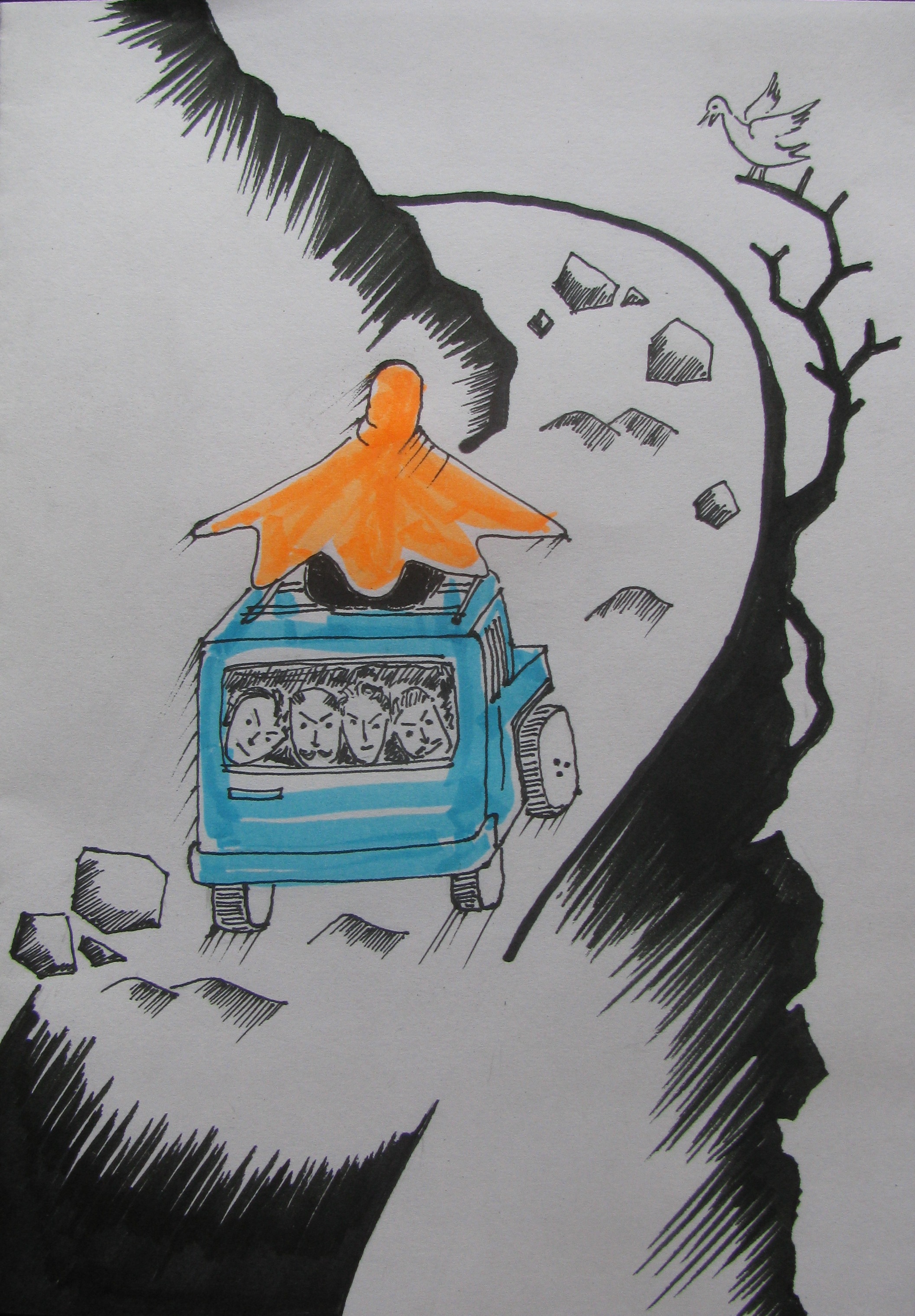
Illustration: Shyam G Menon

Illustration: Shyam G Menon

An hour or more after we left Dhur’s teashop, a pick-up truck brought us news that taxis were heading up. By 4PM, we had a jeep for Song, hopefully beyond. We crammed in. “ Naren’’ (likely short for Narender) who couldn’t fit within had to take the vehicle’s roof. His friends kept up a conversation to distract Naren from the December cold blasting him up there. Once in a while, to the amusement of his friends, Naren howled or yelled to stay awake in the freeze. Sometimes, he sang loudly from up there. Thanks to the delay caused by the blocked road, we didn’t reach Bageshwar. We stopped at Bharadi. Naren jumped down from the vehicle’s roof, playfully shouted a few expletives at the driver as everyone laughed, and ran off. I took leave of Hoshiar Singh who had been a nice person to talk to. Bharadi was a proto-town ahead of the real town, Bageshwar. Its facilities weren’t fully evolved. Four rooms at a hotel; seventeen beds, fifty rupees per bed, one toilet and the usual inebriated men. Pratap Singh was in the room adjacent to mine. He was en route to Almora for surgery. Had it not been for our road Singh would have had to walk to Bharadi.

Few days earlier, we were in a jeep from Bharadi to Pathyasar beyond Song, the end of the road for the Saryu valley. Our co-passengers included half a dozen or so village elders. From Song to Pathyasar runs another rickety road, belonging yet again to that national scheme and about as bumpy as the road to Kharkia, albeit shorter. The conversation in the vehicle had been on how all political parties are similar in their indifference to the public’s travails and how the rule of different parties in Uttarakhand had yielded the same result for this region – the continued neglect of roads. Maybe they are right. “ If you see a JCB tell them of the stuck vehicle,’’ one of the Kharkia-drivers had told me while parting ways at the landslide. Albeit manufacturer’s name, JCB had become near generic for bulldozer in these parts.

I never saw a JCB.

(The author, Shyam G Menon, is a freelance journalist based in Mumbai. An abridged version of this article was published in The Hindu newspaper.)

THE BUS STATION

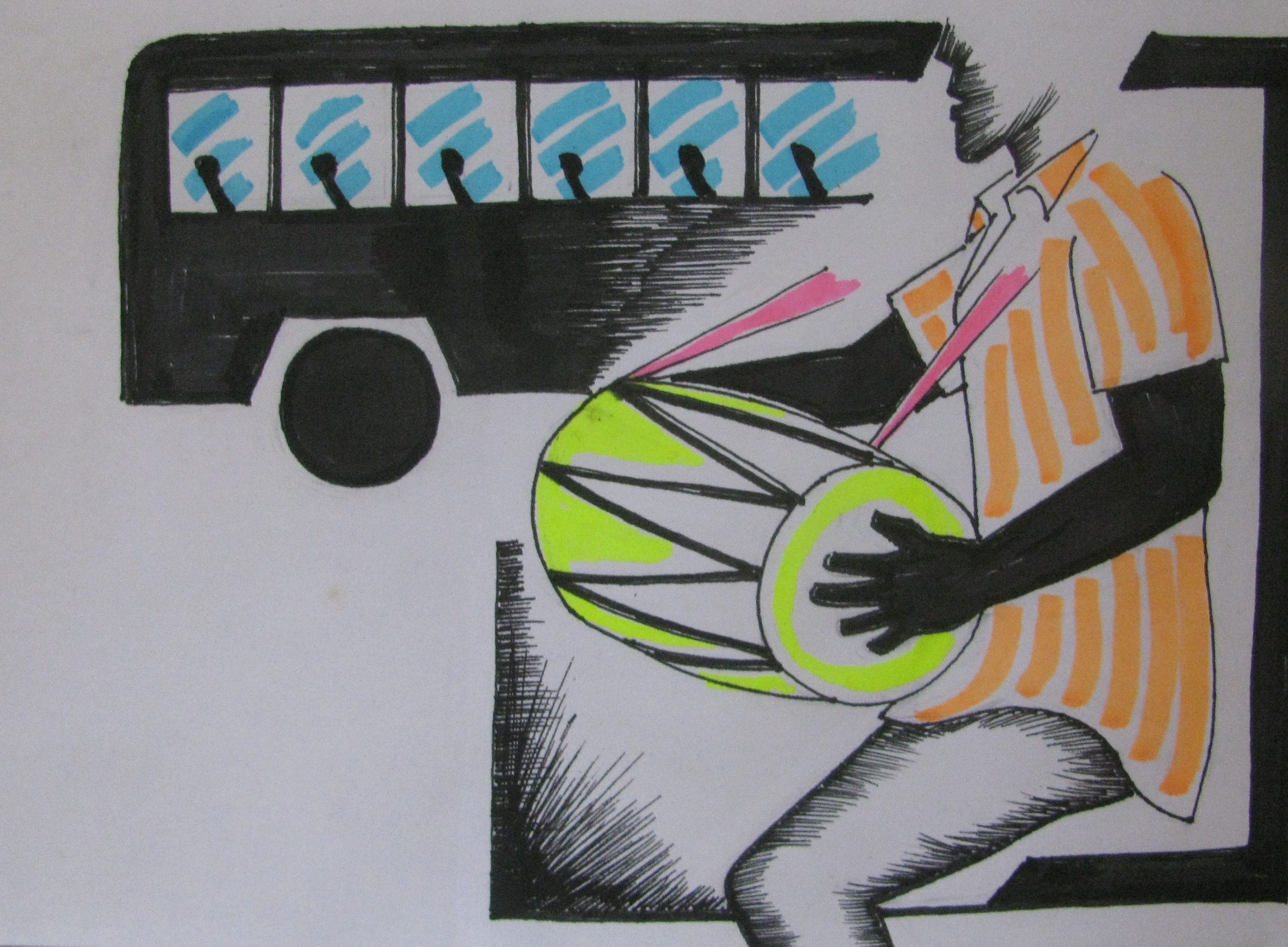
Illustration: Shyam G Menon

Illustration: Shyam G Menon

Some years ago, a friend from Ladakh and I, were on our way from Uttarkashi to Delhi.

We travelled to Rishikesh in a packed jeep and from there, took a bus to Haridwar.

Upon reaching, we found that there were no buses just then to Delhi.

Trains were full and the only available tickets required patronizing the black market.

We decided to wait for a bus.

The bus station was the regular sort – dismal. It was located opposite Haridwar’s railway station and therefore in a rather busy part of town. We briefly walked around in the neighbourhood, had tea from a roadside vendor before the railway station and then settled down to wait at the bus station. These are the occasions when you indulge in India-watching. What’s that man doing? Isn’t that woman beautiful? Those people, dressed that way – where could they be from? What’s that vendor selling? Why do people have so many children? So on and so forth. I wondered what my Ladakhi friend made of the Haridwar environment, thick with people. Ladakh was vast desolate mountain landscape with few people. It was cold desert. As one of the least populous districts of India, his land was the absolute opposite of this congestion at the foothills of the Himalaya, where the plains lapped innocently at mountains’ feet not yet betraying the ocean of troubled life beyond the teasing waves. As you went more and more into the plains, crowd and congestion rose till India became crushing reality of huge population struggling for resources. Yet we never speak of our numbers. I had just begun freelancing then and in the years that followed, I would discover how averse even the Indian media was to being reminded of population as anything but market and potential GDP.

A bus, clearly not state transport type, drove into the station and stopped. A troupe of youngsters got out. One of them carried a drum. Ten minutes later, a street play ensued in the bus depot. It was on safe sex, HIV, population, family planning and so on. The people around watched, amused. Women pulled their saris over their faces and laughed shyly. Until some years ago sex was too touchy to discuss publicly in India. Babies happened. And when babies were a more conscious choice, it was packaged as human fulfilment, even cultural expression. Either way, every census returned more numbers of us. Who cared if we were drowning in all that fulfilment and expression? The street play went on for a while. When it concluded, the artistes treated themselves to tea, packed their props and returned to the bus. It drove off to new location somewhere else.

I couldn’t help admiring those young people.

They showed the courage to address something terribly important to India and grossly neglected by everyone from government ministers to common people. I also remember feeling sad – for nobody and by that I mean nobody, will ever tell those young people how critical they were for public awareness. In contemporary Indian imagination only losers do what those youngsters did. Winners find profitable careers; make money, have babies, leave India – so on. When aspiration is the stuff of escaping the drowning, who wants to plug the deluge? If you want to do anything sensible, you must be prepared to live with the stigma of being loser. I hope those young men and women find the resources to endure it.

The bus to Delhi arrived.

Hours later, we reached India’s capital.

From Delhi, my friend left for Ladakh.

I returned to Mumbai.

Recently, Business Standard – a well known Indian financial newspaper – reported on an Oxfam study alerting the world to the average price of staple foods like wheat and maize doubling worldwide by 2030 (http://www.business-standard.com/article/markets/world-stares-at-doubling-of-food-prices-by-2030-113101501088_1.html). Some of us may find that too conservative, for in our own lifetime we saw prices shoot up more. The scorching price of onions was top news in India some weeks ago. Anyway – average prices doubling globally was Oxfam’s estimate and they attributed the scenario to a host of factors ranging from climate change to high population, falling productivity in agriculture and cultivable land diverted for crops other than food courtesy market forces. The main cause and probably the most immediate of all causes cited, was climate change. But think a bit and you will see behind it, the ways of a giant population. We and our ways worldwide contributed in no small measure to climate change. We can’t dissociate ourselves from adverse weather phenomena. We cannot also dissociate ourselves from the ways of the commodity markets. Today on the planet, we are a global population of over seven billion people plus the habits and aspirations of that many. We will exceed nine billion people globally by 2050. Our demand for food is projected to rise by 70 per cent. As yet, we don’t seem to have good enough answers or leadership for what potentially lay ahead. The forecast on sharp rise in food-demand is when we don’t have the will despite our existing predicament, to stop the rotting of food for want of proper storage. Not to mention, each one of us thinks we deserve family; the undeserving is someone else. The big picture engages none. Maybe, it exhausts everybody. The price of continued disinterest in the big picture can be steep. It isn’t about food alone. It is also about what people will do to get food; the potential for conflict therein.

Earth seems a bus station needing a street play.

Nobody wants to lose tackling a difficult truth.

The easy win, attracts.

I wonder where those youngsters are.

(The author, Shyam G Menon, is a freelance journalist based in Mumbai.)

AN EARLY MORNING IN PUNE

Illustration: Shyam G Menon

Illustration: Shyam G Menon

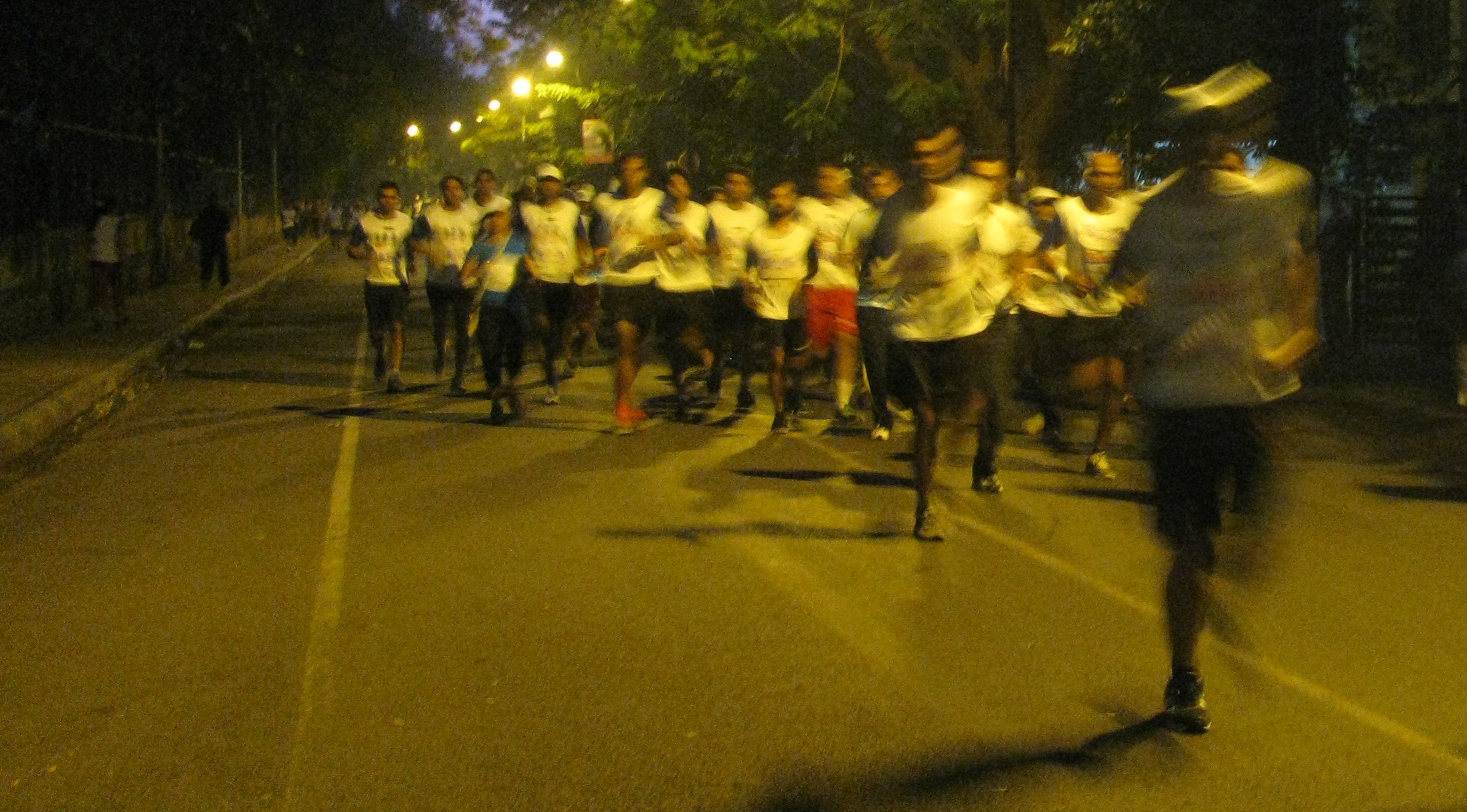
Recovering from a shin injury seemed apt time to catch my first sight of many people running together.

Although based in Mumbai, a city renowned for its annual marathon, I hadn’t watched any running event cast so. The closest I got to the spectacle of people-in-motion was during early morning jogs in cantonment towns in the Himalaya, when my very slow self would be overtaken by groups of soldiers running by.

Last weekend changed that.                                  

I wanted to support my friend who had taken to running in her fifties. I have been on mountaineering expeditions. I know what an uphill task is. She was tackling an uphill task in life albeit in a different sport. She had enrolled for a run in Pune. It is an interesting city; a mix of the traditional and the modern with much young blood for physicality. Mumbai on Maharashtra’s coast and Pune on the western margin of the Deccan plateau are cities distinct by character. Past 4.45AM, my friend and I walked to the venue. Early morning there was very little traffic. The October weather was pleasant. Mumbai after the rains was prone to heat and humidity. Pune, 1840 feet above sea level, was neither hot nor cold. The train journey in had been lovely. A post monsoon explosion of orange coloured blossoms graced the countryside bordering the railway tracks. It was Sunday. Yet I suspect Pune woke up more casually than Mumbai, India’s nonstop financial capital. No tea stall was open. No vendor of India’s wake-up beverage had parked his cart close to the venue to tap the early morning market of people out walking and running.

Photo: Shyam G Menon

Photo: Shyam G Menon

The street lights shone like yellow orbs. I liked the sight of runners converging on the ground near Pune’s BMCC College. Some walked alone; some came in groups, some walked leisurely, others walked fast, some jogged. There were young people, children and middle aged people. Assembled on the ground, they were soon lost to pre-race stretching and warm-up. I wished I could be like them. But I was getting injured too often to run enjoyably for long. Some weeks spent running and I am back on the bench nursing pain. Further, contemporary running’s fierce sense of purpose was intimidating. I am not exactly your trail blazing-type to hold my ground before Running Inc’s gladiators, their measurement by timing, the races you participated in etc. It reminds me of everyday rat race.  

My friend entered the ground. I wished her luck and took my place on the road as spectator. Three old women, local residents who used the ground for their morning walk, arrived. They were politely apprised by the volunteers, of the ground being closed that morning for all except runners. The women took it stoically and walked off to choose a place to stand by and watch the run. At quarter to six, roughly a dozen motorcyclists on their Harley Davidson bikes rode in. Not quite apt – I remember thinking so, clearly. Yes, the bikers looked impressive as an advance party for the runners. But surely a lot of engine, noise and fossil fuel-burning were hardly best ambassadors of running. Events imagine differently and one day we may comprehend how sport by event management changed the idea of sport. Close to 6AM, the national anthem was played. A band of traditional drummers began playing. Right on time, the motorcycles thundered out from the venue on to the road with the runners who must have been pacers for the half marathon, right behind. At their heels, came the half marathon column.

It was an eerie feeling. On a regular day, you noticed the passage of a single runner on the road as mere passing visual. But a large group of runners brought the same feeling to my neighbourhood, as a passing herd. A herd of human beings running by produced a consistent shuffling sound and magnified sense of breath, like something big moving. It was like a passing rustle, soft yet pronounced by the many feet striking the ground. I wondered what it must be like to be within that column and enveloped by the sound of that breathing, striding organism. This was running’s equivalent of cycling’s peloton. I recall the seriousness of many runners. Each appeared to be in a private world, likely imagining the distance to sustain the effort. Or, more likely they were trying to keep such thoughts at bay for nothing worked as well in running or any endurance sport as a blank mind nestled like a marble in a bowl of rhythmic movement. Yet a blank mind was tough to achieve. The more you tried to achieve it as an achievement, the more the mind thought and produced baggage in the head! You have to be naturally happy running – that’s the Holy Grail, the Zen of it and all of them would soon be chasing Zen. How funny – the roundabout ways in which we recreate natural impulse only to find it synthetic due to the underlying compulsion. Or perhaps, the more fundamental question is – does man move at all without compulsion, without prey to chase or bait for attraction? Lost in such thoughts, I forgot to take out my camera and click on time. By the time I did, the column had tapered. Amid this, I thought I had missed my friend go by. Then just as I looked up, there she was!

Photo: Shyam G Menon

Photo: Shyam G Menon

After the runners were on their way, I walked around in the area looking for a tea or coffee stall. A small roadside shop called `Coffee Stop,’ which I had hoped to visit and seemed ideal for freelance journalist’s pocket, was closed. At Gopal Krishna Gokhale Chowk, not far from a bustling lot of newspaper boys loading their bikes with printed news that would inevitably be mere paper by evening, I found a tea vendor and his cart. It was the typical cart on wheels with beaten aluminium sheets on wood for kitchen platform. The vendor served good, hot, masala chai. Then, I stepped into an adjacent eatery, which had captured my curiosity. Cafe Goodluck (yes, they wrote good luck so) was on the ground floor of an old building. It had been there since 1935. Its serving sealed its place in my heart and wrapped up those early morning hours in Pune, in a cocoon of contentment. The cafe gave me the best bun-butter (locally called bun-maska) I have had away from Mumbai’s Yazdani Bakery. The Mumbai bakery’s bun was in a class of its own. Goodluck compensated for its more ordinary yet tasty bun, with a big sized-serving. I liked restaurants that fed their customers knowing that food was meant to sustain life. It is a value I admire in these days of hunger by economic inflation.

Freelance journalists know that hunger very well.

(The author, Shyam G Menon, is a freelance journalist based in Mumbai.)                   

BOULDERING COMPETITION AT PODAR COLLEGE

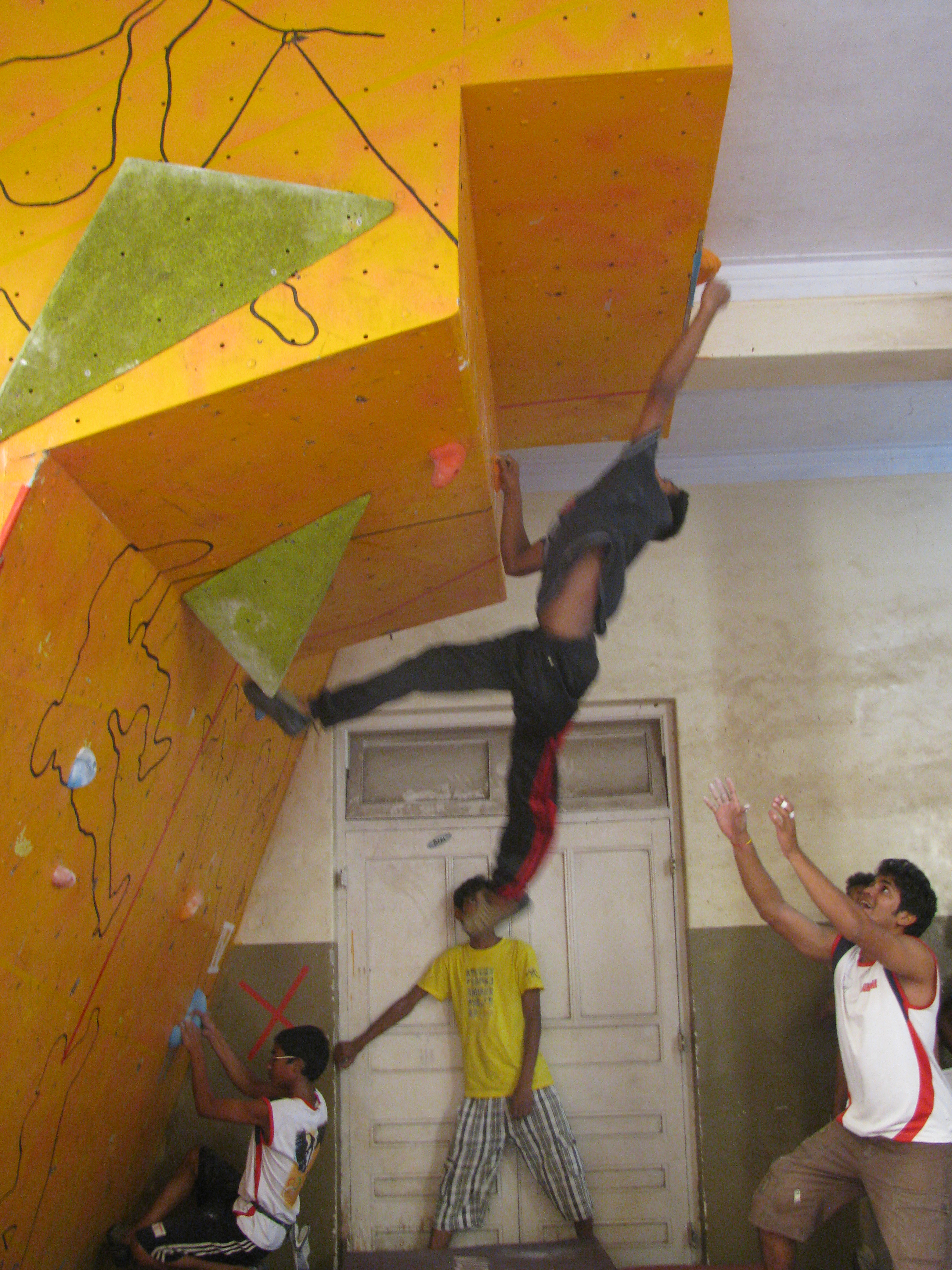
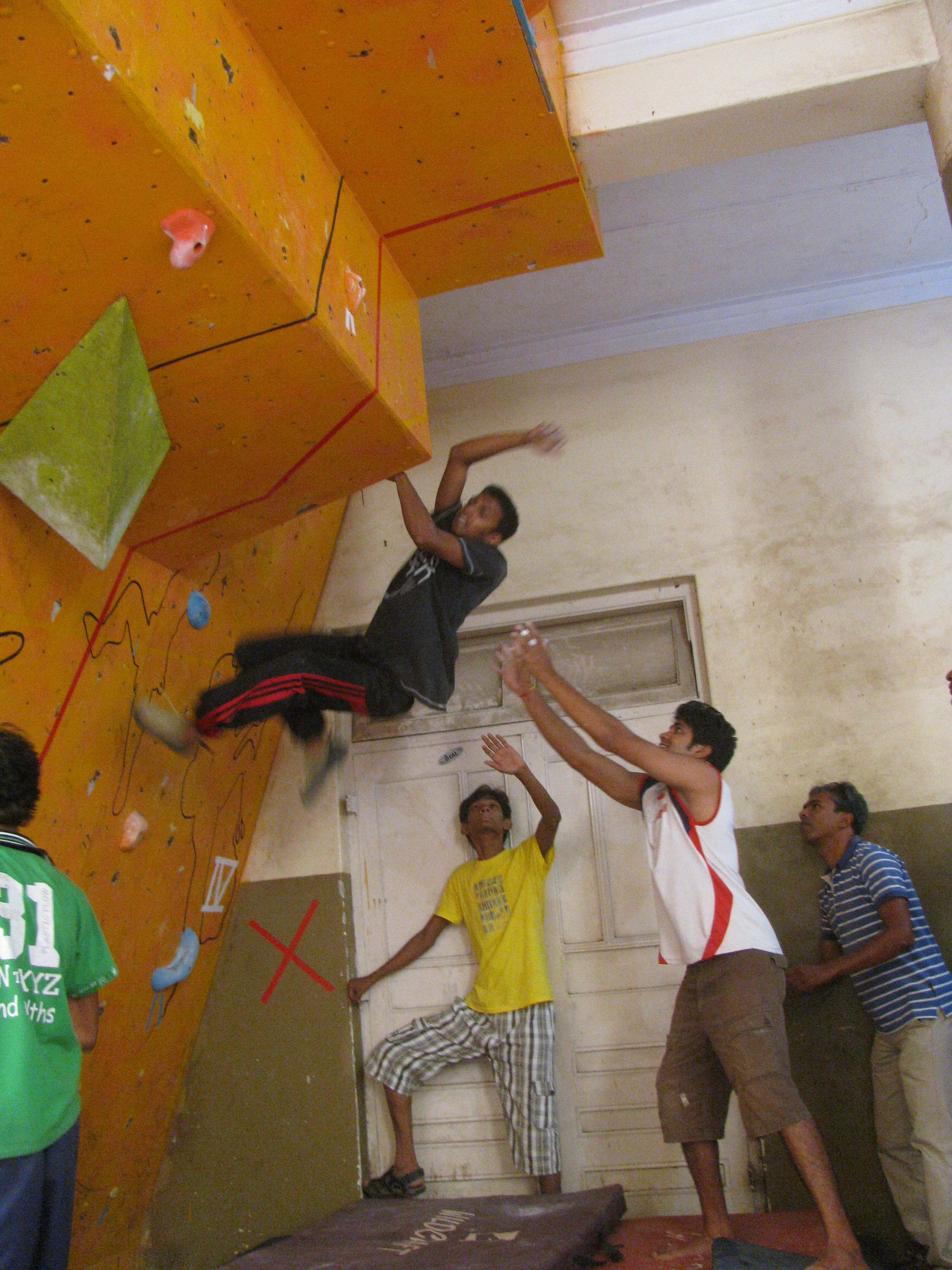
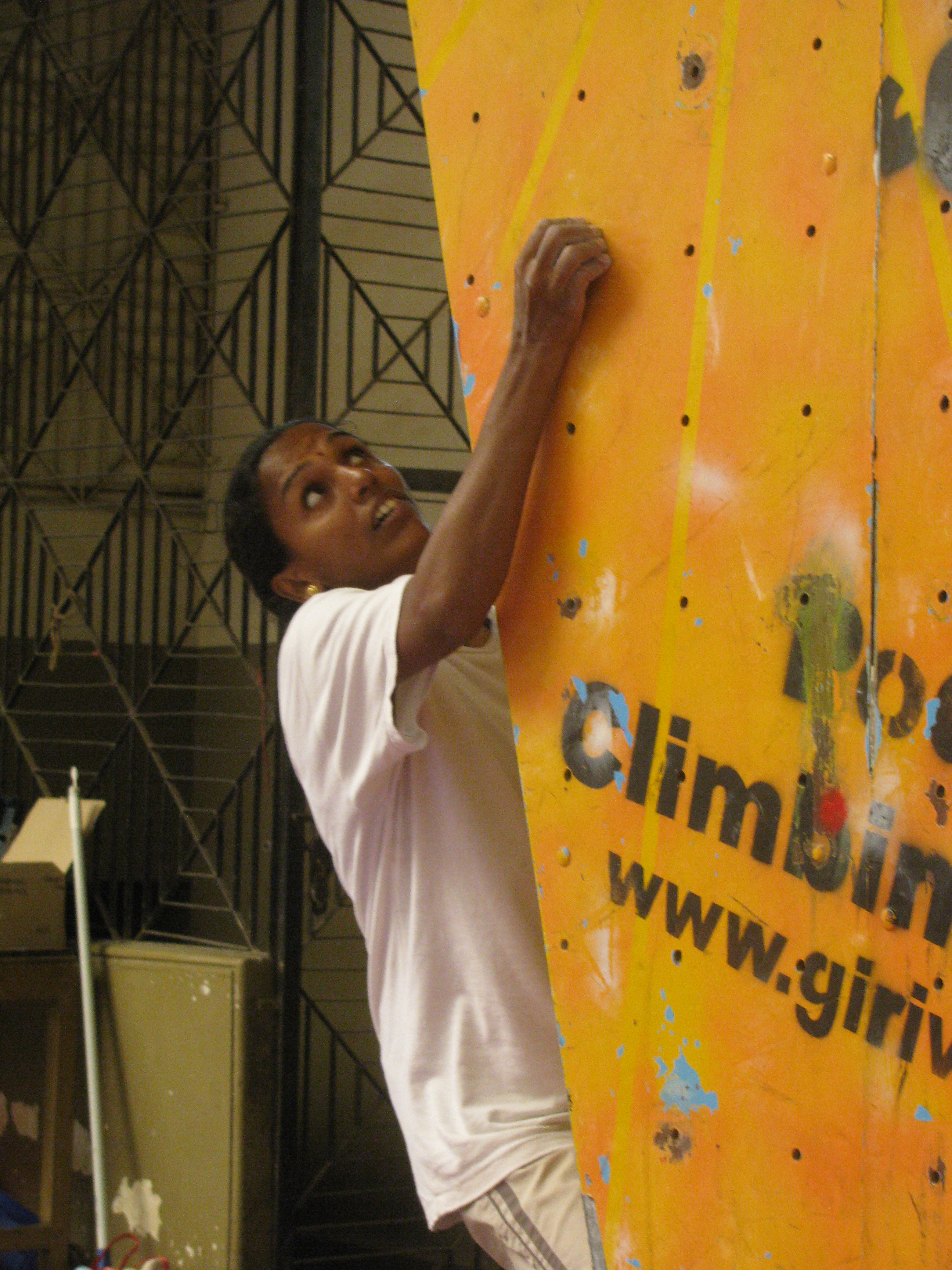
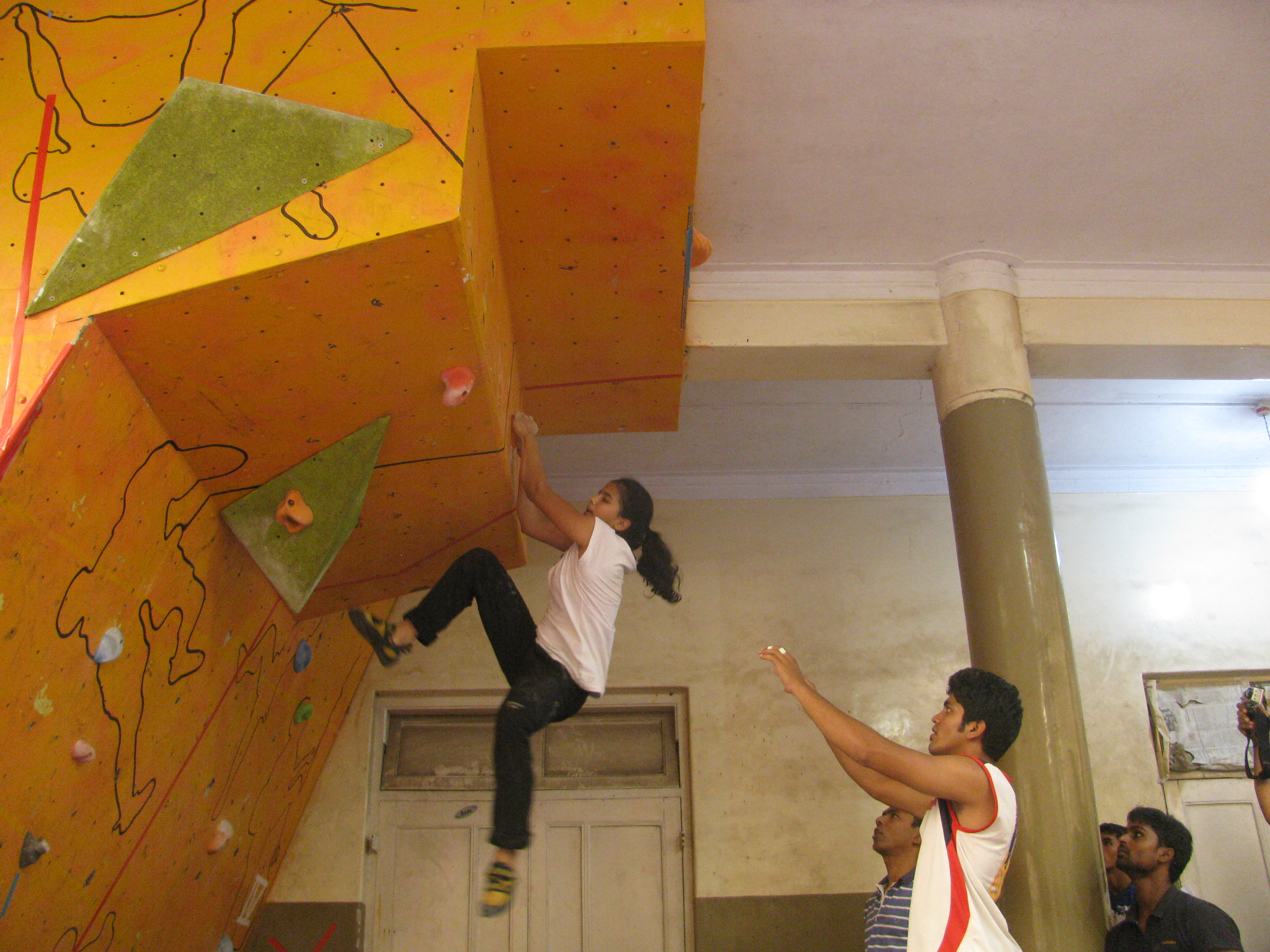
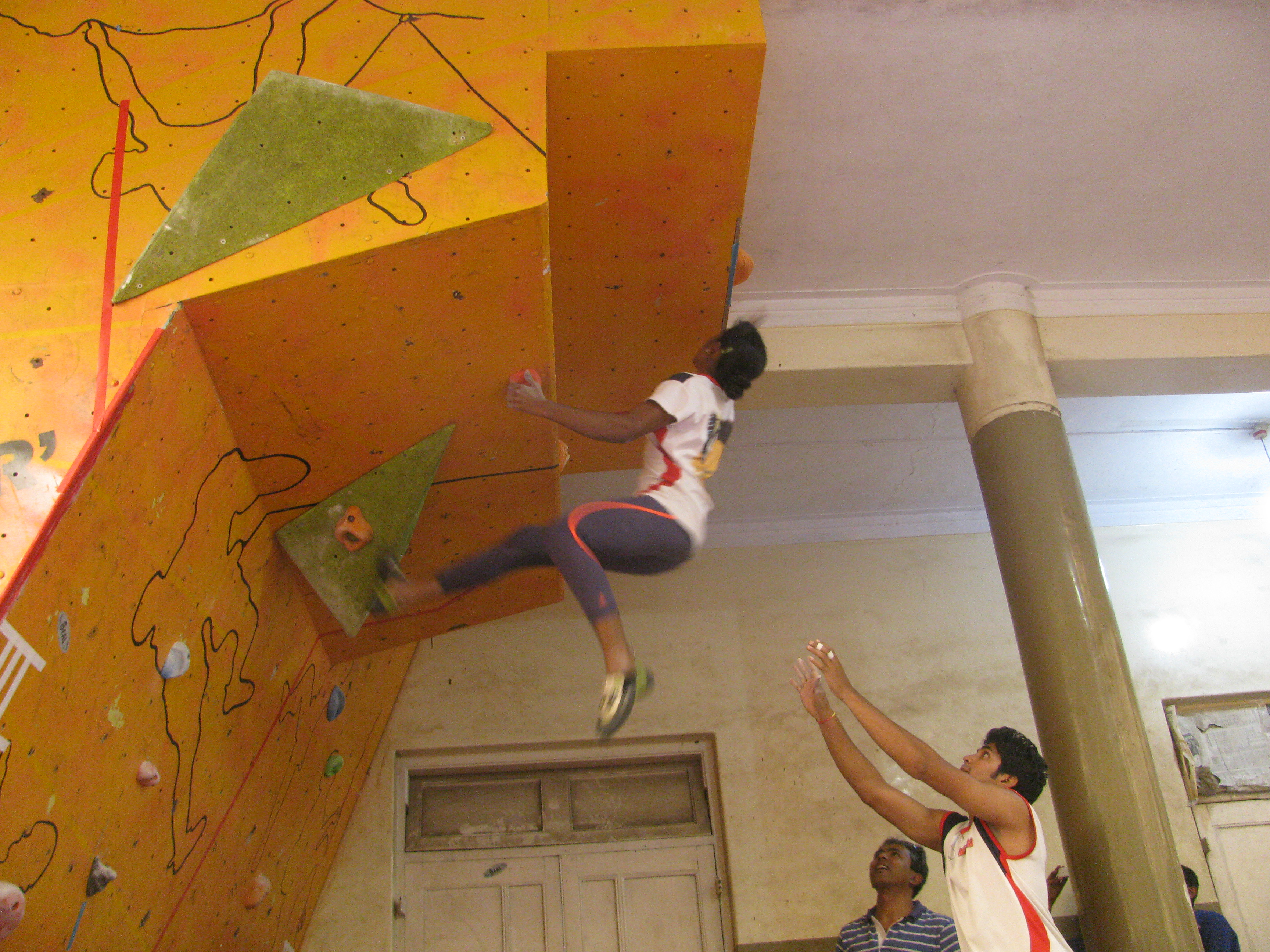
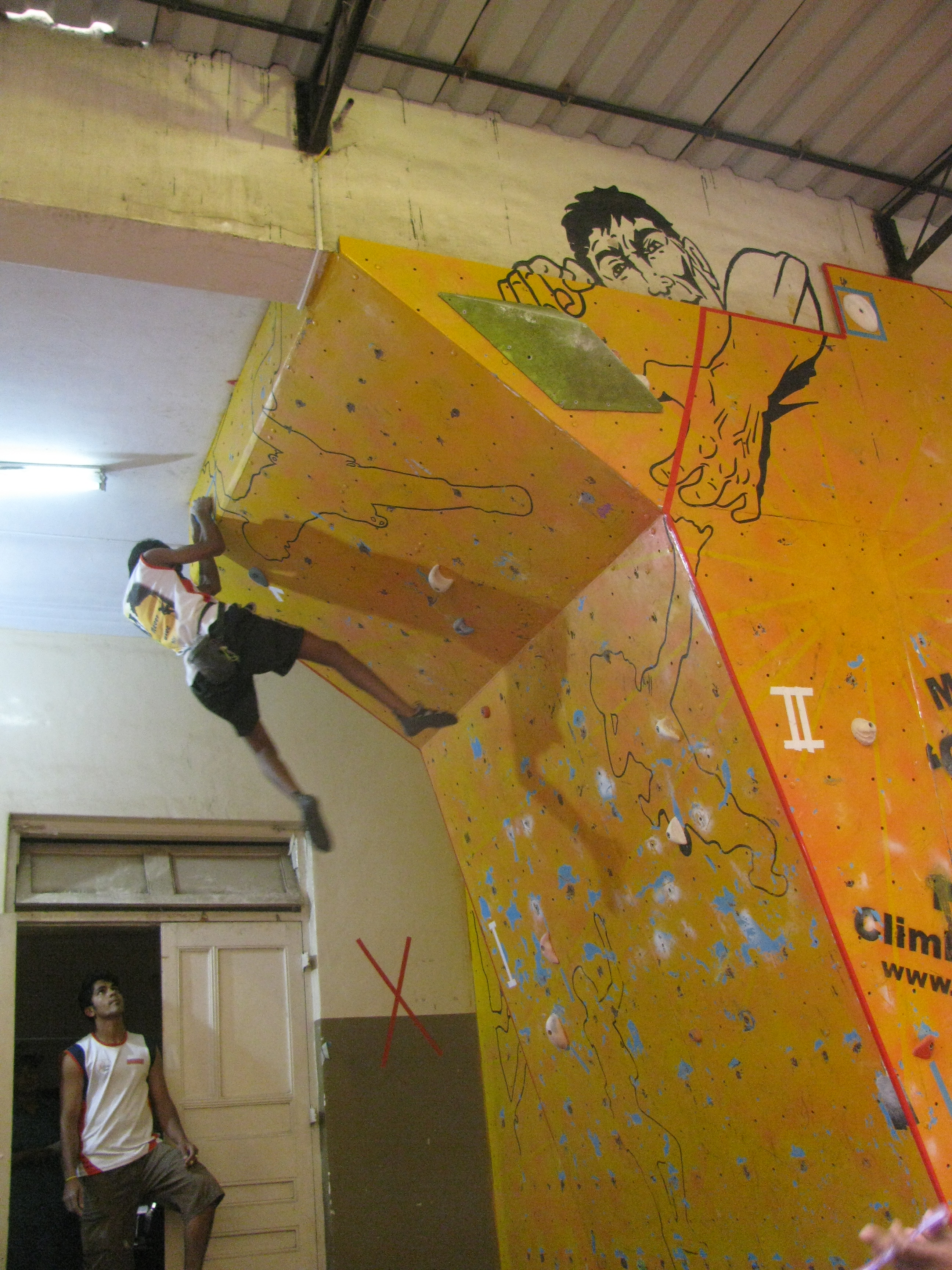
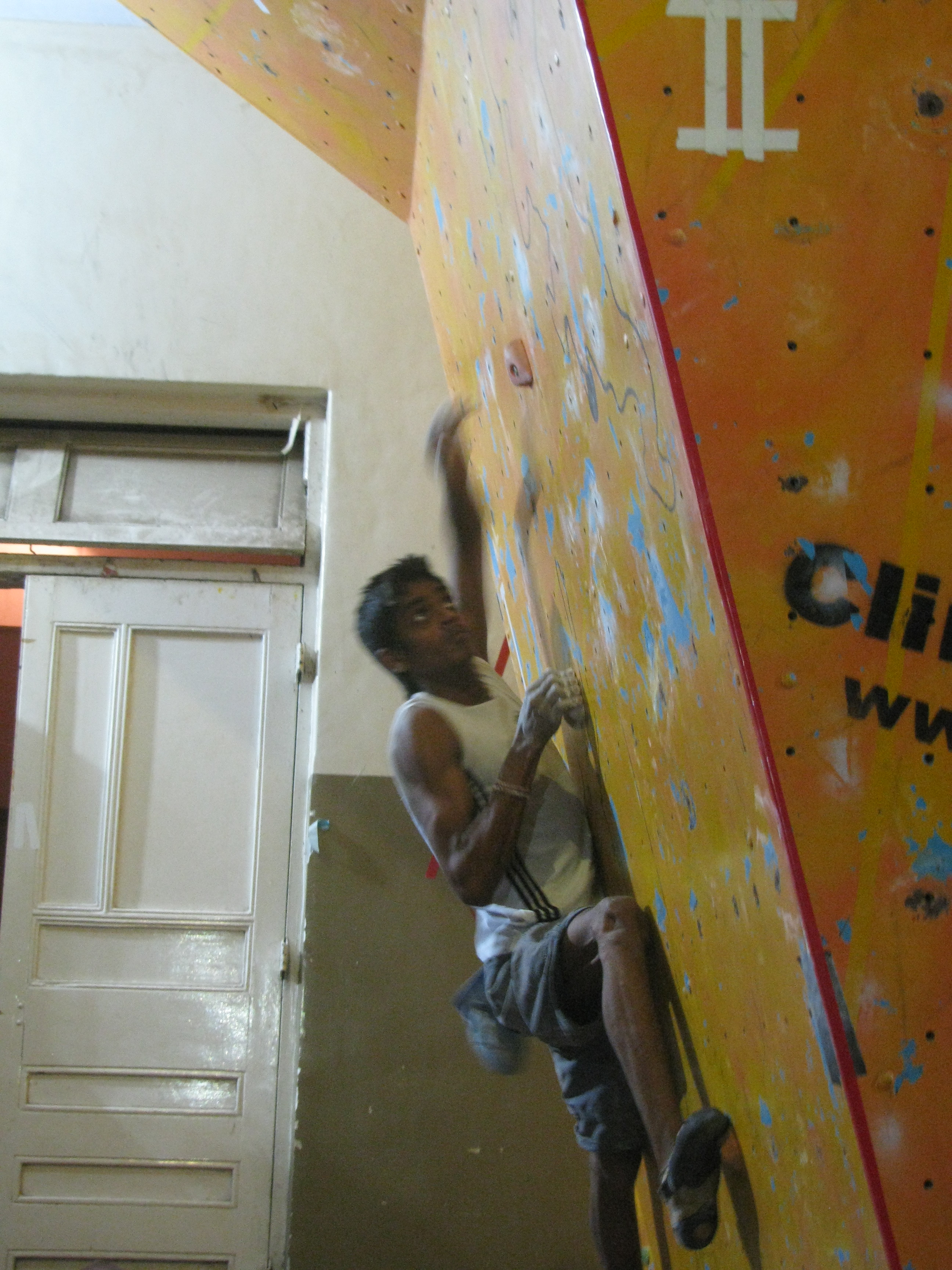
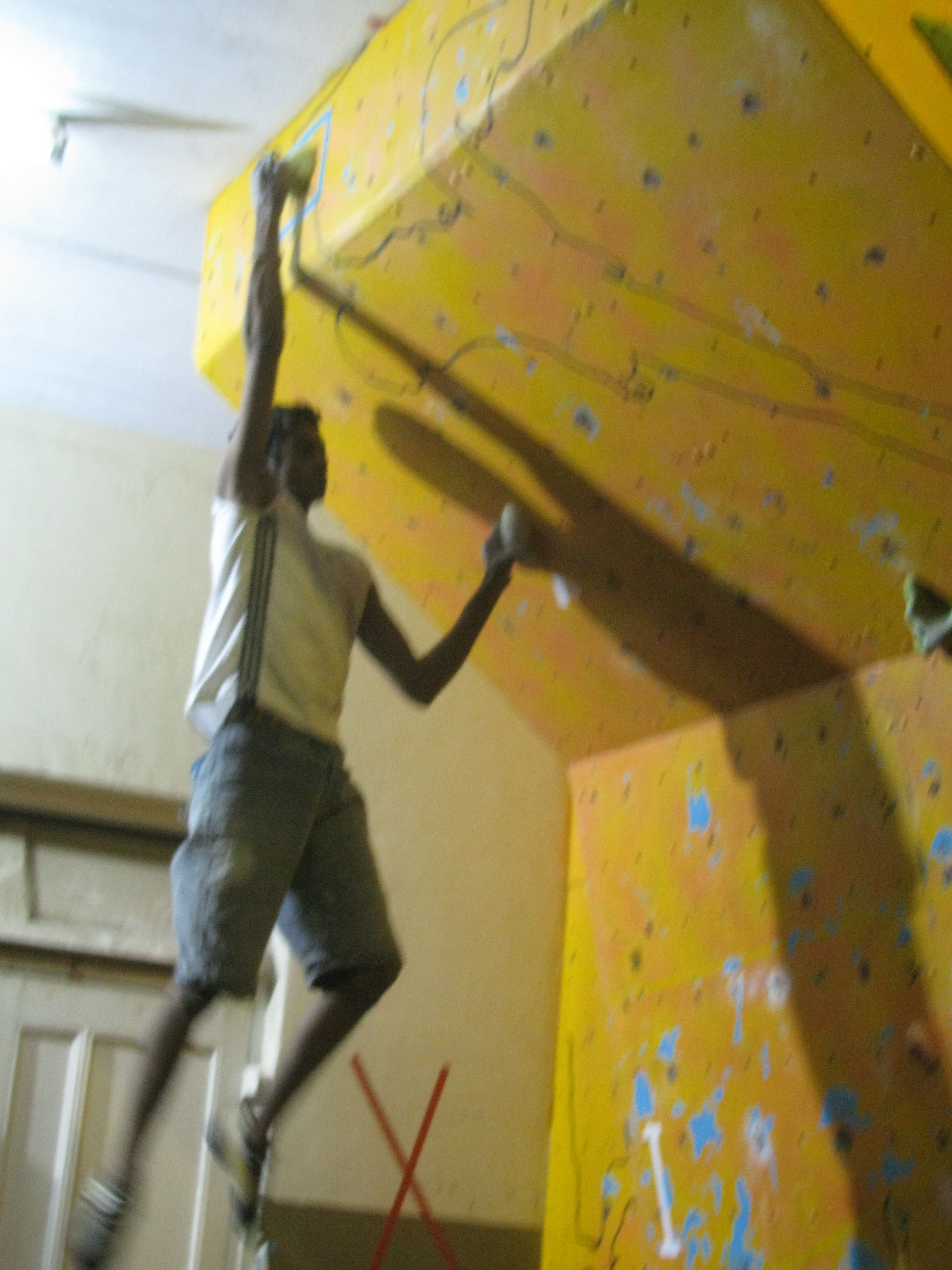
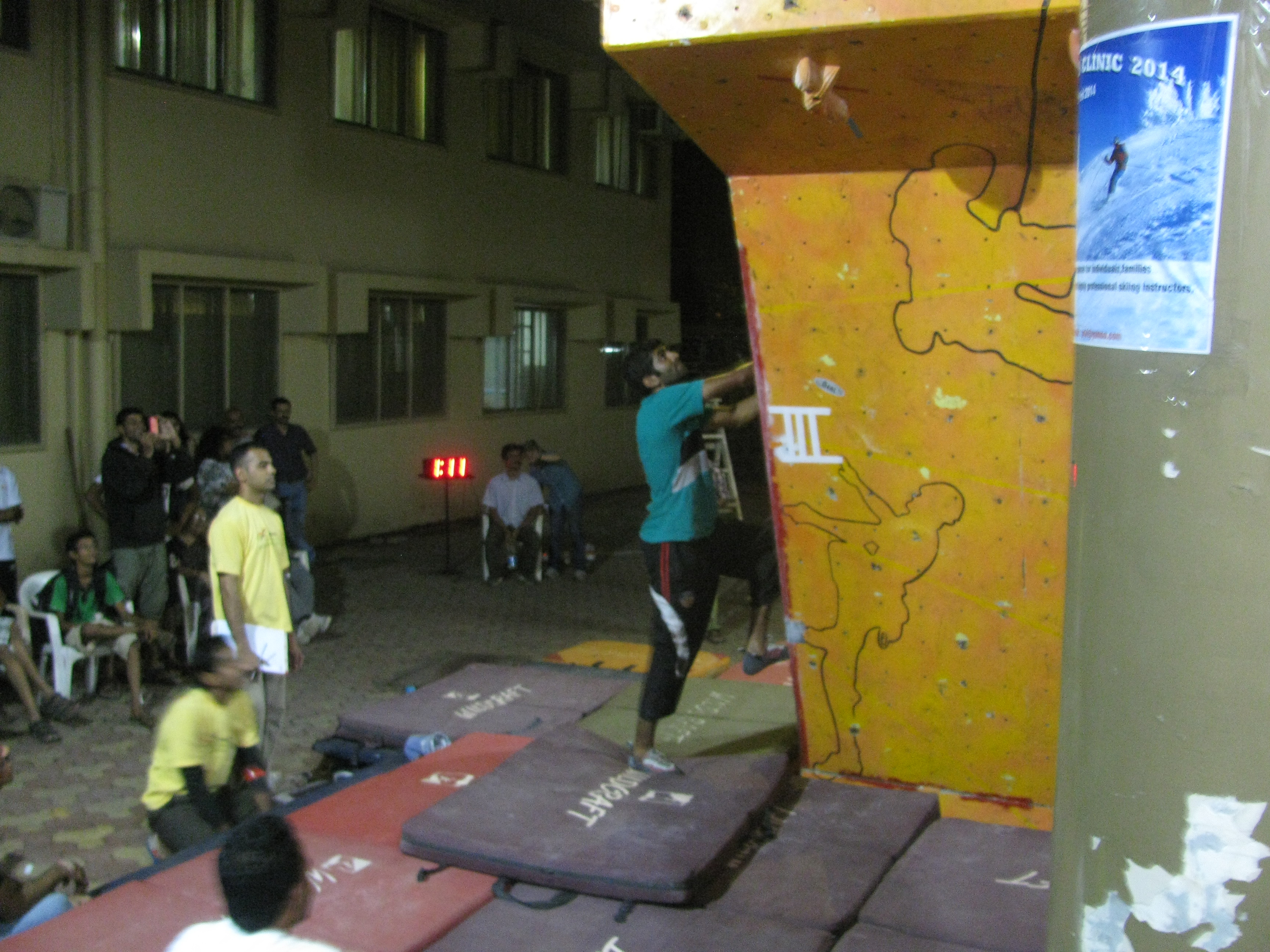
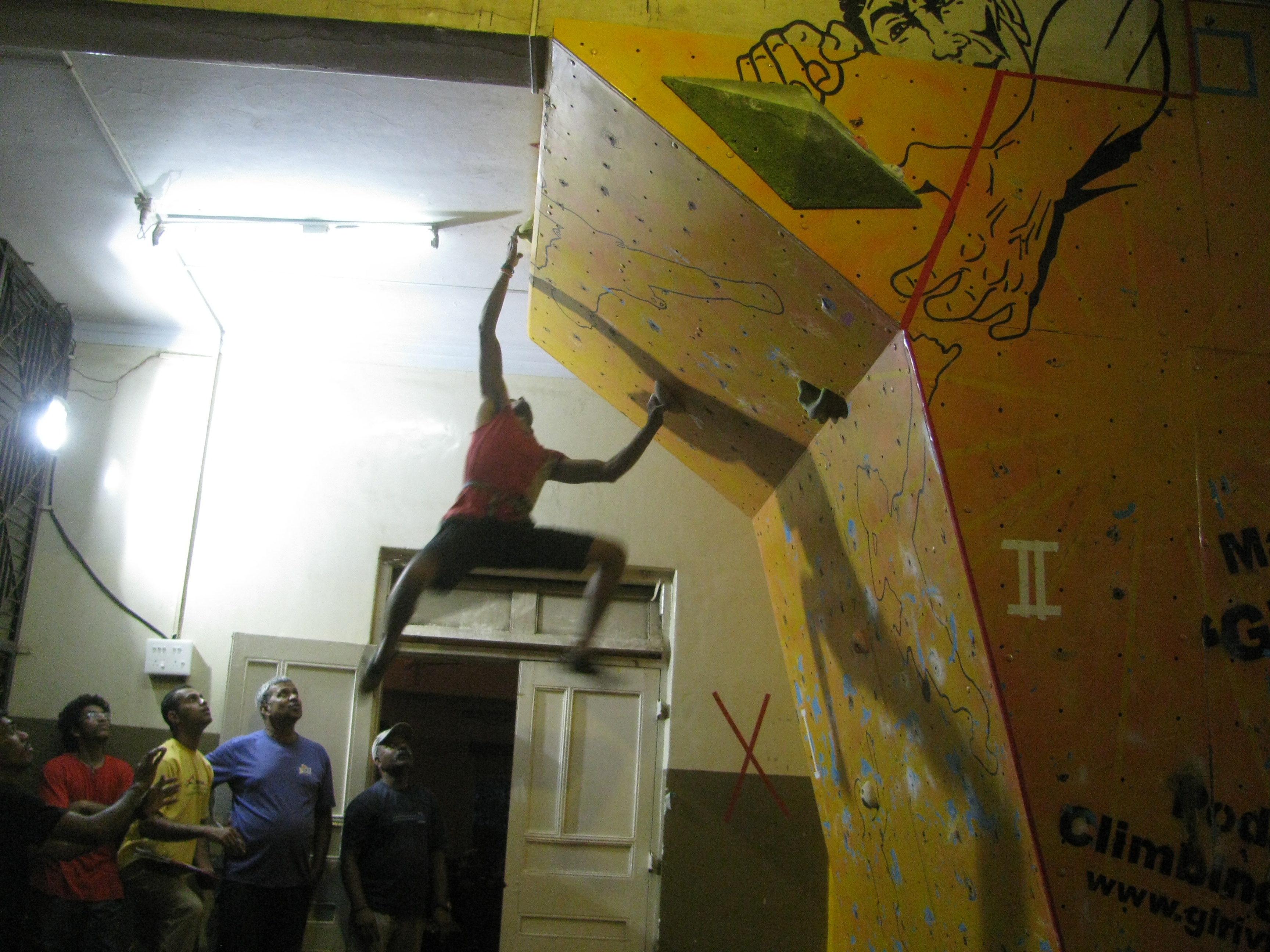
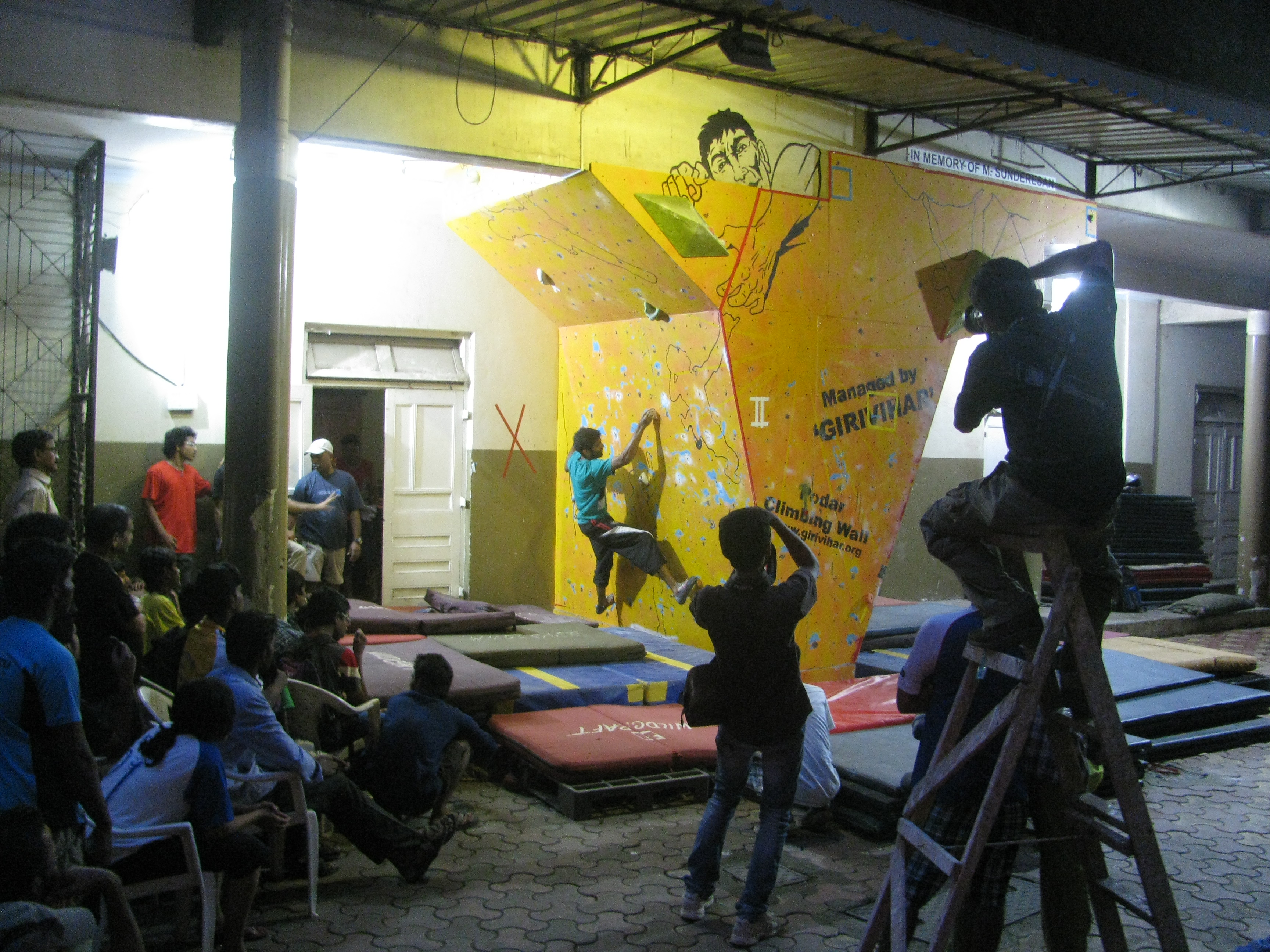
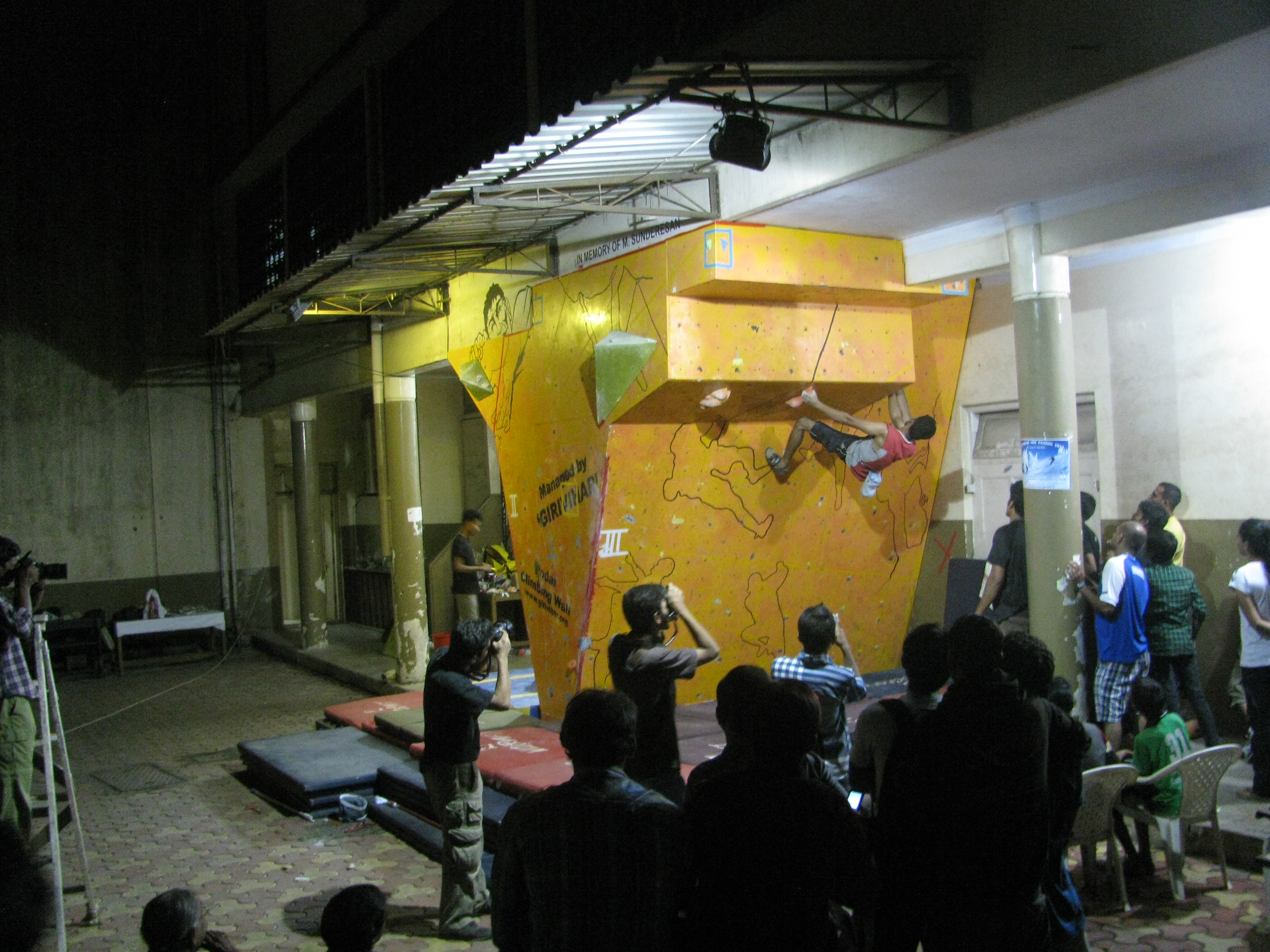
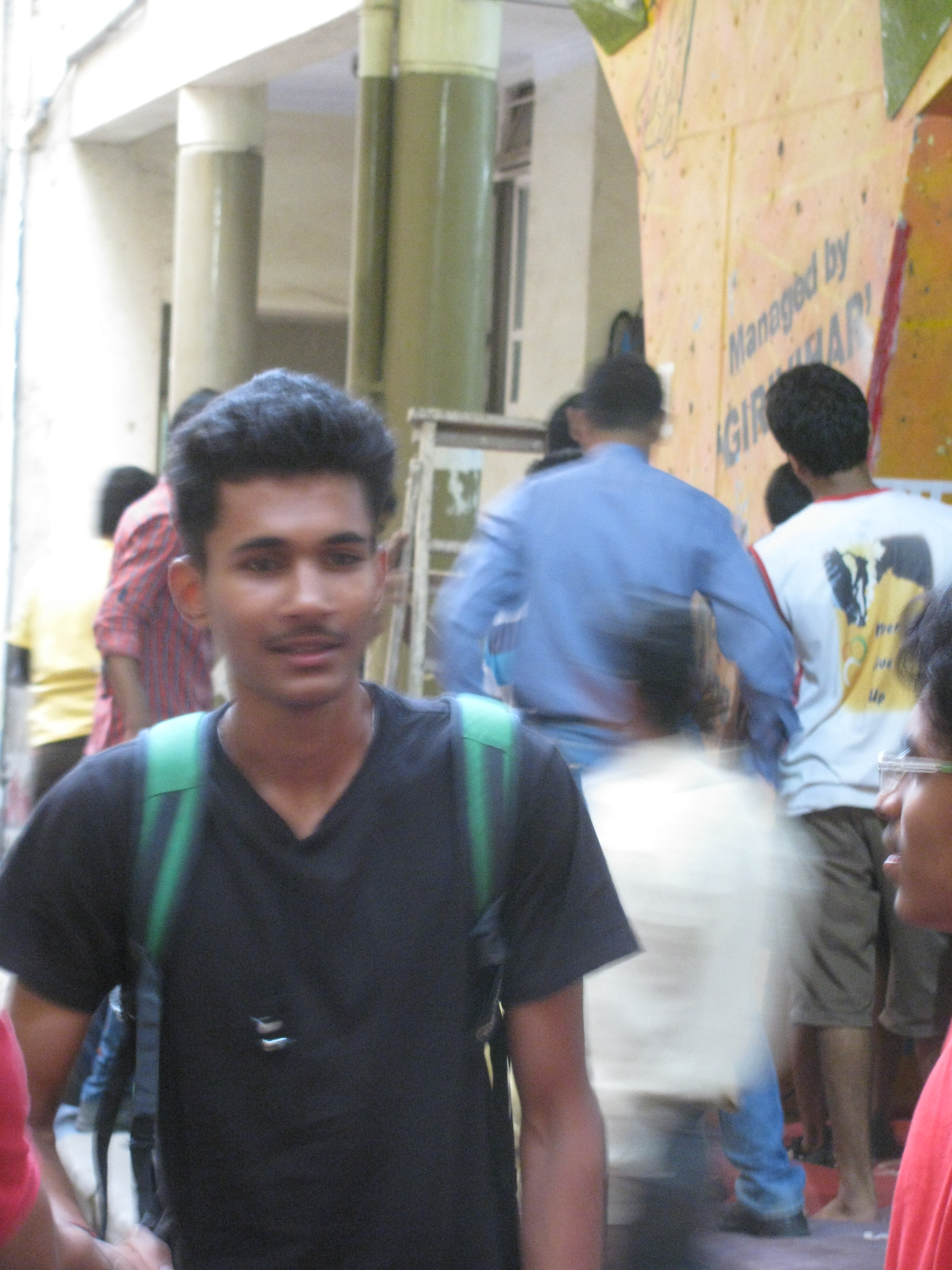
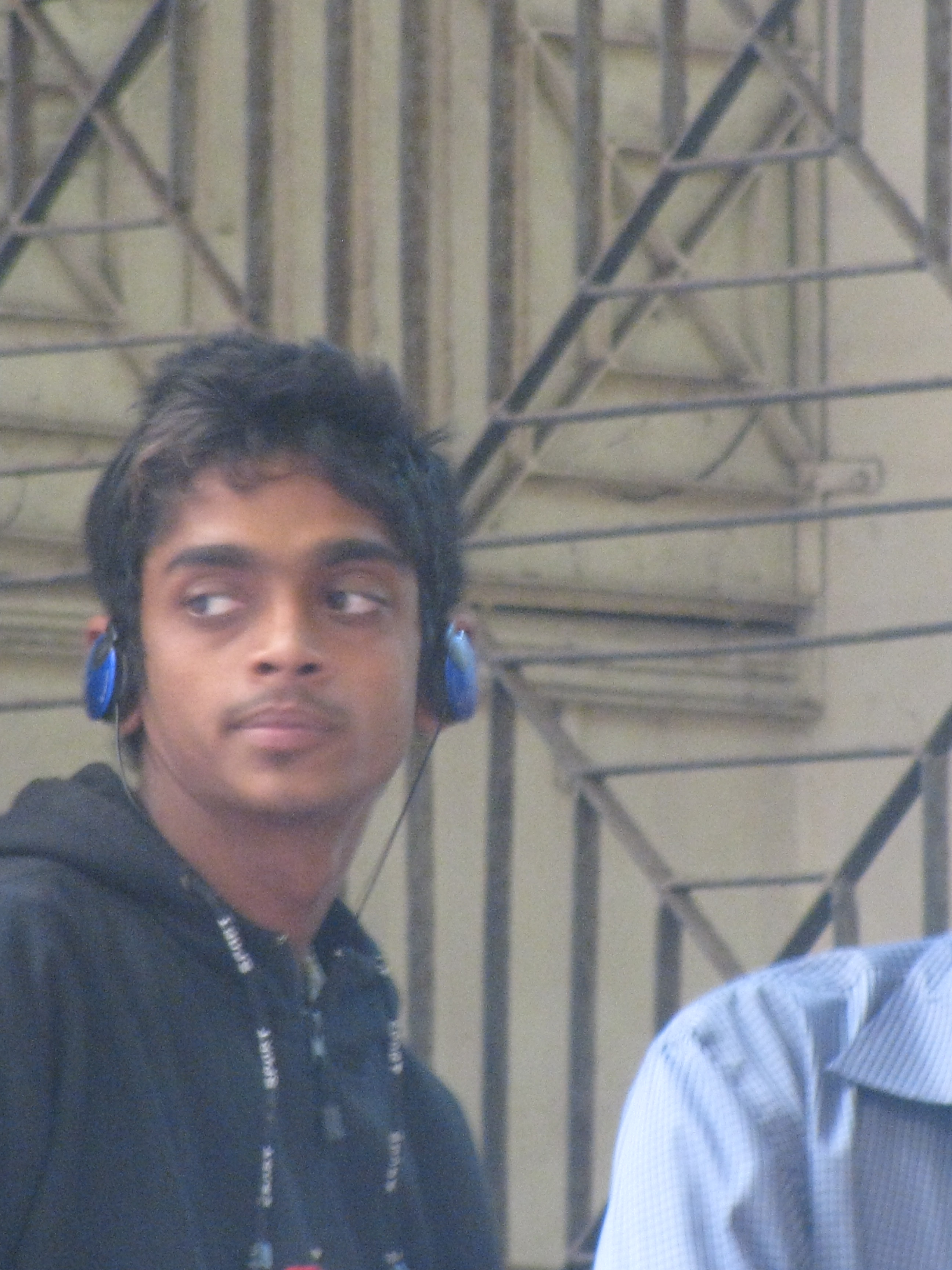
The second edition of the annual climbing competition held on the bouldering wall at Mumbai’s Podar College, happened recently. The wall is built and managed by Girivihar, the city’s oldest mountaineering club. For some of the participants, the event was an ideal warm-up ahead of the west zone competition in surat. the wall is a small one, wrapped around a pillar on the edge of an inner courtyard on the college’s ground floor. participants for the competition were largely from mumbai and pune. as ever in indian climbing, it was a small gathering of the committed. the youngest person to turn up and watch was a small child with mom and dad bringing pram along. the oldest was most likely 92 year-old pio linhares, whose son, franco, is the club’s former president and a regular climber at the wall. 

Here are some photos:

juniors

IMG_0198IMG_0186IMG_0187IMG_0194IMG_0199IMG_0196IMG_0205

LADIES

IMG_0227IMG_0217IMG_0223IMG_0226IMG_0234 

AND GENTLEMEN

IMG_0261IMG_0290IMG_0291IMG_0294IMG_0304IMG_0285

climbers, cameras and overall view

IMG_0254IMG_0282IMG_0312

PEOPLE

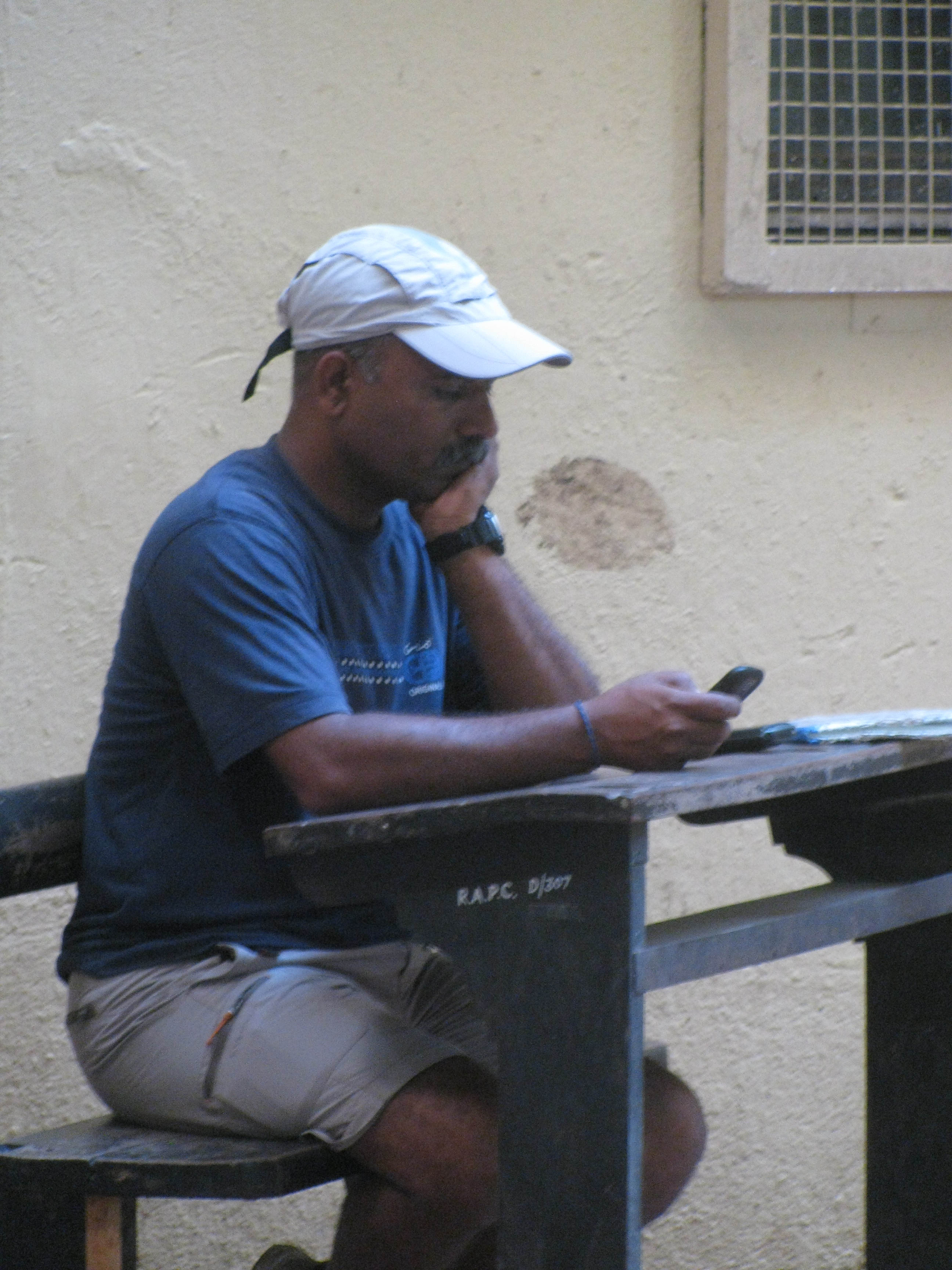
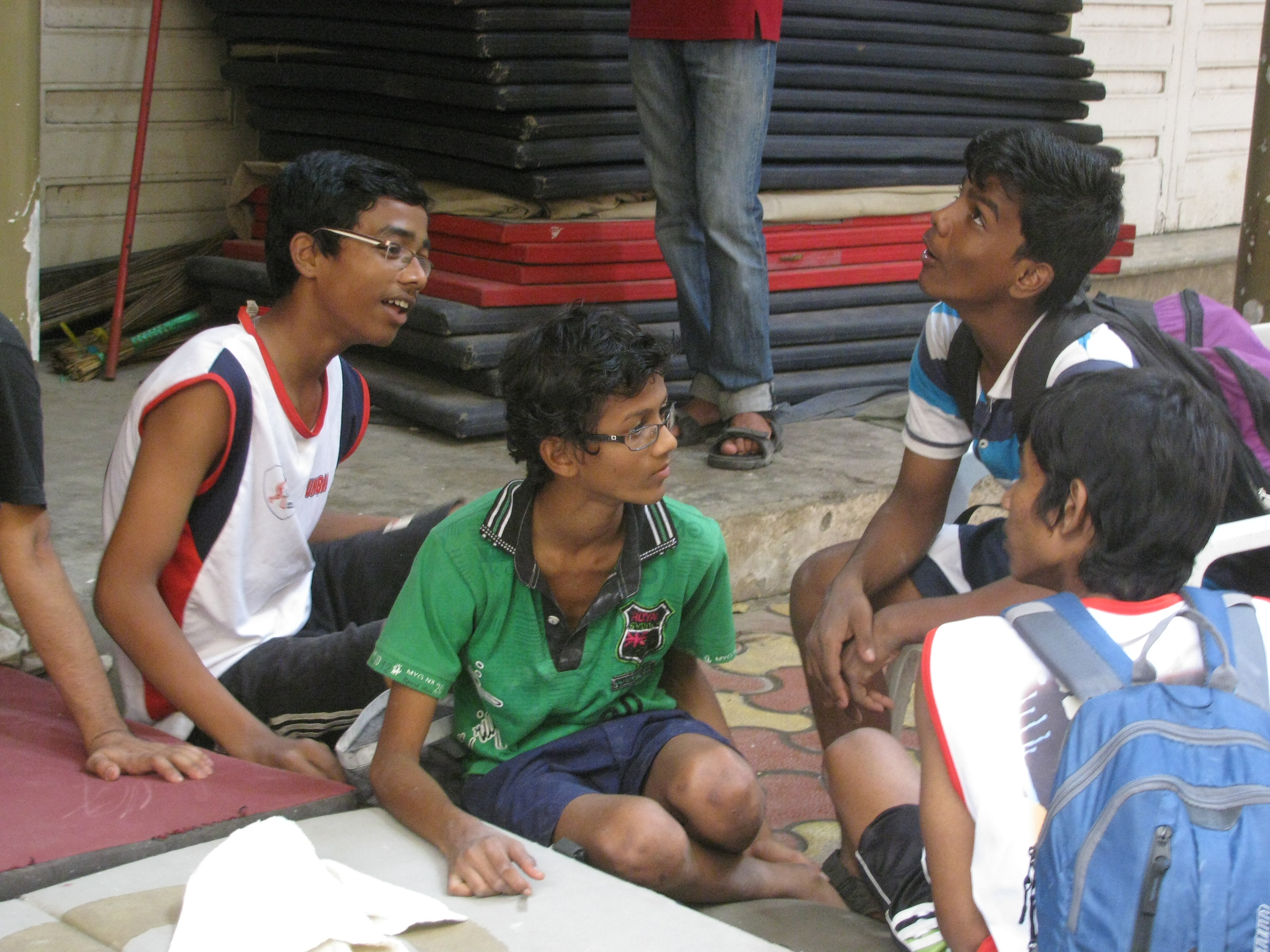
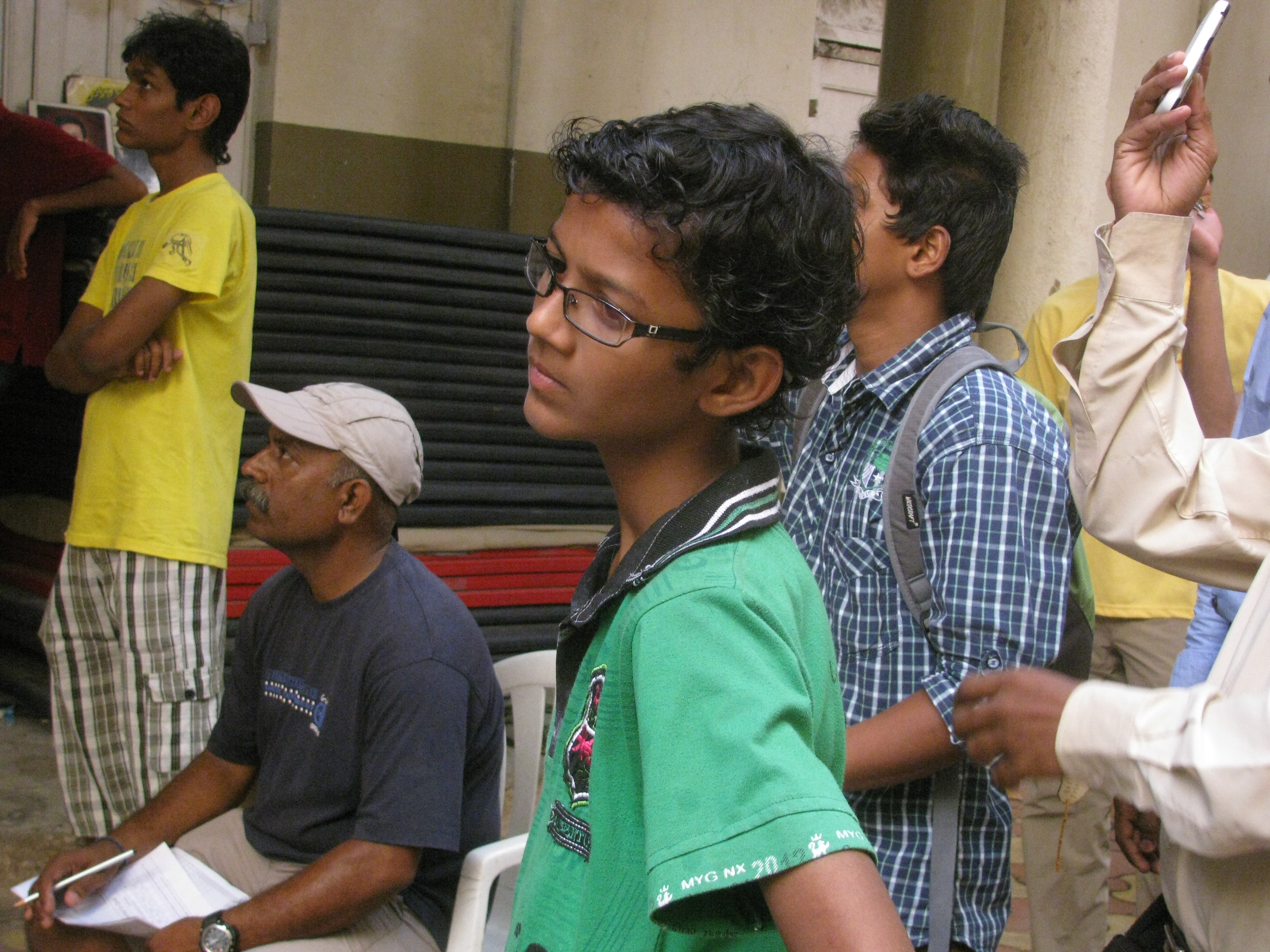
IMG_0278IMG_0229IMG_0240IMG_0236IMG_0276IMG_0246IMG_0269

results:

men’s final

1. aziz

2. Vicky

3. tuhin

women’s final

1. siddhi

2. mayuri

3. anjali

Juniors (boys’ final)

1. akash

2. sachin

3. bunty

(The author, shyam g menon, is a freelance journalist based in Mumbai. All the photographs herein were taken by the author.)

TWO TRAINS

Illustration: Shyam G Menon

Illustration: Shyam G Menon

The express train was soon cruising.

About twenty minutes out of Howrah, the pretty young woman on the seat opposite me exchanged her assigned berth with the middle aged housewife gazing disinterestedly at the world outside. Right upper berth gained, she hauled herself up to its privacy. The housewife on the left lower berth put on a sick expression; the sort that requires no hospitalization, merely attention, a little fussing over. Her husband, a businessman bound for Bhiwandi, rubbed his sleepy eyes and worked the cell phone. The morning sunshine on the side lower berth – the short one parallel to the aisle, if you know the anatomy of a typical Indian railway coach – bothered him. It was settled quickly. There was an exchange of berths with a less tired middle aged man, owner of the right lower berth in the main coupe. Within the air conditioned compartment, the latter immediately spread out railway bed sheets to mark his new acquisition warmed by sunshine. He sat on the compact berth with his back to the aisle, cross legged, staring at the passing landscape like a trader in his shop awaiting customers. I wondered what he would sell; sunshine perhaps? Bottled sunshine to cure the world’s problems; a shop laden with shiny glass bottles flashing by in an express train. All this – exchange of berth and setting up shop – happened in five minutes.

The Bhiwandi bound-husband was now seated next to me.

He gave me pleading looks.

“ Which is your berth?’’ he eventually asked.

“ I suppose you want to sleep,’’ I said, trifle annoyed at this rapid collapse of people around me.

He nodded like a neglected child.

The wife, probably angry with him and his cell phone, had already gone to sleep, blanket over her head.

I knew it was my turn to move.

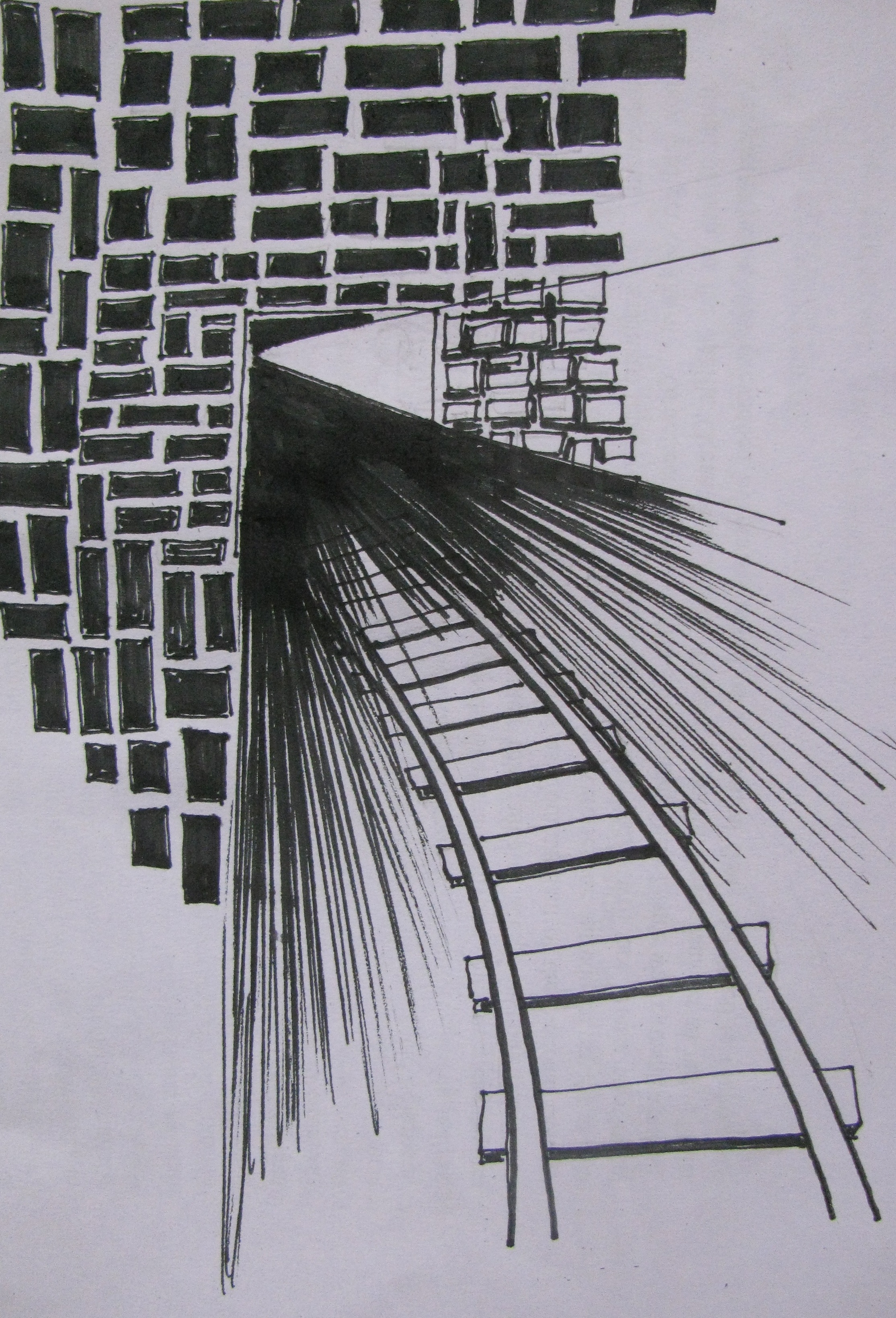
I was on the Duronto Express; non-stop from Howrah in Eastern India to Mumbai on the west coast, save a technical halt at Bilaspur in the country’s middle. The train had just been introduced. It was fast by Indian standards but certainly not so by standards elsewhere. The Indian Railways meant a lot in India. It was one of the world’s biggest railway networks with portions – like the Mumbai suburban system – ranking among the busiest worldwide. The Railways meant so much that they struggled to keep pace with the demands India’s huge population heaped on it. Right now as I edit this piece, relentless inflation, unstable oil prices, the depreciation of the Indian rupee leading to costlier imports – all have conspired to make road and air travel expensive for the average Indian. Under such circumstances, the country counts on its government owned-railways to guarantee affordable transport. It may be over two decades since economic liberalization started and we may be now trillion dollar economy. But if you want to meet India, you still have to take a train. On busy routes, tickets are usually hard to find unless you book early. Speed can’t be a priority on overcrowded rails. What could be done instead and which the Railways do despite protests, is reduce halts en route for semblance of super fast and express travel. My Duronto Express was unique for its single halt, that too, technical. The train was painted in strange fashion; its facade sported illustrations of meadows, forests and trees as though a child had sketched it. At that time, if I recall right, it was the only Duronto in the country. Now there are several.

It may be over two decades since economic liberalization started and we may be now trillion dollar economy. But if you want to meet India, you still have to take a train.

Non-stop rail travel made the experience a bit like an intercontinental flight minus pretty air hostesses and luxury. You felt trapped in a long, air conditioned tube of an ecosystem. Half an hour from Howrah, with me now on the left upper berth, our coupe settled into the pattern it would hold till Mumbai next day. I read the biography of Slovenian mountaineer Tomaz Humar till my eyes ached; then I listened to rock music till my ears throbbed, after which I tested my left leg to see how long it could bear the cold blast from the overhead AC duct. With people genuinely asleep or lazing around on the lower berths, tea, breakfast and lunch – everything was had sitting in C-shape on the upper berth. Bored, I looked towards the pretty young woman who had occupied the right upper berth. She was busy talking on her cell phone. I began praying that the instrument would conk off forcing her to seek conversation elsewhere. She was the only one around doing anything more than eating, sleeping, eating and sleeping, even if the difference was endless whispered nothings to her boyfriend over that phone

My mind drifted to the Kamrup Express. Two weeks earlier, life aboard that train had been as different as alive from comatose.

I had the lower berth on the left. Seated opposite was an elderly trader headed for Guwahati. In half an hour he found devoted following in a young man from the same community, employed with an engineering firm. An extended family tree was discussed; shared branches located. They conversed like two cozy birds on the same branch dipping into that tradition of centuries of unchanged sunrise and sunset. Somehow Indian conversations – especially those tinged by mercantilism – drift to endorsing unchanged society. I suspect money likes to keep everything else the same so that it multiplies undisturbed. That’s why, if you sit in on it, conversation among traders can seem depressingly mono-cropped. It’s shaped to single dimension. Knowing the state of my purse, I end up feeling that I have no future. Not that other Indians make it any easier; money is obsession everywhere here. The compartment’s aisle stayed busy with soldiers visiting coupes hosting friends. It was probably their last socializing before dispersal to far flung military camps. The army had a strong presence in North East India. The lone person from the air force sat tracking the stations to his halt; it was his first time in Assam. A cell phone blared Malayalam film songs from the next coupe, while not far off Tamil held forth. The Marwari engineer sat reading a book called Making Breakthrough Innovation Happen by Porus Munshi. It fetched a strange visitor from the next coupe. Taking charge of the book the man said, “ I am a Lieutenant Colonel in the army. Promoted out of turn; all my batch mates are still major.’’ I remember that introduction for its utter strangeness. Later, he kept calling up people – I suspect from the conversation, they told him to spare them the trouble. Past midnight, he was still getting ticked off, offering a quick, “ okay, ta-ta, bye-bye, good night, sweet dreams, ‘’ to every person slamming the phone down. The last time I saw him, he was sitting alone on the coach attendant’s seat near the wash basin, cell phone in hand, train’s rhythm on rail for company.
Illustration: Shyam G Menon

Illustration: Shyam G Menon

Early next morning from New Jalpaiguri onward, the train became a bazaar. It was an invasion of vendors. My favorite was a man selling popcorn, peanuts, roasted green peas and a whole lot of similar eatables. His signature call was, “ ta-ta-time, pa-pa-pass.’’ Put together that became `time pass,’ the Indian solution to tackle many things in daily life – from delays caused by gargantuan bureaucracy  and the queues of huge population to a moment of restless standstill in cities of constant rush. He also had soft items for “ old men with no teeth,’’ crunchy ones for the young and peanuts, sold as catalyst for conversation between lovers. The sales pitch in the latter attracted questions. “ Nowadays people overlook peanuts and talk on the cell phone. With phones you need towers and signals to talk to your lover, peanuts need none of that, ‘’ the vendor explained before moving off to another chant of, “ Ta-ta-time, pa-pa-pass.’’ What amazed was the array of goods sold by these vendors – there were pen drives, flash lights, film rolls, mobile chargers, mobile batteries, cameras, watches, track suits, massagers, foot pumps, flasks, jackets, hand held sewing machines, DVDs, carpets. China had changed even vendors on trains; their talk was now peppered with megabyte, cyber, digital, MP3, I-Pod and like. Some of the vendors were dexterous; the gamcha vendor was a heap of clothes on two legs, as was the carpet seller. The soldier from the upper berth, traveling to Dimapur, struck a deal with the young engineer to buy DVDs. Using the engineer’s laptop, they scanned disc after disc for good, pirated prints till it drew loud protests from the vendors. “ You are scanning all my discs and buying only one. I would have sold ten by now,’’ a vendor remarked as a coupe-load of people helped the soldier bargain down DVD price from Rs 60 to Rs 20. Half way through the exercise, the engineer, mindful of new found uncle nearby, reduced his involvement to pure technical assistance with no say in film selection. Curious, I thumbed through the soldier’s selection. It ranged from 3 Idiots and Avatar to Emmanuelle and riskier beyond. Uncle looked stoically into the distance. The engineer buried his nose in his book.

The train was now two and a half hours late and politely making way for every other train to pass us by. Occasionally, when we had the benefit of a platform nearby, we got off to stretch our legs. “ That’s the Amritsar train, that’s the Rajdhani express,’’ the ticket inspector would clarify oblivious of our self-arrest. He was like a railway historian giving us a guided tour of the why, how and several other qualities of a journey disrupted. Standing so, on the platform at Barpeta Road, I saw a man wearing a T-shirt that said, “ Japan-US at war, 104 die in Hawaii raid, McArthur in Australia.’’ It appeared topical for the only region in India to have experienced real fighting in World War II. The Battle of Imphal and the Battle of Kohima were major turning points. As the crow flies, Imphal and Kohima were not hugely distant from where I was although actual travel along hill roads meant distances in the North East were often deceptive. The T-shirt also appeared topical, given the purpose of my trip to Assam and from there to Arunachal Pradesh to write about the Stilwell Road. The train crawled on. A harried coach attendant arrived muttering, “ people give me thousand rupee-notes and demand a bottle of water. What am I to do?’’ The matter was giving him a headache. As if to soothe his headache, the China connection made itself heard once again; a blind vendor produced three different sized-vials of “ China Vicks.’’ Meanwhile, the upper berth bearing the DVD obsessed-soldier, emitted kung fu shouts, bomb blasts, machine gun fire and full throated passion. The laptop stayed up there with the soldier through the day; the engineer sat reconciled to Porus Munshi. At night, our coupe converted into a cinema theater, laptop on the small folding table with soldiers from nearby coupes converged there to watch 3 Idiots. Film over, a bizarre incident occurred. A passenger woke up from deep slumber inquiring why he was on the train. Co-passengers comforted him and hushed him back to sleep. Morning brought mist, winter chill and Tinsukhia. As with several stations before from Barpeta Road to Guwahati, I got off the train to `set foot’ on a platform I may not see again. It was my little conquest-of-Everest act. It was also perhaps a measure of my meek character for the truth was I was still in India. Yet these were parts I hadn’t been to before. Indeed one of the things I discovered as I grew up was how little I knew of anything in India; I didn’t even know my neighborhood well. In the desperate Indian life, we reach other countries before we discover the places we were born in. In middle age, I was doing what I should have done earlier. After Tinsukhia, we moved on tracks bordering a road beside tea estates, to Dibrugarh. I remember looking at those tea estates on vast, relatively flat ground and wondering how different they seemed from Kerala’s tea estates situated on hillsides. Somewhere out there, not far, lurked the architect of Assam’s geography – the mighty Brahmaputra; a river wide enough in parts to seem a small sea.

As with several stations before from Barpeta Road to Guwahati, I got off the train to `set foot’ on a platform I may not see again. It was my little conquest-of-Everest act. It was also perhaps a measure of my meek character for the truth was I was still in India.

Luckily for me, the young woman on the Duronto Express was as bored as I was. She was moving to Mumbai on work. Conversation served well to distract her from the approaching huge city she had transited through before but had never wanted to live in. Now she was going to live there. She seemed happy to talk. I missed that vendor on the Kamrup Express. He could probably teach a marketing lesson or two to the Railways on the real USP of the non-stop Duronto Express.

Introduce peanuts for a start?

(The author, Shyam G. Menon, is a freelance journalist based in Mumbai. A smaller version of this article was published in The Hindu Business Line newspaper.)

JASON AND THE JOURNALIST

There goes lunch on a matchstick! (Illustration: Shyam G Menon)
There goes lunch on a matchstick! (Illustration: Shyam G Menon)

I don’t know how this catamaran business got into my head.

I was quite terrestrial, mediocre swimmer; yet prone to trying things beyond me. That often meant embarrassment for oneself; entertainment for others. It didn’t take long to realize that the ultimate getaway was the sea. Its blue expanse is much bigger in size than land. And what better way to be at sea than in that tiniest of crafts – two or three logs stashed together; a catamaran.

Derived from the Tamil word, `kattumaram,’ the British fashioned it into catamaran and took the description overseas. The word was used to describe the multi-hull boats of South East Asia and Polynesia as well. No better than a big float and deeply enmeshed into man’s history of seafaring, the ancient craft was ubiquitous on the Kerala coast, where it was called kattamaram. Every time you saw a fisherman or two in the distance bobbing up and down in the waves as though they were sitting on the very ocean itself, you knew it was a catamaran below. The minimalist design, almost the lack of it, held a raw appeal. At the onset of monsoon local newspapers loved to publish the photograph of fishermen throwing themselves and their catamarans from a cliff top, into the sea.

I did not have to explain all this fascination to Jason, who had suddenly surfaced just outside the low boundary wall of the resort at Poovar near Thiruvananthapuram. I tracked his movement, shoulders and head visible above the wall and gauged from the smooth, mildly bobbing drift that he was standing on a canoe or something similar. He was hawking his day’s catch of a few small fish and oysters to the resorts bordering the estuary. I looked down from the wall and saw a frail catamaran under his feet. “ Can I sit on it?’’ I asked. He studied me for a second and simply said, “ take it. Go out into the estuary.’’ Then realizing he had dropped a bomb in my brain, he offered, “ don’t worry, I will swim alongside.’’ That presented a dilemma. For the journalist, no matter how badly he writes thinks himself as descended from the first revolutionary. The sahib-servant relation was abhorrent, unthinkable. This was just that – me on a catamaran, Jason in the water. Slavery!

“ No, no, that can’t be,’’ I said, sweating as a pantheon of ghosts, from Abraham Lincoln to Mahatma Gandhi, admonished me for even hearing the suggestion made. “ How could you?’’ they thundered. I cringed fearing their wrath.

But Jason’s problem was real – his catamaran of three thin logs could take only one person. Add a second and it would become a large overturned log; the sort ship wrecked sailors of yore clung to as they drifted to a remote Pacific island. Eventually, we decided – I would venture out into the estuary, Jason would instruct from land.

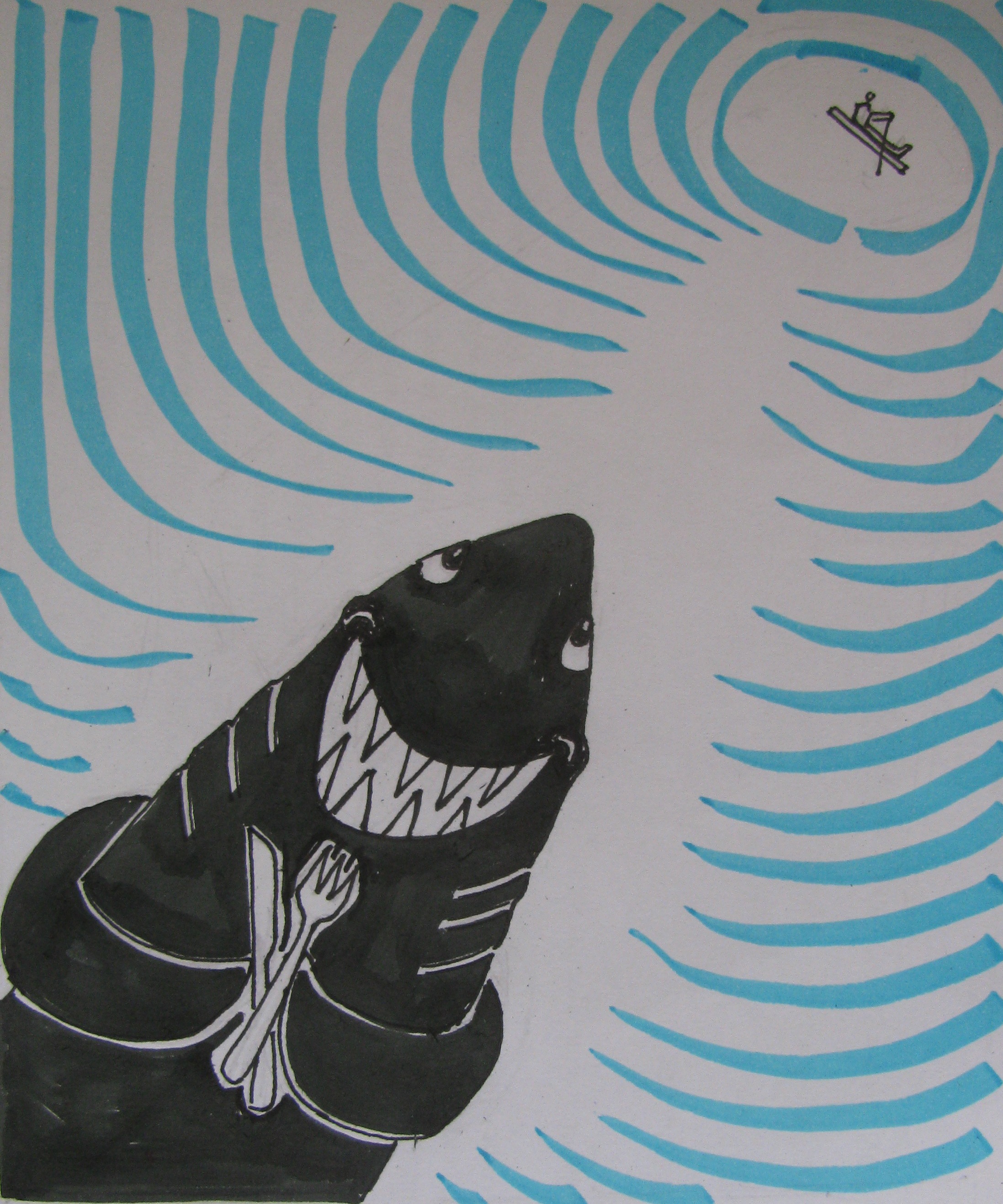
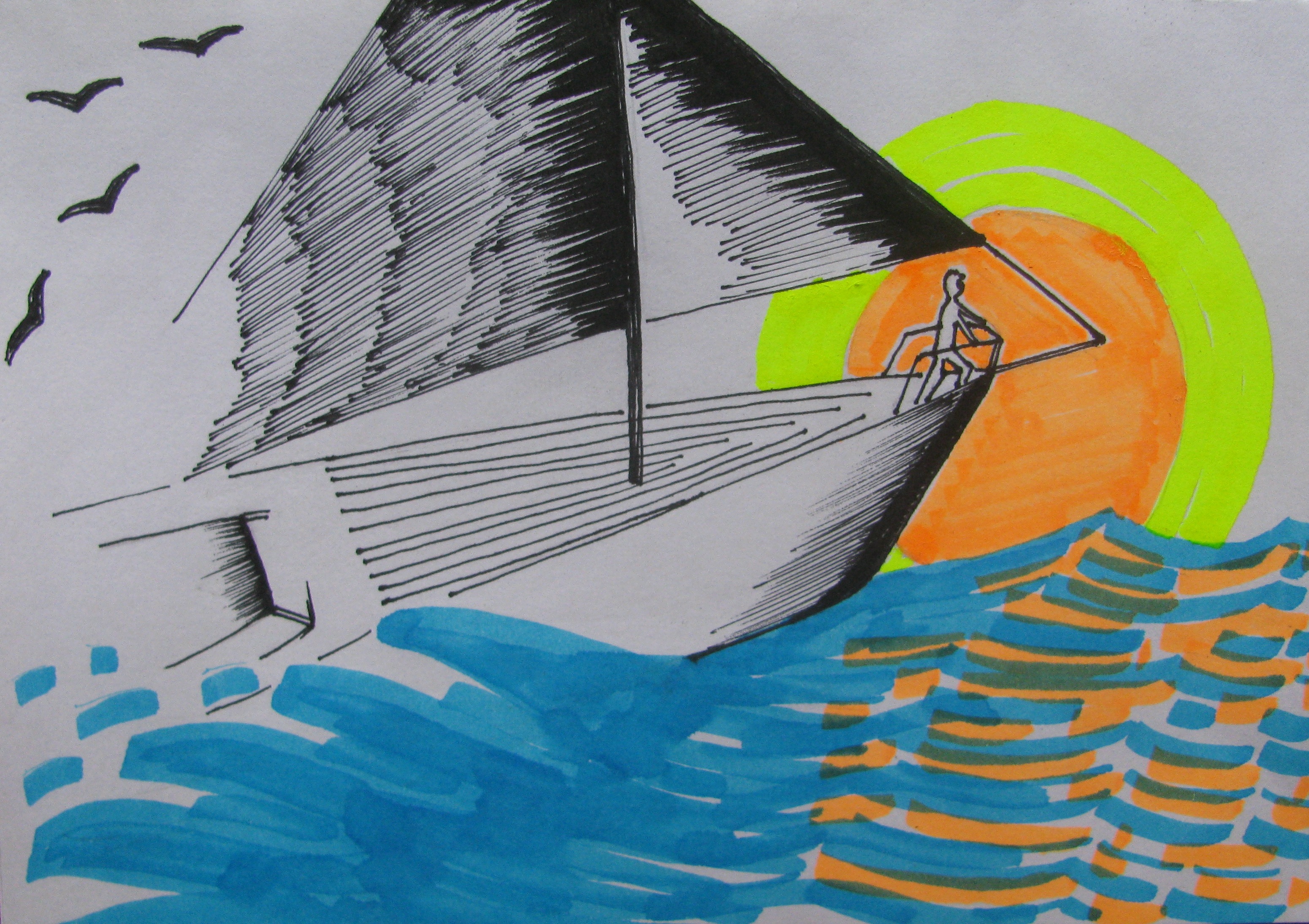
There were two possible postures on the frail craft. Jason preferred what I call the geisha pose, on your knees with legs tucked painfully under your butt. Given a painful middle aged knee, I couldn’t do that. So, I opted for the normal kayaking position. With one powerful push, Jason launched craft and me into the estuary. We shot out like an arrow into the silence of the deep. As the distance between me and land rose, my mind became a multiplex and playing on screen was the shark’s view from below – there goes lunch on a match stick. And as though to serve my imagined predators well, Jason’s energy transferred to the craft petered out and lunch-on-match stick slowed to a solemn halt. I looked into the water waiting for a shadow that would grow bigger and bigger till it erupts out of the water, the world goes black and Spielberg says, “ cut!’’ Jason must have sensed my nervousness. “ Take the oar and paddle,’’ he shouted from ashore. I took the oar – oar? Here I was, seated in the best kayaking position copied from TV and I had a five feet long wooden plank for oar. It was uniformly broad, thick and heavy. How the hell was Jason using this? He has to be a superman – I thought.  Several strokes later, I was a panting mess beginning to question what I had got myself into.

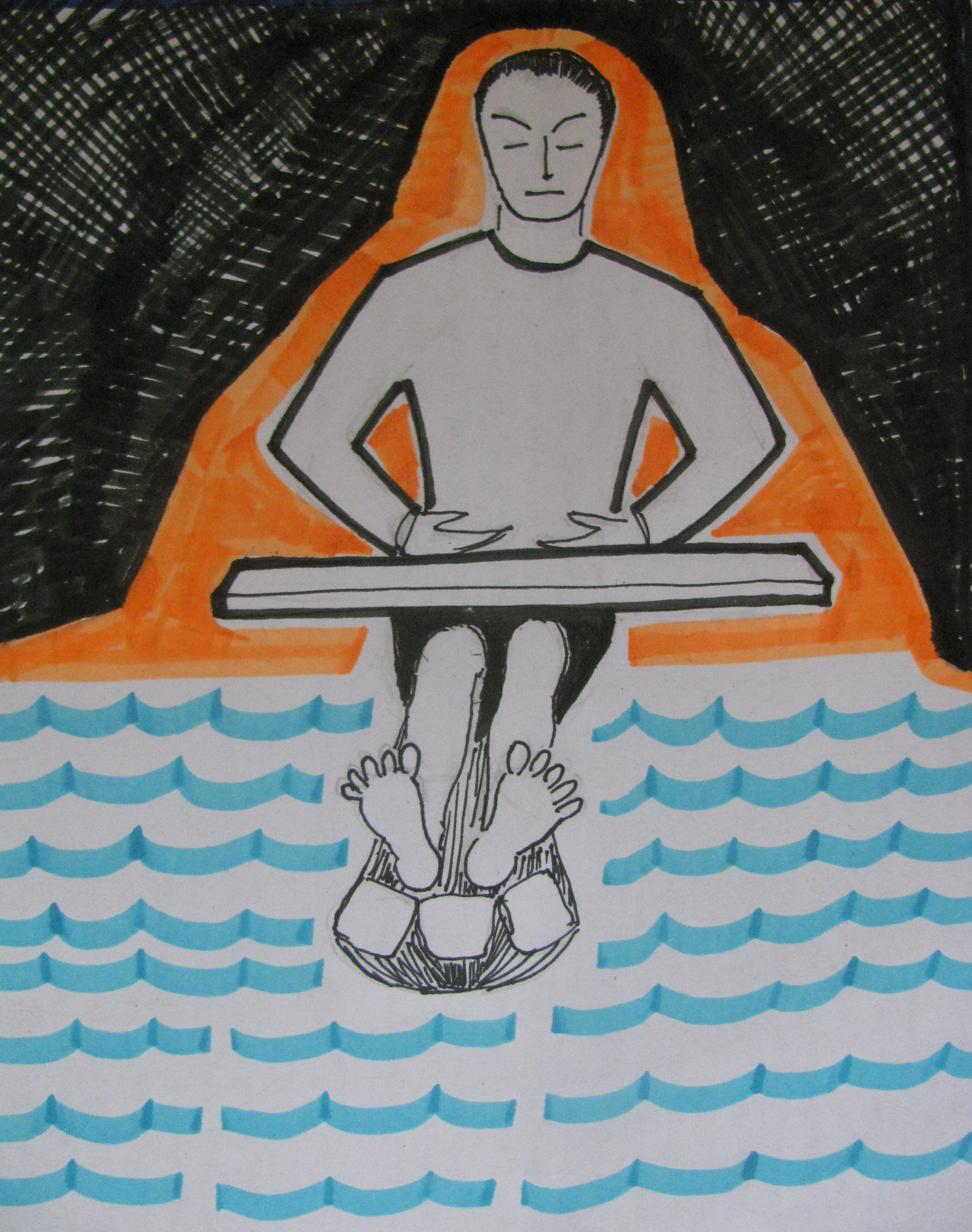
This was my predicament somewhere in the middle of the estuary when the sound of outboard engines came from my right. Two boats were bearing down on me. Panic is not plain fright; it is the fright over what can be. In other words, the less you know the braver you seem, the more you know, the more panicky you get. And I knew what could happen (journalists always do).  Those boats would generate waves high enough to upset me. Throw me into the water. Now technically speaking, the catamaran is deemed more stable at sea than the popular mono-hull boat. In fact when the multi-hull design emerged from Asia, western boat builders were both taken aback and too prejudiced to acknowledge its capabilities. It took many years for the catamaran to find acceptance, that too after several western interpretations that were no more than reinventing the Asian wheel. Today it is the stuff of power boat races. However, this debate was likely truer for the multi-hull. When you have two logs stashed together like the home made contraption I was balanced on, science was a luxury. Greater certainty seemed an unwanted exploration of marine life in the estuary. My paddling went askew. The tips of my `oar’ splashed frantically on the water’s surface hardly moving the craft, then from being wood, the oar metamorphosed to cast iron and my aching hands stopped paddling altogether. Resigned, I did the next best thing – kept the oar on my lap and sat there like a Buddha contemplating the mysteries of life. Both shores were far off, the bottom was far below, the sky was high above – so sat the hermit impervious to the outcome as two ferocious boats ploughed through the water at him. In reality the journalist was outthinking everybody else; TV crew interviews the eyewitness and he says, “ man, wasn’t that guy calm?’’

I sat there like a Buddha (Illustration: Shyam G Menon)

I sat there like a Buddha (Illustration: Shyam G Menon)

The first boat with its load of tourists whizzed by in front; the second followed on the other side. One swell, then the next – surrender worked, I rode both pretty well. My little matchstick was a toughie. It was to remind me later of a yacht I had boarded in Kochi. The Australian couple who owned it was sailing around the world. It was a beautiful, well appointed boat with a sense of security to it. I looked at the other yachts in the harbor, particularly a small one. “ That man should feel scared crossing a vast ocean,’’ I said. The husband narrowed his eyes. “ Look carefully. You see those hammer marks, like dents on the hull? That’s a home-made boat. He probably built it in his garage. Looks unsafe but when in trouble he would know it like the back of his palm. And he won’t be troubled often either for his boat is small. Unlike a big ship that has several stress points, this one will ride the waves like a matchbox; too small for the ocean to break.’’ At that moment in the estuary though, two swells tackled and the remaining ones dissipating into gentler bobs, I was just relief incarnate.

“ Keep going,’’ Jason shouted. But I had had enough even though I was slowly getting used to that oar. Direction now set toward Jason, I set off. Strangely even as I moved toward him, he drifted off to my left. The current was carrying me in a straight-right direction; like a general at a military parade with everything going past. The guard of honor – by now a couple of idle watchmen from the nearby resorts had also joined Jason – stared open mouthed at this demonstration of paddling skills. The battle now was to stop the drift, which I did by somehow heading for a resort’s wharf. Except that the current carried me under it; I was now safely lodged among a dozen wooden pillars that supported the structure. “ Hello…Sir?’’ If it was the Buddha garb in deep waters, I now responded to Jason with the air of an accomplished engineer, “ doesn’t anyone maintain these things? They look rather worn out underneath.’’ It struck me then that I had said the obvious and the best thing to do, was get out. But before that vanity struck. I glanced out to see if my antics were causing general alarm. My cousin Rajeev appeared settled into a hammock, reading a book. His mother, sister and family were chatting. Only Jason, watchmen and journalist seemed involved. Good. I nudged the craft inelegantly out from its refuge. And so, the greatest catamaran journey of all time ended with an emergence from under the wharf and on to Jason’s side.

He reluctantly accepted fifty rupees; lingered to finish a smoke with the watchmen and then neatly paddled off to his fishing village nearby. On the estuary, Jason looked like a monk with divine powers, seated on water and using mere will power to navigate. The whole thing worked like a well oiled piece of machinery – his effortless paddling, comfortable position and the catamaran, skimming along on the surface of the estuary. It could have made for a movie: Flying Jason; Hidden Catamaran – Ang Lee’s missed opportunity. Jason didn’t look back. I stood there watching him; the watchmen stood there looking at me. The British adventurer and buccaneer, William Dampier, is considered the first westerner to report on the `kattumaram’ of the Coramandel coast in the 1690s. “ They call them catamarans. These are but one log or two, sometimes of a sort of light wood….so small, that they carry but one man, whose legs and breaches are always in the water,’’ he had written. Dampier circumnavigated the globe thrice.

Pretty big connections for one really small craft, I say.

(The author, Shyam G Menon, is a freelance journalist based in Mumbai)