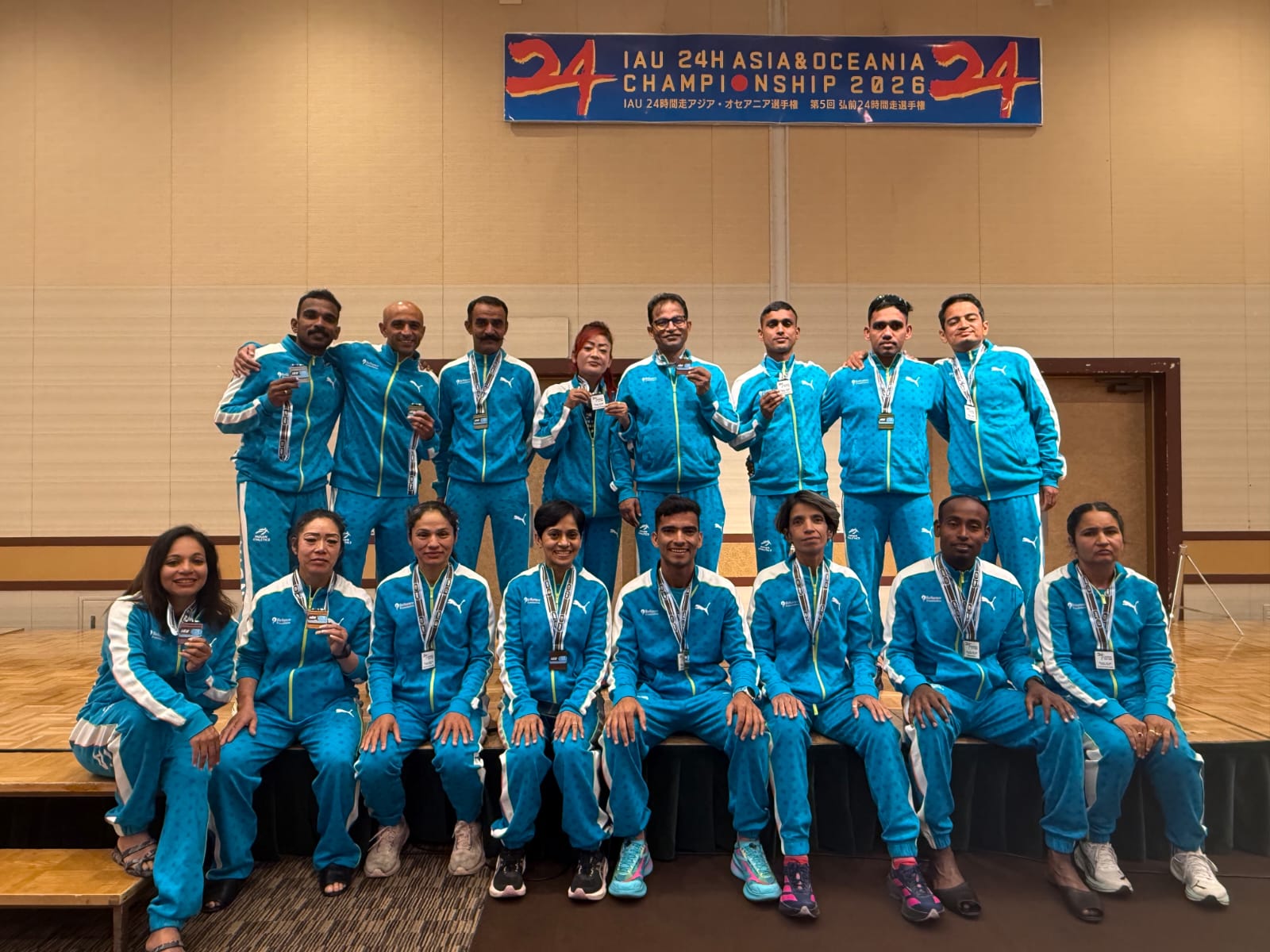
IAU 24 Hr Asia & Oceania Championships Japan – A Haul of Medals for India

At the recent IAU 24 Hour Asia & Oceania Championships held at Hirosaki, Japan, Indian team put up their best performance so far and finished with a haul of five medals – 2 gold, 1 silver and 2 bronze.

Tenzin Dolma and Amar Singh Devanda shattered the individual national records in men’s and women’s 24-hour running.

In the women’s run, Tenzin Dolma set a new national record of 228.939 kilometres, surpassing the previous record of 217.327 km set by Sunita Subba in France in 2025. Tenzin finished in the fourth position among women runners.

In the men’s event Amar broke his own national record of 272.537 km set in April 2024, to set a new national record of 282.881 km. He also won the individual gold medal.

Indian men swept the individual podium positions winning the gold, silver and the bronze medals. Geeno Antony secured silver medal with a distance of 272.894 km and Saurav Ranjan the bronze with a distance of 260.058 km.

With a combined distance of 815.833 km, the Indian men finished with a team gold.

The women’s team from India secured the bronze medal with a total distance of 667.722 km (The total of the first three leading runners of a country is considered for the ranking as per the rules of IAU).

The blog spoke to all the 11 athletes and their coach Santhosh Padmanabhan.
Santhosh Padmanabhan – Coach and Manager Indian Ultrarunning Team

The stupendous improvement in the Indian team’s performance at international ultrarunning events is primarily due to the shift in the team camaraderie, says Santhosh Padmanabhan, official coach and manager of the Indian ultrarunning team in all of the IAU ultra running events that India is part of.

“From competing with each other to now running as a team the shift in the camaraderie among the team members has made a huge difference. Now, as a team we are doing well and not merely focussing on individual performances,” he said. This, in turn, has led to a collective improvement in the performances of each of the athletes.

“Of the 11 athletes, eight of them got their personal bests,” he said.

Over time, he along with the team of runners and crew have figured out the hydration and nutrition requirements for ultrarunning events. “We have realised that hydration and nutrition cannot be mono-dimensional. One can’t sustain on one fixed formula. We should be ready to shift options,” he said.
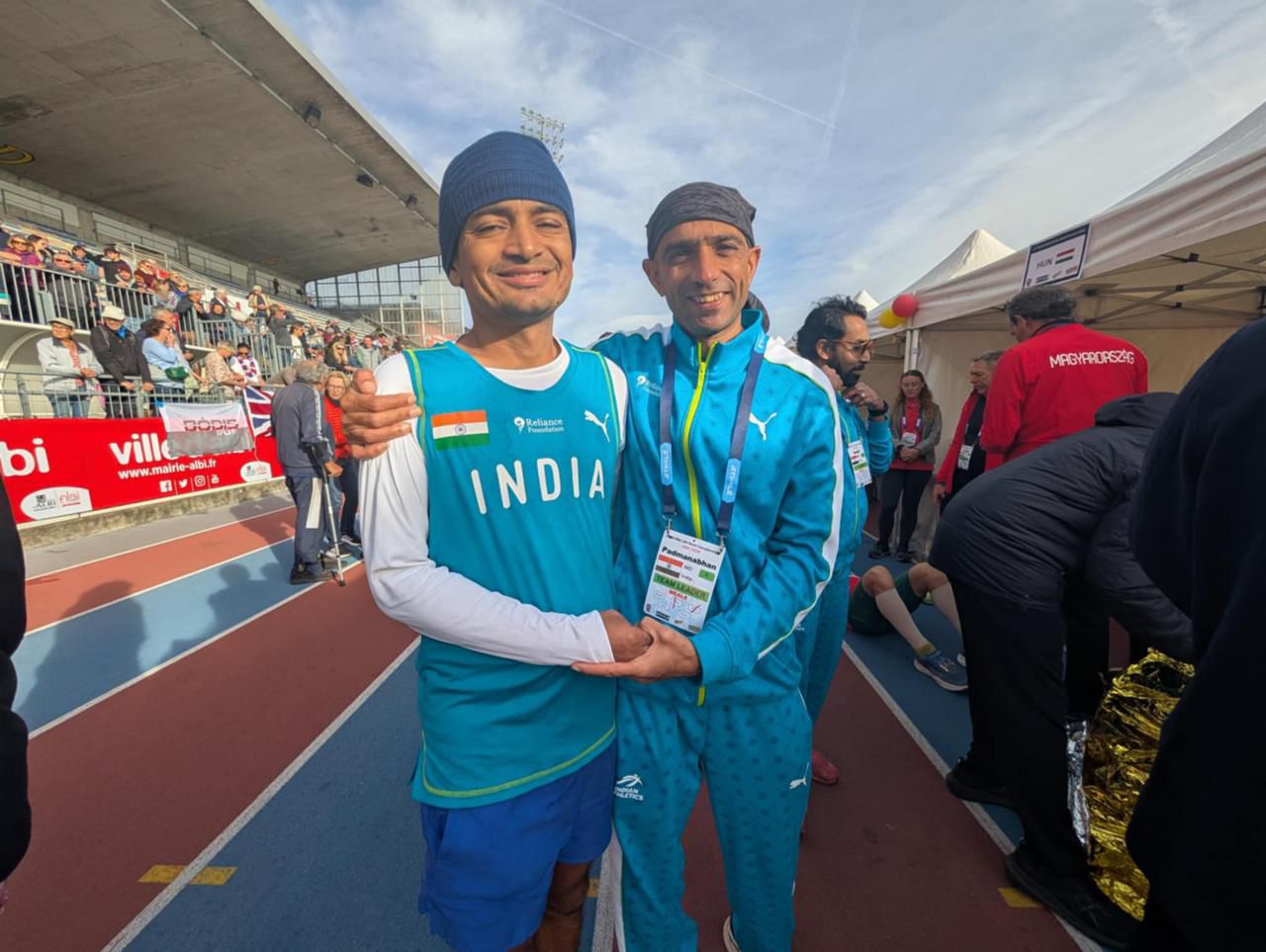
Santhosh Padmanabhan with Sugourav Goswami (Photo from a previous race)

This time around the team worked with a nutritionist, Sonali Sahoo. “We analysed everything, created a cheat sheet and listed out the possible challenges and the strategies to overcome these,” Santhosh said.

The crew, comprising nutritionist Sonali, Crew Gorkha Ram, Assistant Coach, Hemant Kumar and Physiotherapist Aashish Kushwaha, was present throughout the training program including travelling to destinations, Santhosh said.

Going ahead, there is abundant potential to explore among Indian ultrarunners and at the same time a lot of learnings from each of the ultrarunning events, he said.

Tenzin Dolma

At Hirosaki, Tenzin Dolma shattered the national record in 24-hour running by a huge margin.

At the end of the stipulated 24-hour period, Tenzin’s mileage tally was 228.939 km, surpassing the previous national record for women by more than 11 km. She finished fourth among women runners.

Tenzin Dolma was part of the IAU 100 km Asia & Oceania Championships in November 2025. She had secured a silver medal in the women’s race with a timing of 9:18:49.
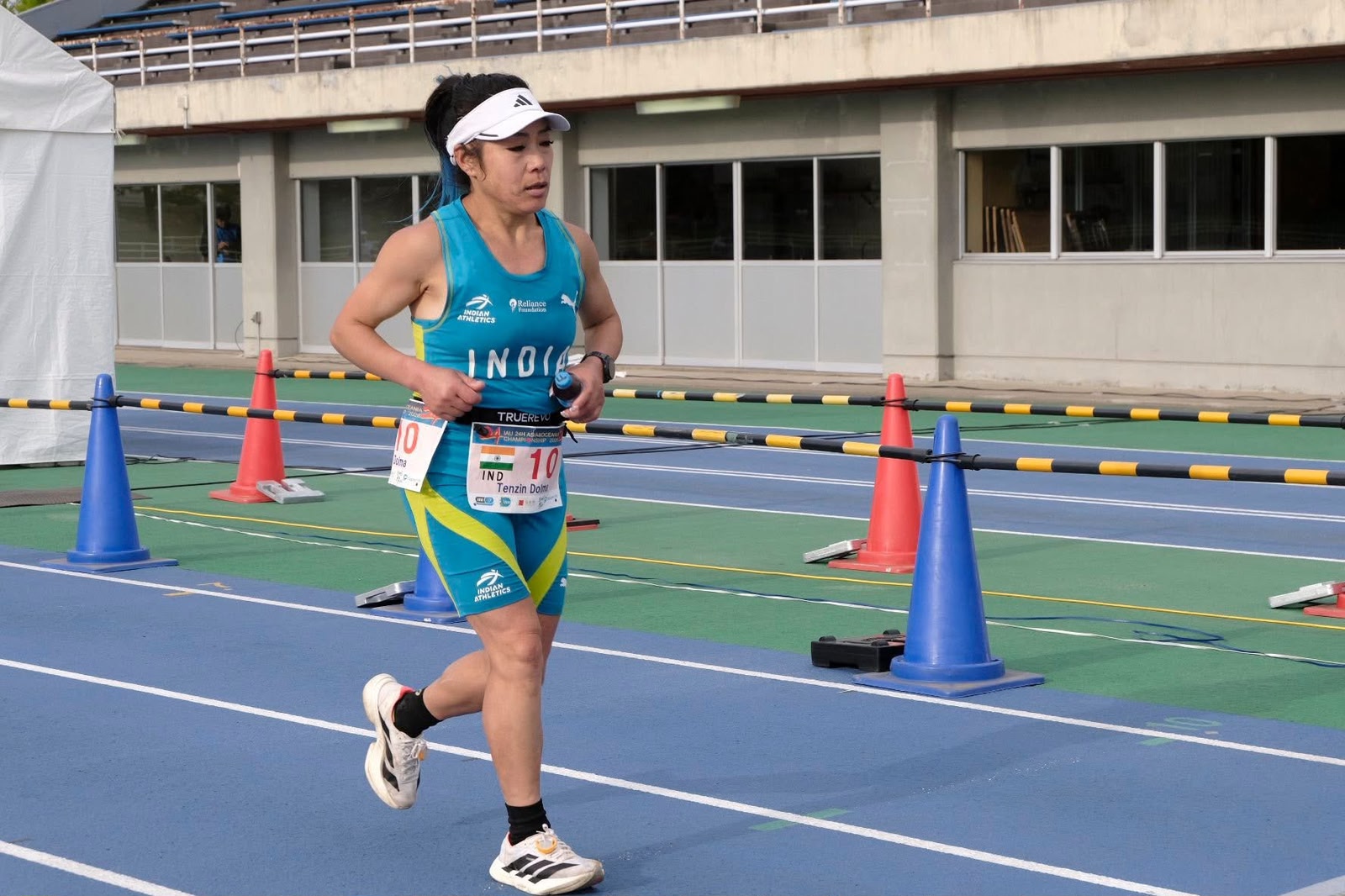
“I did my training for Japan in Manali where I stay. Because of the undulating terrain here, I was not able to put in speed work in my running,” she said. Also, she was not able to fulfil Santhosh’s training plan fully. Her strength training also fell short.

Standing at the start line in Hirosaki, Tenzin did have an injury around the knee.

“But the hydration and nutrition support during the run worked out very well,” said the 40-year-old ultrarunner.

Her post-run recovery has been good. Tenzin believes she can improve further in 24 hour runs. “I could have done better if I had trained well and had no injury,” she said.

Sunita Subba

The Darjeeling-based ultrarunner, Sunita Subba, who represented India at the 2025 IAU 24 Hour World Championships, France, and set a new national record, fell short in her training plan for the Japan championships.

“Santhosh Sir’s training plan was excellent but I could not follow it fully. My son had his 12th exams and I had to pay attention to him,” she said. She came down to Bengaluru from Darjeeling to be part of the training team but had to return home in a short while. At Albi, France, Sunita had set a new national record in 24-hour running to 217.327 km.
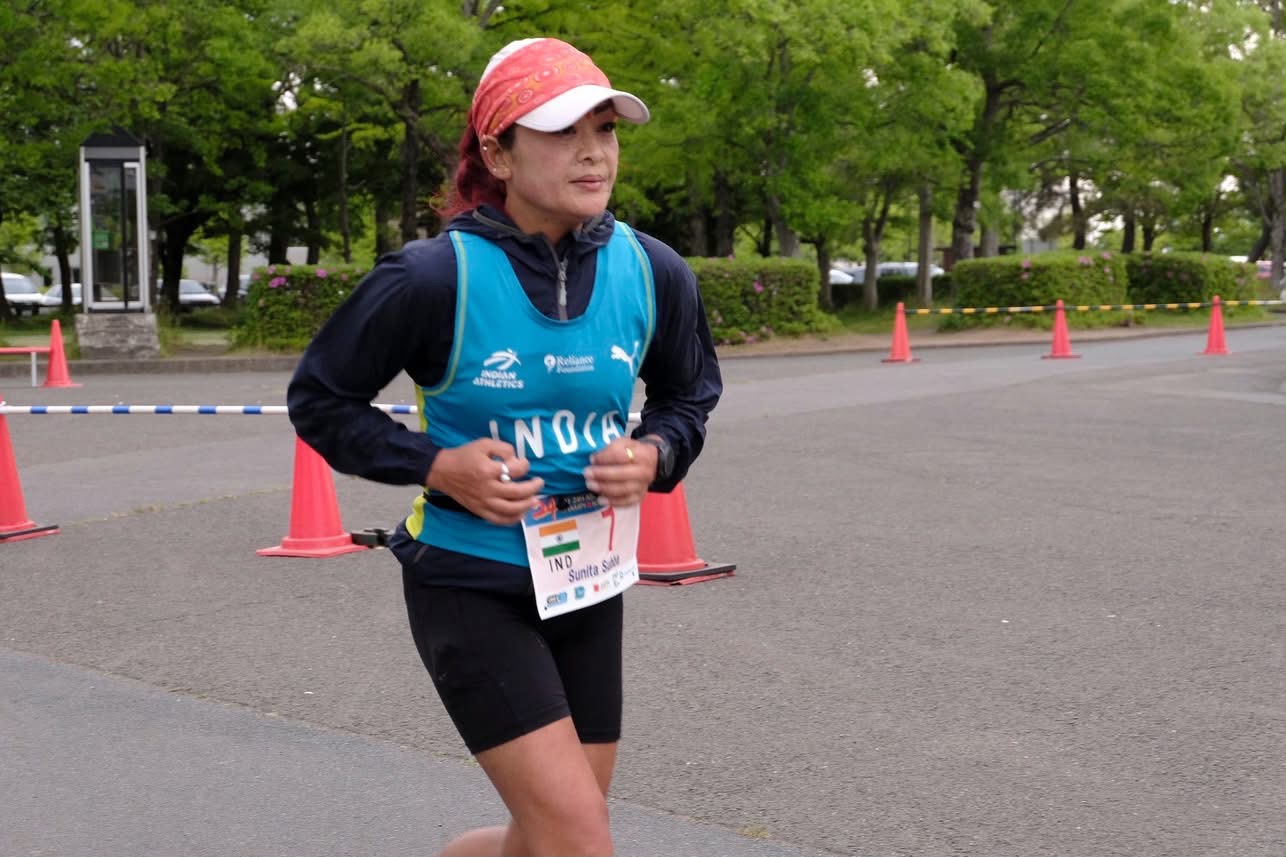
At Hirosaki, Sunita commenced her 24-hour race in her new pair of shoes that she purchased in Japan. That did lead to some discomfort. “After 14 hours of run, I got back into my old pair of shoes and I was much better off. I did have some gut issues and had to take many toilet breaks,” Sunita said. She surpassed her national record mark to cover a distance of 224.237 km, a new personal best and fifth position among women runners.

“After the run, I did not feel as tired as last time. The nutritionist’s (Sonali) recommendation to start consuming solid foods from the second hour itself helped, I think,” Sunita said.

Amar Singh Devanda

Ultrarunner Amar Singh Devanda has been rewriting national records in two categories – 100 km run and 24-hour run – for the last few years.

At present, he holds the national records in both these events.

At Hirosaki, Amar surpassed his own record in 24-hour run by a huge margin. He covered a distance of 282.881, up from his previous record of 272.537 km. He believes he has the potential to take it up further.

This time around, training was for a shorter period. Nevertheless, he covered a distance of 200 km weekly in training.

Many factors helped this time – mileage in training, the weather on race day, well-planned nutrition and hydration support and great team spirit.
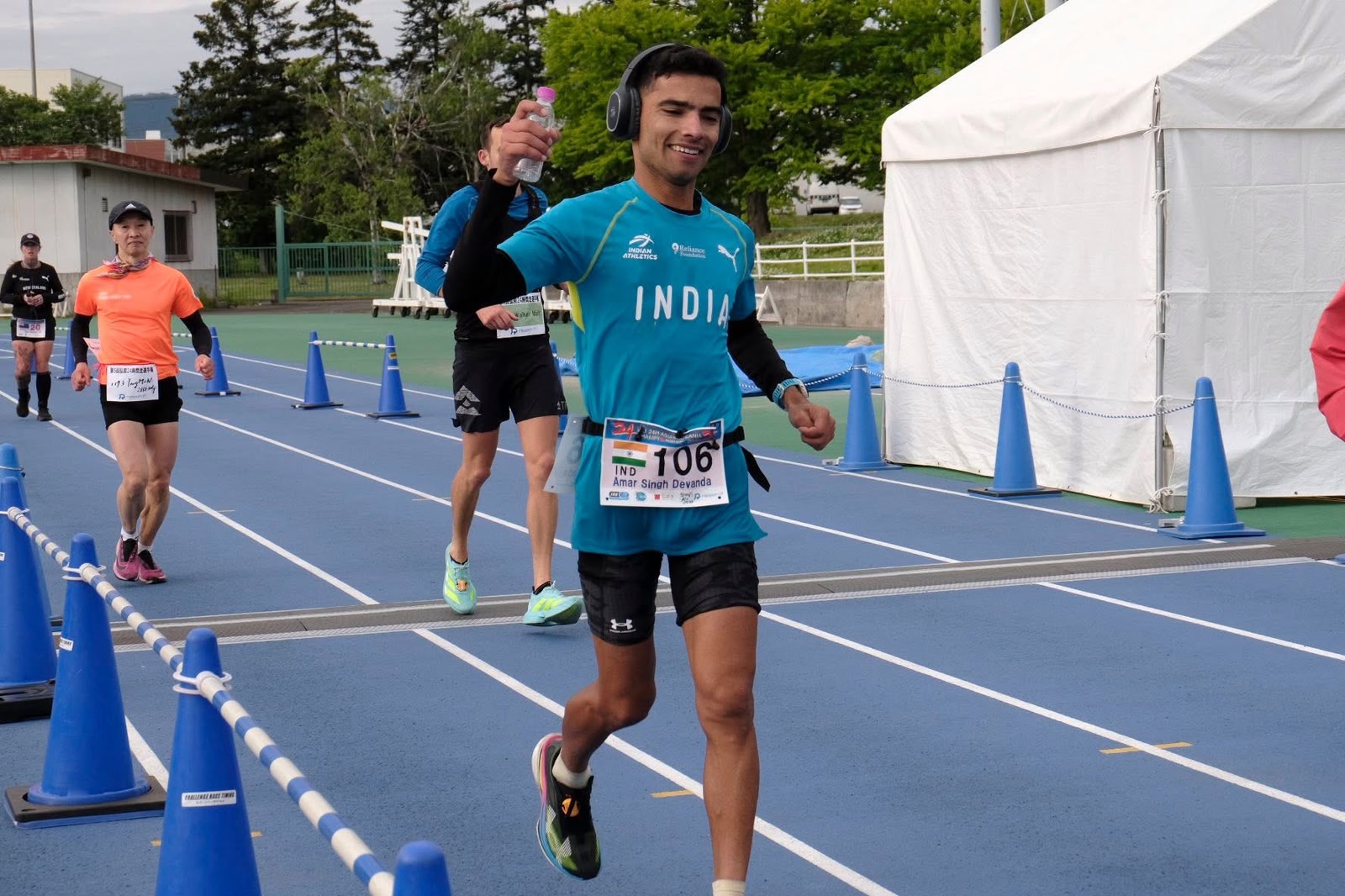
“I was confident going into the race, both mentally and strength wise,” Amar said.

His recovery post-race has also been quite good. “After a few days’ break, we may commence our training for the IAU 100 km World Championships to be held in Spain later this year,” Amar said.

Geeno Antony

At the 2025 IAU 24 Hour World Championships, Geeno Antony topped among Indian men and also secured 10th position among the men.

He had covered a distance of 265.198 km during the stipulated 24 hours. He attributes his performance in Albi to the rigorous training schedule chalked out by the team coach Santhosh.
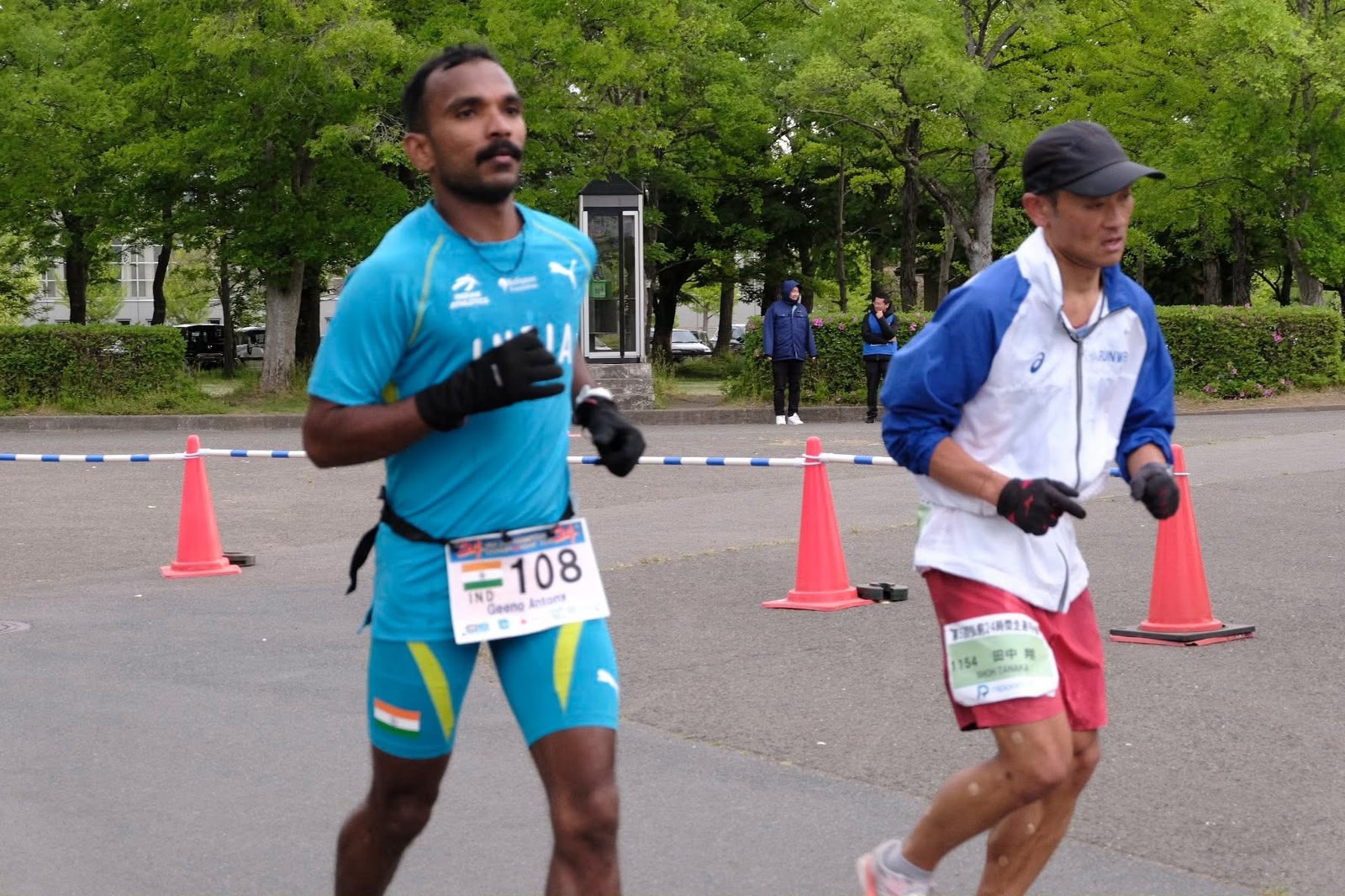
Geeno was able to adhere to the stringent training for the Japan championships too. “With so much of training, solutions are also easy to find,” he said.

Weather, according to him, was largely pleasant. “At the start of the race, it was sunny but then cooled down after sun went down,” Geeno said.

“It was clear that there was team work this time around. That really helped everybody’s performance,” he said. The crew’s support was also excellent. He was assigned Gorkha Ram as his crew. Gorkha Ram from IAF is also an ultrarunner.

Geeno covered a distance of 272.894 km, briefly surpassing the previous national record, and securing a silver medal in individual men’s race.

Saurav Kumar Ranjan

Saurav Ranjan has represented India in many IAU organised ultrarunning events.

“This time around my training went off quite well and I was able to execute all the runs including the long ones to the best of my ability,” he said. Saurav is currently posted in Bengaluru from Indian Air Force. At Bengaluru, he trained with his running compatriots – Geeno Antony and Amar Devanda.

“I did have a clavicular bone injury but I did not feel the pain during the 24-hour run,” he said.
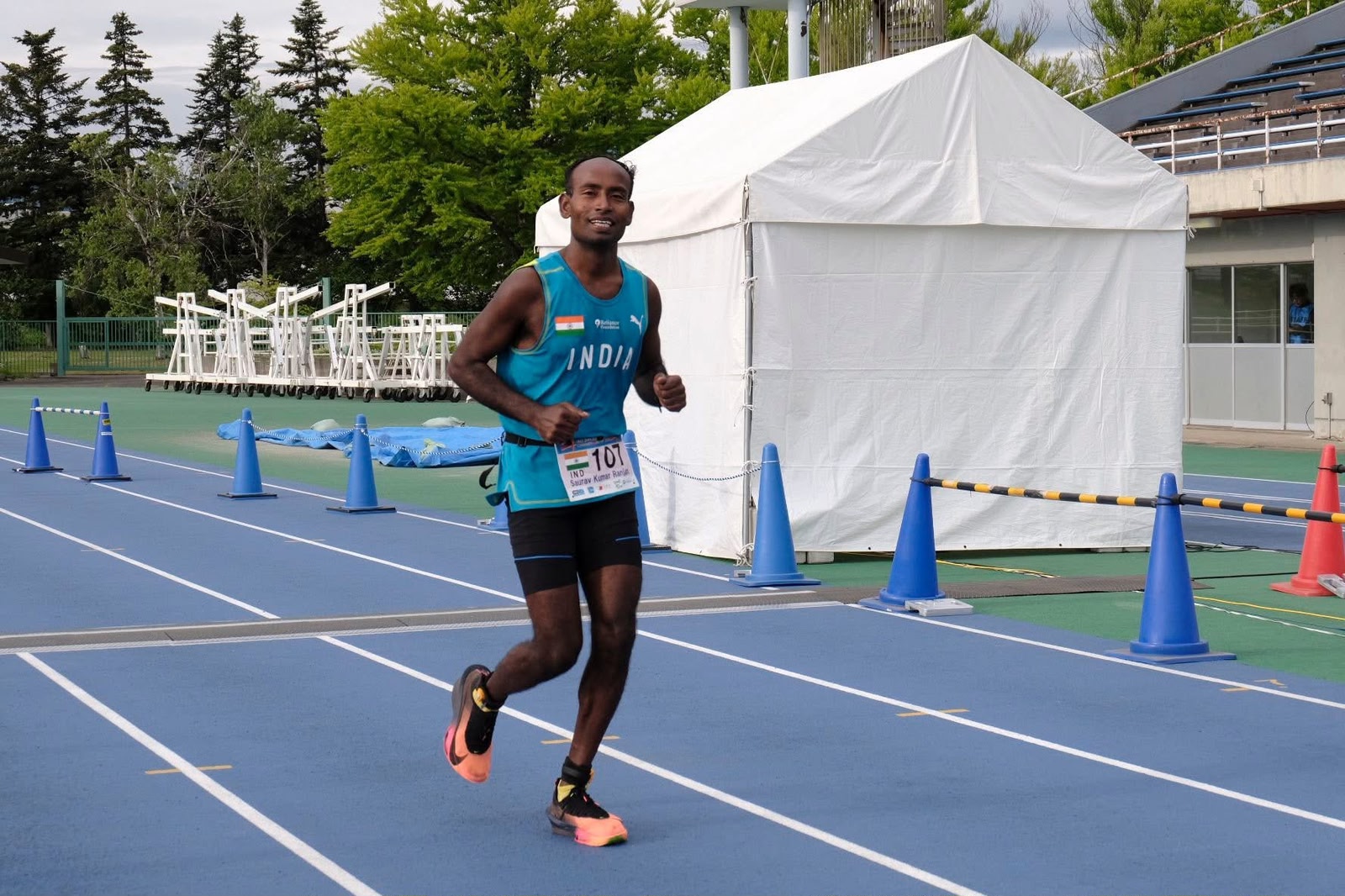
Weather at Hirosaki, Japan, during the 24-hour period of the run was quite conducive for running. “Also, this time around, I avoided too many gels and focused on eating natural food as guided by our nutritionist,” Saurav said.

The 34-year-old ultrarunner covered a distance of 260.058 km, improving his own personal record by 18 km and securing a bronze medal in individual performance.

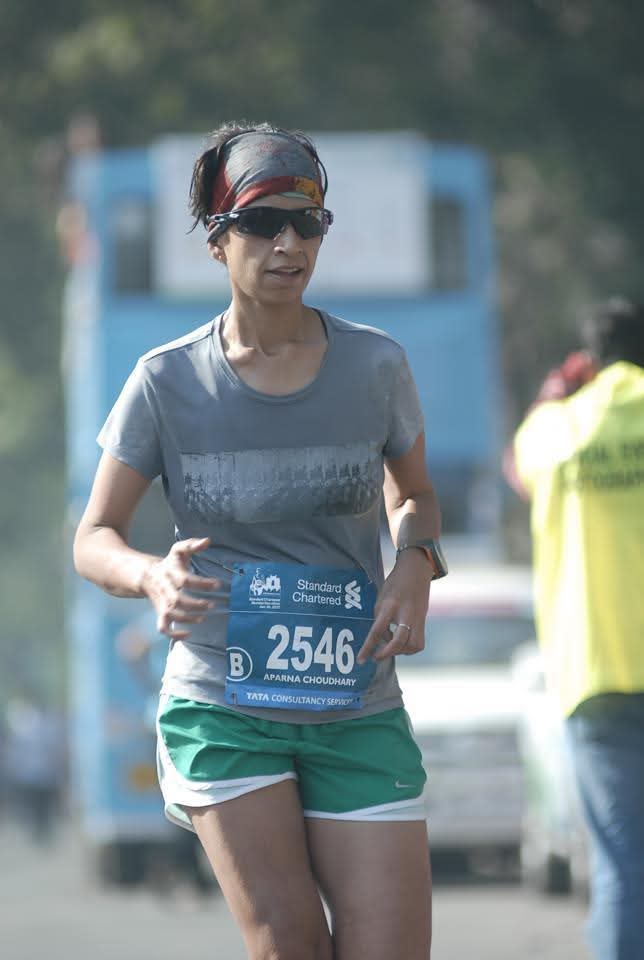
Aparna Choudhary

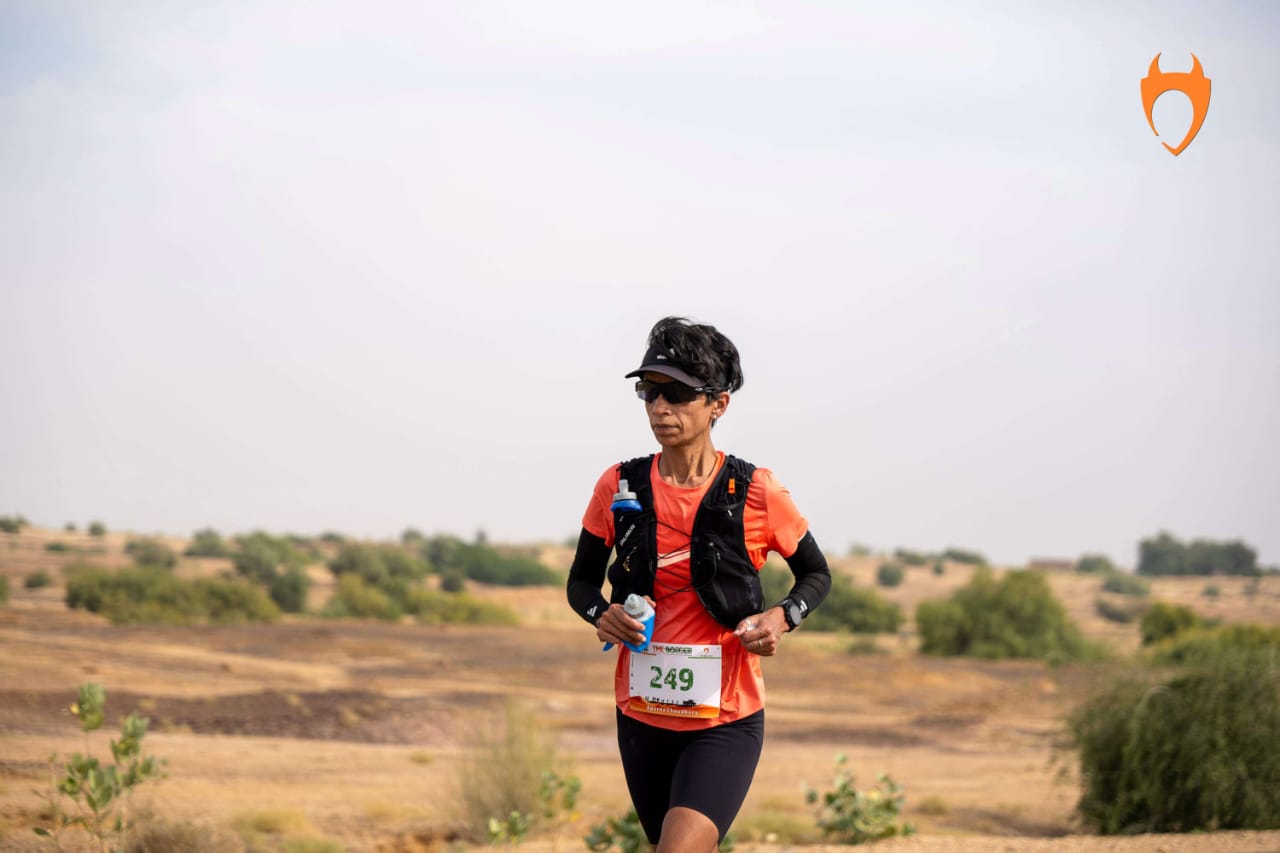
Aparna Choudhary was nursing an injury in her foot that she earned during the 338-kilometre run at Vineyard Ultra in February 2026. She completed the distance in 64 hours, an improvement of four hours from her previous attempt in 2025. She finished third overall.

She took time off from running to help the healing process and started training for Japan quite late.
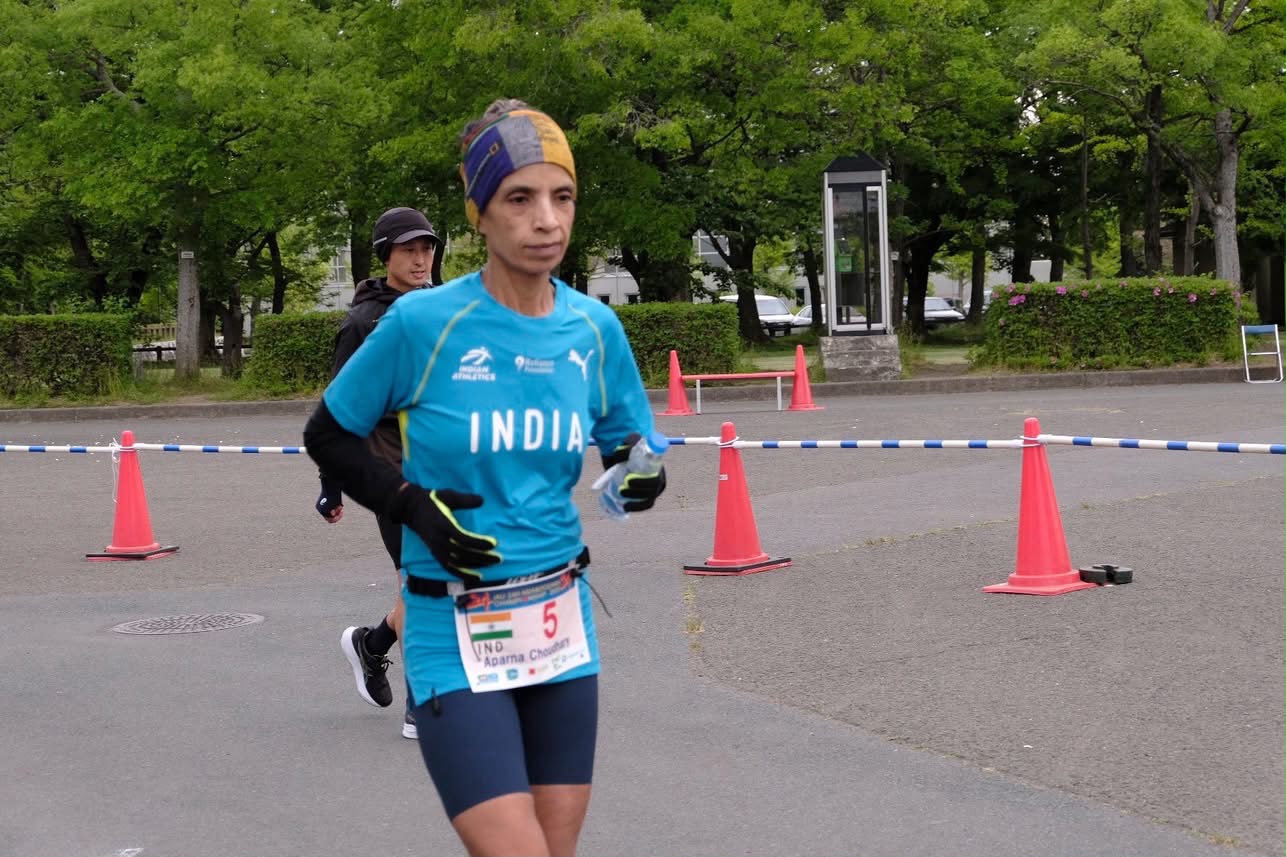
At Japan, she kept running steadily through the 24 hours of the race. “But I kept taking too many toilet breaks as I had gotten cold because of the delay in getting into warm clothes,” she said. Aparna, often prone to gut issues during these ultra runs, was fine this time around. “After 14 to 15 hours, I reduced my food intake,” she said.

Towards the last part of the race, Aparna was quite inclined to give up. “But Bindu’s company helped me. What was amazing that despite her setback, she was goading me to go along and not stop,” Aparna said.

Aparna covered a distance of 214.546 km during the stipulated hours of the race, improving her personal record by 4 km. (For more on Aparna Choudhary follow this link (https://shyamgopan.com/2026/03/09/aparna-choudhary-running-the-ultras/)

Sugourav Goswami

Sugourav Goswami took to ultrarunning a few years ago and has been a regular podium finisher in many of the events.

At the Albi Championships, Sugourav finished second among Indian men.

Sugourav along with the other ultrarunners went through a gruelling training plan for the Albi championships. Training for Hirosaki was not adequate, he said.

“I could feel that I was lacking in strength. Also, I had an injury in my left glute. At times, it was quite painful,” the ultrarunner from Uttarakhand said. According to him, physiotherapist Aashish Kushwaha’s presence in the crewing team was a great help to all the runners.
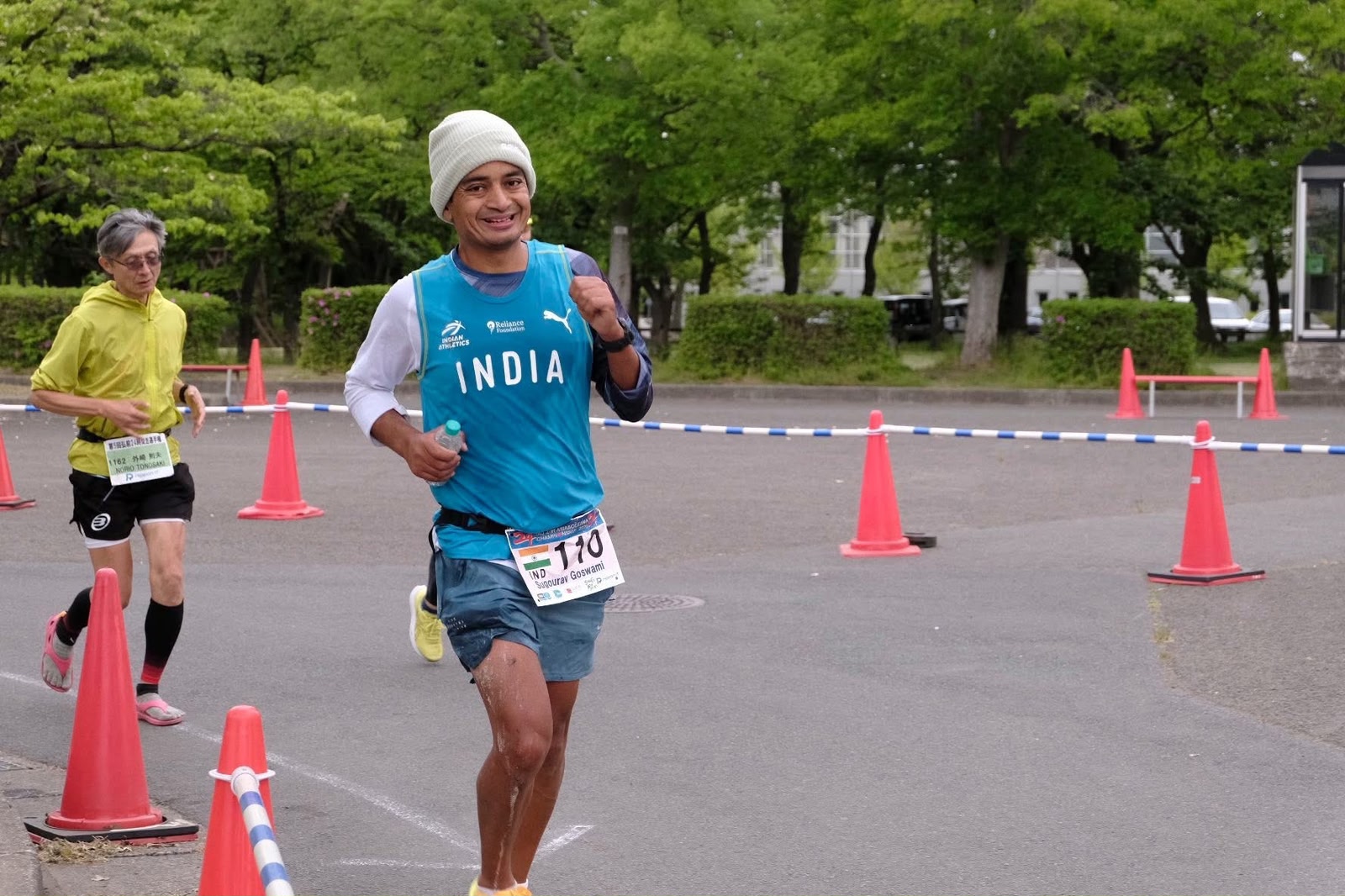
Up until 16 hours, Sugourav ran alongside Saurav. “After that my energy dropped. I could not maintain my pace,” he said.

“I really struggled in the last eight hours. I was not able to maintain my pace,” he said. He also pointed out that the camaraderie among team mates this time around was quite good and that helped in bettering runners’ performances.

In the intervening hours, Sugourav also sought medical help and crew support for Bindu Juneja, who had collapsed during the run.

Sugourav covered a distance of 250.270 km during the 24 hours, improving his personal record by 5 km and also finishing seventh among men.

Mukesh Kumari

Mukesh Kumar, the Panchkula-based ultrarunner started running a few years ago and quickly moved into ultrarunning.

At the Tuffman 24 Hour Stadium Run in 2022, Mukesh covered a distance of 168 km.

She was also part of the 100 Days of Running, putting up a daily mileage of 30 to 40 km. That helped her build up her endurance.
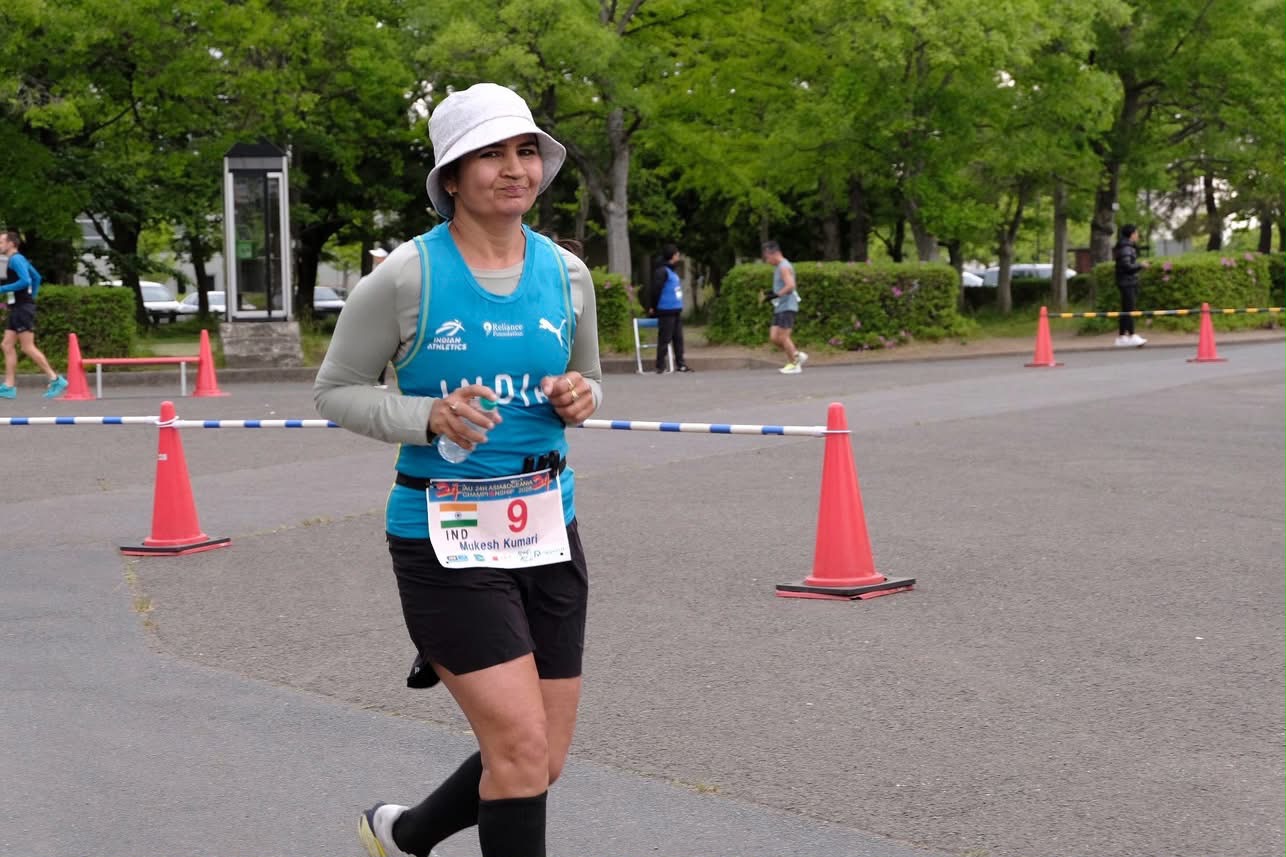
After she was chosen for the Japan championships, she followed Santhosh’s training plan diligently. “My race at Japan went off very well. The arrangement and the crew support were quite good,” she said.

Mukesh Kumari finished the hours with a mileage of 194.237 km, an improvement of 6 km from her previous 24 hour run.

Velu Perumal

Velu Perumal has been representing India in many of the ultrarunning events for the past few years.

The runner from Indian Army, now in Ooty, had a very good training season, often running with India’s elite marathoners, Gopi Thonakal and Man Singh.

However, his decision to start the run with a new pair of shoes proved to be wrong as his toe nail came off and his toes started bleeding. “At the 13th or 14th hour, I changed into my old shoes but the damage had been done,” Velu said. He had to chug along at a slow pace.
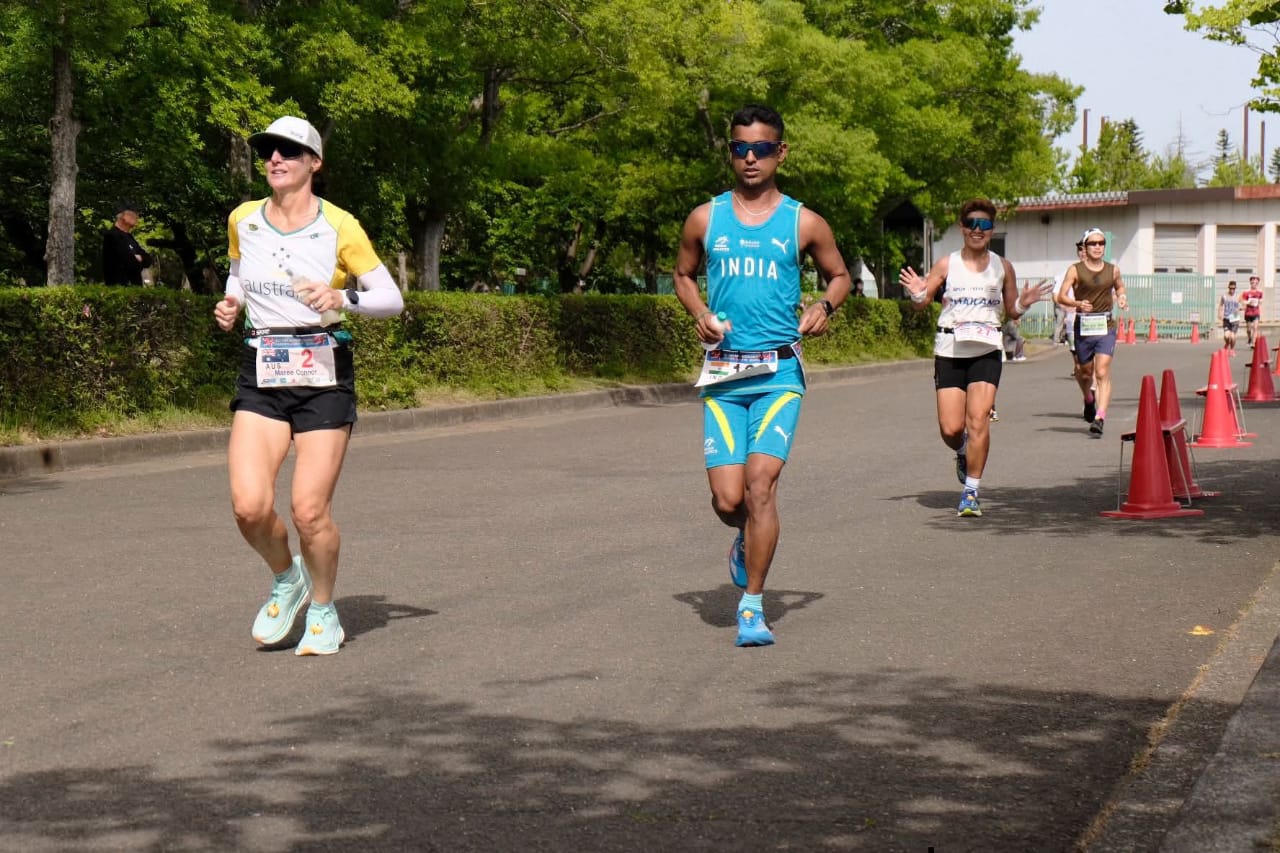
He had set a target of covering 260 km and his training had done justice to that target. He finished with 192.895 km, falling short from his personal best of 234 km.

“I feel quite bad about my performance. I had training very well for four months,” he said.

Though he fell short of mileage, he was asked to run alongside the other runners in the team to keep the momentum going, said Santhosh.

The crew support, according to Velu, was quite good, especially that of the nutritionist.

Shashi Mehta

Shashi Mehta, an officer of the rank of Major from NCC, started running in 2018. Up until now, she has done eight 24-hour runs. She has also represented India in both 100 km and 24-hour runs of IAU.

Originally from Pithoragarh, Uttarakhand, Shashi did some bit of sprinting in her school days. She started running in 2018 when she was posted in Kottayam in Kerala.
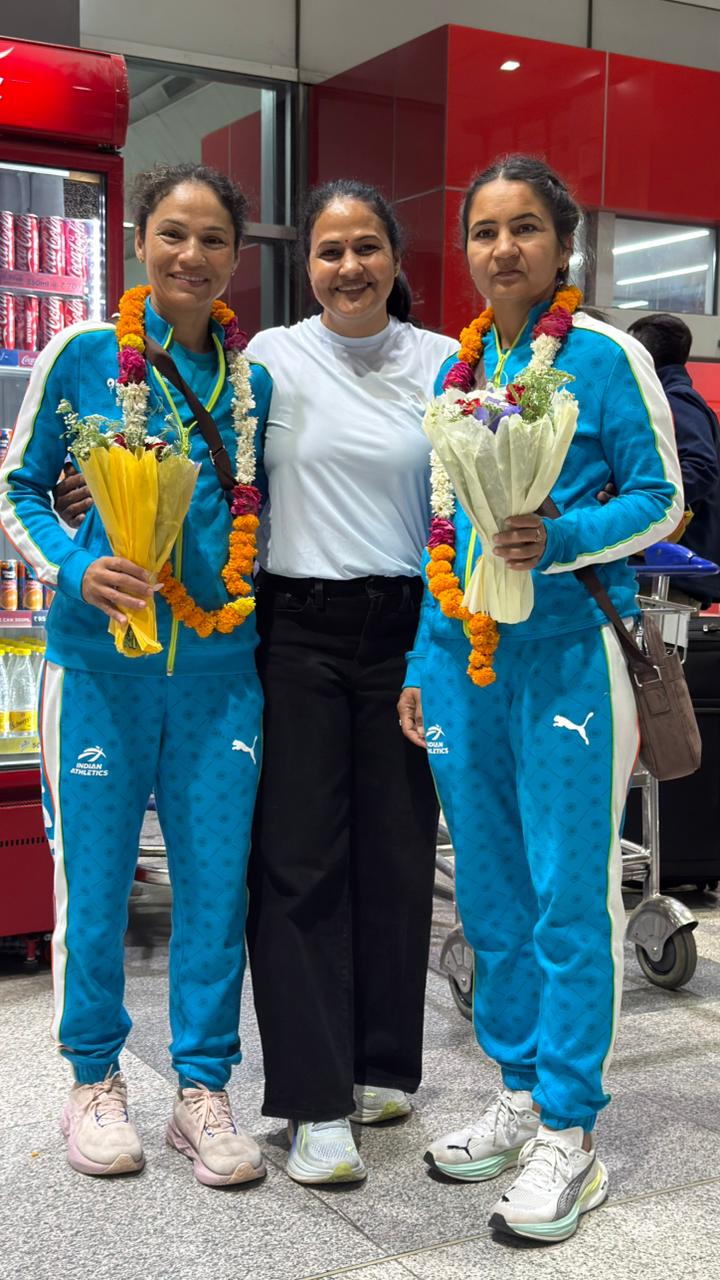
Shashi Mehta and Mukesh Kumari along with ultrarunner Deepti Chaudhary (centre). Picture courtesy Deepti

At the 2026 edition of White Sands Ultra held at Rann of Kutch in March, she won the women’s race in the 100-miler with a timing of 26:11:48 hours. She is a regular podium finisher in many ultrarunning events.

“Returning from White Sands Ultra, I was left with just six weeks for the Japan championships. I took two weeks off to recover from the 100-miler. My training for Japan did take a hit as I had not fully recovered from the race,” she said.

Shashi completed the Japan race with a mileage of 176.755 km. “This time, I had no gut issues. During the race, I consumed 20 gels, electrolyte drinks, salt tablets and solid food,” she said.

According to her, Indian women ultrarunners do have the capability to bring home the gold medal.

Bindu Juneja

At the IAU 24 Hour World Championships 2025 held at Albi, France, Bengaluru-based ultrarunner Bindu Juneja crossed the 200 km mark to finish with a distance of 202.164 km, a huge improvement of 17.2 km in her personal record.

This time around, she was not able to put in the requisite amount of training. After the World Championships, she went off training for a surgery and was left with two months to train for Japan.
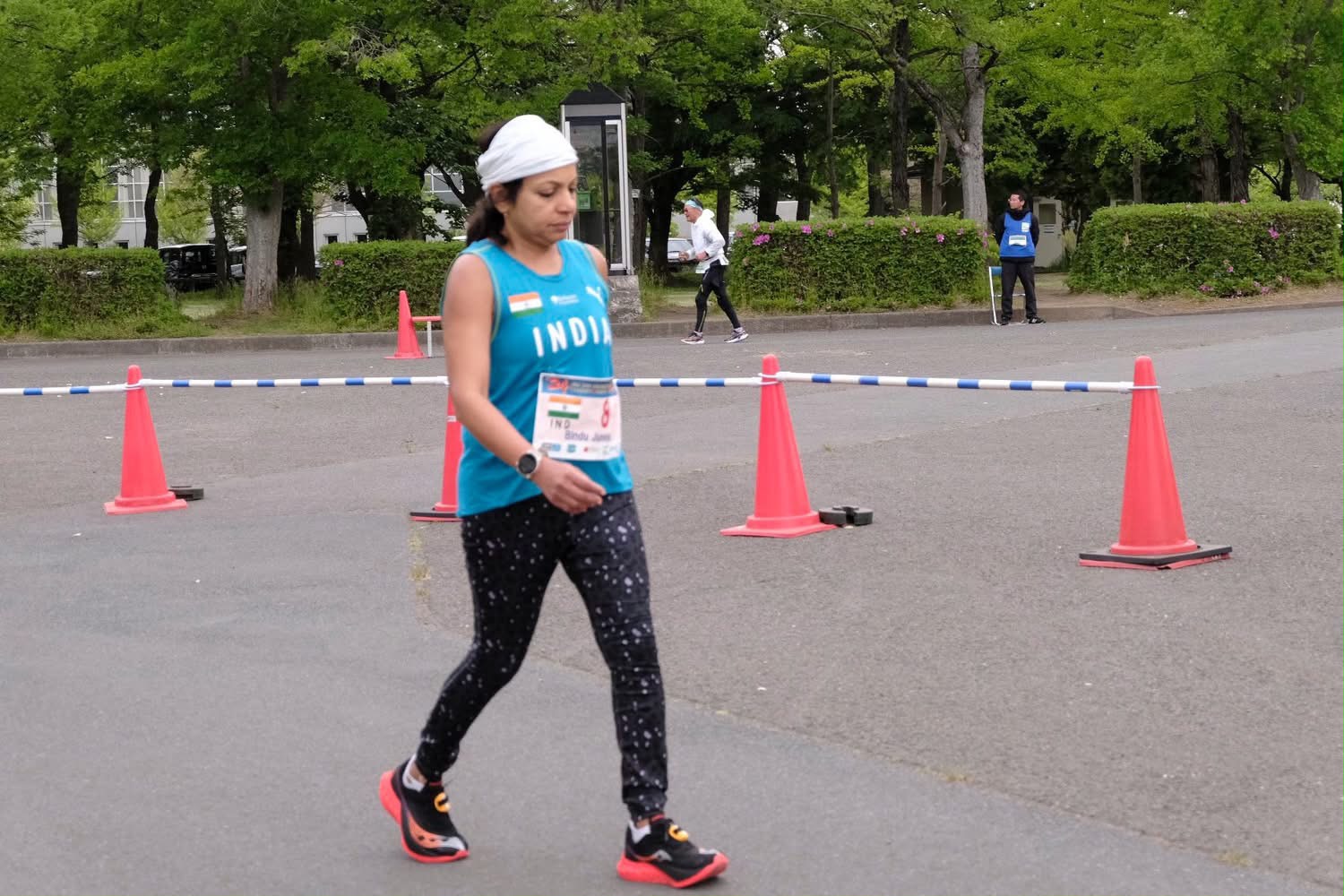
On race day, Bindu managed to run steady for 10 hours. “Into the 10th and 11th hour, I started to feel dizzy and my heart rate was hitting highs constantly,” Bindu said. Following that she had no clue what happened. Sugourav Goswami, a fellow runner from her team, saw her lying down. He alerted the medical team and guided her to India’s support tent. Initial indication showed that her blood sugar had dropped to very low levels. She was also cold and started shivering. “I was out of the race from the 11th to the 14th hour. From the 15th hour I started walking until the 18th hour and then ran rest of the hours consuming only Coke and Eclairs,” she said. Bindu finished with a distance of 160.378 km.

“I will be eternally grateful to Sugourav for having rescued me after he had found me fallen along the race’s course, sacrificing his own race momentarily,” Bindu said.

(The author, Latha Venkatraman is an independent journalist based in Mumbai)

(Photos by Indian Team)

(Inputs from IAU website)
My Boston Marathon Story

A personal account by runner Jayadrath Singh

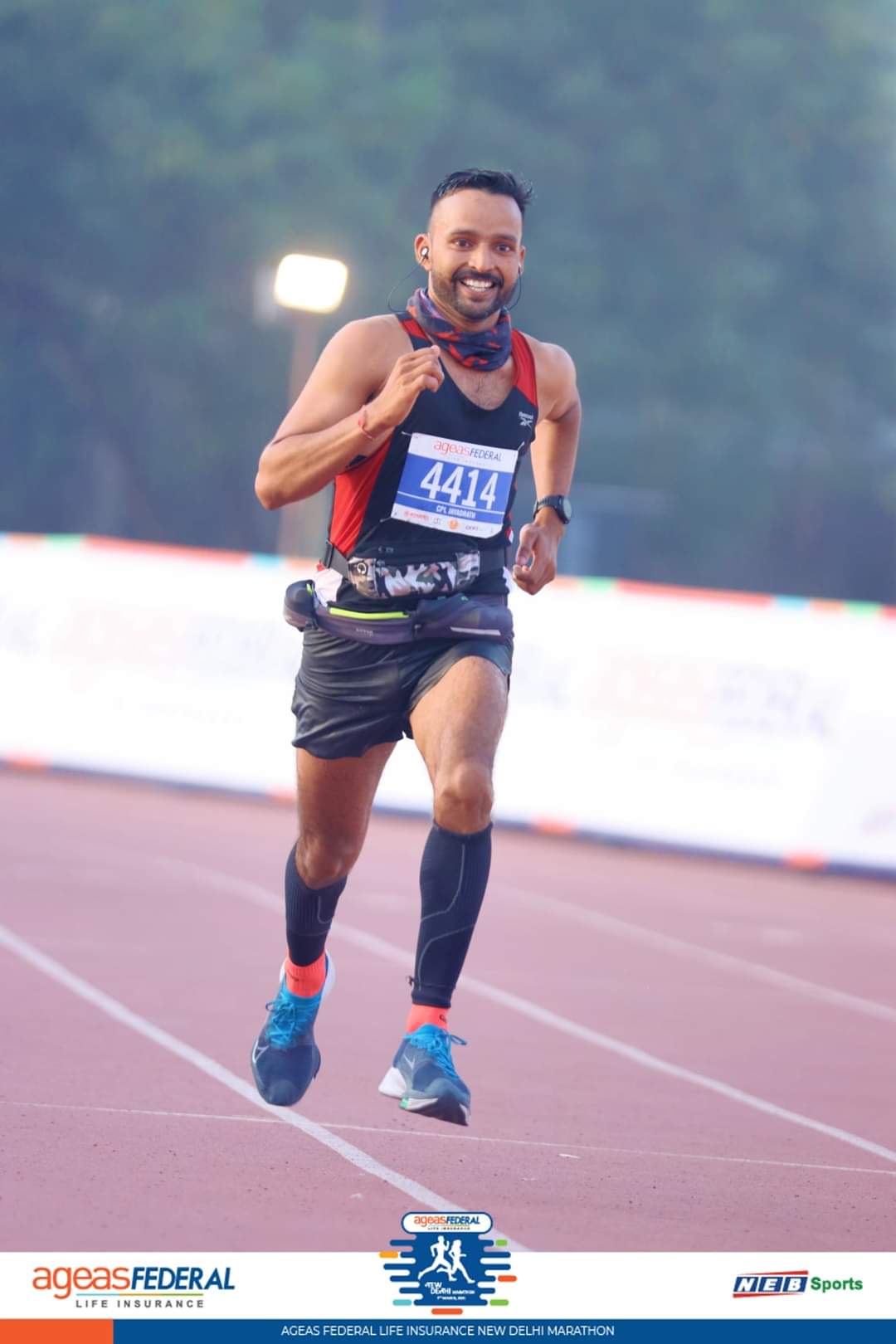
Jayadrath Singh commenced running sometime in December 2018. A year later he ran his first marathon, finishing in three hours and 30 minutes. An SNCO (Senior Non-Commissioned Officer), Jayadrath, originally from Rishikesh in Uttarakhand, is now posted in Chennai.

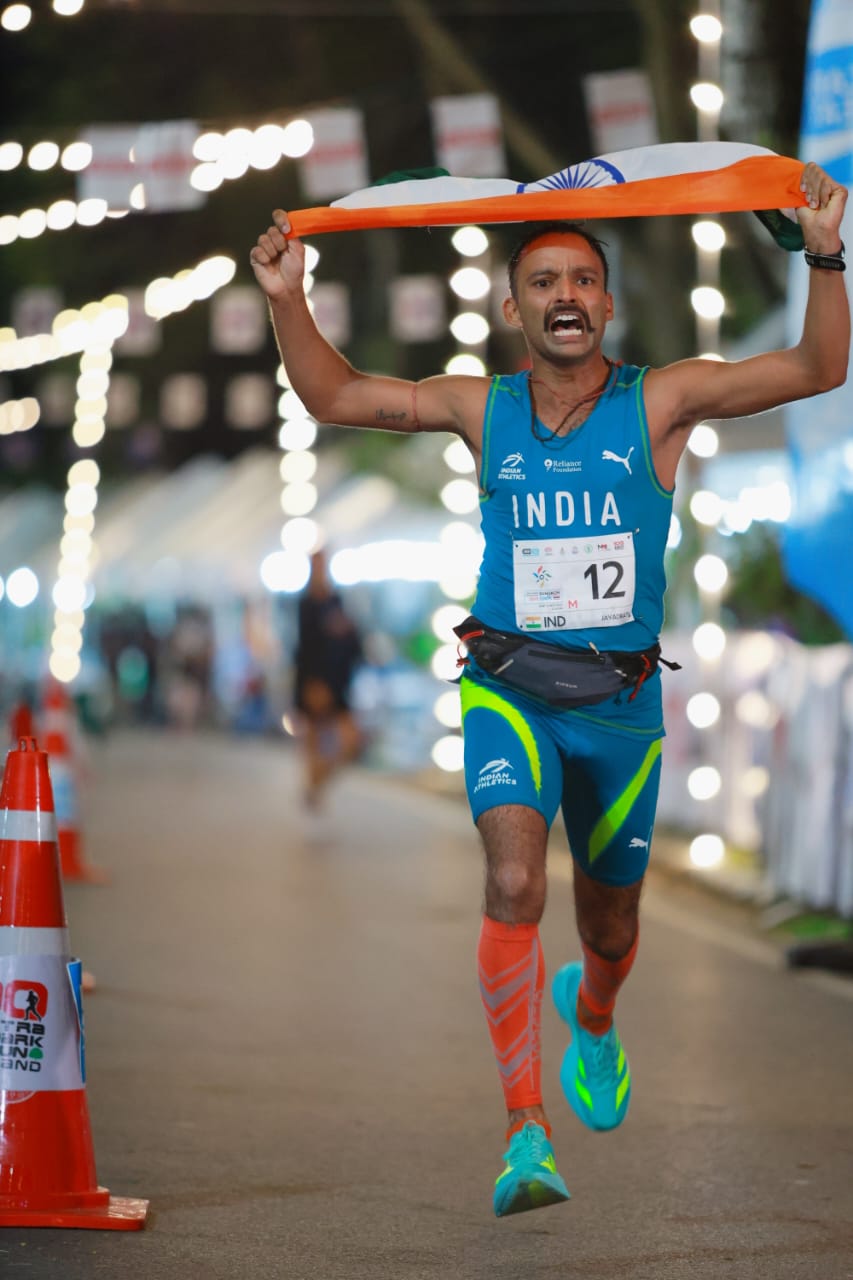
Jayadrath’s foray into running was prompted by the need to step up his physical activity. Soon, he began enjoying running. In 2021, he attempted his first 50 km, a stadium run in Lucknow. Having done a few ultras thereafter, Jayadrath got the opportunity to represent India at the IAU 100 km Asia & Oceania Championship, held in November 2025 in Bangkok, Thailand.

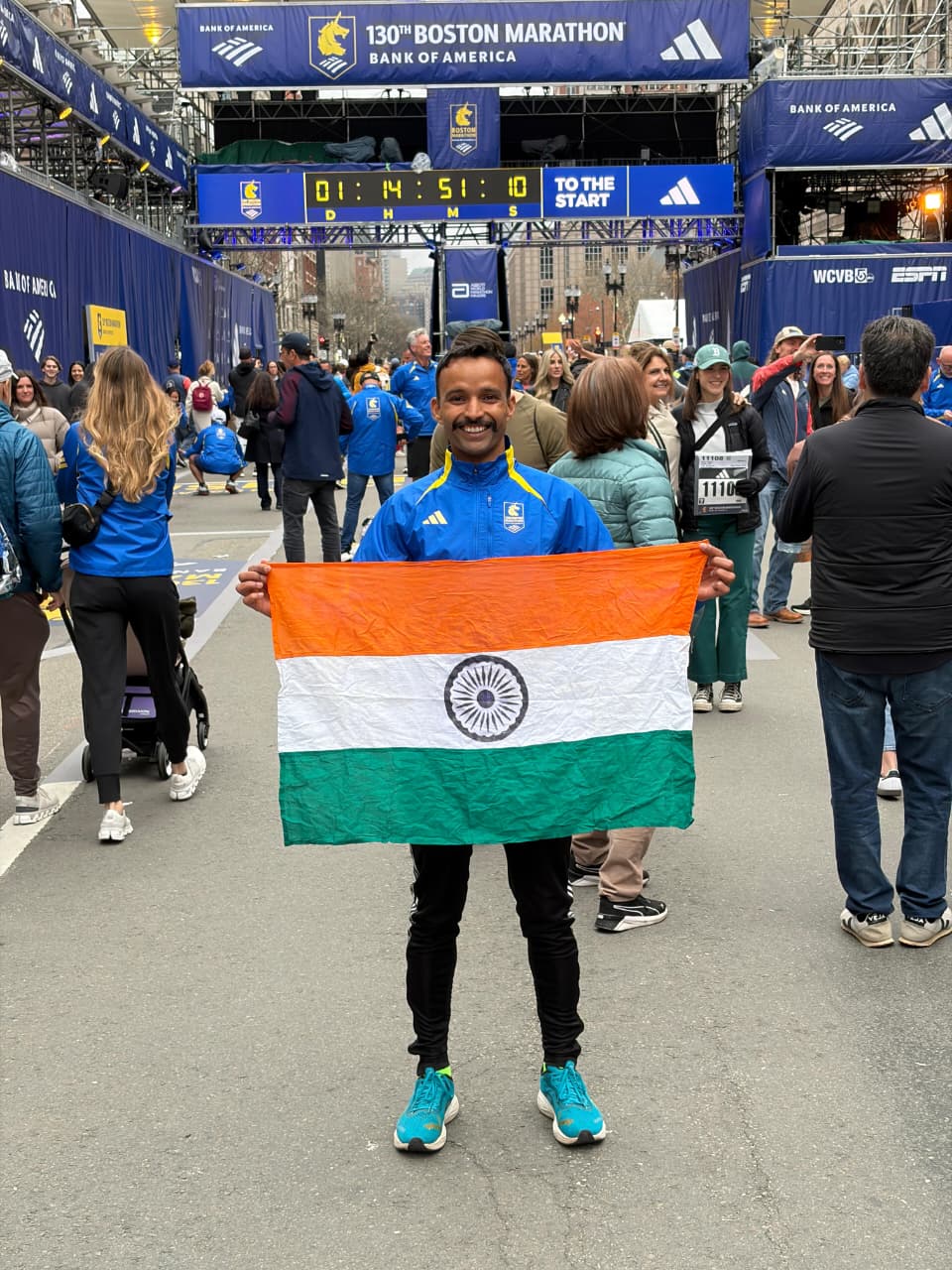
On April 20, 2026, he attempted his first World Marathon Major – Boston Marathon. He finished the race in 2:46:09, second fastest among Indian runners this year.

He writes about his experience at the 2026 edition of Boston Marathon.

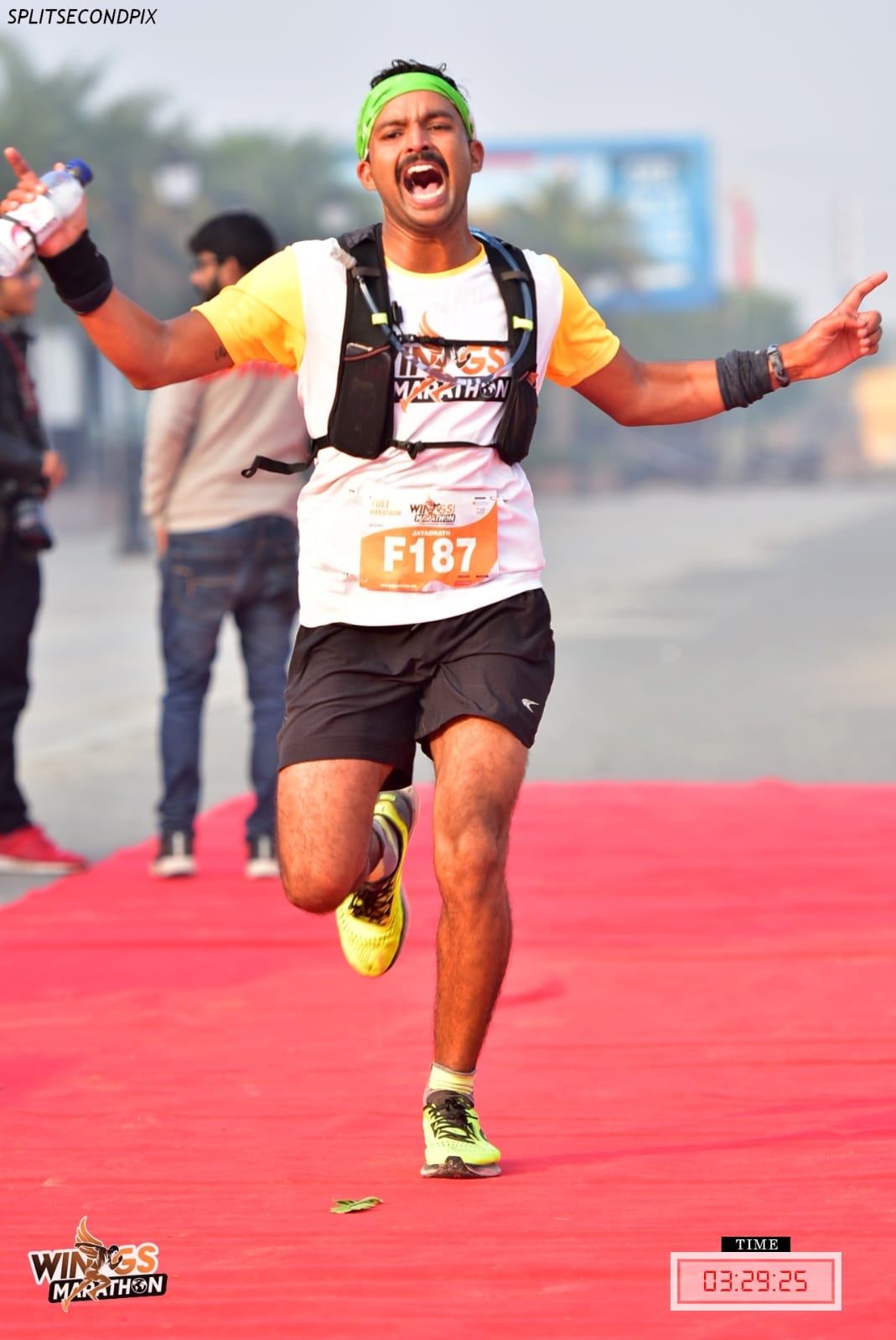
I ran my first marathon in December 2019 finishing with a timing of three hours and 30 minutes. At that point I did not have any plan to go back and do another marathon, a distance of 42.195 kilometres. But within a week, I found myself training for the next marathon.

Running his first marathon – Wings Marathon Faridabad December 2019

In February 2020, I ran the New Delhi Marathon and completed the race in 3:11 hours, an improvement of 19 minutes. My coach Vin D told me that I could qualify for Boston Marathon. This was the first time I heard about this marathon. Curious about Boston Marathon, I asked my coach the criteria for registering for the race. He smiled and told me it is sub-three hours for my age category. The question that came to my mind was, “Can I achieve this?”. He was confident I could improve my time efficiency. When the coach believes that I can achieve the target, it became a moral responsibility to work towards it.

From that moment Boston Marathon qualification was my main goal. I began scouring through Boston Marathon website to find out about athletes from India who had run the iconic race in sub-three hours. I made a point to look for those runners who had finished the race in sub-three hours with a full-fledged job. Some of the runners’ names that came up in my search were Mahesh Diwedi, Hemant Beniwal, Dany Saran and Binay Sah. I followed their inspiring journey and with the help of my coach’s running plan and meticulous training I ran and finished the 2021 edition of the New Delhi Marathon with timing of 2:55. Most importantly, I had achieved a negative split in the race.

I was happy to have met the target visualised by my coach.

But qualifying is only one part of the work for participating in Boston Marathon. I needed funds for travel and stay in Boston. Also, with every passing year, the qualifying mark was getting tighter at Boston Marathon. Thankfully, I was able to improve my time efficiency in the marathon distance year after year.

Between 2021 and 2016, I qualified for Boston Marathon nine times.

Ultrarunner Vikas Malik, owner of Leap (nutrition brand) offered support to me to help me transform my dream to reality. I will be forever grateful for his support. I hope there are many more Vikas Maliks to help Indian runners get to the start line of Boston Marathon.

Representing India at the IAU 100 km Asia & Oceania Championship 2025 at Thailand

Race day (April 20) was chilly and cloudy day when I lined up in Hopkinton, the start point of the marathon. From boarding the distinguished yellow school buses with Boston police escort to the finish line volunteers never leave a chance to amaze you and make you feel special during your entire Boston Marathon.

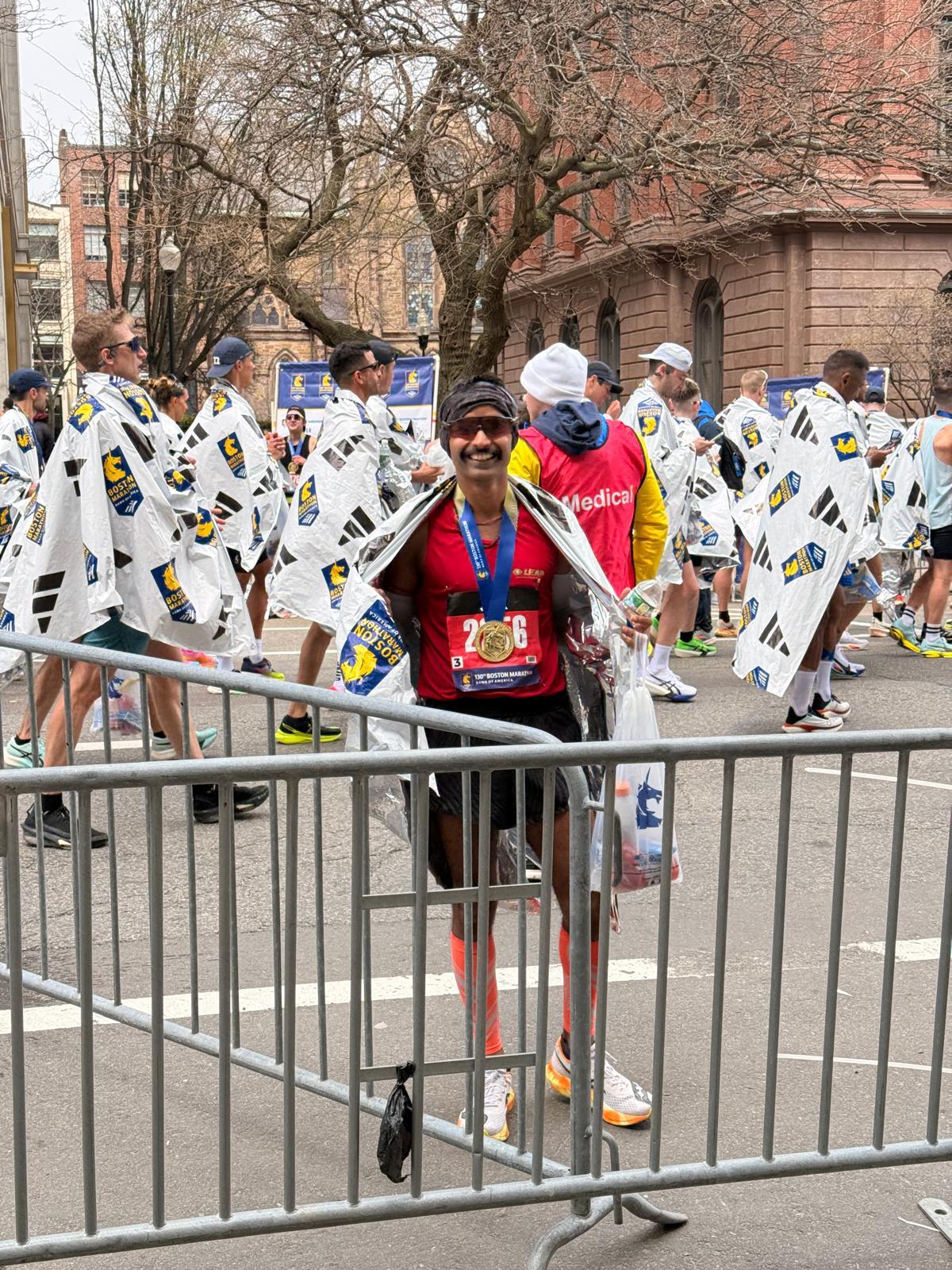
At Boston Marathon 2026

I was in Coral 3 Wave 1. I set off the start line with sun shining bright and witnessing the US Air Force fly along the course. It was an emotional moment crossing the start time. I felt confident and proud completing my first lap even as I remembered what my coach advised me, ‘to stay calm and composed during the early part of the race and push in the second half.’

The vibe was incredible and all along the course there is not a single stretch where people are not standing and cheering. It felt as if the entire city had turned up at the marathon course to cheer the runners.

At Boston Marathon 2026

As the miles went by, clouds began covering the sun and the weather turned pleasant. Advancing towards the finish line I kept hydrating myself with energy gels at regular intervals. The course was not easy by any stretch. The rolling hills kept the challenge for the runners. But the pulsating energy from the people and volunteers prompted every runner to push.

I crossed the finish line with gratitude and pride. The icing on the cake was getting a gold colour Boston Marathon finisher medal as the US is celebrating 250th anniversary of the Nation this year.

I finished Boston Marathon 2026 with a timing of 2:46:09. I was the second fastest Indian this time.

(Photos courtesy – Jayadrath Singh)

(Inputs from Boston Marathon website)

Aparna Choudhary – Running The Ultras

  • In the first week of February 2026, ultrarunner Aparna Choudhary ran Vineyard Ultra’s longest distance, a 338-kilometer race. She wrapped up the distance in 64 hours, 16 minutes and 36 seconds, finishing third overall. But this is not the first time she was running this distance. In 2025, she ran the same distance at Vineyard Ultra winning the race in 68:02:51 hours. Though she could not defend her 2025 title, she improved her timing in the 2026 edition.
  • Two months earlier, in December 2025, Aparna set a new course record for women in the 100-mile run at Border Ultra finishing the distance in 18 hours, 52 minutes and five seconds. She broke her own course record of 19:47:31 hours, which she set during the 2024 edition of the race.
  • In October 2025, Aparna, representing India at the IAU 24 Hour World Championships at Albi, France, had finished second among Indian women and also surpassing the women’s national record at that time. At the end of the stipulated 24 hours, she had covered a distance of 210 kms.

Aparna Choudhary started running in 2004-2005 at a time when Mumbai Marathon had just arrived, spurring an amateur running culture in the country.

Those early days her distances were small – about 5 or 6 km. This was in Bengaluru, where she was doing her MBA at ICFAI.

Shortly, thereafter, she had started working in Bengaluru. Her daily runs continued until she was posted to the U.S. At Norristown in Pennsylvania, where she stayed, she continued her runs. While there, she ran the 5-miler Valley Forge Run. She also did an 18-mile run in New Jersey.

Running was not her first foray into sport. She used to play field hockey during her schooling and college days.

At the end of 2009, she was back in India and was posted in Pune. She signed up for her first ultra run a 100 km event at the iconic Bangalore Ultra. An ultra run or an ultramarathon is any foot race that is in excess of the marathon (42.2 km).

“I had no clue what an ultrarun entailed. In the early years I would just train during the week preceding the race day,” she said. Although, she registered for 100 km at Bangalore Ultra 2010, she quit the race at 75 km as she had to head back to Pune to get to work the next day.

Her first ultrarun was a DNF. In runners’ parlance DNF means “did not finish”. DNFs in ultramarathons are not uncommon. In such long foot races anything can go wrong, ultrarunners say.

More than ten years ago, Shyam G Menon, (who started this blog website and ran it till he passed away on August 31, 2025), had reached out to Aparna for an interview but to no avail. By then, Aparna was already a well-known name in the niche world of ultrarunning.

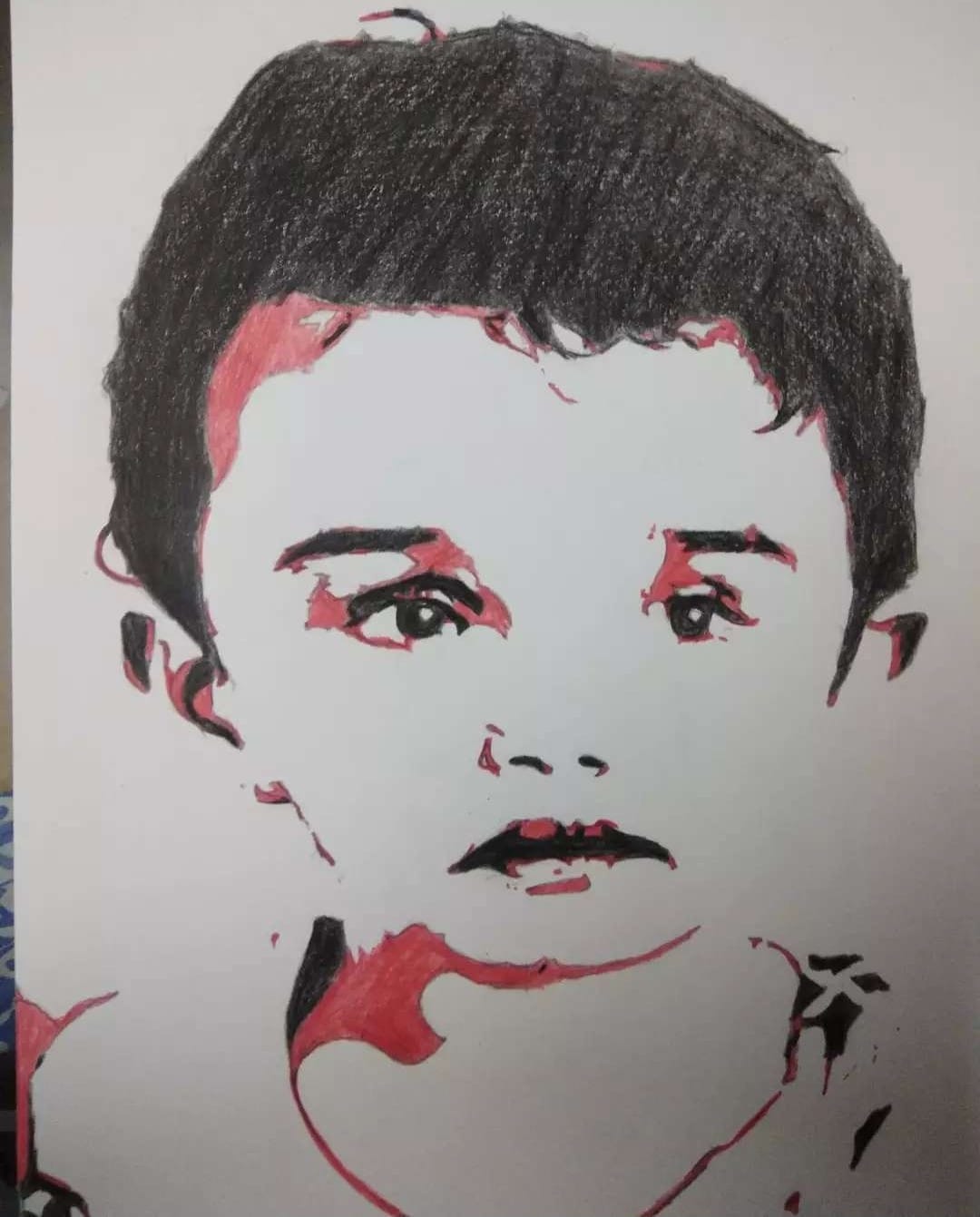
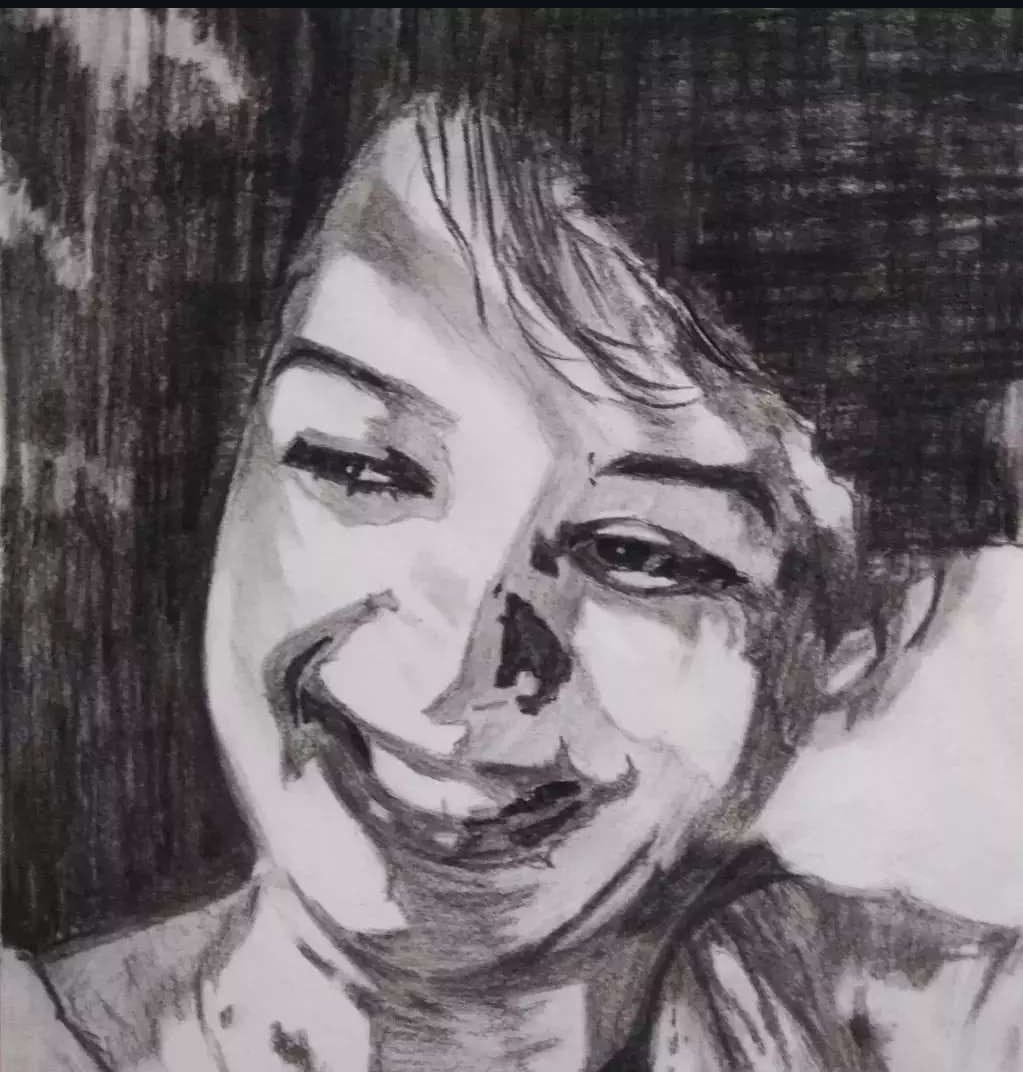
Years later when Shyam and me (Latha) got to know her through multiple interactions, we realized that Aparna was not stonewalling us. Her life’s pattern was quite set. Appear at the start line of ultrarunning events and at the end of these events disappear back into her personal life – her job, her training and her sketches (She is also an artist). At present she works at Cognizant.

Sketches by Aparna

At the end of an ultrarunning event, irrespective of the outcome, she seems quite equanimous. She is not the one to make any claims of her accomplishments at a time when social media platforms are exploding with posts boasting about the tiniest of achievements.

“It is an exhilarating feeling, when I complete an ultrarunning event. The feeling is indescribable. And more so, if my run has gone as per my plan. I don’t like to dissipate the excitement by chatting with others. I like to savour it and enjoy the day,” says Aparna.

Over the years, she has done a multitude of ultrarunning events – Border 100, Comrades Marathon, Goa Ultra, Malnad Ultra, 24 Hour Stadium Ultras, Run of Kutch, Vineyard Ultra 338 km to name a few. In October 2024, Aparna set the national record for women in Backyard Ultra at Pune, running for 27 hours with a mileage of 180.9 km. Aparna’s record has been subsequently rewritten by Ashwini Ganapathi, a Bengaluru-based ultrarunner, in May 2025.

The backyard ultra, also known as the last runner standing, is a format of ultra running in which runners are required to run a loop of 6.7 km within an hour. Every new hour runners who have completed the 6.7 km in the previous hour continue their running until the last surviving runner is declared the winner. This winner is also the sole finisher of the race.

The concept of backyard ultra was founded by Gary Cantrell of Tennessee (also known as Lazarus Lake). He is the founder and race director of Barkleys Marathon.

For a couple of years Aparna took time off to do her MBA from Oxford University.

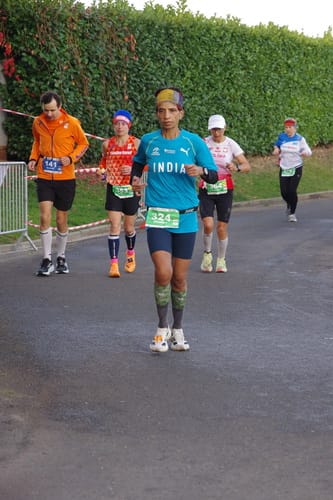
Aparna has represented India in IAU ultrarunning events including the 24 Hour run as well as the 100 km, both at home and overseas.

At the IAU 24 Hour World Championships 2025 held in October in France, Aparna covered a distance of 210.537 km, surpassing the then national record of 204.314 km and improving her personal record by a huge margin from her previous best of 192 km. (The national record for women’s 24 hours stands with Sunita Subba at 217.327 km).

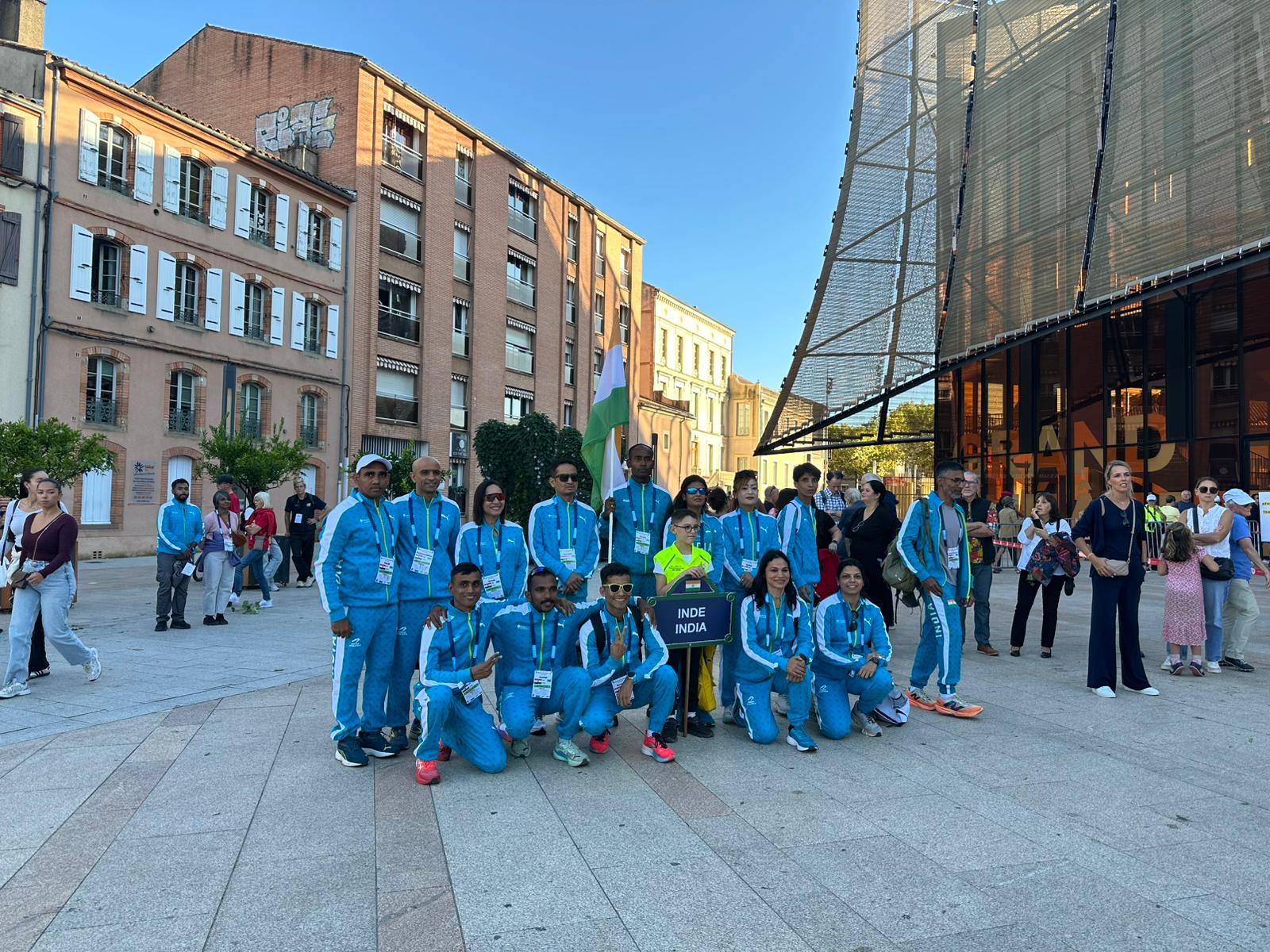
The Indian team at IAU 24 Hour World Championship at Albi, France

Aparna’s training for the World Championship was consistent but “nothing extraordinary”. In the run up to the Championships, Aparna took part in the 120 km Goa Ultra 2025 in early August. She won the women’s race with a finish timing of 14:51:19 hours. She saw it as a training run for the Championships.

“I do not let my mind be in the clouds about my training or my ability to perform on race day,’ she had told the blog in an earlier interaction.

There is a method to her approach. In her own mind, she draws up plans for each of the ultrarunning races she does. “If plan A falls through, I go for plan B, Plan C, D, etc). When all plans fall by the way side, I just keep running,” says Aparna.

Two months later, in December 2025, she set a new course record at the 100-mile run of Border Ultra 2025. She smashed her own course record that she had set in 2024.

Another two months later, she was at the start line of the 338 km Vineyard Ultra 2026 at Nashik, Maharashtra. Barely 16 km into the race, Aparna had a nasty fall and hurt her knees. More than halfway into the race, she started to feel a searing pain in her left foot but she continued running and completed the run.

“In these really long ultras I tend to get really dark and negative thoughts. But my mind also urges me to go on,” said Aparna.

Running ultras are not without their share of adventure on the route but sometimes, these can get out of hand.

During a 220 km ultra run at Saputara Summit 2023, in Gujarat, runners were required to first do a loop of 100 km and two loops of 60 km each to complete the distance. “Part of the route goes through a hilly forest area. I heard someone behind and I presumed it was one of the runners. The footsteps came closer and the person put his hand on my mouth. I tried to scream but couldn’t because he had gripped my mouth tightly. I then managed to bite into his finger. He loosened his grip and ran away,” said Aparna.

She won that race with a finish of 41:10 hours.

At Uttarkashi during an ultrarun, there were mild landslides along the route. “Once at Spiti during a ultrarun, there were falling rocks on one side and a river on the other side. During one of Uttarkashi 135 miler, it started pouring very heavily. I just went and laid down under one of the support vehicles, of course, reminding the driver that he needs to look below before he drives off,” she said.

If ever she feels the urge to sleep, Aparna just lays down on the side of the road or path to catch a few moments of sleep before she resumes her run.

On March 12, 1930, Mahatma Gandhi led a Salt March from Sabarmati Ashram to Dandi to protest against British regime’s salt monopoly. The 24-day march covered a distance of 387 km, prompting many Indians to join in the civil disobedience movement.

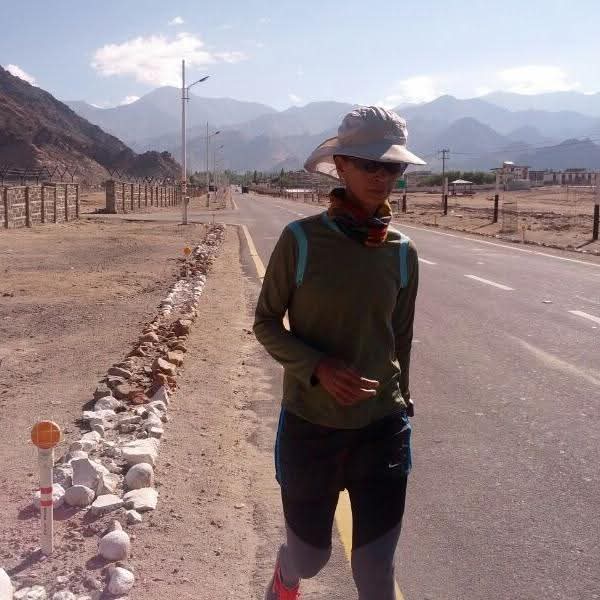
In 2012, Aparna along with Piyush Shah, Bhupendrasing Rajput and Vishwanathan Jayaraman did a self-supported multi-day run from Dandi to Sabarmati. “We ate local food, slept in temple premises, dharamshalas (rest houses for travellers) and at homes of some kind friends along the route,” she said.

Aparna along with co-runners of the Dandi to Sabarmati multi-day run

Ultraraces that are in excess of 200 km are among Aparna’s favourites. “Every ultrarunning event exacts its hardships. None of these ultra long events go easy,” she said. She is usually not daunted by the distances or the complicated routes of her ultraraces. “Sometimes, a 24-hour stadium run daunts me. Running around a 400-metre track for 24 hours can be quite intimidating,” she says.

In July 2023, Aparna was part of the team of ultrarunners representing India at the IAU 100 km Asia & Oceania Championships, held in Bengaluru at the sprawling Gandhi Krishi Vigyana Kendra. Runners were required to run a loop of 5 km for 20 times to complete the 100 km distance.
It was surprisingly a warm day for July in Bengaluru. Most of the runners at the end of their run said the weather was too tough. Aparna kept running the loops and stopping occasionally at the aid stations to nibble on some food or sip some drink. As the hours went by the number of runners on the route was steading declining as runners were either finishing or exiting the race. Aparna continued running. At the end of the 12-hour cut-off time, Aparna had completed 90 km, 10 km short of the 100 km. Though a DNF, Aparna remained unperturbed. There was neither any sign of disappointment, nor was she complaining of heat or fatigue. This was the second time we were seeing her in action. After the run, she briefly dwelled upon the run and soon moved to other topics of interest.

(The author, Latha Venkatraman, is an independent journalist, based in Mumbai)

(All photos courtesy Aparna Choudhary)