Ashwini Bhat – Unravelling the ultra trail running experience

First Indian woman runner to complete Grandmaster Quest of Asian Trail Master

In May 2026 Bengaluru-based Ashwini Ganapathi Bhat stepped into unchartered territory to became the first Indian woman runner to complete the Grandmaster Quest of the Asian Trail Master.

The Grandmaster Quest entails running six races from the Asian Trail Master calendar that is of minimum 70 kilometres or has an elevation gain of at least 4,500 metres. The quest has to be completed within two years of the first race. One of the races has to be outside the resident country of the runner.

Ashwini has been into ultrarunning for several years. She has secured podium positions in many of the races that she has participated. She holds the national record for the maximum distance in backyard ultra. In 2025, she ran the Bengaluru BigFoot Backyard Ultra for 28 hours notching up a total mileage of 187.6 km, surpassing the previous national best of 180.9 km set by Aparna Choudhary. (For more on this follow this link https://shyamgopan.com/2025/06/03/backyard-ultra-opendro-wins-ashwini-sets-a-new-national-best/).

Ashwini is in the process of figuring out trail running. “Being out there with nature is my life’s calling. I have done many road and stadium ultras but I don’t think I have enjoyed as much in a trail run,” she said.

The joy, according to her, of running a trail race is pristine pure. “Trail running humbles us. We have to climb a hill if it is a part of the route. Mountains don’t care what background we come from,” she said.

Ashwini is not focussed on performance metrics.

She describes trail running as both humbling and equalising. “Mountains don’t care about your background. You climb because the route demands it,” she said.

Ashwini came across the concept of the Grandmaster Quest at the Asian Trail Masters a few years ago while volunteering at Malnad Ultra. The initial curiosity soon gave way to serious planning. She attempted one of the races and decided to follow them through to complete the Quest.

Silabur Ultra Trail at Sarawak, Malaysia on May 4, 2024 – 100 km with 1,800 metres elevation gain

Ashwini finished 6th among 31 women and 17th overall of 120 starters. Completed the race in 19:15 hours against the cut-off of 33 hours.

“I landed at the venue three days before the event. Silabur has many caves. The trail route took us through deep jungles and two caves. I was very much looking forward to new landscapes and experiences hiking through new terrain,” she said. At around 60 km mark, the route turns back for another 40 km to the finish line. At this point runners get access to their drop bags. “It rained when I was at around 60 km. I changed my clothes and set out to finish the remaining 40 km,” she said.
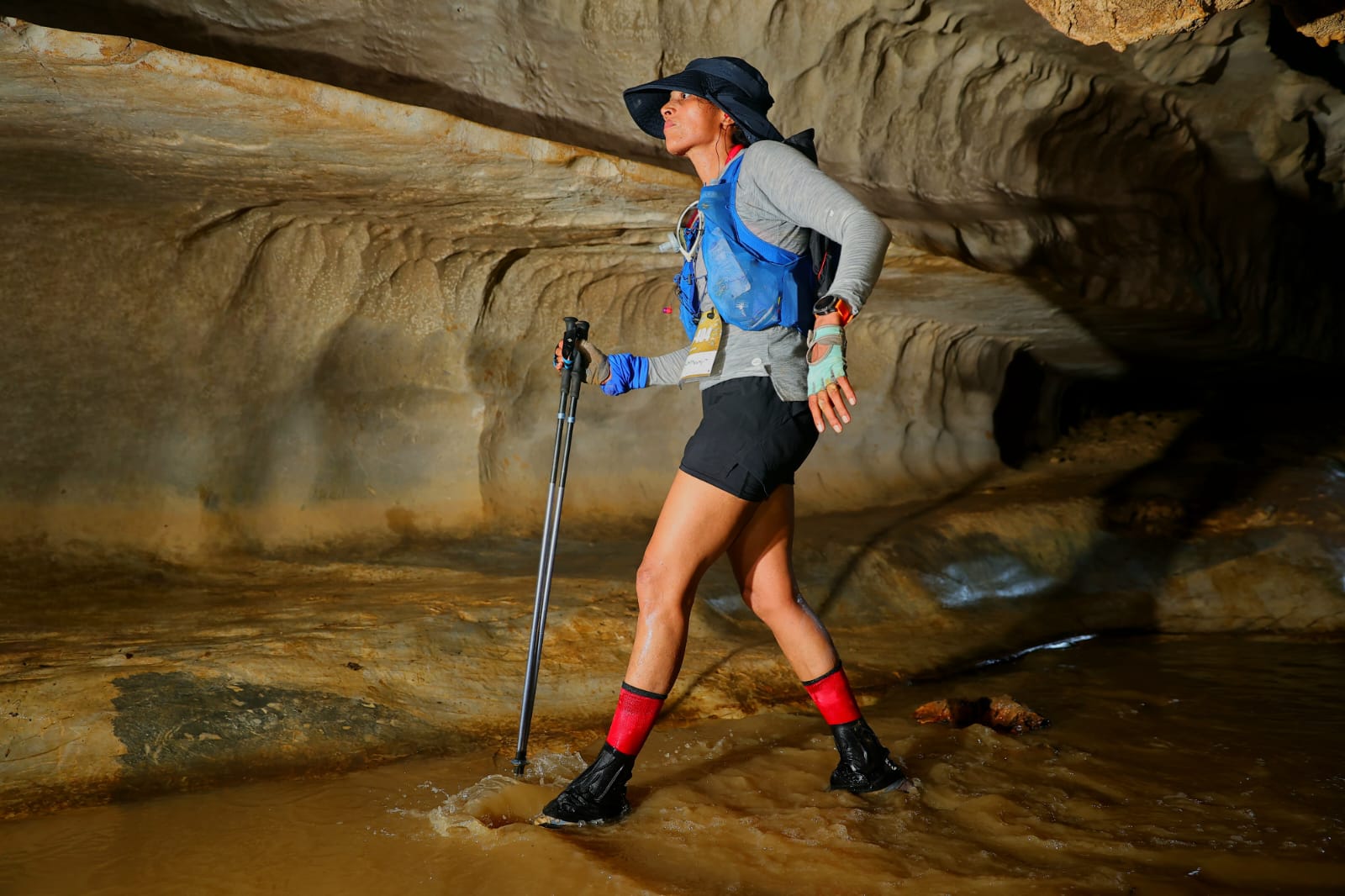
One of the biggest challenges was the weather – hot and humid. The race, originally slated to start at 10 am, commenced at 10:30 am because of the delay in checking runners’ mandatory gear by the officials of the event. Runners were mandated to carry a few items including head lamp, collapsible drinking cup, blinker lights and about 600 calories of food.

“I reached the start line at 8 am. Waiting for the race to commence, I was completely drenched in sweat,” she said.

The route wound through huge sections of palm plantations with gravel and not a trail path. “That is always the hardest for me in a trail ultra. They are gnarly and we had 10 km of that from around the second or the third kilometre,” she said. Ashwini managed to chug along until the 60th km, when she changed her clothes but did not change her shoes. “That decision came to bite me later. I ended up with blisters in my feet. It also started raining and we had to navigate through a couple of streams in the dark. This race taught me that I have to take care of everything, including my feet too and early before things got out of control,” she said.

The last 15 km of this race was an ordeal due to the blisters. “I had nothing in my bag to take care of the blisters. That’s how inexperienced I was,” she said.

When interviewed by Kris Van De Velde, founder of Asian Trail Master, before the start of the race, about her goal for the race, Ashwini said she is here to enjoy the race and finish it strong with no major issues.

This race had a couple of intermediate cut-offs. Malaysia and Indonesia have a huge number of trail races and fairly large participation of recreational trail runners. Malaysian races have lenient cut-offs, Ashwini pointed out.
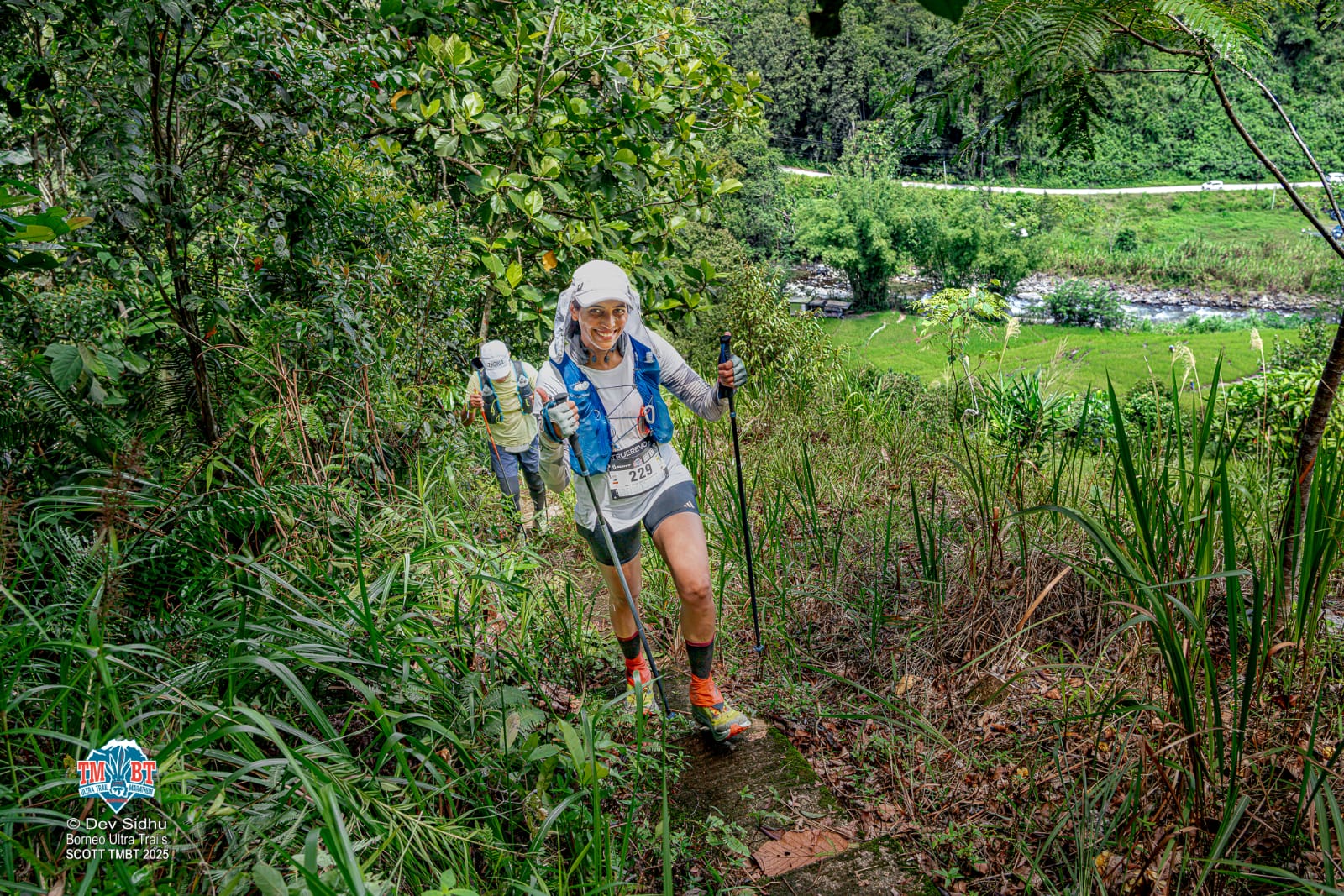
Being a vegetarian, Ashwini has to ensure that she has food with herself as most aid stations offer warm non-vegetarian food along with a selection of fruits and electrolyte drinks. “I mostly rely on gels. About 75 percent of my fuel is gels. I do carry dates, chips, salted peanuts and chocolates,” she said.

Also, one has to work around electrolyte drinks in training itself as electrolyte drink offered at aid stations may not necessary suit every runner.

This was Ashwini’s second international run, the first one being the 60 km Everest Ultra in 2022.The event entails first hiking up to the Everest Base Camp and then do the run with an overall elevation gain of 2,200 metres. She was the only finisher among 19 runners that year.

Bali Mountain Marathon (previously Bali Ultra Trail) at Bali, Indonesia on August 3, 2024 – 80 km with 4,600 meters elevation gain

Ashwini finished fourth among 20 women and 14th overall. Completed the race in 17:18 hours against the cut-off of 23 hours

The race was held in one of the most picturesque islands in Bali. “We were actually inside a crater and within that a mountain that we needed to circumvent as part of the route,” Ashwini said.

“It was a breathtaking experience. We had to start from the edge of the crater, go inside the crater, climb a mountain and then get down on the other side and go to the end of island to hit the ocean and come back,” she said.
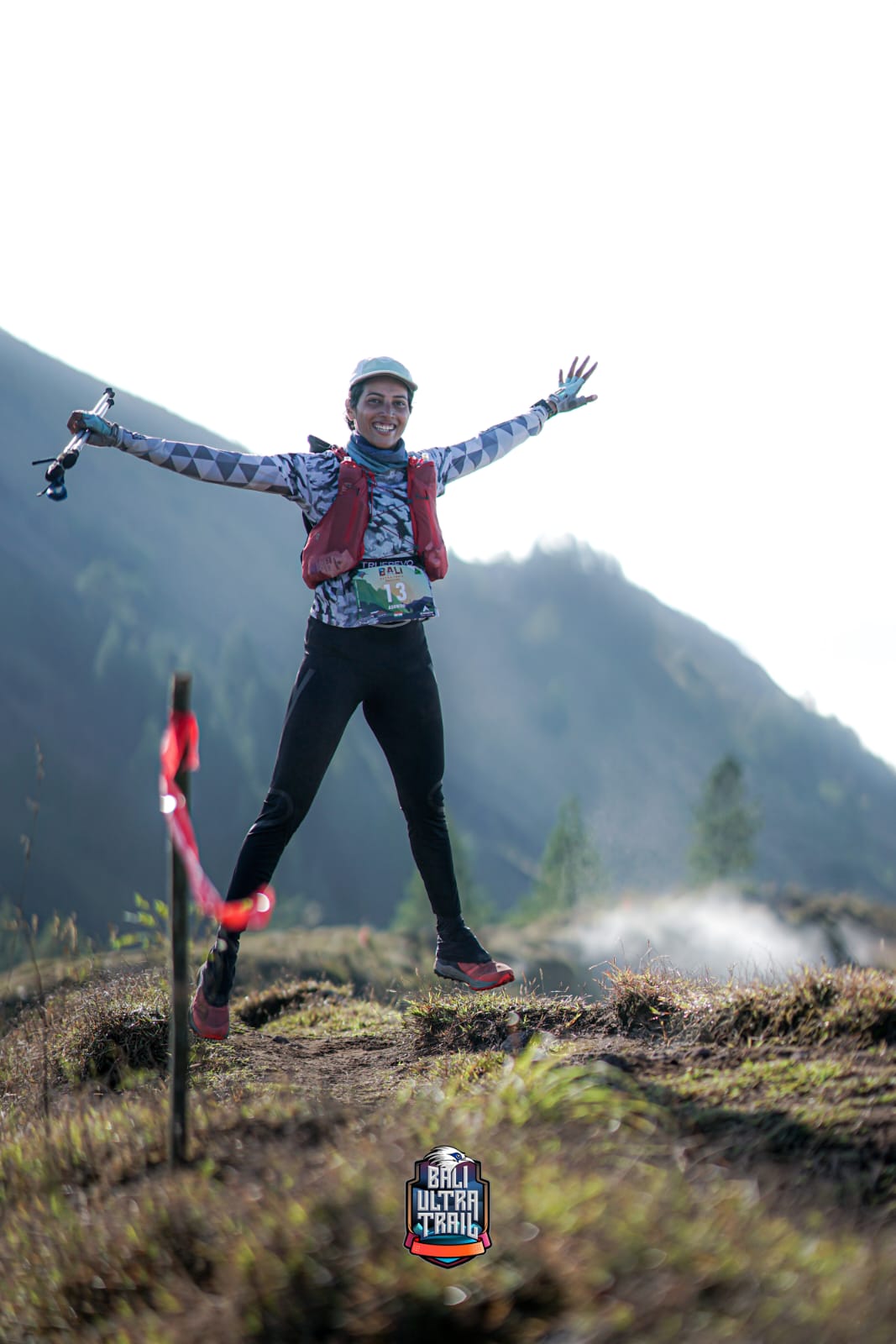
The biggest challenge in this race was the terrain. “It had a lot of volcanic scree and sandy stretches. Also, it was hotter and more humid than Malaysia. Of the 80 km stretch, about 5 km had tree cover, rest of the route was open to the skies,” she said.

While doing this race, Ashwini realised that she needs to put in some systematic training to improve her performance. In September 2024, she joined Invictus Performance Lab.

“Trail running really tests the body. In trail running, one places excess load on one side because of the terrain. Therefore, unilateral training for those joints is important for trail running,” she said.

Ashwini believes that the strength training and experimentation with nutrition and hydration with the help of Invictus has benefited her immensely.  

“All the races that I do involve several hours. Even the shortest ones require 17 to 18 hours. At Invictus, I am given inputs on what kind of fuels I should try,” she said.

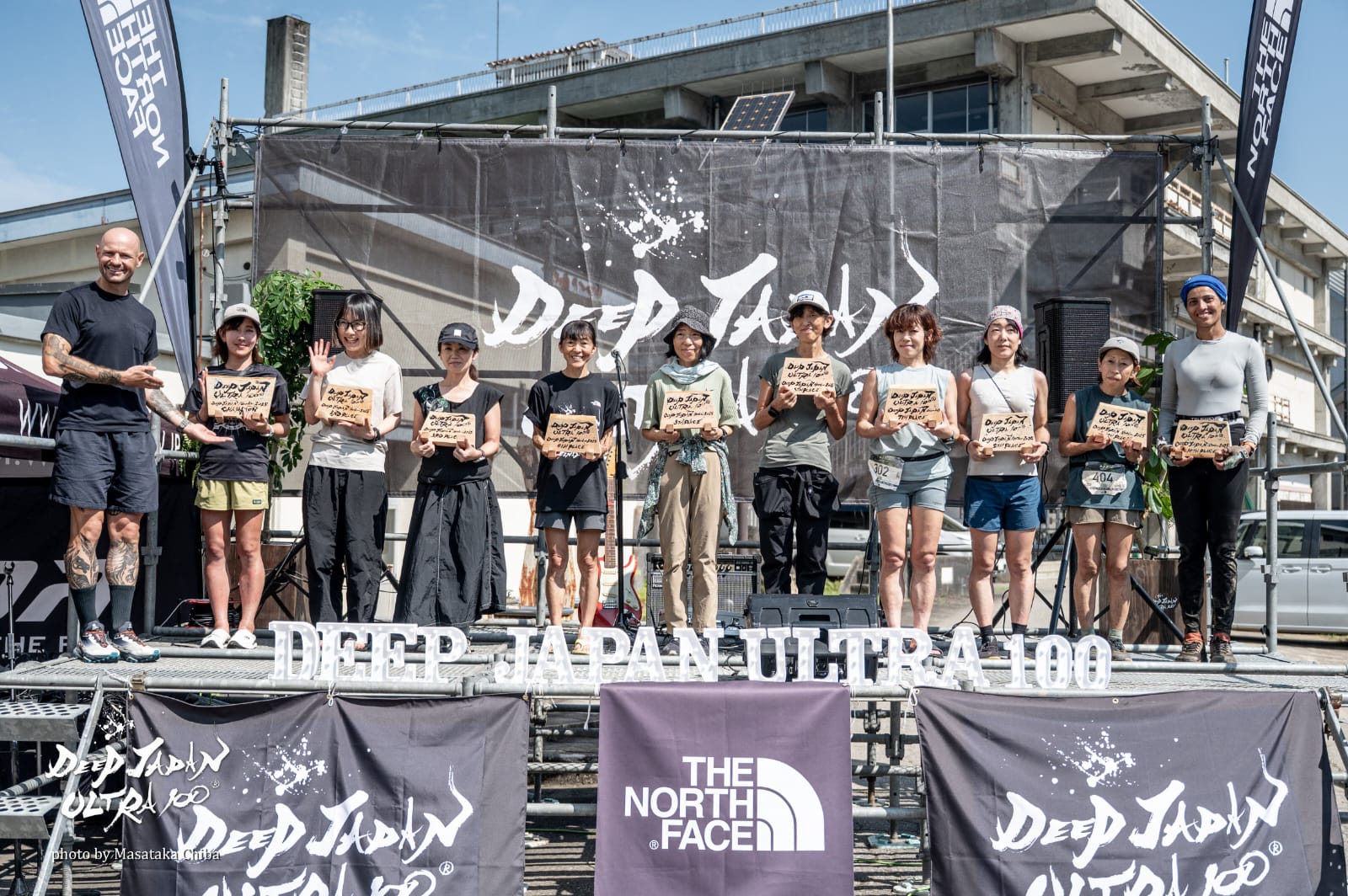
Deep Japan Ultra at Niigata, Japan on June 27, 2025 – 174 km with 9,300 metre elevation gain

Ashwini finished 10th among 12 women and 60th among 126 starters. Completed the race in 45:43 hours against the 46-hour cut-off

In January 2025, Ashwini signed up for a 100-miler trail run in the US. She travelled to California and ran 81 km of the race but the event was cancelled thereafter because of a storm.

The Japan ultra trail became Ashwini’s first 100 miler in trail.
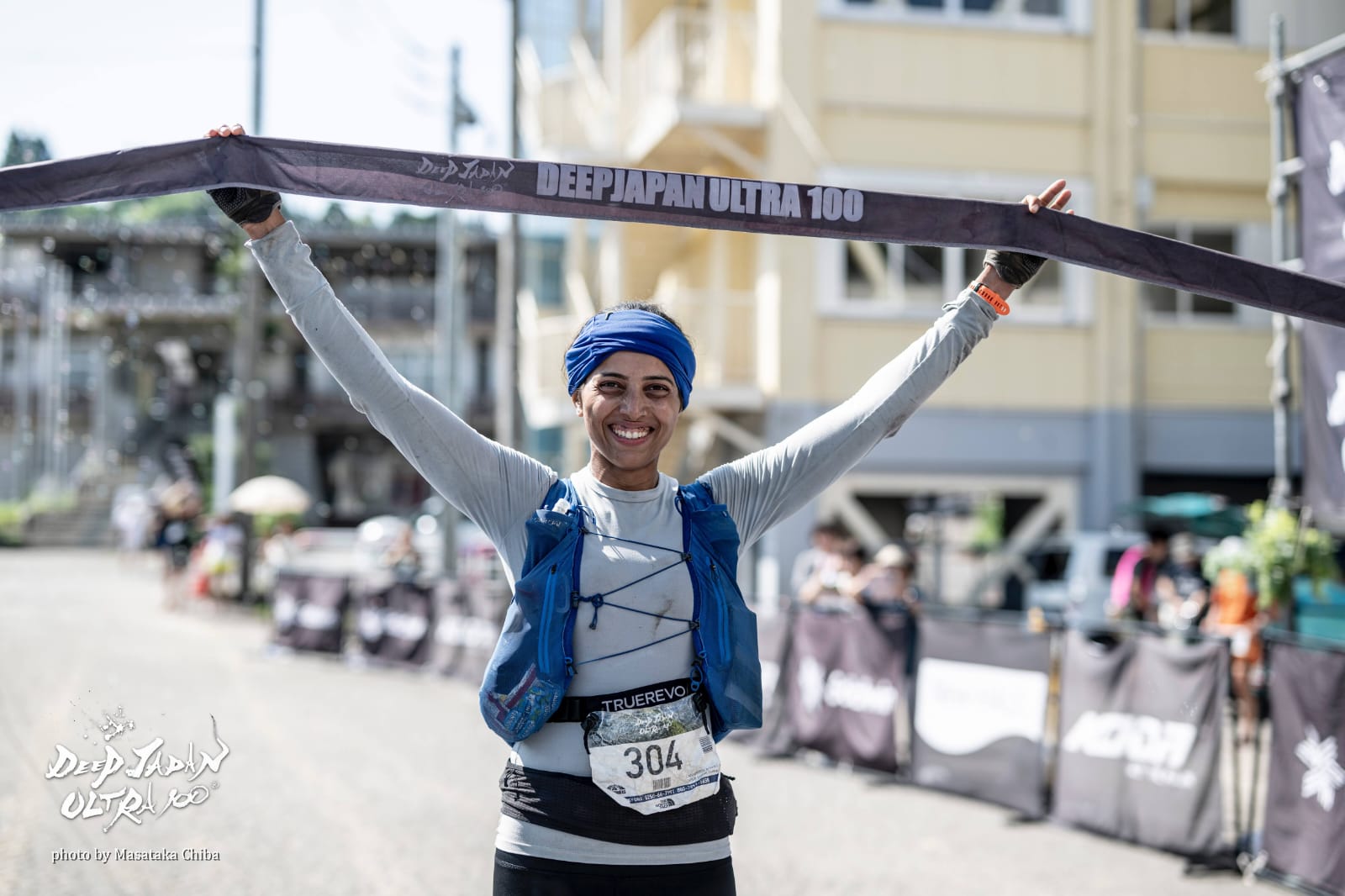
“It was the hardest race I have done so far. It was brutal. We had to climb three different mountains with 9,300 metres of elevation gain. The terrain was quite technical. There were snow patches in one of the mountains that we had to climb it from three different directions,” she said.

The downhill paths were slippery and rocky, with tree roots sticking out everywhere. “In some sections, we even had to use ropes to get down, which made me question if this was trail running at all,” she said.

This race had eight intermediate cut-offs and a final cut-off of 46 hours. “In the initial part of the race, I was chasing the cut-offs. I was well ahead of time in the first five cut-offs,” she said.

At the end of about 28 hours, Ashwini was not able to consume any food. “I was quite exhausted and my energy levels were declining because I wasn’t able to eat anything. It was quite warm. I did contemplate quitting the race twice. But when we are on a mountain we can’t quit. We have to get to an aid station to quit,” she said.
Sleep deprivation, exhaustion, and the sheer magnitude of the climbs started to take a toll.

At that point, she was heading into the longest stretch of the race, with the next aid station 27 kilometres away. Knowing what lay ahead, she had filled her soft flasks & hydration bladder to the brim, carrying 2.5 litres of water, aware she would need every drop to get through the next six to seven hours.

Because it was a long race, the organisers had mandated that runners also carry a satellite phone, tracking device and a power bank to charge these devices periodically. These were in addition to the other mandatory gear that runners were required to carry. Ashwini was carrying nearly 6 kgs in her running vest apart from her own race nutrition.
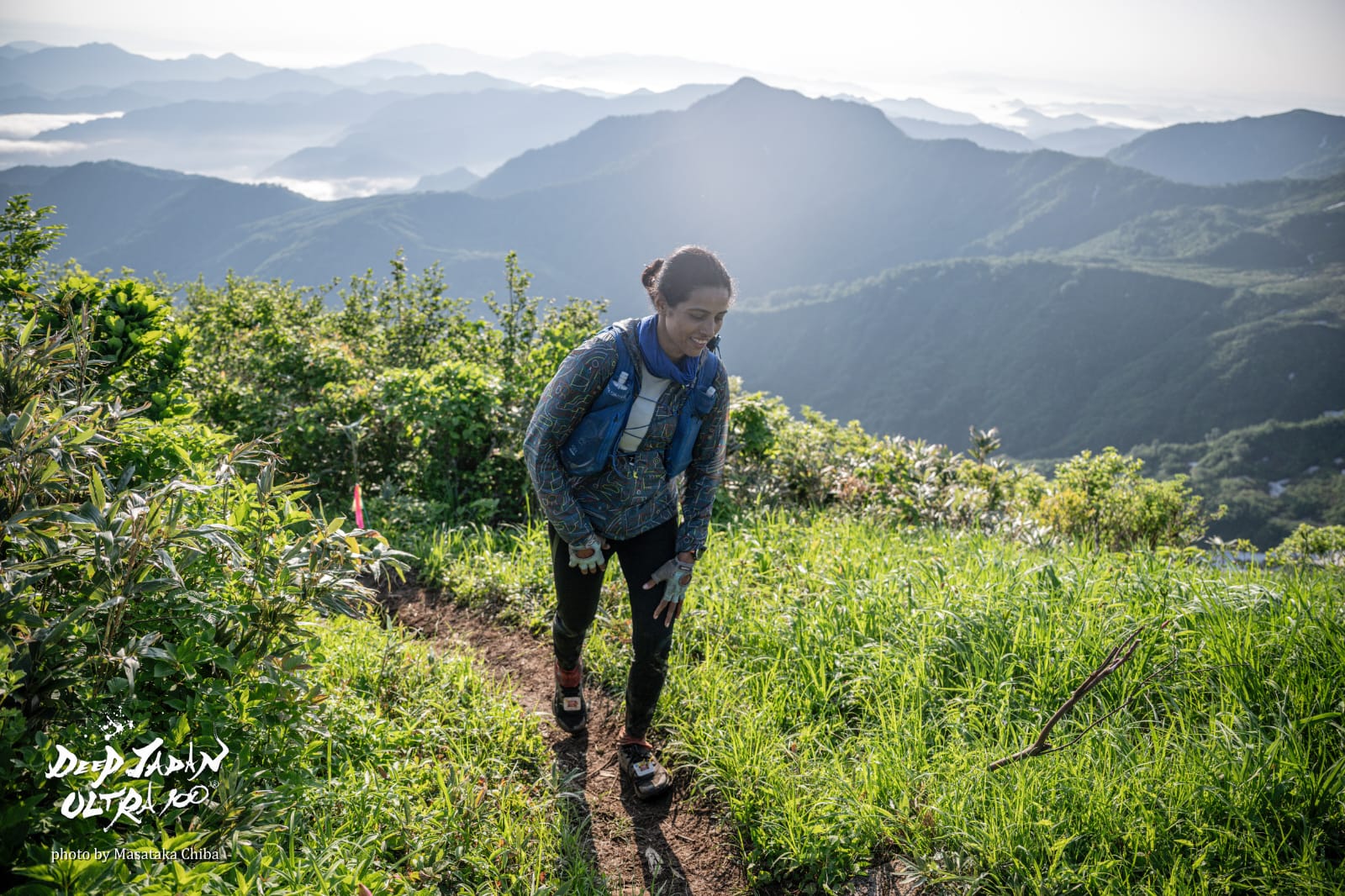
“For about 5 to 6 hours I kept going. My plan was to go to an aid station and quit the race. It was really the defining moment of my entire running life. Questions started cropping up in my mind, “how badly do I want it?”. The fact that my husband was going to be at the finish line helped me stay focussed on the race,” she said.

She did not give up and finished the race 17 minutes before the cut-off. She was the first non-Japanese finisher that year. With this race, she also became the first Indian women to complete a single stage 100 miler trace race.

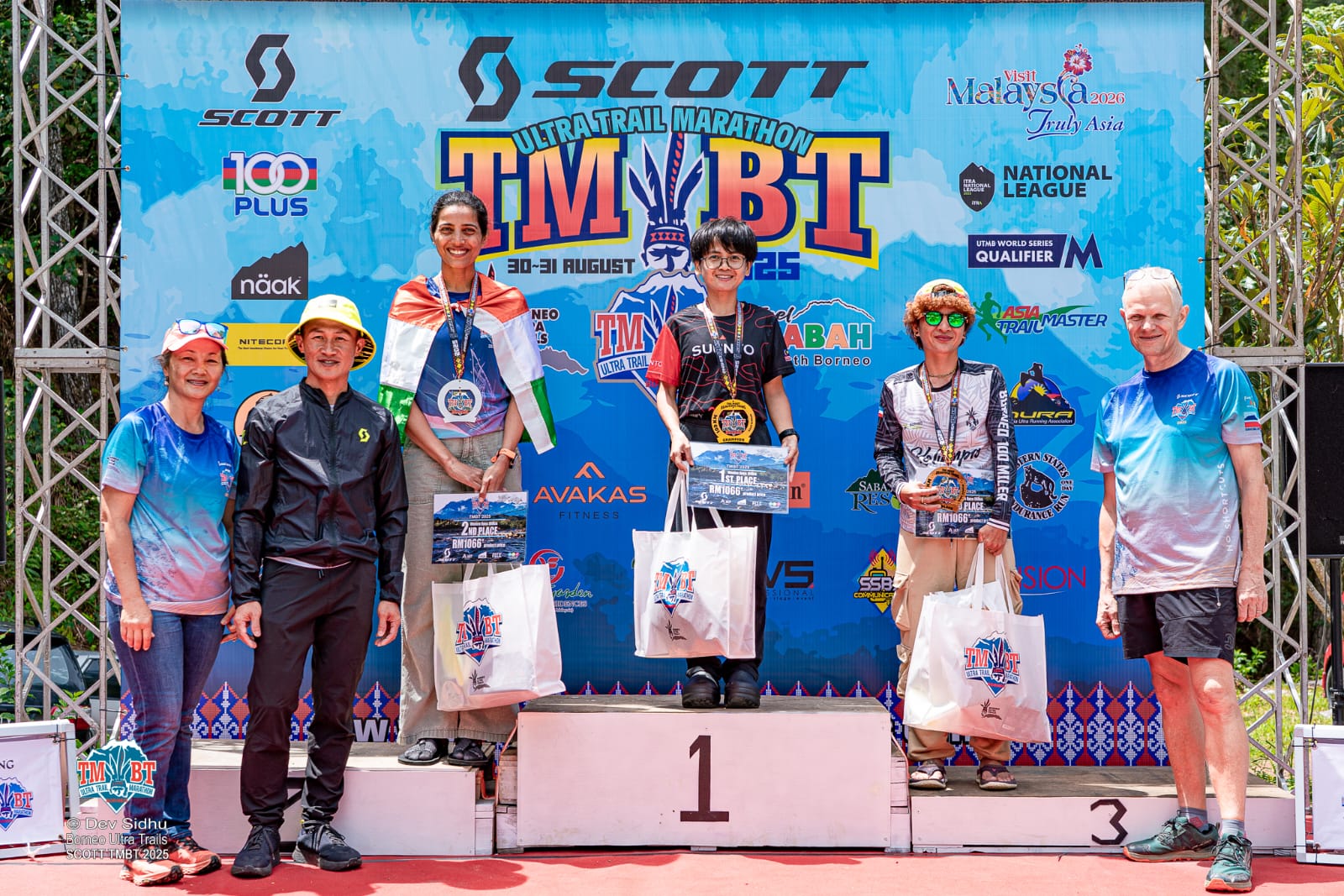
The Most Beautiful Thing at Sabah, Malaysia on August 30, 2025 – 109 km with 5,500 meters elevation gain

Ashwini finished second among 66 women and 14th among 279 starters. Completed in 21:18 hours against the cut-off of 33 hours

The event is called The Most Beautiful Thing as the route circumnavigates the highest mountain of Malaysia & Borneo – Mount Kinabalu. Sabah’s jungles promised heat, humidity, relentless climbs, and technical descents.

Yet, as Ashwini lined up for the 5 am start, things felt different this time.

In the initial part of the race Ashwini enjoyed the scenic moments capturing many photos and videos of the route. She was almost at the end of the pack of runners. At 60 km point, she changed into fresh clothes and had her food. At the next aid station she was told that she was in the 8th position among women. “I had another 35 km to go. It was 9 pm and I feel good running at night. I started running and as I went along I was overtaking many runners. Around 86 km mark I saw one female runner. Keeping her as a target I continued along,” she said.

At the last aid station with just 11 km to go, Ashwini realised that she had come up to second position among women. “The remaining 11 km was completely uphill. I just power hiked my way to the finish. The woman I was tracking finished 35 minutes ahead of me,” said Ashwini.

“This race helped me realise that I have the potential to do well. I felt confident,” she said. She finished in a little over 21 hours against the cut-off of 33 hours.

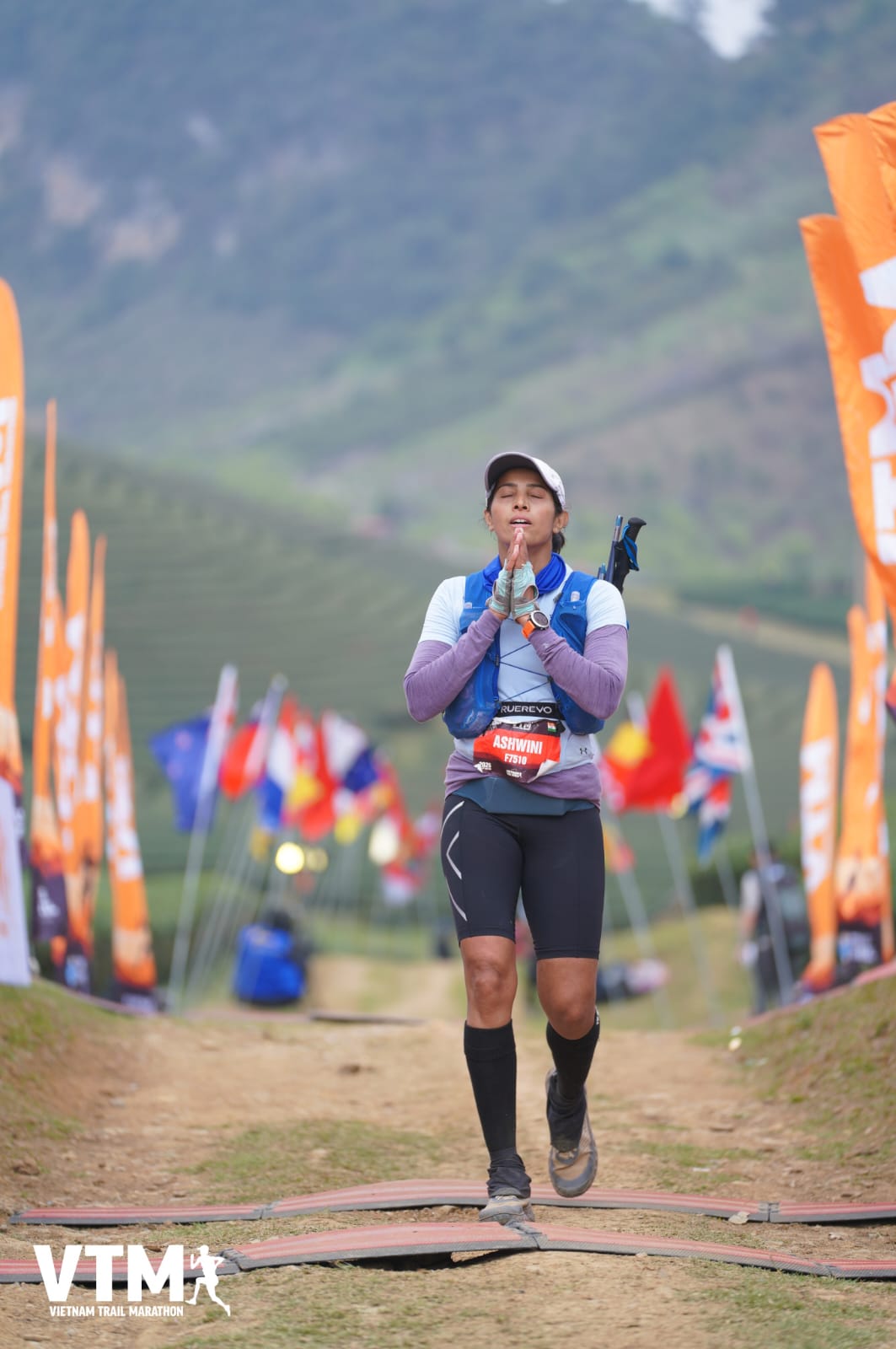
Vietnam Trail Marathon at Mộc Châu, Vietnam on January 31, 2026 – 70 km with 2,900 metres elevation gain

Ashwini finished 14th among 60 women and 69th among 535 starters. Completed the race in 10:21 hours against the cut-off of 18 hours.

In January 2026, a couple of weeks ahead of the Vietnam race, Ashwini ran the 90 km race of Vagamon Ultrail in Kerala as a practice run. “I decided to use Vagamon as a good training run considering it was of similar distance and elevation to the Vietnam event. But at 10 km point in the race, I twisted my right ankle. It was painful and I limped along for about a kilometre,” she said.
At the aid station she checked her foot and decided to continue the race. Her right ankle had swelled up but she felt no pain.

In the weeks leading up to Vietnam, she cut back her running to about 20 km a week. Instead, she spent time on the stationary bike and followed the plan set by her physio at Invictus. With rehab, support, and some help from taping, she made it to the start line feeling stronger, even if she knew she might not be at her best.

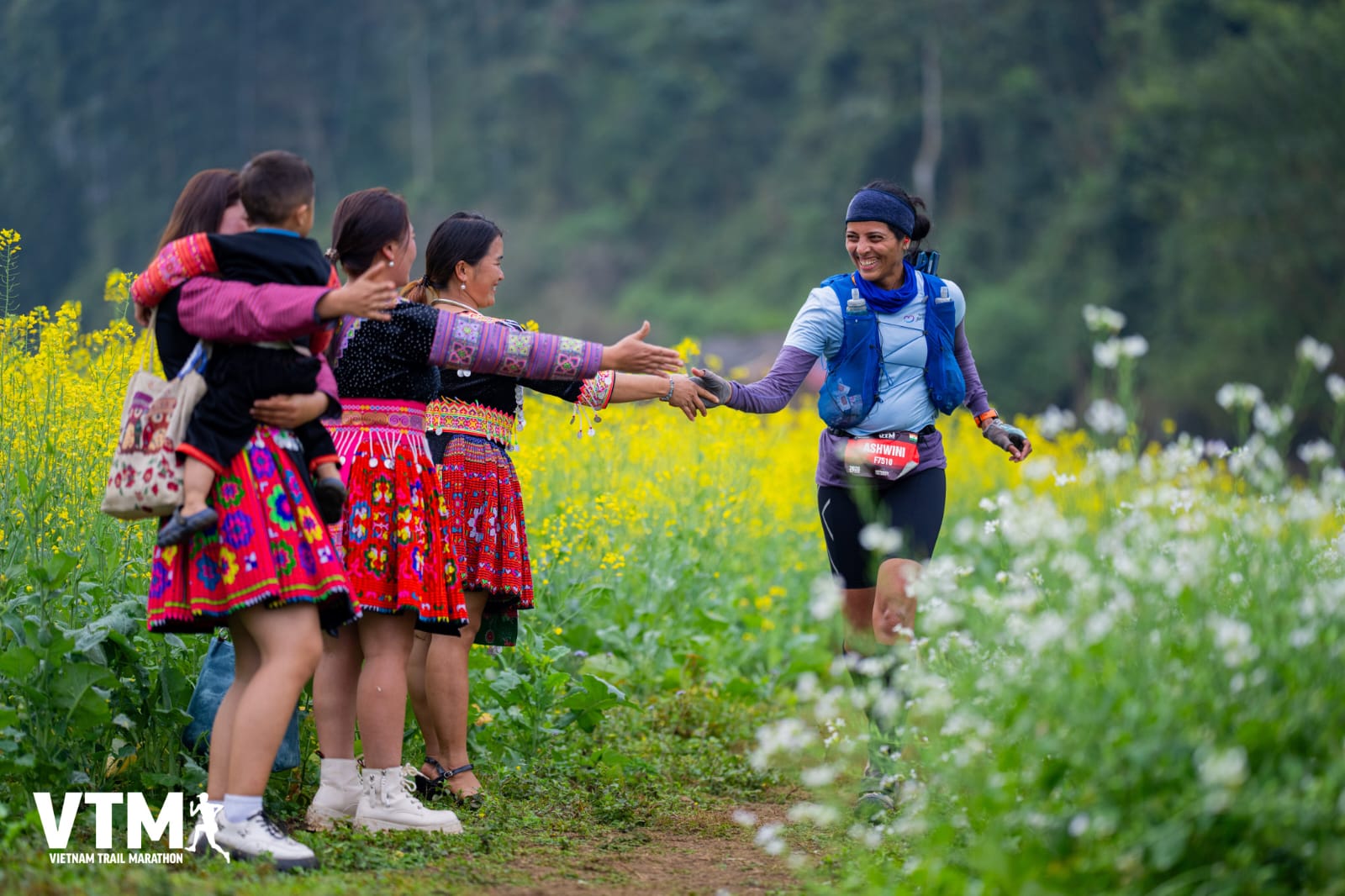
The Vietnam race was the shortest she had done in the Asian Trail Master series so far. The race was held in Mộc Châu. The route winds through jungles and small villages, with locals cheering along the way.

“It was the most scenic race I have done,” she says.

Merapoh Rainforest Trail at Pahang, Malaysia on May 1, 2026 – 164 km with 3,700 metres elevation gain

Ashwini finished second among 27 women and 5th overall among 146 starters. Completed in 28:33 hours against the cut-off of 42 hours

“This race was a long one but it did not have much of elevation gain. There was a lot of water crossing, including a 3 km river crossing and many caves, some with water,” Ashwini said.
The challenge was managing the feet during this race. “I experimented with many things for my feet. Finally, I hit upon baby diaper cream, which has zinc oxide. It does act as a water repellent. I had to change socks many times, change shoes once,” she said.

Of the six trail races that Ashwini did for the Grandmaster Quest, this particular one was her least favourite. But performance-wise, it turned out to be her strongest.

From the Japan 100-miler to the Merapoh 100-miler, her final four Asian Trail Master races were supported by Tekion, an automotive retail technology company. Ashwini says that this backing allowed her to train with intent, recover better, and truly show up as an athlete.
Choosing Trail Running

Trail running, according to her, is always offering something new. “Every race, every distance, every terrain, even the weather, brings a different experience. No matter how much you think you have learnt, there is always an element of uncertainty. That is what draws me in,” she said.

Being out there in nature, in its rawest form, is a gratifying experience. “Every run brings the same joy, curiosity and awe that I felt the very first time,” she said.

And today, she hopes more people find their way to a sport that has changed her life.

(The author, Latha Venkatraman, is an independent journalist based in Mumbai)

(Photo courtesy – Ashwini )
IAU 24-Hour World Championships – Indian Women Lead the Charge, Smash National Record

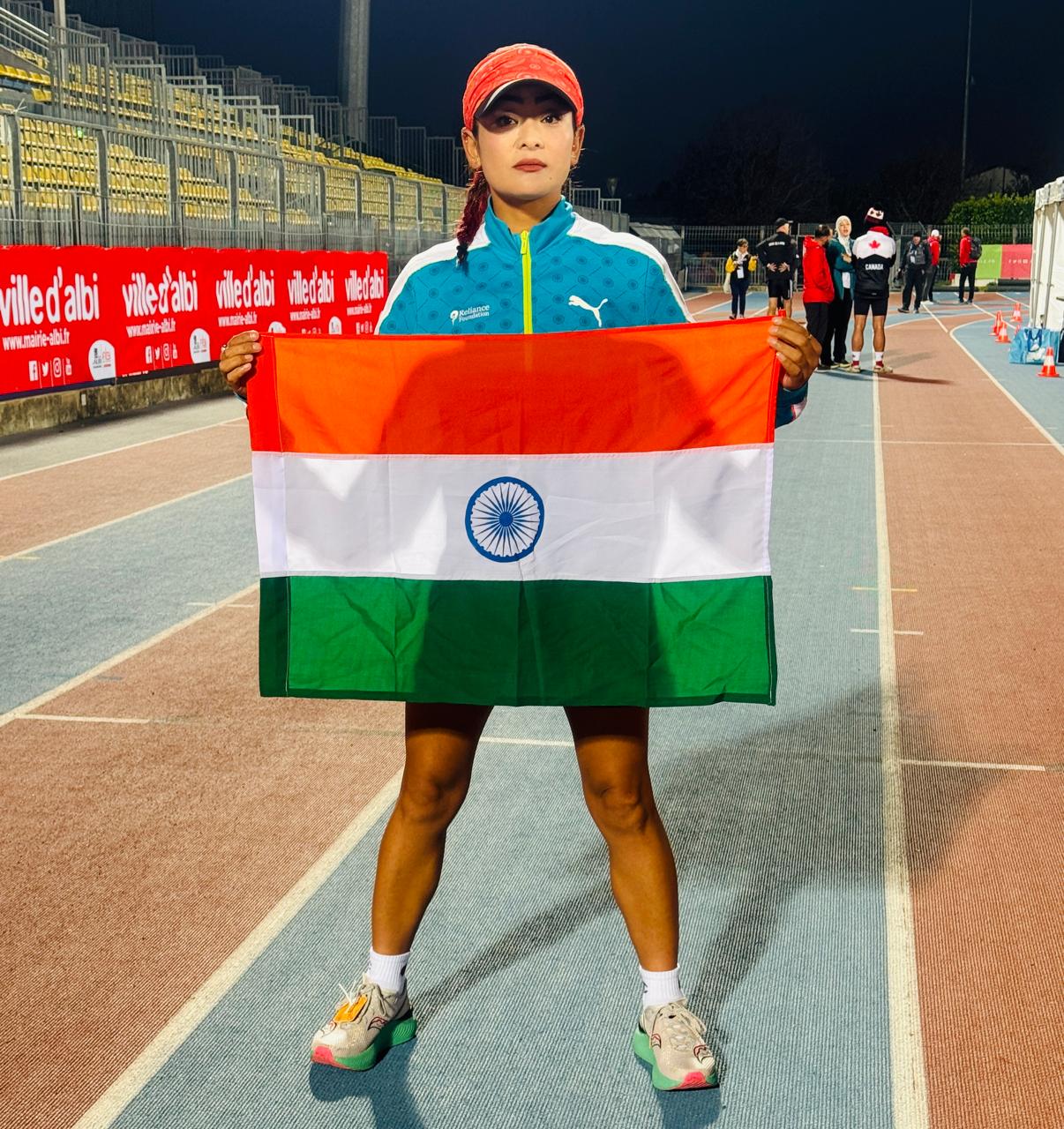
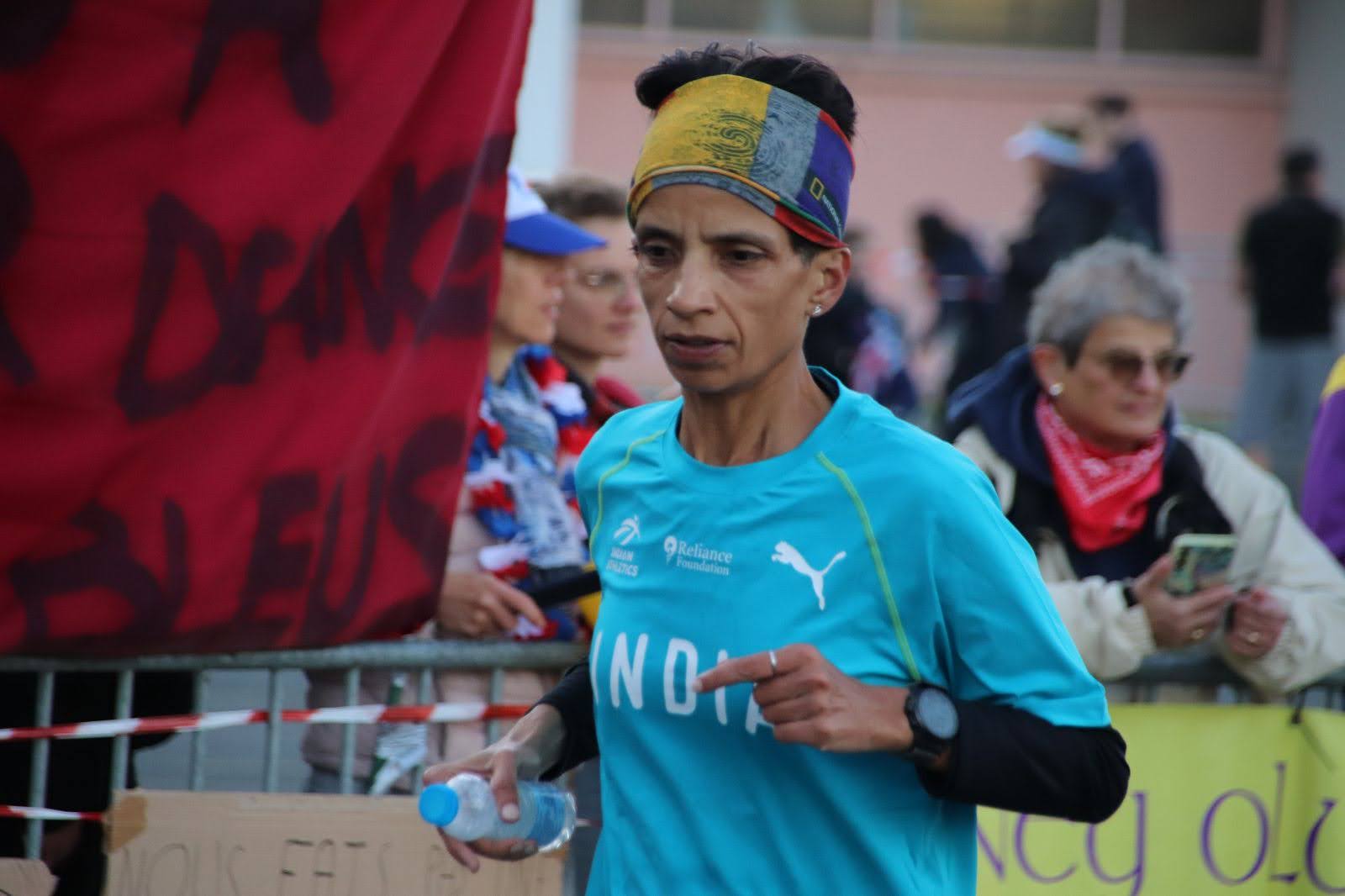
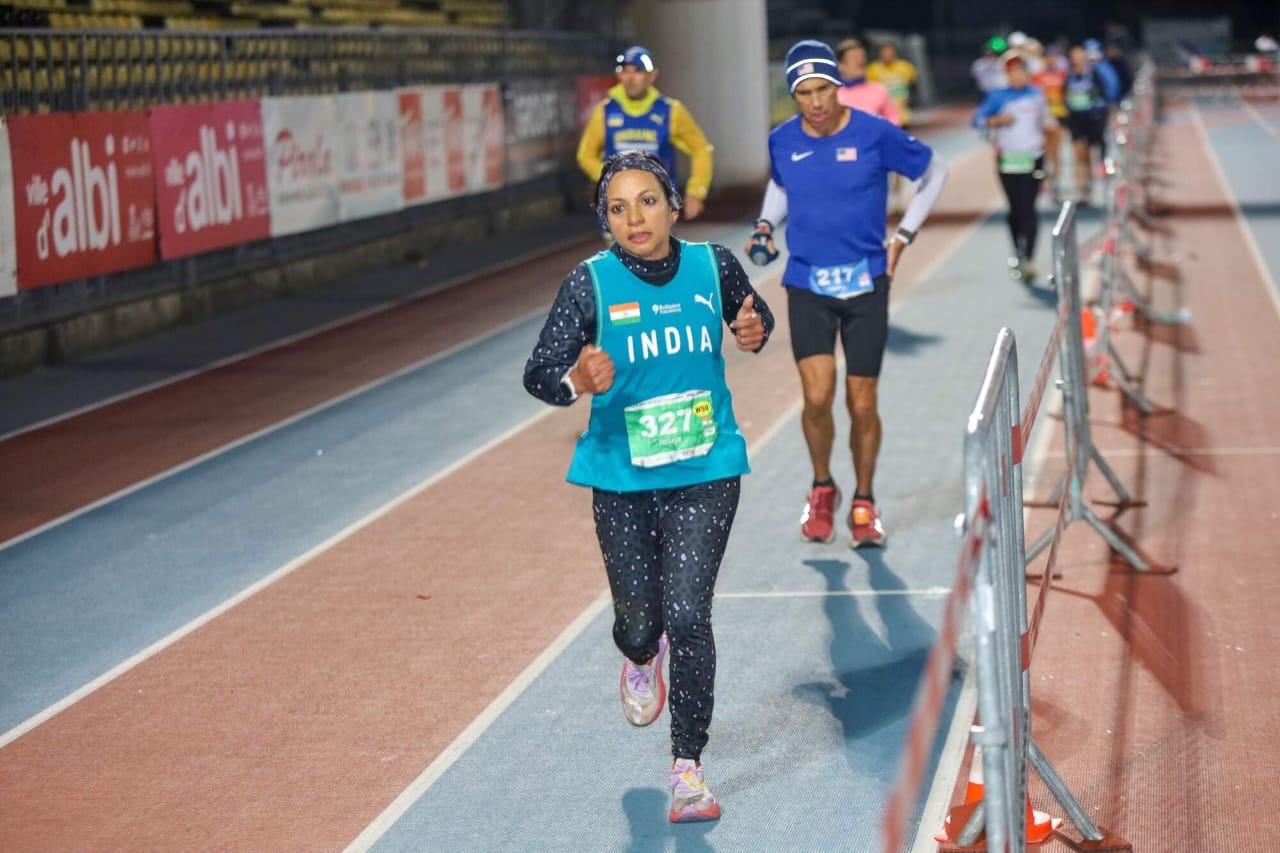
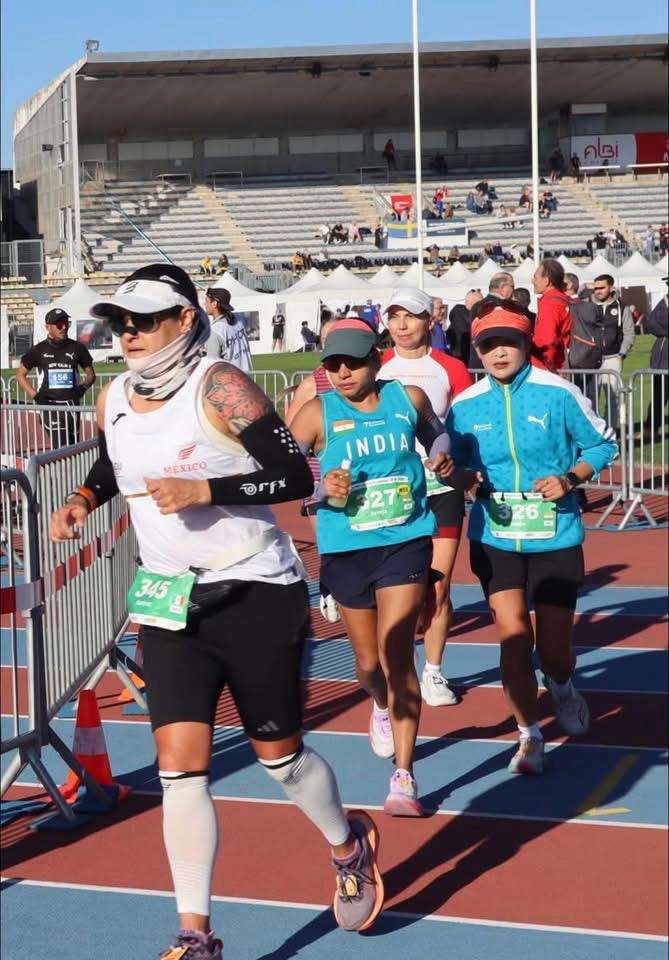
At the recent IAU 24-Hour World Championships held in Albi, France, Indian women ultrarunners delivered a landmark performance, shattering the national record in the 24-hour ultrarunning format.

Also, for the first time in India’s ultrarunning history, three women crossed the 200-kilometre mark, with two of them surpassing the previous national record of 204 km.

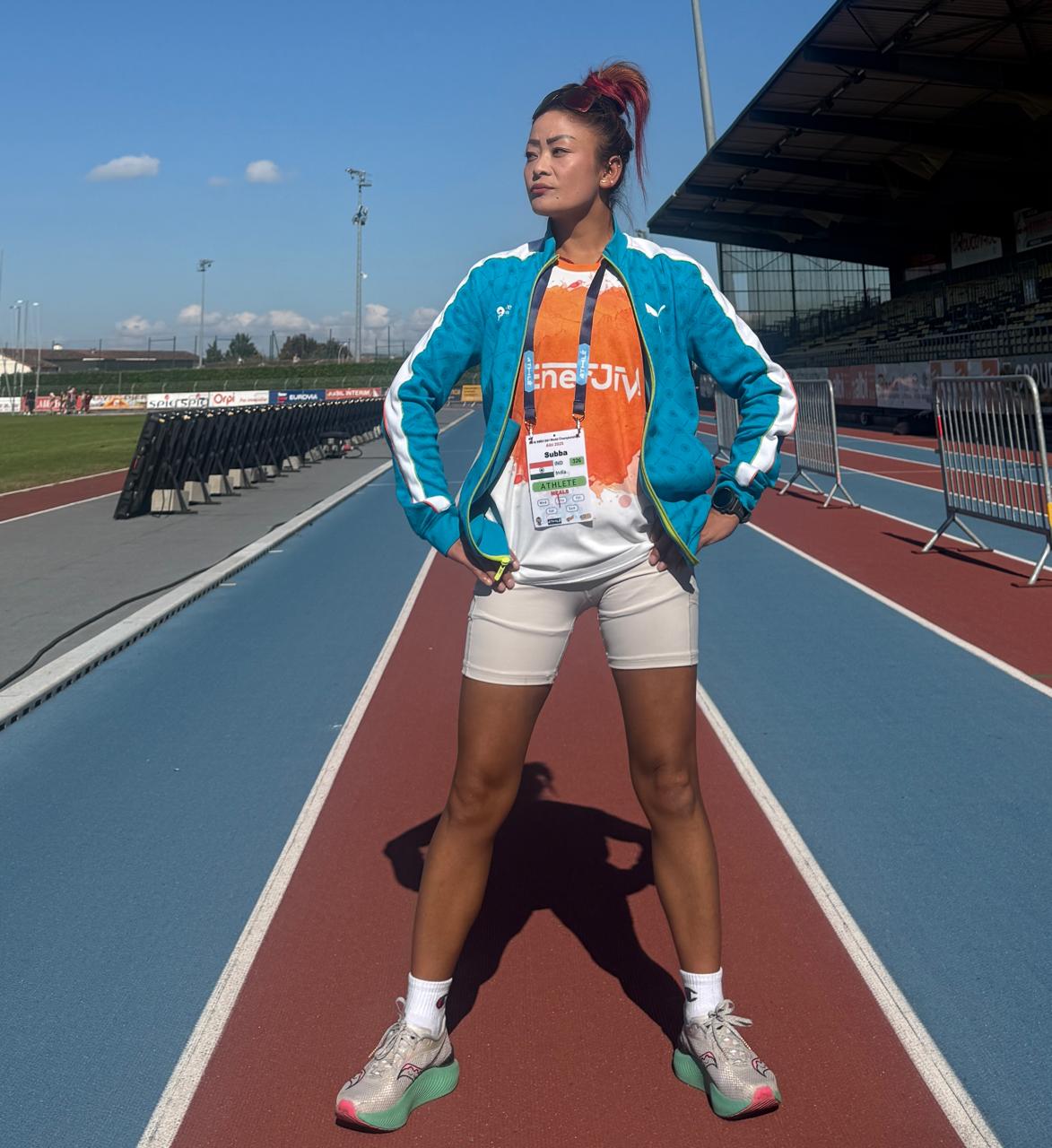
Sunita Subba and Aparna Choudhary both broke the national record to finish first and second respectively among Indian women. Sunita now holds the new national mark of 217.327 km, eclipsing the earlier record of 204.314 km set by Anju Saini at the 2022 IAU 24-Hour Asia & Oceania Championships in Bengaluru.

Aparna Choudhary followed with 210.537 km, while Bindu Juneja secured third place with 202.164 km, completing a remarkable showing by the Indian women’s team.

In the men’s category, Geeno Antony led the Indian contingent, finishing among the top 10 male runners overall with a distance of 265.198 km. The 24-hour race began on October 18 at 10 a.m. and tested endurance and mental fortitude under shifting weather conditions.

In the same event, Sarah Webster of Great Britain and Northern Ireland set a new world record with a distance of 278.622 km, surpassing the previous record of 270.363 km held by Japan’s Miho Nakata.

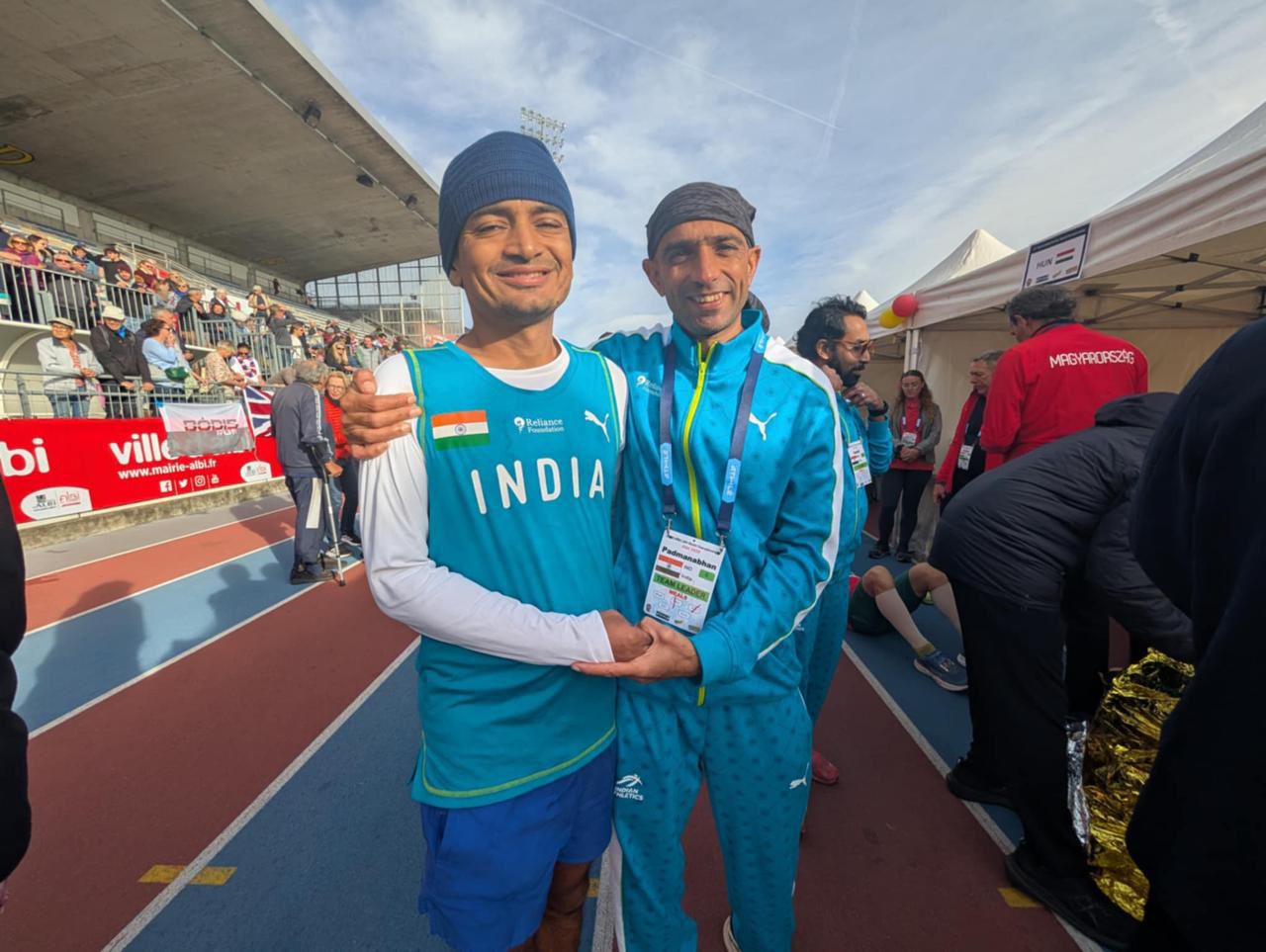
The Indian team, coached and managed by Santhosh Padmanabhan, underwent an intense training program in the run-up to the event. Despite hopes for a team medal, a few setbacks affected the final mileage tally.

This time around, the training plan, devised by Santhosh, was one of the toughest and extensive that the current team of ultrarunners were asked to execute.

“We wanted to push the bar because we had put in a lot of hard work – the athletes, the support staff and all of us. Therefore, expectations were quite high for both the men’s as well as the women’s team,” Santhosh said.

In training, many runners were able to execute and achieve the goals. Some of them shifted their base temporarily to Bengaluru to be able to motivate each other during training and work as a team.

In terms of actual performance at Albi, the Indian team, especially the women’s broke out of their shackles with three of them crossing the 200 km mark, he said. The performance of both men’s and women’s was much better than previous championships but did not meet the goals set for this specific championship, Santhosh said.

“In the men’s team, though some key runners fell back, Geeno did very well not only at the championships but also in training. I could see him maturing as an ultrarunner, he was more knowledgeable about his own abilities and he was getting all his milestones. It shows that we were on track with our training,” Santhosh said.

One of the main challenges faced by the Indian team at Albi was the extreme temperature change. During the day, although temperatures were at 22 degrees Celsius the night time temperature decline by 12 to 15 degrees affected hydration and nutrition of the runners, he said.

“These drastic weather changes affect appetite. Also, fatigue hits really hard. The learning for us from this experience is that we need to know how to handle fatigue and also train in different geographical locations with varying weather conditions,” Santhosh said.

Sunita Subba

Sunita Subba ran her first race, a half marathon in Darjeeling, in 2016. She did not follow it up with any further running immediately. In 2019, she again ran a half marathon. Soon after the COVID-19 pandemic lockdown brought all outdoor activities to a grinding halt. “At that time, I felt the need to do something. When the lockdown was eased, I signed up for a 10-day virtual run challenge. I could do it only for eight days but I covered a distance of about 330-350 km,” she said. Soon she found herself signing up for ultra races – 12-hour stadium run and the first edition of Ladakh Marathon’s Silk Route Ultra, in which she won the women’s race, 90 km at Kalimpong Ultra, Pune Ultra and a few stadium ultra runs.

In July 2024, Sunita won the women’s race in the 24-hour stadium run held in Bengaluru, covering a distance of 188 km, helping her to qualify for the world championships.

After she was chosen to represent the country at the IAU 24-Hour World Championships in Albi, France, Sunita set about doing her training in Darjeeling, where she resides. “I used to train alone, sometimes running for six hours, sometimes eight hours. I would keep my water and other supplements near the gate of Bhanu Bhawan on Mall Road,” she said. Sunita works in a low paying job and often she is forced to juggle her finances in order to participate in running events. She was worried about arranging finances for the Albi but after she was enlisted as an Enerjiva athlete, much of those tensions were taken off her plate. Enerjiva, a sports nutrition brand, sponsored many of the athletes for the Albi championships.

Sunita Subba

Sunita was then asked to shift to Bengaluru by the team coach and manager Santhosh Padmanabhan. Her training went off quite well under his guidance. “When much of my long runs were done in Bengaluru, I sought leave to go back home to Darjeeling towards end of September and continue my training there. I also wanted to be home for the Dusshera festival. But weather was playing havoc back there, with heavy rains and landslides. I ended up with fever,” she said.

By the time she was to leave for Albi, she had recovered but was exhausted and tired from the ailment. “I managed well for the first few hours. But my water consumption was quite low. I was having energy drink and some bit of rice and dal. I did get some muscle tightness on my left leg but overall, I was injury free,” she said. By the end of the 24-hour period, she had surpassed the national record by a huge margin, setting the new record at 217.327 km compared to the previous record of 204.314 km set by Anju Saini during the IAU 24 Hour Asia & Oceania Championships held in Bengaluru in 2022.

Her son Swayam Tamang and her sister Sabita are very supportive of her running activities.

Aparna Choudhary has been associated with ultrarunning for a long time, commencing her journey in this niche sport way back in 2010. Running itself is fairly a nascent sport in India and ultrarunning even more so.

But Aparna is not new to sport. She was a national level hockey player and then took to recreational running during her graduation and post-graduation days. A stint in the US exposed her to lot more running events.

In 2010, she signed up for her first ultramarathon, a 100 km race at Bangalore Ultra. Over the years, she has participated in a number of ultrarunning events of varying distances and quite often ended up on the podium.

Aparna Choudhary

Her training for the IAU Championships could have been better, she said. In between her training she took a break to go to Peru for a holiday. She was back on July 17 but she barely had a fortnight for the Goa Ultra in which Aparna had signed up for the 120 km. “I took it as a training run,” she said. Aparna finished first among women finishers in this race. But after the race she had to wait for a couple of weeks to resume her training for the championships as she fell ill.

“I was consistent with my training but did nothing extraordinary. I did a few long runs, one of them 75-km long. All my training runs were done in the evenings or nights,” she said. “I also did not let my mind be in the clouds about my training or my ability to perform on race day,’ she said.

On race day, the initial few hours went along well despite the sun being up. But after about 6-7 hours, she had an upset stomach. “By the 15th hour or so, I was throwing up and that was affecting my hydration,” she said. But she was able to keep at it without taking long breaks.

Runners were required to run a loop of 1.5 km which included road as well as track during the entire 24 hours.

“All my plans were out of reach for me. Nevertheless, I just decided to keep running. During the last hour, I stepped up my pace and I could feel it in my raised heart rate. I wanted to get past 210 km and also be able to get up and walk at the end of the race,” she said.

Aparna Choudhary

Aparna finished the race with a distance of 210.537 km, improving her personal record by a huge margin from her previous best of 192 km. But she was a tad disappointed about missing out on the automatic qualification mark of 212.5 km at Sparthathlon, a 246 km ultra distance foot race held in Greece every year.

Nevertheless, Albi was a satisfying race as many factors played out well, she said.

This time around Bindu Juneja had to do a completely different training program in the run-up to the world championships.

“There were a lot of very long runs. Normally, I would do about 40-50 km long runs. When I saw the workout charted by Santhosh, I was very worried about recovery. I work as a teacher in a school and I cannot miss work. This time around there were runs planned for 10 hours, 100 km runs and once I had to run for about 10 hours,” she said.

These long runs were interspersed with interval training and strength workouts. “I had told Santhosh that if I could do 80 percent of the workout, I could consider myself an ultrarunner,” she said.

Bindu Juneja

She was able to do 98 percent of the workout planned. “My weekly mileage touched 148 km, 158 km, the highest being 171 km. These ultra long training runs, initially daunting, started to get easier,” Bindu said.

Bindu started running in 2015 and in 2018 signed up for her first ultra running event, a 50 km race at the Bangalore Ultra, in which she was the winner among women. Subsequently, she has done many ultra races, including several hour-based stadium runs and Comrades Marathon in South Africa.

“As some of us were sponsored athletes of Enerjiva for the Albi Championships, we had access to free strengthening sessions. Even though I was not able to attend all of these, I was able to follow these workouts through videos sent to me,” Bindu said.

During the race, the first 10 hours went by quite smoothly. “But after that my gut gave up and I had to take washroom breaks. I stop consuming gels as well as solid food. For a few hours I ran without consuming any food,” she said.

Weather during the 24-hour period fluctuated between being warm in the day time and very cold in the evenings and night. “This time I was determined to cross the 200 km mark. The second half of the race could have been better if nutrition had worked. I think I consumed too many gels early in the race. I should have interspersed gels with some natural food. Also, I had my periods,” she said.

Bindu Juneja and Sunita Subba

Bindu often has a problem of her toe nails coming off. But this time she was able to continue running with the pain. “It was quite a well-organized event. There was a lot of support with many people cheering on the sidelines throughout,” she said.

She covered a distance of 202.164 km, improving her personal record by a huge margin of 17.2 km.

Bindu now plans to take a break for two months from serious running but will continue her daily routine runs and focus on strength training.

Geeno Antony is not new to sports. Both his parents, speech and hearing impaired, were into sports. Geeno was introduced to sports early on. (To read more on this follow this link https://shyamgopan.com/2022/10/15/the-satisfaction-is-beyond-measure/)

Geeno has been running for quite a while now and his transition to ultrarunning was instinctive. He has been part of the team of ultrarunners representing India in many international ultrarunning events.

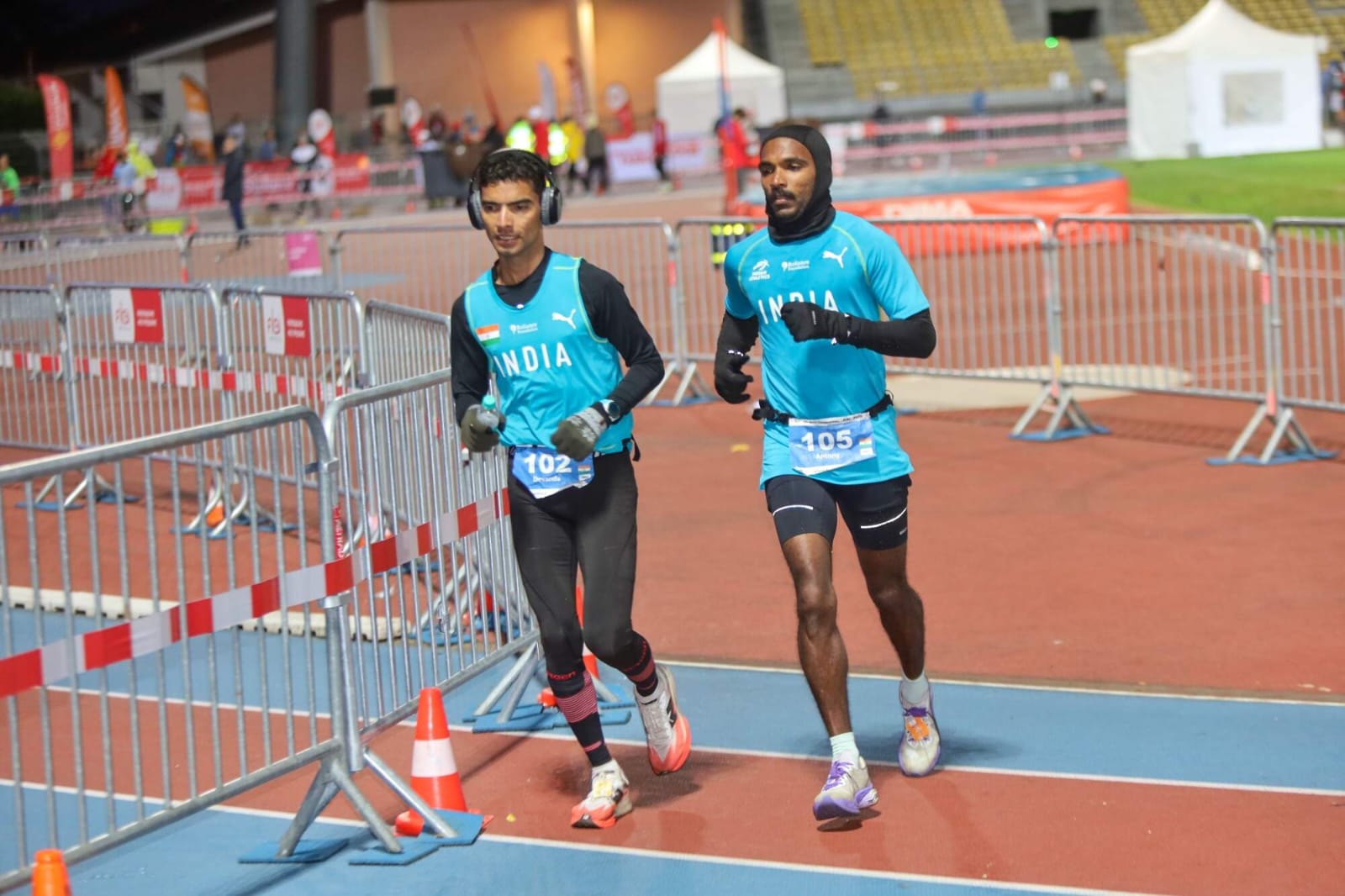
Amar Singh Devanda and Geeno Antony

“I have never done a training as intense and grueling as the one we did in preparation for the Albi championships,” Geeno said. He also shifted to Bengaluru for the 12-week training schedule including tapering with many day and night running sessions. “We had to do one 12-hour and 14-hour each, two 8-hour, three or four 6-hour and finally Bengaluru Marathon,” he said.

At Albi, Geeno started the race as per plan and in the first 12 hours he covered a distance of 142 km. During the second half of the race many runners started to fall back in their pace due to myriad reasons. “I was mentally down after Amar (Amar Singh Devanda) and Saurav (Saurav Ranjan) started falling back. For the first 12 hours we ran together. Running together was quite motivating. In the second half my pace suffered, therefore. But in the last hour I managed to cover 11 km,” said Geeno. He finished the race with a mileage of 265.198 km, also ending among top 10 men.

“At the end of the race, I was quite fine. I had no cramps or excessive tiredness. I was able to walk and even run,” he said. Geeno believes the training designed by Santhosh helped him to finish strong. In hindsight, he feels he could have pushed more.

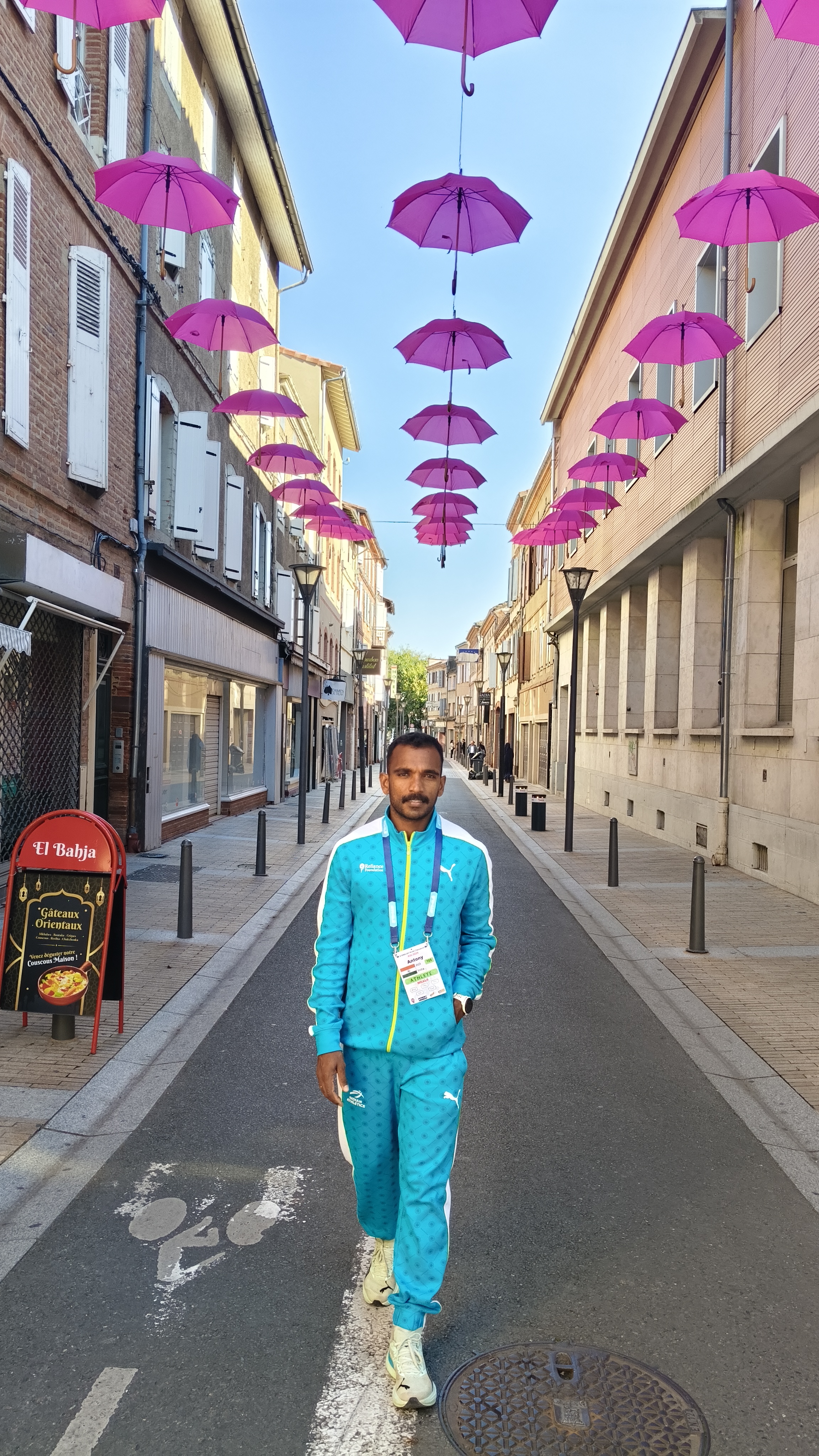
Geeno Antony

He has already commenced running and will resume training for the IAU 100 km Asia & Oceania Championships to be held in Thailand on November 23. “I am now in Trivandrum and will do some training here as Thailand will be very humid,” he said.

Sugourav Goswami, a Canara Bank employee, posted at Haldwani, was able to secure leave for 80 days to move to Bengaluru for training.

“It was one of the hardest, grueling, tiring and elaborate training plan that I have ever done so far,” he said.

Sugourav got into running as recent as 2020 right during the COVID-19 lockdown on the terrace of his residential building in Champawat, Uttarakhand. “I had a health scare. My key health parameters were alarmingly out of range and I had to resort to some cardio activity. I started running on the rooftop of my house. It was a small area. I would run for about two to three hours daily,” he said.

Sugourav Goswami with Santhosh Padmanabhan

Once the lockdown eased, he took to running more seriously and started signing up for running events. Soon he was also running ultra races.

“My first 24-hour run was the Bengaluru Stadium Run in March 2025, where I clocked a distance of 226 km,” he said.

At Albi, he was told by the team manager that he was to pace some of the key runners and also track their movements. “I enjoyed the race thoroughly. Ultras are tough. You can only get through them if you enjoy the race,” he said.

He ran moderately well for 21 hours. The last three hours were very tough. He finished second among Indian men covering a distance of 245.158 km.

His recovery following the race has been very good.

In hindsight, most runners this blog spoke to after the championships said they could have pushed for more mileage. Nevertheless, every ultrarunning event offers a new experience and many new challenges. The learning curve is never ending, they say.

(The author, Latha Venkatraman, is an independent journalist based in Mumbai)

Photos provided by runners

Silk Route Ultra – Crossing the finish line

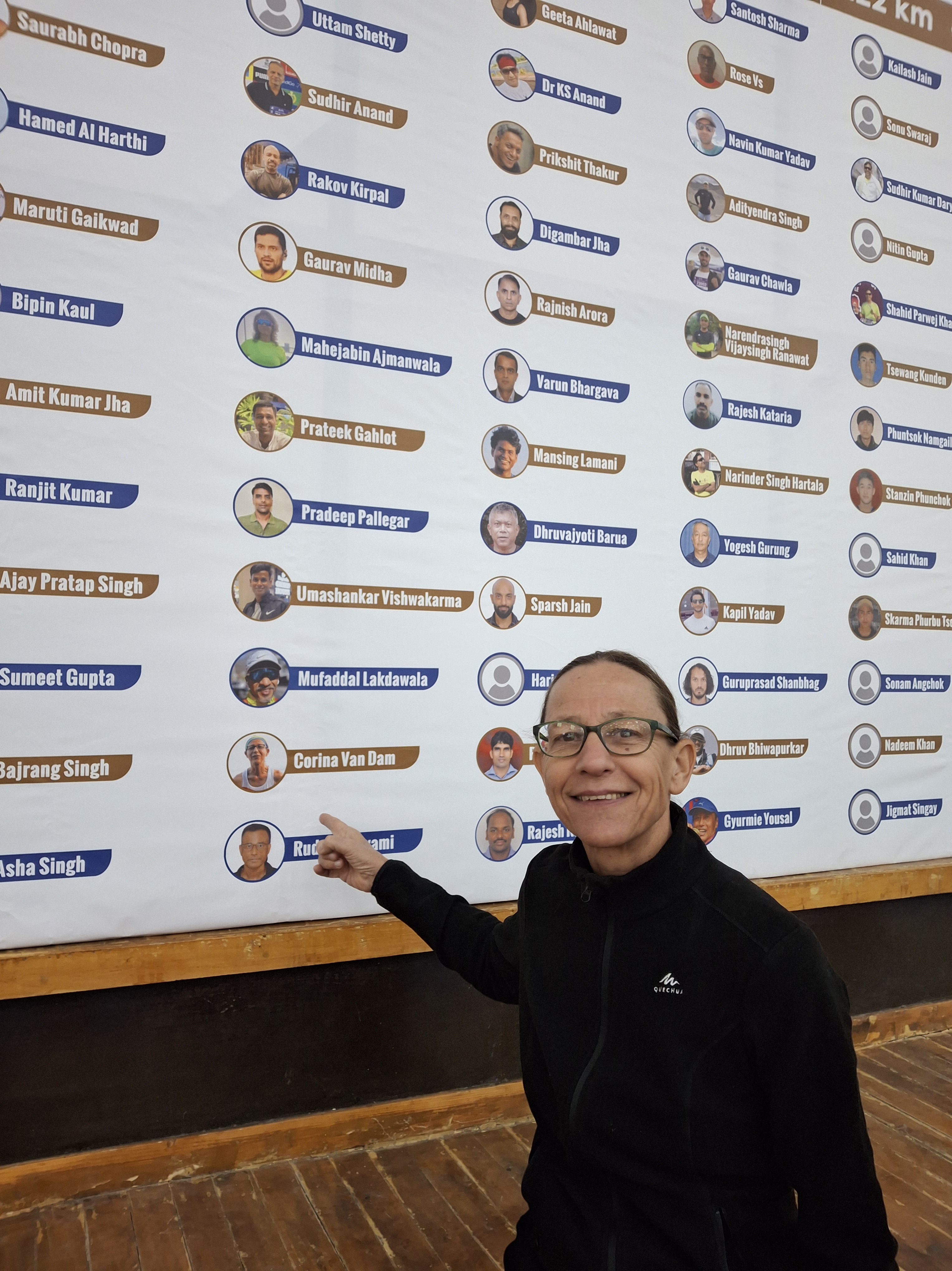
Corina Van Dam, or Cocky, as she is popularly known in Mumbai, is a football coach and an endurance athlete involved in ultra and long-distance running, long distance swimming and triathlons. In September 2025, Cocky crossed the finish line of the 122 kilometre-long Silk Route Ultra in Ladakh, securing a third position among women finishers. This was her second attempt. In 2024, she had to DNF (did not finish). In a first-person account, Cocky writes about her experience at the event.

This was my second time at the Ladakh Marathon’s Silk Route Ultra and this time I finished…..!

In 2024, I DNF’ed (DNF = did not finish) when my body started leaning to the right during my descent to Leh. After South Pullu (19 kilometers before the finish) I decided to drop out after I realized that I was not able to observe my body was tilting. You can read more about that experience in the article that I wrote for Outrigger last year. With the experience and knowledge that I gained from many runners and coaches, I tried to prepare myself better this time around.

Initially, I was not even planning to participate in the 2025 edition of the Silk Route Ultra (SRU). I had qualified for the Ironman 70.3 World Championships in Marbella, Spain in November 2025 and I wanted to focus on that. But I just love ultra running and felt butterflies when the registration for SRU opened. So, after enjoying the Hell Race White Sand Ultra 100 km, I immediately signed up for SRU especially since I met the criteria for qualification. With Mr Motup (the organizer of the event) ‘threatening’ us every year that he will make qualification more difficult, I thought I should take my chance this year. It also helped that I was about to turn 60 and thought that soon I would be too slow to run a 100km within 14 hours.

From June onwards, I started to increase my running mileage, with a six-hour night run, a 50 km monsoon run and the 12-hour Mumbai Ultra as main training events while I also continued swimming and a bit of cycling. My plan was to spend a few days more on acclimatizing than in 2024 and therefore planned to take a bus to Manali and from there to Leh. However, the weeks before, rains lashed across Himachal Pradesh, Jammu and Kashmir and Uttarakhand. Villages disappeared under mud; people lost their lives. Traveling by road became an uncertain and risky endeavor. Especially with the hard rule that participants have to be physically present during the bib collection in Leh to ensure the acclimatization before an ultra-run at high altitude. I made the decision early enough to secure a place on a plane and reached Ladakh in time. Others were not that lucky as flights got canceled. Runners got stuck and many missed the opportunity to participate despite the one-day relief granted by the organization for those with verified reasons for delay.

I had just arrived in Ladakh when I got the message that Shyam G. Menon had died. I had met him only a few times, but he has always been very interested in my stories. With Outrigger, he has given me a platform to share my first Ironman Goa experience, my race in the Ironman 70.3 world championships in 2023 and last year’s DNF in the Silk Route Ultra in my own words. I consider Latha a friend and could only imagine the pain that she felt. I’m writing this with gratitude to Shyam and hope that it will be what he expected it to be. May he rest in peace.

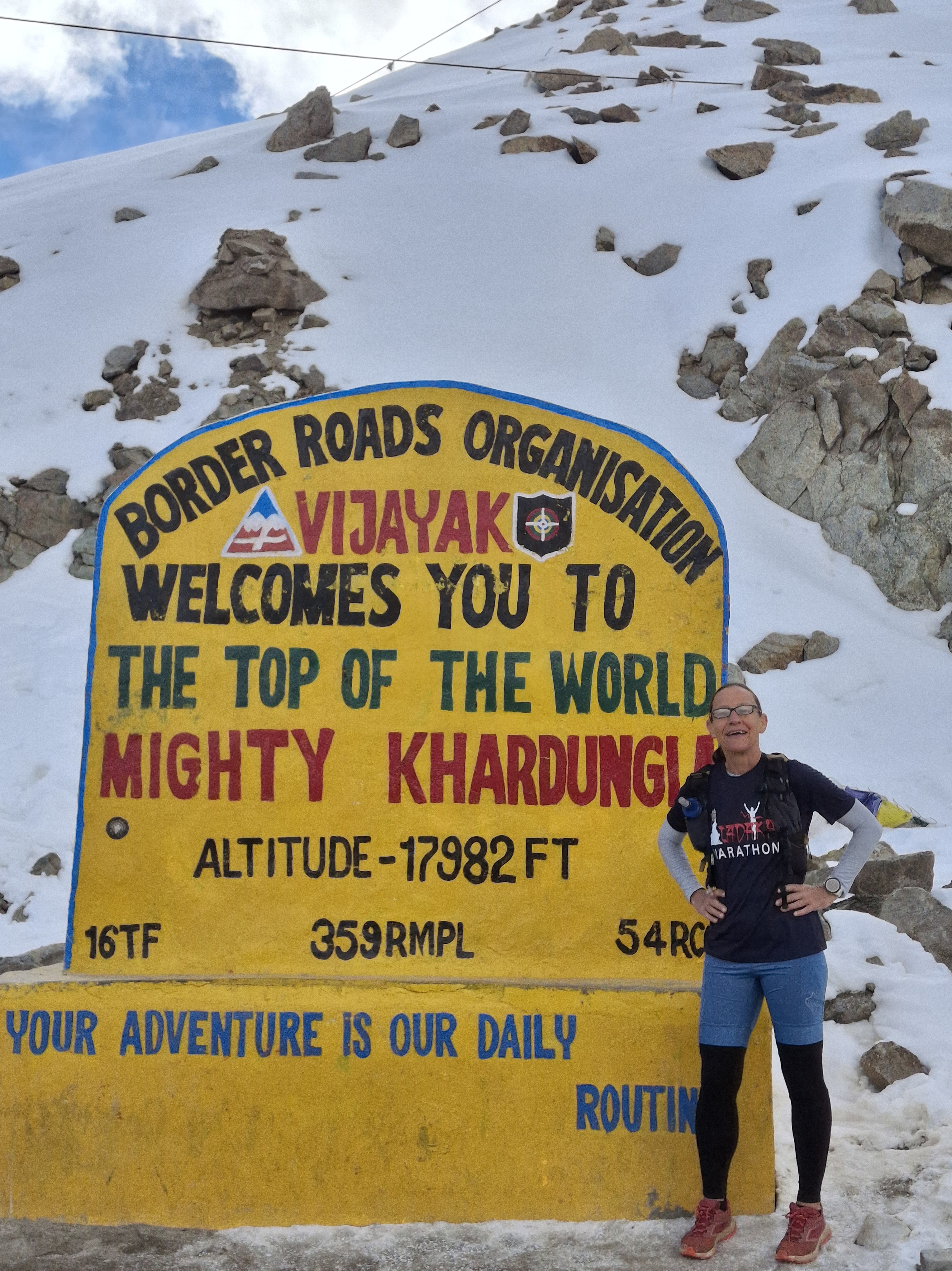
The days in Leh are always pleasant with a select group of ultra runners in the first week who do their morning runs, work a couple of hours and meet in the afternoon for coffee and banter. In the second week, there was an influx of running groups with many traveling for the first time to the Land of High Passes. I enjoyed the morning runs with friends and Ladakhi chai and flat bread with butter afterwards, and my afternoon walks, apricot pie, thukpa…! Two trips to Khardung La helped me to prepare for the race. The weather was not great on my first few days in Leh. It rained and it was cold. It snowed at K-top. I was mentally not prepared for ascending more than 50 kilometers in bad weather. My first assignment was to visualize walking a night in the snow and think about how I would face it. Being born and having grown up in the Netherlands its unpredictable weather probably helped me in the process and perhaps I’m better equipped than many other participants to deal with the cold. When I walked up the pass twice, I felt lightheaded and a sense of carelessness. This made me realize that when I cared about my tilting last year, this was actually a sign that I was psychologically aware. I was also confident that I would recognize this ‘state of carelessness’ during the race.

Finally, the day came and we traveled to Kyagar, the start line of the race. You would sign up for the race, just for this….! Mr Motup gives instructions, warns us and flags the busses off. Running friends came to see us for the journey and the race, akin to a school trip. I almost felt like crying. The journey was – of course – breathtaking – even when you have traveled it a few times. Some of the bends and inclines I remembered from previous years. Now I could see the mountains, the valley, the river. We settled into our hotel – comfortable rooms with a peaceful garden. Sufiya and I shared a room, again. We know each other’s habits and follow our own routines. That helped because increasingly we were becoming nervous! The cultural evening deflected our thoughts and kept us busy in between snacks and meals.

There was only one moment that I thought:’ I’m never going to do this again’ and that was when we were waiting for the mandatory blood pressure check. In 2024, it was a traumatic experience as I had to get tested three times, drink glasses of lukewarm water and eat raw garlic. This time I succeeded after two times and taking some wonder medicine on doctor’s advice that I refused last year.

The first part of the race goes through rolling hills and follows the river. It was pleasant, my legs were fresh, villagers cheered us on as if we were already close to finishing. Children gave us high fives and ran with us. There was some pressure to complete the first 27 kilometer in four hours but with last year’s experience, I knew I could do it. From Khalsar, the run becomes a walk. And to be honest, I love this part. I enjoyed walking alone in the night, the route lit by the moon and under a sky full of stars. I recognized the road, the route and knew that when I saw the lights of Khardung Village it would take a long time to get there….! Although I was walking mostly alone, I met ‘everyone’ at the SRU breakfast where we could fuel and get our warm jackets for the ascent to Khardung La. I left the village before the participants of Khardung La Challenge started their race. It was enjoyable to see the lights behind me meandering through the mountains. North Pullu (at17 kilometers) looked further this time but K-top (another 15 km) seemed closer. On my way to the top, I noticed another runner and I thought ‘he walks like a robot’. That was my sign to look closer at myself. I was still straight up.

I never spend much time at the top and didn’t even see the garlic soup stall…! I had tried to eat and drink at every 7km aid station and also use my own gels, Enerzal and snacks in between. But at some point, I was no longer thirsty and hungry. And how many dates and bananas can you eat? I was able to run a bit towards South Pullu where I was enthusiastically welcomed and told I was strong running in third position. Shortly after that I noticed that I now really started tilting again. Based on last year’s experience, I knew that this was because of low oxygen level, and probably dehydration due to which there are changes in the spinal cord fluid which cause the ‘leaning’. I don’t know if the leanings happen on the stronger or the weaker side of the body. I knew I had enough time in hand to complete the race walking. I didn’t care about finishing third or last. I thought: ‘This time I’m going to collect that finisher’s medal and jacket’. Confident, with optimism and songs in my head, I took off. Soon I could see Shanti Stupa, knowing that it was still far away but that it would come closer with every step I took. I made repeated calculations as the kilometer signs on the road were not in synch with the details that Garmin was giving me. The sun was relentless and where was this Mendak Mor, our last cut off point, a question in my mind. On the road behind me I saw many other runners. I was not the last. I reached Mendak Mor with an hour in hand.

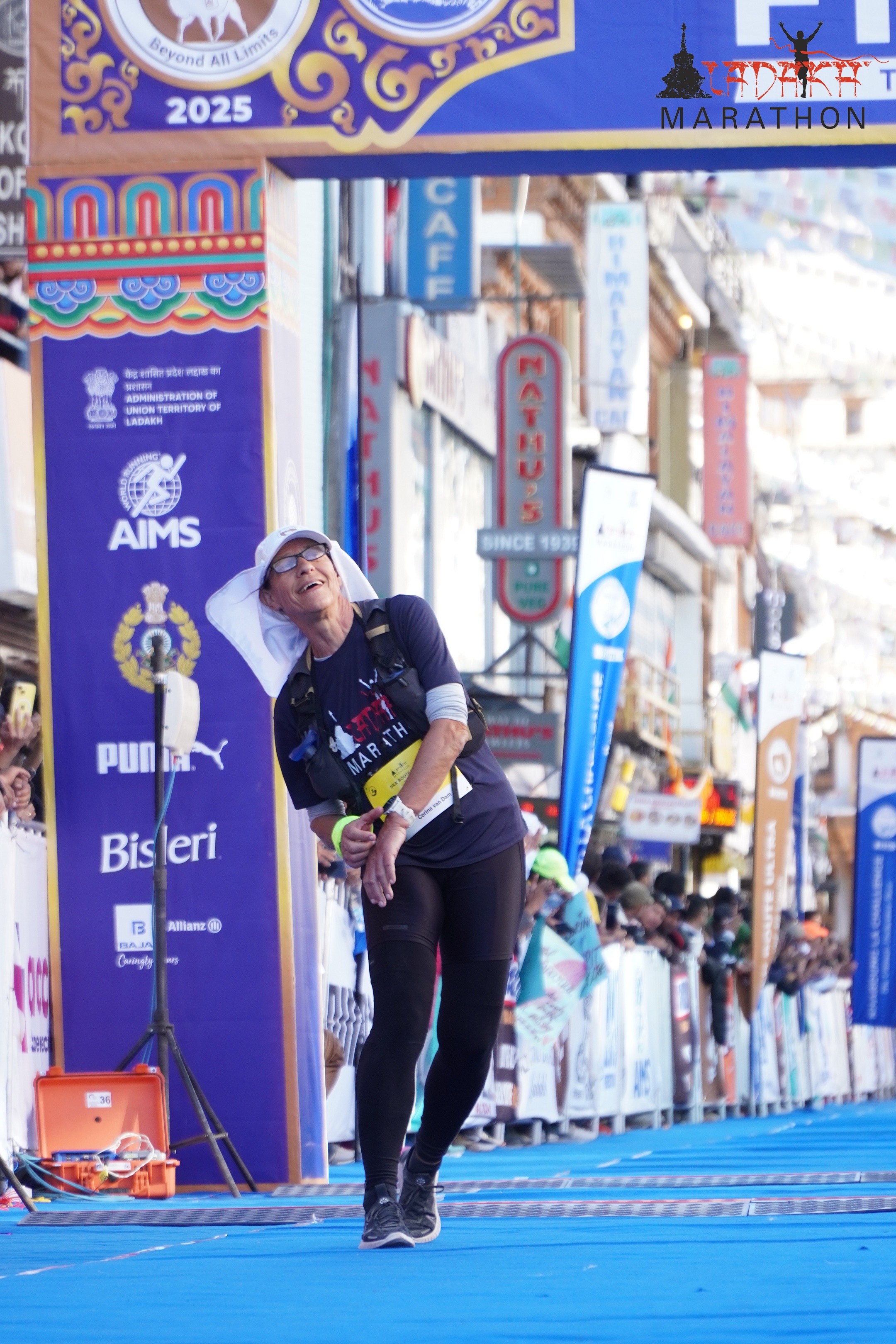
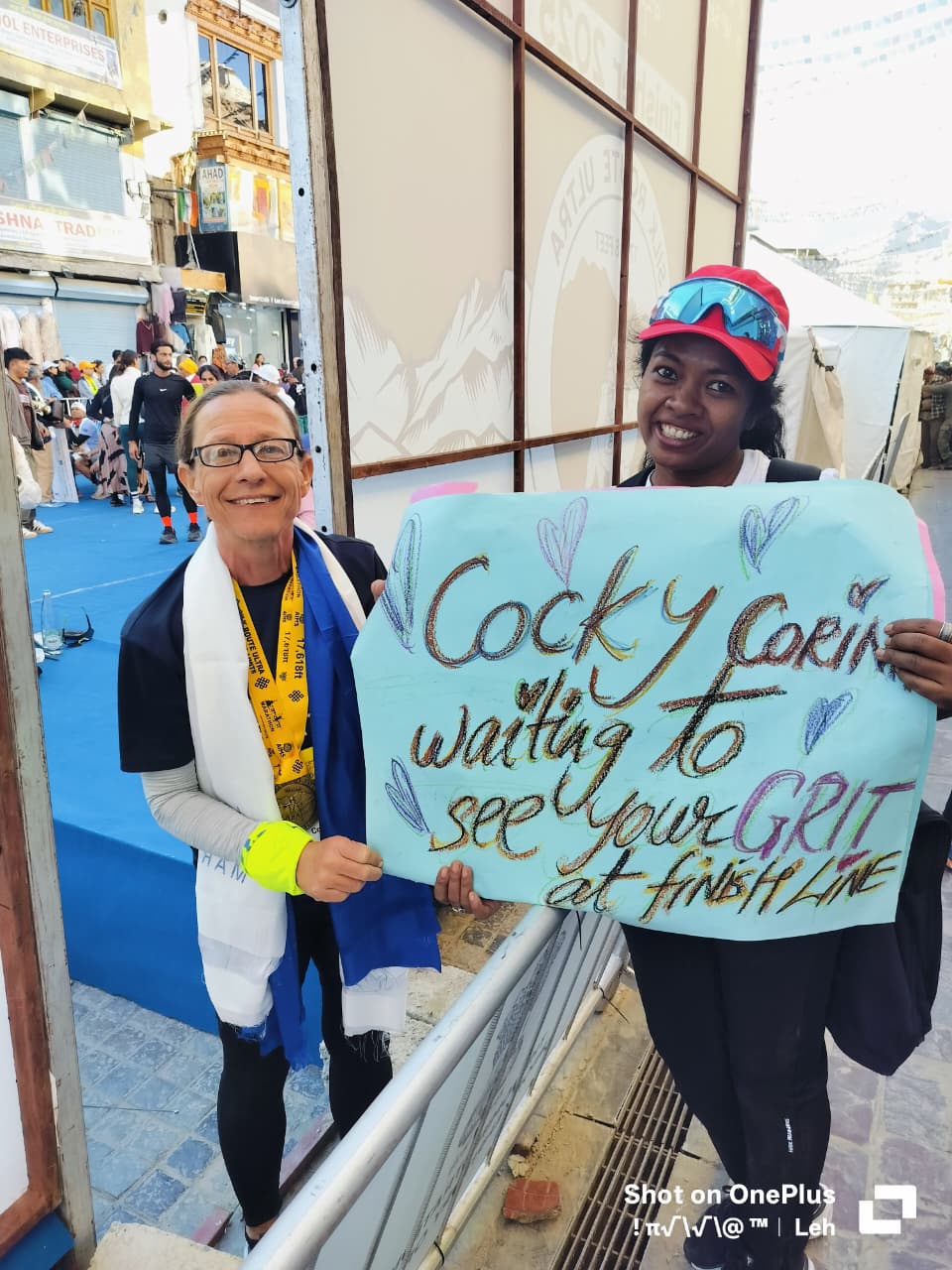
Once you reach Leh, there is this extra loop through the city. I knew I was tilting, a lot. People told me to take it easy. I thought (and probably told them) ‘this is a race, isn’t it?’ and moved on. Someone gave me Coca Cola. I didn’t know him, I opened my mouth and he just poured it in. The garden walls along the road were very helpful to rest a bit. The hotel staff was sitting in front of Reeyork House, my home in Leh. They cheered me on and I tried to lean to the other side pretending that nothing was ‘wrong’ (when I reached the hotel later, they gave me coffee, made me noodles, so it was clear that my theatre act had failed…). When I reached Leh Market, I thought one moment: ‘I don’t want to finish like this’. I knew what it looked like. I told myself to ‘(wo)man up’ and finish ‘the bloody thing’. I don’t think I will be ever cheered on like this again. People shouted my name, applauded, smiled. I saw friends, a placard with my name, I high fived with those who had been standing there for hours. They were so happy and proud.

After the finish, I went straight to a stretcher for a powernap. Apparently, I had finished third. I couldn’t care less. Friends were peeping through the window of the recovery tent. I just waved at them, closed my eyes and only stood up for the award ceremony. The gifts were amazing: finishers shawl, medal and token and then a winners’ shawl, bronze medal and a trophy and prize money….! My main concern was, how to get this to the hotel with those four race bags. The Stride With Girish Bindra group – the loudest in Leh – helped me.

People ask me if I’m ‘okay’, even now, weeks later. I realize that some of them were happy, others proud, worried, inspired, intimidated, felt sorry for me, thought that it must have been painful (it was not). After a few hours of sleep my spine was straight again. The next morning at 7.00 am, I led the warming up for the Athlos shake out run and directly after, I went to the airport to catch my flight back to Mumbai.

A week later I swam Dusk to Dawn, Mumbai Sea Swimmers’ endurance swimming event, in which I completed 23,1 kilometer in its 12-hour race.

(Photographs courtesy – Corina Van Dam)