
At the recent IAU 24-Hour World Championships held in Albi, France, Indian women ultrarunners delivered a landmark performance, shattering the national record in the 24-hour ultrarunning format.
Also, for the first time in India’s ultrarunning history, three women crossed the 200-kilometre mark, with two of them surpassing the previous national record of 204 km.
Sunita Subba and Aparna Choudhary both broke the national record to finish first and second respectively among Indian women. Sunita now holds the new national mark of 217.327 km, eclipsing the earlier record of 204.314 km set by Anju Saini at the 2022 IAU 24-Hour Asia & Oceania Championships in Bengaluru.
Aparna Choudhary followed with 210.537 km, while Bindu Juneja secured third place with 202.164 km, completing a remarkable showing by the Indian women’s team.
In the men’s category, Geeno Antony led the Indian contingent, finishing among the top 10 male runners overall with a distance of 265.198 km. The 24-hour race began on October 18 at 10 a.m. and tested endurance and mental fortitude under shifting weather conditions.
In the same event, Sarah Webster of Great Britain and Northern Ireland set a new world record with a distance of 278.622 km, surpassing the previous record of 270.363 km held by Japan’s Miho Nakata.
The Indian team, coached and managed by Santhosh Padmanabhan, underwent an intense training program in the run-up to the event. Despite hopes for a team medal, a few setbacks affected the final mileage tally.
This time around, the training plan, devised by Santhosh, was one of the toughest and extensive that the current team of ultrarunners were asked to execute.
“We wanted to push the bar because we had put in a lot of hard work – the athletes, the support staff and all of us. Therefore, expectations were quite high for both the men’s as well as the women’s team,” Santhosh said.
In training, many runners were able to execute and achieve the goals. Some of them shifted their base temporarily to Bengaluru to be able to motivate each other during training and work as a team.
In terms of actual performance at Albi, the Indian team, especially the women’s broke out of their shackles with three of them crossing the 200 km mark, he said. The performance of both men’s and women’s was much better than previous championships but did not meet the goals set for this specific championship, Santhosh said.
“In the men’s team, though some key runners fell back, Geeno did very well not only at the championships but also in training. I could see him maturing as an ultrarunner, he was more knowledgeable about his own abilities and he was getting all his milestones. It shows that we were on track with our training,” Santhosh said.
One of the main challenges faced by the Indian team at Albi was the extreme temperature change. During the day, although temperatures were at 22 degrees Celsius the night time temperature decline by 12 to 15 degrees affected hydration and nutrition of the runners, he said.
“These drastic weather changes affect appetite. Also, fatigue hits really hard. The learning for us from this experience is that we need to know how to handle fatigue and also train in different geographical locations with varying weather conditions,” Santhosh said.
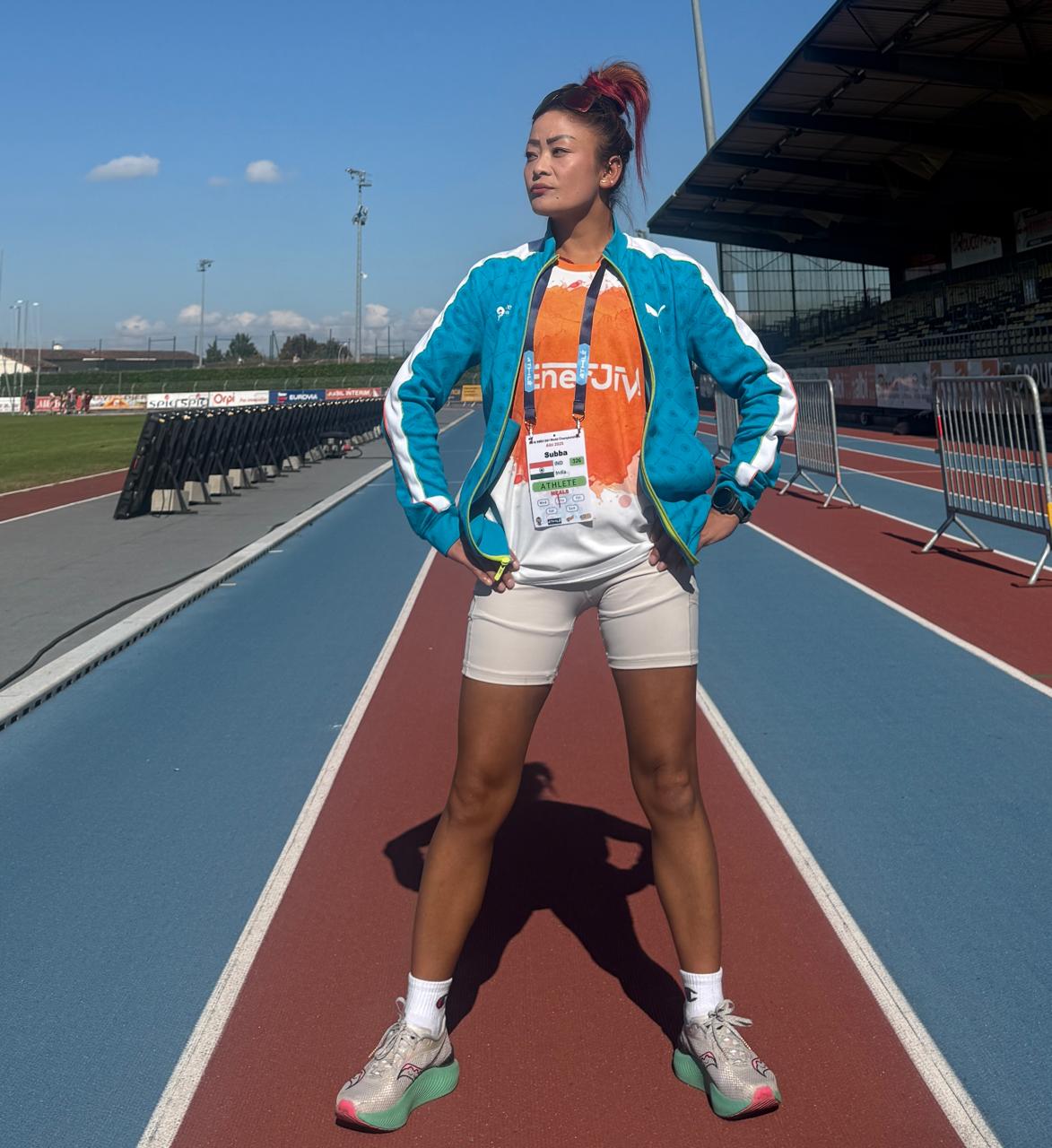
Sunita Subba
Sunita Subba ran her first race, a half marathon in Darjeeling, in 2016. She did not follow it up with any further running immediately. In 2019, she again ran a half marathon. Soon after the COVID-19 pandemic lockdown brought all outdoor activities to a grinding halt. “At that time, I felt the need to do something. When the lockdown was eased, I signed up for a 10-day virtual run challenge. I could do it only for eight days but I covered a distance of about 330-350 km,” she said. Soon she found herself signing up for ultra races – 12-hour stadium run and the first edition of Ladakh Marathon’s Silk Route Ultra, in which she won the women’s race, 90 km at Kalimpong Ultra, Pune Ultra and a few stadium ultra runs.
In July 2024, Sunita won the women’s race in the 24-hour stadium run held in Bengaluru, covering a distance of 188 km, helping her to qualify for the world championships.
After she was chosen to represent the country at the IAU 24-Hour World Championships in Albi, France, Sunita set about doing her training in Darjeeling, where she resides. “I used to train alone, sometimes running for six hours, sometimes eight hours. I would keep my water and other supplements near the gate of Bhanu Bhawan on Mall Road,” she said. Sunita works in a low paying job and often she is forced to juggle her finances in order to participate in running events. She was worried about arranging finances for the Albi but after she was enlisted as an Enerjiva athlete, much of those tensions were taken off her plate. Enerjiva, a sports nutrition brand, sponsored many of the athletes for the Albi championships.
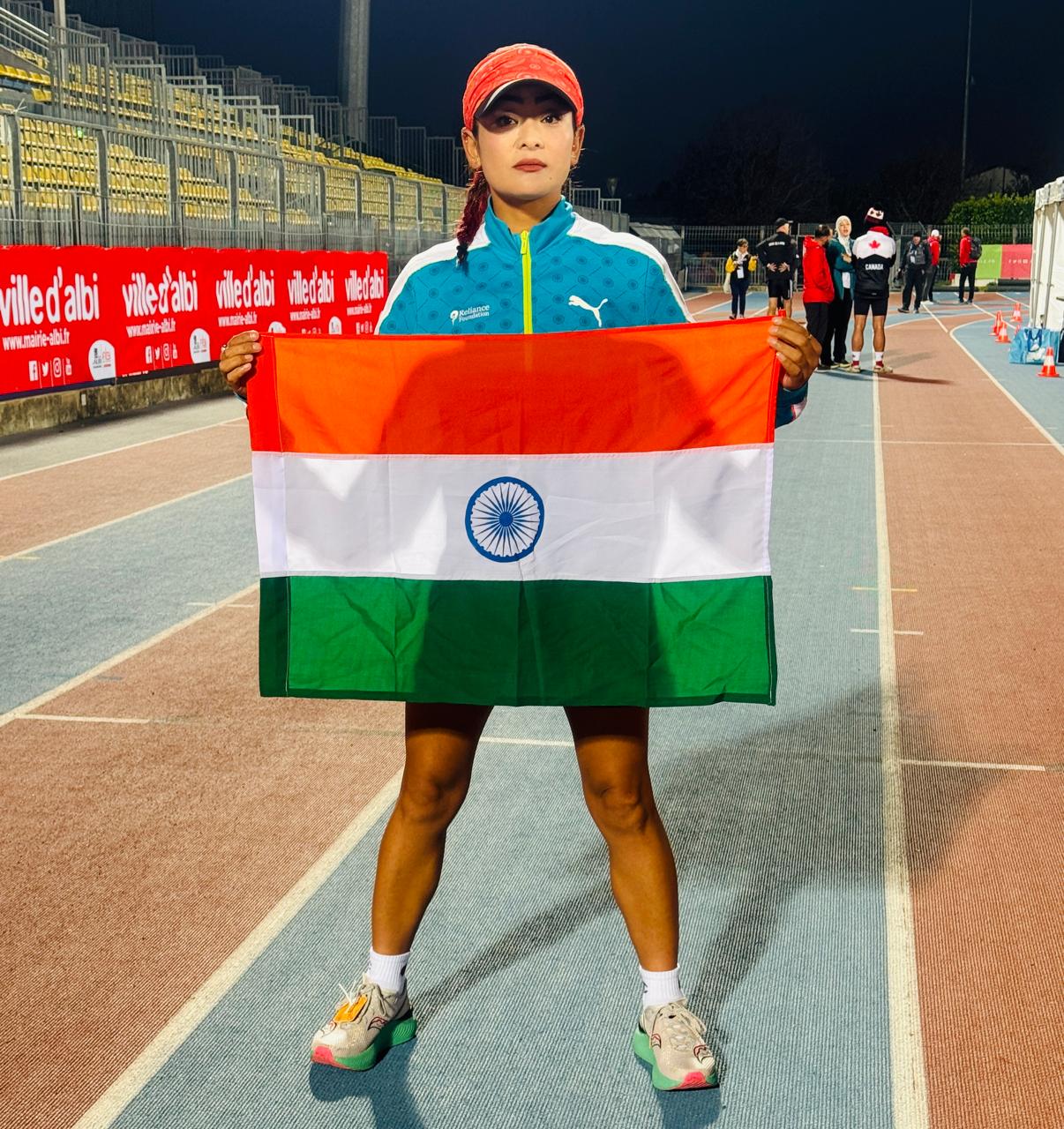
Sunita Subba
Sunita was then asked to shift to Bengaluru by the team coach and manager Santhosh Padmanabhan. Her training went off quite well under his guidance. “When much of my long runs were done in Bengaluru, I sought leave to go back home to Darjeeling towards end of September and continue my training there. I also wanted to be home for the Dusshera festival. But weather was playing havoc back there, with heavy rains and landslides. I ended up with fever,” she said.
By the time she was to leave for Albi, she had recovered but was exhausted and tired from the ailment. “I managed well for the first few hours. But my water consumption was quite low. I was having energy drink and some bit of rice and dal. I did get some muscle tightness on my left leg but overall, I was injury free,” she said. By the end of the 24-hour period, she had surpassed the national record by a huge margin, setting the new record at 217.327 km compared to the previous record of 204.314 km set by Anju Saini during the IAU 24 Hour Asia & Oceania Championships held in Bengaluru in 2022.
Her son Swayam Tamang and her sister Sabita are very supportive of her running activities.
Aparna Choudhary has been associated with ultrarunning for a long time, commencing her journey in this niche sport way back in 2010. Running itself is fairly a nascent sport in India and ultrarunning even more so.
But Aparna is not new to sport. She was a national level hockey player and then took to recreational running during her graduation and post-graduation days. A stint in the US exposed her to lot more running events.
In 2010, she signed up for her first ultramarathon, a 100 km race at Bangalore Ultra. Over the years, she has participated in a number of ultrarunning events of varying distances and quite often ended up on the podium.
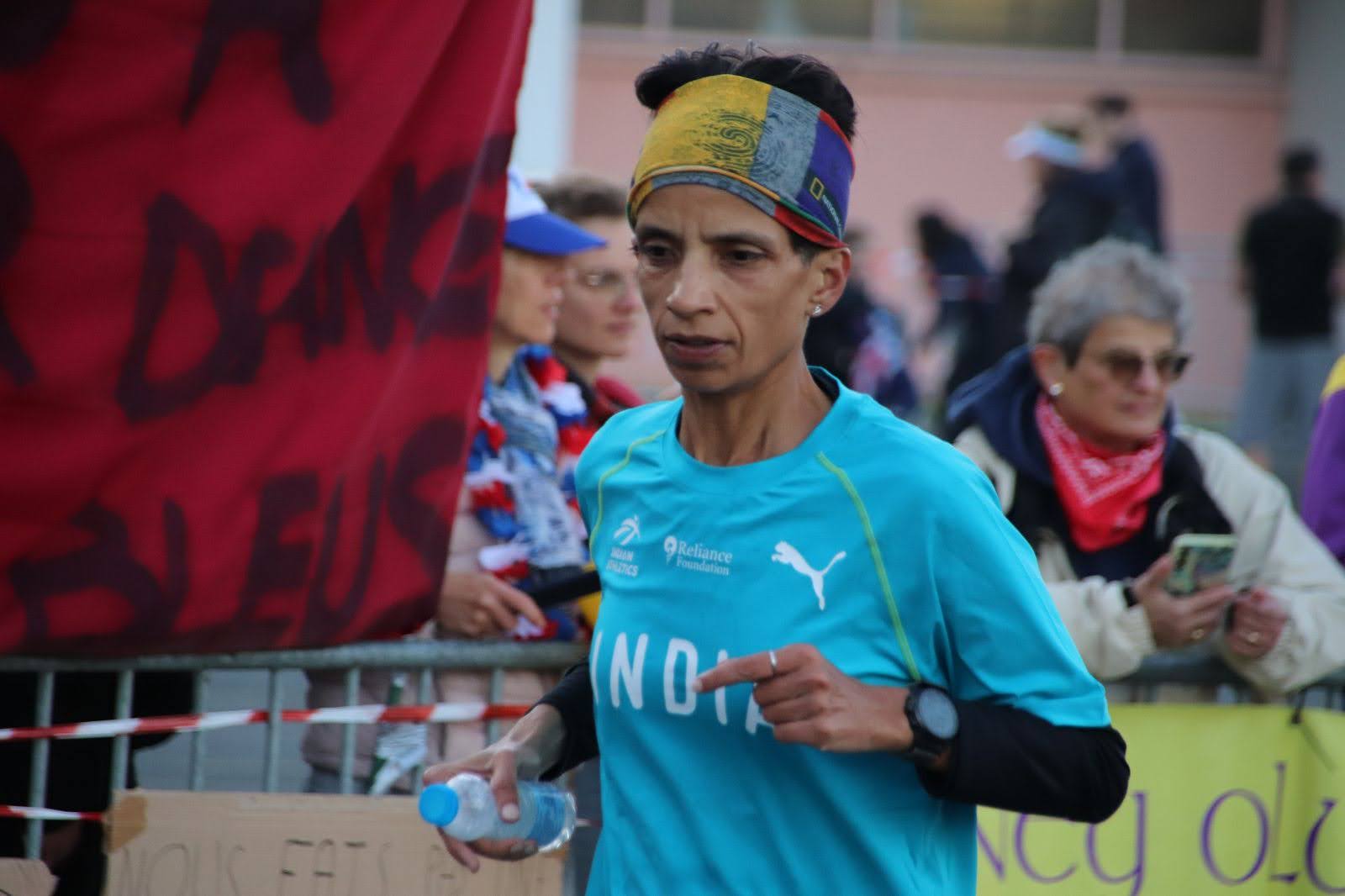
Aparna Choudhary
Her training for the IAU Championships could have been better, she said. In between her training she took a break to go to Peru for a holiday. She was back on July 17 but she barely had a fortnight for the Goa Ultra in which Aparna had signed up for the 120 km. “I took it as a training run,” she said. Aparna finished first among women finishers in this race. But after the race she had to wait for a couple of weeks to resume her training for the championships as she fell ill.
“I was consistent with my training but did nothing extraordinary. I did a few long runs, one of them 75-km long. All my training runs were done in the evenings or nights,” she said. “I also did not let my mind be in the clouds about my training or my ability to perform on race day,’ she said.
On race day, the initial few hours went along well despite the sun being up. But after about 6-7 hours, she had an upset stomach. “By the 15th hour or so, I was throwing up and that was affecting my hydration,” she said. But she was able to keep at it without taking long breaks.
Runners were required to run a loop of 1.5 km which included road as well as track during the entire 24 hours.
“All my plans were out of reach for me. Nevertheless, I just decided to keep running. During the last hour, I stepped up my pace and I could feel it in my raised heart rate. I wanted to get past 210 km and also be able to get up and walk at the end of the race,” she said.
Aparna Choudhary
Aparna finished the race with a distance of 210.537 km, improving her personal record by a huge margin from her previous best of 192 km. But she was a tad disappointed about missing out on the automatic qualification mark of 212.5 km at Sparthathlon, a 246 km ultra distance foot race held in Greece every year.
Nevertheless, Albi was a satisfying race as many factors played out well, she said.
This time around Bindu Juneja had to do a completely different training program in the run-up to the world championships.
“There were a lot of very long runs. Normally, I would do about 40-50 km long runs. When I saw the workout charted by Santhosh, I was very worried about recovery. I work as a teacher in a school and I cannot miss work. This time around there were runs planned for 10 hours, 100 km runs and once I had to run for about 10 hours,” she said.
These long runs were interspersed with interval training and strength workouts. “I had told Santhosh that if I could do 80 percent of the workout, I could consider myself an ultrarunner,” she said.
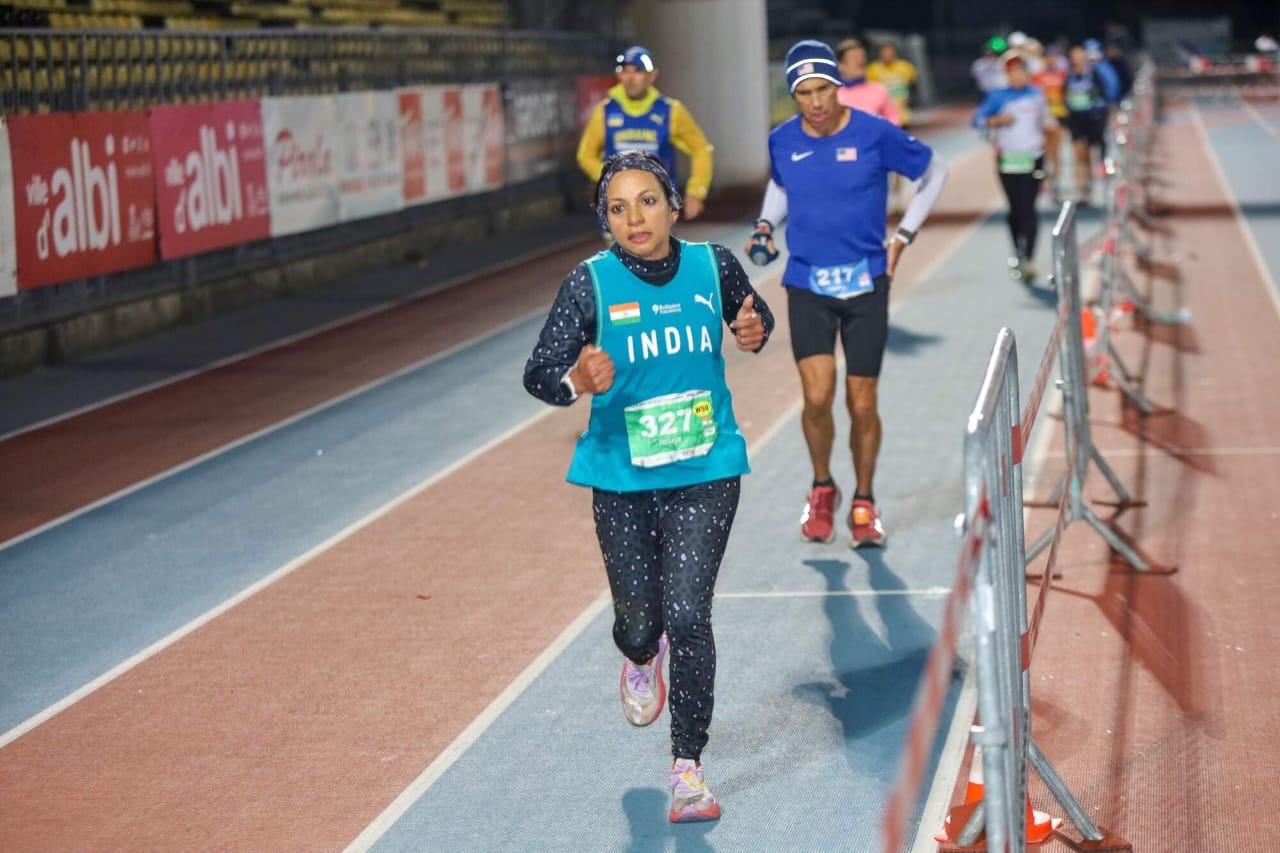
Bindu Juneja
She was able to do 98 percent of the workout planned. “My weekly mileage touched 148 km, 158 km, the highest being 171 km. These ultra long training runs, initially daunting, started to get easier,” Bindu said.
Bindu started running in 2015 and in 2018 signed up for her first ultra running event, a 50 km race at the Bangalore Ultra, in which she was the winner among women. Subsequently, she has done many ultra races, including several hour-based stadium runs and Comrades Marathon in South Africa.
“As some of us were sponsored athletes of Enerjiva for the Albi Championships, we had access to free strengthening sessions. Even though I was not able to attend all of these, I was able to follow these workouts through videos sent to me,” Bindu said.
During the race, the first 10 hours went by quite smoothly. “But after that my gut gave up and I had to take washroom breaks. I stop consuming gels as well as solid food. For a few hours I ran without consuming any food,” she said.
Weather during the 24-hour period fluctuated between being warm in the day time and very cold in the evenings and night. “This time I was determined to cross the 200 km mark. The second half of the race could have been better if nutrition had worked. I think I consumed too many gels early in the race. I should have interspersed gels with some natural food. Also, I had my periods,” she said.
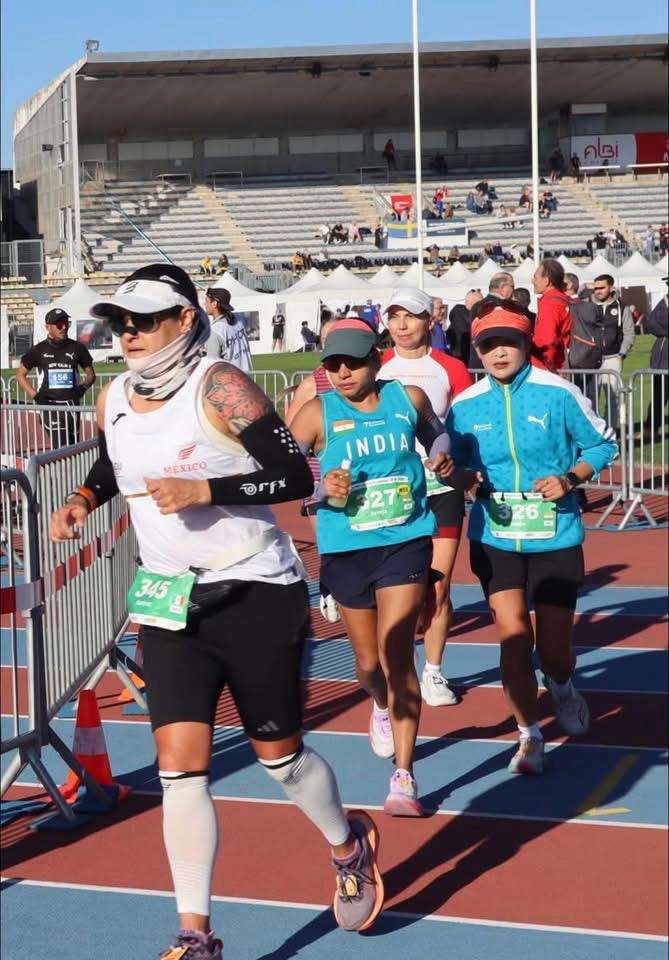
Bindu Juneja and Sunita Subba
Bindu often has a problem of her toe nails coming off. But this time she was able to continue running with the pain. “It was quite a well-organized event. There was a lot of support with many people cheering on the sidelines throughout,” she said.
She covered a distance of 202.164 km, improving her personal record by a huge margin of 17.2 km.
Bindu now plans to take a break for two months from serious running but will continue her daily routine runs and focus on strength training.
Geeno Antony is not new to sports. Both his parents, speech and hearing impaired, were into sports. Geeno was introduced to sports early on. (To read more on this follow this link https://shyamgopan.com/2022/10/15/the-satisfaction-is-beyond-measure/)
Geeno has been running for quite a while now and his transition to ultrarunning was instinctive. He has been part of the team of ultrarunners representing India in many international ultrarunning events.
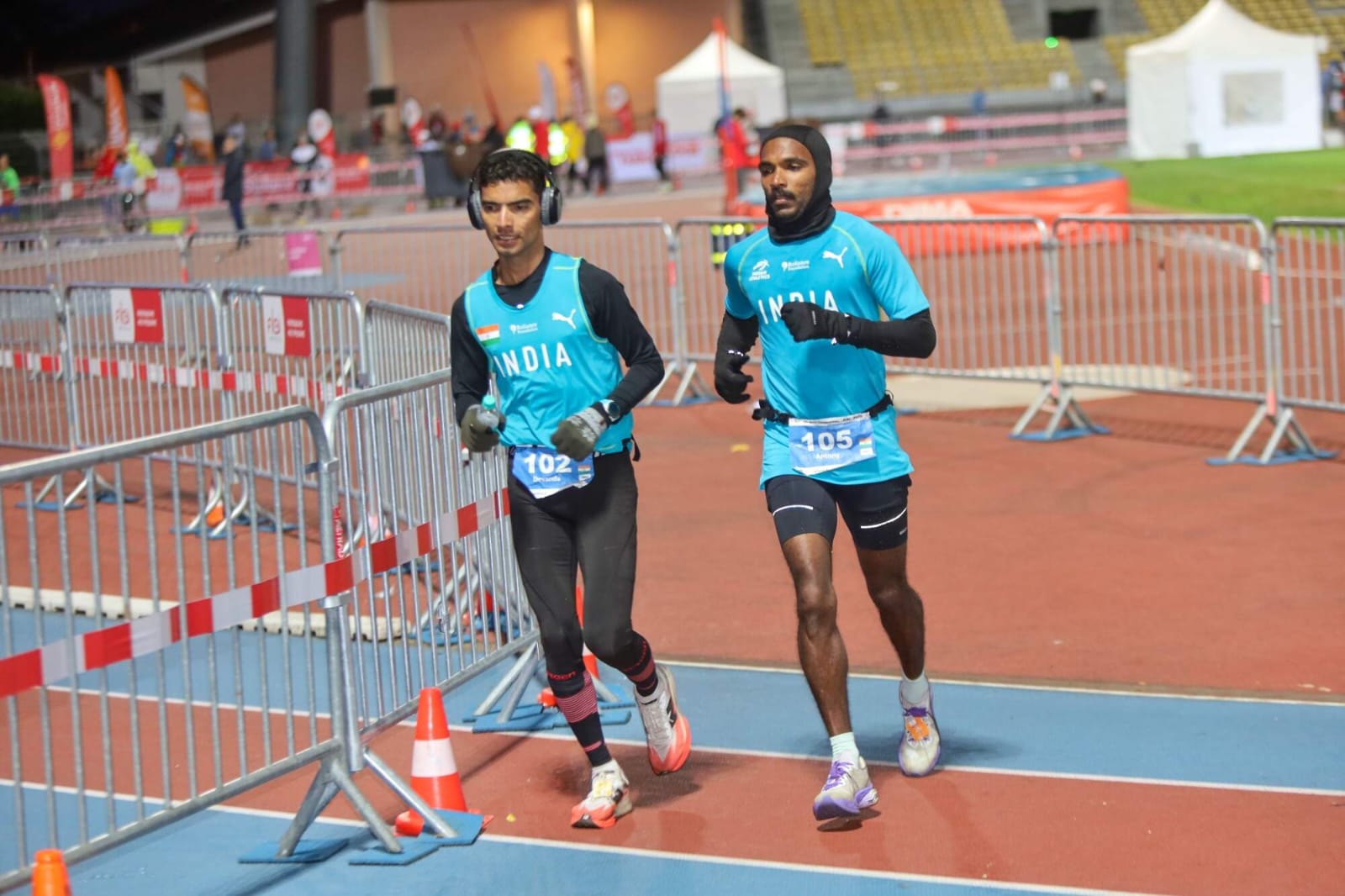
Amar Singh Devanda and Geeno Antony
“I have never done a training as intense and grueling as the one we did in preparation for the Albi championships,” Geeno said. He also shifted to Bengaluru for the 12-week training schedule including tapering with many day and night running sessions. “We had to do one 12-hour and 14-hour each, two 8-hour, three or four 6-hour and finally Bengaluru Marathon,” he said.
At Albi, Geeno started the race as per plan and in the first 12 hours he covered a distance of 142 km. During the second half of the race many runners started to fall back in their pace due to myriad reasons. “I was mentally down after Amar (Amar Singh Devanda) and Saurav (Saurav Ranjan) started falling back. For the first 12 hours we ran together. Running together was quite motivating. In the second half my pace suffered, therefore. But in the last hour I managed to cover 11 km,” said Geeno. He finished the race with a mileage of 265.198 km, also ending among top 10 men.
“At the end of the race, I was quite fine. I had no cramps or excessive tiredness. I was able to walk and even run,” he said. Geeno believes the training designed by Santhosh helped him to finish strong. In hindsight, he feels he could have pushed more.
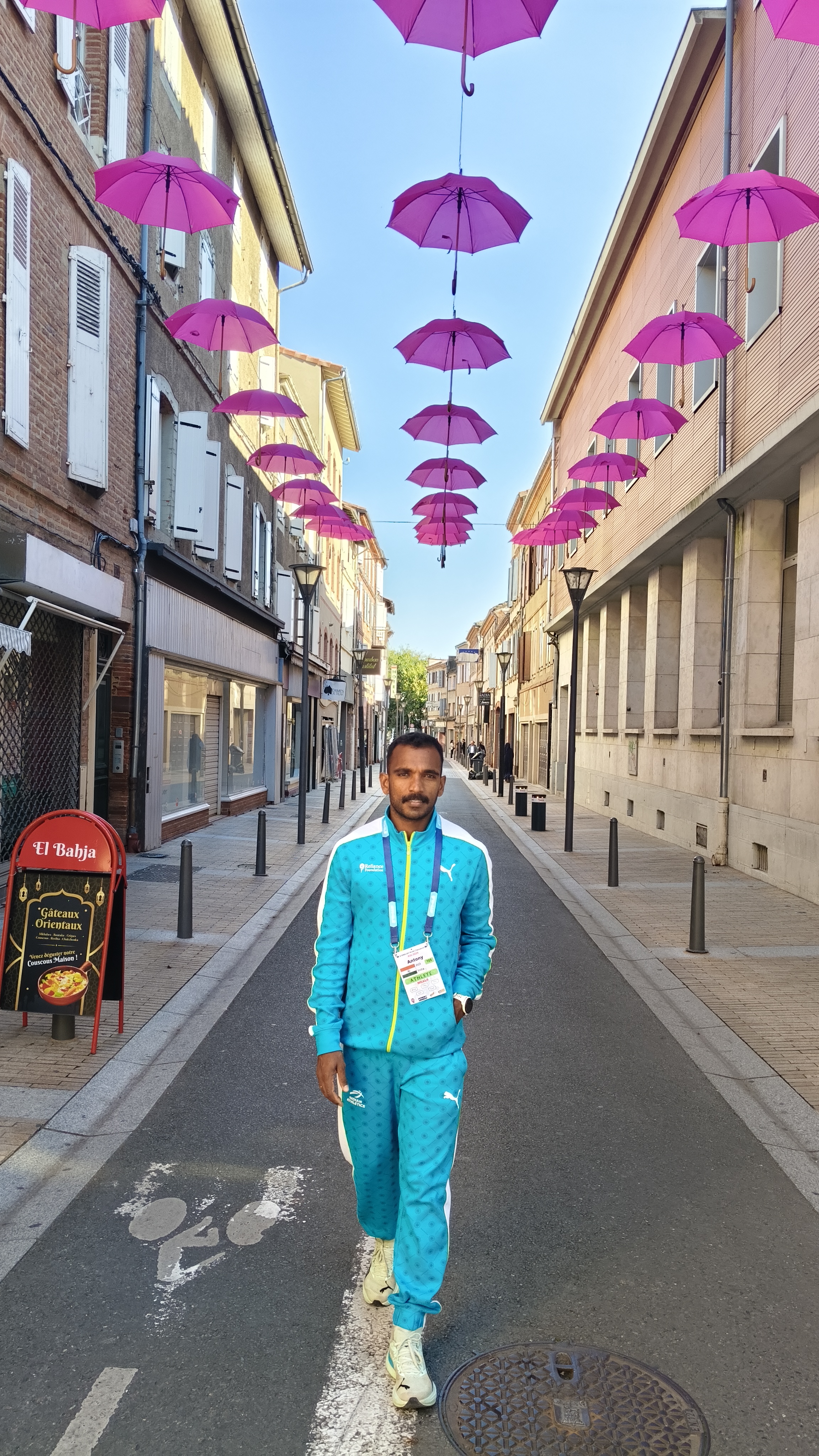
Geeno Antony
He has already commenced running and will resume training for the IAU 100 km Asia & Oceania Championships to be held in Thailand on November 23. “I am now in Trivandrum and will do some training here as Thailand will be very humid,” he said.
Sugourav Goswami, a Canara Bank employee, posted at Haldwani, was able to secure leave for 80 days to move to Bengaluru for training.
“It was one of the hardest, grueling, tiring and elaborate training plan that I have ever done so far,” he said.
Sugourav got into running as recent as 2020 right during the COVID-19 lockdown on the terrace of his residential building in Champawat, Uttarakhand. “I had a health scare. My key health parameters were alarmingly out of range and I had to resort to some cardio activity. I started running on the rooftop of my house. It was a small area. I would run for about two to three hours daily,” he said.
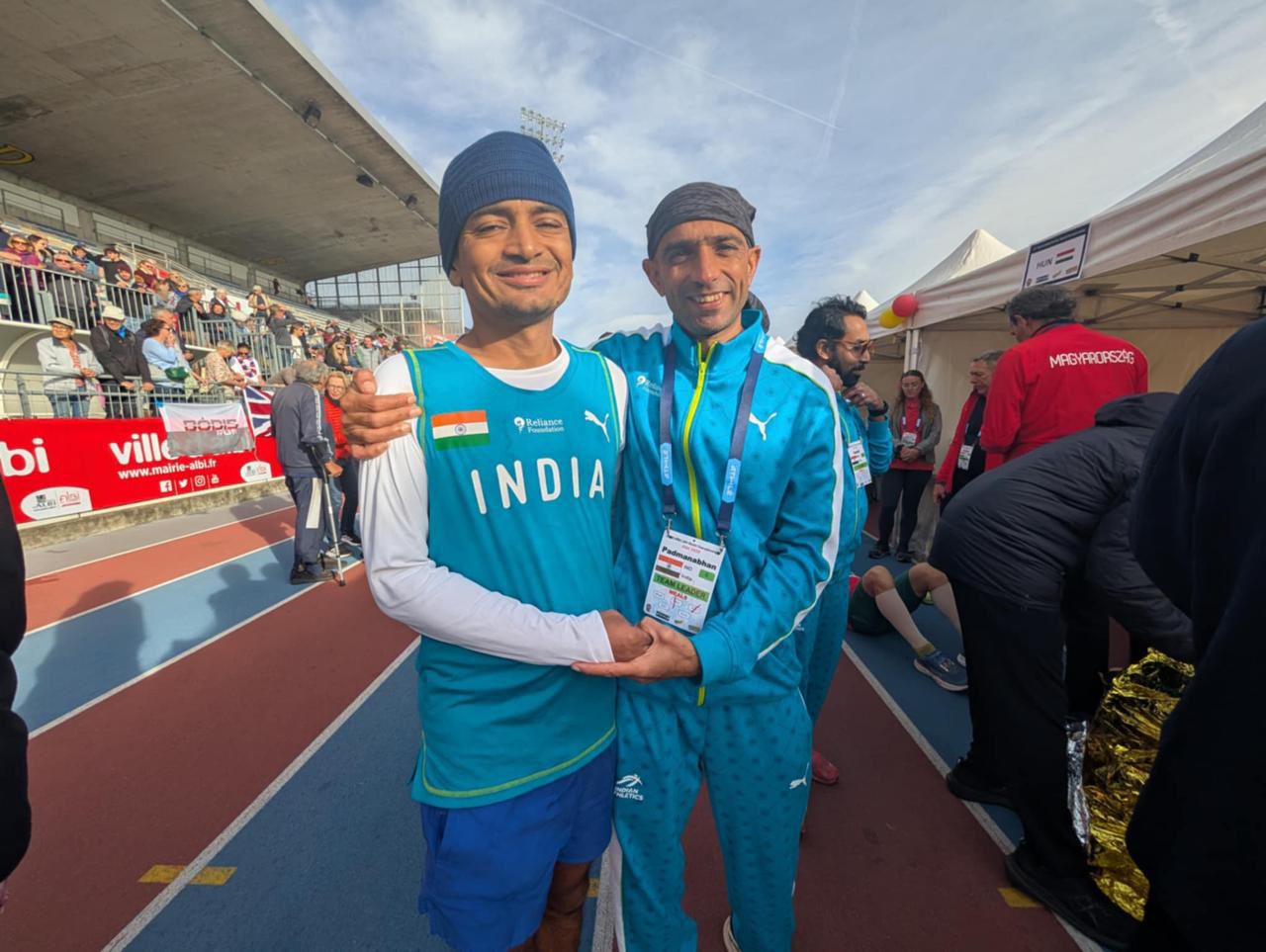
Sugourav Goswami with Santhosh Padmanabhan
Once the lockdown eased, he took to running more seriously and started signing up for running events. Soon he was also running ultra races.
“My first 24-hour run was the Bengaluru Stadium Run in March 2025, where I clocked a distance of 226 km,” he said.
At Albi, he was told by the team manager that he was to pace some of the key runners and also track their movements. “I enjoyed the race thoroughly. Ultras are tough. You can only get through them if you enjoy the race,” he said.
He ran moderately well for 21 hours. The last three hours were very tough. He finished second among Indian men covering a distance of 245.158 km.
His recovery following the race has been very good.
In hindsight, most runners this blog spoke to after the championships said they could have pushed for more mileage. Nevertheless, every ultrarunning event offers a new experience and many new challenges. The learning curve is never ending, they say.
(The author, Latha Venkatraman, is an independent journalist based in Mumbai)
Photos provided by runners
 Outrigger