2017 SCMM: PODIUM MUSINGS

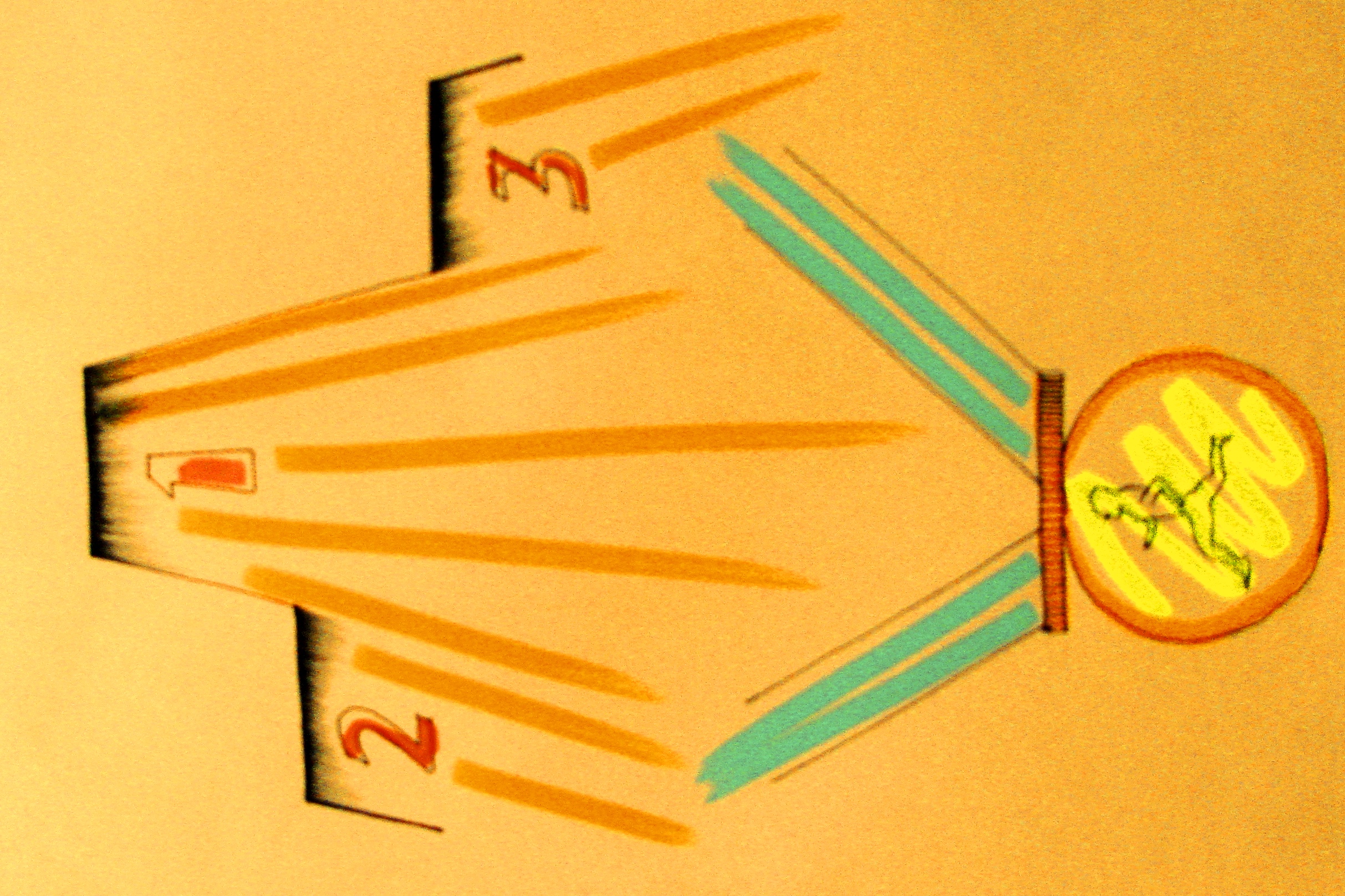
Illustration: Shyam G Menon

Illustration: Shyam G Menon

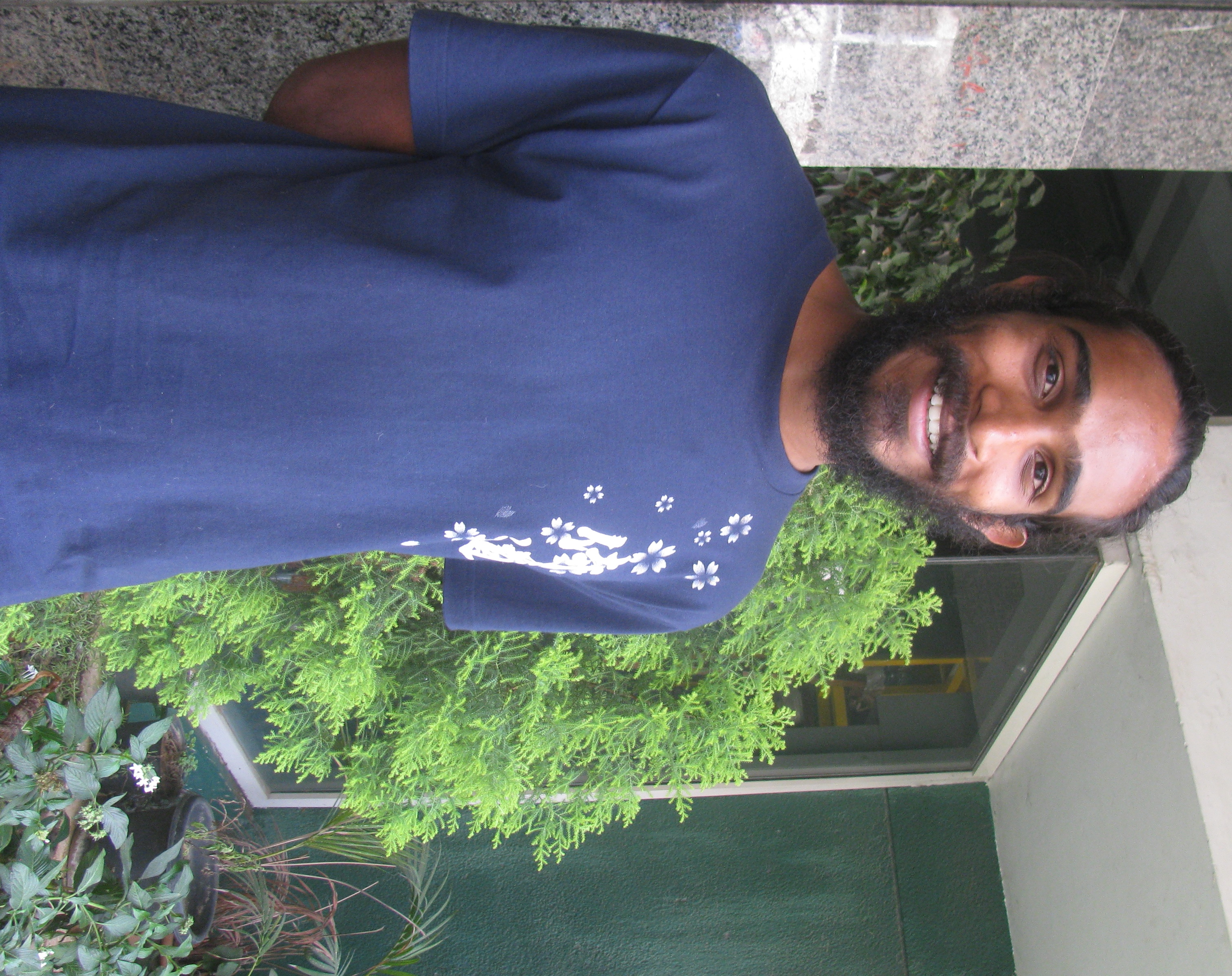
Featured runners: Sabhajeet Yadav, Thomas Bobby Philip, Pervin Batliwala, Team Ladakh, Kamlya Bhagat, Idris Mohamed, Ravi Kalsi, Shyam Sunder, Amar Chauhan, Savio D’ Souza, Vaijayanti Ingawale and Dnyaneshwar Tidke. Scroll down to read what each one had to say.

The annual Standard Chartered Mumbai Marathon (SCMM) typically sees participation by over 40,000 people, around half of them regular runners enrolling for the half and full marathon. While the event has certainly had its share of weathering over the years, what makes it still an experience is how Mumbai responds to it – despite being a huge city with busy life centered around money and consequent capacity for insularity and indifference, the city turns out in large numbers to cheer the runners in their midst. Besides the aid stations put up by the organizers, informal stations and groups of people offering everything from oranges to lemonade, biscuits, water and packed oral rehydration solutions crop up. Not to mention, the groups of dancers, drummers and rock bands along the way. SCMM is as much a race as it is a city’s festival of running. Among the resident community of runners, preparations are visible from weeks before SCMM with most suburbs featuring runners, out training by dawn. Inevitably, at the end of this annual passage, a few among the thousands who ran find themselves on the podium. We spoke to some of them. Excerpts:

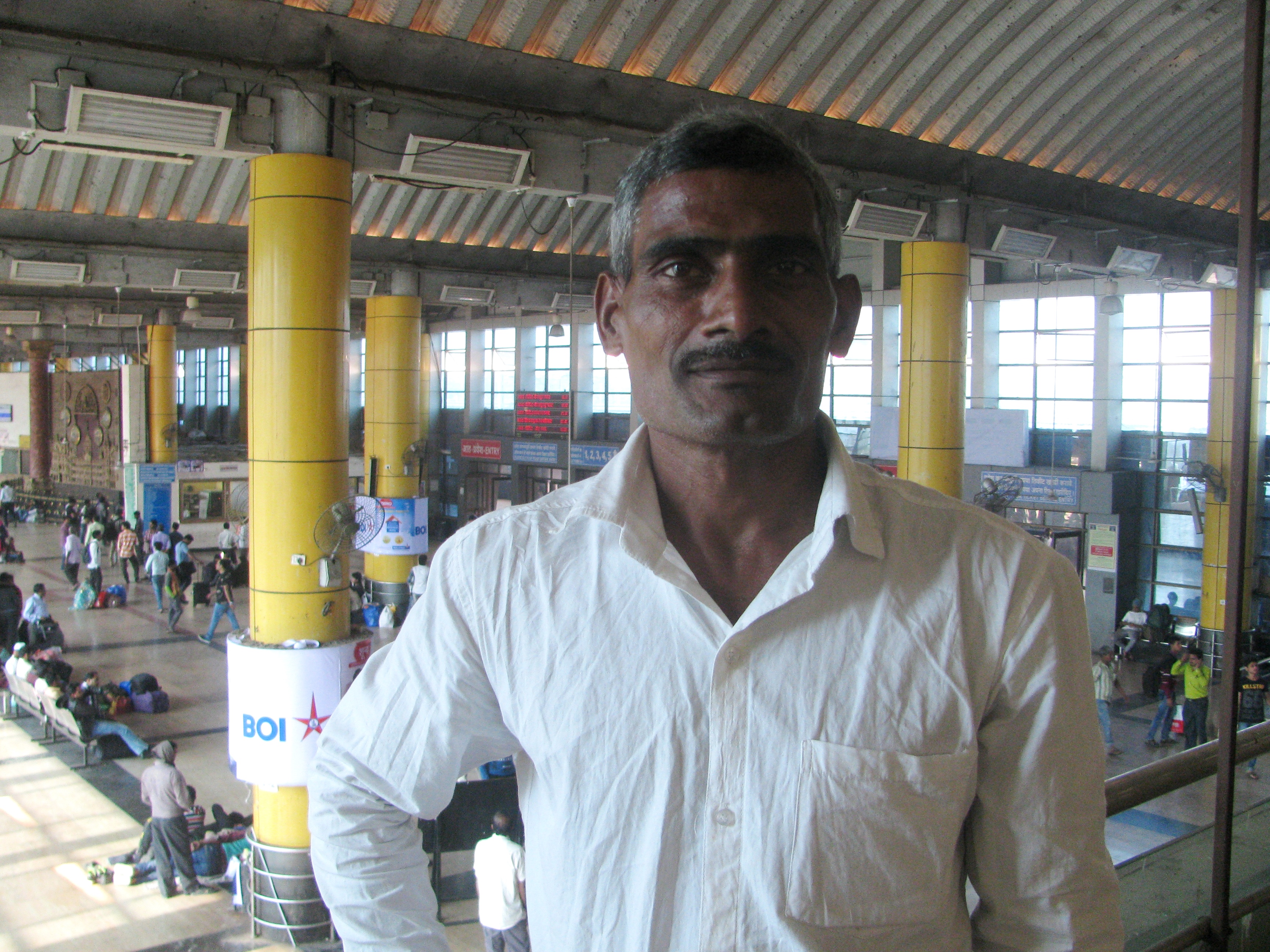
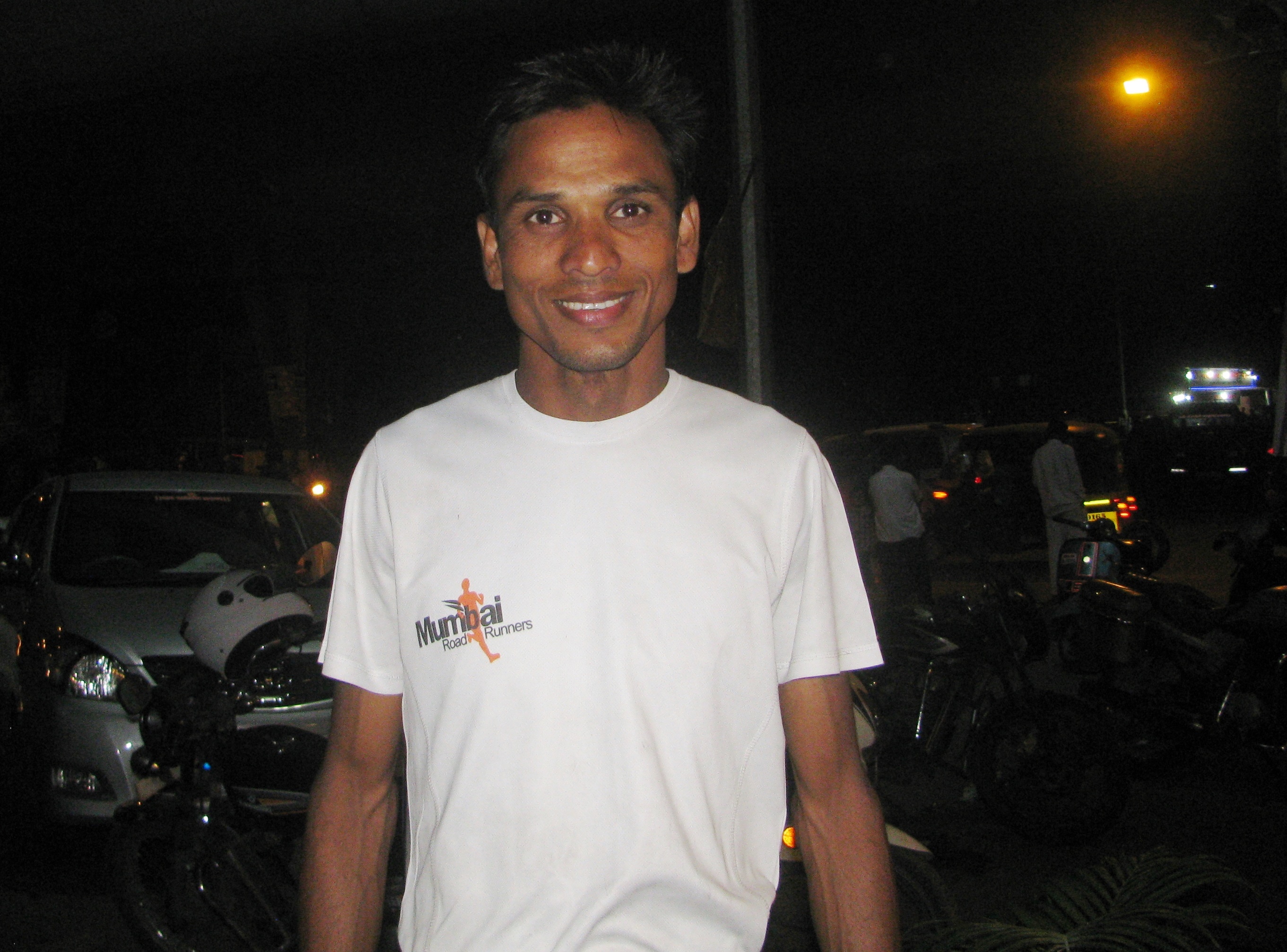
Sabhajeet Yadav; back at Mumbai's Kurla Terminus to board his train for Uttar Pradesh following the 2017 SCMM (Photo: Shyam G Menon)

Sabhajeet Yadav; back at Mumbai’s Kurla Terminus to board his train to Uttar Pradesh following the 2017 SCMM (Photo: Shyam G Menon)

A Sixth Win at SCMM

Sabhajeet Yadav: At the 2017 edition of the race, the farmer from Uttar Pradesh notched up his sixth consecutive victory in the full marathon, this time in the 60 to less than 65 years age category. “ I am always happy to run in Mumbai, this is the best event,’’ he said, when asked if the sultry, warm conditions of race day, which had been a dampener for many, had affected him. “ I didn’t find the weather oppressive. It was warm, yes. Two days earlier, when I arrived it was pleasantly cold, fine conditions for running. But the big difference this time was in me – I reached Mumbai after much preparation. I was averaging 200-250 km a week in my preparations back home. When you are well prepared, you are not upset by other difficulties like the weather on race day. I enjoyed my run, I even managed to have a pretty fast last kilometer-spurt,’’ he said. Sabhajeet thinks differently from other runners. As a farmer, his income from farming fluctuates. Farming in India depends a lot on the monsoon; a year of weak monsoon is bad for crops. 2015 for instance, had been a tough year in farming for him. Further earnings from farming usually get reinvested in farming. Running has been an alternative source of income. Prize money earned through running, helps cushion him and family amid the unreliable fortunes of farming. Imagining back from income, Sabhajeet has been evolving a matrix in his mind that seeks to match earnings to effort. According to him, the effort that goes into a competitive full marathon is much more than what goes into running a half marathon. Yet in races across India (he participates in quite a few), he finds that the disparity in effort is not adequately reflected in the disparity in prize money assigned for the full and the half. This being so, he wonders – isn’t the half marathon more value for effort? Consequently, he finds himself progressively partial to the half marathon. “ I am thinking of restricting my full marathons to Mumbai and Bengaluru,’’ he said. It is of course a different matter if in a given instance, the full is monetarily attractive. A quiet, unassuming person Sabhajeet is known to sleep at railway stations and race venues the night before a race, get up early next morning and win a competition. This time around in Mumbai, he stayed with his longstanding benefactor, Bhasker Desai. A veteran of many marathons, Bhasker has of late been favoring the half marathon and had therefore registered for that discipline at SCMM. These days the full and the half begin at opposing ends of the giant loop that is the marathon’s route in Mumbai. On the morning of the race, Bhasker said, Sabhajeet in characteristic style disturbed none, quietly took the train and proceeded to the full marathon’s start line. Hours later, a sixth win was in the bag with a timing of 3:24:35.

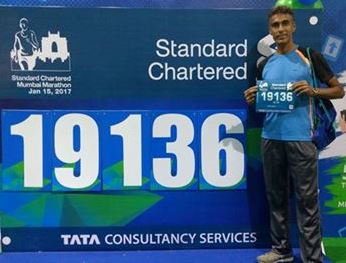
Thomas Bobby Philip (Photo: Shyam G Menon)

Thomas Bobby Philip (Photo: Shyam G Menon)

Breaking into Sub-Three Realm

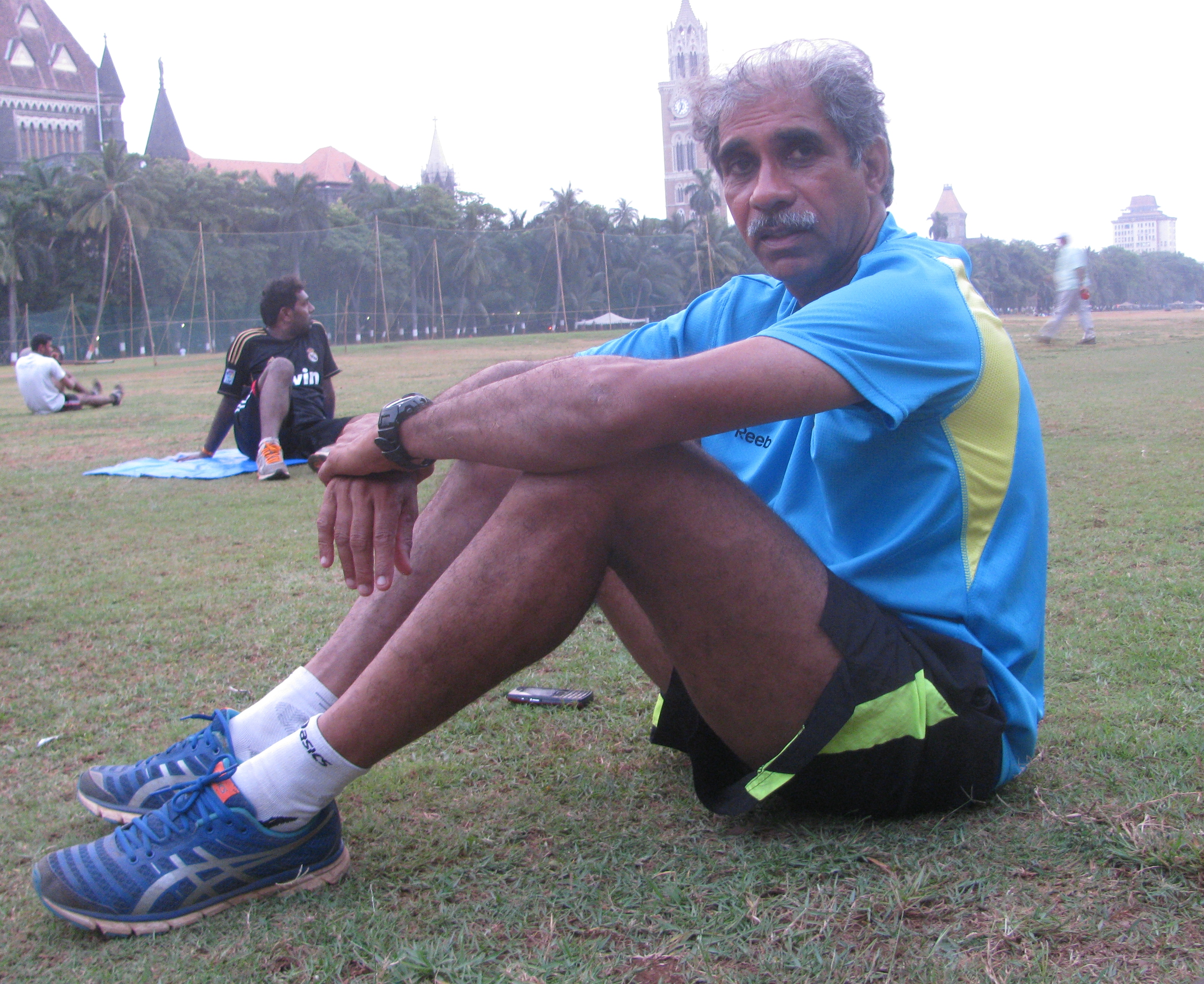
Thomas Bobby Philip: This man did something truly remarkable at the 2017 SCMM. Running in the 50 to less than 55 years age category, he broke into sub-three hour realm in the full marathon finishing the 42 km long distance in two hours 58 minutes and 46 seconds. It was the first such instance for Bobby and while this blog is not informed enough to be sure about it – among rare instances, if any – of a sub-three reported by an amateur Indian runner of that age at a major marathon in India. Well known in India’s running circles, Bobby is a committed runner, born in Mumbai, living in Bengaluru. “ I had been training for it for the past one year,’’ he said, “ at the 2016 SCMM, I had completed the full marathon in 3:06:34. I knew that sub-three is possible as long as I ensure that I put in longer training and improve.’’ That effort has paid off. Bobby was coached by K.C. Kothandapani. “ A good coach is important,’’ Bobby said, pointing to the plan Kothandapani had given him. “ That’s one half, the rest is your commitment and mental strength,’’ he said. According to him, the first challenge was to maintain the timing he had returned at the 2016 edition of the race. After all, every improvement is on the back of an earlier performance maintained. Then, you have to come up with ideas on how to improve. In Bobby’s case, the emphasis was on strengthening, flexibility, intensive training for faster pace and endurance training. Plus, over the November-December period, ahead of SCMM in January, he ensured that he was logging higher weekly mileage. Interestingly, Bobby said that he was not planning a random sub-three, anywhere. He was clear – he didn’t want it during any of the races of 2016 following the 2016 SCMM; he wanted it at the 2017 SCMM. So the goal was to peak by then. Preparations hit a major obstacle in October 2016, when he fell from his bicycle and fractured his arm. A runner may be running on his legs but as any runner would tell you, the movement of one’s arms is an integral part of running. The incident meant, three weeks of training lost. To Bobby’s credit, he maintained his focus and positivity. “ I let nothing shake my positivity. I maintained it through my preparations, including the time lost to fracture. I always told myself I am going to do a sub-three,’’ he said. 2017 SCMM as target – that goal never wavered. At a full marathon in Coorg essayed before the Mumbai run, he completed the course in a relaxed 3:20. On race day at SCMM, conditions were less than ideal with a pleasant Mumbai transforming on the eve of the 2017 SCMM into a sultry, warm ambiance. Minutes into the race, it took a toll on many runners. Bobby didn’t let the weather affect him. “ It was challenging but I had only one goal in mind,’’ he said. As he put it, there is one’s goal and there is one’s focus. The latter dwells on the self. Trained well, gaze glued to intended outcome, the runner’s focus smashed through the three hour-barrier to leave the benchmark high for participants in SCMM’s 50-55 year age category. What next? – We asked Bobby. The pattern going ahead is no different from post-2016 SCMM. Maintain, improve. “ Maintaining 2:58 will be challenging enough,’’ Bobby said. And did sub-three, mean greater exhaustion and longer recovery? “ No, I always give my best at SCMM. There is soreness afterwards and a period of time taken to recover. This time too, it is no different, it’s just the same as before,’’ he said.

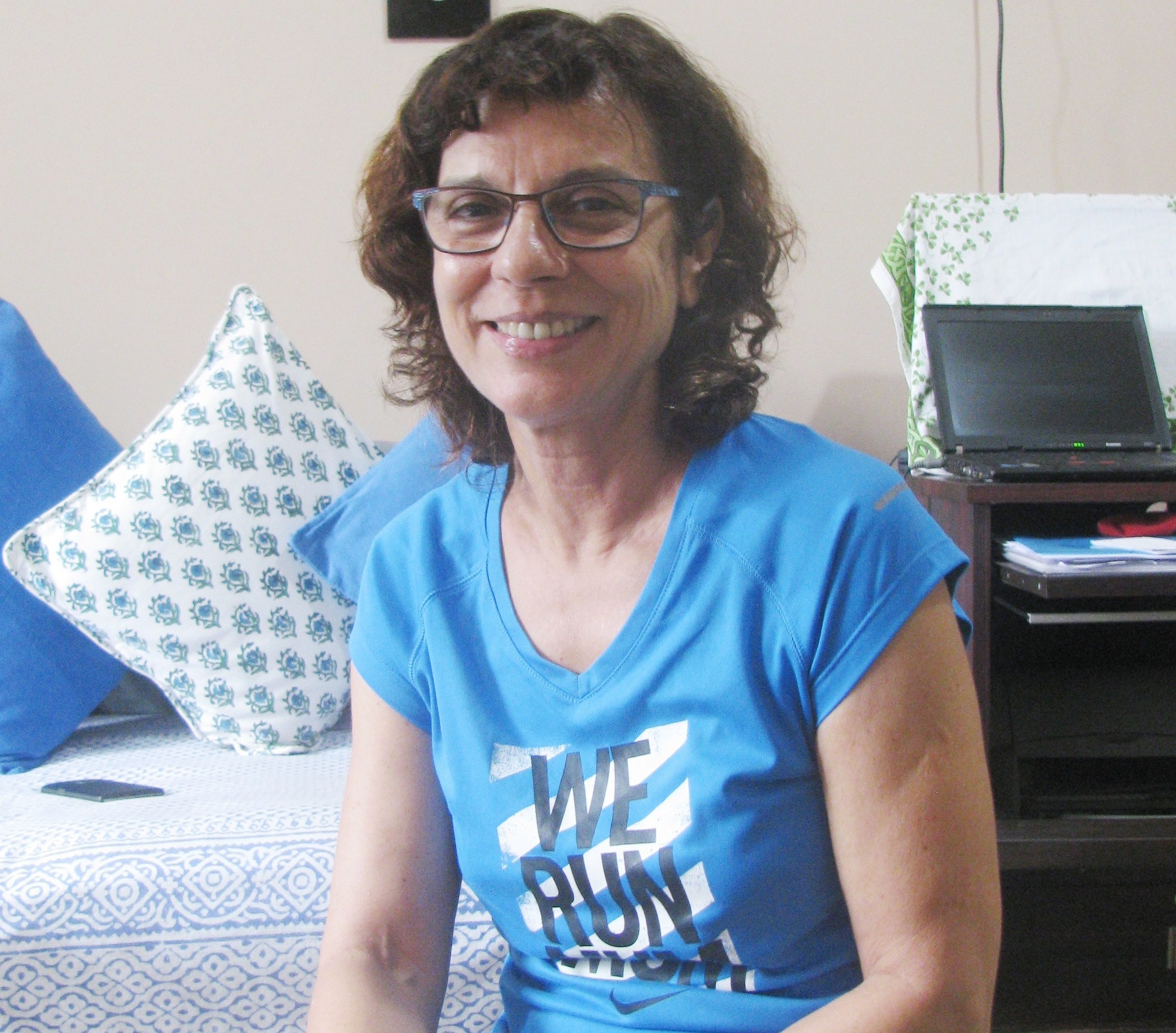
Pervin Batliwala (Photo: Shyam G Menon)

Pervin Batliwala (Photo: Shyam G Menon)

All Set for Boston

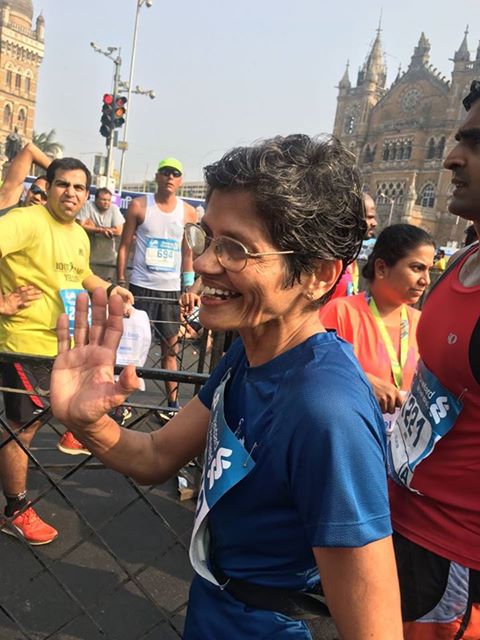
Pervin Batliwala: A veteran of many SCMMs and a podium finisher several times at the event, Pervin topped her age category (60 to 64 years) in the full marathon at the 2017 SCMM. However, she isn’t quite happy with the outcome. “ I was disappointed with my performance. I finished in 4:28:46. The weather was bad but I can’t blame the weather. I could not keep pace and also cramped a bit on the Peddar Road hill. I was expected to keep my pace at 5:55 but I could not manage that. My timing was not up to my expectation and did not match up to my training. Nevertheless, I did end as a winner in my age category,’’ she said. Her top priority now is the 2017 Boston Marathon. “I am set for Boston Marathon. I just need to keep up the momentum of training. I have been told that Boston is a tough route, especially the second half of the route. I will be participating in the Thane Hiranandani Half Marathon in February but I plan to take it easy. I won’t go all out there,’’ she said.

Some of the members of the team from Ladakh. Jigmet Dolma [first from left], Tsetan Dolkar [third from left], Disket Dolma [second from right] (Photo: Shyam G Menon)

Some of the members of the team from Ladakh. Jigmet Dolma [first from left], Tsetan Dolkar [third from left], Disket Dolma [second from right] (Photo: Shyam G Menon)

A Model to Emulate

Team Ladakh: Since 2013, Leh based-Rimo Expeditions has been sending a team of young Ladakhi runners to SCMM. Four years later and with the help of training availed from Mumbai based-coach, Savio D’ Souza, the team has produced results. For 2017 SCMM, based on their earlier performance at the event, two Ladakhi runners – Jigmet Dolma and Tsetan Dolkar – were included in the elite segment of the women’s full marathon. In the final result Jigmet ended third in the Indian elite category for women with a timing of 3:14:38. Tsetan was close behind, finishing the run in 3:14:42. “ We were together right from the start,’’ Tsetan said. The weather having unexpectedly turned warm, they stayed cool pouring water on their head. At around 25 km, they had some snacks before continuing together again. The gap between the two apparently opened up in the last 300-400m of the race, which Jigmet said, she sprinted. Close finishes – one following the other – seem habitual for these two Ladakhi runners as you see the pattern repeated at some of the other races they participate in too. In addition to the fine performance by Jigmet and Tsetan, Disket Dolma finished third in the open category of the women’s half marathon with a timing of 1:41:43. In all 11 runners came for the 2017 SCMM as part of the Rimo-sponsored team. Their current outing is as yet, the longest since the project of grooming a clutch of distance runners from Ladakh started with that visit to Mumbai in 2013. To put things in perspective: after the 2016 SCMM, the team left for Leh in February that year. Although cold, they said that they could manage short runs in Ladakh, in March. Training for the Ladakh Marathon (organized by Rimo) commenced in April 2016. Savio’s training schedule for the team, Jigmet and Tsetan said, underwent some change with emphasis on mileage. The previous schedule had focused on getting them into the scheme of training. Rimo uses the Leh Marathon results to decide each year’s team for the trip to Mumbai for SCMM. The top three Ladakhi runners in each category get selected. The Ladakh Marathon happens in September. The journey to the 2017 SCMM commenced in October 2016 with four runners leaving Leh for Delhi where they participated in a marathon in Gurgaon. From Delhi the quartet moved to Darjeeling where they stayed a month and practised hill-running. Darjeeling was chosen because while hilly, its temperature isn’t as cold as Leh’s allowing for more training time. The four runners then returned to Delhi where seven more runners joined them and the 11 strong-team, traveled to Mumbai. However, participating at the 2016 Vasai Virar Mayor’s Marathon (VVMM), they suffered a setback. According to Jigmet and Tsetan, the four Ladakhi runners who participated, received their bibs only the morning of the race. There weren’t enough safety pins for all. Three of them ran with bib clutched in their hand. Tsetan finished first in her category in the full marathon; Jigmet came second. Prizes were distributed, they said. But there was protest by other runners over the run without bibs pinned on, following which the prizes were taken back. Both Jigmet and Tsetan said that they liked the ambiance at VVMM, well known for the crowds that line up to cheer. “ We would like to come back and run it again,’’ Tsetan said. With SCMM done, the team’s attention is on the upcoming half marathon in Thane. Their last engagement will be the IDBI Half Marathon in Delhi, after which, they should be back in Leh by around the first week of March.

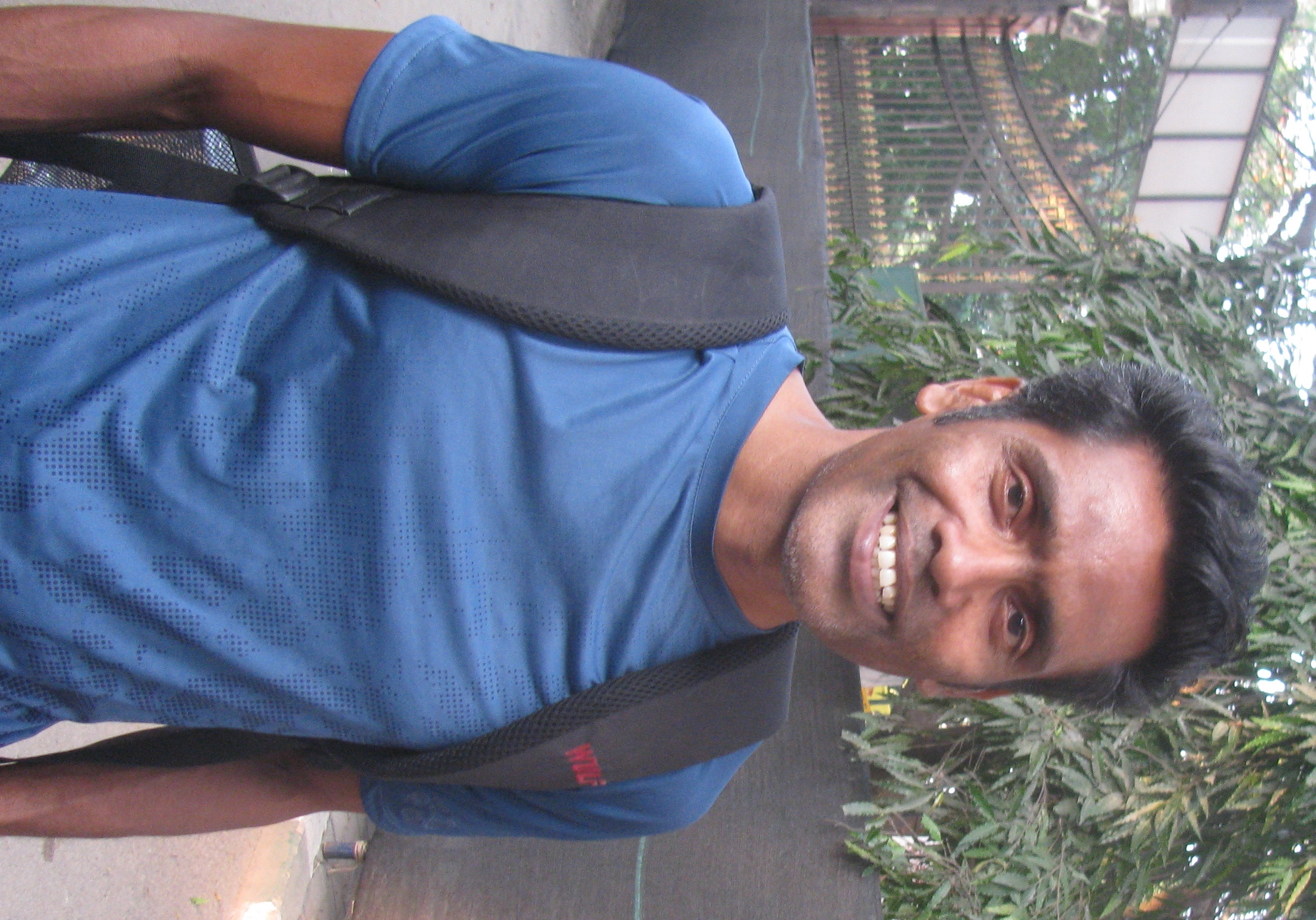
Kamlya Bhagat (Photo: Shyam G Menon)

Kamlya Bhagat (Photo: Shyam G Menon)

Road Runner Strikes Again

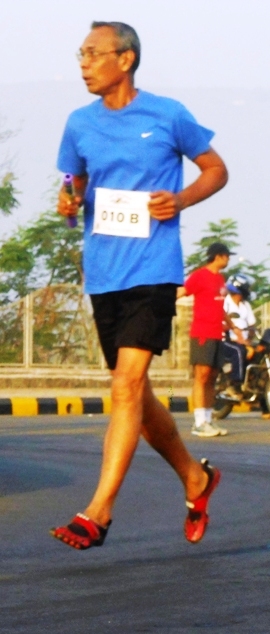
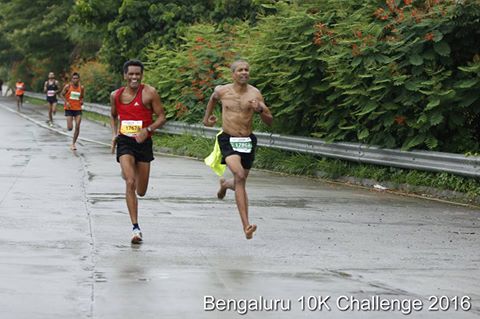
Kamlya Bhagat: Although living near the Mumbai-Navi Mumbai region, Kamlya had never participated in SCMM. That was until 2016. That year, he ran his first SCMM and ended up first in his age category in the half marathon. In 2017, he ran his second SCMM and ended up first for a second time in his age category (30 years to less than 35 years) in the half marathon. January 18, two days after SCMM, we were back at Panvel’s Visava Hotel for a chat, missal pav and tea. Hailing from financially challenged circumstances, Kamlya races mostly on short distances at events in Raigad. Well-wishers and sponsors in Mumbai’s running community point out races elsewhere and register him for a 21 km-half marathon. Given that is how major half marathons materialize for him, in the time between his first win at SCMM and the 2017 edition of the race, the bulk of Kamlya’s running was over smaller distances. Closer to the event, according to Kamlya, Dnyaneshwar Tidke put him in touch with the folks at Nike (the coach there is Daniel Vaz). They provided Kamlya a training schedule. He couldn’t travel to Nike’s training sessions in Mumbai city; so he trained on his own near Panvel. It was already December when Kamlya began his training for SCMM. “ I must have trained for a fortnight at best,’’ he said. His schedule emphasized speed training. The short duration of training he somehow managed compared to, much of Mumbai that makes a year-long affair of Mission SCMM, wasn’t the only quirk in his preparations. On race day, minutes before the half marathon commenced, one saw him engaged in warm-up jogs. He wore no shoes; he had on just a pair of socks. According to Kamlya, while he wears shoes for his training runs, for some reason, he can’t extract race winning performance from them on race day. So at races, he prefers to go barefoot. Barefoot however, doesn’t work well on all Indian roads. He sought an intermediate situation and that is how the socks debuted. In a version of minimalist footwear he innovated, he started to wear the socks over a plain insole. But that wasn’t satisfactory as the insole tended to slide and slip around. Early January 15, with minutes left for the SCMM half marathon to begin, he was into version two of his innovation – he created a contraption wherein he first wore a pair of socks and glued the insole into place under it, then he wore two pairs of socks over it; this was his race footwear. In that, Kamlya ran to an early lead in the half marathon. Past the 17 km-mark, he recalls feeling some tiredness; he also experienced mild cramps. But he maintained his lead to end first in his age category with a timing of 1:16:11. Was he nervous defending his first position from the past? “ No, that was never a source of tension. My only worry was – I had promised those who sponsored me in registering for the race that I would try to return a timing of 1:15. Unfortunately, although I won, that timing stayed elusive,’’ he said. When this blog first wrote about Kamlya, he was staying in a hut of a home at a small hamlet on the outskirts of Panvel. He has since spent money improving his home, giving it better shape and stronger build. The money for this came mostly from running; a mix of funds contributed by fellow runners – particularly many at Mumbai Road Runners (MRR) – and prize money. “ There is still work left to do. But once the house is complete, I plan to name it: Road Runner,’’ Kamlya said.

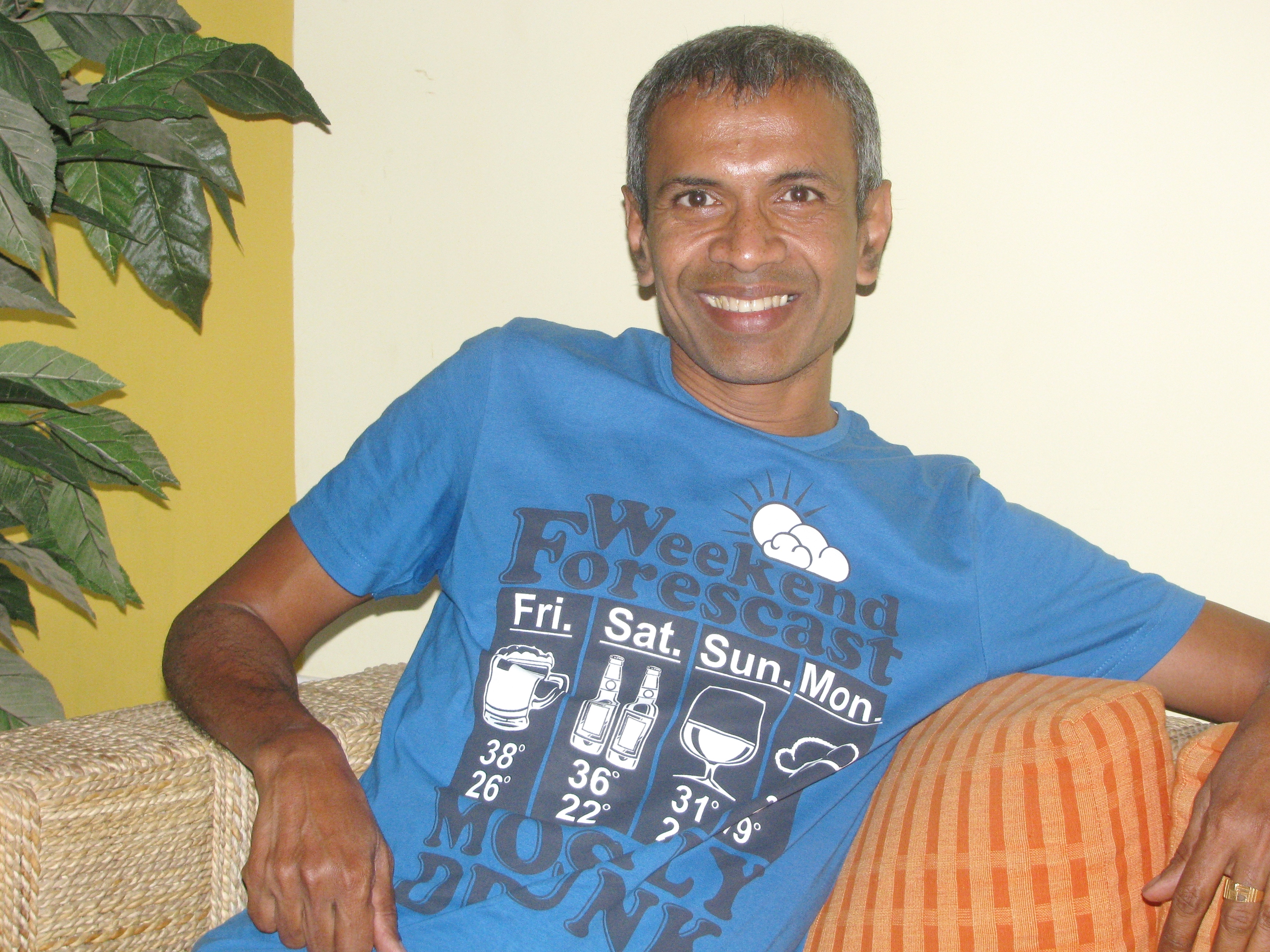
Idris Mohamed (Photo: Shyam G Menon)

Idris Mohamed (Photo: Shyam G Menon)

Next Year: A Full Marathon

Idris Mohamed: When Idris Mohamed first ran at SCMM, he chose the full marathon. At his subsequent appearances in 2016 and 2017, he opted for the half marathon. An intriguing set of choices, Idris explained that it is both temporary and reflecting his predicament in prize money-based racing. Idris has investments, one of which is an investment in an optical business, where his partner manages the show leaving runner free to compete and more importantly – maintain a second line of earnings through prize money. It so happens that in prize money’s calendar of events, half marathons seem to exceed full marathons in India. Idris’s schedule reflects this. He came from running a series of half marathons to SCMM. By the second weekend following SCMM he was due to sail into a schedule of four half marathons. “ I cannot ignore these half marathons,’’ Idris said. As he did in Bengaluru last year, he could have run the full marathon on the back of a series of half marathons done (Idris is a triathlete and has adequate endurance to cover the additional distance of running involved) and even attempted a good timing (he had finished the Bengaluru full marathon in 3:04). But recovery in time for the half marathons following SCMM would have been tough. So he decided to stay with the half marathon at the 2017 SCMM too. He finished second in the half marathon in his age category of 45 years to less than 50 with a timing of 1:24:52. This was 28 seconds slower than the timing he registered in 2016. One reason for this was that he wasn’t feeling all that well going into the run. The sultry weather didn’t bother him. He however wished there had been some more aid stations stocked with oral rehydration solutions and energy drinks. “ Next year, I plan to do the full marathon at SCMM. Before I turn 50 years old, I want to do one,’’ he said.

Ravi Kalsi (Photo: courtesy Ravi Kalsi / Facebook page)

Ravi Kalsi (Photo: courtesy Ravi Kalsi / Facebook page)

A Personal Best despite the Weather

Ravi Kalsi: “ I like to run SCMM. I enjoy the spirit,’’ Ravi, who works with a BPO, said. On a warm, sultry day – not exactly ideal conditions for running – he managed both personal best timing and place on the podium. Ravi finished third in the half marathon in the 45 years to less than 50, age category. “ The run was good as I ended with a personal best of 1:25:29. I did a barefoot-run again. The road was very good till Marine Drive. My plan was to get to sub 1:25 because that meant I would be in the A category of the half marathon. I could not achieve that but I am happy with my performance. There is always a next time,’’ he said. Ravi had trained well for the 2017 SCMM. Unexpected element was the weather which suddenly changed from fine weather, ideal for running to warm and sultry, the night before SCMM commenced. “ The weather was a dampener and I realized it in the second or third kilometer itself. After about seven or eight kilometers I started pouring water on my head to help me cool down; I did so every two kilometers or so,’’ he said adding, “I like to run SCMM. I enjoy the spirit. There is so much positivity and energy. After I finished my run, I rushed to Marine Drive to cheer other runners.’’ Ravi will soon be back to training. He plans to do the ILFS 10 k coming up in February. His stringent training schedule also includes emphasis on form, diet and rest.  He started running in 2011 and has done a couple of marathons. But now his focus is on improving speed and efficiency in half marathons.

Shyam Sunder (Photo: courtesy Shyam Sunder)

Shyam Sunder (Photo: courtesy Shyam Sunder)

Enjoy Running SCMM, No Complaints at All

Shyam Sunder: The septuagenarian who gifted himself a marathon overseas when he turned 70 years old some time back, finished second in the 70 years to less than 75 age category of the 2017 SCMM full marathon. “ The race was good until around 30 kilometers or so. After that I got cramps and had to resort to a mix of walking and running. I did 21 km in 2:06 and 30 km in 3 hours. I was doing well until I started to get cramps at around 30km-mark. I had not trained much this time. All my long runs were below 20 km. I did not want to strain much. I enjoy running SCMM. I have no complaints at all,’’ he said. Shyam Sunder finished the run in 4:53:24, knocking six seconds off his timing in last year’s Mumbai Marathon, which incidentally had been his maiden full marathon. His next plan is to do a half marathon at the Thane Hiranandani Half Marathon, mid-February.

Amar Chauhan (Photo: courtesy Amar Chauhan / Facebook page)

Amar Chauhan (Photo: courtesy Amar Chauhan / Facebook page)

Good to Run in a City that Cheers and Supports Runners

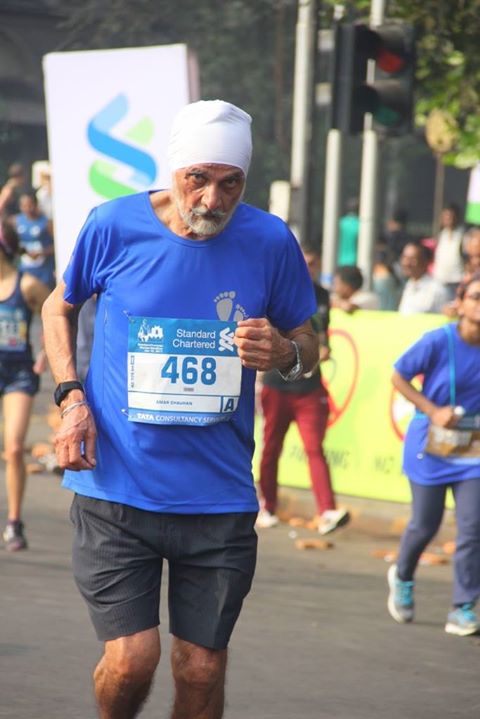
Amar Chauhan: Amar Chauhan lives for six months of the year in Mohali and the remaining six months he divides his time between the U.S. where his daughter lives and Canada where his son resides. The retired Punjab government official started running overseas about four years ago. “ I used to go for brisk walks earlier,” he said. He has participated in 21 half marathons and three full marathons and has had podium finishes in 21 of these races. He got a podium at the BMO Vancouver Marathon 2016 (second position with timing of 4:18:04). On January 15, 2017, Chauhan topped his age category (70 years to less than 75) at SCMM. “ It was a good run. I was satisfied with my performance (4:16:31) though it was not as good as it was last year (4:10:36). I ended up first once again. This time around I developed cramps at 38 kilometers and had to take a minute’s break. But when I restarted I was fine. I had trained very well this time. Every alternative day I ran a 20 k in the month before the marathon. My long runs would be of the distance of 30, 35 and 40 km,’’ he said. About 35 runners from Chandigarh participated in the 2017 SCMM. Amar Chauhan said that he likes running SCMM as there is a lot of enthusiasm, cheering and good support for runners. His next two runs are in Mohali and Chandigarh. He has already signed up for races in Canada and the US.

Savio D' Souza (Photo: Shyam G Menon)

Savio D’ Souza (Photo: Shyam G Menon)

A Coach’s Satisfaction

Savio D’Souza: Savio is among Mumbai’s best known coaches. A former national marathon champion he makes it a point to participate in SCMM. He finished second in his age category of 60 years to less than 65, in the half marathon at the 2017 edition of the event. “ It was a good run. I finished with a timing of 1:38 and ended up second in my age category (60-64). I was targeting 1:35 but could not manage that. Humidity was a bit high,’’ he said. Savio is also coach to the team of runners from Ladakh who have been regularly visiting Mumbai for SCMM. Based on past performance, in 2017, two of these runners were elevated to the elite category. “ As a coach it was a satisfying experience. Many of my wards ended up with places on podium. The performance of the team from Ladakh was good. This was a major race for them as elite athletes. They ran well, they did not get intimidated by anything and handled the pressure well. They have the potential to do better and improve their performance as they are quite young. They came here one month ahead of the race to get acclimatized to Mumbai’s humid weather. They have years ahead of them as marathon runners usually peak at the age of 28-32 years. I have been training them for the last two years. Many of my wards in amateur groups also ended up with podium finishes. Among them are Disket Dolma in the open half marathon category for women, Ankita Mittal and Neha Grover in the 30-34 age group of the half marathon, Vidhi Sheth in the below 35 years age group in the full marathon, Sanjay Jadhav in the 55-60 years age group of the half marathon, Elsie Nanji in the 60-64 years age group of the half marathon and Pervin Batliwala in the 60-64 years age group of the full marathon,’’ he said. According to him, SCMM is a very well organized event, one that has mobilized the entire country into running. “ It is evident in the number of people coming into marathon running,’’ he said.

Vaijayanti Ingawale (Photo: courtesy Vaijayanti Ingawale / Facebook page)

Vaijayanti Ingawale (Photo: courtesy Vaijayanti Ingawale / Facebook page)

A Podium Finish at Her First Full Marathon

Vaijayanti Ingawale: A podium finisher at many of her half marathon appearances, Vaijayanti Ingawale ended up with a third position in her maiden full marathon attempt at the 2017 edition of SCMM.

“I really had no clue how this run would go as it was my first full marathon. I had no target,’’ she said, noting alongside that one of the differences between the half marathon and the full is how some of the cheering and support dies out by the time the amateur full marathon runners straggle in to complete the distance. But there are exceptions. “ In many places residents were offering snacks and hydration to runners. One of the residents ran along with me for quite a distance offering me chocolate. The weather was a dampener this time,’’ Vaijayanti said. A medical doctor (she is a pediatrician), she started running in 2012 when a friend suggested that she try something new – she chose running. The bug caught on and soon she found herself signing on for the 2013 edition of the Thane Hiranandani half marathon. Later that year she got her first podium at the Goa River Marathon. She wasn’t aware of her podium status until she got home a few days later. A resident of Thane, Vaijayanti loves to travel to running events. Her husband Deepak Ingawale is also a runner. Recently, she participated in the Nilgiris run where she did a 25 k. Having crossed the finish line of a full marathon at SCMM, Vaijayanti now wants to explore ultra-distances. She is not a fan of SCMM as it is very crowded with runners now. She was also tad surprised at the lack of hydration support at the end of the run. “Further, the post-run refreshment that is offered is not up to the mark. However, the camaraderie among runners makes up for the shortcomings. It was also great to see the elite athletes running past us at such a close distance,” she said.

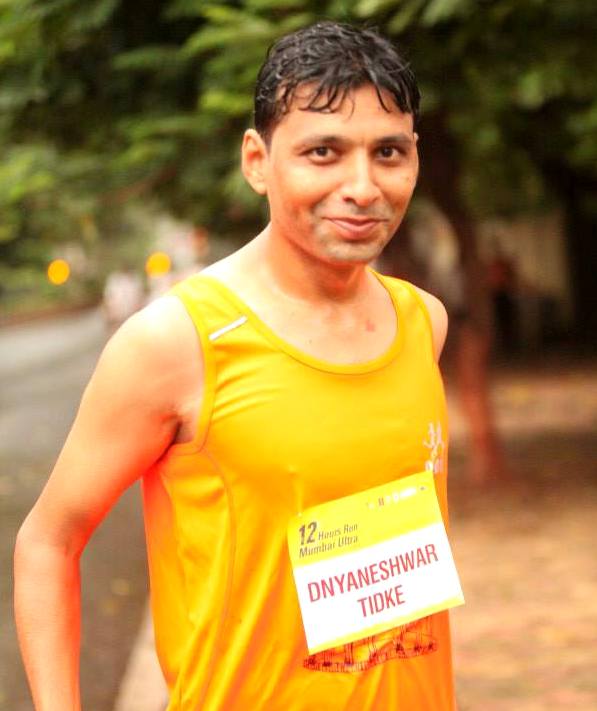
Dnyaneshwar Tidke

Dnyaneshwar Tidke (Photo: courtesy Dnyaneshwar Tidke)

A Good Run but Short of Personal Best

Dnyaneshwar Tidke: Among the best amateur runners in the Mumbai-Navi Mumbai region, Dnyaneshwar’s aim was to get a personal best at the 2017 SCMM. The marathon ended well for him as he finished with an officially recorded net timing of 2:55:14. However, it fell short of his best, which remains 2:53. “I had some stomach issues, which impeded my run.  But overall the run was good.  This time around support was excellent with adequate water and electrolyte, sponges and oranges,’’ he said. Unlike many runners at SCMM, Dnyaneshwar was not impacted by the humid weather. A major dampener for him was running into a wall of half marathon runners, particularly on Peddar Road and towards the end. Unfortunately, Dnyaneshwar did not figure among podium finishers initially although his timing within his age group indicated that he finished third. “I have written to the organizers to rectify it,’’ he said. The error has since been rectified and his podium finish is now official. Dnyaneshwar loves the energy at SCMM. His plan going forward is to focus on training and strengthening and bring down his timing.

(The authors, Latha Venkatraman and Shyam G Menon, are independent journalists based in Mumbai. The photos taken from Facebook were downloaded with the permission of the runner concerned.)

LIFE, RETIRED AND REINTERPRETED

Illustration: Shyam G Menon

Illustration: Shyam G Menon

Muthupet is located in Tamil Nadu’s Thiruvarur district, some 360 km south of Chennai. It is adjacent to the Bay of Bengal, at the southernmost part of the Cauvery delta. Lagoons and mangrove forests abound. It is an area rich in fish. The man before us was born and brought up in Muthupet. We were at the popular restaurant at Bengaluru’s Kanteerava Stadium; the eve of the city’s 2016 marathon. There was a steady stream of runners proceeding to collect their bibs. Many of them stopped at the restaurant for a cup of tea and small talk.

The previous year – 2015 – Idris Mohamed had finished second in his age category in the half marathon segment at Bengaluru. And that is just one of several podium finishes, the wiry man from Muthupet had been notching up in races across India. Back home, he hailed from a big family. “ I am one of ten children; I have six brothers and three sisters. I was the most active of the lot, given to sports although not the sort winning prizes at school or anything like that,’’ he said. Following school, Idris moved from the coast to Dindigul near Madurai, in the interiors of Tamil Nadu, to study textile engineering at the SSM Institute of Technology and Engineering.

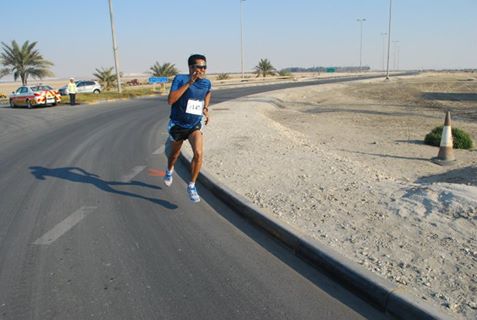
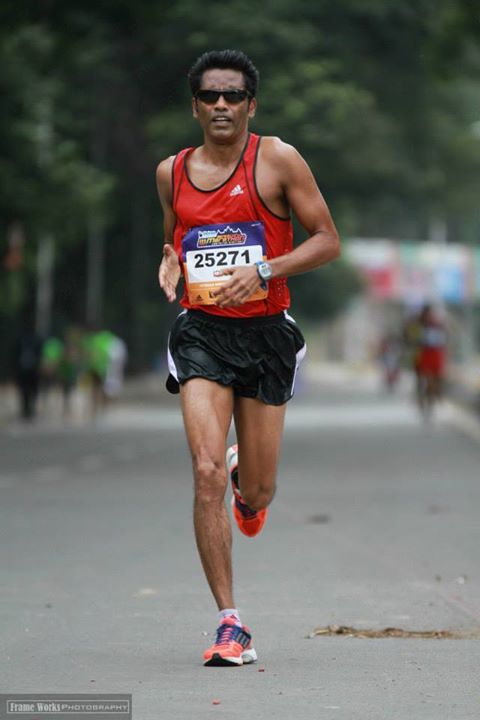
Idris; running in the Middle East.

Idris; running in the Middle East

For a while thereafter, he worked as an apprentice at a company in Coimbatore. In due course, given a brother, who had opted to work in Dubai, Idris too, shifted overseas. “ I remained in Dubai for eight years,’’ he said. Despite his background in textile engineering, when it came to livelihood, the man from Muthupet found himself in sales and marketing. Work days were long and involved taking clients out and entertaining them to clinch a deal, resulting perhaps in a sense of life as a lot of time requiring to be spent somehow. Liking badminton, he often played the game. He also enjoyed walking and the occasional jog. There was nothing yet to indicate a later passion for running.

In 1996, he got married. From 1996 to July 2014, he worked in Bahrain. “ During that phase, I gained a lot of weight,’’ Idris said, “ I was close to 90 kilos.’’ To tackle the predicament, he took up running. “ It took me six months to be able to run non-stop for three to four minutes,’’ Idris said. Soon he became member of a club called Bahrain Road Runners (BRR – according to one website, it has its roots in an earlier outfit started by expats in 1972, with its first marathon organized in 1979 to mark the Bahrain visit of Queen Elizabeth II). Every weekend, they had races. “ I never missed a weekend run,’’ he said. Although he was running with BRR, Idris didn’t have a coach keeping an eye on him. His passage in running was by trial and error. Like most rookies, he ran without adequate warm up and stretching. Within a few months he suffered major injuries. “ It put me out of action for almost a year and a half,’’ he said. Lesson learnt, he began warming up and stretching, embarking eventually on a period of running that has since stayed injury-free.

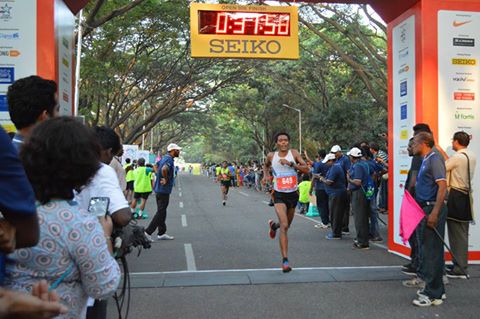
Crossing the finish line at a race

Crossing the finish line at a race

In 2002, for the first time he ran a half marathon; it was the first evidence he got that he had the capability to run 21 km. He finished the 21 km in 1:45. “ That was when they said: you have talent in running. Since then I haven’t looked back; I have been running, cycling and swimming,’’ Idris said. In 2003, he ran that year’s edition of the Bahrain International Marathon. It is considered to be the oldest marathon in the Middle East. Now weighing around 70 kilos and well into running, Idris completed the marathon in 3:35. As always happens, the running bug started working on Idris Mohamed. And as typically follows, the wife took some time understanding husband’s emergent eccentricity. Afroz Banu had her concerns but eventually gave in. Idris spoke honestly. “ For Indians, particularly runners, once you get married, it is an uphill task overcoming the pressure in this department. It is a challenge. It took me three years to convince my wife about my interest in running. There are friends of mine who like running but don’t find time for it because of family commitments. I was lucky after those three years,’’ he said.

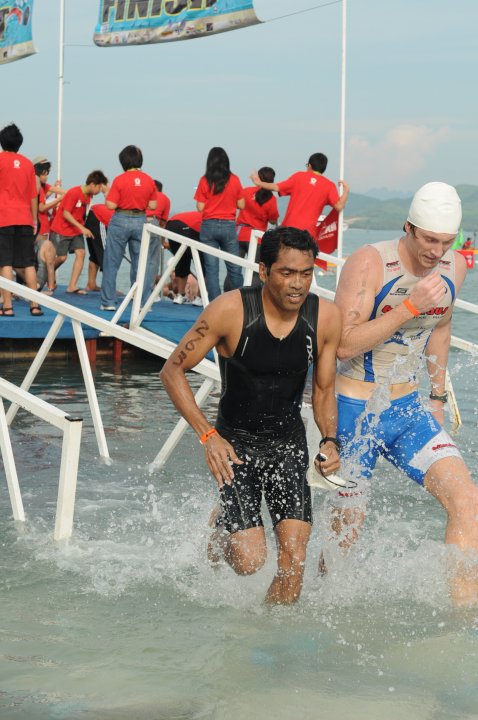
At the Ironman event in Malaysia

From the Ironman event in Malaysia

The shape of runner Idris has evolved to tracked his circumstances. BRR used to host triathlons – that probably explains the regimen of running, cycling and swimming he came to follow. In 2010, when Indians at triathlons was yet a small number, he participated in an Ironman event in Malaysia completing it in under-14 hours. He funded the participation himself. It was a straight plunge into the full Ironman format without any attempt at a half, before. The event in Malaysia was a struggle. Idris had commenced swimming seriously in 2004. Twice a month he used to swim in the sea off Bahrain. “ It is a relatively calm sea. You don’t find waves there,’’ he said. He found for himself a stretch where he could swim 400 m across and back. His weakness was cycling. He bought a bicycle suited for the needs of the triathlon, a week before the event. He practised some bit, learning how to shift gears and ride alright on flat courses. Malaysia however had a course that went up and down. He struggled in the hills trying to figure out the right gear shifts, the right ratios. “ I wasted a lot of energy in cycling,’’ Idris said about the event. Result – running, which he does well, paid the price. It took him five hours to finish the marathon leg. But the Malaysia episode hasn’t stopped Idris from dreaming of Ironman. “ Now at age 50, I want to do an Ironman. Hopefully, I can be the fastest Indian in my age group in the Ironman,’’ he said. Maybe an Ironman in Australia, he thinks, for his sister stays there. Else in Canada, where his brother lives. “ I want the course to be a fast one,’’ he said. That is among considerations.

Age group also matters. “ I am beginning to get old,’’ he said, “ I want to set a benchmark for veterans. Currently I lay a lot of emphasis on strength training.’’  He lives a packed schedule. On Sunday, he runs two hours to build endurance. Monday finds him swimming in the morning and cycling by evening. Tuesday is a combination of swimming in the morning and hill-running by evening. Wednesday is reserved for stretching and yoga with a bit of cycling in the evening. Thursday mornings are kept for swimming; Thursday evenings for speed work-out. Friday, till afternoon, is prayer time followed by an evening run of 15-20 km. Next day – Saturday – he swims in the morning and cycles by evening. Idris does not have a specific rest day. He prefers to rest through variation in activity. However ahead of a race, this approach alters. He consciously rests for two days before races.

Idris Mohamed

Idris Mohamed

Despite all this, back in 2003, when Idris ran his first marathon, he had finished it believing he will never do it again. His timing was decent. Problem was the state he found himself in. “ I was literally in pieces. I was that exhausted,’’ he said. Nevertheless as the story shows, he persisted. At his second BRR marathon, the timing was less – 3:10. Then came the big one – in 2009, he completed the full marathon in Dubai in 3:04. In 2011, he ran the London Marathon, finishing it in 3:17.  His personal best (PB) yet in the full marathon is a perfect three hours, returned at a 2012 marathon in Bahrain. Same year he completed the full marathon along the Great Wall of China (it involves tackling 5164 steps) in 4:36, placing 23rd among 700 international runners. Next year (2013), he finished in the top 25 again at a full marathon in Phuket, Thailand. In 2013, he also participated in the Bengaluru Ultra. In 2014, he ran the Comrades ultramarathon in South Africa in 8:56, an admirable timing of below nine hours. In 2015, he moved back to India from the Middle East, a small whirlwind of sporting activity accomplished during his years in Bahrain. His father who had been running a school needed help managing it. Idris returned for that reason. What followed is perhaps the most engaging angle to Idris’s life.

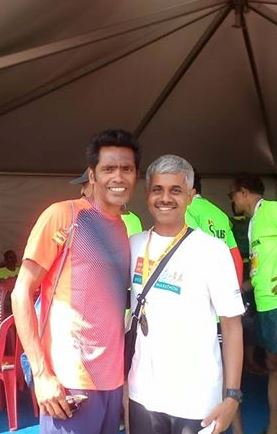
Idris and Dnyaneshwar Tidke

Idris and Dnyaneshwar Tidke

At most races he participated in, in India, Idris found himself on the podium. It intrigued the runner in him. His two children – a son and a daughter – were in senior school and mid-school respectively. Having invested his money well, – his investments had been mainly in real estate and gold – he had some assets yielding income. “ I asked my wife: what should I do? Should I go back to Bahrain? My desire was to run and make a living from it. When you have children, their education is top priority. For that, Chennai is better than Middle East. As regards money to support wife and two children – that wasn’t a problem. The only thing was – how will I kill time? Fortunately my wife agreed. She said: go ahead,’’ Idris said.

Today, Idris is in an enviable spot; a position many men and women of his age aspire to be in. His life has been turned over to his passion – running.  Running and winning in his age category, he now makes anywhere between Rs 30,000 to Rs 40,000 a month. He races almost every week. “ I am happy. The wife is also happy,’’ he said. In 2015, according to Idris, he participated in close to 32 races. In 2016, by the time we met him on the eve of the Bengaluru Marathon, he had already logged in 22 races. The running season spans July to January with most races happening in the months of July, August, September, October and November – that’s gladiator’s busy season. In April, TCS 10K is the sole major race in his reckoning. This situation wasn’t accidental. Idris admits that you don’t reach here without prior planning. “ This has been a drift in me since 30 years of age. We invested in apartments at that time,’’ he said, pointing to how he had prepared for the life he now leads. “ You can’t make this change all of a sudden. You have to plan for what you wish to do at age 55 or 65,’’ he said. So what’s his future in running, as he sees it?

Idris and Thomas Bobby Philip

Idris and Thomas Bobby Philip

Although he ran the Comrades, going ahead, Idris does not want to court the ultramarathon. Reason – it slows him down. He recognizes himself as a fast runner. Plus, there is an emergent attraction. Being old and fast at once is both a challenge and a rarity. Not to mention – in that specific bracket of wanting to be fast despite age, competition is less, something important when you are running for money. Currently, that last observation is delicately poised. Idris knows that aside from people like Dinesh Kumar and Ashok Nath for competition, Bengaluru’s well known distance runner, Thomas Bobby Philip, will also be in his age group. There is no cake walk guaranteed. “ However honestly speaking, nothing about any of us really matters. Look at Haile Gebrselassie. At age forty plus, he completes a marathon in 2:15!’’ Idris said. In front of foreign runners, Indians have a long way to go. As he put it, his advantage is solely one of positioning in the market. Right now in India, there are few fast runners in his age group. Out of them, the few who race seriously do so at a few selected events. Idris on the other hand, races every weekend. That improves probability of podium finish, provided he stays injury-free and nobody with a history of long, dedicated training – like somebody from the military’s sports set up – enters the age group. As one dwells on what Idris said, that would still seem a tight rope walk for he also concedes that age notwithstanding, he is “ as competitive as anyone else.’’ Competition and staying injury-free at the same time, is a tricky knife edge.

Idris with Ramesh Kanjilimadhom

Idris with Ramesh Kanjilimadhom

New life in hand, Idris has everyone bought over to the direction he has chosen, save one person. “ My mother is not convinced that I made a good choice. She wonders how running can be a career. She tells me to come to terms with life,’’ the 50 year-old said. Much time had gone by since we sat down to chat. Having reached Bengaluru just that afternoon and with a race to run early next morning, Idris took leave. Along the way, he paused to watch for a while sport climbers tackling the vertical on the stadium’s artificial climbing wall. By next morning, race over, the results were out. Idris had won in his category of the full marathon with a timing of 3:04:08. Weeks later, he would also finish first in his age group at the 2016 Airtel Delhi Half Marathon with a timing of 1:18:57.

2016: LIST OF RACES IDRIS PARTICIPATED IN:

Amdavad Half Marathon – Age Group First Runner up

Pollachi – Aanamalai 12k – Open 5th Place

SCMM Half Marathon – A.G – First Runner up

Perambalur HM – Open Category – Second Runner up

The Wipro Chennai HM – Open – Top 10

Indore 10k – Veteran Winner

New Delhi Marathon – Age Group Winner

 Nise Gel Goa – 10k – Veteran Winner

 Mepz HM – Open – 6th

Teendurance 5K – Open – Winner

TCS world 10k – Age Group – Second Runner Up

Vizag Bay HM – Veteran Winner

Bangalore 10K Challenge – A.G – Winner

Kanchipuram HM – Open – Top 5

Dream Runners HM – Veteran Winner

Mumbai Chembur 10K – Veteran Winner

IDBI Mumbai HM – A.G – Winner

Hyderabad H M – A.G – Winner

Mysore HM – Veteran Winner

Surat City HM – Veteran Winner

Coimbatore HM – Veteran Winner

Walaja Dream Run 11km – Veteran Winner

Bangalore Marathon – A.G – Winner

Teenduruns 10k – A.G – Winner

Navi Mumbai Half Marathon – Veteran Winner

Airtel Delhi HM – Age Group Winner

Aurangabad Heritage HM – Veteran Winner

Vasai Virar Mayor’s HM – A.G – Second Runner Up

Tata Steel Kolkata 25K – Age Group Winner

 (The authors, Latha Venkatraman and Shyam G Menon, are independent journalists based in Mumbai. Details of events and timings therein as well as the 2016 list of events participated in, are as provided by the interviewee. All the photos used with this article were downloaded from the Facebook page of Idris Mohamed and used with his permission.)   

THE KARANJA METAPHOR

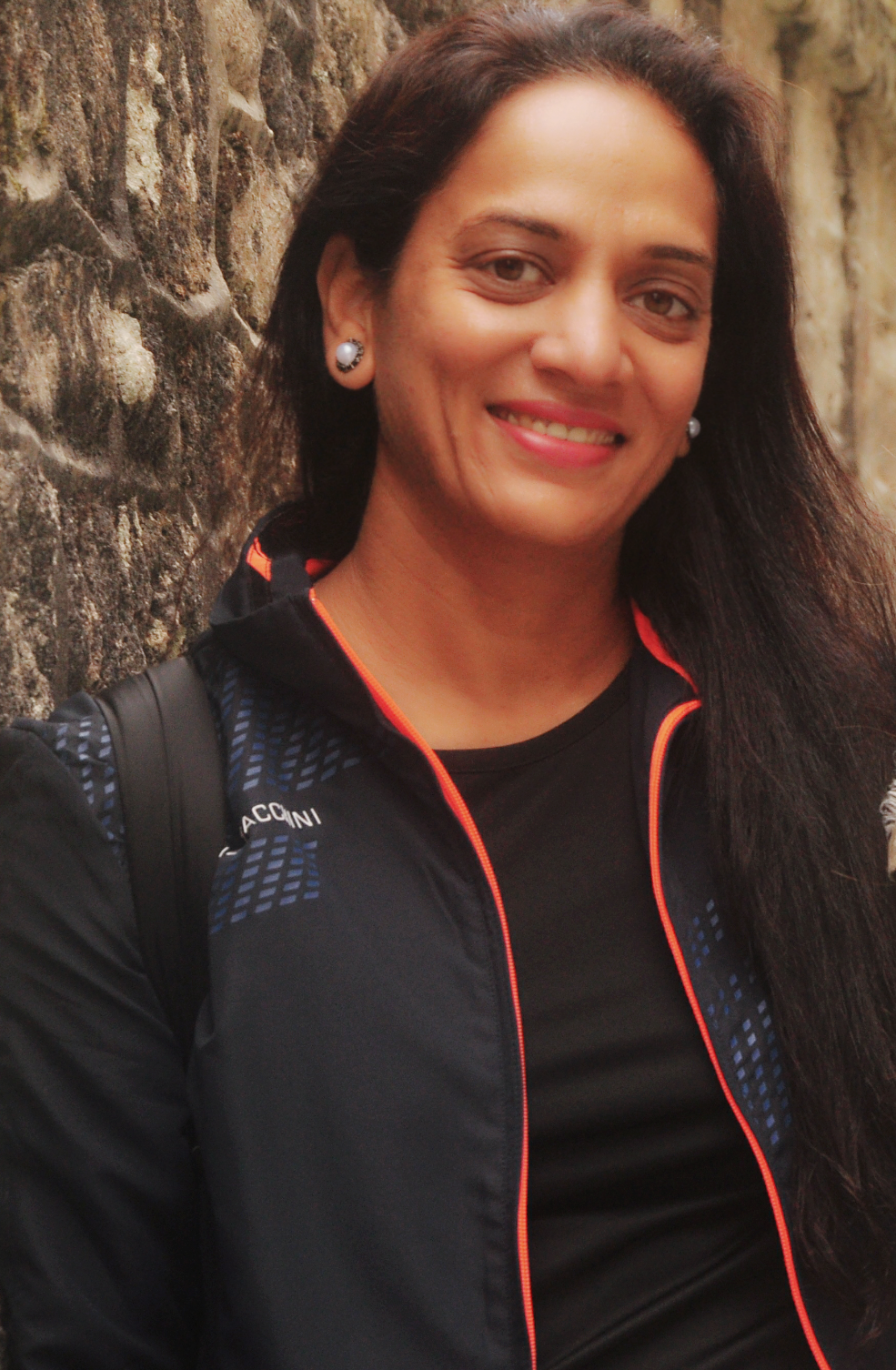
Meena Barot

Meena Barot

The story of a woman, who overcame her fear, used what she had around her to train and completed a half Ironman.

“ I wanted to do something in life rather than just get married,’’ Meena Barot said.

It isn’t that her parents didn’t understand. The larger family and community she found herself in didn’t expect women to work.

Most women married and settled down, raised families.

If there was anything for a woman to gravitate to, it was that predicament.

Born 1972 in Vadodara (Baroda) and roughly a decade later, shifting to Belapur in Navi Mumbai, Meena wasn’t one bit inclined to tow the community line. In her schooldays, she was into athletics and excelled at badminton. “ That sporting spirit probably brought some aggression to the table,’’ she said, mid-2016, at her neat apartment in Kharghar, where she stayed self-contained, two bicycles for company.

Realizing early that India assigns set direction for girl child and one’s own effort is the only way to foray a different path, Meena kept busy. Continuing on to college, she worked part time while still an undergraduate. She did her PG Diploma in Pathology from Grant Medical College and worked full time at Hinduja Hospital as a lab technician for the next four years. “ I believe every woman should be financially independent. Dependence and relations can take a twist at any point in life,’’ she said, adding, “ you don’t need others to tell you that you are strong. You need to realize it yourself.’’ While still at Hinduja Hospital, Meena enrolled for a MBA in marketing from the Narsee Monjee Institute of Management Studies (NMIMS) and successfully completed it. She funded that MBA course entirely with her earnings. “ It was a struggle doing all that. But the struggle made me a strong person. My life to date has been my decision,’’ Meena said.

Meena with her team at the China office of Shalina Healthcare

Meena with her team at the China office of Shalina Healthcare

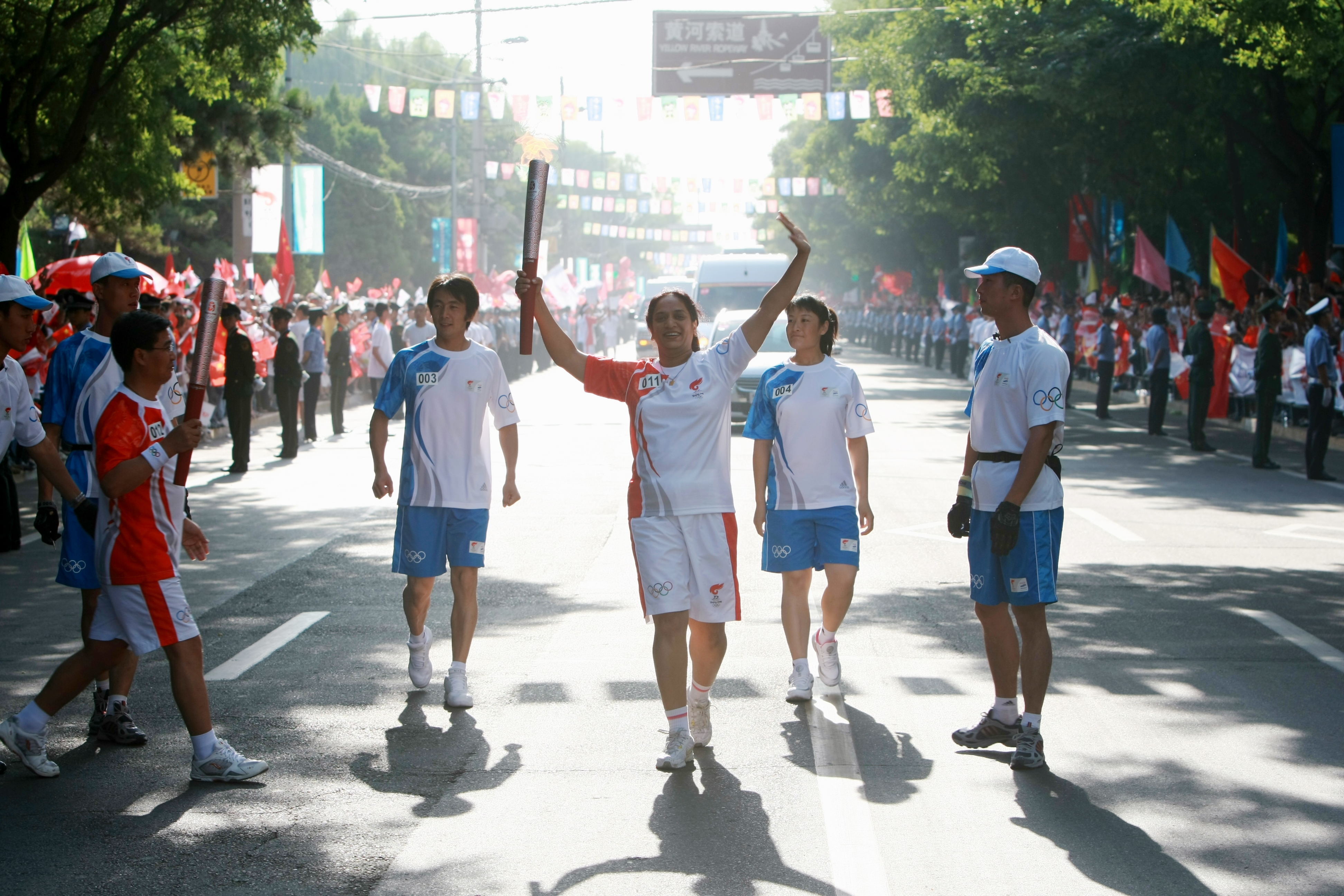
Following the MBA, she worked for three years at a company called Becton Dickinson, shifting later to a smaller outfit called Shalina Healthcare, which though smaller, allowed her room to learn. In their employ, Meena moved to Shijiazhaung near Beijing, tasked with setting up operations for the company in China. She had to do everything from scratch, from finding a place to stay to finding a place to set up office. Shijiazhaung had just two other Indian families. Indeed there were few foreigners in town. “ It was tough but the local people were good,’’ she said. Back in Navi Mumbai, for some time now, her father had known that his second child had no appetite for conventional womanhood. According to Meena, he maintained his views on life but rarely interfered with her choices. When she got the offer to move to China, she didn’t inform him at first. Once everything was in place and the shift was imminent, she broke the news at home. The China angle also came at the right time. With her siblings marrying and settling down in life, there was pressure on her to follow suit. China put an end to that. For the next five years – from 2005 to 2010 – she was based there. One of the highpoints of that tenure happened in 2008. As the Beijing Olympics drew close, Meena who participated in a contest by Lenovo to choose a bunch of ordinary people who would get to carry the Olympic torch, found herself in the lucky lot. After the relay, she got a torch as memento; it is there at home with her.

Meena with the Olympic torch; from the torch relay head of the Beijing Olympics

Meena with the Olympic torch; from the torch relay ahead of the Beijing Olympics

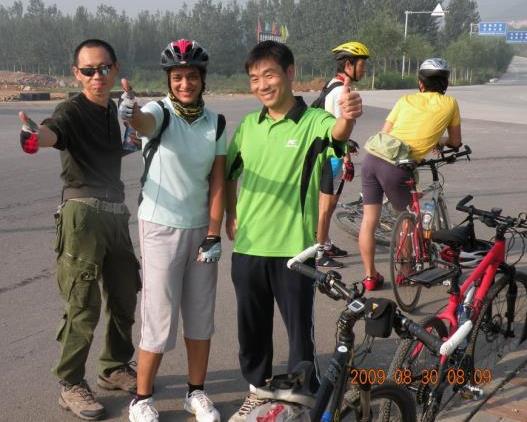
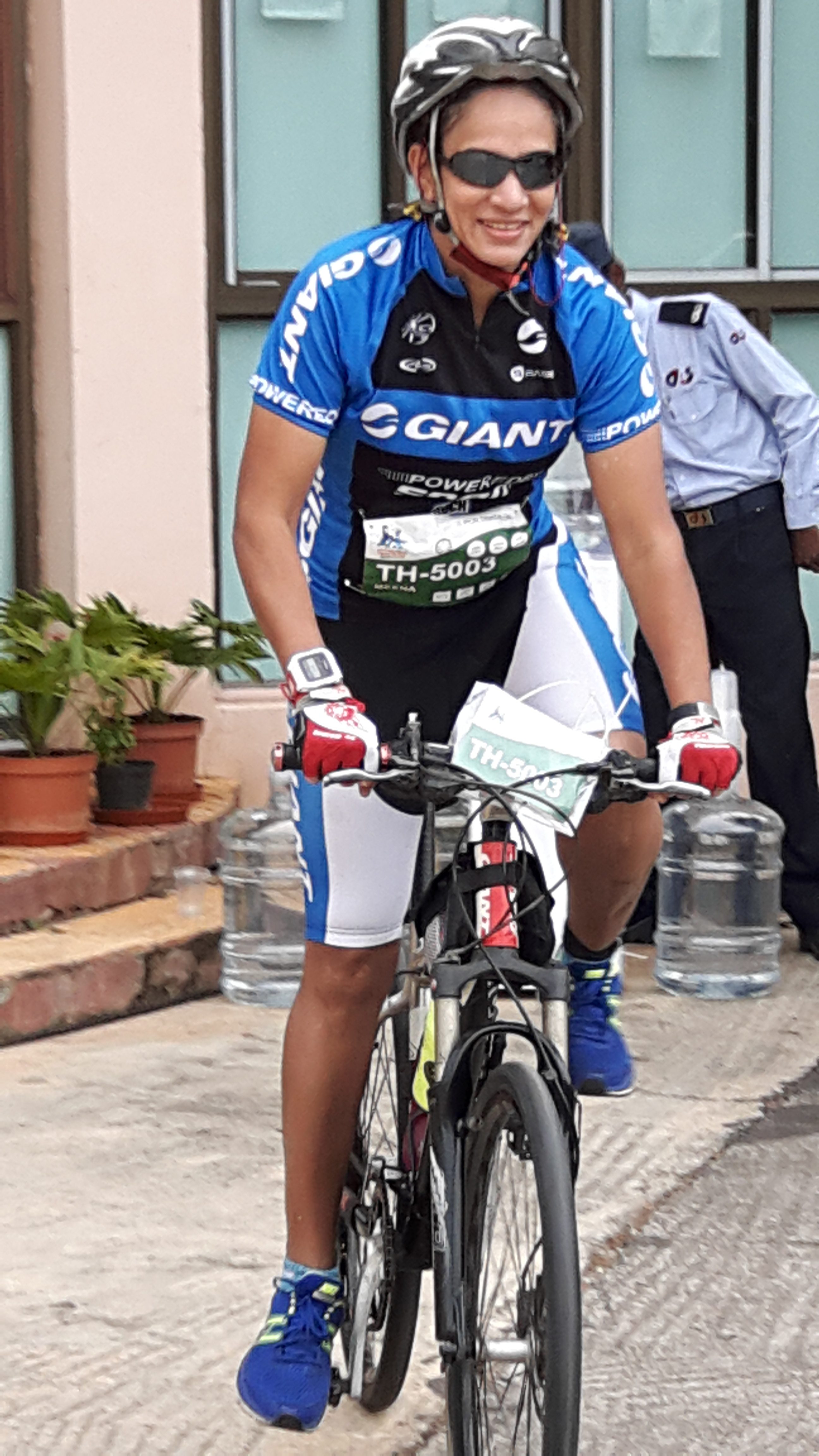
From a weekend cycling trip in China; Meena with friends

From a weekend cycling trip in China; Meena with friends

Setting up a company office entails much work. There was considerable stress. A year after moving to China, in 2006, she was diagnosed with hypothyroidism. It triggered weight gain; she nudged 90 kilos. Living alone and the long, lonely stint endured from schooldays, navigating her path in life – all that was also taking their toll. “ I was in the happiest phase of my life. Strangely, I was also depressed,’’ Meena said of that period in Shijiazhaung. What particularly depressed her was the loss of stamina. Going up stairs had become difficult. She joined a gym, working out regularly after work. It helped physically (she brought down her weight to 80-83 kilos) and while it did help mentally, it also posed a fresh problem – over time gym becomes boring. For engaging alternative, she joined a badminton coaching class, where the students were mostly children. That didn’t demotivate her, she kept up the routine till a new set of problems emerged – knee pain and lower back issues. The doctor she consulted while on a visit to India, said, “ no exercise.’’ Once back in China, Meena took up cycling. She was getting on a bike after 25 years or so. It was a lady’s bike called ` Emily,’ single speed, no frills. She started cycling to office. Soon she was going everywhere on Emily. Around 2008, she bought a Giant MTB (mountain bike). The shop, which sold her the bicycle, also hosted organized rides. That way, Meena started riding 30-40 km on weekends. China is both the nerve centre of global bicycle production and home to a large number of people using bicycles for day to day commute. “ Half of our regular road in India – that is how much space they demarcate on roads for cycling,’’ Meena said. Her parents visited her in China. She remembers the visit for her father’s observation. “ I am happy you didn’t get married although I pressured you to,’’ he said.

In December 2010, Meena moved back to India and Navi Mumbai. Reason was her father’s ill health. He had a heart problem having suffered his first stroke in 1987 followed by a bypass surgery in 1992 after his third stroke. In 2009, he was victim of yet another stroke; this time, severe. He had called up Meena in China and asked her to return. Not long after she returned, in March 2011, he passed away. He was 66 years old. Meena felt the loss, deeply. She had moved back to Mumbai with the same company that sent her to China. In India, she was tasked with setting up a new department and that involved considerable work. So much so, that within a week after her father’s demise she was back at her office desk. “ That got me thinking – what am I living for?’’ she said. The old depression was coming back to haunt.

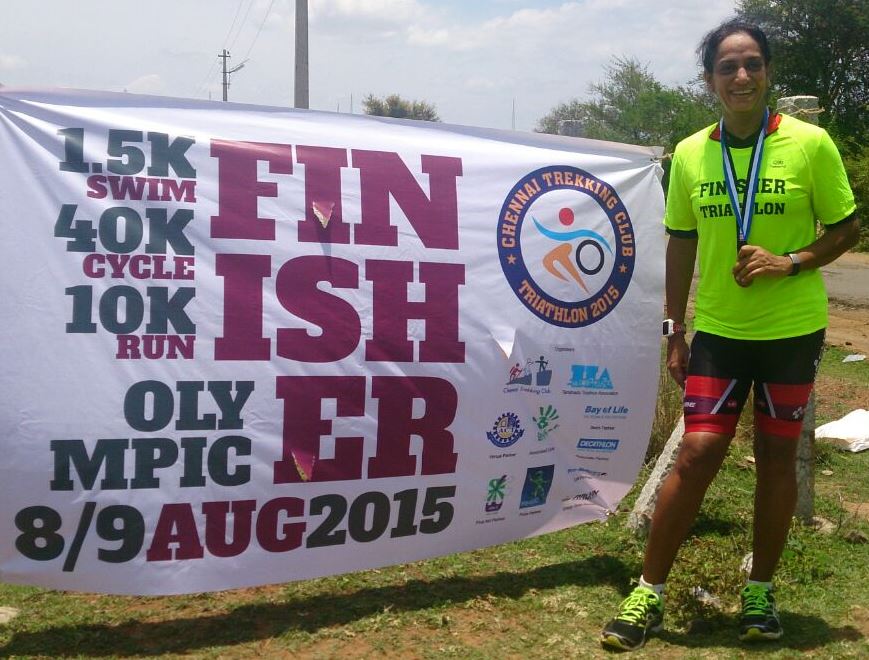
From the 2015 Chennai Triathlon

From the 2015 Chennai Triathlon

By November 2011, she had made up her mind to quit her job. It was a well thought through decision – she had cleared her loans, had some savings, endured a high pressure job with consequences and wanted to be done and over with that lifestyle. China had sent her back with a hobby for gift – cycling. She was now cycling regularly in Navi Mumbai. One of the friends she made so was P. V. Subramanyam (aka Subra). He was a member of Navi Mumbai Runners (NMR). He kept saying that Meena should get into running. By then, she had also linked up with Shalil Nair, one of the founders of NMR. In 2012, after her last day at work, she went out for a run with Nair who incidentally asked her about her background and realized that she was between jobs. He was Director, Human Resources at Institute for Technology and Management (ITM Group of Institutions). Meena was offered a job as part time lecturer at ITM Business School in Kharghar. “ I was thus unemployed for only eleven days,’’ she said. She sought six months break before joining. In that time, she did a cycling trip with Youth Hostels Association of India (YHAI) in Himachal Pradesh, to the Jalori Pass.

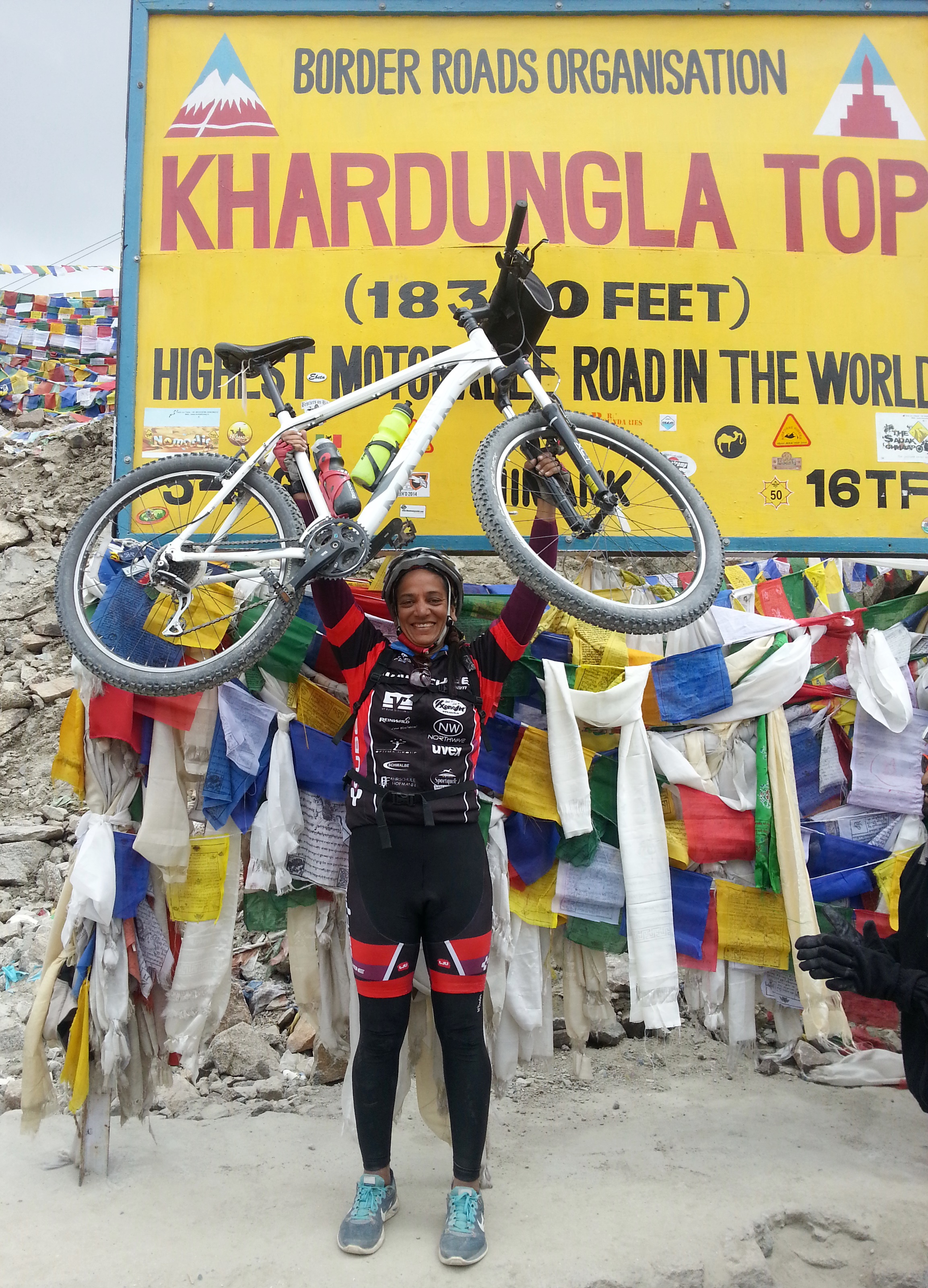
From a cycling trip to Khardung La in Ladakh

From a cycling trip to Khardung La in Ladakh

One of the great challenges for people living alone is – what do you do with time? Bereft of human company and the evolving dynamics of person meeting person characterizing crowded Indian life, time sits still, a palpable quantum on one’s shoulders. A sense of engagement is essential. If you don’t have that, the very fabric of life – time, can turn against you. Still insufficiently engaged in life for a person of her nature, time was turning against Meena. Over January-June 2012, she was severely depressed. “ I had nothing to look forward to. The biggest issue was – what do I do with my time?’’ she said.  The good thing about life is surprises lurk in every corner. Kripa Sagar is Meena’s friend, met through cycling. “ I had heard about Meena from some friends. I met her sometime in 2011 after she returned from China. She was into cycling. Our first ride together was to Nere-Maldunga, off Panvel. She came across as a very unassuming, friendly and grounded person who was at the same time a strong woman. I enjoyed her company,’’ Kripa said. One day Kripa had gone cycling to Kharghar; she called up Meena and asked if they could meet for tea. “ I went over to her house. While sitting in the balcony, I mentioned to her: why not do Ironman? We both agreed to try,’’ Kripa said. Meena had neither done distance running nor did she know well, what Ironman was. She read up on Anu Vaidyanathan – among India’s best known triathletes – and lapped up what she could learn about Ironman. It was 2012. At least a half Ironman by 2016 seemed possible. Less than four years remained. As with China, it was another start, almost from scratch. “ Meena took on the challenge seriously and trained intensely. It was a very tough training session that she chalked out for herself. Some days, she would train for 7-8 hours. Many runners and athletes could not keep pace with her intense training schedule,’’ Kripa said. Although Ironman was an idea shared by both, Kripa had to drop out as she was committed to another project.

Illustration: Shyam G Menon

Illustration: Shyam G Menon

Ramachandra Rao is a senior runner living in Kharghar. He used to be an organic chemist and researcher with Ciba Geigy (now part of Sandoz). He got into running during his days at university in the US. Every morning, he and his wife (she likes to walk) go out for a walk and a run. A quiet person and a dedicated runner, Rao is a member of NMR. He first met Meena on a NMR-run from Nere to Maldunga. It was some time before Rao got to know her better; that happened mainly because Lavanya Chillara, a runner staying in Rao’s housing society and Meena, used to run together. “ One thing sets Meena apart from others,’’ Rao said, “ others plan but often don’t do, she plans and executes meticulously. She is very committed.’’ According to Rao, once the Ironman idea was in, Meena went after it diligently. She had Daniel Vaz as her running coach. Off and on, Rao would run with her. “ In one year, she improved a lot from jogger to runner,’’ Rao said.

By October 2012, Meena had run her first half marathon at that year’s Vasai-Virar Mayors Marathon (VVMM). The same year, she also got to know of the Brevet des Randonneurs Mondiaux (BRM) events in cycling and consequently rode 200 km from Borivali in Mumbai to Cheroti and back. Determined to improve, she found a cycling coach. Soon she was regularly cycling and running. By 2013-2014, she was securing podium finishes at some competitions. In 2014 she participated in a duathlon organized by Kripa Sagar – 100 km cycling plus 21km running. The cycling was from Navi Mumbai to Nariman Point and back, while the running was done on Navi Mumbai’s Palm Beach road. However, if the Ironman was to be goal, Meena had a major obstacle to overcome. She didn’t know swimming and, she was scared of water. In June 2014, she joined the Belapur YMCA’s coaching sessions to learn swimming at their pool. It taught her the basics. As was her habit, she kept working at pushing her limits. There was a big problem. She may have learnt to swim and overcome some of that fear of water in the process. But the Ironman event required her to swim in open water and the two – swimming in a pool and swimming in open water – are two distinctly different animals for those tackling water right from the basics. In one you have a sense of containment and accessible safety, in the other, you are on your own and safety isn’t quite at hand. Where was she to go for a taste of open water?

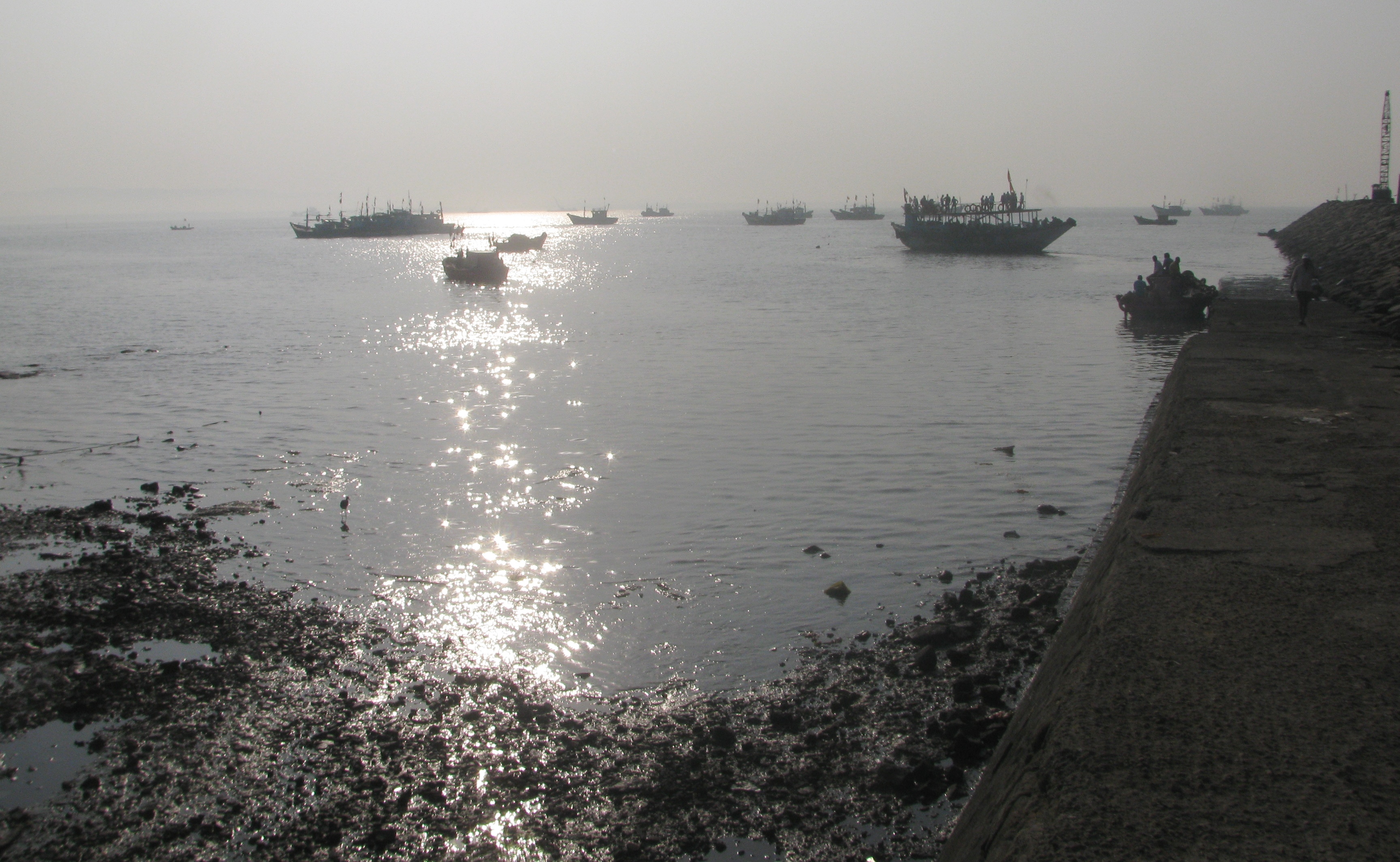
Karanja (Photo: Shyam G Menon)

Karanja (Photo: Shyam G Menon)

The question is stupid in Mumbai-Navi Mumbai for the urban agglomerate is right next to the sea. But it is also one intense mass of human habitation and industrialized to boot. The sea around Mumbai-Navi Mumbai is polluted. To compound the problem, the coast in these parts sees significant ingress and egress during tides. Most beaches during low tide are an ugly sight with debris and garbage exposed; the scene sticks in mind even if you swam only during high tide. What do you do? In the meantime, Meena had registered for the 2015 Chennai triathlon and the Hyderabad triathlon. Her running was improving; she had even ended third in her category at one of the editions of VVMM. She was also regular at the BRMs. Roughly two hours’ cycle ride away from Belapur is Karanja. It is on the edge of the sea. People come to the boat jetty here to take a ferry and cross over to Rewas. On a Sunday morning, a cyclist reaching here from Navi Mumbai would be treated to the not so dainty sight of muddy land surfaced in low tide, fishing boats with their hulls exposed in the receding tide and murky waters typical of tidal zones. It was to Karanja and its boat jetty that Meena turned to for familiarity with open water swimming. She was determined to go for an Ironman. She knew she had to make do with what was available. No point complaining. Accompanied by her swimming coach and good friend Ramachandra Rao, she frequented Karanja, where they went out in a rented boat with Meena subsequently swimming in open water supervised by her coach. “ The water was very muddy. It was also prone to tides. I was a bit concerned about her health, swimming in that water. Meena though had no hesitation in jumping in and swimming,’’ Rao said. Despite her efforts, she would remain a slow swimmer. At Chennai, it took her an hour and ten minutes to cover 1.5 km; at Hyderabad where the swim was in a pool, she needed an hour and twenty minutes to cover 1.9 km. Internationally the cut off time for 1.9 km is 1:10. Altogether, she took nine hours to do the half Ironman distances at Hyderabad. To compete in Europe in 2016, which she planned to, she required cutting this time by a whole hour.

At the Hyderabad Triathlon

Then in December 2015, while working out at the gym, she injured her lower back. “ I just could not bend,’’ she said. In January 2016, running the half marathon at the Standard Chartered Mumbai Marathon (SCMM), she noticed mild pain in the left leg. At a cycling trip in Sri Lanka, which preceded SCMM, she had felt heel pain. She managed to complete the half marathon at SCMM in 2: 12. However the heel pain steadily worsened till it was diagnosed as Plantar Fasciitis. Post SCMM, there was no running and looming ahead in July 2016, was the half Ironman she had signed up for in Budapest, Hungary.  To add to her woes, the 2015 monsoon season had been weak with resultant water shortage in the state of Maharashtra. By March 2016, many swimming pools in Mumbai-Navi Mumbai had shut. Meanwhile, to reduce the heel pain, the doctor recommended a steroid injection. By mid-April she was back to cycling and running. For swimming, it was Karanja. Then towards April-end, the heel pain returned forcing her to stop running. By May, she was left with only cycling to do. It didn’t end there. In mid-May, while training, she fell from her cycle. With that, she was off running, cycling and swimming. How much adversity will life throw at her? “ I used to cry a lot,’’ Meena said. Her friends told her to take it easy.

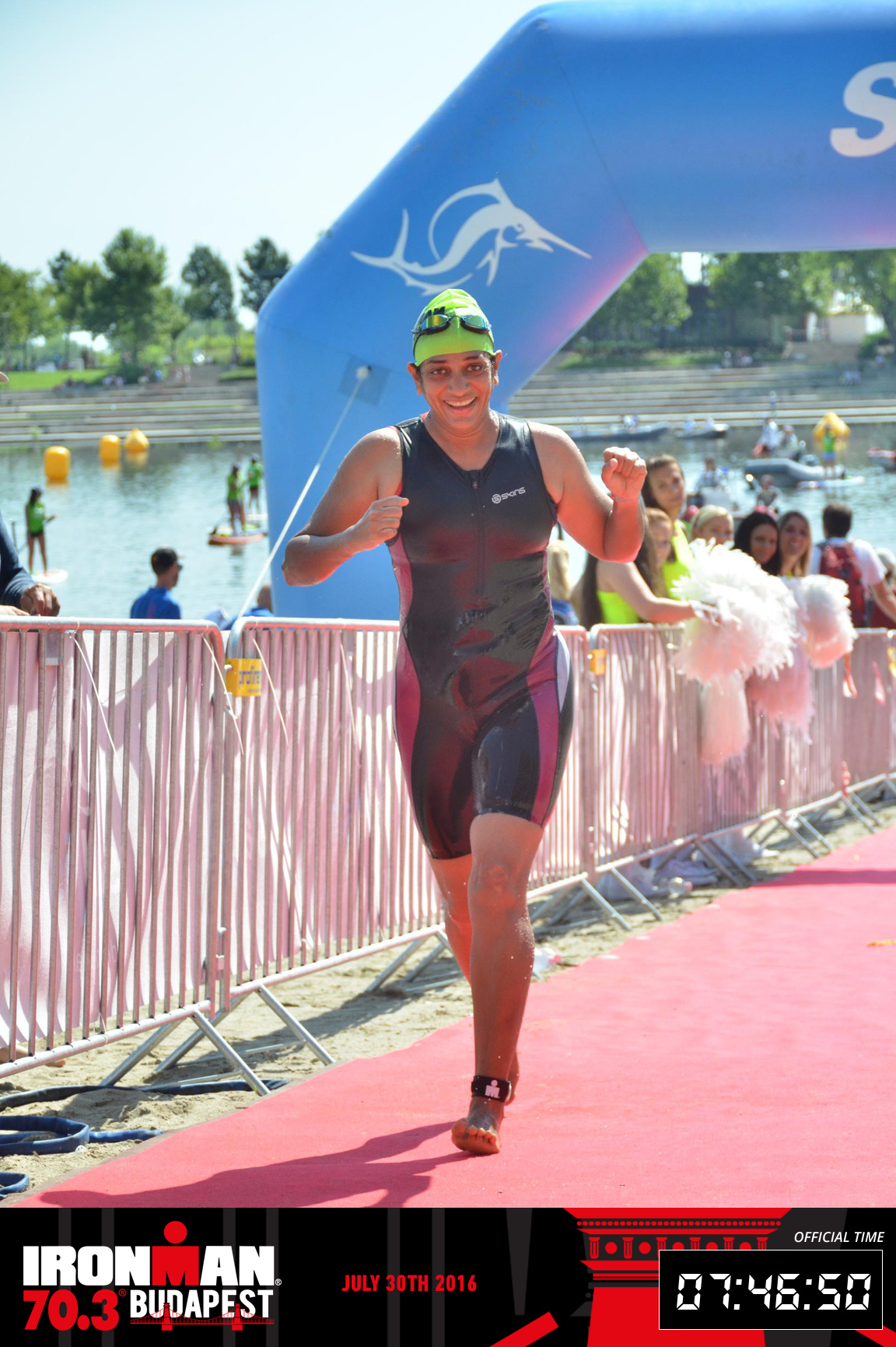
Budapest Half Ironman; Meena just after finishing the swim segment

Budapest Half Ironman; Meena just after finishing the swim segment

On the bright side, she was able to merge an ITM trip to Europe, with the Budapest Half Ironman. In Normandy she found a place to run, cycle and swim. With weeks left for Budapest, she trained as best as she could. Ahead of the event, Ramachandra Rao – he had become instrumental to keeping her motivated – texted Meena regularly with positive thoughts. On July 29, a day before the half Ironman, there was a trial swim in open water at Budapest. “ I went into the water and panicked. I tried five to six times but I kept coming back. I was scared, it was psychological,’’ Meena said. There was a sense of endless depth to the water and seeming absence of limits nearby to the expanse of water she had to tackle. She decided against participating in the event. Some of the Indian participants told her not to do so and to at least swim up to the buoy midway. But as she did so, she panicked again attracting the attention of the rescue boat. The doctor on the boat shouted at her, “ what you are doing is not swimming! This is not a swimming pool. You will kill yourself!’’ Back on land, those comments hit Meena hard. From January 2016, given all the reverses life had thrown at her while preparing for the half Ironman, she had been battling depression. The universe didn’t seem to notice what she had done; all it appeared to see and enjoy toying with, was her nervousness in water. Suddenly her motivation crashed. She sat in Budapest, eating ice cream, hoping to lift her spirits up. “ I didn’t tell anyone back home what I was going through. The only person I called was Mr Rao,’’ she said. He told her to calm down and relax. It brought back some of her motivation. She decided to attempt the race. “ I know her potential. I was very positive that she will do it, provided she keeps her mind calm. I told her to remain calm and see that thoughts don’t disturb her mind. Don’t get involved in it. Always think that you have the ability to do it. It is easy to say so but to practise it in adverse situations, it entails much work,’’ Rao said. Meena also had a chat with a colleague from ITM, Deepthy, who got her to meditate. Thus calmed, she fell asleep.

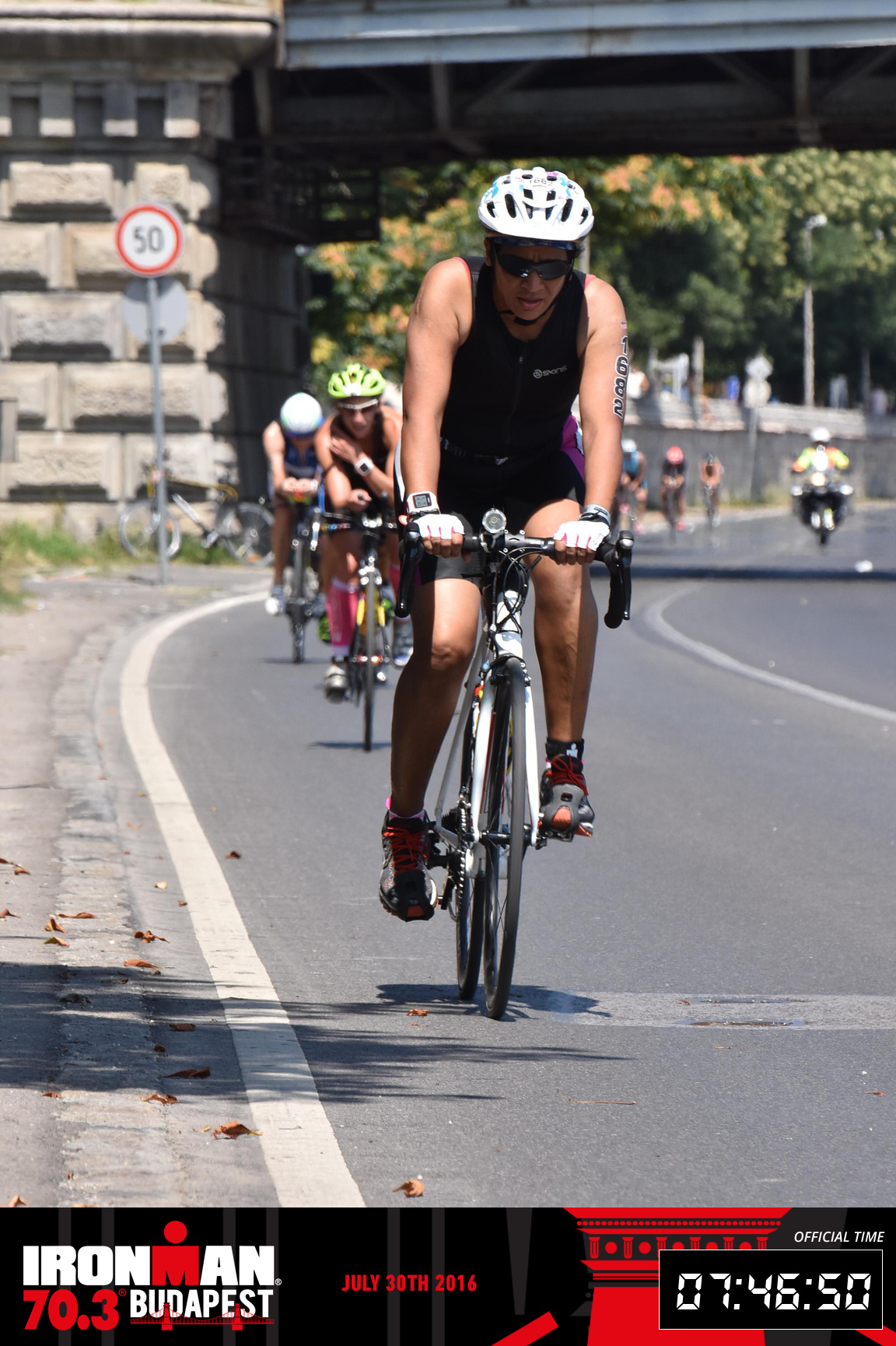
Meena, cycling at the Budapest Half Ironman

Meena, cycling at the Budapest Half Ironman

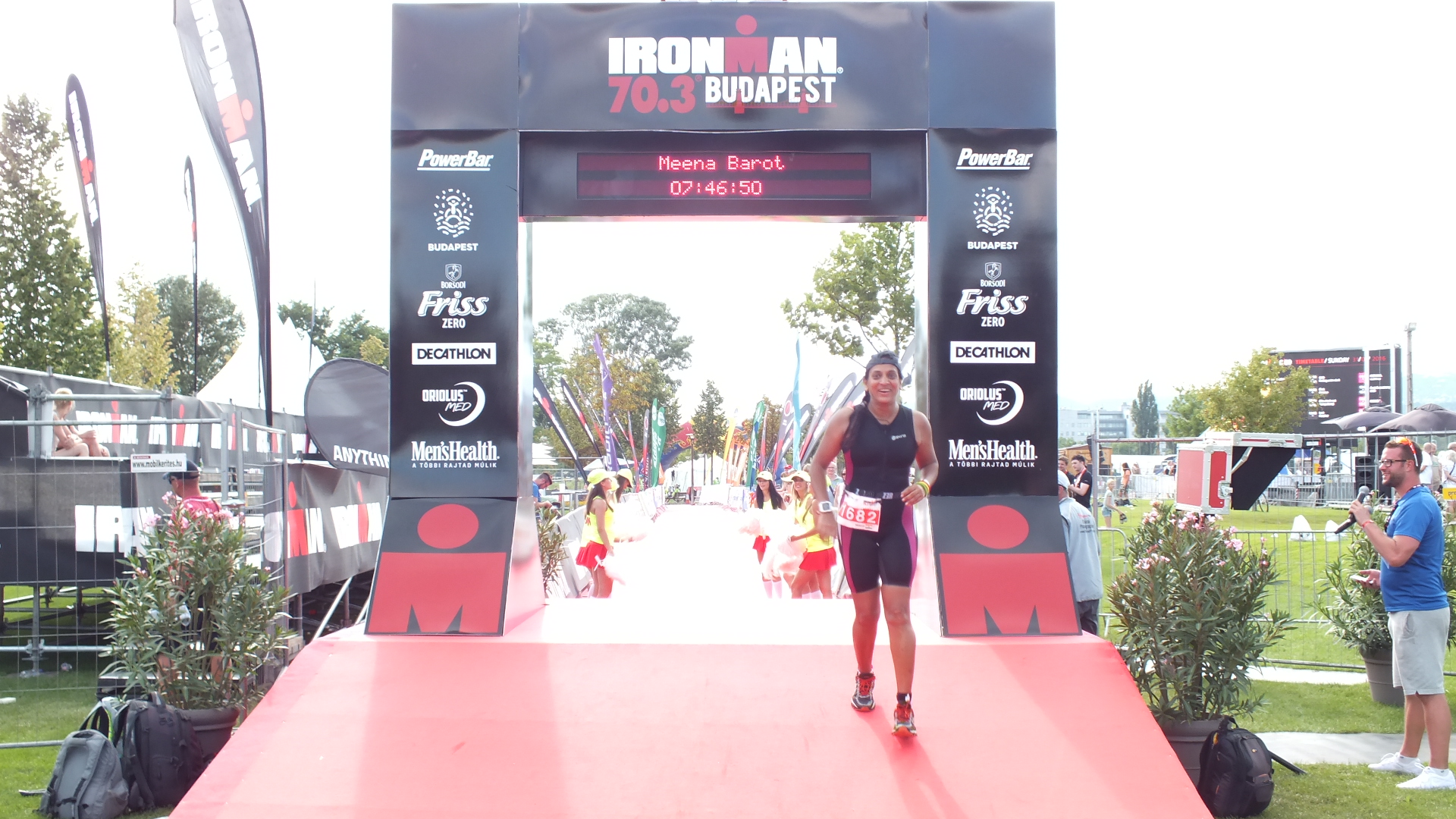
On July 30, race day, she decided to tackle the swim in segments and not visualize it as the entire distance it represented. She also told herself: it is okay to be last. What is important is to attempt the swim. “ If you don’t attack fear at the time it appears, then it sets in for life. I will then live my life knowing that I messed up at the starting point and didn’t attempt the race at all,’’ Meena said. Further as the medic’s shouting of July 29 showed, the rescuers were alert and good. She was in safe hands. She finished her swim just within cut-off time, in an hour and ten minutes. The organizers provide a grace period of 50 seconds. By the time she started cycling, the professionals had already completed their first 45 km-loop. But there was a pleasant difference to their cycling. “ They cheer you on,’’ she said. Both the cycling and the running went off well for her. In the end, she finished the half Ironman in Budapest in seven hours and forty six minutes compared to the nine hours she took for the same distances in Hyderabad.

Meena, completing the Budapest Half Ironman

Meena, completing the Budapest Half Ironman

Looking back, Meena credits the journey completed to hard work and discipline. She used to wake up at 4 AM and start training. Aware of her capacity for depression, she stayed off all forms of negativity. This included keeping away from people who were negative or tended to doubt her abilities. “ I was out of all social media groups – WhatsApp, Facebook, all that. I was in touch with only those who were positive,’’ she said. “Rao sir’’ was very important in this framework. “ Never once did he say, don’t do it. He always said, you will do it,’’ Meena said.

Uniquely, Budapest taught her to relax.

“ I don’t have to prove a point. I am happy with the place I am in, right now,’’ she said, explaining her learning.

Meena hopes to do a half Ironman every year.

(The authors, Latha Venkatraman and Shyam G Menon, are independent journalists based in Mumbai. All the photos used in this article – except those otherwise mentioned – were provided by Meena Barot.)     

MAN VERSUS MACHINE

Illustration: Shyam G Menon

Illustration: Shyam G Menon

During the day, Mumbai’s railway stations are typically crowded places that become more crowded whenever a train arrives. Here and at equally crowded nodes on the city’s streets, small eateries and tea stalls exist that work at frenetic pace. One such eatery, at the railway station I frequent, has long been halt for a plate of potato vada (served with mint chutney and spicy chilli-garlic powder) and a cup of tea for me – a sort of cheap brunch freelance journalist treats himself to. There are two such stalls at the railway station, one each at its two exits on the side of town I live in. The vada is tastier at the place I patronize. You may notice a moment of relaxation here and a moment of relaxation there but otherwise almost everyone working at these eateries stays busy. The manager accepts the money, pays the balance, shouts the order and keeps a watch. At the same time, his assistants hear the order shouted, wipe a plate clean, find the required food item from the several kept around and serve it. The whole sequence from payment to serving food takes less time than what would be required to either swipe a card for digital payment or do one of those phone-based electronic wallet-transactions. Thanks to demonetization, overall business has dropped a bit, for people rattled by shortage of change hold back on expense. Impulsive expenditure like a cup of tea or a snack, are among the first things to get put off. Seeing the manager enjoy a rare moment of quietness, I asked him whether the Indian government’s evangelism for digital payment would work in his case. He smiled. “ I own two establishments here,’’ he said, pointing to a tad more fashionable joint next door, visited by college students. The one freelance journalist goes to is an older working class type-eatery. The college crowd-joint had a suitably attractive name and slightly more expensive food – rolls, sandwiches etc. “ I installed a card-swiping machine there,’’ the manager said, “ but the telecom network has suddenly got loaded with traffic that it takes a long time to make a payment. As for the place where you have your vada and tea, here the pace of work is so fast that a swipe machine or an electronic wallet would fail to keep pace. In the time I swipe one card, under normal circumstances I would handle five or six customers, quite likely more. Besides, a machine does one job at a time. As manager I am doing several jobs at once – while I am accepting money and giving back balance, I am shouting the order and also keeping an eye on whether the orders are being attended to, even who is taking what from the refrigerator. I am also being flexible, negotiating and taking spot decisions as I go along. Electronic transactions have one value for sure. A record of transactions is automatically kept. It makes the daily tallying easier. But we anyway do that with some marginal, negligible error. By and large for our work at this eatery, none of the digital fads are relevant. Hopefully, in some days the problem with change is sorted out and we are back to the old level of hectic work,’’ he said. I wondered if realities like this find place in the wisdom of the day, deciding how India should live.

(The author, Shyam G Menon, is a freelance journalist based in Mumbai.)

`DARK MONEY’ – THE DARK SIDE OF THE RIGHT

dark-moneyJane Mayer’s book ` Dark Money’ is a well-researched account of the rise of the far right in American politics through the twentieth century and into the twenty first.

The book illustrates how a tangled web of donations, charities and think tanks secretly funded by conservative, super wealthy businessmen, pushed a brand of libertarian (not to be confused with liberal) politics that sought to reduce government control. Protected behind the seemingly benevolent public façade, was inherited wealth and business interests, including in some cases – industries damaging the environment. Of particular interest to me – being an Indian reader, whose impression of the US is largely as one of the world’s major democracies and a country of great universities – is how academia was penetrated by this group. They patiently wait for a new crop of sponsored academics and researchers to shape the thinking behind government policy, to their tastes. As the book shows, at a global level, one of the casualties of the conservative business-academia nexus was the climate change debate.

Dark Money is heavily focused on America; so much so, that for a reader in India, the book can at times, be a plod. It strikes a chord because of a few factors. First, it reminds you of the growing subversion of our times by money. Second, what unfolded in the US is being copied in India. Third, the libertarian agenda is amid wealth distribution, increasingly polarizing in society. Even if a libertarian economic agenda is not yet pronounced in India, economic inequality is significant and polarized wealth is becoming a fashionable state of affairs. Fourth, as a pattern of social and political behavior what is narrated in the book is relevant to any geography that is home to conservative business minds. In the end my take away from Jane Mayer’s book was the pattern of manipulation it exposed. This is a book that by virtue of what it unearths makes you aware of the dark side of the political right; for that matter, the dark side of any political side – right or left – as these patterns can be anyone’s chasing exclusive agenda for power. It makes you aware of the intelligent subversions that characterize contemporary life.

(The author, Shyam G Menon, is a freelance journalist based in Mumbai.)


CHANGE

Illustration: Shyam G Menon

Illustration: Shyam G Menon

“ Are you sure you want it all machined down? How about some longer strands up front so that you can comb it sideways?’’ the hairdresser asked.

My vision for hair was however as clear as my bald pate.

Off with everything upstairs.

No two ways about it.

For some time now at the salon, my choice of instrument has been the electric trimmer, popularly called “ machine.’’  Use it like a lawn mower.

The hairdresser seemed disappointed at prospect of art, declined. But he was an efficient craftsman. The job was accomplished in a jiffy. It cost Rs 70. I reached for my purse to pay, not quite happy to lose another hundred rupee note. Smaller denomination notes had come to resemble precious stones slowly brought to the surface by the earth’s crust building activity. They were in short supply and the Reserve Bank of India’s pace of note printing harked of crust building; it was taking a million years for the tsunami of demonetization to settle down with new equilibrium in liquidity struck. What’s in short supply, you hate losing. I didn’t want to lose the diamonds and rubies in my purse. Who knows when they will resurface next? That’s when I noticed the new EPOS device with the hairdresser. You can swipe your debit card after a haircut. Things had changed.

Between the best known dictionary meaning for `change’ and its connotation as small denomination currency, it is the latter that dominates imagination in end-2016, given days spent wondering what to do with that museum piece of a new denomination – the 2000 rupee note. Nobody wants it and yet that is what is spewed out by the few ATMs functioning. I remember standing in a queue of amused folks at a D N Road ATM, the machine gifting everyone exactly one 2000 rupee note, a splendid invitation to financial uselessness. In a way you could say the unexpected move to demonetize the old Rs 500 and Rs 1000 notes is change in the classical sense but the fun is clearly lost in the larger drift to a cashless economy suddenly thrust upon us. November 8 was a tsunami, the ocean floor slipped beneath liquidity in the economy. What has survived as perception of such forced change is satire, cynicism. Let’s not get into demonetization politics for this article isn’t about my financial troubles. It is about strands of old memory that surfaced in brain navigating the long bank queues and cashless ATMs of Mumbai following demonetization.

What a change! Damn change! Is this change? For whom are we changing? Change is the only constant.  – There were many thoughts running through my head. It was the first working day for banks after demonetization. The queue I was in, snaked out from the bank to bright sunshine outside. In these days of humans defined by life indoors and worries over complexion, the queue tracked every nook and cranny of available shade, making it seem, a rather lethargic anaconda, one idling to digest after a mammoth meal. What had it swallowed? The new government – I thought; tough food to swallow and much ache in the tummy afterwards. Whatever, it was change from previous diet and standing in queue had been dressed up by demonetization propaganda as nation building, patriotism, fight against corruption and black money, so on and so forth. I suspect the real reasons lay elsewhere. But at my level as ordinary citizen, my suspicions are merely private conspiracy theories and knowing that well in land overwhelmed by 1.3 billion people, I choose instead to bury my head in ruminations about `change.’ It puzzles me how a word that denotes something as remarkable as day changing to night and shifts of such scale as change of season, got entangled with money and its transformation to smaller denominations. `Change’ loses something of its natural magnificence through association with dull money. God or whatever that point before everything, said: let there be change and a whole universe birthed itself from nothing. Compare that to change by demonetization or life reduced to hunting for small change. It is distraction ruining appetite for universe.

Somewhere between banks, the hair cutting salon and the next ATM without cash or one gifting 2000 rupee notes, thoughts about `change’ made me recall an old hair cutting salon in distant Thiruvananthapuram. The Internet now tells me that Brut, tucked away in Mascot Hotel, opened in the late 1970s; 1979 according to one write-up. It was already up and running by the time we got to know of it. What I remember is this: the first person from my family to patronize Brut was my father’s first cousin. Unnichettan’s neat hair cut was my inspiration. I was in high school when I followed in his footsteps to Brut. The place was expensive but the folks there did an excellent job. Of particular interest to me was that the salon played music. They had a Philips turntable with built-in amplifier, a pair of speakers and a young hairdresser with streaks of dyed hair – those days that spelt `different’ in capital letters – who kept a collection of LP records. He played music while crafting hair. At most other shops an older lot of hairdressers clipped hair to the drone of daily news or film music that at least, some of the young had long lost interest in.

It was the disco era. Trendy youngsters grew their hair tad long; it was combed tight above the ears and the more courageous, sported streaks of dye on either side of the head. I was pretty tame in that department but I suspect, rather adventurous in other tastes – including music. At one sitting in the salon, I fell in love with the disco music being played. I remember asking the hairdresser for the LP cover. It was the album The Glow of Love by the Italian-American post-disco group called Change. The songs I had fallen in love with were A Lover’s Holiday and Searching, featuring the late Luther Vandross. To my luck, the album’s cassette version was available at Quilon Radio Service, which in those days had a counter selling music.

Times have changed since.

I lost my hair; disco disappeared.

But those two songs by Change always make me happy.

Now if only all change was so.

(The author, Shyam G Menon, is a freelance journalist based in Mumbai.)

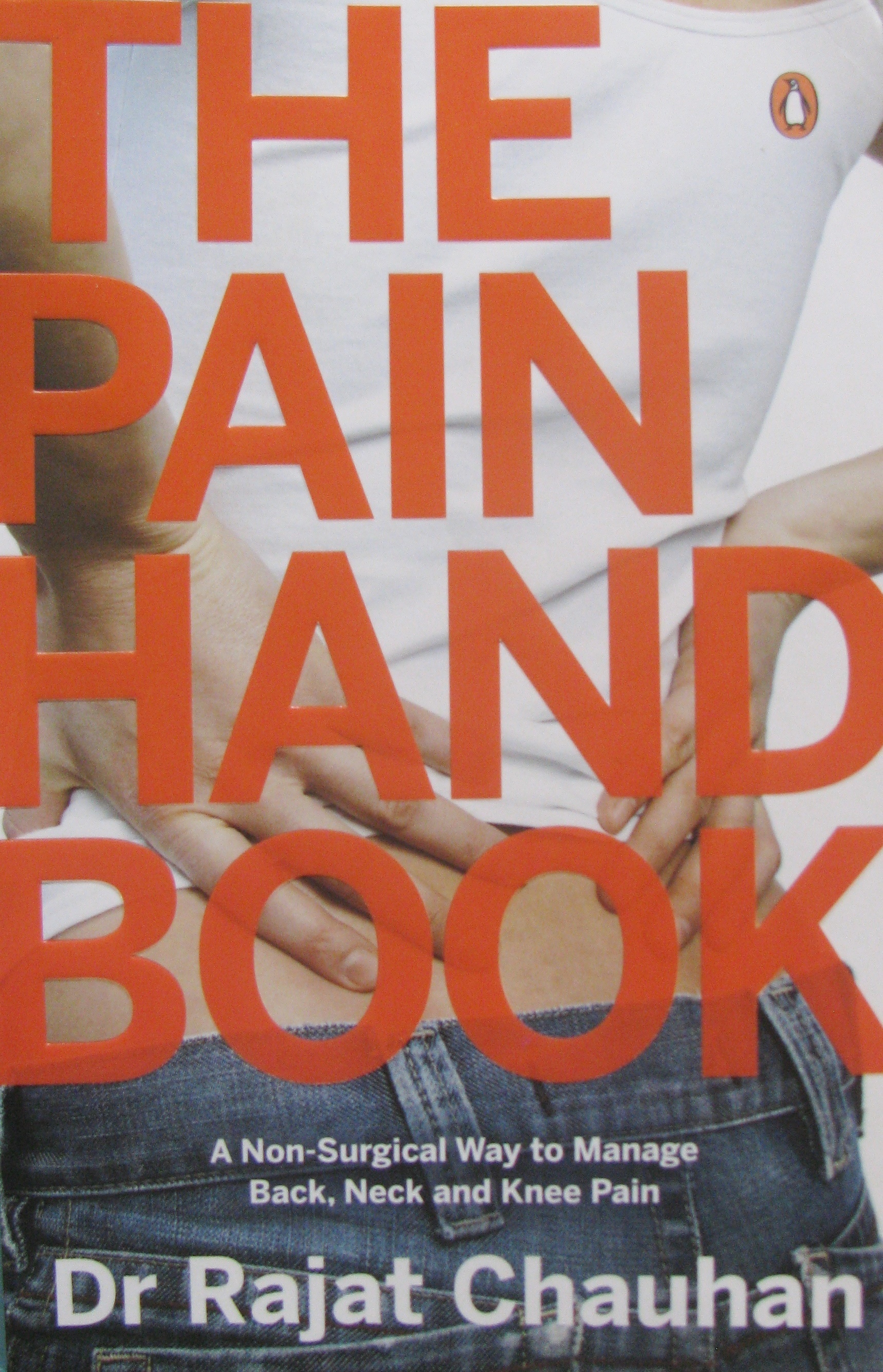
THE PAIN HANDBOOK: ONE FOR KEEPS

pain-handbook-3Keeping the most essential things accessible is a habit we all grow up with.

You know well where you have that song which struck a chord, where you have the book that meant a lot, where you have the movie you like to return to.

What you value; you find a place for it and remember where you kept it.

Dr Rajat Chauhan’s book, ` The Pain Handbook – A Non-Surgical Way to Manage Back, Neck and Knee Pain,’ falls in this league. Its one for keeps.

The book deals in the main with lower back pain, which is the most common pain reported. Doing so, it deals with the spine, knee, hip and foot besides touching upon other related points. Some problems are explained with case studies. The book’s biggest contribution, I felt, is how it helps you understand what is what in your back and lower body and what may be happening in your anatomy and lifestyle that is the cause of those aches and pains. It shows how the modern sedentary lifestyle is taking a toll on us; even how the health care system makes a business of the opportunity. The book encourages doctors to go beyond seeing their patient as mere statistic and attempt comprehension of person. After all, the cause of pain may range from injury to simply stress.  Despite proliferation of advanced technology, some aches and pains can be addressed with the simplest of solutions.

The book is written in a reader friendly style; almost conversational. The non-surgical way to managing pain is underscored by a portfolio of exercises and photos of the same, provided in the book. The narrative is partial to being a practical overview of pain (within that, lower back pain) and a useful handbook to refer. If you are looking for the science and phenomenon of pain or an exploration of its biological relevance, you may find the inquiry limited. Where it scores is in its larger appeal as guide (handbook) in times of predominantly sedentary existence with attempts made by the denizens of that world, to embrace a more active lifestyle. Besides being a doctor specialized in sports exercise medicine and osteopathy / musculoskeletal medicine, Dr Chauhan is a distance runner and the main architect of La Ultra-The High, a challenging ultramarathon at altitude held annually in Ladakh.

This is a book I would like to remember where I have in the house.

It is certainly worth buying, reading, keeping.

(The author, Shyam G Menon, is a freelance journalist based in Mumbai.)

`ANYWHERE BUT HOME’ – A GOOD READ

anu-vaidyanathan-1Anu Vaidyanathan’s book, `Anywhere but Home,’ is an enjoyable read.

The language is simple and the narration, direct.

The author, who is a well-known triathlete, provides a breezy overview of her life. The choices made are stated as such without recourse to justification. Doing so, both triathlon and life in Anu Vaidyanathan’s book, are beautifully devoid of labored explanation. There is no manufactured heroism or manual on how to succeed, except perhaps what lingers obliquely as an idea of person (who is also triathlete). One of the great reliefs I found reading this book was its treatment of athlete’s life without making it seem extraordinary. The writing transcends given sport to underlying qualities.

The book spans growing up in India; studying overseas, the difference between here and there, managing a business, pursuing a PhD, the question of “ who am I?’’ and within all that – an engagement with the triathlon. It is a packed life; a triathlon of a life wherein the sport appears to have given physical expression to a person’s nature. Many outdoor and athletic pursuits inspire the need to progressively lighter one’s view to essentials. When `essentials’ becomes ink for writing, the pages turn. That’s so with this book.

Buy it, read it.

(The author, Shyam G Menon, is a freelance journalist based in Mumbai.)

PSYNYDE ALERT: THE HOUR OF THE FURAN

The Furan (Photo: courtesy Psynyde Bikes)

The Furan (Photo: courtesy Psynyde Bikes)

It’s the hour of the Furan, a game changer for Psynyde Bikes.

Wikipedia describes Furan as a heterocyclic organic compound; one that is a colourless, flammable, highly volatile liquid with a boiling point close to room temperature. At Psynyde, Furan is a hardtail mountain bike (MTB). It represents the first time, Psynyde Bikes – a small enterprise funded by “ friends and family’’ – is making a departure from custom-built bicycles and launching a product for the larger market. Doing so, they have to move through all the regular motions of a bicycle manufacturer from finding the best way to make the bicycle, selling it and supporting it in the market.

The story is longer still, if one sees Pune based-Psynyde as a response by riders to the shortcomings of the Indian bicycle market, dominated for decades by a clutch of manufacturers churning out large volumes in protected economy. Thanks in large part to one man – Shiv Inder Singh, one of the founders of Firefox Bikes (subsequently bought by Hero Cycles) – a market for premium bicycles opened up in India. Away from the main market, cyclists like Praveen Prabhakaran and Vinay Menon, tapped into their personal learning to start initiatives such as Psynyde (for more on the origin of Psynyde, please try this link: https://shyamgopan.wordpress.com/2014/02/06/the-story-of-psynyde/).

Making custom-built bikes, Psynyde catered to a small niche of customers for whom, premium didn’t necessarily mean perfect. At that level of search, the bicycle world entailed materials science, computer aided design, frame geometry, welding technology and the like; basically the quest to make a perfectly fitting bicycle that also addressed the application in mind. There is much learning here but as Praveen said, it can also be a bit difficult sometimes coping with unrealistic deadlines and customer expectations. It was from this backdrop that the Furan, Psynyde’s first hardtail MTB to be made in large numbers, took wing. Two aspects qualify the Psynyde approach. First there is the obvious – they see their products as designed, tested and made by riders. Second, both Praveen and Vinay are clear: they wish to be in the performance segment, which at present is a niche within the premium category of bicycles. “ We want to address serious cyclists,’’ Praveen said.

A bicycle component - a stem; part connecting the handlebar to the fork - made by Psynyde Bikes (Photo: courtesy Psynyde Bikes)

A bicycle component – a stem; the part connecting the handlebar to the fork – made by Psynyde Bikes (Photo: courtesy Psynyde Bikes)

The premium category can be broadly divided into three types of bicycles – road bikes, hybrids and MTBs. Road bikes are popularly called “racing cycle’’ in India. The MTB segment, born for uneven terrain and previously little known, became popular once the market opened up. The hybrid, as the term denotes, straddles the lightness of a road bike and the off-roading capability of a MTB without being pronounced in either. It is a flexible, overlapping segment gaining much popularity of late. Psynyde’s need to be identified with performance meant the hybrid was automatically ruled out for want of sharp definition. While Psynyde has custom-built road bikes, they did it using steel, a material that has advanced much in terms of metallurgy and machining. A discerning client will comprehend a light road bike made of special steel. But the market revered carbon fibre as ultimate in light weight road bikes. Psynyde is yet to acquire familiarity with carbon fibre. On the other hand, although there are good performance grade aluminum road bikes internationally, in India for some reason they are perceived as `entry level.’ Further, the posture adopted on a road bike isn’t exactly the market’s sweet spot. It is radical; an effort to sustain and to that extent, defining a road biker rigidly to the expense of other cycling styles. Looking for a product to debut with in the market, Psynyde’s focus therefore shifted to the MTB segment. MTBs attracted for a variety of reasons. To begin with, both Praveen and Vinay had a background in mountain biking with Vinay ending up among the best freeriders in India. When the Indian bicycle market opened up, the MTB was what everyone rushed to buy. Many people subsequently upgraded to hybrids and road bikes. But the entry was through MTBs, pointing to a fascination for the model. For its first mass produced bike, Psynyde decided to go with a MTB.

Next step was to decide which particular segment of MTB, seemed best to make a mark in. The MTB category can be roughly divided into three: cross country, trail bike and all-mountain. The cross country bicycle is designed to spend long hours off-road. It is usually strong at tackling uphill. What it occasionally misses is good control at aggressive levels of riding. According to Vinay, many of the MTBs currently sold in India are closer to this technical set up in lineage. All-mountain on the other hand, showcases control including in aggressive riding that pushes the limits. It typically has a wider handle bar and shorter stem. It tends to be tad heavier but is capable of greater control at higher speeds.  In the middle, sort of like a hybrid within the MTB segment, is the trail bike. Its geometry too is amenable to decent control when pushing the limits. A fourth segment – fat bike, featuring fat tyres – has started showing up in India, but for now, it is a novelty. The Furan was imagined as a performance MTB that could also be used on roads. Psynyde decided that a versatile trail bike is what the Furan must aspire to be.

The Furan (Photo: courtesy Psynyde Bikes)

The Furan (Photo: courtesy Psynyde Bikes)

Having resolved to build a trail bike focused on performance, the question next was: how do you define the performance package in a machine that is a composite of frame and outsourced components made to different quality levels and performance parametres? “ Our story is a lot similar to brands like Marin, GT and Specialized – all of who began as frame builders,’’ Vinay said. Like its wing is to an airplane, in a bicycle, the most important part is the frame. Every bicycle manufacturer worth its salt, stakes its reputation on the frame; its geometry and build quality. For Psynyde’s Furan too, its DNA would reside in the frame. That’s the calling card. Other components can vary to provide affordability. The Furan frame was thus matched to different combinations of components. Across the three finishes of Furan offered on the same frame, one critical component stayed the same – a fork with 120mm travel; it was in line with the performance segment the bike wished to be in. Very importantly and in a step unique for the Indian market, it was also decided to sell the Furan frame separately allowing dedicated cyclists in the market to build a cycle with components of their choice.

Next was firming up wheel size. By early 2016, when the idea of Furan was assuming shape, the global MTB market had split into three main wheel sizes: 26 inches, 27.5 and 29 – all having strong reasons for being what each is. The standard used to be 26. Altering wheel size shakes up the market. Existing frames, forks and suspensions become redundant when wheel size changes. It makes existing customers insecure. It puts new ones at the mercy of what companies dish out as logic for the shifts. The core reason for moving into dimensions bigger than 26 inch-diametre – the erstwhile standard – is roll over ability. As the term denotes, a bigger wheel rolls over obstacles easier; it also covers more distance. To complicate matters, even as they suddenly lost fancy for 26, big bicycle manufacturers who committed investments towards their chosen new standard, polarized in their preference for 27.5 and 29. This created the impression that money power and not users will decide trends. As if that is not enough, the manufacturers too appear to be undecided which way the wind will blow for some of their bicycle frames are capable of hosting more than one wheel size. In markets like India, where cycles are bought and retained for long due to less money with customers, such tricky shifts worry. What should Psynyde do? “ We grew up on 26, we are all 26 fans. If I am doing jumps with my bicycle, I still prefer 26,’’ Vinay said. At the same time, you have to accommodate the future and provide for versatile use, which includes covering distance on roads. One thing mattered – as a performance bicycle, expected to be put to punishing use, the Furan couldn’t risk flex in the rim. It seemed wise to embrace the future conservatively. The 27.5 was closer to 26 than 29. It was decided that the Furan should have 27.5 inch wheels.

Praveen Prabhakaran (left) and Vinay Menon (Photo: Shyam G Menon)

Praveen Prabhakaran (left) and Vinay Menon (Photo: Shyam G Menon)

All through Psynyde’s journey, Praveen had been the brain behind design and manufacture. He was the one custom-building bikes and who in the process acquired knowledge of materials and welding techniques. While Praveen worked on the Furan’s design, the team searched for a factory that would build the frame from 6061 aluminum alloy. India is a price sensitive market dabbling still in steel for much of its bicycle manufacture. It does not yet support the economics of manufacturing 6061 frames to affordable cost nor does it have the required finesse in aluminum welding techniques. The place to look for was China. Praveen emphasized a point here. China is the global powerhouse in bicycle manufacturing. Many of the world’s leading brands of bicycles are made at factories in Taiwain, China, Vietnam and elsewhere in South East Asia. Investing in scale, the Chinese have a reputation for being low cost. It is also fashionable to associate the Chinese with poor quality. “ What is closer to reality is that they will make a product as you wish it to be. If you ask for a low quality bicycle, you will get a low quality bicycle. What we forget is that we blame the source based on what product we chose to sell in the market, ignoring who decided product specifications in the first place,’’ he said.

Sudeep Mane (Photo: courtesy Psynyde Bikes)

Sudeep Mane (Photo: courtesy Psynyde Bikes)

Sudeep Mane is a statistician. He grew up in Pune. His first job after completing studies was with Bajaj Allianz General Insurance. Finding himself interested in archery, he trained in the sport at Army Sports Institute (ASI) for about a year. Later he took up trekking. By then he had moved to his second job, at SAS Research & Development. His engagement with the outdoors growing, he decided to do his Basic Mountaineering Course from the Himalayan Mountaineering Institute (HMI) in Darjeeling. Upon finding it hard to obtain leave for a month – the duration of the basic course – he quit his job and proceeded to do the mountaineering course. His third job – this time with the US headquartered-IT company CNSI – found him based in Chennai. For a person liking outdoors and Pune’s hills, this was different terrain. So Sudeep focused his attention on training for the triathlon. As part of this, he bought an entry level Schwinn MTB. He also learnt swimming. A year and a half later, Sudeep took part in the triathlon organized by Chennai Trekking Club. He realized the sport wasn’t his forte; his swimming was not up to the mark. But he had made a discovery: he liked cycling. He had found something he wished to pursue. His inquiries revealed that the best bike would be a custom built one. On the Internet, he stumbled upon Praveen’s blog about building cycles. The blog appeared an on-off affair without systematic updates. Sudeep mailed Praveen. “ I mailed him exactly five words: do you still do this?’’ Sudeep said.

The Furan being tested in Spiti. Rider: Ajay Padwal (Photo: courtesy Psynyde Bikes)

The Furan being tested in Spiti. Rider: Ajay Padval (Photo: courtesy Psynyde Bikes)

Praveen built a bicycle for Sudeep; a road bike named Psynyde Projectile. Meanwhile Chennai was working on Sudeep. The city had a fairly big community of cyclists. “ Early mornings I would probably find two to three times more cyclists in Chennai than in Pune,’’ Sudeep said. Slowly the idea of a good quality bicycle in an Indian market progressively getting ready for it, took shape. In May 2015, Sudeep got in touch with Praveen and Vinay and pitched the idea of a partnership in making bicycles. Committing himself to the move wasn’t exactly easy for Sudeep. Having no previous experience as entrepreneur, he wondered whether he should do a MBA. Two things helped. A professor he knew at Mumbai’s Wellingkar Institute guided him; officials at the company he worked for – CNSI, were supportive. Today Praveen, Vinay and Sudeep are the core equity investors at Psynyde Bikes. Sudeep coming aboard had immediate impact. The enterprise acquired structure and a sense of urgency. In January 2016, Psynyde Bikes moved to official address on 1000 square feet space at a MIDC-industrial estate in Pune. “ Praveen was building cycles. Neither he nor I was thinking of how to sell it. I knew how to test a bicycle. Sudeep gave the idea concrete shape. That was needed. Otherwise, we would have still been chilling, taking it easy,’’ Vinay said. Sudeep oversees the finance function at Psynyde. He handled Psynyde’s dealings in China.

According to Praveen, the typical Chinese manufacturer keeps a catalogue of already designed products. Many brands order bicycles from the catalogue. What is bought is then badged to sport a given brand’s name. “ We were approaching a Chinese manufacturer with a bicycle frame we designed. We knew what kind of frame we wanted; we merely wished to get it built and produced in numbers. We were also uncompromising on specs,’’ Praveen said. By April 2016, two Furan frames and their associated components had arrived in Pune. Two bikes were assembled. Vinay headed to Spiti in Himachal Pradesh to test the MTB. With him was Ajay Padval, an upcoming mountain biker, currently part of a Psynyde sponsored-team of cyclists. They tested the Furan for a month in the mountains. They also participated in some mountain bike races. The Furan had a couple of finishes in the top ten-category, Vinay said.

The Furan in Spiti (Photo: courtesy Psynyde Bikes)

The Furan in Spiti (Photo: courtesy Psynyde Bikes)

In early November when we met for this article, the Furan was in the stage of crowd funded-sales. About 120 bikes or so were totally on offer in the initial phase. Orders placed – as visible on the crowdfunding site in early November – were very few. Less than 10 days remained for campaign’s close. Neither the demand for Furan nor the level of funds raised by then (a little over one tenth of what they stated as goal) bothered Praveen and Vinay. They said there had been healthy enquiries for the bike from riders and dealers long known to them. While around 70 dealers who are into performance bikes, showed interest, about 25-30 of them have agreed to stock the Furan to gauge market response. “ The crowd funding campaign provides us visibility because news of the Furan gets dispersed thanks to the very nature of crowd funding. Being a small outfit, our budget for marketing is otherwise very low,’’ Vinay said. Sudeep provided insight into the start-up company’s finances. Broadly speaking, the money for investment has come from people who empathize with cycling, understand the product and have noticed the Indian bicycle market or believe in the promoters, their background in cycling and their commitment to it. He approached several banks for funding but nothing worked. Their procedures wouldn’t allow them to take a position on a new bicycle venture like this. So investors other than the promoters have put in their funds as loans. It is currently debt but should the company hit revenues forecast, it can be converted into equity. Otherwise it is money to be repaid. Interestingly these investors include some senior corporate officials, who have invested in their personal capacity.

The Furan being tested (Photo: courtesy Psynyde Bikes)

The Furan being tested (Photo: courtesy Psynyde Bikes)

Deliveries of the Furan were slated to commence by mid-December. “ As regards where the Furan is in the Indian bicycling scenario, it is in a good spot right now. There are a small number of people who understand performance bikes. They will identify with our journey. We are also in no hurry to grow,’’ Vinay said. According to him, the Furan has the required quality certification to sell in the Indian market. Rider friends from overseas have shown interest. While they can pick it up in India, supplying the Furan to dealers overseas, even in limited numbers, will take time, for due certifications have to be obtained.

According to Praveen, the foray into manufacturing the Furan had another reason too; a secondary one. Psynyde had machined bicycle components in the past. These components were periodically disclosed on the outfit’s Facebook page. The components were meant for discerning riders. Fact is – you can’t have a market of discerning riders seeking high end components, unless the market has an idea of a good ride. For that, you need good bicycles. If the Furan can pull it off in its chosen segment, then Psynyde’s capacity to design and machine high performance components, also stands to gain. Vinay assigned five years for Psynyde’s Furan phase to play out. When that draws to a close – maybe earlier, maybe tad later – he expected to see others like him, Praveen and Sudeep enter the performance category with bicycles they designed. That would spell competition. But it is also the spirit of Psynyde, vindicated.

(The author, Shyam G Menon, is a freelance journalist based in Mumbai.)