A NONEXISTENT WRONG AND AN OLD NEED STILL UNMET

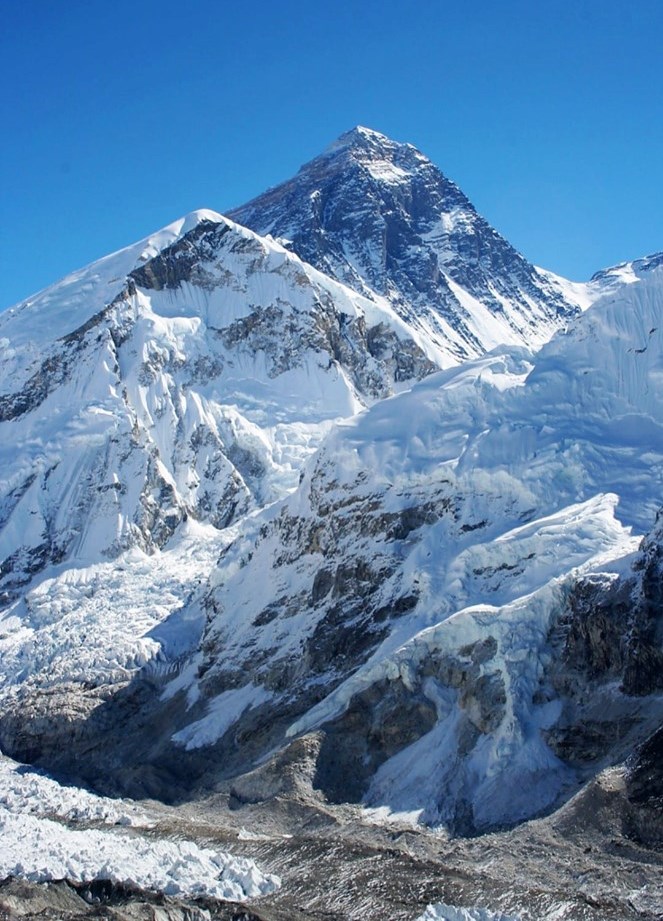
Nanda Devi (Photo: Shyam G Menon)

There doesn’t seem to be anything illegal about attempting Peak 6477 when main objective was Nanda Devi East. On the other hand, one feels sad that we still don’t have a dedicated mountain rescue system empathetic to climbing and other such sports of high altitude.

After five bodies spotted near Peak 6477 some distance from Nanda Devi East, the peak for which climbing permission was originally given to the eight mountaineers reported missing, official narrative had devolved to the climbers having courted risk “ knowingly.’’

According to an experienced mountaineer who has served as Liaison Officer in the past, when the Indian Mountaineering Foundation (IMF) grants permission for a peak it doesn’t mean that a team cannot attempt nearby peaks. With the onsite permission of the Liaison Officer accompanying the team, they can attempt any other peak in the neighborhood. On return to Delhi and IMF, they are expected to submit a report and pay the relevant climbing fee for the new peak attempted. Aside from approval of request to climb a specific peak, the permission provided has a practical value. It ensures there are no conflicts through multiple teams on the same peak. Sometimes, although one main objective is requested for and permission obtained; other subsidiary peaks of interest are indicated alongside, in the original paperwork. There have also been instances when the main objective is indicated on the map as feature or high point but isn’t identified by any particular name. In such cases, permission has been taken for the larger mountain, the feature / high point is an appendage of.

What this means is that if Martin Moran hadn’t earlier shown Peak 6477 as a peak of potential interest, he was still free to attempt it after reaching the vicinity of Nanda Devi East, provided he secured permission from the IMF Liaison Officer assigned to his team. Such redirection of efforts, have happened before. One instance – going by Wikipedia – would be Moran’s own 2009 ascent of Changuch (a 6322m / 20,741 feet high-peak that is not far from Peak 6477). Wikipedia describes this ascent – it was the first time the peak was successfully climbed – as fallout of an aborted mission to climb Nanda Devi East. “ The expedition’s original target was Nanda Devi East. However, during the course of expedition, due to difficult conditions and lack of resources to meet original target, they shifted the target to nearby Changuch,’’ Wikipedia said.

Early June, when news of climbers missing near Nanda Devi first appeared along with mention of an unclimbed, unnamed peak the team hoped to scale, at least one mountaineer this blog spoke to in Mumbai speculated that the attempt on Peak 6477 may have been for acclimatization purposes before the team formally tried Nanda Devi East. His reasoning was based on the timeline of events. Against the timeline available on social media, May-end appeared a bit too soon for them to be high on Nanda Devi East. “ June first week would seem a more reasonable period for them to scale it,’’ he had said (this conversation was on June 1 and according to those associated with the subsequent rescue process, the climber’s inference is fairly correct). To consider additionally would be weather conditions. Point is – as the above conversation shows, in mountaineering’s reality surrendered to immediate conditions at altitude and compulsions therefrom, attempting a nearby peak or high point will always be a temptation or practical need; a stepping stone to some larger objective in mind or consolation if larger objective was denied. For climbers tuned into the ongoing Nanda Devi East episode, given expedition has unfortunately ended in mishap, what merits attention now is retrieval of bodies. You hope for dignified closure.

One of the news reports on the missing mountaineers, featured a spokesperson for the paramilitary saying that even if anyone from the forces went up to the accident spot for human presence on the ground, they would take time to acclimatize. A dedicated mountain rescue organization (and India does not have one) is expected to have people ready at any given point in time to move to altitude. The alternative would be to look for others – mainly civilians – who have been to similar altitude recently and are adequately acclimatized to repeat the visit at short notice. In emergency situations like this, you will not just check in your neighborhood, you will cast a wider net, scan recent mountaineering expeditions that touched similar altitude or more, check for experienced climbers in that lot and get in touch. One would expect the countries the missing climbers belonged to, to also pitch in – see if any of their good climbers are already in the Himalaya and acclimatized to volunteer.

It is understood that till at least June 4, there were acclimatized civilian climbers and representatives of the Indian Mountaineering Foundation (IMF) in Pithoragarh, which was base for search operations. However authorities wished to keep operations restricted to the paramilitary and state disaster response teams. They had a relevant point – it makes no sense to risk more lives trying to retrieve the bodies. Around noon June 5, there were media reports with photographs of rescue personnel and helicopter, announcing commencement of “ very high risk’’ operation to retrieve the bodies. Soon afterwards, an ANI report (published in Business Standard) which referred to the rescue mission as Operation Daredevils, informed that after three attempts to reach the accident site earlier that morning, the helicopter and its team had returned to Pithoragarh to evolve new strategy. In its report, BBC included terrain, weather conditions and limitations of helicopter among causes for setback.

India does not have a dedicated mountain rescue system, focused on climbing accidents and such in the civilian realm. What we have is the military and paramilitary doubling up as search and rescue teams and more recently with state disaster response units set up, personnel from there also participating in the process. A rescue ecosystem empathetic to climbing and trekking and approaching these pursuits as normal civilian activity, has remained elusive. The subject of dedicated mountain rescue system has been a topic of discussion for several years among climbers and adventure tour operators. Nothing has happened yet. That said; it is worth remembering that 27 years ago an epic rescue had happened in the same region. After some expedition members ran down to Munsyari and alerted authorities, an Indian Air Force (IAF) Cheetah helicopter had picked up a severely injured Steven Venables from around 21,000 feet on Panch Chuli V (21,242 feet). The photo showed pilot, unable to land, holding the chopper steady, its rotor blades inches away from steep mountain slope. Venables lay slumped on one of the chopper’s skis. The year was 1992. The location was the Panch Chuli range, in lands across the Gori Ganga from Nanda Devi East.

Update / June 6: Following the above text published, there were more points highlighted by friends in mountaineering circles. Collectively they portray the systemic constraints within which, search, rescue and insurance claims operate for those frequenting high mountains in India.

In the event of emergency, absence of acclimatized people to reach altitude and expeditions scanned to find competent people to form a team, two critical components are necessary to have that team fall in place at short notice.  You need the ability to communicate quickly; you must be able to move people, pick them up from where they are and drop them off where their services are needed. Time is very important when addressing accidents. Unfortunately there is a longstanding problem in the Indian environment as regards communication.

Although cellphone penetration has risen considerably, the places mountaineers go to are typically beyond the reach of regular networks. Overseas, satellite phones are often used for communication in wilderness spaces. Unfortunately, there is tremendous restriction on the use of satellite phones in India after these phones were misused by anti-national elements. Consequently, most mountaineering expeditions operate without them. There have been instances when phones that got through security check at airports were used in the event of emergency and proved to be life savers. But the act ended up in criminal cases filed. In some instances, exceptional judges who comprehended the gravity of emergency in which the phones were used, let off the guilty with a reprimand. The equipment is always impounded. Notwithstanding tweaks and refinements to this situation, the reality at ground level isn’t any different from what it used to be, a senior mountaineer said. Without such means of quick communication, even if well acclimatized climbers capable of rescue operations are located by scanning expedition lists (in the event of an emergency somewhere), those responsible for assembling the team won’t be able to contact them quickly. There are moves afoot to somehow address this communication problem.

Should by some miracle, quick contact be made, then, the next step is to physically transport those climbers from wherever they are to accident site. In India, the best option is still IAF pilots; only they operate regularly at altitude in mountain weather. But you need to slice through some bureaucracy before any flying gets underway. Since time is of the essence when responding to emergency situations, a more efficient way of harnessing this resident expertise in flying could be considered, those this blog spoke to said. Given most of our concepts and approaches are authored for settled life, satisfying the demands of paperwork inspired by the plains can sometimes be challenging at altitude. When somebody dies in an accident, insurance claim requires post-mortem. A mountaineer recalled an incident when a climber died at altitude in the eastern Himalaya. The body was lodged in a crevasse. When a later expedition tried locating it, the body was nowhere to be found; it must have slid deeper into the crevasse. Luckily the district magistrate who was aware of the incident understood the situation and helped with the needed documents.

All of the above underscores what was mentioned earlier in the article: you need an ecosystem that is empathetic to climbing, mountaineering and trekking and imagines processes – from paperwork to search and rescue – with practitioners’ perspective also included. Else, there will be plenty of disconnect.

(The author, Shyam G Menon, is a freelance journalist based in Mumbai.)

NANDA DEVI EAST EXPEDITION: FIVE BODIES SPOTTED

Red arrow in photo points to Peak 6477. The big peak on the  right is Nanda Devi East, the lowest point of the ridge line descending from it is Longstaff Col, the peak after that and just before 6477 is an unnamed peak, the series of high points continuing leftward from 6477 is Nanda Khat. This picture was taken from Kuchela Dhura (Photo: courtesy Dhruv Joshi)

Following a group of mountaineers on an expedition to Nanda Devi East in Uttarakhand, reported missing at the end of May 2019, authorities had launched a search and rescue operation. The team was suspected to have been hit by an avalanche while attempting an unclimbed peak in same region. Just over a week into the timeline of events, five bodies were spotted in the snow today.  

In continuing search operations on Monday (June 3) for the eight climbers reported missing near Nanda Devi, aerial photographs clicked from low flying helicopter have revealed five bodies in the snow.

“ We now fear the team may have perished in the avalanche,’’ a senior official of the Indian Mountaineering Foundation (IMF) told this blog Monday evening. At the time of writing, aside from aerial flights undertaken, there was nobody on the ground yet, at the site of mishap. Efforts are being made to retrieve the bodies, those familiar with the ongoing operations said. The missing climbers were part of an expedition led by British mountain guide, Martin Moran (for the earlier sequence of events please refer At A Glance / June 2019 on this blog).

Going by the chronology of events as reported in the media, it is now just over a week since the suspected time of mishap. The last contact / conversation with the team, appears to have been on May 25. They were expected to be back at camp on May 26; that didn’t happen. The authorities were alerted on May 31. By evening June 2, media reports quoted authorities as saying the prospects of finding and rescuing the missing climbers, seemed bleak.

Earlier in the day CNN had reported that a helicopter crew spotted a backpack in the snow on the unnamed peak, the climbers intended to attempt. Coupled with signs of avalanche noticed in previous sorties, this had strengthened the view that the climbers were indeed caught in one. The backpack was at an elevation of around 5500m (roughly 18,045 feet). The CNN report quoted District Magistrate Vijay Kumar Jogdande as saying that chances of the climbers surviving are almost zero now. The report also said that adverse weather was hampering search operations.

Monday’s more precise search was possible thanks to four members of the climbing team, who hadn’t ventured up with the others, being airlifted from their camp near the mountain, to Pithoragarh on June 2. The four included Mark Thomas, deputy leader of the expedition, who had earlier gone to check on his fellow team members upon being informed that they hadn’t returned to camp as scheduled. As per previously published news reports, Mark had come across an empty tent and signs of avalanche beyond it. The search operation was expected to leverage his insight on potential location of the team and calibrate the search accordingly. Monday’s helicopter sortie had Mark aboard. Also providing inputs was Dhruv Joshi, mountaineer from Almora who had been deputy leader of an expedition to climb Nanda Khat in 2010 and was familiar with the landscape.

It was understood Sunday evening (and separately confirmed today morning) that Peak 6477 (approximately 21,250 feet), the unclimbed, unnamed peak, which the missing climbers intended to attempt, is close to Nanda Khat (6611m / 21,690 feet). It is on the outer wall of the Nanda Devi sanctuary, on the ridge line continuing from Nanda Khat and going towards Longstaff Col (19,390 feet). On the map, this high point carries no name and is identified merely by its elevation – 6477. This put the area of search closer to Nanda Khat and Traill’s Pass (5312m / 17,428 feet) than Nanda Devi East (also called Sunanda Devi), which is beyond Longstaff Col.

The Traill’s Pass area resembles a trijunction on the outer wall of the Nanda Devi sanctuary. It links the Pindari valley to Lawan Gad in the Johar region. Three mountain ridges converge in the vicinity of Traill’s Pass. There is that part of the sanctuary wall leading to Longstaff Col and onward to Nanda Devi East. There is the portion of the sanctuary wall leading to the peaks of Nanda Khat and Panwali Dwar (6663m / 21,860 feet). There is the ridge coming down from Changuch (6322m / 20,741 feet) with Nanda Kot (6861m / 22,510 feet) beyond; both peaks not directly situated on the sanctuary wall but on a long tongue of mountain extending out from it. Peak 6477, is not described as an easy climb. It has steep slopes on either side.

(The author, Shyam G Menon, is a freelance journalist based in Mumbai.)       

AT A GLANCE / JUNE 2019

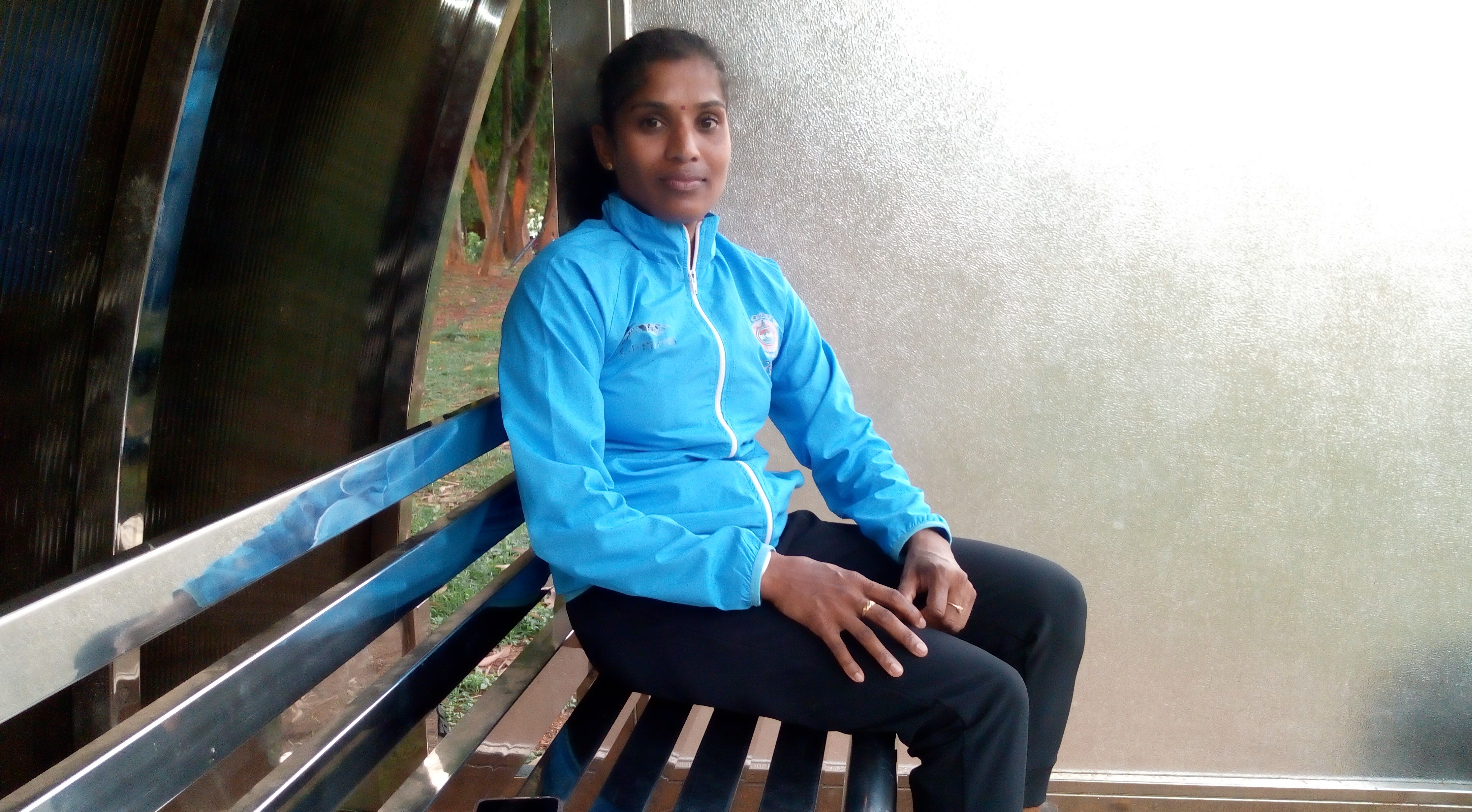
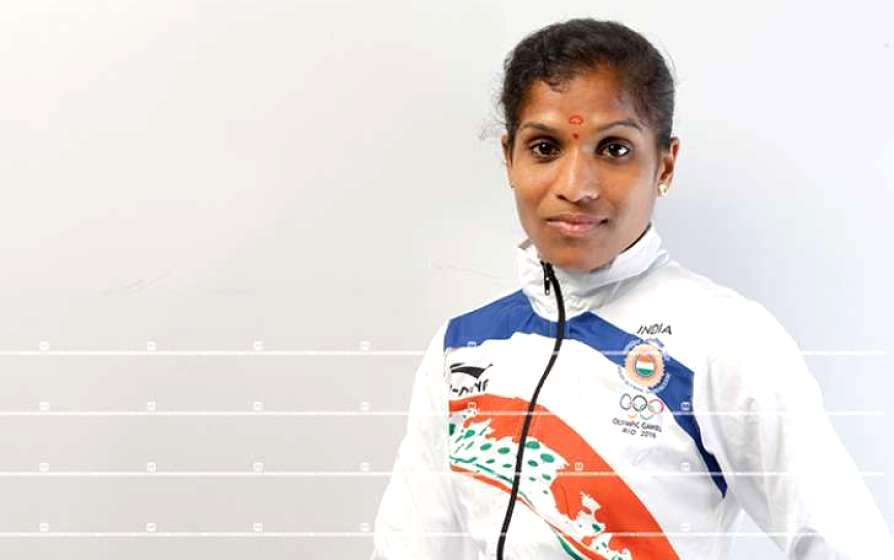
P. U. Chitra (This image was downloaded from the athlete’s Facebook page and is being used here for representation purpose. No copyright infringement intended)

P. U. Chitra strikes gold in Nijmegen meet, Jinson Johnson sets new national record

P. U. Chitra of India won gold in the women’s 1500m at the Next Generation Athletics Meet in Nijmegen, Netherlands, the media reported Sunday, June 16.

She clocked 4:13:52.

In April 2019, Chitra was in the news for winning the women’s 1500m at the Asian Athletics Championships in Doha.

In Doha she had registered a timing of 4:14:56.

She had won the women’s 1500m at the 2017 edition of Asian Athletics Championships as well.

Indian athlete Jinson Johnson broke his national record in the men’s 1500m at the Nijmegen meet.

He covered the distance in 3:37:62 to finish sixth in the field.

Ajay Kumar Saroj finished in 3:40:39 to place eleventh.

Jim Walmsley wins 2019 Western States in record time

Jim Walmsley has won the 2019 edition of Western States Endurance Run (WSER) held over June 29-30 in California, in 14 hours nine minutes 28 seconds. Doing so, he broke his own earlier record by 21 minutes. The old record was 14 hours 30 minutes four seconds. With improvements to the WSER course record twice in the past calendar year and a half marathon done in 1:04:00, Walmsley has qualified for the 2020 Olympic Marathon trials, media reports said. WSER spans 100 miles. In early May, Walmsley was in the news for setting a new mark (albeit not official) over 50 miles, which he covered in 4:50:07. This was done at the Hoka One One Project Carbon X 100K Challenge.

Kipchoge sub-2 marathon attempt to be in Vienna

Austria’s capital city, Vienna, will be venue for Eliud Kipchoge’s upcoming attempt to so a sub two hour-marathon, news reports said on June 28.

The project titled Ineos 1:59 Challenge will be held in October 2019.

The attempt will be on a multi-lap course at The Prater, a park in Vienna.

It has been described as a fast, flat course with tree cover.

A wake-up call for India’s city marathons

The world of mass participation marathons in India, took a hit with the National Anti-Doping Agency (NADA) informing that Jyoti Singh had tested positive for a banned substance.

The athlete, who was winner in the women’s elite half marathon at the 2019 New Delhi Marathon, was provisionally suspended on May 14.

On June 17 as news of NADA’s findings appeared in the media (there were athletes from other disciplines too who were in trouble), reports quoting the race organizer said that if the charges are true then Jyoti will lose her medal.

Organizers of mass participation marathons, this blog spoke to, couldn’t recall an earlier instance when the consequence of athletes violating doping norms had been felt in India’s growing city marathon space.

According to them, the NADA comes into the picture at city marathons when elite contingents are due to run and the timings registered are meant to work as proof of eligibility for them to participate at major international events. The New Delhi Marathon falls in this category, as does the Mumbai Marathon and some other leading city marathons / distance running events in India. “ We have close to 1400 marathons in India now and elite teams run at perhaps 30 or so of these events,’’ a senior official at one company that organizes races, said, adding, “ I don’t know enough to comment on whether all the races boasting elite participation test for doping violation. The top races do. ’’ Please note: the numbers mentioned – total number of marathons and one’s hosting elites – is an approximation. Besides elite group as reason to test, there is also another cause for top events requiring dope testing. At top events, some of the prized runners from overseas are already on international testing programs and the commitments they have agreed to, must be met here too.

It is understood that in the case of city marathons, the cost of testing for doping violation, has to be borne by the race organizer.

Morning of June 19, this blog mailed a set of questions to NADA hoping to get a better understanding of their work, in particular how the testing at city marathons works. As of evening June 20, no response had been received. Should response be received, this report will be revised suitably.

Geeno Antony. From the 24/12 hour stadium run held June 2019 in Mumbai (This photo was downloaded from the event’s Facebook page)

Narender Ram wins Mumbai’s 24-hour stadium ultra, Geeno Antony tops 12-hour segment

Narender Ram of Delhi piled on the miles to top the list of runners participating in the 24-hour stadium ultra in Mumbai held on June 15-16, 2019.

He recorded 414 laps covering a distance of 165.6 kilometers during the 24-hour period.

The event was organized by NEB Sports at Mumbai University Stadium.

In the 12-hour segment, Geeno Antony claimed top honors. Geeno recorded a distance of 109.1 k (258 laps). Earlier this year, Geeno had won the men’s 100k race at Hennur Bamboo Ultra.

Amar Shiv Dev finished second in the 24-hour segment with 390 laps covering a distance of 156 kilometers. Devi Prasanth Suresh Shetty finished third with 383 laps and a distance of 153.2 kilometers covered. In the 12-hour segment, Sathish Kumar R finished in second position covering a distance of 102.36k (laps – 242) and Rahim K.S. in third position with a distance of 91.57k (laps – 225).

Among women finishers in the 24-hour segment, Priyanka Bhatt was the winner. She recorded 379 laps covering a distance of 151.6k. She was followed by Apeksha Shah who recorded 292 laps and 116.8k. Yamini Kothari finished third with 199 laps covering a distance of 79.6k.

In the 12-hour segment for women, the winner was Babita Baruwati with a distance of 80.92k (laps – 195). Preeti Lala came in second with a distance of 78.4k (laps – 189) and Sunaina Patel came in third with a distance of 77.19k (laps – 186).

Geraint Thomas injured in crash but cleared for July’s Tour de France

Days after ace cyclist Chris Froome suffered serious injury in a crash, Geraint Thomas – also from Team Ineos – met with a crash during Tour de Swiss on June 17.

He was using the event as final preparation for the upcoming edition of Tour de France.

Geraint Thomas is defending champion at Tour de France. He has also won three world championships and two Olympic gold medals.

Although he was pulled out of Tour de Swiss following Monday’s crash, his injuries were not serious, media reports said. The team’s doctor has since cleared him and he is expected to race at Tour de France.

Tour de France starts on July 6.

World Athletics logo (This image was downloaded from the IAAF website and is being used here for representation purpose only. No copyright infringement intended)

IAAF to change its name, logo

The International Association of Athletics Federations (IAAF) is set to take on a new name and logo.

The new name, ` World Athletics,’ builds upon the organization’s restructuring and governance reform agenda of the past four years to represent a modern, more creative and positive face for the sport. According to an official statement (dated June 9, 2019) posted on the IAAF website, the IAAF Council approved the global governing body’s new name and logo at the 217th  IAAF Council Meeting which concluded recently in Monaco. The new brand, Council agreed, makes the sport more accessible to a wider audience while giving the global governing body the opportunity to more clearly communicate its mission as the leader of the world’s most participatory sport, the statement said.

“ The hope is that our new brand will help attract and engage a new generation of young people to athletics,’’ it quoted IAAF president Sebastian Coe as saying. The logo design is comprised of three main elements: the ‘W’ of World, which is also a symbol of an athlete’s arms raised in victory; the ‘A’ of Athletics, which also represents an athlete’s focus as they prepare for the road ahead; and an arc over both to represent the entire athletics community coming together. The logo also includes the sweep of a running track which appears in an upward trajectory, symbolizing the desire to continually push beyond limits. The patterns capture the energy present in all four of athletics’ group disciplines: running, jumping, throwing and walking.

The new brand identity will begin its rollout in October after the IAAF World Athletics Championships Doha 2019 and following Congress’s approval of the change to the Federation’s legal name, the statement said.

The IAAF was originally founded in 1912 as the International Amateur Athletic Federation.

2019 Trail World Championships / Results

Jonathan Albon of Great Britain and France’s Blandine L’Hirondel won the individual titles at the IAU Trail World Championships in Miranda do Corvo, Portugal, on June 8, an official statement available on the website of International Association of Athletics Federations (IAAF), said.

Albon took over the lead going up to the highest point of the course early in the second half, stepping up from fourth last year to cross the finish line in 3:35:35. He finished two minutes 13 seconds in front of French runner-up Julien Rancon. Switzerland’s Christan Mathys was third.

L’Hirondel led from early on and came home in 4:06:18, eight minutes 12 seconds clear of New Zealand’s Ruth Croft. Spain’s Sheila Aviles finished third, the statement said.

Albon, who is based in Norway, is now current world champion in trail, ultra skyrunning and obstacle course racing. “It was a great race and the course really suited me,’’ the statement quoted him as saying.

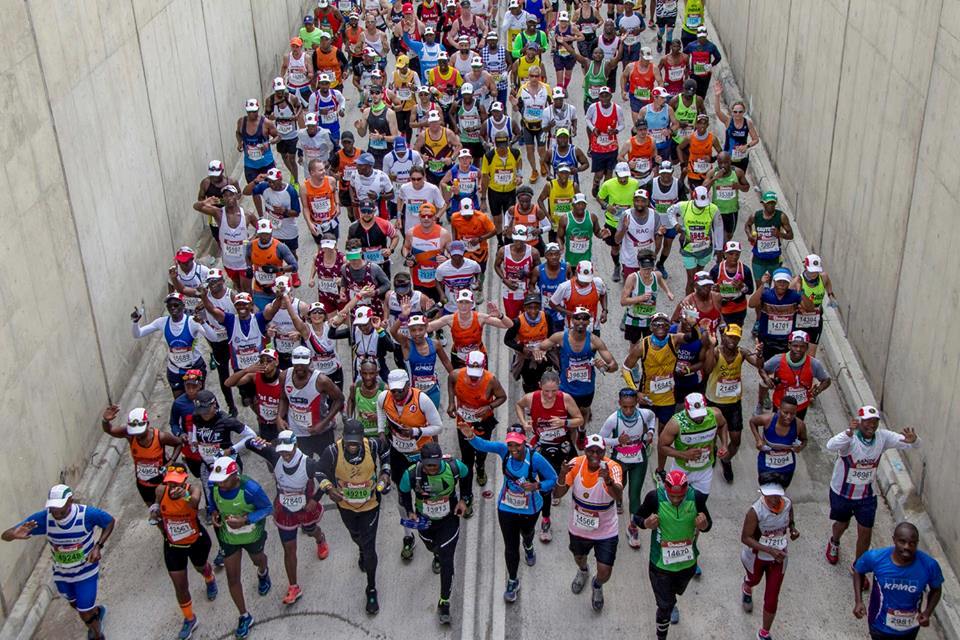
The start of 2019 Comrades from Durban (This photo was downloaded from the event’s Facebook page and is being used here for representation purpose)

Edward Mothibi wins 2019 Comrades, Gerda Steyn sets new course record

Deepak Bandbe is fastest among Indians this year. Satish Gujaran completes his tenth Comrades, gets green number

Edward Mothibi of South Africa won the 94th Comrades Marathon that commenced from Durban on Sunday (June 9).

It was his first win at the event.

He finished the race in five hours, 31 minutes and 33 seconds. He had finished in fourth position in the 2018 edition of the Comrades Marathon.

Gerda Steyn, also of South Africa, broke the women’s record with a timing of 5:58:53 hours in the uphill version of the race. Steyn finished seventeenth overall. The previous record timing of 6:09:23 was set by Russia’s Elena Nurgalieva thirteen years ago.

Mumbai-based Deepak Bandbe was the fastest among runners from India. He covered the 86.83km-distance of the race in 7:43:34 hours. Satish Gujaran, also from Mumbai and running his tenth Comrades completed the race in 10:30:24. He became the first runner from India to secure a green number (permanent bib number), a tradition at Comrades recognizing those running the race ten times.

Bongumusa Mthembu, winner of the 2018 edition of the race, finished second this year with timing of 5:31:58. Nao Kazami ended up in third position with timing of 5:39:16. Among women, Alexandra Morozova (6:17:40) came in second while Caitriona Jennings (6:24:12) finished third.

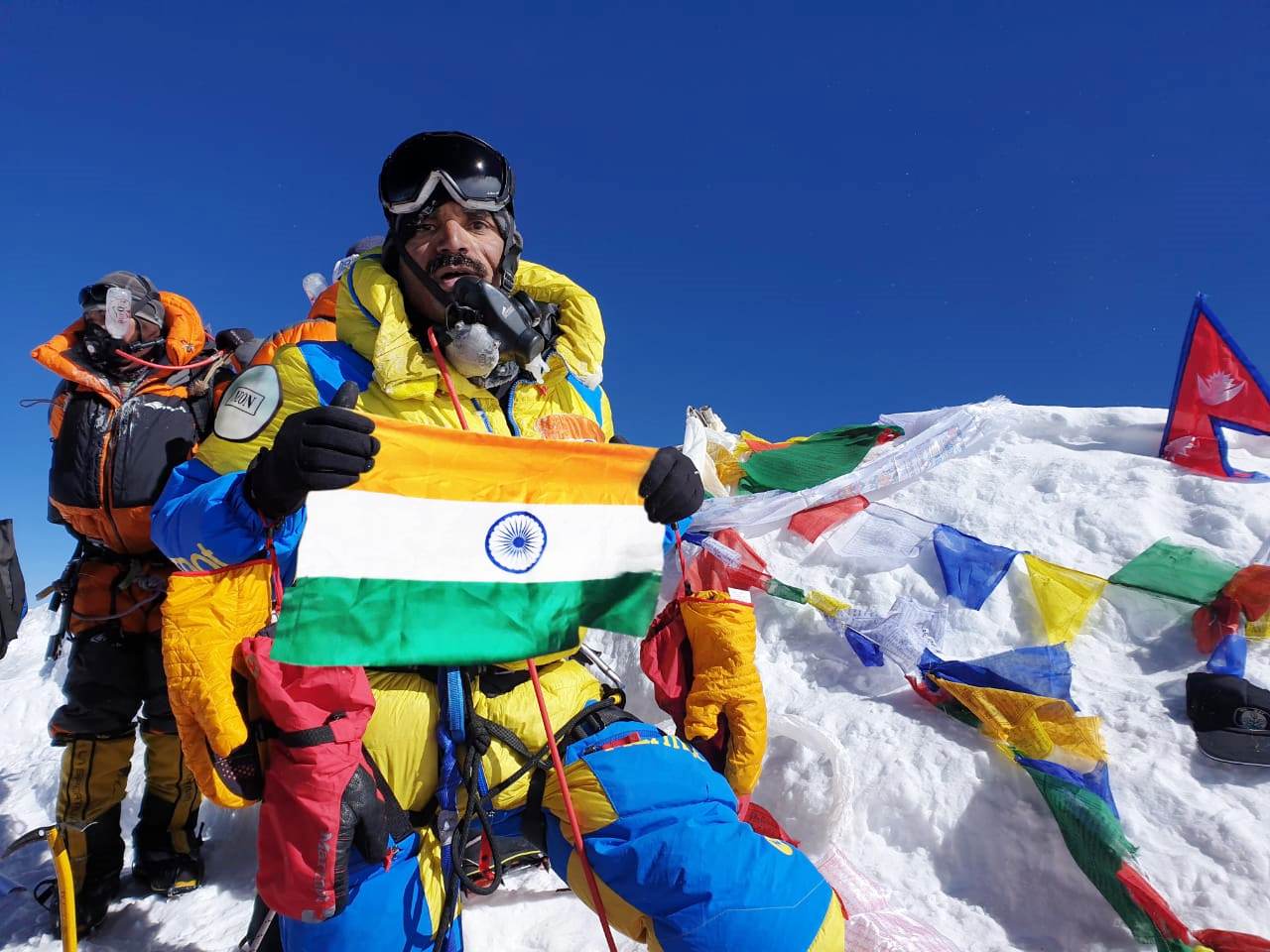
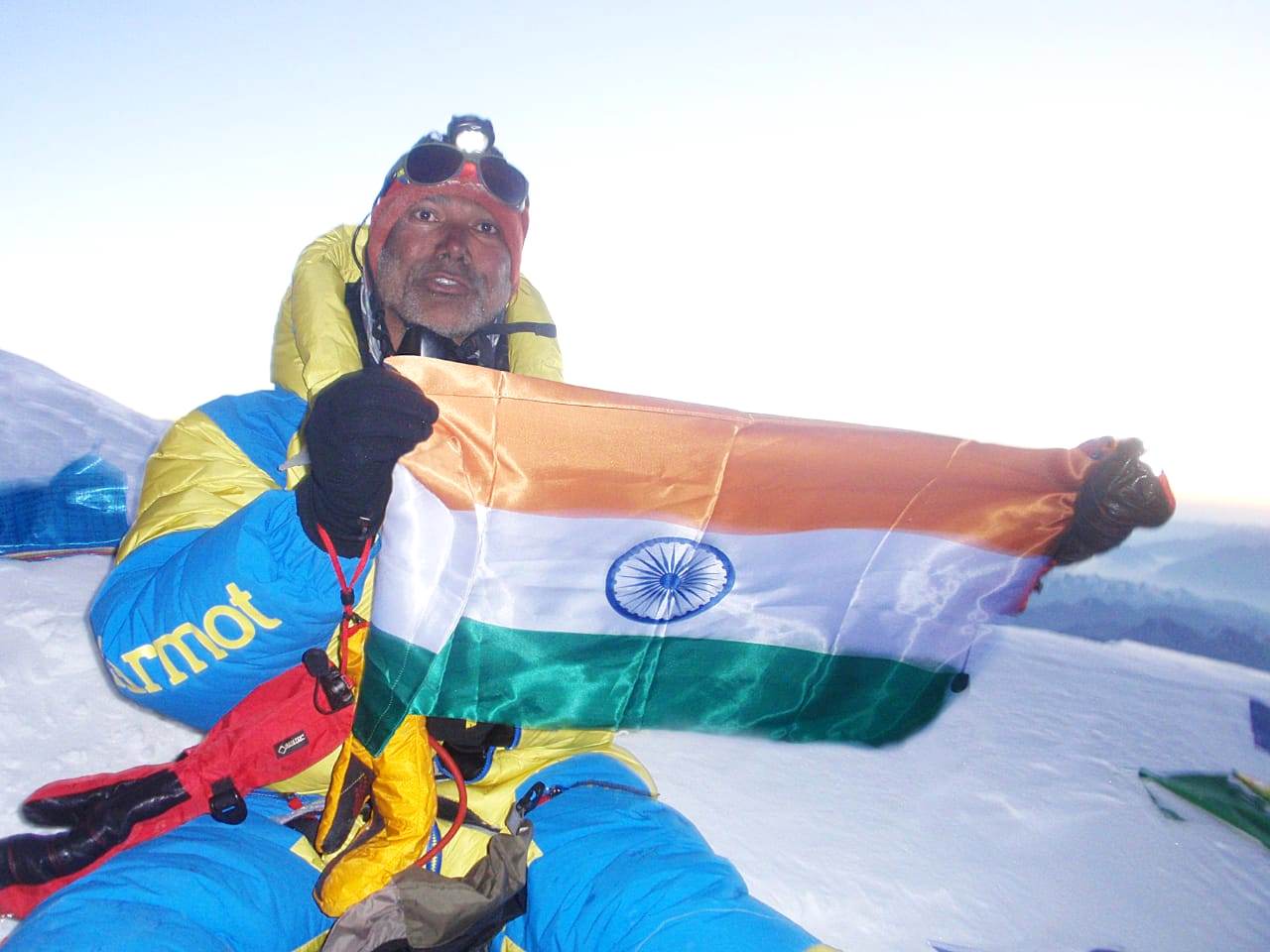
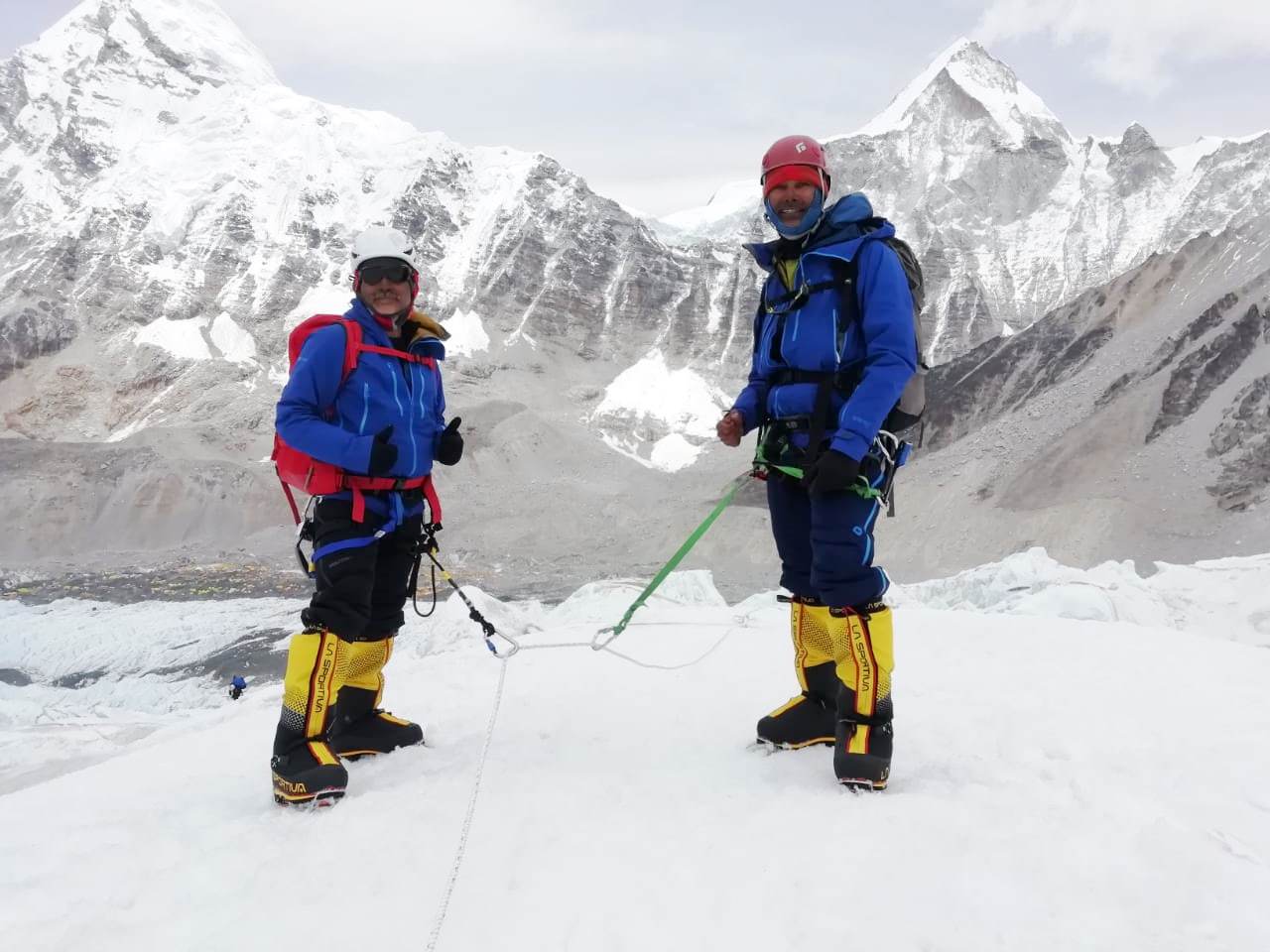
Everest summit claims questioned

The summit claims of three Indians who were on Everest in the 2019 climbing season have come under the scanner.

The Himalayan Times reported on June 10 that its inquiries showed the three climbers – all from Haryana – had only reached Camp III and not beyond. The report also quoted the managing director of Prestige Adventures Pvt Ltd, the company which managed the expedition the climbers were on, as saying the three had not been to South Col this spring season.

A June 12 report in The Print, said that the Nepal government has started an inquiry and asked the three climbers to provide documentary proof of their claimed successful ascent.

Around two years ago, an Indian couple who claimed to have reached the summit of Everest were found to have faked their claim. For more on Everest and what it has come to mean please read the essay: The World’s Highest Mirror, available on this blog’s list of recent posts. You can also scroll down to access the said article.

Caster Semenya (This photo was downloaded from the athlete’s Facebook page and is being used here for representation purpose only. No copyright infringement intended)

Caster Semenya case: top court orders temporary suspension of IAAF rule

Caster Semenya, South African athlete and current Olympic champion in the women’s 800m who lost her case against the International Association of Athletics Federation (IAAF) in early May, has come in for temporary relief after the Federal Supreme Court of Switzerland ordered the IAAF to suspend its testosterone regulations against her with immediate effect, the international media reported early Tuesday (June 4) morning.

The athlete can now compete in distances spanning 400m to a mile without medication until June 25, by when the IAAF has to respond. In a statement, Semenya thanked the judges for their decision, the reports said.

Under emergent IAAF rules, Semenya, an athlete with differences in sexual development (DSD) was required to take medication to bring down her testosterone level if she wished to continue participating in competitions over distances spanning 400m to a mile. Semenya challenged the IAAF regulation but in early May, the Court of Arbitration for Sport (Cas) ruled in favor of IAAF albeit with reservations. According to a report in The Guardian then, three arbitrators studied the case – IAAF’s policy and Semenya’s appeal against it – for nearly two months. Two of them accepted IAAF’s argument that female athletes with high testosterone level possessed significant advantage in size, strength and power from puberty onward. They felt that IAAF’s policy was reasonable and necessary. A BBC report had mentioned that Cas had “serious concerns as to the future practical application’’ of the regulations. It also said Cas had asked IAAF to consider delaying the application of rules to 1500m and one mile events till more evidence is available.

On May 30, the media reported that Semenya would be taking her case to the Federal Supreme Court of Switzerland. The legal battle between 28-year-old Caster Semenya and IAAF is being keenly watched by the global sports community.

Swimming to be part of school curriculum in Kerala

The media in Kerala has reported that the state plans to make swimming part of school curriculum. Speaking at a state level school reopening festival held at the government higher secondary school in Chembuchira, Thrissur district on June 6, chief minister Pinarayi Vijayan said that the government intended to start a swimming pool in each of the 140 assembly segments of the state. Swimming will be made part of the school curriculum, the report quoted him as saying.

National Inter State Senior Athletics Championships postponed

The National Inter State Senior Athletics Championships scheduled for July 14-17 in Kolkata, has been postponed, the Athletics Federation of India (AFI) informed in a statement.

A fresh date has not been assigned yet.

The postponement has been attributed to the timing of the event against the backdrop of the 2019 IAAF World Championships due in Doha, Qatar in September. Many of the coaches feel, “ the athletes may not be able to repeat their performances in IAAF World Championships 2019 if National Inter State Senior Athletics Championships is conducted as per schedule,” the AFI statement said.

Mountaineers reported missing on Nanda Devi

This incident is being reported using updates. Please scroll down for updates.
Nanda Devi (Photo: Punit Mehta)

On Saturday June 1, 2019, the media reported that a group of eight climbers including seven foreign nationals, who were on an expedition to Nanda Devi East had failed to return on the appointed date to Base Camp.

Authorities were alerted and a search and rescue team dispatched, the news reports said.

For now, the known facts are that the team had altogether 12 members of which eight – four from UK, two from USA, one each from Australia and India – have been reported missing. A reliable picture will be possible once details are available. Those reported missing (as mentioned in official communication) are expedition leader Martin Moran (UK), John Mclaren (UK), Rupert Whewell (UK), Richard Payne (UK), Ruth McCance (Australia), Anthony Sudekum (USA), Ronald Beimel (USA) and Chetan Pandey, the expedition’s liaison officer from India.

The leader of the expedition, Martin Moran, is a much respected mountain guide. Thanks to his many visits to the Indian Himalaya, he is well known in India including in the Nanda Devi region, where he has led climbs before. A British Mountain Guide since 1985, Moran and his family run Moran Mountain, a mountain adventure company that offers courses, tours, guiding and expeditions in Scotland, Norway, Alps and Himalaya.

Of Nanda Devi’s two summits, the east summit (7434m / 24,390 feet) is the lower one. Unlike the mountain’s main summit, which along with the Nanda Devi sanctuary, is shut to trekking and climbing, the east summit is open to climbers. On May 10, Moran Mountain’s Facebook page posted photos and informed commencement of the expedition to “ Sunanda Devi (7434m) – sister of Nanda and one of India’s toughest.’’ This was followed by pictures on May 11 of the team’s flag-off day at Indian Mountaineering Foundation (IMF), New Delhi. Eleven days later on May 22, it further updated that the Nanda Devi team had reached its “ second base camp at 4870m, their home for the next week. After a recce of the route they will be making a summit attempt on an unclimbed peak at 6477m. ‘’ A previous post indicated awareness of the region having received much snow this past winter and the team being suitably prepared with snow shoes.

In its report on the incident, the Sydney Morning Herald, quoting a senior IMF official, wrote that the expedition’s deputy leader Mark Thomas remained at the second base camp with three others and was in radio contact with those who climbed higher. When he didn’t hear anything from them after May 26, he went up to check and found a single, unoccupied tent and beyond it, evidence of avalanche.

Following the authorities being alerted a helicopter was expected to be pressed into service on Sunday (June 2) morning to assist in the search. One seasoned mountaineer this blog spoke to earlier in the day (ie on June 1) said that the information available so far seemed inadequate and mutually ill-fitting to build a cohesive picture of what may have happened. He advised caution and no jumping to conclusions.

Late night, June 1, British Mountain Guides posted the following message from BMG president Mark Charlton, on their Facebook page: Incident Nanda Devi East: The ‘British Association of Mountain Guides’ (BMG) have been made aware of an incident on or near Nanda Devi East where BMG member, IFMGA Mountain Guide, Martin Moran was leading six clients and an Indian National. The BMG is assisting where possible and is in contact with the Indian authorities. At the moment this is all the information we have as communication is very difficult. We will update this post when more reliable facts have been established.

A while later Moran Mountain put up the following post: On behalf of Moran Mountain, we are working with the authorities and the British Association of Mountain Guides to gather information regarding the Nanda Devi East expedition team. Out of respect for those involved and their families, we will be making no further comments at this time. The BMG will release a further statement as and when more information is available.

Update / June 2: There is no change in status as regards the eight climbers reported missing near Nanda Devi. The four remaining members of the group have been airlifted from their camp near the mountain, to Pithoragarh, the district headquarters.

On the Facebook page of Moran Mountain, the Moran family said (this is an abstract from the larger post): The climbing group had set out to attempt an unclimbed, unnamed summit, Peak 6477m, and the last contact intimated that all was well and a summit bid would be made from a camp at around 5400m.

It is not entirely clear what happened from this point onward or indeed the timeline of events. We do know that a British Mountain Guide who was in the area leading a trekking group, as part of the same expedition, was informed that the climbing group had not returned to base camp as expected. He immediately went on the mountain to search for the missing climbers. There was clear evidence that a sizeable avalanche had occurred on the mountain and it seemed to be on or very near the route that would be taken by the climbing group. The Mountain Guide gave instructions to base camp to alert rescue authorities. The alarm was raised early on Friday morning 31st May.

Today we have been informed by the Indian Mountaineering Federation that an air search by helicopter has revealed the scale of the avalanche but no sign of the climbers, their equipment nor their tents. We are pressing for the search area to be widened and continued until such time as firm evidence is found to ascertain the well being or otherwise of all those in the climbing group.

Update / June 3: In continuing search operations on Monday (June 3) for the eight climbers reported missing near Nanda Devi, aerial photographs clicked by low flying helicopter have revealed five bodies in the snow.

“ We now fear the team may have perished in the avalanche,’’ a senior official of the Indian Mountaineering Foundation (IMF) told this blog Monday evening. Going by the chronology of events as reported in the media, it is now just over a week since the suspected time of mishap. The last contact / conversation with the team, appears to have been on May 25. They were expected to be back at camp on May 26; that didn’t happen. The authorities were alerted on May 31. By evening June 2, media reports quoted authorities as saying the prospects of finding and rescuing the missing climbers, seemed bleak.

Earlier in the day CNN had reported that a helicopter crew spotted a backpack in the snow on the unnamed peak, the climbers intended to attempt. Coupled with signs of avalanche noticed in previous sorties, this had strengthened the view that the climbers were indeed caught in one. The backpack was at an elevation of around 5500m (roughly 18,045 feet). The CNN report quoted District Magistrate Vijay Kumar Jogdande as saying that chances of the climbers surviving are almost zero now. The report also said that adverse weather was hampering search operations.

Monday’s more precise search was possible thanks to four members of the climbing team, who hadn’t ventured up with the others, being airlifted from their camp near the mountain, to Pithoragarh on June 2. The four included Mark Thomas, deputy leader of the expedition, who had gone up to check on his fellow team members upon being informed that they hadn’t returned to camp as scheduled. As per earlier published news reports, Mark had come across an empty tent and signs of avalanche beyond it. The search operation was expected to leverage his insight on potential location of the team and calibrate the search accordingly. Monday’s helicopter sortie had Mark aboard. Also providing inputs was Dhruv Joshi, mountaineer from Almora who had been deputy leader of an expedition to climb Nanda Khat in 2010 and was familiar with the landscape.  For more on the developments of June 3, please try this link: https://shyamgopan.com/2019/06/03/nanda-devi-east-expedition-five-bodies-spotted/

Update / June 8: According to media reports through the week, adverse weather conditions continued to thwart efforts to land a team by helicopter near Peak 6477 to retrieve the bodies. It is likely that the bodies may have become covered in fresh snow. An official who has kept track of the rescue operations told this blog that indications are, the administration has decided to call off the helicopter sorties. Moves are afoot for a team to hike up to where the bodies lay. Meanwhile 3000 kilometers to the south, the monsoon – already delayed – was expected to make landfall on June 8. In the interlinked world of weather, this could have implications on conditions at altitude too.

Update / June 10: The Indian Mountaineering Foundation (IMF) has launched an expedition to the Traill Pass area to recover the bodies of climbers sighted earlier during helicopter sorties.

“ Based on permission received from DM (district magistrate) Pithoragarh, IMF has launched a ground search expedition. Fully equipped 12 member-team is headed for the accident site through Pindari glacier. They are expected to reach the area by Saturday,” a senior IMF official informed Monday (June 10) morning.

For a perspective of the train of events leading to this decision, please look up all the posts (up to June 10) related to the missing climbers, on this blog.

Update / June 14: Media reports quoting the District Magistrate of Pithoragarh said that a 32-member team comprising 11 mountaineers of the Indo-Tibetan Border Police (ITBP) and personnel of the National Disaster Response Force (NDRF) and State Disaster Response Force (SDRF) are also heading to the accident spot to retrieve the bodies. The team left for Munsyari on Thursday (June 13). They are expected to be airlifted to “ Nanda Devi second base camp” on Friday, the reports said.

Mont Blanc (Photo: Dinesh Kaigonhalli)

Mont Blanc climbing rules changed

France has changed the rules governing ascent of Mont Blanc (4808.7m / 15,777 feet), Europe’s highest peak.

The media reported on June 2 that people planning to climb the peak via its normal / standard route will now have to book a room at the one of three shelters on the flanks of the mountain if their itinerary included overnight stay. Climbers caught camping on the route risk two years in prison and a stiff fine, the report said.

Mont Blanc attracts almost 25,000 climbers every year and instances of arguments and flaring tempers among teams have been reported. Campaigns to discourage crowds have not worked. Last year 15 climbers died on Mont Blanc, the reports said.

The change to rules follows a deadly May on Everest in far away Nepal, when 11 people died during the 2019 climbing season. The deaths were attributed in the main to too many climbers on the mountain and traffic jams emerging as a result at high altitude causing prolonged exposure to inhospitable environment and compounding strain to climbers.

Caster Semenya case: IAAF wants provisional suspension of DSD regulations by top Swiss court, reversed

The International Association of Athletics Federations (IAAF) has requested the Swiss Federal Tribune (SFT) to reverse its earlier order allowing provisional suspension of IAAF regulations pertaining to athletes with differences in sexual development (DSD) applied on South African athlete, Caster Semenya.

In a statement dated June 25, posted on its website, IAAF informed that it has submitted its response on provisional measures to the SFT, explaining why its DSD regulations should remain in force during an appeal by a single athlete (the appellant) following a “superprovisional order” issued by the SFT and received by the IAAF on 4 June 2019.

According to the statement, IAAF has specifically requested (1) reversal of the order to the IAAF to super-provisionally suspend the implementation of the DSD Regulations in respect of the appellant (2) dismissal of the appellant’s application to suspend the implementation of the DSD Regulations in respect of the appellant pending the outcome of the appeal.

“ The IAAF fully respects each individual’s personal dignity and supports the social movement to have people accepted in society based on their chosen legal sex and/or gender identity. However, it is also committed to female athletes having the same opportunities as male athletes to benefit from athletics, be that as elite female athletes participating in fair and meaningful competition, as young girls developing life and sport skills, or as administrators or officials.

“ This requires a protected category for females where eligibility is based on biology and not on gender identity. This crucial point was accepted and emphasized by the CAS in its 30 April 2019 decision to uphold DSD regulations. To define the category based on something other than biology would be category defeating and would deter many girls around the world from choosing competitive and elite sport after puberty.

“ The IAAF will continue to defend its DSD Regulations and the CAS Award in the appeal proceedings before the SFT, because it continues to believe in equal rights and opportunities for all women and girls in our sport today and in the future,’’ the statement said.

(The authors, Latha Venkatraman and Shyam G Menon, are independent journalists based in Mumbai.)

THE MAHAJAN BROTHERS AND MAY 22 ON EVEREST

Everest (This photo was downloaded from the Facebook page of Mahajan Brothers and is being used here for representation purpose.)

The Sea to Sky Expedition by the Nashik based-Mahajan brothers concluded as planned with a successful ascent of Everest. But it came at a cost. This is their story:

Early morning May 22, 2019, Dr Mahendra Mahajan reached the summit of Everest.

“ I was among those arriving there early in the day. So I was spared much of what unfolded on the peak this season,’’ he said. But he committed a mistake; a small one in anyone’s eyes, except that at high altitude, consequences – especially handling them – can be challenging. When taking photos at the planet’s highest point, he briefly pushed his glacier goggles on to his forehead. It wasn’t for long as in the extreme cold of the summit, his cell phone as well as a small digital camera he carried, clicked only a few pictures before their battery died. When he returned the goggles to his eyes he found that the glass surface was coated in ice, too tough to remove by rubbing. Goggles on, he couldn’t see a thing. So he switched to a pair of ski glasses that he had carried as spare. They were not the ideal replacement. They were not designed for the glare of punishing altitudes; their bulky construction was also such that climbers who value being able to see their feet were denied that by intervening frame. He had to be careful. By the time he set out for Camp 4 from the summit, Mahendra could see the first signs of what had been generally apprehended – a traffic jam of climbers close to the summit of Everest.

When Nashik-based Dr Hitendra Mahajan and Dr Mahendra Mahajan – aka Mahajan brothers – announced their Sea to Sky expedition, it was regular adventure engagingly packaged. They were accomplished cyclists; they were the first Indians to complete Race Across America (RAAM), they had cycled the full length of India’s highway system called Golden Quadrilateral. More recently, Mahendra had set a record for the fastest passage by a cyclist on the Kashmir to Kanyakumari route. Sea to Sky had shades of Goran Kropp to it. In 1996, the Swedish adventurer and mountaineer had cycled alone from Sweden to Nepal, climbed Everest without oxygen and cycled back part of the way. The Mahajan brothers (among the two, Hitendra is a trained mountaineer) planned a bicycle trip from Mumbai to Kathmandu and then, a guided ascent of Everest.

Dr Hitendra Mahajan on the summit of Everest (Photo: courtesy Dr Mahendra Mahajan)

They commenced their bicycle ride from Mumbai on March 31, 2019. They cycled in relay pattern, taking turns to be on the road. A reason for this was that their expedition also included work towards spreading awareness about cardiopulmonary resuscitation (CPR). The brothers covered the distance from Mumbai to Kathmandu in about a week. They reached the Nepali capital on April 7. A day after reaching Kathmandu, the brothers took the flight to Lukla.  The Everest attempt was as part of a team managed by Kathmandu-based Pioneer Adventure. The team included Everest aspirants from India, Pakistan, USA and Singapore. They commenced their walk-in to Everest Base Camp (EBC) from Lukla. Along the way, they climbed Island Peak (20,305 feet). After the walk-in and the trips up Everest (highest point reached doing so being Camp 3) they descended to Debouche set amid green surroundings at lower altitude to rest and recover.

According to Mahendra, the brothers stayed in Debouche for 4-5 nights following which, they trekked back slowly to EBC. Another 4-5 days were spent at EBC. A concern during this entire period was when the summit window would be. You need clear days with manageable wind speed. In 2018, there had been a week or so of such weather. This time, the weather seemed fickle. To complicate matters, from April 26 to May 5, Cyclone Fani, the first severe cyclonic storm of the year was detected and tracked en route to India. It had its landfall in Odisha and after visiting Bangladesh, saw its remnants dissipate over Bhutan. All this was away from Nepal but in the world of weather, enough to call neighborhood. For the 2019 climbing season, Nepal had issued around 381 permits. A few hundred climbers, guides and support staff were due to ascend Everest. At EBC, people tuned in to multiple weather forecasts. Eventually, Mahendra said, the period around May 22-23 was decided as summit window. He recalled May 24 being cited as not good. Everyone jumped on to the May 22 / 23 bandwagon. That, he said, is how the bunching of climbers witnessed in 2019 commenced. The climbs by various teams couldn’t be spread out. The team the Mahajan brothers were on commenced its trip from EBC to higher camps around 2 AM on May 18. “ Our first taste of what could potentially happen came at the Khumbu Icefall, where the glacier is heavily crevassed. At sections where ladders were few, queues occurred. If it was a single file it would have been alright. Problem was – it was managed a bit badly. So at times, there was more than one line and resultant delay. At one big ladder there was a line of 50-100 climbers,’’ Mahendra said.

Dr Mahendra Mahajan on the summit of Everest (Photo: courtesy Dr Mahendra Mahajan)

The night of May 18 and 19, they spent at Camp 2. From there it was six to eight hours to Camp 3. “ Half of this section is a gradual climb, the rest is fairly steep,’’ Mahendra said. At Camp 3, oxygen bottles were used while sleeping at night. The regulator was set to a gentle flow. From Camp 3 it was an eight hour-climb to Camp 4 at around 8000 meters. “ We reached it on the afternoon of May 21. Same night at around 7 PM we set off for the summit,’’ Mahendra said. The brothers started out together but on a mountain, everyone drifts to their respective pace. Mahendra, who is the younger of the Mahajan brothers, went ahead with his guide. Hitendra and his guide followed, the gap between the two brothers slowly growing. After about four to five hours of ascending the peak, Mahendra reached the area called Balcony. There was slow moving traffic here. “ It was just slow, that’s all; people were beginning to tire. Else there was nothing complicated. Most people were glad to continue so. A handful of climbers, who still had much energy in them, would overtake and go ahead,’’ Mahendra said.

Everything was fine till South Summit. Past this point, the nature of the route changed. It became significantly narrow. Up to South Summit, although climbers were many, a sense of bunching wasn’t felt except at occasional bottlenecks. From South Summit onward, through Hilary Step and on to the actual summit of Everest, the narrow ridge was invitation for bunching. The horizon was just warming up to light as Mahendra approached the summit. “ I had to pause due to clustering of climbers only at Hillary Step. Otherwise everything was under control,’’ Mahendra said of his passage to the summit. But photos taken, as he began his descent to Camp 4, a line of climbers was clearly manifesting.

Tired and coping with altitude, the climbers moved slowly. Complicated tasks are challenging in this state. So, few tried to get past others. Doing so requires clipping in and out from fixed ropes. The queue moved slowly. Then it ground to a halt. “ At this stage there was no co-ordination. The whole line came to a standstill,’’ Mahendra said. A climber who was behind him in the queue asked if he could move past Mahendra and go ahead. Doing so, he negotiated his way across a patch of terrain Mahendra evaluated as unsafe. Seeing this, others started pressuring Mahendra too to proceed and cross the risky patch; it would be a move executed without proper anchors and safety. “ I too tackled that portion and became free of the bottleneck,’’ Mahendra said. But fresh trouble was setting in. Exposed to the environment on the summit when he removed his goggles and inadequately protected from the glare later because he was wearing ski glasses, his eyes were becoming painful. At about 1.30 PM in the afternoon, Mahendra reached Camp 4. His guide wanted him to carry on further down but he was tired. More important he wanted to wait for Hitendra, who he had last seen going up, while Mahendra was already descending. Hitendra had asked him if he was faring alright with his glasses. About an hour into his stay at Camp 4, Mahendra developed severe burning sensation in his eyes. “ My eyes were very painful and watery. I almost cried from the discomfort. It was the most painful night of my life. Adding to the stress was – I had no idea what happened to Hitendra,’’ he said.

Dr Hitendra Mahajan (left) and Dr Mahendra Mahajan. This photo is from days prior to the summit push (Photo: courtesy Dr Mahendra Mahajan)

Hitendra was in the thick of the traffic jam and the impact it wrought. His case too was a series of cascading events commencing in a minor detail. When he started out for the summit, he gave his spare goggles to a Sherpa having none. Moving at a gentler pace than Mahendra, by the time Hitendra got to the upper parts of the summit push, traffic jam had set in. It meant slow progress and that much more time spent in conditions hostile to the human body. While he was otherwise alright, the longer time spent so meant his goggles started to ice up. He must have removed them and tried to rub off the ice. “ By the time he reached the summit, Hitendra was totally snow-blind. He couldn’t see a thing,’’ Mahendra said. Then their colleague on the same team, Don Cash, a client from the US, collapsed and died. (On May 24, Time magazine reported: While Sherpa guides with the company tried to keep him alive through CPR and by raising his oxygen pressure, Cash was unable to stand up or walk. As they tried to drag Cash down to a camp near Hillary Step, he fainted again and could not be revived; Pioneer Adventures said in a statement.) Hitendra’s guide asked him if he would be able to descend with assistance. He said yes. “ That was how he began coming down from the summit. He couldn’t see anything but the Sherpa told him where to keep his feet and helped him climb down. Noticing the situation, Don Cash’s guide also pitched in to assist. Despite all this, there were instances when Hitendra, unable to see, slipped and fell. His down-suit got torn. Mahendra took approximately seven hours to reach Camp 4 from the summit. Hitendra took 19 hours. From Camp 4 to Camp 4, Hitendra’s summit day spanned roughly 29 hours, Mahendra said.

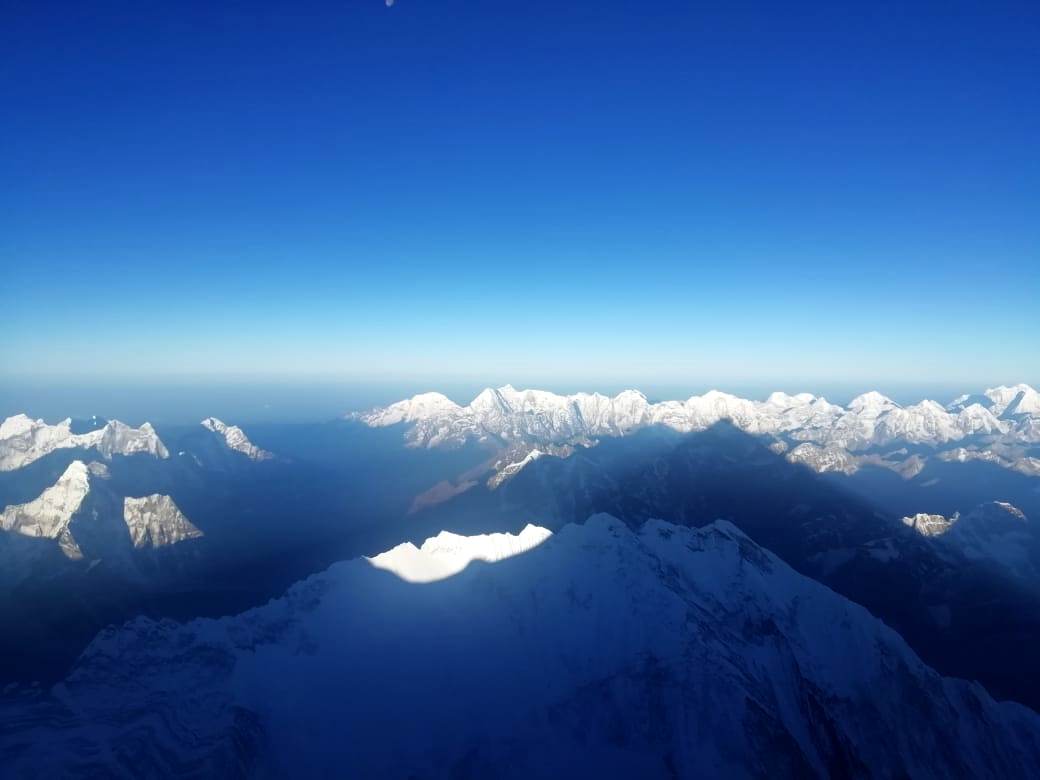
View from the summit. The glowing white ridge in front is that of Nuptse; the dark triangular shadow to its right is the shadow of Everest (Photo: courtesy Dr Mahendra Mahajan)

At Camp 4, the tired climbers were lucky in one aspect – they had adequate bottled oxygen. In situations like this that is a life saver. Next morning by around 6-7 AM, they started the descent to lower camps. “ By now I was a bit rested and my eye pain was 50 per cent gone. But Hitendra, having arrived late, hadn’t had much rest. He was still blind seeing people as only blurred spots,’’ Mahendra said. Twelve hours later, the brothers reached Camp 2. They stayed the night there. By next morning, more damage was becoming visible – all ten fingers on Hitendra’s hands were shades of blue from frostbite. On the bright side, his vision was beginning to improve slowly. The brothers took a chopper from Camp 2 to EBC and another from there to Lukla, where they visited the local primary health center. Then they flew to Kathmandu and onward to Delhi. May 26, late night, they reached Nashik. At the time of writing, Hitendra was recuperating in hospital. In varying degrees both brothers have suffered minor injuries on their retina. “ We are hopeful everything will heal,’’ Mahendra said.

Did they anticipate any of this when Sea to Sky kicked off from Mumbai?  “ We knew the climb wouldn’t be easy. But I wish I was warned about smaller details – like not removing one’s goggles. There were guides around who weren’t wearing goggles or kept taking them off. You see that and think you also can do it. In retrospect, if there is one advice I will give anyone venturing to climb Everest, it will be: don’t take off your glasses. I would also add that people should be flexible and not be insistent or egoistic about gaining the summit. Beyond South Summit – that is where I found the problems to be. If the situation is bad and it seems wise to turn back from there, you should,’’ Mahendra said.

(The author, Shyam G Menon, is a freelance journalist based in Mumbai. This article is based on a conversation with Dr Mahendra Mahajan.)           

INDIAN PARTICIPATION IN COMRADES UP YEAR AFTER YEAR

This photo was downloaded from the Facebook page of Comrades Marathon and is being used here for representation purpose. No copyright infringement intended.

Over 200 runners from India are expected to participate in the Comrades Marathon in South Africa on June 9, 2019.

Indian participation at the event has been rising every year. In the 2018 edition of the ultramarathon, over 160 Indian runners had registered to participate.

Promoted as the `Ultimate Human Race,’ Comrades Marathon is an ultramarathon of 87-89 kilometers run between the cities of Durban on the coast and Pietermaritzburg at an elevation of 1955 feet.

The race, which draws runners from several countries, was first held in May 1921. The race alternates each year between uphill and downhill and between the two cities mentioned.

This year’s edition is an uphill run with runners having to complete a total distance of 86.83 kilometers in a time of 12 hours with six timing cut-offs in between. The race will start at the Durban City Hall and end at Scottsville Racecourse in Pietermaritzburg, the event’s Instagram post said.

This year’s overall registration is higher at 25,000 runners compared to 20,000 runners last year.

Comrades Marathon has been gaining popularity among Indian recreational long-distance runners over the past few years. “ Event support is good. It is a very well organized event. This time around 210 persons have registered to run from India,’’ Satish Gujaran, Mumbai-based ultramarathon runner, said.

Satish will be running the Comrades race for the tenth time in a row this June. Once he completes his tenth Comrades, he will be awarded a Green Number. Green Number runners are allowed to retain their Comrades Marathon bib number in perpetuity.

Satish Gujaran (Photo: courtesy Satish)

According to him, training for the ultramarathon is very important. Training starts in February with four key long runs – 42k in February, 56k in March, 65k in April and another 56k in May before the tapering phase commences.

Satish first ran the Comrades Marathon in 2010. Since then, he has not missed running the iconic ultramarathon a single year. “ In the early years it was difficult to train for Comrades because there were not many runners. Training for Comrades needs the support of other runners,’’ he said.

Given the rising number of runners, planning training runs for Comrades Marathon has become easy. “ Some 100 runners participate in training runs nowadays,’’ he said.

The crowd support, cheering, volunteering and the carnival-like atmosphere in South Africa prompts runners to come back time and again to run the race, Satish said.

“ You will find people with their families lining up all along the route to cheer and support runners,’’ he said.

For entry to Comrades you have to meet specified time limits. If it is a marathon that you participated in earlier and wish to submit as proof of eligibility, it must meet the cut-off of 4:49:59 required to qualify. For 48-50k it is 5:49:59; for 52-54k it is 6:24:59, for 56k – 6:44:59, for 60k – 7:19:59, for 64k – 7:54:59, for 68k – 8:29:59, for 80k – 10:24:59, for 90k – 11:59:59 and for 100k – 13:29:59. These time limits are as of 2019. The comparatively low entry barrier for Comrades has also helped grow the number of runners from India year after year, observers said.

Bengaluru-based runner and coach, Ashok Nath will be attempting his fifth Comrades race this time. He resorts to a lean and a short training program that entails running long distances not more than 40k. “ If you approach Comrades smartly by jogging and walking, you can complete the race without much difficulty,’’ he said.

Ashok Nath (photo: courtesy Ashok)

According to him, an ultramarathon has to be approached at two levels – physiological and psychological. “ If you cannot foresee running the distance in 11 hours you should not attempt running Comrades. That’s because you need to keep at least one hour buffer as anything can go wrong in the duration of the run,’’ he said.

He also suggested the option of doing a 12-hour bicycle ride as part of the training.

“ When I first ran the Comrades Marathon in 2011, there were all of seven runners from India attempting it. This year, there are over 200 runners participating,’’ said Dilip Patil, a Mumbai-based recreational runner.

He has completed Comrades seven times. He registered for the 2019 edition but will not be participating as he is nursing an injury.

According to him, there are three milestones to achieve at Comrades Marathon – you run once; run both the up version and the down version, run the event 10 times to get the green number.

“ Once you go there and see the environment you fall in love with the event. It is a test of physical and mental fitness,’’ Dilip said.

(The author, Latha Venkatraman, is an independent journalist based in Mumbai.)
THE WORLD’S HIGHEST MIRROR

Illustration: Shyam G Menon

According to media reports, as of May 28, eleven people had died in the 2019 climbing season on Everest. It is time to rethink Everest in the head. For one’s own head – that’s where it all begins.

Long before the ultra-fast fuel refills of today, gas stations were a much slower affair.

Where digits flash by at present, technology then was a lazy roll of printed numbers on the counter. Every liter which typically took several seconds to be reached was marked by the sound of a metallic chime. The chime wasn’t the only sound characterizing gas station. The pump was sometimes noisy; it’s whirring sound harking of cogs and wheels within. A few chimes later, you knew the quantity of fuel you had sought for daily commute was close to being met. If it was full tank you sought, the concert lasted longer. Everest in May 2019 reminded of that old fuel dispenser. As several hundred people converged to climb the peak amid inconsistent weather conditions, every other day a chime sounded marking somebody’s demise.

The deaths were mainly on the Nepal side, along the normal climbing route on Everest. Photos from the mountain showed a long queue of climbers waiting at high altitude to access the summit and get back. The situation has been compared to a traffic jam. On May 28, it was reported that officialdom saw the traffic jam as a product of other factors. To be blamed, according to them, was adverse weather, insufficient oxygen supplies and equipment. The number of climbing permits issued, they said, was only slightly more than in the previous years. The photos made an impression stronger than the officials. They aren’t the first such pictures. There have been similar ones before. You know something is deeply wrong in those images.

Left to market forces and state revenue from permits doled out, I doubt if anything will change. They may choose to refine the scenario by hiking permit fee to limit traffic or for the heck of seeming just, along with hiked fee include a portion decided by lottery. Either way, unless an element of common sense (essentially questions like: what are you on Everest’s slopes for; is the summit worth dying for, that too, death for all the wrong reasons?) and plain and simple aesthetics (questions like: what is an enjoyable climb?) prevail, meaningful correction is unlikely. What is happening on Everest has nothing to do with mountaineering. It has everything to do with the industry mountaineering spawned and is therefore, a mirror to what became of our lives.

Among discerning mountaineers, Everest by normal route is no longer a prized ascent. If you climb it by other routes, the fraternity takes note. It would therefore appear, an ascent of Everest by normal route is not meant for accolades from this fraternity. For the trained and untrained, Everest by normal route is to either satisfy one’s personal urge or harvest applause from the larger, less discerning arena. One of the causes highlighted for the deaths of 2019, was that of inexperienced climbers attempting Everest. There are those who say only trained mountaineers must be on such peaks. It has also been reported that Nepal, which has so far not sought proof of climbing experience from those arriving to attempt Everest, may now alter the rules. The emphasis on training is partly correct as required approach but it is not entirely convincing as panacea for Everest’s problems.

As is evident from the published news reports of May 2019, there are trained people too in the Everest queue, both as clients and guides. One thing I keep asking myself all the time is – which trained mountaineer in the best sense of the term would support, leave alone endure a mile long queue in the Death Zone to reach a summit? Everything about that predicament points to delay and extended stay in environment hostile to human physiology. Not to mention, even at low altitude, such spectacle filled with people challenges the very aesthetic behind courting wilderness. The saddest part of above said queue and its consequences at elevation like exhaustion, frostbite and high altitude illness is that you endanger yourself and others. Inefficient progress by one person has cascading impact down the order. It is difficult to imagine that these dangers escape the attention of the trained lot, who too are there on the peak. Why then, does the traffic jam repeat? Where is the voice of the trained lot in this regard? The media reports of May 28 said that authorities have presented double rope in the area below the summit for improved management of the flow of climbers, as solution. Like many contemporary solutions, it is a specific, technical quick-fix that spares the market larger questions.

Illustration: Shyam G Menon

Hence the submission, Everest is a mirror to what became of us. It reflects a host of human compulsions – from the pure mountain lover wishing to be on the world’s highest peak, to the naturally curious, to the deliberately ambitious, to those that availed loans to fund climbs and can’t turn back for fear of losing face, to those racing against their biological clock for a piece of immortality to remember life by, to those ticking off goals from a bucket list, to those seeking glory by all 8000m peaks climbed, to those chasing Seven Summits, to those seeking multiple Everest ascents, to those seeking promotion in employment through Everest summit gained, to those fearing disappearance if their CV in life does not have Everest stamped on it, to those whose livelihoods are dependent on everyone seeking Everest turning up on the mountain, to an entire industry surviving on Everest’s magnetic attraction; the list of compulsions converging on the peak every climbing season, is long.

In times by money, media and marketing each of these urges attracts exploitation. Catalyzing the process is the pressure population exerts on human activity. For sure the number of people on Everest can be capped. That is doable. What can’t be capped is the number of people dreaming Everest, which on planet hosting exploded human numbers and rat race alongside, is high. If it wasn’t for this rat race and pursuit of distinction by any means, would climbing Everest as client via normal route, be construed as extraordinary? Distinction has become highly prized and standing on a high point is among the oldest distinctions in humanity’s guide book for life.

Perhaps, journeys must become more important than goals. If you did a life time of climbing at lower altitude does that make you less than a couple of million rupees spent and foot placed on Everest’s head? The repeated tragedies on Everest are reminders in that direction. It is built into the paradigm that the quest to access a tiny piece of inhospitable real estate at 29,029 feet should reveal what is wrong with us. Wrong in this case of crowding, has come with a price: several dead.

(The author, Shyam G Menon, is a freelance journalist based in Mumbai.)
ETHIOPIA’S BELIHU, KENYA’S TIROP WIN 2019 TCS WORLD 10K

Andamlak Belihu (This photo was downloaded from the Facebook page of TCS World 10K and is being used here for representation purpose. No copyright infringement intended.)

On a day of heat and humidity, Andamlak Belihu of Ethiopia crossed the finish line in 27:56 minutes to emerge winner of the 2019 edition of TCS World 10k in Bengaluru.

He was eight seconds off his personal best and 12 seconds outside the course record, the race report available on the website of International Association of Athletics Federations (IAAF), said.

Uganda’s Mande Bushendich came in second with a timing of 28:03 and Ethiopia’s Birhanu Legese finished third with a timing of 28:23. According to the race report, eight men crossed the half way mark in 14:11 minutes with Bushendich taking the lead followed by Belihu. The lead changed with less than two kilometres left for the finish.

The 2019 edition of the event – India’s premier 10 kilometer-race – happened on May 19.

In the women’s race, defending champion, Agnes Tirop of Kenya was the winner with a timing of 33:55 (in 2018 she had finished the race in 31:19, a course record). Letesenbet Gidey of Ethiopia finished second while Senbere Teferi came in third. As per the provisional results all three podium finishers in the women’s category overall, had the same timing – 33:55. When contacted, an official of the race organizer, Procam International said that the three women had completed the race within microseconds of each other. “ It was very close,’’ he said.

Tirop is the first woman to win back to back in the 12 years the race has been held so far. As per the race report, the women’s race began at a modest pace with nine women going through the first half of the course in 18:06 minutes, two minutes slower than the corresponding figure from 2018. Eight of them were still bunched together as they entered the stadium (Kanteerava Stadium, from where the race commences) for a final lap. The deciding stretch was the last 50 meters with victory decided on the strength of a narrow margin. The top five finishes happened within two seconds, the report said.

The winners of 2019 TCS World 10K (This photo was downloaded from the event’s Facebook page)

Among Indian men, the podium finishers were Karan Singh (29:55), Lakshmanan Govindan (30:02) and Avinash Mukund Sable (30:36). Winners among Indian women were Sanjivani Jadhav (35:10), Parul Chaudhary (35:36) and Chinta Yadav (36:34).

Kumar Rao, who was the winner in the 70-74 age category pointed out that the weather was unusually warm and humid. “ I was well on the way for a sub-50 finish, but cramped badly at 9.6 km and lost 90 seconds recovering from it before resuming the run,’’ he said. Kumar finished in 50:47.

Shilpi Sahu, a Bengaluru-based runner, also said it was very hot and humid. “ But it did not affect me much. I had a nice run as I paced myself well. I had a couple of injuries to mind as well,’’ she said. Shilpi finished in 47:01 and got third position in her age category of 40-44 years.

(The author, Latha Venkatraman, is an independent journalist based in Mumbai.)
THE BOSTON BIG SUR COMBO

Kumar Rao (Photo: courtesy Kumar)

This is an article by invitation.

Kumar Rao, now 70, started running 25 years ago during his stay in Caracas, Venezuela. He was then an employee of American Express Bank. A colleague urged him to take up running.

His first race was ten years ago, aged 60; a 10k run in Bengaluru, where he resides currently. At the age of 63, he attempted his first half marathon and two years later ran his first full marathon.

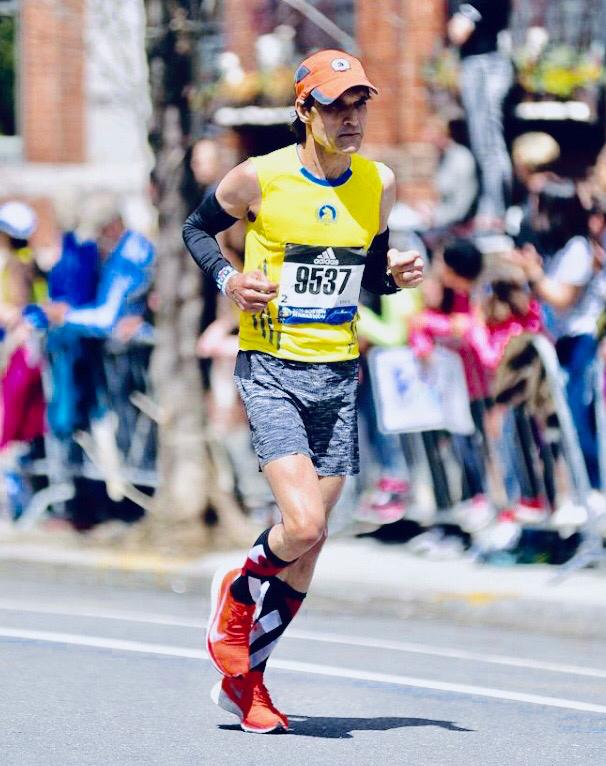
In April 2019, Kumar ran the Boston Marathon (he is among the oldest participants from India yet, at the event) for the second time and followed it up two weeks later with another full marathon at Big Sur International Marathon, held in California with the Pacific Ocean and its adjacent seashore for backdrop.

At Boston, Kumar Rao ran his personal best (PB) of 3:59:33. Though his finish at Big Sur International was tad slower than his Boston Marathon timings, Kumar considers it his best race primarily because he achieved a negative split for the first time since he took up running marathons. He also got a podium finish in his age category.

Kumar is on track to complete the six World Marathon Majors by the end of this year. He has already finished five of these events and is slated to attempt Berlin Marathon later this year to complete the tally.

Here, he talks about his journey to that second stint at running Boston Marathon and his participation in the Big Sur International Marathon.

Kumar Rao (Photo: courtesy Kumar)

The last one year has been quite eventful for me, culminating with two very good runs – Boston Marathon and Big Sur International Marathon.

At 2019 Boston Marathon, I got my first sub-four hour finish of 3:59:33, a personal best. Also, I finished in the top 10 percent of the 70-74 age-group (18/189), well within my BQ time with 20 minutes to spare.

This was an improvement of more than five minutes from my previous personal best at Tokyo in February 2018 and a 25 minute improvement on my previous Boston Marathon race in 2017.

At Big Sur, I finished in 4:03 hours but here for the first time ever I managed to get a good negative split. I finished the first half of the distance in 2:05 hours and the second half in 1:58.

This was also another Boston Qualifier for me. Additionally, I won the second place in my age group and earned a spot on the Big Sur all-time Top-10 M70-74 finishers list.

Both the finishes were well within the Boston qualification time for my age group (M 70-74). My age-graded equivalent time for both races was below 2:59.

After a year beset with an episode of debilitating Chikungunya viral fever in June and an accident while running last December, I was quite pleased to score some significant achievements in these tough hilly marathons, separated only by 12 days.

When I signed up for Boston and Big Sur last September, I was recovering from the Chikungunya attack of June. This had caused some serious Rheumatoid Arthritis type joint pain along with pain in my hands and feet for several months. I had also signed up for the Chicago Marathon that was coming up in October 2018, for which I had barely started training with less than six weeks to go.

Most of my Chicago training entailed running in the afternoon through the monsoon season, as my joints used to be quite stiff and painful in the morning. This also prompted me to adopt a strict anti-inflammatory diet and practise intermittent fasting, which helped me lose four kilos weight. I was not feeling confident about finishing the upcoming Chicago Marathon, let alone running two major marathons in two weeks.

Chicago was my eighth full marathon and I covered the distance in a reasonable time of 4:25:23. My performance here gave me confidence to pursue improvement in my timings in future races.

At Big Sur (photo: courtesy Kumar Rao)

The next major race was the half marathon at Tata Mumbai Marathon in January 2019. Training was going quite well as I had resumed my normal training schedule of running in the morning and gym training in the evening.

In December, I had a mishap during a race on a hilly road on the outskirts of Bengaluru. It was quite dark when the race started. I seem to have some problem seeing in the dark. I tripped and fell after 2 km and had to run back to the start with my upper lip completely split and bleeding profusely. I was rushed to the hospital and had to undergo plastic surgery which unfortunately kept me off running during the critical two-week period of TMM training.

At TMM, I was quite pleased to finish on the podium with third position in my age group of 65-69 years. I finished that race in 1:49:26. I had also secured a second place on the podium in my age group at the TCS 10K run in May 2018, with a finish of 49:27.

With personal bests in all distances (10 K, HM and Marathon), and unsure of the state of my recovery after Boston, I nevertheless decided to attempt the Big Sur of April 28, 2019. I ran enjoying the spectacular landscape and entertainment along the route, stopping to take photographs at several points such as the spectacular 4 km climb up to Hurricane Point and the drummers at the top, the iconic Bixby bridge with a view of the winding highway and the Pacific Ocean, the pianist on the far side of the bridge; you enjoy classical music throughout the course, including a complete orchestra at one point.

After crossing the midway mark in 2:05:05, I decided I was doing fine and should try to beat my pre-Boston PB of 4:05. The weather was ideal with temperatures ranging between 8 and 13 degrees Celsius; there was cloud cover as well.

The hill training that I put in for Boston Marathon helped me immensely. At Big Sur, the hills did not pose any challenge. The second half took 1:58:20, a huge negative split by 06:45 (about 5.5%).

Kumar Rao; at Big Sur (Photo: courtesy Kumar)

The 2019 Big Sur went off well. I finished without any cramps or major aches. Feeling fresh at the end of the race was quite surprising to me, as just two weeks earlier, Boston had appeared tough. From the perspective of the course, Big Sur is probably tougher with 665 meters of elevation gain as against 200 meters for Boston. It also has more hills as well as steeper ones.

In 2019, the Boston weather turned out to be quite warm prompting me to shed some layers of clothing during the race. I ran this race trying to maintain an even effort throughout and complete it within four hours.

At the start point, I took some time with my dynamic stretches and lunge matrix. By the time I started almost all runners had already left and I found myself running alone down the steep first mile of the course to the applause and cheers of the crowd, feeling like an elite runner. Soon I caught up with other runners and was able to get to my goal pace. I was conversing with other runners on the way until I hit Newton hills.

I stepped up my effort on the hills and started to feel some pain in my quadriceps and hamstrings during the final four or five miles but willed myself not to cramp.

Kumar Rao (Photo: courtesy Kumar)

I found myself overtaking runners in front of me and could hear cheers of “ Kumar, Kumar” from the crowds that had lined up in the late miles. After the turn on to Boylston Street I sprinted to ensure that I would complete the race in less than four hours. I ran this race without stopping even once or walking at any time. I was carrying my own hydration and fuel. I felt tired at the end but after collecting the medal, was able to walk to the meeting point I had agreed to with my son, Abhijit. As soon as I got there, I had severe cramps in both feet and was unable to take another step. I collapsed into the arms of my son, who had been waiting for me with some warm clothing and a delicious smoothie. After some rest and stretching, I was able to walk back to the hotel room a few blocks away from the finish line. A hot tub-soak did wonders. After that my son and I went out to celebrate the achievement. Overall, this ` B2B challenge’ was a great experience and I am likely to repeat it next year.

I now have TCS 10K coming up on May 19 and am slated to run two more marathons this year – Berlin in September and Marine Corps in Washington DC in October.

I have enjoyed this journey and have learnt a lot since my first run t an event, ten years ago. Running has been a great hobby and I hope to continue with endurance running for as long as I can, at least until I can learn to swim and substitute it for running as a means of maintaining fitness.

(The author, Kumar Rao, is a runner based in Bengaluru.)

WE BORROW WORLD RECORDS BUT WE KEEP TITLES / BRUCE FORDYCE WRITES TO JIM WALMSLEY

Bruce Fordyce (Photo: Shyam G Menon)

This is an article by invitation. Early May 2019 as news appeared of a race due in northern California where runners would attempt breaking the world records for 50 miles and 100 kilometers, this blog asked South African great Bruce Fordyce if he would be willing to contribute an article about the 50 mile-world record that has been his since 1983. He agreed. Reproduced below is the article he wrote (it appeared first on his website www.brucefordyce.com, which has an associated blog); it is in the form of a letter to Jim Walmsley of the US who bettered Bruce’s longstanding record. The new mark was set at the Hoka One One Project Carbon X 100km race.

Congratulations Jim Walmsley on setting a new world record for 50 miles at the Hoka One One race and for running with such courage and dignity.

I would be lying if I said the news of your success didn’t cause a slight wrench in my heart and a dull sense of regret that lasted some time. Suddenly I was no longer the world record holder for 50 miles. The record had been part of my life for 36 years and its departure, while not as traumatic, reminded me of the death, three weeks ago, of our favourite black Bombay cat, Onyx. I still look for Onyx, lying on his favourite couch, and I still can’t stop looking over my shoulder to see that silky black cat following me up the stairs to his food bowl. I suppose it will be the same with my, now your, 50 mile record. I must remember to amend my CV.

Of course, I had been warned. I had been given time to compose myself. When I heard the news that a group of elite athletes had gathered to celebrate the launch of the new Hoka shoe while having a tilt at the 50 mile and 100 kilometres world best times I knew there was trouble afoot. When I spotted your name on the entries list, I knew that my days were probably numbered. After all Jim, your CV is extremely impressive and your bold, aggressive front running approach to racing is the direct opposite of my rather timid approach to the pain of any ultra.

And so, galvanised by my final hours as world record holder, I dredged the back of my mind for memories of September 1983 when I ran my third London to Brighton and where I ran through 50 miles in 4:50:21 en route to the finish on the Brighton beachfront close to the famous pavilion. (I still had 4 miles to run, to Brighton Pavilion and the finish line.)

Jim Walmsley (This photo was downloaded from the athlete’s Facebook page. It is being used here for representation purpose)

At 7 AM on that Sunday morning a London bobby stepped onto the road beneath the famous Big Ben, stopped the early morning traffic, and beckoned at us runners to line up. Then the famous clock’s chiming bells sent us on our way across Westminster Bridge, past the Elephant and Castle pub, and down the A23 road to Brighton all the way to the sea. On the way we ran past quaint sounding villages and landmarks such as Pease Pottage, Crawley, Ditchling Beacon and Dale Hill. We also ran past seemingly randomly placed drinks tables where the local vicars and parish volunteers proffered tennis biscuits and Lemon Barley water for refreshments, and cranky old race historian John Jewel rode part of the route on the legendary Arthur Newton’s ancient Edwardian bicycle. After many miles of hard running we were confronted by the ridge of chalk hills known as the Sussex Downs (which should be called the Sussex Ups). There was nothing quaint about those rolling hills or about the quality of the opposition I raced against. Some of these great athletes are no longer with us, but a very fast pace was guaranteed when the field consisted of names such as Don Ritchie, Cavin Woodward, Graeme Fraser, Tony Abbott and Danny Biggs. We dashed through our first 8kms (5 miles) in 27 minutes or so. This pace wouldn’t give anybody in Nairobi or Addis Ababa sleepless nights but as you and I both know Jim, it does become a problem when you have to stitch 10 of those splits together with no respite.

At about 48 miles in this race Ian Champion, the race organiser, jumped out of a car and shouted in his delightful cockney accent that I was on pace for a world record and that they were taking splits at 50 miles. Ian, still a good friend, was a full- time red London bus driver and a part time race official in those days. He could have been plucked straight out of the Beatle’s song Penny Lane / Strawberry Fields.

“ This is no porky pie (lie) Bruce mate, you’re heading for a world record, now get your bum into gear!’’ he yelled.

At my lowest ebb yesterday, I took comfort from the wise words of the greatest of us all, the legendary Wally Hayward. As you know Jim, Wally Hayward won five Comrades marathons and set numerous ultramarathon records. He also ran the Comrades in 9:45, just three weeks shy of his 80th birthday, proving so eloquently that you don’t necessarily have to be first across the finish line to be a great winner. Earlier that same year I had taken eight minutes off the Comrades marathon record (yes 1983 was a very fine vintage for me). After the race I found myself chatting with Wally. He counseled me “ Bruce, always remember, we borrow records, but we keep titles.’’

“ I have long ago ceased to hold any records in the Comrades,’’ he continued, “ you chaps are running half an hour faster than I, but I will always be the 1930 Comrades champion. No one can take that from me.’’

“ Nor can they take the 1950, 1951, 1953 or 1954 titles from you or any of the other great titles in your glittering career,’’ I should have added.

Of course, Wally was correct. I still have a treasured photograph where I am receiving the enormous Arthur Newton trophy from the Mayor of Brighton at a post-race function. Incidentally, titles and medals were only handed out at this function after we had toasted The Queen.

Wally emphasised that we are merely custodians of records. We look after them, treasure and honour them and then we hand them on.

This photo was downloaded from the Facebook page of Comrades Marathon. No copyright infringement intended.

I received the record from Don Ritchie, and now Jim, you have it, and you deserve it. Be warned, however, that here in South Africa we have a Zulu warrior called Bongmusa Mthembu who could take five minutes off the record and, on his day, David Gatebe is capable of running even faster. When he won the 2016 Comrades marathon David probably passed through 50 miles in 4:43 or so.

Your new record is a magnificent addition to your CV but there is one glaring omission from that CV and that is a Comrades marathon title. Like Odysseus’s sirens the race is calling you, beckoning from the province of Kwazulu-Natal. Come and race the most famous ultra of them all and test yourself against the best in the world. You will enjoy the whole amazing African adventure. If you were to win the Comrades you would join an illustrious club of US winners. Ann Trason, Cheryl Winn, Camille Herron and Alberto Salazar have all won our great race. None of them set a record while doing so.

Whenever I am slightly sad or depressed I love to run and after a run nothing seems to really matter that much (the memory of Onyx still haunts me however and the sadness might take a few runs yet before it fades). And so I ran very early this morning in Parktown in Johannesburg (my favourite city) and enjoyed crunching over autumn leaves and listening to olive thrushes greet the dawn. A Fiery-Necked night jar called from the Parktown Ridge filling the dawn with its mystical cry “ Good lord deliver us, Good Lord deliver us.’’ From the top of the Westcliff stairs I paused to gaze at a fiery vermilion African sunrise. As a species, humankind was born in Africa and our earliest ancestors were the most magnificent runners. They handed this gift of running down to us and Jim, you and I have certainly not spurned that gift.

I have heard rumours that there is some technical reason that your record might not be ratified. As far as I am concerned you have run a recorded 50 miles faster than anyone else.

You are the record holder!

Once again, congratulations Jim.

Bruce Fordyce

(The author, Bruce Fordyce, is a well-known ultra-runner. His blog can be accessed at www.brucefordyce.com. For a report on the Hoka One One Project Carbon X race please click on this link: https://shyamgopan.com/2019/05/06/50-miles-jim-walmsley-sets-a-new-mark/ or scroll down on this blog. Besides the 50 mile-world record, Bruce Fordyce holds the record for the most number of wins at South Africa’s annual Comrades Marathon. He won it nine times; eight of that in a row. For more on Bruce please try this link:  https://shyamgopan.com/2019/02/12/bruce-fordyce-on-comrades-and-running/)

99.9 %

Illustration: Shyam G Menon

On Monday as another round of school board exam results with its related procession of stratospheric marks went by, I was thinking of something else.

Not long ago, soon after I turned fifty and mortal, I visited a man I owed much to. He and another teacher ensured I crossed the finish line when I faced my board exams. Like one of those body shutdowns at marathons, I was a mess in my tenth standard, crawling to a verdict I had dreaded for years. These teachers put up with my very average academic ability. They coached an also ran to somehow perform and get a finisher’s medal.

Since then I have walked a path away from the competitive exams, the majority clusters to. Life has been considerably less rewarding on the road less traveled. It has also been quite lonely. But I feel life, as moment and journey. If I hadn’t felt it so, would I go back to thank my teacher at fifty? Fifty was remarkable for another realization. In India, the legacy of competition beats the best of stain removers. Most of my friends are still in board exam mode. They aren’t done with accumulating distinctions to stay on top in the rat race. Unlike me, they either love the rat race or having got married and raised families can’t afford a different perspective. Old friends meeting up, is like playing pool with glass balls. You have to make sure no ego is pricked, no vanity punctured. As we live we pile on such layers.

Life’s greatest question is: what am I? Like toddler comprehending movement because there is fixed ground below for index, board exam gives you an initial baseline. It is also misleading because there is a lot of others – comparing with them, beating them – in the frame. After all, 99.9 per cent and 499 / 500 pose no value if they don’t take you to the head of a queue and for queue, you need others. But hive is not sole reality around. What about every bee’s individual excursions? Remember – the one we live with the longest is our own self. That’s why the question: what am I? – It matters. What am I? – cannot be answered by looking at others. I never forget the scene of Sentinels invading from The Matrix Revolutions. The screen turns dark with a swirling mass of squid like robots, each reporting to the rules of the matrix. Contemporary Indian life is a lot like that dark screen. We lose sight of sky because our vision is blocked by human beings, rat race and rules we dare not question. Universe unseen, what am I? – is trashed as irrelevant. That’s when 99.9 per cent in accordance with curriculum by hive, looms as only viable torchlight in utterly dark cave. All the while, the switch to know one’s self – the best illumination existence provides – remains undetected.

In a sense it is good. Life thereafter becomes discovery. But not if an edifice of trashing genuine questions becomes your cocoon for the next several decades. Employment these days is just that. The relentless march of compliance as virtue is a peculiarly Indian thing. We seem wired to be the world’s torso harboring the organs and processes that keep existence going. Not so much its brain or probing finger tips.

I love those friends with whom I can question rules and imagine without boundaries. It clears dark screen and Sentinels, makes you sense universe beyond. Monday night, I asked one such friend how much he scored for his board exam. It was 75 per cent. Then, there is the other case. A brilliant person (brilliance measured on my terms, not 99.9 per cent) I knew from my college days, now shuns company. I think he needs to be so to preserve his mind. When I asked him how he survives in his city prone to flocking and quick judgement, he replied, “ I keep to myself.’’ Every May as the frenzy around 99.9 per cent and 499 / 500 rolls out, I remember the teachers who saved me. I also feel amused. All that celebration and publicity in the media is like declaring winners before the race of life has begun. Forget race, the beauty of the path ahead is that if you bother to notice life, it dips, dives, soars, plunges, turns, meanders, wanders – it does too many things to be any one in particular and be the stuff of a discipline and a race. But then you have to notice it.  How many of us do?

Apart from visiting my former teacher, the other thing I did at fifty was visit the parents of an old friend. Somewhere in that chat I blurted out, “ I still don’t know what I am or what I wish to do in life.’’ Oops, I thought clamping my mouth shut. If it was office, that would be hara-kiri. “ Interesting,’’ the father said smiling. He had a look in his eyes. The easiest description of that would be `distant’ but a more accurate one I think would be, `knowing.’

(The author, Shyam G Menon, is a freelance journalist based in Mumbai.)