
Wish you a very happy New Year
Thank you for visiting this blog
Please continue to do so

Wish you a very happy New Year
Thank you for visiting this blog
Please continue to do so
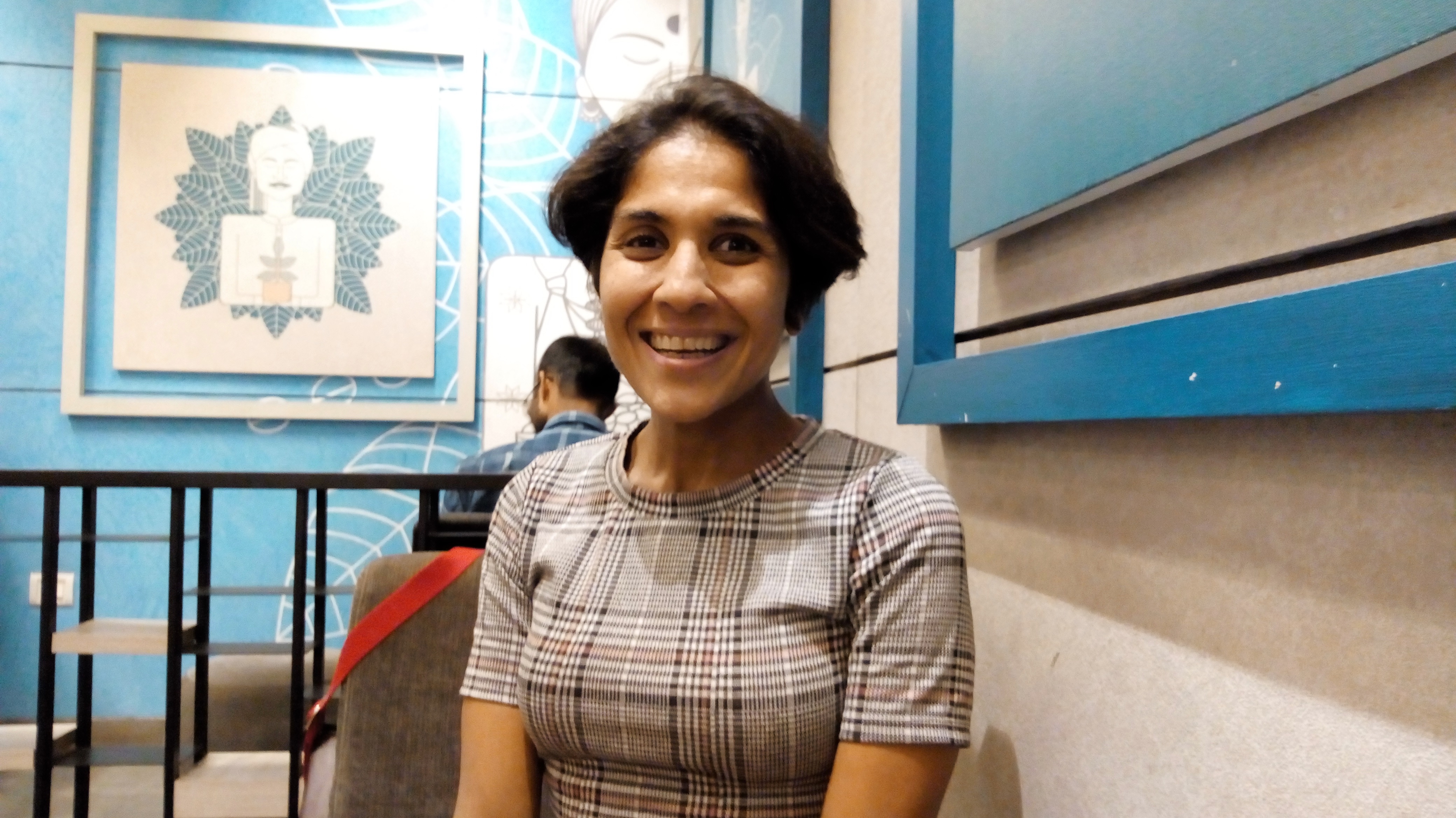
Indian ultra-runner, Anjali Saraogi, is the new Vice-Chair of the Athletes’ Commission of the International Association of Ultrarunners (IAU).
According to a related statement from IAU, Pablo Barnes, Argentinian ultra-runner, has been named as the Chair of the Commission.
The Athletes’ Commission was set up in 2018 with 15 members including two IAU Council members. Wayne Botha and Virginia Oliveri were the first Chair and Vice-Chair respectively.
“ As a group we are the voice of the athletes,’’ Anjali said when contacted.
The responsibility of the Chair is to speak for the group at IAU meetings, present reports, arrange and chair meetings with the Athletes Commission and represent the Athletes Commission at press conferences at championships and be available for interviews on social media, she said.
The Vice Chair will stand in if the Chair is unavailable and assist the Chair when required.
“ The Athletes’ Commission also serves as a link between federations and the IAU. It promotes good communication and relations between athletes, federations and the IAU,’’ Anjali said.
Kolkata-based Anjali has represented India in 100-kilometer races held internationally. She is also a podium finisher in races of other distances, including the marathon.
The former national record holder over the 100 km distance had won the ultra and trail running award of the Athletic Federation of India in 2019-2020. At the 2019 IAU 100 km Asia & Oceania Championships held in Aqaba, Jordan, in November 2019, Anjali broke her own national record for the 100 km event.
The record has since been broken by another ultra-runner, Gunjan Khurana.
(The author, Latha Venkatraman, is an independent journalist based in Mumbai.)
This is an article by invitation. Dr. Yamini Menon, a physician based in the US, writes about her first marathon, completed in December 2021.
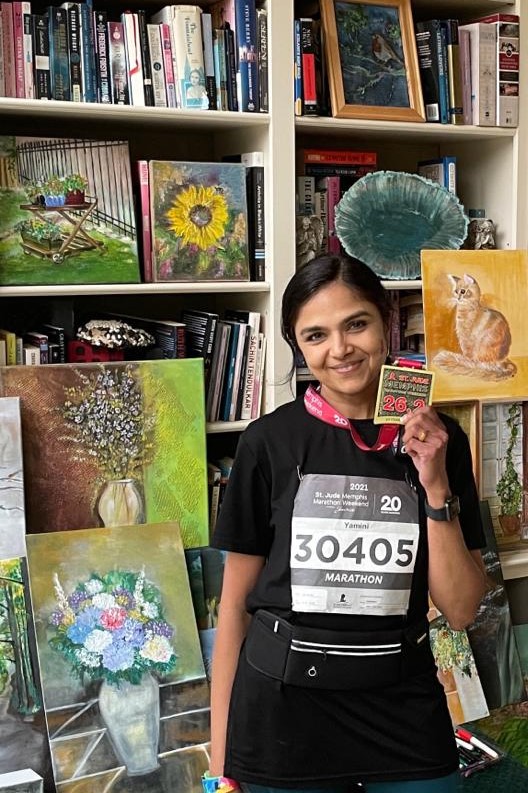
Days after the event, I am still in a state of disbelief.
I was able to participate in and complete the St Jude Marathon of December 4, 2021; my first marathon.
I never considered myself a runner although for several years now, I have exercised regularly.
Being a physician – a rheumatologist – I have tried to practice what I preach: that staying active and exercising regularly help physical and mental wellbeing.
In 2016, I happened to take part in a 5K run as part of a local community event and in the spring of 2017, a local 8k run. These events sparked my interest in pursuing longer distances. Soon, aside from being an exercise routine, my running seemed to feel a stress reliever. It was an opportunity to get fresh air and enjoy nature.
Living in Memphis, Tennessee, I was familiar with the St Jude Memphis Marathon Weekend, usually held in the first weekend of December every year. I found myself registering for a 10k and then a couple of half marathons in the following years, the last of which was in Dec 2019. More inspiration came from my patients who I met over the years. Some of them have pursued walking and running long distances despite the physical ailments and chronic conditions they deal with.
In 2020, even as the pandemic was on, along with a dozen other lady physicians in the area, I became part of an ` athletics group.’ We came from different backgrounds, had different personalities and interests. But we had a lot in common given our profession. Our shared goal was to take care of one’s health, be consistent with work outs and motivate each other to do more. Due to limitations imposed by the pandemic, initially these activities including walks and runs were posted on a virtual forum. Shortly after we were all vaccinated, we started gathering for early morning runs on Saturdays. As the months went by, these group walks and runs enabled us to share our feelings and frustrations, enjoy a breath fresh air. The outdoors gave us an opportunity to be away from N95 masks and face shields which had by then become part and parcel of our routines. No one seemed to mind the nipping cold of the early morning. At times, the run was followed by hot tea or coffee and snacks, which we all pitched in to bring and share.
The group had challenges assigned for a given month. It prompted us to post and share our activities and runs. In January, when Martin Luther King Day arrived, we were expected to post our work-out activity and a milestone therein to honour the late Dr King. My dream was to run a marathon with this team! I wondered whether this would be an impossible task; one that held high risk of injury. All the same, when registration opened, I signed up for the full marathon.
The reason for choosing St Jude marathon over others was simple. Aside from the fact that it was held locally in Memphis (my home for the past 15 years) and that there was no qualifying time to register for the race, I was excited to run for a cause – raising funds to find a cure for childhood cancer. In the past few years, I had had opportunity to meet and get to know a family whose infant son was diagnosed with a rare brain tumour and received treatment at St Jude Hospital.
After signing up for the marathon I chose a six-month training plan and modified it to fit my schedules. I am an early riser; 4 AM on a regular workday. I modified my morning routines – I tried incorporating a few miles on the treadmill on workdays besides some core exercises and stretches. On my days off, I tried to be consistent with walk-runs in the neighbourhood, averaging about 3-5 miles. On Saturday mornings a few of us in the group would meet and run along Wolf River Parkway – which has pedestrian and biker friendly lanes, and later with sunrise, run along the Trails of Wolf River Greenway. Shelby Farms Park is another popular spot to walk / run – it is usually quiet and serene and the route goes around a lake. In previous years, I had learnt that one loop around the lake would be about 2.4 miles. That made it easy to calculate a given mileage-target. The route also had restrooms and water fountains along the way. However, during the pandemic, they stayed temporarily unavailable.
As the weeks progressed, I was able to run and walk in intervals, gradually increasing the distance. One fear I had was the possibility of injury. I maintained a pace that avoided injury and walked when necessary; if a twinge of pain or cramp started, I walked. Though alone for most of my long runs, the constantly changing scenery, leaves changing colour with the seasons, the sound of birds chirping, even sightings of a few deer and fawn, plus my playlist of devotional songs, kept me upbeat. A couple of friends in the group, who had completed marathons in the past, provided tips on the hydration and nutrition required during the runs. My longest run was about four weeks prior to race day. Then, I tapered down mileage as per my modified training plan. I tried to stay calm and focused.
Aside from the above said practice runs with gradual increase in mileage, I also devoted some time to strength training every week. This included core strengthening exercises, a few of them featuring the use of light weights and resistance bands. I also followed a clutch of modified yoga routines and stretches.
Though my specific training for the marathon lasted about six months, I feel that my daily 1–2-mile runs, regular stretching exercises and some of the core strengthening exercises that had been a part of my routine for the past few years, benefited me greatly. They also reduced the risk of injury. I cannot stress sufficiently the importance of listening to one’s body as pushing through any pain may precipitate additional injuries. During my training, I never felt compelled to finish in a certain time. In our group, we always applauded those who have a good pace. But I never took that up as a challenge – for me, it was about completing the race without injuries. The focus was definitely to enjoy the run and finish it.
A few weeks prior to race day, the weather turned quite cold in the morning; anywhere between 30-40 degrees F. That meant learning to dress appropriately for the long runs. I found myself checking the forecast for race day about 3-4 weeks in advance and soon realized that it may be warmer and even rainy by then.
Picking up the race bib a day before the race, brought excitement. The countdown had begun. The previous day and night were filled with a sense of anticipation as well as nervousness. Due to the pandemic, we were allotted corrals and arrival times were staggered to prevent overcrowding. Masks were required until the start line. In the morning there was a drizzle. It was breezy and the weatherman had predicted temperatures ranging from 50-65 degrees F, much unlike the days leading up to race day.
Crowds could be seen close to the start line at B. B. King Boulevard. There was excitement all around, music and cheering for the participants. My turn came to start and praying that everything goes well, I launched into the run. After the first mile, participants run through the Saint Jude hospital campus, where patients and their parents cheer us on. It is a very emotional part of the run. One mile at a time, the run progressed. I had to tell myself to slow down as in the all the excitement I was running faster than my usual pace for the first 2-3 miles. Our group had the half and full marathoners splitting around mile 6-7. Soon the crowd of runners grew thin. Fortunately, the cheering crowd and hydration stations did not!
Around mile 9-10, I felt some fatigue. But I was looking forward to seeing my husband who was to cheer me on at about mile 13. He met me there as planned and also surprised me with a ` cheering squad’ including my mom who was so happy to see me run. My older son Ashwin and a few of my friends had also joined with posters encouraging me along. Running with intervals of walking continued, my pace seemed a bit slower after mile 14. There were two loops within a large park which caused me some confusion and I had to make sure I was on the right track. Around mile 20, I felt tired again and was walking more than running in short intervals. I could see that many of my co-runners appeared tired as well.
I had read about a wall that one hits during a marathon; a point when mind and body protests and wonders what the hell one is doing. I wasn’t sure whether this was that or the fabled wall was yet to come. I saw a young man sit down. As I paused to check on him, he said he had leg cramps. Soon he was back on the track albeit with a slight limp. Exiting out of the park, there was more cheering and I felt glad that the finish line appeared closer. A family that was cheering the runners offered pickle juice. I gulped it down; I had heard that it may help relieve muscle cramps.
To my delight, my personal cheering squad was there again after mile 22. With rekindled energy and another nutrition gel and a round of hydration, I cruised along trying to visualize the finish line. Soon I heard many people shouting, “ almost there, you can do it.” I crossed mile 24 and 25; the last mile felt rather long. The finish line loomed to view, a few meters ahead. I was excited, relieved, happy and in disbelief. I heard the announcer say, “ her ponytail oscillating in the wind” followed by my name. Someone handed me a finisher medal, I was tired but smiling,
I had just completed my first marathon.
(The author, Dr. Yamini Menon, is a physician based in Memphis, Tennessee. In her spare time, she likes to paint.)
Within a short while, this 25-year-old has notched up a series of podium wins, including a couple of national bests.
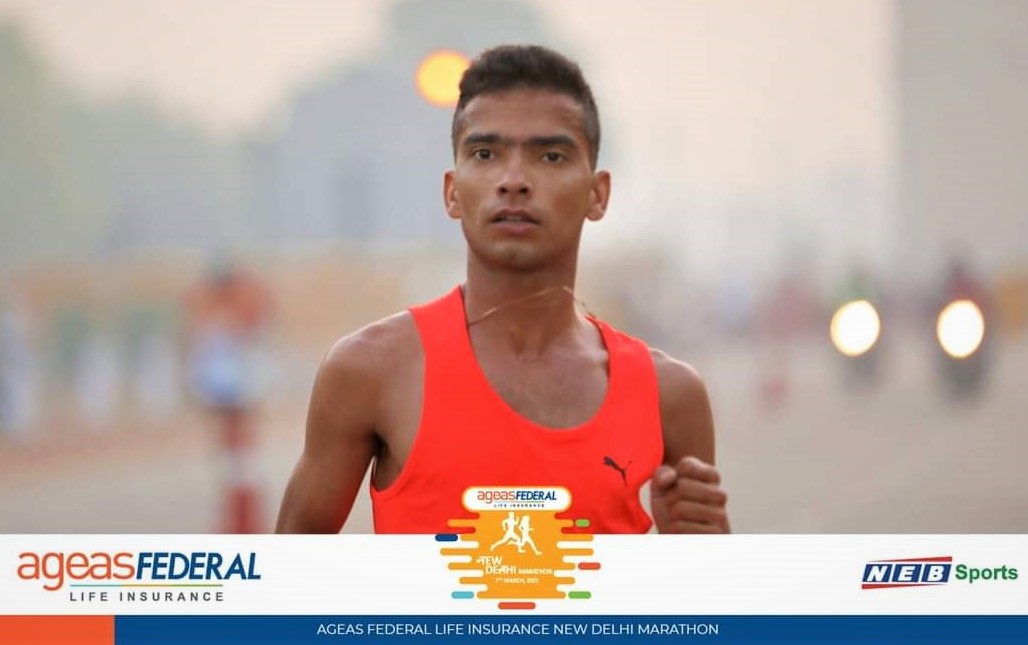
On December 5, 2021, Amar Singh Devanda, a long-distance runner from the Indian Air Force (IAF), won the 24-hour Ageas Federal Life Insurance Stadium Run in New Delhi, covering a distance of 223.20 kilometers.
Four months earlier, Amar, running the Bengaluru chapter of the 24-hour Ageas Federal Life Insurance Stadium Run, had covered a distance of 240.8 km, setting a new national best (on Indian soil) in the category. The overall national record for 24-hours is held by Ullas Narayana. Ullas had not only won the bronze medal at the men’s 24-hour IAU Asia & Oceanic Championships at Taipei in December 2018 but he also set a national record in this event covering a distance of 250.37 km.
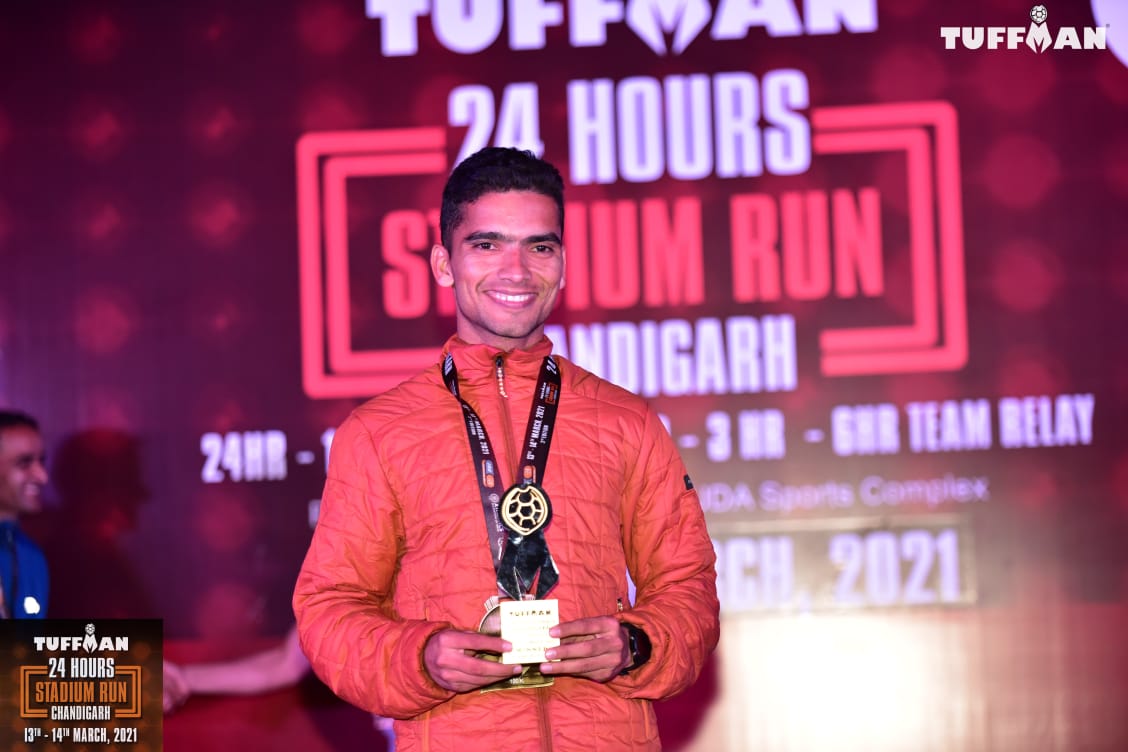
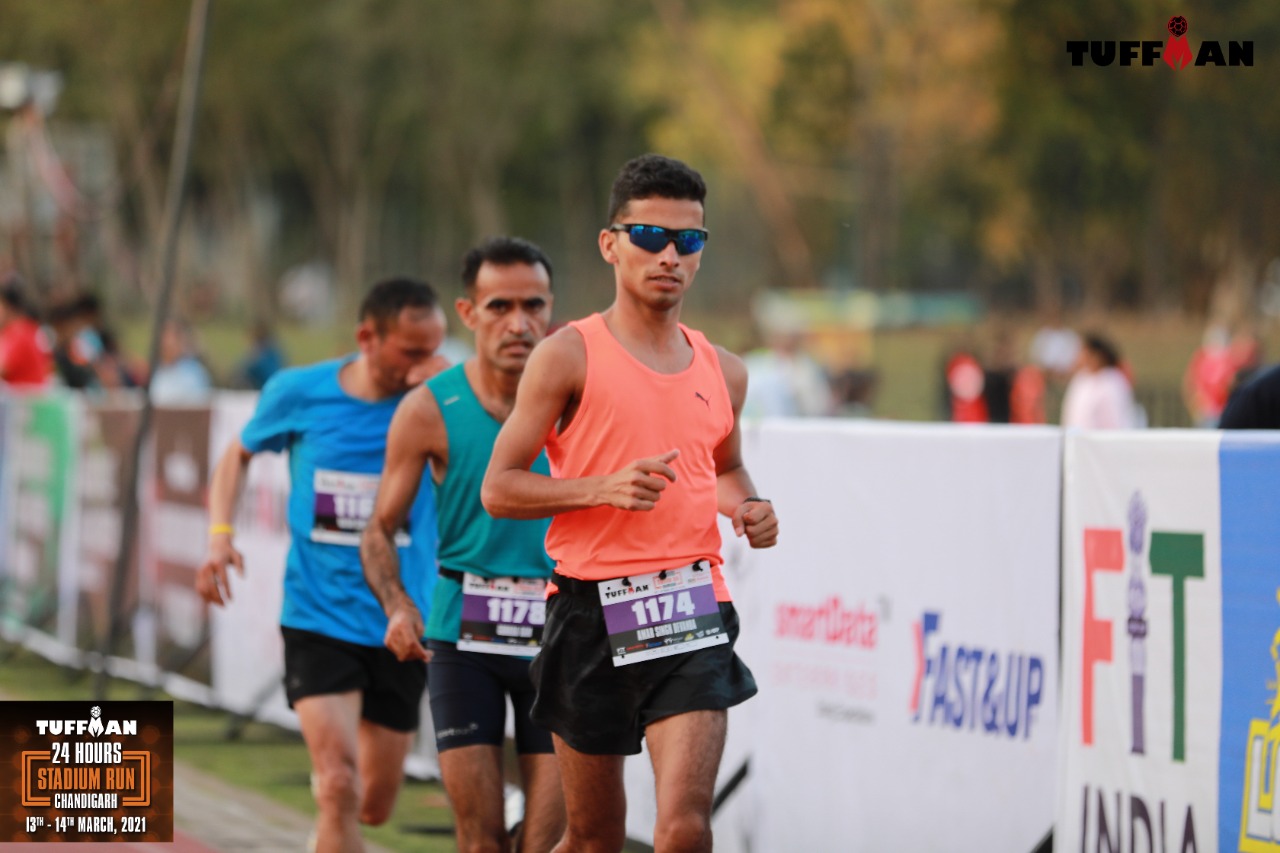
Amar already holds the national record for the 100 km category. Running the 100 km race at the Tuffman 24-Hour Chandigarh Stadium Run in March 2021, he crossed the finish line in 7:32:43 hours. He had improved on the previous national best of 7:56:22 set in January 2021 by Surat-based ultra-runner Sandeep Kumar.
“ I trained well for the New Delhi stadium run of December 2021. I was excited about participating in this run. Some international runners were expected. Also, Ullas was running. This was a chance for me to meet him and some of the top runners,” Amar said following his win.
All the same, at 8.30 AM on December 5, 2021, as he stood at the start line of the 24-hour event in New Delhi, he wasn’t feeling fine due to an uneasy stomach. Nevertheless, he started his race and continued to run for about 10 hours, which was when a co-runner suggested a remedy for his problem. He took a break to execute her suggestion of having a spoonful of carom seeds (ajwain) with warm water, a remedy that helped him almost immediately. “ Barely 200 meters after I resumed, I started to feel better,’’ he said.
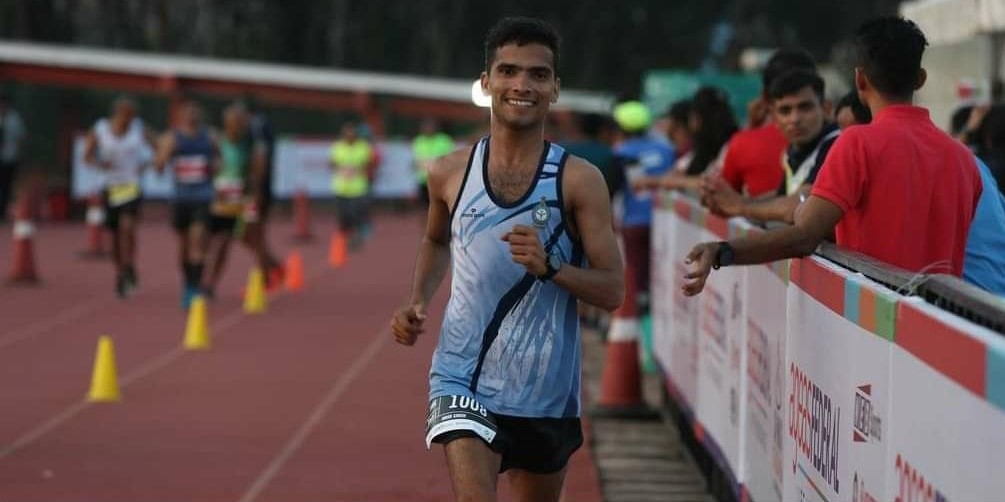
“ I just wanted to keep running at a steady pace and get to a winning finish. Already Damian Carr was 10 km ahead of me,” he said. Damian Carr was eventual the winner in the international category at New Delhi, covering a distance of 240 km. His mileage made him the overall winner of the 24-hour segment.
Amar finished the run in Delhi covering a distance of 223.20 km, 17 km short of his Bengaluru stadium run (held in August 2021) mileage.
“ In Delhi, many top runners quit the race mid-way. With each runner exiting the race, the competition became easier,’’ he said. He believes, one reason that prompted runners to exit was the bad air quality. The national capital had been facing days of extremely poor air quality prompting the authorities to take stringent measures.
He wonders if the absence of competition may have prevented him from stepping up his pace further as he was already heading for a win. “ Weather could have been better. It did get quite warm during the day,’’ Amar said.
With virtually no exposure to sports in his school years, Amar’s winning performance in the last few long-distance running events came as a surprise to him.
Growing up in Cheethwari village in Jaipur district, Amar did not participate in sports at the Shri Krishna Senior Secondary High School he attended. Once back from school, he was actively involved in farming and dairy activity. His family cultivated wheat, jowar, bajra and vegetables on the land and also carried out dairy farming.
“ I feel that farming and dairy activity helped build my endurance,’’ Amar said.
Post schooling, Amar enlisted to do his B-Tech at the Government Engineering College in Jhalawar. “ I was there for all of three months. I quit to join the Indian Air Force as a technical soldier,’’ he said.
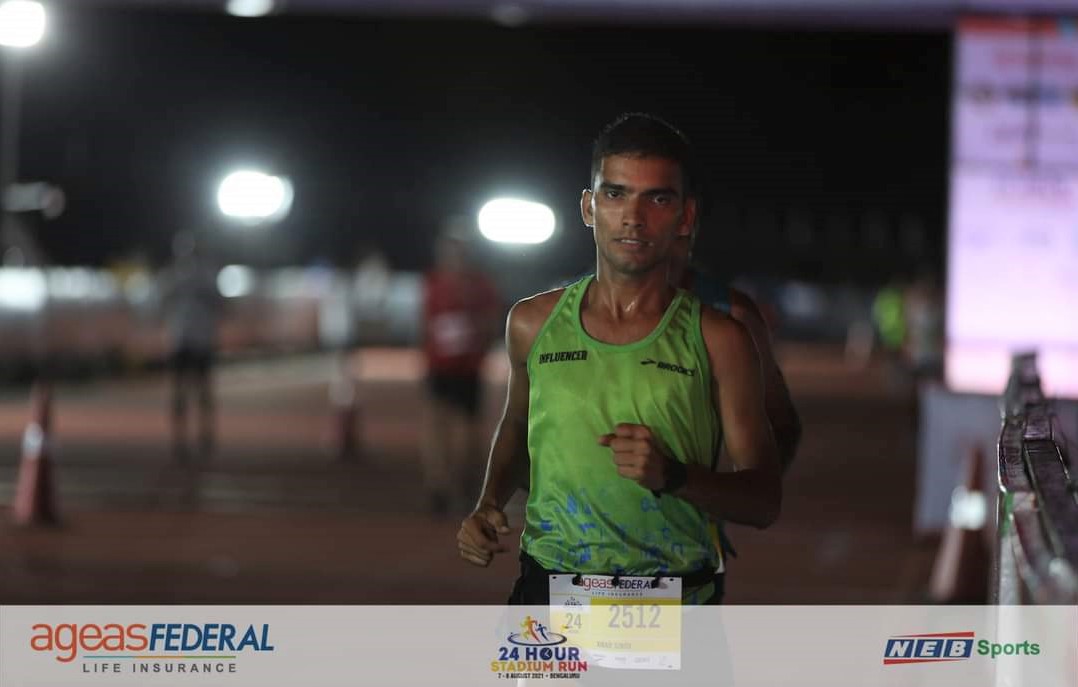
“ At IAF, they encouraged us to participate in sports such as running, ultra-running and mountaineering. Among my first events in running was a 12 km cross country race at Jaisalmer, where I was posted. My coach told me to complete the race and then he would commence training me. I ended up winning the race. He was very happy,’’ Amar said.
A corporal in IAF, he commenced his journey into long-distance running in 2016. He has participated in a number of races organised by the defence services over the past few years. In 2019, he took part in a marathon in Bengaluru, organised by the Indian Air Force. He finished the race in second position with timing of 2:37.
The first time he participated in an open event was in December 2020 when he ran the 60 km ultra-race at Shivalik Ultra. Later that month he ran the 100 km race, The Border, which starts in Jaisalmer and ends in Longewala in Ramgarh, Rajasthan. Here, he ended up winner in the 100 km segment with timing of 10:47:21.
Amar Singh also participated in the 100 km race at NEB 24 Hour Stadium Run held in Bengaluru in January 2021. He covered the distance in 8:26 hours.
Guided by his IAF coach, Thakur Singh Bajetha, Amar has been able to focus on training, race strategy and nutrition.
Amar believes he will be able to do well in the 24-hour category. “ The 24-hour category is tougher than 100 km because you need to be mentally strong to sustain through the hours. At the August 2021 run in Bengaluru, I kept getting negative feelings. At the end of 18 hours, I felt I could not continue. My coach spoke to me and that helped,’’ he said.
He is open to participate in either or both the 100 km and the 24-hour category at the IAU events, which India represents.
At Bengaluru’s August 2021 run, he had set a personal target of 220 km but ended up creating a new national best on Indian soil with the help of a robust support crew.
In India, ultra-runners were forced to pause their outdoor running training when the country went into a stringent lockdown in March 2020. But most of the runners used the time to step up their strength training and focus on diet and rest, equally important elements of training.
“ I could not do any training during the initial lockdown period,’’ Amar said, adding, “ our routine work increased during that period.’’
Posted at Jalandhar then, he would occasionally step out for a 5 km run.
“ I was in peak training before the lockdown and had participated in a 160 km ultra-race organised by the air force, in February 2020,’’ he said.
Unknowingly, the forced rest caused by the lockdown, helped him to recover.
Apart from his occasional short runs, he took to cycling. Sometime in September 2020, he resumed his proper training, building up mileage week after week.
At the Ageas Federal Life Insurance New Delhi Marathon 2021, held in March, he was the winner in the half marathon.
A week later, he set a new national best for 100 km at the Tuffman 24-Hour Stadium Run, Chandigarh. The following week, he ran the IAU & AFI 6-Hour Global Solidarity Run, covering a distance of 74 km, third highest mileage among Indian runners.
He is currently in the process of figuring out the correct training, nutrition and hydration for ultra-running races.
(The author, Latha Venkatraman, is an independent journalist based in Mumbai.)
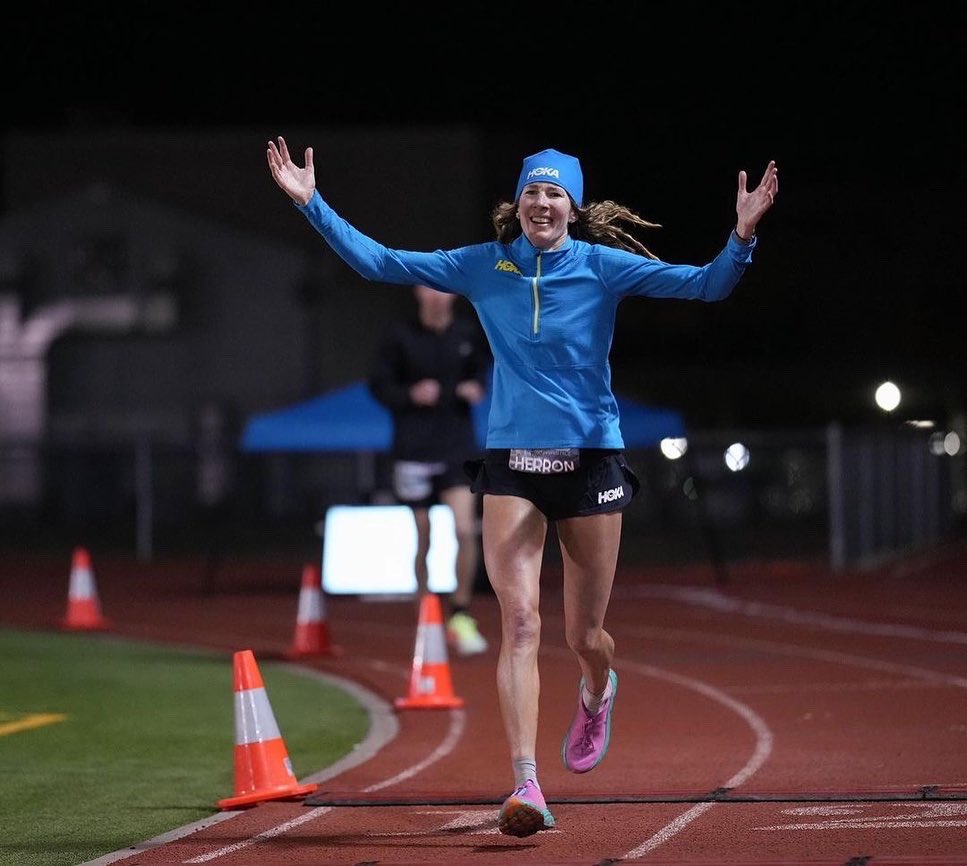
Ultrarunners Nick Coury, Camille Herron set new American records
Nick Coury set a new American record in 24-hour ultrarunning at the 2021 Desert Solstice Track Invitational held on December 11 and 12, 2021 in Phoenix, Arizona.
He covered a distance of 173.01 miles (276.82 kilometers), beating the previous record of 172.45 miles (275.92 km) held by Mike Morton.
The world record belongs to Lithuanian runner Sania Sorokin, who ran 303.4 km during a 24-hour race in Poland in September 2021.
At the same event, American runner Camille Herron reset her 100 mile-record (13:25:00), covering the distance in 13:21:51.
Aman Mehla, Tamali Basu win Goa River Marathon 2021
Aman Mehla and Tamali Basu won the men’s and women’s races at the 2021 edition of Goa River Marathon, held on December 12, 2021.
Aman finished the marathon in two hours, 53 minutes and 33 seconds. In the women’s race, Tamali covered the distance in 3:54:32.
In the half marathon category, the winner in the men’s race was Rahul Shukla (1:13:22). Pramila Patil (1:42:49) won the women’s race.
Balu Pukale, Manisha Joshi win Satara Hill Half Marathon 2021
Balu Pukale won the Satara Hill Half Marathon of 2021 with timing of 1:14:13. The race, normally held in September, was held on December 12, 2021.
In the woman’s race, Manisha Joshi was the winner of the half marathon event; she timed 1:46:35.
In the men’s category, Anil Korvi finished second with timing of 1:19:08 while Dharmender Kumar (1:21:09) placed third.
In the women’s race, Madhurani Banasode finished second with timing of 1:47:20 and Vaishali Garag (1:50:27) third.
(The author, Latha Venkatraman, is an independent journalist based in Mumbai.)
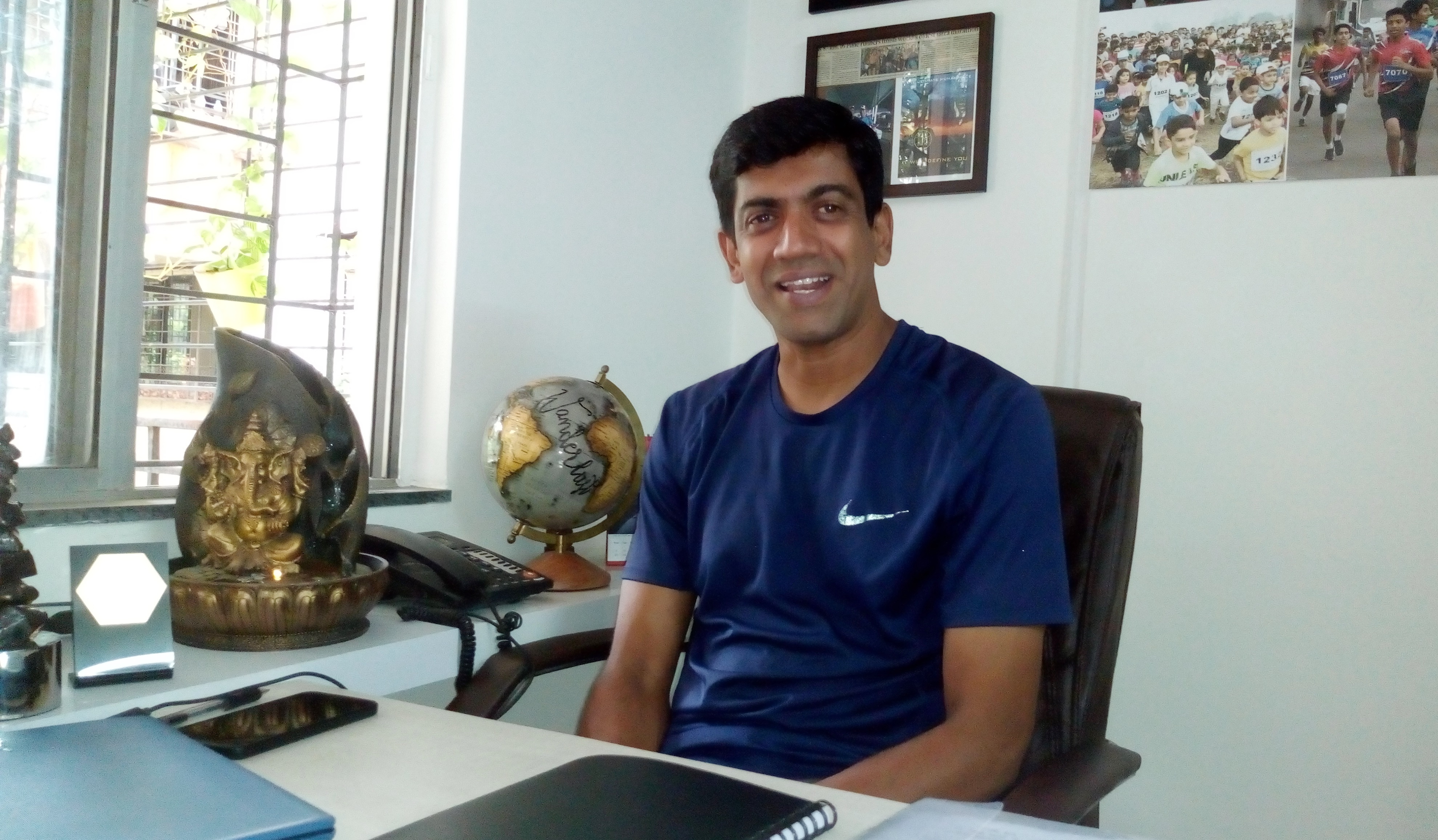
Pune ultra-runner to attempt 60 marathons in 60 days
Pune-based ultramarathoner, Ashish Kasodekar, plans to run 60 marathons in 60 days.
He plans to commence his endeavour on November 28, 2021.
The last of these marathons will be on January 26, 2022, coinciding with Republic Day.
The proposed feat has been cast in the form of a 60-day long running event, organised by Run Buddies.
The title sponsor of the event is Traveltime Car Rental Private Ltd.
The event, titled Ultra Dynamo, is being organised at Savitribai Phule Pune University. In 2019, Ashish had been the first Indian to complete the 555 km-category of La Ultra The High in Ladakh.
Alongside the latest challenge Ashish has set for himself, Run Buddies has organised runs of varying distances such as 5 km, 19 km, 21 km and 42 km. Runners wanting to participate can do so by registering for these runs.
“ I wanted to do something for my 50th birthday. My plan was to attempt this in April 2021 but I had to reschedule due to the pandemic and lockdown,’’ Ashish said.
According to him, support for the marathons, across the assigned 60 days, will be provided by the volunteers of Run Buddies. Many runners coming together to run the various distances will contribute to the overall momentum.
“ In such an event, recovery is most important. Good sleep and diet will be key elements,’’ Ashish said.
He is slated to do the Badwater 135 ultra-marathon in July 2022.
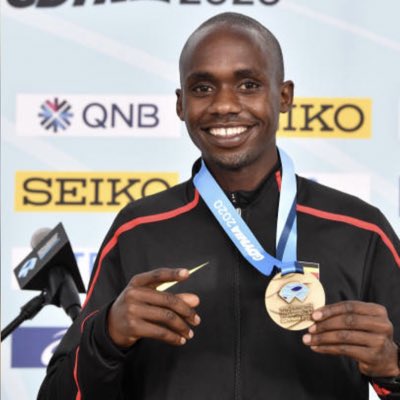
Uganda’s Kiplimo sets new half marathon world record
Jacob Kiplimo of Uganda has broken the half marathon world record.
At an event in Lisbon, he covered the distance in 57 minutes and 31 seconds.
Kiplimo, who won the bronze medal in the 10,000 meters at Tokyo Olympics earlier this year, broke the half marathon world record set previously by Kenya’s Kibiwott Kandie in Valencia in 2020.
The Ugandan runner took one second off Kibiwott’s record.
(The author, Latha Venkatraman, is an independent journalist based in Mumbai.)
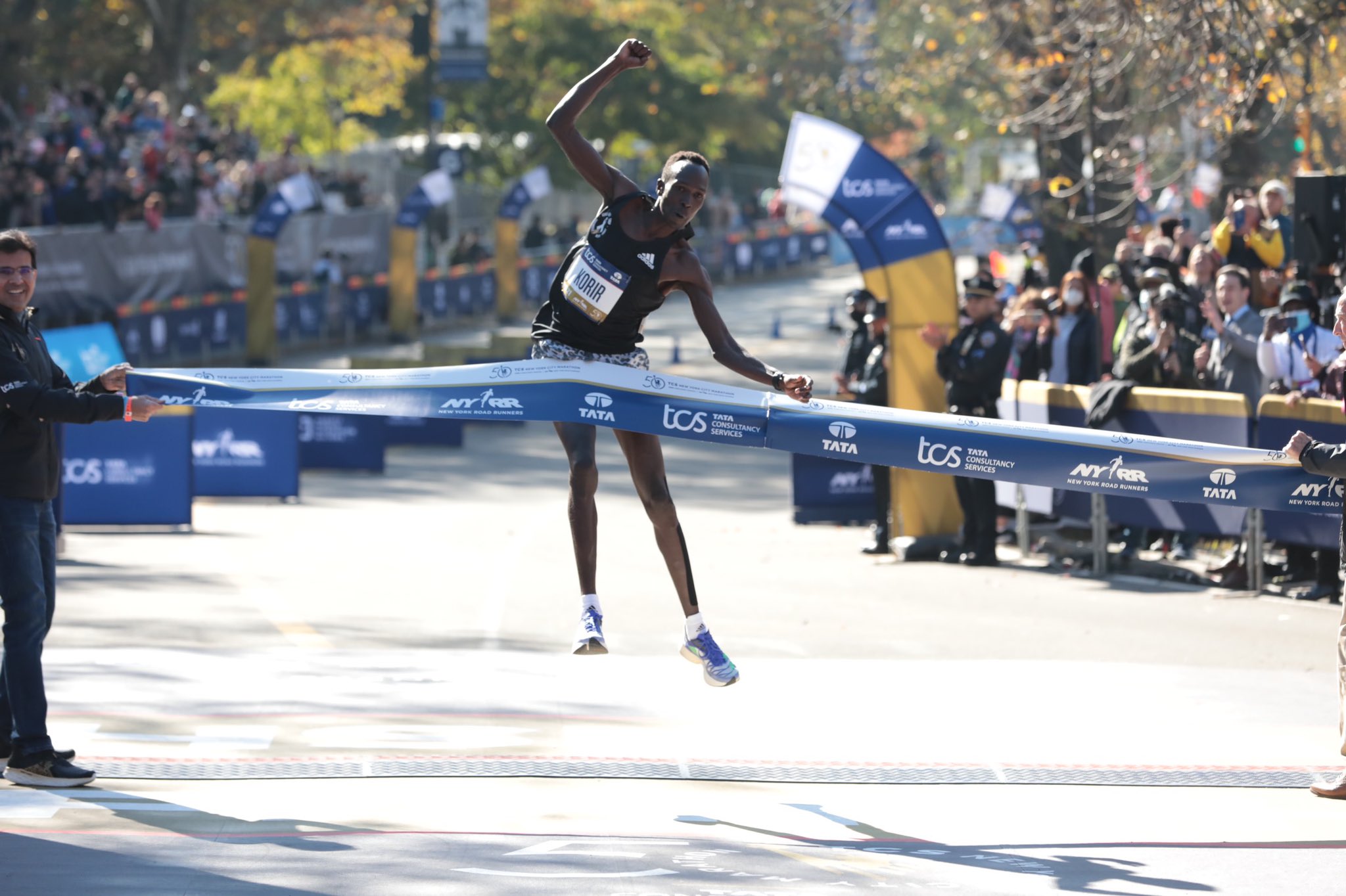
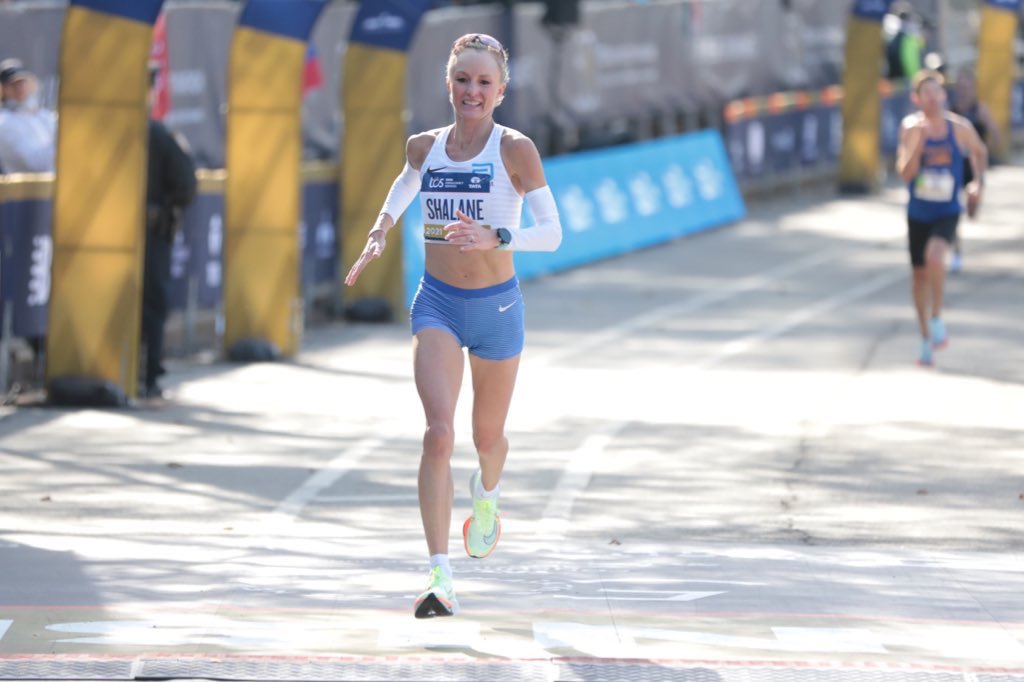
Shalane Flanagan successfully completes her challenge of running the six marathon majors in six weeks with sub-three hours timing in each.
Albert Korir of Kenya triumphed at the 50th edition of the TCS New York City Marathon, held on November 7, 2021.
He covered the distance in 2:08:22 hours. In 2019, he had been first runner-up at the same event (2:08:36).
Olympic champion, Peres Jepchirchir of Kenya won among women at the 2021 New York City Marathon.
She finished the race in two hours, 22 minutes and 39 seconds.
In August, she had secured gold in the women’s marathon at the 2020 Tokyo Olympics with timing of 2:27:20.
In the men’s race in New York, Mohamed El Aaraby of Morocco finished second with timing of 2:09:06. In third position was Eyob Faniel of Italy with timing of 2:09:52.
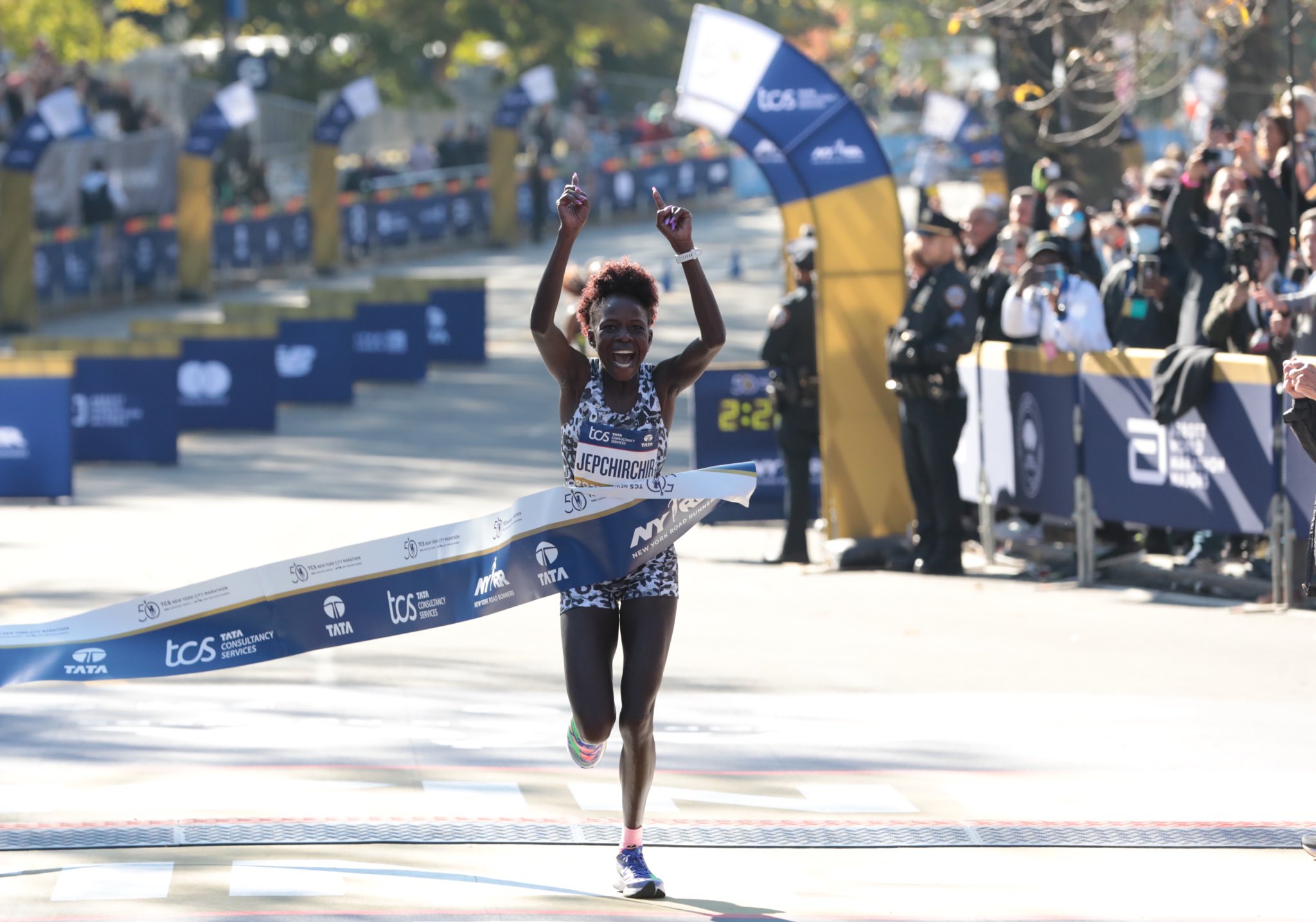
In the women’s race. finishing in second position behind Jepchirchir was her compatriot Viola Cheptoo (2:22:44). In third position was Ababel Yeshaneh of Ethiopia (2:22:52).
American athlete Shalane Flanagan completed her challenge of running the six marathon majors in six weeks with sub-three hours timing in each; she got her best timing at the 2021 New York City Marathon (2:33:32). She ran the marathon at Berlin, London, Chicago, Boston, Portland and New York. The run in Portland was as part of the virtual version of the Tokyo Marathon.
Flanagan’s personal best in the marathon is 2:21:14 set in Berlin in September 2014.
(The author, Latha Venkatraman, is an independent journalist based in Mumbai.)
India’s Sampathkumar finishes third in Salomon Cappadocia Short Trail Run
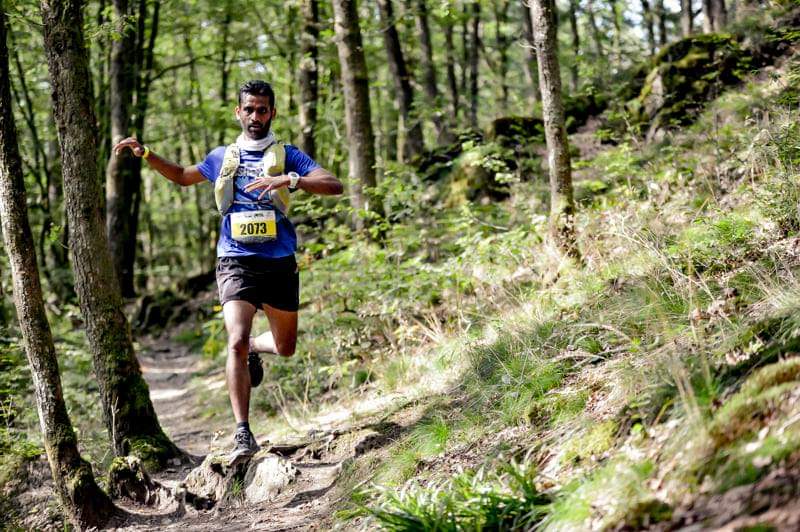
Indian ultra-runner Sampathkumar Subramanian secured a podium finish at the Salomon Cappadocia Short Trail Run held on October 16, 2021 in Turkey.
Sampathkumar finished third in the 38 km trail run with timing of three hours, 13 minutes and 54 seconds.
Salomon Cappadocia Short Trail is held along the hills and valleys of the Cappadocia region, a UNESCO world heritage site. Over a distance of 38 km, the run features a variation in altitude of 1120 meters.
The winner of the race was Oleksandr Chenikalo of Ukraine. He finished in 3:08:44. Yilmaz Tongul of Turkey finished second with timing of 3:11:33.
Kenya’s Rotich sets course record in men’s race at 2021 Paris Marathon
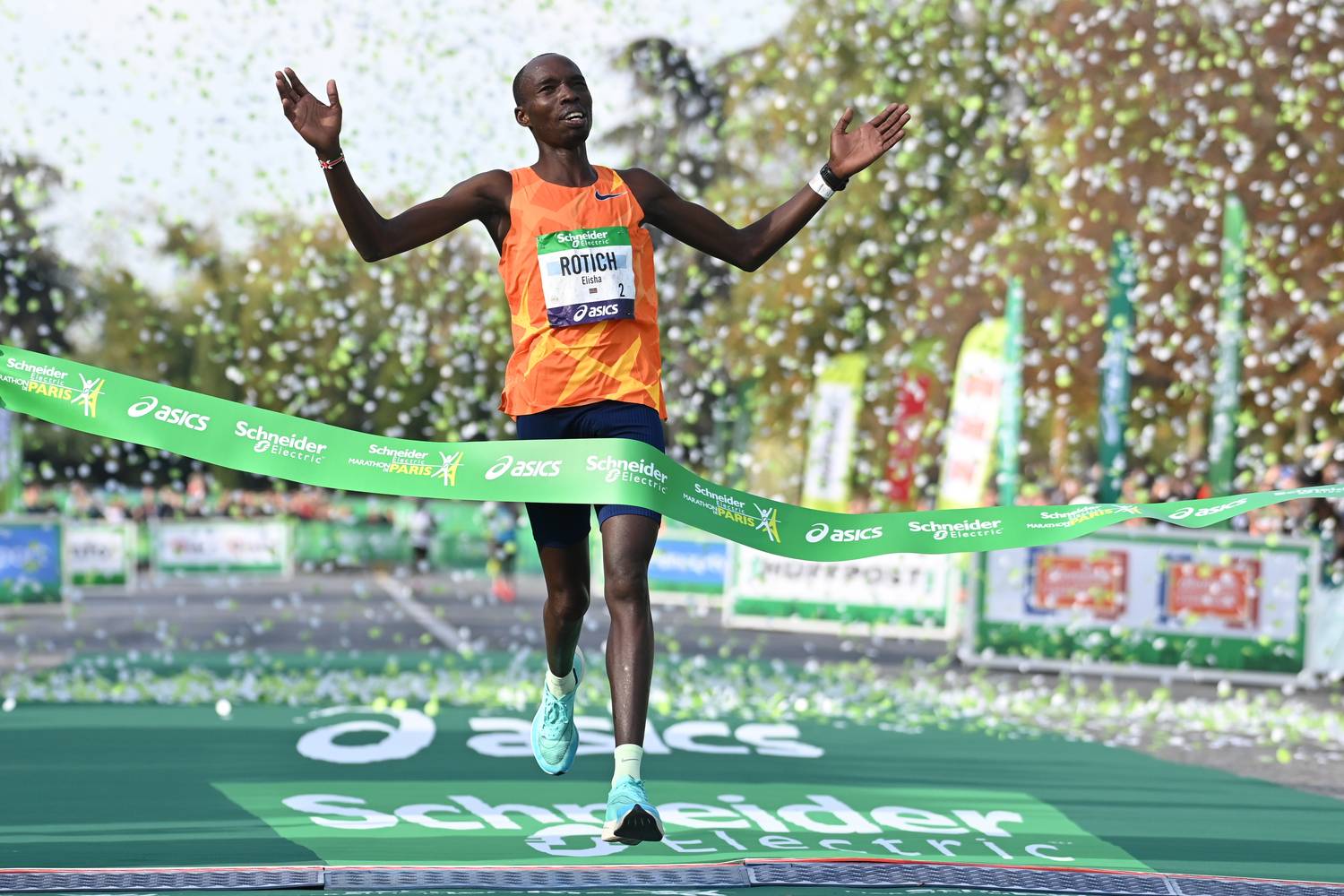
Elisha Rotich of Kenya set a course record in the men’s race at the 2021 edition of Paris Marathon, crossing the finish line in two hours, four minutes and 21 seconds on October 17, 2021. In the process, he broke Kenenisa Bekele’s course record of 2:05:04 and also achieved a personal best.
Ethiopia’s Tigist Memuye won the women’s race in 2:26:12.
The Paris Marathon was slated to be held in April this year but was rescheduled because of the ongoing COVID-19 pandemic.
Agnes Tirop death: Kenyan police allowed to hold her husband in custody for 20 days
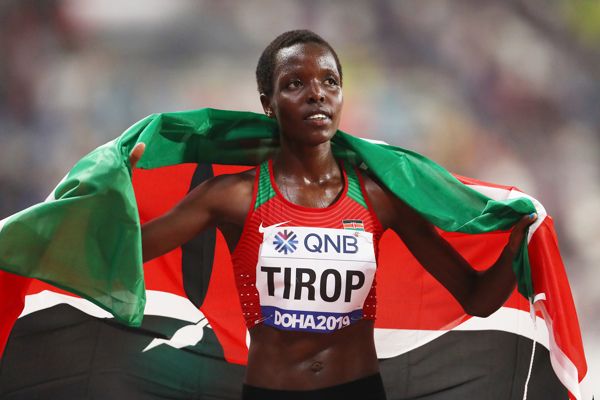
A Kenyan court allowed the police to hold the husband of long-distance runner Agnes Tirop for 20 days in custody, on the suspicion of killing his wife.
The 25-year-old athlete – she was world record holder in the 10 kilometers women’s only event – was found stabbed to death at her home in Iten on October 13, 2021. The world record of 30:01 was set just weeks earlier in September.
Among the world’s most promising runners, she had won bronze medal in the 10,000 meters race at the 2017 and 2019 World Championships. She finished fourth in the 5000 meters race at Tokyo Olympics. In 2018, she had set a course record for women at the 2018 TCS World 10K in Bengaluru.
Athletics Kenya issued a condolence note on the demise of the athlete.
(The author, Latha Venkatraman, is an independent journalist based in Mumbai.)
Flanagan gets her fourth sub-three of the current World Marathon Major-season
Kenyan elite runners took top honours in the men’s and women’s race at the 125th edition of the Boston Marathon held on October 11, 2021.
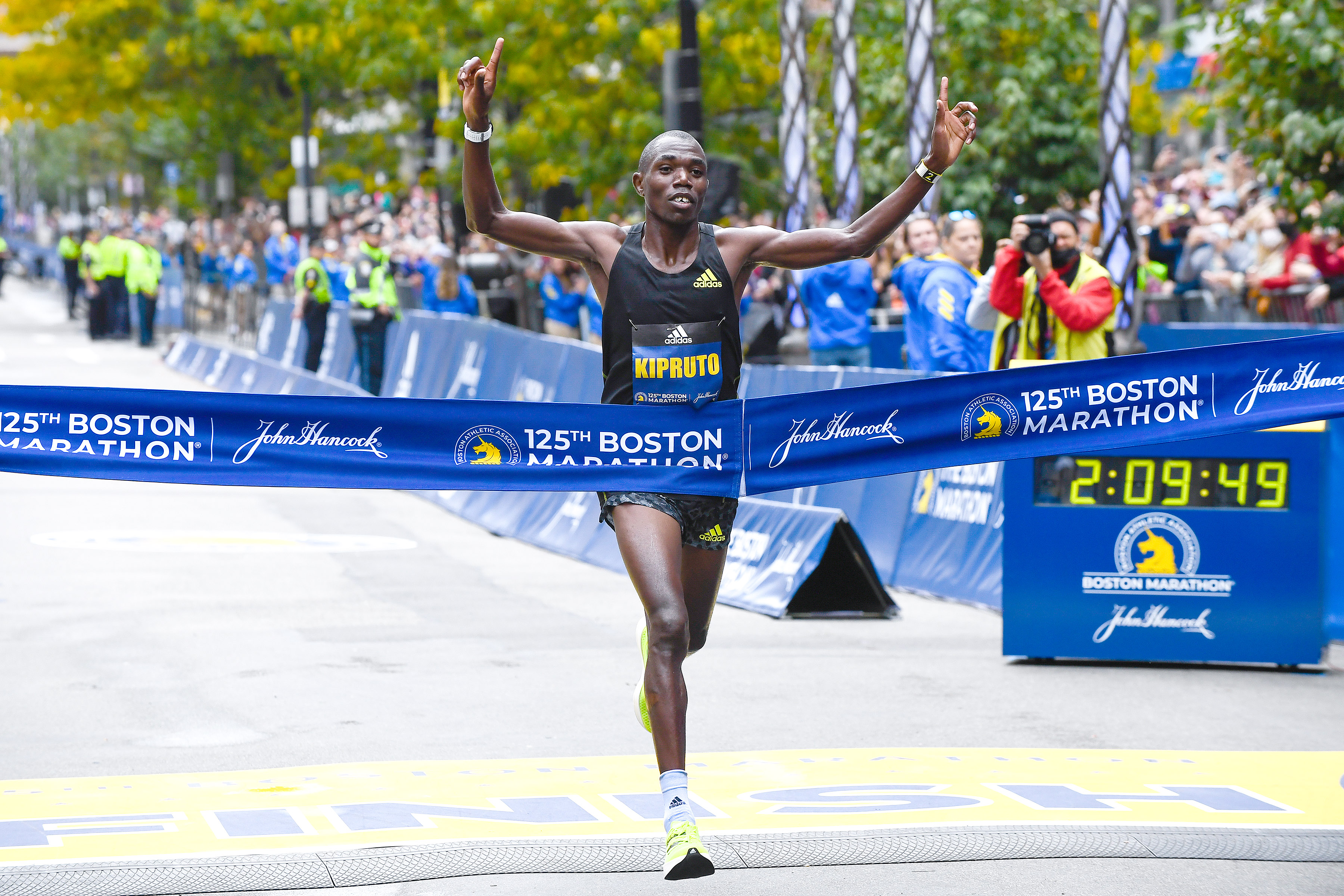
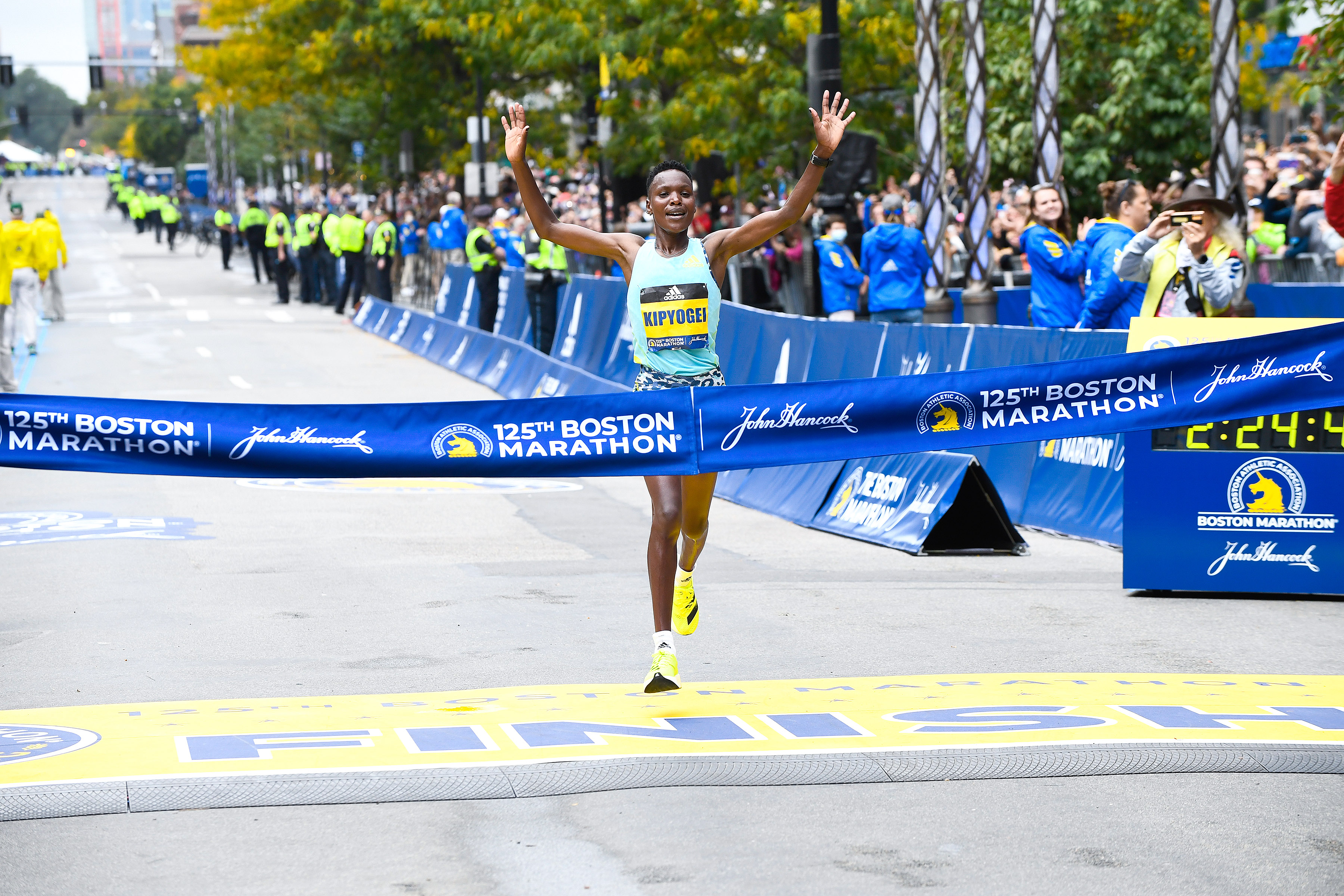
Thirty-year-old Benson Kipruto of Kenya won the men’s race in two hours, nine minutes and 51 seconds. Diana Kipyogei also of Kenya, won the women’s race in her first appearance in a World Marathon Major event. She crossed the finish line in 2:24:45.
In the men’s race, Lemi Berhanu of Ethiopia came in second with timing of 2:10:37. Jemal Yimer, also of Ethiopia, finished third in 2:10:38.
Podium finish in the women’s race was a Kenyan sweep with Edna Kiplagat finishing second in 2:25:09 and Mary Ngugi placing third in 2:25:20.
India’s elite marathoner Nitendra Singh Rawat finished the race in 2:22:01 securing 31st position overall as well as in the men’s segment.
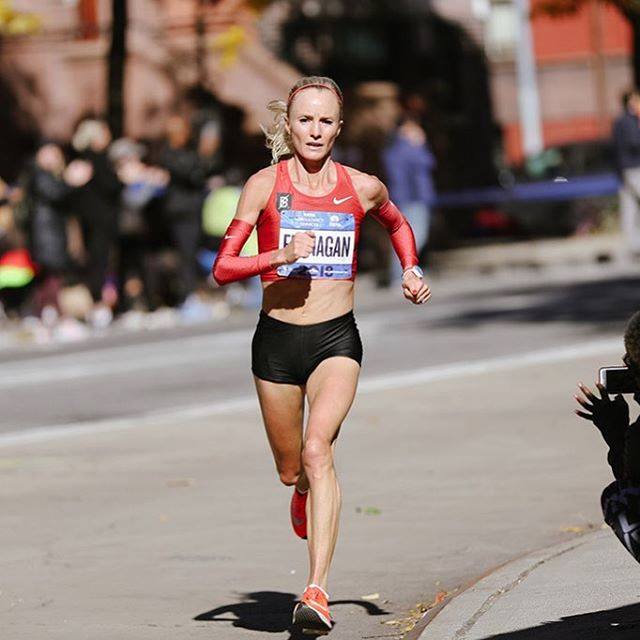
This year, the six World Marathon Major events are jammed into a six-week window. American runner Shalane Flanagan, on a quest to run all the six road races in sub three-hour timing, finished the Boston Marathon in 2:40:34, a day after she completed the marathon in Chicago in 2:46:39.
It has been sub-three so far for the 40-year-old Flanagan. Starting September 26, 2021, she completed the Berlin Marathon in 2:38:32 and seven days later, the London Marathon in 2:35:04 followed by Chicago and Boston.
According to a report in the New York Times (dated October 9, 2021), Flanagan who recovered from two major knee reconstructions in 2019 and has hamstring tendons from cadavers, plans to do the virtual version of the Tokyo Marathon.
Her last World Marathon Major of this crammed season will be the New York City Marathon scheduled for November 7; Flanagan had won its women’s category in 2017 (2:26:53), the first American woman to win the event since 1977.
(The author, Latha Venkatraman, is an independent journalist based in Mumbai.)
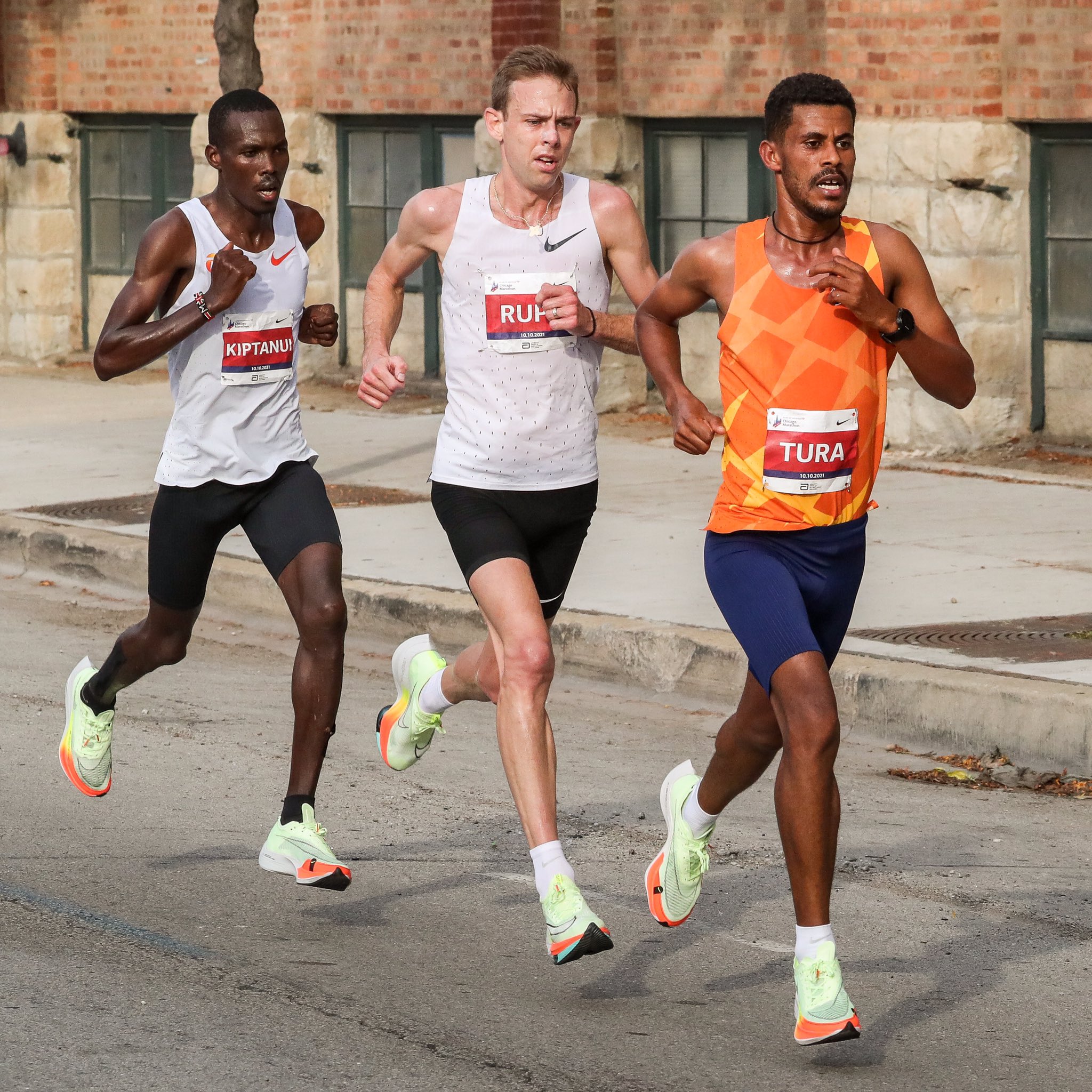
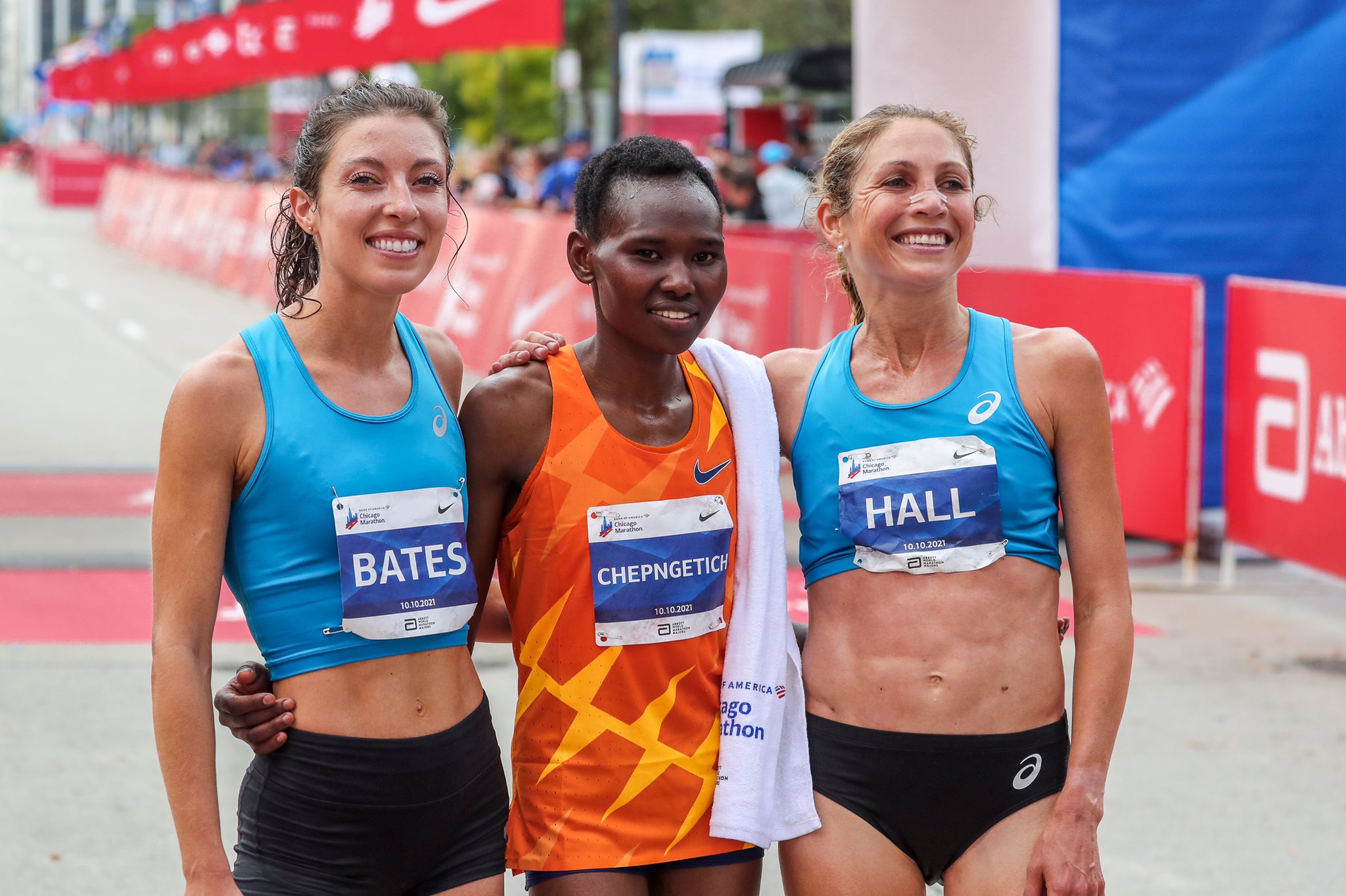
Ethiopia’s Seifu Tura and Kenya’s Ruth Chepngetich won the men’s and women’s race respectively at the 2021 Chicago Marathon, held on October 10.
Chepngetich, the former half marathon world record holder and first runner-up at the 2020 London Marathon, took an early lead in the women’s race and stayed ahead until the end, to finish in two hours, 22 minutes and 31 seconds.
Emma Bates of the U.S finished in second position with a personal best timing of 2:24:20. In third position was Sara Hall, also of the U.S., finishing in 2:27:19.
In the men’s race, Tura won after breaking away from Galen Rupp of the U.S. and Kenya’s Eric Kiptanui. Tura’s winning time of 2:06:12 came amidst warm, humid conditions. Rupp crossed the finish line in second position in 2:06:35 and Kiptanui in 2:06:51 to place third.
American runner, Shalane Flanagan, finished in 2:46:39, securing 34th place among women runners. Flanagan had announced plans to run six World Marathon Majors in 42 days. The 2021 Chicago Marathon was her third since she started with the year’s Berlin Marathon held on September 26.
(The author, Latha Venkatraman, is an independent journalist based in Mumbai.)

