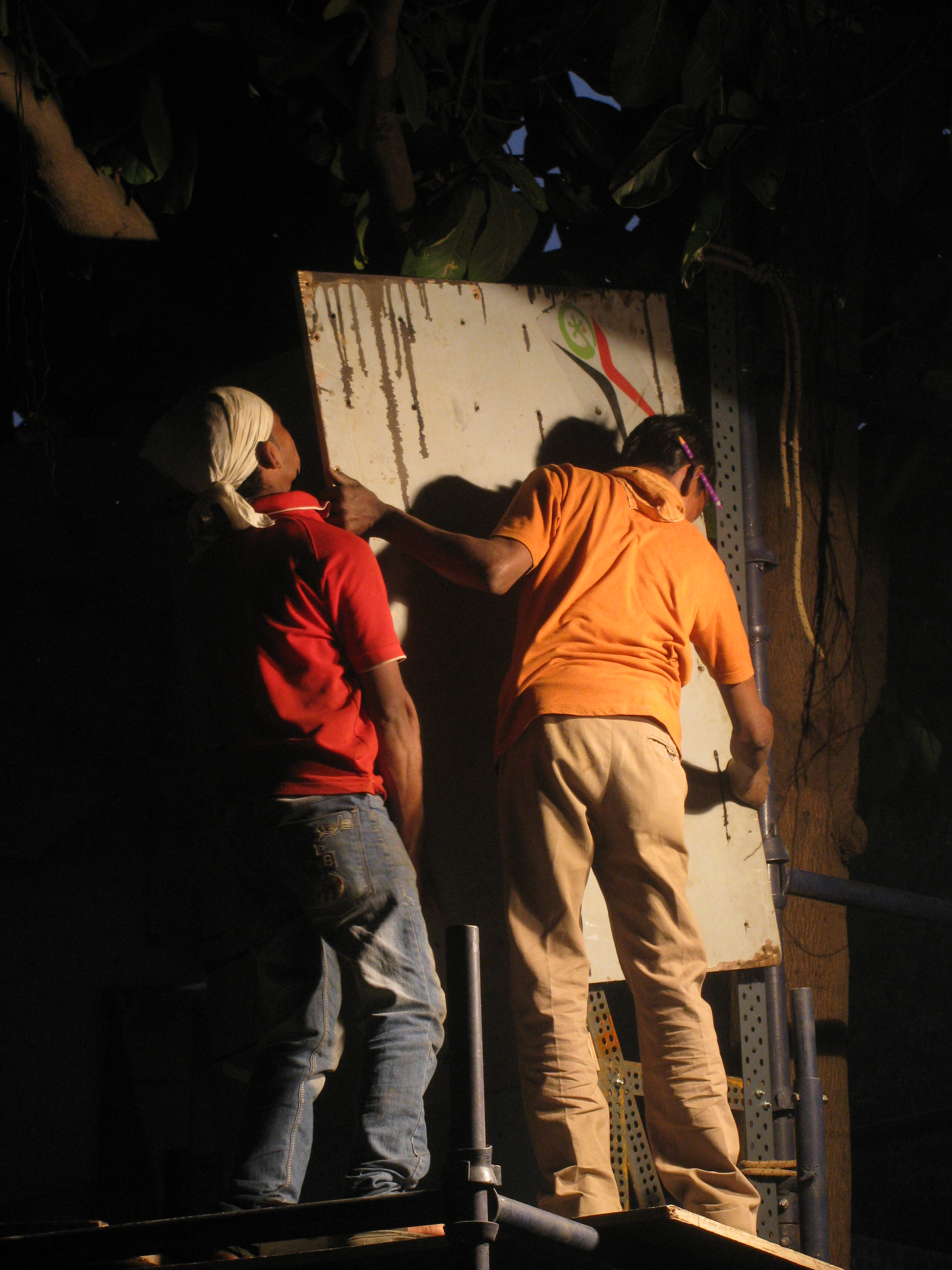
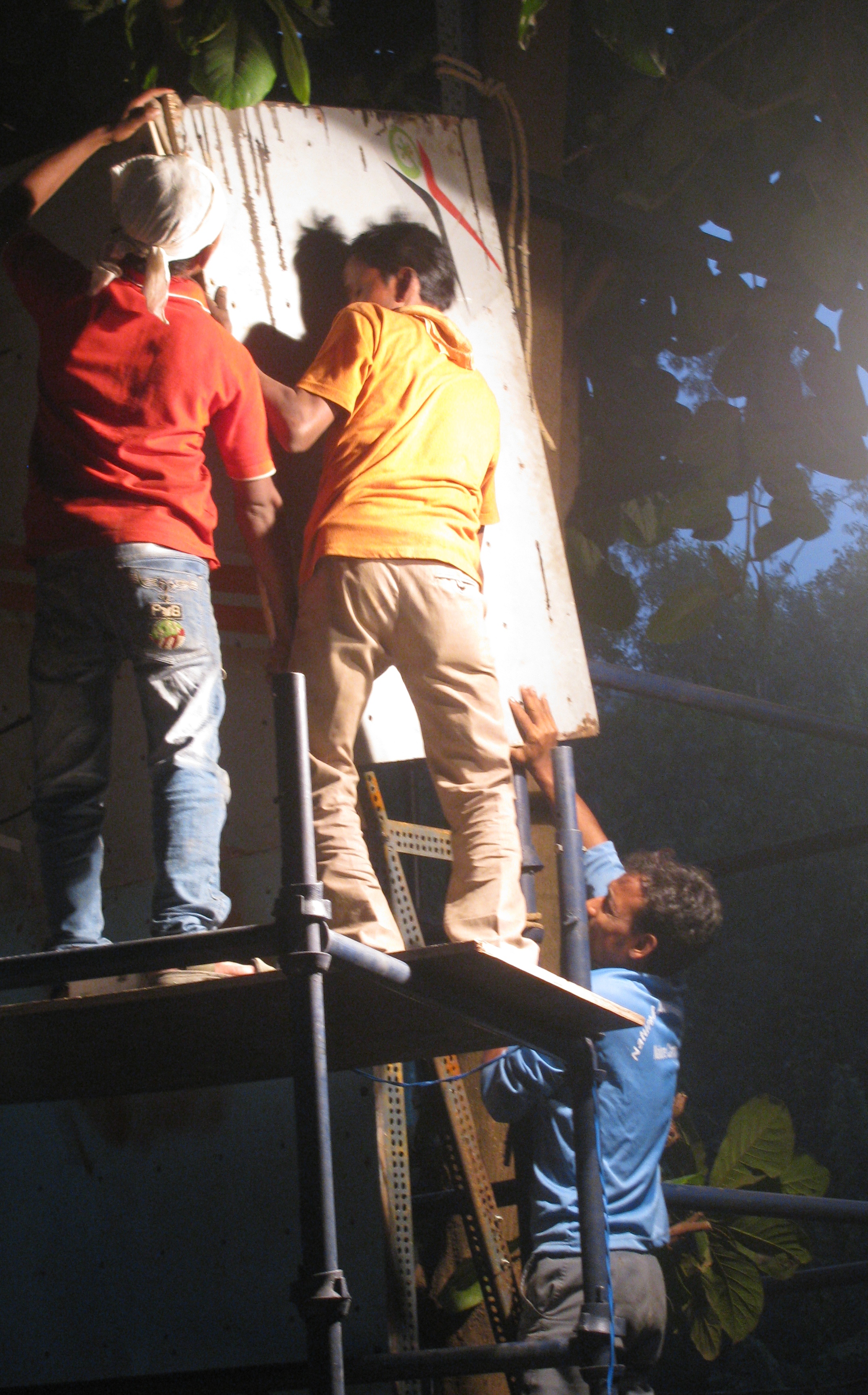
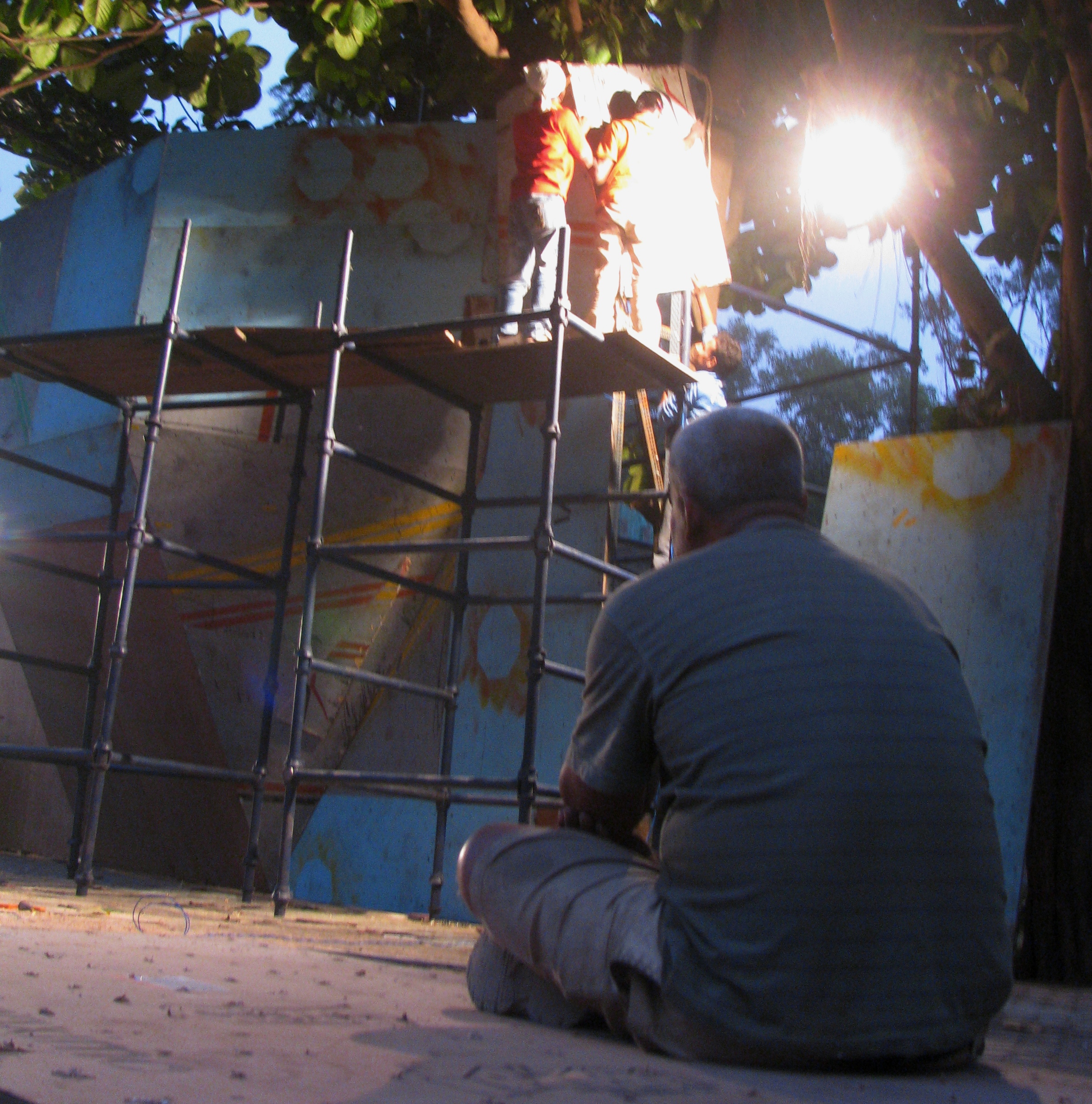
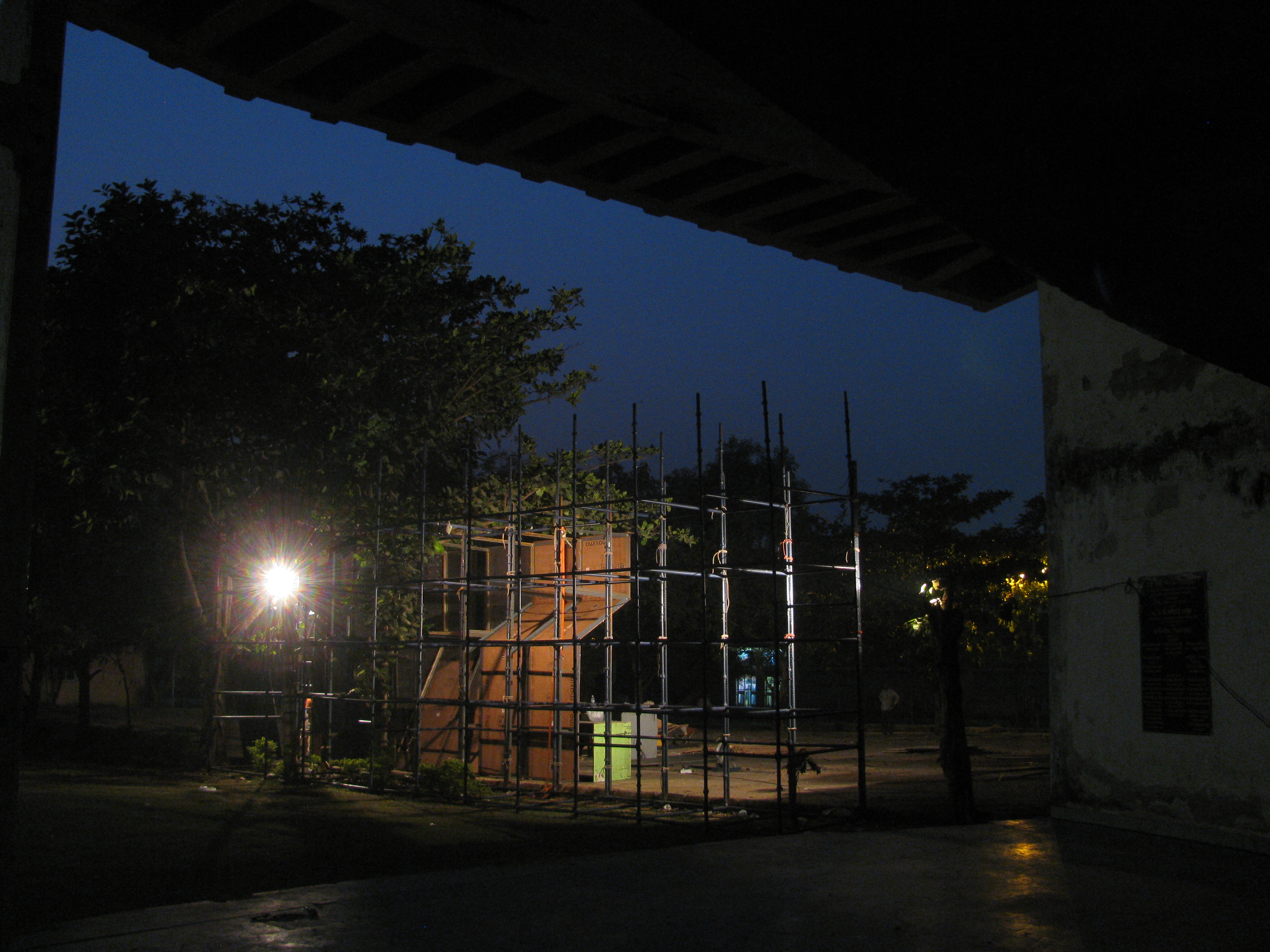
BEYOND GANESHA – PART 3

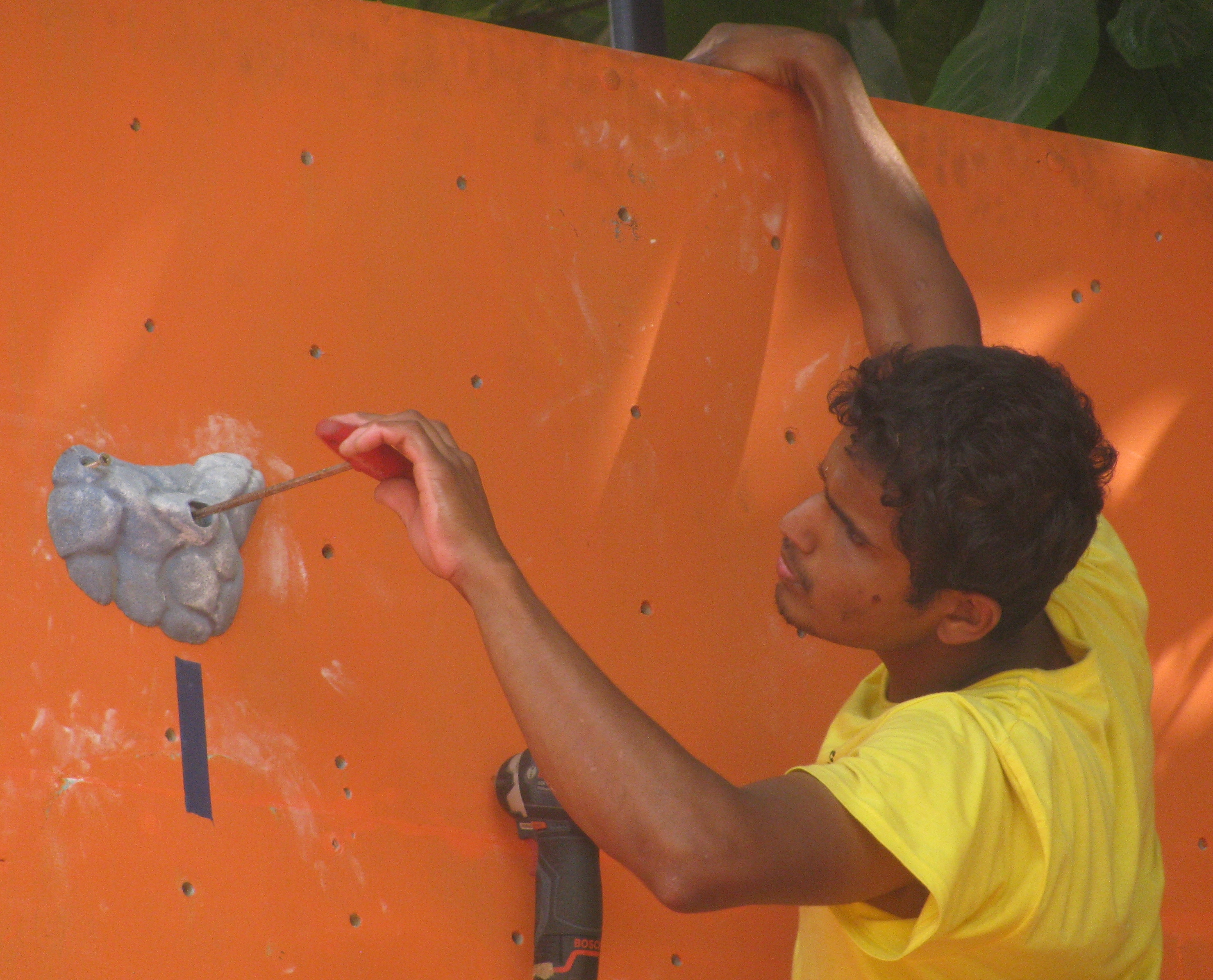
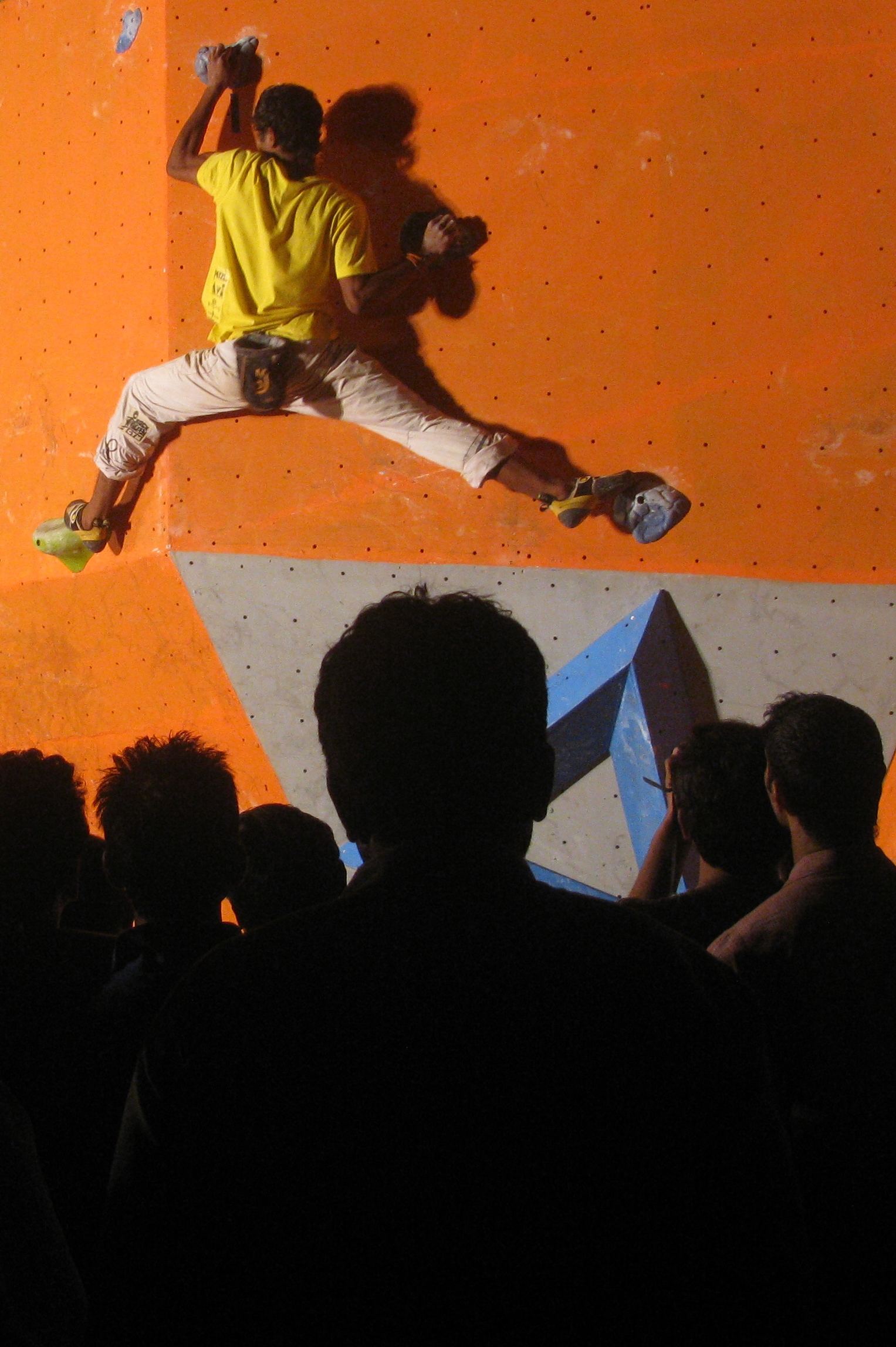
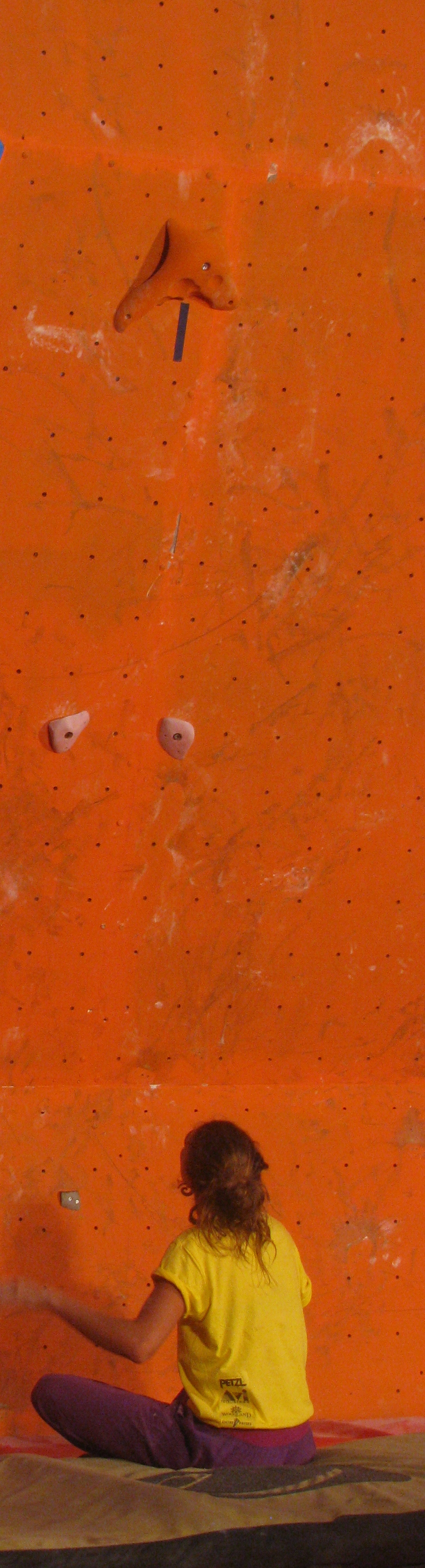
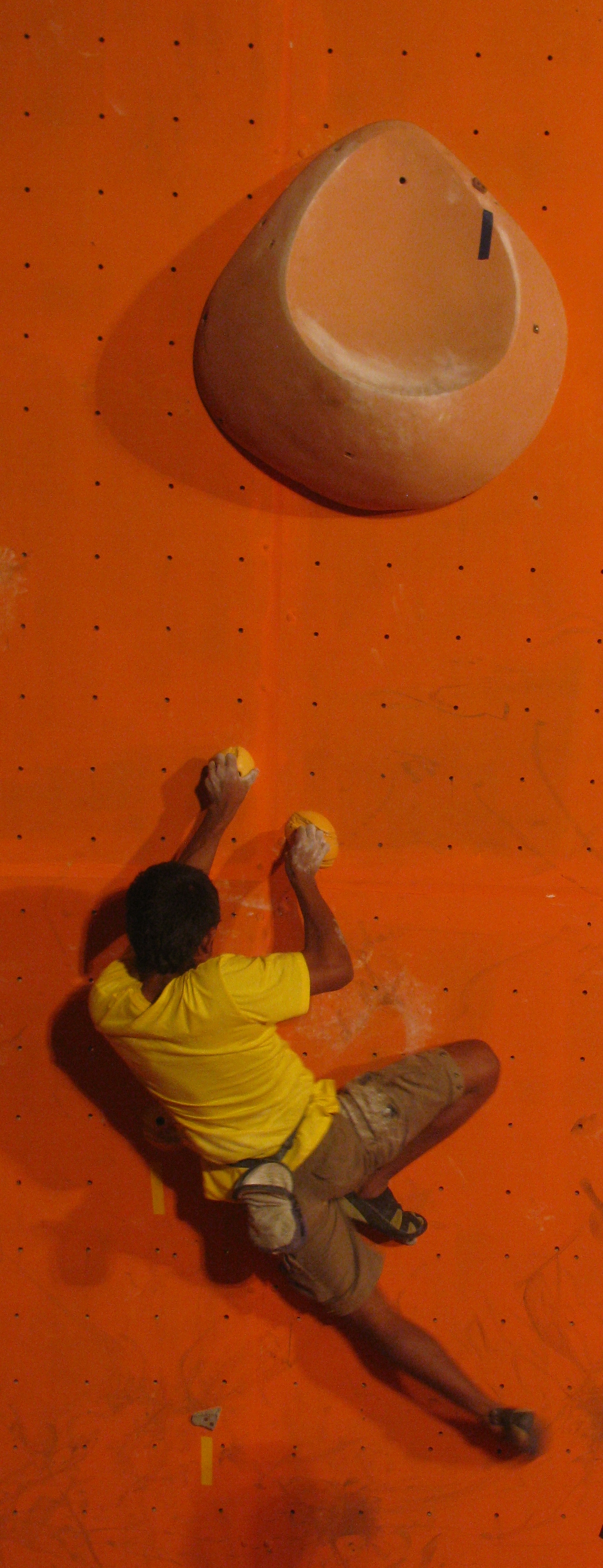
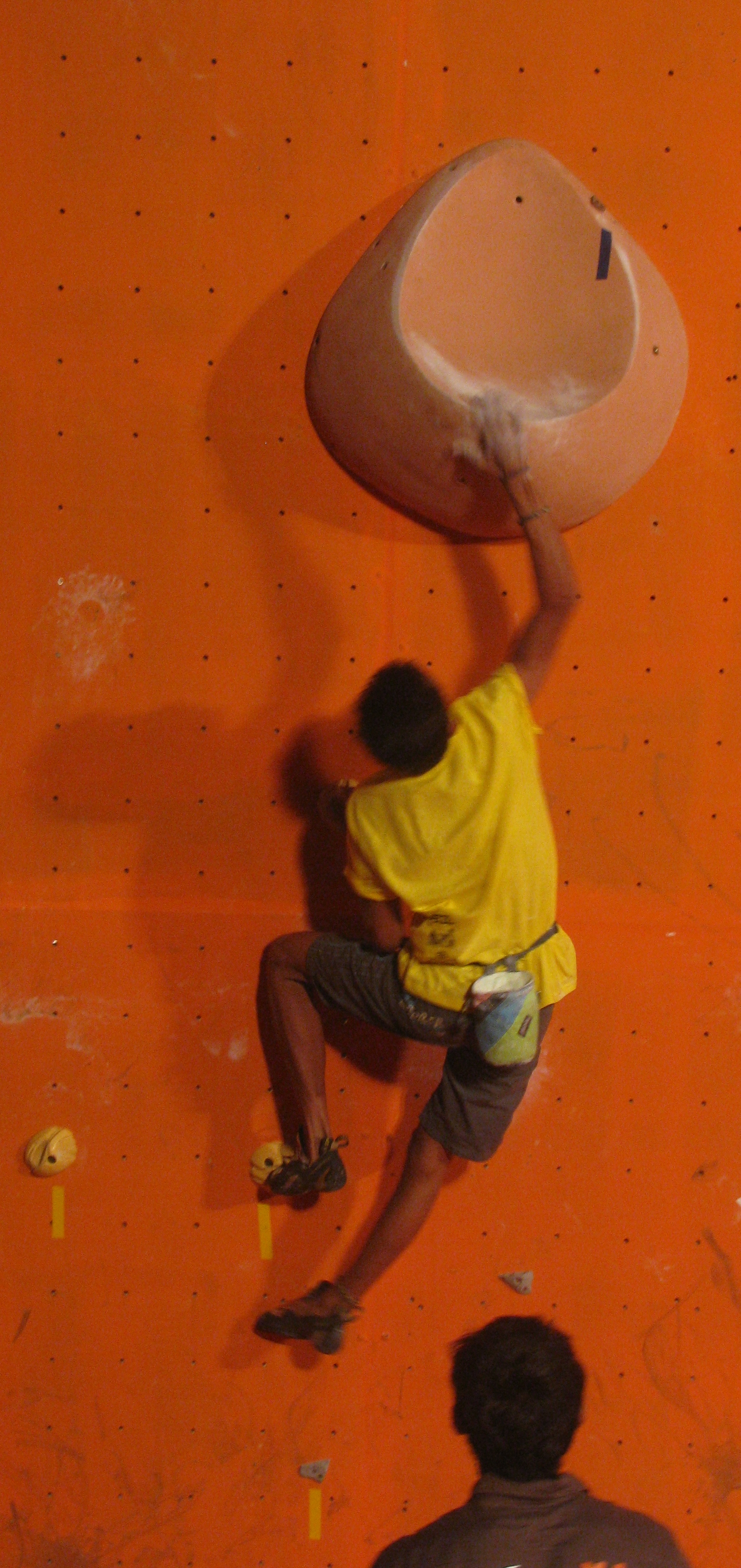
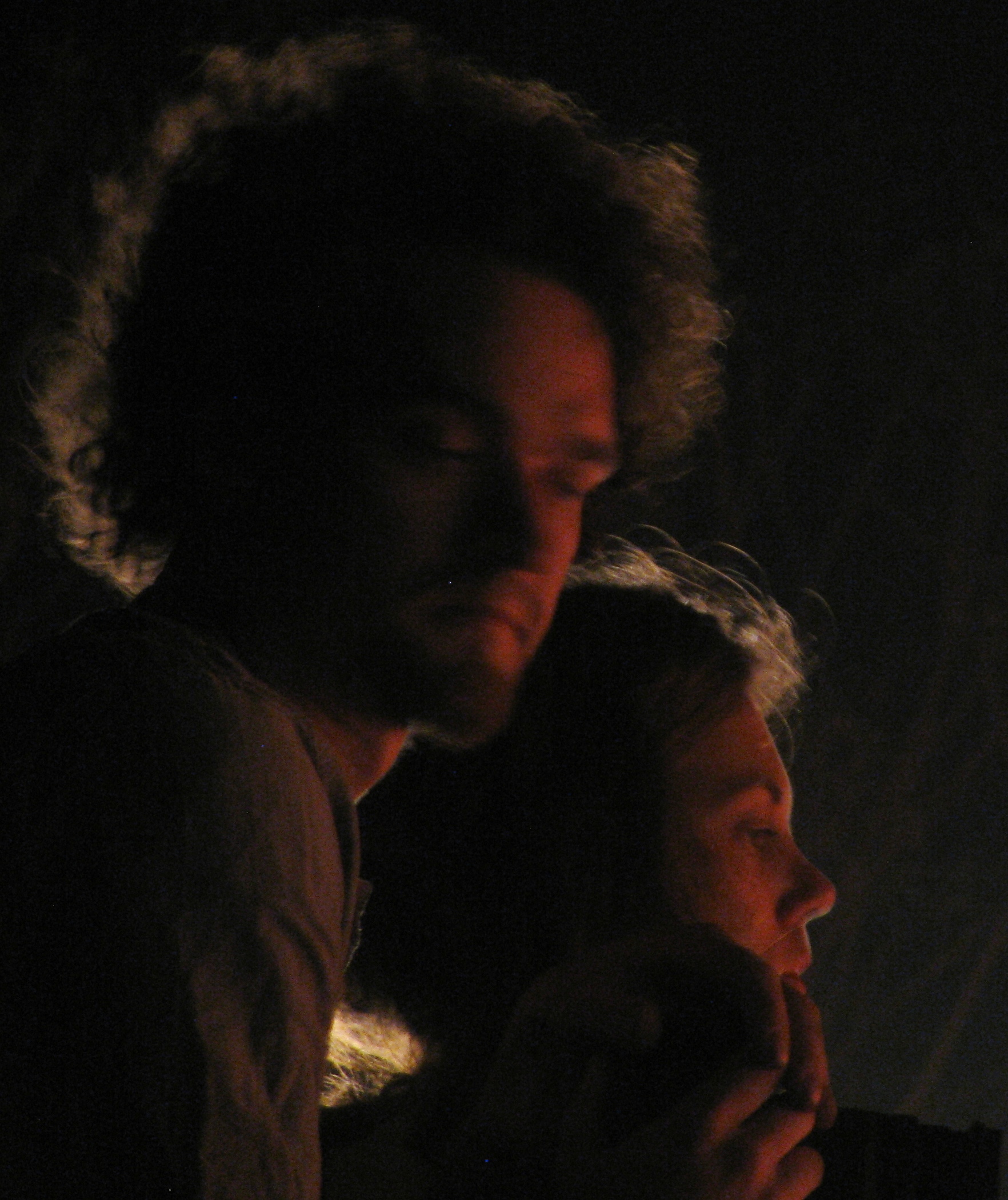
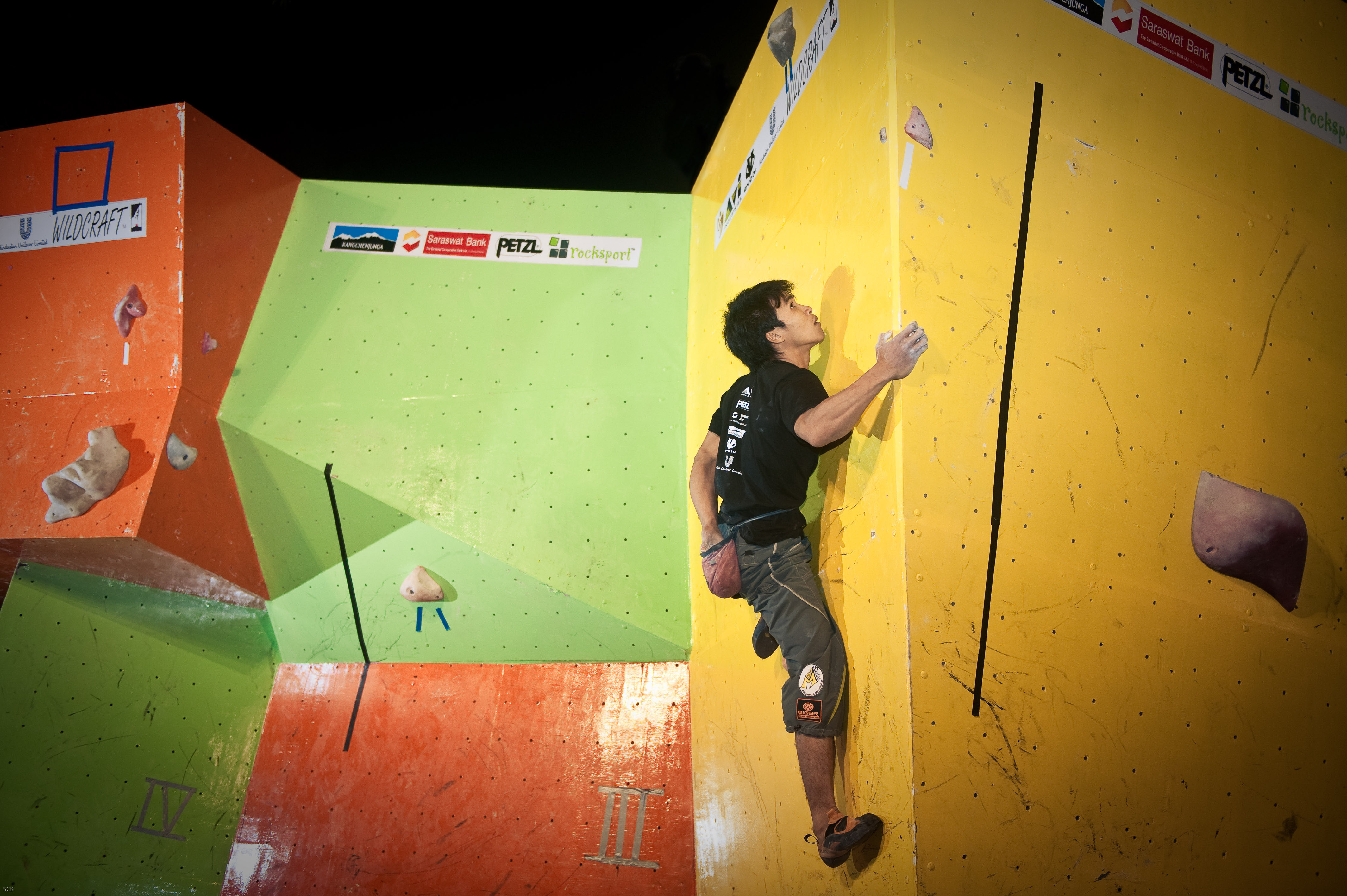
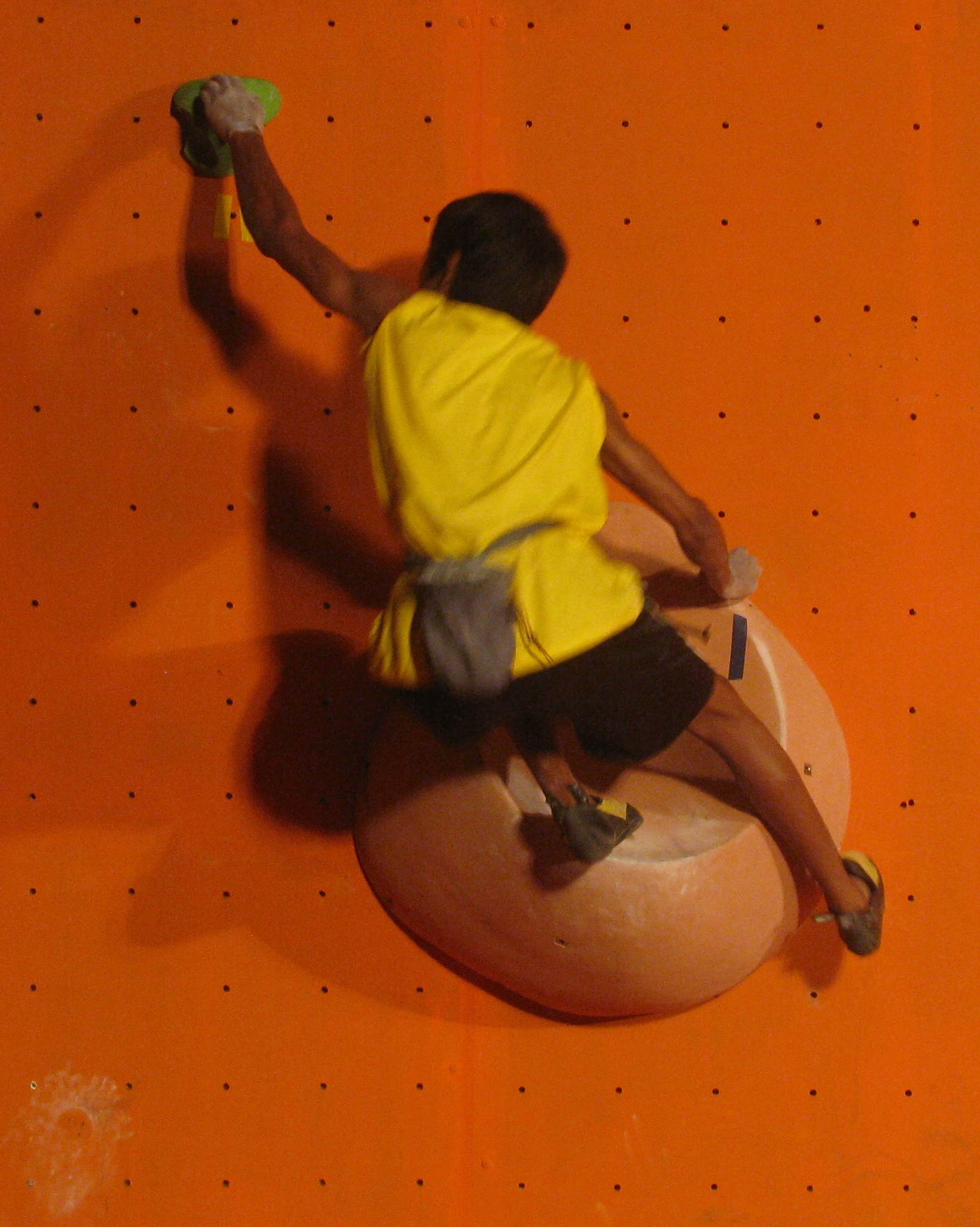
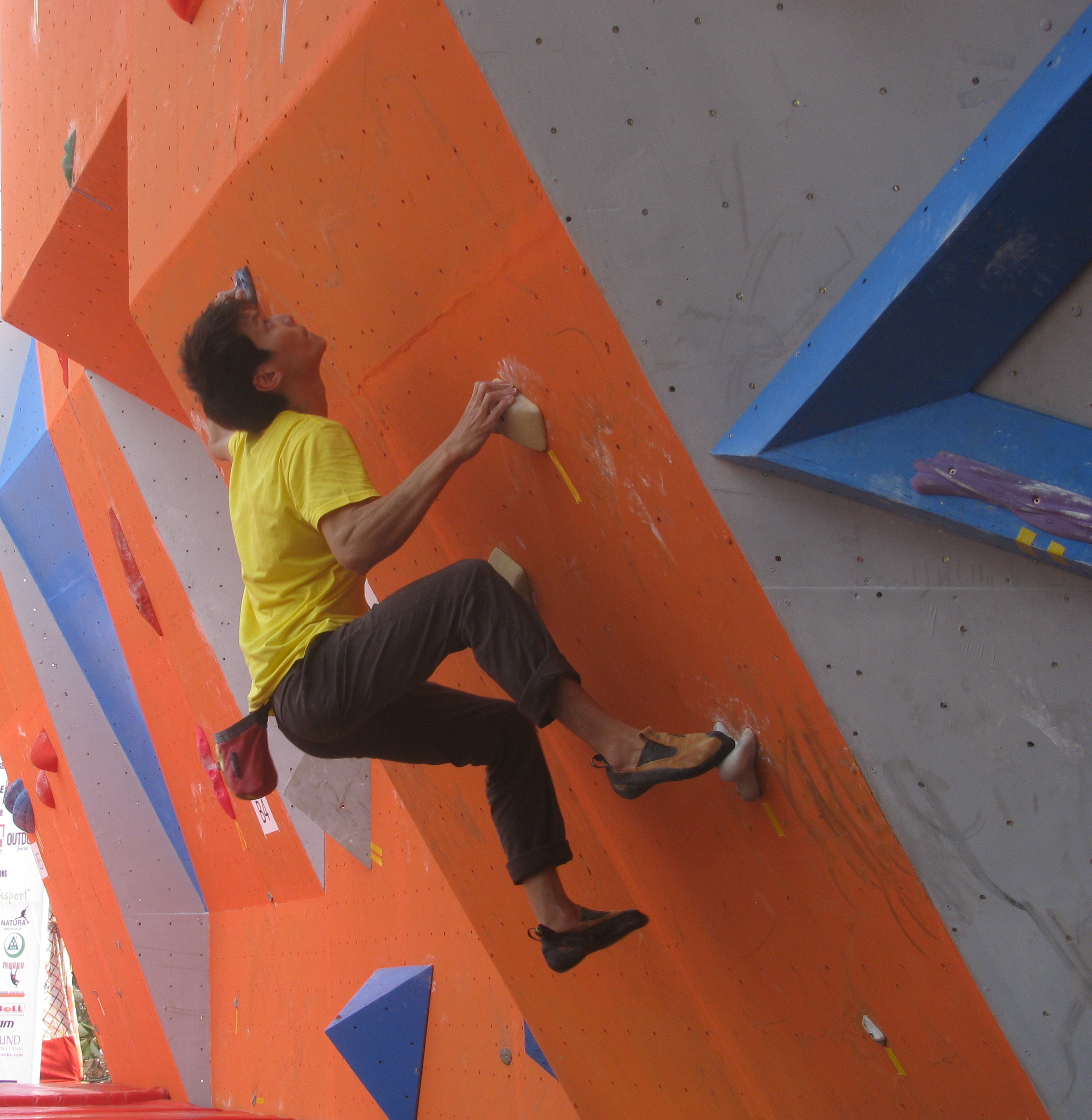
Kilian Fischhuber at work on a new route in Badami (Photo: Shyam G Menon)

Kilian Fischhuber at work on a new route in Badami (Photo: Shyam G Menon)

The most obvious thing in Badami is its beautiful rock walls.

They not only have this orange-ochre colour, but with the right sunshine, at the right time – they are also dramatic.

Badami’s ancient stone temples and caves add to the scene.

If stone is so obvious, you would think – Badami’s story should be one of stone. That is true but it isn’t wholly so, for as with many organized settlements, the oldest constructions found here are of brick. Dr Padigar attributes this to a rather universal trend – in human civilization, stone and the lifeless initially went hand in hand. Much before people built with stone to live in such buildings, they used stone to build tombs, reserving bricks for inhabitable spaces. In India, the taboo was first broken by Buddhism. A lot of early cave and stone structures in the country is Buddhist in origin. Hinduism followed in adopting the practice. In the Badami region – there are caves and temples here – the oldest caves are Hindu. This aside, Badami’s story in stone goes all the way back to crude stone implements from the dawn of human settlement (these tools are displayed at the local archaeological museum). From such antiquity it spans right up to the glory of stone temples under the Chalukyas. The oldest stone implements discovered date back to about 100,000 years ago, part of what is called by archaeologists as a `stone line’ (suggesting the level of open ground at a time when stone age people would have been active here), a metre and a half below the ground in Lakhmapur. Like Precambrian giving way to eras of complex multi cellular life, from these small, isolated stone implements, human craftsmanship graduates over the years to construction. What is on show in the later and more complex architectural history of the region is the craft of working soft stone. In South India, working hard stone like granite has been the domain of the Tamil kingdoms further south and south east from Badami. Thus the hard granite of Hampi wasn’t exploited by the Chalukyas although Hampi is just 145 kilometres away from Badami. On the other hand, some of the temples of Hampi are built of soft stone brought in from elsewhere. The first detailed report about the stone monuments of Badami-Pattadakal-Aihole is the 1874-work by James Burgess. There is also an earlier photo album-like publication by Meadows Taylor. As medium for craftsmen to work on, Dr Padigar believes that the stone of Badami proper was probably the best in the region; the sandstone here is firm despite being sedimentary in origin. “ The Aihole version tends to crumble,’’ he said. How the soft stone-craft flourished in Badami has interesting angles. Although Badami had trade guilds, guilds of architects, craftsmen and artists don’t seem to have existed – Dr Padigar said. By the Chalukyan era, there were many talented architects in town; some of them were brought from outside Badami as well. Ilkal in the region, has the widest variety of stones and a particular monument in Nandwadagi is unique for converging a variety of stones into one building.

An architect or craftsman in the Chalukyan era wasn’t a specialist devoted to one medium or style. They had to have expertise across mediums – from stone to metal, be versatile. They even had duties as soldiers in war. As regards artistic style, one of the engaging points according to Dr Padigar, is that in the Badami-Pattadakal-Aihole region (collectively called Badami for the purpose of explaining history in this article), you find doses of North Indian architectural styles in the ancient stone buildings. You also find local architects (their names are there in inscriptions) – some of who built without patron for given project – evolving their own hybrid style. For art and architecture, the area was thus a melting pot, a case of north meeting the south. In all of ancient India, the Gupta period is deemed the Golden Age in terms of art and architecture. Dr Padigar thinks that the Chalukyas were much inspired by what was happening in the north and central parts of India and sought to showcase something similar in Badami. He isn’t surprised by the resultant synthesis because even in still older times, as when the great king Ashoka ruled vast parts of India, Badami and its neighbourhood was under the administrative influence of the northern empires. In fact, the range of artistic influences that converged in Badami under the Chalukyas only add to the academic curiosity to find out where these people hailed from. Was there something to the story of their life before Badami that shaped in them the urge to synthesize at a new capital rising from the dust? All this reminded me of my own experience doing a story on Hindustani classical music in North Karnataka (please see earlier post of January 2, 2014: Hubli-Dharwad: Life after the Legends accessible on this link: https://shyamgopan.wordpress.com/category/music/). The question there too had been why Hindustani classical music flourished in Hubli-Dharwad but not further south, say in Mysore, famed for supporting the arts.

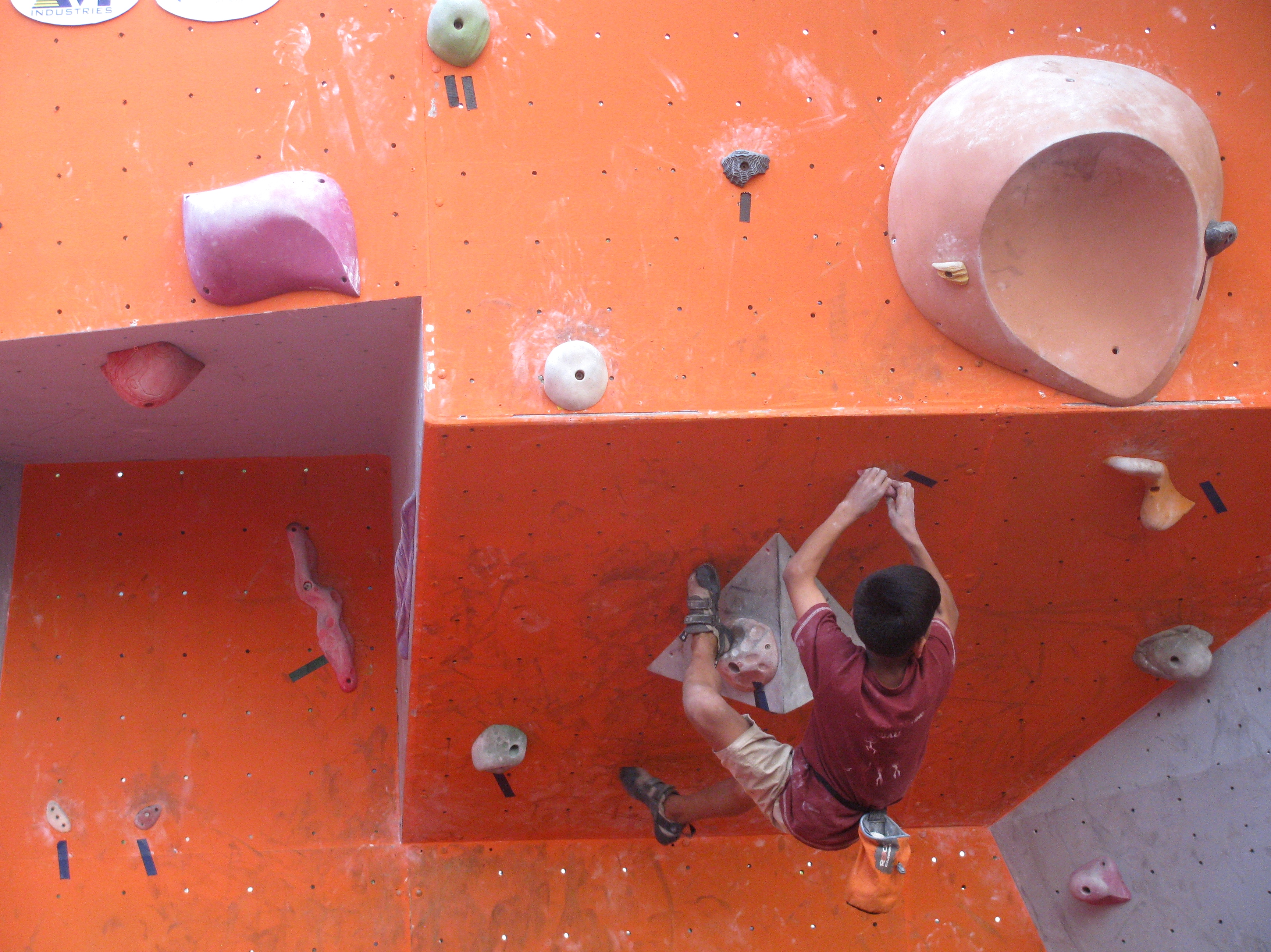
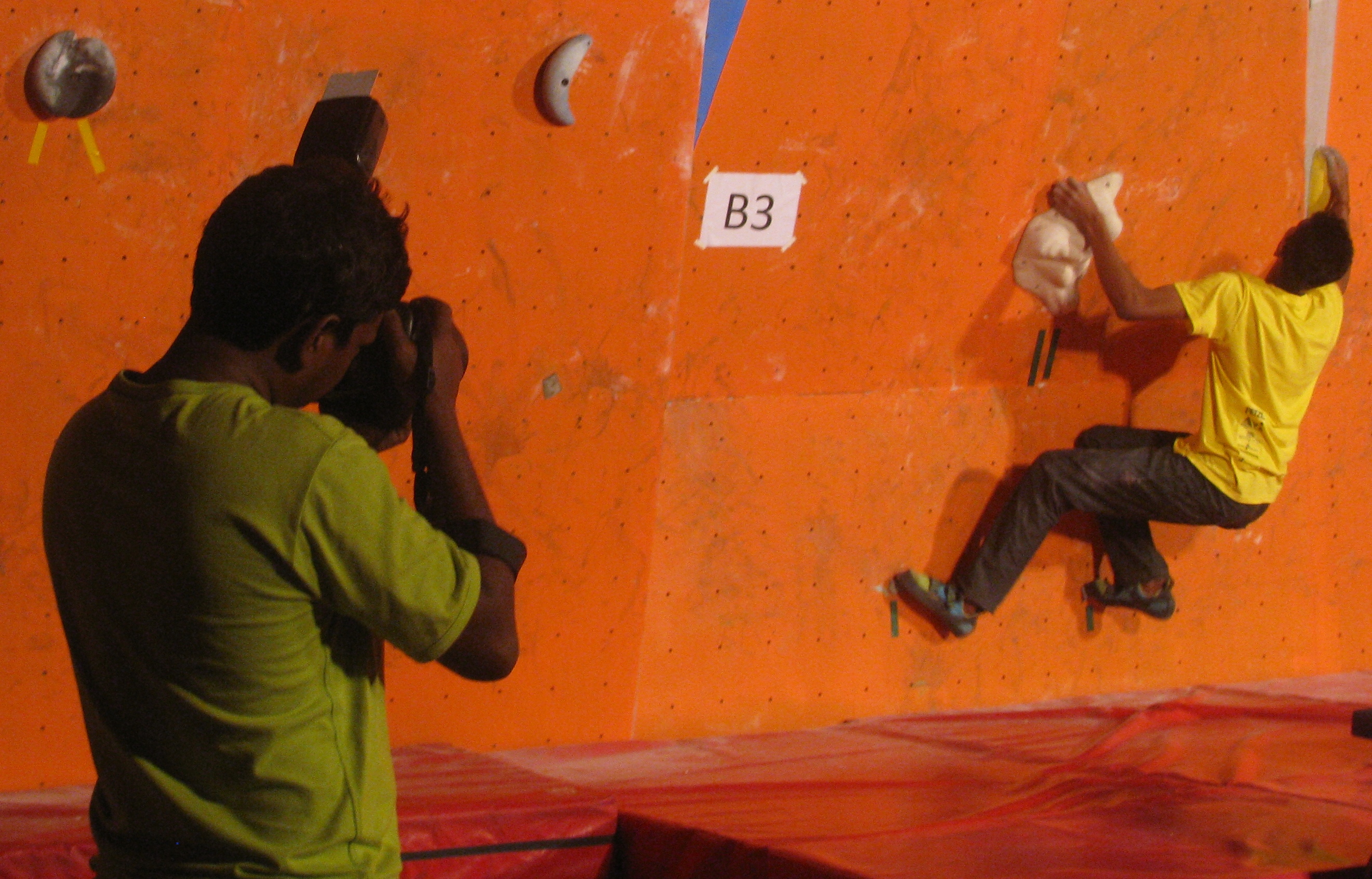
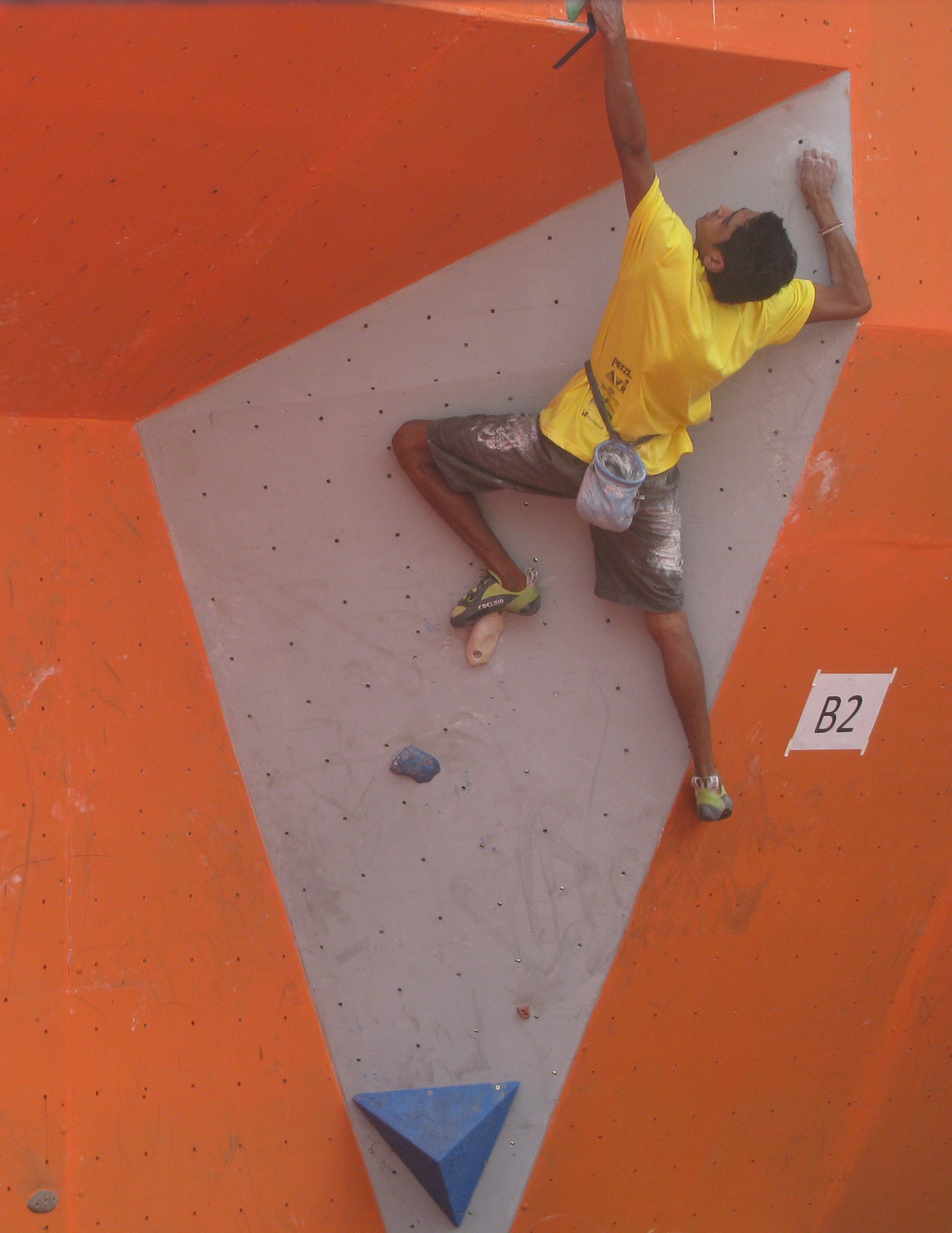
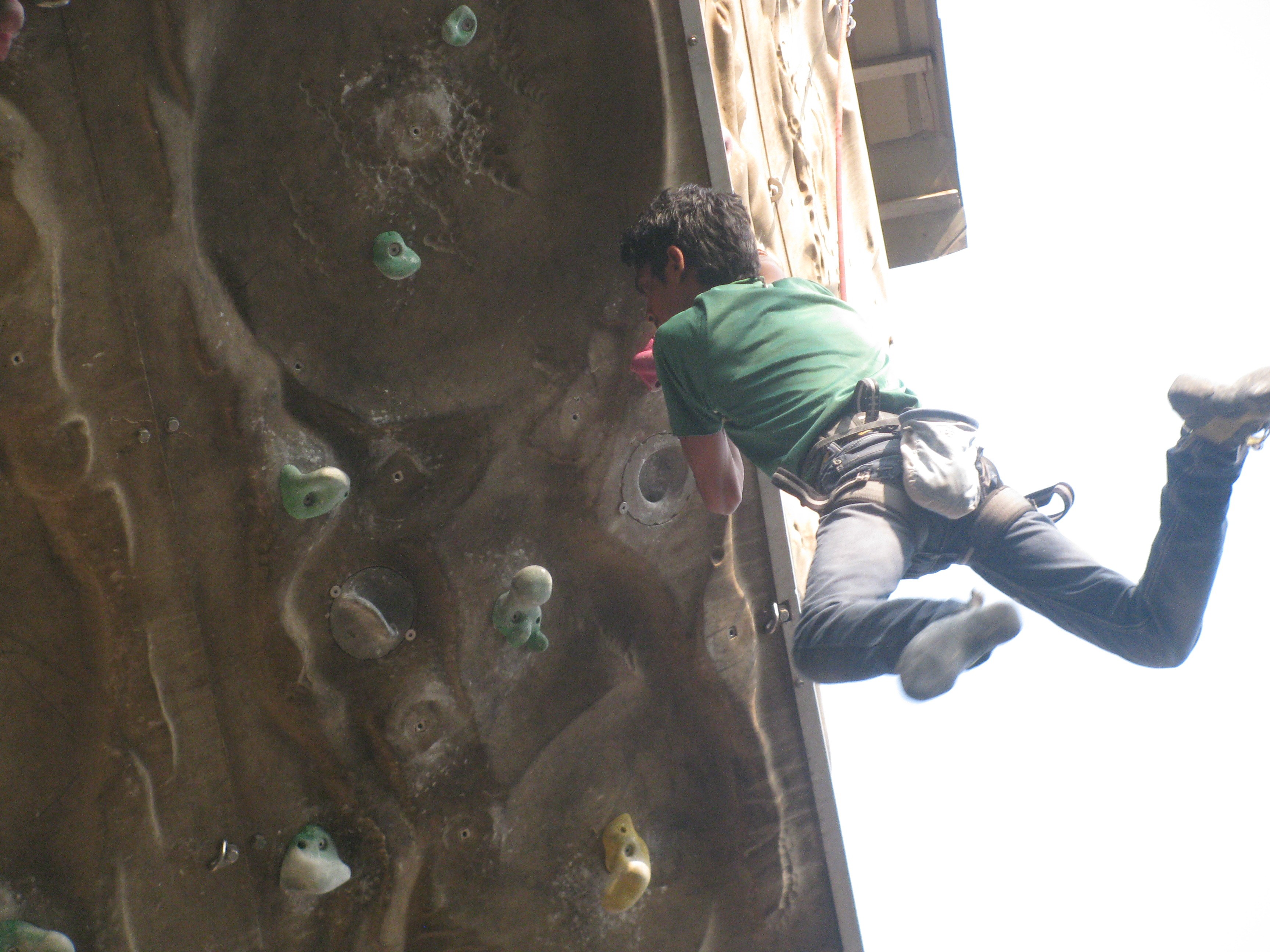
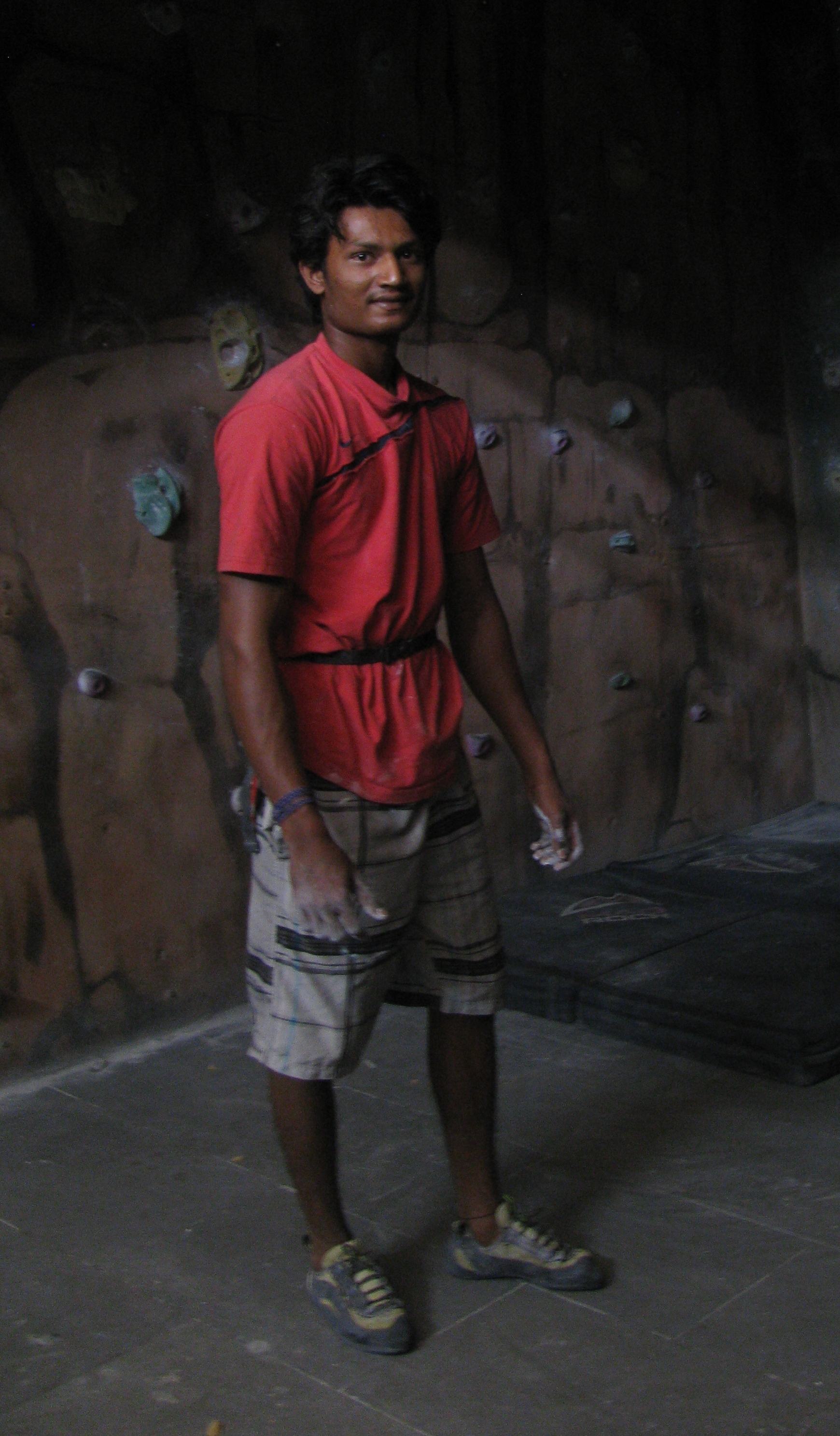
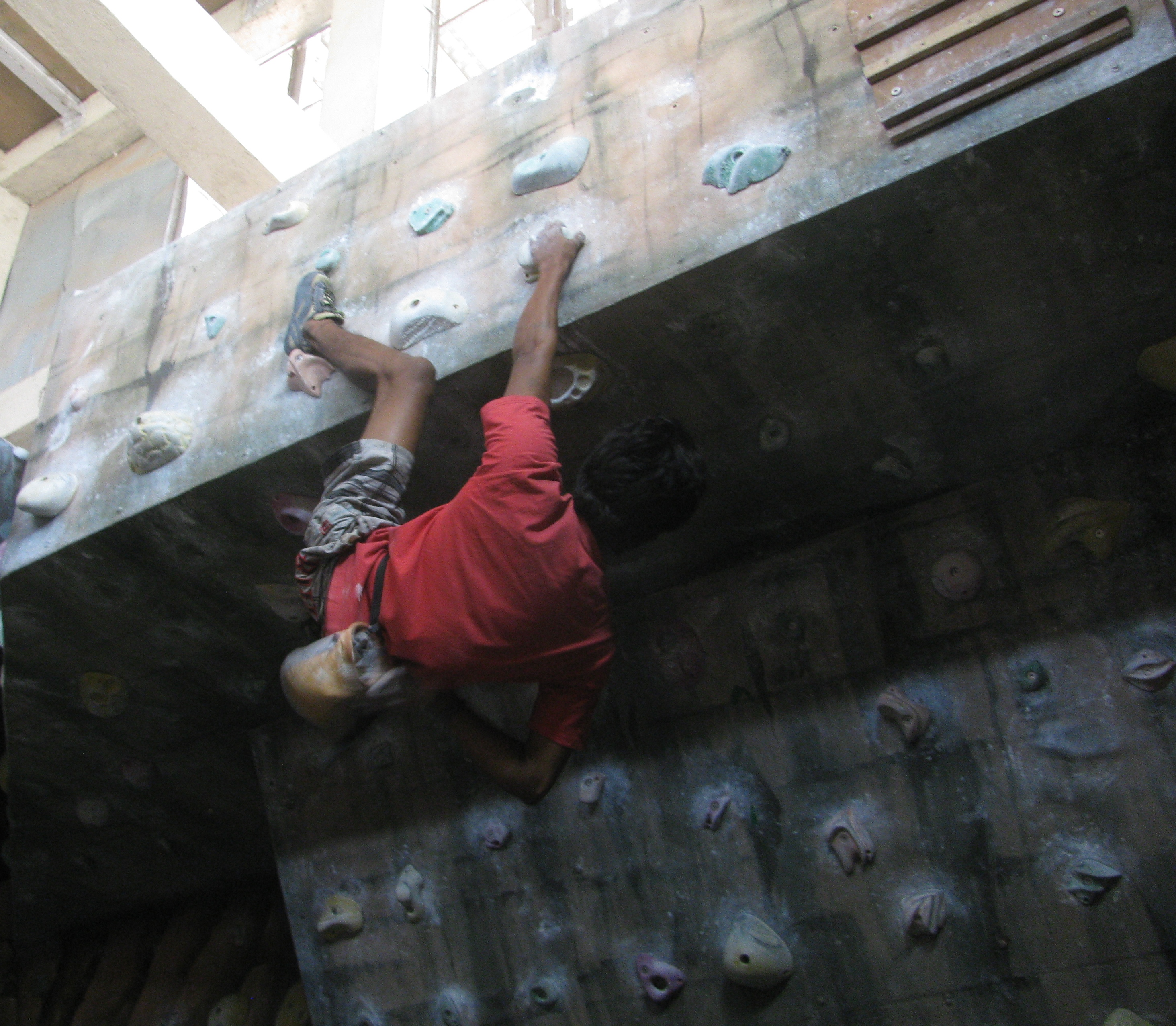
Tuhin Satarkar climbing n Badami (Photo: Shyam G Menon)

Tuhin Satarkar climbing in Badami (Photo: Shyam G Menon)

Tall and lanky, Tuhin’s hands and legs reach far on rock. This shapes his climbing style. His successful climbs become projects entailing homework for others with a different climbing style. I recall Gaurav Kumar telling me that he would have to work to climb Ganesha as the route isn’t his style. And climbers do that – every style, every human size has its strengths, ability to innovate. According to Tuhin, Ganesha has strenuous moves at start, cruises through the middle and near the finish poses a battle with fatigue. At the bottom of Ganesha to take a photograph of the climbing route, all I saw was an overhang; the route seemed like ascending the edge of a mild mushroom. As elsewhere in Badami, on Ganesha too, chalk marks on rock betrayed the holds, the features – the key to tackling the route’s challenge. More accurately, one half of the key; the rest is climber. What is a key if you don’t know how to use it?

Through late January to early February 2014, Tuhin and Kilian Fischhuber have been climbing in Badami. Kilian climbed Ganesha soon after arrival. I hung around watching some of their later projects. When I left Badami, two new routes were in the testing stage. One, next to Samsara, had been climbed in sections and was awaiting all the sequences to be sewn up in one flow; the other – on a nearby overhanging rock face – kept defeating the climbers with a very strenuous move in the middle. The unsaid quest across these routes, that tantalizing thought beyond enjoying climbing was – are there routes in Badami exceeding Ganesha in difficulty? Will India get an 8c or 8c+; will we touch the 9-mark? Today the toughest sport climbing routes in the word are in Spain and Norway, both graded 9b+, both climbed by the 20 year-old Czech rock climber, Adam Ondra. The ascent in Spain took him weeks of work.

Amazingly, what the Chalukyas laboured to create by way of influential empire was lost in no time once their power waned. In the sweep of history, Badami’s decline resembles stone dropped in water; as sudden as its appearance as the Chalukya capital, except – the decline is despite new found prominence as capital. As the Chalukyas fade, so does Badami. Post Chalukyas, it came under the orbit of the Rashtrakudas, the Hoysalas, the Vijayanagar kingdom, the Adil Shahi rulers, the Mughals, the Marathas, the British – on to present day India. Everyone who followed the Chalukyas left their mark, but none like the Chalukya.“ Chalukya craftsmanship is in a class of its own,’’ Dr Padigar said. According to him, while there are monuments in Badami hailing from the well known Vijayanagar period, in terms of craftsmanship they don’t match what was achieved 800 years earlier under the Chalukyas. Today Badami sees life as a hot, dusty town framed by timeless sandstone. The town’s architecture is characterized by the characterless architectural mess of modern India, old buildings and new, a clash of concrete, metal, paint and glass. Traffic on its main road has grown. Cell phone towers have appeared and like elsewhere in India, here too, there are those with one hand stuck to the ear, phone sandwiched in between. On the street’s edge, bull dozers are forever tearing down something. Life goes on amid gaping holes in concrete and twisted steel rods puzzled for logic. A man stood on half a balcony and calmly sipped tea observing the rubble. Monkeys sat on roof tops. Pigs ran around and a dark muck lurked in open sewers.

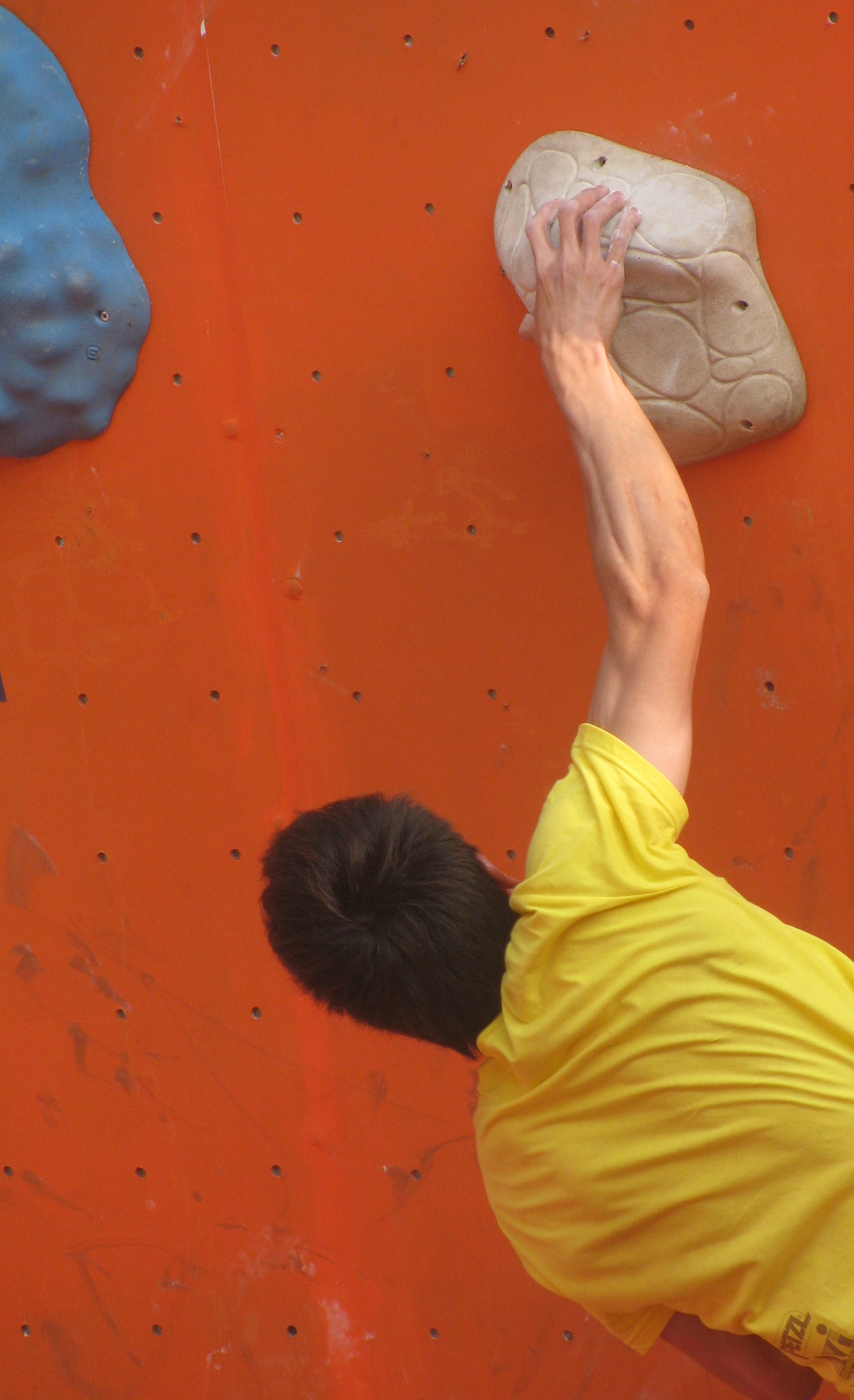
Kilian Fischhuber (Photo: Shyam G Menon)

Kilian Fischhuber (Photo: Shyam G Menon)

Not all climbers like Badami. I have noticed that.

Many prefer Hampi, reportedly more relaxed and at home with climbing compared to this town.

For the faithful, Badami is the home of sandstone and that route called Ganesha.

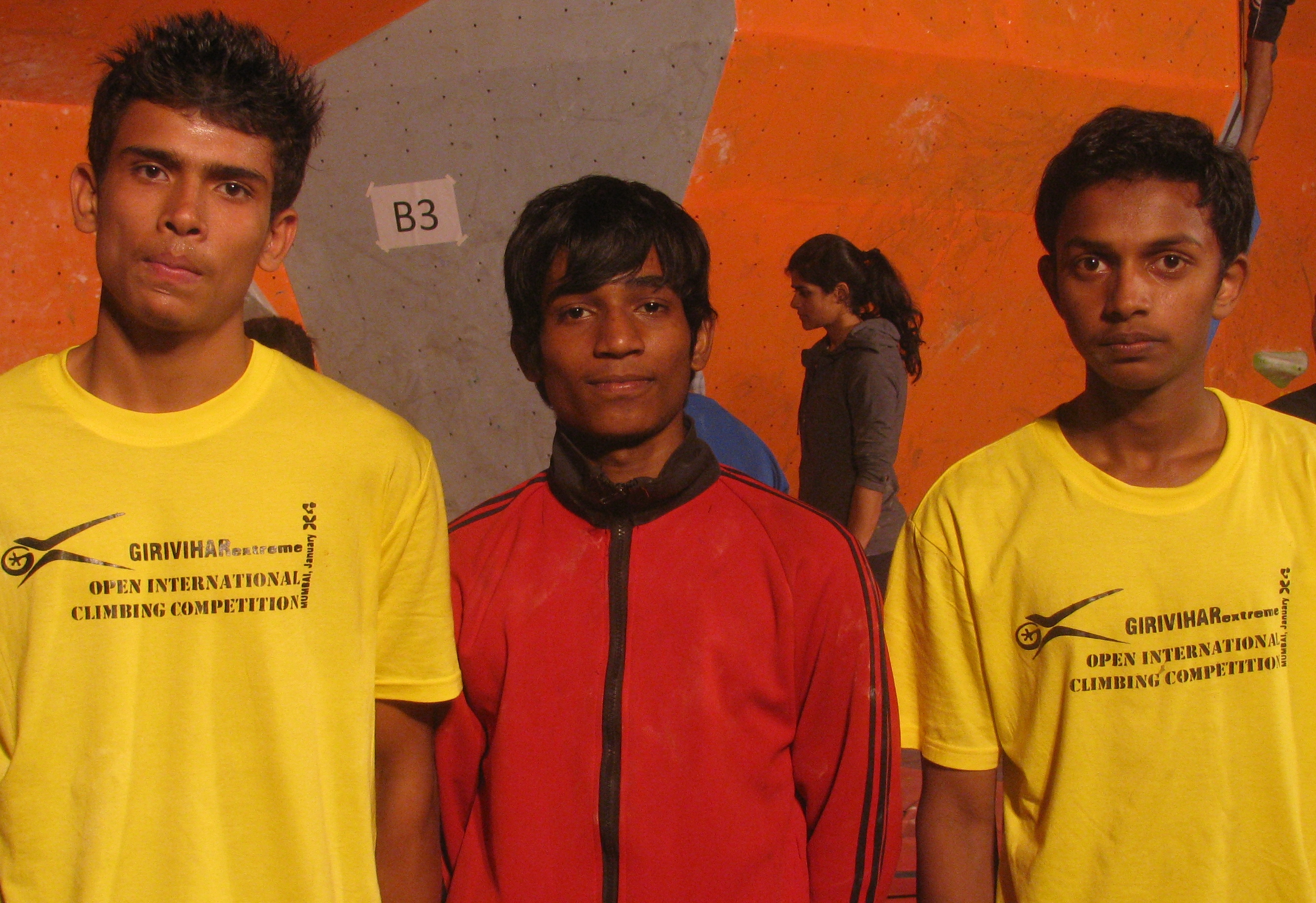
In climbing, nothing comes to you and your comfort zone. You have to venture out. Kilian is from Innsbruck in Austria. I asked Kilian what he thought of Badami. “ This is a great place to climb. Good rocks and good routes. My only problem is with the heat,’’ he said one evening, on the winding path to the Temple Area. It was a team composed of three people in the main – Kilian, Tuhin and Johannes Mair, who handled photography and film making. A typical day featured Tuhin climbing and Kilian belaying, or vice versa, with Johannes perched on nearby rock or dangling from a rope, filming the scene. Once in a while, Johannes too climbed. Over an evening and the following morning and evening, I watched Kilian and Tuhin work the two newly bolted routes. Would they be tougher than Ganesha? – I wondered. In sport climbing, the nature of the animal is such that the question can’t be avoided. Climbers I spoke to in Mumbai (where some of the blitz gang had gathered for the 2014 Girivihar Climbing Competition) felt that routes tougher than Ganesha existed in Badami.

Third week of February, I checked with Tuhin to know what happened after I left Badami. Both the new routes, he said, have remained work in progress. Kilian almost completed a climb of the route next to Samsara. But then almost, isn’t the same as completed. And with neither route fully done, it is probably correct not to guess their grade yet. 

The search is on for beyond Ganesha.

(CONCLUDED)

(The author, Shyam G Menon, is a freelance journalist based in Mumbai. He would like to acknowledge the help provided by Dr Shrinivas Padigar, Dr Sheelakant Pattar, Dr Navin Shankar, Vinay Potdar and Dr Sambhu Pankicker towards writing this piece.)     

MEDIA, MONEY AND ADVENTURE

Photo: Shyam G Menon

Photo: Shyam G Menon

Some months ago, in Mussoorie, I asked a senior experiential educator from the UK, why the simple experience of being outdoors wasn’t deemed as good an education as contrived outcomes delivered from the same. Why is it team-building and leadership; why isn’t it plain nature, just being there? He said I was overlooking the genesis of outdoor education in Europe in the shadow of the continent’s wars. That’s the imagination at work.

If I visit my understanding of the world I was born to, the legacy of war is more than boot camps teaching camping skills and mountaineering expeditions primed for conquest. The 20th century is the bloodiest century known to man. We fought two world wars and several local wars and battles. I recall novel after imported novel read during my college years and foreign movies watched, in which the hero was fashionably ex-army. There were lots of wars a protagonist could be veteran of – World War II; Vietnam, Korea, not to mention Afghanistan and Iraq for more recent heroes (I understood only later the tremendous psychological impact of World War I on mountaineering). Service in the armed forces or exposure to war was also there in the non-fiction realm with the biographies of some noted civilians mentioning military service.

Post World War II, our world changed drastically as the consumerist age with its giant industrial systems, and eventually the age of information technology, took off. In the century of war, corporate culture popularised the idea of war among companies and preparedness for battle within. Corporate officials are soldiers in another uniform. Indeed, once when I went to assist at an outdoor management development (OMD) program, I was intrigued to see an Outdoor Expert – OE as they are called in the business – attired in military fatigues, even as the program never left a resort’s lawns. Very likely, had he been dressed differently, he wouldn’t have seemed adequately outdoors to the clients training to demolish rivals in the market place. The world hasn’t really been at peace in the last hundred years or more; it has always been plotting war in the head. Even the media carries this tenor. Not only are large media corporations the stuff of corporate and competition, the media – especially business media – loves to see a war in tussles for market share and company acquisitions. I understand now why it is so unglamorous to be out in nature just for the heck of it without achieving something. I understand why no runner worth his / her salt will run without looking at the watch. Achievement has become proof of existence.

As the perceptive would say, nowadays such conflict also arises from straddling two different cultures – indoors and outdoors. If you want to make sense (and sense is compulsory for money), then you have to be relevant to indoors for that culture has the world’s money. Go outdoors to be poor and spiritual; go indoors to be rich and materialist – that would seem the case. Like generals at war strategising from safe zones, money likes to stay safe while its extended fingers explore the unknown. Reports reach headquarters from the field informing of challenge and progress. Occasionally, the indoors is borne outdoors in great comfort. Most important perhaps – unless you are achieving outdoors, you outdoor ventures don’t get support from indoors. It is the old arena mentality. Over time, a certain quality of contemplation has exited the outdoors. Triumph by well funded expedition and reduction of activity to action have become dominant. It reflects the world’s ways. First, success matters. You do what it takes to be successful including success guaranteed through commercial contract. Second, if you think habitually, you will probably wander off into avenues of imagination that are counterproductive to becoming successful. Equally, it is a noisy world and adding noise in your head through thought when world outside is already a din, seems invitation for disaster. Why think when we can dull thought through action? A climbing video – its dialogues, its editing style, its attitude – is often lifeless despite the action in it. We try to compensate with stunning visuals but there is only so much CPR can do to breathe life into dead video. Besides, we are tired of seeing the same CPR over and over again. Increasingly the stuff of smart packaging, the longevity of each media fad and format is shrinking. Few people talk of it – we are gradually exhausting our appetite for media, especially synthetic media.  

At the recently concluded 2014 annual seminar of the Himalayan Club, both the guest speakers – Marko Prezelj (leading alpinist from Slovenia) and Jim Perrin (climber, well known author from UK) – mentioned world addicted to media. From what I could glean and adding my thoughts as well, I believe, the problem works at several levels. First, there is the declining value of first hand assessment. As Marko pointed out, many people are experts ahead of being on their chosen mountain, thanks to Google Earth. A tool can help but a tool shouldn’t replace a whole mountain. If that is acceptable, then why venture out to be on the mountain? Don’t forget, climbing and mountaineering are tactile pursuits. Second, at the retail level, many of us – and that includes climbers – are hooked to social media, trusting its response to validate our existence. What is a great climb? The one that gets most likes on Facebook? This media circus can become questionable distraction. Joke or not, one of the greatest young alpinists of our times is said to have attempted a dangerous mountain face solo with more batteries for his media / radio equipment than food to eat. When he got stuck, the suffering became great media. On the other hand, amid the seductive blend of adventure and publicity, it has become common habit to climb something – anything – and put it on social media because an established motor response to lauding climbs gives anything vertical the licence to seem massively adventurous. The applause becomes an endorsement of adventurer although the vast majority of us are doing tame stuff and even the great climbs we do are routes already done by others. No matter how far we go the relation between us and everyone else – our social world – trails us like a conspiracy brokering means to fame in the head.

Marko appropriately wove into his presentation a clip on mountaineering from Monty Python (http://www.youtube.com/watch?v=9U0tDU37q2M), the British comedy series. If we climbers take ourselves a little less seriously, we will notice the element of conquest and drama we strive to introduce into an account of even the smallest hump climbed. Over the years, technological innovations and improved climbing styles have actually reduced the risk on many climbing routes. Yet a video of climbing Everest via the normal route with all frills and bells attached, still labours to create a Hillary and Tenzing of everyone following in their footsteps.

Photo: Shyam G Menon

Photo: Shyam G Menon

Perhaps the reason for such media is because we want to make ourselves impressive and saleable. Saleability is imperative for the funding models of climbing and mountaineering. Welcome to the third point – in a strange mirror-like situation, the expedition model resembles a triangular peak. Only a few people reach the mountain summit to hog all the attention. For that, many unnamed others and plenty of resources are used. If the supporters / sponsors have to be incentivized to contribute, they must get a piece of the final glory. It is return on investment, bang for the buck. As demands for mileage multiply, climbing narratives converge to similar idiom. It is less mountain, more compulsions of business model. Worse – everybody is still mesmerized by old stories of blood and gut. What do you do if you didn’t grunt, groan and spill blood? It is a sad state of affairs – the sponsor wants mileage; even first time trekker wants mileage and hunts for mountaineering-like moment on flat land to put on Facebook. I know it myself – it is hard to write what you did on a mountain in simple language devoid of drama, when the urge within is to sound like true blue adventurer. Vanity interferes. With the funding models we have, that vanity not only got institutionalised, it also got condoned as necessary ingredient for without imagery of vintage adventure, who wants a narrative in the media and without media where is sponsor’s bang for his buck? We have condemned ourselves to the limited world of the permanently extraordinary. To me, one of the greatest moments in Marko’s presentation was when he described a very long period spent in the mountains as – it was becoming too much. At that point on the mountain, he wishes to be back home with family. Not surprisingly, in Marko’s presentation, his family and their house, appear as fulcrum periodically. My learning here is not family or house but a senior alpinist like Marko, acknowledging “ too much.’’ At heart, the outdoors is an aesthetic. It is that simple. Let me add something here on the media, an animal I am familiar with. Many reasonable headlines I gave the outdoor articles I submitted for publishing were replaced with headlines suggesting `top,’ `summit,’ `conquered,’ `peak’ and such in them. It was as though anything happening on the mountains couldn’t be seen differently. It had to be conquest. Another regular is the word `tough.’ A lot of imagination in the media about climbing revolves around this word. The reason this happens is clear – the media’s patrons are all indoors. The far opposite of indoors will hence attract. Now think – what would happen if this media got embedded in our brain? Marko offered an aesthetically extreme view but one that definitely engaged. How solo is solo climbing if next to the climber there is a cameraman dangling from a rope filming everything? For Marko, solo means `alone.’ I call that an extreme view because it could mean no media, no freelance journalist. I however concede – that is a ` pure’ view.  

For the heck of climbing’s philosophy – and everybody agrees that the core philosophy of anything in climbing is a drift to the pure ethic – can we have a seminar to debate viable expedition models that preserve freedom and mountaineering in the real sense? Can there be sponsors who don’t seek return on capital? People who give because they find something intrinsically valuable in adventure? Maybe even adventurers who are happy to do what they can with just available resources and sponsors who have means other than traditionally imagined ` mileage’ for returns? How about a sponsor who says – I don’t care for summit but give me a completely environment friendly expedition? How about someone who says – I believe in mountaineering as human heritage, so here’s the money? If there is reformed ethic in the tail and the tail wags the dog, won’t expeditions be different? I therefore won’t say that the outdoor community should court the extreme of declining help from those with capital to preserve purity of ethic; I submit for consideration – have we conveyed what the outdoors means, well enough, to those having capital? And for that, do people in the outdoor community have a genuine understanding of the outdoors in the first place?

Think about it.

(The author, Shyam G Menon, is a freelance journalist based in Mumbai)

THE STORY OF `PSYNYDE’

Here’s a story from 2013.

It has been updated to include developments till January 2014.

Vinay in action.

Vinay in action.

Vinay is rarely on the ground.

In photographs, he is usually cyclist airborne.

Either that or, he is a streak of dust gathering speed as he rolls down an  inclined hillside, probably prelude to a launch. When I met him in early 2013, Vinay Menon’s reputation could be summed up as – he is forever jumping off things. That’s how he described himself, “ I am always jumping off something or the other.’’ On the Internet he had a following. He was considered to be the best `free rider’ in India. Mountain biking has several disciplines under it – Dirt Jumping, Slope Style, Trials, Cross Country, Four X, All Mountain, Endurance, Street and Free Riding among them. Of these, free riding values self expression and creativity, being a demonstration of what the rider can do with his bicycle, skills and terrain. Although he respects all disciplines and indulges in several, Vinay’s forte is free riding.  As yet there didn’t seem to be anyone around in India who was pushing the sport as Vinay did. Driven, his efforts had got him travelling overseas, meeting and interacting with international cyclists that he looked up to – names like Brett Tippie and Dan Cowan. Closer to my world of writing, Vinay was also Deputy Editor of the Indian cycling magazine `Free Rider.’ I first met him in Mumbai, when he was passing through town, part of a long, north-south ride with clients.

During the brief chat, I heard of Praveen.

Welcome to the story of Psynyde.

We shift to Pune, western India’s adventure capital. Like Bangalore further south, it has that change effecting-matrix of educational institutions with students from all over and a young mobile workforce at engineering companies and IT outfits, exposed to trends elsewhere and open to trying out new things. Praveen picked me up around lunch time. He drove his car slowly to a Subway outlet. We found ourselves a table. Then, Praveen sat nervously, his eyes on the bicycle mounted on the car’s back, the car visible through the eatery’s glass doors. That bicycle was seriously precious. It was the reason for our conversation. The road outside was busy. It doesn’t take much to flick a light road bike off a car’s back or do something to damage it. Praveen’s nervousness was understandable. A little later, if I remember correctly, he managed to keep the bicycle in safer territory, near a security guard. That done, he relaxed.

Praveen and Vinay

Praveen and Vinay

Vinay got interested in mountain biking in the mid-1990s. By then, Praveen Prabhakaran, was already an established addict of the sport in Pune. Both mentioned Sameer Dharmadhikari, then at Mumbai IIT, who was committed to mountain biking and was a pioneer of sorts. A complete idea of the sport was yet evolving. The youngsters used Indian cycles and existing trails on nearby hills. They banked on overseas mountain biking magazines, the occasional video and TV program for a sense of what to do. But as Praveen and company rode hard, jumped and abused their bikes in an effort to be like the foreign riders, one constant prevailed – they frequently damaged their cycles which were not designed for such riding or such levels of abuse. Needing spare parts frequently, Praveen sold old newspapers to raise funds. Naturally, there was a limit to such funding. On the other hand, there seemed to be no end to how much a dedicated cyclist could push his cycle to repair. Slowly Praveen’s interest drifted from pushing the ante in his chosen sport to tinkering with cycles. How do you make them suited for the sport; how can they stand up to abuse?

In his first experiment, Praveen took a rigid frame Indian mountain bike (MTB) and made it into a dual suspension cycle, subsequently named (perhaps aptly) `Frankenstein.’ Then, the story gets wilder. In his second such modification – this time a friend’s Indian dual suspension-MTB that wasn’t compressing properly – he outfitted the cycle with Bajaj M80 suspensions altering the whole cycle in the process. “ It worked!’’ he said. And as things got wilder like this, he understood the interdependence of bicycle dimensions, engineering and components. A bicycle is a wholesome organic unit; you don’t simply take one element out and stick another in. A commerce graduate into 3D animation but no backdrop in engineering, Praveen steadily moved to making bicycles – in the literal sense of making; that is, manufacturing them – his life’s aim. When in his animation career, he got laid off at one of the biggest companies around, he said enough is enough and launched headlong into what he always wanted to do – make performance bicycles.

The Subway was now busy with office goers come to eat. Vinay had joined us. We seemed misfits in the suddenly emergent purposeful corporate-ambiance of the restaurant – the restless dreamer who makes cycles, the long haired-cyclist whose sense of career may puzzle regular office goers and freelance journalist, who may be fashionably free but is forever short of money.  Back to the story – Vinay’s trajectory had progressed differently from Praveen’s. He was hard core mountain biker, very much into riding and skills. Unlike Praveen he hadn’t shifted focus to obsessing with the mechanics of bikes although that day in 2013 he owned nine cycles, some of them top notch. But having pushed bikes to the limit, he too had a feeling of what they were and could be. Praveen’s craze to craft performance bikes appeared synergic with Vinay’s hard riding. They seemed an ideal combination of designer-craftsman and tester.

What next?

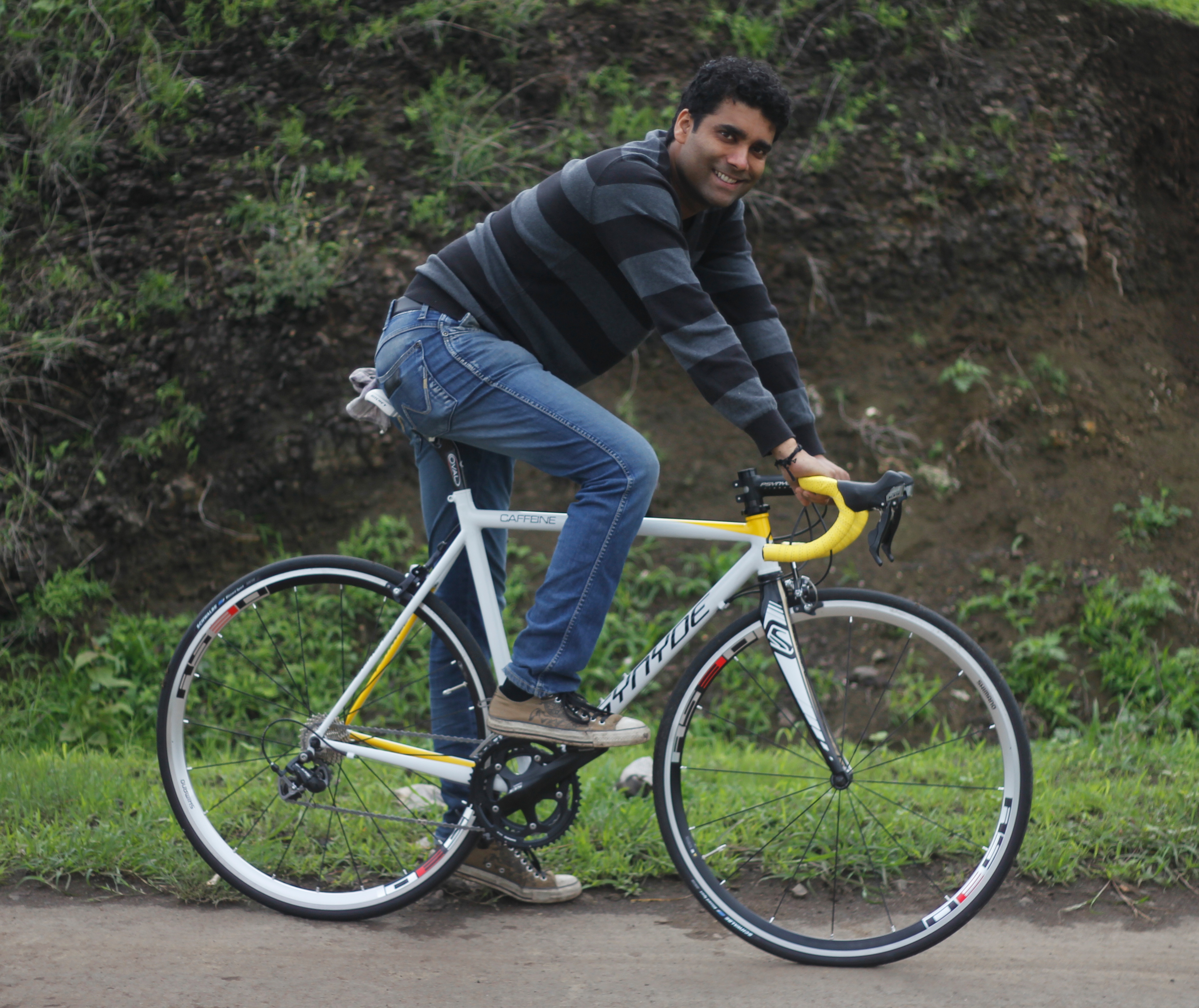
Praveen with the Psynyde Caffeine.

Praveen with the Psynyde Caffeine.

Enter `Psynyde’ – that’s what the two named their fledgling enterprise. To start with, Praveen underwent customized training in Computer Aided Design (CAD) and focussed his initial manufacturing efforts on bicycle components like stems, seat clamps and bash rings. Vinay tested it. He also gave it to his cyclist friends overseas for testing. Feedback was encouraging. While this was on, Praveen began designing a bicycle. The two friends agreed that their first hand built-Psynyde bike should be a road bike because mountain biking was yet in its infancy in India. Not to mention, MTBs are more complicated to make. Praveen did considerable homework. There was the research on materials, sourcing the materials (triple butted niobium steel alloy from Italy), selecting tubes of the right strength, relating tubes to preferred ride quality, learning frame geometry, adapting the geometry to suit rider dimensions and mastering the art of joining tubes to make the frame. If required, the erstwhile 3D animator also makes the cycle’s fork from 4130 chromoly (chromium molybdenum alloy) steel. The bike debuted in July 2012. Two cycles made so far and two underway it had found customers in Pune, Bangalore and Andaman and Nicobar islands. Save some specialized tasks like brazing, Praveen did most of the work. Home doubled up as workshop. And in case you hadn’t guessed it yet – that was a Psynyde mounted to the back of Pravin’s car. The specific model, which he had chosen to retain for personal use, was called `Caffeine.’

The typical customer in this niche category is a serious cyclist, who knows the difference that right sized frame, correct geometry and good quality materials bring to performance. “ I believe we are the first in India to custom-build high performance bikes using high quality materials,’’ Praveen said. The Psynyde bike costs more than a similar looking off-the-shelf bike but is cheaper than comparable custom built cycles overseas. If all goes well, from measuring the customer for optimum frame size to delivering the bicycle, it takes approximately 1-2 months. The ` performance’ segment that Praveen referred to was his chosen differentiator’ there were others also building bikes. A March 2010 news report mentioned Zubair Lodhi and Faisal Thakur in Mumbai, who made customized, sometimes theme based-bicycles. In 2011 and 2012 The Hindu reported about Bangalore based-Vijay Sharma who made eco-friendly cycles using bamboo. Psynyde, Praveen said, customized for high performance. That’s the underlying philosophy. Vinay as tester, emphasized the intended direction.

Traditionally in India, the bicycle models produced by a handful of mass manufacturers have been staple diet. The companies making these cycles owed their DNA to controlled economy, not DNA in performance biking. It was mass manufacturing. Simply put, it meant – they made, you bought unquestioningly. Slowly – and perhaps one should say: reluctantly, for portions of the market were far ahead of the companies in terms of imagining cycling – that has changed. The leading bicycle companies have introduced new indigenous models besides importing cycles from overseas (please see the story: Cycling’s Second Youth posted in August 2013 on Outrigger, for an overview of the Indian bicycle market / industry). Still, a company can rarely match the deep end experience that enthusiasts cobble together. At Psynyde, you have two young cyclists using their knowledge and field experience to build performance cycles. Overseas such teams have birthed strong brands. Dig into bicycling history and you will stumble on brands whose genesis can be traced back to small enterprises, often founded by cycling enthusiasts. However small these early Indian attempts in the niche maybe it’s hard to ignore the passion. Before me was a young man, old enough to be as well employed as anyone in Pune’s corporate crowd. He could have been one of those breezing into the Subway outlet and eating a meal over corporate gossip or plotting next move in corporate career. Yet he had made cycling his life. The other person had chucked up his last job and walked into a crazy dream of making bicycles that had somehow lingered eternal in the head. I repeatedly asked Praveen how he, a 3D animator, learnt about materials, fabrication and welding techniques, normally seen as the turf of bicycle factories. He said if you are determined, you learn. Perhaps I also overlooked the nature of the bicycle – it is technology and simplicity at once. Years ago, the first bikes pedalled by these two Pune cyclists had been Indian makes. Those cycles are the guinea pigs that triggered a journey, which from another perspective is a measure of how different the new market is, compared to the old one. Not surprisingly, a news report from April 2012 said that the two dominant domestic players – Hero and TI – planned to introduce customization. But no matter what big companies do, the beauty I found in this story of two cyclists was quite simply that they did what they liked. They pursued it diligently, seriously.

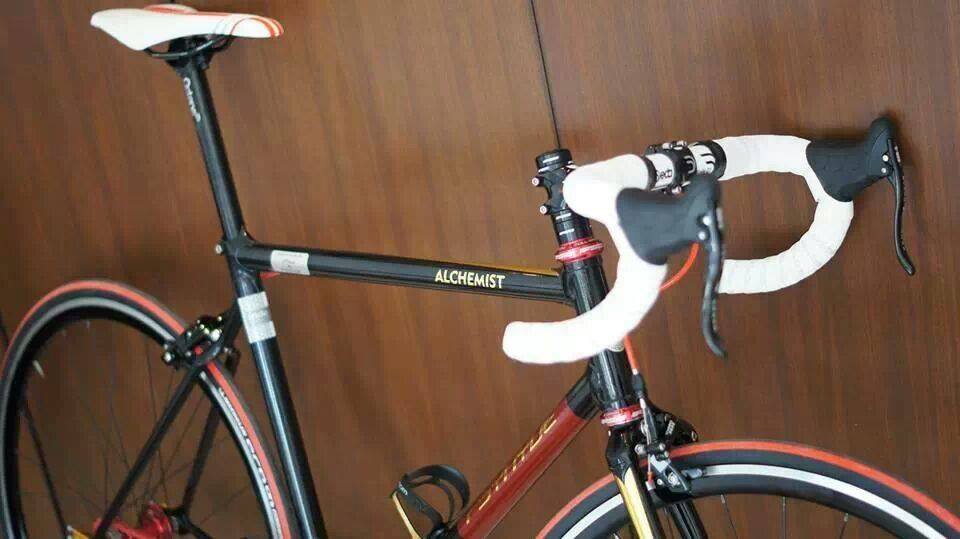
The Psynyde Alchemist

The Psynyde Alchemist

January 2014.

Praveen and I met in Pune for an update on the old story. As said, the first bike model – a road bike – was called Caffeine. I remember it as precious strapped to car’s back. The second model was a cyclocross (looks like a road bike but can go off road too) called `Hammerhead’ and sold to the client in Andaman & Nicobar. The new models due – thanks to orders received – included the track bike `Alchemist,’ fashioned from stainless steel. There is the planned touring MTB named `Jaisalmer,’ which will be a mix of MTB frame in steel and touring essentials like rack mounts at the front and back for luggage. Also planned is a rather ambitious dual suspension MTB, which Praveen reckons will be his toughest assignment yet. It will be partly made of aluminium, the first time Praveen will work with that material. The designer and builder of cycles had also got himself a new job as photographer; something he said was necessary for income even as he kept building cycles.    

That’s the story of Psynyde.

(The author, Shyam G Menon, is a freelance journalist based in Mumbai. This is the expanded version of an article previously carried in The Hindu and Man’s World. The photos used herein were provided by Vinay and Praveen.)      
A BOOK ON CAVING

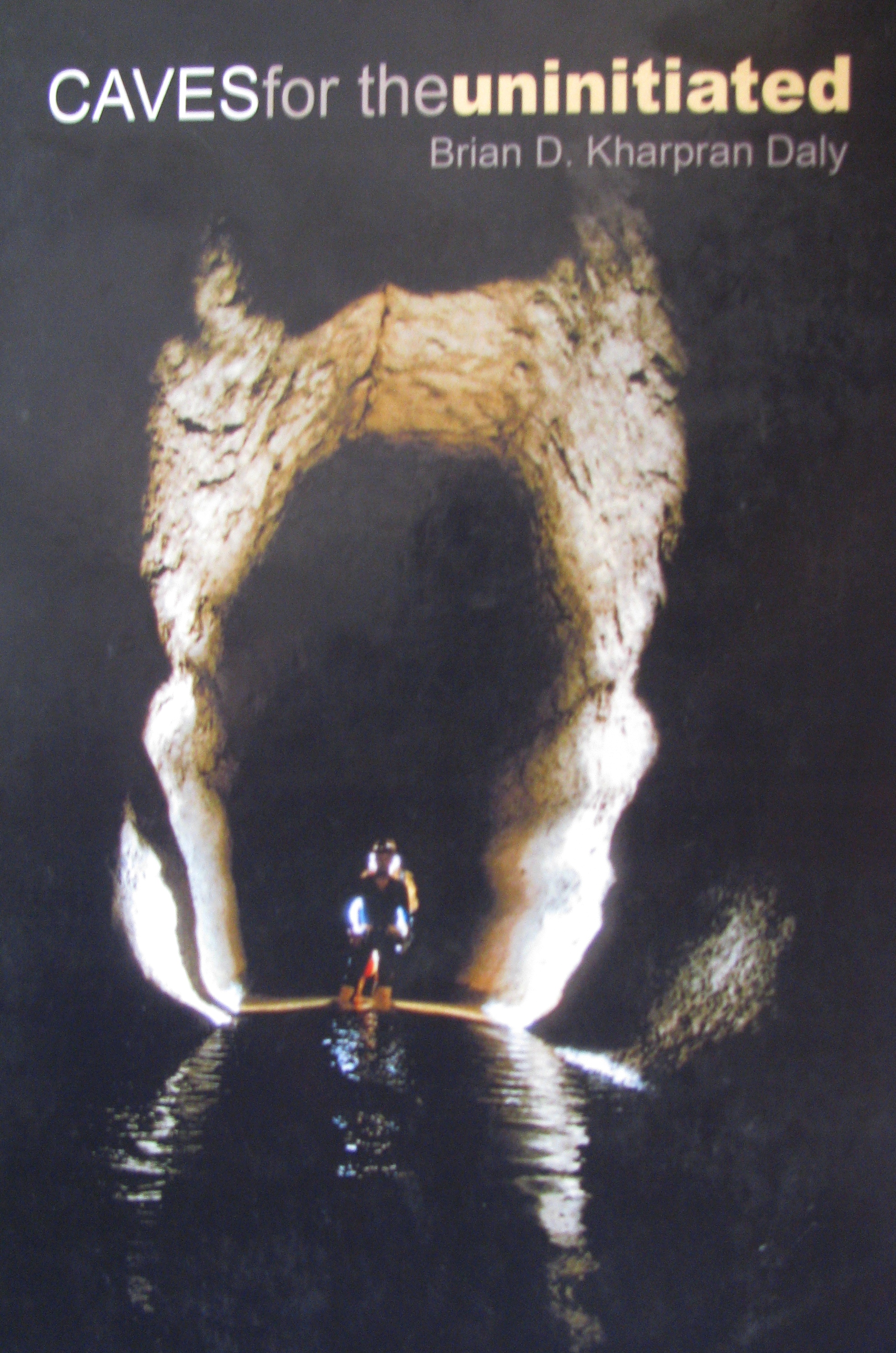
???????????????????????????????I quote two paragraphs from pages 83 and 84 of Brian D. Kharpran Daly’s book, ` Caves for the Uninitated’:

“ You know, Marisa, it is a real pleasure to impart knowledge to someone who is eager and has a thirst to learn. I will be only too happy to teach you all I know, step by step.’’

“ Just be good and disciplined kids and follow your heart in what you want to do in life. I can only help in igniting the spark in your heart.’’

Brian’s book on caves is structured as a series of chats with a group of youngsters after their visit to a cave in Meghalaya, the Indian state best associated with caving.

To me, the above mentioned paragraphs sum up my own impression of Brian.

There are very few like him in the Indian outdoors. In these days characterized by the specific highlighted to overshadow the whole, it is very difficult to find a mind given to appreciating the whole. I add – in our times of greatness while still young, knowing the whole is a time consuming process. Caving for Brian, could have easily reduced to technical skills, high adventure and apartness by what all that means – much like advertisements of adventure these days. That’s all we care for; life in single dimension, climber on vertical face.

Brian’s story is different.

When I met him in Shillong some years ago, Brian came across like an oddity in the regular outdoor spectrum. Already feted for his contribution to caving in India, he was still explorer at heart, someone who saw caving as the sum total of an experience spanning skills to science to the sheer grandeur of nature. Plus, he was articulate, down to earth and hardly like so many others adventuring for distinction. Not to mention – he made good wine. I came off happy to have met somebody who was multidimensional, someone who represented the whole as opposed to specific highlighted at the expense of the whole. There was an unmistakable maturity in the meet-up. Maybe – and here I am guessing – that’s a product of being pioneer. For Brian’s entry into caving not only signalled a leap in the scale of cave exploration in Meghalaya, caving also struggled to coexist with rising environmental threat to Meghalaya’s caves, courtesy mining. With that threat hanging as Damocles Sword over the very medium he fancied, Brian was likely forced to learn the subject from all angles. If so, his mind was perfect for the job. As the book shows, Brian’s awareness of a cave straddles the many aspects that make a cave what it is. I should also mention that I know of few persons in the Indian outdoors, who pursued their case (in Brain’s instance, protection of Meghalaya’s caves) all the way to the Supreme Court, even if it was to eventually lose the battle (please see the August 2013 post in Outrigger: The Caves of Meghalaya).
Brian D. Kharpran Daly  (Photo: Shyam G Menon)

Brian D. Kharpran Daly (Photo: Shyam G Menon)

Given this backdrop, I think Brian was cut out to write this book. A lay reader wanting to know more about caving couldn’t have asked for a better author in terms of experience in the subject, love for the subject and willingness to be evangelist for it. Brian leads the reader on through stalagmites, stalactites and siphons to gear used for caving and on to simple dos and don’ts for safe cave exploration. Strictly from the perspective of book review, it is a slightly inconsistent book beginning as easy, informal narrative but becoming trifle textbook like over the last quarter. It could have been better edited. However for all its minor shortcomings, Brian has successfully presented us with caves in general and Meghalaya’s caves in particular, all the way from the natural chemistry forming them to the myths and legends man wrapped them in. It is a wonderful effort in a country yet to adequately notice the speleology in its midst.

Our knowledge of the outdoors, the Indian outdoors and adventures therein, will be incomplete without this book on caves.

(The author, Shyam G Menon, is a freelance journalist based in Mumbai)     

2014 GIRIVIHAR CLIMBING COMPETITION – DAILY REPORT

???????????????????????????????Please note: The 2014 Girivihar Climbing Competition concluded on January 26. Featured herein, are daily reports filed when the event was on. For an overview of the run up to the 2014 competition and a simple primer on how a competition works, please visit the earlier post: 2014 Girivihar Climbing Competition / Countdown.  

Day 4 / January 26: Republic Day.

Last day of the 2014 competition when the wall would be open for the public to climb.

I reached Belapur, late afternoon.

The public had come, climbed and gone.

It was wind-up hour.

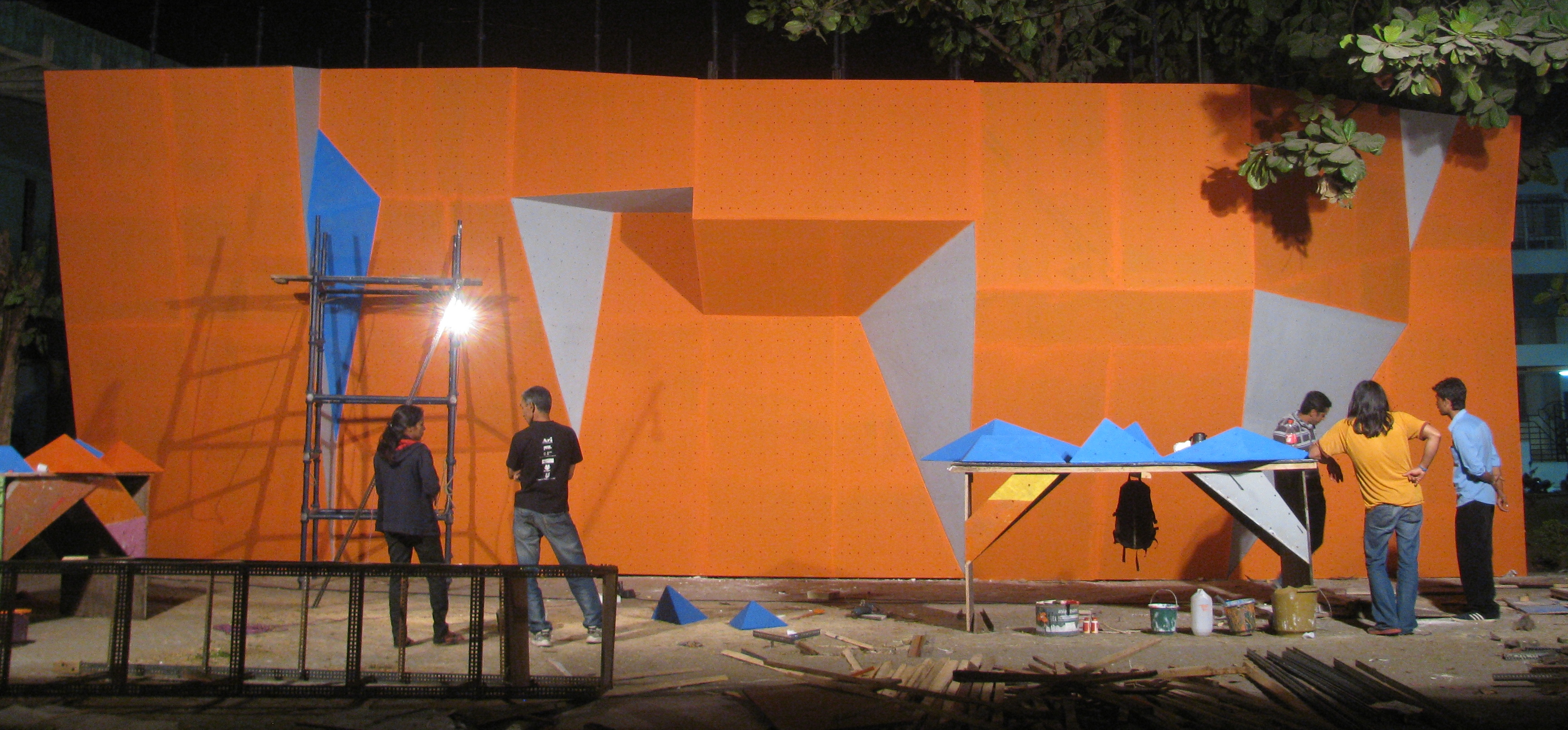
The beautiful orange wall was being taken down, starting with the climbing holds.

???????????????????????????????Some of those who had participated in the Master’s round helped, among them – Gaurav Kumar, Madhu C.R, Manikandan and Sandeep Maity. As the crash pads were taken off the ground and stacked in a pile, three young boys ran in to climb the stack and sit on its heaving surface. Nine year old-Rajbeer Singh sat atop it still wearing the gold medal he had just received at the nearby stadium for winning a 200 metre-race. Bhangra music from the stadium wafted in. A portion of the climbing competition’s venue had been taken over by a group playing cricket. In India, that game is like the sea at a beach. Other sports and games live in the land revealed between a wave receding and another rolling in. The climbing competition’s time was up.

??????????????????????????????? ???????????????????????????????Sandeep Bhagyawant brought a box of ice cream. It was relief for those working to dismantle the wall in the hot sun. Freelance journalist also got one. In Mumbai and Navi Mumbai, winter has become a flash in the pan. Welcome to warm January. There was something touching about the scene before me – devotees of a fringe sport, club members and volunteers who had sweated it out to hold a climbing competition, now dismantling just what they laboured to assemble. The orange wall developed gaps like knocked out teeth, as panels were taken off.  

shyam-blog-edit-gv-comp-2014-105Franco Linhares, former president of Girivihar, was there helping with the day’s work. I asked him what he thought of the just ended eleventh edition of the event. “ This is the best wall we have built so far. We also had a greater variety of holds and features to work with,’’ he said. The quality of Indian climbers in the men’s category has improved. Although there is still much distance between the best of Indian sport climbers and those from elsewhere in Asia, they have become stronger. “ But there is a lot of catching up to do in the women’s category,’’ Franco said.

It is now night.

As I write this, the arc lights may have been switched on at site in Belapur to help the team finish their wind-up work.

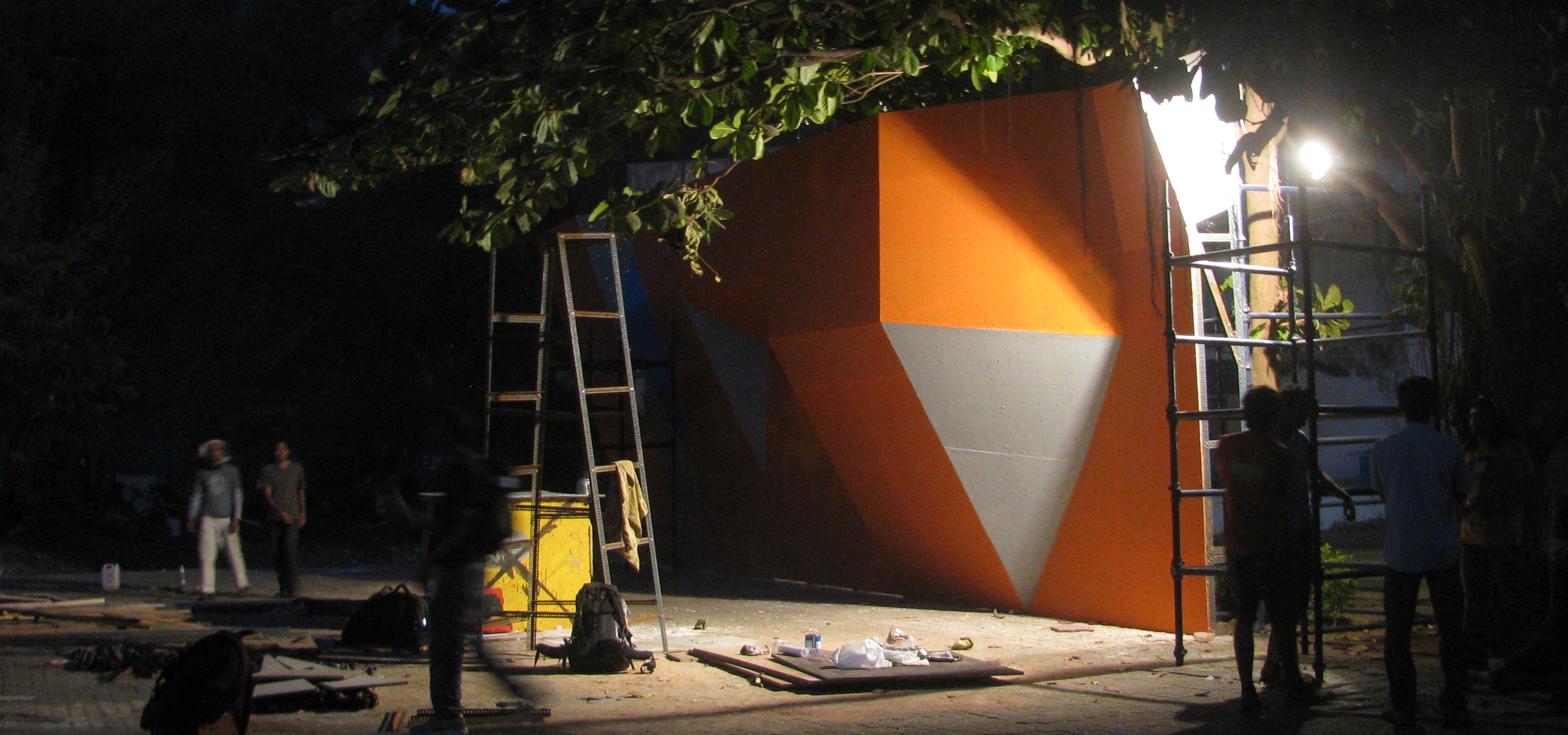
The wall on the eve of the 2014 competition.

The wall on the eve of the 2014 competition.

Except this time, there wouldn’t be an orange wall shining bright centre stage.

Thank you for looking up all the posts regarding the just ended competition, from countdown to daily reports.

I dedicate the posts to a beautiful orange wall.

???????????????????????????????Day 3 / January 25: After the Master’s round of the annual Girivihar climbing competition concluded on Friday (January 24), it was the turn of the amateurs.

Results (in order of first, second and third):

Men

Dhawal Sharma, Bhupesh Patil, Varad Desai

Women

Shimul Bijoor (this category had one winner as only one person finished a boulder problem).

shyam-blog-edit-gv-comp-2014-99???????????????????????????????

Boys

Ojas Marathe, Vishal Gaikwad, Akash Gaikwad

???????????????????????????????

Junior Boys

Vinay Gaikwad, Omkar Adhav, Rutoo Pendse & Rutik Marane

???????????????????????????????Junior Girls

Shreya Nankar, Nirmalika Pandey, Sania Nargunde

The mood at the venue was more relaxed and playful today given the large number of school children around. Many of the seniors who had competed in the Masters’ category stayed on to cheer the amateurs and help in route setting.

???????????????????????????????The competition’s Chief Route Setter Vaibhav Mehta spared time to talk to this blog. According to him, in the Masters’ category, the 2014 edition of the event saw boulder problems ranging in difficulty from 6b+ to 7c+ for men and from 5c to 6c for women. Over the years, the grades have been rising. “ The competition is getting better every year. There has been much improvement in the calibre of Indian participation,’’ Vaibhav said. As mentioned in the report of January 24, when the men’s competition in the Masters’ round, reached semi final stage, some of the promising Indian climbers got eliminated or barely scraped through to the final. Anything can happen in competitions. Still, in the run up to the event, there had been much expectation from a bunch of youngsters who recently broke through grades in sport climbing, considered very tough for Indians. Quite a few of these climbers were present at the 2014 competition. Singapore’s Adriel Choo handled their challenge well in the semi final and calmly proceeded to win the final, successfully defending his title. I asked Vaibhav, one of the finest sport climbers around when he was based in Mumbai and active in the climbing scene here, what he thought of Adriel.

“ He handled the pressure very well,’’ Vaibhav said, adding that the Singapore climber seemed rich in exposure to competitions. He was experienced and comfortable with the format. Some things about Adriel genuinely impressed. For instance, irrespective of how his fortunes were with a particular boulder problem, he didn’t carry its legacy over to the next one. He approached every problem with a fresh mind. Adriel also came across as a technically competent climber with strong route-reading ability. But what endeared him to Belapur’s climbing community and the audience at the competition, was his humility. Once he finished climbing all the boulder problems in the final, Adriel bowed to the audience which had consistently cheered him. “ An audience like the one we get at Belapur, comes to see good climbing. Adriel gave them that, plus he bowed to the audience to express gratitude for their support,’’ Vaibhav said. This combination, he felt, was something Indian climbers should notice, not to mention – the said quality and others cited previously, seemed to be there in all the participants from Singapore, pointing to a general standard in the team.

While Adriel repeated his triumph in the men’s category, his team mates Janet Goh and Lynette Koh took first and second place respectively in the women’s category of the Masters’ round.

Day 2 / January 24: The team from Singapore swept top honours on the second day of the eleventh edition of the annual Girivihar climbing competition.

Last year’s winner Adriel Choo successfully defended his title in the men’s category while team mates, Janet Goh and Lynette Koh, placed first and second in the women’s category.

Tuhin Satarkar (Pune) and Michael Schreiber (Germany) finished second and third in the men’s category, while Neha Prakash (Bangalore) took third position in women’s.

Tuhin, Adriel and Michael

Tuhin, Adriel and Michael

Some of the Indian climbers who looked strong and promising in the first round of the men’s category on Thursday (January 23), faded in the tough semi final. Also exiting in the semi final held today afternoon, was the team from Iran and two climbers from the Singapore contingent. The top five from the first round – Sandeep Maity, Ajij Shaikh, Tuhin Satarkar, Adriel Choo and Vicky Bhalerao, plus Michael Schreiber, made it all the way to the final. But from the semi final onward, Adriel Choo was a changed climber, increasingly showing the ability for calm, clinical execution of well planned climb, at every boulder problem. Tuhin Satarkar – he recently became the first Indian to climb an 8b+ sport route – and Michael Schreiber, kept the competition close particularly for second and third positions.

Lynette, Neha and Janet

Lynette, Neha and Janet

Similar systematic build up to peak performance graced the two winners from Singapore in the women’s category. In the final, Janet Goh was superb on the wall, while Lynette Koh followed closely, stronger perhaps in terms of daring but eventually limited by her smaller size. The list of finalists in the women’s category also included Siddhi Manerikar (Mumbai), Vicki Mayes (UK) and Shantirani Devi (Bangalore).

At programme’s close, prizes were distributed. With this, the Masters’ segment of the competition has concluded.

Tomorrow (January 25) there will be competitions in the amateur category. On January 26, the wall will be open for the public to try their hand at climbing. There will be a workshop on climbing for citizens.

Photos from Day 2:

???????????????????????????????

?????????????????????????????????????????????????????????????????????????????????????????????

??????????????????????????????? ??????????????????????????????????????????????????????????????

???????????????????????????????

?????????????????????????????????????????????????????????????????????????????????????????????

Day 1 / January 23: There were winners on the very first day of the eleventh edition of Girivihar’s annual climbing competition.

Adarsh Singh from Delhi emerged first in the boys’ category. Akash Gaikwad and Sachin Ahire, both from Mumbai, placed second and third respectively. This category had only one round owing to limited turn out in that age group. Still the quality of climbing on display was impressive.

Adarsh, Akash and Sachin

Adarsh, Akash and Sachin

Earlier today morning, the open competition, organized by Girivihar, Mumbai’s oldest mountaineering club, had kicked off with little ceremony and much action. There wasn’t any formal inauguration. After breakfast, registration and final touches to the venue – including getting all the crash pads properly arranged on the ground – the Master’s category of the event got underway.

There were thirty six participants for the first round in that category.

The Indian line-up was strong, with not just a national champion and others who had placed high in the nationals, but an array of climbers fresh from cracking some of the toughest boulder problems and sport routes on natural rock in the country. This contingent left its mark on the list of those qualifying for the semi final. Given below are the names of those going through to the next round:

Sandeep Maity (Delhi), Ajij Shaikh (Pune), Tuhin Satarkar (Pune), Adriel Choo (Singapore), Vicky Bhalerao (Pune), Somnath Shinde (Pune), Mohammad Ashraf (Singapore), Ranjit Shinde (Pune), Ryan Yeo Hong (Singapore), Hossein Mahani (Iran), Rohit Vartak (Pune), Guarav Kumar (Delhi), Michael Schreiber (Germany), Nevin Rajen (Singapore), Sidharth Adhav (Pune), Muhindra Lamabam (Manipur), Swapnil Bandal (Mumbai), Hosseini Mehdi (Iran), Prathamesh Sangale (Mumbai) and Indranil Khurungale (Pune).     

???????????????????????????????Semi final and final across both categories – men and women – will happen tomorrow (January 24). Competition in the women’s category begins with semi final. Such decision – whether contest should begin with an opening round, semi final or straight with final (as happened in case of boys) – is based on the number of participants registering for each category. This year, the Master’s category – basically those who have climbed previously at national level or have proven climbing experience with grades (measure of difficulty on given route) to match – received good participation.

Although begun on natural rock and spanning both bouldering and lead climbing, the Girivihar competition now restricts itself to bouldering with competitors attempting to solve boulder problems on an artificial climbing wall.

At the end of boys final, which was the last item today, the wall was opened up for half an hour, for everyone to climb. At one go, almost the entire audience shifted to the wall and were seen having a wonderful time climbing. That also tells you something about the world of climbing in India. It is a relatively small group of people, passionate about climbing and typically at events, both participant and audience.

Photos from Day 1:

??????????????????????????????? ??????????????????????????????? ???????????????????????????????

??????????????????????????????? ???????????????????????????????

 Audience:

IMG_1520

??????????????????????????????????????????????????????????????

(The author, Shyam G Menon, is a freelance journalist based in Mumbai. All the photos used in these reports were taken by him.)

2014 MUMBAI MARATHON

I had never seen the Standard Chartered Mumbai Marathon (SCMM).

???????????????????????????????

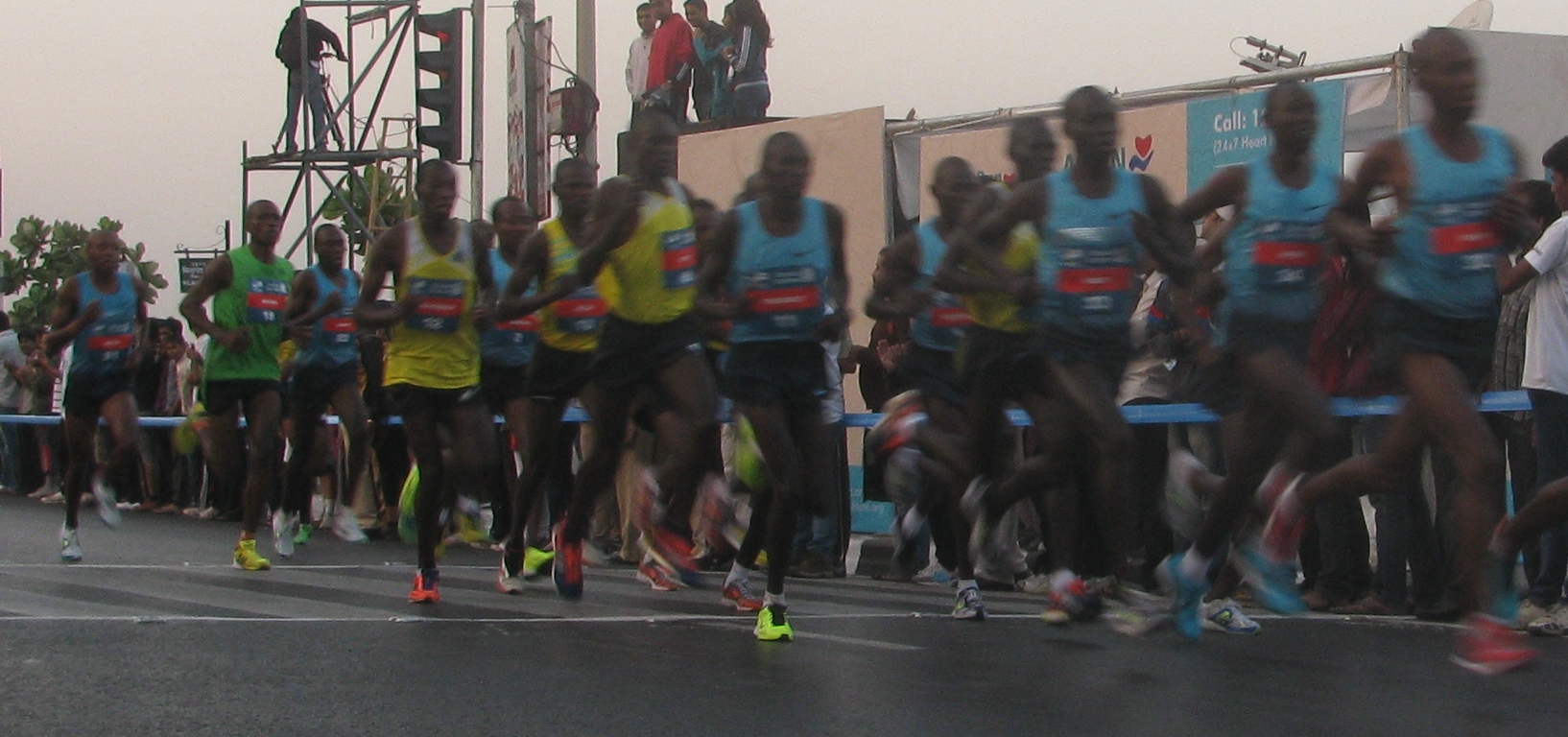
So early today morning (January 19, 2014) I joined the many who lined the streets of the city to watch the runners go by. 

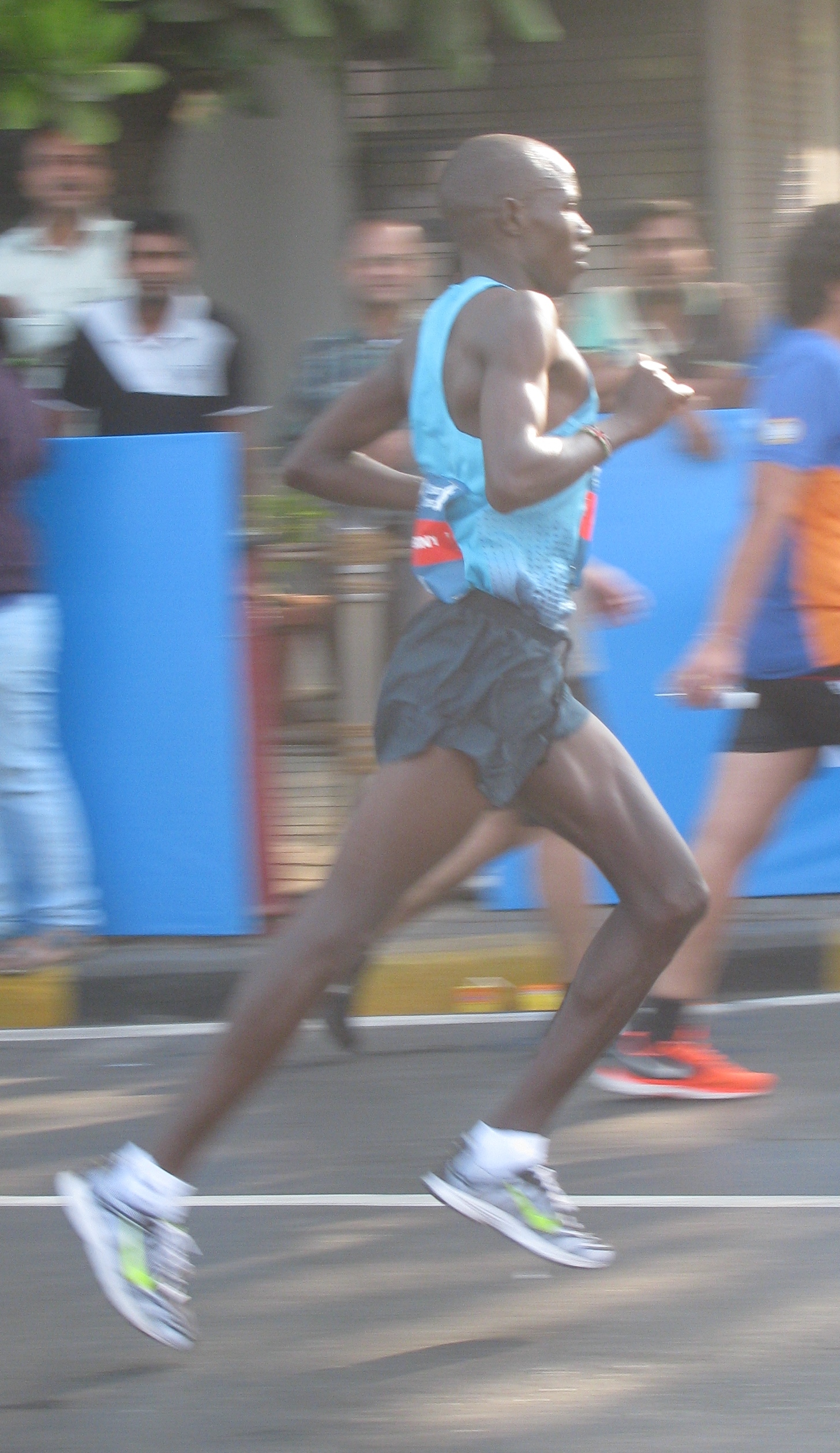
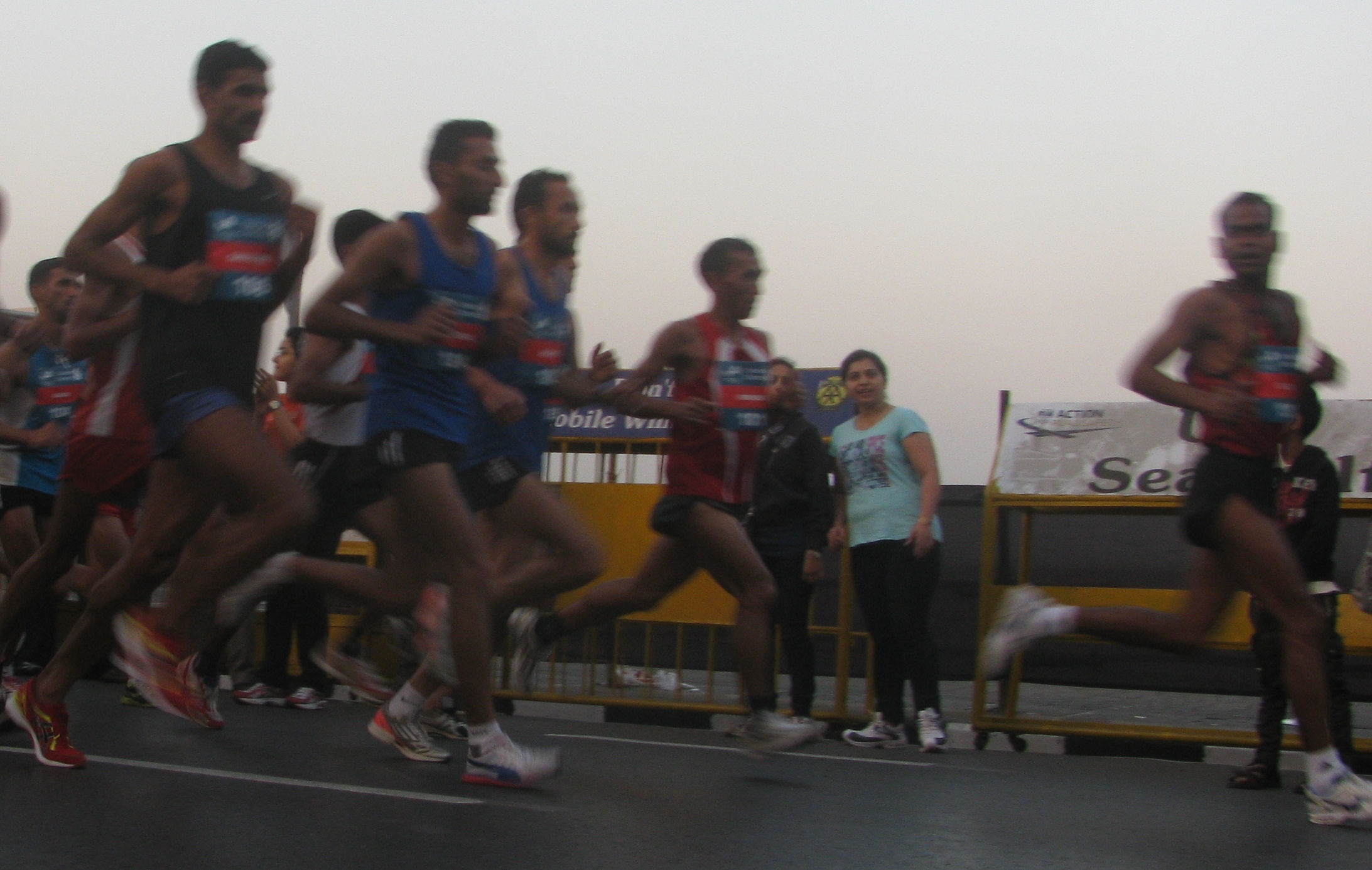
Predictably my small camera was challenged trying to photograph the elite athletes.

It found slower world around, easier to capture than runner whizzing by.

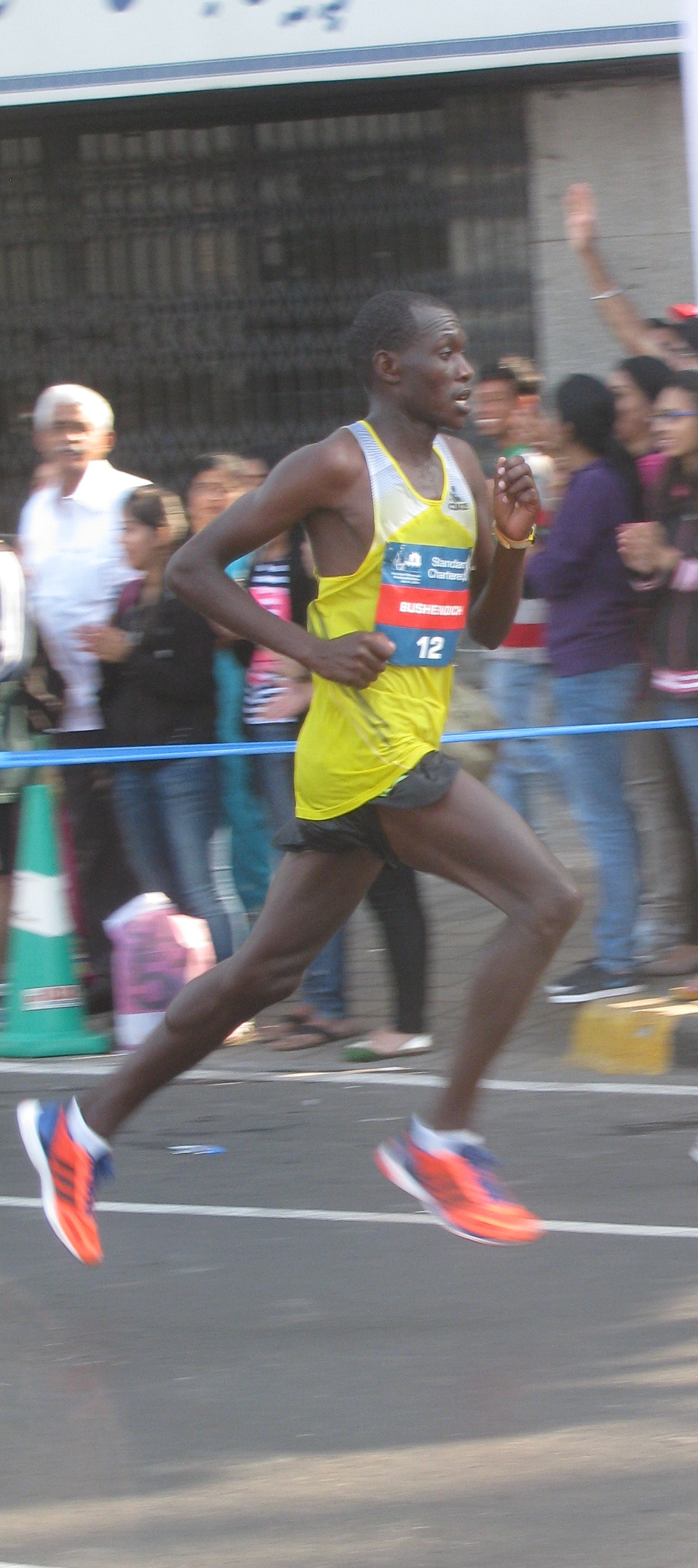
The top athletes maintained quite a pace.

??????????????????????????????? ??????????????????????????????? ???????????????????????????????

???????????????????????????????

Amid the corporate overdose, the branding and sense of heavy duty event – the pace of the elite lot was my take away of the day.

They ran.

They and all else who ran, even those who attempted to; they restored to me what I had come to see – running.

(The author, Shyam G Menon, is a freelance journalist based in Mumbai. All the above photos were taken by him.)  

AN EXPERIMENT IN PUNE – PART 1

???????????????????????????????

In 1997, two climbers from Pimpri-Chinchwad near Pune visited Bikaner in Rajasthan, at that time the only town in western India to have an artificial climbing wall.

Bikaner represented the new face of climbing. Its wall was ambassador for sport climbing, especially competitive climbing. Artificial walls were common overseas. Yet in the world’s second most populous country with a rising tide of urbanization and growing chunk of youth in its demography, the late 1990s played host to only a few isolated walls. Mumbai, India’s biggest city had none; as did Pune. On the other hand, away from the Himalaya, Maharashtra was among states actively engaged in rock climbing and mountaineering. It had a tradition of climbing rock faces and pinnacles in the Sahyadri (Western Ghats). In 1988, it had produced the first civilian expedition to an 8000m-peak with climbers reaching above 8000m on Kanchenjunga before retreating. A year after Shrikrishna Kaduskar and Surendra Shelke visited Bikaner – in 1998 – the first Maharashtrian would reach the top of Everest. Sport climbing especially competition climbing on artificial walls – was a missing piece in the state’s climbing mosaic.

Shrikrishna Kaduskar (Photo: downloaded from Facebook page)

Shrikrishna Kaduskar (Photo: downloaded from Facebook page)

Shrikrishna and Surendra resolved to get their home town a climbing wall. However they had more than a wall in mind. They had fashioned an approach – what they felt was best suited to both popularize a culture of climbing walls and keep them easily accessed by the public. Pimpri-Chinchwad, just outside Pune city, was the industrial hub of the region, home to many big engineering and manufacturing companies. It also had one of the wealthiest municipal corporations in India. On return to Pune, the duo submitted a proposal to the Pimpri-Chinchwad Municipal Corporation (PCMC) to build a wall. Then and now, climbing was and is a small sport in India, challenged for financial support. Shrikrishna and Surendra had set themselves a particularly tough assignment for not only were they seeking infrastructure in climbing, they were also seeking its approval and execution by local government. They ran from table to table and meeting to meeting, pushing things through with sheer passion till at last – in 2001, the wall came up near the Annasaheb Magar Stadium in Pimpri-Chinchwad. En route, they also addressed a related problem. Climbers are notoriously self-centred. Selfish would be wrong word to use, for that they aren’t. The thing is – climbing by its very nature is all about limiting the world to immediate environment. Climbers are doers. If you don’t climb, there isn’t any climbing – it is that simple. This often limits the merit they see in imagining / co-operating beyond immediate goal to be achieved. Consequently, the culture of outdoor clubs, mountaineering clubs and climbing clubs in India are full of stories on how they couldn’t come together on one platform to get important things done. Egos intervene. Personalities clash. Shrikrishna and Surendra belonged to a particular club – the Moraya Giri Brahman Sanstha. They knew the wall would succeed only if they got everyone aboard. So, the duo worked towards forming the Pimpri-Chinchwad Mountaineering Association (PCMA), comprising participation from all clubs. PCMA became the active face of the wall, running day to day operations. Looking back, you could say this was how the story of competition based-sport climbing in Pune began. And certainly therein, the story of a group of youngsters, first appearing on the scene as school students, later fetching podium finishes at national level competitions.

To those in Pimpri-Chinchwad, sport climbing was both new sport and a spectacle in the neighbourhood, for there is something intrinsically fascinating about climber moving up a wall. It contrasts one’s own safe stance on the ground and climber’s progression up vertical surface, so unnatural to the human being. The PCMC climbing wall, like any other, had fixtures on it – there were artificial holds; metal anchors, metal nuts and bolts. Additionally, when climbers arrived to practise, there would be their belongings ranging from water bottles to wallets, karabiners and other hardware kept by the side. The wall had no lockers. Not even for the group gear used on the wall. Everyday Shrikrishna brought group gear to the wall and took it back. The wall’s locality was not far from urban slums and its typically desperate population, growing up in denial, seeking the slightest route to scarce money. Theft became common. Personal belongings were lost. Climbing holds disappeared from the wall, as did nuts and bolts and sometimes, anchors. The thieves had no idea what the metal devices were meant for or even the actual composition and value of its expensive alloys. It was sold as scrap for a quick buck. On the other hand, it is the stated policy of any local government building infrastructure that access to the facility should be equal for all and it should benefit the local community. Slowly, the youngsters hanging around, unable to contain their curiosity, began climbing. “ For us, it was also definitely a way to get around the problem of theft. As their ownership of the activity increased, the locals urged those stealing to stop doing so. They knew who were doing it,’’ Shrikrishna said. I remember the PCMC wall as a simple, tall structure with a climbing wall on only one side of its framework (later a second wall was added). Next to it was the local swimming pool owned by the municipality. Between the two facilities was a long, low granite wall, basically the edge of the land on which the pool stood. This stone wall was also used by the climbers. They traversed it – hanging on with finger tips and perched on their toes – building up endurance. Typical of India, this creative mix of available options confidently hosted new ideas. It was all fuelled by interest, raw interest. During my days in climbing several years ago, I attended a clinic on sport climbing here. That was the first time, I saw the PCMC wall.

Surendra Shelke (Photo: courtesy Shrikrishna)

Surendra Shelke (Photo: courtesy Shrikrishna)

In 2002, wall in place, Pimpri-Chinchwad hosted its first west zone competition. Those going in for the final rounds at the nationals were selected through zonal competitions. That was the norm. Around 370 participants arrived at the PCMC wall. In the ensuing competition, not one climber from Maharashtra qualified for the nationals. It was a humbling experience, one that showed where the state stood in the sport. But a large competition in town had its own silent impact. “I saw that 2002 competition and decided to start climbing,’’ Suresh Kohare, who hails from an underprivileged backdrop in the neighbourhood of the wall, said. He joined the ragtag bunch of climbers from the local community, now regularly climbing and slowly maturing. The training at the wall was totally free of cost. “ We charged them nothing,’’ Shrikrishna said. As the abilities of these youngsters became visible, Shrikrishna and Surendra visited the localities they came from, convincing people to send their children to climb. Luckily, there was one participation model available to tap and which the PCMC to its credit, made available. The municipal corporation ran schools in the region and most of the underprivileged students studied at PCMC schools. These schools had policies in place to promote participation in sports. The PCMC formally recognized climbing as a sport to support at its schools. To this date, it is the only municipal corporation in India to have done so, Shrikrishna said. That recognition for climbing also meant students good at the sport merited financial support – for example, they got a nominal travel and daily allowance when they travelled to other places to participate in climbing competitions.

As they visited the students’ houses, tackling the parents was hard work for Shrikrishna and Surendra. There was the obvious risk all parents saw in climbing and in the subsequent quest to affix responsibility they saw Shrikrishna and Surendra as where the buck stopped. The PCMC had students sign an indemnity bond but in reality parents saw the duo as being responsible. Needless to say, this was dicey. But the duo persisted as there was underlying passion to do something in and for climbing. Then there was the whole question of – what do you get from climbing? Remember, these are questions posed by people already living utterly difficult lives, in localities beset with social problems ranging from drinking to gambling. According to Shrikrishna, some of the best climbers that the PCMC wall produced never advanced further because their family compulsions saw them trade climbing for regular means of livelihood. Nevertheless, from 2002 onward, the duo ensured that a team of 30-40 local students participated at every annual west zone competition. The experiment secured result in 2005, when for the first time, two or three climbers from the PCMC wall, graduated to participate in the nationals with Somnath Shinde emerging a medal winner in lead climbing in the junior category. Following this, Shrikrishna and Surendra began to think – why not use the PCMC wall-model to set up more walls in Pune, even elsewhere in Maharashtra?

The PCMC wall in better times (Photo: courtesy Shrikrishna)

The PCMC wall in better times (Photo: courtesy Shrikrishna)

In 2005, they – under the aegis of the PCMA – submitted a proposal to the Pune Municipal Corporation (PMC). In 2008, after much scouting, the duo was shown some vacant space in the premises of the Shri Shivaji Vyayam Mandir in Pune’s Shivajinagar. It wasn’t perfect for the space assigned for the wall was trifle cramped. But Shivajinagar was centrally located. Plus they got complete support from the local representative to the PMC, Balasaheb Bodake. In 2010, the Shivajinagar wall opened. It has both lead climbing and speed climbing walls. Soon after inauguration it shut shop for 3-4 months as the PMC took that long to approve the rates the PCMA could charge those reaching the facility to climb. By then, there was also another sad story to cope with. The old PCMC wall, from where this whole story commenced, had shut down reportedly due to the corporation insisting that the PCMA assume onus for security as well and not just daily operations. This caused a drift. Shut down and neglected, things have again gone missing from the old wall, Suresh said. Climbers from the PCMC wall now travel to Shivajinagar in Pune, to climb. On the bright side – there is one full fledged sport climbing wall available for use. Talks are on to restart the PCMC wall, Shrikrishna said.

(…..TO BE CONTINUED)

(The author, Shyam G Menon, is a freelance journalist based in Mumbai)

AN EXPERIMENT IN PUNE – PART 2

???????????????????????????????Early January 2014.

It is supposed to be winter in Pune.

Strangely, it is pleasant and there is no need for a sweater. Global warming, I tell myself. It is an odd world, mine. There was right then freezing cold in the US, complaints of cold winter from North India, yet this lack of cold in Pune, 1800ft up from sea level. I am at the Shivajinagar wall to meet Ajij Shaikh, perhaps the best result yet from the original PCMC experiment. To talk, we go inside the wall. The design of this wall included what was amiss at the PCMC wall. Here you have rooms to store equipment under lock and key. The first floor appeared make-shift stay-over for climbers. They rested between climbs on a row of crash pads; tired, sleepy youngsters, seemingly oblivious to everything except life lived hold-to-hold. The second floor was a bouldering gym. Then, you had the ladder well leading straight up to the top of the wall, helpful to install climbing ropes et al. The whole thing reminded me of a tree house. Perfect getaway, if all you wanted to do in life was climb, rest, climb, rest…so on. Ajij, 22 years old, is here every day. As are other promising climbers like 18 year-old Vicky Bhalerao. Both these names as well as some others from Pune, were familiar to me from their regular participation at the annual climbing competition held by Girivihar in Mumbai.

Ajij owes a lot to yoga – that is clear.

Ajij Shaikh (Photo: Shyam G Menon)

Ajij Shaikh (Photo: Shyam G Menon)

He began his story so, remembering Vivek Sable, his yoga teacher at school in Sant Tukaram Nagar. He recalled the yoga sessions, his competence at it and eventually his participation in yoga competitions right up to representing Maharashtra at national level contests. “ It made my body flexible,’’ he said. Sometime in middle school, he reached the PCMC wall for a week of climbing. At its end there was an inter-school climbing competition and Ajij topped it in the under-13 category. One of the coaches at the wall, Sudhir Tambe, told him that he showed promise. But for the next two years Ajij, never returned. He was doing too many things – from yoga to athletics – and fitting the climbing wall into his daily schedule starting from home in Mahatma Phule Nagar was too tough. Ranjith Shinde, who was also coach at the PCMC wall, was the next person to remind Ajij to climb regularly. This led to a participation in the zonal competition. However it was after he finished schooling that Ajij got around to speaking seriously to Ranjith and expressed his intention to climb competitively. Unfortunately by then, the PCMC wall had closed. So he started climbing outdoors; this included the environs of Duke’s Nose (a prominent rock feature near Lonavala), the Plus Valley area and rocks near Ferguson College in Pune. There was also a small artificial wall in Pune, he could access.

Rock climbing is done with special climbing shoes with rubber soles that generate adequate friction besides holding the foot in such a way that the climber is able to direct his power to the big toe. Ajij and his companions from similar underprivileged backdrop had none of these luxuries. He climbed with Fitness shoes, a tight fitting women’s shoe from Bata, which in appearance, resembled a climbing shoe. The lack of personal equipment made competitions attractive. Typically at events like the annual climbing competition held by Mumbai’s oldest mountaineering club, Girivihar, climbing gear was part of prizes given away. However with practically no personal gear, the prizes that Ajij and his friends won were never kept personal. They were shared with anyone from the group competing at high level and needing good equipment. In turn, this meant that wear and tear of equipment, like climbing shoes, was pretty fast. When it came to personal equipment, it was therefore like being on a treadmill.

In 2008, Ajij reached his first nationals. It was his last year in the junior category. In Delhi, he saw Praveen C.M, a gifted climber from Bangalore, triumph in the senior’s lead climbing, speed climbing and bouldering competitions. Ajij was in awe of Praveen. He was also cast into a deeply introspective mood, which reminded him of his personal background and left him in tears. “ I cried,’ he said. Ajij was the eldest of three children; his father – now moved to Saudi Arabia – ran a small hair cutting saloon in Pimpri. He didn’t talk much of his family but when asked he admitted that they don’t quite know what climbing is or what he does despite trophies in the house. The family was poor. They lived in one room. Had things gone on as they do in such underprivileged circumstances, he would have been forced to quit studies by the seventh standard and seek work. Seventh standard was a Damocles Sword. Ajij thinks it was yoga that saved him. He travelled to participate in yoga competitions and that exposed him to places and people away from Pune. It helped him convince his family that he should remain at school, something useful when it came to his later interest in climbing. Such passing details gave me the impression that the 22 year-old had grown to being a bit of an island. According to Ajij, 2008 was his year of change. Among other things, he resolved to face his life thinking positively and figuring out how to improve his climbing, including fundamentals – he actually had a fear for heights.

Ajij on the PMC wall (Photo: Shyam G Menon)

Ajij on the PMC wall (Photo: Shyam G Menon)

In 2010, the Shivajinagar wall was built. Ajij took up a job at the wall, looking after day to day operations. What it really did was keep him at the wall for long hours of practice. By this time, he was also focussed on only yoga and climbing having realized the value in pruning down many interests to a few he could properly handle. In between, to make ends meet, he worked with wedding caterers helping to serve food and clean up after functions; he also worked at private companies doing odd jobs like packing. In 2010, he came third in a competition in Mumbai. Then there was an open national competition (not the formal nationals, which requires selection through zonals) at Mussoorie, where Ajij was second and Praveen was third. He smelled potential – he could do something. On return from Mussoorie, he intensified his practice. Besides practising at the Shivajinagar wall, including at the bouldering gym on the second floor inside the wall, Ajij also did extended endurance sessions on the granite wall near the old PCMC climbing wall. He qualified at the zonal competition in Bhopal and headed to Delhi for the nationals. In the initial rounds, he did badly and scraped through to the finals. Then he amazed everyone to emerge first in the senior’s lead climbing event. He repeated this triumph in 2011, 2012 and 2013 – making him a four time national champion.

In 2012, Ajij participated in the World Championships in France. It was the first time he flew in an aeroplane, his first time overseas, including catching trains in France and reaching eventual destination; all this, alone. The experience overwhelmed. He arrived too late for one event and messed up his chances in the other. Managing France with no French and just some English to get by was difficult. Overwhelmed – was the word. He breathed easy when Viraj Bhide, a climber from Mumbai studying in Paris, intervened. In 2013, Ajij participated in the Asian Championship in Iran. He hopes to travel to Spain in 2014 to participate in the next World Championship. According to him, he received no help from any sponsor, for these trips. Friends and others helped with money; he also borrowed. Later, he worked with outdoor companies to pay off what he owed people. “ I don’t have any regular sponsor. What I have understood is that you need to be set up for it properly,’’ he said, trifle bitterly.

Ajij has a point. There are others who have managed to get support even though their ranking at the nationals in their respective sport hasn’t been first. In the youngster’s eyes, they had a good “ set up’’ and hence the progression to sponsorship. But there is also the angle that youngsters tend to expect more from the world without proper self assessment first. Thanks to proliferating media, the sport has become very brand driven. Top brands are coveted. “ A sportsman in need must be willing to go along with whoever offers support even if the brand that needs him is still a struggler,’’ a senior climber said. Interestingly, Ajij did make one observation – he does not feel comfortable with climbing as imagined by sponsors. He does not like the compulsion to prove because you have sponsor to impress. He would rather just climb. That’s spiritually close to the sport’s ethic and undeniably the purest approach. But it is likely impractical – at the very least, tough – in modern competitive sport. It can be circumvented only if the public domain is dynamic in financial assistance, which is doubtful. Not to mention – climbing itself is not prominent in India, gets easily misinterpreted and yet more than any other activity captures the idea of victory with its imagery of climber moving up. “ When we go abroad, we are expected to bring back medals. But people should understand the difference in resources and training between here and overseas. They must also understand that the more you travel around and compete, the more comfortable you become with the competition format. That is critical to perform well,’’ he said.

Vicky Bhalerao (Photo: Shyam G Menon)

Vicky Bhalerao (Photo: Shyam G Menon)

This problem aside, what exactly did climbing mean for Pune’s underprivileged youngsters, now successfully pushing their names in sport climbing?

We were all now sitting in front of the Shivajinagar wall. With the question of what climbing meant for them, the youngsters hit a wall; the sort of wall that thought typically runs into in a sport too action oriented to think. Does this regimen of action help you forget your troubles, the hard life back home? – I asked. “ That is probably true,’’ Vicky, who was sitting near Ajij, said softly. Vicky finished third in senior’s lead climbing at the last nationals. He has previously been national champion in junior and sub junior categories. Earning a podium finish at the nationals in his debut year as senior, he is considered to be a strong talent, somebody to watch out for. When I met Suresh, he too had felt that line of reasoning may be correct. Being at the climbing wall and climbing helped you forget other depressing things. It kept you in the zone, you had fun.

Vicky in the bouldering gym within the PMC wall (Photo: Shyam G Menon)

Vicky in the bouldering gym within the PMC wall (Photo: Shyam G Menon)

Suresh also told me of what happened to Somnath Shinde. Working with an adventure gear company, Somnath used to help maintain a climbing wall at the premises of the Indian Army’s Bombay Engineering Group (BEG), in Pune. Soon he expressed a desire to join the army. His first attempt failed. He succeeded in the second attempt. Now he represents the army at climbing competitions. Similarly, another talented climber from the group, Indraneel, had moved to Surat, to manage a climbing wall at a school there.

For the older Shrikrishna who along with Surendra imagined the PCMC and PMC walls, climbing faded from his life, prematurely. That’s the price he paid for devoting time to grow climbing. “ In the outdoor community, everybody wants to climb. Nobody wants to do the kind of work Surendra and I have been doing. If we had a hundred people ready to undertake such work, things would have been different and I would still be climbing. So the complaint that government does little for the sport is only partly correct. We are the ones who hardly do anything,’’ he said.

That’s something to think of.

 (CONCLUDED)

(The author, Shyam G Menon, is a freelance journalist based in Mumbai)

2014 GIRIVIHAR CLIMBING COMPETITION / COUNTDOWN

???????????????????????????????Please note: The 2014 Girivihar Climbing Competition concluded on January 26. This post pertains to preparations ahead of competition. It provides insight in this regard. Just after the regular updates, you will find a simple primer to understand how the competition format works in climbing.

The eleventh edition of the annual bouldering competition hosted by Mumbai’s oldest mountaineering club, Girivihar, is scheduled over January 23-26, 2014, at CBD Belapur, Navi Mumbai.

It is an open competition.

As usual, the organizers expect participants from India and overseas.

For more on the history and evolution of this annual event, readers can see the story ` A Competition’s Solo Climb’ posted on Outrigger in August 2013.

Those wishing to participate in the upcoming edition should report to the venue on January 22.

On January 23 and 24, you have the master’s round. January 25 is for amateur climbers.

On the last day, January 26, Republic Day, the wall will be open for the general public to try their hand at climbing. This will be in the form of a workshop on climbing for citizens. 

Details can be had at www.girivihar.org

shyam-blog-edit-gv-comp-2014-6shyam-blog-edit-gv-comp-2014-2shyam-blog-edit-gv-comp-2014-3

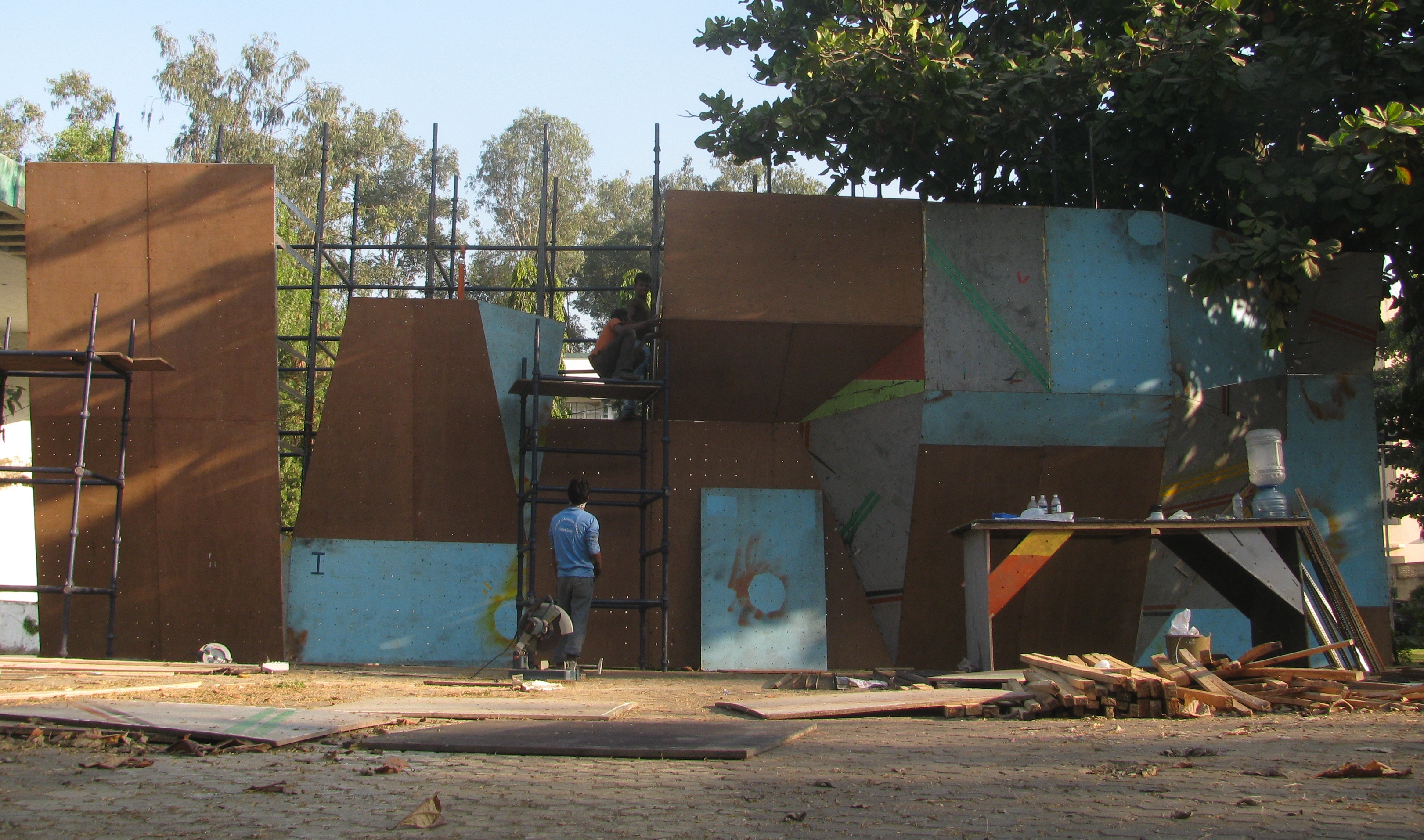
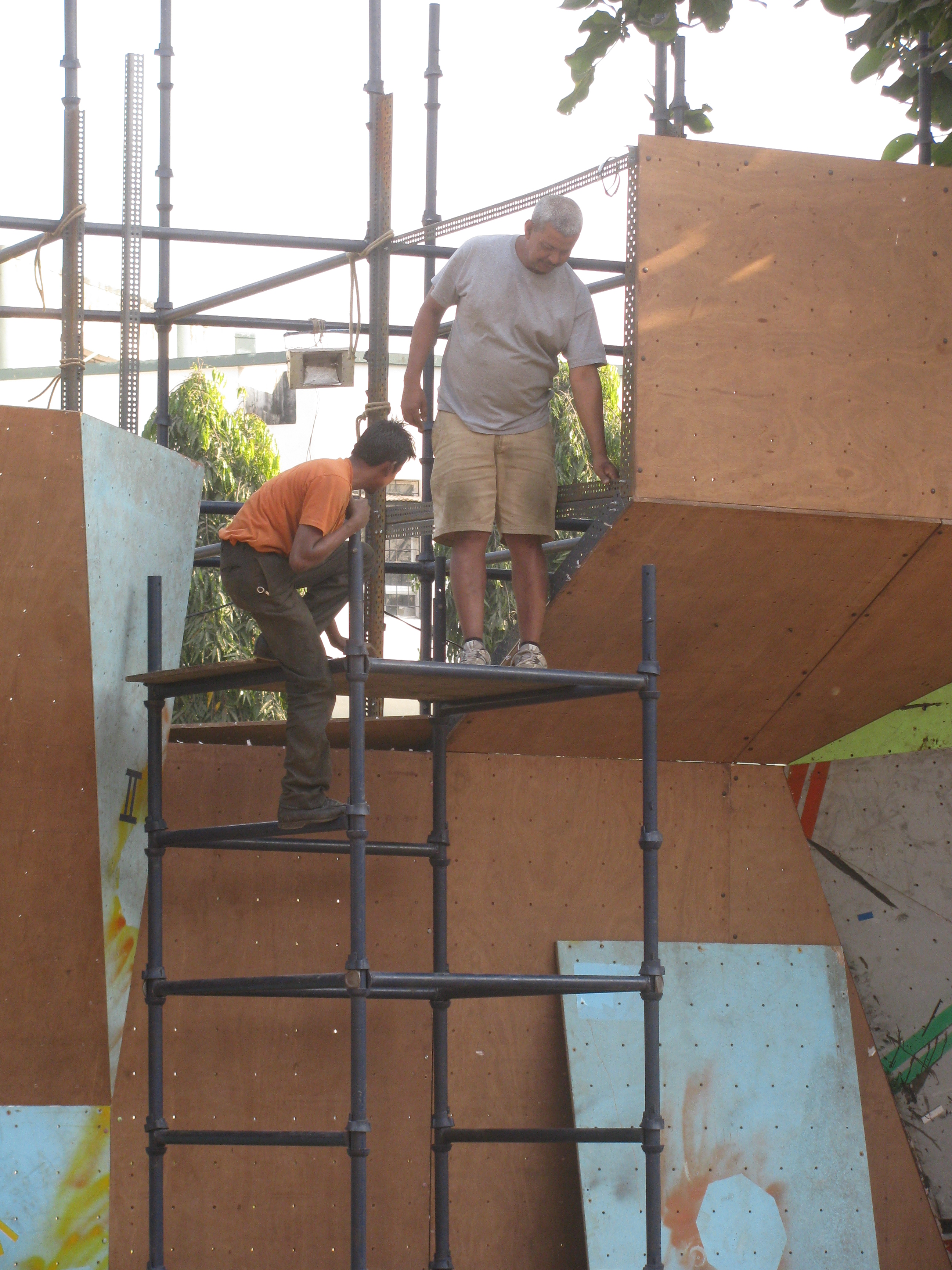
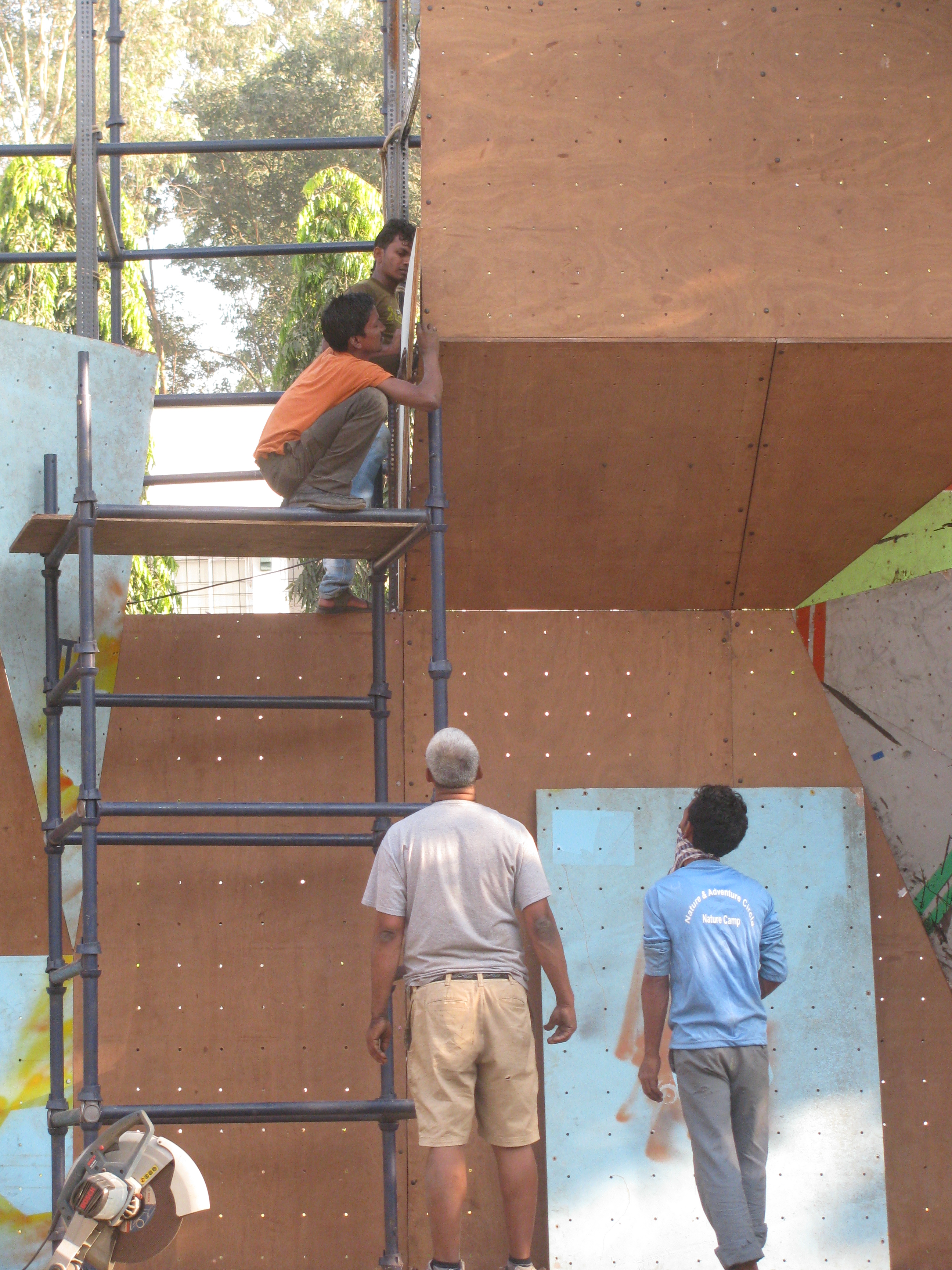
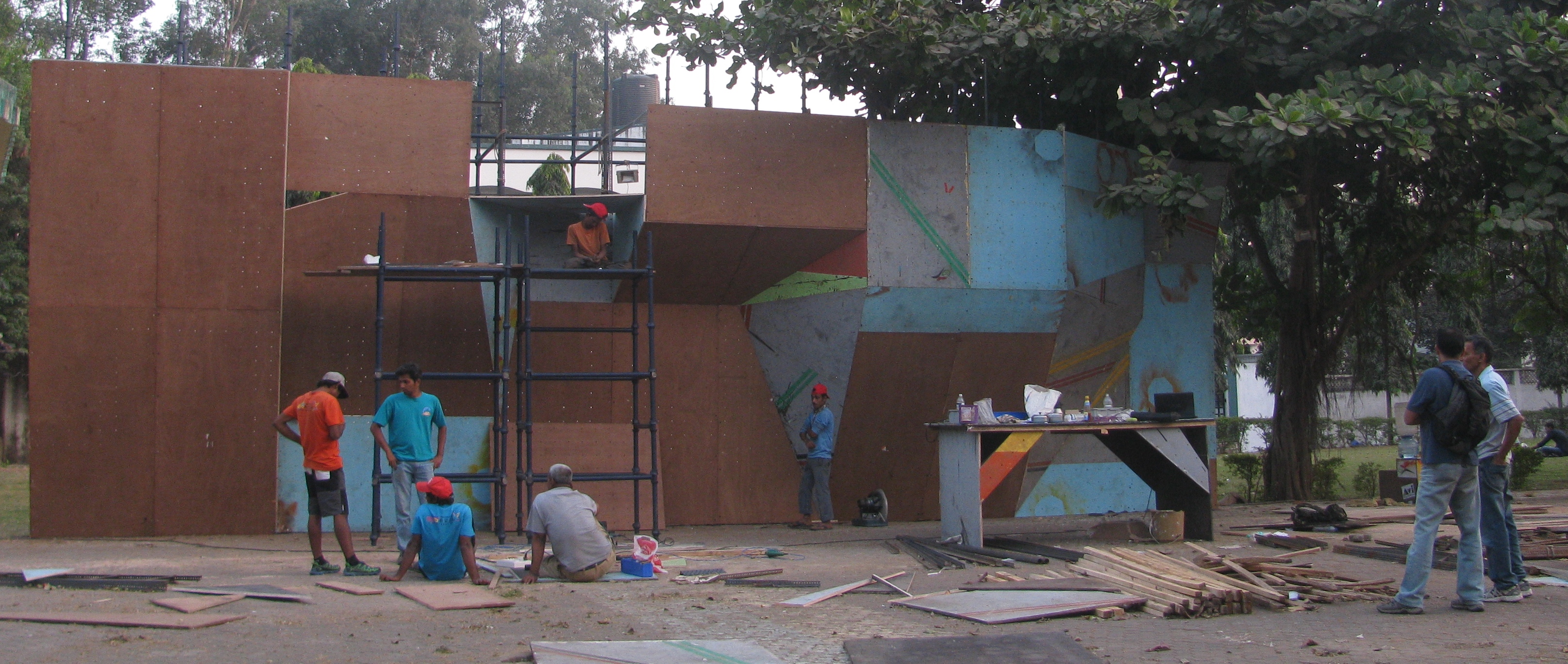
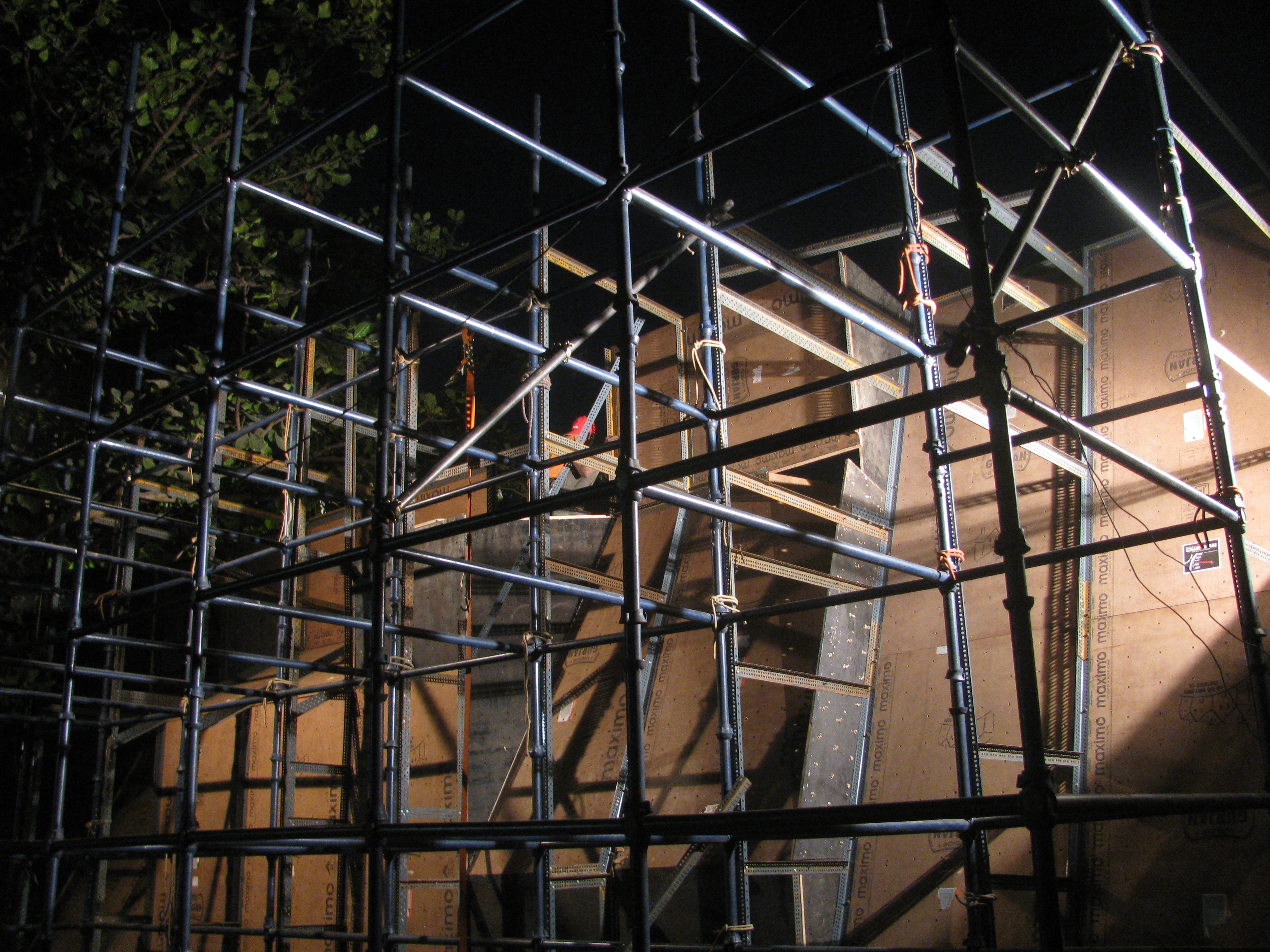
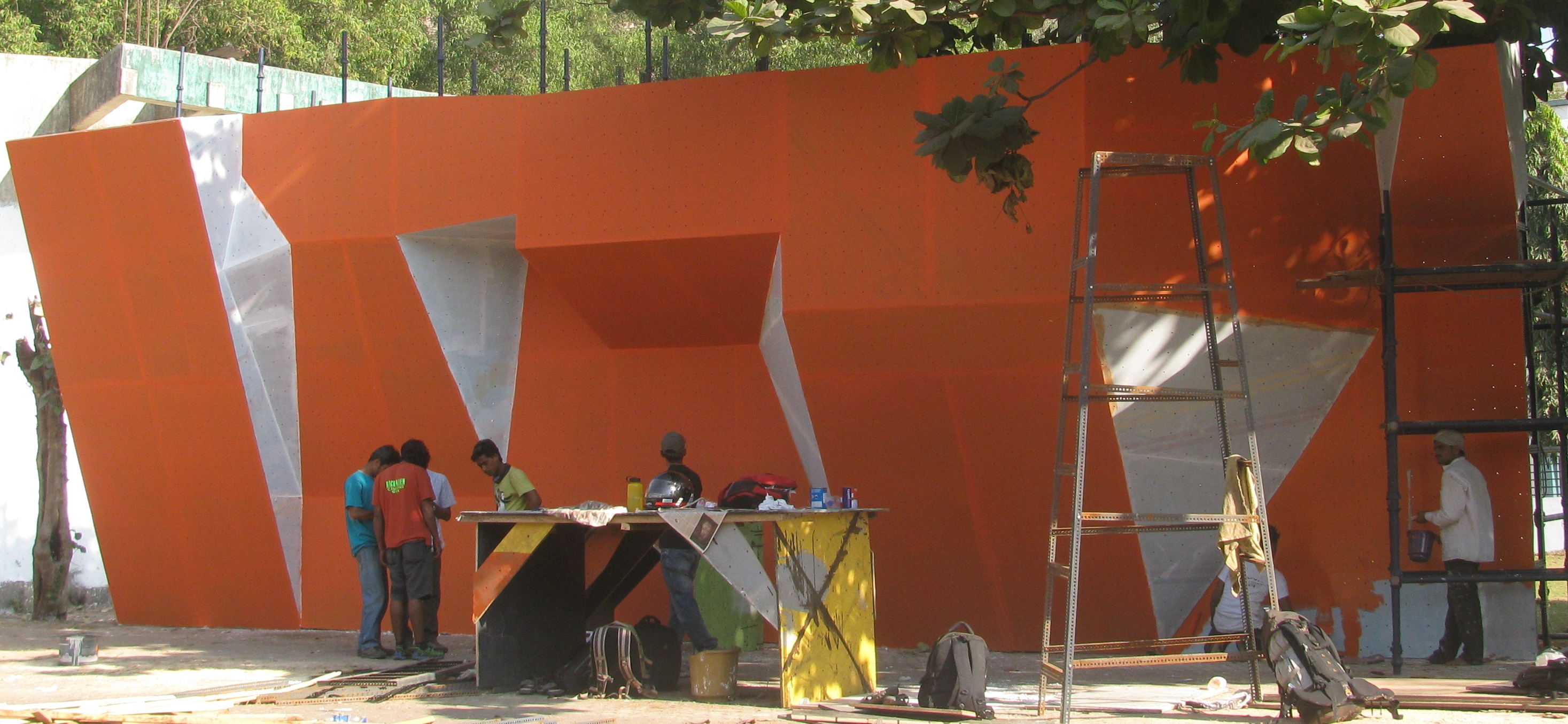
Work on this year’s climbing wall and other competition related formalities has begun (please see photos herein).

Abhijit Burman, Franco Linhares and Vivek Thakur have become busy.

Vaibhav Mehta should arrive in a few days.

Rohan Gawand and Sandesh Palshetkar dropped by to help.

 The countdown has begun.

??????????????????????????????????????????????????????????????

As Franco said when I spoke to him on Monday (January 13), for climbers it is that time of the year when “ all roads lead to Belapur!’’

???????????????????????????????Update 1 / January 14: Tuesday was a day of festivals in India.

According to newspaper reports, there were five happening at once.

Early evening, the stadium near the competition venue at Belapur was in celebratory mood, hosting games ranging from cricket to kabaddi.

Amid that, work on the climbing wall continued.

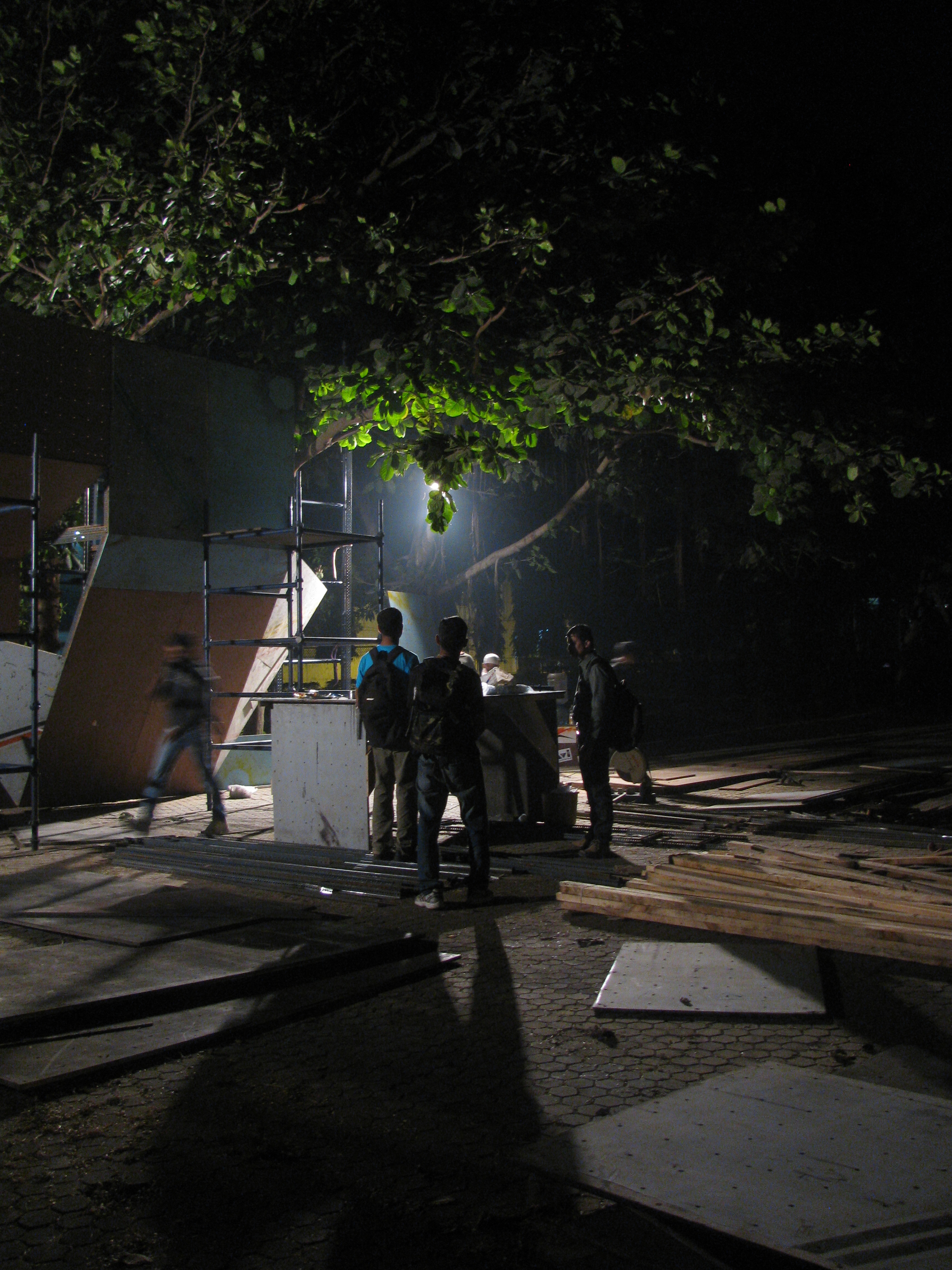
Abhijit Burman (aka Bong) was at the venue, as was Prashant Venugopal, who informed freelance journalist living out all days as same, that Tuesday was holiday. It added to the pleasure of meeting friends and the cups of tea, Bong handed out.

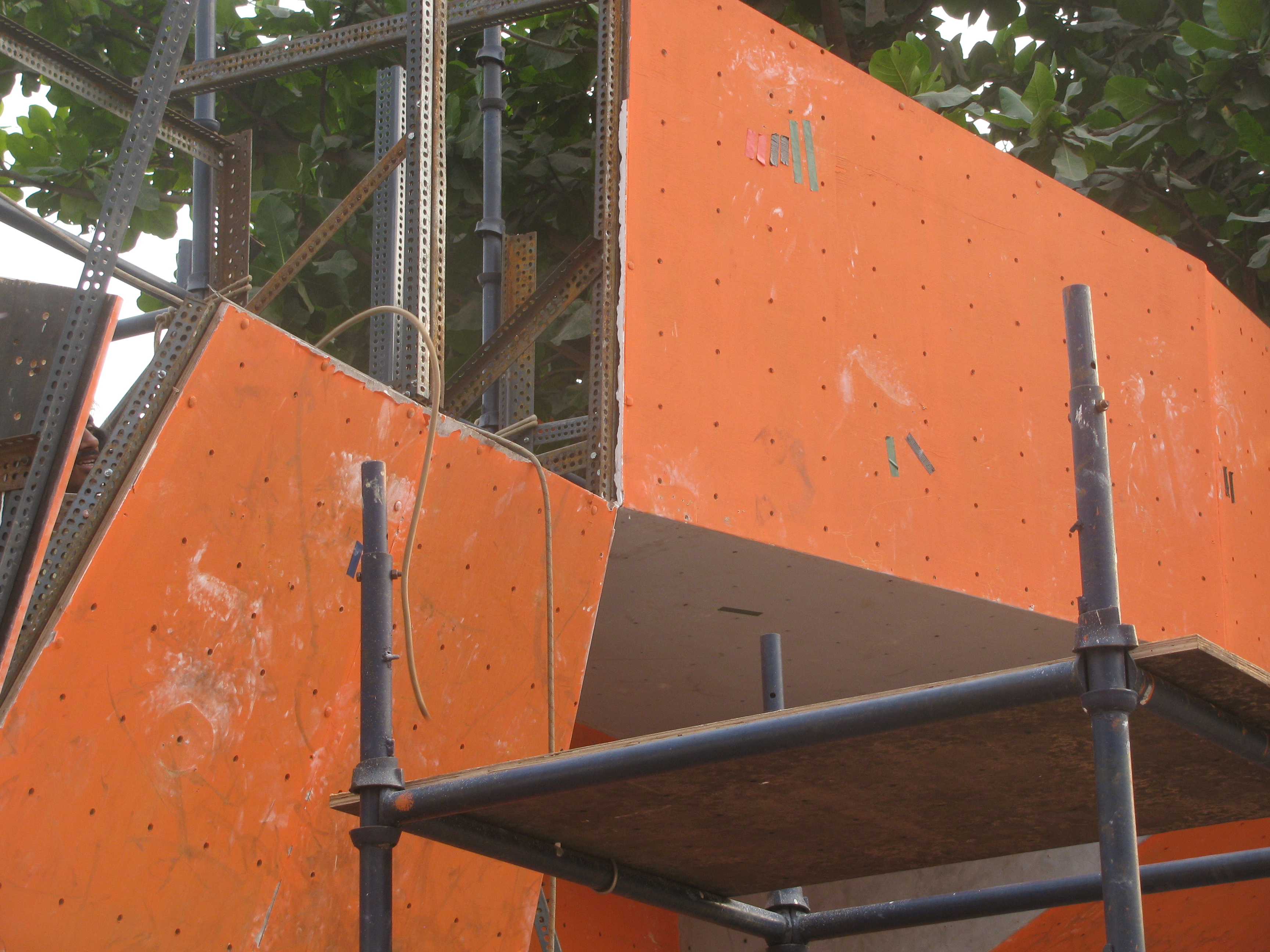
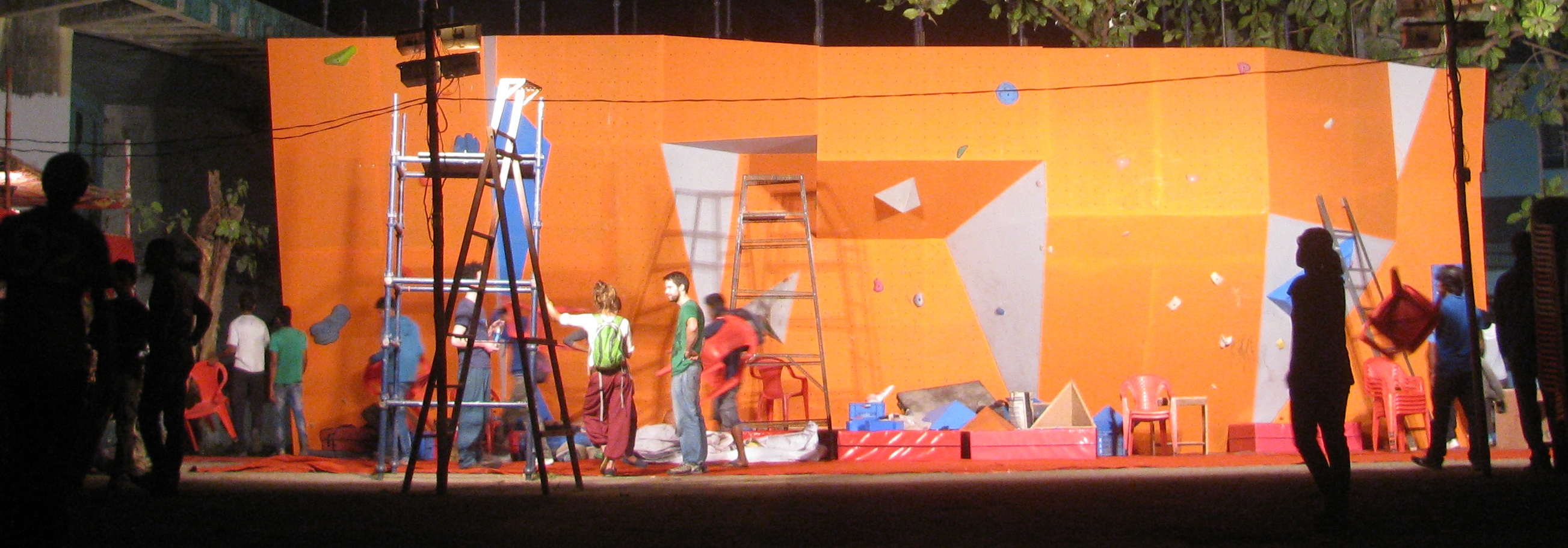
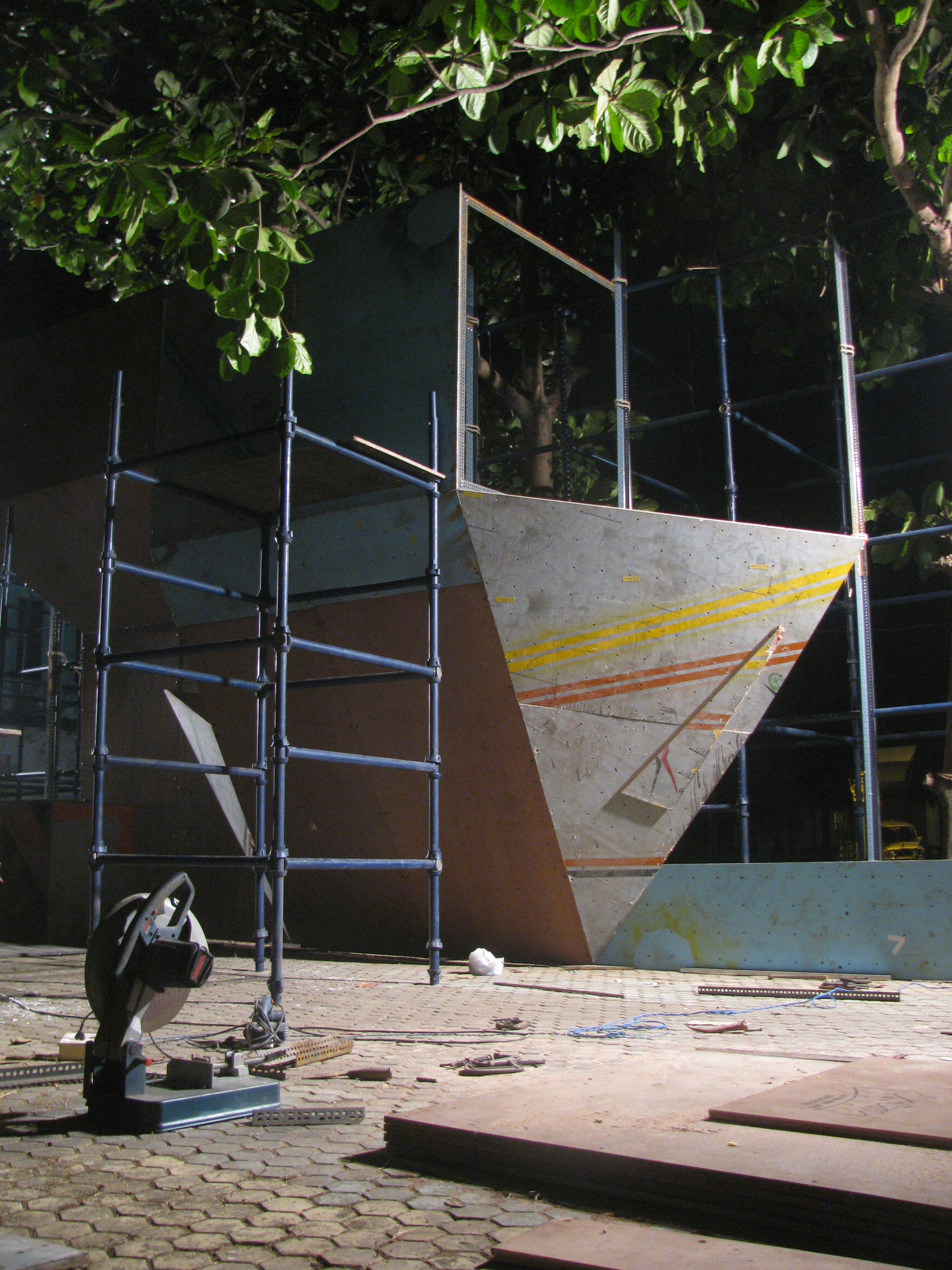
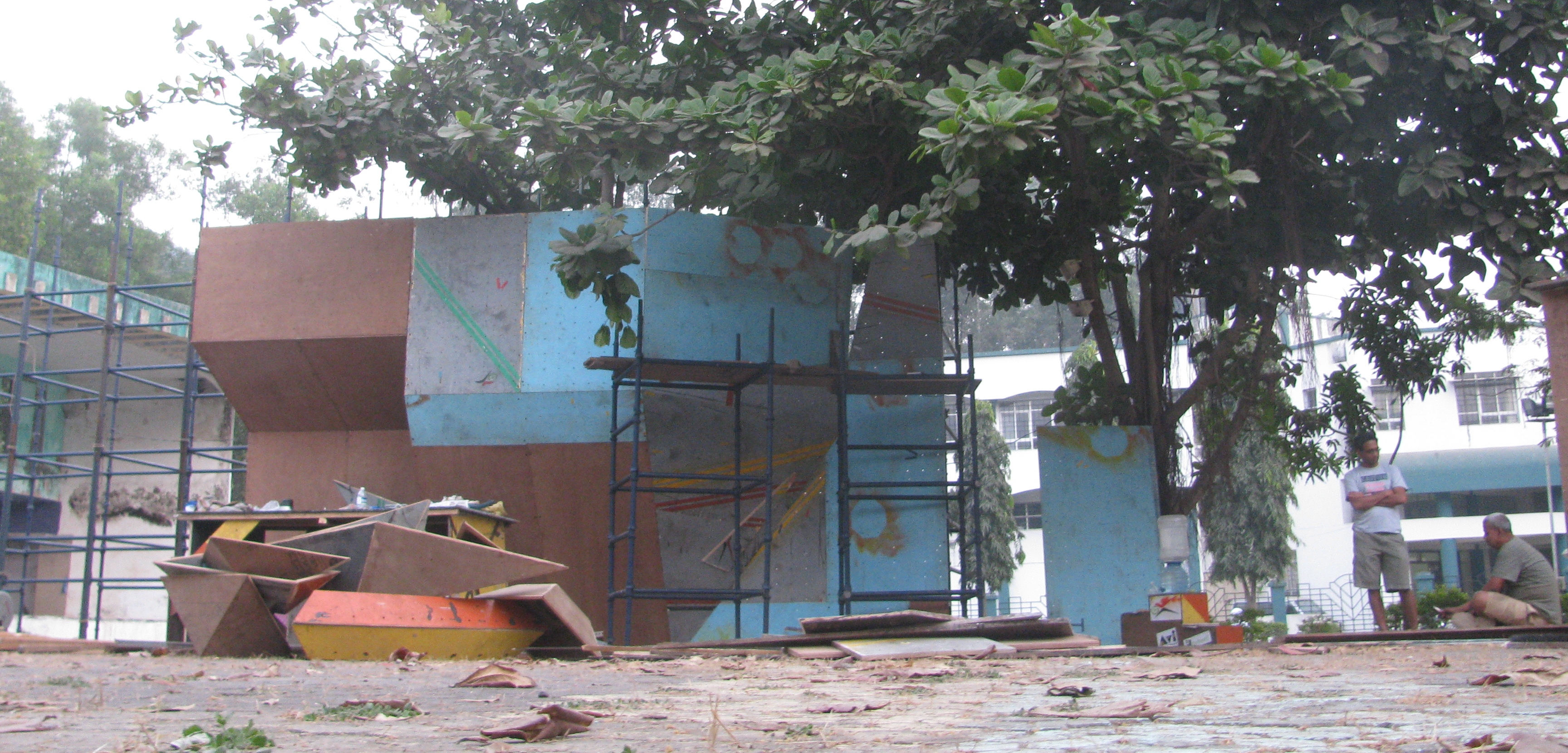
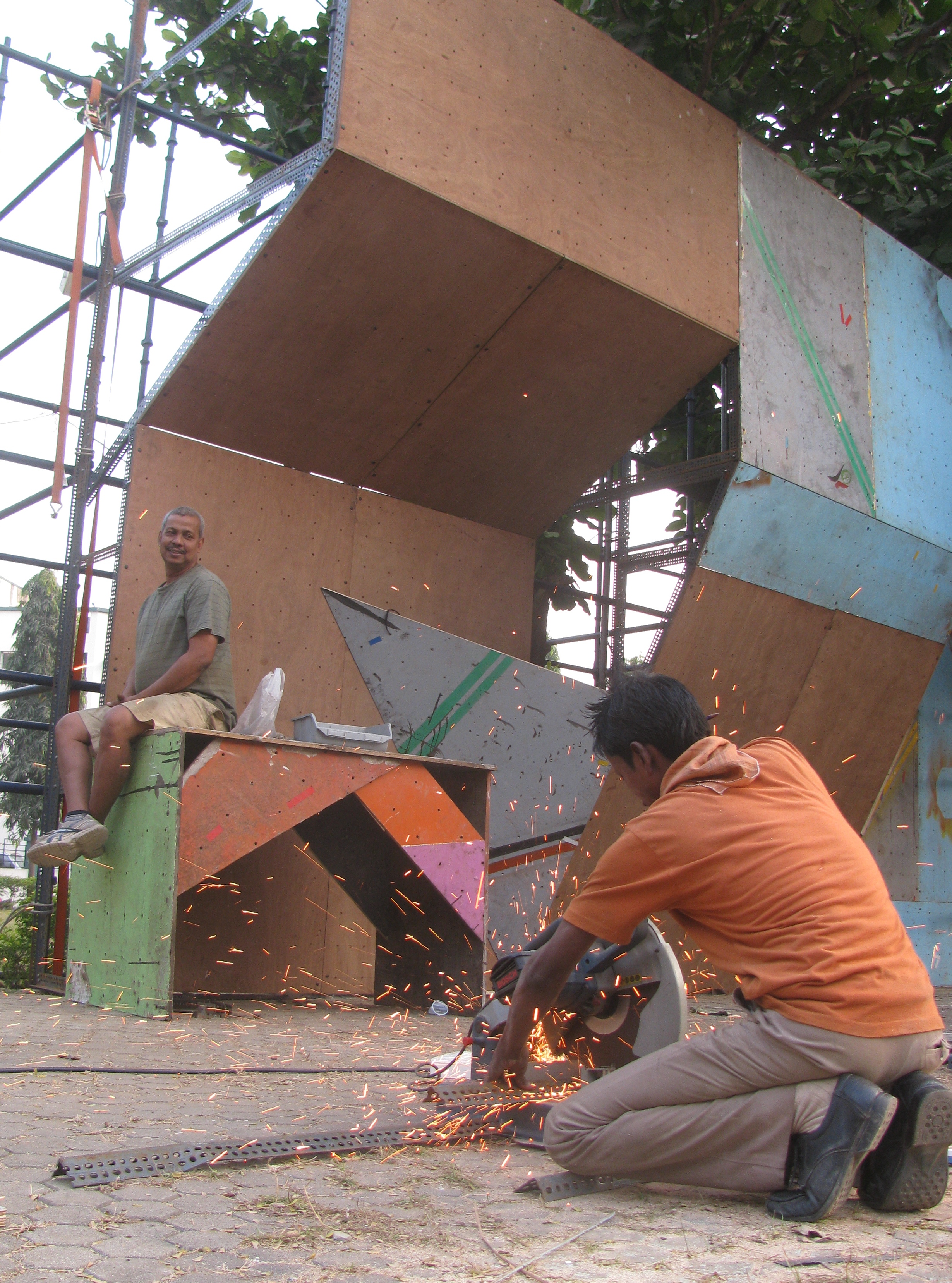
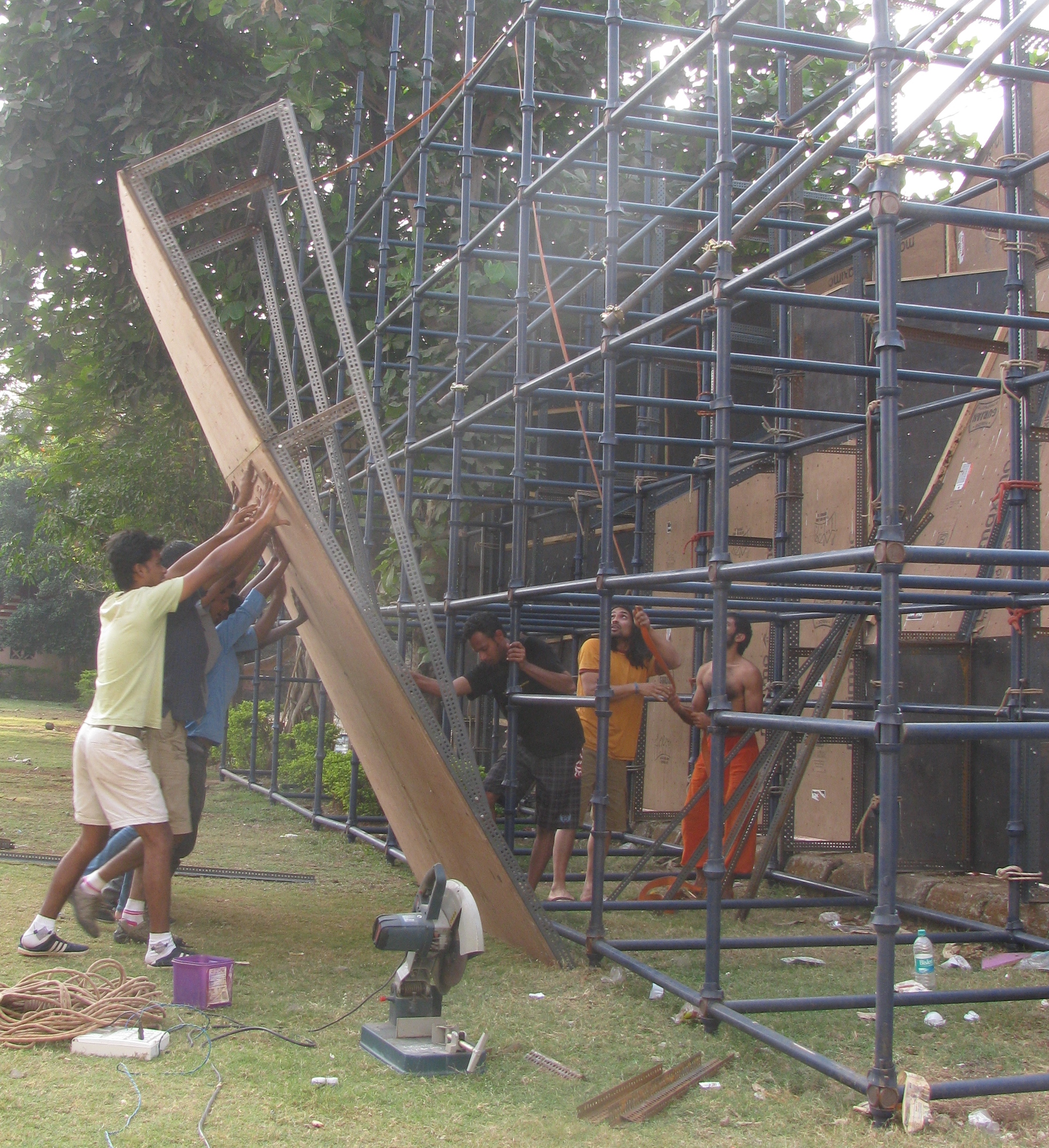
The w???????????????????????????????all’s size is now clear from the framework built to support it. According to Bong, the wall for 2014 will be the biggest constructed yet for the Girivihar competition. It is marginally longer than what has been installed before.

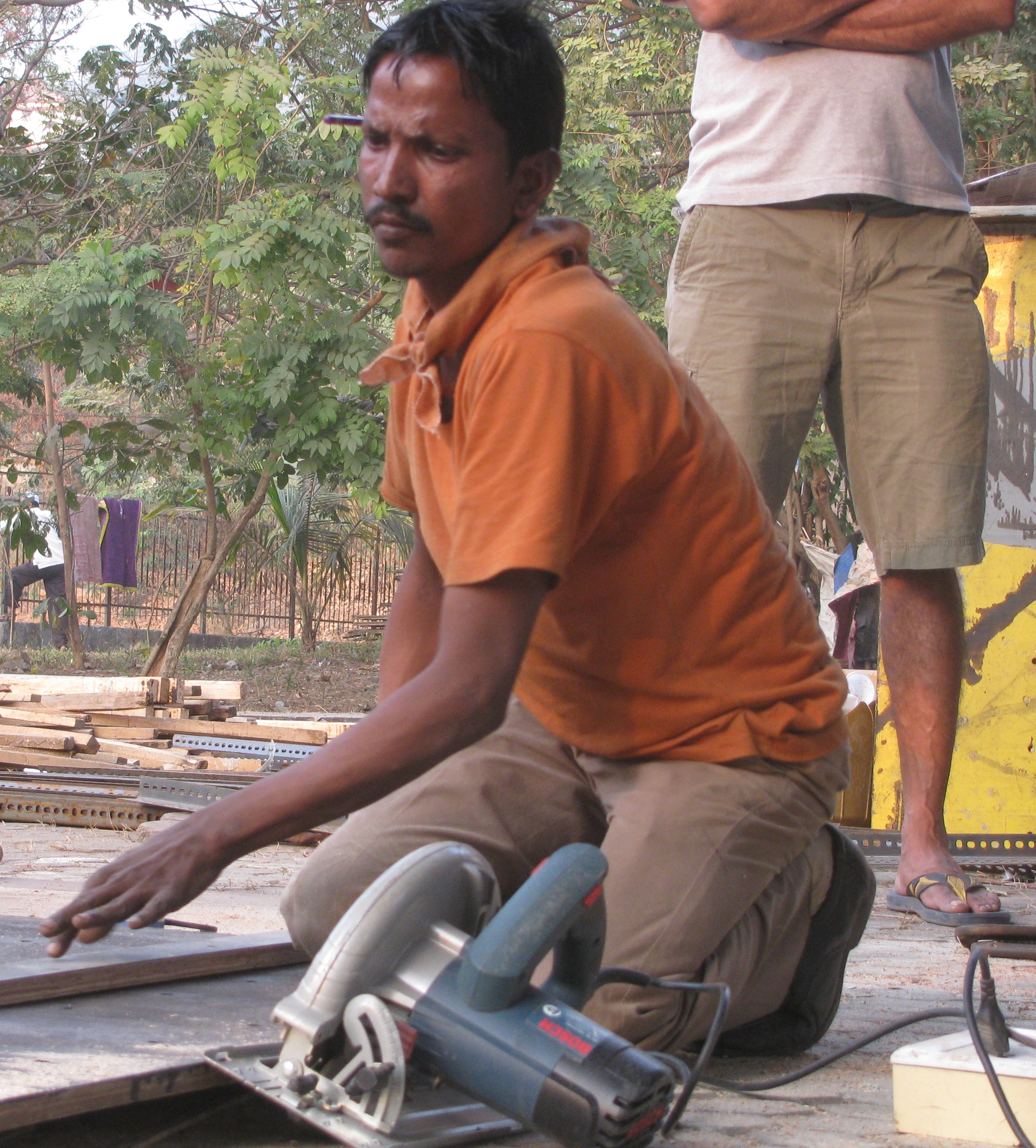
A familiar face to anyone who has witnessed the previous competitions is Raju, the carpenter.

For the first few years, the wall was built in-house by climbers along with Bong’s architect-brother Indrajit. Slowly, as the overall work around the competition grew, carpenters arrived.

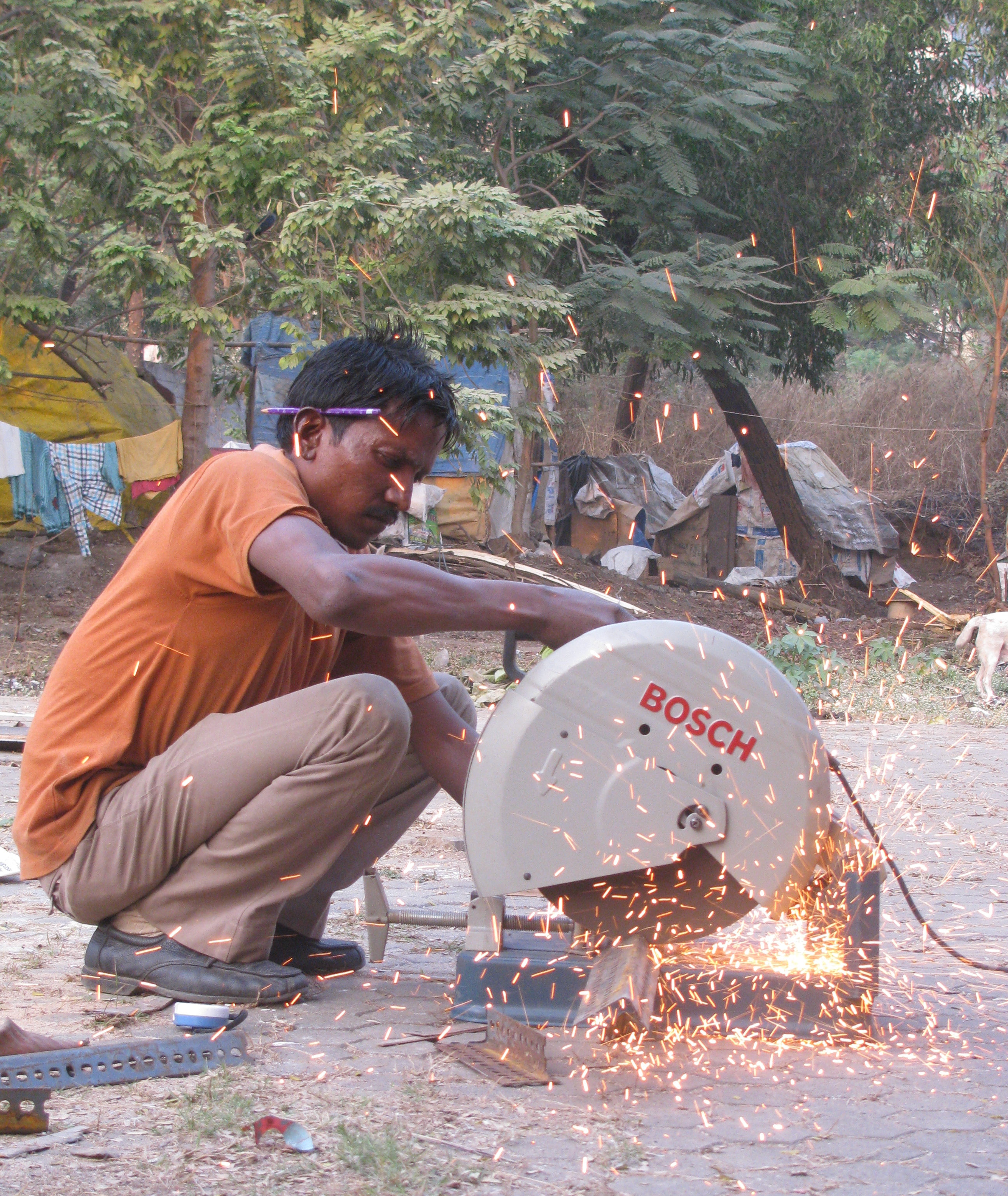
Raju, who hails from Chhapra in Bihar, first worked on the annual wall in 2009. From then on, he has been a regular sight at every edition. This time, he has two people to assist. On Tuesday, every tea break featured Bhojpuri songs played from the trio’s mobile phones.

??????????????????????????????????????????????????????????????

The wall-building work has got considerably mechanised. As sparks flew from the metal cutter slicing its way through a slotted angle-frame, Bong recalled how in the early years of the competition, all they had was the hacksaw blade and several blades broken every edition by a lot of metal to cut.

shyam-blog-edit-gv-comp-2014-9??????????????????????????????????????????????????????????????

Now, the shift to the venue ahead of competition includes all required raw materials to build the wall, an array of hand held machines for cutting and drilling and – a small kitchen installed next door to keep the tea and biscuits coming for those working. It may not seem much but eleven years ago, the entire event was just a thought in the head.

shyam-blog-edit-gv-comp-2014-12Old timers would recall Bong’s first house in Belapur, small in size and rendered smaller still by the climbing equipment – even a climbing wall – cramped into it. There, in the banter preceding and following the weekend assembly for climbing at the Belapur crags, the competition had taken shape. If I recall correctly, once formally discussed and cast as something to do, the first edition happened within a couple of months’ time. The response encouraged sufficiently to keep the show going year after year. Prashant had been one of those contributing to the prize money for the first edition. “ That is certainly one of the best investments I made,” he said.

???????????????????????????????Update 2 / January 16: The wall’s shape is slowly beginning to unravel.

About 60 per cent of its overall appearance – minus coat of paint – seems to be in place.

A climbing wall’s mind – what it uses to stump the climber with – is its holds, its features. Their shape, how they are placed and crucially, what type of hold or feature turns up where on given climbing route decide the challenge. So, 60 per cent overall appearance now visible at site, says nothing of what the prospective climbing could be. The route is a secret known only to the Chief Route Setter. Belapur awaits Vaibhav Mehta.

shyam-blog-edit-gv-comp-2014-16shyam-blog-edit-gv-comp-2014-17Constructing the wall is hard work; both actually building it and the supervision of the task. I suspect, just as with mountain, few will remember these aspects. Ever heard of a mountaineer who pauses to wonder how the mountain came to be? Eventually, our wall too will be all about climber and to a lesser degree, climbing. Such is the human mind! Watching a wall take shape, that does make one feel trifle sad.

January 16 felt another typical day at the wall.

The core team was there; Franco till late afternoon, Vivek Thakur arrived late evening. Bong is permanent fixture as is Raju, the carpenter and his team. For freelance journalist, time was marked by catching up on old stories and discussions about life (the world according to middle aged climbers!), periodically interrupted by quick fire shyam-blog-edit-gv-comp-2014-19exchanges between Bong and Raju.???????????????????????????????

The latter successfully executed a delicate cut with saw on plywood as Bong watched with bated breath. He then looked Bong in the eye and claimed, “ I can now cut anything!’’ We laughed. On another occasion, Raju installed a panel, then looked at the shape of the wall around him as though trying to solve a jigsaw puzzle and proceeded to tell Bong what he thought his next moves would be. Bong smiled, walked up to him and asked, “ you can now anticipate what is on my mind, can’t you?’’  

Thus, slowly but steadily, with much fun and banter in between, the wall comes up for what it hopes will be a good response to the competition, from climbers.

???????????????????????????????Update 3 / January 17: Work on the wall has progressed well.

The facade was nearing completion as of late evening.

The painters were set to take over, next day.

Once the wall’s front face is fully up, the building team will busy itself providing more structural strength through slotted angle-frameworks for roofs and other panels besides more linkages between the wall and the scaffolding behind.   

When it started years ago, this annual Girivihar competition was wholly on natural rock. The climbing crags of Belapur are located along the slopes of an amphitheatre of hills. This is where the bulk of the club’s weekend climbs used to happen. It is also home to the club’s annual rock climbing camp that trains newcomers to the sport. Both arms of this arc-like landscape were tapped for rocks to climb, later compete on. On one occasion, the competition stepped out from this area to the nearby Khargar hill road as well. But that was just once for an impressive route there couldn’t be availed again.

shyam-blog-edit-gv-comp-2014-23A few years into holding the competition, the first set of artificial walls for the event made a shy debut. They were housed indoors and if I remember right, were held in place with ropes. Soon, these walls transitioned to not just being located outside but they also replaced natural rock to be the prime medium for the competition.

The structure of these walls betrayed the competition’s home grown flavour. The wall was mounted on a framework of slotted angles but it was held in place by bamboo scaffolding. Amid climbing sessions, rope and bamboo tended to loosen. It required tightening. The lack of elegance did nothing to dampen the competition (national champions, strong climbers from overseas and even a world champion visited Belapur to climb or set routes during this phase). But tightening the bamboo structure wasn’t fun. Bamboo gave way to steel framework. While all this may seem trivial, for a home grown competition, each change meant rethinking funds and finding ways to make scarce money happen. The next stage was to graduate from renting the steel scaffolding to owning it so that recurrent cost in every edition of the event was contained at least to that extent. In this, Mangesh Takarkhede, who had been winner in the competition before, helped. Today, it’s a presentable grid of metal behind the wall.

???????????????????????????????For Girivihar and climbing in Belapur, the annual competition is a get-together of climbers, a reaffirmation of the joy in climbing.

Befittingly therefore, Vinay Potdar, Sandeep Maity and Rahul Ranjan reached Belapur early today (January 17), from days spent climbing in Hampi.

???????????????????????????????By evening, Sandeep Bhagyawant, Rohan Gawand and Vivek Thakur arrived. Franco, at site since afternoon, stayed busy liaising with local authorities. Shantanu Pandit dropped by.

So far, everything has been on schedule.

Update 4 / January 18: You could say the wall is ready. ???????????????????????????????

For the wall-building team, only minor structural work remains.

The painters have given the facade an initial base layer.

Colours are yet to come.

Late evening when the painters left, the wall was white; like climbers’ chalk.

??????????????????????????????????????????????????????????????This is the first time in the history of artificial walls at the Girivihar competition that work on a wall has concluded this early, ahead of schedule.

“ We began work earlier than usual,’’ Bong said.

Now it is up to those executing the remaining jobs to maintain that efficiency and sustain the relatively relaxed atmosphere. Needless to say, smoothly working systems make the competition enjoyable.   

shyam-blog-edit-gv-comp-2014-25On the stage adjacent to the venue, was a collection of crash pads, neatly stacked. Thanks to Ajith Bhobate, they were moved here today from the Poddar College climbing wall maintained by Girivihar. More such pads are due; they are used to cushion falls from the climbing wall once the event gets underway. It is that time of the year when crash pads catch taxis, suburban trains, squeeze into three wheelers and ride pillion on two wheelers – to be useful in Belapur.

Update 5 / January 19: I guess today, despite the wall gaining colours, it should take a back seat.

???????????????????????????????Vaibhav Mehta has landed.

When the first edition of the Girivihar climbing competition was conceptualised over a decade ago, it was in no small measure due to the rise of a new generation of climbers in Mumbai. They embraced sport climbing. That lot was headed by Vaibhav; other prominent names were Sandeep Varadkar, Shyam Sanap and Mangesh Takarkhede. Not only did they push sport climbing, they were also so fiercely given to climbing that it was pretty much what they did for main activity. Suddenly, climbing wasn’t merely hobby. Bong, a technician by profession, was willing to piece together the competition’s infrastructure. These climbers brought the passion and critically, the attraction for others of their generation to turn up in Belapur.

Vaibhav –he ran a climbing gym in Leh (Ladakh) for a couple of years – now lives in France, a country strongly identified with climbing. He is the competition’s Chief Route Setter.

???????????????????????????????His old friends – Sandeep, Shyam and Mangesh – turn up to work alongside at the annual competition. Like Bong, Vaibhav and Co has been another building block of the event. The wall will understand if I said that the wall isn’t main news today. That would be: Vaibhav is here.       

As for the wall – its facade has been painted orange, grey and blue.

Also arrived today, were more crash pads and several plastic bins filled with climbing holds.

???????????????????????????????Meanwhile, the team of club members who will manage the show got around to discussing other aspects vital to the event, ranging from registration formalities to accommodation.

Update 6 / January 20: The photo says it all.

Late evening; a climbing wall painted orange, grey and blue shines under arc lights.

???????????????????????????????It gleams impervious to crunch hour approaching.

There are pending tasks; that inevitable last minute rush to face.

The drift to upcoming competition is now palpable.

Update 7 / January 21: The day began with worry.

It rained.

Coming to think of it, yesterday (January 20) had been cloudy. If I remember right, the sun never broke through.

But who would anticipate rain in January in Mumbai?

They wouldn’t have in Belapur.

What’s happening to the orange wall? – I thought.

Late afternoon, Belapur.

A shy sun is out in the sky.

The wall was as orange, grey and blue as ever.

Pretty much the same as it was last night.

Good.

??????????????????????????????? shyam-blog-edit-gv-comp-2014-35The team got the warm up-wall in the isolation area, ready. That will be used by climbers waiting in isolation for their names to be called out to emerge and climb. A warm up-wall keeps them going.

Late evening, work on setting up all the boulder problems required for the various stages of the competition got underway.

Watching it was an engaging experience. It reminded me of days in climbing gone by. A set of portable speakers played wonderful music. Chief Route Setter, Vaibhav and his team stayed intensely focused on their task; the music amply aiding the creative yet acutely action-oriented atmosphere. They set routes, attempted them, discussed difficulty levels. Once a problem has been finalized, the climbing holds used to make it are removed and the wall returned to its original look. But because the boulder problems so designed must remain confidential until disclosed for competition and since problems in the making can give away information on how to climb them, we have no photographs of the wall’s facade today.

Its the wall’s Houdini Phase; there, yet not there – disappeared!

Update 8 / January 22: Relatively peaceful day, despite it being eve of competition.

Outstation participants have begun arriving. A few had landed on January 21.

By 8.30PM today, 25-30 competitors had registered, mostly for the Master’s category.

There was dinner for all at the venue, including the participants who have reached Belapur.

The competition management team held a meeting. Specific responsibilities – ranging from judging to cleaning holds, spotting and supervising isolation – were allotted.

As mentioned earlier, the first set of boulder problems were prepared on the wall, January 21st night. A boulder problem once approved is documented and removed. Tonight, after all the participants have retired to their rooms, the wall was slated to come alive again, as the Chief Route Setter and his team continue their work. That wonderful music would be back, the climbing shoes would be out, hands would be chalked and a bliss hold-to-hold would descend.

???????????????????????????????The competition begins tomorrow, January 23.

Before I sign off, a photo of the wall, clicked late evening today when participants were allowed to be there for registration and dinner. This photo was taken with the Chief Route Setter’s permission.

Good luck for the competition and happy climbing!

 CLIMBING COMPETITION EXPLAINED

For those readers who wish to understand what happens during a climbing competition, here’s a simple primer. It avoids complicated details and speaks of the main points that matter:

bl-gv-pix-2The Girivihar competition has two categories in the main – women and men. The event starts with these two groups in mind and evolves separate sub-categories based on age (under-sixteen and above) depending on the number of participants. If a potential sub-category has too few participants, it gets merged with a suitable another.  

A climbing competition on an artificial wall (like the one at the Girivihar event) typically involves tackling a boulder problem that has been designed by the route setter. To retain the element of surprise and newness, every round of competition begins with ` isolation.’ Akin to extempore speech contests, when you are taken aside, given the subject and told to prepare your speech in five minutes, here, the competitors sit in isolation away from the wall while the route is readied. This is followed by the chance to observe / study your route before you climb; it happens differently for the qualifying rounds and the finals. In the qualifying rounds the acts of observing / studying a route and climbing it, get clubbed together. You do it at one go, emerging from isolation when your name is called, observing the route and then attempting it. However in the finals, participants come out together from isolation to observe the route, then return to isolation and emerge one by one to climb. In the finals, the two acts of observing / studying a climbing route and climbing it, are treated distinctly.

The wall is composed of multiple faces and each face has a route to be attempted for participant to formally finish a full round of attempts. Therefore, he / she is entitled to five minutes of climbing a face on the wall followed by five minutes of rest before attempting the next face. The ability to tackle a route is a combination of how well you imagine it in terms of climbing moves in your head and how well you actually execute the plan you conceived. Therefore, when more than one competitor is out in front of the wall, the one taking rest has to sit facing away from the wall. This is to ensure that the one taking rest does not see another competitor climb a route he / she is expected to attempt. In the finals, since there is separate time awarded to observe / study each face, the time participants get to climb is regarded as four minutes plus. That `plus’ runs for as long as the participant takes to finish his last attempt begun within assigned time limit.  

When climbers are observing a route, you will often see them move their arms and imitate grips with their fingers, as though engaged in a climb. This is done to physically ingrain / memorize the sequence of moves, they figured out by observing with their eyes while still on the ground. Once the participant emerges from isolation to climb, he / she is considered to have started climbing the moment a classic three point-contact with both feet off the ground, happens on the wall. This is noted as one attempt. The participant can have any number of attempts within the allotted time.

While the above are the basic rules, from the judges’ perspective, when the competition gets intense or climbers are evenly placed, smaller details will matter profoundly. For example, how many attempts you took to climb a route, how far you reached on a route – all this and more will be factored in for distinction. An interesting angle herein is the use of the `zone’ concept. Under this, on some exceptionally difficult routes that participants are struggling to finish, a participant, while unsuccessful at gripping the final hold and moving up, may manage to touch the final hold and keep his / her fingers there for a while to establish how far he / she reached.  

In the last edition of the Girivihar competition, there were climbing routes ranging in difficulty from sub-6 to mid-7 on the French grading scale. There is never prior indication of what to expect in terms of grades at a competition as that is a dynamic equation between the Chief Route Setter and the calibre of participants. The Chief Route Setter gauges the gathered climbing talent and improvises accordingly. That said, grade itself is a funny thing; it tells you much of the science climbing has become (with its ability to award numbers to difficulty) and how relative (art – you could say) it still is for the numbers are a matter of perception. Thus, once a route is designed, the Chief Route Setter and his trusted team (in other words – more than one person) attempt / climb the route for a feel of what it is. Together and after adequate deliberation, they assign grade. Equally, once a route of challenging grade has been climbed many times over, it is not seen to retain its original grade. On natural rock, this degradation is even physically tangible in the form of accelerated weathering of tough holds into easy ones, courtesy several climbers passing through. On artificial walls where holds can be replaced, it is more a case of the how-to-do knowledge becoming available. This how-to-do element is referred to in climbing parlance as the `beta’ of a route.   

The above is a simple guide to understanding how a climbing competition works. The proposed citizen’s workshop of January 26, the last day of the 2014 Girivihar Climbing Competition will be a useful programme to attend for more on this subject and plenty more related to climbing.

(The author, Shyam G Menon, is a freelance journalist based in Mumbai. All the photos featured here were taken by him.)

SAGAR PARIKRAMA / SAILING AROUND THE WORLD, ALONE

Illustration: Shyam G Menon

Illustration: Shyam G Menon

Outrigger presents the story of Sagar Parikrama – a project by the Indian Navy to execute the first solo circumnavigation of the planet in a sail boat by an Indian. The navy achieved its objective, following it up with a solo nonstop circumnavigation as well.

Scroll down to read from part one of the story, to part five. Part four is an interview with Vice Admiral (Retd) Manohar Awati, main architect of the project. Part five is a note from the author.