IT’S TIME FOR ART

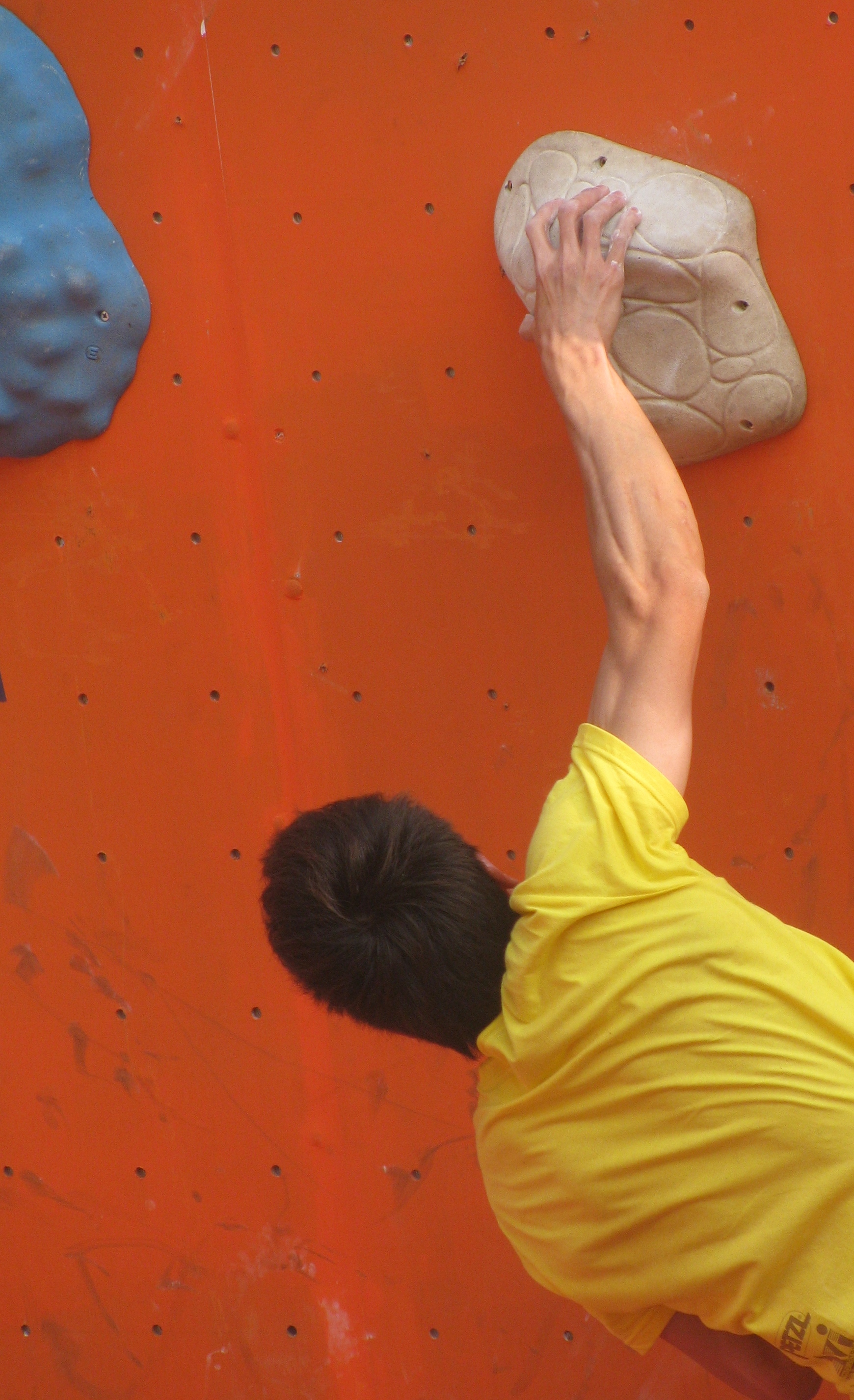
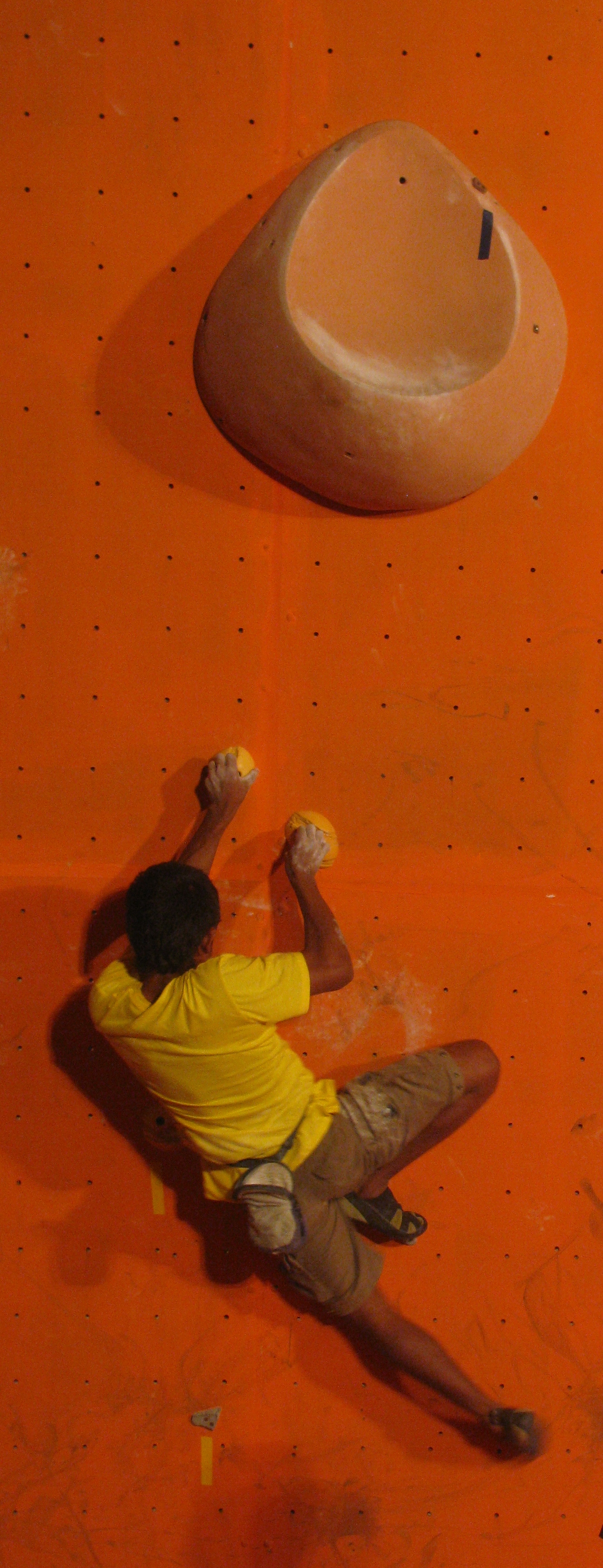
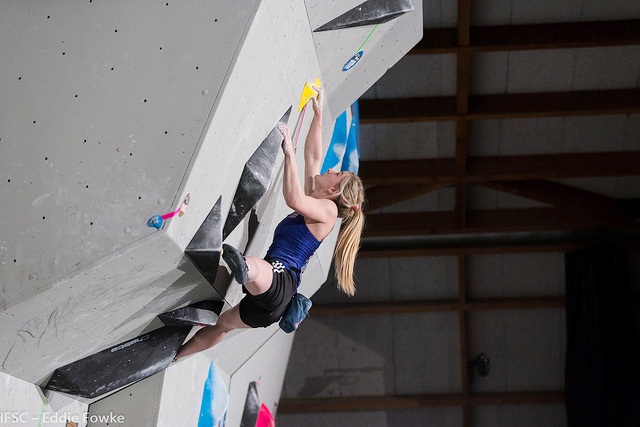
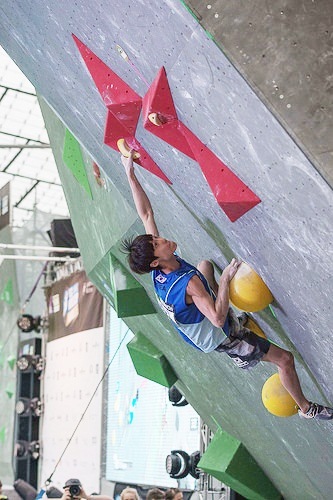
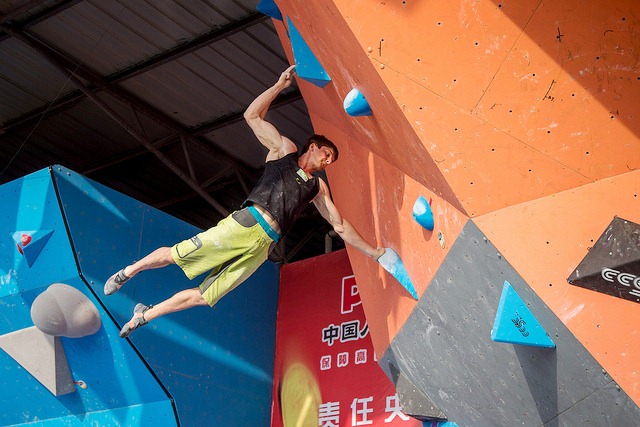
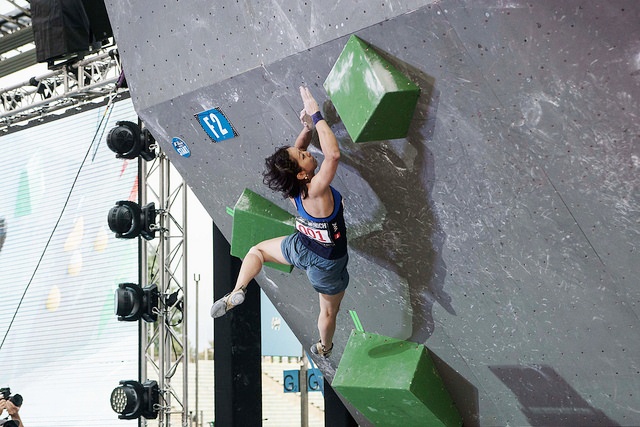
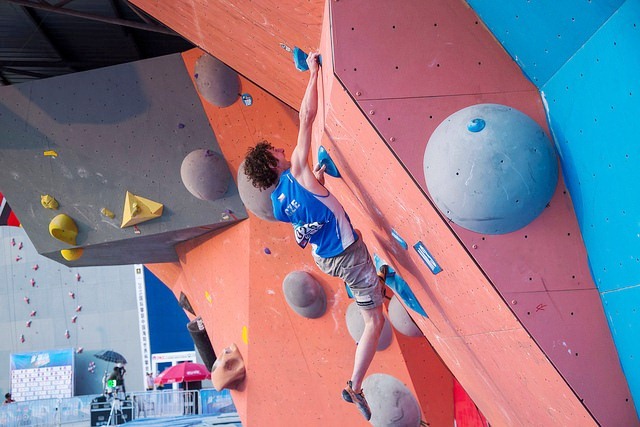
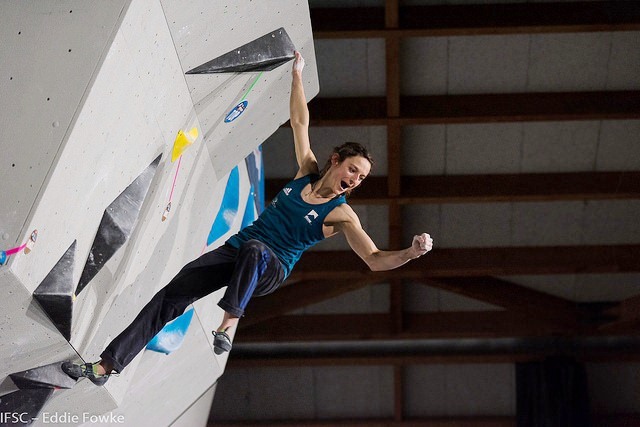
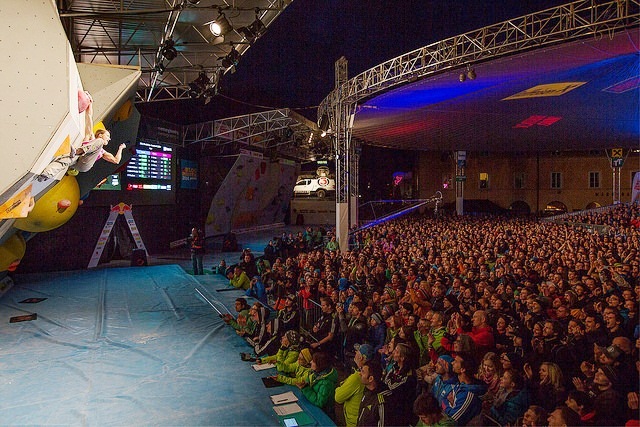
From the 2014 edition of Girivihar's annual climbing competition, the series that paved the way for a World Cup in India (Photo: Shyam G Menon)

From the 2014 edition of Girivihar’s annual climbing competition, the series that paved the way for a World Cup in bouldering in India (Photo: Shyam G Menon)

Updates from May 13, the eve of the IFSC World Cup in bouldering at Navi Mumbai, will be appended suitably to the article titled `IFSC World Cup: Countdown Begins in Navi Mumbai,’ posted earlier. Please visit this article and that, for a comprehensive overview. 

“ All we need is a watch painted on that hold and it would be like Salvador Dali’s painting,’’ I told Prashant.

We sat on the stands, two fans of climbing observing route setters at work on a climbing wall.

If earlier in this blog I called their work, art, it is for a valid reason. A climbing wall; sculpted and painted imaginatively and sporting colorful holds and features, resembles abstract art. Tad, like an Alexander Calder piece, albeit frozen still, stuck to a surface. A climber weaving his way up, adds mobility to the installation effect. The route setter’s intervention is where competition climbing on artificial walls, makes the transition from the cold nuts and bolts of the wall’s engineering, to the art of its facade. In some ways, it encapsulates the peculiar attraction climbing offers – it is math and art at once, it is disciplined training and intuition, it is straight lines and fluidity. It is time, for India’s first World Cup in bouldering; 82 athletes have registered (17 from India, the rest from overseas), the competition commences in Navi Mumbai tomorrow, May 14.

The last couple of days in the run up to the World Cup were a bit tense.

The most critical piece of hardware at a climbing competition is the wall. The marine container bearing one of the walls for the World Cup – a bouldering wall dispatched by one of the biggest names worldwide in the business of climbing walls, shipped in from their facility in China – was brought straight to the venue from the port. Much was expected from this imported wall. Made by an experienced company it was to be benchmark. Upon assembling however, challenges cropped up. There were issues with aligning the wall to the stage, there were mismatched components and some nuts and bolts had not been included in the shipment. After a year spent preparing for the World Cup, this was a disappointing moment for all. It cast a pall of gloom at the venue. But not for long. The manufacturer’s technician and event organizers put their heads together and came up with an optimal solution. The mismatched portions of the modular wall were rectified locally. The team of climbers entrusted with installing the two walls, got cracking. They got the wall’s base aligned. The installation of frames and panels started. Issues with fit and finish emerged. Raju, the carpenter who has regularly contributed to Girivihar’s walls, was recruited to assist with some of the panels. Eventually the imported wall was up. The lengthy process delayed the wall becoming available for the route setters to work on it. By noon May 11, the route setters, having already done much work on the locally fabricated wall which was in place earlier, commenced their work on the imported wall, designing climbing routes the moment a face was ready. By late evening May 12, the imported wall hummed with route setters’ activity. DJ and music system had arrived at the venue; music fueled the route setters’ work and Prashant was lost in his favorite song playing on the big speakers – Metallica’s Nothing Else Matters.

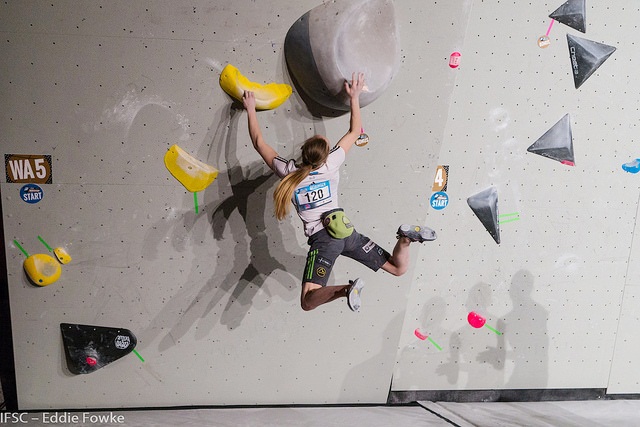
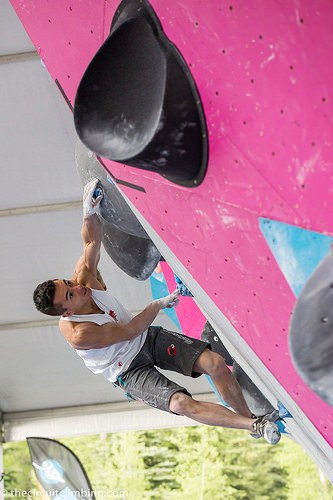
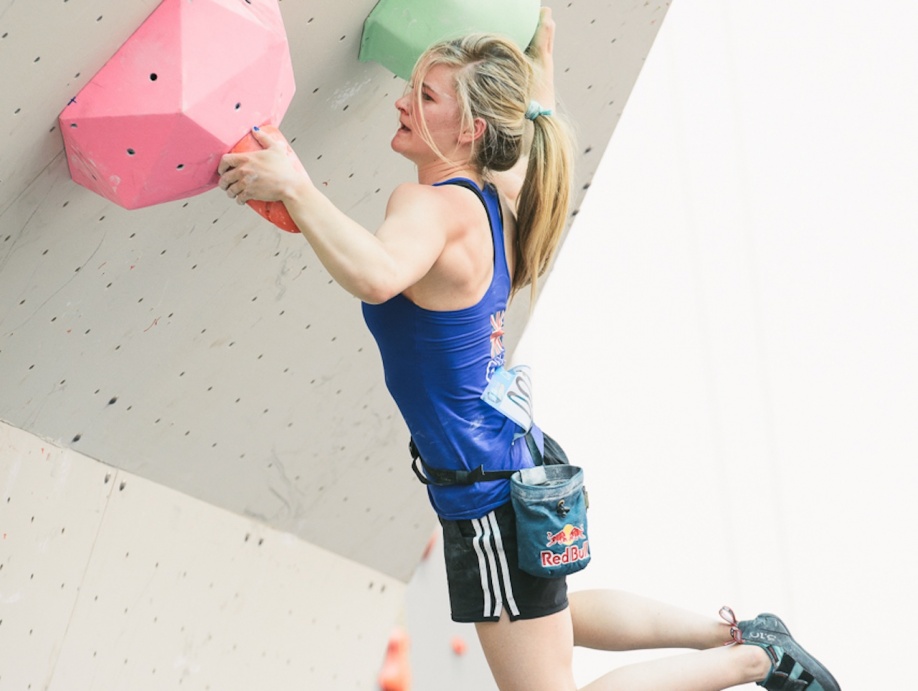
From the 2014 edition of Girivihar's annual climbing competition (Photo: Shyam G Menon)

From the 2014 edition of Girivihar’s annual climbing competition (Photo: Shyam G Menon)

Christophe Billon, IFSC’s Technical Director for the World Cup, is the person who has final say on competition proceedings. I asked him what he thought of the two walls. To begin with he pointed me to the fact that the two subjects in focus were bouldering walls, which, unlike lead climbing walls, don’t go up very high. That makes challenges in design and fabrication easier to handle. He couldn’t immediately recall previous instances wherein the IFSC had gone along with a locally fabricated wall for a World Cup. Navi Mumbai that way appeared to be treading less visited terrain if not breaking new ground. Although he had asked for a couple of changes here and there, on the whole, he felt that the locally fabricated wall was stable and well built. “ Its fit and finish is good,’’ he said. The imported wall, he conceded, had ended up a bit of a disappointment. But the silver lining is that the two walls are so different in shape and character that taken together, a rich variety of climbing routes to challenge the athletes is possible. “ In combination, the two walls work well,’’ he said.

The Navi Mumbai edition of the IFSC World Cup in bouldering is the first World Cup being held in India. The World Cup in climbing is a series of competitions held annually in various countries, under the aegis of the International Federation of Sport Climbing (IFSC). Each edition culminates in podium finishes with points accumulated to crown overall winners by the end of every series. The Navi Mumbai edition, organized by the Indian Mountaineering Foundation (IMF) and Girivihar, falls close to the middle of the series currently underway. In trends so far this World Cup-season, the women’s field has been dominated by Shauna Coxsey of Great Britain, who with her last win at Chongqing in China, has notched up an incredible four straight wins. Although she is at present leader by a sizable margin, there are strong, experienced climbers like Akiyo Noguchi of Japan in the field. With only less than half the journey done so far, much can change going ahead. In contrast, the men’s segment appears filled with closely matched competitors; consequently, it has been a see-saw battle in the run up to Navi Mumbai. Although a host country in 2016, sport climbing has a relatively recent history in India. The 17-member Indian team at the Navi Mumbai World Cup includes some of the best young climbers in the country.

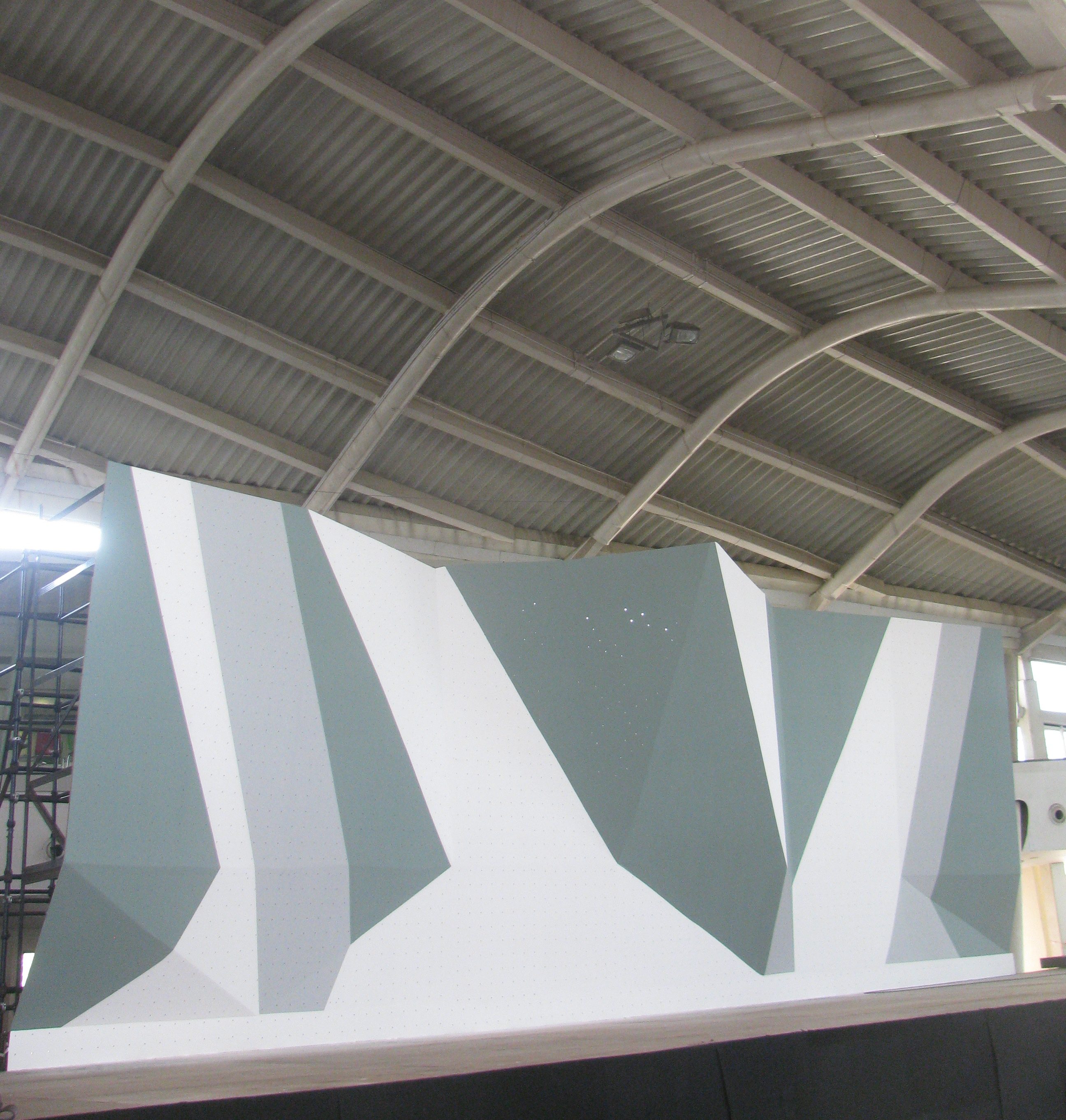
The finished wall, painted and ready for the route setters to start their work (Photo: Shyam G Menon)

The wall that was locally fabricated for the World Cup, painted and ready for the route setters to begin their work (Photo: Shyam G Menon)

While IMF is the host federation, the work at ground level has been done by Girivihar, Mumbai’s oldest mountaineering club. CIDCO, the agency which designed and built Navi Mumbai, extended their Exhibition Centre in Vashi as venue for the World Cup. There were many challenges along the way, the most consistent of which was perhaps, funding. To address the resource crunch, one of the climbing walls was locally fabricated to IFSC standards. A round of crowd funding was done. In the final stretch of preparations, Tata Trusts stepped in with a financial grant. That was oxygen. From the confines of a hot, sweaty warehouse in Taloja, the locally made wall traveled in dismantled form to the venue in Vashi and was put together at site. Painted and with route setters working on it fixing colorful holds and features, it looked every bit the art work, climbing walls remind of. Two evenings later, the imported wall joined in, providing company.

It’s time for the athlete’s art.

(The author, Shyam G Menon, is a freelance journalist based in Mumbai.)

THE PUZZLE MAKERS

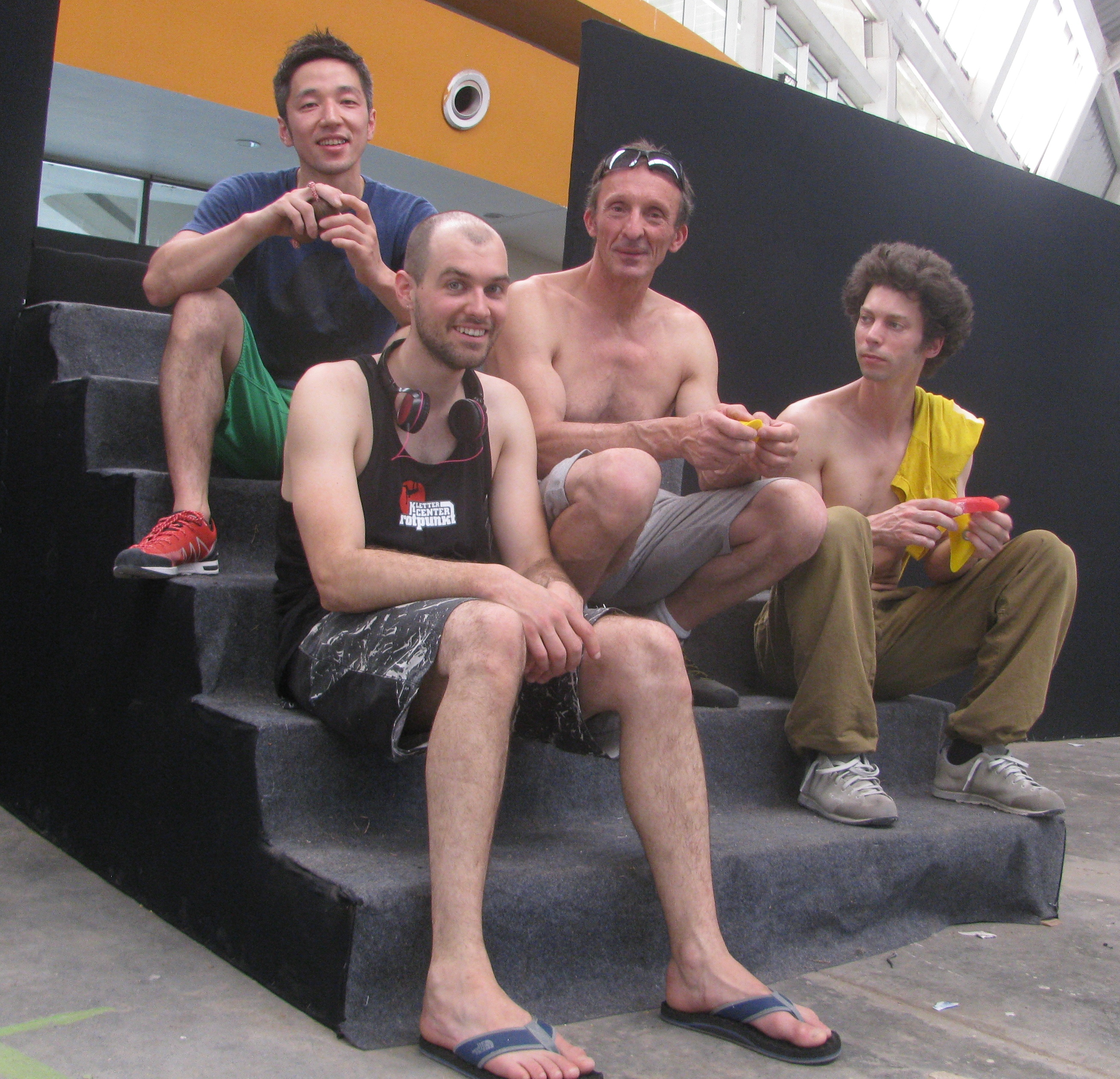
From front left: Mathias Woitzuck, Gen Hirashima, Laurent Laporte and Manuel Hassler (Photo: Shyam G Menon)

From front left: Mathias Woitzuck, Gen Hirashima, Laurent Laporte and Manuel Hassler (Photo: Shyam G Menon)

May 8 was a hot day.

At the venue of the upcoming World Cup in Navi Mumbai, the shade of CIDCO’s Exhibition Centre and sunlit day outside harbored an indistinct disparity. It was warm even in the shade. Warm enough for two of the four gentlemen, waiting for a climbing wall to be ready, to take off their T-shirts. A third, who had visited India before and climbed at Hampi and Badami, had chosen a vest over a T-shirt. Manuel Hassler, Mathias Woitzuck, Laurent Laporte and Gen Hirashima, hailing from Switzerland, Austria, France and Japan respectively, formed the four member-route setting team dispatched by the International Federation of Sport Climbing (IFSC) to the Navi Mumbai World Cup. Praveen C.M, one of the best sport climbers in India, was expected to join as a fifth member.

Manuel was Chief Route Setter; Gen and Praveen, aspirant route setters wishing to grow their skills by working with the experienced. Laurent was the most experienced; he had begun route setting for international competitions conducted by sport climbing’s apex federation, at a time when the IFSC wasn’t yet born and sport climbing was still overseen by the UIAA, currently dedicated to mountaineering. The wall imported for the competition, had arrived and not been installed yet. The quartet admired the locally fabricated wall from far; they checked it up close. Then, the inevitable happened – they imagined routes on it. Doing so, they moved their arms to reach non-existent holds, raised their legs to step on invisible footholds and let the body flex this way and that for balance, generally swaying like ballet dancers.

Four components complete a World Cup ecosystem – athletes, route setters, judges and spectators. You have a good competition, when all four blend beautifully. Of these four, the one role functioning akin to a sensitive instrument gauging the ecosystem is the route setter. All serious route setters are themselves good climbers. That’s because a sense of body movement is critical to set routes that challenge climbers. But here’s the interesting thing. Most of us equate challenge and difficulty with moves requiring strength to execute. However, strength and power and are only two of the several aspects shaping a good climber. A good climber is a composite of many other talents too including the ability to solve a set of climbing moves that resemble a problem on a route; climbing creatively, handling the overall pressure of competition and taking risks while climbing.

When route setters stare at a blank wall defined yet only by its angled faces, they can imagine different configurations of climbing holds and features on it, to create routes. They work once a wall is ready to host climbing holds. When they work, designing a collection of routes ahead of competition, access to the wall is restricted. No photography is permitted because these routes are the puzzles at the heart of a competition. But it isn’t as simple as accumulating a bank of puzzles, tucking it away and monotonously pulling it out one by one from the kitty during the course of a competition. Route setters sway like grass in the wind for a valid reason. They sense which way the wind is blowing at a competition underway. Their imagination and response to real time stimuli is what keeps a competition entertaining. That means you may pull out routes from your kitty but the going will be dynamic, with changes in response to a live situation and state of competition. According to the team now in Navi Mumbai, route setting at the start of the World Cup season is a bit of a guessing game for the athletes are returning from a break and well deserved rest after the preceding competition season. You give challenges and gauge response for a sense of where the field stands. As the season progresses, the vagaries slowly fade and trends creep in. The athletes warm up to peak performance. The route setters draw into their bank of routes and play the virus in the system, keeping the going edgy and unpredictable with their creativity in route setting, building each competition to an interesting final. While doing so, they also listen to local stimuli, which is where the spectators matter.

The finished wall, painted and ready for the route setters to start their work (Photo: Shyam G Menon)

One of the walls for the World Cup, painted and ready for the route setters to start their work. This wall was fabricated locally (Photo: Shyam G Menon)

Spectators nowadays fall into two categories – there is the audience physically present at an event; there is the global audience available through live-streaming over the Internet (the Navi Mumbai World Cup will be streamed live). An engaged audience, aware of climbing and its nuances eminently adds to the quality of proceedings. Marathon events worldwide are remembered by the cheering runners receive. As in running, competition climbers love support and encouragement. It motivates them to perform. It builds a climbing competition’s ecosystem. It is among stimuli, the route setters in the wings listen to. Since variety and edginess are essential ingredients for enjoyable competition, route setters too are used with discretion. One team doesn’t do the route setting for a whole World Cup season. The IFSC has its list of qualified, experienced route setters and multiple teams work on the many competitions of a World Cup season. This ensures that a single line of imagination does not dominate the routes set for a season. Each of the four route setters now in Navi Mumbai, have their individual preferences as regards climbing problems and climbing styles. They work as a team to make sure that all this is available at hand as ingredients and yet no one climbing style or type of problem unnecessarily dominates and characterizes a competition. This versatility – the desire to have a diverse tool box for one’s work – appeared kept alive by the individual route setter too. Laurent for instance, was clear that he valued having his personal climbing straddle both lead climbing and bouldering without entrapment in one.

As regards concerns – thoughts weaned from the experience of having set routes for many years – they said that perhaps the competition season’s length needs revisiting. Climbing is a demanding sport. As anyone who has attempted a challenging climbing route will tell you, the act drains you. Athletes on the competition circuit are climbing as best as they can; one competition after another. While the World Cup at Navi Mumbai is focused on bouldering, there are athletes taking part in both bouldering and lead climbing. It elicits a toll as the season progresses and in a circuit where athletes are one of the fundamental building blocks, tired athletes can affect that all important ecosystem. Should there be fewer competitions so that the ecosystem stays robust? – That could become something to think of. In the same vein, another important factor which may impact the route setter’s art is climbing’s potential debut at the Olympics. While details are not yet known, what has so far appeared in the media, seems to indicate a drift to acknowledging the best climber overall as the Olympic ideal. Competitive climbing currently straddles three distinct categories – lead climbing, bouldering and speed climbing. Like the temptation in science for a theory of everything, it will be interesting to see how the journey to the Olympics influences the route setter’s art.

(The author, Shyam G Menon, is a freelance journalist based in Mumbai.)


“ GET INSPIRED BY OTHER CLIMBERS, YET GO YOUR OWN WAY’’ – KILIAN FISCHHUBER

Kilian Fischhuber (Photo: Shyam G Menon)

Kilian Fischhuber (Photo: Shyam G Menon)

Born in Waidhofen/YBBS on Aug 1st, 1983, moved to Innsbruck in 2002 and started career as a professional climber; 1.75m tall and best known for a versatile style of climbing with penchant for powerful and dynamic moves. Relaxed but determined in approaching goals; foremost relaxed……

The above is how Kilian Fischhuber has described himself on his website. One of bouldering’s most successful competition climbers with quite a few victories at the World Cup and European championships to his credit, Kilian is from Austria. No stranger to India and Indian climbers, he has climbed in Hampi and Badami. In the run up to the first World Cup in bouldering to be held in India (at Navi Mumbai, May 14-15, 2016), Kilian granted an interview by email to this blog. Excerpts:  

What are your memories of your first World Cup?

My first World Cup was in 1999. I travelled to France for rock climbing in Ceuse, Orpierre and the like. I joined the event in Gap without any expectations or pressure. There was no such thing as an Austrian team. As far as I remember, my friend Reini Fichtinger who I was travelling with also competed. I ended up 22nd and thought there might be a potential to enter the finals (at that time, 20 people went to the second round which was the finals).

You are one of the most successful competition climbers in bouldering. What did you do to stay fit and competitive? How much time did you invest in climbing? People spend hours at offices. Can you tell us how a day in climbing’s office was like, for you, in your World Cup years?

I trained more in my early twenties; less later. I needed to build up strength and work on my weaknesses. By the time I turned 25 I had developed a solid climbing style and was one of the stronger athletes in the field. The years after that I profited most from my experience and trust in oneself.

Climbing is a powerful sport, taking breaks is necessary and rock climbing can help you develop your technique and style. I usually trained five times week. Always two days on, one day rest.

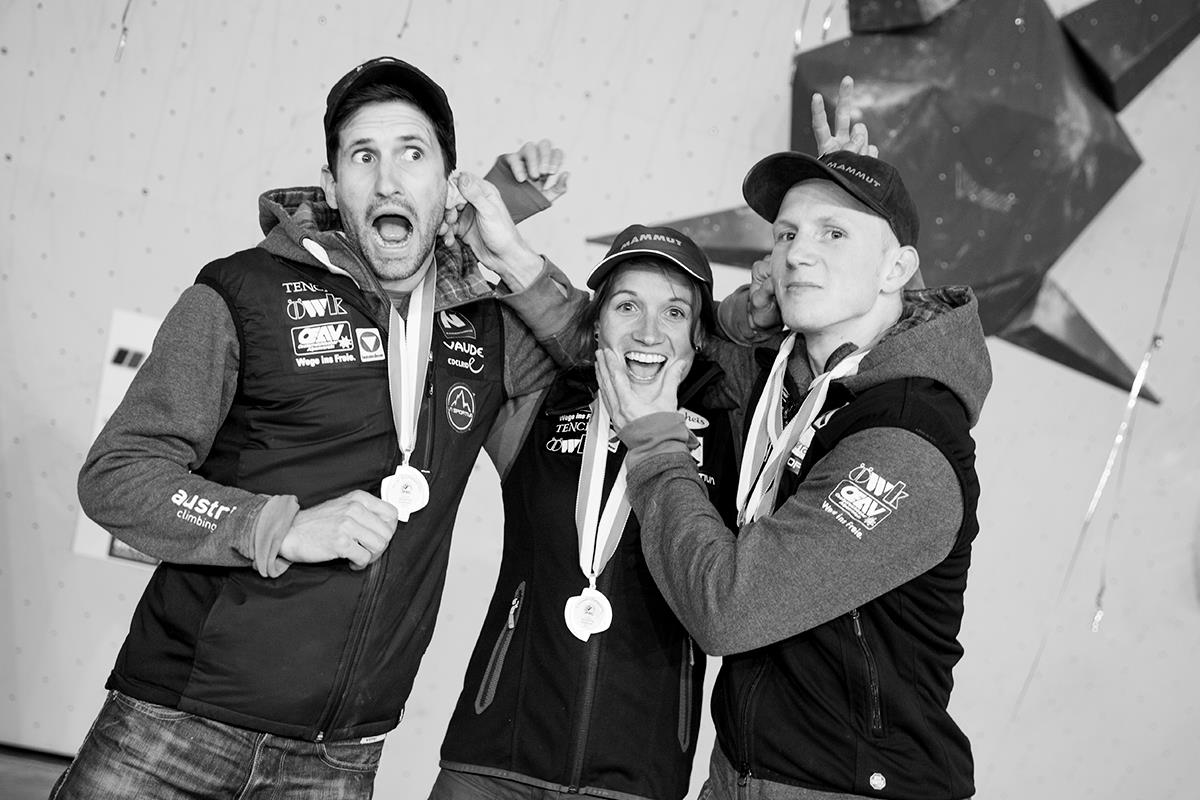
Kilian Fischhuber, Anna Stohr and Jakob Schubert (Photo: courtesy Kilian Fischhuber)

Kilian Fischhuber, Anna Stohr and Jakob Schubert (Photo: courtesy Kilian Fischhuber)

Which were your finest moments in the sport at the competition level?

That would be – winning my first World Cup by a large margin in Erlangern, Germany in 2005, becoming European Champion in 2013 and winning my last World Cup in Innsbruck, Austria in 2014.

How intense is the competition at the World Cup? Were you and your fellow climbers at World Cups always competitors seeing each other so, or did you pick up good friendships that have stayed strong past your competition years?

I always saw the other competitors as people to learn from. At the end of a round you were in a good position if you performed well, no matter what the others did. In climbing you don’t have a direct opponent. You are challenged by the `problem’ / route and yourself.

What does ` competition’ mean to you? Do you see it as a phase in an athlete’s life or is it what you always live by? If it was a phase, then what is the driving force for you in climbing nowadays?

I probably did 100+ World Cup events and I feel confident saying that I am not a competitive person, I actually shy away from comparison. Competing was always a sort of game, interaction with others and yes, a challenge. The uncertainty and the pressure to perform well at a certain moment of time always held something alluring for me. Nevertheless, I am glad I got rid of the pressure.

Can you explain what difference you find between competition climbing, done typically on artificial walls, and climbing in the open, on natural rock as you do often now? Is there a drift to the purer ethic in this and is the purer ethic being out, free and climbing rock?

For me, both are climbing. I prefer climbing outside, especially when combined with trips and longer stays. But gym climbing can also be very entertaining. I am against a strict classification that goes hand in hand with how to value what.

While it is good to be sponsored, as a competition climber how did you handle the knowledge that sponsorship is dependent on performance and if performance falls, sponsors may stay away? Was that ever a source of pressure?    

Well, sometimes, especially when under-performing you might feel pressure. In my case though, I could always rely on sponsors who saw beyond single achievements. Most of the companies have been supporting me for more than five years. Long term cooperation definitely helps to reduce the pressure.

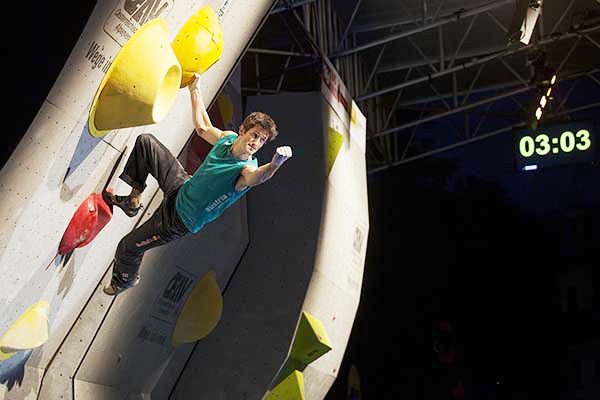
Kilian Fischhuber at an earlier edition of the World Cup (Photo: courtesy IFSC)

Kilian Fischhuber at an earlier edition of the World Cup (Photo: courtesy IFSC)

You were a top athlete in a sport that wasn’t part of the Olympics. If all goes well, climbing may debut at the 2020 Tokyo Olympics. Do you see climbing’s entry into the Olympics as a major development? If so, what impact will it have on the sport?

This will very much depend on how climbing will be implemented in the Olympic circuit. If the IFSC prefers to push for an Olympic discipline that has never been tried and does not exist, then I see it rather critically.

The first set of young people aspiring to be full time climbers has just emerged in India.  Some of them will be participating in the Navi Mumbai World Cup. What advice would you give them, both in terms of how to handle themselves at top level competitions like the World Cup and in terms of making climbing their profession?

Get inspired by the other climbers, yet go your own way. Don’t be pushy but take your time. In competition climbing a lot depends on experience, hence time is of the essence.

What climbs occupy you nowadays? When do we see you in India next?

I am currently teaching in high school, I even showed my students some pictures of Hampi and Badami. I will climb professionally again after July, when school ends. I hope to make it back to Badami in December.

(The author, Shyam G Menon, is a freelance journalist based in Mumbai. Please visit the Ganesha series of articles on this blog for more on Kilian Fischhuber.)

“ I AM BY NATURE A SOLO RUNNER’’

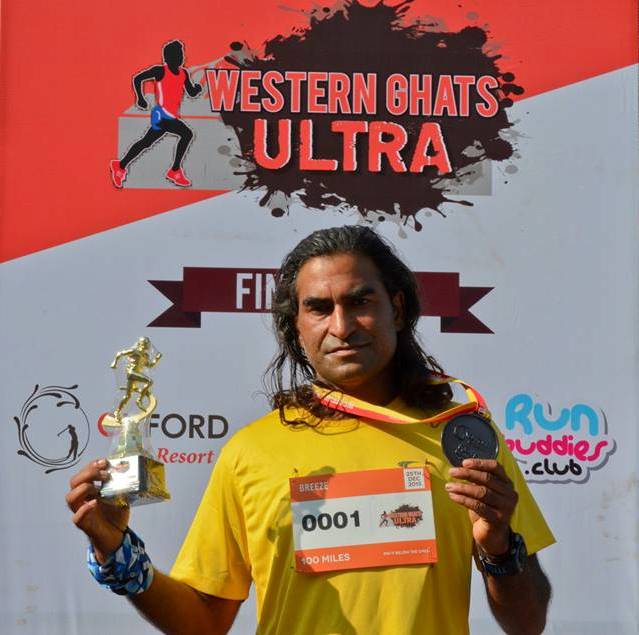
Breeze Sharma (Photo: Shyam G Menon)

Breeze Sharma (Photo: Shyam G Menon)

Breeze Sharma spoke with no intent to impress.

There was an air of – this is what I am; take it or leave it.

He minced no words in his description of the emergent world of Mumbai running. In particular, how support and sponsorship grace mostly the media savvy.

Breeze wasn’t wrong in his perception. A couple of weeks after we met him, Outside magazine ran an article on the same problem as felt in expeditions. It would be easy to say that what is going wrong in the matrix of money, media and marketing can be set right by further tweaks to technology or that the maze can be negotiated by hiring consultants adept at the task. The real issue is something else. It has to do with what drives the matrix, dominance by the matrix and the distortion it brings.

It was a hot summer morning.

Breeze sat in the café, like runner trapped, mind lost to what he must do. He had just finished a long run in the morning and after meeting us, would head out for another session in the blazing sun. In the middle of busy city with people ensconced in the air conditioned comfort of their cars and offices, a lone runner adding mileage on scorched road. Breeze is among Mumbai’s best known ultra-marathon runners. He was preparing for the Badwater Ultra Marathon, a foot race enduring extreme temperature variations and elevation change, often described in the world of running as the toughest event around.

Breeze on Kang Yatse (Photo: courtesy Breeze Sharma)

Breeze on Kang Yatse I. This is the main peak, not the shoulder many climb to (Photo: courtesy Breeze Sharma)

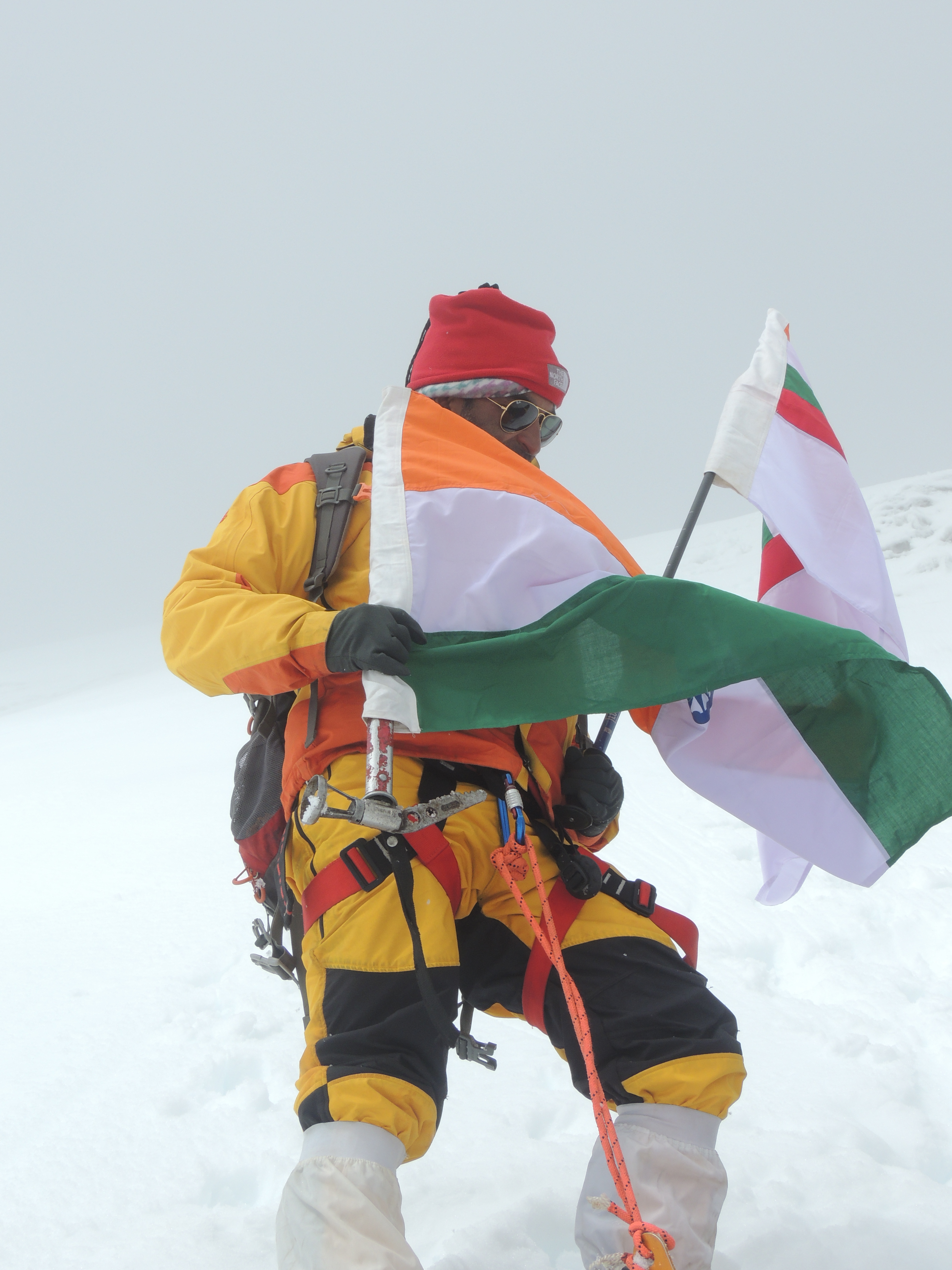
“ I don’t think I got accepted at Badwater because I am a runner. I am a mountaineer,’’ he said. Born January 1974 into a large family in Jaipur, Breeze Sharma considers mountaineering his first love. He did his mountaineering courses from the Jawahar Institute of Mountaineering in Batot, the Nehru Institute of Mountaineering (NIM) Uttarkasi, the Atal Bihari Vajpayee Institute of Mountaineering and Allied Sports, Manali and the High Altitude Warfare School (HAWS) in Gulmarg. Long haired and tattooed, Breeze, works with the Indian Navy; on the civilian side. He has been associated with the navy’s Adventure Cell for several years. Climbing mountains, he has been on peaks like Nanda Kot, Bhanoti , Friendship, Shitidhar, Chamser Kangri, Lungser Kangri, Deo Tibba, Baljuri, Kang Yatse, Shinkun East, Shinkun West, Ramjak, Mentok Kangri,  DKD-II and Independence 50. The altitude involved in these climbs, ranges from 17,000ft to 22,000ft. A bachelor, he stays in Mumbai, in a house close to the Sanjay Gandhi National Park (it is the biggest forest within a city anywhere in the world), getting occasional visits from the park’s slithery residents. Aside from mountaineering and running, Breeze also handles snakes.

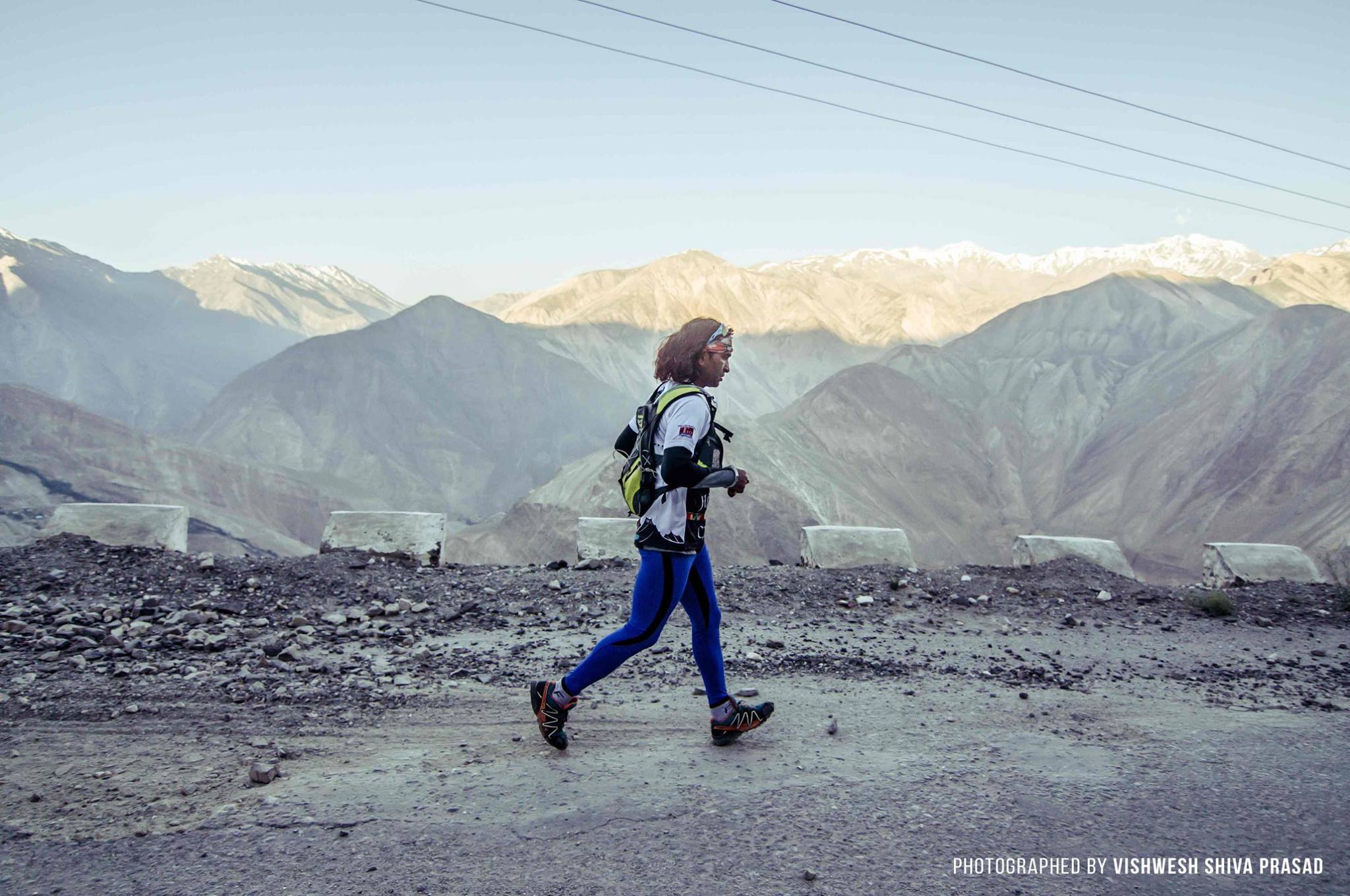
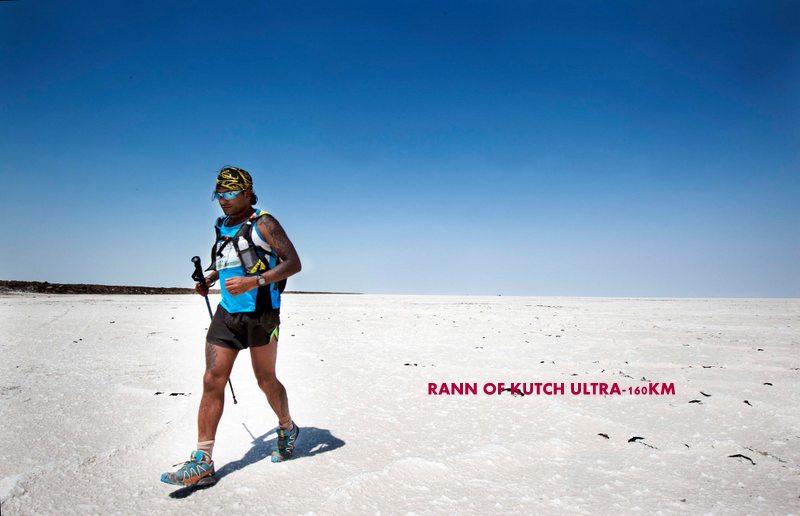
It was Mumbai runner Suresh Pillai who introduced Breeze to running. Suresh is a colleague in the navy. “ Breeze was very active in the Adventure Cell. I had accompanied him on some treks.  I told him that he should get into running, that he will enjoy it,’’ Suresh said. Breeze’s first running event was the Vasai-Virar Marathon of 2012, incidentally the same year that he began running. Starting almost 25 minutes late, Breeze finished the full marathon in 5 hours, 38 minutes, last in the field. Nobody saw him finish. Suresh had to intervene and get him a finisher’s medal. “ I was interested only in the full marathon,’’ Breeze said when asked why he didn’t pick any of the smaller distances at his first running event. Discouraged by his showing, he left the finish line, thinking he didn’t have what it takes to be a good runner. However, the opposite unfolded. Following his Vasai-Virar experience, Breeze started to run regularly. He ran the 2013 Standard Chartered Mumbai Marathon (SCMM) under navy quota, completing the full marathon in 4 hours, 31minutes. His next full marathon was in Chandigarh. Then, in October 2013, he ran his first ultra-marathon, the 80km-Bhatti Lakes Ultra, running the distance in 11 hours, 22 minutes. He ended third in that race. In December 2013, he ran a 100km ultra in the Nilgiris, lapping up the distance in 15 hours, 29 minutes. “ With this race, I came to accept that ultra-running is my passion,’’ Breeze said. He set his eyes on a hundred miler (161km). That happened with an event in the Rann of Kutch in Gujarat, where he ran 161km in 34 hours, 56 minutes to place second.

From Himalayan Crossing (Photo: courtesy Breeze Sharma)

From Himalayan Crossing (Photo: courtesy Breeze Sharma)

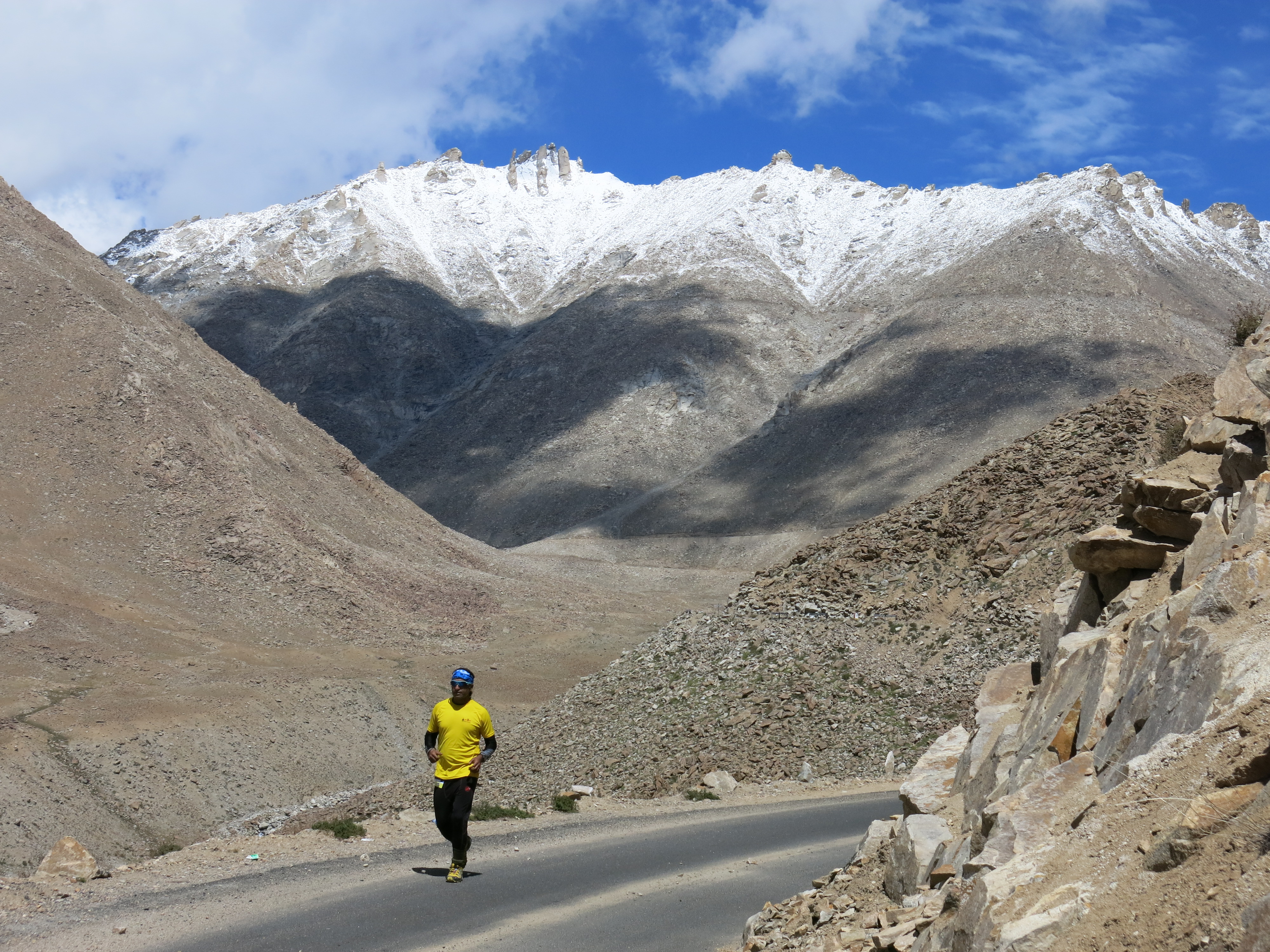
June 2014, found him running 80km in 10 hours, 46 minutes at the Shimla Ultra. Next he opted for a multi-day race spanning July 7-11 and covering 335 km, called Himalayan Crossing. Between the Shimla Ultra and this multi-day race, Breeze embarked on an expedition to Deo Tibba. At Chikka, he was bitten by a Russels Viper. Fortunately, the bite was on a finger, with that much distance, anatomically, between area of bite and vital organs. Only one fang made contact. Rushing him back to Manali, his guide alerted the District Magistrate and ensured that a helicopter was kept on standby. In another stroke of luck, enquiries revealed that the relevant antivenin was available at a hospital in Kullu. Breeze was brought unconscious to Kullu, where the antivenin was injected. He survived; he was discharged eight hours after regaining consciousness. It was a narrow escape. It left him with ten days to attempt the Himalayan Crossing. Its route straddled an average elevation of 12,000ft. As it turned out, he was the only one running. Starting from a village in Spiti, he ran the distance, crossing the Kunzum La and Rohtang La (both high passes) en route. He completed the run in 55 hours, 45 minutes. “ It was in this event that I discovered the endurance runner in me,’’ Breeze said. Suresh put it in perspective, “ Breeze has very good endurance because of his mountaineering activity.’’ The Himalayan Crossing – which earned him a place in the Limca Book of Records – happened in July 2014.

From Himalayan Crossing (Photo: courtesy Breeze Sharma)

Running in the Himalaya (Photo: courtesy Breeze Sharma)

On August 3rd, Breeze ran the 12 hour-stadium run in Bengaluru, covering 92.8km to place fifth. He also ran the Mumbai Ultra of August 15. As if this wasn’t enough, Breeze reached Ladakh in September to run the Khardung La Challenge. In November 2014, still in running mode, he ran 162km to secure third place in the 24 hour-segment of the Bangalore Ultra. Then he ran for a second time, the 100km ultra in the Nilgiris, completing it in 14 hours, 29 minutes. “ I ran the maximum number of ultras I have done so far, in 2014,’’ Breeze said. Inderpal Khalsa is a young, promising ultra-marathon runner. He has run a few ultra-marathons with Breeze. “ One thing I have observed is that he has very strong will power and his mind is determined and focused. I have seen him on extreme terrain, unwilling to stop, just looking down and continuing to run at a slow pace. He can run for hours and hours without a break because he focuses on strength training and spends a lot of time in the mountains,’’ Inderpal said.

In early 2015, four days after SCMM, Breeze ran a 24 hour-treadmill challenge, covering 196.64km, earning him a place in the Limca Book of Records. In February, he repeated the ultra in the Rann of Kutch, running 100 miles in 28 hours, 55 minutes. Breeze won this race. Then an unexpected twist occurred, one that dealt him a severe mental blow. At noon, April 25, 2015, a devastating earthquake struck Nepal shaking up the Everest region with considerable damage inflicted as far away as Kathmandu. Over 8000 people died, more than 20,000 were injured. The temblor triggered a major avalanche at Everest Base Camp. Among those buried under the snow was Breeze Sharma. For over a decade, the mountaineer and ultra-marathoner had been saving up money for an expedition to Everest. Everest is a costly affair. He sank his savings into the project and borrowed some more. His plan was to climb both Everest and Lhotse. All that effort and a chance to attempt the summit, ended up under the snow. Buried by avalanche, Breeze eventually broke through to the surface. In the hours that followed at camp, he had an injured woman die in his arms. In all, 21 people died due to the avalanche at Everest Base Camp. The experience rattled him. Atop the trauma of earthquake and avalanche, was the spectre of returning home to a huge debt. “ I was bankrupt,’’ Breeze said. Laid low by these developments, he quit running. It was one of those dead end scenarios when nothing appears to work positively for human being.

From the ultra-marathon in the Rann of Kutch (Photo: courtesy Breeze Sharma)

Breeze, during the ultra-marathon in the Rann of Kutch (Photo: courtesy Breeze Sharma)

One of those who kept in touch with Breeze during this phase was Vijaya Nadar. She lives in the US. “ Breeze struggled to fund his Everest expedition because a sponsor who had promised ten lakhs for the same had to decline and some other funds he was banking on wasn’t released on time. Some of his runner friends had promised to help raise funds; that too didn’t happen. It led to a panicky situation. He had no money to even buy insurance, before the trip. But he left for Everest all the same. After the earthquake and avalanche, he not only had to come to terms with his failure but also the mountain of loans – around 15 lakh rupees – which he had taken from his family and friends. He was broke and absolutely sure that he will not be able to recover. I would tell him to get back on his feet, though I myself wondered how. But all credit to the guy, he cleared his debts in six months and got back to running,’’ Vijaya said. The navy also helped. However some things precious, were lost. A keen biker, Breeze kept a small collection of motorcycles. He sold off his Harley Davidson, two Enfield Bullets and a KTM Duke to help repay the debt. In August 2015, Breeze ran the 24 hour-stadium run in Bengaluru, in an indifferent manner. He walked for 7-8 hours. “ I was not at all happy with my performance,’’ he said. Looking for a metaphorical summit to push himself onward in life, he found Badwater. The iconic ultra-marathon starts 279ft below sea level in the Badwater Basin of California’s Death Valley and ends at an elevation of 8360ft at Whitney Portal, the trailhead to Mt Whitney.  The race can see day time temperatures soar above 50 degrees Celsius. The course is 217km (135 miles) long. Not every ultra-marathoner finishes Badwater.

Among eligibility criteria for Badwater is that an applicant must have done three 100 milers. Breeze already had two 100 milers to his credit, both done in the Rann of Kutch. He needed one more. That manifested in December 2015. He ran a 100 miler in Pune called the Western Ghats Ultra. “ There were six participants. I would call this the toughest race in India. The last 85km is steep,’’ Breeze said. He ended up first, finishing the race in 27 hours, 20 minutes. He could now apply for Badwater. The race is scheduled for July 18, 2016. So far from India, only Arun Bhardwaj has completed the race. Breeze’s Badwater attempt is happening just 26 months after he got into ultra-running. That’s why he calls himself a mountaineer first, for it was in the mountains that he acquired the mind needed to take on challenges and physical hardships. “ Ultra-running is a game of the mind. I am by nature a solo runner,’’ he said, an observation mountaineers will quickly identify with. “ Breeze enjoys running solo. He occasionally runs with company but mostly likes running alone,’’ Suresh said.

After the Western Ghats Ultra (Photo: courtesy Breeze Sharma)

On the podium after the Western Ghats Ultra (Photo: courtesy Breeze Sharma)

When we met Breeze for a chat, he was very much into the training phase for Badwater. He had run 30km that morning and was set to do another 30km in the evening. Overall, his preparations for Badwater entailed covering 5000km in four months in various conditions. The month preceding our meet-up, he had been logging on the average over 40km per day. That doesn’t mean he runs every day; it is an average. “ I don’t run every day. But I do heavy workouts in the gym. I run whenever I am in the mood to do so,’’ he said. You need a support crew when running the Badwater ultra-marathon. “ For crew, besides me it will be Craig Foster, who has run several 100 miles in the US, and has crewed at Badwater four times. It will be his fifth with Breeze. Then there is Avasa Singh, who is a very enthusiastic runner herself and preparing for her first 100 miles,’’ Vijaya said. There will be a mini van trailing the runner stocked with food, hydration needs, medicines, foot care essentials, extra shoes and importantly – ice boxes to cool the runner should the temperature be extreme. Some of the crew members will also occasionally pace the runner to keep him motivated. Between the preparations now underway for Badwater and the earlier Western Ghats Ultra, which set him up to apply for the race in California’s Death Valley, Breeze returned to the Rann of Kutch in February 2016, to run an ultra-marathon there for a third time (this one was different from the first two, it was called ` Run the Rann’). He finished first.

One suspects the Breeze Sharma-story is never complete without a mountain in the head to climb. Apart from the running, the Badwater chapter has its other challenges – mainly cost. Fresh from his struggles to repay debts over Everest, Breeze was trying to raise the six to seven lakh rupees he needed for Badwater.  It isn’t an easy task. It can be frustrating when the world’s capacity to support is partial to those playing by its PR rules. Breeze is not naturally wired for it. “ He needs to get more support but because he is not in the front line and not engaging in publicity with his running, he loses out,’’ Suresh said.

Conversation over, Breeze left the same way he spoke.

We shook hands and he walked off without looking back.

(The authors, Latha Venktatraman and Shyam G Menon, are independent journalists based in Mumbai. Please note: the timings at races and the list of mountains attempted / climbed are as provided by the interviewee.)


IFSC WORLD CUP: COUNTDOWN BEGINS IN NAVI MUMBAI

The organizing team at the World Cup venue during Fabrizio's visit (Photo: courtesy Anushka Kalbag)

The organizing team at the World Cup venue during the recent Navi Mumbai visit of Fabrizio Minnino, IFSC Jury President (Photo: courtesy Anushka Kalbag)

Updates to the main article are provided at the end. Please scroll down for the latest results and team standings in the run up to the IFSC World Cup in Navi Mumbai.

Before us was a street of baked earth.

To its either side were rows of warehouses.

In one, a big pedestal fan hummed, blowing a cool breeze to counter the afternoon heat.

The floor and sides were stacked with plywood acquired for the task at hand. Drills, electric saws and tool boxes lay ready for use. Abhijit Burman (Bong), his shirt gathering sweat despite the fan in the corner, poured over diagrams and waited impatiently for his Man Friday from competitions past, to appear. He did – walking in at a measured pace, his face, intense and expressionless yet just a muscle twitch away from breaking into a smile at old team getting together. There was Bong, there was Raju the carpenter – a duo that has built several walls over a decade of climbing competitions at Girivihar – and by the side of the room, the first set of steel frames for the biggest climbing wall they have worked on so far.

Photo: courtesy IFSC

Photo: courtesy IFSC

The detailed drawings of this wall had been approved by the International Federation of Sport Climbing (IFSC). The wall, built locally to IFSC specifications, will host the qualifying rounds of the IFSC World Cup due this May 14th and 15th in Navi Mumbai. The semi-finals and finals would be on imported walls. After it is fully fabricated, the locally built wall would be transported as modules to Vashi, the venue of the World Cup and put together at site. The warehouse was in a far corner of Navi Mumbai and suddenly, the atmosphere of design, drawings, the sound of metal and machinery, animated conversation about wall, and Raju, reminded of Girivihar and mountaineering. Climbers focus best, when there is a challenge. You sensed challenge in the warehouse, you sensed focus. Less than a month remained for the first World Cup in climbing to grace Indian shores.

Photo: courtesy IFSC

Photo: courtesy IFSC

It was in mid-2015 that a team of climbers from the Mumbai based mountaineering club Girivihar visited Munich to get a ringside view of a World Cup competition held under the aegis of IFSC. The team was in the German city because just a few months before, the IFSC had granted its approval for a World Cup in Navi Mumbai to be hosted by its official representative from India, the Indian Mountaineering Foundation (IMF), and organized by Girivihar. The World Cup is a series of competitions held annually worldwide, attended by some of the best international climbers. It showcases cutting edge climbing. The Indian pitch was for a World Cup in bouldering. In India, mountaineering zipped to early prominence. A lifestyle sport, free by nature, rock climbing awaited the right generation, age group, maybe even apt juncture in economic development, to take off. The IMF diligently held its own annual climbing competitions (six zonal competitions dovetailing into a national final, every year) to select the Indian sport climbing team, conducted workshops and did what it could to promote the sport. Sport climbing is growing. But in huge country of 1.3 billion people, it is very small; a far cry from cricket, which almost shapes national imagination. What the Girivihar team saw in Munich amazed them. The retail awareness about climbing stunned. The venue hadn’t been advertised a great deal, nor was there any big buzz surrounding the event. Yet anyone who was interested in climbing was there. “ It was wonderful to see the level of awareness about climbing they had,’’ one of the team members said. The observation wasn’t without reason.

Photo: courtesy IFSC

Photo: courtesy IFSC

Photo: courtesy IFSC

Photo: courtesy IFSC

Back in India the team members climbed at the crags of Belapur in Navi Mumbai. The crags are located on the edge of Mumbai-Navi Mumbai, its existence threatened daily by the relentless push of urbanization. On the other hand, for 11 years in a row, Girivihar had successfully conducted an open climbing competition, originally on natural rock at the Belapur crags, slowly gravitating to bouldering on artificial walls. At its peak, the annual event had attracted 192 climbers from all over India. A few thoughts emerged behind the scenes, as this competition series progressed. First, there was definitely expertise accumulating with Girivihar to organize climbing competitions. If the IMF helped, projects could be more ambitious. Second, the annual competition was encouraging bouldering and sport climbing. It has seen climbers from 11 foreign countries participate so far. The competition typically concluded in a rock trip by visiting climbers and locals, to an Indian climbing hotspot like Hampi or Badami. This interaction encouraged Indians to improve their climbing skills like an adjunct to what the IMF was already doing. Third, the competition was popularizing the sport; taking it to a larger audience. This was critical for continued climbing in the Mumbai-Navi Mumbai region because with crags under pressure, the future had to be either greater public empathy for the sport resulting in better preservation of the climbing crags or the empathy manifesting as more artificial climbing walls in the region. Climbing’s priorities survive in society, if climbing is active and visible. Fourth, every time Girivihar organized a competition it had to search for adequately certified judges, for in India’s small world of climbing, the talent pool to judge was also commensurately small. It was a case of small ecosystem begging to be nudged bigger; put one’s shoulder to what the IMF was already doing. The trends pointed to a possibility: why not try and organize something big like a World Cup? If the sport grows as a result, it benefits all who love it.

Photo: courtesy IFSC

Photo: courtesy IFSC

The idea was good but the club needed to wait for the right time. They had to be at a point where the climbing competence you see at a World Cup won’t be drastically beyond what you see in Indian climbing. There was the need for relevant connect. Climbing – lead climbing, speed climbing and bouldering – is set to debut at the Asian Games of 2018. When the Rio Olympic Games happens, the International Olympic Committee is expected to take a call on what new games should take to the field at the Tokyo Olympics of 2020. The short list at hand includes climbing. While that is the future, at the 2015 Asian Youth Championships, Indian climbers secured four podium finishes. That’s a measure of the rising talent among young Indian climbers. Appearing on the scene in India were also youngsters gate-crashing into the truly high grades of rock climbing in Hampi and Badami (for more, please see the Ganesha series of articles on this blog), not to mention those seeking to make a career as professional climber. The inflection point the Girivihar team was looking for, seemed reached in 2014-2015. The club wrote to IMF. India’s apex body in climbing responded positively. In league with the IMF, a pitch was made to bring the World Cup to India. First half of 2015, the IFSC approvals came through. The organizing team found itself in Munich, getting acquainted with how a World Cup is organized so that they can replicate the finesse and efficiency in Navi Mumbai.

Photo: courtesy IFSC

Photo: courtesy IFSC

Photo: courtesy IFSC

Photo: courtesy IFSC

Once back in Mumbai, tasks were identified and teams formed. Veteran climber, Franco Linhares, led the team overall; Bong became Event Organizer and Vaibhav Mehta, Sports Manager. Behind the scenes, an important role in terms of managing the World Cup campaign was essayed by Kiran Khalap, a senior professional in advertising and marketing who is also a climber. By club standards, the project was capital intensive. The local Navi Mumbai administration responded well to the project’s needs. CIDCO, the agency which planned and built Navi Mumbai provided the city’s Exhibition Centre near the Vashi railway station, as venue for the World Cup. The big challenge for the organizers was funds and sponsors. Worldwide, in 2015, an estimated 35 million people were into sport climbing. Of that, 50 per cent are under 25 years of age, according to the IFSC website. In India too, climbing has a young following. In principle, this matrix should attract sponsors. Over the last couple of years, amid bleak economic conditions worldwide, the Indian economy had remained one of the bright spots. However that did not mean companies were in a mood to splurge. Two challenges dominated. First, climbing is still a small, growing sport in India. It is far from being a popular sport that immediately grabs sponsors’ attention. Second, given climbing’s profile in India, the easiest candidates to be sponsors may have been medium sized businesses. During dicey economic times, this segment prefers to keep investments relevant to core business. All the same, the organizers did find potential sponsors; they also did a round of crowd funding. Preparations for the World Cup progressed. Cost cutting options were thought of. Building the wall for the qualifying round, locally, was one. The IFSC supported the move. In April third week, when Fabrizio Minnino, Jury President, IFSC, visited Navi Mumbai to meet the organizers and check out the venue, he paid a visit to the warehouse to see the wall’s fabrication as well.

Photo: courtesy IFSC

Photo: courtesy IFSC

The World Cup in climbing is quite similar to Formula One in that there are several World Cup events in a year at different venues worldwide with climbers picking up points as the season progresses and an overall winner declared at the end of it all. The 2016 World Cup season in bouldering kicked off on April 15 in Meiringen, Switzerland. As of April 21, thirty six competition climbers – some of them, the world’s best – had registered to participate in the Navi Mumbai edition of the World Cup. Present in the list were the 2015 men’s champion in bouldering, Jongwon Chon of Korea, the leader (just after Meiringen) in the men’s segment from the 2016 season of the World Cup, Alexey Rubtsov of Russia and the leader (again, just after Meiringen) from the women’s section, Shauna Coxsey of Great Britain. Countries represented included Austria, UK, Iran, Russia, USA, Korea, Slovakia and Taiwan. Also enrolled were the likes of Sean McColl (Canada), Rustam Gelmanov and Dmitrii Sharafutdinov ( both Russia). After Meiringen, the 2016 World Cup season in bouldering travels to Kazo in Japan and Chongquin in China. Then in mid-May, it reaches Navi Mumbai.

Photo: courtesy IFSC

Photo: courtesy IFSC

Brig. M.P. Yadav, Chairman, Sport Climbing, West Zone has been coordinating efforts on behalf of the IMF. As host country, India is automatically offered reserved participation slots for its athletes. It is understood that an Indian contingent comprising 16 promising Indian climbers have been shortlisted for a training camp ahead of the May World Cup. Those selected include some of the best young Indian climbers like Aziz Shaikh, Vicky Bhalerao, Tuhin Satarkar, Irfan Shaikh, Sandeep Maity, Kumar Gaurav, Somnath Shinde, Mayuri Deshmukh, Nehaa Prakash, Smriti Singh, Dhanushri and Sidhi Manirekar.

In Navi Mumbai, the countdown has begun for a rendezvous with climbing’s best in May 2016, the scheduled time for India’s first IFSC World Cup.

Shauna Coxsey (Photo: courtesy IFSC)

Shauna Coxsey (Photo: courtesy IFSC)

Update: Shauna Coxsey consolidated her lead in the women’s segment while the see-saw battle for leadership among men continued, in the run up to the Navi Mumbai World Cup in bouldering. By late evening May 1, results in bouldering from the World Cup competition at Chongqing, China, became available. The men’s section was won by Tomoa Narasaki of Japan. Jan Hojer of Germany placed second while Jongwon Chon of Korea came third. The women’s section was topped by Shauna Coxsey of Great Britain followed by Akiyo Noguchi of Japan and Miho Nonaka of Japan. For Shauna Coxsey, this was her fourth consecutive triumph at a World Cup bouldering competition; the previous woman to do so was Akiyo Noguchi in 2014. Of six places on the podium across both men’s and women’s sections at Chongqing, the Japanese secured four. Of the six climbers named above, all have already registered to participate in the upcoming World Cup in Navi Mumbai. In terms of national team ranking, Japan topped at Chongqing followed by France and Great Britain.

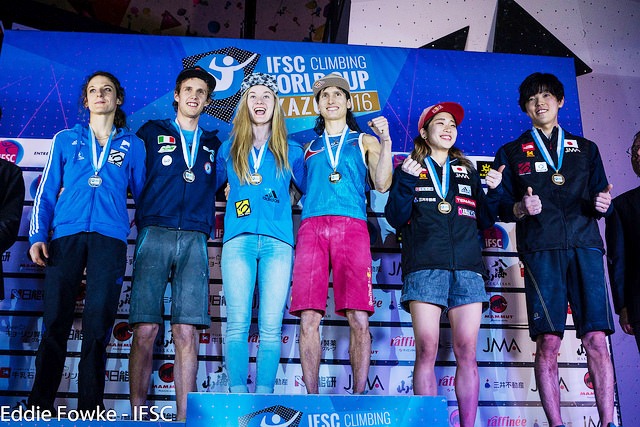
The winners at Kazo (Photo: courtesy IFSC)

The winners at Kazo (Photo: courtesy IFSC)

Post Chongqing, the leaders in the men’s segment in the 2016 World Cup series in bouldering are Alexey Rubtsov ( Russia / 177), Rustam Gelmanov (Russia / 165) and Kokoro Fujii (Japan / 155) in that order. The leaders in the women’s segment are Shauna Coxsey (Great Britain / 300), Melissa Le Neve (France / 203) and Miho Nonaka (Japan / 154). In terms of national teams, the leaders were France (536), Great Britain (438) and Japan (412) in that order. The next halt for the World Cup in bouldering is Navi Mumbai, where the competition is scheduled for May 14-15.

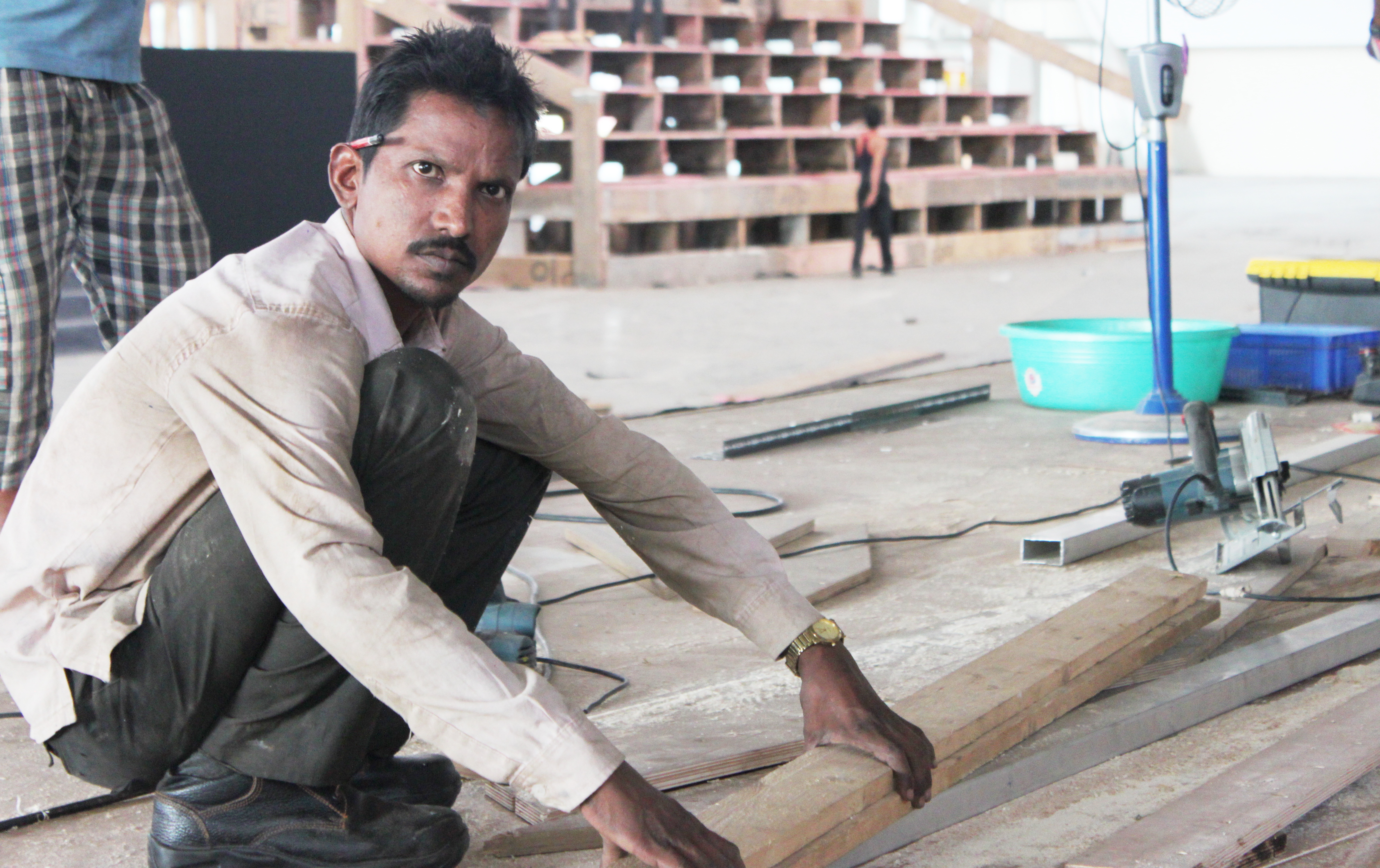
A wall gets ready: Raju, the carpenter who has worked on almost all the competition walls Girivihar built. (Photo: courtesy Pravin Shinde)

A wall gets ready: Raju, the carpenter who has worked on almost all the competition walls Girivihar built. (Photo: courtesy Pravin Shinde)

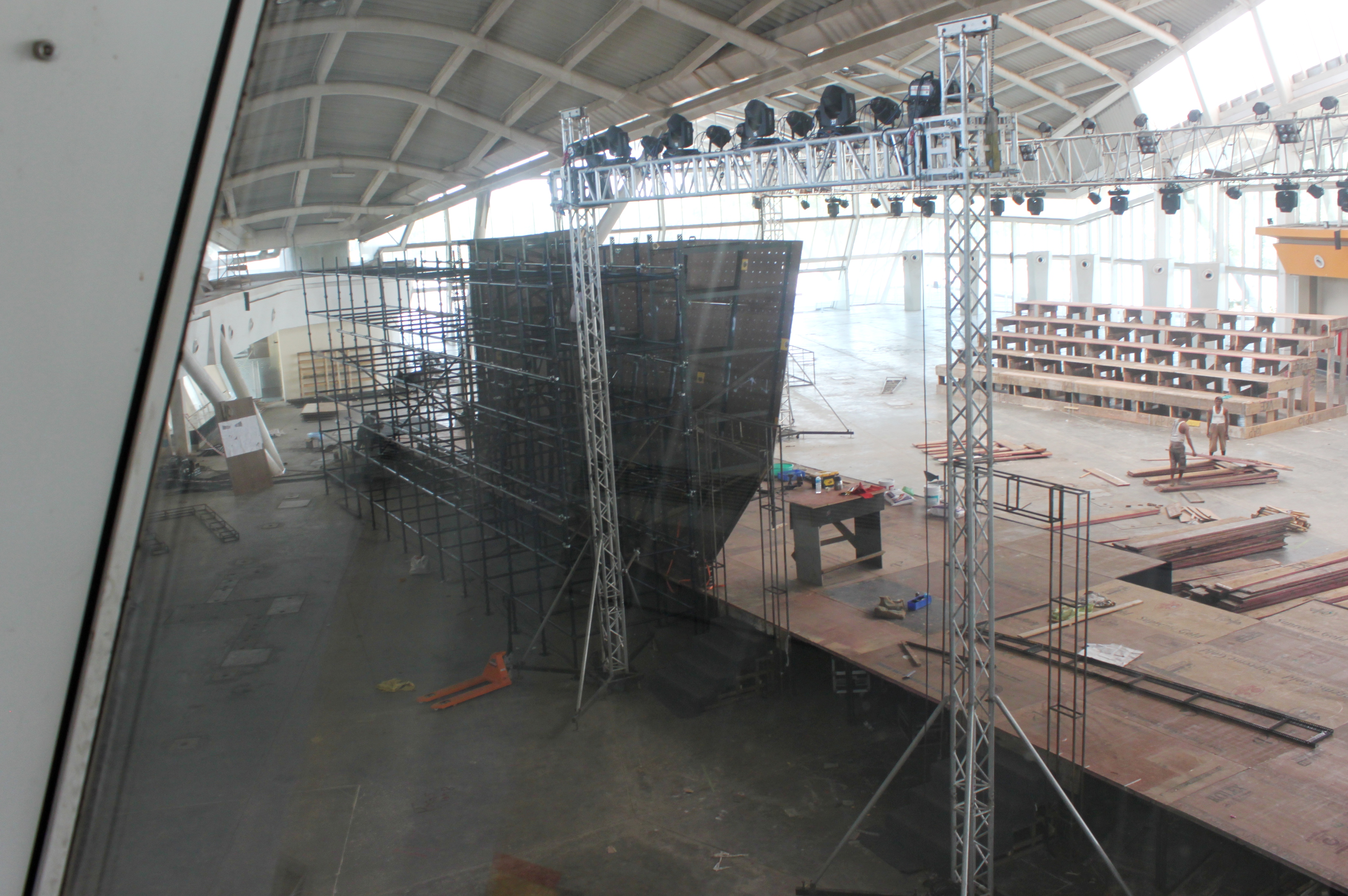
A wall gets ready: The wall, brought in from Taloja, assembled and put together at the venue. (Photo: Pravin Shinde)

A wall gets ready: The wall, brought in from Taloja, assembled and put together at the venue. (Photo: Pravin Shinde)

As of May 9, the number of athletes registered to participate in the Navi Mumbai edition of the World Cup, stood at 83 with India sending in a 17 member-team. Countries represented at the event were Austria, Canada, Czech Republic, France, Great Britain, Germany, India, Iran, Japan, Korea, Lithuania, Netherlands, Nepal, Russia, Singapore, Slovenia, Slovakia, Taiwan and USA. A couple of days before the Indian team registered, a four member-team from Germany had signed up. Among those in the team was Jan Hojer. A day before the Germans, the French had enrolled; their team included Melissa Le Neve and Fanny Gibert. Early morning April 26th, the number of athletes registered for the World Cup in Navi Mumbai was found to have increased from 36 to 50, thanks to the entry of a 14 member strong-Japanese contingent. It included Akiyo Noguchi, the defending women’s champion from the World Cup bouldering series of 2015 and Kokoro Fujii, who was third in overall ranking among men after the Kazo edition of the World Cup. Akiyo Noguchi is one of the most successful competition climbers from the women’s category.

The finished wall, painted and ready for the route setters to start their work (Photo: Shyam G Menon)

The finished wall (the locally fabricated one), painted and ready for the route setters to start their work (Photo: Shyam G Menon)

At the Kazo World Cup in bouldering held over April 23-24, Rustam Gelmanov and Shauna Coxsey topped in their respective categories. The results, top three, were: Men – Rustam Gelmanov (Russia), Michael Piccolruaz (Italy) and Kokoro Fujii (Japan); Women – Shauna Coxsey (Great Britain), Melissa Le Neve (France) and Miho Nonaka (Japan). Post Kazo, the leader rankings in the 2016 series were Rustam Gelmanov (Russia / 128 points), Alexey Rubtsov (Russia / 126) and Kokoro Fujii (Japan / 100) in men’s, while in women’s it was Shauna Coxsey (Great Britain / 200 points), Melissa Le Neve (France / 160) and Fanny Gilbert (France / 94).

Meanwhile in a separate development, Tata Trusts have provided a financial grant as support to the Navi Mumbai World Cup. The Tata Trusts are among India’s oldest, non-sectarian philanthropic organizations. They own two thirds of the stock holding of Tata Sons, the apex company of the Tata group of companies. The Tata group is India’s biggest industrial conglomerate and from the perspective of the World Cup, a name that has in the past, supported mountaineering and climbing in India. The first successful expedition to Everest from the state of Maharashtra (where Navi Mumbai is) was supported by Tata.

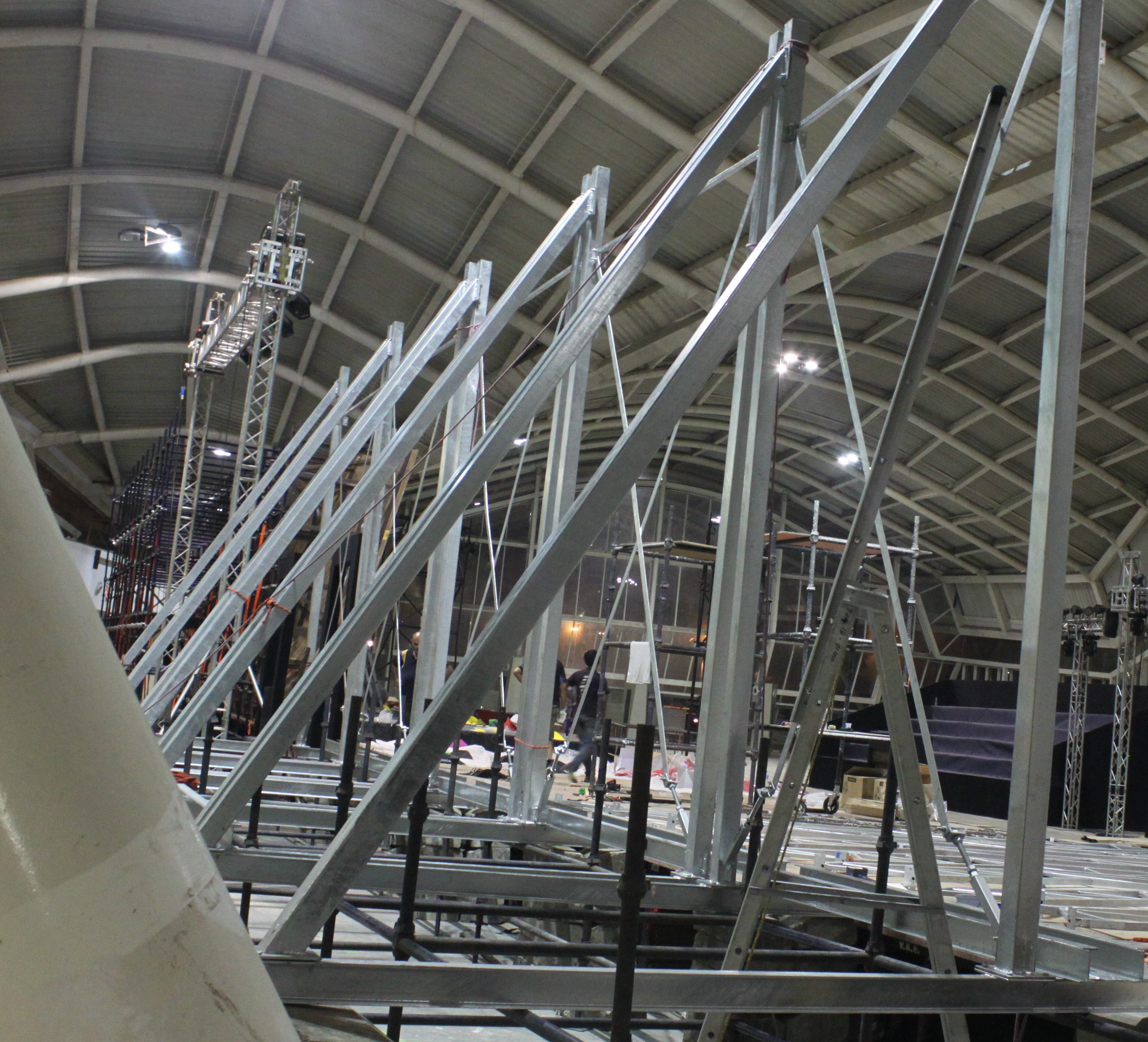
The supporting frames of the second wall being put in place (Photo: Pravin Shinde)

The supporting frames of the second wall being put in place (Photo: Pravin Shinde)

As of May 8, the locally fabricated climbing wall, earlier taking shape at the warehouse in Taloja, had been installed at the venue in Vashi, painted and ready for the route setters to commence their work. A team of four route setters from IFSC have arrived for the job. By May 9, work on assembling and installing the second wall – an imported one – was well underway. Access to the walls is restricted when the route setters are at work.

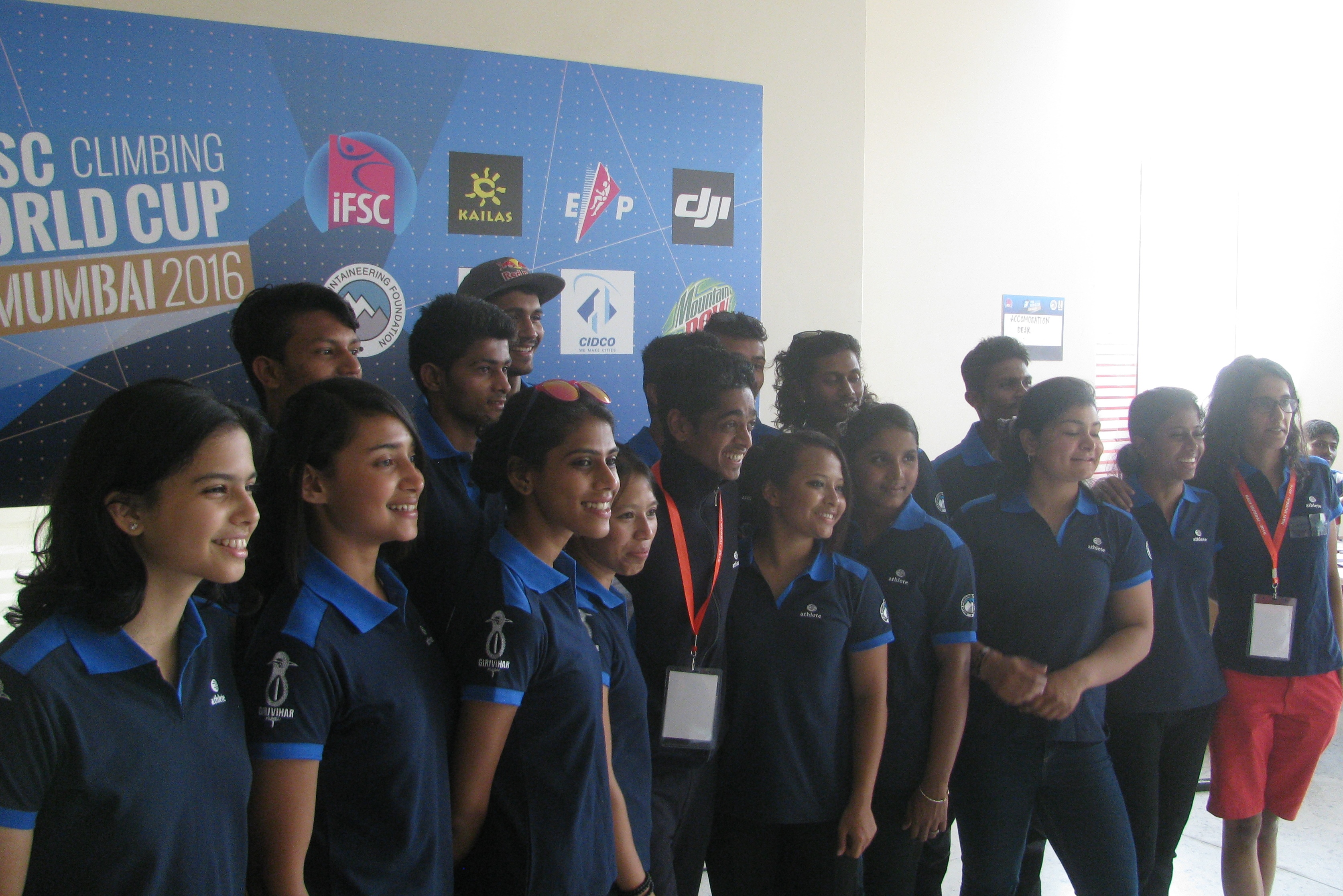
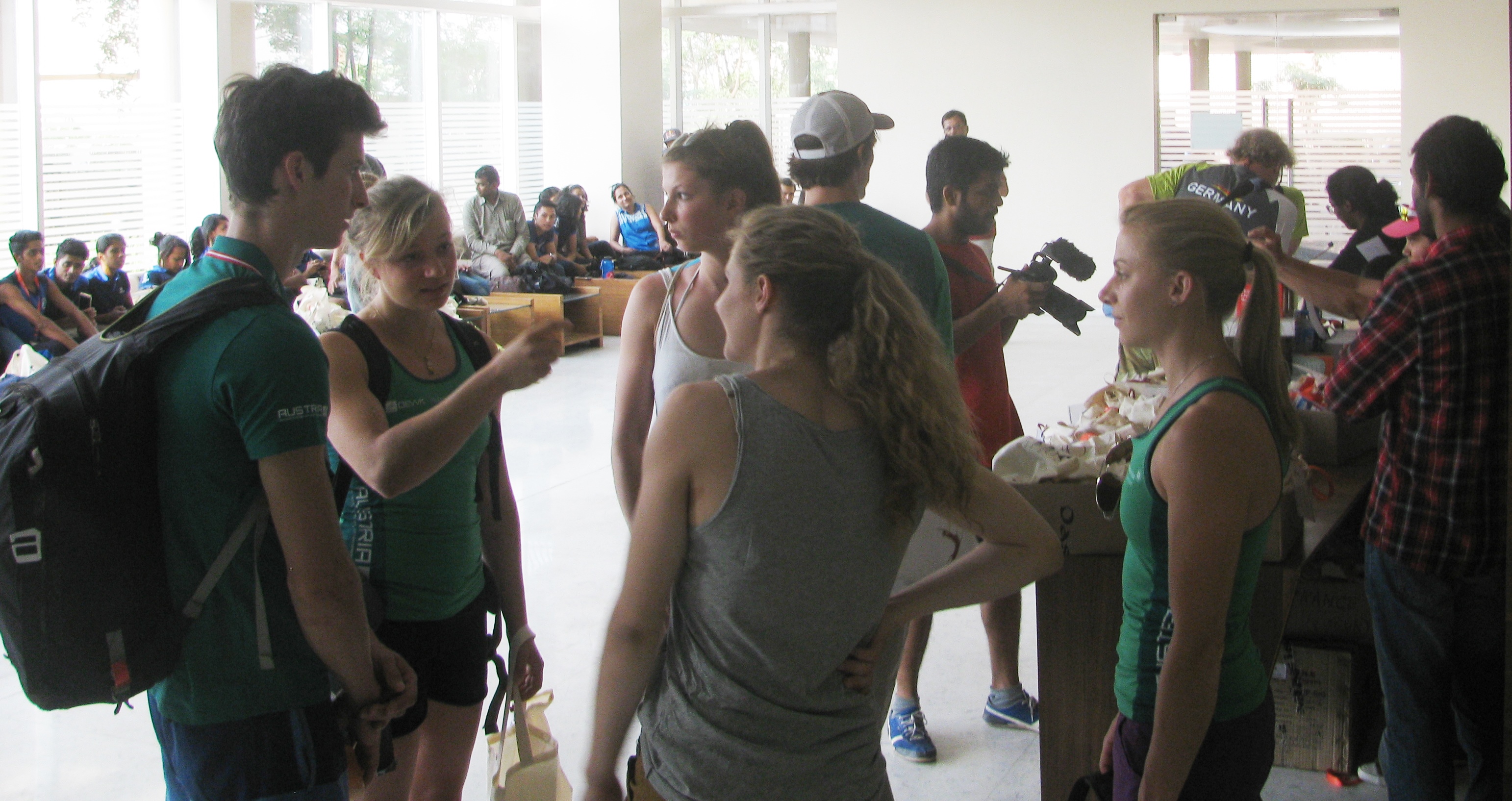
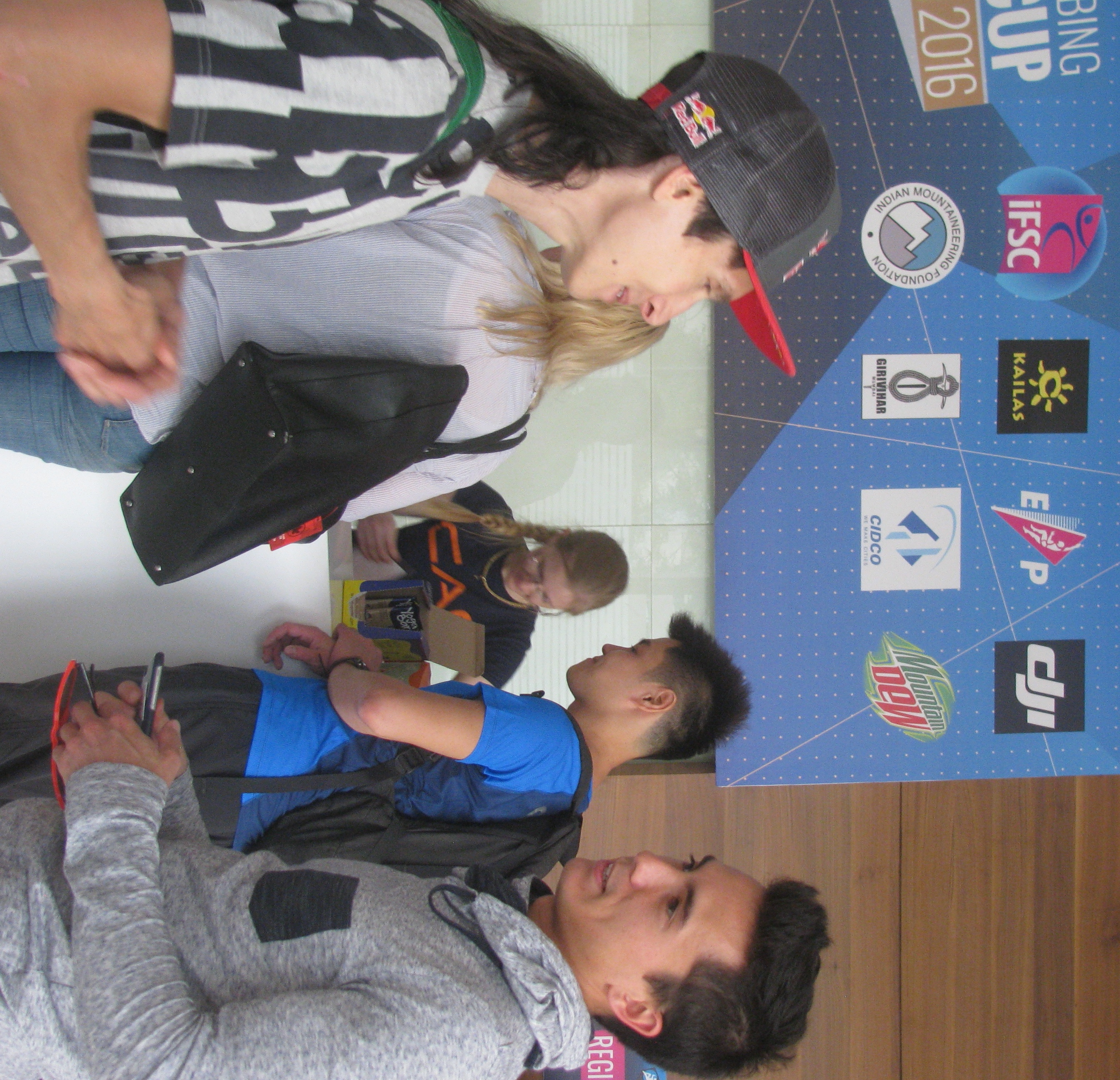
May 13: The athletes have arrived. Their registration at the venue commenced at  5 PM. Here are a few photographs from the registration area:

world cup-3

world cup-4world cup-8world cup-5world cup-13world cup-11world cup-12world cup-6world cup-9world cup-10

(The author, Shyam G Menon, is a freelance journalist based in Mumbai. The competition photos used in this article were downloaded from a link to a photo stream, provided by IFSC. All photos from the registration area are taken by Shyam G Menon)

IFSC JURY PRESIDENT: A GOOD JUDGE IS AN EXPERIENCED JUDGE

Fabrizio Minnino, Jury President, IFSC (Photo: Shyam G Menon)

Fabrizio Minnino, Jury President, IFSC (Photo: Shyam G Menon)

Fabrizio Minnino, Jury President, International Federation of Sport Climbing (IFSC) was in Navi Mumbai recently to have a look at the venue of the upcoming World Cup in bouldering and to make sure that whatever infrastructure is required from the jury’s perspective is in place. Excerpts from a conversation: 

Now that you have visited the venue of the upcoming World Cup, what are your impressions?

The first positive thing I felt was the friendliness of everybody around and their desire to organize something that would be known all over the world. Second, the venue was really impressive. I had seen some pictures of it but I didn’t know that it would be this good.

For a world class competition in India, the jury has to come from abroad. That entails cost, adding to the cost of a project like the Navi Mumbai World Cup. What should India do to have an adequate number of qualified judges in climbing here itself; what can the IFSC do to help in this regard?

We must start from the fact that a good judge is an experienced judge. If it was enough that you organize a course and qualify it would be very easy. But the problem is that if you attend a course, qualify and then, you don’t take part in competitions, it is very difficult to be a good judge. The starting point therefore is to have many competitions to judge. This cannot be done by the IFSC. What the IFSC can do is provide support for relevant courses and tutorship. But the competitions have to come up here in India or elsewhere in Asia.

So, there has to be a momentum of competitions going on….

Yes.

The organizing team at the World Cup venue during Fabrizio's visit (Photo: courtesy Anushka Kalbag)

The organizing team at the World Cup venue during Fabrizio’s visit (Photo: courtesy Anushka Kalbag)

You are President of the Jury. What are the challenges you face in the context of today’s climbing competitions?

I would say that compared to 20 years ago, it is a lot easier to be President of the Jury at a World Cup. One reason for this is that organizers have the ability now to check out what has already happened. The organizing team for the Navi Mumbai edition, had for instance, visited the Munich World Cup. One of its nodal members, Abhijit Burman (Bong), has seen the proceedings at Arco; he has also been to Fredrikshavn. When you have seen others do something, you can do the same. You have your benchmark and your reference. I remember that some of the earlier competitions were difficult because the organizers couldn’t understand what they were expected to do and so the work of the Jury President was sort of double work – you had to play the role of both judge and organizer. I am quite sure that we wouldn’t have to do that here. We would be only judging. At an international level, the most interesting challenge today is the act of taking the World Cup competitions all over the world. As yet, we have never held a competition in Africa and the number of competitions in Asia is slowly going up. The challenge going ahead is to move away from the sport’s European roots and be present all over the world. Being at the Olympics – as we hope to by 2020 – will provide the sport the visibility required to make this transition.

Awareness of climbing is still not high in Asia and Africa, which are the locations of interest to the sport, going ahead. Do you think this may see the IFSC engage in more familiarization programmes for the sport in these geographies?

It could be. We will have to discuss it with local federations. If there is a genuine desire to have a larger family for the sport or get the sport better recognition, we can provide the support but the organizing would have to be local.

Judging in various sports is getting increasingly technical. What is the experience in climbing – is it becoming more technology?

Technology can help you but the main point is – you have to have common sense. If you don’t have that, you can’t be a good judge. Also, at competitions, there are two roles involved – there is the judge and there is the route setter. Technology cannot be of much help for the route setter because that art is based on an understanding of how the body moves while engaged in climbing.

Fabrizio Minnino, Jury President, IFSC (Photo: Shyam G Menon)

Fabrizio Minnino, Jury President, IFSC (Photo: Shyam G Menon)

Are climbing competitions becoming more and more intense and competitive?

In the beginning we had only lead and speed competitions. Then bouldering arrived; it is completely different from lead. Speed, lead and bouldering are different from each other. The challenge is to go in one direction, where the best athlete is the best athlete in all the three disciplines. So we are now discussing the Olympic format and the Olympic format is to award the really best climber in all the three disciplines. This is the challenge for the coming years.

What impact will the Olympics have on the sport?

It will have enormous impact. A lot more people will get to know about the sport. Getting into the Olympics has been a 20 year-old dream.

Does entering the orbit of the Olympics set any expectations in terms of improving the quality of judging you do? Would you be required to be more exact for instance?

I don’t think so. We are quite professional.

How important is it for a judge of climbing to be also an active climber?

For me, it is important because you must have a feeling of the body movement involved. For me it is very important.

(The author, Shyam G Menon, is a freelance journalist based in Mumbai.)

LIVING WITH NO BRAKES, THE SHIVA KESHAVAN STORY

Shiva Keshavan (Photo: Shyam G Menon)

Shiva Keshavan (Photo: Shyam G Menon)

1973. That year, a traveller from Thalassery in Kerala, reached a Manali, quieter, greener and less touristy than today. “ There was no direct bus from Delhi to Manali. There was a Youth Hostel you could stay at for one rupee a night or so. The now well known Pandoh Dam was yet to be completed,’’ K.P. Sudhakaran said. The way he spoke, his travels resting light on his shoulders, reminded me of someone else I knew in Kerala; a person who had seen a tonne of films. You wouldn’t know his knowledge of movies till you coaxed him to speak about it. The pre-Facebook generation, I told myself.

Sudhakaran made Manali home, settling down there with his Italian wife Rosalba Lucioli. They met in the hill town. Sudhakaran used to trek a lot. In the hill tourism scene of that time, Jammu & Kashmir was perceived as “ commercial.’’ Himachal Pradesh was “ relaxed.’’ When Kashmir grew troubled, Sudhakaran’s hikes became more focussed on Himachal. In 1984-85, long before contemporary Manali and its plethora of adventure tour operators, Sudhakaran founded Panman Adventure Travels. Its main activity was organizing outdoor trips and camps for school students. Later, he and his wife started an Italian restaurant, Rose Garden. Panman Adventure Travels exists no more. But Rose Garden does. Located on the road to Vasisht, it is currently managed by Sudhakaran’s son Shiva Keshavan and his wife, Namita. That’s where I first met Sudhakaran. We had a small chat over coffee. Shiva, India’s best known luger, was away in Italy. Sudhakaran splits his time between Manali and a coffee estate in Wayanad, Kerala.

A luge is a small one or two person-sled, on which one sleds supine (face up) and feet-first – that’s how Wikipedia describes it. Many of us, who checked out the sport after Shiva Keshavan grabbed our attention, would recall the specially made track on which races are held. Like all sports, born for fun, evolving organically and then shaped by the compulsions of modern sport and entertainment, the luge too wasn’t born for a track. While the earliest recorded sled races are said to have been in Norway, luge is traced to Switzerland; its history includes a hotel entrepreneur at whose resort, guests adapted sleds used by delivery boys, to speed down the lanes and alleys of the village for fun. Needless to say, there were collisions with pedestrians. The first organized meeting of the sport was in 1883 in Switzerland, the first world championship in the sport was in 1955 in Oslo, Norway. While the modern Olympic Games began in Athens in 1896, the first Winter Olympics – recognized so in retrospect – was at Chamonix in 1924. Luge made its Olympic debut at the 1964 Winter Olympics in Innsbruck, Austria.

Early March 2016, months after meeting Sudhkaran in Manali and exchanging mails with a Shiva busy training and competing, I got a call. Father and son were flying from Kozhikode to Delhi via Mumbai. We met at the airport in Santa Cruz. Two men, four or five pieces of luggage, one with the Olympic rings on it – I will never forget that. Sudhakaran and Rosalba have two sons, Shiva and Devan, who is a licensed football coach for FIFA. Shiva was born in August 1981. “ Born and brought up in Vasisht,’’ the luger said. A year before Sudhakaran reached Manali, in February1972, the Winter Olympic Games was held for the first time at a venue outside Europe and North America – it was hosted by Sapporo, Japan. Luge in Sapporo was dominated by the East Germans. They bagged eight of the nine medals in the event. The planet’s Winter Olympics don’t fascinate the media as much as the bigger Summer Olympics. The 1970s were also years before television acquired national presence in India. The February snows of Sapporo were 6000 kilometres east of Manali; out of sight, out of mind.

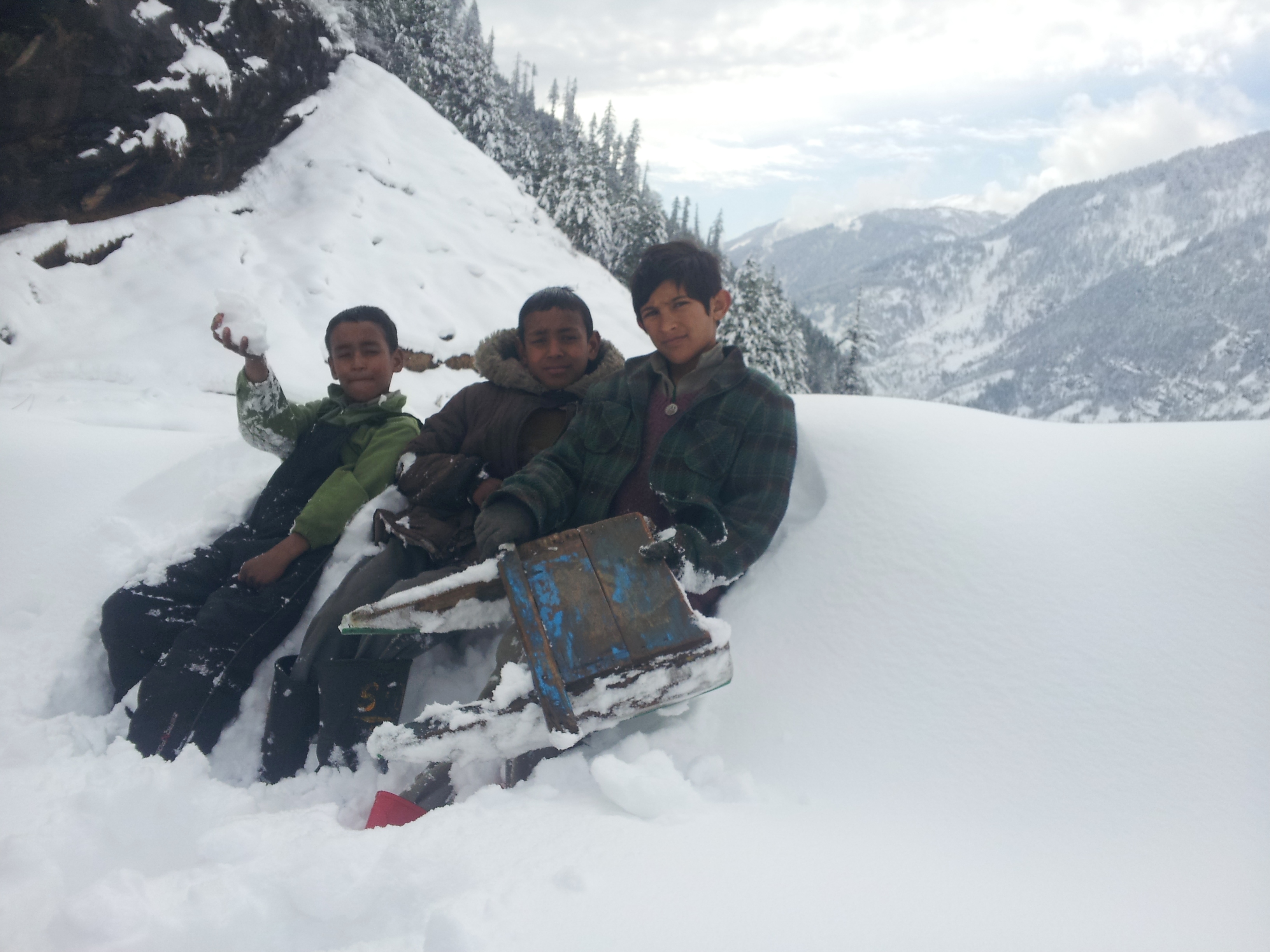
Youngsters with an improvised winter sled near Manali (Photo: courtesy Shiva Keshavan)

Youngsters with an improvised winter sled near Manali (Photo: courtesy Shiva Keshavan)

Located just south of the main Himalaya cutting diagonally across the crown of India, Manali receives good precipitation. Ladakh to the north may be higher and colder but it is drier. In winter, Manali and its nearby localities like Solang, receive good snowfall. Solang is known for skiing. The children of Rosalba and Sudhakaran grew up on Manali’s mountain slopes, enjoying the snow. If you look carefully, like cricket played in alleys and hockey played with tin cans, the seed of all sports exist everywhere. With little access to modern skiing equipment, the Manali of Shiva’s childhood had its resident skiers; they took to winter’s snow with crude, homemade skis. “ You know the blade of the saw used to cut logs? Strips of that would be attached to the bottom of wooden skis,’’ Sudhakaran said. Also around were improvised sleds. According to Sudhakaran, the family spent a lot of time in Solang. Shiva grew to be a decent skier. Unlike skiing, which stayed confined to winters, the sled metamorphosed to year round-life.

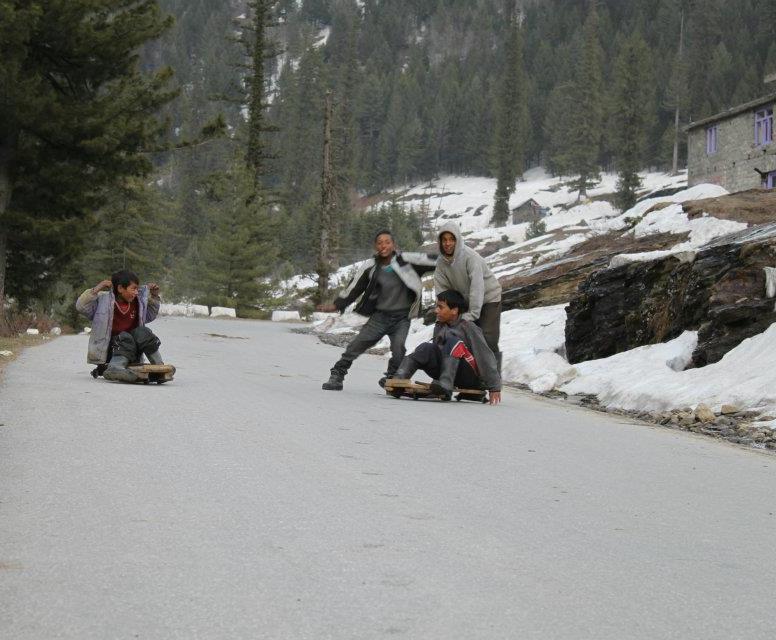
Youngsters with improvised summer luges on the hill slopes near Manali (Photo: courtesy Shiva Keshavan)

Youngsters with improvised summer luges on the hill slopes near Manali (Photo: courtesy Shiva Keshavan)

The first time I saw the summer avatar of a sled was in Darjeeling, in 1996. A boy seated on a wooden platform fitted with four tiny, noisy metal wheels, his hands clutching a tight arc of rope in front to keep body in place – came hurtling down the winding road. Holding the rope, he leaned back on the platform, legs stretched out in front and torso rising to an upright position every time he needed to slow down the contraption. Brakes, it had none, save its high decibel, grating noise on rough road as early warning to avoid collision. Similar, improvised contraptions existed in Manali too, entertaining Shiva and his friends. They took to it, rolling down Manali’s roads (one media report also talks of a small sled gifted to Shiva by his Italian grandparents). When you are young, you are free of fear. Although Sudhakaran took his family to the snows every winter and watched his sons enjoy skiing, he was restrained by the baggage of fear, which accompanies adulthood. “ I was a grown man and suitably scared,’’ he said. Shiva became a promising national level skier in the sub junior and junior categories, winning prizes. However, participating in events like the National Winter Games wasn’t easy for this son of immigrants to the Himalaya. Unable to secure a berth through the local winter sports body, Shiva recalled that his first participation at national level had to be through the Rajasthan Skiing Association. Born in a Himalayan state and needing a desert state’s team, to ski at national level – such is the organizational architecture and politics of Indian sport. It was the beginning of a long, rough relationship with domestic sport authorities, many of them hewn from that typically Indian controlling-mindset, which ensures that any sport has a well entrenched bureaucracy even before people take to the sport. Shiva never competed at the senior national level in skiing. He gave up competitive skiing after he was excluded from the team selected for the Junior Asian Championships. Unknown to him, those improvised sleds and the experience they offered, would become the stuff of his destiny

Established in 1847, The Lawrence School at Sanawar in Kasauli is among India’s most prestigious boarding schools. This is where Shiva studied. He was very active in sports with presence in gymnastics; athletics, football, hockey and skiing. It was during his years at this school that he was dispatched for a` ` ski camp’’ at Panchkula. A skier being sent to a ski camp was quite understandable, except for one puzzling detail – Panchkula is in Haryana. You don’t get snow there. The camp was held by the International Luge Federation (FIL) and Shiva, already intrigued by Panchkula as choice of camp location, had no idea what luge was. At the camp was well known Austrian luger, Gunter Lemmerer. He had participated in two Winter Olympics, been a gold medallist in the European championships and thrice won (with fellow Austrian luger Reinhold Sulzbacher) the men’s doubles Luge World Cup. For the camp, Gunter had brought along a couple of modified sleds in which, the blades had been replaced with wheels. Shiva warmed up to what he saw. Luge was similar to what he had done on improvised sleds back in Manali. “ At this point, it was all fun with no future plan in mind,’’ Shiva said. However, as things turned out, he and another youngster were selected for further training in Austria. “ The whole skiing experience had been disappointing, so we wanted to try luge,’’ Sudhakaran said. In 1996, He and Rosalba sent Shiva to Austria. The transition from the sleds with wheels Shiva used at Panchkula, to a real luge on ice was significant. The luge on ice was much faster. Newcomers started their training on the less steep lower portions of the luge course and slowly worked their way up. Shiva’s Indian partner at luge (they were two selected from the Panchkula camp) suffered a crash. He needed medical attention and the duo had no insurance specifically for such mishaps. Eventually it had to be passed off as an accident that occurred while travelling.

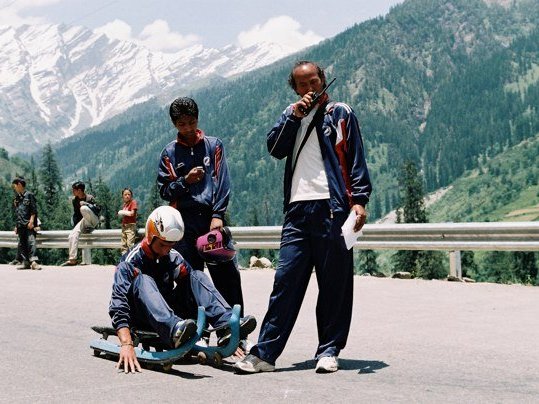
A modern luge adapted for the road, fitted with wheels. From a talent scouting camp held by Shiva and Namita at Solang near Manali (Photo: courtesy Shiva Keshavan)

A modern luge adapted for the road, fitted with wheels. From a talent scouting camp held by Shiva and Namita at Solang near Manali (Photo: courtesy Shiva Keshavan)

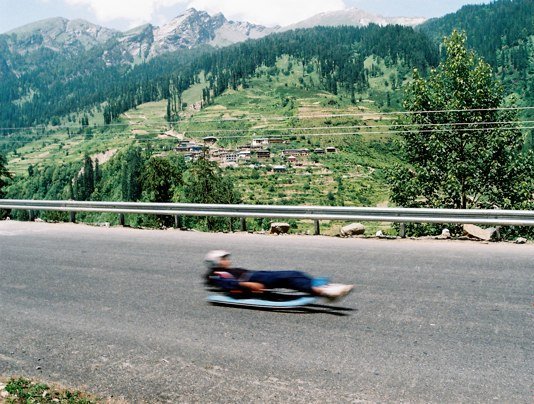
Luger coasting down the road at Solang; from the talent scouting camp (Photo: courtesy Shiva Keshavan)

Luger coasting down the road at Solang; from the talent scouting camp (Photo: courtesy Shiva Keshavan)

The following year, 1997, Shiva was back in Europe – Austria and Germany – training for a longer time. He was around international athletes. That gave him his first reference point in luge, an idea of where he stood in the sport with his competence, what he had to do to improve. “ They found it funny that an Indian family was trying to get a toehold in luge,’’ he said. But one thing worked – athletes help each other, they provide you tips, particularly when you are in that performance category, which poses no threat. He learnt. The international athletes let Shiva be a `forerunner’ opening the track for them at the World Cup in Igls near Innsbruck. He did so and zoomed the whole distance down the course. To his surprise and likely everyone else’s, the timing he returned was good enough to participate in the upcoming Winter Olympics. Until 1998, there was no formal selection to participate in the Winter Olympics. It was up to each country to select athletes and send them. “ People started misusing this. I was the first Indian to reach the Winter Olympics through a formal qualifying system,’’ Shiva said. This process wasn’t easy. Although his timing at Igls was good, the eligibility process required Shiva to qualify for five of nine World Cup competitions held every year. Gunter Lemmerer advised Shiva to return to India and start training for the World Cup events. Somehow his parents came up with the money for the exercise. At the first of these World Cups in Innsbruck, he raced with a broken foot. This was followed by two World Cups in Germany, one in Norway and one in Japan. “ Incredibly at each of these races, I didn’t make a mistake. I qualified at all five,’’ Shiva said. The 1998 Winter Olympics were scheduled to be held in Nagano, Japan, the second time the Winter Olympics would be held in Asia. Sudhakaran had reached Manali the year after the first Winter Olympics in Asia, in Sapporo, Japan. In the time since, he had married, raised a family and now his son was heading for nothing less than the Winter Olympics.

According to Wikipedia, racing sleds for luge singles weigh between 21-25 kilos; in the case of doubles, between 25-30 kilos. Lugers can reach speeds of up to 140 kilometres per hour. The highest speed reported so far (as of March 2016) was 154 kilometres per hour set by Austria’s Manuel Pfister in 2010. In videos, a luger passing by resembles a streak. The luge is designed for speed. A luge sled rides on a pair of steel blades made such that the craft slides fast over ice. The sled has no saddle. You lay down flat on the sled and slide down the course feet first, which is the most aerodynamic position you can have. In training, lugers are known to use wind tunnels to figure out the best aerodynamics they can have. But because you are supine and going feet first, you are challenged to see clearly where you are headed. The runners (blades) underneath the sled curve up in front and touch the athlete’s legs as he lay supine. Steering is done by pushing on the runners with your legs and flexing the sled with one’s shoulders. The luger is clad in a special suit designed to make him aerodynamic. A fast object like the luge also needs stability. Strength and weight therefore matter. A light luger may add artificial weight. When starting off at the top of a course, the luger uses his arms to propel forward. The athlete must be powerful around the shoulders and arms. Lying supine on a platform lacking saddle and controlling the luge requires excellent core strength. It shows in Shiva – he is over six feet tall and well built without being heavy. You get a sense of person reverse engineered from the needs of life on sled. With so much emphasis on speed and aerodynamics, luge is a precisely timed sport; in fact among sports, one of the most precisely timed. Amazingly, amid this obsession with speed and despite its minimalist flying projectile-character, the luge does not have a brake. Marry all this to the high speed the luge is capable of. It is a risky sport. The most recent high profile accident was Georgian luger Nodar Kumaritashvili’s demise in a crash during a practice run at the 2010 Winter Olympics. Rosalba accompanied Shiva on his tours just once. She couldn’t take it after that. Sudhakaran has watched Shiva in action, more. “ Every time he zips down that course, my heart is in my mouth,’’ Sudhakaran said. With no means to afford a coach for his son, Sudhakaran, who had watched Shiva’s journey from the sidelines, decided to accompany him as his coach, to Nagano.

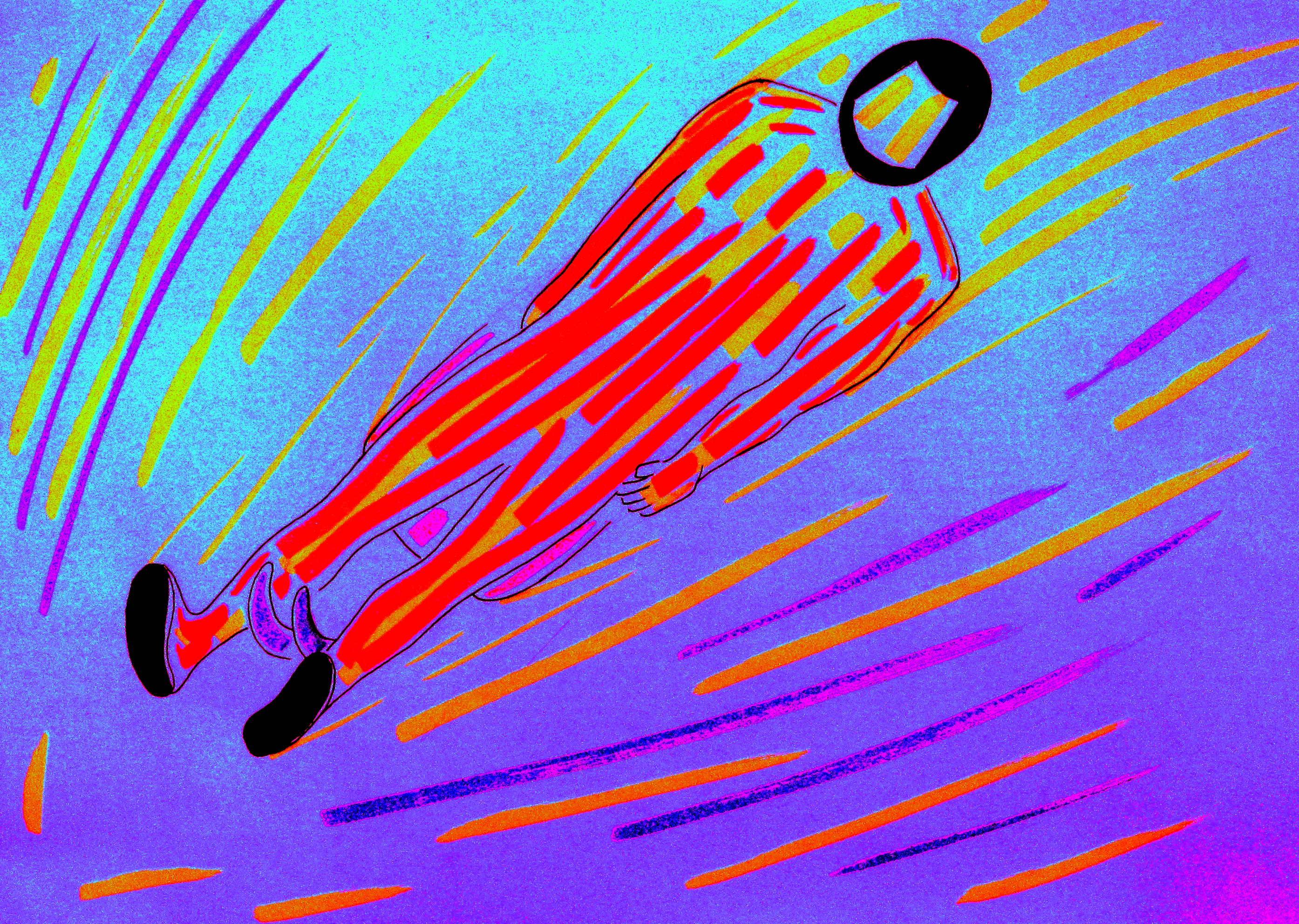
Illustration: Shyam G Menon

Illustration: Shyam G Menon

The father and son team from India were the first people to reach the Olympic village. The Indian authorities hadn’t yet sent in his documents. It caused confusion over whether they can be allowed in or not. The Japanese were courteous and hospitable. After some discussions, they let them in. Although India hadn’t yet sent in Shiva’s papers, the organizers knew of him. There was a reason – he was 16 years old, the youngest athlete to qualify for luge in the history of the Winter Olympics. On February 3, 1998, Jere Longman’s article appeared in The New York Times headlined, ` Olympics: Nagano 1998; Teenage Luger Carries All of India.’ Longman wrote in the introduction: Of all the places that Sudhakaran Palankandy expected to be next Saturday morning, none of them included walking with his son in the opening ceremony at the 1998 Winter Olympics. “ We never thought luge would start in India,’’ the innkeeper said. As a mode of transportation for India’s 896 million people, sliding is not high on the list. But 16 year-old Shiva Keshavan Palankandy has improbably qualified as the only athlete to represent India at the Nagano Games. On Saturday, he will carry the national flag in the opening ceremony, while his father walks behind him as the team leader. Nagano is where the Shiva Keshavan story took off. For his age and experience, he reckons he did well. “ Obviously I wanted to do better,’’ he said. But listening to him and Sudhakaran, I felt, it was at Nagano that world and sport reached out to support them The New York Times article mentions that Shiva received some financial assistance from FIL to participate at Nagano. His travel cost was borne by Rosalba and Sudhakaran. He found fellow athletes being helpful towards him, providing tips on how to improve at luge. “ The sport is dangerous. So people don’t hold back on advice,’’ Shiva said. Perhaps the most interesting thing was that he had no luge. At his first World Cup, the Korean team loaned him a luge they used for practice. At other events including Nagano, the story was similar – Shiva’s luge was borrowed. Incredibly, it would be another 12 years before India’s Winter Olympics athlete, the youngest luger in the history of the Games to qualify for the sport, would acquire his own luge. “ I bought my first luge in 2010,’’ Shiva said.

A luge Shiva made; one of the earlier models he used (Photo: courtesy Shiva Keshavan)

A luge Shiva made; one of the earlier models he used (Photo: courtesy Shiva Keshavan)

From 1998 till the time of writing this article, Shiva Keshavan had participated in five Winter Olympics. In 2005 and 2008, he secured bronze at the Asian Luge Cup, in 2009 he secured silver and in 2011 and 2012, he secured gold. In 2011, he set a new Asian speed record in luge, racing down the course at 134.3 kilometres per hour. The fastest he has ever been is 149.9 kilometres per hour. I asked him what he felt lying supine on a luge, moving super fast down an ice laden course. “ The run lasts less than a minute but for me on the luge, it is like never ending. That’s one of the incredible things about this sport – it feels like you are stretching time,’’ Shiva said. Within that sense of stretched time, the luger is alert to every small detail for steering the luge is a matter of tiny body movements capable of great impact on projectile’s fate.

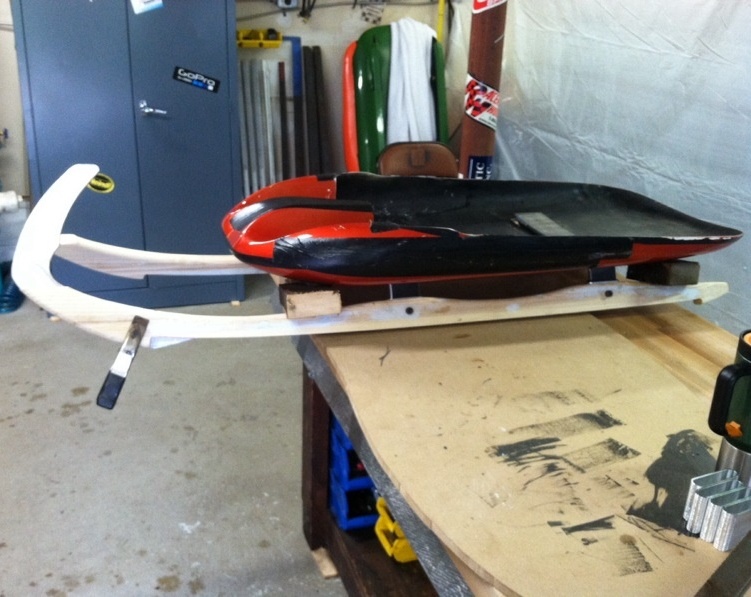
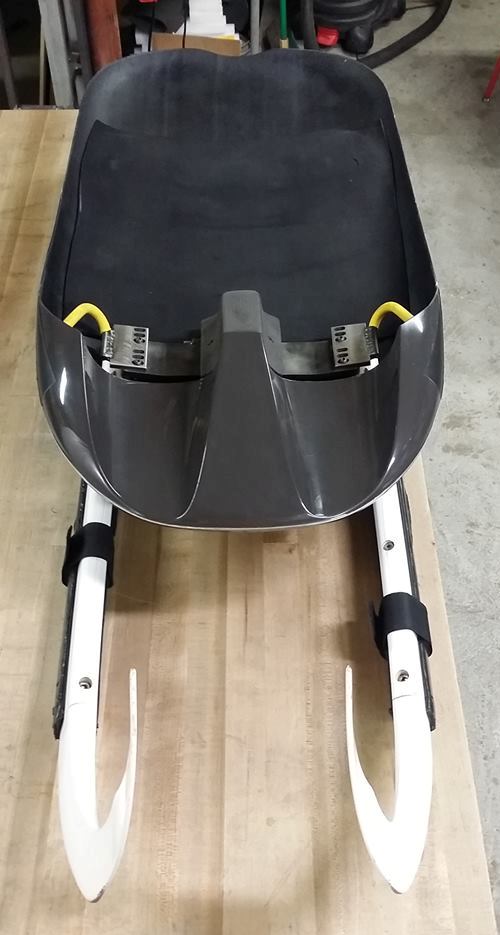
The luge was using at the time of writing this article (early 2016); made in league with Duncan Kennedy and Clarkson University (Photo: courtesy Shiva Keshavan)

The luge Shiva was using at the time of writing this article (early 2016); made in league with Duncan Kennedy and Clarkson University (Photo: courtesy Shiva Keshavan)

“ Ice is a sensitive surface that exaggerates response. Any small twitch of your body and the sled responds. The first challenge in luge is to handle things very calmly despite the obvious dangers in that stretched period of time. You have to discipline your mind. It happens on its own on the sled. Your body knows it is in danger,’’ he said. And what does he think about the luge not having any brakes? “ I never really thought of it that way. It kind of unlocks your fear. It reduces options and puts the focus on natural talent. There is no room for slowing down or being cautious. You have to approach it 100 per cent.’’ Competitions happen on well established courses. As a competitive athlete, Shiva does a lot of visualization of the course while preparing for an event. He has been down all the courses used at luge World Cups, except the new track coming up in South Korea for the next Winter Olympics. However, notwithstanding repeated visits and the benefits of visualization, there are subtle variations in atmospheric and ice conditions that act as variables to tackle on a given competition day.

At Nagano, Shiva was one of the youngest athletes around. Now 34 years old, he is part of the older lot but still having room to improve for there are winners in luge who are in their forties. His struggle so far has been getting his act together, for luge is not just about excellence by luger, you need a good coach, support team and a good luge. In his early years at competitions, Team Shiva Keshavan used to be a combination of self, parents and borrowed luge. Although that has changed, it is still a far cry from how other teams turn up. “ They come with cutting edge sleds, sled technicians, five to six coaches, physiotherapist and biomechanics specialists,’’ Shiva said. He has been lucky enough to not need a physiotherapist so far. But the lack of a good coach hurts. “ I have never been able to hire a good coach. I never had the money for it,’’ he said. Another challenge was the sled, the luge itself. For years he reported to competitions without his own luge, competing eventually with a sled somebody else provided. That may have challenged him personally to improve his being and techniques but the point is – the more a luger improves, the more he deserves a fine luge. His first sleds were all “ hand-me-down’’ specimens. In 2010, he got his own luge built in Albertville, France. It was based on moulds taken from a model he had used with some innovations thrown in. “ It was very simple but didn’t have adequate symmetry. I wasted many years trying to innovate wrongly. The idea was good but I wasn’t doing it the right way,’’ Shiva said. To understand what luge is to top notch luger, we should imagine Formula One racing. There are technical parameters to comply with regarding one’s ride and room for innovation. Shiva did try working with Indian institutions; at one point he spoke to the Indian Institute of Technology (IIT) Delhi on designing his luge. It didn’t work. The reasons were not articulated but it can be gauged: designing a fine luge entails convergence of engineering, knowledge of materials and ability to think back from the sport. It is hard finding this convergent fascination in India. If you dwell on it, a luge for Shiva is a fine chance to showcase design, knowledge of materials, engineering ability and manufacturing skill in an uncluttered product for the sled is a simple object to behold. Made, it will be used by a luger who hasn’t hesitated to push his limits. Somehow, this opportunity hasn’t captivated India’s designing and engineering minds.

Sudhakaran and Shiva (Photo: Shyam G Menon)

Sudhakaran and Shiva (Photo: Shyam G Menon)

Eventually in 2015, Shiva began working with Duncan Kennedy, the retired American luger who had competed in three Winter Olympics, placed second twice in the Luge World Cup and was the first American to win a World Cup event. Duncan builds sleds; he has a workshop where he does it. They – Shiva, Duncan and the New York based-Clarkson University (essaying the role Shiva once expected from IIT Delhi) – started working together. “ The luge I had for the last season, is the first real Indian design luge,’’ Shiva said. But his struggles are not over. He would like to retain Duncan as his coach. That requires getting a good sponsor. In all these years Shiva hasn’t enjoyed a good, reliable long term sponsorship contract with any Indian company. “ I get short term support. What I want is meaningful, long term support,’’ he said. As for sports bodies in India, he said clearly, “ in almost 20 years of competing, I haven’t got any monetary support from the domestic sports associations.’’ He received help from overseas bodies. The International Olympic Committee, for example, provided Shiva IOC Solidarity Scholarships and helped him get started in the sport. But the funds crunch can be quite impactful; over 2006-2008 it was so bad that Shiva wondered whether he would be able to continue. In that phase he married Namita who had studied management; she became his sports manager. Shiva also credits renowned shooter and Olympic gold medallist Abhinav Bindra for helping him continue in luge. What amazes in this hunt for resources in an India loving its story of corporate success, is that Shiva’s annual budget is a mere one crore rupees (approx $ 150,000 at the exchange rate of one dollar = 66.84 rupees; March 27, 2016). The day after I met him, he had a sponsorship deal being finalized. “ If I get two more deals of the same sort, I am set for this year,’’ he said. He also had a couple of crowd funding campaigns going on.

It had been a long time chatting.

A few quick photos and I watched father and son rush off to catch their flight to Delhi.

(The author, Shyam G Menon, is a freelance journalist based in Mumbai.)

“ TAKE THINGS SPORTINGLY’’

KC Kothandapani (Photo: Shyam G Menon)

KC Kothandapani (Photo: Shyam G Menon)

We were at the big Nike shop on Brigade Road in Bengaluru (Bangalore) having a look at the shoes and apparel around, when a young salesman on the second floor mentioned of his new found interest – running.

As the conversation progressed, he invited us to a small room behind the sales floor with posters of running, including one from what appeared to be the Bengaluru chapter of the Nike Run Club (NRC). Prominent in the photo was the gentleman we had met just the day before at the city’s Kanteerava Stadium.

Krishnaswamy Naidu Chakrapani Kothandapani or K.C. Kothandapani as he is known had given us a true runner’s appointment – meet at 7.30 AM. It was pleasant in Bengaluru at that hour, adequate proof for why many runners – professional and amateur – choose the city to train in. There were people running loops on the track at Kanteerava Stadium. Towards one of the curved ends of the track, a group of people were engaged in stretching. A man, distinctly athletic in bearing, stood among them, a file of papers in his hand. We were looking for a person we hadn’t met before. All we knew was – he is runner and coach. It has to be the one with the papers, we concurred. We were right. The restaurant outside the stadium served as venue for conversation. He had breakfast with his fellow runners, then, came over to join us. A young runner concerned about a detail in his training requested a minute from “ Pani Sir.’’ Matter addressed the coach spoke to us; he spoke in a composed, measured fashion.
1982-83 Air Force team prior to taking part in the Inter Services Athletics Championship held in Kochi, Kerala (Photo: courtesy Kothandapani)

The 1982-83 Indian Air Force team – Kothandapani in foreground, second from left – prior to taking part in the Inter Services Athletics Championship held in Kochi, Kerala (Photo: courtesy Kothandapani)

K.C. Kothandapani is among the best known coaches for running in Bengaluru, probably India. He is often, a podium finisher in his age category at races in the city and elsewhere. At the 2016 Standard Chartered Mumbai Marathon (SCMM), he finished second in the full marathon in the 55-60 years age category, completing the race in 3:42:12. Fifty eight years old when we met him, he was born November 1957 at Saidapet in Chennai, the eldest of three brothers and three sisters. The family was Telugu speaking; Kothandapani’s father worked at the Mysore State Electricity Board, the progenitor of today’s swankier sounding BESCOM. Young Kothandapani’s education was in Karnataka. “ I used to play some games in childhood. Mostly cricket,’’ he said. He matured to be a fast bowler, good enough to play in the initial rungs of league level cricket. Upon completing his college education, Kothandapani had to immediately look for a job as his family was big and he was the eldest son. In 1976, he applied to the Indian Air Force (IAF), joining the service in 1977. The first chapter therein was a 52 week-long training program at Belgaum in north Karnataka. At the training centre, for the first six months, he took to boxing. Then, for the local games he was drafted to run the 800m. That was the beginning of his relationship with running.
Kothandapani nearing the finishing line at the 1987 Air Force Cross Country Championship, Mt Abu, Rajasthan

Kothandapani crossing the finishing line at the 1987 Air Force Cross Country Championship, Mt Abu, Rajasthan

After training at Belgaum, he was posted to the IAF station at Kanpur, which fell under the Air Force’s Maintenance Command. There he formally got coached to be a runner. In his first year at Kanpur over enthusiasm earned him running injuries. Recovery entailed systematic training. “ In my case, everything was there from day one,’’ Kothandapani said of how the armed forces approached sports and how that in turn left its mark on him as a coach known for systematic approach. In his early days in the Air Force, he ran the 800m and 1500m, getting podium finishes in these disciplines. These were typically distances, athletes ran with spikes. “ I never used to run in shoes at that time. I ran barefoot,’’ Kothandapani said. Realizing that the use of spikes diminished with distance he shifted out from the 1500m and 800m, to cross country races. At that time, the standard distance for cross country was 14 km (today it is 12 km). He learnt soon enough that barefoot and cross country can be testing on one’s soles. He began using shoes. From this shift onward till he took voluntary retirement from the IAF in 1998, he remained a cross country runner. Except for two occasions; the first of which happened in 1989, when he was posted at Jalahalli in Bengaluru and the Training Command suddenly required a replacement for a marathoner. As part of his training for cross country, Kothandapani used to run long distances on weekends. He stepped in as replacement. The marathon was a team event. Running his first marathon so, he came in third with a timing of 2 hours 49 minutes, his best so far. That position, combined with a colleague’s second place finish in the same marathon, helped Training Command beat Western Command to clinch the championship. Kothandapani ran a second marathon in the IAF in 1992, when he was posted in Allahabad. He finished this race with a timing of 3:12.

Illustration: Shyam G Menon

Illustration: Shyam G Menon

Kothandapani retired as a sergeant from the Air Force. Post retirement he worked for some time with a friend who ran a super market. For 10 years, from 1998 to 2008, his training as runner was erratic. Bengaluru’s well known TCS 10k, then called Sunfeast 10k, was the point of serious resumption. In May 2008, he ran at this event for the first time. In the years that followed Kothandapani would finish first in his age category, four times. Till 2008, Kothandapani had trained by himself. Things changed that year when the Nike Run Club (NRC) commenced in Bengaluru; it was the first NRC in India. Sometime in 2009, Kothandapani also suffered a personal tragedy. He and his wife Sujatha had two children – a son, Karthik, and a daughter, Deepshika, who now works with an IT firm. In 2009, Karthik passed away. “ I feel sad when I think about him,’’ Kothandapani said. Running helped the healing process.

“ Many of the committed runners of the city trained with NRC. Every Saturday and Sunday we reported to Kanteerava Stadium for training,’’ he said. It wasn’t long before Kothandapani with many years behind him as runner, became a part of the coaching team at NRC. One of the runners he met through NRC was Thomas Bobby Philip. Although he was new to running, Bobby was a motivated runner, keen to become good at the sport. Bobby and Kothandapani were often running partners. Bobby used to encourage the soft spoken Kothandapani to do something about the wealth of experience he had in running. Thus was born PaceMakers, a group of runners anchored by Kothandapani, training under his guidance. “ I must give full credit for this to Bobby. For one year I dodged him while he persisted with his suggestion. One running group which was doing 12 marathons in 12 months, asked Bobby to coax me into training them. Eventually it worked,’’ Kothandapani said. PaceMakers started off with 7-12 members. As of February 2016, it had 157 members. They run every week on Tuesday, Thursday and either Saturday or Sunday.  On Tuesday, they focus on interval runs on the 400m track at Kanteerava Stadium. On Thursday, it is tempo run, uphill run and fartlek. On Saturday or Sunday, it is a long run.
KC Kothandapani (foreground) and Thomas Bobby Philip (yellow T-shirt at the back) at the 2011 Bengaluru Ultra (Photo: courtesy Thomas Bobby Philip)

KC Kothandapani (foreground) and Thomas Bobby Philip (yellow T-shirt at the back) at the 2011 Bengaluru Ultra (Photo: courtesy Thomas Bobby Philip)

Kothandapani outlined the annual training calendar, which imaginatively uses Bengaluru’s much loved 10k and Mumbai’s SCMM as two main reference points with the Bengaluru Marathon typically scheduled for October, as a third in between. The first five months of training dwell on preparations for the 10k; the year thereafter deals with the half marathon at the Bengaluru Marathon before shifting focus to the full marathon at SCMM. Typically therein for each discipline, the first five weeks focuses on base endurance, the second five weeks blends endurance to speed endurance, the next four weeks concentrates on race strategy and pace and the last week is reserved for tapering, reducing the volume of training by 50 per cent. “ Every fourth week is an easy step-down week, when the training volume is reduced by 50 per cent,’’ Kothandapani said. He is quite particular about warm-up and cool down stretches. The warm-up starts with a four kilometre-run at slow pace followed by 15-20 minutes of dynamic exercises. At the end of the work-out, runners do a two kilometre-jog followed by stretches for about half an hour.

In 2009, Mumbai based-runner Mani Iyer had just finished his first half marathon. Introduced by a friend to Runners for Life (RFL), it was through RFL that he secured his contacts with experienced seniors. Many discussions used to happen on the RFL website; Kothandapani who was then a coach with NRC was a regular at these chats, providing tips and comments. “ He used to regularly share his workouts which included steps to be taken before and after running like warm-up, cool down and hydration.  For every new runner in the half marathon, sub- two hours was prized goal and Pani Sir in those days was a sub-100 minutes half marathon runner,’’ Mani said. Mumbai Road Runners (MRR) is among Mumbai’s best known running groups. On the first Sunday of every month they organize a run from Bandra to NCPA (Nariman Point) in the city, approximately half marathon-distance. For the second anniversary of this run on July 1, 2012, the group invited Kothandapani to join them. Mani recalled the morning of Saturday, a day before the Bandra-NCPA run. On Juhu beach, Kothandapani shared his knowledge on running. “ This was followed by almost an hour of warm-up. It was the most comprehensive warm-up I had done,’’ Mani said.
KC Kothandapani with a memento after the 2012 Bandra-NCPA anniversary run. Also seen are Giles Drego, Milton and Ram Venkatraman (Photo: courtesy Mani Iyer)

Kothandapani with a memento after the 2012 Bandra-NCPA anniversary run in Mumbai. Also seen are Giles Drego, Milton Frank and Ram Venkatraman of MRR (Photo: courtesy Mani Iyer)

On that 2012 trip, Kothandapani stayed with Bhasker Desai. Separated by a few years, Bhasker and Kothandapani sometimes found themselves running in the same age category.  “ We fondly call him Pani Sir. And he truly deserves and earns that suffix! He is not just a good runner, he is a fine gentleman, someone who leads his pack from the front. Yet he is humble and grounded, never making a noise, letting his work speak for itself. He has trained many good runners. Thomas Bobby Philip and Neera Katwal come to mind immediately, just to name two from his band of many,’’ Bhasker said.

Seventy seven years before the Sunfeast 10k run started in Bengaluru, a man was born in England, who would redefine the meaning of running for many picking up the sport in their later years. While Fauja Singh may be the oldest man around running a marathon, Ed Whitlock has timings that would stun any young runner. His Wikipedia page describes him as the oldest man to run a sub-three hours marathon, which he did at the age of 69. His timing was 2:52:47. At the age of 74, he ran the marathon in 2:58:40. He holds the world record for men in the 70-74 years age category with a full marathon run at age 73 in 2:54:48. The Wikipedia page includes a full marathon run in 3:15:54 in the 80-84 years age category. Born March 1931, Whitlock would now be 85 years old. “ I get much inspiration from him,’’ Kothandapani said. Having participated in many races in the domestic circuit, in 2015, Kothandapani travelled to the US to run the Boston and Big Sur marathons. The Boston Marathon is held every April on the third Monday (Patriots Day) while Big Sur in California, follows five days later. For Kothandapani, plans ahead include attempting the world’s oldest ultra marathon, The Comrades, in South Africa in 2017 (for more on The Comrades, please visit this link: https://shyamgopan.wordpress.com/2015/10/22/the-comrade/).
Kothandapani during The Run of Raramuri Tribe, Bengaluru, 2014 (Photo: courtesy Kothandapani)

Kothandapani during The Run of Raramuri Tribe, Bengaluru, 2014 (Photo: courtesy Kothandapani)

We asked Kothandapani what qualities he liked in a runner. On top were the “ four Ds’’ – discipline, dedication, devotion and determination. Second was, remembering to give equal importance for nutrition alongside all the attention awarded for training. Third – adequate importance for rest. “ Sleep is important,’’ he said, adding, “ people are not taking proper rest.’’ He knows the ill effects of inadequate rest well, training people in a city that is the IT capital of India. Companies keep punishing, stressful schedules. It is a pattern of life every emerging Asian economy goes through; decades ago it was Japan, then Korea and the South East Asian economies, then China, now India. As people seek relief from this grind, the number of people trying the physically active lifestyle is growing. Kothandapani recommends that beginners stick to the simple basics first; do the basics for long before loading up on training. Fourth is the principle of specificity – the art of keeping your training relevant and appropriate for desired outcome. Finally and perhaps above all, Kothandapani said, “ be gentle on yourself. People must not take things too seriously. They must not obsess with a goal. You risk feeling dejected if you do so. You must take things sportingly.’’

That last bit stayed in mind.

As the young man at the Nike shop spoke about his running, we dipped into borrowed wisdom and suggested gently: take things slowly, enjoy your running.
Kothandapani at SCMM 2016 (Photo: courtesy Kothandapani)

Kothandapani at SCMM 2016 (Photo: courtesy Kothandapani)

EVENTS & TIMING:

Bangalore Ultra 2013

50k — 4:47:52 — First — Senior Men.

Marathon

SCMM 2016 3:42:12 – Second – Senior Veteran Category (55 – 65 yrs)

BOSTON FULL MARATHON 2015 – 3:38:06

BIG SUR INTERNATIONAL MARATHON 2015 – 4:11:04

SCMM 2015 – 3:42:57– Fourth – Senior Veteran Category (55–65 Yrs).

SCMM 2014 – 3:35:54 – Second – Senior Veteran Category (55–65 Yrs).

SCMM 2013 — 3:42:32 — Second — Senior Veteran Category (55–65 Yrs).

SCMM 2012 — 3:38:32 — Eleventh — Veteran Category (45–55 Yrs).

Air Force Athletics Championship, Allahabad, (95–96) — 3:12:00 — Second.

Air Force Athletics Championship, Bangalore, (87–88) – 2:59:00 — Third.

Half Marathon

Satara Hill Marathon — 2015 — 1:45:46 — Third — (55-64 Yrs)

Spirit Of Wipro Run – 2015 – 1:38:27.

Ajmera Thump Celebration Run — 2014 — 1:40:10 — Fourth— Senior Men

Airtel Hyderabad Marathon — 2014 — 1:39:49 — First — Super Veteran.

IBM Bluemix Monsoon Marathon — 2014 — 1:33:23 — Fifth — Open Category.

Mysore Celebration Run — 2013 — 1:38:00 — Third — Senior Men.

Airtel Hyderabad Marathon — 2013 — 1:44:25 — First — Super Veteran.

Ajmera Thump Celebration Run — 2013 — 1:42:12 — Third — Senior Men

Mysore Celebration Run — 2012 — 1:40:03 — Third — Senior Men.

Kaveri Trail Half Marathon

2010 — 1:35:20 –Second — Senior Men.

TCS World 10k Bangalore

2015 — 42:58 – First  — U 60 Yrs.

2014 — 44:00 – Fifth – U 60 Yrs.

2013 — 45:16 — First — U 60 Yrs.

2012 — 44:10 — First — U 60 Yrs.

2011— 44:00 — First  — U 60 Yrs.

Sunfeast World 10k Bangalore

2010 — 43:26 — Second — U 60 Yrs.

2009 — 46:43 — Third — U 60 Yrs.

Kaveri Trail Marathon ( KTM )

2009 10k — 42:43 — First — Senior Men.

16th Asia Masters Athletics Championship, Malaysia, Dec 2010

5000m — Sixth — 19:50.7 Sec.

34th National Masters Athletics Championship, Bangalore, June 2013

3000m Steeple Chase — First — 13:39.9 Sec.

5000m Run — Third — 23:08.4 Sec.

10,000m Run — Third — 45:26.4 Sec.

31st National Masters Athletics Championship, Tamil Nadu, Feb, 2010

5000m — Third — 19:50.4 Sec.

Urban Stampede 2010

4 X 5k — Mixed Category — First — 1:22.36 Sec.

Air Force Athletics Championship, Kanpur — (92–93)

3000m Steeple Chase — 00:10:17.19 Sec.

10,000m Run — Third — 00:36:11.00 Sec.

Air Force Athletics Championship, Agra — (81–82)

800m – Third — 00:1:59.0 Sec

1500m – Second — 00:4:12.0 Sec

(The authors, Latha Venkatraman and Shyam G Menon, are independent journalists based in Mumbai. For more on Bhasker Desai please see https://shyamgopan.wordpress.com/2015/04/06/from-zanzibar-to-boston-the-bhasker-desai-story/ For more on Thomas Bobby Philip please see https://shyamgopan.wordpress.com/2016/03/10/in-the-right-sport/)    

REVISITING 1936

Illustration: Shyam G Menon

Illustration: Shyam G Menon

On the poster of `Race,’ actor Stephen James looks you straight in the eye.

A front shot of the signature Jesse Owens pose, it is an expression of absolute focus; the edge of his palm in line with his nose, splitting his face and creased forehead into two halves. Each half is defined by a raised eyebrow with an eye below preying on a distant object – a finish line. The palm, the creased forehead, the eyebrows, the eyes – they emphasise his concentration to the expense of all else.

What that poster conveys is the strength of Stephen Hopkins’s film. It tells an uncluttered, linear story that is almost a documentary on Jesse Owens. Denied melodrama, the film lets sport and its main protagonist, be noticed. Despite the light physical build of the classical athlete, his position in script is secure. The casting is balanced. The acting is right sized; a powerful actor like Jeremy Irons shines in his role but doesn’t squeeze others out. Amid the simmering race relations in the US of that time, the racist views of the Nazis and the growing danger in Nazism, sport shines through. There is the relation between Coach Larry Snyder and Owens. But I remember more other instances. There is a dialogue in the film, one that speaks the perspective of sport: when you are running there is no black and white; there is only fast and slow. In age of propaganda, we see the equation between Joseph Goebbels and filmmaker Leni Reifenstahl. When Goebbels uses a construction project to bait builder and sports official Avery Brundage, in Berlin to evaluate whether American participation is possible in a Nazi run-Olympics, we see the colour of money (a 1999 article on the Berlin Olympics, in The New York Times, mentions a 1938 letter from Germany in the University of Illinois archives, indicating acceptance of the bid by Brundage’s construction firm to help build the German Embassy in Washington). There is the amazement America’s black athletes have in discovering no separate quarters for them at Berlin’s Olympic village. Then there is that conversation between Owens and Carl “ Luz’’ Long, the German long jumper Owens beat to second position. Long reveals his disapproval of racism under the autocratic Nazis and his belief that the democratic US system is better causing Owens to say reflectively that he isn’t sure. The scene sums up the predicament of individual in collective, then and now. Race is a good film. See it.

However, a linear narrative denies as much as it shows. Owens is an athlete at times of racial discrimination in the US. Across the Atlantic, Germany consumed by notions of racial supremacy, views the 1936 Olympic Games awarded to Berlin, as an opportunity to showcase country under Hitler. America contemplates boycotting the Berlin Olympics to display its aversion for the Nazis’ racist policies and anti-Semitism even as transport buses on its own roads kept separate seats for African American people. Amid this, in 1933 and 1935 (as per the Internet) , Owens equals the world record in the 100 yard dash, becoming one of the top sprinters on the planet. Whether he should participate in the Olympics or not – easily answered in his athlete’s mind – becomes a vexing question for the African-American community. He is confused. It is a web of charged histories with athlete entangled. The film doesn’t delve deep into these trends shaping Owens’s times, even his life. Although eventual outcome is a film I found more watchable than what Bollywood served up on India’s best known sprinter, it must be said that in as much as the Indian film traded sport for the muscular nationalism loved by prevailing market, Hollywood embraced sport and breezed over history, including personal history. You suspect a more creative script may have accommodated those times better. I wouldn’t mind it even if the resultant film was called `1936.’ As sport becomes event management and event becomes the hunting ground of those seeking power, sport isn’t sure anymore what happened to it. That perennial question of individual in collective isn’t just a social, political or business question; it is a question in sport too, a question of what you lose in sport when you want sport on grand scale or want sport to prove a point.
Race ends showing Owens and his wife taking the freight elevator to attend a reception in his honour because coloured people aren’t allowed entry via the hotel’s main entrance. This is in the US, soon after he won four gold medals at the Berlin Olympics. There is no hint, except as epilogue in text, of what followed. Owens returned to America from Berlin with no congratulatory message from the President of his own country. His sporting career ended early. Wanting to capitalize on his post-Berlin fame, he took up some commercial offers as a consequence of which, officials withdrew his `amateur’ status.  Denied participation in amateur events and unable to sustain his reputation, his commercial offers dried up. This forced him to run for spectacle, including racing against horses. He ran a dry cleaning business and even worked as a gas station attendant. He eventually filed for bankruptcy. In 1966 he was prosecuted for tax evasion. It was after this, that recognition and help came.

When you read this on Wikipedia, you realize how important it is for a biographical film to pick up those portions of a person’s life, which tell as much of his story as possible. In Owens case it is tough to do so for he packed much into his life, not to mention, his times was equally packed with social issues and political developments. How do you make a script of it all? Problem is – the moment one heard of a film on Owens, one thought of `Ray.’ The film on the singer-musician progressively built his character. You understood from where each brick came. The Owens of Race appeared parachuted into the movie, inhabiting it for a while and then disappearing with a scene, which is the last in the film but we know is the beginning of a tough phase for the athlete. If a man’s life is a reel of film, then Race with its linear narrative, has snipped and showcased the middle.

Owens merits a Ray.

That is still awaited.

(The author, Shyam G Menon, is a freelance journalist based in Mumbai.)

IN THE RIGHT SPORT

Thomas Bobby Philip (Photo: Shyam G Menon)

Thomas Bobby Philip (Photo: Shyam G Menon)

Early morning, like the quiet before the storm, MG Road was vacant.

It was a welcome sight for anyone valuing a walk or a run. That generally temperate weather – for long Bengaluru’s USP – may be altering but it’s still there. Bengaluru isn’t the humid oven Mumbai has transformed to. Cubbon Park, sprawling and hosting walkers and runners by dawn, bristled with activity. Some walked slowly; some fast, others jogged, a few ran. The man in orange T-shirt seemed settled into a rhythm, as distance runners do. He was barefoot. “ Hi Bobby!’’ someone called out. He waved and continued running.

Two days earlier, we were near the city’s Old Airport Road. It was a nice house; definitely designed by an architect, with attention to materials and detail. You sensed choice exercised, somebody translating an image in the head into a liveable habitat. It was cool within. There was Thomas Bobby Philip and his mother. His wife was away at office; daughter was at college. Bobby who works with Nokia, worked from home. The arrangement suited him well as it saved travel time.

Life began however not in Bengaluru but in the city we had come to visit him from – Mumbai. That’s where he was born and brought up. The family lived in Mulund; he studied till early college in Thane and Mumbai, then did his engineering from Pune. Work brought him to Bengaluru in August 2003. “ I was never into sports. During my school days I may have played cricket but never such that I could call myself a sportsman,’’ he said. Subsequent life too was conventional; he had his share of smoke and drink. Things changed in March 2009 when his daughter had to prepare for a sports meet in school. He accompanied her for her practice sessions at a garden near where they stayed. A loop around the garden was approximately 200m. “ At first, two rounds of it used to exhaust me,’’ Bobby said. After a week, his daughter stopped. Her effort had been in pursuit of the requirement at school. The father however, persisted, slowly building up mileage. His daily jogs at the garden and its vicinity progressed to running on the road. He ran for about 15 minutes or so covering a distance of roughly two kilometres. That was it. It was all running; no warm up, no stretching or exercises. As his interest grew, he looked around for a pair of good running shoes. The exploration introduced him to the city’s Nike Run Club (NRC) in April 2009. Bengaluru was the first Indian city to host NRC.  Exercises, stretching, best practices – they entered the frame. “ NRC taught me sustainable running. Training with them produced tangible results. The results were an incentive to run,’’ Bobby said.

Bobby at the 2015 TCS 10k in Bengaluru (Photo: courtesy Thomas Bobby Philip)

Bobby at the 2015 TCS 10k in Bengaluru (Photo: courtesy Thomas Bobby Philip)

The time Bobby started out in running Bengaluru didn’t have as many running groups as it does today. There were Runners for Life (RFL), NRC, Runners High and BHUKMP. Running events were few. “ That was actually an advantage,’’ Bobby said, “ you were not rushed into doing many races.’’ Arguably, running in those days was less injurious, healthier and more sustainable. Today the retail urgency in running is a lot higher. Everybody is impatient. “ Injuries, as many and as frequently as reported today, were unheard of back then,’’ he said. Bobby’s biggest challenge wasn’t injury, it was something else. He lacked endurance. Bengaluru’s Kanteerava Stadium, where runners gather early morning to train, has a 400m-track. Bobby couldn’t do many loops on it. “ I was ashamed of it,’’ he said. NRC’s weekly training every Saturday and Sunday was also tiring him out. On the other hand, he had enrolled for the city’s 10k run then called Sunfeast (now TCS) 10k. Bobby’s question to everyone he met was: is it possible to complete a 10k run without stopping? At the 2009 Sunfeast 10k, his big achievement was exactly that – he completed running 10k without stopping in 58:58 (58 minutes, 58 seconds). That was the beginning. Following this run, he kept up the momentum. In 2009, Bobby ran two more races. Besides the Sunfeast 10k and another 10k, he ran his first half marathon – a race in Chennai – as preparation for the 2010 SCMM in Mumbai. In January 2010, he ran the half marathon at SCMM, completing it in 1:52 (1 hour, 52 minutes).  A year later in January 2011, he ran his first full marathon at SCMM, completing the distance in 3:49. The period 2010-2011 was committed to improving endurance. According to Bobby, in 2011, he was doing an average weekly mileage of 65km-75km. In 2010, it was still higher; some weeks he averaged 90km-92km.

K.C. Kothandapani is one of Bengaluru’s best known coaches in running. He was also Bobby’s running partner. “ Bobby is a determined runner. He is committed and once he gets the required inputs, trains by himself,’’ Kothandapani said. It was a kind of synergic, collaborative link between the two. Kothandapani, who used to be an athlete in his days with the Indian Air Force (IAF), had tonnes of experience in running. Bobby, who credits Kothandapani with being his mentor, egged him to do something with the vast experience in running he had. Thus was born PaceMakers, a new running group anchored by Kothandapani. PaceMakers became a success, helping many in Bengaluru take to running. Bobby trains with them when he has the time. When he doesn’t have the time, he trains by himself. “ I am self motivated,’’ he said.

Illustration: Shyam G Menon

Illustration: Shyam G Menon

In 2012, Bobby transitioned to running barefoot. It started off as an experiment. His first run so was for two kilometres. The second one spanned six kilometres. Then something happened. He went back to wearing running shoes and found them “ heavy.’’ It was a tipping point. He took the plunge, decided to continue barefoot. The transition took time and it had its difficulties. But overall the gains he experienced outweighed the pains. “ The absence of shoes on the feet is a luxury compared to all the aches and pains,’’ Bobby said. However, he cautioned that the body’s experience with barefoot running varies from person to person. “ In my case, it has really improved my performance,’’ he said. Bobby’s first barefoot run was in April 2012, three years after he began running. In May 2012, he ran the city’s annual 10k race, barefoot. At the 2016 SCMM, Bobby who finished second in his age category in the full marathon was not only barefoot, he wasn’t wearing a T-shirt. He compares it to running free, as naturally as possible. “ Talking of barefoot running, if you look around, human beings are the only animals running in shoes. That’s something to think about,’’ he said.

In 2015, Bobby was all over social media having run the Boston Marathon barefoot. It worked well except perhaps for one factor he had to cope with – Boston is cold, its roads are cold (incidentally, the reverse has also occurred – his writings show he has had to cope with very hot roads). That year he did something unusual; soon after the Boston Marathon, he ran the Big Sur Marathon, also in the US. His normal approach is to do a few races, that too, well spaced out. Typically, his running calendar builds up around two events – the TCS World 10k in Bengaluru and the SCMM in Mumbai. In 2015, besides these and the races in the US, he also ran the Airtel Delhi Half Marathon where he finished with a personal best of 1:22:24.

If you want to put Bobby in perspective, try this reality: Bobby was born in 1966, which puts his age at close to 50 years, at the time of writing this article. Right now, he is one of the best distance runners in Bengaluru across age categories in the amateur segment. Having completed the 2016 SCMM full marathon in 3:06, his goal for the year and ahead is to do a sub 3-hour marathon. So what keeps Thomas Bobby Philip interested in running? From our conversation with Bobby, we present a few hints. First, in his experience, running has been an investment delivering results. As mentioned earlier, results work as incentive to improve. “ For example, 3:06 at SCMM was a motivation. It inspires me to attempt a sub 3 hour-marathon, which is my clear goal for the 2016-2017 period till the next SCMM,’’ he said.

Bobby running the half marathon at the 2015 Bengaluru Marathon (Photo: courtesy Thomas Bobby Philip)

Bobby running the half marathon at the 2015 Bengaluru Marathon (Photo: courtesy Thomas Bobby Philip)

KC Kothandapani and Bobby ahead of their 2015 trip to run the Boston and Big Sur marathons (Photo: courtesy Thomas Bobby Philip)

KC Kothandapani and Bobby ahead of their 2015 trip to run the Boston and Big Sur marathons (Photo: courtesy Thomas Bobby Philip)

Second, strange as it may seem, among the distances he runs, Bobby enjoys most the shorter ones – the 10k and the half marathon. “ I like the intensity in these distances. I like to finish off a race fast. I am not a fan of ultra distances,’’ he said. Third, Bobby appeared the type who likes the ambiance of a race. None of his personal best timings have been in training; they have all come under race conditions. The trend is underscored by the timings reported at races. In one of his articles providing an overview of his first five years in running, Bobby has listed the timings he registered for the 10k, half marathon and full marathon races he ran. In each, you see the timing reduce, sometimes sharply. His faith in continued improvement wouldn’t seem misplaced. “ Something takes over at races,’’ he said. Finally, there is perhaps the fact that he lives in Bengaluru. “ The weather here is amazing. Every morning is superb for running,’’ Bobby said.

Bobby’s preparation has a method to it. To start with, some of his articles on running reveal him as capable of sustained focus on objective. There is also a bit of a paradox at play – in as much as his training is dogged and systematic, Bobby’s improvements and milestones have come rather fast as though he found something meant for him, in running. The broad outline of his annual preparation appeared generic to Bengaluru’s training calendar, it was an outline we found when we met K.C. Kothandapani as well – the city uses the two polarized distances of the TCS 10k and the full marathon of the SCMM as reference points for progression through the training calendar. Bobby explained how it worked for him: for the TCS 10k, which comes earlier, the focus when training is on strength and intensity. As runner shifts to SCMM, the focus includes endurance. Specifically for the sub 3-hour mark he is aspiring for in 2016-2017, Bobby has punctuated these two reference points with a half marathon in the middle. “ You also have to be fit,’’ he said. He devotes time to strength training and some (not much) cross training, mainly cycling and swimming. Around 2014, he started work outs aimed at “ reducing belly size.’’ “ I do it all at home, I don’t go to the gym,’’ he said. At present, every week he visits the physiotherapist for a technical massage; he maintains a disciplined diet. The old drinking and smoking – they disappeared naturally with the growing presence of running in his life. In 2009, when he began running, he was around 75-76 kilos in weight. Now he is a stable 62 kilos. He is not into yoga or meditation. “ There is a lot that can still be done. There is room to improve,’’ he said when asked of advancing age and the continued pursuit of better performance. Did he expect any of this? “ I never in my wildest dreams thought that results will be so. This is what keeps me going. I feel running is my right sport. My technique is falling in place. Photos show that my running form is good. My body is running in rhythm. Form is crucial for sustainable running,’’ Bobby said.

Bobby at the 2016 SCMM (Photo: courtesy Thomas Bobby Philip)

Bobby at the 2016 SCMM (Photo: courtesy Thomas Bobby Philip)

Before Nokia, Bobby worked with a company called Intec, now known as CSG International. It was a different Bobby then – he was focused on career, he travelled on work and he was known for his work. “ Now I avoid all kind of travel. A lot for me revolves around running. My identity is more with my chosen sport,’’ Bobby said. So would he look at making a living out of running; make running his work? “ I doubt if running as source of livelihood can be as successful as a regular job,’’ he said.

Walking in Cubbon Park was a pleasant experience. The man in orange T-shirt kept going on and on doing his laps. Every time his trailing leg lifted off the ground, it gifted a barefoot to all on cushioned soles. In a quiet corner, we took off our shoes and walked a bit, feeling the road and the park’s bare earth below our feet. It did feel different, like long lost sensations stirring alive. We put our shoes back on returning rubber sole between foot and earth, exited the park and confronted a MG Road now needing care while crossing. As the day progressed, we travelled by vehicle, distanced even further from earth and the mechanics of human movement. We became part of Bengaluru’s traffic, the storm that invades every city’s roads.

EVENTS & TIMING

10kms

Sunfeast World 10k 2009 – 58m 58s

Sunfeast World 10k 2010 – 47m

TCS World 10k 2011 – 45m 01s

TCS World 10k 2012 – 43m 15s (barefoot)

TCS World 10k 2013 – 41m 06s (barefoot)

 TCS World 10k 2014 – 39m48s (barefoot)

TCS  World 10k 2015 – 38m 24s (barefoot)

Half Marathons

Standard Charted Mumbai Half Marathon 2010 – 1h 52m 12s

Airtel Hyderabad Half Marathon 2012 – 1h 39m 44s (barefoot)

Kaveri Trail Marathon 2012 – 1h 39m 41s (barefoot)

Dream Runners Half Marathon 2013 – 1h 38m 11s (barefoot)

Airtel Hyderabad Half Marathon 2013 – 1h 34m 59s (barefoot)

Ajmera Thump Life is Calling Bangalore HM – 1h 29m 54s (barefoot)

Dream Runners HM (DRHM) in Chennai 2014 – 1h 32m 20s (barefoot)

Bengaluru Half Marathon 2015 – 1h 25m 22s (barefoot)

Airtel Delhi Half Marathon 2015 – 1h 22m 12s (barefoot)

Full Marathons

Standard Charted Mumbai Marathon 2011 – 3h 48m 32s

Standard Charted Mumbai Marathon 2012 – 3h 42m 20s

Standard Charted Mumbai Marathon 2013 – 3h 29m 38s (barefoot)

Standard Charted Mumbai Marathon 2014 – 3h 19m 48s (barefoot)

Standard Chartered Mumbai Marathon 2015 – 3h 15m 18s (barefoot)

Standard Chartered Mumbai Marathon 2016 – 3h 06m 34s (barefoot)

5kms

Urban Stampede 2010 5 – 21m 10s

Urban Stampede 2011 – 21m 15s

Urban Stampede 2012 – 20m 10s (Barefoot)

Ultra Marathons

Bangalore Ultra 2010 37.5 Kms – 3h 21m 35s

Bangalore Ultra 2011 37.5 Kms – 3h 25m 46s

Bangalore Ultra 2012 50 Kms – 4h 52m 47s (barefoot)

Yearly Mileage

2010 – 3200 km

2011 – 2450 km

2012 – 2200 km

2013 – 2170 km

2014 – 2464km

2015 – 2469km

(The authors, Latha Venkatraman and Shyam G Menon, are independent journalists based in Mumbai. Please note: race timings are as provided by the interviewee.)