THE UNUSUAL TUITION

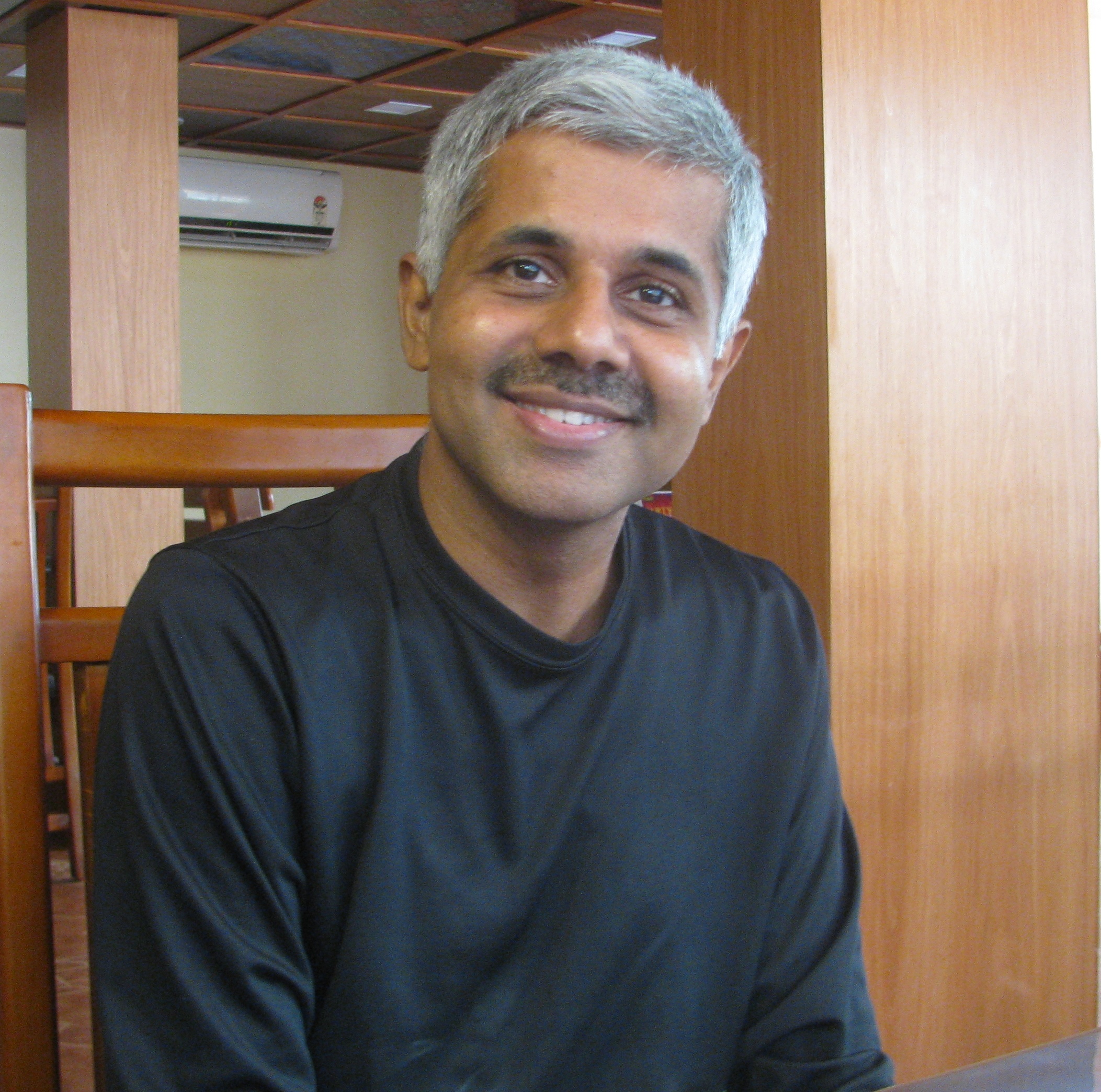
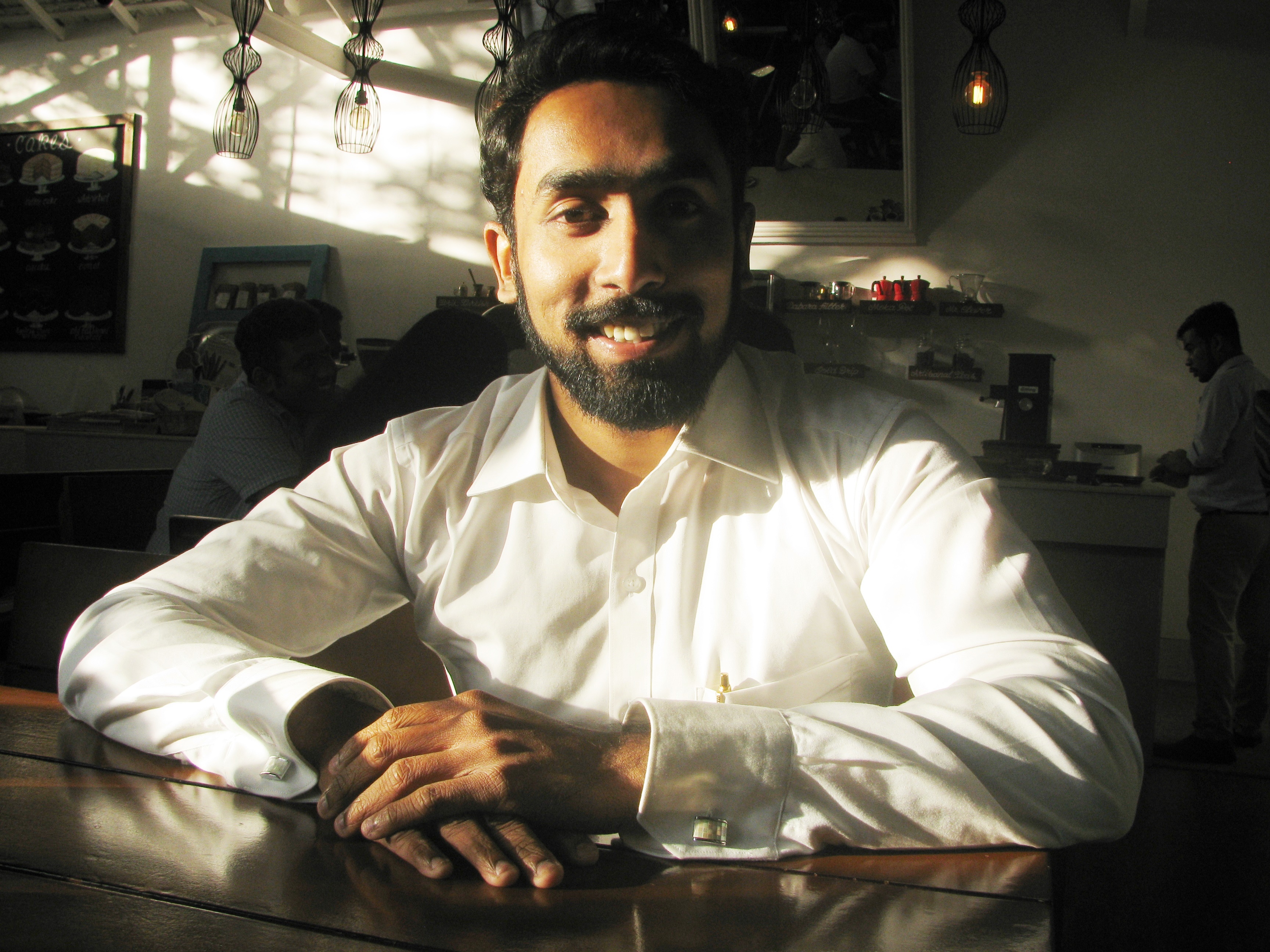
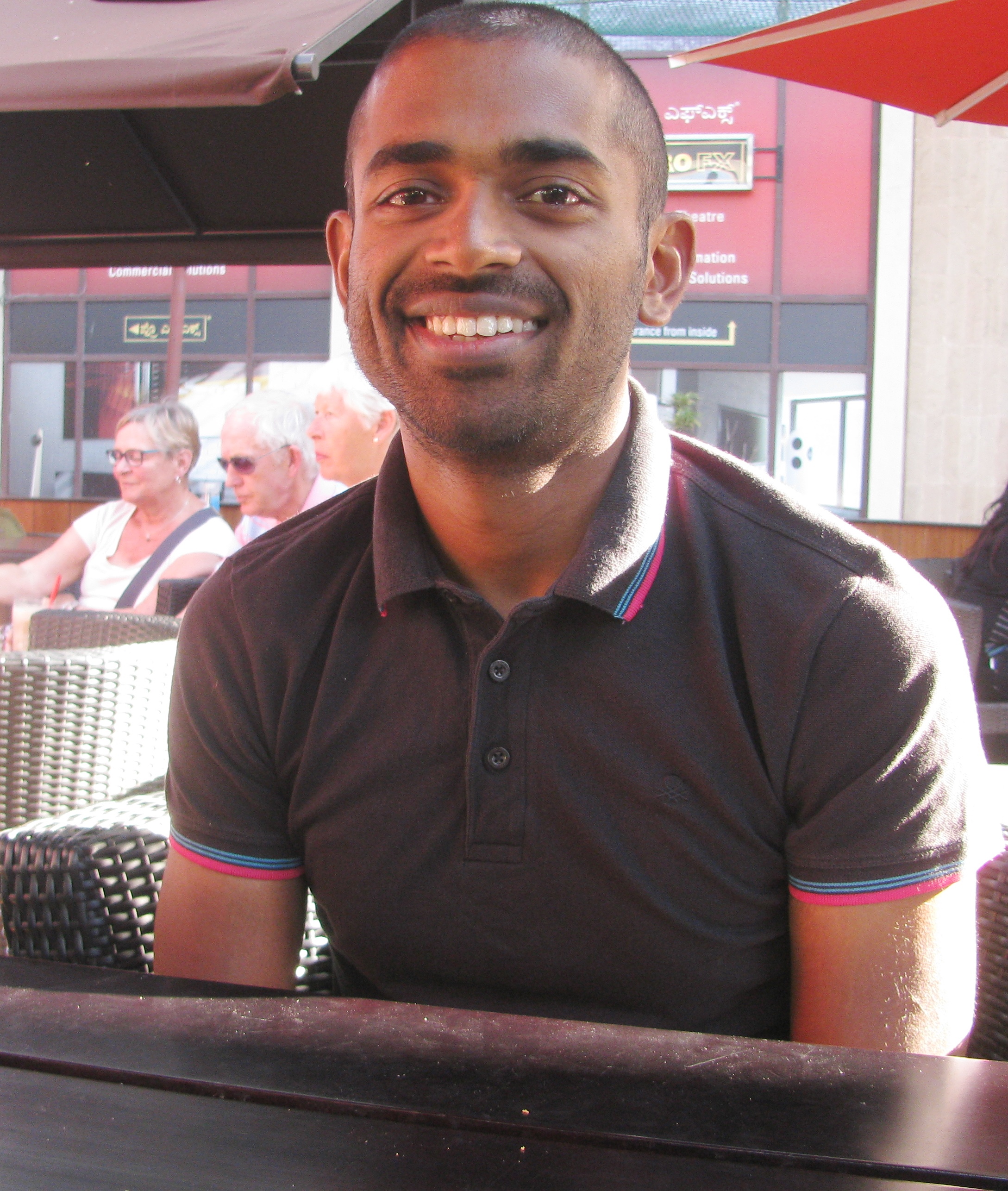
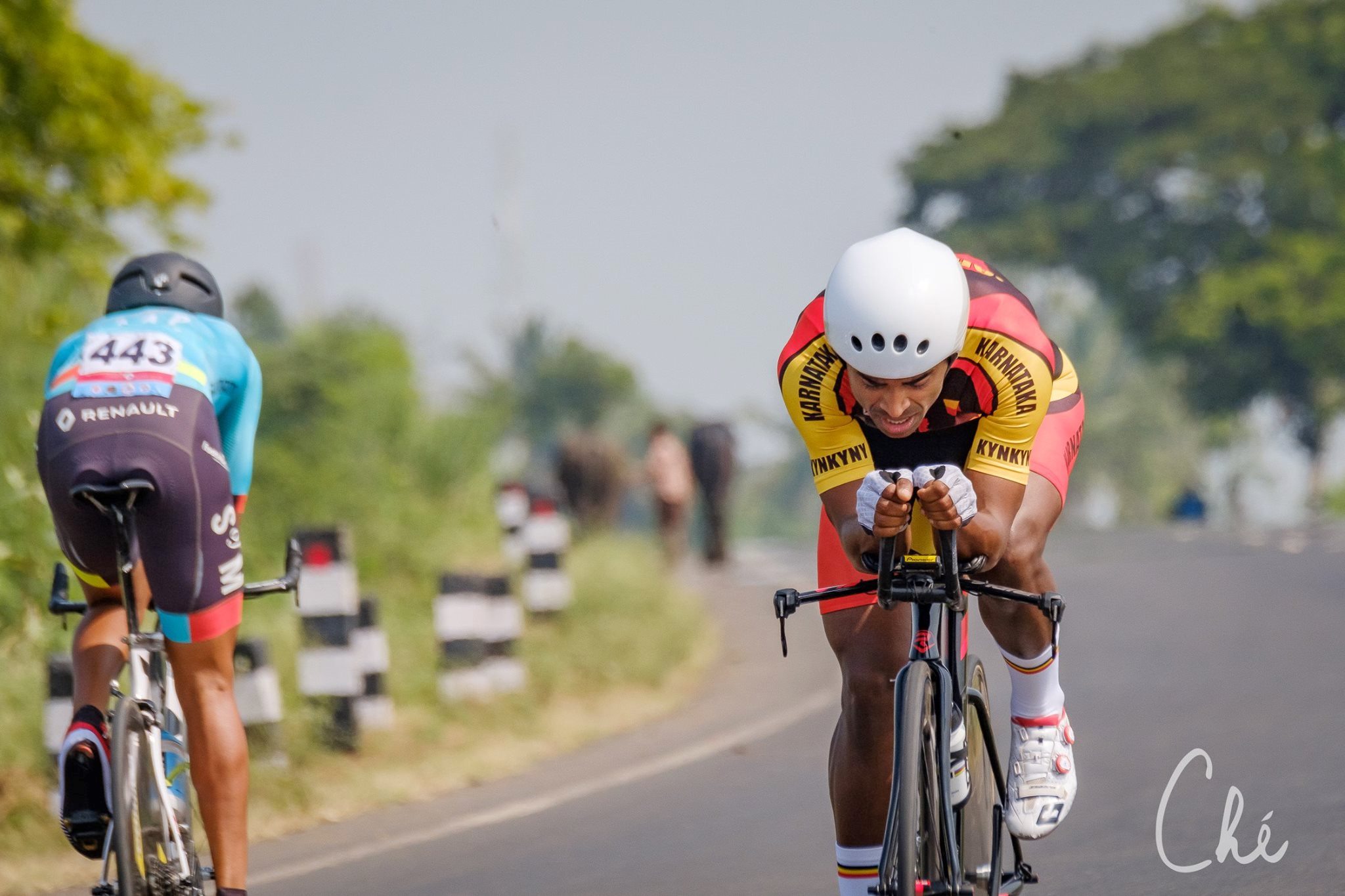
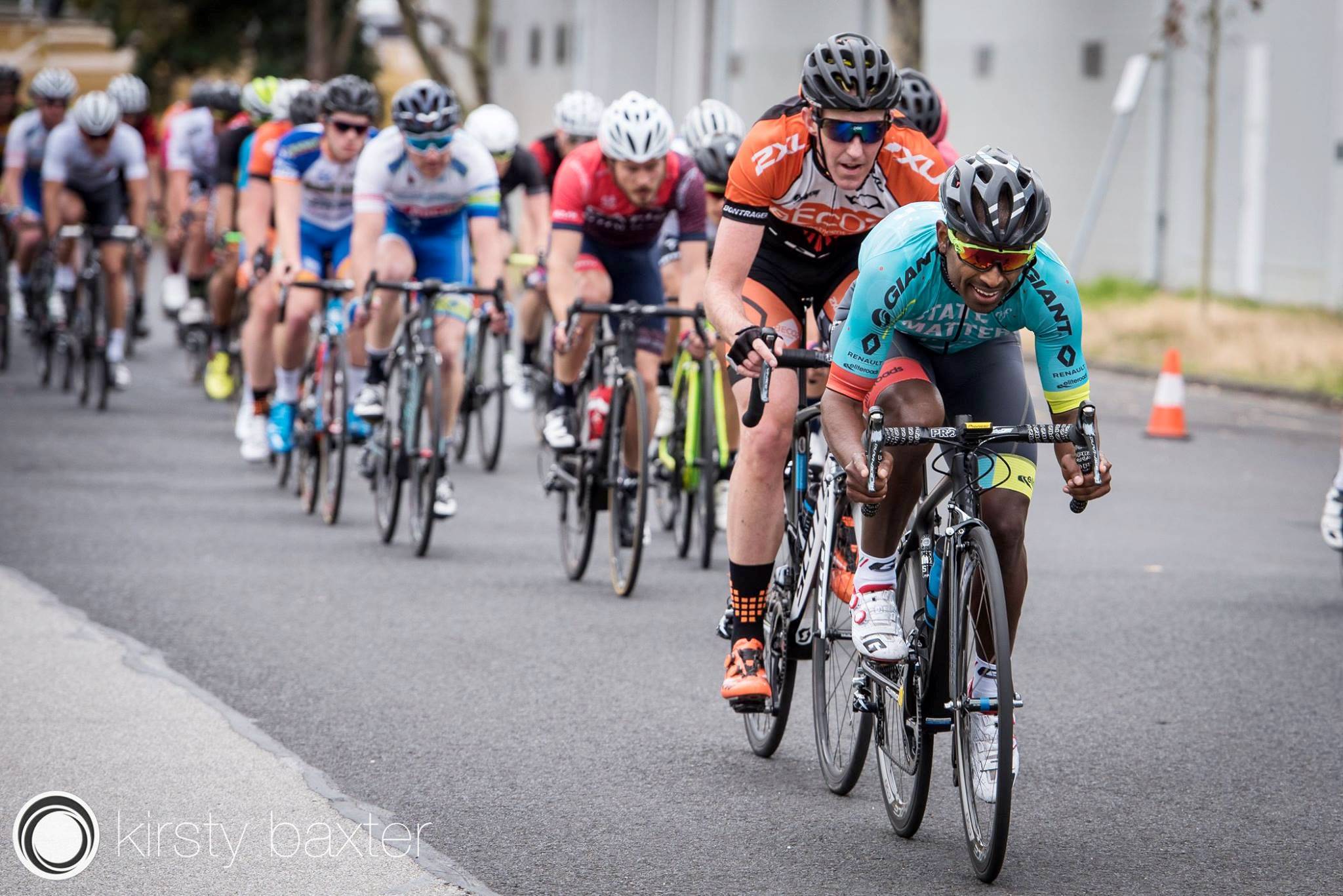
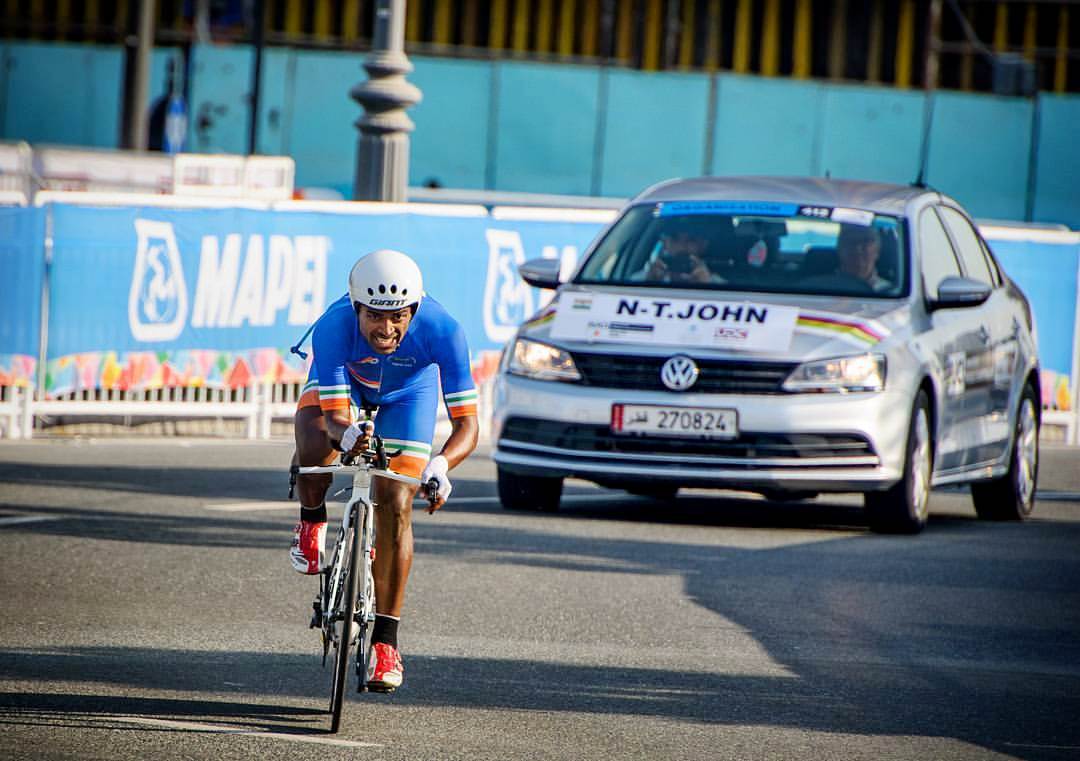
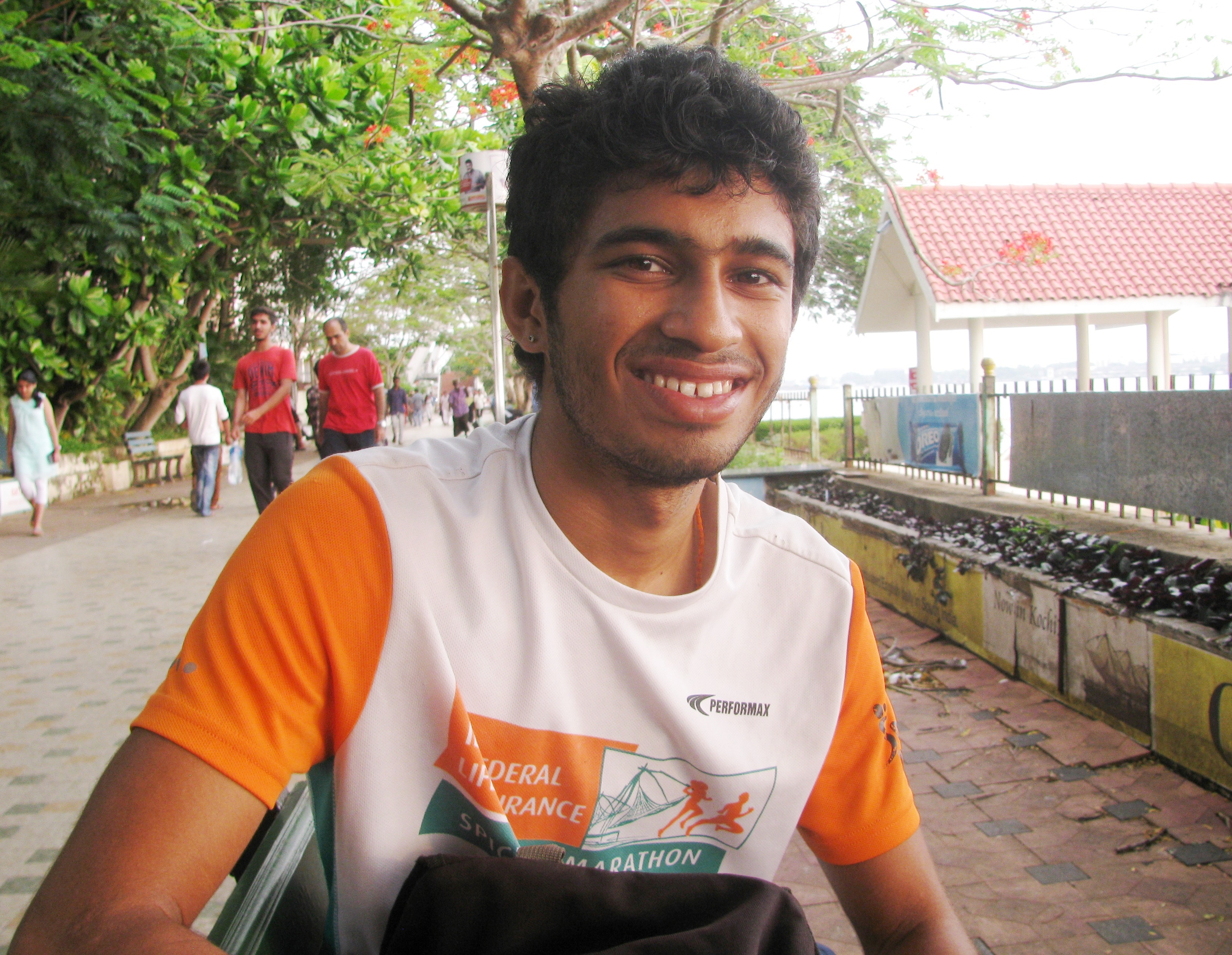
Sreenath Lakshmikanth (Photo: Shyam G Menon)

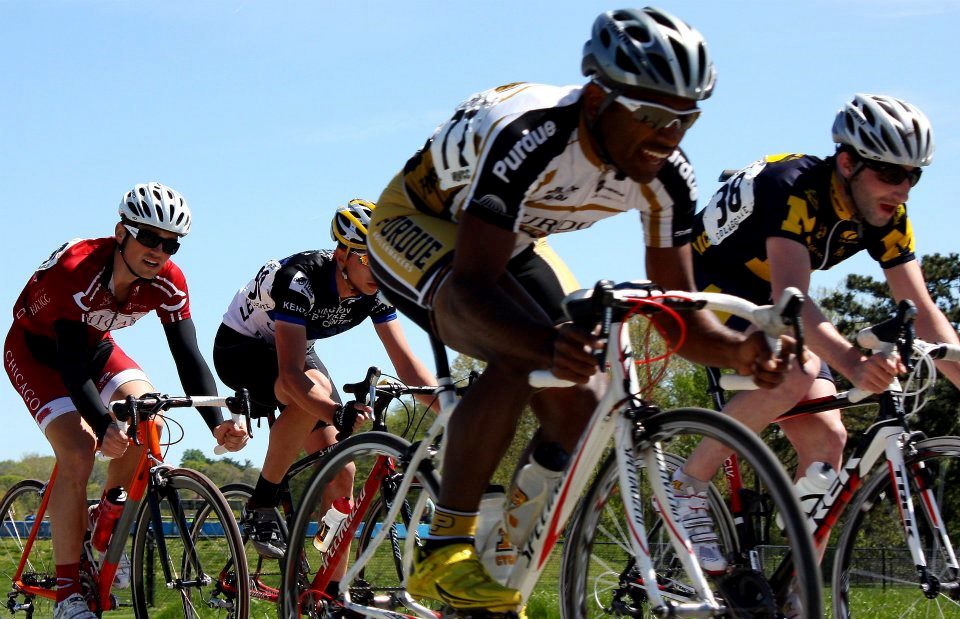
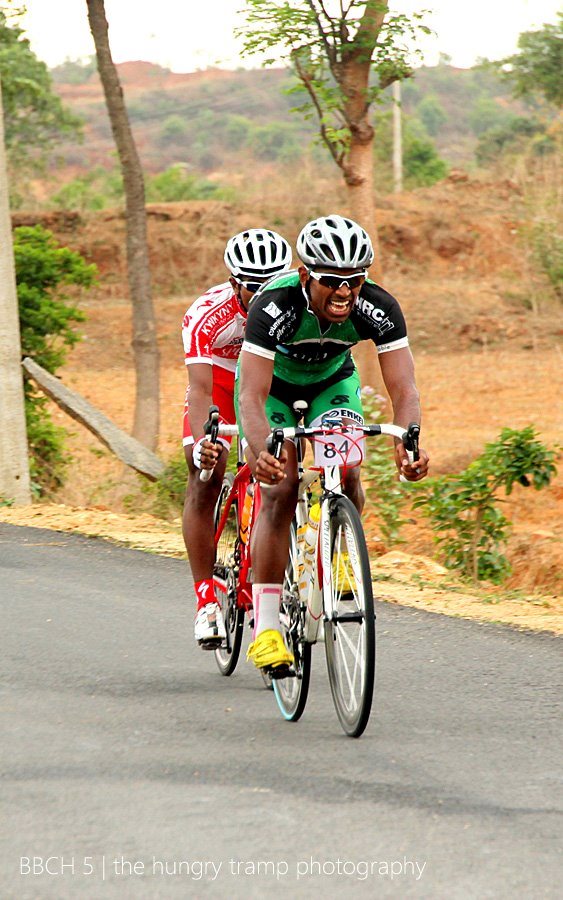
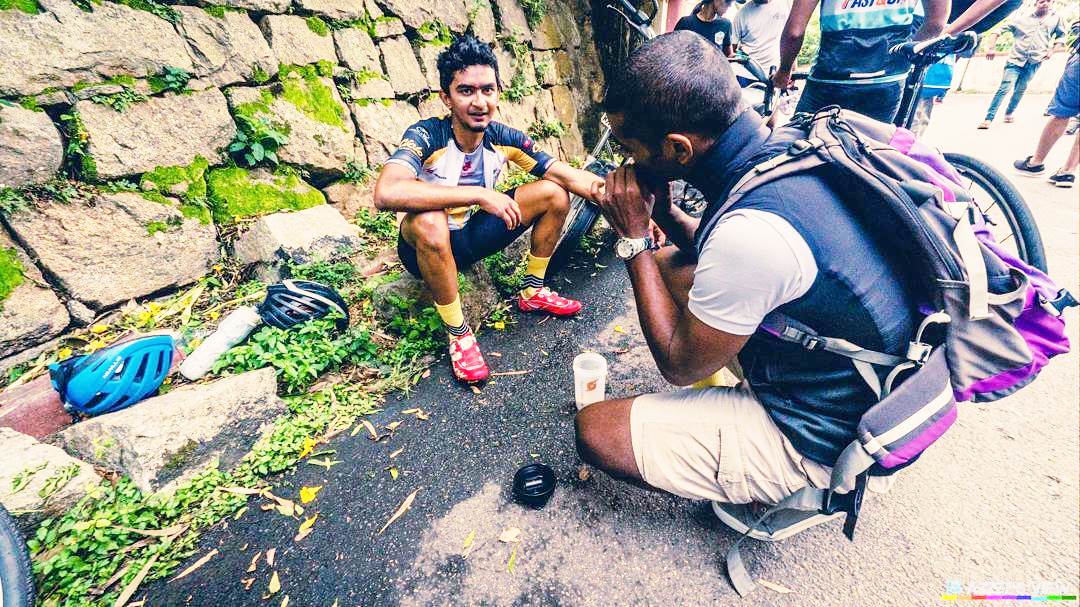
Tuition classes are common throughout India. For many, they provide the bridge to decent scores in academics, which are in turn crucial for professionally secure future in society valuing `well settled’ life. As common as tuition, is the practice of cycling to tuition. That ritual religiously done and exams passed, student on bicycle goes on to enjoy successful career in one of the lucrative professions. Its role in transport completed, bicycle fades from memory. Steed is mere extra in life’s cast. Academics is star. As a school student, Sreenath Lakshmikanth too cycled to attend tuition. In the years that followed, he became one of Kerala’s most promising bicycle racers. This is his story:

April, 2018.

The view from the promenade along Kochi’s Marine Drive has always been intimate. Willingdon Island and Bolghatty appear closer from here. The ship at the berth meant for oil tankers, bang in the middle of the backwaters, estuary for backdrop, loomed big like a truck parked in one’s driveway. We were an hour or so from sunset; the promise of its approach already embedded in the quality of light and the ambience caused by evening sky and water. The young man seated next to me on the park bench was built lean. Two hours earlier, we had begun the appointment looking for a café to sit and chat. With one of the fancy cafes he knew closed, he decided to dispense with embellishment and cut to the chase: what do we need? We need a place to sit and talk; period. There seemed no doubt in his head of the eventual, functional choice – park bench by the backwaters. There was the ship, the port, the calmness of water and if freelance journalist still sought stimulation for grey cells, a vendor or two always in the neighborhood, selling tea. I guess if you want to do something in life – much as, all that good conversation needs is a quiet place and occasional stimulant for wakefulness -you have to weed away the distraction and focus on that which matters. Sreenath Lakshmikanth knows it. Among attributes that strike you about Kochi is lack of space and heavy traffic. Sreenath is cyclist despite that.
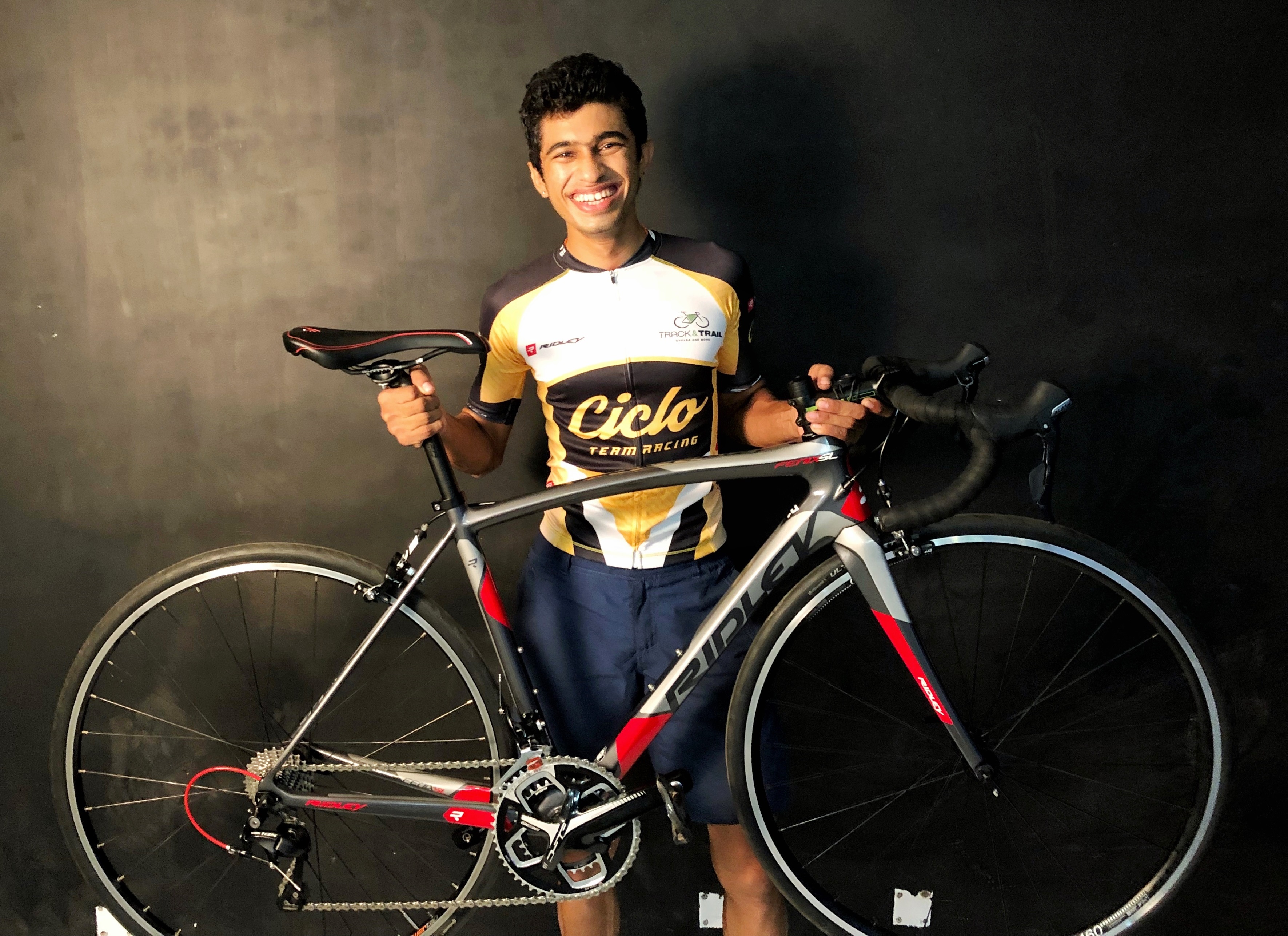
Sreenath Lakshmikanth (Photo: courtesy Sreenath)

Born in May 1996, Sreenath hails from a Konkani speaking-family settled in Cherthala, a town some 30 kilometers south of Kochi. His father is an astrologer; his mother, a housewife. His brother works as a chef. Although keen on sports at school, his progression was hampered by his size – he was small. “ I used to play games. But when it came to being selected to play for the school or go for tournaments, emphasis was always on size. I never figured in selectors’ imagination,’’ Sreenath said. There was however a quirk in Sreenath’s geographical location. Cherthala was part of Alappuzha district; therein Cherthala lay to the north, bordering the adjacent district of Ernakulam. According to Sreenath, Alappuzha is popularly reckoned as the district with most cyclists in Kerala. He doesn’t know the reason for this belief but it is apparently there in background chatter in the state’s cycling circles. Cycling is human powered transport. From cycling’s perspective, there is one aspect that engages about Alappuzha. Its natural beauty as a district of rivers and lagoons also makes it a geographical oddity in Kerala. According to Wikipedia, except for some scattered hillocks to the east, the district has no mountains or hills. The terrain is largely flat. For Sreenath, life changed when he moved to eleventh and twelfth standards. He joined TD School at Thurvaoor; the place was 12-15 kilometers away from home.

For many years in South India, BSA SLR – a model of bicycle made by Chennai based-TI Cycles – had been popular. Sreenath’s father owned one. When Sreenath commenced attending school at Thuravoor, he began using the cycle for commute. Like in the case of many students, the commute by cycle was triggered by the need to attend tuition classes; he had classes in the morning and evening. That was how cycling crept into Sreenath’s life. It was collateral experience to the more important task of attending tuition. For Sreenath, sidelined at sport and needing an activity to call his own; cycling engaged. More than classes, it was the means of getting there that grew on him. As his interest in cycling evolved, the first graduation up the product chain happened. At a cousin’s house in Kayamkulam, he came across a road bike – a BSA Mach 1. Originally owned by the cousin’s neighbor who shifted to riding a motorcycle and later parked with cousin who didn’t use it, the cycle was idling. Already a tinkerer adept at dismantling and reassembling his bicycle, Sreenath packed up the road bike and shifted it to his house in Cherthala. It took him about a week to get used to the Mach 1 and its capacity to be ridden more aggressively compared to the SLR. By now Sreenath was also working at a coaching center that trained students appearing for entrance exams. The Mach 1 became his ride for trips to both school and coaching center.
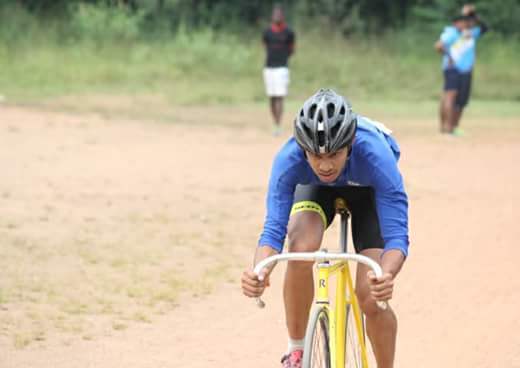
Riding a fixed wheel bike (Photo: courtesy Sreenath Lakshmikanth)

Kerala’s highways are a natural extension of the state’s overall layout, complicated however by explosive growth in automobiles. Roughly 600 kilometers long, Kerala is a narrow state with sea to one side and a spine of hills to the other. Save a few districts like Alappuzha, it is a land of ups and downs. In geographically narrow state with high density of population, roads are starved for space. The highway linking Thiruvananthapuram to Kochi (NH-47) is narrower than similar roads elsewhere. It hums with ever growing traffic. It was on this highway that Sreenath rode his Mach 1 daily. His morning session started at 5.30 AM; evening session was at around 8.30 PM. Regular cycling seems to have stretched his limbs in the growing up years. “ I put on some height. That was my first incentive to continue cycling,’’ he said.   The sessions at the coaching center were on Saturday and Sunday. It meant he was occupied through the week. The rigor was stepping stone to evolving a work culture, something that would come handy as the cyclist in him grew to proportions he couldn’t ignore anymore.

Following school, Sreenath joined Maharaja’s College in Ernakulam (Ernakulam refers to the eastern mainland portion of the city of Kochi) to do his BSc (Physics). He was determined to participate in sports. Still unsure of what to do in cycling, he tried his hand at running instead. For this, he and his runner friend George frequented the college’s well known ground in the city. One day, when he went to meet the physical education teacher, he noticed some bicycles kept in the room. They were track cycles sporting fixed wheel. The teacher was hesitant to let Sreenath use them. However during this phase, Sreenath was already cycling twice or thrice a week from Cherthala to college in Ernakulam and back. That’s a distance of 60-70 kilometers. His friends mentioned this to the teacher who relented and allowed Sreenath to have the bike. But on his first trip with the new bike, there was a chain-slip and Sreenath crashed injuring himself badly. Luckily the teacher didn’t see the mishap as reason to demand the cycle back. Instead, he gave Sreenath the name of a local coach in cycling – Louis Thomas.
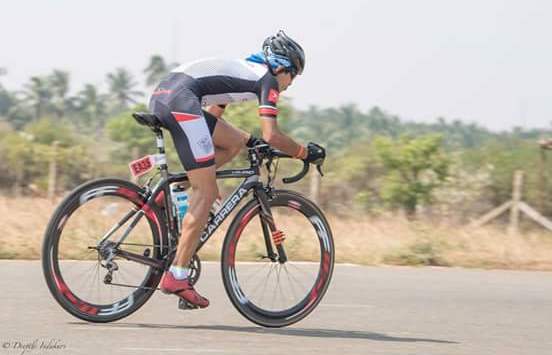
Photo: courtesy Sreenath Lakshmikanth

Kerala’s potential in industry was for long stunted by its brand of politics. With the advent of new sectors like information technology, the trend is now changing. But for years, what industry survived lay clustered around Ernakulam (including the borderlands shared with Alappuzha and Thrissur), the bulk of it near Kalamassery.  The Kalamassery area was synonymous with factories like Fertilizers and Chemicals Travancore Limited (FACT) and Premier Tyres (now part of Apollo Tyres). Unlike its attitude to industry, Kerala has always been sports-crazy. Some of Kerala’s companies were known names in sport. Premier Tyres and the Thiruvananthapuram-based Travancore Titanium for instance, were known all over India as good at football. Sreenath started training with Louis at the ground belonging to FACT. His companions during training were Louis’s daughters. Faster than Sreenath on the bicycle, they had represented their university and state. Louis advised Sreenath to stay in Ernakulam so that he would have more time to train. To set him up so, they needed to get the cyclist from Cherthala, a job in the city.
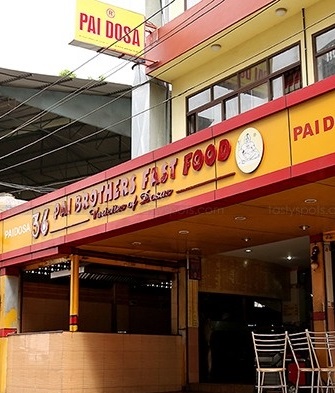
Pai Dosa in Ernakulam. This photo was downloaded from the Internet and is being used here for representation purpose only. No copyright infringement intended.

There is only so long freelance journalist can stay without tea or coffee. Our conversation on the park bench at Marine Drive had progressed nonstop. Additionally when the tea vendors came, it had been at moments when the train of thought couldn’t be broken. When the chat ended, we went hunting for tea and snacks. As before Sreenath knew where to go. We crossed the road before the GCDA shopping complex, got onto Broadway, navigated the lanes between it and MG Road and eventually crossed MG Road. “ Here, this road,’’ Sreenath said leading me to a modestly big restaurant tucked inside. In Ernakulam, Pai Dosa is a well-known eatery. Much mentioned in local media, it offers several dozen varieties of the South Indian delicacy – dosa. We placed our orders and when I offered to pay, it was roundly refused. The eatery did not let Sreenath pay either; the meal was on the house. Back when he was looking for a job in Ernakulam so that he could train properly in cycling, it was at Pai Dosa that Sreenath found work. Over time, he served at tables, managed raw material supply and handled billing. Initially he stayed at the Maharaja’s College hostel. Work hours at Pai Dosa spanned 6 PM to 1 AM. Louis’s training started at 6 AM. Given the late hours he put in at Pai Dosa, Sreenath could report for training only by 7 AM. Training happened at the FACT ground and on Willingdon Island, home to Kochi’s port. Automobile traffic was less on Willingdon Island compared to bustling Ernakulam.

Following a district level camp in cycling, Sreenath headed for his first university meet held at S.D. College, Kanjirappally. According to him, M.G. University, to which Maharaja’s College belonged, didn’t have a robust cycling scene. The goal therefore was to somehow form a college team and take a shot at finishing well. As it turned out, Sreenath secured podium finishes in both the one kilometer and four kilometer-mass start disciplines. It was his first time on the podium in cycling. Finishing after Sreenath in the four kilometer-mass start was a cyclist from Aquinas College, Kochi. Milan Josy and Arun Baby, top cyclists from the region, belonged to Aquinas. Their coach, Jaison Jacob, took note of Sreenath and offered him a chance to train with Milan and Arun. In 2014, ahead of the state road cycling championships due in Thiruvananthapuram, an event called Tour de Kerala was held around Sabarimala. The circuit was approximately 80 kilometers long. Sreenath’s friend, Mario participated in it; Sreenath tagged along to support. It was Sreenath’s first exposure to a proper road biking event replete with the support infrastructure that goes with it.

Soon after this event, the state MTB championships happened at Malankara in Thodupuzha. Riding a rented Mongoose, Sreenath finished sixth in the under-18 category. However what he relished here was that he finished ahead of those dispatched by the Sports Authority of India (SAI) training wing in Thiruvananthapuram. It was window to a small contest, one that is probably still on. You glean it in Sreenath’s conversation – an underlying tenor of competition with cyclists from Thiruvananthapuram, perceived as the lucky lot with training infrastructure provided by the state. In his mind, Kochi’s cyclists are underdogs doing well for exactly that – they are better at exploiting what they have and are fueled by the need to go out and discover what is missing. In the state road biking championships that followed the MTB event, Sreenath finished outside the podium, in seventh or eighth place. Jaison was watching from the sidelines. By now Louis had retired from coaching. Sreenath joined Jaison’s group; the coach there was Chrisfin Vincent, working with State Bank of India (SBI) and hailing from Thiruvananthapuram. Sreenath was now at that stage wherein he required a good road bike to practise seriously. Towards this end, he had been saving the money he was getting at Pai Dosa. It wasn’t enough. Jaison, some teachers from Sreenath’s college and a few well-wishers also contributed additionally. What they needed now was a bicycle retailer who would understand Sreenath’s requirement and budget.
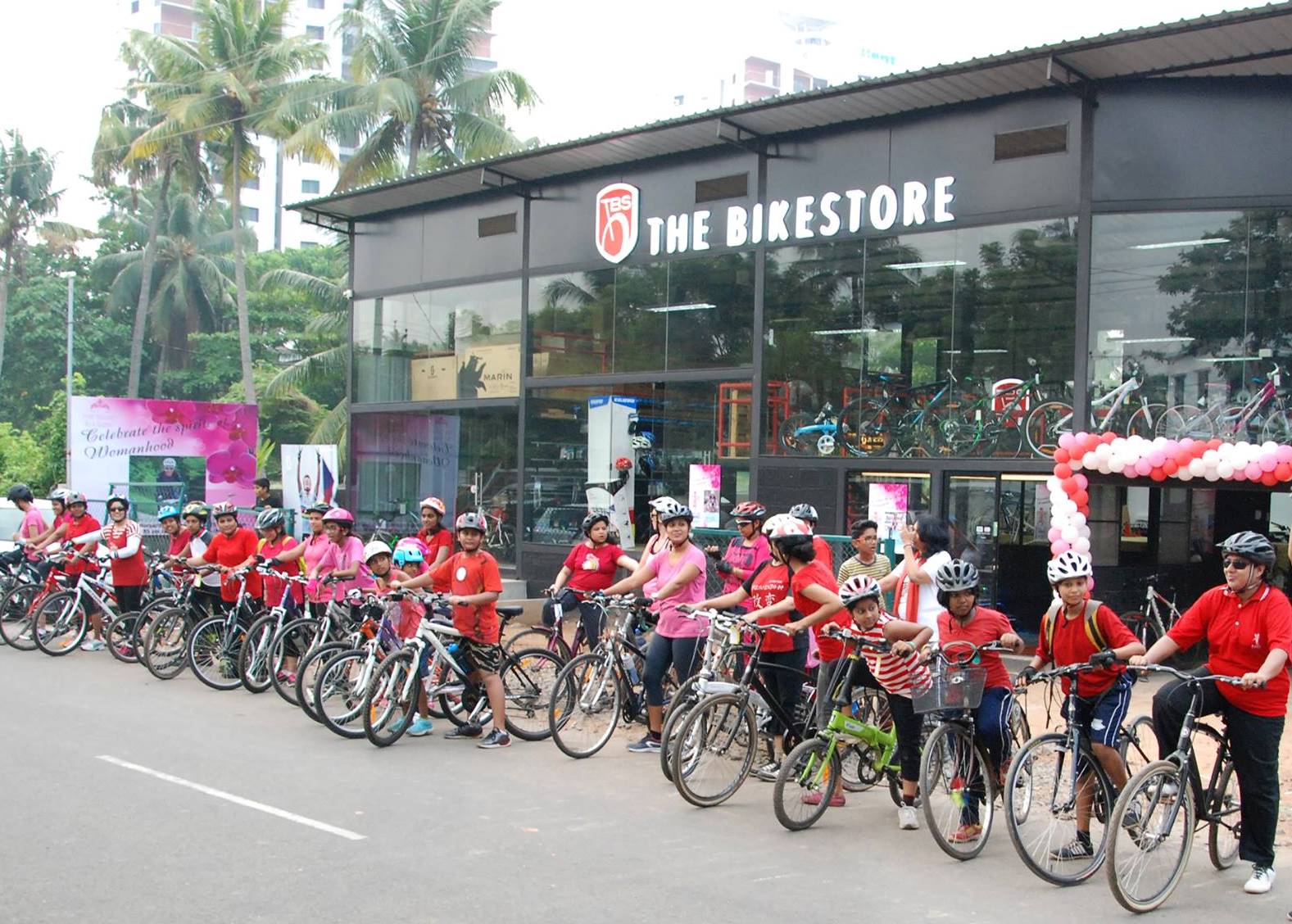
The Bike Store; this photo was downloaded from the Internet and is being used here for representation purpose only. No copyright infringement intended.

In 2009, Shuhaib Abdul Rehman – he was businessman, cyclist and founder of Cochin Bikers Club (which brought together cycling enthusiasts) – started a shop retailing high end bicycles. It was called The Bike Store and was located at Palarivattom in Ernakulam. It also had presence in Chennai. While Cochin Bikers Club still exists, by 2013, Shuhaib was close to shutting down the bicycle store. The Chennai outlet was eventually closed. The one in Ernakulam had by then become a hangout for the city’s cyclists. It had grown to something more than just shop; it was community. The Bike Store received a fresh lease of life when Paul Mathew, Vinshad Aziz, Pradeep Kumar Menon, Shagzil Khan and Abraham Clancy Ross  – all members of Cochin Bikers Club, came together as Velocity Ventures to keep the shop afloat. In 2015 Velocity Ventures was transferred to Verdant Outdoor Sports World. In due course The Bike Store moved to larger premises near Ernakulam’s Jawaharlal Nehru International Stadium. Also coming aboard as investors at the store were Abhishek Das, Yakkub Shabeer, Dinesh Rajendra Pai, Ajith Varma and Abhishek Kashyap. Currently, The Bike Store is among leading retailers of high end bicycles in Ernakulam. “ Interest in cycling has picked up. When we started we had about 30 bicycles. Now we stock between 60 to 100 cycles,’’ Paul Mathew said. Jason used to get his gear from The Bike Store. Mario had also bought his bicycle from there. When Sreenath wanted to buy a road bike, it was to The Bike Store that he headed. “ That was the first time I met him,’’ Paul said. According to him, the shop helped the young cyclist identify the right model for his needs. They provided Sreenath a Lapierre road bike at a discount. “ It felt good. For the first time I had a proper road bike,’’ Sreenath said. It was the beginning of a meaningful association with The Bike Store.

Training with Jaison brought a twist; it was unavoidable. Because the training commenced at 6 AM and he had to present himself adequately rested and fresh for it, Sreenath was forced to quit Pai Dosa. He also shifted to staying in a house where some of the employees from Paul’s main business – he is a distributor for Godrej heavy equipment – lived. In 2015, Sreenath started training systematically. The training was on NH-47, to be specific, the stretch of highway between Ernakulam and Cherthala. Around this time, Sreenath, Milan and Mario went for a “cyclothon’’ in Chandigarh.  They packed their bikes and set off for Chandigarh completely overlooking the fact that it was January and North India lay bathed in winter’s cold. The trio from Kochi had no jackets, warmers or gloves. In Chandigarh they bought a pair of gloves and gave it to Milan, who was the best rider. The pace at the event was fast. Sreenath and Mario retired early. Milan hung on for most part of the race before suffering a crash. The trio returned to Kerala realizing the gap that existed between what was happening elsewhere and the level of cycling they had at home. Chandigarh was reality-check. Two things happened following this visit. They started participating in more competitions; they began attempting to complete all the races they participated in. It yielded result. At a competition in Coimbatore, Sreenath ended up fourth in the elite category. At the same event, one of his friends – Faizal P.J, finished third in the under-18 segment and was picked up by Scott Bikes for their team in India.
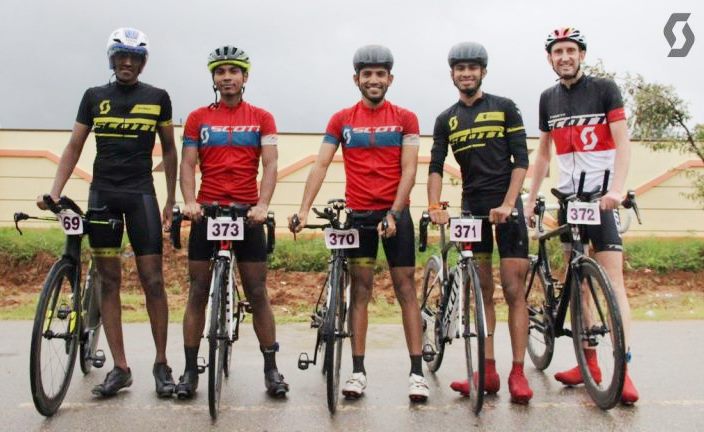
Sreenath (second from right) with other members of Scott’s cycling team in India. At extreme right is Nigel Smith, their coach. This photo was downloaded from the webpage of Scott Owners Club and is being used here with the company’s permission.

Towards the end of 2015, the state championship was held in Kozhikode. There, Sreenath secured a third place in mass start road race, in the under-23 category. It was the first time in several years that somebody from Ernakulam was getting a medal. Mario also gained selection in the under-23 category. The two of them proceeded to Thiruvananthapuram for a 20 day-training camp ahead of the nationals. Given their selection to camp, The Bike Store also pitched in – they were given carbon frame Carrera road bikes. The training at Thiruvananthapuram was held on NH-47 and MC Road; the latter proceeds from Kerala’s capital city to Kottayam. Beginning of 2016, the nationals was held at Nilakkal in Pathanamthitta district. In team time trial, Kerala finished fifth. In mass start, Sreenath unfortunately suffered a puncture and couldn’t complete the race. His first nationals; like that trip to Chandigarh earlier, was occasion to introspect and focus afresh. At a race in Lucknow which followed, he finished with the group – in top 15 – in the mass start. He was beginning to get a hang of things. He commenced training with the nationals of 2017 in mind. At the state championships held in the beginning of 2017, Sreenath secured first place in road race mass start, in the under-25 category. In January 2017, he also secured podium finish at two privately organized events in Gujarat and Chennai. At the MTB state championship, he finished third. Between MTB and road racing, Sreenath’s preference is the latter. But the 2017 road biking nationals was yet again a disappointment; he couldn’t complete the race with the group. Things changed however with a race in Coimbatore. At the MVS Criterium held there, he secured first place. Following this, in April 2017, Sreenath signed up with Scott Bikes to be part of their team in India.
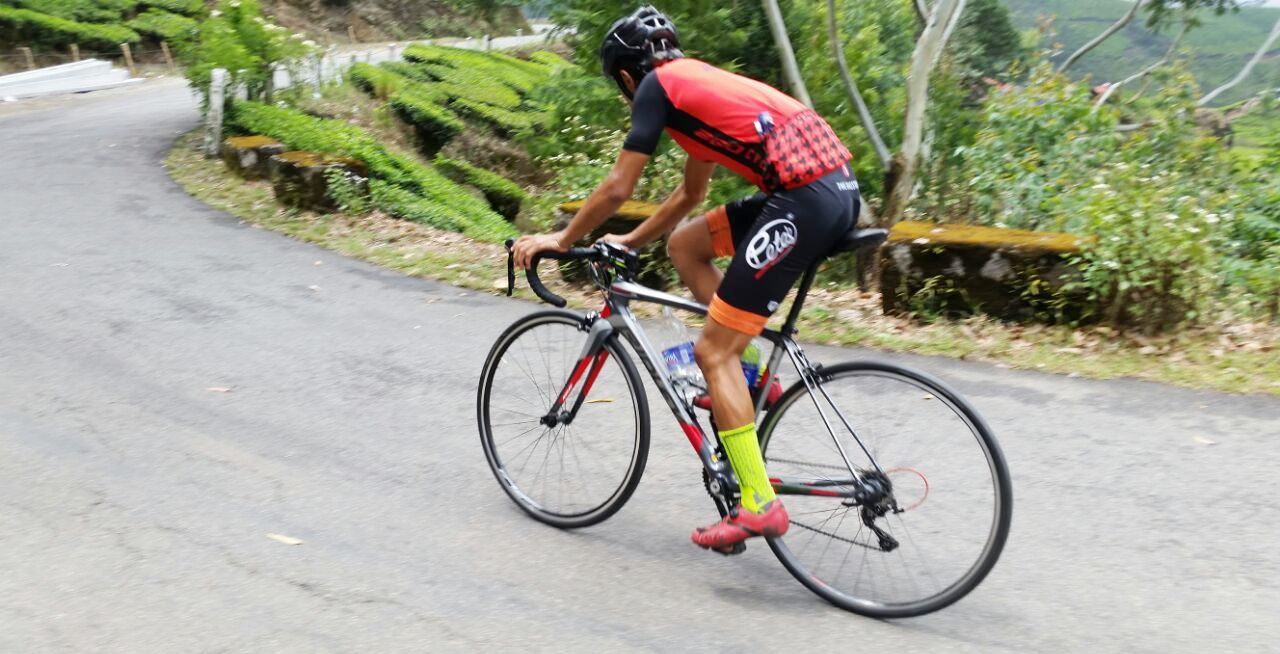
Cycling in the hills of Kerala (Photo: courtesy Sreenath Lakshmikanth)

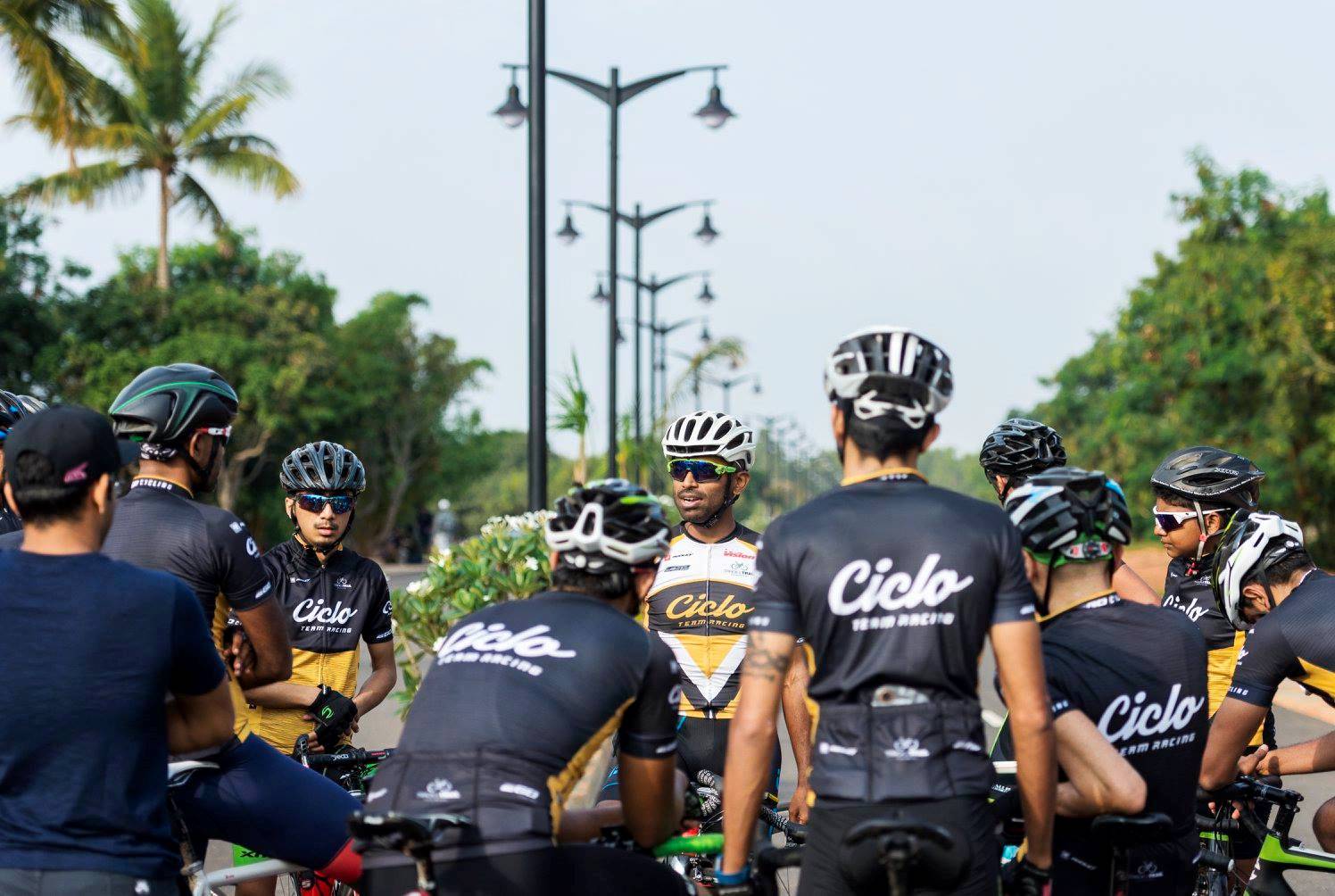
His first race for Scott was the Trivandrum Cyclothon, where he placed first. He secured podium finish at a competition in Bengaluru; he was also part of Scott’s winning team in time trial. At the nationals, which took place towards the end of 2017 he managed to finish with the group in the mass start road race. Following the nationals he went for an inter-university road cycling meet in Rajasthan, where he finished fifth. “ That gave me a lot of confidence,’’ Sreenath said. Then in December 2017, a setback occurred. At a MTB race in Ernakulam, he had an accident and fractured his arm. He was out of action for about six weeks. “ Nigel was great support then,’’ he said of Nigel Smith, who coaches the racing team at Scott. Until Nigel came along, Sreenath’s go-to person for information on how to train had been Chrisfin. In that stage, the focus had been on distance and speed. Nigel introduced the upcoming cyclist to several new things – among them, heart rate-based training, which showed Sreenath how to sustain an effort. He was also introduced to power training. During the phase of recovering from the fracture he suffered, all his training was done on a stationary bike. Emerging from injury, Sreenath’s first race was a time trial up the Thamarassery Churam (mountain pass) in Kerala’s Wayanad district. He finished first, representing Scott. That win was also Sreenath’s last outing with Scott. He shifted to Ciclo Team Racing, the bicycle racing team backed by TI Cycles and anchored by Bengaluru-based cyclist, Naveen John. Sreenath now rides a Ridley Fenix SL road bike. According to Paul, the initiative for Sreenath’s move to Ciclo came from Rajith Rathiappan, who runs a Track and Trail showroom (retail outlet for TI Cycles) in Ernakulam. Having cut his teeth cycling overseas including in Belgium, Naveen had told this blog earlier of how he thinks the road to Indian cycling’s future lay through racing in Europe (for more on Naveen John please try this link: https://shyamgopan.com/2018/03/23/the-electrical-engineer/). April 2018, seated on the park bench by Kochi’s backwaters and beholding an estuary traversed by ships sailing the world’s oceans, Sreenath was looking forward to his first trip to Europe with Ciclo.
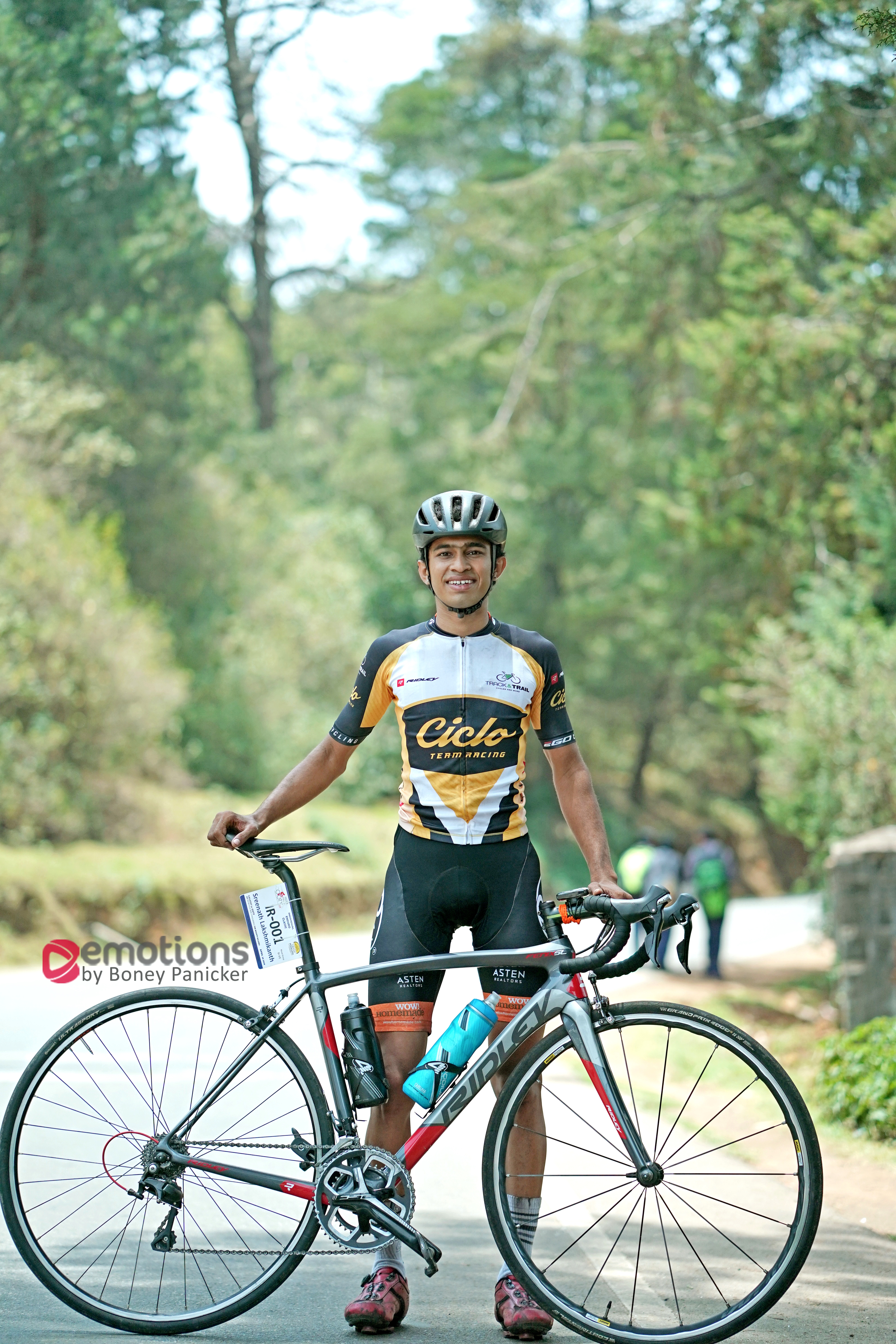
Sreenath Lakshmikanth (Photo: courtesy Sreenath)

“ My wish is to be a professional cyclist. In India, it is difficult to earn a livelihood from that,’’ he said thoughtfully. Attempting to be a professional cyclist is a courageous move. Those who know Sreenath well said that he does not hail from strong financial background. He also has a long way to go in cycling; for instance, he hasn’t yet had a podium finish at the nationals. The fifth position he secured at the inter-university meet in Rajasthan is the highest Sreenath has placed yet at the national level. Immediate focus therefore, is on improving his performance at the nationals. His heart seems to be in the right place. “ He is committed. If he has to train for certain duration on a given day, he makes sure he does that. I also remember him mailing leading cycling outfits overseas – all by himself and despite the challenges he faced in language – telling them of his interest in the sport and seeking advice on what to do,’’ Paul said. The Bike Store has been integral to Sreenath’s journey so far. Their technician Murukan T. R, is the one who tunes Sreenath’s bike. He accompanies Sreenath to all his races. The two are close. Given shortage of funds, Sreenath was requiring assistance for his planned trip to Europe. It is understood that help has begun coming in. In Ernakulam, Sreenath trains every week for 15-20 hours, of which 15 hours is the real training duration. From June 2018, he planned to ramp it up to a proper 20 hours. His weekly mileage in training averages 350-400 kilometers. My mind was still on how he trains, given Kerala’s roads and traffic. “ You can’t complain about it. There is no other way,’’ he said, adding that cyclist chooses the best available option and goes with it. According to him, Ernakulam’s traffic starts building up from around 7.30 AM. By then, a committed cyclist should have wrapped up his training for the morning. The bulk of Sreenath’s training now happens on the city’s Container Road, a long and fairly wide road used by trucks headed to the port’s Vallarpadam Container Transhipment Terminal.

In 2016, Sreenath completed his graduation. He majored in physics. Science courses require students to attend classes at the lab. Popularly called “ practicals,’’ they are unavoidable. On the other hand, spending more time in class is difficult if you are athlete devotedly training for sport. For his next step – post graduation – Sreenath thought with cycling in the frame. He decided to enroll for MA in Hindi; the choice was deliberate: a course in Hindi has no sessions in the lab. It means more time to train. “ Cycling is not just physical, it is also mental. It is among very few sports where a certain level of performance has to be maintained for a long period of time. That is what attracts me to it,’’ Sreenath said explaining why he continues to court the challenge and sweat for it.

(The author, Shyam G Menon, is a freelance journalist based in Mumbai. Positions secured at competitions are as mentioned by the interviewee.)        
2018 BOSTON / LONDON MARATHONS – IMPRESSIONS

Illustration: Shyam G Menon

For some time now, the emergent norm in weather worldwide has been – unpredictable. April 2018 hosted two well-known marathons. The events at Boston and London were separated by less than a week. The contrast was sharp. Boston featured one of its coldest race days while London offered one of its warmest. This year too, there were runners from India participating at both these events. We spoke to some of them about their experience.   

2018 BOSTON MARATHON

The world’s oldest annual marathon provided much to think about with its 2018 edition. The weather on race day was terribly cold and damp. Boston this year became a proposition to know running in the context of its weather as opposed to merely viewing running as methodical execution of race strategy under ideal circumstances. Yuki Kawauchi of Japan finished first among men; Geoffrey Kirui of Kenya finished second. Desiree Linden of US was top finisher among women. The 2018 Boston Marathon triggered an interesting debate on whether women handle adversity better than men. According to a report in The New York Times, the winning times for both men and women were the slowest since the 1970s and mid-race drop-out rate was up 50 per cent from what it was last year. But significantly, the drop-out rate for men was up 80 per cent from 2017, while it was up only about 12 per cent for women. Similarly, overall, five per cent of men dropped out during the 2018 edition of the race while only 3.8 per cent of women did the same. While it would be tempting to attribute this trend amid cold weather to the thicker layer of sub-cutaneous fat women have, fact is, in 2012 when the Boston Marathon was run in very warm weather, the finishing rate for women had been higher than for men.   

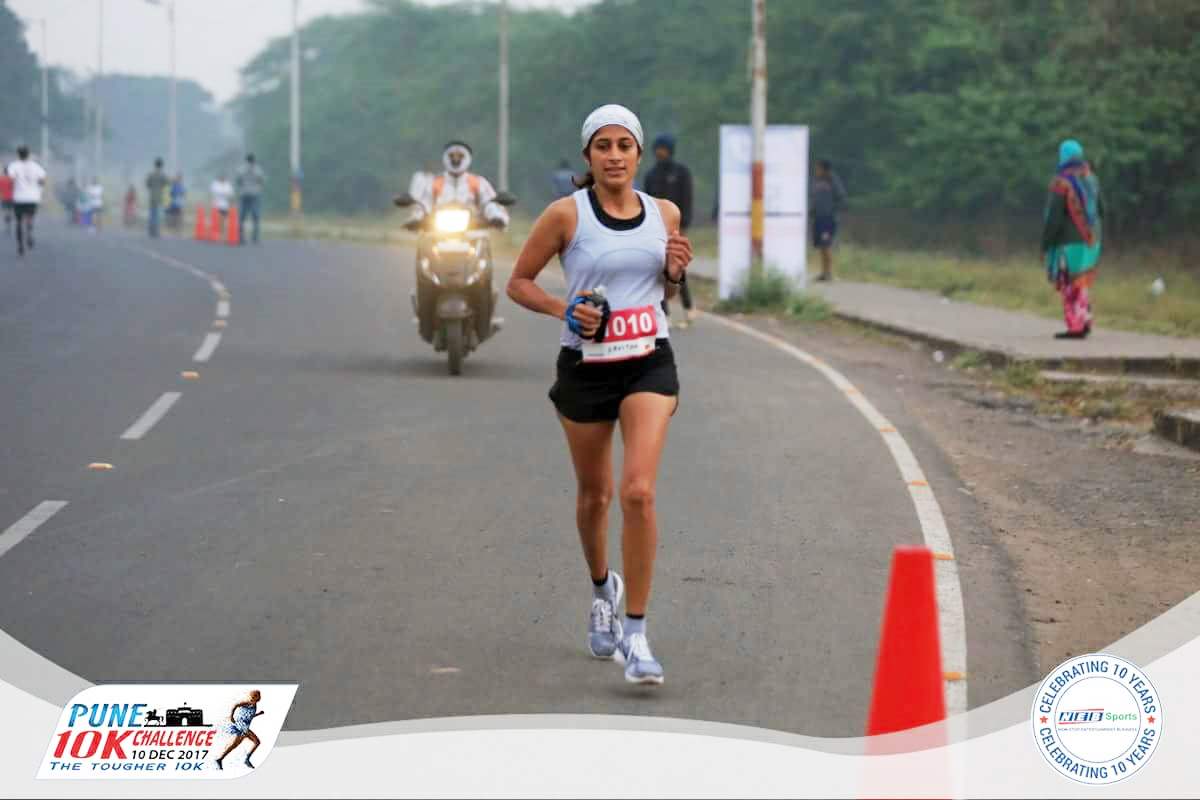
Kavitha Reddy, at an event in Pune (Photo: courtesy Kavitha Reddy)

Kavitha Reddy

On race day as runners scrambled to board the bus taking them to the start point of the 2018 Boston Marathon, the mood was not one of celebration.

The weather was dreary with howling winds accompanied by rain and snow. It was a depressing scenario for Kavitha Reddy. Doubts began to creep into her mind if she would complete the marathon she had come all the way from India to attempt.

“ I was confused. I was unsure whether I should run in light clothing or add warm layers. Finally I just followed the herd and added some more layers of clothing. So there I was, ready for my most awaited marathon, dressed more like a resident of the Arctic than a runner,’’ she said. Kavitha had hand warmers, three layers of clothing, tights and a plastic wrap on top. Despite all this she felt frozen to the bone when she stepped off the bus. At the race venue, runners huddled together, clad in layers of clothing.

Near the four kilometer-mark, she threw away her zipper jacket. At the seventh kilometer, Kavitha is used to taking salt tablets. At Boston she was unable to do that as her fingers were too numb to open the zip of her waist pouch. “ For the first time in my running career, I ran an entire marathon without any salts or energy gels,’’ she said adding that she picked up a bottle of Gatorade from a volunteer, but could not drink as it was too cold.

As she continued her run, the weather got progressively worse and many runners quit the race.

After Heartbreak Hill, at the 34th kilometer, she took a sip of water and threw away her hand bottle. The worst was yet to come. Over the last seven kilometers the weather deteriorated further. “ The wind and the rain were so bad that I felt I was running in the same place and not moving forward. The last mile felt like a marathon in itself. Even though I could see the finish line, it felt like the wind was pushing me away,’’ she said.

Kavitha finished the race with a timing of 3:34:26, a little over a minute more than her personal best of 3:33:05 at the New York City Marathon of November 2017.

In 2015, Kavitha ran the Bangalore Marathon completing it with a sub-four hour timing of 3:53 hours. That was when she learnt about the possibility of qualifying for Boston Marathon; she also realized that she was quite close to the qualifying timing required for the iconic race.

In November 2017 she completed the New York City Marathon and followed it up with half marathon at the 2018 Mumbai Marathon where she finished first in the age group of 40-44 years among women.

For Boston, her coach added some more mileage and tweaked the workouts to make her stronger to tackle the marathon’s route. “ He prescribed undulating routes for my training runs. I did my tempo runs on roads that went up and down. I also included some hills in the second half of my long runs and did some fast finish-runs,” she said.

Going ahead, she will be attempting the Berlin Marathon in November 2018.

Mahesh Londhe (Photo: courtesy Mahesh Londhe)

Mahesh Londhe

A couple of days ahead of the Boston Marathon, the weather turned bad. The run ended up being extremely challenging for Mahesh Londhe. “ We are not used to running in such weather conditions where temperatures are at zero and sub-zero levels. Nevertheless this race taught me that as runners we have to be prepared for any eventuality,’’ Mahesh said.

At the race expo, Mahesh had to buy a whole range of running clothes that he would have to get into if the weather failed to improve. He had to buy thermals, gloves and raincoat. “I have never run wearing a raincoat,” he said.

According to Mahesh, many of the American runners also found the weather quite challenging.

The night before the race was terrible as it rained through the night. At the start point at Hopkinston Village, runners were milling around under tents attempting to protect themselves from cold winds and rains.

“Up until the 13th mile, I was able to keep up my pace of sub-3 hour finish. But the cold started to get to me and I had to slow down,” said Mahesh.

By the 19th mile, Mahesh had to slow down and was almost on the verge of giving up. However he decided to continue.

“The most amazing thing was the number of people who came to cheer the runners in such atrocious weather. There were children too among them, handing out hydration. People had come with raincoats for the runners. It was such a heart-warming sight,” Mahesh said.

Along the route, Mahesh could see that runners were quitting. At the finish line, Mahesh was in quite a bad shape with fever. He was rushed to the medical center. He finished the run in 3:59:17 hours.

Born in Mangalore, Mahesh was into cricket in his early years. He moved into running later and then got into triathlons. He has completed several triathlons including two Ironman competitions in Australia and France and a half Ironman in Sri Lanka.

A certified coach for Ironman, Mahesh was aiming for a sub-three hour finish at Boston. But what Mahesh ended up with was an experience that will be forever etched in his memory – running an iconic marathon amid severe cold, howling winds and lashing rain. “ It was the experience of a lifetime,’’ he said.

Karthik with K.C. Kothandapani (Photo: courtesy Karthik Anand)

Karthik Anand

Bangalore-based runner Karthik Anand kept an eye on weather reports in the run up to the Boston Marathon. He was mentally prepared for hostile weather.

Still it was extremely tough. “ I did not expect it to rain so heavily for the entire distance. I was hoping that the rain would taper but it just kept getting worse,’’ he said adding that strong winds made things really bad.

On race day, for the 11:15 AM race-start, Karthik left his hotel at 9 AM. “ That meant I was drenched for two hours even before the race started,’’ he said. He started his race much slower than planned. With heavy rains and winds, maintaining constant pace was important.

“ My hands were numb and I could hardly remove any gels from my pockets. The toes of my feet were all numb. I was shivering and my jaws were quivering from the cold. Because of wet clothes I also had to experience lot of chaffing,’’ Karthik said. He had to use extra jackets and track pants for protection from the cold weather. The jacket and track pants were thrown away before the start of the race. He used gloves to keep his hands warm but discarded them after the fifth kilometer.

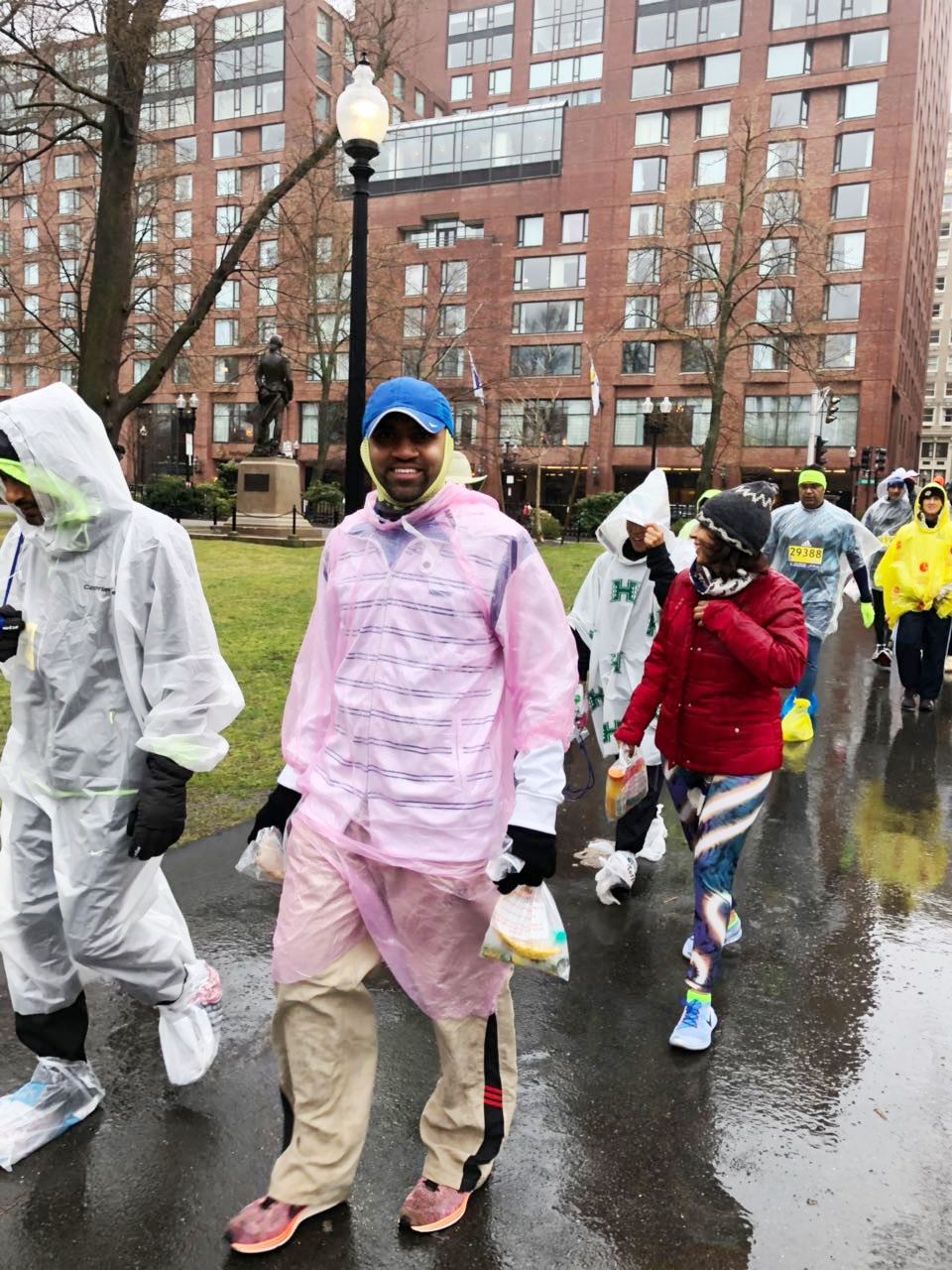
Race Day, 2018 Boston Marathon; Karthik all layered up (Photo: courtesy Karthik Anand)

Karthik finished the race in 3:57 hours. “ The happiness of finishing Boston marathon under such tough conditions gives me immense pleasure,’’ he said.

Karthik’s training for Boston Marathon was under K.C. Kothandapani, among Bengaluru’s best known coaches. The training featured mileages of 90-100 kilometers every week, incorporating speed workout, tempo runs, hill runs, recovery runs and long runs apart from strength training.

Karthik started running in 2008. “ I had enrolled at a local gym. One of my friends who used to often run on the road forced me to join him. There has been no stopping since,’’ he said.

After some years of running, Karthik decided to attempt the world’s major marathons. He has already completed Berlin, Tokyo and Chicago apart from Boston. “ I will be running the New York Marathon in November 2018 followed by the London Marathon in April 2019. If I get an opportunity I will surely do Boston once more. It’s a beautiful course with a lot of crowd support,’’ he said.

Ramesh Kanjilimadhom (Photo: Shyam G Menon)

Ramesh Kanjilimadhom

Ramesh has run before at Boston, he has also run the Chicago Marathon. The third big marathon of North America – New York – has evaded him because its dates are very close to Kochi’s Spice Coast Marathon, which is managed by Soles of Cochin, the running group Ramesh identifies with.

This April, the Boston Marathon happened in very cold conditions. “ The weather in New England is dynamic. There is a saying there that if you don’t like the weather, you should wait for five minutes. That’s how fickle it is. Seasoned runners from Boston tell you of it,’’ Ramesh said. The marathon’s 2018 edition witnessed one of the worst weather conditions in its history.

“ I reached the US a week earlier. I ran a half marathon in Virginia, near where I used to live. It was cold but the run went off well. I could handle the cold. Until about two days before the Boston Marathon, the weather forecast spoke of mildly windy and wet conditions. Then it suddenly changed to strong wind and rain,’’ Ramesh said.

Three years earlier, in 2015, he had experienced near similar conditions in Boston, although not as bad as it was manifesting now. Running the race’s 2015 edition, he had slipped into hypothermia. He had then walked randomly into a building, where people took good care of him, covering him in a warm blanket and feeding him hot soup. Cold and Ramesh don’t seem a great combination; in 2010 too, he had ended up shivering and experiencing hypothermia after a marathon in upstate New York.

Luckily in 2018, while in the US to run the Boston Marathon, Ramesh stayed with a friend whose son was into rowing. The son had a collection of warm clothes Ramesh could borrow to layer himself for the race. Additionally, his friend offered to be at the finish line with more warm clothes, just in case that was needed.

Ramesh reached the start line of the Boston Marathon wearing four layers of warm clothing. “ Still it wasn’t enough for me, given the wind,’’ he said. The running was miserable; he took it slow and easy. Playing in his mind were memories of previous runs in cold weather. “ I was cautious. I was dreading what lay in store at the end,’’ Ramesh said.

He knows the Boston race route well. He knows how to strategize his passage; what objective difficulties to anticipate on the course and how to tackle it. Yet none of that past experience helped to elevate his spirits. All through, the bleak weather lingered in mind, a persistent annoyance.

“ The beauty of Boston is its crowds. This time the crowd was thinner than usual. But those who came cheered and supported the race as best as they could. The event’s volunteers also went out of their way to encourage runners,’’ Ramesh said. Despite the encouragement, runners pulling out of the race, electing not to finish – were many.

Ramesh finished the marathon in three hours, forty minutes; he last saw such timing was in 2013 or so. That was how much the weather slowed him down. On the bright side, he completed with no shivering or hypothermia. The multiple layers he wore helped. Thermal blankets were distributed and this year, the blankets were better than before. His friends who met him at the finish line brought hot chocolate.

Ramesh said that he wasn’t surprised at all by the race results dominated by North American runners. Given the weather, he had an inkling that such outcome lay in store. “ Having said that, Yuki Kawauchi of Japan finishing first among men shouldn’t seem out of place. He is known to do well in cold weather,’’ Ramesh said, adding, “ one thing did surprise me – notwithstanding the cold weather, the timing returned by some of the podium finishers is really good.’’

Looking ahead, Ramesh said he would like to run the London and Berlin marathons.

Brijesh Gajera (Photo: courtesy Brijesh Gajera)

Brijesh Gajera

Brijesh Gajera has been running for the past ten years.

About four years ago he realized that it was possible for him to qualify for one of the world’s most competitive marathons – Boston Marathon. He was edging close to the qualifying time of 3:10 hours assigned for his age category.

At the 2017 edition of Mumbai Marathon, he finished the full marathon in 3:03 hours, thereby qualifying for Boston.

Brijesh – he works with Cisco – commenced his training for Boston in November 2017. “ I trained as per my plan,’’ he said. After training under Bengaluru-based coach K.C. Kothandapani for several years, he spun off on his own; he evolved both his own training plan and group.

At Boston, he found the expo well organised.

On race day, the holding area where runners were milling around was slushy as it had been raining since early morning. “ I had four layers of clothing until the start of the race. Once the race began I discarded the top two layers,’’ he said.

Despite the weather conditions, for about 24-25 kilometres, Brijesh’s run progressed in tune with his target of bettering his personal best of 3:03 hours. “ At that point there was heavy downpour. We are not used to such conditions. I was quite cold and shivering,’’ he said.

Even though the weather kept deteriorating, the thought of quitting the race did not cross his mind. “ This was my first run overseas. So, there was no question of quitting. I wanted to complete it at any cost,’’ he said.

Brijesh realized that timing and similar other personal targets would have to be chucked out of the window; the focus had to be on completing the race.

(From left) Brijesh, Gurudev Nagaraja and K. C. Kothandapani (Photo: courtesy Brijesh Gajera)

“ At the 38 kilometer-mark, a runner from Peru asked me to run with him as he was also finding the going tough. This was his first run overseas. We ran the rest of the distance together,’’ Brijesh said.

He completed Boston Marathon in 3:40 hours.

Brijesh then went on to run the Big Sur International Marathon, held annually along the Pacific Coast. He completed that event with a timing of 3:55:59 hours. “ This marathon was spectacularly scenic. It was fun with people singing and dancing along the route. I took it easy as I wanted to stop and take pictures. Along the way, it did rain and that brought some worry,’’ he said.

Back from his running and hiking sojourn, Brijesh intends to rest a while and then focus on filling his running calendar with suitable events.

2018 LONDON MARATHON

For UK, the winter of 2017-2018 was unusually cold; the media named the cold spell: The Beast from the East after the causative weather pattern spanning from the Russian Far East to the British Isles. By April 2018, it appears to have been another story. Held annually since 1981, the London Marathon witnessed its hottest race day ever for the 2018 edition. According to reports, extra water was provided and more cooling showers added along the route to combat the heat. The organizers told runners to leash in their appetite to push themselves for improved timing; they were also advised to avoid fancy dress clothing, which could lead to over-heating. The results at warm London were a sharp contrast to Boston. Of the top ten finishers among men, barring one runner – Mo Farah, the rest are all from Africa. In the women’s segment, six of the top ten hailed from Africa, while one person was from Bahrain. Eliud Kipchoge of Kenya topped among men; Vivian Cheruiyot also from Kenya, topped among women.  

Pervin and her husband Kushru, at the 2018 London Marathon (Photo: courtesy Pervin Batliwala)

Pervin Batliwala

Standing at the start line of the 2018 London Marathon, all Pervin Batliwala could see was a sea of humanity. “ There were people and more people,’’ she said.

For her, the race was not easy for two reasons. First, it was very warm. The race day of 2018 was the warmest in the event’s history with temperatures touching 24.1 degrees. “ The sun was very strong. It hit you really hard,’’ she said, adding that unlike in India where races start early, in London the start was around 10:30 AM. This meant the average marathoner is running through late morning hours and into the afternoon hours.

The second factor that bothered Pervin was the crowd. There were far too many runners and it was very difficult to make one’s way through the crowd.

Nevertheless, Pervin’s outing at her second world marathon major – her first was Boston Marathon in 2017 – went off well. She finished in 4:16, largely within her expectations.

“ I achieved what I had planned and trained for,’’ Pervin said, adding that her GPS device showed that she had run about 500 meters more as she had to wind her way through gaps in the crowd of runners on her path.

“I worked very hard for this run. I have not taken a break at all starting with the race in Delhi late last year followed by Mumbai Marathon in January this year, Thane Hiranandani Half Marathon in February, Navi Mumbai Half Marathon, also in February and now the London Marathon,” she said.

The London Marathon, according to her, starts at three points and converges at the 5 km-point. “ The roads are narrow. Over and above that many runners kept throwing bottles,’’ Pervin said.

Following a holiday overseas, Pervin’s next race will be her third from the world marathon majors – the 2018 New York City Marathon scheduled for November. Following that, she will be doing her fourth major at Tokyo in February 2019.

“ I now want to focus on strength training, where I have shortfall to bridge,’’ she said. Pervin does not plan to do London or Boston in the immediate future. Her focus is now on completing all the six marathon majors.

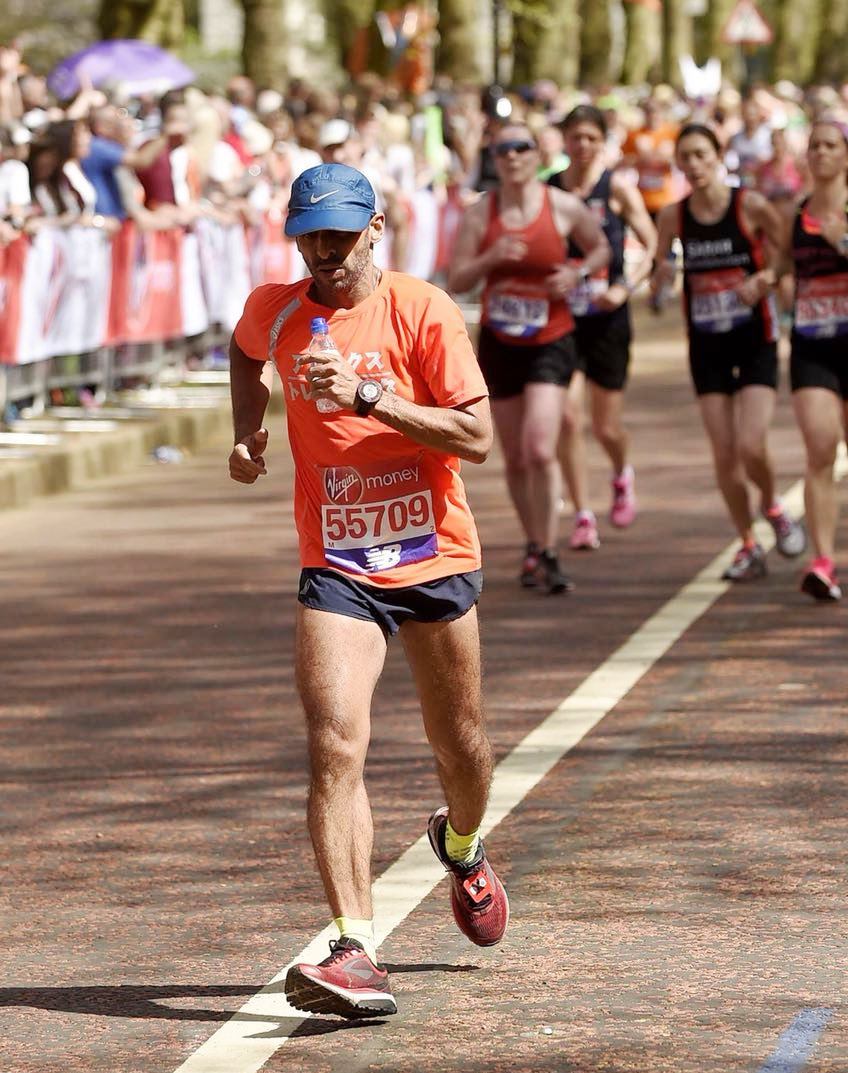
Kiran (orange T-shirt) at one of the editions of the Chicago Marathon (Photo: courtesy Kiran Kapadia)

Kiran Kapadia

For Kiran, running the London Marathon was an awesome experience despite the downsides of 2018 race day. “ It was quite hot and because the race starts late we had to bear the brunt of the sun,’’ Kiran said.

Kiran finished the marathon in 3:50 hours, tad outside his target of around 3:40 hours. “ After the 12th kilometre or so, my legs started to feel very heavy probably because of the heat. I immediately slowed down my pace so as to help myself to go the entire distance of 42.2 kilometers,” Kiran said.

He had a fairly good training season ahead of London Marathon although the unusually warm temperatures of March in Mumbai did impact some of his Sunday long runs.

Kiran, 58, has been running for the past ten years. “ I did my first full marathon at the age of 52,’’ he said, adding that he has run many of the marathons at overseas destinations including New York, Chicago, Prague, Rotterdam and twice at Berlin.

He was involved in sporting activities through his school and college years but his foray into running happened much later. “ When I hit my mid-40s I realised that I was leading a sedentary lifestyle and with it came demons in the form of cholesterol and triglycerides edging above acceptable levels,’’ he said. This was his wake-up call and he immediately plunged into walk-run activity graduating to running.

All in all, the London Marathon was a great experience with awesome crowd support. It was a well-executed race, he said.

Mehlam at the 2018 London Marathon (Photo: courtesy Mehlam Faizullabhoy)

Mehlam Faizullabhoy

Record high temperatures on race day at London probably hit the targeted timing of many runners. But Mehlam Faizullabhoy ended up with a new personal best of 3:38 hours.

He attributes it to his strength training.

In training, Mehlam’s mileage also fell short because he travels on work very often. “I travel a lot and therefore miss out running days. But I do a lot of strength training. Wherever I travel to, I use the gym seriously,” he said. Mehlam believes that strength training is what helps runners get through the last 10 kilometers of a marathon.

London marathon was an enjoyable experience for Mehlam. “ It is a very well organised race with great atmosphere and fantastic crowd support,’’ he said.

Mehlam has had an active sporty life through school and college and the years after that with sports such as rugby, cricket and badminton being his preferred choice. Knee injury forced him to give up badminton and move to spinning. Eventually he moved to running.

He did his first half marathon at the 2009 edition of Mumbai Marathon. The very next year, he graduated to the full marathon and from then on has run a total of 12 full marathons, two of them overseas in Barcelona and Rotterdam.

“ My training this time was quite good. Actually, I had started way back in July 2017 as I was scheduled to run a race in Tokyo in October 2017. But the run there got cancelled because of a typhoon,’’ he said. That training came in good stead for the Mumbai Marathon in January 2018 where Mehlam scored a personal best of 3:42:53.

Mehlam is due to participate in the Chicago Marathon later this year.

(The authors, Latha Venkatraman and Shyam G Menon, are independent journalists based in Mumbai.)

SLOW TRAIN TO PONMUDI

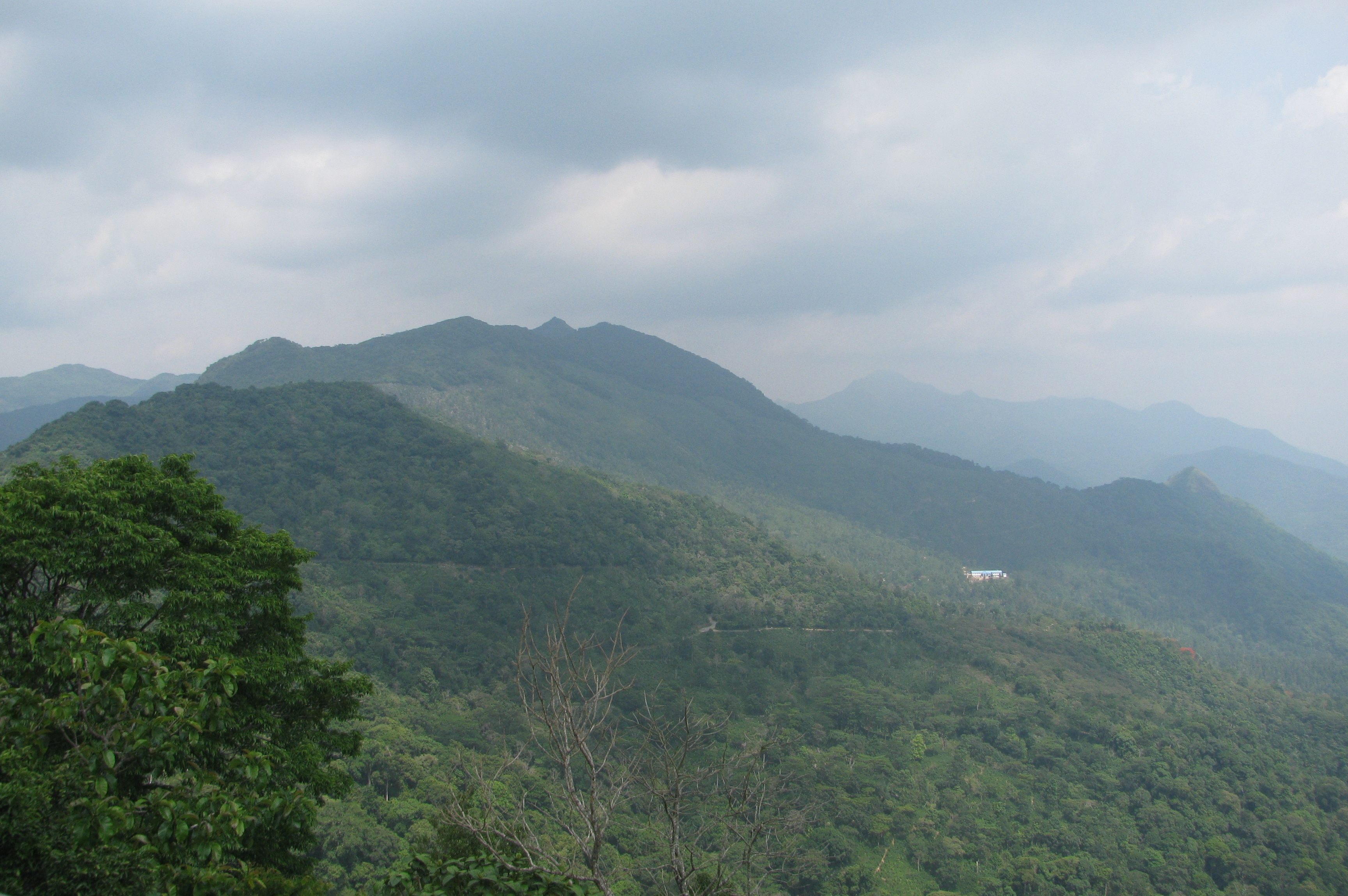
View from the top of Ponmudi (Photo: Shyam G Menon)

Tucked away in the deep south of Kerala is a delightful little run; from Thiruvananthapuram to Ponmudi. I am an amateur runner. This article is a personal account. Treat it as such. For more on Ponmudi and its neighborhood please try this link to a three part series published earlier on this blog: https://shyamgopan.com/2014/08/09/a-trek-and-a-tea-story-part-1/)

I have a strange relation with Kerala.

Decades ago, when I was in school, the state’s language – Malayalam – was taught with a vengeance. Born Malayali, I was expected to be a master of Malayalam, including Malayalam literature, pretty early in life. I dislike anything shoved down my throat. Consequently, I grew up hailing from the state but with no identity founded in mother tongue. Instead, I rediscovered Kerala on my own terms, loving it in adulthood for its natural beauty; the sheer magic of being a land where you can travel from 600 km-long coastline to an equally long spine of high hills in three to four hours or less. Few places have such diversity, so easily accessed. For bonus, it was all green although a green battling to hold its beauty amid the state’s emergent bane – the garbage of its rampant consumerism ranging from an explosion of automobiles to trash piled at every turn. As for Malayalam, I won’t say I rediscovered it with the same fervor as bonding with the state’s geography. I am told I speak and write it better than before. The improvement amazes others; the effort I make to articulate well amazes me. Maybe back at school, the curriculum should have set aside linguistic chauvinism and let me explore geography first, as reason to know land and language.

As part of rediscovering Kerala, most trips home include a visit to the seashore, hills, backwaters or forests. At the very least, an extended ride stitching together a clutch of state transport bus routes. On such trips along state highways or between towns, from my bus window I watch mansions and properties priced beyond my wallet, pass by. That has been another route to banishment from home state – I can’t afford a place there. Elsewhere in the state, I soak in the greenery knowing well that its ownership is domain of wealthy agriculturists and where it isn’t, belonging to government. I am therefore visitor; sometimes I think, visitor everywhere. Even visitor in life, for as we are prone to say in our wakeful moments: who is going to haul all these assets along, when they die? But humans are empire builders. Try preaching the virtues of living light to emperors! Life is as you choose to live it.

From the last uphill stretch to Ponmudi (Photo: Shyam G Menon)

One trip I often make from Thiruvananthapuram is to Ponmudi, a 3600 ft-high hill approximately 60 km away from the city. Positioned as a resort, it was once home to a healthy tea industry; the southernmost tea plantations of India. Now there are portions of neglected tea estate and an industry that is a ghost of its former self for a variety of reasons. What continues to attract people like me to Ponmudi, is the prospect of getting away from city, even getting away from ourselves. You take a bus from the Thampanoor bus stand, reach Ponmudi in two to two and half hours, spend some time on top and then take another bus back. Years ago, it was a quiet place. It is still relatively quiet on weekdays but with Thiruvananthapuram’s growing army of cars and bands of youngsters on motorcycles, the peace has begun crumbling.

On April 14, 2018 – the day before Vishu, the Malayali New Year – I ran to Ponmudi from my home in the city. I am sure there are many who did this before me; many who continue to do it. I did so for a few reasons. First, all my previous trips to Ponmudi had been in a bus or a car. I had long wanted to do the journey on foot. Second, I know my limitations as a runner. I am not cut out to compete or chase podium positions. I like the act of moving. I like running as a means of moving. I am also ready to mix running with walking when required; even walk if that be all I can do. A journey – as opposed to a race – appealed. Third, I find it increasingly difficult to make sense of the world I live in. I like it when I can shut out thoughts in the head. A long run helps you do that. I had imagined doing this run in advance. So before I left Mumbai for Kerala, as part of my regular running, I ensured that I did a few modestly long runs. Frequently prone to injury, this trip happened luckily in a phase wherein I kept injury at bay.

On April 14, I left my home in Thiruvananthapuram at 3 AM with just one goal in mind – don’t injure yourself. I promised myself to run slowly, be gentle – maybe even walk – on uphill and downhill sections and I pinched myself to remember well, the care to avoid injury my friend, Ramachandran of Coimbatore had described in his article about running 80km in Kodaikanal (please click on this link for that story: https://shyamgopan.com/2018/03/29/kodaikanal-by-trail/). I had a hydration pack with one liter of water, a few bars of chocolates, phone, wallet and a change of clothes. The pack had reflector strips; roads in Kerala are narrow and people tend to drive fast. I wore a bright red T-shirt and until the sun showed up, used a headlamp. As much as the run was self-supported, I was also determined to pause at roadside tea stalls for fuel and conversation. I wanted to get a sense of local life. The first such pause was on the outskirts of Nedumangad, where a tea shop that was just opening for business gave me a big glass of water to drink (the water in the hydration pack, I reserved it for use on the final ascent to Ponmudi). Twenty minutes later at another tea shop, I had a quick glass of tea. At Tholicode, roughly 30 km from Thiruvananthapuram, I bought a bottle of ice cold water to drink and wash my head and neck with, for the April heat had set in early and strong. I reached Vithura, about 37 km from Thiruvananthapuram, by 7.15 AM. There I took a half hour-break. The tea shop I went to was already bustling with customers digging into their breakfast and it took fifteen minutes for my tea to manifest. Leaving Vithura around 7.50 AM, I again halted some distance away at a fruit shop. Its owner, who had just opened the shop for the day, said he would give me an orange. Thus fueled, I headed for Kallar at the foot of Ponmudi.

Road to Ponmudi. This picture is from near the top (Photo: Shyam G Menon)

By now I was a little tired and needing effort to produce good running form. I must have been a sight, for one person from a group of laborers gearing up for their day’s work, trotted towards me imitating the hunched shoulders and slouch of an old man. It triggered laughter. I am happy I provided them reason for mirth although right then, I chose to ignore the group. About five to six kilometers before Kallar, a woman looked up from what she was doing and said loudly for all to hear, “ look, there is somebody running in from some far off place.’’ Her brief broadcast made me feel important and happy. I put on my best running form, jogged past the settlement and out of sight, relapsed to journalist’s slouch born from too many hours before the computer. In general, all through the run people left me alone. But deep down, knowing how much well-settled life and its frills count for social standing in Kerala, I suspected my running self was an oddity. Middle aged and pointlessly sweating it out on foot to Ponmudi; one man I checked with for road directions asked: why don’t you take the bus?

I reached Kallar by 9 AM. The sun was now out in full force and it was blazing hot. Kallar is approximately 45 km away from Thiruvananthapuram. The road from the capital city till Vithura is mildly hilly, from Vithura to Kallar it gets hillier, and from Kallar to Ponmudi, it is completely uphill for 15km. I had been mixing running and walking from just ahead of Vithura. From Kallar, given the heat, I decided to walk the uphill portion and not run. For the first eight kilometers or so of this final stretch, there are no small shops you can visit for a drink of water. I sipped from the hydration pack. Past this portion, you have small stalls opened by tea estate workers. At one of those shops, I met Muniyandi who busied himself making two glasses of lemonade for me while his friend, Appukkuttan, regaled me with great conversation. I love these small shops filled with produce from the local tea estate and the land these people live on. They sold tea, guava, rose apples (locally called chambakka) and, my favorite – sliced green mangoes served with salt and chili powder. I paid twenty rupees for the two big glasses of lemonade Muniyandi gave me. According to Appukkuttan, neither he nor Muniyandi had received salary for their work at the tea estate for the past several months. I remain utterly grateful for the lemonade they generously gave me notwithstanding their own troubles. It was a very warm morning.  These two men – the lemonade and conversation they provided – made my day. A little ahead, I met a group that had stopped to have tea. They said they had seen the running group I belonged to – Soles of Cochin. I was aware of Thiruvananthapuram based-Iten (another group of runners), who run up Ponmudi on a regular basis. I wasn’t aware of Soles of Cochin joining in. I told them that I didn’t belong to any of these groups and had come alone. We had another nice chat.

Ponmudi, view from the top (Photo: Shyam G Menon)

I was on top of Ponmudi, at the restaurant operated by Kerala Tourism Development Corporation (KTDC), by 11.53 AM.  Technically they call this the lower portion of the apex of Ponmudi. But having witnessed the traffic congestion that sometimes happens in the upper half on previous visits, the KTDC restaurant had been my destination right from start. I sat down, took my shoes off and nursed my left sole, where a large blister was beginning to form. It woke me to a mistake in preparations – I should have packed in an extra pair of dry socks. Two youngsters who were speaking to the restaurant’s security guard (he knew all the running that had happened that day; he asked me for my account too) came to speak to me; the mother of one of them had been part of that day’s team run from Kallar to Ponmudi. The view from the top was an eye opener. My ever distracted brain held no memory of rolling hills from past visits to Ponmudi and I was staring exactly at that. Water, coffee and lunch later, I caught the 2PM bus back to Nedumangad and from there another bus to Thiruvananthapuram. With last fifteen kilometers walked, would I call my outing a run? Years ago one of the gifts Thiruvananthapuram gave me was introduction to blues music. Trains found mention in some of these songs – from just “ train” to “ lonesome train” and “ slow train.” With my huffing and puffing, I have always felt like a train engine on my runs. On the road to Ponmudi with people on cars and bikes whizzing past, I think I was slow train. One day, I will sing the blues.

Then, I committed a blunder.

After two days of rest, I returned to my daily running. Happy with my outing to Ponmudi and enjoying the roads of Thiruvananthapuram, quite empty early in the morning, I ran at a pace faster than sensible. Vanity got the better of me. I forgot that what had worked for me on the trip to Ponmudi, was being slow train. I forgot the caution Ramachandran had wisely shown. One hour later, I was home nursing a very familiar shin pain from the past. I knew I would be grounded for a month, at least.

(The author, Shyam G Menon, is a freelance journalist based in Mumbai. All distance and elevation mentioned herein are from the Internet. All the photos used with the article were clicked a few days after the run, when I returned to Ponmudi for some solo time.)

BEING ASHOK DANIEL

Ashok Daniel (Photo: Shyam G Menon)

We speak to Ashok Daniel, the youngest Indian to complete the Ultra-Trail du Mont Blanc (UTMB). In a relatively short span of time, he has been to a variety of races, the bulk of them partial to trails and mountains.

Six-pack is the flag bearer of the gym movement. For some gym goers, despite six-pack, gym becomes limited fascination. The type of person you are, matters. There is only so much the confines of a room and its occupants sweating their way to sculpted glory, offer for engagement. “ I got my six pack and all. But I was finding gym work-out very repetitive. It became the same thing over and over again, it became boring,’’ Ashok Daniel said.

Born December 1990, he grew up in Chennai’s Besant Nagar, a suburb that got its name from the noted theosophist, Annie Besant. It is a well-known suburb, particularly popular for its beach – Elliot’s Beach, also called `Bessie.’ The Theosophical Society has its headquarters in neighboring Adyar. Its premises or `garden,’ spanning over 250 acres, is one of the greenest parts of Chennai. Ashok’s father worked as a lawyer; his mother, a teacher. As a child he was on the heavier side and had no interest in sports. By the time he was in twelfth standard, he weighed 93 kilos. When he reached law school Ashok decided to address his obesity. He joined a gym and through a combination of work-out and diet, brought his weight down to 58 kilos in six months. “ I was very dedicated when it came to working out at the gym,’’ he said.

From a recce run of the Jawadhu Hills Ultra before the race and as part of training for 2016 UTMB (Photo: courtesy Ashok Daniel)

That was why the emergent boredom bothered. If you have known a regimen and its benefit long enough, threats to continuing it, worry. And yet, there was no denying the truth – gym sucked because there is no creativity in repeating and repeating the same thing. In direct proportion to six-pack sprouting on abs, the mind felt bored. On the other hand, if you left the gym’s confines, you became one with the world. If you moved around in that world, the world and its many dimensions engaged you. The brain likes variety. “ I used to jog in the morning and hit the gym in the evening. Between the two, I decided to pick running and focus more on it,’’ Ashok said.

As it turned out, all those months of morning jogs and strength training at the gym, had laid the foundation for a potential runner in him. A Sunday, he saw senior citizens running a half marathon in Besant Nagar. It prompted him to sign up for his first running event – the half marathon segment of the Chennai Trail Marathon organized by Chennai Trekking Club (CTC). He finished fourth in that. Ashok’s progression over distance categories appears to have been rapid. Following that half marathon, he signed up for the Chennai Marathon and the Bangalore Ultra. At the latter, he planned on attempting the 25 km-category but when almost everyone he connected with online in discussions around the event seemed to be headed for the 50km, he changed his mind and registered for that. At the Bangalore Ultra, his fist 25km-loop went by smoothly. The next was painful. He finished the assigned 50km in around six and a half hours.

At the finish line of the 50k Val Vil Ori Ultra in Kolli Hills, April 2016 (Photo: courtesy Ashok Daniel)

The good thing about an event is that you meet like-minded others. He trained through November 2012 with runners he met at the Bangalore Ultra; in this case – a group from Chennai YMCA. He ran the Chennai Marathon in around four hours. Following this he kept attending races in other places – Hyderabad, Bengaluru and Auroville among them. Around this time, he read a book titled Extreme Running. Published in 2007, it was written by Kim McConnell and Dave Horsley. According to information on the Internet, the book provides an overview of extreme running and races in that niche located in testing environments like mountains, cold places and hot deserts. The book played a big role in effecting Ashok’s transformation from a runner of half marathons and marathons, to runner of ultramarathons. But while it offered a goal, finding the path to it seemed Ashok’s onus. In the lean season following the run at Auroville, he began ramping up mileage, sometimes up to 160km per week with 50km every weekend. “ The distance barrier broke for me,’’ he said. This phase was followed by a project in league with his friend Sreekumar – run a half marathon every day for 50 days with weekend runs going up to 30km. Sreekumar did this for 80 days, Ashok said. “ The first 20 days of this was painful. Thereafter the body got used to it. We even upped the weekend distance to 50km. All this running was done early morning; start running by 3-4 AM and be done by 9 AM. None of us had any clue on how to handle training for ultramarathons. We decided to figure things out as we went along,’’ he said. Also happening around this time was a run from Chennai to Puducherry. There were five runners. On the first day, two of them including Ashok ran 75km. The next day, the same two did much of the running and reached Puducherry.

Near Snowden, Wales; from a training run for UTMB (Photo: courtesy Ashok Daniel)

In English folklore Robin Hood is an outlaw with a difference. Operating from Sherwood Forest in Nottinghamshire, he robs the rich to help the poor. His main adversary is the Sheriff of Nottingham. The story of Robin Hood contributed to making Nottingham a known name worldwide. In 2013, Ashok moved to the UK to do his masters in law (LLM) at the University of Nottingham. He joined the university’s running group. That group – they were into cross country running – was composed of fast runners. “ I had to raise my performance. The university group was my introduction to structured training. My time in the UK taught me to train smart, not merely hard,’’ Ashok said. In Nottingham, he ran less and trained more. The idea of piling mileage got recast. He was exposed to the concept of acquiring muscle memory. Nutrition was emphasized. He also got introduced to running on trails, in mud, in the rain. “ Trail running was something I wanted to do. I had got bored of road running,’’ Ashok said. He did a 50 mile-race in Sheffield. It was a low key event; a mud fest. He ran it in road shoes. But he managed a decent time – around nine hours. Soon he was dreaming of UTMB – The Ultra-Trail du Mont Blanc – among the most coveted ultramarathons out there. It is 166km long with roughly 9600m of cumulative elevation gain. To run UTMB, you have to accumulate points running other races accredited for the purpose.

Running Highland Fling (Photo: courtesy Ashok Daniel)

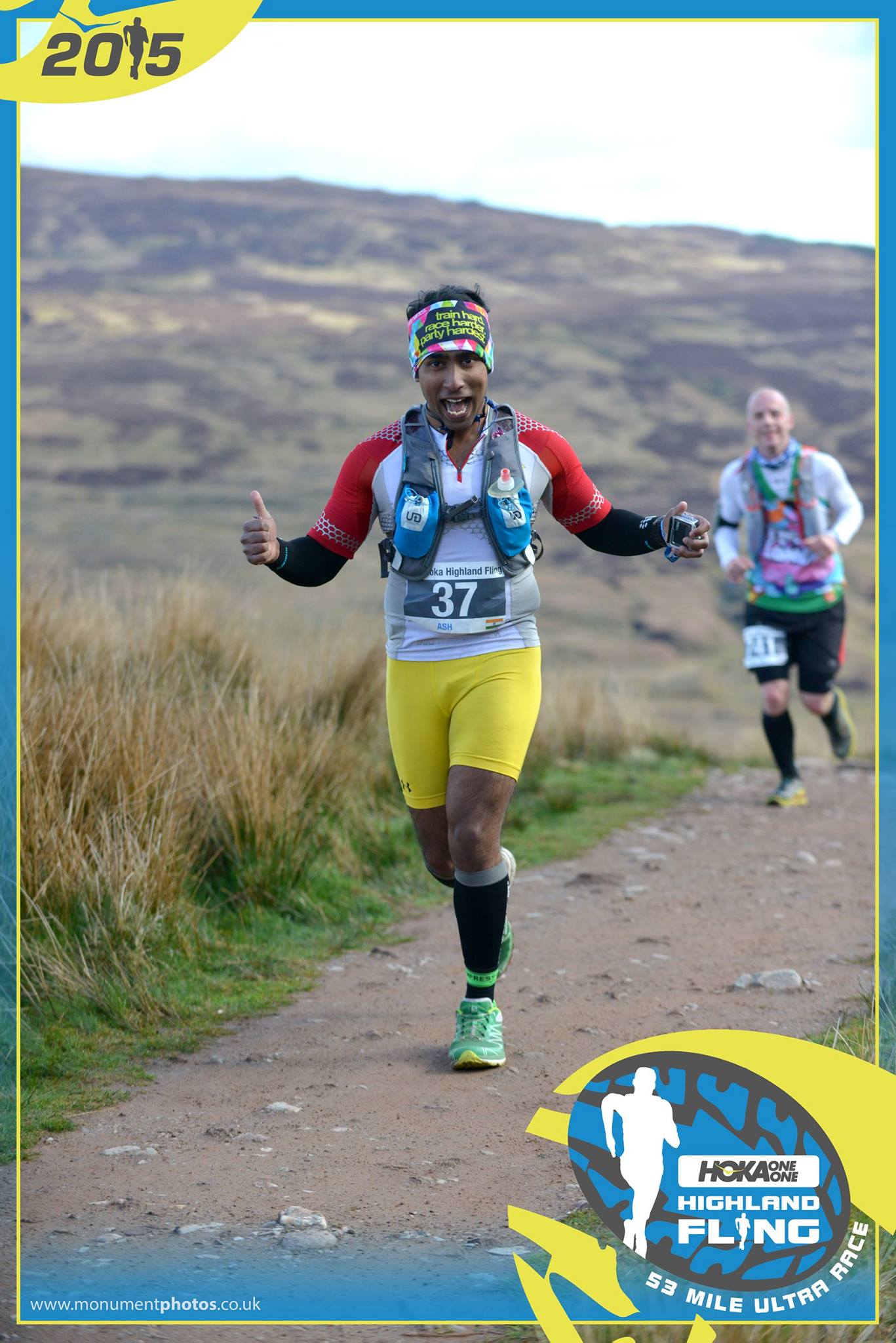
UTMB was first held in 2003. The entire UTMB basket consists of the main UTMB, the CCC (Courmayeur-Champex-Chamonix) entailing 101km of running plus 6100m of elevation gain, TDS (Sur les Traces des Ducs de Savoie) at 119km plus 7250m, OCC (Orsieres-Champex-Chamonix) at 53km and 3300m and PTL (La Petite Trotte `a Leon) at 300km plus 28,000m. According to Wikipedia, the route basically follows the Tour de Mont Blanc hiking path, a loop around Mont Blanc, passing through France, Italy and Switzerland. However, changes in route do happen from year to year, main reason being safety. Ashok’s blog post on UTMB put the challenge in perspective: Generally people take around a week to ten days to get the route done at a leisurely pace but during the race we have around 46 and half hours to finish it. Given the need to accumulate points for eligibility to apply, UTMB smacks of project. For aspirants, it is a long haul. In 2013, when he came to India for the holidays, Ashok ran the Nilgiris 100, completing it in 14 hours. It was a race that provided UTMB points; he gathered some in the process. In December that year, having accumulated UTMB points from the races in Sheffield and Nilgiris, Ashok applied for the 2014 TDS, part of UTMB. For Ashok, 2014 was the first year with a real calendar in running. In March 2014 he ran the Oldham Way 40 miler. In April he did South Downs Way, a 50 miler along the coast. South Downs Way is basically a long distance footpath and bridleway along the South Downs in southern England; it is one of 15 national trails in England and Wales. Wikipedia says people have been using the paths and tracks linked to form South Downs Way for approximately 8000 years.  A week after the 50 miler at South Downs Way, Ashok did Highland Fling, a 53 miler from Glasgow to Tyndrum. Lack of recovery from the previous run hit home and he was forced to abort the run at the 30 mile-mark. Next he signed up for the West Highland Way Race; it had UTMB points on offer.

From a climb in the 3×3000 Skyrace in UK’s Lake District (Photo: courtesy Ashok Daniel)

West Highland Way, a long distance trail in Scotland, was opened in October 1980. The first race on it – it was between two athletes; one well known, the other little known – happened in June 1985. From next year onward, it was opened up to more runners. At around 24 years of age, Ashok was the youngest runner in the 2014 edition of the 95 mile-race. Waiting at the 50 mile-mark were his uncle and aunt. On race day, Ashok reached 50 miles to be greeted by stunning scenery. He felt good. He cruised for the next 20miles. That was a revelation for him – realizing that such energy kicks in so deep into a run. At 75 miles, by when he had been running for over 20 hours, things started to go wrong. He had his first spell of distance running’s hallucination. Then he started to feel “ super sleepy.’’ But a Scottish friend who was along – Gavin Bussey – egged him on. Gavin dropped off at the 80 mile-mark. At that point, Ashok was pulled out of the race and told to wait for the others. Cut-off time was 36 hours and there was much time left. However, his muscles began to seize. The next section of the race was isolated and risky. The organizers were reluctant to let Ashok continue. “ I was a hallucinating mess,’’ he said. Two runners who came in just then, agreed to take him along. “ Those 13 miles were the hardest of my life. My body was literally shutting down,’’ Ashok said. Fresh life kicked in over the last 10 miles. The scenery was lovely; Ben Nevis – Britain’s highest peak – was visible. Eventually Ashok completed the race in 32 hours. West Highland Way has remained special for him as an instance of the running community making sure that he got to the finish line.

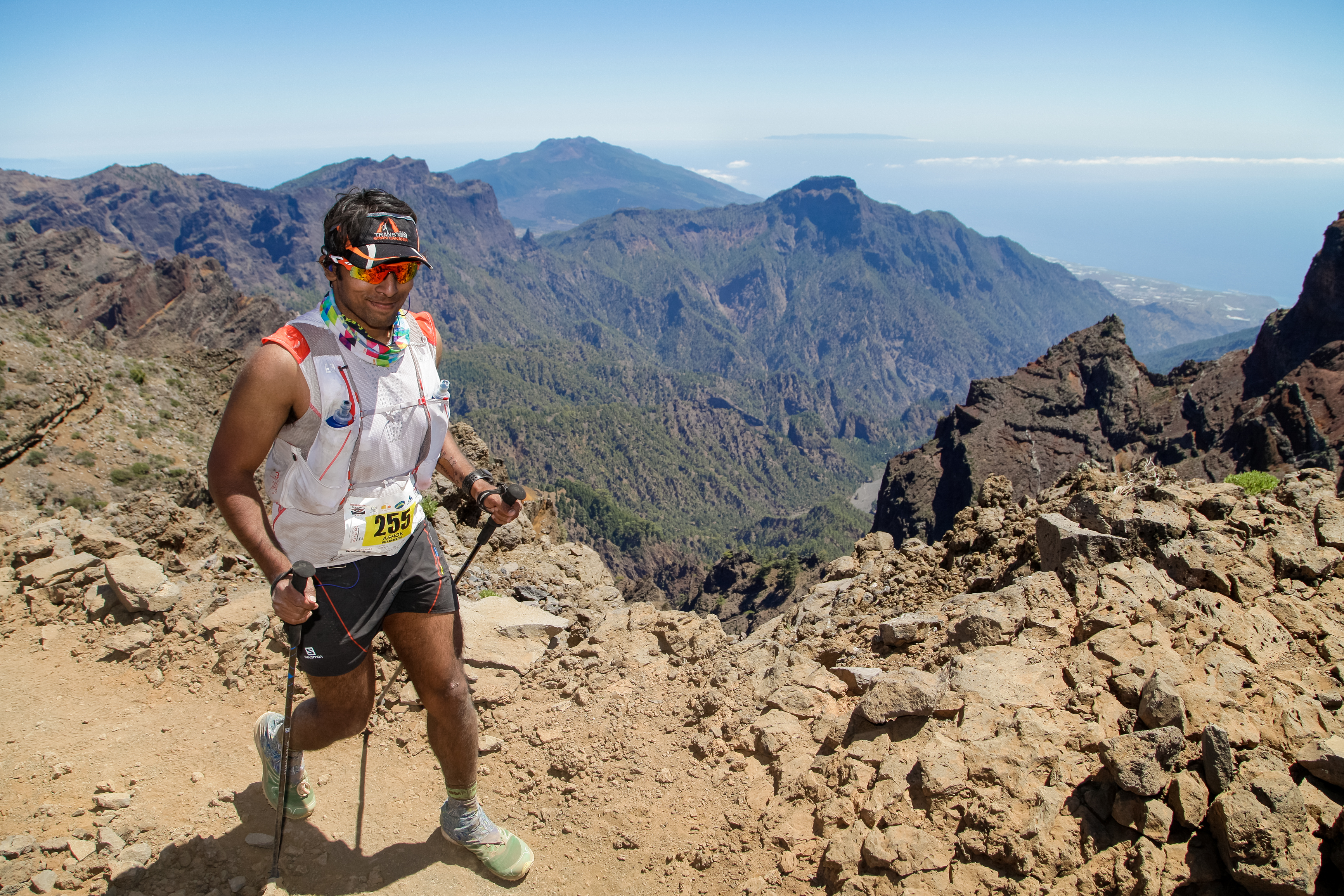
Near the highest point of the course, around 50km into the Transvulcania Ultra; May 2015 (Photo: courtesy Ashok Daniel)

The rest of that summer he licked his wounds, slowly recovering and regaining his strength. He commenced running only two weeks before TDS. That was too late to attempt the race properly. So he let TDS go by that year. But he travelled to France to see UTMB and came back resolved to run it. A point worth noting is that each of these visits to UTMB and its locale was enhancing Ashok’s familiarity with the race and its dynamics. Ashok’s blog mentions him having a degree of familiarity with the event by the time he got down to actually running it.  Lake District is a mountainous region in North West England, famous for its lakes, forests and mountains. In October 2014, Ashok did a 50 miler in the Lake District and although it was far from satisfactory, it gave him precious UTMB points. Adding that to his existing bank of points, he applied for the 2015 UTMB. Then once again, setback occurred. In an accident, he tore an abductor muscle. It forced him to skip plans of running once again at Nilgiris 100 and put him out of action till mid-February 2015. Returning to training, he decided to give a shot at a race he had signed up for in November 2014 – Transgrancanaria (125km, 8500m elevation gain).  Held since October 2003, the race sees participants crossing the island of Gran Canaria in the Canary Islands, on foot. Yet again Ashok made the mistake of deeming himself fit too early and ended up doing a DNF (Did Not Finish) at around 65km. At this race, he met for a second time, Paul Giblin, a Scottish runner who had won the 2014 West Highland Way. Paul started to coach Ashok; get him ready for UTMB.

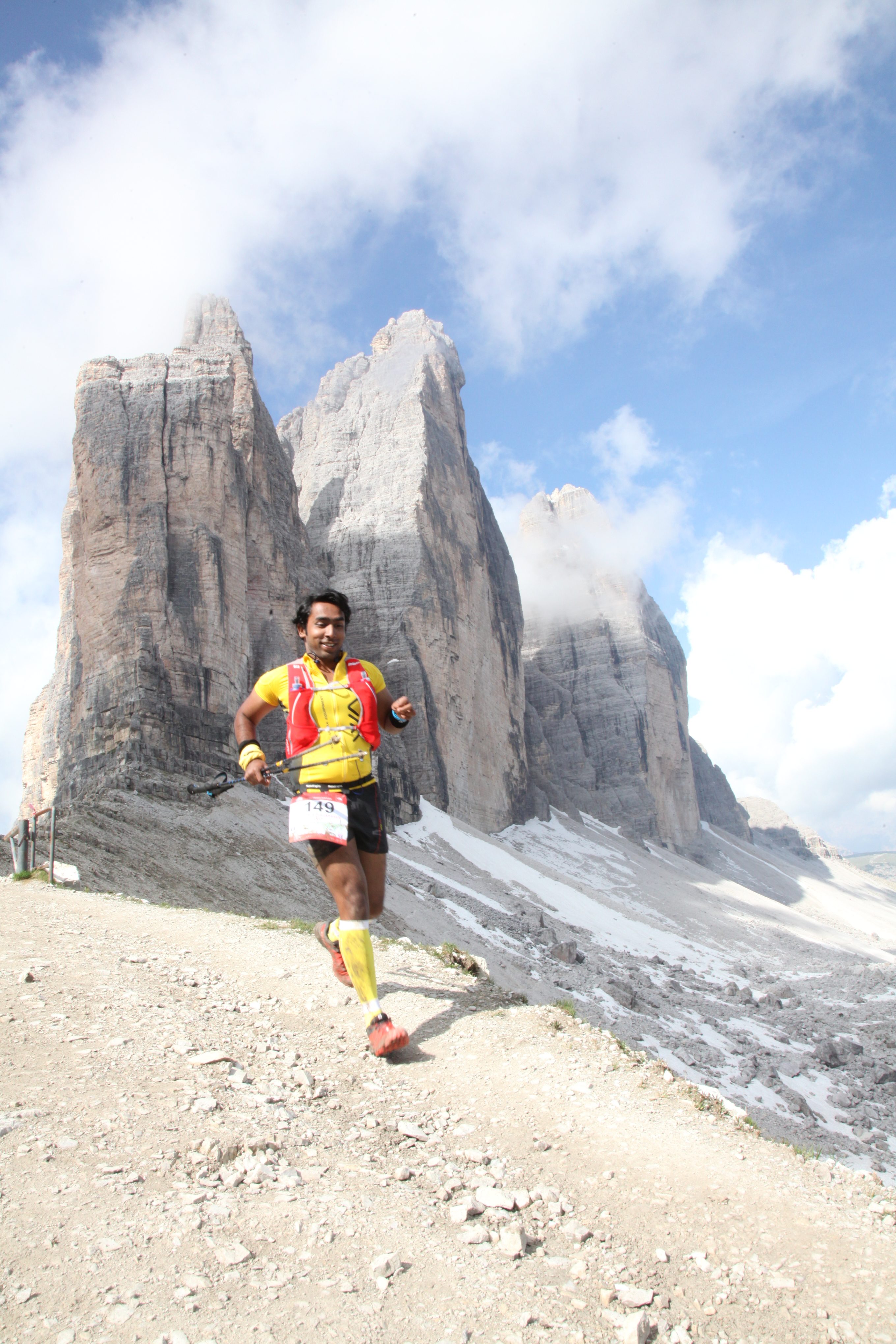
In March 2015, Ashok ran Oldham Way again. In April he repeated Highland Fling too. In May he headed for Transvulcania. This race, another one held on Canary Islands, is rated among the toughest ultramarathons. It has been held since 2009 on the island of La Palma. Ashok found the race living up to its reputation – it was tough. The weather was warm and the route, steep. His blog post on the race put La Palma and the weather in perspective: The place is stunningly beautiful and less touristy / trashy than other Canary Islands as it’s harder to get to but there’s a reason it’s called the Isla Bonita (Beautiful Island). It has some of the most varied and technical trails in the world and gives you a real sense of skyrunning as you are literally running above the clouds for most of the race. It is also the most mountainous island in the world. Although technically its part of Spain, it’s just off the coast of Morocco in Africa and often around the time of the race we get hot winds along with Saharan smog to the island, which certainly spices things up; this natural phenomenon is called `Calima.’ “ The first 50km of the race was awful, I almost had a heat stroke’’ he said. He started to cramp and throw up. Eventually, he finished the race in 16 hours and 45 minutes with 15 minutes left for cut-off. Transvulcania took a toll on Ashok. But that didn’t stop him from signing up for the June 2015 Lavaredo Ultra Trail in the Italian Dolomites. Although he trained well for it, within 20 minutes of starting the race, he grew nauseous. He had to stop running by 50km. Paul and Ashok didn’t want to mess up prospects for UTMB. They decided to come back for the race in the Italian Dolomites, next year.

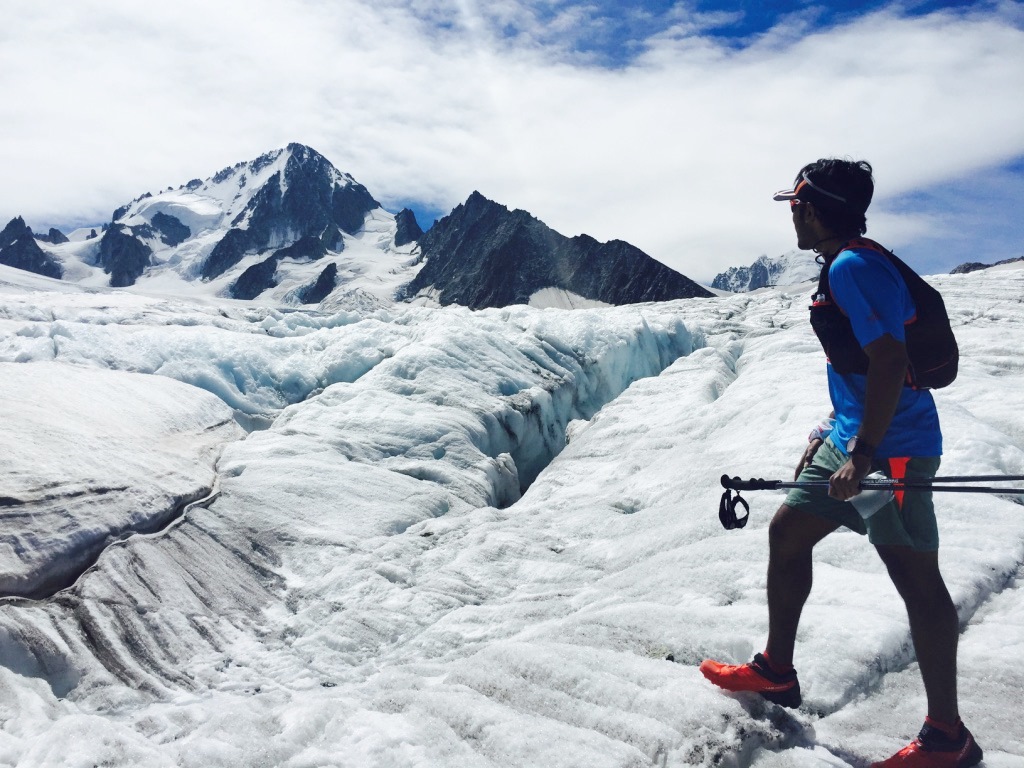
On a glacier around the Chamonix valley, during a training run in July 2015 ahead of Ashok’s first attempt at UTMB (Photo: courtesy Ashok Daniel)

Site of the first winter Olympics in 1924, Chamonix lay in south eastern France. It is close to the peaks of the Aiguilles Rouges. According to Wikipedia, the north side of the summit of Western Europe’s highest peak – Mont Blanc – and therefore the summit itself is part of the village of Chamonix. The place is a magnet for outdoor enthusiasts. Chamonix is much revered in climbing. It is also UTMB country. Paul was training for UTMB around Chamonix. It being holiday season, he asked Ashok to go along. Ashok ran the UTMB route over 2-3 days. He was in good form; he also felt mentally ready for the race. Reaching France that year to do the CCC was India based-ultra runner Kieren D’ Souza. Ashok had been in touch with him. According to Kieren, they were both participants at the 2013 Nilgiris 100. However an opportunity to meet and talk hadn’t manifested at that race. In 2014, when Kieren got around to applying for CCC, Kavitha Kanaparthi who manages Globeracers (they organize Nilgiris 100) mentioned about Ashok, a runner based in UK with plans for attempting UTMB. That’s how the two connected. Subsequently they met up in Chamonix, two to three days before commencement of the 2015 UTMB. Kieren went on to complete CCC. For Ashok, the race went well up to the 60 km-mark. Past that he suspected he was pushing himself but running empty. He wasn’t fueling properly. Around 65km, he took a fall and injured his hip. As a result, stretches with descent became difficult to handle. He had to DNF at 50 miles (he was pulled off by race medics). “ I was devastated. I was in good shape and had wanted to do UTMB for long,’’ Ashok said. He also suspected another angle; one that was philosophic. “ When you put on the UTMB bib you are supposed to respect the mountain. I think I got too competitive with the landscape. I shut everything out in the interest of performance, leaving nothing open for the ecosystem to seep in and inspire me. That came back to bite,’’ Ashok said.

From the 2015 Lavaredo Ultra Trail in the Italian Dolomites (Photo: courtesy Ashok Daniel)

Three to four weeks after UTMB, he signed up for a 100 mile-race in UK called Autumn 100. He ran it to get UTMB points. The race is unique for its long night-running segment. A flat, fast course, Ashok completed the race in 23:30. All the disappointment accumulated from the aborted run at UTMB was flushed out. He decided to attempt UTMB again. In December 2015, his studies completed, Ashok moved back to India. He decided to take a six month-holiday. At the beginning of 2016, he applied for UTMB and was accepted. In February, he ran the Hong Kong 170 (it no more exists). For the first 18 hours of that race, it rained. Almost half the field pulled out. Having run in UK and the Alps, Ashok was alright with the bleak, wet weather. Around 8 AM, morning of the second day, he succumbed to sleep but snapped right out of it and somehow managed to finish the race. He completed it in 37 hours. Within two weeks of the race in Hong Kong, he participated in a 50km race in the Kolli Hills, a small range in Tamil Nadu’s Namakkal district. He finished it in five hours flat. Next he signed up for Lavaredo, the race in the Italian Dolomites. He spent May training in the UK. In June, Ashok ran Lavaredo. Paul told him to pace himself and enjoy the race. He completed it in 28 hours with two hours left for cut-off. “ That gave me a lot of confidence. I told Paul that I have got the monkey off my back,’’ Ashok said.

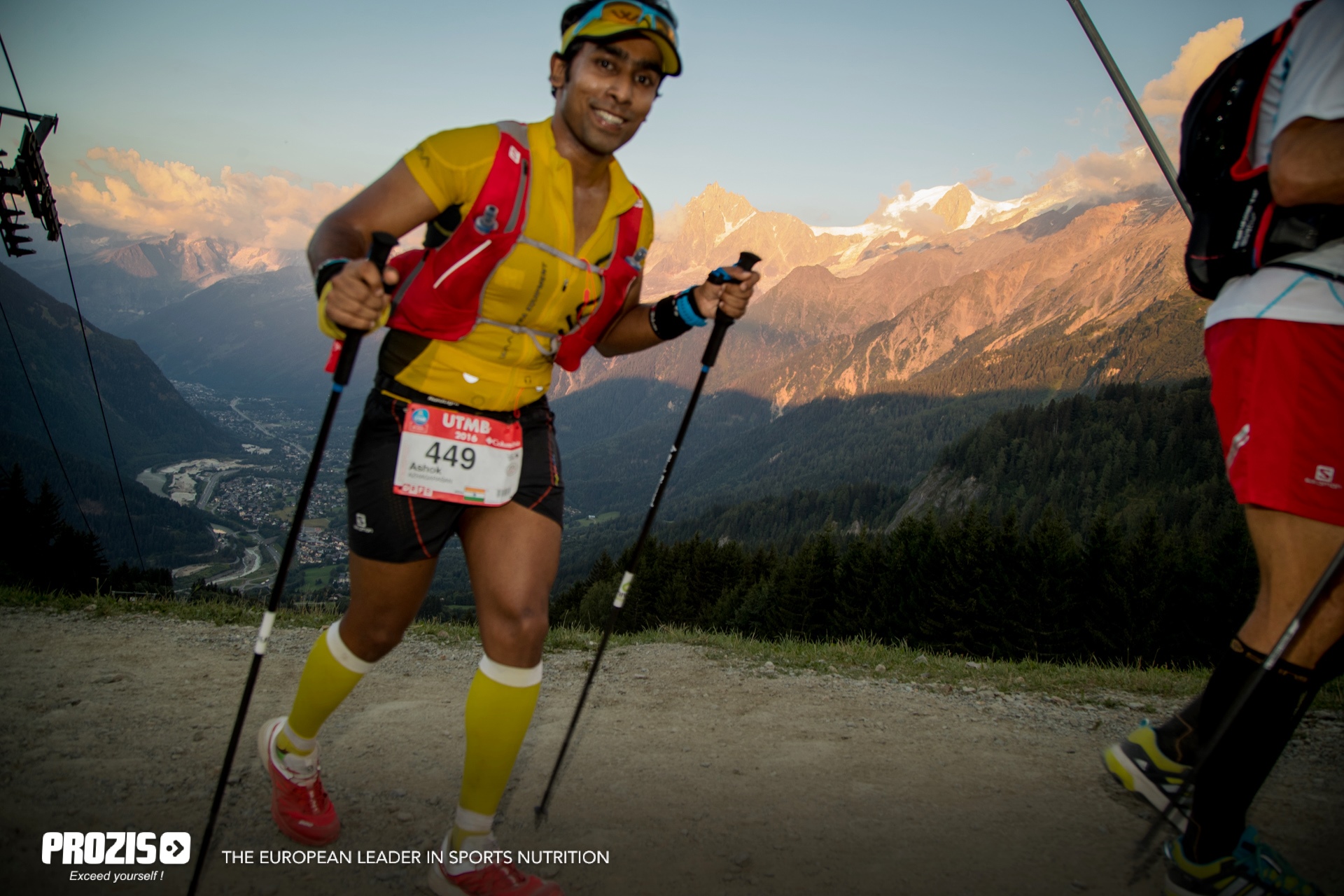
From 2016 UTMB (Photo: courtesy Ashok Daniel)

Back in Chennai, he trained diligently, spending his weekends with Peter Van Geit of CTC, running long distances in the hills. He approached his second UTMB with all learnings from the past, in place. He also felt more relaxed. Yet again, in a repeat of the previous attempt, he hallucinated during one of the descents in the latter half of the race. He blacked out and woke up wondering where he was. Ashok describes it in his blog: On the way down I told Paige to keep running while I sat down to remove dirt from my shoes. I had a blackout here for about ten minutes where I had a vivid dream which involved me volunteering two years ago atop this same mountain while tracking the elite runners. It felt so real that it was hard for me to snap out of it as my mind was playing the memories that happened two years ago before I snapped out of it and started questioning if THIS was real or I was dreaming. I slowly got back to my senses as people passed me. I looked at my bib and realized I am in the race and not volunteering! Slowly I got up and started running.

From 2016 UTMB (Photo: courtesy Ashok Daniel)

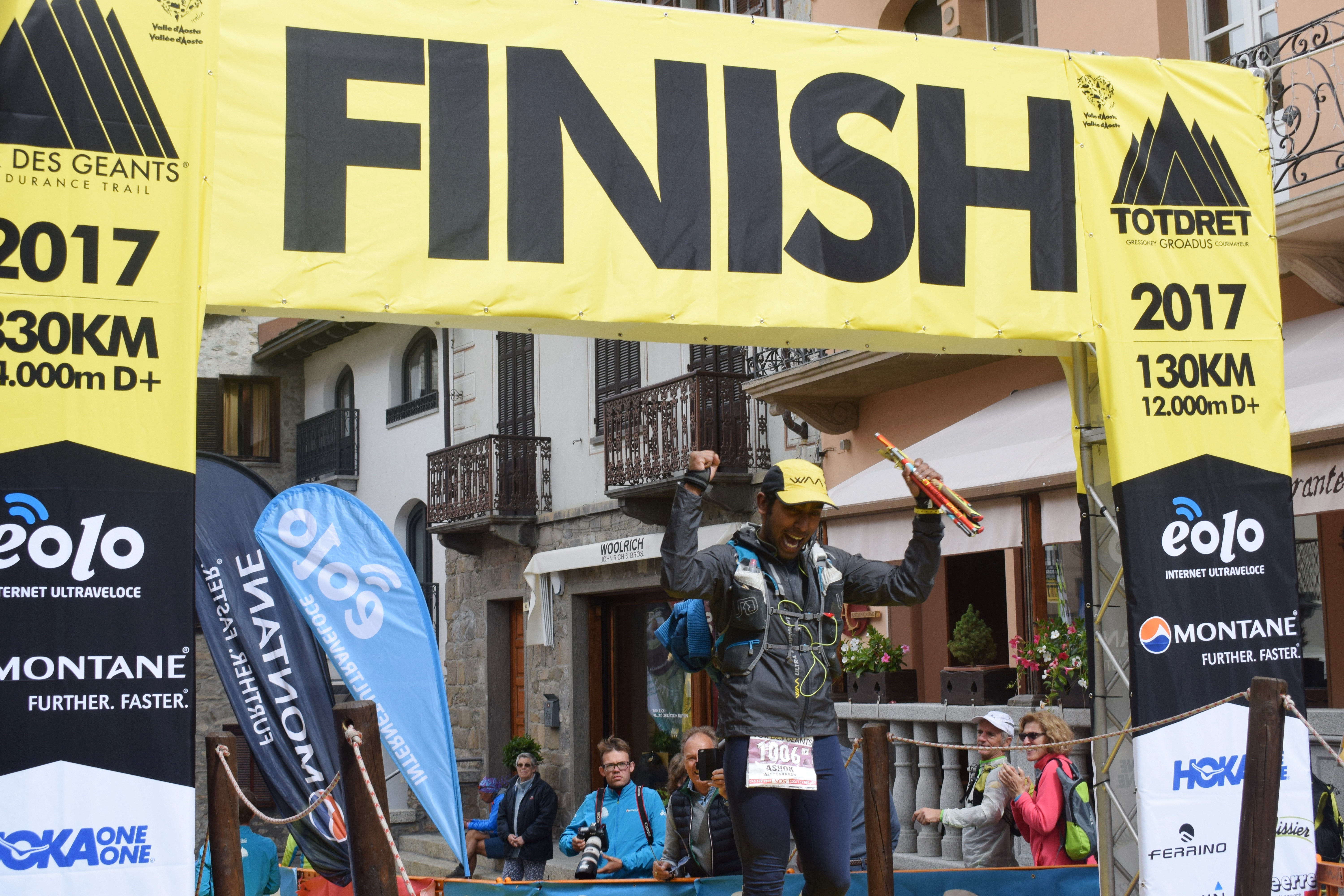
Race cut-off time was 46 and half hours. Ashok finished it in 45 hours and 45 minutes. “ I really enjoyed the whole experience,’’ he said of the 2016 UTMB. In October 2016 he ran Malnad Ultra in Karnataka followed by a 100km-race in Thailand in February 2017. “ I didn’t finish the race in Thailand as I got lost in the forest,’’ Ashok said. That month, he also signed up for the iconic Tor Des Geants in the Italian Alps. The race located in Aosta Valley in Italy’s northwest, comes with a waiting list and lottery for admission. Each country has a quota. Nobody had applied from India. So Ashok got in without a problem. Ahead of the Tor, he also did a 100 mile-race in the US – Old Dominion in Woodstock, Virginia. It was on trails. Unlike trails in Europe, which are quite technical, American trails appeared well maintained. One reason for this, Ashok said, could be that many American races go back to horse racing and continue to be run on trails of that sort. Ashok completed Old Dominion in 23:45.

From Tor Des Geants (Photo: courtesy Ashok Daniel)

The 330km-Tor Des Geants is a seven day nonstop race with cut-off set at 150 hours. The route includes some 25 mountain passes and cumulative elevation gain of approximately 24,000m. Positioned in the transition phase from summer to autumn, you get to experience seasonal change. Plus, it is one of those races, where you have to carry crampons for tackling snow and ice. Not all who participate complete the Tor. According to Wikipedia, completion rate is 60 per cent. In a piece he composed for his blog, Ashok notes that he had initially thought of the Tor as something he would attempt in his older years; perhaps an assignment amid midlife crisis. But then aged 26, he felt ready for it. His friends encouraged him to enroll; as first applicant from India, the race welcomed him immediately with no recourse to lottery. Ashok appears to have prepared well for the Tor. At a wedding in the US, he met Dima Finhaus, who had been a three time-finisher at the Tor. It fetched him valuable advice. Training for the Tor was done mostly in the hills of South India coupled with a month of running in the US East Coast (including Old Dominion) and time spent with Kieren running in the Himalaya. Still, despite preparation, the Tor was a handful. “ I went through a lifetime of emotions in those seven days,’’ Ashok said. His biggest challenge was sleep – most days he was sleeping only 20 minutes or so. Towards the end spurts of sleep evolved. “ I must have lost about eight kilos during the race. But somehow I had it mentally locked down,’’ he said. He completed the race in 147 hours and 41 minutes. Ashok has applied for the Tor again in 2018. Meeting him there would be Kieren, who is attempting a shorter version of the race. After the 2017 Tor, Ashok signed up for Diagonale Des Fous (also called Grand Raid) on Reunion Island, a French overseas territory located between Madagascar and Mauritius in the Indian Ocean. He was the first Indian attempting it.

Completing Tor Des Geants (Photo: courtesy Ashok Daniel)

The event of October 2017 was the twenty fifth edition of Diagonale Des Fous. Cut-off for the 162km-race with 9643m of cumulative elevation gain, was 64 hours. It was a technical route but given the location was a heritage site use of trekking poles was banned. “ I really suffered in this race. But it was a beautiful experience. I hate running on tarmac. I like being in the mountains. Flat is monotonous. It gets tedious. When you run in the mountains, you cannot shut off your brain. There is no fooling yourself. You can’t be on autopilot when you are running in the mountains,’’ Ashok said. According to him, years ago, when he started shifting more and more towards trail,  it took him two to three months to get used to the transition and run without pain. Road forces the legs primarily into forward motion; trail requires sideways motion too – so there is both transition and getting used to, in the frame.

From Ashok’s visit to Manali to train with Kieren D’Souza (Photo: courtesy Ashok Daniel)

There is also another transition happening across Indian athletes like Ashok and Kieren. You can’t do a race like Tor Des Geants if you don’t really enjoy running in the mountains simply for what it is; but it takes years if not decades for this mindset to develop and having that deep ultra-running experience is vital: Ashok wrote.  Read that alongside Ashok’s race statistics from the Tor – the advertised distance is 330km with 24,000m elevation gain but the post-race GPS log showed close to 350km and 31,000m. This, Ashok says, is like climbing three Everests while running a 200 mile-race with very little sleep. Although in their pursuit of the world’s great races athletes like Ashok and Kieren still tackle tarmac, their repertoire includes transition from road running to trail running and within that, willingness to tackle technical trails. Importantly – there is a lot of mountain in the frame. At this juncture, they become a convergence of skillsets from multiple disciplines – there is running, hiking, tolerance of altitude, capacity to move fast on rock and snow. If you scan the world of endurance sports, the emergent term for this sportsperson of multiple skills is `mountain athlete.’ As with the Tor, Ashok has signed up again for the Diagonale too. The last race Ashok had done before we met in Chennai, early March 2018, was the 120km Ultra Trail Angkor Wat in Cambodia. A lawyer handling civil cases, he funded most of his running by himself. In the last three years, he said, he has been getting some support. A French company, WAA Ultra, supports him in sports attire; Unived in nutrition, Salomon India in shoes and Sunto in watches.

(The author, Shyam G Menon, is a freelance journalist based in Mumbai. This article is based on a conversation with Ashok Daniel. Timings at races are as provided by interviewee.)                                   
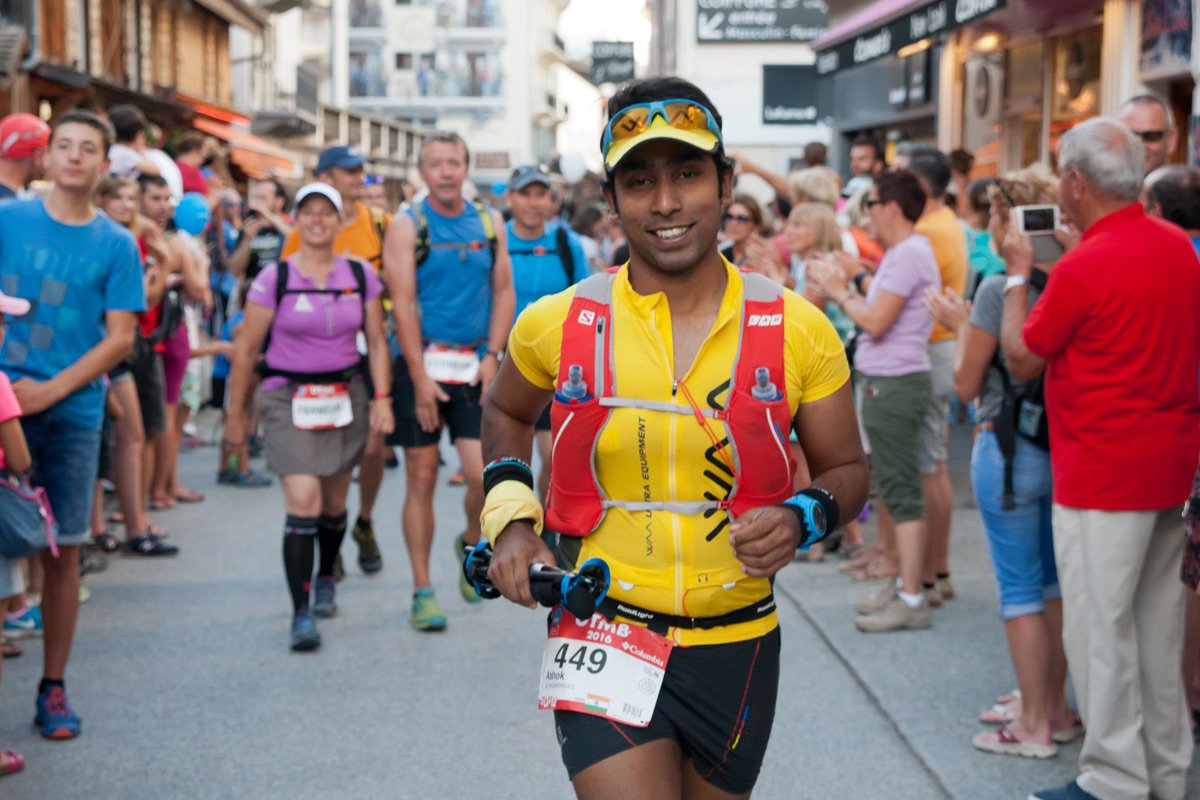
BARKLEY 2018

Grant Maughan (This picture was taken at the 2016 edition of La Ultra The High. Photo: Shyam G Menon)

This is an article by invitation. The author Grant Maughan is a seasoned ultramarathon runner and adventure racer.

Many of us in India know Barkley Marathons through that wonderful documentary film: The Barkley Marathons: The Race That Eats Its Young. It is an ultramarathon of approximately 100 miles (with a “fun run’’ of 60 miles) happening in late March or early April every year in Frozen Head State Park near Wartburg, Tennessee in the US. The race – it has 54,200 feet of accumulated climb – is limited to a 60 hour-period. Only 40 runners get to participate.

The Barkley course was designed by Gary “ Lazarus Lake’’ Cantrell. According to Wikipedia the idea of the race was inspired by the 1977 escape of James Earl Ray, assassin of Martin Luther King Jr, from the nearby Brushy Mountain State Penitentiary. Ray covered just eight miles (13km) after running 55 hours in the woods. Mocking Ray’s low mileage, Cantrell told himself that he could do at least 100 miles. He named the race thus born, after his longtime neighbor and running companion, Barry Barkley. It is an event with unique traits. For instance, besides running, runners are expected to find a certain number of books placed along the course and remove the page corresponding to his / her bib number as proof of completing a loop. Each loop comes with a new race number and therefore the need for another page from all those books. The race – you have to complete five loops of the course – was first run in 1986. In all these years – 33 as of 2018 – it has been completed 18 times by 15 runners. The 2018 edition saw no finishers.

Among those in the fray in 2018 was Grant Maughan. Hailing from Australia, Grant is a freelance super yacht captain who also keeps a busy schedule as endurance athlete. Veteran of many races and a regular at Badwater, in 2016 he was joint winner with Serbian ultra-runner Jovica Spajic in the 333km-category of La Ultra The High, the ultramarathon held annually in Ladakh. Ten days before the 2018 Barkley, he finished the Iditarod Trail Invitational 350-mile foot race across winter Alaska (pulling a sled). Post Barkley, he heads to Tibet to attempt Everest from that side. At the time of contributing this article, he had his calendar packed till September, all the way to Tor Des Geants with yet another Badwater in between.  

Contrary to popular belief, the infamous Barkley Marathons isn’t that hard…. it’s freaking unbelievably hard! It’s a psychological thriller wrapped in a survivalist’s apocalyptic daydreams.

Having just completed the Iditarod Trail Invitational 350-mile foot race pulling a sled across winter Alaska only 10 days before, I had a simple ambition: turn up at the yellow gate and see if I could make one loop in the allotted time and find all 13 books.

After check-in, the sorry souls who were about to embark were allowed to view the master topographical map and draw the route on their own maps, as well as the general locations of the books that each runner was required to find so as to rip the page out of each that corresponded to their own race bib number. These were to be handed back to Laz, the RD, at the completion of the loop to confirm that you had been to each location. Each runner also received a few pages of navigation notes, which at first, second and third reading appeared to be a cryptic scroll to hidden treasure. They would take considerable time to decipher and apply to finding our way.

Barkley is a thinking event. You can’t zone out too much, like in “normal” races where you just lift your head long enough to spot the next marker or course flagging. You are continually evaluating where you are, because if you don’t know where you are, you can’t get to where you’re going. I have worked at sea for more than 35 years so navigation is a daily occurrence. But doing so in the bush is a different story. At sea, you plot Rhumb Lines or Great Circles to skirt around land, but in the mountain bush it is difficult to see exactly where you are even if you are trying to find a spur that leads to a ridge line high above. You need to actually feel the ground contour and correlate that to your map and compass, then try to analyze if you are on the correct section of the mountain. As soon as you drift off into a reverie, you may miss a critical landmark confirming – or otherwise – that you are on the “loop”.

Virgins at Barkley usually cling to a veteran for at least the first loop to try to learn the navigation so as to make it back in time to start the next loop. I figured this was excellent advice and hung with Aussie veteran Nicki Rehn. It was her fifth start at Barkley, so she had a good feel for the bush and a better nose for the navigation. I can’t imagine having to do the first loop by map and notes alone. The night before I had jotted down compass bearings and distances of most of the legs of the route to find the books. But the time to keep stopping and correlating everything while underway would be all consuming and probably lead to timing out on the loop.

Grant at the Barkley Marathons race venue (Photo: courtesy Grant Maughan)

The majority of the course is off marked trails, and runners find themselves sliding and stumbling down precarious topography, clinging to trees and rocks while trying to find an important watercourse at the bottom to direct them to an equally steep and precarious ascent. Torrential rain assisted in making Frozen Head State Park a quagmire of soap-slippery mud. Climbing up the notorious Rat Jaw was a lesson in frustration of trying to find enough grip per step to make any headway. Coming back down was like sliding down the face of a giant Hawaiian wave of mud. Time on your feet was marginal as one fell, rolled and cartwheeled to lower elevations. Much of the climb and many sections of the loop are mired in brier bushes whose thorns stab holes in grabbing hands and shred clothing to flapping ribbons.

Cantankerous weather gave us sheets of cold rain, windblown summits and fog, making navigation and book finding even more fun. At the final summit of the first loop, with all pages in hand, the fog was so thick I could hardly see my feet, which meant the long slippery descent was literally done by feel. I got back into camp in good spirits but shivering in soaked clothing. It had taken about 12.5 hours to do one loop. The distance is supposedly 20 miles, but most would agree that it’s a bit more than that. To finish 3 loops is called the “Fun Run”. To finish all five loops in 60 hours is almost incomprehensible and, indeed, in 30 years only 15 persons have managed to accomplish that, which will give you a general idea of how “out there” the Barkley Marathons event is. Which is exactly how abnormal and brutal the race director, Laz Lazarus, envisioned it to be.

In an age where one can find a 100 mile ultramarathon on any given weekend, the Barkley stands out as an eccentric tour-des-punishment as quirky as its long-standing race director, and after the release of a number of documentaries about the event there is a steady stream of masochists, male and female, knocking on the door to get invited. That’s if you can work out how to apply…

(The author Grant Maughan is a freelance super yacht captain and ultra-endurance athlete. For more on Grant please click on this link: https://shyamgopan.com/2016/10/13/living-the-interesting-life/ For a detailed account of the 2016 edition of La Ultra The High, please click on this link: https://shyamgopan.com/2016/09/16/the-captain-the-teacher-the-warrior-and-the-businessman/)

THE CHALLENGE OF THE FINAL STRETCH / TALKING TO T. GOPI

T Gopi (Photo: Shyam G Menon)

T. Gopi is among India’s leading marathon runners. Assigned to pace the army’s best hopes in the discipline at the 2016 Mumbai Marathon, Gopi found himself not only running his first full marathon but also securing a podium finish. Qualifying thus for the 2016 Summer Olympics, he went on to finish a creditable twenty fifth in the marathon at Rio de Janeiro, covering the distance in 2:15:25. In August 2017 at the IAAF World Championships, Gopi placed twenty eighth in the marathon with a timing of 2:17:13. In November that year, he became the first Indian to clinch gold at the Asian Marathon Championships covering the 42km-distance in 2:15:48. In February 2018, Gopi improved his timing further from the figures returned at Rio; he completed the IDBI Federal Life Insurance New Delhi Marathon in 2:15:16. Media reports said that Gopi had commenced the run at a pace suited for 2:13, slowed down at the halfway mark and picked up pace again in the last ten kilometers but was unable to recover lost ground.

In January 2018, soon after the Tata Mumbai Marathon (he finished first among Indian elite athletes), Gopi spoke to this blog. A small abstract from the interview was immediately published on this blog in a report on podium finishers from the 2018 edition of the event. Here are some more excerpts including the runner’s account of what lay between him and the national record:

The 2016 SCMM was where you made your mark as a marathon runner. Can you explain how that happened?

I had this feeling that I may be able to qualify for Rio when the qualifying time was disclosed as 2:19. But that was one to one and a half months before the 2016 SCMM. I asked my coach if I may attempt the marathon. He didn’t discourage me. But he pointed out that there was little time to prepare and be good enough to meet the qualifying standard. I left it there. I focused on the Asian Cross Country Championships, the national level selections for which were due a week or so before the 2016 SCMM. I was following that schedule.  It was in this phase that the coach asked if I can be pacer for a distance of 25-30km at SCMM for Nitin (Nitendra Singh Rawat) and Kheta Ram.  I reached Mumbai for that task following my cross country selections, where I had placed second. On race day at SCMM, I ran well without any problem for 30km. At 35km there was only Nitin and I left (at the front of the Indian elite group). Given I had executed what was expected of me I was told that if I wanted to, I can slow down. But I said I will continue and stop if I sensed anything going wrong.  At about 38km Nitin pulled ahead.  I stayed where I was, maintaining my pace because I had no experience at truly long distances; in my work-outs I hadn’t trained beyond 25km.  At the same time, since I was past 38km, I was confident I will complete the race.  I remember Nitin opened a gap of almost 200m. Eventually I finished the race. That was also when I noticed the time on the screen – 2 hours, 16 minutes. I was very happy that I had run within the qualifying time for the Olympics. What can I say? I was just happy.

Can you tell us something about your background – where you grew up and how you became the athlete you are?

I was born 1988 into an agricultural family, at Kalloor in Wayanad, Kerala. As a family we had no connection with sports. I am the only child of my parents. We now stay in Sulthan Bathery.  My father is a farmer; years ago, he also worked as a wage-laborer but now he does his own farming.  My mother is a housewife. I studied at the government high school in Kakkavayal. It was in eighth standard that I came into sports; that was the time I participated in the state level sports meet. I was interested in sports even earlier, I was interested in running but I didn’t have a proper environment for it. School was some distance from home. I therefore stayed at the school hostel.  My physical education teacher – Vijayi – she encouraged my progression in sports. After eighth standard, I stayed at her house and finished my studies. Her house was close to the school and residing there helped me gain practice time for sports.  Those days, the disciplines I participated in were 800m, 1500m and 5000m. My interest from then itself was to run long distance.  It wasn’t because I wasn’t good at speed – I used to run the last leg in the 400m relay for my school team. I was interested more in long distance running.

Was there any specific reason for liking distance running?

That is hard to say. I liked sports and used to play whatever games were available including football.  Sweating, panting – I was used to all that. Looking back, I think I had a decent capacity to handle panting. Maybe all that slowly built up endurance and made me good at distance running.

Sportspersons from Kerala, often say that the state’s best distance runners come from hill districts like Idukki and Wayanad. The argument forwarded is that you grow up on a regimen of tackling uneven terrain, ascents and descents. Is that true of where you grew up and did such conditioning contribute to what you are?

Where I grew up, such terrain was there but not in a pronounced fashion. For example, we also had fields, which were flat and big enough to play games.

Following school, how did life pan out?

After school, I joined Mar Athanasius College in Kothamangalam.  I trained under P.I. Babu.  Mar Athanasius College has a name in sports in Kerala. There was a reason why I joined that college. When I was in high school, completing my eleventh and twelfth, two teachers from this college had come inquiring if I would be keen to join Mar Athanasius College upon finishing school.

Did they come looking for you at school because it is a college that seeks out talent in sports?

Yes.  Students from different schools, having track record in sports, have gravitated towards Mar Athanasius College. The management of that college took interest in sports.  In school I had begun running the 10,000m and my time used to be around 33 minutes.  Within one year of being at Mar Athanasius College, that lowered to 32 minutes.  After two years attending my degree course, I was moving into the third year, when I got selected to the Indian Army. I then shifted to Hyderabad.

How did you come to join the army?

That is an interesting story. I was at home and 21 years old; to be precise the start of 21. Once you are fully past 21 years of age it becomes difficult to get entry into organizations like the army and railways. My friends Ajesh and Aneesh – they studied at the same college as I did – they wanted to go for trials being conducted for enlistment in the army. They asked me to go along. I wasn’t physically in best shape but I had my certificates, accumulated from sports events at university level, with me.  As it turned out, I got selected to join the army but the other two didn’t make it. I joined the army in 2009 and underwent training for a year. In 2012 I moved to Army Sports Institute. In 2013, I secured a bronze medal at the national cross country championships. Since then I have been a podium finisher at the nationals in the 10,000m, either in cross country or on track. My marathon running commenced only in 2016 with that year’s edition of SCMM.   I am now known as a marathon runner. In 2016 at the South Asian Federation (SAF) Games, I had run the 10,000m in 29:10. I could have done better but the last two kilometers proved to be problematic; my stomach was very tight. Had that not happened, I believe I could have taken that timing to below 29 minutes. The discipline I was originally interested in was the 10,000m. The marathon – I was interested in it but I never expected that I would be able to tackle it so quickly. It just happened.

You said you are now known as a marathon runner. What do you see yourself as?

I see myself as a long distance runner tackling distances beyond 1500m.

Indian elite runners Gopi T (foreground, blue vest) and Nitendra Singh Rawat at 2018 TMM; they finished first and second respectively in their category (Photo: courtesy Yogesh Yadav)

Can you describe the Rio experience and your passage to Rio following the 2016 SCMM?

After SCMM, I was battling a shin bone-injury. I was being treated in Delhi. The injury took time to heal. The training camp for the Olympics was in Bengaluru. I got three months to be there and prepare.  Within that, in the first month there was interference from treatment protocols etc. I could devote two months to focused preparation. It was with that amount of training that I reached Rio. The Olympics was my first major international competition in the marathon.  I wasn’t particularly tense. I knew I hadn’t had much training. The silver lining was that in training, the gap in performance between Nitin, Kheta and I wasn’t very big. The men’s marathon was on the last day of the Olympics. The women’s marathon had less than ideal weather. It was very warm; you would recall what happened to O.P. Jaisha. Luckily for the men, the night before their marathon and on the morning of the event, it rained. It was therefore not too hot. Sole problem was that the road was slippery in parts. For the first 25km, I managed to stay with the first batch. That was all I had the capacity to do. Eventually, I finished twenty fifth in the field. But then again, something tells me, that had I enjoyed more time to prepare, I may have finished within the top 20.

What do you think you lacked?

That is hard to say. I had worked out only so much. You therefore tend to conclude automatically that you worked out only so much and your performance corresponds to that. I have also had a continuing problem with my hamstring. It improves through treatment but then after strong competition, it gets tight again forcing me back to treatment.  However on the whole, I was quite satisfied with the outcome at Rio.

Now that you have run with international athletes what is your assessment of where Indians stand in the marathon and how we can improve?

To tell you honestly, for the first 30km or so, we manage to stay in the first batch. What happens in the next 12 km, we can’t explain. In that distance, some block is occurring in the body. What this is due to, on account of what shortcoming this is happening – I don’t know.  We don’t know how others are training. But there are videos available. We watch it and try to make relevant changes to how we train. The coaches do that. For example how I trained ahead of Rio is not how I train now.  Many things have changed. The thing is – in the training phase, there is faith that we can live up to the targeted timing. What we are finding difficult is carrying that over into a competition scenario.

What are your immediate plans for the future?

My desire is to break the national record set in 1978 by Shivnath Singh. That is the goal. The first target however is performing well at the Asian Games.

You ran the marathon at Rio in 2:15:25. The national record is 2:12. From a runner’s perspective how tough is the job of slicing away those few minutes?

From a runner’s perspective, if you can cover every kilometer in three minutes eight seconds, you should be able to run a full marathon in 2:12. When we design our work-out we orient it towards this. However what we feel we can do while training is not quite what it is like in the thick of competition.  For instance during work-out (training) I had the confidence that I will do 2:14. But that didn’t happen. There are also variables to consider like the weather on a given day.  Conditions have to be hospitable. Not to mention, that challenge of sustaining the last 12 kilometers in good form. At the world championships, I could hang on to the first batch till around 27km. Thereafter they pull ahead while we remain at the same state or tend to fade.

(The author, Shyam G Menon, is a freelance journalist based in Mumbai.)
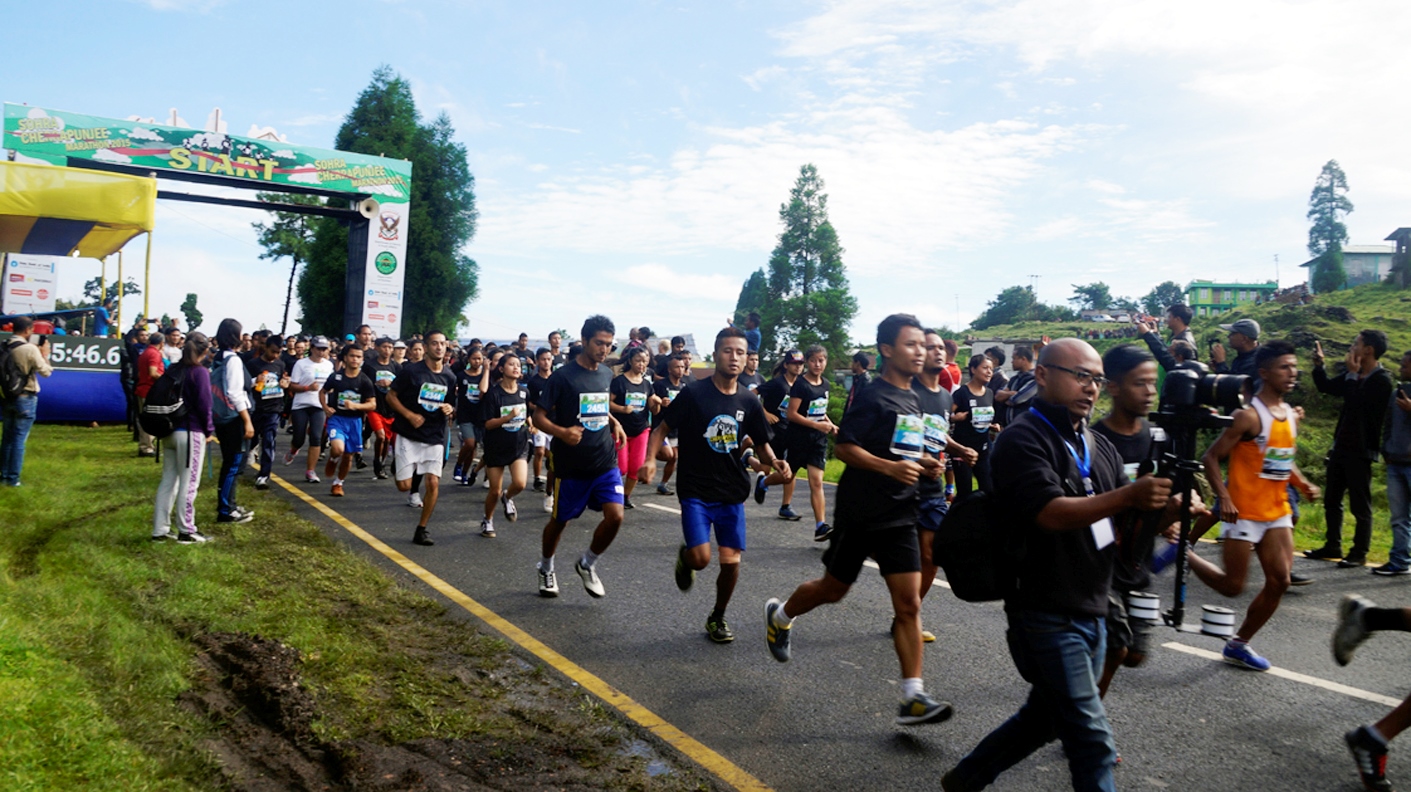
RUN MEGHALAYA

Gerald, Habari and their children (Photo: Shyam G Menon)
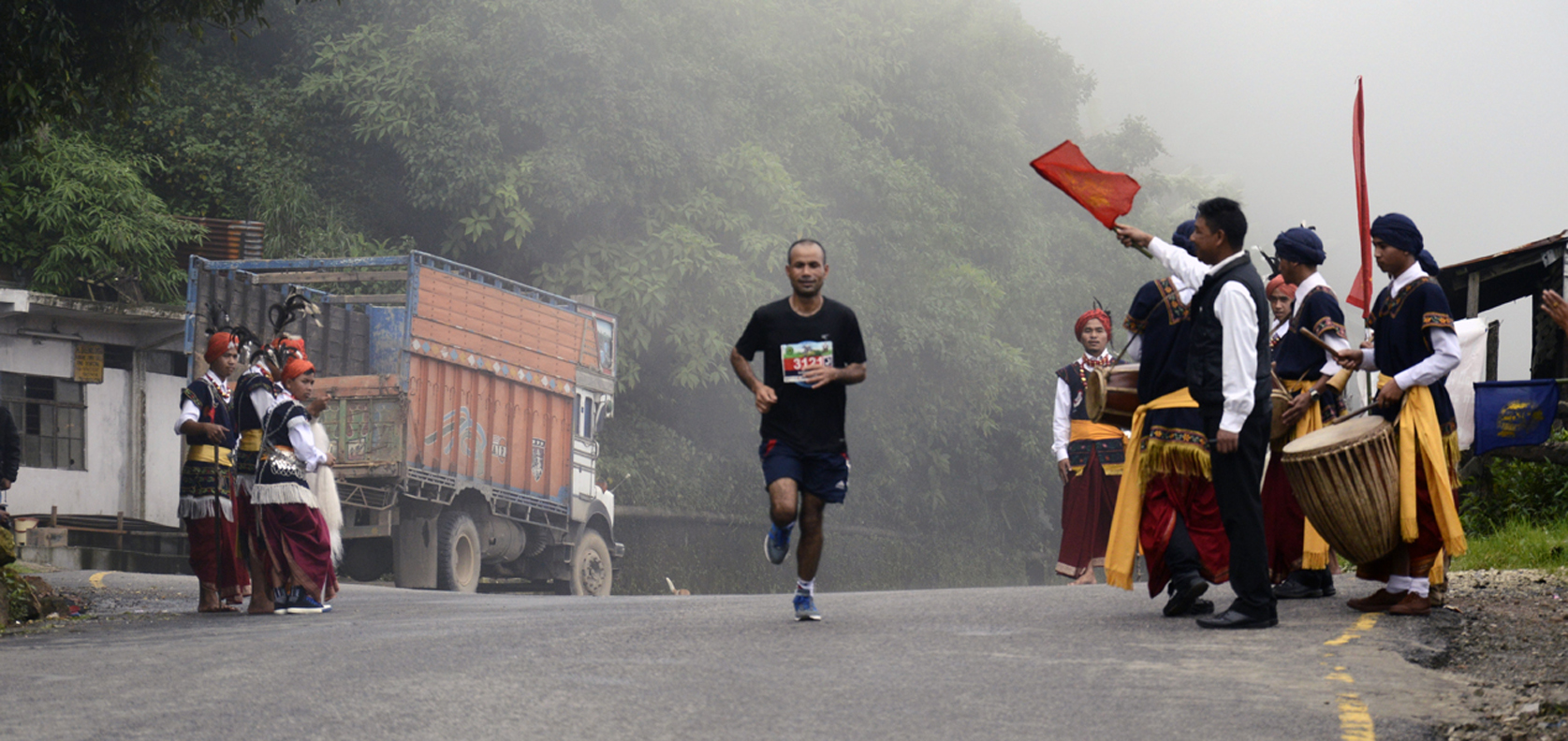
This article is about a family from Meghalaya and their quest to spread the running bug in the state, home to some fine natural-born runners.

Saturday morning.

North Goa and Panjim had drained the overnight bus from Mumbai. Just two people remained for last stop. Stepping off the big bus felt as empty. The Kadamba bus stand in Margao was far from crowded. Being weekend, morning and Goa, there was none of the noise and commotion typical of Indian bus depots. The pilot (Goa’s bike taxi), I hired, drove through streets still indifferent to the time. My hotel – the only one on a rather bare road in Fatorda – made me wonder for a while: what’s happening? Where’s the hustle and bustle? Without it a certain Indian normalcy went missed. Then I hushed myself to my age and stage in life. You have seen enough of that madness, haven’t you? I embraced Goa. That afternoon in Pajifond, an enterprising shop owner helped me find The Cinnamon Tree Project. Usually interviews for this blog feature an individual. This time there was a family. Like freelance journalist born in Kerala, living in Mumbai and now in Goa to meet him, Gerald Pde was a man from elsewhere. He and his wife Habari seemed to have chosen consciously in life – their children were being home-schooled and for the last two years, the family had spent winter in Goa.

Gerald running in Bengaluru (Photo: courtesy Gerald Pde)

Gerald was born 1974 in Shillong, Meghalaya. Along with seven other states, this part of India is generally referred to as the North-East. Connected to the rest of India by the narrow Siliguri Corridor of West Bengal, the North-East is the largest salient (elongated protrusion of a geopolitical entity) in the world. Aside from the plains of Assam, the terrain here is mostly hilly. Gerald was one of four siblings – two brothers; two sisters. His father served in the Border Security Force (BSF). His mother worked in government. He attended school in Shillong and although he never represented his school in sports, Gerald had a unique streak – even as a 7-8 year-old, he loved getting up early in the morning and going for a half hour-run. Very few people ran in Meghalaya’s capital those days. Gerald does not know from where he acquired the trait. He believes his father was into sports for the family has an old photo showing him at the finish line of a race. After school, Gerald set his mind on becoming an architect. From 1994 to 2000, he studied at the School of Planning and Architecture (SPA) in New Delhi. On completing that course, he “ joined the bandwagon’’ of students heading to the US for higher studies. He was accepted at Arizona State University. Upon completion of that course, he moved to New York (he had friends in the city) and started working there as an architect. It was there that he met his future wife – Habari Warjri; she had completed her Bachelors in Business Administration from Baruch College, New York and had just started her first job at Lehman Brothers when they met. More important, although they met in New York, Habari too hailed from Shillong. Her father worked in the Indian Foreign Service and as happens in the family of officials with transferable job, she had grown up in India and overseas. She had been in the US longer than Gerald. They got married in Peru in 2004. In 2008, both of them left New York and returned to India. Gerald set up an architecture and environment design practice in Shillong called EarthStudio. He was there for two years, then, he shifted to Delhi and tried working from there. The Delhi ambiance was not to his liking. So he moved back to Shillong.

Habari at the Sohra Cherrapunji Marathon (Photo: courtesy Gerald Pde)

Habari’s page on Dailymile introduces her as a runner based in Bogota, Colombia. That was one of the places her father was posted to. While studying in the US, she had been into cross country running albeit not long distance. Sporadic running continued in New York; the distance she ran never exceeded 10km in this phase. Many years later, after the birth of her daughter and she was only seven months old, Habari trained in Colombia and ran the New York City Half Marathon, completing it in 2:06. Her first full marathon happened two years after this half marathon; it was the Sohra Cherrapunji Marathon in Meghalaya. When he moved to New York, Gerald revived his running. He was a member of New York Road Runners. After their work stint in New York, the India Gerald and Habari returned to, was different from the country they had known earlier. It was beginning to have a running movement. In 2010, while he was trying out Delhi as place to work from, Gerald said that he was into running but “ not in a serious way.’’ In 2011, things changed. Roughly four years after Gerald completed his architecture program from SPA, the first Standard Chartered Mumbai Marathon (SCMM, now called Tata Mumbai Marathon / TMM) was held in India’s financial capital. By 2008, when Gerald and Habari returned to India, SCMM had settled in as an annual fixture on Mumbai’s calendar. It was the biggest event in a domestic running landscape beginning to sprout more and more events. In 2011, Gerald ran the full marathon at SCMM. He finished second in his age category completing the 42km-distance in approximately 3:23. Two months after SCMM, he ran the Tokyo Marathon with a timing of 3:03:32. He got his personal best in the discipline, the following year at SCMM, running the full marathon in 3:03:21. Since then Gerald has run SCMM every year (he has been podium finisher multiple times) and his list of races span locations ranging from Mumbai to Tokyo, Boston (twice), Bengaluru, Hyderabad, Kochi, Delhi, Kolkata and Goa. Over the past two years, Gerald had been focusing on distances longer than the marathon – the ultramarathon.

That is not to say that he moved off marathons; he continues to run events like the Tata Mumbai Marathon (TMM). Just that his natural preference was now favoring the still longer distance of the ultramarathon. “ Maybe the marathon comes across to me as a tight schedule. In ultramarathon, all that structure goes away. I no longer wear a watch while running. I run from one point to another. That process is very fulfilling for me. I find it freer and more meaningful. Compared to this, I find the marathon more commercial and providing a fixed, structured experience,’’ Gerald said. Two weeks after the 2018 TMM, which he completed in 3:14, he ran the 80km-category of the Kodaikanal Hills Ultra. He finished that in 10:15. “ I run TMM because it is like an annual pilgrimage. It is tough to secure a fast time in Mumbai given the weather, the Peddar Road gradient and the inevitable rendezvous with half marathon runners,’’ he said. In 2013, he had attempted to secure sub-three hours finish in Mumbai. But that wall of half marathon runners ensured he slowed down.

Gerald running Paradise Trails in Goa (Photo: courtesy Gerald Pde)

Dan Lawson is a British ultra-runner and charity worker. Winner at the European 24 Hour Championships in 2016 and a podium finisher at Spartathlon, he has also been a winner in India at races like Run the Rann, Nilgiris Ultra and Bangalore Ultra. At the last named event, he set a record for the maximum distance run in 24 hours in India – 226km. Dan Lawson is Race Director for an ultramarathon in Goa called Paradise Trails, a 101km-UTMB qualifier. The course spans a mix of Goan scenery – beach, countryside, forest, hills and villages. Ever since he started spending the winter in Goa, Gerald has liked running in the coastal state. Unlike Shillong which has caught that modern epidemic of the hills – vehicular traffic, the village roads of Goa are quieter. “ Where we live in south Goa, there is less traffic,’’ Habari said. There is also another difference. Although the hills of North East India harbor much talent in sports, runners out on the road every day is a phenomenon that is still catching up. Running in South Goa, Gerald said, he witnesses less traffic than in Shillong and more runners on the road, the latter also because Goa as tourist destination attracts plenty of recreational runners from around the world. After meeting Dan and learning about the race he oversaw (it started and ended a few minutes away from where they stayed in Goa)l Gerald decided to attempt the Paradise Trails Ultra of November 2017. It was tough. “ You are given a GPS with route laid out. You have to follow it. The route is not marked. That made it difficult. I got lost a few times,’’ Gerald said. He completed the race in 14 hours and 10 minutes. Gerald was the first to cross the finish line and having Habari and children there was a memorable moment for the family. He plans to try it again in 2018.

The longest distance Gerald had run before Paradise Trails was a 60km-run he did in Meghalaya as part of scouting a route for a race he was organizing a week before the 101km-race in Goa. In fact, aside from their own running, what makes Gerald and Habari interesting from the perspective of running in India is the work they did to promote running in Meghalaya. A hilly state, Meghalaya offers some unique attractions. To begin with, it is one of the wettest areas on the planet with Cherrapunji holding the world record for most rain in a month. The western parts of the state are at lower elevation and hence warmer; the east – including Shillong, the capital (elevation: 4908 feet) – are at higher elevation and hence cooler. According to Wikipedia, the maximum temperature in the Shillong area rarely exceeds 28 degrees Celsius. The British, who once ruled India, called Shillong “ Scotland of the East.’’ Although rain can be an issue, the rolling hills and the never too hot weather, makes this region engaging for running. However until some years ago, Meghalaya had no formally arranged large event in the sport. In 2013, as part of the state’s autumn festival, Gerald and Habari, in collaboration with state authorities, organized a Shillong Half Marathon, the first event of its kind in Meghalaya. “ It went off quite well,’’ Habari said.

Start line of the Sohra Cherrapunji Marathon (Photo: courtesy Gerald Pde)

This event was the seed for RUN Meghalaya, an initiative Gerald and Habari founded, wherein they raised funds to take talented runners from the state to run at city marathons elsewhere in India. Commencing with the 2013 Airtel Delhi Half Marathon (ADHM), they have since taken Meghalaya’s runners to the Mumbai marathon and races in Bengaluru, Hyderabad and Kolkata. The first outing to ADHM was realized through crowd funding. Thirteen runners participated under the RUN Meghalaya initiative. Almost all of them placed in the top 10 in their respective categories with the fastest runner completing the half marathon in 1:13. According to Gerald and Habari, although they have persisted with RUN Meghalaya, there are challenges. There is for instance, noticeable gender imbalance in the region’s running culture; as yet women runners are few. Specific to RUN Meghalaya, funding remains main challenge. “ After every year, we have to start all over again,’’ Habari said. In general, finding corporate sponsors for events in India’s North-East is difficult because the region does not represent a big market. A silver lining is that government agencies assist. However governments change frequently.

From the Sohra Cherrapunji Marathon (Photo: courtesy Gerald Pde)

The Shillong Half Marathon and later events the duo helped organize, like the Sohra Cherrapunji Marathon, received some support from government. For the first edition of the Cherrapunji Marathon in 2014, there was only one runner from outside the region – Vishwanathan Jayaraman. According to Gerald, Jayaraman’s article on the event hosted on his blog, helped publicize the Cherrapunji Marathon. Although he didn’t participate in an event there, Athreya Chidambi is another runner who sampled running in Shillong. “ They have good runners,’’ he said in a later conversation with this blog in Bengaluru. By 2015, the Cherrapunji Marathon saw 1500 runners. But an event’s stature is founded on more than just scale of participation. As Habari and Gerald found out, all it takes to dent image is a shortcoming or two. For its third edition, the Cherrapunji Marathon attracted close to 1700 runners. That year – 2016 – the weather played truant. While you can’t imagine Cherrapunji without rain in the frame, rain was more than enjoyable measure on race day. “ It strained race logistics,’’ Habari said. Result – the organizers came in for a barrage of negative feedback. Runners used to events are a different breed from those who approach the activity in a more spontaneous, organic way. When the barrage of negative feedback hit them, Gerald and Habari wished there was some empathy shown for the effort that goes into organizing an event in hilly terrain amid inclement weather. They wondered if this had something to do with the half marathon and marathon reducing over time to structured, stereotypical events; promising guaranteed return on money paid. Such conditioning spares little tolerance for variables like weather, hiccups in logistics etc. It is one of the inbuilt paradoxes of sport as event. Packaged so, notion of the unpredictable as part of life – an integral part of being free and enjoying it – is leached away. According to Habari what made the feedback particularly difficult was that it was on top of their family life already squeezed by the pressures of organizing an event. “ He was always running around to get things done. We hardly got to see him,’’ she said of Gerald.

Mawkyrwat Ultra; the surrounding landscape (Photo: courtesy Gerald Pde)

Another factor also influenced their thinking after the 2016 edition of the Cherrapunji Marathon. A race anywhere passes through multiple localities. Ideally these localities must participate and support. In a big city like Mumbai, governed by one large municipal corporation, continued sense of locality is cosmetic. It is for all practical purposes one big metro. Organizers backed by civic authorities can ensure things happen as planned everywhere along the route. That is not so in the North-East where sense of tribe and tribal ownership of terrain prevails. You have to engage with each of those constituents and get them interested in the event. Support for the Cherrapunji Marathon, Gerald and Habari felt, wasn’t uniform all along its route. Not all communities on the race’s route seemed to have bought into the idea well. They felt there was the need to reinvent the wheel – create a new model where running is again revered and its inherent joys are rediscovered. This juncture precipitated by a convergence of various factors, Habari said, was when the duo started to look at organizing an ultramarathon instead of a marathon in a place that embraces running. While they were arranging races in Meghalaya and finding runners to sponsor for races elsewhere in India, the duo had also been getting an idea of where the state’s best runners were coming from. “ Almost 90 per cent of the good runners were coming from one region – Mawkyrwat. Within that, they were mostly from two villages close to each other – Sakwang and Shngimawlein,’’ Gerald said. The reasons for this can only be speculated and range from – difficult terrain to generally active life, good running form and a diet dominated by locally grown organic red rice. Mawkyrwat liked running.

This is how the idea of the Mawkyrwat Ultra was born. The location would be a place with resident running talent; one of the aims would be to potentially open up a second economy in the form of “ running tourism’’ that can monetarily help runner families from humble backgrounds. The ultramarathon was chosen as discipline based on the belief that it’s seasoned, older participants or at the very least those weathered by nature, appeared a comparatively more serious community of runners to deal with. Three distance categories were marked – 70km, 45km and 30km. The event – largely on trails – is designed to benefit the local economy, Gerald said. Woven into the concept of the ultramarathon is the idea that runners should get a feel of life in these parts. It is hoped to be a mutually beneficial transaction with runners from outside getting a chance to run in rural Meghalaya and local runners, getting a chance to meet runners from elsewhere in India and overseas.

One of the runners from Mawkyrwat (Photo: courtesy Gerald Pde)

The inaugural edition of the Mawkyrwat Ultra was held in 2017. Among those who participated was Suresh Zimba from Darjeeling. “ The location was roughly three hours away from Shillong. It was a rustic setting with the villagers leading a simple life. We stayed with the villagers, in their houses. They took good care of us. The race route was very nice. It was mostly trail with some road. The run went through the main town as well. I participated in the 70km-category. I think about a dozen people ran in that category. Participation was higher in the other categories. Given it was the first edition, the race wasn’t well known,’’ Suresh said. As regards funding of the event, half the required amount is provided by Gerald and Habari with the rest coming from the state’s tourism department and through registration fee. The running is self-supported and the race has been certified by the International Trail Running Association (ITRA). It is the only such race in the east of India; it also offers UTMB points. The second edition of the race is due in October 2018.

Gerald at the 2016 SCMM; now TMM (Photo: courtesy Gerald Pde)

Given the family’s annual move to Goa and emergent focus on other aspects of life like their children’s education, running and the events they organize, EarthStudio progressively took a back seat. “ I still work on selected projects but do not take up more than two design projects a year,’’ Gerald said. At the time of writing, Habari was helping him in some administrative aspects of the design practice. What people are and what they do in life are often mutual reflections. “ My work as an architect and environmental designer and my passion for running – they have some correlation. For example my work deals with utilizing the laws of nature to dictate design decisions – to come up with buildings that try to respond to the nature around us such as light, wind, the Sun and natural materials. Similarly over the years I have found running to appeal more to our natural selves. The more we run the more we realize how connected with nature we are – you can only push one’s running capabilities as much as nature allows you to and so the more we push the more we are humbled by it,’’ Gerald said.

Sunday evening at the Kadamba bus stand was different from Saturday morning. Working days ahead had made their presence felt. Tourists were returning to wherever they came from. Not all seemed happy to do so; the disappointment in going back to an all too familiar life showed in the facial expression and body language of some. Mercifully, freelance journalist wasn’t among those reluctantly returning. It was a smaller bus this time. Destination: Bengaluru.

(The author, Shyam G Menon, is a freelance journalist based in Mumbai. This article is based on a conversation with Gerald and Habari in Goa and further interaction by email.)   

KODAIKANAL BY TRAIL

From the Kodaikanal Hills Ultra (Photo: courtesy Ramachandran)

This is an article by invitation. The author, Ramachandran, is an entrepreneur and runner based in Coimbatore. Here he writes about his experience, running the Kodaikanal Hills Ultra. Kodaikanal is one of the best known hill resorts of South India. The main town, located at an altitude of over 6900 feet, is on a plateau on the southern escarpment above the upper Palani Hills, between the Parappar and Gundar valleys. These hills form the eastward spur of the Western Ghats in southern India. Kodaikanal is roughly 120 kilometres north-west of Madurai, the third biggest city in the state of Tamil Nadu.

January 27, 2018, early morning 2.30AM, around 100 runners scheduled to run the 130 km and 80 km-distance categories of the first edition of the Kodaikanal Hills Ultra assembled at the Kodai International School ground. With the temperature at around 10 degrees most of the runners were fully covered. Many were equipped with headlamps and hydration gear for running 12 hours plus. Upon reaching the venue, my running buddies from Coimbatore and I, engaged in warm-up exercises, both to limber up for the run and to stay warm.

From the Kodaikanal Hills Ultra (Photo: courtesy Ramachandran)

When the first edition of Kodaikanal Hills Ultra was announced with categories of 130k, 80k, 50k, and 20k to accommodate runners of various competence levels, I decided to participate in the 80k as it would be my first event after two years lost to running injuries. I created a training plan based on Jason Koop’s book Training Essentials for Ultrarunning. Much of my weekday training consisted of interval training and tempo workouts. Weekends were dedicated to long, endurance runs. I ran for six hours a week in October and gradually increased it to seven hours in November and eight hours in December and January. Since Coimbatore is close to the Western Ghats, I am lucky to have few small hills near my house. Starting from December I did my long runs in the hills of Paalamalai which has a three kilometre-steep climb and a trail route of five kilometres at the top. I alternated it with the rolling hills of the Anaikatti range. My last three long runs were for six hours on those hills. I included plenty of fast walks and practised downhill running as both would be a very important component of any ultra-run. I also did three days of weight training every week to strengthen my core and did foam rolling after every run to prevent injury.

From the Kodaikanal Hills Ultra (Photo: courtesy Ramachandran)

On race day, the run started at 3.15 AM due to a delay in drop bag collection. It was a sight to see hundreds of head lamps lighting up the roads of Kodai. We ran towards Poombarai which is 20 km from the start. The route was mostly downhill with some small climbs where I switched to fast walking. My strategy was to walk the uphill sections and run the flat and downhill sections. After four hours I reached Puthuputhur aid station covering 35 km. From Poombarai to Puthuputhur, it was mostly steep climbing. I fortified myself with two sandwiches. We ran a loop of 10 kilometres on trails with difficult mud paths and a steep hike to reach Palar View Point. Then we navigated back to the same Puthuputhur aid station. I ran towards Kookal Lake passing through vegetation and mud tracks. The road to T-Junction from Kookal Lake was a difficult uphill segment and I walked much of the distance. From T-Junction to Moir Point was an arduous hike of 26 km. By now I had covered a total distance of 76 km.

From the Kodaikanal Hills Ultra (Photo: courtesy Ramachandran)

I was told by the volunteers at the aid station that I had to cover some more distance to reach the finish line for my category. After a few minutes of rest and a mayonnaise sandwich I ran through the reserve forest only to be told by other runners that the distance to be covered was 12 kilometres. While some of the runners were upset about that, I was not bothered by distance at this point of the race and ran the last eight kilometres to complete it. In total, I estimate that I ran 88 km in 13 and a half hours. I had a solid nutrition plan; among what I consumed during the run were 10 gels, 10 sachets of electrolyte powders and eight sandwiches. The finisher’s medal was beautifully hand-carved in stone.

From the Kodaikanal Hills Ultra (Photo: courtesy Ramachandran)

I felt the organizers did a good job. The aid stations were far and few; some of them were strategically located at the top of climbs to give the runners much needed refreshment and rest. The route markings could have been better especially inside the town. I heard that many runners missed the route at times and did five to six kilometres extra. They could have included more trails as 70 per cent of the distance was on tar road. All in all it was a nice event and for me personally, it was very satisfying to run for 13 and a half hours without any injury. Looking back, I think I could have finished two hours earlier but fear of injury, uncertainty about terrain and how my body would react after 50k made me run slowly in the first half and avail many walk-breaks.

Ramachandran

According to the organizers, a pattern adopted while putting together ultra-trail races is to have a healthy mix of roads and trails – even, more of roads – in the initial editions of events. This is to make the race amenable for the wide range of runners who assemble, many of who are primarily used to the evenly tarred or concrete surfaces of city roads. As the race editions progress, the share of trail is slowly increased.

(The author, Ramachandran, is an entrepreneur and runner based in Coimbatore. This article has inputs from Shyam G Menon, freelance journalist based in Mumbai.)

THE ELECTRICAL ENGINEER

Naveen John (Photo: Shyam G Menon)

Article on Naveen John, one of India’s best bicycle racers

Oil changed the face of the Middle East.

The first gusher was in 1908, in Persia, modern day Iran. In the decades that followed, as the oil industry brought wealth to this part of the word, it also altered lives thousands of kilometers away. The southern Indian state of Kerala, located across the Arabian Sea from oil-rich Middle East, contributed manpower to both the oil industry and the economy it fostered. By the 1970s, ` the Gulf’ had set in as a veritable changer of people’s fortunes. Although the trend has matured and likely begun to taper, Wikipedia estimates that by 2008, nearly 2.5 million Keralites were living in the Gulf mainly in the United Arab Emirates, Saudi Arabia, Kuwait, Oman, Bahrain and Qatar.

Naveen John grew up in Kuwait; his parents worked there, even his grandfather had worked there. Among the smallest countries in the world, the flat, sandy Arabian Desert covers much of Kuwait. Its highest point is 1004 feet above sea level. Below the desert and its scorching surface temperature lay reserves of crude oil, the black gold that launched an explosion of automobiles worldwide. One hundred and ten years after the first gusher in Persia, Bengaluru – where we met – lay choked in coils of vehicular traffic. Across the Arabian Sea, economies in the Gulf had begun imagining futures less dependent on oil. And Naveen John; he was one of India’s top notch athletes in that greenest of vehicular options – cycling.

April 2012, Naveen (foreground) in Purdue Cycling Club colors, at his last USA collegiate cycling race. This was at the Marian University Criterium, Indianapolis (Photo: courtesy Naveen John / Photo credit: Zach Fisher)

Born 1986, Naveen passed out from The Indian School in Kuwait City. He shifted to Bengaluru and spent a year attending coaching classes to qualify for medical school. There were means available to get in – management quota, seats reserved for children of Non Resident Indians (NRI) etc. Naveen shunned that. Instead, he joined Purdue University in the US to study electrical engineering. When he started college, Naveen weighed 80-85 kilos; by his sophomore year, he was 90 kilos. Turning point was a Thanksgiving party he got invited to. Following dinner, he played a game of basketball with the host family and was roundly whipped. For the next three months, he ran five kilometers every day, shedding 20 kilos in the process. That phase also triggered a related habit – he kept a training log; it continues to this day. At college he joined an outfit called Habitat for Humanity. Its web page describes Purdue University Habitat for Humanity as “ a nonprofit affordable housing organization.’’ It partners with low income families to build simple, decent homes. A corner of the page had a clutch of photos, one of them showed people cycling. It was with this group that Naveen got introduced to distance cycling; it wasn’t intended, it was more a case of signing up for something and realizing later that the activity involved was cycling. It was a 120 mile-ride. He bought a MTB and went for the ride but couldn’t complete it. However the bug had bitten him.

At the time of writing, the Purdue University Cycling Club was still compiling its history. It was founded in late 1982; the prime mover was Mike Cent. He was a runner. In his first semester at college, he injured his Achilles tendon. His roommate Dominic, who was of Italian descent, was a bicycle racing enthusiast. Dominic kept no cycle on campus. “ He just enjoyed the racing culture that is so prevalent in Italian society,’’ Mike notes in a write-up available on the club’s webpage. Dominic got Mike excited about cycling; as it turned out, cycling was also good exercise for strained Achilles tendon.  Along the way, Mike bought a Schwinn Super Le Tour and gained followers. In November 1982, the club officially came into existence. Naveen joined the Purdue University Cycling Club. He traded his MTB for a road bike and started riding with the club every weekend. Cycling improved his fitness levels. He also liked trail running and during his stay in the US, managed to go up 14 of Colorado’s 53 `fourteeners,’ mountains exceeding 14,000 feet in elevation. But he stayed with cycling. According to Naveen, the credit for that goes to the Purdue University Cycling Club.

June 2012, Naveen at the Bangalore Bicycle Championships, his first race in Bengaluru. He joined KYNKYNY by the end of that week (Photo: courtesy Naveen John / Photo credit: The Hungry Tramp)

In 2012 Naveen completed his course in electrical engineering. He followed it with an internship. Then he moved back to Bengaluru. The move, prompted by the desire “ to do something satisfying’’ was also driven by a couple of other factors. To begin with, as he trained regularly with the Purdue University Cycling Club there was curiosity in the group if Naveen could one day win at the national level in India. The idea engaged Naveen and as he dwelt on it, he felt that it was achievable. Given his newfound interest in cycling and wanting to sustain it, he had also reached out to Bengaluru’s KYNKYNY Sports Club; they had a racing team. He wrote to Venketesh Shivarama of Bengaluru’s Wheel Sports, who is a nodal person for cycling in the city. Venketesh had in turn put Naveen in contact with Vivek Radhakrishnan; both Venketesh and Vivek were involved with KYNKYNY. Unlike overseas, the Indian environment is both old and trapped in the rat race-paradigm of congested, thickly populated country. Anyone trying new things has to wade through well-entrenched skepticism and inertia. It takes a toll. Naveen sensed some exhaustion and pessimism in the feedback he was getting about potentially moving back to India. But he had confidence in Bengaluru’s emergent racing season; he knew that folks like Venketesh and Vivek had done pioneering work in this regard. Upon moving back to Bengaluru, Naveen plunged into bicycle racing.

“ I returned to India in July 2012. I remember, I reached Bengaluru on a Friday and my first race was scheduled for Sunday. On Saturday I went for the recce and then raced the very next day,’’ Naveen said. Having raced before in the US, he had asked the race organizers if he could be put in the elite category. However nobody knew him as cyclist or racer. So they told him that he would have to start in Category 2. Naveen won that race, which was part of the Bangalore Bicycle Championship (BBCH). He quickly made an impression. Within 3-4 days he was part of the KYNKYNY team and a week after the race, he was in the organizing committee of BBCH. Little over three months later, he was in an unreserved compartment on a train headed to Muzaffarpur in Bihar for the national championship. With him were other members of the Karnataka cycling team, most of them from KYNKYNY. “ I wanted to get a taste of how Indian teams have traditionally traveled to participate in competitions,’’ Naveen said about that stint in the train, adding such travel is definitely not ideal for anyone hoping to perform at a high level in sports. In 2012, he placed fourth in the road race at the nationals. In 2013, he was fourth in time trial; he also supported his friend in the road race helping him finish second. In 2014, Naveen won the time trial. It was his first national title and the first for KYNKYNY; Naveen now represented the club. By 2017, he won three of the elite medals on offer.

Naveen stays busy during recovery days, mid-season breaks and off season, by taking the opportunity to get hands-on with the athletes he works with. This scene is from the time he was running race support at Nandi Epic for a teammate and athlete he used to coach (Photo courtesy: Naveen John / Photo credit: Mohammed Azharuddin)

Talking to those who worked with Naveen or cycled with him, it becomes pretty clear that what sets him apart is the more rounded package he is, compared to regular Indian athlete. A country of economic and social inequalities with an education system that scarcely tries to know its students or bridge disparities, talent in Indian sports is typically a case of having some dominant strength but not all that is required to progress as athlete. Much time is lost battling shortfalls in self and system. Many lose despite their athletic ability. Naveen is different. He is Indian with family from Kerala but grew up in Kuwait and studied in US; so much so that he jokes about not knowing what he actually is. Point is – he grew up free of India’s ground level pitfalls. Post schooling, he was in Bengaluru briefly but soon shifted to the US, home to a robust university education system that respects and values ability in sport. Add to it the educational system he was put through, the college campus he was at and the engineering course he finished – you are not talking of the average Indian athlete here. He brings to bear on cycling, a perspective that spans knowledge of self, knowledge of sport and ability to figure out how to improve.

Venketesh Shivarama likely sensed this early when Naveen exchanged mails with him before shifting to Bengaluru. “He is an excellent cyclist. Naveen started out at the basic racing level in the US. When he wanted to move back to India, he sent me a mail. I told him to come to Bengaluru. He is technically strong, well read and motivated. From 2005 onward, Bengaluru had been taking steps – baby steps – in bicycle racing. With Naveen around, the pace of that evolution picked up,’’ Venketesh said. Venketeswara Rao Navanasi aka Bikey Venky is a Bengaluru based-cyclist who has cycled with Naveen. “ Naveen is methodical. He doesn’t think short term. He plans and executes long term. He emphasizes the importance of having a coach and a plan that is specific to achieve your goals,’’ Venky said. Both men also pointed to another quality in Naveen – he helps fellow cyclists and contributes back to the cycling community.

Naveen en route to his third national title in the ITT (Photo: courtesy Naveen John / Photo credit: Chenthil Mohan)

Soon after return to India, Naveen chose to compete in the time trial. It provides insight into how Naveen’s mind works. An individual time trial (ITT) sees cyclist race against the clock on flat or rolling terrain. There are also track-based time trials and team time trials (TTT).  Naveen chose the time trial to start with because “ variables are significantly less’’ in that discipline. Eliminate variables; your ability has better chance to reach you to your goal. Time trial also put the spotlight on him as an individual athlete, something required if what you are attempting is to break into a community and gain acceptance in it. But his obsession with focus doesn’t end there. He compares the run up to a national championship or any such elite event, to a Mars Mission. “ That’s how the way to these championships must be treated. You build a cocoon around yourself and your teammates. Now I know how to do that,’’ he said. If you ruminate on it, factoring in the naysayers and booby traps lurking in the Indian environment, the merit in that cocooned approach becomes visible. He is also clear that Indian athletes need to work harder. Compared within same age category and discipline, an Indian cyclist does not train as hard as his European or American counterpart. Uniquely, some of the dilution is visible even in the parameter of sport as followed in India. Performance cycling typically straddles four disciplines – individual time trial, team time trial, road race and criterium (a short form of the road race). In India, the road race is 120-140 km long. Internationally, road races are longer; at the Asian championships, 170 km is minimum stipulated distance.

Naveen became India’s first cyclist to ride on a professional team when he got the opportunity to ride for State of Matter / MAAP. The six months he worked with them made him realize the gap that existed between the work rates of Indian athletes, their commitment levels and the same overseas (Photo: courtesy Naveen John / Photo credit: Kirsty Baxter)

According to Naveen, two things are critical to be a top notch cyclist – work rate and consistency. Work rate basically refers to mileage accumulated by the end of the year. It also includes other aspects pertaining to the totality of being an athlete – rest, recovery protocols, fundraising, sponsor activation responsibilities, taking on support gigs etc. Arguably, Naveen started late in the sport. At age 31, in 2017, he became the first Indian to win both ITT and road race at the nationals. He used to train 20-22 hours per week. Overseas, athletes trained up to 30 hours. Following the 2017 nationals, Naveen had his first block of 30 hours-training. “ Two things happened – I didn’t die; I did better in terms of performance,’’ he said. Next goal is 32 hours. “ There is no short cut for hard work. All that Indian cyclists assume is holding them back – none of that is correct. It is work rate that holds us back. You have to live for improving work rate. At one time my place of residence in Bengaluru was hindering it. I solved it at one stroke,’’ Naveen said. When Bengaluru started filling up with traffic and space for cycling declined within the city, Naveen who was staying at Sarjapur, didn’t waste time complaining. He simply shifted to Devanahalli on the outskirts. The main thing he required to sort out for this was find a way to pay the rent. He did that by coaching more to bridge the deficit. The move to Devanahalli not only brought him closer to Nandi Hills, which is a favorite with runners and cyclists to train at, it also changed his fortunes as an athlete with more time and space for good quality training. Occasionally, Naveen invites young athletes he works with to come over for intensive training camps. “ You won’t hear words like Olympics and Tour de France from me because I know what it takes to compete at those levels. I am aware of only the next step I should take,’’ Naveen said.

In 2016, a friend who was documenting Naveen’s journey in photos, asked him: what next? Naveen struggled for a proper answer. He knew that if you have been an amateur racer for long, the obvious thing to do next is to become professional. So he blurted out that fantasy – he wanted to become a professional cyclist and do so outside India. Too this end, he did a lot of cold emailing; he aimed for Division Three on the Union Cycliste Internationale (UCI) website. Cam Whitting, who runs cyclingiq.com, helped. Naveen managed to connect with a couple of teams from Australia, eventually signing up with a team called: State of Matter / MAAP. It was previously known as Charter Mason Giant Racing. However there were some problems. He struggled to raise funds for the Australian foray; he was also delayed in reaching Australia. Naveen’s contract was from January 2016 to December 2016. Since he was going to race with a cycling team, he applied for a sports visa. As it turned out, aside probably from cricketers, not many athletes from India had applied for a sports visa to Australia after the Sydney Olympics of 2000. That caused delay. Reaching Australia with some of the major races already over, Naveen could participate in only amateur races in the domestic circuit. Even that was an experience for the field was strong. Naveen stayed part of the team roster for 2016. State of Matter was later disbanded. But a big race did happen for Naveen that year.

February 2017, Naveen at the Bahrain International F1 Circuit for the Asian Cycling Championships (Photo: courtesy Naveen John / Photo credit: Chenthil Mohan)

October 2016, Naveen at the world championships ITT in Doha, Qatar (Photo: courtesy Naveen John / Photo credit: Chenthil Mohan)

In October 2016, he and fellow Indian cyclist Arvind Panwar, took part in the UCI World Championship held in Doha; Naveen participated in ITT. He finished 55 in the competition (Arvind finished 61), seven and half minutes behind the winner, Tony Martin of Germany. Next year, Naveen participated in the Asian Cycling Championship held in Bahrain. There, in the ITT, he placed thirteenth in a field of twenty separated by a gap of five and a half minutes from the winner. Naveen and Arvind then participated in the road race and finished with the main peloton, the first time India was doing so in some seven years.

At the 2018 Asian Cycling Championships in Naypyidaw, Myanmar (Photo: courtesy Naveen John / Photo credit: Ben Joseph)

In early 2018, they were back at the Asian Cycling Championship; this time held at Naypyidaw, the new capital of Myanmar, a city with roads as wide and flat as aircraft runways. Here, Naveen moved up to tenth position in ITT with a gap of three and a half minutes separating him from the winner. Naveen and Arvind performed better in the road race too. According to Naveen, a factor influencing the strength of national squads is how much, their athletes race with private cycling teams. Cycling is expensive. Any national federation would be challenged to create the hours of top quality cycling required to shape champion cyclists. The way out is to join private teams and train and race with them. Japan, Kazakhstan and Chinese Taipei are usually the strongest squads at Asian championships. Although it is not very active in the private racing scene, Iran also makes the cut. Naveen’s most significant foray – one that holds much meaning for Indian cycling – was perhaps something else.

Naveen momentarily riding near the front at the Oudenberg kermesse in Belgium. He was guest riding for the Kingsnorth International Wheelers, a Belgium-based British-registered club team that offered a roster spot for riders traveling in from all over the world for a taste of proper Belgian bike racing (Photo: courtesy Naveen John / Photo credit: Heidi Lanoo)

Richard Moore is a fine author, who has brought alive, stories from athletics and cycling. Here’s the opening paragraph from one of his essays in the 2014 book Etape: The French call it pave’. It sounds exotic and benign – it could be a succulent cut of beef – but for cyclists it has a different meaning. It is the pave’ that defines Paris-Roubaix, the ` Hell of the North’ one-day classic that includes twenty odd sections of cobbles, or pave’; hell because these cobbles are not the small stones polished by thousands of cars in a city, but large, uneven boulders planted in mud, arranged to run in narrow strips across the plains and fields of northern France and Belgium. Cut to Bengaluru’s MG Road and the café Naveen and this author were at, end-February 2018. Some distance from where we sat, running parallel to MG Road, was Church Street. It was in the final stages of being refurbished into a quaint road of interlocking tiles that reminded of Europe’s cobblestone-streets. Cobblestones provide a rough, bumpy surface for cycling but they are part of the ambience making up a kermesse. The kermesse is a form of Dutch bicycle race currently most popular in Belgium, especially the northern Flanders region. Europe is the beating heart of bicycle racing. Within Europe, nations like France, Belgium and Netherlands represent the home of cycling culture. In Bengaluru, KYNKYNY, after a phase of being supported by the reputed American bicycle brand: Specialized, began disbanding in 2015. “ KYNKYNY aspired to be the first Division Three team from India. It was ahead of its times. We were unfortunate in that we didn’t have 12 strong riders, who were consistently good enough for that journey along with related support,’’ Naveen said. As the team disbanded it found in its possession a small cachet of funds. That money opened prospects to attempt races overseas. Naveen’s research took him to the writings of Ed Hood who had documented accounts of British racers cutting their teeth in continental racing and progressing to the top echelons of the sport. It mentioned the importance of racing in continental Europe, in shaping cyclist’s reputation. In continental Europe, Belgian cycling was noted for speed and power, France for distance and challenging terrain.

On the banks of the Schelde canal in Oudenaarde, Flanders, Belgium. Cyclists from all over the world come to continental Europe to get a hammering. According to Neveen, his biggest learning was that Belgians aren’t born to be great bike racers, rather it is the systems and the `economy of the sport’ – which is a well oiled machine – that keeps churning out great cyclists. He believes that the future of Indian cycling passes through Belgium (Photo: courtesy Naveen John / Photo credit: Chenthil Mohan)

Naveen was at that time in good form. After winning the ITT at the 2014 nationals he had followed it up with a win at the 2015 National Games. There was also the fact that – amazing as it sounds – it cost less to race in Belgium than in India. Such is the disparity in economic efficiency as measured in terms of what all it costs to race. In 2015, four Indians – Naveen among them – spent 60 days in Belgium; altogether and across all of them, they participated in 20 races. Naveen managed to finish at four races. The best position he got was twentieth, secured in the last event he raced at. “ The experience was an eye opener,’’ he said. It showed that the future for Indian cyclists was not to wait for the sport’s systems to emerge in India but to leverage the systems already existing outside India. In 2017, seven cyclists from India traveled to Belgium for another go at races there. This time Naveen participated in 22 races; he finished 21 and crashed at one. “ The average amateur kermesse is faster than the Indian nationals. The distances are also longer. Indian courses are typically straight. Over there, you tackle bumpy, uneven roads. You don’t complain. Cobblestones are an integral part of Belgian racing. There are entire races built around it,’’ Naveen said. Visiting Belgium and racing there is now set to be an annual affair. It is the bedrock of activities planned around Ciclo Team Racing, Naveen’s new team, which is backed by 2go Activewear, TI Cycles and Absolute.

May 2017, at a training camp called Ciclo Academy that Ciclo Team Racing and Naveen organized at Nandi Hills, Bengaluru (Photo: courtesy Naveen John / Photo credit: Ciclo Cafe)

It has been an intense trip so far for electrical engineer schooled in Kuwait, attending college in the US and cycling in India. “ The Purdue Cycling Club was a small nurturing environment. It was all about keeping people involved long enough to help them find out what they can do. Small clubs with seniors, mentors, good coaches, an informal setting – that is the ideal incubator for talent,’’ Naveen said looking back to where and how his tryst with cycling began. His background as engineer has also helped in the journey – he is able to take challenges apart into smaller tasks, analyze them and attempt a solution. Besides competing, Naveen also coaches. A term he used for the work he saw himself doing in Indian cycling was – human engineering. It referred to the contribution he wished to make towards building the people and systems that will be part of the sport five to ten years from now. For now, it is all electric enough to keep engineer glued to cycling.

(The author, Shyam G Menon, is a freelance journalist based in Mumbai.)     

SAILOR’S DREAM

Hari Om (Photo: Shyam G Menon)

Dichaon Kalan is a village, located in Najafgarh tehsil of South West Delhi. It is mentioned as among places President Richard Nixon of the US visited during his July 1969 official trip to India.

On Wikipedia, the bulk of the village’s recent history is however composed of notoriety earned between 1992 and 2015 as backdrop for a series of gang wars; that inevitable mix of real estate business, violence and politics. On a gentler note, the online encyclopedia says, the majority of people in Dichaon Kalan are farmers and the village accounts for a giant’s share of the cauliflowers sold in Delhi. “ I am sure you have heard of Najafgarh. Virender Sehwag, the cricketer? – He is from Najafgarh,’’ Hari Om said to help me position Dichaon Kalan on the map. We were at a café close to Regal Cinema in Colaba, Mumbai, incidentally a location involved in the India-visit of another US President, Bill Clinton. In 2000, on the Mumbai leg of his trip, Clinton had spent time at a shop selling antiques and then sat down for a chat with a few of India’s young and elite at a nearby café. Both places were across the street and a few strides away from where we were. Nothing as detailed seemed available of Nixon’s time in Dichaon Kalan. 1969 was long before the Internet.

Hari Om was born March 1984 in Dichaon Kalan. They were four siblings – two brothers; two sisters. Life was tough. Income from farming was meagre. To compound matters, his father had a kidney problem. Hari Om studied on scholarship; he was a good student. Early morning he worked alongside his father in the fields and then left for school. The family worked the fields themselves growing cauliflower and grain. “ Our focus was studies. The goal was to ensure that what happened to the parents didn’t repeat in the lives of the children,’’ Hari Om said. Following school, he spent two years pursuing BSc (Mathematics) at a college in Delhi. Alongside, he kept applying for the entrance test to be a sailor in the Indian Navy or an airman in the Indian Air Force. Two reasons drove this. First, after all that the family had endured, the security of a government job with promise of regular salary, attracted as means to be useful to parents and siblings. Second, Hari Om had a decent track record in the National Cadet Corps (NCC), a military cadet corps open to school and college students. Those completing the course have no liability to join the armed forces but are given preference over normal candidates should they apply. In his final year of graduate studies, Hari Om was admitted into the navy. After six months of basic training in Orissa, he shifted to the gunnery school at Southern Naval Command, Kochi for further training.

Photo: courtesy Hari Om

While he was there, the navy sought volunteers for Basic Mountaineering Course at the Himalayan Mountaineering Institute (HMI), Darjeeling. Hari Om volunteered; he completed the course held in March 2004 with an `A’ grade. Later that year, the Indian Navy had a successful expedition to Mount Everest. According to Hari Om, one of the summiteers of that expedition – Surgeon Lt Cdr Viking Bhanu – asked him if he would like to join an expedition to climb a virgin peak of over 6500m in East Karakorum. The expedition was flagged off by Admiral Arun Prakash. The peak was successfully climbed. Hari Om was among those who summited. It was the start of his career in mountaineering.

In 2005, he was chosen for an expedition to Lakshmi (6983m), a peak near Indira Col on the Siachen Glacier. Conditions were quite bad on the mountain. Although they managed to fix rope up to 6650m, deteriorating weather conditions ensured that they wouldn’t be able to set up summit camp. So they decided to climb up to about 6500m and later, do a traverse to Indira Col. However in that climb up to 6500m, at around 6200m, a large slab of snow broke off triggering an avalanche with serious injury to some of the climbers. Helicopters had to be called in to evacuate the injured. That was the end of the expedition. A footnote would however play out ten years later. Soldiers who spend more than 28 days on the Siachen Glacier are eligible for the Siachen Medal. Hari Om estimated that in all, he had spent 45 days on the glacier. His eligibility was considered and the medal, awarded.

Following the Mt Lakshmi expedition, Hari Om went to Nehru Institute of Mountaineering (NIM), Uttarkashi, to do his Advanced Mountaineering Course. He then volunteered for Indian Navy expeditions to South Pole and North Pole. He wasn’t selected. It was during this time that he commenced running. The idea was to stay fit. Be good to be selected as and when adventure calls. In 2007, he did his first full marathon at the Standard Chartered Mumbai Marathon (SCMM – now Tata Mumbai Marathon / TMM), covering the 42km-distance in 3:35. Impressed, his commanding officer dispatched him to Manali, to do his course in skiing. In 2007 and 2009, the navy’s expeditions to the Polar Regions occurred. During this phase, mountaineering took a back seat. Hari Om continued to run. He ran the half marathon at the Chennai Marathon. “ What kept me running was the desire to be good enough to climb when the opportunity presents itself,’’ he said. By 2014, Hari Om was posted to Mumbai, having moved through Chennai and Delhi before that. Amid these transfers, he also completed his intermediate course in skiing. A keen swimmer, he also got into open water swimming. He completed the annual sea swimming competition conducted by the navy in Mumbai in 2007, 2015 and 2017.

The Indian Navy’s ultramarathon team, which participated in the 2016 edition of La Ultra The High (Photo: courtesy La Ultra The High)

In January 2015, he participated in that year’s SCMM. Here he met Commander Sunil Handa, a naval officer with passion for running, who in the course of his posting in Mumbai would become one of the city’s best known ultramarathon runners. When Commander Handa sought volunteers for the annual 12 Hour-Ultra in Mumbai, Hari Om stepped forth. That was their first outing together. Following this event, he was cleared to participate in the Khardung La Challenge of September 2015, a 72km-ultramarathon over India’s highest pass with a road through it. There, Hari Om finished tad outside the cut off time. It was his first taste of a real ultramarathon. “ Commander Handa is the person who made me what I am in running,’’ Hari Om said. Thanks to the senior officer Hari Om gained a window to several events in Mumbai ranging from the monthly Bandra-NCPA half marathon organized by Mumbai Road Runners (MRR) to the Vasai Virar Mayor’s Marathon (VVMM). He also repeated his intermediate course in skiing – this time from the training institute in Gulmarg – as he had at that time become a member of the navy’s skiing team for the National Winter Games. In 2015, Hari Om marked his return to mountaineering; he was part of the navy’s expedition to Mt Saife (6161m) in Garhwal. In 2016, he got to know that the navy was planning to attempt Everest again. He started working on his fitness hoping that he would be called. In his mind, Everest (8848m) had always been significant.

In May 2016, the navy had a pre-Everest expedition to Satopanth (7075m). It was a pre-monsoon expedition by the Western Naval Command. Hari On, who was part of it, ferried load up to Camp 1 but came down with what he thought, was a throat infection. It was a diagnosed as potential High Altitude Pulmonary Edema (HAPE). Sent back to NIM, the closest mountaineering institute in the region, Hari Om was devastated. Given the medical report, he was also not recommended for the navy’s post monsoon expedition (part of pre-Everest climbs) planned to Mukut Parbat (7242m). That was when he decided to join the navy team attempting that year’s La Ultra The High, a punishing ultramarathon in Ladakh. The navy runners were enrolled in the event’s 111km-race category, wherein they would run across Khardung La. This was the first time the navy was formally participating in an ultramarathon, as a team (for more on how this team was formed and how it trained please visit this link:  https://shyamgopan.com/2016/09/16/the-indian-navys-first-ultramarathon-team/ For more on the 2016 edition of La Ultra The High, please visit this link: https://shyamgopan.com/2016/09/16/the-captain-the-teacher-the-warrior-and-the-businessman/ ).

Hari Om at the 2016 edition of La Ultra The High (Photo: Shyam G Menon)

As part of acclimatization for the race, Hari Om climbed Kang Yatse II (6200m). On race day, he finished third in the 111km-category. Encouraged, he sought inclusion in the team heading to Everest. But he wasn’t called up. Hari Om admits to being disappointed by this. Not one to give up easily, he took one month’s leave and went for an expedition on his own. He knew that he required to successfully climb a peak of over 6500m to be considered for the navy team attempting Everest. In September 2016, there was an expedition by army paratroopers heading to Bhagirathi II (6512m). Although belonging to a different branch of the defence forces – the army, they were empathetic to Hari Om’s request and included him in the team. He emerged one of the summiteers. With that, he volunteered for Everest and was called for selection trials scheduled at the Armed Forces Sports Medicine Centre in Pune. Sixty volunteers reported; 30 – Hari Om among them – were short listed for winter training on Siachen Glacier. While this was on, in October, Hari Om participated in a Half Ironman (triathlon) held in Hyderabad. It entailed 1.9km swimming, 90km cycling and a half marathon. It was his first experience of competition cycling and he suffered an accident on the cycling leg. But he completed the Half Ironman successfully.

On Everest (Photo: courtesy Hari Om)

For their winter training, the navy’s Everest team was dispatched to the army’s mountaineering institute at Siachen. Training spanned December 2016 to mid-January 2017. Twenty four of those who attended made it to the final team; of that the climbing component comprised 18 persons, Hari Om was one of them. Further training for the team was scheduled in Delhi. While in the city, Hari Om ran the IDBI Half Marathon of February 2017 completing it in 1:32. On March 31, the navy team left for Kathmandu in Nepal. They reached Everest Base Camp on April 20 having done a long walk-in tracking the same path Tenzing Norgay and Edmund Hilary took in 1953. According to Hari Om, that year – 2017, climbing windows were less; so were the number of successful summits. The navy team tasted success in two stages – the first batch reached the summit on May 24; the second on May 27. Hari Om was part of the second batch. “ For me, it was a dream come true,’’ he said. For his contribution to the expedition, Hari Om was among those selected for the Nao Sena Medal (devotion to duty) in 2018.

At Bhatti Lakes Ultra (Photo: courtesy Hari Om)

In August 2017, little over two months after his Everest-climb, Hari Om attempted the 222km-segment of La Ultra The High. To prepare for the race, the navy team trekked in Ladakh’s Markha Valley. On race day, Hari Om began well but somewhere before the first cut-off he veered off the road, fell and injured his left knee. He reached South Pullu an hour before cut off. But with both knees paining by now, his progress slowed down considerably. He opted to DNF (Did Not Finish) at the 111km-mark. His timing was 15 minutes slower than the 20 hour-cut off for 111km. It was a lesson. Looking back, he appeared to have rushed things – come in to a punishing race too soon after Everest, an endeavor in climbing that was great for the spirit but one that had likely taken a toll on the body. After La Ultra The High, Hari Om rested for 15-20 days to recover from the race and the lingering effects of Everest. But he was back in early October, placing third in the 60km-category under the ` skyrunning’ segment of Hell Race. Days later on October 7, he finished first in the 100km-category of the Bhatti Lakes Ultra; his delight multiplied by the new Salomon shoes he was gifted by the race organizers. Then, on October 28, he finished first in the 100 miler-Ultra Tuffman Beach Championships in Goa, covering the distance in 23:20.

Hari Om running in Solang Valley; part of Hell Race (Photo: courtesy Hari Om)

In January 2018, he completed the full marathon at TMM and in February, the 161 km-category of Run the Rann (he ran this race in Kutch to collect UTMB points), where he ended up fifth overall. He proceeded soon thereafter to Kolhapur where a friend had recommended him to be brand ambassador for the Kolhapur Marathon. He also ran a 50km ultra there, completing it in 4:32. When I met him in Mumbai – a figure clad in shorts and T-shirt, seated on the steps of Regal Cinema – the battering from all this racing was obvious. He was limping – that classic runner’s limp; pronounced at start, forgotten as leg warms up and the mind embraces distraction in talk around running. Equally obvious was that optimism typical of those into extreme sports. Hari Om spoke of getting into trail running and hopefully finding sponsors for the races he wished to attempt overseas. “ I like running very much. I find peace doing it,’’ he said. Back in Dichaon Kalan, amid all the notoriety gang wars fetched it, the village now has a man who climbed Everest and runs the ultramarathon.

(The author, Shyam G Menon, is a freelance journalist based in Mumbai. This article is based on a conversation with Hari Om. Timings at races, descriptions of expeditions and specific altitudes referred to in climbing incidents are as mentioned by interviewee.)