WORLD BY CYCLING

Photo credit: Chenthil Mohan / Photo: courtesy Rutuja Satpute

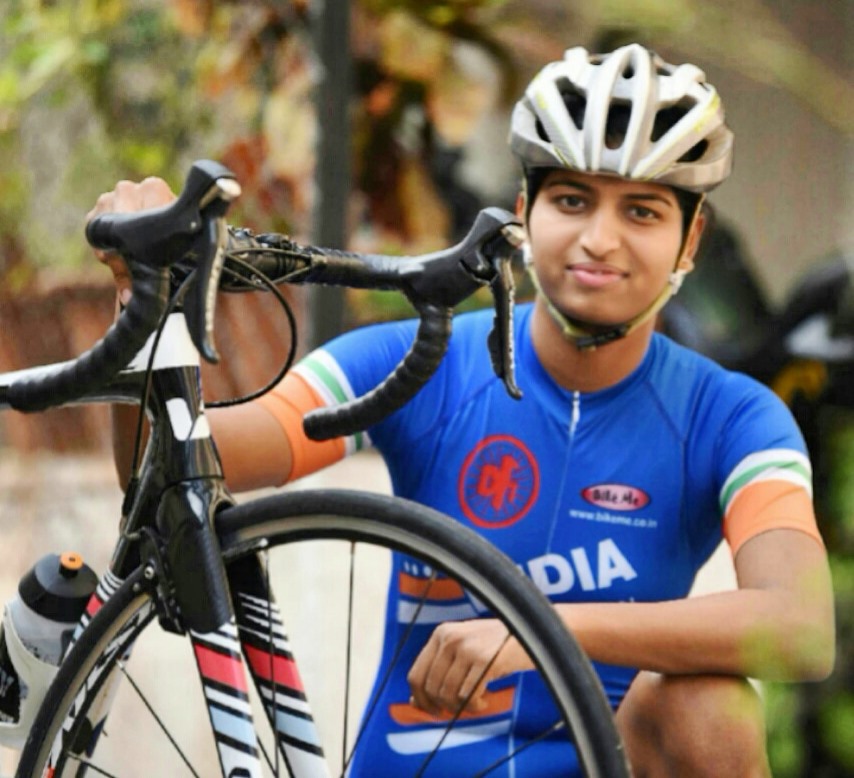
Born into a family, where the father was a well-known cyclist, Rutuja Satpute was brought up to follow suit. Years later, the 25 year-old has consistently finished on the podium at national level competitions and won the same award her father was once bestowed with. But she has also seen the gap between Indian cyclists and those overseas, not to mention – the difference in how cycling is perceived here and abroad. Having done one trip to Belgium with the Indian Cycling Project, she hopes for more. 

“ Where are you off to now?’’ the young man before me asked. We had just finished a conversation; material to use for an article on cycling. I returned note book and pen to my bag and took out the cellphone to check for next address. We were at a café with a wonderful setting.  It was on the sixth floor of a building. Right below was a busy road, as much a sight for sore eyes as any traffic filled-road in any Indian city. But from where we were, the eye caught none of that mess and instead gazed across landscape turned green, courtesy monsoon. You were in Pune and yet, not there. “ I am heading to Khilarewadi,’’ I said, mentioning the name of the person I intended to meet as well. He nodded his head. “ Now that’s somebody genuinely accomplished. She has a solid track record,’’ he said.
Rutuja with her father, Sanjay Satpute (Photo: courtesy Rutuja Satpute)

In Khilarewadi, it wasn’t difficult locating Sanjay Cycles. It was a small house, part of several in a row, each row separated by a small path. Two road bikes stood stacked to one side. Hrishikesh informed his sister that the journalist, who had called earlier, had come. It was a tiny room. There was an adjacent kitchen. Right next to where I sat was narrow staircase leading to room above. There, I was told – the family’s remaining cycles were stored. It was an interest for the sport commencing with Sanjay Satpute, Rutuja’s father. He is a former national level cyclist, champion in time trial and mass start and state award (Shiv Chhatrapati award) winner.  He worked at Hindustan Antibiotics and also coached at Pune’s Balewadi Sports Complex. Now he runs a bicycle service center. His daughter followed in his footsteps. “ I grew up watching my father and his love for cycling,’’ Rutuja Satpute, born 1994, said. But it wasn’t a dive straight into cycling. Sanjay wanted her to first acquire stamina. So even as a small child she was enrolled for swimming and running at the city’s Deccan Gymkhana following which, she was introduced to the triathlon. By the time she was in mid-school she was participating in triathlon competitions in her age category.

Photo: courtesy Rutuja Satpute

Around 2006, she moved to focus on cycling. The 12 year-old needed a road bike. Sanjay made her one; a steel road bike. He had also fabricated a helmet for himself. He passed that on to his daughter. The steel steed was her ride for the next few years. She took it to her first bicycle races. Given keen competition, it is no longer possible to thoroughly discount the importance of technology in cycling. What bike you are using matters when it comes to improving efficiency in a sport where each second counts. Saint-Etienne is a city in eastern central France, on the trunk road connecting Lyons and Toulouse.  Some consider it the capital of the French bicycle industry. The city hosts a stage of the annual Tour de France. It is also home to wheel manufacturer Mavic and frame builders, Motobecane and Vitus. After a few years spent pedaling the steel road bike, Rutuja got a Vitus – it was yet again a bike that her father used. By the time she was in high school, she got her first major victory – in time trial – in the under 15 years-category, a first place in the 7km-individual time trial at the 14th Road National Championships held in Thiruchengode, Tamil Nadu. Thereafter podium finishes were steady.

Upon completing her seventh standard, Rutuja joined Kreeda Prabodhini and shifted to the sports hostel at Balewadi. It is where some of the city’s major sports facilities are clustered. This move provided her formal coaching; it also brought her closer to the local velodrome, which has a concrete cycling track. Years earlier, when she was a small child frequenting the Deccan Gymkhana, she used to swim and exercise regularly after school hours. Once cycling entered the frame (cycling was typically in the early morning hours), she progressively dropped off both swimming and running. Swimming lingered around as cross training. At the sports hostel, her day commenced at 4 AM. The students would assemble by 6 AM and till 8.30 AM, they engaged in physical training. Around 2.30 PM they would return from school and at 4 PM, they engaged again in physical training (Rutuja called it “ ground work’’) till 6.30 PM. In Rutuja’s case, the training was mostly oriented towards cycling. Actual cycling happened on the road and at the velodrome. Weekly mileage in cycling was not much. She confessed to there being a gap between her capabilities and expectations compared to other girls around. The reason was simple – she hailed from a family that was into cycling. She had a sense of what lay ahead and how hard that progression would be. So in training, she benchmarked herself to what the boys did. “ I tried to keep up with them,’’ Rutuja said.

Photo credit: Chenthil Mohan / Photo: courtesy Rutuja Satpute

Roughly a year later (following the 2007 nationals at Thiruchengode), at the 2008 national competition held in Jamkhandi, Karnataka, she secured two gold medals in under-15 – in time trial and mass start. Given this performance, she was given the opportunity to try her hand at competing with the seniors. A couple of more years and at the 2011 nationals held in Pune, Rutuja, competing in under-17, won gold in the time trial with timing that was “ on par with seniors.’’ At a subsequent national level competition held in Rohtak however, she had to settle for bronze. The new one piece cycling costume she had been given lacked adequate padding. It affected performance.  Nevertheless that bronze medal represented her first podium finish in the senior category. Somewhere during this journey, she also got her third bicycle – a Cannondale road bike. It was obtained second-hand. The frame had a minor crack, which Sanjay repaired for her. She rode that to two gold medals at competitions. When this blog met her, Rutuja wasn’t using the Cannondale anymore given the repaired frame. But it was still around. The bike was subsequently replaced with a Merida. “ The bikes are stored upstairs,’’ she said pointing to the staircase close to where I sat.
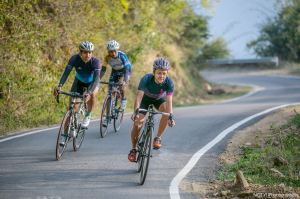
Photo: courtesy Rutuja Satpute

Rutuja was at Balewadi from 2009 to 2015. In women’s time trial and mass start, strong competition those years was offered by Kerala, Manipur, Haryana and Punjab. In 2012, Rutuja was selected to the Indian camp for the first time. She was one of three girls from Balewadi selected so. The camp, meant for the 2013 Asian Championships, was held in Shilaru, Himachal Pradesh. But by November 2012, Rutuja was out of it. Following her performance at the open trials in Delhi in January 2013, she regained her place. The Asian Championships of March 2013 was her first taste of international competition. “ It was a good experience,’’ she said. It was equally humbling. She finished 34th in the mass start held at the Formula One race track near Delhi. She was behind the cyclist who finished first by nearly seven to eight minutes. On the other hand, the gap between her and fellow Indian cyclists was in the range of 15-30 seconds. Of six Indian women who started the race, only three finished, among whom, Rutuja was second. But there was a footnote – while the Indian men had an opportunity ahead of competition to cycle on the F1 track and get a feel of it, the women enjoyed no such privilege. Roughly six months later, in September, at the ACC Track Asia Cup held at Suphanburi, Thailand, Rutuja was part of the Indian team securing bronze in team sprint. Through all this, the Cycling Federation of India (CFI) did not send her for any coaching overseas. She trained as best as she could in India – her father oversaw it when she was in Pune, other coaches supervised her training when she was part of the Indian camp.
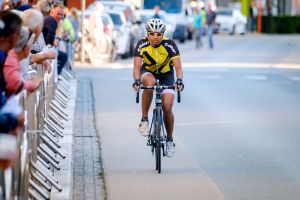
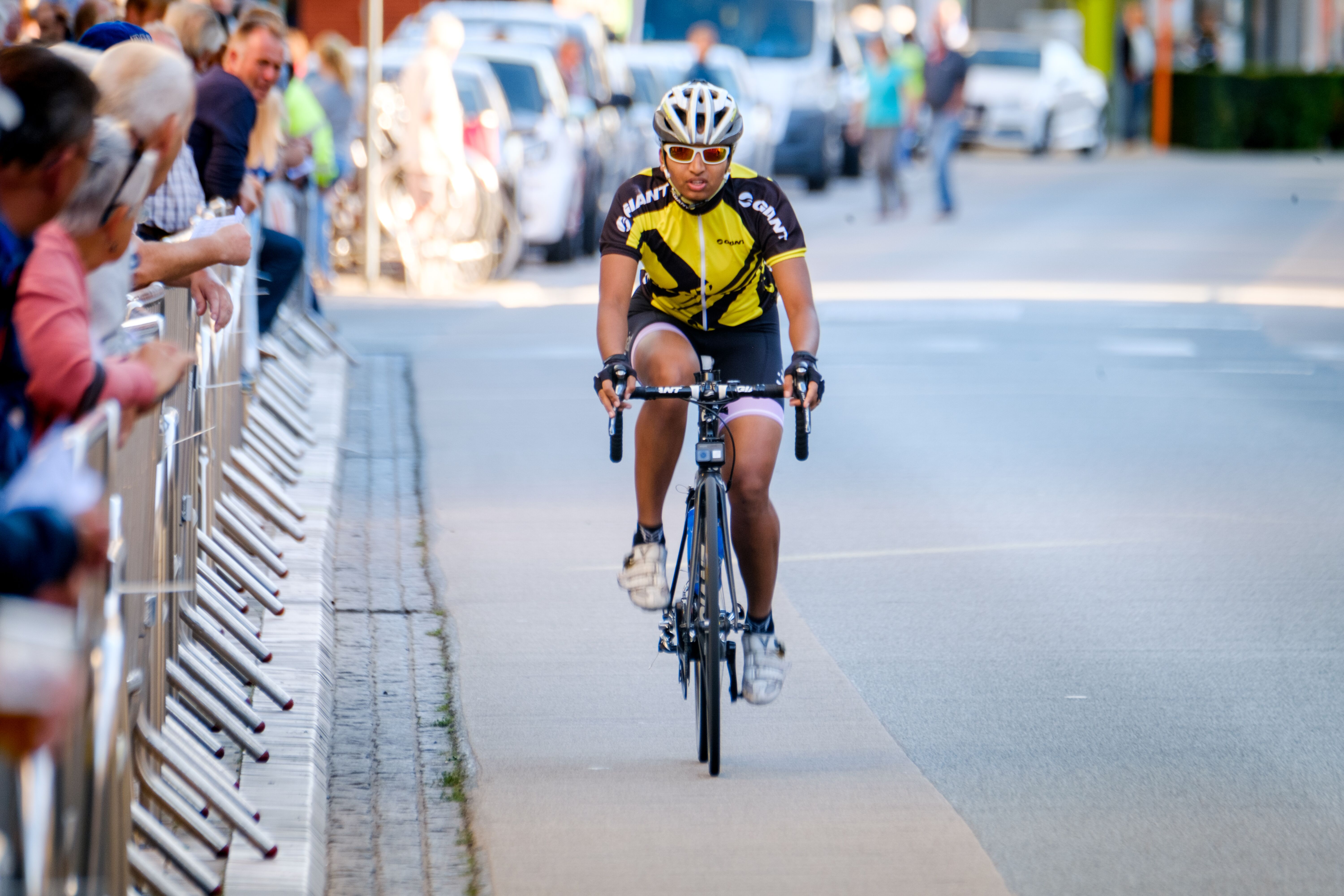
Rutuja, cycling in Belgium (Photo credit: Chenthil Mohan / Photo: courtesy Naveen John)

In 2014, she secured first place at one of the editions of the Pune Bicycle Championships. It caught the attention of Pune-based bicycle company Giant Starkenn. They gifted a mountain bike; later at her request, she was given a Giant Propel road bike. Her collection besides the Giant, now include cycles from Raleigh, Vitus, Cannondale, Fuji and Merida; the Fuji was issued by the Balewadi sports facility. Our conversation was briefly interrupted by a client arrived to ask about bicycle servicing. Rutuja moved out to speak to the lady. “ I can take apart bicycles and put them back together. I can do repairing and servicing,’’ she said on return. The bicycle servicing facility Sanjay started has evolved into a family affair. According to Rutuja, she and Hrishikesh (he used to be a competition cyclist till a respiratory problem ended the journey; he now works with an airline company) help out. They have about 200-250 clients and rainy season is busy time for the business. One of the challenges in deep passion for something is bridging the gap between need dictated by interest and money to spend. Cycling is an expensive interest to sustain. The network of clients earned by servicing bicycles has occasionally pitched in to help with resources for family into cycling, Rutuja said. She mentioned new wheels for her bike, acquired so. In 2016, at the national competition held in Pathanamthitta, Kerala, Rutuja won two gold medals. Following this, Giant Starkenn invited her to a training camp in Ooty. Among cyclists she met there was Naveen John, based in Bengaluru and known to explore avenues to being competent professional cyclist. A motivated, driven personality, he had begun visiting Belgium – among the cradles of competitive cycling in Europe – and taking part in the races there called kermesse. It was part of Naveen’s Indian Cycling Project (ICP).

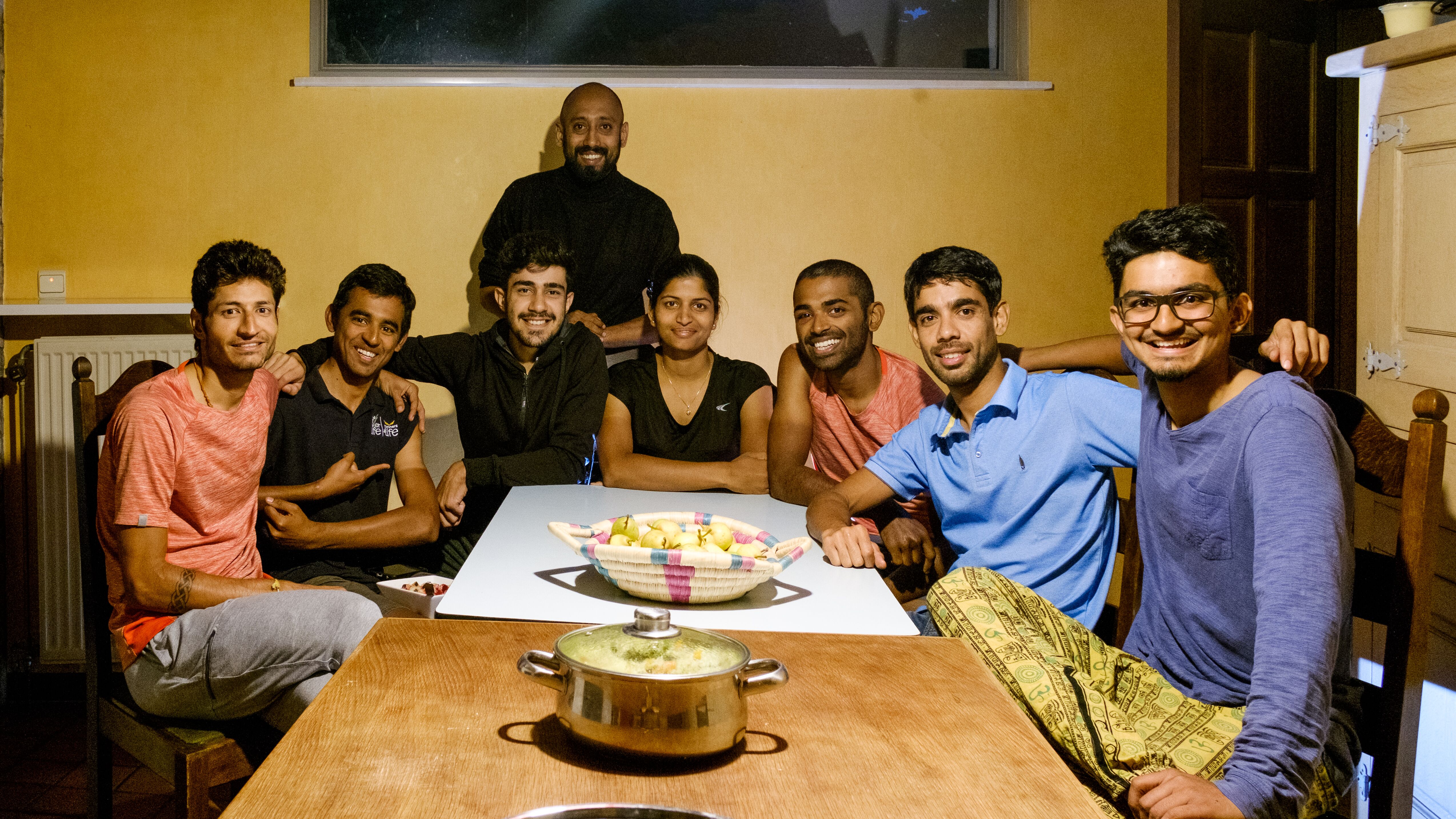
From the ICP trip to Belgium (Photo credit: Chenthil Mohan / Photo: courtesy Naveen John)

A month after the Ooty camp, Naveen invited Rutuja to join the team proceeding to Belgium for the annual pilgrimage. She was reluctant; if she went, she would be traveling alone with no guardian or chaperone. “ My family was bound to object. Women don’t usually take such initiatives in our society,’’ she said. Naveen spoke to Sanjay. In February 2017, it was decided that she can proceed to Belgium. As first step, she headed to a camp in Bengaluru anchored by Naveen; she also participated in one of the regular races of the Bangalore Bicycle Championships (BBCH). In July she left for Belgium. It was her first trip overseas. From Mumbai, she flew to Dubai and onward to Brussels. In all, Rutuja spent three months in Belgium. She participated in three level-2 kermesse races for women. In the first kermesse, she exited in the first round. In the second, she completed two rounds and then dropped off. In the third, of 16 rounds to complete, she finished nine. Belgium was opportunity to sit up and take note of several things. To begin with, separate paths for bicycles and the general respect given to cyclists were vastly different from the Indian environment where the culture of rat race corrodes and corrupts everything. “ They also have more races overseas. The standards at these races are quite high. Further the schedule of races is known well in advance. When you have a reliable calendar of events like that, cyclists are able to plan their year. They can decide what events to prepare for. It is something we don’t have in India. The CFI is now making an effort to change that and bring in a proper calendar,’’ Rutuja said. But the real take home from Belgium, was realizing how cyclists pushed themselves there. A month after the whole Belgium visit, it was back to reality, taking part in the nationals at Jamkhandi. Rutuja secured gold.
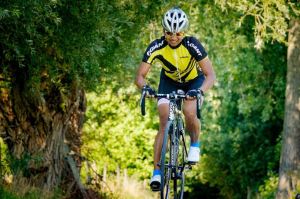
Photo credit: Chenthil Mohan / Photo: courtesy Rutuja Satpute

At the time of meeting her in July 2019, Rutuja’s last major competition had been the 2017 Track Asian Championships, where the Indian team placed fifth. She also took part in the ACC Track Asia Cup (2014, 2015, 2016 editions) where she won one silver and two bronze medals. In February 2016, at the South Asian Games held in Guwahati, she was part of the team securing gold in the 40 kilometer-team time trial. In March 2018, she got the same state award – Shiv Chhatrapati award – that her father had got earlier. Two months later, she underwent surgery to correct a back problem. It took her three months to recover. Towards end-August she resumed training. At the 2018 National Road Championships held at Kurukshetra, Haryana, she managed to get a bronze medal. Early 2019, at the All India Inter-University competitions held in Amritsar, Punjab, she won two gold medals – in the individual time trial and the team time trial. Her resume featuring a long list of events participated in, was crammed with podium finishes. In all  (across individual and team events) she had won 14 gold medals, 10 silver and nine bronze at the national level; one gold, two silver and three bronze at the senior international level and four gold, three silver and four bronze at the university level.

As of July 2019, Rutuja had completed her first year in B.P.Ed (physical education) from Guru Nanak Dev University. Focused on road cycling, she wasn’t interested in tackling the really long distances of ultra-cycling. “ I have not tried doing any BRMs,’’ she said. As for Belgium, Rujuta hoped to repeat the trip.

(The author, Shyam G Menon, is a freelance journalist based in Mumbai. This article is based on a conversation with Rutuja Satpute.)            

MAKING A DIFFERENCE WITH SPORTS

Corina Van Dam (Photo: courtesy Corina)

Trained to be a football coach, Corina Van Dam, opted to use sport as means to heal and empower. Currently living in Mumbai, she has been running for several years and is now figuring out which distance suits her best.

During a recent six-hour night run in Thane near Mumbai, many runners ran determinedly through the heavy, sometimes lashing rain.

One among them was Corina (aka Cocky) Van Dam, a Dutch runner, living and working in Mumbai for the past three years. She surprised herself by covering a distance of 50.7 kilometers during those six hours.

Two weeks later, she ran a 50k race at the Igatpuri Mountain Challenge. She finished the race in six hours, 26 minutes and 23 seconds securing top position among women aged 46 and above. A week must have gone by. Then she wound up on the podium yet again in her age category, at the BNP Endurathon in Mumbai. She covered the 25k distance in 2:28:14 hours.

Corina grew up in Alkmaar, a town 40 kilometers north of Amsterdam in Netherlands. The local topography was largely flat; there was much water around and as is characteristic of Netherlands, a lot of wind. It is a town well known in the cheese business and home to a velodrome hosting the annual Dutch national track cycling championships (the European Cycling Championships is scheduled to take place in Alkmaar from August 7 to 11, 2019). Not to mention, it is the birthplace of Harm Ottenbros, unexpected winner of the 1969 world cycling championship; he came in from nowhere to win that title but earned the ire of fellow cyclists and fans for just that – being the nobody who snatched the title from under the nose of more fancied heavyweights. Alkmaar also has a private museum dedicated to the British band, Beatles.

Photo: courtesy Corina Van Dam

Growing up, sport was an integral part of Corina’s education. At the age of 12, she began playing football at a local club. She commenced playing at a still younger age but there were no girls’ teams around. The Dutch are passionate about football. Alkmaar and Corina’s family therein were no different. The town is home to the football club Alkmaar Zaanstreek (AZ), winners of the Dutch football league (Eredivisie), in 1980-81 and 2008-09. Corina was good at football. The game gave her the nickname she goes by – Cocky. She trained to be a sports coach. But she soon discovered that it was “ boring to teach people sports.’’ It was rather limited in scope. She sought something more engaging; something that would touch people’s lives in a more fundamental way.

So she opted for an internship with a mental health institute. The institute used sports as medium to help mentally ill people. For 20 years, she worked at the clinic employing sports as a means to assist patients in their treatment and recovery. “ People are depressed, sometimes so depressed that they don’t want to move. As part of psychomotor therapy, I used football to treat patients suffering from depression. There is evidence that running works well to treat patients,’’ Corina said. Psychomotor therapy uses physical activity and body awareness to help in the healing process.

After two decades spent working in the Netherlands, in 2005, Corina decided to move to Kenya to work with a community-based organisation called Moving the Goalposts (MTG) in Kilifi. She was placed as a volunteer through Voluntary Service Overseas, an international NGO.  A sport for development outfit, MTG harnesses the power of football to overcome social obstacles girls and young women face in coastal Kenya. Teenage pregnancy was (and still is) a very big issue in the country. That was among topics Corina required working with. Central to MTG’s strategy was football. Located on the east coast of Africa, Kenya has varied topography that includes an Indian Ocean seaboard, the Great Rift Valley and the Kenyan Highlands famous for tea and running. Corina worked at Kilifi near Mombasa, Kenya’s second largest city situated on the coast. Roughly 4400 kilometers north east from Mombasa, across the sea, lay Mumbai, India’s financial capital. After working in Kenya for 11 years, Corina moved to Mumbai to work with Naz Foundation (India) Trust.

Corina Van Dam at the Mumbai office of Naz Foundation (Photo: Latha Venkatraman)

Naz India is an NGO working in the field of HIV / AIDS and sexual health. Corina works as Impact Manager at Naz Foundation. She is focussed on Young People’s Initiative (YPI), a program to empower girls by using sports and life skills education. It seeks to provide opportunities for adolescent girls. “ Many NGOs now leverage sport as tool to empower girls with reference to their body and emotions,’’ she said.

Naz India’s YPI project uses netball as sport for team building and empowering activities. “ Group sport or team sports helps tackle peer pressure, instil team work and develop leadership skills as opposed to individual sport,’’ Corina said. The choice of netball was because it is less of a contact sport compared to football and such a game appeared to suit the girls joining the program. Some other NGOs use sports such as football, basketball and kabaddi for similar work. For Naz India, the choice of sport is based on the needs and issues at hand in each of the projects that the foundation takes up. Naz India primarily works in schools, mostly trust-run schools. “ We are constantly negotiating with schools and designing our projects based on the feedback,’’ Corina said.

As an Impact Manager, Corina’s role is to make constant assessment of the teams working in schools; whether they are achieving their objectives or not. Outside of work, she continues to play football, mostly in the Mumbai suburb of Bandra. She plays for Wolfpack FC. She got to participate in local league matches.

Photo: courtesy Corina Van Dam

Many football players, according to her, do not like running as a specific sport. It’s one thing to run playing football; it’s another running a marathon focused solely on movement with no paradigm of game, team or score enveloping it. However, she took to running during her teens and continued to do so through her years in the Netherlands. In Kenya, living in Kilifi a rural area near Mombasa, Corina resorted to running in the nearby farmlands. She ran three times a week covering a distance of 7-10 kilometers on each of those practice sessions. She also recalled making a brief visit to Iten in the highlands of Kenya, home to the country’s best runners. “ I visited Lornah Kiplagat and her husband Pieter Langerhorsts’ high altitude training center. That was a fleeting visit,’’ Corina said. Olympian Lornah Kiplagat, a Dutch cross country and long-distance runner, is of Kenyan origin. She is a four time-world champion and has held world records over 5 km, 10 miles, 20 km and the half marathon. The training center in Iten was founded in 1999.

Arriving in Mumbai in 2016, Corina decided to look for a house at Tilak Nagar primarily because of its proximity to her place of work at Vidyavihar, just a kilometer away. At Tilak Nagar, the well-known Sahyadri Ground became venue for her daily practice runs. She runs several rounds of the ground in 500 meter-loops. “ Many women came and asked me how I got into running. They also expressed a desire to take up running,” Corina said. Hailing from Netherlands, she beheld the scene with curiosity. “ At the Tilak Nagar ground, a lot of people were involved in various activities. But you rarely found women at the centre of the ground. It is now slowly changing,’’ she said at the small Mumbai office of Naz Foundation tucked away on the ground floor of an apartment complex. It was July 2019. Just days earlier the 2019 FIFA Women’s World Cup had concluded with USA defeating Netherlands 2-0 in the final. It was the first time the Dutch national women’s team played in the final – a point Corina recalled with pride and a feeling of much changed since she started playing football when the sport was considered a game for men.

Photo: courtesy Corina Van Dam

Corina’s first stint at a running event in India was the Dream Run segment of the 2017 Mumbai Marathon, something that happened because Naz India was a recipient of free slots to the run. For someone used to regular running like Corina, the Dream Run and its wall of people ambling along was a disappointment. In 2018, at the same event, she chose to run the newly introduced 10k segment and finished on the podium in her age group of 50-54 years.

In the 2019 edition, she ran the full marathon finishing the distance in 5:15:06 hours securing eighth position among women in her age group. This was her background prior to that rain soaked six hour-run in Thane, the 50k and the 25k, which followed. She was recently appointed Pinkathon Ambassador. Through this, her responsibilities now include empowering women through running. “ I am still figuring out which distance is best suited for me. I also plan to participate in the Goa Ironman later this year,’’ she said.

Goa Ironman 70.3 or Half Ironman is slated to be held on October 20, 2019. Corina, now 54, has invested in a road bike. She cycles regularly and for swimming she visits the pool at Dharavi. She hasn’t yet done any open water swimming in India but given she grew up in Alkmaar with its share of open water and winter temperatures, hopes she should be able to tackle it.

(The author, Latha Venkatraman, is an independent journalist based in Mumbai.)

AFI TO ALLOT FUNDS FOR GRASSROOTS LEVEL DEVELOPMENT OF ATHLETICS

Illustration:Shyam G Menon

This may be the first instance of a national sports federation providing grants to district associations.

AFI plans to raise the required corpus of funds on its own.

The Athletics Federation of India (AFI) has decided to provide grants to 100 district athletics associations in recognition of their consistent good work to promote athletics in their area and compete in the annual National Inter-District Junior Athletics Meet (NIDJAM).

In an official statement (dated August 2, 2019) available on the AFI website, the federation’s president, Adille Sumariwalla said this will be a pilot project in 2019 and will be extended to more districts in a couple of years. AFI believes that this may be the first instance of a national sports federation providing grants to district associations.

“ We know that we have to broaden the base to be able to find the talent that can be nurtured to passionately pursue Olympian dreams,’’ Mr Sumariwala said. According to him, the initiative has the support of the Ministry of Youth Affairs and Sports’ Khelo India program. “ We met the Ministry and Sports Authority of India officials a few weeks ago to finalize the modalities of this game-changing move,’’ Mr. Sumariwalla said in the statement. AFI has already initiated the process of identifying the 100 districts to be provided financial support this year.

According to an AFI official this blog spoke to, there is no budgetary support from government for this scheme. AFI plans to raise the required corpus of funds on its own. “ The quantum of money to be raised has been decided but it will be premature to disclose it at this stage. We hope to raise the funds through sponsorship,’’ the official said. Once the corpus is in place and funds are allocated to a district athletics association it will be used to ensure that certain minimum quality standards – examples being the infrastructure needed to hold a proper competition, making sure that people know about the event – are met. It will help introduce and maintain benchmarks in event organization. When allotting funds to district associations, there will be no discrimination on the basis of profile and prominence.

On its part, the government has agreed to support the athletic talent spotted by AFI at inter district meets, the official said. Such support will be as part of the government’s Khelo India program.

AFI believes that this move will inspire the state associations to streamline themselves better. At the recent annual general meeting of AFI, officials from state associations were told in clear terms to shape up or ship out, the statement said. AFI also encouraged youngsters from the districts to take up and complete the IAAF Coaches Education and Certification Level 1 program.

All districts will conduct their championships ahead of the 17th NIDJAM for under-16 and under-14 boys and girls which will be held from November 24. AFI is planning a meeting with the presidents and secretaries of close to 500 districts to share details of the AFI development program and motivate them to make athletics more popular in their respective districts, the statement said.

Athletes who came up through previous editions of NIDJAM include javelin thrower Neeraj Chopra (2012), sprinter Dutee Chand (2011), discus thrower Navjeet Kaur Dhillon (2010) and 400m runner V Subha (2014).

(The author, Shyam G Menon, is a freelance journalist based in Mumbai.)

PSYNYDE BIKES: WEATHERING TOUGH CHEMISTRY

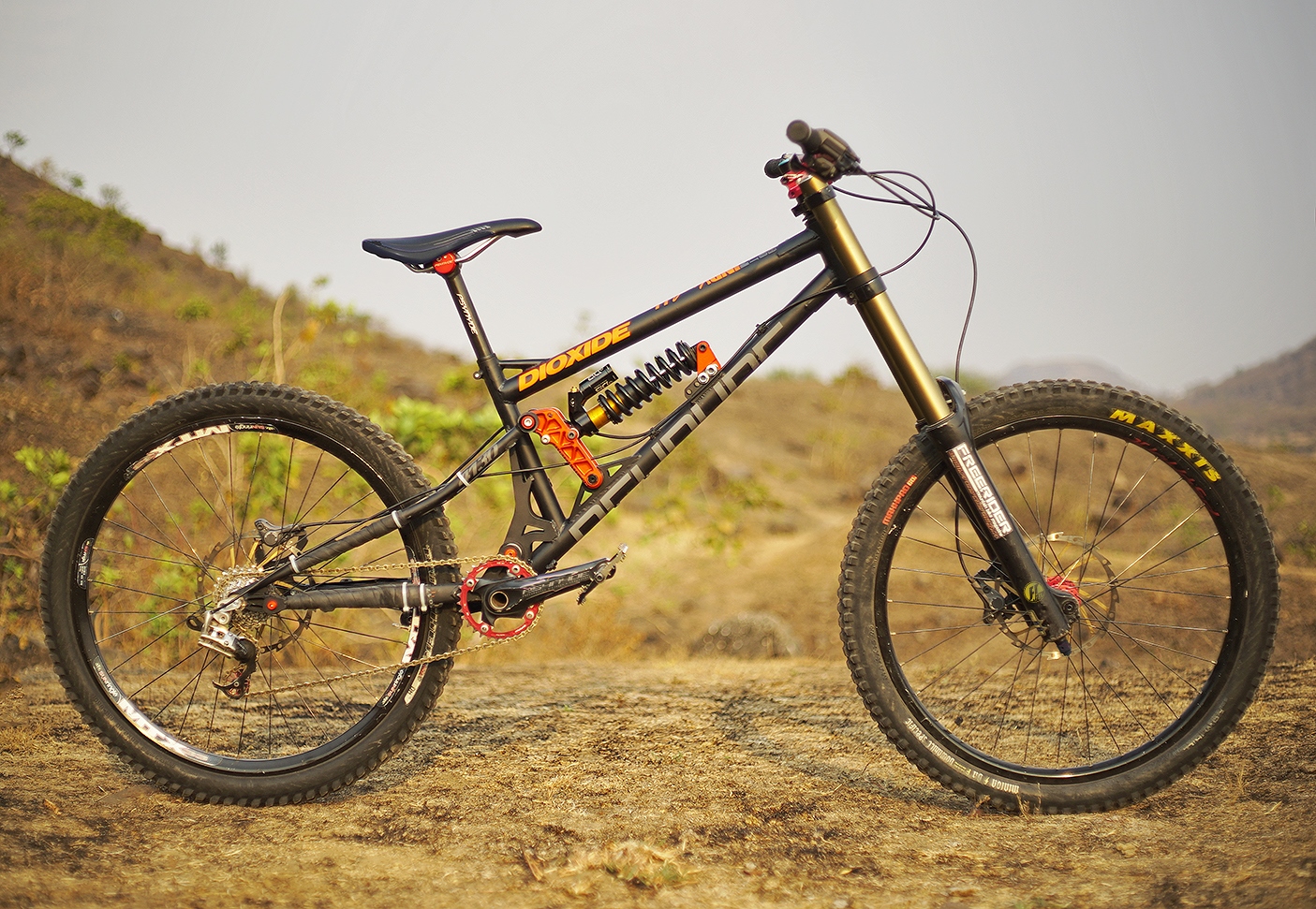
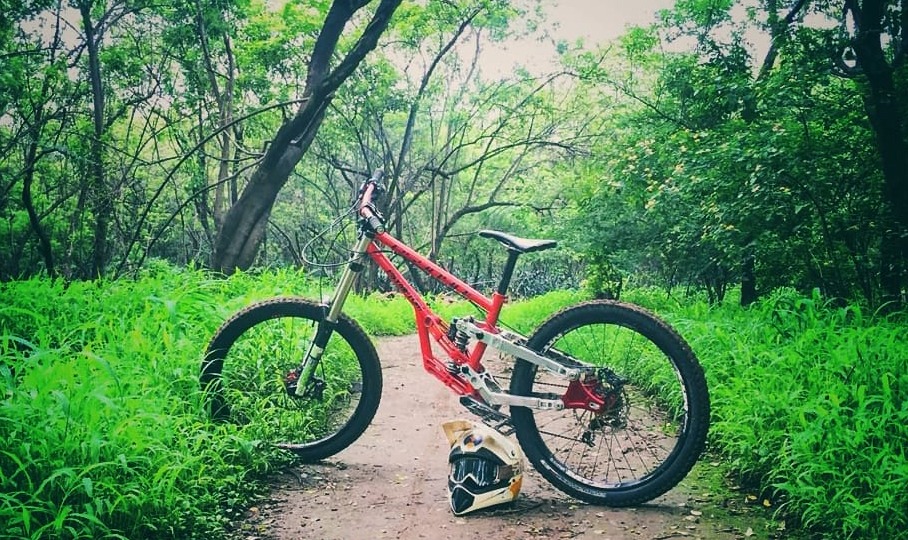
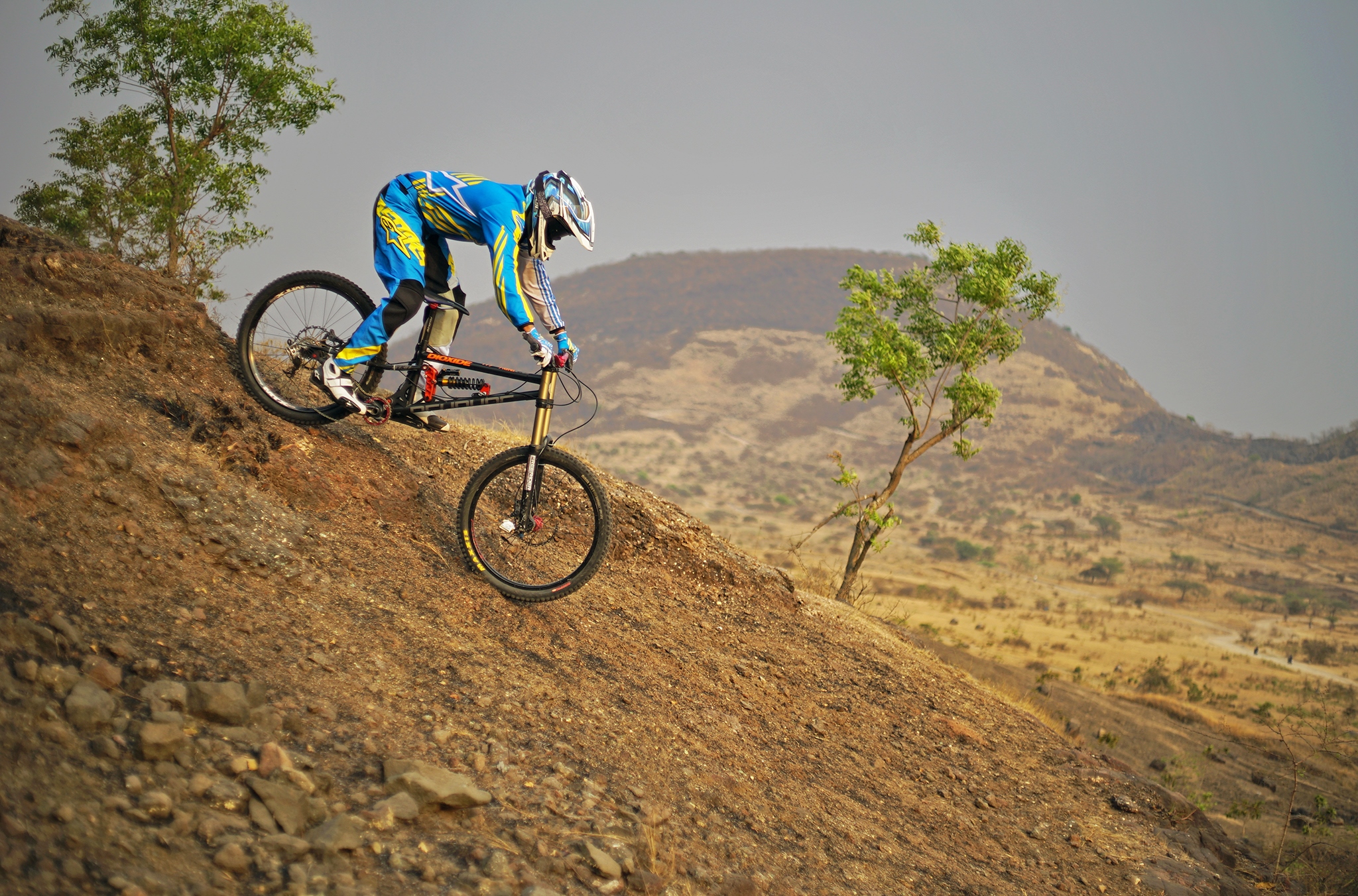
Psynyde Dioxide (Photo: Vinay Menon)

In 2016, when Psynyde Bikes launched the Furan MTB, it was for India, a rare instance of cycling enthusiasts designing bicycles, manufacturing overseas and selling in modest numbers in the domestic market. After a promising start, the company is now in a phase of struggle. If it persists, it may be able to look back and say of now: that was a learning experience.

Roughly three years after introducing their first factory built-models capable of selling in modest numbers, brand Psynyde continues to retain the cultish feel that accompanies performance. In that time, it also experienced reversals on the business front not for want of product acceptance but things gone wrong internally in the fledgling company. The core team is back to two – MTB enthusiast turned bicycle designer and builder, Praveen Prabhakaran, and Vinay Menon who still rides hard and oversees marketing for the brand.

On the bright side, the initial 100 units-strong consignment of the trail bike they designed – Psynyde Furan – sold out in a year; as did an initial lot of 100 of the hybrid – Oxygen. Feedback was encouraging. There have been no complaints except for small issues with a plastic cap, Praveen said. However, the Chinese factory, which manufactured the bike frames he designed, fell into hard times. Praveen said he has identified alternative factories, capable of similar quality.

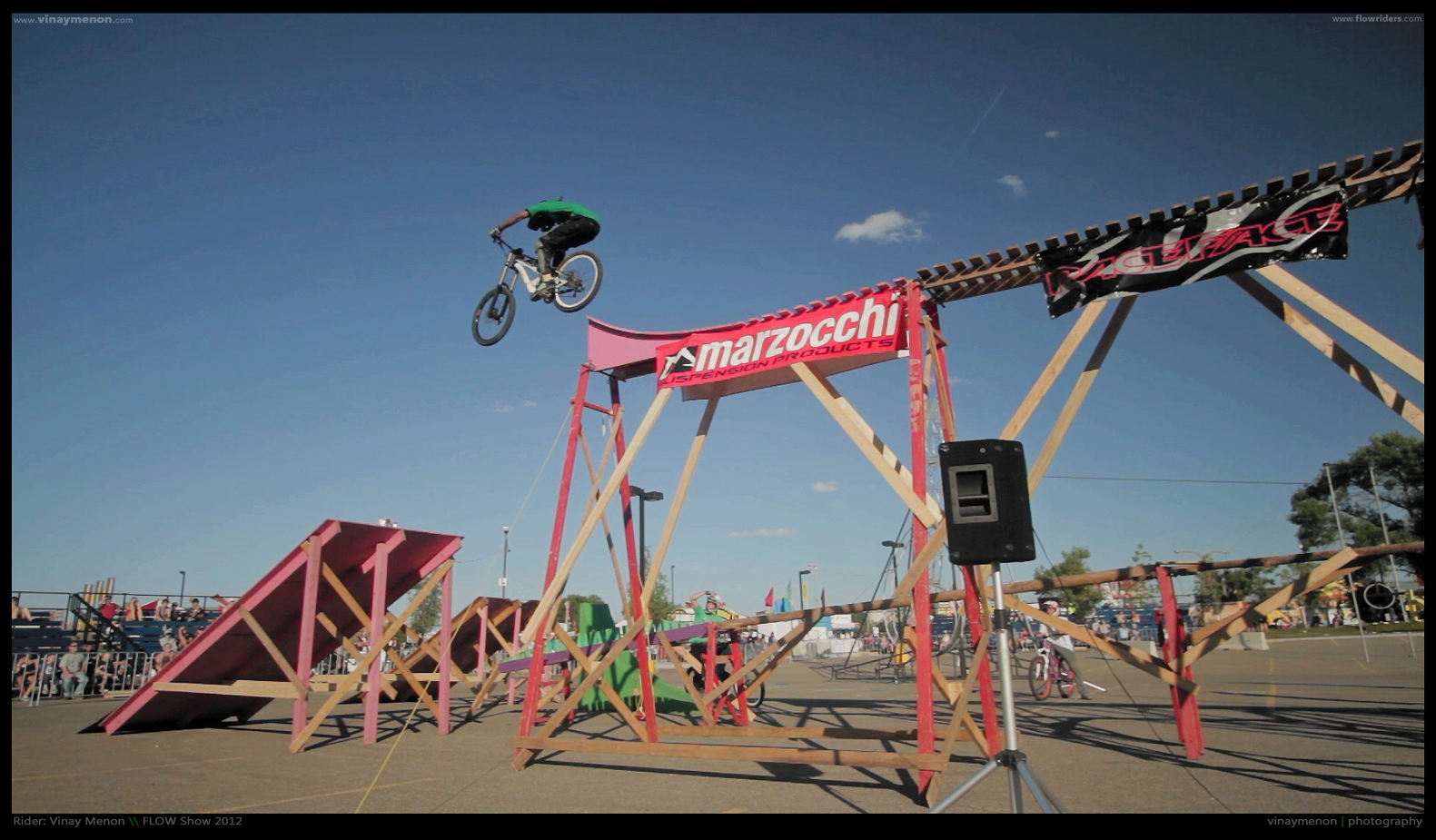
Vinay Menon riding at Flow Show, Canada (Photo: Vinay Menon)

According to Vinay, Psynyde’s bikes as well as the bicycle components it made featured at domestic and international competitions. The Furan was chosen steed for Psynyde sponsored-riders and some of the company’s customers, who took part in these events. There have also been a couple of podium finishes. Brand Psynyde – as component or whole bicycle – was seen at events including the 2012 FLOW Show demos in Canada, the 2013 and 2014 Asia Pacific Downhill Championships, multiple editions of the Himalayan Downhill Mountain Bike Trophy, 2016 and 2017 Bangalore Mountain Festival Downhill Race, TDRY Gui’de International Downhill Cycling Race in China, 2018 Mechuka Downhill Championship, 2018 National BMX Flatland Championship and the 2019 Bangalore Bicycle Championship (downhill race). But there was tragedy too, one that was felt deeply at Psynyde.

In July 2017, Ajay Padval, a talented mountain biker from Pune, died in an accident while biking down from Khardung La near Leh. This downhill ride, done on the road connecting Leh to Nubra valley via Khardung La, is a popular supported trip availed by many visitors to Ladakh. Ajay was no different; he wanted to taste the experience. He was driven up to Khardung La along with others set to ride down from the high pass to Leh. That day, unfortunately for Ajay, something went wrong resulting in serious injury. Found fallen on the road, he was rushed to the local hospital but passed away the next day. “ Ajay was a very important member of the Psynyde team in the little time he spent with us. Right from being a dedicated team athlete – not just mountain biking, he was excellent at slacklining too – to giving important inputs in operations and matters related to product design. Ajay’s unfortunate demise affected us a lot,’’ Vinay said. Ajay had grown up watching older cycling enthusiasts; among them Praveen and Vinay. They were all part of the same MTB ecosystem in Pune. Not long after Psynyde got into bicycle manufacturing, he joined the company. His untimely passing was therefore personal loss for Praveen and Vinay.

Ajay Padval (Photo: Veloscope)

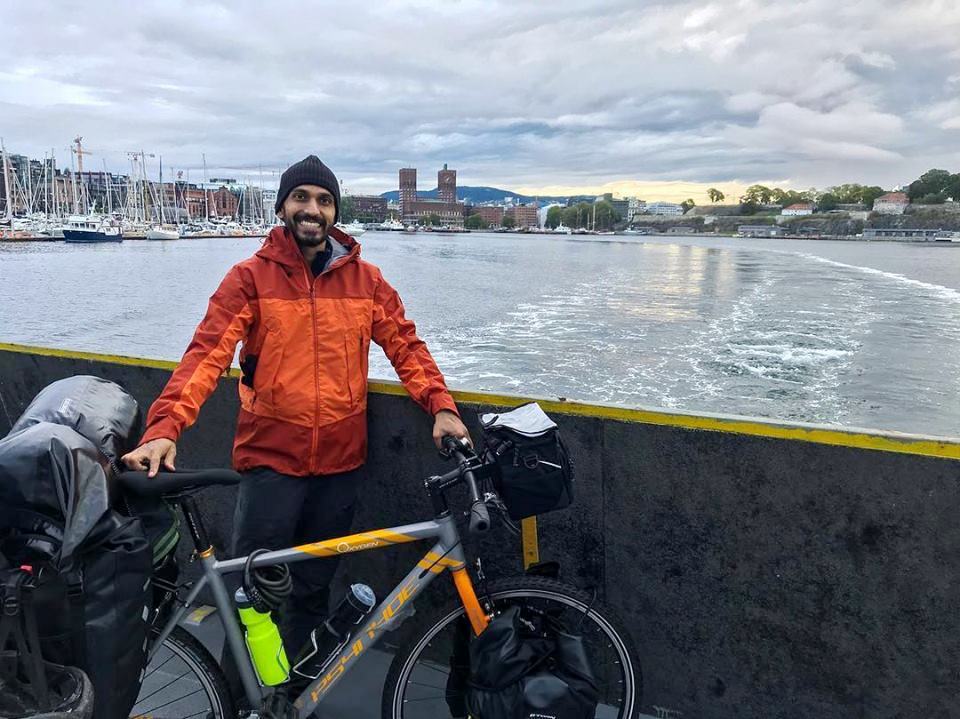
On the product front, both the Furan and Oxygen were perceived in the market as versatile bicycles. The Furan was designed to be a hard tail MTB capable of tackling a variety of terrain and riding styles; the Oxygen known to be light weight and having geometry partial to speed has been used by customers for purposes ranging from regular commute and weekend rides to bicycle touring. In 2018, Pune-based Abhishek Iyer toured across Norway on a Psynyde Oxygen. From a second lot of Oxygen, at the time of writing, about 90 units remained in stock in Pune. The company needed to invest afresh in components if it was to assemble and sell all of them. As of July, Praveen and Vinay were looking for investors who understood Psynyde’s line of business as well as the performance image, brand Psynyde had created for itself.

Psynyde’s capital requirements are of modest dimension. But the challenge is procuring financial support without the associated baggage of altered direction for the company. Having created its narrative to date by aligning with the performance segment, Psynyde does not want to trade that image for recovery plans advising dilution of its profile. “ One potential investor asked us to change the brand name and make it more mainstream. That was unacceptable,’’ Praveen said.  At the same time, he was aware of the fact that a bicycle business can’t be founded wholly on presence in niche, performance segments. “ There is so much I wanted to do. Instead I have all this to sort out now,’’ Praveen said at his house on the outskirts of Pune. It was July 2019; annual season of rain.

Abhishek Iyer with the Psynyde Oxygen (This photo of Abhishek was downloaded from the Facebook page of Psynyde Bikes)

Praveen is happiest discussing bicycle technology and design. He took out his cellphone to show photos of a beautiful road bike with carbon fiber-frame mated to steel joints and wireless, electronic shifters that he had built for a client. It was part of the original custom built-bicycles business that was Psynyde; the seed which eventually spawned a company selling modest volumes of cycles designed by it and factory-built in China. Psynyde’s logo sat prominently on the road bike’s head tube.

Before us in the room, was the prototype of a new Furan. In a major departure from previous models of the Furan and Oxygen, the prototype sported only one chain ring at the front. There was a nine speed-cassette at the rear. The combination changed the traditional MTB gear ratios seen in India but made the bike simpler. It also had front suspension capable of greater travel and a hydraulic seat post that adjusted remotely allowing rider to sit low on downhills and revert to regular height once such sections were tackled. Should this model proceed beyond prototype and witness production, Praveen hoped to have a more aggressive angle for the front suspension. He was also considering steel as metal to build with; potential fallout of that being frame composed of absolutely straight lines unlike the prototype with down tube slightly curved towards its junction with the head tube.

Psynyde Psymptom prototype (Photo: Vinay Menon)

Also available to see as photographs were prototypes of two downhill bikes from Psynyde – the Psymptom and Dioxide. Both sported four bar design for rear suspension set up. The Psymptom had this set up essayed in CNC machine cut-aluminum (rest of the frame was chromoly steel) while the Dioxide was wholly 4130 chromoly steel. As with the Psymptom and Dioxide, a Furan 2 made of steel was not concept, suddenly conceived. Praveen had been toying with the idea of getting back to steel tubing for a while. In the story of bicycles, steel disliked for its weight had given way to aluminum, titanium and carbon fiber.  All these materials have their merits and demerits.  For instance, even as aluminum is lighter, points of welding are usually invitation to lose strength. As lighter materials gained currency in cycling, steel alloys evolved further. Today, very thin steel tubing that does not weigh a lot, is available. The return of steel is particularly visible in the MTB segment overseas, Praveen and Vinay said.

The tubes used are butted steel tubes, which have varying wall thickness. Such fabrication isn’t yet a strong point with Indian manufacturing, particularly at the dimensions (wall thickness) needed for contemporary performance bicycles. Further when it comes to modest volumes of raw materials, like that needed by Psynyde, any Indian supplier capable of making butted tubes in steel finds it unviable scale. Result – the tubes have to be imported from British, Italian, American and Japanese suppliers; often at high import duty for no better reason than that its eventual application is in cycling. The Dioxide was featured on VitalMTB, a major online portal for MTB news. “ There will be downhill riders in India appreciative of the Psymptom and the Dioxide,’’ Vinay said. Problem is – downhill is a smaller world within India’s small world of MTB. That relapse to niche category brings us back to a familiar predicament.

Psynyde Dioxide, rider: Hrishi Mandke (Photo: Vinay Menon)

If its products are meant for niche within niche, where will Psynyde’s main revenues come from to sustain its avatar of company designing own bicycles, manufacturing overseas and selling in modest volumes in India? For sustenance, versatile products like the Furan and Oxygen matter. That’s why the current capital crunch has to be somehow overcome, stocks reached to a market, which anyway liked Psynyde’s products and the momentum carried on. An additional option is to create a set of affordable products closer to mainstream interests in cycling. If so, that would probably have to be done at arm’s length making sure brand Psynyde is not diluted in the process. But there is a deeper question lurking in the backdrop.

The talent required to manage a company is very different from the creativity that goes into bicycle designing or the kick one gets from riding and testing bicycles. Praveen’s house used to be Psynyde’s old factory floor; that was when all Psynyde did was design and custom build bicycles and machine specific components. At that size, the business was easier to manage. Praveen could stay creative and Vinay could continue riding. If they can’t get Psynyde’s current avatar moving at least partly on autopilot mode with good managers in place, then at some point, after cleaning up their liabilities, there will be a question awaiting the duo’s attention: is volume manufacturing their cup of tea? Or are they more comfortable with a boutique operation similar to old, designing and custom-building bicycles?

(The author, Shyam G Menon, is a freelance journalist based in Mumbai. This article is based on a conversation with Praveen Prabhakaran and Vinay Menon. For more on Psynyde Bikes, please try the following two links: https://shyamgopan.com/2014/02/06/the-story-of-psynyde/ and https://shyamgopan.com/2016/11/09/psynyde-alert-the-hour-of-the-furan/)

MUSCULAR AND READY TO BOYCOTT

Illustration: Shyam G Menon

Over the past few days, the media has reported on the Indian Olympic Association (IOA) recommending boycott of the 2022 Commonwealth Games (CWG) because the event in Birmingham won’t feature shooting, a sport in which India has known strength.

The bullet points are three. First, India is strong in shooting. Second, India has been gradually improving its medals tally at major sports events; at the Gold Coast edition of CWG in 2018, India secured 66 medals of which 16 came from shooting including seven gold medals. Third, if shooting is absent at Birmingham, then, Indian prospects for rich medal harvest become proportionately dim.

The anger at shooting’s exclusion is understandable.

Question is – is boycott the answer?

A threat to boycott may work as means to apply pressure on the organizers.  But beyond that what merit does it have? Especially because the battle is not over any universally prized principle breached as was the case for example, when the sporting world boycotted South Africa in its apartheid years. Here it is clearly one country’s grievance over chances to win medals limited by the absence of a particular sport it is good at. Shooting is one of several sports at large events like CWG, Asian Games or Olympics. Boycott on the other hand, applies to all Indian athletes preparing to participate. In other words, everyone from runners to cyclists to swimmers, gymnasts and badminton players – all will be benched. Why should a whole national squad suffer just because Indian shooters may or may not be going to Birmingham?

The PTI report on the proposed boycott (it is available on the Internet) quoted from the letter Narinder Batra, president, IOA, wrote to the union sports minister, Kiren Rijiju, seeking early discussion on the matter. “ We want to express our protest by not taking part in 2022 CWG in the UK to make the CWG understand that India is not prepared to take India bashing anymore and the people with a particular mindset in CWG need to understand that India got its Independence in 1947 and India is not a colony of anyone anymore and is now the fifth largest economy in the world and by far the fastest growing economy in the world,” the IOA chief said in the letter – so PTI reported. It didn’t end there. “ We have been noticing over a period of time that wherever India seems to be getting grip of the game and performing well, then somehow we find that either the goal posts are shifted or rules are changed. We feel it is time for us in IOA / India to start asking tough questions and start taking tough positions,’’ Batra wrote, adding that given the political sensitivities involved in the matter the IOA does not see itself as the expert to decide. Hence, the request to meet the minister. In June 2019, Batra was elected a member of the International Olympic Council (IOC). Earlier in 2016, he became chief of the International Hockey Federation (FIH).

Batra’s letter to Rijiju presents a contrived argument for boycott. It is hard to comprehend how the reasons (emotions would be a better description) posed – everything from India’s emaciation through colonization to its independence movement to subsequent body building by GDP – are relevant to shooting’s inclusion or exclusion at an international sports event. The letter also contrasts what the sports minister himself stated recently – that he wishes athletes heading to the 2020 Tokyo Olympics to focus on their preparation, free of distractions. Shouldn’t the same logic apply to 2022 CWG as well? As regards the more legitimate concern around goal posts shifted, mentioned in Batra’s letter, they are in the domain of sports administration, not sports. Isn’t it the job of sport administrators to sort it out sparing sportspersons inconvenience? If boycott is tool towards the same end, then it must be pointed out alongside that its real effect is one of casting sportspersons into an environment of uncertainty. In other words – it is inconvenience.

According to reports, the IOA’s call for boycott found support from a variety of domestic sports federations. They valued solidarity with IOA over what happens to their athletes. Some athletes too supported. To his credit Abhinav Bindra, India’s best known shooter and the first Indian to win an individual gold medal at the Olympics, spoke up against the call to boycott.

(The author, Shyam G Menon, is a freelance journalist based in Mumbai.)

COFFEE, CONVERSATION AND RUNNING

Illustration: Shyam G Menon

Few things represent post liberalization India, as the coffee shop culture which sprang up in urban areas.

Coffee shops became places to meet.

People converged to socialize, discuss business and later as wireless internet spread, at least some started using these spaces as surrogate offices.

It isn’t that places to socialize were not available before. Every region had its unique flag bearer in this regard. Mumbai had its Irani cafes and Udupi restaurants, although neither encouraged conversation over commerce. A sense of allotted time hung like Damocles Sword at these outfits. In South India, besides the ubiquitous tea shop, there were the branches of the Indian Coffee House (ICH), an enterprise founded in the 1950s and firmly identified with the working class. They were affordable coffee houses, feet planted on the ground and having no pretense to being café or coffee shop, the latter concept associated in India with upmarket appearance and menu. ICH had branches elsewhere too but its mainstay was the south.

Following the initial flush of entrants in the coffee shop business, some of the players scaled back. It was Café Coffee Day (CCD) that eventually went nationwide in a prominent way, in the segment. V. G. Siddhartha’s business group had a major presence in coffee estates and coffee trading; CCD was in some ways its most visible retail face. The first CCD outlet opened in Bengaluru in July 1996. Notwithstanding costly fare (compared to the cafes and coffee houses of previous decades), CCD’s branch network spread to India’s cities and towns. This new space for coffee and conversation touched many of us, whose careers / adult years coincided with the India brewed afresh by liberalization. As of July 2019, CCD was India’s biggest chain of coffee shops by a significant margin.

On July 30, 2019, twenty three years after the first CCD appeared on Bengaluru’s Brigade Road, the media reported that Siddhartha had gone missing from the bridge over the Netravati River near Mangaluru. The next day his body was recovered from the river. News reports in the wake of the tragedy, pointed to a business under stress. The episode was tracked by many of us. We paused to reflect on Siddhartha’s demise because the number of us who visited a CCD outlet or passed by one in our daily lives, was not small. Quite a few of the conversations with runners and cyclists featured on this blog, happened at one CCD outlet or another for they represented space to sit and talk. Wikipedia’s page on the company says that in 2010 when CCD’s current logo was designed, it was to “ showcase the chain as a place to talk.’’

The coffee estates Siddhartha’s company owns have been location for the annual Malnad Ultra. It is a trail run involving ultramarathon distances. There is a September 2016 report in the Economic Times (available on the Internet) on the subject. The report precedes the event’s first edition. According to it, “ the coffee baron has offered a 10-year access to his plantations, which stretch across 13,000 acres of the Western Ghats.’’  The Malnad Ultra has since become an event with distinct fan following.

 (The author, Shyam G Menon, is a freelance journalist based in Mumbai.)

AFTER BADWATER, FLASHBACK: JAPAN

Illustration: Shyam G Menon

The 2019 edition of Badwater 135 was won by Yushihiko Ishikawa of Japan. Two years earlier, in 2017, the race was won by Wataru Iino, a Japanese engineer and runner, posted on work to Chennai, India. Across men and women, as of 2019, Japanese runners had triumphed on four occasions at Badwater with Sumie Inagaki winning in the women’s category twice, back to back. Scan the results of another famous ultramarathon – Spartathlon; there are several Japanese runners among podium finishers over the years. Plus, who can forget Yuki Kawauchi’s gritty run at the Boston Marathon in 2018? Japan is a powerhouse in distance running, not that well known outside. Here’s a peek into an ecosystem for running in Asia’s Far East.

Most runners and fans of running study Africa.

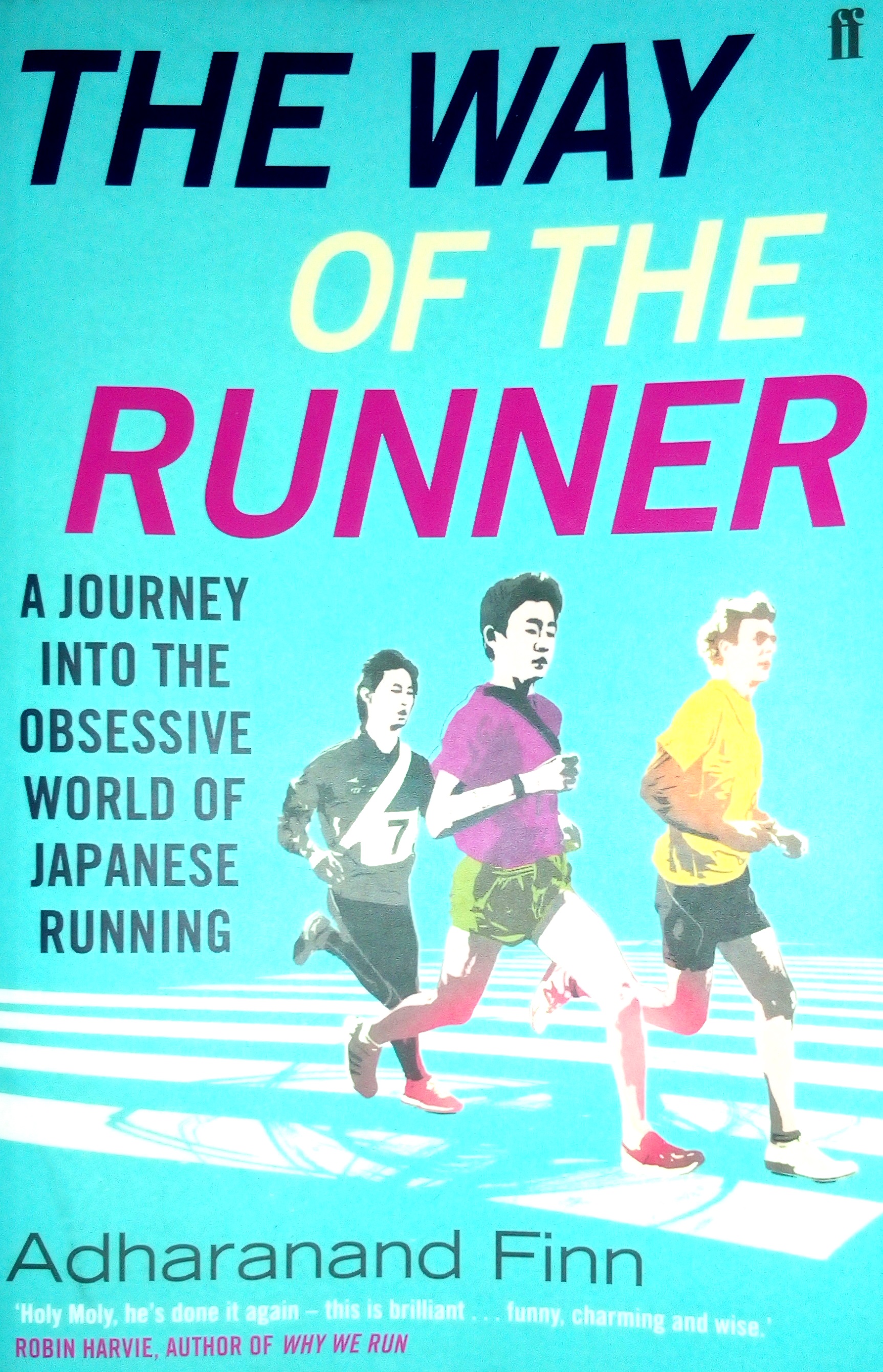
The highlands of Kenya and Ethiopia are famous for the runners they create. Over the past few decades, podium positions at major races worldwide have gone to athletes from these countries. This dominance wasn’t always the case. Following his much appreciated book from 2013: Running with the Kenyans, author Adharanand Finn, turned his attention to the Japanese. The result was 2015’s The Way of the Runner. It dwelled on the running culture in Japan, a country that was churning out performances in long distance running next only to the Kenyans and Ethiopians. “ Before the running boom in the west; before the Africans, the Japanese completely dominated marathon running in the world,’’ Finn explains in an interview posted on YouTube by publishers, Faber and Faber in May 2015. According to that video, in 1965, around 11 of the top 12 runners in the world were Japanese.  Next year, it was 15 of the top 17.

“ They were dominating like the Kenyans dominate now, partly because they were one of the only countries running marathons on a large scale. It’s not very well known that Japan has got this obsession with running. Part of the reason for that is that the biggest races are all internal races. They have these huge long distance relay races which are called ekidens. They traverse quite large distances; from 200 kilometers, 300 kilometers….the longest one is around 1000 kilometers,’’ Finn says. Ekidens are very popular in Japan. The biggest ekiden – the Hakone Ekiden –spans two days and is a much watched telecast. “ Everybody watches it, even people who have no interest in running the rest of the year. This is real passion for running,’’ Finn says in the video, about the Hakone Ekiden. But because it is all happening within the country, ekidens are not that well known outside Japan.

According to Wikipedia:  The first ekiden was held in Japan in 1917 as a 3-day, 23-stage run from Kyoto to Tokyo for more than 507 kilometers, in order to celebrate the 50th anniversary of Tokyo’s establishment as the nation’s capital (from its previous status as the shogunate Edo while Kyoto was capital city). Eki means “station” and den translates as “to convey”. It was the name given to the old Japanese transportation system for government documents and officials by relay of horses or men. At the heart of the modern relay race is a sash carried by each runner (it is slung from the shoulder and worn across the body) and passed on to the next. This sash is everything. You run to ensure that it is passed on. Should a runner fail to pass it on, then a whole team risks being disqualified. In turn the devotion to sash and runners trying their level best to not fail, are seen to directly complement team building and obliquely, evoke imagery of the warrior spirit. To put things in perspective, the Japanese take sports seriously. It assumes importance at high school level and by university the importance given to training and coaching is quite high. There are ekidens featuring high school and university teams.

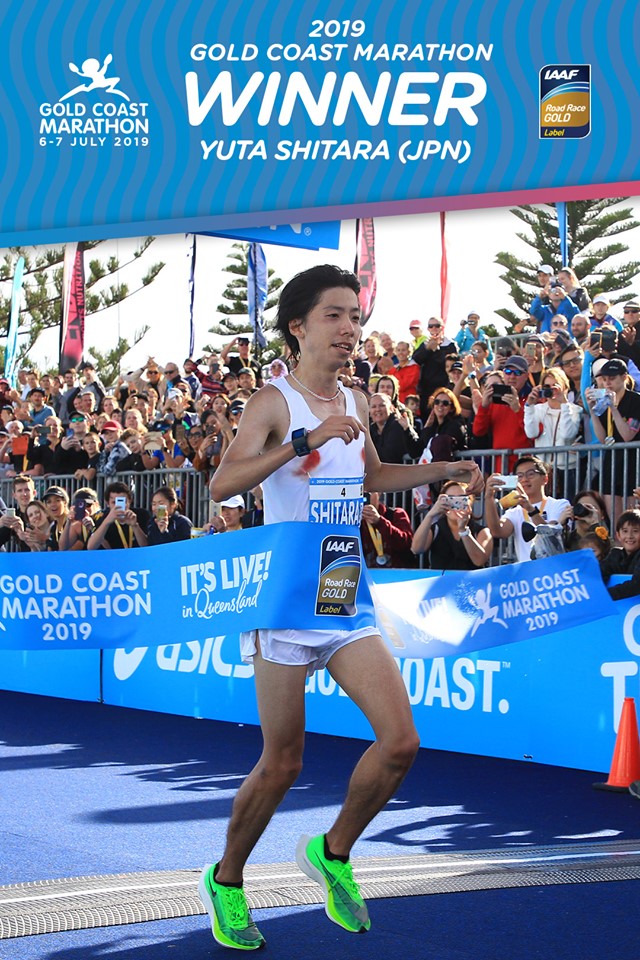
Yuta Shitara, who placed second at the 2018 Tokyo Marathon in a remarkable late stage surge. In July 2019, the Japanese runner – he is a former national record holder – set a new course record at the Gold Coast Marathon in Australia (This photo was downloaded from the Facebook page of Gold Coast Marathon)

Sample this observation in Wikipedia about the 2010 (86th edition) of the Hakone Ekiden: Of the 380 athletes representing the 19 universities, 328 have run under 14:40 for 5000 meters; 150 at 14:20 and 33 under 14:00. Stepping up to the 10,000 meter distance, the same sources show that these 19 Tokyo universities list over 190 runners with personal bests under 30:00. For comparison: as of 2019, the Indian national record for men in 5000 meters is 13:29:70 and for women, 15:15:89; in the case of 10,000 meters, it is 28:02:89 and 31:50:47. The Hakone Ekiden’s course starts in central Tokyo, goes out of the city and up the mountains to the base of Mount Fuji. The next day, the event reverses direction and runners race back. Wikipedia pegs the first day distance at 108 kilometers and the second day at 109.9 kilometers. Each day’s run has five sections. In a write-up on the Hakone Ekiden in January 2014 in The Guardian, Finn himself noted that the event’s 10 stages are close to half marathon distance with over the two days, 30 students running a “ half marathon-equivalent time of under 63 minutes’’ excluding timings on the race’s fastest sixth segment, which is mostly downhill. In the whole of 2013, only one runner in UK – Mo Farah – ran a half marathon in under 63 minutes, Finn wrote highlighting the quality of runners at the ekiden. It doesn’t stop there.

Suguru Osako; as of July 2019, he held the Japanese national record in the marathon – 2:05:50 – set at the 2018 Chicago Marathon (This photo was downloaded from the athlete’s Facebook page. It is being used here for representation purpose only. No copyright infringement intended.)

Large Japanese companies maintain ekiden teams. A February 2018 article by Martin Fritz Huber on Japanese runners, available on the website of Outside magazine, mentioned that some five dozen corporate teams existed, each having at least 20 full time, paid runners. That is a pool of 1200 elite long distance runners. There are leagues for these teams; there are corporate championships. The interest of corporates in ekidens has also opened another angle. Professional athletes survive on the strength of sponsorship, appearance fee and prize money. As Finn points out in the video, typically, if a professional athlete is injured or is past his / her prime, the challenges are many.  You have to make a new beginning, find new means to survive. At companies having ekiden teams, a good athlete gets backed by regular salary. When such an athlete retires from the sport, he / she settles down to a job in the office. Finally, going by what multiple sources on the Internet speak of the ekiden, the human drama associated with the event ranging from team spirit to ensuring the sash is passed on at all cost, make races interesting for telecast. Videos of ekidens show spectators lining up to cheer. In the case of ekidens featuring corporate teams, spectators include company employees and their families.

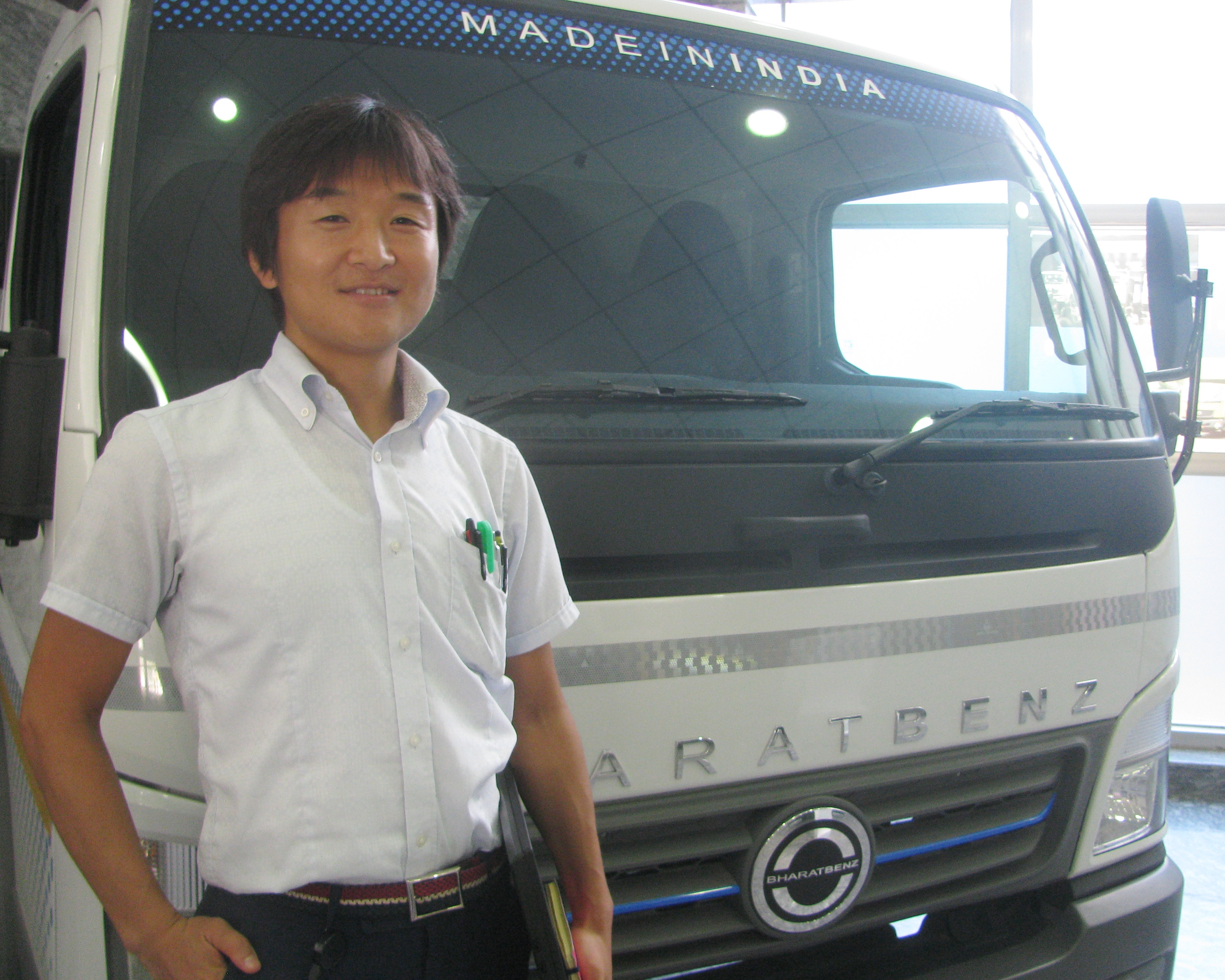
Wataru Iino,winner of the 2017 Badwater Ultramarathon, at the production facility of Daimler India Commercial Vehicles in Chennai, India (Photo: Shyam G Menon)

So how does this ecosystem translate into performance at elite levels? The earlier quoted observation from Wikipedia provides overview of performance parameters at university level. The Outside magazine article – the expert consulted therein was again Adharanand Finn – offered similar perspective with a major marathon for backdrop.  In 2018, Yuta Shitara secured second place at the annual Tokyo Marathon; he finished the race in 2:06:11. What impressed was that Japan had six runners in the top ten in the men’s category and altogether nine, including those outside the top ten, who ran quicker than 2:10 – all this from one race (the data is still there among archived race results, on the event’s website). When the author of said article looked up the fastest times in marathon history, he found that in contrast, only 17 American runners had managed sub-2:10. Restricted to record eligible-courses, the number shrank to 11. At several major races, Japanese runners finish in the top ten but amid highly competitive sport with narrative seeking African runners, they get overlooked. The world’s best timings reported by the Association of Marathons and Distance Races (AIMS), is usually a list awash in names from Africa. Among a spattering of names from other regions, the Japanese also feature. In 2018, the fastest Japanese marathon runner was Suguru Osako; his third place finish at the Chicago Marathon with a time of 2:05:50 (at the time of writing it was Japan’s national record in the discipline) placed him 27th on the list. The current world record, set by Kenya’s Eliud Kipchoge in September 2018 in Berlin, is 2:01:39.

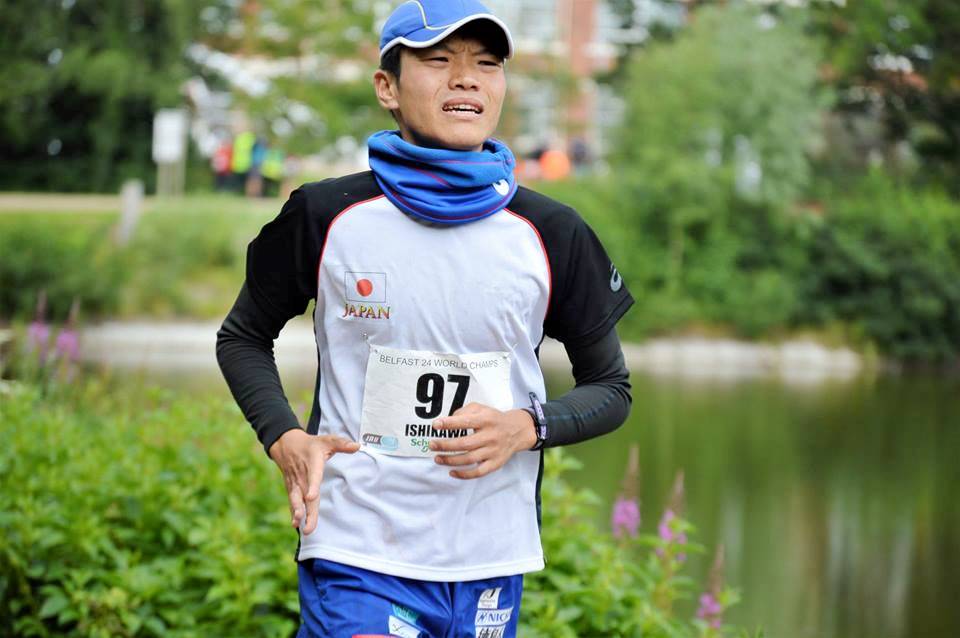
Yoshihiko Ishikawa, winner of the 2019 Badwater Ultramarathon (This photo, downloaded from the Facebook page of Northern Ireland Running, is from the 2017 Belfast 24 Hour World Championships. No copyright infringement intended)

As with any ecosystem, there are stories around the ekiden too. One such is about a man often described to have taken the longest duration yet to complete a marathon – 54 years, 8 months, 6 days, 5 hours, 32 minutes and 20.3 seconds. In that time, Shizo Kanakuri got married, had six children and ten grandchildren. His story started in the early years of the 20th century. According to Wikipedia:  During the November 1911 domestic qualifying trials for the 1912 Stockholm Olympics, although the length of the course was probably only 40 km (25 miles), Kanakuri was reported to have set a marathon world record at 2 hours, 32 minutes and 45 seconds. He was thus selected as one of only two athletes that Japan could afford to send to the event. Kanakuri had to travel 18 days to reach Stockholm from Japan; first by ship and then by the Trans-Siberian Railway. He took five days to recover from the journey.

That year, the Olympic marathon was plagued by unexpected warm weather conditions. More than half the field suffered from hyperthermia. Kanakuri, already weak from his long journey and having issues with the local food; lost consciousness midway through the race. He was looked after by a farming family. Embarrassed by his failure he returned quietly to Japan without informing race officials. Swedish authorities recorded him as “ missing.’’ Although he competed at the 1920 Summer Olympics in Antwerp (where he completed the marathon in 2 hours, 48 minutes, 45.4 seconds to place 16th), it seems to have missed Sweden’s eye. Decades went by before Swedish authorities found out that he was alive in Japan. In 1967, Swedish Television invited him back to complete the race he had begun in 1912. According to Wikipedia, Kanakuri who is celebrated as “ the father of marathon’’ in Japan, played an important role in establishing the biggest of the ekidens – the Hakone Ekiden.

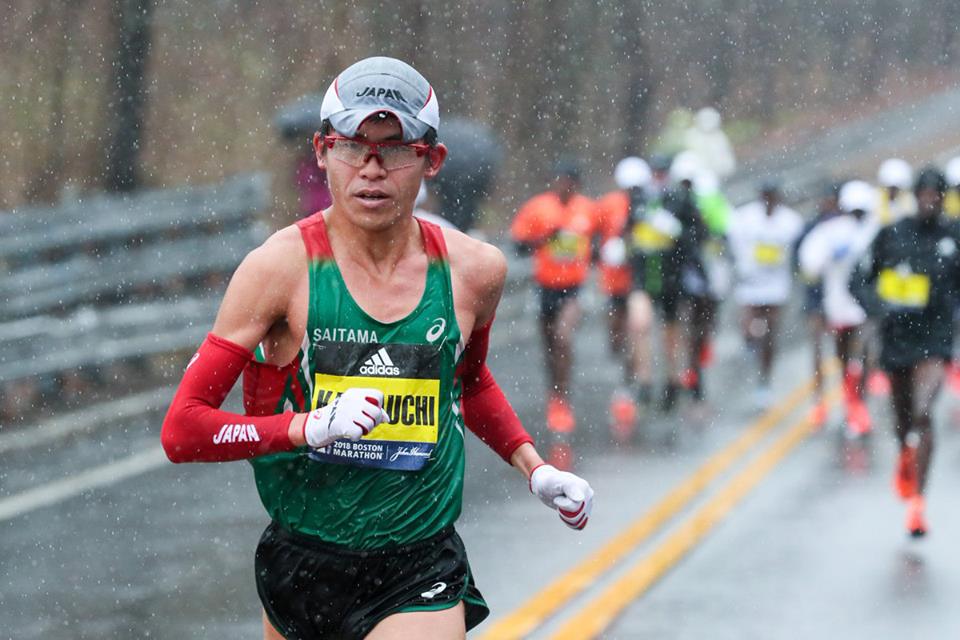
Yuki Kawauchi aka Citizen Runner and Civil Services Runner, at the 2018 Boston Marathon (This photo was downloaded from the Facebook page of Boston Marathon and is being used here for representation purpose. No copyright infringement intended.)

Given its reputation for discipline and industry, conformation would seem prized in Japanese culture including the culture around running. Ekidens are an important aspect of Japanese running culture; as are corporate teams. You would think they are unquestioningly followed as ideal progression for runner. That isn’t always the case. There are those who navigate differently. In the video, Finn mentions one such athlete – Yuki Kawauchi, among Japan’s best runners in recent years. Kawauchi worked at Kuki High School in Saitama Prefecture. He was not on any corporate team. In fact, Wikipedia mentions that after graduating, Kawauchi did not receive much interest from corporate running teams. “ He is one of the top runners and yet he has completely shunned the entire Japanese system. So he is very rebellious in that way and people love him for that,’’ Finn says in the 2015 video. Kawauchi – he is often called “ Citizen Runner’’ and “ Civil Services Runner’’ – is best remembered for winning the Boston Marathon in 2018, a year when the race had its coldest start in three decades and was run amid tough weather conditions. That said, news reports after the 2018 edition of the Boston Marathon said that Kawauchi was planning to quit his government job and shift to being a professional runner. Apparently he had been thinking of doing so since a ten day visit to London in 2017, for the IAAF World Championships. The move was seen as helping him improve his existing timing in the marathon and compete with the world’s best. He wished to use the prize money he got in Boston to effect the transition. In April 2019, a report in Japan Times said that Kawauchi had become a professional marathon runner.

Ekidens are now held outside Japan too. According to Wikipedia, they are held in Hawaii, Guam, Belgium, New Zealand, Australia, Canada and Singapore.

(The author, Shyam G Menon, is a freelance journalist based in Mumbai. He hasn’t seen an ekiden except on video; he hasn’t been to Japan. The above article is based on information available on the Internet. For an article on Wataru Iino, winner of the 2017 Badwater Ultramarathon, please click on this link: https://shyamgopan.com/2017/10/26/in-oragadam-a-badwater-winner/)     

COMING UP: A TRAINING CAMP FOR ULTRA-RUNNERS

Sunil Chainani (Photo: courtesy Sunil)

Ultra-running has picked up in India and the need of the hour is advanced guidance on running techniques, nutrition and prevention / management of injuries to sustain the present momentum.

A training camp for ultra-runners is being organized.

“ This is the first time that India’s ultra-running community has come together to hold an informal training camp for some of the leading ultra-runners of the country. It is being funded by friends of the running community,’’ Sunil Chainani, member of the Ultra Running Committee of Athletics Federation of India (AFI), said.

The camp will be held in Bengaluru from August 11 to 18. Anthony Kunkel, a US-based coach, will offer guidance to the runners. A nutritionist and a physiotherapist will also be a part of the camp.

A former national level squash player, Sunil took up running for fun. In 2003, he ran a half marathon and enjoyed it thoroughly. “ Those days there were very few shoe models available, purpose-built for running. I ran wearing a cotton t-shirt,’’ he said. Though he had started running long before the landmark Mumbai Marathon debuted in 2004, Sunil’s journey in running gathered direction only from 2006. Sometime that year, he participated in the Lipton Bangalore International Marathon.

In 2005, the group Runners for Life (RFL) came into being. “ It introduced the concept of strength training to runners,’’ Sunil said. In 2007, RFL started the country’s first ultra-running event, Bangalore Ultra. Sunil made his foray into ultra-running with this event and went on to run several editions, in the process extending the distance he tackled from 50 kilometers to 100 kilometers.

In 2011, he ran the uphill version of Comrades Marathon, the ultramarathon held in South Africa.

“ I am passionate about sports and have been involved in sports for several years now. I am happy to give back to the sporting world,’’ he said. He is now actively involved in co-ordinating for international ultra-running events.

According to Sunil, running too many races is not the way forward for recreational runners and runners of ultra-distances. The training camp, he feels, signifies the start of a properly structured approach. He feels Indian ultra-runners should be able to make a mark at the global level in three to four years.

A regular at Malnad Ultra, Sunil will have to give this trail ultra-running event held in the Western Ghats of South India, a miss this year as he is scheduled to run the New York City Marathon in November 2019. “ I would like to go back to South Africa to run the Comrades Marathon,’’ he said.

(The author, Latha Venkatraman, is an independent journalist based in Mumbai.)

JAPAN’S YOSHIHIKO ISHIKAWA WINS 2019 BADWATER 135, SETS NEW COURSE RECORD

Yoshihiko Ishikawa (This photo, downloaded from the Facebook page of Northern Ireland Running, is from the 2017 Belfast 24 Hour World Championships. No copyright infringement intended)

Patrycja Bereznowska sets new women’s course record

Pamela Chapman-Markle sets new course record for her age category

Rajesh (Raj) Vadgama and Siva Balu complete the race

Japan’s Yoshihiko Ishikawa has won the men’s 2019 Badwater 135 in record time .

“ Our men’s 2019 Badwater Champion is Yoshihiko Ishikawa, setting a new course record in 21 hours 33 minutes and 01 second!,’’ the race organizers said in an official tweet.

The previous course record was held by Pete Kostelnick. In 2016, he completed the race in 21 hours, 56 minutes and 31 seconds.

The first woman to complete the 2019 edition of the race was Poland’s Patrycja Bereznowska; she was also second overall. Patrycja, 43, set a new women’s course record of 24 hours, 13 minutes and 24 seconds.

Third overall and second among men was Harvey Lewis of the US, who covered the distance in 26 hours, 11 minutes and 18 seconds. Gina Slaby of the US was the second female finisher (she was ninth overall, placing just two seconds behind the eighth place). They were neck and neck from Badwater Basin. She finished in 29:26:45.

Finishing seventh overall and sixth among men was Grant Maughan from Australia. The 55 year-old completed the race in 28:30:33. Pamela Chapman-Markle of the US finished fifth among women and 24th overall. The 63 year-old covered the distance in 34:03:47 bettering her own course record for the age category (60-69 years). In 2018, she had finished in 34:30:53.

Patrycja Bereznowska (This photo was downloaded from the athlete’s Facebook page.)
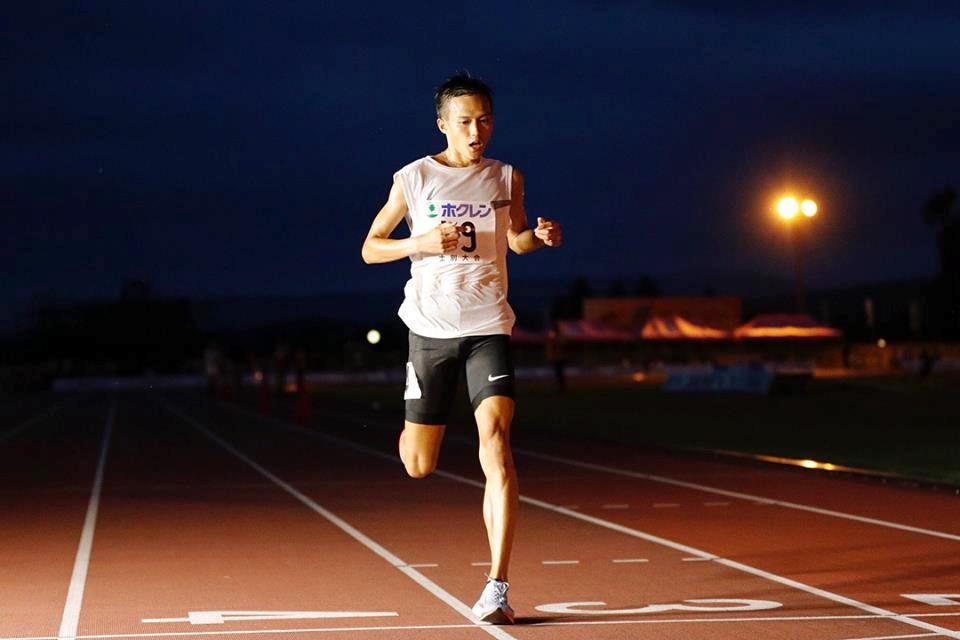
Badwater 135, promoted as the world’s toughest foot race covers a distance of 135 miles or 217 kilometers non-stop from Death Valley to Mount Whitney in California, USA.

The race starts at Badwater Basin, Death Valley, which is 85 meters below sea level. It ends at Whitney Portal at a height 2530 meters. The course covers three mountain ranges for a total of 4450 meters of cumulative vertical ascent.

Ishikawa 31, had earlier won the 2018 edition of Sparthathlon, a historical ultra-marathon held in Greece. He finished the 246 kilometer distance from Athens to Sparta in 22 hours, 55 minutes and 13 seconds.

In this year’s edition of Badwater 135, there were two Indian runners in the field – Mumbai’s Rajesh (Raj) Vadgama and Siva Balu from Chicago. Siva Balu, 39, completed the race in 44:12:39. Raj Vadgama, 52, covered the distance in 44:37:39. They placed 69th and 70th overall, respectively.

At the time of writing, there had been 16 DNFs (Did Not Finish) so far in the 2019 edition of the race.

(The author, Latha Venkatraman, is an independent journalist based in Mumbai.)
ANJALI SARAOGI, ULLAS NARAYANA GET AFI ULTRA AND TRAIL RUNNING AWARDS; INDIA BIDS TO HOST INTERNATIONAL CHAMPIONSHIPS

Anjali Saraogi receiving her award (Photo: courtesy Anjali)
Ultra-runners, Anjali Saraogi and Ullas Narayana, have won the ultra and trail running awards for 2018-19, Athletics Federation of India (AFI) said in a statement today (July 15, 2019).

Kolkata-based Anjali was conferred the female ultra and trail runner award for 2018-19. Ullas, who lives and works in Vancouver, was chosen for the award in the male category.

The Ultra & Trail Running Committee of AFI selected the winners, the statement said.

Anjali’s performance at the IAU 100 kilometre World Championships in Croatia in September 2018 was mentioned as women’s best performance in 100 k event. She had completed the run in nine hours, 40 minutes and 35 seconds.

Ullas’s bronze medal win at the men’s 24-hour run at IAU Asia & Oceanic Championships at Taipei in December 2018 was adjudged the best performance among men in that discipline. He had covered a distance of 250.37 kilometres to win the bronze medal.

Apoorva Chaudhary’s performance at the women’s 24-hour run at the NEB Sports New Delhi Stadium Run in December 2018 was commended as a significant achievement in ultra-running for women. She had covered a distance of 176.8 kilometers, setting a new national best in the discipline.

Surat-based Sandeep Kumar’s performance at the downhill version of the Comrades Marathon in 2018 and Deepak Bandbe’s run in the uphill version of the same event in 2019 were also mentioned as significant achievements. Sandeep Kumar had completed the ultra-marathon in South Africa in seven hours, 29 minutes and 53 seconds. Deepak Bandbe finished the uphill run in seven hours, 43 minutes and 34 seconds.

The highest ITRA rating among Indian ultra-runners was “ 730 general cotation” for Kieren D’Souza.

It was on 15 February 2017 that AFI became a member of the IAU. This paved the way for ultra-runners from India to participate on the international platform of the IAU and ITRA (International Trail Running Association); at the World and Asia & Oceania Championships. Since 2017, the AFI has sent Indian ultra and trail runners to represent the country at the Trail World Championships, the 24 Hour World Championships, the 100 Km World Championships and the 24 Hour Asia & Oceania Championships.

Ullas Narayana at the 2018 IAU Trail World Championship (Photo: courtesy Kieren D’Souza)

It was at the 2018 IAU 24 Hour Asia and Oceania Championships held at Taipei, that India won its first individual and team medal at an international ultra-running event. Ullas Narayana won the bronze medal in 24 Hours and the Indian Team comprising Ullas Narayana, Sunil Sharma and Lallu Meena finished in third spot.

The sport of Ultra Running and Trail Running has been growing rapidly with at least 50 such ultra-running events being organized in the country. A large number of runners are also competitively taking part in international events such as the Spartathlon, Badwater, La Ultra The High, UTMB and Comrades. A couple of domestic ultra-events are drawing up to 750 participants under different categories, a related statement said.

India bids to host international championships

According to the statement, AFI and NEB Sports have invited IAU President Nadeem Khan and Vice President Robert Boyce to consider India as the next destination for holding an International Ultra Running Championship. “ India has bid for hosting the IAU 24 Hour Asia & Oceania Championships in 2020 and the IAU 100 Km Asia and Oceania Championships in 2021,’’ it said.

“ We have received India’s bid to organize continental-level events and I think the facilities we visited in Bangalore are really good. The final decision on hosting IAU 24 Hour Asia & Oceania Championships in 2020 and the IAU 100 Km Asia and Oceania Championships in 2021 in India will be taken by IAU council,’’ the statement quoted the IAU President as saying.

(The author, Latha Venkatraman, is an independent journalist based in Mumbai.)