2020 TATA MUMBAI MARATHON (TMM) / NEW COURSE RECORD, ETHIOPIANS TAKE TOP HONORS

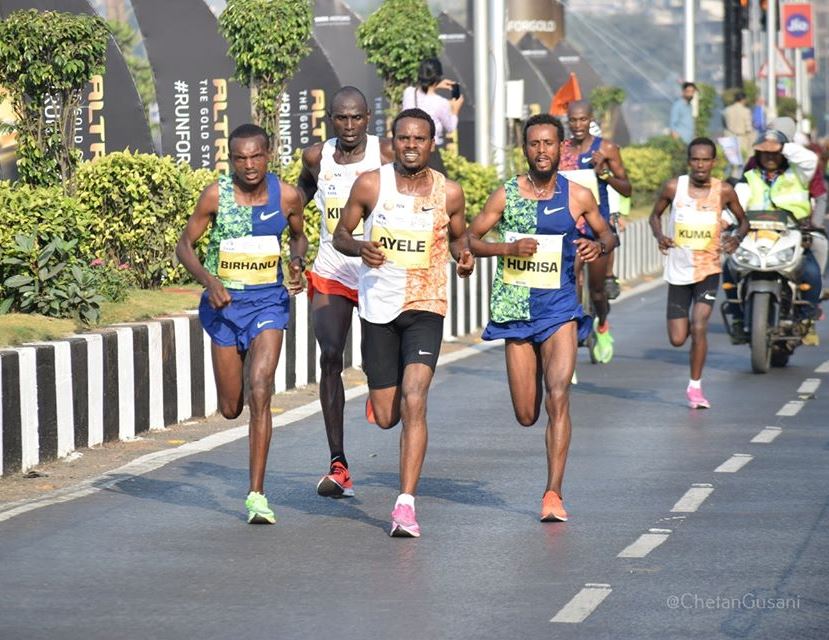
Elite runners at the 2020 Tata Mumbai Marathon. Eventual winner Derara Hurisa of Ethiopia can be seen, right of center (Photo: Chetan Gusani)

Srinu Bugatha, Sudha Singh winners among Indian elite

Ethiopian athlete Derara Hurisa set a new course record at the 2020 edition of Tata Mumbai Marathon, topping the men’s category with a finish time of two hours, eight minutes and nine seconds.

The previous course record was 2:08:35, set by Kenyan runner Gideon Kipketer in 2016.

Ayele Abshero and Birhanu Teshome, both of Ethiopia, also finished in timings better than the previous course record. Ayele, in second position, crossed the finish line in 2:08:20 and Birhanu, in third position, in 2:08:26.

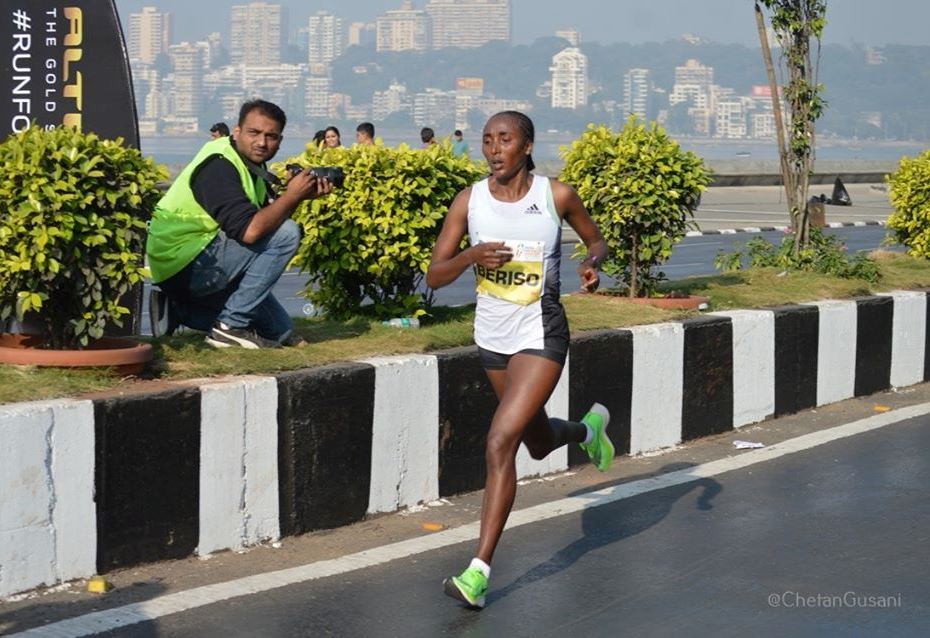
In the women’s race, Ethiopian Amane Beriso was the winner with timing of 2:24:51. She missed the previous course record of 2:24:33, by 18 seconds.

Amane Beriso of Ethiopia who topped among women runners at 2020 TMM (Photo: Chetan Gusani)

In second position was Kenyan runner Rodah Jepkorir, who finished in 2:27:14. Haven Hailu of Ethiopia came in third in 2:28:56.

Barring the Kenyan runner in second position in the women’s race, it was an Ethiopian sweep of the top podium positions.

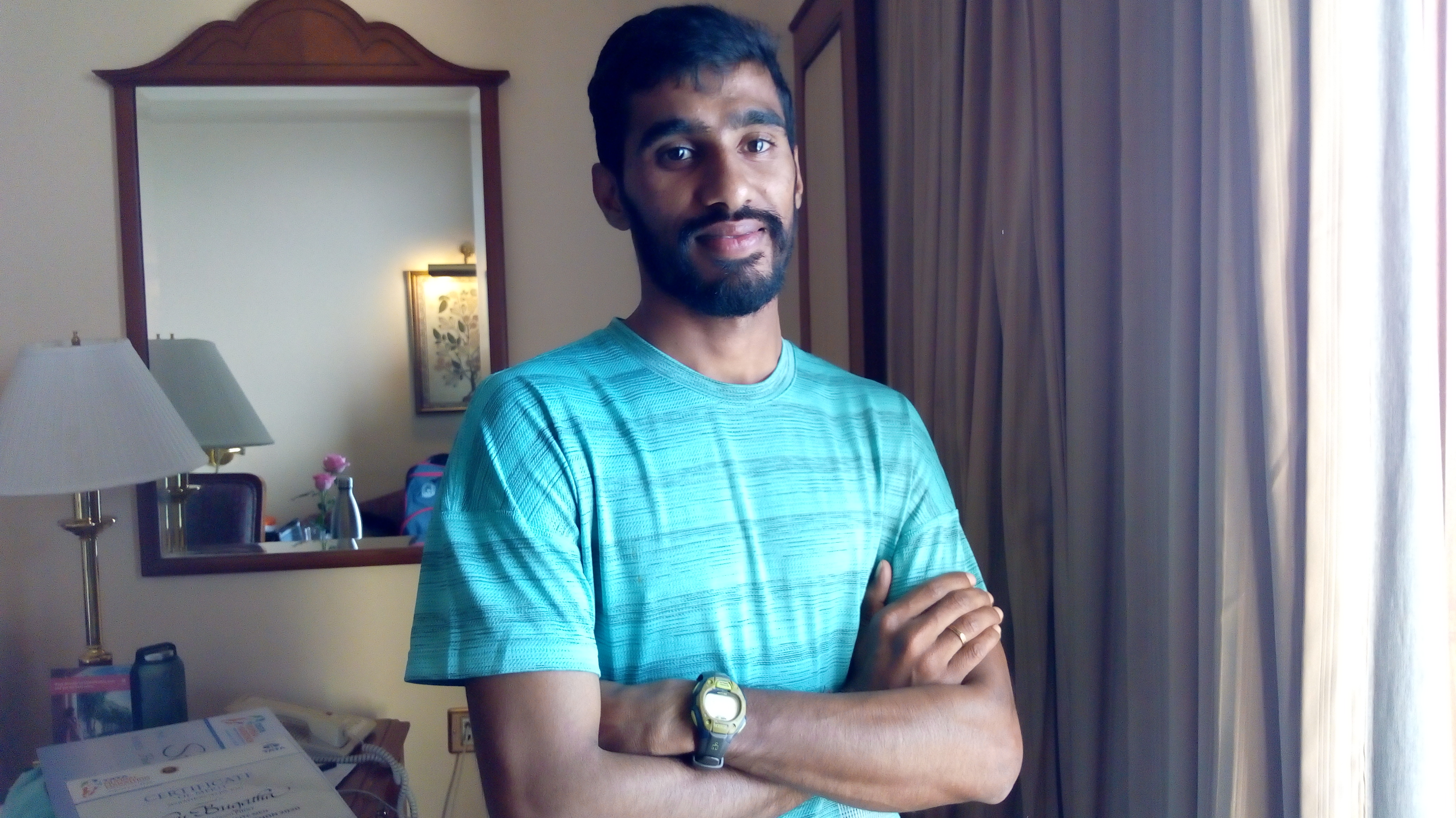
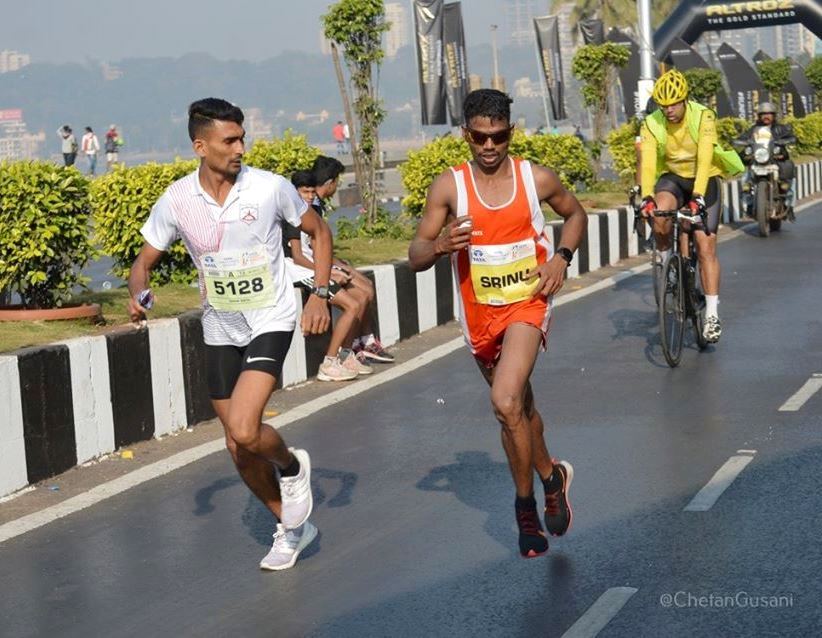
Among Indian elite runners, Srinu Bugatha and Sudha Singh were winners of the men’s and women’s races respectively.

Bugatha of Indian Army finished the race in 2:18:44. In second place was Sher Singh with timing of 2:24. In third position was Durga Bahadur Budha with timing of 2:24:03.

Srinu Bugatha at 2020 TMM (Photo: Chetan Gusani)

Defending champion Sudha Singh maintained her title with a winning finish of 2:45:30. Jyoti Gawate came in second with timing of 2:49:14. Shyamali Singh finished in third position in 2:58:44.

Jyoti Gawate had finished second in the 2019 edition of Tata Mumbai Marathon with timing of 2.45.48, which was her best timing at the race. “ There was a change in the route and that resulted in a wide gap between the winner and me,’’ Jyoti said.

Across various categories of races, over 55,000 runners participated in the 17th edition of Mumbai Marathon, held on Sunday, January 19, 2020.

(The author, Latha Venkatraman, is an independent journalist based in Mumbai. Thanks to Chetan Gusani for permitting the use of his photographs.)

2020 TATA MUMBAI MARATHON / LAGAT, ALEMU SET TO RETURN

Flashback: elite runners at the 2019 edition of Tata Mumbai Marathon (Photo: by arrangement)

Defending champions Cosmas Lagat and Worknesh Alemu will be back for the Tata Mumbai Marathon (TMM), due January 19, 2020, a report dated January 4, available on the website of World Athletics (formerly IAAF), said.

In 2019, Kenya’s Lagat, breaking away from the rest of the pack at around kilometer 29 and running alone for almost a third of the race, had won in 2:09:15, the second fastest winning time in Mumbai. It was just 40 seconds outside the course record of 2:08:35, set by his compatriot Gideon Kipketer in 2016, the report said. To date only one man has won TMM back-to- back; Kenyan runner John Kelai did that with victories in 2007 and 2008.

According to the report, for the 2020 edition of the race, TMM organizers have signed up no less than 14 men who have run faster than 2:10:00, “ making it the strongest marathon ever to be staged in India.’’ Of them, nine have run faster than the course record during their careers and six have run under the super-elite benchmark of 2:07:00. The four fastest men in the field are all Ethiopians, led by Ayele Abshero who has a personal best (PB) from eight years back at the Dubai Marathon, of 2:04:23.

Ethiopia’s Alemu had won in the women’s category at TMM in 2019 with a PB of 2:25:25, which was also the second fastest winning time in the race’s history. She subsequently improved her best to 2:24:42 later in 2019 when finishing sixth at the Amsterdam Marathon in October, the report said. In 2020, Alemu heads a very strong women’s field that has eight women who have run under 2:28:00. The fastest woman in the field is another Ethiopian, Amane Beriso, who clocked 2:20:48 for a second place finish in the 2016 Dubai Marathon, placing her third on that year’s world list. She took a break from competitive running last year. The course record at TMM for women is 2:24:33, set by Kenya’s Valentine Kipketer in 2013.

In addition to the marathon – which has a total prize fund of US$ 405,000 – there is a half marathon, a 10km race, a Dream Run (5.9km), Senior Citizens Race (4.2km) and a Champions with Disability Race (1.5km). About 50,000 runners are expected to take part, the report said.

(The author, Shyam G Menon, is a freelance journalist based in Mumbai.)
AN AQABA TO REMEMBER

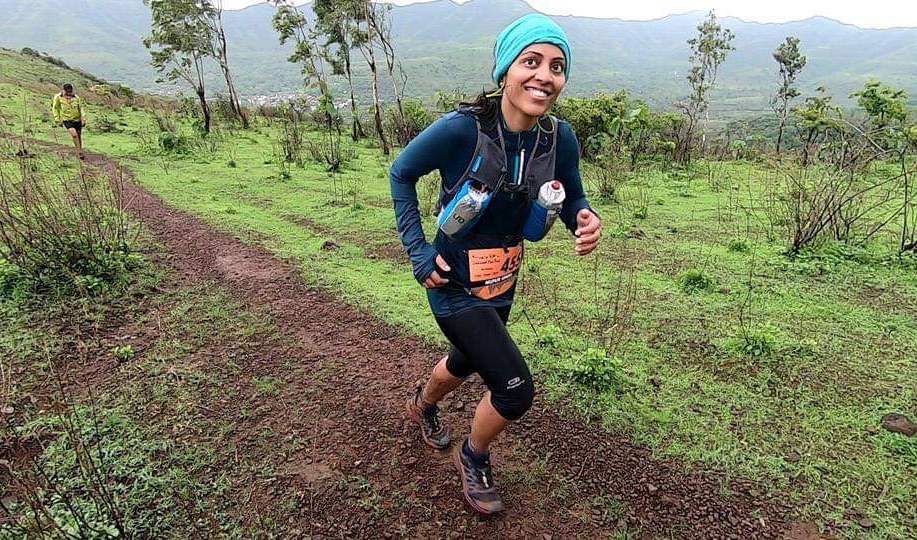
Nupur Singh (Photo: courtesy Nupur)

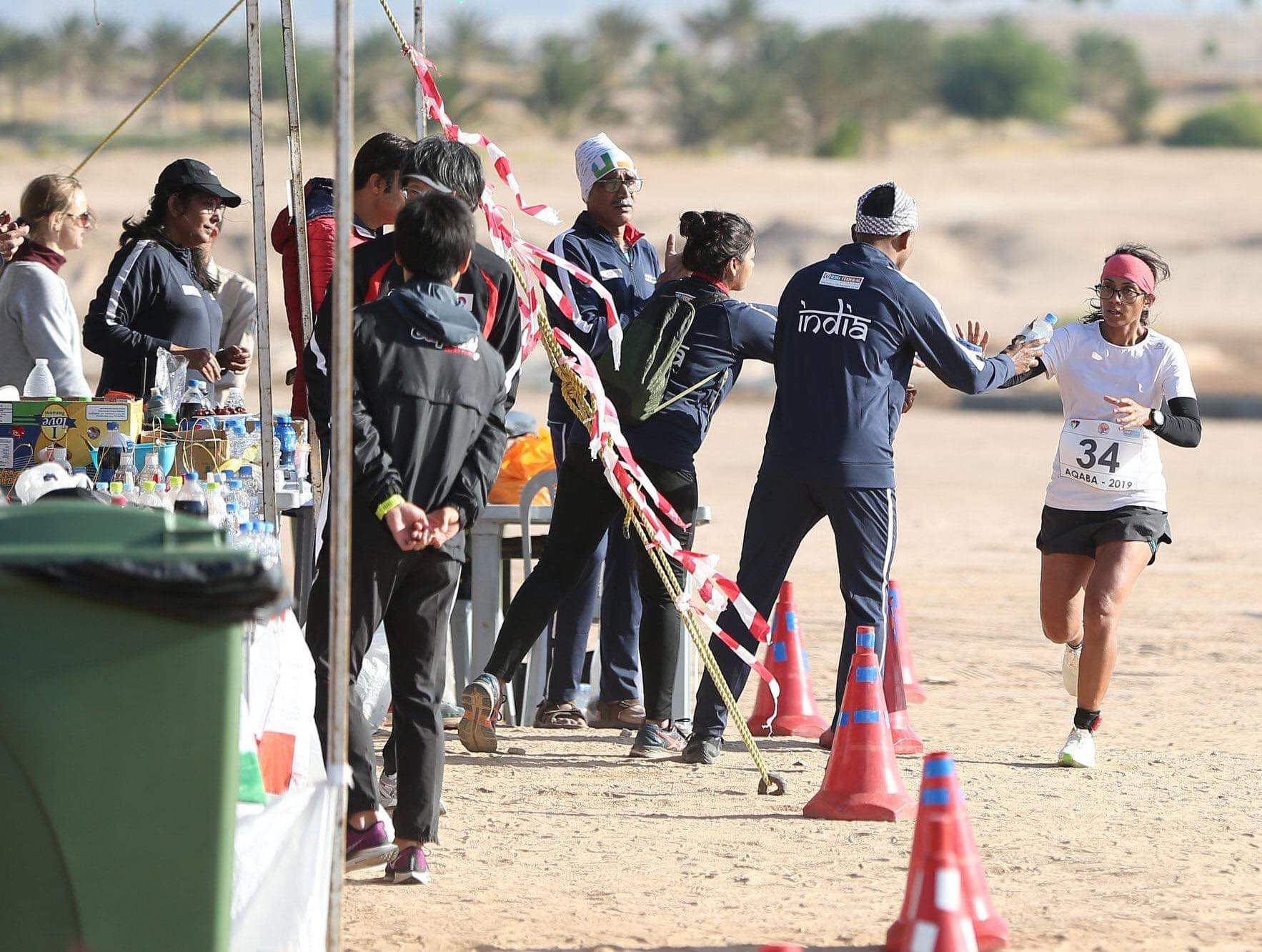
Nupur Singh got into running in 2014. Two years later, she quit her job in Delhi and moved to the mountains to organize races. In November 2019 (as reported earlier on this blog), Indian ultra-runners did well at an international 100 kilometer championships in Jordan. In the same event, Nupur – she was not part of the official Indian team but running in the open category – finished in fairly good time.

On November 23, 2019, a team of ultra-runners representing India participated in the 2019 IAU 100 kilometer Asia & Oceania Championships at Aqaba, Jordan. The men’s team won the gold medal and the women’s team, the silver.

Mumbai’s Deepak Bandbe won the bronze medal and set a new national record in the men’s 100 km. Kolkata’s Anjali Saraogi set a new national record in the women’s 100 km; she finished fourth. The course on which, the race happened was a 10km-loop.

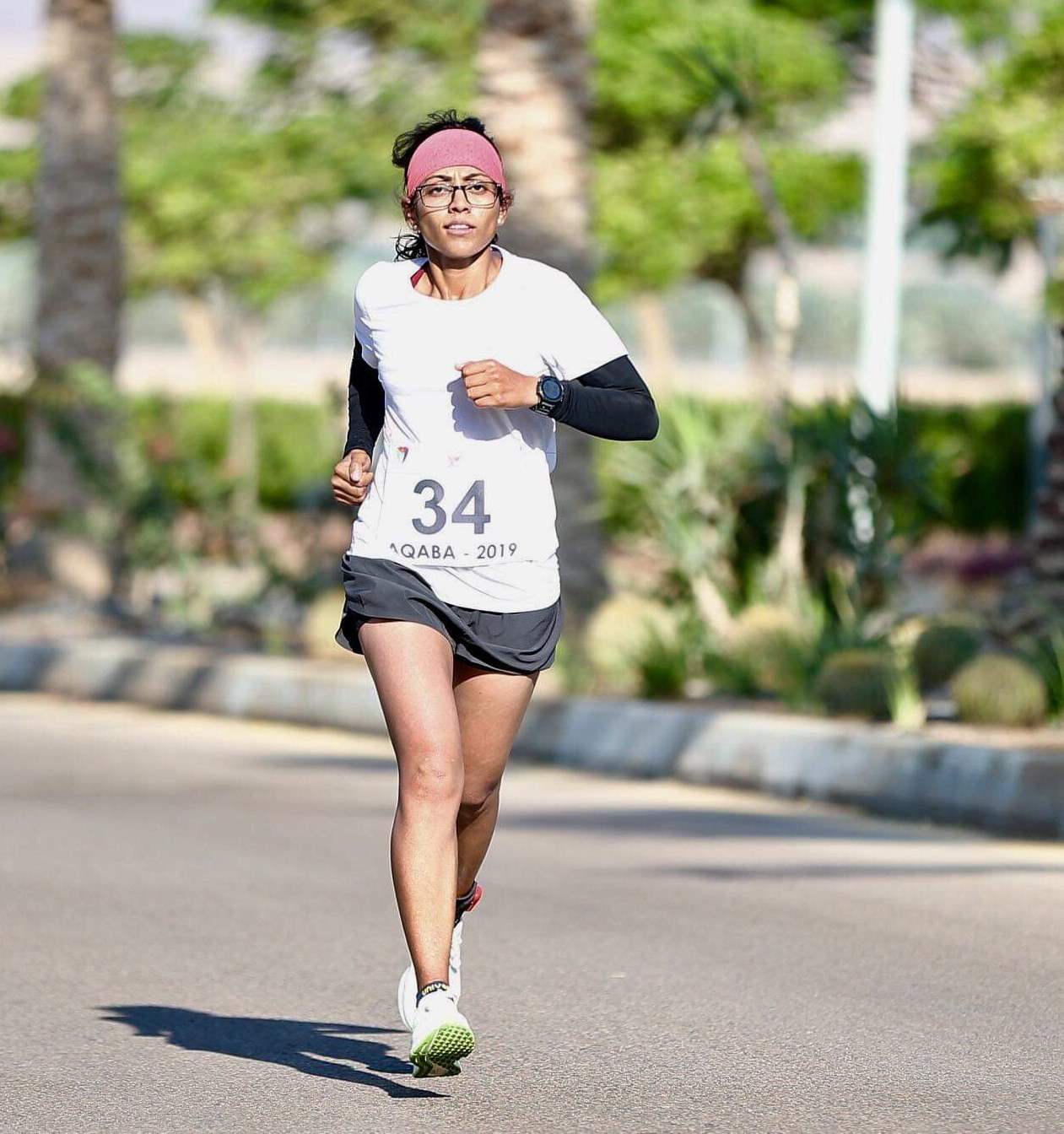
Alongside the Indian runners on that loop was another compatriot; Nupur Singh. She was running the same race but in the open category. She was not part of the Indian team. In fact, Nupur had resumed running only in July 2019 after a gap of three years. By November in Aqaba, it was only around four months since returning to running. Nupur finished the race in nine hours, 36 minutes and 15 seconds. She finished second behind British athlete, Joasia Zakrzwenski, the winner of the open race. Joasia finished in 8:25:50 hours. There were just two women in the open race in their gender category.

Nupur’s first race in three years had happened three months earlier – the AFMC Pune Marathon of August 2019, where she finished second overall among women. On October 6, 2019, she ran 60 kilometers at Solang Sky Ultra, which has cumulative elevation gain of 3570 meters and cut-off of 14 hours. She was the overall winner finishing the distance in nine hours, 46 minutes and 48 seconds. Aqaba followed.

Photo: courtesy Nupur Singh

Nupur, 32, is from Lalitpur in Uttar Pradesh. She took to amateur running in 2014. But she was not new to sports. “ I come from a conservative business family. My mother was the mayor of Lalitpur,’’ she said. She is the third among four siblings – two brothers and one sister. After an initial phase of schooling in Lalitpur, she did her senior years at Indore Public School. She was into a variety of sports such as swimming, tennis, basketball and cricket besides getting as far as the inter-school nationals in air-rifle shooting, wherein she secured a bronze medal. She moved to Pune to pursue graduation in architecture. As studies took precedence, sports got relegated to the background. Once done with studies, Nupur took up employment in Delhi. “ For three years, I was deeply involved with work with no room for any sporting activity,’’ she said.

In 2013, Nupur decided to take a break and went on a solo trek to Kedarkantha in Uttarakhand. “ This trek helped me get into the outdoors. I started trekking regularly. I also bought a cycle and started doing bicycle trips,’’ Nupur said. She spent a lot of time training to cycle from Manali to Leh, a trip that is hugely popular among amateur long-distance cyclists in India. After trekking and cycling, the next thing she got into was running. Nupur enrolled for the 2014 edition of Airtel Delhi Half Marathon (ADHM) and finished the race in two hours, pretty good time for a first time runner. It encouraged her to pursue running. Alongside the treks and bicycle trips continued.

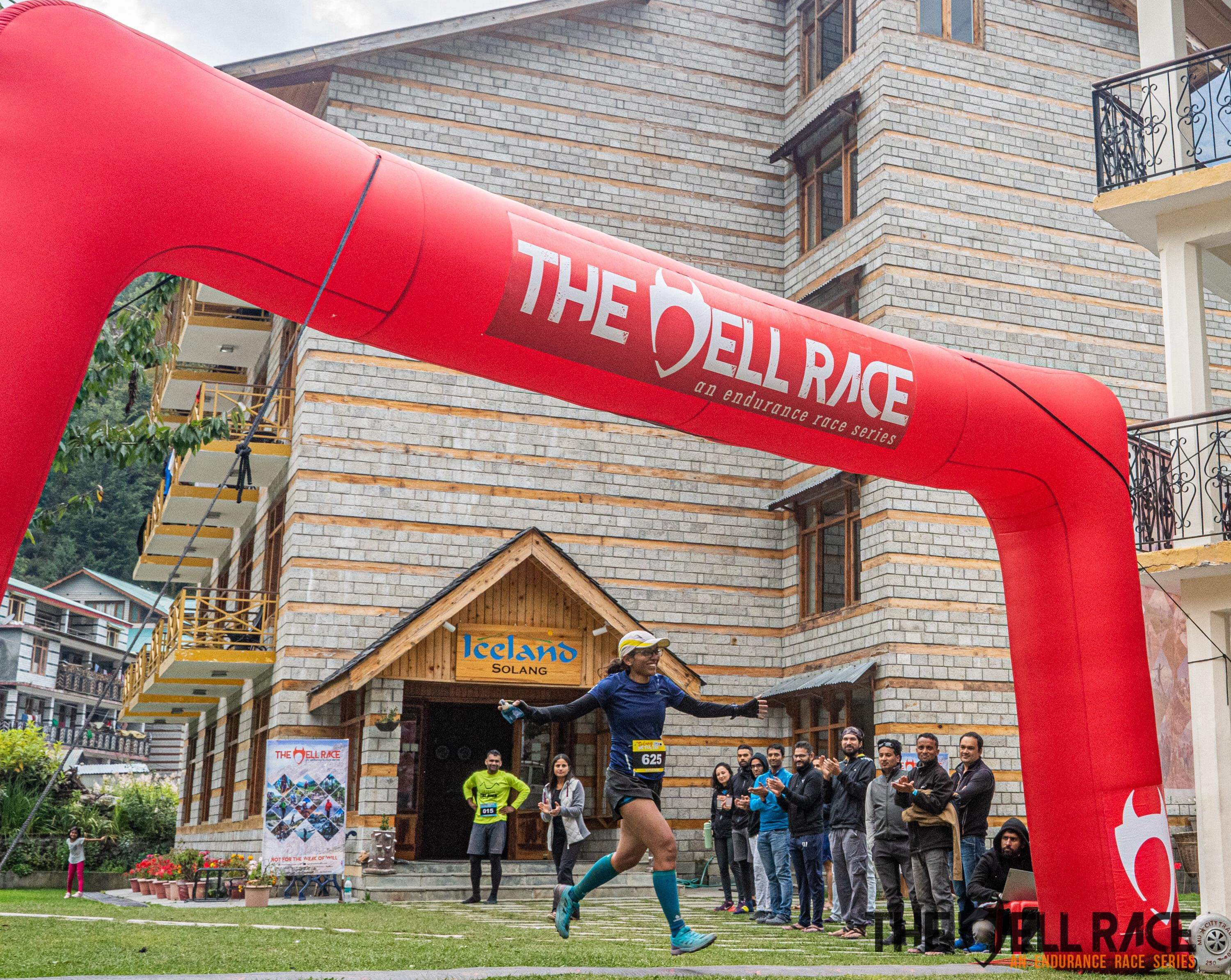
In 2016, she quit her job in Delhi and moved to the mountains to organize races. She shifted to Bir in Himachal Pradesh. She joined hands with Vishwas Sindhu to co-found The Hell Race, which includes a clutch of races mostly held in the foothills of the Himalaya, besides routes in other ranges. That put a complete brake on her personal running plans. Organizing races under the Hell Race banner took up all her time. It involved traveling to various destinations, finding routes and marshaling the logistics required for the races plus other responsibilities.

Photo: courtesy Nupur Singh

In 2019, she decided to get back to running seriously. For that, she resolved to move away from The Hell Race but not from organizing races. Vishwas and Nupur decided to split The Hell Race. Of the many races organized under the banner, Nupur decided to take three and resume them with coach and ultra-runner Sandeep Kumar under the enterprise called Grand Indian Trails, also known as GRIT. “ We split on amicable terms,’’ she said. This new arrangement, Nupur hoped, would give her time for her own running. From the basket of races held previously under The Hell Race, the Deccan Ultra, Bir Billing Marathon and Coffee Trails are currently organized by GRIT. “ The best part of organizing running races is that both running and organizing are co-related. It needs discipline at my end to focus on both equally,’’ Nupur said.

In February 2019, she had met Sandeep Kumar at Deccan Ultra. The Deccan Ultra includes the Sahyadri peaks of Kalsubai, Alang, Kulang and Madan (Alang-Kulang-Madan is one of the classic hikes of the Maharashtra Sahyadri) in its route. Nupur decided to train under Sandeep in ultra-running. From Sandeep she learnt about IAU’s open category at the 100 km race at the Asia & Oceania Championships in Aqaba, Jordan. She applied for the same. Sandeep was part of the official Indian team heading to the championships. “ My training started in earnest only in September. Sandeep helped me with goal-setting, training plans, nutrition, recovery, running gear and race strategy,’’ Nupur said. Her preparations entailed all the elements required for an ultra-distance race – speed workout, core and strength workout and long runs. “ I could have done better in training. My weekly mileage was in the range of 100-150 km but my single day long run could not exceed 60 km,’’ she said.

At the race in Aqaba, Nupur’s first 50 km went off quite well. “ My target was to finish the first 50 km in 4:30 hours. I finished the distance in 4:15. At around 60 km, I had to slow down. I started to have stomach issues. At 70 km, I had to take a toilet break and then resort to some bit of walking,’’ she said. Headwinds were quite strong. Although the elevation was only 75 meters, repeated running on the 10 km route and the variations in temperature had an impact on many of the runners. “ The Indian crew was absolutely amazing. It is because of the crew members that I was able to finish the race quite well,’’ Nupur said. A lesson from the championship that Nupur takes home is that she needs to work on her nutrition. She recently shifted to being vegetarian. According to her, this choice has been helping her immensely in post-training recovery.

Photo: courtesy Nupur Singh

Two weeks after Aqaba, Nupur ran the SRT (Sinhagad-Rajgad-Torna) 53 km with cumulative elevation gain of 2350 meters and finished in the top position among women and sixth overall. She had a timing of 7:33:09 hours. At the time of her speaking to this blog, winter was beginning to set in and Nupur was scheduled to head back to Solang, where she has a base. This winter, she may attempt skiing. “ Last year, I learnt the basics of skiing,’’ she said. Sandeep believes Nupur has a good future in ultra-running. “ She trains wells, is quick to learn and works hard. Among women, she is one of the best in ultra-running in India,’’ he said. Going ahead, Nupur has her mind set on the Comrades Marathon (the downhill version) in South Africa, the IAU 100 km World Championships to be held in the Netherlands and the Asia Trail Master Races.

(The author, Latha Venkatraman, is an independent journalist based in Mumbai.)

A TALE OF TWO RESULTS

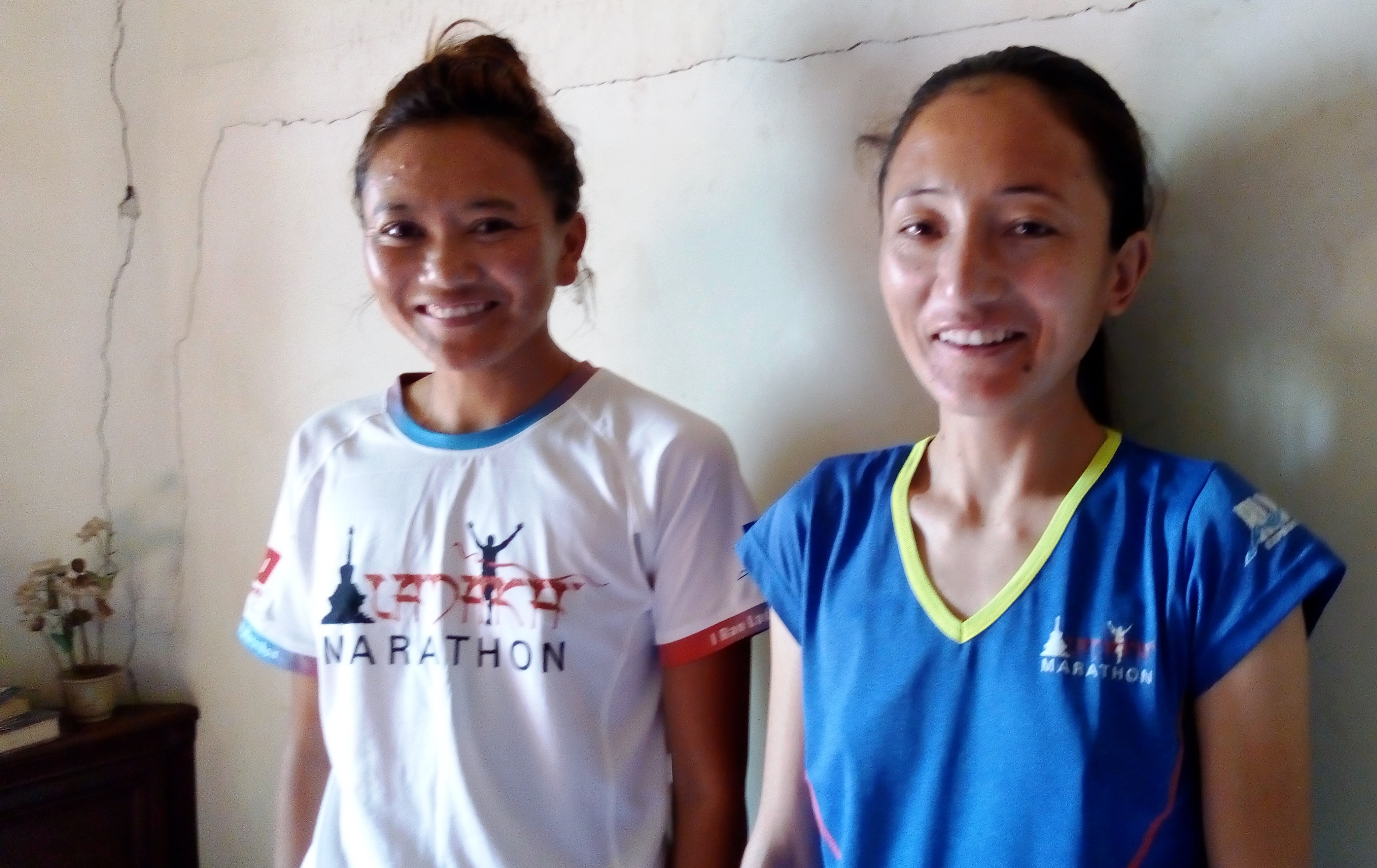
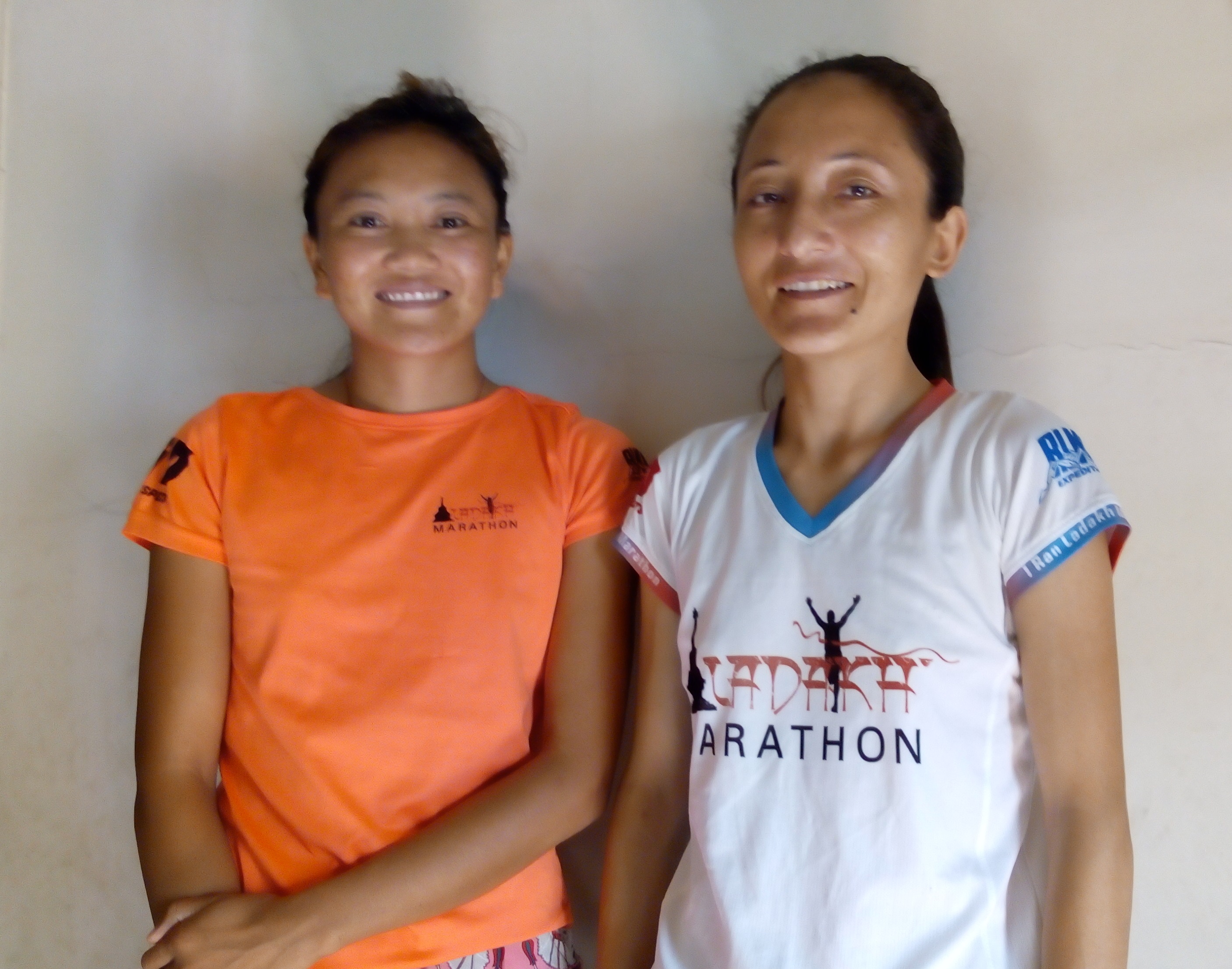
Jigmet Dolma (left) and Tsetan Dolkar (Photo: Shyam G Menon)

Early December, Tsetan Dolkar topped the open category for women at the 2019 Vasai Virar Mayor’s Marathon (VVMM), among prominent running events in the Mumbai region.

VVMM is one of the races that the team of Ladakhi runners supported by Rimo Expeditions participates in, during their winter season spent running at various events in the plains. Tsetan is one half of the now well-known duo of herself and Jigmet Dolma; both Ladakhi runners who worked their way up the ranks to be currently included in the elite category at races like Tata Mumbai Marathon (TMM). They usually finish very close to each other.  At the 2019 IDBI Federal Insurance New Delhi Marathon, which served as basis for selecting the marathon team that headed to the 2019 South Asian Games (SAG), Jigmet and Tsetan were apart by just two seconds. Jigmet made it into the Indian team.

According to her, when they are running the marathon in Ladakh, the two may be together for as much as 40 kilometers. In the races of the plains where competition is higher, they stick together till past the 21 kilometer-mark – sometimes more – and then progressively strike out on their own. It’s a sight regular participants at TMM have become used to – if one from this duo passes you by, the other is never far behind. That’s why the racing they did in early December 2019 is important from the perspective of their evolution as runners.

In a departure from the past, at 2019 VVMM, Tsetan was running from start to finish without her friend and fellow competitor from Ladakh for company. Around the same time, at the 2019 SAG in Kathmandu, Jigmet was doing the same thing. Tsetan placed first in the open category for women at VVMM; Jigmet finished fifth in her first outing as part of the Indian team. “ It is an indication of the runners slowly maturing with experience.  When you run alone, you have to know how to keep race strategy going and set the pace accordingly. You have to do that by yourself,’’ Savio D’Souza, Mumbai-based coach who has worked with both these runners, said. Tsetan’s victory was notable for two aspects. First, her timing at 2019 VVMM was better than the time she took to complete the full marathon at 2019 TMM at the beginning of the year. Second, she crossed the finish line with significant lead over those following her. In 2019, while it did have an elite category for men, VVMM did not have a corresponding segment for women. The strongest woman runners in the field were those topping in the open category. “ After 21 kilometers, I missed Jigmet,’’ Tsetan said recalling her run at VVMM and the practice the duo had got used to. She completed the full marathon in 3:10:27. This wasn’t Tsetan’s first time on the podium at VVMM. Three years earlier, it had been a very different experience.

When the 2016 edition of VVMM happened, it was still early phase for the Ladakhi team and their annual winter-outing to India’s races. Realizing that the location of VVMM was away from Mumbai city, the team had traveled to Virar a day before the race and found a place to stay there for easy access to the start point. On race day however, just the opposite occurred. Finding their way to the start line took time and the Ladakhi runners commenced their race much after the rest of the field had taken off. Although Jigmet and Tsetan had their bibs with them, they didn’t have pins to fasten them to their T-shirts. So they clutched the bib in their hand and ran. In due course they caught up with the rest. They not only completed the run but also secured podium positions; Tsetan finishing ahead of Jigmet.  They collected their medals and prize money. But not long afterwards, fellow competitors lodged protests against the duo’s late start. The problem was – while you are allowed to start late, the Ladakhi runners had started too late. They exceeded the grace period. It was a very valid protest. “ We had to return the cheques. Those who complained had a point,’’ Savio said. The result of December 2019 reversed that misfortune. “ This time also we stayed in Virar. But we found a place close to the start line and on race day, reported on time,’’ Tsetan said, putting the result in perspective. December 2019, the cheque is hers to keep.

TMM is anchor for the Ladakh team’s annual outing. Mid-December 2019, the entire team was not yet in place. Given the political developments in Jammu & Kashmir and Ladakh’s new found status as union territory, there had been uncertainty over exam schedules for some of the young runners headed to Mumbai. The remaining members of the team were expected to join a few days later, Savio said. While the team has kicked off its 2019-2020 season on a good note with Tsetan’s win at VVMM and Jigmet’s debut at SAG, there is something else they have their eyes on. According to Savio, both Jigmet and Tsetan tend to improve as the season progresses. Typically their final event of every season is the IDBI Federal Life Insurance New Delhi Marathon held in February. At its last edition (February 2019), both Jigmet and Tsetan had touched 3:01 hours in the full marathon. That is the closest they have come so far to the three hour-mark. “ I am hoping that they get to three hours or below this season,’’ Savio said.

(The author, Shyam G Menon, is a freelance journalist based in Mumbai.)      
BENGALURU BAGS TWO INTERNATIONAL ULTRA-RUNNING CHAMPIONSHIPS

Illustration: Shyam G Menon

IAU approval for bids submitted, received.

The 2020 IAU 24H Asia and Oceania Championships and the 2021 IAU 100 km Asia and Oceania Championships have been allotted to India, International Association of Ultrarunners (IAU) said in a statement dated December 4, 2019, available on its website.

“ We are very pleased to announce that the 2020 IAU 24H Asia and Oceania Championships and the 2021 IAU 100 km Asia and Oceania Championships were granted to Bengaluru, India. The 24-hour Championships will take place on 18th – 19th July 2020.  The 100 km event is scheduled for September 2021 (final date to be confirmed).

“ The IAU, Athletics Federation of India (AFI) and NEB Sports (responsible for the race organisation) invite all Asia and Oceania Federations to send their Athletes to the events. The GIS and Invitations will be send in due time. It is our expectation that this Championship will be the starting point for a new stage in the development of ultra-distance in the region. India has never held an international ultra-distance championship organised by IAU,’’ the statement said.

“ We are delighted to take our next two Asia & Oceania Championships to India. India sent their first team to the IAU Trail World Championships in 2017 and has quickly risen in the world ultra rankings both on trails and the roads. Ultrarunning is quickly growing on the subcontinent and we are excited to further advance our sport in the region by bringing our continental champs to the area. I thank the Athletics Federation of India and the team of NEB Sports for submitting very good bids and I am confident that these will be two outstanding championships,’’ IAU president, Nadeem Khan has said.

“ It is our pleasure to welcome the International Ultra Runners for such a prestigious event hosted by AFI in India,” Nagaraj Adiga, CMD, NEB Sports was quoted as saying in the statement.

Bengaluru, the capital of India’s Karnataka state, is located on the Deccan Plateau at an elevation of over 900 m (3000ft) above sea level. Compared to other big cities in India, it has a relatively moderate climate. IAU’s decision follows a site visit to Bengaluru some months ago.

(The authors, Latha Venkatraman and Shyam G Menon, are independent journalists based in Mumbai.)

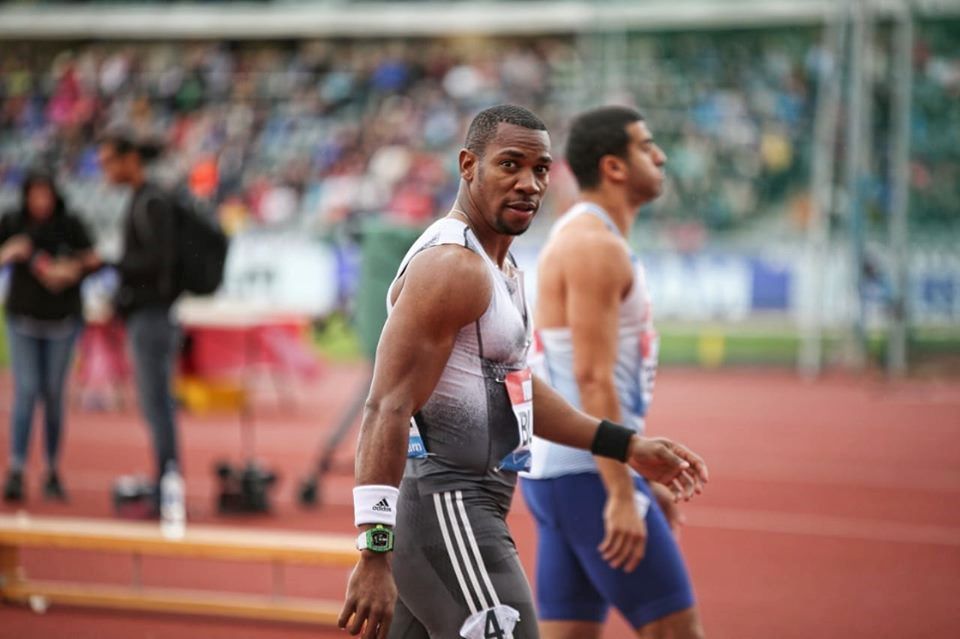
DIAMOND LEAGUE: YOHAN BLAKE SAYS NEW FORMAT RISKS DAMAGING ATHLETICS

Yohan Blake (This photo was downloaded from the athlete’s Facebook page and is being used here for representation purpose. No copyright infringement intended)

Diamond League is just an example. As broadcast begins to shape the contours of sport, there is introspection for the media also to do.

The ongoing controversy about the Diamond League’s exclusion of certain disciplines found fresh fuel with ace Jamaican sprinter Yohan Blake pointing out that the move risked damaging athletics.

At a press conference in Mumbai earlier this week, he pointed out that the omission will impact athletes’ livelihood. According to reports published in the Indian media, Blake said (with reference to the decisions made regarding the Diamond League) he was unsure if Sebastian Coe, president, World Athletics (formerly International Association of Athletics Federations / IAAF) was trying to build athletics or kill it. Blake is a specialist in the 100m and 200m (he is the second fastest man yet over these distances); the 200m is among disciplines affected (at least in the short term) by the restyled Diamond League format. Blake’s view on the subject was reported by leading domestic media outlets like Times of India, The Hindu and Indian Express.

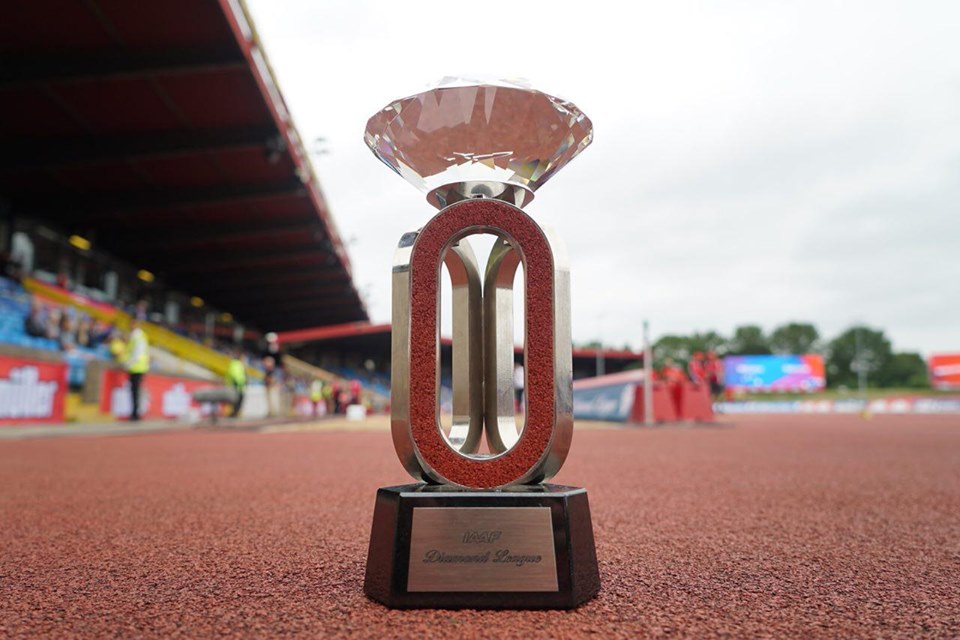
The IAAF Diamond League, Wikipedia says, is an annual series of elite track and field competitions. The series began with the 2010 Diamond League. It was designed to replace the IAAF Golden League which had been held annually since 1998. While the Golden League was formed to increase the profile of the leading European athletics competitions, the Diamond League’s aim was to enhance the worldwide appeal of athletics by going outside Europe. In addition to the original Golden League members (except Berlin) and other traditional European competitions, the series now includes events in China, Qatar, Morocco and the United States.

The new Diamond League format was approved by the IAAF council in early 2019 at a meeting in Doha. Among the first to voice concern about the revamped format was Athletics Kenya (for full report please try this link: https://shyamgopan.com/2019/04/02/possibility-of-5000m-still-alive-in-new-diamond-league-format/). In March 2019 they wrote to IAAF about the exclusion of distances longer than 3000m. Athletics Kenya was particularly concerned by the exclusion of any event longer than 3000m from the Diamond League program next year and the reduction in the number of meetings from 14 to 13. They sought, and received assurance from IAAF that Kenyan and other East African athletes, who feature prominently in 5000m races, would not lose competition opportunities due to this process.

The IAAF confirmed that the absence of the 5000m from the official Diamond League program would not preclude individual Diamond League meetings from running the event outside of the 90-minute international broadcast window and that several meetings had already shown interest in hosting the 5000m. It was explained that the IAAF’s market research showed that producing a series that consistently featured the best athletes competing against each other was a key factor in improving the appeal of the Diamond League for broadcasters and fans. At the same time the 5000m runners, coaches and agents consulted during the process indicated that they were unlikely to run six races over that distance in the Diamond League series (in 2018 no leading athlete ran more than two 5000m races during the regular Diamond League season). The 3000m distance was selected because it was more likely to attract the best distance talent more regularly. As a consequence, distance runners will have the option of running up to seven 3000m races (including the Diamond League Final), plus additional 5000m races, across the season, an official statement from IAAF issued in the context of Athletics Kenya’s letter had said.

Even as the drama of World Athletics versus athletes over the new Diamond League format plays out in the media, it is important to note that a critical component inspiring the changes to format is the nature of media itself. This became clear in an official IAAF statement from November 2019 (for an overview please click on this link and scroll down to find relevant article: https://shyamgopan.com/2019/11/07/at-a-glance-november-2019/). According to it, the largest consumer survey yet by the Diamond League showed that it’s most popular disciplines were the 100m, long jump and high jump followed by pole vault, the 200m and 400m. “ Popularity of athletes, head-to-head competitions and excitement of the individual competition were cited as reasons for the choice of the most popular events in the largest consumer survey into the disciplines hosted in the IAAF Diamond League. Representative online research carried out in China, France, South Africa and the USA; post-event surveys in Belgium, Great Britain and Switzerland and click-throughs on Diamond League social media videos during 2019 helped guide the Diamond League General Assembly, made up of all meeting directors, to decide which disciplines will be part of 2020 season,’’ the statement said.

This photo was downloaded from the Facebook page of IAAF Diamond League. No copyright infringement intended.

According to it, as a result of the research, and the decision taken earlier in the year that only 24 disciplines (12 male / 12 female) will form the core disciplines at all meetings, eight disciplines (4 male and 4 female) will not be contested during the 2020 Diamond League season. These disciplines are the discus, triple jump and 3000m steeplechase – three events that currently sit towards the bottom of the research conducted – and the 200m, which the Diamond League organizers felt would be too congested alongside the 100m, particularly in an Olympic Games year. Following a detailed review of the schedule for the 90-minute broadcast window of the Diamond League, both the 200m and the 3000m steeplechase will be included in 10 meetings (5 male and 5 female) in the 2020 Diamond League season, including Oslo, Rome, and Doha. Two meetings will also feature discus and triple jump (1 female and 1 male). However, none of the four disciplines will feature in the Diamond League Final in 2020, the statement said.

“ Our objective is to create a faster-paced, more exciting global league that will be the showcase for our sport. A league that broadcasters want to show and fans want to watch. However, we understand the disappointment of those athletes in the disciplines not part of the 2020 Diamond League season,’’ the statement quoted IAAF Diamond League chairman Sebastian Coe, as saying. Needless to say, two days later, on November 8, the media reported that world champions in the 3000m steeplechase, Kenya’s Conseslus Kipruto and Beatrice Chipkoech, had expressed disappointment in the Diamond League’s decision. They said that the move could affect their career. At the Olympics, Kenya has been the most successful nation in steeplechase.

According to media reports, Blake was in Mumbai to promote Road Safety World Series, a T-20 cricket tournament. He plans to commence an athletics training program in India, the reports said.

(The author, Shyam G Menon, is a freelance journalist based in Mumbai.)
SPORT CLIMBING / ADAM ONDRA QUALIFIES FOR OLYMPICS

Adam Ondra (This photo was downloaded from the athlete’s Facebook page and is being used for representation purpose. No copyright infringement intended.)

Adam Ondra, among the best sport climbers of his generation and one of the most widely recognized athletes from the field, has secured an invitation to compete at the 2020 Tokyo Olympics.

He qualified at the top of the table at the Combined Qualifier held by the International Federation of Sport Climbing (IFSC) over November 28-December 1, 2019 in Toulouse, France. This qualification took him into the finals at the event. As far as the Olympics is concerned, the crux was the qualifying round with the top six scheduled to get Olympic invites. News reports said that with Japan already filling its slots via results at the Combined World Championships held earlier in Hachioji, the two Japanese climbers – Kokoro Fujii and Meichi Narasaki – who were among top qualifiers at Toulouse wouldn’t get Olympic invites and most likely instead, see their results considered internally by the Japanese team. This left Olympic invites for the remaining six climbers.

Ondra who represents Czech Republic, had earlier failed to get an invitation to the Olympics following his disqualification at the Combined IFSC Climbing World Championships at Hachioji, Japan, where in the sub category of lead climbing, he was found to have accidentally stepped on a bolt resulting in his score being whittled down.  In the qualifying round at Toulouse, he placed first in lead climbing, second in bouldering and fourteenth in speed climbing. In the combined final, Ondra finished second ahead of Meichi Narasaki and behind Kokoro Fujii. Others qualifying at Toulouse for the 2020 Olympics, as per IFSC, were YuFei Pan (China), Alberto Gines Lopez (Spain), Jan Hojer (Germany), Bassa Mawem (France) and Nathaniel Coleman (USA) in the men’s category. Among women, the new names aboard from Toulouse are: Julia Chanourdie (France), Mia Krampl (Slovenia), Iuliia Kaplina (Russia), Kyra Condie (USA), Laura Rogora (Italy) and YiLing Song (China).

On November 30, Chinese news agency Xinhua had reported that Song should be getting her Olympic invite. The Chinese climber was placed ninth in the qualifying round. Xinhua based its conclusion on the fact that Japan’s Ai Mori who led the overall rankings and advanced to the eight-woman final together with compatriot Futaba Ito, who finished fifth, were both ineligible for Olympic invites given Japan already guaranteed full representation as the host of next year’s Olympics. Additionally, Lucka Rakovec of Slovenia, who placed second overall behind Mori in the qualifier at Toulouse, had already obtained an Olympic spot by finishing in the top seven at the world championships, Xinhua said. In its report dated December 1, on the women’s combined final results from Toulouse, IFSC has noted that it was a close battle between Slovenians, Lucka Rakovec and Mia Krampl.

At the time of writing, the names of those qualified post-Toulouse were yet to be added to IFSC’s confirmed list of athletes heading to Tokyo. IFSC has mentioned on its website that all qualification places are provisional until confirmed by each athlete’s National Olympic Committee (NOC). Formal invitations will be sent by the IFSC to the relevant NOCs within five days of the conclusion of the Combined Qualifier. The NOCs will then have two weeks to either confirm or decline the quota places.

Post Hachioji, those in the first list of qualified athletes (as available on the IFSC website; the list was titled: Sport Climbing’s First Olympic Qualified Athletes), were Janja Garnbret (Slovenia), Akiyo Noguchi (Japan), Shauna Coxsey (Great Britain), Aleksandra Miroslaw (Poland), Miho Nonaka (Japan), Petra Klinger (Switzerland) and Brooke Raboutou (USA) from the women’s category;  Tomoa Narasaki (Japan),  Jakob Schubert (Austria), Rishat Khaibullin (Kazakhstan), Kai Harada (Japan), Mickael Mawem (France), Alexander Megos (Germany) and Ludovico Fossali (Italy) from the men’s category. An updated list (dated November 11, 2019) available on the IFSC website also includes Sean McColl (Canada) and Jessica Pilz (Austria). Those qualified at Toulouse will join the above lot.

The final opportunity to qualify for the Olympics will be five IFSC Combined Continental Championships due to take place in 2020. The schedule as available on the IFSC website is – Africa, 1-3 May, Johannesburg (South Africa), Asia, 18-24 May, Morioka (Japan), Europe, 16-18 April, Moscow (Russia), Pan-Am, 27 February-1 March, Los Angeles (USA) and Oceania, 18-19 April, Sydney (Australia). Climber hoping to qualify should head to his / her respective continental championship.

The 2020 Tokyo Olympics will mark sport climbing’s debut at the Olympic Games. One of the biggest impacts of the move has been the introduction of combined climbing championships, wherein the best climber across the sport’s three disciplines – lead climbing, bouldering and speed climbing – emerges winner. Altogether 40 climbers – 20 men and 20 women – will compete at the Olympics.

(The author, Shyam G Menon, is a freelance journalist based in Mumbai. For more on sport climbing’s selection process for the Olympics, please try this link: https://shyamgopan.com/2019/10/16/sport-climbing-phase-two-of-olympic-qualification-due-by-november-end/)

JYOTI, JIGMET IN MARATHON TEAM FOR 2019 SOUTH ASIAN GAMES

Jyoti Gawate (Photo: courtesy Jyoti)

Jyoti Gawate, Jigmet Dolma, Rashpal Singh and Sher Singh will represent India in the marathon at the 2019 South Asian Games due in Kathmandu over December 1-10, an official statement disclosing the names of all athletes selected to the Indian squad, available on the website of Athletics Federation of India (AFI), said.

For Jyoti who hails from Parbhani in Maharashtra, this is her second outing at the South Asian Games. Earlier in 2016, she had been part of the marathon team for that year’s South Asian Games held in Guwahati. In 2011, she had taken part in the Asian Marathon Championships in Thailand and finished seventh among women with a timing of 3:17 hours. She was chosen for this event because of her win at the 2011 Mumbai Marathon. AFI had funded her trip and stay. The federation also sent her to participate in the SCO Marathon in China. “ I am aiming for timings closer to that of Tata Mumbai Marathon 2019,” Jyoti, who was scheduled to travel shortly to Kathmandu for the 2019 South Asian Games, said when contacted. At the 2019 edition of TMM, she had finished second among elite Indian women with a personal best timing of 2:45:48 (for more on Jyoti, please try this link: https://shyamgopan.com/2019/02/04/jyoti-and-the-eight-minutes/).

This is the first time Jigmet Dolma is in the Indian team headed to a major event.  For the past several years, she has been part of the group of runners from Ladakh supported by Leh based-Rimo Expeditions, that travels every winter to the road races of the plains. Over time, she has worked her way up from amateur to elite category and been podium finisher at major marathons including the Tata Mumbai Marathon (TMM).  “ This is a fantastic development for Jigmet and Ladakh,’’ Savio D’Souza, Mumbai based-coach and former national champion in the marathon who has been involved with training Ladakhi runners, said.

Hailing from Igoo village in Ladakh, Jigmet used to run at block, school and state level. In 2012, she ran the half marathon at the Ladakh Marathon without any prior practice and emerged first. At the 2013 Standard Chartered Mumbai Marathon (later TMM), she placed 17th in the half marathon. Same year, at the 2013 edition of the Ladakh Marathon, she finished first in the half marathon with timing of 1:50. In 2014, she improved her performance at SCMM to fourteenth position. Same year she retained her first position at the Ladakh Marathon. In January 2015, she ran her first full marathon at SCMM, ending second among women in the open category (timing: 3:45:21), her first podium finish in Mumbai. By 2017, she had graduated to finishing third among Indian women with timing of 3:14:38; two years later at 2019 TMM, she placed third among elite Indian women with timing of 3:10:43. Jigmet has never been shy of stating her wish to run for India one day. She along with fellow runner from Ladakh, Tsetan Dolkar, has been a familiar duo at various road races, particularly the annual Mumbai Marathon (for more on Jigmet, Tsetan and other runners from Ladakh, please refer the archives of this blog or type their names in the box allotted for search).

For Rimo Expeditions and Savio, Jigmet’s debut in the Indian squad – coming as it does after years of regular visits to road races – will mean a lot. “ As far as I know, after Rigzen Angmo, Jigmet is the first woman marathon runner from Ladakh to represent India,’’ Savio said. In the 1990s, Rigzen Angmo who hails from Skarbuchan village about 125 kilometers away from Leh, had been a regular podium finisher on the national circuit. Abroad, she won the Kuala Lumpur Marathon in 1994 and the Bangkok Marathon in 1995 (for more on Rigzen Angmo please try this link: https://shyamgopan.com/2015/09/28/the-spectator/). “ This is the dream we had in 2012, when we started the project of training long distance runners and sending them to races in the cities. It is heartening to see one of them make it to the Indian team. I am sure this will encourage more youngsters from Ladakh,” Chewang Motup, owner of Rimo Expeditions said of Jigmet’s selection. He also hoped that greater support would manifest for such projects.

Jigmet Dolma (Photo: Shyam G Menon)

All four marathon runners selected for the 2019 South Asian Games had been podium finishers at the fourth edition of the IDBI Federal Life Insurance New Delhi Marathon held on February 24, 2019. Rashpal Singh had won the race with timing of 2 hours 21 minutes and 55 seconds. Sher Singh had finished second among men with timing of 2:23:16 followed by Manavendra Singh (2:28:27). The three men were then training at the Army Sports Institute (ASI) in Pune. Among women, Jyoti finished first with timing of 2:47:54. Jigmet placed second in 3:01:30 followed two seconds later by Tsetan Dolkar (3:01:32) who placed third.  The top two from both gender categories are now headed to Kathmandu for the 2019 South Asian Games.

(The authors, Latha Venkatraman and Shyam G Menon, are independent journalists based in Mumbai.)

ULTRAMARATHON: IT ISN’T JUST PILING ON MILEAGE / LESSONS FROM TWO CHAMPIONSHIPS

Illustration: Shyam G Menon

Kolkata-based ultramarathon runner Anjali Saraogi is comfortable training with gels and branched chain amino acids (BCAA) that help in reversing muscle loss, reduce muscle soreness and aid muscle recovery. That was her trusted recipe till Aqaba happened.

Jordan’s only coastal city – fans of Hollywood would remember it from David Lean’s masterpiece: Lawrence of Arabia – was location for the 2019 IAU 100 kilometer Asia and Oceania Championships held on November 23. In the run up to the event in Aqaba, Anjali’s training suffered setbacks caused by health issues. All the same, she aimed for a sub-nine-hour finish.

At the championships, she was cruising along very well when the blazing sun and strong headwinds started to take a toll. “ At the 60 kilometer-mark, I felt I was sinking and actually ended up sitting on a chair. That is completely unusual for me,’’ she said.

Abhinav Jha, one of the crew members of the Indian team, came to her assistance. “ He made a drink with honey and lemon. That revived me,’’ Anjali said. She stopped consuming gels, thereafter. Anjali went on to complete the race in nine hours and 22 minutes, a new national record for women in that category. She bettered her own previous national record of 9:40 hours, set at the IAU 100 k World Championships held in Croatia in 2018.

Anjali Saraogi (Photo: courtesy Anjali)

“ When exhaustion levels are high, it is best to opt for natural foods. You can never go wrong there,’’ Abhinav, Lieutenant Commander with the Indian Navy, said. The naval officer was originally part of the Indian team and slated to run the race. But he opted to stay out due to injury and instead, joined the team’s support crew. Hemant Beniwal, the stand-by runner, was called in to complete the team taking Abhinav’s place. “ As most of us are amateur runners, we are working on nutrition and hydration on trial and error basis. But in an ultramarathon, the best plan is your own plan,’’ Abhinav said.

In an ultramarathon, crewing can be challenging. The challenge stems from the difficulty in assessing the hydration and nutrition needs of runners. At the 2019 IAU 24-hour World Championships held in Albi, France over October 26-27, Pranaya Mohanty avoided solid food for a long time and chose to stick to gel and salt tablets. But after a few hours of running he started to crave for solid food. “ I wanted either curd rice or dal rice. There was bread on offer but I prefer curd rice, dal rice or khichdi,’’ Pranaya said. The crew members arranged for the same.

At the event, Pranaya covered a distance of 211.956 km. He twisted his ankle in the eighteenth hour and was forced to slow down. He also suffered stomach distress and had to keep going to the rest rooms. “Binay Sah was also in bad shape. His nutrition plan did not go as per plan and he had to stop running,’’ Pranaya recalled. Fuelling for an ultramarathon event is not confined to the race alone. It starts months ahead along with the training.

Ultramarathon runner, Apoorva Chaudhary drew up her training plan for the IAU 24-hour World Championships with a target of covering 200 km. “ There are two vital elements in training for an ultramarathon – working with a target in mind and focussing on nutrition and hydration,’’ Apoorva said. She went on to cover a distance of 202.212 km, setting a new national record for 24-hour run (she surpassed her own record of 176.8 km set during the NEB 24-hour Stadium Run in New Delhi in December 2018). Apoorva not only put in all the mileage and strength training required, she also focused on nutrition. “ I prepared my body with a variety of foods – different kinds of solid foods, different gel brands,’’ she said. She also did training runs with very little hydration. “ I did a 30 km-training run without food and water just to prepare my body for a worst case scenario,’’ Apoorva said.

Priyanka Bhatt (Photo: courtesy Priyanka)

Priyanka Bhatt, who too was part of the Indian squad for the IAU 24-hour World Championships in Albi, trained with race day conditions in mind. “ I work with energy bars. Gels don’t suit me,’’ she said. Her training was focused on building endurance, running back-to-back distances that would be in the range of 130 to 160 km every week.

In August 2019, a camp was held for ultra-runners at Bengaluru. The camp helped runners with guidance on training, nutrition and hydration. Despite training with different foods and drinks, things can go wrong during a race, runners said.

At the 2019 edition of the Bengaluru Stadium Run, Apoorva’s nutrition did not go as per plan. At Albi, Apoorva’s nutrition plan went off well for the initial part of the race but thereafter it was difficult to retain food. “ I kept talking to myself to stay in a positive frame of mind. After the initial few hours, the effort to work on your pace, mileage target and nutrition intake is entirely a mind game. For the first 13 hours, I had a very strong run. After that I felt like crying. My ribs felt swollen. It was more a mental issue than a physical one,’’ Apoorva said. In fact, one of the most insightful articles following the 2019 24 hour-world championships in Albi was one on Camille Herron of the US, written by author Adharanand Finn and published in The Telegraph. While lovers of the sport worldwide noted her victory in the women’s category, the article brought out the suffering Camille underwent in the grueling race.

Both the ultra-running events – the IAU 24-hour World Championships held at Albi, France in October 2019 and the 100 km Asia & Oceania Championships held at Aqaba, Jordan in November 2019, showcased significant improvement in ultra-running by Indians despite the sport being relatively new for the country. At Aqaba, the Indian team of nine runners (three women and six men) secured gold medal in the men’s team category and silver in women’s.  In addition, Deepak Bandbe won the individual bronze medal and Anjali Saraogi set a new national record for women in 100 km.

Pranaya Mohanty (Photo: courtesy Pranaya)

“ The team did very well. There was a big jump in performance. All the six male runners finished in sub-8.5 hours and two of the women in under-10 hours,’’ Peteremil D’Souza, member of the ultramarathon committee of the Athletics Federation of India (AFI), said. The women’s performance was outstanding, Sunil Chainani, also member of AFI’s ultramarathon committee, said. Earlier at Albi, including Apoorva’s new national record, five athletes in all – three women and two men – had achieved new personal records. Among women, besides Apoorva, Priyanka Bhatt (192.845 km) and Hemlata (173.178 km) secured new PBs, while from the men, Pranaya Mohanty (211.956 km) and Kanan Jain (211.157 km) set new personal records. Also, five Indian runners – four men and one woman – covered distance in excess of 200 km at Albi.

According to Sunil, Indian runners are now looking at a multi-faceted approach to training that focuses not merely on building mileage but important aspects of nutrition and hydration as well. “ It is a new sport. We are constantly on a learning curve,’’ Abhinav said.

(The author, Latha Venkatraman, is an independent journalist based in Mumbai.)

LAYUP TO 555K

Ashish Kasodekar (Photo: Shyam G Menon)

A basketball player from school days, Ashish Kasodekar started participating in running events in 2013. He also forayed into long distance cycling. In August 2019, he became the first Indian to complete the 555k category of La Ultra-The High.

“ I believe that when people call you mad, you are on the right track. It means you are doing something nice for yourself,’’ Ashish Kasodekar said.

It was September 2019. We were at his office in Pune.

Weeks earlier, the unassuming travel consultant had become the first Indian runner to complete the 555 kilometer-category of La Ultra-The High, the challenging ultramarathon held annually in Ladakh. In retrospect, it had been a busy six years to where he was now, for Ashish commenced running at events only in 2013. Till then he had been a basketball player; someone who played competitively, was part of the state team and had played at the 1992 edition of Federation Cup. “ Team games teach you to relate to others and be positive,’’ he said. Basketball remains his first love and he is active in Masters Basketball. But alongside, there is this streak in endurance sport building up.

Born 1971, Ashish grew up in Pune, the middle sibling among three brothers. He took to basketball while at school itself. Following college, he worked with a travel agent for a year. Then he became General Sales Agent (GSA) for the Italian airline, Alitalia. He was happy to work for the airline; there was travel as part of work and the airline was a strong brand that sold without need for much marketing. “ I was getting into a comfort zone,’’ Ashish said. About seven to eight years ago, he therefore started his own travel consultancy – Edgeover Holidays. It is a proprietary concern; no partners, which is how he prefers it.  There was also a twist. Recognizing his need for personal time, he restricted clientele to friends. “ I don’t have any corporate clients. If you have corporate clients, it will interfere with the time you need to train for pursuits like endurance sports,’’ he said.

That conscious choice likely set in because around three years before he commenced his own business, Ashish participated in an adventure race in Pune called Enduro organized by Prasad Purandare. It was a team event – two men and one woman formed a team. “ I really enjoyed it,’’ Ashish said. The event also got him into a bit of endurance cycling; for Enduro, he borrowed his nephew’s bicycle. The attributes of the outing, distinctly different from a game of basketball, interested him. Basketball was competitive. Enduro was more about finishing. “ You have to learn to push yourself. It is a stronger body experience,’’ he said. Ashish found himself spending more and more time with people from his new found area of interest.

In 2011, there was a numerically special day: November 11, which folded neatly into 11/11/11, a series of ones.  Ashish decided to do something equally special for the occasion. He cycled from Pune to Goa on his Bianchi hybrid, reaching the coastal city in 21 hours. The following year, there was 12/12/12. For that, he walked 100 kilometers from Pune to Panchgani. In 2013, there was 11/12/13; this time he rode his Harley Davidson Iron 883 from Pune to Madurai and back, covering 2400 kilometers in 36 hours. In 2013, he also participated in his first running event. He did a 15k; it was executed with no prior training. In January 2014, he did his first half marathon in Mumbai. This time he trained for it. “ I really enjoyed that,’’ he said. In July-August of the same year, he participated in the London-Edinburgh-London (LEL) bicycle race. There were eight participants from India. None completed. However on the bright side, he had to train for LEL and that included a 1000 kilometer-ride from Pune to Hubli and back. Slowly but surely, endurance was creeping into his system and world view of things. In 2015, Ashish and Balakrishna Desai cycled from near the Gulf of Khambat in Gujarat to Khardung La in Ladakh. The project spanning sea level to one of the highest motorable passes around was called 0 to 18. They covered the distance in 24 days. Ashish used a friend’s MTB. In September 2015, he did his first full marathon; he elected to do it in Leh as part of that year’s Ladakh Marathon. Following this run, a friend asked him if he had heard of La Ultra-The High. Ashish hadn’t. But a spark was lit.

Photo: courtesy Ashish Kasodekar

In 2016, at the Mumbai Marathon, Ashish met the qualifying time for the Comrades ultramarathon in South Africa. To be eligible, you had to run the full marathon in less than five hours. However, post qualifying he didn’t train diligently for Comrades. In South Africa, he cleared all the stage cut-offs of the race in time and the on the final stretch relaxed. Just as he was reaching the stadium – the finish point – he heard the officials announce that the overall 12 hours cut-off had passed by. It was a wake up-call. “ That last 200 meters taught me a lot about what to do. It told me I had to take things seriously,’’ Ashish said. The previous year at the Ladakh Marathon, he had seen the event’s ultramarathon segment – Khardung La Challenge. When his Comrades attempt ended in that disappointing final stretch, Ashish decided to try the Khardung La Challenge.

In the run up to the race, he came down with chickengunya. On the other hand, he had arranged a tour package for 13 people to Ladakh for the year’s Ladakh Marathon. On recovering from his illness, he decided to proceed with the group. He reached Leh, four days ahead of Khardung La Challenge. At the bib collection point, the race organizers were checking the oxygen saturation level of participants. His turned out to be 99, pretty good. “ I said, let’s try this race. If anything goes wrong I can hop into the ambulance,’’ Ashish said. On race day, the flag-off from Khardung village was at 3AM. “ There was a point when I felt I may have to quit. I had arrived in Ladakh only some days earlier and I felt I wasn’t acclimatized well,’’ he said. A doctor in a passing ambulance checked his oxygen saturation level. It was 72. He asked Ashish to pause for 5-6 minutes. The level recovered to 85. This was just ahead of North Pulu. Ashish took it slowly thereon. Eventually he finished within the assigned cut-off of 14 hours. “ That race was a great boost for my confidence,’’ he said. Next day, at the Ladakh Marathon, he hired a cycle and pedaled 55 kilometers up and down with the runner’s group he had brought for the race. In 2017, He returned to South Africa and completed Comrades in 11 hours, 38 minutes. The changed perspective helped. He was now focusing on the target and training diligently. “ I am a good listener. I also accept tips,’’ he said. Following successful completion of Comrades, Ashish settled down to consider La Ultra-The High, 2017 edition.

Now over a decade old, La Ultra-The High has a course that straddles the Nubra valley-Leh-Tanglang La region; all of it, Ladakh. A union territory since August 2019, Ladakh has an average elevation of around 10,000 feet. While climate change is happening in Ladakh too, it has traditionally been a high altitude cold desert. By day, the clear skies of altitude, renders the sun a blazing orb. The combination of weather conditions and altitude makes La Ultra-The High, a tough ultramarathon. As runners depart the start line in Nubra, the first major challenge to overcome is Khardung La (17,582 feet).  Into the longer race categories, they also have to tackle Wari La (17,224 feet) and Tanglang La (17,480 feet); in the 555k category, the last two passes are repeated on the return.

“ I like to run in Ladakh,’’ Ashish said. He stayed at a home-stay for 10-15 days and then proceeded to attempt the 111k segment of La Ultra-The High. He finished 111k successfully; at 19:48 hours taken to complete the task, he was among the last of the finishers. The race was won by Tsering Stobgias in 12:32. Having collected his medal, Ashish hung around to see how the race was unfolding for those trying 222k and 333k. “ The main organizer of the event, Dr Rajat Chauhan, always spoke of 111k as baby run. I felt angry. I told him that I wanted to try 333k next. He said: hold on; you are getting excited,’’ Ashish said. That year there was only one finisher in 333k – Matthew Maday of the US. Ashish registered for the 333k. He didn’t wait to graduate through the 222k. That takes time; it also consumes that much more money.  In fact for the 333k, he had to seek crowd funding. It provided 70 per cent of the funds needed.

He commenced training in November 2017. In April 2018, he completed the 160k run at Garhwal Runs, which is positioned as stepping stone to La Ultra-The High. Closer to the event in Ladakh, he did a mix of run-walk from Manali to Leh. He ran around 30 kilometers every day on that passage through altitude. That year, five Indian runners participated in 333k, the first Indians to do so.  Ashish was among those who completed. “ Up to 222 kilometers it was good. Close to the finish I was dealing with delirium,’’ he said. He finished the race in 71:59:29 to place third. His support crew included Balakrishna Desai, Mangesh Shinde, Prasad Shett, Amit Kasodekar and Dhananjay Apte. The race was won by Munish Dev in 71:30:28. From 333k to 555k was natural progression.

Photo: courtesy Ashish Kasodekar

In 2019, the flag-off was in the rains. It was minus 12 when Ashish reached North Pulu. He was advised to change his attire. He borrowed. “ I was lucky there were athletes around who were willing to loan their spare clothing,’’ he said. The 2019 edition of La Ultra-The High was noted for its tough weather conditions. Ashish reached Wari La rather late but happy in the head.  In both 333k and 555k, the real challenge is Tanglang La. In 333k, it looms after Khardung La and Wari La have taken their toll on you. In 555k, the pass is done twice and the problem as Ashish pointed out, is that on the return leg tired runner loses elevation slower than before. He completed 555k within cut-off time to place third. He suffered no cramps, blisters or frostbite. “ Self-care was damn good,’’ he said. The time taken was 126:18:00. The race was won by Jason Reardon of Australia in 120:19:00; Matthew Maday finished second. Ashish’s support crew featured both his brothers – Anil and Amit Kasodekar; Arvind Bijwe, Hari Dammalapati, Venkatesh Kashelikar, Sushil Dhende and Swaroopa Bhadsavle.  This time Ashish experienced no hallucinations. “ We took good care of sleep, nutrition and hydration,’’ he said.

(The authors, Latha Venkatraman and Shyam G Menon, are independent journalists based in Mumbai. For more on La Ultra The High, please refer this blog’s archives.)