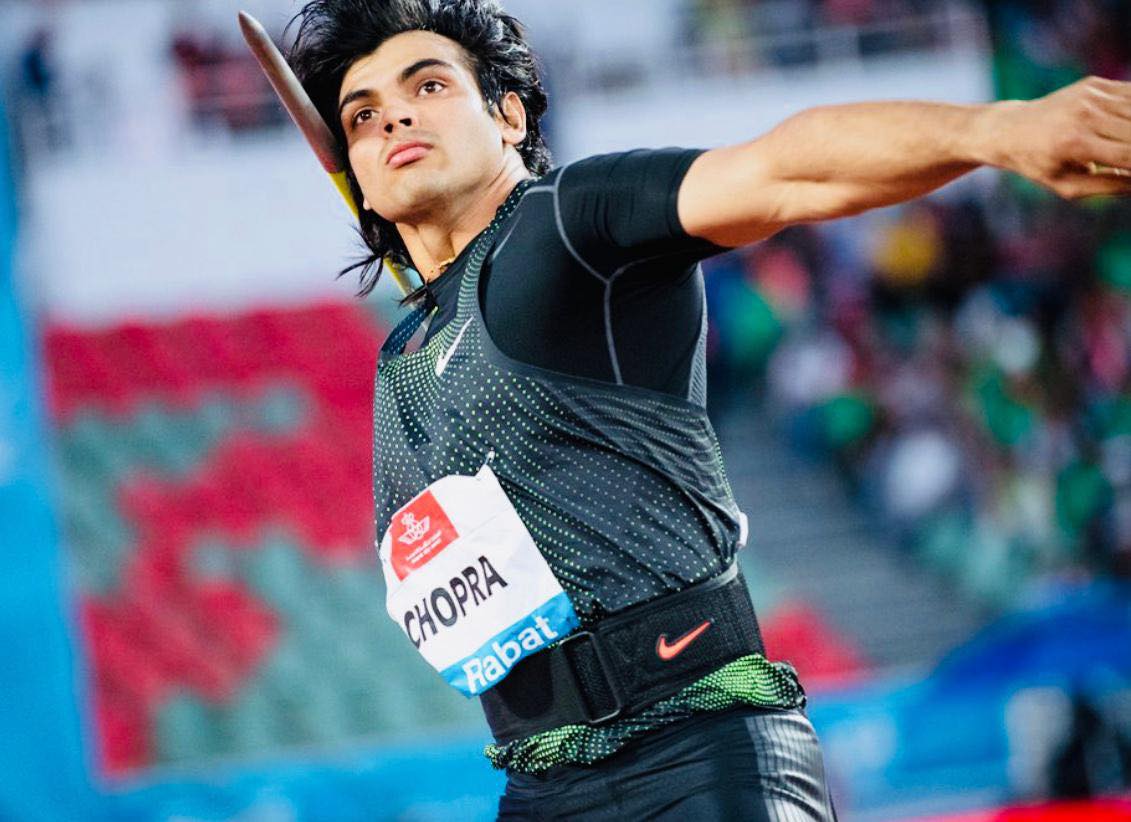
2022 WORLD ATHLETICS CHAMPIONSHIP / ANDERSON PETERS DOMINATES JAVELIN FINAL, SECURES GOLD

Neeraj Chopra. This photo was downloaded from the Facebook page of the athlete and is being used here for representation purpose. No copyright infringement intended.

Neeraj Chopra gets silver; Rohit Yadav finishes tenth

Defending champion Anderson Peters of Grenada, dominated the javelin throw final at the 2022 World Athletics Championship, securing the gold medal with a tremendous display that saw three of his throws land in 90m-territory.

His best throw from the final measured 90.54m.

Olympic gold medallist, Neeraj Chopra, settled for silver with a best throw of 88.13m. Jakub Vadlejch of Czech Republic won the bronze medal; his best throw measured 88.09m.  As per the competition commentary, Neeraj had come into the world championship yet to reach his best form but happy that he was beginning to find his groove. News reports following the final in Eugene, Oregon, USA, quoted the Indian athlete saying that he would try to do better at the next world championship due in Budapest in 2023.

Indian athlete, Rohit Yadav, who too had qualified for the javelin throw final finished in tenth place with a best throw of 78.72m. Media reports said, many of the Indian athletes who participated in the world championship will now move to UK for the 2022 Commonwealth Games scheduled to take place in Birmingham over July 28-August 8. A sizable Indian team is expected there.

In an excellent article (dated July 24, 2022) that summarizes the ascent of Anderson Peters and also offers insight into his rivalry with Neeraj Chopra, Nihal Koshie of Indian Express writes, “   The 2016 Under-20 World Championships in Poland is where Neeraj Chopra and Grenada’s Anderson Peters had their first big showdown. This was two years before Peters, who has studied in the United States since 2017, threw 81.95 metres to break the Mississippi State’s freshman record. At the Zdzislaw Krzyszkowiak Stadium, Chopra became the junior world champion and an overnight star. His 86.48 metres was a world junior record. Johan Grobler (80.59m) of South Africa was second and third, almost unnoticed in the frenzy in India, was Peters (79.65m). Peters had set a national under-20 mark but back then Chopra was anointed as the future star.’’

According to the piece, what makes Anderson Peters a force to reckon with is his ability to produce a big throw towards the end of a competition. Neeraj in contrast, is known for his big throws in the initial phase. At the final in Eugene too, although the Grenadian athlete was strong throughout, with three throws in excess of 90m, it was his last one – 90.54m – that turned out to be the best. To read the Indian Express article in full, please click on this link:  https://indianexpress.com/article/sports/sport-others/cricket-loving-fast-bowler-anderson-peters-beats-neeraj-chopra-to-take-javelin-gold-8048404/

(The author, Shyam G Menon, is a freelance journalist based in Mumbai.)
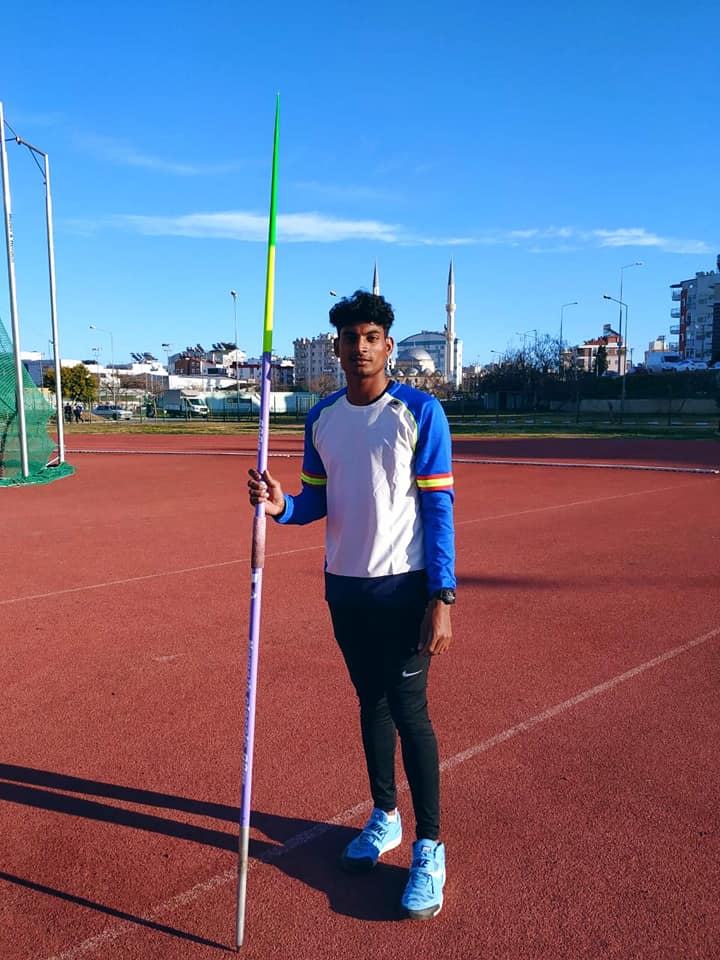
2022 WORLD ATHLETICS CHAMPIONSHIP / ROHIT YADAV QUALIFIES FOR JAVELIN THROW FINAL

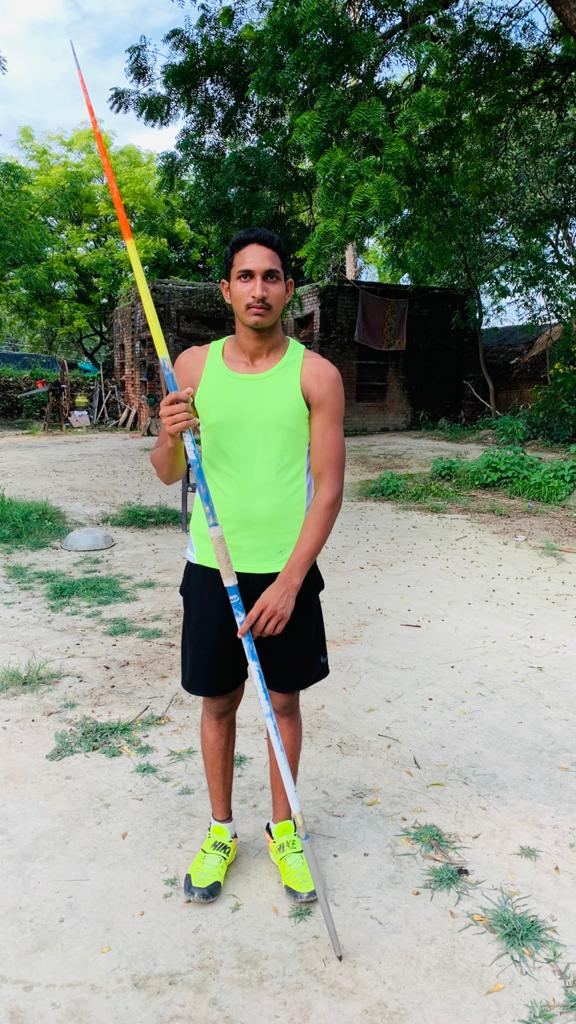
Rohit Yadav. This photo was downloaded from the athlete’s Facebook page. No copyright infringement intended.

India’s Rohit Yadav has made it to the final of the javelin throw competition at the 2022 World Athletics Championship in Eugene, Oregon, USA. In the Group B qualification round, he achieved a distance of 80.42m, sufficient to place eleventh in the list of 12 athletes from Groups A and B, eligible for the final.

In Group A, Neeraj Chopra, the country’s strongest athlete in the discipline, qualified for the final with an impressive throw of 88.39m. He placed second on the list of finalists headed by Anderson Peters of Grenada who managed 89.91m. As per media reports, the qualifying mark was 83.50m; in results published, four out of the 12 athletes making it to the final, had throws exceeding the qualifying mark. The best 12 throws in the qualifying round ranged from 80.03m to 89.91m.

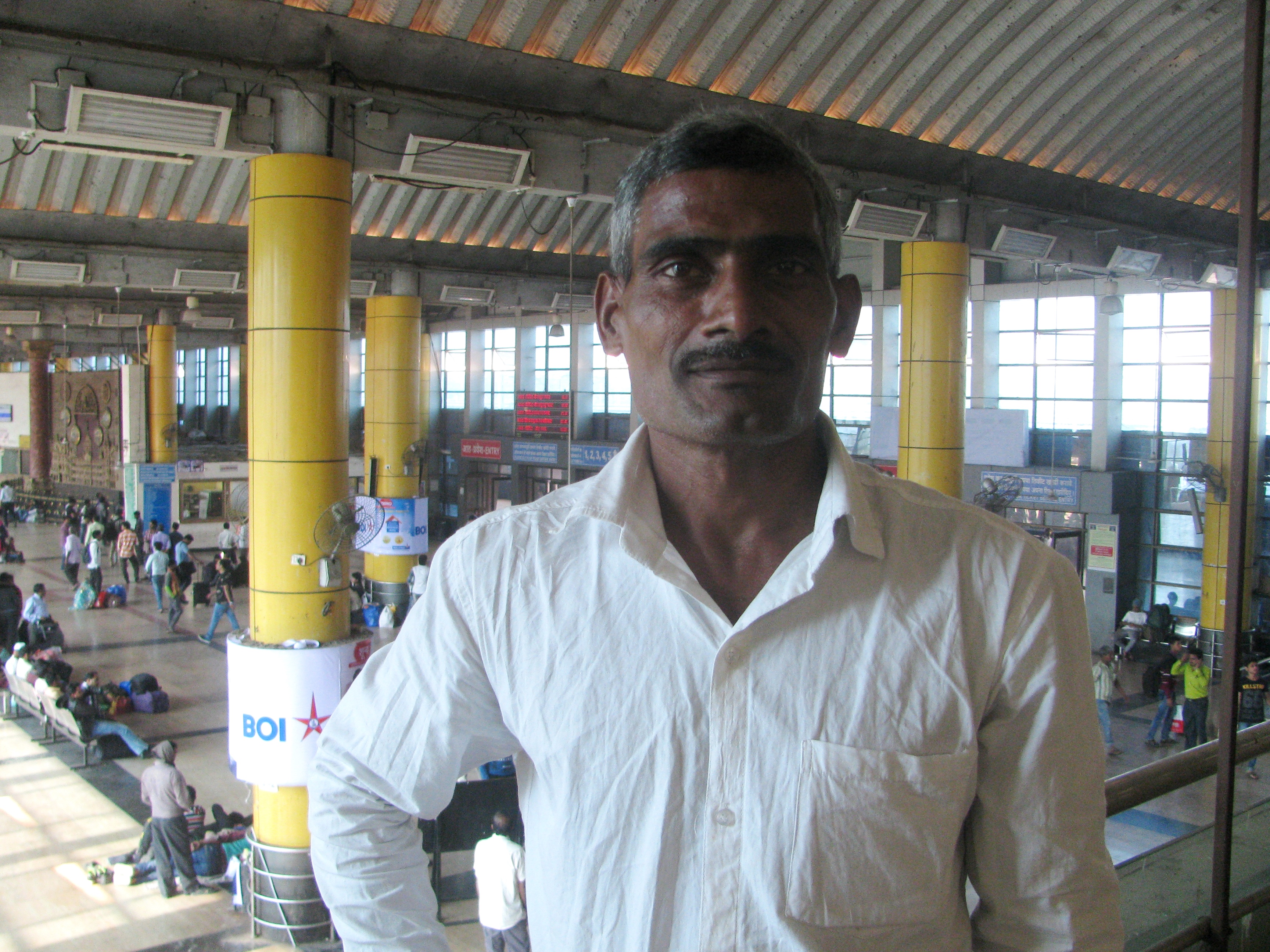
Rohit, 21 (age as per data on the website of World Athletics), is the son of Sabhajeet Yadav, well-known amateur runner. A farmer from Dabhiya village in Jaunpur, Uttar Pradesh, Sabhajeet has several podium-finishes at city marathons to his credit. “ We are so happy that Rohit has made it to the final. He will get a chance to compete with leading athletes,” Sabhajeet said when contacted.

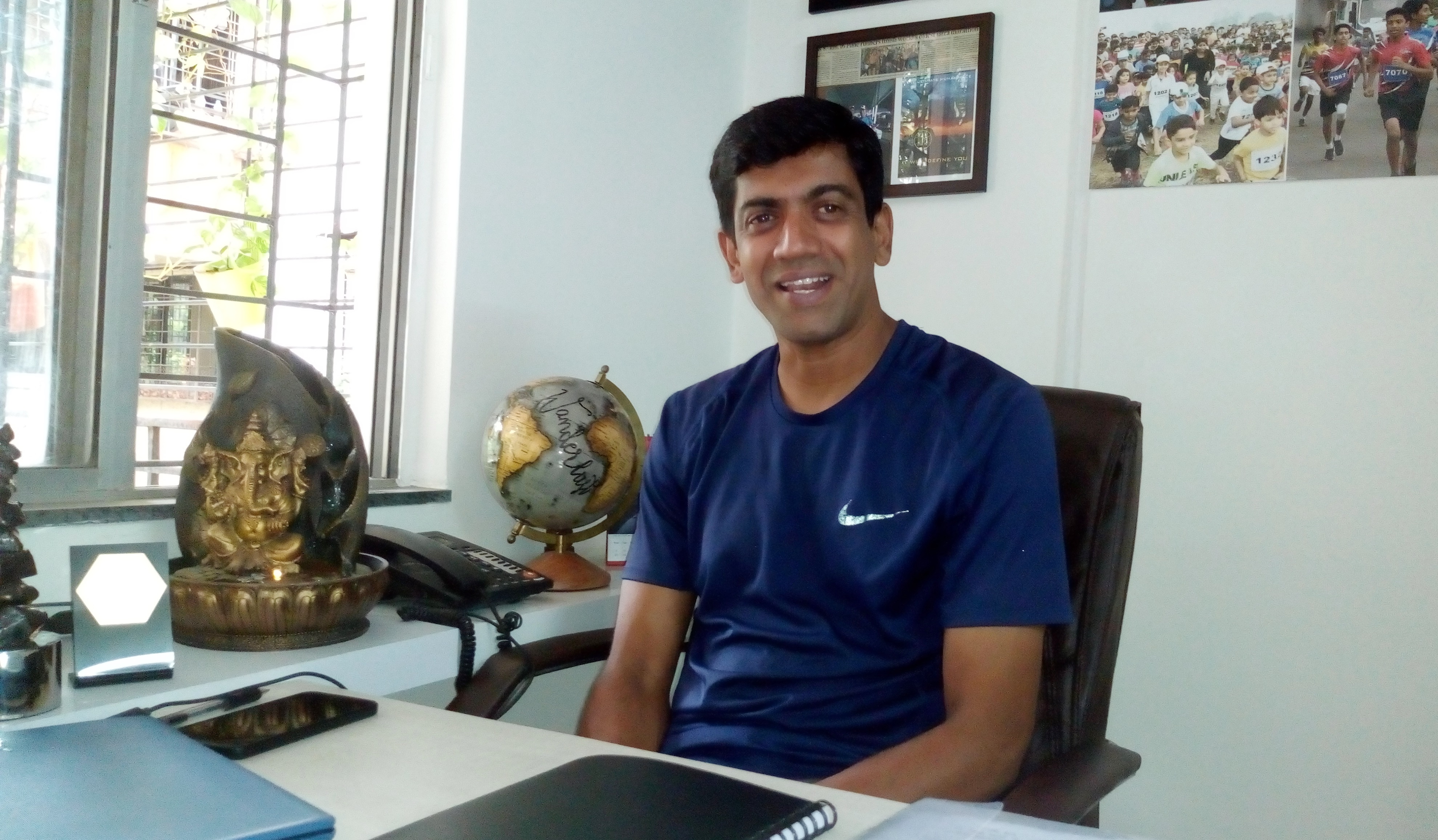
Sabhajeet Yadav (Photo: Shyam G Menon)

“ We woke up at 4 AM to watch the event on television. All of us, my wife, my two other sons and several boys from the village have been here since morning. We are quite thrilled,” he said, adding Rohit’s trip to Oregon for the world championship will be a valuable experience. Rohit is scheduled to participate in the 2022 Commonwealth Games as well.

The world of amateur running has played a role in Rohit’s ascent. Given income from farming is rarely steady and adequate, Sabhajeet participated in amateur marathons to augment his family’s resources. He won consistently in his age category and the prize money helped. During the annual Mumbai Marathon, he acquired a reputation for reaching the city by train, sleeping at the railway station, waking up in the morning, competing in the marathon and going back to his village, a place on the podium earned. The tough farmer was soon noticed by other amateur runners who rallied to his support. Foremost among them, was businessman, Bhasker Desai.

Rohan Yadav (Photo: courtesy Bhasker Desai)

Bhasker learnt of Rohit’s interest in the javelin throw, the promise he showed in the discipline and his training in Sabhajeet’s village with a home-made javelin. As Rohit moved up in performance and ranking, Bhasker funded the purchase of a top-notch, imported javelin for the young athlete to train with. “ This is a major high for me,’’ Bhasker said when asked of the athlete he supported reaching the world championship final. While he may have helped purchase a new javelin, Bhasker maintained that the credit for Rohit’s ascent should go to the athlete and his father. According to him, Sabhajeet has never wavered in his belief that Rohit would one day be at the Olympics. Equally important, Bhasker said, has been the role played by Olympic gold medallist Neeraj Chopra. Rohit looks up to Neeraj as his mentor and the senior athlete’s presence has helped Rohit endure the competitive ambiance at major championships like the one currently on at Oregon, Bhasker said. In an audio message to Bhasker from the US after he qualified for the final, Rohit has said that notwithstanding the newness of figuring in such a big final, he will give his best.

What should interest, is that Rohit’s entry to the world championship final may be just the start of a longer story from Dabhiya. Rohit’s younger brother, Rohan, 16, has also taken to the javelin and, according to Bhasker, already touches distances beyond 72m. Spotted by the army as a promising talent, Rohan currently trains at their sports facility, Bhasker said.

(The authors, Latha Venkatraman and Shyam G Menon, are independent journalists based in Mumbai.)      

2022 WORLD ATHLETICS CHAMPIONSHIP / GOLD FOR GOTYTOM GEBRESLASE IN WOMEN’S MARATHON

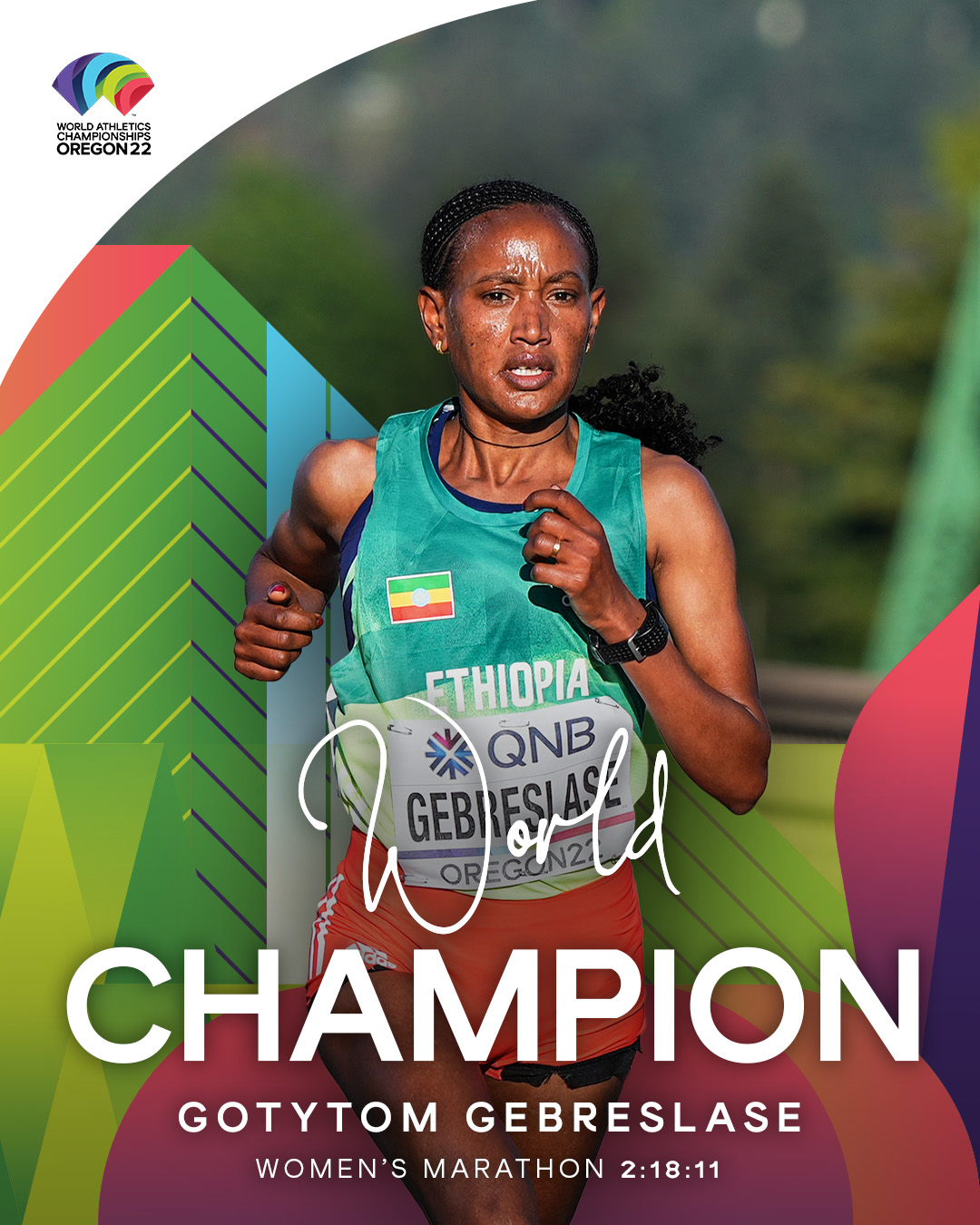
Gotytom Gebreslase. This image was downloaded from the Facebook page of World Athletics and is being used here for representation purpose. No copyright infringement intended.

Gotytom Gebreslase of Ethiopia won the women’s marathon at the 2022 World Athletics Championship, finishing the race in a new championship record of two hours, 18 minutes and 11 seconds.

Judith Jeptum Korir (2:18:20) of Kenya took silver and Lonah Chemtai Salpeter of Israel (2:20:18), the bronze.

It was an engaging race with a lead pack built around defending champion Ruth Chepngetich of Kenya, emerging not long after the start. However, Chepngetich was forced to withdraw from the competition between kilometres 18 and 19, due to stomach issues (as per race commentary). When Chepengetich stepped off the course, the others in the pack wasted no time in accelerating, ostensibly to make it difficult for her to catch up. From this churn, a new lead quartet was born featuring Korir, Angela Tanui of Kenya, Gebreslase and Ababel Yeshaneh of Ethiopia. It appeared a case of two Kenyans and two Ethiopians set to battle it out for the medals. The rest of the field was behind by a visible margin although the racers were still short of the half-way mark.

Past the half-way mark, the quartet progressively split into two distinct groups with Korir and Gebreslase emerging as potential contenders for the top two positions. The two groups were separated by a sizable margin. For some time Tanui and Yeshaneh seemed to vie for the bronze before Yeshaneh moved ahead only to be overtaken in turn by Lonah Chemtai Salpeter of Israel and Nazret Weldu of Eritrea. The latter two had steadily reduced the gap between them and Tanui, and then, Yeshaneh. Despite figuring in the lead pack (and later, the duo trailing the leaders) for a good portion of the race, Ababel Yeshaneh eventually dropped off; she was seen clutching her side periodically in the build up to DNF. Roughly two kilometres from the finish line, Gebreslase who had been hovering close at the shoulders of Korir, sometimes to the latter’s discomfort, strode out in front. She increased the gap consistently and went on to finish with a new championship record to her credit.

It was a race with remarkable performances – there was the measured way in which Gebreslase ran; the display of quiet determination by Salpeter, working her way up to pass Tanui and Yeshaneh and stay ahead of Weldu for the bronze medal, and Sarah Hall of the US who too came from behind to finish fifth ahead of Tanui.  There was no dramatic sprint-finish or any such flourish for the race. What lingered instead as aftertaste was the fruits of determined running.

Gebreslase, 27, made her debut in the women’s marathon at the 2021 Berlin Marathon, which she won in 2:20:09.  Later, at the 2022 Tokyo Marathon she finished third with a timing of 2:18:18.  Korir, who took silver, had in April 2022, won in the women’s category at the Paris Marathon with timing of 2:19:48. Born in Kenya and now running for Israel, Salpeter has a personal best of 2:17:45 achieved at the 2020 Tokyo Marathon, where she placed first among women. Yeshaneh is a former world record holder in the women’s half marathon (1:04:31). Prior to that she had finished second (2:20:51) at the 2019 Chicago Marathon. Tanui had earlier placed fourth (2:18:42) at the 2022 Tokyo Marathon and before that in October 2021, won at the TCS Amsterdam Marathon (2:17:57). Weldu was winner (2:21:56) among women at the Daegu International Marathon held in April 2022 in Korea. In November 2020, she had finished seventh among women in the Airtel Delhi Half Marathon.

According to Runner’s World, besides Sarah Hall, two other American athletes – Emma Bates and Keira D’Amato – finished in the top ten of the women’s marathon at the 2022 world championship in Eugene, making it the best performance by a US marathon squad, male or female, to date at the event. In terms of nationality, the top ten finishers also included two athletes from Kenya and one each from Ethiopia, Israel, Eritrea, Japan and Mexico.

(The author, Shyam G Menon, is a freelance journalist based in Mumbai.)
2022 WORLD ATHLETICS CHAMPIONSHIP / GOLD FOR TAMIRAT TOLA IN MEN’S MARATHON

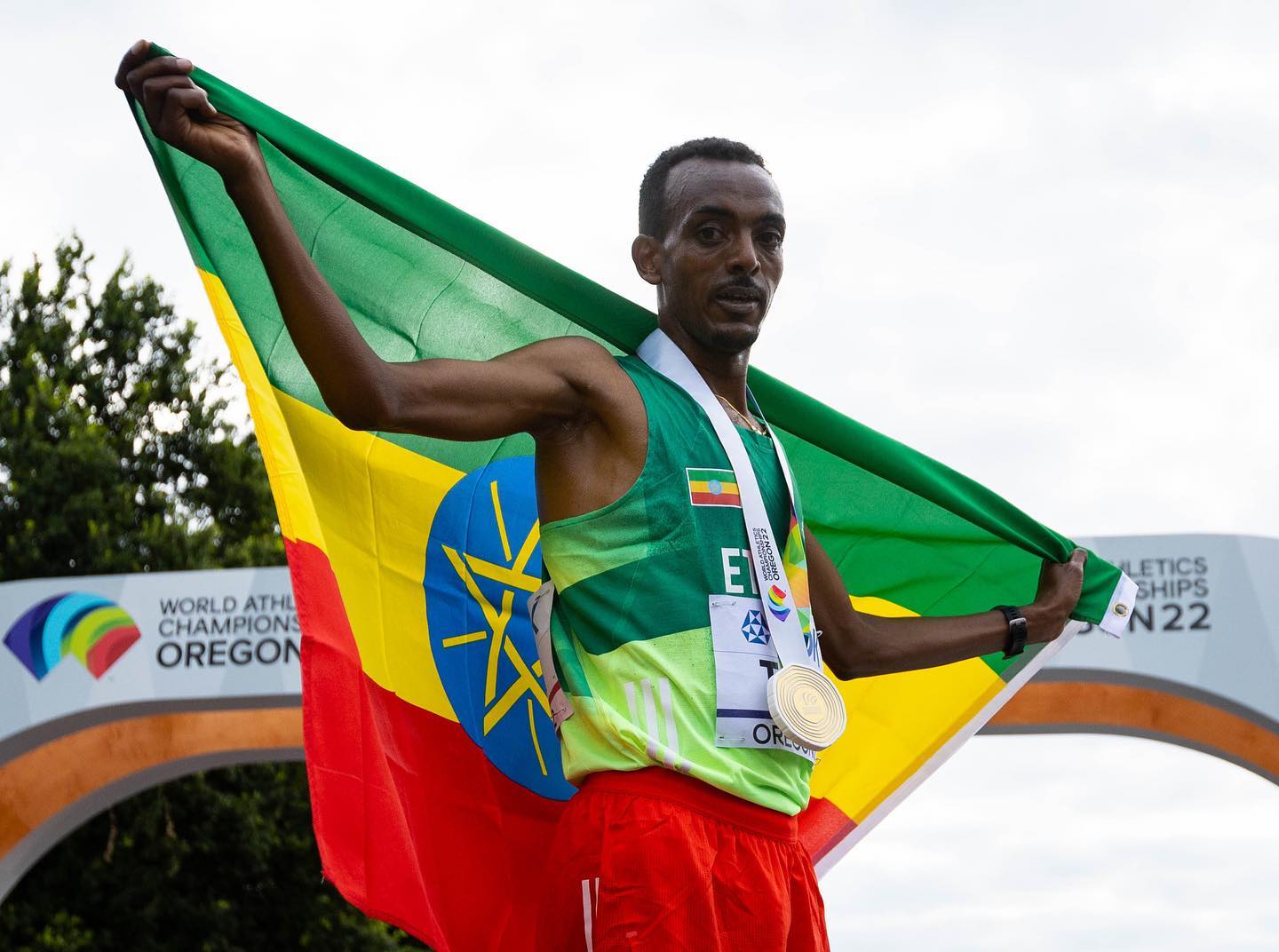
Tamirat Tola. This image was downloaded from the Facebook page of the 2022 World Athletics Championship and is being used here for representation purpose. No copyright infringement intended.

Tamirat Tola of Ethiopia won the men’s marathon at the 2022 World Athletics Championship, covering the distance in a new championship record of two hours, five minutes and 36 seconds.

His compatriot Mosinet Geremew (2:06:44), who took silver, completed the Ethiopian domination of the podium. The bronze went to Bashir Abdi (2: 06: 48) of Belgium.

In its report, Runner’s World attributed Tola’s performance to “ blasting the stretch between 30K and 40K in 28:27.’’ The move helped him put a significant gap between himself and the rest of the lead pack. The previous championship record (2:06:54) was held by Abel Kirui of Kenya; it was set in Berlin in 2009.

Following the race at the 2022 world championship, World Athletics reported on its website that it had been a dream come true for Tola. “ I learned from my mistake in 2017 (World Championships) and I made sure it did not happen again. ” On that occasion, Tola’s attempted run for home 10km from the end was thwarted as Kenya’s Geoffrey Kirui overtook him to win gold. This time there was no faltering on the 30-year-old Ethiopian’s part,” the report said.

It added, “ By the 34km marker his lead was seven seconds. At 35km it was 12 seconds, at 36km it was 17 seconds and at 37km it was 26 seconds. With 5km to go, the gold was gone and the drama of the race resided in which of the chasing group of four – Abdi, Geremew, Levins and Kamworor – would share the podium.’’

In the past, Tola had finished second in the men’s marathon at the 2017 world championships held in London. In March 2022, he had placed third in the annual Tokyo Marathon and prior to that, won the 2021 TCS Amsterdam Marathon. Geremew owns the third fastest time yet in the marathon; 2:02:55, set at the 2019 London Marathon. No stranger to India, he was twice winner – in 2014 and 2015 – of the TCS World 10K held every year in Bengaluru.  Abdi, who is originally from Somalia, had earlier won the bronze medal in the men’s marathon, at the Tokyo Olympic Games.

Finishing just after Basher Abdi at the 2022 world championship in Eugene, was Cameron Levins of Canada. He earned a new national record of 2:07:09. At the Tokyo Olympics held in 2021, he had finished 72nd in the men’s marathon. The highest ranked Kenyan athlete in the men’s marathon in Eugene was Geoffrey Kamworor. He covered the distance in 2:07:14 to place fifth. Among American runners in the men’s marathon at Eugene, Galen Rupp was the first one home in 2:09:37. He placed nineteenth. A highly ranked runner in the US, Rupp had earlier won a bronze medal at the 2016 Rio Olympic Games and subsequently finished eighth at the Olympic Games in Tokyo (the marathon was held in Sapporo).

As per results available on the website of World Athletics, the top ten finishers in the men’s marathon at Eugene included three athletes from Ethiopia and one each from Canada, Kenya, Tanzania, Brazil, Bahrain and Zimbabwe. A notable DNF was well known Ethiopian long-distance runner, Lelisa Desisa (a past winner of the annual marathons in Boston and New York, in 2011, he was winner of the Delhi Half Marathon).

(The author, Shyam G Menon, is an independent journalist based in Mumbai.)
2022 BADWATER 135 / ASHISH KASODEKAR COMPLETES THE RACE

Ashish Kasodekar (File photo: Shyam G Menon)

Pune-based ultra-runner, Ashish Kasodekar, completed Badwater 135 in 38 hours, 24 minutes and 26 seconds.

At the 2022 edition of the race, he was, as per results available on the event’s website, the thirty first runner to cross the finish line. The overall winner of 2022 Badwater 135, the 217-kilometre ultramarathon held annually in California, was Yoshihiko Ishikawa from Japan. He finished the run in 23:08:20. Yoshihiko had won the 2019 Badwater 135 setting a course record of 21:33:01.

Triathlete and ultra-runner, Ashley Paulson of the US, won the women’s race at 2022 Badwater 135, crossing the finish line in a new course record of 24 hours, nine minutes and 34 seconds. The previous course record was 24:13:24 hours set by Polish runner Patrycja Bereznowska in 2019.

The overall second place finisher at the 2022 edition was Ivan Penalba Lopez of Spain. He finished in 24:02:57 hours. Ashley Paulson was the third runner to finish.

(The authors, Latha Venkatraman and Shyam G Menon, are independent journalists based in Mumbai.)


2022 BADWATER 135 / JAPAN’S YOSHIHIKO ISHIKAWA WINS

Ashley Paulson. This image was downloaded from the Facebook page of the event and is being used here for representation purpose. No copyright infringement intended.

Ashley Paulson sets new women’s course record

India’s Ashish Kasodekar close to finishing

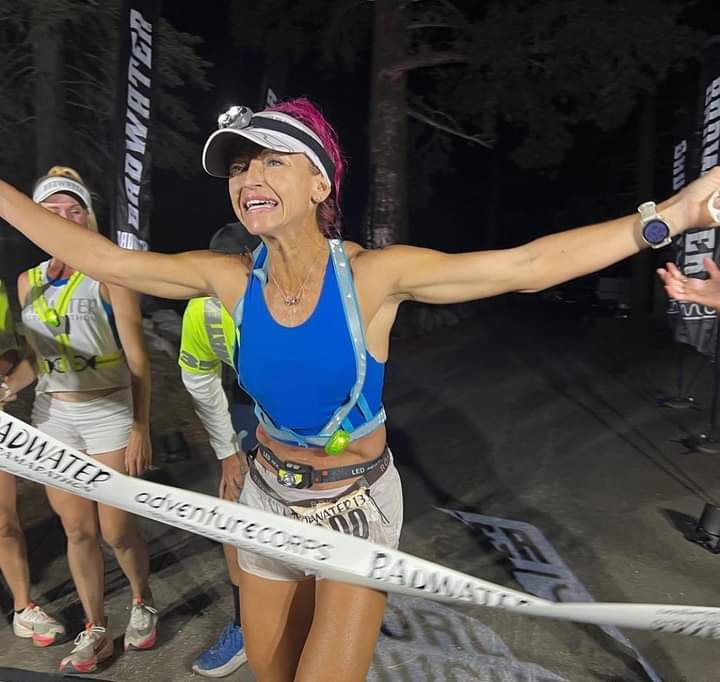
US-based triathlete and ultra-runner Ashley Paulson won the women’s race at 2022 Badwater 135, crossing the finish line in 24 hours, nine minutes and 34 seconds, a new course record.

The previous women’s course record was 24:13:24 hours, set by Polish runner Patrycja Bereznowska in 2019.

The overall winner of 2022 Badwater 135, the 217 kilometre-ultramarathon held annually in California, was Yoshihiko Ishikawa from Japan. He finished the run in 23:08:20. Yoshihiko had won the 2019 Badwater 135 setting a course record of 21:33:01. The race was not held in 2020 due to the COVID-19 pandemic. In 2020, the overall winner was Harvey Lewis of the US (25:50;23); the winner among women was Sally McRae (30:48:47), also of the US.

The overall second place finisher this year was Ivan Penalba Lopez of Spain. He finished in 24:02:57 hours.

Ashley Paulson was the third runner to finish.

At 11.11 PM (IST), the time of publishing this report, India’s Ashish Kasodekar (from Pune) was past the time station at 131.1 miles (210.98 kilometres). The race is 135 miles long.

(The authors, Latha Venkatraman and Shyam G Menon, are independent journalists based in Mumbai.)

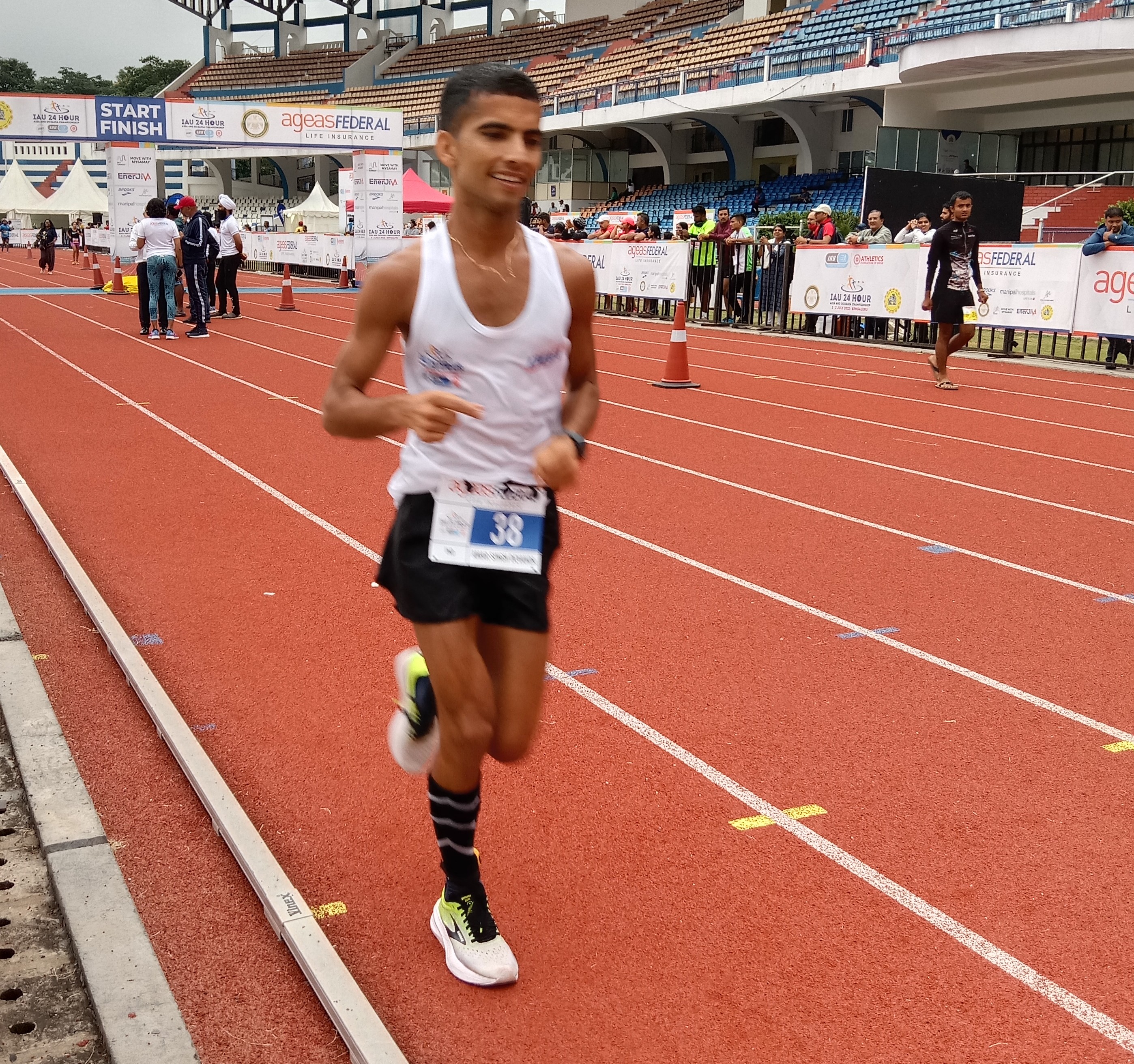
IAU 24H ASIA & OCEANIA CHAMPIONSHIPS / A SHOWER OF MEDALS AND RECORDS FOR INDIA

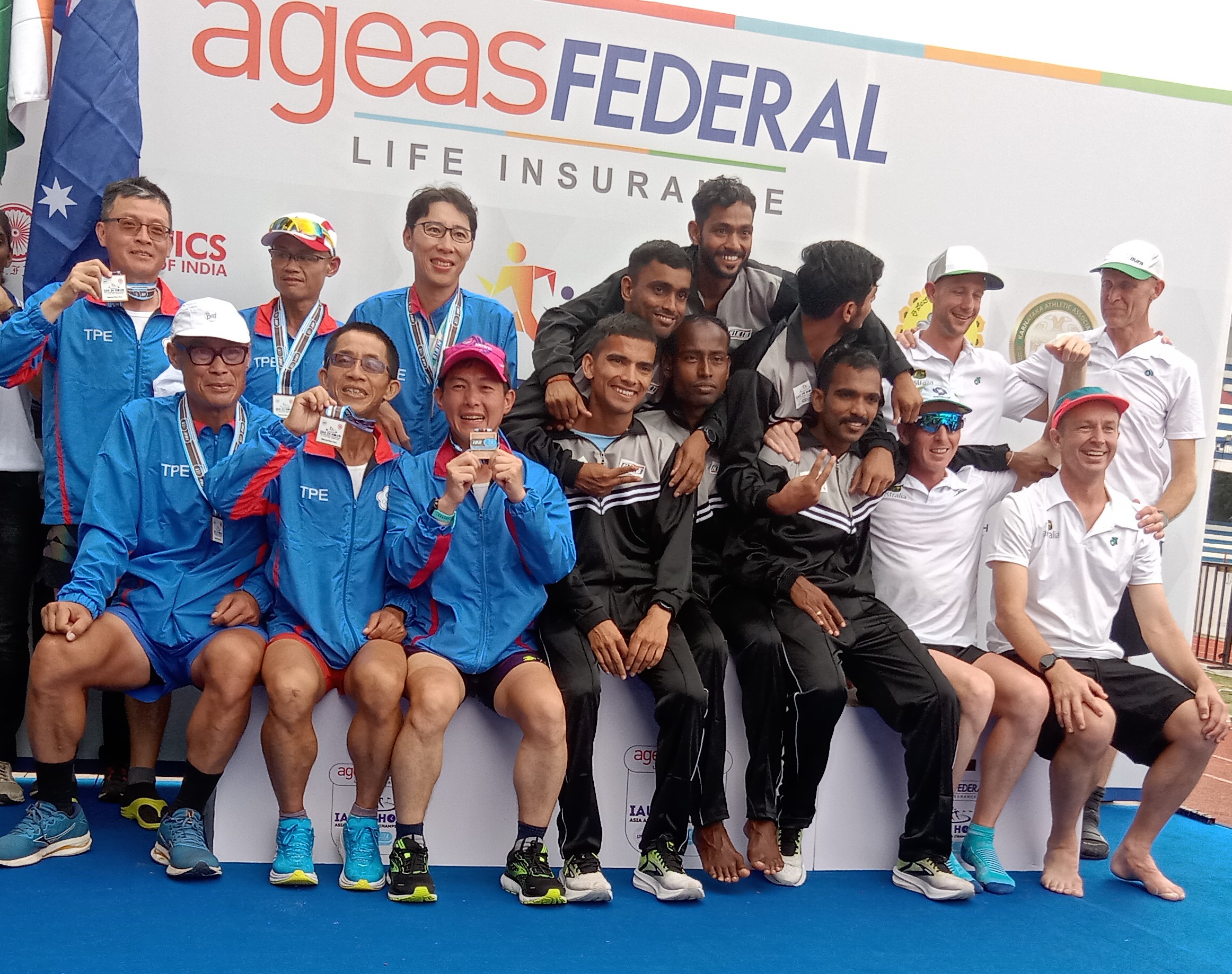
The men’s teams: (from left) – Chinese Taipei, India and Australia (Photo: Latha Venkatraman)

Indian men’s team wins gold, women take silver

Indian men sweep individual medals

Amar Singh Devanda, Anju Saini rewrite national bests

Ultrarunners Amar Singh Devanda and Anju Saini broke the men’s and women’s national best in the 24-hour run category at the IAU 24-Hour Asia & Oceania Championships that was held in Bengaluru over July 2-3, 2022.

The Indian men’s team won the gold and the women’s team the silver in the competition that concluded at 8 AM on Sunday, July 3. Indian runners also swept the podium in the individual category in the men’s section.

Amar Singh Devanda, running strong from the start of the 12-hour run at the Sree Kanteerava Stadium in Bengaluru, surpassed the national best of 250.37 kilometres set by Ullas Narayana at the IAU 24-Hour Asia & Oceania Championships at Taipei in December 2018.

Amar first bettered his own personal best of 240.8 km (also a national best on Indian soil) and then went on to set the new national best of 258.418 km.

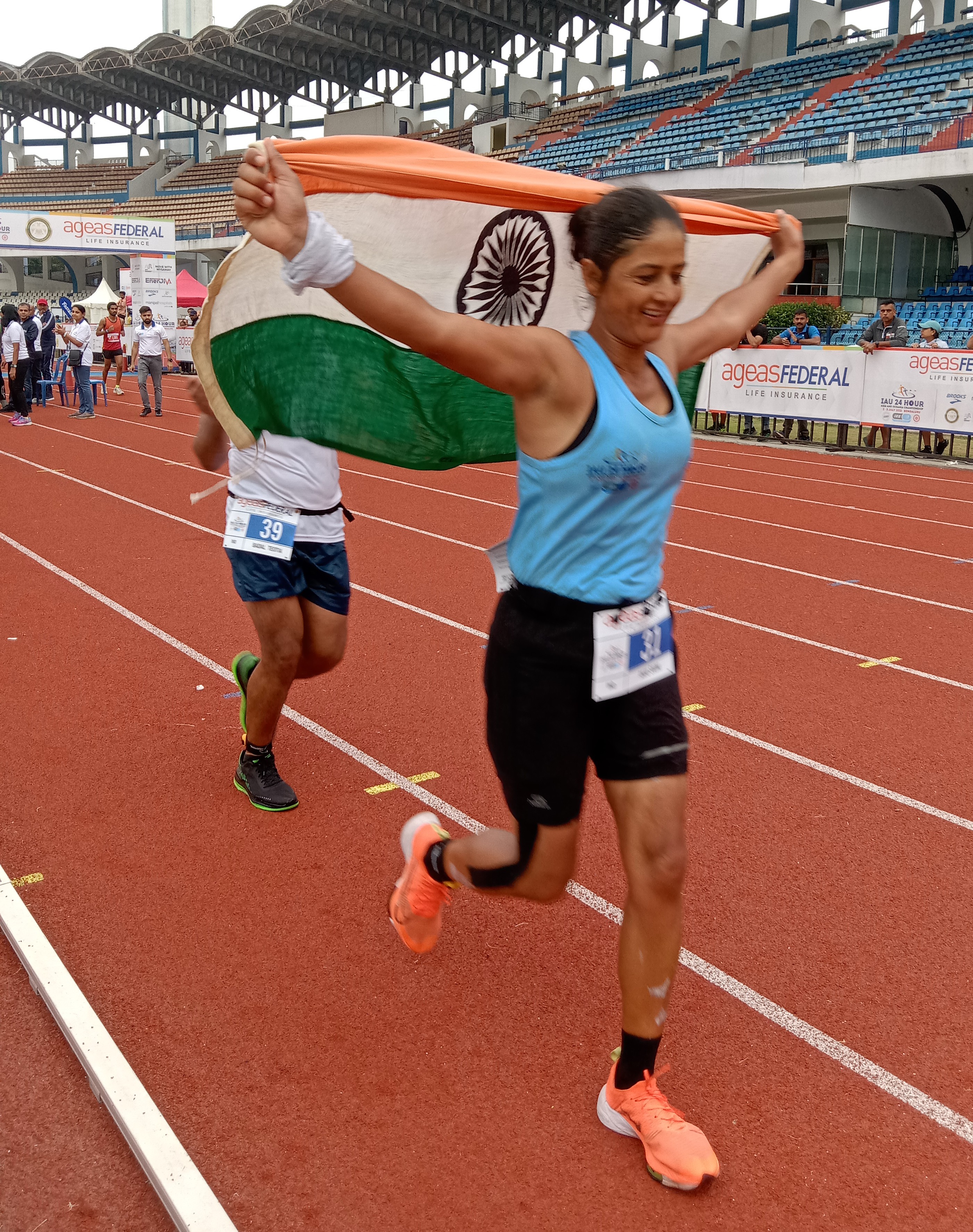
Later, Anju Saini, who was the race leader from among Indian women, set a new national best of 204.314 km, surpassing the previous national best of 202.212 km set by Apoorva Chaudhary at the IAU 24-Hour World Championships held at Albi, France in October 2019.

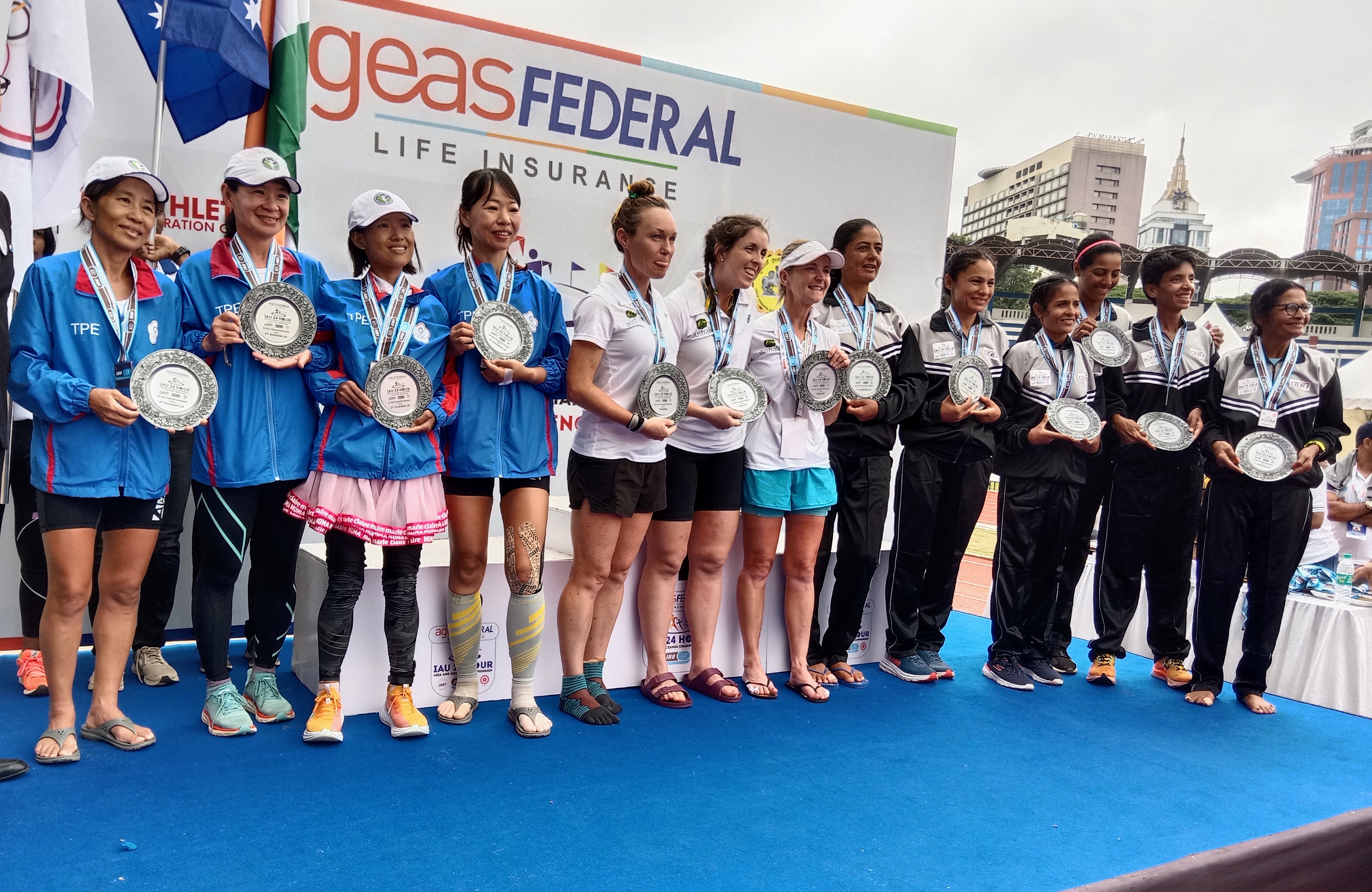
The women’s teams: (from left) – Chinese Taipei, Australia and India (Photo: Latha Venkatraman)

The Indian men won the team championships with a combined distance of 739.959 km (the aggregate of the mileage of its top three runners). Australia won the silver with a cumulative distance of 628.405 km and Chinese Taipei the bronze with a distance of 563.591 km.

In the women’s team event, Australia won the gold, India the silver and Chinese Taipei the bronze.

In the individual men’s race, Amar Singh Devanda won the gold, Saurav Kumar Ranjan got the silver (242.564 km) and Geeno Antony the bronze (238.977 km).

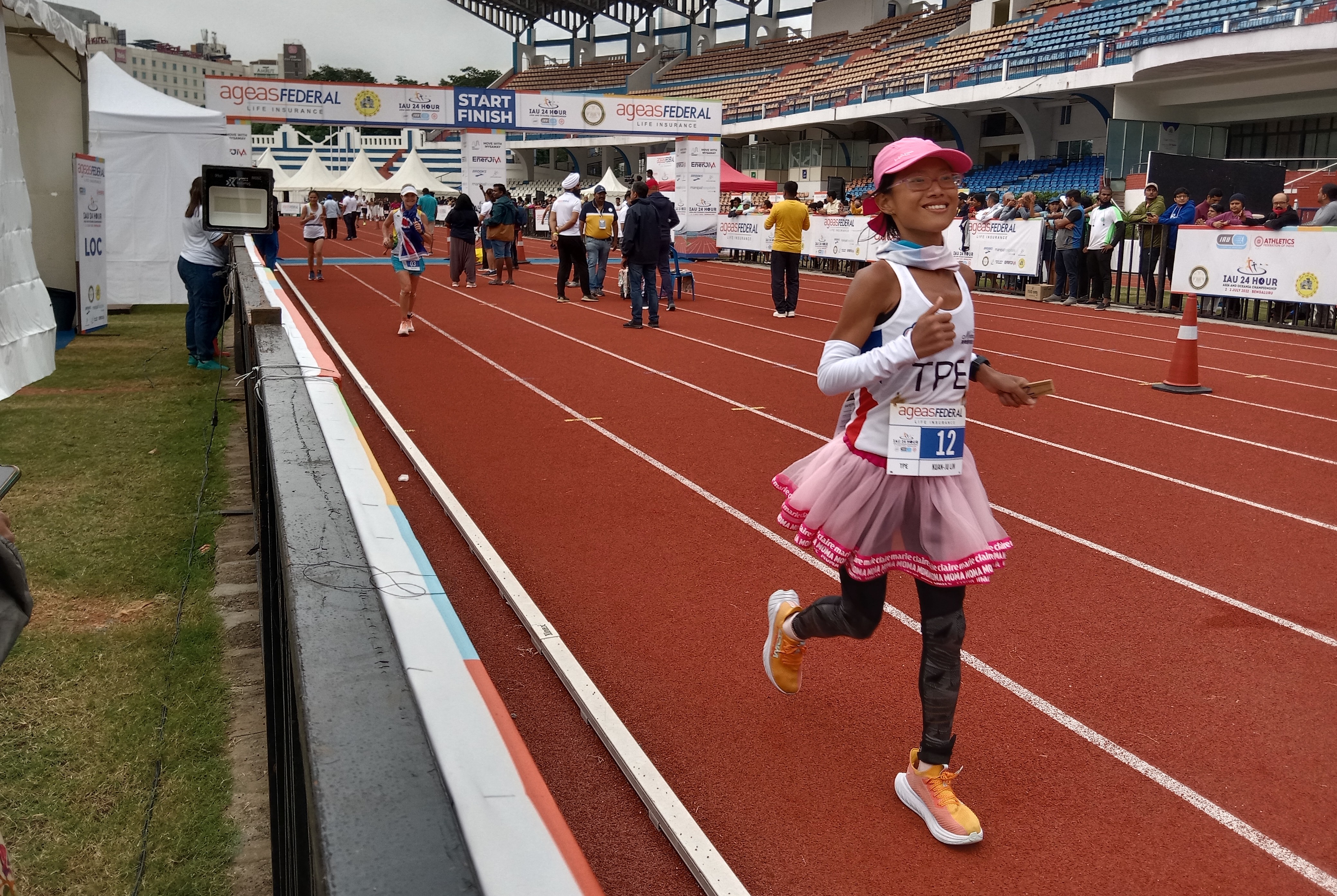
In the individual women’s race, Kuan-Ju Lin from Chinese Taipei won the gold covering a distance of 216.877 km. Cassie Cohen of Australia won the silver with a distance of 214.990 km and her compatriot Allicia-Grace Heron won the bronze with a distance of 211.442 km. In terms of team mileage in the women’s category, Australia logged 607.630 km, India – 570.700 km and Chinese Taipei – 529.082 km.

Among Indian women, Anju Saini was followed by Shashi Mehta (182.8 km) and Asha Singh (179.6 km).

Anju Saini (Photo: Shyam G Menon)
Amar Singh Devanda (Photo: Shyam G Menon)

The 24-hour race commenced at 8 AM on July 2, 2022 and concluded at 8 AM on July 3, 2022. “ Weather conditions during the daylight hours of the first day were not very conducive,” Asha Singh, said. According to her, the cool breeze of the night hours helped.

While overall the weather was good, the heat and the humidity of the initial hours of the race impacted digestion, leading to stomach issues for some of the runners. Preeti Lala said she had a tough morning but subsequently settled to a steady pace. Race nutrition and the right types of food to ingest during a race have always been among challenges in ultrarunning. Adding to the challenge is how this is couched in a basket of variables, among them weather conditions.

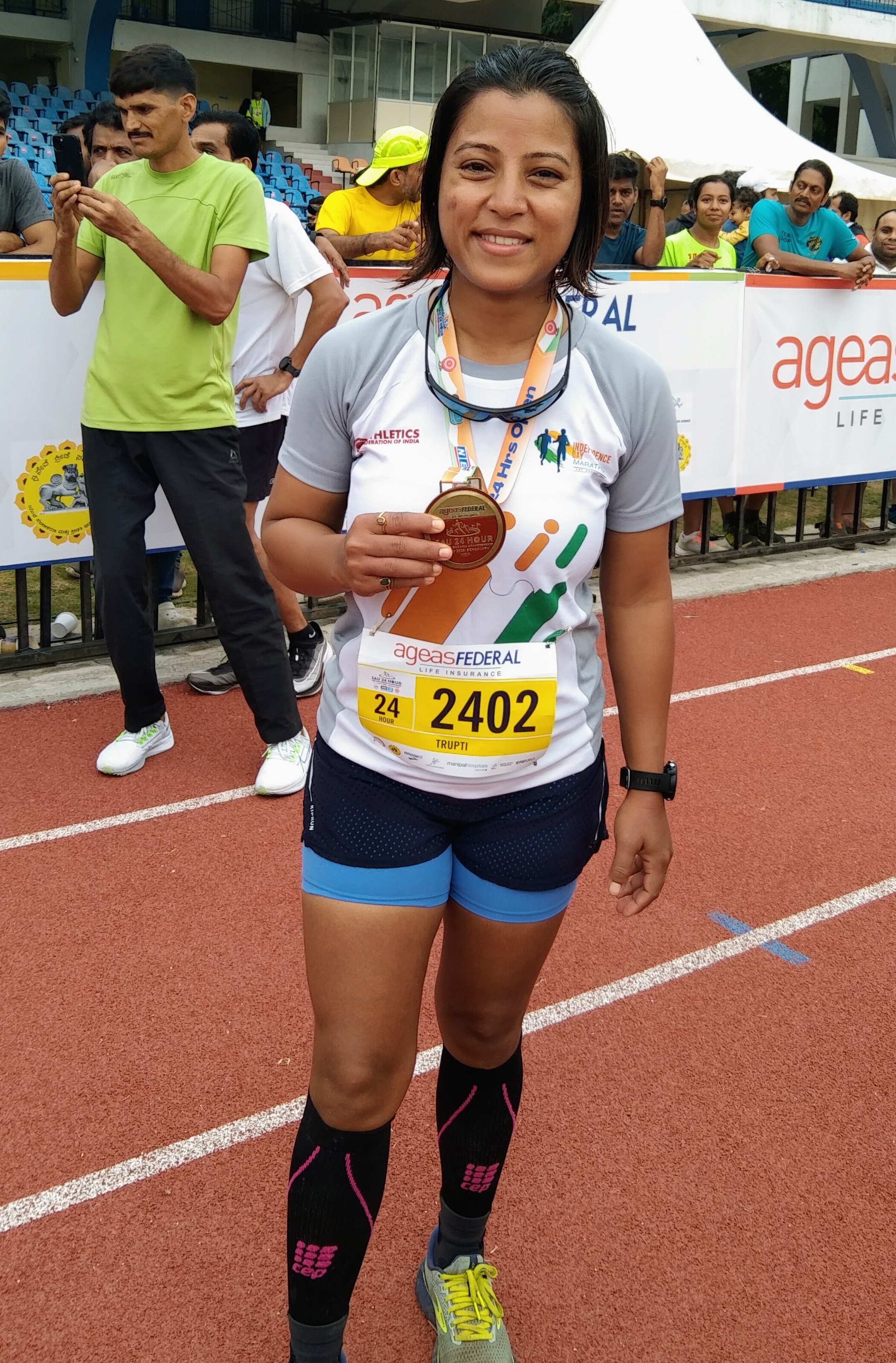
Joanna (Joasia) Zakrzewski of United Kingdom won the gold in the women’s 24-hour open category. In silver position was Trupti Chavan from Maharashtra.

Kuan-Ju Lin (Photo: Shyam G Menon)

In the men’s open category of the 24-hour race, the winner was Poland’s Tomasz Pawlowski.

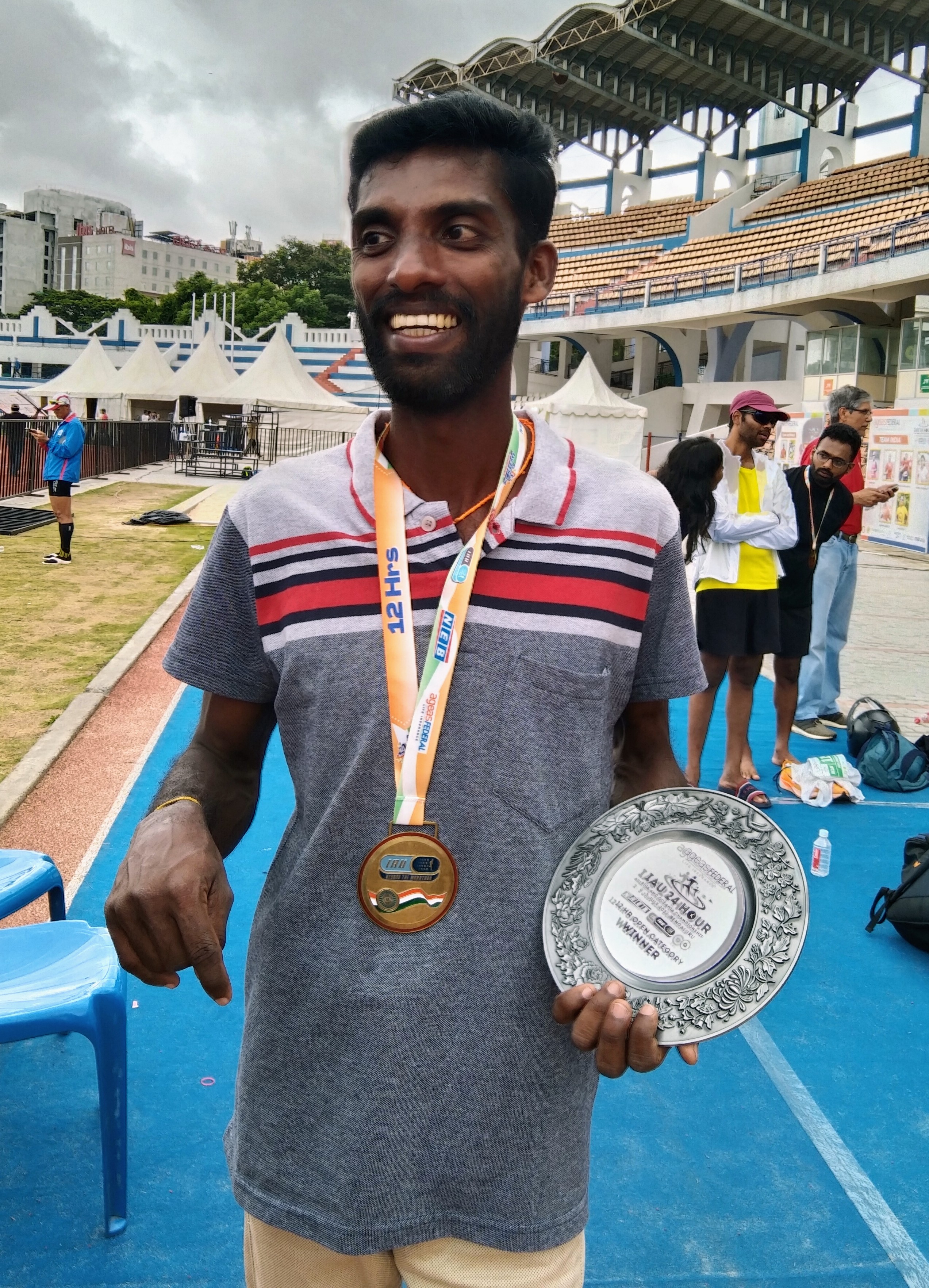
In the 12-hour women’s race, Balbinder Kaur was the winner with a distance of 96.798 km. Bindu Juneja took second position covering a distance of 94.608 km. In the men’s race, the winner was Harikumar K. L with a distance of 115.632 km covered. He was followed by Charudutt Mishra in second position (112.128 km) and Pritam Rai in third position (109.5).

The cheering at the event came in for praise from the participating runners. Encouragement matters in the marathon and ultramarathon, both of which test endurance.

The next IAU 24-Hour Asia & Oceania Championships will be held two years down the line in Canberra, Australia. Bengaluru meanwhile, will gear up to host the IAU 100K Asia & Oceania Championships in 2023.

(The authors, Latha Venkatraman and Shyam G Menon, are independent journalists based in Mumbai. Please note that this article has been updated to reflect the latest mileage data [individual and team for the top three in each gender category] as available in IAU’s press statement dated July 4, 2022. Anju Saini’s mileage is as available on NEB Sports’ Facebook page.)

Presenting some more photos:

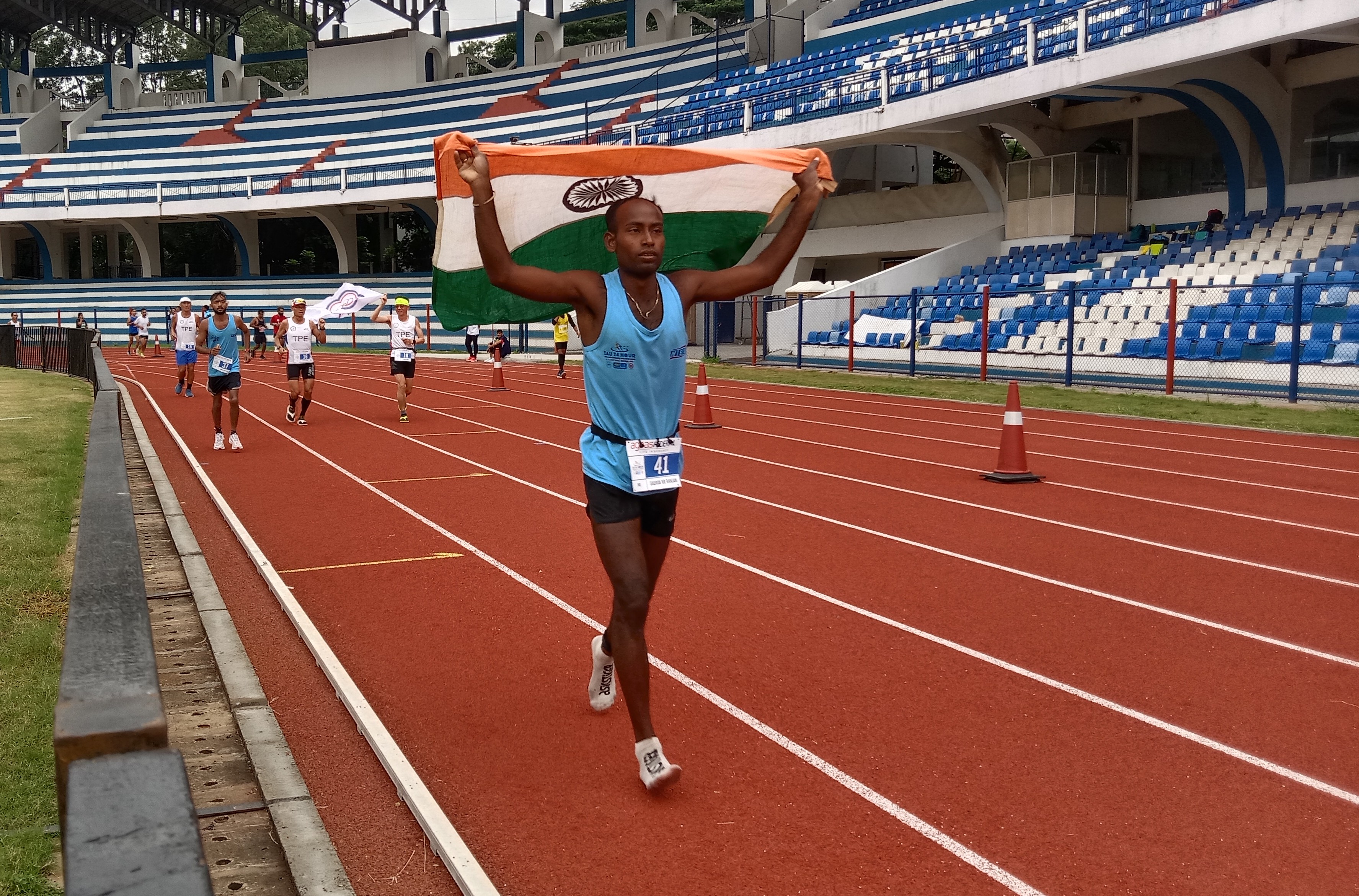
Saurav Kumar Ranjan (Photo: Shyam G Menon)
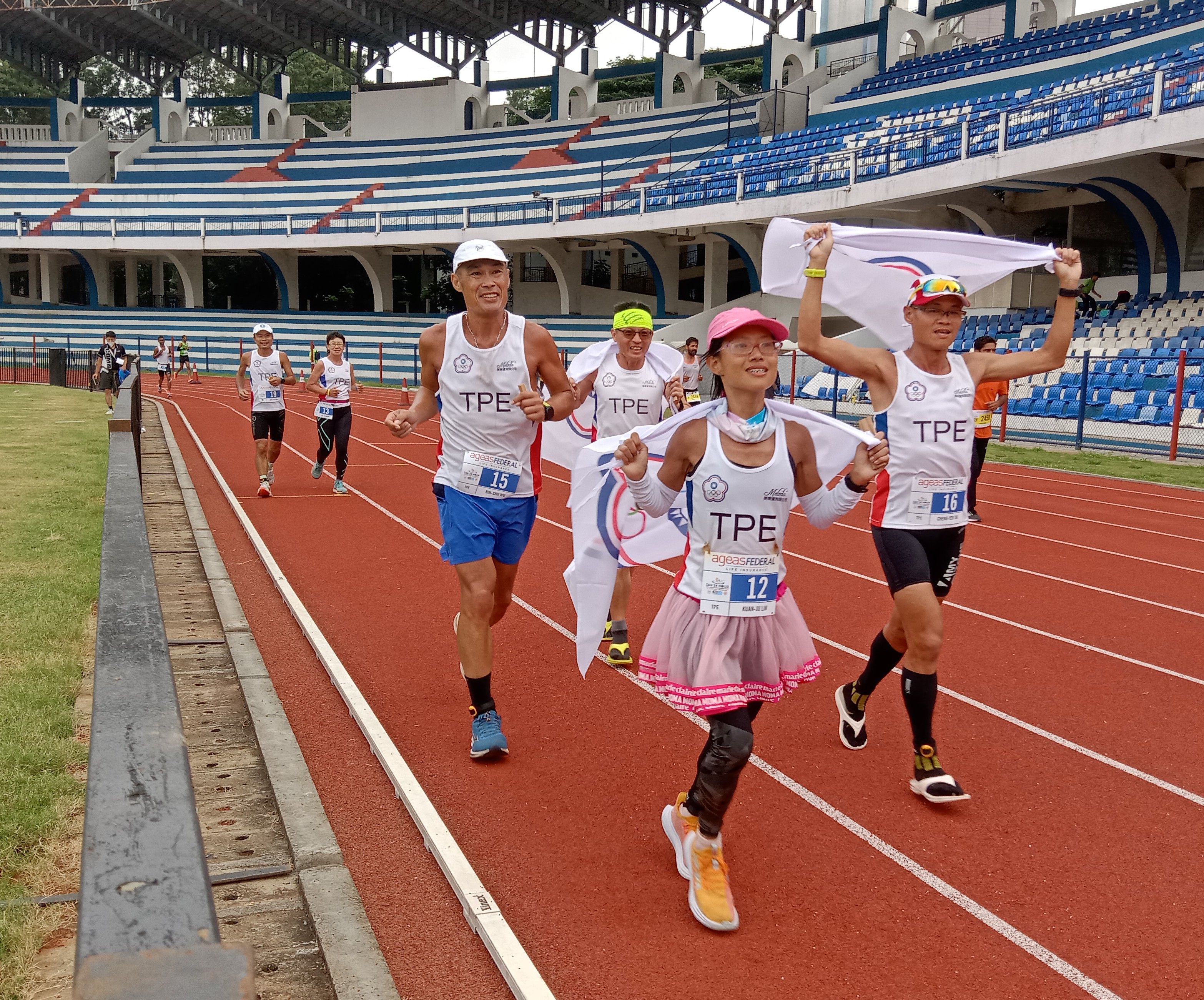
The runners from Chinese Taipei (Photo: Shyam G Menon)

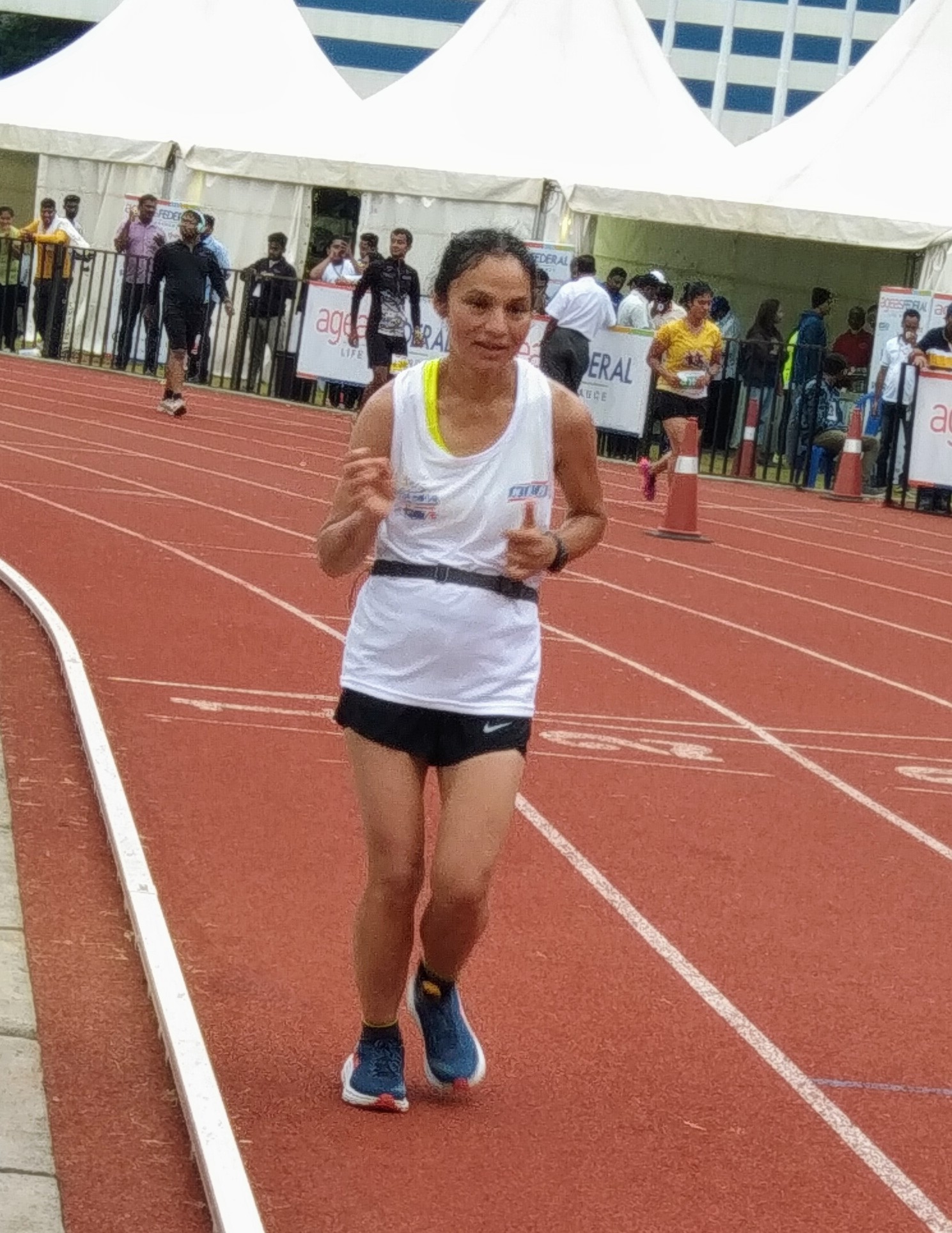
Shashi Mehta (Photo: Latha Venkatraman)
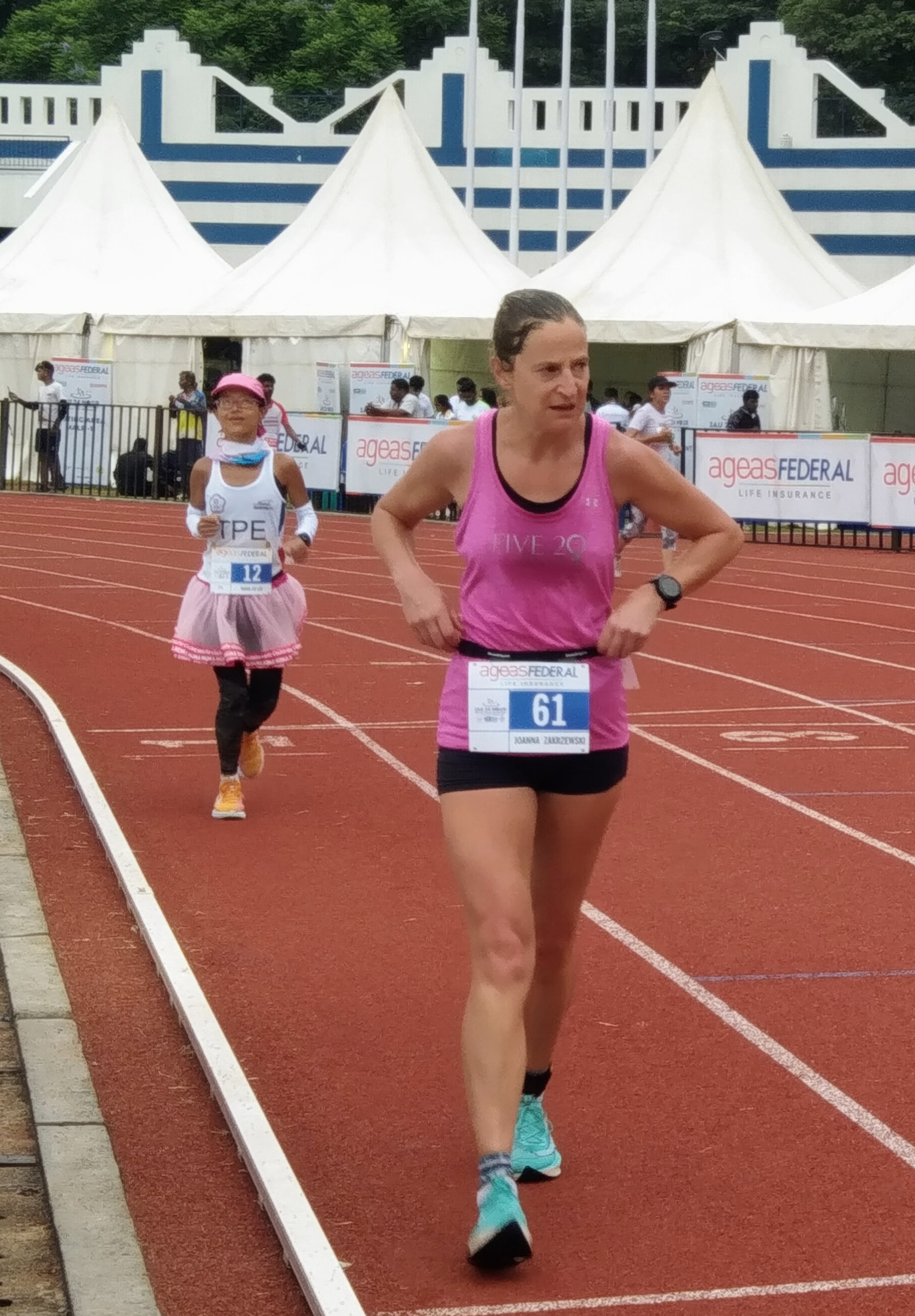
Joanna (Joasia) Zakrzewski / 24h open category (Photo: Latha Venkatraman)
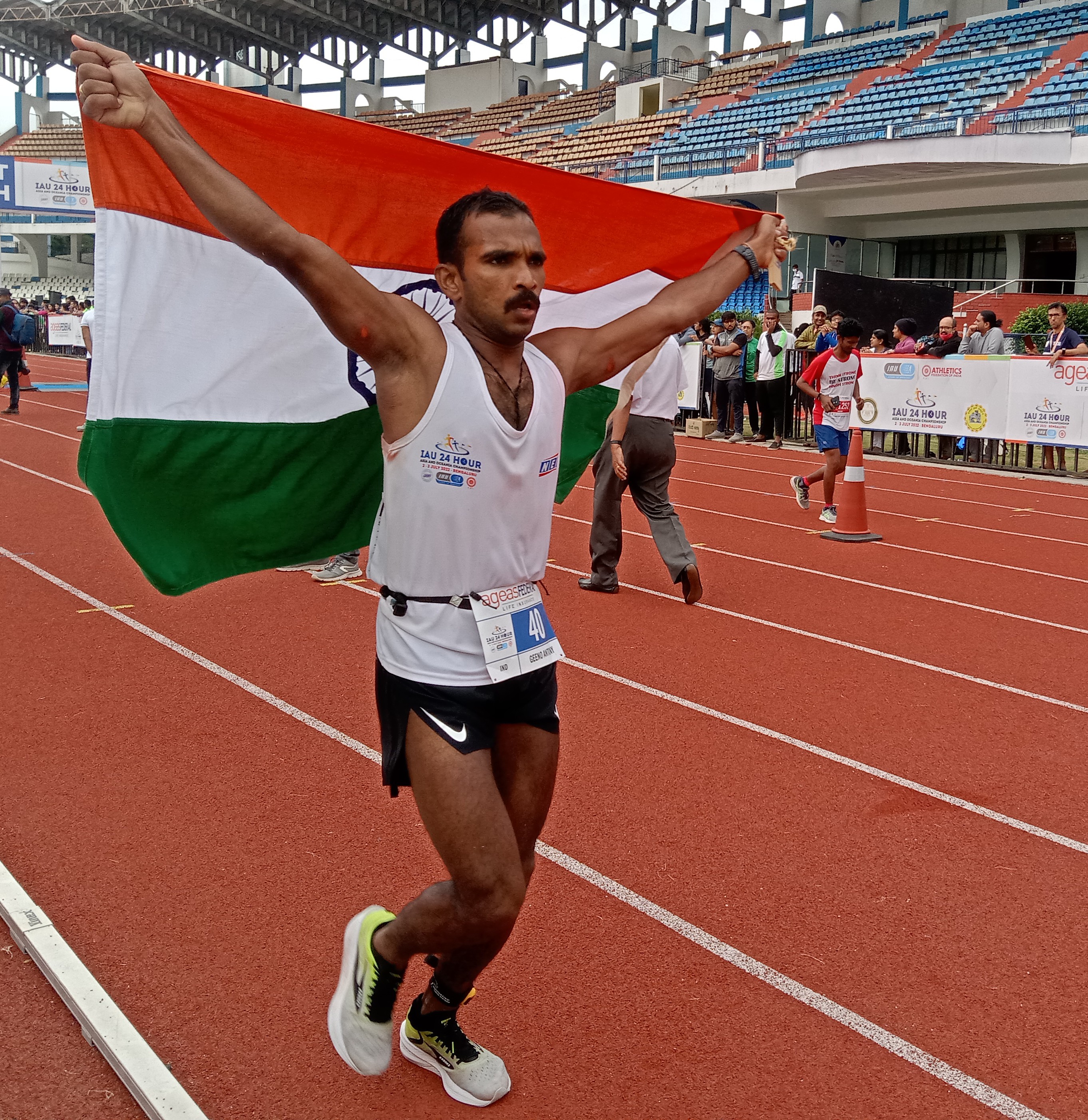
Geeno Antony (Photo: Shyam G Menon)
Harikumar K. L / 12h (Photo: Latha Venkatraman)
Trupti Chavan / 24h open category (Photo: Latha Venkatraman)
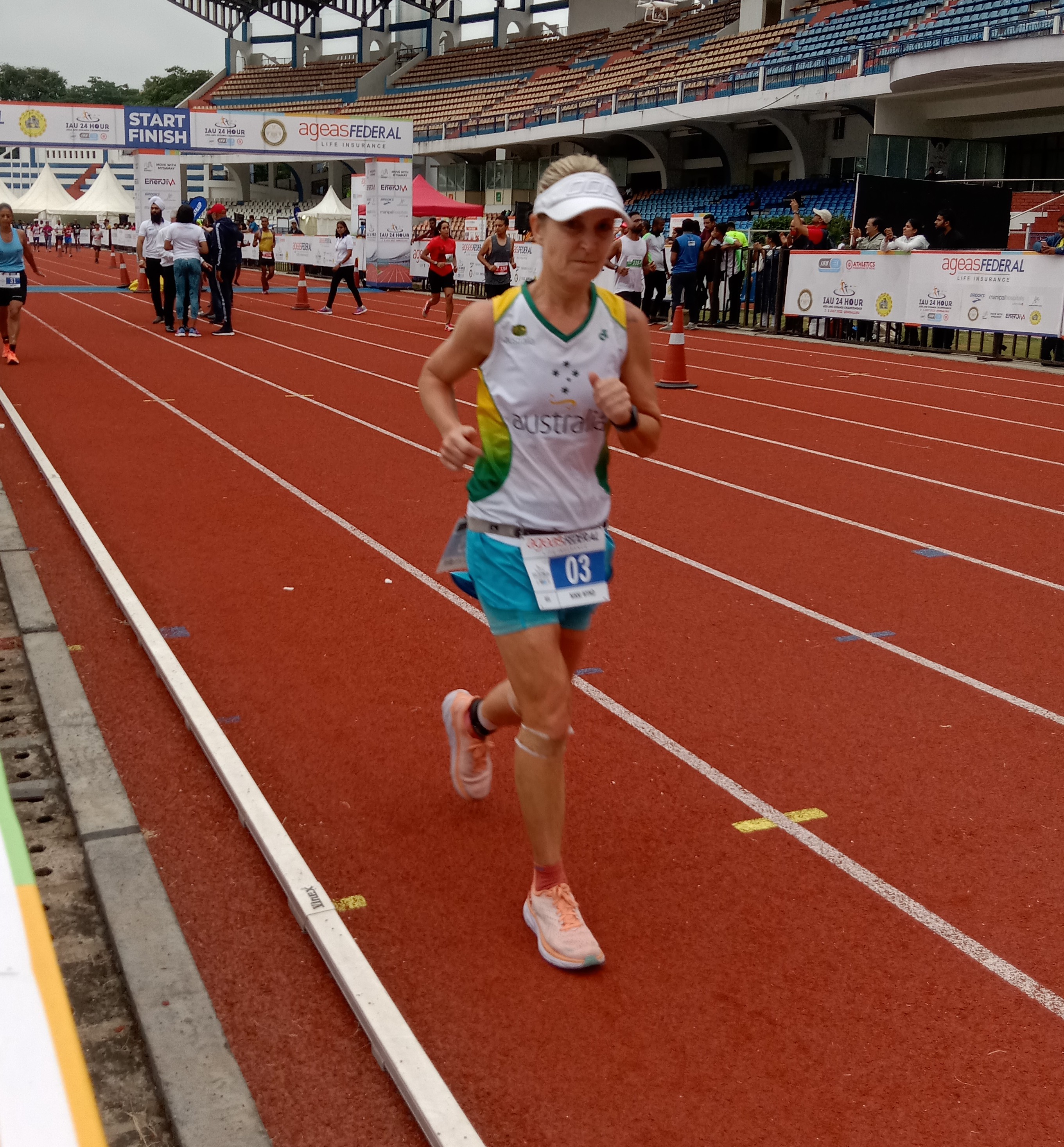
Nikki Wynd (Photo: Shyam G Menon)
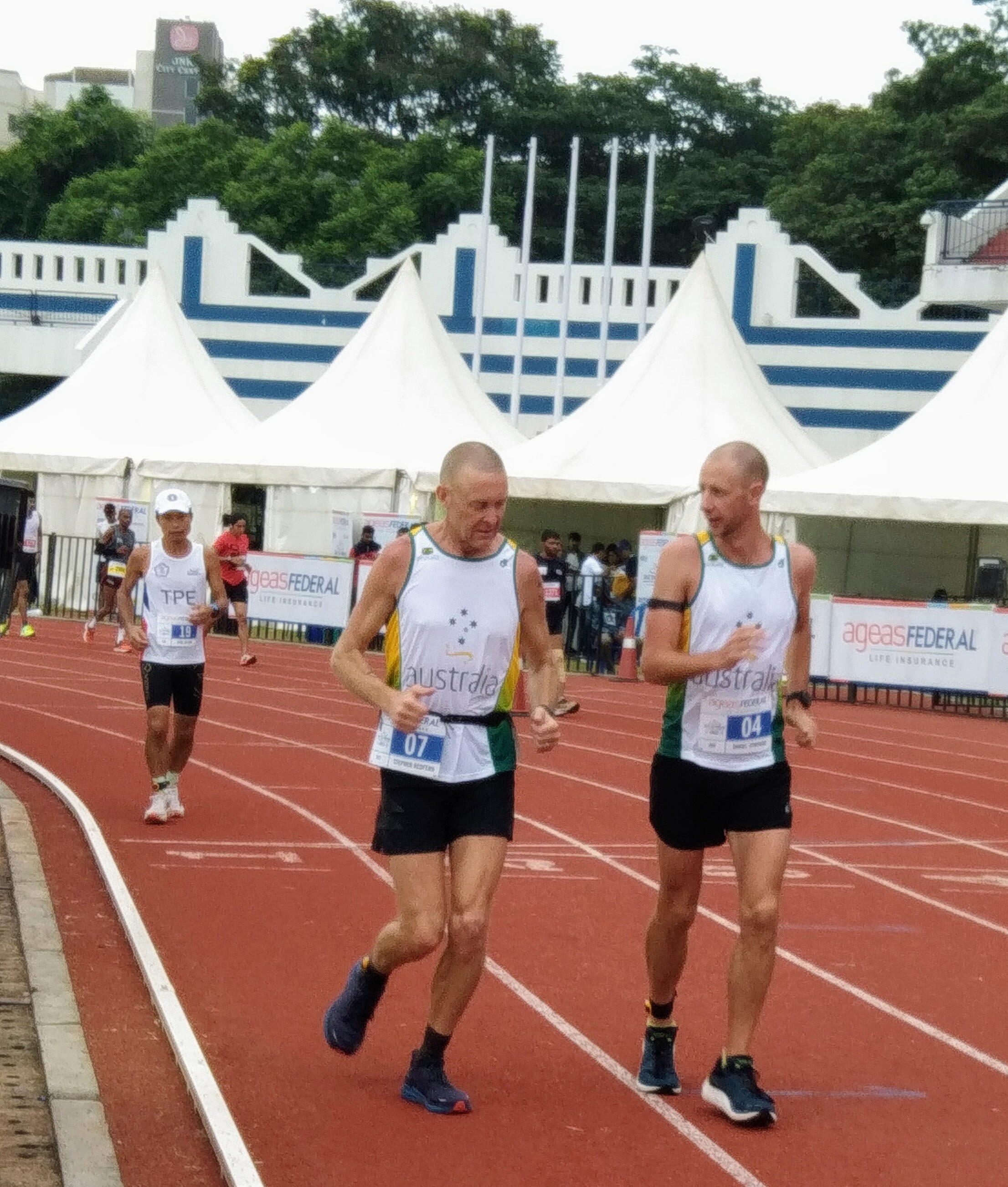
Stephen Redfern and Daniel Symonds (Photo: Latha Venkatraman)

A MORNING GIFT FOR THIRUVANANTHAPURAM

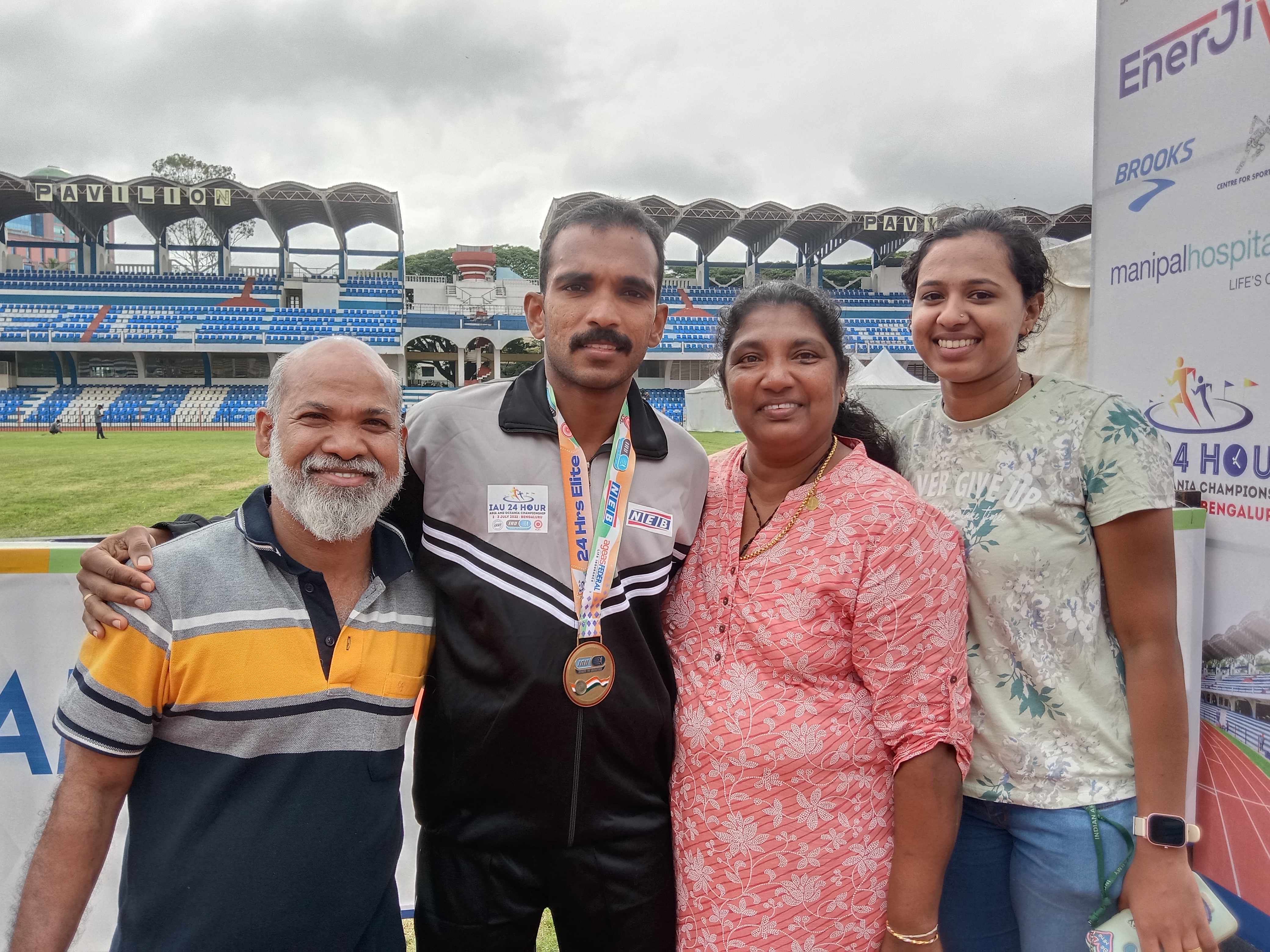
Geeno Antony and his family at Kanteerava Stadium, Bengaluru (Photo: Shyam G Menon)

Thumba in Thiruvananthapuram has reason to celebrate.

On the morning of Sunday, July 3, while Kerala’s capital witnessed its usual share of morning walks and jogs, Geeno Antony finished third in the men’s category at the IAU 24H Asia & Oceania Championships, in Bengaluru.  

Geeno, who hails from Thumba, was part of the Indian men’s ultrarunning team which won the gold medal (team medals are awarded on the strength of the aggregate mileage of each team’s top three runners). Runners did repeated laps on the 400-metre-synthetic track of Bengaluru’s Kanteerava Stadium, for 24 hours, from 8 AM on July 2 to 8 AM on July 3.

Geeno logged 593 laps translating to 237.2 kilometres covered. “ The first half was tough for me. The second half was better,’’ he said. It was in the night hours of July 2 that Geeno moved up from fourth position to the third. But it was a lead by a fragile margin and he had Joe Ward of Australia snapping at his heels. The situation was different by next morning. The final results for men showed fourth placed Matt Griggs of Australia at 581 laps and Joe Ward (he finished fifth) at 551 laps.

Geeno’s family was present at the stadium to witness the Indian team’s performance. Employed with the Indian Army, Geeno may sometimes be seen doing his long runs on the bypass linking Kazhakkoottam and Kovalam, when on leave and visiting home in Thiruvananthapuram.  

(The author, Shyam G Menon, is an independent journalist based in Mumbai.)
IAU 24H ASIA & OCEANIA CHAMPIONSHIPS / INDIAN MEN IN TOP THREE POSITIONS

File photo: Amar Singh Devanda

Amar Singh Devanda close to breaking the national best

Checked at 5.50 AM AM on Day 2, the race leader board showed three Indians runners – Amar Singh Devanda, Saurav Kumar Ranjan and Geeno Antony – still heading the field in the competition for men at the IAU 24H Asia & Oceania Championships, currently on in Bengaluru.

Amar had done 592 laps of the 400 meter-track covering a distance of 236.8 kilometres. Saurav had 554 laps to his credit and Geeno, 542.

The national best for men in the 24-hour category held by Ullas Narayana is 250.37 kilometres. Amar’s personal best is 240.8 kilometres, which is incidentally the best time registered on Indian soil.

The competition concludes at 8 AM on July 3.

Among women, Kuan-Ju Lin of Chinese Taipei was leading with 490 laps done. In second position was Cassie Cohen of Australia (486 laps) and in third, Allicia-Grace Heron (480 laps), also of Australia. The highest placed among the Indian women was Anju Saini (464 laps). Shashi Mehta had accumulated 417 laps, Asha Singh, 416.

(The authors, Latha Venkatraman and Shyam G Menon, are independent journalists based in Mumbai)

IAU 24H ASIA & OCEANIA CHAMPIONSHIPS / INDIAN MEN’S TEAM POISED FOR STRONG FINISH

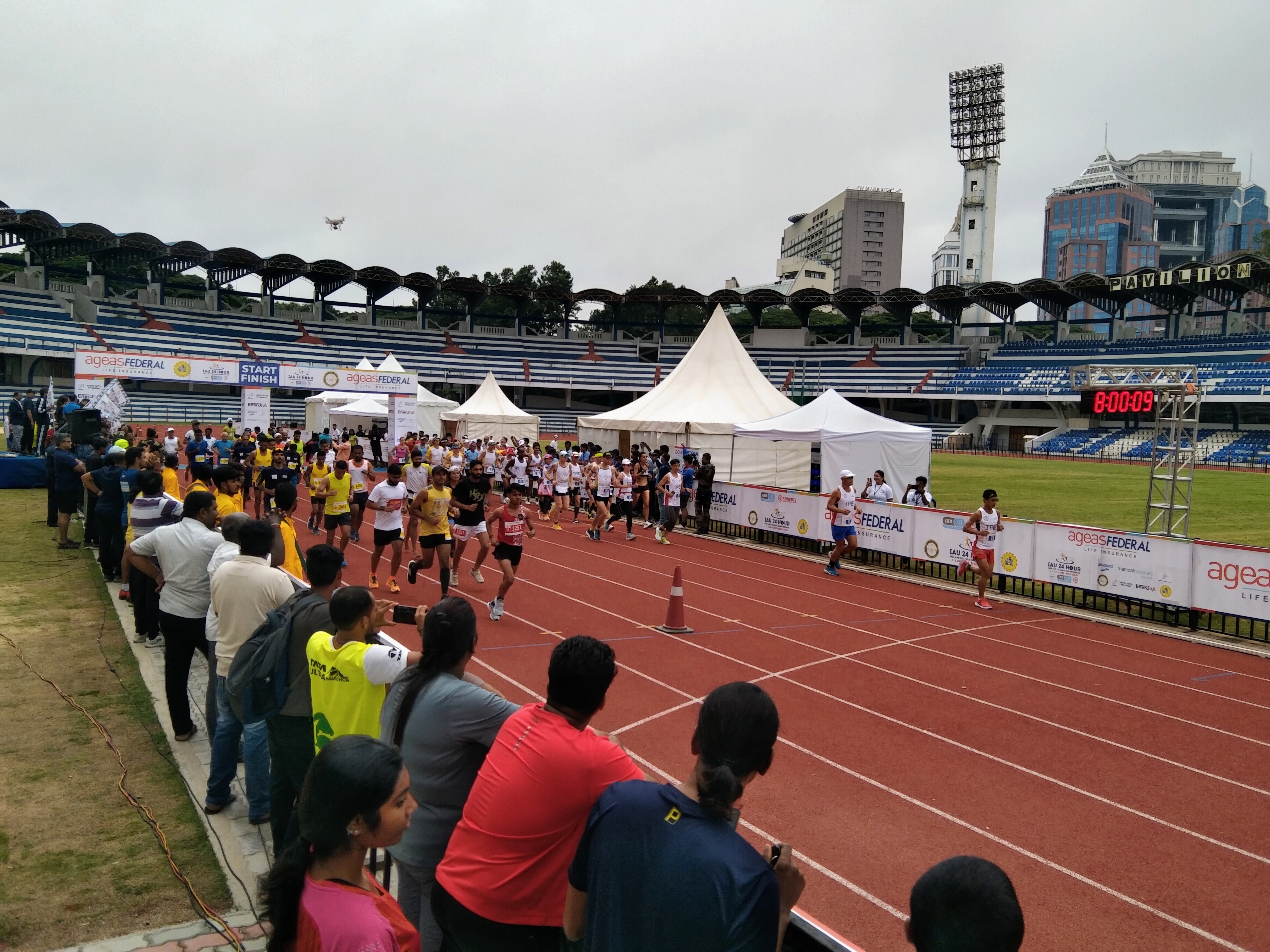
Day 1; the start of the competition. Elites are on the inside track (Photo: Latha Venkatraman)

The Indian men’s team was poised for a strong finish with a little over nine hours left to run at the IAU 24-Hour Asia & Oceania Championships currently underway in Bengaluru.

At 10:40 pm on Day 1, three Indian athletes were in the lead position – Saurav Kumar Ranjan, Amar Singh Devanda and Geeno Antony; in that order. With eligibility for team position restricted to nations with a minimum number of three runners in the fray and India among countries eligible so (the others being Chinese Taipei and Australia), the pecking order of late Saturday strengthened hopes of a fine podium finish for India.

For the first 12 hours of the race, Shin-Gwo Tsay from Taipei was in third position while Saurav and Amar maintained their grip on the first two positions. Later, Geeno Antony who was running in fourth position edged up to the third. Both Saurav and Amar are from the Indian Air Force, Geeno works with the Indian Army.

Margins in some instances in the pecking order were tight (there was a contest for the third position evolving between Geeno and Joe Ward of Australia) and nine hours is plenty of time for fortunes to change. The 24-hour run comes to a close at 8 AM on Sunday, July 3, the second day of the championship.

In the women’s race, the leading athlete at 10:40 PM was Kuan-Ju Lin from Taipei. Kathia Rached from Lebanon was in second position and Allicia-Grace Heron from Australia, in third position. At 10:50 PM, Indian women runners – Anju Saini, Shashi Mehta and Asha Singh – were in fifth, sixth and seventh position respectively.

This is the first time, the IAU 24-Hour Asia and Oceania Championships are being held in India. The Bengaluru event features four categories in all – 24-hour run for elite athletes and national teams, 24 hour-run in the open category, 12 hour-run in the open category and a 12 hour-relay for teams of runners. National teams from four countries – Australia, Lebanon, Chinese Taipei and India – are taking part in the flagship race. They are competing for both individual and team medals.

A minimum of three runners representing a country must participate, for that nation to be in the running for a team medal. Lebanon having only two runners at the competition has ensured team medals for the remaining three countries, participating. The question is: who gets which medal? The team position will be decided from the total mileage of the leading three members of each country.

Besides the national teams in the elite category, there are runners from Poland and the UK participating in the open category. 

The 24-hour race commenced at 8 AM on July 2 and will end at 8 AM on July 3.

(The author, Latha Venkatraman, is an independent journalist based in Mumbai.)