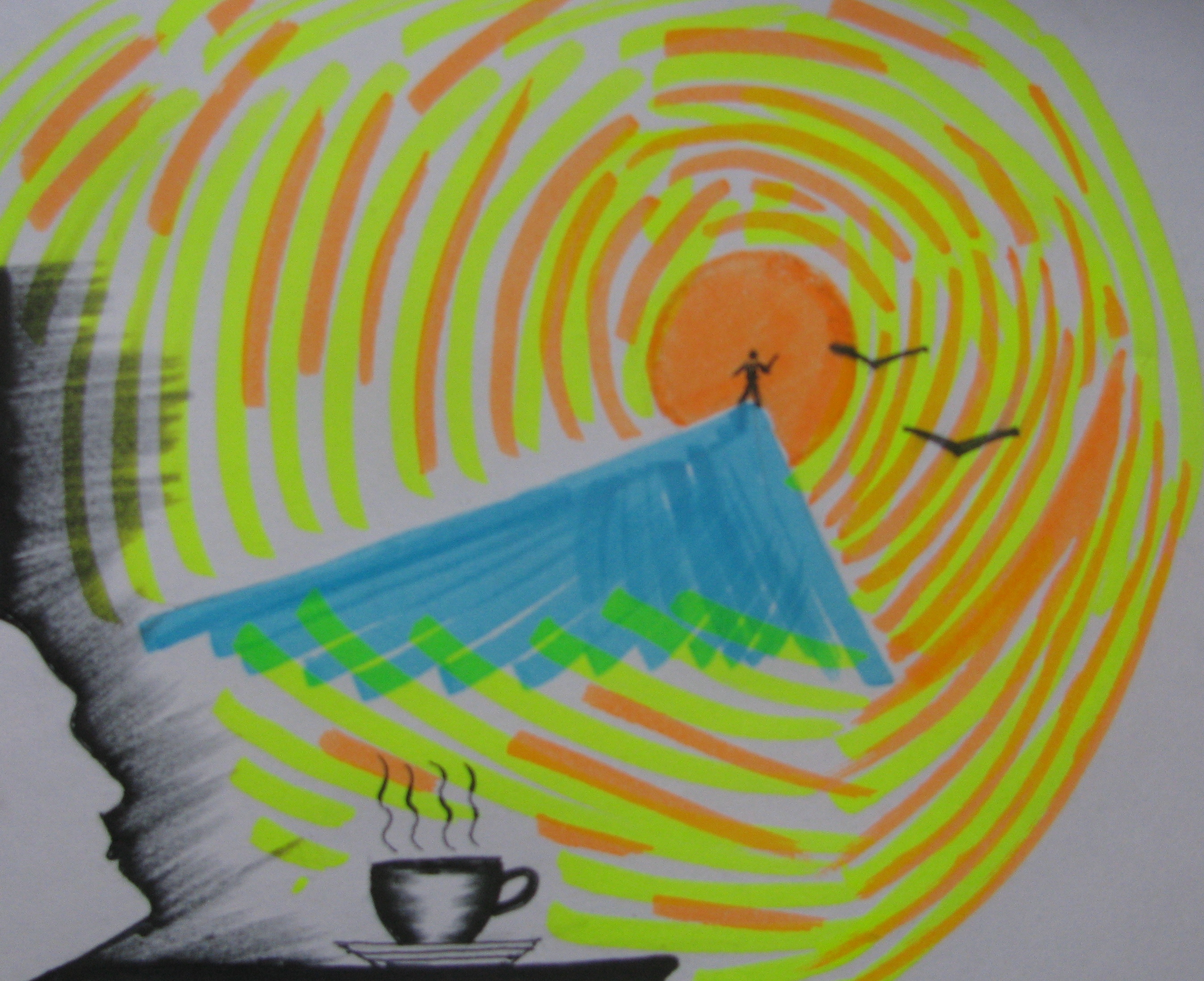
TWENTY THOUSAND FEET

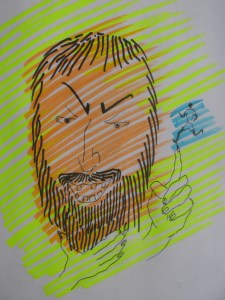
Illustration: Shyam G Menon

Illustration: Shyam G Menon

“ How are conditions up the mountain?’’ I asked, lifting my head from the stoop caused by the heavy backpack.

“ Not bad, lot of snow,’’ the athletic foreigner returning from Stok Kangri said, “ it’s all about timing and acclimatization really.’’ He looked at me squinting from strain. “ Are you acclimatized?’’ “ Oh yes,’’ I replied vaguely, “ have been around in Ladakh for almost two weeks.’’ “ Well, good luck then.’’ He walked on. It took me a few seconds to straighten up, feel the backpack’s load transfer to my hips and proceed slowly up the trail. That pack had no business being so heavy. All it carried was personal gear – water, sleeping bag, plastic mountaineering boots, crampons and ice axe. Yet it felt dead heavy.

I was tired. The trail within ran back to Mumbai. Freelancing had changed my life. In times of inflation, my income reduced to a trickle. All I could do to keep the creeping sense of failure at bay was maintain another busy schedule around whatever I liked doing. Loneliness took hold. That was when Choszang Namgial, who I had worked with on a high altitude trek before, called up. He remembered my desire to visit Leh, attempt Stok Kangri. A Ladakhi, he was heading home in June to work the tourist season there. It appeared fine opportunity to find subjects for writing. Ladakh with few people in vast cold desert was engaging counterpoint to crowded Mumbai.

I met Choszang in Delhi. We traveled by road to Ladakh, via Manali. On reaching Leh, I walked around for several days, meeting people and learning about their life. I spent time with Choszang’s family at his village. In Leh, I sipped lemon-tea and gazed at Stok Kangri in the distance. There was nothing to my activity that qualified to be acclimatization of the sort mountaineers desire. I was a wanderer with pen and note pad. Then a chance emerged to visit Pangong Lake. It was a surreal place; an expanse of blue water surrounded by barren brown hills. Couple of tea stalls, a curio shop, tents to stay in; groups of motorcycle riders living that much published image of travel in emptiness. An early morning, I jogged along the lake side and scrambled up the nearby hill. It felt good. However, neither that exertion nor the days spent walking around Leh did anything to radically change my condition baked by sedentary journalist lifestyle. Having been on expeditions before, I knew I was going in ill prepared. I felt thankful that Choszang and his friend would be accompanying me to Stok Kangri.

The day before going to Stok village, we went with all relevant documents to the local mountaineering administrator, an elderly mountaineer of much repute called Sonam Wangyal. He had climbed Everest and also featured in those expeditions undertaken jointly by Indian intelligence agencies and Central Intelligence Agency (CIA) of the US in the 1960s, to Nanda Devi and Nanda Kot. Those were the years following China’s nuclear test in Tibet. The Nanda Devi expedition subsequently gathered controversy after it became known that a listening device powered by a radioactive fuel source, had been lost on the mountain. The story spawned media articles, books. Wangyal went over my papers. He wore a disinterested look on his face. It made me fear that the dreaded bureaucratic axe was about to fall on my request for permission to climb Stok Kangri. Then he suddenly looked up at Choszang and asked, “ He is Indian, isn’t he? Go…go…this is your country. Enjoy your climb!’’ The response delighted me. Mountaineering in India has long been wrapped up in permit raj and bureaucracy.
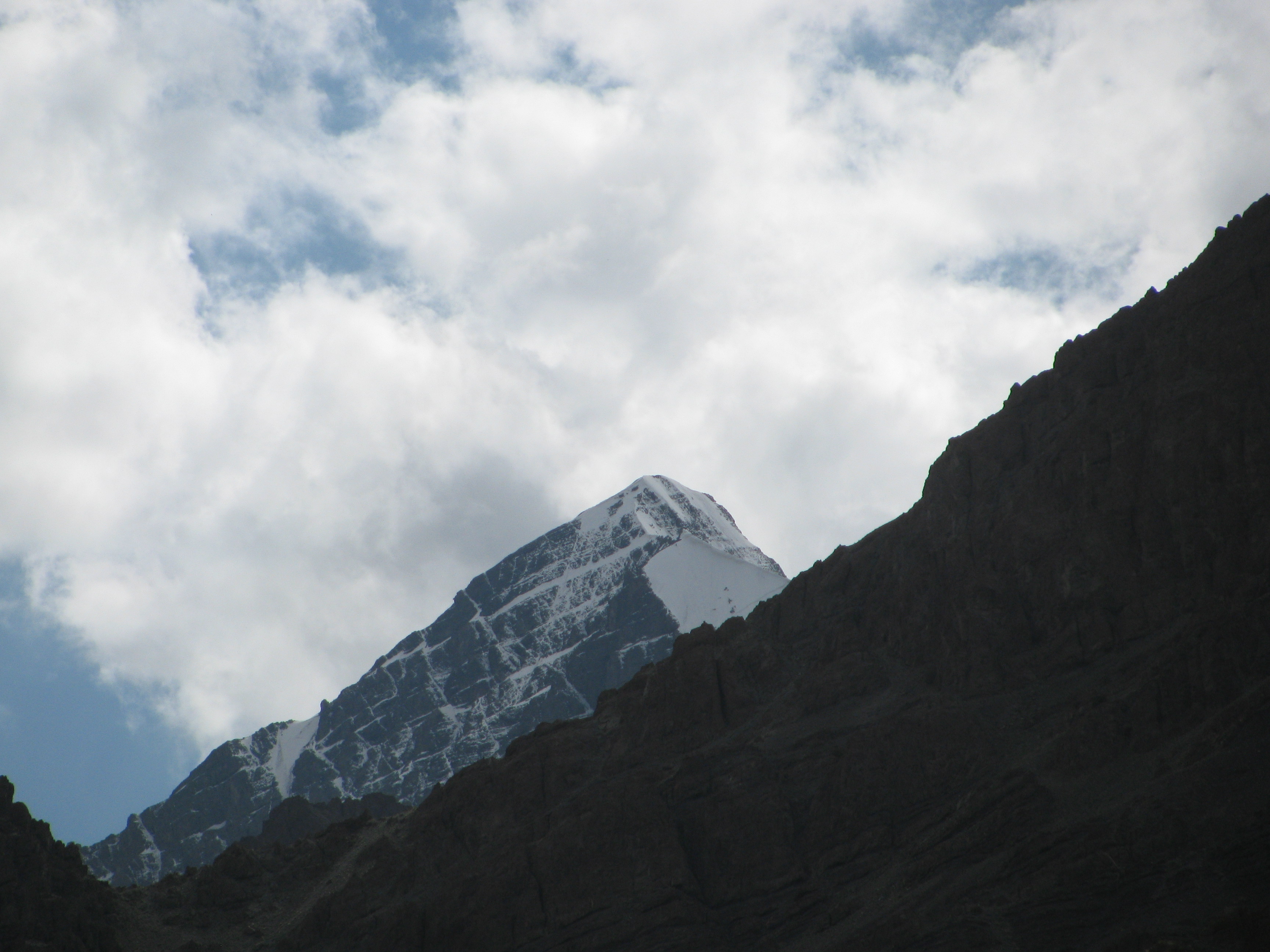
Stok Kangri (Photo: Shyam G Menon)

Stok Kangri (Photo: Shyam G Menon)

Ever since I got to the top of an 18,500 ft-high un-named peak in the Zanskar Himalaya with my climbing club in 2004, I had wanted to clear 20,000ft. Eventually, I decided on the 6153m-high Stok Kangri, often dismissed by mountaineers for being a non-technical peak climbed by many. In the macho world of climbing, `non-technical’ is a major differentiator. It means that a given climb doesn’t engage the use of much gear. That is like being a boy in shorts amid muscled men with boots, ropes, helmets, machined metal components and all. As if this wasn’t enough, Stok Kangri had been climbed by many availing guided ascents. Mention its name to climbers; they look down their nose and sneer. I never told anyone of my choice but the likely criticism nagged in my head. At my club for instance, what a person liked to do had long been superseded by whether the mission was significant and challenging from climbing’s perspective.

Looking back, I think I chose Stok Kangri for two reasons. First, my technical skills are limited; my physical fitness is more stretchable. So trysts with altitude made greater sense than agonizing over undoable vertical. Second, hanging out with climbers had dented my self confidence; battered my self esteem. A lot of it was my overactive mind. But some of it was definitely due to the climbing environment I was in. It wasn’t helping me. In fact, I had had to take time out and repair my self esteem. My Stok Kangri climb therefore commenced in Mumbai itself, erecting a protective barrier around my personal wish. Slowly I developed my defense – a person’s dream is a person’s dream and should be impervious to the comments of others. If others could be adamant about superlatives on vertical terrain and see that as sole perspective worth having, I had every right to enjoy the less than vertical! What I did not know was that in the thick of my rebellion, I was indulging my desire for distinction. It was vanity versus vanity. And in my case, a progressively tattered vanity for I was on the trail to Stok Kangri Base Camp (BC), hauling a heavy backpack of exhaustion. The cumulative effect of sedentary life, poor food intake, depression and a mind overactive through freelance writing – all had hit me.

Late in the evening I called it quits just short of BC. I was too tired to cover the remaining three hundred meters or so. We camped there. It was trifle funny for above the adjacent ridge we could see people moving around at BC. They must have wondered why a tent had been set up so close, yet far and definitely not at the same address as everyone else was. We formally moved to BC the next morning for a good rest. I needed rest. That day in 2009 I knew how much my life had changed since the earlier Zanskar expeditions. I felt something had drastically gone wrong. I could neither forget the job security I had left nor could I whole heartedly embrace the insecurity I had traded it for. I was the classic in-between case and dwelling on it in remoteness depressed me further.

Exhaustion however has a bright side. It is a great leveler; demolishes barriers, extinguishes pride. That and the general love for wilderness got me talking to the group of foreigners sharing the trail. At BC, we all met in one of those parachute tents that dot Himalayan trails, serving tea and food. The names have since dimmed in my mind, but there were people from Germany, England, US, Mexico and Netherlands. There was the former member of the British sport climbing team on her first foray to a 6000m peak. There was the former British banker, who had served in the property end of the business and seen it tank in the recession. He had then become a banking consultant to the shipping trade. But in the aftermath of the economic crisis triggered by sub-prime lending, banks became risk averse. Shipping on the other hand was a cyclical business. Eventually, he looked at his accumulated savings and said – let’s go climbing. That’s how he ended up at BC. One of the climbers had a particularly touching story. She liked climbing. After her husband fell ill, she had given up climbing to take care of him. Probably realizing the irreversibility of his ailment, the man later told her: don’t waste your life, live it. That’s the story as I recall it from imperfect memory. Early dinner done, everybody retired for a few winks of sleep.
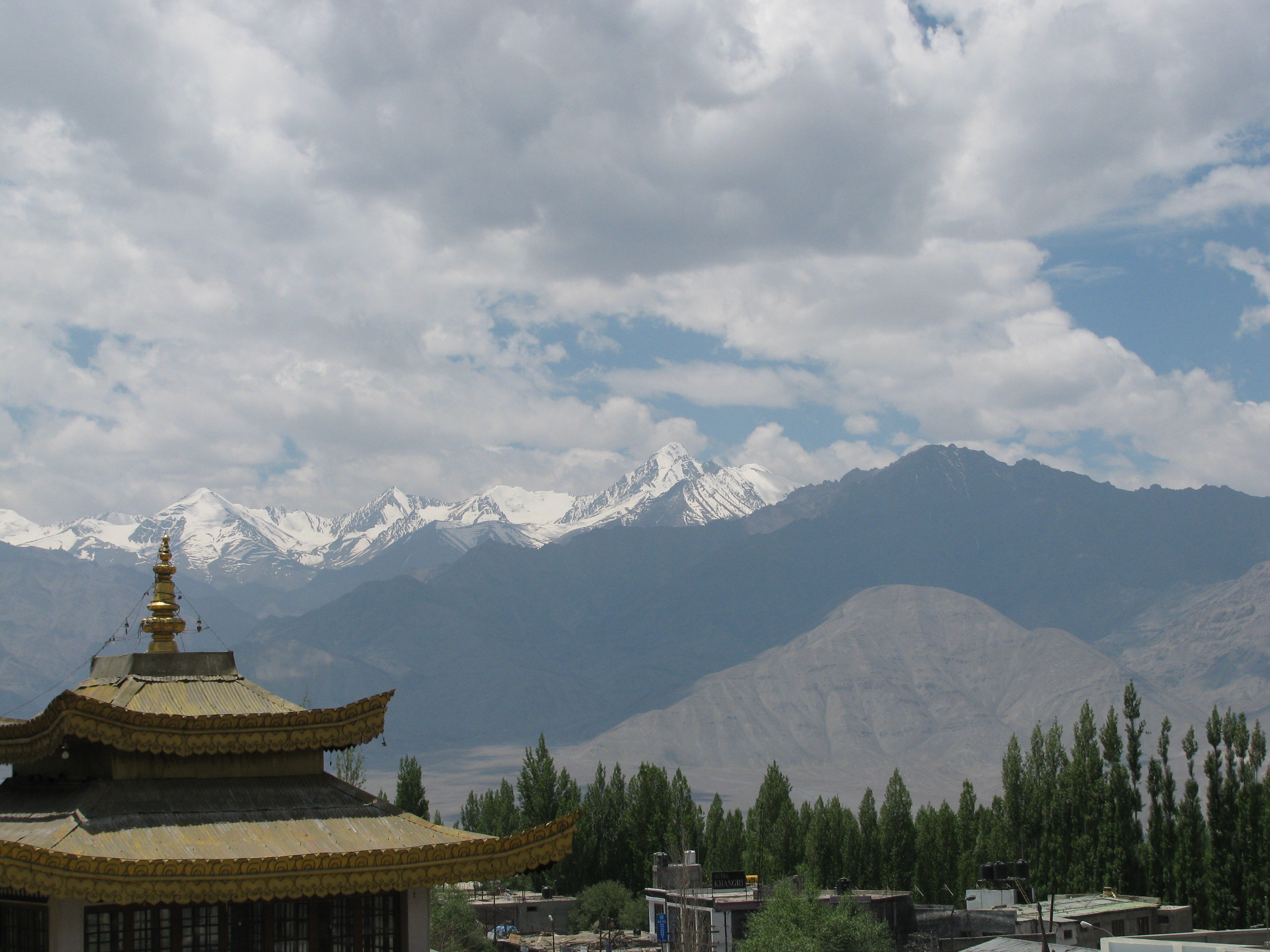
Stok Kangri; the view from Leh (Photo: Shyam G Menon)

Stok Kangri; the view from Leh (Photo: Shyam G Menon)

Past midnight we started for the summit, having dispensed with the idea of putting up an intermediate higher camp. It was snowing lightly and for me, rather cold. Within minutes of leaving BC, the water flow from my hydration pack froze. For the next four to five hours until the sun induced thaw, there was no water to drink. I could probably have drunk straight from the pack’s bladder but the one occasion I took my gloves off to adjust my trekking poles, my hands turned numb with cold. We kept a steady, slow pace. In a previous season, Choszang had climbed the peak nine times with clients. This season, he was already booked for another two. I wasn’t surprised when he told me that he wanted to do something else than just go up and down Stok Kangri and other trails in Ladakh.

Around day break, we found ourselves past the usual location of the intermediate higher camp and looking up the final slopes of the peak. To reduce my tiredness, Rigzin who was Choszang’s friend, had put my boots and crampons in his rucksack. We conferred for a while on the fate of that baggage. I was fairly adept at kicking and cutting steps on snow to ascend and on Stok Kangri I was anyway following Choszang’s lead. We had made decent progress. So we decided to forget the boots and crampons and left Rigzin’s sack on a rocky ridge to be picked up on the descent. By now the sun was up. With it came the reflected glare from snow and a new problem. I couldn’t find my sunglasses. Embarrassed I said, “ let’s call it off, no glasses.’’ Choszang and Rigzin looked at me astonished. I searched again; found the glasses. Momentarily, I must confess, I had wished that the lack of glasses would be viable excuse for great mountaineer to hide his exhaustion and be off this peak that many climbed. Now I was back in play.

Atop the last shoulder of the peak, before its summit pyramid, we decided to make tea. My small MSR stove went to work, melting snow for water. That tea was rejuvenating. The next half hour was careful going. Verglas – a glassy coating of ice on rocks – can be quite tricky. At around 8.45AM Choszang and Rigzin greeted the summit with loud Buddhist chants and an offering of a prayer flag. The duo couldn’t resist flair in the summit photo; in went the unused rope and our ice axes. The summit had a low wall of wind beaten snow and rock, beyond it the other side of the peak plummeted in a severe fashion. In the distance one could see Leh, its airport. I felt nothing of that 20,000ft obsession in my head. There was no elation, just thoughts of descent. Coming off the summit pyramid, we stood at the edge of the peak’s main face. Getting up that had been a series of traverses; now it lowered off in one swoop. It was an inviting glissade of few hundred feet save the first quarter, which ran steep. We shot off on our butts using ice axes for brakes; it saved much time. Back in Leh, I got myself an airline ticket to Delhi and stared down from the plane at the sea of snow covered peaks wondering where in that wilderness my first summit in Zanskar would be. Three days later, I was in Mumbai with resolution taken to eat at any cost. Without food there is no climbing.

Most people come to Stok Kangri to access 20,000ft. It is as simple as that. In 2011, I reached the top a second time. In the months after my first trip, I had regularly worked in the outdoors. I was in much better shape. This time, I could go along as an unpaid help, serving a team of clients. We stopped some distance away from the summit as we felt the freshly deposited snow wasn’t well settled. On return, I spoke briefly to Sonam Wangyal about a new lot of over one hundred peaks opened up for climbing in Ladakh. They were yet to catch the fancy of climbers. Stok Kangri on the other hand, had become probably India’s busiest peak, a money spinner for authorities. Its attraction was the combination of a not-so-difficult climb and breaching 20,000ft. Indeed in 2011, the mountain’s base camp resembled a small city of tents. There were so many people out for an easy shot at distinction. Wangyal seemed tad disappointed by this limited appreciation of mountaineering. Next door to Stok Kangri is Gholap Kangri, which is slightly technical at the top and overall, below 20,000ft in altitude. Very few people go there. Everyone, including me, wanted 20,000ft. I listened to Wangyal. He was right. Vanity-climbs distort the purity of climbing.
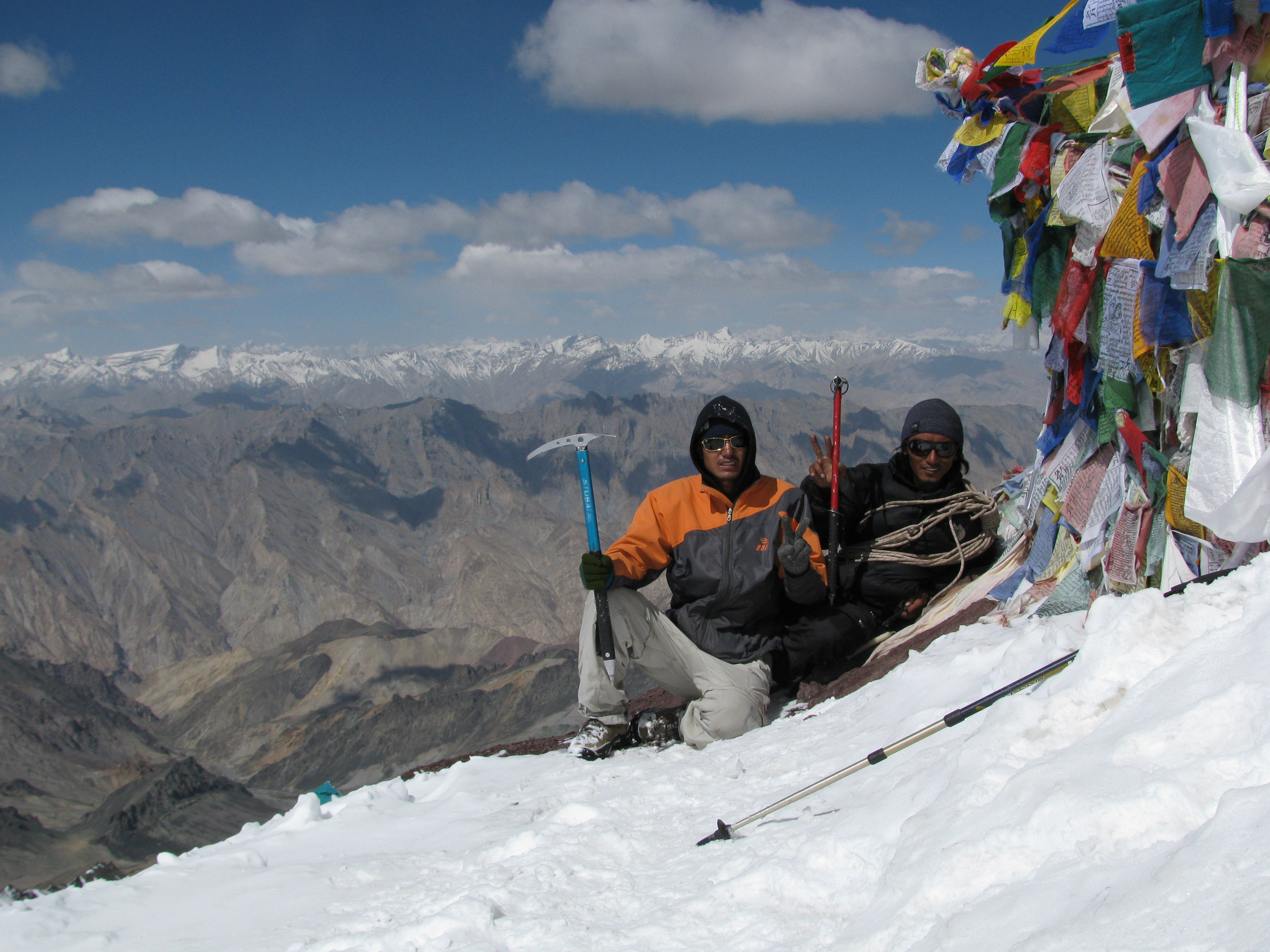
Choszang and Rigzin on the summit (Photo: Shyam G Menon)

Choszang and Rigzin on the summit (Photo: Shyam G Menon)

I didn’t tell that a few months after the 2009 climb, I was whipped by a 19,500ft-high peak in Uttarakhand, which I confidently went for having tasted 20,000ft on Stok Kangri. It was the first expedition I planned to a considerable extent. We got lashed by heavy rain, heavy enough to wash off approach trails and dump a lot of snow higher up. That delayed progress. It robbed us of adequate working days on the mountain. We reached high camp amid snowing. To reduce equipment weight at higher altitudes, I had left our second tent at lower camp. I crammed four people into a 3-person-tent at high camp. Short of space to lie down, I sat up much of the night. Outside, the snowing continued. Early next morning, one of us woke up too disinterested to proceed anymore. His boot laces had also frozen wire-like in the cold; they resembled the antlers of a deer. The remaining three, who went for the summit, were dismissed through a combination of difficult access, avalanching slopes (due to fresh snow) and no more days left to wait for the terrain to settle down. We turned back. It was a humbling experience. After that whipping, I stopped caring how high or low a mountain is. Every mountain region, every mountain therein – is unique. I also provide for time on the mountain and leave it to the peak to decide whether I should summit or not.

In one of my later trips to Ladakh, I came across signs of Stok Kangri’s traditional image in climbing, potentially changing. There were young Indian climbers, who spoke not of merely ascending the peak but ascending it by particular routes. Just as your fine day on a peak with summit gained is not how that peak is year round, every mountain feels different along its different climbing routes (Polish climbers in the Himalaya added winter ascents too, to the equation. For more, please visit https://shyamgopan.wordpress.com/2013/08/11/an-interview/). I am not a fan of speed climbing but I heard people talk of fast ascents up Stok Kangri. Months later on the Internet, I read about two young Indian women who climbed the peak alpine style with no porters or guides. These are all interesting departures from the norm. On my last visit to Leh, after a couple of days spent looking at Stok Kangri from town, I cycled to Stok village and had a cup of tea at one of the restaurants climbers frequented. I remembered Choszang and Rigzin, the trudge up the mountain and a cup of tea brewed high on its slopes. That was enough to make me happy. I then slowly cycled back.

(The author, Shyam G Menon, is a freelance journalist based in Mumbai. A slightly different and abridged version of this article was published in the anthology ` Aloft @ the Indian Himalaya’ anchored by Rana Chawla. Details about this book can be had at https://www.facebook.com/aLoftAtTheIndianHimalaya)
RUNNING IN THE HILLS

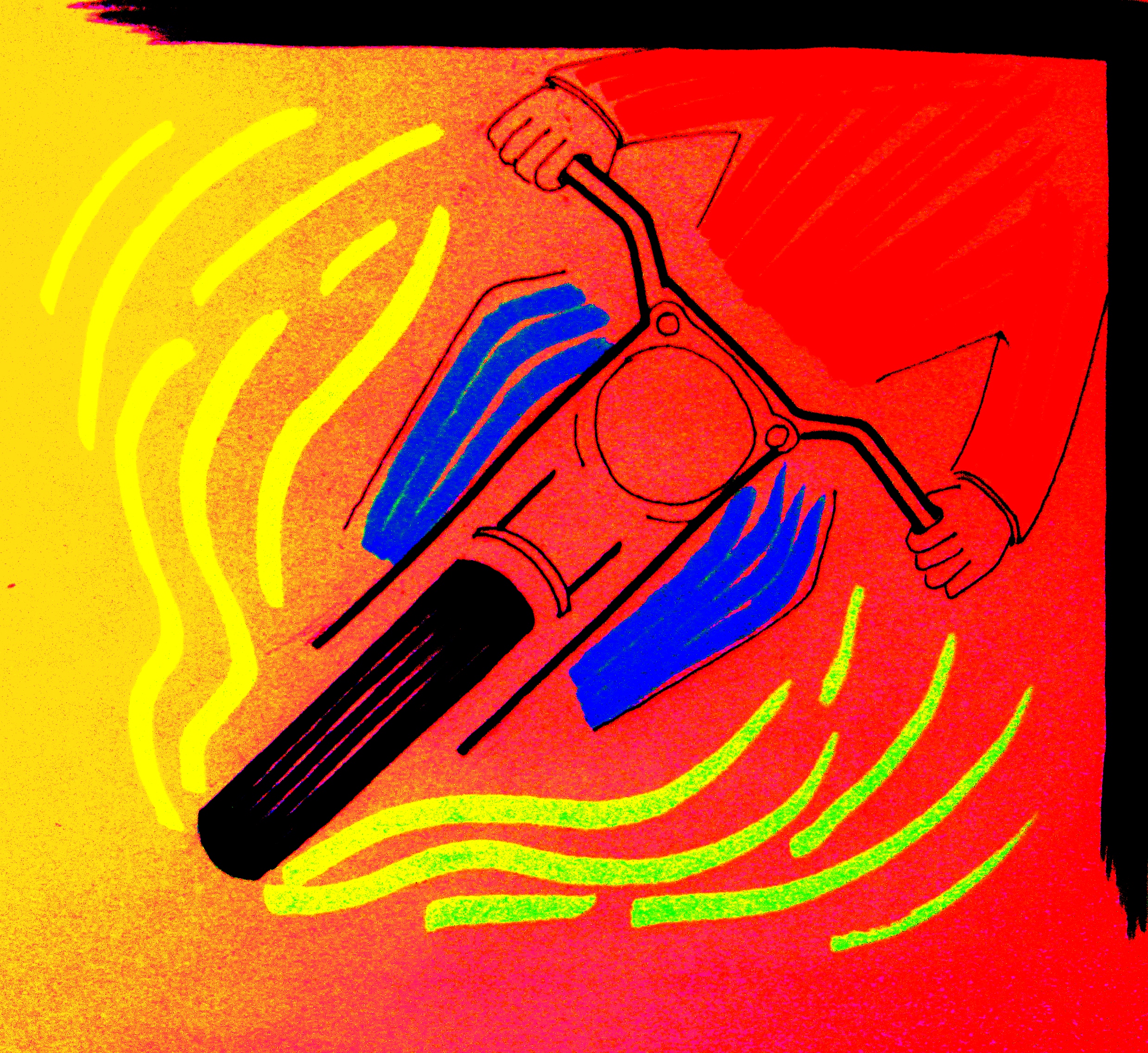
Illustration: Shyam G Menon

Illustration: Shyam G Menon

An evening in Ranikhet, four of us went for a run.

It was past 5 PM.

We made for one of the quiet side roads.

We ran past the holiday huts of the army, down a few bends to the first of the `Old Grant Bungalows’ on that road, called so for their origin in British India times. It had just rained. There was a light chill in the air. The leafy vegetation around, the trees lining the quiet road and the road itself gave off that typical post-rain smell. Several turns away at the entrance to the Chevron Rosemount hotel, one of their dogs barked to announce the approaching runners. Used to seeing runners on that road every morning, it first resorted to barking and then settled down by the roadside.

Two turns away, we passed the house of a friend who was a naturalist. Wonderful address for someone so – I always thought. We ran past the small trail cutting up the hillside, which we take when the daily run has to be kept short. This evening was different. We had resolved to run a longer distance, run the full length of the road and then turn off to Mall Road and Meghdoot Hotel.

Another turn went by on the quiet road; then another. Finally we went past Adhikari Lodge, an old bungalow reportedly owned by a Mumbai business family who visit Ranikhet on and off. Although there were houses here, this area, compared to other portions of the road, was trifle more densely green. Four pairs of legs hit the ground rhythmically in slow run. Wind in the hair; nippy air on the face, a breathing that said `I am breath,’ in the chest.

At the next turn, the first runner stopped. The rest of us caught up in one to two seconds.

Walking diagonally across the sheltered road, with its back to us and seemingly no bother for its surroundings now invaded by humans – was a leopard. We watched it in absolute amazement. For all of us, it was the first sighting of a leopard so; free and unfettered. I suspect it was my shoe moving ever so slightly against the sand on the tarred road that created the faint noise – whatever, the leopard caught wind of something behind. It broke its leisurely walk to glance behind its left shoulder, sensed the four humans and in a couple of elegant bounds was up the other side of the road and lost to the dense vegetation between the road and the households beyond.

We stood there speechless.

It took a while for things to sink in.

Slowly, our awe struck faces broke into smiles. We shook hands.

Then we resumed our slow run.

Leopards are not unusual in Ranikhet. But here’s the key according to my friend Ravi – don’t go looking around for the animal. I know quite a few people, including me, who went looking for leopard and never saw one. It was as though the shy animal read your mind and stayed away or you were too deliberate that your search affected your prospects. You know, too desirous of what you want that you become this big solid mass disturbing the universe’s subtle arrangement. Expect nothing and lo and behold, the universe rewards you. Leopard was the last thing on our minds that evening we ran. We saw one!

Illustration: Shyam G Menon

Illustration: Shyam G Menon

I sometimes get outdoor work in Kumaon (the eastern half of Uttarakhand). That’s how I land up in Ranikhet, helping out at the India branch of the National Outdoor Leadership School (NOLS http://www.nols.edu). I have a regular running route; the earlier mentioned road; voila, my name for it – Leopard’s Walk. Past where we saw the leopard, that quiet road continues on; it skirts one side of the local tourist rest house property and eventually joins the road to the Jhoola Devi temple, in front of the West View hotel. From here you can either turn towards Meghdoot Hotel or take another quiet, isolated road, often carpeted by dry leaves and run all the way to the temple avoiding the main road. Some colleagues from the school choose to run further. There is a military check post at the temple and a stiff ascent of several kilometres that takes you to Chaubatia on top of the hill. The place is home to one half of Ranikhet’s sprawling military base. To my knowledge Ranikhet is one of the very few towns, maybe the only one in India that is home to two army regiments – the Kumaon Regiment and the Naga Regiment. Being military cantonment and located away from the normal Nainital-Almora route, Ranikhet has a quietness that is disturbed only by tourists and visitors. That’s why I like my morning run here. It is also why I rarely speak of it – for these days to speak of the solitude in some place is to invite its violation. Reduced shelf life is contemporary media’s gift to existence.

For a relatively small town, Ranikhet has many people running. Most obvious and most regular are the soldiers. They fall into three categories – two, I profile below and a third general variety closer to jogging for fitness than running. On the road, the first group typically manifests as an approaching rustle ahead of me or behind me. Either way, they whiz past for they seem to be a dedicated team of endurance runners. They commence a run together; warm up exercises, stretches et al and then progressively spread out in accordance with individual pace. However they are never so spread out that the tail end doesn’t see the leader; their average pace is pretty good. Their youth and fitness crunches me like a tank running above the head of someone in a lowly trench. I have also occasionally met a slightly slower lot, who like to remain clustered as a distinct group. They run like a herd. My deduction is – they are the boxing team. It is nice to think of all these probabilities as one gets overtaken, lapped, left in the dust and forgotten, all the while happy for it as the morning air is much cleaner than the average Indian city’s, there is very little traffic and the early morning hours are enjoyably cold.

Ranikhet’s civilian runners appear to fall into two categories. There are some who run regularly. More important – every now and then the number of civilians running goes up. When the numbers go up, you know bharti or army-recruitment is due. You find such preparatory running all over Kumaon; daily run done, candidates from everywhere converge at Ranikhet for that is where bharti happens. No army for me. I am the wandering, peace-loving middle aged soul, timid enough to avoid gladiators of all sorts and embrace a refuge, a trench. Much before I started running, I ran away – that’s the truth. Put an urban gladiator in front of me, I will run away again. I usually run alone in Ranikhet and when I have had company, it has been from the outdoor school. For some time, till he got married, Harish Singh was regular company. Indeed he was there when we saw the leopard. Twice, a local taxi driver with affection for running came running by and said – let’s go together. Narayan Singh (I think that was his name) was fine company for those two days. Once in a while, you see another visitor like me savoring the different ambiance of running in the hills. But that’s rare and I don’t blame those who choose to rest in their hotel rooms or go for leisurely walks instead. Fact is – the urban life is tougher, including the running therein. Back from the hills and running in Mumbai, I am exhausted in just one day coping with the heat and humidity; my respect for everyone sweating it out in the city.

Whether I like it or not, the urban trend of organized running is catching on in the hills. From Leh to Mussoorie and places in between, there are staged events with calendar dates, gladiators and all. But I am partial to the unnoticed variety wherein running (I call my version of it – trotting) becomes a means to get around. The enjoyment I have had from this is immense and seductive enough to leave me with shin splints; that classic outcome of overdoing things. Plus, the terrain is undulating; there are long ascents and descents. That adds to the strain, which you don’t notice till injury settles in, well and truly in love with your shin. Still, unplanned running is fun.

Once Ravi and I were in a car headed to Tehri for a conference. Our accommodation was at Chamba, which is up a hill from Tehri. It was a long drive from Ranikhet to Tehri and by evening, as we reached Tehri, Ravi was bored. He asked Dinesh, our driver, to stop the car and pulled out his unicycle. I changed to running shoes. We reached Chamba in style, a small traveling circus of sorts, runner in front; unicyclist behind. In Ranikhet, Ravi is often called ` circus uncle.’ Mountaineer, cyclist and outdoor educator, he maintains a small collection of cycles – MTBs, recumbent bikes and unicycles.

Several days before Chamba, I had another impromptu, engaging run, rather trot – from Ranikhet to Katpudia (please try https://shyamgopan.wordpress.com/2013/08/03/katpudia/ for a story on Katpudia), which is slightly less than half way to Almora. Near Majkhali, I met the army regulars. As always, they checked me out – who is this terribly slow, old chap trotting by? Fit as a fiddle, their pace was whiz-class; they crushed me, tank-like. New element was – at the tail end of the contingent was their coach, on a cycle, periodically shouting, “ bhaag!’’ Rush hour went by thus and my cocoon of quiet refuge in the hills (call it trench), returned. I trotted to Katpudia, had a cup of tea at the local tea shop and took the share-taxi back to Ranikhet.

The most satisfying run I have done in the hills so far was in Munsyari, from the town to Kalamuni Pass and back. The credit for getting me started on this goes to Love Raj Singh Dharmshaktu. As of 2014, he had climbed Everest five times besides ascending many other peaks in the Indian Himalaya (please visit https://shyamgopan.wordpress.com/2014/07/10/everest-to-the-east/).

Illustration: Shyam G Menon

Illustration: Shyam G Menon

In June 2014, I was in Munsyari to write about Love Raj and every morning we used to run together. That season, our turn-around point had been Betuli Dhar, which is little over the half way mark to Kalamuni. Four months later, the whole route to Kalamuni and back, happened. It being late October, this was a much colder run with ones shoes getting wet six times in all as you have that many instances of stream-crossing (basically streams flowing over and across the road) to do. My face was numb from the early morning chill and cold. But as the sun rose over the Himalaya, I was blessed by sweet warmth. Blessed is the word, for every time I experience such sunshine in the mountains, I fold my hands in namaste to the sun. The preceding cold seemed just the right setting in retrospect – without cold, would you value warmth? In such life by opposites, is the joy of the outdoors. To see the leopard, you shouldn’t seek it. To run well, you should enjoy, not be deliberate. The best advice I ever received in the outdoors is this: if you are not having fun, then something is wrong.

My idea was to have a cup of tea at the tea shop near the temple at Kalamuni Pass and then run back to Munsyari. But the tea shop was closed. I heard voices at the temple and approached. A Rasputin like-baba and three others, were making rotis. They beckoned me in. “ Sit; sit, would you like a smoke?’’ the baba asked cupping his hands to show the usual technique for smoking charas. I laughed comparing my state and need with the offer. “ No sir, I don’t smoke. But a cup of tea would be more than welcome,’’ I replied. “ Roti?’’ he asked. “No, thank you, just tea,’’ I said. Fortified by that excellent tea, I ran back to Munsyari and the beginning of yet another case of shin splints that would have me off running altogether by December.

So I sit, grounded, in Mumbai.

But there is one good thing about shin splints and no running.

I write.

(The author, Shyam G Menon, is a freelance journalist based in Mumbai. The story of the leopard was published as a small piece in The Hindu Business Line newspaper and on the Facebook page of NOLS India. In terms of distances, it is roughly 15km uphill from the Tehri reservoir to Chamba; it is 15km uphill from Munsyari town [7000ft] to Kalamuni Pass [9000ft], up and down is 30km.)

HERMIT ON A BIKE

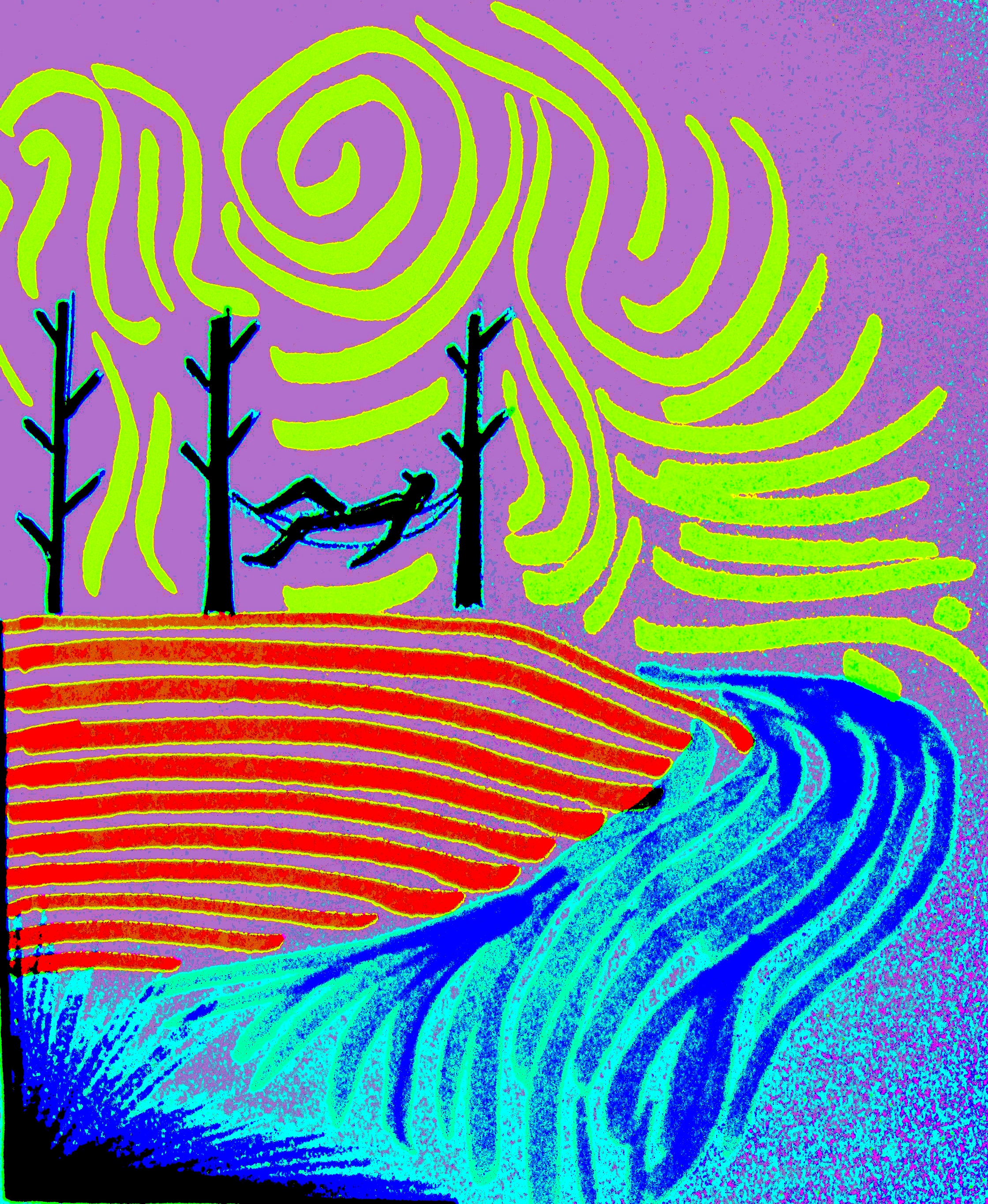
Illustration: Shyam G Menon

Illustration: Shyam G Menon

The forty something News Editor looked up from the articles he had been reading.

“ I liked the one on the biker. May be you could send that to our Deputy Editor who handles features,’’ he said.

It was now over a month since I had earned anything from writing.

A newspaper, which used to accept my articles, had shut down its opinion page. Everywhere else I sent my work, the feedback was – we run articles with quotes in it. Apparently, a quiet man passing through life and scribbling down his observations had no place in the media. Insistence on quotes was actually the more polite side of the media-treatment. Very often, the submitted article disappeared into a black hole of no response or elicited a much delayed sorry-I-forgot-was-busy kind of indifferent response. The News Editor seemed helpful and my fortunes may improve further if I got the Deputy Editor interested.

I pinned my hopes on Paul’s story.

Living alone in the outdoors is serious business. The year was 2008. I had been intrigued by the lone biker, camped out in the woods beside the Tons River in Uttarakhand. Probably that’s what put him in perspective for me – the biker as camper, as much alone and wrapped up in a world of his own as any hiker. Those days, it was quite common to open a typical automobile magazine and come across some account of high altitude travel that sought to equate the driver to a mountaineer or trekker. “ I pressed the accelerator and the engine strained to pull, in that rarified atmosphere,’’ rarely reminded the reader that the driver was inside a climate controlled cabin breathing normally, probably enjoying his favorite music and at best suffering a mild headache. Accompanied by glossy photographs of a car with high mountains for backdrop or the driver posing at Khardung La Pass, it sold the man behind the wheel as a fantastic example of adventure. The same individual would be a different case altogether, hiking up that pass with a loaded rucksack on his back. Then, the engine, chassis, torque, acceleration – everything is you. Who wants that? You can strain a lot less and sell it as high adventure when the industry in question is as powerful a marketer as the world of car manufacturers.

However, two wheels made the setting marginally different. True you still didn’t haul anything yourself, but at least you didn’t ride in climate-controlled comfort. The motorcycle is the modern day horse, the next best thing in movement to an adventure on a raft or bicycle. Adding to it was the talk in nearby Mori – Paul apparently camped at the same spot every year for a month or two. It was like an annual pilgrimage; same place, same spot. On a drive down the adjacent road, I waved to him. He didn’t respond reinforcing a leave-me-alone attitude. Alright baba, keep your peace, I said and moved on.

Peace? If you are a city journalist, that’s the toughest promise to keep to yourself and others. I told my friend Jeetu of my wish to meet this man. One day we mustered the courage to walk away from the road and into the woods where the biker was camped. The distinguishing feature around was a pair of large rocks, roughly twenty feet high, that sloped towards each other providing a crude shelter below. It was the most obvious place to camp but Paul Kramer was some distance away from there. A weathered Enfield Bullet, a hammock strung between trees and two to three clothe lines with faded, patched up garments hung out to dry – that was his home. Above the hammock an additional line had been tied ostensibly to support a plastic sheet as roof during rains. On the ground and near the bike, arranged neatly, were a steel mug or two, flask, plate, some spoons. The man was tall, broad shouldered and bald with big hands and weather beaten feet strapped into sandals. He wore layers of worn-out clothing and had a slow pace of talking in English. I sought permission to speak and for quite a while through my chatter, his demeanor betrayed the desire not to be intruded upon, to be left alone. It hung in the air, fading reluctantly as my monologue grew into a conversation and then a warm chat. That conversation hinted at the possibility of dropping by again. My friend Ravi had also seen Paul camped out in the forest and wanted to say hello. So another day, the two of us – Ravi and I – walked off the road and into the forest to spend some time with the traveler.

Illustration: Shyam G Menon

Illustration: Shyam G Menon

Paul was 62 years old then, from Cologne in Germany. A keen football fan and erstwhile club player, couple of decades back he had gone to South America to see a World Cup. From then on, he had been traveling. Save some years in between when he ran a restaurant in the Caribbean, which he later sold off. Eight years before I met him near Mori, he reached India and bought the Bullet in Delhi. He reckoned, he must have traveled right around the country at least thrice. His favorite states – Uttarakhand and Meghalaya. “ That’s my baby,’’ he said, pointing to the bike. Baby was a special reference. Reserved for a dog he once owned; the girlfriends he once had – when he called one by the name of the other, he quickly realized the value of calling them just `baby’ – and the bike he now rode.

It had taken him some time to access this spot at Sandra near Mori, for staying. Having done so, every year, he tied his hammock to the same two pine trees, put his feet up and amazingly, was able to happily spend his days watching the simplest of movements in the surrounding wilderness – a leaf falling, a bird flying, clouds drifting. “ I know it’s difficult for you to digest my life. You are from the city; have family and all. I don’t,’’ he said. Paul hadn’t married. He realized early that if he wanted to travel it was best to stay single. Neither did he yearn for crowds and cities. Having seen that plastic life abroad and knowing what was due here, he preferred to steer clear of Indian cities; except when football called.

The time I met him, Paul was hunting for a family with a television that may allow the biker to watch the 2008 European Cup. Germany was in good form (this was before they lost to Spain in the final) and he was willing to ride up to Shimla for a hotel room with a television if the situation so demanded. Eventually, he found a friendly family in Mori who allowed him to see the telecasts. Over the next few weeks, Ravi and I dropped by several times to spend time with Paul. Sitting on the ground while Paul talked from his hammock, you looked up and saw his daily perspective of the world. The pine trees rose like slender pillars into the sky, the branches at their apex swaying in the breeze. The rapids of the Tons, a river that hosts white water rafting, was a furious flow just beyond the lip of Paul’s camping ground. It was a calming mix – the sound of rushing water, swaying trees, passing clouds and verdant, often wet wilderness. “ There’s a strange energy here,’’ he said gazing at the pine trees and shrugging his shoulders. I revisited the question I had been asking myself ever since I met him – what would this man be, biker or hermit? He called himself a “ professional traveler,’’ a description loaded with the itch to move. In contrast, Paul seemed at the other end, at peace in a world he had slowed down to celebrate the details while everyone else rushed by without design. I could visualize my city self darting around like some sub atomic particle, hitting walls randomly while Paul sat unmoved in meditative peace. “ You smoke?’’ he asked, big hands extending a thin, carefully rolled cigarette. We politely declined for neither of us smoked. At night, the tiny camp changed texture. It was cloaked in pitch darkness. The faint glow of Paul’s kerosene lamp cut through the inky blackness, a slender flame in enveloping gloom.

Paul had little to offer – some Kashmiri tea, the cigarettes – but coupled with the place and his journey in life, the meet-ups became enjoyable moments for us. Slowly, Paul began waving back every time we passed by on the road. He dropped by at our camp for lunch. We brought him mangoes and the odd newspaper sporting football news. Sometimes the severity of survival bit too hard to permit sharing. Like the day, Paul got some fish from a local fisherman. Three small fishes, they whetted the big German’s appetite. He sliced them, lovingly poured olive oil and added green chilies to marinate. “ I want to offer them to you but they are just three you see,’’ he said apologetically.

Illustration: Shyam G Menon

Illustration: Shyam G Menon

When the time came for us to leave Mori, we decided to trek across the Rupin Pass to Kinnaur (for this story, please see https://shyamgopan.wordpress.com/2013/09/15/a-river-story-part-one/). Bad weather and landslides had ensured low fuel stock at depots in the hills. We desperately needed petrol for our camp stove. Paul spared a liter from his bike’s tank. The last time I spoke of him to Ravi was several days later, in the upper Rupin Valley. We had gone through rain and, on that day, lighting a fire – we wanted to save our petrol – had become a challenge. As the wet wood stubbornly refused to ignite, we spent a near full day laying this way and that in the mud, blowing our lungs out into the crude choola we made. When I got up to stretch my stiff limbs, I realized that I was tired yet happy. My pants were mud stained, torn, my T-shirt hung loose on a thin frame and I had a sweaty scarf around my neck. My feet, trifle swollen from altitude and dusty from weeks in the outdoors, looked weather beaten in the sandals I wore at camp. Just like Paul’s – I thought!

The Deputy Editor was a fidgety, young new generation-type who kept himself and others on the edge of their seats. There was some commitment phobia, I thought, to settling into a chair. It was the in thing at offices. Always look busy. Even if you are doing nothing, you have to be busy doing nothing. “ I am pretty busy right now. Send me your stuff, I am certain we can do something,’’ he said poised in half flight from his chair to somewhere in the swanky, air conditioned office. The articles I sent him the very next day sank into the usual media quicksand. I waited, mailed a couple of reminders. Almost three weeks later, he replied rejecting the whole lot including Paul’s story. As for the delay in delaying another’s journalist’s already delayed food coupon – well, he is an employed media person, not a wandering freelancer. He owed me no explanation. Did he read what I wrote? – I still wonder.

I thought of Paul and the absolute unhurriedness to his life, his ability to give every moment his full attention. That piece of forest bordering the river, the hammock, the bike – all were at best a curio to the unlived in media offices. It could be something to show off, use as embellishment in the news flow. Probably an article for the weekend supplement when the media product has to taste like a lazy cup of nice, warm tea. Weekend is the assigned time for life in the slow lane, when everyday traffic hurtling at break-neck speed on the highway to wealth and survival, pauses to notice dumb, stupid outdoors. They have a term for it – offbeat stories. I had asked Paul if he ever wrote about his travels. “ No,’’ he said, waving his hand dismissively. It conveyed his conviction in what he said. I remember gently touching upon the subject a second time. But he seemed to have buried it in his head, planted two pine trees and strung a hammock right across for the life unexplained.

After that Deputy Editor and some more years of freelancing, I understood why.

(The author, Shyam G Menon, is a freelance journalist based in Mumbai)

THE STORY IN A MESSAGE

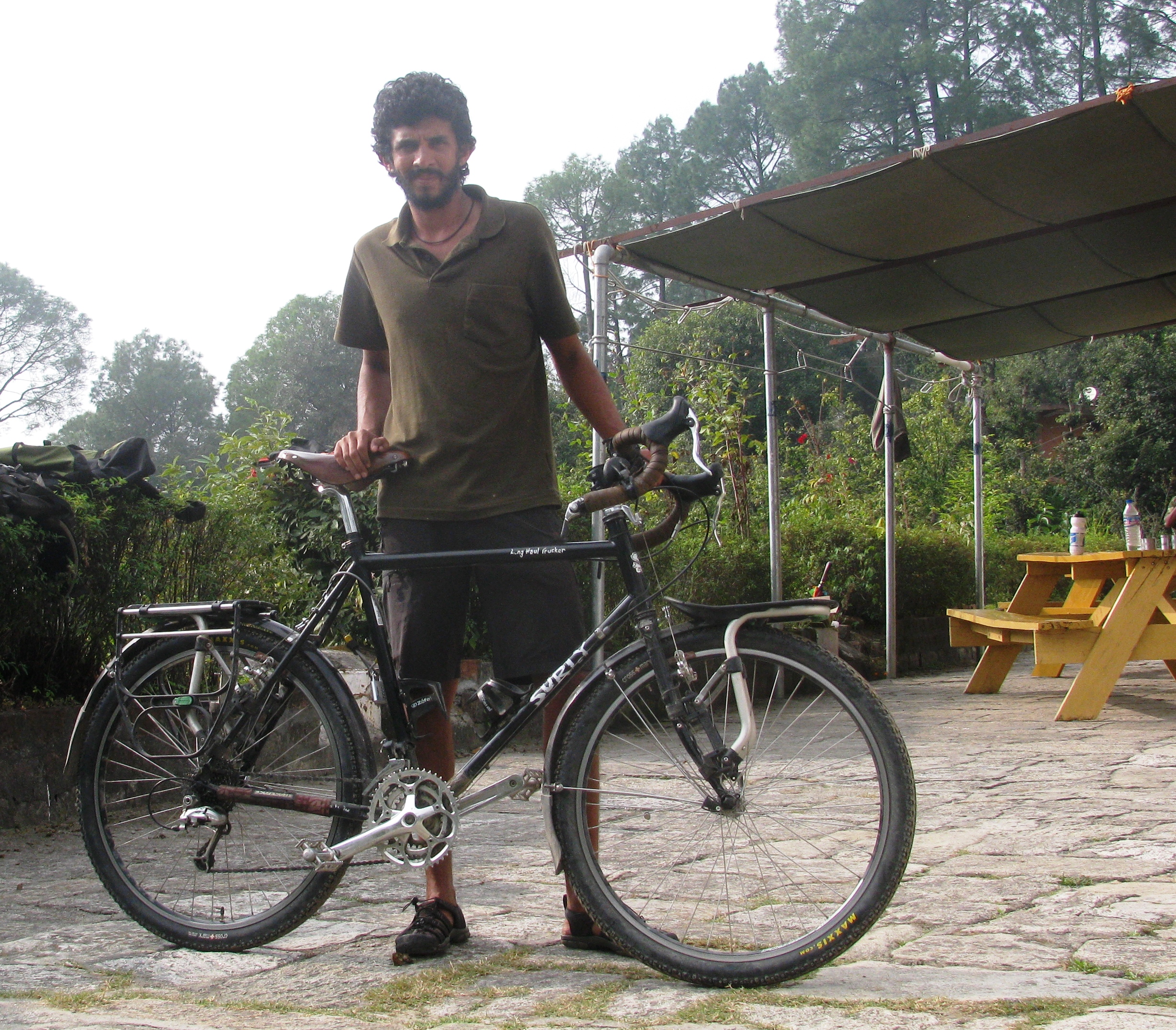
Ganesh Nayak with his bicycle at the NOLS India base in Ranikhet (Photo: Shyam G Menon)

Ganesh Nayak with his bicycle at the NOLS India base in Ranikhet (Photo: Shyam G Menon)

Late November 2014, my mail to Ganesh Nayak elicited the same automated message that had originally prompted this story.

A day later, he replied:

I just got back from a mind blowing trip to Muktinath (Annapurna). WOW! It blew my mind! The Himalaya here is so different from what I have been used to in India. The pine forests and snow are so close here. As I made my way towards Muktinath, the environment was very similar to Leh but there was plenty of water from all the icecaps, making human habitation possible. Ladakh in comparison had been sparsely populated. However, both have a charm of their own.

I did some initial research before heading in and knowing that there was a ton of cheap teahouses on the way, I went in with a very light weight-setup. I was as light as a cloud and just floated up to 3700m (Muktinath) from 820m (Pokhara). There is no way I am going back to loaded touring after this.

I am right now in Thamel and I am heading out in a bit to try and sell as much of my gear as it is possible for me to do. That should add some weight to my depleting kitty. My bike is in need of servicing and I am getting one done today.

Anyways, after leaving Ranikhet, it was tough going for a bit. I had been surrounded by people for a while and suddenly I found myself riding alone. That was a bit difficult. But once I entered the Terai of Nepal, I was again surrounded by people all the time. There are as many bicycles there as people and I had people riding by my side throughout the day – from school girls to army men to granddads and grandmas.

I am heading back to India after this. I didn’t have a plan as such until a couple of days ago. On a book shelf in Pokhara, I came across Anne Mustoe’s ` Two Wheels in the Dust.’ I am currently reading this book and will probably base my route back to Manipal on this.

Earlier this year, when Ganesh Nayak applied for the fall season Wilderness First Responder (WFR) course at the India branch of the National Outdoor Leadership School (NOLS http://www.nols.edu/), the office immediately got a sense of person and predicament.

Applications typically entailed a few more instances of correspondence between NOLS India and the applicant, ironing out details. In Ganesh’s case, Ravi Kumar, Director, NOLS India recalled, the office was treated to an automated message informing that he was out on a long trip and would respond as and when he could. In the world of adventure and personal discovery, which is what NOLS is, the required flexibility is extended; not to mention – the erratic correspondence kindles curiosity for the story behind the message.

The story reached Ranikhet, in time for the WFR, on a Surly bicycle. It was the classic touring model with black steel frame, Brooks saddle, pannier racks up front and behind, gears and that generally solid appearance designed to crunch months and miles. Ganesh was riding in from Mussoorie.

It was almost two months since he had begun his odyssey – a cycle trip along the Himalaya.

What made the story particularly engaging for this author, an Instructor-In-Training (IIT) just back at NOLS India from a long hike with the fall semester course and discovering a Surly on the premises were Ganesh’s demeanor and his journey to a dream he never thought existed in his head.

Some years ago, Ganesh, now 32, was at a low point in life. Born and brought up in Manipal in southern India, the electronics engineer had taken to drinking and was generally adrift. He knew he had got it all wrong but getting out of the funk required a road map and such maps don’t visit any of us easily.

Somewhere in that troubled phase, he purchased an ordinary bicycle.

For the next six months, he rode it around; progressively realizing that riding long on a bicycle is what he wanted to do.

What happened next may seem mad but Ganesh talked of it in an utterly composed manner.

After much research and study, he bought his first geared bicycle – the Surly. It cost him over 100,000 rupees. That is expensive by Indian standards but it is not a very significant amount in these days of rising salaries in urban India and willingness among young Indians to put money behind their dreams as people in other countries have done for long. Instead, what struck home as really significant was Ganesh’s decisiveness. He felt confident of vaulting straight from six months with a modest, regular bicycle to an iconic make because he concluded that the dream evolving upstairs in his head could settle for nothing less.

Surly it had to be.

After buying the new cycle in Bangalore, Ganesh interned briefly with a city based-cycling outfit, at that time called, Cyclists For Life. He learnt how to repair and maintain his bicycle. Ganesh’s first test with the Surly was a trip of around 250 kilometers in his home state, Karnataka. He started at Manipal; proceeded to Agumbe, a place identified with rain forests and much remembered as a protected sanctuary for the King Cobra, then cycled north from there before turning south towards Kollur and Manipal.

By now feeling ready for his first long trip, he cut lose to earn the needed freedom – he resigned his job. Earlier this year, he began his journey at Srinagar in the North Indian state of Jammu & Kashmir (J&K). Since then he had cycled through J&K (including much time in Ladakh), Himachal Pradesh and parts of Uttarakhand to reach Ranikhet. “ I had heard of the WFR from another cyclist who did it earlier. That’s how I decided to enrol. I also knew that I would bump into more people given to adventure and travel if I attended the course. That was an added attraction,’’ Ganesh said. His batch of students for the WFR turned out to be a diverse mix, drawn from India, Indonesia, Malaysia, USA, UK and Canada.

First aid course done, Ganesh planned to briefly hike in the Gangotri area with some of his course mates, return to Ranikhet and recommence his journey, cycling on to Nepal, Sikkim and Bhutan. While North East India was originally part of his itinerary, Ganesh felt that by the time he completed the current leg of his trip, his resources may be stretched. He may have to return to Manipal to piece together funds for the remaining part of the journey. Reality bites, dreams notwithstanding.

Ganesh’s trip engaged for yet another reason.

His daily cycling route in the Himalaya hadn’t been held to ransom by some iron clad objective to cycle along a fixed route chosen in advance. He wasn’t out to prove anything. There wasn’t a goal beyond question or negotiation. He allowed himself to be led by conversation with local people and developments along the way. Thus, in Ladakh, he and another cyclist from Chennai opted off the regular cycling route and tagged along with an enterprising horseman to do a largely off-road section, lasting several days. Ganesh liked this excursion and other similar ones availed along the way, immensely. This angle made his trip more organic and less of an imposition in search of achievement.

In the process, he discovered differences between the people of the plains and those from the mountains; in particular – glimpses of that fabled simplicity, sincerity and spirit of sharing associated with residents of the Himalaya. “ Even my Hindi has improved,’’ he said, recalling conversations sustained for long and time spent living with local people. Both in the Himalaya and in other places that he cycled through in South India, he had instances of being helped and saved from getting lost by people he met on the way.

As he spoke, one sensed a bit of the magic he had experienced since buying a cycle, months ago in the depths of a funk.

“ I now feel more connected to life,’’ Ganesh said.

That was a couple of months ago.

Several days later, I was in Ranikhet preparing to head out on a trek, when a familiar rider on familiar black touring cycle slowly drifted down the road to Khairna. We exchanged pleasantries. Back from his trip to Gangotri side, returned to saddle and minus his beard and moustache, Ganesh was pedalling off to Nepal. Ahead lay Pokhara, Muktinath and the automated message I got before his eventual update.

(The author, Shyam G Menon, is a freelance journalist based in Mumbai. He also works periodically with NOLS India. A portion of this article without the update in italics had been posted earlier on the Facebook page of NOLS India. )

JOHAR’S JUNE

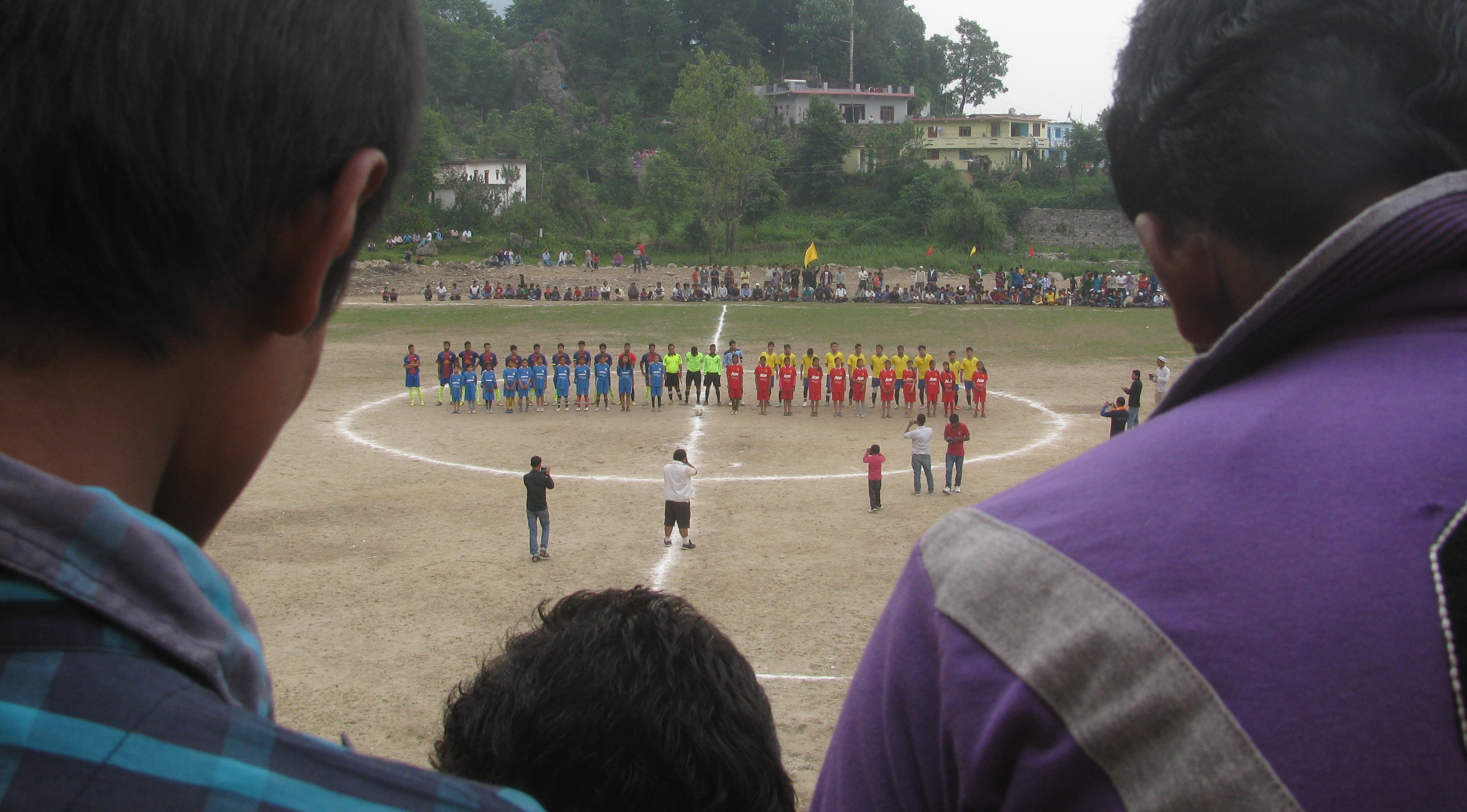
Teams line up before the football final (Photo: Shyam G Menon)

Teams line up before the football final (Photo: Shyam G Menon)

For a fortnight every June, a playground in Munsyari draws crowds of people.

They are residents of Kumaon’s Johar Valley and members of its far flung diaspora. Kumaon is the eastern half of the Indian state of Uttarakhand; Munsyari is in north eastern Kumaon.

June is Johar’s month of annual get together.

The magnet is that playing field.

June 2014, it hosted competitions in various sports. Evenings featured football, coincidentally befitting the times, for as the local competition peaked to final by mid-June, in far away Brazil the 2014 FIFA World Cup got underway. It became Munsyari’s season of football within global season of football.

Munsyari’s football however went beyond the sport.

Over 60 years ago, in 1953, a group of students from the Johar Valley studying in Almora, started the Johar Club. Their idea was to get together, keep the Johar in them alive through sports. Thus was born the tournament. The first sport it featured was volleyball. For the next three years, this annual ritual was hosted in Almora. In 1956, it shifted to Munsyari. It has remained there since.

According to Sriram Singh Dharmshaktu, Secretary, Johar Club, the inaugural tournament in Almora drew half a dozen teams or so. By 1956, this grew to around 20, mostly local; including teams from villages like Darkot, Bunga, Sarmoli, Suring, Dumar and Jalat. The variety of sports also grew to encompass volleyball, football, carom, chess, table tennis, badminton etc. Soon, teams from outside Munsyari started coming; among them – Lucknow, Delhi, Bageshwar, Thal and Didihat. No matter where a team was from, one thing stayed common – its members hailed from the Johar Valley.

This year (2014), the tournament had 16 senior teams and 15 junior teams, including school teams. For the first time the event also featured girls’ teams with four teams registered to play football. These all girl-outfits were named after well known adventurers – Bachendri Pal, Chandraprabha Aitwal, Sabita Dhapwal and Reena Kaushal Dharmshaktu. Further, in what was probably recognition of the growing popularity of running in India, there was a 15 kilometre-run from Munsyari to Darkot and back. There is no age restriction for senior teams. It was visible for example in the volleyball final, where a mix of youth and age fought an engaging match.

In the Himalaya, cricket is popular. If you are frequent hiker, you would have seen villagers playing the game. A good hit typically travels down several terraced fields or tiered slopes of a hillside. The fielder chases the ball and often disappears from view in the undulating, steep terrain. A powerful throw from below returns the ball to frantic teammates on the pitch. The fielder then climbs back up. In a single game, there would be many players repeating this process many times over. In mountains, big, flat spaces are hard to find. Some villages are lucky. They have a playing field. There are regular inter-village cricket tournaments. Shields and trophies find pride of place in a victorious village; I recall seeing a big shield displayed at a village temple in the western part of Garhwal bordering Himachal Pradesh. I also remember youngsters’ sorrow at a Kumaon village, after the nearby river which flooded in monsoon, washed off a portion of their flat field.

Probably because cricket has its own established circuit, the sport wasn’t part of the Johar Club’s annual tournament. Big ticket sport here was football, followed by volleyball.

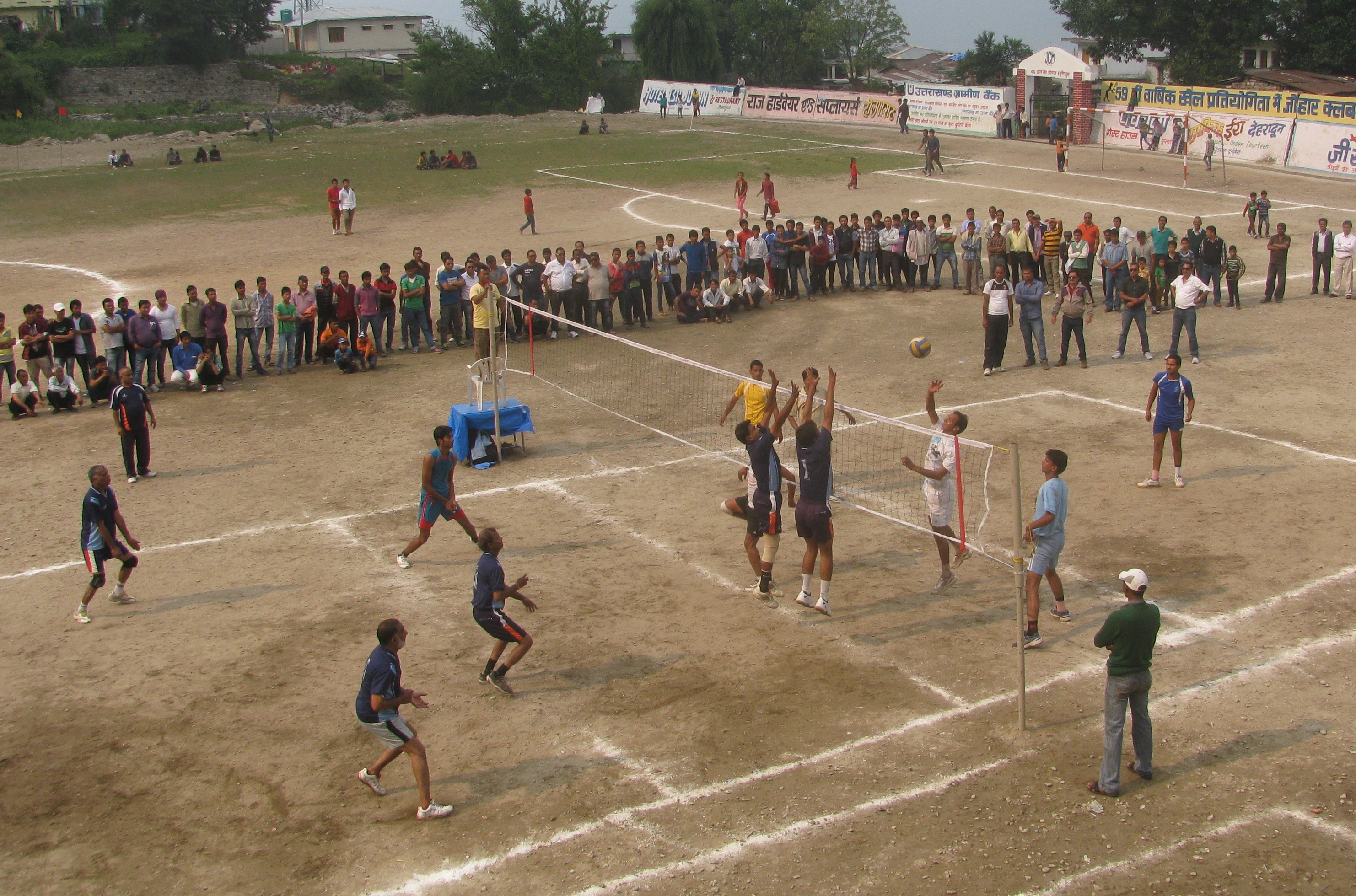
Volleyball final in progress (Photo: Shyam G Menon)

Volleyball final in progress (Photo: Shyam G Menon)

Munsyari is small enough for most people to know each other. Well known mountaineer and Padma Shri recipient in 2014, Love Raj Singh Dharmshaktu, hails from Johar. June was his month to be home too. A local hero and chief guest for an evening’s football, he was formally received in town and taken in procession to the stadium. Years ago, Love Raj had been on a team playing football at the same annual event. Ahead of the match, oblivious of the gathered crowd, his little son had fun kicking the football around in the stadium.

On the day of the football final, the two finalist teams walked down the bazaar road to the stadium, with their supporters – one team accompanied by a traditional Kumaoni band, the other by a school band. The small stadium was full of people. Houses nearby had people on balconies and roof tops just as they do for cricket matches in Mumbai. There were people watching from roads uphill and some poised on top of rocks. There was no dearth of flourish either for the final ended in a penalty shoot-out with goal keeper for hero, a trend that would repeat at World Cup matches weeks later. Interestingly, for a long time, the football here couldn’t accommodate teams of 11 players each due to lack of space. In 1970, with help from residents, the playground was enlarged. Team size went up from nine to 11.

Preparations for the annual tournament commence in April-May. People contribute; some financially, others help with the organizing. With so many landing up, it also becomes an occasion to meet friends and relatives. At heart, the tournament is a reunion.

The annual community reunion around sport in Johar, reminded of a similar event elsewhere.

Far to the south, in Coorg (Kodagu), there has been the tradition of an annual field hockey festival. It was started in 1997. In the past, the region has been famous for talented field hockey players and a typical tournament saw people who had played at state, national and international level turn up to represent their families (please visit this link: https://shyamgopan.wordpress.com/2013/08/22/field-hockeys-family-festival/). A difference between Johar and Coorg was – in Johar, team identity spanned roots in Johar for those from the diaspora and participating as visiting teams, to specific villages and institutions (schools for example) in Johar for local teams. Either way, it was link to a place. In Coorg, the idea of roots went deeper to teams arranged under family names.

(The author, Shyam G Menon, is a freelance journalist based in Mumbai. An abridged version of this article was published in The Telegraph newspaper)

A BOOK ON MOUNTAINEERING’S HOLY GRAIL

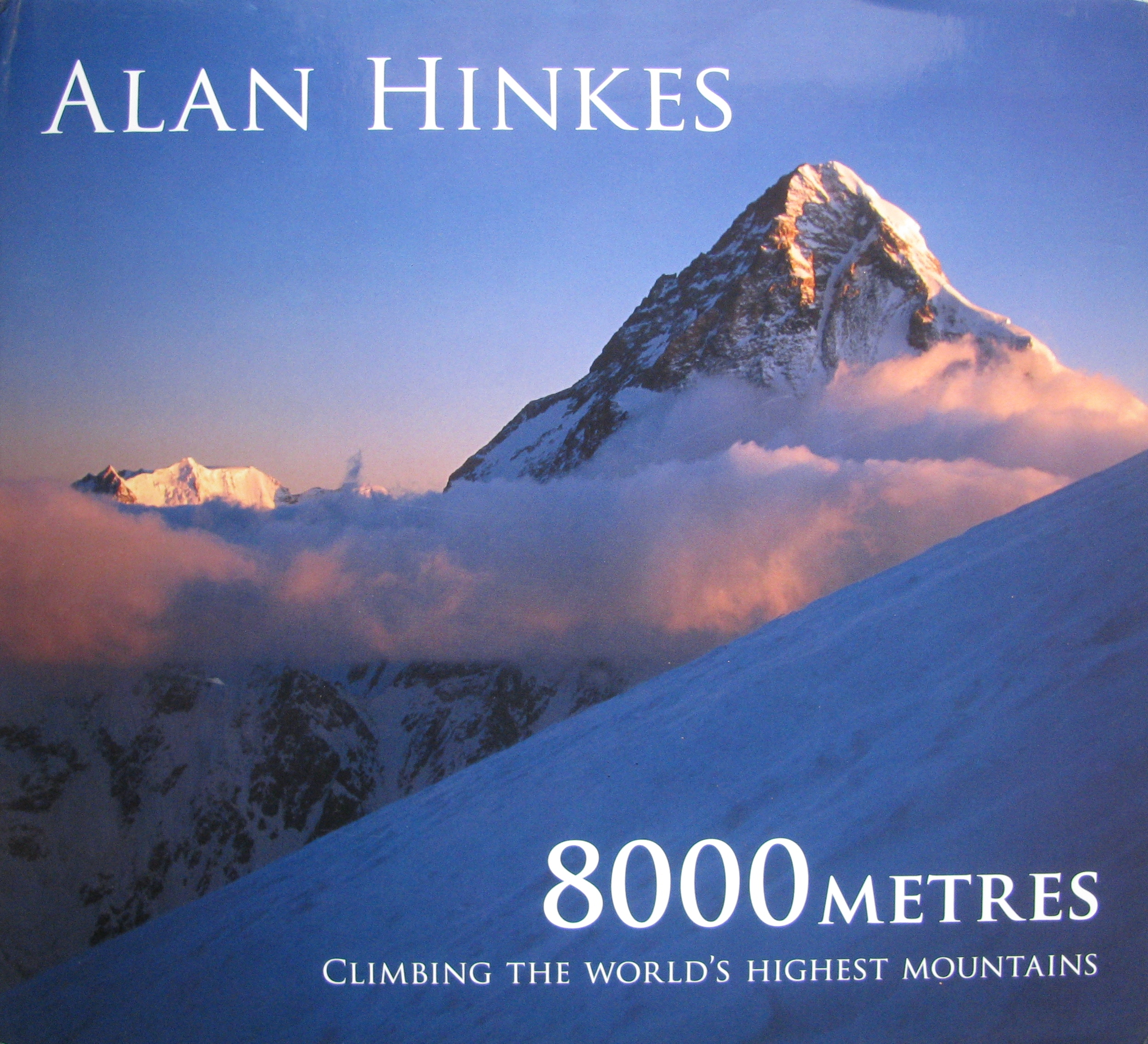
???????????????????????????????Alan Hinkes’ book, ` 8000 Metres – Climbing the World’s Highest Mountains,’ should make a fine addition to the library.

Hinkes is the first British mountaineer to have climbed all the fourteen 8000m-peaks.

On the Internet, his achievement is sometimes qualified as “ disputed,’’ the ascent of Cho Oyu being case in point. Hinkes mentions reaching the mountain’s vast summit and walking around to ensure that there isn’t any higher to go. All this is in semi white out condition with reduced visibility. Views of other major peaks, useful to establish proof of summit, remain elusive. Hinkes is also alone at this stage of the climb. “ I did not bother to take any photos. There was nothing to see and I was more concerned with finding my way back before I became trapped in a full whiteout or deadly snowstorm,’’ he writes in his book.

Among the fourteen 8000m-peaks, Cho Oyu is often described as the easiest. Hinkes’ chapter on Cho Oyu begins thus: Categorizing any 8000m peak as `easy’ or referring to an `ordinary’ or ` normal’ route to the summit, is a contradiction in terms. There is nothing easy or normal about any 8000m mountain. Each of the fourteen giants represents a serious undertaking with different characteristics, dangers, difficulties and local weather patterns, and none should be underestimated.

In the eyes of the sport’s high priests, the situation on Cho Oyu may have inspired lack of precision in summit claimed. But it takes nothing away from Hinkes’ book, which strikes a fine balance between coffee table book and account of life in mountaineering, especially that recap of fourteen 8000m-peaks climbed over eighteen years, entailing twenty seven attempts in all. Towards the end of the book, Hinkes says that the fourteen 8000m-peaks are dangerous, that he climbed them for himself and not for money and therefore even guiding on those peaks for money isn’t worth risking his life again. The only mountains from the fourteen that he may consider climbing again are Everest (to which he returned) and Cho Oyu.

The book’s biggest strength is simplicity in the story telling. It is unpretentious. This is complemented by large and beautiful photographs backed by an uncluttered layout. The images give you a genuine sense of place without complicated camera work to distract from what is being shown. Hinkes’ photography is crisp and clean. The book has a nice architecture in terms of written content. Having devoted the introductory chapter to describing his affection for adventure and the evolution of his career in climbing, Hinkes keeps the accounts of his climbs straightforward and bereft of searching philosophy. He speaks matter of fact, mostly devoid of the dramatic, adding a touch of drama only where it seems relevant. Each story of climbing an 8000m-peak is followed by a smaller chapter on an interesting aside. The latter ranges from the photo of his daughter that he carried to mountain summits (it also gave him something to look forward to after the summit and kept him focused on descending safely), to profiles of Jerzy Kukuczka, Kurt Diemberger and Reinhold Messner, the correct clothing for high altitude mountaineering, his food habits on expeditions, ` the death zone’ as extreme high altitude is popularly called and dealing with death in a dangerous sport.

We live in an age, where mountaineering narratives are many. The media gaze has spared no landscape. Some would say – as early victim of media in adventure, the snowy, windswept heights of our planet suffer from a fatigued idiom of expression. If despite that, we still indulge media, then it must be conceded – content matters now more than ever before. Details like perspective, craft and lightness of handling, previously overlooked, have emerged differentiator for our tired senses. This book, at once serious for the subject it handles and enjoyably light in treatment, lives up to that more comfortable aesthetic.

For the average Indian like me, it is an expensive book.

(The author, Shyam G Menon, is a freelance journalist based in Mumbai. This is a slightly edited version of a review originally written for the Himalayan Club Journal, Volume 69)

OF WAR AND WARRIORS

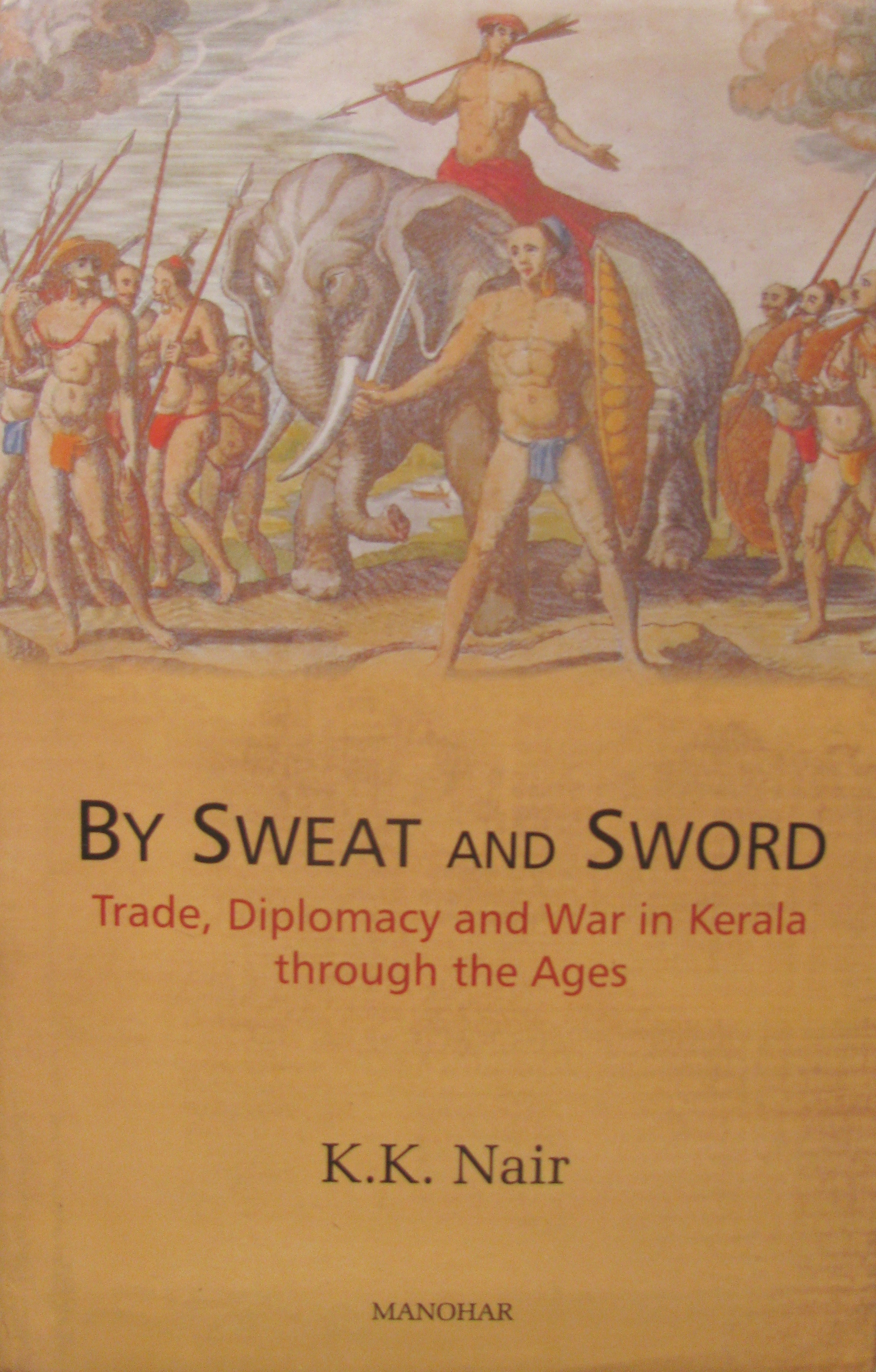
???????????????????????????????On the jacket of Wing Commander K.K. Nair’s book: By Sweat and Sword – Trade, Diplomacy and War in Kerala through the Ages, are observations pivotal to his work.

Colonial documents record that war was the natural state of Kerala. The region’s political climate was characterized by a variety of foreign and local powers fighting each other for economic and military ascendancy. Yet despite centuries of foreign contact and conflict, Kerala continued to thrive and retain its independence. The frontiers of Kerala were never redrawn. It did not suffer massive social or cultural dislocations. No foreign order or influence, especially those inimical to the populace, could be imposed until the traditional order was overturned. The influences Kerala absorbed were of its own choosing. The book “ hypothesizes that this remarkable achievement was a direct consequence of Kerala’s unique military, diplomatic, social and economic culture.’’

The book is an investigation of a state of war (internal and external), what that dynamic meant for defending Kerala and what it meant to external powers trying to subjugate the region or gain a toehold. Old Kerala transacted its business amidst a diet of military readiness. Actor across ages in this was a clan – the Nairs. The book isn’t community or clan history. It is what its title says, except, you can’t talk of war in Kerala without also talking about the Nairs. K.K. Nair’s book takes the reader from a likely foreign origin for the clan in tribes linked to the Scythians, their subsequent migration to India, movement within India along the south west coast to Malabar, their role in the wars of South India, wars within Kerala and wars with foreign powers trying to colonize Kerala.

The Scythian angle is founded on a couple of arguments. According to the author, there is no mention of the Nairs in the writings of the Sangam Age and earlier. The first mention in India is in the inscriptions of the Scythian king Nahapana who reigned from AD 78-125. His domain extended beyond the Gulf of Cambay, along the Gujarat and Konkan coast. The inscription talks of assisting the Nairs of Malabar. On the other hand, earlier in Europe, the Greek historian Herodotus (BC 484-425) noted that the Scythians had joined forces with neighbouring tribes, including one Slavic tribe called the Neuri, to stem the attack on Scythia by Darius of Persia. This happened around 500BC. Later as the restlessness of Mongolia and Turkestan took hold, the Scythians were further displaced. They began moving into Indo-Persian lands around 200BC. By this time the Neuri and other Scythian tribes no longer find mention around the Caspian Sea. At the same time, Megasthenes (BC 350-290) in his description of India, positions the like sounding Nareae tribe to the north of the Aravali Mountain. Putting two and two together, the author suggests a story of migration, initially towards India and later, within India.

Unlike North India, the South from ancient times was wrapped up in mutual warfare. The best known of this was the tripartite battles involving the Cholas, the Pandyas and the Cheras. Kerala was predominantly Chera territory. It was hill country; it was also numerically disadvantaged. Invading armies were typically bigger. This was the environment into which the warrior-Nairs arrived. A clan of dedicated warriors to oversee security and their lifestyle revolving around martial culture influenced Kerala. K.K. Nair observes, “ Kerala, unlike most of India, was not divided into Hindu villages but was divided into gradations of military divisions with every division and sub division being designated by the allotted quota of Nairs it was required to bring into the battle field.’’

A fallout of this arrangement was that rulers didn’t maintain large standing armies but they could marshal an adequately large army at short notice. It is possible to trace local customs, building architecture and lifestyle – including the culture of martial arts – to such a militarily styled society. The Nairs’ fighting style associated in martial history with the `Berserk or Mad Warrior’ style (wherein they forgo use of armour), would have got progressively challenged as technology gained currency with opponents. But on many occasions, it also stunned foes. The book explores the warrior mindset, including suicidal contests like `Mamankam.’ Needless to say, some fighting or the other seems to have been always on in old Kerala. Accounts are commensurately bloody. K.K. Nair’s book helped me put in perspective some of the idiosyncrasies of Kerala. History provides a window to understand people. Nair’s book served such purpose.

The book brings us all the way from ancient battles to Kerala’s colonial wars with the Portuguese and the Dutch, Tipu Sultan’s invasion and eventually the onset of British supremacy. We get an idea of the strategies and tactics of invader and defender. We see how frustrated some invaders may have been, weighing their incessant harassment on land and sea against the viability of their spice trade. For lay readers (like me) the book’s central character and its agent of continuity will be the Nair soldier. He is there in every conflict, be it in Malabar, Cochin or Travancore. However, despite being Kerala’s constant warrior through the ages, the Nair goes tad unexplained beyond his image as set in historical accounts of battle. But then, the book’s main intent isn’t investigation of clan or community. It is instead a study of trade, diplomacy and war in Kerala provoked by the curious case of a state that held its shape through the years despite active engagement with the outside world.

To sum up: By Sweat and Sword is an interesting book about a violent past.

INTERVIEW WITH WING COMMANDER NAIR

The author of the book, Wing Commander K.K. Nair.

The author of the book, Wing Commander K.K. Nair.

Wing Commander K.K. Nair is a serving Indian Air Force (IAF) officer. He is Joint Director, Operations (Space), at Air Headquarters, New Delhi. He replied by email to questions about the book:

Can you describe the circumstances that made you write this book? What attracted you to the subject?

I was coming from Geneva to New Delhi in 2007, when my French co-passenger Valerie, a part time scholar and full time hippie – as she put it, gave me a running commentary on Kerala in ancient times and the Nairs. My interest in the subject was sufficiently kindled. I became curious to know more. Thereafter, when I mentioned the subject to Gen Satish Nambiar, then Director of the United Services Institute (USI), he strongly encouraged me to do an in-depth research. It was the active support and encouragement from Gen Nambiar, Gen PK Singh, Squadron Leader RTS Chinna of the Centre for Armed Forces Historical Research and my colleagues in the military services that enabled me to sustain my attraction for the subject.

How did you go about collecting the material for this book? Would you like to share any interesting moments therein?

Most of my material for research came from the National Archives, the Travancore, Cochin state records, from the USI as also from the University library, Trivandrum and the late Travancore Maharajah’s private collection. Some material came from the Dutch records for which I am particularly indebted to Mr Tristan Mostert, Curator of the Rijksumuseum, Amsterdam. Material on the ‘Mad-Warrior’ style of Nair warfare came from Prof Michael P. Speidel of the University of Hawaii. Overall, a lot of effort went into collecting material for the book.

With regard to interesting moments, one of these was when during a meeting with the late Maharajah of Travancore, he read the draft account of the battle between Tipu’s troops and the Travancore Nair regiment on the Travancore Lines. He got so animated reading the account that he rushed in to get an old `ola’ (palm leaf document) showing grant of lands etc to the Garrison Commander Kalikutty Nair.

The next equally interesting moment was at Trivandrum’s University Library. There was some kind of a strike on and the library was forced to shut. I was returning disappointed when I saw some students striding up to me calling out, “Pattalam Saar, Major Saab” etc. They got the library reopened for me stating that strikes don’t apply to OUR military. I was truly overwhelmed.

You have attributed a Scythian link to the Nairs. How conclusive is that?

I have avoided being judgmental throughout the script. I leave the conclusions to the reader.

Having written this book, can you briefly explain why a state of war became Kerala’s dominant predicament?

An abundance of resources always brings in problems of management. These snowball into rivalries, conflicts and war. Kerala had enough agricultural produce, spices etc to feed itself and the world at large. Little wonder then that its shores attracted the Chinese, Arabs and Europeans. This ability to produce resources, trade resources and sustain prosperity across the ages was possible because a fine balance existed amongst the various communities in Kerala. Thus, though war was daily affair, trade and agriculture never suffered.

Is war and warrior a chicken and egg situation capable of contributing to a state of war?

Yes. Your observation is very apt. It certainly contributes.

(The author of this review, Shyam G Menon, is a freelance journalist based in Mumbai)

A TREK AND A TEA STORY – PART 1

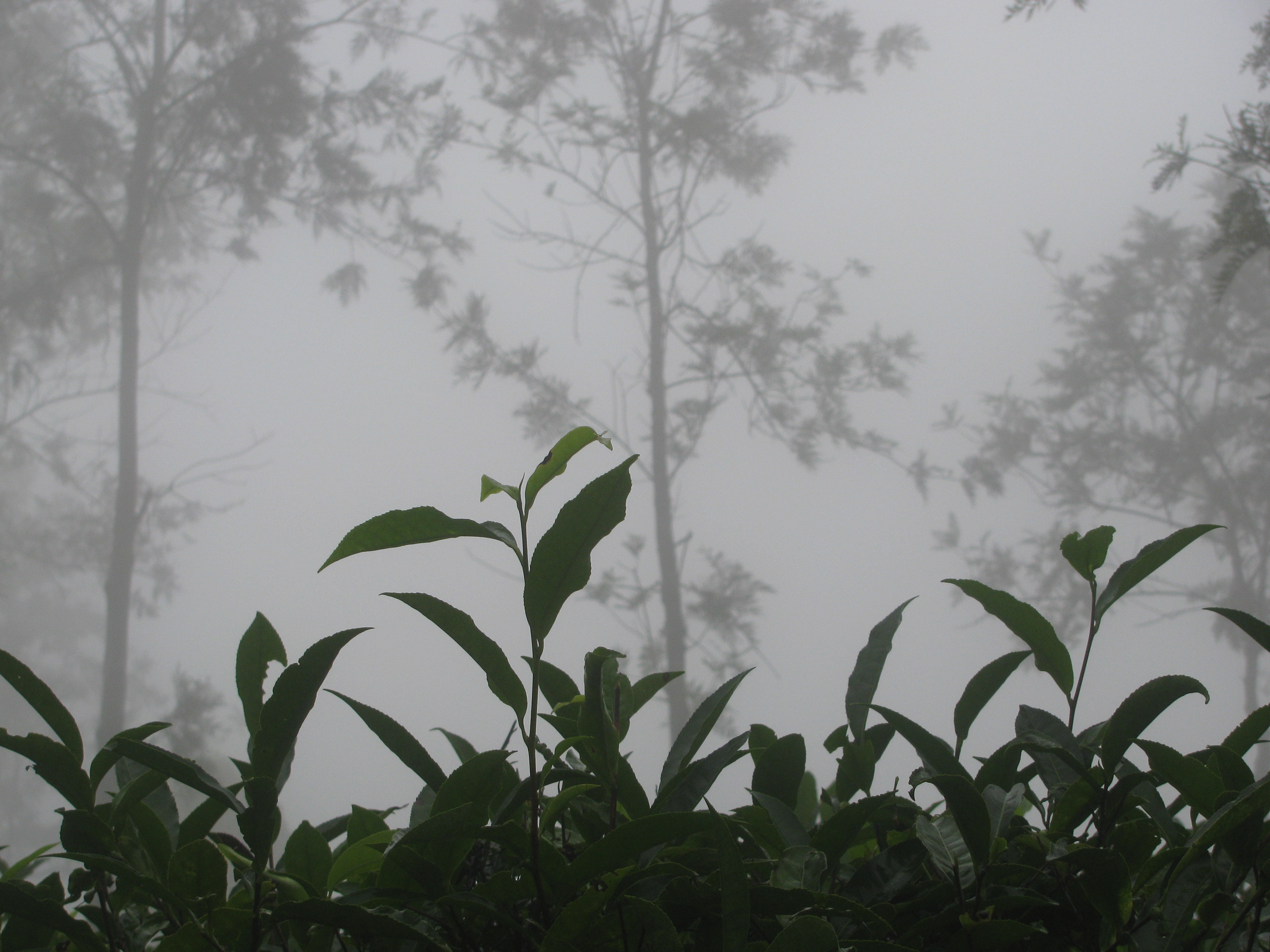
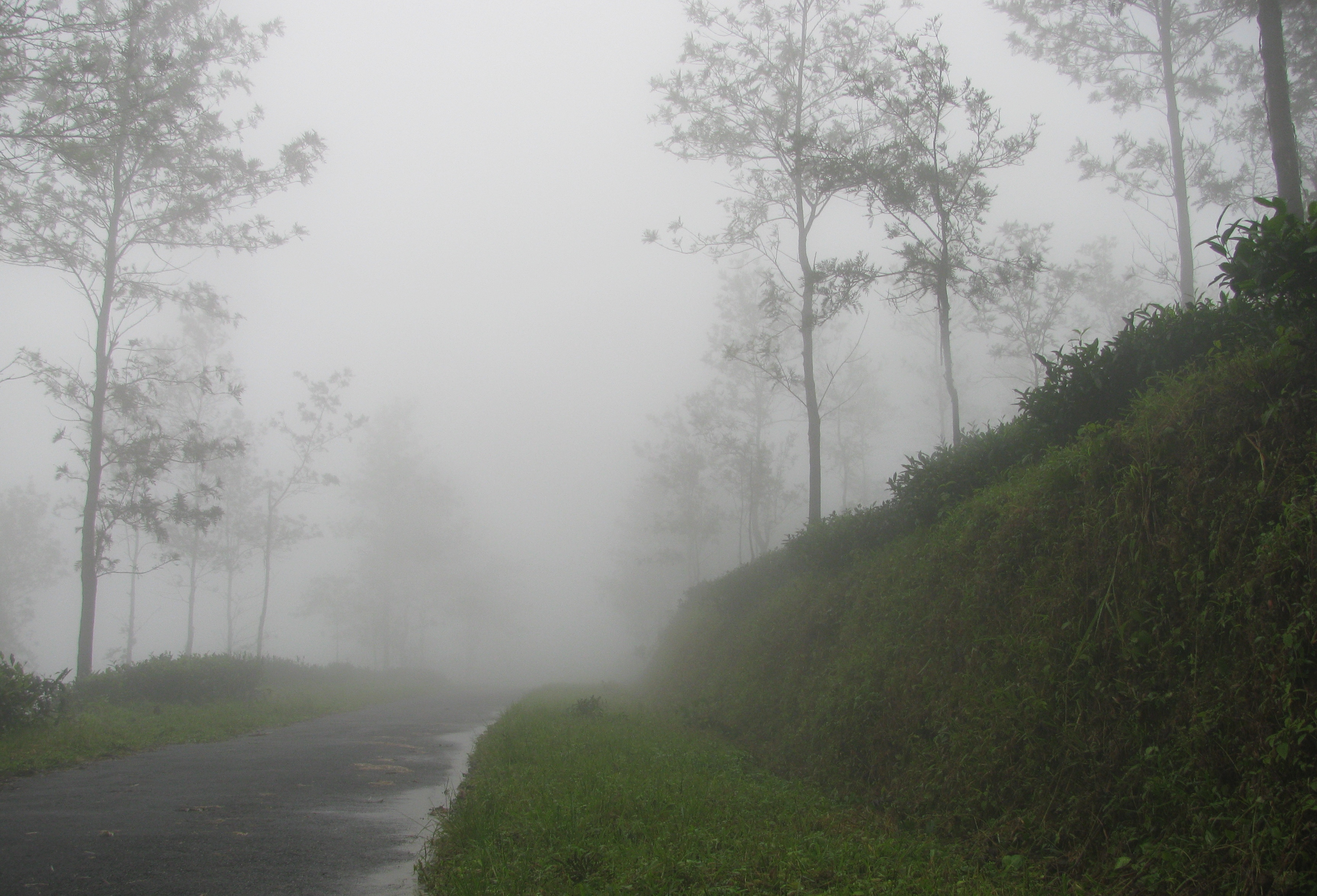
On Ponmudi (Photo: Shyam G Menon)

On Ponmudi (Photo: Shyam G Menon)

This article weaves two narratives – the one in normal text focuses on a trek; the other in italics, talks about tea estates.

It is an old story said in three parts. A lot may have changed since it was first written in 2009. A quick reality check was done through return to context in August 2014, which is appended as `Post Script.’ However, it is a limited update. Readers are requested to keep that in mind.

In the beginning of the nineteenth century, the plantation industry reached Kerala on India’s south western coast.

First in was coffee in Wayanad, the north Kerala district bordering Karnataka. This area used to belong to the erstwhile Madras Presidency. There were three potential sources of manpower for the estates. Of them, the tribal people flatly refused to work on the plantations seeing it as an invasion of their forests. The people from the Malabar region were averse to such work. Imported labor from Tamil Nadu provided the solution.

By 1866 more than 200 coffee estates were operating in Wayanad, two thirds of that owned by Europeans, the rest by investors from the coastal towns. Twenty two years later, news came of blight on the coffee plants in Kerala. It was believed to have arrived from plantations in Sri Lanka; in any case, much of the state’s coffee was destroyed by 1876. Experiments with other crops like cinchona, as replacement for coffee, proved discouraging. Eventually tea moved in; coffee continued to have a presence in Wayanad. Although the British East India Company’s first foray into tea in South India happened in the 1840s, large scale production of tea in Kerala commenced only after the coffee blight. Tea had to be necessarily large scale compared to coffee. As a crop it required regular human intervention. These interventions were affordable only if the scale of cultivation was large. The heart of the state’s tea country then was Peermedu. Later it was the undulating hills of Munnar.

The last major cash crop to reach Kerala and its hills was rubber at the turn of the twentieth century. With this, save the apex portion which was off limit by law, it was theoretically possible to clothe a Kerala hill in estates – rubber at low altitude, coffee at mid altitude and tea at high altitude. One definite casualty of this was the traditional forest aesthetic. From natural and heterogeneous, the idea of greenery became acceptable even if it was manmade and homogenous.

When my cousin Rajeev comes home on vacation from the US, we usually go on a hike. That’s how Agastyakoodam entered the frame.

At Neyyar Dam near Thiruvananthapuram in Kerala I got my first real look at Agastyakoodam peak. The face it presented to Neyyar Dam was beautiful, a perfect triangle. Agastyakoodam had always been there in the backdrop at Thiruvananthapuram, spoken of in hushed tones of respect. To see Agastyakoodam you had to be on the terrace of an ideally located house in the city and have a clear day. Slightly foggy or sky laden with rain clouds – you missed it. For the child in you, that added to the myth. I grew up in Thiruvananthapuram. So the myth was a big deal.

In the late 1980s, I remember listening in awe as a friend who was senior to me, prepared to join the annual pilgrimage up the 6237 ft high-peak. Nobody called it a trek; indeed there was no trekking in popular perception then. You went up a hill for pilgrimage. Then in January 2009, three of us – Rajeev, his nephew Gokul and I – decided to do the Agastyakoodam hike ahead of the annual pilgrimage. Booking the trek through the forest department turned out to be a small expedition. It was a whole day’s trip to Peppara and back; that was where we had to pay the fees and register our names.

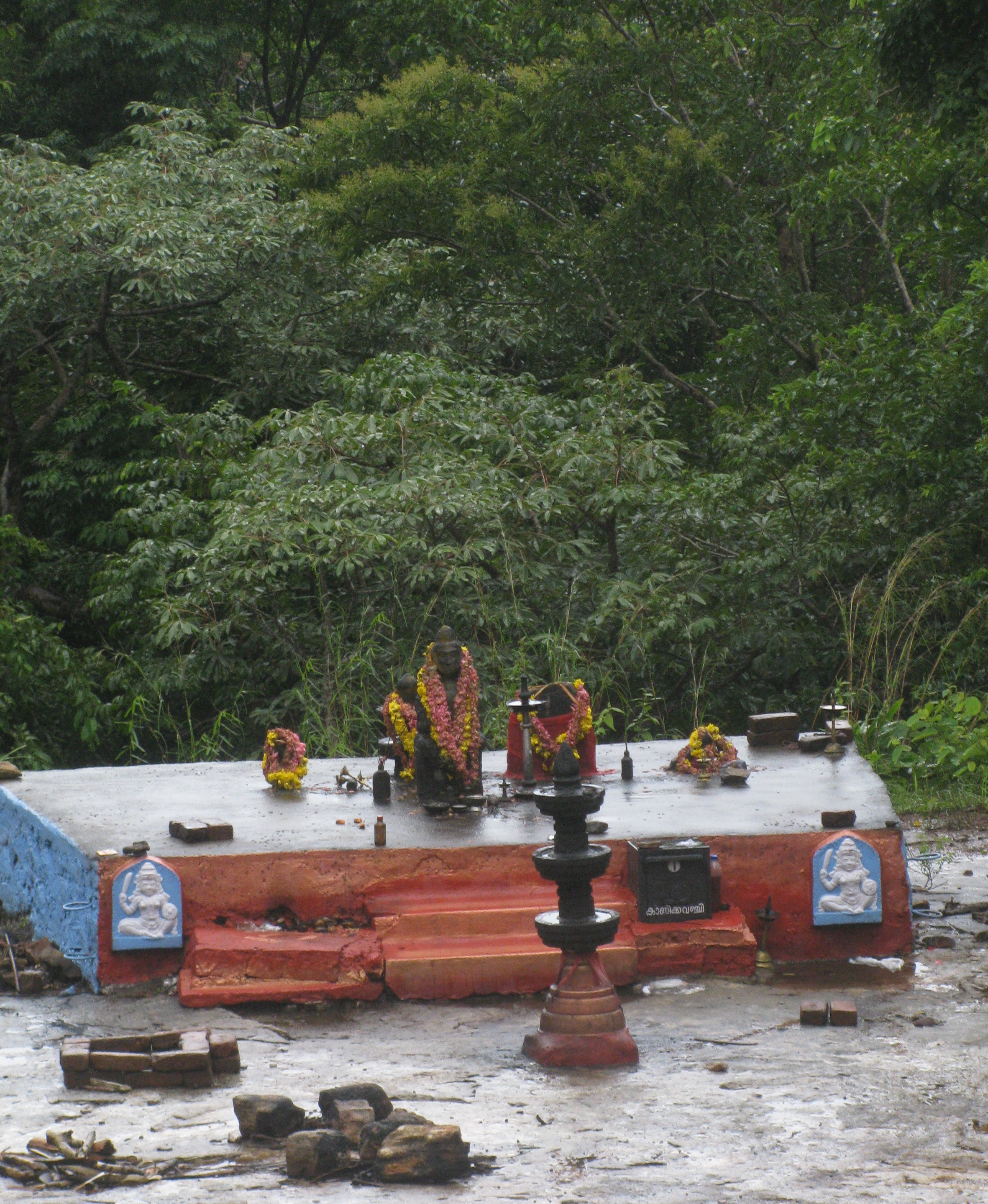
Half way along the narrow forest road to the Peppara Dam and its warden’s office, Shahajad who was driving our hired three-wheeler stopped the vehicle to put some money in a box kept in front of a temple. It was one of the most beautiful sights. Besides the small box and a multi-tiered, soot-stained traditional lamp fixed to the ground, there was nothing to mark a temple there. But the atmosphere was exceptionally divine in a quaint, primeval way. It was set by four to five lovely trees called chempakam in Malayalam. They have a sprawling shape, the trunk acquires a silver color and in full bloom, has dainty white flowers. A week later at the botanical gardens adjacent to the Thiruvananthapuram zoo, I could gather the actual name for the tree – Eezhachempakam, Plumeria rubra Linn also called Temple Tree. In that small clearing filled with white sand, by the road in Peppara, the trees had woven a magnificent aura – if one’s gaze turned heavenward in the temples of the plains, then in the temples of the hills and forests, I felt a sensation of being embraced by nature.

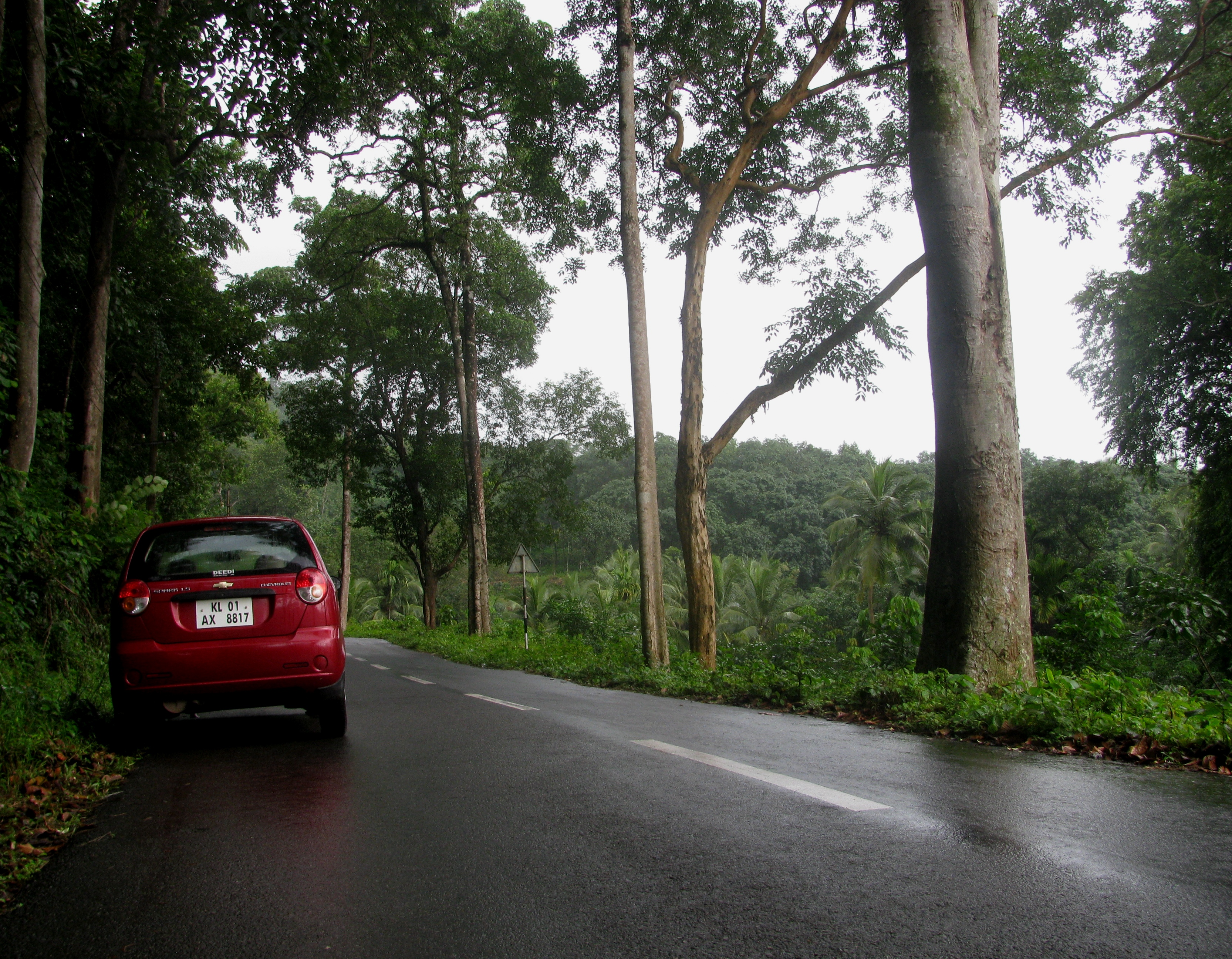
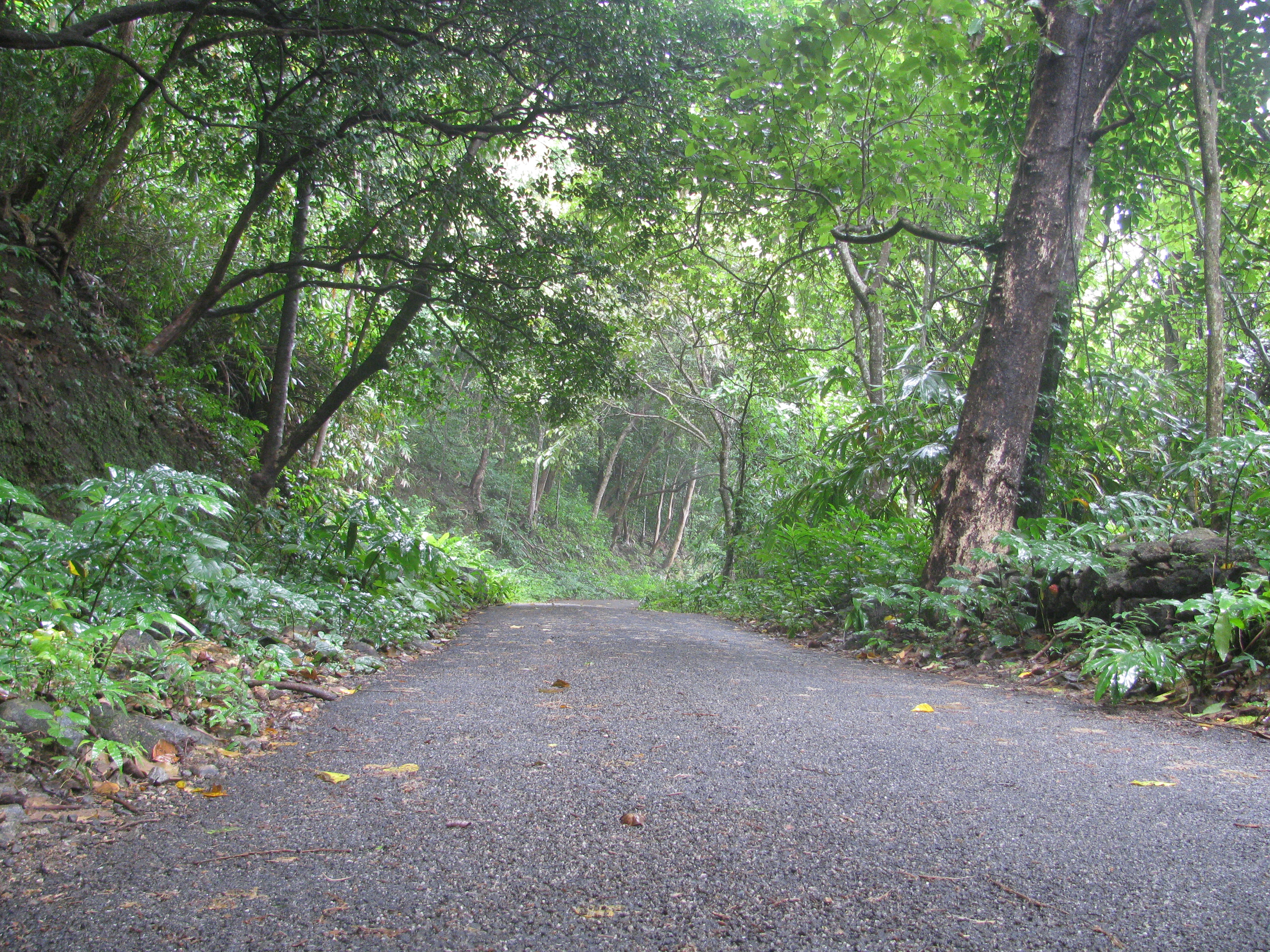
The road to Ponmudi (Photo: Shyam G Menon)

The road to Ponmudi (Photo: Shyam G Menon)

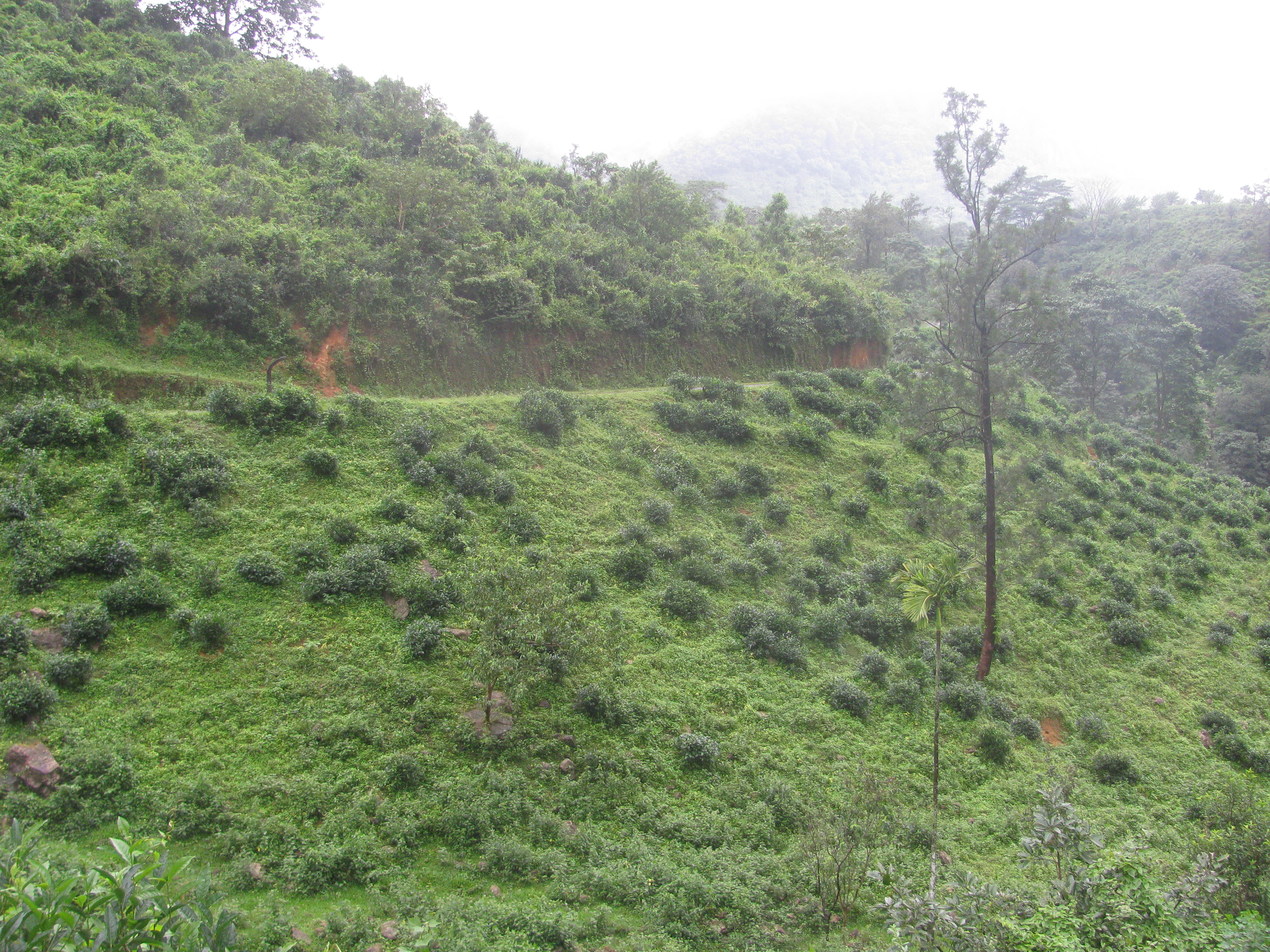
Early next morning, all geared up for the multi-day hike, we met our guides – Binu and Raju; both from the Kani community. They were adivasis; tribal people, initially stiff and quiet but soon warming up to conversation after a round of hot tea at a smoky restaurant opposite the Bonaccord bus stop. That was in fact the end of the winding road. Nearby were tea estates. I knew at least one another similar road, leading to Ponmudi (3609ft), which highlighted a little known dimension of Thiruvananthapuram – you could land in tea country, less than two hours from Kerala’s capital city.

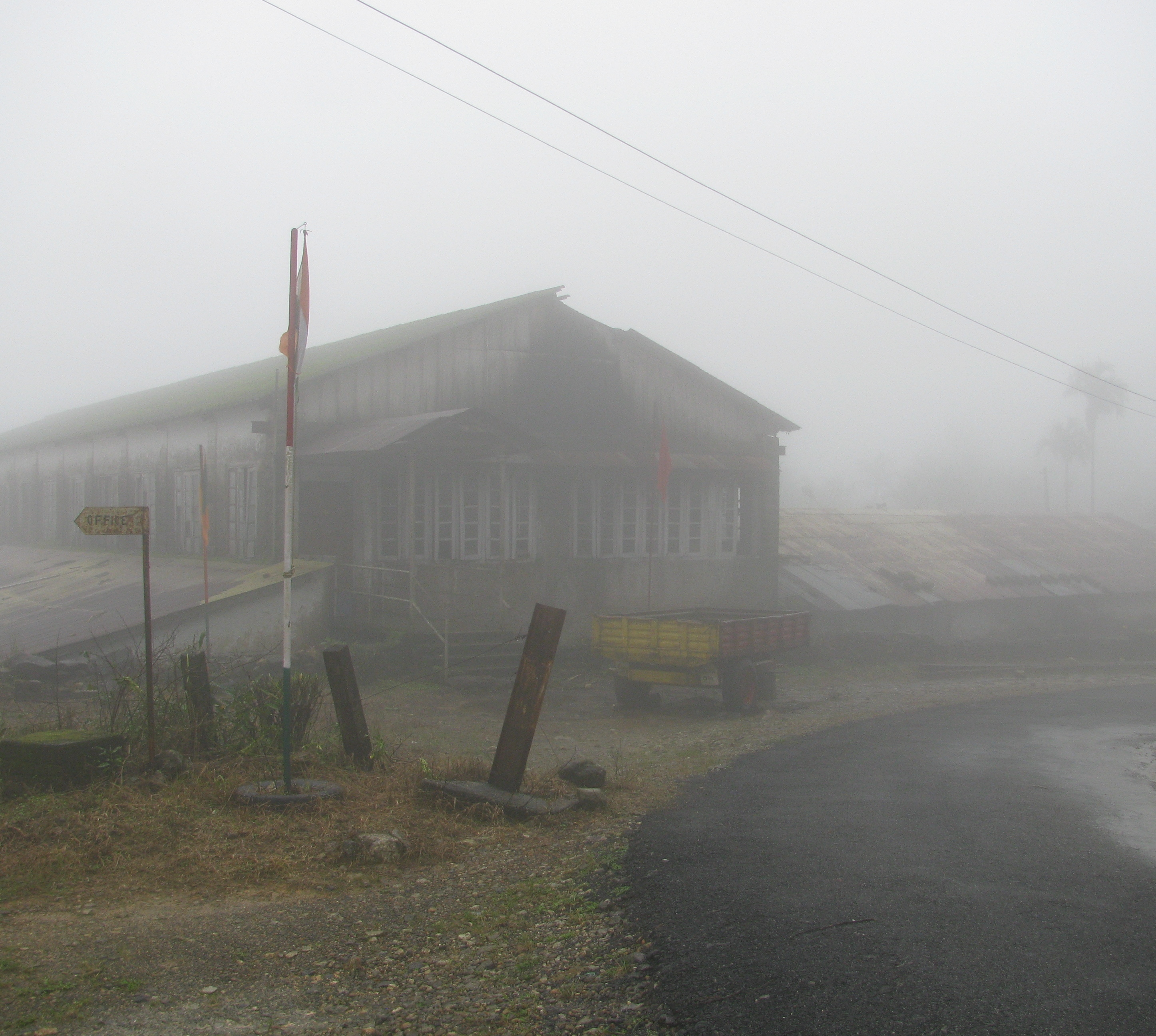
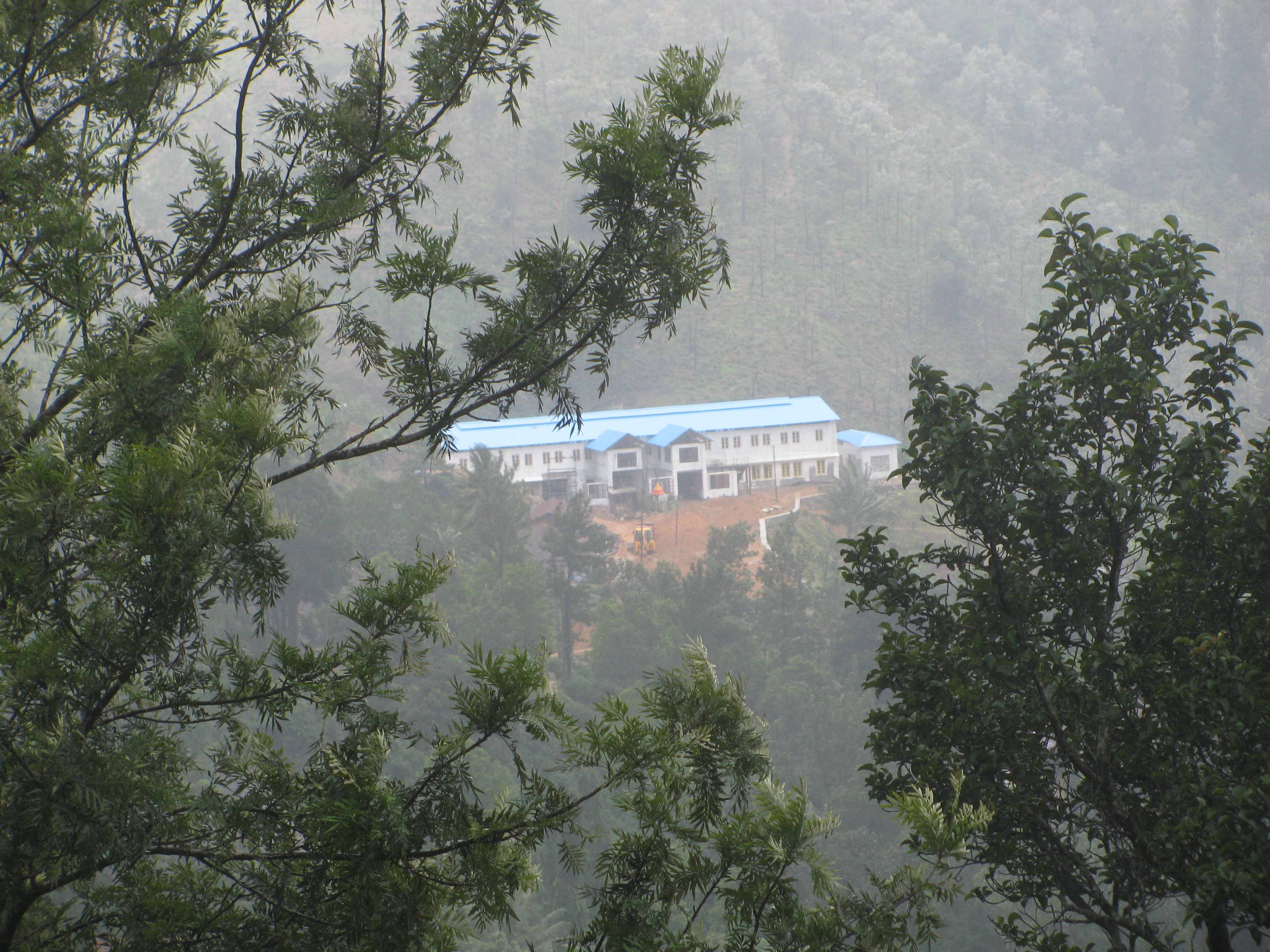
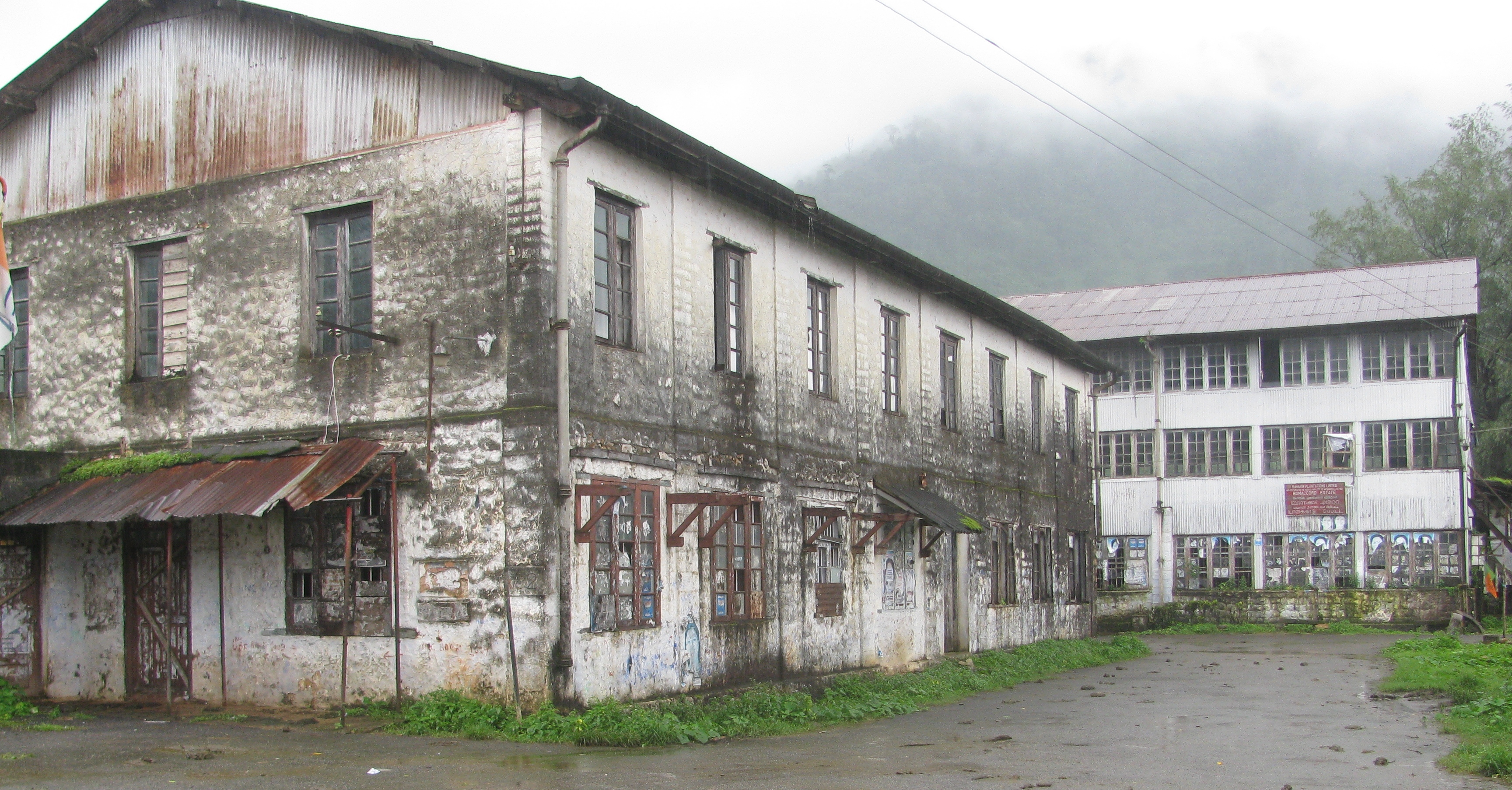
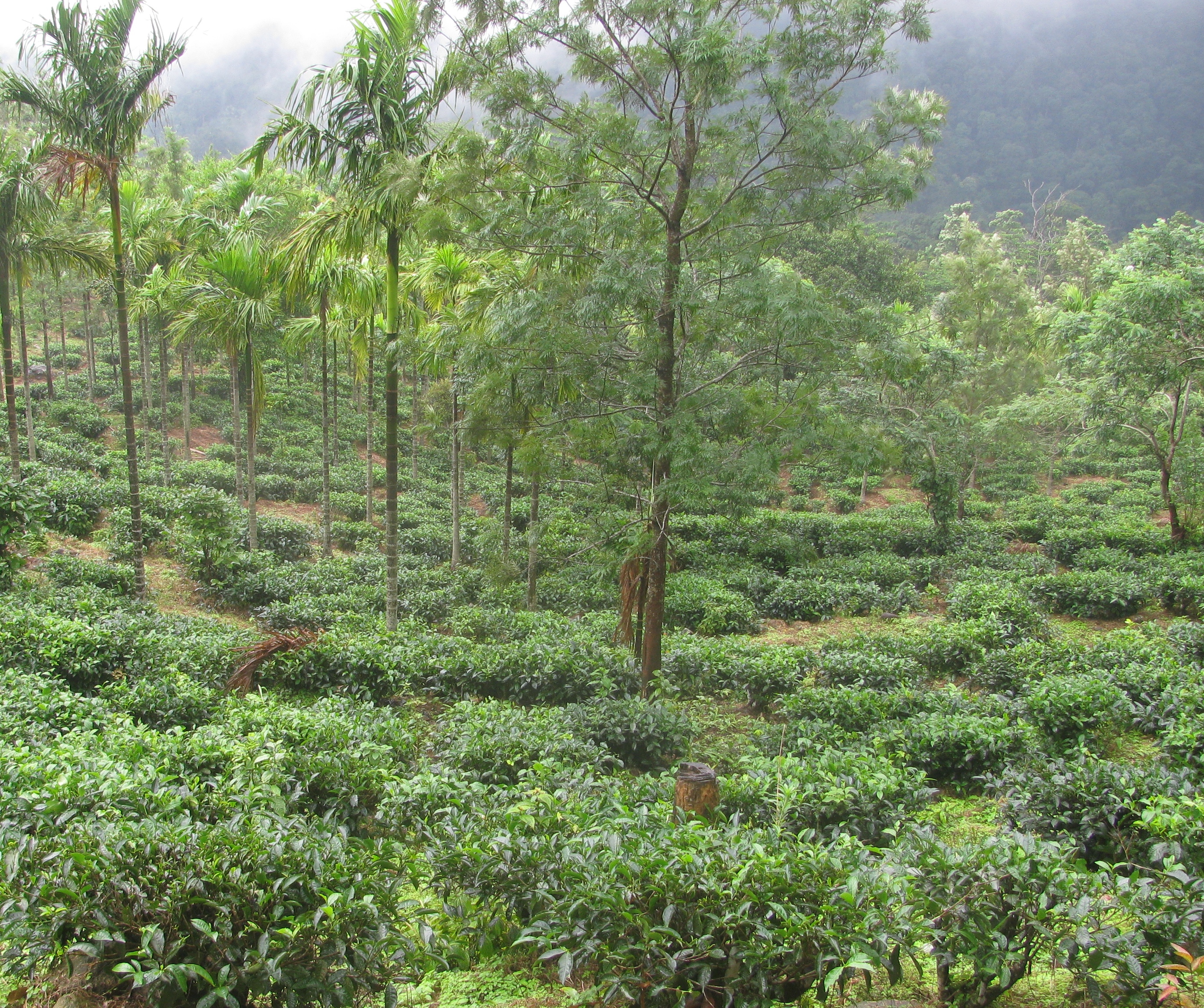
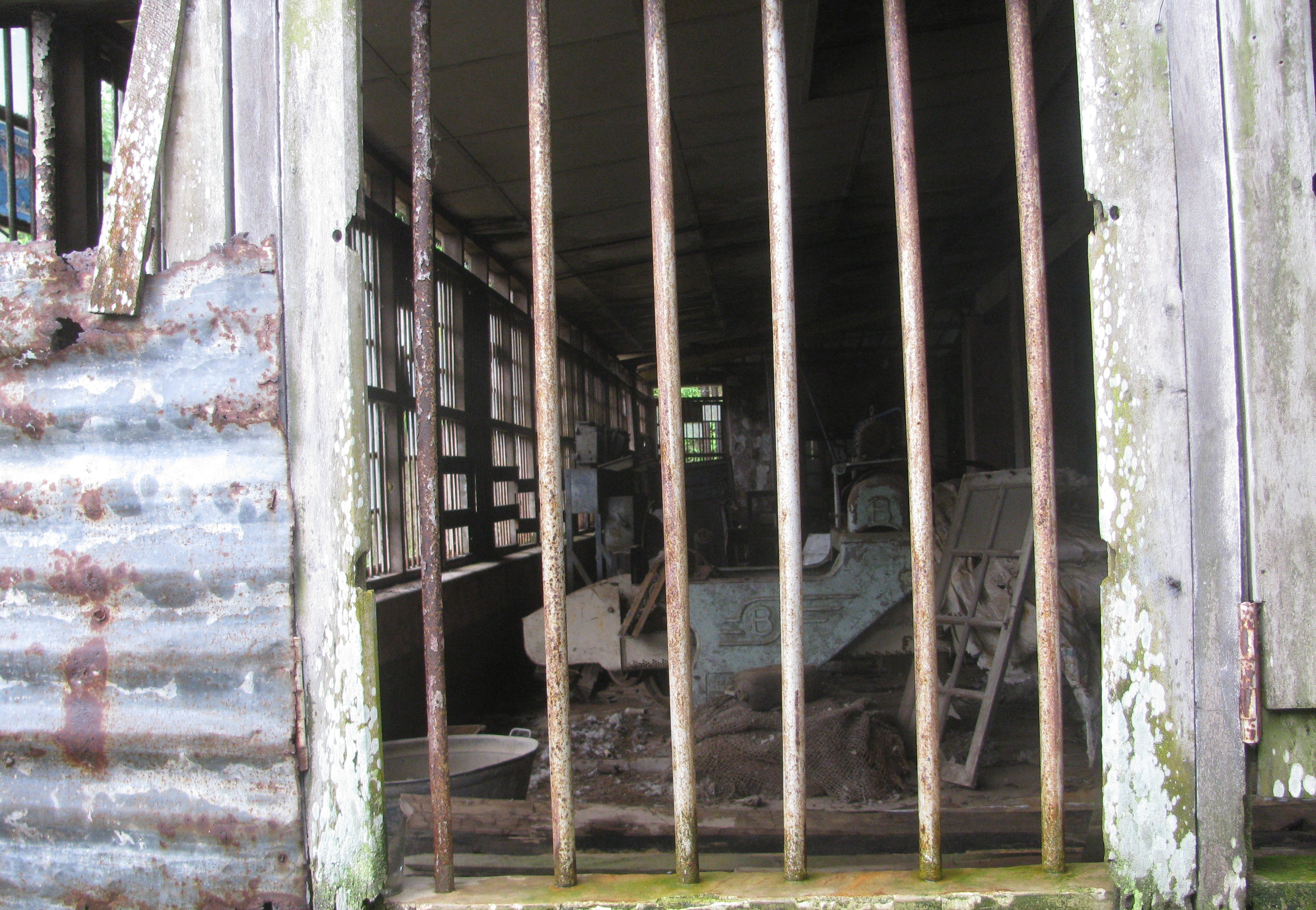
By 2009 (actually earlier), Thiruvananthapuram’s tea estates, likely the southern-most in India, were in trouble. It was a picture of neglect. Bonaccord epitomized it. The resident tea factory was in a state of disrepair and the tea bushes in their neglected condition had reverted to being an extension of jungle.

Bonaccord appeared trapped in a time warp on the peripheries of Thiruvananthapuram. It had sat there while the lands way below went through political upheavals rendering the area likely unviable for commercially successful tea cultivation. Now the tea factory was a ghost of its former self. Three floors high and the length of three tennis courts, it sported shattered glass panes and rusting metal; at one end was a room full of silent machinery that had ground to a standstill long ago. The day I was there, four to five officers sat settling accounts in a sun-lit room on the ground floor. The floor of the adjacent hall featured a spread of freshly plucked tea leaves. The company owning the estate no more worked the processing factory; it simply transported the leaves to distant Vandiperiyar and sold it.

For quite a while on the well marked trail, the plantation culture from the foothills of Agastyakoodam lingered. There were minor trails once used by Englishmen to move around, places where they used to rest and long forgotten horse trails with water halts for the animal. Raju and Binu proceeded at a brisk pace; like a pair of men out on work or going to the market. They had appeared clad in shirt and lungi, rubber slippers on the feet and crucially no rucksack for either. For guides everything else was forgivable but unprotected feet and no rucksack was questionable. So I had taken most of our provisions away from them and put it in my rucksack. In due course the duo laundered my lack of protest at the additional labor into a desire for carrying load. “ Sir likes to carry all the weight,’’ Raju said. Binu nodded his head approvingly. Ever heard that – a paying client who loves to haul load?

This was typical Kerala and the contrast the situation posed with treks up north where clients walked swinging their hands while porters lugged massive loads, was rather stark. But then on the other hand I reasoned, just as cuisine is different from state to state, so had to be the people and their mentality. There was nothing in this duo that betrayed a willingness to genuflect or be servile. Lungi tucked high to keep it out of the way they conversed about the world and set an impatient pace that soon had me, my rice and my vegetables frying in the heat and sweat. The trail, pounded by several years of pilgrims’ passage, was firmly etched into the hill slope. We passed a prominent stream en route – it was the beginning portions of the Karamana River which flowed downstream through the heart of Thiruvananthapuram city. A sole leech made its presence felt on Rajeev’s leg; the blood sucker had quenched its thirst long ago, bloated and fallen off, leaving behind a tiny bleeding wound. In days to come, that wound would itch. A leech bite is like a love affair. It can take a few days to get over the visitation – you bleed, you scratch, you reopen the wound, you scratch, till all that imprints the leech into your memory.

…..to be continued

(The author, Shyam G Menon, is a freelance journalist based in Mumbai)

A TREK AND A TEA STORY – PART 2

On Ponmudi (Photo: Shyam G Menon)

On Ponmudi (Photo: Shyam G Menon)

The story of these southern Kerala tea estates go back several decades. It showed up on the Internet in a 1914 edition of Southern India: Its History, People, Commerce and Industry; a book compiled by Somerset Playne, J.W. Bond and edited by Arnold Wright. As I found out later the book which details the initial phase of South Indian estates had become essential reference for plantation companies in the Ponmudi region to establish their origin.

According to it, The Ponmudi Tea and Rubber Company Ltd was formed in 1900. The property consisted of three estates – Ponmudi, Bon-Accord and Braemore, all of which were in the district of Ponmudi in the native state of Travancore. The estates spanned an area of 3276 acres with the cultivated portion totaling 1710 acres, featuring tea and rubber. Mr J.S. Valentine, the managing director, had arrived in India in 1875. At that time, the area was planted with coffee but all that coffee was lost in the blight that hit Kerala’s coffee. Subsequently in 1884, tea was planted in Ponmudi and in portions of the other properties. The climate was good for tea; the rainfall of almost 160 inches experienced annually was heaviest in June, July, August, October and November. The yield of tea was highest in Ponmudi followed by Bon-Accord and Braemore in that order. In January 1915, when these observations about the estates were penned, the region had about 1510 acres under tea and 200 acres under rubber at the three estates. There were tea factories at all three properties and the produce was shipped under the company’s brand through the ports of Kochi and Tuticorin for sale in London. Two thousand laborers worked in the plantations; they were drawn equally from Malabar, south Travancore and Tinnevely, the Tirunelveli district of present day Tamil Nadu. Mr Valentine lived in Ponmudi, Mr R. Ross with Mr David Welsh, assistant, was in charge at Bon-Accord and Mr I.R.N. Pryde looked after Braemore. The company’s registered office was at 4 Lloyd’s Avenue, London.

The three estates are now separate. They draw their lineage from the Ponmudi Tea and Rubber Company. When I was a school student in Thiruvananthapuram, the Ponmudi area was identified with tea and as I understood in retrospect from my inquiries, foreign managers were still there. They were present in Ponmudi till the late 1970s. It was also from these parts that I first heard the name Birla. Jayasree Tea, a company belonging to the B.K. Birla group and a leading tea company in India, had come to own a plantation called Merchiston in Ponmudi. But there was trouble brewing, scripted possibly by paradigm problems visiting the tea business in the state. In fact, while I was still living in Thiruvananthapuram and yet to be journalist, reports had commenced of labor problem and slow decay at the tea estates.

Gangs of forest workers were preparing the trail for the upcoming season. Here and there, they had set fire to dry grass in a controlled fashion. Our guides stopped to talk to their colleagues. On one such occasion, we had walked ahead and paused to pick up a hollow plant stem, hacked and lying on the ground. It was a fascinating object, like a green telescope tube. Just then the guides appeared. “ Did you cut it?’’ Raju asked a tad belligerent in tone.

Neither the query nor the tone should have surprised us. The forests around Agastyakoodam have been known for long as a treasure trove of medicinal plants. Years ago, it used to be casually explained; people would link the incidence of medicinal plants in the region to the apothecary traits of sage Agastya himself. But the present day global pharmaceutical industry has no appetite for either myth or nature. For it, the undiscovered potential of the plant wealth of Agastyakoodam posed clear commercial value. Its exploitation could be restrained or properly administered only by the rule of relevant laws, something quite distant to the tribal world of the Kani community. Rumors abounded of plants smuggled out for analysis.

Even the comparatively successful story of the endurance drug Jeevani was not spared controversy. The discovery of its existence or rather that suspicion of something like it which precedes all real discovery, had been in circumstances very similar to what we found ourselves in. A group of scientists were out in the Agastyakoodam forests, their guides like ours, walking briskly ahead mile after mile. The guides were hardly tired while the team behind was getting progressively exhausted. They noticed that the Kani men were chewing something, which on inquiry turned out to be the leaf of a plant locally known as Aarogyappachcha. From it, scientists of the Tropical Botanical Garden and Research Institute near Thiruvananthapuram created the medicine, Jeevani. Although the Jeevani business model was eventually recognized internationally as a role model in its category, sharing the profits from manufacturing the drug with the Kani community, whose natural home land the Agastyakoodam forests were, there was controversy later when a US company patented the drug in that country. The tribal community – as evidenced by the attitude of our two guides – appeared to have learnt the value of cautious dealings with the outside world. “ We were ignorant,’’ Binu said.

The office of the old tea factory at Ponmudi (Photo: Shyam G Menon)

The office of the old tea factory at Ponmudi (Photo: Shyam G Menon)

The Merchiston factory near Ponmudi (Photo: Shyam G Menon)

The Merchiston factory near Ponmudi (Photo: Shyam G Menon)

The Bonaccord factory (Photo: Shyam G Menon)

The Bonaccord factory (Photo: Shyam G Menon)

At the root of the tea estates’ problems was Kerala’s entry, some seventy five years after tea plantations reached the state, into an era of turbulent politics and social upheavals. One of the lasting legacies of this trend, ironically a byproduct of increased awareness, has been a level of politicization often deemed excessive for the common good. In this atmosphere, the plantation industry was one of the state’s largest tax payers and also one of its biggest employers. Political parties with their compulsion to cultivate vote banks rarely saw beyond these two obvious attributes – one of the largest tax payers and one of the biggest employers.

The mood in January 2009 at the plantation offices I visited in Thiruvananthapuram was hardly upbeat. Tea prices were down; input costs – a chunk of that labor cost – had gone up and labor productivity was low. Within labor cost, the argument from the planters was that the fixed components had risen handsomely while the variable parts, linked to productivity, moved up sluggishly. Also traceable in the economics was a logic rooted in the very nature of tea and mentioned at the time of its arrival in Kerala – the regular human intervention warranted for its cultivation demanded economies of scale alongside for affordability. The south Kerala plantations were neither very big nor was their produce high on the pecking scale at tea auctions. A cursory inquiry with tea brokers in Kochi in 2009 revealed that in general the teas from Munnar ruled the top in local auctions while the south Kerala estates stayed at the bottom in terms of price and quality. It was not hard to comprehend why the pincer bit hard at Ponmudi.

In 2009, of the big names in the Thiruvananthapuram region, only one tea plantation company seemed to be working normally, free of controversy. Its focus was organic tea, something the others were yet to deem commercially viable although improving end product price through imaginative value addition seemed the only way out from prevailing predicament. But this company too had temporarily run into a glitch courtesy the Forest Department whose office was situated not far from that of the plantation company’s in the city. In rules produced some years ago to define forest lands, the department had drawn survey lines through estate tracts befuddling the owners. For the company it suddenly became questionable to weed its contested plantation for that could amount to deforestation. That was the dilemma in 2009 at what seemed the less troubled tea company of the lot.

About three hours into the hike, we broke free of dense forest into a patch of tall grasses with scattered trees. From here the Agastyakoodam peak towered in the distance; its long flanks made us wonder if the goal of reaching the top by evening was feasible. It was now noon and the sun was harsh. Just then the walk entered open terrain with nothing for shade. It was only after half an hour slogging through the heat and glare that the trail reentered shaded forest. When it did the going was suddenly steep. The combination of heat and steepness was rather dehydrating and it was a tired group that hit the forest rest house by late afternoon. We would be staying here for the night. Right in front of the building, the peak loomed big, that same perfect triangle as seen from Neyyar Dam. Now you could see it in detail and if you were given to climbing, read that rock face for vertical lines to the top.

Bags lightered, we decided to push on and reach the top by evening. Getting back through forest at night may be difficult but we had torches and our guides appeared confident of navigating. You could say that the real climb up Agastyakoodam is the hike beyond the rest house, whatever had been traversed till then was the stuff of foothills. Binu pointed to a distant streak of red on the peak’s rock face. He claimed that the ooze, locally called kanmadam, held medicinal properties. What he said next was hard to swallow – that the king cobra loved to taste it. It was a fantastic image – mysterious red ooze from rock as favored food for the world’s longest poisonous snake. Wasn’t it a bit too fantastic? I left it at that.

Tea gardens near Ponmudi (Photo: Shyam G Menon)

Tea gardens near Ponmudi (Photo: Shyam G Menon)

The trail was now getting steep and narrow featuring stray deposits of elephant dung. The watchman at the rest house had warned that a few elephants were present in the locality. An hour later, we were at the mountain’s shoulder, its rocky apex sat like a solid hump to the right; it was a sheer drop on the side facing the rest house below. The boundary line separating the states of Kerala and Tamil Nadu ran along the mountain’s ridge. It was carved into the rocks, these separate loyalties – the sea shell emblem of Kerala and a sort of arrow mark for Tamil Nadu, which the two Kani men called “ kozhikkalu’’ or chicken leg. Back in Thiruvananthapuram, this arrow mark failed to convince learned people for they said the Tamil Nadu emblem had traditionally been the temple tower; unless the tower got simplified to an arrow mark. From the mountain’s shoulder you could comfortably gaze into Tamil Nadu, the nearest town that side being Ambasamudram. The path up from the shoulder was a mix of rock strewn gully and a steep, narrow path.

Half way up the path, we saw fresh elephant dung. The contrast it presented was hard to ignore. How could such a massive beast pick its way up so small a path? Elephants are capable of some gingerly done walking but this appeared to indicate a truly nimble specimen. Binu however treated it as normal. As we prepared to tackle the rock patches above, we heard some trumpeting in the distance. The rock patch was fun; it is bound to be so for anyone acquainted with climbing. There was a stout rope fixed to a thicket but if you are familiar with walking on angled rock and have a trekking pole for friend, then the rope is not required there or anywhere on the final ascent. On the other hand what you feel while walking up on two legs on that slab is a notion of poise and fresh air, a sense of freedom, a sense of having finally broken through dense vegetation and being able to see unhindered for miles.

The peak here has two neighbors – Athirumala, located in line with the boundary dividing the two states and having a name derived from the Malayalam word athiru, meaning boundary. The other was a fierce mountain with five summits all of them sharp pinnacles. The entire formation stood like an arrogant upward thrust from the forest floor. The Kani men called it Anchilappothi and it reminded me of those spires in Patagonia and Karakorum that the world’s best rock climbers go to attempt. Perhaps a smoother version for these tall pinnacles didn’t seem as jagged or rugged. “ Nobody goes there,’’ Binu said, as we stood looking at those pointed peaks, from the top of Agastyakoodam. There was nothing on the summit of our peak save a couple of more rock engravings to denote the state boundary, a solitary idol of the sage Agastya and items of worship replete with left over offerings. The idol matched the description of the sage in Hindu mythology as a small, stout person. Agastya though, was a powerful sage, one of the most powerful in the list of Indian hermits. Two things characterize his story – a fantastic birth and continued mention across the ages, making him some sort of an eternal being. In between was the tale of him taming a fast growing mountain in central India, the Vindhya. When Vindhya threatened to exceed the Himalaya in height, the gods sought Agastya’s help – so goes the story. The sage who was proceeding south asked the mountain to reduce its height for him to cross and keep it that way till he returned. Agastya never returned; he stayed south. The belief is that he built his hermitage in the forests around the Agastyakoodam hill. As for Vindhya, it remains to date a set of hills, smaller than even the Western Ghats.

…..to be continued

(The author, Shyam G Menon, is a freelance journalist based in Mumbai)

A TREK AND A TEA STORY – PART 3

The road to Bonaccord (Photo: Shyam G Menon)

The road to Bonaccord (Photo: Shyam G Menon)

The Merchiston estate was sold off by the Birlas.

In 2009, its new owner was embroiled in controversy for agreeing to sell a portion of the estate to the Indian Space Research Organisation for the proposed Indian Institute of Space Science and Technology. Away from its newly acquired place in politics, the estate had other interesting angles to offer. If you search for the Merchiston name on the Internet, one of the links would take you to a historical castle in Edinburgh, Scotland, likely built in the 1450s and home to the Clan Napier. Of relevance to Kerala’s capital city, Lord Napier of Merchiston was a title in the peerage of Scotland. The Merchiston castle was the birthplace of John Napier, most famous Napier of the lot, Eighth Lord of Merchiston and famous Scottish mathematician with major contributions to the subject, including logarithm. He was also interested in theology, predicting an end for the world around 1700. The world and Merchiston survived that year. The Tenth Lord Napier was Francis Napier, a prominent diplomat who served as the Governor of Madras Presidency and was for a brief while, acting Viceroy to India. The beautiful museum building at Thiruvananthapuram was named after him. Does that angle matter anymore for anything Merchiston in Thiruvananthapuram? I don’t know; history and heritage rarely count these days.

The Bonaccord estate had been through trying times. According to a September 2007 news report in the local edition of The Hindu, “ the laborers said that the 450 employees of the estate were rendered jobless after the management abandoned the estate and left the state five years ago. ` Following a government sponsored settlement in April this year, the management agreed to resume operations. But they failed to honor the agreement. The leaders of some of the trade unions appropriated the returns from the estate, leaving the workers in the lurch,’ they said.’’ Some degree of activity had since returned to Bonaccord; it was there to see in the few people at work and the tea leaves gathered for transport to the market in Vandiperiyar. Binu who did all kind of casual jobs for a living had occasionally worked on the tea estates. He corroborated the story of unions at Bonaccord demanding a slice from a poor worker’s pay. Pasted on the walls, in a Bonaccord starved of work and income, was a poster demanding contributions for building a brand new trade union office in the nearby city. The starkness of its demand was vivid in that air pregnant with the silence of unemployment.

From the management of the Braemore estate, a more relevant and believable argument on the future of the southern plantations appeared. The young chief executive, having illustrated the ills ailing the industry, chose to work within them for a short term gaze at the future. When I met him in 2009, his tea operations at Braemore had been suspended since 2003 owing to lack of skilled hands and poor economics. With city nearby and educational facilities and better work opportunities to be had, people continuing in estate work, had dipped in that region. Tea, for sure in its non-mechanized form in Kerala, would remain labor intensive and costly. Rubber on the other hand, was easier to grow and required less attention. It can’t go to the altitudes inhabited by tea but certainly its acreage could increase, progressively replacing tea in lower belts. The south Kerala plantations are anyway at lower altitudes compared to Munnar.

Tea bushes seen lost to weeds and undergrowth on the approach to Bonaccord (Photo: Shyam G Menon)

Tea bushes seen lost to weeds and undergrowth on the approach to Bonaccord (Photo: Shyam G Menon)

The old tea factory at Bonaccord (Photo: Shyam G Menon)

The old tea factory at Bonaccord (Photo: Shyam G Menon)

According to Binu, elephants wandered right up to the windy top of Agastyakoodam. I looked astonished at him and then towards the rock slab we had come up by. Was it that king cobra talking again? “ Elephants have their routes for coming up. Reaching here is not beyond them,’’ he said. But there was a catch – it wasn’t the normal elephant; it was a smaller, more compact one. Back in Mumbai, I searched for information on the small, hill dwelling elephant Binu had talked about and was treated to a surprise. Pygmy elephants have been reported from both Africa and Asia. The sole claim in India, unsubstantiated yet, was from the forests around Peppara, exactly where Agastyakoodam stood. The claim had come from the Kani tribe and the animal in question was locally called Kallaana. In Mumbai, a visit to the Bombay Natural History Society [BNHS], which has its team of wildlife experts, served to merely underscore the unsubstantiated nature of the claim. The whole argument about pygmy elephants, an official at BNHS felt, may be a case of mistaken identity. Juvenile male elephants are often kicked out from herds. Seen during their wanderings they would be both smaller in size and seemingly of a different type given their isolated life. Was the nimble kallaana then just a juvenile aana or elephant on its way to being a regular, big pachyderm?

Late afternoon, the next day, we were back in the smoky teashop at Bonaccord. It was tea, bread and omelet for everyone for a three day hike completed in a day and a half. It was also a return with vengeance to urban ways. Raju, searching for his mobile number to give me, got confused with the numbers of three SIM cards that he owned. More than a week later, one quiet night in Kozhikode, over four hundred kilometers north of Thiruvananthapuram, my phone came alive with a triumphant voice from near Agastyakoodam, “ sir, this is my number!’’

Small temple near Bonaccord (Photo: Shyam G Menon)

Small temple near Bonaccord (Photo: Shyam G Menon)

Post Script: The above was written in 2009. In the months that followed I misplaced the photographs I took during the trek. I have no photo of Agastyakoodam with me. In August 2014, while on a visit home, I decided to revisit the story and the tea estates, mainly for pictures. I didn’t have the time to meet officials at tea companies in the city but one very rainy day in early August (not the ideal time for photography I concede) I did find myself back in the tea estate-foothills. No trek; just looking around. Ponmudi was enveloped by dense fog. In that ambience, the office of the old tea estate emerged like a vision from the misty past. Kutty, who worked at the Merchiston estate and who I met on the road, told me that a new factory was being built at Ponmudi. If so, I never reached that far for up until the old office all I saw was that office and attempted new construction so lost to vegetation that it seemed abandoned. According to Kutty, Merchiston was running well. We stood at a bend on the road and watched its factory. It had a fresh coat of paint and blue sheets for roof. It was easily the most visible building around. I didn’t go to Braemore. The only time I was there was many years ago, when a walk to a beautiful stream found me standing not far from its tea factory.

Bonaccord in August 2014 was old story with new twists. Private vehicles on the road to the tea factory were being discouraged, probably due to the problem of revelers and drunken picnickers, the perennial headache of the Indian outdoors. We are a people with zero affection for solitude. At the old teashop, I met 62 year-old Soman who had commenced work at the estate as a temporary hand when he was 17. He said that years ago itself, some of the heavy machinery at the tea factory was removed and taken off. Work continued in fits and spurts, the whole area steadily sliding alongside to being museum piece. In one of those classical vignettes from colonial stories, Soman said that the daughter of a former European manager had come to visit the place of her childhood. She reached Bonaccord with old photos to locate names and faces. “ They met some of the old timers, took new photos and left,’’ he said. Right then in August 2014, the dispensation was – workers had assumed responsibility for small parcels of land. They plucked tea leaves and brought it to the factory, from where, as in 2009, it traveled to Vandiperiyar. That fetched some earnings. Not far from the teashop, tea bushes stood grossly neglected with thick intervening vegetation. The shop owner served me black tea. From worry over lack of work and entrapment in unemployment, Bonaccord seemed to have drifted to indifferent listlessness. Soman said that hearing of the workers’ condition, people – including those from overseas – had offered assistance. Some came with food, others brought clothes. “ Why should we leave? Here we have good drinking water; there are no mosquitoes, somebody helps once in a while. We get by,’’ he said. Soman claimed he did not own a house. But he could stay at the workers’ quarters. Amazingly he said that he swallows his complaints before the tea factory owners for they seemed to him, a class apart. “ You don’t feel like saying anything,’’ he said.

Outside, the rain fell steadily on that hill side with forgotten tea bushes and equally forgotten buildings, its crowning glory being a tea factory with shattered windows and rusted machinery.

It was quiet, peaceful world.

Concluded

(The author, Shyam G Menon, is a freelance journalist based in Mumbai)