VRAAM / BHARAT PANNU IN TOP QUARTET

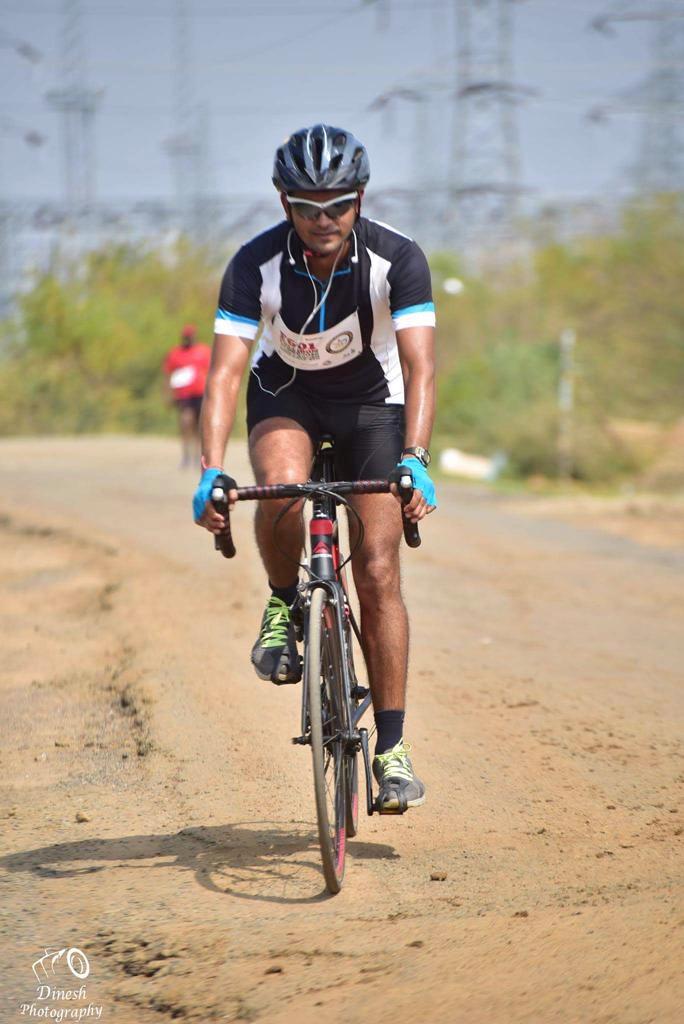
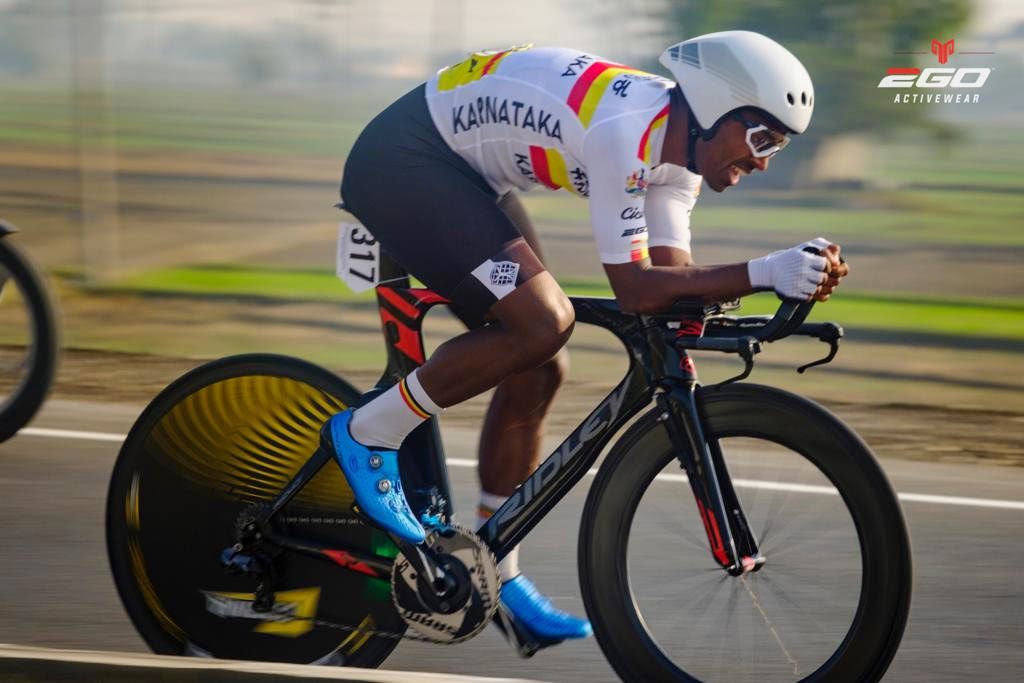
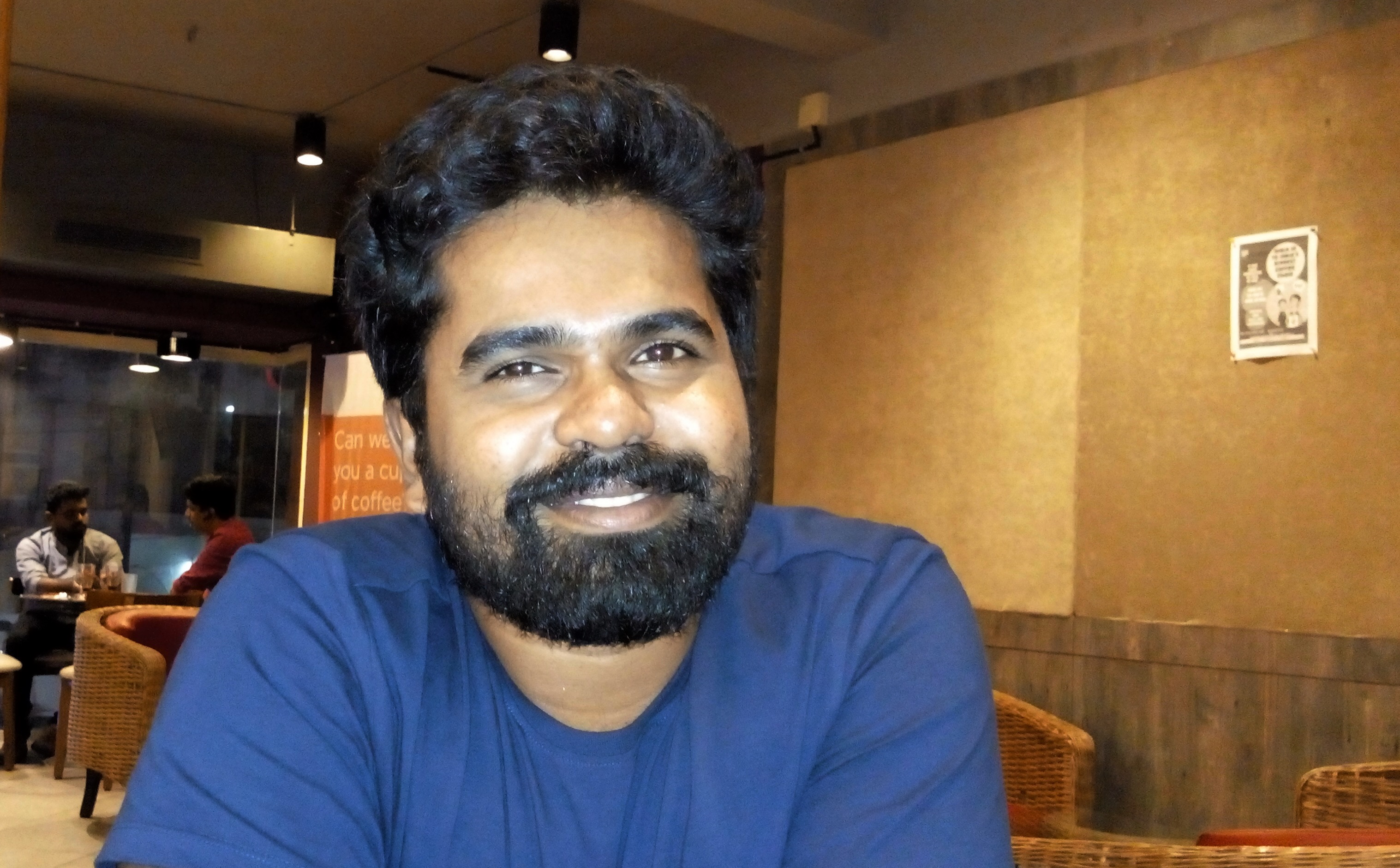
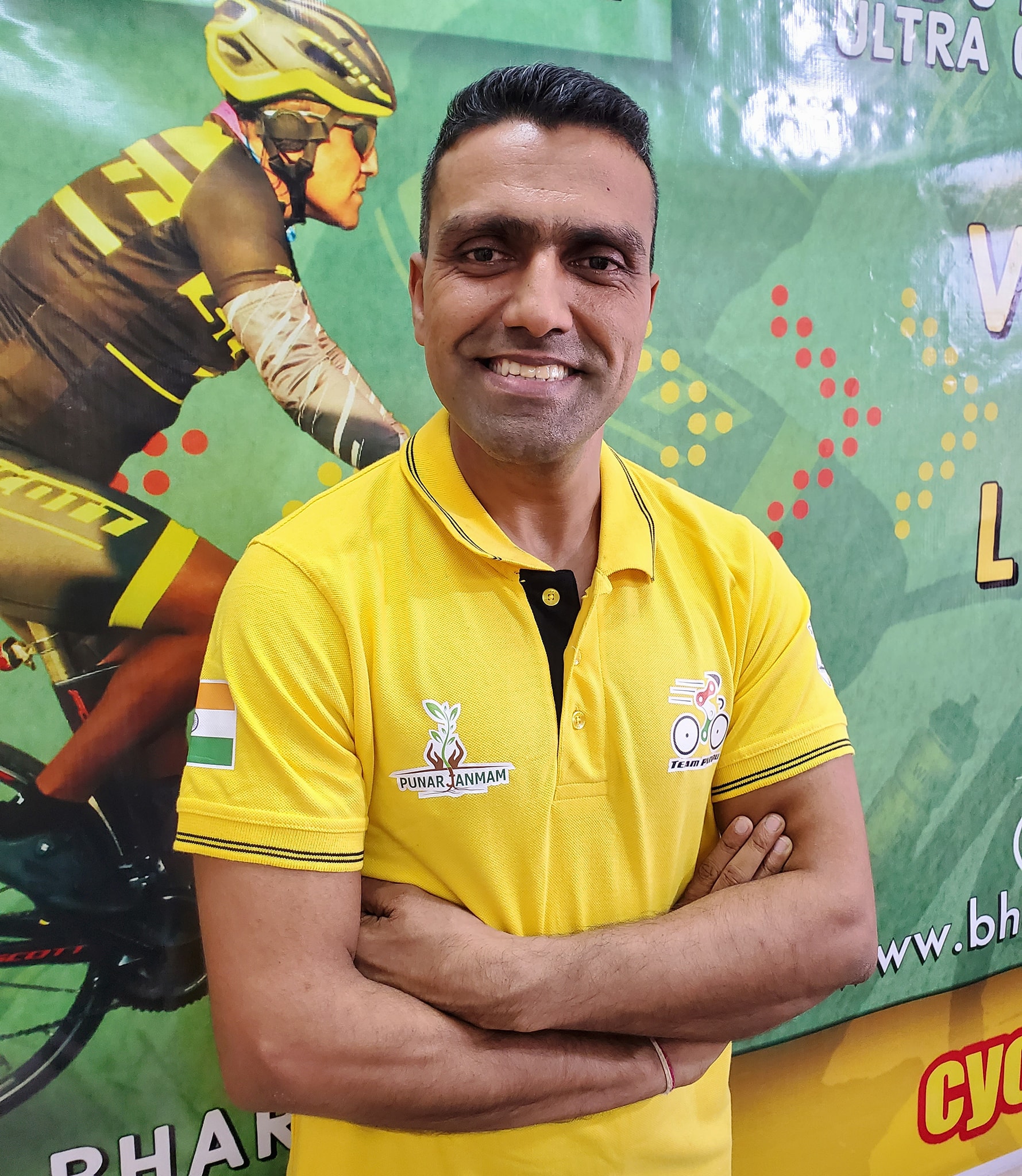
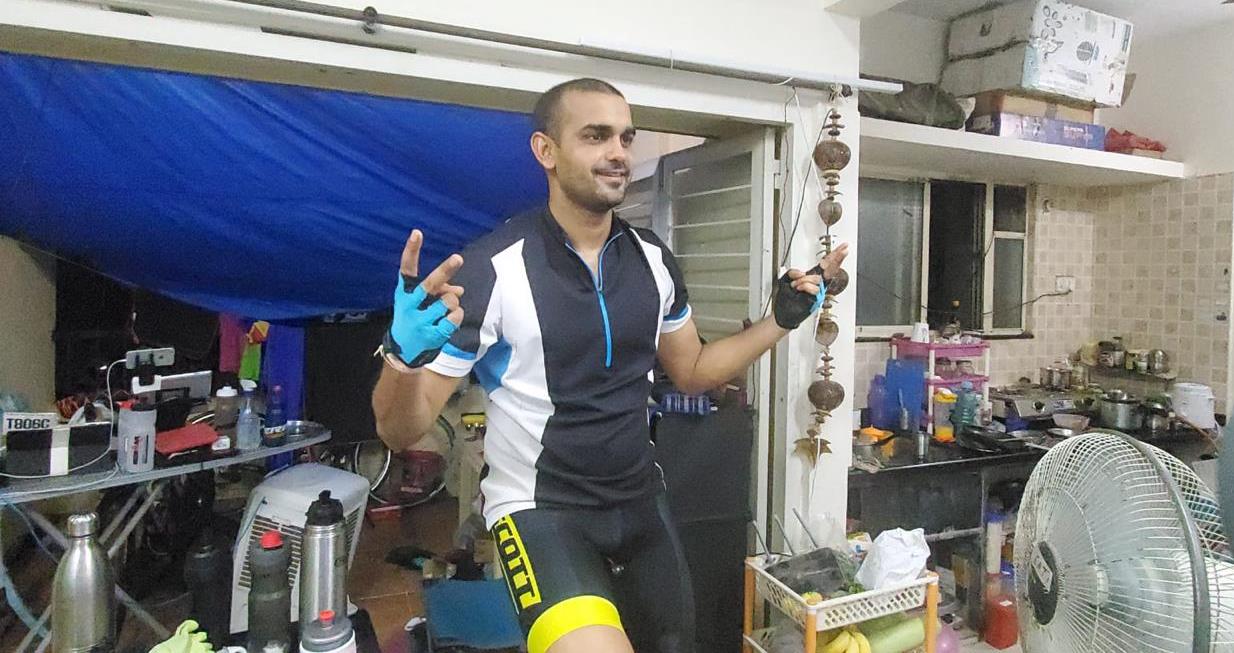
Bharat Pannu (This photo was downloaded from the cyclist’s Facebook page)

Please see updates at the end of this article; revised rules for finishing were disclosed on the afternoon of June 25.

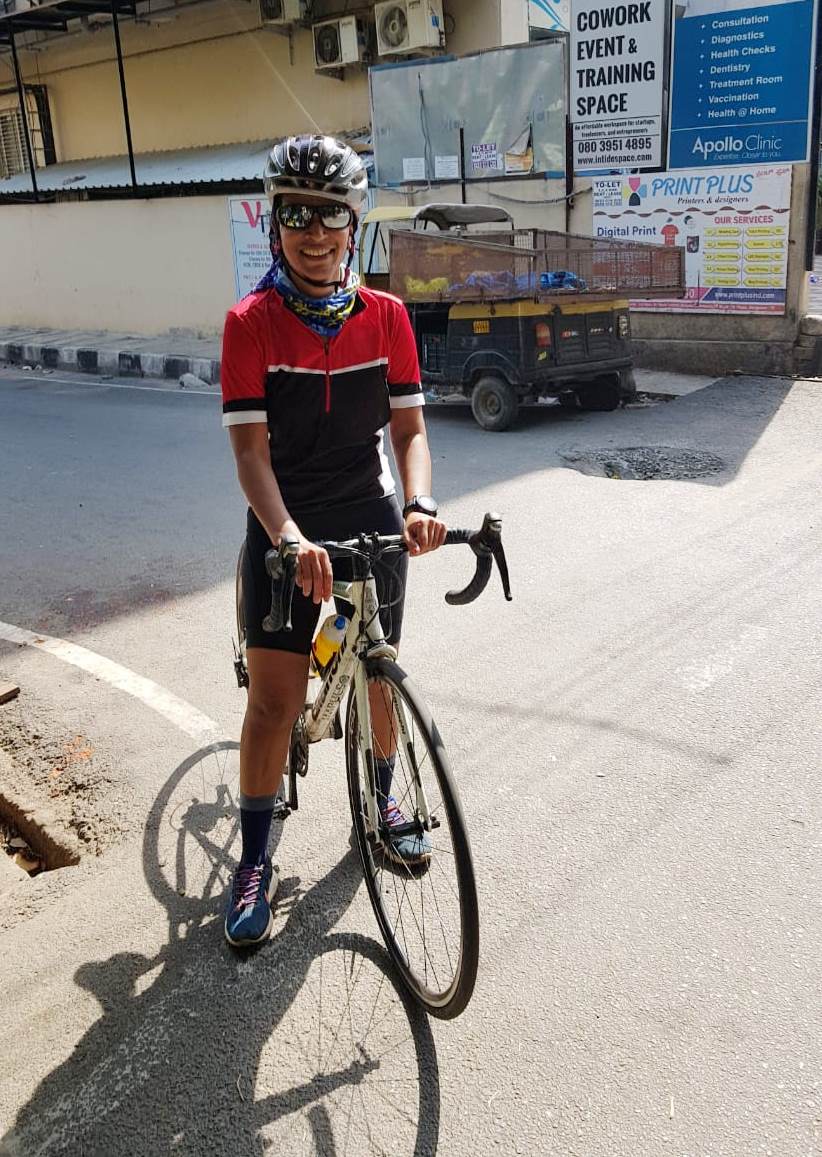
In the ongoing Virtual Race Across America (VRAAM), Lt Col Bharat Pannu was in third position overall as of 2AM, June 25. The leaderboard of the race showed that he had covered 2784.61 kilometers in the days since June 16, when the event commenced.

In the lead was Hirokazu Suzuki of Japan who had pedaled 3169.06 km. Second and fourth places were held by cyclists from the UK; a cyclist identified as putters29 at 2792.32 km and Brad Lincoln at 2748.45km, respectively. The second, third and fourth places were thus separated by narrow margin. At 10.45PM on June 24, Bharat was in fact placed second. In a Facebook post on the approach to Day 9 of the race, Bharat noted that although much distance still remained, “  I can very gladly say that the toughest sections of the race are now over.”
The virtual version of RAAM follows the cancellation of the 2020 edition of the real race, announced on April 3. The subsequent virtual race is being hosted on FulGaz, an Australian cycling app. Participants pedal on a home trainer at location of their choice, the distance they log appearing on screen as movement across the US. RAAM – its route runs from the US west coast to the east – is one of cycling’s toughest endurance races. Bharat, who is a familiar face in ultracycling in India, had been training for RAAM for the past couple of years. His 2019 attempt was prematurely terminated following an injury he sustained while training in the US. The subsequent 2020 attempt appeared lost due to pandemic till it found an extra lease of life in VRAAM.  The virtual race – like the real one – has a cut-off of 12 days. The total distance to cover in the real race is approximately 4800km. At the time of writing, 22 riders were listed on the VRAAM leaderboard (accessed via FulGaz website) of which 15 had gone past 1000km and 11, more than 2000km.

Sandeep Kumar (Photo: courtesy Sandeep)

RAAM has a second race built into it – Race Across West (RAW) – which is smaller and runs along the initial portion of the race route. Major Sandeep Kumar, who is a keen cyclist and part of Bharat’s support crew, completed the virtual version of RAW – VRAW – successfully. He covered the distance of 1528km in five days, seven hours and 33 minutes. As of early June 25 on the VRAW leaderboard, he was placed 23rd overall and third among Indian cyclists (he features as sandeeptrooper). The first Indian cyclist to complete VRAW was Vivek Shah. He did so in four days, 10 hours and 33 minutes.  The second Indian cyclist at the finish line was Jitendra who completed in four days, 23 hours and 58 minutes. The fourth Indian cyclist to finish was Sachin Shirbavikar (seven days, 25 minutes). Praveen Sapkal (1342.74km) and Anand Verma (1143.37km) were still on their way. At the top of the VRAW heap was Simon Potter of the UK; he completed the race in three days, five hours and 11 minutes.

Unlike the real RAW which has a cut-off of 92 hours, the virtual race has the same duration as VRAAM – 12 days. This allows interested riders to take their shot at this smaller race any time in that duration. At the time of writing, the positions on the VRAW leaderboard were therefore still dynamic. For those supporting a VRAAM participant as member of his crew, the longer cut-off in VRAW is particularly useful.  With Sandeep having completed VRAW, fellow member of Bharat’s support crew and a former finisher in the eight person-team category at RAAM, Arham Shaikh, has since commenced his attempt at VRAW. As of 2.20AM on June 25, Arham had logged 909.18km as per the virtual race’s leaderboard. All three – Bharat, Sandeep and Arham – were cycling in Pune.
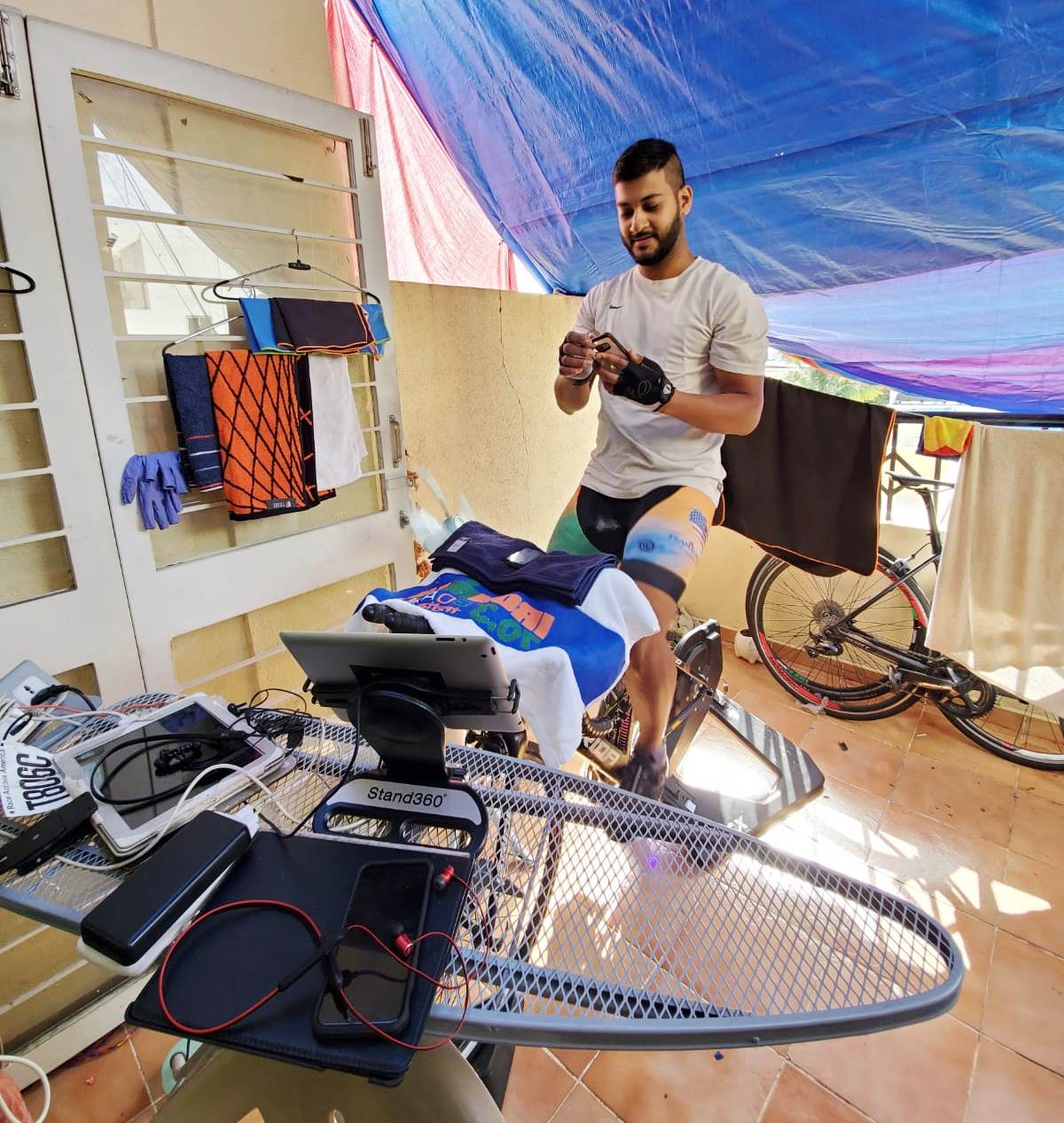
Arham Shaikh (Photo: courtesy Sandeep)

Sandeep said that VRAW had been a learning experience for him. “ I learnt a lot as regards managing nutrition and sleep, not to mention extended hours on the saddle. The event has raised my self-confidence and I will be looking for further challenges in ultra-cycling now,’’ he said. VRAW also gave him the opportunity to be at home and yet compete with good cyclists from around the world. “ It was the best I could reap from lockdown conditions,’’ he said. In the first 24 hours of the race Sandeep covered more than 350km. Thereafter he had a difficult phase due to an emergent knee problem that was then contained with the help of the team physio. From the third day onward things started to improve. “ It was however a grueling race for me,’’ he said. The main reason for this was the additional dose of elevation gain that the race designers introduced. It was probably done to compensate for the otherwise stationary nature of virtual racing with all that you need for support, at hand. According to Sandeep, in VRAW, the elevation gain freshly added was of the order of around 10,000m; it took cumulative elevation gain over the 1528km pedaled to around 25,000m. “ We were just climbing,’’ he said laughing. Similar tweaks have been done to the parameters of the significantly longer VRAAM too. In his earlier mentioned Facebook post, Bharat provided a break up of how the race had progressed (distance cycled plus cumulative elevation gain) till Day 8: Day 1 – 399km / 11,500m; Day 2 – 767km / 17,800m, Day 3 – 1,180km / 23,400m, Day 4 – 1,470km / 28,400m, Day 5 – 1,843km / 33,000m, Day 6 – 2,078km / 39,000m, Day 7 – 2,358km / 45,650m. The real race is known to have cumulative elevation gain of over 170,000 feet (51,816m).

According to Sandeep, he took some time to get used to the FulGaz platform. Up until the VRAW attempt, for his home-based training, he had been mostly a user of Zwift. The new technology required the group he was with, to correspondingly upgrade their computer and telecom hardware. Thus even as they didn’t leave India for a real race overseas, the virtual project wasn’t without its imprint on the purse. Then there was technology’s teething problems to sort out; primarily lags in updates registering on the app’s screen while the cycling was on. “ FulGaz listened. They were supportive and sorted the issues out,’’ Sandeep said.

Update 1: In a major revision to the rules of the race, VRAAM informed on June 25 via its Facebook page that any rider covering 3248km within the stipulated cut-off period would be deemed a finisher. The message read:

After careful consideration and a thorough review of the VRAAM course, in addition to the health and well being of all competitors we have made the decision to reduce the official race qualifying finish distance to 3248km.

To be an official VRAAM finisher competitors will need to complete the following;

Complete 3,248km by 11pm June 28th Sydney Eastern Standard Time

All results will be provisional until verified by FulGaz and VRAAM. Race Across America HQ will verify the official solo RAAM qualification distance within the next 48 hours.

The winner will be the competitor who has ridden the furthest distance by the end of the race.

When contacted, Sandeep said that the challenging parameters of the virtual race had been taking a toll on riders participating from various parts of the world. There was concern growing over how people may finish because after more than nine days on the saddle and the route proving tough, riders hopeful of finishing continued to stare at good distance still left to cover. In their urge to complete, sleep levels had been dropping. There was fatigue. A couple of good riders reported injury. It is assumed that these factors may have led to the revision of rules. “ Bharat has been fine so far. But we have to be careful because the onset of injury is typically sudden,” he said.  As regards podium finish, the understanding in Pune was that those pursuing it would have to keep riding past the 3248km currently assigned to finish. Cyclists riding the farthest by race’s close (the end of the 12 day-duration) would be best placed to claim space on the podium. As of 2.35PM June 25, the second and third positions on the VRAAM leaderboard had changed from what it was much earlier in the day. Bharat was back in second place having covered 3015.92km; a rider identified as mixirica from Brazil was placed third at 3012.28km. Putters29 had slipped to fourth (3001.14km). These positions continued to be bunched. Suzuki of Japan was way ahead at 3354.04km.

Update 2: Checked at 12.40PM on June 26, Bharat was in fourth position having logged 3326.76km. That placed him well past the 3248km, which is the revised distance to be deemed a VRAAM finisher. Mixirica (Brazil) was at 3352.45km and potters29 (UK) at 3354.59km; Suzuki was at 3573.46km. Meanwhile from among Indian cyclists attempting VRAW, Praveen Sapkal had finished in nine days, two hours and 38 minutes. Anand Verma was at 1329.96km and Arham, at 1240.03km.

(The author, Shyam G Menon, is a freelance journalist based in Mumbai. Names from the leaderboard quoted in the article are as they appeared on the list. In some cases there was no gap between first name and surname; discretion had to be suitably exercised for the purpose of writing.)         

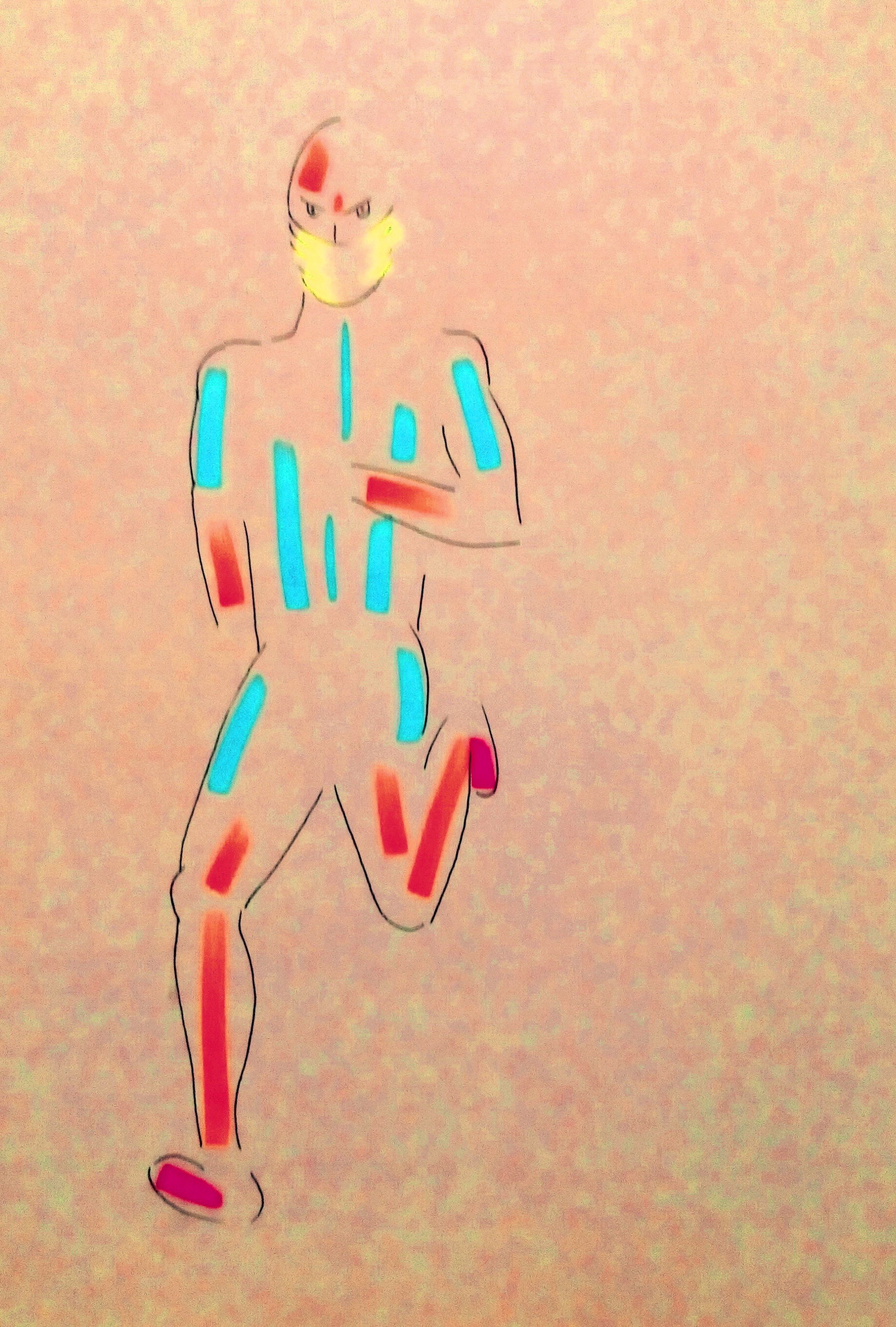
GEARING UP FOR VIRTUAL COMRADES

Illustration: Shyam G Menon

Runners from around the world including India will be attempting the virtual race of the Comrades Marathon – Race the Comrades Legends – on Sunday, June 14, 2020.

The 2020 edition of the ultra-marathon, held annually in South Africa, was cancelled due to the COVID-19 pandemic. The organizers of the Comrades Marathon decided to hold a virtual race on the same day as the real race was scheduled to be held.

The virtual race offers various distance options – five kilometers (Couch2Comrades – Fun run), 10 km (Comrades Sprint), 21.1 km (Comrades Legends Half Marathon), 45 km (Half Comrades) and 90 km (Comrades Legends Ultra). Participating runners are expected to upload their race data at the end of the day. Finishers will be couriered the Race the Comrades Legends medal.

Among overseas events, Comrades has a dedicated following in India. Preparations for it are different from taking a shot at one of the World Marathon Majors. The route at Comrades links Durban and Pietermaritzburg in South Africa’s Kwazulu-Natal province. Besides distance, the route features elevation gain and alternates each year between an uphill and a downhill run. The event is actually an ultramarathon lurking behind the name of a marathon. Participants therefore court an extended period of training. In Mumbai, those who sign up for Comrades usually graduate through regular long distance training runs (and events therein) to several group runs including in places like Lonavala for a feel of hilly terrain. This long duration of engagement with the event and fellow runners headed to South Africa, builds an ephemeral sense of community. The onset of pandemic and the eventual cancellation of the real event in South Africa would have brought inevitable disappointment. June’s virtual Comrades will offer some consolation.

“ I guess the attractive part is that it will probably be one of those few chances to run virtual Comrades Marathon. Also, the medal will be unique,” said Mumbai-based ultra-runner Satish Gujaran. Satish is the first and the only Indian runner yet to complete Comrades Marathon ten times consecutively. At the time of writing, nearly 80 runners from India had enrolled for the virtual race, of which nine were scheduled to run the 90 km distance. In India, recreational runners have not been able to get out for training runs as the lockdown was stringent. “ Without much training, it may not be possible to run 90 km, especially for runners from Mumbai,’’ Satish said. He has opted not to run the virtual race. Instead, he may pace some runners on Sunday.

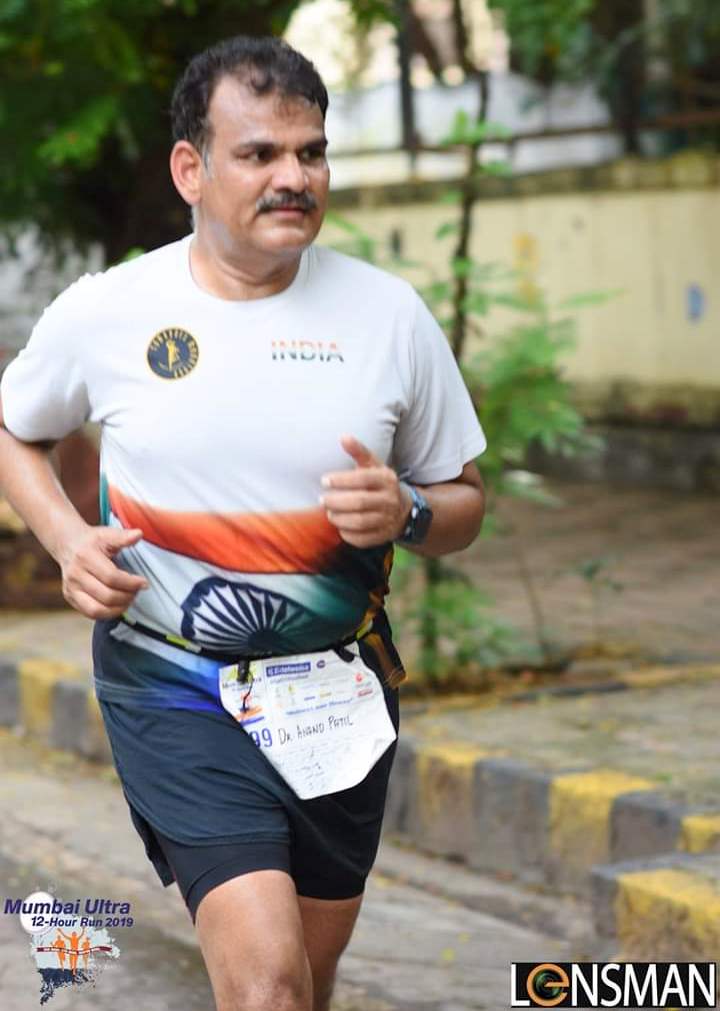
Dr Anand Patil (This photo was downloaded from the runner’s Facebook page and is being used here with his permission)

Notwithstanding Satish’s observation, among those attempting the 90 km virtual race is Mumbai-based ultra-runner and triathlete, Dr Anand Patil. He is a surgeon by profession. “ This was to be my ninth Comrades,’’ he said referring to the now cancelled 2020 edition of Comrades. He has run the ultra-marathon for eight years in a row.

Dr Patil is attempting the virtual race despite not having done any training during the lockdown so far. He was hoping to resume running after the latest round of relaxation to lockdown. That would still leave him only a week or so to the virtual event. A recreational triathlete, Dr Patil said he has completed the Ironman triathlon 19 times. He also did the Ultraman in Australia in 2017. His background in endurance sports, including a past featuring back to back long distance runs, is what has given Dr Patil the confidence to try the 90 km-run without any dedicated training done recently.

“ I have worked on a training formula called fitness pyramid. At the base of this pyramid is stamina. The other elements of this pyramid are endurance, strength and speed. Even if I don’t train for a couple of months, I will be able to do an ultra-distance event,” Dr Patil said. Further, according to him, a diet that is abundant in micronutrients and is devoid of supplements is good to build immunity.

It is generally said that during exercise and for some time thereafter, the body experiences a dip in immunity. Consequently, in these times of pandemic and need to preserve immunity, debates on exercise have been partial to avoiding extreme strain. Asked of this angle, Dr Patil said he is not worried about his immunity dipping during the 90 km run. Immunity, according to him, is a function of many factors. “ Factors such as hereditary attributes, diet – these are important for building Immunoglobulin G, an antibody, in the human body. Any physical activity releases cortisol, which is also good for the immune system,” he said.

For Sunday’s virtual race, Dr Patil is contemplating routes in two places – Lonavala and Mumbai. He sought approval from CMA (Comrades Marathon Association) to start his run at 5:30PM on Saturday to enable him to run in Lonavala. “ CMA replied saying that I can start my run at 1AM on Sunday. That does not work for Lonavala,” Dr Patil said. He will therefore be running in Mumbai. He has sought approval from local authorities in Mumbai to start his run at 1AM as there is a curfew from 9PM to 5AM due to the ongoing lockdown.

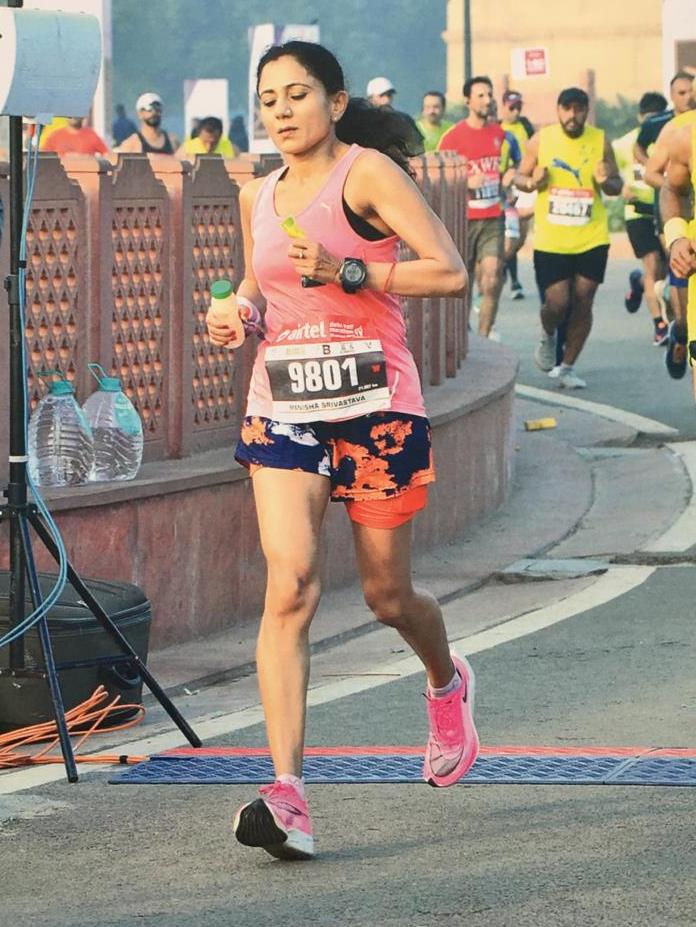
Manisha Srivastava (Photo: courtesy Manisha)

If all goes as planned, on Sunday, Dr Patil will commence his run from Gateway of India; move to Colaba, Metro Cinema, Mantrayala, NCPA, Babulnath and onward to Haji Ali, Worli Sea Face, Mahim, Bandra Sea Link toll naka, Mela junction at Worli and end the route at Shivaji Park. The distance required for the virtual event will be completed using repeated short loops within the larger route.

Gurgaon-based ultra-runner Manisha Srivastava has also opted for the 90 km distance for Sunday’s virtual race. She will be running inside her apartment – it is a fairly big one, and on the stairs of her building to accumulate the required elevation gain.

For the entire period of lockdown, she focussed on home-based workout and did not step out for a run. “ Until the lockdown was announced, I was training for Ultraman Canada,’’ she said. Confined to her apartment for the past two months, Manisha decided to do the virtual race as a means to reconnect with her training.

Ultraman Canada, originally slated to be held in July 2020, has been postponed to July 2021. Ultraman is a three-day triathlon stage race. The first day starts with a 10 km swim followed by a 145 km bike ride. The second day has a 275 km bike ride and on the third day there is an 84.4 km run. Each of the disciplines must be completed in 12 hours.

Update: Dr Anand Patil completed his 90 km run in 14 hours, two minutes and 32 seconds. Having secured permission from the authorities, he commenced his run at 12:05AM from Gateway of India. He finished the run well although Mumbai’s humid weather and heavy vehicular traffic did weigh him down. Manisha Srivastava completed her run in 11:29:45 hours. Running inside her house was a challenge as it caused the GPS device to work with a lag, she said. At last count over 300 people from India had registered to run the virtual Comrades Marathon. In all, some 43,000 people from all over the world, participated in the event.

(The author, Latha Venkatraman, is an independent journalist based in Mumbai.)

THIS YEAR IT’S RACE ACROSS AMERICA, FROM YOUR HOME

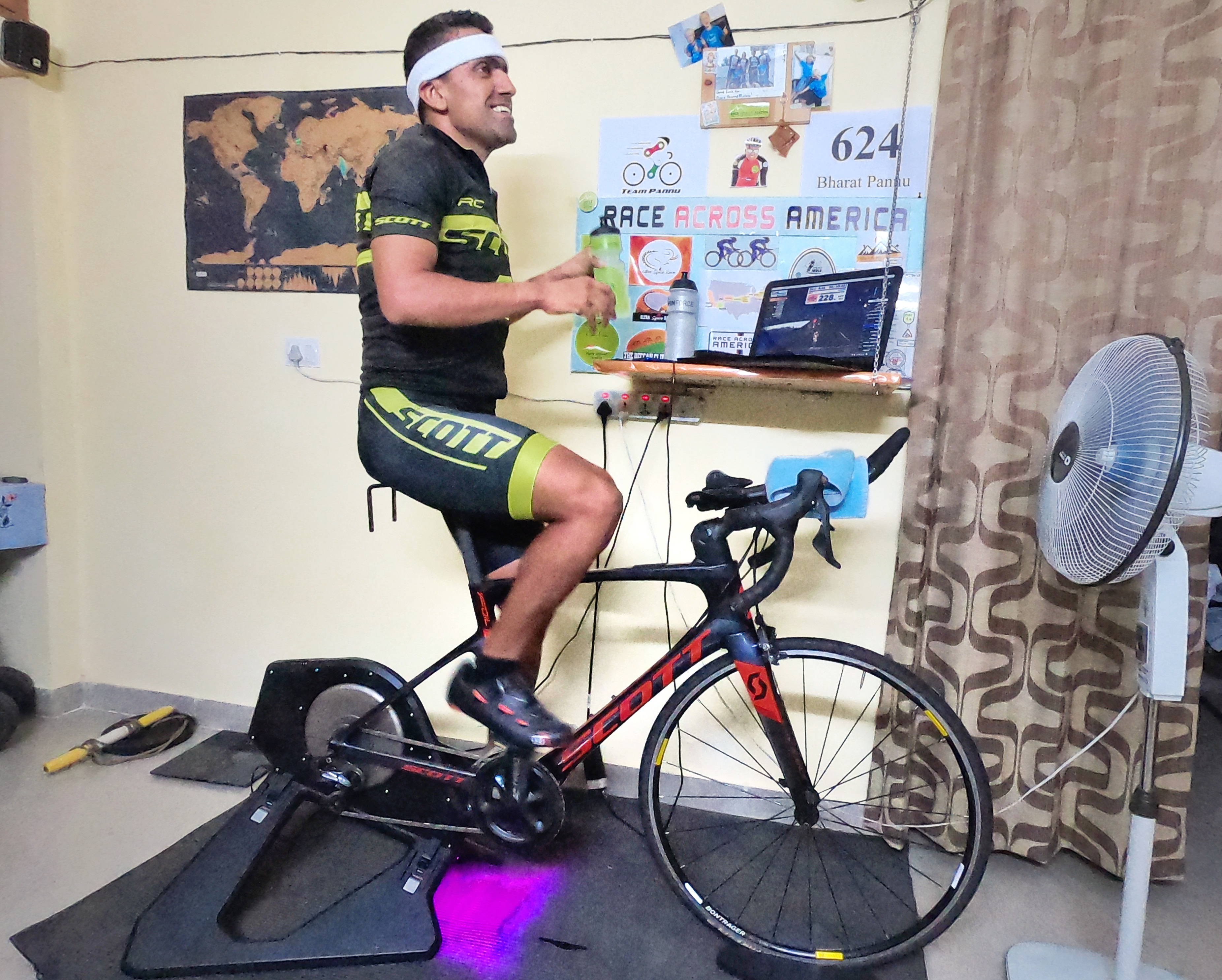
Lt Col Bharat Pannu on his home trainer (Photo: courtesy Bharat)

As COVID-19 swept across the planet, many bicycle races got cancelled. Lockdown restricted access to the outdoors and people were forced to refashion their chosen sport for pursuing it indoors. Runners attempted marathons indoors; cyclists pedaled on their home trainers..

Computer programs promising virtual rides have been around for some time. Amid pandemic and lockdown, they zoomed in popularity. It wasn’t long before bicycle races embraced the technology.

In early April 2020, one of cycling’s famous events – the annual Tour of Flanders – had an online digital version, won by Belgian cyclist, Greg Van Avermaet. According to those who followed the race, the format featured a shortened distance of 30 kilometers compared to the event’s real distance of 250 kilometers. This was partly because the event was a demonstration of technological possibilities and partly because riding in race mode for three hours on the home trainer was considered challenging enough. On April 3, in an email communique to those who had registered to participate in Race Across America (RAAM), the event’s organizers informed that the 2020 edition of the race was being cancelled. Some 20 days later, on April 24, VeloNews reported that Australian journalist Rupert Guinness who was among those scheduled to attempt 2020 RAAM, had set the ball rolling for a virtual reality version of the race. The report said that more than 800 people from around the world has signed up with expressions of interest to race.

RAAM – its route runs from the US west coast to the east – is one of cycling’s toughest endurance races. It is also fairly well known in India now, having been attempted thrice by that pioneer – Samim Rizvi (he would try it four times altogether; in 2011 he finished just outside the race’s 12 day cut-off), before the Mahajan brothers (Dr Hitendra Mahajan and Dr Mahendra Mahajan) placed first in the two-person male under-50 category at 2015 RAAM. In 2017, Lt Col Srinivas Gokulnath became the first Indian cyclist to complete the race within cut-off in the solo category; he was followed to the finish line by fellow Indian, Dr Amit Samarth. This year as RAAM goes virtual in mid-June, Lt Col Bharat Pannu will pedal his avatar across a digital American landscape comparable to the distance and elevation gains of RAAM. He will be racing in the solo category. Bharat, who is a familiar face in ultracycling in India, has been training for RAAM for the past couple of years. His 2019 attempt was prematurely terminated following an injury he sustained while training in the US. The subsequent 2020 attempt appeared lost due to pandemic till it found an extra lease of life in Virtual RAAM (VRAAM).

Based in Bengaluru, Bharat will move to Pune for VRAAM, scheduled to commence on June 16. The virtual race has three categories – the full 3000 mile-length of RAAM, the shorter race built into RAAM called Race Across West (RAW / in this instance: VRAW) and the60, which involves riding one hour every day for the 12 days of VRAAM. The overall cut-off for VRAAM remains the same as in the real race – 12 days. According to the virtual event’s website, “ all ride distances will be stunning road segments in the USA. They will not be the actual RAAM course.’’ The virtual race covers a total distance of 4542 kilometers and entail elevation gain of 73,739 meters. The technology platform used is FulGaz. As per details available on the FulGaz website, the VRAAM route is composed of iconic and interesting rides from the US. It has also been mentioned that since the actual route of RAAM is not being followed, sometimes a segment may repeat. The real RAAM is done with support vehicles and support crew. Bharat had planned all that before the 2020 edition of the race was called off. His crew was largely drawn from the community of cyclists in Pune. They will be supporting him for VRAAM too. “ I would have liked the attempt to be staged at a venue accessible to the public. But the present circumstances don’t allow that. So it will be at a private location,’’ he said.

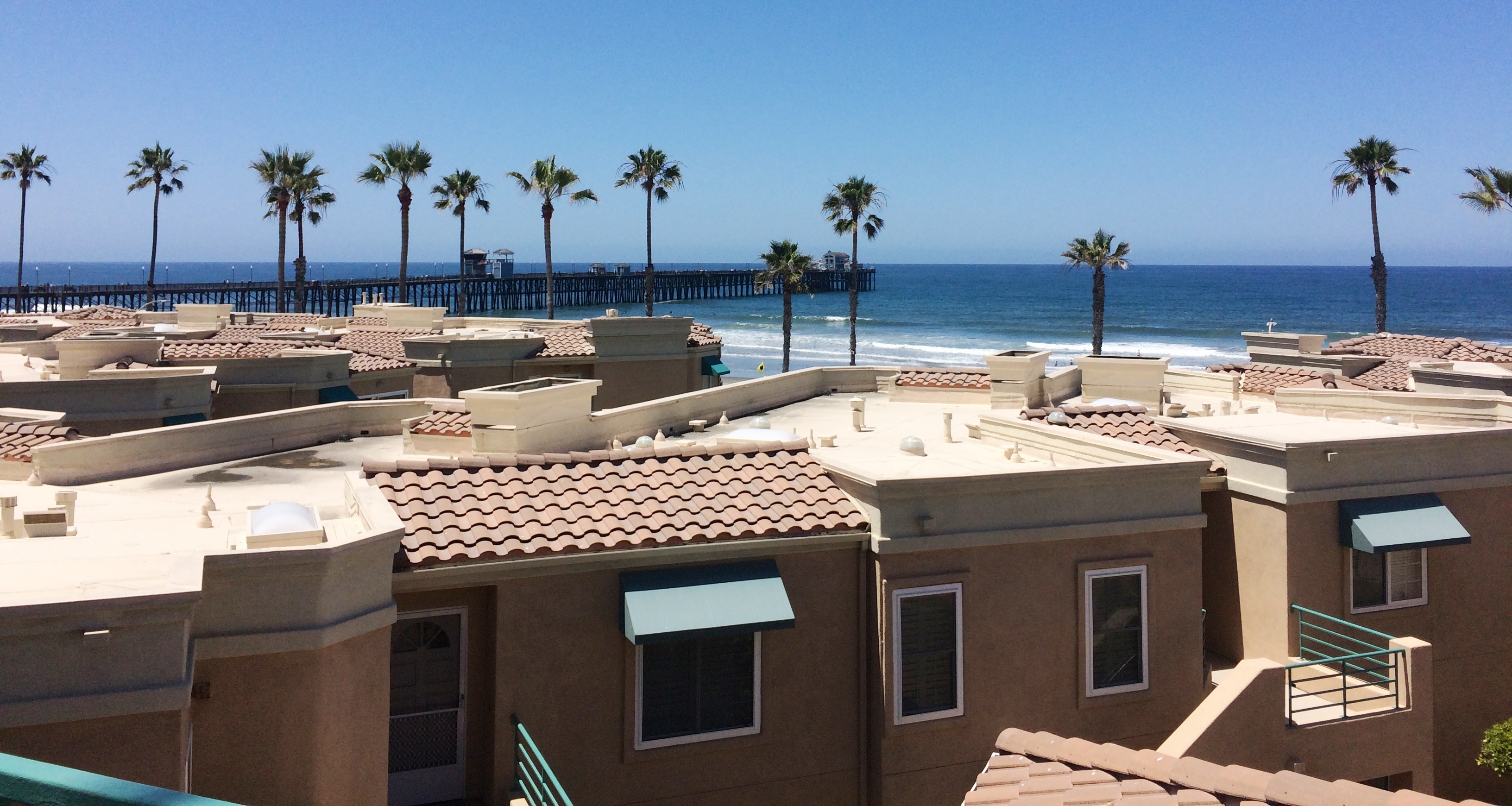
A view of Oceanside pier in California, traditional starting point of Race Across America (Photo: Rajeev G)

At the heart of the VRAAM attempt will be the present day home trainer. Bharat has been using a smart trainer for the past few years. While virtual reality means he avoids being physically present in the US, a multi-day endurance race like VRAAM will have challenges despite rider being stationary. In fact, one of these challenges relates to the physical restrictions associated with cycling on a trainer. In the outdoors where bicycle moves on open road, the cyclist meets every turn and climb with a body language that is freer and more versatile than what is possible when bike is rooted to one spot. As may be imagined, when the bike is locked into trainer and the whole contraption stays stiff and incapable of lateral flexion, dynamic movements of the sort possible in normal cycling become impossible. There will be no leaning into curves, no weaving, very little of standing up and pedaling. You are limited to an utterly linear delivery of power. Repeating this over a long period of time takes a toll. The issue of saddle sores could be more pronounced in this kind of cycling because you don’t have room for postural adjustments that allow relief. “ When riding your bike outside, the bike moves and flexes in response to your body, kind of like a dance… a stationary bike doesn’t move, so there may be a bit more friction and as the rider moves side to side…,’’ Tracy McKay, Bharat’s US-based coach pointed out. The neck is another critical part that endures stress during distance cycling. Extended hours of cycling are known to fatigue the muscles holding the head up. For VRAAM, Bharat will have the computer screen showing his avatar, hooked up to a TV screen for bigger image. Slip into his saddle and imagine it – you can’t keep that TV screen in poorly thought through location and endure the resultant strain on the neck endlessly. You have to plan its position well; as Bharat said, keep it in line with his most comfortable riding position, maybe at an angle that is tad lower than normal to be easy on the neck.

The biggest challenge is none of the above. Human beings thrive on variety, multiple stimuli and three-dimensional eyesight. The actual course takes you through mountains, arid country and plains. All of these settings have very palpable ecosystems. They challenge the rider but also retain variety in the experience. Confined to where he is, Bharat will have little change in weather and no change in surroundings. His perception of world he is cycling through will be the two dimensional display of a computer program. Advanced smart trainers exist that allow lateral flexion to an extent and also simulate feel of terrain. But replicating the outdoor experience entirely and convincingly is still a long way off. “ VRAAM is basically a mental challenge,’’ Bharat said. What he may end up battling the most is – monotony. “ As always the mental aspect is the real challenge…VRAAM provides some visual stimulation to provide sense of change and progress. At the same time riding in stationary (format) with all creature comforts available may prove very tempting to step away from the bike more often. The brain creates interpretations of what we are experiencing to help manage and safeguard our well being. For the riders, staying on the bike must be more important and valuable than getting off the bike,’’ Tracy said. He also pointed out that hydration / nutrition requirements for VRAAM will be different.

Given he will be pedaling in contained ambiance Bharat estimates he won’t have to worry of outdoor risks like traffic, taking a tumble or falling off the bike. “ I believe I will be therefore taking less rest and keeping the momentum going,’’ he said. According to Tracy, VRAAM and RAAM are similar and different at once. “ VRAAM should not be looked at as a simple video game… it is not a training event. It is its own unique challenge that’s never been done. Technology allows riders and their crews to look at rider data heart rate; elevation, relief, load, etc. it will be tough! Good Training for RAAM, yes and vice versa…’’ Tracy said.

Major Sandeep Kumar (Photo: courtesy Sandeep)

Besides Bharat who will be attempting RAAM in the solo category, there is Major Sandeep Kumar who will be participating in VRAW. Sandeep started out in running; he was part of a group from the army that did 50 half marathons in 50 days. He moved on into ultrarunning and the triathlon. In 2016, he secured podium position at a triathlon of full Ironman dimension, held in Chennai. “ I was doing cycling also during this period but it is a sport requiring time and attention and I didn’t have enough to spare given the nature of my work,’’ he said. Becoming part of Bharat’s crew for the 2019 edition of the well-known Indian ultracycling event, Ultra Spice, changed that. The race provided the army officer a ringside view of what went into ultracycling. Sandeep was included in Bharat’s team for 2020 RAAM, as crew member overseeing nutrition. Then pandemic struck and RAAM got cancelled. When VRAAM was announced, he decided to support Bharat and also attempt the shorter VRAW. “ We were already training on smart trainers. So attempting VRAW made sense. However cycling indoors for long will be challenging,’’ he said. Additionally, there are three members of Bharat’s original support crew for RAAM who will attempt the60. Unlike in RAAM, a race roster wasn’t available for VRAAM making it a bit difficult to ascertain if there are other Indian starters besides the said five.

 (The author, Shyam G Menon, is a freelance journalist based in Mumbai.)

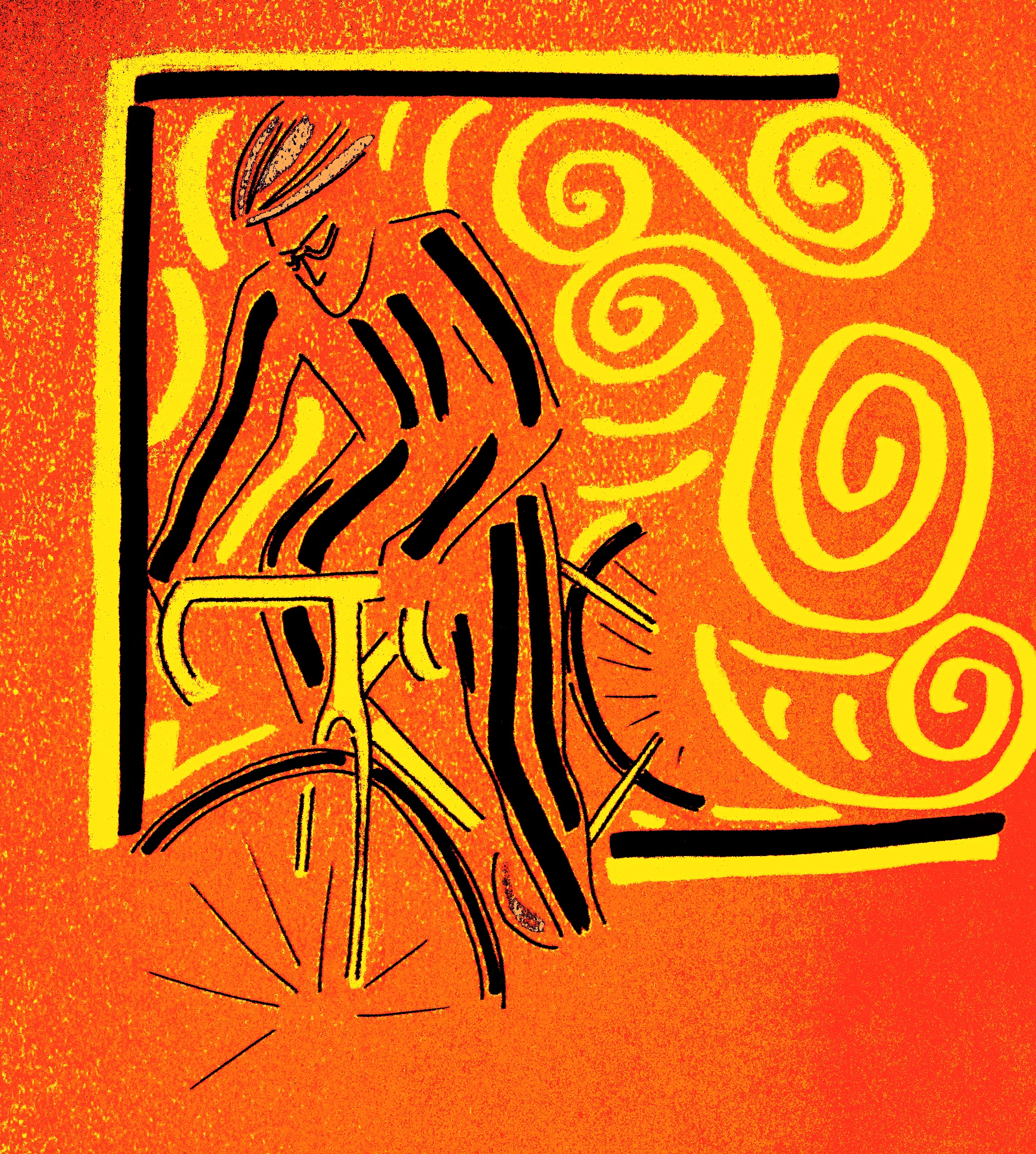
CYCLING / VIRTUAL REALITY: IS IT THE PROVERBIAL TIP OF THE ICEBERG?

Illustration: Shyam G Menon

Within the classic trinity of endurance sports – swimming, cycling and running – cycling has been early candidate for creativity by technology.

As life slipped indoors due to COVID-19 and lockdown, swimming pools shut and running got severely curtailed. But cycling stayed partly afloat thanks to the home trainer.

The concept of trainer is not recent by any yardstick. According to Wikipedia, the “ dandy horse,’’ also called Draisienne or Laufmaschine was the first human means of transport to use only two wheels in tandem. Invented by Baron Karl von Drais, it lacked pedals but is regarded as the first bicycle. He introduced it to the public in 1817-18. In the early 1860s, the Frenchmen Pierre Michaux and Pierre Lallement, in their design, added a mechanical crank with pedals on an enlarged front wheel – this was the velocipede; the first bicycle to enter mass production. Look up the history of the bicycle trainer and you will usually find a photo of a velocipede trainer from 1884. So it would seem: as of 2020, the bicycle is roughly 203 years old and the trainer, 136 years old at least.

The velocipede trainer resembles an early form of the stationary bike or exercise bike. It makes no effort to hide its immobility. What we today recognize as the home trainer, packages that trait into a piece of specialized equipment or accessory – it is an adjunct converting regular bicycle into a stationary bike.  This home trainer now comes in various finishes, the most advanced of which is the smart trainer. The latter category allows you to experience a ride in virtual reality (akin to gaming environment). Using specialized software you can link a responsive trainer to a digitally mapped cycling route. You see yourself on computer screen as an avatar responding to the physical effort you put on trainer. In high end programs, you can compete with others in the digital ecosystem of a race of your choice. Needless to say, in these months of pandemic, technology platforms promoting virtual cycling have gained popularity while the home trainer has sold well with select models out of stock on some websites.

The best known of cycling’s emergent technology platforms is Zwift; it is described on Wikipedia as “ a massively multiplayer online cycling and running physical training program that enables users to interact, train and compete in a virtual world.’’ It is made by a California-based company called Zwift Inc, cofounded by Jon Mayfield, Eric Min, Scott Barger and Alarik Myrin. As of 2018, Zwift had 550,000 user accounts, that page said. But this number is from before the COVID-19 pandemic. The lockdown accompanying the pandemic is known to have hugely increased the traction for programs like Zwift (some media reports have estimated user base at a million plus). “ The companies creating these platforms were investing in technology and marketing earlier itself. The pandemic and the lockdown that followed grew their user base exponentially,’’ Nigel Smith, Head Coach, Kanakia Scott Racing Development, a road racing team based in India, said. It wasn’t possible for this blog to get an idea of the scale and value of the relevant potential market. What we do know is that cycling is one of the world’s biggest sports and among humanity’s popular forms of physical activity; there is separately a rising army of gamers and programs like Zwift appeal to both dedicated cyclists and those in the overlapping borderlands of cycling and gaming. According to crunchbase.com, Zwift – it was founded in 2014 – has so far raised $ 164.5 million including a December 2018 instalment of $ 120 million. A podcast by Rouleur magazine also cited similar figures. Additionally, the Crunchbase page said that as per Privco, Zwift had a post-money valuation in the range of $ 500 million to $ 1 billion as of December 19, 2018. A December 2018 report on sportsbusinessdaily.com regarding the $ 120 million raised, mentioned that according to its co-founder and CEO, Eric Min, the startup was “ approaching unicorn status.’’

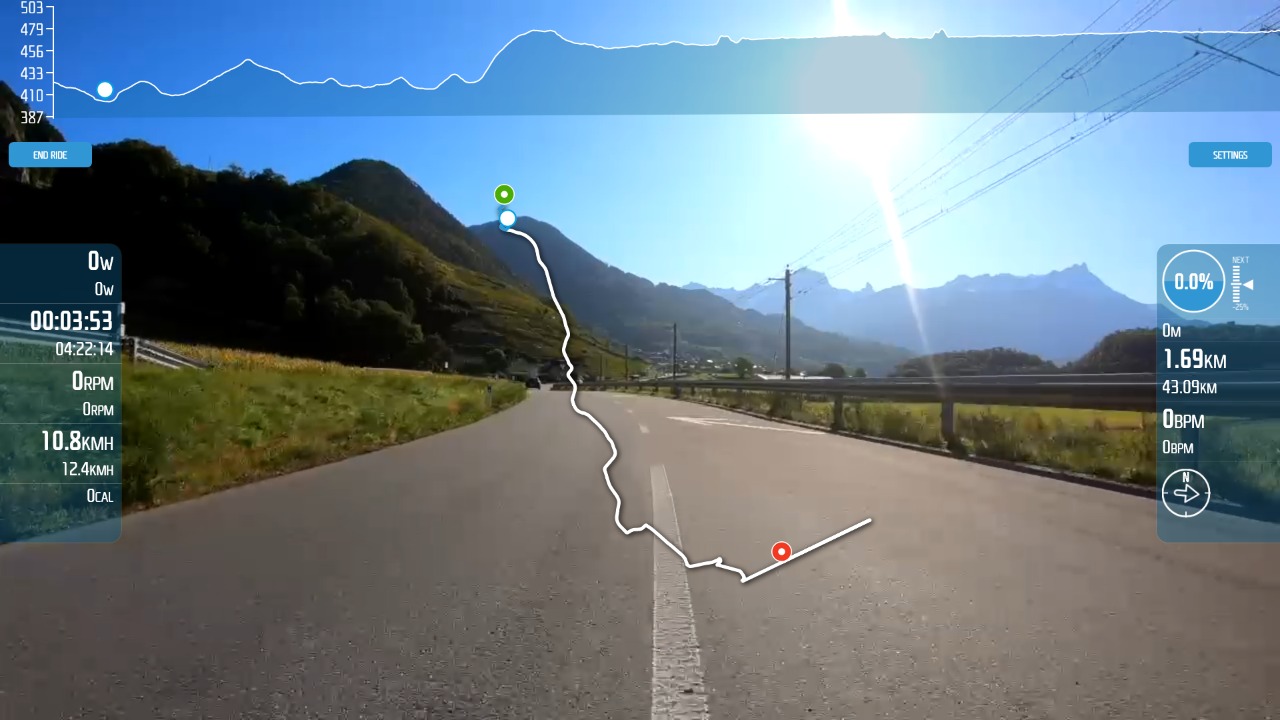
Screenshot of FulGaz’s version of the UCI 2020 World Championships ITT course in Aigle, Switzerland. The home trainer adjusts resistance based on the actual course elevation profile (Photo: courtesy Naveen John)

There is a December 2014 interview with Eric Min by Kelli Samuelson, available on the Zwift website. Two paragraphs therein provide an overview of the company’s inception. Min and his partner Alarik Myrin had co-founded Sakonnet Technology. It worked out well and the duo thought: why don’t they start the next venture together? “ We were looking at different industries, but it seemed all the great ideas were already taken! The turning point was when my older brother Ji, a private equity professional, advised me to stick to what I know best. Alarik had been encouraging me to take a hard look at cycling since I was so passionate about the sport. But whatever we decided to start together, it had to be consumer focused with the technology at the core of it and the business had to scale,’’ Min has been quoted as saying. At this point in time, due to family commitments and work, he was doing most of his cycling indoors. “ It had dawned on me that the indoor cyclist was being underserved and that the indoor experience hadn’t really changed all these years. It still wasn’t fun or social! Then I had a moment of eureka. What if we could take something that was historically mind numbing and turn it into entertainment? What if we could take advantage of video game technology, social networks, and friendly competition, and package that experience for the indoor cyclist?’’ Min explains in the interview.

Late April 2020, as news appeared of the push to host a virtual reality version of Race Across America (RAAM), the program involved was FulGaz. There are differences between the nature and texture of these programs. “ Zwift appears more interested in the blend of cycling and gaming. It is not above creating a make believe gaming world around cycling. There are already elements of equipment upgrade and trade using points earned, built into the format. It is also more social. That seems to be their preferred trajectory. On the other hand, FulGaz – it is an Australian company – appears focused on making their version of virtual reality as close to real life as possible. They offer some iconic cycling routes in digital format, which your avatar cycles through. The first type of product should appeal to the larger crowd combining cycling and gaming; the second should appeal to the more serious cyclist. That is what I would think,’’ Naveen John, among India’s leading bicycle racers, said, when asked about how the market was getting split between the various programs on offer. Are these technology platforms indicative of a whole new world of obsession opening up within cycling?

There are aspects of cycling outdoors that may not be acquired if your interest is restricted to excelling only in virtual reality. Aside from software, the core of this new paradigm is built of home trainer and bicycle. Once a bicycle is mounted on a trainer, its feel and behavior is different from riding outdoors. “ You pick up bike handling skills and bunch riding skills by cycling outdoors,’’ Nigel said. However there are critical variables in the equation – technology and the push of virtual reality to progressively become as close to reality as possible. Already high end trainers exist that can simulate the feel of terrain and permit a degree of flexion for bike mounted on it. But if you push gaming further, then what you wish for in the realm of fantasy may exceed what you normally need in the real world of cycling. Not surprisingly, there have been moves by companies currently in the programming sphere to get into related physical hardware. This is why the simple and tempting question of whether performances in virtual reality will outdo performances returned in the real world (example: which will be faster, RAAM or VRAAM?), doesn’t make complete sense. The two are not exactly comparable; it is not apples to apples.

The two worlds – their nature, their potential and their challenges – are mutually different. However, at some levels, there would be benefits transferable to each other’s distinct universe. Nigel did not think that there could be coaching totally focused on excelling for home trainer-based virtual reality. He feels the general push is still to cycle outdoors and excel there. “ There is a way to race and excel on these technology platforms and it is not necessarily the same as riding outside. I think what a coach would look for is a well-rounded athlete and not merely an efficient cardiovascular system on a pair of strong legs. However, training on the home trainer lets you focus on specifics,’’ he said. Another example of potential synergy was reported by Cycling News – a story from the Zwift Academy program begun in 2016, in partnership with Canyon-SRAM.  The article quoted Eric Min describing Zwift Academy as “ an entirely new means of identifying talent.’’ The 2019 Zwift Academy had nearly 9000 woman participants, a growth of 80 per cent compared to the previous year. Jessica Pratt of Australia who topped the program secured a one year contract and the final spot on Canyon-SRAM’s roster for 2020, the article said.

Illustration: Shyam G Menon

Further, between June 2020 (time of writing) and same time a year ago, there is a palpable difference as regards general interest in cycling’s virtual reality avatar. “ About a year ago, I recall there was a debate comparing cycling in the real world and the same in virtual reality. At that time, sentiment was definitely favorable to the outdoors,’’ Nigel said. The divide isn’t that sharp now. What the pandemic unleashed in home trainer-based cycling, may well be a genre that becomes a world by itself. There are reasons why this line of thought merits attention.

For some time now the Olympic movement has been studying the world of gaming. In 2017, the International Olympic Committee (IOC) had said that competitive gaming could be considered as a sporting activity. There have been reports since indicating that the 2024 Paris Olympics may have e-sports in the list of sports for demonstration. The earlier mentioned December 2018 report on sportsbusinessdaily.com quoted Min as saying, “ our goal is to bring Zwift to the Olympics.’’ In September 2019, NBC Sports reported that IOC and Intel have partnered for the Intel World Open, an e-sports competition to be held before the 2020 Tokyo Olympics (the 2020 Olympics have since been postponed to 2021 due to the COVID-19 pandemic). In December 2019, an article in Business Insider said that in recent clarifications (following the 8th Olympic Summit held earlier that month) the IOC has said its interest is confined to games based on real sports. According to it, “ the committee floated the possibility of embracing video games that make use of virtual or augmented reality to add a physical component to gameplay.’’ In other words, the IOC wants you to move, be physically active; plonked down on a chair and pushing buttons won’t do. In this new matrix, cycling sits pretty. Programs like Zwift and FulGaz require you to be actively pedaling on home trainer. “ From the ranks of established sports, I think cycling has a good chance of making that cut as regards e-sports at the Olympics,’’ Naveen said. That is of course, assuming the Olympic movement is still interested in e-sports and the programs currently fascinating cyclists continue to be partial to physical activity.

(The author, Shyam G Menon, is a freelance journalist based in Mumbai.)

2020 BOSTON MARATHON / SOME RECONCILE TO A REAL RACE IN DUE COURSE, OTHERS GEAR UP TO GO VIRTUAL

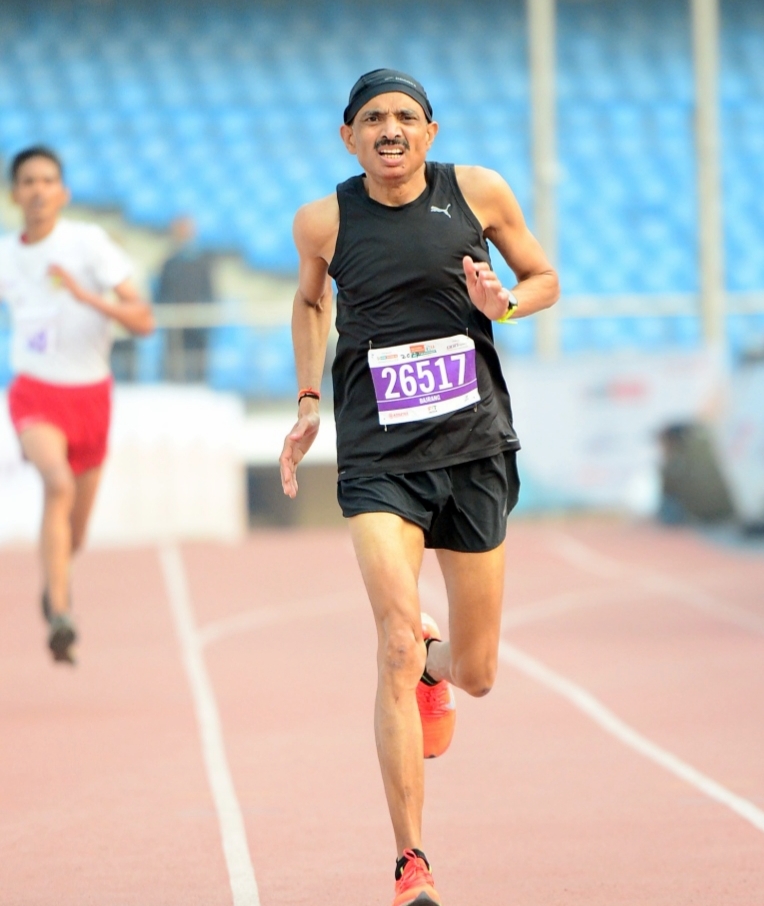
Bajrang Singh (Photo: courtesy Bajrang)

The 2020 edition of Boston Marathon has been cancelled. The marathon, initially slated to be held on April 20, 2020, was postponed to September 14, 2020. With the Boston Mayor cancelling mass participation events due to the COVID-19 pandemic, the organizers had to cancel the marathon and instead opt to hold it as a virtual race, which can be run anytime during the week September 7-14. It was the first time the marathon was being cancelled in its 124 year-old history.

Boston Marathon has stringent entry norms and attracts some of the best amateur marathon runners from around the world. The initial postponement and subsequent cancellation was on expected lines; as warranted by the current global situation. Nevertheless, there is an element of disappointment. A virtual race isn’t the real thing – right? Further, at least some runners – particularly those coming to Boston from developing economies – may have suffered financial loss owing to cancellation of flight and hotel bookings.

This blog spoke to a few runners from India who had registered for the 2020 Boston Marathon:

For Lucknow resident Bajrang Singh, this was to be his first attempt at the Boston Marathon or for that matter, any World Marathon Major. He had qualified for the 2020 edition of the iconic race with a fairly good margin.

On March 4, he traveled to North Carolina where his son’s family resides. “ I wanted to train in conditions similar to Boston Marathon. That’s why I came here much earlier,” he said.

But with every passing day, the pandemic got progressively worse. Boston Marathon, slated to be held on April 20 originally, was postponed to September 14, 2020.

“I was disappointed when the marathon got postponed to September. Still, I decided to attempt the September race. Now that has been cancelled,” he said.

A retired army officer, Bajrang Singh, 60, started long-distance running in 2016. “ During my career in the army, I ran short distances. I retired as a Colonel in 2014 when I turned 54 and in some time took up long-distance running,” he said.

At the 2019 Airtel Hyderabad Marathon, Bajrang Singh completed the race in three hours, 40 minutes and 32 seconds. The finish timing at Hyderabad helped him to qualify for the 2020 Boston Marathon with a decent margin.

“ Now I am stuck in the US and waiting for international flights to resume so that I can get back to Lucknow,” he said.

In the US, the lockdown has not been as stringent as it is in India. “ People have been moving around though large gatherings are not allowed,” he said.

Once he is back in Lucknow, he plans to attempt the virtual format of the Boston Marathon scheduled for September.

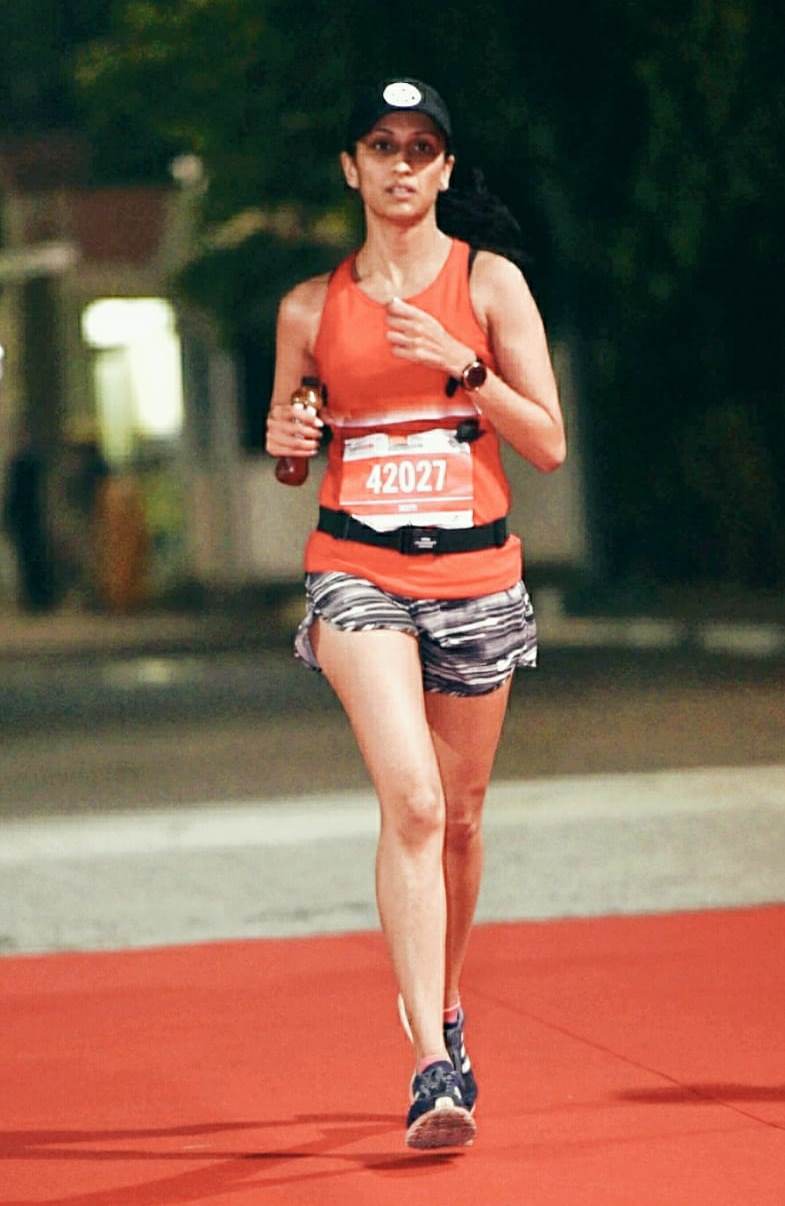
Deepti Karthik (Photo: courtesy Deepti)

Early May Deepti Karthik, amateur runner from Bengaluru, cancelled her registration for Boston Marathon. After the race got postponed to September from April, she felt it was prudent to withdraw from the event.

In 2020, Deepti was to run three World Marathon Majors – Tokyo Marathon, Boston Marathon and Berlin Marathon. Tokyo Marathon was held in March this year restricted to elite athletes. Besides Boston, she also cancelled her registration for the Berlin Marathon.

“ I am disappointed that the races were postponed and cancelled. However I don’t regret canceling my registration for these events,” Deepti said.

She feels it would be prudent to let at least one year go by before people can participate in a race, especially international marathons. Amidst lockdown in India, Deepti was able to focus on strength training and engage in occasional short runs in a lane close to her house.

Now that the 2020 Boston Marathon has been cancelled, the uncertainty surrounding the event has lifted, Sunil Chainani, Bengaluru-based runner, said. “ There is disappointment but given the current situation, it is the most sensible decision,” he said.

Sunil Chainani (Photo: courtesy Sunil)

He was to run Boston Marathon for the first time, this year. In his endeavour to complete the six World Marathon Majors he has already done Berlin Marathon, New York City Marathon and London Marathon.

Sunil is yet to study the details of the virtual race. “ But it will never be the same. Boston Marathon is about the atmosphere, the spectators, the weather, the route and the pleasure of running with good runners,” he said.

He is still keen to run the Boston Marathon and hopes to manage it in April 2021, subject to conditions surrounding the pandemic. “ I would like to emphasize that I will not take any chances that are detrimental to my health,” he said.

A member of the ultra-running committee of Athletics Federation of India (AFI), Sunil kept himself engaged during lockdown with fitness activities including strength training and various challenges. With lockdown norms easing in Bengaluru, Sunil has been able to step outside for his early morning run.

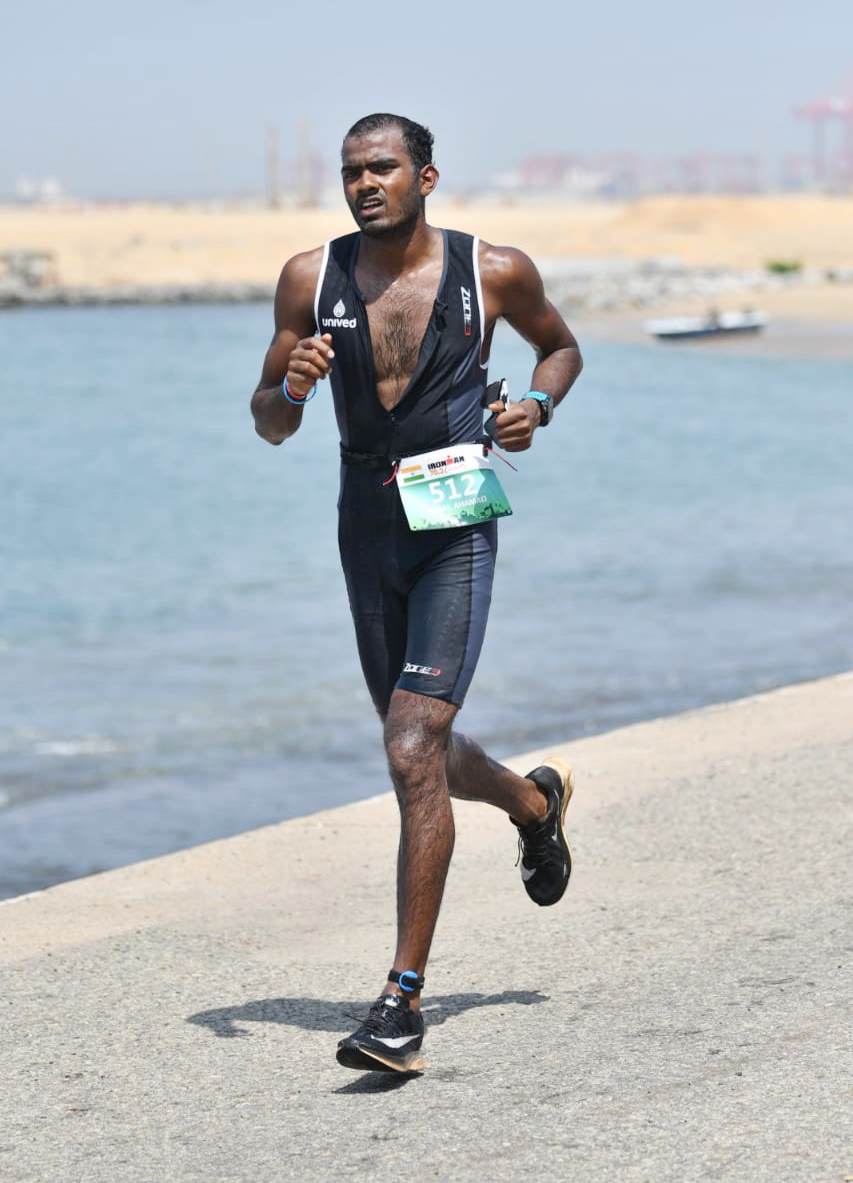
Nihal Baig (Photo: courtesy Nihal)

Mumbai-based triathlete, Nihal Baig, was to attempt Boston Marathon for the first time in 2020. He may now consider attempting the virtual race as a challenge to himself.

“This is probably the first time Boston Marathon is getting cancelled,” he said.

During the lockdown, he was able to run within his housing complex. It gave him a loop of 1.5 km and an extended loop of three kilometers. “ The longest run I have done so far is 28 km. I have managed with hydration for these runs. But to run a marathon, I may need gels,” he said.

By September 2020, which is when Boston Marathon’s virtual race is slated for, the situation surrounding the pandemic would have hopefully changed for the better.

A triathlete, Nihal was also able to do intense cycling workout at home. “ But I have not been able to swim because all pools are shut,” he said. He has enrolled for Ironman 70.3 Goa, slated to be held in November this year.

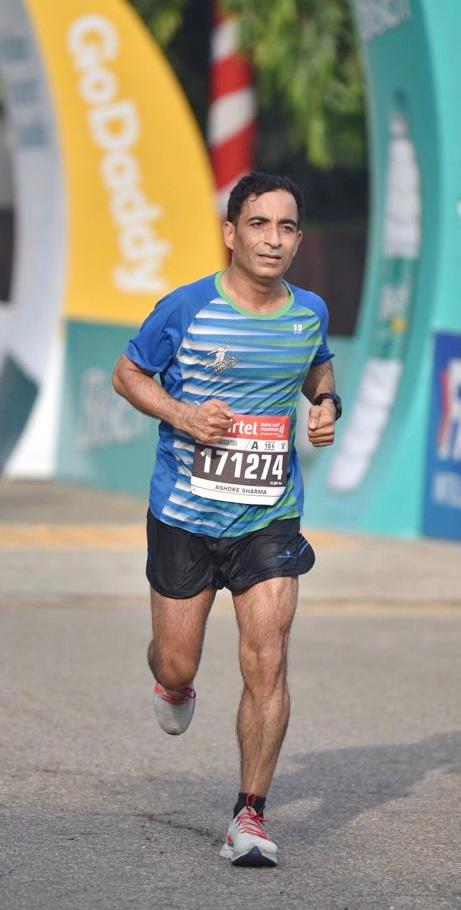
Ashoke Sharma (Photo: courtesy Ashoke)

“ Most of the Ironman triathlons around the world have been cancelled or postponed. So far, there is no word on any change from the Goa Ironman event,” he said.

Ashoke Sharma was to commence training for Boston Marathon in June coinciding with the easing of lockdown norms in Gurgaon, where he stays.

“ With the cancellation of the race, I don’t have to do any intense training for some time,” he said. He had enrolled for the 2020 edition of Boston Marathon after qualifying for it. “ I plan to register for the 2021 edition of the marathon depending on how the situation surrounding the pandemic pans out,” Ashoke said.

“ I was mentally prepared for the cancellation,” he said. This was to be his first attempt at the event. He has already finished Berlin Marathon, London Marathon and Chicago Marathon among the six World Marathon Majors.

He is not sure about signing up for the virtual race. “ In September, the weather in Gurgaon is not very pleasant,” he said. During the ongoing lockdown, Ashoke has been doing home-workouts including cycling.

Kumar Rao (Photo: courtesy Kumar Rao)

For Kumar Rao the 2020 edition of Boston Marathon was to be his third outing at this marathon. “ I was expecting the cancellation given the situation,” he told this blog from Bengaluru, where he resides. Kumar has also registered for the 2020 edition of New York City Marathon.

“ My plan now is to train for the virtual format of the Boston Marathon. I have been running on my treadmill, clocking a distance of 50-60 km per week,” he said. Kumar has also been doing other workouts to maintain fitness.

He is keen to explore virtual races. “ I would like to do some virtual races to keep the motivation going,” he said. By September when the Boston Marathon virtual race is scheduled to be held, the pandemic scenario may have altered, he said.

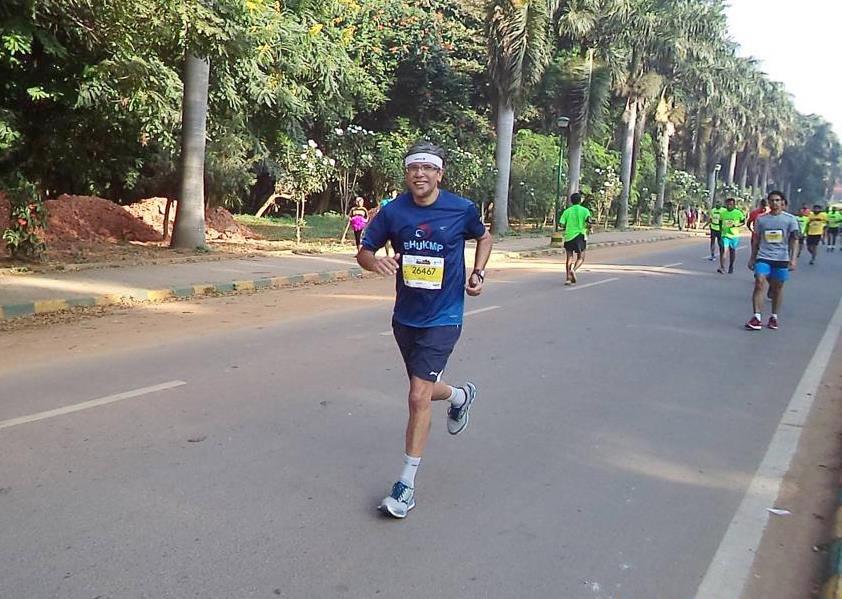
Five years ago, Murthy R K quit his high paying corporate job to focus on training and securing qualification for the Boston Marathon.

“ I am really disappointed that the event has been cancelled. For the past five years, I worked really hard to qualify for this marathon. A lot of hard work has gone into meeting the qualifying time,” Murthy, an amateur runner from Bengaluru, said.

“ I attempted the Mumbai Marathon five times to get my Boston qualifying time,” he said.

Murthy R K (Photo: courtesy Murthy)

Qualifying for the Boston Marathon is a “ major achievement,” according to Murthy. “ It was the most satisfying experience,” he said.

He is very keen to run the virtual format of the race. “ It will be a prestigious and historic experience doing the Boston Marathon’s virtual race,” he said.

A coach now, Murthy has been busy with home-based fitness activities, training individuals and groups on various elements of fitness.

“ I have not stepped out for a run during the lockdown phase. With norms easing, I may commence running outside,” he said. Murthy is averse to running inside apartments as it could lead to injuries.

Among the six World Marathon Majors, he has already completed New York City Marathon, Chicago Marathon and Berlin Marathon. “ I am not keen to complete all six WMMs. If I am able to do it through qualification I will go for them,” he said.

(The author, Latha Venkatraman, is an independent journalist based in Mumbai.)

LOCKDOWN & ME / SIGNS OF LIFE

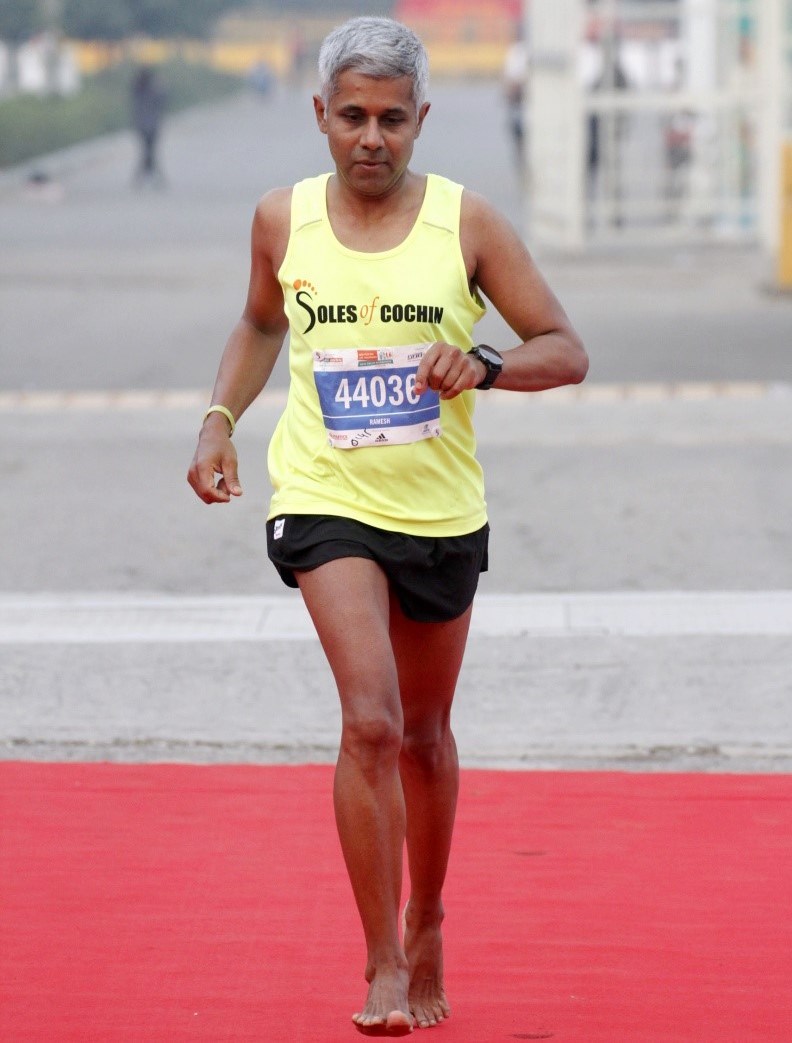
Ramesh Kanjilimadhom (Photo: courtesy Ramesh)

Amidst continuing lockdown due to COVID-19, there has been relaxation of rules. Runners and cyclists have reappeared in some cities and towns, albeit in small numbers. It is a beginning although the new normal with mask, physical distancing and no races on the horizon, won’t be easy for all to embrace. Yet, signs of life – that it is.

For well over a month Ramesh Kanjilimadhom was confined to being indoors. In that while, the IT professional and amateur runner worked out to keep himself physically fit. Then, to stay connected to his chosen sport, he began jogging within the compound of his apartment complex. “ It was to keep myself going. By no yardstick can that be a replacement for running outdoors like before,’’ he said.

Contacted on May 22, five days into the fourth phase of the nationwide lockdown, he said that following relaxation in the severity of lockdown in Kerala, some runners have resumed their early morning run. Ramesh is among founders of Soles of Cochin, the state’s best known running group. It is a very sociable, outgoing group; the outfit’s social media presence reflects that spirit. The new normal has two important aspects, which are a departure from the sociable past – the use of masks and physical distancing. Ramesh described the outings amid the fourth phase of lockdown. Given the group is active on social media and well networked, a few of them still assemble at a predetermined place but with none of the clustering of before. They maintain physical distancing and wear masks. When the running commences, they don’t run as a group; they maintain separation. Post run, there is none of the old visits to café for breakfast either. According to Ramesh, it is not easy transitioning from an environment where people ran close together and chatted as they went along, to one where they are distanced from each other and consciously staying in a protected personal ecosystem. You have to acquire that habit. From among those venturing out in the new normal, the majority – including Ramesh – runs solo.

It is tempting to assume that the discomfort felt is less for those pushing longer distances like the marathon and the ultramarathon as they are used to being in a personal cocoon.  Ramesh thinks that assumption is too simplistic. “ Even distance runners used to find a few others of their league and proceed as a small group. So it is more a case of managing individual character, whether you liked sociability and proximity or could do without it. Overall, the current experience is a bit monastic compared to how sociable running used to be earlier,’’ he said. Ramesh said that runners from the group, who are doctors, had discussed the recent media report of a Chinese runner who used to run wearing a mask and eventually suffered a collapsed lung. Based on details available, they were not convinced that the collapsed lung was a direct consequence of wearing a mask; it seemed more due to existing comorbidity. However, Ramesh conceded that although people wear a mask when running in the new normal, it is not a pleasant experience. “ First of all, it is uncomfortable. Second, in places like Kochi, the humidity is quite high. It takes no time for the mask to get wet,’’ he said.

It was in September 1987 that Pink Floyd released their thirteenth studio album: A Momentary Lapse of Reason. For cover, it had a picture showing hundreds of hospital beds. Its opening song was the instrumental ` Signs of Life.’ The name of that song could be apt description for recreational sport right now in India. Things came to an abject standstill when lockdown commenced from the midnight of March 24. Now, amidst continuing lockdown due to COVID-19, there has been relaxation of rules. Runners and cyclists have reappeared in some cities and towns, albeit in small numbers. It is a beginning although the new normal with mask, physical distancing and no races on the horizon, won’t be easy for all to embrace. Yet, signs of life – that it is.

Anjali Saraogi (Photo: courtesy Anjali)

Anjali Saraogi and her husband run a health care services company in Kolkata. “ I haven’t run for over ten weeks now. I decided to take this lockdown positively and focused on yoga and flexibility,’’ she said. Anjali represents India in international ultra-running events. She holds the national best among women in the 100 km run. At the 2019 IAU 100 km Asia & Oceania Championships, held at Aqaba, Jordan, Anjali set a new national best of 9:22 hours, breaking her own previous record.

According to her, running with a mask on is very challenging. Getting back to races will take a long time. “ The running community will have to figure out how to organize races, which have huge crowds, especially at the big events. Also, the expo of the event, the holding area, the start line, the finish line and volunteering – all these are usually so crowded and involves physical contact,’’ she said. For some time ahead, the focus of running will be purely on fitness. She believes the new normal will definitely dilute the fun element, the bonding and camaraderie that training runs and races used to offer.

Pervin Batliwala (Photo: courtesy Pervin)

As COVID-19 plays out in India, one of the clearest trends yet is that of positive cases being most in a handful of major towns and cities. And of this unfortunate lot, Mumbai is the worst hit. In the domestic world of running, Mumbai is among cities most active in the sport; it hosts India’s biggest annual event in running – Tata Mumbai Marathon (TMM) – and it is home to a large number of amateur runners. Transposed onto running, Mumbai’s lockdown story becomes one of a city of runners caged by the misfortune of being a red zone. It is a predicament they must weather. “ I miss running on the road and meeting my runner friends in the process,” Pervin Batliwala, Mumbai-based amateur runner who has been an age category podium finisher in many races, said. She does not miss the gym, though. “ Through the lockdown period, I have been doing workouts at home at least three times a week,” she said around the time the fourth phase of India’s nationwide lockdown was due to commence. Recently she started jogging in the compound of her colony, which is quite large by Mumbai standards.

Although she misses running on the road, Pervin enjoys the fact that she does not have to wake up at unearthly hours to commence her run. “ Running in the new normal would mean we have to keep a distance between runners. But running with the mask on is not in the least comfortable. It is suffocating,” she said. A gregarious individual, Pervin loves running with big groups and enjoys chatting while on the run. However, as of mid-May, she was already reconciled to the new normal. “ We have to take the whole process of resuming running gradually. Anyway, there is no goal or race to focus on, anytime in the future,” she said. For 2020, Pervin had enrolled for the Tokyo Marathon and the Chicago Marathon. The Tokyo Marathon, held in March this year, was confined to elite runners and the organizers allowed amateur runners to defer their participation to 2021. “ Tokyo Marathon may allow runners to defer further to 2022. If so, I will opt for 2022,” she said. Chicago Marathon has already announced the option for deferring participation to 2021.

Chitra Nadkarni (Photo: courtesy Chitra)

Given the pandemic, most major running events and similar mass participation events in the field of endurance sport have been getting postponed or cancelled. Hope at large is no more centered on return of races; it is centered on simply getting back to doing the things we love, something as simple as the morning run for instance. The new normal will get some time getting used to. Maintaining adequate physical distancing from other runners won’t be easy in training and particularly so at running events, Chitra Nadkarni, said. A Mumbai-based amateur runner and frequent podium finisher in her age category, she was all set to shift her focus to the triathlon after the 2020 Tokyo Marathon. Following COVID-19 outbreak, the marathon in Japan was eventually held restricted to elite runners. But her triathlon plans are on. With the aim of attempting an Ironman event, she has been focusing on cycling. “ I have put my cycle on a trainer and have been training regularly,” she said.

Endurance sport at the training level and at the event level will not be the same, says Chitra. “ It is going to be a sad scenario. I will miss meeting, training and bonding with people,” she said. Things are not very clear at this juncture and will take quite some time to evolve into a new normal, she said.

Anuradha Chari (Photo: courtesy Anuradha)

Mid-May when lockdown eased in Bengaluru, Anuradha Chari, recreational runner and triathlete, was able to go for a long bicycle ride covering a distance of about 45 kilometers. Prior to lockdown, Anuradha was doing 60-70 km. After being confined to limited space, a bike ride of said distance was liberating experience for her. “ It felt good to get out and breathe some fresh air. I went slower than my usual pace and also covered lower distance compared to my normal mileage,” she said. While there was personal relief in being out, the altered reality outside wasn’t a pretty sight. The ride was exhilarating but the sight of migrants walking along the road to destinations they wished to reach was distressing. Also, the deserted roads did not feel entirely safe, Anuradha said. All through the lockdown, she hadn’t been able to focus on a fitness regime to the level desired for want of time. “ With work from home, cooking and cleaning, I could not spare time for workouts,” she said. She did step out early morning for a short run around her housing complex. Going forward, the need for physical distancing will remove some of the fun from both training and racing, she said.

Mini Nampoothiri (Photo: courtesy Mini)

The new normal may be particularly challenging for those who are new to running or are yet to settle into a solo space. That early phase is when you seek a supportive ecosystem and typically in sport, it means training with others around. It is a symbiotic relationship – you feed off the group’s energy and the group gaining from each one’s contribution has more energy to spread around. “ I was running with others alongside as I was new to running,” Dr Mini Nampoothiri, Navi Mumbai-based gynecologist and amateur runner, said. She has been running for over two years. At the time of writing, she had participated in half marathon races and distances lower than 21.1 kilometers. Functioning under lockdown like everybody else, she is keen to get back to running but knows it may be a different experience in the new normal. “ I am waiting to get back to running,” she said, mid-May. She felt that running with a mask on will be most uncomfortable. Physical distancing while running will make running much less enjoyable for her, Mini said. But she felt she would adapt to the new normal. She avers she should be able to run solo during her training runs in the future.

Naveen John (Photo: courtesy Naveen)

The view is tad different when perspective is that of elite athlete. “ If there is a national competition tomorrow, I will do well,’’ Naveen John said late-May 2020. Among India’s top bicycle racers, he held out the same possibility should he be heading to Belgium to participate in a kermesse, which is usually the norm for him in this time of the year. The observation reflected how well he had trained during the preceding three phases of the nationwide lockdown (by late-May, India was into the fourth phase). “ I am absolutely happy with my fitness,’’ he said. Despite the training and hard work there was a sliver of disillusionment – rather an honest admission of reality – emergent. “ The challenge now is that for the first time in my career in cycling, there is no horizon,’’ he said of India and world sailing on with no real end game in sight for the pandemic. The lockdown itself hadn’t worried Naveen much. He had rationalized that a couple of months spent so, won’t make a dent to the years he had spent so far in cycling and the years ahead. The forecast of a monastic new normal with much less sociability in sport too didn’t upset him because as he put it, athletes chasing high performance are already into the hermit life. Further, all athletes have to cope with episodes of being out of action due to injury and illness. The lockdown could be treated as a slightly longer version of the same. But the important thing is – there is a return to normalcy; a sense of confidence with roadmap alongside for how to get back to normalcy. This roadmap is missing with COVID-19 and to the extent it is absent, athlete misses concrete direction when preparing for the future. “ Previously my plans used to span three to four weeks. Now I am taking it one week at a time,’’ he said.

On the bright side, Naveen is back to cycling outdoors. From the third phase of lockdown, Bengaluru authorities made it possible for cyclists to venture out. He leaves home at 5 AM, when there are very few people out on the road. “ It feels good to be out again,’’ he said. Naveen is currently working on devising a template for the rest of the year. In all likelihood the rest of 2020 will require a change in paradigm for him. A landmark shift in global cycling that happened during the lockdown was the virtual reality version of the annual Tour of Flanders (the actual event was postponed due to pandemic). Unfortunately a similar version is not available for Belgium’s renowned season of kermesse and other races rated below the elite segment. One reason is that outside the professional category of racing (to which elite races belong), the world of virtual reality hasn’t yet got a level playing field in place. Among parameters used to judge outcome in virtual races is the product of power generated on home trainer divided by stated weight of rider. The latter is a case of self-declaration. Systems to monitor such parameters exist in the professional category but not in the rungs below it, where Naveen has so far participated. This inhibits virtual races from catching on in a strange year like 2020, although the practise of cycling using trainers and apps has grown exponentially amid pandemic.  Simply put therefore, there is nothing to fully replace the kermesse season Naveen will miss this year. “ I think this year will be a case of focusing on training self and others,’’ he said. He is working on the details.

Apoorva Chaudhary (Photo: courtesy Sunil Shetty / NEB Sports)

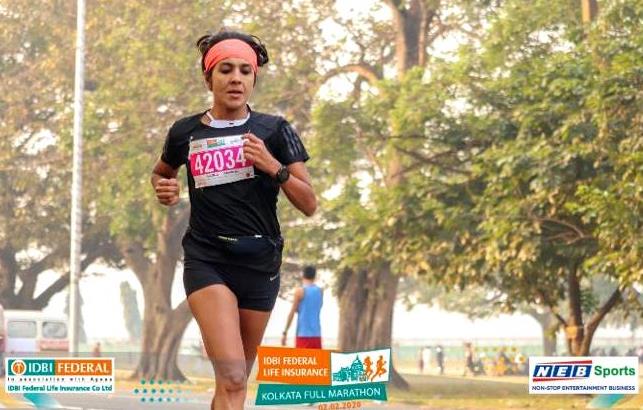
Ultra-runner Apoorva Chaudhary was confined to her apartment in Gurgaon during the lockdown. On May 25, she managed to travel to Bijnor in Uttar Pradesh, where her parents live. “ I resumed my running only after I got here. I don’t do very long runs. There are no Covid-19 cases on the 10 kilometer-route that I run on,’’ Apoorva said. She holds the national best in 24-hour ultra. At the 2019 IAU 24-hour World Championships held at Albi, France, Apoorva clocked 202.212 km during the stipulated period, the highest for a woman runner from India.

In Bijnor, she steps out very early for her training run. “ People here don’t go out for walks. Therefore, except farmers getting ready to move to their farmlands, there are very few people out,’’ she said. She tried running with a mask but found it too uncomfortable. “ That’s the reason I go out super early for my run,’’ she said. While at home during the lockdown, Apoorva focused on strength training, something that most endurance athletes ignore to a great extent. She likes running alone and sometimes with one or two runners. “ In the new normal, I will miss the old routine of catching up with runner friends after a training run,’’ she said. Although there are no races on the horizon, as and when they begin, she feels runners may be reluctant to enroll for fear of catching the virus. In the new scenario, runners will run for the joy of running and the competitive approach will take a back seat, she said.

Update: In its order dated May 31, 2020, concerning guidelines for easing restrictions and phased opening of lockdown, the Maharashtra government has permitted the return of outdoor physical activities like cycling, jogging and running in non-containment zones from June 3 onward. No group activity is allowed; only open spaces nearby or in the neighborhood may be used and the activity will have to be between 5AM-7PM. “ People are actively encouraged to use cycling as a form of physical exercise as it automatically ensures social distancing,’’ the order said. All physical exercise and activities must be done with social distancing norms in place. The order said that people are advised to walk or use bicycles when going out for shopping. The above is a condensed version. For a complete overview please refer the actual government order. 

(The authors, Latha Venkatraman and Shyam G Menon, are freelance journalists based in Mumbai.)

MAY THEN, MAY NOW

Haseeb Ahsan, Dona Ann Jacob and Clifin Francis (Photo: courtesy Clifin)

It was to be an enjoyable journey on bicycle across a few countries. But the virus decided otherwise.

May 2018, Clifin Francis was on a bridge connecting Azerbaijan and Georgia. The cyclist had officially exited Azerbaijan at one end when Georgia on the other side, denied him entry. Trapped on the bridge in no man’s land, he was saved by a small, unexpected gesture. A German cyclist who crossed the border just ahead of him left him a local SIM. With that installed in his phone, he first contacted the Georgian embassy in Baku for help and when nothing came of that, he applied for an e-visa to return to Azerbaijan. It was night by the time he was admitted back into the country he had left. “ The experience taught me patience,’’ Clifin would tell this blog some six months later in Kochi. The bridge episode had been part of his journey, cycling from Bandar Abbas in Iran, to Moscow in Russia, for the 2018 FIFA World Cup.

May 2020. This time there isn’t any no man’s land to worry of. Clifin is well within the boundaries of India, albeit a long way off from his home state, Kerala. Along with two other cyclists – Dona Ann Jacob and Haseeb Ahsan – the freelance mathematics teacher is at Asha Holy Cross in Agartala, an organization engaged in social work. The trio had started out from Kochi on December 15, 2019; their plan was to cycle from India to Japan and be there in time for the 2020 Tokyo Olympic Games.  A report in the New Indian Express dated November 30, 2019, said that Haseeb, who is based in Bengaluru, had met Clifin in 2018 at the FIFA World Cup in Moscow while Dona, who is based in Mumbai and worked in Mexico, had backpacked in Mexico and Guatemala and cycled 1000 kilometers around Cuba. Their route (as per the New Indian Express report) was to take them from India to Bangladesh, Myanmar, Thailand, Laos, Vietnam and China before catching a ferry from Shanghai to Japan. “ We should have been in China now,’’ Clifin said, May 27 from Agartala in Tripura, where the trio had reached after cycling through Kerala, Tamil Nadu, Karnataka, Andhra Pradesh, Odisha, West Bengal and Bangladesh. With India under lockdown, they have been stuck in Agartala since mid-March.

Roughly a fortnight after the trio commenced their journey from Kochi, China reported to the World Health Organization (WHO) of a cluster of cases of pneumonia of unknown cause, in Wuhan. That date of reporting to the WHO – December 31, 2019 – is generally treated as official start of the COVID-19 pandemic, which then proceeded to paralyze normal life in many countries (it has since been reported that the earliest cases in China likely go back to November 2019). In the initial stage, the difficulty for everyone was with regard to properly gauging the disease outbreak – what is it; will it be contained and extinguished, will it spread? Nobody really knew. The world celebrated the intervening New Year with usual enthusiasm. By January, 2020 the three cyclists were aware of the situation evolving in China. They had a long stint of cycling to do there in order to reach Shanghai. So it was a concern. “ But we pushed on nevertheless because we thought things would improve,’’ Clifin said. Further, the immediate world around them was still normal although on January 30, India reported its first case of COVID-19 (a student in Kerala, who had returned from Wuhan). The trio planned to enter Myanmar from Northeast India. To save time and distance, they crossed from West Bengal to Bangladesh for further passage to Tripura. When they were in Dhaka, the first reports emerged of COVID-19 in the city.

Illustration: Shyam G Menon

By now, there was uncertainty over the Olympic Games as well. Japan was among countries affected by COVID-19 and in a mass gathering like the Olympics, visitors come from many countries, several of those already impacted by virus. Further on March 11, the WHO declared COVID-19, a pandemic. The number of cases was also slowly picking up in India and the disease claimed its first victim in the country on March 12. Question marks were now weighing down the bicycle journey. Proceeding on from Dhaka, the trio reached Akhaura, the border crossing between Bangladesh and the Indian state of Tripura. It is less than ten kilometers from Agartala, the state capital. They crossed into Northeast India on March 17. From the border crossing, they were taken in an ambulance to the government quarantine facility in Agartala. Seven days later, on March 24, the International Olympic Committee (IOC) announced postponement of the 2020 Tokyo Olympic Games to a date beyond 2020 but no later than the summer of 2021 (it has been rescheduled to July 23-August 8, 2021). Same day, midnight onward, India entered the first phase of a nationwide lockdown that has since been extended and was in its fourth phase at the time of writing.

Its website says that the Association for Social and Human Advancement (ASHA) was registered as a social service society in 1999. It is the official development wing of the Society of the Fathers of Holy Cross, Northeast India. After completing their quarantine at the government facility, the three cyclists shifted to Asha Holy Cross. They have been helping the organization with some of its charity work; they assist in making masks and packaging food for distribution. The organization has taken care of their food and stay. Asha Holy Cross also became shelter for a Spanish lady cyclist who met the trio at the government quarantine facility; on May 25 Hindustan Times reported that Yesenia Herrera Febles had left for Delhi by train to catch a relief flight back to Spain. “ I am hoping things ease up some more from June first week,’’ Clifin said. Flying home to Kerala with bicycles for baggage will be expensive. “ You have to first fly to Kolkata and then from there to either Hyderabad or Bengaluru before catching a flight to Kochi. Train will be cheaper but about as complicated in terms of connections. I don’t think there are any direct trains from the Northeast to South India at this point in time. Hopefully we find more options in June,’’ Clifin said. An IT engineer who once worked with Tata Consultancy Services (TCS), Clifin had resigned his job and become a freelance mathematics teacher after the travel bug got to him. Given COVID-19, the institute he taught at in Kochi has closed down. He is looking for online teaching assignments.

Clifin Francis (Photo: Shyam G Menon)

Aside from figuring out a way to get back to Kerala, what bothers is the altered reality cyclists now confront. Riders like him, who travel long distances on their bicycle, count on the hospitality of people along the way. Theirs is not a race (competition is what most people live to court) but a way of seeing and knowing the world. The bicycle keeps you mobile but unlike motorized vehicle, it proceeds at an unhurried pace and keeps you in communion with the surrounding environment. You carry your own camping gear and live independently or you find cheap lodgings or you stay at the houses of those who take you in. You halt and hang around if a place engages your interest. “ People are a part of the journey,’’ Clifin said. It is possible that such human equation has been altered by the virus. Wary of catching infection, the old goodwill and warmth people had for travelers, may have ebbed, adversely impacting models of cycling like the one Clifin loves. It will be some time before the world is back to being as relaxed and welcoming of people as before. “ I think it will take time,’’ Clifin said.

(The author, Shyam G Menon, is a freelance journalist based in Mumbai. Please click on this link for an account of Clifin’s 2018 bicycle trip to Moscow:  https://shyamgopan.com/2018/11/30/football-with-a-difference-the-fan-who-cycled-to-moscow-for-fifa-world-cup/ Please click on this link: https://www.instagram.com/snails.on.wheels for the cyclists’ Instagram handle.)        

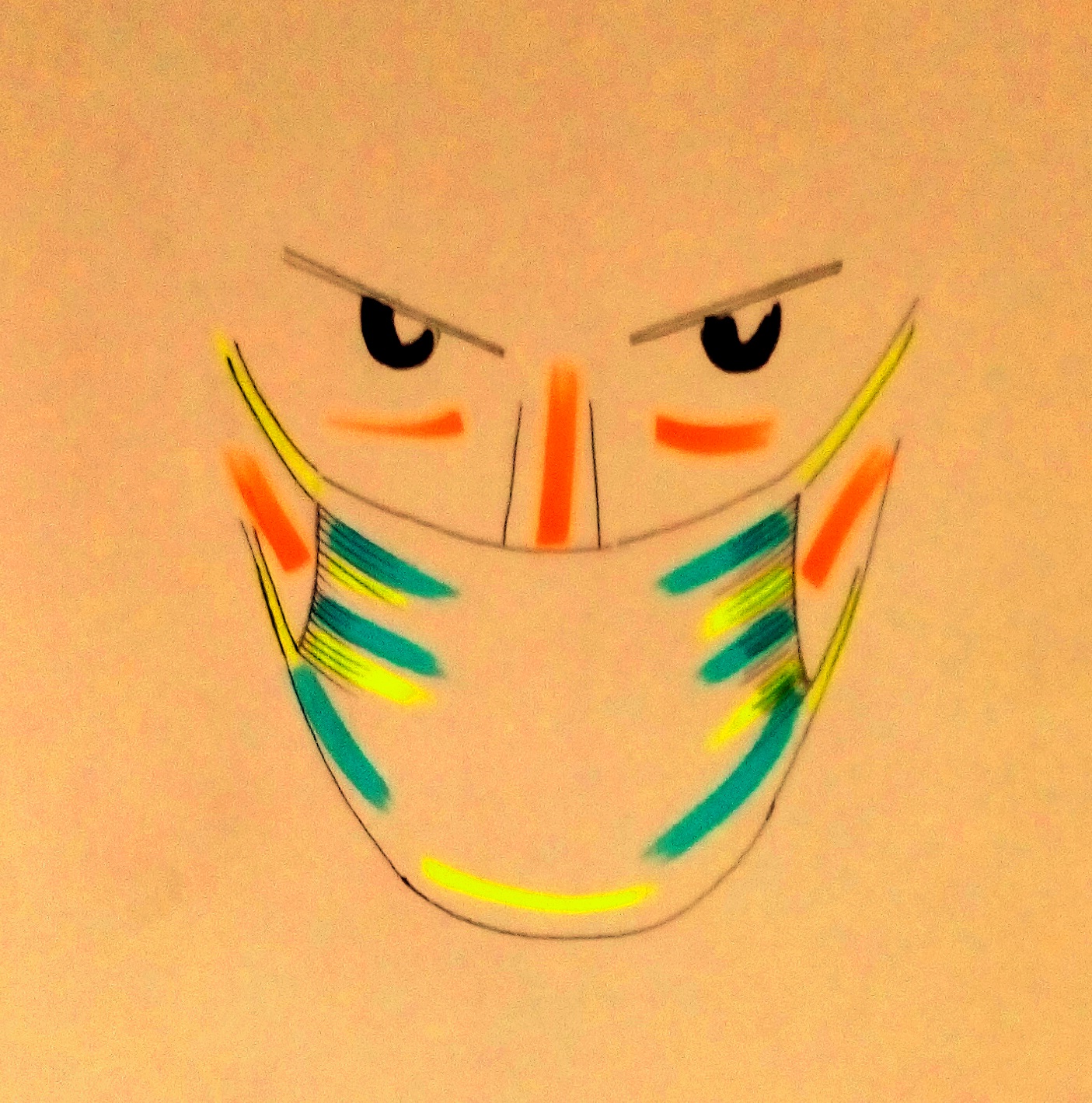
COPING WITH THE MASK

Illustration: Shyam G Menon

With COVID-19, the face mask has become part and parcel of our lives. The general feedback from runners who ran wearing a mask is that it is an uncomfortable experience, which you may however get used to. In mid-May 2020, a report appeared in the media (it was circulated on social media as well) of a man in Wuhan, China, who ran wearing a mask and later suffered a collapsed lung. Although health officials believed the culprit was the mask, at least one newspaper reported that a senior doctor at the hospital where the patient was treated had said, the runner was already susceptible to “ spontaneous pneumothorax because of his tall, lanky frame.’’ Aside from speculating, it wasn’t possible to conclude anything from the report. To compound matters, there seems to be no conclusive study available yet on the subject of wearing a mask and running. We spoke to four doctors with strong ties to running, for their take on the subject.

“ There is no real research or study available on the subject yet. It is a new topic,’’ Dr Aashish Contractor, Director, Department of Rehabilitation and Sports Medicine, Sir H. N. Reliance Foundation Hospital, said of the emergent debate around mask and running.

The normal act of running outdoors has to be seen in its full context. It is usually done at an hour before the regular flow of people manifests on roads. There are not many people around and the number of runners among those choosing to be out at that hour is not high. It must also be remembered that runner is neither static nor moving at walking pace. The chances of catching the virus depends on various factors including how crowded an area is, proximity to others, the duration of exposure and the viral load one is exposed to. Against the above outlined outdoor scenario with mask and physical distancing additionally in place, it would appear that the chances of contracting the virus may be further minimized. However it must be borne in mind that exercise – like running – causes heavy breathing. “ I would think you should stay about 20 feet away from another person while running,’’ Dr Contractor – he was Medical Director of the Mumbai Marathon from 2004-2014 – said.

Wearing a mask and running is bound to be difficult. “ Depending on the level of exertion, it will be hard to breathe,’’ he said. One way of overcoming this is to be conscious of how much you are pushing yourself. Rate of Perceived Exertion (RPE) is a good rule of thumb to stay on the safe side. “ If you feel your breathing is becoming hard, slow down. Do that because this is not anyway a time to be proving anything,’’ he said. A simple three ply surgical mask should be adequate for the morning run. Wear it when running and if you are feeling uncomfortable, use your judgement and pull it down a bit for easier breathing. Relief gained; pull it back on. As for the news report about the Wuhan runner who suffered a collapsed lung, Dr Contractor felt available details are inadequate to establish direct link between the condition and use of mask.

Given the number of races held under its banner, the 2019 edition of La Ultra The High was spread over five days in Ladakh. At that elevation oxygen content in the atmosphere is lower than at sea level; it is lower still atop the high mountain passes the ultramarathon’s route touches. “ We encourage runners, support crew and officials to use their bandanas; cover their face to protect themselves from the fumes of passing vehicles. In the case of someone who walked-ran all those five days, at least as many hours as in a half-day would have been spent protected by the bandana and breathing through it,’’ Dr Rajat Chauhan, Race & Medical Director of the event, said. Dr Chauhan specializes in sports & exercise medicine and musculo-skeletal medicine. “ It should be fine,’’ he said when asked about the issue of wearing a mask and running.

However, there were caveats to the observation. A pre-existing medical condition can alter the tolerance someone has for prolonged breathing through protective barrier. Further, you have to get used to breathing so. “ In the last two months of lockdown, I would have gone out of my house just twice. On both those occasions I wore a mask and it wasn’t easy doing the things I had to do while breathing through the mask. My suggestion to those who are in zones where they are allowed to venture out for running is that they first wear the mask indoors for about the same duration as they plan to be out. Get used to it,’’ he said, pointing to the heat of summer as another factor to be aware of.

Illustration: Shyam G Menon

Getting used to the mask gradually also makes sense because in Dr Chauhan’s assessment most amateur runners haven’t learnt to use their lungs efficiently. “ The typical amateur runner in India still has shallow, rapid breathing,’’ he said. Next, your intensity of exercise matters. Intense exercise puts commensurate demand on the respiratory system. “ Do workouts at low intensity. Very long and or high intensity workouts are best avoided,’’ he said. Aside from the fact that high intensity training is a period when risk of cardiac problems is higher (before things improve as product of having exercised), immunity also lowers temporarily in this phase. The present characterized by COVID-19 is not times when immunity should be fiddled with. The N95 mask, which is more effective in keeping the virus at bay, is tough to breathe through. The normal surgical mask is easier to breathe through but not as effective a virus-barrier. “ At the end of the day you are in the realm of informed decision-making,’’ Dr Chauhan said of the challenge in framing best practices for a problem yet to merit in-depth study and research.

“ Right now the ideal approach would be to consider everyone a potential carrier of disease and have everyone stick to safety protocols like using a mask or face cover. This is not a phase to be viewed only through the prism of sport. It is a question of humanity,’’ he said of world battered by COVID-19. His advice to runners was – focus on strength training.   “ I have this saying: if you can’t do something sitting down or standing up, how can you hope to do the same while moving? All those boxes have to be ticked before you get down to running or running with a mask on,’’ Dr Chauhan said.

When it comes to air quality, Delhi is among the world’s most polluted cities. Colonel Muthukrishnan Jayaraman is a doctor with the Indian Army. He is a regular runner. He first used a mask while running, in 2018, after he was posted to Delhi. “ It was extremely difficult. If you exert yourself, you need more oxygen and getting that in was a challenge,’’ he recalled. The mask was also prone to becoming wet with the moisture of one’s breath. Eventually he stopped using it. Roughly two years later, the mask has become a regular fixture in life due to COVID-19. “ We wear it at work. For that purpose, it is not a problem. But wearing a mask and running is a challenge,’’ the army doctor said. First, it defeats the very idea of a morning run, which is to do something enjoyable. Second, with the more effective masks meant to keep viruses at bay bound to make breathing hard, you end up using simpler models that are not totally competent as virus barrier; it is a compromise. You wear it only because any protection is better than no protection. Consequently, Col Jayaraman is of the view that choosing less crowded stretches of road to run on and maintaining adequate physical distancing is the best option. However, one aspect needs to be borne in mind, he said. During exercise and for a little while afterwards, there is typically a dip in immunity levels. Given this, other precautionary measures to prevent infection, shouldn’t be trivialized, he said.

“ In healthcare, masks have been used for over 100 years now. They are used mainly during an operative intervention, to prevent transmission of infection to the patient,’’ Dr Pravin Gaikwad, pediatrician based in Navi Mumbai, said. A runner and triathlete, he illustrated the equations at work while using precautionary measures like the mask.

For instance, the operation theater scenario of doctor wearing a surgical mask is a case of – I protect you. In the present situation of COVID-19, if 60 per cent of the population wears masks which are even 60 per cent effective in blocking the transmission of virus, the epidemic may be stopped. That would be a case of – I protect you, you protect me. In a highly infectious disease scenario like COVID-19, special N95 respirator is used to protect the healthcare professional and others from him. The equation here is – I protect myself and I protect you. In industry like asbestos, N95 with valve (which is more comfortable) is used to protect the worker but not others. This is a case of – I protect myself but I expose you. “ That would be sinister if used in the present situation,’’ he said.

Masks can cause discomfort. “ The N95 which fits snugly certainly causes a bit of discomfort upon prolonged use. Talking and being heard, is also an issue. Surgical masks are relatively more comfortable. Surgeons use them for a long time – even 9-10 hours – in long supra major surgical procedures,’’ Dr Gaikwad said, adding, “ compared to the surgical mask, homemade cloth masks or bandana, I presume, would be less breathable and therefore less comfortable.’’

Illustration: Shyam G Menon

According to him, running in a face mask would be uncomfortable in any weather. If one really wants to use it, one has to gradually introduce it in one’s regime. It would take a few weeks to months getting used to it. “ As the amount of air inhaled becomes limited, breathing becomes more laborious. Pace would obviously reduce and fatigue would set in faster. Mask becoming damp partly due to water vapor in exhaled air and partly from sweat is another issue making it not only uncomfortable but also less effective,’’ he said. He felt that for running, surgical masks would be more comfortable to use. “ Basically, the mask has to be breathable and effective….a homemade mask which has to be removed time and again will defeat the purpose,’’ Dr Gaikwad said.

Breathable masks don’t pose the risk of inhaling one’s own exhalation to a significant extent so as to cause disturbance in oxygenation. The droplet size of the present Corona virus is 125 microns and that of the CO2 molecule is 0.00023 microns, 1000 times smaller. Still, to check discomfort, the best option would be to keep runs shorter and gentler, striking a balance between getting exercise done and not exerting to levels inviting strain while using a mask. Choose to run after checking what zone (red, orange or green) your area is in and how authorities have relaxed lockdown rules therein. Even if you are using a mask, maintaining physical distancing of at least six feet is a must.  “ There shouldn’t be sudden increase in mileage in even indoor runs or those done on local campuses as this would make a runner prone to injury besides reducing his or her immunity temporarily. We can ill afford both these angles at present. Always listen to your body,’’ Dr Gaikwad said.

Author’s note: On May 18, 2020, the Athletics Federation of India (AFI) – it is the apex body for athletics in the country – issued Standard Operating Procedure (SOP) for its national camps in Patiala and Bengaluru (please click on this link for that report: https://shyamgopan.com/2020/05/20/afi-issues-standard-operating-procedure-for-its-athletes-coaches-and-support-staff/). The on-field protocols followed by elite athletes at these camps have not been gone into in detail in this article because the training ambiance of amateurs and elites is totally different. Amid pandemic, amateurs live and train in a world that includes everyone else; elites live and train in sanitized national camps with access strictly monitored. Nobody goes from the outside into the camps, nobody from within comes out (rejoining requires quarantine). It won’t be fair to compare the two worlds or blindly copy what performance driven-elites do while training against backdrop of pandemic because one ecosystem is controlled and sanitized, the other isn’t. Some general protocols laid down at the national camps make sense as meaningful guidelines for amateurs taking to public spaces for exercise. They include: not going for training if you have any flu-like symptoms such as sneezing, coughing, difficulty in breathing, fatigue etc or if you have been in close contact with someone who showed above-mentioned flu-like symptoms or tested positive for COVID-19 in the preceding 14 days; maintaining a safe and isolated distance of minimum two meters from others while walking to the training ground and during the training, and avoiding exercising / training / walking in groups. For an overview of the AFI’s SOP for its national camps, please follow the link mentioned earlier.

(The author, Shyam G Menon, is a freelance journalist based in Mumbai. The above article is presented in the interest of reading and discussion.)

CYCLING / AMID LOCKDOWN, AN EXAMPLE FROM BENGALURU

Illustration: Shyam G Menon

Late April 2020, authorities in Bengaluru formally approved cycling as a means of transport during lockdown. Here’s how it happened:

An erstwhile technology worker currently active in public policy related to mobility solutions, Sathya Sankaran is Bengaluru’s Bicycle Mayor.

It is an honorary position awarded by a NGO called BYCS in the Netherlands. Its website describes BYCS as “ an Amsterdam based-social enterprise driven by the belief that bicycles transform cities and cities transform the world.’’ Volunteers apply for the post of bicycle mayor; they are screened, selected and appointed. There are around 100 bicycle mayors worldwide at present, including in several Indian cities.

As the city most representative of the IT boom that followed economic liberalization, Bengaluru sits in an engaging matrix. It combines old world charm and a wealth of educational and scientific institutions with the subsequently emergent trends of skilled, well-traveled workforce and the ideas they gather from various parts of the world. The city is one of the major hubs of the active lifestyle in India. It has a large community of cyclists, a regular calendar of races and is among the bigger bicycle markets. All that ground to a halt when lockdown set in. Along with the rest of the country, whatever norms for transport amid lockdown applied in Bengaluru, concerned motorized transport. “ It was extremely disappointing to find that there was no mention of the bicycle in directives from the Union Ministry of Home Affairs. They issued specific guidelines on how to be out in cars and on motorized two wheelers; there was nothing similar about bicycles. In the absence of specific mention of the bicycle in protocols issued, people were hesitant to take their cycles out for permitted outings like purchase of essentials. It was a case of nobody objecting but permission not specifically granted,’’ Sathya said. He wrote to the Home Ministry. Till the time of speaking to this blog (May 23, 2020), there hadn’t been any response.

Sathya’s first initiative during lockdown was a concept called ` Relief Rider’ under which, volunteer cyclists delivered medicines and groceries to senior citizens in various parts of the city. Relief Rider commenced operation on March 29. There was a phone number provided for people to call up and inform of their requirement. The cyclists brought the consignment to their doorstep. Within a month to month and a half, 75 cyclists under the program had pedaled over 1600 kilometers; a figure that can also be viewed in terms of that much less motorized vehicles used and pollution avoided. The program was tangible evidence to authorities on the merits of having a community of cyclists. It was time to take things a notch higher. Dr Arvind Bhateja is a prominent neurosurgeon in Bengaluru and Medical Director of the city-based Sita Bhateja Speciality Hospital. A keen cyclist, Dr Bhateja came to Sathya with a campaign called ` Reset with Cycling’ under which, the duo decided to submit a proposal to authorities recommending a few measures. Its gist was the following:

  • Declare bicycle shops and associated businesses like bicycle repair and maintenance, as essential service.
  • If authorities can allow people to walk during lockdown, then they should be willing to accept the use of bicycle as well.
  • Major shopping avenues should be closed to vehicular traffic and opened only for walkers and cyclists in the interest of maintaining physical distancing.
  • Create roughly 57 kilometers of bicycle lanes across four major transport corridors in the city.

Sathya Sankaran (Photo: courtesy Sathya)

The website of ` Reset with Cycling’ introduces itself as a collective effort to revive cities post-lockdown. “ Let’s not go back to old habits. Let’s use the bicycle to reduce traffic, stress, improve health, air quality and renew our cities. Build a city for our children,’’ the website said. Sathya put the recommendations submitted, in perspective. Physical distancing has been identified as a major tool to combat spread of COVID-19. It is difficult to enforce it in public transport. That may serve as incentive to bring back private cars. In the months before lockdown, Bengaluru was notorious for its traffic jams while cities like Delhi and Mumbai experienced high air pollution levels. On the other hand, cycling allows for transport with physical distancing factored in; it is also healthy being a form of exercise. Further, when frenzied human activity on the planet temporarily ceased due to lockdown, the quality of air improved almost everywhere. “ In Bengaluru, pollution levels were down by 50-75 per cent. If upon relaxation of lockdown, we revert to world as it used to be and bring back motorized vehicles in strength, then we lose whatever gains we made,’’ he said.

Notwithstanding the merit in the proposal made by Dr Bhateja and Sathya, approval for it hinged on those in authority being sufficiently empathetic. Having administrators, who understand new lifestyle trends, helps. According to published news reports, it was in August 2019 that Bhaskar Rao assumed charge as the Police Commissioner of Bengaluru. He is a cycling aficionado. On April 25, 2020, Rao was shown the proposal submitted by Dr Bhateja and Sathya. That same day, he sanctioned permission for cyclists to be out on city roads. Authorities are studying some of the other recommendations. The Police Commissioner’s decision was welcomed. “ I don’t recall any opposition from the public to the move or reluctance to embrace it. During lockdown there had been mental issues and domestic problems. Cycling provided a means to gain relief from all that besides addressing practical transport needs,’’ Sathya said.

Meanwhile in some other parts of the world – as reported earlier on this blog – the pandemic and its subsequent need for physical distancing fueled steep rise in bicycle sales. Realizing that public transport would be challenged to offer physical distancing and not wanting a complete return to the earlier paradigm of motor vehicles and air pollution, some foreign governments have unveiled bicycle-friendly policies and investments to improve cycling infrastructure. Sathya said he has more plans for Bengaluru.

Update: In its order dated May 31, 2020, concerning guidelines for easing restrictions and phased opening of lockdown, the Maharashtra government has permitted the return of outdoor physical activities like cycling, jogging and running in non-containment zones from June 3 onward. No group activity is allowed; only open spaces nearby or in the neighborhood may be used and the activity will have to be between 5AM-7PM. “ People are actively encouraged to use cycling as a form of physical exercise as it automatically ensures social distancing,’’ the order said. All physical exercise and activities must be done with social distancing norms in place. The order said that people are advised to walk or use bicycles when going out for shopping. The above is a condensed version; for a complete overview please refer the actual government order. 

(The author, Shyam G Menon, is a freelance journalist based in Mumbai.)      

“ THE NEW NORMAL DOESN’T FEEL SO BAD TO ME’’ / KILIAN FISCHHUBER

Kilian Fischhuber (Photo: Shyam G Menon)

Kilian Fischhuber is among the most decorated competition climbers in the world. Hailing from Austria and participating in bouldering and lead climbing events, he has the rare distinction of winning more than 20 World Cup events. Having retired from competitions in 2014, Kilian has enhanced his repertoire of climbs. He travels the world in search of routes to climb; in the process he has visited India. Kilian worked for a while as a teacher in Innsbruck. Since end-2019, he has been a national team coach for Austria Climbing. Thanks to this, has been able to train since April 20, 2020 with elite athletes at the gym “ Ki” in Innsbruck, which is also the national training center. They were given special permission. “ We have to maintain strict protocol including distance, number of athletes, disinfection and the like,’’ Kilian said. He spared time to respond to questions mailed by this blog on the new normal in climbing forced by COVID-19. 

Reports have now begun coming from Europe of lockdown relaxation and the resumption of climbing. To your mind, how do we reconcile the need to observe disease related protocols with the sport of climbing? Is this a sport that can coexist comfortably with COVID-19 protocols or do you see climbers being pushed to situations where it is a choice between enjoyable sport and protocol?

We had a serious outbreak of COVID-19 here in Austria. Due to strict regulations, a lockdown and maybe a pinch of luck we avoided a larger mess. Now we see protocols relaxed and some kind of normality return. However, we kind of live under the shadow of a future outbreak and possible repeated lockdowns. Austria Climbing and the Austrian alpine federations worked on regulations for climbers and I hope we can enjoy our sport almost as before, soon. We’ll need more space per person and will have to follow hygiene protocols and use common sense to maintain our reclaimed freedom. As we have no other choice I guess we’ll have to coexist with the new rules. I’ve been climbing since more than two weeks now and the new normal doesn’t feel so bad to me.

If we broadly divide climbing into bouldering, lead climbing and mountaineering, do you see the impact of COVID-19 protocols as being fairly uniform for all these segments or do you suspect that a branch like bouldering, which is generally more social, requiring spotting and capable of climbs over shorter distances may be hit harder?

I’m afraid some will be hit harder than others. The virus definitely does not treat us fairly in any sense. It’s the same with sports. Contact sports or sports where you have to touch others (as in spotting) will see a larger impact. But again, I think with common sense we can live with the new normal.

Can you give us an idea of how a typical climbing session looks like for you these days? There has also been this debate around chalk powder versus alcohol based-liquid chalk for the present times. Which type of chalk do you use?

When I go rock climbing, I climb with my partner Anna. We live in the same household. When we meet other climbers we try to maintain the distance which is usually no big deal. I use normal chalk but I bring hand sanitizer to the crag.

From a 2015 visit to India; Kilian Fischhuber climbing in Badami, Karnataka (Photo: Shyam G Menon)

Indoor climbing gyms are now a major part of the sport. How do you think COVID-19 protocols will affect climbing at these venues? While physical distancing may be possible, frequent sanitizing of surfaces will be a challenge depending on the size of gym. Are there any practical approaches with protocols included, beginning to emerge at climbing gyms in Austria and elsewhere in Europe?

I don’t think it is possible to disinfect climbing surfaces in climbing gyms after each climber. I feel that sanitizing your hands frequently, avoiding contact with others, more space and using face masks is all we can do. If there’s another major outbreak the gyms will be closed again anyways. Our gyms have gradually begun opening last week. First the outdoor walls opened and soon, with new protocols, indoor walls too. What I don’t know is whether it will still be lucrative for gym owners to run large gyms with only few people inside.

What is the general attitude you sense with regard to climbing in the months immediately following relaxation of lockdown? Are people coming out to climb or is there reluctance? Are they waiting to see what protocols to follow at crags and gyms?

The vast majority runs with the protocols. I’ve been rock climbing again since about two weeks (when relaxation began in Austria) and most people I met behaved responsibly and showed understanding.

Who do you think should take the lead in setting health related protocols so that sports like climbing can resume in a safe fashion when lockdown relaxes?

The Austrian Climbing Federation, the alpine federations and the gyms proposed a protocol to the Austrian Health ministry which has been adopted so far. All the decisions are aligned with what health experts from the government propose.

How was the situation like in Austria when the pandemic was at its peak? Were all the major climbing crags and gyms shut?

All gyms shut, nobody went climbing.

(The author, Shyam G Menon, is a freelance journalist based in Mumbai. Please note: the above interview should be seen in the right perspective. It reflects circumstances in Austria, which is very different from the predicament in India, a nation of 1.3 billion people with crowded cities. The interview is presented here to foster awareness and hopefully, contribute to templates for the new normal.)