RECOVERED FROM COVID-19 AND PLANNING TO RESTART RUNNING? KEEP THIS IN MIND

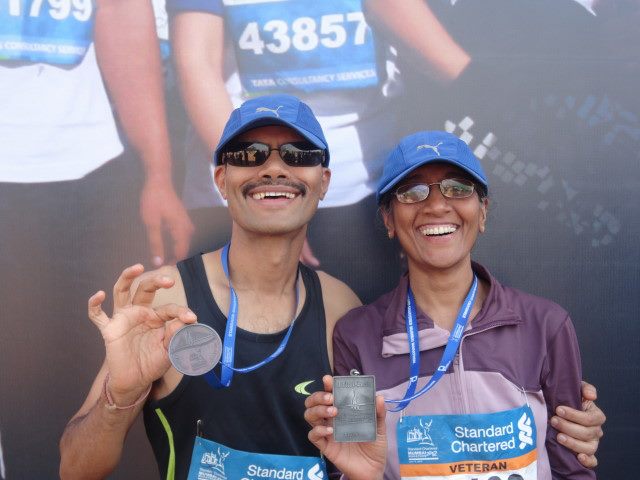
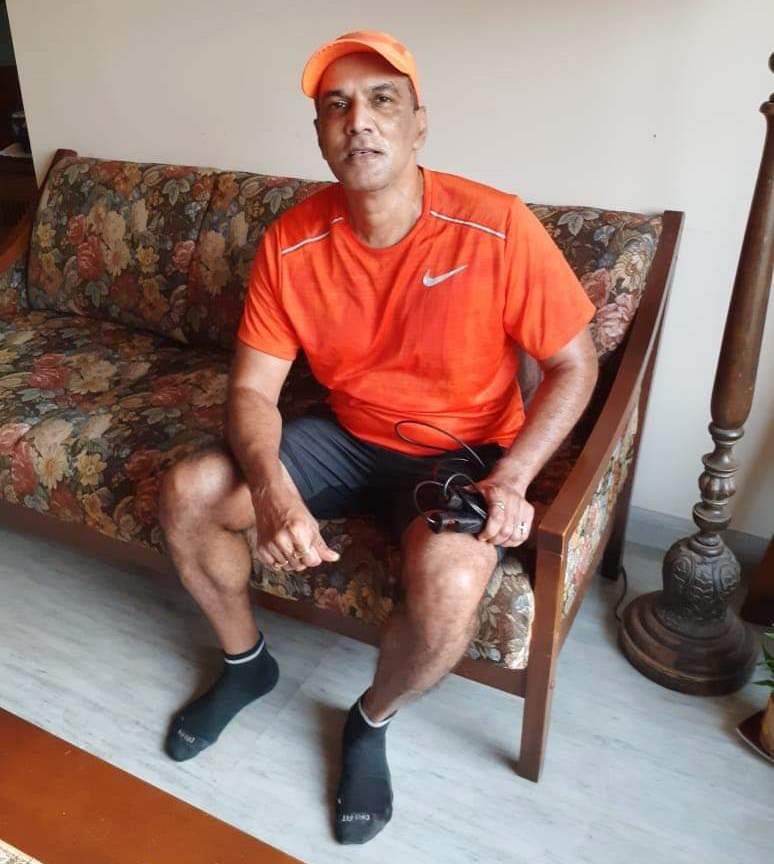
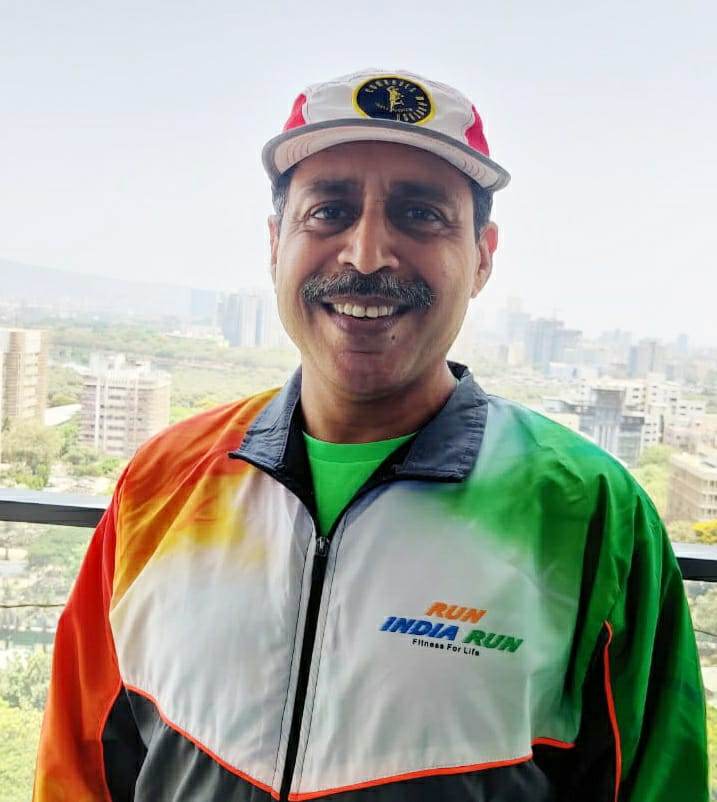
Pravin and Arati (Photo: courtesy the Gaikwads)

This is an article by invitation. Doctors Arati and Pravin Gaikwad are experienced pediatricians who have also been endurance athletes for a long time. In Navi Mumbai, they are co-founders of the runners group, LifePacers. This blog contacted them for inputs on how best a runner recovered from COVID-19 may handle his / her return to the sport. They paraphrased their response to questions sent, by first pointing out that COVID-19 is a new disease and since guidelines are still evolving, they should not be considered as mandates. The guidelines are based on expert opinion and available data.

In general, the quest for every runner when it comes to injury (an illness is similar to it) is to stay within the repairable realm and not provoke irreparable damage.  So, to begin with, even if used to an active lifestyle, asymptomatic patients should stop exercising for at least two weeks. This would anyway coincide with the isolation and quarantine period they are advised once they test positive. Mild activity to keep a sense of movement going is alright. Anything vigorous, which puts strain on the body or elevates heart rate needlessly, should be avoided. Exercising intensely may increase the risk of viral replication along with increased risk of myocardial involvement. Also, deep inhalation during exercise may help the virus to settle in the lower lobes of the lungs causing respiratory compromise.

Most active people turn to physical activity to boost circulation and feel better when they are feeling a bit low. But with COVID-19 in the equation, the results may not play out as hoped for. Being healthy, fit and strong may help you avoid some of the more severe symptoms of COVID-19 like Acute Respiratory Distress Syndrome (ARDS), but it doesn’t make you immune to some of the more insidious effects of the disease like myocarditis. A German study published in JAMA Cardiology, dealing with a sample of people who had formerly come down with COVID-19, showed 60 per cent of individuals to have myocarditis after two to three months of recovery. Eighteen per cent of these had been asymptomatic individuals.

Individuals who had been COVID-19-positive with any degree of symptoms should seek a physician’s opinion before resuming physical activity. Symptomatic athletes – recreational to professional – have been surprised by the potency of the disease. They have struggled to reestablish old workout regimens; some have had a lingering battle with lung issues, muscle weakness and unsettling anxiety about whether they would be able to match their old physical peaks.  The physician will decide depending upon the severity of infection endured, the treatment availed and the accompanying ailments the individual has. Herein, the biggest concern at present seems to be myocarditis (seven to twenty three per cent as per various studies).  Therefore, in symptomatic COVID-19 patients, the recommended tests before a return to active lifestyle may include Cardiac MRI, 2D Echo, ECG and Serum Troponin plus lung function tests in individuals who underwent extended ventilation support. As many recreational runners are above 40 years of age and a lot of them have obesity, high blood pressure, diabetes and even asthma, it’s advisable to get at least a 2D Echo done and get a cardiologist’s opinion before the workout regimen is restarted.

During this period, as the return to workout is planned, some form of movement, even fast paced walking – if the physician permits – will help to prevent the possibility of blood clots in the legs. Endurance runners tend to have lower heart rate. This makes pooling of blood in the legs easier; the tendency increases with COVID-19 infection. Further, individuals placed on ventilators and confined to bed, often lose between two and ten per cent of their muscle mass per day. Resorting to resistance training as the runner returns to his regular regimen would be a prudent step in this regard.

A general consensus seems to be the 50/30/20/10 rule as per the Joint Committee of the National Strength and Conditioning Coaches Association. This is a four week-plan. After recovering from infection and ensuring that one is up to resuming physical activity, upon return to running, it is recommended that in the first week only 50 per cent of the previously followed peak mileage and pace be pursued. In the following week, depending on how the runner is feeling, the load may be raised to 30 per cent less from peak level; over the two weeks thereafter the gap with peak level may be further reduced to 20-10 per cent. All this, provided there is no adverse feedback from the body to the phased increase of workout.  In general, pay attention to how you feel. You need to be good at listening to your body. Chest pain and dizziness are the two symptoms where one should stop immediately and take a physician’s opinion. Shortness of breath and palpitations can also be due to the erosion of physical fitness caused by muscle loss and lack of training. Persistent muscle pain, unexplained fatigue, hitting peak heart rate unusually early in your run or having a hard time bringing the heart rate down – these must be evaluated by a physician.

(The authors, doctors Arati and Pravin Gaikwad, are experienced pediatricians who have also been endurance athletes for a long time. They have their own clinic and are co-founders of the Navi Mumbai-based runners group, LifePacers.) 

2020 VIRTUAL LONDON MARATHON / THE INDIAN EXPERIENCE

Illustration: Shyam G Menon

For the virtual format of the 2020 London Marathon, 45,000 runners ranging in age from 18 to 87 had signed up to run at various locations worldwide. As per the commentary from the physical race held around St James Park in London, outside the UK, participation in the virtual run was highest in the US, Taiwan and Hong Kong. India too had its share of amateur runners who registered for the virtual run of October 4. We spoke to some of them – including those who had featured in an article on this blog ahead of the virtual run – on how things panned out.     

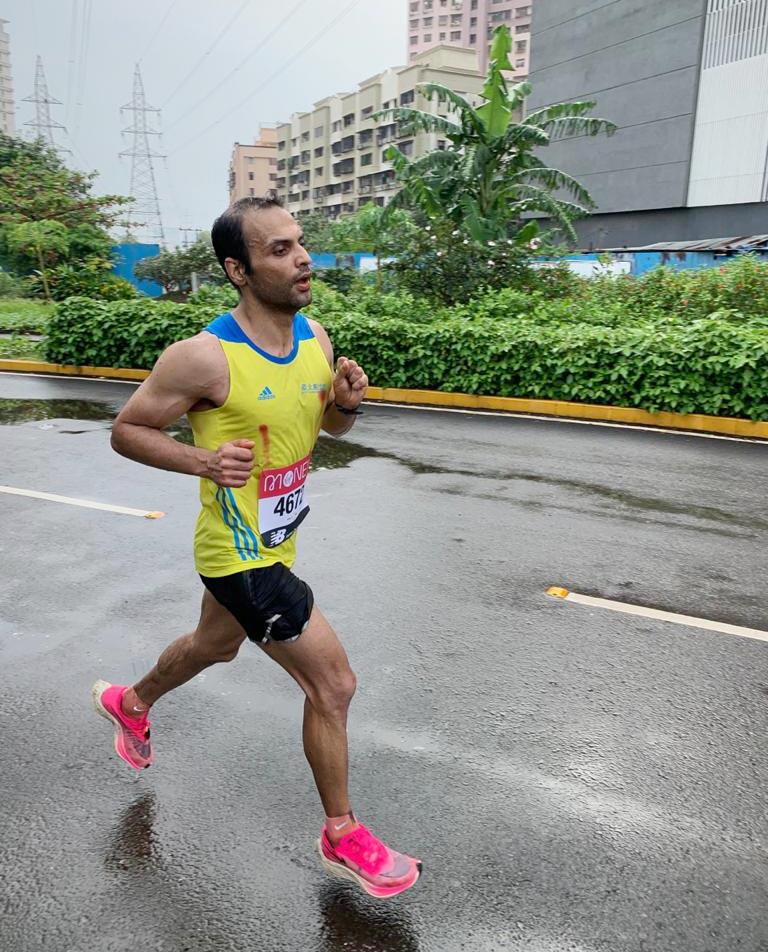
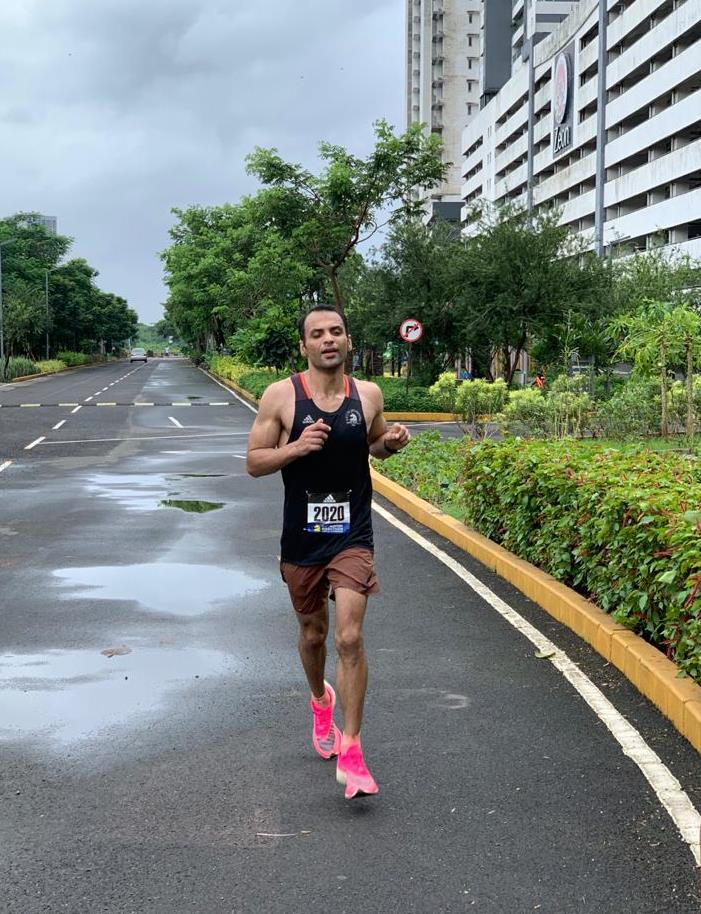
In Mumbai, Himanshu Sareen had initially planned to take the virtual London Marathon as a training run with no targeted timing in mind. He had done the virtual Boston Marathon, a little over a fortnight ago and it seemed apt not to push. But 10 kilometers into the run of October 4 he realized that he could push his pace in pursuit of a better timing. This time around, he started his run at around 5.40 AM, earlier than he had for the virtual Boston Marathon. Rains during the night and continuing drizzle that morning helped keep the weather pleasant.

Himanshu Sareen (Photo: Shweta Sareen)

“ I started at a slow pace because in my mind this was not a race. After the first 10 kilometers, I decided to increase my pace,” Himanshu said. For the first 18 kilometers he ran in a 500 metre loop and then expanded that to a loop of about one kilometer till the 26th kilometer. “ The stretch between 26 and 35 kilometers is often tough for me,” he said adding that he in this phase he stretched his loop to about 10 kilometers. This worked well for him and he was able to maintain a good pace throughout. His wife Shweta was the sole person providing support for his run; during the virtual Boston Marathon several other runners and the security staff of his apartment complex had pitched in to help with hydration.“ As I was not planning to run the virtual London Marathon like a race, I did not inform anyone,” he said.

Himanshu finished with a provisional timing of 2:52:35. Although tad short of his personal best, Himanshu believes this is his best performance in running, to date. He is now due to run the Virtual New York City Marathon. He may consider the option of traveling to New York to run this virtual marathon.

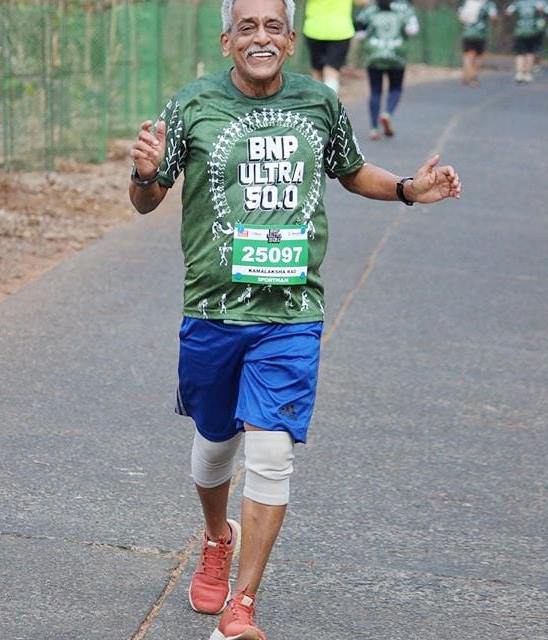
Kamalaksha Rao (Photo: courtesy Kamalaksha)

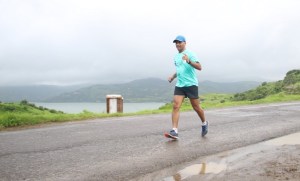
Elsewhere in the city, Kamalaksha Rao was attempting the virtual London Marathon after recovering from COVID-19 infection.  “ I started my run at 4.40 AM. It was raining quite heavily then. The weather stayed pleasant for some time but soon the heat and the humidity began rising,” the 73 year-old said. He ran the first half of the marathon and walked the next 21 kilometers. “ I had a target of finishing in eight hours. I finished in 7:20 hours,” he said.

Kamalaksha had placed water bottles for hydration at two places along the loop he had chosen to run on. He managed to hydrate but at some point during the virtual marathon he realized that one of the bottles had gone missing. Thankfully there were shops along the route where he could buy bottled water. “ It was a self-supported run. I had carried a bag. During the run, I had two gels and two nutrition bars,” he said. He plans to do recovery walks over the next few days.

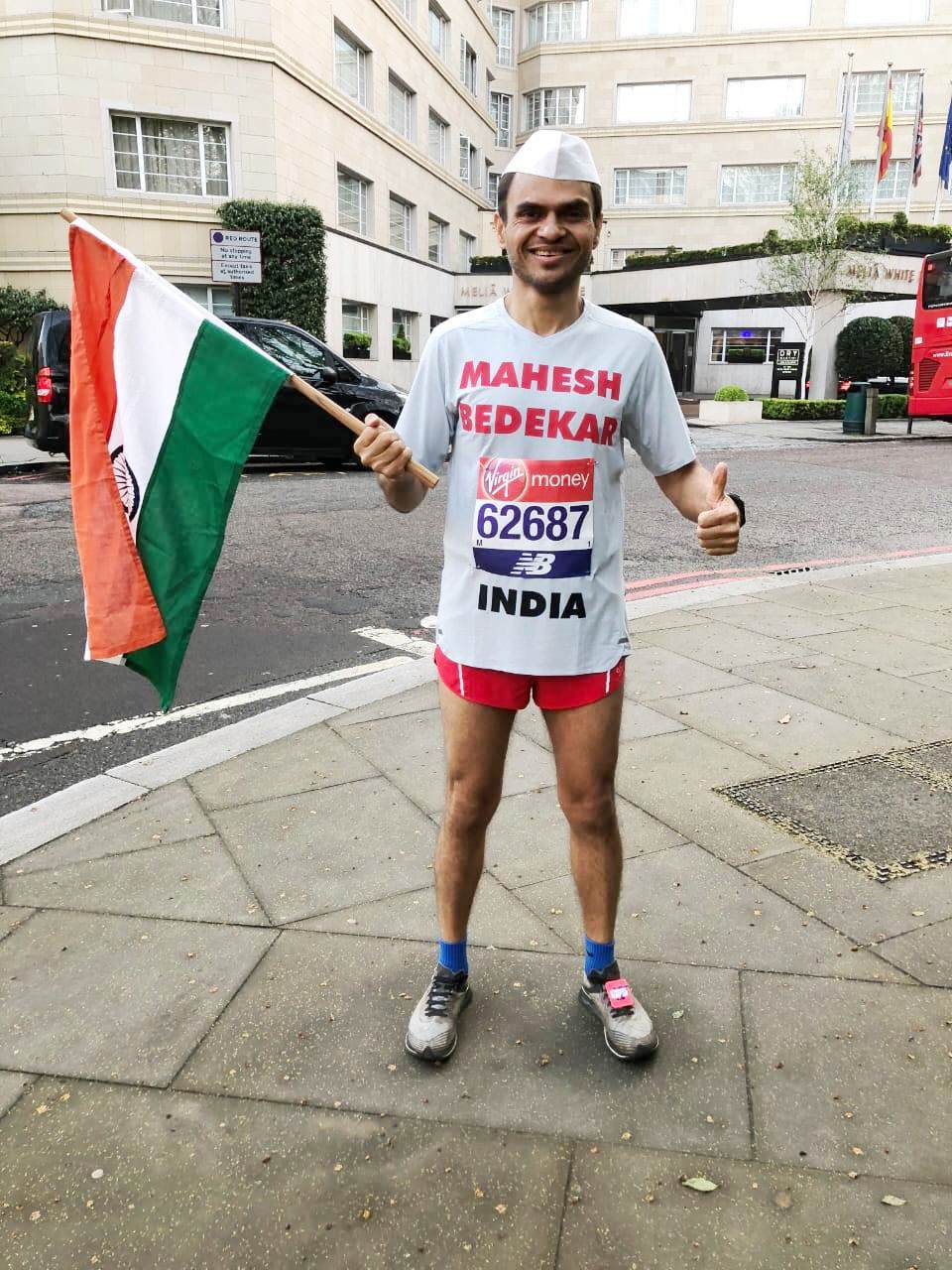
Mahesh Bedekar (Photo: courtesy Mahesh)

In neighboring Thane, Dr Mahesh Bedekar opted to run the virtual London Marathon primarily as motivation to keep the momentum of his regular runs, going. A gynaecologist, who runs his own hospital in Thane, Mahesh has been running for the past seven years. He has participated in many marathons and half marathons. Along the way, he also did five of the six World Marathon Majors – Tokyo, London, Berlin, Chicago and New York City. He is yet to do the Boston Marathon but has managed to qualify for the event, in his age group of 45-49 years.

“ Normally, one needs to put in four to five months of training to run a marathon. We had only about two and a half months of time to train for the virtual London Marathon,” Mahesh said. Striders, his marathon training group, offered him a training plan keeping in mind the limited time available. He was accompanied by six other runners for the virtual London Marathon. They chose to run the distance in Thane, which offers undulating terrain. “ We started at around 4.30 AM. The rain helped keep temperatures at bay for the initial 25 kilometers,” Mahesh said.

Support was arranged at every five kilometers with the runners who volunteered for the task also lending some cheering. Mahesh finished the run in 3:33:08. His personal best is 3:15. “ It is quite challenging to run a marathon without the normal elements of a race,” Mahesh said.

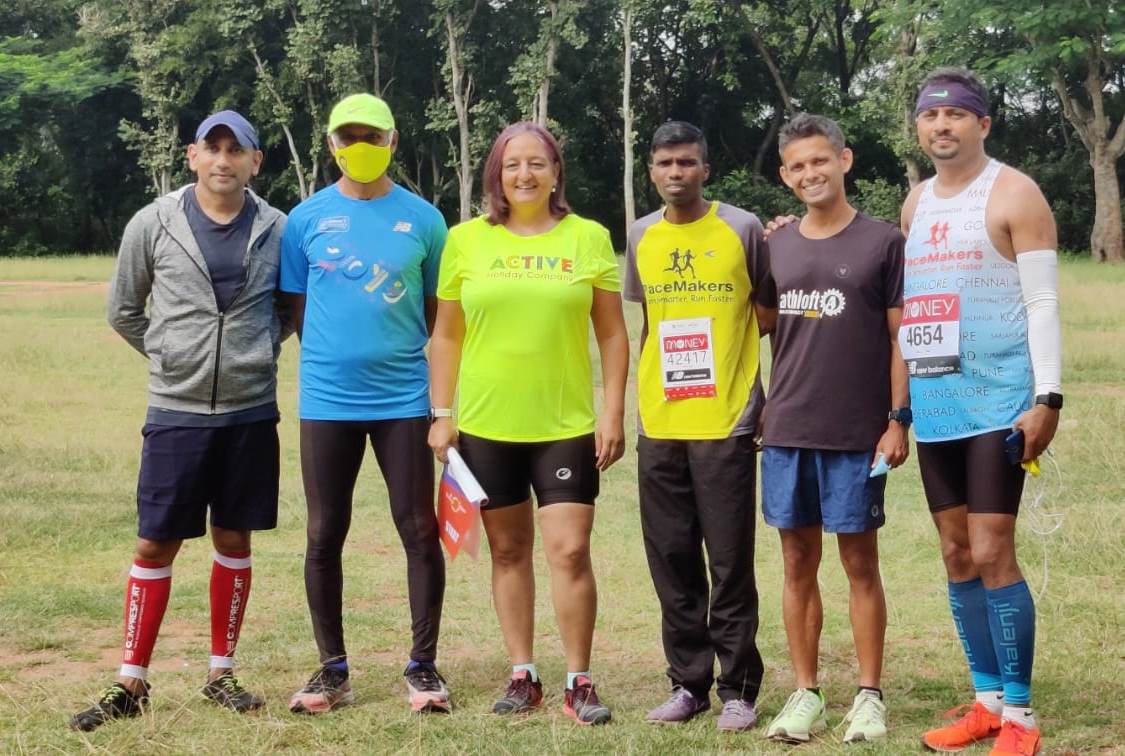
In Bengaluru, Bhadresh Shivashankar was happy with the route chosen for a small group of runners attempting the virtual London Marathon. “ The weather was good and Pacemakers had arranged for a cyclist to accompany each of the runners,” he said. Pacemakers is a Bengaluru-based marathon training group built around coach K.C. Kothandapani.

From left: Harish Vasista, coach K.C. Kothandapani (Pacemakers), Gauri Jayaram (Active Holidays), M.Nanjundappa, Anubhav Karmakar and Bhadresh Shivashankar (Photo: courtesy Bhadresh)

The runners commenced their run at 5 AM. “ I managed well for the first 30 kilometers but the final stretch was tough,” Bhadresh said. He finished his run in 4:47:16. Running alongside was M. Nanjundappa, one of Bengaluru’s best amateur runners. Nanjundappa finished his run in 2:37:10, data on the London Marathon website showed.

Harish Vasista also ran the virtual London Marathon at the same venue. “ My running went as per plan. I started my run at 5.30 pace and then improved it slightly, on and off, till around 30 kilometers. Thereafter, my pace eased a bit,” he said. Harish finished his marathon in 3:48:11. He appreciated the support for the runners provided by Pacemakers and Active Holidays.

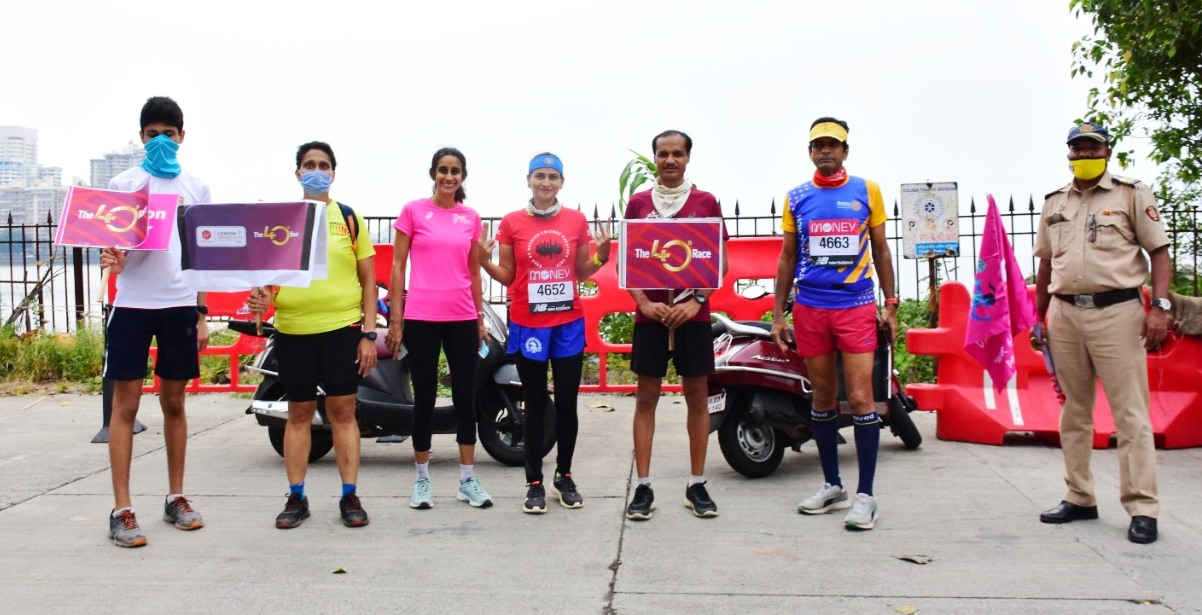
The physical race of the 2020 London Marathon – as held in the British capital – was restricted to elite athletes. It was only the second World Marathon Major (of the six in that league) being held this year; the rest got cancelled owing to the ongoing COVID-19 pandemic. Indeed a fallout of the pandemic has been the widespread cancellation of city marathons. In Mumbai, Kranti Salvi and her husband Pramod Salvi opted to run the virtual London Marathon as a means to stay motivated in times with no mass participation events. “ We had originally registered for the 2020 edition of the London Marathon and booked our hotel and air tickets. It was postponed to October and later the organizers converted the race for amateurs into a virtual event. That’s when we decided to register for the virtual version,” Kranti said.

Kranti and Pramod Salvi (sporting bibs on their T-shirts) with friends, Abbas Sheikh and the policeman who flagged off their run (Photo: Tashi Ongya)

The duo’s plan was to commence the run at 4.30 AM on October 4, 2020. They woke up to find heavy rains; the forecast indicated that the showers would continue for a few hours. “ We had made a lot of preparations for the run. We had printed banners and posters. Some friends were to come and cheer us as well,” she said. Kranti and Pramod decided to cancel the plan to run the marathon in the morning. Instead, they decided to give it a go in the evening.

“ By evening, I was quite tired from household work. We started the run at 5.30 PM from the NCPA end of South Mumbai’s Marine Drive promenade,” Kranti said, adding, “ we were a group of 4-5 runners at the start point. We decided to ask a policeman to flag off our run.” Their route was mostly along Marine Drive up to Chowpatty. Kranti wanted to do one loop across to Gateway of Mumbai. “ It was difficult running in the evening. Marine Drive was crowded. There were many people, children jumping and playing across the entire stretch. The weather was warm and humid and the air quality was bad,” Kranti said. Marathon runner Abbas Sheikh ran the entire distance with her. As per data on the London Marathon website, Kranti finished her run in 4:37:39 and Pramod in 5:31:08.

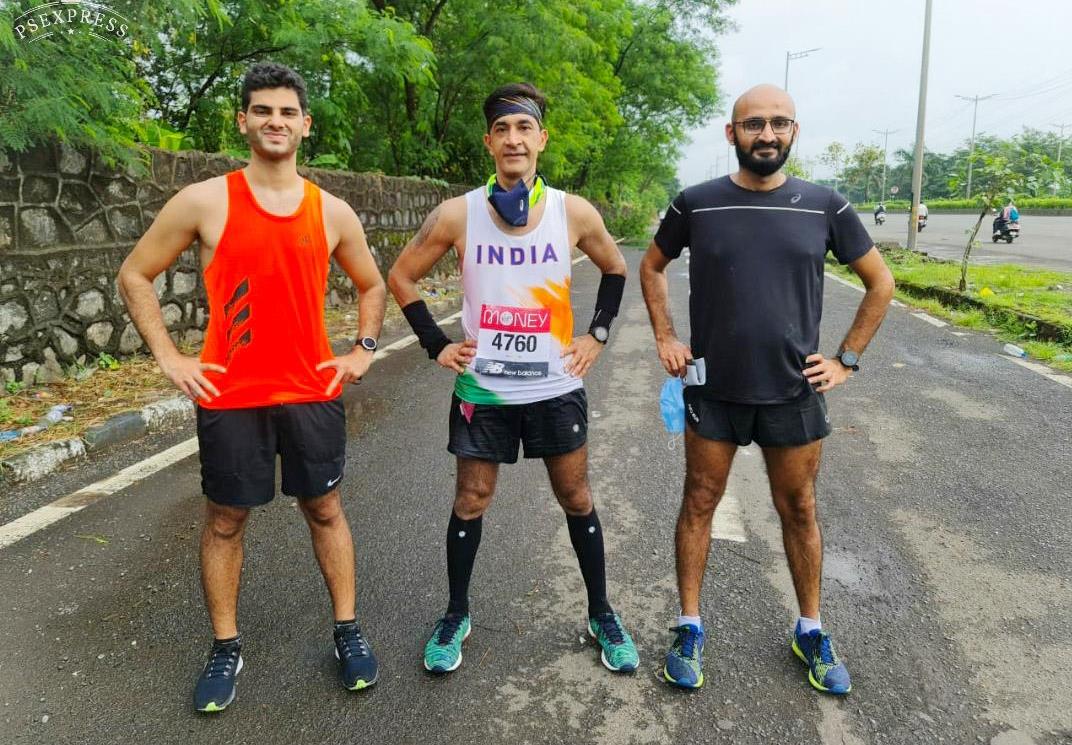
From left: Pawan Punjabi, Girish Bindra and Yash Shekatkar (Photo: courtesy Girish)

At its height, the lockdown in Mumbai had been quite strict. It was prolonged in some areas. For those returning to running after the consequent disruption to training, it meant that mileage build-up had to be done slowly. When lockdown measures commenced easing, Girish Bindra and his team of runners were in the process of slowly enhancing mileage when they learnt of the virtual London Marathon. “ On August 10, 2020, we registered for the virtual London Marathon. We had all of five weeks to train and that included the tapering period,” Girish – he is also a coach for Asics Running Club (ARC) – said. Joining him for the virtual run were Pawan Punjabi and Yash Shekatkar.

Soon after registering for the run, they stepped up their training. Still the preparation fell short of the ideal training required for a marathon. “ Although, it was a crunched training plan, there was a lot of learning in those five weeks,” Pawan said. According to Yash, on the Friday before the date of the virtual London Marathon (October 4, 2020) they finalized the route – it would be as loops on the service road that runs parallel to the city’s Eastern Express Highway.

On race day, the trio was to start the run at 4.30 AM. Unfortunately, there was heavy and it prompted them to delay their start. “ Eventually, we began our run at 4.55 AM. The downpour resumed and along the route there was much water logging,” Girish said. “ Within the first 45 minutes of the run, our shoes were soaking wet,” Yash added. However, the rain progressively eased off and thereafter the weather stayed pleasant.

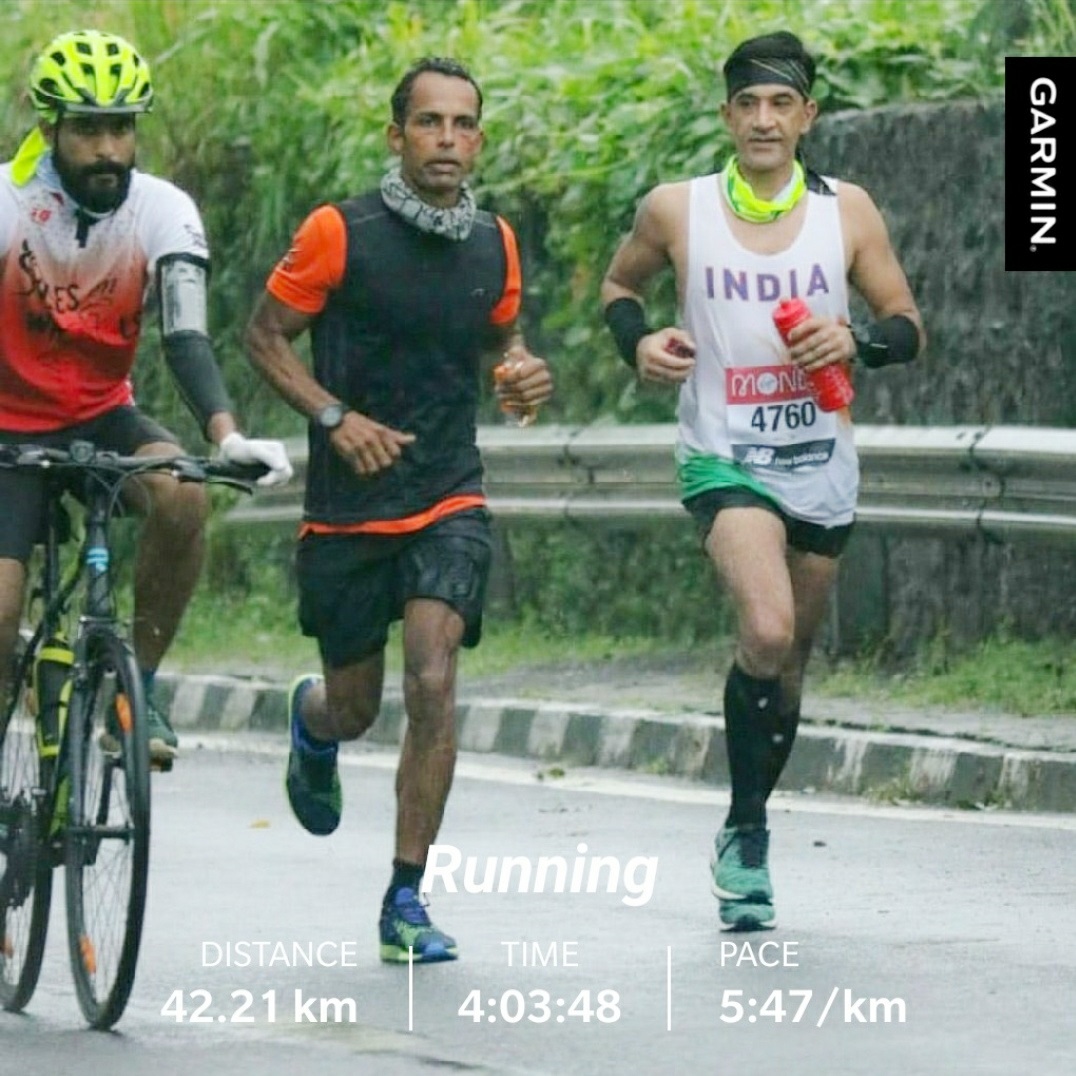
From the virtual run; Arun Nambiar (on cycle), Harish Salian and Girish Bindra (Photo: courtesy Girish)

Many of the runners of ARC chipped in to assist the three runners. “ Support from our runner friends was incredible. At every three kilometers, we had access to sports drinks, salts and dates among others. The support and cheering were very well planned,” Pawan said. “ They also arranged for breakfast besides tea and coffee at the end of the run,” Girish said adding that all the safety norms pertaining to the pandemic were followed. Cyclist Arun Nambiar accompanied the three runners throughout on his cycle to lend support. Further, fellow runner Harish Salian ran the entire distance of the marathon as support, Girish said.

Girish finished his run in 4:03:48, Pawan in 3:59:08 and Yash in 3:58:51. For Yash, the timing he got in the virtual London Marathon was a personal best. Pawan fell tad short of his personal best of 3:54:51 set at the 2019 edition of Tata Mumbai Marathon but is happy to have managed a sub-four-hour finish as he was returning to running after a shin splint problem. The trio will now attempt the half marathon distance in the virtual events of the Chicago Marathon, Amsterdam Marathon and New York City Marathon.

(The author, Latha Venkatraman, is an independent journalist based in Mumbai.)

ANJALI SARAOGI, DEEPAK BANDBE WIN 2019-2020 AFI ULTRA AND TRAIL RUNNING AWARDS

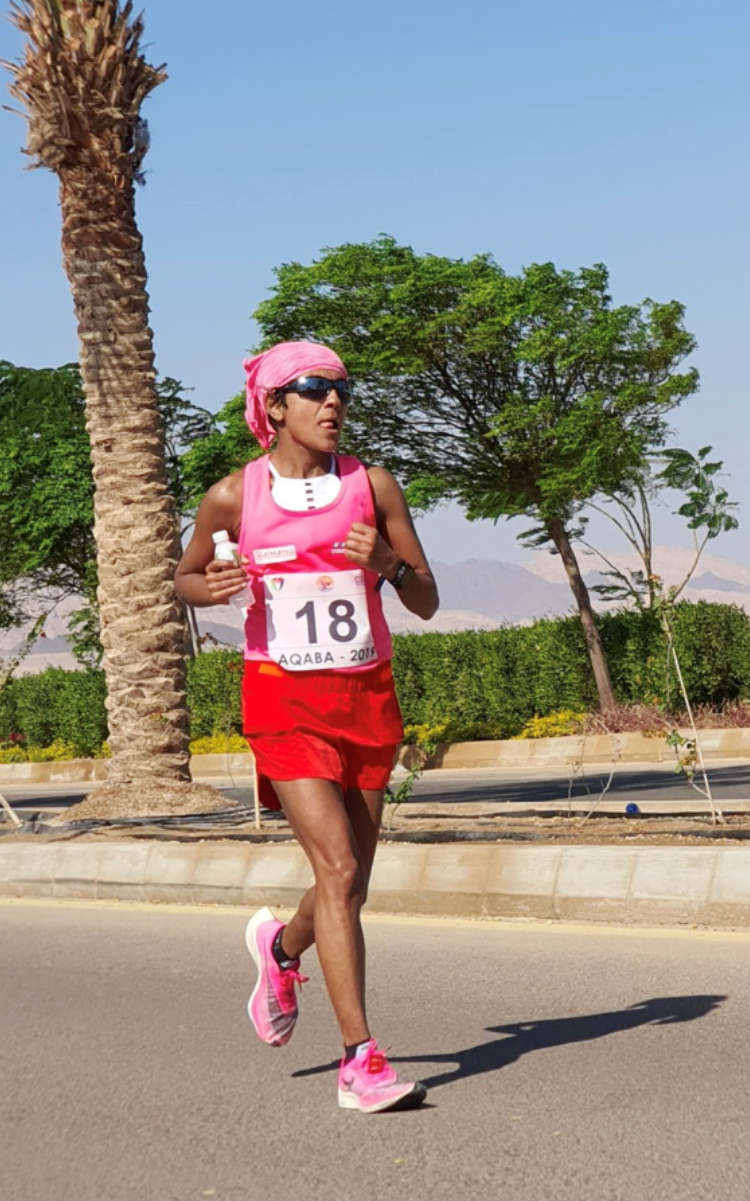
Anjali Saraogi; from the Asia Oceania 100K Championships in Aqaba, Jordan (Photo: courtesy Anjali)

Kolkata-based ultra-runner, Anjali Saraogi, has won the AFI Ultra and Trail Running award for women, for the second year in a row, this time for 2019-2020.

Anjali’s performance at the 2019 IAU 100 km Asia & Oceania Championships held in Aqaba, Jordan, in November 2019, came up for mention at the awards function held in virtual format by the Athletics Federation of India (AFI) on September 19, 2020.

In Aqaba, Anjali had completed the 100 km race in nine hours, 22 minutes and three seconds securing fourth place among women and breaking her own national record for that distance category.

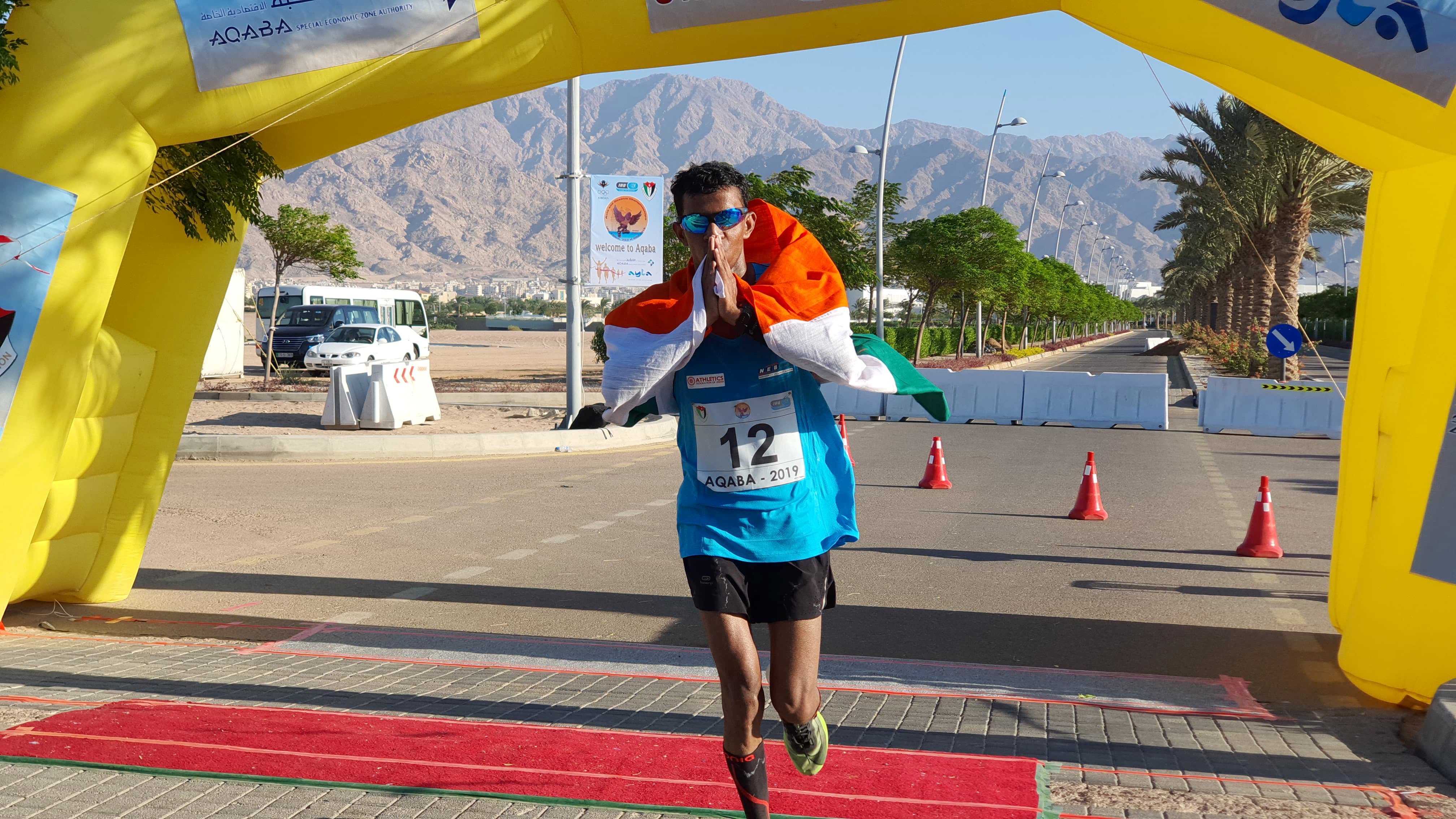
Deepak Bandbe from Mumbai won the AFI Ultra and Trail Running award for male runner of the year (2019-20). He had won the bronze medal at the IAU 100 km Asia & Oceania Championships in Aqaba. He covered the distance in 8:04:16 hours, setting a new national record in that category.

Members of the Indian women’s and men’s team, who represented the country at the Aqaba event, were given cash awards for their performance. The men’s team had won the gold medal and the women’s team, silver, at the event. The gold medal winning men’s team members were given cash awards of Rs 10,000 each and the silver medal winning women’s team members received Rs 7500 each.

Nadeem Khan, president of the International Association of Ultrarunners (IAU) and AFI president Adille Sumariwalla participated in the virtual awards function. They pointed out that Indian athletes’ progress in ultra-running has been spectacular.

Deepak Bandbe (This photo was downloaded from the Twitter feed of IAU)

“ Over the last three to four years, the progress of ultra-running in India has been amazing,” Nadeem said. “ India is a growing market for us, an important market,” he added.

“ I am pleased to note the rapid progress of Indian athletes over the last few years,” Adille said. He emphasized the need to get back to events. AFI’s focus is on protecting athletes given the ongoing COVID-19 pandemic.

“ It’s a huge honour. My award belongs to every girl child in my country who will dare to dream and persevere to follow them,” Anjali told this blog after her second consecutive AFI award (for more on Anjali please click on this link: https://shyamgopan.com/2020/08/07/perfection-is-making-the-best-of-what-you-have/).

Sunil Chainani and Peteremil D’Souza, both members of AFI’s committee that oversees ultrarunning, managed the meeting.

(The author, Latha Venkatraman, is an independent journalist based in Mumbai.)

2020 VIRTUAL BOSTON MARATHON / POST RUN ROUND UP

Illustration: Shyam G Menon

The 2020 edition of Boston Marathon, originally slated to be held in April and later rescheduled to September, was held as a virtual race over the period September 5 to 14. Runners who had qualified to run at the actual event and registered for the same, were given the option of running the virtual Boston Marathon. The Covid-19 pandemic prompted the organizers of the event, Boston Athletic Association (BAA), to convert it into a virtual race.

We spoke to some of the runners from India, who participated in the virtual race. To mention in particular are two points given the run happened in the shadow of pandemic and lockdown had hampered the regular training of runners. The timings reported are decent despite above said handicaps and at least in Pune and Bengaluru, running groups scouted a good location for the virtual run and backed it with hydration support, even some cheering.

Himanshu Sareen (Photo: courtesy Himanshu)

The virtual Boston Marathon was an opportunity for Himanshu Sareen to run a marathon after more than a year. His last marathon was in April 2019. The Mumbai based-amateur runner was set to participate in the Tokyo Marathon, Barcelona Marathon and Boston Marathon in 2020. All these events were cancelled and Boston Marathon was converted into a virtual race. Had the actual race taken place, it would have been his third Boston Marathon.

Himanshu’s training in the months preceding the virtual Boston Marathon was focused on two aspects – general fitness and improving speed. “ My coach Ashok Nath drafted a multi-pronged training plan that incorporated speed, fitness and participation in virtual races,” Himanshu said.

For the virtual event, he chose to run close to his place of stay. “There are two roads of one kilometer each in my neighborhood. My plan was to run on these roads in a loop,” he said. The window for the virtual run spanned September 5 to 14; you could run anytime within these dates.

Syed Atif Umar (Photo: courtesy Syed Atif Umar)

Running on September 13, 2020, Himanshu commenced his marathon a little after 6AM. Initially he had to restrict himself to a 500 meter-loop as overnight rains had resulted in puddles on one of the roads.

“ I ran quite strongly till the 26 kilometre mark. After that I slowed down as I was going too fast. Mumbai’s weather is not conducive for running fast. The second half of the run was tough,” he said. In the early phase of the run, he supported himself with water and energy drinks stationed along the loop. But soon some runners, the security guards of his building and his wife Shweta joined in to help; they handed out hydration. Himanshu completed his marathon in 2:58. He is now set to run the virtual New York City Marathon.

Bengaluru-based Syed Atif Umar had registered to run his first Boston Marathon this year. Like many others he had to eventually opt for the virtual race. Atif has been running for the last 10 years. He has participated in many races including marathons and the occasional ultramarathon.

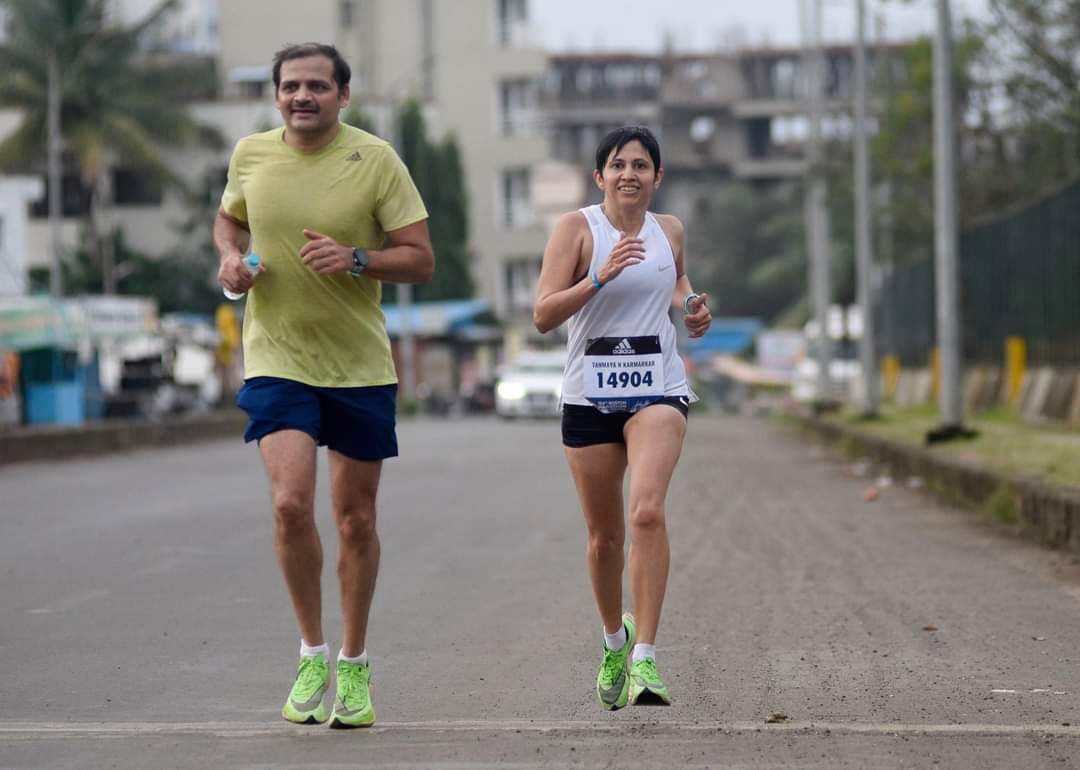
Tanmaya Karmarkar (right) with Amod Bhate (Photo: courtesy Tanmaya)

He chose to run the virtual Boston Marathon on his treadmill. “ I created a playlist with 42 songs,” he said. He completed the marathon in 2:56:42, a new personal best for him. His previous best for the marathon was 3:01 early this year.

Pune-based runner, Tanmaya Karmarkar had planned to run at a pace of 4.40. She was going as per her pace plan but around the 14th kilometer, she started to feel sick after she consumed her second gel. Her pace progressively declined. Tanmaya switched to water and began to feel better.

A running group in Pune had chalked out a route for the virtual Boston Marathon runners. It entailed running along a flat 10 kilometer-loop. “ Weather was quite hot and humid. We had to keep pouring water on ourselves to stay cool,” she said.

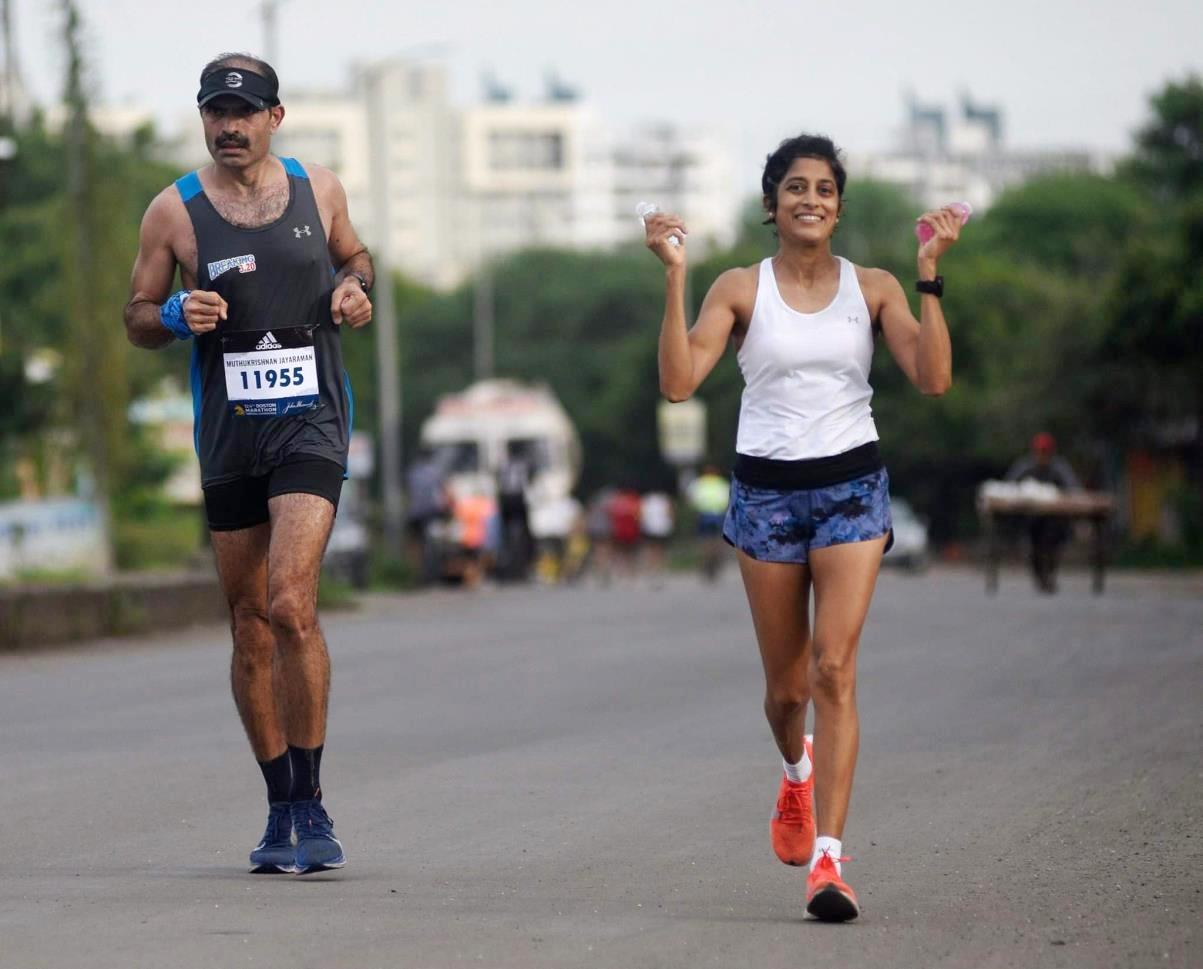
Muthukrishnan Jayaraman (left) with Kavitha Reddy (Photo: courtesy Muthukrishnan Jayaraman)

According to her, the support of other runners and friends was invaluable. “ Many people went out of their way to help me. Even people I met for the first time were all out to support us – I am really grateful and touched by this gesture from fellow runners,” she said. She finished the run in 3:27:43.

Army doctor and recreational runner, Colonel Muthukrishnan Jayaram, decided to run the virtual Boston Marathon in Pune. The city’s weather and the fact that a local runners’ group had organized support for those participating in the virtual Boston Marathon prompted him to travel to Pune from Delhi for the run.

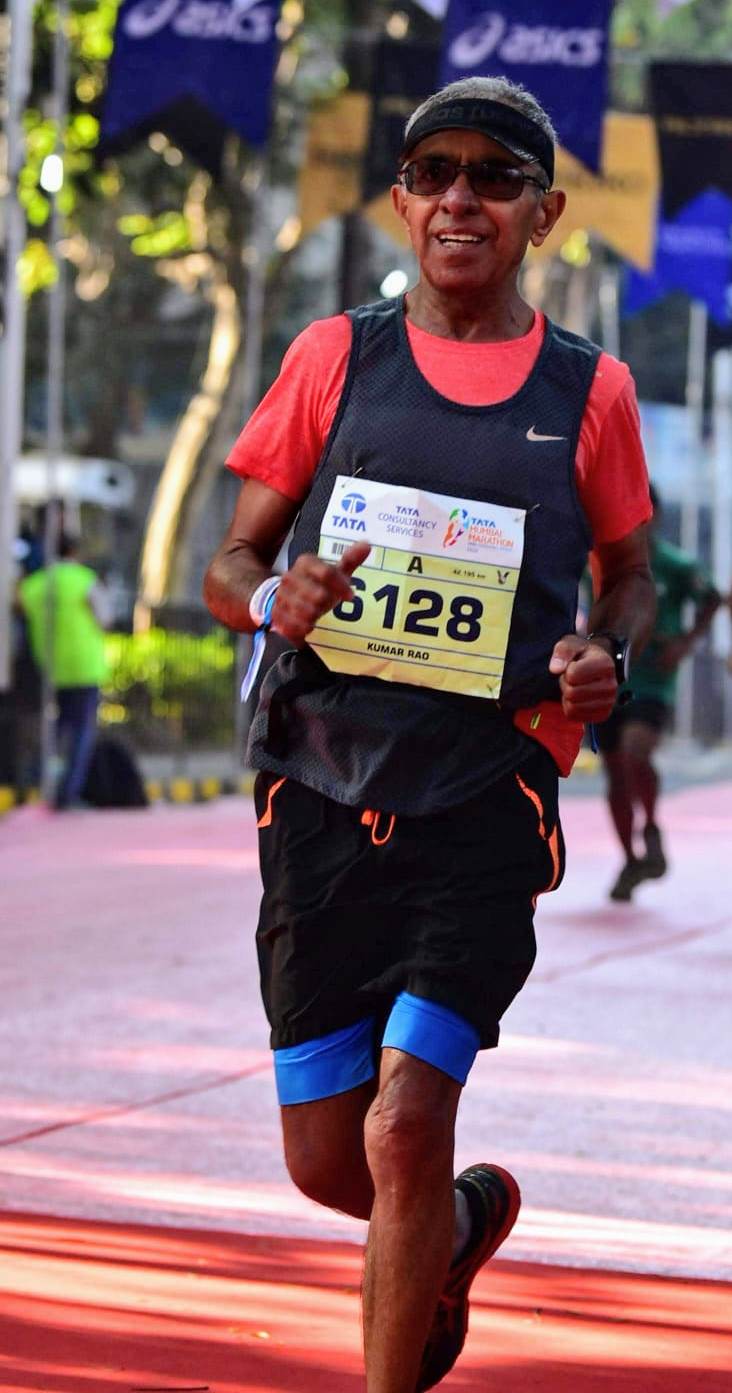
Kumar Rao (Photo: courtesy Kumar Rao)

He started the run at 4.30AM running along the earlier mentioned flat 10 kilometer-loop. After the first loop, he was paced by runners Krishna Sirothia and Kavitha Reddy. “ Although tired, I was happy I did not have any aches and was able to gather pace through the last miles to finish within my intended target,” he said. He finished the marathon in 3:47:43.

Septuagenarian Kumar Rao had trained moderately well for the virtual Boston Marathon. Running on his treadmill, he had a good run over the first 25 kilometers. But subsequently, some stomach discomfort and cramps forced him to mix the running with walking. “ After about 33 kilometers, I began to have difficulty in running tall. I changed my shoes. However it gave me just minor relief,” he said. He covered the distance in 4:24:36.

A notable aspect in Pune and Bengaluru was how runners approached the virtual run in a structured way, finding a good loop that they can run on and then backing it with hydration support and fellow runners to extend the occasional need for pacing and motivation. They even had bibs, banners and an element of cheering. In Pune, a group of runners decided to organize a support-run for those running the virtual Boston Marathon. Kavitha Reddy, one of the country’s best recreational runners, was among those helping out with this informal arrangement. “ It was a small gesture to make it a memorable run for those participating in the virtual Boston Marathon,” Kavitha said. Some of the runners helped in printing flex tapes to impart the feel of a real race. “ It was easy to manage the logistics for this run as the number of runners was small,” Kavitha said.

Deepti Karthik (Photo: courtesy Deepti)

In Bengaluru, Pacemakers, a marathon training group, had been organizing training runs with hydration support for its runners periodically. In August, the group had organized a 21 kilometer-training run for its members. “ These runs were organized primarily to keep the runners motivated,” Deepti Karthik said. Five runners from the group were running the virtual Boston Marathon. The team at Pacemakers thought it fit to organize a similarly supported training run that would also cater to the Boston Marathon runners. “ A couple of runners from outside Bengaluru who were running the virtual Boston Marathon also joined in,” Deepti said. Members of Pacemakers volunteered to manage the hydration support. “ We followed all safety norms needed for this pandemic. We ensured that there was no contact during the handing out of hydration. Also, we chose a route with wide roads and minimum traffic to help maintain adequate physical distance between runners,” she said.

Running in Bengaluru, Deepti commenced her virtual Boston Marathon at 4:45AM on September 13, 2020. Weather was conducive with light drizzle throughout the duration of her run. But she had some stomach issues during the run. Runners were slated to run along a 5.6 kilometer-loop; the loop was later extended to 10.5 kilometers. “ Every 2.5 kilometers, there was a hydration station. Also, volunteers and even people to cheer you on made the entire experience a happy one,” she said. She finished the run in 4:13:31.

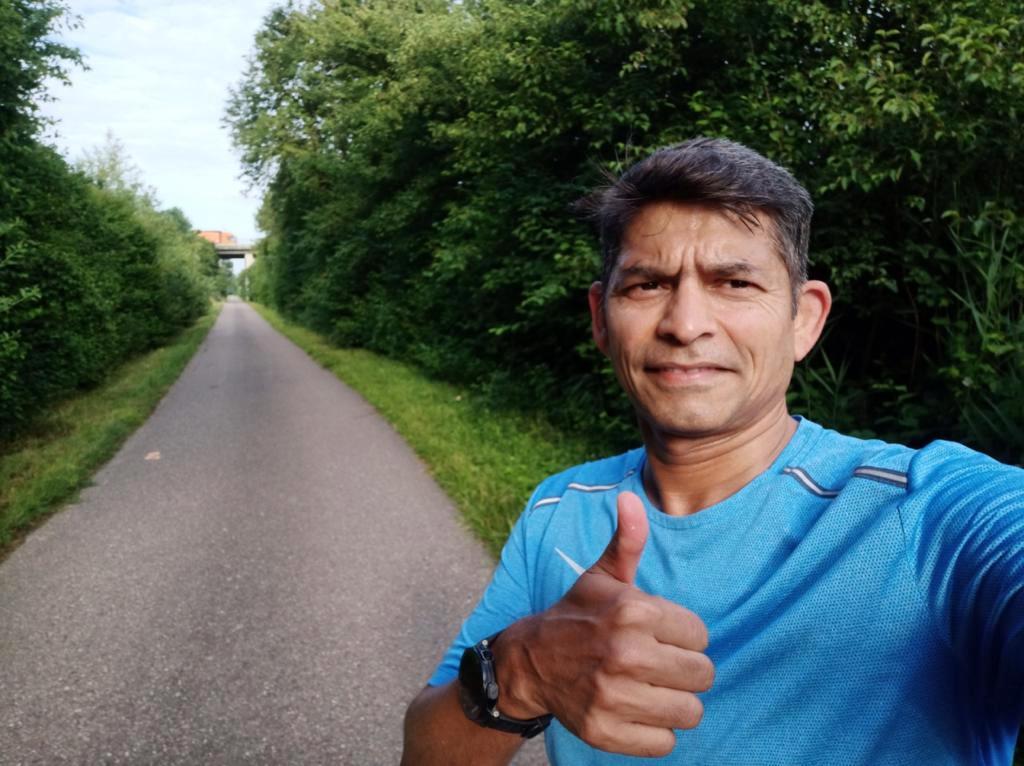
Bengaluru-based runner, Murthy R K, decided to run the virtual Boston Marathon near his place of residence at Kanakpura Road.

Murthy R. K (Photo: courtesy Murthy)

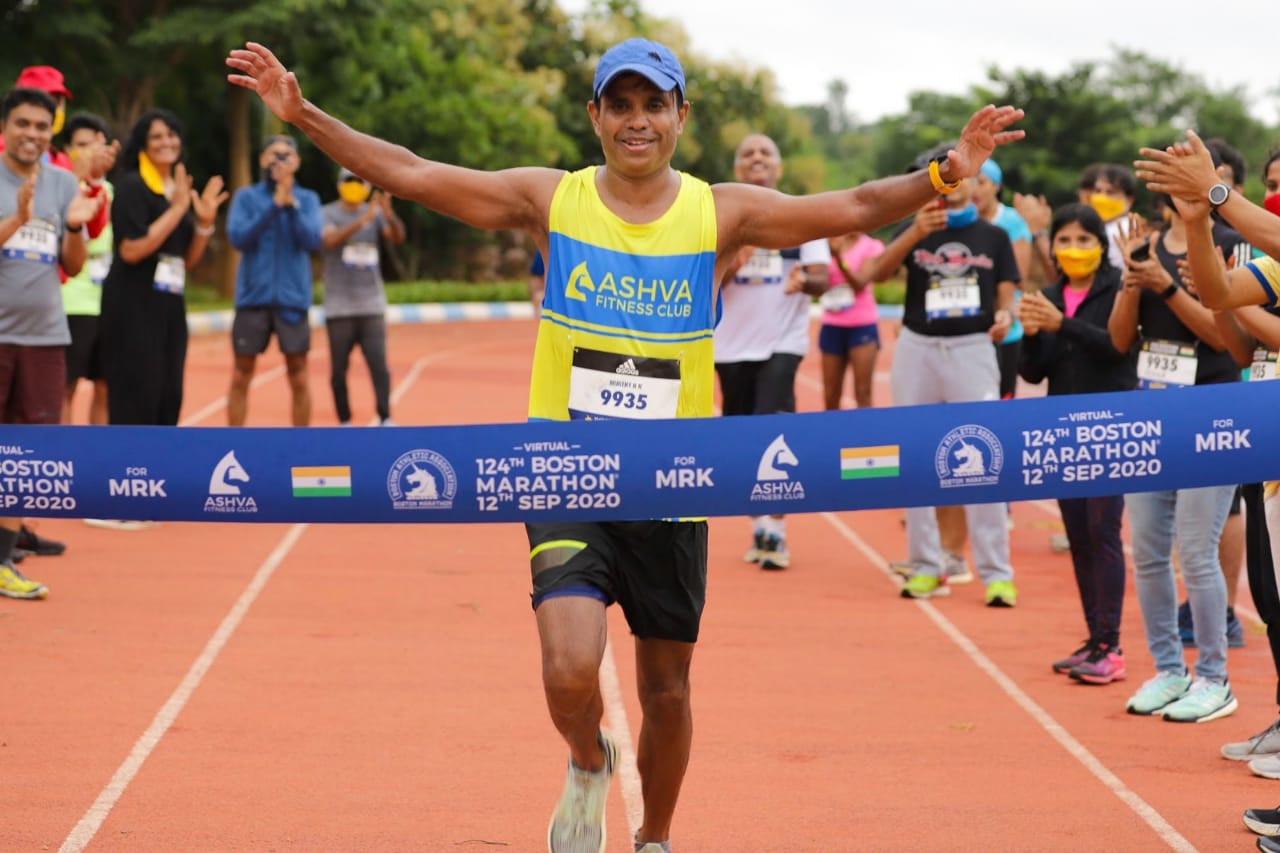
He had scheduled his run for September 12, 2020. Founder of Ashva Fitness Club, Murthy and his team created bibs and posters for the run. On September 12, Murthy ran the marathon, supported by many of his team members. But cramps during the run forced him to pause for breaks; he finished in 3:28.

Unhappy with his timing, Murthy decided to make one more attempt two days later, on September 14, the last day of the virtual Boston Marathon. He set out early and opted to run in a new residential area close to his home. He took a break every 10 kilometers.  “ At the 36 kilometer-mark, I began to feel the cramps coming on. I just told myself I have only six kilometers to go,” he said. He finished the run in 3:10:09, a new personal best.

(The author, Latha Venkatraman, is an independent journalist based in Mumbai.)

IT’S TIME FOR THE VIRTUAL BOSTON MARATHON

Illustration: Shyam G Menon

The Boston Marathon, held every year in April, inspires hundreds of runners around the world to qualify for it and participate. Its 2020 edition was cancelled owing to the COVID-19 pandemic, the first such cancellation in the history of the 124 year-old event.

In lieu of the real race, the Boston Athletic Association (BAA) has offered the virtual Boston Marathon experience. Running the virtual Boston Marathon won’t fully compensate for missing the actual event and the ambiance it is famous for. It will be akin to a long training run, some of the runners we spoke to, said. The promise of a finisher’s medal is a positive in the package. Under the circumstances, the virtual run is the best alternative available.

Around the world, runners are planning to partake in the event in small groups with runs over short loops to maintain the protocols necessary for these times of pandemic. Training for the virtual event, some said, has not been close to levels seen ahead of real races. Participating in the virtual run is aimed at keeping motivation levels high. Meanwhile pending further notice, registration for the 2021 edition of the Boston Marathon has been postponed. The report concerned may be accessed on this blog under the post titled: At a Glance / September 2020.

Muthukrishnan Jayaraman (Photo: courtesy Muthukrishnan Jayaraman)

The 2020 edition of Boston Marathon was to be Colonel Muthukrishnan Jayaraman’s first Boston Marathon outing.

An army doctor, Muthukrishnan had qualified for Boston Marathon three times. He was able to get a berth in the 2020 edition of the race. Boston Marathon has stringent entry norms and attracts some of the best amateur marathon runners from around the world.

Initially slated to be held on April 20, 2020, the race was postponed to September 14, 2020. But with mass participation events being cancelled due to the COVID-19 pandemic, the organizers opted to hold it as a virtual race, which can be run anytime during the period September 5 to 14.

A resident of Delhi, Muthukrishnan was able to train moderately well. “ But obviously, the training is not with a target in mind. Also, it has not been as strict as it would have been for a real race,” he said. Muthukrishnan will be travelling to Pune to do his Boston Marathon virtual run on September 13, 2020.

Tanmaya Karmarkar (Photo: courtesy Tanmaya)

Pune-based Tanmaya Karmarkar was to run her second Boston Marathon this year. With the event cancelled, she settled for running the virtual race. “ I have been doing training runs through this lockdown but structured training commenced only a month ago,” she said. She decided to run the virtual race as it would give her an opportunity to run an event in the absence of any physical races in the near future.

She along with a few Pune-based runners has chosen a route that offers a 10.5 kilometer-loop. Muthukrishnan will be joining these runners in Pune. Boston Marathon’s virtual event is open only to runners who had registered for the 2020 edition. They were required to register again for the virtual event.

The virtual Boston Marathon taking place from September 5 to 14, allows participants to run on treadmill or outside. The marathon has to be completed in six hours. Performance in the virtual marathon will not be accepted as qualification for Boston Marathon 2021.

Ashoke Sharma (Photo: courtesy Ashoke)

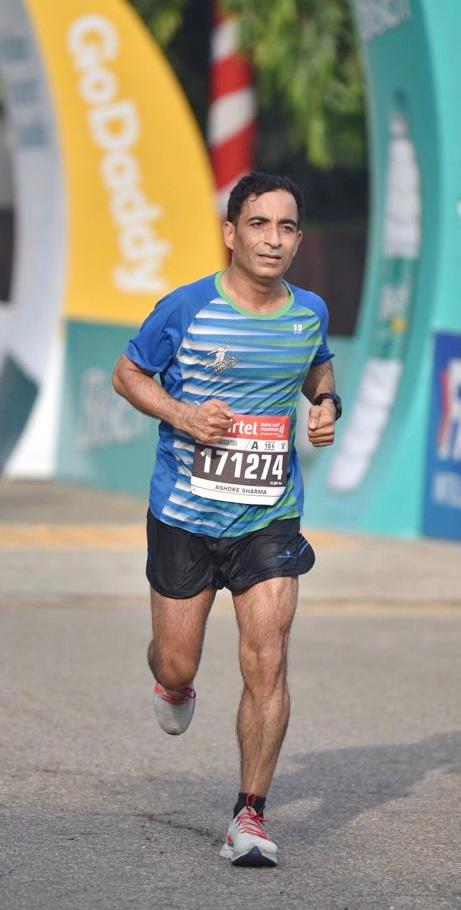
Ashoke Sharma, a Gurgaon-based recreational runner, was to run his first Boston Marathon this year. His training for the virtual event has not been as meticulous as it would have been for an actual race. The weather in Gurgaon was also far from conducive to do race pace training, he pointed out.

“ My aim is to complete the run,” he said. Ashoke will be travelling to Bengaluru to do the virtual Boston Marathon. He plans to run the marathon on a route charted by the Bengaluru-based marathon training group, Pacemakers. “ I think they have chosen a traffic-free route near the airport,” he said. Once done with Boston Marathon, Ashoke will be stepping up his training for the virtual New York City Marathon.

Like Ashoke, Wing Commander Parag Dongre (retd) was also set to run his first Boston Marathon this year. Parag had trained for the April race and then resumed training after lockdown induced-break, for September’s virtual event. “ In Pune, we lost some days of training because of another stringent lockdown spanning 15-20 days,” Parag said.

Parag Dongre (Photo: courtesy Parag)

“ Training runs are often done in the company of many runners but because of the physical distancing norms, we had to run alone. I have done a few 30 km and 35 km training runs all by myself,” Parag said.

At the time of writing, he was yet to decide on the date of his virtual Boston Marathon. Post retirement from the Indian Air Force, he works as a helicopter pilot for B.G. Shirke Construction Company. “ I am waiting for my duty schedule to come up before I decide my day for running,” he said.

“ My training has been okay though not as well as I would have liked it to be,” Deepti Karthik, a recreational runner based in Bengaluru, said. The 2020 edition of Boston Marathon was to be her first appearance at the race. “ The virtual Boston Marathon is obviously not the same as the real race. At best, it may feel like a long training run,” she said. Deepti will be running the virtual event on September 13, along with other runners of Pacemakers.

Deepti Karthik (Photo: courtesy Deepti)

“ Pacemakers has chosen a route near the airport for the virtual event. Runners will be running in a loop of 5.6 km,” she said.

Kumar Rao, also from Bengaluru, will however be running on his treadmill. “ I will be running on the treadmill on September 12. I use the Stryd footpod with Garmin 935 for accurate measurement of pace and distance,” he said.

His training for this virtual race was entirely on the treadmill at home. “ I am looking to improve on last year’s timing of 3:59:33 hours and the age group rank of 18,” he said adding that he would work on a 3:55 finish. He just completed 10 weeks of specific training for this marathon. His training volume has been around 75 to 85 km per week. Kumar has also registered for the virtual New York City Marathon.

Kumar Rao (Photo: courtesy Kumar Rao)

The pandemic related lockdown forced Kumar to train entirely indoors on his treadmill. He complemented it with home-based fitness programs including strength training. He plans to step outside for his training runs once he is done with the virtual Boston Marathon.

Murthy R K, also from Bengaluru, plans to run the virtual race on September 12. Murthy’s training for the run has been moderately good though not as good as it would have been for the real event. He plans to run the virtual race without any target in mind. Murthy had been training hard for several years to qualify for the Boston Marathon. He was able to obtain a berth for the 2020 edition of the race but unfortunately the event got cancelled due to COVID-19. Disappointed, Murthy decided to run the virtual race instead. “ I do not have any target in mind. Nevertheless, I plan to do a good run,” he said.

(The author, Latha Venkatraman, is an independent journalist based in Mumbai.)

A WEEKEND OF WORLD RECORDS

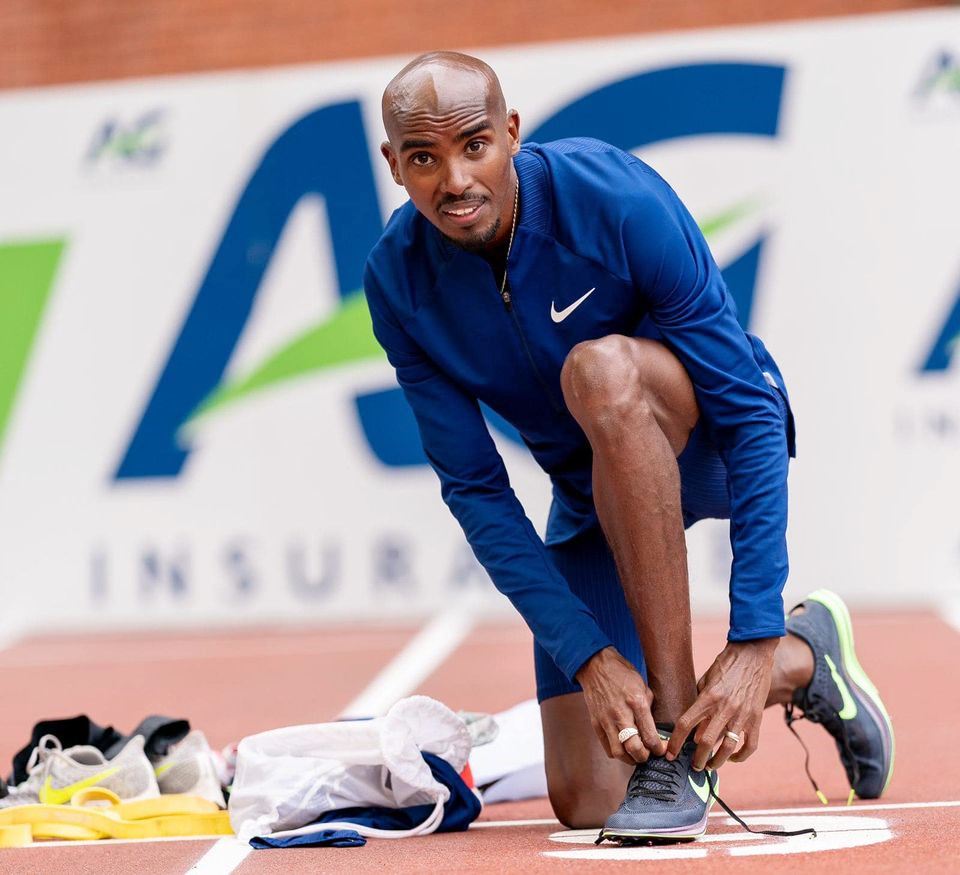
Mo Farah; this photo was downloaded from the athlete’s Facebook page and is being used here for representation purpose. No copyright infringement intended.

Great performances from Mo Farah, Sifan Hassan and Peres Jepchirchir

A world still in the shadow of COVID-19 isn’t stopping top athletes from smashing records. Three world records tumbled over September 4 and 5, 2020.

As per reports available on the website of World Athletics, Britain’s Mo Farah and Sifan Hassan of the Netherlands set world one hour-records in their respective gender categories at the Wanda Diamond League exhibition meet at the King Baudouin Stadium in Brussels, Belgium, on September 4.

Farah, a multiple world and Olympic champion set a new mark of 21,330m – bettering the 2007 mark of 21,285m set by Ethiopia’s Haile Gebrselassie. Somali-Belgian athlete, Bashir Abdi finished second, eight meters behind.  However, while he was leading the race, Abdi lowered the world best for 20,000 meters from 56:26 to 56:20.2. In her race, Sifan Hassan, the Dutch world 1500m and 10,000m champion, touched 18,930 meters in one hour, beating the existing mark of 18,517 meters set by Ethiopia’s Dire Tune in 2008, the report said.

Same day in Prague, Peres Jepchirchir of Kenya broke the “ women-only race world record in the half marathon,’’ another report on the website said.

According to it, on September 5, the 26-year-old Kenyan clocked 1:05:34 for the distance improving upon the previous record of 1:06:11 set by Netsanet Gudeta of Ethiopia at the World Half Marathon Championships in 2018.

All the new timings reported are subject to the usual ratification process.

(The author, Shyam G Menon, is a freelance journalist based in Mumbai.)

COACHES SPEAK / ONLINE TRAINING PROVES BENEFICIAL, TAKE THINGS SLOWLY

Illustration: Shyam G Menon

With the restrictions caused by the COVID-19 lockdown easing, running outdoors has picked up. But the number of runners is nowhere near pre-pandemic levels. The absence of running events and the continued ambiance of uncertainty are prompting many to stay away from road running. Coaches feel it is only a matter of time before the reluctant lot too returns to running.

The decision of coaching outfits to offer training online incorporating various workouts that aid general fitness has helped runners immensely. Most of the trainees are in fairly good shape. As they return to the outdoors, they are able to ease well into running primarily because of the extended home workouts popularized by online sessions.

Once running events make their appearance, runners are expected to be back on the road pursuing their passion, coaches said.
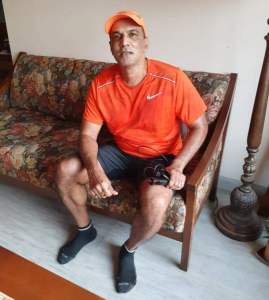
Daniel Vaz (Photo: courtesy Daniel)

Right through the lockdown, Mumbai-based coach, Daniel Vaz, evolved fitness plans that incorporated a mix of strength and endurance workouts, which he shared regularly through social media platforms.

“ I included a jump-rope workout,” he said. The aim of the jump-rope workout was to bring the sessions closer to running as it activates the Achilles tendon and also engages the cardiovascular system. He had an online following for his workout plans that exceeded his own circle of trainees.

His curated workouts helped runners retain their fitness; it also improved their strength. When they resumed running after a gap, the struggle was manageable. Daniel said that he nevertheless asked runners to exercise caution in terms of mileage and pace. According to him, they should begin with only 60 percent of the ‘run-time’ that they were doing before the lockdown. “ I speak about time because it is not right to recommend mileage,” he said. Focussing on time-based running helps a slow build-up of mileage and pace, he said.

“ Runners who are in touch with me have been told that this is the best time to work on the Maffetone method of training and run at low, comfortable heart rate. In my group I advise them on how to go about this kind of training,” Daniel said. Some who resumed running and gave up, have reverted to home workouts. Some others have decided to stay indoors amidst the continuing risk of pandemic. A number of virtual runs have come up. Not all runners are opting for this option, Daniel said.
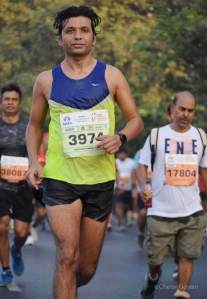
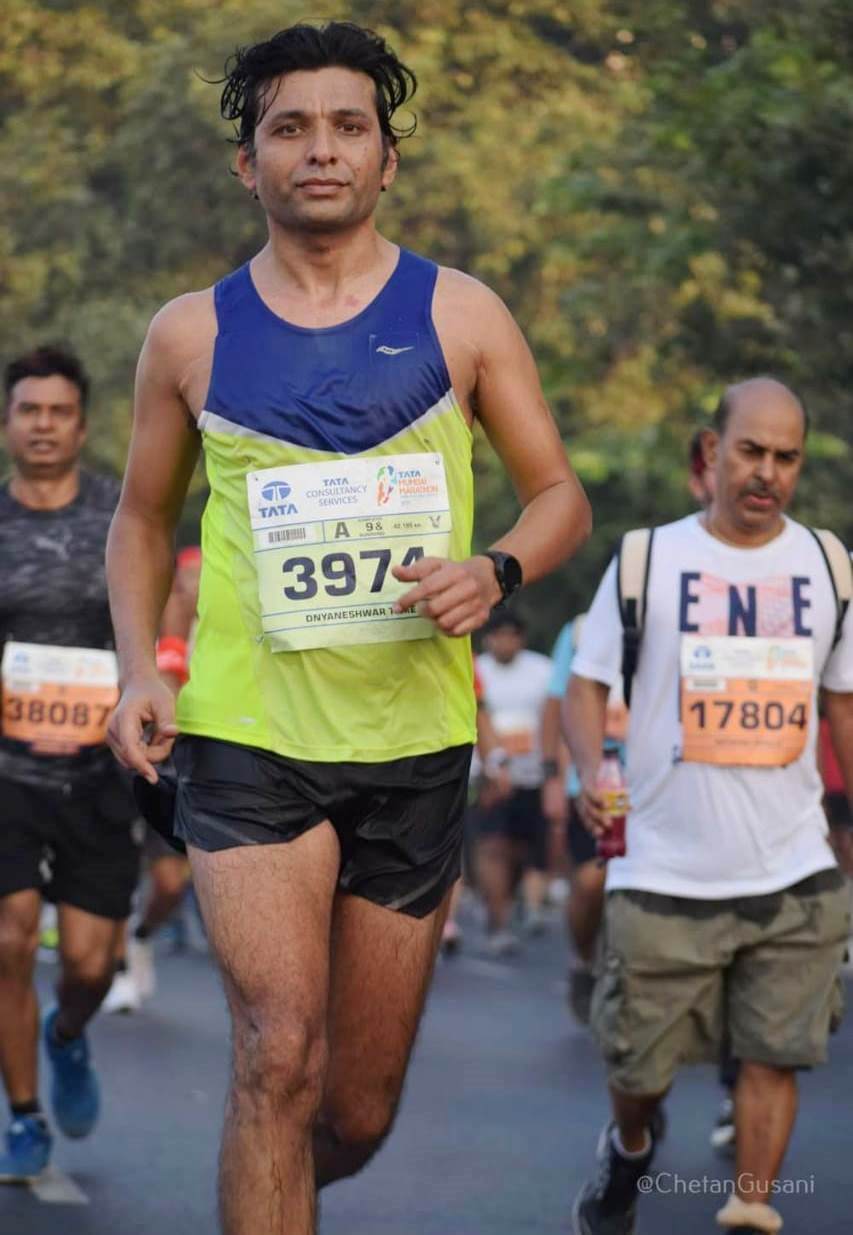
Dnyaneshwar Tidke (Photo: courtesy Dnyaneshwar)

Amid the lockdown induced absence of running, most of the runners training under Dnyaneshwar Tidke at Life Pacers, diligently followed a training plan created by him. The result is that the overall fitness has gone up although endurance levels have dipped through depleted running.

After the initial round of relaxation in nationwide lockdown, Navi Mumbai, where Life Pacers is based, went through a second dose of stringent lockdown forcing runners to retreat indoors for another fortnight. Once restrictions eased, Dnyaneshwar asked them to assess their fitness levels before resuming outdoor activity. “ The prudent approach would be to build up mileage very slowly. In the continued absence of any running events on the horizon, runners can take their time to ramp up training mileage,” Dnyaneshwar said. Improving endurance fitness primarily entails slow and easy running.

Some of his wards brought to his attention the tiredness they felt during initial running sessions. “ It takes a lot of effort to come back to running. Therefore, the progress should be slow,” he emphasized. In the absence of races, the current period should be utilized to build endurance and work on weak areas. “ For those who have access to hills or trails this is the time to run and explore routes,” he said.
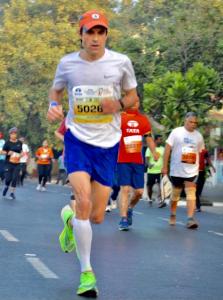
Ashok Nath (Photo: courtesy Ashok)

Most runners training under Ashok Nath have resumed their running in a slow and sustained manner. What is unique in this phase is the dimension of gender sensitivity Ashok has brought in. He has decided to rework the training plan of his women trainees to align with their menstrual cycle.

Often, training programmes drawn up by coaches are not differentiated on the basis of gender. Women have traditionally followed a training program that applies to both men and women alike. During the menses period, which may last between three and seven days, the training should be light. This is followed by a follicular phase which lasts for 10 days. “ As oestrogen hormone is high during this period, hard training is possible,” Ashok said.

A woman’s body experiences changes through these phases – menses, follicular phase, ovulation, luteal phase and pre-menstrual syndrome. During the luteal phase, the progesterone hormone shoots up and it can be difficult to do workouts. Ashok has been redesigning his training for women athletes to bring it in sync with this cycle.

Overall, his athletes are in the process of building up the foundation for endurance incorporating long runs along with speed and tempo. Many of Ashok’s trainees have had access to running in some form or the other, through much of the lockdown. The lockdown period also helped runners to enhance their quota of strength training and core workout and improve flexibility.

He also devised training plans that helped runners to focus on issues otherwise shelved in preference of running such as functional strength and joint conditioning.
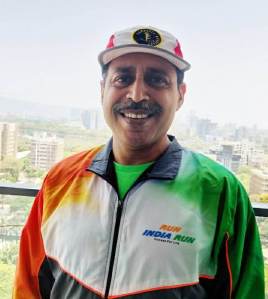
Samson Sequeira (Photo: courtesy Samson)

Some of Samson Sequeira’s trainees have returned to running. However several others have chosen to stay off the road because of the rising number of COVID-19 cases.

“ For most of the runners training under me, it is primarily fitness oriented running. I have started with mileage progression only for full marathon runners and those interested in the Comrades Marathon,” Samson said. Given the long absence of running that happened, upon resumption of training, some have been complaining of joint issues and muscular imbalance. “ Those who did indoor workouts diligently are in good shape. But some of those who resorted to running indoors have ended up with ITB and plantar issues,” he said.

According to him, cardio conditioning has to be built up slowly. As the lockdown norms ease, runners are slowly emerging from confined existence to road running. About 25-30 per cent of Samson’s trainees have returned to running. Others are likely to join when the running season picks up. “ Those choosing to run for fitness have come back. But those who look at running as racing will probably return only when running events start happening,’’ Samson said.
Praful Uchil (Photo: courtesy Praful)

Among marathon training outfits in Mumbai, Striders is one of the biggest. Their trainees have been venturing out for road running but the numbers are yet small, Praful Uchil, said.

“ Of our trainees, only about 20 percent have commenced running. But the number of runners venturing out is slowly increasing,” Praful, founder and director at Striders, said. Through the lockdown period – it started around March 20 – Striders organised online workout sessions to help its trainees focus on fitness while staying indoors. “ Runners are advised to run for half hour to 45 minutes when they commence running. Now some of our runners have ramped up to one and a half hours of running,” Praful said.

As traffic on the roads is low compared to normal times, it is comfortable to run during the early morning hours. “ But there is still uncertainty about going all out into road running. One does not know how the pandemic will pan out,” Praful said. The online sessions have helped runners stay fit. They are able to run with ease despite the break of over three months, Praful said.

Vijay Alva (Photo: courtesy Vijay)

Online sessions have really contributed to fitness. “ Runners have never been more fit,’’ Vijay Alva, coach, said. His training outfit, Vijay Alva’s Fitness Academy, designed and broadcast a home-based training program for its marathon runners. “ This training plan included a mix of cross functional, strength and cardiovascular workout. It has helped runners stay fit,” Vijay said.

Currently, his runners are not doing anything more than 10 kilometers. “ But they are able to run quite comfortably. Nobody is complaining of aches and injuries,” he said. The extended home-based workouts have proved to be beneficial for runners as they have learnt to concentrate on exercises other than just running, Vijay said.

A former national marathon champion, Savio D’Souza has his feet firmly on the ground when it comes to a primer for running in days of lockdown relaxed. He advises that runners take it easy and slow these days, for there are no events on the horizon. The important thing is to be fit, which itself is adequate work because the majority of runners would have experienced a drop in baseline fitness from the months of strict lockdown. “ Remember, you cannot store fitness,’’ he said. It is still not very long since lockdown commenced easing, including time allotted for daily exercise. “ I prefer playing it safe,’’ he said.
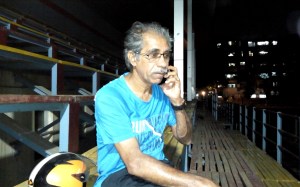
Savio D’Souza (Photo: Shyam G Menon)

The coach explained the situation with reference to his own trainees. “ Most of them have started coming out, which more than running, is what they wished for. Seeing others from the group after a long time made them feel good. For the first few weeks we encouraged them to do brisk walking. We wanted them to de-stress and feel mentally relaxed. Then we started a routine of walk-jog. Now we do 9-10 kilometers – sometimes less – of slow, easy running. Same time last year, people may have been doing weekend runs of up to 30 kilometers but there is no pressing need for that right now,’’ he said. Asked what the most heard complaints by way of pains and aches were, Savio said that his approach had been to avoid pushing anyone such that they feel those aches and pains in the first place. “ This is not the time to push. You don’t have to. What’s the hurry? There are no events. Instead you should slowly, without risking injury, improve your baseline fitness. When events are finalized they are bound to announce it with sufficient notice because we are all coming from lockdown and relaxed lockdown with no serious training done. Right now, with my group, I believe we may soon reach that point where we should be able to get ready for an event with two months lead time. If we can preserve that fitness doing whatever we are doing, then as and when the need arises, we can revive the old training and countdown to events,’’ he said.

He quantified that sweet spot for his group – the substratum that can be worked on later – as 50 per cent of the journey to good form plus some more. It would be sensible to linger around in that zone till clarity about the overall pandemic situation and races therein, improve. For the same reason, he wasn’t a fan of the virtual runs announced in the June-July period. He felt that was too close to the period when lockdown started relaxing and people were just beginning to train afresh. Juxtaposed on the Indian lockdown calendar, those runs risked injury for want of enough moving around already done.  “ Virtual runs in September-October or later are alright because people have put in some amount of movement and running. I couldn’t agree with the earlier ones,’’ Savio said.

(The authors, Latha Venkatraman and Shyam G Menon, are independent journalists based in Mumbai.)

TOKYO OLYMPICS: INDIA’S MARATHON ELITE AND THE SEARCH FOR VIABLE OPPORTUNITIES TO QUALIFY

Illustration: Shyam G Menon

It is only a handful of athletes. But what they have to attempt is a challenging task; match a longstanding national record and then improve it by another 30 seconds. All this must be accomplished in one or two races during the winter of 2020-2021. Will we set them up for it?

On August 12, 2020, the Paris Marathon became the latest mass participation event in running, to embrace cancellation for the year. It was initially postponed. In August, the organizers disclosed they had decided to cancel.

Earlier on July 28, World Athletics informed that the Virgin Money London Marathon, due to take place on October 4, is committed to working with World Athletics to promote the opportunity to athletes around the world and assist with their travel challenges so they can participate in London and achieve their Olympic qualifying time. It was also mentioned that World Athletics will try something similar with the ADNOC Abu Dhabi Marathon. The move followed concerns over the lack of qualifying opportunities that may be available for road athletes before the qualifying period for the rescheduled Olympics, finishes on May 31, 2021. On August 6, the organizers of the London Marathon informed that the 2020 edition of the race will be held as an elites-only affair; there will be no amateur runners participating.

The cancellation of races worldwide, caused by the COVID-19 pandemic, has become a problem for marathon runners wishing to qualify for the Olympics. While the decision of World Athletics to work with the London Marathon and the ADNOC Abu Dhabi Marathon is related to this issue, two events don’t satisfy the need of all athletes. The London Marathon is scheduled for early October while the one in Abu Dhabi is normally held in December. To utilize these events properly, you have to be in good form by then.

The qualifying time for the men’s marathon at the Tokyo Olympics is 2:11:30. This means that any Indian male marathoner seeking qualification has to smash the longstanding national record of 2:12.00. On March 17, 2019, T. Gopi had completed the Seoul Marathon and qualified for the 2019 World Championships (Doha, Qatar) in 2:13:39. That is the closest anyone has come to the 1978 national record set by the late Shivnath Singh in Jalandhar. As of August 2020, some of the country’s top marathoners were at various stages of recovery from injury. This blog spoke to Nitendra Singh Rawat, T. Gopi and Srinu Bugatha – all of them elite marathoners; two of them have represented India at the Olympics, all three have been podium finishers in the Indian elite category at some of the country’s best marathons including the Mumbai Marathon. They felt that targeting the London Marathon of October 2020, as opportunity to qualify, wouldn’t be the best option.

Recovering from injury and regaining the old tempo in training takes some time. Additionally, under normal circumstances an endurance athlete shifts between races in the plains, training center and locations for special training like those at high altitude, seamlessly. With pandemic protocols, these inter-state movements risk quarantine. The current period is thus far from perfect environment. Given the training regimen they have been traditionally used to, two to three months of diligent preparation suffices to get back to shape. But it is already past mid-August. October is too close for them to return to form, especially for a national record-breaking effort. Going by the options World Athletics presented in their July statement, this shrinks window of opportunity to the ADNOC Abu Dhabi Marathon, which has the advantage of being in India’s neighborhood. The problem then is – if you fail there, you are out; unless, more windows of opportunity open up, ideally in the first quarter of 2021.

The general tenor one could glean in race organizing circles in India was that by the last quarter of 2020, some level of activity should return to sports. Even if India chooses to be conservative in recommencing sporting activity (at the time of writing, the country had cumulatively recorded the third highest number of COVID-19 cases worldwide), for needs like top talent wishing to qualify for the Olympics, opportunities to run may open up in the Middle East. As one race organizer said, “ If ADNOC Abu Dhabi is held as scheduled, it may encourage the Dubai Marathon of January to examine its options.’’ But there is a catch. Nobody is saying yet that when events revive it will be in the mass participation format. The London Marathon – like the 2020 Tokyo Marathon of March – will be an elites-only affair. Asked if the elites-only model may work with events in India, the race organizer admitted it will be tough because sponsors may not be interested during financially difficult periods like the present. Same could hold true elsewhere in the world. If you want to help athletes qualify for the Olympics, then either a sponsor has to be sufficiently supportive or a national federation – like World Athletics did – must notice the situation, go the extra mile and make those opportunities happen. “ An additional window will be helpful,’’ K.C. Ramu, former elite marathoner and now Srinu Bugatha’s coach, said.

Amid times of international travel deemed risky and need for athlete to preserve health as best as possible, domestic opportunities to qualify for the Olympics attract. Unfortunately, the Mumbai Marathon (January) and the New Delhi Marathon (National Marathon / February) which have traditionally served as qualifying grounds for various events, are not perceived as well-suited for the purpose. Mumbai’s weather conditions have rarely been ideal for top notch running. The city marathon’s course has a hill; it is not the flat, fast type that runners seek when chasing a qualifying mark. Delhi has better weather conditions than Mumbai in the winter months (keeping aside the problem of air pollution) and a flatter course. But there is a portion of the course having too many twists and turns. This assessment won’t sit well with some observers. And there is a valid reason for it – every male winner (overall winner) of the Mumbai Marathon since 2011, has timing below 2:11:30. The latest course record, set in January 2020, is 2:08:09. What are Indian athletes complaining of then? All one can say in defence, is that as a country we are not yet in the same league as those churning out such timings although Shivnath Singh touched 2:12:00 once. Additionally, Singh’s record, unbroken since 1978, makes breaking it a project of sorts. “ How many Indian athletes are we talking of as those eligible to try qualifying for the Olympics; four or five at best? It makes better sense to have them fly overseas and qualify,’’ the race organizer said. He clearly has a point, if decision is left to economics and scale.

Illustration: Shyam G Menon

However, a race to qualify for the Olympics doesn’t have to be as elaborate as your regular road race. The upcoming London Marathon for instance, has an altered blueprint for 2020.  According to the statement of August 6, put out by the event’s organizers, “ elite races for men, women and wheelchair athletes will take place on an enclosed looped course in St James’s Park in a secure biosphere (a contained safe environment like that of Formula 1 and England cricket) with times being eligible for Olympic qualification.’’ This means the course can be smaller than usual and repeated as a loop to meet the distance required; something similar to Eliud Kipchoge’s iconic run in Vienna last year, when he dipped below the two hour-barrier. A well-organized race, oriented towards qualifying with pacers to ensure required momentum – this was the wish list. “ Even a good five kilometer-course that can be repeated as a loop will do. February-March should be the cut-off period, not beyond that,’’ Nitendra said. Depending on whether you can locate a good enough course, how motivated a national federation is and how supportive sponsors can be, this should be feasible in India.

Amid pandemic will we go the extra mile for the marathon and a handful of our elite athletes?

(The author, Shyam G Menon, is a freelance journalist based in Mumbai.)   
JOSHUA CHEPTEGEI SETS NEW WORLD RECORD IN 5000M

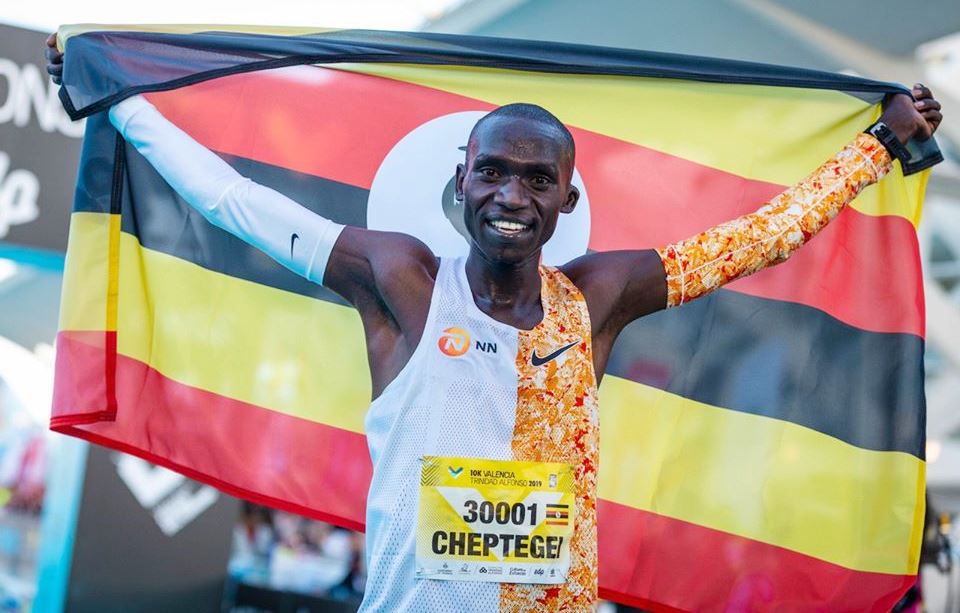
Joshua Cheptegei. This photo was downloaded from the Facebook page of the athlete and is being used here for representation purpose. No copyright infringement intended.

The first major record in distance running amid the COVID-19 pandemic and despite it, happened on the night of August 14, 2020 with a new world record scripted in the men’s 5000 meters on track.

Six months after he set a world record in the 5-kilometers road race, Ugandan ace Joshua Cheptegei took down a 16 year old track record in the 5000m to blaze home in 12:35:36 at the Wanda Diamond League meet in Monaco. Cheptegei’s new world record (it is subject to the usual ratification procedure) improves upon the earlier mark set by Ethiopia’s Kenenisa Bekele.

In its report, World Athletics described Cheptegei’s performance as “ the return of international athletics.’’ The COVID-19 pandemic has played havoc with the world of sports; the Tokyo Olympic Games had to be postponed and in athletics, many events and road races were cancelled. Worse, the advent of disease protocols, lockdown and training in the new normal had affected the regular regimens of athletes worldwide. Competitions started trickling back in very few numbers and to few spectators at stadiums, only in the past couple of months. “ It took a lot of mind setting to keep being motivated this year because so many people are staying at home but you have to stay motivated. I pushed myself, I had the right staff with me, the right coach. I’m also usually based in Europe, but being based in Uganda with my family was actually great,’’ Cheptegei was quoted as saying in the report, available on the website of World Athletics.

The Ugandan athlete tackled the 5000m track event in style. On the eve of the competition he made it clear that he looked forward to setting a new world record – and he did just that. Weather conditions were not ideal.  “ The pace was so fierce that Cheptegei had run out of pacemakers by half way and the only other man in sight was Kenya’s Nicholas Kimeli. Within a lap the genial but ambitious Ugandan was alone in his quest for immortality, pressing on remorselessly with metronomic 61-second laps,’’ World Athletics said in its report. Cheptegei now holds the world record for the distance across both track and road.

On February 16, 2020, he had clocked 12 minutes 51 seconds at the Monaco Run 5km. He shaved 27 seconds from the previous record of 13:18 set by Kenya’s Rhonex Kipruto en route to his 10km world record in Valencia on January 12. Cheptegei was gold medalist in 10,000m at the 2019 World Championships in Doha, Qatar; he won silver in 10,000m at the 2017 World Championships in London and had placed first in 10km at the 2018 World Cross Country Championships held in Aarhus, Denmark.

(The author, Shyam G Menon, Is a freelance journalist based in Mumbai.)  
TEAM FOR IAU VIRTUAL RUN ANNOUNCED

Illustration: Shyam G Menon

A second team representing AFI has also been announced

Nine men and nine women will run for India in the IAU 6 Hour Virtual Global Solidarity Run scheduled to take place from 6AM to 12PM on August 29, 2020.

The event put forth by the International Association of Ultrarunners (IAU), features member federations worldwide nominating teams to participate. In its outline for the event, available on the IAU website, IAU has said that athletes may run indoors or outdoors but would need to record their performances on one of the many sports platforms like Strava or Garmin. Federations or their nominated team manager would need to verify and check their athletes’ performances and then submit the tabulated results to the IAU. “ There will not be a ranking list as this is a run signifying global solidarity among the ultrarunning family,’’ the IAU write-up said.

Among other details it informed member federations, “ athletes must run at any time in one continuous six-hour block over the weekend August 29th / 30th in your own time zone. Results will not count for publication if they are done outside of these designated dates. If your country allows athletes to compete together, you may have your own race and / or virtual race with a specific start time. Otherwise athletes can compete either indoors or out in their own space but must record the activity and give your nominated team manager those results.  The results should be submitted to the IAU no later than September 1st.’’

According to a press release from the Athletics Federation of India (AFI), the Indian runners selected to participate are: women – Anju Saini, Aparna Choudhary, Ashwini Ganapathi, Bindu Juneja, Darishisha Iangjuh, Deepti Chaudhary, Hemlata, Nupur Singh and Shyamala S; the men’s team includes Abhinav Jha, Amit Kumar, Binay Sah, Geeno Antony, Hemant Singh, Pranaya Mohanty, Sunil Sharma, Suraj Chadha and Tlanding Wahlang.

While IAU had offered each member federation the possibility of their run taking place in one location if required, Sunil Chainani, member of the committee appointed by AFI to oversee the selection of Indian ultra teams, said that given the ongoing pandemic, Indian runners will be running at their respective locations.  “ We decided to give priority to safety,’’ he said of the decision not to assemble in one place. COVID-19 cast its shadow in other ways too. Some runners who wished to apply and participate couldn’t do so because their locality had containment zones limiting the space available for them to run. Others were concerned about running for six hours in their respective locations because running outdoors – in the form of daily exercise – is allowed only for lesser duration during the pandemic. The selectors also did not want anyone pushing themselves unnecessarily. “ The lockdown has affected everyone’s training and we don’t want runners straining themselves. We wish to keep our athletes safe,” Sunil said.

According to the IAU website, there will be a category within the run called President’s Club. It encompasses the leadership of member federations and select personalities who have contributed to the sport.  “ The Presidents Club team signals to the global ultrarunning family that we are all in this together. It also serves as a motivation to all our athletes to see their federation leadership participating with them in this endeavor. The team also includes selected personalities who have done an outstanding job promoting the sport globally,’’ Nadeem Khan, president, IAU has been quoted as saying on the association’s website. Adille Sumariwalla, president, AFI, features in the President’s Club list.

Also running on August 29 will be a second team of ultrarunners, this one representing the AFI. The corresponding virtual event’s name is AFI 6-Hour Solidarity Run. The revised criteria for applying to the team (as available on the AFI website), was: for women – 155 kilometers covered in 24 hours, 100 kilometers done in 10:45 or 500 trail-ITRA points accumulated as of date; for men – 195 kilometers covered in 24 hours, 100 kilometers done in 9:45 or 600 trail-ITRA points (any one of these norms had to be satisfied to apply). The idea of a second team was to increase participation in the event and generate greater interest in the sport, Sunil said. As per a recent AFI press release (essentially an update to the earlier one), the members of the team for the AFI 6-Hour Solidarity Run are Ajit Singh Narwal, Badal Teotia, Manoj Kuthupady Bhat, Nishu Kumar, Sandeep Kumar, Santosh Gowda, Sikander Lamba and Velu Perumal.

 (The author, Shyam G Menon, is a freelance journalist based in Mumbai.)