REMEMBERING MADHAVAN UNCLE

Illustration: Shyam G Menon

Illustration: Shyam G Menon

The first time I heard of him was when my maternal grandmother decided that she must hear Beethoven’s Fifth Symphony. Having read about the great German composer, she wanted to hear his famous composition.

We lived in Thiruvananthapuram, the southernmost city of Kerala, a state in South India. It was a small place, and as state capital, its predominant feel was one of politics. Where in such a town would you locate Beethoven and hear his music in a manner that did justice to its orchestral splendour? My mother’s elder brother then took my grandmother to Madhavan Nair, a relative who hailed from the same native place near Kochi as we did. He owned a fine music system and had diligently assembled over time a good collection of music spanning Indian classical to western classical and much else in between.  My grandmother returned from the visit, a thrilled person. I wasn’t let in on this story. But I figured out that music was involved.

Curious, I asked my father, “ who is Madhavan Nair?’’

His reply was evasive and it was for a valid reason. Around that time, an obsession to hear music and hear it loud and clear, had taken root in me. The financial strain it potentially indicated was clear. We were a very middle class family with a youngster praying for Technics, Pioneer, Denon and now beginning to dangerously say, Nakamichi and NAD. I drooled over product advertisements. Those were the heydays of people from Kerala working in the Middle East. Most people returning on vacation brought a two-in-one, a boom-box. At the airport with boom-box in hand was both hallmark of Gulf-returnee and new found prosperity. For many, it was the sign of prosperity that mattered. I wanted the boom-box for what it actually was. On visits to receive relatives at the city airport I became notorious for missing people and seeing only the two-in-ones being carried home from Gulf countries. Not surprisingly, my father was wary of having me in any place with amplifiers at hand. It was therefore some months before I coaxed him to take me to Madhavan uncle’s house.

Those were the days of the LP record and the audio cassette. I gazed respectfully at his music system, which included a turntable with stroboscope, tape decks with restless needles in brightly lit dials, pre-amp and power-amp, graphic equalizer and deceptive book shelf speakers that could rock a room. The whole thing sat like a living, breathing entity, pensive brain in one place and powerful impact in another, all controlled by impressive knobs adjusted to precision. For me, newly arrived to the world of music with a National Panasonic mono two-in-one  and a couple of tapes of disco music (plus some more periodically borrowed from a supportive neighbour) this was stunning, heavy duty machinery.   
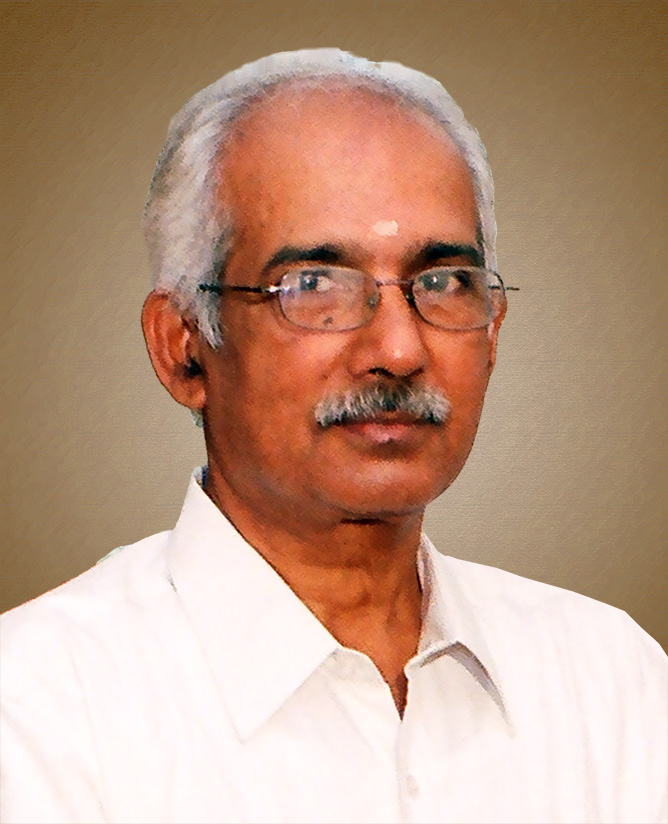
Madhavan Nair (Photo: courtesy his family)

Madhavan Nair (Photo: courtesy his family)

Madhavan uncle was a small, soft spoken person who worked at the state secretariat in Thiruvananthapuram. Away from work, he was a dedicated collector of music. He was also a good artist. In his free time he drew illustrations for other people’s short stories, published in a regional magazine. Like any music collector, he counted on friends, relatives, contacts and sometimes travellers passing through, to access new albums. On the occasions when he had to make a copy for his private collection, he would create his own cover design for the cassette and note down album details in a crisp, thin handwriting. It was all stored carefully and catalogued. An interaction with the man was a focused experience characterized by insight into music systems and genuine respect for all kinds of music. Slowly my father allowed repeated visits. I began to explore music as a collection of different genres. Back at home the old two-in-one was replaced by a car stereo, which we modified to play indoors. Then, we bought a proper Sonodyne music system, a princely investment those days. On my shelf, cassettes sporting Madhavan uncle’s crisp handwriting gradually grew in number.

As I moved from school to college, my pursuit of music became more serious. I discovered my tastes – classic rock, blues, jazz, country, folk, western classical and Hindustani classical. The occasional conversation with Madhavan uncle went beyond musician and band, to the quality of sound. He would mention about a newly acquired album, play it enthusiastically and we would concur on its elegance with a shake of the head or a short laugh. And then, just as you heard the most wonderful quality of sound, he would softly reprimand a rubber belt or connecting chord for the slightest variation audible to his ears, his ears only. A great relief you felt was the ability to approach music – any music – as such, without fear of being judged. With Madhavan uncle, you could sample Jethro Tull, Keith Jarret, Bach and Ustad Bismillah Khan in one visit without ever weighing one genre against the other. I guess that’s because he was also an audiophile. He may have had his personal preferences. What didn’t qualify for that, he probably approached it as sound that still merited being heard as perfectly as possible. Once in a while, I also met others who wished for good music and had come to know Madhavan uncle as a result. All our paths crossed at his house, which was a regular pilgrimage. The people who gathered around him became many things in life; from joining the regular army of Keralites working abroad to finding a career in custom built audio systems to – this I heard of one person – being an acoustic engineer on tour with a major American rock band. It was a small group of people and if I may say, to merely state an impression I had of them and not to indulge vanity one bit – they were seekers. My grandmother, who in her old age, sought to hear Beethoven’s Fifth Symphony, was also probably one. We just failed to think of her so.

At present with the world getting whatever it wants effortlessly, seeking has increasingly become a lost art and its after-effect on person, a lost human quality. Seeking happened in a context of deprivation. Maybe it still can, as alternative to instant gratification; seeking for the heck of knowing life. Back then, you were plain not getting what you wanted – that was the state of affairs in the 1980s and early 1990s (not to mention – certainly the years before that), when many of the creative and technological offerings of the world reached Thiruvananthapuram through the bureaucracy of India’s protected economy. If you wanted more, you had to innovate and stretch. You requested people going abroad to get some music. News of any such album recently landed spread fast through the grapevine. For obvious reasons, a friend with a twin deck tape recorder was a very valued friend. My generation was born in the late 1960s. Its ear for music came alive in the 1970s. Many journeyed back to visit Elvis and Woodstock. Some ran ahead for a taste of synthesizer music. Seekers were thus an involved lot. And critically, because they had to actively seek, they valued what they found. Seeking made you stretch, the stretch provided journey, the journey was an education. People like Madhavan uncle, represented that trait. He was among early customers of the now familiar configuration of speakers – two satellite units and a separate base unit; he was also among early birds in town to upgrade that to Bose speakers. I remember the excitement this transition generated.      

The cassettes, the handwriting (Photo: Shyam G Menon)

The cassettes, the handwriting (Photo: Shyam G Menon)

Several non-music factors also supported the seeking mentality. Around the late 1980s, if I remember right, both the local engineering and medical colleges made it to the last stages of Siddharth Basu’s iconic quiz competition on national television. While the music-crazy were anyway searching deep to know and access bands, this new found legitimacy by TV to being bizarrely informed provided value to maintaining a wider world view. It broad based the curiosity to know.  A reasonably interested college student bothered to be aware of musicians and actors not just from the state but also elsewhere. At the very least he / she tried. Looking back I sometimes feel amazed at what all my music loving friends in Thiruvananthapuram dug up – Buffalo Springfield, Travelling Wilburys, The Yardbirds, Grateful Dead, Traffic, Spencer Davis Group, Cream, Wishbone Ash, Emerson Lake & Palmer; these were besides usual suspects Led Zeppelin, Pink Floyd, Def Leppard, Jethro Tull, Bob Dylan, Jimi Hendrix, Bob Marley, Queen, Rolling Stones, Beatles and so many others. You lived in a small town. But you knew that something much bigger lived outside. Later, some of these efforts would seem the first dots joined of small miraculous journeys to come.

Once, at PAICO, one of only two or three shops in Thiruvananthapuram that sold rock music in my college days, I was sufficiently intrigued by the art work on a cassette cover to buy the album of an artiste I knew nothing of. I think the album was,`The Extremist.’ It was fantastic to hear. The album travelled around in my small circle of friends. At the local YMCA, I recall discussing Joe Satriani’s style with Ramesh, a wonderful creative person who was then a student of psychology. Over two decades later, I would hear Satriani play in Mumbai and meet him to collect his autograph. Other friends, seriously into music and more knowledgeable than me on the subject, would similarly wait in queue to hear a host of artistes from Ian Anderson to Roger Waters and Mark Knopfler, perform in India. Many of these pilgrims knew Madhavan uncle for the collection he built up, the effort he put into cataloguing it, the equipment he invested in to hear it well and his down to earth attitude despite it all. I may still have albums that he copied and gave me. But the gift went beyond album to empathy for music. Anybody can secure albums. Very few pass on an interest in music by personal example. He did.       

Sometime in the 1990s, Thiruvananthapuram stopped looking beyond its shores. The satellite television age was kicking in and with it, a strident patronage of vernacular tastes to gain eyeballs. Regional channels aggressively promoted local programming. This was expected. But it changed the texture of life for seekers. Where there was no television till the 1980s, you now had a basket of channels. It meant world at your doorstep discounting that much the need to seek. It also prompted the rise of a popular self wrapped local culture. As these changes occurred, foreign music’s cassettes were giving way to imported CDs that were expensive. It gradually eroded shelf space for foreign music. Soon I was running into film songs, parody songs and loads of religious music on shop racks in the city. I wondered if greying society and the remittance economy becoming Kerala’s overwhelming reality with its accompanying baggage of incomplete households had anything to do with the trends. Or was it the effect of big media engineering a navel gazing market of the people at hand? Kerala felt strange – gold, weddings, ethnicity, fervent prayers to God, rituals and a peculiar conservatism. An era of curiosity was drawing to a close.
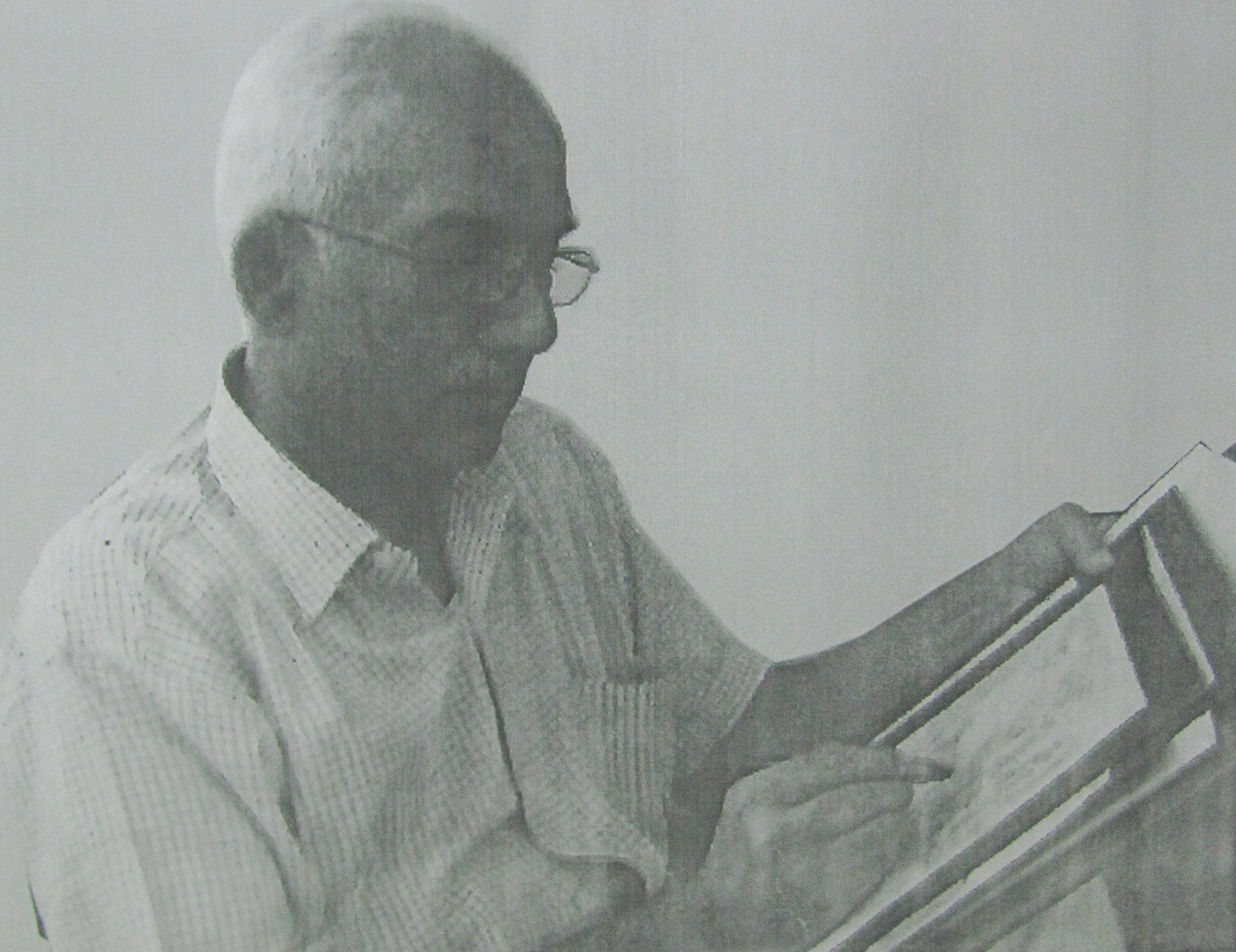
Madhavan Nair (Image: courtesy his family)

Madhavan Nair (Image: courtesy his family)

My last meeting with Madhavan uncle was special. I introduced him to a couple of blues musicians that he hadn’t come across before. It was the first time I could give something back for all the music he had brought to my life. Blues particularly, was something he introduced me to. Thanks to heavy duty marketing, the Madonnas and Michael Jacksons of the world get everywhere. But something off the mainstream, like blues? And that too, not just Muddy Waters, B.B. King, John Lee Hooker, Buddy Guy and Eric Clapton but others like Robert Cray, Tinsley Ellis, Son Seals, Elvin Bishop, Luther Allison, Otis Rush and so on. Had it not been for music collectors like Madhavan uncle all this would have been difficult to access in Thiruvananthapuram. But it didn’t take long for him to turn trifle philosophical and question the relevance in having a wide taste in music when all around insularity had become virtuous. Room was shrinking for those who appreciated the wider world. I remember him saying that despondently, the last time I met him. Sometime in 2007, I toyed with the idea of calling him up on the phone. It inexplicably persisted in my head till I finally told myself that I will meet him when I went home from Mumbai, where I worked and lived. I didn’t do that early enough.

One day, I got a call from home – he was no more. In all those years that I knew him, I never asked Madhavan uncle how he began collecting music. I only know how knowing him, changed world by music for those like me. And, I also remember those times.

In my life, I have met several people cast as seekers in several subjects. In music, some intimidated me by their ability to reel off statistics about bands and their history, some intimidated by their vast collection of music measured by external hard disk-space, some intimidated by the concerts they attended overseas, for some it was what device you heard music on – was it latest iPod or some other gadget? Much of this seemed music as armour; another one of the weapons stockpiled for self importance and distinction in life. Very few people lived the simple delight in hearing wonderful music of any type reproduced well by a decent music system – which was what Madhavan Nair seemed all about. Meeting him in his living room said all that has to be told. The music system would be playing something softly, yet so clearly that it felt like gentle rain. Madhavan uncle would be dressed in simple clothes – usually the white dhoti of the Keralite householder worn with a shirt or T-shirt. I would inquire of new additions to his music library. The brief conversation about music – including on genres originating overseas – was always in Malayalam, the local language. He had all the stuff that people stocked in their armoury of music with none of the airs.   

I miss that age of seeking gone by.     

(The author, Shyam G Menon, is a freelance journalist based in Mumbai.)    

TALKING TO DR GEORGE SCHALLER

Dr George Schaller (Photo: Shyam G Menon)

Dr George Schaller (Photo: Shyam G Menon)

`GS’that was all I knew of Dr George B. Schaller.

GS was the finest field biologist in the world, one of the founding fathers of wildlife conservation and author of several books. He was additionally Vice President, Panthera, Senior Conservationist at Wildlife Conservation Society and Adjunct-Professor, Centre for Nature and Society, Peking University.  He had also received many awards.

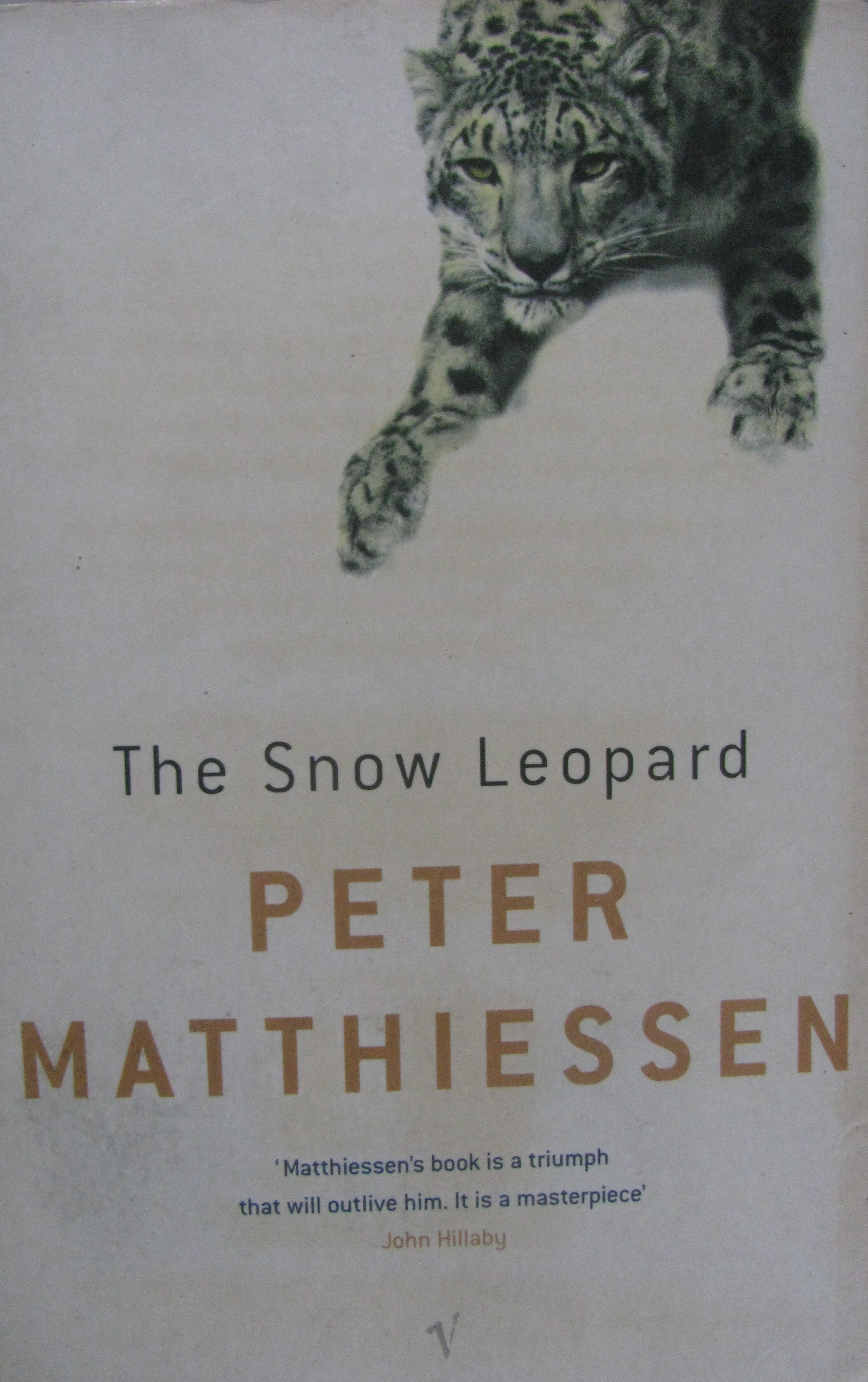
Early October, 2010, as I awaited my chance to interview him on the sidelines of the Mussoorie International Writers’ Festival, Peter Matthiessen’s book `Snow Leopard,’ about a journey to Crystal Mountain in the Himalaya with GS, was all I had for reference.

I explained my position.

The man didn’t disappoint one bit.

He kept the conversation simple.

Excerpts:

Conservation and the problem of over-consumption

Conservation basically from our selfish standpoint means human survival on this planet. The last century in many ways was easy. People thought in terms of reserves, as for instance with the tiger. But remember population growth. There are three times as many people in India today when compared to the early sixties when I was first in India. All of them want to make a good living. So it is not just population growth; the consumption has grown at a much more rapid level. Where do the resources come from? If you are talking about sustainability – don’t use more than what can be replenished – it has been calculated that the world is already at minus thirty per cent. In other words, the environment is going down steeply because of over-consumption of everything. What can you do? You need to be more inventive; you need to be more efficient, you need to be more productive, so that you don’t waste resources. Which state in India has a decent land use plan? People develop, develop, develop and nobody thinks of what it is going to be like at the end of this century. It is thinking ahead and planning that is the responsibility of governments, corporations and communities.

I get so frustrated when I see the lack of planning, the lack of care – for example in the United States. How much money has been raised for wars and armaments that could go for the benefit of people and environment; for the long term good of the country? I consider it highly patriotic to think of the future of one’s country and not fritter away money and resources because you are greedy now. The question is – how can you change the perception of wanting to consume more and more of things that you don’t need?

The finite system we know little of

People think that technology will solve their problems. Well, it can solve various problems. But you have a finite system of which, we know very little. We don’t know much about the ecology of rainforests, woodlands and so forth. How many species can a system lose before it collapses? We don’t know how all the species in a forest – from the microbes in the soil, little worms to big trees – interact to function as a system. We don’t know that. If it collapses because we killed too many species, directly and indirectly….then what happens? This concerns me because yet again, looking at it from a selfish human perspective – we need medicinal plants. At present we know only a few. What plants are out there, which in the future can produce food for a starving planet? The way things are going now we have famines somewhere in the world all the time. The countries that grow a lot of grain like Canada and others – they don’t have enough to feed the world, they have to feed their own people. Countries have to seriously think now what to do. China has a good logging act. No more big, commercial logging of forests because the watersheds are being depleted causing huge floods that kill thousands of people. Alright, the country needs wood. Where is it going to get it from? You go to Congo in Africa; you go to Indonesia – get timber elsewhere. So to keep a good lifestyle countries are pillaging each other. The United States is the principal culprit. The United States has five per cent of the world’s people and it uses roughly 25 per cent of the world’s resources. Is this morally acceptable? It isn’t for me. I don’t know what to do about it.  Now China is expanding, India is growing rapidly and expanding – but unless countries co-operate more; become self sufficient, waste less – what to do? 

Photo: Shyam G Menon

Photo: Shyam G Menon

Big worries; small solutions

Conservation in the final analysis is politics. I can go to China, I can come to India, I can co-operate with local scientists in studying the issue. From the information that we collect, we write reports, we make suggestions – those go to government. Then it is in the hands of government if they want to do something or not. You can prod a little bit but I cannot do conservation myself. I can go to a community, hold a community meeting, listen to their problems and make suggestions, may be even find funds so that they can start – but again it is up to the community and the local politics to implement something on their own behalf.  I can’t come into a country and say you have to change your agricultural practices, you have to stop polluting. That is too big an issue for an outsider. The government and the corporations have to get together and handle that. Personally, I set my own limited goal where I feel I can do something positive for the environment. Everybody should work together on this. If you have a serious land use plan, retain it – then you have a goal. But the only economic measure you see right now is our Gross Domestic Product grew by eight per cent, four per cent etc! What kind of measure is that? It doesn’t measure your environmental loss. You have to measure – to gain that (GDP growth) how much have you lost as resources? You can put economic values on resources lost and I guarantee you that every single country would be in the minus column. They are worse off than they were. If you look at it in economic terms, the world is living off its capital rather than the interest. How many businesses can do that for long? So I have big worries but I focus on trying to do something small and useful.

His message to future conservationists

In one word, that would be – persistence. If you see that something is essential for the good of society, humankind and you have set yourself a goal – keep at it. You won’t necessarily get results immediately but keep emotionally involved, scientifically involved. Learn the politics to some extent because unless you have the backing of the local forest department or whatever that you are dealing with, you won’t get anywhere. And that – being an environmental politician, is something one has to learn whether one likes it or not.

(The author, Shyam G Menon, is a freelance journalist based in Mumbai. This interview was published in The Hindu Business Line newspaper in February 2011.)

A TRIP TO MUSSOORIE

Photo: Shyam G Menon

Photo: Shyam G Menon

One evening at a book store in Mumbai, I came across what I was looking for.

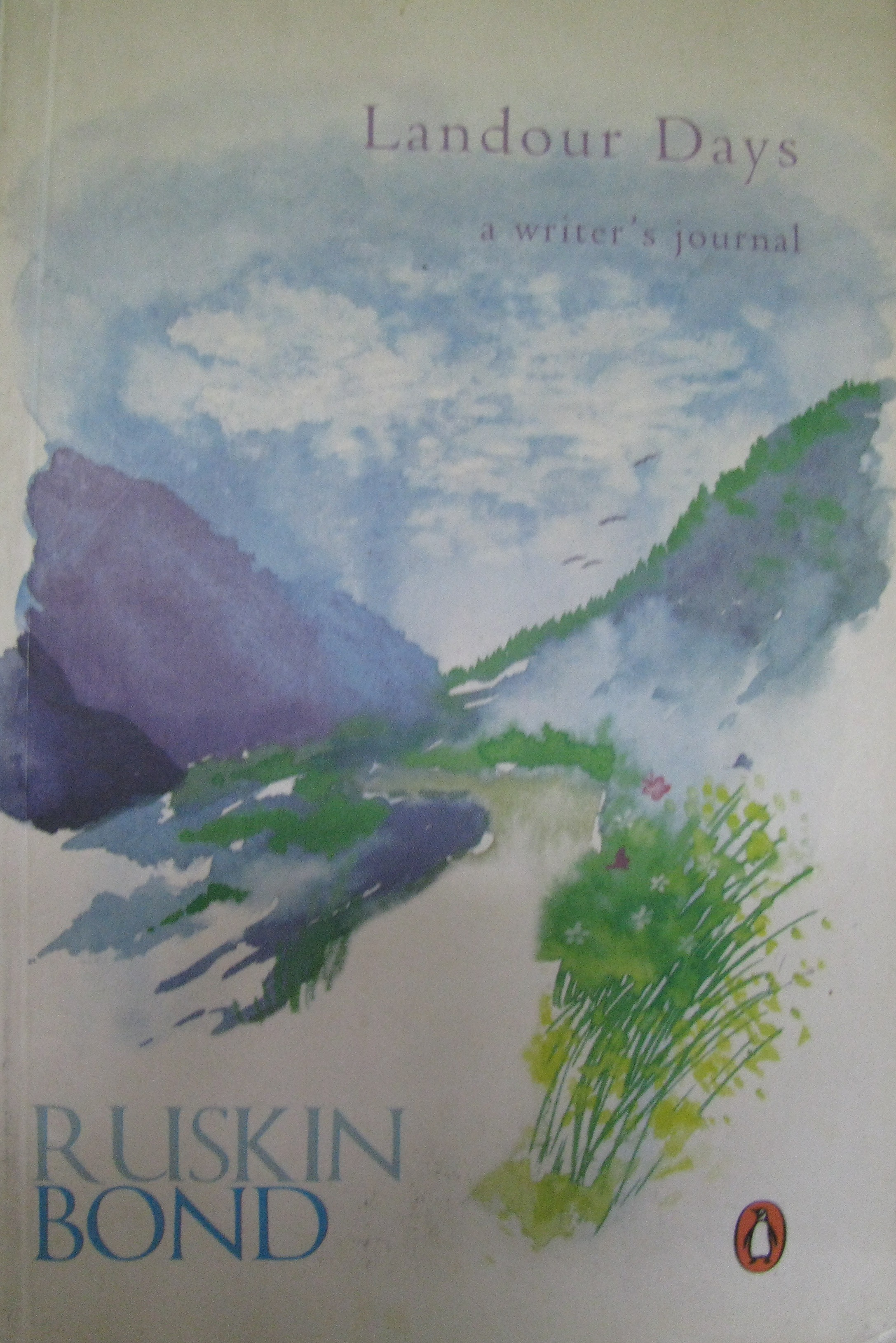
It was Ruskin Bond’s `Landour Days,’ subtitled `a writer’s journal.’

In it the author wrote, “ when I first came to live in Mussoorie, some forty years ago, I did not expect to be the only writer living in or around the hill station. There were, of course, writers in Dehradun, which had a literary climate of sorts; but in Mussoorie there was none, at least not until I had been here for some time.’’

Situated at an altitude of 6000 feet plus, Mussoorie had been a hill station for long. Was it after reading `Landour Days’ or was it before – I don’t remember when exactly – during a brief stay in Mussoorie, I used to frequent the small cafe near Woodstock School for an occasional snack. The school was on the Landour side of Mussoorie. The name Landour, was originally derived from the name of a village in south west Wales. I asked the cafe owner about Bond’s morning walks, which he had often written about. The man thought a while and said the writer wasn’t as frequent as before in his walks.

“ Hmmm…’’ I said biting into the delicious bread-omelette he had served me.

Somehow for me, that simple meal always felt wonderful in the Himalaya. I suspect this sudden discovery of satisfaction in simple pleasures had much to do with the complicated, consumerist life now left behind in Mumbai. More precisely, the perceived switch to different world was relative for Mussoorie itself had been slowly gathering consumerism.  

I didn’t know if what the cafe owner said of Bond’s walks was true but a question on the author usually found response from people as though knowing the subject was part of everyday Mussoorie life.

It was pleasantly old fashioned to hear that.  

How often did you find unassuming writers, poets and artists remembered by people these days, that too, in such detail like whether the person was as frequent as before on morning walks? A man walking by is a dismissible event. But repeated many times over and married to a certain hour and juncture in your everyday life, it becomes a painting in the mind. From dismissible event to memory, it is a painting by time. Good, old fashioned time, now forced to sprint with only hurried sketches for memory or a quick photograph that captures image but not the whole impression. Bond could write a story from the simplest subjects under the sun.

Ruskin Bond was popular all over India.

Yet that fame didn’t take anything away from the effect of hearing somebody recall the author’s walks past their shop or house. If you liked such things as art, music and literature, better still, if you have lived by practising it for livelihood, then you would understand what I felt. Being remembered was all that anyone got for having lived. We don’t ask for it. It just happens. Bond was well remembered for his works from an age preceding the industry of memory. Memory too had since become industry – what else were media and social media all about?

Illustration: Shyam G Menon

Illustration: Shyam G Menon

It was early October 2010.

The Mussoorie International Writers’ Festival had just been inaugurated by the Governor of Uttarakhand state. There was a reading by Ruskin Bond, the hill town’s best known author. His was a name that people, big and small in Mussoorie, knew. Coming to think of it, he was probably the only writer around in the English language that average folks from anywhere in India probably bothered to ask about should they land up in this hill town. Not to mention, some of them at least, must be remembering his writings or discussing him once in a while, each time they visited the hills; any hills. Some may even carry a book written by Bond along.

In Mussoorie, you could easily find directions to reach Bond’s house.

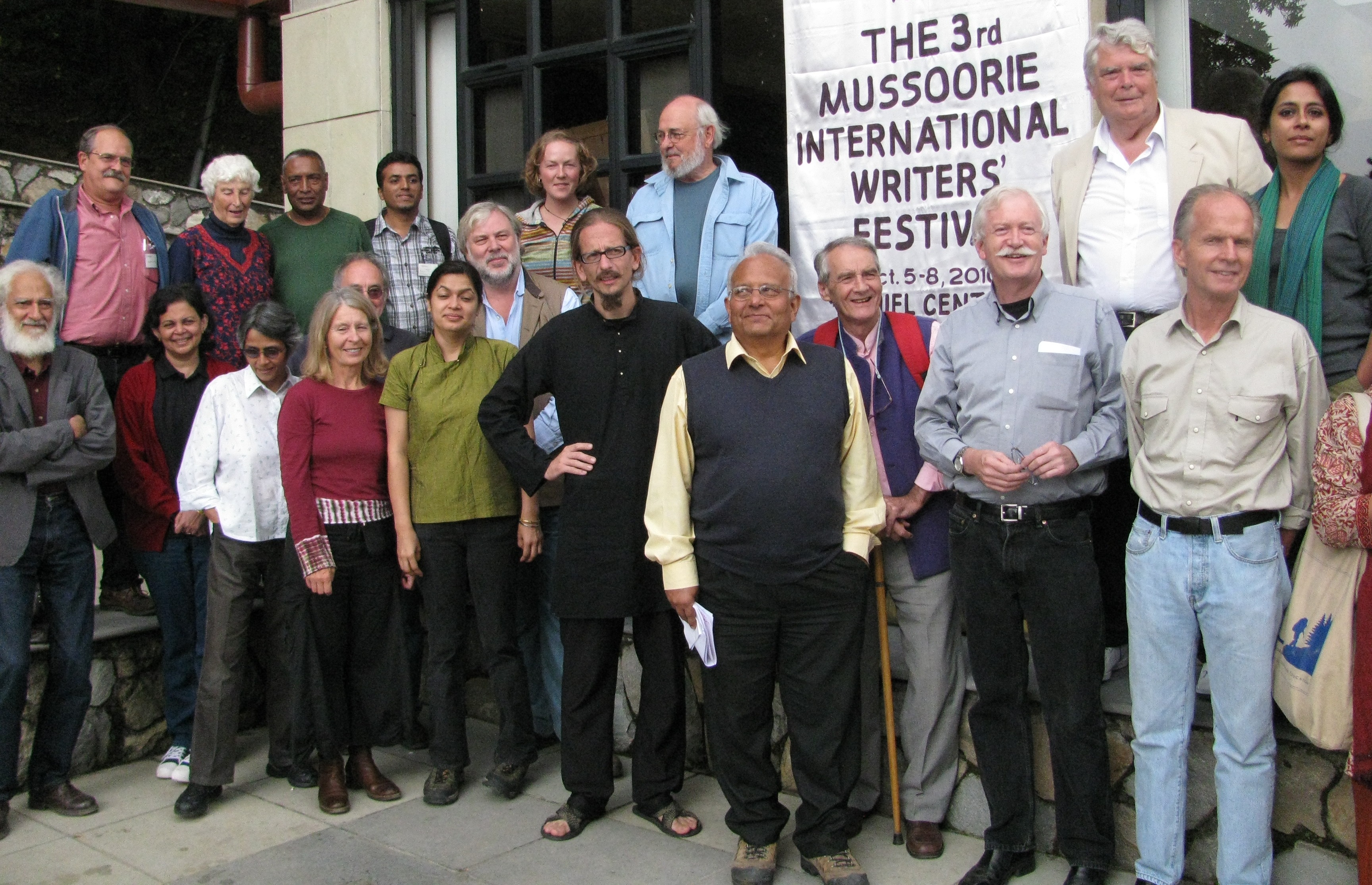
Thanks in large measure to Bond, Mussoorie and writing now went together. Other well known writers had appeared on the scene; `Landour Days’ itself mentioned several from the time it was penned. Plus there was that charm of being writer in the Himalaya. The first Mussoorie writers’ festival kicked off in 2007 with writing across cultures as theme. The next edition in 2008 had for theme, writing on nature. In 2010, it was mountain literature. That attracted me to the place. “ We wanted to celebrate Mussoorie’s own literary heritage and also expand that with new voices,’’ Stephen Alter, Curator, Winterline Centre for the Arts, said.

Winterline incidentally was the name given to the sharp delineation of sunset-sky from the inky blackness of earth below, which one saw on the horizon during winter in Mussoorie. It was reputedly only the second place in the world where you could see that, the other place said to be in Switzerland. The Winterline Centre for the Arts, which was the driving force behind the writers’ festival, was supported by the Winterline Foundation, begun by Woodstock alumni. The main venue for the event was the school’s Hanifl Centre, dedicated to outdoor education and therefore an ideal address for a meet-up of people loving mountain literature. “ I do generally think that if Mussoorie has to define itself, then it has to look for an identity. A literary destination is not a bad idea from that perspective,’’ Alter, a successful novelist, said. 

For its subject of mountain literature, the festival’s organizers had tied up with the Himalayan Club. The overseas speakers included well known field biologist and author Dr George Schaller; climber, writer, filmmaker and painter Jim Curran, the versatile Bernadette McDonald (climber, musician and writer, she was for many years Director of the Banf Mountain Film Festival and founding Director, Banf Mountain Book Festival. Among her books was an unforgettable biography of the late Slovenian alpinist, Tomaz Humar), Garry Weare, best known as the author of all five editions of Lonely Planet’s `Trekking in the Indian Himalaya,’ Andre’ Bernard, Vice President & Secretary of the John Simon Guggenheim Memorial Foundation, Vince G Martin, President, The WILD Foundation, David Wagner, botanist and artist and Kate Harris, adventurer, writer and photographer. Participants from India included veteran mountaineer and author of many books Harish Kapadia; traveller and writer Bill Aitken, filmmaker Toby Sinclair, actor Victor Banerjee, poet Arvind Mehrotra, novelists Anuradha Roy, Sudhir Thapliyal and Paro Anand, environmentalist Bittu Sehgal and journalists Prerna Bindra and Shailaja Bajpai. There was a small book stall, featuring works by the participating authors and other books.

From the 2010 writers' festival (Photo: Shyam G Menon)

From the 2010 writers’ festival (Photo: Shyam G Menon)

According to Alter, one aspiration of the festival was to draw an audience of teachers and students from both Woodstock and other schools in the region. Dr Schaller’s address for instance was attended by students of the Doon School as well. That aside, what captivated was Mussoorie as location for discussing mountain literature. The organizers, enjoying access to an entire mountainside thanks to Woodstock, had the option of locating evening get-togethers at picturesque outdoor spots. Movement between venues required a small walk.

Festival over, I went to Bond’s house to get a quote from him for this article. It was the blessed hour of afternoon nap, 2PM. I wondered whether I should intrude or not. If I didn’t it would be months before I came back to Mussoorie for another attempt at saying hello to him. If I did, I probably risked triggering annoyance. I realised I had to take my chance. A slightly agitated Bond opened the door. I explained that I was a freelance journalist from Mumbai seeking a quote from him for an article on the Mussoorie writers’ festival. He smiled. I couldn’t help feeling that he may have seen through me and realized that all I wished to do was say hello to him. Coming to think of it that was correct. Had I left Mussoorie without meeting him, Mussoorie wouldn’t have felt a complete experience. “ Well the festival gives writers a chance to meet, you know,’’ he said. Having read about mountains and liked Bond’s own work, I just had to hear it from him.

I thanked him and took my leave.

(The author, Shyam G Menon, is a freelance journalist based in Mumbai. An edited version of this article was published in The Hindu Business Line newspaper.)

AN INTERVIEW

The book `Freedom Climbers.' (Photo: Shyam G Menon)

The book `Freedom Climbers.’ (Photo: Shyam G Menon)

The man before me was of average height.

He was in good shape, shoulders thrown back, legs set firm to the ground.

His eyes were the sad-calm of someone who had seen a lot.

He spoke English, choosing words carefully yet amusingly for he had a sense of humour.

We sat down for an interview that I never published because I didn’t know enough of his incredible life. Just the previous day, I had heard him lecture at the Himalayan Club in Mumbai. It was funny, peppered with jokes despite the gravity of his exploits and the people he knew in his chosen field, famously called `the art of suffering.’. I could ask questions that make him repeat his lecture. That would be stupid. His life and that of his friends were central to a book. But with that book not yet out when this meeting happened months ago, my homework was zero.

What do I ask?

I set my notepad on the table and carefully kept my pen alongside.

Then I looked at his face, smiled and took a deep breath.   

Oxygen is good for the brain.

And what’s good for the brain may help birth a question – I thought.

The man before me was one of two people who climbed Everest for the first time in winter. That was in 1980. Long before that, when the first climbing expeditions approached Everest in the early part of the twentieth century, it had been via Darjeeling. I remembered previous visits to Darjeeling and Ivanhoe. Not Sir Walter Scott’s novel but a quaint heritage hotel with the same name. At its reception, the hotel kept a synopsis of its history, counting among past guests, the famous Hollywood actress Vivien Leigh and George Mallory, the British mountaineer who famously disappeared on Everest. However Darjeeling’s signature view is the giant massif of Kanchenjunga, India’s highest mountain and the world’s third highest. Years ago, my first trek had been to Dzongri in nearby Sikkim, from where you got a closer view of this peak.

Wanda Rutkiewicz was among the greatest woman mountaineers. She fought everything from unyielding mountains to male domination in climbing, all this while her own personal life was sufficiently tumultuous to cripple any of us. Akin to Everest’s first ascent coinciding with the coronation of Queen Elizabeth II in England, Wanda’s ascent of Everest coincided with the installation of Pope John Paul II at the Vatican. He hailed from Poland, where Wanda was born. On a quest to be the first woman to ascend the world’s fourteen 8000m peaks, she was last seen high up on Kanchenjunga. Wanda and four others – Jerzy Kukuczka, Wojtek Kurtyka, Krzysztof Wielicki and Andrzej Zawada – dominate the narrative of `Freedom Climbers’ written by Bernadette McDonald. The book I should have read before the interview I was attempting, it focused on a phase in the 1970s and 1980s, when Polish climbers roamed the Himalaya establishing difficult climbing routes and winter ascents. They were the toughest climbers in the Himalaya. 

Speaking in Mumbai in early 2013, Bernadette said that the book had been a challenge to publish as it was perceived as a niche within a niche. She traces the Polish assault on Himalayan peaks to a Poland invaded by Germany and Soviet Union, the brunt of World War II in Poland and eventually the oppressive Communist regime that ruled the country after the war. It shaped the psychology of a people. The country’s mountaineers cut their teeth on the Tatra Mountains. In pure altitude terms, this may seem very modest for the highest point is only 8710 feet up from sea level. Except, the Poles were putting up tough routes and winter climbs. Their quest for higher mountains brought them to Afghanistan adjacent to the erstwhile Soviet Union. Afghanistan was then under a regime friendly to the Communist Block. Slowly, they advanced to Pakistan, India and Nepal. By the time, the Poles reached the Himalaya most of the major peaks had been climbed by other European countries. To leave a mark uniquely their own, the Poles started climbing some amazingly tough routes besides transplanting to the Himalaya, their habit of winter ascents. Interestingly, the Polish reign in the Himalaya – when they climbed as though to compensate for what history had denied them – was strong during the times of controlled market and politics. It faded as Poland moved to free market and democracy. Today, Polish teams are still at work completing some of the mountaineering agendas born in that past, like climbing all the 8000m peaks in winter. But the mantle of ferocious climbing has moved on as though the country found peace yet turned soft with free market economics.

Does the state of its economy influence a country’s alpinism?

Good question.

One day in 1996, at the end of climbing season, my subject for interview had arrived alone at the base of Nanga Parbat (8126m) in Pakistan and asked some villagers for directions to a particular line of ascent up the peak, often called `The Killer Mountain.’ The villagers thought he was crazy. Famous for speed ascents in his generation, the man heaved a rucksack to his back and another to his front and climbed the peak solo. Nanga Parbat completed his climb of all the fourteen 8000m peaks. He was the fifth person globally to do so.

Krzysztof Wielicki smiled encouragingly as I struggled for the right question to start the interview.

(The author, Shyam G Menon, is a freelance journalist based in Mumbai. A slightly abridged version of this article was published in The Hindu Business Line newspaper.)

READING TILMAN

“To some the Himalaya may be only a name vaguely associated perhaps with a mountain called Everest: to geologists they provide a vast field for the starting and running of new hares; to other learned men, glaciologists, ethnologists, or geographers, the Himalaya are a fruitful source of debate in which there is no common ground, not even the pronunciation of the name; while to the mountaineer they furnish fresh evidence, if such were needed, of the wise dispensation of a bountiful Providence. For lo, when the Alps are becoming too crowded, not only with human beings but with huts, the Himalaya offer themselves to the more fanatical devotee – a range of fifteen hundred miles long, containing many hundreds of peaks, nearly all unclimbed and all of them so much higher than the Alps that a new factor of altitude has to be added to the usual sum of difficulties to be overcome; and withal to be approached through country of great loveliness, inhabited by peoples who are always interesting and sometimes charming. Here seemingly is a whole new world to conquer, but it is a world which man with his usual perversity, flying in the face of Providence, has reduced to comparatively small dimensions: for what with political boundaries, restrictions and jealousies, the accessible area is less than one-third of the whole. And though European travellers and climbers may grouse about this state of affairs, Europeans are, I suppose, largely to blame. For with the present state of the outside world before their eyes the rulers of Tibet, Nepal and Bhutan can scarcely be blamed, and might well be praised, for wishing their own people to have as little as possible to do with ourselves.’’

The paragraph struck home for two reasons.

First was the nature of perspective, different from that of the typical climber and describable as only that of a seeker – maybe, explorer? Second, the paradigm the Himalaya was trapped in. It remains unchanged today. Likely writing between the great wars of the twentieth century H.W. Tilman points to a state of the world that the kingdoms of Asia couldn’t be blamed for wishing to keep away from; limited access to the Himalaya and the Alps getting crowded. This picture hasn’t changed much although the actors therein and the direction of trading blame, probably have. Compared to today’s crowded South Asia and the as populous-China, between which lay sandwiched the Himalaya, Tilman’s reference to the “ crowded’’ Alps would seem lost. June 2013; the scale of human presence in the Indian Himalaya was betrayed when thousands of pilgrims died following heavy rains in Uttarakhand. We live in an era of exploded human numbers. Not to mention, the Himalaya as strategic boundary.  

When Tilman climbed Nanda Devi and found reason to write an account – mentioning therein of limited access to the Himalaya – the Great Game played out between the British and Russian empires, was well past its peak. Despite the passage of time, political games similar to the Great Game, featuring a new set of players, continue to be waged around the Himalaya leaving swathes of it still subject to the stuff of military strategy, territorial dispute, mutual suspicion and a regime of bureaucratic permits.  Not a day passes without disquieting news reports from India’s mountainous borders with Pakistan and China. While the whole thing may be a legacy of erstwhile management by foreign powers, not to mention the legacy of cocooned kingdoms in remoteness, it is a moot question what new generations and governments have done since to enhance peaceful coexistence and enjoyable access across the Himalaya.

That may seem childish.

If so, the thoughts evoked by the image of Earth Rise must be the most childish of all.

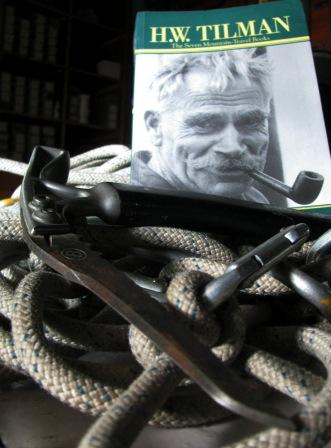
Tilman's book (Photo: Shyam G Menon)

Tilman’s book (Photo: Shyam G Menon)

Harish Kapadia, India’s best known explorer of the Himalaya and author of many books on the subject calls Tilman his favourite explorer of these ranges. He sent in a brief synopsis on the man, written with inputs from Rajesh Gadgil, Honorary Editor of the Himalayan Journal:

“ Harold William Tilman a.k.a. Bill Tilman, was one of the most prolific adventure writers and great explorers of the Himalaya and Karakoram, of the twentieth century. Originally a tea-planter in Kenya, he began his climbing in the company of another great explorer, Eric Shipton and climbed many peaks in Africa. Their partnership proved so successful that today they are remembered together as ‘Shipton-Tilman’.  Well known for his taciturn nature and simple but sound organization in the mountains (he used to say that any worthwhile expedition can be planned on the back of a post-card), Tilman achieved many firsts during his career. In 1934, with Shipton, he was the first to penetrate the Rishi Ganga gorge to find a way to the heart of the Nanda Devi Sanctuary. As if they were still not satisfied by one venture, the pair turned their attention to another challenge and by following an ancient myth, they were successful in connecting Badrinath with Kedarnath by a direct route via Panpatia Bamak for the first time in known history.  They barely survived, fighting for food with bears! After a great physical survival story he wrote, ‘we were experiencing a tiredness which only a very fit body can experience’! Subsequently Tilman joined and then led expeditions to Everest but his heart was in small scale exploratory trips to the then unknown mountains and valleys. Many exploratory episodes followed. In 1936, he led the first ascent of Nanda Devi in collaboration with the Americans and after reaching the summit, he describes that they were so overwhelmed by the beauty around that, ` I believe we so far forgot ourselves as to shake hands on it.’ Nanda Devi remained the highest summit attained by man till 1950. And humility was his trait too – he said that he was sorry to find the head of the proud goddess now trampled.

In the same year, he trekked and explored the areas around the Zemu Gap in Sikkim, of which he subsequently completed the first successful traverse in 1938. In 1937, with Shipton, he made a detailed reconnaissance of the little known areas of Karakoram, notably recorded in Blank on the Map. In the following year, Bill explored the Assam Himalaya around Gorichen but could not reach the mountain’s summit. In later years he explored and climbed extensively in the Karakoram, Hindu Kush and Xinjiang. Some of his notable attempts were Rakaposhi, Muztagh Ata, Bogda Feng and Chakragil. He also led an expedition to explore Langtang, Jugal and Ganesh Himal in Nepal. In that expedition Tilman was the first to ascent Paldor (5896m) and found the pass named after him beyond Gangchempo. In 1950, he led the British expedition to Annapurna where they could reach very near the summit of Annapurna IV. In the same year, he was one of the first persons to explore the Southern approaches to Mt Everest.

He has a place as a great explorer in history and his books narrate his exploits with wit. He kept exploring as his philosophy was – appetite grows with what it feeds upon, not by waiting…!”

It was Kutts Bommanda, then proctoring a fall season-semester course at the India branch of the US headquartered-National Outdoor Leadership School (NOLS), who told me of Tilman in the library and the reading it held. I was doing my internship then at NOLS India, Ranikhet. The book in the library was a compilation – `The Seven Mountain-Travel Books,’ published by Baton Wicks and The Mountaineers. Rather aptly for Tilman’s work, this section of NOLS India’s modest library was at the deep end of the equipment issue room stacked with mountaineering boots, ice axes, ropes, crampons and compasses. The chapter on Nanda Devi, I reckon, should be interesting for any NOLS student as also anyone who drove up to Ranikhet from the Kathgodam railway station because it talked about the mountain widely recognized as Kumaon’s presiding deity. It also provided a glimpse of the Ranikhet of many years ago for Tilman’s expedition to the mountain had passed through the town.

“ Ranikhet, whither we were now bound, is a hill station in the United Provinces. From Kathgodam, thirty six hours’ journey by train from Calcutta, it is reached by a good road of fifty miles. Numerous buses ply on this fifty mile stretch of road and competition is so fierce that the fare is only three shillings, luggage included.’’ Further, “ Ranikhet is 6000ft above sea level and the relief on reaching it and breathing the pine-scented air, after a journey by rail through the sweltering plains, has to be felt to be believed.’’ Tilman noted that the relief “ is intensified by the sight of over a hundred and more miles of snow peaks; distant, it is true, but near enough to stagger by their height and fascinate by their purity.’’ Beholding this scene today from the road above the town’s market, you get the same feeling.

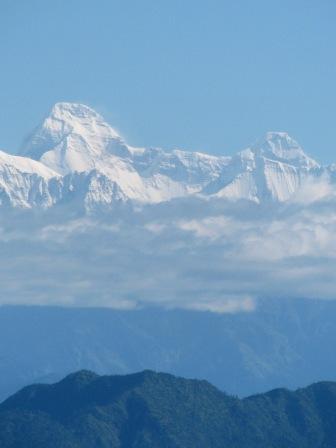
Among the peaks you see from Ranikhet is the 7816m-high Nanda Devi. Dwell on this mountain scenery awhile; you would agree with the observations recorded in the book on the view from far. Nanda Devi was and still remains, a tough peak to ascend, including the approach to the mountain, which took years for mountaineers to find. Some expeditions had as their highpoint, merely eliciting further progress on the approach while the mountain beyond stayed untrammelled. It was unexplored terrain. In fact, a major change since Tilman’s days is that following complaints of environmental damage by successive mountaineering expeditions and growing appreciation for the fragile ecology of the Nanda Devi Sanctuary, the mountain was closed to climbing expeditions.

The onward road Tilman’s expedition took from Ranikhet, was via ` Garul,’ likely modern day Garud; from there to Gwaldam, then over the Kuari Pass to Joshimath and eventually the village of Lata.

Nanda Devi, as seen from Ranikhet (Photo by Shyam G Menon)

Nanda Devi, as seen from Ranikhet (Photo: Shyam G Menon)

About the mountain’s summit, gained several weeks later, Tilman wrote:

“ The summit is not the exiguous and precarious spot that usually graces the top of so many Himalayan peaks, but a solid snow ridge nearly two hundred yards long and twenty yards broad. It is seldom that conditions on top of a high peak allow the climber the time or the opportunity to savour the immediate fruits of victory. Too often, when having first carefully probed the snow to make sure he is not standing on a cornice, the climber straightens up preparatory to savouring the situation to the full, he is met by a perishing wind and the interesting view of a cloud at close quarters, and with a muttered imprecation turns in his tracks and begins the descent. Far otherwise was now. There were no cornices to worry about and room to unrope and walk about. The air was still, the sun shone, and the view was good if not so extensive as we had hoped. Odell had brought a thermometer and no doubt sighed for the hypsometer. From it we found that the air temperature was 20 degrees F, but in the absence of wind we could bask gratefully in the friendly rays of our late enemy the sun. It was difficult to realise that we were actually standing on the same peak which we had viewed two months ago from Ranikhet, and which had then appeared incredibly remote and inaccessible and it gave us a curious feeling of exaltation to know that we were above every peak within hundreds of miles on either hand.’’

After gaining the summit, the expedition crossed over to Martoli near Milam and reached Kapkote via Tejam.

Tilman’s remarks on Bageshwar probably reflected the times.

“ Bageshwar is not the prosperous market town that it once was when its traders acted as middlemen between the Bhotias and the plainsmen. Now the Bhotias deal directly with the banias of Haldwani, Tanakpur and Ramnagar at the foot of the hills. The bazaar consists of solid well-built houses with shops on the ground floor, but it was sad to see so many of these shut up.’’

Anyone visiting today’s Bageshwar would find this surprising for the town is clearly the biggest commercial settlement between Almora and Pindari or Milam. One reason for this change could be the cessation of the old Indo-Tibet trade along the high passes of the Kumaun Himalaya, which dimmed the stature of mountain settlements like Munsiyari and made bigger, the names of towns closer to the bustling plains.    

My affection for Tilman’s world stems from the fact that increasingly I dislike competition. It is not that his generation didn’t compete. They did. What else was the race to the North Pole, the South Pole and that Third Pole – Everest – all about? Tilman himself uses words like `victory.’ But I live enduring its legacy multiplied by population and market. In a million ways, thanks to our rising tide of people and the need to survive, practically everything around has got tainted by the competitive spirit. This is the day and time of the branded warrior when the quest is to somehow brand one’s individual life for visibility in the crowd. Even harmless day to day conversation betrays the words, defences and posturing of competition. Years ago, learning about Darwin’s theory – survival of the fittest – was engaging inquiry about world. Now quoted by every Tom, Dick and Harry in and out of context, you switch off the moment somebody mentions it and its grandfather – competition. It is a widespread schizophrenia. Tilman’s ilk, what you call explorers, could walk in the Himalaya doing just that – exploring. They may have sought personal embellishment. But the grandeur of the Himalaya and its vastness was intact, for human beings were fewer than today. The media, which magnifies human life, prioritises it by achievement and implants it in our brain, was also far less. Achievement wasn’t yet an industry. With that, life was probably still life and nature ruled larger than human life. Compulsive competition has since killed fascination save of course, fascination for the self and promoting the self.

Seeking refuge in bygone eras is escaping the harsh present for what one assumes was a less harsh past.

I admit it.

I was hiding in that library.

I find it liberating to read about exploration in the early age of conquest and not conquest in times of exploration lost.

Photographing Tilman’s book in the gear issue room, I had to conclude that my efforts were a pathetic compromise. This book deserved to be on snow, ideally on that high ridge above the Kafni stream and near the peak of Salgwar (that’s a ridge providing good memories of friends and NOLS courses I have been out with), from where on a clear day, alongside other Himalayan giants, two sheer rock faces crowned by snow and joined by a knife edge ridge, can be seen over the tops of lesser mountains. That’s Nanda Devi and I clearly remember how that sight from the high ridge, one early morning, had emerged the most memorable experience for at least one NOLS student from the spring 2012 Himalayan Backpacking course. Snow on the ground, Nanda Devi in the backdrop – that would have been perfect for Tilman’s book.

But I was in Ranikhet.

The snow was yet far. 

(The author, Shyam G Menon, is a freelance journalist based in Mumbai. This article was originally written when he was the fall season intern at NOLS India in 2012. It was published on the NOLS India Facebook Page. It has since been rewritten for this blog.)