REMEMBERING ZORBA

???????????????????????????????Here’s an article originally published in 2012.

Seen from far, a glass of Gold Coin apple juice and a glass of whisky are not all that different. I was just about in high school. Apple juice in hand I sat in the living room of my uncle’s house in Kochi as he and my father shared a drink. On a shelf by the side, a turntable marked 33 rotations per minute. From the kitchen, the aroma of my aunt’s cooking wafted in. I don’t recall when the song was first played or what attracted me to it. But it was a request my uncle always obliged whenever we visited – Frank Pourcel’s orchestra playing `Zorba’s Dance.’

The song opened haltingly, then picked up speed and exploded to madness. There was something masculine about it. Not in a gruff, rough fashion but in a demented sensitive way lost on today’s competitive world. This song bothered about person and universe. That seemed to be its attitude – to hell with everyone and everything! It wasn’t long before my uncle spoke of Anthony Quinn and the film Zorba the Greek. He owned two versions of the title song– the Purcell and there was another energetic rendition with trumpets. I remained partial to Purcell. The original score was played with a plucked instrument, something I discovered much later.

For several years thereafter I knew nothing more of Zorba. Then one of the video libraries back home began accumulating titles from the black and white past of cinema. That library is no more there in Thiruvananthapuram but I still remember my membership number. From there I got a VHS copy of Zorba the Greek. The transition from imagery inspired by music to the actual story was jolting. I had built up this notion of Zorba as a dancing, vivacious Greek but not factored in the ambience he lived in or the story told as interaction between the two. This was serious cinema, story set in Crete far off from the US and its glamorous studios. I watched the film several times, burning into my head the mad face of Zorba; the writer Basil, played by Alan Bates and the pathos that surrounded Lila Kedrova’s Madame Hortense. I was amazed by how striking Irene Papas looked on black and white film and touched by the story of the widow – it was a universal story of the lone woman and the scene of Mavrandoni killing her could have been from anywhere. Equally universal I felt was the decline of man when in a group as personified by the villagers’ attitude towards the widow and the utter superficiality of human belonging as evidenced by the villagers stripping the Hortense residence of all things useful upon the lady’s demise.

The film was a turning point for many of its cast. The role of the santuri-playing Zorba was reckoned to be the zenith of Anthony Quinn’s career. It earned him an Oscar nomination although the two Oscars he got were as supporting actor in earlier films, Viva Zapata and Lust for Life. For Lila Kedrova, the role of Madame Hortense defined her Hollywood career. She won a best supporting actress Oscar. Alan Bates became much remembered as the gentle writer in the shadow of Quinn’s eccentric Zorba. For Irene Papas, the 1964 film cemented her presence in international cinema following as it did her appearance in The Guns of Navarone three years earlier. The film was arguably the most important one in the career of director, Mihalis Kakogiannis, also known as Michael Cacoyannis. He was nominated in three categories, including best director but did not win an Oscar. Composer Mikis Theodorakis, a noted political figure in Greece, has to his credit a vast repertoire of music. Zorba’s Dance remained his most memorable film score. That fantastic piece of music did not merit an Oscar nomination. However, two other Oscars did grace this unforgettable film – best art direction and cinematography. What I hadn’t tasted as yet was the original creative work behind it all – the novel by Nikos Kazantzakis. This famous Greek writer, who narrowly missed out the 1957 Nobel Prize for literature to Albert Camus, had to await the release of the Kakogiannis film to be world renowned.

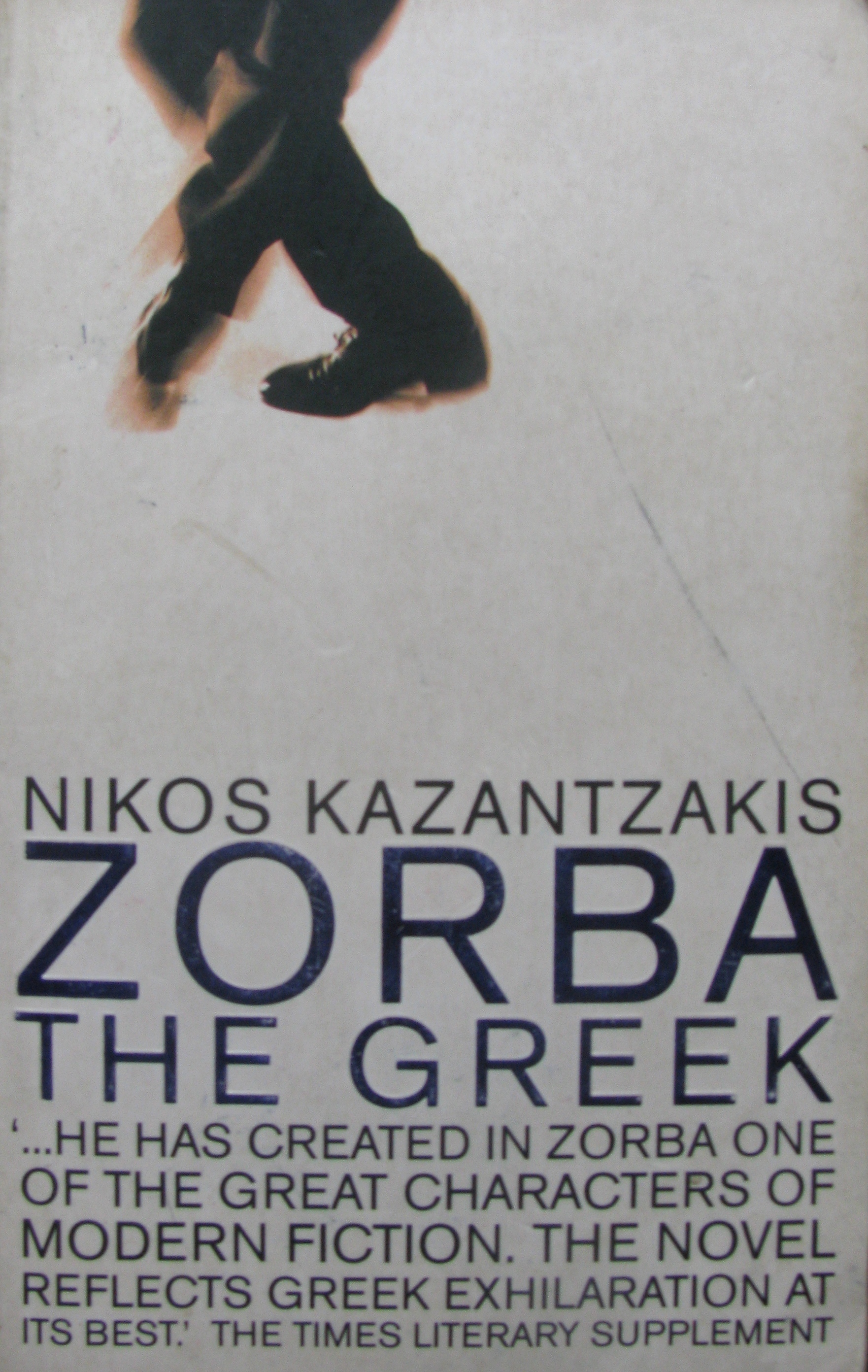
???????????????????????????????Several years went by. I was now journalist, probably as old as Basil (unfortunately not as rich to spare money for mining) and walking around Mumbai (an island like Crete), when I spotted a tattered copy of Kazantzakis’ book with one of the second hand booksellers at Flora Fountain. It was musty yellow, had fallen apart and the previous owner had stuck it up with cello tape. It was published by Ballantine Books and likely hailing from the fourteenth edition of the novel printed in February 1969 for right on top of the front cover, above a dancing Zorba, was the announcement, “ the smash Broadway musical!’’ After its success on screen, Zorba had two runs on Broadway and the book’s cover seemed to indicate the first from November 1968 to August 1969 with Herschel Bernardi as Zorba and Maria Karnilova as Madame Hortense. In the second avatar that ran from October 1983 to September 1984, Anthony Quinn and Lila Kedrova essayed on stage the characters made famous by them on celluloid. That old book was how I finally got around to reading the story of Alexis Zorba.

On the very first page was an abstract from Time magazine: “ who is Zorba? He is everyman with a Greek accent. He is Sinbad crossed with Sancho Panza. He is the Shavian Life Force poured into a long, lean, fierce-mustached Greek whose 65 years have neither dimmed his hawk eyes nor dulled his pagan laughter. Author Kazantzakis tried to kill him off in a letter. But he reckons without his own talent. He has created Zorba, but he cannot kill him.’’ From The Nation: “ Wonderfully moving, superbly written. Zorba belongs in the gallery of sainted rascals.’’ And on the back cover, the Saturday Review said: “ Alive with energy…Earthy and Rabelaisian – a strange journey into a haunting, wild and poetical conception of life.’’ The book was a splendid read. A few more years lapsed before I picked up a VCD of the film. Later, I bought a brand new copy of the book just in case my vintage edition fragmented for good.

I wonder what attracts me to Zorba. Maybe it’s that he broke free of people and became a person. Maybe it’s the specter of life laid bare. Madame Hortense and the widow – they are hauntingly that. They could be any of us despite changed times. Similar unchanged truth – the human insecurity that underlies man’s ornate constructions, echoes in Zorba’s irreverence for religion. Then there is Zorba’s view of life at large from women to writing. I can’t help liking Zorba. I love the music, the book and the film. Not to mention, that golden brown glow of apple juice in a glass long, long ago, among my first instances of being treated as a person.

(The author, Shyam G Menon, is a freelance journalist based in Mumbai. This article was published in The Hindu newspaper.)

SHIPTON & TILMAN

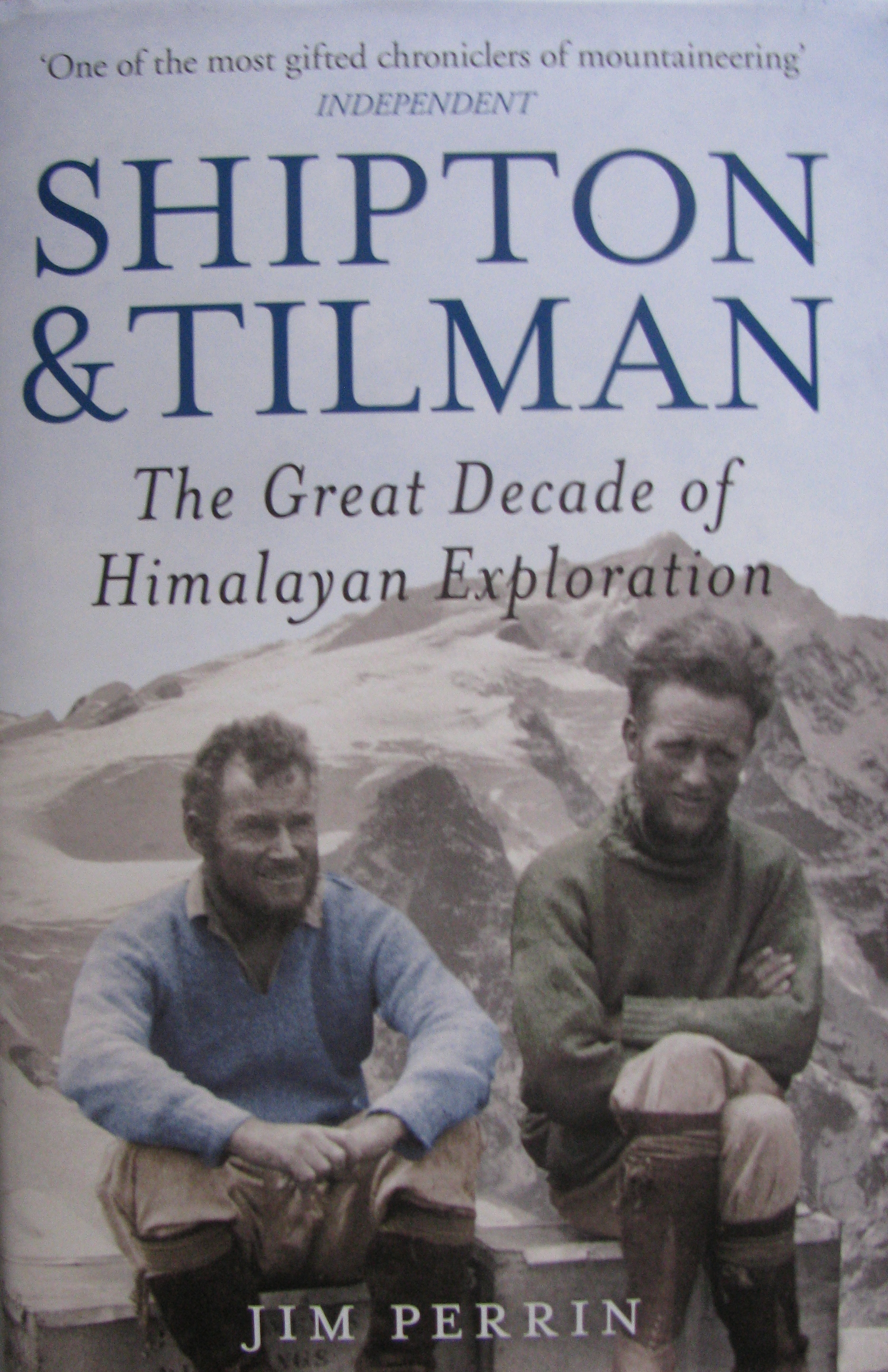
`Shipton & Tilman,' the book by Jim Perrin.

`Shipton & Tilman,’ the book by Jim Perrin.

The day I went to interview Jim Perrin, I forgot to bring my camera.

Unusual for mid-February, it had rained. It felt like early September, the relatively weak, tapering part of monsoon with grey sky and reluctant sun. In his room at the Royal Bombay Yacht Club, Jim sat facing the rain tinged light of the window. Beyond it was the road leading to the Gateway of India. The light filtering in graced the room, built big to colonial dimension and still preserved in the old style.

Jim rested his back on one armrest and slung his legs over the other. He recalled his life writing about climbers. In that borderland of writing and climbing, one of the things he ended up doing was writing obituaries. He wrote many.

Then, there are those three books, conceived long ago as a trilogy, each representing an influential person or phase in British climbing.

John Menlove Edwards the subject of the first book in the series had been a gifted rock climber and writer. Don Whillans, the topic of the second book in the trilogy, personified the gate crashing outsider. Until then, mountaineering had been the preserve of an elite, class conscious imagination. Whillans gate crashed the party but the very force that made him would also be his undoing. Jim, a rock climber in his younger days, knew Whillans. The overcast sky dispatched a pool of diffused light to where Jim sat. I tried my best to focus on Jim talking but my mind couldn’t help regretting the photograph of writer in that room, missed.

Few hours after our chat, Jim received the Kekoo Naoroji Award from the Himalayan Club, for his third book – the last of the trilogy – on the remarkable partnership between Eric Shipton and Bill Tilman. In India, the duo are best remembered as explorers of the Himalaya, two mountaineers who worked together to fashion an approach to the iconic 7816m-high Nanda Devi. That peak is the heart beat of Kumaon. In August 1936, Tilman and Noel Odell would become the first party to summit the peak. Although he partnered Tilman in finding a route to Nanda Devi (it sits well guarded by a wall of other high mountains), Shipton had opted for Everest, when this eventually successful expedition came by. He never reached Nanda Devi’s summit. But Shipton-Tilman was more than Nanda Devi.

Mountaineering is a harsh sport. Sure there is what nature throws at you. But there is also the mix of personal ambition and high adventure through natural hazards faced, which forces an evaluation of self and others that is heartless and very often, the stuff of anger, regret and acrimony. Egos clash. Teams break up. Many times, friendship and break-up have happened all in the space of one expedition. Shipton-Tilman was different. Their friendship endured and even after the two men – each quite different from the other in terms of character and yet somewhere similar – stopped climbing together, they maintained their mutual respect. For many Indian mountaineers in their middle age now or past it, Shipton-Tilman is the ideal. Further their legacy is in a class of its own. The books they wrote together and separately are considered classics of outdoor writing.

I read my first Tilman in my forties much after the world of climbing had been invaded by modern media leading us to believe that nobody told climbing’s story as well as we did. That’s the mark of our times. Reading Tilman was an invitation to correct such arrogance. His writing engaged and the imagination in it captivated for the questions it posed and the style it adopted so many years ago. It was humbling.

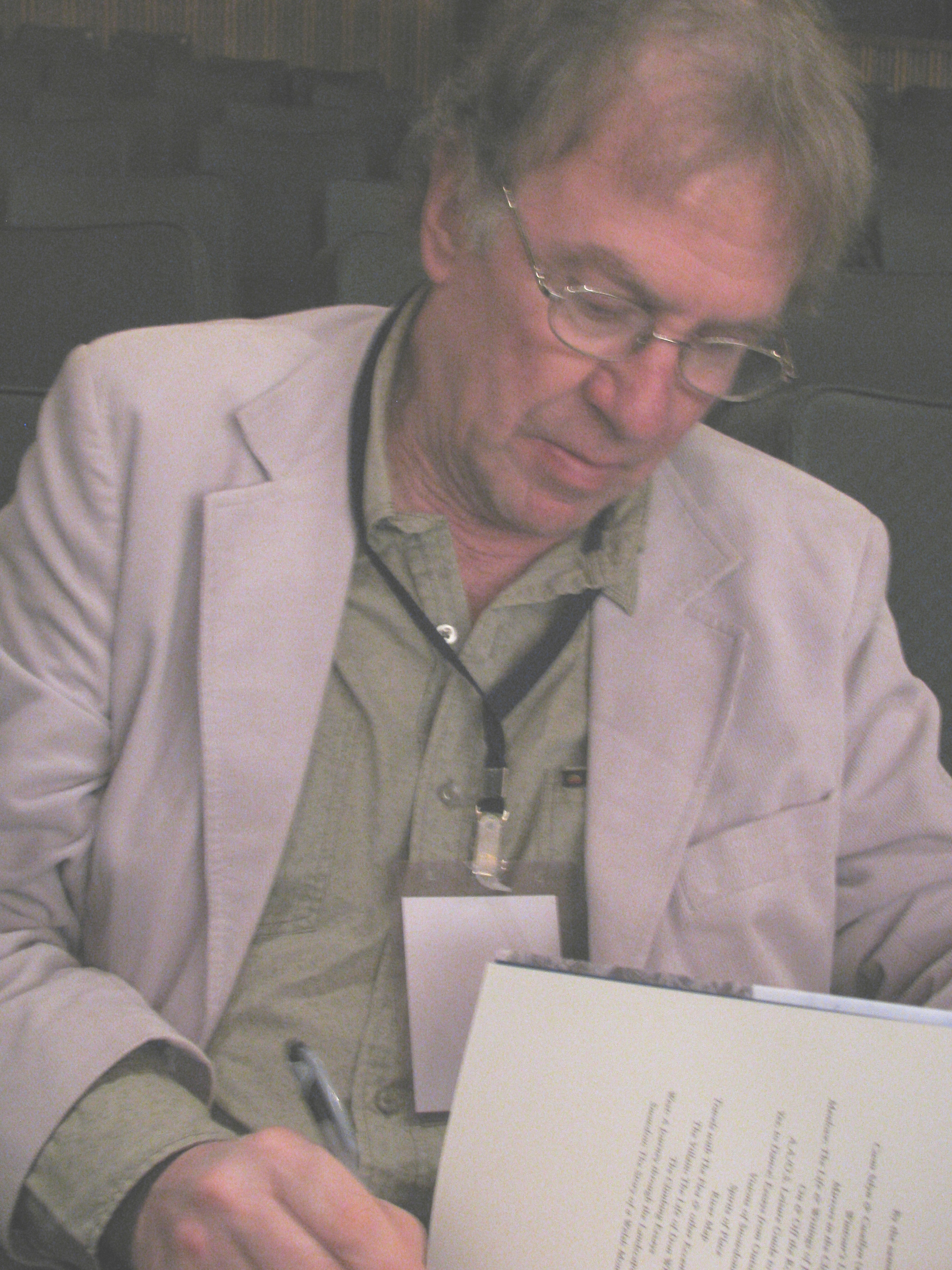
Jim Perrin (Photo: Shyam G Menon)

Jim Perrin (Photo: Shyam G Menon)

Core to the world of mountaineering and aside from their lasting partnership, Shipton-Tilman are remembered for a couple of other reasons. First, they are among the last classical explorers of the Himalaya and the exploration of a route to Nanda Devi was one fantastic story. Second, while the mountaineering style between the great wars of the twentieth century endorsed both the ideals of empire and climbing in military style-expeditions, this twosome ventured forth in lean teams, interacted with the local people and lived off the land. Today we call such lean climbing – alpine style ascents. The British mountaineering establishment of the days when Shipton-Tilman climbed couldn’t gauge the potential impact of their style, till fault and criticism progressively caught up with the practice of giant expeditions. As empire faded, so did the reverence for old siege and assault styles. But Shipton-Tilman lived on as `alpine.’ From a writer’s perspective, these two men pose a unique challenge. Despite books they wrote and books about them, there is little providing insight into their formative years. In their accounts, both men don’t indulge this angle. In reality, Shipton’s childhood and youth are relevant to understand him as is Tilman’s military experience during World War I. One took his chances with women; the other was called misogynist. Jim tries to explain the two characters well, with detailed research and at times, educated guess based on personal knowledge. For instance – he knew Tilman.

After approximately a third of the book read and the rest skimmed through to confirm its flavour, Jim Perrin’s book came across as a study. It is not the typical climbing story. The narrative of the Shipton-Tilman climbs is already out there. Jim’s is a writer’s journey into their separate stories, their separate characters, their association as a team and what they possibly meant in their writings (Jim puts it in perspective). It is also therefore a book based on many other books. So, more than climbing, it is literature and scholarship, a valuable insight into the greatest partnership in mountaineering. According to Jim, the book had been thirty years in the making. Asked why he restricted himself to writing on British climbers, he said that he preferred to write on subjects he knew. To me, that’s one more reason as to why Jim’s book matters.

When we finished chatting and it was time for lunch, I recommended a well known upmarket restaurant in Colaba. He agreed to it but then asked, “ Can I get aloo paratha?’’ So we ended up in a decidedly less expensive place, filled with chatter, tea and Indian food. Days later as I started reading Jim’s book, I noticed how it began with deep appreciation for the aloo paratha and tea he had enjoyed, at a dhaba near Gaumukh.

(The author, Shyam G Menon, is a freelance journalist based in Mumbai)

WALKING WITH NAIN SINGH

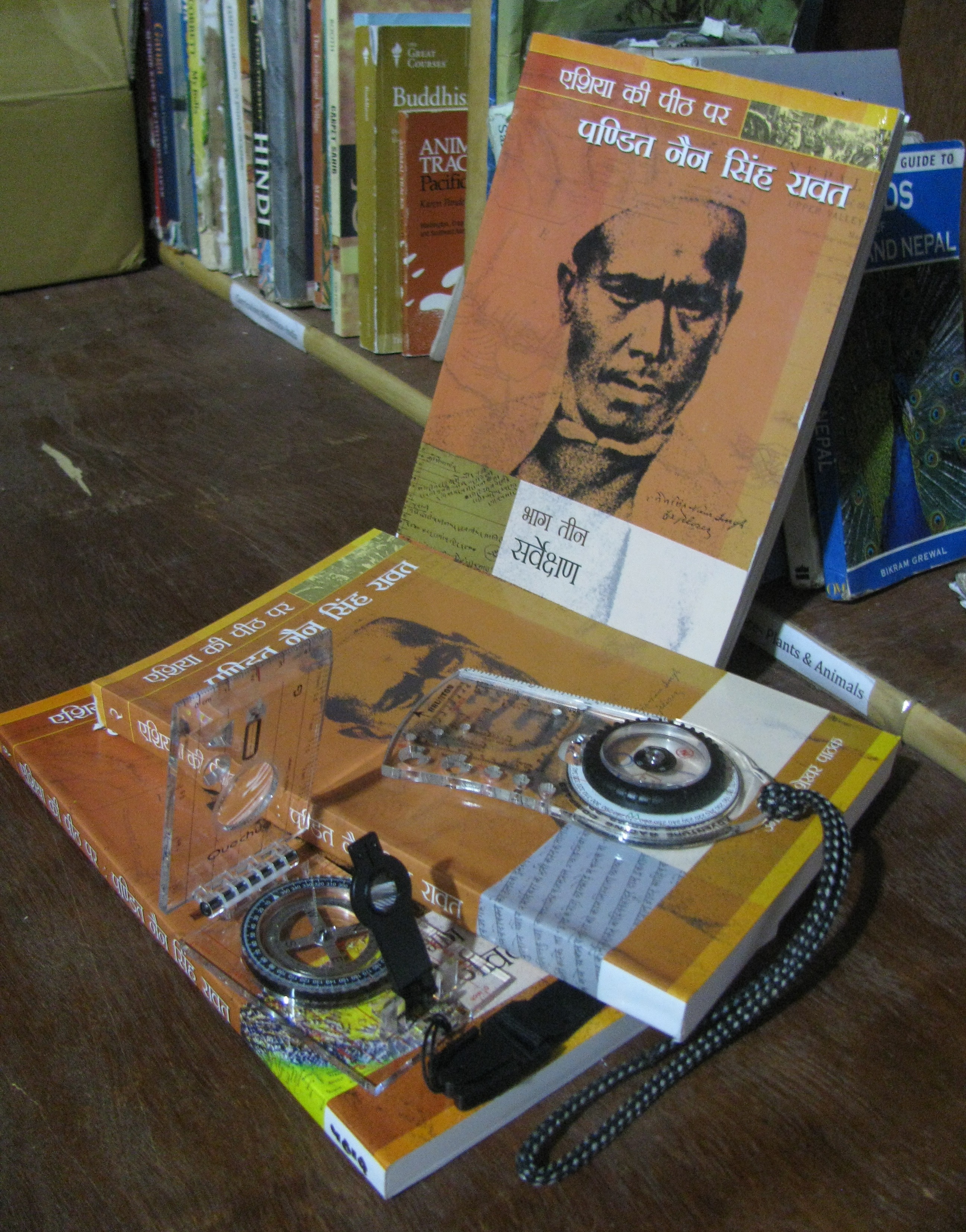
The books on Nain Singh Rawat published by PAHAR (Photo; Shyam G Menon)

The books on Nain Singh Rawat published by PAHAR (Photo: Shyam G Menon)

In the early 1970s, Dr Shekhar Pathak and Kundan Singh Rawat were students at Almora.

Pathak was the editor of the college magazine.

When it was his turn to write as contributor, Kundan submitted a piece titled simply: ` Nain Singh Rawat CIE.’

That was Pathak’s introduction to Kundan’s less known side – he was the great grandson of Nain Singh Rawat, one of the Pundit brothers from Kumaon’s Johar valley near Munsyari, famous for the work they did in mapping and documenting Tibet.

In the early nineteenth century, the British were hungry for cartographic details of a mysterious Tibet closed to Europeans. The desire for information was catalysed by the Great Game, that shadow dance of mutual intrigue enacted by Russia and Britain to extend their influence in Asia, particularly the Himalaya and Central Asia. Each worried that the other would dominate the region; their competition made little known kingdoms and places on the map, suddenly important. The effort to know these places triggered exploration and military campaigns, altogether lasting approximately a century. The work Nain Singh and his fellow surveyors produced dwarfs political motives that may be attributed to their journeys. It brought to light many details of the Himalaya, like the eastern course of the Tsangpo useful to establish that this big river in Tibet and Assam’s Brahmaputra were one and the same. Nain Singh travelled in disguise usually as a Tibetan monk, surveyed without complicated instruments and concealed the data in prayer wheels. He trained to walk with strides of a particular length always so that distances could be measured. Unlike travel for leisure, which is what many of us do, this was dedicated, disciplined work. Years later, when Sir Francis Younghusband led British forces to Lhasa, his surveyors would discover that Nain Singh’s records were accurate and reliable despite the few resources he worked with.

Pathak had been previously drawn to Nain Singh Rawat during his periodic visits to the office of `Shakti,’ a newspaper published from Almora. Their calendar had featured important personalities of Kumaon; including Nain Singh Rawat and Kishen Singh Rawat, the best known of the Pundits. `Pundit,’ a title conferred on teachers, was how the British addressed their Hindu surveyors. Kundan’s article interested Pathak. He helped edit the piece, little knowing where the curiosity would take him.

In October 1973, Pathak trekked to the Pindari Glacier and wrote a travelogue, later published in `Shakti.’ It quoted from the book `One Dimensional Man’ by Herbert Marcuse. The article was seen by Sunderlal Bahuguna, closely identified with the Chipko Movement, one of the most important environmental campaigns of modern India. In December 1973, Bahuguna spun the idea of a walk from Askot to Arakot, an east-west traverse of the Central Himalaya region now falling in the state of Uttarakhand. To maximize the education and awareness about villages and people en route, it was decided that participants – including Pathak – would carry no money. Although Pathak couldn’t do the route entirely given his college exams, four people – Kunwar Prasun, Shekhar Pathak, Shamsher Bisht and Pratap Shikhar – walked much of it during May-July 1974. By December that year, Pathak had joined the Kumaon University to teach history. He was based mostly in Nainital; he would take his PhD in 1980 and go on to become one of the best known historians from Kumaon.

The interest in Nain Singh Rawat continued.

In 1975, `Saaptahik Hindustan,’ a weekly magazine, carried an article by Dr Ram Singh, then a lecturer in Hindi literature with keen interest in history, on Nain Singh Rawat. The article quoted from the explorer’s diaries. This was the first time Pathak heard of Nain Singh’s diaries. According to Pathak, Kabindra Shekhar Upreti, who had taught many years in lands inhabited by the Bhotias, was instrumental in bringing the diaries to light. He was principal of the Government Intermediate College in Munsyari, when somebody showed him the diaries. After retirement, Upreti, moved to Nainital bringing along with him the two Nain Singh diaries. “ Seeing the diaries was a revelation,’’ Pathak said. The first of these diaries was quite autobiographical providing previously unknown vignettes of the explorer’s early years including his father’s life. Upreti had taken care to wrap the old diaries in a piece of cloth, a level of care that does not appear to have graced all subsequently recovered vestiges of Nain Singh’s work. The year was probably 1976. Nainital had Nain Singh’s diaries, a community of intrigued researchers and no photo copying machines to make copies of the diaries for study and ensure that the originals were undisturbed.

By 1982, Pathak would be a founder of the People’s Association for Himalaya Area Research (PAHAR). This organization brings out a publication called PAHAR, of which Pathak is founder editor. Kamal Joshi, a keen trekker, student of chemistry and later photo editor of PAHAR, was at hand to help when the Nain Singh diaries reached a Nainital with no photo copiers around. He set up a temporary dark room and photographed and printed each page of the diary, probably a hundred in all. Over three years – 1976, 1977 and 1978 – Pathak, his wife Dr Uma Bhatt – she is a Hindi scholar – and their friends, wrote Nain Singh’s diary on paper. Now they were getting an insight into the person and for Uma, a way to look at the explorer through his language and style of writing. According to her, Nain Singh wrote in a form of Hindi that can be described as `Khadi Boli,’ which is not chaste Hindi but a Hindi mixed with Persian words. It is a more spoken form of the language and to that extent probably easily connecting to an audience. “ Nain Singh’s diaries can be considered to be one of the first such travelogues in Khadi Boli Hindi,’’ she said.

Dr Uma Bhatt and Dr Shekhar Pathak (Photo: Shyam G Menon)

Dr Uma Bhatt and Dr Shekhar Pathak (Photo: Shyam G Menon)

In 1978, another diary surfaced at the house of a freedom fighter. This time, it wasn’t in Nain Singh’s hand writing, it had been copied and translated into English. Half of this diary was personal; another half was related to his first trip into Tibet. But there were sections missing. All the diaries were typed out. In 1985, one of Nain Singh’s diaries – on his second journey to Tibet – was published as a seven part-series in `Nainital Samachar,’ a local fortnightly. In 1986, Pathak presented a paper on the importance of vernacular diaries with Nain Singh’s work as case in point, at the Indian History Congress. PAHAR, the journal, also published portions of the explorer’s diaries. In 1985, `Himalaya Today’ published a long article on Nain Singh Rawat authored by Dr Pathak and Dr Uma Bhatt.

Years of seeking to know about Nain Singh’s life made Pathak look for details wherever he went. In 1984 on a repeat of the earlier Askot to Arakan walk, at Madkot village, he was shown the original primer for surveying – a text book for surveyors – which Nain Singh had written and was published by the Survey of India in 1871. In 1994, while on a visit to Pakistan, some German friends helped him access relevant portions of the seven-volume report of the Schlagintweitt Brothers, German geographers with who Nain Singh had done his first trip of exploration in the Himalaya. The full report of the Schlagintweit Brothers, Pathak saw some years later in Stockholm and still later, at the Survey of India. In 1991, Pathak himself went to Kailas Manasarovar; in 1996 and in 2006 he visited Lhasa, in 2002 he visited parts of Tibet to the north of Everest (he crossed from the Nepal side). The eastern extreme of Nain Singh’s travels – the subject of his epic last journey from Ladakh to Tawang – Pathak managed to get some idea of that in 1992-1993, through visits to Arunachal Pradesh. Some of these trips, Pathak said, had been emotional. Eventually, as a researcher at the Delhi based-Nehru Memorial Museum and Library, Pathak gained access to the Survey of India archives at Dehradun and records at their old office in Kolkata (Calcutta).

In 2006, PAHAR published a three volume set called `Asia Ki Peeth Par’ (On the Back of Asia: life, explorations and writings of Pundit Nain Singh Rawat) compiling Nain Singh Rawat’s diaries and the reports on his journeys submitted by the British. Nain Singh was born in the same year as the Royal Geographical Society was founded. The Society awarded him the Patron’s Medal in 1877. In deliberations preceding this and to impress upon the Society the magnitude of this exploration by a non-European, Col Henry Yule, who would be vice president of the Society from 1887 to1889, argued that Nain Singh’s contributions were best compared in the western world to the likes of David Livingstone and “Grant,’’ most likely James Augustus Grant.

Kundan Singh Rawat, the man responsible for inspiring Dr Pathak’s forty year-old journey with Nain Singh Rawat’s story, is no more. In 2004, the Indian government brought out a postage stamp featuring Nain Singh. Despite books by Dr Pathak, Dr Uma Bhatt and others, including mention in popular books by foreign authors on the Great Game and the exploration of the Himalaya, Nain Singh Rawat remains little known outside the state of Uttarakhand.

(The author, Shyam G Menon, is a freelance journalist based in Mumbai. This article is adapted from earlier pieces he wrote for the Facebook page of NOLS India and The Hindu newspaper.)


IN MUSSOORIE, THOUGHT RESTORED

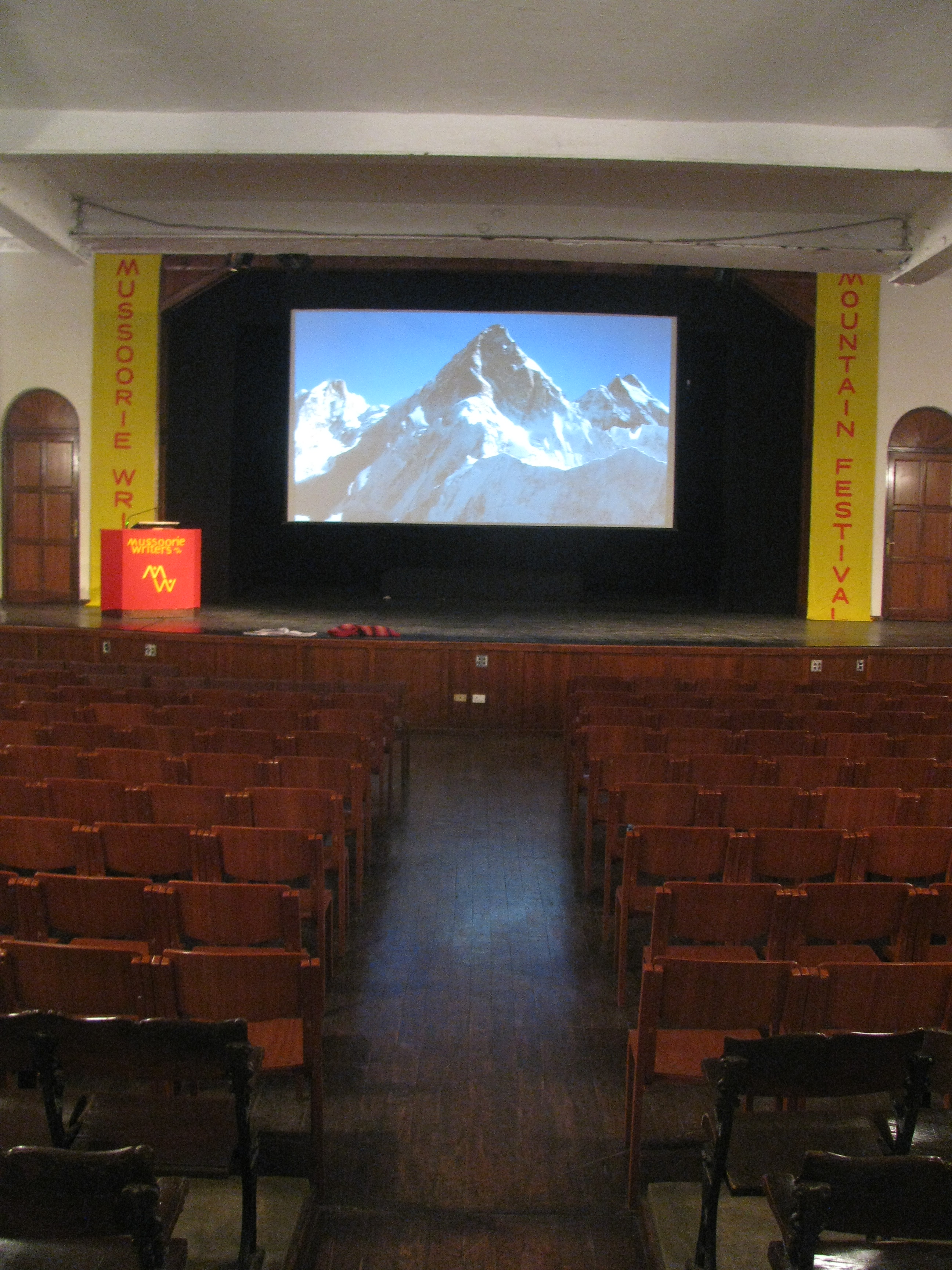
Parker Hall (Photo: Shyam G Menon)Fans of the Indiana Jones series, will remember the scene from the first film when cinema’s favourite archaeologist faces a huge scimitar-wielding opponent. For a minute, we think it is time to bid goodbye to the adventurer played by Harrison Ford. Then, slowly recovering from the sight of scimitar swishing about, he pulls out his gun and fires. One bullet fells the imagery of the terrible scimitar. As simple as that; balloon pricked.

Something similar happened last November, during the last session of the 2013 Mussoorie Writers’ Mountain Festival when the documentary film `Kukuczka’ by Jerzy Porebski was screened. In the film (a tribute to the legendary Polish mountaineer Jerzy Kukuczka), veteran mountaineer Kurt Diemberger comments on the current craze for speed ascents on formidable mountains. Gracefully aged by time, Diemberger has a serene, saintly gaze. He gently laughs and compares these swift climbs to the difference between sex and loving a person, understanding a person. Sometimes in the world of adrenalin soaked-climbing, you need a wake-up call as effective as Indiana Jones’s bullet. This seemed just that. The analogy was perfect; the delivery in Diemberger’s affable way, equally so. For me, it was one of the truly memorable moments of the last edition of the festival. You come to events like this, to rediscover the value of thought. Restoring thought in outdoor sport is particularly difficult as the world of marketing and media have squeezed contemplation out leaving us with action junkies in close-up.

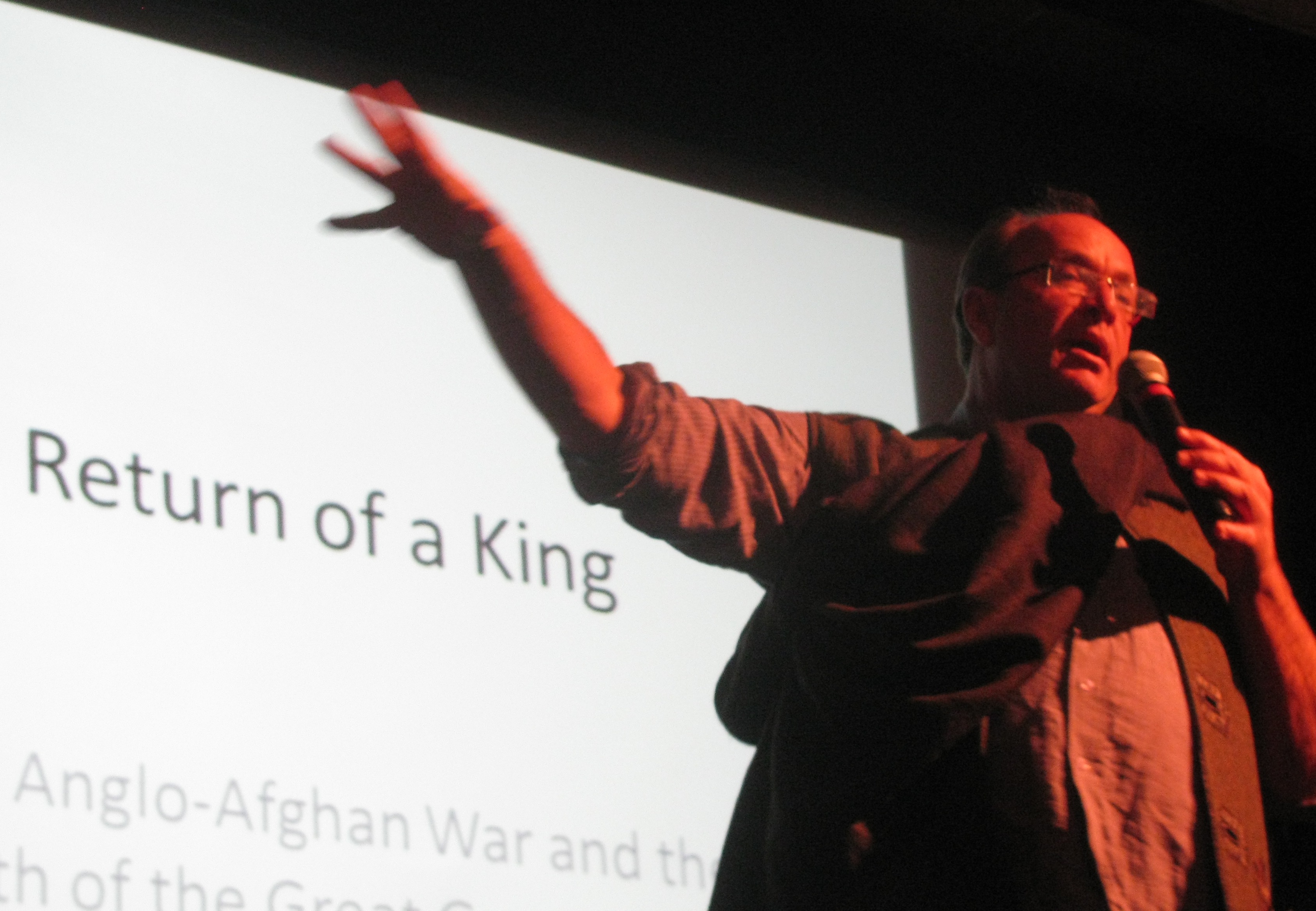
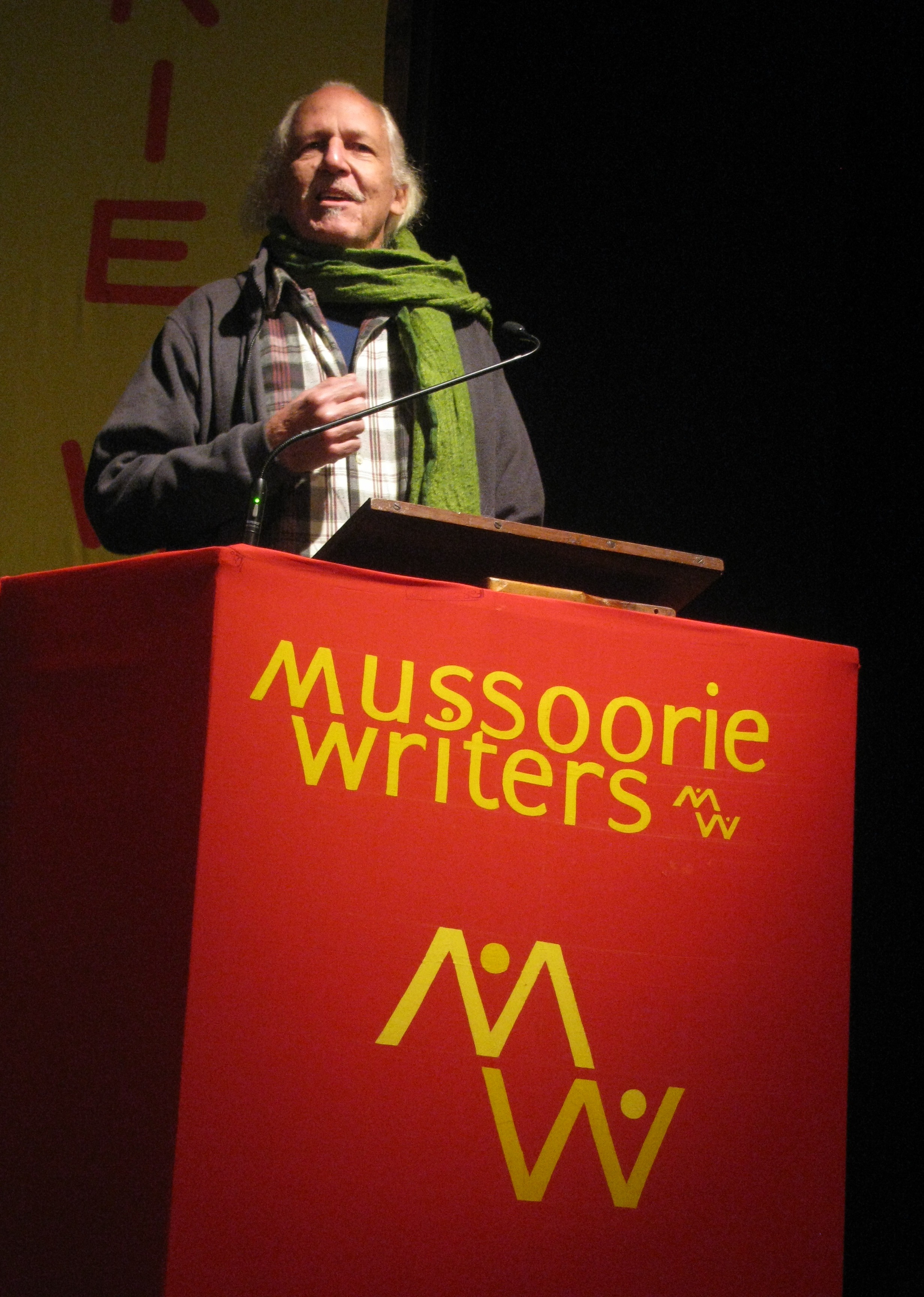
William Dalrymple speaking at the Mussoorie festival (Photo: Shyam G Menon)

William Dalrymple speaking at the Mussoorie festival (Photo: Shyam G Menon)

On the other hand as author David Roberts wonderfully pointed out (he was quoting Benvenuto Cellini) in an old essay on mountaineers’ biographies, there is value in writing memoirs when you are past forty and not before. As you age you learn to see what happened from a distance, not with your nose to the rock. Yet thanks to competition, marketing and media, our world has been losing that distance, that perspective. As ornaments for adventurer grow, the outdoors fades to being means for a world resonating us. It is like you swallowed K2, vacuumed the Sahara or gulped down the Pacific to become something bigger than they all – which you do in the human world. You tower above others while whatever you conquered exists timeless out there. It is both a crisis in human imagination and a crisis in sponsorship models for without claim by superlative (in world running out of superlatives) and consequent interest shown by media, money shuns adventure. I found Diemberger’s comparison, spot on. It is easier to manufacture reasons for attention by marketing’s logic, than to know the mountains or lose yourself to what you like and where you had been. That’s the thing – are you willing to lose yourself, trade rank among humans for mere place in everything? I found myself laughing hearing Diemberger’s observation. I also found myself saying: thank you!

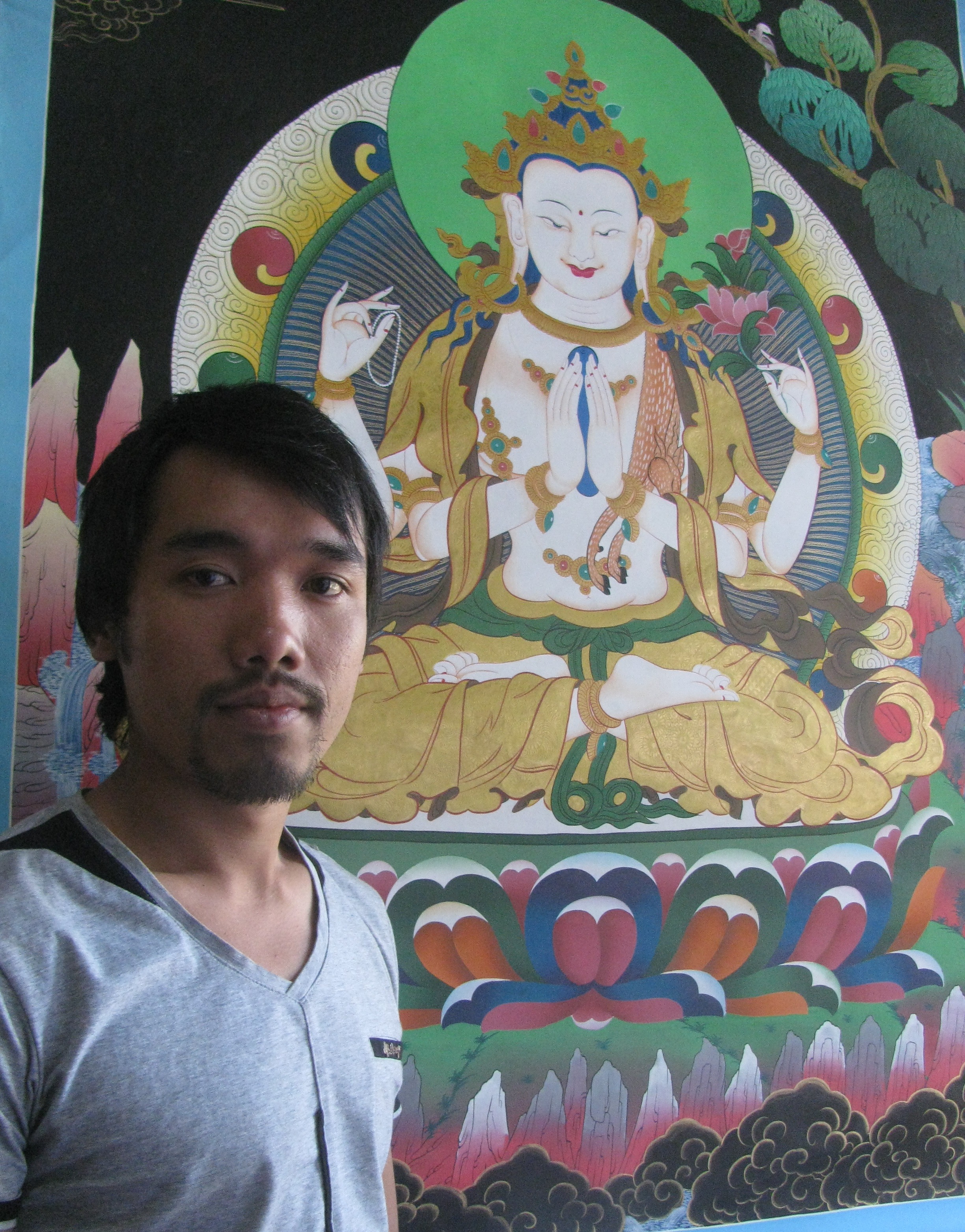
Ayush Yonjan (Photo: Shyam G Menon)

Ayush Yonjan (Photo: Shyam G Menon)

The Mussoorie Writers’ Mountain Festival is both about writing / arts and about mountains / the outdoors. It is special for me. First, it gets me back to the hills, reunites me with others similarly cast. Second, as a writers’ festival, it returns the intellect to a domain rapidly trading intellect for the glamour and decisiveness of action. I write as outsider. Despite much time spent climbing, I wasn’t good climber. Still, if average climber may speak up – I was never fascinated by just action. Save perhaps in the thoughtless depths of tackling a climbing route, which is too much an instance of focused, intense existence to be generalized as life. Firmly into middle age, I also realized that my being has a spiritual side, which needs attention as much as my body. A larger landscape now interests me. To feel the larger world, you stay open to a variety of stimuli ranging from music to photography, to painting, writing, science, history, geography – for all this exists out there. A festival like the one at Mussoorie, I felt, approached the outdoors so. Notwithstanding shortfalls, it strives for more dimensions than one.

The first time I was here in 2010, I walked to the assigned venue, past walls hosting photographs of mountains by Coni Horler, a participating photographer. Evenings, music took over – that time, it was artistes passing through town and, I suspect, some of the staff of Woodstock school who performed. The school is the festival’s immediate ecosystem.

Romulus Whitaker (Photo: Shyam G Menon)

Romulus Whitaker (Photo: Shyam G Menon)

In 2013 – the festival trifle bigger and shifted wholly to the school’s Parker Hall – I walked to the venue through an exhibition of Thangka paintings by the Nepali artiste Ayush Yonjan. Evenings brought on stage, a band from the hill town of Shillong in North East India. They sang songs from the 1950s and 1960s.

In between we had a host of speakers, among them – Krzysztof Wielicki, William Dalrymple, Romulus Whitaker, Janaki Lenin, John Gans, Mark Vermeal, Simon Beames, Mamang Dai, E. Theophilus, Omair Ahmed, Dawa Steven Sherpa, Allan Sealy, Sejal Worah, Daniele Nardi, D.R. Purohit, Jeph Mathias, Kaaren Mathias, Tara Douglas, Maria Cofey, Peter Smetacek, Neela Venkatraman, Freddie Wilkinson and Deborah Baker. The topics spanned history to wildlife, experiential education, poetry, mountains, mountaineering, photography, river journeys and butterflies.

The band from Shillong (Photo: Shyam G Menon)

The band from Shillong (Photo: Shyam G Menon)

As before, the festival was anchored by author, Stephen Alter and his team, including those from the school’s Hanifl Centre for Outdoor and Environmental Study. It was supported by the Winterline Foundation, begun by Woodstock alumni.

No doubt, all that engaged. But In 2013, my take away was Diemberger’s comment on film. I guess my personal set of circumstances, my private funk in climbing was waiting for it. Like a bullet to invincible images on stained glass, the comment demolished the intervening interpretation of climbing by distinction and let nature in. I imagined speed climber distracted by the changed ambiance, sitting down to admire the world from a mountain slope. Something has snapped in him. He thinks – how about a tent, a warm cup of tea, some love and affection, the slow life?

(The author, Shyam G Menon, is a freelance journalist based in Mumbai.)


A BOOK ON CAVING

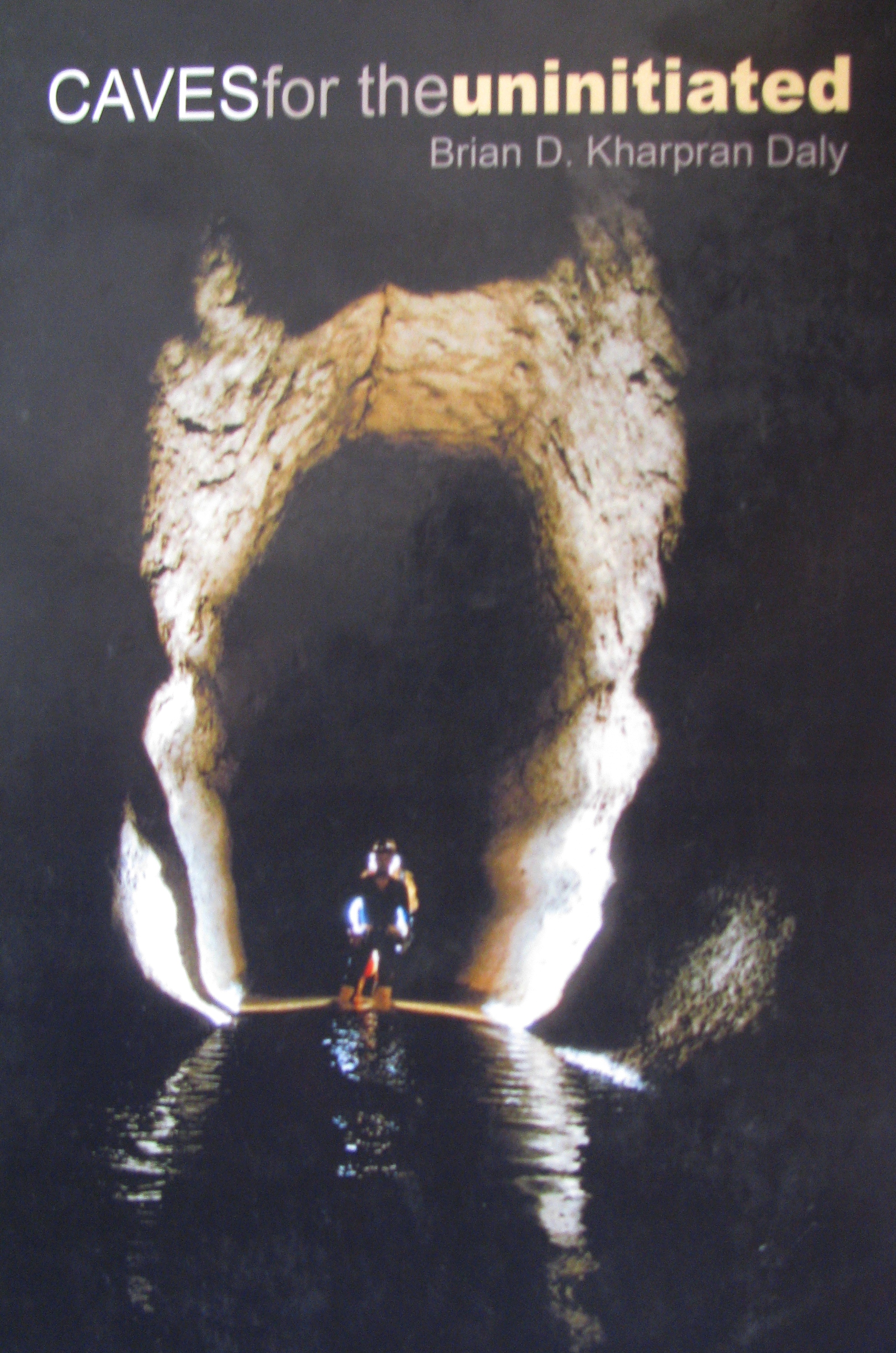
???????????????????????????????I quote two paragraphs from pages 83 and 84 of Brian D. Kharpran Daly’s book, ` Caves for the Uninitated’:

“ You know, Marisa, it is a real pleasure to impart knowledge to someone who is eager and has a thirst to learn. I will be only too happy to teach you all I know, step by step.’’

“ Just be good and disciplined kids and follow your heart in what you want to do in life. I can only help in igniting the spark in your heart.’’

Brian’s book on caves is structured as a series of chats with a group of youngsters after their visit to a cave in Meghalaya, the Indian state best associated with caving.

To me, the above mentioned paragraphs sum up my own impression of Brian.

There are very few like him in the Indian outdoors. In these days characterized by the specific highlighted to overshadow the whole, it is very difficult to find a mind given to appreciating the whole. I add – in our times of greatness while still young, knowing the whole is a time consuming process. Caving for Brian, could have easily reduced to technical skills, high adventure and apartness by what all that means – much like advertisements of adventure these days. That’s all we care for; life in single dimension, climber on vertical face.

Brian’s story is different.

When I met him in Shillong some years ago, Brian came across like an oddity in the regular outdoor spectrum. Already feted for his contribution to caving in India, he was still explorer at heart, someone who saw caving as the sum total of an experience spanning skills to science to the sheer grandeur of nature. Plus, he was articulate, down to earth and hardly like so many others adventuring for distinction. Not to mention – he made good wine. I came off happy to have met somebody who was multidimensional, someone who represented the whole as opposed to specific highlighted at the expense of the whole. There was an unmistakable maturity in the meet-up. Maybe – and here I am guessing – that’s a product of being pioneer. For Brian’s entry into caving not only signalled a leap in the scale of cave exploration in Meghalaya, caving also struggled to coexist with rising environmental threat to Meghalaya’s caves, courtesy mining. With that threat hanging as Damocles Sword over the very medium he fancied, Brian was likely forced to learn the subject from all angles. If so, his mind was perfect for the job. As the book shows, Brian’s awareness of a cave straddles the many aspects that make a cave what it is. I should also mention that I know of few persons in the Indian outdoors, who pursued their case (in Brain’s instance, protection of Meghalaya’s caves) all the way to the Supreme Court, even if it was to eventually lose the battle (please see the August 2013 post in Outrigger: The Caves of Meghalaya).

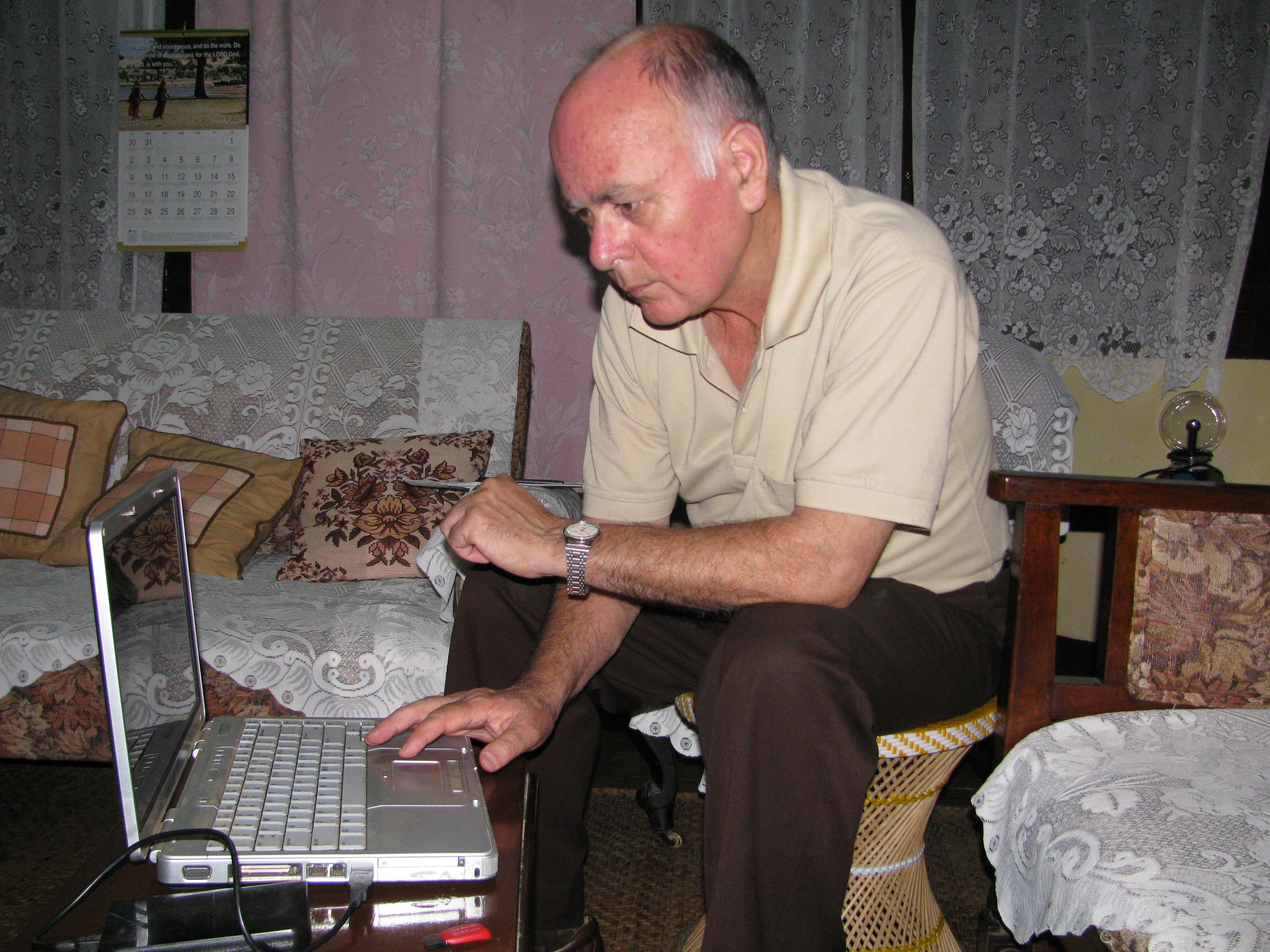
Brian D. Kharpran Daly  (Photo: Shyam G Menon)

Brian D. Kharpran Daly (Photo: Shyam G Menon)

Given this backdrop, I think Brian was cut out to write this book. A lay reader wanting to know more about caving couldn’t have asked for a better author in terms of experience in the subject, love for the subject and willingness to be evangelist for it. Brian leads the reader on through stalagmites, stalactites and siphons to gear used for caving and on to simple dos and don’ts for safe cave exploration. Strictly from the perspective of book review, it is a slightly inconsistent book beginning as easy, informal narrative but becoming trifle textbook like over the last quarter. It could have been better edited. However for all its minor shortcomings, Brian has successfully presented us with caves in general and Meghalaya’s caves in particular, all the way from the natural chemistry forming them to the myths and legends man wrapped them in. It is a wonderful effort in a country yet to adequately notice the speleology in its midst.

Our knowledge of the outdoors, the Indian outdoors and adventures therein, will be incomplete without this book on caves.

(The author, Shyam G Menon, is a freelance journalist based in Mumbai)     

HUBLI-DHARWAD: LIFE AFTER THE LEGENDS

BEST WISHES FOR 2014.

HERE’S A STORY, ORIGINALLY WRITTEN IN 2011. IT HAS BEEN UPDATED TO PROVIDE LINK TO MORE RECENT TIMES.
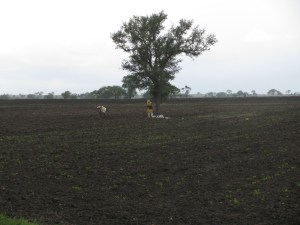
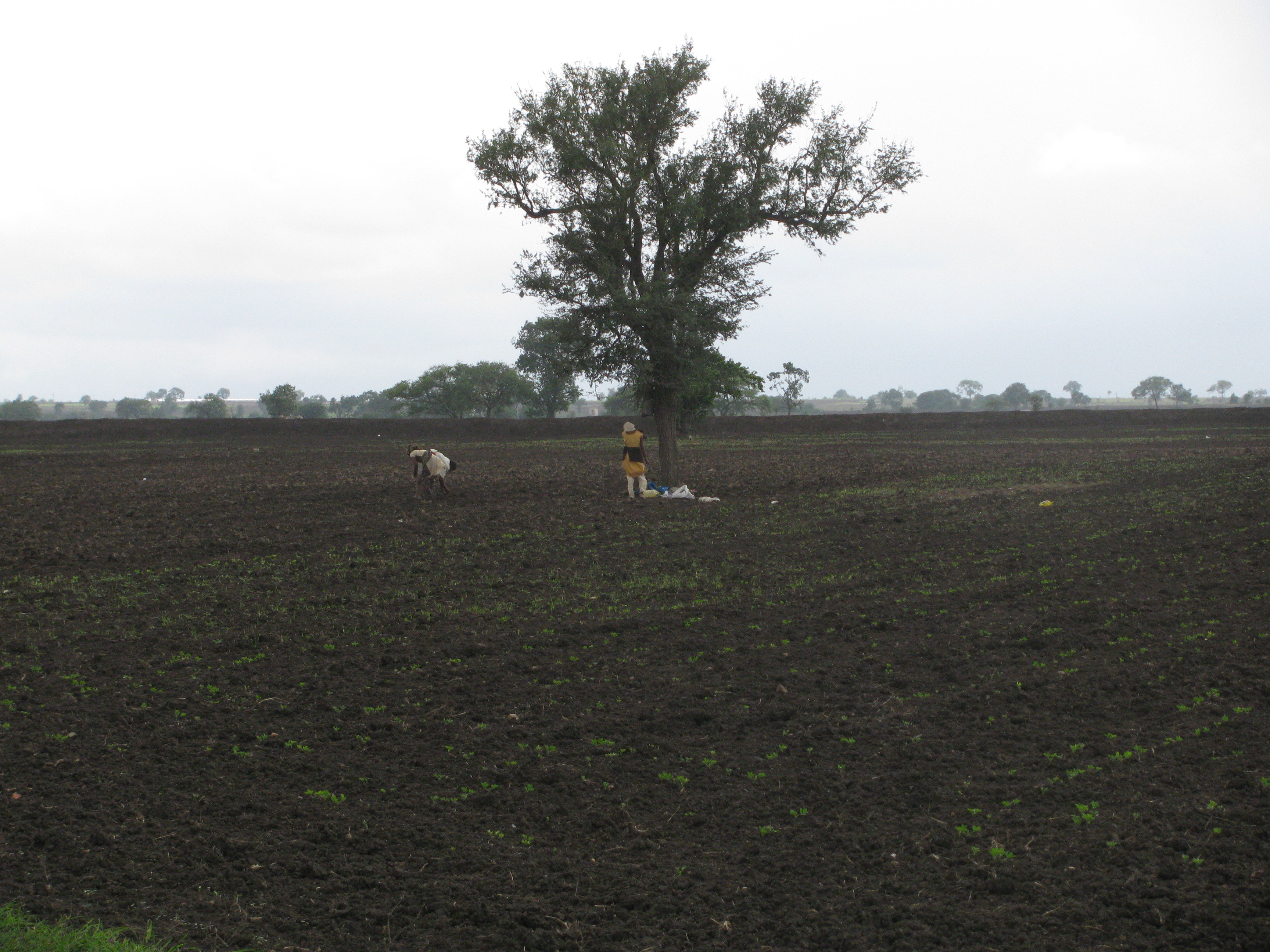
Landscape: fields of North Karnataka (Photo: Shyam G Menon)

Landscape: fields of North Karnataka (Photo: Shyam G Menon)

End October 2013.

At a concert organized by the Mumbai-based Khayal Trust, Pandit Venkateshkumar took the stage. A Hindustani classical vocalist, he was assertive, subtle, strong and delicate, the discerning use of these abilities making his interpretation of compositions, engaging. I can’t identify raagas; I simply like or dislike music – any music – as aural experience. In the outdoors, I have tracked rivers – from relatively calm flow in the foothills to turbulent upstream and almost inaudible trickle at source – noticing how their character changes. Venkateshkumar’s singing had something of that. He seemed to be singing from a bigger understanding of subject and not merely indulgence in the specific; it wasn’t a section of the river amplified ignoring the whole, it was the whole. On stage, neither was his support crew behaving like sycophants unto him nor was he synthetic in his encouragement of them. A singular chemistry prevailed – chemistry by music. No drama, no playing to the galleries – the proof of the pudding was my brain, soothed to peace; a connection to its home – the universe – made.

This was the second time I heard Venkateshkumar and the first time I was inside the auditorium when he sang.  The previous occasion had been a well attended modest sized gathering in the Mumbai suburb of Chembur. The venue, mere hall and no sophisticated auditorium, was filled to capacity. Chairs outside had also been taken. People stood patiently; listening as attentively as they would, had they been on a seat within. I joined them. Why should anything else matter if the music is good?

The first time I met Venkateshkumar was before I heard him sing.

It was 2011.

Along with good friend Latha Venkatraman, a journalist who has learnt classical music for many years, I was exploring a story in northern Karnataka, way south of Mumbai.    

On January 24, 2011, Pandit Bhimsen Joshi passed away.

With that India lost its most famous voice.

His was a mad, rough edged-reaching out; different from other contenders to be India’s voice and certainly quite apart from that other tradition of Indian classical music – Carnatic. I like to let go (it is also what I find most challenging and what I do the least). In contrast, Carnatic seemed perfect and deliberate, a sort of antidote to madness. Bhimsen Joshi hailed from Gadag, next door to Hubli-Dharwad in North Karnataka. Born there, he was bitten by the music bug, travelled through India in search of a guru and was finally directed to Sawai Gandharva in nearby Kundgol itself. The rest is legend amply conveyed by the great man’s music. What intrigued me was Hubli-Dharwad. Music lovers there sometimes called the place a LOC (Line of Actual Control) between Hindustani music and Carnatic. Yet within Hindustani classical, it is unique for not only being the southern outpost of the tradition but also, a reclusive, defiant, academically inclined ambience that cares more for dedication and purity than the market.
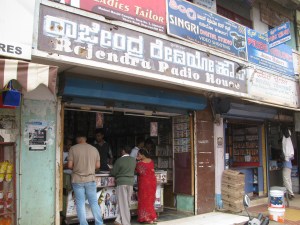
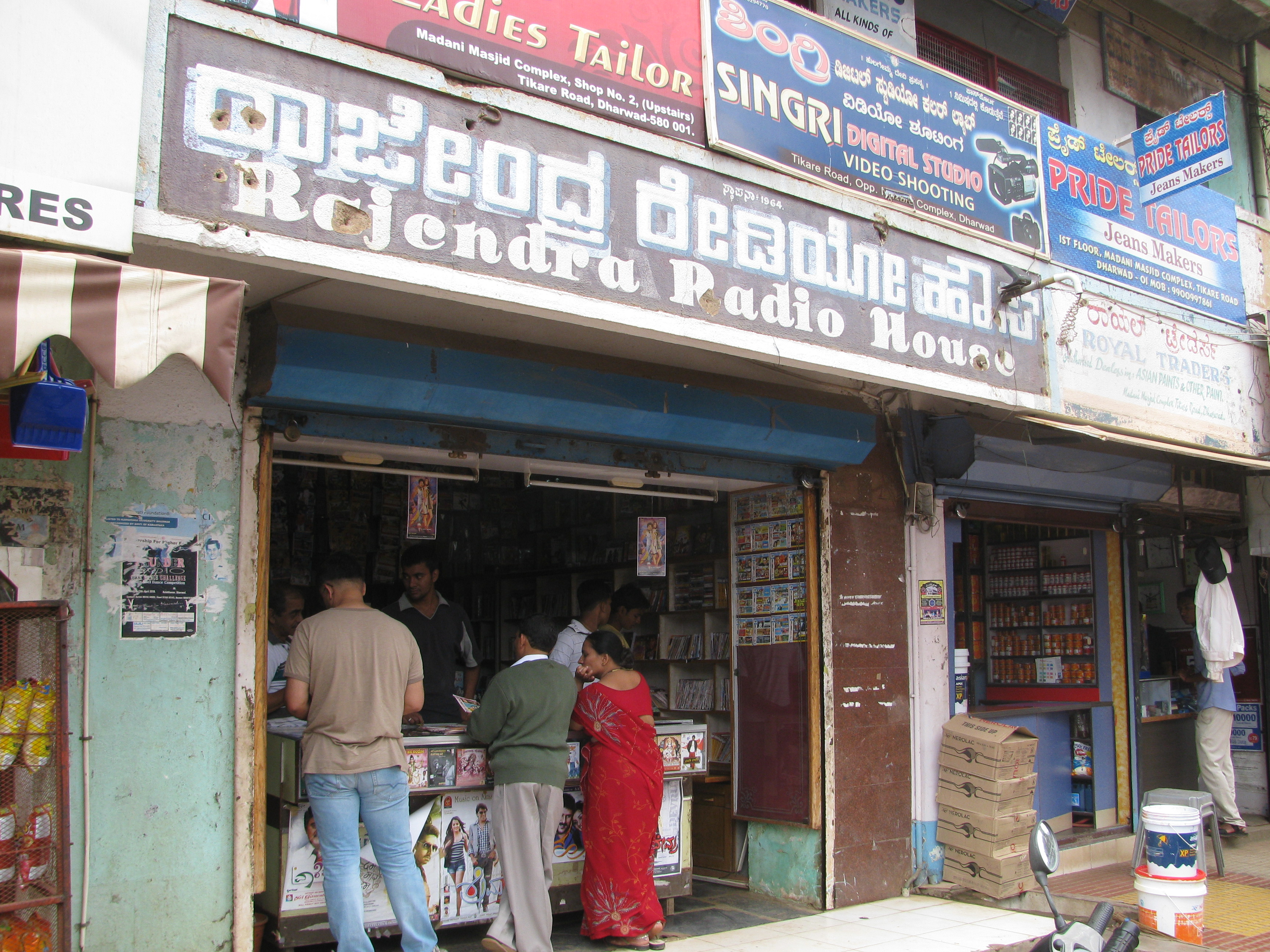
Rajendra Radio House, Dharwad (Photo: Shyam G Menon)

Rajendra Radio House, Dharwad (Photo: Shyam G Menon)

Geographically the region bridges that portion of Karnataka which is home to the wet, green hills of the Western Ghats and the start of the Deccan plateau with its imposing flatness. To one side, in the rainy season, the lush vegetation is so pronounced that it contrasts crops like cotton and chilli, typically associated with frugal water intake, grown on the other side. The Hubli-Dharwad region, once part of the Vijayanagar Empire, was subsequently in the possession of rulers from both Karnataka and   Maharashtra. Until 1955, it was part of Bombay Presidency. Hubli, the commercial hub of North Karnataka, is a major cotton market and centre for a variety of agricultural produce. At the vegetarian restaurant of Ananth Residency hotel, I asked for North Karnataka food. It wasn’t available; recommended instead was “ Veg Rajasthani,’ something possibly evocative of the region’s place in trade. The leading brands of Dharwad pedha were Thakur and Mishra, neither of them surnames indigenous to the area yet now synonymous with pedha. Hubli was also where the typical motifs of Indian urban life were taking hold. There were shopping malls, stores with walls of flashing TV screens, ATMs and hotels. Then another LOC of sorts divided it from Dharwad, 20 kilometres away. The local transport bus took you through a busy road with 40 kilometre-speed limit. Approximately three quarters of this travel done, at Navalur as people would later tell me, the atmosphere changed to charming old world flavour. You entered Dharwad.
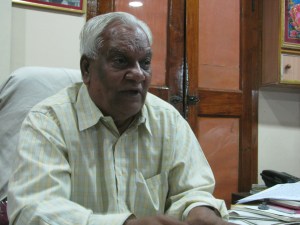
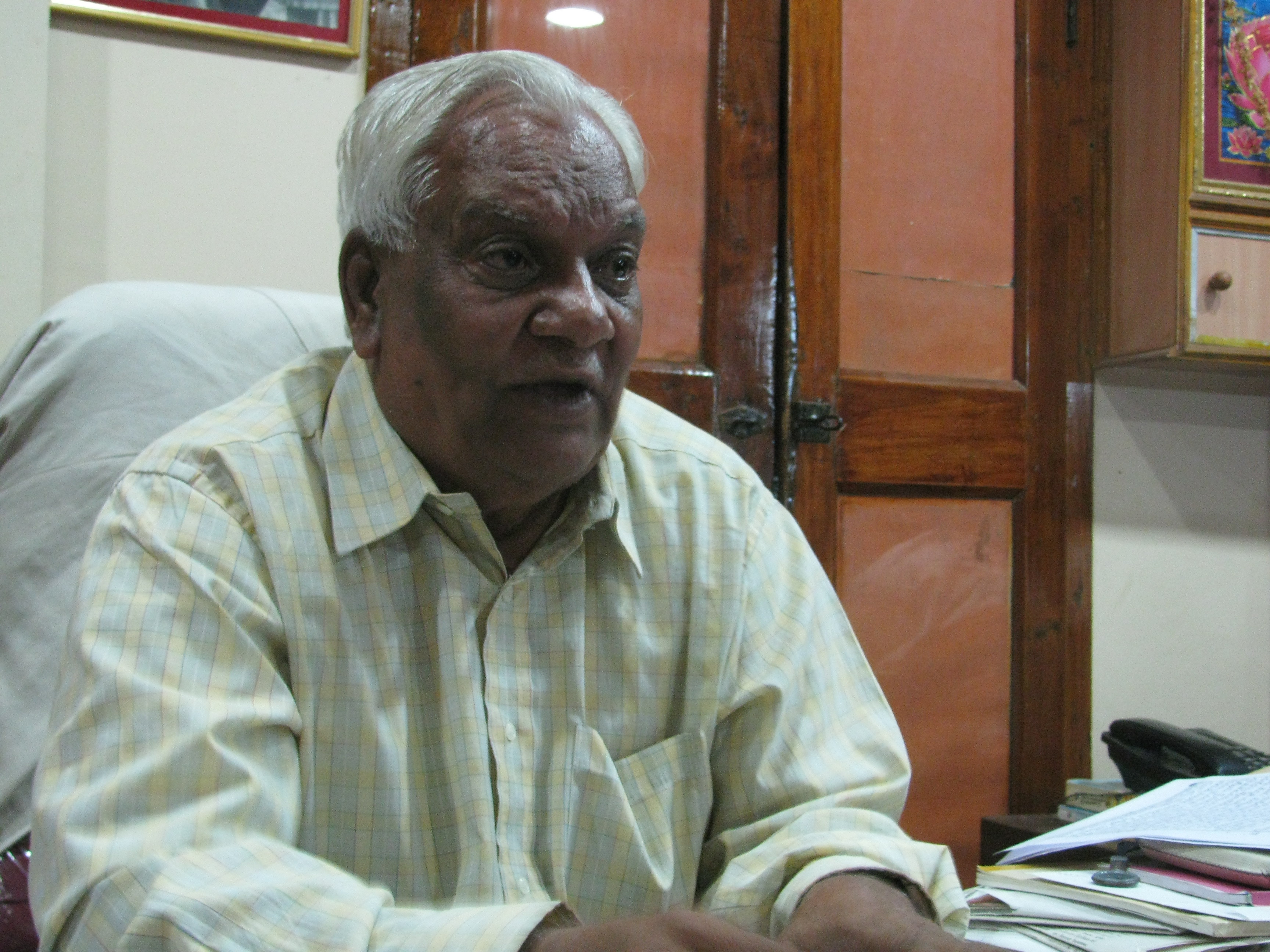
Ramakant Joshi (Photo: Shyam G Menon)

Ramakant Joshi (Photo: Shyam G Menon)

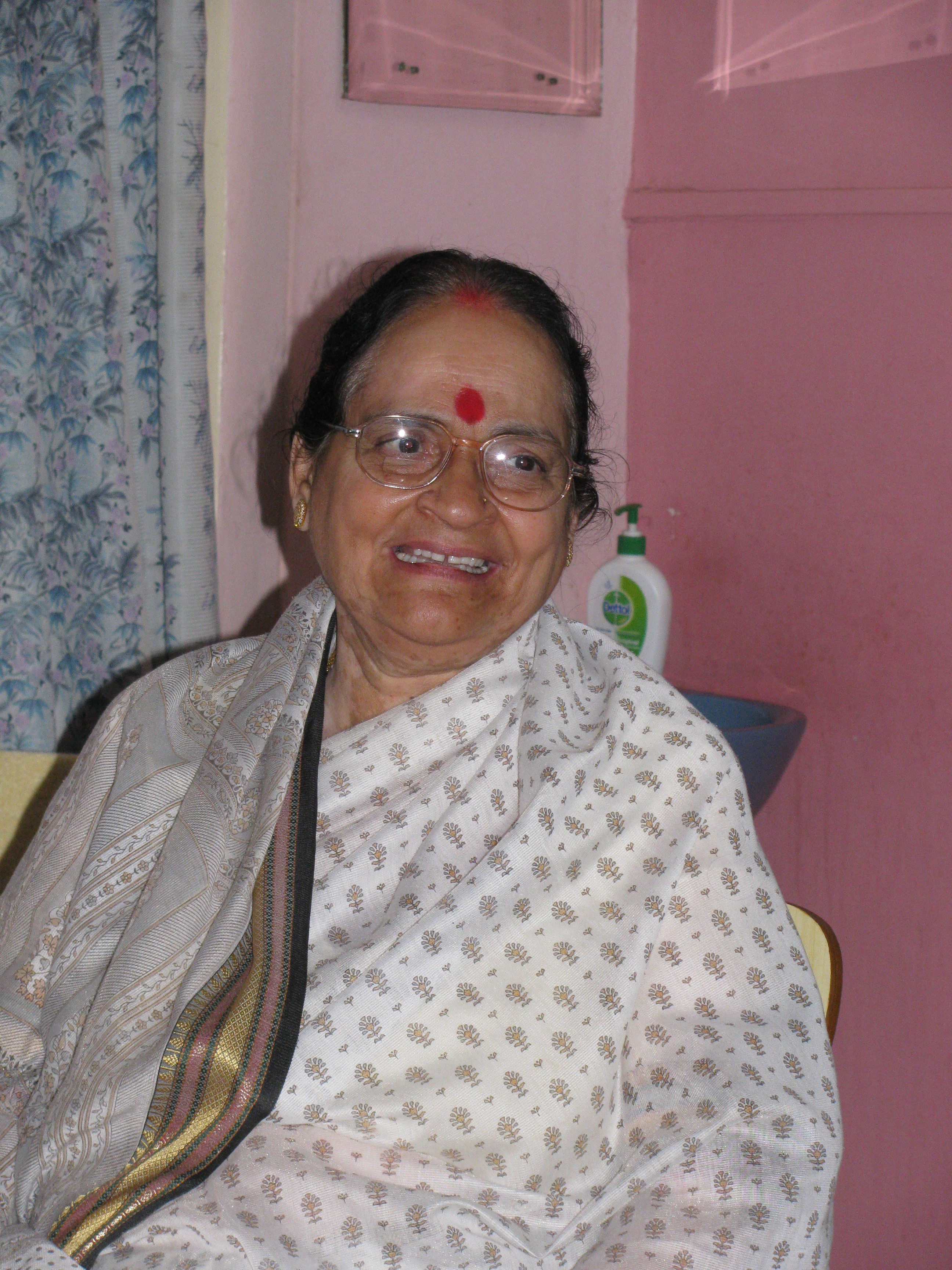
As pronounced as Hubli’s commercialism, was Dharwad’s conservative, academic tenor. Its prominence in history was as an educational hub, the place where people from North Karnataka, Goa and Southern Maharashtra came to study. According to Ramakant Joshi, Editor-Publisher, Manohara Granth Mala, it was Dharwad’s educational backdrop along with an existing culture of theatre and literature that provided a fertile substratum for Hindustani classical music to flourish. The office of this publishing house founded on August 15, 1933 (those days August 15 signified the birthday of Sri Aurobindo) was lined with Kannada books and located in an old room above Subhas Road. Ramakant Joshi is Bhimsen Joshi’s cousin. Unlike in Hubli, in Dharwad, you found shops that hadn’t changed for decades. You bought classical music CDs at Rajendra Radio House, run by Basavaraj V. Kotur, who informed that the shop started in 1964 had been one of the first four music stores in Karnataka. Only two shops from that four remain. There was also relevant change – the Srujana auditorium, where many concerts are held, had been refurbished with help from Nandan Nilekani, former CEO of Infosys and currently chairman, Unique Identification Authority of India (UIDAI). Dharwad looked peaceful, there was plenty of greenery and the people you spoke to had a conservative demeanour but amazed by their quiet erudition on chosen subjects. Here a musician or music lover might confidently tell you that he or she is known in the neighbourhood. As we discovered, that wasn’t always true but it was a measure of how comfortable you could be, pursuing the classical arts in this town. Neela Kodli was easy to talk to. In between she went to the kitchen to make tea. Like many of us she hummed a tune, except it was a classical composition. Neela Kodli is the daughter of Mallikarjun Mansur. A singer in the shadow of a famous father, she was modest about her abilities.
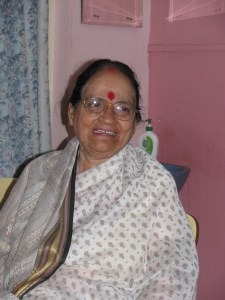
Neela Kodli (Photo: Shyam G Menon)

Neela Kodli (Photo: Shyam G Menon)

There were few concerts in Dharwad that June. It was the rainy season. Otherwise, we were told, you found one or two every week. The vast majority of these concerts were free. “ There is no problem doing an early morning practice session here. In fact, if they don’t hear me practise, my neighbours ask – didn’t you practise today?’’ Vijaykumar Patil, an upcoming Hindustani vocalist said. With so many singers and musicians around, it was possible for a music lover to strike a rapport and sit in on their evening training sessions even if all he had was a love for music. `Kansens’ (those with good ear for music) have always been as important as `Tansens’ in Dharwad. This coupled with resident music gurus and new music schools helped create an audience for Hindustani classical music. In turn, that made performing in Hubli-Dharwad, a prized opportunity for visiting artistes. You knew you were singing to those who knew the subject. Applause here became highly valued. Raghavendra Ayi, Secretary, Sitar Ratna Samiti, provided an example of how Dharwad responded to music. Following Bhimsen Joshi’s demise, it was decided to organize an eight day music programme from February 27 to March 6 that year, in his memory. Many of the performers were young artistes. With expenditure projected to touch two lakh rupees (Rs 200,000), the organizers made an appeal for contributions. The amount thus collected exceeded a lakh, most of it donated by individual music lovers. “ To survive, any art requires janaashraya. The days of rajaashraya are over,’’ he said. (Jana in Indian languages refers to people; Raja refers to king and Aashraya means dependence or in the context of art, patronage.)

The Vijayanagar Empire had a strong role in the evolution of South India’s Carnatic music. The famous composer Purandara Dasa was born in modern Shivamoga district and spent his final years at Hampi, next door to the Hubli-Dharwad region. His compositions are sung by Hindustani classical vocalists. One version has it that Swami Haridas, teacher of Tansen, was a disciple of Purandara Dasa. Thus music was always around in these parts. Hubli-Dharwad’s ascent in Hindustani classical music happened with the decline of the Mughal Empire up north. As the empire weakened, the singing tradition of its court moved first to princely states in North India. Then as British influence gained in those princely states, the drift to the south started. Abdul Karim Khan was a famous singer of the Kirana Gharana, one of the schools of singing within Hindustani classical music. He was court singer in Baroda state. On his way to the court of the Mysore kings, who were patrons of classical music, he regularly halted in Hubli-Dharwad. In his book `Karnataka’s Hindustani Musicians,’ author Sadanand Kanavalli has particularly noted the role of the Mysore king, Krishnaraj Wodeyar IV. Mysore continues to this day as a major centre for Carnatic music. It was that less known intermediate halt en route, Hubli-Dharwad, which developed into the southern outpost of Hindustani classical music. Through the years music researchers have wondered what worked to Hubli-Dharwad’s favour. In a November 2009 issue of `Sangeet Natak,’ a newsletter from the Sangeet Natak Akademi, Tejaswini Niranjana, outlining her proposed research into these questions noted that some of  “ the common and (uncommonsensical) answers’’ included Abdul Karim Khan’s visits, the pleasant weather in Dharwad, the large number of Maharashtrians there who were music patrons, the influence of  Marathi culture in the form of Marathi plays having Hindustani music with Kannada plays subsequently derived from them and even the chillies and spicy food of North Karnataka that cleared the throat. “ The answers are inadequate even on their own terms. If Abdul Karim Khan’s final destination was Mysore and he went there frequently, why did he not teach disciples there?’’ she asked.
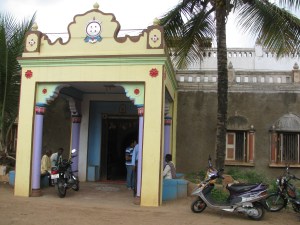
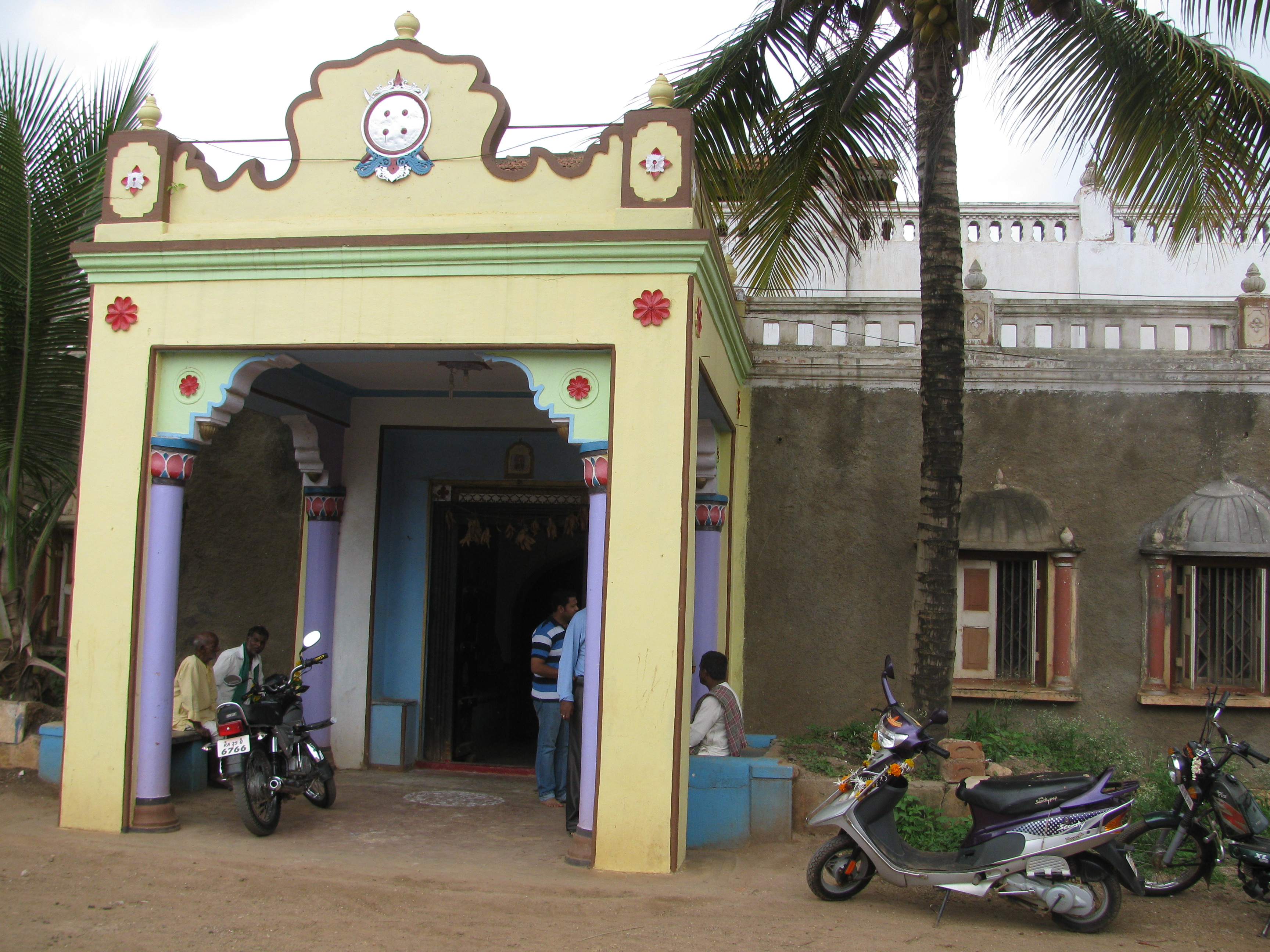
Nadgir family house, Kundgol (Photo: Shyam G Menon)

Nadgir family house, Kundgol (Photo: Shyam G Menon)

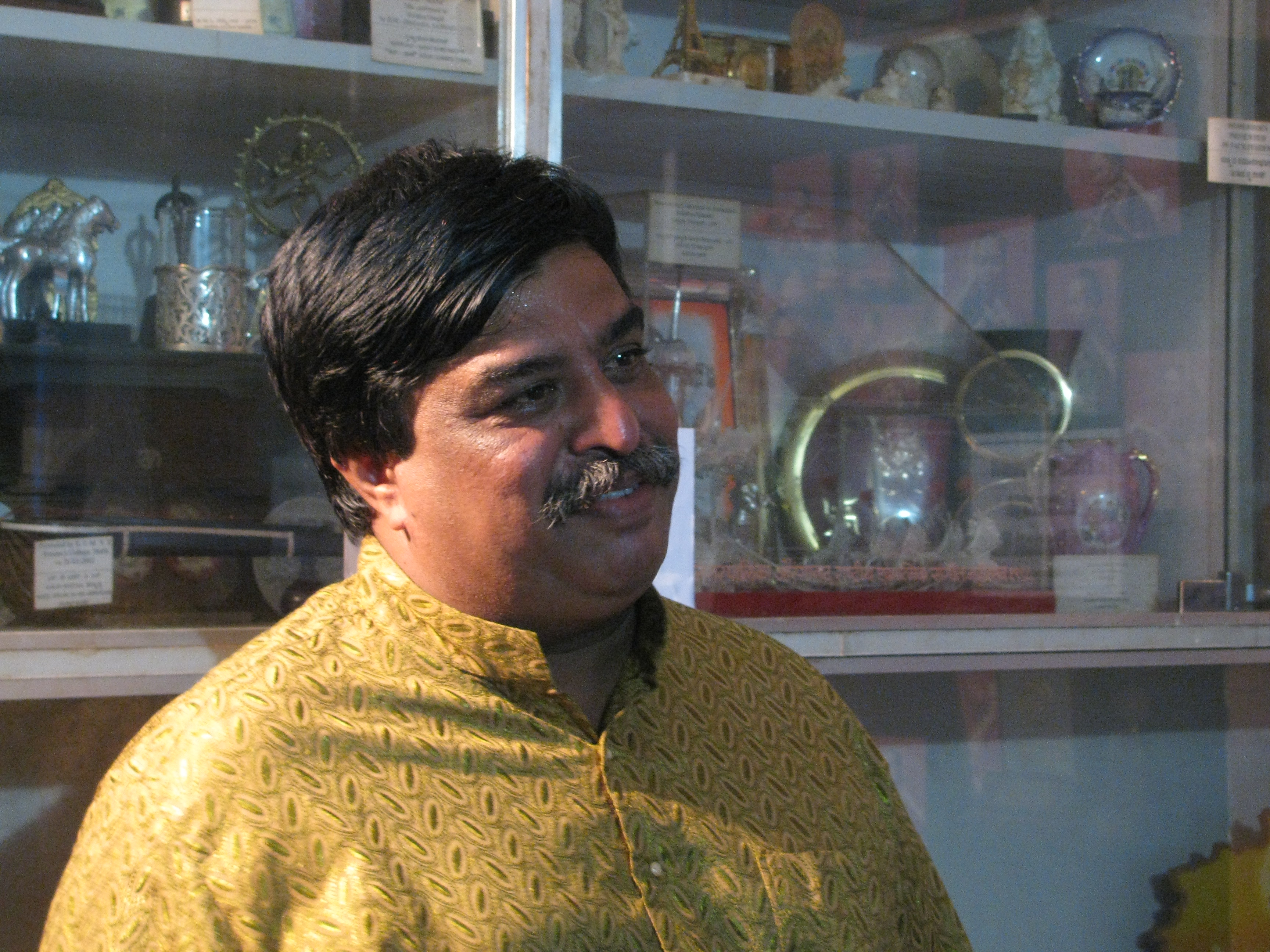
Among the most important institutions that patronised Hindustani classical music was an old house at Kundgol, once part of the princely state of Jamkhandi. Not far from Hubli, Kundgol and several other surrounding villages used to be under the control of the land-owning Nadgir family, who were patrons of music. Abdul Karim Khan visited here. More importantly for North Karnataka’s music, Abdul Karim Khan’s most famous student Ramachandra aka Rambhau Kundgolkar was born in Kundgol. Later called Sawai Gandharva, he had a pivotal role in the history of North Karnataka’s Hindustani music. His life was entwined with the Nadgir family. He taught music at the old house; this was where Bhimsen Joshi and Gangubai Hangal learnt. We met Babasaheb Nadgir and his son, Arjun Nadgir, who live there. Every year since 1952, the family has been organizing a music festival currently
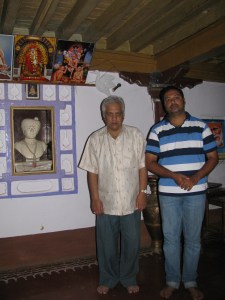
Babasaheb Nadgir and Arjun Nadgir (Photo: Shyam G Menon)

Babasaheb Nadgir and Arjun Nadgir (Photo: Shyam G Menon)

called the Nanasaheb Nadgir Smrithi Sangeeth Utsav. Hundreds of people turn up to hear this 24 hour-performance, which lasts through the night. The house is as it used to be, so much so that an entire audience crammed onto its many floors to hear the concert has triggered worries of the 400 year-old building collapsing. The architecture is typically old fashioned featuring a courtyard within. The musicians practise in an inner chamber and then perform on stage inside the house, adjacent to the courtyard and below a bust of Sawai Gandharva. It is tradition kept alive purely through family initiative and at considerable cost. The Nadgir family and a few close friends spent up to one and a half lakh rupees (that was the figure when I visited); they didn’t seek donations. Arjun was working on proper institutional shape for the funding so that it self-sustained. The family had dreams of starting a music school. Kundgol also had another music festival in Sawai Gandharva’s memory.  Several noted Hindustani classical artistes – Bhimsen Joshi, Basavaraja Rajguru, Gangubai Hangal, Kumar Gandharva, Mallikarjun Mansur, Pandit Jasraj, Prabha Atre, Feroz Dastur, Puttaraj Gawai – they have all performed at Nadgir Wada. For many who go to sing there, the very act of performing in a house where legends lived is overwhelming. The artistes are paid for travel cost; they get nothing else. “ The ambience is special,’’ Jayateerth Mevundi, a prominent vocalist from the younger generation, said.  
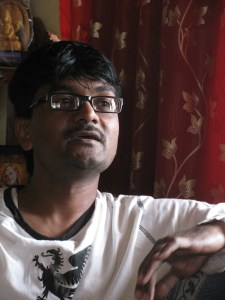
Jayateerth Mevundi (Photo: Shyam G Menon)

Jayateerth Mevundi (Photo: Shyam G Menon)

Given Abdul Karim Khan as the historical prompter for Hindustani music’s arrival in Hubli-Dharwad, the region became the southern home of the Kirana Gharana, a style with origins in Uttar Pradesh. But you also find in Hubli-Dharwad other styles like the Jaipur Gharana and the Gwalior Gharana. They co-exist. From Abdul Karim Khan down, we hear of several important names. Broadly speaking, they can be divided into two categories – the legendary performers from Hubli-Dharwad and the great teachers like Sawai Gandharva. For a tradition of music to grow you need both these categories. As you ask around, you realize that great performers were not necessarily great teachers just as great teachers were not necessarily great performers. The great performers were five – Gangubai Hangal, Bhimsen Joshi, Mallikarjun Mansur, Kumar Gandharva (he was born near Belgaum and later moved to Madhya Pradesh) and Basavaraj Rajguru. Of them, one – Gangubai Hangal – was a phenomenon. Her influence exceeded the world of music. In Hubli, we just had to ask for the late singer’s house and the autorickshaw driver knew where to go. Her house had become part museum. Gangubai Hangal had to overcome many social challenges to become the renowned singer she was. In later years, she did not hesitate to be a social activist for causes she believed in. It was exceptional in that, it took a classical vocalist out from the conventional image of exclusivity and singing for patrons, to being one with the masses. Consequently if anyone from the legendary five has become close to an institution in Hubli-Dharwad, it ought to be Gangubai Hangal. There was however one problem. With Bhimsen Joshi’s demise, the last of those five greats passed away. Further, except for Basavaraj Rajguru, none of the others were credited with robust teaching.  They left behind few disciples. That’s why Hubli-Dharwad was suddenly important for anyone interested in Hindustani classical music, like me. The phase of the legends was over. Will the region continue to maintain its strong position in musical tradition?
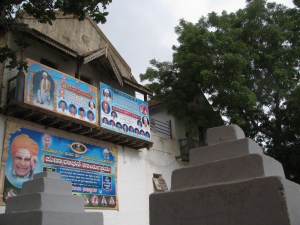
Veereshwar Punyashram, Gadag (Photo: Shyam G Menon)

Veereshwar Punyashram, Gadag (Photo: Shyam G Menon)

The Veereshwar Punyashram in Gadag appeared a blend of religion, community and music; an official brochure informed that the presiding pontiff was seen by devotees as “ a walking God on the Earth.’’ Looking past its prime when I was there in 2011, this institution was founded by Panchaxari Gawai, a blind prodigy in classical music. Over the years, the ashram accepted many poor, often visually and physically challenged children and trained them in classical music. Basavaraj Rajguru was Panchaxari Gawai’s student. Following Panchaxari Gawai’s death in 1944, Puttaraj Gawai took charge. He became blind through treatment for an eye problem in his childhood but later amazed as vocalist and musician.
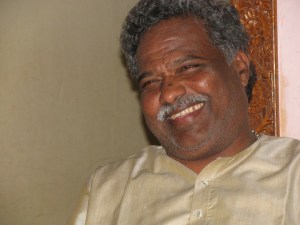
Venkateshkumar (Photo: Shyam G Menon)

Venkateshkumar (Photo: Shyam G Menon)

Venkateshkumar – he teaches at a music college in Dharwad and is acknowledged to be among the finest Hindustani vocalists today – was Putturaj Gawai’s student. Born in Lakshmipur village near Bellary, Venkateshkumar was thirteen years old when he was brought to the ashram in 1968. He studied there for eleven years, maintaining a rigorous training schedule and learning 25-30 raagas from his guru. Even after Venkateshkumar left the ashram his interaction with his guru continued till Puttaraj Gawai was ninety years old. Puttaraj Gawai died in 2010. In 2011, across the school and the college on its premises, there were nearly 800 students.       
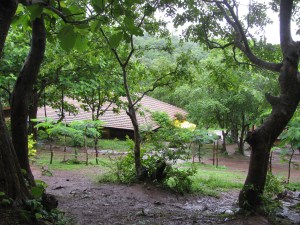
Kalkeri Sangeet Vidyalaya (Photo: Shyam G Menon)

Kalkeri Sangeet Vidyalaya (Photo: Shyam G Menon)

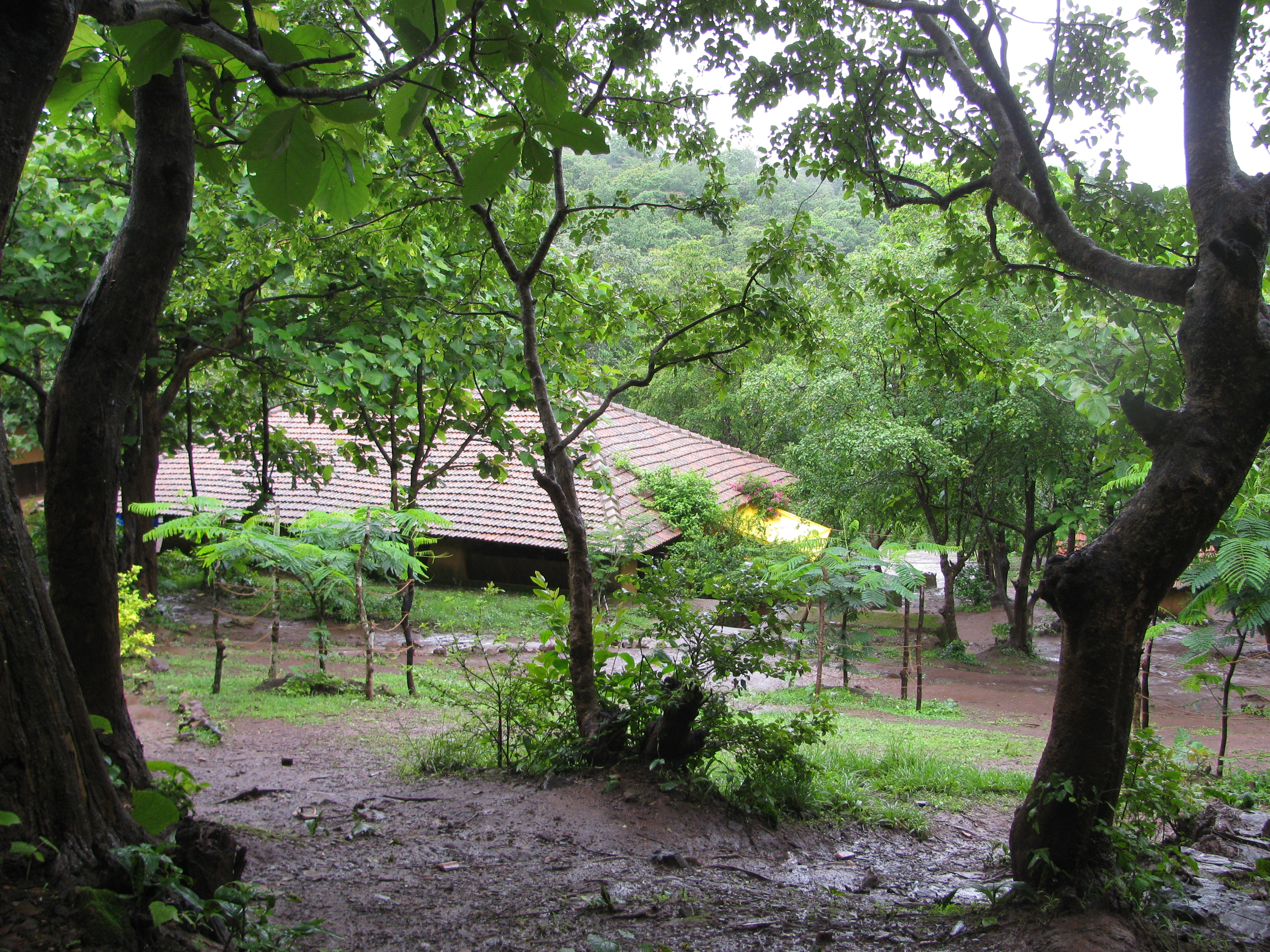
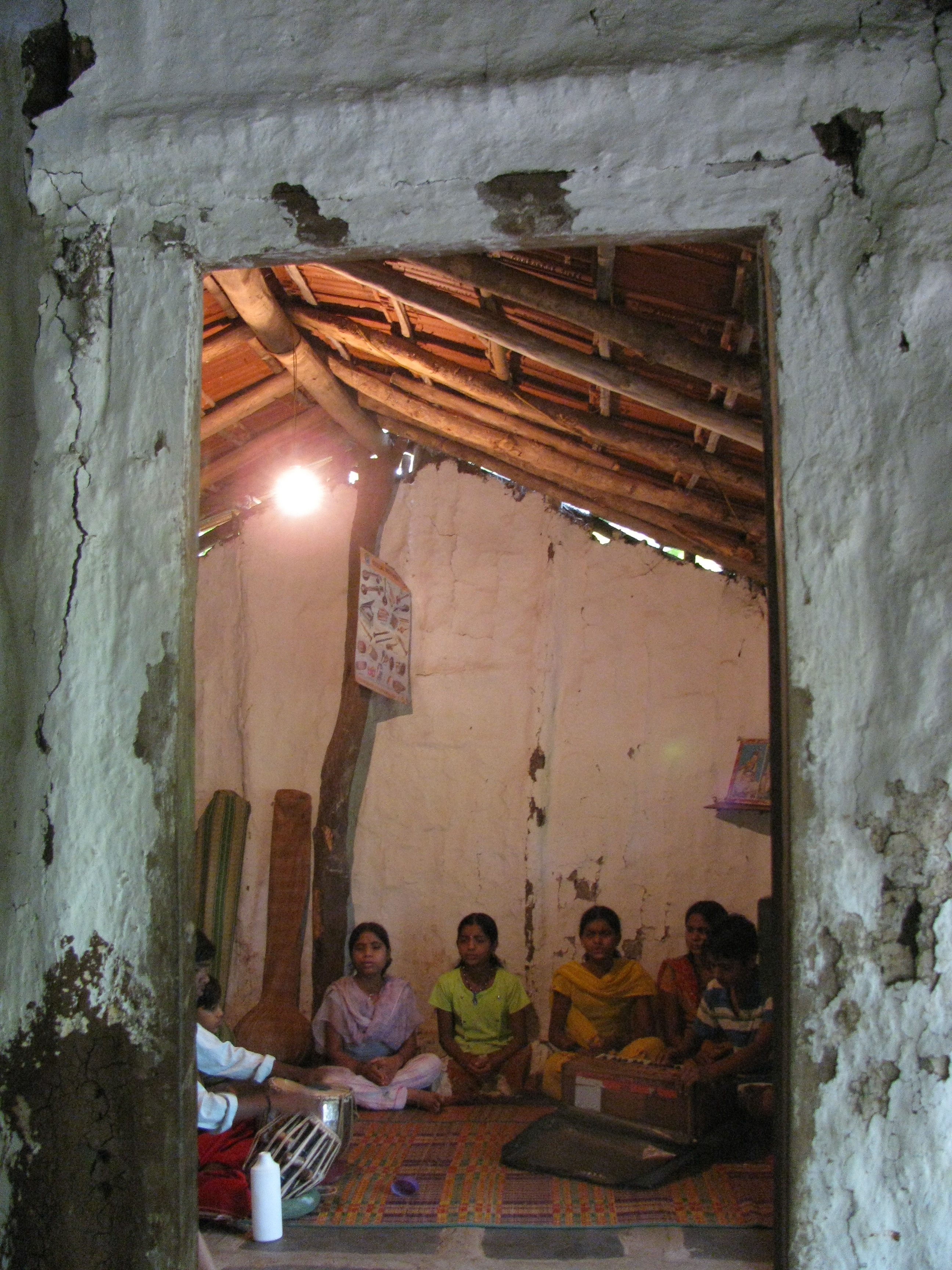
Following their studies, some students of the ashram had become teachers at the Kalkeri Sangeet Vidyalaya. Begun by Agathe and Mathieu Fortier, a Canadian couple who liked India and its tradition of Hindustani classical music, the school was located almost an hour away from Dharwad in geography that was the exact opposite of the Gadag-Kundgol belt. Here the land was hilly with red earth muddied by heavy rains and densely vegetated to the point of seeming forest. The school was in the woods, a collection of eco-friendly structures with 185 students and 43 full time staff. According to Adam Woodward, Director, the admission process tried to ensure that only the neediest students got through. The students paid no fees. They did a mix of music, dance and formal studies. Many of the children we met spoke Hindi and English (at any given time the school has about a dozen
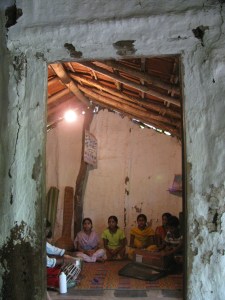
Students singing at the Kalkeri Sangeet Vidyalaya (Photo: Shyam G Menon)

Students singing at the Kalkeri Sangeet Vidyalaya (Photo: Shyam G Menon)

volunteers from overseas), something useful to link training in classical art forms to the outside world. Its present location was second stop for the school. Previously it was at a leased farm in Kalkeri. The owner wanted to sell the property. Seeing its good work, the local village authorities granted it the current land. With time and growth, this had become inadequate and the school was looking for bigger, more permanent premises in the region. The Kalkeri Sangeet Vidyalaya is part of a unique organizational structure authored by its founders. Mathieu and his brother Blaise set up Young Musicians of the World (YMW) in Canada. Every year, as of 2011, it managed two fund raising concerts abroad to collect funds for the school in Kalkeri. This aside, the objective was to open similar schools elsewhere in the world; there were ongoing talks in France to start a music school for the Romany gypsies. Another location interesting YMW was, Mali in Africa. The eventual idea was to have music exchange programmes and concerts. To enable this, YMW required the Kalkeri school, indeed any school it started, to slowly become self reliant in funding. Moves were afoot to make this happen.

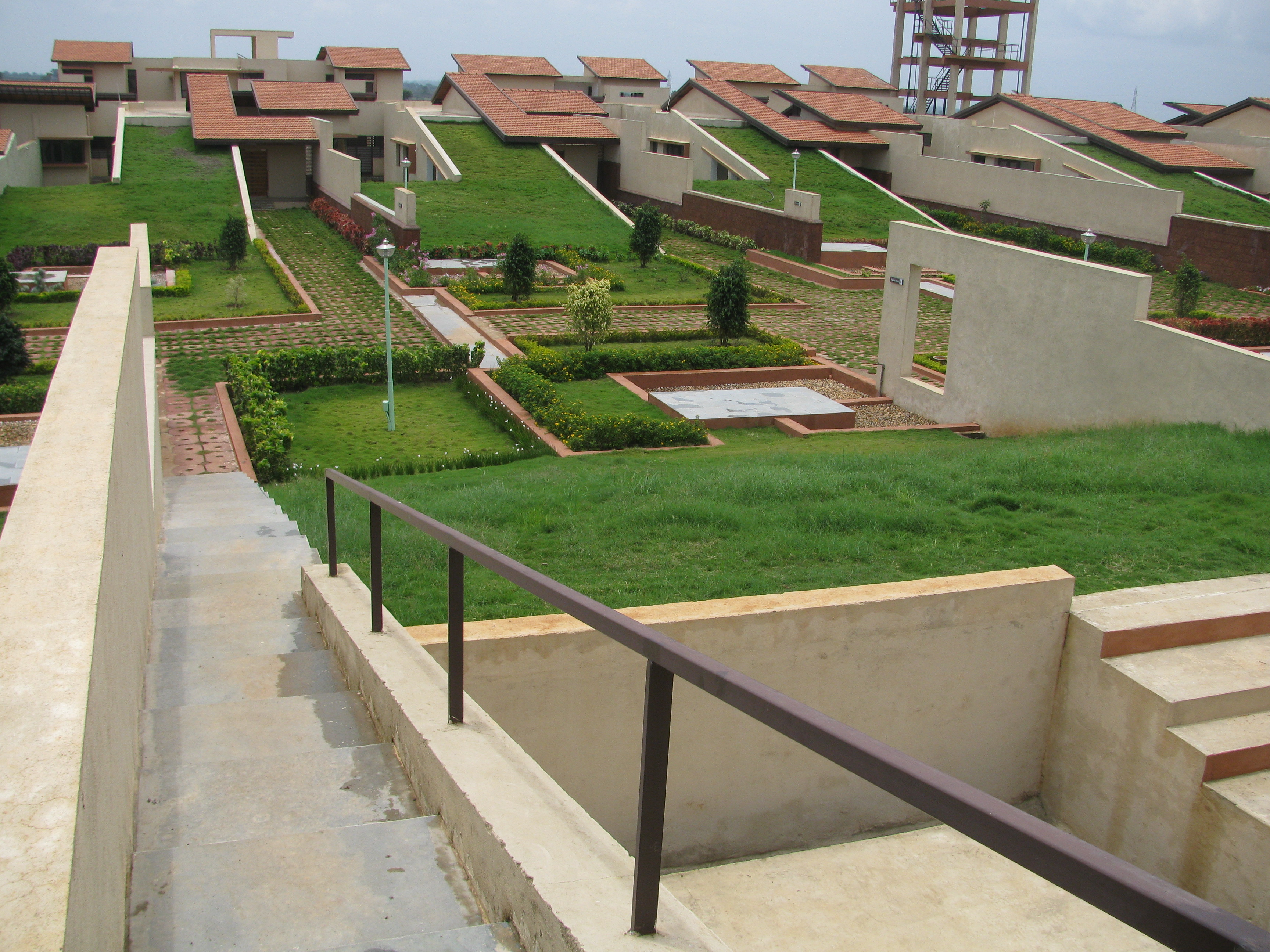
The third institution we saw was expected to formally start work from July 1, 2011. Named after Gangubai Hangal it was a modern gurukul set up by the Karnataka government on the outskirts of Hubli. It could accommodate 36 students and their teachers. The gurukul pattern finds considerable respect among musicians in Hubli-Dharwad as one of the ingredients separating the performing artiste from the merely trained artiste. As many people pointed out, the music schools and colleges were important to create a learned audience for Hindustani classical. The performing artiste however needed a guru who knew him or her well; understood the student’s abilities, role modelled and confronted them with challenges. It was one-on-one education, an apprenticeship. According to Manoj Hangal, Gangubai Hangal’s grandson, the government announced five crore rupees (Rs 50 million) and five acres of land for the project in 2005. “ All approvals came within three days,’’ he said. Six gurus of different gharanas were each planned to teach six students for 3-4 years. The teachers expected at the gurukul included Prabha Atre and N. Rajam. There would be visiting faculty from other universities. The emphasis was on creating performing artistes; that meant a student cannot enrol for any other academic programme. Total government expense for the impressive campus had touched eight crore rupees (Rs 80 million) and there would be recurrent expenditure of Rs 15 lakhs (Rs 1.5 million) to maintain it. “ We want public access to the gurukul,’’ Manoj Hangal said pointing out how that only fit in with the reputation and legacy of Gangubai Hangal in Hubli-Dharwad. 
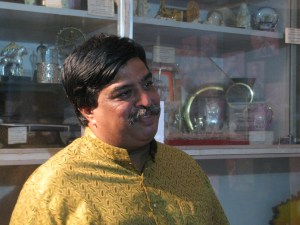
Manoj Hangal (Photo: Shyam G Menon)

Manoj Hangal (Photo: Shyam G Menon)

So would these training schools, music colleges and the large number of students, ensure that Hubli-Dharwad continued to generate fantastic performing artistes?

Between talent and recognition lay the market.

Hubli-Dharwad is an intriguing symbiosis of dedicated training away from market forces and giants born from that discipline who became icons in the far away markets of Mumbai, Kolkata and Delhi. With Bhimsen Joshi’s demise, the days of those legends had seemingly ended. There was a robust new generation in Hubli-Dharwad. “ I am confident we will be able to fill the vacuum,’’ Kaivalya Kumar Gurav, an established vocalist and teacher, said. But for many others, with so much of change authored by not just music, the market loomed in the distance like an inorganic entity speaking a different language. If you looked back to the previous three generations or so of Hindustani classical performers, each generation had found the proverbial wind beneath the wings in factors ranging from royal patronage to the ascent of radio and recorded music. The first now belongs to a bygone era; the latter two are now past their prime. What survives is the impact of all this on the market – better awareness of classical music with the masses and support of music by the `classes.’ Opportunities are available. Question is – who gets them in these years of survival through smartness? Does smartness constitute music and how smart should Hubli-Dharwad be when its beauty, perhaps uniqueness, is that it has been distant from the market?

One problem you hear is how major public performances have got dominated by the same, few names. Sponsors rule the big concerts in the metros (although Hubli-Dharwad has a tradition of concerts organized by aficionados willing to contribute for the purpose, sponsorship has arrived here too). Big ticket sponsors, seek the maximum bang for their buck and it often means, correspondingly less concern for upcoming talent within the music world. Result – they plonk for the established names, setting in motion a vicious cycle of promoting the same names, even their children. Travelling through Hubli-Dharwad, this new age networking and success by successful networking saddened me because North Karnataka not only produced great musicians in the past but some of them – like Gangubai Hangal –  questioned tradition and confronted the social networks and privileges of their era. The citation for the 1989 Ustad Hafiz Ali Khan Award, given to Gangubai Hangal, began with this sentence, “ you are among the legendary group of women who braved social scorn and ridicule in establishing classical music as a noble profession for women in modern India.’’ Now as we celebrate the age of the social network and as the social network becomes the new tradition, talent has become secondary again. We haven’t changed; we seem to simply reinvent the old. At Gadag, we ran into young Ayyappaiah Halagalimath who learnt classical music at the Veereshwar Punyashram and went on to complete his MA in Music with top honours. A student of Venkateshkumar, he was guest lecturer at the same college where the maestro worked. Like many who studied at the ashram, Ayyappiah hailed from a poor family. He has performed in big cities. But lacking good Hindi and English, he was hemmed in by his inability to tap the social network. That worry was writ large on his face. Between talent and recognition, there is the market; there is that network. It plagues every field and as the network grows in importance, I wonder – are the best in every field necessarily what the commercial network showcases as the best, the most successful? 
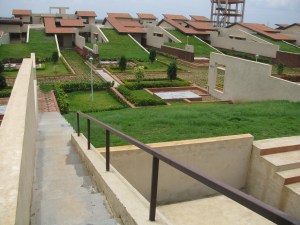
The gurukul named after Gangubai Hangal, in Hubli (Photo: Shyam G Menon)

The gurukul named after Gangubai Hangal, in Hubli (Photo: Shyam G Menon)

A common way of introducing upcoming music talent to the market is by clubbing their performance with that of a big brand musician. So you have that half hour or one hour at start by a mid-level artiste and then a performance by the big brand who the sponsor thinks is the real talent. According to musicians, although intended to help, this practice simply institutionalises upcoming talent as secondary to established names. Because it is presented as upcoming talent requiring a walking stick (the established big musician), it reinforces the paradigm of sponsor deciding talent as opposed to the audience doing the same. Differently put, in the name of the market we may be belittling the intelligence of the audience in the age of janaashraya. Why not let the audience choose? But then how perfect are choices by audience? At stake amidst sponsors and the market compulsions of media formats (like reality TV shows) claiming to represent popular tastes, are entire crafts. “ One of my students topped a reality show. Now all his singing is for the channel. Reality programmes make you a success prematurely,’’ a senior artiste and teacher, said. Arguably, all media – including this blog – is imperfect, to the extent that an article or a photograph or a TV programme is usually a slice of something, never the evolving whole or the whole in the context of everything else. And if, for alternative, you choose to merely stream real life as media, you miss intellect – which is a serious drawback in today’s media filled-world. Reduced by media to voyeurism, abject competition and consumerism, we succeed more and more with lesser and lesser dimensions in the head. We become dumb? I suspect so.
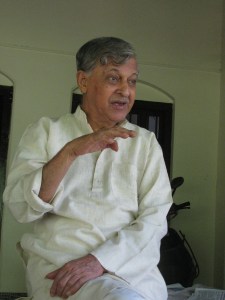
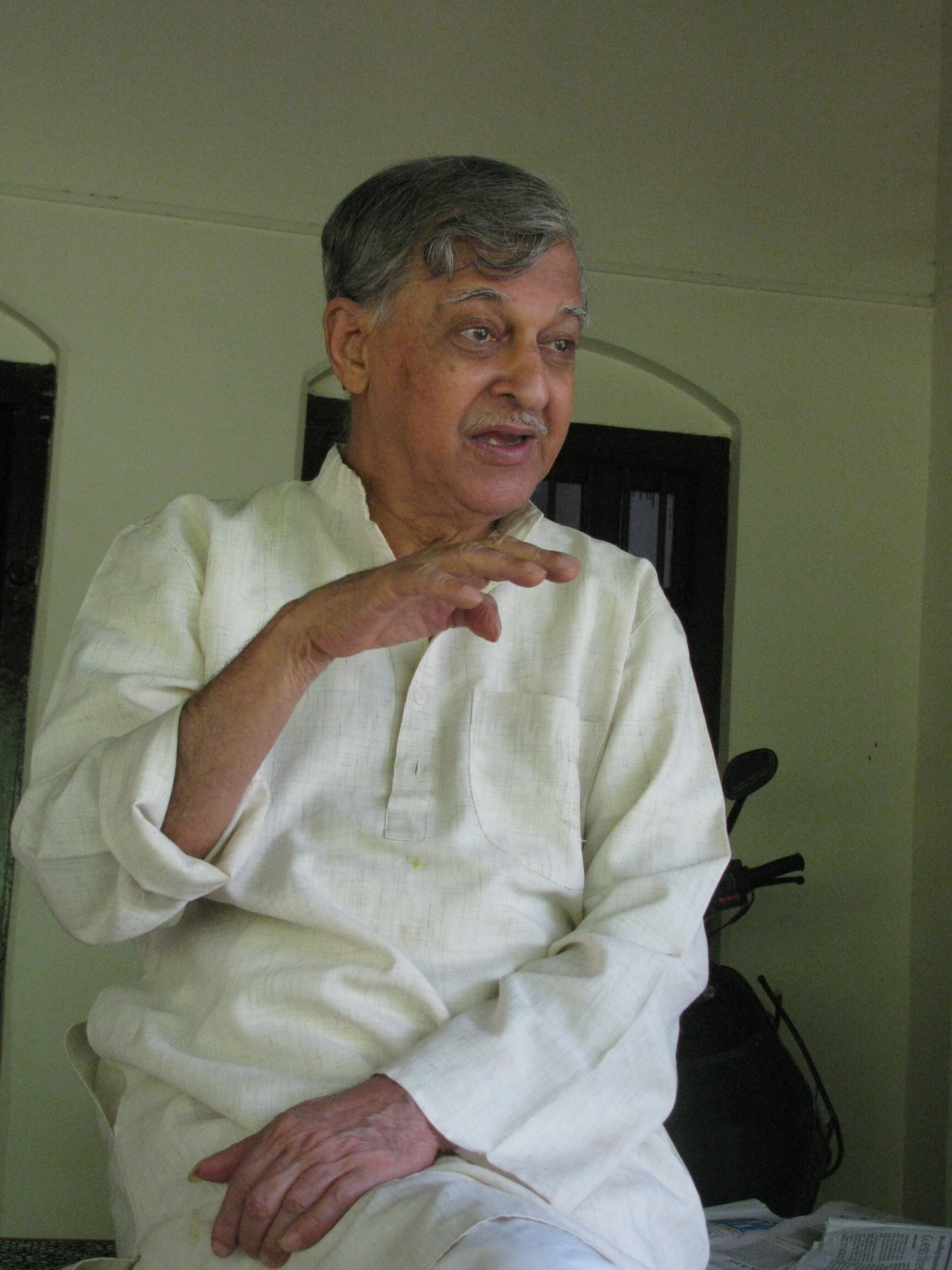
Prof Vasant Karnad (Photo: Shyam G Menon)

Prof Vasant Karnad (Photo: Shyam G Menon)

A point that frequently surfaced in discussions on what shaped the performing artiste was how the legends became what they were despite few raagas taught by their gurus. The rest was dedicated, hard work. Over eight years, Abdul Karim Khan taught Sawai Gandharva just three raagas. His rationale was – if the student understood those three well, he would pick up the rest. Sawai Gandharva taught Bhimsen Joshi three raagas. Nothing happens without personal drive. “ There can be many students but there is only one disciple,’’ Professor Vasant Karnad, well known musician, music critic and teacher, and elder brother of Jnanpith Award winner-Girish Karnad, said. Legends are not born from a market state of anything. How long will it be before the next Gangubai Hangal or Bhimsen Joshi?

Between the two, the next Gangubai Hangal would be a litmus test for Hubli-Dharwad. It was a question nobody could offer convincing explanation for – why haven’t there been great women singers from Hubli-Dharwad other than the legendary Gangubai Hangal? Some cited marriage, family responsibilities et al. At least one school official that we spoke to confirmed that convincing families in villages of the practical use of an education in music was difficult and within that, getting the girl child enrolled was more so. It seemed the other side of conservative society, which by virtue of its conservatism steels an individual’s resolve to pursue his or her talent but also leaves many in the dust. Finally, there was the concern over where the general drift in the world was headed and what that meant for Hubli-Dharwad. “ With the growth of industry, the cultural milieu will fade. Formerly we used to say that food and knowledge should never be bargained or sold. Today, they have become the most important items of business,’’ Ramakant Joshi said.  

I got back to Mumbai. Freelance journalist’s article was published. In August 2011, Professor Vasant Karnad passed away. He had been a delight to talk to during the brief while we met him. We remain grateful for that conversation, the opportunity to meet him. End-October 2013; backstage in Mumbai, Pandit Venkateshkumar recognized us from the old visit (in 2011, we had gone to his house in Dharwad). We exchanged greetings. Established singers, aspiring ones and students of music had already flocked to him after the concert. I am none of that. I identify with his music thanks to what is at once a restlessness and peace, found in the outdoors. It inhabits many fields and I suspect that the word in English which comes closest to describing the condition is – seeking. A mind cast so finds peace in sense of universe.

Music, the outdoors – it is all One.

(The author, Shyam G Menon, is a freelance journalist based in Mumbai. He would like to acknowledge the help provided by Latha Venkatraman, journalist and student of Hindustani classical music, towards writing this article. A portion of this article pertaining to the Kalkeri Sangeet Vidyalaya was published as an independent piece in The Hindu Business Line newspaper. A slightly abridged version of the entire story was published in Man’s World magazine.)  

A DIWALI MORNING

Illustration: Shyam G Menon

Illustration: Shyam G Menon

Sharp 7AM.

My hard earned dream crumbled.

A whole film of imagined life stopped playing with that cracker blast announcing Diwali.

Lights came on in the theatre. I stirred in the seat I had snugly settled into, rubbed my eyes and gazed back at the projection room. Despite my best attempts, those shafts of light failed to return. Damn! What had I been doing? Was I singing to the heroine? Was I lone ranger on wild landscape? Was I delivering an inspiring speech? Hell, there was neither memory of where I had been nor depth of sleep remaining to transport self to oyster of imagination. It was all truly shattered.

A second blast went off.

I was now one hundred per cent awake.

I stay on the ground floor. The faint smell of burning chemical – that unmistakable smell of Diwali – drifted in. “ Happy Diwali,’’ I mumbled to myself and pressed my face into the pillow hoping that the harder I pressed my face into the foam, it would become a bomb-proof, puffy barrier shielding me from the nuisance outside the window. A third cracker went off, this one with a hiss and a fizz, a bang gone dud. “ Bet that was a quality certified manufacturer,’’ I muttered, recalling the emergent claim in cracker advertisements.

The kid wasn’t discouraged.

I heard the sound of feet shuffling outside. His movements paused as he focused on lighting the next cracker, lovingly packaged a thousand kilometres away and dispatched here to blow up my sleep. Was he writing: ` to uncle with love’ on it before going bang? Then I heard him sprint to safety. I looked at the ceiling: would it be bang gone dud or BANG? The question mark felt like that infamous scene of Russian roulette from `The Deer Hunter.’ With Indian quality standards, claimed certification to boot, you could never be sure how the next blast would be. I held my breath; counted the seconds. Then I hit the pillow. BOOM! This one shook me. I was now sitting on the bed, my hair on end like Dr Emmet Brown from `Back to The Future.’  I could visualize a piece of burnt paper scribbled ` to uncle with love,’ drifting down from the ceiling in Diwali-smelling room.

I don’t burst crackers.

From the balcony, I briefly watched the proceedings. The kid had been joined by his friends. Against a background score of blasts laced by shouts of appreciation to bangs delivered as such, I made some coffee. What to do? I turned on the computer. In the time taken for it to boot, I recalled a conversation overheard at Chembur station, the previous night. A Malayali man was explaining the scale of Diwali in these parts of India, to somebody back home. “ It is trifle dull this year. I guess common people don’t have money to splurge. Crackers are expensive. But everyone will be active tomorrow and day after, that’s for sure,’’ he said.

In India, a cracker is a frame of mind, like spicy food made hotter with chillies and more chillies. Reason escapes it. Over the past couple of days, Dalal Street, where the city’s stock brokers went, had been doing the same thing. The economy had done badly; politics was lousy, jobs were hard to come by, there was inflation on the streets, elections were due and if they cared – freelance journalist was on his last legs. Yet, Jeejeebhoy Towers, home to Mumbai’s stock exchange, boomed. What was it celebrating? I have no idea. Maybe I should interview the kid. I suspect his reasoning and the market’s would be the same.

The computer booted.

I logged in.

There was nothing on the mail; nobody saying hello. Diwali felt like bang gone dud. Or maybe, they were all busy celebrating and would get down to remembering world, later. Guess you got to be a kid bursting crackers or a trader on Dalal Street to feel BANG! BANG! on Diwali.

From a corner of the mind, `Kill Bill’ and Nancy Sinatra crept in.

Bang bang, he shot me down

Bang bang, I hit the ground

Bang bang, that awful sound

Bang, bang, my baby shot me down

I tuned into an Internet radio station. What should I listen to? Upstairs stayed silent, indifferent. Old faithful, I decided, and clicked on `blues,’ then, `blues rock.’ Lazer Lloyd sang “ why Mr Politician, why do you lie to me?’’  It seemed pretty apt for country sailing into elections. In my suburb, overlooking clusters of shops selling crackers were posters of local politicians supporting Diwali celebrations. They smiled like benevolent patriarchs. Or, gazed unsmilingly like visionaries deciding my tomorrow, certainly their profitable tomorrow. On the radio, Stevie Ray Vaughn, Joe Bonamassa, Gary Moore and Otis Taylor took stage. Then, Etta James belted out, “ the blues is my business and business is good.’’

I started typing this article.

The coffee soothed. The sentences formed. The blues struck a chord.

Suddenly, life seemed good.

Thank you kid for the wake up blast, I thought.

(The author, Shyam G Menon, is a freelance journalist based in Mumbai)

GRAVITY

Illustration: Shyam G Menon

Illustration: Shyam G Menon

It’s straightforward and simple.

If you haven’t seen the film ` Gravity’ yet, then see it.

Gravity is the sort of film that comes along once in a long while.

I found it remarkable for the following reasons:

So far, most movies about space that I have seen, fall into two categories.

There is the genre, which embraced the perception of space as science fiction fantasy. It told great stories set therein. The imagination, while bringing into play everything that humankind knew of space, stretched it a wee bit more, sometimes a lot more, for the heck of story. But these films were often far in excess of what our actual ventures into space have been. In these flights of fancy, human beings travelled through the solar system, hurtled through black holes and visited other galaxies, even as the farthest a human being ever got to, remained the moon. Cut to the other genre of being more realistic and telling stories within the realm of actual human exploration – we in India often felt left out because in tune with reality, all those stories had to be necessarily about foreigners at work; their sagas, their travails, their victories. A certain late astronaut called Shariff singing an Indian film song in orbit or George Clooney commenting on the beauty of a sunrise over the Ganges do nothing to stoke South Asian excitement for Gravity. The film worked because it was gutsy enough to keep space its real hero. At one stroke, it eliminated the petty divides inspired by human life on the planet and brought home a reality beyond the capacity of our different languages to describe. I felt, Gravity took the human being out of space and prepped us for a medium as it is.

Experiencing Alfonso Cuaron’s film was fantastic. There have been many films that exploited modern cinema’s technology to the hilt. A new sound system would come screaming in; a wide screen would be shown such that we are dwarfed to shifting in our seats for seeing it end-to-end. This film had no such agenda. Gravity’s opening sequence in a typical Mumbai theatre yet to stop chatting, reminded me of Steven Spielberg’s `Saving Private Ryan.’ That was the first film I saw, where the filmmaker, telling a story from the point of view of the soldier in battle, showed action all around with no sound. Such numbness happens in war; the film brought it home. After years used to Star Trek, Star Wars, Aliens and the like, the abject silence of Gravity’s space took time getting used to. But once it gripped, you wanted it to remain so for you realized that unlike before, here, you were dealing with the real stuff. I wonder what the more mainstream filmmakers will do about space now that its silence has hit the theatres and the audience didn’t walk away! I also hope this will become a trend going ahead – a cleansing of big media experience to restore an experience of world that is greater than humanity’s media.

Not many films have succeeded in breathing its context into every frame as Gravity did. Emmanuel Lubezki’s cinematography was calm and restless at once, weaving us in and out through twists and turns, for space is 360 degree-expanse on every axis.  It was like being in a washing machine and that is close enough but not fully accurate description. Finally, Gravity wasn’t without sound. Where required it had that and dialogue. In fact, it had music. Except – Steven Price’s music didn’t ever intrude. It stayed in the backdrop like a grinding saw of tension, picking up momentum as the film approached climax, which was most acceptable aesthetically for the climax was a descent to Earth and its environment, including capacity for sound. One day, maybe Cuaron or somebody else will show us the reverse – music petering out in tune with an ascent to space; a loud background score fading to stillness or receding to the very electronic sound of music in an astronaut’s earphones while space rules awesomely silent all around.

See Gravity; experience a shift in perspective.                                                   

(The author, Shyam G Menon, is a freelance journalist based in Mumbai)               

THE LUNCHBOX

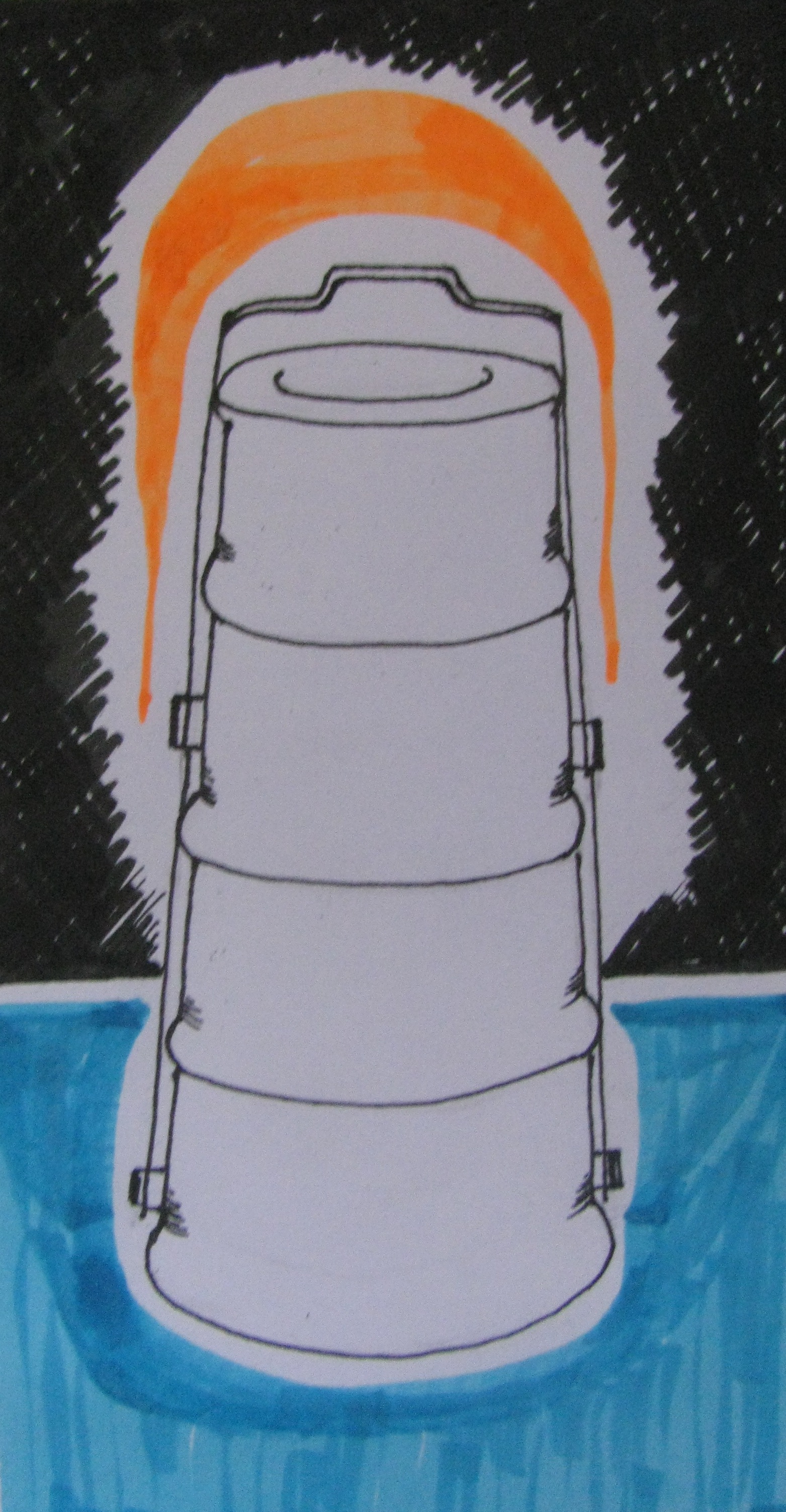
Lunchbox (Illustration: Shyam G Menon)

Lunchbox (Illustration: Shyam G Menon)

`The Lunchbox’ was a nice film.

Its story – of a wrongly delivered lunchbox connecting two strangers in a large city, has been described as a known theme. It may not have been a lunchbox before, but similar predicament has been the stuff of link-up in stories. For all its alleged shortcomings, The Lunchbox warmed up to me effortlessly. It was neither difficult art nor any of that mainstream song and dance-routine. It was very much, the bland ordinary Mumbai life, told as it is with characters portrayed well by its lead actors.

In The Lunchbox, the sounds of everyday Mumbai were clearly heard. Music was mostly background score, that too only where needed and, subtle. There was an amazing economy of dialogue. When the characters spoke, their words and intonation fitted them to the T. Dialogues were crisp, sometimes tender and in a rarity for contemporary Indian films – there was an entire character who was just voice heard and not person seen. This film worked well as cinema. Its continuity was maintained through a mix of narrative, visual linkages between scenes and such funky aural continuity like the same song sung by different people with different tone and aural quality in different environments, which conveyed volumes about the travel through different contexts that is a daily Mumbai life.

Mumbai has been featured liberally on film. It has been shown umpteen times by the local film industry to the extent that its presentation on cinema often leaves people confused when they see the city’s harsh reality. They search for an elusive optimism in the mess. The Lunchbox seemed an honest depiction of life in the apartments, suburban trains, buses and streets I left behind to walk into the cinema hall and see the movie. The fulcrum for its story was the city’s dabbawalas, famous for their daily delivery of lunchboxes bearing home cooked-food and food prepared at small hotels, to people working in various offices. It is an amazing distribution system, very unique to Mumbai. Around the everyday journey of the film’s central lunchbox and the story of a relationship spawned by its incorrect delivery, the film captured well the city’s feel, from crowd and congestion to the less spoken of but very real loneliness of the individual. It is easy to pass off Mumbai as a city of great energy and enterprising people, prospering from opportunity. That isn’t how life is for all. Many of us remain anonymous and ordinary. An ordinary life is just that – ordinary. At day’s end you crawl back to your corner of accumulated loneliness. And as the city sleeps, perhaps you wonder whether there is someone, somewhere in the millions staying around who would understand you. The relationship that evolves between the two strangers was treated as the friendship it is with no judgement.  In the one moment in the film, when one of the protagonists judges the relationship, the other attempts to bridge it. Friendship, companionship – they are like oxygen. This one shines against the bareness of the mental landscape it is located in.

According to Wikipedia, the tradition of dabbawala is traceable to 1880. In 1890, Mahadeo Havaji Bachche and Ananth Mandra Reddy started a lunch delivery service with about a hundred men. In 1956, a charitable trust called Nutan Mumbai Tiffin Box Suppliers Trust was registered, followed by its commercial arm in 1968 called Mumbai Tiffin Box Supplier’s Association. The website estimates that between 175,000 to 200,000 lunch boxes are moved daily by 4500-5000 dabbawalas.

Finally, you have the actors. The film’s casting was overall well done. Including the voice only-Mrs Deshpande! Three good actors formed the visible central cast. Given movies celebrated for their box office performance no matter how loud and atrocious they are, The Lunchbox is a reminder that if you try, quality is within reach.

(The author, Shyam G Menon, is a freelance journalist based in Mumbai)

WINDOWS TO THE MIND

Illustration: Shyam G Menon

Illustration: Shyam G Menon

Many years ago, when studying in Thiruvananthapuram, I used to be active in a small society called Literary & Debating Forum. On days when the onus of organizing a debate fell on my shoulders, I would go to inform the college principal of the chosen subject, seek permission to use the auditorium and put up some posters for publicity. In the early part of my time at college, my father died. I suspect, the principal who saw some promise in me, kept a distant watchful eye on how I was faring. By my final year of graduation, I had both nose dived in academics and grown a beard. One day, I went to the principal’s office for the routine appraisal of upcoming debate. He heard me out without taking his eyes off my bearded face. Then he asked me, “ Shyam, what book are you reading now?’’

Those days, books were prime fertilizer for beards. Youngsters read books, beards grew and some years later, they were usually lost to navigating a confusion that the more pragmatic avoided and chose decent careers instead. The principal’s concern was spot on. In retrospect, I am glad somebody bothered to ask that question too. If my principal had any worries, they came true. For after college, I meandered for long in a maze of impractical ideas and idealism. I was never a fan of ideology. But ideas hook me easily and I am never above an impractical pursuit if there is a journey in it, even a short lived trip. I am therefore not the type anyone can use to build a nest or fiefdom. The moment I detect territory marked and stamped by ownership – which is the problem with ideology too – my trip ends. For I know well that the compulsion to defend turf will kill the original idea. It is not that this trait doesn’t bother me. It does. The world’s money lay in the family-fiefdom-kingdom-empire-country sort of social arrangement and to be useless for it is to embrace penury. Indeed any perspective that doesn’t make sense to people fetches no money for money is a human construct found only with people. Yet the thing is – the way of money is just one way to live and life was never all about one way. That old beard is no more there on my face. But as you can make out from my writings, its ghost lives!

The reason I brought up my principal’s question to me is because when I wrote on Madhavan Nair, who was a fine collector of music (please refer earlier post – Remembering Madhavan Uncle), I remembered that nobody asked me of the music I liked the same way they asked me of what I read. We think books are a window to people’s souls. We assess people by what they read. But why not by what music they listen to? And the thing is – for most people, the music they like is far more personal than the books they read, save of course the books you are told to read for salvation and such, like our religious books, where anyway it isn’t inquiry but blind faith. For me, someone who likes pop music is different from someone who likes classic rock as is that person from someone who likes film music. Or to dig into my own tastes and give a very Indian example – I like Hindustani classical for its seemingly unfettered exploration of universe and its reduction of life to a relation between self and universe. Carnatic music in comparison leaves me cold. I feel it emphasises laid down structure and appreciates in terms of loyalty to an established perfection. Maybe that’s because I don’t know enough. But that’s my aural perception and I usually don’t labour to understand music through explanation. Music is what it does to your atoms and molecules when you hear it. It is that simple. Take it or leave it, but PLEASE – respect what you leave too, for it is plain stupid to conclude that an arrangement of atoms and molecules as you are is the best arrangement nature could ever manage.

Perhaps somebody with an appetite for anthropology and social research can enlighten us on why we are conditioned to place appreciation / knowledge of words above appreciation / knowledge of music. For sure, the world has disseminated itself more on words. Sometimes I wonder if music’s comparative relegation is because our words are inadequate to articulate what unravels through music. For after all, the vibration of a drum or string appears closer to the wealth of vibrations that seems the universe itself. Are we paying the price for mastery over what is only a second or third language of the universe? Yet we never even give it the benefit of doubt. If you reach home lugging books everybody approves it as opposed to landing with headphones on your ears and spring in your step. No boss asks you in an interview, “ so, what music do you like?’’ leave alone celebrating a discovery of matching tastes, with a jig around the table. Maybe they should read Sherlock Holmes for one of the mysteries of his character is how that alchemy of astute observation, chemistry, the occasional drug and violin, converged to crack a case.

Commuting in Mumbai, a city of travel given its distances, my small backpack may or may not have a book to read. But it will rarely miss out on my old portable CD player (go ahead and say it: this man should be in a museum!). Right now some songs have to be at hand. They mean the world to me. None of them arrived at the same time and any such favoured playlist keeps changing. However some songs stay long. From the first time I heard the song `I Still Haven’t Found What I’m Looking For’ I was hooked. It was the very essence of journeying. In my opinion, journeying is different from journey. Many people go on journeys, but few actually journey in the sense that they allow what they are experiencing to come within and move them, shift existing patterns. This song and the album `The Joshua Tree,’ more than any other song and album I had heard till then, embodied seeking and they did so, as a wholesome body of music, not through recourse to lyrics. Through thick and thin, through the ups and downs of life this song by U2 and the album, `The Joshua Tree,’ have stayed with me. Although acquired much later `Dear Mr Fantasy’ quickly grew to be a permanent fixture on my playlist. Herein I am not referring to the song’s original version as recorded by the band, `Traffic,’ but the version performed by Eric Clapton and Steve Winwood at their 2008 reunion concert in Madison Square Garden. Hanging on in the periphery of these two songs and for now, rounding off my essential playlist are the songs, `Imagine’ by John Lennon, `Bridge over Troubled Waters’ by Simon and Garfunkel, ` Silent Lucidity’ by Queensryche, ` Closer to the Heart’ by Rush, `Maa Rewa’ by Indian Ocean, `Drive’ by REM, `So Much to Say’ by Dave Mathews Band, `Snow Flower’ by Anand Shankar, `Midnight Rider’ by Allman Brothers Band and `Farm on the Freeway’ by Jethro Tull. You don’t have to like them. They happen to be my choice for my current days in Mumbai. Days change; so does the playlist.

Music is one of the most under-estimated windows to what we are. It encroaches upon the terrain zealously guarded by the old fashioned, feudal question of who we are. That question is typically answered by disclosing names of parents, family roots and details from the circumstances of one’s birth. After holding forth on that, play the music you genuinely like, watch those swaying to it and you are left wondering – really? If the above mentioned songs are currently fundamental to my sanity then is an explanation of who I am by the circumstances of my birth adequate or inadequate? And if I am born in accordance with what answers who I am, to merely then cross over to the pleasurable confusion of what I am, then of what relevance is this question – who am I? And if I am happy with whatever musical tastes are compliant with my identity by birth, then does that bar me from whatever I can be by way of wider empathy for music? Chances are music will leave you belonging to bigger universe against which, the whole feudal rigmarole of who you are looks petty. Of course, you can cap the inquiry for convenient outcome or profit – that’s beside the point, not to mention being dishonest to the spirit of inquiry. 

Illustration: Shyam G Menon

Illustration: Shyam G Menon

My college principal, Fr Thomas Kottarathil, did the best he could. Except him no teacher ever asked me what books I read. Maybe someday in the future, a principal will ask students, in addition to what books they read, what music they listened to. In the more informal setting of outdoor experiential education courses, I have often seen this happen – we stand around in a circle and try to open a window to what we are by listing one or two songs and singers / bands we like. The effect is usually nice because music is not seen as part of our weaponry for mutual competition. Sadly however, that wonderful privilege is eroding. Attitudes encouraged by the industry of marketing, which sells by loading every product silo with attributes, is making music seem more physical than the fluid medium for journeying it actually is. Now that you read this article, why don’t you reflect on the songs and music you like and see what they tell you about yourself? A word of caution: they don’t tell you everything, they just tell you something.

When my principal asked me of the book I was reading, my answer was – James A. Michener. Thanks to good friend Rajagopal, who started the trend, we were both onto one Michener after another. To my mind, Michener and U2 or ` The Joshua Tree,’ aren’t exactly the same spirit by different names but they belong to the same region in imagination. Michener’s huge books, if you have the patience for it, engage for their vast canvas of people, history and times. It is a journey. But it also resembles a giant fresco that is all about reporting a million movements but needn’t really move you, for it is a frozen account. That’s where music scores over words. Starting with our heart beat and breathing, humans are naturally rhythmic. Music adds a dynamic dimension to words that words are simply bereft of. U2 captured the spirit of journeying with `I Still Haven’t Found What I’m Looking For’ and some other songs in `The Joshua Tree.’ That album moved. You felt wind in the hair, solitude and moments of utter standstill. The Madison Square Garden-version of `Dear Mr Fantasy’ too falls in the same league. It evokes imagery of journeying and multiple perspectives. Does that in turn provide a clue or two about me? I suspect it does.

There is however one danger, we should be aware of in this sort of profiling. The human being nowadays is way too intelligent for his / her own good. We reverse engineer like crazy. We ask ourselves what impression we need to strike and then arrange the required pointers in place. We quickly learn what music we should like to impress the boss; what books to read to impress a teacher, what degrees earned and from which university structure a great career, what picture of self indulges our own vanity for a blog. A few screeches on the violin, some time with the magnifying glass and a few puffs never made anyone Sherlock Holmes. Sadly that works in our world. Everything is bio-data for competition; not understanding a journey. It is success by formula, till the chemistry of pretention wears thin and reality emerges.

(The author, Shyam G Menon, is a freelance journalist based in Mumbai)