LADAKH’S ICE HOCKEY

June 2009.

Ladakh couldn’t comprehend its mixed fortunes in ice hockey.

In India, the game was first played in Shimla during the British times.

But it fizzled out.

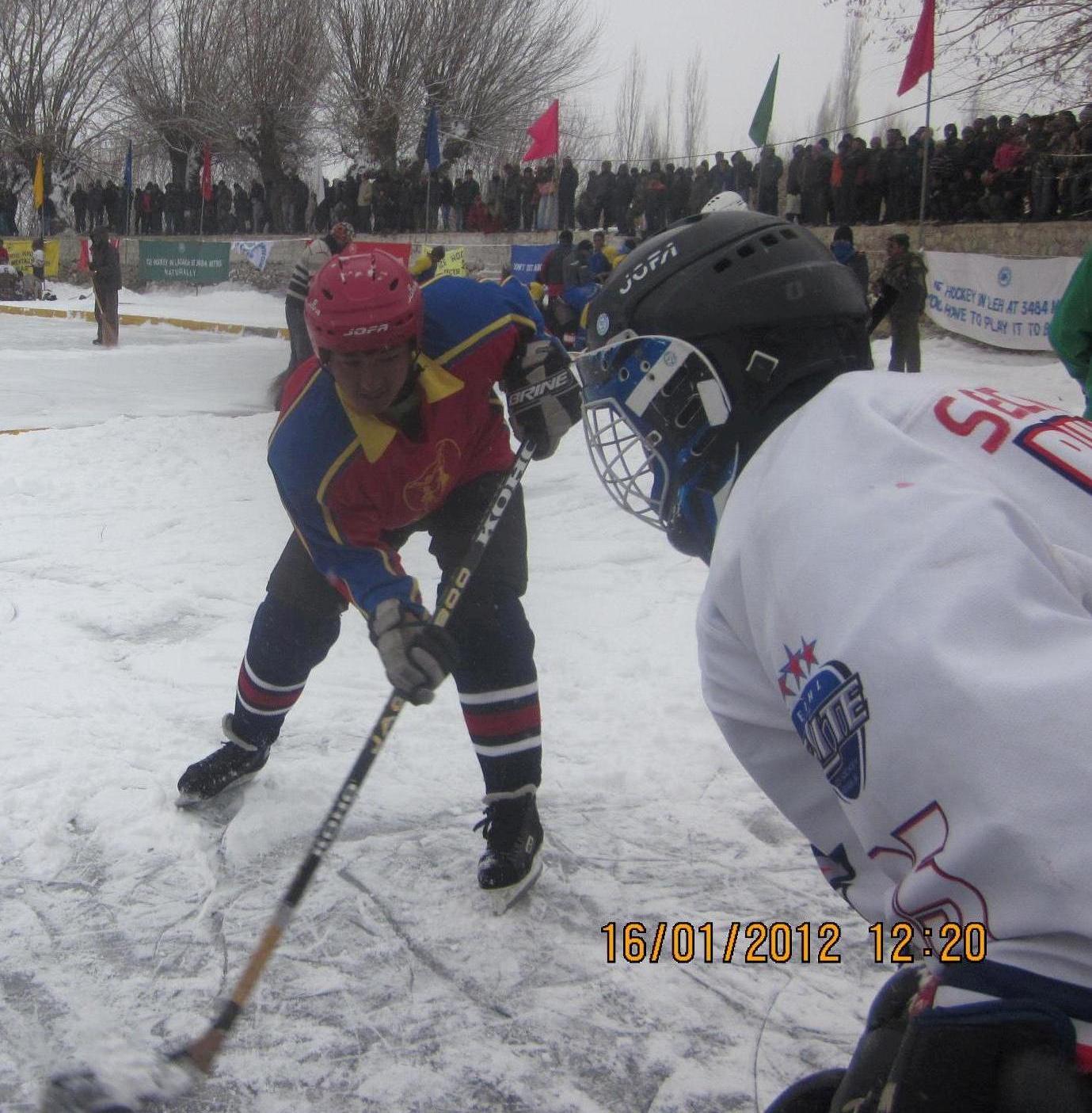
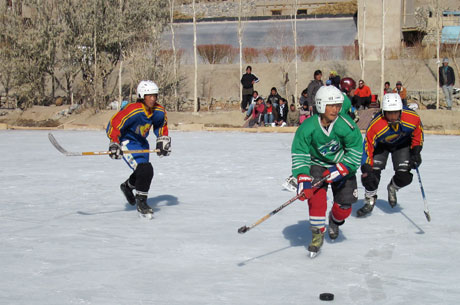
Ice hockey in Ladakh (Photo: courtesy Chozang Namgial)

Ice hockey in Ladakh (Photo: courtesy Chozang Namgial)

Then in the 1980s, some say earlier, the Indian Army started playing ice hockey at its remote, cold postings in Ladakh.

The Ladakh region has a severe winter. Dras, often cited as the coldest inhabited place in the country with altitude induced sub-Arctic temperatures sometimes plummeting to minus 45 degrees, lay in the adjacent Kargil district. Even today, a winter in Ladakh entails being cut off for months as regards access by road.  Water bodies freeze, the most famous and touristy of which is the annual freezing of the Zanskar River that makes the winter trek on it much sought after. In towns and villages, people live off stocks of food they carefully accumulated during the summer. Families gather around large decorated stoves which serve to both cook food and heat a room. The choice then looms of either restricting yourself to such life or getting out and doing something more active.

That’s where ice hockey fitted in.

When the army started the trend in Ladakh, ice hockey sticks were made from willow wood. The skates were locally fabricated and fixed to the soles of military issue shoes, tin cans were used for pucks.

It soon spread to other parts.

In Leh the game has been played for years on a frozen irrigation pond. The Ladakh Winter Sports Club (LWSC) was formed in 1985. It offered coaching and organized tournaments, slowly moving the game away from the army’s clutch and into civilian ownership. At present the military / paramilitary forces don’t anymore run the game but send their best teams to compete with that of the state and local clubs.

Equipment was a huge hurdle to cross for it had to come from abroad and was required in good quantities if the sport was to penetrate the remote hinterlands. Luckily with ice hockey’s ascent, it caught the eye of diplomats and expatriates staying in Delhi and Mumbai. Among them were Canadians. Through them Ladakh got the first real sets of ice hockey gear and several more of used equipment for dispersal to the interiors. “ Those days, it was difficult getting the gear cleared at customs. We lost one set,’’ Chewang Motup Goba, founder of Rimo Club, national champions in the sport, recalled.  He was also Vice President of the LWSC at the time I was writing this story. The game had state and national level competitions with an administering body – Ice Hockey Association of India (IHAI) – based in Delhi.

In March 2009, the national ice hockey team made its debut at the international level.

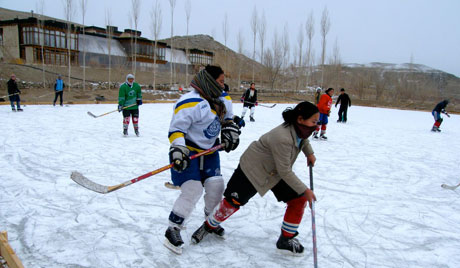
Ice hockey in Ladakh (Photo: courtesy Chozang Namgial)

Ice hockey in Ladakh (Photo: courtesy Chozang Namgial)

The team was wholly from Ladakh.

Shimla hadn’t been getting good ice for the previous 3-4 years and that led to its players being left out.

When Tundup Namgial turned up at the Leh View Restaurant for a chat, he was absolutely different from the typical skipper of an Indian team. He spoke to the point with a reluctance that hinted he would rather play or be lost in the folds of his Ladakhi landscape. At experiential education courses, my thoughtful journalistic persona has often found itself in spaces identified with the analytical, procrastinating, human company-loving type. Tundup Namgial reminded me of the active sort, which struggle to find the correct words because the active life is their equivalent of thought and conversation.

Some in Leh felt he should have spoken up at a certain press conference in Delhi when the national team was sent to Abu Dhabi to play in the Asia Challenge Cup. From the administrators of the sport they got team T-shirts. That was all. The team had no doctor; equipment kits were pieced together from the inventories of the army, Rimo Club and J&K Tourism. Stay and accommodation was courtesy the organizers. Travel cost would have been entirely the team’s onus had not the Jammu & Kashmir Bank agreed to sponsor tickets, reportedly at the behest of state Chief Minister Omar Abdullah.

At Abu Dhabi, the team featured in the opening game of the tournament. It was routed owing to lack of international experience and more significantly, the absence of an artificial rink back home. “ Nobody plays competitive ice hockey these days on frozen ponds,’’ Namgial said ruefully. Abu Dhabi in the desert underscored it and the behavior of puck on the ice of artificial rink was dramatically different from the way it slid on Leh’s frozen irrigation pond. Yet the tough lads improved with each fixture and exited the tournament earning the respect of other national teams. UAE won the championship that year.

The IHAI attributed the limited support it gave the team to both the niche stature of the sport in India and its own early days as an association. It hoped to get funding from the International Ice Hockey Federation. Both J&K Bank and Volvo, companies that sponsored the national team that went to Abu Dhabi, were expected to continue supporting for the next five years. “ We are also getting a coach from the ice hockey school in Finland to visit India this winter,’’ Mr Akshay Kumar, Secretary, IHAI, had said then.

Ice hockey in Ladakh (Photo: courtesy Chozang Namgial)

Ice hockey in Ladakh (Photo: courtesy Chozang Namgial)

Ladakhis love ice hockey.

Their women fought for equality in the game.

“ Our youth have nothing to do in winter but play ice hockey,’’ P.T. Kunzen, President then of the LWSC, said.

A national team and aspirants for it must train year round.

The Ladakh Autonomous Hill Development Council (LAHDC) was installing a second rink, a natural one again with hopefully an extended period of frozen existence as grace. That may increase the playing calendar by a month or two.

But where was the artificial rink that Ladakh badly needed for all it had contributed to the sport?

In 2009, thanks to an Uttarakhand initiative with central funding – a proper rink was coming up at Dehradun, in time for the South Asian Federation Winter Games. Teams from Himachal Pradesh, Delhi and Uttarakhand would thus find a rink close at hand. Meanwhile with the growth of shopping malls and such, recreational rinks have opened up or been announced as curiosity in several Indian cities. Late 2012, I would find a giant hoarding outside the Mumbai airport announcing that winter’s ice hockey tournament in Leh, sponsored by a leading hotel chain; months later in Kochi I would see a newspaper article about an artificial ice skating rick at a huge mall. In new India with no shortage of people and people packaged as market, there is no dearth of marketing to attract crowds. What is amiss is an understanding of sport and meaningful investment in it. Growing something patiently, organically – that is an art lost in these days of design by disruptive growth and utter impatience to reach where the Joneses have.

Thus in yet another one of the ironies of sport in India that artificial rink went many places, except where there is a readymade culture for using it.

Kunzen, Chewang Motup and Namgial were all at a loss to explain this situation.

They were sure Ladakhi players would travel to Dehradun for practice. Still the bad luck rankled. Against the backdrop of 60 per cent central funding for sporting proposals from the states, the IHAI felt Ladakh can get its rink if the state pushed for it. But the time I was in Leh, it didn’t seem simple. Gulmarg in the Kashmir Valley is a favored spot for the national winter games and all states humor Delhi to merit their share of opportunity. The question being posed in 2009 was – will the state risk Gulmarg’s fortunes for the sake of an artificial rink in Ladakh?

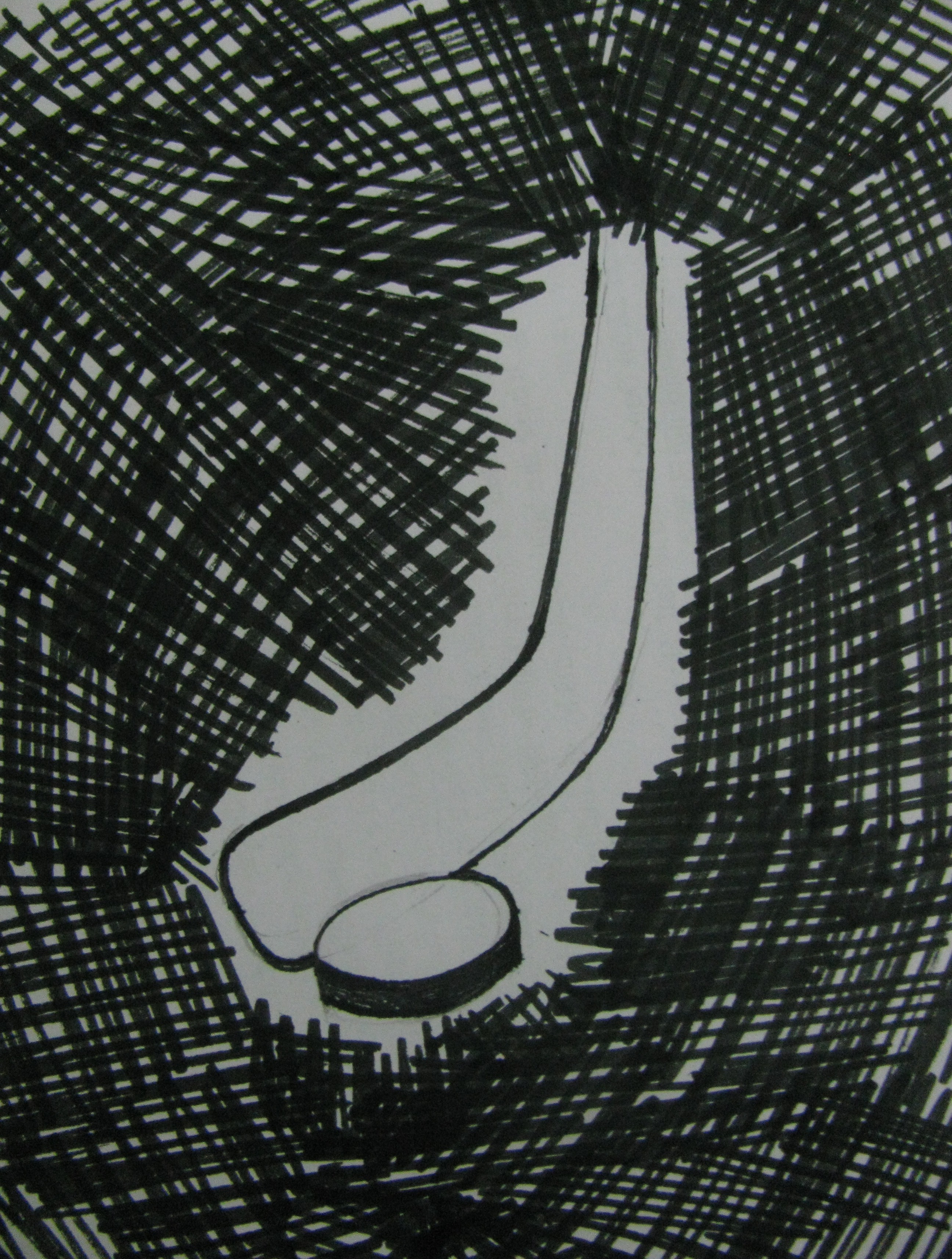
Illustration: Shyam G Menon

Illustration: Shyam G Menon

The only other alternative was to encourage in-line hockey – similar to using roller blades – during the summer and keep Ladakh’s talent engaged. Chewang Motup saw one silver lining. He said that the then union minister for sports was aware of Ladakh’s concerns. But today as I brush up the article for this blog, it is many months since the said union minister was shifted out from sports. In India, you can’t trust politics. Its notion of time – swiftly ending through human intrigue sometimes and carrying on eternally at other times – follows laws that are apart from the natural laws of physics.

Unlike in politics, a more natural form of time runs out on the playing field.

Namgial knew his time was up.

“ Another two or three years of playing, after that I plan to coach youngsters,’’ the captain of the Indian team said.

Hopefully by then, Leh should have an artificial rink.

Namgial is the only captain of an Indian team I was privileged to have tea with.

I met him a couple of times after this visit.

One of those meet-ups was memorable.

We were a group of journalists who had just landed in Leh to cover the Hemis Festival and write about a school run by the Drukpa Lineage. I ambled out from the airport to locate the vehicle assigned to pick us up. A large number of people stood waiting outside the building, most of them taxi drivers and chauffeurs of hotel owned-vehicles or lodge and home stay-owners come to collect their clients. In the crowd was a face that struck me as familiar. Eventually Tundup Namgial and I recognized each other. We shook hands, exchanged greetings. Later, we met for a chat on ice hockey at his house now sporting additional rooms for lodging tourists.

It is now August, 2013. I spoke to a friend in Ladakh few days ago. At the one place in India where ice hockey grew so much, an artificial rink wasn’t functioning yet.

Ladakh waits.

(The author, Shyam G Menon, is a freelance journalist based in Mumbai. This article was originally published in a shorter version in The Hindu Business Line newspaper in September 2009. It has since been tweaked a bit to reflect the times.)


BLACK, WHITE AND WOLF

When you are the first Indian woman to ski to the South Pole, tough decisions are bound to have been part of your diet.

Yet Reena Kaushal Dharmshaktu struggled to be strict with the black dog that knew her well from past treks in the Pindari Glacier area and worse, seemed to know how to soften her resolve. As Reena said repeatedly, taking dogs out of their familiar territory can be hard on their lives. It was better that this dog stayed put at Khati.

She had begun the day determined to enforce it.

Kaalu though had a mind of his own.

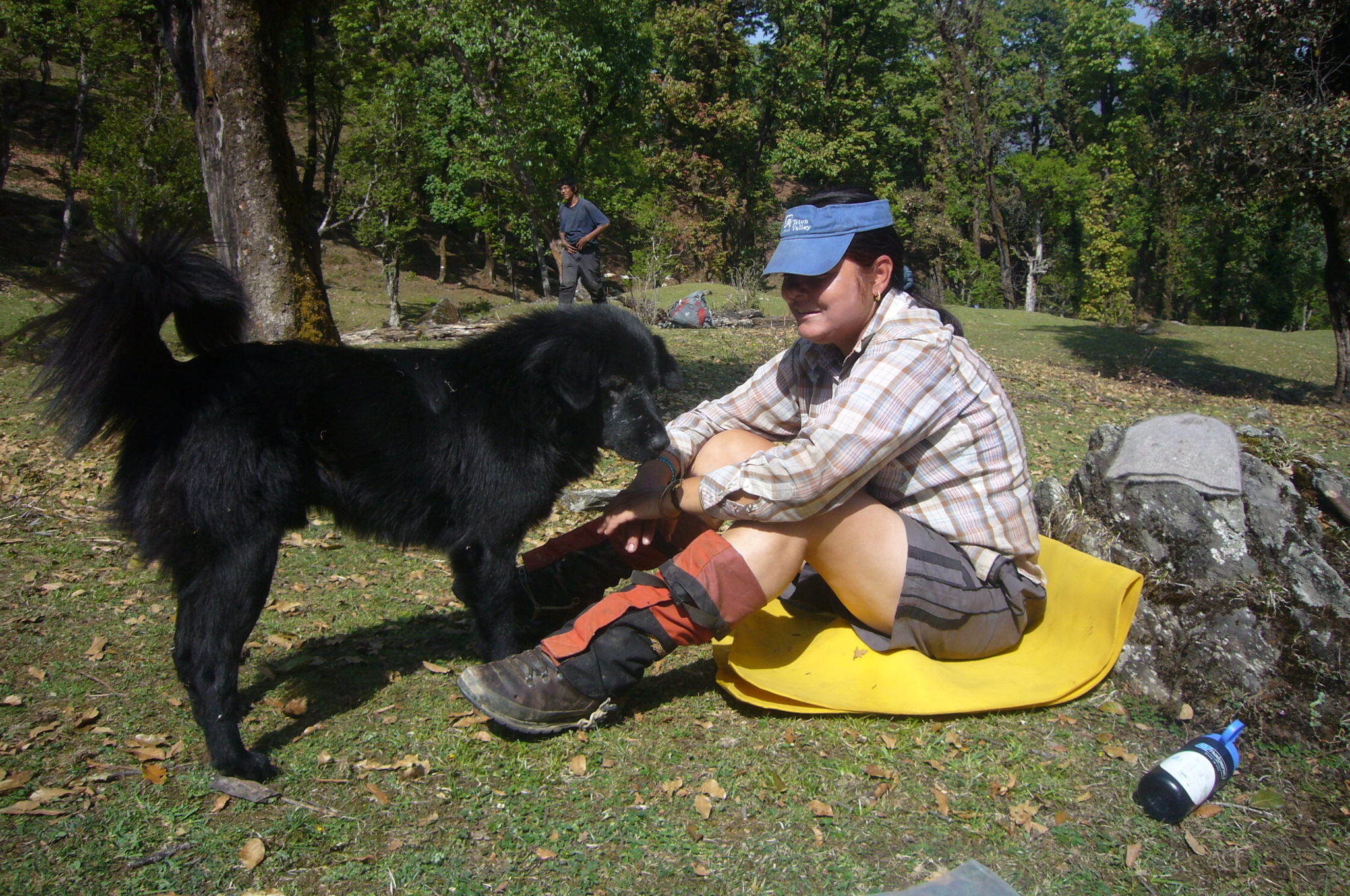
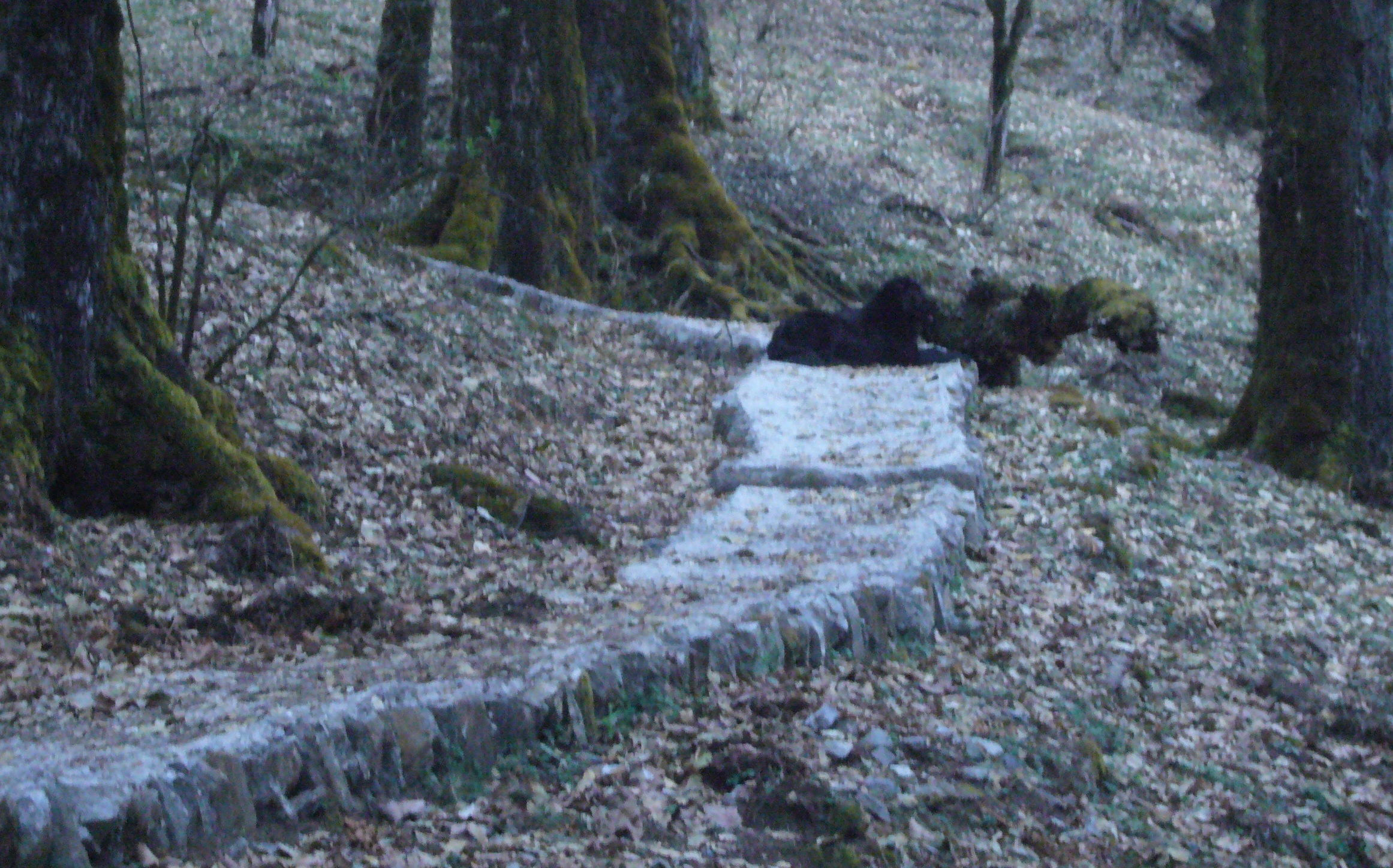
At first he stayed ahead of the trekkers slowly picking their way up to Khati Khal en route to villages east of the Pindari Glacier trail. Every time Reena caught up with him and shooed him away, the black dog – hence his name Kaalu – slyly fell back. He would almost drop out of sight only to emerge at the periphery of the trekkers’ world – typically lying down and nonchalantly watching humans huff and puff through his backyard. Early evening as we set up camp, we knew Reena’s best attempts to discourage Kaalu had failed. That night the newest member of the trekking party announced his role by keeping vigil and chasing inquisitive jackals away. Next morning, our group composed mostly of high school students learning the finer aspects of wilderness travel, were in love with Kaalu. The old trickster had got the better of Reena. She sat there smiling at him. We had another ten days or so to go.

Reena with Kaalu (Photo: courtesy Reena Kaushal Dharmshaktu)

Reena with Kaalu (Photo: courtesy Reena Kaushal Dharmshaktu)

It was April 2011. The Young Leader India (YLI) course from the Indian branch of the National Outdoor Leadership School (NOLS) was underway. Reena was course leader; Gaytri Bhatia, who loved to run ultra-marathons, was second in command. I was Instructor-In-Training. Kaalu became mascot at large for the course. And he wasn’t mascot for one day or two – it was so for more than ten days.

Some of us knew him well from previous walks in the region. Usually you found him lounging near Khati’s Jai Nanda restaurant, bordering the small ground where hikers pitched their tents. One of those mountain sheepdogs, Kaalu had exactly the looks and demeanour that would endear him to anyone. He could look at you expectedly as only the word expectedly meant, while you spooned food to your mouth. You patted him on the head and your hand sank into a cushion of eminently pat-able crown. If you didn’t give him any food, he didn’t complain, whine or create a fuss like other dogs did. He would stoically go back to rest like a hermit meditating on empty stomach; except, he knew that such behaviour elicited your respect and firmly reserved his seat for the next dinner. He was an investor; he worked on you quietly, patiently, diligently.

Kaalu was what you would call a `tourist dog.’

He kept no particular loyalties to anyone and was therefore an outcast at Khati, a village where the habits of settled human life and by extension, the same for canines, appeared held in high esteem. “ Kaalu? That dog would go with anybody,’’ villagers would say dismissively. Man measures dogs by their loyalty to him. The more a dog has qualities revered by humans in other humans, the worthier the canine becomes. A dog loyal to one master or household was therefore dog personified.

Kaalu’s sole loyalty was to food.

Whoever provided it or hinted that they may provide it; he went along. The human aspects of the deal – he rationed it and played it like a master stroke; a sort of embellishment to what actually mattered. As in our case with no indulgence offered, he still managed to nudge the cards in his favour, hanging on long enough to make the human being feel guilty if such an unobtrusive guard dog wasn’t spared some scraps.

Day after day, Kaalu stayed with us.

He followed us into valleys; hiked up mountain passes, camped in the forest and near wild rivers. For the most part, he was well behaved, something I will come to a bit later. The only irritating things about him were the scruffy unwashed look that came with being the backpacker of the canine community; a weakness for cheese and a penchant to crawl into the instructors’ tent when the weather was adverse. What I remember most about him was something else. He rarely picked up a quarrel with another dog although a wanderer like him passing from one village to another was perennially trespassing territories zealously guarded by other packs. Barked and howled at – you could literally say hounded – from one end of a village to the other, he simply kept his cool and walked amidst the file of trekkers.

Kaalu, on the trail to Khati Khal (Photo: courtesy Reena Kaushal Dharmshaktu)

Kaalu, on the trail to Khati Khal (Photo: courtesy Reena Kaushal Dharmshaktu)

It reminded me of seasoned human travellers. They lose their interest in the territorial defence of settled life, almost becoming useless for such defence. They would much rather keep their peace and take in the world, aggression, defence, shallowness and all.

On the last day however, Kaalu met his match. Tiger of Munar village was not only fiercely territorial but he was also a good half size bigger than Kaalu. As the two dogs squared up in a fury of growls and bared teeth, the surrounding humans intervened to eliminate a fight. Had there been one, I doubt very much if Kaalu would have survived. Travellers rarely do for their mind is not in such householder-lunacy.

Defend a piece of territory when a world waits?

Nah! 

That day we dropped off Kaalu at Song, which is the official starting point of the Pindari trek. It wasn’t easy on the humans. The driver of one of our vehicles wanted to take him to Ranikhet; a student was ready to take him all the way to her house in Ahmedabad. Reena and Gaytri weighed the options and decided that the hill trails he knew were his natural home.

A fortnight later, I was back in Khati.

Kaalu wasn’t around.

When he appeared, it was from the Pindari Glacier side, as usual, leading a group of trekkers.

I have been a regular visitor to the Pindari, Sunderdunga and Saryu valleys.

On several trips, I ran into Kaalu.

In May 2013, my cousin Rajeev and I had an enjoyable hike in the region that was memorable for the dogs we encountered.

A cold evening, camped below Jatoli village, we were woken up from sleep by somebody saying hello. Outside were a Polish couple and their pet canine, `Duna.’ She was a Czechoslovakian Wolfdog. Over the next few days spent hiking into and out of the Sunderdunga valley, we got to know them better. The Wolfdog was trifle detached and aloof in temperament. Unlike regular dogs, it was mostly silent and never wagged its tail. Its expressiveness seemed to be in its eyes; how it tilted its face to observe, how it held its ears, how it listened. It rarely barked; it had a repertoire of whines instead, some imploring and questioning, others, stating. A big, lean, athletic animal, its body movements were deliberate, often slow. It had its playful moments but it often left me imagining a melancholic loneliness.

It’s was a serious, soulful presence.

I liked that.

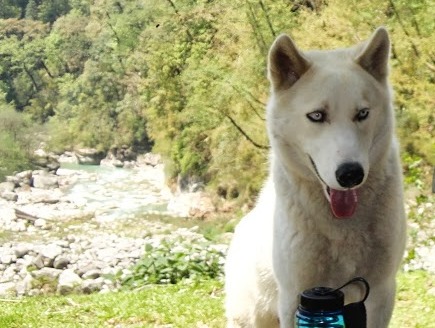
The white dog on the trail to Dwali (Photo: Rajeev G)

The white dog on the trail to Dwali (Photo: Rajeev G)

Some days later, the morning we commenced a day hike from Khati to Dwali, we were accosted by a dog that was as white as Kaalu was black. It walked with us all the way from Khati to Dwali and back but never completely with us. It seemed shy of heart and soul-commitment. Clearly preferring independence, it hung around the periphery of our world drifting through life like a satellite orbiting a moving planet. Aside from the times we rested or halted for tea and snacks, it usually stayed ahead, pausing to look back and make sure that we were following. From its appearance, we quickly realized its Husky roots. It had brilliant, pale eyes and every once in a while chose to cool itself by lying down in the flowing water of streams. The nippy Himalayan air seemed too warm for it.

Later, our deduction was proved correct. At Khati we were informed that the dog belonged to a Russian couple staying in the village.

I have since looked up photos of Siberian Huskies on the Internet and those eyes and demeanour match.

(The author, Shyam G Menon, is a freelance journalist based in Mumbai. An abridged version of this article was published in The Hindu Business Line newspaper.) 

A COMPETITION’S SOLO CLIMB

“ Bong, what’s happening?’’ the policeman asked exasperated.

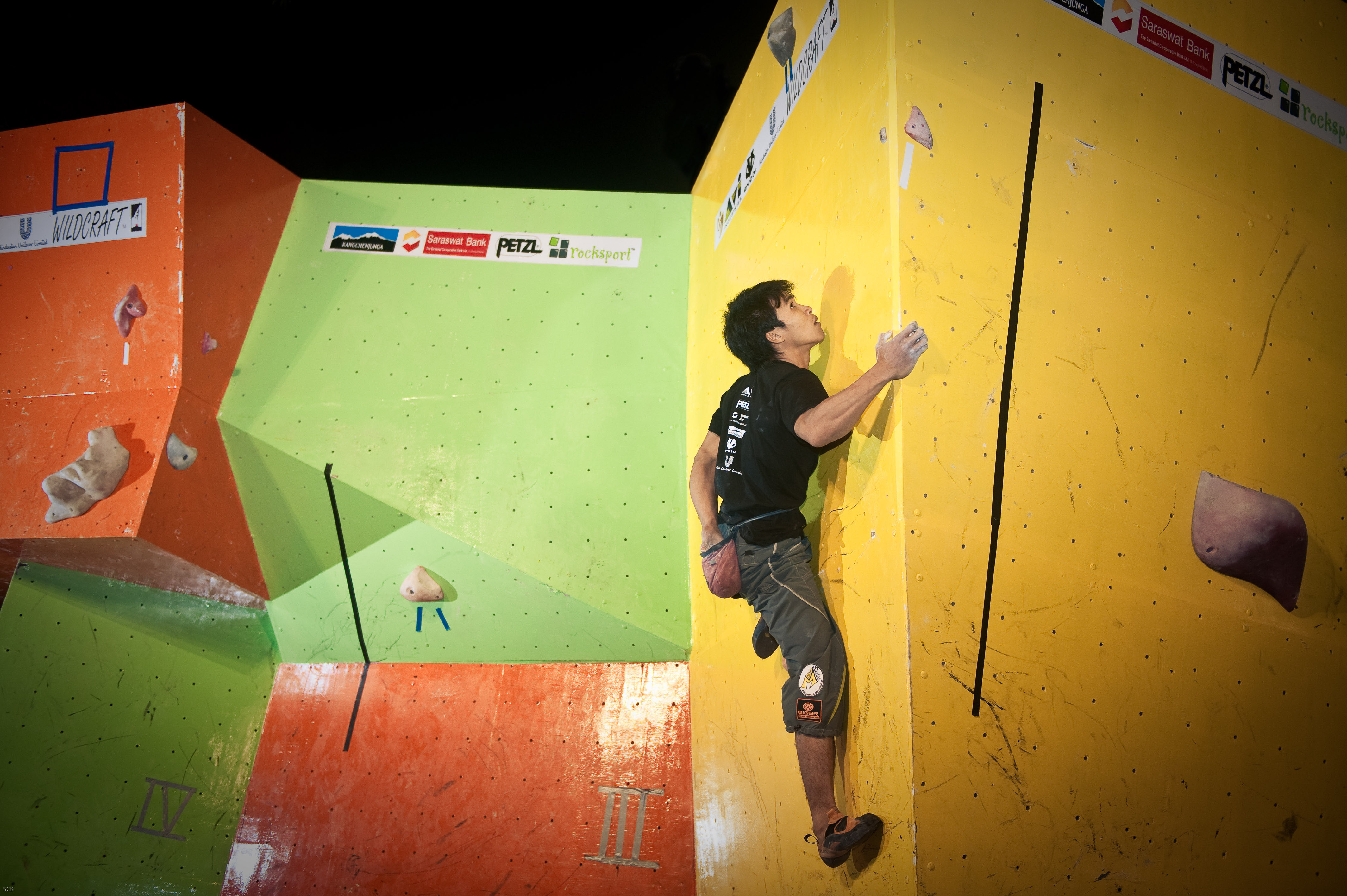
It was late January, well past midnight and while the music system at the small venue hosting a hundred or so climbing aficionados had long died in tune with prevailing law, somebody staying nearby had complained against the clapping and cheering.

The big Bengali appealed to his Marathi friends, “ please, baath karna yaar.’’

Belapur has known its climbing crazies for years.

And even the crazies knew that climbing at 1AM was crazy.

It was the men’s final.

“ Ten minutes more, that’s all,’’ Bong said.

Mangesh nodded and went to mollify the cops.

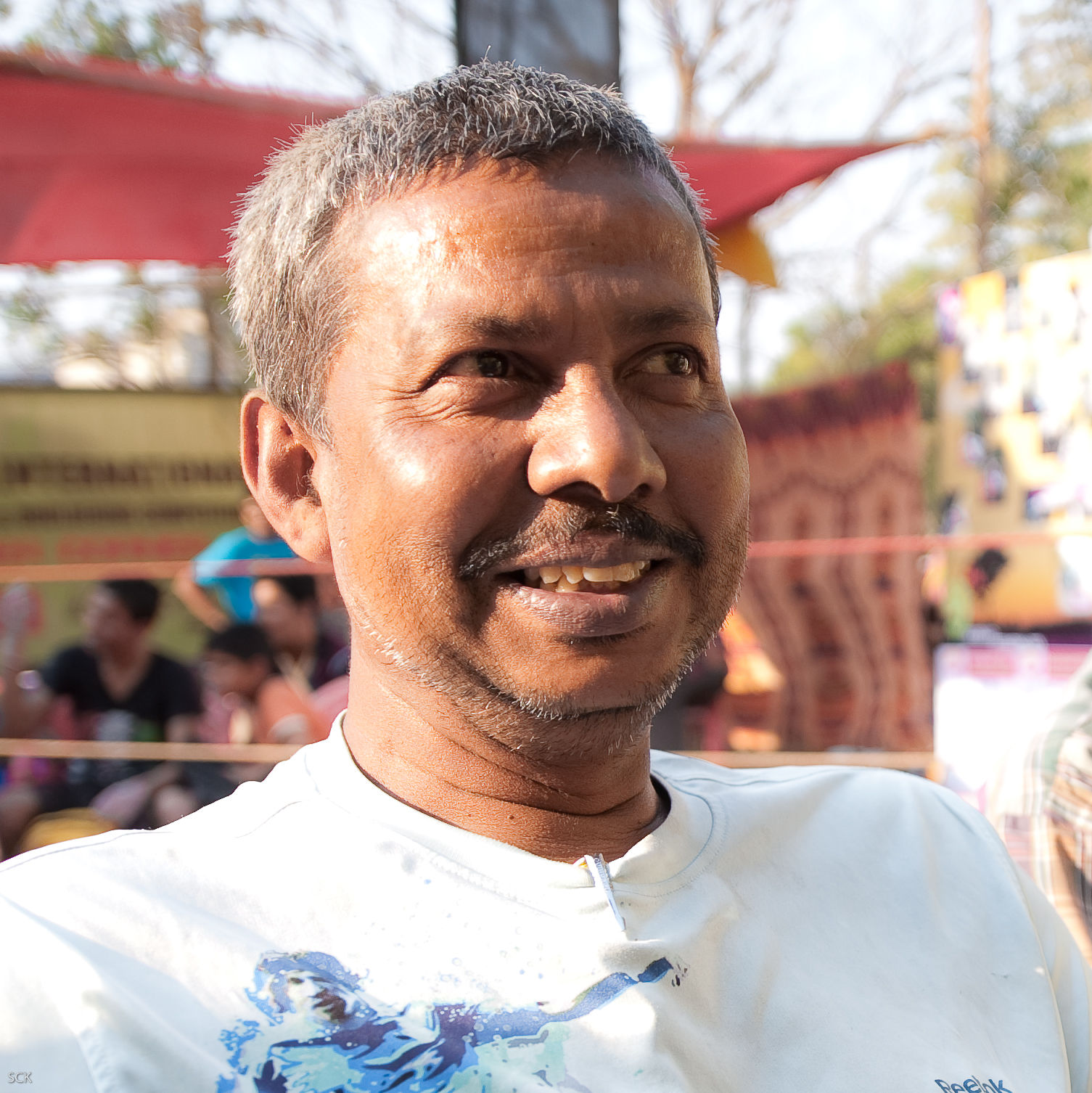
Erstwhile rock climber, still trekker-mountaineer-cyclist and most important – technician at large – Abhijit Burman aka Bong is the soul of a climbing competition taking place in Navi Mumbai for the last ten years. In late 2003, in his tiny apartment choked by climbing gear and small climbing wall, Burman who works at the Bhabha Atomic Research Centre (BARC), shared his idea of an annual open climbing competition. Those days, there was no big event in Indian climbing comparable to overseas climbing festivals. Such festivals brought together the community. Fellow club members put up the prize money and in January 2003, the first edition of Girivihar’s climbing competition got off to an enthusiastic start.

Girivihar is Mumbai’s oldest mountaineering club. Starting life as the Inter Collegiate Hiking Club of the Mumbai (then Bombay) University almost six decades ago, it opened up so that more people could join. Along the way, it acquired its present name and structure. Over the half century of its existence, its members have trekked and climbed extensively in the Sahyadri hills of Maharashtra state besides undertaking several mountaineering expeditions in the Himalaya. It holds annual adventure and rock climbing camps to train young people. Currently, its activity continues with regular itinerary of hikes and climbs plus new pursuits like cycling added by interested members.

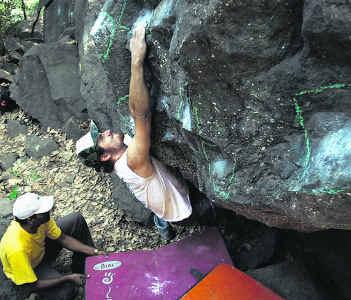
From an early edition of Girivihar's annual climbing competition (Photo: Sharad Chandra)

From an early edition of Girivihar’s annual climbing competition (Photo: Sharad Chandra)

Within a few years of the competition’s commencement in 2003, it attracted young climbers from Mumbai, Pune, Bangalore, Davengere, Bikaner, Delhi, Kolkata, Darjeeling and North East India. It coincided with a time when Mumbai saw a group of young climbers led by Vaibhav Mehta come to the fore. Given to full time-climbing, they soon became the competition’s route setters and manpower. 

The whole effort smacked of home grown enterprise.

Organizing it is still, as one senior club member put it an annual “fire-fight.’’

Once called India’s biggest open climbing competition (now there are more), the Belapur event is actually a tiny affair for climbing itself is small in India. Unable to afford artificial climbing walls, the BARC technician engaged carpenters to make temporary ones. Critics were several. Over time, the walls – the Girivihar competition focuses on bouldering – improved and the climbing contagion spread. Rules for judging followed international norms. On an average 50-60 participants turned up for the competition; in 2011 it touched 116. They compete in men’s women’s, boys and girls categories. There is also a small component of competing on natural rock at crags on nearby hills progressively lost to that classic Mumbai situation – slum encroachment.

Incidentally, when the competition began, the larger component was climbing on natural rock. But a combination of factors encouraged the drift towards artificially built walls. First, the approach and access to Belapur’s climbing crags was always through the scars of urbanism’s expanding fringes – slums, real estate lobbies, religious clans seeking real estate for places of worship, so on and so forth. There was a constant feeling of land, including the crags, being under siege from that sum total of everyone’s presence, climbers included – urbanism. It was the sort of politics, climbers had no appetite for and as for climbing, the imagination of India’s `settled’ world probably held no room for such mindless pursuits. Second, long climbing routes, secure enough for regular climbing and competition, were hard to come by in Belapur. Even today they are not many. But of boulders – there was no shortage.

Despite known interest in climbing and mountaineering, Mumbai never got its act together to put up a world class climbing wall. On the other hand, artificial walls for bouldering aren’t as capital intensive to build.

That’s what Bong, his architect brother Indrajit and Grivihar’s climbers set out to do.

Abhijit Burman aka Bong (Photo: Sharad Chandra)

Abhijit Burman aka Bong (Photo: Sharad Chandra)

Normally in India, we hesitate to present to the world our life and home built-solutions. This changed when foreign climbers passing through Mumbai started seeking out the local climbing community and joining in. Any apologetic tone about how the crags and the approach to it were, slowly faded. In retrospect, one could say that this discovery of climbing as leveller of disparities, contributed to the confidence Girivihar showed in dreaming up a competition on home built-bouldering walls. As they did at the crags, foreign climbers dropped by for the competition as well. Among them – a former world champion (Alex Chabot of France, he was the competition’s route setter in one year), members of the Iranian national climbing team and in 2012, current and former national team members of Singapore and Indonesia. Additionally there were several others who participated for the fun of it from Europe and the US.

India’s top climbers participated albeit erratically thanks to the politics of the domestic climbing circuit. Where prize money and funds once came from club and well wishers, sponsors stepped in – names from India’s outdoor industry like AVI Industries, Wildcraft, Adventure 18 and Rocksport, mainstream companies like L&T, Saraswat Bank and Hindustan Unilever and the agency which built Navi Mumbai – CIDCO. Internationally known climbing gear manufacturers – Petzl and Beal – provided money and equipment. The year Alex Chabot arrived, the French embassy expressed interest. In contrast to all this home grown activity in Belapur, neither Navi Mumbai nor Mumbai has yet a climbing wall of international standards.  

Some years ago, climbing’s apex body worldwide, UIAA, had a special initiative for youth. The late Roger Payne, at that time a senior UIAA functionary, was in Mumbai for a Himalayan Club-lecture. He impressed for both his enthusiasm for climbing and also his willingness to engage with other climbing enthusiasts. With him, there was no standing on ceremony and bureaucracy. Girivihar members met him to apprise him of the competition. The man was a pleasure to talk to. Payne gave the club members a patient hearing. Within weeks the Belapur competition was shortlisted for likely inclusion in UIAA’s calendar of events. The Girivihar team was thrilled. However, Indian administrators, overseeing national competitions for selecting the best, objected to a local climbing competition acquiring such profile and interacting directly with international bodies. They put their foot down.

That year although the competition ran as planned there was a pall of gloom at the organizers’ because the international recognition denied had been despite proven enterprise at Belapur. Some climbers speculated that the authorities were averse to foreign climbers participating in the competition; hence the cold shoulder. If so, it would be well to remember that young Indian climbers watch Internet and read climbing magazines to track a sport which acknowledges no here and there. Climbers from many countries meet at Indian climbing hotspots like Hampi and Badami. From such camaraderie is born open competitions like Girivihar’s.

From the 2012 competition (Photo: Shyam G Menon)

From the 2012 competition (Photo: Shyam G Menon)

“ May be its time we called a spade a spade,’’ Franco Linhares, former president of the club and still climbing in his sixties, said of the official attitude.

To its credit, the competition was back the next year and the year after that, each time hosting young, happy climbers from around the country and some from overseas.

At the venue in Belapur, the cops still hovered on the periphery.

Burman’s ten minutes were ticking.

“ Tomorrow’s headline: Competition outside, organizer inside’’ – someone joked pulling his leg.

Traditionally, the liveliest team at the competition has been Pune’s youngsters. With only hours now separating the men’s final on artificial wall from a new morning of competition at Belapur’s natural crags, one of  the seniors accompanying the team said, “ Bong, the kids don’t want to go to their rooms. They are saying, let’s go straight to the crags and sleep there.’’

Given the policemen around, the laughter was stifled into a mix of giggles and hushes.

It was quintessential climbing community.

All this was 2012.

The next year, 2013, marked the competition’s tenth anniversary.

In 2012, Vaibhav had said that Burman wished for an invitational Asia Cup for the competition’s tenth anniversary. Recognition from Indian authorities, if it came, was seen to be helpful. It posed two advantages. First, it would help secure sponsors. Funding is tough and every year, the competition typically ran a deficit with individuals bridging the gap contributing their own money. In 2012, Mangesh Takarkhede, who had been a winner at the competition in its initial years and now runs his own adventure services company, invested with Burman in the steel structure for building the competition’s walls. That checked one annually recurring cost. Second, recognition by the Indian Mountaineering Foundation (IMF) would likely fetch overseas participants travel concessions and such from their respective climbing bodies.

The invitational Asia Cup didn’t happen.

But as always in Belapur, in January 2013 too, climbers from various parts of India and overseas turned up.

There was no dearth of enthusiasm.

As for that home grown expertise in building climbing walls, Girivihar has since built a popular bouldering wall at the city’s Podar College. The wall is managed and maintained by the club.

(The author, Shyam G Menon, is a freelance journalist based in Mumbai. An earlier version of this article was published in The Hindu Business Line newspaper in May 2012. Those interested in hiking and climbing can reach Girivihar at www.girivihar.org)

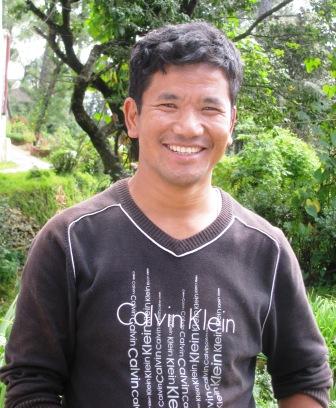
NAMGYA SHERPA

Namgya Sherpa (Photo: Shyam G Menon)

Namgya Sherpa (Photo: Shyam G Menon)

It was the fall season of 2012.

I was working as an intern at the India branch of the National Outdoor Leadership School (NOLS) in Ranikhet.

The evening before the Wilderness First Responder (WFR) program – a first aid course – was to begin, a very unassuming man from Nepal who had enrolled for it, walked up to me and asked if he could have the school’s wireless login password to use his laptop.

He was a medium sized person with a smiling face and the typical stocky build of high altitude dwellers from the Himalaya.

He spoke softly, calmly, in carefully articulated Hindi.

I told him that he would have to speak to the director or the programme supervisor for the password. As the conversation progressed, he said that he was interested in getting to know more about the mountaineering courses available at NOLS India. I replied that he should ideally have a talk with the school’s director, may be an evening after the day’s proceedings had wound up.

The next morning as the first aid course began the student from Nepal was soon lost in the activity on campus.

Quiet people have a tendency to disappear in today’s world.

I would see Namgya Sherpa during lunch or tea-break; that was it.

At breakfast one morning, all that changed.

One of the students at the course – in this case, an outdoor instructor renewing his first aid licence – was Shantanu Pundit, who I knew from Mumbai.

Shantanu asked me, “ did you know that Namgya Sherpa has climbed Everest?’’

I didn’t.

I nevertheless took that in my stride partly because my ego didn’t want to seem shaken up by the discovery and partly because Everest has become so commercialized that it reminds me of how nothing happens without money.

As freelance journalist, I don’t make much money.

Without money or extraordinary luck, not even the outdoors open up to you these days.

When they do, and we get wherever we wanted to, we advertise our `achievement.’

We have transposed on to our hobbies that same livelihood fuelled rat race-imagination punctuated by this achievement and that.

The world is awash in that trend.

It is a whole gamut of depressing thought.

I didn’t want to go there.

So I said, “ wow,’’ and let it be.

Peace of mind demanded that Everest be digested as easily as breakfast.

Then as though to rub it in, Shantanu added, “ he has climbed Everest eleven times.’’

For a fleeting moment we looked at each other stunned.

Shantanu for what he had just said, I, for what I had just heard.

I kept the food I had scooped up with spoon, back in the plate.

I had that same feeling as when a person looks up at a stunning mountain face beyond his ability and sees people up there, leaving him wondering: what the hell am I doing in life?

Multiply that eleven times over and you have no option but to laugh, helplessly laugh.

We did exactly that.

We laughed.

Add more mountains to it – which Shantanu said, Namgya had to his credit – and you like to spread the laughter around because it is a world of riotous helplessness. So, we happily spread the news around in campus and watched jaws drop one after the other like salutes at a guard of honour.

By the time I caught up with Namgya, I suspect, people had already quizzed him for the quiet man seemed to be hurrying away from questions. I didn’t spare him and asked my share – so is it true that you did all those ascents?

He halted briefly in his tracks, that familiar smile appeared and the soft voice said reluctantly, “ yes, it is my profession.’’

As it turned out Namgya, in addition to his eleven times up Everest, had also successfully climbed Shishapangma, Cho-Oyu and Dhaulagiri. Plus, he had worked in Antarctica and was set to return to the frozen continent for another season there. He ran his own company called Kanchenjunga Adventure in Nepal and had been a mountain guide in Nepal and Tibet. Namgya hailed from a village called Ghunsa in Eastern Nepal, very close to the Kanchenjunga massif on the country’s border with India.

I know there are those who have climbed Everest more times than Namgya.

I know there are those who trek to Everest Base Camp and talk as though they climbed the mountain.

This article is not about records or personal ambition.

It evolved from what I felt was the man’s humility and that, in these days of identity forged by advertising achievements, seemed welcome relief.

If eleven times up Everest could remain so quiet and unassuming, my hope for quieter planet and life free of having to always measure up to others, felt that much supported.

Over the next few days I would see Namgya quietly going about his first aid course. He had his share of struggles with it; all of us do. By evening, he was usually parked in solitude on a step or a grassy slope, reading up on notes from the day’s classes or attending to his e-mails.

Then one day, as quietly as he had arrived for the course, he left, course completed.

(The author, Shyam G Menon, is a freelance journalist based in Mumbai. This article was first published in a slightly abridged form on the NOLS India Facebook Page.)


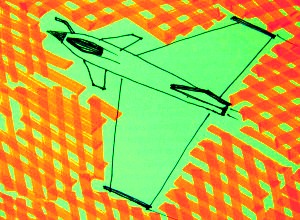
THREE RAFALES

Illustration: Shyam G Menon

Illustration: Shyam G Menon

When the media reported French aircraft manufacturer Dassault as preferred bidder for the multi-billion dollar contract supplying fighter jets to the Indian Air Force (IAF), my mind was on a doctor then managing a large hospital in Cairo.

Many years ago, Harish Pillai was a medical student in Mangalore when he bought a 100cc, two-stroke TVS Supra motorcycle. It cost him Rs 25,000 and came in factory-painted livery of red and white.

Further back in time, the aspiring doctor had wanted to be a fighter pilot. Like many youngsters, he had surrounded his life with the subject that fascinated him – pocket books from the Observer series on the world’s fighter planes, Jane’s publications, aviation magazines and hard bound volumes covering planes to tanks and foot soldiers. One book from his collection that still survives on my shelf is a Jane’s analysing the armies of the world. It was probably during a visit to Mangalore (or was it later in Thiruvananthapuram?) that I first met his newly acquired steed.

Post-acquisition it had been repainted all-red and pasted prominently in black were the letters – RAFALE. This was somewhere around the late eighties, early nineties. The bike was purchased in 1989. 

Those days the IAF’s flagship fighter aircraft and which nobody spared an opportunity to see, was the Mirage 2000. The IAF began inducting these aircraft in the mid eighties, which was around the time the first technology demonstrator version of the Rafale made its debut overseas. In an Asterix sort of predicament, I had not heard of the French Rafale; the closest I knew was the Raphael of Italian art. Not quite the right name to know for in that classic comic book, Gaul and Caesar were the stuff of punches traded, egos smashed and plenty of flying soldiers. The two-wheeler belonging to my fighter aircraft-obsessed medical student-friend was my first introduction to the aircraft that would, over two decades later, emerge front runner to bag India’s biggest fighter aircraft deal. That’s what the news reports said although nothing should be believed till it actually happens. For the purpose of this article, we stick to the published news.

When TV channels flashed the news of Rafale leading the field in the Medium Multi-Role Combat Aircraft (MMRCA) acquisition process, I couldn’t resist dashing off a mail to my friend asking what had happened to perhaps the only Rafale on two wheels to grace the planet. We hadn’t mailed each other in a very long while and going by the time difference, he must have been still at work when he got it.

With the right bait, I suppose, even the most hard baked-professional relapses to the boy in him.

Reply was quick.

The bike had served its owner loyally for ten years from 1989 to 1999, tracking the progress from medical student to doctor to hospital administrator. In 1999, in Hyderabad where he had moved to after studies, my friend rode into a showroom and sold off Rafale for Rs 10,000. The price of the red Rafale was adjusted into the cost of the new bike that he acquired from the stables of the same manufacturer.  It was again a red bike and my friend, never one to forget his craze for fighter aircraft called it Rafale-II. He wrapped up his replies to me remembering yet another aspect exclusive to two wheeled Rafales (and which the IAF would never get to do with their flying ones) – memories of negotiating Hyderabad’s traffic on monsoon days with wife and son seated behind. Going by Wikipedia, same time in far off France, the real Rafale was close to formal introduction. According to the online encyclopaedia, Rafale was “introduced’’ in 2000.

Rafale-II was sold off when my friend shifted to Dubai to manage a hospital there.

Life comes full circle.

While there is still a lot between the cup and the lip in terms of whether the fighter aircraft will make it to India, my friend recently shifted to Kochi.

I am tempted to wonder – will there be a Rafale-III?

(The author, Shyam G Menon, is a freelance journalist based in Mumbai. This article is a slightly altered and updated version of a piece by him, previously published in The Hindu Business Line newspaper. )

AN INTERVIEW

The book `Freedom Climbers.' (Photo: Shyam G Menon)

The book `Freedom Climbers.’ (Photo: Shyam G Menon)

The man before me was of average height.

He was in good shape, shoulders thrown back, legs set firm to the ground.

His eyes were the sad-calm of someone who had seen a lot.

He spoke English, choosing words carefully yet amusingly for he had a sense of humour.

We sat down for an interview that I never published because I didn’t know enough of his incredible life. Just the previous day, I had heard him lecture at the Himalayan Club in Mumbai. It was funny, peppered with jokes despite the gravity of his exploits and the people he knew in his chosen field, famously called `the art of suffering.’. I could ask questions that make him repeat his lecture. That would be stupid. His life and that of his friends were central to a book. But with that book not yet out when this meeting happened months ago, my homework was zero.

What do I ask?

I set my notepad on the table and carefully kept my pen alongside.

Then I looked at his face, smiled and took a deep breath.   

Oxygen is good for the brain.

And what’s good for the brain may help birth a question – I thought.

The man before me was one of two people who climbed Everest for the first time in winter. That was in 1980. Long before that, when the first climbing expeditions approached Everest in the early part of the twentieth century, it had been via Darjeeling. I remembered previous visits to Darjeeling and Ivanhoe. Not Sir Walter Scott’s novel but a quaint heritage hotel with the same name. At its reception, the hotel kept a synopsis of its history, counting among past guests, the famous Hollywood actress Vivien Leigh and George Mallory, the British mountaineer who famously disappeared on Everest. However Darjeeling’s signature view is the giant massif of Kanchenjunga, India’s highest mountain and the world’s third highest. Years ago, my first trek had been to Dzongri in nearby Sikkim, from where you got a closer view of this peak.

Wanda Rutkiewicz was among the greatest woman mountaineers. She fought everything from unyielding mountains to male domination in climbing, all this while her own personal life was sufficiently tumultuous to cripple any of us. Akin to Everest’s first ascent coinciding with the coronation of Queen Elizabeth II in England, Wanda’s ascent of Everest coincided with the installation of Pope John Paul II at the Vatican. He hailed from Poland, where Wanda was born. On a quest to be the first woman to ascend the world’s fourteen 8000m peaks, she was last seen high up on Kanchenjunga. Wanda and four others – Jerzy Kukuczka, Wojtek Kurtyka, Krzysztof Wielicki and Andrzej Zawada – dominate the narrative of `Freedom Climbers’ written by Bernadette McDonald. The book I should have read before the interview I was attempting, it focused on a phase in the 1970s and 1980s, when Polish climbers roamed the Himalaya establishing difficult climbing routes and winter ascents. They were the toughest climbers in the Himalaya. 

Speaking in Mumbai in early 2013, Bernadette said that the book had been a challenge to publish as it was perceived as a niche within a niche. She traces the Polish assault on Himalayan peaks to a Poland invaded by Germany and Soviet Union, the brunt of World War II in Poland and eventually the oppressive Communist regime that ruled the country after the war. It shaped the psychology of a people. The country’s mountaineers cut their teeth on the Tatra Mountains. In pure altitude terms, this may seem very modest for the highest point is only 8710 feet up from sea level. Except, the Poles were putting up tough routes and winter climbs. Their quest for higher mountains brought them to Afghanistan adjacent to the erstwhile Soviet Union. Afghanistan was then under a regime friendly to the Communist Block. Slowly, they advanced to Pakistan, India and Nepal. By the time, the Poles reached the Himalaya most of the major peaks had been climbed by other European countries. To leave a mark uniquely their own, the Poles started climbing some amazingly tough routes besides transplanting to the Himalaya, their habit of winter ascents. Interestingly, the Polish reign in the Himalaya – when they climbed as though to compensate for what history had denied them – was strong during the times of controlled market and politics. It faded as Poland moved to free market and democracy. Today, Polish teams are still at work completing some of the mountaineering agendas born in that past, like climbing all the 8000m peaks in winter. But the mantle of ferocious climbing has moved on as though the country found peace yet turned soft with free market economics.

Does the state of its economy influence a country’s alpinism?

Good question.

One day in 1996, at the end of climbing season, my subject for interview had arrived alone at the base of Nanga Parbat (8126m) in Pakistan and asked some villagers for directions to a particular line of ascent up the peak, often called `The Killer Mountain.’ The villagers thought he was crazy. Famous for speed ascents in his generation, the man heaved a rucksack to his back and another to his front and climbed the peak solo. Nanga Parbat completed his climb of all the fourteen 8000m peaks. He was the fifth person globally to do so.

Krzysztof Wielicki smiled encouragingly as I struggled for the right question to start the interview.

(The author, Shyam G Menon, is a freelance journalist based in Mumbai. A slightly abridged version of this article was published in The Hindu Business Line newspaper.)

SHILLONG AIRPORT

Illustration: Shyam G Menon

Illustration: Shyam G Menon

Ten minutes before touchdown, the ATR was tossed around in air pockets.

It complemented the essence of leaving metro life.

The turbo-prop was flying as it used to be before technology stole aviation.

The airport below was similar.

It was a small building.

The arrival area was a single room as small as a Mumbai apartment, with attached toilet.

You waited for the baggage, picked it up and left. No conveyor belt, no sitting around.

Nearby a new terminal of glass and steel was being constructed.

A few taxis lay parked outside for the 32 kilometer-ride from Umroi to Shillong.

I got into a state transport bus. It charged less.

There was a brief wait for the plane to take-off, the airport staff to pack up and the bus to leave with everyone – staff included.

It was the end of a working day at Shillong airport.

Its only flight had come and gone.

Days later, my work done, I was ready to fly back to Kolkata.

At Shillong’s bus depot, I waited for the bus to the airport.

Nothing drew up.

Seeing one of the airport staff from my earlier trip, I asked her about the bus. She guided me to the assigned vehicle. We spent the next ten minutes discussing Meghalaya.

“ I wish I was busy but there is only so much work here,’’ Saira Khar Karang said. Many years ago, the government owned-airline, Vayudoot – it disappeared without proper successor for its invaluable role – flew small aircraft to Shillong. Later the ATR came. Flights used to be cancelled for want of passengers. During rains the plane may skip Shillong and proceed to the more reliable Guwahati airport. Passenger traffic had since improved but the monsoon’s grip remained.

Yet, Saira didn’t wish to leave Shillong.

“ Khasi people are open hearted,’’ she said, wary of big cities.

Every small city eventually becomes a big city.

 It’s the phenomenon of our times.

 “ Who knows what Shillong will be?’’ I asked.

Some more of the airport staff trickled in.

“ Flight is one hour late,’’ a young lady said.

En route to the airport, we picked up others I recognized from the bus ride, the day I arrived.

It was a small world.

The security personnel at airport were a mixed bunch speaking languages of the North East, Hindi, Kannada and Malayalam. A lone X-Ray machine sat in the departure lounge, which had aluminum window frames for modernity. No air conditioning. Next to the X-Ray machine was Air India’s ticket counter, a kiosk. Ground service had been outsourced to a local travel agency. A weighing machine with attached electronic meter checked for excess baggage. Once some passengers had gathered, the officials ran the X-Ray machine, weighed the baggage, tagged it and issued boarding passes. All hand written, no computer print-out.

A TV provided passengers taste of impending metro inanity: the program quizzed Indian film stars on size zero while the streamer said Jennifer Aniston had denied she was on baby foods to stay thin. An announcement over the PA system informed that the delay had risen to near two hours. The TV channel switched to Doordarshan, screening a Hindi film – an Indian Tarzan with Ruby for Jane.

Then Shillong’s daily power cut struck.

Somewhere a generator hummed, fans whirled again and Ruby, Tarzan and elephants returned.

There was fuss around the VIP room as a politician arrived.

Half an hour later, we queued before a room marked `Security Hold.’ The CISF personnel took us through security check then joined the airport staff in inviting us for tea and snacks. The manager apologized for the delay and the time it took to fetch snacks, the airport being distant from town. A CISF jawan took an elderly passenger’s water bottle and filled it for her.

Shortly thereafter, the lone plane for which the airport existed landed.

A quick frisking before boarding, seats taken and we were off like clockwork.

As Meghalaya receded to green hills kissed by fluffy white clouds, I imagined an airport below closed for the day and a bus with staff and passengers headed back to Shillong.

Someday, that politician or another would inaugurate the new terminal, jet planes would land and Saira would turn busy.

Where next for the turbo-prop?

I wonder.

(The author, Shyam G Menon, is a freelance journalist based in Mumbai. This article was written following a visit to Meghalaya several years ago. An abridged version was published in The Hindu Business Line newspaper. Shillong’s new terminal was inaugurated in 2011, reports on the Internet said.)

NO SPACE FOR BMX

On Relief Road (Photo: Shyam G Menon)

On Relief Road (Photo: Shyam G Menon)

Above Relief Road, jet planes from the nearby Santa Cruz airport surged like unstoppable arrows.

Beyond the adjacent wall, at Juhu’s helicopter base servicing offshore oil platforms, the slower choppers hovered and took their time to decide direction before heading seaward at casual pace.

On the road a large collection of exotic cycles were parked – road bikes, mountain bikes, hybrids, folding bikes, children’s bikes and bikes with digital gizmos and gadgets that begged the brand name of cycle to be changed from classic cycle company to cell phone or computer brand.

Disinterested in that crowd were the BMX lot. Absorbed in their own stunts, they waited for the cycling community to finish its socializing and focus attention on the simplest, barest bikes around. 

Ten minutes later as they performed, the crowd seemed enthralled. What none realized and which outlined the character of BMX was that few of those BMX addicts considered themselves cyclists in the popular sense of the word.

A couple of them owned commuting cycles.

All lived at the deep end of an obsession for BMX.

Whatever else cycling meant, didn’t interest them.

They were BMX riders.

Starting in the US in the 1970s, BMX was a full medal discipline at the 2008 Beijing Olympics.

People, cycles, BMX, vehicles, Mumbai (Photo: Shyam G Menon)

People, cycles, BMX, vehicles, Mumbai (Photo: Shyam G Menon)

Mumbai has a small but dedicated BMX group.

The lot I met in mid-February 2012 included Dipak Panchal, Ronald Chudasama, Rajas Naik, Bharat Manjrekar, Shailesh Sawant, Hasmukh Parmar and Shahbaaz Khan. The youngest was 17; the oldest around 26-27. The oldest had taken time to mature in the sport. The youngest was maturing faster. They were among the city’s second wave of BMX bikers. The pioneers rode in the eighties. Rahul Mulani, respected by the new generation bikers for his continued commitment to the sport, was one of them. He started a cycle store, subsequently well known in Bandra, called Gear. It wasn’t his choice of business but there wasn’t another way to survive in a sport that consistently thrashed bikes amidst poor availability of spare parts. For some years, Rahul also organized an event called Gear Hang Five Series, which drew bikers from other regions – Pune, Chandigarh and Manipur – to compete.

The Mumbai competition was usually followed by a jam session permitting bikers to share their skills, ride and just enjoy BMX.

If you ask around in the extended Indian cycling community, Mumbai is remembered for its BMX groups.

However despite their interest the city’s BMX bikers had no place to practice. Some missed social acceptance. “ We are treated like clowns,’’ Dipak said. Several years ago his attempt at college education had ended as college drop-out and emergent BMX biker. Television with its programmes on extreme sports and X-Games played a role in shaping his passion.

After a stint working at a cycle store, he now advised the wealthy on what cycles to buy, how to maintain them and waited for someone to offer space for stunts.

“ Our biggest problem is space to practise,’’ Ronald said.

At his housing society, he was used to hard found space usurped by car come back to park and owner insisting that his vehicle on four wheels was more important than the youngster on two wheels.

BMX! (Photo: Shyam G Menon)

BMX! (Photo: Shyam G Menon)

“ Why can’t they convert one of the many cricket grounds into a BMX park?’’ Rajas, who specialized in stunts on flat surfaces, quipped.

“ No need for that,’’ Ronald intervened, “ an old dance hall or one of those unused basket ball courts would do. Can’t they allow us a few hours every day?’’ 

Not having a place to do stunts hurt.

Not having a place in society because they do BMX stunts hurt more.

At least two or three in the group had been picked up by the police and spent time in lock-up for doing stunts on the road.

“ The police think we are akin to those motorcyclists racing in traffic. We are not,’’ Dipak said.

Further, when foreigners performed stunts on BMX cycles in the city, people watched and clapped. “ We don’t receive such support from the same citizens,’’ Ronald said. Ask Rahul and he would tell you that right from his days as pioneer, space to practise had been genuine challenge. Even roads with less traffic are few in Mumbai. “ The Bandra-Kurla Complex (BKC) is good on Sunday. But that’s just one day,’’ he said of the city’s new financial district.

The contrast amused.

Money minded-Mumbai prayed for busy BKC bustling with people and money.

The BMX bikers liked it as built-up space bereft of people.

Different things fascinate different people.

Where did all this place Mumbai’s BMX community when compared to foreign bikers of the same age?

“ They are a thousand times better,’’ Ronald said ruefully.

After all, practice makes perfect.

Elsewhere in India changes were happening.

Chandigarh apparently had a dirt park now. But Mumbai – the city of abject congestion and severe population pressure – simply had no space to spare for irrelevant pursuits like BMX although it didn’t mind legions of new cars further congesting its streets. And where nothing but survival, rat race and success dominated, empathy for irrelevant pursuits withered.

BMX riders (Photo: Shyam G Menon)

BMX riders (Photo: Shyam G Menon)

Dipak said he cannot convincingly articulate his fascination for BMX.

BMX is what BMX does.

How can a practitioner communicate the intensity of engagement?

That also appeared to be what limited this community in interactions with resident cycle companies and new ones entering India. Talking to companies for support was a challenge because as Dipak put it, “ I am only a biker. I understand BMX, I don’t understand marketing.’’

Conversation over, I left them to their search for space.

Above, jet planes soared to meet limitless sky.

Below, those young men, their BMX cycles and Relief Road – all merged into crowded Mumbai.

(The author, Shyam G Menon, is a freelance journalist based in Mumbai. An edited version of this article was published in The Hindu Business Line newspaper in July 2012.)


DZOMSA

When Sonam Dorje was a child, Leh was still village.

“ Every home had access to a stream for water and there were rules on how to protect it. Then the place grew, it became a mess. Small was nice,’’ he said.

In the cold desert, water is precious commodity. Unable to accept the contamination of streams through laundry, Dorje started Dzomsa over a decade ago. That was the name he gave his shop – it meant `meeting point’ in Ladakhi. Dzomsa accepted clothes for washing, washed away from streams and the used water was not returned to streams but spread out in the desert.

Laundry at Dzomsa was a simple idea implemented without studying business prospects. Most homes and hotels around were already tied to traditional laundries in a land beginning to risk environment. However foreign tourists, hailing as they did from economies that had seen the many sides of urbanization and industrialization, responded.

Sonam Dorje (Photo: Shyam G Menon)

Sonam Dorje (Photo: Shyam G Menon)

It was the summer of 2010. We chatted at a second floor cafe, snow capped peaks visible in the distance. Bespectacled and with scarf to his neck, Dorje looked a poet or artist; even traveller. The last thing he seemed was a businessman. He used to be a photographer. “ I am not obsessed with tradition. I am concerned about the survival of society. More than other places, Ladakh’s is a society made by human beings. Elsewhere nature is so much that you can perhaps have the luxury of abusing it. Here, you can’t,’’ the post graduate in Economics said. Dzomsa was the name Dorje originally used for his photo exhibitions.

After laundry, Dzomsa entered into local products including food. Like most Ladakhis, Dorje was himself a farmer owning apricot trees and barley fields. But he progressively outsourced farm produce to near 60 per cent of raw material intake. All the processing to jams, juices and packaged products was done by Dzomsa.

His final product line was the simplest idea of all – drinking water.

Clean water is a problem everywhere. In the plains, they assure quality by bottling and selling it. In high altitude Ladakh that cannot be recommended for disposing plastic is a bigger headache than finding water. Plastic is synonymous with tourist spots in India; it arrives with people and accumulates behind when they leave. Ladakh’s main industry is tourism. The knife edge it walks balancing people and plastic can be imagined. Dorje’s contribution through Dzomsa was utterly simple. He began offering boiled water at his shop. When you run out of drinking water, don’t go and buy bottled water; head for Dzomsa instead for refill.

According to Dorje, starting Dzomsa was a lonely experience. “ Some people asked – are you going to start a caste of launderers in Ladakh? People ridiculed again when we got into drinking water,’’ he said. Dorje’s original idea was to progressively convert Dzomsa into a co-operative and hand it over to the people. But those who joined and acquired people skills would leave for a government job. “ A government job is like getting enlightenment,’’ he said laughing. It was a tendency being discussed that June at the well known Students Educational and Cultural Movement of Ladakh (SECMOL) as well. Its founder Sonam Wangchuk is Dorje’s brother. In Ladakh, entrepreneurship was considered unethical. “ One of the challenges therefore is to bring respectability to entrepreneurship,’’ Wangchuk said on the sidelines of a workshop at SECMOL exploring job opportunities for Ladakhi youth.

When I met him, Dorje owned Dzomsa with no funding from any other source. He never tried bank loans. “ Somehow I wanted this whole experience to be organic. There is a bit of romanticism in it. I don’t recommend it for others!’’ he said. Besides the shops’ three main services it also did a unique recycling and disposal role. Dzomsa stores – Leh had three then – had a bin for people to drop off used batteries. They were collected, wrapped in plastic and buried out in the desert so that the contaminants didn’t leak into glacial streams. Paper waste went into compost heaps. Glass jars were thoroughly washed and reused. In Leh, where every tourist operator complains of inadequate civic infrastructure, this would seem a small, private municipal service. Yet as far as I could see, there was neither recognition nor support from government for Dzomsa although the idea made eminent sense anywhere. 

Problem is – ideas can be ahead of the times and the market. On an average 200-300 people walked into its shops daily during tourist season for Dzomsa’s services. Most came for water. Foreign clients dominated. Unfortunately for 90 per cent of Indian tourists, the growing component in Ladakh’s tourism inflow, these outlets were yet to make sense. They walked past the store ignoring the wisdom within. On the other hand, scaling up wasn’t a Dzomsa priority. He may be too much of a romantic to be ambitious businessman but Dorje knew the hazards of stretching enterprise. “ We have been extremely careful about the quality of our products,’’ he said. 

(The author, Shyam G Menon, is a freelance journalist based in Mumbai. This article was published in The Hindu Business Line newspaper in August 2010.)

READING TILMAN

“To some the Himalaya may be only a name vaguely associated perhaps with a mountain called Everest: to geologists they provide a vast field for the starting and running of new hares; to other learned men, glaciologists, ethnologists, or geographers, the Himalaya are a fruitful source of debate in which there is no common ground, not even the pronunciation of the name; while to the mountaineer they furnish fresh evidence, if such were needed, of the wise dispensation of a bountiful Providence. For lo, when the Alps are becoming too crowded, not only with human beings but with huts, the Himalaya offer themselves to the more fanatical devotee – a range of fifteen hundred miles long, containing many hundreds of peaks, nearly all unclimbed and all of them so much higher than the Alps that a new factor of altitude has to be added to the usual sum of difficulties to be overcome; and withal to be approached through country of great loveliness, inhabited by peoples who are always interesting and sometimes charming. Here seemingly is a whole new world to conquer, but it is a world which man with his usual perversity, flying in the face of Providence, has reduced to comparatively small dimensions: for what with political boundaries, restrictions and jealousies, the accessible area is less than one-third of the whole. And though European travellers and climbers may grouse about this state of affairs, Europeans are, I suppose, largely to blame. For with the present state of the outside world before their eyes the rulers of Tibet, Nepal and Bhutan can scarcely be blamed, and might well be praised, for wishing their own people to have as little as possible to do with ourselves.’’

The paragraph struck home for two reasons.

First was the nature of perspective, different from that of the typical climber and describable as only that of a seeker – maybe, explorer? Second, the paradigm the Himalaya was trapped in. It remains unchanged today. Likely writing between the great wars of the twentieth century H.W. Tilman points to a state of the world that the kingdoms of Asia couldn’t be blamed for wishing to keep away from; limited access to the Himalaya and the Alps getting crowded. This picture hasn’t changed much although the actors therein and the direction of trading blame, probably have. Compared to today’s crowded South Asia and the as populous-China, between which lay sandwiched the Himalaya, Tilman’s reference to the “ crowded’’ Alps would seem lost. June 2013; the scale of human presence in the Indian Himalaya was betrayed when thousands of pilgrims died following heavy rains in Uttarakhand. We live in an era of exploded human numbers. Not to mention, the Himalaya as strategic boundary.  

When Tilman climbed Nanda Devi and found reason to write an account – mentioning therein of limited access to the Himalaya – the Great Game played out between the British and Russian empires, was well past its peak. Despite the passage of time, political games similar to the Great Game, featuring a new set of players, continue to be waged around the Himalaya leaving swathes of it still subject to the stuff of military strategy, territorial dispute, mutual suspicion and a regime of bureaucratic permits.  Not a day passes without disquieting news reports from India’s mountainous borders with Pakistan and China. While the whole thing may be a legacy of erstwhile management by foreign powers, not to mention the legacy of cocooned kingdoms in remoteness, it is a moot question what new generations and governments have done since to enhance peaceful coexistence and enjoyable access across the Himalaya.

That may seem childish.

If so, the thoughts evoked by the image of Earth Rise must be the most childish of all.

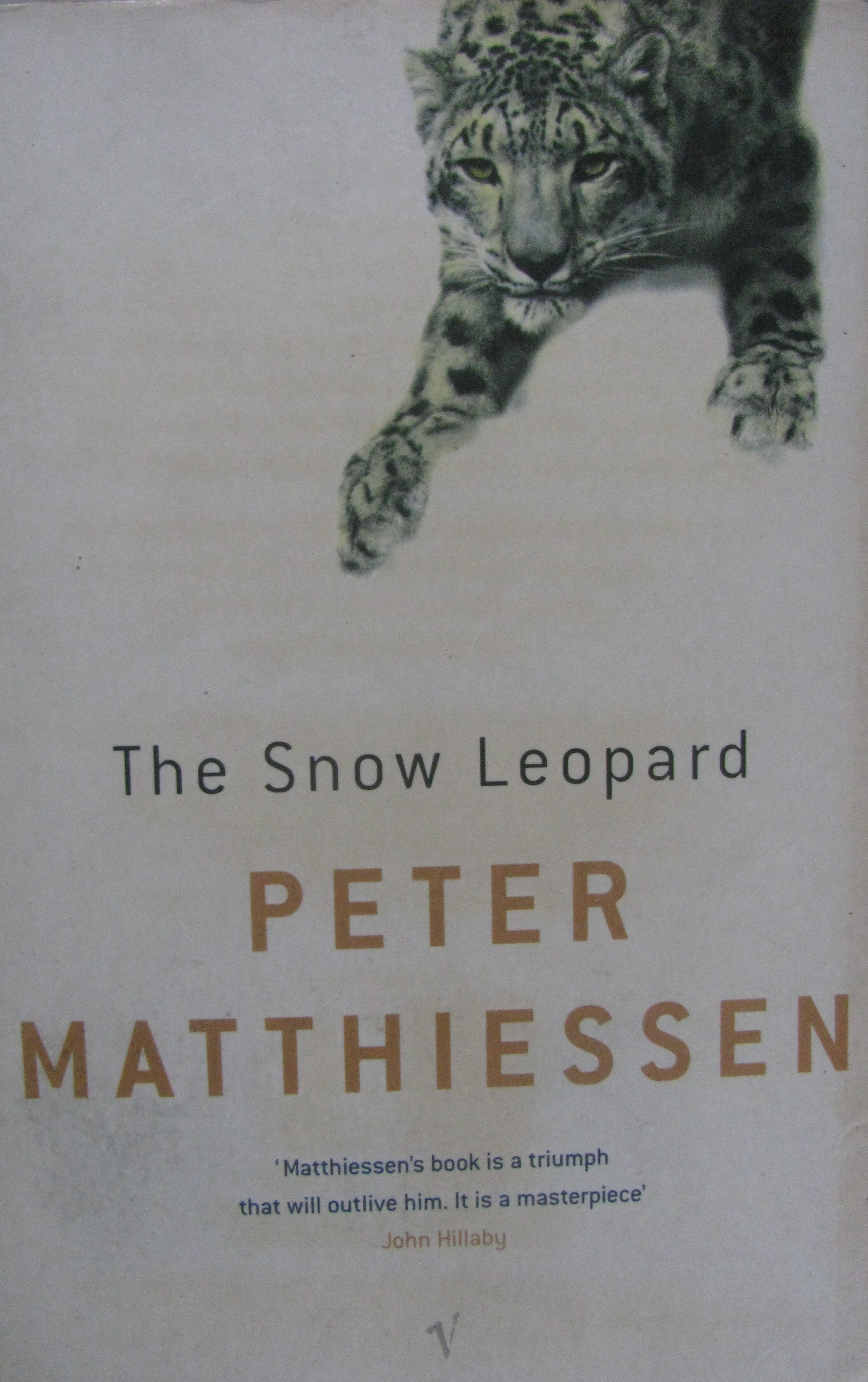
Tilman's book (Photo: Shyam G Menon)

Tilman’s book (Photo: Shyam G Menon)

Harish Kapadia, India’s best known explorer of the Himalaya and author of many books on the subject calls Tilman his favourite explorer of these ranges. He sent in a brief synopsis on the man, written with inputs from Rajesh Gadgil, Honorary Editor of the Himalayan Journal:

“ Harold William Tilman a.k.a. Bill Tilman, was one of the most prolific adventure writers and great explorers of the Himalaya and Karakoram, of the twentieth century. Originally a tea-planter in Kenya, he began his climbing in the company of another great explorer, Eric Shipton and climbed many peaks in Africa. Their partnership proved so successful that today they are remembered together as ‘Shipton-Tilman’.  Well known for his taciturn nature and simple but sound organization in the mountains (he used to say that any worthwhile expedition can be planned on the back of a post-card), Tilman achieved many firsts during his career. In 1934, with Shipton, he was the first to penetrate the Rishi Ganga gorge to find a way to the heart of the Nanda Devi Sanctuary. As if they were still not satisfied by one venture, the pair turned their attention to another challenge and by following an ancient myth, they were successful in connecting Badrinath with Kedarnath by a direct route via Panpatia Bamak for the first time in known history.  They barely survived, fighting for food with bears! After a great physical survival story he wrote, ‘we were experiencing a tiredness which only a very fit body can experience’! Subsequently Tilman joined and then led expeditions to Everest but his heart was in small scale exploratory trips to the then unknown mountains and valleys. Many exploratory episodes followed. In 1936, he led the first ascent of Nanda Devi in collaboration with the Americans and after reaching the summit, he describes that they were so overwhelmed by the beauty around that, ` I believe we so far forgot ourselves as to shake hands on it.’ Nanda Devi remained the highest summit attained by man till 1950. And humility was his trait too – he said that he was sorry to find the head of the proud goddess now trampled.

In the same year, he trekked and explored the areas around the Zemu Gap in Sikkim, of which he subsequently completed the first successful traverse in 1938. In 1937, with Shipton, he made a detailed reconnaissance of the little known areas of Karakoram, notably recorded in Blank on the Map. In the following year, Bill explored the Assam Himalaya around Gorichen but could not reach the mountain’s summit. In later years he explored and climbed extensively in the Karakoram, Hindu Kush and Xinjiang. Some of his notable attempts were Rakaposhi, Muztagh Ata, Bogda Feng and Chakragil. He also led an expedition to explore Langtang, Jugal and Ganesh Himal in Nepal. In that expedition Tilman was the first to ascent Paldor (5896m) and found the pass named after him beyond Gangchempo. In 1950, he led the British expedition to Annapurna where they could reach very near the summit of Annapurna IV. In the same year, he was one of the first persons to explore the Southern approaches to Mt Everest.

He has a place as a great explorer in history and his books narrate his exploits with wit. He kept exploring as his philosophy was – appetite grows with what it feeds upon, not by waiting…!”

It was Kutts Bommanda, then proctoring a fall season-semester course at the India branch of the US headquartered-National Outdoor Leadership School (NOLS), who told me of Tilman in the library and the reading it held. I was doing my internship then at NOLS India, Ranikhet. The book in the library was a compilation – `The Seven Mountain-Travel Books,’ published by Baton Wicks and The Mountaineers. Rather aptly for Tilman’s work, this section of NOLS India’s modest library was at the deep end of the equipment issue room stacked with mountaineering boots, ice axes, ropes, crampons and compasses. The chapter on Nanda Devi, I reckon, should be interesting for any NOLS student as also anyone who drove up to Ranikhet from the Kathgodam railway station because it talked about the mountain widely recognized as Kumaon’s presiding deity. It also provided a glimpse of the Ranikhet of many years ago for Tilman’s expedition to the mountain had passed through the town.

“ Ranikhet, whither we were now bound, is a hill station in the United Provinces. From Kathgodam, thirty six hours’ journey by train from Calcutta, it is reached by a good road of fifty miles. Numerous buses ply on this fifty mile stretch of road and competition is so fierce that the fare is only three shillings, luggage included.’’ Further, “ Ranikhet is 6000ft above sea level and the relief on reaching it and breathing the pine-scented air, after a journey by rail through the sweltering plains, has to be felt to be believed.’’ Tilman noted that the relief “ is intensified by the sight of over a hundred and more miles of snow peaks; distant, it is true, but near enough to stagger by their height and fascinate by their purity.’’ Beholding this scene today from the road above the town’s market, you get the same feeling.

Among the peaks you see from Ranikhet is the 7816m-high Nanda Devi. Dwell on this mountain scenery awhile; you would agree with the observations recorded in the book on the view from far. Nanda Devi was and still remains, a tough peak to ascend, including the approach to the mountain, which took years for mountaineers to find. Some expeditions had as their highpoint, merely eliciting further progress on the approach while the mountain beyond stayed untrammelled. It was unexplored terrain. In fact, a major change since Tilman’s days is that following complaints of environmental damage by successive mountaineering expeditions and growing appreciation for the fragile ecology of the Nanda Devi Sanctuary, the mountain was closed to climbing expeditions.

The onward road Tilman’s expedition took from Ranikhet, was via ` Garul,’ likely modern day Garud; from there to Gwaldam, then over the Kuari Pass to Joshimath and eventually the village of Lata.

Nanda Devi, as seen from Ranikhet (Photo by Shyam G Menon)

Nanda Devi, as seen from Ranikhet (Photo: Shyam G Menon)

About the mountain’s summit, gained several weeks later, Tilman wrote:

“ The summit is not the exiguous and precarious spot that usually graces the top of so many Himalayan peaks, but a solid snow ridge nearly two hundred yards long and twenty yards broad. It is seldom that conditions on top of a high peak allow the climber the time or the opportunity to savour the immediate fruits of victory. Too often, when having first carefully probed the snow to make sure he is not standing on a cornice, the climber straightens up preparatory to savouring the situation to the full, he is met by a perishing wind and the interesting view of a cloud at close quarters, and with a muttered imprecation turns in his tracks and begins the descent. Far otherwise was now. There were no cornices to worry about and room to unrope and walk about. The air was still, the sun shone, and the view was good if not so extensive as we had hoped. Odell had brought a thermometer and no doubt sighed for the hypsometer. From it we found that the air temperature was 20 degrees F, but in the absence of wind we could bask gratefully in the friendly rays of our late enemy the sun. It was difficult to realise that we were actually standing on the same peak which we had viewed two months ago from Ranikhet, and which had then appeared incredibly remote and inaccessible and it gave us a curious feeling of exaltation to know that we were above every peak within hundreds of miles on either hand.’’

After gaining the summit, the expedition crossed over to Martoli near Milam and reached Kapkote via Tejam.

Tilman’s remarks on Bageshwar probably reflected the times.

“ Bageshwar is not the prosperous market town that it once was when its traders acted as middlemen between the Bhotias and the plainsmen. Now the Bhotias deal directly with the banias of Haldwani, Tanakpur and Ramnagar at the foot of the hills. The bazaar consists of solid well-built houses with shops on the ground floor, but it was sad to see so many of these shut up.’’

Anyone visiting today’s Bageshwar would find this surprising for the town is clearly the biggest commercial settlement between Almora and Pindari or Milam. One reason for this change could be the cessation of the old Indo-Tibet trade along the high passes of the Kumaun Himalaya, which dimmed the stature of mountain settlements like Munsiyari and made bigger, the names of towns closer to the bustling plains.    

My affection for Tilman’s world stems from the fact that increasingly I dislike competition. It is not that his generation didn’t compete. They did. What else was the race to the North Pole, the South Pole and that Third Pole – Everest – all about? Tilman himself uses words like `victory.’ But I live enduring its legacy multiplied by population and market. In a million ways, thanks to our rising tide of people and the need to survive, practically everything around has got tainted by the competitive spirit. This is the day and time of the branded warrior when the quest is to somehow brand one’s individual life for visibility in the crowd. Even harmless day to day conversation betrays the words, defences and posturing of competition. Years ago, learning about Darwin’s theory – survival of the fittest – was engaging inquiry about world. Now quoted by every Tom, Dick and Harry in and out of context, you switch off the moment somebody mentions it and its grandfather – competition. It is a widespread schizophrenia. Tilman’s ilk, what you call explorers, could walk in the Himalaya doing just that – exploring. They may have sought personal embellishment. But the grandeur of the Himalaya and its vastness was intact, for human beings were fewer than today. The media, which magnifies human life, prioritises it by achievement and implants it in our brain, was also far less. Achievement wasn’t yet an industry. With that, life was probably still life and nature ruled larger than human life. Compulsive competition has since killed fascination save of course, fascination for the self and promoting the self.

Seeking refuge in bygone eras is escaping the harsh present for what one assumes was a less harsh past.

I admit it.

I was hiding in that library.

I find it liberating to read about exploration in the early age of conquest and not conquest in times of exploration lost.

Photographing Tilman’s book in the gear issue room, I had to conclude that my efforts were a pathetic compromise. This book deserved to be on snow, ideally on that high ridge above the Kafni stream and near the peak of Salgwar (that’s a ridge providing good memories of friends and NOLS courses I have been out with), from where on a clear day, alongside other Himalayan giants, two sheer rock faces crowned by snow and joined by a knife edge ridge, can be seen over the tops of lesser mountains. That’s Nanda Devi and I clearly remember how that sight from the high ridge, one early morning, had emerged the most memorable experience for at least one NOLS student from the spring 2012 Himalayan Backpacking course. Snow on the ground, Nanda Devi in the backdrop – that would have been perfect for Tilman’s book.

But I was in Ranikhet.

The snow was yet far. 

(The author, Shyam G Menon, is a freelance journalist based in Mumbai. This article was originally written when he was the fall season intern at NOLS India in 2012. It was published on the NOLS India Facebook Page. It has since been rewritten for this blog.)