THE PUZZLE MAKERS

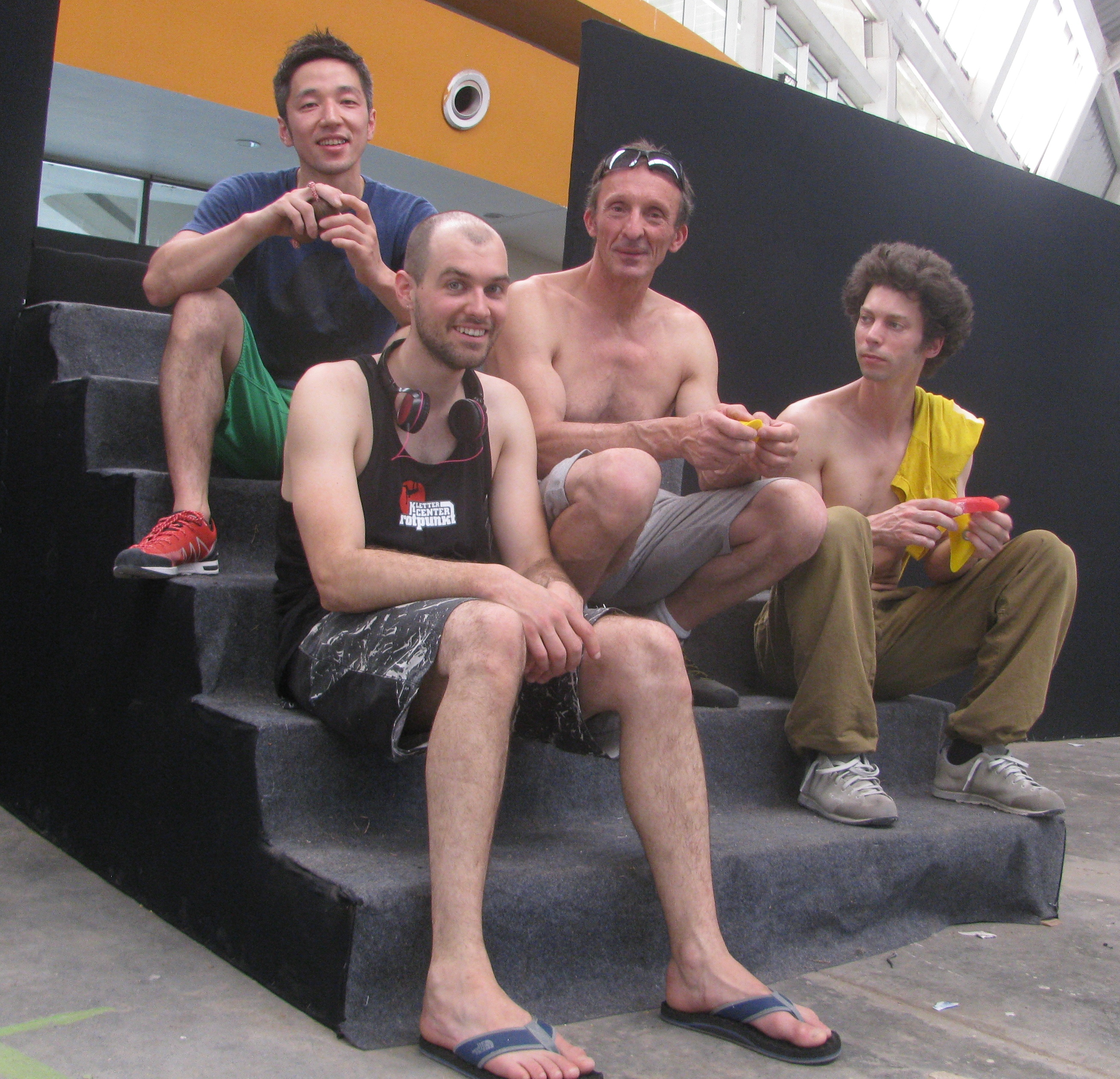
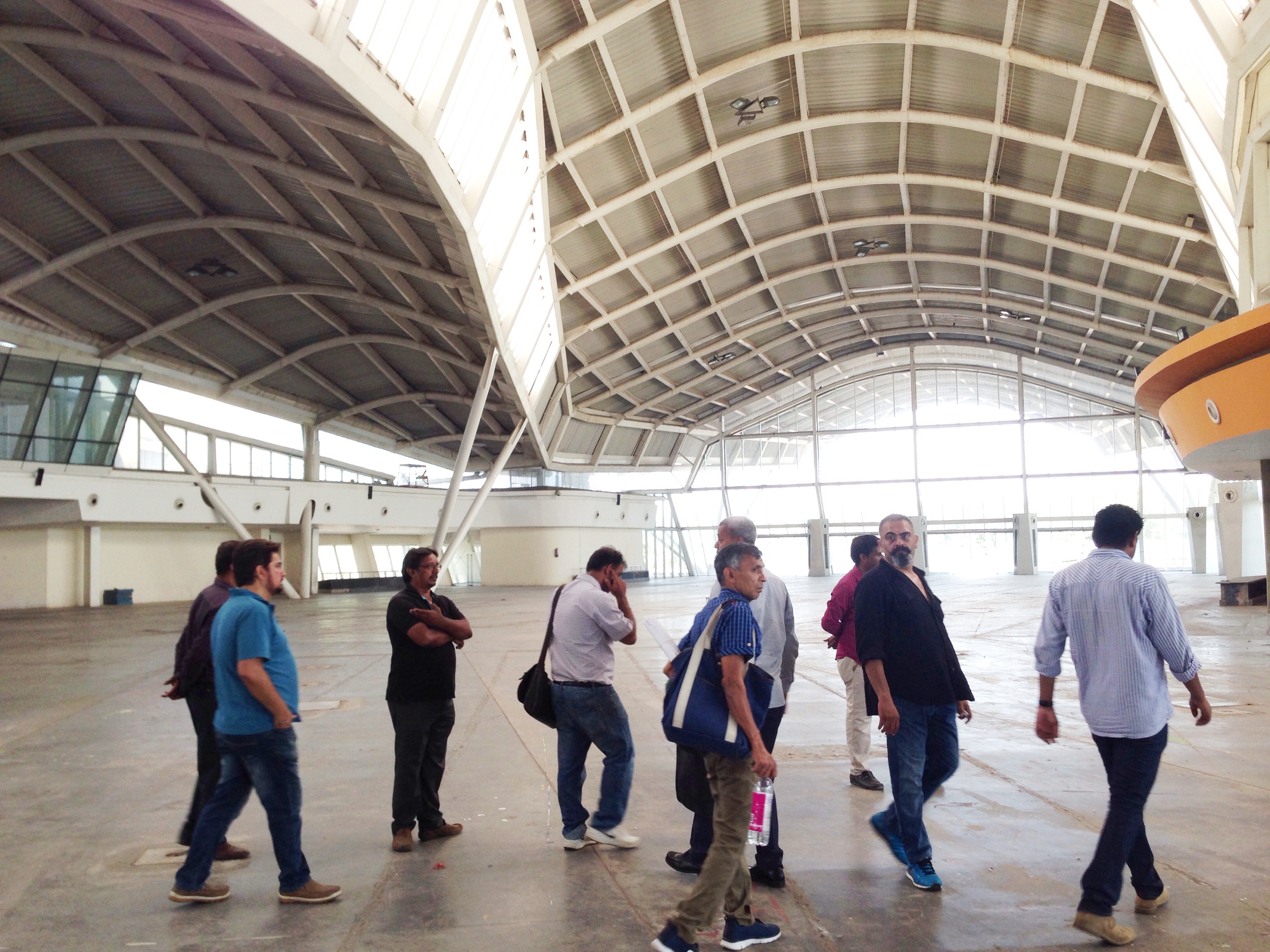
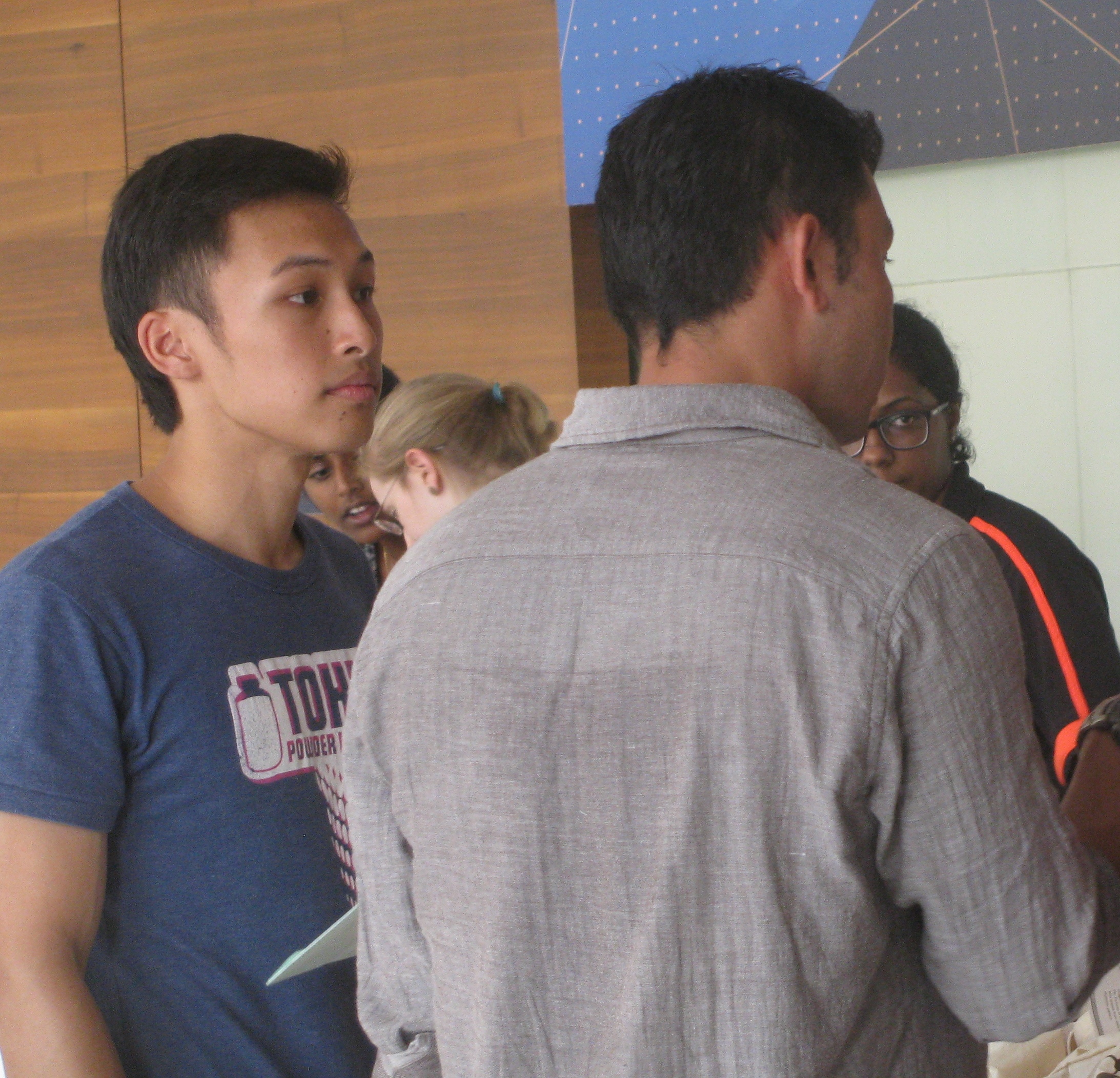
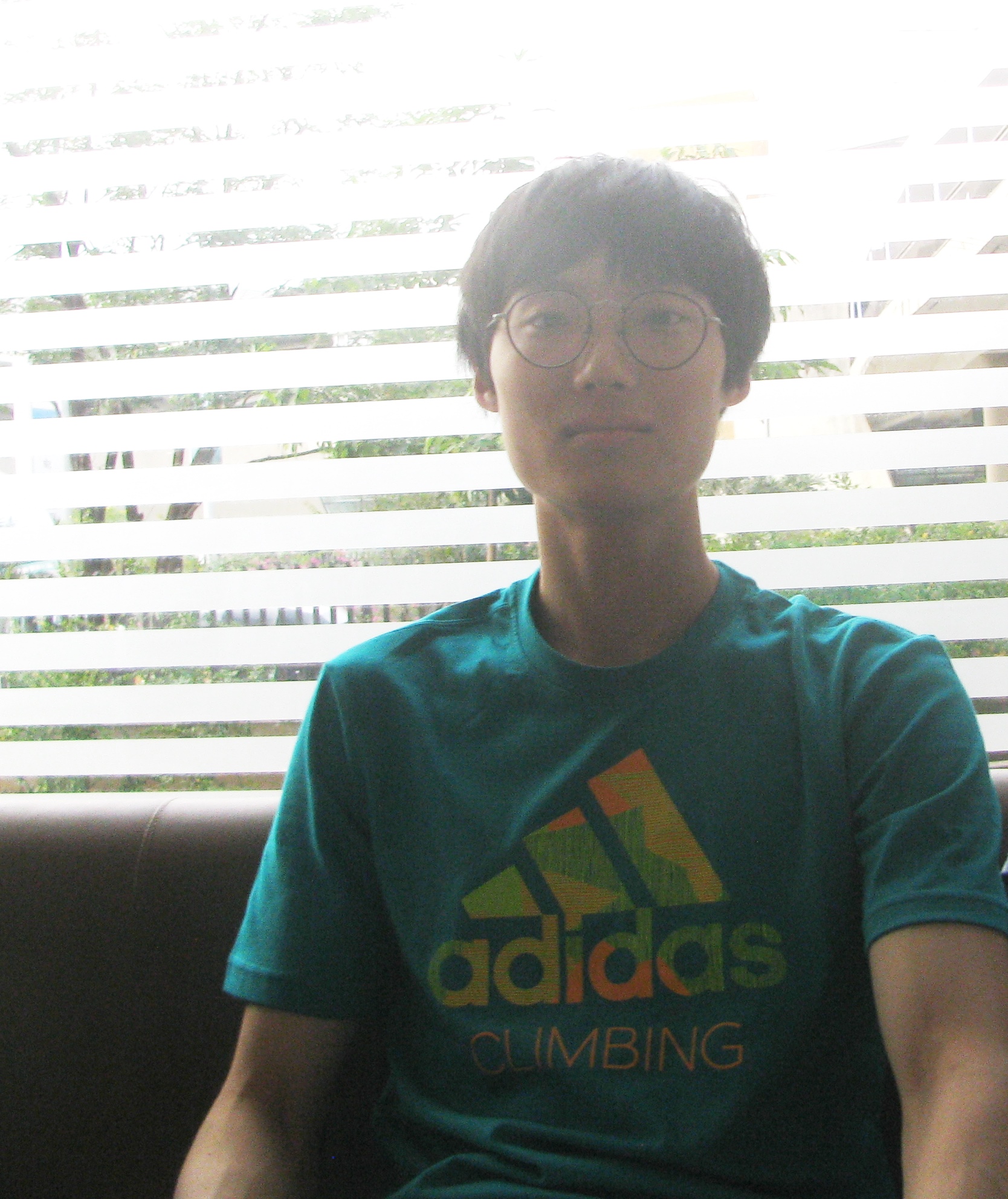
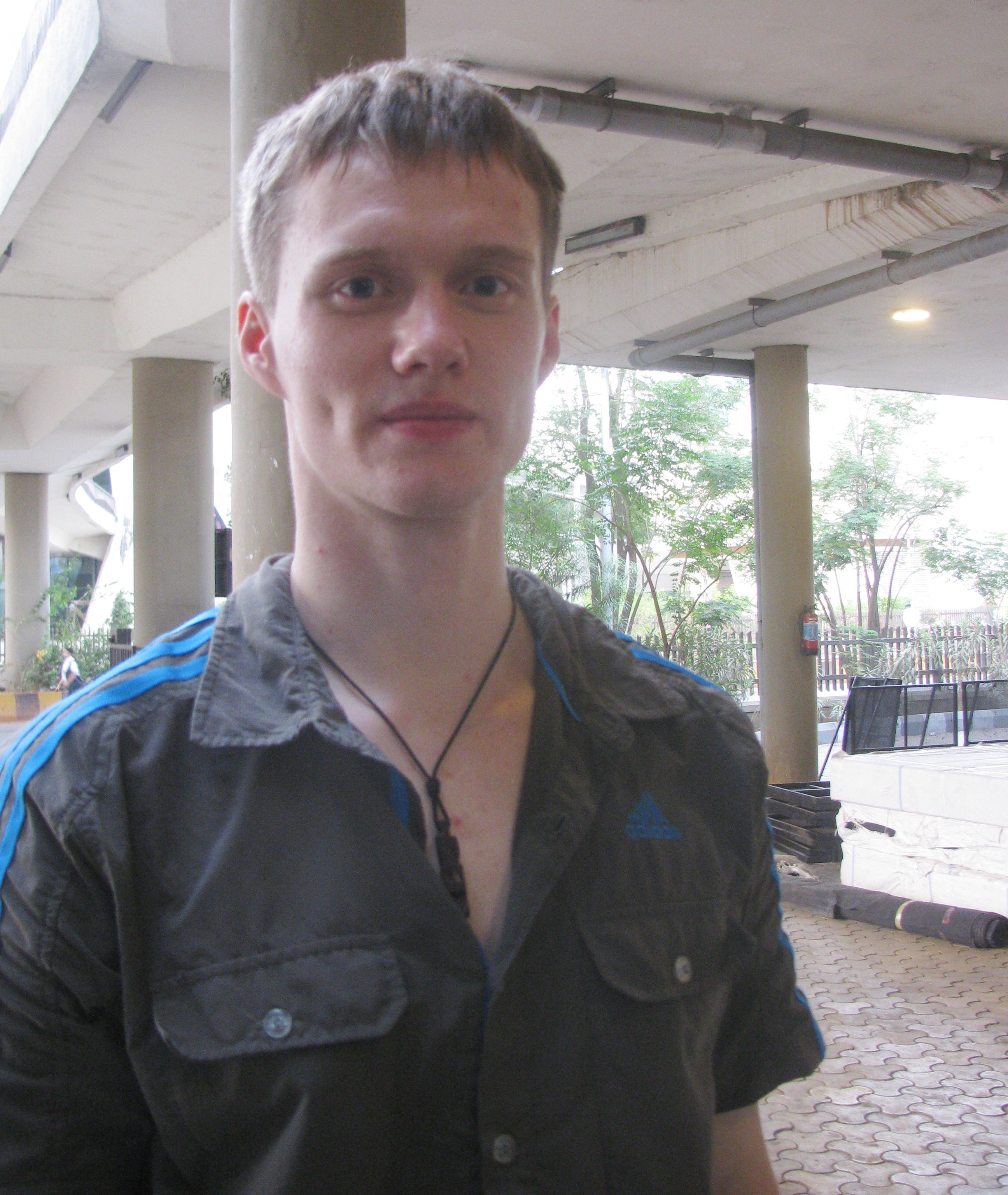
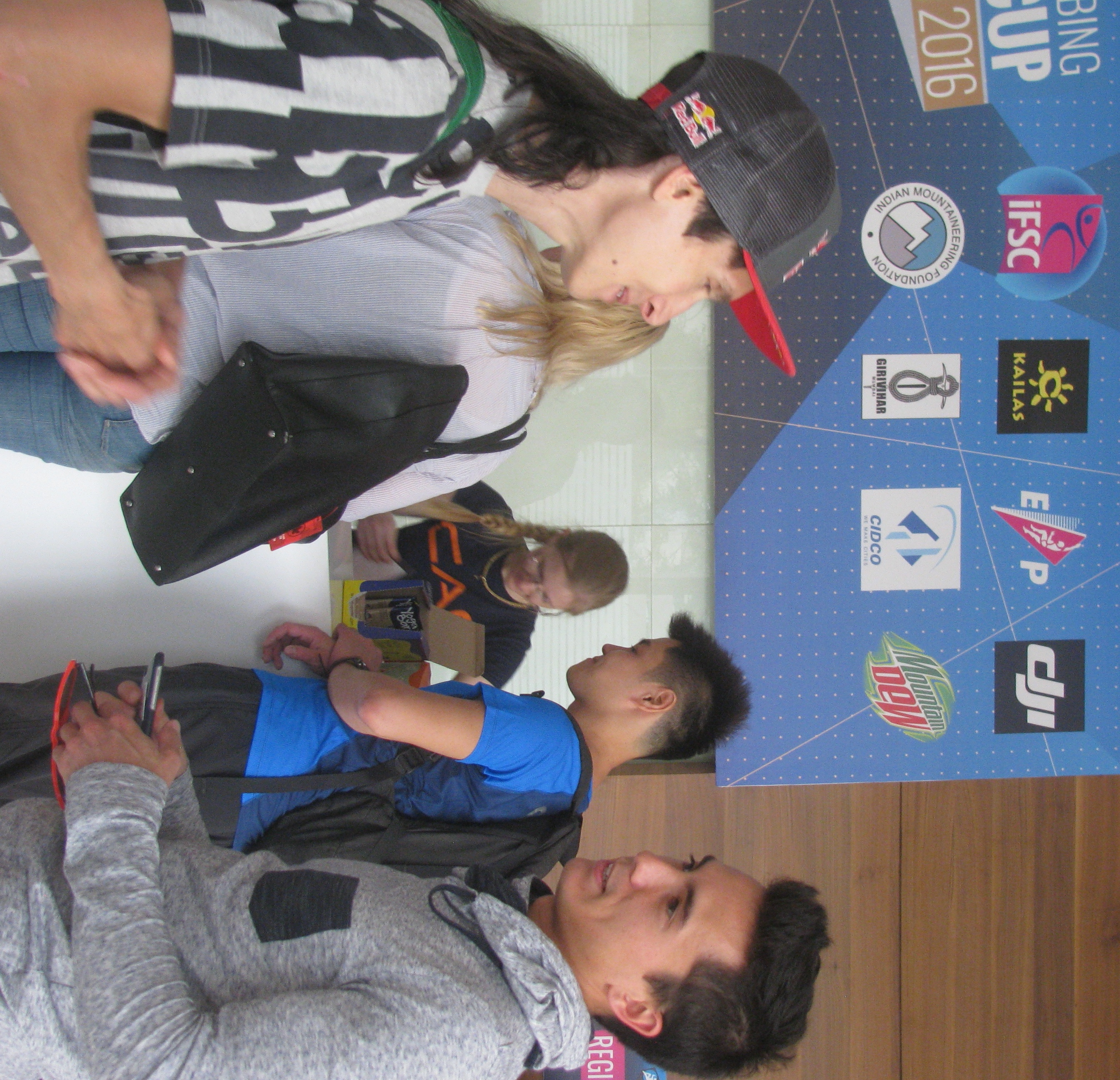
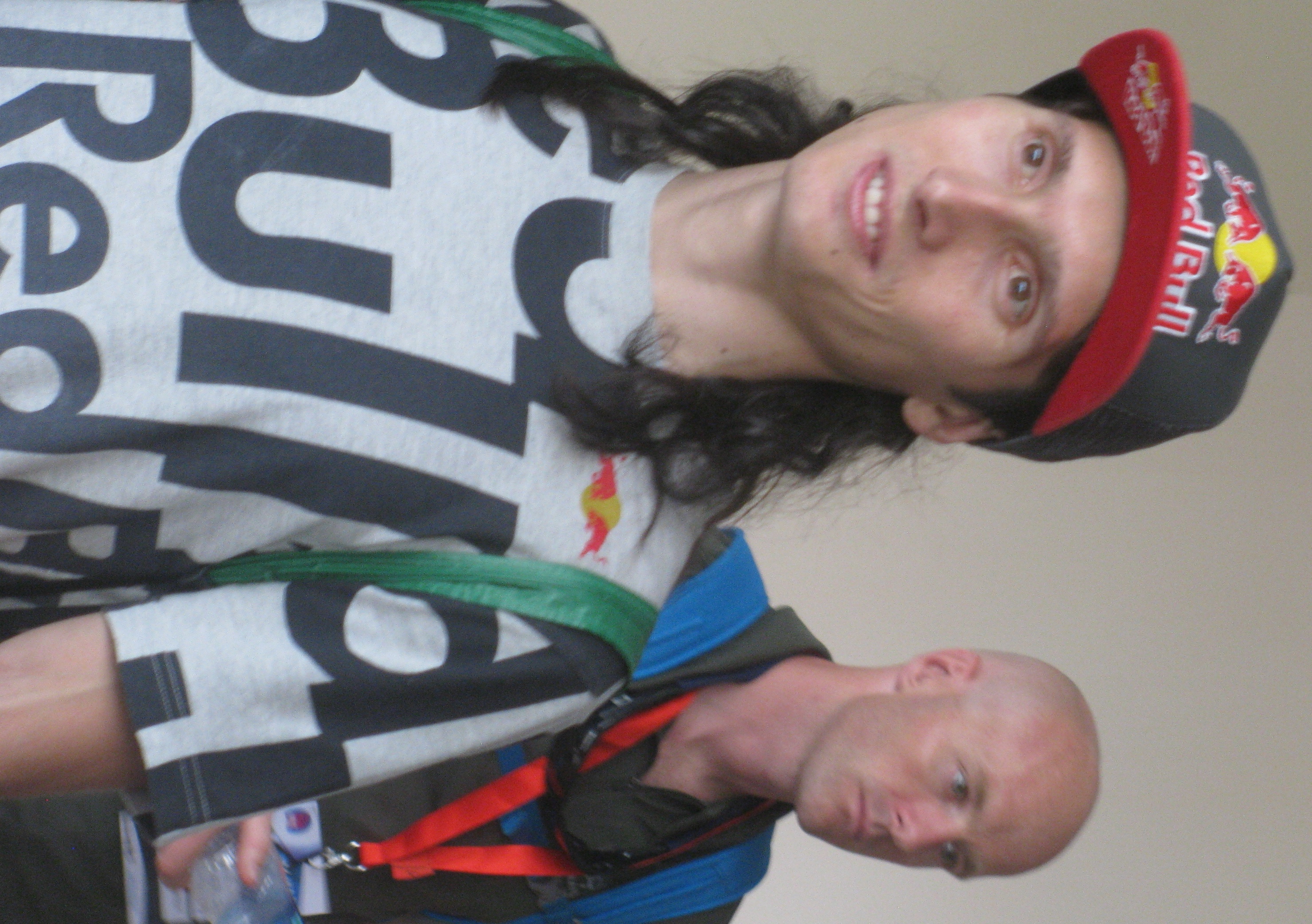
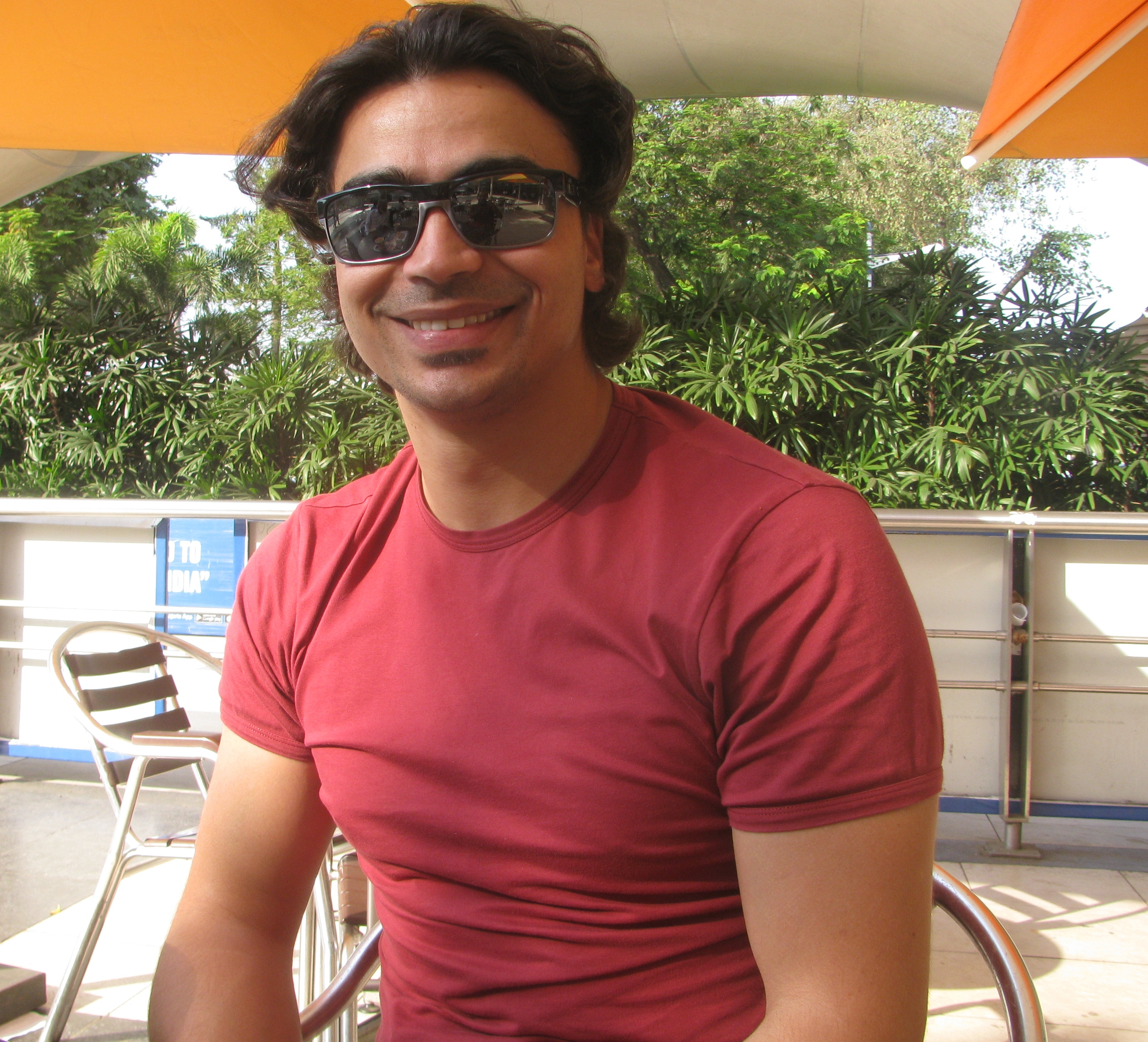
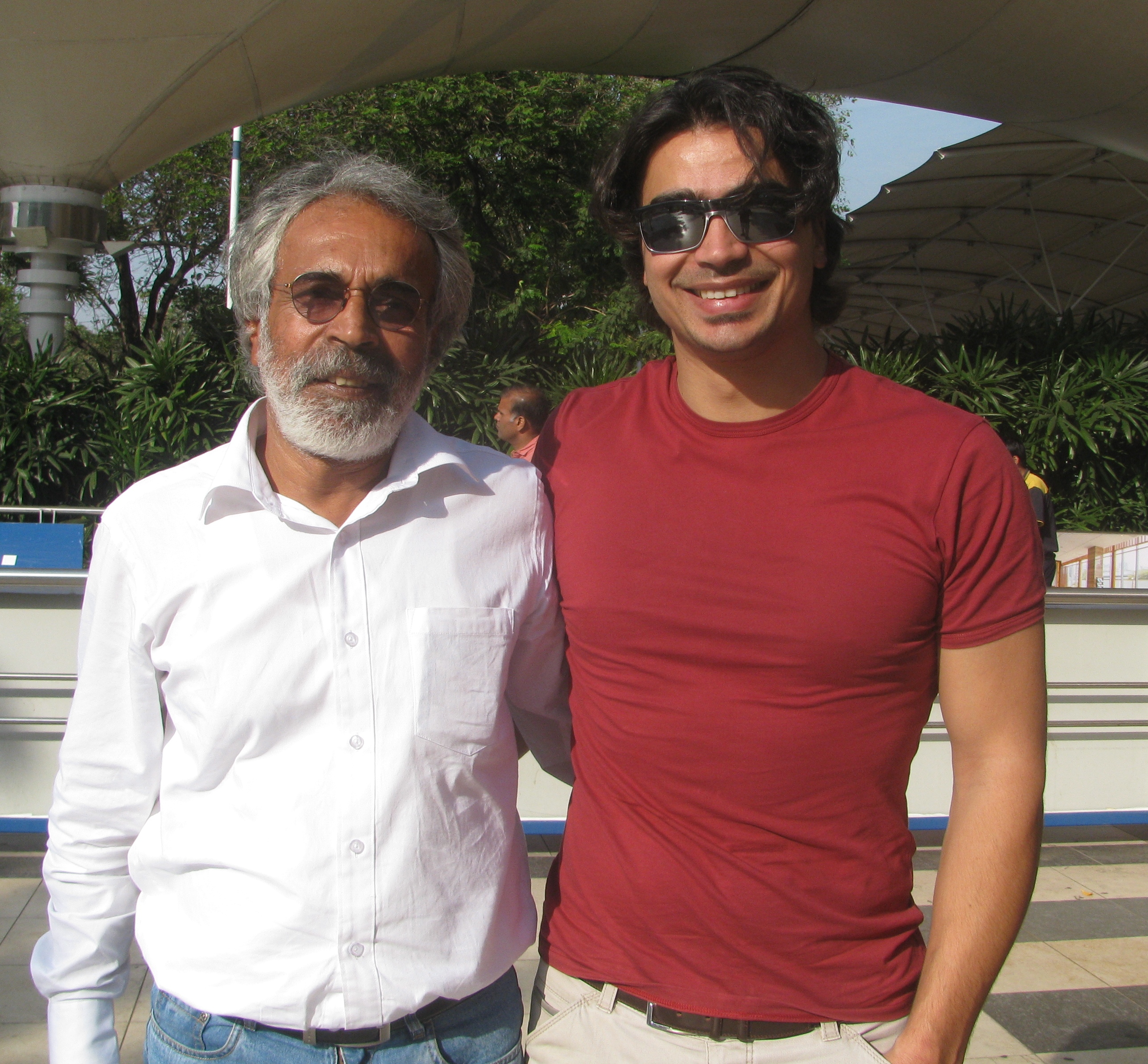
From front left: Mathias Woitzuck, Gen Hirashima, Laurent Laporte and Manuel Hassler (Photo: Shyam G Menon)

From front left: Mathias Woitzuck, Gen Hirashima, Laurent Laporte and Manuel Hassler (Photo: Shyam G Menon)

May 8 was a hot day.

At the venue of the upcoming World Cup in Navi Mumbai, the shade of CIDCO’s Exhibition Centre and sunlit day outside harbored an indistinct disparity. It was warm even in the shade. Warm enough for two of the four gentlemen, waiting for a climbing wall to be ready, to take off their T-shirts. A third, who had visited India before and climbed at Hampi and Badami, had chosen a vest over a T-shirt. Manuel Hassler, Mathias Woitzuck, Laurent Laporte and Gen Hirashima, hailing from Switzerland, Austria, France and Japan respectively, formed the four member-route setting team dispatched by the International Federation of Sport Climbing (IFSC) to the Navi Mumbai World Cup. Praveen C.M, one of the best sport climbers in India, was expected to join as a fifth member.

Manuel was Chief Route Setter; Gen and Praveen, aspirant route setters wishing to grow their skills by working with the experienced. Laurent was the most experienced; he had begun route setting for international competitions conducted by sport climbing’s apex federation, at a time when the IFSC wasn’t yet born and sport climbing was still overseen by the UIAA, currently dedicated to mountaineering. The wall imported for the competition, had arrived and not been installed yet. The quartet admired the locally fabricated wall from far; they checked it up close. Then, the inevitable happened – they imagined routes on it. Doing so, they moved their arms to reach non-existent holds, raised their legs to step on invisible footholds and let the body flex this way and that for balance, generally swaying like ballet dancers.

Four components complete a World Cup ecosystem – athletes, route setters, judges and spectators. You have a good competition, when all four blend beautifully. Of these four, the one role functioning akin to a sensitive instrument gauging the ecosystem is the route setter. All serious route setters are themselves good climbers. That’s because a sense of body movement is critical to set routes that challenge climbers. But here’s the interesting thing. Most of us equate challenge and difficulty with moves requiring strength to execute. However, strength and power and are only two of the several aspects shaping a good climber. A good climber is a composite of many other talents too including the ability to solve a set of climbing moves that resemble a problem on a route; climbing creatively, handling the overall pressure of competition and taking risks while climbing.

When route setters stare at a blank wall defined yet only by its angled faces, they can imagine different configurations of climbing holds and features on it, to create routes. They work once a wall is ready to host climbing holds. When they work, designing a collection of routes ahead of competition, access to the wall is restricted. No photography is permitted because these routes are the puzzles at the heart of a competition. But it isn’t as simple as accumulating a bank of puzzles, tucking it away and monotonously pulling it out one by one from the kitty during the course of a competition. Route setters sway like grass in the wind for a valid reason. They sense which way the wind is blowing at a competition underway. Their imagination and response to real time stimuli is what keeps a competition entertaining. That means you may pull out routes from your kitty but the going will be dynamic, with changes in response to a live situation and state of competition. According to the team now in Navi Mumbai, route setting at the start of the World Cup season is a bit of a guessing game for the athletes are returning from a break and well deserved rest after the preceding competition season. You give challenges and gauge response for a sense of where the field stands. As the season progresses, the vagaries slowly fade and trends creep in. The athletes warm up to peak performance. The route setters draw into their bank of routes and play the virus in the system, keeping the going edgy and unpredictable with their creativity in route setting, building each competition to an interesting final. While doing so, they also listen to local stimuli, which is where the spectators matter.

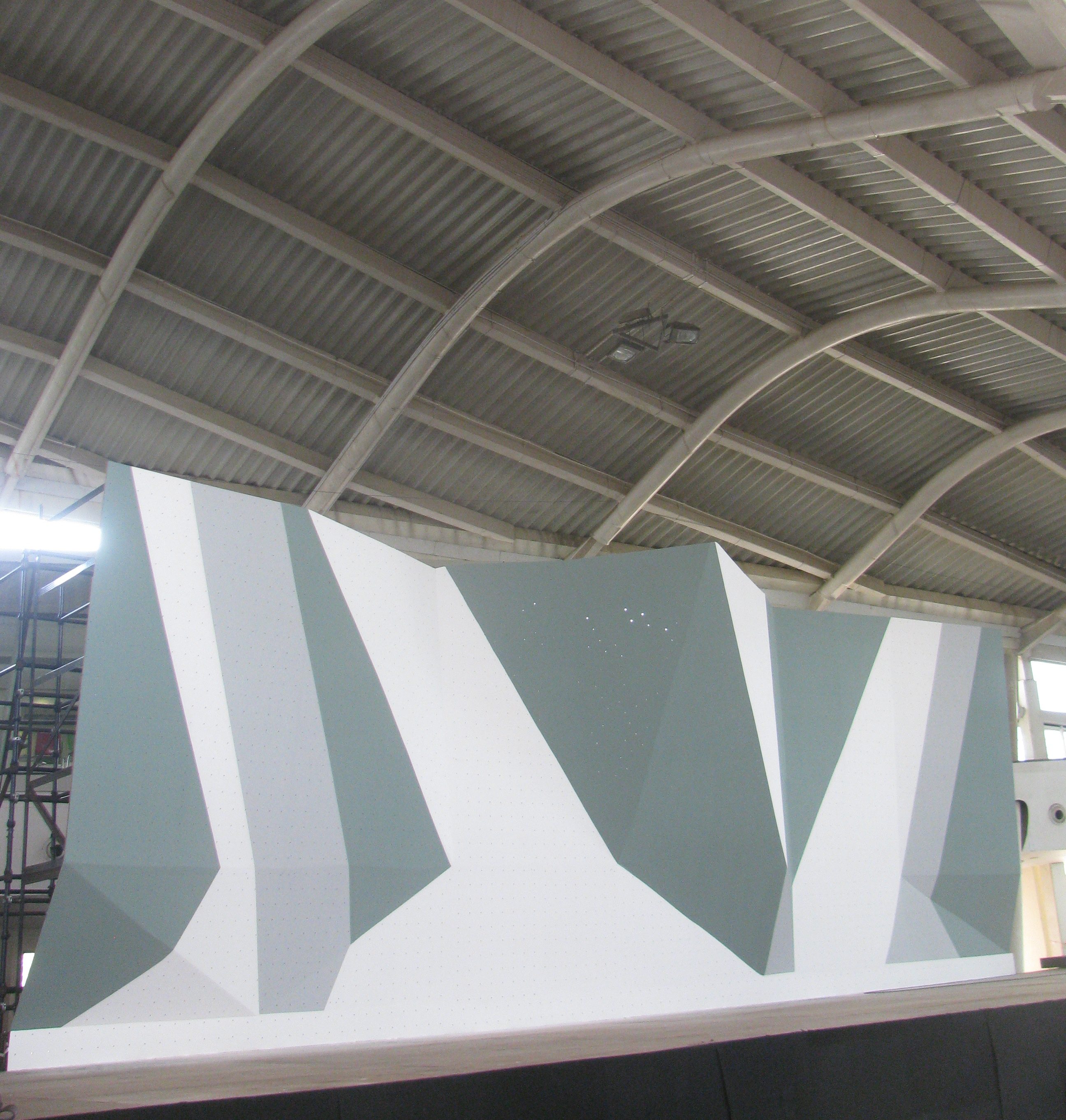
The finished wall, painted and ready for the route setters to start their work (Photo: Shyam G Menon)

One of the walls for the World Cup, painted and ready for the route setters to start their work. This wall was fabricated locally (Photo: Shyam G Menon)

Spectators nowadays fall into two categories – there is the audience physically present at an event; there is the global audience available through live-streaming over the Internet (the Navi Mumbai World Cup will be streamed live). An engaged audience, aware of climbing and its nuances eminently adds to the quality of proceedings. Marathon events worldwide are remembered by the cheering runners receive. As in running, competition climbers love support and encouragement. It motivates them to perform. It builds a climbing competition’s ecosystem. It is among stimuli, the route setters in the wings listen to. Since variety and edginess are essential ingredients for enjoyable competition, route setters too are used with discretion. One team doesn’t do the route setting for a whole World Cup season. The IFSC has its list of qualified, experienced route setters and multiple teams work on the many competitions of a World Cup season. This ensures that a single line of imagination does not dominate the routes set for a season. Each of the four route setters now in Navi Mumbai, have their individual preferences as regards climbing problems and climbing styles. They work as a team to make sure that all this is available at hand as ingredients and yet no one climbing style or type of problem unnecessarily dominates and characterizes a competition. This versatility – the desire to have a diverse tool box for one’s work – appeared kept alive by the individual route setter too. Laurent for instance, was clear that he valued having his personal climbing straddle both lead climbing and bouldering without entrapment in one.

As regards concerns – thoughts weaned from the experience of having set routes for many years – they said that perhaps the competition season’s length needs revisiting. Climbing is a demanding sport. As anyone who has attempted a challenging climbing route will tell you, the act drains you. Athletes on the competition circuit are climbing as best as they can; one competition after another. While the World Cup at Navi Mumbai is focused on bouldering, there are athletes taking part in both bouldering and lead climbing. It elicits a toll as the season progresses and in a circuit where athletes are one of the fundamental building blocks, tired athletes can affect that all important ecosystem. Should there be fewer competitions so that the ecosystem stays robust? – That could become something to think of. In the same vein, another important factor which may impact the route setter’s art is climbing’s potential debut at the Olympics. While details are not yet known, what has so far appeared in the media, seems to indicate a drift to acknowledging the best climber overall as the Olympic ideal. Competitive climbing currently straddles three distinct categories – lead climbing, bouldering and speed climbing. Like the temptation in science for a theory of everything, it will be interesting to see how the journey to the Olympics influences the route setter’s art.

(The author, Shyam G Menon, is a freelance journalist based in Mumbai.)


“ GET INSPIRED BY OTHER CLIMBERS, YET GO YOUR OWN WAY’’ – KILIAN FISCHHUBER

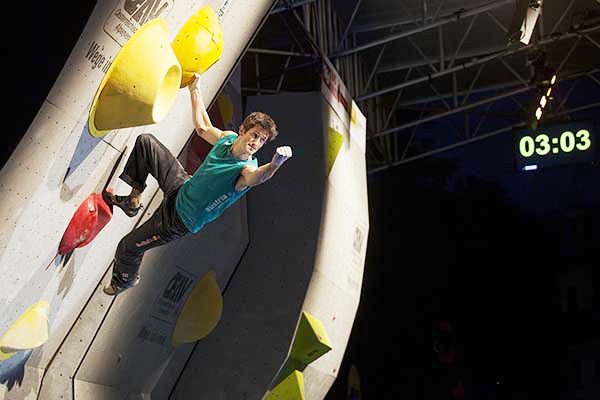
Kilian Fischhuber (Photo: Shyam G Menon)

Kilian Fischhuber (Photo: Shyam G Menon)

Born in Waidhofen/YBBS on Aug 1st, 1983, moved to Innsbruck in 2002 and started career as a professional climber; 1.75m tall and best known for a versatile style of climbing with penchant for powerful and dynamic moves. Relaxed but determined in approaching goals; foremost relaxed……

The above is how Kilian Fischhuber has described himself on his website. One of bouldering’s most successful competition climbers with quite a few victories at the World Cup and European championships to his credit, Kilian is from Austria. No stranger to India and Indian climbers, he has climbed in Hampi and Badami. In the run up to the first World Cup in bouldering to be held in India (at Navi Mumbai, May 14-15, 2016), Kilian granted an interview by email to this blog. Excerpts:  

What are your memories of your first World Cup?

My first World Cup was in 1999. I travelled to France for rock climbing in Ceuse, Orpierre and the like. I joined the event in Gap without any expectations or pressure. There was no such thing as an Austrian team. As far as I remember, my friend Reini Fichtinger who I was travelling with also competed. I ended up 22nd and thought there might be a potential to enter the finals (at that time, 20 people went to the second round which was the finals).

You are one of the most successful competition climbers in bouldering. What did you do to stay fit and competitive? How much time did you invest in climbing? People spend hours at offices. Can you tell us how a day in climbing’s office was like, for you, in your World Cup years?

I trained more in my early twenties; less later. I needed to build up strength and work on my weaknesses. By the time I turned 25 I had developed a solid climbing style and was one of the stronger athletes in the field. The years after that I profited most from my experience and trust in oneself.

Climbing is a powerful sport, taking breaks is necessary and rock climbing can help you develop your technique and style. I usually trained five times week. Always two days on, one day rest.

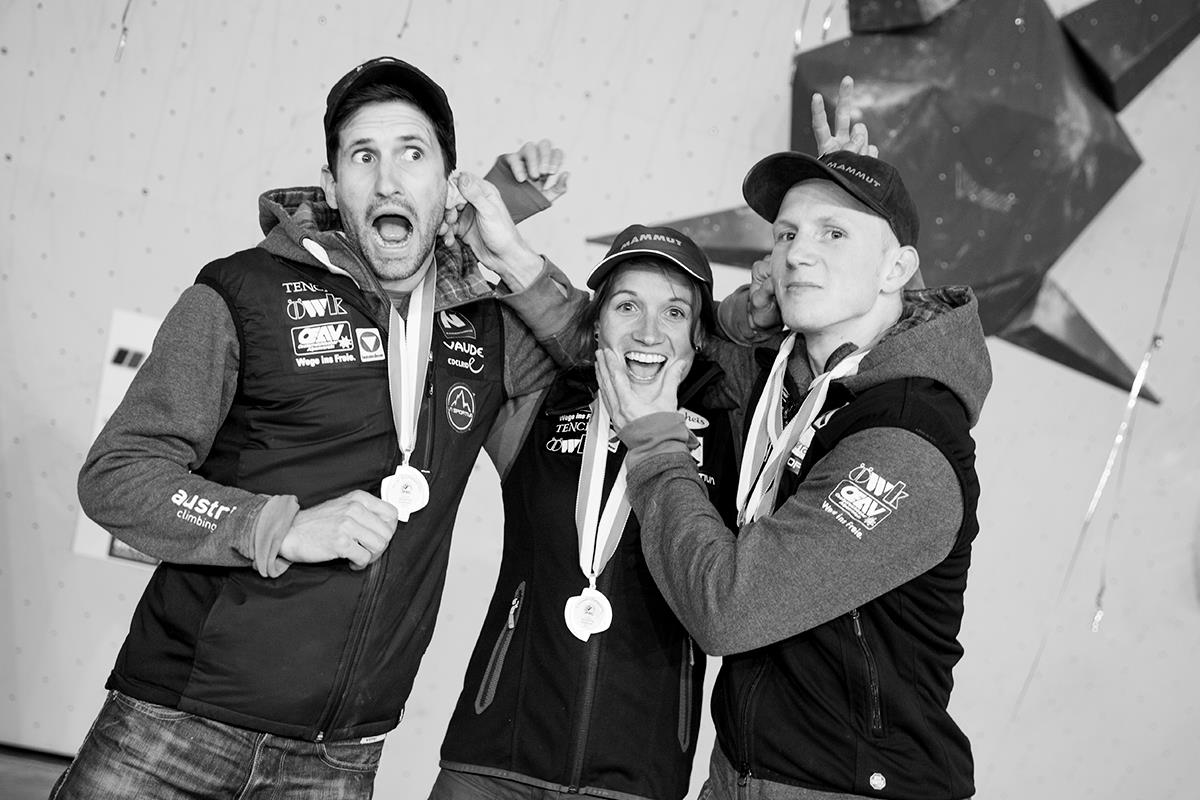
Kilian Fischhuber, Anna Stohr and Jakob Schubert (Photo: courtesy Kilian Fischhuber)

Kilian Fischhuber, Anna Stohr and Jakob Schubert (Photo: courtesy Kilian Fischhuber)

Which were your finest moments in the sport at the competition level?

That would be – winning my first World Cup by a large margin in Erlangern, Germany in 2005, becoming European Champion in 2013 and winning my last World Cup in Innsbruck, Austria in 2014.

How intense is the competition at the World Cup? Were you and your fellow climbers at World Cups always competitors seeing each other so, or did you pick up good friendships that have stayed strong past your competition years?

I always saw the other competitors as people to learn from. At the end of a round you were in a good position if you performed well, no matter what the others did. In climbing you don’t have a direct opponent. You are challenged by the `problem’ / route and yourself.

What does ` competition’ mean to you? Do you see it as a phase in an athlete’s life or is it what you always live by? If it was a phase, then what is the driving force for you in climbing nowadays?

I probably did 100+ World Cup events and I feel confident saying that I am not a competitive person, I actually shy away from comparison. Competing was always a sort of game, interaction with others and yes, a challenge. The uncertainty and the pressure to perform well at a certain moment of time always held something alluring for me. Nevertheless, I am glad I got rid of the pressure.

Can you explain what difference you find between competition climbing, done typically on artificial walls, and climbing in the open, on natural rock as you do often now? Is there a drift to the purer ethic in this and is the purer ethic being out, free and climbing rock?

For me, both are climbing. I prefer climbing outside, especially when combined with trips and longer stays. But gym climbing can also be very entertaining. I am against a strict classification that goes hand in hand with how to value what.

While it is good to be sponsored, as a competition climber how did you handle the knowledge that sponsorship is dependent on performance and if performance falls, sponsors may stay away? Was that ever a source of pressure?    

Well, sometimes, especially when under-performing you might feel pressure. In my case though, I could always rely on sponsors who saw beyond single achievements. Most of the companies have been supporting me for more than five years. Long term cooperation definitely helps to reduce the pressure.

Kilian Fischhuber at an earlier edition of the World Cup (Photo: courtesy IFSC)

Kilian Fischhuber at an earlier edition of the World Cup (Photo: courtesy IFSC)

You were a top athlete in a sport that wasn’t part of the Olympics. If all goes well, climbing may debut at the 2020 Tokyo Olympics. Do you see climbing’s entry into the Olympics as a major development? If so, what impact will it have on the sport?

This will very much depend on how climbing will be implemented in the Olympic circuit. If the IFSC prefers to push for an Olympic discipline that has never been tried and does not exist, then I see it rather critically.

The first set of young people aspiring to be full time climbers has just emerged in India.  Some of them will be participating in the Navi Mumbai World Cup. What advice would you give them, both in terms of how to handle themselves at top level competitions like the World Cup and in terms of making climbing their profession?

Get inspired by the other climbers, yet go your own way. Don’t be pushy but take your time. In competition climbing a lot depends on experience, hence time is of the essence.

What climbs occupy you nowadays? When do we see you in India next?

I am currently teaching in high school, I even showed my students some pictures of Hampi and Badami. I will climb professionally again after July, when school ends. I hope to make it back to Badami in December.

(The author, Shyam G Menon, is a freelance journalist based in Mumbai. Please visit the Ganesha series of articles on this blog for more on Kilian Fischhuber.)

TWO FILMS

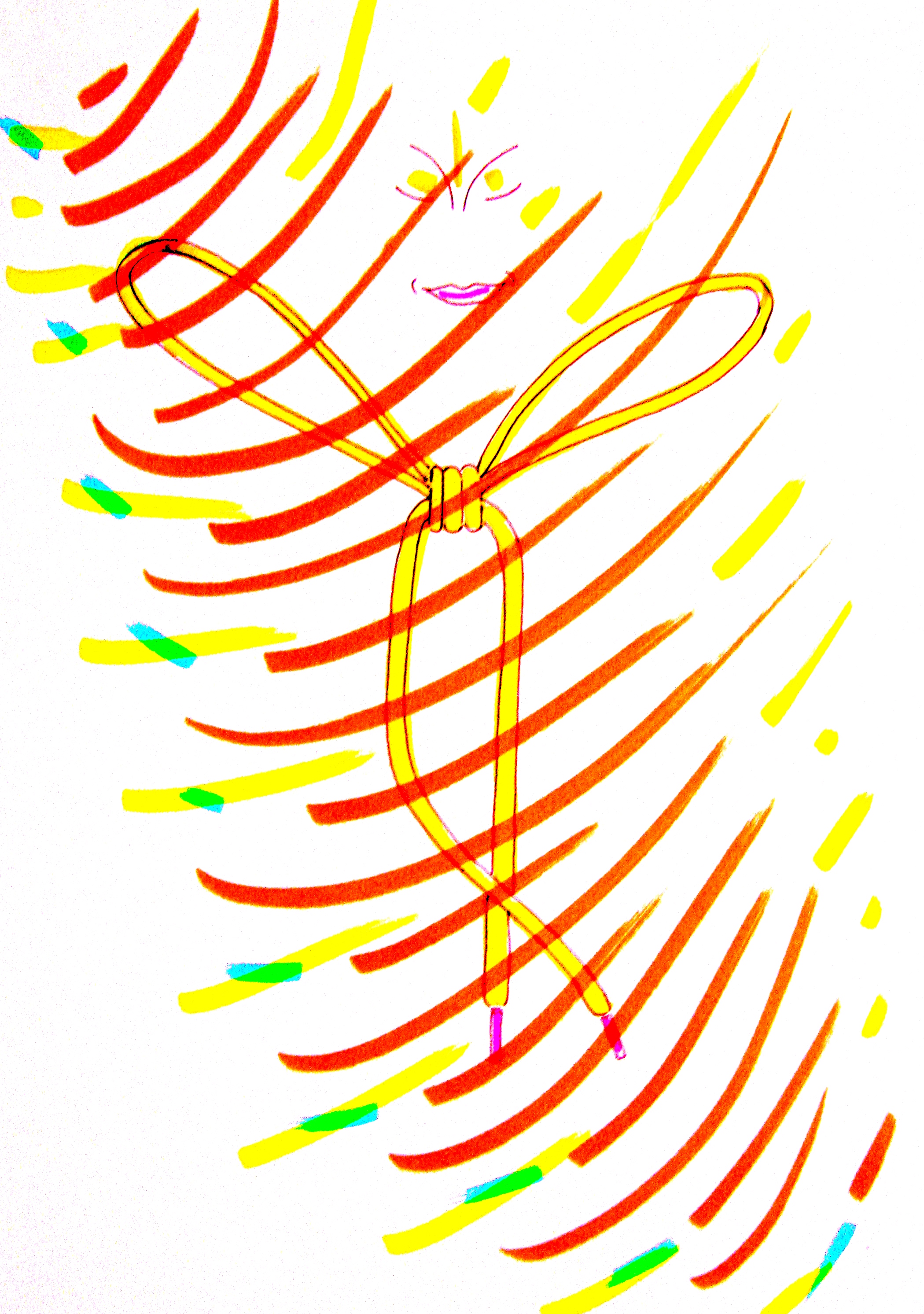
Illustration: Shyam G Menon

Illustration: Shyam G Menon

I watched The Jungle Book for the first time in Bengaluru.

A successful animation film with several re-releases to its credit, I saw the movie in the early 1980s. It was screened at Rex Theatre on Brigade Road. I recalled this ahead of watching the film’s 2016 version at Mumbai’s Sterling Theatre, replete with 3D animation and contemporary movie stars providing voice to the characters. Further, keeping aside Jason Scott Lee’s Mowgli from the 1994 version, the main protagonist of Rudyard Kipling’s book was a human being on screen and not an animated character. While some people have said that the old 2D animated version is their preferred benchmark, things have changed for me – I embrace Jon Favreau’s creation as benchmark in my times with one difference: I thought Baloo’s song (The Bare Necessities) was more enjoyable in the earlier film. Maybe it’s because I was a lot younger then, less cynical, less critical and more spontaneous. Years later, as life took its twists and turns, among them bringing me to the outdoors and the mountains – I have often wondered: if not the bare necessities, what is it that I am seeking?

Image: courtesy Disney India

Image: courtesy Disney India

One knew that after Richard Parker, the tiger in Life of Pi, Shere Khan would be convincing despite animation. What one did not anticipate was Idris Elba. His Shere Khan remains for me, a force haunting Kipling’s jungle. From the menace Elba creates, flows the dark, ominous mood of the film, a trait that sets it apart from the more child friendly approach of the earlier version. But then, today’s child growing up with smartphone, is also arguably a more media immersed junior, for whom the earlier film may at best be fodder for a submission in class on how technology evolved. Of the people who voiced the characters in the earlier movie, only George Sanders was known to us at that time. In days preceding the Internet, old film magazines brought home Hollywood and Sanders was there in some of the issues I used to thumb through. Even then, a few of the voice actors in The Jungle Book, including Sanders, were no more by the time the curtain raised that evening at Rex Theatre. In the 2016 version, I could appreciate the main voices for these were actors of my time. I could also appreciate what seemed to me paradoxical choices that clicked beautifully. Thus for instance, Ben Kingsley’s voice – even and measured in how it registers aurally, seemed apt choice for Bagheera. Christopher Walken as King Loius – I wasn’t sure. Till I experienced it and felt the psychopath sort of terror – so not Shere Khan like – that Walken’s laidback, negotiator of a voice can bring. Bill Murray as Baloo was a breeze. What didn’t convince was Kaa, the python. It had one mesmerizing scene all to itself and then, was gone.

Above all, this will be for me a Neel Sethi movie. After seeing the earlier version, I was left with memories of Bagheera, Shere Khan and Baloo. With the 2016 version, Mowgli joins that list. Sethi does not essay his role harking of innocence. He brings an element of smart contemporary youngster to the frame, creating in the process, a bridge between city and jungle. I suspect, for a generation experiencing The Jungle Book in the age of reading’s progressive decline and walking as they do through its plot with Sethi’s Mowgli for company, Favreau and Disney may have replaced Kipling as creator of the story. In the business of making an impression, that is a measure of how effective you were.

In the latter half of the 1980s, I saw a remarkable film at a film festival in Thiruvananthapuram. I went to see The Mission because of Robert De Niro but came off knowing the talents of Roland Joffe and Jeremy Irons as well. For me, Irons is among the great classically trained British actors of his generation; the sort with commanding screen-presence. Indeed in his case, that presence literally lurks in the frame waiting to explode. A few things define the Irons of cinema – an apparent discipline, intensity and voice. It is hard to have him in a supporting role and not lose the film to him. But if you are a film buff, you don’t mind that for losing a film to an actor of Irons’ calibre is rarely a bad experience. That’s what happened with Race; that’s what happened with The Man Who Knew Infinity. In the latter, it also helped flesh out and establish the respective characters of G.H. Hardy (played by Irons) and S. Ramanujan (played by Dev Patel), not just for the individuals they were but also the backdrops shaping them.

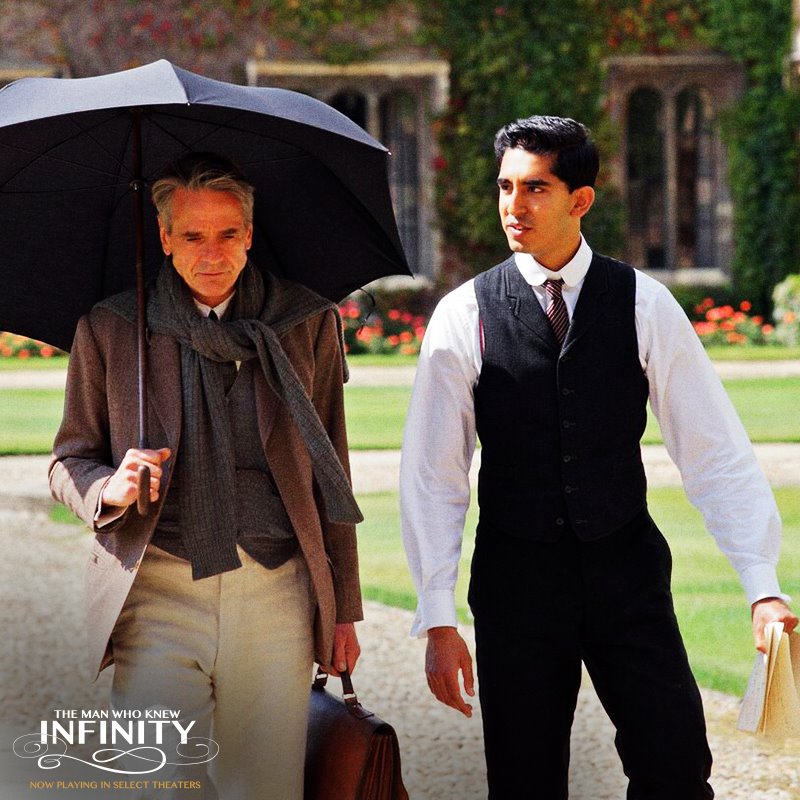
Jeremy Irons (left) and Dev Patel in The Man Who Knew Infinity (Please note: this photo was downloaded from the Facebook page of the movie.)

Jeremy Irons (left) and Dev Patel in The Man Who Knew Infinity (Please note: this photo was downloaded from the Facebook page of the movie.)

I do not know much about Ramanujan beyond what I gleaned of him from the film. In the movie, he comes across as gifted in an almost mystic way; his mathematics by intuition versus Hardy’s math by proof, his tendency to spontaneously get started on equations and that dialogue – that his goddess, Namagiri, puts numbers on his tongue. There is always a bit of struggle in how the visual arts and directors, actors therein, portray genius. A similar struggle exists in The Man Who Knew Infinity and Ramanujan occasionally felt contrived. At times the mathematician’s earnestness, isolation and genius seemed tad overboard in the portrayal. But then like I said, I don’t know how Ramanujan behaved in real life. Those who researched know best. Wikipedia describes Ramanujan as an autodidact, a person who is self-taught. A lacuna to my mind, in the film, was the dearth of material on how Ramanujan reached the level of proficiency in mathematics he had by the time he wished to publish. That proficiency may have drawn much from things deeply experiential, like the relationship between self and ecosystem with math embedded in its living traditions. Equally, in conservative society with life and lifestyle rigidly defined, the abstract world of numbers may become a liberating private refuge. All this went unexplored in the film, which starts with the adult Ramanujan finding a mentor in his boss, Narayana Iyer.

Matthew Brown’s movie was more about the Hardy-Ramanujan-Cambridge equation. Not for a minute am I saying that the Cambridge chapter is unimportant or uninteresting. The characters in that chapter have been presented well; the ambiance created by Hardy, J. E. Littlewood and Bertrand Russell is wonderful. Had it not been for them, we won’t have Ramanujan the way he is known today. Still, Cambridge is where the man was vindicated; he was formed elsewhere. Can a story of genius vindicated be complete if the formation of genius is not explored? This film deserves to be seen. Reports said that the movie was a challenge to make because funding was hard to come by. It is a good effort and as usual, Irons is a class act.

(The author, Shyam G Menon, is a freelance journalist based in Mumbai.)       

WAKING UP TO A SECOND CHANCE

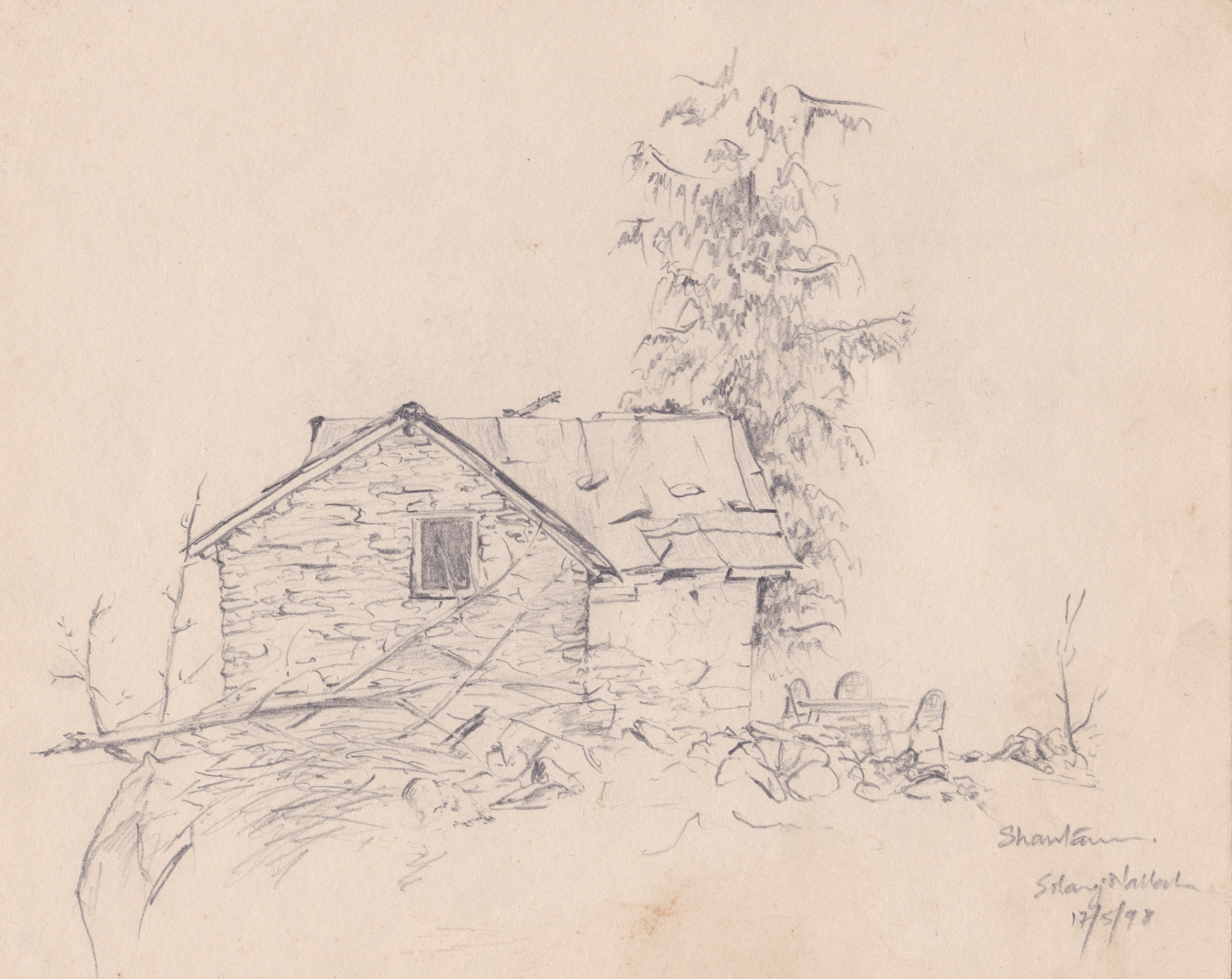
The outdoors is not about achievement; it is about being there. Senior NOLS instructor, Shantanu Pandit, sketched this temple in Solang Nallah, Himachal Pradesh, years ago when he was a leading the hiking and camping season there for Mumbai based-outdoor company, Countryside (Illustration: courtesy Shantanu Pandit)

The outdoors isn’t all about achievement. It is also about being there and taking in worlds different from what one is used to. Senior NOLS instructor, Shantanu Pandit, sketched this house in Solang Nallah, Himachal Pradesh, years ago when he was leading the hiking and camping season there for Mumbai based-outdoor company, Countryside (Illustration: Shantanu Pandit)

This article is about a NOLS course I did in 2011. Shantanu Pandit helps bring in a touch of the mountains with his sketches. NOLS courses in India are held in Uttarakhand.

It had been a hard walk.

Not so much for the terrain or the duration. It was the weight in my backpack. I wasn’t used to hauling so much. Plus there was fatigue and ego. Once again in the outdoors, I was on the wrong side of age. I was among the oldest in my batch, if not the oldest. Anger, kindled from an earlier mountaineering course at an Indian institute, where everything had been partial to its dominant age group of the early twenties – worked its way into my blood. New to altitude and snow, I felt I was denied training and instead parceled off into existence as mediocre specimen. The word for it was `grade’; it graced everyone’s certificate like pedigree. From that certificate flowed, for all practical purposes, mountaineering’s hierarchy in India. Not again such imprisonment by grade, I said, as I pulled hard and raced off from everyone else on the first day of a Trip Leader India (TLI) course with the India branch of the National Outdoor Leadership School (NOLS).

Some hours earlier, we had been dropped off on the approach to Karmi village in Kumaon, the eastern half of the Indian state of Uttarakhand. It was hilly all around. As the crow flies, the snow-capped peaks of the Himalaya were not far off. It was day one. The jeeps left and a sense of you-are-on-your-own descended. We would be out for a little less than one month. Just then, the end seemed long way off. I looked at my course mates. Two or three were faces familiar from previous trips to the outdoors. The rest were strangers. The course began systematically with instructors emphasizing foot care (that’s the part of the anatomy you would use the most on a long hike), hydration and periodic breaks for refreshment. But I was in a different world haunted by old memories. I am unsure whether I adhered to the instructors’ advice. I saw the course as another tsunami of youth at my heels, waiting to sink my ship. Evening we halted to camp, gathering in a circle as NOLS loves to do. I remember sitting down on my backpack, in that circle. Then the world tilted like a ship deck heaving in stormy sea. Eventually the ship turned turtle and a peaceful darkness took hold.

On my NOLS course, my planned redemption from `B’ grade at old mountaineering institute, I had fainted!

Damn.

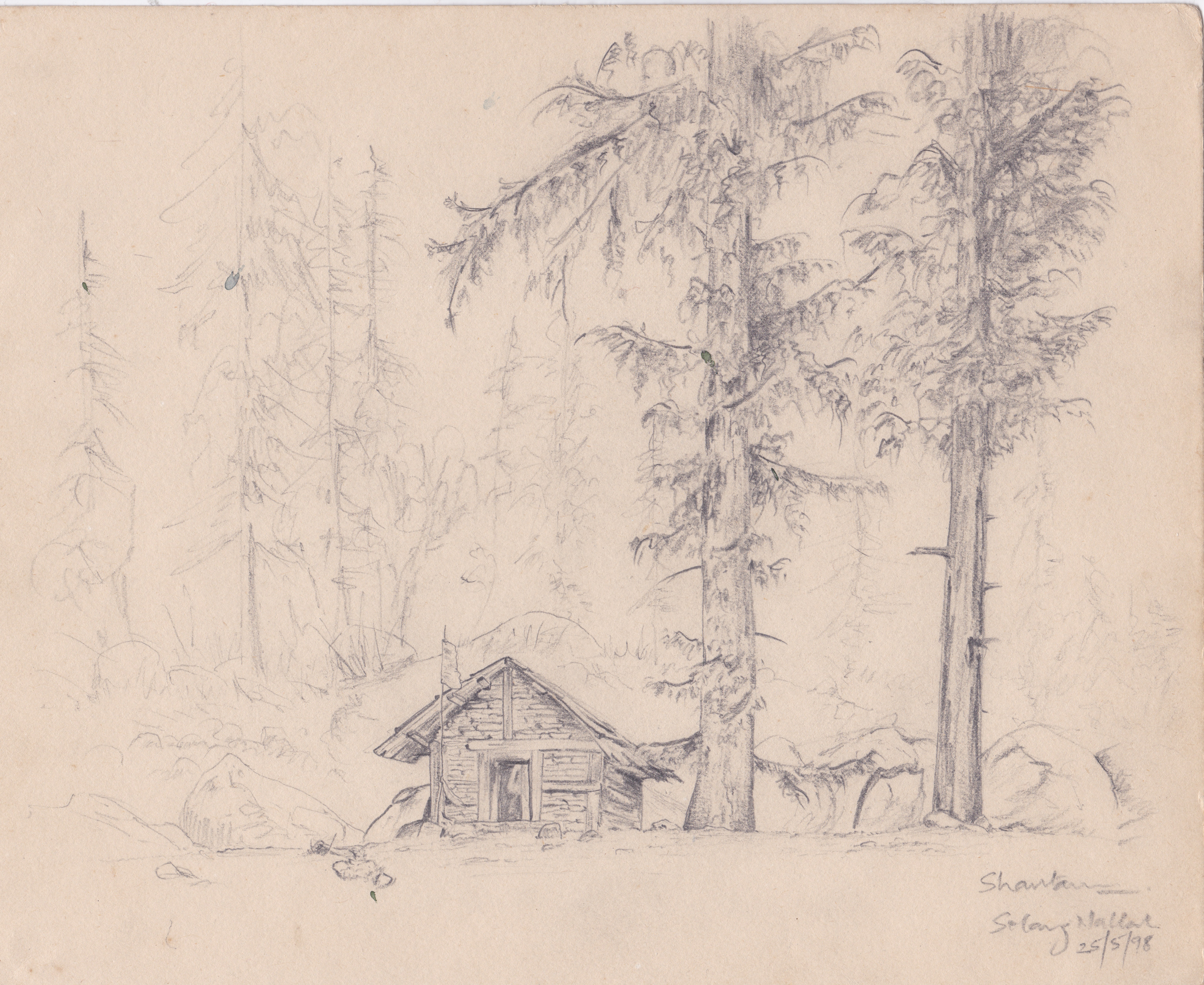
A temple in Solang Nallah, Himachal Pradesh (Illustration: courtesy Shantanu Pandit)

A temple in Solang Nallah, Himachal Pradesh (Illustration: Shantanu Pandit)

We had been divided into tent groups. Each group was self-sufficient in shelter, food and cooking equipment. I don’t quite remember where I woke up or who I saw first. Was it my tent mates? Was it my instructors peering down at me? Anyway, I was told I came around to my senses, with some chocolate. That evening my tent mates quietly took care of me. Nobody made an issue of the fainting spell; nobody bothered me unnecessarily. I introspected, tracing the episode to both old anger and perhaps more importantly, long hours chair-bound before the computer, back in Mumbai where I eked out a living as freelance journalist. Not only had that life been increasingly sedentary but income had drastically dropped too, affecting nutrition. Once a rock climbing addict, I was forced to reduce my visits to the crags after I lost my erstwhile disciplined life to incessant typing. Typing for my life I would say, because as freelancer I was paid only as per what I wrote; there is no salary or security. Now I was paying for it. In my tent, I felt like an idiot. I expected to be sent out, packed back to the NOLS India base in Ranikhet. Such was the legacy of the old mountaineering course in my head. The outdoors is all about performance, right?

Mercifully, that didn’t happen.

We had three instructors. The course leader was Margo van den Berg, an American of Dutch origin. Competent climber, she kept a studied distance from all till we approached course’s end. She carried a sketchbook in which she collected drawings of outdoor scenes. If I recall right, she also liked to dance and did something similar to a polka once. The second instructor was Ariel Greene; American, strong hiker, well read and majored in literature, also accomplished musician. A rather quiet individual, he was capable of engaging conversation on subjects that captured his interest. The third was Pranesh Manchaiah; Indian, at that time one of the best rock climbers in the country. He was very approachable and the active interface of the instructor team with the students. They must have discussed my case. The next morning, they made sure to check on me. I also knew I was probably being observed. But that was it – day two, kicked off like any other day. I had made a mistake. It seemed alright. What mattered more was – would I learn from my mistake?

I liked that approach, that second chance.

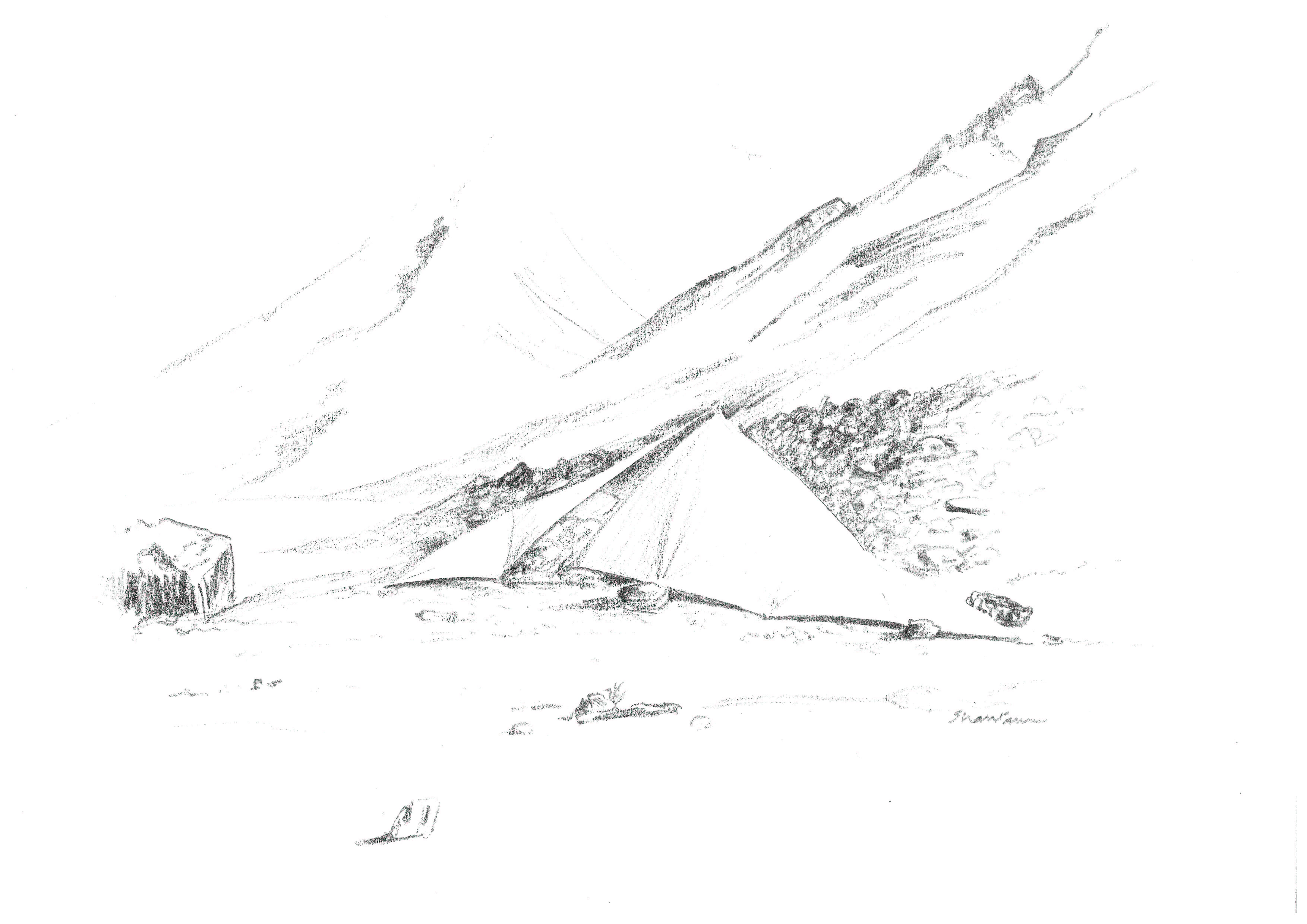
Kitchen tent, from a trip in Ladakh years ago (Illustration: courtesy Shantanu Pandit)

Kitchen tent, from a trip in Ladakh years ago (Illustration: Shantanu Pandit)

I sorely needed it. The combination of mountaineering institute, climbing club and my own limitations as climber had jammed me into a funk. An unexpected high altitude hike with a friend, who was a NOLS instructor and the way he taught me some simple steps in snow craft, got me thinking of this outdoor school. How about doing a NOLS course? – I thought. I started with a first aid course, which made sense for I was already working occasionally as an outdoor educator. Even in that course, taught at Ranikhet, the NOLS teaching style stood out. A typical class was of modest size, not the too many which characterized Indian scenarios. Modest size meant better attention and observation. There was fun. Yet there was a high degree of personal ownership among all. That dreaded word `grade,’ which plagued my old mountaineering course wasn’t prominent. The times it grew prominent were when Indian students featured it in their private discussions for we worship life by degrees, grades and such licenses for exclusivity ingrained in us. Worse, unable to live without A, B and C grades for distinction, we focus our teaching efforts on the most promising. At my old mountaineering institute, I remember explicit encouragement and support for the naturally talented, while the stragglers lived like failures. The NOLS faculty on the other hand, seemed to see teaching as exactly that – teaching those who don’t know. Indeed I would say, the less you know something, the better a NOLS course works for you, provided you are there to learn. At the end of the first aid course, there was a test. It went by like a breeze for free of fearing grade and genuinely wanting to be good at what we did, we had studied well every day. Each of us got a certificate valid for two years. NOLS was clear that rusted skills didn’t mean much. After two years, you re-certify.

My experience of the first aid course made me curious. The school’s philosophy seemed to agree with my own belief – you are as good as how often you are in the outdoors, not what grade you hold from an old course at mountaineering institute. I also liked the reduced machismo in the air. Quite unlike the Indian habit of viewing the outdoors as domain of the tough and seeking champions in everything, the tenor at NOLS seemed to be to make people comfortable in the outdoors with the champion bit, left for personal pursuit. What they did was put the basics like risk assessment, camping skills, navigation and Leave No Trace in place. In India, NOLS ran mountaineering and backpacking courses. The regular courses have one major drawback. They are expensive. However the Indian branch had a local outreach programme structured for educators – that’s the one I chose to do after my first aid course.

The first time I heard of NOLS was at my longstanding mountaineering club in Mumbai. We were on a diet of regular rock climbing in the local hills with occasional visits to climb mountains in the Himalaya. We were a rough, tough lot, shaped by climbing and eminently capable of turning our backs on anyone who deemed us crazy. We had need only for each other. What we didn’t know was how much that made us inward looking, measuring everything and everyone through the prism of climbing and to that extent, not different from settled society which views the world through the prism of well settled life. We often poked fun of NOLS, which seemed tame with its emphasis on safety, risk assessment et al and its pronounced appreciation for hiking as right context to teach outdoor curriculum. Climbers look down on hikers. In the company of my club, I submitted myself to measurement by climbing grade, worshiped super humans and wept at my measly strengths in the field. There was also another reason, I guess, why NOLS was looked at the way it was, in the Mumbai climbing circles I was exposed to. Clubs are a great way to start off something. But over a period of time, they can lose the ability to be self critical and become a self righteous fold of the mutually familiar. At the time I did my course, I found NOLS quite different compared to the outdoor club and mountaineering institute, I was coming from.

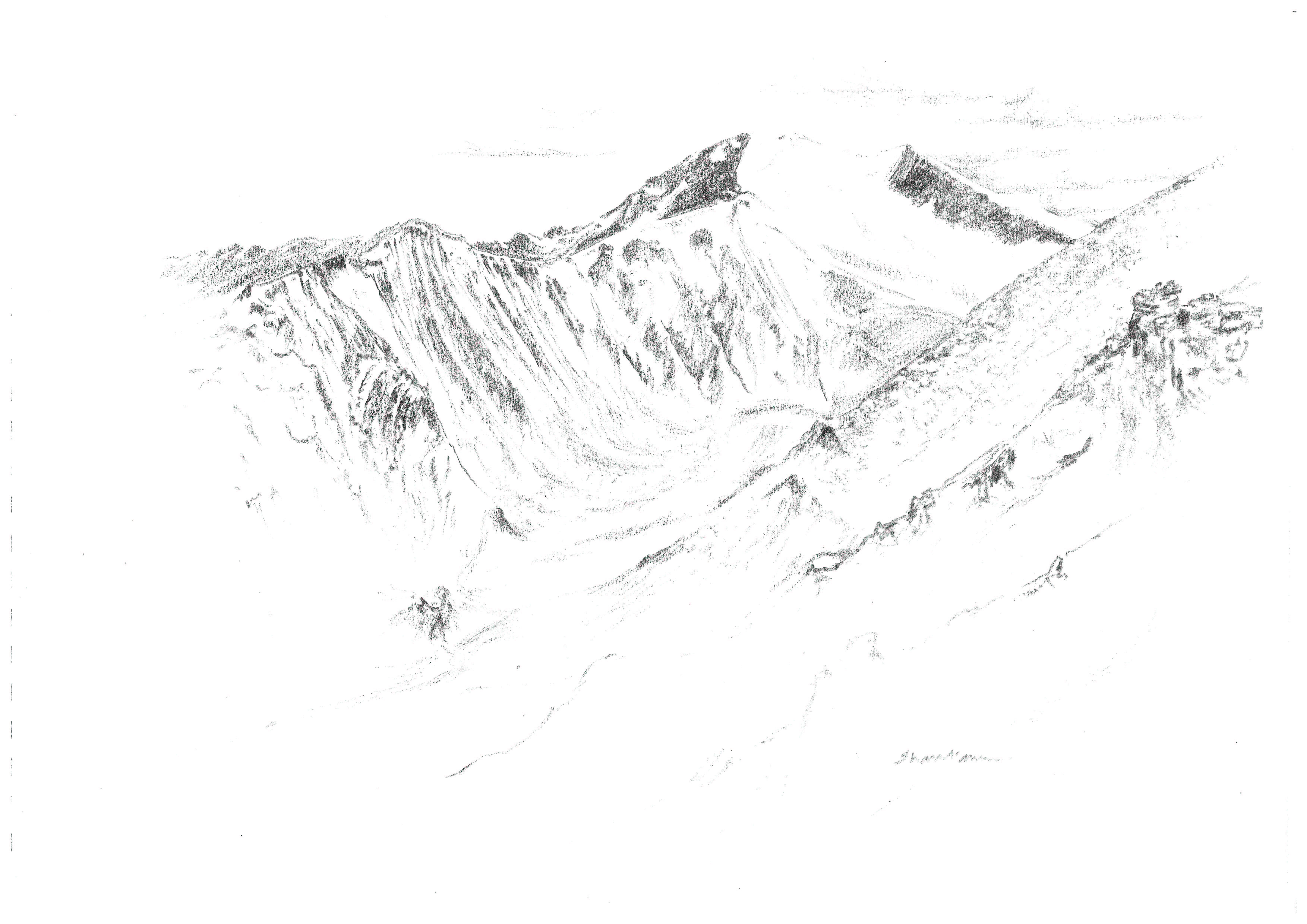
View from Khardung La, Ladakh (Illustration: Shantanu Pandit)

View from Khardung La, Ladakh (Illustration: Shantanu Pandit)

On our NOLS course, we had contour maps, compasses to orient them; indeed compasses using which we could have gone through the old routine of bearing and back bearing – the works, tying ourselves up in a math most of us hate. At NOLS, past map-orientation, our instructors encouraged us to keep the compass aside. A major component of navigation was observation of context. We slowly learnt to pick out features from the surrounding geography and locate them on the map. Looking around became important. As you looked up from traditional entrapment by performance and immediate world, you saw mountains, passes, even your fellow students. Throughout my NOLS course, I struggled with navigation (I still do). It was an indication of how much I had to get away from tunnel vision and impatience. I remembered my first mountaineering expedition in the Zanskar Himalaya, where I had once spent a long time frantically looking for the rest who had moved fast and disappeared from sight. Since then, having people ahead and within sight had been my map, my sense of security. Now map in hand, I was looking around, using my head even as it loathed math.

Mountains are lovely classrooms. Long hiking days and path-finding often threw up fantastic junctures for an instructor to intervene. Entrusted with responsibility and beset with error and challenge, the students opened up to learning. We learnt to work as a team, co-operate and have fun. I recognized this fun quickly as the inexplicable bonhomie I knew from my climbing crags, that sheer delight of being in the outdoors with others who love it. Describing it is difficult, probably not required. The difference on the NOLS course was this – we discovered it wasn’t magic but something we could create. We were not annoyingly judgmental. We were accommodating, willing to explain our problems with the world and each other, contributing thus to a quality missed in Indian education – a safe learning environment.

For example, I was, still am, a very average cook. But even the worst cook gains confidence and tries to improve when your turn to cook is accompanied by supportive tent mates and cooking is part of field curriculum being taught. That said, for many Indians, cooking is akin to the loss of vertical as stamp of high adventure. What has cooking – usually identified with the ladies – got to do with the macho outdoors? In Indian context with premium on masculinity, it takes the sheen off adventurer expected to handle nothing but ropes and gear. Cooking at NOLS addressed a very fundamental point – if you can’t take care of yourself in the outdoors, how can you say you are adventurer chasing peak, pass or summit? If you exist, your chance of reaching the destination is more. On such simple things ranging from cooking to personal hygiene, listening to team members and learning to lead, ran a NOLS course. The concept of self-sustained expeditions, which form the backbone of all NOLS experiences, is perfect backdrop for these dynamics to unravel.

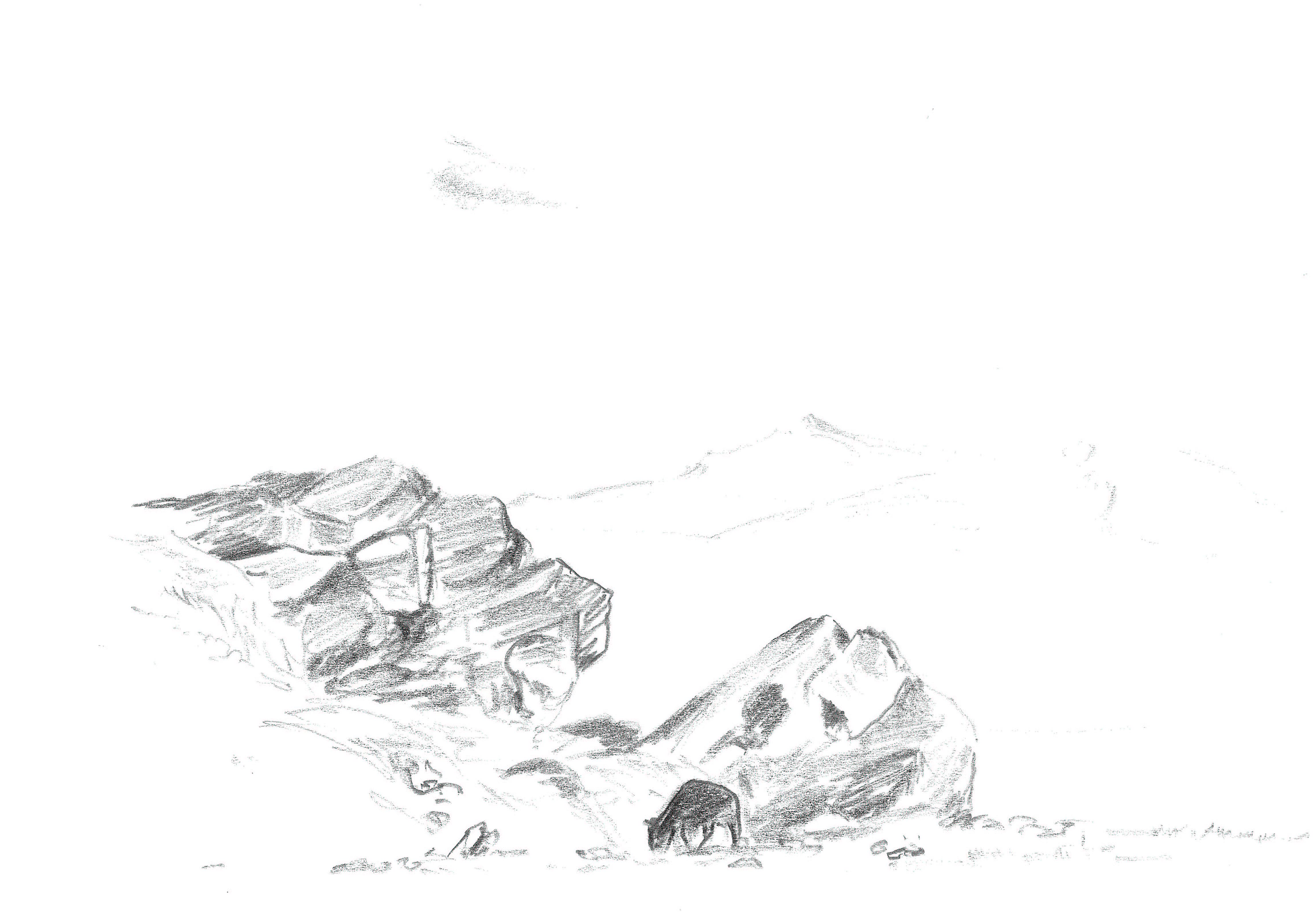
A scene from Ladakh (Illustration: Shantanu Pandit)

A scene from just outside Karzyok, Ladakh (Illustration: Shantanu Pandit)

Many days of hiking went by. Roughly put, our route ran east from Karmi towards Munsyari, hugging modest elevation but having enough rough terrain to make the hiking experience span walking on proper trail to bushwhacking. Doing the latter with students as navigators and instructor passively accompanying till the evolving situation warranted intervention, we had some long strenuous days. Split every morning into self-contained hiking groups, I remember one extended day that slowly slid to late evening, destination not yet reached and students beginning to get nervous. Margo who walked with us was however cool. She occasionally checked the geographical features around to gauge direction, played silent spectator to our team management and scouting trips and when darkness approached, stayed calm for after all we were a self-contained group. It brought alive that load in my backpack as my survival kit and not excuse to show-off my ability to haul weight. As things turned out, my group did reach the assigned camping spot to a warm welcome of flying snow balls from the rest of the batch, arrived earlier. It was early summer in the Himalaya. Snow was around in shaded areas and the higher reaches of our route. Often, it rained, making the world wet-cold. Our last camp was at Dhapa, high on the banks of the Goriganga near Munsyari. By then we had crossed two other major river valleys en route, those of the Pindar and Saryu rivers, besides other minor valleys identified with local streams. Every time we climbed up from a valley to height, we would see the snow clad Kumaon Himalaya not far away.

Slowly but steadily, I had become fit as a fiddle; happy to be out. I could have turned around and asked the guy who fainted – are you me? The near 25 kilo-backpacks were a load, no doubt. But we knew the pattern – it weighed most just after re-ration and tapered slowly towards the next re-ration. So we cooked and ate. We attended classes despite weather gone bad, wearing rain coats, puff jackets and wind cheaters under a tarp propped up by tree branches and trekking poles, for shelter. We saw each other in the light of headlamps. We waded through cold streams, kicked steps on snow and bushwhacked. At camps, we took classes; something, anything that you could share with your fellow students or teach them. From strangers, we evolved to friends. I remember young Zanskar, who thanks to his familiarity with Kumaon, was a walking encyclopedia on local flora and fauna. I remember Joshi, who everyone remembers, for the rhododendron-paratha he made. I remember quiet, solid Soumitra. I remember the ever upbeat Amrit. I remember Vinay, Anish, Stanzin, Kamakshi, Tara, Hitendra, Ravi, Manjunath, Shaleel. We got along well.

Then one day, close to course’s end, your instructor – they assigned one as mentor for each student – met up with you to discuss evaluation and grade. I appreciated the personal meeting, the discussion and the detailed evaluation with explanations. A, B, C or shades in between – they told you why. Most important – it wasn’t a certificate that dovetailed as input for a bureaucratic administration of access to the mountains, saying: a person with this grade can do this, that grade can do only so much…so on and so forth. They weren’t gifting me a straight-jacket for life as the Indian mountaineering institute did. The NOLS certificate felt like an evaluation in time, a snapshot in life. What a snapshot shows of you at 20 isn’t how you would be at 40, which in turn may not be how you are at 60. Life is a journey. It is for you to decide what to do with it. A snapshot isn’t all of your life at one go. It is just a slice, a pointer.

I liked that.

I felt free.

(The author, Shyam G Menon, is a freelance journalist based in Mumbai. This article was developed from a piece originally written and published in The Outdoor Journal [http://www.outdoorjournal.in/] in early 2014. My gratitude to Shantanu Pandit for asking me about the old article and making me want to share it afresh.)               


“ I AM BY NATURE A SOLO RUNNER’’

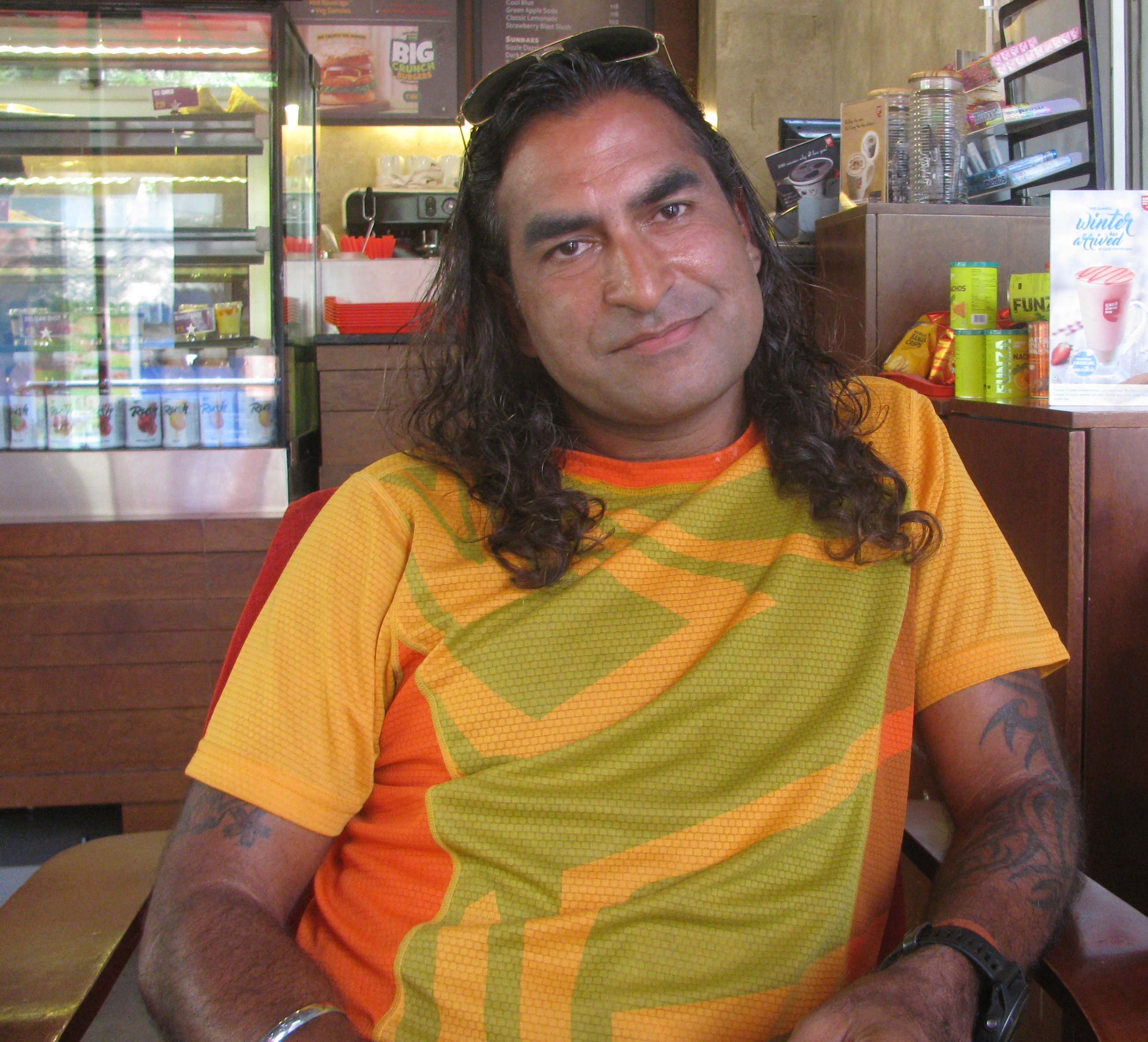
Breeze Sharma (Photo: Shyam G Menon)

Breeze Sharma (Photo: Shyam G Menon)

Breeze Sharma spoke with no intent to impress.

There was an air of – this is what I am; take it or leave it.

He minced no words in his description of the emergent world of Mumbai running. In particular, how support and sponsorship grace mostly the media savvy.

Breeze wasn’t wrong in his perception. A couple of weeks after we met him, Outside magazine ran an article on the same problem as felt in expeditions. It would be easy to say that what is going wrong in the matrix of money, media and marketing can be set right by further tweaks to technology or that the maze can be negotiated by hiring consultants adept at the task. The real issue is something else. It has to do with what drives the matrix, dominance by the matrix and the distortion it brings.

It was a hot summer morning.

Breeze sat in the café, like runner trapped, mind lost to what he must do. He had just finished a long run in the morning and after meeting us, would head out for another session in the blazing sun. In the middle of busy city with people ensconced in the air conditioned comfort of their cars and offices, a lone runner adding mileage on scorched road. Breeze is among Mumbai’s best known ultra-marathon runners. He was preparing for the Badwater Ultra Marathon, a foot race enduring extreme temperature variations and elevation change, often described in the world of running as the toughest event around.

Breeze on Kang Yatse (Photo: courtesy Breeze Sharma)

Breeze on Kang Yatse I. This is the main peak, not the shoulder many climb to (Photo: courtesy Breeze Sharma)

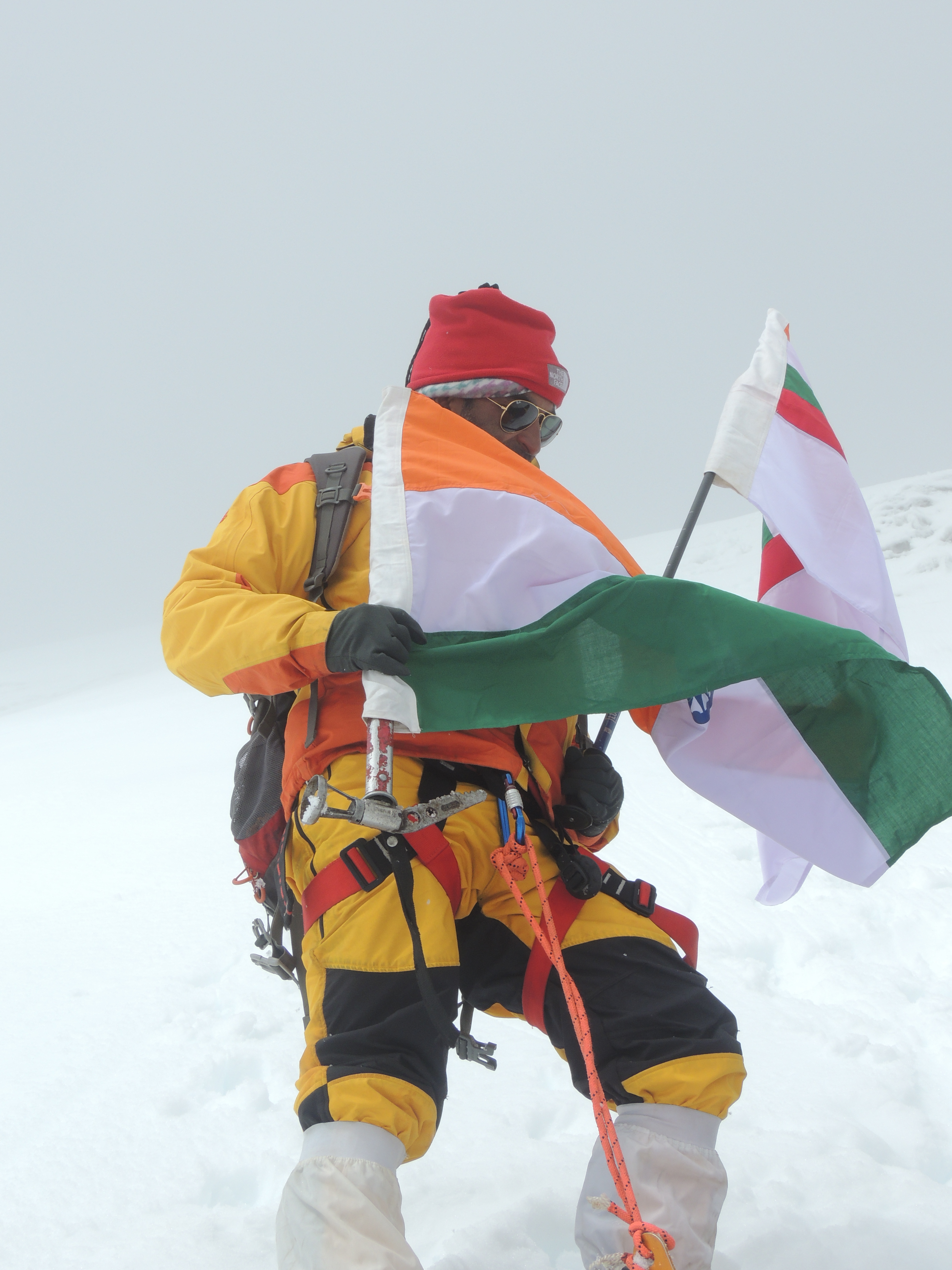
“ I don’t think I got accepted at Badwater because I am a runner. I am a mountaineer,’’ he said. Born January 1974 into a large family in Jaipur, Breeze Sharma considers mountaineering his first love. He did his mountaineering courses from the Jawahar Institute of Mountaineering in Batot, the Nehru Institute of Mountaineering (NIM) Uttarkasi, the Atal Bihari Vajpayee Institute of Mountaineering and Allied Sports, Manali and the High Altitude Warfare School (HAWS) in Gulmarg. Long haired and tattooed, Breeze, works with the Indian Navy; on the civilian side. He has been associated with the navy’s Adventure Cell for several years. Climbing mountains, he has been on peaks like Nanda Kot, Bhanoti , Friendship, Shitidhar, Chamser Kangri, Lungser Kangri, Deo Tibba, Baljuri, Kang Yatse, Shinkun East, Shinkun West, Ramjak, Mentok Kangri,  DKD-II and Independence 50. The altitude involved in these climbs, ranges from 17,000ft to 22,000ft. A bachelor, he stays in Mumbai, in a house close to the Sanjay Gandhi National Park (it is the biggest forest within a city anywhere in the world), getting occasional visits from the park’s slithery residents. Aside from mountaineering and running, Breeze also handles snakes.

It was Mumbai runner Suresh Pillai who introduced Breeze to running. Suresh is a colleague in the navy. “ Breeze was very active in the Adventure Cell. I had accompanied him on some treks.  I told him that he should get into running, that he will enjoy it,’’ Suresh said. Breeze’s first running event was the Vasai-Virar Marathon of 2012, incidentally the same year that he began running. Starting almost 25 minutes late, Breeze finished the full marathon in 5 hours, 38 minutes, last in the field. Nobody saw him finish. Suresh had to intervene and get him a finisher’s medal. “ I was interested only in the full marathon,’’ Breeze said when asked why he didn’t pick any of the smaller distances at his first running event. Discouraged by his showing, he left the finish line, thinking he didn’t have what it takes to be a good runner. However, the opposite unfolded. Following his Vasai-Virar experience, Breeze started to run regularly. He ran the 2013 Standard Chartered Mumbai Marathon (SCMM) under navy quota, completing the full marathon in 4 hours, 31minutes. His next full marathon was in Chandigarh. Then, in October 2013, he ran his first ultra-marathon, the 80km-Bhatti Lakes Ultra, running the distance in 11 hours, 22 minutes. He ended third in that race. In December 2013, he ran a 100km ultra in the Nilgiris, lapping up the distance in 15 hours, 29 minutes. “ With this race, I came to accept that ultra-running is my passion,’’ Breeze said. He set his eyes on a hundred miler (161km). That happened with an event in the Rann of Kutch in Gujarat, where he ran 161km in 34 hours, 56 minutes to place second.

From Himalayan Crossing (Photo: courtesy Breeze Sharma)

From Himalayan Crossing (Photo: courtesy Breeze Sharma)

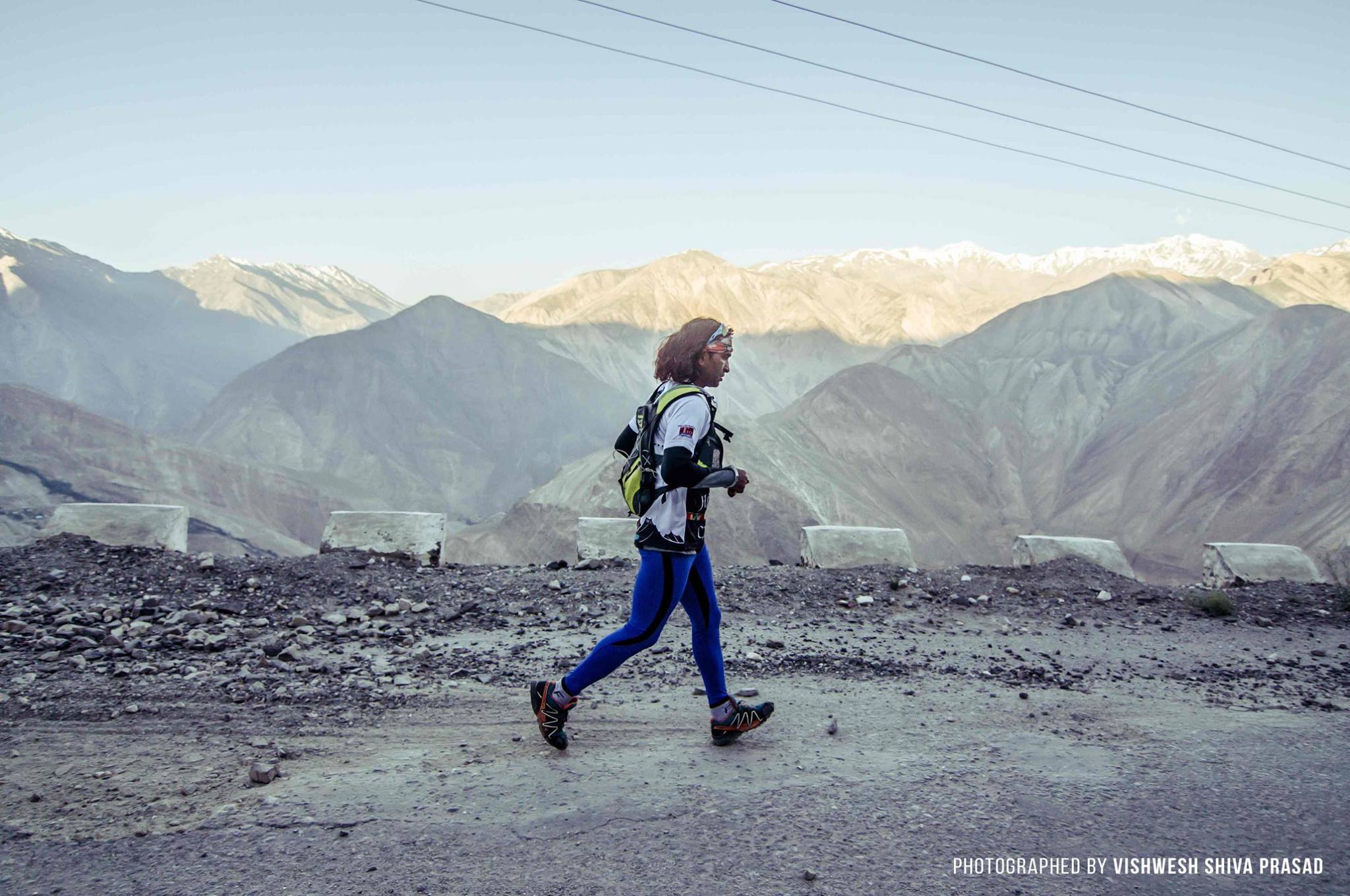
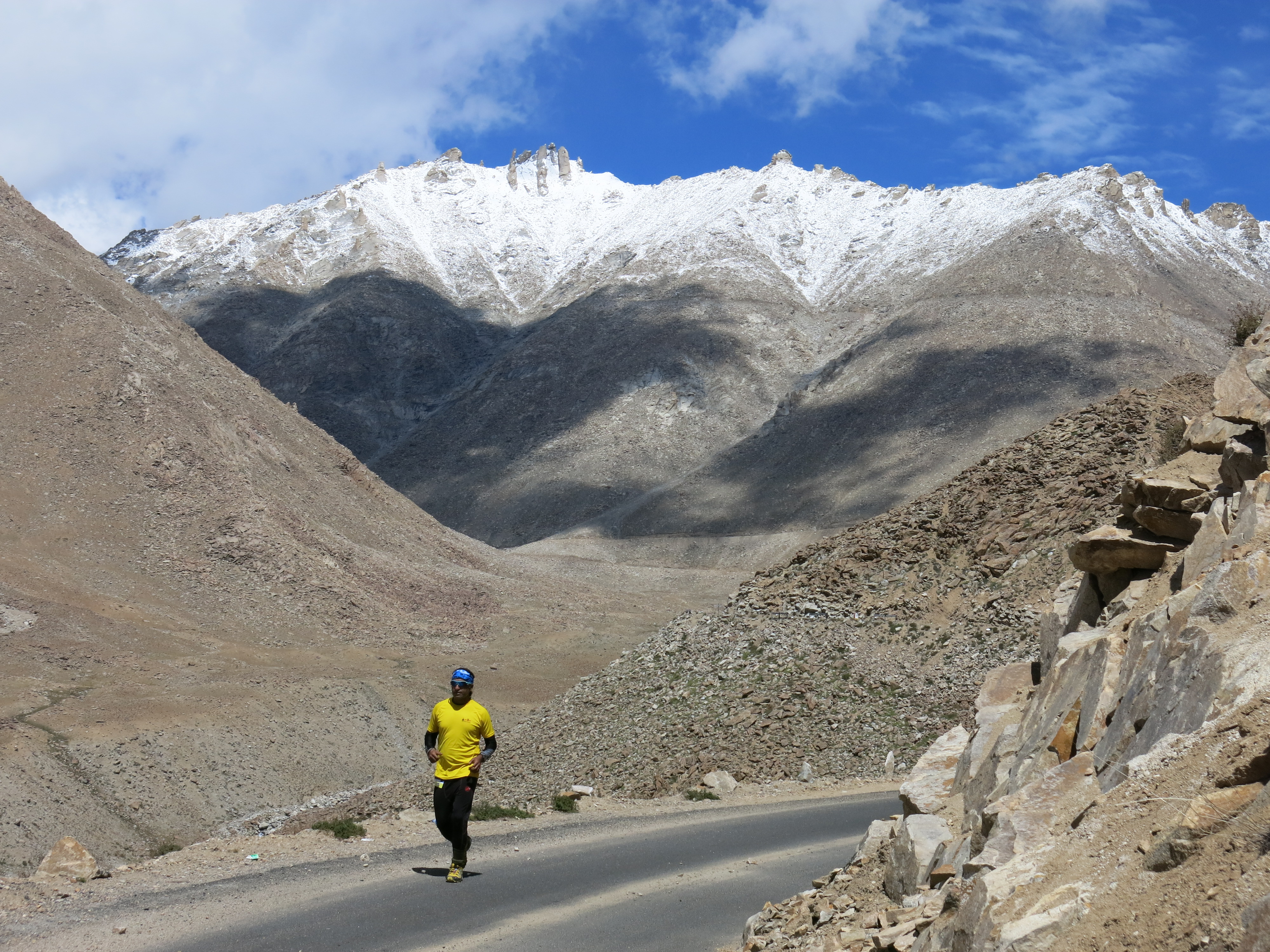
June 2014, found him running 80km in 10 hours, 46 minutes at the Shimla Ultra. Next he opted for a multi-day race spanning July 7-11 and covering 335 km, called Himalayan Crossing. Between the Shimla Ultra and this multi-day race, Breeze embarked on an expedition to Deo Tibba. At Chikka, he was bitten by a Russels Viper. Fortunately, the bite was on a finger, with that much distance, anatomically, between area of bite and vital organs. Only one fang made contact. Rushing him back to Manali, his guide alerted the District Magistrate and ensured that a helicopter was kept on standby. In another stroke of luck, enquiries revealed that the relevant antivenin was available at a hospital in Kullu. Breeze was brought unconscious to Kullu, where the antivenin was injected. He survived; he was discharged eight hours after regaining consciousness. It was a narrow escape. It left him with ten days to attempt the Himalayan Crossing. Its route straddled an average elevation of 12,000ft. As it turned out, he was the only one running. Starting from a village in Spiti, he ran the distance, crossing the Kunzum La and Rohtang La (both high passes) en route. He completed the run in 55 hours, 45 minutes. “ It was in this event that I discovered the endurance runner in me,’’ Breeze said. Suresh put it in perspective, “ Breeze has very good endurance because of his mountaineering activity.’’ The Himalayan Crossing – which earned him a place in the Limca Book of Records – happened in July 2014.

From Himalayan Crossing (Photo: courtesy Breeze Sharma)

Running in the Himalaya (Photo: courtesy Breeze Sharma)

On August 3rd, Breeze ran the 12 hour-stadium run in Bengaluru, covering 92.8km to place fifth. He also ran the Mumbai Ultra of August 15. As if this wasn’t enough, Breeze reached Ladakh in September to run the Khardung La Challenge. In November 2014, still in running mode, he ran 162km to secure third place in the 24 hour-segment of the Bangalore Ultra. Then he ran for a second time, the 100km ultra in the Nilgiris, completing it in 14 hours, 29 minutes. “ I ran the maximum number of ultras I have done so far, in 2014,’’ Breeze said. Inderpal Khalsa is a young, promising ultra-marathon runner. He has run a few ultra-marathons with Breeze. “ One thing I have observed is that he has very strong will power and his mind is determined and focused. I have seen him on extreme terrain, unwilling to stop, just looking down and continuing to run at a slow pace. He can run for hours and hours without a break because he focuses on strength training and spends a lot of time in the mountains,’’ Inderpal said.

In early 2015, four days after SCMM, Breeze ran a 24 hour-treadmill challenge, covering 196.64km, earning him a place in the Limca Book of Records. In February, he repeated the ultra in the Rann of Kutch, running 100 miles in 28 hours, 55 minutes. Breeze won this race. Then an unexpected twist occurred, one that dealt him a severe mental blow. At noon, April 25, 2015, a devastating earthquake struck Nepal shaking up the Everest region with considerable damage inflicted as far away as Kathmandu. Over 8000 people died, more than 20,000 were injured. The temblor triggered a major avalanche at Everest Base Camp. Among those buried under the snow was Breeze Sharma. For over a decade, the mountaineer and ultra-marathoner had been saving up money for an expedition to Everest. Everest is a costly affair. He sank his savings into the project and borrowed some more. His plan was to climb both Everest and Lhotse. All that effort and a chance to attempt the summit, ended up under the snow. Buried by avalanche, Breeze eventually broke through to the surface. In the hours that followed at camp, he had an injured woman die in his arms. In all, 21 people died due to the avalanche at Everest Base Camp. The experience rattled him. Atop the trauma of earthquake and avalanche, was the spectre of returning home to a huge debt. “ I was bankrupt,’’ Breeze said. Laid low by these developments, he quit running. It was one of those dead end scenarios when nothing appears to work positively for human being.

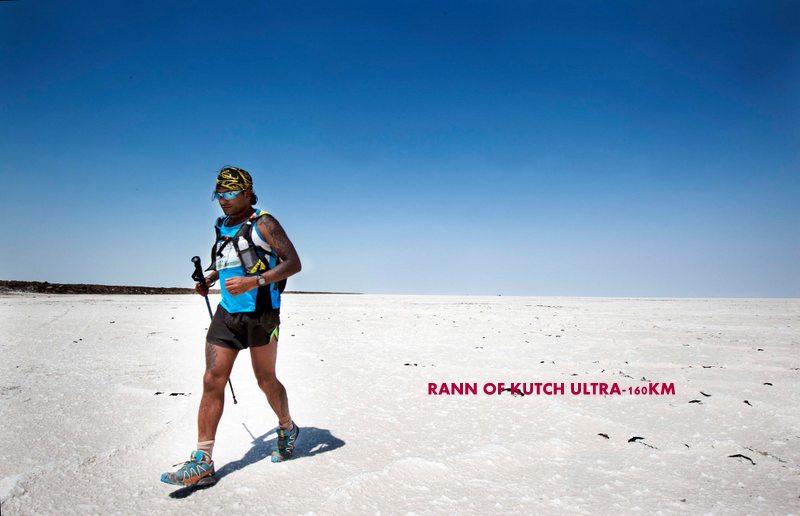
From the ultra-marathon in the Rann of Kutch (Photo: courtesy Breeze Sharma)

Breeze, during the ultra-marathon in the Rann of Kutch (Photo: courtesy Breeze Sharma)

One of those who kept in touch with Breeze during this phase was Vijaya Nadar. She lives in the US. “ Breeze struggled to fund his Everest expedition because a sponsor who had promised ten lakhs for the same had to decline and some other funds he was banking on wasn’t released on time. Some of his runner friends had promised to help raise funds; that too didn’t happen. It led to a panicky situation. He had no money to even buy insurance, before the trip. But he left for Everest all the same. After the earthquake and avalanche, he not only had to come to terms with his failure but also the mountain of loans – around 15 lakh rupees – which he had taken from his family and friends. He was broke and absolutely sure that he will not be able to recover. I would tell him to get back on his feet, though I myself wondered how. But all credit to the guy, he cleared his debts in six months and got back to running,’’ Vijaya said. The navy also helped. However some things precious, were lost. A keen biker, Breeze kept a small collection of motorcycles. He sold off his Harley Davidson, two Enfield Bullets and a KTM Duke to help repay the debt. In August 2015, Breeze ran the 24 hour-stadium run in Bengaluru, in an indifferent manner. He walked for 7-8 hours. “ I was not at all happy with my performance,’’ he said. Looking for a metaphorical summit to push himself onward in life, he found Badwater. The iconic ultra-marathon starts 279ft below sea level in the Badwater Basin of California’s Death Valley and ends at an elevation of 8360ft at Whitney Portal, the trailhead to Mt Whitney.  The race can see day time temperatures soar above 50 degrees Celsius. The course is 217km (135 miles) long. Not every ultra-marathoner finishes Badwater.

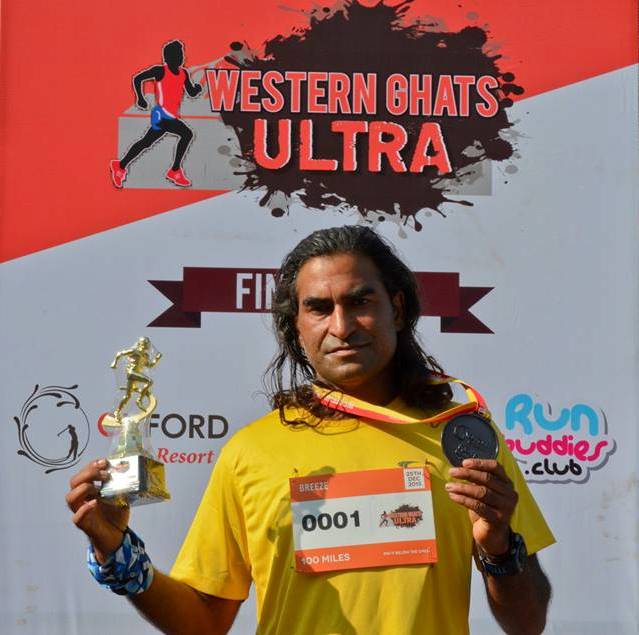
Among eligibility criteria for Badwater is that an applicant must have done three 100 milers. Breeze already had two 100 milers to his credit, both done in the Rann of Kutch. He needed one more. That manifested in December 2015. He ran a 100 miler in Pune called the Western Ghats Ultra. “ There were six participants. I would call this the toughest race in India. The last 85km is steep,’’ Breeze said. He ended up first, finishing the race in 27 hours, 20 minutes. He could now apply for Badwater. The race is scheduled for July 18, 2016. So far from India, only Arun Bhardwaj has completed the race. Breeze’s Badwater attempt is happening just 26 months after he got into ultra-running. That’s why he calls himself a mountaineer first, for it was in the mountains that he acquired the mind needed to take on challenges and physical hardships. “ Ultra-running is a game of the mind. I am by nature a solo runner,’’ he said, an observation mountaineers will quickly identify with. “ Breeze enjoys running solo. He occasionally runs with company but mostly likes running alone,’’ Suresh said.

After the Western Ghats Ultra (Photo: courtesy Breeze Sharma)

On the podium after the Western Ghats Ultra (Photo: courtesy Breeze Sharma)

When we met Breeze for a chat, he was very much into the training phase for Badwater. He had run 30km that morning and was set to do another 30km in the evening. Overall, his preparations for Badwater entailed covering 5000km in four months in various conditions. The month preceding our meet-up, he had been logging on the average over 40km per day. That doesn’t mean he runs every day; it is an average. “ I don’t run every day. But I do heavy workouts in the gym. I run whenever I am in the mood to do so,’’ he said. You need a support crew when running the Badwater ultra-marathon. “ For crew, besides me it will be Craig Foster, who has run several 100 miles in the US, and has crewed at Badwater four times. It will be his fifth with Breeze. Then there is Avasa Singh, who is a very enthusiastic runner herself and preparing for her first 100 miles,’’ Vijaya said. There will be a mini van trailing the runner stocked with food, hydration needs, medicines, foot care essentials, extra shoes and importantly – ice boxes to cool the runner should the temperature be extreme. Some of the crew members will also occasionally pace the runner to keep him motivated. Between the preparations now underway for Badwater and the earlier Western Ghats Ultra, which set him up to apply for the race in California’s Death Valley, Breeze returned to the Rann of Kutch in February 2016, to run an ultra-marathon there for a third time (this one was different from the first two, it was called ` Run the Rann’). He finished first.

One suspects the Breeze Sharma-story is never complete without a mountain in the head to climb. Apart from the running, the Badwater chapter has its other challenges – mainly cost. Fresh from his struggles to repay debts over Everest, Breeze was trying to raise the six to seven lakh rupees he needed for Badwater.  It isn’t an easy task. It can be frustrating when the world’s capacity to support is partial to those playing by its PR rules. Breeze is not naturally wired for it. “ He needs to get more support but because he is not in the front line and not engaging in publicity with his running, he loses out,’’ Suresh said.

Conversation over, Breeze left the same way he spoke.

We shook hands and he walked off without looking back.

(The authors, Latha Venktatraman and Shyam G Menon, are independent journalists based in Mumbai. Please note: the timings at races and the list of mountains attempted / climbed are as provided by the interviewee.)


IFSC WORLD CUP: COUNTDOWN BEGINS IN NAVI MUMBAI

The organizing team at the World Cup venue during Fabrizio's visit (Photo: courtesy Anushka Kalbag)

The organizing team at the World Cup venue during the recent Navi Mumbai visit of Fabrizio Minnino, IFSC Jury President (Photo: courtesy Anushka Kalbag)

Updates to the main article are provided at the end. Please scroll down for the latest results and team standings in the run up to the IFSC World Cup in Navi Mumbai.

Before us was a street of baked earth.

To its either side were rows of warehouses.

In one, a big pedestal fan hummed, blowing a cool breeze to counter the afternoon heat.

The floor and sides were stacked with plywood acquired for the task at hand. Drills, electric saws and tool boxes lay ready for use. Abhijit Burman (Bong), his shirt gathering sweat despite the fan in the corner, poured over diagrams and waited impatiently for his Man Friday from competitions past, to appear. He did – walking in at a measured pace, his face, intense and expressionless yet just a muscle twitch away from breaking into a smile at old team getting together. There was Bong, there was Raju the carpenter – a duo that has built several walls over a decade of climbing competitions at Girivihar – and by the side of the room, the first set of steel frames for the biggest climbing wall they have worked on so far.

Photo: courtesy IFSC

Photo: courtesy IFSC

The detailed drawings of this wall had been approved by the International Federation of Sport Climbing (IFSC). The wall, built locally to IFSC specifications, will host the qualifying rounds of the IFSC World Cup due this May 14th and 15th in Navi Mumbai. The semi-finals and finals would be on imported walls. After it is fully fabricated, the locally built wall would be transported as modules to Vashi, the venue of the World Cup and put together at site. The warehouse was in a far corner of Navi Mumbai and suddenly, the atmosphere of design, drawings, the sound of metal and machinery, animated conversation about wall, and Raju, reminded of Girivihar and mountaineering. Climbers focus best, when there is a challenge. You sensed challenge in the warehouse, you sensed focus. Less than a month remained for the first World Cup in climbing to grace Indian shores.

Photo: courtesy IFSC

Photo: courtesy IFSC

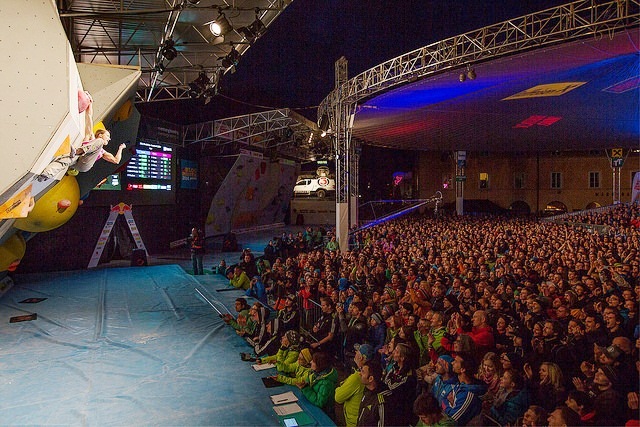
It was in mid-2015 that a team of climbers from the Mumbai based mountaineering club Girivihar visited Munich to get a ringside view of a World Cup competition held under the aegis of IFSC. The team was in the German city because just a few months before, the IFSC had granted its approval for a World Cup in Navi Mumbai to be hosted by its official representative from India, the Indian Mountaineering Foundation (IMF), and organized by Girivihar. The World Cup is a series of competitions held annually worldwide, attended by some of the best international climbers. It showcases cutting edge climbing. The Indian pitch was for a World Cup in bouldering. In India, mountaineering zipped to early prominence. A lifestyle sport, free by nature, rock climbing awaited the right generation, age group, maybe even apt juncture in economic development, to take off. The IMF diligently held its own annual climbing competitions (six zonal competitions dovetailing into a national final, every year) to select the Indian sport climbing team, conducted workshops and did what it could to promote the sport. Sport climbing is growing. But in huge country of 1.3 billion people, it is very small; a far cry from cricket, which almost shapes national imagination. What the Girivihar team saw in Munich amazed them. The retail awareness about climbing stunned. The venue hadn’t been advertised a great deal, nor was there any big buzz surrounding the event. Yet anyone who was interested in climbing was there. “ It was wonderful to see the level of awareness about climbing they had,’’ one of the team members said. The observation wasn’t without reason.

Photo: courtesy IFSC

Photo: courtesy IFSC

Photo: courtesy IFSC

Photo: courtesy IFSC

Back in India the team members climbed at the crags of Belapur in Navi Mumbai. The crags are located on the edge of Mumbai-Navi Mumbai, its existence threatened daily by the relentless push of urbanization. On the other hand, for 11 years in a row, Girivihar had successfully conducted an open climbing competition, originally on natural rock at the Belapur crags, slowly gravitating to bouldering on artificial walls. At its peak, the annual event had attracted 192 climbers from all over India. A few thoughts emerged behind the scenes, as this competition series progressed. First, there was definitely expertise accumulating with Girivihar to organize climbing competitions. If the IMF helped, projects could be more ambitious. Second, the annual competition was encouraging bouldering and sport climbing. It has seen climbers from 11 foreign countries participate so far. The competition typically concluded in a rock trip by visiting climbers and locals, to an Indian climbing hotspot like Hampi or Badami. This interaction encouraged Indians to improve their climbing skills like an adjunct to what the IMF was already doing. Third, the competition was popularizing the sport; taking it to a larger audience. This was critical for continued climbing in the Mumbai-Navi Mumbai region because with crags under pressure, the future had to be either greater public empathy for the sport resulting in better preservation of the climbing crags or the empathy manifesting as more artificial climbing walls in the region. Climbing’s priorities survive in society, if climbing is active and visible. Fourth, every time Girivihar organized a competition it had to search for adequately certified judges, for in India’s small world of climbing, the talent pool to judge was also commensurately small. It was a case of small ecosystem begging to be nudged bigger; put one’s shoulder to what the IMF was already doing. The trends pointed to a possibility: why not try and organize something big like a World Cup? If the sport grows as a result, it benefits all who love it.

Photo: courtesy IFSC

Photo: courtesy IFSC

The idea was good but the club needed to wait for the right time. They had to be at a point where the climbing competence you see at a World Cup won’t be drastically beyond what you see in Indian climbing. There was the need for relevant connect. Climbing – lead climbing, speed climbing and bouldering – is set to debut at the Asian Games of 2018. When the Rio Olympic Games happens, the International Olympic Committee is expected to take a call on what new games should take to the field at the Tokyo Olympics of 2020. The short list at hand includes climbing. While that is the future, at the 2015 Asian Youth Championships, Indian climbers secured four podium finishes. That’s a measure of the rising talent among young Indian climbers. Appearing on the scene in India were also youngsters gate-crashing into the truly high grades of rock climbing in Hampi and Badami (for more, please see the Ganesha series of articles on this blog), not to mention those seeking to make a career as professional climber. The inflection point the Girivihar team was looking for, seemed reached in 2014-2015. The club wrote to IMF. India’s apex body in climbing responded positively. In league with the IMF, a pitch was made to bring the World Cup to India. First half of 2015, the IFSC approvals came through. The organizing team found itself in Munich, getting acquainted with how a World Cup is organized so that they can replicate the finesse and efficiency in Navi Mumbai.

Photo: courtesy IFSC

Photo: courtesy IFSC

Photo: courtesy IFSC

Photo: courtesy IFSC

Once back in Mumbai, tasks were identified and teams formed. Veteran climber, Franco Linhares, led the team overall; Bong became Event Organizer and Vaibhav Mehta, Sports Manager. Behind the scenes, an important role in terms of managing the World Cup campaign was essayed by Kiran Khalap, a senior professional in advertising and marketing who is also a climber. By club standards, the project was capital intensive. The local Navi Mumbai administration responded well to the project’s needs. CIDCO, the agency which planned and built Navi Mumbai provided the city’s Exhibition Centre near the Vashi railway station, as venue for the World Cup. The big challenge for the organizers was funds and sponsors. Worldwide, in 2015, an estimated 35 million people were into sport climbing. Of that, 50 per cent are under 25 years of age, according to the IFSC website. In India too, climbing has a young following. In principle, this matrix should attract sponsors. Over the last couple of years, amid bleak economic conditions worldwide, the Indian economy had remained one of the bright spots. However that did not mean companies were in a mood to splurge. Two challenges dominated. First, climbing is still a small, growing sport in India. It is far from being a popular sport that immediately grabs sponsors’ attention. Second, given climbing’s profile in India, the easiest candidates to be sponsors may have been medium sized businesses. During dicey economic times, this segment prefers to keep investments relevant to core business. All the same, the organizers did find potential sponsors; they also did a round of crowd funding. Preparations for the World Cup progressed. Cost cutting options were thought of. Building the wall for the qualifying round, locally, was one. The IFSC supported the move. In April third week, when Fabrizio Minnino, Jury President, IFSC, visited Navi Mumbai to meet the organizers and check out the venue, he paid a visit to the warehouse to see the wall’s fabrication as well.

Photo: courtesy IFSC

Photo: courtesy IFSC

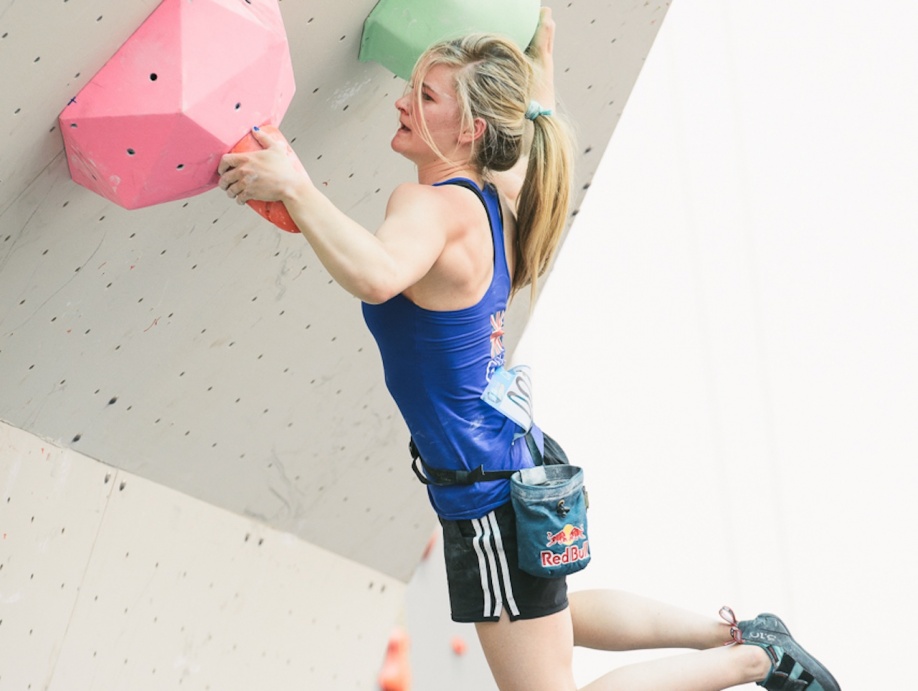
The World Cup in climbing is quite similar to Formula One in that there are several World Cup events in a year at different venues worldwide with climbers picking up points as the season progresses and an overall winner declared at the end of it all. The 2016 World Cup season in bouldering kicked off on April 15 in Meiringen, Switzerland. As of April 21, thirty six competition climbers – some of them, the world’s best – had registered to participate in the Navi Mumbai edition of the World Cup. Present in the list were the 2015 men’s champion in bouldering, Jongwon Chon of Korea, the leader (just after Meiringen) in the men’s segment from the 2016 season of the World Cup, Alexey Rubtsov of Russia and the leader (again, just after Meiringen) from the women’s section, Shauna Coxsey of Great Britain. Countries represented included Austria, UK, Iran, Russia, USA, Korea, Slovakia and Taiwan. Also enrolled were the likes of Sean McColl (Canada), Rustam Gelmanov and Dmitrii Sharafutdinov ( both Russia). After Meiringen, the 2016 World Cup season in bouldering travels to Kazo in Japan and Chongquin in China. Then in mid-May, it reaches Navi Mumbai.

Photo: courtesy IFSC

Photo: courtesy IFSC

Brig. M.P. Yadav, Chairman, Sport Climbing, West Zone has been coordinating efforts on behalf of the IMF. As host country, India is automatically offered reserved participation slots for its athletes. It is understood that an Indian contingent comprising 16 promising Indian climbers have been shortlisted for a training camp ahead of the May World Cup. Those selected include some of the best young Indian climbers like Aziz Shaikh, Vicky Bhalerao, Tuhin Satarkar, Irfan Shaikh, Sandeep Maity, Kumar Gaurav, Somnath Shinde, Mayuri Deshmukh, Nehaa Prakash, Smriti Singh, Dhanushri and Sidhi Manirekar.

In Navi Mumbai, the countdown has begun for a rendezvous with climbing’s best in May 2016, the scheduled time for India’s first IFSC World Cup.

Shauna Coxsey (Photo: courtesy IFSC)

Shauna Coxsey (Photo: courtesy IFSC)

Update: Shauna Coxsey consolidated her lead in the women’s segment while the see-saw battle for leadership among men continued, in the run up to the Navi Mumbai World Cup in bouldering. By late evening May 1, results in bouldering from the World Cup competition at Chongqing, China, became available. The men’s section was won by Tomoa Narasaki of Japan. Jan Hojer of Germany placed second while Jongwon Chon of Korea came third. The women’s section was topped by Shauna Coxsey of Great Britain followed by Akiyo Noguchi of Japan and Miho Nonaka of Japan. For Shauna Coxsey, this was her fourth consecutive triumph at a World Cup bouldering competition; the previous woman to do so was Akiyo Noguchi in 2014. Of six places on the podium across both men’s and women’s sections at Chongqing, the Japanese secured four. Of the six climbers named above, all have already registered to participate in the upcoming World Cup in Navi Mumbai. In terms of national team ranking, Japan topped at Chongqing followed by France and Great Britain.

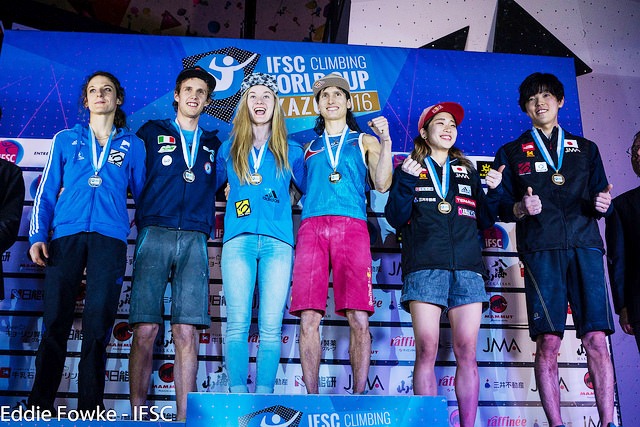
The winners at Kazo (Photo: courtesy IFSC)

The winners at Kazo (Photo: courtesy IFSC)

Post Chongqing, the leaders in the men’s segment in the 2016 World Cup series in bouldering are Alexey Rubtsov ( Russia / 177), Rustam Gelmanov (Russia / 165) and Kokoro Fujii (Japan / 155) in that order. The leaders in the women’s segment are Shauna Coxsey (Great Britain / 300), Melissa Le Neve (France / 203) and Miho Nonaka (Japan / 154). In terms of national teams, the leaders were France (536), Great Britain (438) and Japan (412) in that order. The next halt for the World Cup in bouldering is Navi Mumbai, where the competition is scheduled for May 14-15.

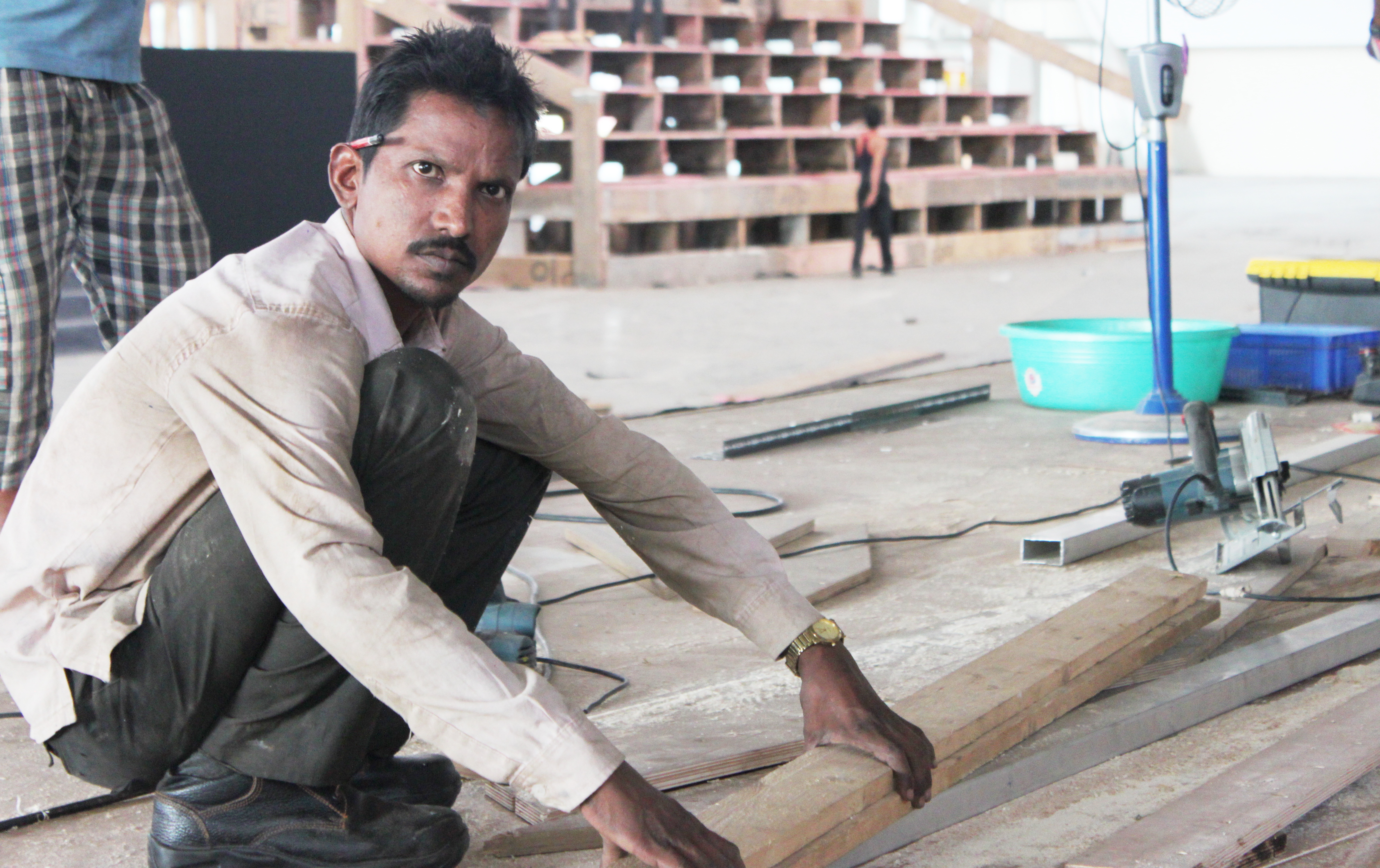
A wall gets ready: Raju, the carpenter who has worked on almost all the competition walls Girivihar built. (Photo: courtesy Pravin Shinde)

A wall gets ready: Raju, the carpenter who has worked on almost all the competition walls Girivihar built. (Photo: courtesy Pravin Shinde)

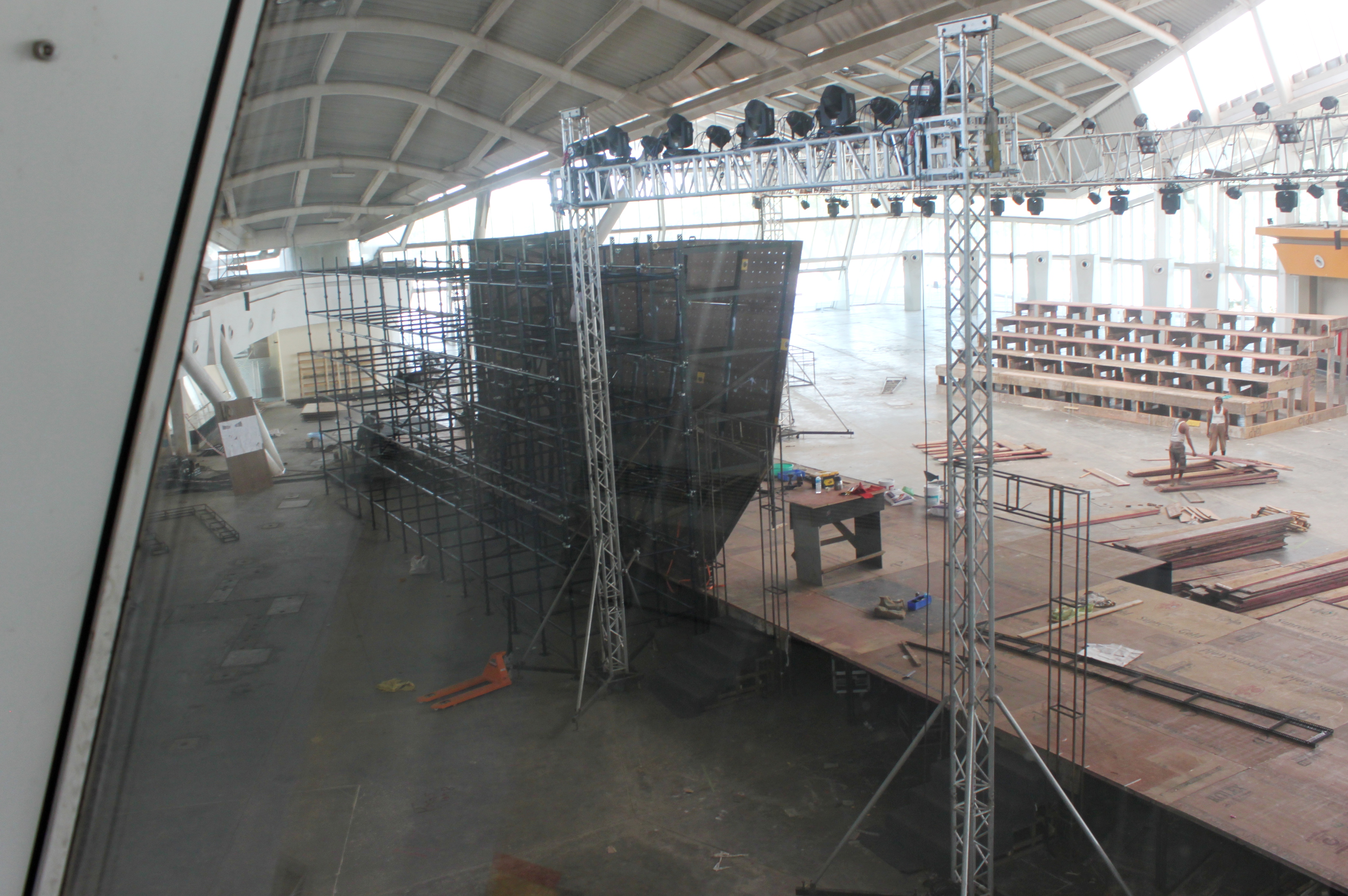
A wall gets ready: The wall, brought in from Taloja, assembled and put together at the venue. (Photo: Pravin Shinde)

A wall gets ready: The wall, brought in from Taloja, assembled and put together at the venue. (Photo: Pravin Shinde)

As of May 9, the number of athletes registered to participate in the Navi Mumbai edition of the World Cup, stood at 83 with India sending in a 17 member-team. Countries represented at the event were Austria, Canada, Czech Republic, France, Great Britain, Germany, India, Iran, Japan, Korea, Lithuania, Netherlands, Nepal, Russia, Singapore, Slovenia, Slovakia, Taiwan and USA. A couple of days before the Indian team registered, a four member-team from Germany had signed up. Among those in the team was Jan Hojer. A day before the Germans, the French had enrolled; their team included Melissa Le Neve and Fanny Gibert. Early morning April 26th, the number of athletes registered for the World Cup in Navi Mumbai was found to have increased from 36 to 50, thanks to the entry of a 14 member strong-Japanese contingent. It included Akiyo Noguchi, the defending women’s champion from the World Cup bouldering series of 2015 and Kokoro Fujii, who was third in overall ranking among men after the Kazo edition of the World Cup. Akiyo Noguchi is one of the most successful competition climbers from the women’s category.

The finished wall, painted and ready for the route setters to start their work (Photo: Shyam G Menon)

The finished wall (the locally fabricated one), painted and ready for the route setters to start their work (Photo: Shyam G Menon)

At the Kazo World Cup in bouldering held over April 23-24, Rustam Gelmanov and Shauna Coxsey topped in their respective categories. The results, top three, were: Men – Rustam Gelmanov (Russia), Michael Piccolruaz (Italy) and Kokoro Fujii (Japan); Women – Shauna Coxsey (Great Britain), Melissa Le Neve (France) and Miho Nonaka (Japan). Post Kazo, the leader rankings in the 2016 series were Rustam Gelmanov (Russia / 128 points), Alexey Rubtsov (Russia / 126) and Kokoro Fujii (Japan / 100) in men’s, while in women’s it was Shauna Coxsey (Great Britain / 200 points), Melissa Le Neve (France / 160) and Fanny Gilbert (France / 94).

Meanwhile in a separate development, Tata Trusts have provided a financial grant as support to the Navi Mumbai World Cup. The Tata Trusts are among India’s oldest, non-sectarian philanthropic organizations. They own two thirds of the stock holding of Tata Sons, the apex company of the Tata group of companies. The Tata group is India’s biggest industrial conglomerate and from the perspective of the World Cup, a name that has in the past, supported mountaineering and climbing in India. The first successful expedition to Everest from the state of Maharashtra (where Navi Mumbai is) was supported by Tata.

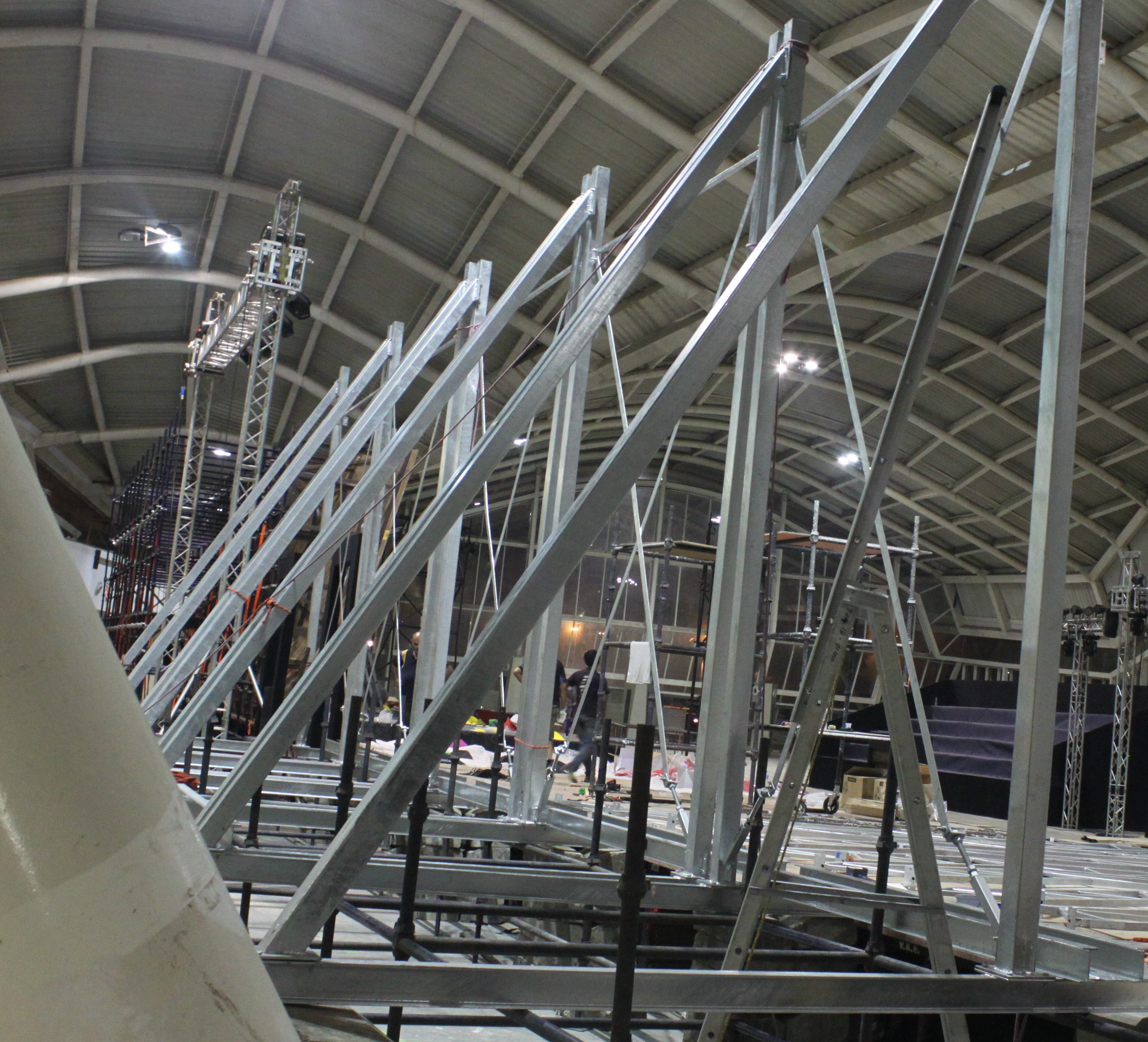
The supporting frames of the second wall being put in place (Photo: Pravin Shinde)

The supporting frames of the second wall being put in place (Photo: Pravin Shinde)

As of May 8, the locally fabricated climbing wall, earlier taking shape at the warehouse in Taloja, had been installed at the venue in Vashi, painted and ready for the route setters to commence their work. A team of four route setters from IFSC have arrived for the job. By May 9, work on assembling and installing the second wall – an imported one – was well underway. Access to the walls is restricted when the route setters are at work.

May 13: The athletes have arrived. Their registration at the venue commenced at  5 PM. Here are a few photographs from the registration area:

world cup-3

world cup-4world cup-8world cup-5world cup-13world cup-11world cup-12world cup-6world cup-9world cup-10

(The author, Shyam G Menon, is a freelance journalist based in Mumbai. The competition photos used in this article were downloaded from a link to a photo stream, provided by IFSC. All photos from the registration area are taken by Shyam G Menon)

IFSC JURY PRESIDENT: A GOOD JUDGE IS AN EXPERIENCED JUDGE

Fabrizio Minnino, Jury President, IFSC (Photo: Shyam G Menon)

Fabrizio Minnino, Jury President, IFSC (Photo: Shyam G Menon)

Fabrizio Minnino, Jury President, International Federation of Sport Climbing (IFSC) was in Navi Mumbai recently to have a look at the venue of the upcoming World Cup in bouldering and to make sure that whatever infrastructure is required from the jury’s perspective is in place. Excerpts from a conversation: 

Now that you have visited the venue of the upcoming World Cup, what are your impressions?

The first positive thing I felt was the friendliness of everybody around and their desire to organize something that would be known all over the world. Second, the venue was really impressive. I had seen some pictures of it but I didn’t know that it would be this good.

For a world class competition in India, the jury has to come from abroad. That entails cost, adding to the cost of a project like the Navi Mumbai World Cup. What should India do to have an adequate number of qualified judges in climbing here itself; what can the IFSC do to help in this regard?

We must start from the fact that a good judge is an experienced judge. If it was enough that you organize a course and qualify it would be very easy. But the problem is that if you attend a course, qualify and then, you don’t take part in competitions, it is very difficult to be a good judge. The starting point therefore is to have many competitions to judge. This cannot be done by the IFSC. What the IFSC can do is provide support for relevant courses and tutorship. But the competitions have to come up here in India or elsewhere in Asia.

So, there has to be a momentum of competitions going on….

Yes.

The organizing team at the World Cup venue during Fabrizio's visit (Photo: courtesy Anushka Kalbag)

The organizing team at the World Cup venue during Fabrizio’s visit (Photo: courtesy Anushka Kalbag)

You are President of the Jury. What are the challenges you face in the context of today’s climbing competitions?

I would say that compared to 20 years ago, it is a lot easier to be President of the Jury at a World Cup. One reason for this is that organizers have the ability now to check out what has already happened. The organizing team for the Navi Mumbai edition, had for instance, visited the Munich World Cup. One of its nodal members, Abhijit Burman (Bong), has seen the proceedings at Arco; he has also been to Fredrikshavn. When you have seen others do something, you can do the same. You have your benchmark and your reference. I remember that some of the earlier competitions were difficult because the organizers couldn’t understand what they were expected to do and so the work of the Jury President was sort of double work – you had to play the role of both judge and organizer. I am quite sure that we wouldn’t have to do that here. We would be only judging. At an international level, the most interesting challenge today is the act of taking the World Cup competitions all over the world. As yet, we have never held a competition in Africa and the number of competitions in Asia is slowly going up. The challenge going ahead is to move away from the sport’s European roots and be present all over the world. Being at the Olympics – as we hope to by 2020 – will provide the sport the visibility required to make this transition.

Awareness of climbing is still not high in Asia and Africa, which are the locations of interest to the sport, going ahead. Do you think this may see the IFSC engage in more familiarization programmes for the sport in these geographies?

It could be. We will have to discuss it with local federations. If there is a genuine desire to have a larger family for the sport or get the sport better recognition, we can provide the support but the organizing would have to be local.

Judging in various sports is getting increasingly technical. What is the experience in climbing – is it becoming more technology?

Technology can help you but the main point is – you have to have common sense. If you don’t have that, you can’t be a good judge. Also, at competitions, there are two roles involved – there is the judge and there is the route setter. Technology cannot be of much help for the route setter because that art is based on an understanding of how the body moves while engaged in climbing.

Fabrizio Minnino, Jury President, IFSC (Photo: Shyam G Menon)

Fabrizio Minnino, Jury President, IFSC (Photo: Shyam G Menon)

Are climbing competitions becoming more and more intense and competitive?

In the beginning we had only lead and speed competitions. Then bouldering arrived; it is completely different from lead. Speed, lead and bouldering are different from each other. The challenge is to go in one direction, where the best athlete is the best athlete in all the three disciplines. So we are now discussing the Olympic format and the Olympic format is to award the really best climber in all the three disciplines. This is the challenge for the coming years.

What impact will the Olympics have on the sport?

It will have enormous impact. A lot more people will get to know about the sport. Getting into the Olympics has been a 20 year-old dream.

Does entering the orbit of the Olympics set any expectations in terms of improving the quality of judging you do? Would you be required to be more exact for instance?

I don’t think so. We are quite professional.

How important is it for a judge of climbing to be also an active climber?

For me, it is important because you must have a feeling of the body movement involved. For me it is very important.

(The author, Shyam G Menon, is a freelance journalist based in Mumbai.)

ROOTS, REVISITED

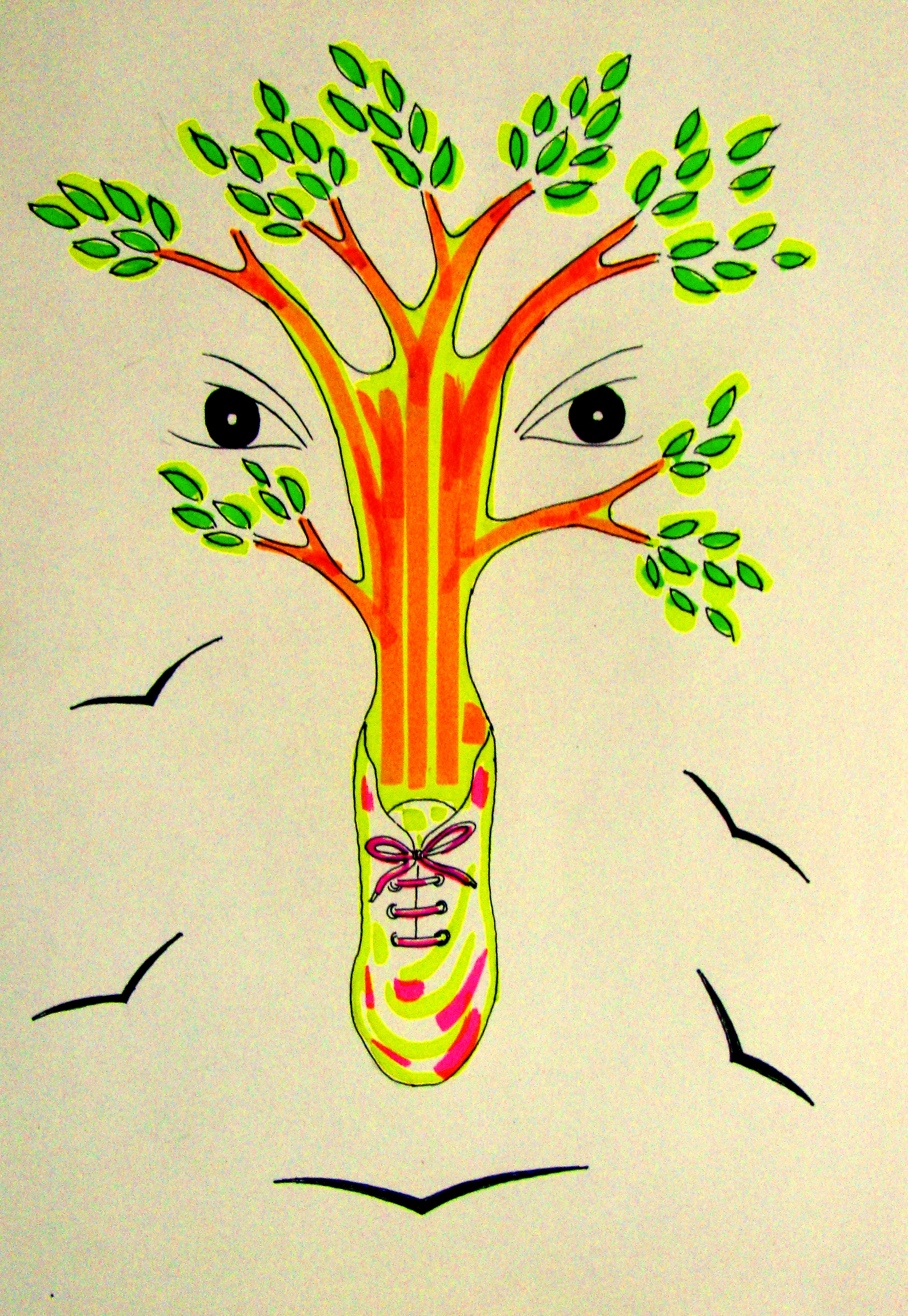
Illustration: Shyam G Menon

Illustration: Shyam G Menon

This article presents a view; it is not the only perspective possible.

It was a hot summer afternoon and I had just ordered a dosa for lunch at Thiruvananthapuram’s Arul Jyothi restaurant. Three people – a woman and two men – still engrossed in discussion, got up to leave at the next table, their exit a matter of slow progression punctuated by each twist in the conversation. The subject was a fireworks explosion that happened at a temple 50kms away, less than 36 hours earlier. Over 110 people died, several hundred were admitted to various hospitals with injuries.

To recap – the temple management was denied permission to conduct a competitive fireworks display. While district authorities said it was blanket denial of permission, according to versions in the media, the attribute ` competitive,’ was interpreted as key to permission denied. The management went ahead with the display as a non-competitive affair. Discreetly however, it had all the ingredients of competition and investigations after the tragedy exposed the use of banned chemicals and more stocks of explosives in the neighbourhood. The whole affair was an exercise in illegality. Watching the packed explosives on TV, I couldn’t associate any of that with civilian festivals. Their size and dimension reminded of medieval war. In the immediate aftermath of the April 10 accident, a judge moved the High Court seeking an end to such firework displays. None of the politicians shown on TV could bring themselves to ban fireworks. With elections imminent, the Chief Minister said: we have called for an all party meeting on the matter. The Paravur incident was merely the worst in a list of fireworks related accidents in the state. Fireworks and elephants are deemed essential for festivals in Kerala. A narrow, long state between hills and sea, Kerala has one of the highest population densities in India.

At the same time that a bunch of people died for nothing in Paravur, a train carrying water was heading to Marathwada in Maharashtra, where successive droughts had left people thirsty and cast their lives in difficulty. There is no such debilitating water shortage in Kerala. For sure, the state’s summers are getting hotter. This April, Thiruvananthapuram was unbearably hot and humid. But there was nothing in Kerala similar to what I read before I left Mumbai: a Maharashtra with only 25 per cent water; Marathwada with just five per cent. Every time I am in Kerala, I travel by road to get an idea of what’s going on. The dominant motifs shaping my impression remained the same this year too – premium on well settled life, hoardings of brides clad in jewellery and couples getting married, hundreds of advertisements for businesses dealing in gold, apparel, building materials (to construct houses), mushrooming supermarkets and malls and rising garbage. It is a picture of life drawn overwhelmingly from well settled, consumerist existence. It is physically defined and possessions-based. After days of seeing big houses and hearing stories of success, I withdraw to my shell. My Kerala visits typically end so. Yet I keep going back, for the place shaped parts of my perspective.

Some years ago, I got a call from a man in the foothills of the Himalaya, whose daughter was getting married to a “ Kutty from Kerala.’’ Concerned about the groom’s caste, he called me up. I said Kutty betrayed nothing relevant to what he wished to know; it is used affectionately and does not signify religion or caste. “ How can that be?’’ he shot back agitated. “ Well in the time I spent in Kerala, I have known Govindan Kutty, George Kutty and Ahmad Kutty,’’ I said. It left him totally confused. Indeed a Malayali approach perplexing others in India is the idea of the human being as just that without immediate focus on religion and caste as co-ordinates. This appetite for what you are as opposed to who you are, has I suspect, much to do with Socialist influence in Kerala. The discomfort others have with it has much to do with how little Socialism caught on elsewhere and how rapidly the idea of equitable life is shrinking today.

I grew up in Kerala, in times dominated by Communism. They guarded their politics with the same zeal as the Right worships its gods and rituals. Back then, it was red flags and posters of Karl Marx, Lenin and Che Guevara. Like the muscular gods of today’s Right, art in service of Socialism was all about a muscular working class. Both are not art; it is propaganda. My father ran a small business. That was enough for us to be branded `bourgeois.’ Yet I have always felt that a touch of Socialism, which seeks equality, is essential to sensitize the Indian mind growing up on a diet of unquestioned prejudices and inherited privileges. In 1957, Kerala was home to the first democratically elected Communist government in the world. By 1982, Kerala settled into a pattern of two opposing political coalitions as choice for government. When people tired of red, they voted for the Congress. They were the moneyed lot, close to plantation and business lobbies, with a penchant for fishing in communal waters. Besides its erstwhile business bashing-doctrines, the Left in Kerala was stridently vernacular in flavour. Sometimes I think the Left in Kerala was Left in name but actually ethnic. In politics, that pays dividends. Now in addition to Communist paraphernalia in Kerala, you have posters of Hindu gods, mahotsavam, mahayajnam and saffron flags, not to mention the state’s share of the same in Islam’s green and Christianity’s business of a church. Each of these religions, account for approximately a third of the state’s population. They are mutually competitive. Each community takes pride in its political clout, share of millionaires, famous personalities, real estate, wealth etc. Much effort goes into keeping these communities as clearly etched silos.

Privately, Malayalis knew that beneath the veneer of being progressive, a regressive Kerala existed. In as much as the Left and Right were similar in cadre-based structure and behaviour, their disagreement over religion made them foes. People elsewhere in India associate Kerala with matrilineal succession. They find it hard to believe patriarchy exists in the state. Patriarchy is a gender based-tendency, a zone of comfort. At the height of Communist rule, the neighbourhood party heads and functionaries kept an eye on life around; not at all different from what Right wing forces currently do. Just as today’s Right wing enforces a culture from centuries ago, those days, the Left worried over any thought process potentially questioning the Communist world. Making a fortress of one’s imagination and having an opinion on how others should be, has fancied anyone with enough drift to dominate. Having seen these tendencies in the Right and the Left, I view it as anthropology in action; you once read Desmond Morris, now you see it as documentary film. While cadre based-power was the language of the Left and the Right, the Congress let money speak. Whatever the route adopted, in the end everything was about fiefdom. Some of the huge marches in the state were called shakti prakadanam or display of strength.  Over time, from weddings to festivals and political campaigns, nothing was deemed worthwhile without a display of one’s clout.

Illustration: Shyam G Menon

Illustration: Shyam G Menon

A giant remittance economy, Kerala currently has a lot of young people of school and college going age and a large number of ageing citizens. In the flux, thoughts and things resembling anchors – that proverbial “ settled’’ – are valued. On the threshold of refining tradition and proposing new thoughts, society repeatedly relapses to the old. In November 2015, courtesy a non resident Malayali businessman, Kollam (in which district, Paravur is) was host to one of the costliest weddings staged in India. News reports estimated the expense at Rs 55 crore (Rs 550 million or roughly $ 8.2 million). Indians living overseas see India as heritage. They also see it as proving ground; a venue to showcase their success. In one, a living country seeking evolution reduces to heritage museum offering identity to overseas sponsor. In the other, a regime of the moneyed displacing those not so, is encouraged. If the Japanese adapted their designing ability to a Tokyo increasingly short of space, the approach visible in Kerala is money laden offensive to secure scarce space for big houses, big cars; the mega life. Already stressed land, gets stressed further. Still, few would have it differently. If you extend this line of reasoning, it is not difficult to see how impressive having an elephant on a leash or staging massive explosions as fireworks is. Associating this with grandeur, it doesn’t mind irritated elephants running amok or losing over 110 lives to loud explosions while elsewhere in India, trains bring drinking water and school children in Mumbai raise funds to help a parched Marathwada. According to news reports, in the run up to the temple incident, residents nearby had sought relief from loud fireworks as the explosions were damaging their houses. You have to reflect well on the Paravur tragedy, go past surface politics, to notice the mind-set. Two days after the incident, it was the turn of the organizers of the Thrissur Pooram festival, famous for its fireworks and caparisoned elephants, to argue for tradition on TV. The silver lining I saw was that three ordinary people chose to discuss the Paravur tragedy over lunch at Arul Jyothi. All three said festivals have reduced to commerce and competition fueled by money. The swiftness with which the tragedy became the stuff of serious discussion brought hope.

I often wonder what cultural heritage is in the modern context. Like a computer’s hard disc, our brain is not an infinite storage space. Born in one place we live to discover a universe. Given that, I suspect cultural heritage must become an underlying elegance and things elegant, are typically simple, occupying little memory space. Heritage in simple terms does exist in Kerala. Vishu, the popular Malayali festival fell four days after the Paravur tragedy. Vishu is associated with the flowers of the golden shower tree. My small family was together for Vishu after a long time. While the offerings – an arrangement traditionally called Vishu Kani – were being readied the previous night, my mother recalled what the poet Vyloppilli Sreedhara Menon wrote in Malayalam years ago (my translation in English is given below each line):

Ethu dhoosara sankalpangalil valarnalum

No matter what murky circumstances you grow up in

Ethu yantravalkrita lokattu pularnalum

No matter what mechanized world dawns

Manassilundavatte gramattin visudhiyum

Let there be in you the purity of the village

Manavum, mamatayum, ithiri konnappoovum

Fragrance, love and some flowers of the golden shower tree

I liked that. If I may add my bit – such elegance and simplicity is what visits the mind after a long run, a hike, a mountain climb, a swim, a canvas painted, a piece of music composed or a round of meditation.

(The author, Shyam G Menon, is a freelance journalist based in Mumbai.)

LIVING WITH NO BRAKES, THE SHIVA KESHAVAN STORY

Shiva Keshavan (Photo: Shyam G Menon)

Shiva Keshavan (Photo: Shyam G Menon)

1973. That year, a traveller from Thalassery in Kerala, reached a Manali, quieter, greener and less touristy than today. “ There was no direct bus from Delhi to Manali. There was a Youth Hostel you could stay at for one rupee a night or so. The now well known Pandoh Dam was yet to be completed,’’ K.P. Sudhakaran said. The way he spoke, his travels resting light on his shoulders, reminded me of someone else I knew in Kerala; a person who had seen a tonne of films. You wouldn’t know his knowledge of movies till you coaxed him to speak about it. The pre-Facebook generation, I told myself.

Sudhakaran made Manali home, settling down there with his Italian wife Rosalba Lucioli. They met in the hill town. Sudhakaran used to trek a lot. In the hill tourism scene of that time, Jammu & Kashmir was perceived as “ commercial.’’ Himachal Pradesh was “ relaxed.’’ When Kashmir grew troubled, Sudhakaran’s hikes became more focussed on Himachal. In 1984-85, long before contemporary Manali and its plethora of adventure tour operators, Sudhakaran founded Panman Adventure Travels. Its main activity was organizing outdoor trips and camps for school students. Later, he and his wife started an Italian restaurant, Rose Garden. Panman Adventure Travels exists no more. But Rose Garden does. Located on the road to Vasisht, it is currently managed by Sudhakaran’s son Shiva Keshavan and his wife, Namita. That’s where I first met Sudhakaran. We had a small chat over coffee. Shiva, India’s best known luger, was away in Italy. Sudhakaran splits his time between Manali and a coffee estate in Wayanad, Kerala.

A luge is a small one or two person-sled, on which one sleds supine (face up) and feet-first – that’s how Wikipedia describes it. Many of us, who checked out the sport after Shiva Keshavan grabbed our attention, would recall the specially made track on which races are held. Like all sports, born for fun, evolving organically and then shaped by the compulsions of modern sport and entertainment, the luge too wasn’t born for a track. While the earliest recorded sled races are said to have been in Norway, luge is traced to Switzerland; its history includes a hotel entrepreneur at whose resort, guests adapted sleds used by delivery boys, to speed down the lanes and alleys of the village for fun. Needless to say, there were collisions with pedestrians. The first organized meeting of the sport was in 1883 in Switzerland, the first world championship in the sport was in 1955 in Oslo, Norway. While the modern Olympic Games began in Athens in 1896, the first Winter Olympics – recognized so in retrospect – was at Chamonix in 1924. Luge made its Olympic debut at the 1964 Winter Olympics in Innsbruck, Austria.

Early March 2016, months after meeting Sudhkaran in Manali and exchanging mails with a Shiva busy training and competing, I got a call. Father and son were flying from Kozhikode to Delhi via Mumbai. We met at the airport in Santa Cruz. Two men, four or five pieces of luggage, one with the Olympic rings on it – I will never forget that. Sudhakaran and Rosalba have two sons, Shiva and Devan, who is a licensed football coach for FIFA. Shiva was born in August 1981. “ Born and brought up in Vasisht,’’ the luger said. A year before Sudhakaran reached Manali, in February1972, the Winter Olympic Games was held for the first time at a venue outside Europe and North America – it was hosted by Sapporo, Japan. Luge in Sapporo was dominated by the East Germans. They bagged eight of the nine medals in the event. The planet’s Winter Olympics don’t fascinate the media as much as the bigger Summer Olympics. The 1970s were also years before television acquired national presence in India. The February snows of Sapporo were 6000 kilometres east of Manali; out of sight, out of mind.
Youngsters with an improvised winter sled near Manali (Photo: courtesy Shiva Keshavan)

Youngsters with an improvised winter sled near Manali (Photo: courtesy Shiva Keshavan)

Located just south of the main Himalaya cutting diagonally across the crown of India, Manali receives good precipitation. Ladakh to the north may be higher and colder but it is drier. In winter, Manali and its nearby localities like Solang, receive good snowfall. Solang is known for skiing. The children of Rosalba and Sudhakaran grew up on Manali’s mountain slopes, enjoying the snow. If you look carefully, like cricket played in alleys and hockey played with tin cans, the seed of all sports exist everywhere. With little access to modern skiing equipment, the Manali of Shiva’s childhood had its resident skiers; they took to winter’s snow with crude, homemade skis. “ You know the blade of the saw used to cut logs? Strips of that would be attached to the bottom of wooden skis,’’ Sudhakaran said. Also around were improvised sleds. According to Sudhakaran, the family spent a lot of time in Solang. Shiva grew to be a decent skier. Unlike skiing, which stayed confined to winters, the sled metamorphosed to year round-life.
Youngsters with improvised summer luges on the hill slopes near Manali (Photo: courtesy Shiva Keshavan)

Youngsters with improvised summer luges on the hill slopes near Manali (Photo: courtesy Shiva Keshavan)

The first time I saw the summer avatar of a sled was in Darjeeling, in 1996. A boy seated on a wooden platform fitted with four tiny, noisy metal wheels, his hands clutching a tight arc of rope in front to keep body in place – came hurtling down the winding road. Holding the rope, he leaned back on the platform, legs stretched out in front and torso rising to an upright position every time he needed to slow down the contraption. Brakes, it had none, save its high decibel, grating noise on rough road as early warning to avoid collision. Similar, improvised contraptions existed in Manali too, entertaining Shiva and his friends. They took to it, rolling down Manali’s roads (one media report also talks of a small sled gifted to Shiva by his Italian grandparents). When you are young, you are free of fear. Although Sudhakaran took his family to the snows every winter and watched his sons enjoy skiing, he was restrained by the baggage of fear, which accompanies adulthood. “ I was a grown man and suitably scared,’’ he said. Shiva became a promising national level skier in the sub junior and junior categories, winning prizes. However, participating in events like the National Winter Games wasn’t easy for this son of immigrants to the Himalaya. Unable to secure a berth through the local winter sports body, Shiva recalled that his first participation at national level had to be through the Rajasthan Skiing Association. Born in a Himalayan state and needing a desert state’s team, to ski at national level – such is the organizational architecture and politics of Indian sport. It was the beginning of a long, rough relationship with domestic sport authorities, many of them hewn from that typically Indian controlling-mindset, which ensures that any sport has a well entrenched bureaucracy even before people take to the sport. Shiva never competed at the senior national level in skiing. He gave up competitive skiing after he was excluded from the team selected for the Junior Asian Championships. Unknown to him, those improvised sleds and the experience they offered, would become the stuff of his destiny

Established in 1847, The Lawrence School at Sanawar in Kasauli is among India’s most prestigious boarding schools. This is where Shiva studied. He was very active in sports with presence in gymnastics; athletics, football, hockey and skiing. It was during his years at this school that he was dispatched for a` ` ski camp’’ at Panchkula. A skier being sent to a ski camp was quite understandable, except for one puzzling detail – Panchkula is in Haryana. You don’t get snow there. The camp was held by the International Luge Federation (FIL) and Shiva, already intrigued by Panchkula as choice of camp location, had no idea what luge was. At the camp was well known Austrian luger, Gunter Lemmerer. He had participated in two Winter Olympics, been a gold medallist in the European championships and thrice won (with fellow Austrian luger Reinhold Sulzbacher) the men’s doubles Luge World Cup. For the camp, Gunter had brought along a couple of modified sleds in which, the blades had been replaced with wheels. Shiva warmed up to what he saw. Luge was similar to what he had done on improvised sleds back in Manali. “ At this point, it was all fun with no future plan in mind,’’ Shiva said. However, as things turned out, he and another youngster were selected for further training in Austria. “ The whole skiing experience had been disappointing, so we wanted to try luge,’’ Sudhakaran said. In 1996, He and Rosalba sent Shiva to Austria. The transition from the sleds with wheels Shiva used at Panchkula, to a real luge on ice was significant. The luge on ice was much faster. Newcomers started their training on the less steep lower portions of the luge course and slowly worked their way up. Shiva’s Indian partner at luge (they were two selected from the Panchkula camp) suffered a crash. He needed medical attention and the duo had no insurance specifically for such mishaps. Eventually it had to be passed off as an accident that occurred while travelling.
A modern luge adapted for the road, fitted with wheels. From a talent scouting camp held by Shiva and Namita at Solang near Manali (Photo: courtesy Shiva Keshavan)
A modern luge adapted for the road, fitted with wheels. From a talent scouting camp held by Shiva and Namita at Solang near Manali (Photo: courtesy Shiva Keshavan)

Luger coasting down the road at Solang; from the talent scouting camp (Photo: courtesy Shiva Keshavan)

Luger coasting down the road at Solang; from the talent scouting camp (Photo: courtesy Shiva Keshavan)

The following year, 1997, Shiva was back in Europe – Austria and Germany – training for a longer time. He was around international athletes. That gave him his first reference point in luge, an idea of where he stood in the sport with his competence, what he had to do to improve. “ They found it funny that an Indian family was trying to get a toehold in luge,’’ he said. But one thing worked – athletes help each other, they provide you tips, particularly when you are in that performance category, which poses no threat. He learnt. The international athletes let Shiva be a `forerunner’ opening the track for them at the World Cup in Igls near Innsbruck. He did so and zoomed the whole distance down the course. To his surprise and likely everyone else’s, the timing he returned was good enough to participate in the upcoming Winter Olympics. Until 1998, there was no formal selection to participate in the Winter Olympics. It was up to each country to select athletes and send them. “ People started misusing this. I was the first Indian to reach the Winter Olympics through a formal qualifying system,’’ Shiva said. This process wasn’t easy. Although his timing at Igls was good, the eligibility process required Shiva to qualify for five of nine World Cup competitions held every year. Gunter Lemmerer advised Shiva to return to India and start training for the World Cup events. Somehow his parents came up with the money for the exercise. At the first of these World Cups in Innsbruck, he raced with a broken foot. This was followed by two World Cups in Germany, one in Norway and one in Japan. “ Incredibly at each of these races, I didn’t make a mistake. I qualified at all five,’’ Shiva said. The 1998 Winter Olympics were scheduled to be held in Nagano, Japan, the second time the Winter Olympics would be held in Asia. Sudhakaran had reached Manali the year after the first Winter Olympics in Asia, in Sapporo, Japan. In the time since, he had married, raised a family and now his son was heading for nothing less than the Winter Olympics.

According to Wikipedia, racing sleds for luge singles weigh between 21-25 kilos; in the case of doubles, between 25-30 kilos. Lugers can reach speeds of up to 140 kilometres per hour. The highest speed reported so far (as of March 2016) was 154 kilometres per hour set by Austria’s Manuel Pfister in 2010. In videos, a luger passing by resembles a streak. The luge is designed for speed. A luge sled rides on a pair of steel blades made such that the craft slides fast over ice. The sled has no saddle. You lay down flat on the sled and slide down the course feet first, which is the most aerodynamic position you can have. In training, lugers are known to use wind tunnels to figure out the best aerodynamics they can have. But because you are supine and going feet first, you are challenged to see clearly where you are headed. The runners (blades) underneath the sled curve up in front and touch the athlete’s legs as he lay supine. Steering is done by pushing on the runners with your legs and flexing the sled with one’s shoulders. The luger is clad in a special suit designed to make him aerodynamic. A fast object like the luge also needs stability. Strength and weight therefore matter. A light luger may add artificial weight. When starting off at the top of a course, the luger uses his arms to propel forward. The athlete must be powerful around the shoulders and arms. Lying supine on a platform lacking saddle and controlling the luge requires excellent core strength. It shows in Shiva – he is over six feet tall and well built without being heavy. You get a sense of person reverse engineered from the needs of life on sled. With so much emphasis on speed and aerodynamics, luge is a precisely timed sport; in fact among sports, one of the most precisely timed. Amazingly, amid this obsession with speed and despite its minimalist flying projectile-character, the luge does not have a brake. Marry all this to the high speed the luge is capable of. It is a risky sport. The most recent high profile accident was Georgian luger Nodar Kumaritashvili’s demise in a crash during a practice run at the 2010 Winter Olympics. Rosalba accompanied Shiva on his tours just once. She couldn’t take it after that. Sudhakaran has watched Shiva in action, more. “ Every time he zips down that course, my heart is in my mouth,’’ Sudhakaran said. With no means to afford a coach for his son, Sudhakaran, who had watched Shiva’s journey from the sidelines, decided to accompany him as his coach, to Nagano.
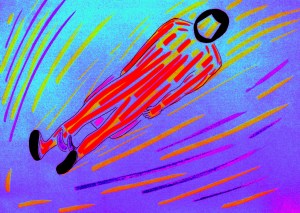
Illustration: Shyam G Menon

Illustration: Shyam G Menon

The father and son team from India were the first people to reach the Olympic village. The Indian authorities hadn’t yet sent in his documents. It caused confusion over whether they can be allowed in or not. The Japanese were courteous and hospitable. After some discussions, they let them in. Although India hadn’t yet sent in Shiva’s papers, the organizers knew of him. There was a reason – he was 16 years old, the youngest athlete to qualify for luge in the history of the Winter Olympics. On February 3, 1998, Jere Longman’s article appeared in The New York Times headlined, ` Olympics: Nagano 1998; Teenage Luger Carries All of India.’ Longman wrote in the introduction: Of all the places that Sudhakaran Palankandy expected to be next Saturday morning, none of them included walking with his son in the opening ceremony at the 1998 Winter Olympics. “ We never thought luge would start in India,’’ the innkeeper said. As a mode of transportation for India’s 896 million people, sliding is not high on the list. But 16 year-old Shiva Keshavan Palankandy has improbably qualified as the only athlete to represent India at the Nagano Games. On Saturday, he will carry the national flag in the opening ceremony, while his father walks behind him as the team leader. Nagano is where the Shiva Keshavan story took off. For his age and experience, he reckons he did well. “ Obviously I wanted to do better,’’ he said. But listening to him and Sudhakaran, I felt, it was at Nagano that world and sport reached out to support them The New York Times article mentions that Shiva received some financial assistance from FIL to participate at Nagano. His travel cost was borne by Rosalba and Sudhakaran. He found fellow athletes being helpful towards him, providing tips on how to improve at luge. “ The sport is dangerous. So people don’t hold back on advice,’’ Shiva said. Perhaps the most interesting thing was that he had no luge. At his first World Cup, the Korean team loaned him a luge they used for practice. At other events including Nagano, the story was similar – Shiva’s luge was borrowed. Incredibly, it would be another 12 years before India’s Winter Olympics athlete, the youngest luger in the history of the Games to qualify for the sport, would acquire his own luge. “ I bought my first luge in 2010,’’ Shiva said.
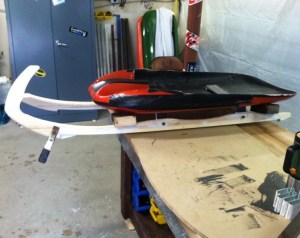
A luge Shiva made; one of the earlier models he used (Photo: courtesy Shiva Keshavan)

A luge Shiva made; one of the earlier models he used (Photo: courtesy Shiva Keshavan)

From 1998 till the time of writing this article, Shiva Keshavan had participated in five Winter Olympics. In 2005 and 2008, he secured bronze at the Asian Luge Cup, in 2009 he secured silver and in 2011 and 2012, he secured gold. In 2011, he set a new Asian speed record in luge, racing down the course at 134.3 kilometres per hour. The fastest he has ever been is 149.9 kilometres per hour. I asked him what he felt lying supine on a luge, moving super fast down an ice laden course. “ The run lasts less than a minute but for me on the luge, it is like never ending. That’s one of the incredible things about this sport – it feels like you are stretching time,’’ Shiva said. Within that sense of stretched time, the luger is alert to every small detail for steering the luge is a matter of tiny body movements capable of great impact on projectile’s fate.
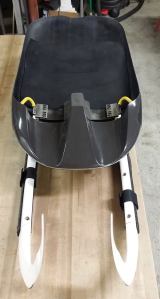
The luge was using at the time of writing this article (early 2016); made in league with Duncan Kennedy and Clarkson University (Photo: courtesy Shiva Keshavan)

The luge Shiva was using at the time of writing this article (early 2016); made in league with Duncan Kennedy and Clarkson University (Photo: courtesy Shiva Keshavan)

“ Ice is a sensitive surface that exaggerates response. Any small twitch of your body and the sled responds. The first challenge in luge is to handle things very calmly despite the obvious dangers in that stretched period of time. You have to discipline your mind. It happens on its own on the sled. Your body knows it is in danger,’’ he said. And what does he think about the luge not having any brakes? “ I never really thought of it that way. It kind of unlocks your fear. It reduces options and puts the focus on natural talent. There is no room for slowing down or being cautious. You have to approach it 100 per cent.’’ Competitions happen on well established courses. As a competitive athlete, Shiva does a lot of visualization of the course while preparing for an event. He has been down all the courses used at luge World Cups, except the new track coming up in South Korea for the next Winter Olympics. However, notwithstanding repeated visits and the benefits of visualization, there are subtle variations in atmospheric and ice conditions that act as variables to tackle on a given competition day.

At Nagano, Shiva was one of the youngest athletes around. Now 34 years old, he is part of the older lot but still having room to improve for there are winners in luge who are in their forties. His struggle so far has been getting his act together, for luge is not just about excellence by luger, you need a good coach, support team and a good luge. In his early years at competitions, Team Shiva Keshavan used to be a combination of self, parents and borrowed luge. Although that has changed, it is still a far cry from how other teams turn up. “ They come with cutting edge sleds, sled technicians, five to six coaches, physiotherapist and biomechanics specialists,’’ Shiva said. He has been lucky enough to not need a physiotherapist so far. But the lack of a good coach hurts. “ I have never been able to hire a good coach. I never had the money for it,’’ he said. Another challenge was the sled, the luge itself. For years he reported to competitions without his own luge, competing eventually with a sled somebody else provided. That may have challenged him personally to improve his being and techniques but the point is – the more a luger improves, the more he deserves a fine luge. His first sleds were all “ hand-me-down’’ specimens. In 2010, he got his own luge built in Albertville, France. It was based on moulds taken from a model he had used with some innovations thrown in. “ It was very simple but didn’t have adequate symmetry. I wasted many years trying to innovate wrongly. The idea was good but I wasn’t doing it the right way,’’ Shiva said. To understand what luge is to top notch luger, we should imagine Formula One racing. There are technical parameters to comply with regarding one’s ride and room for innovation. Shiva did try working with Indian institutions; at one point he spoke to the Indian Institute of Technology (IIT) Delhi on designing his luge. It didn’t work. The reasons were not articulated but it can be gauged: designing a fine luge entails convergence of engineering, knowledge of materials and ability to think back from the sport. It is hard finding this convergent fascination in India. If you dwell on it, a luge for Shiva is a fine chance to showcase design, knowledge of materials, engineering ability and manufacturing skill in an uncluttered product for the sled is a simple object to behold. Made, it will be used by a luger who hasn’t hesitated to push his limits. Somehow, this opportunity hasn’t captivated India’s designing and engineering minds.
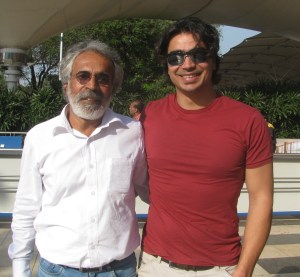
Sudhakaran and Shiva (Photo: Shyam G Menon)

Sudhakaran and Shiva (Photo: Shyam G Menon)

Eventually in 2015, Shiva began working with Duncan Kennedy, the retired American luger who had competed in three Winter Olympics, placed second twice in the Luge World Cup and was the first American to win a World Cup event. Duncan builds sleds; he has a workshop where he does it. They – Shiva, Duncan and the New York based-Clarkson University (essaying the role Shiva once expected from IIT Delhi) – started working together. “ The luge I had for the last season, is the first real Indian design luge,’’ Shiva said. But his struggles are not over. He would like to retain Duncan as his coach. That requires getting a good sponsor. In all these years Shiva hasn’t enjoyed a good, reliable long term sponsorship contract with any Indian company. “ I get short term support. What I want is meaningful, long term support,’’ he said. As for sports bodies in India, he said clearly, “ in almost 20 years of competing, I haven’t got any monetary support from the domestic sports associations.’’ He received help from overseas bodies. The International Olympic Committee, for example, provided Shiva IOC Solidarity Scholarships and helped him get started in the sport. But the funds crunch can be quite impactful; over 2006-2008 it was so bad that Shiva wondered whether he would be able to continue. In that phase he married Namita who had studied management; she became his sports manager. Shiva also credits renowned shooter and Olympic gold medallist Abhinav Bindra for helping him continue in luge. What amazes in this hunt for resources in an India loving its story of corporate success, is that Shiva’s annual budget is a mere one crore rupees (approx $ 150,000 at the exchange rate of one dollar = 66.84 rupees; March 27, 2016). The day after I met him, he had a sponsorship deal being finalized. “ If I get two more deals of the same sort, I am set for this year,’’ he said. He also had a couple of crowd funding campaigns going on.

It had been a long time chatting.

A few quick photos and I watched father and son rush off to catch their flight to Delhi.

(The author, Shyam G Menon, is a freelance journalist based in Mumbai.)

THE FIRST KNOT

Illustration: Shyam G Menon

Illustration: Shyam G Menon

I don’t remember my first pair of shoes.

I do remember that it took me a while to master tying shoe laces.

It is a long learning curve to perfect knot.

At first, you overlook dissimilar lengths of lace on the right and left sides and end up with an imbalanced knot. Then you overlook applying the right tug at each twist and end up with a poorly constructed wobbly knot begging to come undone. After much trial and error, you get it right – a balanced, adequately tight knot keeping everything in place. Once that stage is achieved, you learn finer aspects like how to adjust the knot without undoing the whole thing.

Most of us begin our tryst with shoes laces around the same time we commence our tryst with school. Years later, wearing the black shoes of office, the pattern of relationship is similar. The shoes arrive well made and polished from the store. For some time, every speck of dust on its polished sheen is unbearable. You frequently inspect the shoes, wipe it clean. Then you realize that loss of sheen is inevitable. To be around is to weather. Enter that phase when instead of constant eagle eye on shoe, once every few days you dust, clean and polish it. Then as the activities causing wear and tear became more important than shiny shoe, black shoe acquires creases. Sometimes, the shoe sports a patch of dull leather where the outer layer has flaked off with intense use. Polished, it is shiny black where leather is still intact; in other places, a sort of matt finish-black intervenes. Through all this wear and tear right up to eventual retirement of shoe, one thing consistently improved at school – your ability to tie shoe laces. You tied them well, you tied them fast. Till it got burnt into your brain like a permanent tattoo. The art of tying a shoe lace is widespread skill acquired early in life that it is rarely called `skill.’ It has dissolved to being part of one’s being. We don’t analyse the art of tying a shoe lace to notice the framework of learning it brought. On the other hand, even after mastering it, we always questioned the knot seeking ways to escape it.

Sometime in high school, I recall buying my first pair of black slip-on shoes. It was an attempted premature graduation to adulthood for many adults sported slip-on shoes. But life at school was way too active for slip-ons to stay securely on the feet. How do you run with shoes that tend to fly off? I returned to shoe laces. The only time I reverted thereafter to shoes without laces was in rock climbing. My personal impression is that the world of rock climbing is neither for nor against laces, it has its moments of respecting laces and moments when it values alternatives. My first pair of climbing shoes was a lace-up. It took time to lace up and be ready for a climb. My second pair was also a lace-up but it was so for a particular reason – precision. Climbing demands attention to choice of shoe. There is a lot of foot-technique involved and accordingly shoes are designed to deliver. Many climbing shoes are designed to focus the foot’s strength on the big toe; some others are designed for sensitivity, yet others are shaped to generate friction for smearing. Some are specialists for certain types of climbs; others are all rounders. There are also a few other expectations that arise with continued climbing – when you are in the thick of climbing and having fun with your friends at a climbing wall or boulder, you don’t want to waste time tying shoe laces. Sometimes, you are so focussed on a boulder problem that you don’t want your shoes interfering with the climb. You just want to go. Enter Velcro. However from what I know, Velcro isn’t as precise in harnessing foot strength as a lace-up. Velcro is convenient. My third pair of climbing shoes used Velcro straps; I had much fun in them.

Velcro is photography in auto focus to lace-up’s art. You know this because you tied laces long enough – right from school – to know what art is. That’s when you reflect upon the first knot learnt long ago; the movement it taught your fingers, the hand-eye co-ordination you acquired and the imagination the act of tracing the knot lent your mind. True, climbers tell you: don’t take your climbing knot as casually as you would your shoe lace-knot; and rightly so, for the consequences are serious in climbing. What we forget is that we bring to bear on the climbing knot an understanding of knot and ability to make it, honed on the humbler, less sexy shoe lace. Marry that comprehension and imagination to a purpose with far more serious consequences – you get the mindset for learning a climbing knot. In small acts performed, lay the seed for bigger ones. My repertoire of climbing knots is limited because my flair for them isn’t much. That’s my adult mind. As a late entrant to climbing, when I struggled with climbing knots, wondering what I should do to remember how each is made, I did think about my tryst with the shoe lace. Unfortunately the child in me is a whole middle age away in the past to revisit and ask: how did you do it?

Illustration: Shyam G Menon

Illustration: Shyam G Menon

The other day in a Mumbai suburban train, a college student treated me to an ultra fast completion of the Rubik’s Cube puzzle. His fingers flew. I noticed that even the way he held the cube was different – it was worked back from the requirement to flick and flip the squares fast. Solving a puzzle is not just an individual’s flair at specific art; it is one of nature’s evolutionary masterpieces showcased – our being as this evolved machinery capable of solving problems. I wonder what all that young man must have been doing in a physiological and psychological sense when he solved the puzzle of the Rubik’s Cube. If you slow down the process to notice – there is motor activity, motor activity co-ordination, imagination, imagination of things as they were, as they are and how they will be, not to mention, all this happening at once. Muscles twitching, neurons firing, eyes darting, mind focusing – it is thoroughly engaging. I got my first Rubik’s Cube in high school. Those days it wasn’t available in India; it was typically brought from overseas. In my case, a family friend visiting from the US gifted it. Now, decades later, Rubik’s Cube is easily available in India. Its days of popularity are over. It is the committed, who stay with it. That college student in the train was working specifically on how to solve the problem super fast. He was timing his effort, trying to match a certain timing he had read about. Even his cube had evolved; unlike the cube I had, his was designed to flip around fast.

Examples ranging from climbing to Rubik’s Cube, make me wonder: what would have been our first puzzle; the first challenge requiring us to focus, marshal our intelligence, focus our faculties to pay attention to a given task and co-ordinate the effort to produce a result? Some of us may say – sitting, walking etc. I submit these are underlying expectations from life, things we do without exercising deliberate choice; probably why those tasks are attempted by children like genetic programming unleashed. I think tying a shoe lace is definitely one of the earliest puzzles we consciously wrestled with; it is almost in the same league as a Rubik’s Cube, something not essential for existence but quite fascinating if you meditate on what it leaves behind as imprint. The puzzles we choose and the ones we grow to like, betray our preferred style of thinking. Solving a puzzle can also tell us much about our level of mental alertness. At high altitude the humble shoe lace-knot has often been an index of alertness and well being for me. When your fingers find it a chore being dexterous enough for the task, you know the cold is getting to you. When your mind finds it a chore, then you know that both cold and exhaustion have got to you. Sometimes the need to pause and focus on tying a shoe lace slows down world flying by. It helps you gather your thoughts, gives you time to breathe. When you do that, you sense yourself. You know you are alive. Breath is life.

Mid-March 2016, I was at the office of a media company thriving on product reviews, when somebody excitedly mentioned about a leading shoe manufacturer’s just concluded press briefing.  That night, browsing the Internet, I discovered the reason for the press conference – the company had launched a new shoe model, one that automatically tightened its shoe laces. The video showed a foot slipping into a shoe with ankle guard; the laces automatically tightened to snug-fit. There were no fingers weaving lace into a knot, actually there was no knot, only a few parallel lines of perfectly aligned, well tightened shoe lace. It was the end of an old puzzle. It wasn’t puzzle solved and therefore puzzle ended as was the case when we learnt to tie those laces and burnt the art into muscle memory. It was puzzle eradicated. An opportunity to learn lost? – I don’t know. I am no psychologist or researcher of human behaviour to hold forth on that angle. But I do wonder: what will be the nature of human being growing out from those `high tech’ shoes with no lace to knot. What will a society of such people be like. Hopefully, as with climbing’s lace-up and Velcro, it isn’t a question of one replacing the other but both, coexisting.

(The author, Shyam G Menon, is a freelance journalist based in Mumbai.)