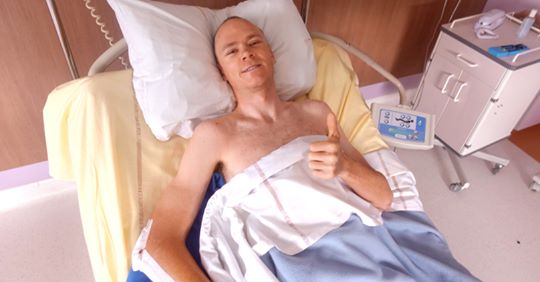
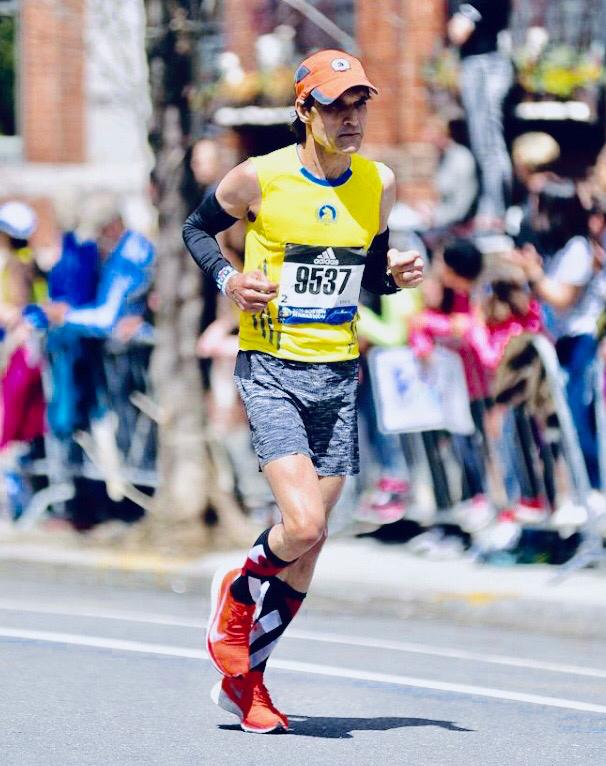
CHRIS FROOME SERIOUSLY INJURED IN CRASH

Chris Froome (This photo was downloaded from the cyclist’s Facebook page)

Please scroll down for updates

Well-known cyclist and four times Tour de France-winner, Chris Froome met with major crash during a reconnaissance ride.

It has left him seriously injured.

The 2019 Tour de France is scheduled to commence in July.

Reports said, Froome, 34, could take months to recover.

A subsequent statement from his team – Team Ineos – confirmed that Froome will miss the 2019 Tour.

The accident occurred on Wednesday in central France, outside the town of Roanne in Loire.

Froome was doing reconnaissance of one of the stages of the Criterium du Dauphine, an event he uses to prepare for the Tour.

According to a report in The Guardian, he lost control amid high winds when attempting to blow his nose while cycling. The cyclist crashed into a wall. At the time of accident, reports said, he was moving at close to 60 kilometers per hour.

Froome suffered a broken leg, a broken elbow and fractures to his ribs.

He is in intensive care, reports said.

Among best known cyclists today, Froome rides under a British licence.

Born to British parents in Kenya, he grew up there and in South Africa. He won Tour de France in 2013, 2015, 2016 and 2017. He has also won the Giro de’Italia (2018) and Vuelta a Espana (2017). He won bronze in road time trials at the Olympics in 2012 and 2016 and bronze at the World Championships in 2017.

Update / June 14: Chris Froome’s team, Team Ineos, has said that the cyclist’s surgery following his crash was successful. Froome suffered a fractured right femur, a broken hip, fractured elbow and fractured ribs, the BBC reported on Thursday (June 13). The report quoted Team Ineos doctor, Richard Usher as saying that the operation which lasted six hours “ went very well.”

Chris Froome. This image was downloaded from the Facebook page of Team Ineos. It is being used here for representation purpose. No copyright infringement intended.

Update / June 16: Chris Froome, who is in hospital after a major crash that left him badly injured, has expressed gratitude for the outpouring of support and well wishes. In a message available on the Facebook page of Team Ineos (Froome’s team), the cyclist said, “ Firstly, I just want to say a huge thank you to everyone who has sent their best wishes to me since the crash. This is obviously a tough time but I have taken a lot of strength from the support over the last three days. The outpouring of support has been really humbling and something I would never have expected.

“ I’d also like to extend my gratitude to the team, especially Doctor Richard Usher and his medical staff, who have been exemplary since the crash. In addition, I am so thankful to the emergency services and everyone at Roanne Hospital who assisted and stabilized me, as well as the surgeons, doctors and nurses at the University Hospital of St Etienne, who have really gone above and beyond the call of duty, for which I am ever so grateful. I know how lucky I am to be here today and how much I owe to all the paramedics and medical staff on the race.

“ Whilst this is a setback and a major one at that, I am focusing on looking forward. There is a long road to recovery ahead, but that recovery starts now and I am fully focused on returning back to my best.

“ Finally, I want to thank my wife Michelle and my family. They’ve been with me every step of the way and their love and support will motivate me to return as quickly as possible.”

(The author, Shyam G Menon, is a freelance journalist based in Mumbai.)

NANDA DEVI EAST / INDIAN MOUNTAINEERING FOUNDATION LAUNCHES EXPEDITION TO ACCIDENT SPOT

Nanda Devi (Photo: Punit Mehta)

Please scroll down for updates

The Indian Mountaineering Foundation (IMF) has launched an expedition to the Traill Pass area to recover the bodies of climbers sighted earlier during helicopter sorties.

“ Based on permission received from DM (district magistrate) Pithoragarh, IMF has launched a ground search expedition. Fully equipped 12 member-team is headed for the accident site through Pindari glacier. They are expected to reach the area by Saturday,” a senior IMF official informed Monday (June 10) morning.

Late-May following eight climbers reported missing from an expedition to Nanda Devi East, district authorities had launched a search mission. Five bodies were subsequently located near Peak 6477, an unclimbed peak the team hoped to try. However efforts to retrieve the bodies didn’t succeed.

The IMF then sought permission to launch its own search and recovery mission.

The eight climbers reported missing was from an expedition led by senior British climber and mountain guide, Martin Moran.

Please scroll down on this blog for earlier reports on this tragedy.

Update / June 14: Media reports quoting the District Magistrate of Pithoragarh said that a 32-member team comprising 11 mountaineers of the Indo-Tibetan Border Police (ITBP) and personnel of the National Disaster Response Force (NDRF) and State Disaster Response Force (SDRF) are also heading to the accident spot to retrieve the bodies. The team left for Munsyari on Thursday (June 13). They are expected to be airlifted to “ Nanda Devi second base camp” on Friday, the reports said.

Update / June 15: The IMF expedition has established its base camp close to Zero Point in the Pindari Glacier region, a senior IMF official informed on Saturday. A few members have shifted to Advance Base Camp (ABC). Asked about conditions at altitude, he said that the monsoon is yet to make its presence felt.  There are light showers at base camp and sleet at ABC. The team is able to go about its work. They will take a couple of days to open the route to higher camp and reach the accident spot, the official said.

Update / June 22: Weather appears to be an issue. According to a senior IMF official, nine members were expected to proceed towards Camp 1 today with six staying one there and three returning after load ferry. However the team had to turn back at around 4900 meters due to white out conditions. They are now back at ABC.

(The author, Shyam G Menon, is a freelance journalist based in Mumbai.)   

“ I DON’T HAVE AN ATTACHMENT TO THE MARATHON’’

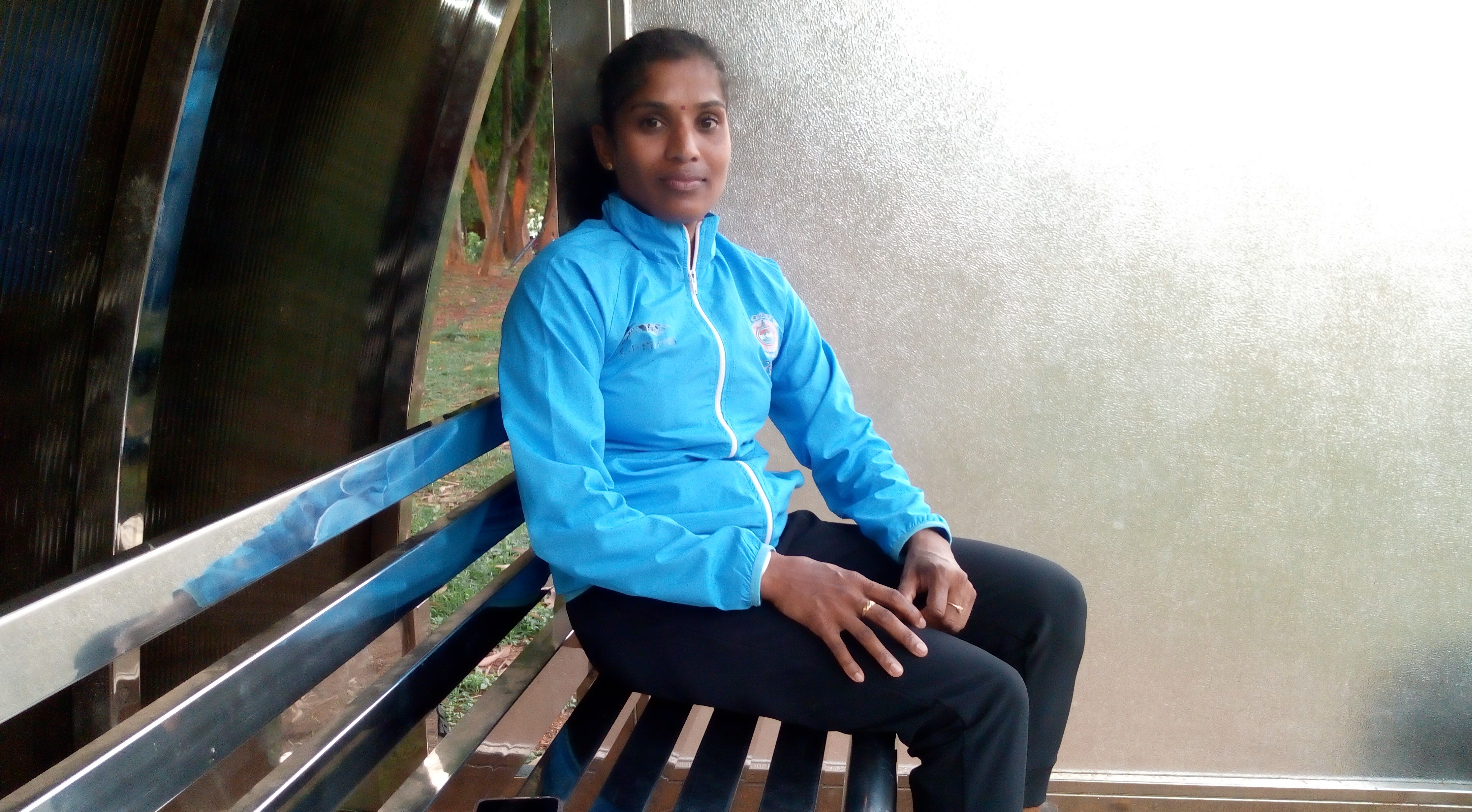
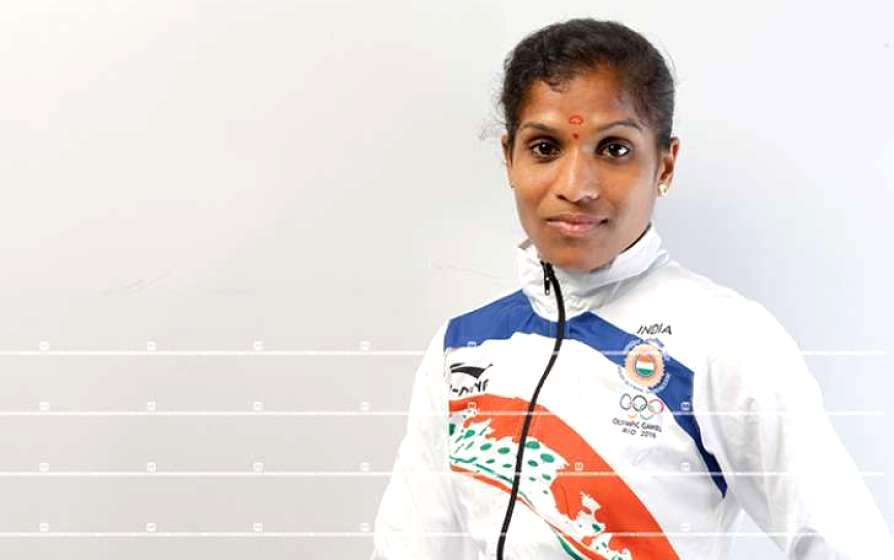
O. P. Jaisha (Photo: Shyam G Menon)

As of mid-2019, O. P. Jaisha still held the national record in the women’s marathon. It isn’t something she wished for. Her aspiration was to excel in the middle distances. Thirty six years old when she met this blog for a chat, she was picking up from where she had left off and preparing for a final shot at the disciplines she loves.

In August 2016, as the year’s Olympic Games drew to a close, O. P. Jaisha, India’s national record holder in the women’s marathon who participated in the discipline at Rio de Janeiro, was battling controversy.

After fainting at the finish line in Rio and being stretchered off to hospital, she had complained that there was no hydration support for her run by Indian officials. For a while the charges were traded. It seemed sad state of affairs for one of the finest distance runners India had produced. After her return to India, the athlete fell ill. Gradually Jaisha sank from public attention. Three editions of the Mumbai Marathon – the event that propelled her to marathon glory for the first time – took place without her running it. By January 2019, Jaisha’s course record in Mumbai was also erased; the new course record became Sudha Singh’s.

May 2019.

It was now almost three years since Rio.

Thanks to the city’s new metro, the trip to Bengaluru’s Sports Authority of India (SAI) training complex had become tad easy although the last stretch was still a mix of public transport and walking. Stopped at the gate I told the security staff that I had an appointment with Assistant Coach, O. P. Jaisha. Locating her took a while. But when she appeared at the facility’s synthetic track there was no mistaking the lightly built, small sized athlete who still held the national record in women’s marathon.

Of Kerala’s 44 rivers, three flow eastward. At 57 kilometers, the Kabini is the longest of these three. One of the tributaries of the Kabini is the Mananthavady River. The town of Mananthavady in Wayanad district stands on its banks. Jaisha was born here in 1983; to be precise in the village of Thrissilery. She was the youngest of four sisters. Their parents were laborers. Money was scarce. Life was tough. When Jaisha was around five years old, her father had a major accident. “ Knocked down by a bus, he came under its wheels. We thought it was all over,’’ she said. Miraculously he survived. But he was bed ridden. The incident affected Jaisha’s mother. She became depressed. It was an extremely difficult time for the family. They had a couple of cows. They sold the milk and somehow got by. Wayanad is among Kerala’s hill districts. It has elevation ranging from 700m (roughly 2300 feet) to 2100m (6890 feet). Mananthavady is at an elevation of 2490 feet. Much later, reporting on Jaisha the successful athlete, the media would devote attention to this phase when yet to be athlete walked regularly on hilly terrain carrying milk to sell to the local milk society. It harked of the training at altitude endurance athletes do and which Jaisha herself would formally experience later in life. Not to mention, it made the Jaisha story similar in tenor to how elite African marathoners described their childhood in the hills of Kenya and Ethiopia.

The three sisters attended the local government school in Thrissilery. None of them were into sports at this stage. About 25 kilometers away from Jaisha’s village was Thalapuzha. When the time came for eleventh and twelfth standard education, Jaisha headed to the government school there. She was very interested in the National Cadet Corps (NCC) and wished to join it. But her slight build and small size came in the way. To toughen herself, she began learning karate. Then a crucial incident happened. Jaisha participated in an 800m race held as part of the local Panchayat Mela. She had gone to attend the festival and according to later profiles in the media, participated in the race for a lark. At this event, she beat a girl who was national champion at school level; that too by a wide margin. For her and those around, it was an eye opener. Soon, besides learning karate, Jaisha started competing in middle distance races.

Given how far Thalapuzha was from Thrissilery, time available for training at the school was not much. But she proved to be good at running the middle distances. Kerala has a strong track record in athletics in India. It was among early states to come to prominence in this regard. One of the main reasons for this was the eye for sporting talent maintained at school and college level. Talent was scouted and invited to join college teams. Changanassery is a major town in central Kerala. It is well known for its schools and colleges. Assumption College from here has a reputation in sports at the inter-college and university level. After her twelfth standard, Jaisha’s coach from Wayanad, P.G. Girish, helped her get admission at Assumption College. At the college, her new coach was P.V. Valsy. In just her second year at the college, Jaisha won a bronze medal in 5000m at the inter-university level. By the third year, both medals and records grew more frequent. At a meet in Guwahati, she became the first woman athlete at inter-university level to secure three gold medals – in 1500m, 5000m and 10,000m. Eventually in 2005, she was selected to be in the national camp. She also got a job as ticket collector with Indian Railways; she was the first from her family to get a job. “ I had to look after my whole family on that salary,’’ she said.

Illustration: Shyam G Menon

We were chatting on the side of a large ground with mud track at the SAI facility. An athlete or two dropped by to speak to Jaisha and clarify doubts in their training. It was evening and most of the grounds were bustling with activity. Summer vacation and associated coaching camps for children added to the ambiance. Training was on for a variety of sports. If you looked closely at the athletes practising on the synthetic track, jogging by on the mud track or the cross country trail, you spotted a well-known face or two. This was premises familiar to Jaisha. In 2005, following her selection to the national camp, she had reported to the very same facility. Roughly a year after she got into the national camp, Jaisha won a bronze medal in 5000m at the 2006 Asian Games held in Doha, Qatar. According to a detailed profile of Jaisha in Indian Express (published in September 2015), after the Doha event she turned her attention to family commitments; there was debt to repay, her father was still bed-ridden. She sold the house she had bought to address part of the debt and the family’s medical bills. She used the prize money she got for her performance in Doha to marry off her sisters. This diversion wasn’t without its impact on her performance in sports.

In 2010 the Commonwealth Games was staged in Delhi, the first time India was hosting the event. With 101 medals won overall, the host placed second in the medals table. Jaisha wasn’t among those on the podium. In 1500m, she failed to secure a berth in the finals. At the 2011 Asian Athletics Championships held in Kobe, Japan, she bounced back with a bronze medal in 1500m. Same year, she trained for 10 months in Kenya and Italy as part of preparations to run middle distance disciplines at the 2012 London Olympics. But a stress fracture ended her chances of making it to the squad for London. Interestingly, Jaisha was not very empathetic to the pre-Games training done in Kenya. She believes there is considerable difference between Kenyan distance runners and Indians, starting with the food each side is used to. “ India is a big, diverse country. We have whatever altitude we wish to train at, available here itself. Why should we go elsewhere?’’ she asked. The stress fracture wasn’t the end of her downturn in fortunes. The dip in performance hadn’t yet bottomed out. That came in 2013 at the Pune edition of the Asian Athletics Championships. She fared badly in both 1500m and 5000m. Jaisha was left out from the national camp. Among remarks thrown her way then was that at 30 she had probably become too old to be athlete of international caliber. It was at this low point in her career that Jaisha got married. Her husband Gurmeet – he is a former athlete who turned coach – supported her aspirations in athletics. They moved to Dharamshala in Himachal Pradesh for nine months, where Jaisha trained at SAI’s high altitude training center and slowly regained her form.

Returned to national camp, Jaisha proved her worth at the 2014 Asian Games held in Incheon, South Korea, where she won bronze in 1500m and placed fourth in 5000m. She was now 32 years old. Her career till then had straddled middle and long distance events, all of them track-based. Even though this basket of distances spans 1500m to 10,000m, while training and piling on mileage, athletes in these disciplines cover distances that are much longer. While physical power dominates the shorter distances, an element of mental strength is critical for the longer distances. Age and experience are thus not without merit when tackling long distances. Coaches are known to leverage the mileage of middle distance-training and the rising age of an athlete to create a case for pushing the deserving from middle distances, towards attempting a marathon. Following Incheon, this is what happened with Jaisha. Her weekly mileage when training for 1500m averaged 180 kilometers (assuming one rest day per week that amounts to running 30 kilometers every day). In November 2014 when the national camp resumed, Jaisha was encouraged to try a half marathon (21km). She was reluctant. “ I like track more than road. I am wired like that,’’ she said. But the final word in athlete’s life belongs to the coach.

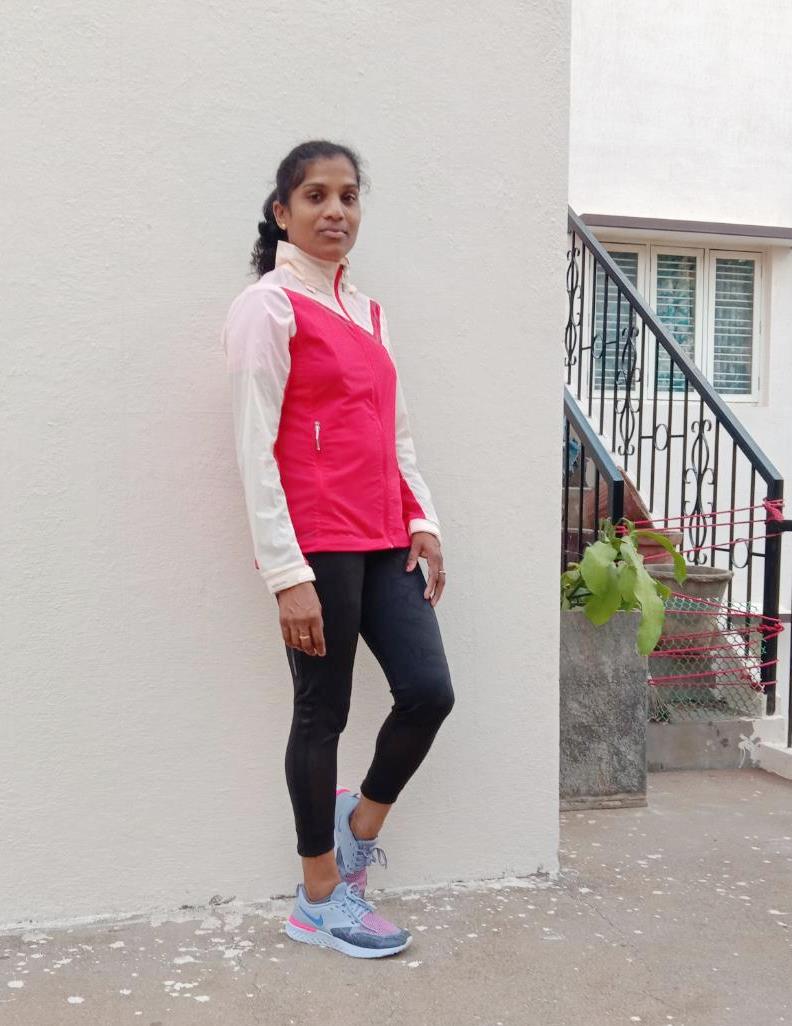
O. P. Jaisha (Photo: courtesy Jaisha)

In late 2014, according to Jaisha, a contingent of India’s elite women middle distance and marathon runners turned up for a half marathon in Kochi. Jaisha was the only one from the lot who hadn’t run a formal half marathon before. As it turned out, she won the race. Her coach felt vindicated. Given half marathon is not an Olympic discipline, the focus naturally shifted to the full marathon. The next major event was the 2015 Mumbai Marathon due in January. In the brief time between the Kochi event and Mumbai, Jaisha managed a 2:50 finish in the marathon during a training session in Ooty, a popular high altitude training location with Indian athletes. Then in Mumbai, at India’s biggest annual marathon, she broke the national record (it had stood for 19 years). On January 18, 2015, The Hindu reported from Mumbai: Jaisha, training under Dr. Nikolai Snesarev for two months following a 1500m bronze at the 2014 Incheon Asian Games, clocked two hours, 37 minutes, 29 seconds along the Mumbai seafront on Sunday morning, the best Indian performer and eighth overall in elite women marathoners. Lalita Babbar, who placed second among elite Indian women runners, finished in 2:38:21, Sudha Singh finished third in 2:42:12. The report mentioned that with all three athletes meeting the qualifying standard set for the 2015 World Athletics Championships and none of them having the marathon as core event, they would need to make a choice. It said they had left the choice to their Belarussian coach Dr Snesarev. The report quoted Dr Snesarev: Jaisha will be 33 by the time Rio Olympics comes and has a better chance to make an impression in marathon than distance running. Jaisha too seemed to concur at that point for the report quoted her: I am confident of better timing with more training under our coach. If two months can help us run so well, there is ample time before the 2016 Rio Olympics for preparation. I leave the decision of whether marathon or track to the coach.

Very often, things appear clearer in retrospect. Jaisha the marathoner may have arrived on the national scene with her performance at the 2015 Mumbai Marathon but in her mind it was still the middle distance disciplines that she worshiped. Some three weeks after the record breaking run in Mumbai, she secured gold in 5000m and 10,000m at the 35th National Games held in Thiruvananthapuram. In August 2015, at the IAAF World Championships in Beijing, Jaisha improved her national record in the marathon further, lowering the time to 2:34:43. She finished eighteenth in the field. The top 20 finishers qualified for the 2016 Olympics due at Rio de Janeiro in Brazil. Not even a year since that half marathon in Kochi and some six months after she debuted in the full marathon in Mumbai, Jaisha had landed an Olympic berth in the discipline. The marathon had given her more fame and money than the medals she won in middle distance running. Yet unbelievably – and in some ways predictably given her heart was in the middle distances – she had an argument with her coach over what discipline she should focus on. She wanted to be in middle distances. Eventually her coach relented. Their faith was based on the timing she returned in Ooty while training. “ At least 15 times there, I did 1500m in 4:01, 4:02, 4:03….like that. If you correct it for lower altitude it translated to around 3:57, which was good for participating in the Olympics,’’ she said. It was amid this reorientation that the 2016 Mumbai Marathon happened. Jaisha, the defending champion among Indian women, finished third in 2:43:26. The first place among elite Indian women that year went to Sudha Singh who covered the distance in 2:39:28; Lalita Babbar placed second in 2:41:55. At least one news report on the event mentioned that both Lalita and Jaisha had made their preference for track events, clear.

For Jaisha, the 2016 Mumbai Marathon was sadly the beginning of another slide. Returned to Bengaluru’s SAI facility, focused on the 1500m and pushing pretty high daily mileage, she injured her leg. It was probably because the synthetic track was new at that point in time and therefore, a trifle hard – Jaisha mused in retrospect. Thereafter she couldn’t train on synthetic track for 1500m, a discipline run on the track. It was back to the marathon and training at altitude in Ooty. When she reached Rio in August for the Olympics and yet another rendezvous with the marathon, she wasn’t fully recovered from injury. “ Rio was warm. We had trained in cool Ooty, where we would train at 4 AM. In Kenya, they used to train on warm afternoons,’’ Jaisha said. Race day was particularly warm; condition suitable for potential dehydration, injury and aggravating existing injury. The rest of the Rio story – from alleged lack of support by Indian officials in hydration to athlete’s collapse at finish and controversy afterwards – is known.

Following return to India, Jaisha tested positive for H1N1, a strain of swine flu. Unknown to her, a break of roughly two years from competition was commencing. During this period, there were promises made to athlete that were not met. On her return from Rio, Kerala’s sports minister E. P Jayarajan asked Jaisha what she wanted. She said she wished to be a coach. Later she submitted a letter to the state chief minister on the same. The government, she said, promised a job. Nothing happened. In the meantime, she rented two houses in Wayanad with her own money and started training Adivasi children from Wayanad and Kollam. “ I want to help underprivileged youngsters who are interested in sports,’’ she said. Having resigned her job with the Indian Railways and joined SAI as an assistant coach in Bengaluru in April 2019, the children were still foremost on her mind. “ I want to bring them to Bengaluru and give them coaching here. I hope people contribute to the required resources. Athletes like me, T. Gopi and Preeja Sreedharan are just a few examples of the talent in Kerala’s Wayanad and Idukki districts. There are so many others who will emerge if the right support is offered,’’ she said.

O. P. Jaisha (Photo: courtesy Jaisha)

Thirty six years old as of May 2019, Jaisha appeared to be on a course quite opposite what coaches normally recommend. If the logic of November 2014 was that 30 year-old Jaisha should shift from middle distances to trying the marathon, then at 36, Jaisha is catching up on what she missed. She wants to focus and give one final shot at the disciplines she loves. “ In my athletics career I was made to do this event and that. Whatever they told me to do, I did it as best as I could. Other athletes were smart enough to wriggle their way out of such compulsions. I wasn’t,’’ she said. Jaisha has a point in that regret over lack of focus. Among the disciplines she was dispatched to do just because she was good at running middle distances, was the 3000m steeplechase. She took it up in 2008 and by 2010 had broken the national record. On the other hand, the discipline was odd choice when juxtaposed on her small size. “ When I do the water jump in steeplechase I land in the water while most others clear it. I compensate by catching up in the running section,’’ she said outlining her plight. Not to mention – meandering meaninglessly through various disciplines is invitation to injury.

The marathon had come her way in a similar fashion. It is a different matter that she set a new national record. There were aspects to that switch, which she didn’t like. From 180 kilometers weekly mileage when training for 1500m, the figure shot up to 280 kilometers for the marathon. “ As part of training for the full marathon I have run 105 rounds of the 400 meter-track,’’ Jaisha said. But in an effort to stay lean and fighting fit, there wasn’t much alteration in food intake alongside. Result – against an optimum body weight of around 43 kilos, there were times when she was 39 kilos. “ I can’t endure that. Throughout my career, I feel, I have been an experiment for my coaches,’’ she said. Then there is that spiritual disagreement with the marathon. “ I am fundamentally a track athlete,’’ Jaisha said. That is the space, range of distances, style of running and overall time for given discipline, she enjoys. In 1500m she has touched good timing – she hasn’t forgotten that. Over the next several months, alongside her responsibilities as assistant coach with SAI, she wants to train and get herself back to form in 1500m and 5000m. Then, she hopes to make it back once more to the international stage. By January-February 2020, she expects to be ready for her first major event. Won’t she miss the marathon particularly since the national record is still in her name? “ Records are made to be broken. I don’t have an attachment to the marathon,’’ she said. And what if this final tryst with middle distance events, fails? “ Then, I will call it a day knowing well that I tried,’’ she said.

(The author, Shyam G Menon, is a freelance journalist based in Mumbai.)                           

TLANDING TOPS AMONG INDIANS AT 2019 TRAIL WORLD CHAMPIONSHIPS

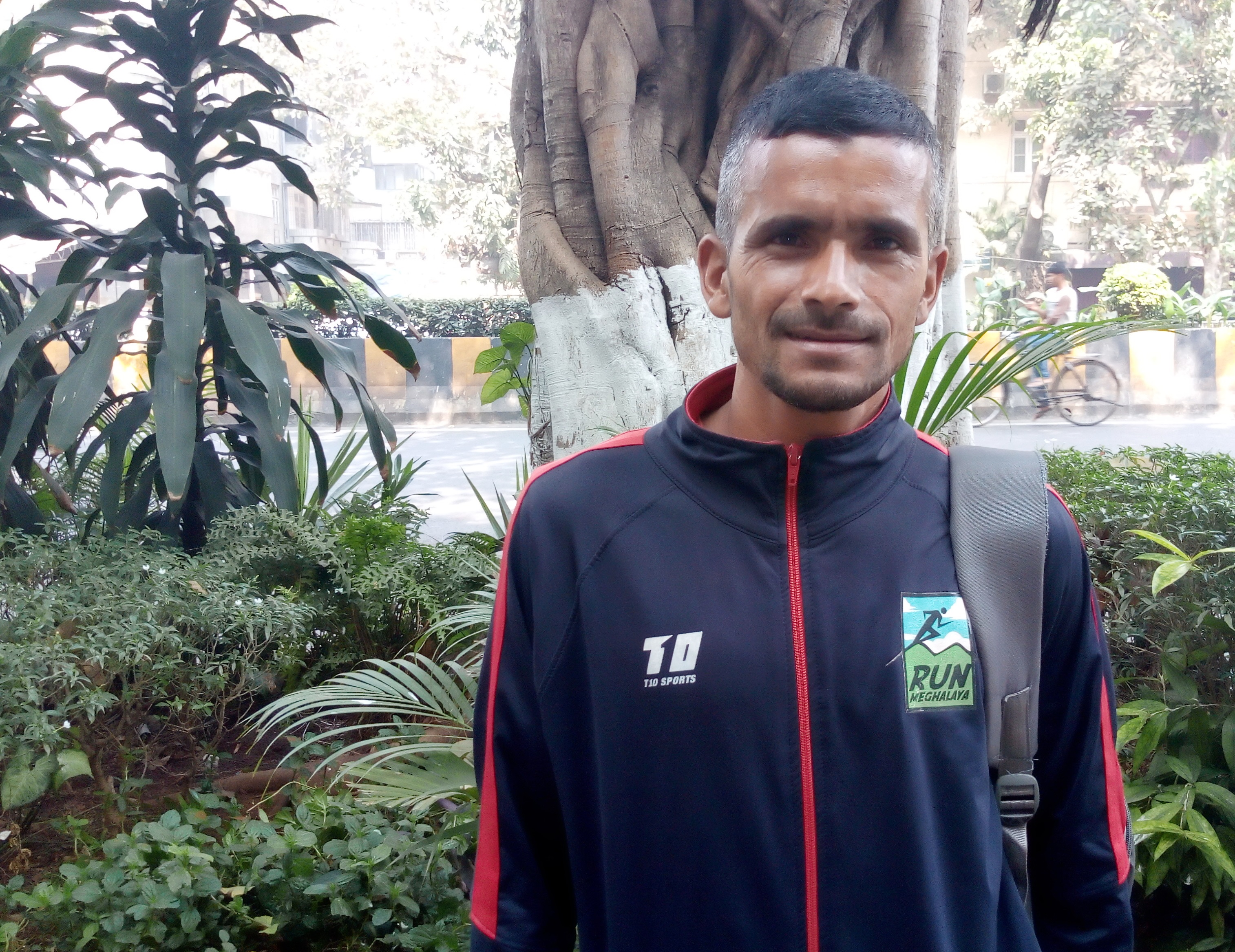
Tlanding Wahlang (This photo was downloaded from the Facebook page of Run Meghalaya and is being used here for representation purpose)

Tlanding Wahlang from Meghalaya registered the best timing from among Indians participating in the 2019 Trail World Championships held at Miranda do Corvo in Portugal on Saturday, June 8.

According to a report available on the Facebook page of Run Meghalaya, he finished 114 among men and 129 overall, covering the 44km course in four hours 30 minutes. Kieren D’Souza had the second best timing from the Indian contingent – 4:37; he placed 133 among men and 156 overall. The report has been credited to Sandeep Kumar and Dr. Carolyne Lyngdoh, who were support team for the Indian runners. The report had Tlanding’s photo and the following caption: This was the moment for Tlanding Wahlang. A poor farmer from Shngimawlein a distant village in South West Khasi Hills district of Meghalaya, he braved all odds to get to Portugal and he gave his heart and his legs to compete with the best in the world of trail running. His story of hardship and strife to try and earn enough to feed himself and his family is one of inspiration that triumphs all others because he succeeded inspite of it all. He is our hero.

Tlanding is a familiar face on the Indian marathon circuit. A regular member of the Run Meghalaya group frequenting major marathons in the country, he has finished on the podium in his age category at multiple events. At the 2019 Tata Mumbai Marathon (TMM), he had finished second overall in the full marathon for amateurs with timing of 2:40:53. In his age category (40-44 years) he had placed first (for more on Tlanding and Run Meghalaya please click on this link: https://shyamgopan.com/2019/01/23/2019-tmm-run-meghalaya-scores-again/) Kieren is among promising young Indian long distance runners; he has a known preference for trail and training in the mountains.

The Indian team for the 2019 Trail World Championships included Kieren D’Souza, Ullas Narayana, Tlanding Wahlang, Rajasekar Rejendran and Radhey Kumar. There were no Indian women participating this time, the participants’ list available on the event website showed.

Tlanding Wahlang; after 2019 TMM (Photo: Shyam G Menon)

As per the earlier mentioned report by the support team (posted on Run Meghalaya Facebook page), the performance in full of the Indian team is as follows: Tlanding – 4:30 / 114 among men / 129 overall, Kieren – 4:37 / 133 men / 156 overall, Radhey – 4:51 / 148 men / 190 overall, Ullas – 5:06 / 167 men / 228 overall, Rajasekar – 5:39 / 194 men / 316 overall.

The event held under the auspices of The International Association of Ultrarunners (IAU) and the International Trail Running Association (ITRA) was organized by the Trilhos Dos Abrutes. According to an official statement available on the event website ahead of race, 411 athletes had registered to participate; 186 women and 233 men, representing 53 delegations.

Miranda do Corvo is a historic town in Portugal. The maximum altitude is 1000m. Coimbra is the fourth largest urban center in Portugal (after Lisbon, Porto and Braga). The athletes taking part in the Trail World Championships had to tackle a distance of 44km involving 2120m of ascent and 1970m of descent.

(The author, Shyam G Menon, is a freelance journalist based in Mumbai.)

NANDA DEVI EAST / INDIAN MOUNTAINEERING FOUNDATION SEEKS PERMISSION TO LAUNCH ITS OWN EXPEDITION TO RETRIEVE BODIES

Nanda Khat, Peak 6477 and Nanda Devi; as seen from high ridge near Kafni glacier (Photo: Shyam G Menon)

Voicing concern at how the operations pertaining to rescue and recovery were handled, the Indian Mountaineering Foundation (IMF) informed today that it has sought permission for a ground expedition to the Traill Pass area via Pindari glacier side, to retrieve the bodies sighted earlier during helicopter sorties. There is a window spanning about a fortnight, for this, before the monsoon arrives.

The Indian Mountaineering Foundation (IMF) has sought permission from the district magistrates of Pithoragarh and Bageshwar in Uttarakhand, to launch its own expedition to retrieve the bodies sighted near Peak 6477 following eight mountaineers on a climbing trip to Nanda Devi East reported missing end-May with search operations launched thereafter.

The required permission is awaited, IMF said in a statement today. It pointed out that a window of 15-20 days is available before the monsoon sets in. At the time of writing, parts of Kerala – where the monsoon hits first – had already begun experiencing rainfall. This year’s monsoon has set in late.

Unlike search operations based out of Pithoragarh and Munsyari so far, the IMF expedition seeks to reach the accident spot from the Pindari glacier side. This is because Peak 6477 is close to Nanda Khat and the Traill Pass area. Interestingly, just as the area around Traill Pass has been described as a tri-junction of sorts with two sweeps of the Nanda Devi sanctuary wall and the ridge hosting Nanda Kot and Changuch converging there, the whole region along with the Nanda Devi massif is also the meeting point of three districts – Chamoli, Bageshwar and Pithoragarh.  The dividing line between Pithoragarh and Bageshwar is the Nanda Kot-Changuch mountain wall; it puts the Pindari valley in Bageshwar and Johar on the other side in Pithoragarh.

The expedition led by British climber Martin Moran (the missing eight climbers belong to it) had approached Nanda Devi East from Johar. However given Peak 6477 is near Nanda Khat and the Traill Pass area, mountaineers familiar with the topography had suspected a few days ago itself that the bodies may be closer to Bageshwar’s side of the line.  Traill Pass is usually accessed from the Pindari valley.

It was in end-May that authorities were alerted about eight climbers from Moran Mountain’s 12-member expedition to Nanda Devi East, gone missing with fears of them having met with avalanche near Peak 6477, an unclimbed high point they elected to try. The remaining four members were airlifted to Pithoragarh after search operations commenced and they helped subsequently direct the search operation towards the relevant area. It was thus that five bodies were sighted.  Despite acclimatized civilian climbers and IMF officials gathered at Pithoragarh, the district administration opted to keep the search team restricted to paramilitary and state disaster response force personnel. As it turned out, later attempts to have a helicopter land near the accident spot failed owing to adverse weather while the paramilitary personnel, it was reported, would need acclimatizing before moving to altitude. In its statement today the IMF, which is the nodal agency for climbing and mountaineering in India expressed its worry over how the operations have been handled. “ The IMF is deeply concerned about the manner in which the rescue and recovery is being organized by the district administration,’’ the statement said.

Giving an account of its position, the agency said: On Friday, 31st May, IMF was informed by the tour operator about the situation and IMF immediately requested DM Pithoragarh to initiate search operation. On 1st June our team of expert mountaineers who had come back from climbing up to 5500 M in the surrounding area and were fully acclimatized were deputed. They reached Pithoragarh and reported to the DM on the same day. The embassies of the respective countries were also informed vide at the same time. A senior IMF functionary was deputed to co-ordinate and act as the IMF spokesman to communicate with various agencies.

On 2nd June, our team of mountaineers provided inputs to the DM and the IAF crew regarding possible areas of search (on the basis of which) four foreigners (who had carried out the initial search of their team members and were otherwise unharmed and waiting in Base Camp) were brought to Pithoragarh by IAF helicopters. Next day i.e. 3rd June, two of the foreign mountaineers were taken up to the area where the climbers were missing and they brought back photographs which were analyzed and it was found that there were five bodies which could be seen after zooming in. IMF mountaineers were not taken up despite strong request and advice to the district administration.

On 4th June, it is understood that no operation was conducted and despite suggestions from our team and Deputy Leader of the Expedition to involve them in the planning and operations, district administration did not involve the IMF further but kept it on standby. On 5th June IAF helicopter along with ITBP personnel have attempted to retrieve the bodies spotted by the IAF helicopter but was unable to do so because of unfavorable conditions / preparedness.

It was the considered opinion of IMF experts that the location of the bodies spotted is towards the Pindari glacier side and any ground approach from the Nanda Devi East Base Camp would be practically impossible. Therefore it was expedient to launch an expedition from Pindari side on the well charted route and IMF was ready and waiting to launch this expedition immediately. A verbal request for permission to this effect was made to the DM Pithoragarh on 5th June followed up by written applications for permission to the district administrations of Pithoragarh and Bageshwar on 6th June.

Not having heard from the district administration, on 7th June, we followed up with a telephonic request to the Chief Secretary. Our request to the Uttarakhand Government was as follows: “ we wish to convey that IMF is ready to launch a ground expedition from the Pindari glacier side to locate (the bodies) and prepare them for air evacuation (winching). For this we have a team of highly experienced mountaineers standing by to move at short notice. We have requested DM Pithoragarh and DM Bageshwar to obtain / accord permission to launch such an expedition.’’

Earlier in the day, the deputy leader of Moran Mountain’s expedition to Nanda Devi East, Mark Thomas, had also expressed his unhappiness with the local administration for declining expert assistance in the operations to retrieve the bodies.

(The author, Shyam G. Menon, is a freelance journalist based in Mumbai.)

A NONEXISTENT WRONG AND AN OLD NEED STILL UNMET

Nanda Devi (Photo: Shyam G Menon)

There doesn’t seem to be anything illegal about attempting Peak 6477 when main objective was Nanda Devi East. On the other hand, one feels sad that we still don’t have a dedicated mountain rescue system empathetic to climbing and other such sports of high altitude.

After five bodies spotted near Peak 6477 some distance from Nanda Devi East, the peak for which climbing permission was originally given to the eight mountaineers reported missing, official narrative had devolved to the climbers having courted risk “ knowingly.’’

According to an experienced mountaineer who has served as Liaison Officer in the past, when the Indian Mountaineering Foundation (IMF) grants permission for a peak it doesn’t mean that a team cannot attempt nearby peaks. With the onsite permission of the Liaison Officer accompanying the team, they can attempt any other peak in the neighborhood. On return to Delhi and IMF, they are expected to submit a report and pay the relevant climbing fee for the new peak attempted. Aside from approval of request to climb a specific peak, the permission provided has a practical value. It ensures there are no conflicts through multiple teams on the same peak. Sometimes, although one main objective is requested for and permission obtained; other subsidiary peaks of interest are indicated alongside, in the original paperwork. There have also been instances when the main objective is indicated on the map as feature or high point but isn’t identified by any particular name. In such cases, permission has been taken for the larger mountain, the feature / high point is an appendage of.

What this means is that if Martin Moran hadn’t earlier shown Peak 6477 as a peak of potential interest, he was still free to attempt it after reaching the vicinity of Nanda Devi East, provided he secured permission from the IMF Liaison Officer assigned to his team. Such redirection of efforts, have happened before. One instance – going by Wikipedia – would be Moran’s own 2009 ascent of Changuch (a 6322m / 20,741 feet high-peak that is not far from Peak 6477). Wikipedia describes this ascent – it was the first time the peak was successfully climbed – as fallout of an aborted mission to climb Nanda Devi East. “ The expedition’s original target was Nanda Devi East. However, during the course of expedition, due to difficult conditions and lack of resources to meet original target, they shifted the target to nearby Changuch,’’ Wikipedia said.

Early June, when news of climbers missing near Nanda Devi first appeared along with mention of an unclimbed, unnamed peak the team hoped to scale, at least one mountaineer this blog spoke to in Mumbai speculated that the attempt on Peak 6477 may have been for acclimatization purposes before the team formally tried Nanda Devi East. His reasoning was based on the timeline of events. Against the timeline available on social media, May-end appeared a bit too soon for them to be high on Nanda Devi East. “ June first week would seem a more reasonable period for them to scale it,’’ he had said (this conversation was on June 1 and according to those associated with the subsequent rescue process, the climber’s inference is fairly correct). To consider additionally would be weather conditions. Point is – as the above conversation shows, in mountaineering’s reality surrendered to immediate conditions at altitude and compulsions therefrom, attempting a nearby peak or high point will always be a temptation or practical need; a stepping stone to some larger objective in mind or consolation if larger objective was denied. For climbers tuned into the ongoing Nanda Devi East episode, given expedition has unfortunately ended in mishap, what merits attention now is retrieval of bodies. You hope for dignified closure.

One of the news reports on the missing mountaineers, featured a spokesperson for the paramilitary saying that even if anyone from the forces went up to the accident spot for human presence on the ground, they would take time to acclimatize. A dedicated mountain rescue organization (and India does not have one) is expected to have people ready at any given point in time to move to altitude. The alternative would be to look for others – mainly civilians – who have been to similar altitude recently and are adequately acclimatized to repeat the visit at short notice. In emergency situations like this, you will not just check in your neighborhood, you will cast a wider net, scan recent mountaineering expeditions that touched similar altitude or more, check for experienced climbers in that lot and get in touch. One would expect the countries the missing climbers belonged to, to also pitch in – see if any of their good climbers are already in the Himalaya and acclimatized to volunteer.

It is understood that till at least June 4, there were acclimatized civilian climbers and representatives of the Indian Mountaineering Foundation (IMF) in Pithoragarh, which was base for search operations. However authorities wished to keep operations restricted to the paramilitary and state disaster response teams. They had a relevant point – it makes no sense to risk more lives trying to retrieve the bodies. Around noon June 5, there were media reports with photographs of rescue personnel and helicopter, announcing commencement of “ very high risk’’ operation to retrieve the bodies. Soon afterwards, an ANI report (published in Business Standard) which referred to the rescue mission as Operation Daredevils, informed that after three attempts to reach the accident site earlier that morning, the helicopter and its team had returned to Pithoragarh to evolve new strategy. In its report, BBC included terrain, weather conditions and limitations of helicopter among causes for setback.

India does not have a dedicated mountain rescue system, focused on climbing accidents and such in the civilian realm. What we have is the military and paramilitary doubling up as search and rescue teams and more recently with state disaster response units set up, personnel from there also participating in the process. A rescue ecosystem empathetic to climbing and trekking and approaching these pursuits as normal civilian activity, has remained elusive. The subject of dedicated mountain rescue system has been a topic of discussion for several years among climbers and adventure tour operators. Nothing has happened yet. That said; it is worth remembering that 27 years ago an epic rescue had happened in the same region. After some expedition members ran down to Munsyari and alerted authorities, an Indian Air Force (IAF) Cheetah helicopter had picked up a severely injured Steven Venables from around 21,000 feet on Panch Chuli V (21,242 feet). The photo showed pilot, unable to land, holding the chopper steady, its rotor blades inches away from steep mountain slope. Venables lay slumped on one of the chopper’s skis. The year was 1992. The location was the Panch Chuli range, in lands across the Gori Ganga from Nanda Devi East.

Update / June 6: Following the above text published, there were more points highlighted by friends in mountaineering circles. Collectively they portray the systemic constraints within which, search, rescue and insurance claims operate for those frequenting high mountains in India.

In the event of emergency, absence of acclimatized people to reach altitude and expeditions scanned to find competent people to form a team, two critical components are necessary to have that team fall in place at short notice.  You need the ability to communicate quickly; you must be able to move people, pick them up from where they are and drop them off where their services are needed. Time is very important when addressing accidents. Unfortunately there is a longstanding problem in the Indian environment as regards communication.

Although cellphone penetration has risen considerably, the places mountaineers go to are typically beyond the reach of regular networks. Overseas, satellite phones are often used for communication in wilderness spaces. Unfortunately, there is tremendous restriction on the use of satellite phones in India after these phones were misused by anti-national elements. Consequently, most mountaineering expeditions operate without them. There have been instances when phones that got through security check at airports were used in the event of emergency and proved to be life savers. But the act ended up in criminal cases filed. In some instances, exceptional judges who comprehended the gravity of emergency in which the phones were used, let off the guilty with a reprimand. The equipment is always impounded. Notwithstanding tweaks and refinements to this situation, the reality at ground level isn’t any different from what it used to be, a senior mountaineer said. Without such means of quick communication, even if well acclimatized climbers capable of rescue operations are located by scanning expedition lists (in the event of an emergency somewhere), those responsible for assembling the team won’t be able to contact them quickly. There are moves afoot to somehow address this communication problem.

Should by some miracle, quick contact be made, then, the next step is to physically transport those climbers from wherever they are to accident site. In India, the best option is still IAF pilots; only they operate regularly at altitude in mountain weather. But you need to slice through some bureaucracy before any flying gets underway. Since time is of the essence when responding to emergency situations, a more efficient way of harnessing this resident expertise in flying could be considered, those this blog spoke to said. Given most of our concepts and approaches are authored for settled life, satisfying the demands of paperwork inspired by the plains can sometimes be challenging at altitude. When somebody dies in an accident, insurance claim requires post-mortem. A mountaineer recalled an incident when a climber died at altitude in the eastern Himalaya. The body was lodged in a crevasse. When a later expedition tried locating it, the body was nowhere to be found; it must have slid deeper into the crevasse. Luckily the district magistrate who was aware of the incident understood the situation and helped with the needed documents.

All of the above underscores what was mentioned earlier in the article: you need an ecosystem that is empathetic to climbing, mountaineering and trekking and imagines processes – from paperwork to search and rescue – with practitioners’ perspective also included. Else, there will be plenty of disconnect.

(The author, Shyam G Menon, is a freelance journalist based in Mumbai.)

NANDA DEVI EAST EXPEDITION: FIVE BODIES SPOTTED

Red arrow in photo points to Peak 6477. The big peak on the  right is Nanda Devi East, the lowest point of the ridge line descending from it is Longstaff Col, the peak after that and just before 6477 is an unnamed peak, the series of high points continuing leftward from 6477 is Nanda Khat. This picture was taken from Kuchela Dhura (Photo: courtesy Dhruv Joshi)

Following a group of mountaineers on an expedition to Nanda Devi East in Uttarakhand, reported missing at the end of May 2019, authorities had launched a search and rescue operation. The team was suspected to have been hit by an avalanche while attempting an unclimbed peak in same region. Just over a week into the timeline of events, five bodies were spotted in the snow today.  

In continuing search operations on Monday (June 3) for the eight climbers reported missing near Nanda Devi, aerial photographs clicked from low flying helicopter have revealed five bodies in the snow.

“ We now fear the team may have perished in the avalanche,’’ a senior official of the Indian Mountaineering Foundation (IMF) told this blog Monday evening. At the time of writing, aside from aerial flights undertaken, there was nobody on the ground yet, at the site of mishap. Efforts are being made to retrieve the bodies, those familiar with the ongoing operations said. The missing climbers were part of an expedition led by British mountain guide, Martin Moran (for the earlier sequence of events please refer At A Glance / June 2019 on this blog).

Going by the chronology of events as reported in the media, it is now just over a week since the suspected time of mishap. The last contact / conversation with the team, appears to have been on May 25. They were expected to be back at camp on May 26; that didn’t happen. The authorities were alerted on May 31. By evening June 2, media reports quoted authorities as saying the prospects of finding and rescuing the missing climbers, seemed bleak.

Earlier in the day CNN had reported that a helicopter crew spotted a backpack in the snow on the unnamed peak, the climbers intended to attempt. Coupled with signs of avalanche noticed in previous sorties, this had strengthened the view that the climbers were indeed caught in one. The backpack was at an elevation of around 5500m (roughly 18,045 feet). The CNN report quoted District Magistrate Vijay Kumar Jogdande as saying that chances of the climbers surviving are almost zero now. The report also said that adverse weather was hampering search operations.

Monday’s more precise search was possible thanks to four members of the climbing team, who hadn’t ventured up with the others, being airlifted from their camp near the mountain, to Pithoragarh on June 2. The four included Mark Thomas, deputy leader of the expedition, who had earlier gone to check on his fellow team members upon being informed that they hadn’t returned to camp as scheduled. As per previously published news reports, Mark had come across an empty tent and signs of avalanche beyond it. The search operation was expected to leverage his insight on potential location of the team and calibrate the search accordingly. Monday’s helicopter sortie had Mark aboard. Also providing inputs was Dhruv Joshi, mountaineer from Almora who had been deputy leader of an expedition to climb Nanda Khat in 2010 and was familiar with the landscape.

It was understood Sunday evening (and separately confirmed today morning) that Peak 6477 (approximately 21,250 feet), the unclimbed, unnamed peak, which the missing climbers intended to attempt, is close to Nanda Khat (6611m / 21,690 feet). It is on the outer wall of the Nanda Devi sanctuary, on the ridge line continuing from Nanda Khat and going towards Longstaff Col (19,390 feet). On the map, this high point carries no name and is identified merely by its elevation – 6477. This put the area of search closer to Nanda Khat and Traill’s Pass (5312m / 17,428 feet) than Nanda Devi East (also called Sunanda Devi), which is beyond Longstaff Col.

The Traill’s Pass area resembles a trijunction on the outer wall of the Nanda Devi sanctuary. It links the Pindari valley to Lawan Gad in the Johar region. Three mountain ridges converge in the vicinity of Traill’s Pass. There is that part of the sanctuary wall leading to Longstaff Col and onward to Nanda Devi East. There is the portion of the sanctuary wall leading to the peaks of Nanda Khat and Panwali Dwar (6663m / 21,860 feet). There is the ridge coming down from Changuch (6322m / 20,741 feet) with Nanda Kot (6861m / 22,510 feet) beyond; both peaks not directly situated on the sanctuary wall but on a long tongue of mountain extending out from it. Peak 6477, is not described as an easy climb. It has steep slopes on either side.

(The author, Shyam G Menon, is a freelance journalist based in Mumbai.)       

AT A GLANCE / JUNE 2019

P. U. Chitra (This image was downloaded from the athlete’s Facebook page and is being used here for representation purpose. No copyright infringement intended)

P. U. Chitra strikes gold in Nijmegen meet, Jinson Johnson sets new national record

P. U. Chitra of India won gold in the women’s 1500m at the Next Generation Athletics Meet in Nijmegen, Netherlands, the media reported Sunday, June 16.

She clocked 4:13:52.

In April 2019, Chitra was in the news for winning the women’s 1500m at the Asian Athletics Championships in Doha.

In Doha she had registered a timing of 4:14:56.

She had won the women’s 1500m at the 2017 edition of Asian Athletics Championships as well.

Indian athlete Jinson Johnson broke his national record in the men’s 1500m at the Nijmegen meet.

He covered the distance in 3:37:62 to finish sixth in the field.

Ajay Kumar Saroj finished in 3:40:39 to place eleventh.

Jim Walmsley wins 2019 Western States in record time

Jim Walmsley has won the 2019 edition of Western States Endurance Run (WSER) held over June 29-30 in California, in 14 hours nine minutes 28 seconds. Doing so, he broke his own earlier record by 21 minutes. The old record was 14 hours 30 minutes four seconds. With improvements to the WSER course record twice in the past calendar year and a half marathon done in 1:04:00, Walmsley has qualified for the 2020 Olympic Marathon trials, media reports said. WSER spans 100 miles. In early May, Walmsley was in the news for setting a new mark (albeit not official) over 50 miles, which he covered in 4:50:07. This was done at the Hoka One One Project Carbon X 100K Challenge.

Kipchoge sub-2 marathon attempt to be in Vienna

Austria’s capital city, Vienna, will be venue for Eliud Kipchoge’s upcoming attempt to so a sub two hour-marathon, news reports said on June 28.

The project titled Ineos 1:59 Challenge will be held in October 2019.

The attempt will be on a multi-lap course at The Prater, a park in Vienna.

It has been described as a fast, flat course with tree cover.

A wake-up call for India’s city marathons

The world of mass participation marathons in India, took a hit with the National Anti-Doping Agency (NADA) informing that Jyoti Singh had tested positive for a banned substance.

The athlete, who was winner in the women’s elite half marathon at the 2019 New Delhi Marathon, was provisionally suspended on May 14.

On June 17 as news of NADA’s findings appeared in the media (there were athletes from other disciplines too who were in trouble), reports quoting the race organizer said that if the charges are true then Jyoti will lose her medal.

Organizers of mass participation marathons, this blog spoke to, couldn’t recall an earlier instance when the consequence of athletes violating doping norms had been felt in India’s growing city marathon space.

According to them, the NADA comes into the picture at city marathons when elite contingents are due to run and the timings registered are meant to work as proof of eligibility for them to participate at major international events. The New Delhi Marathon falls in this category, as does the Mumbai Marathon and some other leading city marathons / distance running events in India. “ We have close to 1400 marathons in India now and elite teams run at perhaps 30 or so of these events,’’ a senior official at one company that organizes races, said, adding, “ I don’t know enough to comment on whether all the races boasting elite participation test for doping violation. The top races do. ’’ Please note: the numbers mentioned – total number of marathons and one’s hosting elites – is an approximation. Besides elite group as reason to test, there is also another cause for top events requiring dope testing. At top events, some of the prized runners from overseas are already on international testing programs and the commitments they have agreed to, must be met here too.

It is understood that in the case of city marathons, the cost of testing for doping violation, has to be borne by the race organizer.

Morning of June 19, this blog mailed a set of questions to NADA hoping to get a better understanding of their work, in particular how the testing at city marathons works. As of evening June 20, no response had been received. Should response be received, this report will be revised suitably.

Geeno Antony. From the 24/12 hour stadium run held June 2019 in Mumbai (This photo was downloaded from the event’s Facebook page)

Narender Ram wins Mumbai’s 24-hour stadium ultra, Geeno Antony tops 12-hour segment

Narender Ram of Delhi piled on the miles to top the list of runners participating in the 24-hour stadium ultra in Mumbai held on June 15-16, 2019.

He recorded 414 laps covering a distance of 165.6 kilometers during the 24-hour period.

The event was organized by NEB Sports at Mumbai University Stadium.

In the 12-hour segment, Geeno Antony claimed top honors. Geeno recorded a distance of 109.1 k (258 laps). Earlier this year, Geeno had won the men’s 100k race at Hennur Bamboo Ultra.

Amar Shiv Dev finished second in the 24-hour segment with 390 laps covering a distance of 156 kilometers. Devi Prasanth Suresh Shetty finished third with 383 laps and a distance of 153.2 kilometers covered. In the 12-hour segment, Sathish Kumar R finished in second position covering a distance of 102.36k (laps – 242) and Rahim K.S. in third position with a distance of 91.57k (laps – 225).

Among women finishers in the 24-hour segment, Priyanka Bhatt was the winner. She recorded 379 laps covering a distance of 151.6k. She was followed by Apeksha Shah who recorded 292 laps and 116.8k. Yamini Kothari finished third with 199 laps covering a distance of 79.6k.

In the 12-hour segment for women, the winner was Babita Baruwati with a distance of 80.92k (laps – 195). Preeti Lala came in second with a distance of 78.4k (laps – 189) and Sunaina Patel came in third with a distance of 77.19k (laps – 186).

Geraint Thomas injured in crash but cleared for July’s Tour de France

Days after ace cyclist Chris Froome suffered serious injury in a crash, Geraint Thomas – also from Team Ineos – met with a crash during Tour de Swiss on June 17.

He was using the event as final preparation for the upcoming edition of Tour de France.

Geraint Thomas is defending champion at Tour de France. He has also won three world championships and two Olympic gold medals.

Although he was pulled out of Tour de Swiss following Monday’s crash, his injuries were not serious, media reports said. The team’s doctor has since cleared him and he is expected to race at Tour de France.

Tour de France starts on July 6.

World Athletics logo (This image was downloaded from the IAAF website and is being used here for representation purpose only. No copyright infringement intended)

IAAF to change its name, logo

The International Association of Athletics Federations (IAAF) is set to take on a new name and logo.

The new name, ` World Athletics,’ builds upon the organization’s restructuring and governance reform agenda of the past four years to represent a modern, more creative and positive face for the sport. According to an official statement (dated June 9, 2019) posted on the IAAF website, the IAAF Council approved the global governing body’s new name and logo at the 217th  IAAF Council Meeting which concluded recently in Monaco. The new brand, Council agreed, makes the sport more accessible to a wider audience while giving the global governing body the opportunity to more clearly communicate its mission as the leader of the world’s most participatory sport, the statement said.

“ The hope is that our new brand will help attract and engage a new generation of young people to athletics,’’ it quoted IAAF president Sebastian Coe as saying. The logo design is comprised of three main elements: the ‘W’ of World, which is also a symbol of an athlete’s arms raised in victory; the ‘A’ of Athletics, which also represents an athlete’s focus as they prepare for the road ahead; and an arc over both to represent the entire athletics community coming together. The logo also includes the sweep of a running track which appears in an upward trajectory, symbolizing the desire to continually push beyond limits. The patterns capture the energy present in all four of athletics’ group disciplines: running, jumping, throwing and walking.

The new brand identity will begin its rollout in October after the IAAF World Athletics Championships Doha 2019 and following Congress’s approval of the change to the Federation’s legal name, the statement said.

The IAAF was originally founded in 1912 as the International Amateur Athletic Federation.

2019 Trail World Championships / Results

Jonathan Albon of Great Britain and France’s Blandine L’Hirondel won the individual titles at the IAU Trail World Championships in Miranda do Corvo, Portugal, on June 8, an official statement available on the website of International Association of Athletics Federations (IAAF), said.

Albon took over the lead going up to the highest point of the course early in the second half, stepping up from fourth last year to cross the finish line in 3:35:35. He finished two minutes 13 seconds in front of French runner-up Julien Rancon. Switzerland’s Christan Mathys was third.

L’Hirondel led from early on and came home in 4:06:18, eight minutes 12 seconds clear of New Zealand’s Ruth Croft. Spain’s Sheila Aviles finished third, the statement said.

Albon, who is based in Norway, is now current world champion in trail, ultra skyrunning and obstacle course racing. “It was a great race and the course really suited me,’’ the statement quoted him as saying.

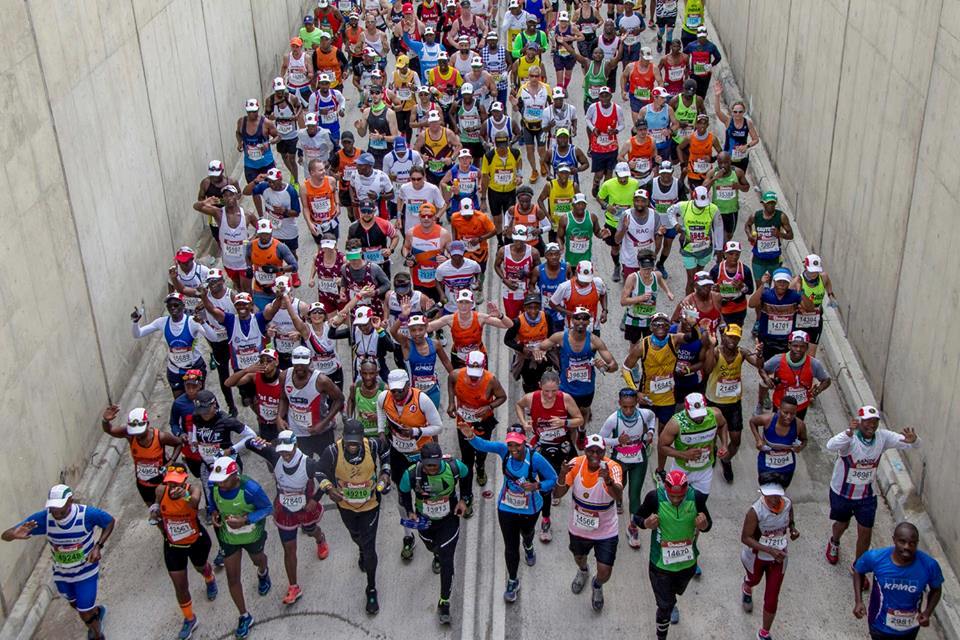
The start of 2019 Comrades from Durban (This photo was downloaded from the event’s Facebook page and is being used here for representation purpose)

Edward Mothibi wins 2019 Comrades, Gerda Steyn sets new course record

Deepak Bandbe is fastest among Indians this year. Satish Gujaran completes his tenth Comrades, gets green number

Edward Mothibi of South Africa won the 94th Comrades Marathon that commenced from Durban on Sunday (June 9).

It was his first win at the event.

He finished the race in five hours, 31 minutes and 33 seconds. He had finished in fourth position in the 2018 edition of the Comrades Marathon.

Gerda Steyn, also of South Africa, broke the women’s record with a timing of 5:58:53 hours in the uphill version of the race. Steyn finished seventeenth overall. The previous record timing of 6:09:23 was set by Russia’s Elena Nurgalieva thirteen years ago.

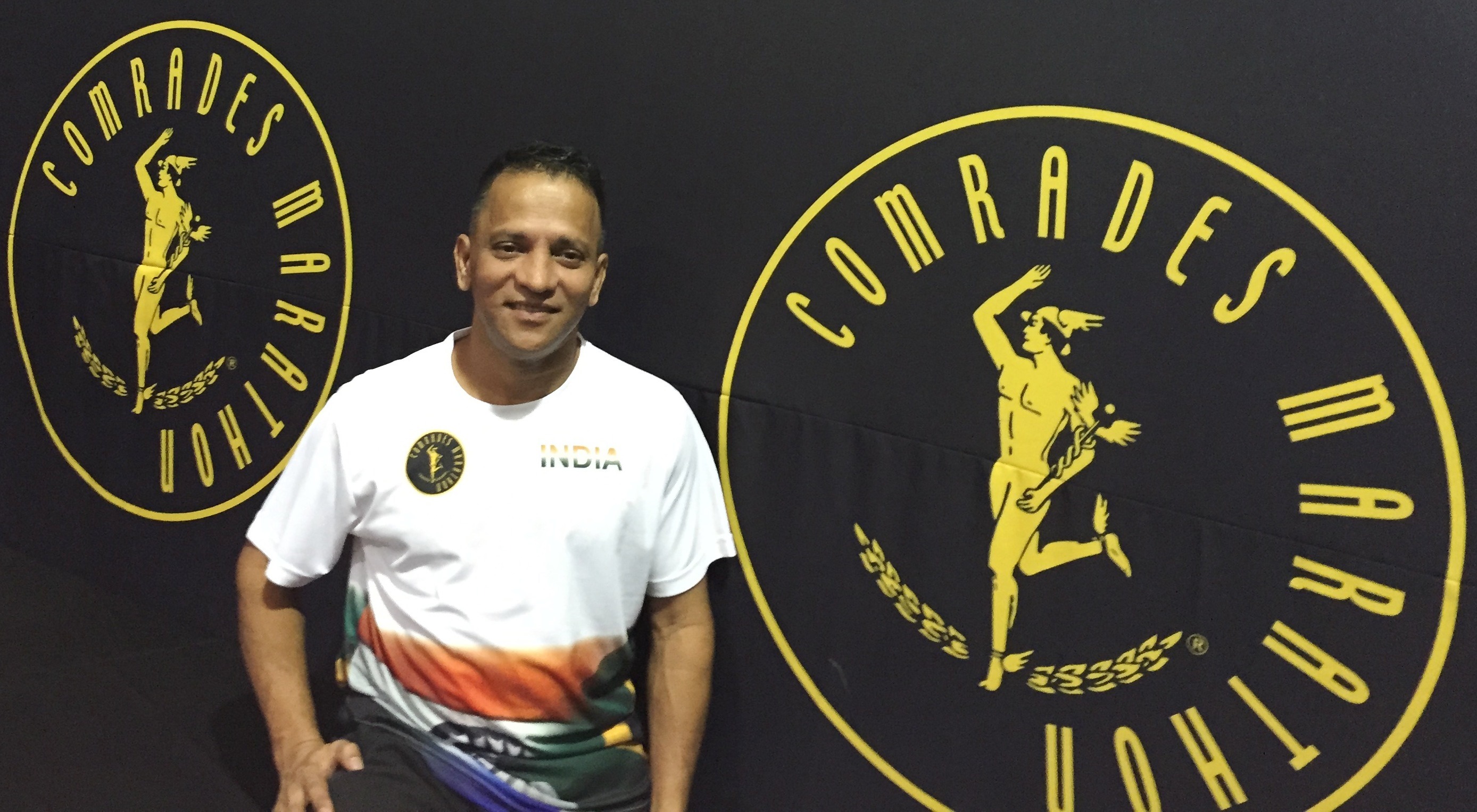
Mumbai-based Deepak Bandbe was the fastest among runners from India. He covered the 86.83km-distance of the race in 7:43:34 hours. Satish Gujaran, also from Mumbai and running his tenth Comrades completed the race in 10:30:24. He became the first runner from India to secure a green number (permanent bib number), a tradition at Comrades recognizing those running the race ten times.

Bongumusa Mthembu, winner of the 2018 edition of the race, finished second this year with timing of 5:31:58. Nao Kazami ended up in third position with timing of 5:39:16. Among women, Alexandra Morozova (6:17:40) came in second while Caitriona Jennings (6:24:12) finished third.

Everest summit claims questioned

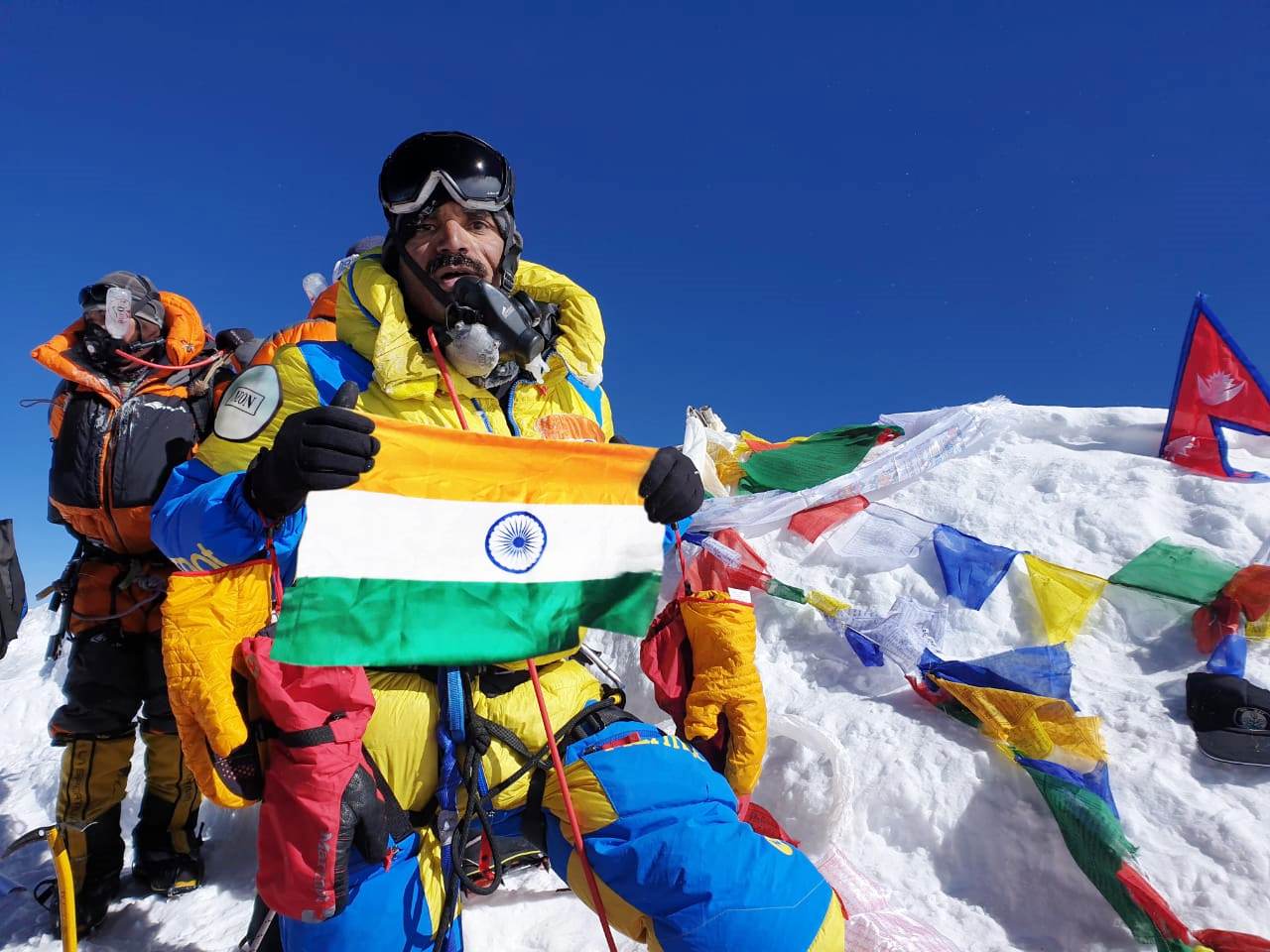
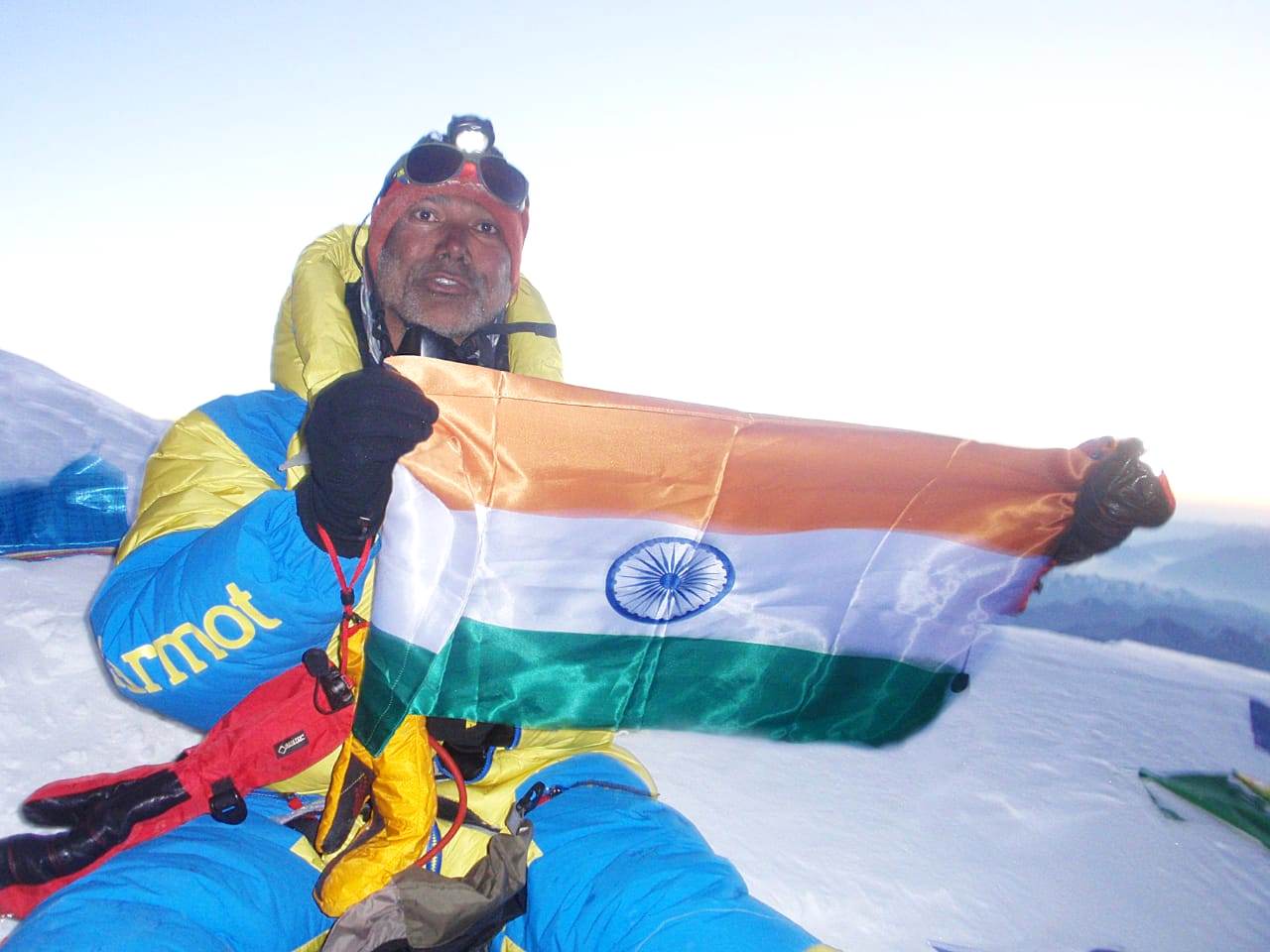
The summit claims of three Indians who were on Everest in the 2019 climbing season have come under the scanner.

The Himalayan Times reported on June 10 that its inquiries showed the three climbers – all from Haryana – had only reached Camp III and not beyond. The report also quoted the managing director of Prestige Adventures Pvt Ltd, the company which managed the expedition the climbers were on, as saying the three had not been to South Col this spring season.

A June 12 report in The Print, said that the Nepal government has started an inquiry and asked the three climbers to provide documentary proof of their claimed successful ascent.

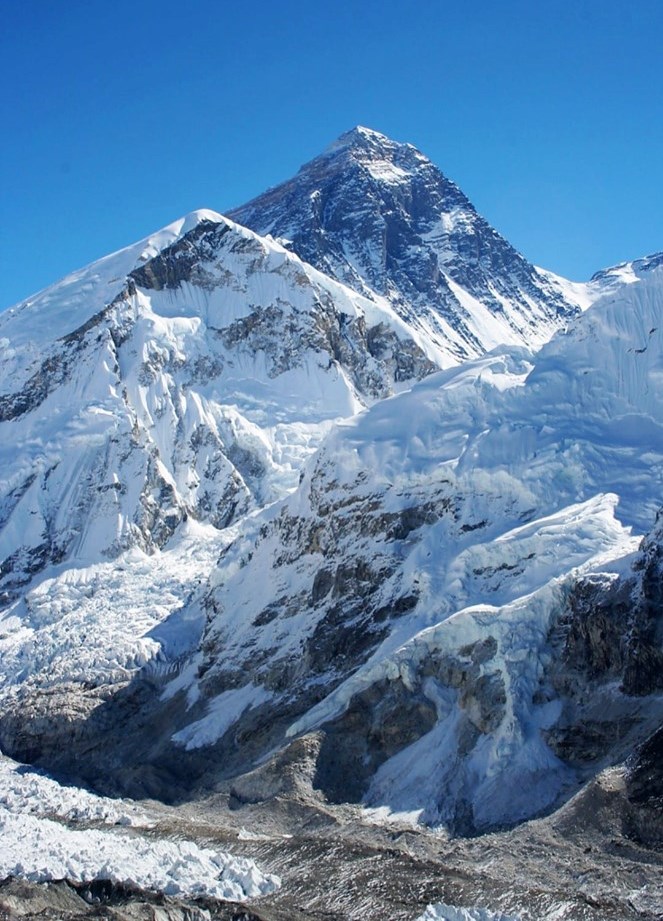
Around two years ago, an Indian couple who claimed to have reached the summit of Everest were found to have faked their claim. For more on Everest and what it has come to mean please read the essay: The World’s Highest Mirror, available on this blog’s list of recent posts. You can also scroll down to access the said article.

Caster Semenya (This photo was downloaded from the athlete’s Facebook page and is being used here for representation purpose only. No copyright infringement intended)

Caster Semenya case: top court orders temporary suspension of IAAF rule

Caster Semenya, South African athlete and current Olympic champion in the women’s 800m who lost her case against the International Association of Athletics Federation (IAAF) in early May, has come in for temporary relief after the Federal Supreme Court of Switzerland ordered the IAAF to suspend its testosterone regulations against her with immediate effect, the international media reported early Tuesday (June 4) morning.

The athlete can now compete in distances spanning 400m to a mile without medication until June 25, by when the IAAF has to respond. In a statement, Semenya thanked the judges for their decision, the reports said.

Under emergent IAAF rules, Semenya, an athlete with differences in sexual development (DSD) was required to take medication to bring down her testosterone level if she wished to continue participating in competitions over distances spanning 400m to a mile. Semenya challenged the IAAF regulation but in early May, the Court of Arbitration for Sport (Cas) ruled in favor of IAAF albeit with reservations. According to a report in The Guardian then, three arbitrators studied the case – IAAF’s policy and Semenya’s appeal against it – for nearly two months. Two of them accepted IAAF’s argument that female athletes with high testosterone level possessed significant advantage in size, strength and power from puberty onward. They felt that IAAF’s policy was reasonable and necessary. A BBC report had mentioned that Cas had “serious concerns as to the future practical application’’ of the regulations. It also said Cas had asked IAAF to consider delaying the application of rules to 1500m and one mile events till more evidence is available.

On May 30, the media reported that Semenya would be taking her case to the Federal Supreme Court of Switzerland. The legal battle between 28-year-old Caster Semenya and IAAF is being keenly watched by the global sports community.

Swimming to be part of school curriculum in Kerala

The media in Kerala has reported that the state plans to make swimming part of school curriculum. Speaking at a state level school reopening festival held at the government higher secondary school in Chembuchira, Thrissur district on June 6, chief minister Pinarayi Vijayan said that the government intended to start a swimming pool in each of the 140 assembly segments of the state. Swimming will be made part of the school curriculum, the report quoted him as saying.

National Inter State Senior Athletics Championships postponed

The National Inter State Senior Athletics Championships scheduled for July 14-17 in Kolkata, has been postponed, the Athletics Federation of India (AFI) informed in a statement.

A fresh date has not been assigned yet.

The postponement has been attributed to the timing of the event against the backdrop of the 2019 IAAF World Championships due in Doha, Qatar in September. Many of the coaches feel, “ the athletes may not be able to repeat their performances in IAAF World Championships 2019 if National Inter State Senior Athletics Championships is conducted as per schedule,” the AFI statement said.

Mountaineers reported missing on Nanda Devi

This incident is being reported using updates. Please scroll down for updates.
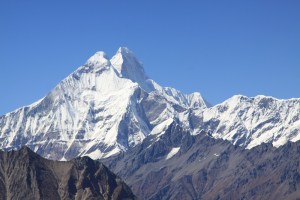
Nanda Devi (Photo: Punit Mehta)

On Saturday June 1, 2019, the media reported that a group of eight climbers including seven foreign nationals, who were on an expedition to Nanda Devi East had failed to return on the appointed date to Base Camp.

Authorities were alerted and a search and rescue team dispatched, the news reports said.

For now, the known facts are that the team had altogether 12 members of which eight – four from UK, two from USA, one each from Australia and India – have been reported missing. A reliable picture will be possible once details are available. Those reported missing (as mentioned in official communication) are expedition leader Martin Moran (UK), John Mclaren (UK), Rupert Whewell (UK), Richard Payne (UK), Ruth McCance (Australia), Anthony Sudekum (USA), Ronald Beimel (USA) and Chetan Pandey, the expedition’s liaison officer from India.

The leader of the expedition, Martin Moran, is a much respected mountain guide. Thanks to his many visits to the Indian Himalaya, he is well known in India including in the Nanda Devi region, where he has led climbs before. A British Mountain Guide since 1985, Moran and his family run Moran Mountain, a mountain adventure company that offers courses, tours, guiding and expeditions in Scotland, Norway, Alps and Himalaya.

Of Nanda Devi’s two summits, the east summit (7434m / 24,390 feet) is the lower one. Unlike the mountain’s main summit, which along with the Nanda Devi sanctuary, is shut to trekking and climbing, the east summit is open to climbers. On May 10, Moran Mountain’s Facebook page posted photos and informed commencement of the expedition to “ Sunanda Devi (7434m) – sister of Nanda and one of India’s toughest.’’ This was followed by pictures on May 11 of the team’s flag-off day at Indian Mountaineering Foundation (IMF), New Delhi. Eleven days later on May 22, it further updated that the Nanda Devi team had reached its “ second base camp at 4870m, their home for the next week. After a recce of the route they will be making a summit attempt on an unclimbed peak at 6477m. ‘’ A previous post indicated awareness of the region having received much snow this past winter and the team being suitably prepared with snow shoes.

In its report on the incident, the Sydney Morning Herald, quoting a senior IMF official, wrote that the expedition’s deputy leader Mark Thomas remained at the second base camp with three others and was in radio contact with those who climbed higher. When he didn’t hear anything from them after May 26, he went up to check and found a single, unoccupied tent and beyond it, evidence of avalanche.

Following the authorities being alerted a helicopter was expected to be pressed into service on Sunday (June 2) morning to assist in the search. One seasoned mountaineer this blog spoke to earlier in the day (ie on June 1) said that the information available so far seemed inadequate and mutually ill-fitting to build a cohesive picture of what may have happened. He advised caution and no jumping to conclusions.

Late night, June 1, British Mountain Guides posted the following message from BMG president Mark Charlton, on their Facebook page: Incident Nanda Devi East: The ‘British Association of Mountain Guides’ (BMG) have been made aware of an incident on or near Nanda Devi East where BMG member, IFMGA Mountain Guide, Martin Moran was leading six clients and an Indian National. The BMG is assisting where possible and is in contact with the Indian authorities. At the moment this is all the information we have as communication is very difficult. We will update this post when more reliable facts have been established.

A while later Moran Mountain put up the following post: On behalf of Moran Mountain, we are working with the authorities and the British Association of Mountain Guides to gather information regarding the Nanda Devi East expedition team. Out of respect for those involved and their families, we will be making no further comments at this time. The BMG will release a further statement as and when more information is available.

Update / June 2: There is no change in status as regards the eight climbers reported missing near Nanda Devi. The four remaining members of the group have been airlifted from their camp near the mountain, to Pithoragarh, the district headquarters.

On the Facebook page of Moran Mountain, the Moran family said (this is an abstract from the larger post): The climbing group had set out to attempt an unclimbed, unnamed summit, Peak 6477m, and the last contact intimated that all was well and a summit bid would be made from a camp at around 5400m.

It is not entirely clear what happened from this point onward or indeed the timeline of events. We do know that a British Mountain Guide who was in the area leading a trekking group, as part of the same expedition, was informed that the climbing group had not returned to base camp as expected. He immediately went on the mountain to search for the missing climbers. There was clear evidence that a sizeable avalanche had occurred on the mountain and it seemed to be on or very near the route that would be taken by the climbing group. The Mountain Guide gave instructions to base camp to alert rescue authorities. The alarm was raised early on Friday morning 31st May.

Today we have been informed by the Indian Mountaineering Federation that an air search by helicopter has revealed the scale of the avalanche but no sign of the climbers, their equipment nor their tents. We are pressing for the search area to be widened and continued until such time as firm evidence is found to ascertain the well being or otherwise of all those in the climbing group.

Update / June 3: In continuing search operations on Monday (June 3) for the eight climbers reported missing near Nanda Devi, aerial photographs clicked by low flying helicopter have revealed five bodies in the snow.

“ We now fear the team may have perished in the avalanche,’’ a senior official of the Indian Mountaineering Foundation (IMF) told this blog Monday evening. Going by the chronology of events as reported in the media, it is now just over a week since the suspected time of mishap. The last contact / conversation with the team, appears to have been on May 25. They were expected to be back at camp on May 26; that didn’t happen. The authorities were alerted on May 31. By evening June 2, media reports quoted authorities as saying the prospects of finding and rescuing the missing climbers, seemed bleak.

Earlier in the day CNN had reported that a helicopter crew spotted a backpack in the snow on the unnamed peak, the climbers intended to attempt. Coupled with signs of avalanche noticed in previous sorties, this had strengthened the view that the climbers were indeed caught in one. The backpack was at an elevation of around 5500m (roughly 18,045 feet). The CNN report quoted District Magistrate Vijay Kumar Jogdande as saying that chances of the climbers surviving are almost zero now. The report also said that adverse weather was hampering search operations.

Monday’s more precise search was possible thanks to four members of the climbing team, who hadn’t ventured up with the others, being airlifted from their camp near the mountain, to Pithoragarh on June 2. The four included Mark Thomas, deputy leader of the expedition, who had gone up to check on his fellow team members upon being informed that they hadn’t returned to camp as scheduled. As per earlier published news reports, Mark had come across an empty tent and signs of avalanche beyond it. The search operation was expected to leverage his insight on potential location of the team and calibrate the search accordingly. Monday’s helicopter sortie had Mark aboard. Also providing inputs was Dhruv Joshi, mountaineer from Almora who had been deputy leader of an expedition to climb Nanda Khat in 2010 and was familiar with the landscape.  For more on the developments of June 3, please try this link: https://shyamgopan.com/2019/06/03/nanda-devi-east-expedition-five-bodies-spotted/

Update / June 8: According to media reports through the week, adverse weather conditions continued to thwart efforts to land a team by helicopter near Peak 6477 to retrieve the bodies. It is likely that the bodies may have become covered in fresh snow. An official who has kept track of the rescue operations told this blog that indications are, the administration has decided to call off the helicopter sorties. Moves are afoot for a team to hike up to where the bodies lay. Meanwhile 3000 kilometers to the south, the monsoon – already delayed – was expected to make landfall on June 8. In the interlinked world of weather, this could have implications on conditions at altitude too.

Update / June 10: The Indian Mountaineering Foundation (IMF) has launched an expedition to the Traill Pass area to recover the bodies of climbers sighted earlier during helicopter sorties.

“ Based on permission received from DM (district magistrate) Pithoragarh, IMF has launched a ground search expedition. Fully equipped 12 member-team is headed for the accident site through Pindari glacier. They are expected to reach the area by Saturday,” a senior IMF official informed Monday (June 10) morning.

For a perspective of the train of events leading to this decision, please look up all the posts (up to June 10) related to the missing climbers, on this blog.

Update / June 14: Media reports quoting the District Magistrate of Pithoragarh said that a 32-member team comprising 11 mountaineers of the Indo-Tibetan Border Police (ITBP) and personnel of the National Disaster Response Force (NDRF) and State Disaster Response Force (SDRF) are also heading to the accident spot to retrieve the bodies. The team left for Munsyari on Thursday (June 13). They are expected to be airlifted to “ Nanda Devi second base camp” on Friday, the reports said.

Mont Blanc (Photo: Dinesh Kaigonhalli)

Mont Blanc climbing rules changed

France has changed the rules governing ascent of Mont Blanc (4808.7m / 15,777 feet), Europe’s highest peak.

The media reported on June 2 that people planning to climb the peak via its normal / standard route will now have to book a room at the one of three shelters on the flanks of the mountain if their itinerary included overnight stay. Climbers caught camping on the route risk two years in prison and a stiff fine, the report said.

Mont Blanc attracts almost 25,000 climbers every year and instances of arguments and flaring tempers among teams have been reported. Campaigns to discourage crowds have not worked. Last year 15 climbers died on Mont Blanc, the reports said.

The change to rules follows a deadly May on Everest in far away Nepal, when 11 people died during the 2019 climbing season. The deaths were attributed in the main to too many climbers on the mountain and traffic jams emerging as a result at high altitude causing prolonged exposure to inhospitable environment and compounding strain to climbers.

Caster Semenya case: IAAF wants provisional suspension of DSD regulations by top Swiss court, reversed

The International Association of Athletics Federations (IAAF) has requested the Swiss Federal Tribune (SFT) to reverse its earlier order allowing provisional suspension of IAAF regulations pertaining to athletes with differences in sexual development (DSD) applied on South African athlete, Caster Semenya.

In a statement dated June 25, posted on its website, IAAF informed that it has submitted its response on provisional measures to the SFT, explaining why its DSD regulations should remain in force during an appeal by a single athlete (the appellant) following a “superprovisional order” issued by the SFT and received by the IAAF on 4 June 2019.

According to the statement, IAAF has specifically requested (1) reversal of the order to the IAAF to super-provisionally suspend the implementation of the DSD Regulations in respect of the appellant (2) dismissal of the appellant’s application to suspend the implementation of the DSD Regulations in respect of the appellant pending the outcome of the appeal.

“ The IAAF fully respects each individual’s personal dignity and supports the social movement to have people accepted in society based on their chosen legal sex and/or gender identity. However, it is also committed to female athletes having the same opportunities as male athletes to benefit from athletics, be that as elite female athletes participating in fair and meaningful competition, as young girls developing life and sport skills, or as administrators or officials.

“ This requires a protected category for females where eligibility is based on biology and not on gender identity. This crucial point was accepted and emphasized by the CAS in its 30 April 2019 decision to uphold DSD regulations. To define the category based on something other than biology would be category defeating and would deter many girls around the world from choosing competitive and elite sport after puberty.

“ The IAAF will continue to defend its DSD Regulations and the CAS Award in the appeal proceedings before the SFT, because it continues to believe in equal rights and opportunities for all women and girls in our sport today and in the future,’’ the statement said.

(The authors, Latha Venkatraman and Shyam G Menon, are independent journalists based in Mumbai.)

THE MAHAJAN BROTHERS AND MAY 22 ON EVEREST

Everest (This photo was downloaded from the Facebook page of Mahajan Brothers and is being used here for representation purpose.)

The Sea to Sky Expedition by the Nashik based-Mahajan brothers concluded as planned with a successful ascent of Everest. But it came at a cost. This is their story:

Early morning May 22, 2019, Dr Mahendra Mahajan reached the summit of Everest.

“ I was among those arriving there early in the day. So I was spared much of what unfolded on the peak this season,’’ he said. But he committed a mistake; a small one in anyone’s eyes, except that at high altitude, consequences – especially handling them – can be challenging. When taking photos at the planet’s highest point, he briefly pushed his glacier goggles on to his forehead. It wasn’t for long as in the extreme cold of the summit, his cell phone as well as a small digital camera he carried, clicked only a few pictures before their battery died. When he returned the goggles to his eyes he found that the glass surface was coated in ice, too tough to remove by rubbing. Goggles on, he couldn’t see a thing. So he switched to a pair of ski glasses that he had carried as spare. They were not the ideal replacement. They were not designed for the glare of punishing altitudes; their bulky construction was also such that climbers who value being able to see their feet were denied that by intervening frame. He had to be careful. By the time he set out for Camp 4 from the summit, Mahendra could see the first signs of what had been generally apprehended – a traffic jam of climbers close to the summit of Everest.

When Nashik-based Dr Hitendra Mahajan and Dr Mahendra Mahajan – aka Mahajan brothers – announced their Sea to Sky expedition, it was regular adventure engagingly packaged. They were accomplished cyclists; they were the first Indians to complete Race Across America (RAAM), they had cycled the full length of India’s highway system called Golden Quadrilateral. More recently, Mahendra had set a record for the fastest passage by a cyclist on the Kashmir to Kanyakumari route. Sea to Sky had shades of Goran Kropp to it. In 1996, the Swedish adventurer and mountaineer had cycled alone from Sweden to Nepal, climbed Everest without oxygen and cycled back part of the way. The Mahajan brothers (among the two, Hitendra is a trained mountaineer) planned a bicycle trip from Mumbai to Kathmandu and then, a guided ascent of Everest.

Dr Hitendra Mahajan on the summit of Everest (Photo: courtesy Dr Mahendra Mahajan)

They commenced their bicycle ride from Mumbai on March 31, 2019. They cycled in relay pattern, taking turns to be on the road. A reason for this was that their expedition also included work towards spreading awareness about cardiopulmonary resuscitation (CPR). The brothers covered the distance from Mumbai to Kathmandu in about a week. They reached the Nepali capital on April 7. A day after reaching Kathmandu, the brothers took the flight to Lukla.  The Everest attempt was as part of a team managed by Kathmandu-based Pioneer Adventure. The team included Everest aspirants from India, Pakistan, USA and Singapore. They commenced their walk-in to Everest Base Camp (EBC) from Lukla. Along the way, they climbed Island Peak (20,305 feet). After the walk-in and the trips up Everest (highest point reached doing so being Camp 3) they descended to Debouche set amid green surroundings at lower altitude to rest and recover.

According to Mahendra, the brothers stayed in Debouche for 4-5 nights following which, they trekked back slowly to EBC. Another 4-5 days were spent at EBC. A concern during this entire period was when the summit window would be. You need clear days with manageable wind speed. In 2018, there had been a week or so of such weather. This time, the weather seemed fickle. To complicate matters, from April 26 to May 5, Cyclone Fani, the first severe cyclonic storm of the year was detected and tracked en route to India. It had its landfall in Odisha and after visiting Bangladesh, saw its remnants dissipate over Bhutan. All this was away from Nepal but in the world of weather, enough to call neighborhood. For the 2019 climbing season, Nepal had issued around 381 permits. A few hundred climbers, guides and support staff were due to ascend Everest. At EBC, people tuned in to multiple weather forecasts. Eventually, Mahendra said, the period around May 22-23 was decided as summit window. He recalled May 24 being cited as not good. Everyone jumped on to the May 22 / 23 bandwagon. That, he said, is how the bunching of climbers witnessed in 2019 commenced. The climbs by various teams couldn’t be spread out. The team the Mahajan brothers were on commenced its trip from EBC to higher camps around 2 AM on May 18. “ Our first taste of what could potentially happen came at the Khumbu Icefall, where the glacier is heavily crevassed. At sections where ladders were few, queues occurred. If it was a single file it would have been alright. Problem was – it was managed a bit badly. So at times, there was more than one line and resultant delay. At one big ladder there was a line of 50-100 climbers,’’ Mahendra said.

Dr Mahendra Mahajan on the summit of Everest (Photo: courtesy Dr Mahendra Mahajan)

The night of May 18 and 19, they spent at Camp 2. From there it was six to eight hours to Camp 3. “ Half of this section is a gradual climb, the rest is fairly steep,’’ Mahendra said. At Camp 3, oxygen bottles were used while sleeping at night. The regulator was set to a gentle flow. From Camp 3 it was an eight hour-climb to Camp 4 at around 8000 meters. “ We reached it on the afternoon of May 21. Same night at around 7 PM we set off for the summit,’’ Mahendra said. The brothers started out together but on a mountain, everyone drifts to their respective pace. Mahendra, who is the younger of the Mahajan brothers, went ahead with his guide. Hitendra and his guide followed, the gap between the two brothers slowly growing. After about four to five hours of ascending the peak, Mahendra reached the area called Balcony. There was slow moving traffic here. “ It was just slow, that’s all; people were beginning to tire. Else there was nothing complicated. Most people were glad to continue so. A handful of climbers, who still had much energy in them, would overtake and go ahead,’’ Mahendra said.

Everything was fine till South Summit. Past this point, the nature of the route changed. It became significantly narrow. Up to South Summit, although climbers were many, a sense of bunching wasn’t felt except at occasional bottlenecks. From South Summit onward, through Hilary Step and on to the actual summit of Everest, the narrow ridge was invitation for bunching. The horizon was just warming up to light as Mahendra approached the summit. “ I had to pause due to clustering of climbers only at Hillary Step. Otherwise everything was under control,’’ Mahendra said of his passage to the summit. But photos taken, as he began his descent to Camp 4, a line of climbers was clearly manifesting.

Tired and coping with altitude, the climbers moved slowly. Complicated tasks are challenging in this state. So, few tried to get past others. Doing so requires clipping in and out from fixed ropes. The queue moved slowly. Then it ground to a halt. “ At this stage there was no co-ordination. The whole line came to a standstill,’’ Mahendra said. A climber who was behind him in the queue asked if he could move past Mahendra and go ahead. Doing so, he negotiated his way across a patch of terrain Mahendra evaluated as unsafe. Seeing this, others started pressuring Mahendra too to proceed and cross the risky patch; it would be a move executed without proper anchors and safety. “ I too tackled that portion and became free of the bottleneck,’’ Mahendra said. But fresh trouble was setting in. Exposed to the environment on the summit when he removed his goggles and inadequately protected from the glare later because he was wearing ski glasses, his eyes were becoming painful. At about 1.30 PM in the afternoon, Mahendra reached Camp 4. His guide wanted him to carry on further down but he was tired. More important he wanted to wait for Hitendra, who he had last seen going up, while Mahendra was already descending. Hitendra had asked him if he was faring alright with his glasses. About an hour into his stay at Camp 4, Mahendra developed severe burning sensation in his eyes. “ My eyes were very painful and watery. I almost cried from the discomfort. It was the most painful night of my life. Adding to the stress was – I had no idea what happened to Hitendra,’’ he said.

Dr Hitendra Mahajan (left) and Dr Mahendra Mahajan. This photo is from days prior to the summit push (Photo: courtesy Dr Mahendra Mahajan)

Hitendra was in the thick of the traffic jam and the impact it wrought. His case too was a series of cascading events commencing in a minor detail. When he started out for the summit, he gave his spare goggles to a Sherpa having none. Moving at a gentler pace than Mahendra, by the time Hitendra got to the upper parts of the summit push, traffic jam had set in. It meant slow progress and that much more time spent in conditions hostile to the human body. While he was otherwise alright, the longer time spent so meant his goggles started to ice up. He must have removed them and tried to rub off the ice. “ By the time he reached the summit, Hitendra was totally snow-blind. He couldn’t see a thing,’’ Mahendra said. Then their colleague on the same team, Don Cash, a client from the US, collapsed and died. (On May 24, Time magazine reported: While Sherpa guides with the company tried to keep him alive through CPR and by raising his oxygen pressure, Cash was unable to stand up or walk. As they tried to drag Cash down to a camp near Hillary Step, he fainted again and could not be revived; Pioneer Adventures said in a statement.) Hitendra’s guide asked him if he would be able to descend with assistance. He said yes. “ That was how he began coming down from the summit. He couldn’t see anything but the Sherpa told him where to keep his feet and helped him climb down. Noticing the situation, Don Cash’s guide also pitched in to assist. Despite all this, there were instances when Hitendra, unable to see, slipped and fell. His down-suit got torn. Mahendra took approximately seven hours to reach Camp 4 from the summit. Hitendra took 19 hours. From Camp 4 to Camp 4, Hitendra’s summit day spanned roughly 29 hours, Mahendra said.

View from the summit. The glowing white ridge in front is that of Nuptse; the dark triangular shadow to its right is the shadow of Everest (Photo: courtesy Dr Mahendra Mahajan)

At Camp 4, the tired climbers were lucky in one aspect – they had adequate bottled oxygen. In situations like this that is a life saver. Next morning by around 6-7 AM, they started the descent to lower camps. “ By now I was a bit rested and my eye pain was 50 per cent gone. But Hitendra, having arrived late, hadn’t had much rest. He was still blind seeing people as only blurred spots,’’ Mahendra said. Twelve hours later, the brothers reached Camp 2. They stayed the night there. By next morning, more damage was becoming visible – all ten fingers on Hitendra’s hands were shades of blue from frostbite. On the bright side, his vision was beginning to improve slowly. The brothers took a chopper from Camp 2 to EBC and another from there to Lukla, where they visited the local primary health center. Then they flew to Kathmandu and onward to Delhi. May 26, late night, they reached Nashik. At the time of writing, Hitendra was recuperating in hospital. In varying degrees both brothers have suffered minor injuries on their retina. “ We are hopeful everything will heal,’’ Mahendra said.

Did they anticipate any of this when Sea to Sky kicked off from Mumbai?  “ We knew the climb wouldn’t be easy. But I wish I was warned about smaller details – like not removing one’s goggles. There were guides around who weren’t wearing goggles or kept taking them off. You see that and think you also can do it. In retrospect, if there is one advice I will give anyone venturing to climb Everest, it will be: don’t take off your glasses. I would also add that people should be flexible and not be insistent or egoistic about gaining the summit. Beyond South Summit – that is where I found the problems to be. If the situation is bad and it seems wise to turn back from there, you should,’’ Mahendra said.

(The author, Shyam G Menon, is a freelance journalist based in Mumbai. This article is based on a conversation with Dr Mahendra Mahajan.)           

INDIAN PARTICIPATION IN COMRADES UP YEAR AFTER YEAR

This photo was downloaded from the Facebook page of Comrades Marathon and is being used here for representation purpose. No copyright infringement intended.

Over 200 runners from India are expected to participate in the Comrades Marathon in South Africa on June 9, 2019.

Indian participation at the event has been rising every year. In the 2018 edition of the ultramarathon, over 160 Indian runners had registered to participate.

Promoted as the `Ultimate Human Race,’ Comrades Marathon is an ultramarathon of 87-89 kilometers run between the cities of Durban on the coast and Pietermaritzburg at an elevation of 1955 feet.

The race, which draws runners from several countries, was first held in May 1921. The race alternates each year between uphill and downhill and between the two cities mentioned.

This year’s edition is an uphill run with runners having to complete a total distance of 86.83 kilometers in a time of 12 hours with six timing cut-offs in between. The race will start at the Durban City Hall and end at Scottsville Racecourse in Pietermaritzburg, the event’s Instagram post said.

This year’s overall registration is higher at 25,000 runners compared to 20,000 runners last year.

Comrades Marathon has been gaining popularity among Indian recreational long-distance runners over the past few years. “ Event support is good. It is a very well organized event. This time around 210 persons have registered to run from India,’’ Satish Gujaran, Mumbai-based ultramarathon runner, said.

Satish will be running the Comrades race for the tenth time in a row this June. Once he completes his tenth Comrades, he will be awarded a Green Number. Green Number runners are allowed to retain their Comrades Marathon bib number in perpetuity.

Satish Gujaran (Photo: courtesy Satish)

According to him, training for the ultramarathon is very important. Training starts in February with four key long runs – 42k in February, 56k in March, 65k in April and another 56k in May before the tapering phase commences.

Satish first ran the Comrades Marathon in 2010. Since then, he has not missed running the iconic ultramarathon a single year. “ In the early years it was difficult to train for Comrades because there were not many runners. Training for Comrades needs the support of other runners,’’ he said.

Given the rising number of runners, planning training runs for Comrades Marathon has become easy. “ Some 100 runners participate in training runs nowadays,’’ he said.

The crowd support, cheering, volunteering and the carnival-like atmosphere in South Africa prompts runners to come back time and again to run the race, Satish said.

“ You will find people with their families lining up all along the route to cheer and support runners,’’ he said.

For entry to Comrades you have to meet specified time limits. If it is a marathon that you participated in earlier and wish to submit as proof of eligibility, it must meet the cut-off of 4:49:59 required to qualify. For 48-50k it is 5:49:59; for 52-54k it is 6:24:59, for 56k – 6:44:59, for 60k – 7:19:59, for 64k – 7:54:59, for 68k – 8:29:59, for 80k – 10:24:59, for 90k – 11:59:59 and for 100k – 13:29:59. These time limits are as of 2019. The comparatively low entry barrier for Comrades has also helped grow the number of runners from India year after year, observers said.

Bengaluru-based runner and coach, Ashok Nath will be attempting his fifth Comrades race this time. He resorts to a lean and a short training program that entails running long distances not more than 40k. “ If you approach Comrades smartly by jogging and walking, you can complete the race without much difficulty,’’ he said.

Ashok Nath (photo: courtesy Ashok)

According to him, an ultramarathon has to be approached at two levels – physiological and psychological. “ If you cannot foresee running the distance in 11 hours you should not attempt running Comrades. That’s because you need to keep at least one hour buffer as anything can go wrong in the duration of the run,’’ he said.

He also suggested the option of doing a 12-hour bicycle ride as part of the training.

“ When I first ran the Comrades Marathon in 2011, there were all of seven runners from India attempting it. This year, there are over 200 runners participating,’’ said Dilip Patil, a Mumbai-based recreational runner.

He has completed Comrades seven times. He registered for the 2019 edition but will not be participating as he is nursing an injury.

According to him, there are three milestones to achieve at Comrades Marathon – you run once; run both the up version and the down version, run the event 10 times to get the green number.

“ Once you go there and see the environment you fall in love with the event. It is a test of physical and mental fitness,’’ Dilip said.

(The author, Latha Venkatraman, is an independent journalist based in Mumbai.)