2020 TOKYO OLYMPICS / VENUE FOR MARATHON AND RACE WALK FINALIZED

Illustration: Shyam G Menon

Sapporo Odori Park in Hokkaido will be the venue for the marathon and race walk events of the 2020 Tokyo Olympics.

“ The International Olympic Committee (IOC) and the Tokyo Organising Committee of the Olympic and Paralympic Games (Tokyo 2020) today announced that Sapporo Odori Park in Hokkaido has been approved by the IOC as the venue for the marathon and race walk events at the IOC Executive Board meeting held today in Lausanne, Switzerland. This followed confirmation from World Athletics,’’ an official statement dated December 4, 2019, available on the website of IOC, said.

According to it, Sapporo Odori Park has been used in the past as a venue for the Hokkaido Marathon, giving the local authorities considerable experience in operating major events in this area. It is a popular spot for tourists and local residents; it hosts a variety of events throughout the year. It is a large open space of around 7.8 hectares in the center of Sapporo City, featuring beautiful lawns, flower beds and trees.

The park was chosen also because its layout allows both the marathon and race walk events to be held at the same venue, while the topography of the surrounding area allows for the creation of exciting competition courses. At Games time, temporary facilities will be constructed at the park to support operations.

The statement said that IOC, World Athletics and Tokyo 2020 agreed on one and two kilometer-loops for the race walk and a 20km loop course for the first stage of the marathon, leaving as legacy a half-marathon course which can host a future annual event. World Athletics and Tokyo 2020 will continue their discussions on the second half of the course and will conduct a site inspection in order to reach a mutual decision on overall operations by mid-December, the statement said.

The competition schedules have also been revamped to facilitate the support of NOC officials and coaches to the athletes, as Sapporo is located 800km to the north of Tokyo. The marathon and race walk events are now scheduled to be held on four consecutive days, from 6 to 9 August. The revised schedule is as follows:

6 August / 4.30 p.m. Men’s 20km race walk

7 August / 5.30 a.m. Men’s 50km race walk

7 August / 4.30 p.m. Women’s 20km race walk

8 August / 7.00 a.m. Women’s marathon

9 August / 7.00 a.m. Men’s marathon

The statement quoted the Chair of the IOC’s Athletes’ Commission, Kirsty Coventry, as saying, “ Athletes’ health and well-being are always at the heart of our concerns, and the decision to move the marathon and race walk events to Sapporo shows how seriously we take such concerns. We also want the Olympic Games to be the platform where athletes can give once-in-a-lifetime-performances, and this new venue ensures that they will have the conditions to give their best. I would like to thank the Tokyo 2020 Organising Committee, the local authorities and World Athletics for confirming this new venue so quickly, in order to give the athletes as much preparation time as possible. I look forward to seeing the marathon and race walk athletes compete in Sapporo in front of a passionate crowd next August.”

Tokyo 2020 CEO Toshiro Muto commented, “ We appreciate that, through the support of so many people, Sapporo Odori Park could be approved as a venue so quickly following the decision to move these events. With less than eight months to go until the opening of the Tokyo 2020 Games, Tokyo 2020 will continue to work closely as one team with all the parties involved in their preparation.’’

It was in mid-October that the IOC first announced plans to move the Olympic marathon and race walk events to Sapporo, the host city of the Olympic Winter Games 1972. The move to Hokkaido, the northern-most prefecture of Japan, will mean significantly lower temperatures for the athletes during the Olympic Games. In Sapporo, temperatures during the Games period are as much as five to six degrees centigrade cooler during the day than in Tokyo, an official statement issued then had said. In era of climate change, thermal stress has become a subject of concern for endurance sports staged outside the controlled ambiance of stadiums. It may be recalled that heat had taken a terrible toll on participants for the marathon and race walk events at the 2019 World Athletics Championships in Doha, earlier this year.

(The author, Shyam G Menon, is a freelance journalist based in Mumbai.)

BENGALURU BAGS TWO INTERNATIONAL ULTRA-RUNNING CHAMPIONSHIPS

Illustration: Shyam G Menon

IAU approval for bids submitted, received.

The 2020 IAU 24H Asia and Oceania Championships and the 2021 IAU 100 km Asia and Oceania Championships have been allotted to India, International Association of Ultrarunners (IAU) said in a statement dated December 4, 2019, available on its website.

“ We are very pleased to announce that the 2020 IAU 24H Asia and Oceania Championships and the 2021 IAU 100 km Asia and Oceania Championships were granted to Bengaluru, India. The 24-hour Championships will take place on 18th – 19th July 2020.  The 100 km event is scheduled for September 2021 (final date to be confirmed).

“ The IAU, Athletics Federation of India (AFI) and NEB Sports (responsible for the race organisation) invite all Asia and Oceania Federations to send their Athletes to the events. The GIS and Invitations will be send in due time. It is our expectation that this Championship will be the starting point for a new stage in the development of ultra-distance in the region. India has never held an international ultra-distance championship organised by IAU,’’ the statement said.

“ We are delighted to take our next two Asia & Oceania Championships to India. India sent their first team to the IAU Trail World Championships in 2017 and has quickly risen in the world ultra rankings both on trails and the roads. Ultrarunning is quickly growing on the subcontinent and we are excited to further advance our sport in the region by bringing our continental champs to the area. I thank the Athletics Federation of India and the team of NEB Sports for submitting very good bids and I am confident that these will be two outstanding championships,’’ IAU president, Nadeem Khan has said.

“ It is our pleasure to welcome the International Ultra Runners for such a prestigious event hosted by AFI in India,” Nagaraj Adiga, CMD, NEB Sports was quoted as saying in the statement.

Bengaluru, the capital of India’s Karnataka state, is located on the Deccan Plateau at an elevation of over 900 m (3000ft) above sea level. Compared to other big cities in India, it has a relatively moderate climate. IAU’s decision follows a site visit to Bengaluru some months ago.

(The authors, Latha Venkatraman and Shyam G Menon, are independent journalists based in Mumbai.)

LIMITLESS

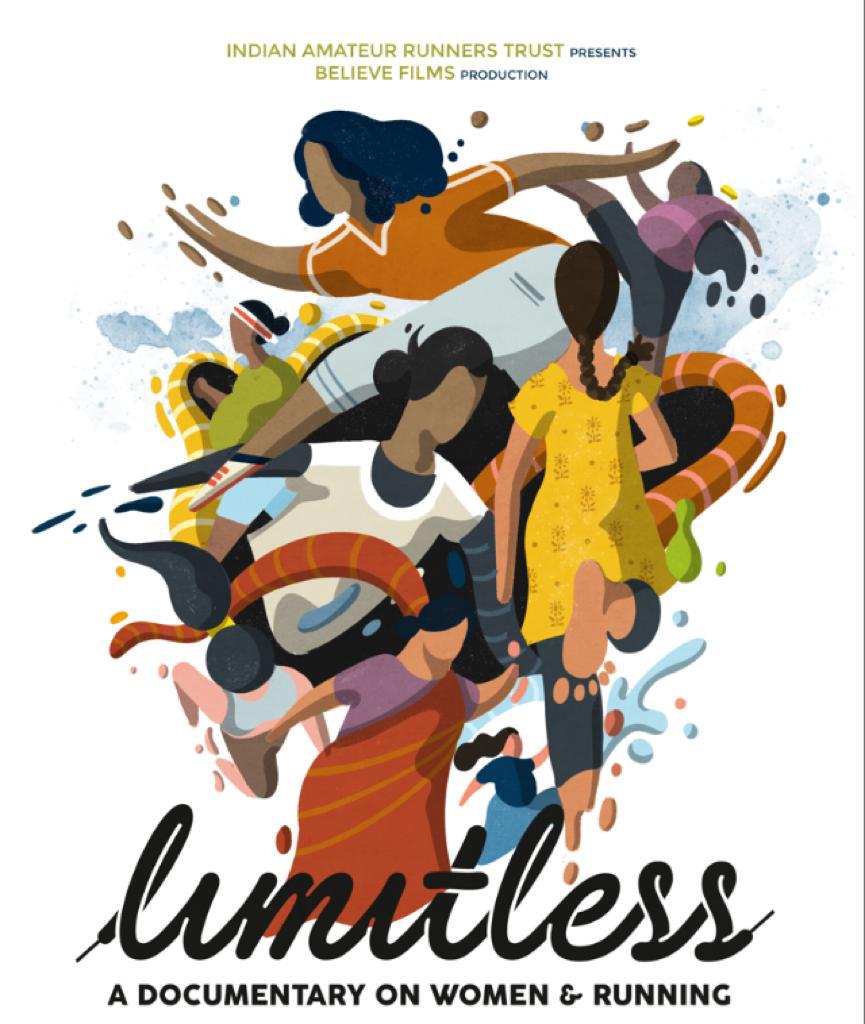
Limitless; film poster

Every morning you see people running. Seen as movement, it is near similar. As story, each runner is different. Limitless, a film about women and running, chronicles a few of these stories. We spoke to some of the amateur runners featured in it and the team behind the film.

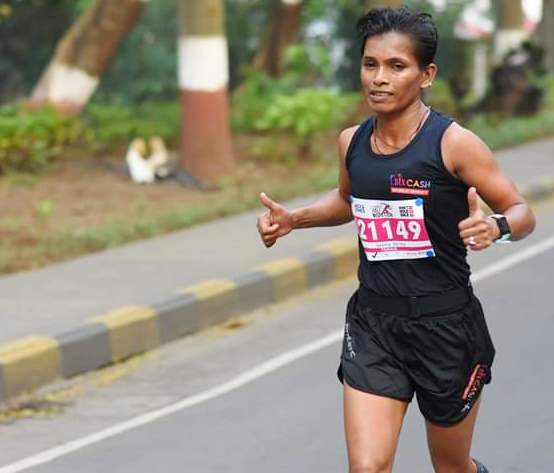
In February 2019, Seema Verma participated in the 50 kilometer-race at Tata Ultra Marathon in Lonavala, near Mumbai. She finished third in her age category of 18-44 years.

Currently a resident of Nallasopara, Seema, 37, was left to fend for herself by her husband. He deserted her. She worked as a domestic help for several years eking out a living for herself and her son. In the early days, she had to lock her toddler son at home and go to work. In the documentary film Limitless, she breaks down as she reminisces about those traumatic days.

The film (currently available on Netflix) features the stories of eight women and their foray into running. Seema is one of them. She started running in 2012; around the same time, she also started learning karate. Her employer introduced her to the concept of marathon.

She took to running seriously and over the years has managed to get podium positions in some of the races that she participated in. She has now stopped working as a home worker and focuses on training for middle-distance and long-distance running. She is currently sponsored by EbixCash World Money. The prize money that she earns from running races helps supplement her income.

Seema Verma (Photo: courtesy Seema)

Going ahead, she was slated to run the 2019 edition of Vasai Virar Mayor’s Marathon and the 2020 edition of Tata Mumbai Marathon. She is on the constant lookout for running events where the possibilities of podium finish are high.

Kolkata-based Anuradha Dutt started running in 2011. “ Running is the best thing which happened to me after our son came into our lives. It keeps me positive, sane and most importantly it has made me fearless,’’ she said. Encouraged by her husband, she was one of the early women in town to take to wearing sports bra and shorts for running. Women would often come up to her and compliment her for her fit body and attire. “ A couple of years ago at a race in Mumbai an unknown lady came up to me at the finishing line and praised me for carrying my stretch marks so gracefully,’’ she said.

Anuradha wants to train harder and ensure that she stays injury free in the process. She is the Project Co-ordinator of Interlink Calcutta, an institution for the differently abled. “ Running is a form of therapy for differently abled students and more students taking to running keeps them positive and strengthens their self-belief,’’ she said.

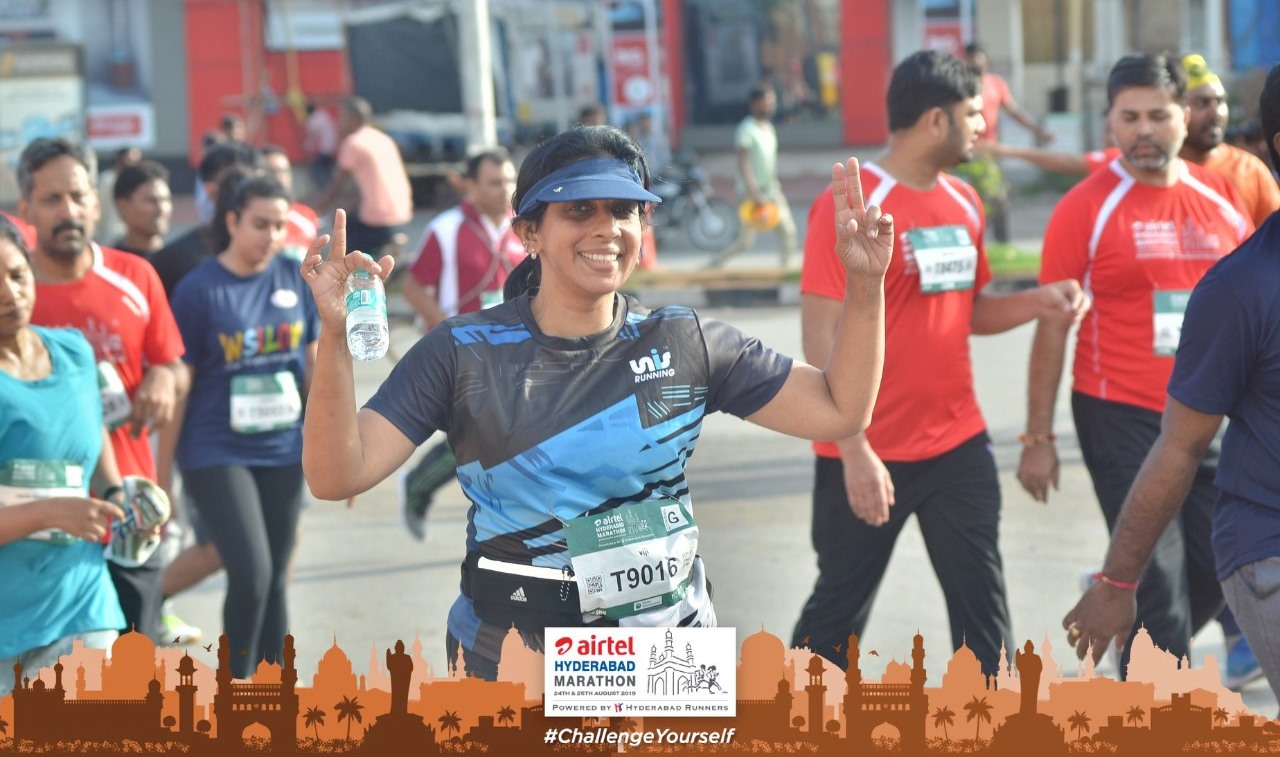
Viji Swaminathan, a Chennai resident, was worried about her weight, which led to confidence issues. “ I weighed over 100 kilograms. I decided to start walking. While walking I would run from one lamppost to the next and slowly got into running,’’ she said. Running was the best thing that happened to Viji, a classical dancer. She was never into sports. Her first running event was Bengaluru 10K, held in May 2012. Two months later, she participated in Airtel Delhi Half Marathon (ADHM).

Viji Swaminathan (Photo: courtesy Viji)

“ My best running years were during 2012-2014. After 2015, I have been plagued by injuries,’’ she said. Nevertheless, running is an integral part of her life now. She also has a fitness group, UNIS (Unleash your Inner Strength) Running, aimed at a lifestyle focussed on being fit.

Anuradha and Viji are among the other women featured in the documentary film, Limitless, which showcases stories of women from varying backgrounds; the challenges and triumphs they faced during their foray into running. The other woman runners featured in the documentary are Karishma Babbar, Mandira Singh, Monica Becerril Mehta, Sharada Venkataraman and Saloni Arora.

Limitless was conceptualised and funded by IART (Indian Amateur Runners Trust). The finance for the film was arranged through an informal crowd-funding approach. IART put out a call across India to women to write in their stories about running. Women from across the country wrote in to share their experiences and these were curated in a manner that showcased a diverse mix of stories from different cities and socio-economic backgrounds, said Vaishali Kasture, amateur runner, corporate executive and trustee of IART.

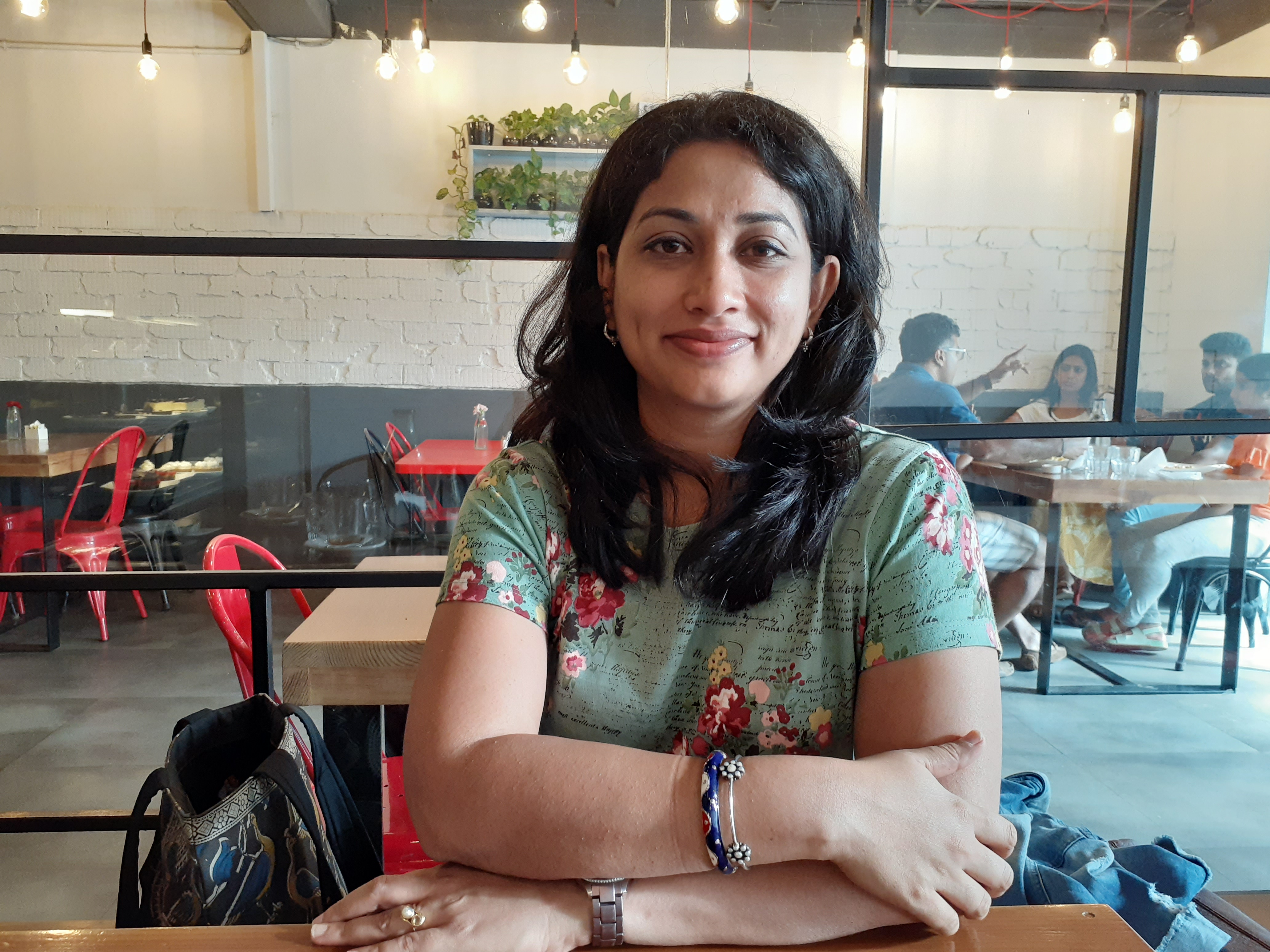
Vrinda Samartha (Photo: Latha Venkatraman)

“ Women face a lot of constraints and challenges in everything, especially in running. Every time a woman gets out on a training run, she has to manage many things on the home front – plan food, manage school-going children or adolescents and sometimes elderly parents, not to mention – manage their own employment,’’ said M.S. Dileepan, amateur runner and trustee of IART. Shooting the film was a logistics challenge as the team had to work on a shoe-string budget with hired equipment. “ Each of the shooting schedules had to be completed in a limited time,’’ Vaishali said.

IART did most of the work for the production and exhibition of the film, said Ashok Nath, Bengaluru-based running coach and trustee of IART. The trust arranged for all approvals, organised fall film premiers and media meets. The production work was assigned to Believe Films, a film production house. The film has found fresh momentum after its debut on Netflix in October this year, its director Vrinda Samartha said.

(The author, Latha Venkatraman, is an independent journalist based in Mumbai.)

DIAMOND LEAGUE: YOHAN BLAKE SAYS NEW FORMAT RISKS DAMAGING ATHLETICS

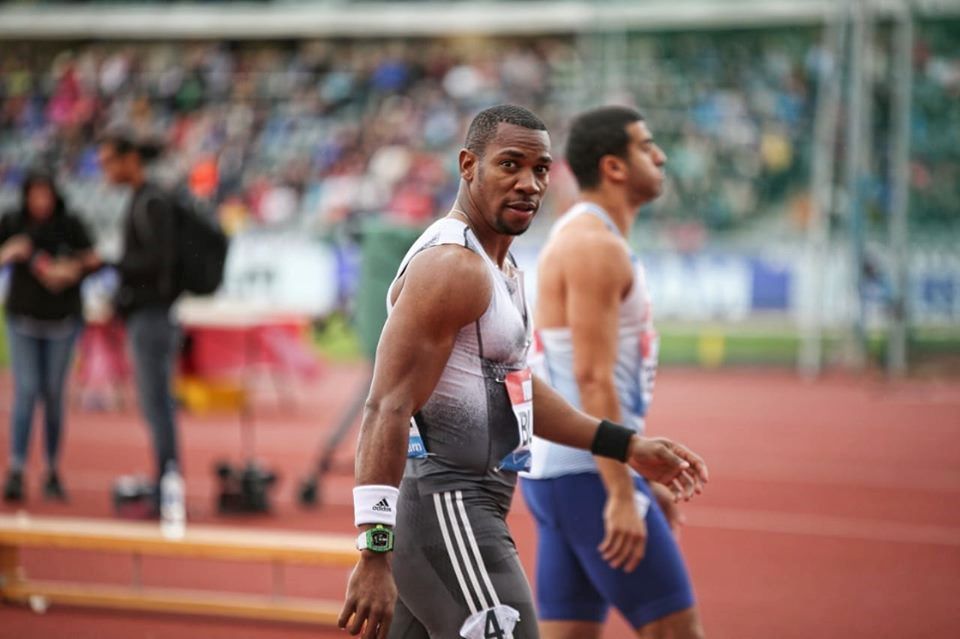
Yohan Blake (This photo was downloaded from the athlete’s Facebook page and is being used here for representation purpose. No copyright infringement intended)

Diamond League is just an example. As broadcast begins to shape the contours of sport, there is introspection for the media also to do.

The ongoing controversy about the Diamond League’s exclusion of certain disciplines found fresh fuel with ace Jamaican sprinter Yohan Blake pointing out that the move risked damaging athletics.

At a press conference in Mumbai earlier this week, he pointed out that the omission will impact athletes’ livelihood. According to reports published in the Indian media, Blake said (with reference to the decisions made regarding the Diamond League) he was unsure if Sebastian Coe, president, World Athletics (formerly International Association of Athletics Federations / IAAF) was trying to build athletics or kill it. Blake is a specialist in the 100m and 200m (he is the second fastest man yet over these distances); the 200m is among disciplines affected (at least in the short term) by the restyled Diamond League format. Blake’s view on the subject was reported by leading domestic media outlets like Times of India, The Hindu and Indian Express.

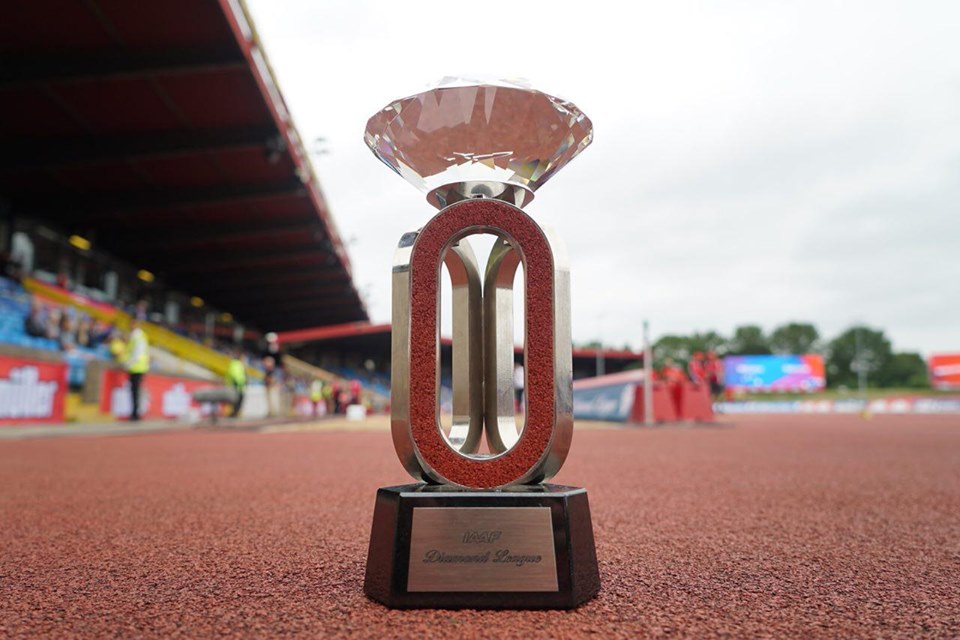
The IAAF Diamond League, Wikipedia says, is an annual series of elite track and field competitions. The series began with the 2010 Diamond League. It was designed to replace the IAAF Golden League which had been held annually since 1998. While the Golden League was formed to increase the profile of the leading European athletics competitions, the Diamond League’s aim was to enhance the worldwide appeal of athletics by going outside Europe. In addition to the original Golden League members (except Berlin) and other traditional European competitions, the series now includes events in China, Qatar, Morocco and the United States.

The new Diamond League format was approved by the IAAF council in early 2019 at a meeting in Doha. Among the first to voice concern about the revamped format was Athletics Kenya (for full report please try this link: https://shyamgopan.com/2019/04/02/possibility-of-5000m-still-alive-in-new-diamond-league-format/). In March 2019 they wrote to IAAF about the exclusion of distances longer than 3000m. Athletics Kenya was particularly concerned by the exclusion of any event longer than 3000m from the Diamond League program next year and the reduction in the number of meetings from 14 to 13. They sought, and received assurance from IAAF that Kenyan and other East African athletes, who feature prominently in 5000m races, would not lose competition opportunities due to this process.

The IAAF confirmed that the absence of the 5000m from the official Diamond League program would not preclude individual Diamond League meetings from running the event outside of the 90-minute international broadcast window and that several meetings had already shown interest in hosting the 5000m. It was explained that the IAAF’s market research showed that producing a series that consistently featured the best athletes competing against each other was a key factor in improving the appeal of the Diamond League for broadcasters and fans. At the same time the 5000m runners, coaches and agents consulted during the process indicated that they were unlikely to run six races over that distance in the Diamond League series (in 2018 no leading athlete ran more than two 5000m races during the regular Diamond League season). The 3000m distance was selected because it was more likely to attract the best distance talent more regularly. As a consequence, distance runners will have the option of running up to seven 3000m races (including the Diamond League Final), plus additional 5000m races, across the season, an official statement from IAAF issued in the context of Athletics Kenya’s letter had said.

Even as the drama of World Athletics versus athletes over the new Diamond League format plays out in the media, it is important to note that a critical component inspiring the changes to format is the nature of media itself. This became clear in an official IAAF statement from November 2019 (for an overview please click on this link and scroll down to find relevant article: https://shyamgopan.com/2019/11/07/at-a-glance-november-2019/). According to it, the largest consumer survey yet by the Diamond League showed that it’s most popular disciplines were the 100m, long jump and high jump followed by pole vault, the 200m and 400m. “ Popularity of athletes, head-to-head competitions and excitement of the individual competition were cited as reasons for the choice of the most popular events in the largest consumer survey into the disciplines hosted in the IAAF Diamond League. Representative online research carried out in China, France, South Africa and the USA; post-event surveys in Belgium, Great Britain and Switzerland and click-throughs on Diamond League social media videos during 2019 helped guide the Diamond League General Assembly, made up of all meeting directors, to decide which disciplines will be part of 2020 season,’’ the statement said.

This photo was downloaded from the Facebook page of IAAF Diamond League. No copyright infringement intended.

According to it, as a result of the research, and the decision taken earlier in the year that only 24 disciplines (12 male / 12 female) will form the core disciplines at all meetings, eight disciplines (4 male and 4 female) will not be contested during the 2020 Diamond League season. These disciplines are the discus, triple jump and 3000m steeplechase – three events that currently sit towards the bottom of the research conducted – and the 200m, which the Diamond League organizers felt would be too congested alongside the 100m, particularly in an Olympic Games year. Following a detailed review of the schedule for the 90-minute broadcast window of the Diamond League, both the 200m and the 3000m steeplechase will be included in 10 meetings (5 male and 5 female) in the 2020 Diamond League season, including Oslo, Rome, and Doha. Two meetings will also feature discus and triple jump (1 female and 1 male). However, none of the four disciplines will feature in the Diamond League Final in 2020, the statement said.

“ Our objective is to create a faster-paced, more exciting global league that will be the showcase for our sport. A league that broadcasters want to show and fans want to watch. However, we understand the disappointment of those athletes in the disciplines not part of the 2020 Diamond League season,’’ the statement quoted IAAF Diamond League chairman Sebastian Coe, as saying. Needless to say, two days later, on November 8, the media reported that world champions in the 3000m steeplechase, Kenya’s Conseslus Kipruto and Beatrice Chipkoech, had expressed disappointment in the Diamond League’s decision. They said that the move could affect their career. At the Olympics, Kenya has been the most successful nation in steeplechase.

According to media reports, Blake was in Mumbai to promote Road Safety World Series, a T-20 cricket tournament. He plans to commence an athletics training program in India, the reports said.

(The author, Shyam G Menon, is a freelance journalist based in Mumbai.)

SPORT CLIMBING / ADAM ONDRA QUALIFIES FOR OLYMPICS

Adam Ondra (This photo was downloaded from the athlete’s Facebook page and is being used for representation purpose. No copyright infringement intended.)

Adam Ondra, among the best sport climbers of his generation and one of the most widely recognized athletes from the field, has secured an invitation to compete at the 2020 Tokyo Olympics.

He qualified at the top of the table at the Combined Qualifier held by the International Federation of Sport Climbing (IFSC) over November 28-December 1, 2019 in Toulouse, France. This qualification took him into the finals at the event. As far as the Olympics is concerned, the crux was the qualifying round with the top six scheduled to get Olympic invites. News reports said that with Japan already filling its slots via results at the Combined World Championships held earlier in Hachioji, the two Japanese climbers – Kokoro Fujii and Meichi Narasaki – who were among top qualifiers at Toulouse wouldn’t get Olympic invites and most likely instead, see their results considered internally by the Japanese team. This left Olympic invites for the remaining six climbers.

Ondra who represents Czech Republic, had earlier failed to get an invitation to the Olympics following his disqualification at the Combined IFSC Climbing World Championships at Hachioji, Japan, where in the sub category of lead climbing, he was found to have accidentally stepped on a bolt resulting in his score being whittled down.  In the qualifying round at Toulouse, he placed first in lead climbing, second in bouldering and fourteenth in speed climbing. In the combined final, Ondra finished second ahead of Meichi Narasaki and behind Kokoro Fujii. Others qualifying at Toulouse for the 2020 Olympics, as per IFSC, were YuFei Pan (China), Alberto Gines Lopez (Spain), Jan Hojer (Germany), Bassa Mawem (France) and Nathaniel Coleman (USA) in the men’s category. Among women, the new names aboard from Toulouse are: Julia Chanourdie (France), Mia Krampl (Slovenia), Iuliia Kaplina (Russia), Kyra Condie (USA), Laura Rogora (Italy) and YiLing Song (China).

On November 30, Chinese news agency Xinhua had reported that Song should be getting her Olympic invite. The Chinese climber was placed ninth in the qualifying round. Xinhua based its conclusion on the fact that Japan’s Ai Mori who led the overall rankings and advanced to the eight-woman final together with compatriot Futaba Ito, who finished fifth, were both ineligible for Olympic invites given Japan already guaranteed full representation as the host of next year’s Olympics. Additionally, Lucka Rakovec of Slovenia, who placed second overall behind Mori in the qualifier at Toulouse, had already obtained an Olympic spot by finishing in the top seven at the world championships, Xinhua said. In its report dated December 1, on the women’s combined final results from Toulouse, IFSC has noted that it was a close battle between Slovenians, Lucka Rakovec and Mia Krampl.

At the time of writing, the names of those qualified post-Toulouse were yet to be added to IFSC’s confirmed list of athletes heading to Tokyo. IFSC has mentioned on its website that all qualification places are provisional until confirmed by each athlete’s National Olympic Committee (NOC). Formal invitations will be sent by the IFSC to the relevant NOCs within five days of the conclusion of the Combined Qualifier. The NOCs will then have two weeks to either confirm or decline the quota places.

Post Hachioji, those in the first list of qualified athletes (as available on the IFSC website; the list was titled: Sport Climbing’s First Olympic Qualified Athletes), were Janja Garnbret (Slovenia), Akiyo Noguchi (Japan), Shauna Coxsey (Great Britain), Aleksandra Miroslaw (Poland), Miho Nonaka (Japan), Petra Klinger (Switzerland) and Brooke Raboutou (USA) from the women’s category;  Tomoa Narasaki (Japan),  Jakob Schubert (Austria), Rishat Khaibullin (Kazakhstan), Kai Harada (Japan), Mickael Mawem (France), Alexander Megos (Germany) and Ludovico Fossali (Italy) from the men’s category. An updated list (dated November 11, 2019) available on the IFSC website also includes Sean McColl (Canada) and Jessica Pilz (Austria). Those qualified at Toulouse will join the above lot.

The final opportunity to qualify for the Olympics will be five IFSC Combined Continental Championships due to take place in 2020. The schedule as available on the IFSC website is – Africa, 1-3 May, Johannesburg (South Africa), Asia, 18-24 May, Morioka (Japan), Europe, 16-18 April, Moscow (Russia), Pan-Am, 27 February-1 March, Los Angeles (USA) and Oceania, 18-19 April, Sydney (Australia). Climber hoping to qualify should head to his / her respective continental championship.

The 2020 Tokyo Olympics will mark sport climbing’s debut at the Olympic Games. One of the biggest impacts of the move has been the introduction of combined climbing championships, wherein the best climber across the sport’s three disciplines – lead climbing, bouldering and speed climbing – emerges winner. Altogether 40 climbers – 20 men and 20 women – will compete at the Olympics.

(The author, Shyam G Menon, is a freelance journalist based in Mumbai. For more on sport climbing’s selection process for the Olympics, please try this link: https://shyamgopan.com/2019/10/16/sport-climbing-phase-two-of-olympic-qualification-due-by-november-end/)

AT A GLANCE / DECEMBER 2019

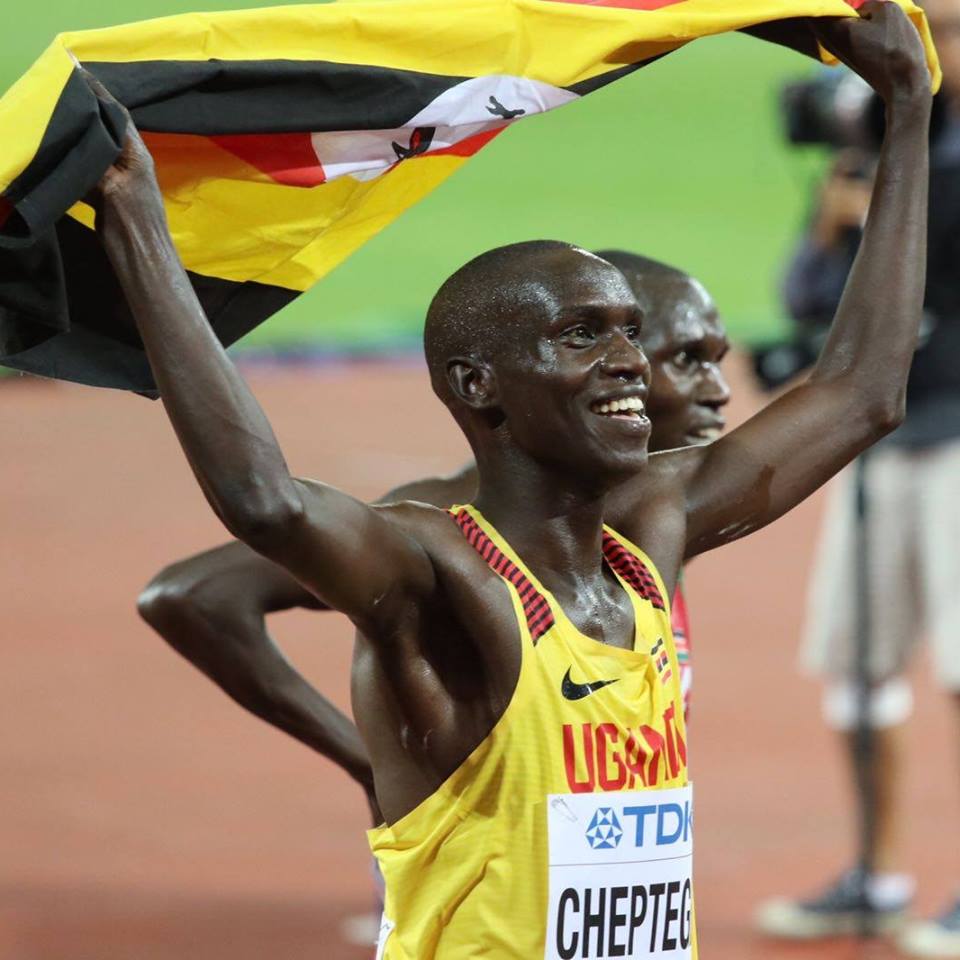
Joshua Cheptegei (This photo was downloaded from the athlete’s Facebook page and is being used here for representation purpose. No copyright infringement intended)

Joshua Cheptegei sets new world record in 10K

Uganda’s Joshua Cheptegei has set a new world record in the 10km road race, clocking 26 minutes 38 seconds at the 10K Valencia Trinidad Alfonso on December 1, a report available on the website of World Athletics (formerly International Association of Athletics Federations) said.

He took off six seconds from the previous record of 26:44 set by Kenya’s Patrick Komon in 2010.

Earlier this year at the IAAF World Athletics Championships in Doha, Cheptegei had claimed gold in the 10,000m. He is also the 2019 world cross country champion.

According to Wikipedia, in 2018, he had set a world record in the 15km road race.  At the 2017 World Championships in London, he had been silver medalist in the 10,000m.

Russia banned from major sport events for four years

Russia has been banned for four years from major sport events by the World Anti-Doping Agency (WADA).

Such major events include the 2020 Tokyo Olympics and the 2022 FIFA World Cup due in Qatar, BBC reported on its website. The latest development in the doping scandal plaguing Russia follows a meeting of WADA’s executive committee in Lausanne, Switzerland on December 9. Their decision is essentially an approval of recommendations put forth by WADA’s Compliance Review Committee.

German broadcaster Deutsche Welle, in its report on the ban said, “ Russian athletes who can prove to WADA’s satisfaction that they are clean and were not part of what it believes was a state-sponsored system of doping will still be allowed to compete under a neutral flag.’’  However, ahead of WADA’s Lausanne meeting, BBC pointed out that while the International Olympic Committee (IOC) was open to clean Russian athletes competing under neutral flag, a majority of those on WADA’s influential Athletes’ Committee favored complete ban.

In January 2019, RUSADA, Russia’s anti-doping agency had been declared non-compliant given its manipulation of laboratory data provided to investigators. The data was a condition for the agency’s reinstatement in 2018 following its three year-suspension, effected earlier.

RUSADA has 21 days to appeal against the latest ban. If it does so, the appeal will be referred to the Court of Arbitration for Sport, BBC said.

Russia has been banned from competing as a nation in athletics, since 2015. The aftereffects of the doping scandal exposed some years ago, has been playing on for a while now. Notwithstanding the latest ban, Russia can participate in Euro 2022 as its organizing body – UEFA – is not classified as a major event organization, BBC said in its report.

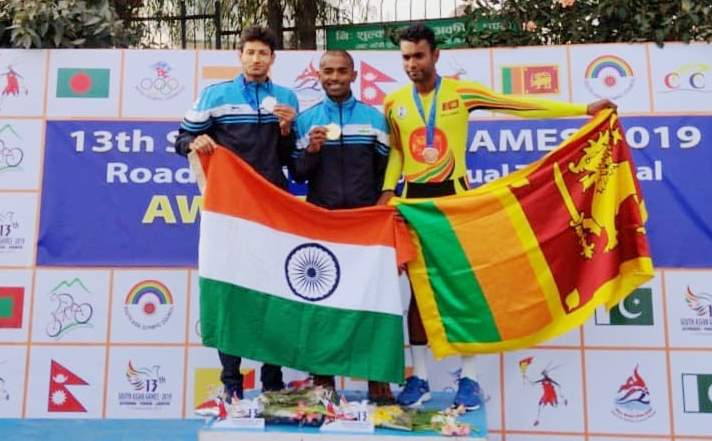
Arvind, Naveen, Avisha; on the podium at Kathmandu (This photo was downloaded from Naveen John’s Facebook page and is being used here for representation purpose)

Naveen John, Arvind Panwar get gold and silver at 2019 South Asian Games

Indian cyclists, Naveen John and Arvind Panwar, finished first and second respectively in the Individual Time Trial (ITT) at the 2019 South Asian Games held in Nepal. Third place went to Avisha Mawatha of Sri Lanka. The timings were: Naveen – 00:49:22.250; Arvind – 00:49:29.500, Avisha: 52:15.540.

Based in Bengaluru, Naveen is one of the most experienced bicycle racers in the country. For more on Naveen please try these links: https://shyamgopan.com/2018/03/23/the-electrical-engineer/ and https://shyamgopan.com/2019/06/22/naveen-john-time-to-rewire/.

Mohit, Tsetan win at Vasai Virar Mayor’s Marathon

Mohit Rathore was winner overall and topper in the elite men’s category at the 2019 Indiabulls Home Loans Vasai Virar Mayor’s Marathon. He completed the full marathon in 02:24:15 ahead of Sukhdev Singh (02:31:36) and Dharmender (02:32:33).

Tsetan Dolkar, part of the team of Ladakhi runners supported by Rimo expeditions and visiting the races of the plains every winter, was winner in the women’s open category. She completed the full marathon in 03:10:27. Timtim Sharma (03:34:43) placed second and Jayalakshmi Balakrishnan (03:38:25), third. There was no elite women’s category this time. The men’s open category was won by Ranjit Singh (02:33:15), Nilesh Sudam Murumkar (02:41:43) and Kishanlal Kosriya (02:44:47) in that order.

In the elite men’s category of the half marathon, Anish Thapa (01:04:35) placed first, followed by Tirtha Pun (01:04:41) and Dinesh Kumar (01:04:45). In the corresponding category for women, the winner was Kiran Sahdev (01:17:49) followed by Komal Jagadale (01:18:21) and Nandini Gupta (01:19:10). The men’s open category in the half marathon was topped by Bhagesh Patil (01:09:18), followed by Ramesh Bhaurao Gavali (01:11:15) and Arun Dhansing Rathod (01:11:32). Aradhana Singh (01:28:42) finished first in the women’s open category of the half marathon. Babita Nishad (01:31:13) placed second and Madhuri Deshmukh (01:32:19), third.

Vasai-Virar is a city located a little over 50 kilometers north of Mumbai.

Work on main stadium of 2020 Olympics completed

Tokyo’s National Stadium, the main venue of next year’s Summer Olympic Games and host to the athletics competition, was officially completed end-November 2019.

Construction of the stadium, which will have capacity for about 60,000, began in December 2016. It was completed in 36 months at a cost of 157 billion yen (1.4 billion dollars). Besides the athletics competition scheduled over July 31 to August 10, the stadium will also host the opening and closing ceremonies, a report available on the website of World Athletics said.

Officially called the National Stadium, it will be known as Olympic Stadium during the Tokyo Games.

(The author, Shyam G Menon, is a freelance journalist based in Mumbai.)

JYOTI, JIGMET IN MARATHON TEAM FOR 2019 SOUTH ASIAN GAMES

Jyoti Gawate (Photo: courtesy Jyoti)

Jyoti Gawate, Jigmet Dolma, Rashpal Singh and Sher Singh will represent India in the marathon at the 2019 South Asian Games due in Kathmandu over December 1-10, an official statement disclosing the names of all athletes selected to the Indian squad, available on the website of Athletics Federation of India (AFI), said.

For Jyoti who hails from Parbhani in Maharashtra, this is her second outing at the South Asian Games. Earlier in 2016, she had been part of the marathon team for that year’s South Asian Games held in Guwahati. In 2011, she had taken part in the Asian Marathon Championships in Thailand and finished seventh among women with a timing of 3:17 hours. She was chosen for this event because of her win at the 2011 Mumbai Marathon. AFI had funded her trip and stay. The federation also sent her to participate in the SCO Marathon in China. “ I am aiming for timings closer to that of Tata Mumbai Marathon 2019,” Jyoti, who was scheduled to travel shortly to Kathmandu for the 2019 South Asian Games, said when contacted. At the 2019 edition of TMM, she had finished second among elite Indian women with a personal best timing of 2:45:48 (for more on Jyoti, please try this link: https://shyamgopan.com/2019/02/04/jyoti-and-the-eight-minutes/).

This is the first time Jigmet Dolma is in the Indian team headed to a major event.  For the past several years, she has been part of the group of runners from Ladakh supported by Leh based-Rimo Expeditions, that travels every winter to the road races of the plains. Over time, she has worked her way up from amateur to elite category and been podium finisher at major marathons including the Tata Mumbai Marathon (TMM).  “ This is a fantastic development for Jigmet and Ladakh,’’ Savio D’Souza, Mumbai based-coach and former national champion in the marathon who has been involved with training Ladakhi runners, said.

Hailing from Igoo village in Ladakh, Jigmet used to run at block, school and state level. In 2012, she ran the half marathon at the Ladakh Marathon without any prior practice and emerged first. At the 2013 Standard Chartered Mumbai Marathon (later TMM), she placed 17th in the half marathon. Same year, at the 2013 edition of the Ladakh Marathon, she finished first in the half marathon with timing of 1:50. In 2014, she improved her performance at SCMM to fourteenth position. Same year she retained her first position at the Ladakh Marathon. In January 2015, she ran her first full marathon at SCMM, ending second among women in the open category (timing: 3:45:21), her first podium finish in Mumbai. By 2017, she had graduated to finishing third among Indian women with timing of 3:14:38; two years later at 2019 TMM, she placed third among elite Indian women with timing of 3:10:43. Jigmet has never been shy of stating her wish to run for India one day. She along with fellow runner from Ladakh, Tsetan Dolkar, has been a familiar duo at various road races, particularly the annual Mumbai Marathon (for more on Jigmet, Tsetan and other runners from Ladakh, please refer the archives of this blog or type their names in the box allotted for search).

For Rimo Expeditions and Savio, Jigmet’s debut in the Indian squad – coming as it does after years of regular visits to road races – will mean a lot. “ As far as I know, after Rigzen Angmo, Jigmet is the first woman marathon runner from Ladakh to represent India,’’ Savio said. In the 1990s, Rigzen Angmo who hails from Skarbuchan village about 125 kilometers away from Leh, had been a regular podium finisher on the national circuit. Abroad, she won the Kuala Lumpur Marathon in 1994 and the Bangkok Marathon in 1995 (for more on Rigzen Angmo please try this link: https://shyamgopan.com/2015/09/28/the-spectator/). “ This is the dream we had in 2012, when we started the project of training long distance runners and sending them to races in the cities. It is heartening to see one of them make it to the Indian team. I am sure this will encourage more youngsters from Ladakh,” Chewang Motup, owner of Rimo Expeditions said of Jigmet’s selection. He also hoped that greater support would manifest for such projects.

Jigmet Dolma (Photo: Shyam G Menon)

All four marathon runners selected for the 2019 South Asian Games had been podium finishers at the fourth edition of the IDBI Federal Life Insurance New Delhi Marathon held on February 24, 2019. Rashpal Singh had won the race with timing of 2 hours 21 minutes and 55 seconds. Sher Singh had finished second among men with timing of 2:23:16 followed by Manavendra Singh (2:28:27). The three men were then training at the Army Sports Institute (ASI) in Pune. Among women, Jyoti finished first with timing of 2:47:54. Jigmet placed second in 3:01:30 followed two seconds later by Tsetan Dolkar (3:01:32) who placed third.  The top two from both gender categories are now headed to Kathmandu for the 2019 South Asian Games.

(The authors, Latha Venkatraman and Shyam G Menon, are independent journalists based in Mumbai.)

ULTRAMARATHON: IT ISN’T JUST PILING ON MILEAGE / LESSONS FROM TWO CHAMPIONSHIPS

Illustration: Shyam G Menon

Kolkata-based ultramarathon runner Anjali Saraogi is comfortable training with gels and branched chain amino acids (BCAA) that help in reversing muscle loss, reduce muscle soreness and aid muscle recovery. That was her trusted recipe till Aqaba happened.

Jordan’s only coastal city – fans of Hollywood would remember it from David Lean’s masterpiece: Lawrence of Arabia – was location for the 2019 IAU 100 kilometer Asia and Oceania Championships held on November 23. In the run up to the event in Aqaba, Anjali’s training suffered setbacks caused by health issues. All the same, she aimed for a sub-nine-hour finish.

At the championships, she was cruising along very well when the blazing sun and strong headwinds started to take a toll. “ At the 60 kilometer-mark, I felt I was sinking and actually ended up sitting on a chair. That is completely unusual for me,’’ she said.

Abhinav Jha, one of the crew members of the Indian team, came to her assistance. “ He made a drink with honey and lemon. That revived me,’’ Anjali said. She stopped consuming gels, thereafter. Anjali went on to complete the race in nine hours and 22 minutes, a new national record for women in that category. She bettered her own previous national record of 9:40 hours, set at the IAU 100 k World Championships held in Croatia in 2018.

Anjali Saraogi (Photo: courtesy Anjali)

“ When exhaustion levels are high, it is best to opt for natural foods. You can never go wrong there,’’ Abhinav, Lieutenant Commander with the Indian Navy, said. The naval officer was originally part of the Indian team and slated to run the race. But he opted to stay out due to injury and instead, joined the team’s support crew. Hemant Beniwal, the stand-by runner, was called in to complete the team taking Abhinav’s place. “ As most of us are amateur runners, we are working on nutrition and hydration on trial and error basis. But in an ultramarathon, the best plan is your own plan,’’ Abhinav said.

In an ultramarathon, crewing can be challenging. The challenge stems from the difficulty in assessing the hydration and nutrition needs of runners. At the 2019 IAU 24-hour World Championships held in Albi, France over October 26-27, Pranaya Mohanty avoided solid food for a long time and chose to stick to gel and salt tablets. But after a few hours of running he started to crave for solid food. “ I wanted either curd rice or dal rice. There was bread on offer but I prefer curd rice, dal rice or khichdi,’’ Pranaya said. The crew members arranged for the same.

At the event, Pranaya covered a distance of 211.956 km. He twisted his ankle in the eighteenth hour and was forced to slow down. He also suffered stomach distress and had to keep going to the rest rooms. “Binay Sah was also in bad shape. His nutrition plan did not go as per plan and he had to stop running,’’ Pranaya recalled. Fuelling for an ultramarathon event is not confined to the race alone. It starts months ahead along with the training.

Ultramarathon runner, Apoorva Chaudhary drew up her training plan for the IAU 24-hour World Championships with a target of covering 200 km. “ There are two vital elements in training for an ultramarathon – working with a target in mind and focussing on nutrition and hydration,’’ Apoorva said. She went on to cover a distance of 202.212 km, setting a new national record for 24-hour run (she surpassed her own record of 176.8 km set during the NEB 24-hour Stadium Run in New Delhi in December 2018). Apoorva not only put in all the mileage and strength training required, she also focused on nutrition. “ I prepared my body with a variety of foods – different kinds of solid foods, different gel brands,’’ she said. She also did training runs with very little hydration. “ I did a 30 km-training run without food and water just to prepare my body for a worst case scenario,’’ Apoorva said.

Priyanka Bhatt (Photo: courtesy Priyanka)

Priyanka Bhatt, who too was part of the Indian squad for the IAU 24-hour World Championships in Albi, trained with race day conditions in mind. “ I work with energy bars. Gels don’t suit me,’’ she said. Her training was focused on building endurance, running back-to-back distances that would be in the range of 130 to 160 km every week.

In August 2019, a camp was held for ultra-runners at Bengaluru. The camp helped runners with guidance on training, nutrition and hydration. Despite training with different foods and drinks, things can go wrong during a race, runners said.

At the 2019 edition of the Bengaluru Stadium Run, Apoorva’s nutrition did not go as per plan. At Albi, Apoorva’s nutrition plan went off well for the initial part of the race but thereafter it was difficult to retain food. “ I kept talking to myself to stay in a positive frame of mind. After the initial few hours, the effort to work on your pace, mileage target and nutrition intake is entirely a mind game. For the first 13 hours, I had a very strong run. After that I felt like crying. My ribs felt swollen. It was more a mental issue than a physical one,’’ Apoorva said. In fact, one of the most insightful articles following the 2019 24 hour-world championships in Albi was one on Camille Herron of the US, written by author Adharanand Finn and published in The Telegraph. While lovers of the sport worldwide noted her victory in the women’s category, the article brought out the suffering Camille underwent in the grueling race.

Both the ultra-running events – the IAU 24-hour World Championships held at Albi, France in October 2019 and the 100 km Asia & Oceania Championships held at Aqaba, Jordan in November 2019, showcased significant improvement in ultra-running by Indians despite the sport being relatively new for the country. At Aqaba, the Indian team of nine runners (three women and six men) secured gold medal in the men’s team category and silver in women’s.  In addition, Deepak Bandbe won the individual bronze medal and Anjali Saraogi set a new national record for women in 100 km.

Pranaya Mohanty (Photo: courtesy Pranaya)

“ The team did very well. There was a big jump in performance. All the six male runners finished in sub-8.5 hours and two of the women in under-10 hours,’’ Peteremil D’Souza, member of the ultramarathon committee of the Athletics Federation of India (AFI), said. The women’s performance was outstanding, Sunil Chainani, also member of AFI’s ultramarathon committee, said. Earlier at Albi, including Apoorva’s new national record, five athletes in all – three women and two men – had achieved new personal records. Among women, besides Apoorva, Priyanka Bhatt (192.845 km) and Hemlata (173.178 km) secured new PBs, while from the men, Pranaya Mohanty (211.956 km) and Kanan Jain (211.157 km) set new personal records. Also, five Indian runners – four men and one woman – covered distance in excess of 200 km at Albi.

According to Sunil, Indian runners are now looking at a multi-faceted approach to training that focuses not merely on building mileage but important aspects of nutrition and hydration as well. “ It is a new sport. We are constantly on a learning curve,’’ Abhinav said.

(The author, Latha Venkatraman, is an independent journalist based in Mumbai.)

THE PURSUIT OF ENDURANCE

A book you come to love is a product of how good it is and what frame of mind you were in, when you picked it up. Here’s one of the most remarkable books I read in recent times:

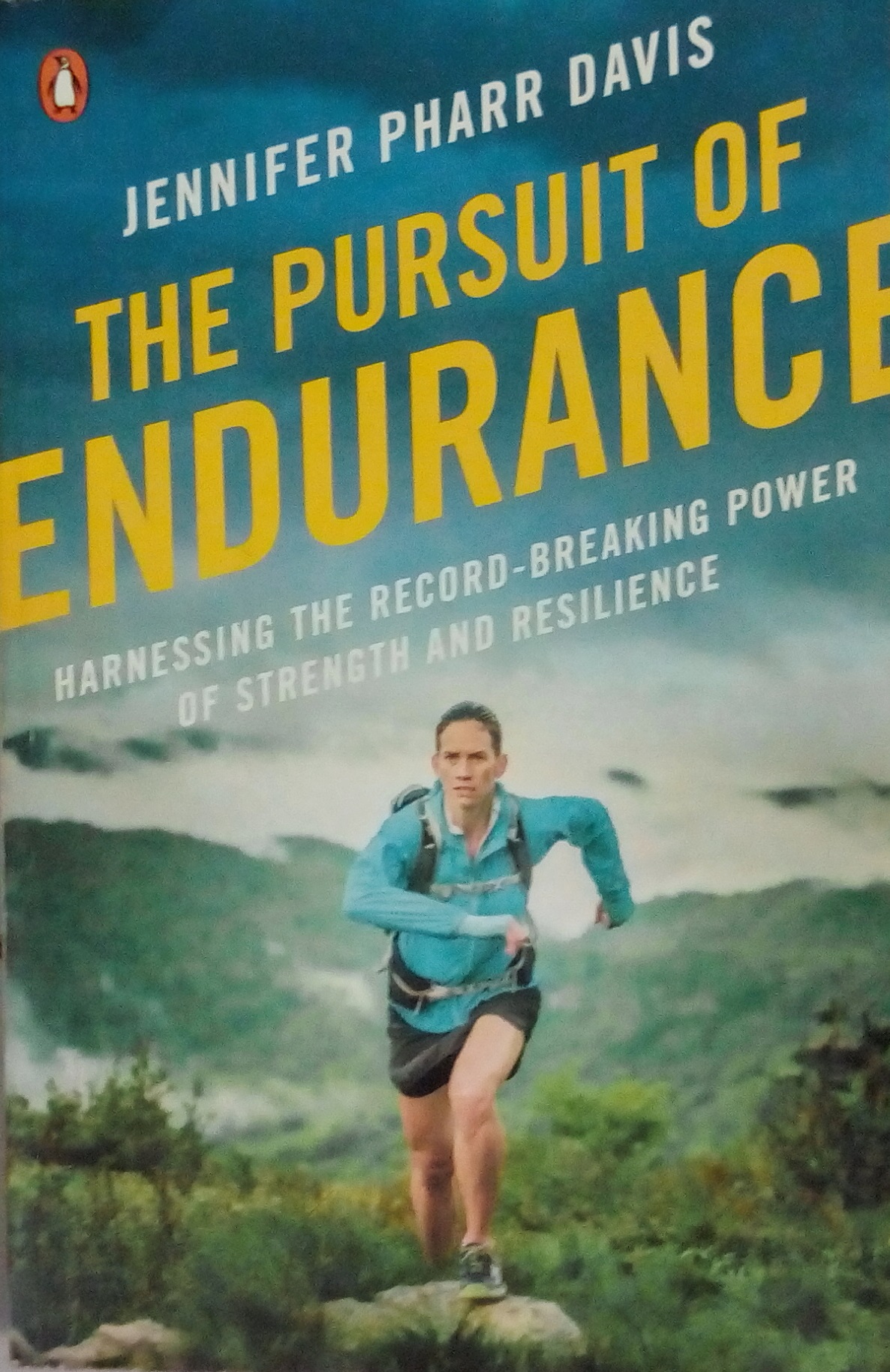
At roughly 3500 kilometers, the Appalachian Trail is among the longest trails in the US. Jennifer Pharr Davis’s book The Pursuit of Endurance is about the little known craze of setting the Fastest Known Time (FKT) on long distance trails like the Appalachian and Pacific Crest. These are feats of extreme endurance. The best of the lot – Pharr Davis among them – average close to 50 miles (approximately 80 kilometers) of hiking a day for several weeks. In 2011, she set the unofficial FKT for the Appalachian Trail: 46 days, 11 hours and 20 minutes.

There are quite a few things that are beautiful about this book. It is not cast in a how-to-do-it fashion. Instead, it provides detailed portraits of some of the record holders – their background, their eccentricities, their approach to the trail, how many times they attempted new FKTs, how they succeeded – and through that provides a view, obliquely, of what it takes to do thru-hikes and FKTs. Each of these hikers is a personality distinct from the other. But there are some common strands. Approaching its subject so, the book makes these long distance hikes less of performance and more of a way of life. The protagonists are not angels; they compete, they scheme, they do many of the things you and I carry around in our heads as we try to get ahead of the rest. The difference is – they own up their nature. Pharr Davis’s book gives you a sense of competitors bared and to that extent, humanity restored.

That said, let me add – there is strategy and performance in this book. But it doesn’t hit you the way it does in a book written with the corporate side of running in mind. This is not stuff harking of ready; set, come on team, let’s go do it-sort of approach. This book is pretty down to earth. Sample this: I believed that consistent output over a prolonged period would be more efficient than short bursts of speed followed by lengthier rests. In other words, I wanted to hike, not run. I rationalized that walking would mean less impact on my joints, a reduced risk of falling and decreased recovery time; it just seemed like a more natural way to cover more than two thousand miles. In Pharr Davis’s book, strategy and performance are tempered by humility and honesty. Things go wrong on the trail and the paragraphs devoted to it hold nothing back about how setbacks and frailties unravel. That is exactly how it is when you are out hiking by yourself, pushing your limits. Although the Appalachian Trail has facilities for trekkers to halt and replenish along the way, a hike for FKT has none of the support found in regular ultramarathons. Once in several days, you rendezvous to meet with friend or family member to resupply and take stock of progress. Else, you are alone on the trail; wilderness and other hikers passing through, for company. Unlike city marathons and staged events where the human being assumes center stage, in wilderness, nature’s presence is larger than lone hiker can hope to be. That is also what makes these FKTs interesting. You cope with yourself and whatever happens for weeks. It teaches you nuggets rarely found in other books. For example – the difference between failure and stopping.

But the best aspect of this book was something else.

Thanks to the sort of world we live in with things in clearly identifiable silos, borderlands and transition zones have lost their attraction. Running means Usain Bolt and Eliud Kipchoge; it is distilled spectacle of performance with all else conspiring to support the act. You don’t have the luxury of controlled ambiance in hiking. To that extent, for some of us, the variables nature throws our way while hiking are distraction from aspiring for peak performance. For such perspective, hiking – like walking – is distinctly less glamorous than running. Yet for those loyal to the slow lane, one truth has been evident for long. You can go to the gym and shock your muscles into shape or as seen in the case of those doing physically strenuous jobs; you can embrace a life of physical toil and be in shape without seeking it, maybe even without knowing it. Similarly you can hike enjoying the solitude and the outdoors and having done it for long, develop a bank of endurance.  But say that in the world of running and you may find your audience peeling off because as I said earlier, we live in a world in which the value of overlapping borderlands is poorly appreciated. Endurance has become firmly identified with running, cycling, swimming, triathlon etc. It takes a story about some elite athlete from Africa and how he / she walked long distance to school as a child, to remind us of the miracles walking can accomplish. Not to mention – the independence and self-reliance, hiking and the outdoors instills in you.

Pharr Davis is unapologetic of her love for the outdoors and hiking. Born to a family that valued the outdoors, she grew up around camps. Later she lived the active life. According to Wikipedia, she has hiked over 14,000 miles (more than 22,530 kilometers) on six different continents. In 2008, she set the record for the fastest Appalachian Trail hike by a woman – 57 days and eight hours. In 2011, she set the fastest time for both men and women on that trail (mentioned earlier in this review); the record was broken in 2015 by the well-known ultramarathon runner, Scott Jurek who covered the distance faster by three hours and 12 minutes. Juxtapose that improvement in timing on Pharr Davis popularly described as a long distance hiker and Jurek as an ultramarathon runner; it tells us something of the endurance levels of both. It tells us something of what hiking can be. You can’t help but commit some of Pharr Davis’s observations in the book, to memory: Hiking is not escapism; it’s realism. The people who choose to spend time outdoors are not running away from anything; we are returning to where we belong. And: I felt I was also tapping into something primal that said I am beautiful because I endure.

I found this book on the shelves of Modern Book Centre, that wonderful bookshop in Thiruvananthapuram, Kerala. Anoop, who oversees the shop, remembered my taste in reading and pointed it out to me. It is a great book to have and lovely antidote for sport in present times lost to measuring and achieving. Its narrative has the quality of an embrace; just what you wish for from nature when you veer off human hive and step on to the trail. It makes endurance, relevant.

(The author, Shyam G Menon, is a freelance journalist based in Mumbai.)   

LAYUP TO 555K

Ashish Kasodekar (Photo: Shyam G Menon)

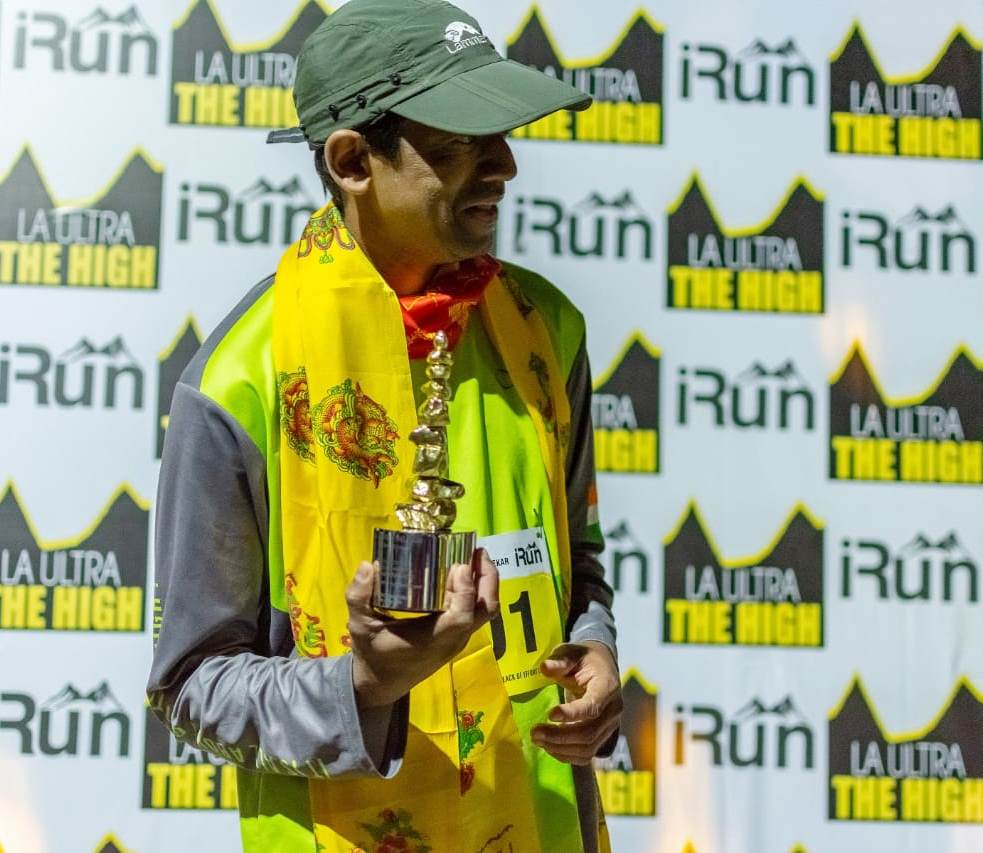
A basketball player from school days, Ashish Kasodekar started participating in running events in 2013. He also forayed into long distance cycling. In August 2019, he became the first Indian to complete the 555k category of La Ultra-The High.

“ I believe that when people call you mad, you are on the right track. It means you are doing something nice for yourself,’’ Ashish Kasodekar said.

It was September 2019. We were at his office in Pune.

Weeks earlier, the unassuming travel consultant had become the first Indian runner to complete the 555 kilometer-category of La Ultra-The High, the challenging ultramarathon held annually in Ladakh. In retrospect, it had been a busy six years to where he was now, for Ashish commenced running at events only in 2013. Till then he had been a basketball player; someone who played competitively, was part of the state team and had played at the 1992 edition of Federation Cup. “ Team games teach you to relate to others and be positive,’’ he said. Basketball remains his first love and he is active in Masters Basketball. But alongside, there is this streak in endurance sport building up.

Born 1971, Ashish grew up in Pune, the middle sibling among three brothers. He took to basketball while at school itself. Following college, he worked with a travel agent for a year. Then he became General Sales Agent (GSA) for the Italian airline, Alitalia. He was happy to work for the airline; there was travel as part of work and the airline was a strong brand that sold without need for much marketing. “ I was getting into a comfort zone,’’ Ashish said. About seven to eight years ago, he therefore started his own travel consultancy – Edgeover Holidays. It is a proprietary concern; no partners, which is how he prefers it.  There was also a twist. Recognizing his need for personal time, he restricted clientele to friends. “ I don’t have any corporate clients. If you have corporate clients, it will interfere with the time you need to train for pursuits like endurance sports,’’ he said.

That conscious choice likely set in because around three years before he commenced his own business, Ashish participated in an adventure race in Pune called Enduro organized by Prasad Purandare. It was a team event – two men and one woman formed a team. “ I really enjoyed it,’’ Ashish said. The event also got him into a bit of endurance cycling; for Enduro, he borrowed his nephew’s bicycle. The attributes of the outing, distinctly different from a game of basketball, interested him. Basketball was competitive. Enduro was more about finishing. “ You have to learn to push yourself. It is a stronger body experience,’’ he said. Ashish found himself spending more and more time with people from his new found area of interest.

In 2011, there was a numerically special day: November 11, which folded neatly into 11/11/11, a series of ones.  Ashish decided to do something equally special for the occasion. He cycled from Pune to Goa on his Bianchi hybrid, reaching the coastal city in 21 hours. The following year, there was 12/12/12. For that, he walked 100 kilometers from Pune to Panchgani. In 2013, there was 11/12/13; this time he rode his Harley Davidson Iron 883 from Pune to Madurai and back, covering 2400 kilometers in 36 hours. In 2013, he also participated in his first running event. He did a 15k; it was executed with no prior training. In January 2014, he did his first half marathon in Mumbai. This time he trained for it. “ I really enjoyed that,’’ he said. In July-August of the same year, he participated in the London-Edinburgh-London (LEL) bicycle race. There were eight participants from India. None completed. However on the bright side, he had to train for LEL and that included a 1000 kilometer-ride from Pune to Hubli and back. Slowly but surely, endurance was creeping into his system and world view of things. In 2015, Ashish and Balakrishna Desai cycled from near the Gulf of Khambat in Gujarat to Khardung La in Ladakh. The project spanning sea level to one of the highest motorable passes around was called 0 to 18. They covered the distance in 24 days. Ashish used a friend’s MTB. In September 2015, he did his first full marathon; he elected to do it in Leh as part of that year’s Ladakh Marathon. Following this run, a friend asked him if he had heard of La Ultra-The High. Ashish hadn’t. But a spark was lit.
Photo: courtesy Ashish Kasodekar

In 2016, at the Mumbai Marathon, Ashish met the qualifying time for the Comrades ultramarathon in South Africa. To be eligible, you had to run the full marathon in less than five hours. However, post qualifying he didn’t train diligently for Comrades. In South Africa, he cleared all the stage cut-offs of the race in time and the on the final stretch relaxed. Just as he was reaching the stadium – the finish point – he heard the officials announce that the overall 12 hours cut-off had passed by. It was a wake up-call. “ That last 200 meters taught me a lot about what to do. It told me I had to take things seriously,’’ Ashish said. The previous year at the Ladakh Marathon, he had seen the event’s ultramarathon segment – Khardung La Challenge. When his Comrades attempt ended in that disappointing final stretch, Ashish decided to try the Khardung La Challenge.

In the run up to the race, he came down with chickengunya. On the other hand, he had arranged a tour package for 13 people to Ladakh for the year’s Ladakh Marathon. On recovering from his illness, he decided to proceed with the group. He reached Leh, four days ahead of Khardung La Challenge. At the bib collection point, the race organizers were checking the oxygen saturation level of participants. His turned out to be 99, pretty good. “ I said, let’s try this race. If anything goes wrong I can hop into the ambulance,’’ Ashish said. On race day, the flag-off from Khardung village was at 3AM. “ There was a point when I felt I may have to quit. I had arrived in Ladakh only some days earlier and I felt I wasn’t acclimatized well,’’ he said. A doctor in a passing ambulance checked his oxygen saturation level. It was 72. He asked Ashish to pause for 5-6 minutes. The level recovered to 85. This was just ahead of North Pulu. Ashish took it slowly thereon. Eventually he finished within the assigned cut-off of 14 hours. “ That race was a great boost for my confidence,’’ he said. Next day, at the Ladakh Marathon, he hired a cycle and pedaled 55 kilometers up and down with the runner’s group he had brought for the race. In 2017, He returned to South Africa and completed Comrades in 11 hours, 38 minutes. The changed perspective helped. He was now focusing on the target and training diligently. “ I am a good listener. I also accept tips,’’ he said. Following successful completion of Comrades, Ashish settled down to consider La Ultra-The High, 2017 edition.

Now over a decade old, La Ultra-The High has a course that straddles the Nubra valley-Leh-Tanglang La region; all of it, Ladakh. A union territory since August 2019, Ladakh has an average elevation of around 10,000 feet. While climate change is happening in Ladakh too, it has traditionally been a high altitude cold desert. By day, the clear skies of altitude, renders the sun a blazing orb. The combination of weather conditions and altitude makes La Ultra-The High, a tough ultramarathon. As runners depart the start line in Nubra, the first major challenge to overcome is Khardung La (17,582 feet).  Into the longer race categories, they also have to tackle Wari La (17,224 feet) and Tanglang La (17,480 feet); in the 555k category, the last two passes are repeated on the return.

“ I like to run in Ladakh,’’ Ashish said. He stayed at a home-stay for 10-15 days and then proceeded to attempt the 111k segment of La Ultra-The High. He finished 111k successfully; at 19:48 hours taken to complete the task, he was among the last of the finishers. The race was won by Tsering Stobgias in 12:32. Having collected his medal, Ashish hung around to see how the race was unfolding for those trying 222k and 333k. “ The main organizer of the event, Dr Rajat Chauhan, always spoke of 111k as baby run. I felt angry. I told him that I wanted to try 333k next. He said: hold on; you are getting excited,’’ Ashish said. That year there was only one finisher in 333k – Matthew Maday of the US. Ashish registered for the 333k. He didn’t wait to graduate through the 222k. That takes time; it also consumes that much more money.  In fact for the 333k, he had to seek crowd funding. It provided 70 per cent of the funds needed.

He commenced training in November 2017. In April 2018, he completed the 160k run at Garhwal Runs, which is positioned as stepping stone to La Ultra-The High. Closer to the event in Ladakh, he did a mix of run-walk from Manali to Leh. He ran around 30 kilometers every day on that passage through altitude. That year, five Indian runners participated in 333k, the first Indians to do so.  Ashish was among those who completed. “ Up to 222 kilometers it was good. Close to the finish I was dealing with delirium,’’ he said. He finished the race in 71:59:29 to place third. His support crew included Balakrishna Desai, Mangesh Shinde, Prasad Shett, Amit Kasodekar and Dhananjay Apte. The race was won by Munish Dev in 71:30:28. From 333k to 555k was natural progression.

Photo: courtesy Ashish Kasodekar

In 2019, the flag-off was in the rains. It was minus 12 when Ashish reached North Pulu. He was advised to change his attire. He borrowed. “ I was lucky there were athletes around who were willing to loan their spare clothing,’’ he said. The 2019 edition of La Ultra-The High was noted for its tough weather conditions. Ashish reached Wari La rather late but happy in the head.  In both 333k and 555k, the real challenge is Tanglang La. In 333k, it looms after Khardung La and Wari La have taken their toll on you. In 555k, the pass is done twice and the problem as Ashish pointed out, is that on the return leg tired runner loses elevation slower than before. He completed 555k within cut-off time to place third. He suffered no cramps, blisters or frostbite. “ Self-care was damn good,’’ he said. The time taken was 126:18:00. The race was won by Jason Reardon of Australia in 120:19:00; Matthew Maday finished second. Ashish’s support crew featured both his brothers – Anil and Amit Kasodekar; Arvind Bijwe, Hari Dammalapati, Venkatesh Kashelikar, Sushil Dhende and Swaroopa Bhadsavle.  This time Ashish experienced no hallucinations. “ We took good care of sleep, nutrition and hydration,’’ he said.

(The authors, Latha Venkatraman and Shyam G Menon, are independent journalists based in Mumbai. For more on La Ultra The High, please refer this blog’s archives.)