TOO ULTRA FOR SPONSORS?

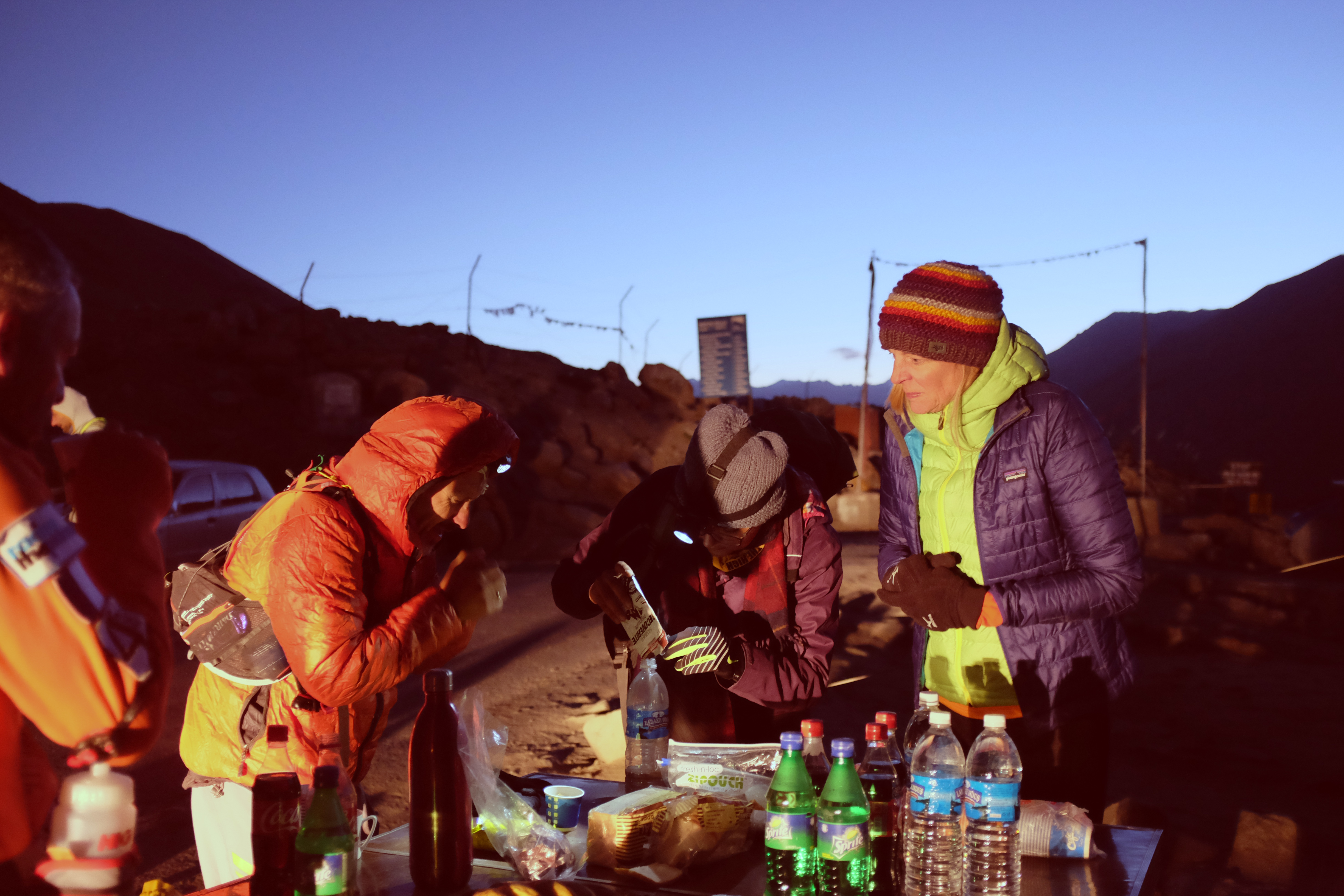
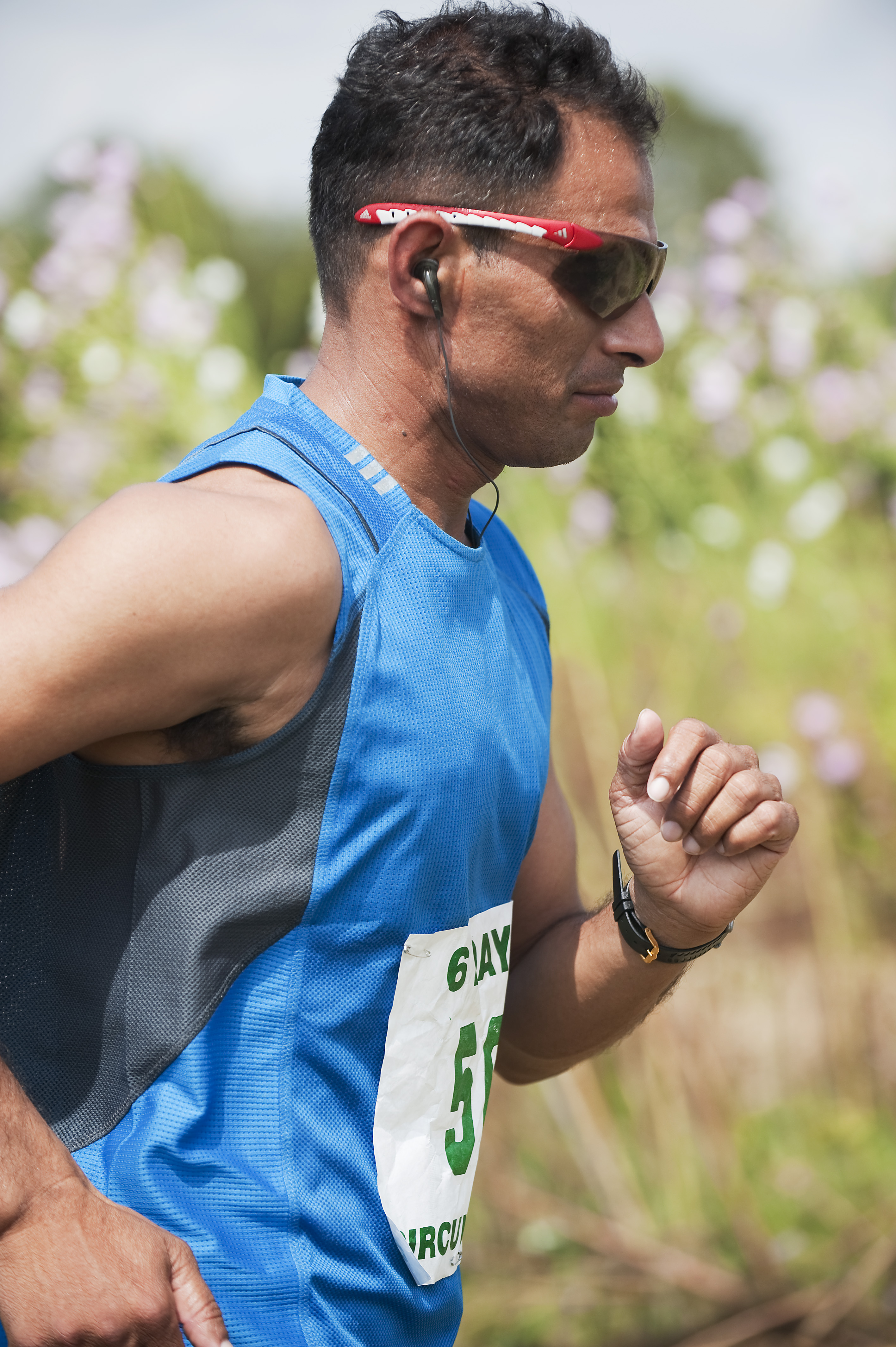
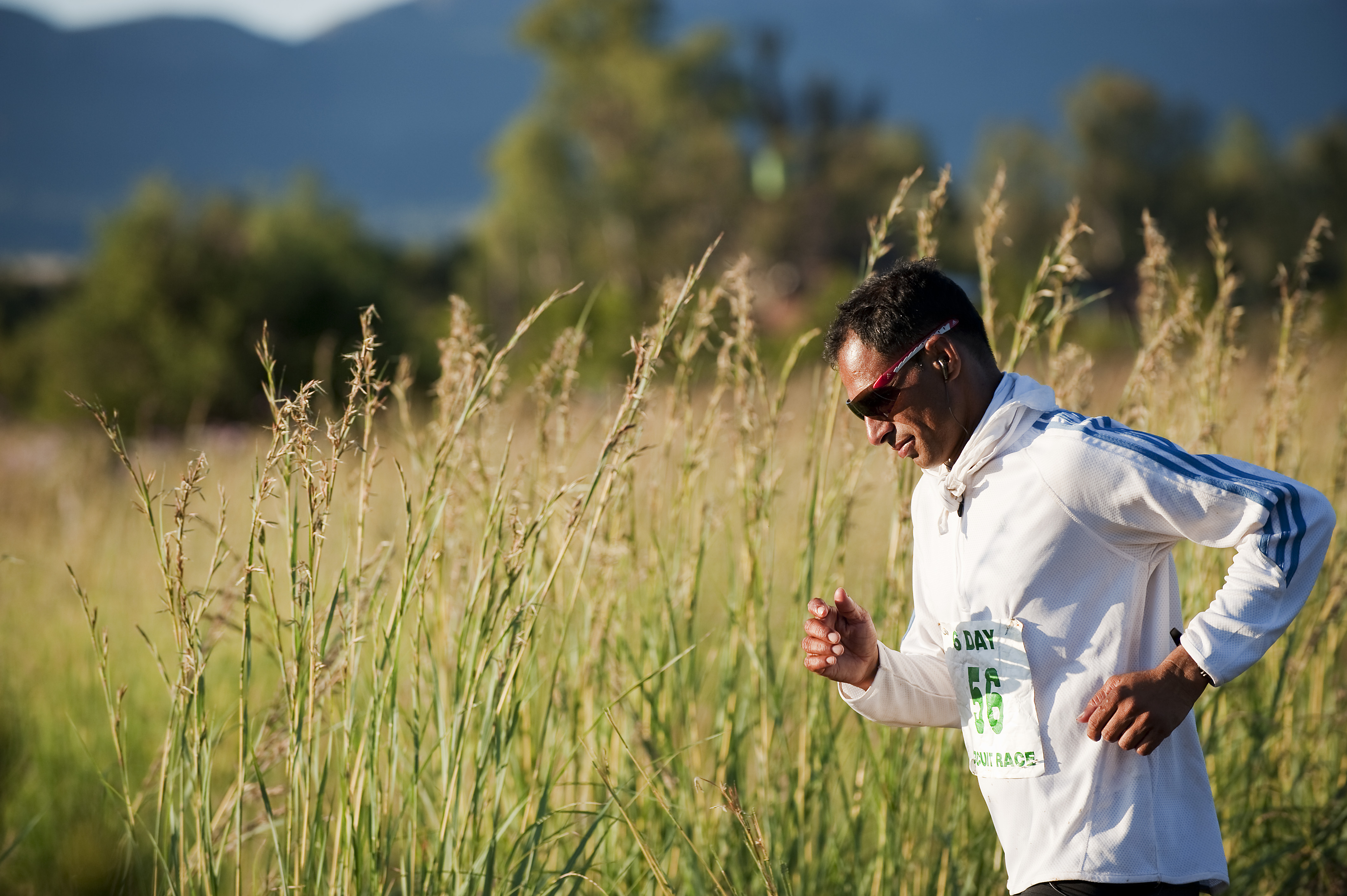
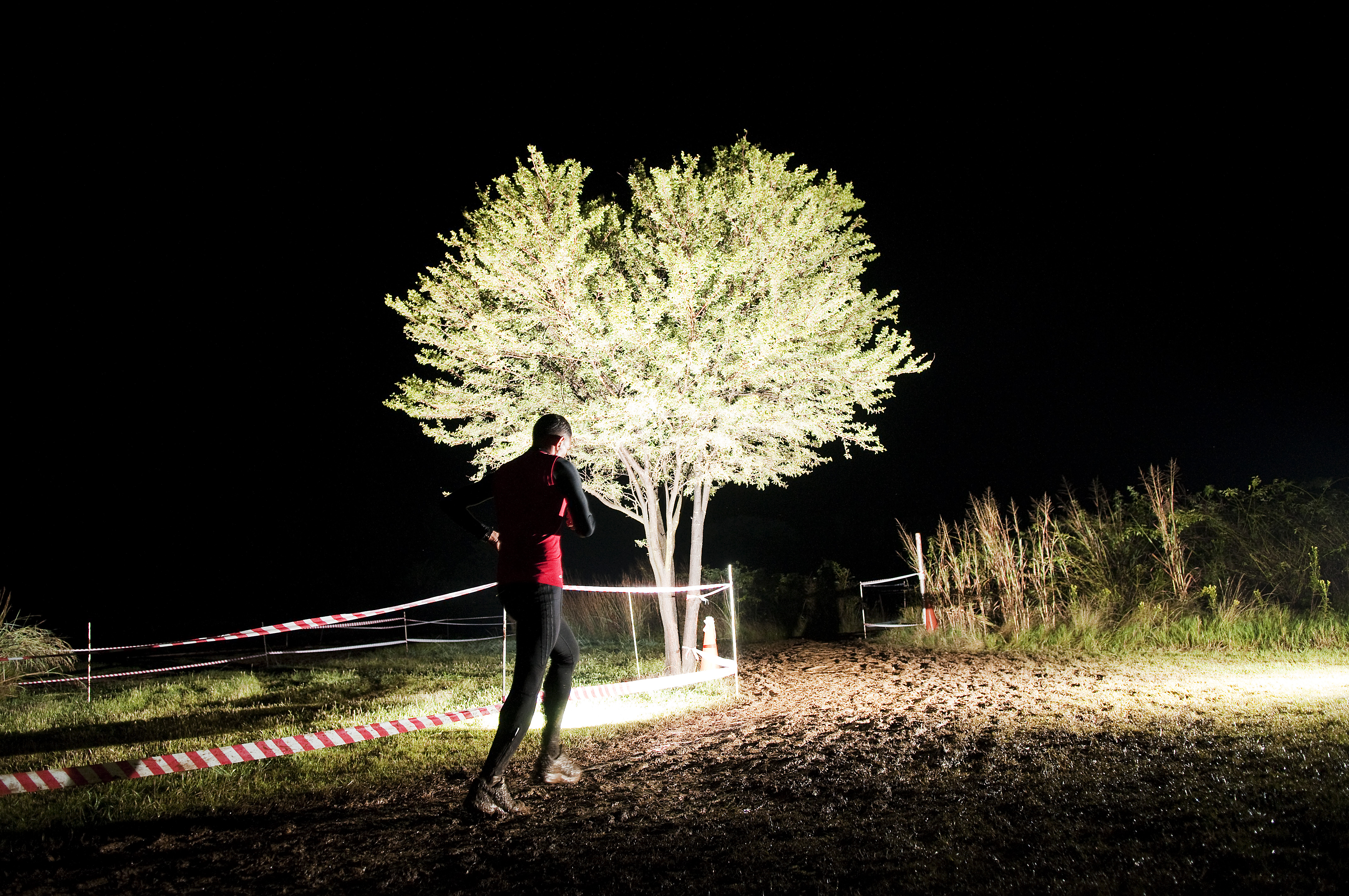
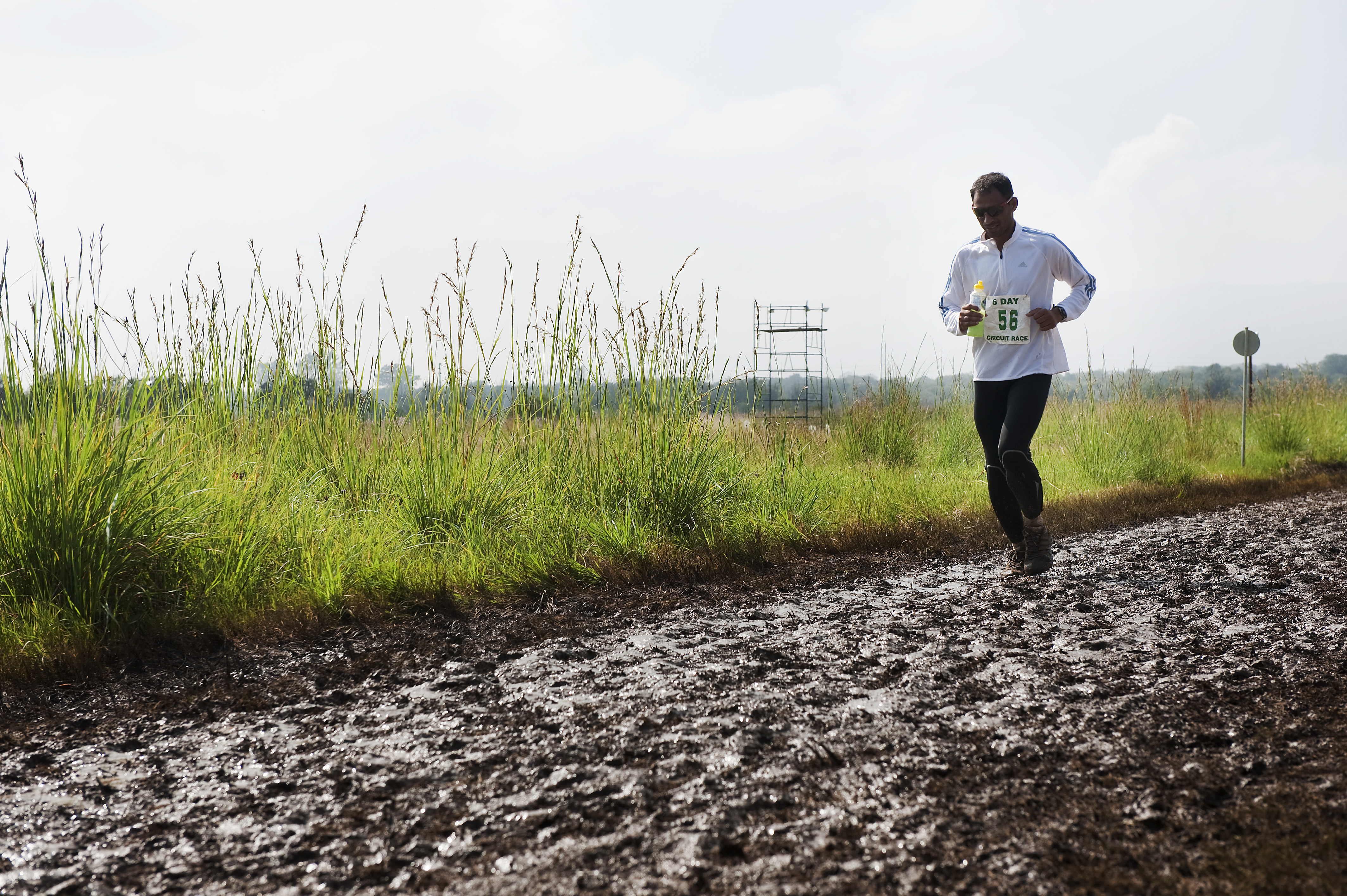
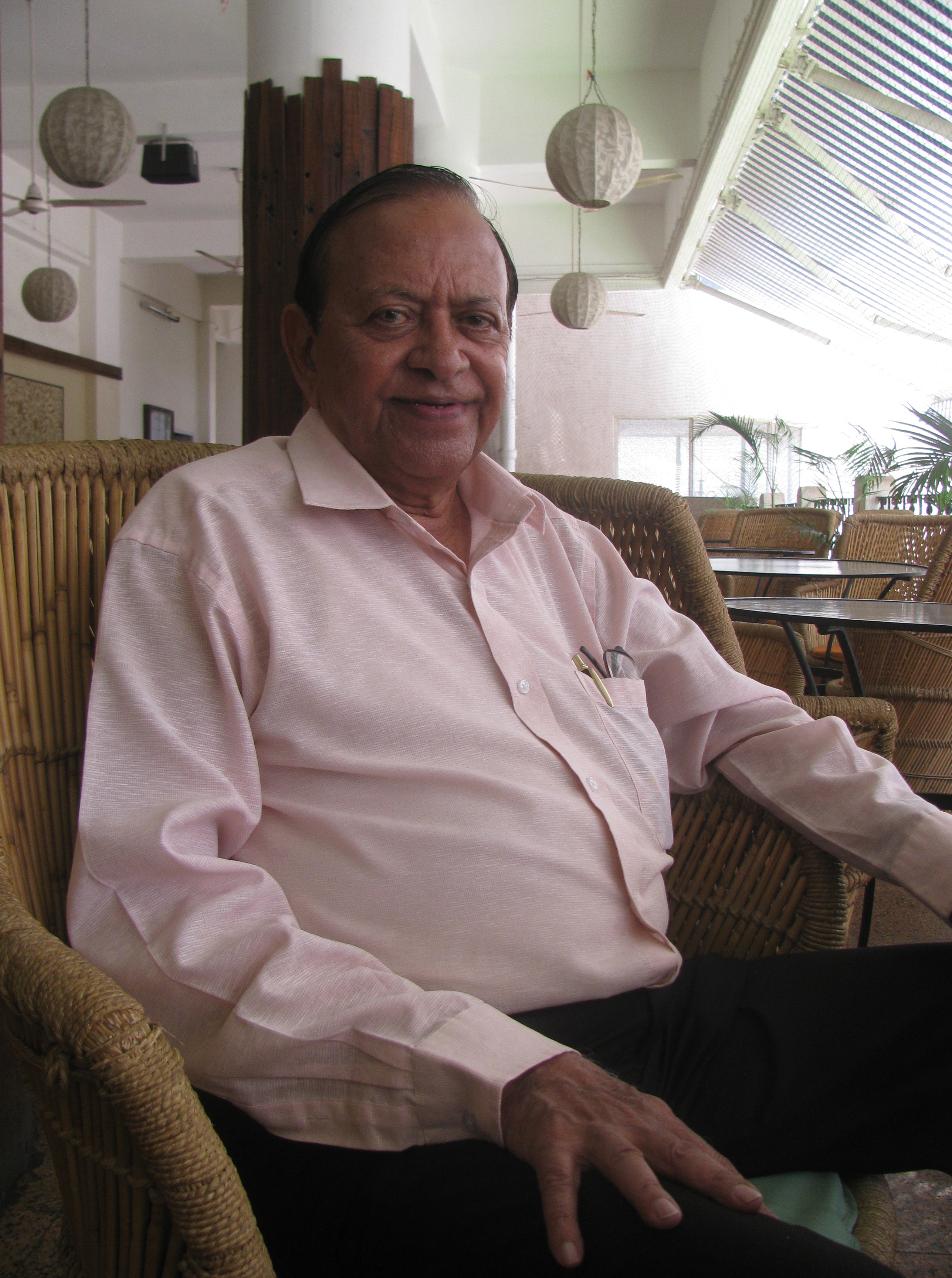
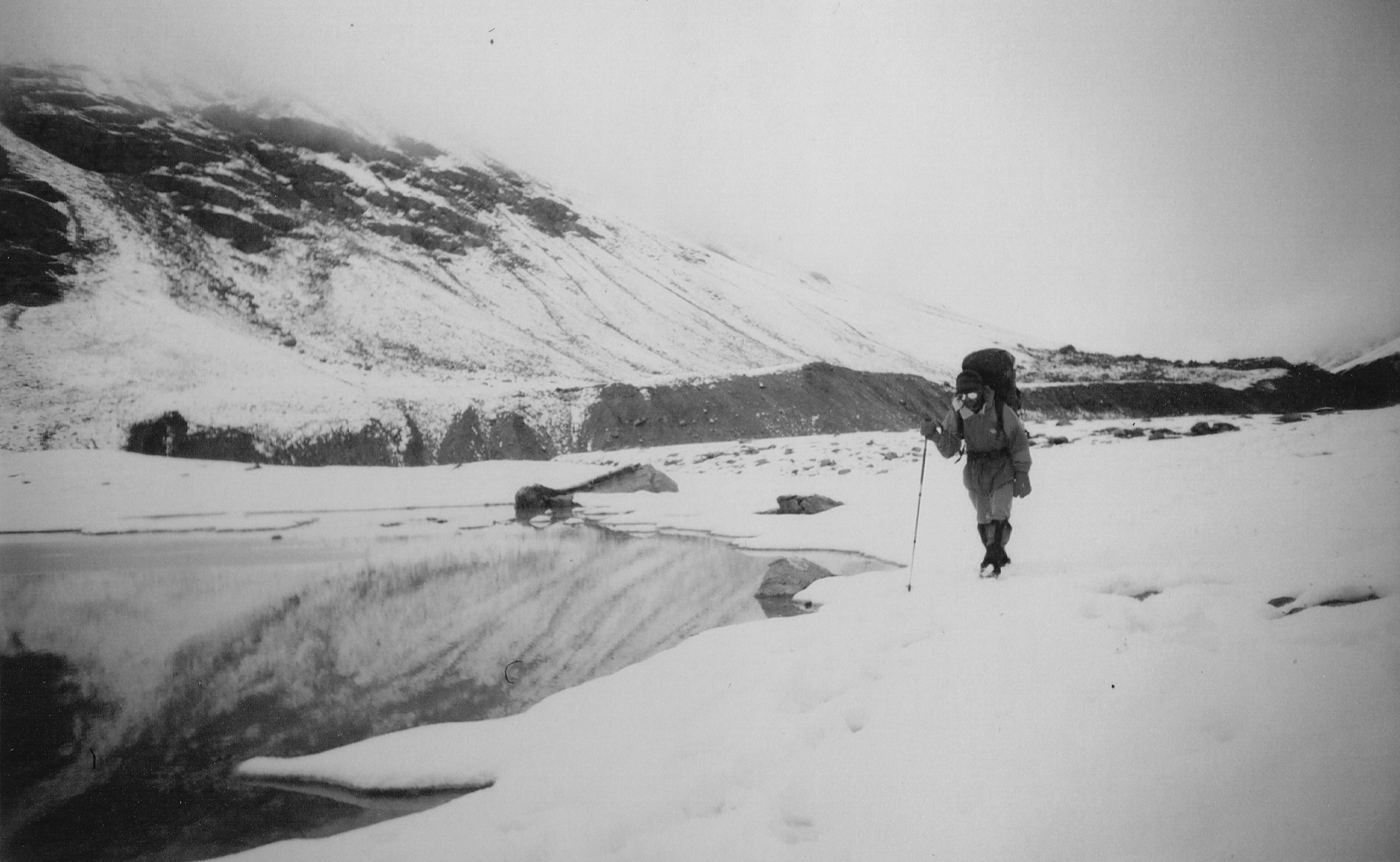
From a previous edition of La Ultra (Photo: by arrangement)

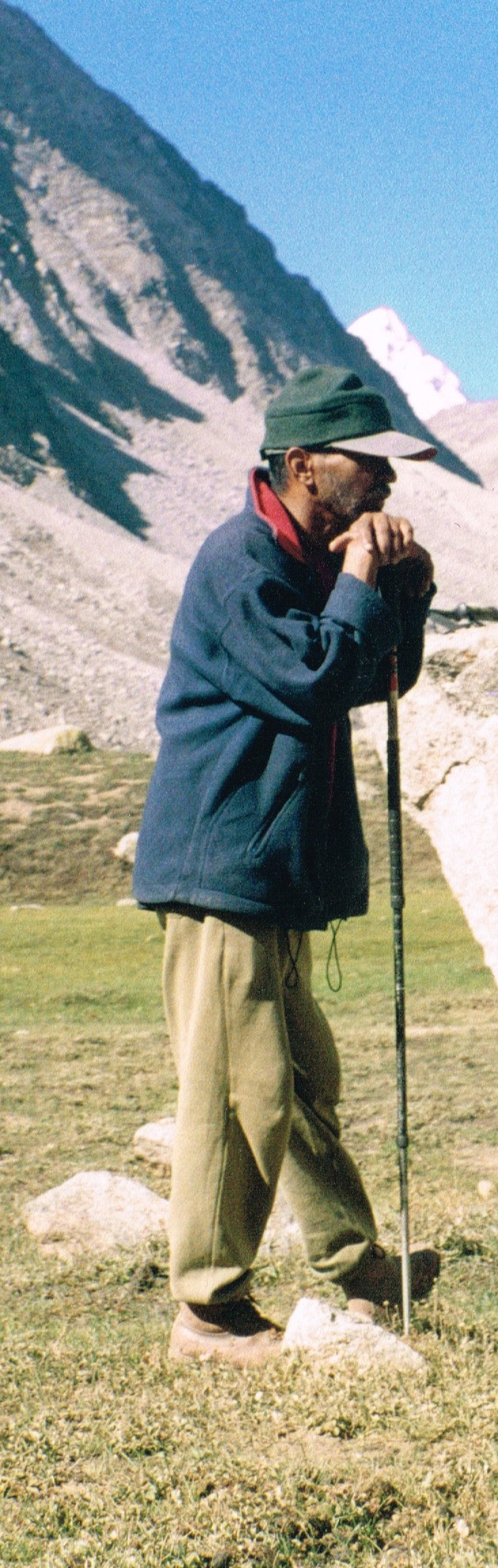
From a previous edition of La Ultra (Photo: by arrangement)

How extreme can extreme be when it comes to ` extreme’ marketing itself?

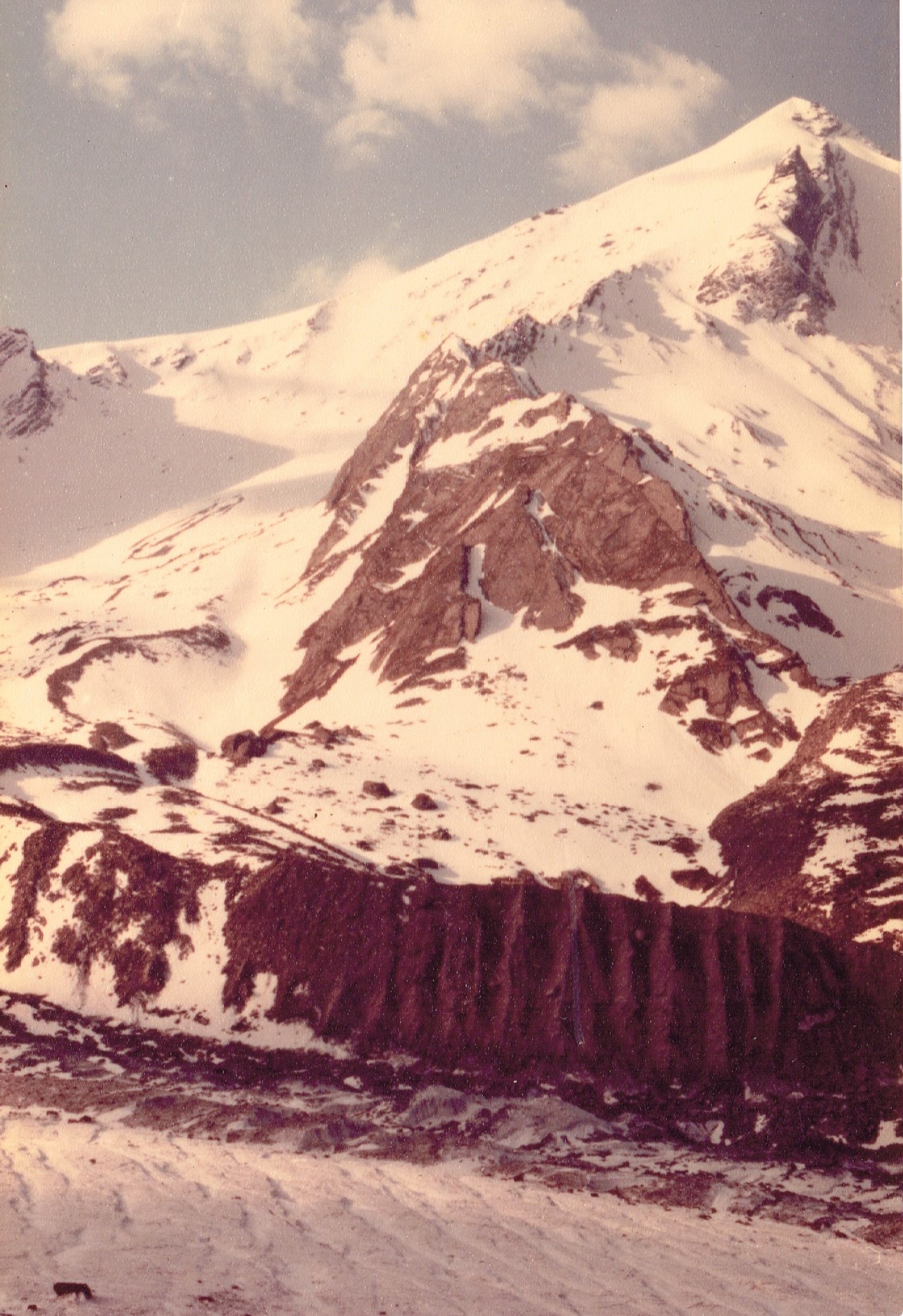
Ladakh is home to one of the world’s toughest ultra marathons, ` La Ultra-The High.’ Its architecture straddles a few extremes – average elevation of over 13,000ft going up to 17,700ft (Khardung La); day temperatures of up to 40 degree centigrade (thanks to the unfettered sun of altitude), night temperatures as low as minus 10 degrees (at high elevation), oxygen content that is 60 per cent of what you would find at sea level and a long distance to run enduring all this. When it started, La Ultra was pegged at 222km. Last year (2014) it grew to 333km. At present, there are three distances on offer for those enrolling to test themselves – 111km with Khardung La included, 222km with two passes over 17,400ft to cross and 333km with three passes over 17,400ft to get across (for an article on the 2011 edition of the race please try this link: https://shyamgopan.wordpress.com/2013/10/19/an-ultra-marathon-from-the-sidelines/).

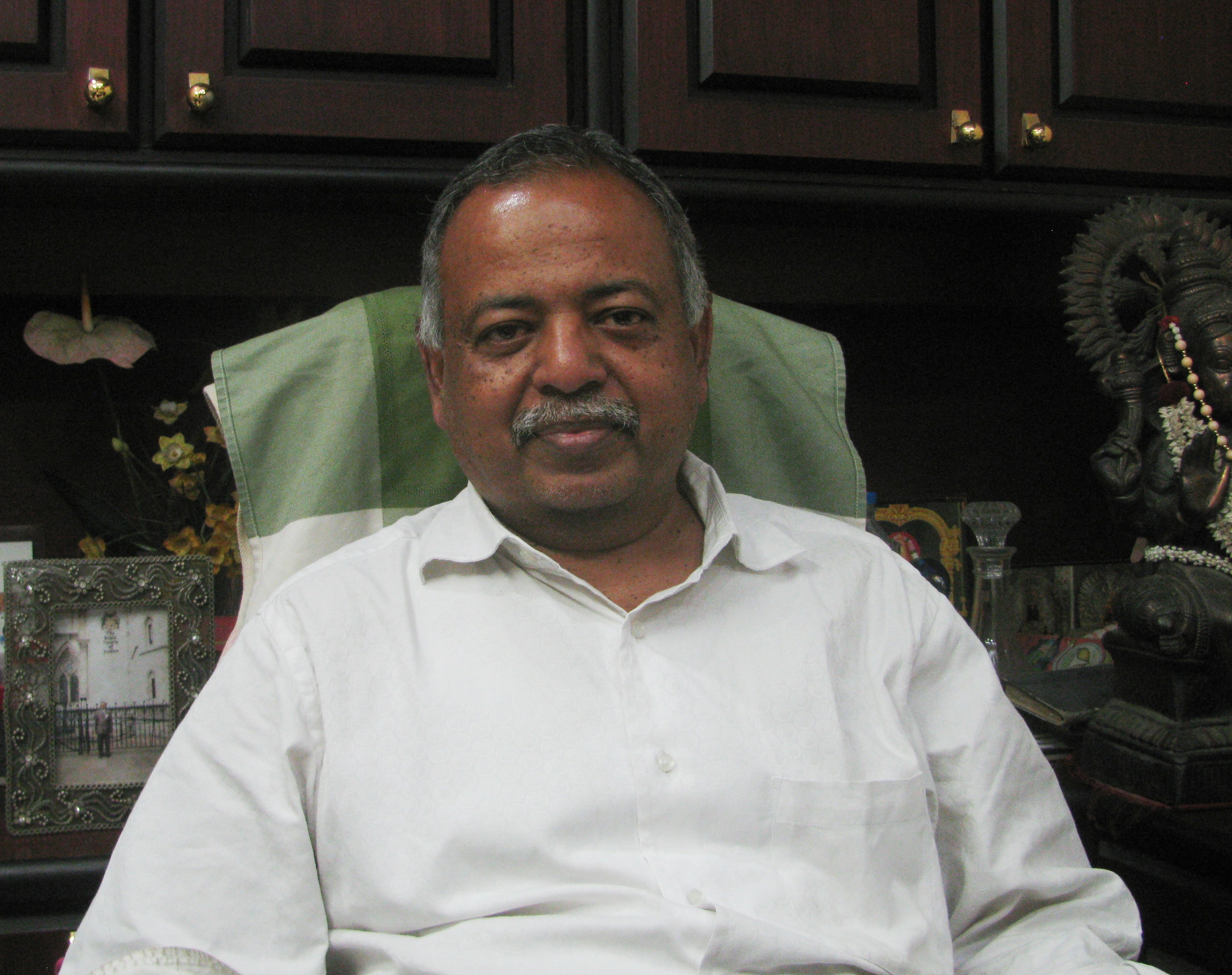
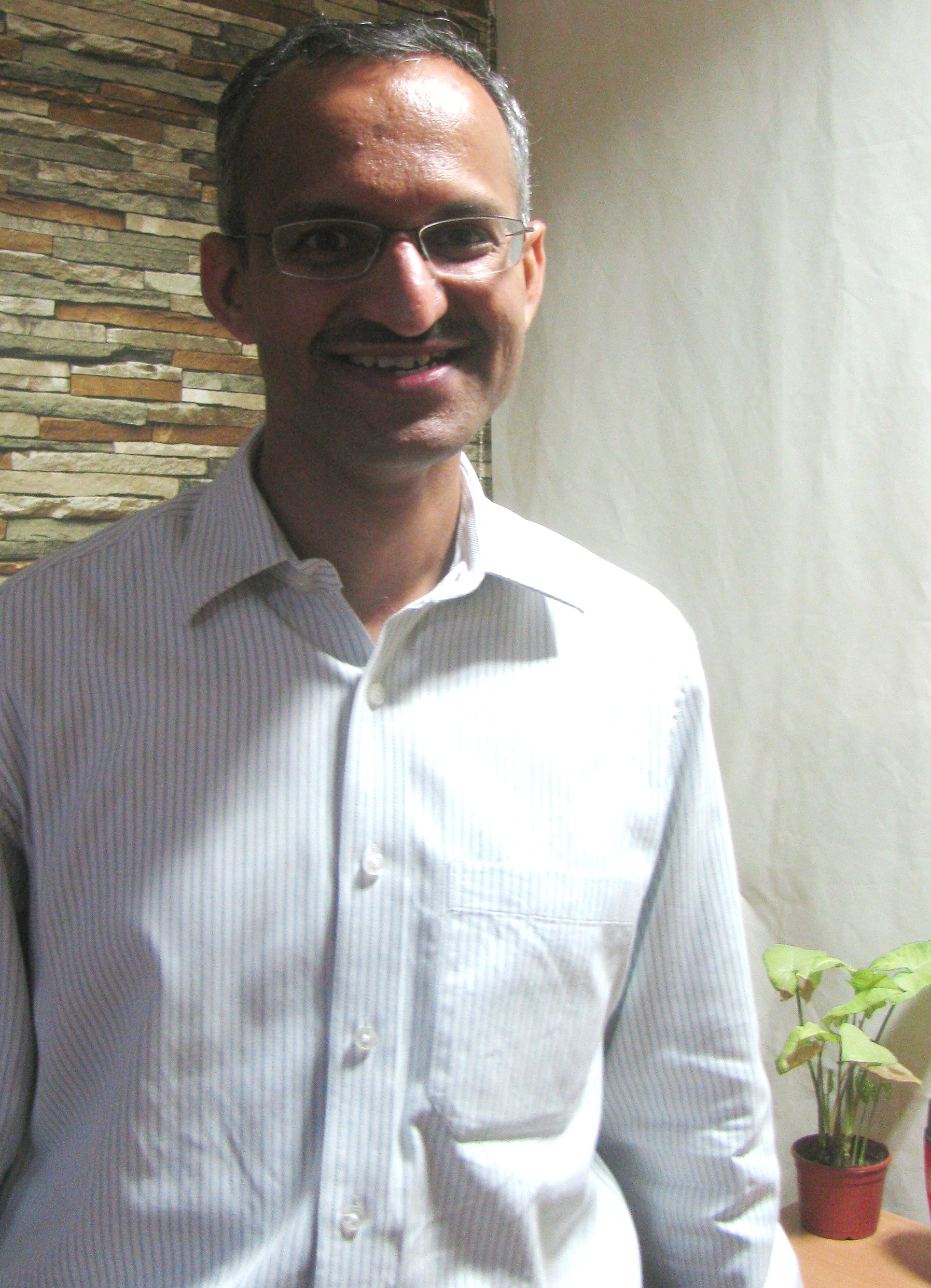
La Ultra’s prime mover is Delhi based-Sports Medicine physician and ultra runner Dr Rajat Chauhan who runs Back 2 Fitness. “ I am clear Back 2 Fitness is my work. Ultra running on the other hand is my passion, what I like to do,’’ he said mid-July at his Delhi office. Over time, the race he pioneered has come to rest in an entity, distinct and apart from his main income earning business. There is also a manager now to oversee race arrangements. The structure for sponsors to come aboard is thus available. Except – to date, no big sponsor has fully stepped in. The annual organization of the event continues to be done by Dr Chauhan and his team and the expenses are borne by them.

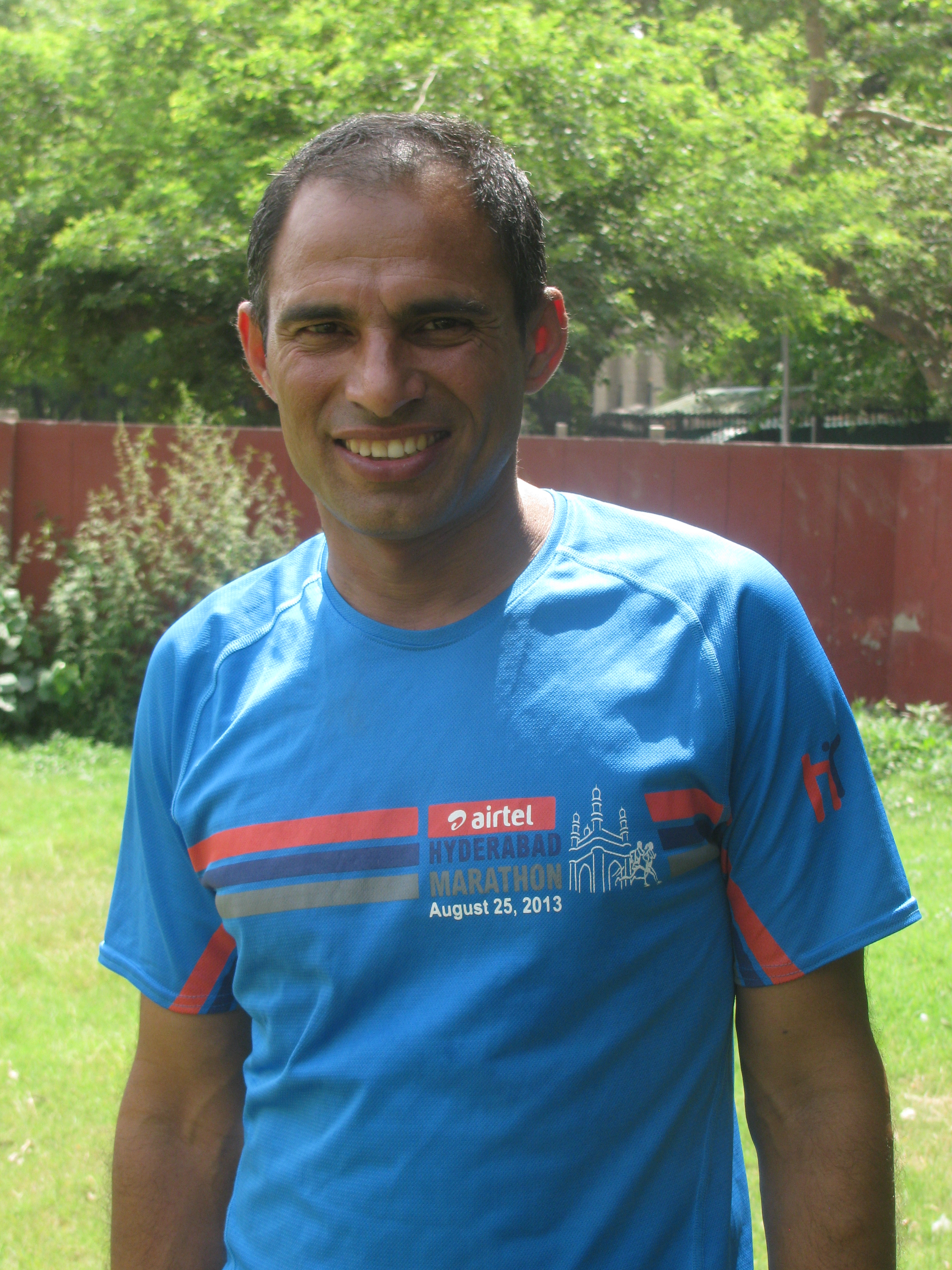
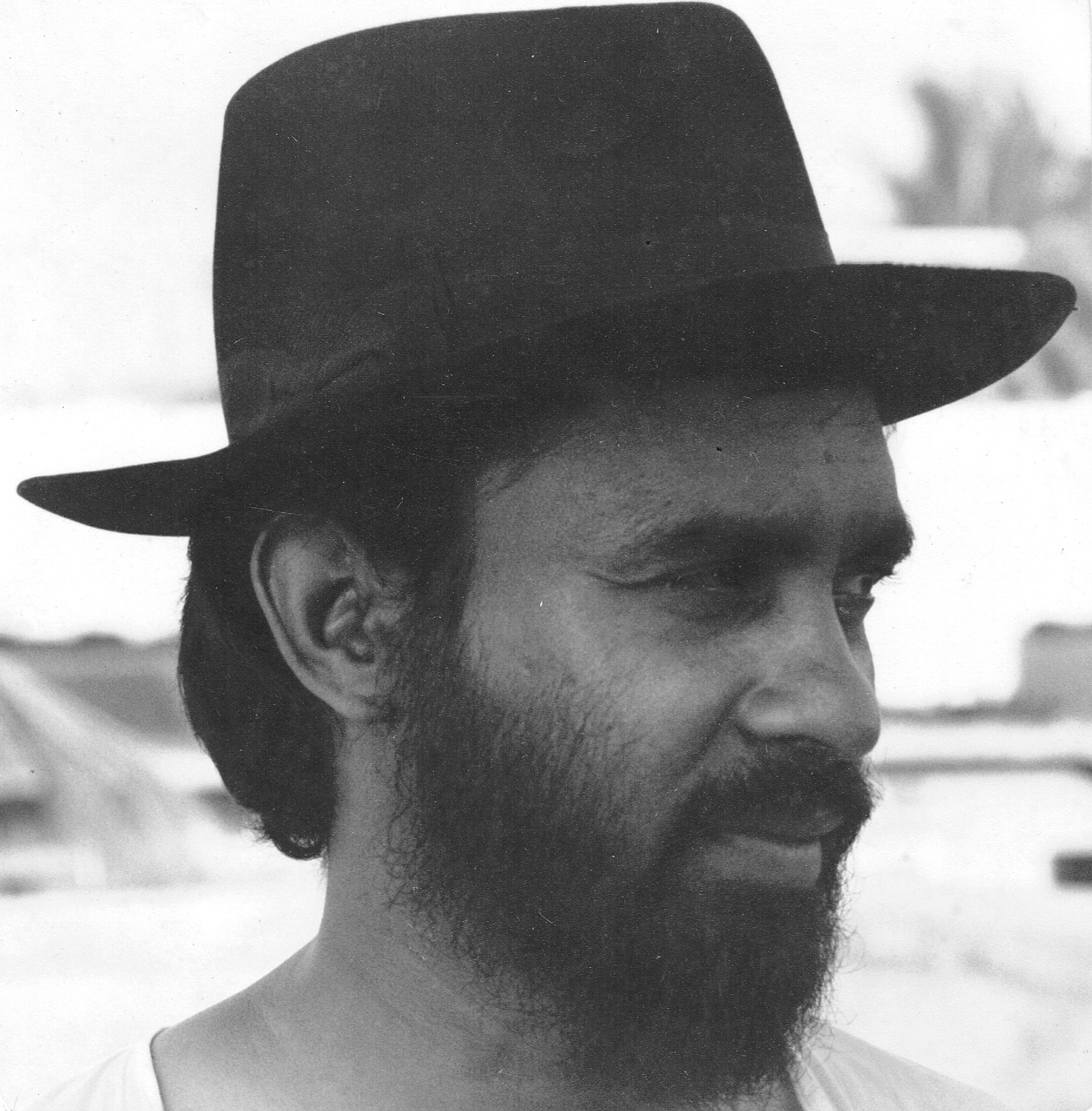
Dr Rajat Chauhan (Photo: Shyam G Menon)

Dr Rajat Chauhan (Photo: Shyam G Menon)

According to Dr Chauhan, in 2014, a leading SUV manufacturer very nearly joined as sponsor. There was convergence of what the SUV brand stood for and what La Ultra showcased through the demanding ultra marathon. But that was it. The deal didn’t materialize. Going by what Dr Chauhan and observers said, there are a few things worth noting from a sponsorship angle.

La Ultra-The High is a niche product both in terms of the type of athlete it attracts and the enrolment it sees. From the start, Dr Chauhan was quite sure about what sort of race he was creating. He wasn’t looking for a crowd-puller. He wanted to push human limits marrying the physical strain of functioning at altitude to long distance running. One of the key aspects here is acclimatization. This phase is included in the La Ultra participation-tenure, which is a composite of eleven days to acclimatize plus three days of the actual event. Nobody is allowed to run without undergoing the acclimatization phase. Needless to say, this duration of event spells a long stay in Ladakh plus the costs pertaining to race arrangements. This has made the cost of participating in La Ultra, quite high; it is well over a lakh of rupees (ie more than Rs 100,000) per head. You have to be accomplished and motivated to enrol. The number of participants in this race has consequently remained small. It has always been less than 20.

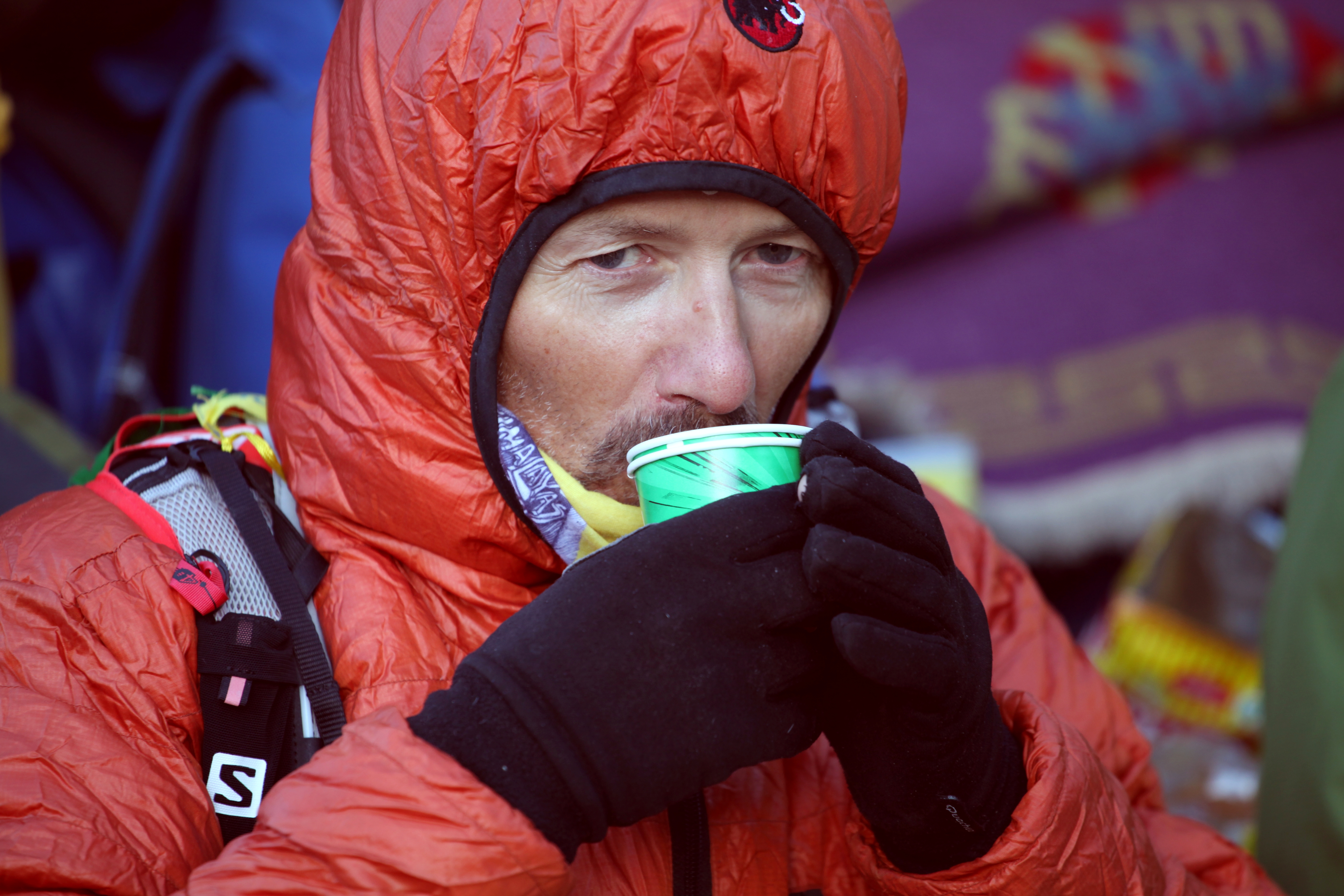
From a previous edition of La Ultra (Photo: by arrangement)

From a previous edition of La Ultra (Photo: by arrangement)

By design too, Dr Chauhan said, he does not want more than 20 people running in a race that genuinely pushes people to their limits in an environment known to challenge physical activity. “ The runner’s health comes first to me,’’ Dr Chauhan said. Both the medical team and the Race Director monitor the progress of each participant and when needed, Dr Chauhan said, he has not hesitated to prevent a runner from continuing. In fact, he saw the stage cut off times (111km-24 hours, 222km-48 hours, 333km-72 hours) less as parameters celebrating performance and more as safeguards to prevent mishaps. For such monitoring to be effective, right down to the documentation needed to support a decision, too many runners are not ideal along the race’s 333km-long course. For a sponsor, that’s perhaps the first challenge La Ultra poses – how do you draw mileage from an acclimatisation plus three day-event that does not take more than 20 runners? From that ensues other questions – what type of audience would wish to see it; how big is that audience, how can the race be relevant to a larger audience, how can a brand benefit from sponsoring it?

In the first edition of La Ultra (when the course length was 222km), there was only one finisher. That has improved since. Dr Chauhan said it was this improvement in performance that made him both trim the finishing time for each stage in the race and also increase the total course length to 333km. Initially a race featuring only foreign runners, there is now a trickle of Indian participation for the shorter ultras. But as challenge levels rise in terms of tighter stage timings and 333km-overall distance, observers say, La Ultra has invited upon itself a second handicap – it probably looks too daunting for people to participate.

From a previous edition of La Ultra (Photo: by arrangement)

From a previous edition of La Ultra (Photo: by arrangement)

Dr Chauhan does not wholly agree with this, especially the distance part.

“ There have been people who came back to participate,’’ he said. Further, he thinks that the race is daunting for the less experienced as the ultra opens with the first 63km of running leading up to the Khardung La pass, which as things stand now is only a fifth or so of the total distance to be covered. So far, no Indian runner has got past the 48km-first stage of the race, except in the race’s third or fourth edition when one Indian runner carried on despite disqualification for missing the seven hour-cut off at the 48km-mark. “ For elite ultra runners, 333km is not a big deal. Mix it with altitude, that makes it punishing,’’ he said. Fact remains however – La Ultra is not something the average marathoner or ultra marathoner would look to. It denied the race popular appeal, making it challenging to market. Is there in marketing a sweet spot, an apt distance between ability and fascination, that makes an event marketable and worthy of sponsorship? Something like far and yet within reach, within the realm of attempting by the viewer?

There are races with gentler attributes – either a lower elevation or lesser distance – that fetch more participants, including in Leh. La Ultra, in comparison, sits aloof at the extreme. It is different enough to be radical but it is too radical for the difference to be marketable. That’s a tricky predicament for a race to be caught in, when it seeks sponsorship. Can there be a compromise-sweet spot, should a potential sponsor insist? Dr Chauhan said he likes such engaging problems. Left to him, it appeared, he would like the race’s shape to continue. What makes the puzzle even more engaging is that according to Dr Chauhan the expense a prospective sponsor may incur to sponsor the event and thereby bring down the cost of participation for runners, is not much, particularly if it happens to be a big company. Such sponsorship and not a sponsor negotiating changes to race parameters, is what he would like. But then, where is that elusive sponsor? As he gears up for the race’s sixth edition – yet another year with no big sponsor – Dr Chauhan said, “ each year it has been a struggle. But I get a kick out of it.’’

The next edition of La Ultra-The High is due in Ladakh this August.

Fifteen people had enrolled as of mid-July 2015; seven to attempt 111km, four for 222km, the rest for 333km.

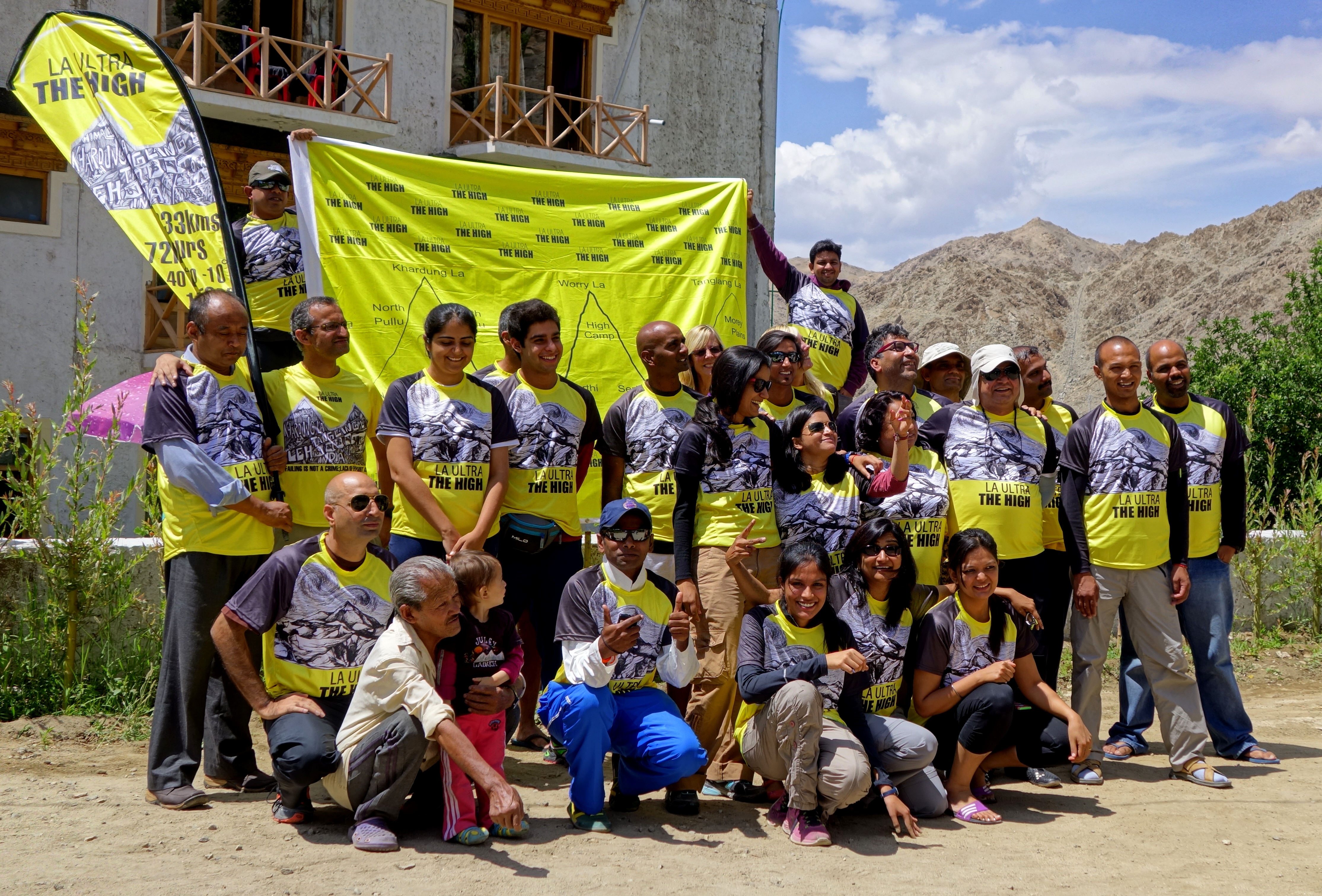
From a previous edition of La Ultra; the crew (Photo: by arrangement)

From a previous edition of La Ultra; the crew (Photo: by arrangement)

Dr Chauhan had the last word. In the final stages of editing this article, he wrote in, “ the other day my nine year old son suggested that from next year we run a bit longer, ie 555km. I pitched the idea of 555km (with five passes) to runners who have participated in La Ultra-The High. After a bit of deliberation – less than an hour – we agreed on 666km (with six passes) next year, possibly over seven, seven and a half or eight days. I already have eight participants for it. I will possibly get 15. And for once, I will run my own race. Most people who do such things don’t try to make too much sense of the return on investment. They just do it. From the beginning, I had thought of La Ultra-The High as the Tour de France of running. It is only a matter of time before the rest realize that.’’

(The author, Shyam G Menon, is a freelance journalist based in Mumbai. Where photo credit has been denoted as `by arrangement,’ it means the picture concerned was obtained from the organizing team of La Ultra.)

THE CONNOISSEUR OF DISTANCES

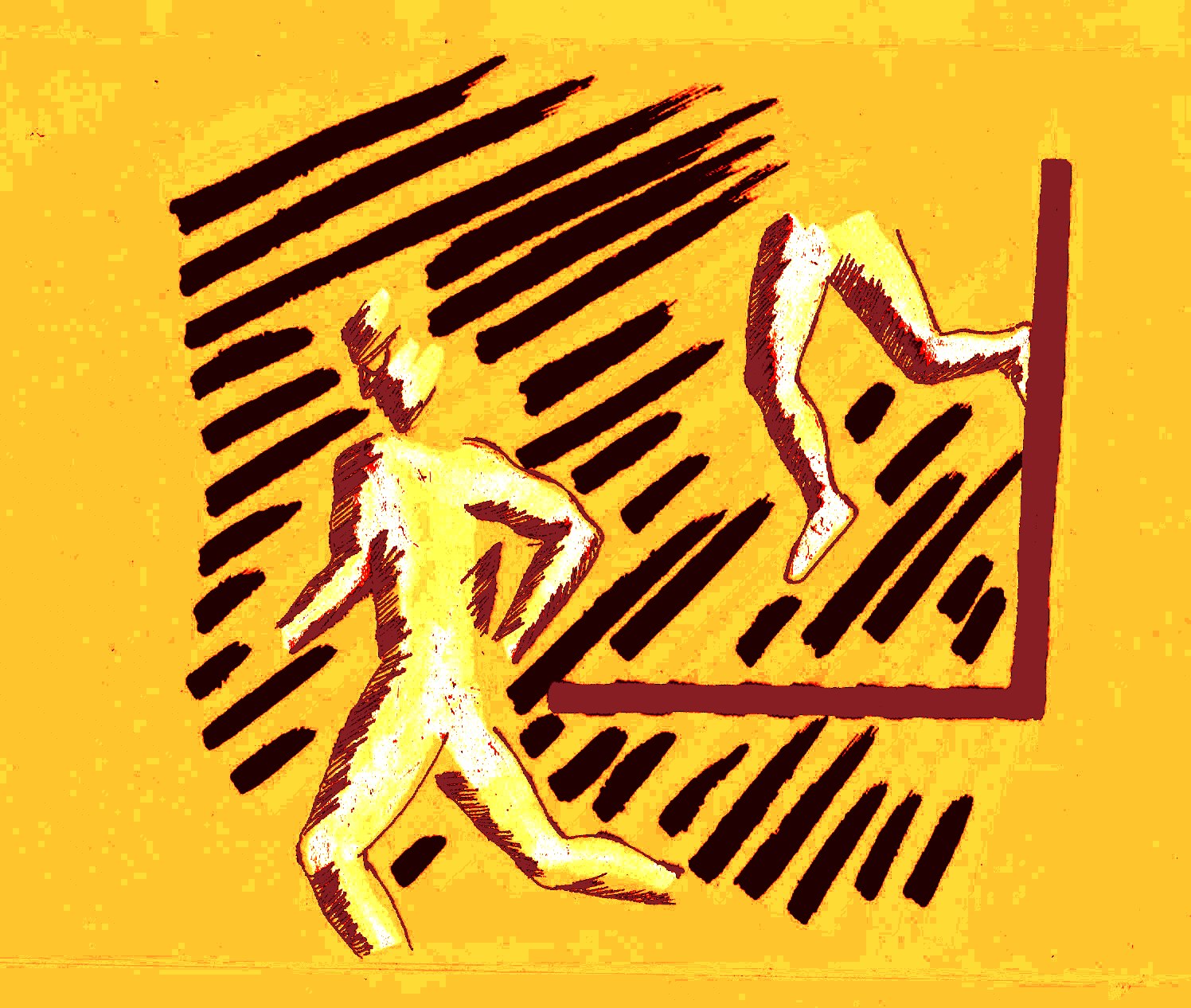
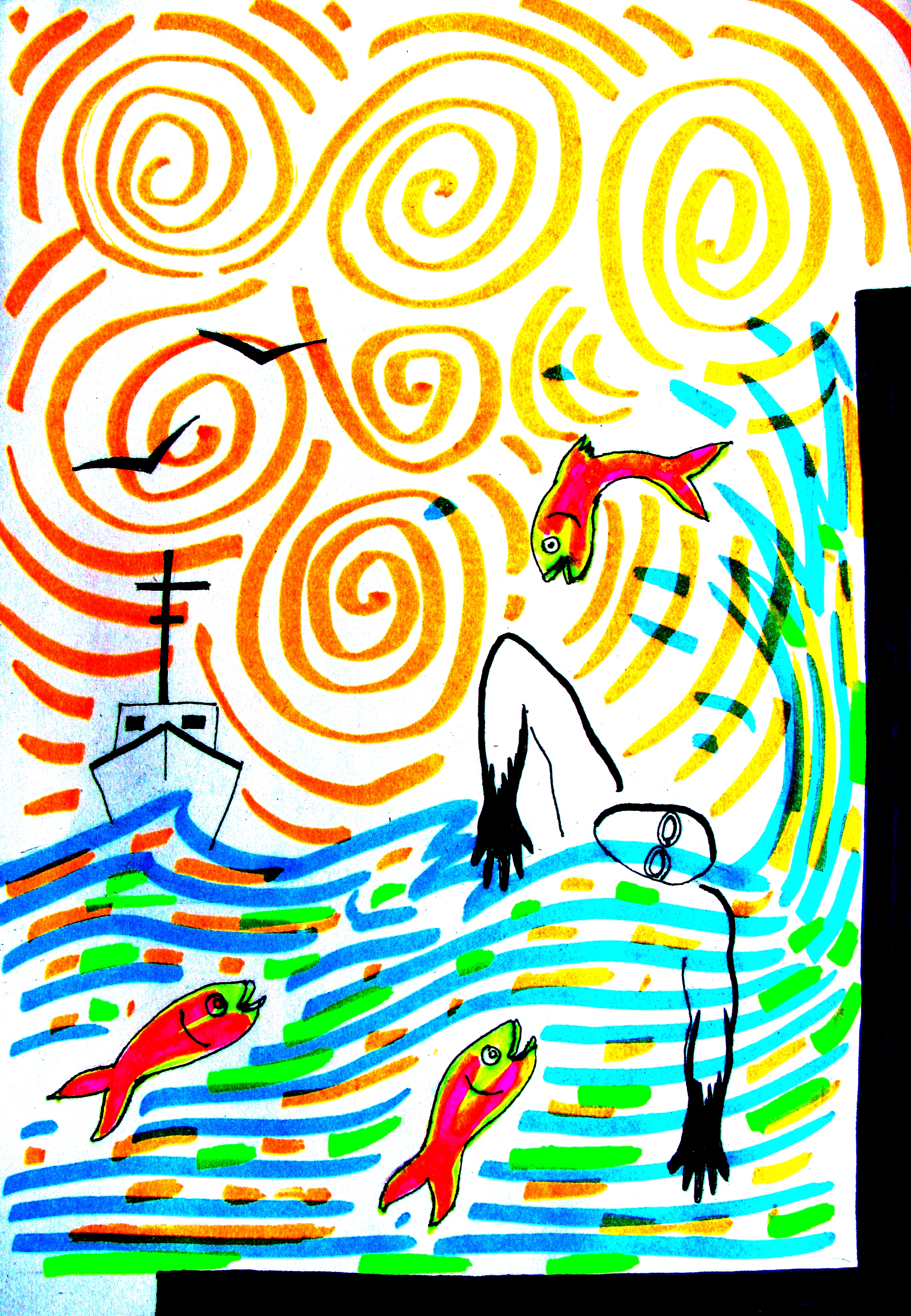
Illustration: Shyam G Menon

Illustration: Shyam G Menon

It was weekend in Delhi.

The cafes of Khan Market were still prepping for the day.

The one we were in was quiet.

We were the day’s first customers or nearly so.

The man before me was athletic.

He had an easy smile that hid an underlying intensity, which surfaced when he spoke about his life lost to fate and circumstance till step by step it gained wings.

I pulled out my notebook; then took a sip from the cup of cappuccino.

The story commenced at Baoli in Baghpat, roughly 50km away from Delhi.

Arun was born the second of eight children – four brothers, four sisters. His father Jaswant Singh was a teacher at the government owned Central School. From class two onward, every year Arun succumbed to malaria. The annual bout of malaria would cease only when he reached his penultimate year of graduation in college. He grew up a weak child.

He was a small person, typically seated up front in class and not robust to play any games. “ My son who is now in the eighth standard weighs 40 kilos. In class nine, I weighed 26 kilos,’’ Arun said. In class nine, another defining spate of illness started. Arun got an infection of the parotid gland, a major salivary gland located between the mouth and the ear. Its cure was a daily injection repeated 90 days.

The course got over. But the infection continued. One side of the boy’s face was swollen, disfiguring his appearance. Around the time of class nine exams, he was taken to the larger hospital in Meerut. There, the doctors identified it as parotid tumour.

After the exams, he was hospitalized for surgery. The tumour was removed. Within four months the tumour returned. In the winter of class ten, a second operation was scheduled and the tumour removed for a second time. Ahead of class ten exams, the tumour returned again. After the exams, Arun had his third surgery to remove the tumour.

The family had thought of sending him for a diploma course in some trade. Arun cleared his tenth exams with decent scores and secured admission for studying commerce. His father, having moved to Delhi wished for the family to join him. But Arun’s tumour flared up for a fourth time. The boy was back to seeing doctors.
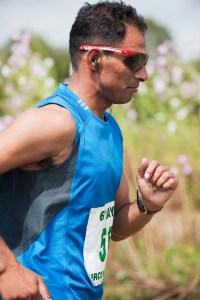
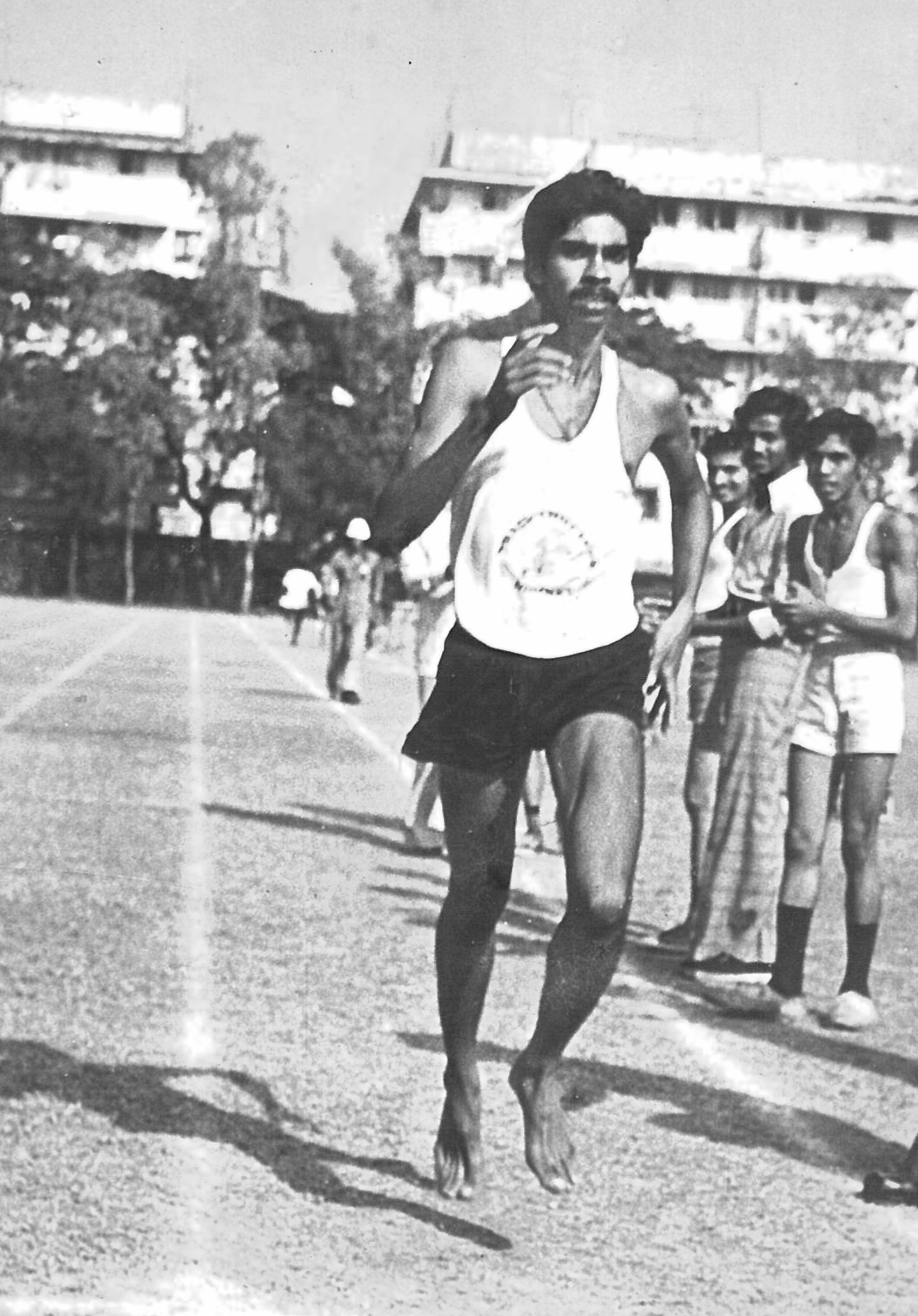
Arun Bhardwaj (Photo: by arrangement)

Arun Bhardwaj (Photo: courtesy Emma Rodling & Johan Wessel)

The prime cause of tension in the recurrent tumour was – all the surgeries so far and the ones to be done were close to facial nerves. A spate of extended hospitalization began. In Delhi, most of Arun’s eleventh standard days were spent hospitalized. “ I used to write to the hospital authorities seeking leave to attend important days in school,’’ he said outlining his predicament. Studies suffered. After his class eleven exams, the fourth operation to eliminate the tumour took place. This time, the incision was bigger, needing 14 stitches to close. “ The doctors said they burnt the whole area – that was the wording they used,’’ Arun said. In any case, the tumour hasn’t returned since.

By class twelve, the young man had a body weight of 37 kilos. He joined college to graduate in commerce; a three year-program in the second year of which, the last of those annual malaria bouts happened. With that, Arun’s history of being consistently sick died out.

It was in the second year of his degree course that Arun started exercising, the first dose of physical exercise for a body locked up since childhood in illness. Arun remembers those first few days of physical workout. He was so weak that he could do no more than two push-ups at a time. So he kept the sets small and slowly, determinedly cranked up the repetitions. In less than a year, he was doing impressive numbers.

Arun’s father taught geography at school. Income was limited. Tuitions can augment teacher’s salary. But who seeks tuitions for geography? It wasn’t a subject anyone sought tuitions in. To contain expense on food and to ensure supply of good quality milk, the family kept cows and buffalos. After they bought a plot of land in Ghaziabad, Arun’s family moved that side, staying there from 1989-2003. In 2003, they moved to Dwarka.

While in college, Arun got a taste of wrestling. During his Ghaziabad years, he was also associated with a training centre for wrestlers – an akhara. “ Wrestling wasn’t for me,’’ he said. However he appreciated the training. Meanwhile a dose of football resulted in a wrist injury that capped his ability to bench press. Nevertheless these were the turnaround years. “ Since 1988, I haven’t been sick in a significant way,’’ Arun said.

In June 1992, Arun joined the Planning Commission as a clerk. There, he got acquainted with two possibilities in sport – athletics, which featured in the inter-ministry sports meet, and chess. He started running to prepare for the athletics meet, also seeing in it a potential alternative avenue for career progression. The maximum distance raced at the meet was 10,000m (10km). Arun started training with 5km runs, slowly raising it to 10km. In chess too, he prepared well, borrowing and reading books on chess from the Russian Cultural Centre. Soon, he was playing chess locally at competitive level.

At the inter-ministry athletics meet, he finished third in the 10km run. He set his eyes on the upcoming Delhi marathon. But in the run up to the event, he got injured. This was how things were in 1997 when Arun got married.

His wife Sangeeta was a school teacher posted at Rewari. Although he wasn’t running much around this time, Arun used to read about running. The couple named their first born – a daughter – Zola, after Zola Budd the famous South African middle and long distance runner. After naming his daughter, Arun wrote to the South African legend; she replied.
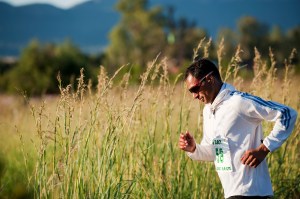
Arun at the George Archer Six Day Race in South Africa (Photo: by arrangement)

Arun at the George Archer Six Day Race in South Africa (Photo: courtesy Emma Rodling & Johan Wessel)

It was now noon.

The cafe had come to life.

Three men, big of purse and body discussed business at a nearby table.

Elsewhere in the cafe, youngsters talked loudly marking their presence in freedom as only those new to freedom do.

Few things express freedom as well as running does.

Little Zola (she has since been joined by siblings Sofia and Yiannis) was six months old, when the running bug bit her father again. Arun heard of talk in his village about a running race within the annual pilgrimage called Kavad Yatra or Kanwar Yatra, carrying water from the river Ganga to the Pura Mahadev temple in Baghpat. The Yatra, once restricted to a season is nowadays year round and typically features pilgrims carrying water from Gaumukh, Gangotri and Hardwar all the way back to Shiva temples in their home towns and villages. Number of devotees added up, this is one of the biggest pilgrimages in the subcontinent.

The idea of running the distance from Hardwar to Baghpat – slightly less than 180km – attracted Arun. Knowing preparation would be required he set his eyes on the June 2000 Kavad, a year away. He trained, running every weekend a half marathon from Baghpat to Ram Park in Ghaziabad. When at Rewari, he ran at the local stadium. In Delhi, during lunch time in office, he ran on Rajpath, that broad straight line of a road known nationwide as venue for the annual Republic Day parade.

June 28, 2000.

At 8AM, Arun started running from Hardwar. In his hand he held a small bottle of water from the Ganga. On his T-shirt was written ` Zola.’ He had bought a pair of used running shoes costing Rs 150, for the race. As backup, he had a pair of Goldstar shoes, made in Nepal and trusted in the hills. At hand was a new Walkman, just in case he required music to egg him on. Twenty three hours and 25 minutes after he commenced running from Hardwar, Arun stood on the first step of the Pura Mahadev temple in Baghpat. He was the fastest runner in the race. Not only that, from 33km as his previous longest run (done while training), Arun Bhardwaj had just completed his first ultra marathon.

Today Arun Bhardwaj is India’s best known ultra marathon runner.

His accomplishments since that run in the Kavad Yatra are many.
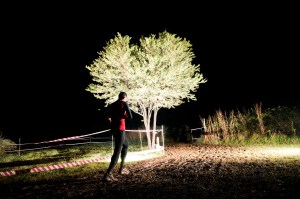
Arun Bhardwaj running at the George Archer Six Day Race in South Africa (Photo: by arrangement)

From the George Archer Six Day Race in South Africa (Photo: courtesy Emma Rodling & Johan Wessel)

In 2000, Arun had just got friendly with the new technology called Internet. After the Hardwar-Baghpat run, he searched the worldwide web to get an understanding of what 180km (approximately) in less than 24 hours meant. He found that in a 24 hour-running championship in Italy, the third placed runner had done 163km. It was the first indication of where Arun stood and what he could do.

The next year, 2001, Arun ran from Delhi to Jaipur, covering the roughly 270km-distance in a little over 33 hours. In 2002, he went to Taiwan on his first race overseas, a 24 hour-endurance run. It was the first time India was being represented at such a race. Arun ran 138.17km. Arun has since notched up several long distance runs. But a few stand out; they found mention in the story he narrated.

He ran a bunch of six day-races in Australia, Taiwan, USA, South Africa and Denmark. All of them endurance runs, he covered over the six day-period, 492km in Australia, 516km in New York and 520km in Copenhagen. He became the first Asian to complete three six day-races within the time span of a year. In 2004 he ran 501km at a six day-race in Mexico. Later in the same year he did 532.8km at another six day-race in Germany. Then he ran the first marathon of his life in Russia in blistering cold, following it up with 153km covered in the 24 hour-open championship in Russia in 2005. Same year, he did 558km at a six day-race in Australia. In 2006 he ran 521km in a seven day-race on a hilly course in Greece.

In 2010, he ran a six day-endurance race – the George Archer Six Day Race – at Hekpoort in South Africa. How it panned out tells something of Arun’s running. The course was a one kilometre loop. You ran on it for six days, resting whenever you wished but committed to an average of 67km covered per day. Else you will be disqualified. Running without support staff, a vegetarian in predominantly non vegetarian country, Arun’s cachet of food was a bag of fruits (apples, oranges and bananas) and a bottle of honey. He had also stashed in a bottle of water. As the run progressed amid rain, the Race Director, noticing Arun’s predicament in food asked what he could do. Arun sought boiled vegetables. He got that. Then, someone gave him a bottle of energy drink. All this, Arun said, would have hardly met his food requirements for six normal days. But he tapped into something within and kept running on this limited food. At the end of day one, Arun was placed second. He stayed in that position till day five, when he snatched leadership position. On day six, he maintained his lead, ran 106km that day and won the race, the first time – and so far the only time – an Indian won a multi-day race overseas.

Illustration: Shyam G Menon

Illustration: Shyam G Menon

In the context of Indians running ultra marathons abroad, Arun is known for completing the 2011 Badwater Ultra Marathon in the US in 41.06 hours, finishing 56th in a field of 98 runners. Badwater describes itself as the world’s toughest foot race. According to Wikipedia, its 217km-long course starts 282ft below sea level in the Badwater Basin in California’s Death Valley. It ends at an elevation of 8360ft at Whitney Portal, the trailhead to Mt Whitney. The ultra marathon takes place in mid-July when weather conditions are extreme with temperatures sometimes touching 49 degrees centigrade in the shade. Death Valley is the lowest, driest and hottest area in North America. It also lays claim to the highest air temperature in the world of 56.7 degrees centigrade, reported in July, 1913 (some meteorologists dispute the accuracy of this reading).

Within India, besides the Delhi-Jaipur run, Arun did Delhi-Chandigarh-Delhi (550km in 122.45 hours) and Delhi-Shimla (370km in 74.37 hours). His most ambitious project – completed in 2012 – was running from Kargil at the very north of India to Kanyakumari at the southern tip, via Leh. The distance of 4150km (as measured by the odometer in the support vehicle) was covered in 61 days of steady running, from October 1 to November 30. There was no day in between without running. In other words, a day of comparatively less running qualified to be rest day for this ultra runner running half marathons, marathons and more back to back. Thrice on the Delhi-Kanyakumari stretch, Arun ran over 100km per day.

His last major run before our meet-up in Delhi was a run from Delhi to Chandigarh in April 2015. He covered the distance of 254km in 49.55 hours. The maximum distance he has run so far in 24 hours is 186.4km, recorded at a 2010 event – albeit not official – in Kolkata. The same under ratified circumstances is 177.70km in 2009 in Athens. This is believed to be a South Asian record.

In most of the races (not projects like Kargil-Kanyakumari) he participated in, Arun was alone, without any support crew. His choice of races and runs also reflect passage through a variety of conditions. Between Badwater in the US, running in Russia and the Kargil-Kanyakumari run in India, he would have for example, tasted what it is like to run in hot, cold, high altitude and humid conditions.

An article in The Hindu written when Arun passed through Delhi en route to Kanyakumari, has him mentioning a run from Arunachal Pradesh to Gujarat and another along the Golden Quadrilateral among projects he would love to do. I asked Arun what his future plans are.

“ Before the age of 50, I would like to cross 500 miles in six days,’’ he said. That is 800km. Other goals on the wish list were – cross 300 miles (480km) in 72 hours; do 200 miles (320km) in two days.
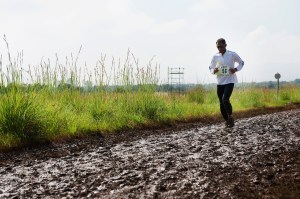
From teh George Archer Six Day Race in South Africa (Photo: by arrangement)

From the George Archer Six Day Race in South Africa (Photo: courtesy Emma Rodling & Johan Wessel)

It had been quite a while since we left the cafe.

We walked maybe two kilometres for lunch.

Lunch had, we strolled back towards Khan Market, our pace decided by Arun’s passionate talk about running.

Although an accomplished distance runner, Arun was yet to find a major sponsor who stuck around for long. He also mentioned another challenge. When his first trip overseas came up, he had the organizers of the event in Taiwan write to the Planning Commission about the invite so that he could be officially allowed to participate. Unlike other sports including the marathon, the ultra marathon was hardly known in India. Eventually Arun’s participation was approved by the sports ministry and other agencies involved in the approval mechanism. But it was clear – nobody could grasp why the ultra marathon existed, why it was run.

In many ultra marathons, the failure rate is much higher than in the marathon because the course and course conditions are tough. Just finishing an ultra marathon is demanding. Finishing is respected. However the bulk of imagination in sports in India borrows from known themes like the world’s major sporting spectacles and the formats they indulge. Even globally, sport and disciplines in sport are seen to touch a pinnacle when they feature in staged events like the Olympics. This pattern traps our imagination; we lose our innate ability to empathize with the new and the spontaneous for want of vindication by set pattern. Thus when it comes to running, people – including officialdom – understand disciplines ranging from sprint events to the marathon. The ultra marathon puzzles. It finds no empathy. Why should there be madness beyond the marathon? Runners know why.

On one occasion – the six day-endurance run in New York – the bureaucratic delay over clearances in India bit so hard that Arun was forced to fly to New York via Moscow (the cheapest ticket he could find at that point) and reach with hours to spare for race commencement. There was no time to rest and get over the jet lag. He proceeded to run 516km over the next six days.
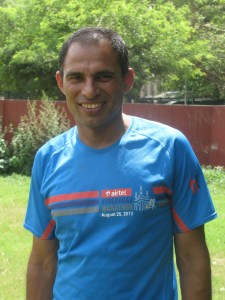
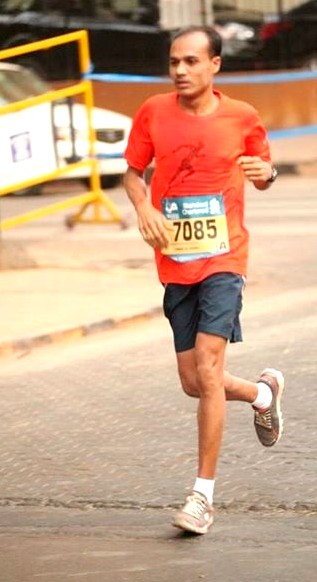
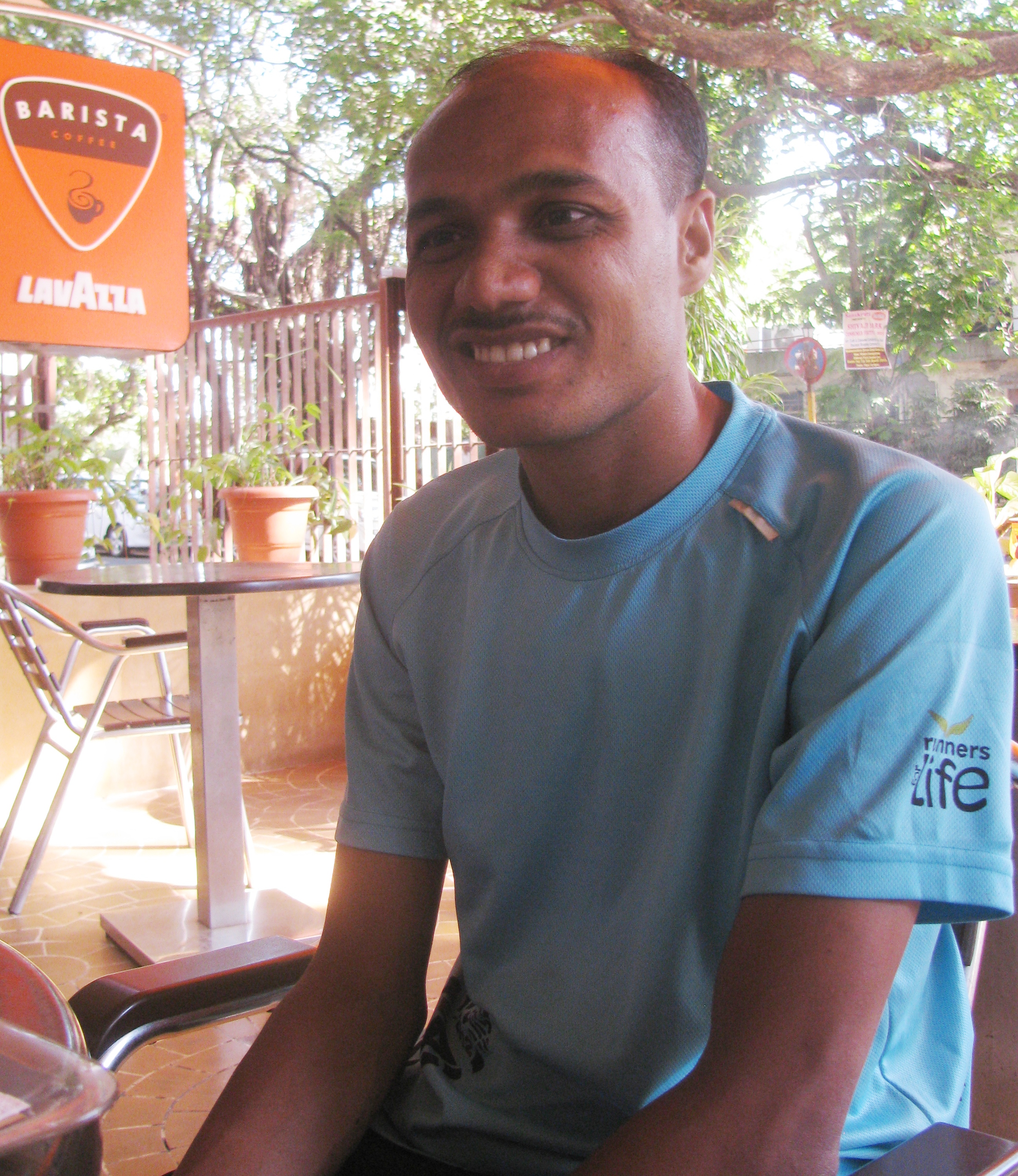
Arun Bhardwaj (Photo: Shyam G Menon)

Arun Bhardwaj (Photo: Shyam G Menon)

In several countries, ultra runners have associations representing them and the sport.

India has none.

Given the politics sports bodies devolve to in India Arun himself has little appetite for the concept of an association. But how else will you familiarize people with the whys of ultra running? How else can officialdom be made to understand the needs of the ultra runner? “ Ultra running is a spiritual journey. You see a body running by. Actually it is spiritual,’’ Arun said. That is the ultra runner speaking and expectedly, it does not reveal to the lay person the physical strain that precedes the experience of the spiritual. Question is – will others here understand things well enough to support and encourage ultra running?

We were now at the entrance to the Khan Market metro station.

Arun walked in to catch a train home.

On the adjacent Subramania Bharti Marg, a sports car zoomed, exhausts screaming.

Everyone loves speed.

How many like the ultra? – I thought.

UPDATE: Early August 2015, Arun Bhardwaj was the winner in the 24-hour Stadium Run held at Sree Kanteerava Stadium, Bengaluru (Bangalore).

Running on the 400 meter track, Arun covered 177.2 kilometers in the assigned time, media reports said.

(The author, Shyam G Menon, is a freelance journalist based in Mumbai. Please note: the timings and records quoted in the article are as provided by the interviewee.)

A RAINY FRIDAY

Illustration: Shyam G Menon

Illustration: Shyam G Menon

Friday, June 19.

Heavy rain in Mumbai.

Trains services were hit.

Schools shut; my neighbour’s son was walking around in the rain.

He seemed happy for it.

Mumbai likes the rain. But when it rains hard, it sits up and takes note. There is that memory of a July 26 from ten years ago, which haunts. Last month was unbearably hot. May 2015 was reported as the hottest May in recent times. Over 2200 people died of the heat in India. Now the gathered grey pleases and worries Mumbai in equal measure. There is an emergent trend in the rain to suddenly gift intense spells and prolonged downpours as compared to the steadier, stretched out pattern of before.

Friday’s heavy rain began on Thursday night.

Thursday night is also when Friday dawns these days of Internet with the next morning’s news already available to peruse. Among prominent news therein was: Pope Francis had spoken up for the environment. He wanted the world to take note of climate change and mend its ways. I would have viewed it as just another bit of news had he not faulted businesses and companies as well. That struck a chord.

The thing is, you can’t tackle humanity’s problems with one foot in the market and one foot in situation craving change. Money seeks to guard against insecurity and in its effort to do so, is very conservative. It does not court potential loss. Its style of transition is to milk an existing cash cow, keep investing in the unsure new and when the new has become surer, wean off the old. This takes time. It’s probably why despite years since the world first reported the hole in the ozone layer, we merely drifted further and further down the road to global warming and climate change. The market doesn’t yet perceive the fight against climate change as urgent. Businesses rarely take u-turns. To shift course they seek critical mass, maybe the Pope and some more; perhaps lot more. Leave alone business, this tendency has pervaded human existence for containable, responsive small formats are giving way to lumbering mega formats. Relevant change is actually becoming more and more difficult. Problem is – what we are beset with exceeds concerns of profitability. You wish to see some evolved intelligence in the market-animal. That’s asking for too much. Even the existing buzz around employment is: enjoy the money; don’t think about the work.

Roughly a month short of ten years ago, on a day of rain and tide like this with however an intense spell of cloud burst in between, Mumbai was treated to how money behaves. On July 26, 2005, while the city flooded, the local stock exchange indices gained. Next day, thanks to many people staying back at brokerages, trading was again brisk. News of several dead in the rain had emerged. But on a low volume of trade, the indices gained again, the BSE Sensex breaching the 7600 mark for the first time. The market was just doing its job. It has no need to imagine differently. The market is the home of money, the cold glue in the human ant hill.

For some time now, the market – the sum total of business and companies – has been this strange mental repressor. It gives us money to enjoy but delays relevant shifts which must happen in our time and instead, prolongs the old. The trend won’t change unless money shifts from the repressive spot it is currently parked in, to more meaningful spots. But how will money shift if all that money cares for is its own secure multiplication? It is evident in how any change must first satisfy questions around business model. Freelance writer was also asked recently by employed ex-colleague, “ do you have a business model?’’ It felt like a heartless but inevitable epitaph. I can’t dispute the truth. Can I? In the resultant favouring of those changes with profitable business models, we have been sold as fantastic innovation, stuff that certainly mints money. But did they create real difference? – I wonder. Did your life dramatically alter because you could drive a monster of a car on the road; have 1000 songs in a device in your pocket, post your look every two minutes on the Internet or litter the world with cyber trails of whatever you do? In fact, the experiential aggregate of engaging in these ` changes’ would possibly be to internalize the culture of excess and make oneself inert to the real changes required. Married to contemporary scale many of these sponsored changes have the quality of waves sweeping us off our feet. Assessed for relevance, this isn’t much different from the impractical idealism of freelance journalism. My ex-colleague is perhaps the more sustainable of two cases of irrelevance then? Maybe. I suspect, if you wish to partner the really relevant new you will have to take a pay cut for no money will court the relevant new if risk is not lowered. Right now nobody wants a pay cut. Nothing new happens. Or more accurately, what is `new’ is a lot of trends that money loves. That’s viable business model.

For some reason, I ended Thursday listening to Neil Young sing `Old Man.’ Afterwards he spoke of the hole in the sky and the need for sustainable farming. Stuck in my office the night of July 26, 2005, I remember listening to Traffic’s ` Dear Mr Fantasy’. That night, many people in the city were at their office or someone else’s. Outside it rained. Late afternoon, Friday; it was still raining in Mumbai. The Internet had photos of flooded railway tracks, waterlogged roads, fallen trees and marooned vehicles. In chat rooms, Mumbai’s municipal corporation – veteran of weathering criticism every monsoon – was under attack. The state chief minister visited the corporation. Later he tweeted asking everyone to be safe. On Friday, Mumbai reportedly received ten day’s worth of its regular monsoon in one day. Two people died; search was on for a missing third. The stock market gained. It closed Friday at 27,316. The 7600 from ten years ago seemed unrecognizable.

Flooded city though was most recognizable.

(The author, Shyam G Menon, is a freelance journalist based in Mumbai)

EVEREST – WHEN THE EARTHQUAKE STRUCK

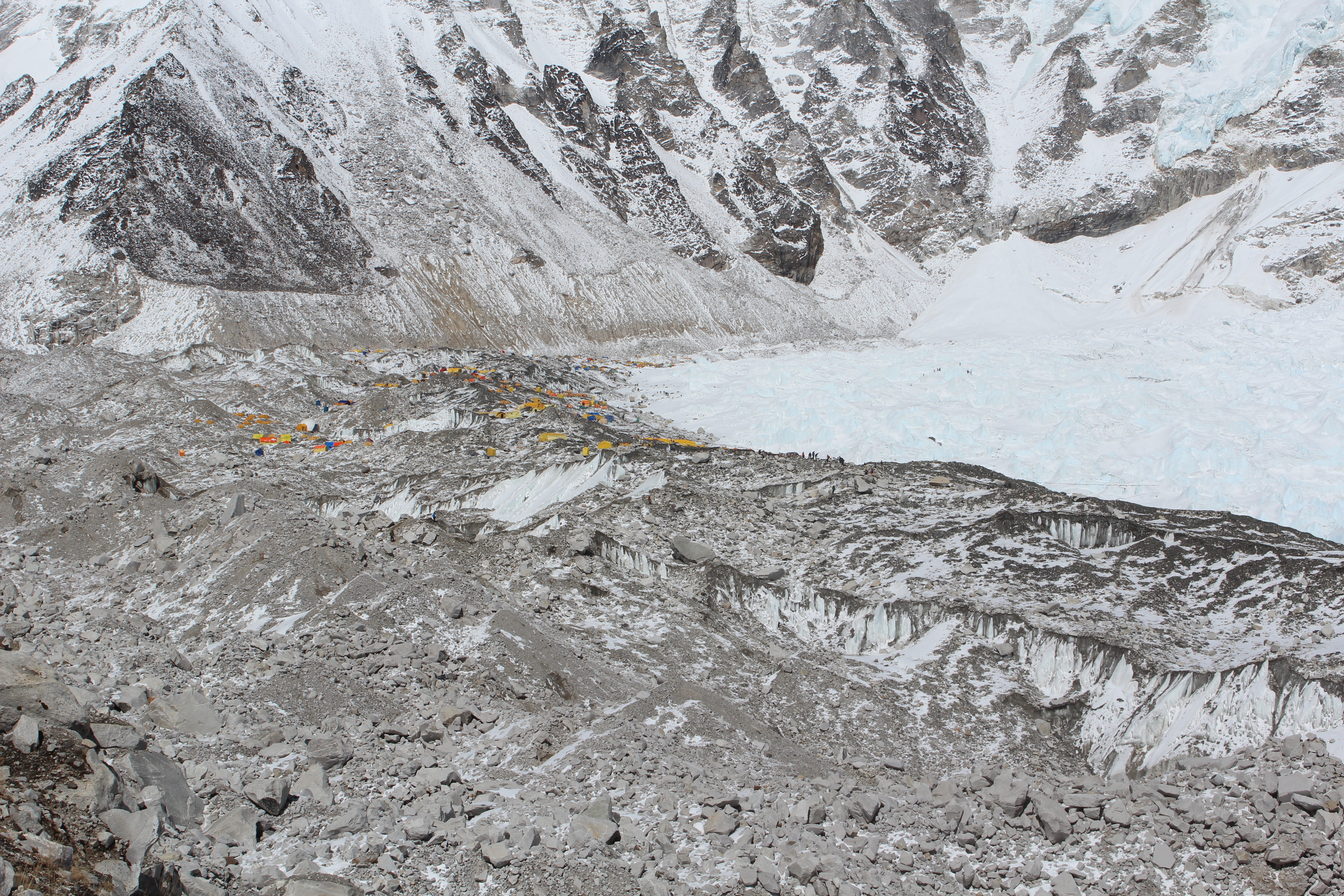
Overall view of the location of Everest Base Camp. The tent clusters can be seen as small coloured specks (Photo: courtesy Love Raj Singh Dharmshaktu)

Overall view of the location of Everest Base Camp (EBC). The tent clusters can be seen as small coloured specks (Photo: courtesy Love Raj Singh Dharmshaktu)

For Love Raj Singh Dharmshaktu it was his eighth visit to Everest and if all went well, a potentially successful climb to the summit for the sixth time. With five ascents already in the bag, he was the Indian to have climbed Everest the most number of times. In love with the peak, he had become associated with regular returns to Everest to try climbing it yet another time.

His 2015 expedition had been difficult to put together. Everest is an expensive affair and sponsors had been hard to find. “ This time it wasn’t as determined an effort. I decided to go if I secured some support,’’ Love Raj said. In the end, some financial assistance did materialize. But it wasn’t enough and so Love Raj, tweaked the details of his passage up the mountain such that he did all the climbing and cooking by himself to save cost (for a report on the run up to this trip, please see https://shyamgopan.wordpress.com/2015/04/04/going-for-a-sixth/). He left for Kathmandu on April 4 to join the Eco Everest Expedition organized by Asian Trekking, among best known organizers of expeditions to Everest. Their annual Eco Everest Expedition, besides climbing the peak contributed its bit to bringing down trash from the mountain. The team this year had 14 climbers including those from UK, South Africa, Australia, Belgium and India.

Love Raj’s flight from Delhi to Kathmandu was delayed by several hours. On April 4, there was a storm in Nepal’s capital city. It was midnight when Love Raj reached his friend’s house there. The next day was normal in Kathmandu. Everything seemed fine. It was a busy day for Love Raj; he had to meet his team and also complete the final preparations for the expedition. The next day, April 6, the team left Kathmandu in fine weather for Lukla. “ From Lukla onward, there was something funny about the weather,’’ Love Raj said. The local people spoke of snowfall. Usually, bad weather in Namche Bazaar in the season of Everest climbs, meant three to four inches of snow on the ground. But this time, it was as much as half a foot. For the next few days – April 9, 10, 11 – on all those days, it snowed. There was a pattern to it. Morning dawned clear. By nine or ten, clouds gathered. Afternoon, it snowed. The consistency of this cycle marked these spells apart from typical bad weather. On April 12, it snowed at Dingboche (14,800ft)). On April 13 too, it snowed. The team walked into Lobuche (16,210ft) that evening, amid snowing. The next day, April 14, the team reached Everest Base Camp (EBC/ 17, 598ft).

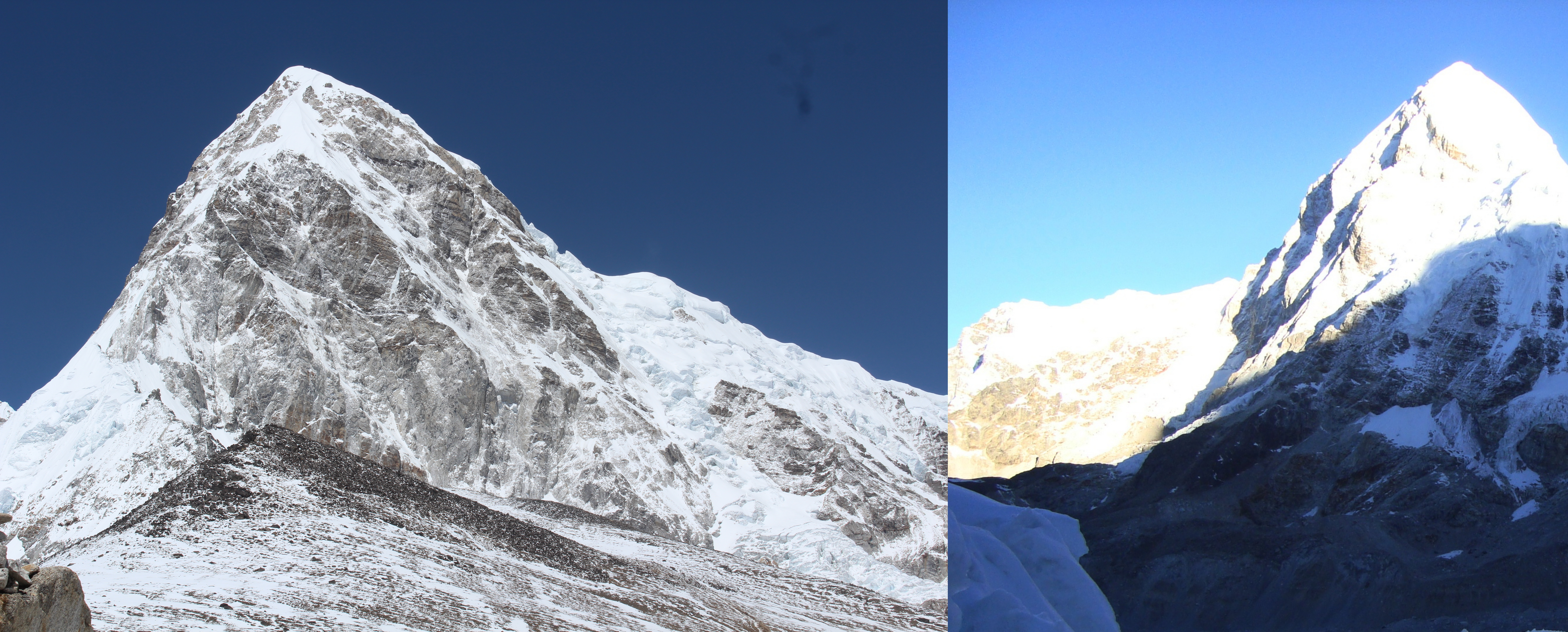
According to Love Raj, the first set of tents at EBC, typically belong to trekking groups whose trip is limited to reaching the base camp. Beyond these are the tents of the mountaineering expeditions hoping to climb Everest. EBC is basically located on a glacial ridge. Having grown in size over the years, the camp’s tents can nowadays be found on both sides of the ridge and its crest. At its apex lay the heavily crevassed Khumbu Icefall, one of the most difficult sections on the climber’s passage up the mountain. To one side of EBC are Pumori (23,410ft), Lingtrense (21,972ft), Khumbutse (21,785ft), Changtse (24,780ft), the west shoulder of Everest and Nuptse (25,791ft). Of these Changtse lay in Tibet. A saddle in this array of peaks forms the Lola Pass. The main bulk of Everest (including its summit) and its adjacent high peak, Lhotse (27,940ft), are not visible from base camp. Pumori, Lingtrense, Khumbutse, Changtse, Lola Pass – roughly put, these physical features ran parallel to EBC on its side. There was a depression between EBC and the commencement of these mountains. Pumori is eight kilometres west of Everest. Named by the late British climber George Mallory, Pumori means ` unmarried daughter’ in the Sherpa language. The mountain is often deemed the daughter of Everest. It is a popular climbing peak with significant avalanche danger. Kala Pathar (18,513ft), well known among visitors to EBC as a high perch to view Everest, is an outcrop below the southern face of Pumori.

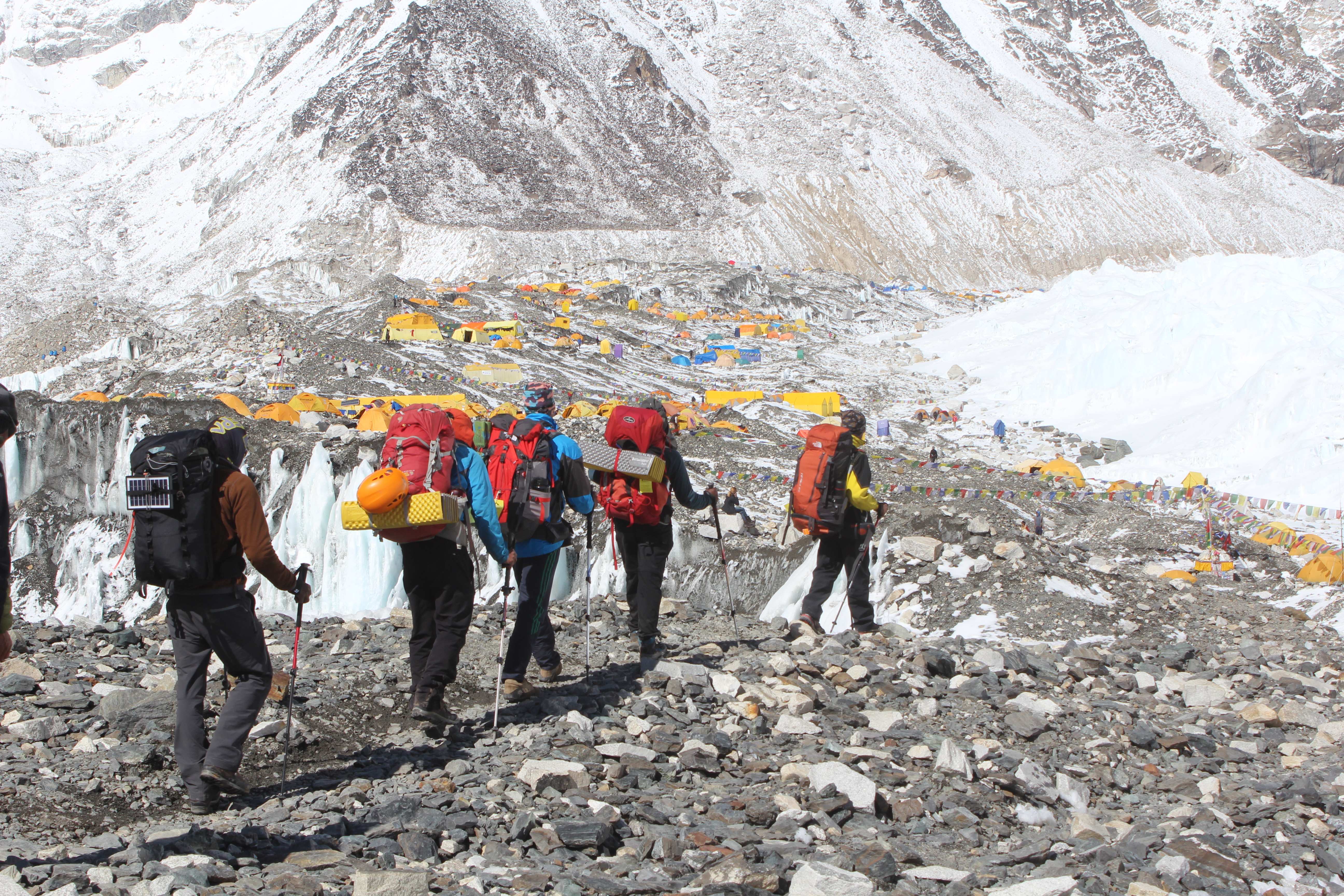
Reaching EBC (Photo: courtesy Love Raj Singh Dharmshaktu)

Reaching EBC (Photo: courtesy Love Raj Singh Dharmshaktu)

The Eco Everest Expedition had its tents located just above the trekkers’ tents and at the beginning of the mountaineering lot’s share of camp. It was thus 20-25 minutes away from ` crampon point,’ which is from where crampons become essential for travel on ice. This is tad different from the usual thinking of climbers who like to be close to a climb. But that distance meant the Eco Everest Expedition was removed from the thick of tents at EBC. Significantly (significant from the angle of later events), the Eco Everest Expedition was away from the depression between EBC and Pumori. From the depression, you would have had to ascend the slope to the ridge and then descend to reach the team’s tents. Love Raj said, when he arrived at EBC, there was already a strong contingent of tents and climbers in place. “ A lot of people were there,’’ he said.

One possible reason for the many people at EBC was an accident that had occurred a year ago. On April 18, 2014, a large chunk of ice broke off from a serac band at 20,200ft triggering an avalanche. On the National Geographic website, the ice chunk that broke off is estimated as 113ft high with a top area slightly in excess of a NBA basketball court. At that dimension, its maximum weight in ice was estimated as the equivalent of 657 buses or 31.5 million pounds. The broken chunk and the avalanche it triggered barrelled down on Nepali mountain workers in the Khumbu Icefall, who were preparing a safe route for clients that season. Sixteen of them were killed in the avalanche. Following this accident and the outburst in its wake of inadequate protection and welfare schemes for mountain workers, several outdoor companies had cancelled their expeditions. Some of the clients and climbers who missed climbing the mountain in 2014 would have returned in 2015, contributing to the robust camp Love Raj saw at EBC. According to old reports on the Internet, the authorities had said that ascents in 2015 would take a slightly different route given the damage caused by the 2014 avalanche to the old approach. That 2014 avalanche had been responsible for the highest numbers of deaths on Everest in a season, till then. Indeed among the 8000m peaks, Everest has claimed the most number of lives largely due to the high number of people congregating every season to attempt the world’s highest peak. People die climbing and assisting climbing expeditions. As per information on the Internet, around 250 people have died thus on Everest, so far.

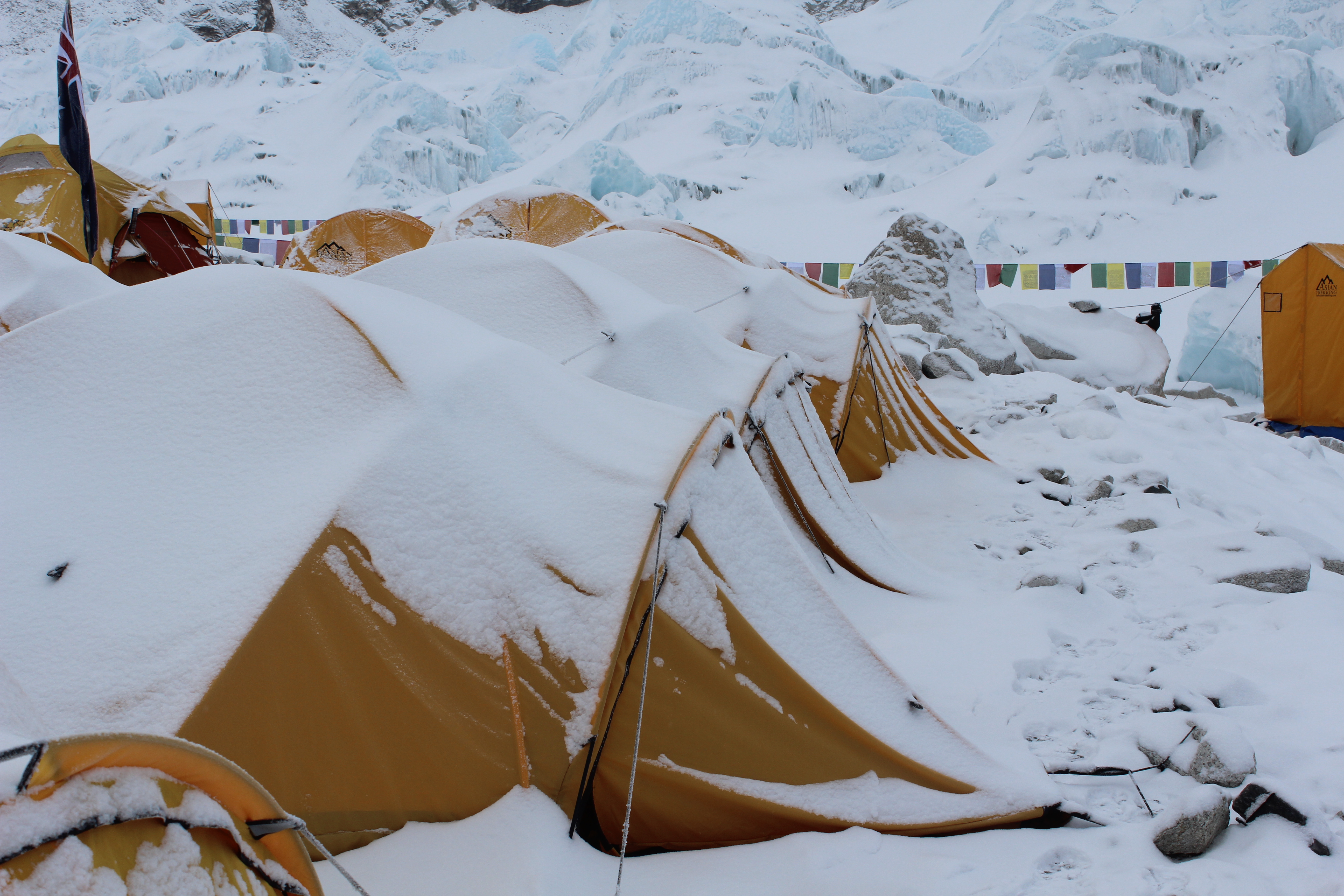
EBC, before the earthquake and avalanche (Photo: courtesy Love Raj Singh Dharmshaktu)

EBC, before the earthquake and avalanche (Photo: courtesy Love Raj Singh Dharmshaktu)

On April 15, the Eco Everest Expedition had its team puja (prayers), a ritual ahead of formally starting the peak’s ascent. After the puja, some of the newcomers were provided time to train and check gear. Typically the day after the puja, the team members go up the mountain a little bit; the accompanying mountain workers climb up to Camp 1 and return. This time the Eco Everest Expedition decided to try Lobuche East (20,193ft) as pre-Everest climb. On April 16, they moved from EBC to Lobuche, where Asian Trekking had a hotel. The next day, they shifted to the upper base camp on Lobuche East. On April 18, they were on the summit. “ Weather was bad all through. The Sherpas who came with the team said they had never seen so much snow on the summit before. There was almost two feet of snow on top,’’ Love Raj said.

On April 19, the team returned to EBC. The next two days – April 20 and 21 – were devoted to acclimatization walks and training on the glacier. On April 21, the team’s support staff went up to Camp 1 and came back. April 22 and 23 were rest days. On April 24, some of the team left early morning for higher camp. The plan was to stay two nights at Camp 1; the first day, proceed to Camp 1 from EBC, the second day go from Camp 1 to Camp 2 and return to Camp 1. On April 25, according to Love Raj who was at EBC, two members returned early to Camp 1 from the climb to Camp 2. They had reached Camp 1 and not yet got into their tents. The rest of the team was in the Western Cwm. Named by George Mallory, the Western Cwm is a large bowl shaped glacial valley at the foot of the Lhotse face of Mt Everest. It is reached via the Khumbu Icefall and is notorious for how its shape combined with the vast amount of snow and ice around, reflect sunlight to gift the climber rather hot days despite the significant altitude of the location.

Noon, April 25, 2015 – Nepal’s devastating earthquake struck. News reports on the Internet peg the exact time of the event as 11.56AM local time. At EBC, Love Raj noted it as 12.06. With epicentre in the village of Barpak in Gorkha district (as per reports in April), the quake’s intensity was estimated at 7.8 on the Richter scale. Subsequent reports would say that the ground beneath Kathmandu may have shifted up to ten feet south in the temblor. The whole Everest region was also shaken up. Up on the mountain, top Indian sport climber, Praveen C M (he has been national champion several times), was one of the two people from Love Raj’s team who had returned to Camp 1. They were roughly ten minutes away from their tents when the earthquake struck. According to him, visibility was poor. But they could hear avalanches in the neighbourhood. “ Avalanches happened to our right and left. There was also a third one,’’ he said. Luckily the camp site was spared a direct hit and only the smaller debris rolled in. Down at base camp, Love Raj, the team’s doctor and a Sherpa were in the dining tent discussing something when the earth started to shake. It was initially mild. They stepped out of the tent. By then the tremors were strong. EBC is on a moraine slope atop a glacier. There were sounds of things falling and breaking up. Glaciers are live environment. Even on a normal day, when camped on or near a glacier, mountaineers hear the sound of ice cracking deep within. There is also the sound of chunks breaking and falling off from mountains in the neighbourhood. Mountain environment is dynamic. This time it was more pronounced; the sounds were loud. The three men held on to each other. Just after this, from all sides, the sound and fury of avalanche set in.

File photos of Pumori, the mountain from which the avalanche that hit EBC in 2015, came. These photos are from expeditions in previous years (Photo: left pix, courtesy Love Raj Singh Dharmshaktu; right pix, courtesy Dr Murad Lala)

File photos of Pumori, the mountain from which the avalanche that hit EBC in 2015, came. These photos are from expeditions in previous years (Photos: left pix, courtesy Love Raj Singh Dharmshaktu; right pix, courtesy Dr Murad Lala)

In Latin, ` ava’ means earth. `Lanche’ means: breaking down of. Wikipedia describes avalanche as a rapid flow of snow down a sloping surface. Further, after the process starts, avalanches usually accelerate rapidly and grow in mass and volume as they entrain more snow. If the avalanche moves fast enough, some of the snow may mix with air forming a powder snow avalanche, which is a type of gravity current. From past experience in the mountains, Love Raj knew what was coming. Within no time he felt the approaching gust of wind followed by the spectacle of powder snow billowing 30-40 ft in the air, rearing up behind the camps on the ridge between EBC and Pumori. The avalanche, coming down from Pumori had hit the depression, powered up the next slope to the ridge and was looming like a cloud for the onward journey. In the process it had already flattened camps on the slope immediately above the depression.

Seeing the cloud of snow, Love Raj and his companions ran their separate ways. Love Raj and two Sherpas took shelter behind a rock. The avalanche swept by. They were behind that rock for a couple of minutes. Love Raj described the period. “ When an avalanche arrives, there is severe wind chill. That and the powder snow flying around make your breathing laboured. The snow gets into your lungs. You are in a cocoon of heavy breathing. That’s what I heard when I took shelter. Later when I got up, everything was covered in snow. I was breathing hard as though I had run a 100m sprint,’’ he said. Since avalanches come from above and the whole area had been shaking, their first instinct was to check on climbers up the mountain. They immediately contacted the team members who were at Camp 1 and above. They replied they were safe but couldn’t see anything as visibility had plummeted. One of the members had been on a ladder placed across a crevasse when the quake happened. He was immediately pulled back, averting grave consequences. Love Raj and others at EBC, advised them to stay put on the mountain. Be at either Camp 1 or Camp 2. At both camp sites, across the many expeditions attempting the peak, there were approximately 100-120 people. No major tragedy was reported from the higher camps. Unknown to Love Raj, it was EBC that took the brunt.

As visibility improved at EBC, the devastation became clear. The injured started coming in. Most injuries were to the face; head, limbs – the consequence of being hit by flying debris or being flung around by the avalanche on the rock ridden-moraine. While some people fled after the quake, the others commenced rescue operations within about 15 minutes of the incident. The tents that hadn’t collapsed were immediately made into treatment zones for the injured, including designated tents for the seriously injured and the less seriously injured. Love Raj said that a chain of command took shape organically and pretty soon a rudimentary medical facility was in place. Mountaineering expeditions travel as self sustained groups. They anticipate accident and are prepared for it. Teams now pooled their medical kits. Kitchen staff got the stoves going; hot drinks and food was prepared. In terms of impact of disaster, those camped on the ridge slope facing Pumori were the worst hit. Those on the ridge and on the other side were less affected. In all 19 people would die in this avalanche making it the worst season on Everest. A year and six days after the 2014 avalanche, its reputation as the worst season on the peak had been surpassed.

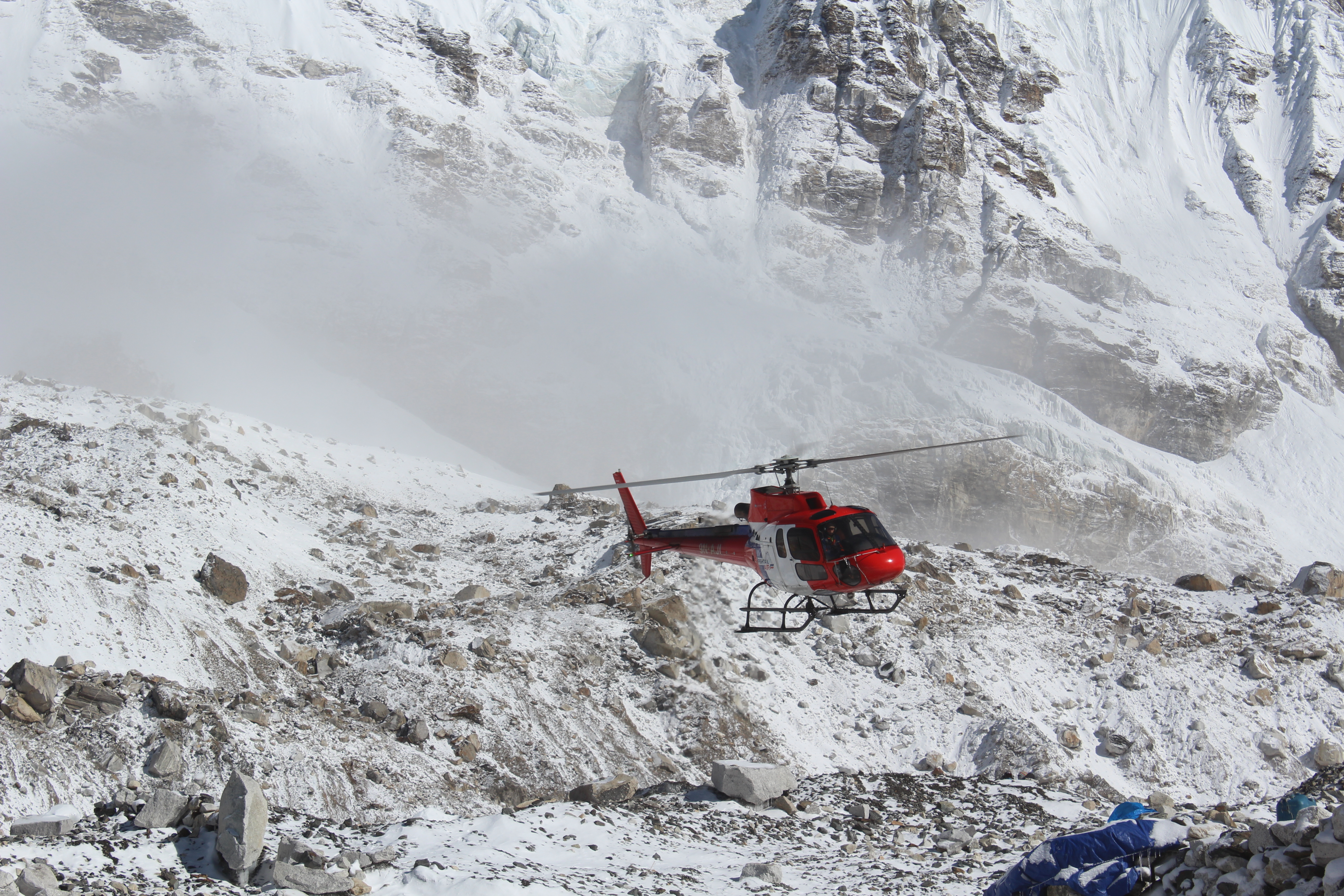
After the avalanche; a helicopter at EBC (Photo: courtesy Love Raj Singh Dharmshaktu)

After the avalanche; a helicopter at EBC (Photo: courtesy Love Raj Singh Dharmshaktu)

Some argue that the high incidence of tragedy on Everest is prompted by the number of people on the mountain and the varied nature of that people spanning seasoned climber to abject amateur. Makalu (27,838ft) is a beautiful sight from Everest and Lhotse. Eighteen kilometres east of Everest, it stands apart from other mountains. There were people on Makalu and at Makalu’s advance base camp (which serves as base camp for the peak), when the temblor hit. But nobody died. Arjun Vajpai, who some years ago became briefly the youngest person to ascend Everest, was at Makalu. Arjun had managed to climb Everest (29,029ft), Lhotse (27,940ft) and Manaslu (26,781ft) in his first attempt. He then decided to try Cho Oyu (26,906ft) and Shishapangma (26,335ft). Attempting these mountains in spring, he ran into bad weather. He temporarily suffered a partial body paralysis and had to be brought down from Cho Oyu. Following this reversal he decided to attempt Makalu. His first attempt in 2013 failed because the team ran out of rope; the second attempt saw much further progress on the mountain but again succumbed to rope related issues. His April 2015 trip to the mountain for a third attempt, was a “ really calm’’ one. The description fit the state of affairs till noon April 25.

Arjun reached Makalu’s advance base camp (ABC) on April 22. At 19,500ft, this is the highest base camp for any mountain. Both the approach to Makalu and the ABC don’t have any of the heavy traffic or frills one finds on the Everest trail. “ There is no impressive infrastructure here,’’ Arjun said. In 2013, there were just two teams on the mountain. In 2014, there were three to four teams. What he saw in 2015 was the highest number of teams he had seen so far on his visits to Makalu. But it was still nothing compared to EBC. Arjun too noted the snow he saw en route. “ There was a lot of snow. I hadn’t seen so much snow in the previous two years,’’ he said. The topography and lay of Makalu ABC is different from that of EBC. The main peak sits recessed and away. What is closer to ABC is rock ridden-ridges from which, even on normal days, stones can roll down. Around noon on April 25, the earth shook. “ We started hearing noises all around,’’ Arjun said. Fifteen minutes later, there was an aftershock. Till then there had been no major avalanche. According to Arjun, the aftershock felled a big serac with a lot of snow behind it, at Camp 2. Also, ahead of Camp 1 on Makalu, there is a 150m steep ice wall. A climber was rappelling down it when the wall split from the very centre. That climber and his team were rattled. One of them left the next day. The quake caused injuries at Makalu base camp. There were no fatalities. The approach trail to the region was badly damaged. Although Arjun managed to call home and say he was fine, for the first day or two, he said, there wasn’t a clear idea of the dimension of the earthquake. Then it slowly filtered in; first came news of EBC, then news of lands beyond all the way to Kathmandu. With the trail leading to Makalu damaged, Arjun and his team were ferried out by helicopter from Yanglekharka, a village some distance from base camp.

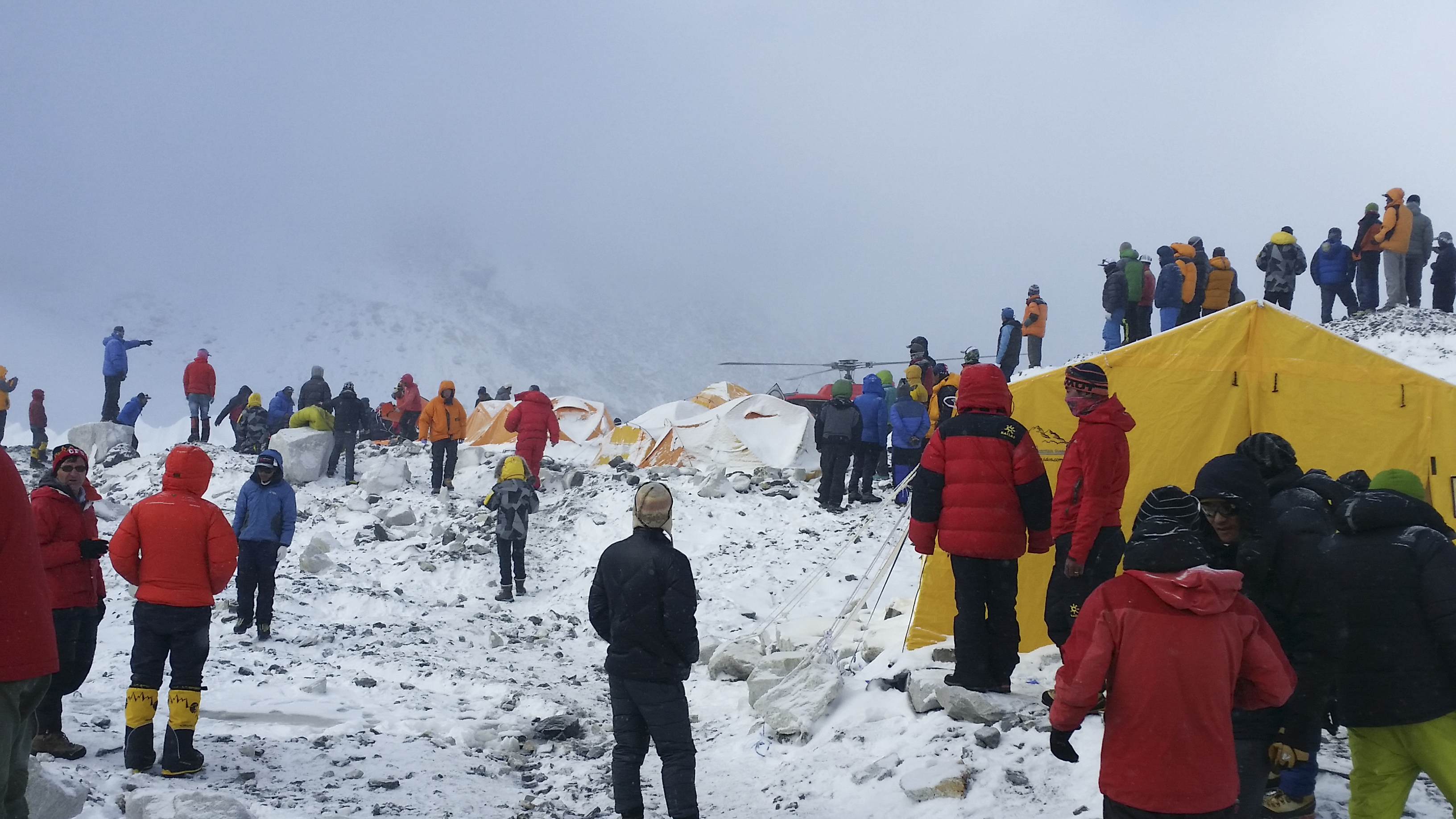
Mt Everest, April 26, 2015 : Helicopters arrive at the base camp of Mt Everest to airlift injured persons from the camp after an avalanche killed 16 people on Everest on April 25, 2015. (Photo by Praveen C M )

EBC after the avalanche; helicopters arrive to airlift the injured (Photo: courtesy Praveen C M )

At EBC, Love Raj said that news of the scale of the tragedy was available within an hour or so after the quake. There was panic initially. Some of the local people left wanting to know what had happened back home. “ But a lot of them stayed back. The rescue operation was actually carried out well. There was no particular panic in that department despite everyone affected by the temblor and traumatized by it,’’ he said. A makeshift helipad was made at EBC. By next morning, helicopters began arriving. Up on the mountain, people successfully reached Camp 1 from Camp 2. But reaching EBC from Camp 1 proved difficult; a group of mountain workers tried it but they retreated to Camp 1 as many of the ladders in the Khumbu Icefall were gone. Eventually they were brought down by choppers. The immediate rescue operations at EBC were more or less completed in the first three hours after the quake. There was little need to dig out anyone from the snow. The dead and the injured were on the surface. By April 28-29, the dead were removed from the scene, Love Raj said. According to him, on the first day, 14 were confirmed dead. That night, two people died. The next morning, three more bodies were recovered; altogether 19 (Wikipedia lists 22 dead including two who died in Kathmandu following injuries sustained at EBC).

By the evening of April 26, word came that China had closed access to Everest from the Tibet side. It wasn’t yet known what would happen for Everest ascents in Nepal. Every year, the initial part of the climbing route to Everest is opened by personnel from the Sagarmatha Pollution Control Committee (SPCC). Their team – often called the Icefall Doctors – open the route till Camp 2. With the SPCC camp at EBC among worst hit by the quake, their personnel were no more around. Despite tragedy, climbers – those who had reached EBC after investing much money in 2015 and those who had come after their trips got cancelled in 2014 – would have wished to proceed. But there were problems. One of the large expedition groups decided to retreat fearing more aftershocks. Then there was the issue of adequate mountain workers as support staff. They had suffered personal tragedies back home. Some had gone back; those still around were there despite the suffering. Around April 30, Love Raj said, Himalayan Experience, which along with Asian Trekking typically opens the route above Camp 2, decided to pull out (Himalayan Experience is an interesting company. As early as 2012, it had warned about impending disaster on Everest due to a bulge of hanging glacial ice on the climbing route and actually pulled out its expeditions that year. It was criticized. In 2014, after the year’s deadly avalanche, that decision was seen in a totally different light). On May 2nd or so, SPCC personnel reached EBC by chopper. By next evening, it was decided to shut down the climbing season. The reason available at EBC was – even if the SPCC opened the route till Camp 2, the route further up can’t be opened because some of the important expedition companies had decided to retreat. Love Raj made his way back to Delhi. In all, the April 2015 earthquake killed over 8000 people in Nepal and injured more than 19,000.

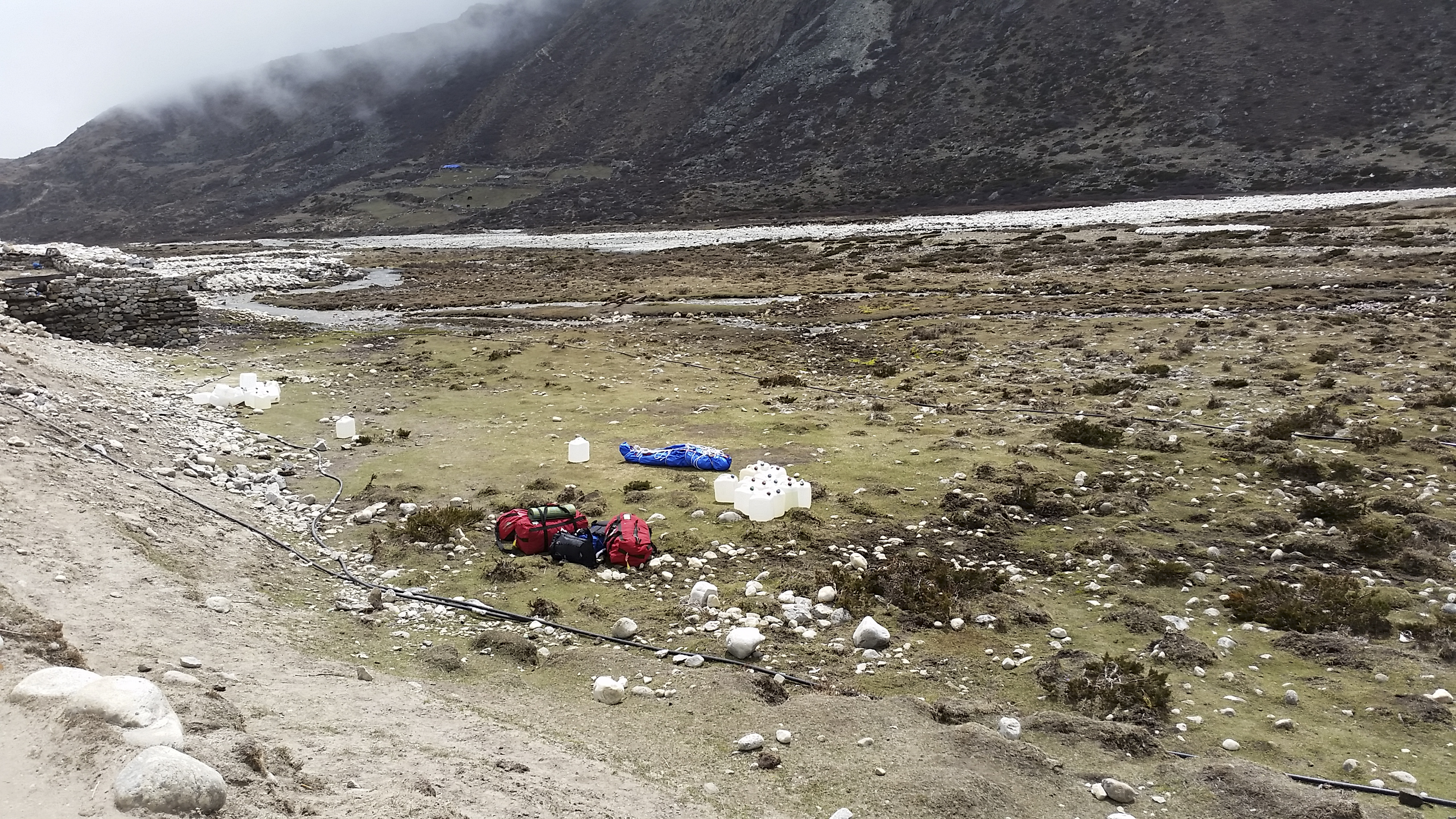
At EBC after the avalanche; the body of a climber, wrapped in polythene, ready for airlift to Kathmandu (Photo: courtesy Praveen CM)

At EBC after the avalanche; the body of a climber, wrapped in polythene, ready for airlift to Kathmandu (Photo: courtesy Praveen C M)

Two major tragedies, two seasons in a row – may leave a psychological mark on Everest climbs. Nobody can forget the lives lost. But from a mountaineer’s perspective, the climb – for the climb it is – can be viewed rationally. I asked Love Raj what the earthquake could mean for future climbs. What if the route on Everest has altered? “ Isn’t that how mountain environments are?’’ Love Raj asked. Mountains are dynamic. News reports quoting Chinese studies (China has a satellite monitoring system on the peak since 2005) have said that as part of the continuing collision of the Indian tectonic plate with the Eurasian plate – which is how the Himalaya was formed – Everest had been moving four centimetres northeast and growing 0.3 centimetre annually. In the April 2015 temblor, Mt Everest shifted three centimetres southwest with no alteration to height. In the aftermath of the earthquake, it is possible that the icefall on the mountain may have freshly cracked; new crevasses may have opened up, existing crevasses may have grown wider (at the time of writing this article little information had emerged on whether the climbing routes were affected and if so, how). But as Love Raj said, there are the winters and their snows which bridge and compact things afresh. It is the earth’s natural cycle. Mountaineers will find a way through. It was a sentiment shared by Arjun, albeit differently. He pointed out in the context of various types of people congregating in high mountain camps and then panicking when calamity strikes that trained mountaineers know how to cope with such situations.

Love Raj was worried less about climbers. He was worried more about the mountain workers whose houses were destroyed in the earthquake, not to mention, their source of livelihood literally shaken up. “ For them, there is a big gap in earnings between working on Everest and working on other peaks,’’ Love Raj said. In Nepal, Everest is a small economy in itself. When it shuts down, it affects the lives of those dependent on it. Or differently put, you may not be able to keep it shut for long.

(The author, Shyam G. Menon, is a freelance journalist based in Mumbai. Please note: this article is based on events reconstructed from conversations. The author has not been to EBC. A slightly abridged version of this article appeared in Mans World (MW) magazine. For more on Love Raj Singh Dharmshaktu please click this link: https://shyamgopan.wordpress.com/2014/07/10/everest-to-the-east/)

HALF OR FULL? THAT’S THE QUESTION

Kamlya Joma Bhagat (Photo: Latha Venkatraman)

Kamlya Joma Bhagat (Photo: Latha Venkatraman)

Fanaswadi was a village with two lives.

“ At the earlier location, there were no facilities. There was no doctor, no water, no electricity,’’ Kamlya Joma Bhagat said. In 2011, the village started shifting to where it is today. According to him, the old village survives, mostly abandoned except for four families who continue to be there because the elders didn’t wish to leave the land they had lived off for so long. The agricultural fields belonging to Kamlya’s family were also at the old location. He visited his former residence when required. The new and old locations of the village were apart by roughly five kilometres, separated in the main by a hill. Pale Budruk – that was the name of the area where Fanaswadi’s second avatar sprouted. When you took one of those three wheeled share-taxis from Panvel, you didn’t just say Fanaswadi; you said Fanaswadi-Valap to indicate which Fanaswadi you were talking of.

Half an hour or so from Panvel we got off on the road. Fare paid, the taxi proceeded on its way leaving us next to a board from below which a path of baked brown earth, now rendered powdery by the fierce summer of 2015, wound its way up to a rather spread out cluster of huts and mud houses. Some ways up, a wiry young man of medium height greeted us and took us to his house – all of one room and a sit-out. Behind the hut was the hill separating Fanaswadi’s two lives. Up front and far away, the hill between Kharghar and Belapur loomed, large and faint. Somewhere in that dark outline of hill was Pandavkada, the popular waterfall, right then possibly awaiting the rains to come alive. In front of that hill lay the urban sweep of Kharghar and the factories of Taloja’s industrial zone. At a tangent from the houses we were at, through the summer haze, the rocky top section of a hill was visible in the distance.

The new Fanaswadi sat unsettled on land the families on it were yet to own. They had moved here because they were desperate to be near basic amenities. Technically the land was owned by the government. Apparently there was legal action going on. There was no water and electricity here too. Observations on life were tinged by a neither here nor there vagueness; a smile and a faraway gaze to avert the impact of that uncertainty. At Kamlya’s house a metal sofa had been dressed in a clean sheet for us to sit.

We sat down to hear his story.

Meet Kamlya Bhagat, runner.

Kamlya was born in the old Fanaswadi to a family engaged in agriculture. He was the youngest of six siblings. His father died when Kamlya was still a small child. The family primarily grew rice and nachni (finger millet); they also grew vegetables. Kamlya worked on his family’s land. He also worked on other people’s land as did others in his family. Much of the farm produce at Fanaswadi was meant for use in-house. That was how life amid meagre income was managed.

Fanaswadi, new location (Photo: Latha Venkatraman)

Fanaswadi, new location (Photo: Latha Venkatraman)

From the age of five or six onward Kamlya attended the Aadivasi Aashram School at Chikhale near Panvel, where he studied till the tenth standard. It was a residential school where the cost of education was met by government. In class eight at this school, Kamlya had his first formal rendezvous with running. It was a 1500 metre-race, which he had to quit with 100m left due to cramps. He had run without any practice. So over the next couple of years he kept running regularly in the range of 5-15 kilometres. Kamlya attended junior college at the Sanjay Gandhi High School in Kolwadi and then joined MPAC College in Panvel to do his BA (Geography). By now the funds for his education were a mix – it came from his family; it also came from his pocket as Kamlya was additionally working at a shampoo factory in Taloja. The distances he ran had now grown to 20km.

In the second year of his three year-degree course, Kamlya secured second position in cross country running at the Mumbai University level. According to him, across his college years, he won 28 medals in disciplines ranging from 1500m to cross country running. He even ran the 4x400m relay. At MPAC College, he practised at the college ground. Sometimes he ran to college from the shampoo factory he worked at. He also ran at University Ground in South Mumbai. Representing the university, he ran at venues outside the state, in Bengaluru and Andhra Pradesh. Kamlya said he had been to four or five inter university meets. Sports elicited a toll on studies. Kamlya never gave his final year BA exam. Academically therefore, the runner from Fanaswadi stopped a shade short of graduation. There were other developments. In his second year at college, Kamlya got married. By the third year, he was a father. Today he has two children, a boy and a girl; one of them suffers from a congenital heart problem. The family also lost one child.

Kamlya, his wife Kalpana and their children, Prathama and Raj (Photo: Latha Venkatraman)

Kamlya, his wife Kalpana and their children, Prathama and Raj, in front of their house (Photo: Latha Venkatraman)

It was during his first year at MPAC College that Kamlya had his first taste of the half marathon. By the second year, he was enjoying the format but remained an athlete in a basket of disciplines. After leaving college Kamlya ran a half marathon, barefoot, in Kalyan. Since then, he mostly ran the half marathon. The distance was a sweet spot for him. Given his backdrop in college running a variety of distances all the way up from the 4x400m relay (he said he could do 1500m in 4:10-4:12), the half marathon allowed him to tap his innate affection for speed. Kamlya estimated that he must have run over 150 half marathons by the time we met him. That prolific running was due to another factor. When Kamlya left college, he was married and having wife and child to support. He couldn’t get a job. There was nothing available. All he had to fall back on was running. Slowly racing became a source of livelihood. These races were typically organized by individuals and organizations ranging from local legislators to elected bodies and others. They happened mostly in the winter months. A good runner, Kamlya was confident of winning races in Raigad, the district he belonged to and lived in. Running almost every week, in a good season, he was able to earn up to Rs 50,000. A modest amount, it nevertheless meant much for the family. Except rice which they grew in their fields, they needed to purchase most other things.

The races made Kamlya locally known. “ I saw his name in a local newspaper. Then I met him in one of the races in Navi Mumbai. We shared our numbers. I called him for a run and he came to Panvel an evening. That was the first time I ran with him. Later I went to his place to run. There we ran on trail. It was very beautiful,’’ Dnyaneshwar Tidke, one of the best known runners from Panvel said (for more on Dnyaneshwar please see https://shyamgopan.wordpress.com/2015/04/11/the-constant-runner/). Although he did his practice runs wearing shoes, Kamlya ran the races barefoot. “ I don’t know why,’’ he said. His runs in and around the new Fanaswadi settlement included running on the road we had come by and extended trail runs on the hill behind the hutment. As regards coaches, there was a “ Shinde sir’’ at MPAC College and a “ Sushil sir’’ at the university. No other names came up.

A seemingly self made runner for the most part, Kamlya’s Fanaswadi address was also miles away from the Mumbai locales where the city’s running coaches trained their wards. But running and runners graced Kamlya and Fanaswadi differently. News of Kamlya Bhagat got around in the running community. For instance, Chetan Gusani, a runner and photographer, was collecting shoes for needy runners when Dnyaneshwar told him of Kamlya. In June 2014, Chetan enrolled him for a 10 km race in Thane and asked Kamlya to stay at his place as it was closer to the venue. Chetan recalled the episode, “ he came over. At night I asked him if he was comfortable. He said he was very comfortable as in his own house he did not have electricity. Next morning, he ran the 10 km-race and finished second in the open category.’’ Chetan put a post on Facebook about Kamlya. Help started coming in. Fellow runners got him shoes, footed his registration fee at races. At a Fanaswadi still devoid of electricity, a line of LED lamps powered by solar energy lined the pathway to Kamlya’s house. The lamps had been provided by a group of runners.

Kamlya with his mother Sangibai (Photo: Latha Venkatraman)

Kamlya with his mother Sangibai (Photo: Latha Venkatraman)

As much as the half marathon emerged a sweet spot for Kamlya, it also appeared a limitation. The 28 year-old (according to Kamlya his legal age is slightly higher) fared strongly in the half marathon viewing it as a longer, stretched version of the middle distance runs he used to do before (and still does well as the outcome of the 10 km shows). At some point, Kamlya knew the same logic of adapting to age and endurance will prod him to try the full marathon. As yet he had neither attempted the full marathon in Mumbai’s annual Standard Chartered marathon (SCMM; India’s biggest such event) nor had his one attempt at the marathon, succeeded. In that latter attempt – a night marathon in Surat – he gave up after a half marathon and some more done because the run wasn’t progressing to his satisfaction. He required better endurance.

Given Kamlya’s predicament, wherein running is also a source of livelihood, satisfaction for him is probably several notches above what satisfaction is for the rest of us. He can shift disciplines only if performance is satisfactory. Further, he believes that he won’t be able to transition to the full marathon from the half without affecting his existing fortunes in the half. For example: to run the full marathon he may likely have to run slower as it spans a longer course. Do that in training several times over, how would it be if he suddenly required to a run a half marathon for money? Won’t he run slow and lose his chance to win? Not to mention: competition was emerging in Raigad. He may want the marathon but he can’t upset the income stream from the half marathon. This was Kamlya’s worry. At the same time, he knew the inner clock was ticking; he won’t stay fast forever. He hadn’t therefore shut the doors on the full marathon. “ I haven’t said no to it,’’ he emphasized. Finally there was the issue of shaking up a whole ecosystem. When we met him, Kamlya was also working as a temporary teacher at a school some distance away. Somehow the half marathon had come to fit in well in terms of the time he was able to spare for running, training and the resources he could invest in his passion, including food intake. Is it worth upsetting the equation?

Kamlya was unsure: should it be the half or the full?

“ I think he can be a full marathoner provided he trains regularly,’’ Dnyaneshwar said.

Maybe one day, like Fanaswadi before, Kamlya will step out into a second life with the full marathon.

UPDATE: At the 2015 BNP Endurathon in Mumbai, Kamlya finished second in the 25km-run. His timing was 1:45:33.

October 2015: Running the half marathon, Kamlya finished fifth in his age category (30-35 years) at the Sriram Properties Bengaluru Marathon 2015. His timing was 01:19:49.

(The authors Latha Venkatraman and Shyam G Menon are independent journalists based in Mumbai. Please note: race details, timings, performance at meets and number of medals won are as provided by the interviewee.)
RUNNER AT THE FARM

Illustration: Shyam G Menon

Illustration: Shyam G Menon

The veranda lights faded roughly twenty feet from the farm house.

Beyond it was darkness.

Gaytri walks around the property at night, from sunset to early morning, opening and closing the farm’s drip irrigation system.

I have my headlamp, shoes on my feet.

She carries a small torch, rubber slippers or none on her feet.

The torch cast an ellipse of light.

At its centre was a black scorpion.

I came to Vrindavan Farm in Onde to write about a runner.

Gaytri Bhatia was born the middle child of three daughters. As she put it, thanks to her elder sister, her mother had worked out the method to bring up a child by the time she arrived. She was allowed to explore as she wished. Gaytri grew up, rather independent in the head. The family stayed in South Mumbai; there was the farm in Onde as well. Her debut in sports around Grade I was at the back of the field, skipping along while the rest of her classmates raced to the finish. From that she swung in due course to being the sports captain of her school. All three sisters were good swimmers; they were regular visitors to the United Services club in Mumbai, which had facilities for swimming in the sea. To this date, Gaytri remains a strong sea-swimmer. During junior college at Mumbai’s St Xavier’s she did well in a 1300m-running race. In her narration, this appeared her first serious rendezvous with running. Around this time, she also cranked up her physical routine many notches. She would go for a morning run, walk to college and back, visit the gym, swim and practise kung fu. Her main love was swimming.

On the academic front, a friend of hers was taking a test to qualify for studies in the US. On a whim Gaytri too gave the exam. She not only secured a decent score, she also got admission to a college in the US with scholarship to boot. She moved to Mt Holyoke College, a liberal arts college for women, in South Hadley, Massachusetts. The subject she chose to study was photography. Since the college lacked a formal program in photography, she elected instead to attend photography classes and major in environmental studies. For her thesis, she worked on a project in Canada that entailed monitoring carbon dioxide emissions from a bog. While at college, she also did one semester of study at the Biosphere Project, an Earth systems science research facility, originally begun by Space Biosphere Ventures. During her semester of study, Gaytri recalls the place was owned by the West Campus of Columbia University. According to Wikipedia, the University of Arizona took over the facility for research in 2007 and assumed full ownership in 2011. The project was constructed between 1987 and 1991 and “ explored the web of interactions within life systems in a structure with five areas based on biomes, and an agricultural area and human living and working space to study the interactions between humans, farming, and technology with the rest of nature. It also explored the use of closed biospheres in space colonization and allowed the study and manipulation of a biosphere without harming Earth’s.’’

Mango at Vrindavan Farm. For an article on the green mango please visit: https://shyamgopan.wordpress.com/2015/04/29/the-green-mango/ (Photo: Shyam G Menon)

Mango at Vrindavan Farm. For an article on the green mango please visit: https://shyamgopan.wordpress.com/2015/04/29/the-green-mango/ (Photo: Shyam G Menon)

Morning at the farm (Photo: Shyam G Menon)

Morning at the farm (Photo: Shyam G Menon)

One of her memories of Arizona is that she liked running there. “ Running had become the way I would experience any new place. The shoes were the first to be packed. I would run everywhere,’’ she said. Amid this, the issue of what running to do – was also slowly coming to the fore. At Mt Holyoke she had been part of the college’s track and field team running the 400m and 800m. But she disliked both disciplines. The 400m was too fast; the 800m, as experience, was just better than the 400. “ I knew I wasn’t meant for either,’’ she said. Eventually she left the track and field team, opting instead to go running by herself, at her pace, covering distances she liked.

After securing her honours degree in environmental studies, Gaytri went to work for a company in Boston that was a consultant to the US Environmental Protection Agency. That company was influential in shaping her life. Its office had an informal, outdoorsy ambience. There was a swimming pool on the premises. Her colleagues led an active lifestyle; there were runners, bikers, swimmers. She used to run to her office. The famous Walden Pond (Henry David Thoreau wrote his book `Walden’ in a log cabin near this lake) was roughly 13 miles from her office and 18 miles from where she stayed. She mixed running, cycling and swimming for active lifestyle. Another favourite water hole in this evolving map of physical activity was Crystal Lake. It was eight miles from her home and seven miles from her place of work. “ The unsaid rule was swim and when the cops come get out of the water,’’ she said. Everyone, including the law “ pretended for this small joy.’’ For her, this approach was precursor to being bandit.

Boston is home to the world’s oldest annual marathon, one that is also among the best known road racing events. Gaytri’s debut at the Boston Marathon was as a `bandit.’ The bandits are unregistered runners. According to information on the Internet, the event did not officially permit unregistered participants but turned a blind eye towards them running. Gaytri said that the bandits in turn made sure they never obstructed any of the officially registered runners. They start running after the main “ numbered folks’’ begin their race and typically run by the side of the road, leaving the road’s main part free for registered runners. An April 2014 report in The Boston Globe said that bandits were being banned from that year onward. One reason for this was the 2013 bombings. But the matter divided the running community. Some alleged that the real reason for discouraging bandits was money’s need to make sure the experience is best for those who pay and run. Refreshment stalls en route for example, don’t distinguish between registered and unregistered runners. They cater equally to those who pay and those who don’t. The purists in running saw the calls for distinction as commercialization of running, an act that took running away from the basic freedom in which it was rooted. Among human activities, running is closely identified with freedom. Why chain it with money? At her first Boston Marathon, the bandit from Mumbai finished in approximately four and a half hours (her fastest time in a marathon has been four and a quarter hours, the slowest – four and three quarters of an hour). But there was a problem. She wasn’t sufficiently exhausted after the marathon. She was back at work the day after the marathon.

At the farm (Photo: Shyam G Menon)

At the farm (Photo: Shyam G Menon)

The situation engaged. Should she run faster or should she run longer? As regards speed, she knew from her Holyoke days that she didn’t enjoy running fast. Besides, she wasn’t gaining any speed in her running either. The right direction appeared to be longer distances. Influencing this was also an old experience. Years ago, a school friend of hers had returned from France toying with the idea of running slower but longer. As school kids in Mumbai running on Marine Drive, they had then pursued the idea. One day in Boston, Gaytri overheard a colleague at office talk of a run that was longer than the marathon. That was how in 2004 she signed up for the JFK 50, the oldest ultra marathon in the US. As the name says, it is a race of 50 miles or 80km. According to Wikipedia, “ the race starts in the town of Boonsboro, Maryland and heads east out of town toward the South Mountain Inn. The first 2.3 miles are on a hardball road, which leads to the Appalachian Trail. The Appalachian Trail piece is approximately 13 miles. The trail then continues on the Chesapeake and Ohio Canal for 26.3 miles, following the canal to Dam #4 on the Potomac River. The final leg of the Race follows 8.4 miles of hardball roads to Williamsport, Maryland.’’

Gaytri finished the race; she placed thirteenth among women at JFK 50.

There is a South African movie that Gaytri talks about – Gods Must Be Crazy. To be precise – the second film from the franchise, released in 1990, in which the main protagonist Xixo (played by N!xau) follows on foot a truck that has taken off with his children. It stuck in her mind, an image of what the human mind can push the body to do. “ I left the JFK 50 hooked to the idea of ultra marathon. I had participated asking if it was possible for me to run the distance. I found I could. After that it was all about sucking up to an addiction,’’ she said. Her training regimen those days was pretty flexible. During weekdays, she ran five miles and 8-12 miles alternatively. Weekends, she ran 16, 18, 20 or 22 miles. “ It was always driven by the want to run. Rest day was whenever,’’ she said. Unlike structured runners, Gaytri didn’t have a scientifically designed training schedule. She also hiked a great deal. “ For me, hiking was like a long run. I would typically choose routes with high ridges and possibilities of going up peaks,’’ she explained. Her preferred ultra running route was trail; off-road, new terrain, point-to-point without repetitive loops. “ Wilderness is exciting,’’ she said. Gaytri’s next ultra marathon was the Laurel Highlands Ultra in Pennsylvania. It was a run of 70.5 miles (112.8km), point-to-point and along the Laurel Highlands Hiking Trail. The route went through different types of forests; it also had extended sections of muddy trail. “ Everyone had somebody to support them. I didn’t have anyone supporting me. I went without a water bottle or hydration pack. I drank at aid stations. At some point, a volunteer shoved a water bottle into my hand saying – take it. I finished second among women,’’ she said.

Farm produce (Photo: Shyam G Menon).

Farm produce (Photo: Shyam G Menon).

By this time, Gaytri had run the Boston Marathon a couple of times as bandit. But after running ultra marathons, her fascination for marathon and Boston Marathon declined. “ The ultras are so silent in a way. The other thing is that personal wear and tear after an ultra is less than in a marathon. Over time, I completely lost interest in the marathon,’’ she said. This was however inspiration to run the Boston Marathon differently, once again as bandit, but doing the race as a “ double.’’ On the eve of the race, she reached the finish line at night and started running towards the starting line. She was late doing so, for the runners doing the double had already set off. She caught up with them, continuing on with two senior ultra runners, a man and a woman. As they ran, the older woman – an accomplished ultra runner – narrated her life story. Reaching the starting point (full marathon completed), Gaytri immediately turned around for the return run back to the finishing line. Although formally registered for the race and not bandits, the two older runners also joined her. In due course, they had the elite runners of the Boston Marathon barrel down the road from behind. Giving a comparison of marathon and ultra marathon pace, Gaytri recalled that the male ultra runner tried keeping pace with the elite men and could do so for just five seconds; he tried again with the elite women and managed at best 15 seconds of running alongside. Gaytri finished the double. Next day, her knees were utterly beat. After that double, she tries her best to avoid road-running.

Gaytri’s last major ultra marathon was the 100 mile (160km) race – the Cascade Crest Endurance Run in Washington State, in 2007. Across the course’s length, it featured a total elevation gain of 21,550 feet; it was 75 per cent trail, 25 per cent dirt. “ That race sounded gorgeous. It was all trail, point-to-point, no redundancy and you were in wilderness,’’ she said. Her arrival for the race was a small adventure in itself. She was flying via Atlanta and at that airport she ran into flight delays. After much pleading she was accommodated in the earliest flight possible. She killed time at the airport repairing her running shoes, stitching the tears in it with dental floss. At the race, once again with no support team, she dispatched the stuff she needed en route to aid stations further down the trail. Then she ran, finishing the 160km-course in a little over 27 hours (to see a photo of her from the race please try this link: http://www.pbase.com/image/84628801). Gaytri said that her progression in running had been intuitive and felt. She referred the Internet to schedule races and keep in touch with the community. She avoided magazine articles and books about other runners. She didn’t want other people’s experiences interfering with her personal experience in running. She didn’t care much for timing either. “ My goal was to finish a run,’’ she said. Her running in the US was done in three pairs of running shoes – all of them, Adidas Super Nova Classic. When the model went out of production, she wrote to the company’s board of directors seeking some pairs for keeps. She got no reply. Luckily she found them at a Boston store; she bought three pairs, one of them is there at her house in Mumbai awaiting a good run.

Illustration: Shyam G Menon

Illustration: Shyam G Menon

Soon after Cascade Crest, life took a related but slightly different turn. A colleague at work was going on an expedition and Gaytri joined in. The objective was to climb Mt Rainier (4392m / 14,494ft). Owing to a storm, the team couldn’t summit that peak (they withdrew from around 12,500ft) and instead ended up climbing Mt Baker (3286m / 10,844ft). She loved the experience of being out in the snow clad mountains. Everyone else in the group was associated with the National Outdoor Leadership School (NOLS), the premier outdoor school in the US. Gaytri was impressed by their conduct and the comfort they showed in the outdoors. She went and did a formal NOLS course – a mountaineering course in the Waddington Range in south western British Columbia, Canada; often described at NOLS as a classic. Following this she did her Instructor Course with NOLS and became eligible to work as an instructor on the school’s backpacking courses. Alongside, adventures in swimming also continued. A strong swimmer, she gained some notoriety for being turned back by life guards at the beaches she swam at, not to mention, one incident in which a US Coast Guard vessel blocked her extended swim and nudged her back to safer waters.

On return to India from the US (she spent a decade or so in the US), she briefly ran on Mumbai’s Marine Drive, very close to her house. For several months she tried running at 3.30AM or 4AM and stopping by 6AM when the traffic commenced. But she hated the traffic and the experience of running on the road. Eventually, she stopped running in the city except for two attempts at the Standard Chartered Mumbai Marathon (SCMM) – the first time, she felt hungry and terminated her race near Kemps Corner to much subsequent regret; the second time she ran ahead of the race bandit style and completed it. Her last spate of long distance running was at Auroville in Pondicherry, where she enjoyed going barefoot in the forests.

Vrindavan Farm (Photo: Shyam G Menon)

Vrindavan Farm (Photo: Shyam G Menon)

Gaytri now splits her time between farm work in Onde, home in South Mumbai and work as outdoor instructor with NOLS India in Ranikhet. A working day began early at Onde with farm workers arriving by around 8AM. As the day progressed, the scorching heat of the Indian summer made its presence felt. Past noon, the world slunk into inactivity; then came alive for evening’s embrace of day’s work concluded. Vrindavan Farm was a quiet place, absolute antithesis of day-to-day Mumbai. It was as silent as the deep end of an ultra. Endured for days, which a resident manager must, it was – to my mind – rather similar to a long distance run. You are in a world of your own. I asked Gaytri what it felt like when running an ultra marathon. She said, for her there were three stages. “ Typically I find the stages as – one: what the heck was I thinking of when I signed up for this? Two: body screams seeking attention, three: I call this moving meditation; the mind has overcome matter and now it is a flow that can carry on endlessly.’’ She said she ran the ultra marathon to find out what she can do.

It was a couple of years ago that Gaytri assumed responsibility for her family’s farm. Although she used to want something more than just being a visitor to the farm in her childhood, her move to Onde to manage the property, was accidental, “ a product of circumstance.’’ Harnessing her backdrop in environmental studies, her attempt has been to keep the farm completely organic. The result is a web of intra-farm connections – one in which, land and human lifestyle reside mutually supportive. The farm’s product portfolio is diverse. One of Gaytri’s contributions has been the systematic creation of a seed bank. Navigating her way by observing the land and resident nature as best as she can, she said she would eventually like to see the farm as “ a forest of foods.’’ Getting her ways accepted wasn’t always easy. Onde is on the edge of tribal habitation. The local farmers had time tested, longstanding approaches to farming, particularly with regard to what they will grow. There was wisdom in it. They had also become trifle closed to learning new things and experimenting with new styles. Gaytri had to tackle in the main two challenges – she had to coax her workers to try new methods; the workers had to get used to a woman as manager. V.D.K. Nair aka Mani, hails from Palakkad in Kerala. He has been living in these parts for the past twenty years or so. Previously he used to manage the farm for the family. Now he drops by once in a while to visit. Looking back, Gaytri felt she was always gravitating towards the outdoors. She used to visit the farm as a child; she had a phase when she was interested in outdoor sports including ultra running, she then chose to return and stay at the farm. “ I don’t go seeking the outdoors anymore because it is now my home,’’ she said. According to her, one of her small joys was realizing that she slept under the stars for more than two thirds of a year.

Gaytri Bhatia (Photo: Shyam G Menon)

Gaytri Bhatia (Photo: Shyam G Menon)

Sensing our presence, the scorpion in the ellipse of light curved up its tail in a defensive gesture.

Gaytri had been stung by a scorpion before.

We walked past the scorpion to the section waiting to be watered.

The valves to be shut and opened were in a cavity in the ground. Gaytri reached down to do the job. A mild chorus of water sprinkling in the backdrop died out. There was silence for a second or two. Then a fresh chorus started in a different direction nearby. The drip irrigation of a new patch of farmland had begun.

It was close to midnight.

I knew that I would succumb to sleep shortly.

Gaytri would stay awake, counting the hours and watering the farm in sections.

It was mid-April.

In summer, the night hours between sunset and sunrise are best to feed land.

She did that alone.

(The author, Shyam G Menon, is a freelance journalist based in Mumbai.)
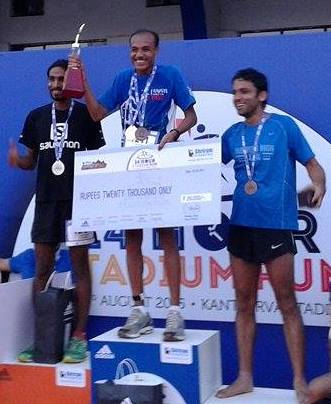
HEAT WAVE

Illustration: Shyam G. Menon

Illustration: Shyam G. Menon

This summer has been deadly.

So far, over 2200 people have died from the heat in India, most of them in central India and parts of north India and eastern India.

It has been a heat wave of several days.

While heat waves have been there before and people have died, this is the highest death toll in the past nearly four decades.

As June 2015 dawned, the monsoon was reportedly nearing the subcontinent.

This year’s monsoon is tad delayed.

The regular debate on how good the rains will be is on.

Once upon a time, the idea of good rain was the monsoon itself.

Now a super organism of 1.2 billion people with hunger and consumption to match, India’s worry around rain and agriculture is more.

As the economy took centre stage, ` how good’ as measured goodness, became annual fashion.

Spread of rainfall and intensity mattered; percentage replaced perception.

Simply put, good rain is sufficient rain, where it matters, when it matters.

Unfortunately it is becoming an all too familiar pattern: life on land wilts under scorching heat, everyone prays for rain and the monsoon’s passage is delayed, arrested or hijacked by unexpected developments.

There are delays in monsoon – delay before onset; delay after onset, even lulls in monsoon not different from lethargy to human brought on by heat wave.

Long after the monsoon’s birth and its arrival in our neighbourhood, there is the potential for cyclone, anticyclone and other such lures.

Freaks are many in contemporary weather.

The monsoon cavorts with these freaks.

From mere rain occurring annually, we are at last noticing the complex nature behind rain faithfully delivered.

Years ago when I was in school, El Nino was warming of the ocean off the coast of Chile in South America, which we studied in geography class.

Now it finds mention in the news every summer, for its occurrence and non occurrence affects India’s monsoon.

The interconnectedness of global weather; its vast underlying network of events – it is humbling insight.

Does it humble us?

Our egos are big.

We live as we please with our growing numbers unquestioned, our ways unchallenged, ourselves above nature and none above us.

Our survival is all that matters.

The perspective takes its toll.

What is sure from summers of the recent past and the summer of 2015 is that Indian summers are getting hotter.

News reports quoting studies say extreme weather will be a feature going forward.

Get ready for hot summers.

Mumbai bakes and steams.

My sister Yamuna, who took a few days off from work in Wardha to visit me in Mumbai, texted on her return to central India: “ 47 degrees.’’

She had found hot, humid Mumbai a relief.

When I complained, she said, “ at least, you are not getting hot wind in your face.’’

Even in Mumbai – the city that never sleeps – signs of afternoon listlessness abound.

Despite the high number of deaths from heat, the issue and its underlying message haven’t seeped into India’s imagination.

Occasionally in the wake of rising death toll, a few people comment on the importance of preserving forests and planting trees.

A lesser number wonders about urbanization, traffic and concrete jungles as amplifiers of heat.

India’s imagination is controlled by the supporters of unchanging India.

I leave it to you to think what unchanging India is.

To my mind, it exceeds the old, the traditional and the conservative and includes the burden of 1.2 billion people trying to survive earning money.

How will such a rat race and its priorities, notice the significance of climate change?

The gravity of climate change doesn’t register in unchanging India.

In some days from now, when the rain drops fall, the summer of 2015 and its death toll will become statistic; another reminder, forgotten.

(The author, Shyam G Menon, is a freelance journalist based in Mumbai)
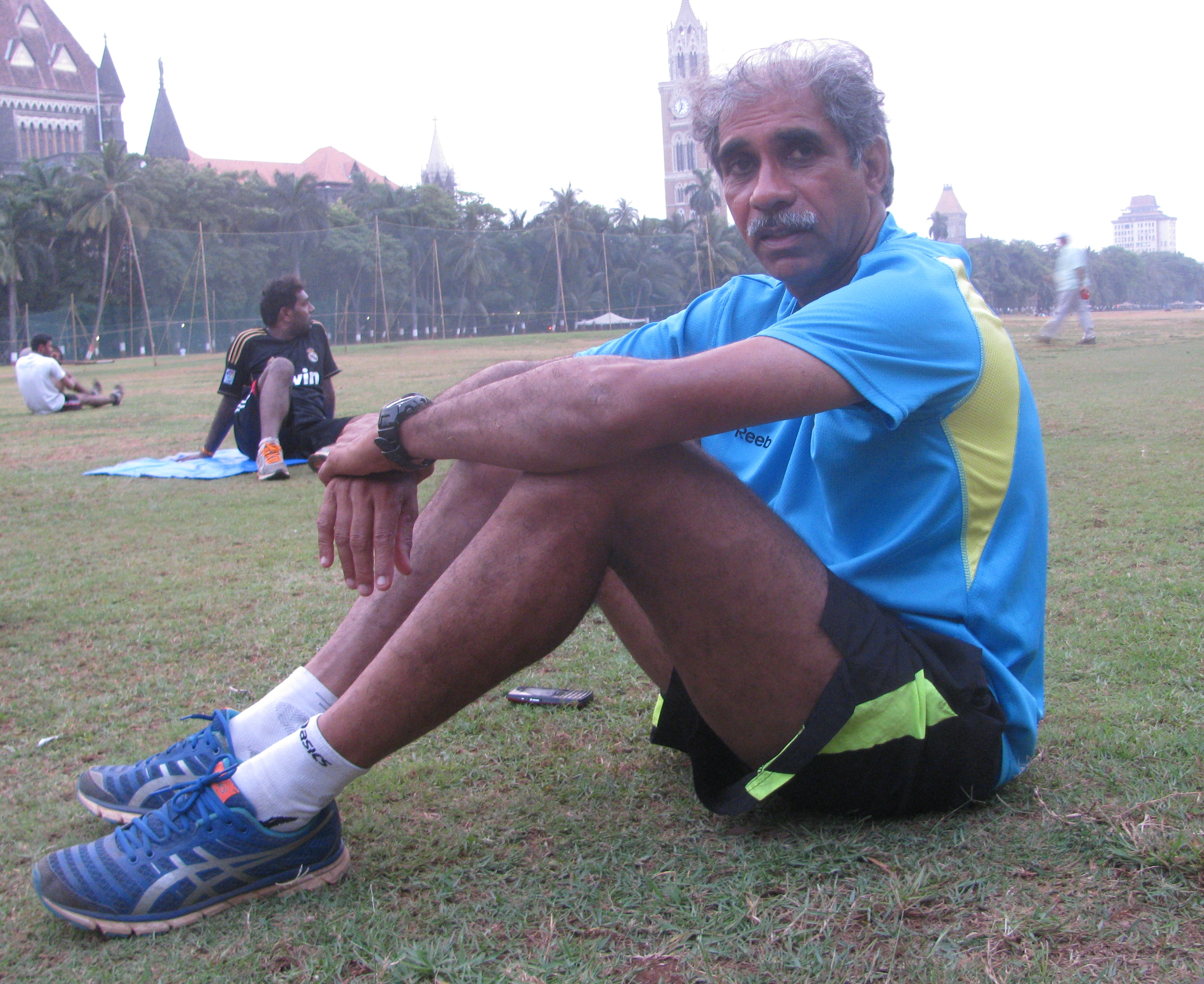
GOLD RUNNER

Abbas Shaikh (Photo: by arrangement)

Abbas Sheikh (Photo: by arrangement)

Mumbai’s Marine Drive is the city’s best known image on a postcard.

In bygone days (and to a lesser extent today), when skyscrapers implicitly meant modernity, this giant arc of reclaimed land bordering the sea and backed by stacks of Mumbai high rises was the city’s signature view. At night, lit by the city’s electric lights and the headlights of passing traffic, it became ` Queen’s Necklace,’ the other name by which Marine Drive is famous. Mumbai’s romance with skyscrapers continues. But like in humanity’s romance with the automobile, a tall building is no more indisputable modernity. The idea of modernity has become more textured.

The road along Marine Drive is approximately three kilometres long. Cars and bikes zip on it. Between the road and the Arabian Sea is a paved area spanning almost the entire length of the arc. Over the years, it has become the postcard view of Mumbai-running. Early morning and evening, the paved area fetches walkers and runners. During weekends, their numbers rise, some of them running to Marine Drive from distant suburbs. Best known of these rituals is probably the monthly Bandra-NCPA run, happening the first Sunday of every month.

A late evening in 2009, a young man from Shikarpur in West Bengal’s Bardhaman district, stood on Marine Drive. He was born into a poor family. He studied only till the sixth standard. His father worked as a farm labourer and his earnings were too little for family of six – parents; two sons, two daughters. Although his elder brother managed to become a post graduate, our young man had to stop studies by the sixth standard to free up money to educate his sisters. The compulsion to find work struck early.

Many from Shikarpur ended up as gold workers in India’s jewellery business. The young man moved so, first to Sidhpur in north Gujarat where he worked for two years on a monthly salary of Rs 2000-2500. Then he shifted to Mumbai, joining a unit where he learnt to polish gold jewellery.

Days were tough. Working hours were long. As a youngster learning the ropes, he often ended up fetching water and cooking for 12-15 people. That late evening in 2009, Abbas Sheikh was out on a stroll with friends after yet another long day polishing gold. Going to Marine Drive after work had become a regular practice and it was on one such visit that Abbas noticed Mumbai’s runners on Queen’s Necklace.

His daily life was classic Mumbai (minus perhaps extensive commute for he stayed with other gold workers in town). It was clock-work, in tune with the timings and hours of the industry he worked for. It was a routine. From all over India, people reach Mumbai for such industrial routine. They find one and cling to it, till the human being’s natural restlessness rebels and seeks expression. Often, you don’t know you are restless within, you don’t know what you want till a hint of something different from the regular, passes you by. Abbas watched the runners pass by. Why not run like them? – He thought. “ Mujhe kuch bhi pata nahi tha running ke bare me (I didn’t know anything about running),’’ Abbas said recalling that Marine Drive-moment. Back then, inspired to run, he spent some money from his frugal earnings to buy track pants and a pair of ordinary sports shoes. “ I was too embarrassed to run in shorts,’’ Abbas said laughing.

That was the beginning.

Abbas Sheikh is now among Mumbai’s best known ultra marathon runners.

The family back in Shikarpur; parents AnsarAli Khan and Moina Bibi with Abbas' sisters Monjila Shaikh and Tanjila Malik (Photo: by arrangement)

The family back home in Shikarpur; parents Ansar Ali Khan and Moina Bibi with Abbas’ sisters Monjila Sheikh and Tanjila Malik (Photo: by arrangement)

Shivaji Park in Dadar is one of the city’s active lifestyle zones. People play, exercise, walk, run – it is also venue for an ultra marathon, a 12 hour endurance-run that Abbas had participated in. We met Abbas near his work place in Sewri. The local Udipi restaurant was crowded, not to mention – you don’t get to sit for long in such busy eateries. And as it happens sometimes, both journalists went blank in the head when it came to recalling an alternative suitable joint nearby. The search for a place to sit and chat over coffee brought us all the way to Shivaji Park. We took a taxi; then walked. Unlike journalist shaped to slouch by typing, Abbas walked confidently. He has a light frame, emphasized further by the spring in his runner’s legs. Marine Drive and thoughts about how to get into running – that was long ago. Abbas now wore Mizuno shoes. We sat down at a cafe to hear his story.

Not long after that Marine Drive-evening, in his initial phase of running in Mumbai, the daily runs were avenue to discover both running and runners. Abbas was intrigued by the urban idea of running for running sake. He does not recall anything by way of running in Shikarpur. In his narrative, the village came across as nothing more than home; the starting point of his life transforming from nondescript to engaging with the advent of running. People running for the love of it, was for him, a totally Mumbai phenomenon. There was one thing in this craziness that he couldn’t comprehend – the distances people ran. They seemed to run and vanish. Over time, he had come to recognize the regular runners on Marine Drive. But unlike him confined to the length of Queen’s Necklace, their running didn’t seem to have an end. They rarely returned the same way. Once he chased after a couple of runners and tracked their progress, realizing in the process the existence of a concept called distance running. Emulating them, Abbas also increased his daily mileage. He began running long distances but had no idea of how to assess the distance. He thought he was doing 6-7 kilometres, when in reality he was running three to four times as much, sometimes more. Slowly he too was recognized as a regular and included into their fold by a group of runners. According to him, it was runners Dev Raman and Purvi Sheth who introduced him to the well known coach, Savio D’Souza. The improvement in his performance since has been remarkable. At the 2013 Bangalore Ultra, he won the 75 kilometre-run. In 2014, Abbas ended up winner in the 100 kilometre-run at the same event. He has also won the Mumbai Road Runners Runner of the Year (Male) award for the year 2013 and 2014.

The journey was not without its ups and downs.

“ In the early days, I used to get frequently injured,’’ Abbas said. It was the typical learning curve of the self taught and self made. But his biggest injury had nothing to do with running. It happened ahead of what would have been his first Standard Chartered Mumbai Marathon (SCMM), the 2011 edition. One day he slipped and fell at the place he resided with fellow workers. “ I was in a very bad shape,’’ Abbas said. The first hospital he went to, the X-ray machine wasn’t working. So his friends took him to St George hospital near Mumbai’s CST railway terminus. There, X-ray done, the injury revealed itself as a broken femur. The doctors said he required surgery; a rod had to be inserted to hold the broken section together. Fearing the cost of hospitalization in Mumbai, Abbas and a relative took the next train to Bardhaman. He endured the journey. The required operation was done in West Bengal. He was advised six months of absolute rest and recuperation. Abbas was back in Mumbai after three months. Slowly, he resumed his running, inching his way back to form by himself. The rod and screws are still there in his leg.

Abbas Shaikh (Photo: Shyam G Menon)

Abbas Sheikh (Photo: Shyam G Menon)

In December 2011 he ran the full marathon at the Pune International Marathon. It was his first time at a running event and he was completely new to the experience. “ I ran without any strategy. Whenever I heard loud music, which was played here and there on the course, I ran fast and slowed down later. I thought music meant you should run faster. Then, halfway through, I felt very tired. I happened to see a guava fruit seller. I bought a guava from him and sat on the sidewalk to eat it. I resumed running when I saw some fast-paced runners go by,’’ he said. By the end of the Pune Marathon, Abbas had learnt an important lesson about long distance running – you don’t run at a blistering pace; you have to plan your run and train in a systematic manner, hydrate well. Soon thereafter, he became a regular at many major running events. Among them – SCMM, Vasai-Virar Mayor’s Marathon, Hyderabad Marathon, Goa River Marathon, Satara Hill Marathon and the Bangalore Ultra.

Abbas Sheikh / race timings:

Run                                                                       Distance                                         Timing

Bangalore Ultra 2012                                          50k                                                   4:47:29

SCMM 2013                                                           42k                                                   3:31:13

Airtel Hyderabad Marathon 2013                     42k                                                   3:27:26

Goa River Marathon 2013                                  21.1k                                                 1:29:56

Bangalore Ultra 2013                                           75k                                                   7:23

SCMM 2014                                                            42k                                                   3:25:40

Bangalore Ultra 2014                                          100k                                                  10:32

Vasai Virar Mayor’s Marathon                             42k                                                   3:10:15

SCMM 2015                                                             42k                                                   3:20:31

Source: Timing Technologies India

Currently, every morning at 5AM, Abbas leaves his quarters and heads to Marine Drive. Most days, he runs 10-15 kilometres, some days, he puts in 30 kilometres. On an average he does 80-90 kilometres per week. “ He is good. He has good endurance,’’ Savio said. According to him, the rod and screws don’t interfere with Abbas’ running. Being with Savio’s group – Savio Stars – has helped Abbas address some of his needs in running gear. He also helps Savio with his coaching work.

Although he has run other distances, Abbas said, his preferred discipline is the ultra marathon. He plans to try the 24 hour-run at the 2015 Bangalore Ultra. His participation in events is limited by availability of resources; he doesn’t have much money to spare. For instance, he said, he would like to try the long distance running events in Ladakh. But Ladakh is a high altitude destination and anything at altitude entails considerable expense given the lengthy stay for acclimatization that is required. There is however a faint possibility that one of these years, he may get to participate in South Africa’s Comrades Marathon, the world’s oldest and largest ultra marathon. “ I hope so,’’ said the man from Shikarpur, who now calls Mumbai home because it is in this city that he gets to run.

“ I love running,’’ Abbas said in Bengali accented Hindi.

Abbas Sheikh on the podium after winning the stadium run in Bengaluru, August 2015.

Abbas Sheikh on the podium after winning the stadium-run in Bengaluru, August 2015.

UPDATE: Abbas Sheikh was the winner at the 12 hour-stadium run at Sree Kanteerava Stadium in Bangalore, early August 2015.

According to him, he did 266 loops of 400 meters each covering a distance of 106.5 kilometres in the assigned time.

“ It was quite a difficult run because we had to run in a loop of 400 meters. Loop running can be very tough. At one point I wanted to quit,’’ he said.

Abbas had a fall right at the start of the run. For the last three and a half hours he chose to go barefoot. “ The ground had become hot. At the end of the day I can say I learnt to endure loop running although I prefer linear running any day,’’ he said.

In November 2015, at the Performax Bangalore Ultra, Abbas finished second in the open category for men, covering 151 km in 24 hours.

(The authors Latha Venkatraman and Shyam G Menon are independent journalists based in Mumbai. Where photo credit says ` by arrangement,’ the picture concerned has been sourced from Abbas.)

MANY RUNNERS BUT FEW ATHLETES – EXPLORING A MUMBAI PARADOX

Savio D'Souza (Photo: Shyam G Menon)

Savio D’Souza (Photo: Shyam G Menon)

“ This is all I have. Make sure you don’t lose anything,’’ Savio said, handing us a small file.

It contained old issues of Mid-Day, Sportsweek and The Daily plus a plastic sleeve with a few photos stained by age.

The former national champion in the marathon used to have more photos from his life in running.

Many have been lost.

The file opened a window to a Mumbai no more there.

Sixty one years old, Savio D’Souza, is today a busy coach, training runners in a city that has become India’s running capital thanks to the iconic Standard Chartered Mumbai Marathon (SCMM). That would seem a fine situation to be in except for two points Savio made in his characteristic in-your-face fashion. The SCMM started in 2004. While the annual marathon got many people into running, those latching on to the sport from Mumbai largely belonged to the 30 plus age group. Because of it, Savio said, there were no timings significant to Indian athletics, to report from the Mumbai lot. In 2015, the women’s national record in the marathon was broken by Kerala’s O.P. Jaisha at SCMM. But timings by runners from Mumbai were nothing significant. On the one hand, running had become a movement in Mumbai. On the other hand, it was far from being cutting edge performance by any Mumbaikar. “ We have a large body of recreational runners. But where are the real athletes? There was a time when Mumbai and Maharashtra produced great track and field athletes. Now the city doesn’t feature anywhere in that department. States like Kerala, Manipur – they have all gone ahead,’’ Savio said. And paradoxically, none of the states which overtook Mumbai and Maharashtra to prominence in athletics have an event comparable to SCMM in size or such a large body of recreational runners around.

From an old race; Savio at far left, the late Shivnath Singh at far right (Photo: by arrangement)

From an old race; Savio at far left, the late Shivnath Singh at far right (Photo: by arrangement)

The paper clippings in Savio’s file dated to the early and mid-1980s. As fragments of media from the past they told a story. There was a report from November 24, 1986, about Savio winning the Pune International Marathon, beating Stephen Marwa of Tanzania to second place. Marwa had been winner of the event in 1984. The 1984 Pune International Marathon (the second edition) had been Savio’s first major marathon, wherein he finished first at the national level and third internationally (Marwa was first). In his second marathon – the Singapore International Marathon – Savio finished 18th, reducing his timing by a wide margin. Later at the Hong Kong International Marathon, he was placed 13th (profiles on the Internet say he placed ninth in Hong Kong at the 1986 edition of the event). Savio had his beginnings in the 1500m, 5000m and 10,000m disciplines. He said his best timing to date for the full marathon is around 2:25. That would make him at his peak the equivalent of being sixth among Indian full marathon runners at the 2015 SCMM. And 2015 is around 30 years since Savio’s heydays. “ That’s what I am telling you – that many years ago with much less money and facilities in Mumbai, we had timings in long distance running that matches the timings reported today or were better,’’ Savio said. Indeed the late Shivnath Singh’s national record in the men’s marathon – 2:12:00 – set way back in 1978, still ruled at the time of writing this article, almost 37 years after the timing was reported.

The Mumbai athletics ecosystem of Savio’s time seems to have been different.

From his file, a November 1983 edition of Sportsweek reported on the Runathon, a 12 km-run through Central Mumbai, won by Savio. Other reports spoke of the annual Sportsweek Road Races, five in number, with an overall winner at the end of the series. If media be window to given times, it is interesting to note that most of these reports are detailed and although cricket is dominant news by a wide margin, athletics gets a fair amount of space. Uniquely, unlike contemporary news reports on running which tend to be event-focussed, highlighting the spectacle of event, these old reports dwell more on athletes and less the event. There is an intimacy in the reportage. Savio was national champion from 1984-1988. According to him, in addition to Sportsweek lending its name to running events, many of Mumbai’s private and public sector companies maintained teams in athletics. Mafatlal – the company Savio worked for – had teams in football, cricket and athletics. The city had several athletic meets in a calendar year and each of those races saw the best turn up. Mumbai had a fine share of India’s best for the local ecosystem was breeding and grooming talent. Athletics saw the city’s senior officials arrive to encourage and support. Shashi Kumar Nair, former athlete who is now a senior government counsellor and lawyer at the city’s High Court, recalls S.K. Wankhede (former president of the Board of Control for Cricket in India), O.V. Kuruvilla (former chairman of the Central Board of Direct Taxes) and R.R. Chari (former commissioner of Income Tax) as among those who regularly visited the University Ground to support athletic events. On its part, the public turned up to cheer for they knew they were in for a treat as Mumbai had good athletes. All that community engagement either dried up or similar events continue but without the overall social interest. “ Now we don’t have good long distance runners. Maybe some in Pune and Nashik, but Mumbai – no,’’ Savio said.

Tracktrotters athletes and some of their parents with th Jameson Trophy in 1975 (Photo: copied from the club's 16th anniversary souvenir)

Tracktrotters athletes and some of their parents with the Jameson Trophy in 1975 (Photo: copied from the club’s 16th anniversary souvenir)

Two fantastic sports clubs, committed coaches, an accessible track to train on and roads shut down for people to run – these seem to have been old Mumbai’s magic potion to create athletes. For Edward Sequeira aka Eddie, the centre piece of old Mumbai’s infrastructure for athletics was the track at the Bombay University Sports Pavilion, popularly called University Ground. Essentially a track and field facility in the city belonging to the local university, this ground in South Mumbai was where Mumbai’s athletes – from state level to Olympian – converged to train. University Ground had a 400m-oval shaped track, two curves and two straights. “ This is the standard track,’’ Eddie said. The convergence of athletes here was courtesy two sports clubs possessing an evangelical fervour for promoting athletics – Tracktrotters (that is how the name is written) and Juhu Sports Club. Eddie – he is an Olympian, Arjuna Award winner, former Asian record holder in the 1500m and former national record holder in the 1500m, 5000m and the mile – is one of the founding members of Tracktrotters. Both clubs were near similar in what they wished to do and did, although some people cited a distinction by economic flavour with Tracktrotters being very middle class and Juhu Sports Club having a relatively well to do crowd.

Edward (Eddie) Sequeira (in front) at a race in Germany (Photo: by arrangement)

Edward (Eddie) Sequeira (in front) at a race in Germany (Photo: by arrangement)

Tracktrotters’ origin goes back to the late 1950s, to a group of senior athletes training together at the St Xavier’s Gymkhana, Parel. In 1962, they became Tracktrotters. The club charged nothing for its coaching. Parents brought their children for prospective training or youngsters approached on their own. “ We would sometimes test the candidate. That was all,’’ Eddie, 75, said. From 1969 onward, Tracktrotters’ regular training was at the University Ground. Although neither the two clubs nor all their trainees belonged to the university, the authorities supported their endeavour. Both clubs maintained boxes on the premises to store gear and equipment. Their coaches, training free of cost, were passionate and committed about what they did. Tracktrotters coaches included Eddie, Mervyn Jacobie, Alex Silveira, Philip Silveira, Vasant Kumar, Prithviraj Kapoor and Peter Rodrigues. The best known from Juhu Sports Club was Bala Govind, who now works in Nashik. He confirmed, training at the Juhu Sports Club also happened free of cost. “ Those days, the concept of charging money wasn’t there,’’ he said. And they produced results – many of Mumbai’s leading athletes from the period had links to these clubs and University Ground; among them – Eddie and Savio. A friendly competition prevailed between Tracktrotters and Juhu Sports Club. This was the athletics ecosystem then. “ Those are the days I will never forget,’’ Eddie said.

Mervyn Jacobie is remembered as a great coach by many. An evening in April 2015, at the playgrounds of Five Garden, Wadala, we met Ashok Shetty, an official at the Mumbai Port Trust and former state champion in the 400m, 800m and 1500m. Born into a poor family residing in Parel, his ability in sports was first spotted by Oliver Andrade, a well known coach in the city those years. Ashok’s first rendezvous with competition earned him no podium finish. With a friend who fared better in athletics, the boy landed up at Tracktrotters. At that time, the club practised at the premises of Khalsa College. “ Anyone could join for training. It was free. The first thing Mervyn did was catch me by the ear, tell me to cut my long hair short and report for training regularly,’’ Ashok recalled.

Ashok Shetty (Photo: Shyam G Menon)

Ashok Shetty (Photo: Shyam G Menon)

By all accounts Mervyn’s methods won’t sustain in today’s environment. Back then, it delivered results. He was a man of medium size, very strict, insisting on punctuality and completely committed to his work as coach. On Sunday, he took a break from coaching to attend church. Mervyn worked with Central Excise; he retired as Superintendent. In due course, Tracktrotters shifted from Khalsa College premises to the University Ground. Every evening, training began at 5PM and went on till 7.30PM. As coach, Mervyn was hard to please. Those who trained under him got whacked – that seems to have been a Mervyn trademark. Once, Savio, on winning a race, went up to Mervyn to share his glee. “ I got a whack and was asked: why did you look back and run? He told me, you could have run faster had you not looked back, ’’ Savio said. Ashok, after a victory went to Mervyn with trophy and some youngsters inspired to join Tracktrotters. Another whack and pointed advice on how to improve. “ I picked up the trophy, which had fallen from my hands and looked around for the youngsters. They had all disappeared!’’ Ashok said laughing. But Mervyn wasn’t this strict perfectionist alone. Unable to afford a railway pass, Ashok used to walk from Parel to University Ground when Tracktrotters first shifted to the South Mumbai ground for practice. An angry Mervyn would whack Ashok for repeated late arrival. Then he learnt that the boy didn’t have money for the daily commute. Mervyn got him a railway pass. When the pass expired, he gave him money to renew it. Similarly, every Saturday, the whole Tracktrotters team assembled at Santa Cruz and travelled to Juhu to run on the beach. The cost of everyone’s travel was borne by Mervyn. “ For Mervyn, coaching was his life,’’ Ashok, 59, said.

Shashi Kumar Nair (Photo: Shyam G Menon)

Shashi Kumar Nair (Photo: Shyam G Menon)

At his office in an old building at Mumbai’s Flora Fountain area, Shashi Kumar Nair, 60, opened a shelf and pulled out some documents. “ This shelf is now the Tracktrotters’ office,’’ he said. In a souvenir marking the club’s 16th anniversary, Mervyn Jacobie, wrote, “ Humble as the beginning was, this club had sworn to train young and enthusiastic boys and girls throughout the year, both in and off season, free of cost without any entrance fee, membership or any such formalities, irrespective of religion, caste or creed, to attain standards in athletics. Besides providing training, these athletes are entered without any entry fee for all major athletic meets in the region; track shoes, track suits and spikes are issued to the deserving athletes, from donations received from sports lovers and friends.’’

Major Shashi Tiwari, 50, served with the Indian Army’s Bihar Regiment. He now works with Tata Power. Years ago, he was the national junior champion in 800m and 1500m; he was an athlete at Tracktrotters. “ I spent nine years of my life there,’’ he said. According to him, the main benefit of being at Tracktrotters was that it took anybody in and then put that person through the coaching of a dedicated individual like Mervyn. “ People like Mervyn are hard to find in today’s world,’’ he said. Incidentally, that old Tracktrotters souvenir concluded with a “ list of members – past and present.’’ They numbered around 352. Of them, 239 – that is 68 per cent – had won medals at regional, state or national levels or been participant at international level competitions. Some of them qualified for all four levels of honour.

Edward (Eddie) Sequeira (Photo: Shyam G Menon)

Edward (Eddie) Sequeira (Photo: Shyam G Menon)

According to Eddie, the decline in Mumbai athletics started about twenty years ago when the university refused permission for outsiders, including the clubs and their wards, to train at University Ground. The exact reason for this development is unclear. Eddie loved this ground, which had built him into the sportsman he came to be. In 1982, after the Asian Games in New Delhi, Mumbai’s University Ground had also been venue for a six nation-athletic meet organized by Tracktrotters. So in 2011, when India’s decision to host the cricket World Cup saw its organizers seek space to expand the Wankhede Stadium and think of encroaching on the nearby University Ground, Eddie put his foot down. He and Shashi Kumar Nair drummed up enough support to prevent any such move. Today the ground survives. It even has a new synthetic track. Access however isn’t as free as before (an official at the office adjacent to the stadium said that the ground is mainly meant for university students; others get to use it if their application is approved). Besides, a new road leading to the cricket stadium has allegedly eaten into what used to be the old athletes’ warm-up area.

Can a giant city’s position in athletics decline simply because a ground shut its doors to the public? Eddie explained it. The question is not the ground per se but what it did and how it worked in combination with the two clubs. The University Ground is perfectly located. Although in South Mumbai, it is accessible by road and rail. It had the city’s only good running track years ago; it has a new synthetic track now. What it did as part of the matrix offered by the clubs and their training, qualified the years gone by. In those years, Mumbai was catching its athletes young. Unlike most games, athletics is an individual sport. Physically demanding, you peak early in it. “ You can be a national champion at 16 or 18 years of age. That is why you have to catch them young,’’ he said. Old Mumbai was interested in sports; it scouted for young talent and found it. Still restoring a ground to regular public use is only part of the panacea. If you want a revival in athletics, the issues to address are several.

To start with, today’s children – including Mumbai’s children – lead lives dramatically different from the children of the 1960s, 70s and 80s. Thanks to contemporary lifestyle, interest in the active life has dipped. A procession of distractions exists – particularly the mobile phone. “ When we trained, we were not allowed to speak to each other or have any distractions,’’ Major Tiwari said. According to him, people from economically challenged backdrops and those hailing from rural areas may still have that required discipline. “ Mumbai has lost it,’’ Major Tiwari said. Veteran coach, Bala Govind, 73, felt that once motivated adequately, today’s children are good. But there is the issue of distraction and how naturally motivated children are toward sports. “ Those years – 30 to 40 years ago that is – were totally different. The children of that time were motivated differently. They saw sports as fun and once motivated, they had no distractions,’’ he said. Currently, even if a child managed to be in sports despite distractions, a major hurdle looms by tenth standard. Studies squeeze out sports. “ In competitive sport, you take a break and come back, your contemporaries have surged ahead,’’ Savio said.

With studies stifling sports, another old trait also began drying up.

Savio was born in Goa in 1953. After finishing his SSC, he moved to Mumbai in 1972. He was a footballer but didn’t enjoy it. He used to train at the University Ground and got admission at Maharashtra College near Byculla in the city, on the strength of his performance in sports. By 1976, he was representing Bombay University in the 5000m and 10,000m. “ I was noticed. Those days we had talent scouts and a system that provided sustenance to dedicated sportspersons,’’ Savio said. Schools and colleges looked around for good talent. Scholarships were provided. If your athletic abilities earned you a seat at college, your continued performance was noticed by companies who gave you employment. “ Such employment matters. I used to be away seven to eight months a year, training and competing. But my employers gave me a regular monthly salary,’’ Eddie said of Tata Steel. According to him, as per an old estimation of 1982, the Tata Group had in its fold then, six world champions, five medal winners at the Olympic Games, four Commonwealth Games medal winners, 36 Asian Games medal winners, 33 Asian Championship medal winners, 41 Arjuna Award winners, 51 Olympians, 57 sportspersons who had participated in the Asian Games, 54 people who had participated in the Asian Championships, one Padma Bhushan and 11 Padma Sri recipients for contribution in sports. He also said that in those days, Tata companies recruited a sportsperson once every two years.

University Ground (Photo: Shyam G Menon)

University Ground (Photo: Shyam G Menon)

Some public sector companies still persist with the policy of supporting sports through employment. But a lot has changed in the private sector. There may have been snaps in continuity of support for sports in the city, when the old textile mills – Savio used to represent Mafatlal – restructured, slipped into hard times or plain died out. Mumbai’s new generation industry and the old that survived are more market focussed, preferring to see results and then support, that too in sports enjoying visibility. Exceptions exist. In conversations around recent athletes we had, the Mittals, Jindals and ONGC found mention as patrons of athletics. But that is not how it used to be. In times gone by, being a sportsperson was on par with being good at studies in terms of prospects in life. Today, nobody wants to know your struggle to succeed. They will support you once you are successful. It would be tempting to justify this trend with that approach loved by market and GDP – survival of the fittest. Actually it isn’t that simple. Most coaches know that to find good, hardy talent you have to cast your net wide and not everyone spotted so can survive without a supportive ecosystem. This is true even in the recreational running of today’s Mumbai. Some of the best timings are from people who came up the hard way and whose passage in sports was assisted by supportive others. Ecosystem matters. One comment from the conversations we had about years gone by remained embedded in the brain as a classic synopsis of what our world calls change. Somebody we spoke to said, “ we were doing a good job in athletics and coaching. What we didn’t have was a Power Point presentation like today’s market savvy folks.’’

“ The required change has to happen from school level onward. Without it there is no chance,’’ Savio said. He felt, the system of coaching at schools must be changed with sportspersons taking over the task. “ If the coach is a sportsperson, then he or she will make sports happen no matter what the challenge, because they enjoy sports,’’ he said. An interesting aside here is that when Eddie got his first job as a mechanical apprentice at Central Railways, sports was compulsory for railway employees. According to him, a Mumbai revival in athletics could start with training the resident coaches properly; send them abroad so that they get to know what good coaching is and bring it back to the city. He pointed out that unlike the salaried government coaches of today, the city’s old coaches – the ones who blazed a trail at Tracktrotters and Juhu Sports club – were devoted to sports and coaching for the love of it. They charged nothing. And they produced results if Mumbai’s past in athletics is anything to go by. Such passion must return to the city. There has to be more athletic meets. “ Bring back the old road races. Rain or no rain, the Oval Maidan is there; the University Ground is there, Marine Drive is there. Don’t have just one meet in a year – of what use is that?’’ Eddie asked. Finally “ forget about seniors; focus on juniors.’’ He wanted corporate sponsors for junior teams. “ My suggestion is that every big company should have at least one athletics meet for juniors,’’ he said, emphasizing alongside that the habit of pushing in over aged persons into junior categories to win prizes, should stop. According to Eddie and Shashi Kumar Nair, Tracktrotters is hoping to make a comeback. The club held a general body meeting in this regard attended by 50-60 old members. “ From the club’s side, we are giving the commitment that we will return the old glory to Mumbai athletics,’’ Nair, vice president, said.

Savio (Photo: by arrangement)

Savio (Photo: by arrangement)

We leave you with a vignette of old Mumbai; an edited abstract from the old Sportsweek report on the Runathon:

“ Police Commissioner Julio Ribeiro in a dashing Bombay Police track-suit set the big field (491 to be exact) off from Shivaji Park at 7AM. Though the start was together in the classic Boston Marathon style, for the different groups, the race was terminated at different stages of the course. At one stage, the runners were strung out from Dadar, down to Parel and Lalbaug, over Currey Road and Lower Parel bridges and into the homestretch. The traffic police and the Naigaum police co-operated throughout in keeping the roads reasonably clear for the runners. Savio D’Souza, Bombay’s and Mafatlal’s ace runner led the field right through, at first a few lengths ahead, then more, finally striding almost alone, king of the road. There were runners from Track Trotters, Atomic Energy Central School, St Sebastians of Dabul, Young Athletic Club, Customs and Income Tax. Captain Reza Beg of Air India was there. The day before, he was jogging in Tokyo. On Sunday, he took off with the rest of the runners from Shivaji Park. Course completed, he carefully logged his personal time in a logbook. The regular early morning Shivaji Park joggers and walkers joined in, including a 76 year old-veteran. Later a special prize was announced for him but he had disappeared. The prizes ranged from sports scholarships to silver cups, Hot-Shot cameras and other items. Bombay has started running for fun. Perhaps a little behind the rest of the world, but it has started.’’

The year was 1983.

(The authors Latha Venkatraman and Shyam G Menon are independent journalists based in Mumbai. The timings at races are as provided by the interviewees. Where photo credit says ` by arrangement,’ the picture concerned has been sourced from Eddie or Savio.)

7a @ 65

Franco Linhares (Photo: courtesy Sharad Chandra)

Franco Linhares (Photo: courtesy Sharad Chandra)

Tucked away in the crags of Belapur in Navi Mumbai, is a small boulder with a tricky move on it called, `Franco’s Warm up.’

A name given by young climbers, it speaks much about the older gentleman whose name features in it.

Like all of us, Franco Linhares is inevitably growing old in life. But as he does so he is getting younger in climbing. You see him every evening at the small climbing wall at Podar College, first showing youngsters new to the sport the basics of climbing and then, doing some hard routes with the seasoned addicts. On weekends he turns up at Belapur, where the house of Abhijit Burman (aka Bong) has long been assembling point for climbers heading to the nearby crags. At 65 years of age, Franco is Mumbai’s most consistently active rock climber. He has been climbing for over three decades. That boulder in Belapur was aptly named. Warm-up is a sign of things to come and Franco in climbing is proving to be a bit of a Benjamin Button.

In the early 1950s, Franco’s father was stationed at Abadan in Iran, location then to one of the world’s biggest oil refineries. Franco was born in Abadan in 1950. The refinery belonged to the Anglo-Iranian Oil Company (AIOC). In 1951, Iran nationalized oil properties. Refining ground to a halt at Abadan and riots broke out (a settlement was reached in 1954, which lasted till 1973 when the National Iranian Oil Company [NIOC] took over all facilities. The period from 1951 to 1954 is called The Abadan Crisis). Franco’s family moved to Mumbai and onward to Seria in North Borneo, South East Asia, where the oil company, Shell, had a refinery. Seria became Franco’s next home. In 1960, given his father’s desire that the children be educated in India, Franco shifted to Mumbai with his sister.

The Linhares family hails from Goa. Among Indian communities, Goans are noted for their love of sports. Franco attended the St Sebastian Goan High School at Girgaum in South Mumbai. His days there were filled with sports and games. “ My love for sports came from this school. Those were my formative years,’’ Franco said. Later he majored in Microbiology from Mumbai’s St Xavier’s College. By 1967, his family was also back in Mumbai for good. To keep himself occupied, his father worked at the United Services Club in Colaba, at the Archbishop’s House and eventually served a long stint at the Victoria Church in Mahim handling administrative matters. While looking for a job after graduation, Franco chanced to do a course at Bharat Laboratories in laboratory testing procedures. Course done, he commenced working for the company. He kept applying for jobs alongside; ` medical representative’ being much fancied those years. In 1973, Franco found long term employment at Hoechst Pharmaceuticals with a job in their quality control department. Every evening after work, he played hockey. This was on the road in front of his house in Mahim. Roads then were relatively free of traffic. They were playgrounds at hand. He also played for Hoechst in the company’s hockey and football teams, playing up to the senior division in hockey.

On Mangi pinnacle; Tungi in the backdrop

On Mangi pinnacle; Tungi in the backdrop

From the old Matheran hike

From the old Matheran hike (Photos: courtesy Franco)

Purists in climbing and hiking, look down their nose at commercial trips. Yet it is through such visits that many Indians begin their engagement with the great outdoors. In 1979, Franco reached Kashmir as a tourist on a trip arranged by the Mumbai based-Lala Tours and Travels. On return he realized one thing – he visited Kashmir, yes; he saw nothing of its high mountains and wilderness. So the following year he went on a trek to western Sikkim. His companion on the journey was the late Roque D’Souza, a maths major from St Xavier’s working at Ciba-Geigy (subsequently merged with Sandoz to form Novartis) and a regular at the evening hockey matches. Franco’s first Himalayan trek was initially challenging. On the first day he had a tough time adjusting to the altitude. Then everything was fine. In 1981, he went to Chanderkhani Pass in Himachal Pradesh. The next year, he trekked to Sandakphu. On this trek, most of the camp leaders were from the Mumbai based-club, Girivihar. They used to discuss climbing. It was Franco’s introduction to both the subject of climbing and the club he would eventually come to be identified with. Girivihar is Mumbai’s oldest mountaineering club. Soon afterwards, Franco trekked to Matheran and Kalsubai (at 5400ft, Maharashtra’s highest peak) in the Western Ghats (Sahyadri), with Vijay Athawale, a colleague at Hoechst.

Vijay quickly became Franco’s partner in outdoor adventures. Their friendship, strong to this date, can be gauged from Vijay’s recollection of events past, starting with “ 1st September, 1977’’ – the date he met Franco for the first time at the Quality Control Lab of Hoechst. Mumbai and Hoechst were new worlds for Vijay, hailing from a distant place, educated in the vernacular language and not even fully done with his degree course. He wrote in, “ I was obviously afraid of everything around. Franco was my role-model. Calm, soft spoken, a thorough gentleman and at the same time, mischievous, ready to participate in all sorts of picnics and parties! Our chemistry matched from day one.’’ According to Vijay, one of Franco’s friends pulled Franco out on a monsoon outing and Franco in turn, pulled Vijay in. That’s how their partnership began. The outdoor bug got them and then, others at office. “ What started as monsoon outings, slowly changed to one day treks and later to overnight hikes,’’ he recalled. Vijay had heard of the annual rock climbing camp conducted by Girivihar, wherein rock climbing skills were taught. Franco and Vijay attended the camp held at Kanheri Caves inside the Borivali national park. It lasted three to four days. From then on, for several years, Vijay and Franco went for every trek and climb organized by Girivihar. “ We just liked it. It was great to be out,’’ Franco said. With Harish Kapadia’s guidebook for trekking in these ranges available in the market, the Sahyadri became playground for Mumbai’s outdoor enthusiasts.

From old Girivihar climbs (Photos: courtesy Franco)

Scenes from old Girivihar rock / pinnacle climbs. The climber seen in the photo at left is the late Anil Kumar, during his time one of the best climbers at Girivihar (Photos: courtesy Franco)

Given their regular attendance at club activities, Franco and Vijay were quickly co-opted into Girivihar’s management. Vijay was made secretary straight away. “ I was in the management committee as a sort of assistant secretary to Vijay,’’ Franco said. Those were the days of cyclostyle; the days preceding email. The schedule of outdoor activity for a specific period of time would be drawn up. It would be cyclostyled and posted to club members. Franco recalls doing this after his daily work at Hoechst. The Girivihar rock climbing camp had been Franco’s initiation into climbing. Besides Borivali national park, the other climbing crags in the Mumbai region then were at Mumbra and Kalwa. Unlike today, very few people had climbing shoes. Climbing was mostly done in `Hunter’ shoes, a model of canvas shoe with ankle guard and rubber soles made popular by Indian shoe companies. Occasionally, a climber or two seeking better grip on rock, pasted a strip of high friction rubber to the soles. Climbers set out early in the morning and climbed as much as they could.

The club’s climbing itinerary was mixed – it also included ascents of pinnacles, a pursuit that enjoyed considerable popularity in Maharashtra, where the Western Ghats are enmeshed in local history. Much of the climbing happened on weekends. That meant, major Girivihar climbs like the first ascent of the Khada Parsi pinnacle near Nane Ghat, took the club a few weekends to accomplish. The climbing style on rock was trad, that too within the limits of available climbing equipment. Right up to the early 1990s, India was a protected economy. Good climbing gear was hard to obtain and expensive. This did not impede the climbers of those days from choosing bold objectives. Their approach to climbing was however different from today; in particular, you read a route keeping in mind one’s competence and available equipment, before you climbed. Some of the pinnacle-climbs were personal projects. The club had a published itinerary of activity but was open to the private initiatives of its members.

Ruinsara (Photo: courtesy Franco)

Ruinsara (Photo: courtesy Franco)

In 1984, Franco was part of a team of friends who trekked to Annapurna Base Camp in Nepal. “ We went self supported, carting along 40 kilos of stuff only to find that everything was available along the way,’’ he said. In 1985, he got into his first Himalayan mountaineering expedition with a seat aboard Girivihar’s trip to climb Swargarohini and Black Peak in Garhwal. He hadn’t yet done his mountaineering course but he was taken along as he had been regular at rock climbing in Mumbai. Black Peak was assigned as potential climbing objective for the club’s ` junior team,’ while the seniors attempted Swargarohini I and III. On this trip, Franco and two others climbed Ruinsara. He had until then never held an ice axe, never worn a plastic mountaineering boot. However, he didn’t find the transition from climbing on rock to climbing on snow difficult. An engagement with the outdoors, begun in the fallout of a commercial trip to Kashmir in 1979, was now assuming serious proportions.

In October 2013, I chanced to witness a climbing competition at the Podar College-wall (for details please visit https://shyamgopan.wordpress.com/2013/10/04/bouldering-competition-at-podar-college/), organized by Girivihar. Quietly standing by, watching the proceedings was Pio Linhares. During a brief conversation at his house in Mahim, Pio, 93, recalled some of his own old adventures – among them travelling with a convoy of trucks during the beginning of World War II, from Mumbai to North East India and across the border through Myanmar and Thailand to Singapore. That was when he worked for the Ford Motor Company’s Mumbai office. The Abadan years were after this phase. I asked him what he thought of his son’s affection for climbing and the outdoors. Was he prepared for the dimensions it acquired? “ I allowed him to do what he wanted. I did not hold him back. It is when you restrict somebody that they get frustrated and you need to worry,’’ Pio said.

In 1986, Girivihar decided to attempt Kamet (7756m). Franco couldn’t find the required leave to join the team. He helped reach the expedition’s gear all the way to Malari and then returned to Mumbai. Away in the Himalaya, on the Kamet trip, the idea of another expedition was born – an attempt on Kanchenjunga (8586m), the world’s third highest peak. According to Franco, Kanchenjunga wasn’t the first choice. The club’s first choice was Everest (8850m). Everest via its normal route was already booked and the available opportunity was a climb via one of the harder faces. That’s how Kanchenjunga entered the frame. The club’s junior team was told clearly – they needed to do their basic mountaineering course. By now the `junior team’ – it had the likes of Franco, Vijay, Sanjay Chowgule and Amod Khopkar – had been climbing regularly. In 1986, Franco did his basic course from the mountaineering institute in Manali then called the Western Himalayan Mountaineering Institute (WHMI). Attempting a big mountain like Kanchenjunga requires preparation. The club’s junior team was told to select a peak and plan an expedition. They decided on Hanuman Tibba (5900m) in Himachal Pradesh. The team led by Vidyadhar Joshi, included Franco, Amod and Milind Bhide. But it turned out to be a challenging trip with the team’s progress halted by heavy snowing. Eventually Vidyadhar climbed Friendship peak nearby as a consolation. “ Eighty per cent of my trips to the high mountains ended up living in inhospitable conditions and then coming back,’’ Franco said.

The post Kanchenjunga look

The post Kanchenjunga look

Franco, from a 2002 mountaineering expedition in the Zanskar Himalaya

Franco, from a 2002 mountaineering expedition in the Zanskar Himalaya (Photos: from the collections of Franco and Abhijit Burman)

The Kanchenjunga expedition happened in 1988. Having secured from Hoechst the needed leave of three and a half months, Franco went with an advance party to the mountain’s Base Camp in Nepal. Their role – carry in the expedition’s gear and supplies. The advance party had 300 porters or so. The rest of the team flew to Taplejung and proceeded to Base Camp. Franco’s trek began from Hille, ahead of Taplejung and entailed 14-15 days walk to reach Base Camp at around 18,000ft. This included a three day-walk on the glacier ahead of camp. After reaching Base Camp, the team set out to establish Camp I. Kanchenjunga was a powerful influence on Franco. That expedition shaped the reputation he would subsequently have at Girivihar. He went up to Camp 4, at around 24,000ft on the mountain. He spent two nights there. There were suggestions that he proceed further up. He declined the offer. Didn’t a potential shot at the summit interest you? – I asked him. After all, the summit is where every mountaineer wants to be. “ I was completely exhausted and hyperventilating like mad. I was at the end of my tether. Saying no wasn’t a difficult decision for me,’’ Franco said. Girivihar’s Kanchenjunga expedition – it was the first Indian civilian expedition to an 8000m-peak – failed by a thin margin. It saw two climbers – Charuhas Joshi and Uday Kolwankar – reach above 8000m. It also saw the tragic demise of a team member, the expedition’s deputy leader Sanjay Borole.

Amid this, Franco ended up spending 28 days above Base Camp on the mountain, a significant altitude for someone to stay that long at a stretch. When the expedition was wound up, he volunteered to go with the party carrying down the body of the deceased member and proceed onward to Mumbai. This trip included another duty en route – he was deputed to meet Elizabeth Hawley, the legendary American journalist who kept a record of expeditions and climbs in the Nepal Himalaya. He also spent some time wandering about Kathmandu with his newly gained mountain-look. One of Franco’s memories of Kanchenjunga is the huge beard he acquired during the expedition. He roamed all around Thamel sporting the beard and kept it on till he got back to Mumbai. Franco considers the Kanchenjunga expedition as having been very important for Girivihar’s junior climbers like him. They climbed high on Kanchenjunga, spent much time on the mountain and worked in several camps. He recalled the case of Shantanu Pandit, who was also an upcoming climber like him at that time. Shantanu became one of those who worked the most, having walked in with the advance party and leaving only after expedition’s wrap-up. Vijay had accompanied the expedition’s film crew to Base Camp. “ It was a three month-long strenuous, tragic expedition and very few team members returned home in sound mental and physical condition like Franco did,’’ he said. The very next year after Kanchenjunga, four club members including Franco, went to attempt Menthosa (6440m) in Himachal Pradesh. They reached Camp II pretty quickly and could have gone for the summit, except – there was heavy snowfall. The team stayed put at Camp II for three days and then returned. In a second attempt on the peak, some years later, Franco would reach only till Camp I.

In Zanskar (Photo: from the collection of Abhijit Burman)

Franco, during the Zanskar expedition (Photo: from the collection of Abhijit Burman)

For Franco, the Himalaya was an on-off affair. “ I used to come off the Himalaya saying – no more of this. But after about a month of being in Mumbai, I would start planning the next trip,’’ he said. In that stage of his life, Franco had an expedition almost every year. Over time however, the zest began dipping. His problems were two – the cold and the altitude. Twice he experienced chilblains. His capacity to acclimatize smoothly also seemed to progressively fade. On an expedition to Shivling (6543m), he had his first bout of nausea at Tapovan (4463m) itself. During another trip to Kang Yatze (6400m) in Ladakh, he chose to halt his ascent short of the summit as he felt exhausted. In comparison, the Western Ghats of Maharashtra (called Sahyadri locally) stayed playground. “ I have been to many places, many times in the Western Ghats and yet enjoyed it every time. I never had that attitude of wanting to visit a place just for the heck of saying I was there. For me, every venture into the outdoors is different even if it be a repeat visit to the same place,’’ Franco said.

Franco is strongly associated with Girivihar’s annual rock climbing camp as an instructor and is possibly the best remembered of all club members for his generally supportive, nonintrusive ways. His calm, uncomplaining disposition often saw club responsibilities dumped on him. Vijay remembered an adventure camp from years ago, wherein the camp’s lady instructor had to leave after a few days. The question was – who will replace her? The choice was unanimous – Franco. “ Whenever others were reluctant to accept a responsibility, he would take it up without any hesitation,’’ Vijay said. But that didn’t mean Franco was without preferences. There was a phase when he worked for the outdoor industry. It didn’t last because he knew his calling in the outdoors was of a different sort. However he did nudge others into the outdoor line. Manohar D’Silva is a senior instructor with the US based-National Outdoor Leadership School (NOLS). Years ago, his introduction to rock climbing had been through a Girivihar camp (the 32nd camp held by the club), his batch of trainees becoming much loved at the club under the acronym, RC-32. Manohar wrote in about Franco, “ besides being super impressed by this fifty plus-year old person easily climbing rock faces, I was deeply influenced by his fitness routine. It greatly contributed to me losing close to thirteen kilos in eleven months. More than ten years later, I continue to be impressed by Franco’s increasing level of fitness and his love for rock climbing. Franco came across as a genuine human being who connected with others and was concerned about their well being. His teaching style was patient and encouraging. Franco was directly responsible for me switching to the outdoors as my vocation. I vividly remember the conversation over tea in an Irani cafe in Mahim where Franco laid to rest my apprehensions of making ends meet through work in the outdoors. That conversation was a turning point for me. I will always be indebted to him for that.’’

A typical evening at the Podar College-wall (Photo: Shyam G Menon)

A typical evening at the Podar College-wall (Photo: Shyam G Menon)

Shyam Sanap, 32, is a talented climber. At his peak, he was often called the best boulderer in Mumbai. He has known Franco for at least 15 years. According to him, Franco’s climbing has steadily improved. At 65, he is doing some of his best climbing. “ At the wall and at the crags, Franco not only does his share of climbing, he also attempts problems being tried by stronger climbers, much younger to him in age. He does not waste any opportunity to climb that comes his way,’’ Shyam said. Aniruddha Biswas (Aniruddh) reached Girivihar through RC-32. Franco credits Aniruddh for much of the improvement in his climbing that happened in his later years. Time spent in the US saw Aniruddh’s climbing improve dramatically. “ Aniruddh used to keep on encouraging me. I now climb hard. I try to play tag with all the youngsters around. I enjoy it. I don’t care if I can’t do the hard stuff they do. Just attempting it makes me happy. Over time I have realized that I can also do it,’’ Franco said. At the Podar College-wall, I suspect there is more to the young company Franco finds himself in these days, than meets the eye. It speaks of his adaptability. In 2003 Vijay moved to Goa. As they aged, the climbers of Franco’s generation faded, transformed to being organizers or became high priests and commentators of the sport. Franco soldiered on, climbing. Long ago, it was the old black and white photo from Matheran; later – Girivihar’s classic climbing years, today – the Podar College-wall and Belapur’s crags. The one constant has been climbing and the outdoors; connections with visitors to life built around these experiences. As the clock ticks, the crowd around him has been getting younger. The Podar College-wall is the deep end of such youth. “ It is awesome what he is doing at this age,’’ Anuj Naik, 28, climbing since the past one year at the Podar College-wall, said. Besides many years spent climbing around Mumbai, Franco has climbed rock in various places in India – from Badami, Hampi and Yana in Karnataka, to Pachmarhi in Madhya Pradesh and the Miyar Nallah area in Himachal Pradesh. He has also climbed in Sicily, Italy. “ Now I am thinking of a climbing trip to Greece,’’ he said. Along the way he took voluntary retirement (VRS) from Hoechst, served as president of Girivihar and stayed a bachelor. He is also a devout Catholic who likes his periodic visits to the church.

“ I hope I can climb as long as the body permits. I just want to climb rock. I have always loved rock climbing. With all the modern climbing that has taken off, I wish to lead a 7a someday. That is my goal. As regards big mountains, I find altitude and cold challenging. So that is a bit difficult,’’ he said. In the pantheon of climbing grades, 7a is arguably the beginning of truly difficult, demanding climbs. This author is a very average – probably bad – climber. The hardest route he ever led was a 6b or near about. Stand in the author’s shoes, add Franco’s age and say lead climbing – 7a acquires a different hue; it is an engaging challenge. It may seem a bit puzzling – this courting of climbing as pure physicality (which is the image sport climbing evokes) after beholding climbing on a much larger canvas in the Himalaya. In disciplines like bouldering for example, the equivalent of a whole mountain at altitude to tackle, will be a tricky move or two, utterly strenuous but rarely exceeding 20ft in height. Compared to bouldering, bolted sport routes are longer but as predetermined, pre-protected routes they can be said to be partial to highlighting the physicality and edginess of climbing than the art of figuring out an ascent. Franco concedes this. On the other hand, he avers, he has a high tolerance for pure action, physicality and game formats thanks to his old school days. He doesn’t mind the perceived loss of thought and grandeur when world reduces to action filled-sport climbing in finite space. Is there something of a life simplified, a return to old days and St Sebastian Goan High School in erstwhile mountaineer hanging out at the Podar College-wall or dreaming 7a at 65? One wonders.

Franco (Photo: Shyam G Menon)

Franco (Photo: Shyam G Menon)

When I first met Franco in the late 1990s, he had just acquired a pair of green classic climbing shoes called Kamet, his first pair. Then a black and purple Boreal Laser was added to the collection. Thereafter as climbing acquired intensity among the devout in Mumbai, climbers – Franco among them – burnt rubber fast. Now he carries an Evolv Pontas, a Five Ten Galelio amd Anasazi to the crags. I asked Franco if he had set out to be a climber. “ I think the story of my life is that I just drifted. I kept doing things, meandered to wherever the current took me, stopped where the current stopped and then, carried on again from there,’’ he said. In Franco’s case this would seem to have become a unique strength. Unlike the average rock climber / mountaineer who bristles with achievement or loves to add arrows to his / her quiver of achievements, Franco has remained a very approachable person. With three decades of climbing under his belt, he has memories and stories. But the way he recollects – akin to taking out an old volume from the shelves and blowing the dust off it – you get the impression that he lives in the now and here. Those who have climbed will agree – that’s one of the experiential imprints of climbing, especially its increasingly young, action filled-genres like sport climbing. At Mumbai’s crags, at the Podar College-wall – that is how people and Franco are. It is a celebration of one move, the next move and the now in both. Along the way, in the many hours accumulated climbing, you notice a passing number – 65.

(The author, Shyam G Menon, is a freelance journalist based in Mumbai. He would like to thank Sharad Chandra for allowing the use of one of his photographs.)