LADAKH RUNNERS DO WELL AT SCMM

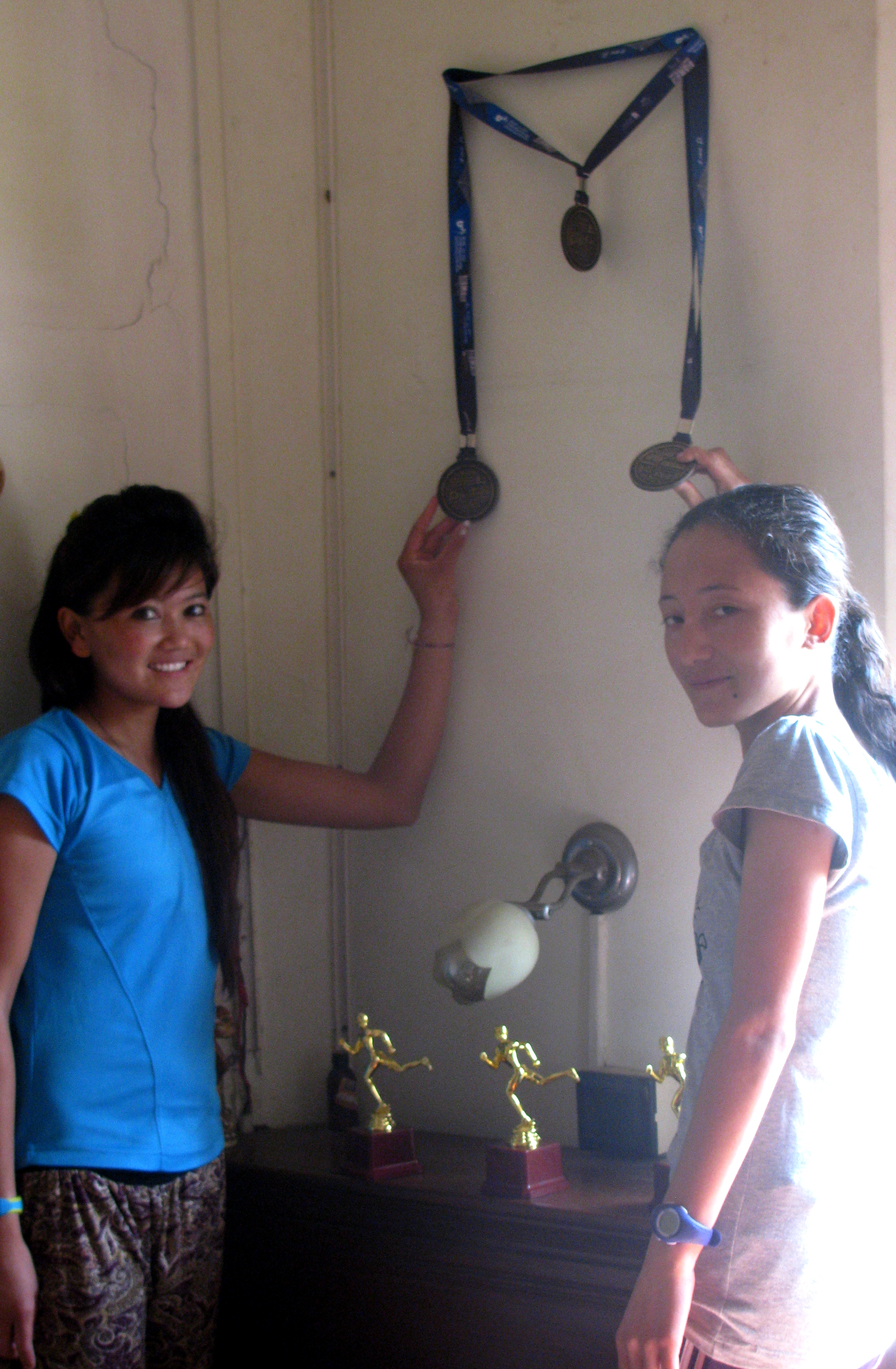
Jigmet Dolma and Tsetan Dolker (Photo: Shyam G Menon)

Jigmet Dolma and Tsetan Dolkar (Photo: Shyam G Menon)

Nawang Tsering ushered me into the room I had been in before.

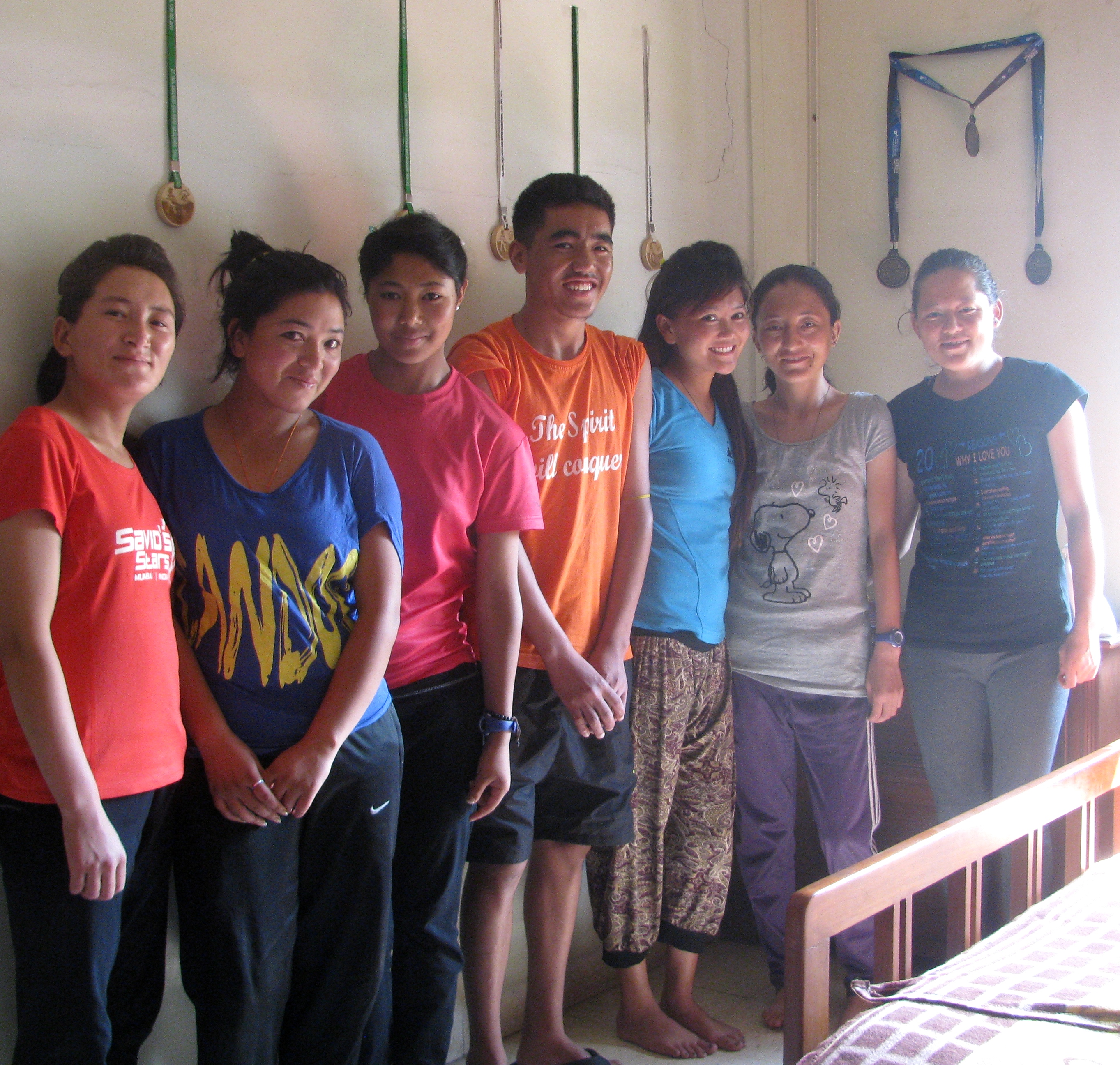
An open window to the east gifted ample sunshine. On the bed was a magazine on running. What had changed was a corner of the room. It seemed to have metamorphosed into a shrine of sorts – a runners’ shrine. The last time I was here, trophies from the Goa River Marathon (GRM) were placed on a shelf in the corner. Now, above the shelf was a line of finisher’s medals from both GRM and the just concluded Standard Chartered Mumbai Marathon (SCMM). A couple of medals that couldn’t be accommodated in this corner were hung at the next corner; sunshine-window in the middle. So far, it had been a fine outing for the team of young runners from Ladakh spending winter running in the warmer regions of the country. The medals and trophies marked their journey.

At the 2016 SCMM, Jigmet Dolma and Tsetan Dolkar finished third and fourth respectively, in the open category of the full marathon for women. They were apart by just two seconds at the finish. Jigmet finished in 3:27:46; Tsetan in 3:27:48. Sonam Choskit was placed 14th in the same discipline and category with a timing of 4:10:06. In the half marathon segment of SCMM, Tsering Dolkar (1:44:30), Diskit Dolma (1:47:35) and Stanzin Chondol (1:53:29) were placed 11th, 13th and 16th respectively in the open category for woman participants. Nawang (1:24:37) finished 23rd in the open category of the half marathon for men. Three of these runners had been at SCMM before. Jigmet was ranked second in the open category in 2015. But that year her timing was 3:45:21. At the 2016 SCMM, she was eighteen minutes faster. Tsetan last ran the full marathon at SCMM, in 2014. She was placed 26th in the open category completing the run in 4:15 (timing provided by Tsetan). That would mean, in 2016, she knocked off 48 minutes in her timing. Sonam ran the full marathon in 2015 in 4:44 (timing provided by Sonam). A year later, she had cut the timing by 34 minutes. “ They have improved well,’’ Skalzang Lhundup, the team manager said.

The improvement is not just between last year and now. On December 13, 2015, the team had participated in GRM securing six podium finishes, the first time many of them were doing so outside of Ladakh. All six podium finishers from GRM have improved their time at SCMM. Tsetan’s gain stands out.  From GRM to SCMM, both events separated by just over a month, she cut her timing in the full marathon by 38 minutes. Still, in terms of timing, there is a long way to go for this young team. On the Internet, the Association of Road Racing Statisticians (ARRS) has a page on Ladakh’s Rigzen Angmo. According to it, in November 1995, when she won the Bangkok marathon, her timing was 2:51:14. Her personal best, reported in February 1996, is listed as 2:45:42. Both these timings are considerably faster than the open category winner of the women’s full marathon at the 2016 SCMM (for more on Rigzen Angmo please click on this link: https://shyamgopan.wordpress.com/2015/09/28/the-spectator/).

The team (Photo: Shyam G Menon)

The team (Photo: Shyam G Menon)

For the past few months, Savio D’Souza, veteran marathoner and well known coach in Mumbai, had been overseeing this young team’s training (incidentally, Savio finished first in the 60-65 age category of the 2016 SCMM’s half marathon for men with a timing of 1:36:42). He was in Leh in September 2015, around the time of the Ladakh Marathon, to meet the runners and impart training tips. Besides this team of youngsters, the Indian Army’s Ladakh Scouts regiment had a clutch of runners participating in SCMM’s full marathon. Skalzang could remember the names of the Ladakh Scouts personnel at SCMM. The event’s website provided the following rank and timing: Padma Namgail (3:03:34; 8th out of 1126 finishers in the open category for men), Stanzin Norboo (3:05:42; 11 / 1126), Rigzin Norbu (3:12:51; 27 / 1126), Tsering Gyatso (3:19:05; 39 / 1126), Tsering Stobgais (3:12:02; 24 / 1126), Tsering Tondup (3:12:50; 26 / 1126), Tashi Paldan (3:16:57; 36 / 1126) and Fayaz Ali (3:36:57; 71 / 1126).

On January 24, Nawang Tsering and Stanzin Chondol will return to Leh for their board exams. The rest of the team hoped to stay on in Mumbai and participate in the Thane marathon before returning to Leh by late February. It will still be winter in Ladakh when they reach. “ We can continue doing our strengthening exercises, maybe manage a short run in the evening in February,’’ Jigmet said. Anything closer to regular running – regular as perceived by those used to cold and snow – that would have to wait at least till mid-March. The youngsters hoped that in 2016-17, the team will add more events to the itinerary, to visit and run at. This team of Ladakhi youngsters was assembled and supported on its trip by Rimo Expeditions. The company organizes the annual Ladakh Marathon.

(The author Shyam G Menon is a freelance journalist based in Mumbai. For more on the running team and the Ladakh Marathon please visit the following two links: https://shyamgopan.wordpress.com/2015/12/28/sunshine-running/ & https://shyamgopan.wordpress.com/2015/08/07/ladakhs-running-team/.)

A FIFTH WIN AT SCMM

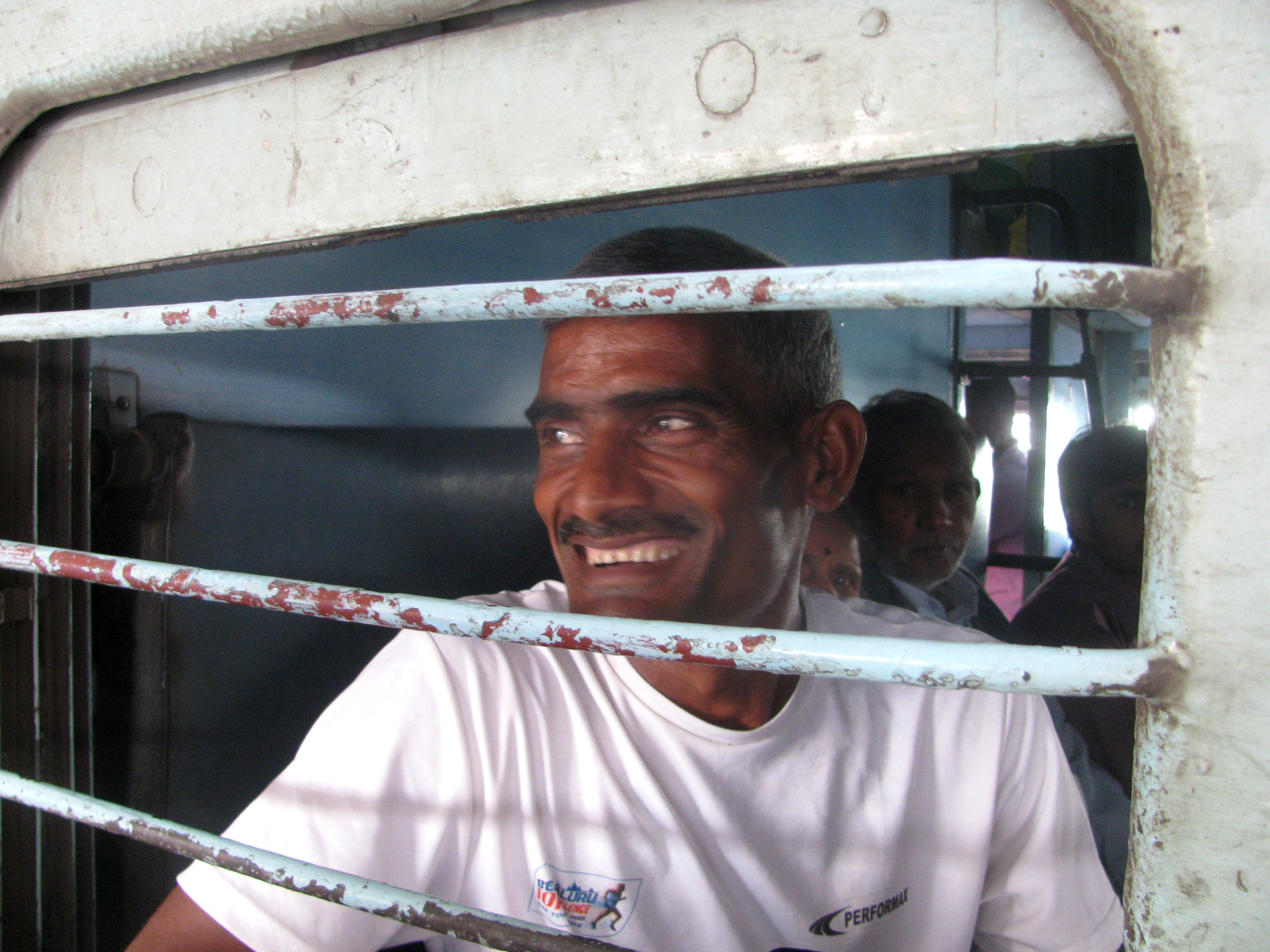
Sabhajeet Yadav (Photo: Shyam G Menon)

Sabhajeet Yadav (Photo: Shyam G Menon)

On the evening of January 15th, a person of medium height, athletic build and younger in appearance than his 60 years on the planet, got off a long distance train at Mumbai’s Kurla Terminus.

Hailing from a village in eastern Uttar Pradesh, he spent the night with village brethren staying in Sakinaka, a north Mumbai suburb. Next morning he made his way to South Mumbai where he collected his bib for the 2016 Standard Chartered Mumbai Marathon (SCMM). The following morning – early morning to be precise – SCMM’s full marathon was scheduled to commence from Azad Maidan near South Mumbai’s CST railway station. He had a title to defend and zero appetite for any potential vagaries in transport, should he attempt reaching the marathon venue from Sakinaka in the early hours of 17th. He asked around at the bib collection centre if there was some means to stay overnight at the venue or be accommodated close by. He was told there were no such arrangements for his category of runner. He returned to Sakinaka, picked up what he required and by evening, arrived at CST.

Sabhajeet Yadav then did what he had done before on some of his visits to Mumbai for SCMM – he slept at the railway station. On the night of 16th, as he spread out a bed sheet on the station floor he wasn’t the only runner doing so at CST. “ There were others,’’ he said. Most of them were like Sabhajeet, outstation runners finding hotel rooms an expensive proposition. Unlike those attempting sleep on its premises, a busy railway station never goes to sleep. “ I barely managed to sleep an hour. You are disturbed by people moving here and there. The police also kept waking us up,’’ he said. Early morning on the 17th, it was from CST that Sabhajeet reported for the SCMM full marathon. Three hours, 22 minutes and 30 seconds after he started his full marathon run, the farmer from Dabhiya finished first in his age category for a fifth time at SCMM (for more on Sabhajeet please click on this link: https://shyamgopan.wordpress.com/2015/11/28/a-farmers-dream/). He didn’t know right then that he had won. That was told him later in the afternoon by Bhasker Desai, the Mumbai-based businessman and runner who has helped Sabhajeet with event selection, registration and other details, for some years now.

Morning of January 19th; we were back at the cafeteria in Kurla Terminus. Sabhajeet’s return ticket on the Chhapra Express wasn’t confirmed yet and there were those passenger lists to check on the platform. But a chat on running couldn’t wait. Three cups of tea and a small snack quickly had, marked the minutes ticking by. “ This time the run went off smoothly. It was a very good run. I did not feel the distance at all. Only thing is I have been running a lot in the last few months. Perhaps if I had rested some more in between, my timing would have been better,’’ Sabhajeet said. As yet, his personal best was 3:15:38 at the 2014 Bengaluru (Bangalore) Marathon. All the same he was on the lookout for a couple of more races to run before the running calendar tapers off into the dead heat of the Indian summer. Then there was this brochure he was curious about – the Endurathon 54, due in February in Dadra & Nager Haveli. Sabhajeet had never run beyond a full marathon distance and 54 km was outside the marathon limit but not terribly so. It was eating his curiosity.

With a train to catch and a ticket to confirm before that, conversation had to be kept short. He rushed off to the platform while we rushed off for platform tickets. Minutes later, he phoned, “ S1, seat number 41.’’ It was a window seat; we found him there, in a crowded train with four people seated on most of the lower berths. “ I told the ticket examiner that I had come to Mumbai to run the marathon. He immediately marked me this seat,’’ Sabhajeet said. Some more conversation and then we took leave; until next time.

(The authors, Latha Venkatraman and Shyam G Menon, are independent journalists based in Mumbai.)    

KAMLYA RUNS HIS FIRST SCMM AND GETS A FIRST

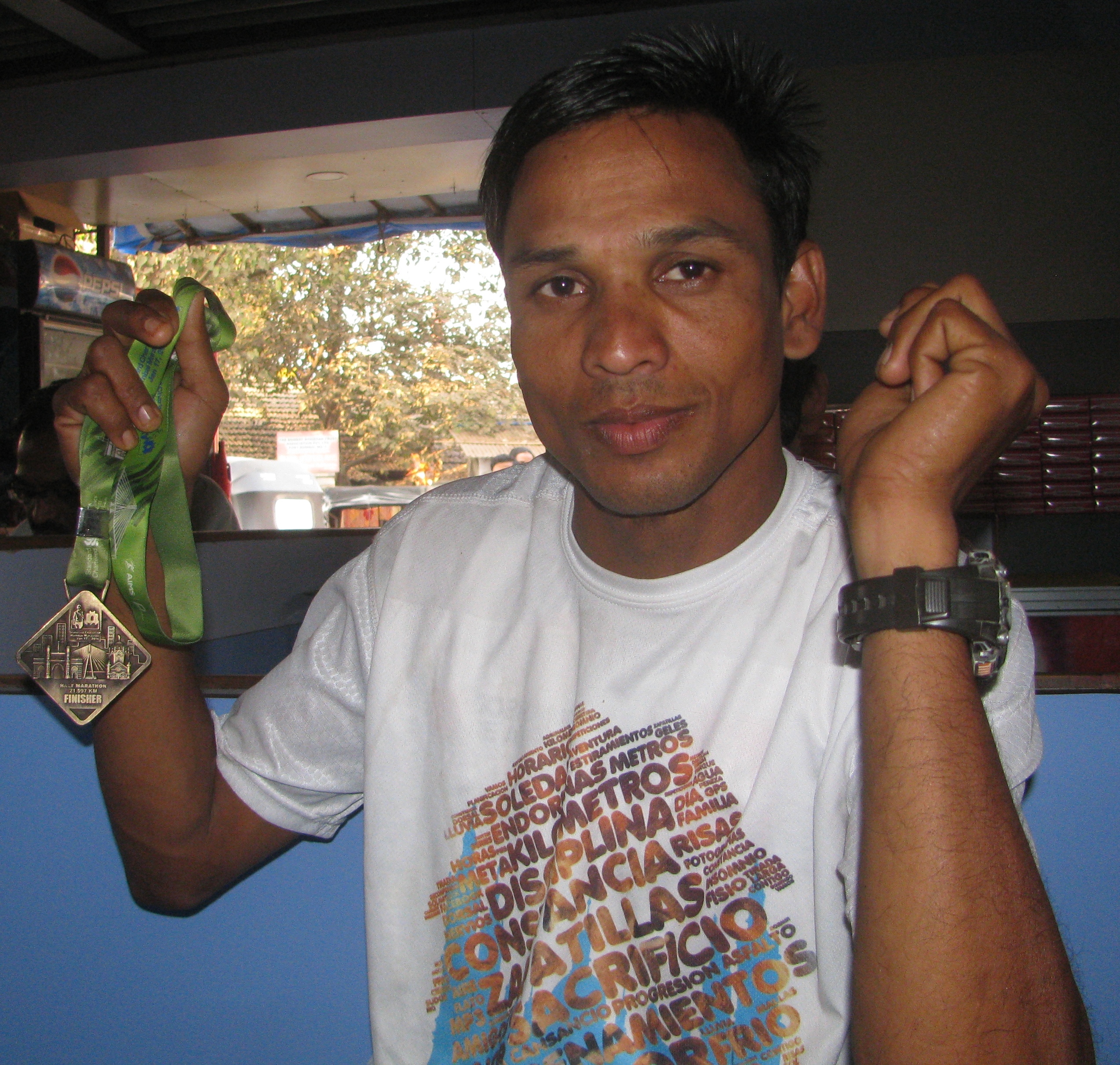
Kamlya Joma Bhagat , January 18. 2016 (Photo: Shyam G Menon)

Kamlya Joma Bhagat (Photo: Shyam G Menon)

On the road opposite the bus depot in Panvel is a small restaurant called Visava.

During weekends, it is a well known meeting place for hikers headed to the nearby hills; a round of tea and snacks here is routine before boarding a bus to the drop off point for a hike. It was the day after the 2016 Mumbai Marathon aka Standard Chartered Mumbai Marathon (SCMM). We were in Visava, tucking into hot misal paav, discussing a piece of news that the staff and students of Namdev Bua Khutarikar Vidyalaya, a school in Taloja, were yet to know. For that matter, except runners in Panvel, nobody around probably knew what the school’s PT teacher had achieved the day before.

On Sunday, thanks to fellow runners who enrolled him for the event, Kamlya Joma Bhagat had run his first half marathon at SCMM. Not only had he not run at the event previously – SCMM is India’s biggest marathon and it’s richest in terms of prize money – he had also not seen it as a spectator. Panvel is slightly less than 50 km from South Mumbai, where much of the SCMM action is. Hailing from poor circumstances, Kamlya lived in Fanaswadi, a small village some distance from Panvel. His house when we visited him in the summer of 2015, was little better than a hut, composed of one room and a sit-out. Life had been tough. He ran despite the struggle and often, to address it, for races have prize money. Although 50 km is not a great distance, SCMM was peripheral to Kamlya’s predicament. Running is universal. But running events are typically in cities. Events are accessible for a registration fee; then there is the cost entailed in physically accessing the venue, staying in distant towns and cities. Most runners take this expense for granted. These days urban India has money. People regularly travel around running at various events. But what if – urban or rural – you don’t have that kind of money? “ This was my first time at SCMM. Others got me registered to run at the event, so I went,’’ Kamlya said of the 2016 edition (for more on Kamlya please see https://shyamgopan.wordpress.com/2015/06/12/half-or-full-thats-the-question/). From time to time, he has been supported by fellow runners; names mentioned in this regard included Chetan Gusani, Bijay Nair, Philip Earis and Dnyaneshwar Tidke.

Having been a runner since his high school and college days and having participated in some races, Kamlya knew that on a good day he could finish in the top 20 lot at an event. In fact, a couple of months earlier at the Bengaluru (Bangalore) Marathon, he had finished fifth in his age category in the half marathon. A regular runner averaging anywhere between 5-15km on his daily practice runs, Kamlya can run a half marathon at short notice. According to him, he is by nature a runner who is comfortable at speed; he has to consciously remind himself to run slowly when training. And because that is a conscious reminder, the moment he forgets it and drifts to comfort zone, he finds himself moving fast. That’s how Kamlya became a half marathon specialist. He wants to try running and finishing the full marathon. But not yet. He does not want focus on the full harming his ability in the half. Kamlya didn’t train specifically for the SCMM. There was nothing like months and weeks of preparation. “ With the SCMM in mind, I trained for two weeks, that’s all. Of that, during the second week, I trained only three days. The remaining days I rested,’’ he said.

Fanaswadi, June 2015 (Photo: Latha Venkatraman)

Fanaswadi (Photo: Latha Venkatraman)

On January 17, 2016, he left his house in Fanaswadi at 1 AM to reach Panvel and travel with other runners from there to Worli in central Mumbai, the starting point of the half marathon. Worli is close to the sea. Commencing there, the half marathon route goes over the Worli Sea Link – a beautiful bridge across a stretch of sea with SCMM being the only time of the year runners get to be on it – toward South Mumbai and the iconic CST Railway Terminus, near which the run concludes. “ I ran the first ten kilometres very well. Then I had to slow down a bit,’’ Kamlya said. Race details for bib number 18252 show that the first 5.5 km went by in 18:25 minutes; the 10.5 km mark was touched in 36:26 with an average speed of 17.3 kmph.

Grounded by injury and second time unlucky at running my first SCMM, I was walking toward Marine Drive early Sunday morning, when the first of the half marathon runners whizzed past near Ambassador Hotel. I took a couple of photos of the runners and then gave up for the sun hadn’t risen yet and my small camera wasn’t suited for photography in dim light; its flash was also too weak to throw a strong beam that far. I remember wondering: is Kamlya running this time? There was a point therein when I thought I saw him go by. Then I said: not sure if that is him. Kamlya said he concluded his race with a strong feeling that he had probably lived up to what he expected – a finish in the top 20. He left South Mumbai thinking so, no more, no less. Later that evening in Panvel, his friends broke the news: he had topped his age category (30-35 years) in the half marathon at SCMM with a finishing time (chip time) of 1:16:56. Event results show that he was first in his age category and 14th in a half marathon field of 11,805 finishers; 14th again among 9782 male finishers.

Kamlya said he is reluctant to talk about his milestones in running. For this reason, as of Monday, his colleagues and students at the school hadn’t been informed of what their PT teacher accomplished. “ I haven’t told them. I don’t like talking of these things myself. If others who appreciate running notice it and talk about it, that’s different, ’’ he said. “ Have you seen the earlier article we wrote about you?’’ I asked Kamlya. “ No, ’’ he said, “ I have no Internet.’’

 (The author, Shyam G Menon, is a freelance journalist based in Mumbai. This article has inputs from Latha Venkatraman.)

I CAN HEAR THE GHOST LAUGHING

Illustration: Shyam G Menon

Illustration: Shyam G Menon

Years ago, when I was in school, April-May was crucial.

In those months, depending on how efficient the government of the day was, tenth standard results got published in Kerala.

The top rank holders were prominently featured in the media. On the day of results, classmates were sieved to individuals. Marks asserted themselves as formidable sieve. The brilliant ones took science and math to be doctor or engineer, the near brilliant embraced commerce for eventual MBA or CA and the balance sought refuge in arts. It was a day or two of madness in which, academically brilliant teenagers were positioned as genius for eternity. They thanked their parents, grandparents and teachers – a neat little Oscar acceptance speech, which appeared in the media. The news reports were supposed to be ` inspiring.’ I was an average student. Tenth was for me, a pain. There was life before tenth and plenty of life after, yet the tenth-board exams were deemed decider of life. I was glad to get it over with, study arts and end up doing many things, among them – the occasional distance run. Unfortunately the long arm of our board exam-mindset, reaches out into running too. As we obsess with timing and performance for distinction, I sometimes wonder – how far should I run to escape the recurrent ghost of April-May? Then I realize it is my head that is the ghost’s home.

Here’s an edited abstract from Wikipedia on how the site describes running: Running is a method of terrestrial locomotion allowing humans and other animals to move rapidly on foot. Running is a type of gait characterized by an aerial phase in which all feet are above the ground (though there are exceptions). The term running can refer to any of a variety of speeds ranging from jogging to sprinting. It is assumed that the ancestors of mankind developed the ability to run for long distances about 2.6 million years ago, probably in order to hunt animals. Running has been described as the world’s most accessible sport. I chose Wikipedia because it was a mere click away. I am sure there are other sites and books that have explained it as well, perhaps better. They will all agree on a few things – most of us can run; running is very old in the history of our species. Over centuries of human evolution, it has also become a simple thing to do. Indeed the beauty of running is its simplicity. Even amid injury (as I am right now) and the realization that this seemingly simple activity has become a high impact sport thanks to contemporary lifestyle, one’s desire to get back to running is fueled by its perceived simplicity, not complexity. Running is widespread, simple, accessible and enjoyable. Unless that combination of our times – money, media and marketing – decides to keep it otherwise; a case of our own instincts and weaknesses packaged as industry, then returned to haunt the head.

Let’s not make a board exam of running.

Easier said than done?

I can hear the ghost laughing.

(The author Shyam G Menon is a freelance journalist based in Mumbai.)

MHADEI GETS AN ALL WOMAN CREW AND A PLAN FOR 2017

Illustration: Shyam G Menon

Illustration: Shyam G Menon

“ What a man can do, a woman can do better.’’ – Vice Admiral Manohar Awati (Retd)

Early December 2015, the INSV Mhadei – the Indian Navy’s sailboat with two circumnavigations and several long voyages to her credit – was tasked with a short trip.

She was to proceed from her home base in Goa to Karwar, pick up materials needed for the upcoming February 2016 International Fleet Review (IFR) in Visakhapatnam (Vizag) and return to Goa.

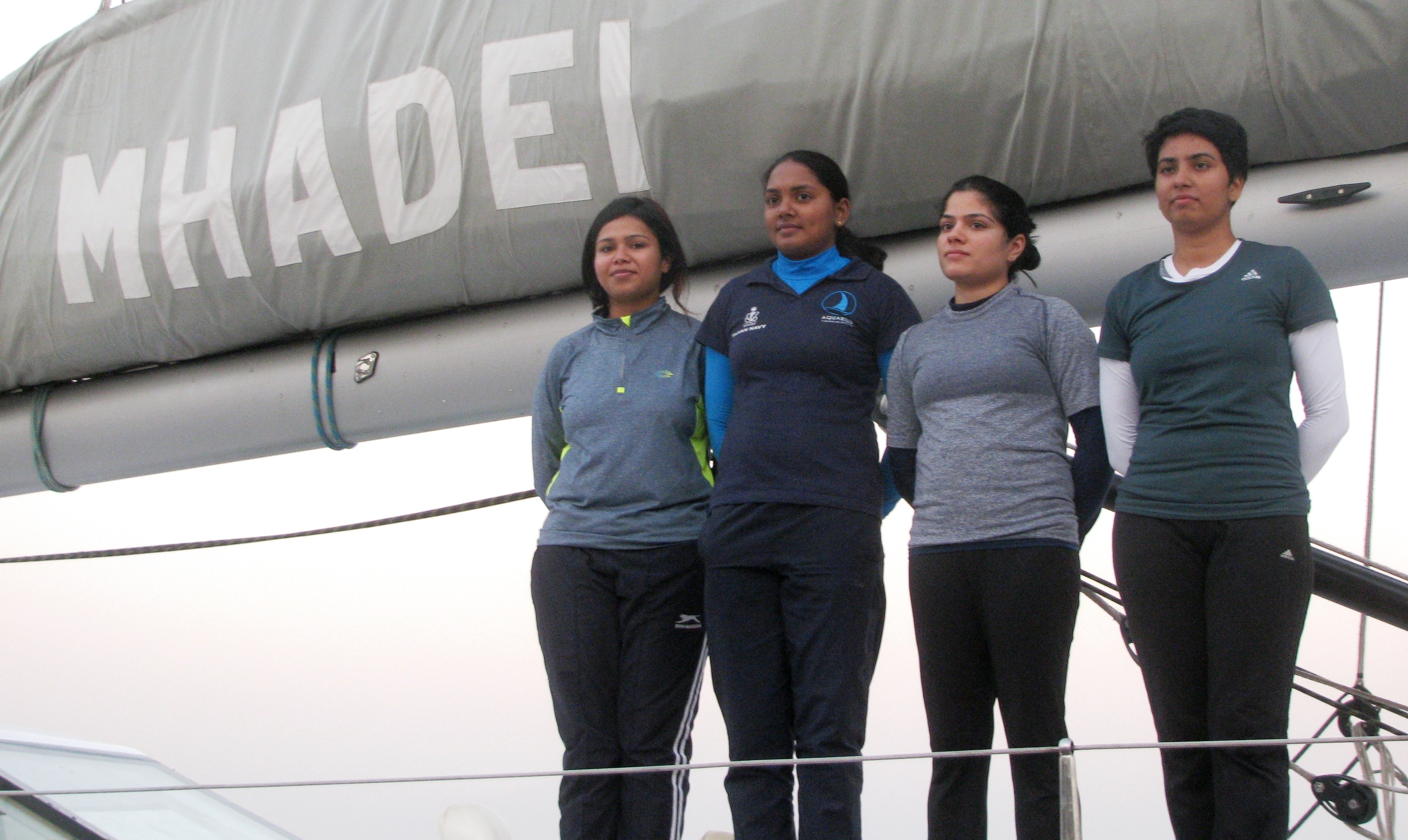
The iconic vessel had as its crew four woman officers – Lieutenant Commander Vartika Joshi, Lieutenant P. Swathi, Lieutenant Pratibha Jamwal and Sub Lieutenant Payal Gupta. While Payal joined later, Vartika, Swathi and Pratibha had been the Mhadei’s crew since April 2015. They had started off their tenure by training in the basics of sailing at the navy’s facility in Mumbai followed by theoretical training in seamanship, communication, navigation and meteorology at Kochi. After these stints, they had been at Goa, sailing the Mhadei, improving their sailing skills and getting to know the boat better. Besides supervised sailings and monitored ones, they took the boat out by themselves for short trips in the vicinity. Their mentor – as well as mentor for earlier crews on this history-making boat – is Commander Dilip Donde, the first Indian to do a solo circumnavigation. It was his job to train an all woman crew for the Mhadei. He had seen the trainees at work; he was confident of their ability. When the trip to Karwar drew close, Donde asked, “ should I come along?’’ It seemed a fine juncture in the training process, for him to step back and have the crew take charge of the boat.

From left: Sub Lieutenant Payal Gupta, Lieutenant P. Swathi, Lieutenant Pratibha Jamwal and Lieutenant Commander Vartika Joshi (Photo: Shyam G Menon)

From left: Sub Lieutenant Payal Gupta, Lieutenant P. Swathi, Lieutenant Pratibha Jamwal and Lieutenant Commander Vartika Joshi (Photo: Shyam G Menon)

The woman officers decided to sail by themselves.  They had 2-3 days to plan everything. Goa to Karwar is a distance of approximately 40 miles by sea. Around 15:00 hours on December 8, the all woman crew – with Vartika designated as skipper – sailed the Mhadei out from Goa. Next morning 9.30 hours they reached Karwar. After picking up whatever was needed for the IFR, the Mhadei commenced her return leg to Goa on December 9, at 14.30 hours. December 10, 11.00 hours, the crew had the boat safely back in Goa. This quietly executed project by the four naval officers – Vartika, Swathi, Pratibha and Payal – is perhaps the first instance of sailing between two ports by an Indian all woman crew. For the navy, this is a small step towards something bigger.

The Mhadei is an interesting story. Based on a Dutch design, she was built at Aquarius Fibreglass, a boat yard on the river Mandovi, upstream from the naval jetty at Verem, the vessel’s current home. She shot into fame in 2009-2010, when Donde did his solo circumnavigation as part of Sagar Parikrama, a project conceptualized by Vice Admiral Manohar Awati (Retd). In 2012-2013, Lieutenant Commander (now Commander) Abhilash Tomy followed this up with Sagar Parikrama’s second chapter – the first solo nonstop circumnavigation by an Indian. In an October 2013 interview to this blog, Vice Admiral Awati, when asked what was next for Sagar Parikrama, said, “ I look forward to the first Indian woman circumnavigator, in my lifetime.’’ (For more on Sagar Parikrama please try this link: https://shyamgopan.wordpress.com/2013/10/27/sagar-parikrama-sailing-around-the-world-alone/)

The all woman crew taking the Mhadei out from her anchorage at Verem in Goa towards the estuary of the Mandovi and the sea beyond, on January 4, 2016. At this point she is using her engine. (Photo: Shyam G Menon)

The all woman crew taking the Mhadei out from her anchorage at Verem in Goa towards the estuary of the Mandovi and the sea beyond, on January 4, 2016. At this point the sailboat is using her engine (Photo: Shyam G Menon)

After Tomy’s trip, the Mhadei was doing her share of sailings around the Indian coast and away from it. This included the quadrennial race from Cape Town to Rio de Janeiro, which she had been part of before. The navy issued a signal seeking volunteer woman officers to sail aboard the Mhadei on the upcoming Cape-Rio race. Thus in November 2013, when she left Goa for Cape Town to participate in the Cape-Rio race, the Mhadei had Lieutenant Commander Shweta Kapur aboard as part of her crew. On the return leg from Rio de Janeiro to Cape Town, Lieutenant Commander Vartika Joshi joined in. On the Cape Town-Goa segment, Lieutenant P. Swathi was part of the crew. Subsequently on a sail from Goa to Port Blair, Lieutenant Pratibha Jamwal came aboard. On the Port Blair-Visakhapatnam-Chennai-Kochi-Goa return leg of this voyage, besides Vartika Joshi, Asst Commandant Vasundhara Chouksey of the Indian Coast Guard and Commander Sowjanya Sri Gutta also featured as part of the crew over various durations. For what the navy was gravitating to, the key was who would return to the Mhadei. While the woman officers had volunteered for specific sailings, the idea of long term association with the Mhadei hadn’t been in the frame yet. And long term association was what the navy was nudging things toward.

Commander Donde is clear that such long term association with a sailboat has to be voluntary. It is not a decision that can be wholly reasoned or calculated in the head; there’s a lot of heart involved for it is a commitment to the sea. In a sailboat, the duration of ocean voyages can be long. That time and whatever happens in that time must be endured. Sailing in a small boat, powered by wind, is far more difficult than being aboard a big engine powered-ship, where you have many hands for the various tasks. On big ships you also have systems in place. On a sail boat, each member of its small crew must be prepared to do everything that is needed to keep their home on water shipshape and afloat. Both sense of responsibility and the responsibilities are more.

Illustration: Shyam G Menon

Illustration: Shyam G Menon

Currently in the Indian Navy, woman officers don’t serve at sea. They work ashore. In branches of the navy like its aviation wing, some of them fly as observers aboard shore based maritime reconnaissance aircraft. When the call for long term association with the Mhadei came, Vartika, Swathi and Pratibha responded again. They had previous experience aboard the sailboat; they were also the voluntary returnees, returning because they wished to. Vartika who studied naval architecture, was previously working ashore with the navy on the ship design and construction side. Both Swathi and Pratibha were shore based air traffic controllers (ATC) with the navy’s aviation arm. All of them sought the sea. Payal, who joined later, is an education officer with the navy. Donde said it didn’t bother him that his woman trainees had no background in sailing or work at sea (except for the earlier stints aboard the Mhadei). On the other hand, he appreciated their chance to learn with no preconceived notions in the head, no previous baggage, nothing to unlearn. “ Unlearning is more difficult than learning. Here you have a clean slate,’’ he said. According to him, the sea is always throwing some challenge or the other at you that even an experienced sailor would be well advised to keep his ego in check and be open to learning. “ No two sailings are the same,’’ Donde said. As for gender, which is often made out to be a big issue on land, the sea gives no damn whether a person out sailing is a man or a woman. “ I am happy to work with this team,’’ Donde said.

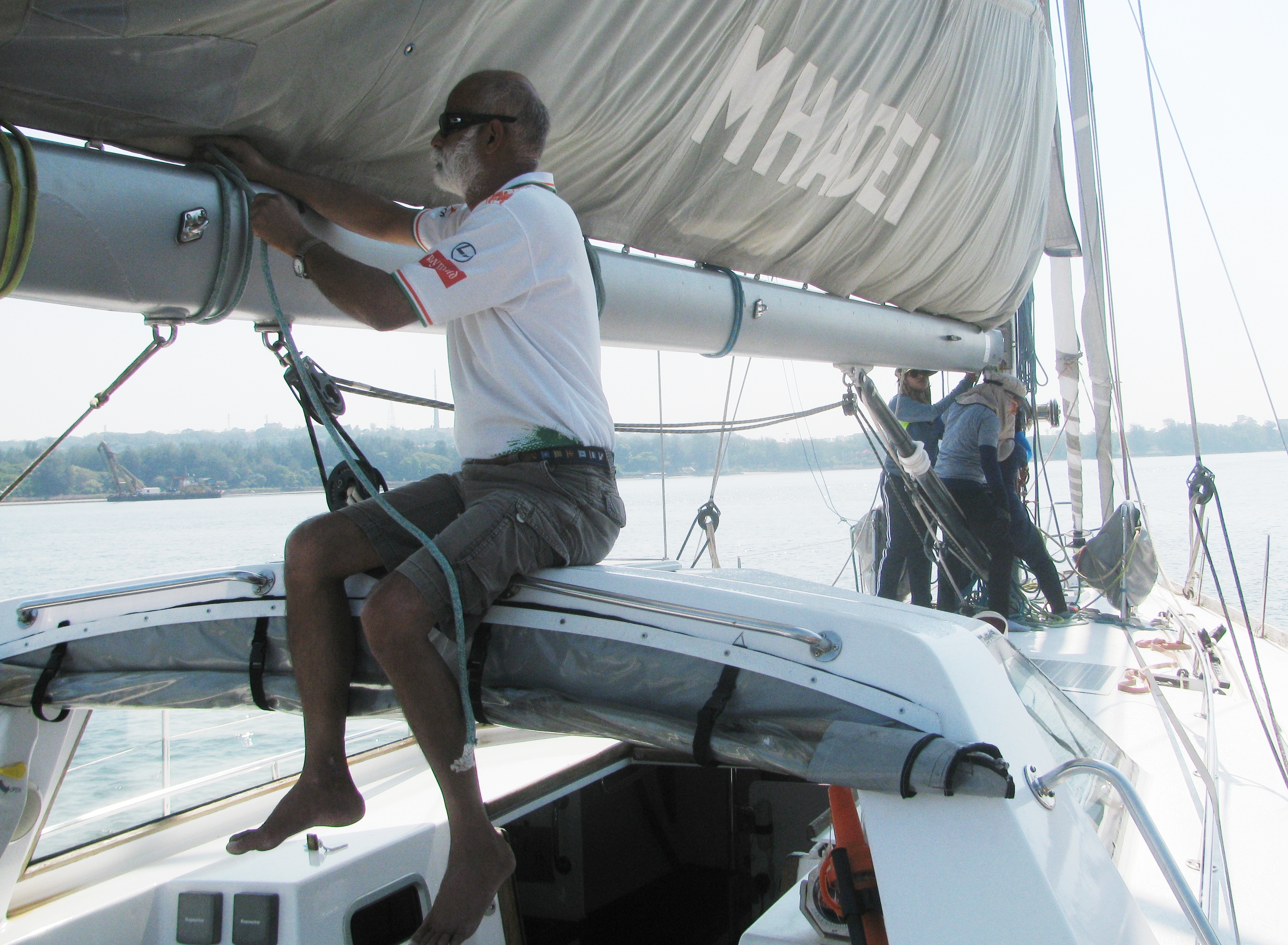
Commander Dilip Donde and the crew at work aboard the Mhadei (Photo: Shyam G Menon)

Commander Dilip Donde and some of the crew at work aboard the Mhadei (Photo: Shyam G Menon)

When they first came aboard the woman officers had no idea of the terms used for each item and equipment on the sailboat. They have since learnt the terms, learnt to sail the boat and sail by themselves on short trips with nobody else supervising or available at hand for advice. There is a link between every boat and the people who sail it or imagine its expeditions. Vice Admiral Awati and Commander Donde have known the Mhadei from her design and build days. Her initial voyages and first circumnavigation were with Donde. Ahead of his solo nonstop circumnavigation, Abhilash Tomy in a bid to make himself comfortable with the sea and the vessel that would be his home for a few months, had taken to living aboard the Mhadei.  Now, there is a bond growing between the Mhadei and her new crew. Pratibha, Swathi and Payal said that in addition to being their workplace and the focus of their current official duties, the boat has become a hangout for them. During their after work hours too they (Vartika included) find themselves with Mhadei. Needless to say, they ushered in the New Year in her company.

Vice Admiral Awati responded by email. “ What a man can do, a woman can do better. I have long detested our tongue in cheek adulation of woman. We put her on a pedestal, then, show no qualms despoiling her or trying to murder her at birth. It is a devastating society for a woman. So what should I, who has no daughter, do? I have to do whatever I can to put the Indian woman in her rightful place vis-a-vis her man who has long patronised a patriarchal society and ensured its continued moral downfall. I hope you understand why I have worked my way to getting the first Indian woman solo circumnavigator on the records. Women have a crucial place in society. Women must outdo men in all spheres of activity except in the dispensation of violence. Naturally therefore, there has to be a woman or better still, women in Sagar Parikrama. Without her my concept of circumnavigation by an Indian is incomplete. The sea is the ultimate challenge to be faced and overcome in all its myriad moods. When an Indian woman sails solo around the world she will have achieved, attained a national hope,’’ he wrote.

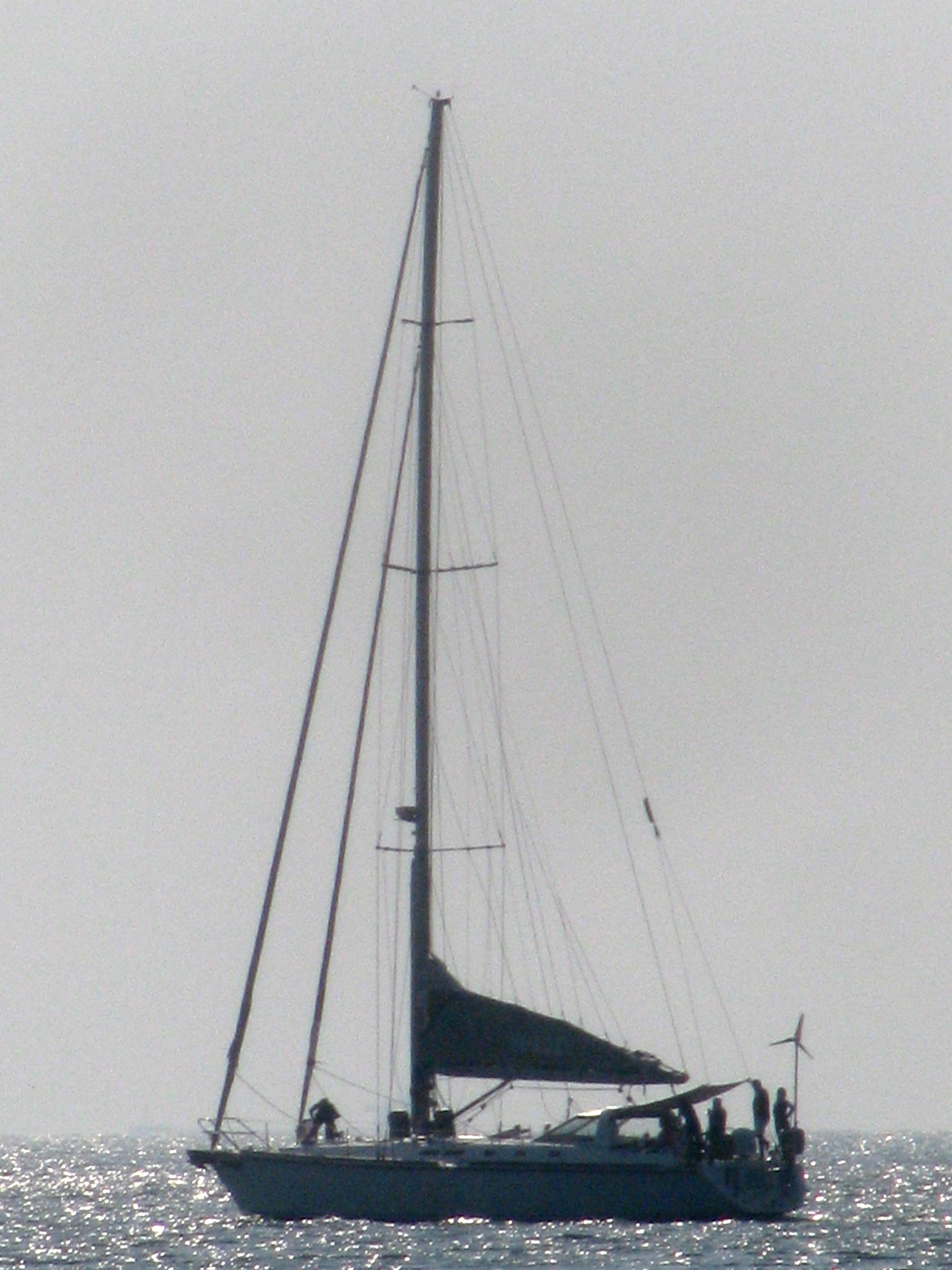
The Mhadei near the Mandovi's estuary on January 4, 2016 (Photo: Shyam G Menon)

The Mhadei near the Mandovi’s estuary on January 4, 2016 (Photo: Shyam G Menon)

At least two more woman officers are expected to join the pool of sailing talent assembled at Goa, which has Vartika, Swathi and Pratibha as its core. Payal who is yet to do a long voyage will be looking out for that opportunity. One such chance will emerge in early February 2016, when after the upcoming IFR in Visakhapatnam, the all woman crew will take charge of the Mhadei and sail her back to Goa via Chennai and Kochi. In the meantime, the navy which had sought bids for a sister vessel for the Mhadei, is set to complete the process and place the order on Aquarius. The new boat, slated for delivery in January 2017, will be a replica of the Mhadei. In other words, training on the Mhadei will equip you to sail the new boat as well. If all goes as planned, then in August 2017 the Indian Navy’s all woman sailing crew will attempt its first circumnavigation – the first by an all woman Indian team – in the new sailboat, Captain Ashwin Arvind, Director (Sailing), Indian Navy said.

(The author, Shyam G Menon, is a freelance journalist based in Mumbai.)

IN LOVE WITH ULTRA RUNNING

Illustration: Shyam G Menon

Illustration: Shyam G Menon

In March 2003, at a hotel in Pune, a senior company executive checked his weight.

He had spent years in sales and marketing. That was his forte. It was life chasing targets; there was travel, quick decisions, coordination of teams and much socializing to keep the sales numbers growing. The job shaped you. At his feet, the weighing scale’s needle hovered wildly for a while, then narrowed its range and settled on the correct number – 88 kilos.

Sunil Shetty decided he must do something about it.

Born 1962 in Mumbai, Sunil grew up in the city, attending Fatima High School and then, Ruparel College, from where he graduated in statistics. Although good at mathematics, this wasn’t exactly the career progression he wanted, for this grandson of a gentleman who once ran a restaurant in Mangalore desired to be in catering. But his bid to be accepted at catering college, failed. So he went into statistics, commenced a career in sales and marketing, complemented his college education with an Executive MBA from IIM Calutta and somewhere along the way even met the late Thangam Phillip, who headed the catering college he couldn’t get into. She was guest at a function, the company he worked for organized. Sunil worked 20 years with Nestle India, then some more at Johnson & Johnson (J&J), all in sales and marketing, a line of work that brought on those two unwanted bedfellows – 36 inch-waist and 88 kilos on his feet.

The youngest of four children and raised in middle class values emphasising studies over sports, Sunil had grown up with an interest in football and cricket but no great presence on the playing field. In life ahead too, he embraced the popularly accepted practice of well settled life. It was so till the accrued weight of such existence settled atop that weighing machine in Pune. Sunil decided to take up running. Normally that is a major stretch for somebody at 88 kilos. But in Sunil’s case, he discovered he could run. “ I managed 2-3km comfortably on the first day itself,’’ he said.
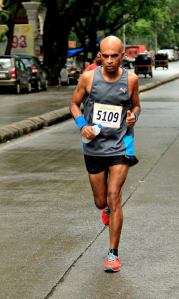
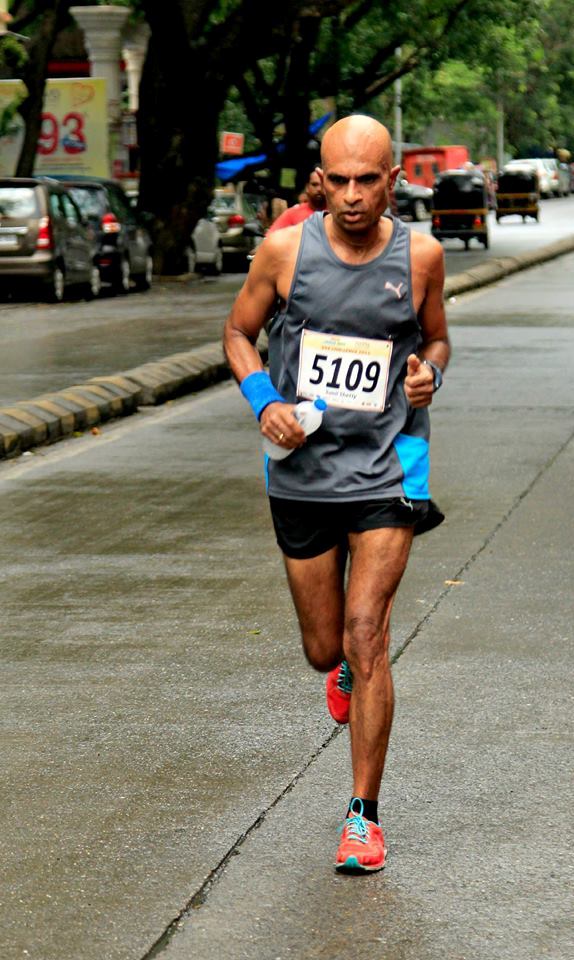
Sunil Shetty; from the 2015 Total Sports 10k run in Mumbai (Photo: courtesy Sunil Shetty / photographer: Gaurav Choudhari)

Sunil Shetty; 2015 Total Sports 10k run in Mumbai (Photo: courtesy Sunil Shetty / photographer: Gaurav Choudhari)

Back in Mumbai, after a few days spent getting the feel of jogging, he bought a pair of Power running shoes from a Bata showroom. He ran roughly four days a week. When he was around 15 runs old on his new shoes, a gym opened in the housing complex he stayed in. He shifted to the gym’s treadmill doing 6-8km every day. Alongside, he started to eat and drink in moderation. “ I haven’t stopped anything. I still eat well and drink but the idea of moderation set in,’’ Sunil explained. Within days of him taking up running at the gym, his wife Sangeeta joined him. After 18 months of running on the treadmill – 6-8km every day, four days a week – he found that his waist size was down to 32 inches and his body weight, 64 kilos. Life however was work-home-family-work. Running on a treadmill in a gym in one of the world’s biggest and most populated cities, he still knew none in running. Those days Mumbai’s running scene was a shadow of the movement it is now. In January 2004, the month and year the city hosted the first edition of the Standard Chartered Mumbai Marathon – it would change the local running scene forever – Sunil left Nestle India and joined J&J.

J&J supported the NGO `Nanhi Kali,’ founded by industrialist Anand Mahindra in 1996. Thanks to this association, every year in time for SCMM, the company used to get 100 bibs, the availability of which was informed to employees over mail. Sunil would see this mail and let it pass for he had never thought of himself as a distance runner, who could tackle a marathon. However at the gym, he had this friend, five years senior to him, who walked 12km on the treadmill. That caught Sunil’s attention. He tried and found that he could run 12km. An amiable competition kicked up between the two, one walking, the other running; the distance rising alongside to 18km. Then, another friend suggested: why not try the half marathon at SCMM? In October 2008, Sunil looked up the Internet for training tips, enrolled for the event and ran his first half marathon at the SCMM in January 2009.

Sangeeta who had been as regular as Sunil in training at the gym, recalled that day. Sunil had asked her to wait at the finishing point (in 2009, the half marathon was from Azad Maidan to Mela Restaurant on Worli Sea Face and back) and expect him there about two and a half hours after commencement of the run. Sangeeta did as told. She witnessed some of the strong runners in the discipline finish in style. Then the better runners from the remaining lot strode in. Then the regular lot poured in. Then some of the senior citizens arrived. There was no sign of Sunil and it was past three hours. At 3:03 Sunil slowly walked in. “ He looked exhausted,’’ Sangeeta said. Sunil had found the run difficult. He cramped at around 12-13km and could only walk after that. He told Sangeeta, “ this is the first and last time I am running this distance.’’

That 3:03 hit Sunil really hard. Following the 2009 SCMM, Sunil went back to his daily treadmill run. But unconsciously and without any deliberate design, his regular 6-8km run occasionally extended to 10km; the distance was increasing. In October 2009, the annual mail about bibs from Nanhi Kali landed once again. It began tempting Sunil. Should he? Should he not? He spoke to Sangeeta. It was decided – they would both run; Sangeeta would do the half marathon, Sunil, the full. “ I promised myself I will train,’’ Sunil said. Like many others, he downloaded Hal Higdon’s training regimen and used it as a reference point. Training started late, only by October. As part of it, his four days a week on the treadmill was mixed with two days running on the road. Running the SCMM full marathon in January 2010, Sunil cramped at 26km and walked the remaining portion. He covered the 42km-distance with a timing of 6:03. “ I was not as dejected as I had been the previous year running the half marathon. So I decided that I will continue running the full,’’ Sunil said. Sangeeta, out on her first formal half marathon, finished it comfortably and in decent timing. Born 1967, she used to be into sports in her school days. “ I liked running after I got into it. It keeps me fit and makes me a more peaceful person,’’ she said.
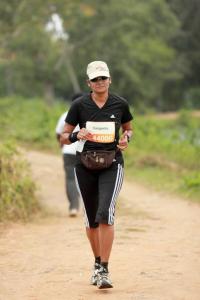
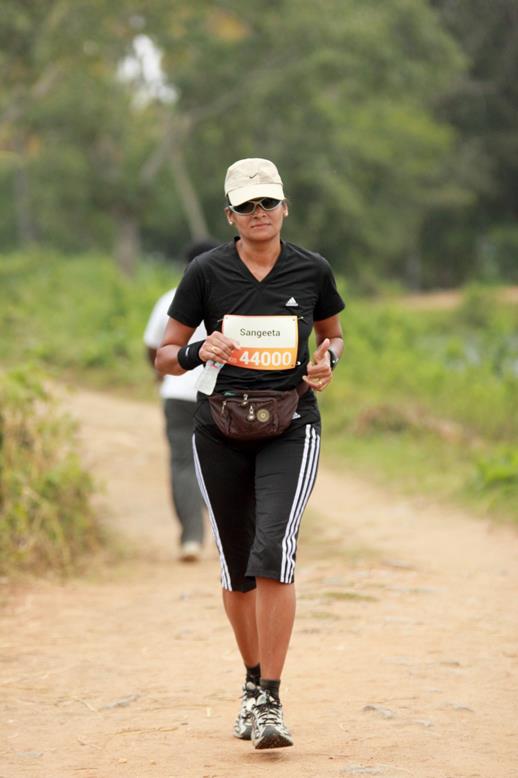
Sangeeta Shetty; 2012 Kaveri Trail Marathon (Photo: courtesy Sangeeta Shetty)

Sangeeta Shetty; 2012 Kaveri Trail Marathon (Photo: courtesy Sangeeta Shetty)

Soon after the 2010 edition of SCMM – it was the first time they participated together in a running event; a format they have repeated since at many races – Sunil and Sangeeta embraced the discipline of regular running with SCMM for annual outing. By the January 2011 SCMM, Sunil’s timing for the full marathon had improved to 5:40. He was now cramping at much later stages in the race. In June 2011, he quit J&J. From September 2012 onward, he became officially self-employed. “ I now had more time with me,’’ he said. One of its side effects was greater trawling of the Internet for ways to improve his running. Gathering information is easy; running efficiently is tough. For the January 2012 SCMM, he trained targeting sub-five hour timing in the full marathon. It eluded him.

Striders is one of Mumbai’s running clubs. According to the Internet, it was started in 2006 by Praful Uchil and Deepak Londhe. Unknown to Sunil, his next door neighbour was Praful’s brother. When Praful visited, he introduced himself to Sunil and Sangeeta and realized that the two of them were runners. He mentioned of the upcoming Kaveri Trail Marathon (KTM), organized by Runners for Life (RFL). Sunil had heard of RFL. When he researched for more on KTM, the Bangalore Ultra popped up. A plan took shape – do the full marathon at KTM and follow it up with the 75km-run at the Bangalore Ultra. The first was in September; the second, in November. They began training systematically. Sunil ran his first KTM in 4:57. Sangeeta came first in the veterans’ category, her first podium finish. Later, in November that year, both Sunil and Sangeeta took part in the Bangalore Ultra. It was a loop of 25km in a forest composed mostly of Japanese Bamboo. The year Sunil ran it for the first time there were about 20 people in his age bracket, running the 75km-distance. Sunil finished in 10:23, earning first place in his category. Sangeeta finished first in her category in the 75km-run. A couple finishing so was reportedly a first for Indian running.

The Bangalore Ultra marked a shift for Sunil and Sangeeta. Not only did they feel ready for a 100km-race, they felt their appetite reducing for the shorter distances. “ One thing about us is that we rarely keep doing the same distance again and again. We wish to attempt the bigger challenge,’’ Sunil said. However, it is a qualified challenge and not to be mistaken with simply increasing the distance or making a race rougher and tougher. Sunil, for instance, does not fancy such challenges like running between cities that are far apart or engaging in self-supported, multi stage expedition type races. He firmly favoured well supported runs, well organized events with proper support facilities. “ I don’t want to torture myself,’’ he said. Talking of cut-off stages, both Sunil and Sangeeta said that they prefer a single stage with reasonable cut-off time. “ Multi stage and unreasonable cut-off times make you tense. You don’t enjoy the run. I try consciously not to run fast. I will not pay for a race that puts me under pressure. The moment the pressure comes, I may not perform well,’’ Sangeeta said. This is one reason the couple like ultra marathons. Unless the multi stage, competitive paradigm intervenes as spoiler, an ultra is an escape from the shorter distances loved by evangelists of competition.
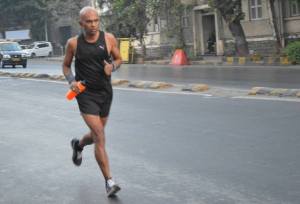
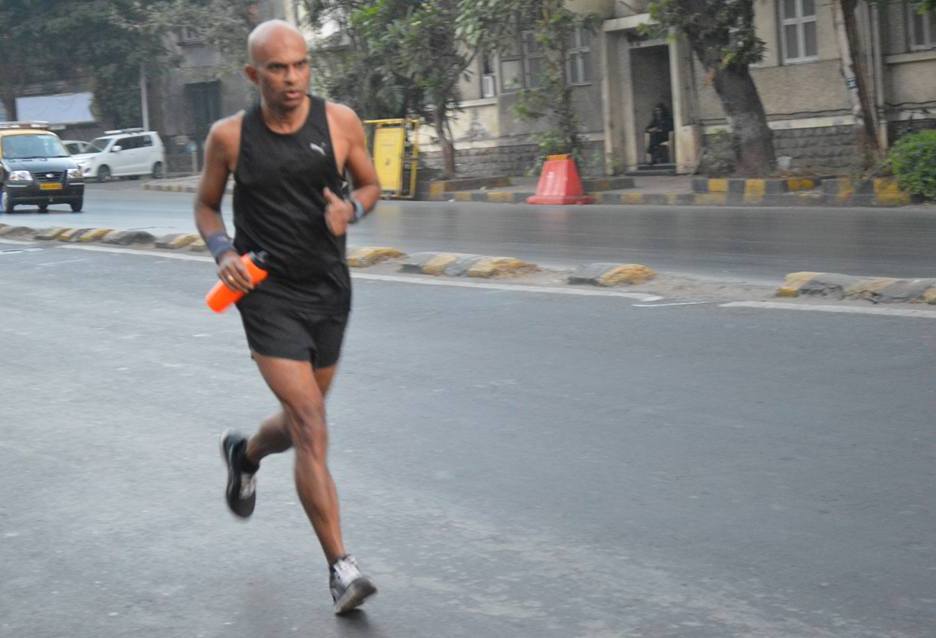
Sunil Shetty; from a December 2015 practice run (Photo: courtesy Sunil Shetty / photographer: Tashi Ongya)

Sunil Shetty; from a December 2015 practice run (Photo: courtesy Sunil Shetty / photographer: Tashi Ongya)

For the 2013 Bangalore Ultra, Sunil and Sangeeta registered for the 100km distance-category. Sangeeta finished first in her segment; Sunil placed second. As a well known couple from Mumbai into running, Sunil and Sangeeta are often invited to run the shorter distances. But their heart is with the longer runs. In 2014, Sunil and Sangeeta attempted the 24 hour-run category in the Bangalore Ultra. The run started at 5AM on November 8th that year and ended next morning, 5AM. Sunil covered 138km to finish first in his category. Sangeeta covered 120km to place second in her category. Ram Venkatraman is a longstanding runner and one of the founding members of Mumbai Road Runners (MRR). “ Sunil and Sangeeta are the most respected running family in Mumbai, nay India today. Apart from being highly disciplined and dedicated to their craft, which results in Sunil Shetty getting a personal best in practically every race that he runs, they are also the most warm, loving couple that you could find. Sunil’s knowledge on endurance sports especially running is vast and he therefore lends a helping ear to any budding runner. Sunil was rightly awarded the Most Inspirational Runner at the MRR Awards 2014,’’ Ram said.

Sunil and Sangeeta have a daughter. The family stays in a leafy part of Powai in suburban Mumbai. Their apartment is in a housing complex, which is in turn part of a much bigger complex. On the perimeter of this large complex of many residential blocks is a sort of-circular road, which thanks to the unevenness of the underlying geography has ascents and descents. A full loop on this road is approximately 1.5km long.  This is daily training track for Sunil and Sangeeta, the laboratory for all those personal bests. It works in two ways. First, by running more and more loops you directly gain distance. Second, running loops toughens the mind to stomaching events like stadium based-endurance runs, where the biggest challenge can be monotony. Another aspect you notice when talking to Sunil and Sangeeta is that the mix of training and event-running – the proportion assigned for each – matters.  YouTube has an engaging documentary on the great American athlete Edwin Moses, wherein the champion hurdler points out that compared to the days of training he did in a year, the actual time he spent competing was very small. When you reflect on that observation, you sense the truth you miss on popular television, which focuses on victory. We remember Edwin Moses for the several times he was the best in a discipline concluding on track in under 50 seconds of top notch hurdling. Add it all up and Moses hurdling competitively can be counted in the minutes in a year. What we don’t see is the hours, days and weeks of training away from the glamour of high profile sporting events and the glare of media.
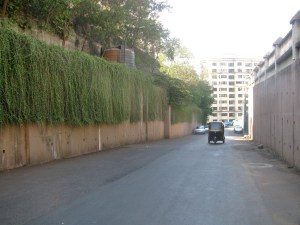
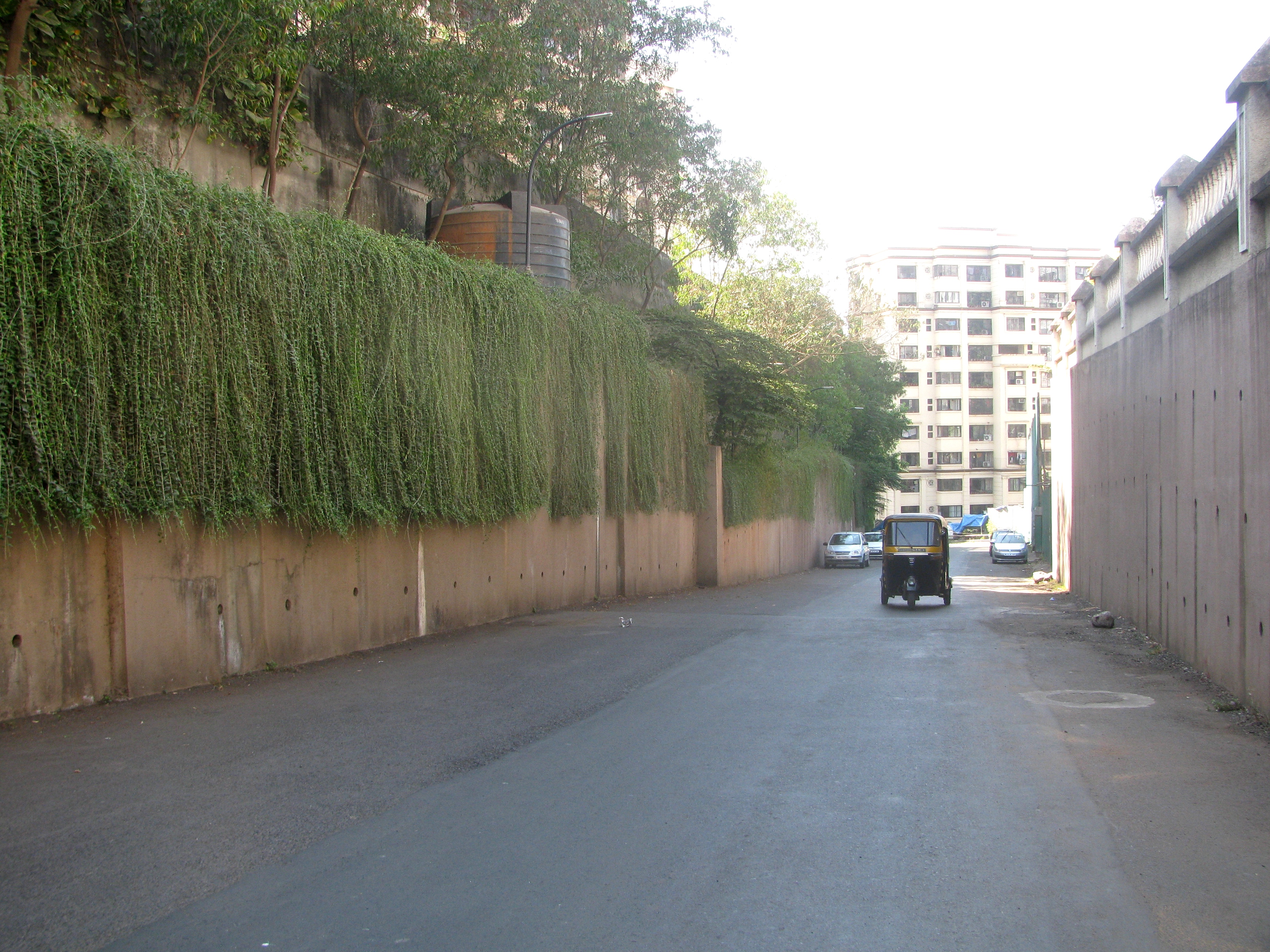
The road around the housing complex at Powai, which Sunil and Sangeeta use for training (Photo: Shyam G Menon)

The road around the housing complex at Powai, which Sunil and Sangeeta use for training (Photo: Shyam G Menon)

You find something of this in Sunil and Sangeeta. They are advocates of the requirement to train, they train regularly and even today, the number of events they participate in is modest compared to what many regular runners do. Further all the stretching of human potential, all the testing for enduring stress is done in the training phase. “ Both of us give our 100 per cent to training. I still don’t run more than four days a week and I do strength training for two days,’’ Sunil said. During off season the said strength training increases to three days – a wonderful pointer to how off season in the running calendar needn’t mean off season for runner. Once in three weeks, the couple try and do a 50km plus-run. To illustrate how he has prepared himself, Sunil said, “ at short notice, I can do 70-80km.’’ In an article in the Times of India following the 2014 Bangalore Ultra’s 24 hour-run, V. Anand pointed out that in the run up to the event, Sunil and Sangeeta had covered 1900km over five months, in training.

This kind of dedicated training yields two benefits. First, given all that goes into the training, the actual event becomes a mentally relaxed, enjoyable affair – as mentally relaxed and enjoyable as you can make it, that is. For, every discipline as it happens still has its own challenges. Second, the systematic build-up with care for building a solid foundation, promises less injury and potentially longer life in running. There are other details too. Sunil does not advocate the sprint finish; that finish with a flourish, you see many people do. According to him, his last two kilometres in a race are typically the slowest as this helps the recovery process. Finally, the couple don’t obsess with timing. “ One of the reasons we have been injury-free is that we are not obsessed with timing. This is the thirteenth year of our running, we are content with what we have,’’ Sunil said when we met him and Sangeeta over two sittings in Powai (it was November-December 2015). Neither of them was ashamed of Did Not Finish (DNF).  If the body says stop, they will. “ My body is more important,’’ Sangeeta said. Probe further – it is an outline of detachment and contentment that exceeds running and timing. “ I don’t believe that we need to provide for two generations after us,’’ Sunil quipped at one point in the conversation, a quip that is insightful of life in more ways than just making money. Including one in which, you find the time to run.
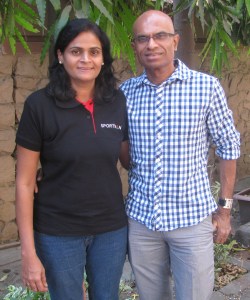
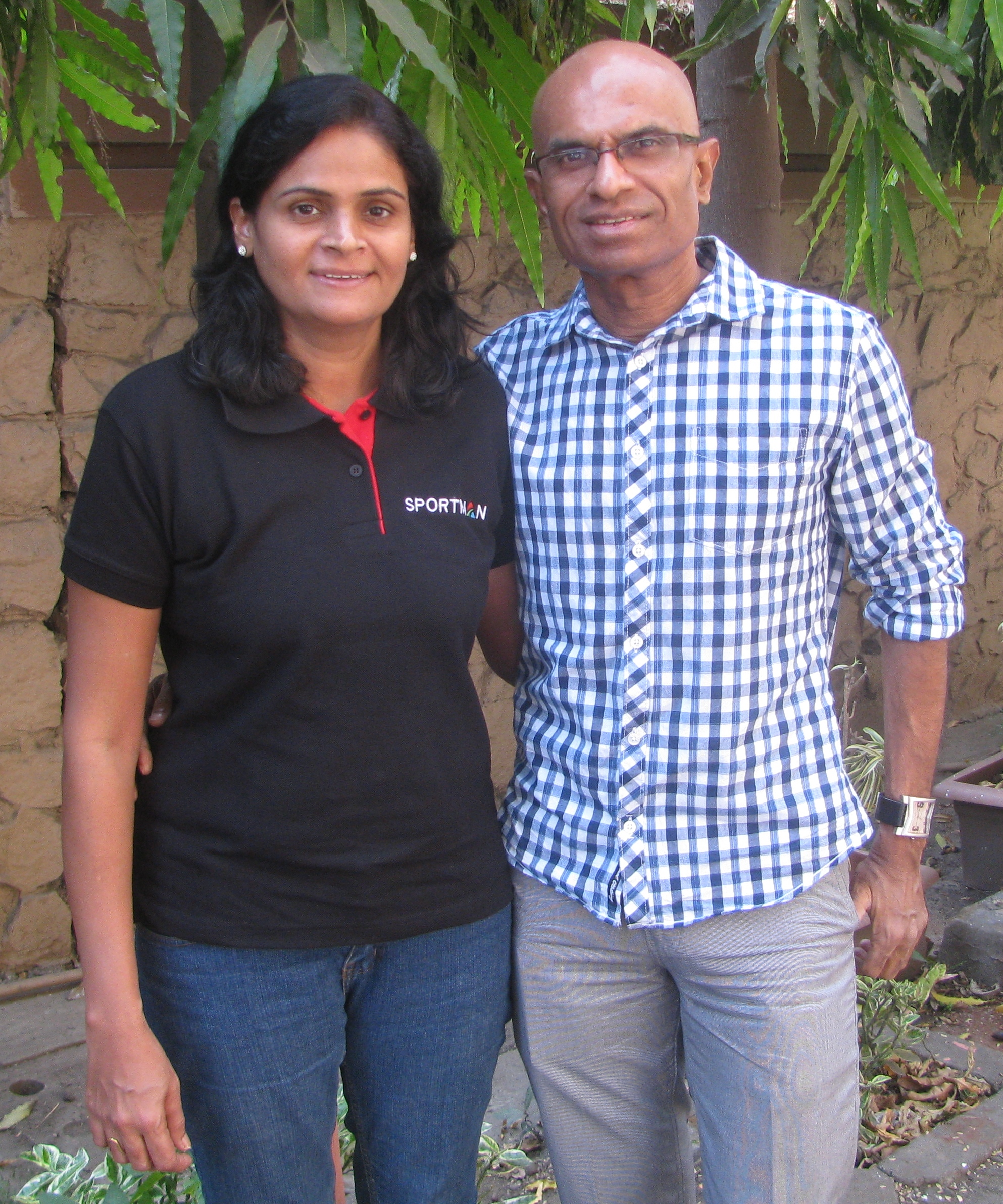
Sangeeta and Sunil Shetty (Photo: Shyam G Menon)

Sangeeta and Sunil Shetty (Photo: Shyam G Menon)

January every year, Sunil and Sangeeta sit together, check the year’s running calendar and shortlist the events they would like to participate in. Typically what they choose to participate in (they are invited for more) don’t exceed 4-5 races. “ Perhaps an ultra, two full marathons and a half,’’ Sunil said. By way of suggestion for young people, he said that if you are running two full marathons and two halves in a year make sure that one of each variety is run well. And if you want to get into an ultra, make sure that you run at least 4-5 full marathons before attempting an ultra – it should be a gradual build up to such distances, not a jump and a jolt. Unfortunately the popular trend is something else. Thanks to competition and the need to prove, contemporary life’s dominant flavour is impatience. “ I find people wanting to reach where we reached in 13 years, in two to three years time,’’ Sunil said.

So what is the future in running, the couple dream of? They do have running abroad in their list of things to do. But it is not a Boston or New York Marathon kind of aspiration. “ Something like – maybe a 100 miler?’’ Sunil said. He also has his rounds giving motivational talks wherein he encourages people to get into running, tells them that to get into fitness you just need to jog every day and not straight away tackle a formidable marathon. He advises them to look inside their own houses for company to run. “ I also tell them that if they manage to motivate one person a month to begin running, then it will start a chain reaction,’’ Sunil said. Now seasoned runners, both Sunil and Sangeeta are backed by Puma. Uniquely, despite such affiliation, one of the runs Sunil has been associated with (he is one of the founders) is an annual 10km-run called United V Run as 1 in which no prominence, no mileage by advertising is offered to sponsors. It would seem a counterweight of cleansing for all that happens as commercial running. “ Sunil and Sangeeta are a great inspiration for many Mumbai runners; individuals as well as couples. People consider them as role models. They are very down to earth, punctual and dedicated. I consider them very talented runners, friendly and always happy to share their knowledge,’’ Satish Gujaran, city based-ultra runner, said.

Sunil now weighs between 56-58 kilos.

Somewhere in Pune is a weighing scale that started it all.

Sangeeta Shetty / select races and timing:

Year          Event       Distance       Time              Remarks

2010           SCMM           HM              2:59               First timed race

2012           SCMM           FM               5:41               First FM

2012            KTM             FM               5:46               1st in veteran

2012              BU              75k               12:07             1st in veteran

2013              BU              100k             16:48             1st in veteran

2014              BU              120k             24hrs             2nd in veteran

2015    Spirit of Wipro    10k             60:08             1st position

2015    Spice Coast           HM               2:23             1st in veteran

Sunil Shetty / select races and timing:

2009           SCMM            HM              3:03                First timed race

2010           SCMM            FM               6:10                First FM

2012              KTM            FM               4:57                First sub-five hours

2012               BU               75k              10:23              1st in veteran

2013               BU              100k             13:38              2nd in veteran

2014               BU              138k             24hrs              1st in veteran

2015          SCMM             FM                3:53               First sub-four hours

2015              ILFS             10k      44:45(minutes)    1st in veteran

2015       Spice Coast         HM             1:39                1st in veteran

HM: half marathon, FM: full marathon, k: kilometre, SCMM: Standard Chartered Mumbai Marathon, KTM: Kaveri Trail Marathon, BU: Bangalore Ultra

(The authors, Latha Venkatraman and Shyam G Menon, are independent journalists based in Mumbai.)

RHYTHM HOUSE DECIDES TO SHUT SHOP

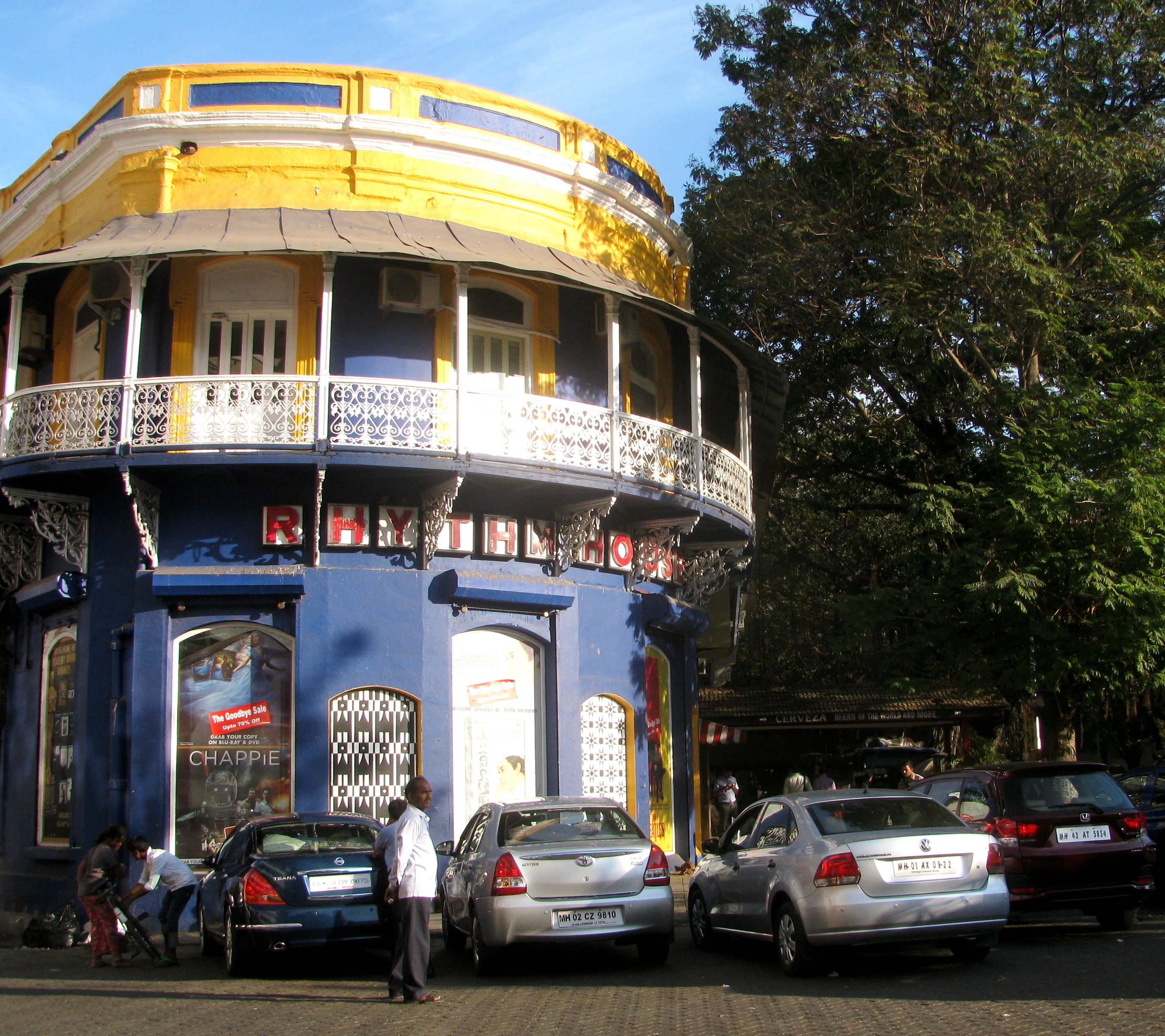
Rhythm House at Kala Ghoda, Mumbai (Photo: Shyam G Menon)

Rhythm House at Kala Ghoda, Mumbai (Photo: Shyam G Menon)

For many years, I worked in South Mumbai, close to Churchgate.

Sometimes too much typing on the computer got to me and I would step out of the newspaper office for diversion.

If I cut across the nearby Oval Maidan and its myriad cricket matches, then fifteen minutes walk away, was Rhythm House. It was a shop in an old building at Kala Ghoda, now the city’s art district thanks to the adjacent Jehangir Art Gallery, the pavement artists, the surrounding heritage architecture and an annual festival in the area with roads closed to traffic and open to arts and crafts. Compared to other shops selling music that arrived and closed during its time, Rhythm House was small. But it was packed with music and movie titles in the physical format. What you couldn’t find on the shelves, you ordered at the desk. I would spend some time here browsing through the collection, clear my head and return to work.

One day, I wrote about Rhythm House. The new century had arrived. Businesses overseas had witnessed massive change through Internet and digitization. The world of book shops for instance, was besieged by question marks. As book shops struggled, I wondered what was happening at Rhythm House. Hence that old story written and published in the newspaper I worked for. It failed to capture well the shop and its predicament. Maybe I hadn’t known Rhythm House long enough to tell a story. I acted in haste. But I remember the owners being concerned of what lay ahead in the fast changing market. Still, if there was anything challenging Rhythm House, it wasn’t visibly alarming for the shop was well stocked and it had customers. During festive season, the traffic built up. Besides, sales or no sales, everyone knew Rhythm House. It was a Mumbai institution.

At Rhythm House you met connoisseurs of music. Once in a while as I hung around the racks hosting music relevant to me, I would hear a customer or two ask the salesmen about specific albums or concert recordings. The salesmen would in turn indulge them in talk about the elusive recently sourced or, which can be sourced. The minor details bringing joy to collectors of music are fascinating. It is portrait by passion. You don’t sense these folks as palpably in cyberspace even though the digital side of everything is marketed as bigger meeting place. In the real world and its shops, you meet people in full and a person in full is person believable. I wrote that article on Rhythm House well over ten years ago. I subsequently became freelance journalist and in my less moneyed avatar, continued to visit Rhythm House but rarely purchased. I found relief just being there amid the music and films although I must admit, not being able to afford was progressively becoming a dampener.

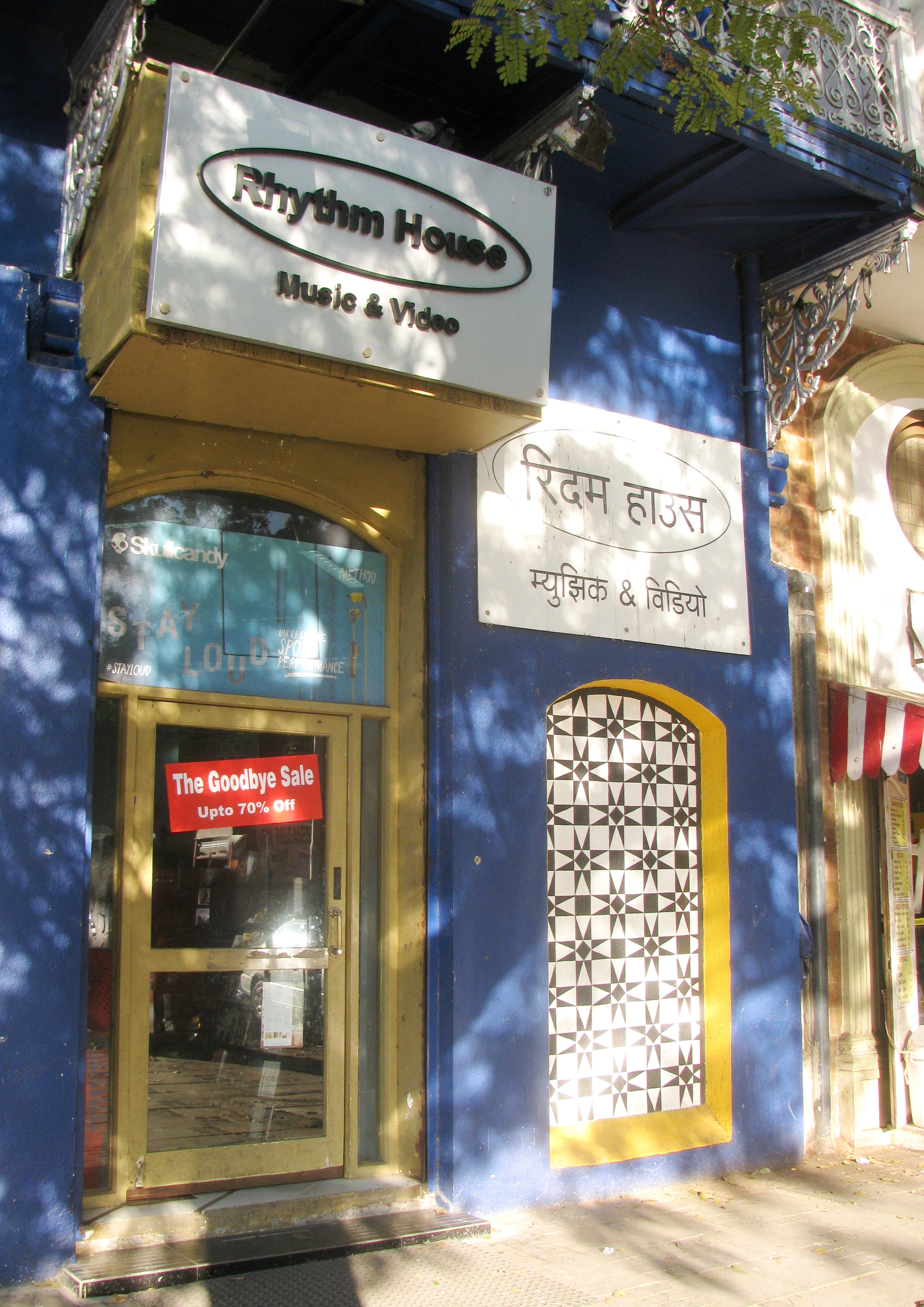
Rhythm House; red board announcing Goodbye Sale (Photo: Shyam G Menon)

Rhythm House; red board announcing Goodbye Sale (Photo: Shyam G Menon)

January 1, 2016. Having decided that a multiplex ticket costing Rs 400-500 to see the latest Star Wars movie wasn’t worth the strain on one’s purse, my friend Latha and I decided to go for a walk instead. Decades ago, I had watched the first Star Wars movie at a theatre in Thiruvananthapuram and returned home a fan of Han Solo. I watched the first trilogy. Then I watched Harrison Ford in all those Indiana Jones movies. Those days you could afford visiting the theatre. Now the question isn’t whether you are interested in cinema but whether you can afford multiplexes. I was a fan of Star Wars quitting at a choke point in the system called costly multiplexes. Our evening walk brought us to Kala Ghoda and the Jehangir Art Gallery, which we wished to visit. I think when you age you realize you are a traveller in the universe and therefore entitled to perspective. You find it in art, that’s why the occasional visit to the art gallery engages. As we left the art gallery, we noticed Rhythm House, distinctly less celebratory in appearance despite the festive season. When we drew closer, we saw the red board on its door: Goodbye Sale. I was shocked. Powered by discounts, the innards of the shop had been cleared out in parts. Latha picked up a rare recording of a Hindustani classical vocalist. Bill paid we got out but couldn’t leave. An institution was shutting down. We had no proper camera. So in the dim light, Latha took a photograph of the shop on her cell phone.

Unknown to me, Rhythm House’s closure had been in the media since November 2015. The articles featured musicians, music lovers, music critics, authors and other residents of the city who shared their memories of the iconic establishment. A visit to the shop’s website showed a message. Excerpts: We are the last of our city’s large format music & video stores to yield to the challenges posed by new technologies and piracy. We are set to close for business end of February 2016. We have been in the music business since 1948 and in the video business over the past 30 years or so and closing down is therefore going to be an emotional wrench for us. Many of you have echoed similar sentiments and we thank you for being with us at this difficult time.

I returned the next day to click the photos accompanying this story.

Mumbai’s art district and its music scene won’t be the same without Rhythm House.

(The author, Shyam G Menon, is a freelance journalist based in Mumbai.)

SUNSHINE RUNNING

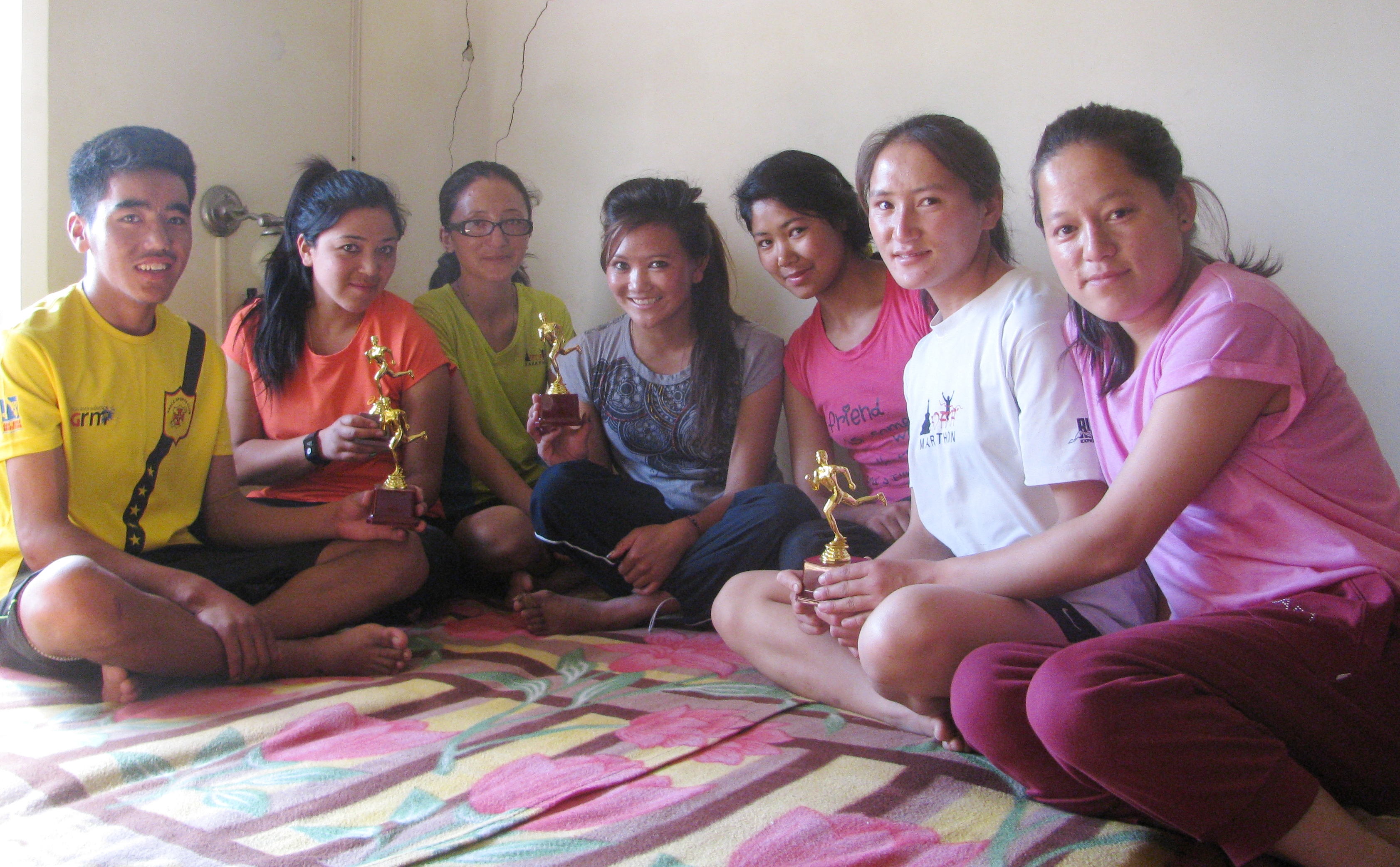
Some of the runners from Ladakh with the trophies they won at the Goa River Marathon (Photo: Shyam G Menon)

Some of the runners from Ladakh with the trophies the team won at the Goa River Marathon (Photo: Shyam G Menon)

It was Christmas day.

Not far from Mumbai’s CST railway terminus, traders selling woollen garments did brisk business. They have a temperamental December to thank. According to newspapers, on December 23, 2015, Mumbai recorded its second lowest temperature since December 1949; 11.6 degrees Celsius. The faint chill saw residents bring out their shawls and jackets.

“ Early mornings and evenings in Mumbai are now pleasant to run,’’ Skalzang Lhundup said. We were in a nearby apartment, where a team of young runners from Ladakh, in the city to train and get ready for the 2016 Standard Chartered Mumbai Marathon (SCMM), stayed. Skalzang was their manager. The whole team comprised seven civilian runners and 11 personnel of the Indian Army’s Ladakh Scouts regiment. The army runners were camped in Pune, where the military has its facilities, including training facilities for athletes. They were expected in Mumbai by early January.

On December 6th, when the civilian component of the team left Leh for Delhi en route to the marathons of the plains, Ladakh’s winter temperature was already sub-zero, nudging minus ten at its lows. Peak winter was yet to come. Following the September 2015 edition of the annual Ladakh Marathon, the civilians in the team – the 18 member contingent includes category toppers from the Ladakh Marathon and the Khardung La Challenge ultra marathon held alongside it – hadn’t had much time to train for SCMM or any other events in the plains. Two things intervened. First, winter break was approaching with school exams ahead of that. Some of the young runners still tackling their twelfth standard can’t overlook exams. Second, as winter took hold, training outdoors became a challenge. While the army runners have their own training regimen, from among the civilians, only the very determined may have managed to squeeze in a few practice runs outdoors, Skalzang said.

Every year since the 2013 Ladakh Marathon, its organizer Rimo Expeditions, has brought the winners of each edition to Mumbai to attempt the SCMM. The Mumbai marathon is India’s biggest and the richest in terms of prize money. On the previous two occasions, the team stayed at Bandra in suburban Mumbai. “ Our current location near CST is more practical,’’ Skalzang said. Early morning, the team walks to Nariman Point in South Mumbai, where the NCPA end of Marine Drive’s promenade is a popular assembling point for runners. In Mumbai the Ladakh team trains with Savio D’Souza, who is among the city’s well known coaches. He was in Leh earlier this year to train promising local runners ahead of the last Ladakh Marathon. Typically Ladakh’s team of runners travels to Mumbai, participates in the SCMM and returns to Ladakh. The 2015 trip is the first time the team has travelled out from Ladakh for what may hopefully be a brief season of running a few marathons in the plains; not just SCMM. If all goes well, they plan to be running in the plains, warm compared to Ladakh, till end-February, Skalzang said.

The team has already finished competing at its first event of the season.

On December 6th, the group had flown from Leh to Delhi and proceeded immediately by train to Mumbai and then onward to Goa for the annual Goa River Marathon (GRM). Arriving from high altitude to a sea level-location with not much training done to boot, they spent a couple of days running on Goa’s beaches. The heat and humidity of a December by the sea, was tough to cope with. “ Especially the humidity,’’ Skalzang said. On December 13, four days after they reached Goa, the race took place. The Ladakhi runners ended up with six podium finishes. The podium finishers in their respective categories were Jigmet Dolma (women full marathon / open / age: 18 plus, second, 3:59:02), Tsetan Dolkar (women full marathon / open / age: 18 plus, third, 4:05:42), Sonam Chuskit (women full marathon / Indian participant category / age: 18 plus, first, 5:01:10), Stanzin Norbu (men full marathon /  Indian participant category / age: 18 plus, second, 3:12:20 ), Tsering Dolkar (women half marathon / Indian participant category / age: 18 plus, second, 1:52:15) and Diskit Dolma (women half marathon / Indian participant category / age: 18 plus, third, 1:52:17). Stanzin Norbu is from Ladakh Scouts.

Skalzang said the youngsters in the team had instructions not to ignore their studies; a couple of them had exams to give on return to Leh. Amid training for the SCMM, the morning and evening practice runs and managing their temporary accommodation in the apartment (it is self supported life; the youngsters cook their food themselves), they find time for studies. They hailed from villages, near and far from Leh; villages like Igoo, Lamayuru, Saspol, Nether in Changthang, Lingshed, Pishu in Zanskar and Tamachik. A bigger event with many more participants, the competition at SCMM will be tougher than at GRM. Both Jigmet Dolma and Tsetan Dolkar said that they have slowly got used to Mumbai’s weather. According to Skalzang, Savio is exploring other events the runners can be at after SCMM, before they return home to Ladakh.

(The author, Shyam G Menon, is a freelance journalist based in Mumbai. Runners’ timings at the 2015 Goa River Marathon have been taken from the event’s official website. For more on the Ladakh Marathon and Ladakh’s running team please see, https://shyamgopan.wordpress.com/2015/08/07/ladakhs-running-team/)

LIFE ON A LINE

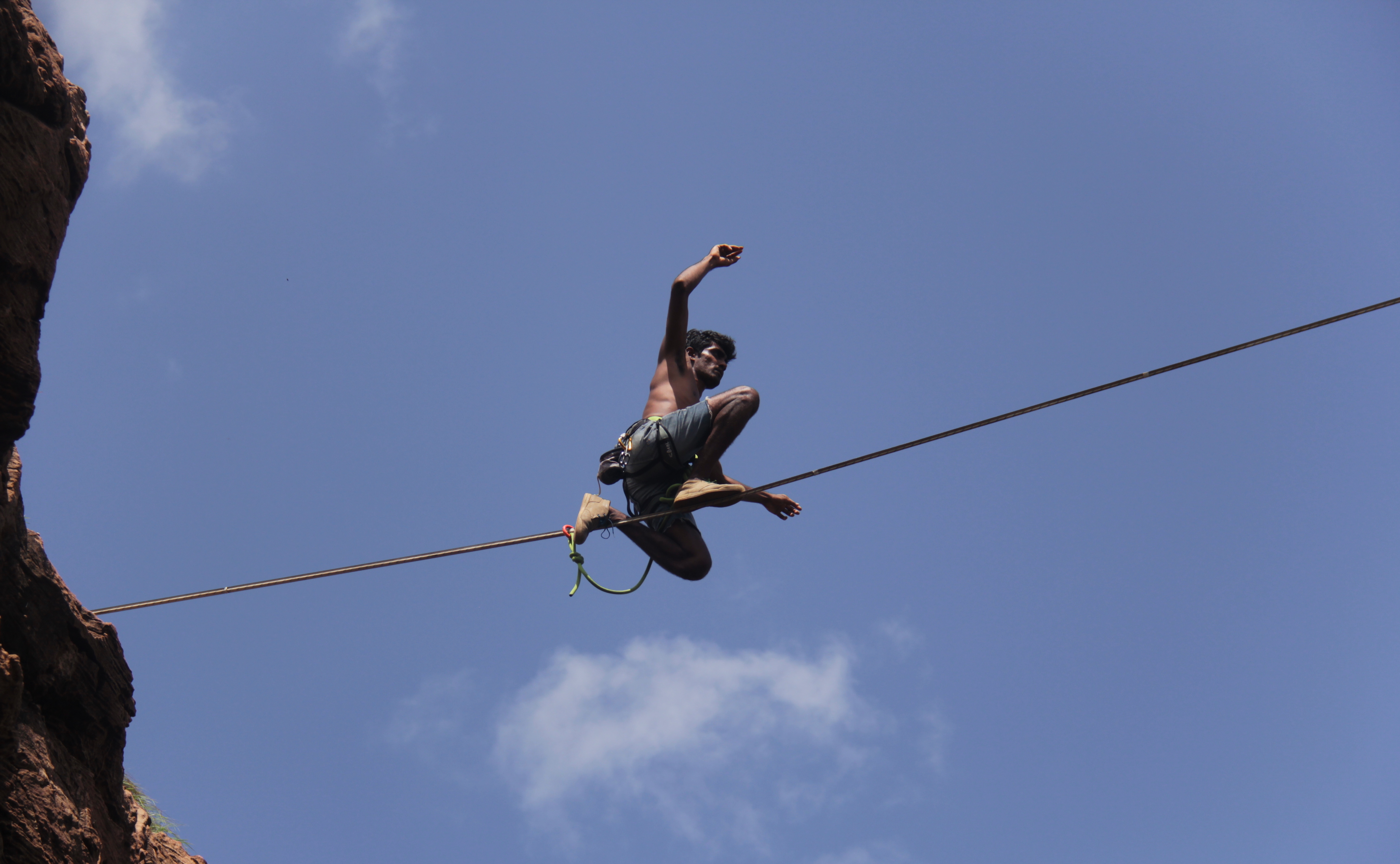
Samar highlining in Badami (Photo: courtesy Samar Farooqui)

Samar highlining in Badami (Photo: courtesy Samar Farooqui)

Samar Farooqui was the last speaker at a recent conclave of experiential educators on the outskirts of Mumbai.

He had a Power Point presentation.

That soon slid to forgotten backdrop as Samar’s demeanour, moulded by slackline, took over.

Like the line – at times still, at times swaying and bouncing to provide momentum for a gymnastic trick – his talk was honest and focused, yet delightfully spontaneous.

Samar’s talk was capped at conclave’s end by a demonstration of his craft.

A day after the conclave, I called him up for an appointment to meet.

It was a chat on the move, beginning at Stadium Restaurant in Mumbai’s Churchgate and concluding on a segment of Marine Drive marked by two trees with a story to tell.

Born 1990 in Mumbai and brought up in the city, Samar grew up with affinity for sports and the outdoors. Staying at Haji Ali, as a child he used to go for morning jogs at the nearby Race Course. By the time he was in the sixth standard, he became the youngest participant in a 3000m race that year at his school. He was also active in cricket and football. His mother, a teacher who was active in the National Cadet Corps (NCC), introduced him to outdoor camps. When he was in the eleventh grade, Samar got to work at a camp run by a city-based outdoor company. “ It was the first time I got paid for such work. It wasn’t something I expected. It just happened. But it made me think, going ahead why not this for livelihood?’’ Samar said. He kept working for the company – Outbound Adventures, managed by Andre Morris. Through Andre, he met Jehan Driver and worked for Jehan’s company, Quest Adventures. Somewhere in the middle of all this, he finished his twelfth and joined college to graduate in mass media (BMM). He did not come across as very attached to classrooms and college; it wasn’t uncommon for Samar to bunk classes and take off on a hike or climb.

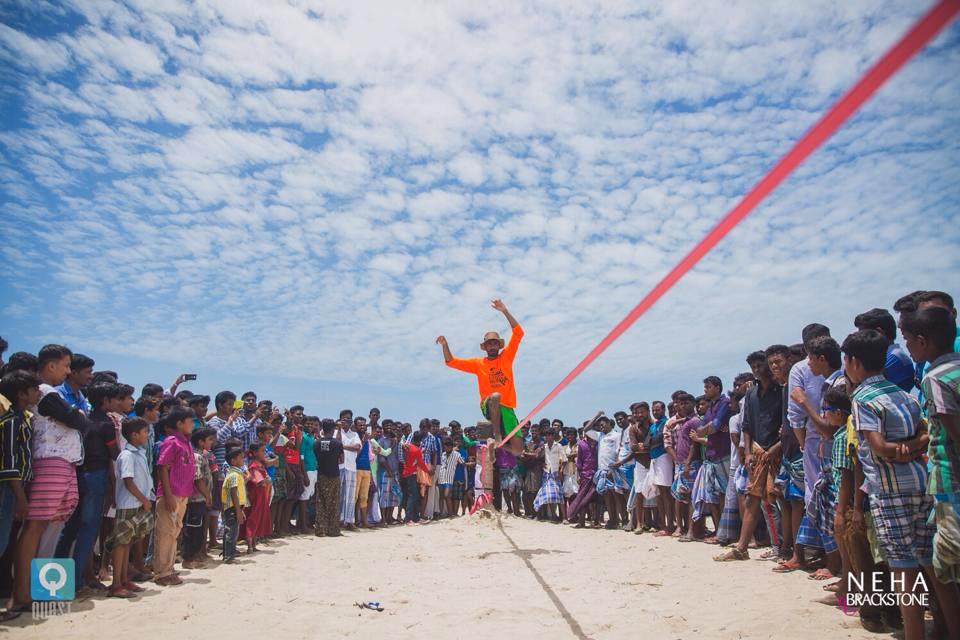
Samar slacklining in Rameshwaram (Photo: courtesy Samar Farooqui)

Samar slacklining in Rameshwaram (Photo: courtesy Samar Farooqui)

At Quest Adventures, Samar’s responsibilities included guiding inbound tourists on their exploration of India. In February 2010, his clients were two ladies from New Zealand. Ahead of this trip and as part of preparations, Jehan and Samar visited AVI Industries, the shop retailing outdoor gear in Matunga. There they were shown a slackline. Not knowing the sport at all, they still bought it for the core idea appeared very simple – a length of suitably designed webbing (unlike a rope, webbing is flat), which can be appropriately tightened and tuned to required tension between two points, usually two trees. Critically, the webbing used is dynamic, in other words – it stretches like an elastic band, providing the person on top the ability to generate adequate momentum for performing tricks. Once installed, you balance on the slackline, walk on it as in a tight rope act; you also do tricks on it as you get better. For safety, depending on the height and what he is doing, the slackliner stays attached to the line with a leash, one end of which is tied into his harness. If he falls at height, he does not get detached from the line. At Kashid beach, about 130 km from Mumbai, Samar, Jehan and the clients from New Zealand tried out the line. Samar was hooked. But it would be sometime before he devoted himself to the sport.  Although he had enrolled to study media management in college, a new idea gnawed at Samar.

Internet searches for alternatives in education had introduced him to adventure tourism studies in New Zealand. It was tough convincing his parents, who were justifiably concerned of Samar’s atypical choices. A close cousin worked on them; they soon came around. Funds were a problem but his family helped. In July 2010, he reached Queenstown in New Zealand’s South Island via Auckland. The flight from Mumbai transplanted Samar within hours from South Asia’s monsoon humidity to South Island’s cold. It was his first trip overseas. He presented himself at Queenstown Resort College for the 18 month-diploma course.

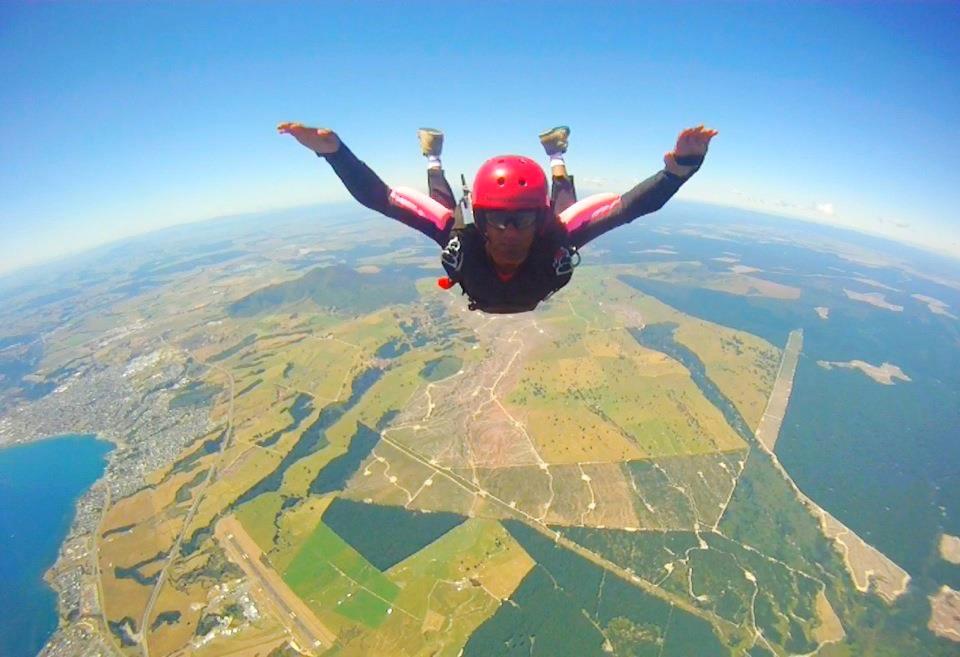
Samar skydiving in New Zealand (Photo: courtesy Samar Farooqui)

Samar skydiving in New Zealand (Photo: courtesy Samar Farooqui)

NZone Skydiving, one of the biggest operators in skydiving in New Zealand, had its office in Queenstown. Samar was enamoured by sky diving. Although the first six months at the college were devoted to theory, he started visiting NZone and connecting with them. “ I was ready to do anything to be around skydiving,’’ Samar said. In the second tranche of six months, his college directed him to a bungee jumping facility for internship. But he was set on skydiving and luckily, his passion and persistence from the preceding six months paid off – he secured an internship at NZone. But he had to settle for a compromise. The drop zone is where all skydiving action is. Samar secured the interview for work at the drop zone without his college involved in the frame. Result – he was placed on the shop floor, not at the drop zone he yearned to be at. Still, Samar benefited from the experience. One thing he learnt was the Kiwi style of presenting adventure to clients; you don’t conceal danger, you state it. “ That way the customer learns to be at peace with reality,’’ Samar said.

The last six months of his course were spent in reviews back in the classroom. Two days after he gave his exams, Samar was hired as Site Operations Manager by Magic Memories. He was located at Agrodome in Rotorua, North Island, which offered visitors an experience of farming in New Zealand. His job revolved around photos that tourists could take back with them. The job also saw him posted at the Waitomo Glowworm Caves, roughly 140km from Rotorua. He used his time on North Island to further his interest in skydiving. He dived with Taupo Tandem Skydiving, located about 82km from Rotorua and 150km from Waitomo. “ Different skydiving schools have different training methods. The deal at Taupo was that after 25 jumps you got an ` A’ licence. The first jump is a tandem jump, the ones thereafter are solo. I did about eight jumps, so I didn’t get a licence,’’ Samar said.

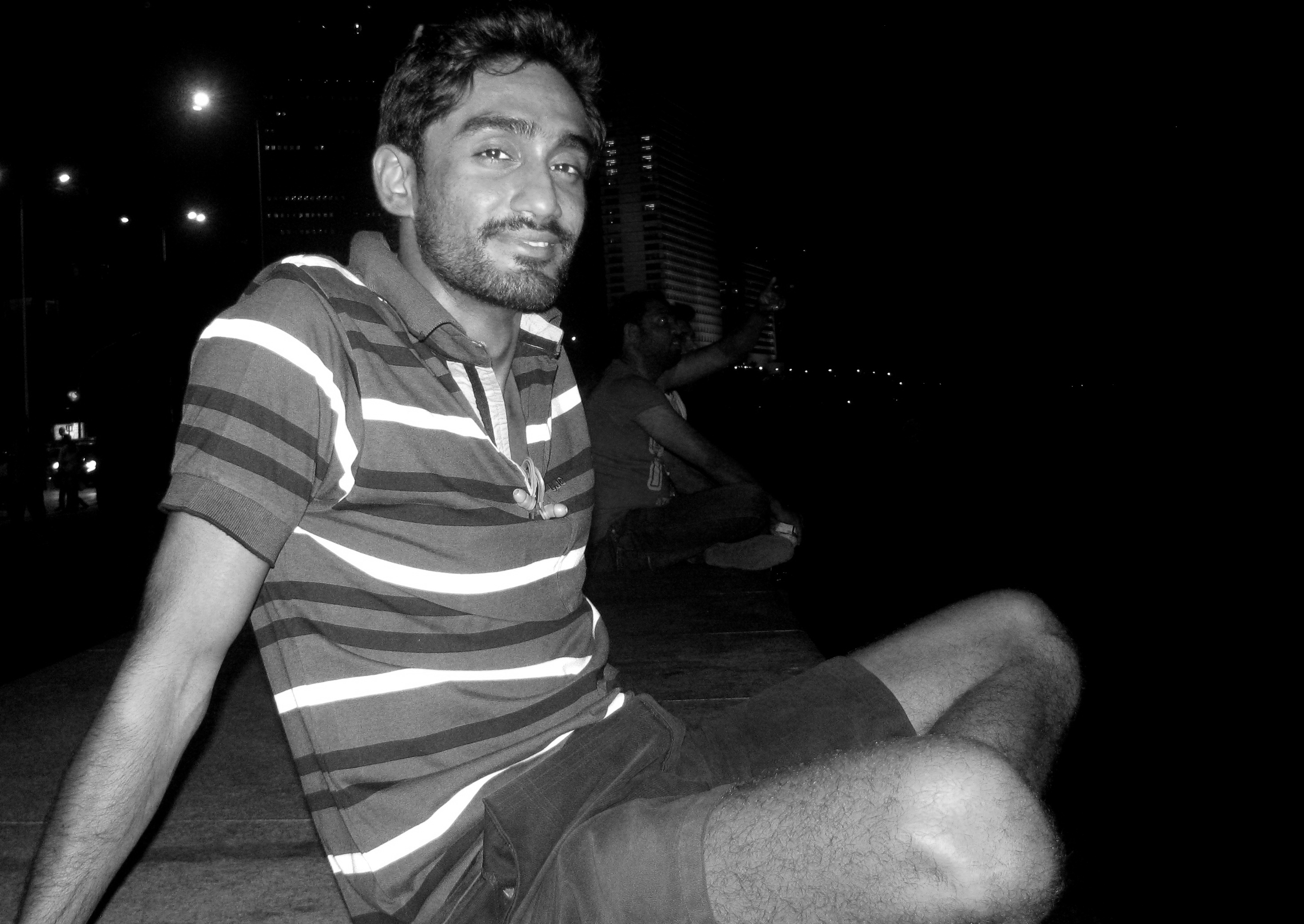
Samar Farooqui (Photo: Shyam G Menon)

Samar Farooqui (Photo: Shyam G Menon)

After Waitomo, his next major stop with Magic Memories was Milford Sound in South Island, about 290km away from Queenstown. But before Milford Sound, Samar paid a short visit to India; on this trip, he did some groundwork for popularizing slacklining. Milford Sound was an opportunity to reconnect with rock climbing. While studying in Queenstown, Samar’s close friends had been college mates Anton Westberg and Gustav Holmquist and a friend he met through them, Banjamin Lagermalm – all from Sweden, all rock climbers. It wasn’t uncommon for the quartet to bunk college and steal off on climbs. When Samar moved to Milford Sound, Anton and Gustav were also there working. In their company, Samar did his first multi-pitch rock climbs at Milford Sound. His stint with Magic Memories paid well. “ I did really well at this job, right after college this was good bragging rights,’’ Samar said. The money was useful; that’s how he had funded his skydives on North Island. The downside of his photography-job was that over time it became routine. “ I enjoyed sales and the idea of selling ice to Eskimos. But after a point in time I felt burnt out and tired of the paradigm,’’ Samar said. He didn’t feel good about that. The hope was – somehow this would all lead to more skydiving and hopefully, a job therein.  Sadly that proved tough.

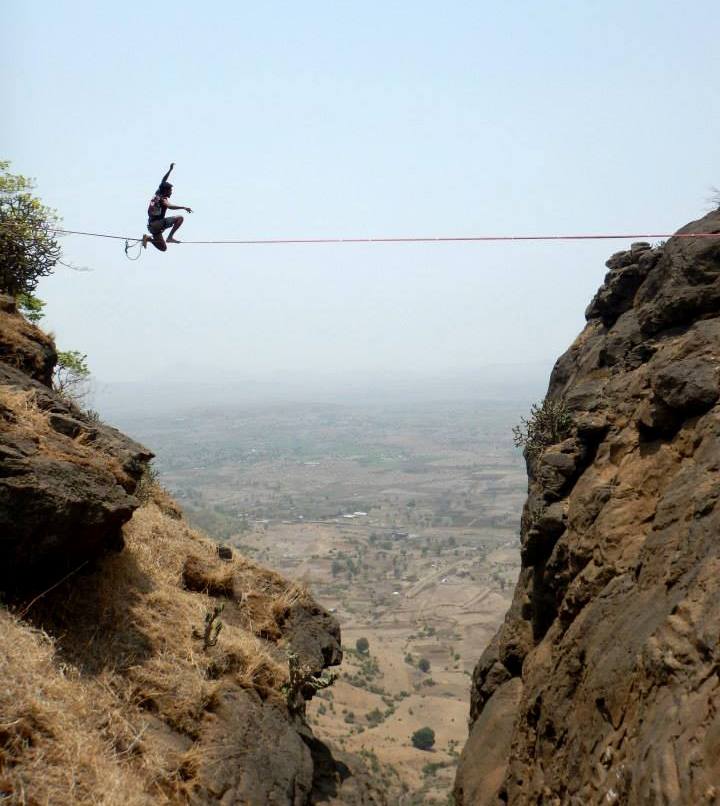
Samar highlining in Nashik (Photo: courtesy Samar Farooqui)

Samar highlining in Nashik (Photo: courtesy Samar Farooqui)

Following his stint with Magic Memories, Samar returned to Queenstown. He approached NZone and other skydiving companies. But it was the off season, job openings were limited. He was not only seeking work in skydiving, he wanted to be at the drop zone. That was a tall order. According to Samar, his final phase at Magic Memories and the futile search for vacancies in skydiving soon thereafter, was a trying period. Pleasant distraction was his constant companion – his slacklining kit. His skills on the line fetched positive comments. To recap, after that taste of slacklining on Kashid beach, Samar had continued practising. Slowly his skills developed. When he arrived in Queenstown for studies, the season was drifting toward winter; not the ideal time for slacklining outdoors. In the summer of 2011, he ran into some people slacklining on the beach. They became another community to hang out with, besides the rock climber friends from college. Free time, stolen time – it went into these pursuits. By the time he hit that post Magic Memories phase, he was a decent slackliner. To keep himself afloat, he worked at a call centre, did construction work and even worked as a bouncer. Samar calls this phase one of “ self discovery.’’ It was also a stage when he had more time on his hands. Samar started pursuing an intense slacklining routine. “ My favourite thing to do still is – plug in some music and go slacklining. I enjoy it, it channelizes my excess energy,’’ he said. Further, off late the airiness of the slackline has become a fine intermediate to two activities that fascinate Samar – skydiving and base jumping.

Queenstown was generally supportive of the small slacklining community Samar belonged to. As people realized that these youngsters were focused on growing their skills and lived a life around it, a social niche evolved. Samar and his friends began organizing meet ups for slackliners from elsewhere in New Zealand. At Samar’s initiative, the team set up slacklining for the American Express Queenstown Festival; they were covered on TV, they slacklined to collect funds for charity – a set of possibilities suddenly showed up. Then Samar got injured; a bad ankle-twist acquired while attempting a back-flip and trying to put a cap on at the same time. He was out of the sport for four weeks. It was May 2013. He decided he should head back to India and take his chances in life; grow awareness about slacklining and somehow figure out a way to earn a living from it. In July, he returned to Mumbai.

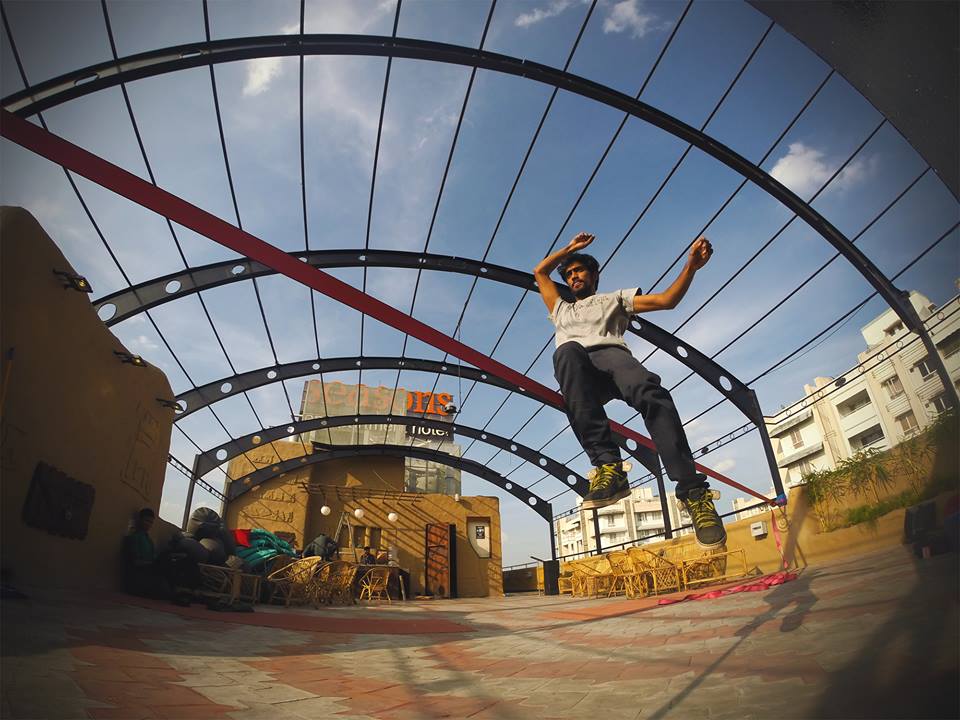
Samar slacklining in Pune (Photo: courtesy Samar Farooqui)

Samar slacklining in Pune (Photo: courtesy Samar Farooqui)

Mumbai’s Marine Drive, right next to the Arabian Sea, has always been a popular spot for people to catch the sea breeze, relax, cosy up, walk, jog, maybe just sit and wonder what one is doing in Mumbai, where one is in life. Samar liked to slackline at Marine Drive. On the promenade, opposite the small junction where the road from Wankhede Stadium meets the main road, are two trees. As was his routine, Samar set up a slackline between these two trees and commenced practising. While he was on the line he heard a noise across the road; something like a collision. Noticing that two motorcyclists had hit each other, he got off the line and went to help. It was a minor collision, the bikers said they were alright and went their separate ways. But as Samar was getting back to his slackline on the promenade, a policeman accosted him and said he was the source of what went wrong. Had slackliner not been there for distraction, the bikers wouldn’t have hit each other. Taken aback by the argument, Samar pointed out that although he had nothing to do with what happened across the road he had got off the line and offered assistance to the bikers. The policeman asked if Samar had taken permission to put up the slackline; the trees, he highlighted, were public property owned by the municipal corporation. Samar had no such permission. He had assumed that the simple sport he was pursuing was simple enough for others to accept it in an equally simple fashion. The regulars of Marine Drive, used to seeing Samar on his slackline, supported him in the argument. But the argument was fast devolving into a clash of perspectives. The slackline was removed. Samar was arrested and taken to the local police station. The cops busied themselves framing appropriate charges. At the same time, some policemen who had seen him slacklining before on the promenade complemented him on his skills. Eventually, when the matter moved to Court, Samar discovered that the charges against him included obstructing pedestrian movement and blocking sunlight. He was let off with a fine. By then however, Samar’s predicament had reached the media. The incident was reported and Mumbai slacklining, riding Samar’s arrest for blocking sunlight, found itself in the spotlight. Soon, Samar was back on Marine Drive, slacklining. The police, he said, have a better understanding of his craft now. They realize that he means nobody any harm; they let him be. There is however a sting in the tail he needs to be wary of. He was let off with a fine and the condition that the fine would double if he repeated the offense. Do you give up slacklining or stop popularizing it because of that? Samar has decided to take his chances.

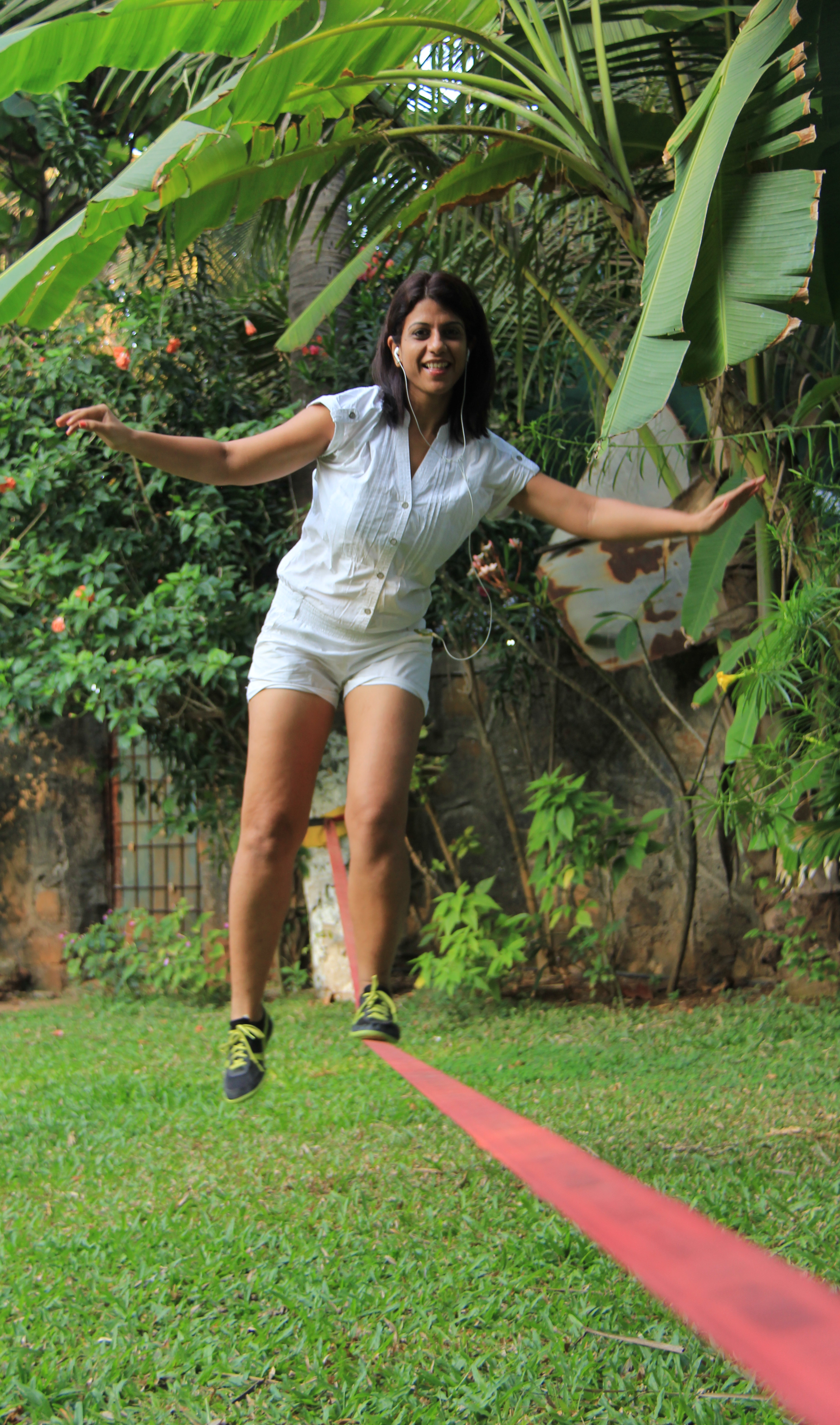
Pooja Mehra (Photo: courtesy Samar Farooqui)

Pooja Mehra (Photo: courtesy Samar Farooqui)

Pooja Mehra is a forty year old mother of two children who runs a cafe – the Cafe Bella Vita at Celebration Sports Club in Andheri. She has a background in sports; she played badminton for many years and is a trekker and distance runner. Two years ago she was running on Marine Drive when she came across Samar and his slackline. After seeing him on the line, she asked if she could try it. The experience hooked her curiosity. She looked up the Internet for more information on slacklining. Homework done, she called up Samar and asked if he would teach her to slackline. Since there was much distance between where they stayed, they set about looking for a place to set up a line at a mutually convenient location. Eventually they found a good spot on a footpath in Juhu. Pooja’s first lessons in slacklining happened there. Then they shifted to a spot on Juhu beach, adequately away from the eyes of crowds (that can cast pressure on someone learning something new). Pooja learnt to walk the line, turn on it and sit on it. “ I fell many times. But you pick yourself up and work hard to improve. It is not an easy sport,’’ she said. Overall, she took about 15 classes from Samar. Then with Samar’s help, she acquired a slacklining kit so that she can keep practising. The kit is portable; you can carry it around, take it wherever you go. But finding a place with good anchor spots for the webbing and enough safety should you fall is tough in Mumbai. Adding to the problem is low awareness of the sport. On the other hand, there are many places away from the city which are good for slacklining. Pooja carries the kit with her on family holidays. She sets up the line. Her children have tried slacklining and she said it is a nice way for the family to bond.

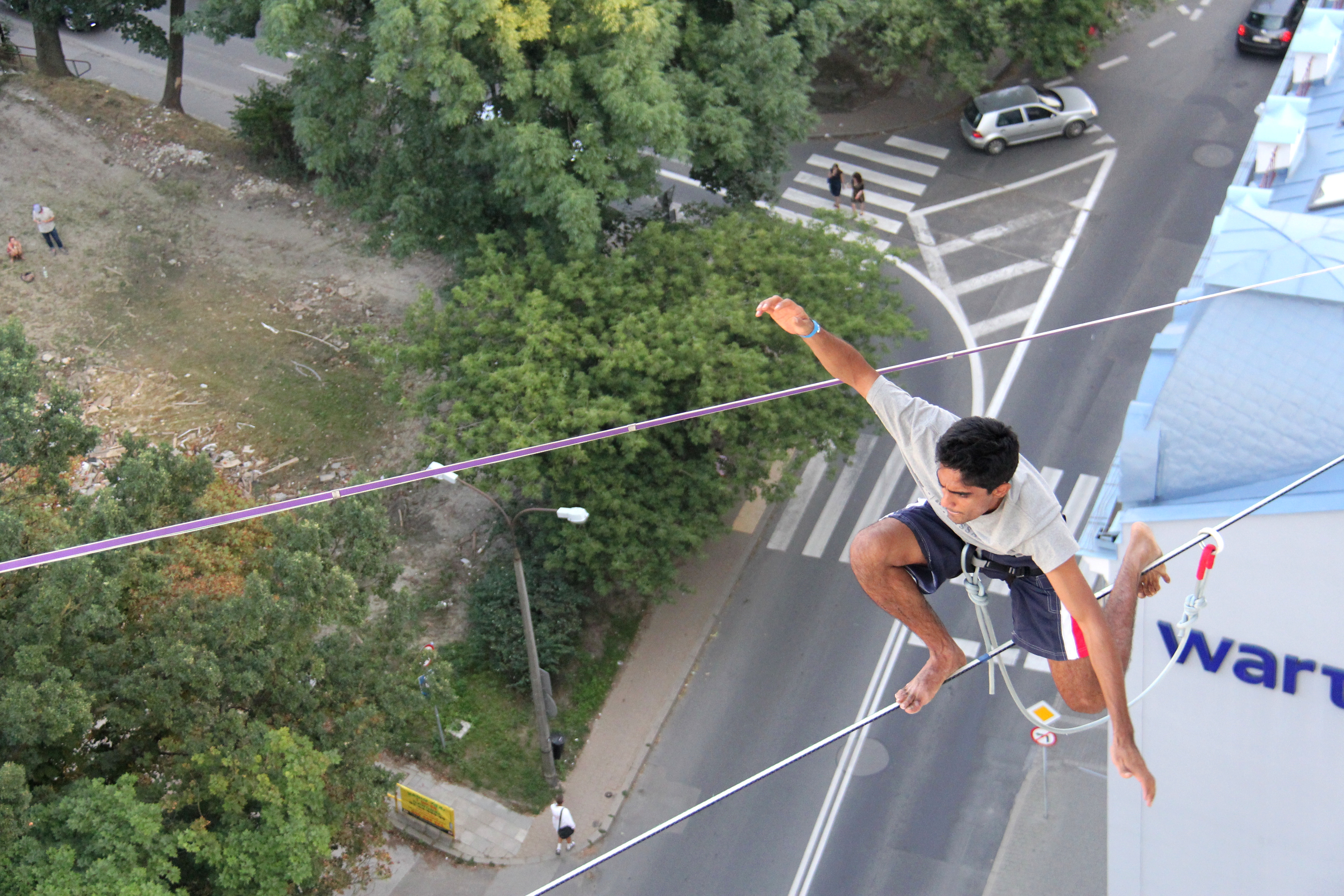
Samar at the highline festival in Poland (Photo: courtesy Samar Farooqui)

Samar at the highline festival in Poland (Photo: courtesy Samar Farooqui)

In July 2013, when Samar returned to India, there was a small slacklining community already existing in the country. The main two points for the faithful to gather were Slacktivism in Delhi and Slack.in, which hosted members from Bengaluru (Bangalore) and Pune. The whole community at that time must have been around 300 people-strong in India, of which about 10 per cent, Samar estimates, would have been active slackliners. Samar started Slacklife India in Mumbai. From a Facebook page it has since evolved into a company called Slacklife Inc. Along with that Samar has become a professional slackliner, someone whose income comes from practising and promoting the sport. Samar has appeared on Indian television, in such programmes as ` India’s Got Talent,’ ` I Can Do That’ and ` MTV HE Ticket.’ It helped promote the sport. Wikipedia’s page on slacklining mentions the sport’s many styles or categories.  For now, the styles relevant to India include the basic slack lining format; trick lining, mid lining and high lining. Trick lining involves the execution of tricks on a line while mid lining and high lining involve slack lining at various heights with room for tricks there too. Mid lining and high lining, because they need height, may be set up across buildings, structures, rock faces etc. As the sport grows, new lines are being set up. These are essentially places where a good line can be; a physical line materializes only when you actually put one up for your use. You have to have an eye for a possible line to put one up. Some of the high lines around Mumbai-Pune-Nashik are a line across a quarry in Pune (it was pioneered in September 2014 and that first line was called Jugad Line because it was improvised [jugad means: makeshift] for want of adequately long webbing and therefore sketchy. Samar emphasizes that such joined lines should be avoided), Mid Line Crisis in Taminighat and Life and Exposure in Nashik. One of Samar’s highpoints since returning to Mumbai was participating at the Urban Highline Festival in Lublin, Poland. At this event, he was the only slackliner the organizers had ever seen from India.

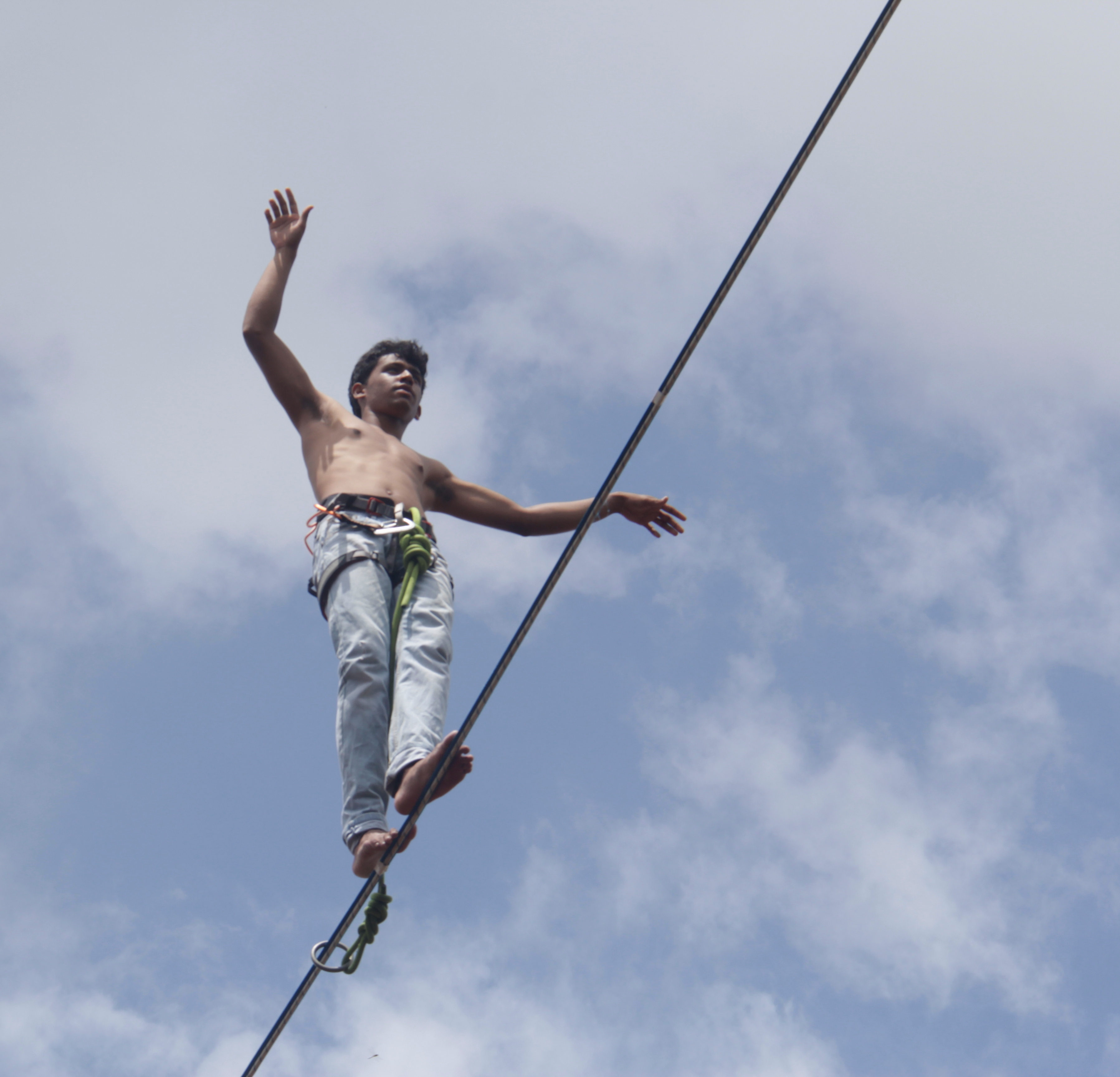
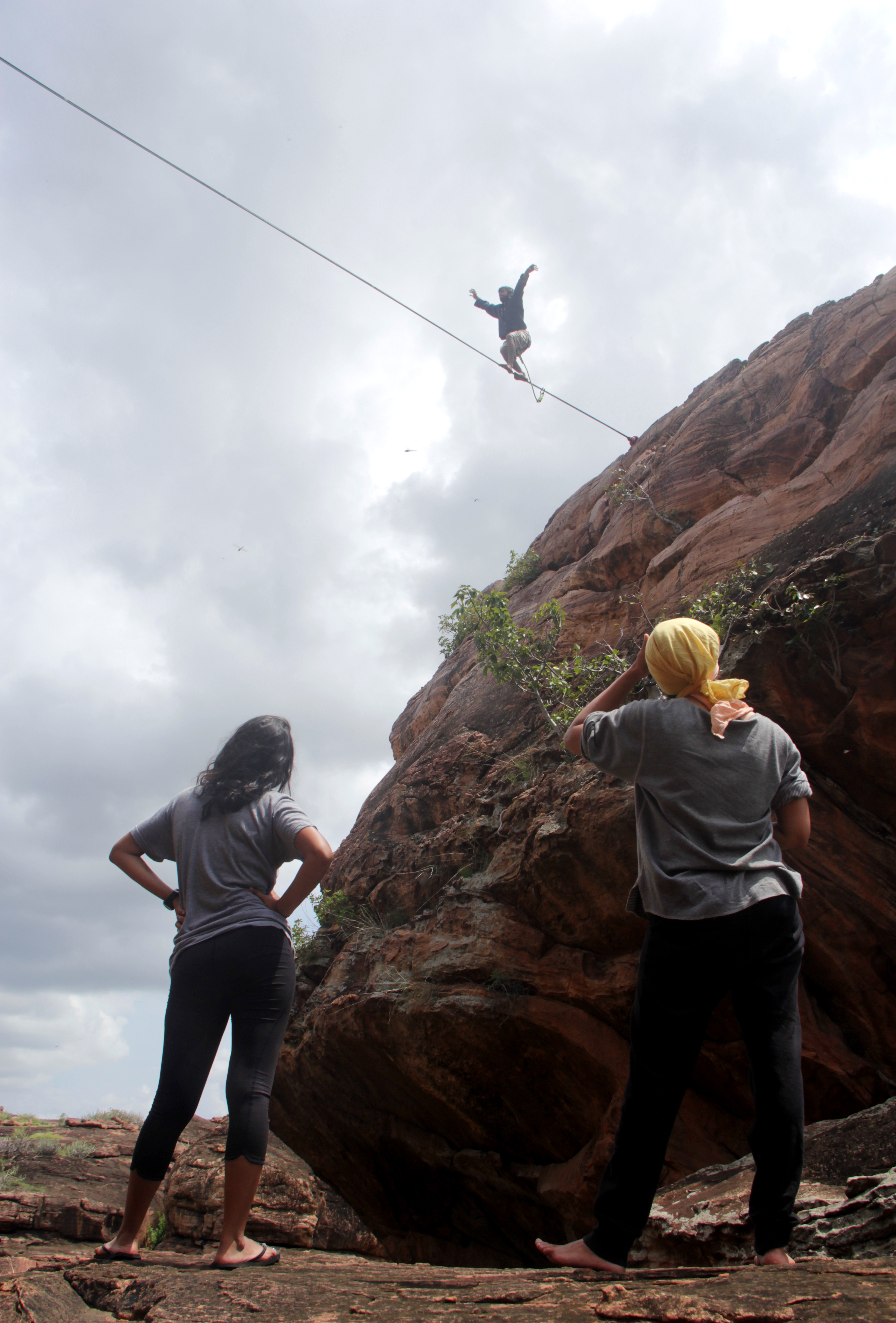
Bhupesh Patil on For Richie in Badami (Photo: courtesy Samar Farooqui)

Bhupesh Patil on For Richie in Badami (Photo: courtesy Samar Farooqui)

Adarsh on For Richie (Photo: courtesy Samar Farooqui)

Adarsh on For Richie (Photo: courtesy Samar Farooqui)

Bhupesh Patil is a young slackliner from Nashik. In May-June 2015, Bhupesh was at Naneghat where a crew of climbers from Omniterra, a company anchored by Mumbai based-climber Mangesh Takarkhede, was assisting the advertisement shoot of a popular soft drink. Here, Bhupesh met Richard Khear (Richie) from Mumbai, who was into rock climbing. Late August 2015, a tragedy occurred in Miyar Valley, Himachal Pradesh; an area now gaining currency for rock climbs at altitude. Richie who was part of a two person climbing team descending to base camp after a day out on one of the climbing routes on Castle Peak, suffered an accident while abseiling. He plunged a significant distance down and lay badly injured on a rock ledge that was still very high up from the ground. By the time rescue teams reached him, which was almost a week later, Richie was no more. The news rattled Mumbai’s climbing circles for Richie was well known and popular in the small, tightly knit climbing community. Rock climbers and slackliners are a similar lot. While tight rope walking has an old history (including in India), slacklining is relatively young and reportedly owes its origins to rock climbers (Wikipedia claims it was pioneered by a young rock climber in the US). The two sports are all about balance and heights, they share a relation with webbings and ropes and they bond in the realm of focused action or what some may call – mind over matter. Badami in North Karnataka is one of India’s major rock climbing destinations. On a trip here in 2015, slackliners had noticed the potential for a new line. The second time Bhupesh and Samar were in Badami in 2015, they set up this new high line. Bhupesh walked it first and named it ` For Richie,’ in memory of Richard Khear. Samar followed him on the same line.

Illustration: Shyam G Menon

Illustration: Shyam G Menon

When you sit on Marine Drive facing the sea, you sense horizon and distance in a city that usually denies you both thanks to its numerous buildings and congested, trapped spaces. Depending on what you are, you may or may not have appetite for distance, horizon and the lure of exploration they inspire. I asked Samar what it is like being out on a slackline. He tried to explain; he failed, I failed. The whole thing is about narrowing down existence to life on webbing. If you are asked to explain such moments of nothing in the head, it challenges language. Slacklife and livelihood by slacklining occupies Samar’s time now. That’s what brought him to the experiential educators’ conclave. Experiential education is all about experiencing things and learning, processing the experience. Basic slack lining is an activity anybody can try and quite safely too, for the line is not very high from the ground. Won’t it sit well in the pantheon of activities experiential education leverages? Samar believes it will. Further there is promise in India for slacklining; the country is overwhelmingly young, the right demography for active lifestyle. The path he has chosen is promising; not easy. For now, it is pretty much like the seaward gaze from Marine Drive. There is the distance, the horizon and from self till horizon stretches one long, thin webbing exploring the unknown; life on a line.

(The author, Shyam G Menon, is a freelance journalist based in Mumbai.)