RUNNING SPARTATHLON

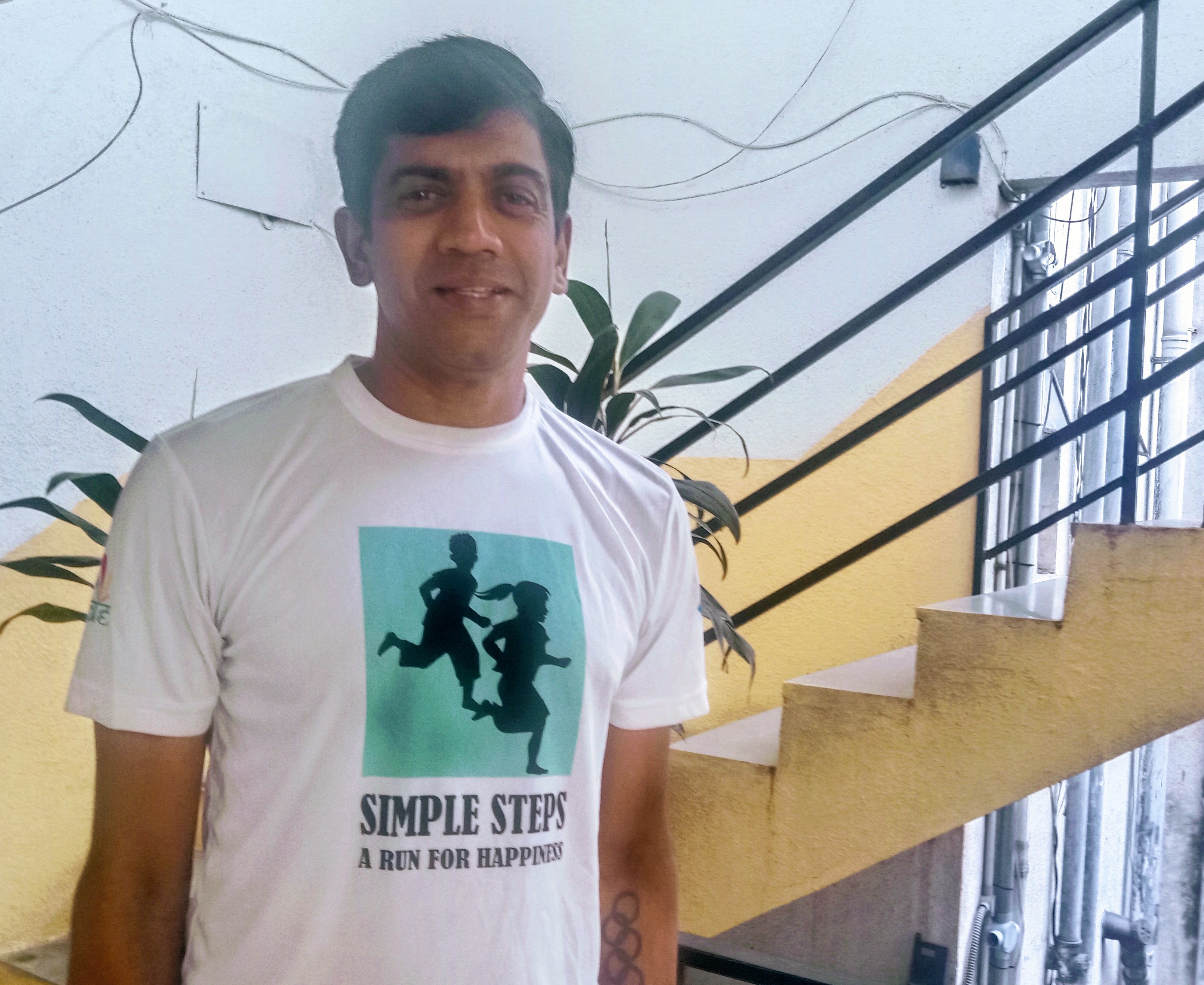
Jeevendra Singh (photo: courtesy Jeevendra)

I grew up in a village near Agra. My father worked with Indian Railways and he was posted at Tundla. Growing up in a village meant living an outdoorsy life. I was into sports during my schooling years. I did my engineering degree from Lucknow and through campus placement found myself at the Pune office of UBS. From there I moved to Singapore, Poland and finally to UK, in 2015. Initially, I lived in London. I was following an unhealthy lifestyle. My health deteriorated mainly because of the stress that accompanies work at an investment bank. I piled on a lot of weight.

I decided to take charge of my life and took to running. The solitude of running helped me heal and gave me much-needed ` me time.’ My running was largely recreational. I started participating in running events with the aim to raise funds for causes such as cancer research and the fight against domestic violence, among others. I did a few marathons including the Athens Classic Marathon, marathons in Marrakesh, Peru and San Francisco. I even ran a marathon wearing full cricket gear to raise funds. My aim was to run a marathon in every continent but I gave up that idea when I became aware of climate change and realised that flying just to run a marathon, was not the correct thing to do.

I then embarked on trail running, starting with a half marathon in the south of England. I moved to ultra distances in trail running, attempting a few trail races in the mountains of Lake District. I love trail running and since 2018 I have done only trail running. Living in London and running around on roads and pavements takes a toll on you. Don’t get me wrong, London is one of the beautiful cities in the world with lot of green areas. Yet the city running was becoming monotonous for me. So, when I stumbled on to trail running and did my first trail race, which was the Beachy Head half marathon in the beautiful Seven Sisters Cliffs near Eastbourne, I was hooked to it. Purely because being in nature triggered the genetic memory, we all have in us. Being in nature, moving on your foot for hours in these beautiful landscapes gives our body and mind that experience which our ancestors naturally had thousands of years ago. Also, for me being in the country side triggered the happy childhood memories I had with my grandparents and uncles in my village back home in India. Slowly I wanted more and more of this. Moreover, I believe in continuous progression. Therefore, I wanted to see if I can run longer than a marathon in these landscapes. That’s when I decided to do my first ultramarathon, the Grand Tour of Skidaw, which happens in Lake District, UK. It was a 70km-long race in challenging terrain but the views and scenery were breath-taking. I never looked back after that. From there i moved to 50milers (I did three of those) and then to my first 100 miler in 2021.

In 2020, the world came to a halt due to the COVID-19 pandemic. Once the lockdown was lifted, I did a run from Buckingham Palace to Windsor Castle, a distance of over 50 km. In 2021, I did the South Downs Way 100, a 100 miler. There were many elite athletes at the start line and that was quite inspiring. I wanted to do well. I ended up in the top 20, covering the distance in 19:10:39 hours. In August of the same year, my mother passed away. I hit a low and lost my motivation to run. Slowly I resumed running and realised that it was helping me heal. I wanted to take on something challenging. I decided to do Spartathlon. To my mind it was a journey that would help me go inward and deal with my grief. I had the South Downs Way 100 as a qualifying race. The qualifying time required to enrol for Spartathlon was a 100-miler race done in 21 hours. For Spartathlon, I did much of my training on the pavements, roads and parks of London. For exposure to trails, I travelled to Lake District where I ran in the lower mountain ranges. But the days leading to Spartathlon were extremely stressful. My wife’s father was ill and I nearly contemplated missing the race. But my wife asked me to go to Greece while she flew to India to be with her parent. Radhika, my wife, is a lifestyle and nutrition consultant. She helps with my nutrition plan for day to day living and also for races. She is a qualified yoga teacher and mental health coach. Except my running, she coaches me for everything else.

I flew to Greece. The race day started well after Radhika called me to say that her father had improved and was likely to be discharged from the hospital. At the start line of Spartathlon, I was the only Indian runner. It felt good to be around super-fit elite athletes. I did have a few minutes of doubts but quickly brushed them aside. Over its first few miles, the race leaves Athens, traversing through the city’s suburbs and stretch of factories. After 13 miles, we hit the coastline. There are 75 check points along the route. Every check point has a cut-off time. We were expected to hit the 50-mile mark in nine and a half hours. The start of the run was tough as temperatures were quite high and I got dehydrated leading to stomach issues. I reached the 50-mile mark with just 15 minutes to spare and that was not good. I felt stressed and doubts began to creep in. I kept saying the words: stay calm and cool. I was doing this race solo without any crew. I reached the 100-mile mark. I desperately needed a reset. At that point I ran into Graeme Boxall, an accomplished ultra runner and one of the nicest fans of the sport in the UK. He is ever present at track ultras volunteering or crewing for runners. He has given so much of his time and energy to the sport. I had met Graeme at a few track ultras earlier and got to know him. When he met me around the 110 km-point in the Spartathlon race, I was in a pretty bad shape. His encouragement was just what I needed to come out of that bad patch. He was crewing for another runner. Graeme gave me a recovery drink and helped me reset. I changed my clothes and set out.
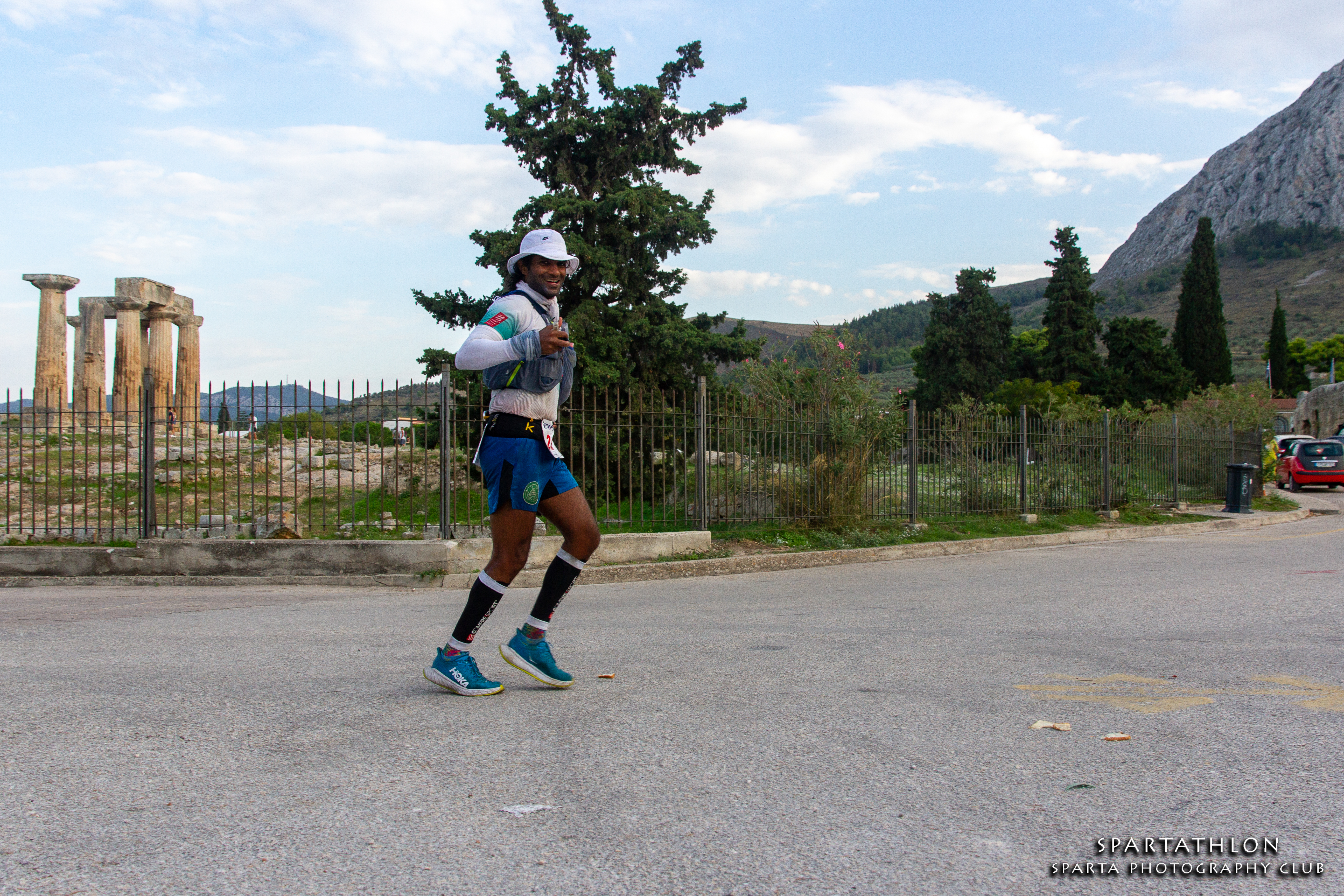
Jeevendra Singh (photo: courtesy Jeevendra)

As I progressed into the race, my stomach situation improved. Also, the temperature started to lower. Further, the buffer between my arrival time and the cut-off time, started to increase. The night was clear and running through the vineyards and olive farms laden with silhouettes, was like a dream. For nutrition and hydration, I switched to soup and Coke. Then came the uphill mountainous stretch. It was quite tough but at the top I felt a connection with my late mother. The descent was tougher than the ascent. The path downhill was laden with loose rocks and scree. I decided to walk down instead of running it. As I started to descent, I began to feel better. For the next 20 miles my pace was quite good. I crossed many runners along the route. At dawn I was running through vineyards in Tegea. The route was headed to Sparta. It started to get warm. This time, I was careful with my hydration. The last stretch was mostly downhill. At Sparta, people were very passionate about the race. As I kept running, I heard them shout: Bravo. The city was packed with supporters cheering for each and every runner. There were children and youngsters running or cycling with us. I met a woman who had been volunteering for the race for the past 41 years. Just before the finish line, I stopped before the statue of King Leonidis and then, finally hit the finish line. In my mind, the 246 km race was split into three phases. The first phase was Be Calm, the second phase was Curious (it was mostly through the night) and the third phase was Confident and Belief.

The Swedish team was very helpful and friendly with me. They kept a seat for me at dinner, among many other friendly gestures. I am right now in the process of recovering both physically and emotionally. The race was quite demanding. I want to continue doing trail and mountain runs. More importantly, I want to be a much better athlete.

(The author, Jeevendra Singh is a runner who works with an investment bank in the UK)

AT A GLANCE / DECEMBER 2023

The winners of the 2023 Vasai Virar Municipal Corporation Marathon (photo: courtesy, the event organizers)
Tirtha Pun of the army’s Gorkha Regiment took top honours at the Vasai Virar Municipal Corporation Marathon held on Sunday, December 10, 2023.

He won the marathon, covering the distance in two hours, 21 minutes and 48 seconds. Defending champion Mohit Rathor (2:26:43) had to settle for the second position after he suffered cramps at around the 30th kilometre. Tadakhe Sikandar Chindhu from Uttarakhand finished third with timing of 2:28:36.

Vasai Virar Municipal Corporation Marathon was organised by the Vasai Virar City Municipal Corporation and the Vasai Taluka Kala Krida Vikas Mandal.

M D Nurhasan was the winner of the men’s half marathon. He covered the distance in 1:04:45, eight seconds outside the course record of 1:04:37 set by Anish Thapa in 2022. Puneet Yadav finished second with timing of 1:04:49 and Arun Rathod finished third in 1:04:53.

In the women’s half marathon race, Prajakta Godbole was the winner with timing of 1:18:12. In second place was Tamsi Singh (1:20:09) and in third place, Phoolan Pal (1:20:28).

In the open category, Manoj Kumar Yadav was the winner of the men’s race with timing of 2:27:25; Ashvini Jadhav (3:06:38) won the women’s race.

(The author, Latha Venkatraman, is an independent journalist based in Mumbai)

2023 IAU 24 HOUR WORLD CHAMPIONSHIPS / JAPAN’S MIHO NAKATA SETS A WORLD RECORD FOR WOMEN

Miho Nakata (This picture was downloaded from the website of International Association of Ultrarunners (IAU) and is being used here for representation purpose. No copyright infringement intended.

Japan’s Miho Nakata set a new world record for the 24-hour run at the 2023 IAU 24-Hour World Championships held at Taipei, Taiwan over December 1 and 2.

She covered a distance of 270.363 kilometers during the stipulated 24 hours, breaking the previous record of 270.116 km (provisional) set by Camille Herron in 2019.

Aleksandr Sorokin of Lithuania defended his world champion title winning in the men’s category with a distance of 301.790 km covered. Europe dominated the podium in both team and individual segments.

In team ranking, Poland won the gold in the women’s race with a combined distance of 726.552 km covered. Japan earned silver with a total distance of 702.911 km while Czech Republic took the bronze with an aggregate distance of 697.275 km covered by its best performing three runners during the 24 hour-period.

In the men’s race, Lithuania won the gold with a combined distance of 813.368 km followed by Poland (787.964 km) and Great Britain and Northern Ireland with a distance of 771.794 km.

In the women’s individual category, Olena Shevchenko of Ukraine (254.463 km) finished second to win silver and Partycja Bereznowska (249.541 km) of Poland, the bronze.

Aleksandr Sorokin (this photo was downloaded from the website of IAU and is being used here for representation purpose. No copyright infringement intended)

In the men’s individual category, Fotios Zisimopoulos of Greece (292.254 km) took the silver and Andrii Tkachuk (284.540 km), the bronze.

The Indian men’s team finished in ninth position with a combined distance of 691.849 km. The women’s team finished fifteenth with a total distance of 540.964.

Amar Singh Devanda was topped among Indian runners covering a distance of 236.800 km in the assigned 24 hours. Saurav Ranjan was second with a distance of 228 km and Ullas Narayana, third with a distance of 226 km.

Among Indian women, Anju Saini topped with 186.252 km covered in 24 hours. Anju holds the national record for the 24-hour segment. She had set that record of 204.314 km at the IAU 24 Hour Asia & Oceania Championships, 2022, held at Bengaluru. Shashi Mehta was second among Indian women with a distance of 182.632 km. Priyanka Bhatt was third with a distance of 172.080 km.

“ My race usually starts in the last six hours of the 24 hours. But here in Taipei, the weather took a turn for the worse. At the start of the race, it was windy. The sun was hidden behind a thick layer of clouds. After a few hours it started drizzling but humidity stayed high,” Anju told this blog.

By the evening of December 1, the rains turned heavy and were accompanied by strong winds. “ I started to get fever and body ache. It was very tough for most runners. Many runners gave up the race,” she said.

Anju herself considered quitting many times but was convinced by the team manager to keep going. “ I also had blisters on my feet as my shoes were wet. I changed my shoes twice but to no avail,” she said.

“ We had trained for a completely different weather scenario in Taiwan,” she said.

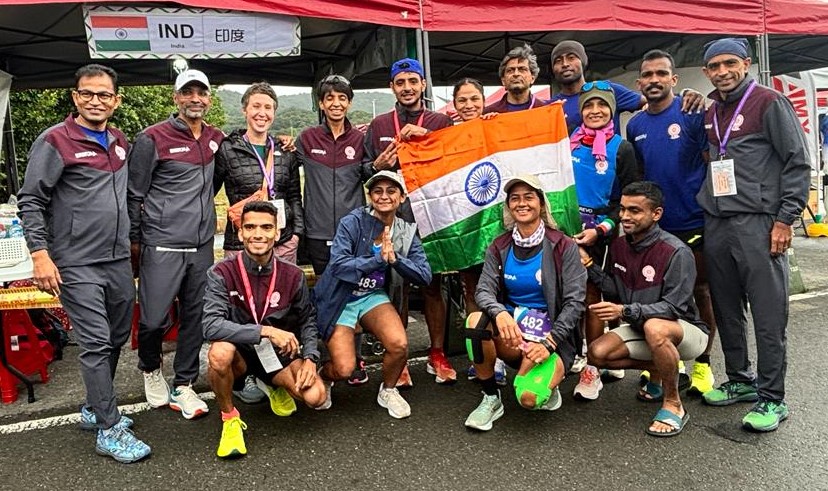
The Indian team (photo: courtesy Santhosh Padmanabhan)

According to the Indian team manager Santhosh Padmanabhan, the weather conditions were tougher than expected. “ It was cold and windy with rain while we came prepared for heat and humidity,” he said.

The Indian team’s performance – both men’s and women’s – was historic as the men’s team broke into the top 10 and the women into the top 15 at a world championship, he said.

“ The best part of the Indian team’s performance was that none of the runners gave up despite difficult conditions,” Anju said.

“ This is a big learning experience for us. We will take the learnings from this race and come back stronger,” Santhosh said.

(The author, Latha Venkatraman, is an independent journalist based in Mumbai. All distances given are provisional)

CURATING A MODEL

Ashish Kasodekar (photo: Shyam G Menon)

Some events leave a deep impression.

For Ashish Kasodekar, this was the case with a project he undertook in late 2021.

Starting November 28 that year, he had run 61 marathons over 61 consecutive days. The venue was Pune University. A route had been fleshed out on its campus and eight loops of it was equal to a marathon. Few would have doubted Ashish’s capacity to complete the project; he is among the best-known ultrarunners from India. What amazed Ashish and fuelled his motivation for those two months was the support provided by others who turned up to run and keep him company. In November 2021, the pandemic was still a recent phenomenon and restrictions hadn’t been relaxed fully. Yet people arrived. Their presence gave Ashish, who was running the same five kilometre-loop for two months, something to look forward to, every day. He recalls that in that period, never once did he require a morning alarm to wake up and go to the venue. The motivation level was that good. “ It was the most beautiful thing in my life,’’ he said of the project, which showed him what a supportive human community meant. For the purpose of Guinness Records, the number of days and marathons was kept as 60 (the previous record at that time was 59). The additional one day of running was a case of testing himself after the 60 day-period.

From the impression this project left in Ashish’s mind, was born another – a quest to link a low point in geography to a high point. Initially, he imagined the run on a grand – maybe even, audacious – scale. He could try running from the Dead Sea in West Asia (it is bordered by Jordan, Israel and Palestine’s West Bank) to the Himalaya in South Asia. At over 1400 feet below sea level, the shores of the Dead Sea represent the lowest elevation on land on the planet while the Himalaya hosts its highest peaks. He also saw in the play of words framing the project, a segway to addressing the issue of mental depression, a condition spoken of as perhaps the most widespread problem of our troubled times. “ I wasn’t expecting anyone to be cured and feeling high at the end of such a long run. I was hoping, I could convince people to enjoy the running and enjoy the passage from a low point to a high,’’ Ashish said. Physical activity like running is known to release endorphins that contribute to an improved sense of well-being. As Ashish’s project encountered reality, the angle around mental wellbeing, survived. The one attempting to connect Dead Sea and the Himalaya, stayed still born. There was a reason for it.

Ashish progressively realized that the route spanning half a continent, was a political minefield. He would be running through countries that had experienced conflict or were still trapped in conflict and by the time he reached Pakistan, there would be the frosty, unpredictable ties between India and Pakistan to negotiate. True, a project of this sort may help set a new tone for politics and understanding between people but the variables over such a long and volatile route were too many. For instance, at the time he thought of the project, Ashish didn’t have reason to worry excessively about the Levant. By October 2023, there was full scale confrontation between Israel’s armed forces and Hamas.

Ashish’s project didn’t die. Instead, after his run at the 2022 Badwater Ultramarathon in the US, Low2High (as the project came to be called) got underway in a different format. To begin with, there appeared to be no problem accessing the Himalaya in India or Nepal. So, the aspect of “ high’’ was trouble-free. “ Low’’ demanded reimagination. For the lowest point in geography, Ashish decided to search within India. West Asia’s Dead Sea was thus replaced with Kerala’s Kuttanad, which is officially the region with least elevation in India. Located in central Kerala and long famed for its paddy cultivation, Kuttanad is among the few places in the world where farming happens four to ten feet below sea level. It was decided to run from Kuttanad to Umling La in Ladakh, which at 19,024 feet is currently the highest motorable pass in the world. It was also decided to cover the distance in 76 days, so that the finish coincided with India’s 76th Independence Day on August 15, 2023. Alongside, an app was designed whereby in a repeat of the community support Ashish had enjoyed in his project of 61 marathons in 61 days, a host of people who downloaded the app were visualized aggregating 76 lakh kilometres in their daily exercise sessions. The ambitious figure of 76 lakh kilometres didn’t have to come via running alone. It could be from walking, jogging or cycling – the idea being to create a mutually engaged, supportive ecosystem for the duration of the project. The punchline was: be together, achieve together and celebrate together, all of it couched in the larger paradigm of a nation being fit if each one is physically fit.

Ashish’s own target of 76 days to project-completion required him to cover 55 kilometres every day and repeat it daily without a break. Given his background in ultrarunning, both seemed doable. Prior to this project, Ashish had – among major events – run the 333km and 555km races of La Ultra The High, Brazil 135, Badwater 135 and the 61×61 event at Pune University. Ashish commenced Low2High from Kainakary in Kuttanad, on June 1, 2023. Traditionally, that is the day when the south west monsoon hits India, the southern tip of Kerala being where it manifests first. In 2023, the onset of the annual rains (Kerala has two seasons of it every year) was tad delayed. But the pre-monsoon build-up was palpable and the early days of the run were wrapped in heat and humidity (pre-monsoon-Kerala can be quite humid). As Ashish ran northward, the monsoon slowly caught up from behind. The first rain he experienced on the run, struck in Karnataka on June 11; it poured. He did 50-55 kilometres in that weather. Ashish’s daily schedule was simple. He would start running by about 6AM; after 10 kilometres he would take a tea-break, after 21 kilometres there would be breakfast. Lunch was at around 1.30PM. He would conclude his run by 4PM. It was a mix of running and walking. By 10PM, he would go to sleep.  For the first 25-30 days, he covered roughly 60 kilometres every day.  Twenty three days after starting from Kainakary in Kuttanad, Ashish reached Pune, his home town.

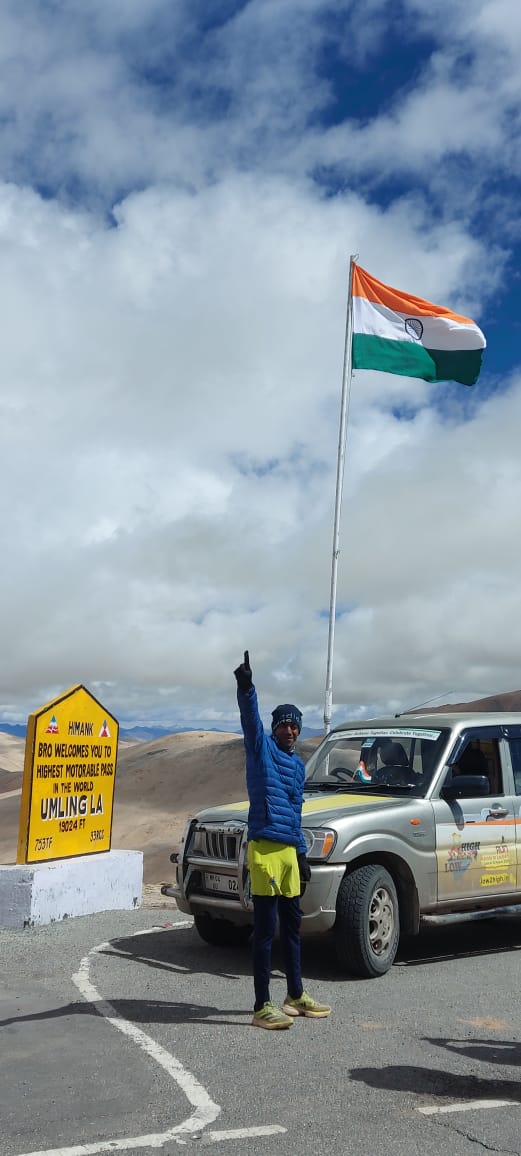
At Umling La (photo: courtesy Ashish Kasodekar)

Each place he passed through, left an impression. Kerala was generally clean with good local roads to run on but irritated in the early stages of the journey with its heavy traffic. In Maharashtra, traffic made the Thane-Ghodbunder stretch tough. “ Haryana was action packed. Everyone wanted to know what I was trying to do,’’ Ashish said. There were minor physical problems. After 40-45 days of running, one evening, there was pain in his leg. It was tackled. For three days, in the wake of that leg pain, he opted to walk 50 kilometres. He had an ice bath every day. The support team traveling alongside in a vehicle found a place to stay and secured the ice. His support team included his younger brother Amit, Rishikesh Gaikwad and Harikrishnan Damalpati. Every 15 days, Ashish did a medical test. Electrolyte levels and kidney functioning were checked.  Along the way, there were social engagements too. Ashish and his team distributed 35 fitness kits (each contained items like footballs and skipping ropes) to various schools; they also gave talks. By the time Ashish reached Punjab, the heavy rains that caused havoc in Himachal Pradesh in 2023, had happened. His route had to be reconfigured here and there depending on road condition and which roads stayed open. He reached Umling La on schedule, on August 15, having covered 4003 kilometres in 76 days. Notes kept by the team show that almost half the distance covered was on NH48. Second was NH3 with roughly 450 kilometres. The notes also reveal the team’s frustration with traffic at various points.

Project Low2High lived up to expectations. Except perhaps in one department – the app found roughly 8000 subscribers and their cumulative mileage was quite short of the 76 lakh kilometres originally envisaged. However, the real take away from Low2High is the template and ideation (for example, within Kerala itself, runners could imagine linking Kuttanad to the highlands of Idukki). As Ashish pointed out, his interactions with people during the journey told him that when it came to fitness, everyone from an IT professional to a truck driver, faced the same challenge of not having the time for exercise or lacking motivation for the same. With an engaging journey for central theme and the model of a community motivated enough to keep him company, he believes he can contribute his bit to get people moving.

It was early October, 2023. “ So, what’s next?’’ I asked as we reached the end of our chat, at his house in Pune.

“ I would like to try the Barkley Marathon,’’ Ashish said referring to the race in Tennessee, rated as a difficult ultramarathon with a history of few finishers. 

(The author, Shyam G Menon, is a freelance journalist based in Mumbai)

FINDING LIFE

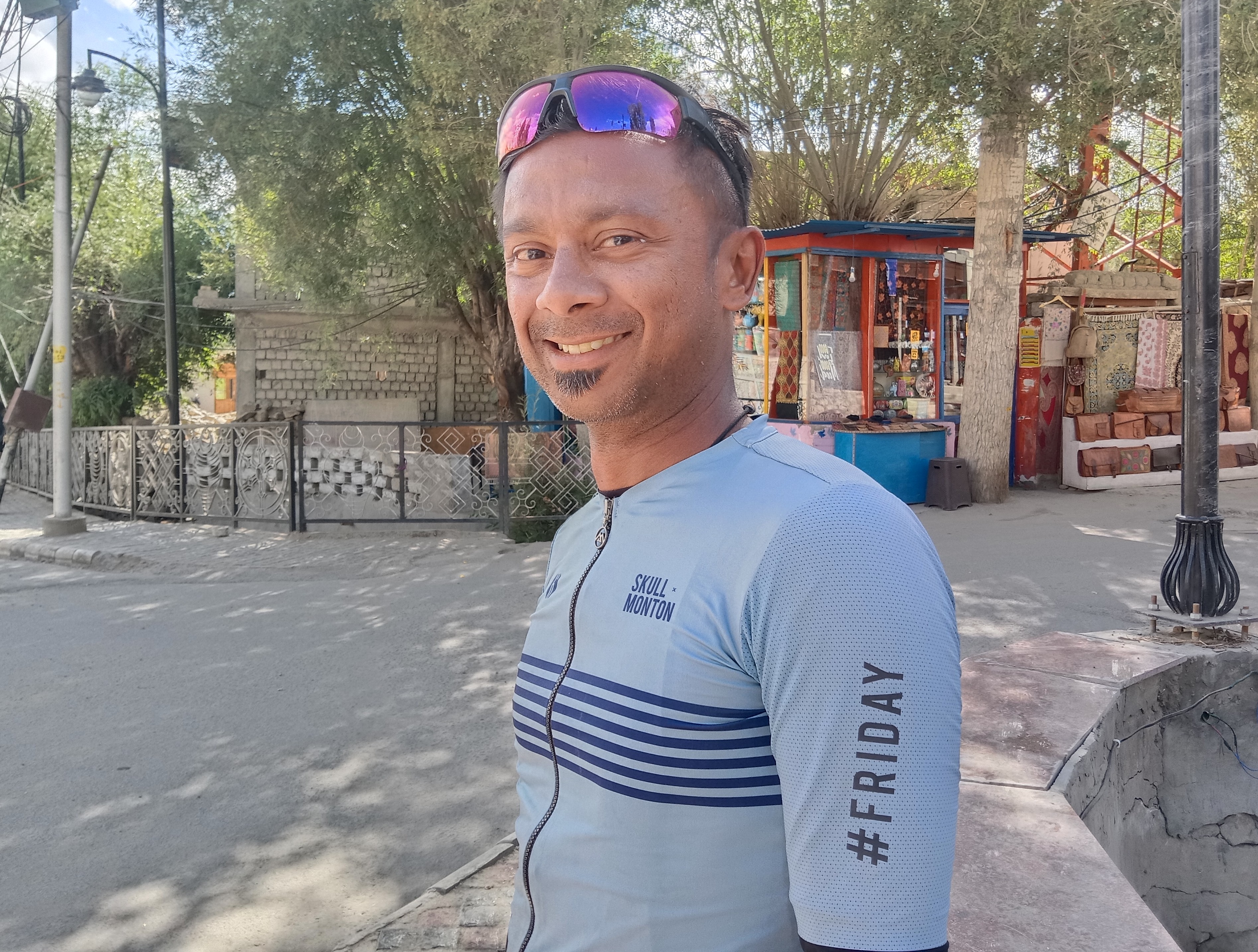
Nilanjan Guha Majumder (photo: Shyam G Menon)

It is not always that one finds a cycling story behind a simple recommendation on food.

I did and it was more than cycling that I found; it was the story of an interesting existence.

Early September 2023, a bid to contain one’s cost of living in Leh, saw freelance journalist search for Ladakhi food. I knew from past experience that it may prove futile for as has happened in many tourist-destinations, in Leh too, the culinary preference of outsiders overshadows what is locally consumed. One finds stylish cafes and restaurants catering to the taste buds of moneyed visitors who expect what they like everywhere they go and are willing to pay for it. It’s one of the call signs of new India; life resembles an airport – hunger is addressed not by eating affordable food but by demonstrating that one has the capacity to afford no matter what the cost.

Still, given my need had been whittled down to just the local bread or something similarly basic, I was hopeful of defiant culinary islands holding out against market forces. My search for Ladakhi food brought me to a kitchen at one end of Leh’s market and a conversation with the owners who highlighted the nutritional and economic sense in local food but admitted they too had succumbed to the new trend. “ It is affordable and it is nutritious,” the lady in the kitchen said before throwing her hands up to signal larger forces at play. There wasn’t a market big enough to support an eatery focused on Ladakhi food. On the bright side, the conversation was good. It’s the usual case, when two parties equally disappointed with contemporary drifts, meet. The kitchen had one customer. He sat there eating, quietly. At the end of my chat with the owner of the enterprise, the customer recommended that I try a kitchen elsewhere in town, which continued to offer local cuisine. That’s how I met Nilanjan. I was contemplating what to do, at the junction where Zangsti Road met Changspa Road and Sankar Road, when he emerged from the eatery. In season of Ladakh Marathon, his physicality hinted of cyclist. A short Q&A proved it right. A few days later, we conversed over lunch at a dhaba nearby.

An only child, Nilanjan Guha Majumder grew up in Uttarpara, Kolkata. His father worked with Customs & Central Excise; his mother was a housewife and entrepreneur. He did his schooling at Amarenda Vidyapith. He took to swimming when he was eight years old. Cycling was an early entrant to his life; it was his mode of transport in Uttarpara, famous for hosting Hindustan Motors, manufacturers of the Ambassador car, an icon of the India before economic liberalization. During his school days, Nilanjan loved playing cricket and featured in competitions up to the district level. College changed all that. Life became focused on academics (he still found time for volleyball and athletics). He graduated in computer studies from an institution in Bengaluru and then followed that up with a masters from Kolkata. Then, he joined Tech Mahindra in Pune. He also took a transfer back to Kolkata.

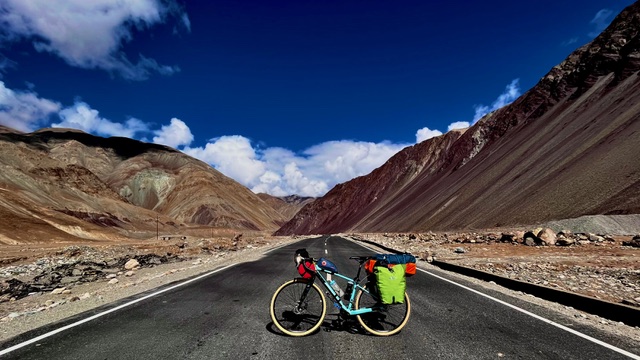
From Nilanjan’s rides in Ladakh / en route to Mahe, returning from Hanle (photo: Nilanjan Guha Majumder)

In 2007, he married his long-time girlfriend, who he knew from his schooldays. He shifted employment to Cognizant. Then, a while later, tragedy struck. Over five years spanning 2010 to 2015, both his parents and his grandmother, passed away. That was three people close to him, gone. “ I realized that nothing is permanent,’’ he said. In 2018-2019, Nilanjan and his wife decided to separate (the divorce came through in 2020). They remain good friends. In 2019, he shifted back to Bengaluru and acquired a new partner but the relationship broke up within a year.

Around the same time, he also resigned from Cognizant. It happened gradually, like something progressed towards. Prior to leaving the company, COVID-19 had struck humanity. The pandemic reauthored office operations and work styles worldwide. Just when office as surrogate home became fashionable, the virus dispatched everyone back home and made an office of it. For those not part of any herd, it must have been a time of engaging options around how to design one’s life. Nilanjan decided to travel and work remotely. He worked as a volunteer at a farm in Mysore. The farm house was beautiful and life there was calm and peaceful. The volunteering gave him time to think and make up his mind on what to do – among them, find the resolve to resign his job. The urge to quit had been building up over the preceding months. Volunteering helped him see things in perspective and find the courage to actually put in his papers. Now, educated, experienced and between jobs, he volunteered full time at the farm. He also taught children at the local village.

The owner of the farm was a dropout from the corporate world, who wished to start a school with a difference. Thanks to COVID, the situation was so bad that such plans had to be put on hold. Nilanjan had to move. He did so; to Guhagar on Maharashtra’s Konkan coast and another farm, where he volunteered. Amidst the new stint at volunteering, he also operated as a guide for tourists arrived to indulge in adventure sports. But a disagreement between the business partners concerned, saw the enterprise he worked at, shut down. Courtesy social media, he found another opportunity to volunteer in Himachal Pradesh. The location was near Banjar. According to Nilanjan, he was supposed to run a café in partnership with the owner of the facility; the larger enterprise was to be a travel company with focus on outings in the Tirthan Valley.  Around July 2022, he packed his bags and left Guhagar for Himachal Pradesh. Set to follow him, was a parcel.

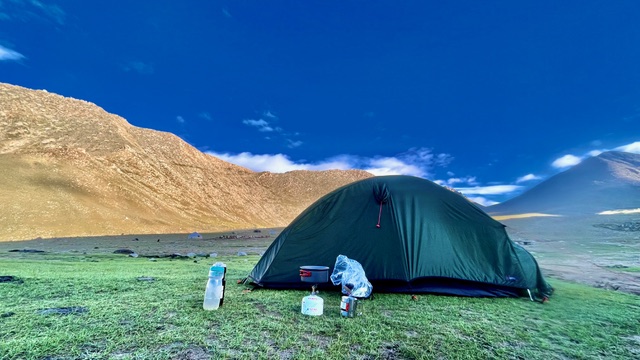
From Nilanjan’s rides in Ladakh / camping in a meadow the day before crossing Wari La (photo: Nilanjan Guha Majumder)

Six years earlier, in 2016, Nilanjan had taken to cycling in a manner more committed than the commuting of his childhood. With a LA Sovereign MTB for steed, he had joined a cycling club in Kolkata. The Sovereign soon gave way to a Montra MTB. As his interest picked up and he met serious cyclists, he acquired a Java Velos 2 road bike. He took the Java with him, when he shifted to Bengaluru, a city known for its regular bicycle races and activities around cycling. During one of his rides in the city, he met Anand (Andy) and joined the latter’s cycling group. He also started going for trail runs at Avalahalli. After much use, the Java was sold to a person in Chennai. Nilanjan contacted Venkatesh Shivarama (Venky) of WheelSports in Bengaluru to buy a Polygon Bend R2, a gravel bike (it is capable of both tarmac and offroad and can be used for bikepacking trips). The new bicycle was delivered to Nilanjan in Pune. He rode it all the way to Guhagar. And when he shifted to Himachal Pradesh, the Polygon followed; it was parceled to him by Sunil Kumar Sahu, who Nilanjan trusts with transporting his bicycle. On the map, Nilanjan was now parked in Himachal Pradesh, south of Ladakh, a region loved by cyclists, climbers, hikers, runners – indeed anyone who likes freedom and exploration.

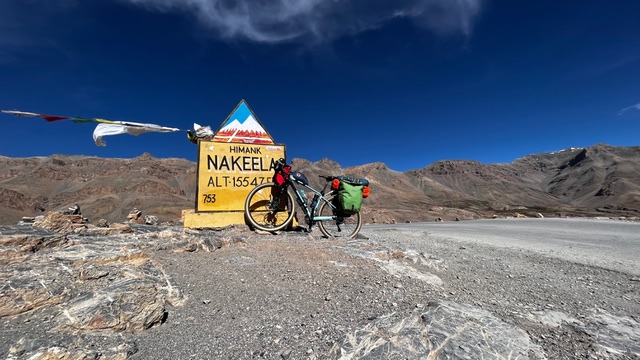
In some ways, the whole thing wasn’t accidental. Ladakh had been on Nilanjan’s mind from two to three years before his shift to Tirthan Valley. He had this vague idea of a plan – cycle from Himachal to Ladakh to Kashmir, Gujarat and South India before linking back to Kolkata. “ I had no idea what to expect. I am not a goal-oriented guy. I am a curious person, someone who keeps learning and possibly therefore, develops skills,’’ he said. Meanwhile, life in Tirthan wasn’t playing out as he would have wished it to. It seemed time to move again and explore. His former wife, who had stayed a good friend, pitched in to help. On July 28, 2022, Nilanjan set off for Ladakh on his Polygon. He proceeded to Manali and onward through the new Atal Tunnel to Sisu. There he met two friends from Kolkata and cycled with them to Sirchu. From thereon, he cycled alone. He rode via Tso Kar, Puga and Hanle to Leh, reaching there around August 20. After a brief halt, he cycled via Wari La to Nubra and returned to Leh via Khardung La. “ By now, I was in love with Ladakh,’’ he said.

The quest now was to figure out a means to hang on. Nilanjan likes photography. He approached a studio in Leh to see if the pictures he had taken, would sell. During the ensuing interaction with Rigzin and his uncle, Lobsang Visudha, Nilanjan came to know of the possibility of teaching computer applications to school children. He volunteered at Mahabodhi Residential School at Choglamsar in Leh. He taught computer studies for two and a half months. Over time, that volunteer work evolved into a proper job. From March 2023, he has been teaching there as a regular employee. Nilanjan is now a school teacher in Leh. According to him, his salary is considerably lower than what the IT industry used to pay him. But he has peace. In comparison, it was difficult to find peace in a corporate environment. During his days of volunteering at the school, he made friends with the local people. They helped him find an affordable place to stay in Leh.  “ This phase has given me a strong sense of purpose. I like guiding students,’’ he said adding that he now has a feeling of having found what he was looking for.

From Nilanjan’s rides in Ladakh / on the approach to Tso Kar (photo: Nilanjan Guha Majumder)

When I met him in September 2023, Nilanjan led an active lifestyle mixing regular workouts, running and cycling with his newfound role of school teacher. On weekends, he went for long bicycle rides (we met at the dhaba after he had finished a trip up and down, Khardung La). The Polygon has held up well, he said. He made one modification to the bicycle – he replaced the rear chainrings, originally of a 11-32 configuration, with a 11-34. It helped him get a better gear ratio for climbs. Else, the bike is pretty much unaltered. Being a gravel bike designed to do bikepacking trips as well, its gearing doesn’t have the wide range of the classic tourer’s. But Nilanjan says, he hasn’t had reason to complain despite life in Ladakh. On long trips, he rides with loaded panier bags. So far, the bicycle has tackled all the uphill, downhill and flat terrain thrown at it.

A couple of days after this chat, a friend and I had Ladakhi food at the kitchen Nilanjan recommended. It was good. But above all, finding Ladakhi food amidst the predictable trends of the market, was a pleasure.

(The author, Shyam G Menon, is a freelance journalist based in Mumbai)    

DISAPPOINTED WITH LEVEL OF CORPORATE SUPPORT FOR INDIAN JUNIOR ATHLETICS: AFI PRESIDENT

Adille Sumariwalla (photo: Shyam G Menon)

The level of interest shown by India’s corporate sector in the country’s athlete nurturing program for track and field events at the junior level, has been disappointing, Adille Sumariwalla, president, Athletics Federation of India (AFI), said.

“ Everybody wants a Neeraj Chopra. Nobody wants to put money into the grassroot building of athletes,’’ he told this blog on November 4, eve of the 2023 IAU 50KM World Championships, held recently in Hyderabad. Chopra won gold in javelin throw at the 2020 Tokyo Olympics (held in July-August, 2021) to become the second Indian after Abhinav Bindra to earn an individual gold medal at the Olympics. Bindra had won gold in the men’s 10 metre air rifle, at the 2008 Olympics. While gold medal-winning elite athletes are sought after by companies wishing to feature them in their marketing campaigns, efforts to spot, nurture and grow talent at the grassroot junior level – basically, the foundation on which the story of elite achievements rests – has eluded the support of corporates.

Sumariwalla pointed out that so far, the junior programme for scouting and grooming potential in track and field events has been funded by the AFI itself. It is among the largest such programs in the world and many senior level performers owe their discovery and subsequent passage to limelight, to the program. Yet, companies have overlooked the sustained engagement that is required to support this program. They prefer instead, the ease of returns found in marketing campaigns featuring elite athletes. This is when, according to Sumariwalla, a mere spoonful of the total Corporate Social Responsibility (CSR) outlay of the top 20 Indian corporates exceeds the government’s annual sports budget. “Companies want to use corporate social responsibility money for advertising. They want to know how many eyeballs they will fetch by sponsoring the athletes. Therefore, they have no interest in supporting grassroot level athlete development programs. They are not interested in sustained engagement,” he said.

AFI has been organising the National Inter District Junior Athletics Meet (NIDJAM) since 2003. “ The way it goes is that first, 600 districts organise the district championships in two age groups – under 14 and under 16 years. The smallest districts have about 300-350 participants. The bigger districts have anything between 3,500 and 4,500 participants. The district championships are first held. Then they select 13 athletes to come for the National Inter District Junior Athletics Meet (NIDJAM). Last time, 599 districts took part. We had 6,500 children who were selected from roughly 10 lakh children who take part,” Sumariwalla said, outlining the scale of the program.

Among the state governments, Bihar government had offered limited funds. Recently, REC Ltd, a state-owned company, came aboard, offering funds for NIDJAM. But these are exceptions. “ In these 17 years, hardly any corporate evinced interest in funding or partially supporting NIDJAM. A couple of companies helped in a brief manner. AFI has supported the program internally for the last 17 years. Children get their train fare, free accommodation and free food. They come with their parents. We also feed the parents. At times we are feeding about 10,000 people each day,” Sumariwalla said. Last year, the Bihar government took up a portion of that expenditure, mainly food and accommodation. REC Ltd took up the train fare expenses partly.

AFI has sought corporate support for the program. Unfortunately, as the federation discovered, corporate interest in sports is more around marketing campaigns featuring successful elite athletes and less in sustained, long term engagement. “ We have been reaching out to corporates. The constant question from companies is: can we get Neeraj or for how many days can we get Neeraj? My answer has always been: no, you can’t get Neeraj,” he said, reiterating that sponsors need to support sports at the grassroot level. Without grassroot level programs, the pipeline feeding talent to senior athletics gets weakened.

There is also an emergent need to reimagine and support the junior program. At the last NIDJAM, 599 districts took part and 6,500 children were selected from among 10 lakh who took part in the district championships. AFI’s focus for these young athletes is to allow them to explore at least three different sports. “ We want them to have an overall development. We don’t want them to start specialisation at the age of 13, 14 and 15 and probably till the age of 17. We found that those who specialise early burn out fast. Those who took up completely different sports have done well,’’ he said.

What worries is that the conversion ratio from junior to senior athletics is very low at three to five percent. “ If we are going to lose all our athletes by the time, they are 18 years old, the program is of no use. Therefore, we do not want them to specialise in events too early on. We are even thinking of changing the national structure of the events to make sure that they participate in all kinds of odd events,” he said. The above illustrates the challenges the junior program faces and also the need to support it in a sustained fashion such that the rates of successful transition to senior athletics don’t hover at discouraging levels. AFI’s talent nurturing program at the junior level is among the best in the world. “ Supporting it is the most important thing for the development of athletics. Some of our top-notch athletes have come out of this program,” Sumariwalla said.

Notwithstanding his disappointment at corporates’ obsession with successful senior athletes, Sumariwalla believes that senior athletes’ performance has a salutary effect on the performance of junior athletes and the interest in them. For instance, the lustre around a Neeraj Chopra brushes off positively on a whole world of athletics in India. Brands such as Adidas, Puma and Asics have shown interest in AFI. “ We have been able to convince HSBC to look at the women’s program. We now have its support for the women’s program. Reliance has come in but not as large as it should be. If we do a valuation of AFI we are not even getting 10 percent of that by way of support,” he said.

With reference to the ultramarathon (Sumariwalla was in Hyderabad in connection with the 2023 IAU 50KM World Championships), he said that AFI will try to secure official recognition for the sport. Such recognition helps events and athletes to be supported by government (airfare, daily allowance etc may be possible). The classical route to recognition was the admission of a given sport to the Olympics. Ultrarunning is yet to be a part of the Olympic Games. However, at present, the Indian government also recognizes and supports sports that are not part of the Olympics. For example, squash wasn’t part of the Olympics for a long time but it was recognized by the government (recent news reports said, squash will be there in the 2028 Los Angeles Olympic Games). The way to obtain such recognition is via better performance by athletes. Once athletes return great performances and the same grabs public attention, support and traction, the government will feel motivated to recognize and back ultrarunning. Podium finishes are thus critical. The 2023 IAU 50KM World Championships witnessed a silver medal for India in the men’s team category. Further in the past, India has won podium positions in the team category at the continental championships.

According to Sumariwalla, ultrarunning is an extension of athletics and the government needs to support it. “ I think it will happen. It’s just a matter of time,’’ he said.

(The authors, Latha Venkatraman and Shyam G Menon, are independent journalists based in Mumbai)

AT A GLANCE / NOVEMBER 2023

This image was downloaded from the Facebook page of the event and is being used here for representation purpose. No copyright infringement intended.

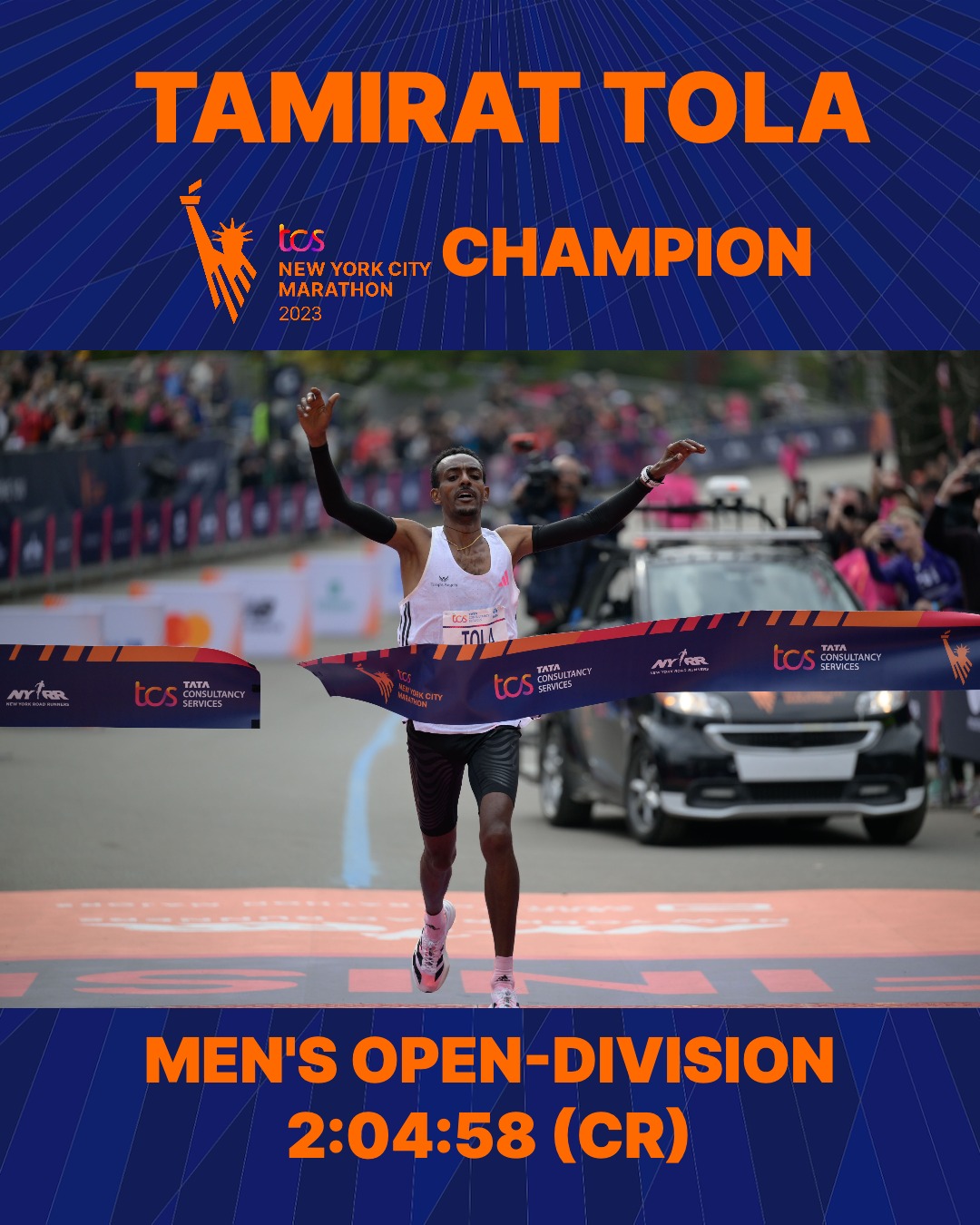
Ethiopia’s Tamirat Tola topped the men’s category of the 2023 TCS New York City Marathon with a new course record of two hours, four minutes and 58 seconds.

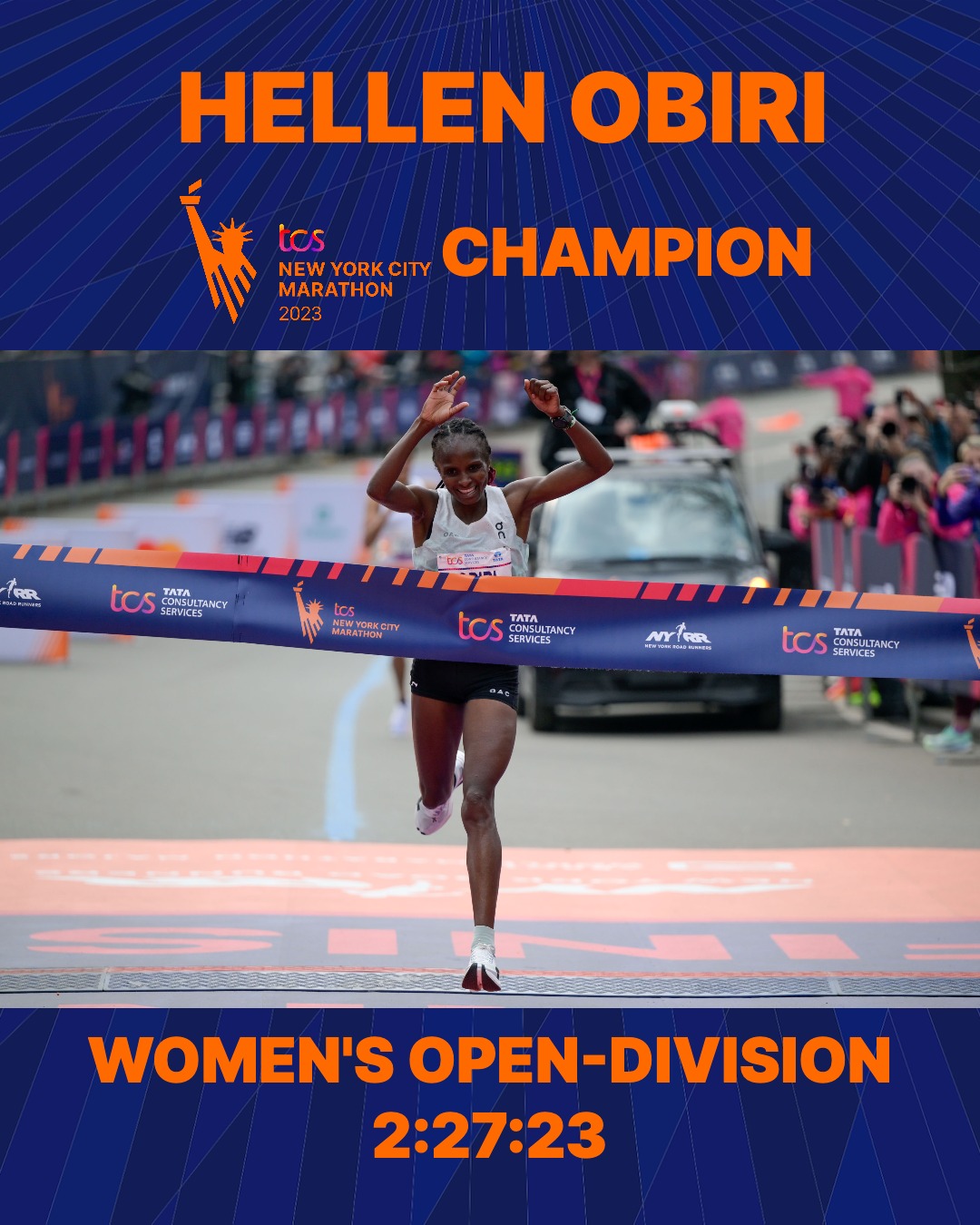
The women’s race was won by Kenya’s Hellen Obiri; she covered the distance in 2:27:23.

Tola, the 2022 world champion in the discipline, was followed to the finish line in New York by Kenya’s Albert Korir (2:06:57) and Ethiopia’s Shura Kitata (2:07:11). In the women’s category, Ethiopia’s Letesenbet Gidey (2:27:29) and Kenya’s Sharon Lokedi (2:27:33) placed second and third respectively.

This image was downloaded from the Facebook page of the event and is being used here for representation purpose. No copyright infringement intended.

More than 50,000 people participated in the 53rd edition of the New York City Marathon. As per the report on the event published by Runners World, Tola, who was part of the lead pack from the start, began putting distance between himself and the rest of the pack at around 25 kilometres. For some time in this evolving separation he had the company of fellow countryman Yemal Yimer but at about eight miles left to go, Tola started to pull away from Yimer too. The new course record at run’s close was an improvement on the old by eight seconds.

The women’s race threw up no new course record. But it was more tightly contested than Tola’s passage to victory. Here, the top three finishers battled each other right into the last mile and it was over the last 600 metres or so that Obiri sprinted ahead to take the top spot. Gidey finished close behind. Obiri is the first athlete in 34 years to win both the New York City Marathon and the Boston Marathon in the same season, Runners World said in its report.   

According to Wikipedia, Hellen Obiri is the only woman to have won world titles in indoor and outdoor track and cross country. As of November 2023, Letesenbet Gidey held the world record for both the 10,000 metres and the half marathon.

Link to video posted on YouTube, showing the final phase of the women’s race at the 2023 TCS New York City Marathon.

(The author, Shyam G Menon is a freelance journalist based in Mumbai)

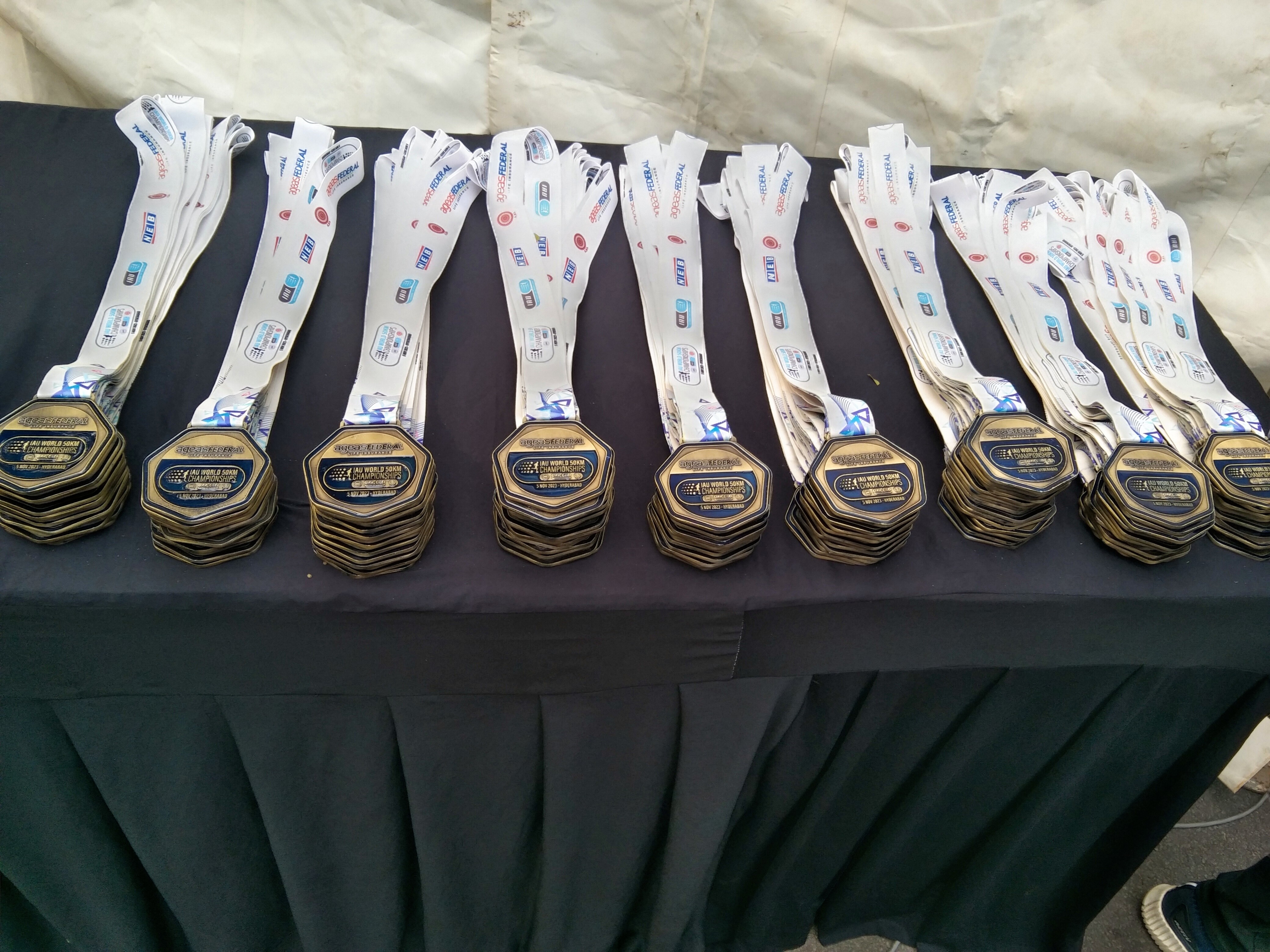
2023 IAU 50KM WORLD CHAMPIONSHIPS / CHAKIB LACHGAR AND CARLA MOLINO TRIUMPH

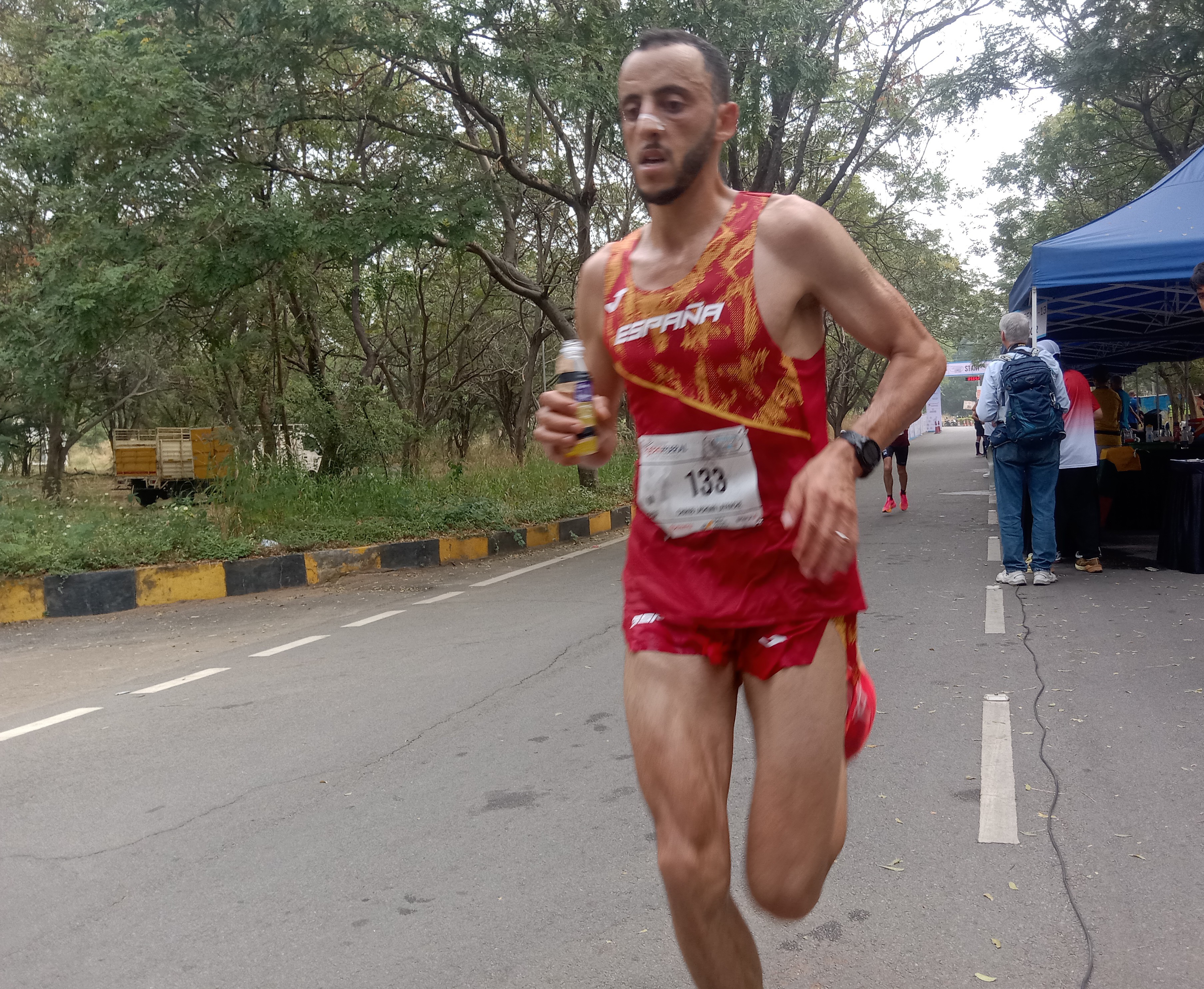
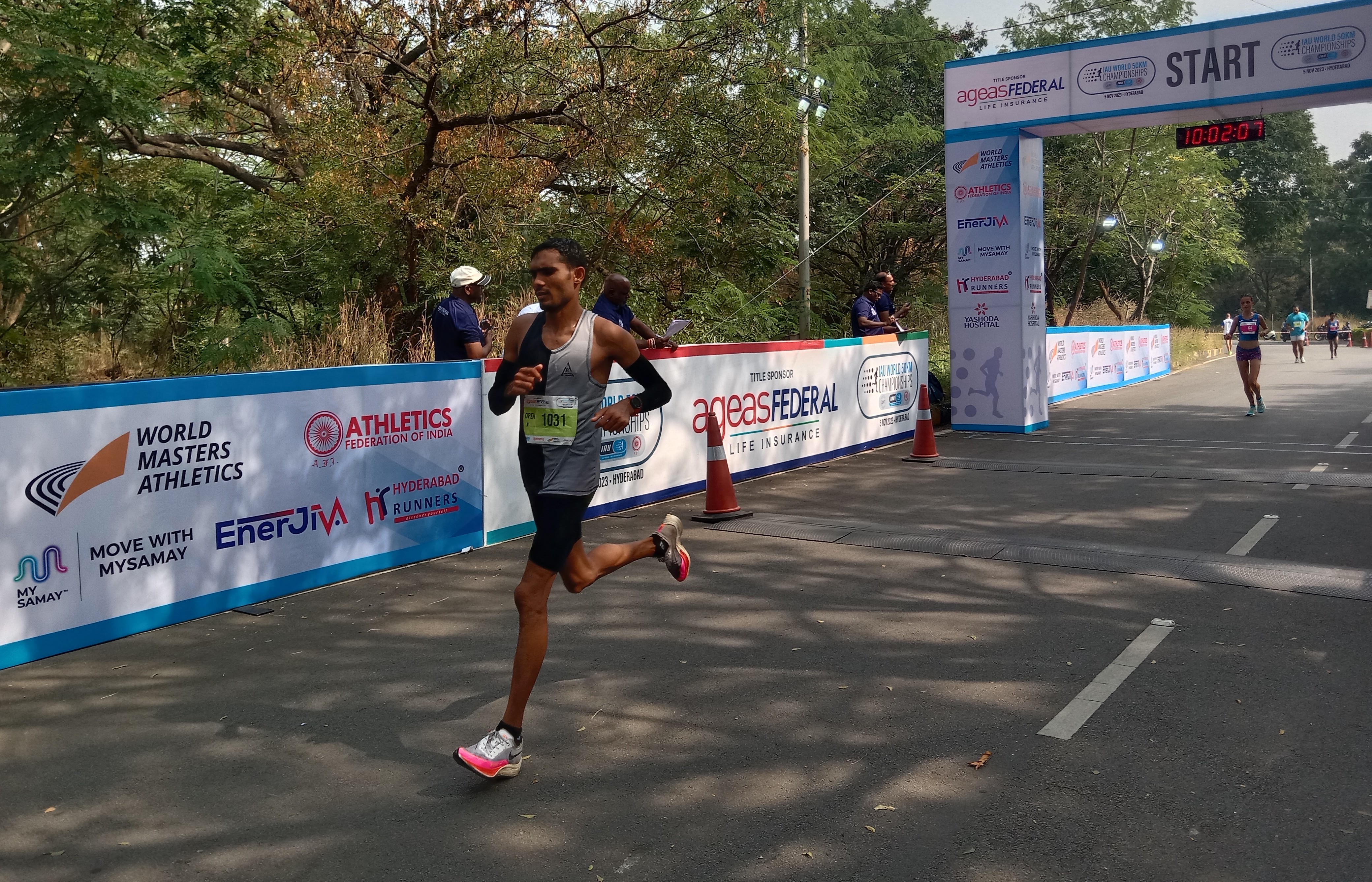
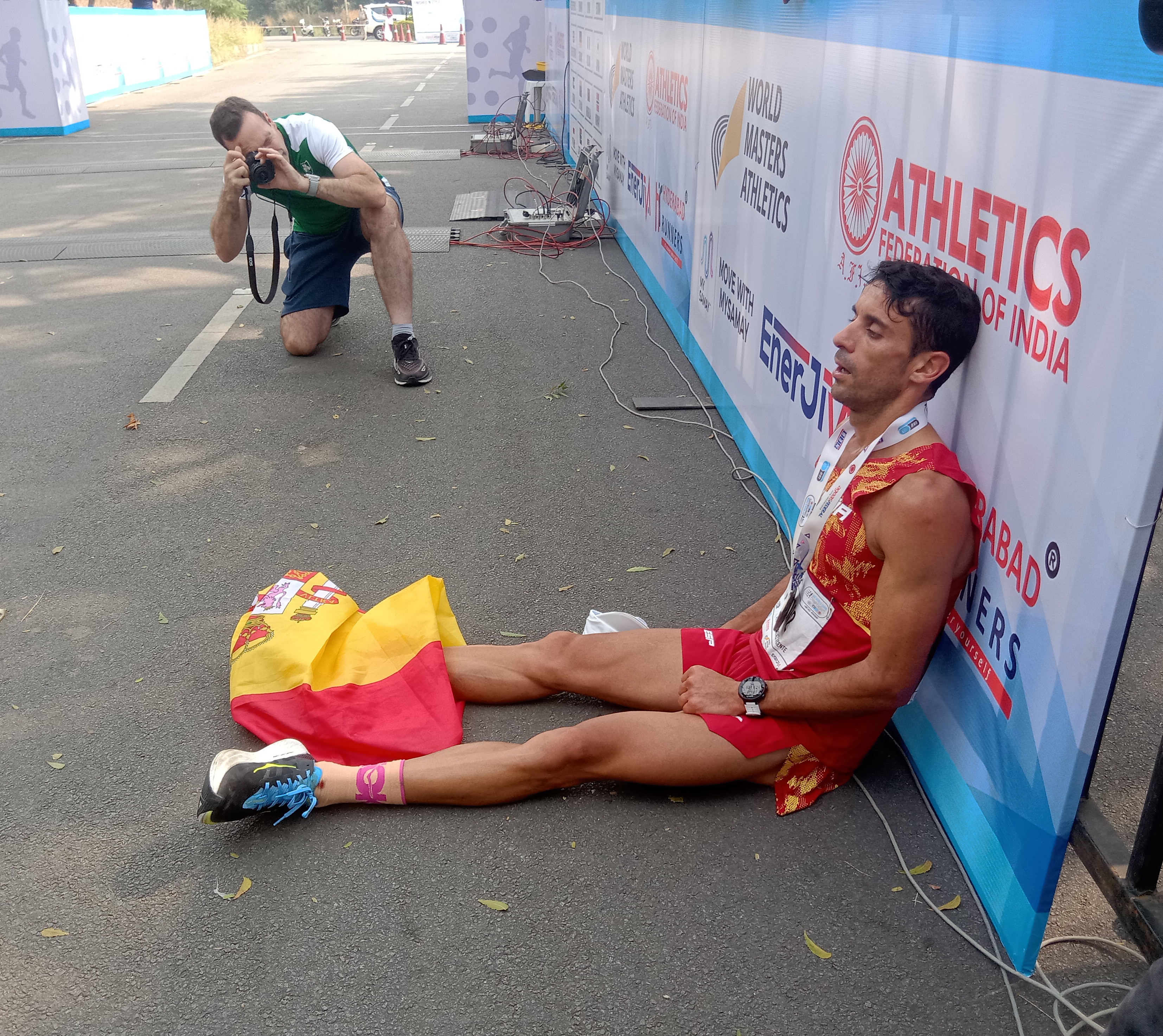
Chakib Lachgar Latriche of Spain at the 2023 50KM World Championships held in Hyderabad (photo: Shyam G Menon)

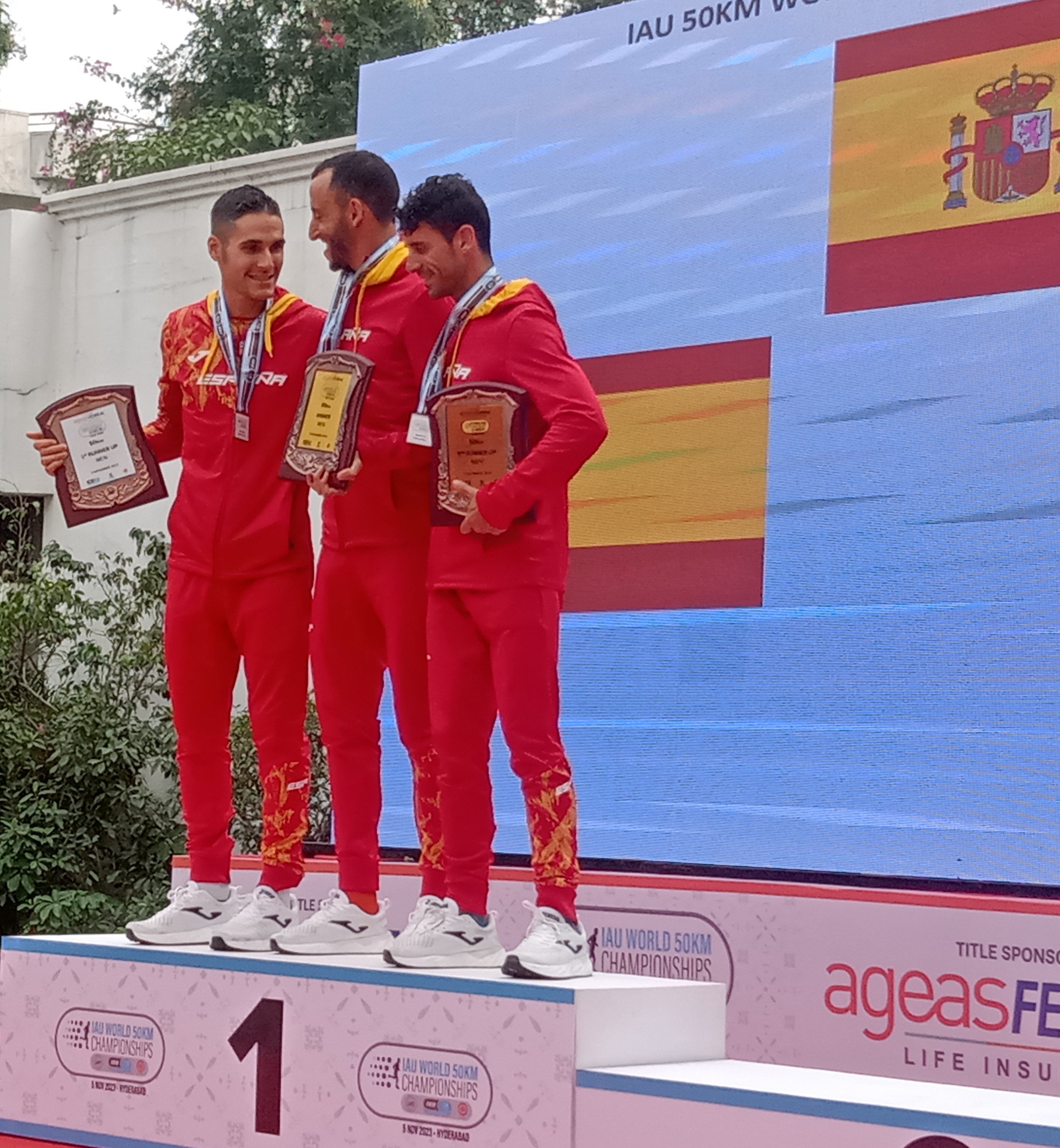
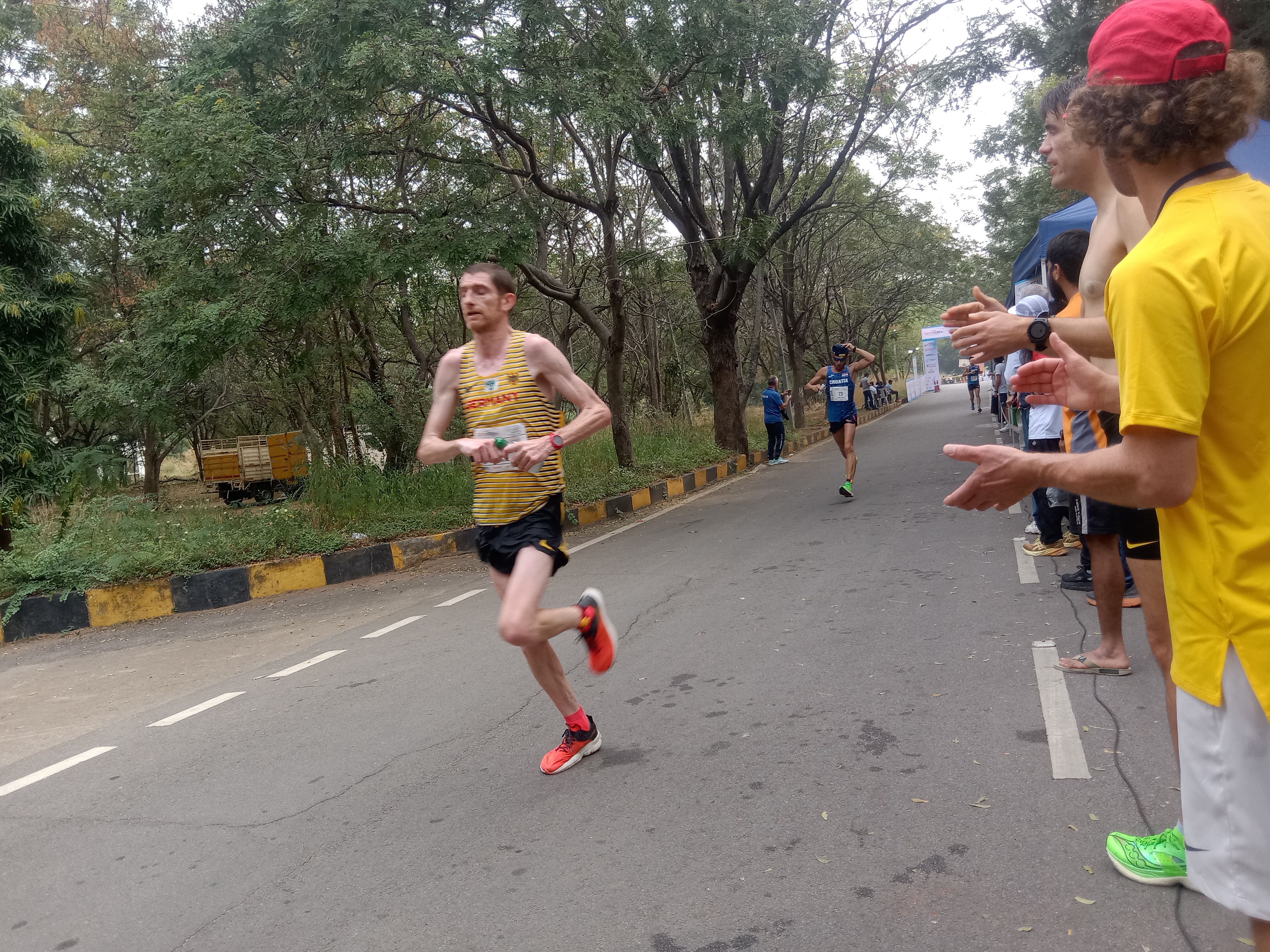
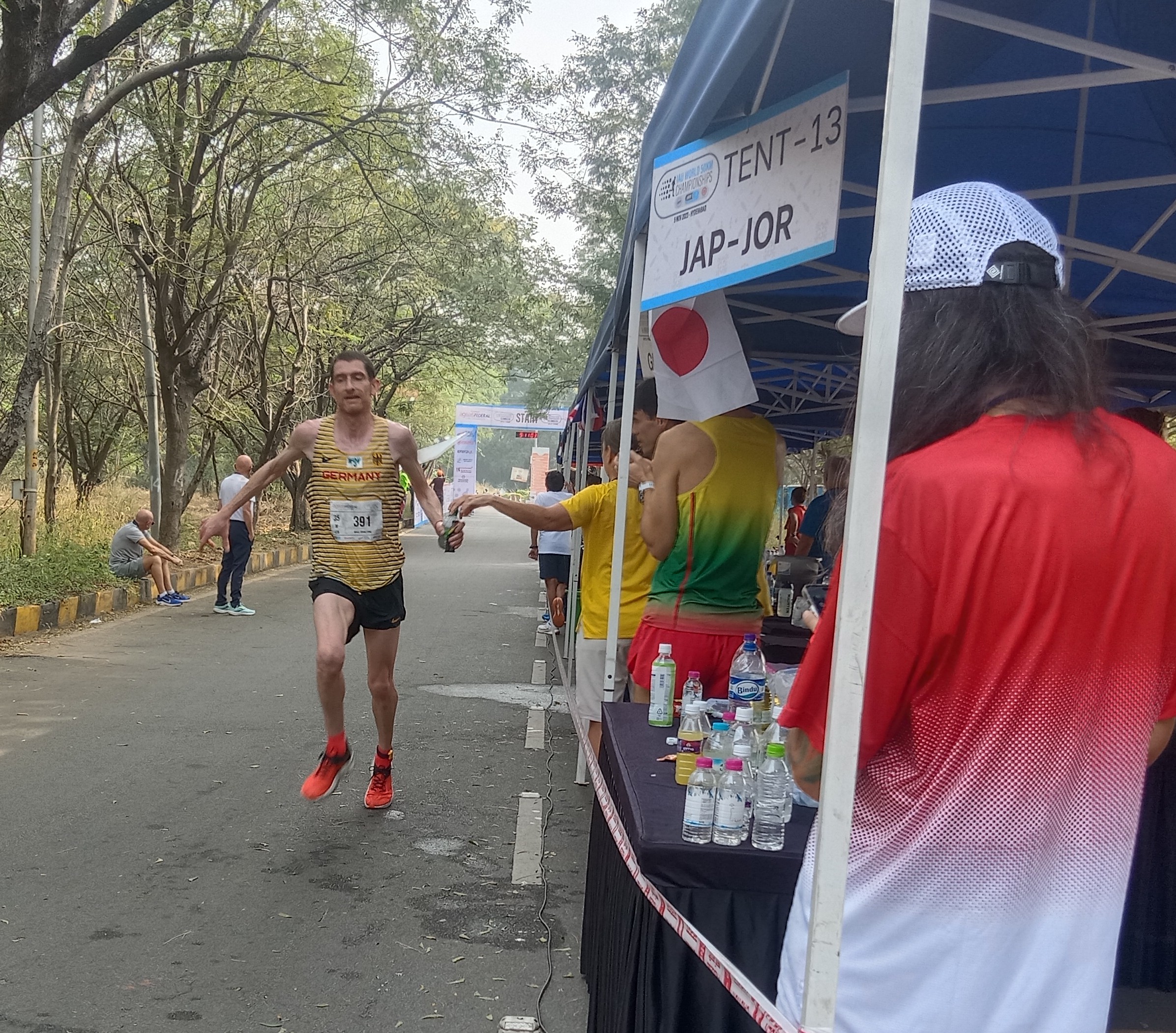
A Spanish armada of ultrarunners swept the podium in the men’s category while an American silver denied a similar sweep to the British in the women’s section at the 2023 IAU 50KM World Championships in Hyderabad on Sunday, November 5.

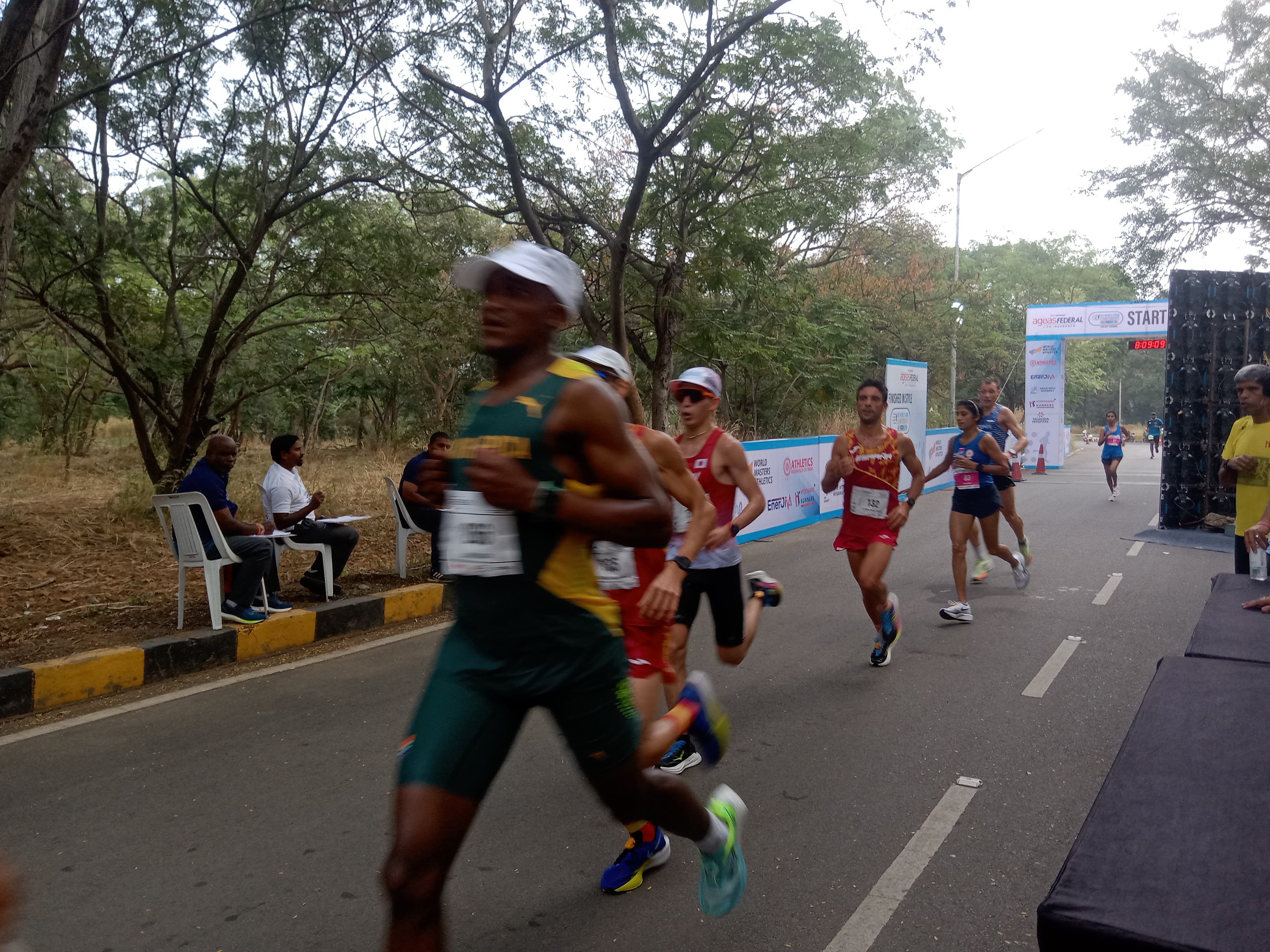
The men’s race was won by Chakib Lachgar Latrache of Spain. He took the lead quite early in the race and held on to it. He finished the race in two hours, 48 minutes and 20 seconds (it was roughly a minute short of the current European record for 50 kilometres). Second place went to Spain’s Alejandro Jiminez Vicente (2:49:30). He was followed to the finish by fellow countryman Jesus Angel Olmos Pascual (2:50:12) who placed third. This was the first podium sweep for Spain at the championships.

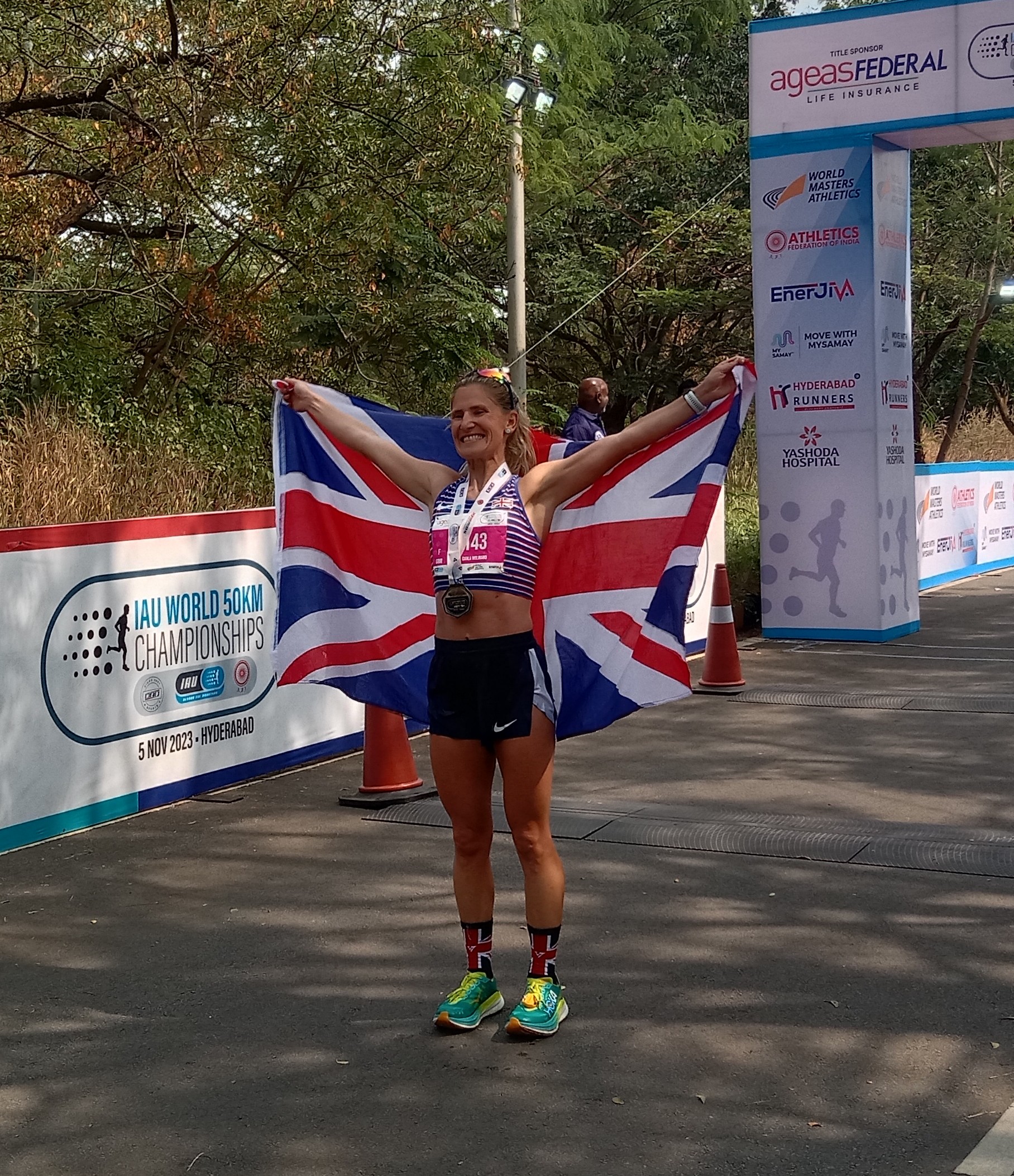
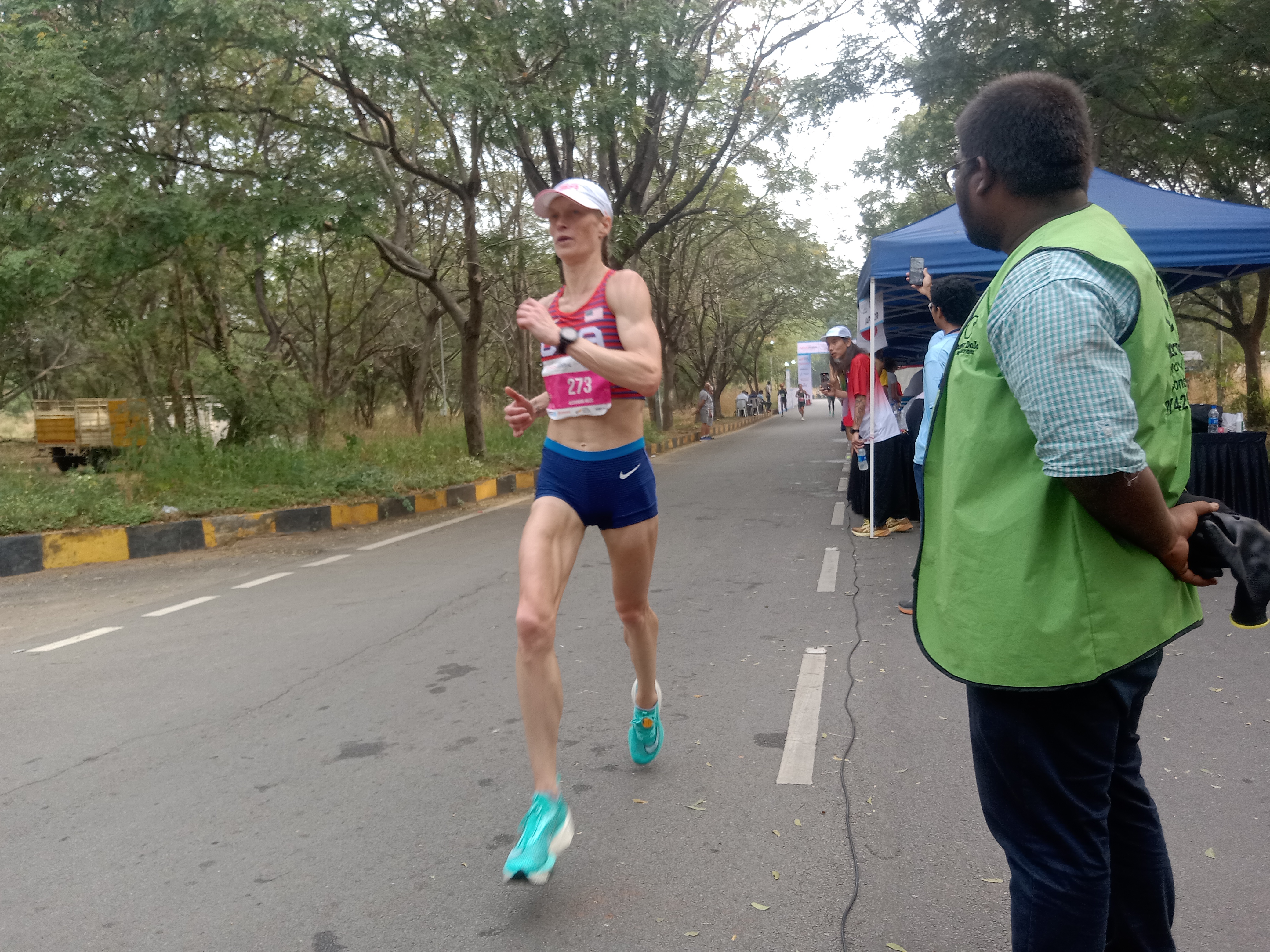
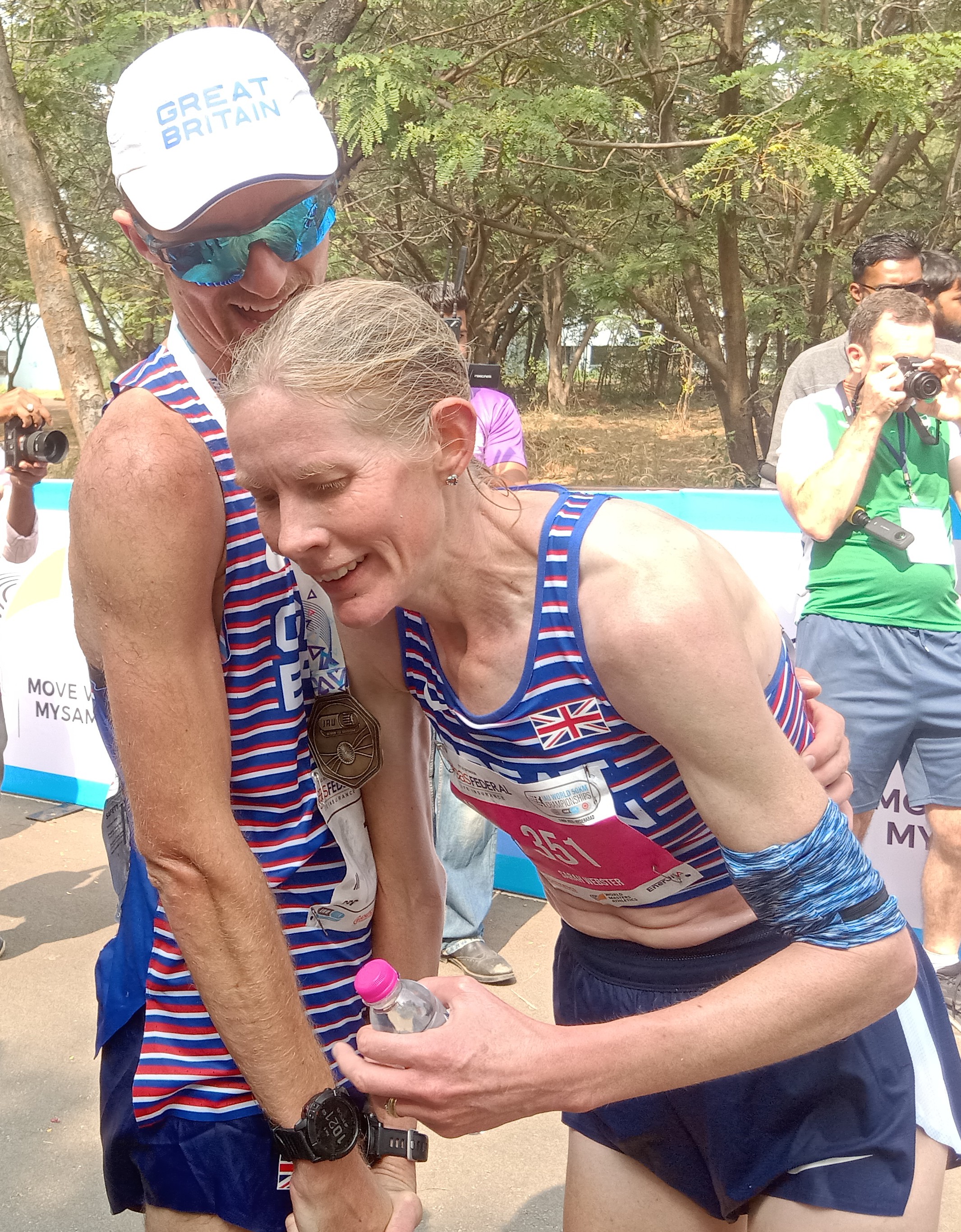
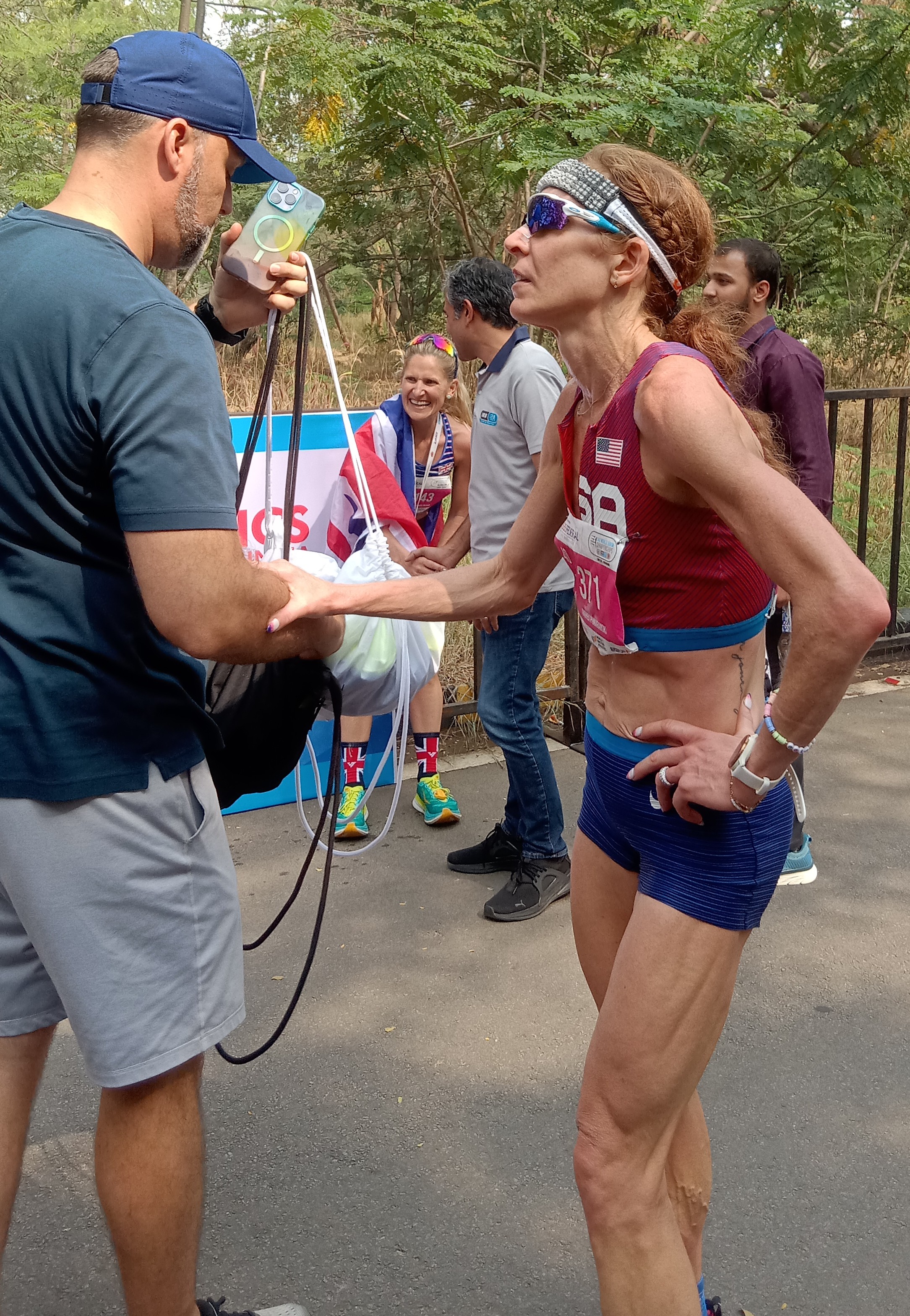
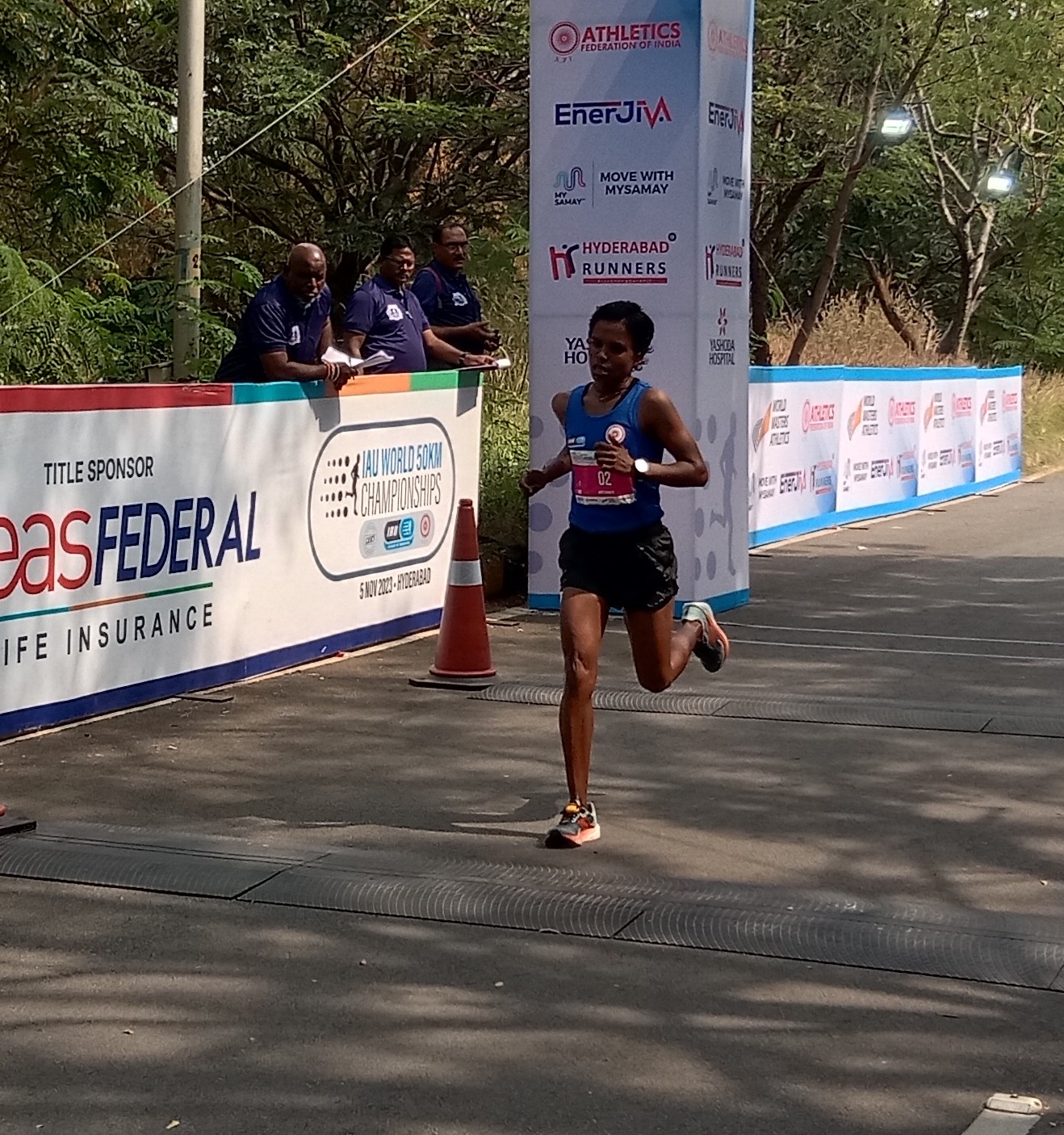
Great Britain’s Carla Molinaro was the winner among women. She covered the 50 kilometre-distance in 3:18:23. Second place went to Andrea Pomaranski of USA (3:19:07). Great Britain’s Sarah Webster (3:20:07) finished third. Unlike in the men’s race where the eventual winner marked out his lead early on; in the women’s race, it was a tighter pack of race leaders with the winner clearly decided in the last loop or so. Interestingly, for both Chakib Lachgar Latrache and Carla Molinaro, Sunday’s event was the first 50 kilometre-race they were participating in.

Carla Molino of Great Britain at the 2023 50KM World Championships held in Hyderabad (photo: Shyam G Menon)

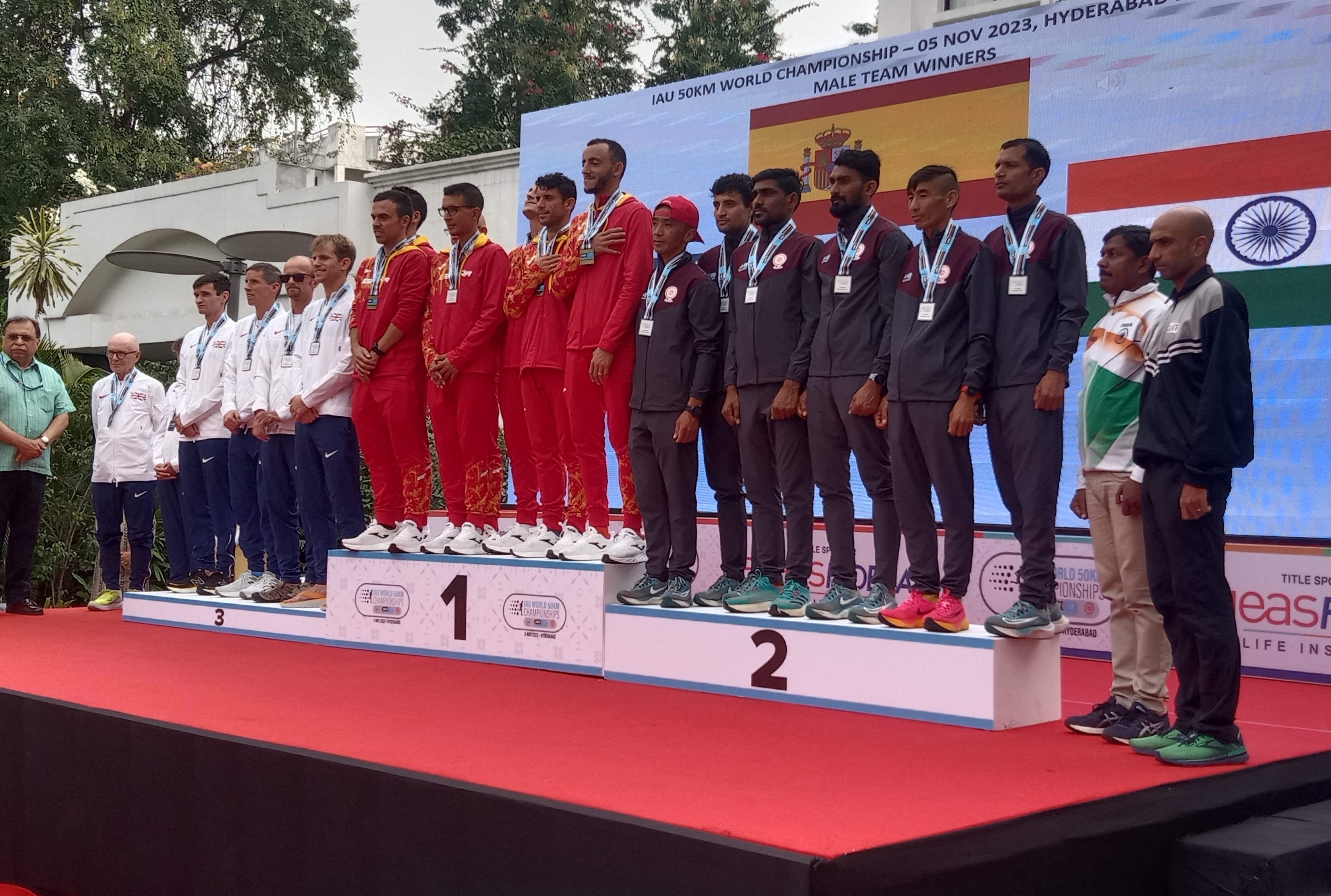
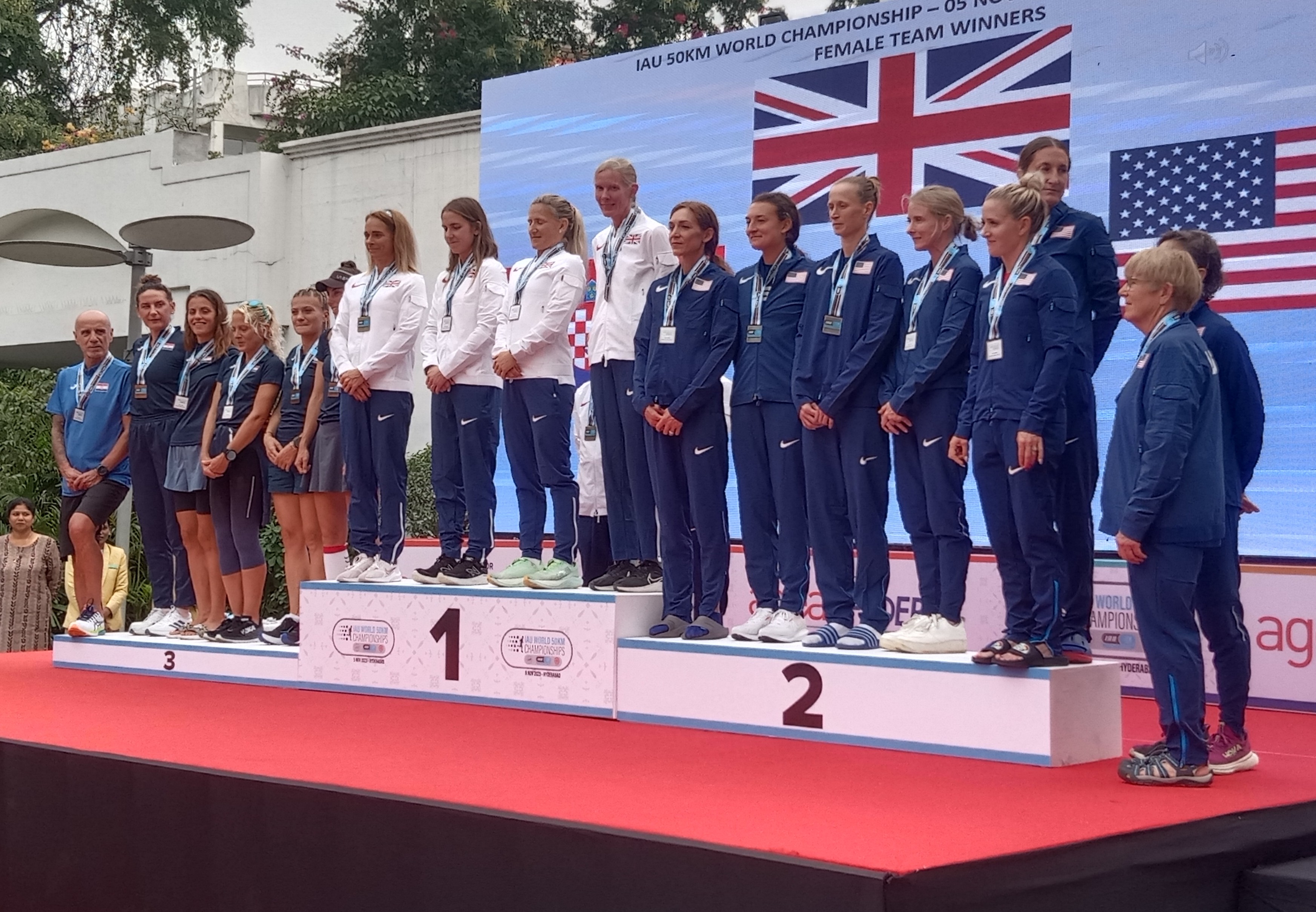
With Spain sweeping the men’s podium, the Spanish armada also took top honours in the team category for men. Their top three runners had an aggregate timing of 8:28:02. Thanks to a bunch of hardy performances – Anish Thapa Magar (2:54:09), Akshay Saini (2:57:05) and Pralhad Dhanavat (2:57:36) – the Indian men’s team secured second place with aggregate timing of 8:48:50. Third place went to Great Britain with an aggregate of 8:51:58. In the women’s category, the top team was Great Britain (9:59:07) followed by USA (10:18:11) and Croatia (10:53:20).

In the open category, the winner was Iran Ali (3:26:24) followed by Sean D’Mello (4:08:11) and K.V.B. Reddy (4:12:10).

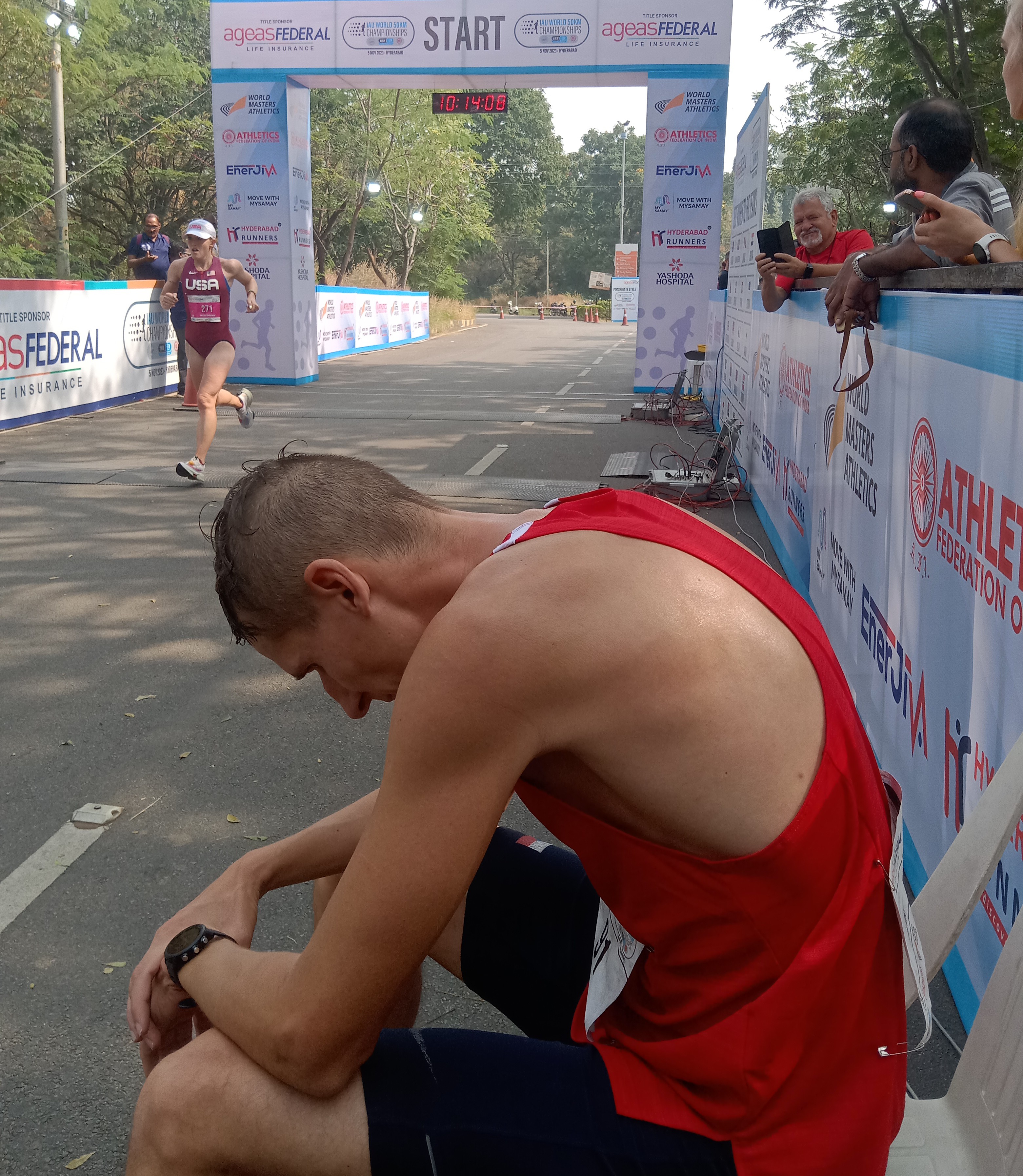
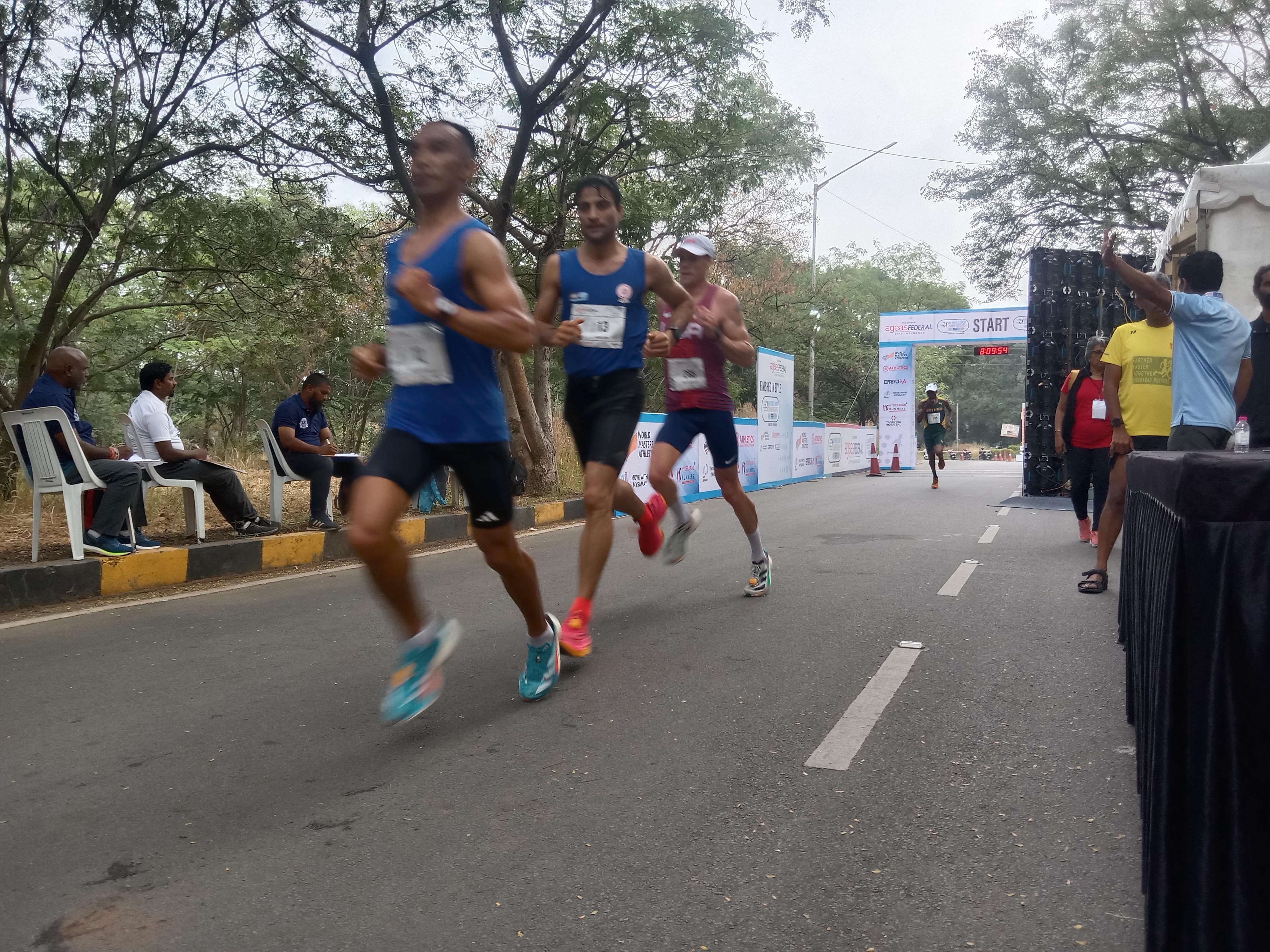
The race was held on a five kilometre-loop on the premises of the University of Hyderabad. Ten laps of the circuit aggregated to 50 kilometres. Most runners – including the two individual winners – described the race as tough. The main culprit was the Hyderabad weather; it was generally cool in the run up to the race but decided to turn warm on Sunday. The second half of the race was particularly difficult for some of the participants. Another element of difficulty highlighted by some runners was the course on which the event was held. It was rolling in nature, featuring minor ups and downs.

“ The five-kilometre-loop starts on a mild downhill but in the outback, it moves gently up and down. We were losing our pace on the uphill portions but were able to make up during the downhill segments, ‘’ Adam Vadeboncoeur of the US team, said. Among those finding their performance affected by the heat was Norway’s Abdulaziz Mohammedsalih Ebrahim, who had the fastest personal best coming into the race. Following the event, he told this blog that he had found the heat difficult to bear, coming as he was from a much cooler Norway. Some of the runners appeared to take Hyderabad’s temperature in their stride. “ In ultrarunning, these kinds of difficulties are likely to be there,’’ Carla Molinaro said.

The top three men’s teams – Spain, India and Great Britain (photo: Shyam G Menon)

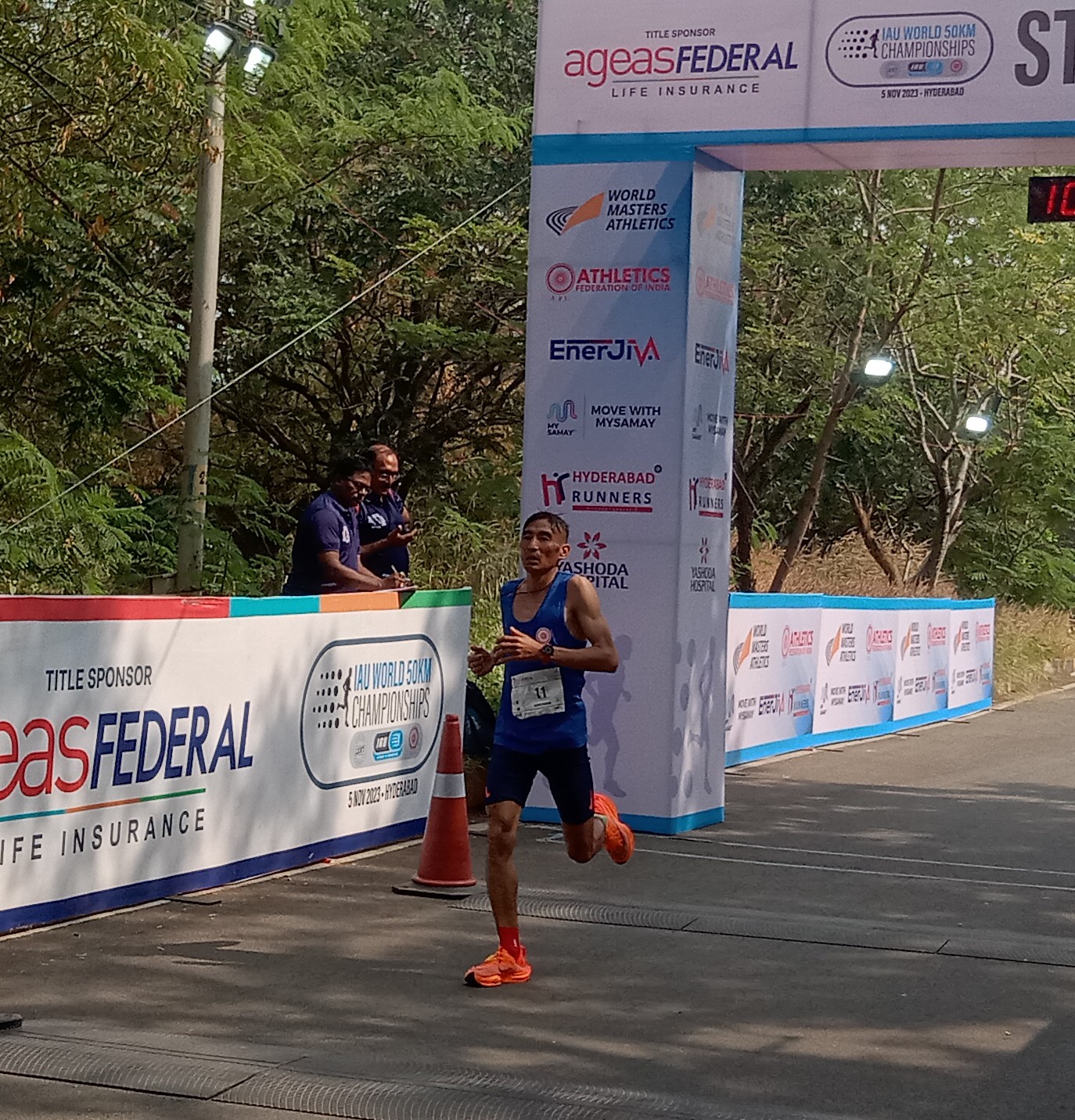
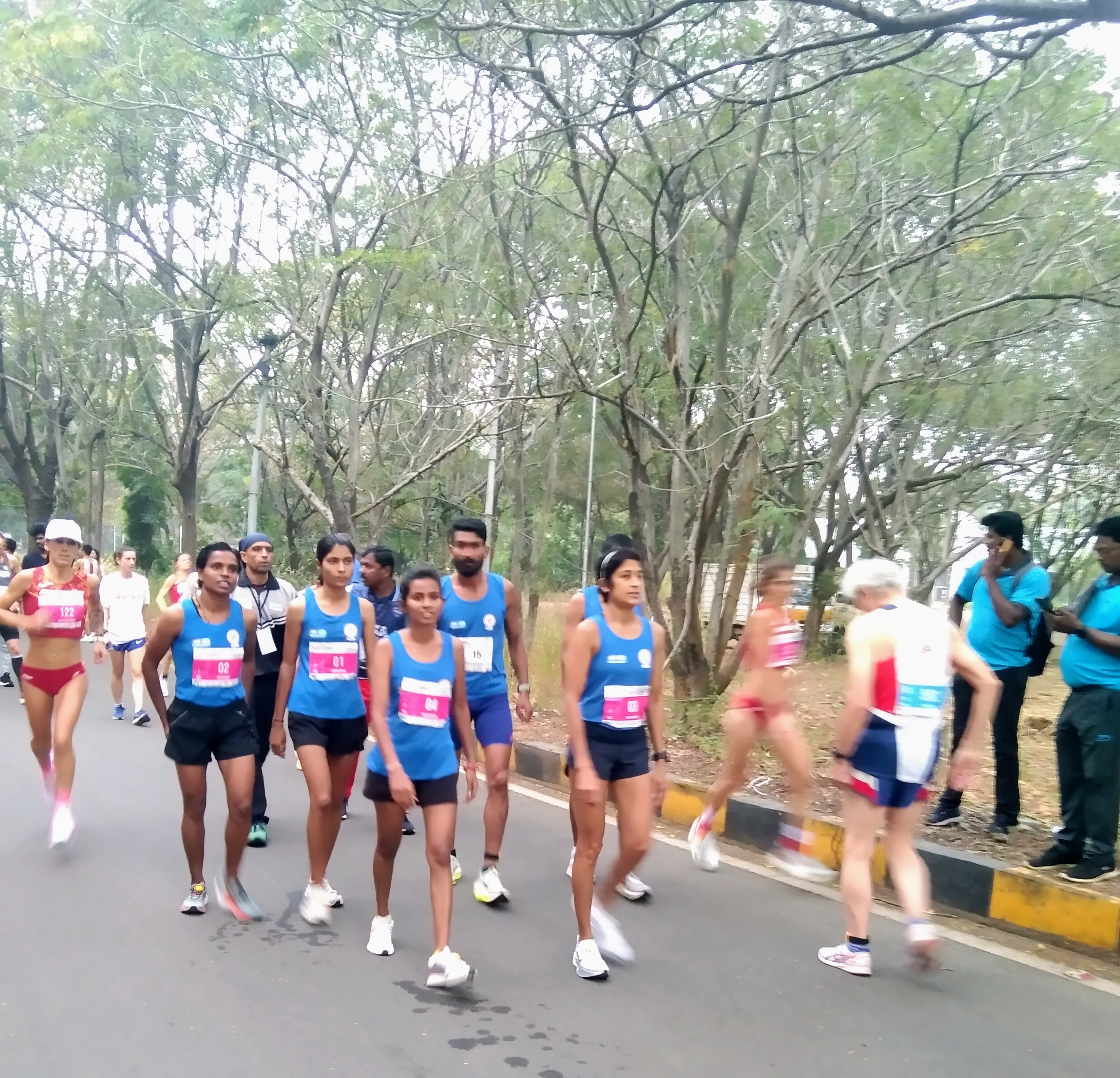
Anish Thapa Magar, the topper among Indians, placed sixth in individual rankings. He was participating in his first 50 kilometre-race. Aside from his timing and that of Akshay Saini and Pralhad Dhanavat (which have been mentioned earlier in this report), the timings of the rest of the Indian runners are as follows: Arjun Pradhan – 3:06:42; Mohit Rathor – 3:06:45, Bangriya Vikram Bharatsinh – 2:58:51, Jyoti Gawate – 3:53:05, Kavitha Reddy – 4:14:01 and Prachi Godbole – 4:33:15 (provisional). The race played out quite well for Jyoti Gawate, who was the first among Indian women to complete the race. “ I had no difficulty during the race at all. The heat did become a bother during my last three loops,’’ she said. Her compatriot Ashvini Jadhav dropped out midway through the race as she experienced chest pain. Incidentally, all the six runners representing India in the men’s category were from the Indian Army.

Asked what he felt about the Indian men’s team meriting second place on the podium at the event, Adille Sumariwalla, president, Athletics Federation of India (AFI), said, “ Its historic. Its never happened before. We are reaching there.’’ According to Santhosh Padmanabhan, manager of the Indian team, it was an amazing performance given many of the team members hadn’t participated in a 50 kilometre-race before. “ Neither did we expect, nor did the world expect,’’ he said of the men’s team’s podium finish. Nadeem Khan, president, IAU also told this blog that the Indian team’s progression in the past few years had been remarkable.

The top three women’s teams – Great Britain, USA and Croatia (photo: Shyam G Menon)

Long term observers of IAU championships however pointed out that while the outcome at Hyderabad was certainly a great result for India, the more sobering aspects shouldn’t be overlooked for the sake of realistic growth. At 20 teams present and competing, the participation level in Hyderabad was modest. At the two IAU continental championships held earlier in Bengaluru, Indian teams had earned places on the podium. Those were great performances on home ground, in conditions Indians are used to. Finally, the progression pattern of new teams at IAU championships typically features an initial phase when performances may appear stunning. Then it settles down to improvements at a less amazing pace. And while the above should be borne in mind to put the podium position at Hyderabad in perspective, for the moment, it’s a fantastic silver for the Indian men’s team to celebrate.    

(The authors, Latha Venkatraman and Shyam G Menon, are independent journalists based in Mumbai)

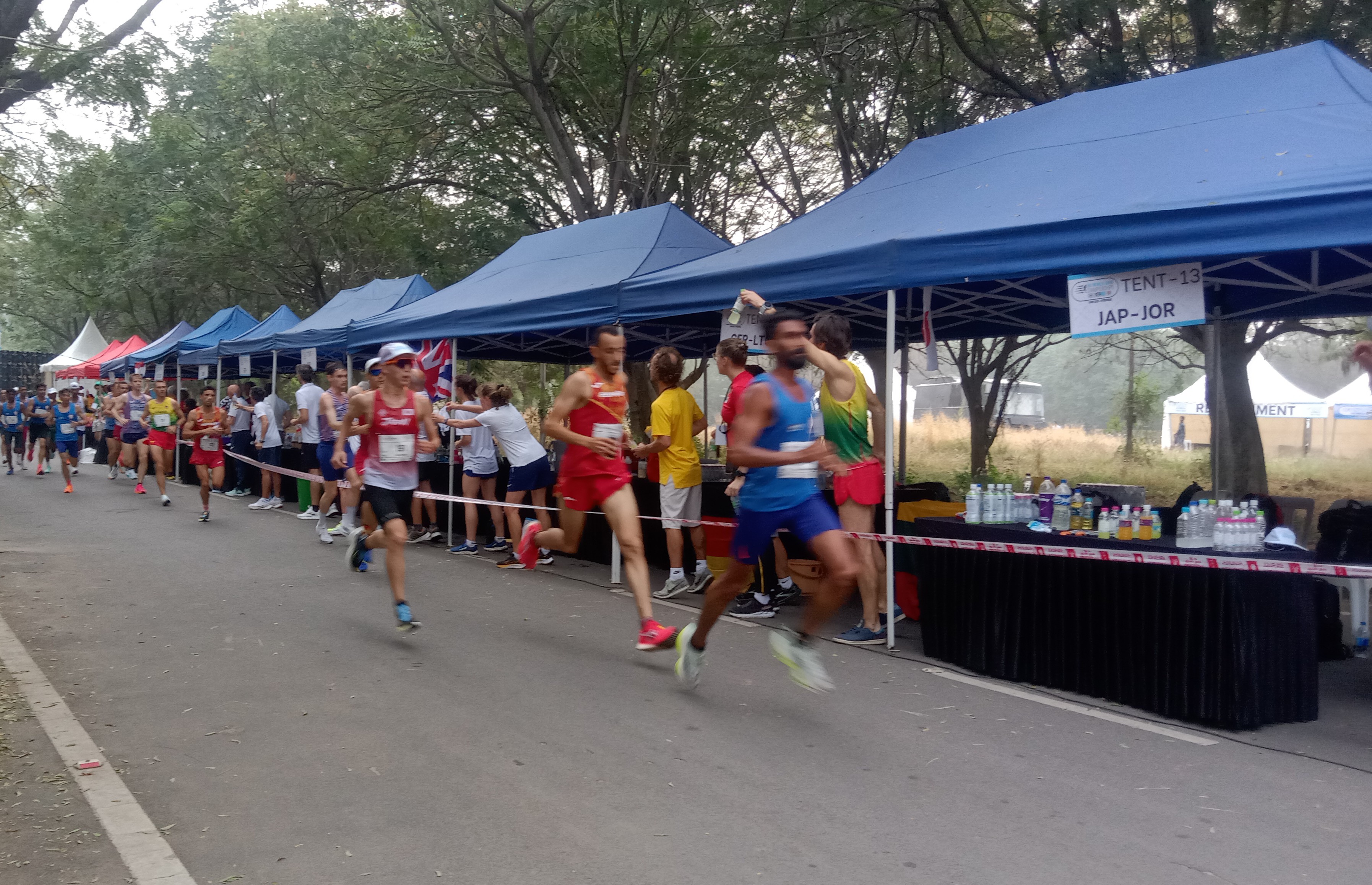
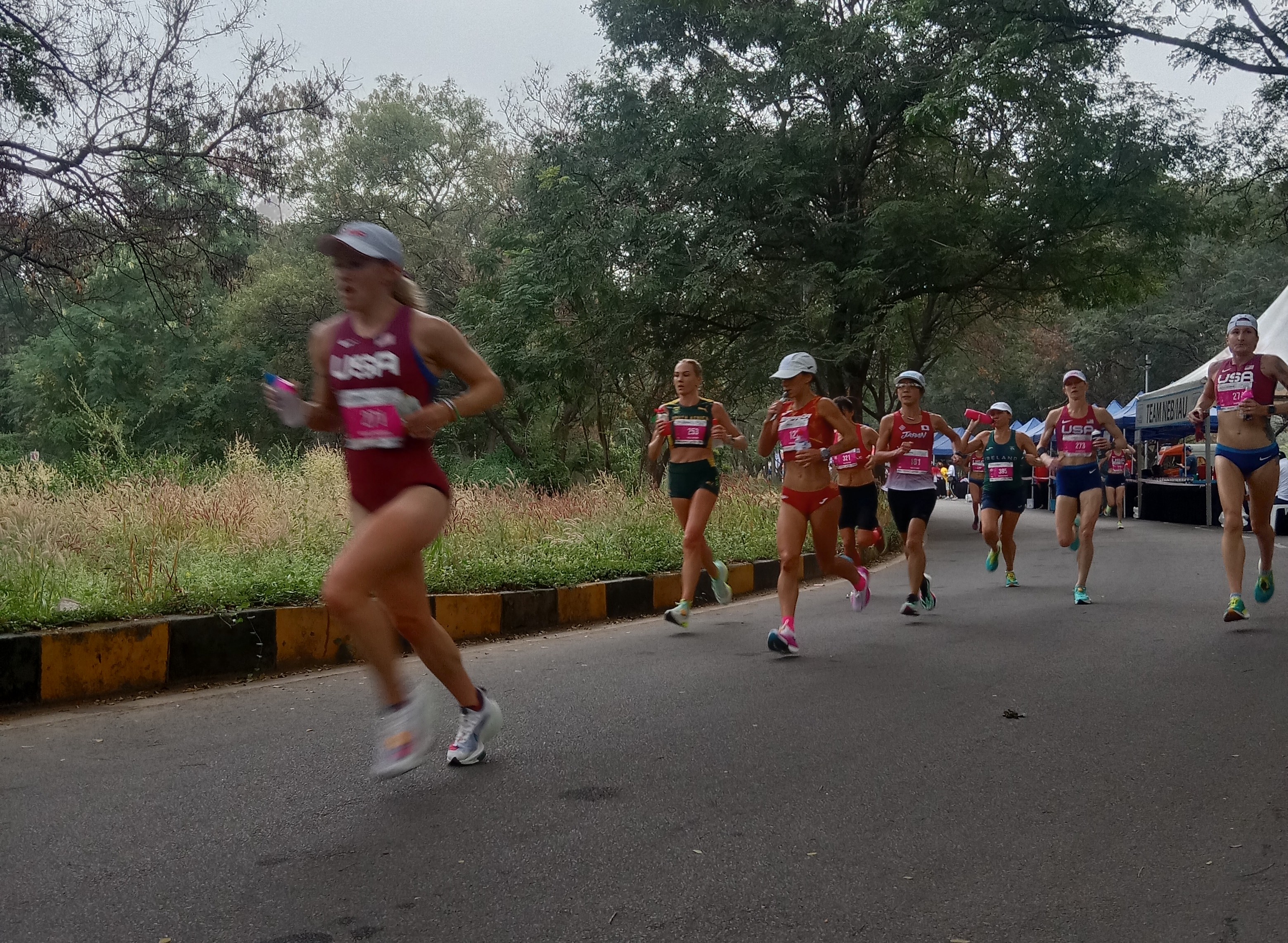
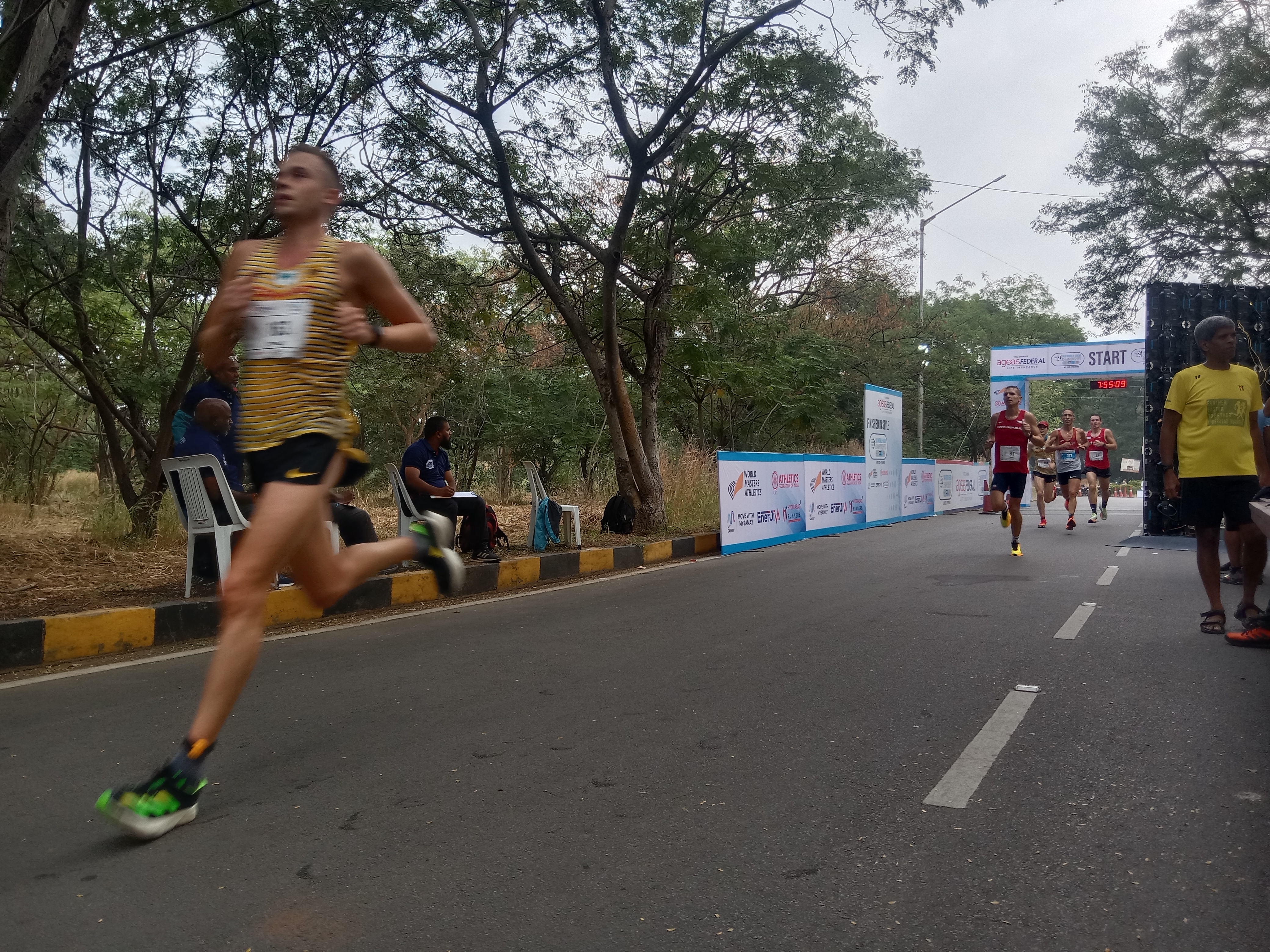
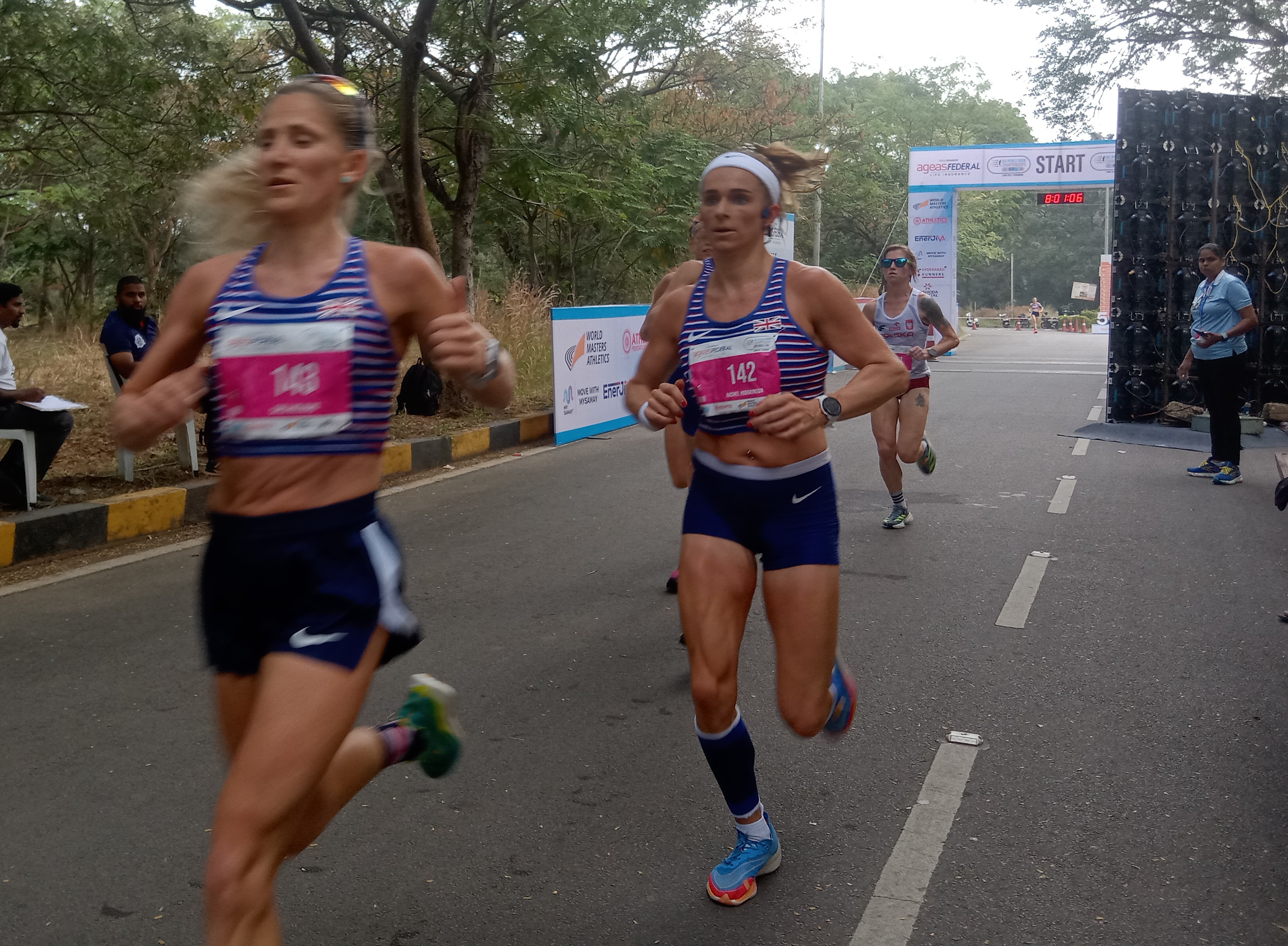
Photos from the event (all photos by Latha Venkatraman and Shyam G Menon):

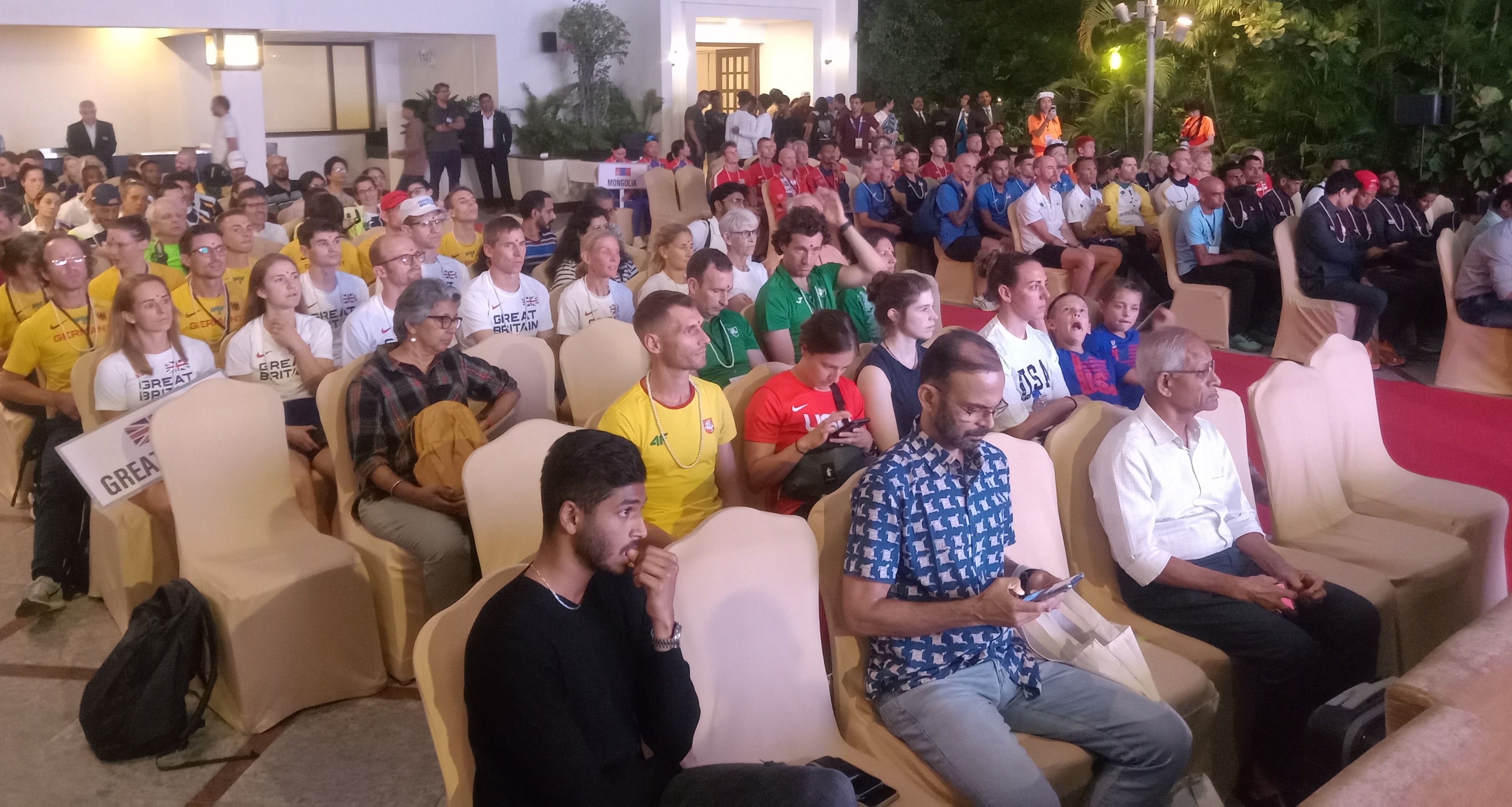
IAU 50KM WORLD CHAMPIONSHIPS / HYDERABAD’S ULTRA SUNDAY

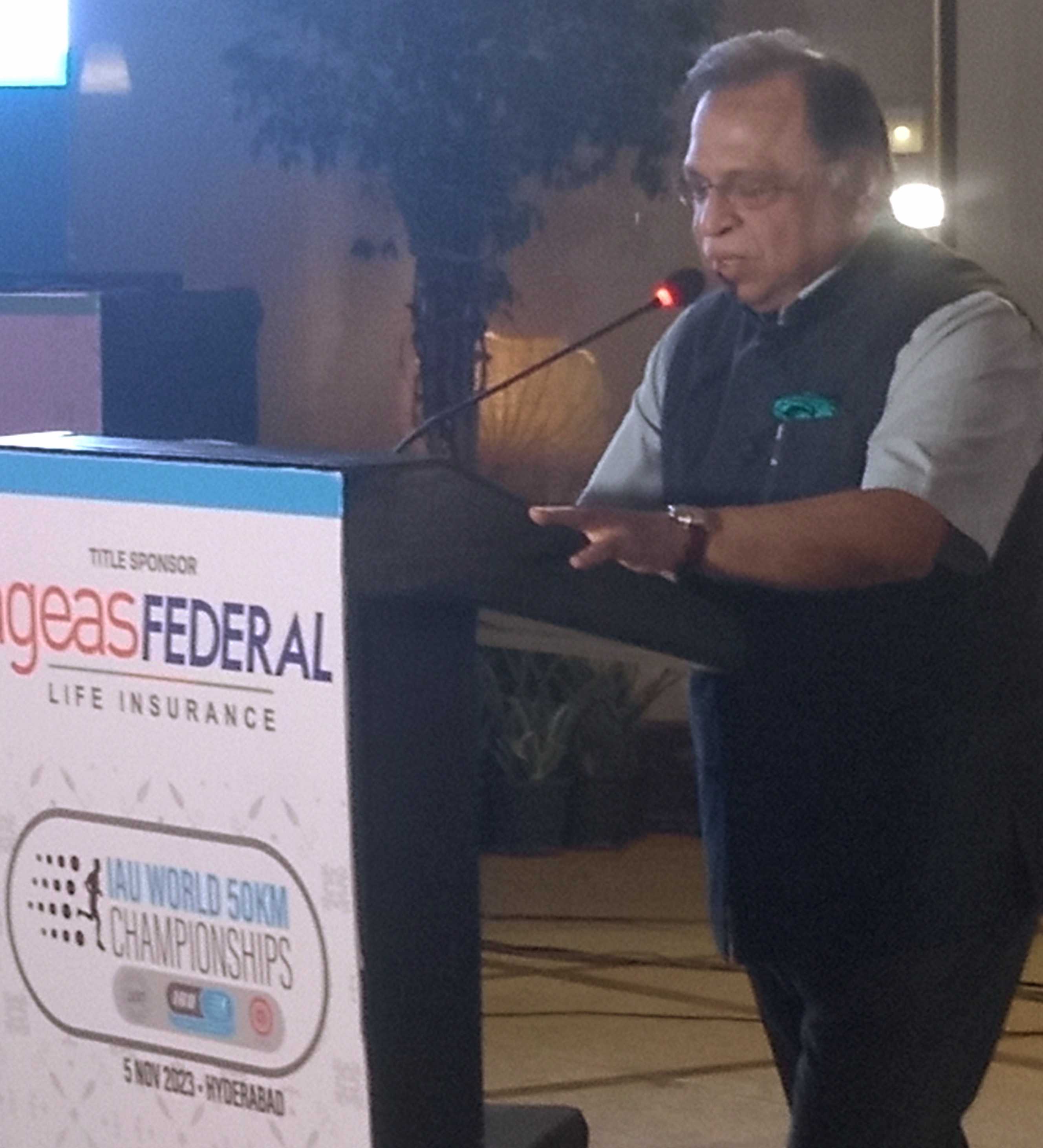
Adille Sumariwalla, president, AFI at the opening ceremony of the 2023 IAU 50km world championships in Hyderabad (Photo: Shyam G Menon)

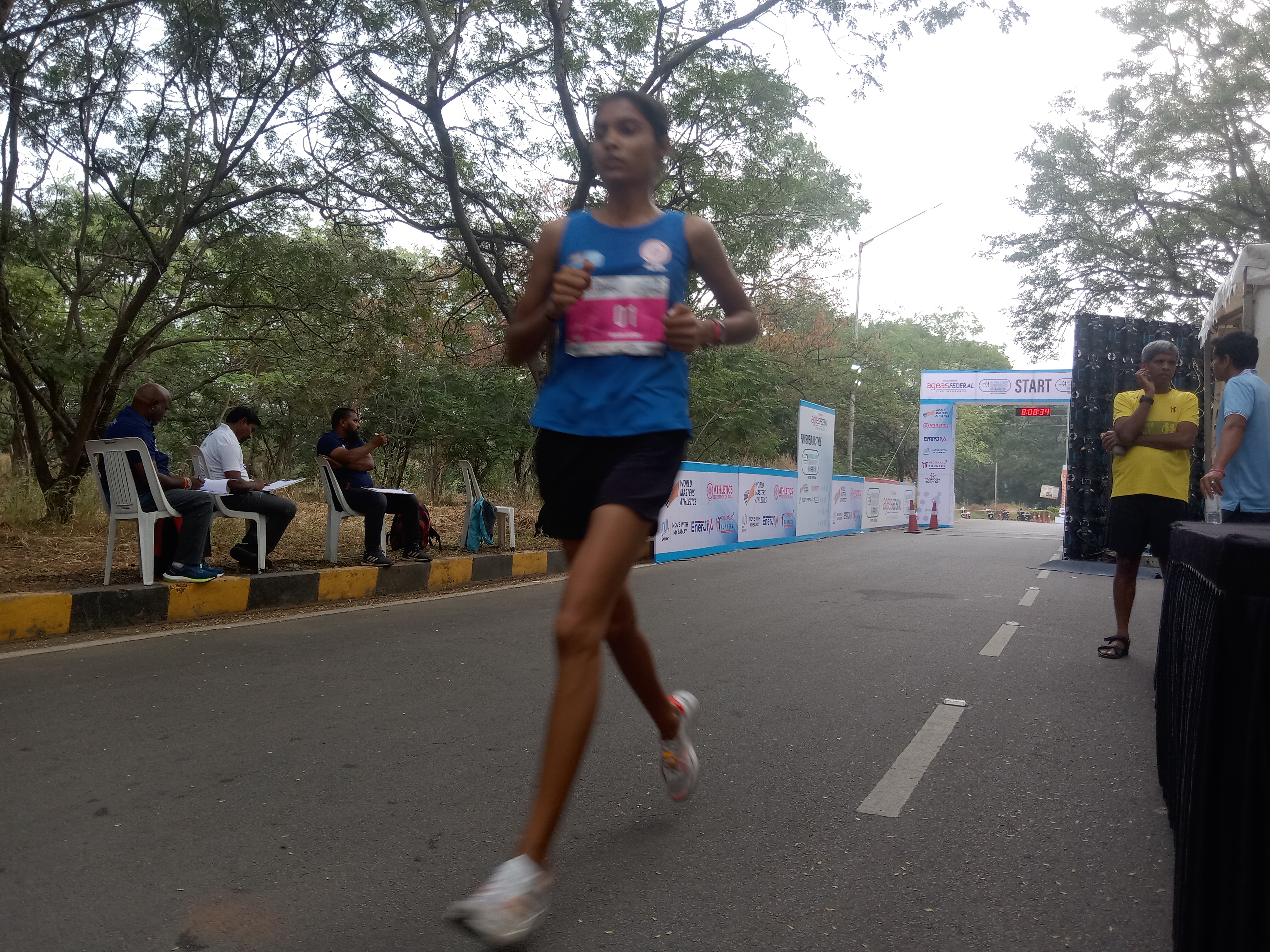
The 2023 IAU 50KM World Championships was declared open by Adille Sumariwalla, president, Athletics Federation of India (AFI), in Hyderabad on Saturday, November 4. The race to decide the individual winners and winning teams will be held on Sunday.

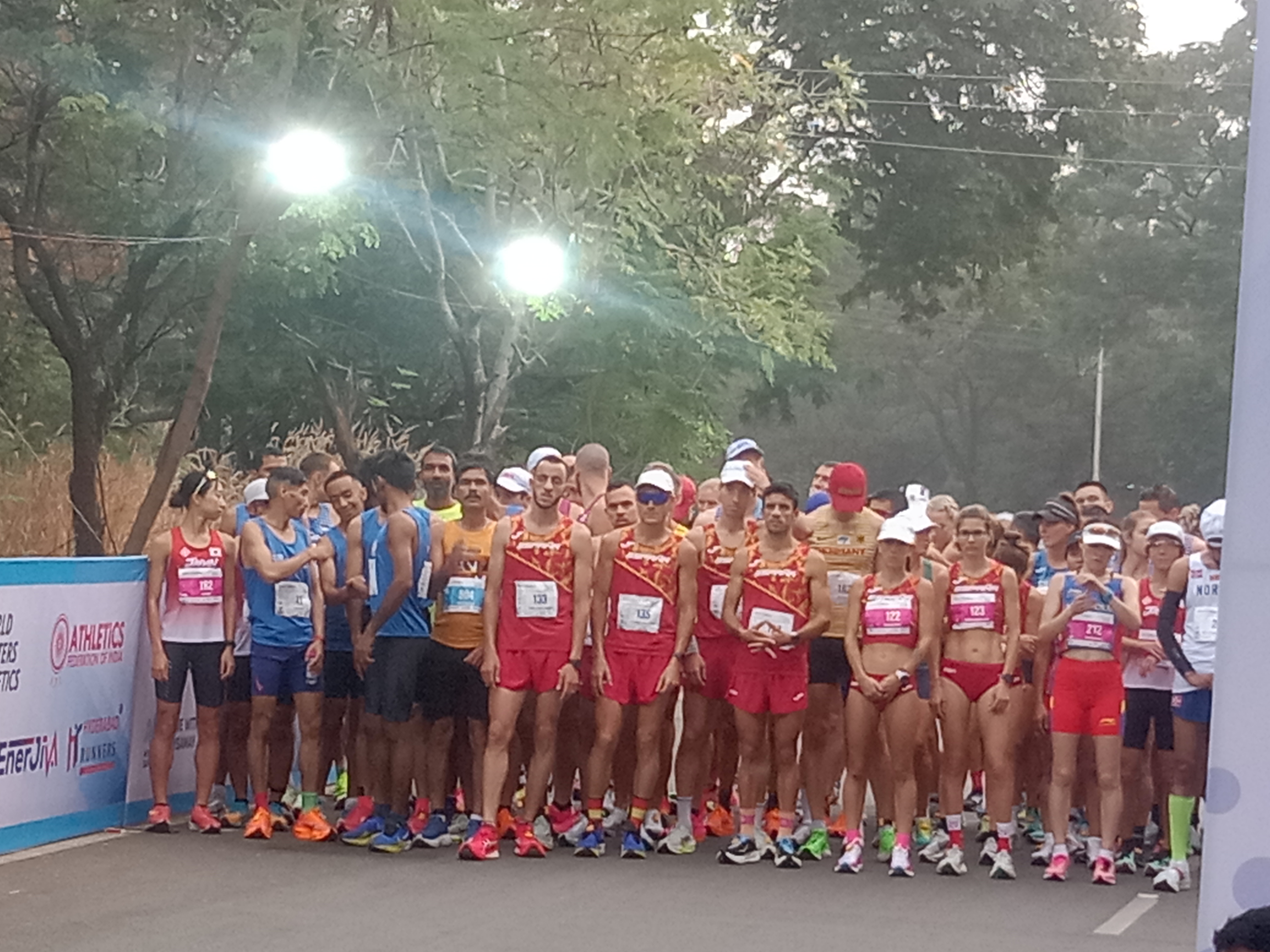
This is the first time India is hosting an ultrarunning world championships. Over 150 athletes from 22 countries have arrived for the championships, a related official press release said. According to it, there are three categories of events – elite athletes representing the sports federation of each country, masters from World Masters Athletics and the open category, where participants register as individuals. This is the fourth edition of the 50 km world championships. The first and second editions were held in Doha (2015 and 2016) and the third in Romania in 2019.

The countries participating at the event in Hyderabad include USA, Germany, Spain, South Africa, Croatia, Japan, Australia, Great Britain, Bosnia-Herzegovina, Czech Republic, Poland, Denmark, Ireland, Estonia, Mongolia, Norway, Lithuania, Jordan, Canada and India.

Nadeem Khan, president, IAU at the opening ceremony of the 2023 IAU 50km world championships in Hyderabad (Photo: Shyam G Menon)

“ Its amazing to see how the sport is growing in India,’’ Nadeem Khan, president, International Association of Ultrarunners (IAU), said, referring to the two IAU continental championships (24 hours and 100 km) and now an IAU world championship (50 km) being held in the country. Besides India playing host for the earlier mentioned continental championships, Indians teams had also secured a place on the podium. This is in addition to the podium positions Indians earned at the 2019 edition of the 100 km continental championships in Jordan.

The 50 km discipline is the shortest of ultramarathon’s races. The discipline is being positioned as a candidate for potential inclusion in the Olympic Games (with advantage currently seen in its trail version thanks to the scenic beauty of trail locations as compared to the setting of a road race). Participants for the 50 km race are usually drawn from the ranks of marathoners just outside the lot constituting the truly elite category of marathon runners.

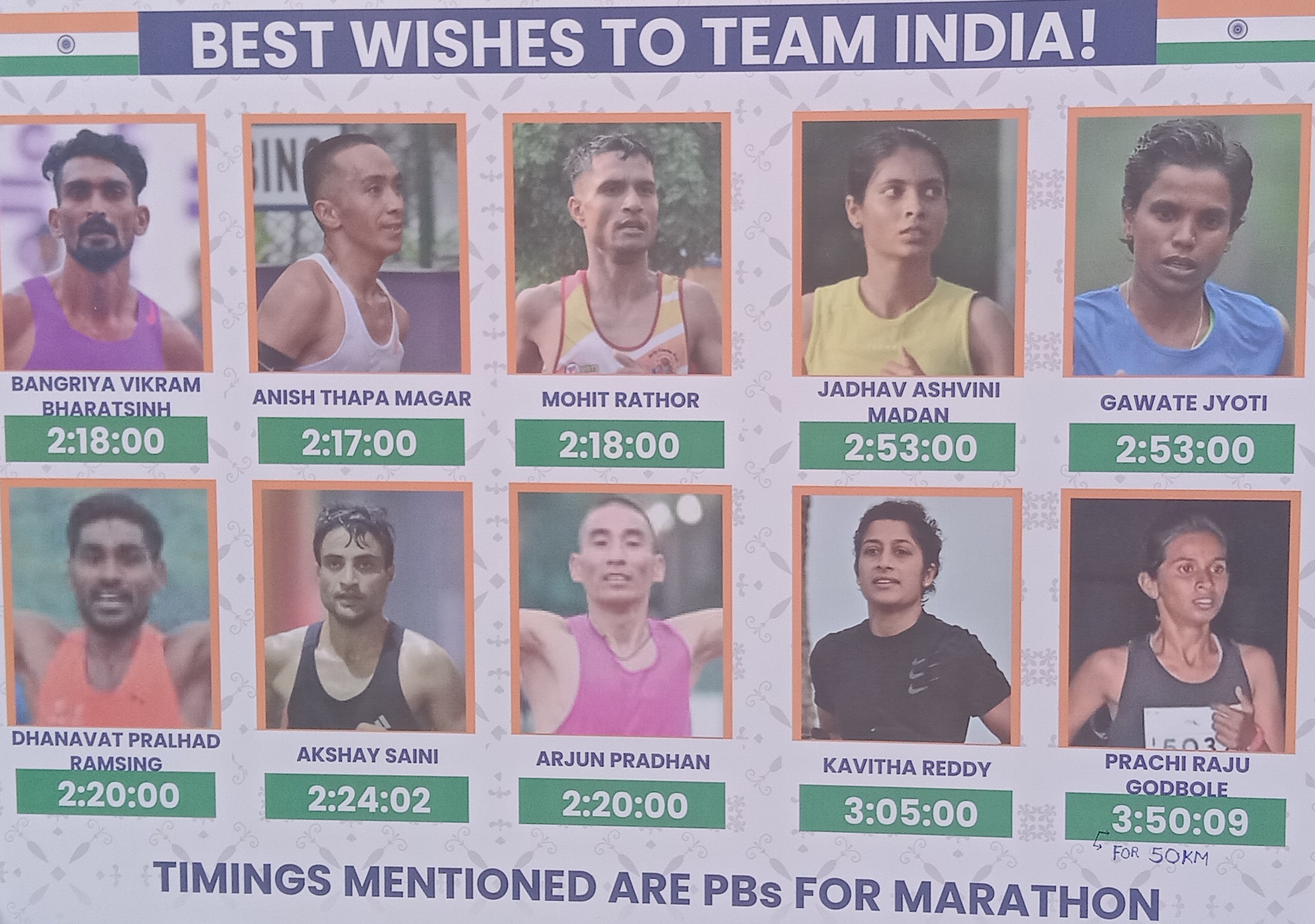
The Indian team for the 2023 IAU 50km world championships (photo of poster kept at the opening ceremony venue). Please note: the PB of Prachi Raju Godbole is for 50km

The really fast marathon runners, who are focused on that discipline, may not wish to try the 50 km race as they wouldn’t want to upset the speed and pacing, they are already used to and improving upon. However, for those who are a notch below, the 50 km race represents an interesting proposition.      

The Indian team for the 50 km world championships include Bangriya Vikram Bharatsinh (2:18:00 – personal best in the marathon), Anish Thapa Magar (2:17:00), Mohit Rathor (2:18:00), Prahlad Dhanavat (2:20:00), Akshay Saini (2:24:02), Arjun Pradhan (2:20:00), Jyoti Gawate (2:53:00), Ashvini Madan Jadhav (2:53:00), Kavitha Reddy (3:05:00) and Prachi Raju Godbole (3:50:09 – personal best in 50 km).

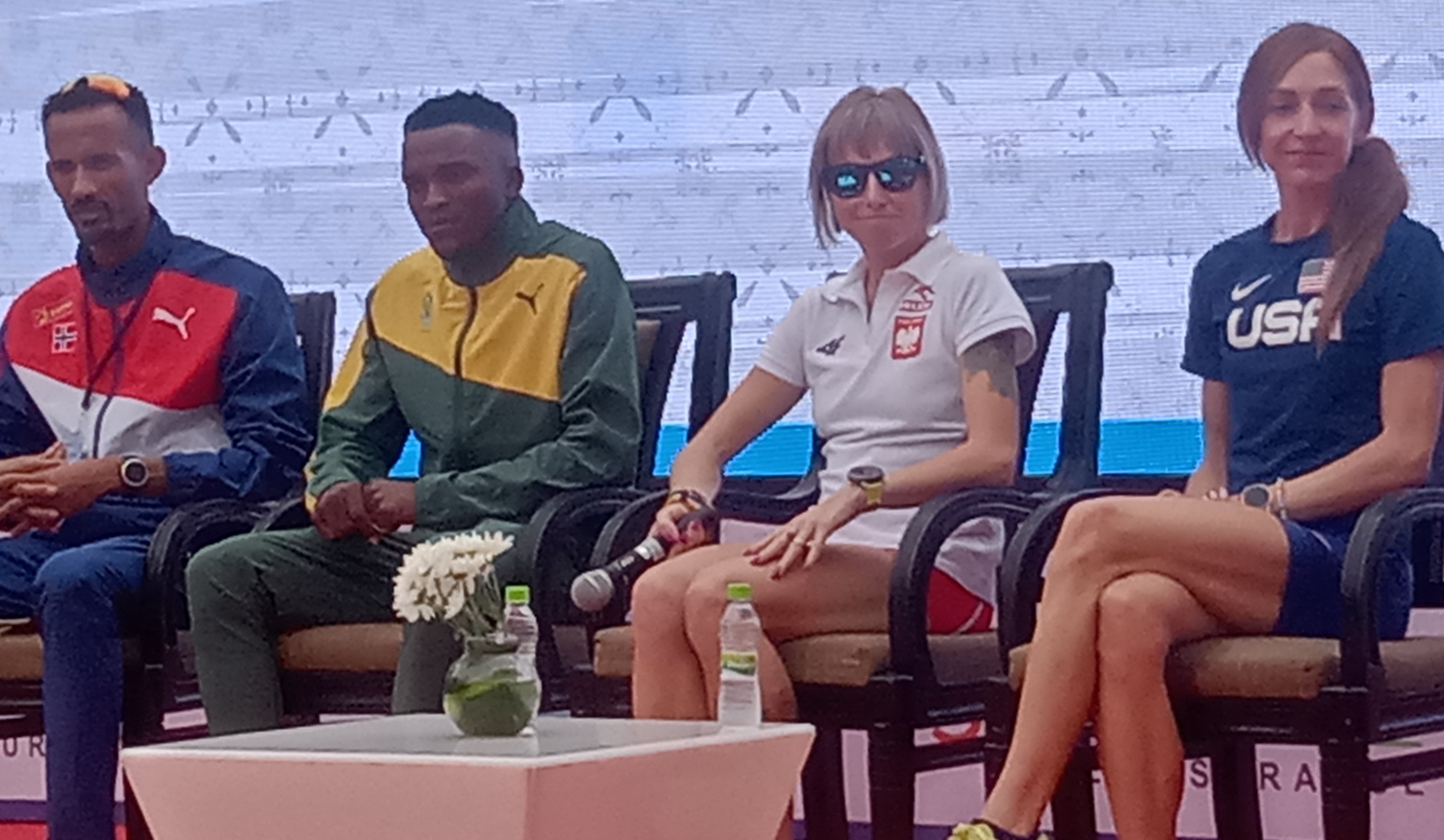
Elite athletes at a media interaction (photo: Shyam G Menon)

At a media interaction prior to the opening ceremony, some of the foreign athletes said that notwithstanding their training and preparations for the championships, those hailing from countries with colder weather than Hyderabad’s may find the conditions in the city challenging. On the whole, the mood seemed upbeat with athletes looking forward to the race. As stated at the media interaction, the fastest male runner coming into the competition was Abdulaziz Mahammedsalih Ebrahim representing Norway while the fastest among women was Andrea Pomaranski of the US. As per details available on his profile at World Athletics, Ebrahim has a personal best of 2:15:03 in the marathon.

From the opening ceremony (photo: Shyam G Menon)

Speaking to this blog, Andrea said that for a runner participating in the 50 km race, the last eight kilometres marking the difference between a marathon (42 km) and the 50 km ultramarathon, are felt as intensely as the final stages of a marathon. She runs the 50 km race pretty much like a marathon and “ tries to hang in there’’ as the race enters its final stage. She said that typically for a 50 km race, she manages her splits at a pace that is slightly slower than for the marathon and then tries to sustain it. Andrea has a personal best of around three hours and seven minutes for the 50 km race and 2:31:06 for the marathon.   

(The authors, Latha Venkatraman and Shyam G Menon, are independent journalists based in Mumbai)

ASIAN MTB CHAMPIONSHIPS AT PONMUDI, THIRUVANANTHAPURAM

AI image generated using Stable Diffusion

The 28th Senior 14th Junior Asian Mountain Bike Championships will be held in Thiruvananthapuram, Kerala, over October 26-29, 2023.

The competition assumes importance as it is a continental championship offering qualification for the cross-country MTB discipline at the 2024 Paris Olympics. The venue for the event is Ponmudi, a hill station roughly 65 kilometres north-east of the city. Ponmudi (elevation: 3600 feet above sea level) hosts the southernmost tea plantations in India. Tracks for cross country and downhill competitions have been specially created for the Asian MTB championship. As of October 24, several countries – including China, Japan, Korea, Chinese Taipei, Indonesia, Philippines and host India – had arrived for the event, officials at the organizing team’s office in the city, said. With more nations expected, an updated list should be available closer to the event’s start.

Cross country mountain biking made its Olympic debut at the 1996 Atlanta Olympic Games, 100 years after track and road cycling featured for the first time at the sports extravaganza. The discipline will be a part of the Games at the 2024 Paris Olympics. Races for men and women will take place at Elancourt Hill in Paris. As per information on Olympics.com, a total of 72 athletes will compete in the MTB competition at Paris. After setting aside four slots for the host country and Universality Places, the remaining 68 berths – 34 each for men and women – will be allotted on the basis of competitions leading up to the Games with a maximum of two quota places (for men and women) for each National Olympic Committee. Points acquired during UCI Mountain Bike Olympic Qualifying events will be considered for securing a berth at the Olympics. The qualification period spans May 7, 2023 to May 26, 2024. “ UCI rankings will be decided by adding together the points of the three highest-ranked athletes from each NOC across the qualification period,’’ the website said.

A maximum of two Continental Championships are included in the ranking with the last two counted if there are more than two championships held. “ Outside of Europe and Oceania, a maximum of one athlete can qualify per NOC at the Cross-country Continental Championships for Africa, America and Asia – with the highest-ranked NOC allocated each place,’’ the website said, adding, “ the two highest-ranked NOCs at the 2023 UCI Mountain Bike World Championships in both the elite and under 23 races, which have not qualified a quota place through the UCI Mountain Bike Olympic Qualification ranking or the 2023 Continental Championships, will qualify a maximum of one place per NOC, with NOCs which have qualified through the elite race not eligible to qualify through the under 23 race.’’

The website of the 2024 Paris Olympics, provided an overview of the Olympic cross country MTB competition: “ There are two cross-country mountain bike events, one for women and one for men. Riders set off from the same starting line and contest multiple laps around a loop on mountainous, rough terrain that tests their technique, endurance and stamina. Races feature a mass start and, in general, multiple laps. Riders take 1h20 to 1h40 to complete an intense course full of twists and turns, covering tens of kilometres during the event.” At Ponmudi, cross country Olympic is only one of the disciplines on offer. According to information on the UCI (Union Cycliste Internationale / the apex body in cycling) website, the races due at Ponmudi span categories for men and women; classified into elite, under-23 and junior. The disciplines scheduled are in the main downhill and cross-country Olympic. There is also a mixed elite cross-country relay and cross-country eliminator (elite men and women).

That the event in Ponmudi is important to the Asian MTB ecosystem was underscored when both Li Hongfeng and Mi Jiujiang, Chinese cyclists who won gold in the women’s and men’s categories respectively at the recent Asian Games in Hangzhou, said in an interview that they would be traveling to India for the continental championships as route to potentially qualifying for the 2024 Olympics. The interview in which they said so (available on YouTube) has been appended at the end of this article. At the 2022 Asian Games, the silver medal in the men’s cross country MTB event was secured by Yuan Jinwei of China while bronze went to Japan’s Toki Sawada. In the women’s section, silver was won by Ma Caixia of China while Iran’s Faranak Partoazar took the bronze. Interestingly at the Hangzhou Asian Games, India was represented in track cycling but not in MTB.  

According to the organizing team officials in Thiruvananthapuram, the track prepared at Ponmudi is very good. It is located on the premises of Ponmudi’s Merchiston Estate. However, thanks to a monsoon increasingly erratic in its schedule and intensity by the year, ideal weather conditions have been playing hide and seek in Thiruvananthapuram. The district was battered by heavy rain in mid-October. When it rains, Ponmudi is known to become cool and bathed in mist. As per data on the website of AccuWeather, the forecast for Thiruvananthapuram for the next few days continues to be a mix of sunshine and rain.  

Link to interview with gold medallists in cross country MTB at the 2022 Asian Games (held in September-October 2023), Hangzhou.

(The author, Shyam G Menon, is a freelance journalist based in Mumbai.)