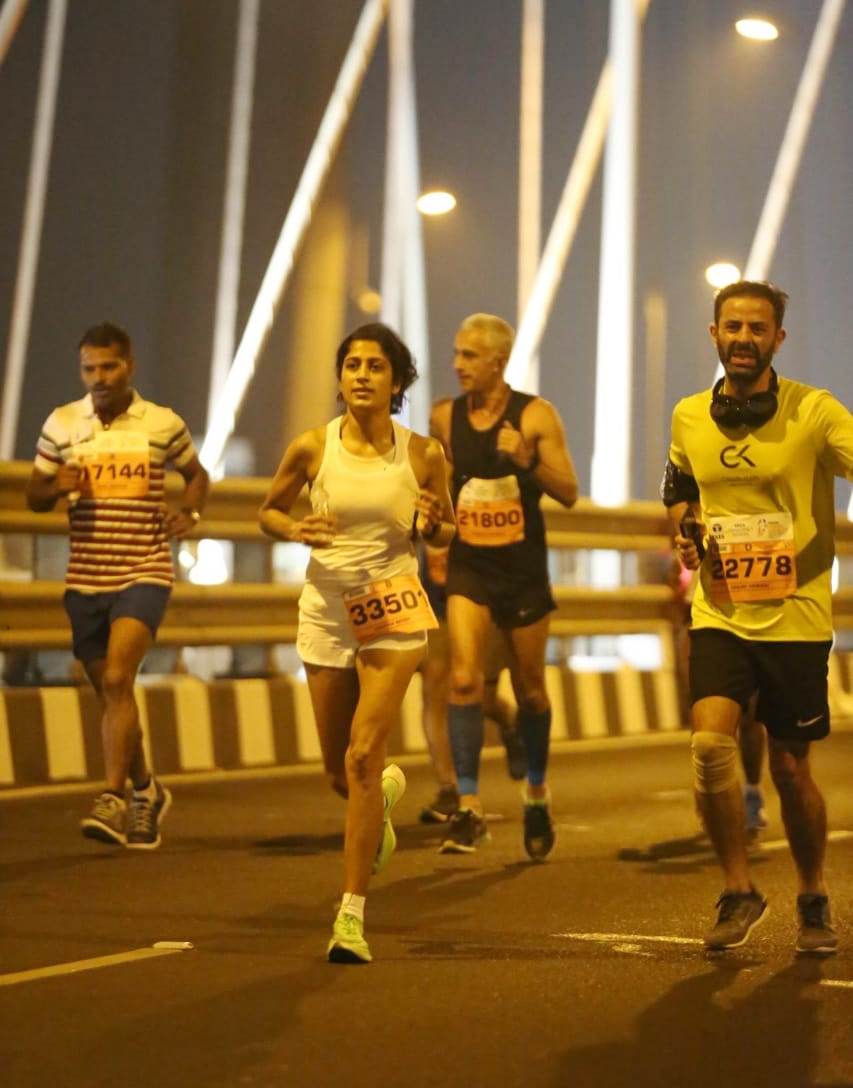
Tata Mumbai Marathon (TMM) is the biggest event in India’s calendar of running events. The 2020 edition was held on January 19. The weather on race day this year was perfect. However the number of runners was high. Soon after the 2020 TMM got over, we spoke to some of those who got podium finishes at the event.
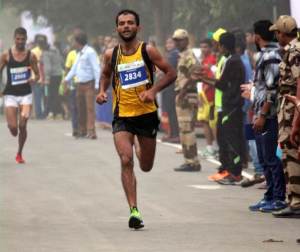
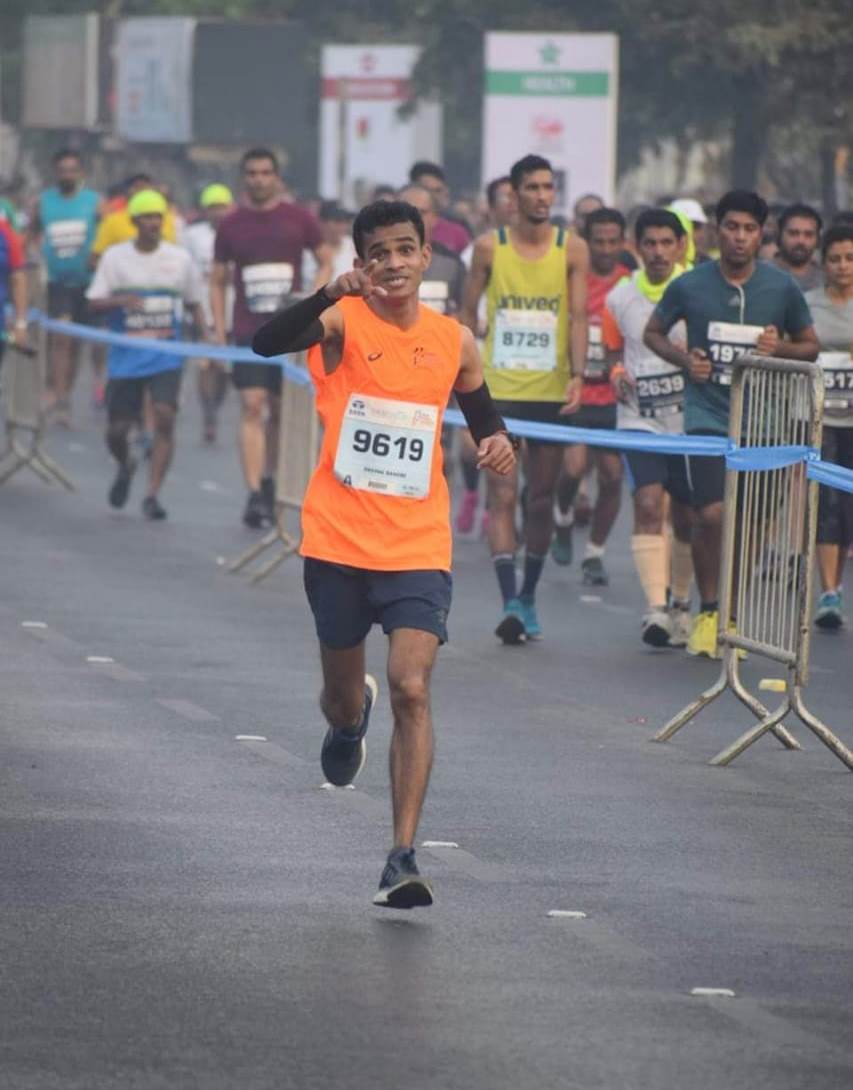
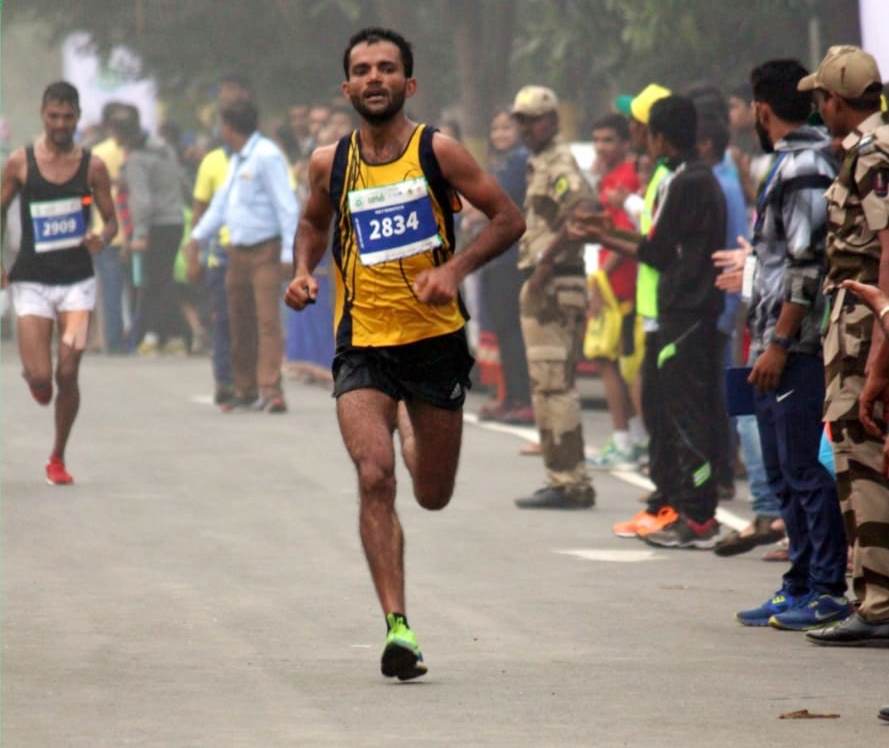
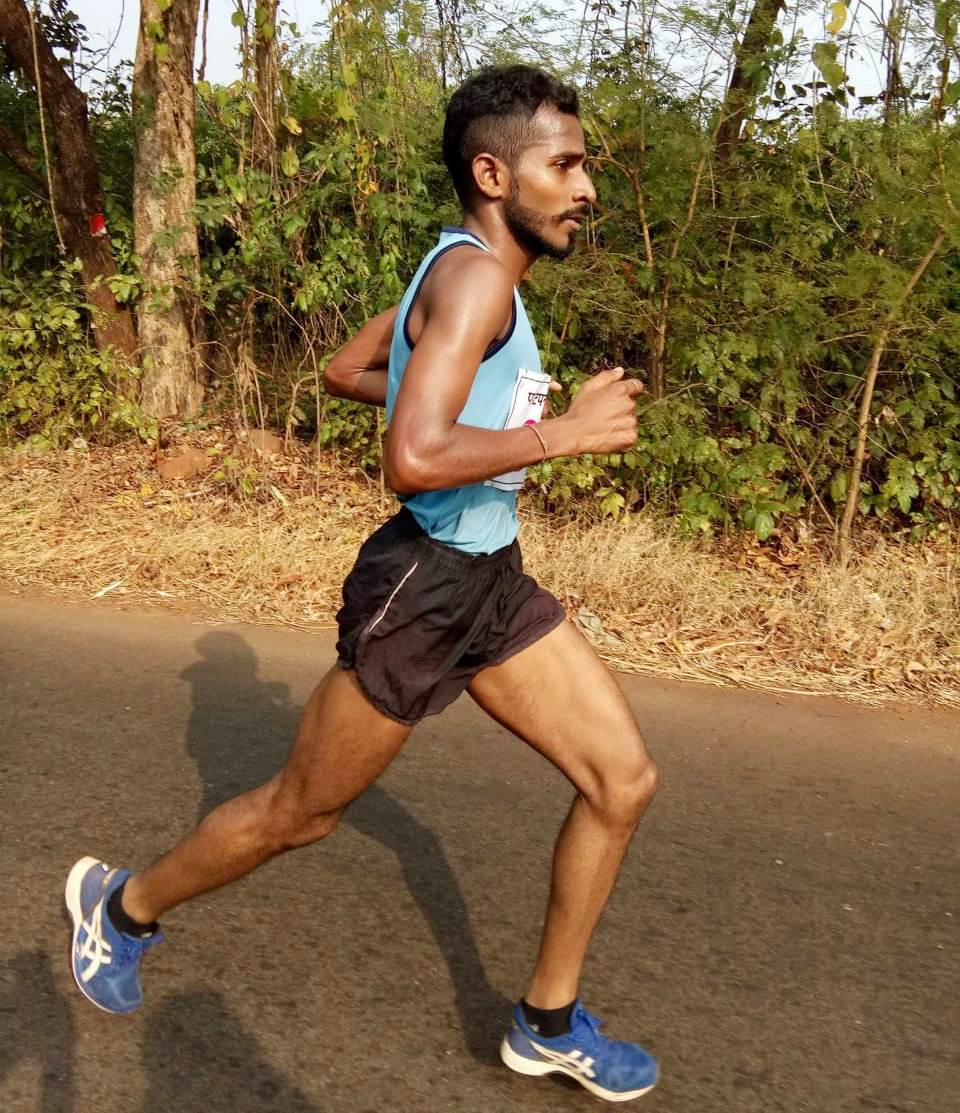
Prahlad Singh. This photo is from the Vasai Virar Mayor’s Marathon (Photo: courtesy Prahlad)
Prahlad Singh
Originally a resident of Pali, Rajasthan, Prahlad Singh took up running as sport to focus on, after he joined the Indian Army.
He has been running regularly for the past four years. The 2020 Tata Mumbai Marathon was his first attempt at the full marathon. “ I had a target of finishing in 2:30-2:32. I managed the first half of the race very well finishing in 1:16:51 but could not repeat the performance in the second half because of the crowd of runners. There were too many runners on the course,” he said. This year over 55,000 people were expected to participate across categories in TMM including 9660 runners in the full marathon, 15,260 in the half marathon and 8032 runners in the 10 km-race (actual numbers on race day are usually less than the numbers registered).
Prahlad finished in 2:35:32. He won the amateur category for men and also secured the top podium position in his age category of 30-34 years. Prahlad trains with his army colleagues. His coach is his teammate, Vijender Malik, who completed the full marathon in 2:54:50 to place third in his age group of 40-44 years.
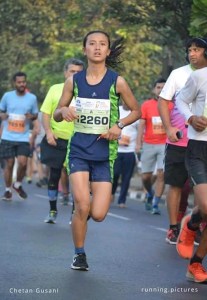
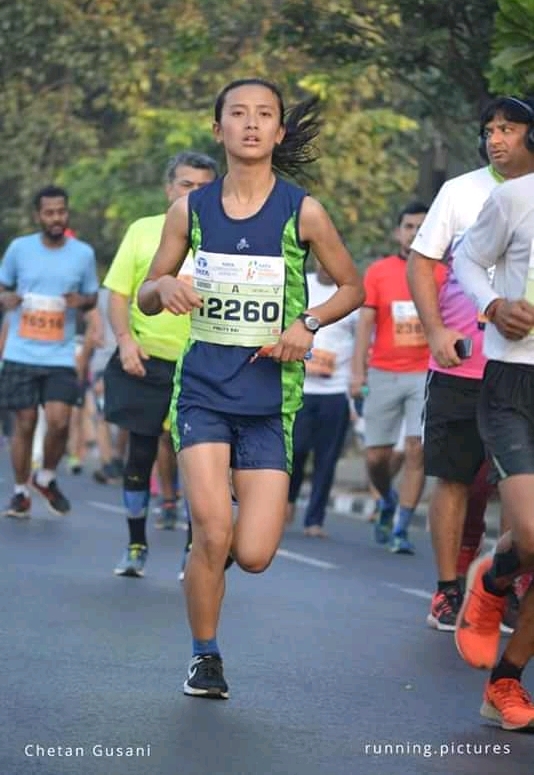
Preity Rai (Photo: Chetan Gusani; photo provided by Preity)
Preity Rai
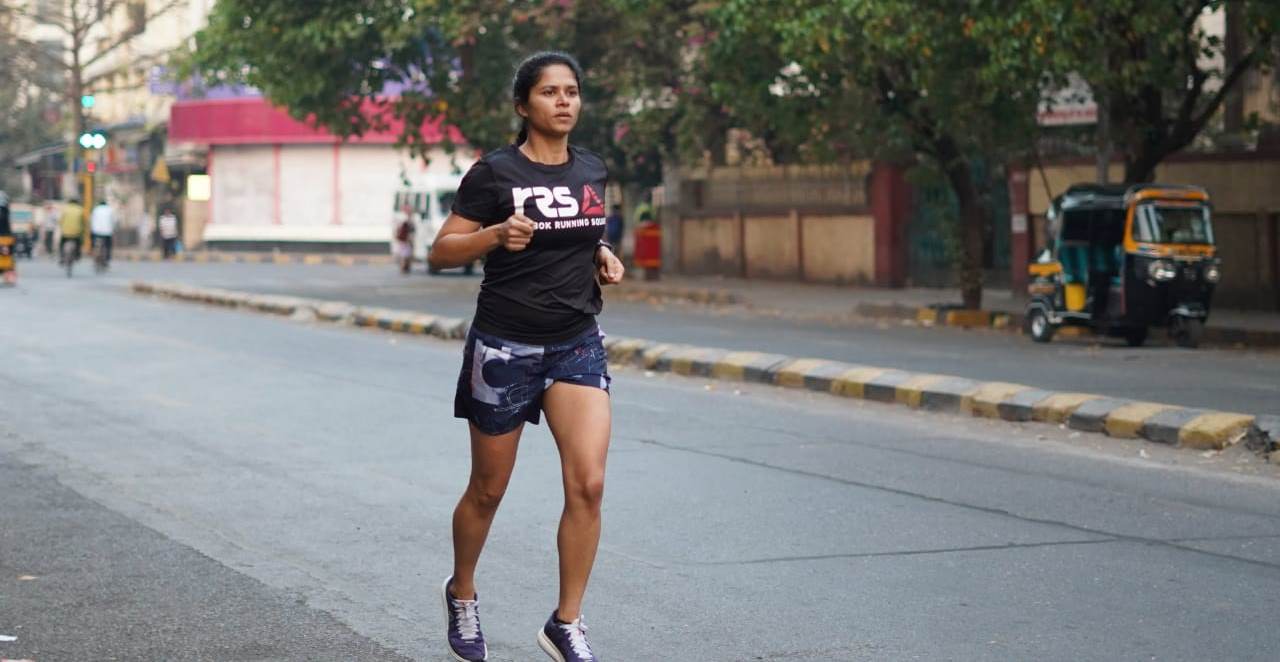
Twenty-two-year-old Preity Rai, a resident of Darjeeling, West Bengal, had previously participated in half marathon and 25 kilometer-races.
The 2020 edition of Tata Mumbai Marathon was her first attempt at a full marathon. She had worked out a rough plan on how to tackle the race, a new distance for her. Her idea was to do the first half in one hour and 25 minutes. “ I started too fast and then had to slow down. About half way through the race, I found somebody racing ahead of me. That propelled me to push my way through,” Preity said.
Towards the end of her race she looked at her watch and found that three hours and 10 minutes were already past and she had 1.5 km still to cover. “ Volunteers on motorcycles encouraged me to speed up,” Preity said. She finished the race in 3:16:26, emerging overall winner among amateur women.
Preity participates in races primarily for the prize money. “ I was working in a showroom but the long hours impeded my training,” she said. She lives in Dilaram, Darjeeling, with her father. Her only other sibling, a sister, is married and stays away with her family. Preity plans to return to Mumbai to participate in the Maharashtra Police International Marathon to be held on February 9, 2020.
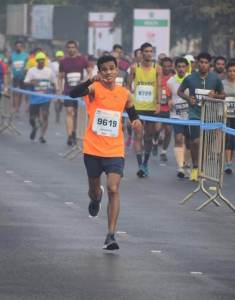
Deepak Bandbe (Photo: courtesy Deepak)
Deepak Bandbe
On November 23, 2019 Mumbai based-ultramarathon runner, Deepak Bandbe, had secured a bronze medal at the IAU 100 kilometer Asia & Oceania Championship held in Aqaba, Jordan. Thereafter returning to India he had been running easy short distances with a view to eventually commence training for the 2020 Tata Mumbai Marathon.
However, in December he came down with dengue and ended up spending a week in hospital. “ I was in hospital from December 12-18,’’ Deepak said. That was exactly a month before 2020 TMM. Dengue typically leaves people feeling weak. It takes a while to recover.
Deepak’s preparation for TMM was therefore making the best of what he had. In the brief period he had to train, he could manage only one long run – a run of 37 kilometers. “ I felt I can give TMM a shot and so decided to go ahead,’’ he said. He kept a target of 2:35-2:37 hours. On race day, he had a decent run for much of the course and along the Bandra Worli Sea Link. “ The last eight kilometers was tough. It was additionally rendered difficult by the fact that the number of runners this time was high and I had to weave in and out of crowded situations,’’ Deepak said. He completed the race in 2:43:52 to place first in his age group of 25-29 years and tenth overall in the amateur category. In 2019 he had placed third overall in the amateur category and first in his age group with a slightly better timing of 2:41:38.
Going ahead Deepak will be running the half marathon at the IDBI Federal Life Insurance Kolkata Marathon of early February. After that he will be seen running the 50k at Tata Ultra in Lonavala. He also plans to attempt this year’s Comrades Marathon (despite the name it is an ultramarathon) in South Africa.
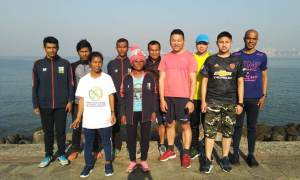
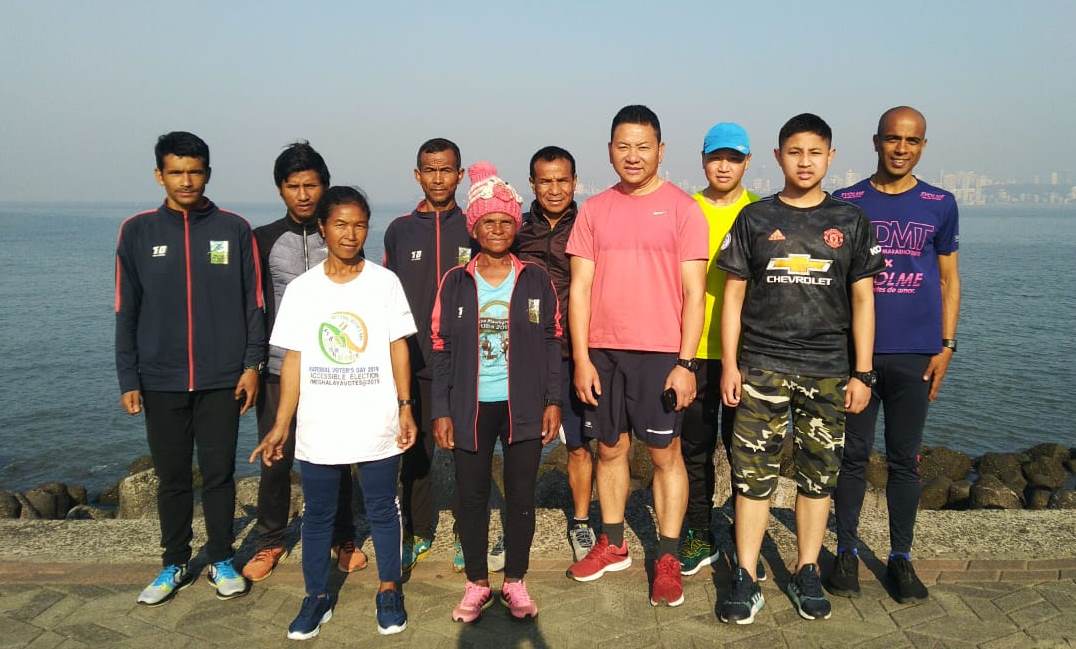
The Run Meghalaya team with friends in Mumbai (Photo: courtesy Gerald Pde)
Run Meghalaya
Going home with four podium finishes from the 2020 Tata Mumbai Marathon, was the six person team from Run Meghalaya. Tlanding Wahlang finished first in the 40-45 years age category of the full marathon for men. With timing of 2:39:09, he was winner by handsome margin. In the 45-50 years age category for men, Gerald Pde secured second place; he finished in 3:01:04. Swonding Mawlong (3:22:30) finished fourth in the 55-59 years age category for men. Snora Lyngkhoi (3:55:14) finished third in the 45-49 years age category for women while 72 year-old grandmother, Kmoinlang Wahlang (4:44:09) retained her first position in the 70-74 years age category for women. Last year, Kmoinlang had completed the race in 4:33:56. Except Gerald, all the runners are from Meghalaya’s Mawkyrwat region, which plays host to the annual Mawkyrwat Ultra. “ This time owing to funding issues we had a small team come to Mumbai. But the performances have been quite encouraging,’’ Gerald said. For Gerald, 2020 marked return to the Mumbai Marathon after a gap of eight years. In 2011, when he first ran it, he had covered the 42km-course in approximately three hours 23 minutes. In 2012, he brought that down to 3:03. “ Sunday’s 3:01 is a personal best,’’ Gerald said adding he seemed to have finally figured out what training and diet worked for him in long distance running. According to him, upcoming races for the runners from Meghalaya include the marathon in Kolkata and February’s Tata Ultra in Lonavala. At the latter, a team of six runners from Meghalaya is expected to participate. For more on Gerald Pde and Run Meghalaya, please try this link: https://shyamgopan.com/2018/03/30/run-meghalaya/
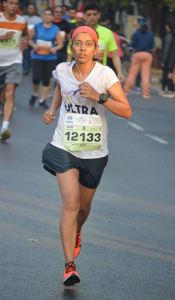
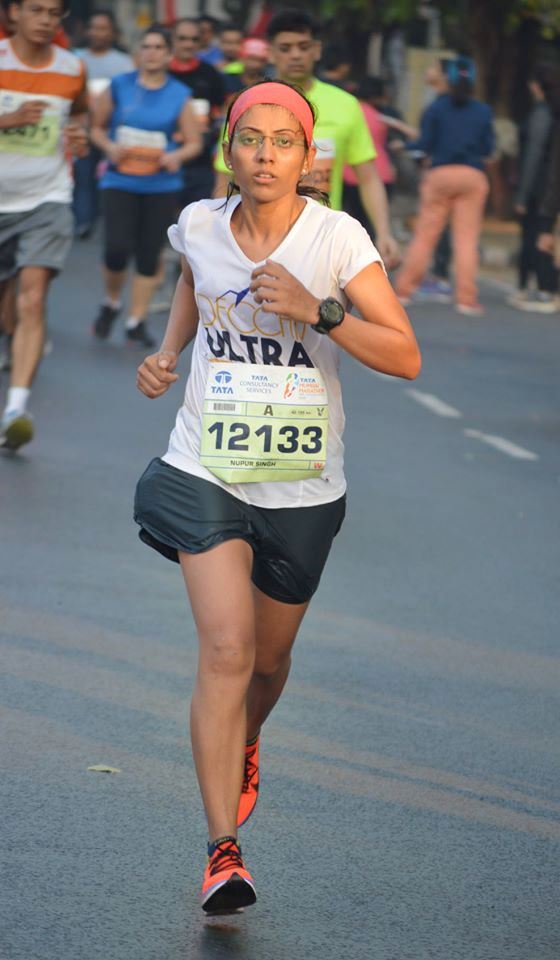
Nupur Singh (Photo: Chetan Gusani)
Nupur Singh
On January 6, 2020, Nupur Singh crossed the finish line of Vadodara International Marathon in a personal best (PB) timing of 3:10:22. She won the women’s open category race.
She was expecting to get close to that timing and maybe even improve it at the 2020 Tata Mumbai Marathon (TMM). But that was not to be. “ The first 18 kilometers went off very well. But soon after fatigue took over and I had to slow down my pace,” she said. She completed the marathon in 3:20:59, securing second position overall among amateur women runners and topping her age group of 30-34 years.
In November 2019, returning to running after a short hiatus, Nupur had participated in the 100 km IAU Asia and Oceania Championships at Aqaba, Jordan, in the open category. Following that, she was racing back to back for four weekends before TMM. During the weekend prior to TMM, Nupur attempted the 60km race at The Vagamon Ultrail in Kerala but she had to quit the race at the 32nd kilometer after she lost her way.
“ This was my first experience at TMM. I had heard so much about this event. It was absolutely spectacular with so many people – volunteers, supporters and runners. I have never enjoyed a race so much as this one,” Nupur said.
Over the next two weeks, Nupur will take on the role of an organizer. She will be busy with Deccan Ultra, a trail based ultra-running event organized by Grand Indian Trails (GRIT), of which Nupur is an integral part. In terms of running events, her next attempt will be the 50km race at Tata Ultra on February 23, 2020. For more on Nupur, please try this link: https://shyamgopan.com/2019/12/14/an-aqaba-to-remember/
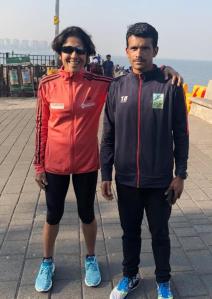
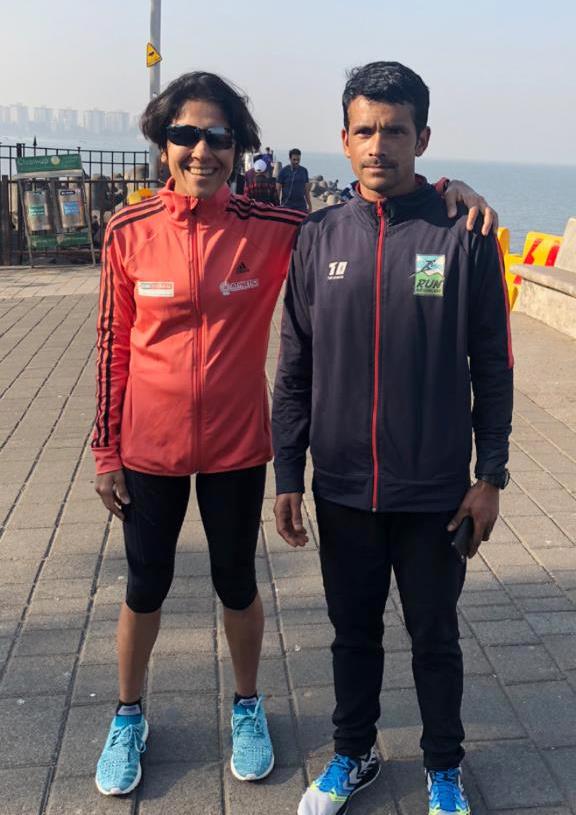
Anjali Saraogi (left) with Tlanding Wahlang, ultra runner from Meghalaya who was also podium finisher in his age category at 2020 TMM (Photo: courtesy Anjali)
Anjali Saraogi
Anjali Saraogi stood at the start line of the 2020 Tata Mumbai Marathon with barely two and half weeks of training done for the race. Less than two months earlier, in November 2019, the Kolkata-based long-distance runner had set a national record in 100 kilometers at the 2019 IAU Asia and Oceania Championships held in Aqaba, Jordan.
Beset with health issues, her overall training had suffered through much of 2019. Still, 2019 turned out to be a major year in Anjali’s running career with personal best (PB) timing of 3:14:33 at the Boston Marathon, a robust comeback in the Berlin Marathon after setbacks caused by health and injury and a national best in 100km at the 2019 IAU Asia and Oceania Championships.
“ I had not done any long runs for Mumbai Marathon. I had a target of 3:20-3:25. I was strong till the 22nd kilometer; after that I suffered,” Anjali said. She finished in 3:24:53, emerging first in her age category of 45-49 years and fourth overall among amateur women runners.
“ Mumbai Marathon is my favorite event in India. The atmosphere here is absolutely astounding with so many people on the streets, music bands and live music. The arrangements were excellent and the volunteers did awesome work,” she said. Anjali will be participating in a few running events over the next couple of months until her next major race – the 2020 London Marathon.
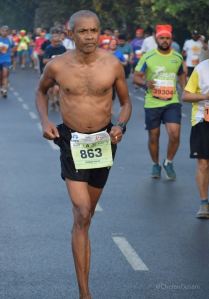
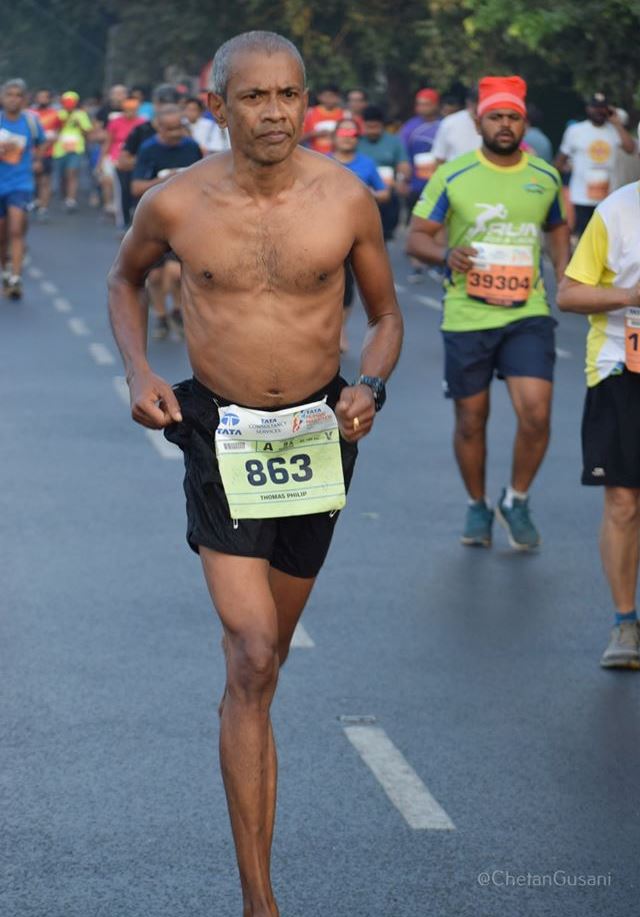
Thomas Bobby Philip (Photo: Chetan Gusani)
Thomas Bobby Philip
In 2019, Bengaluru-based amateur runner, Thomas Bobby Philip, had topped his age category for men at the annual Tata Mumbai Marathon, covering the 42 kilometer-course in 2:59:52. In 2018, he had placed second in his age category with timing of 2:57:17.
Bobby’s focus for a while now, has been maintaining the streak of sub three-hour finishes he has enjoyed in the past few years. As with chasing any target, there is an element of favorable circumstances converging for this to happen. The weather in Mumbai on January 19, 2020 – race day – was perfect. Unfortunately for Bobby, a week before TMM, he started experiencing cold, chest congestion and throat irritation. “ I was not keeping well. Things improved a bit by Thursday-Friday and I decided to proceed with my plans for Mumbai. But I wasn’t recovered fully,’’ he said. Result – he finished first in the age category of 50-54 years for men but with timing of 3:07:49. “ When you look at a race, there are two aspects – there is the quality of organization and your personal experience. At a personal level, I didn’t get that sub-three. But the race organization was done well. The overall experience was very good,’’ he said.
Notwithstanding Sunday’s outcome, Bobby believes that maintaining sub-three is a reasonable goal for him. He does not take part in many races. He has been relatively injury-free. “ If all goes well, there is nothing to stop me from pursuing sub-three as goal,’’ he said. Right now however, given the bout of ill health he faced ahead of 2020 TMM, his coach has advised him against participating in the next marathon he had signed up for – the 2020 IDBI Federal Life Insurance New Delhi Marathon. He will be giving that a miss and instead focusing on regaining his health. Once recovered, Bobby’s attention will revert to the annual calendar he has traditionally kept – Bengaluru’s TCS 10K in May followed by a bunch of half marathons to steadily work one’s way up to the annual TMM; and along with that, chasing sub-three. For more on Thomas Bobby Philip, please try this link: https://shyamgopan.com/2016/03/10/in-the-right-sport/
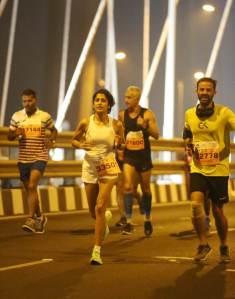
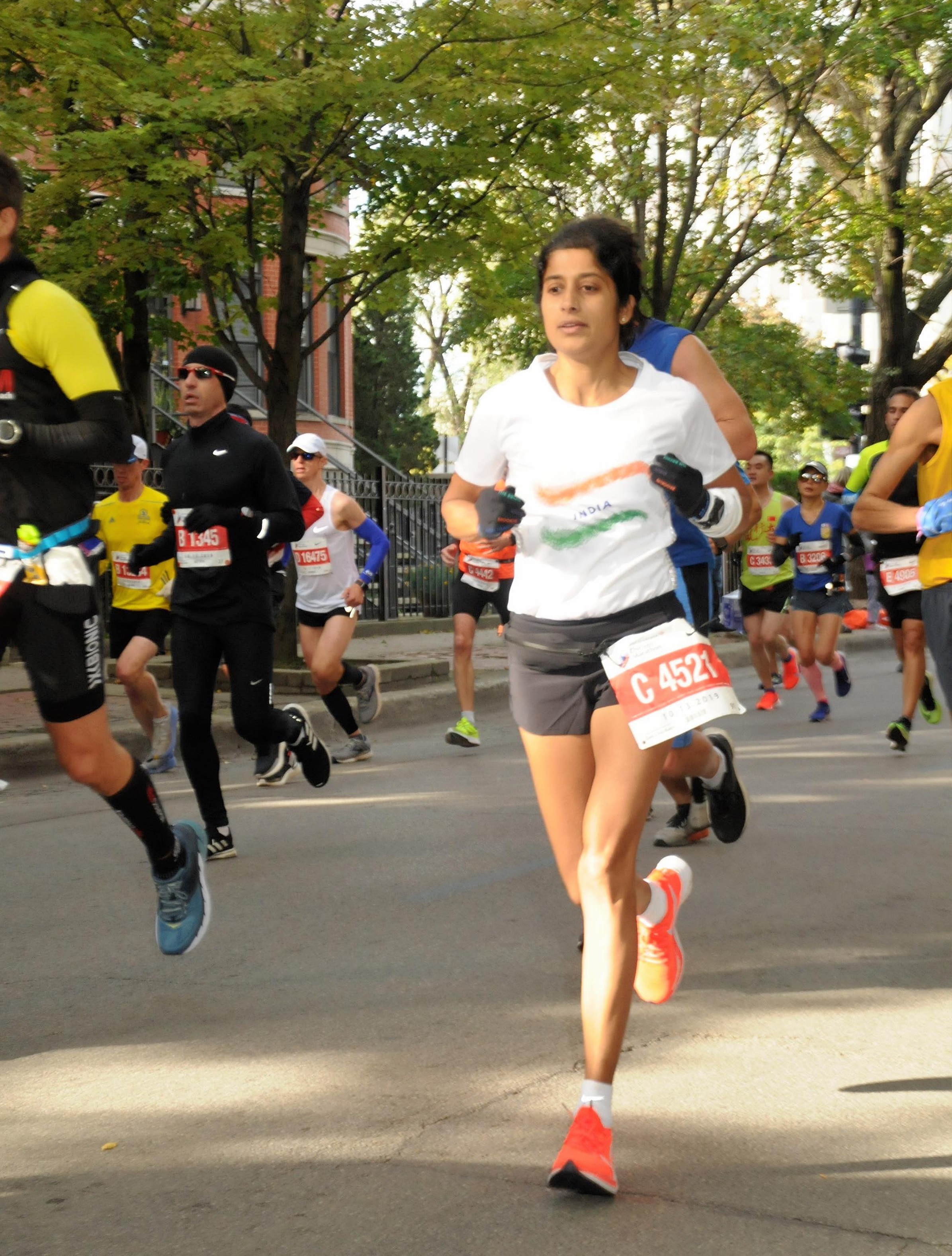
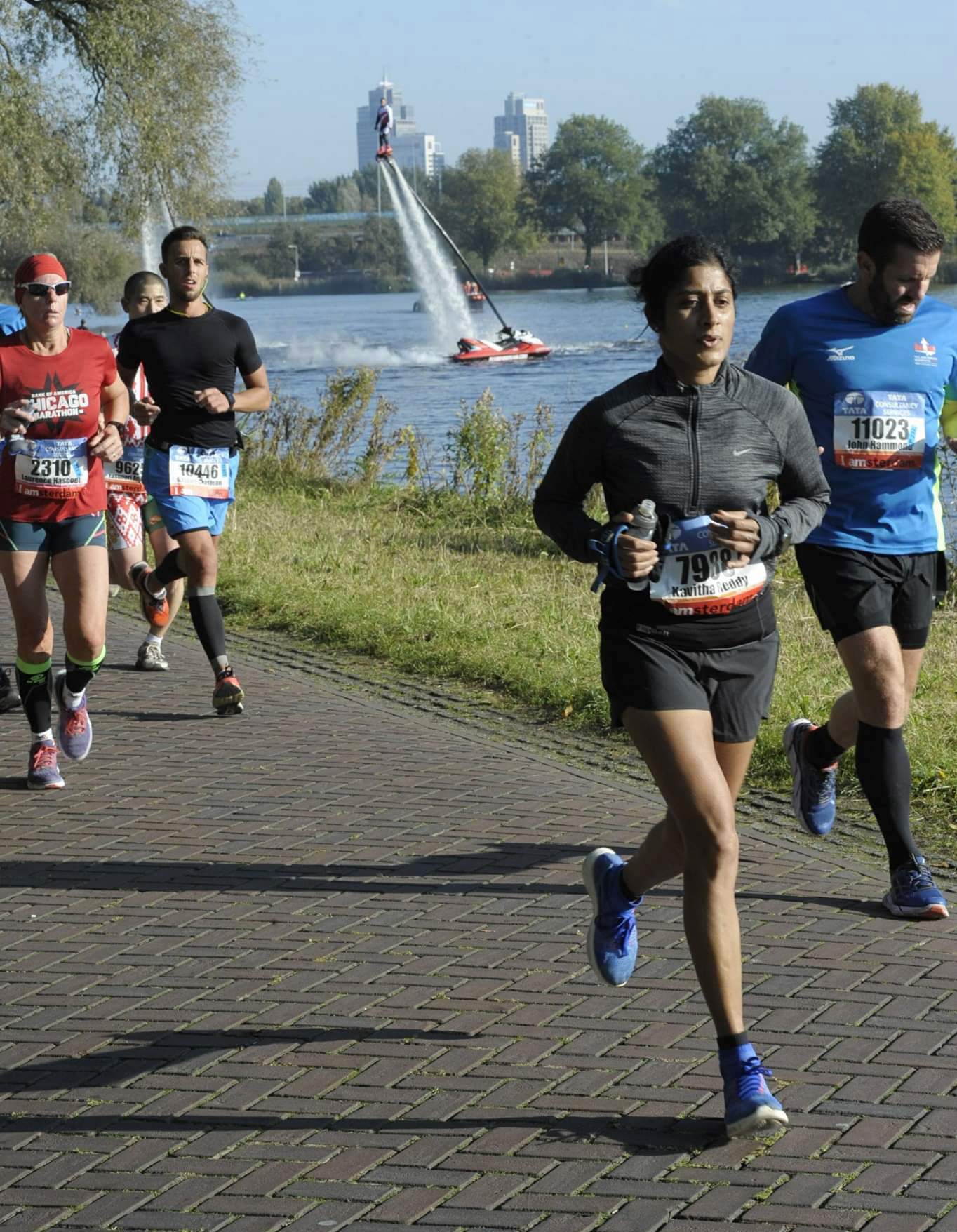
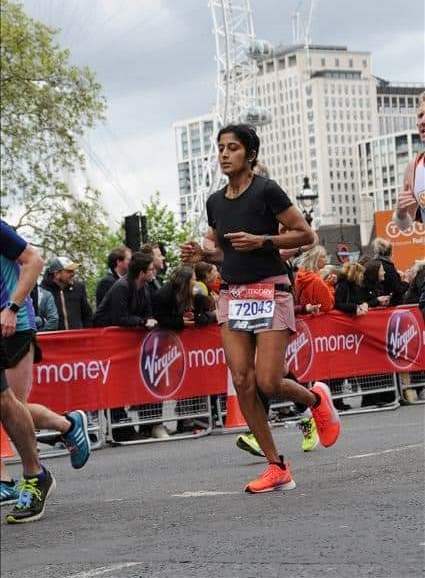
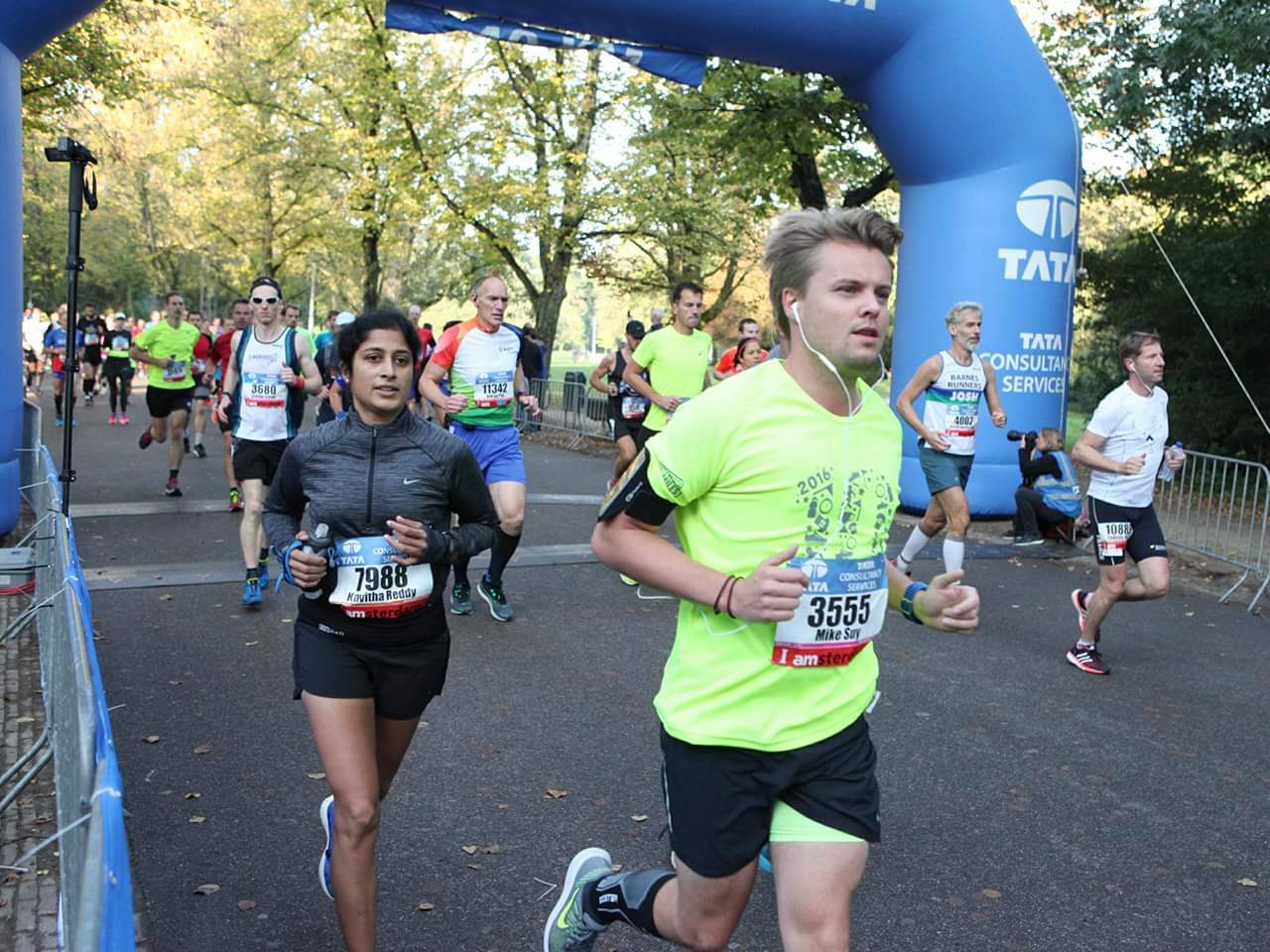
Kavitha Reddy (Photo: courtesy Kavitha)
Kavitha Reddy
Given she is heading for the 2020 Tokyo Marathon, Kavitha Reddy chose to take the Mumbai Marathon of January 2020 as a training run. The Pune-based runner did not have a time target for the race. She also chose to do the half marathon instead of the full. “ I decided to go by feel. It was a good run. I was comfortable throughout the run,” she said.
Kavitha crossed the finish line in 1:36:11, a new personal best (PB) and securing the top podium position in her age group of 45-49 years. “ I deliberately decided to not race this one as I did not want to jeopardise my training for Tokyo Marathon,” she said. In October 2019, she had participated in the Chicago Marathon, where she secured a finish timing of 3:14:19 in the full marathon.
According to her, the arrangements this time in Mumbai were good but there were too many runners at the finish line. “ The finish line shouldn’t be the same for runners of various distances. The organisers need to segregate the finish line for 10 km and half marathon runners,” she said.
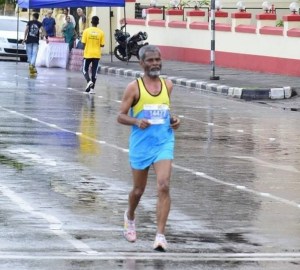
Mahipati Sankpal (Photo: courtesy Mahipati)
Mahipati Sankpal
After he turned 45, Kolhapur-based Mahipati Sankpal, turned to walking as means to stay fit. “ I was doing it only for fitness,” he said. Soon, he found a way to make walking more interesting. Every Sunday, he would walk from Kolhapur city to the well-known and popular Jyotiba temple, a distance of 19 kilometers by road and 13 kilometers via a dirt track through undulating terrain.
Over time, he got introduced to race walking and participated in a few local and international race walking events of five kilometers. Some of these were Masters Athletics Association events. Race walking is a technical sport and the rules specify that the athlete must have one foot in touch with the ground at all times so that the action does not become running. Mahipati spent some time understanding the rules of the sport. Done well, race walking speeds are comparable to the progress of amateur marathoners. Along with his race walking Mahipati also started running distances of around five kilometers.
In 2013, Mahipati did his first 10 km race at the Satara Hill Marathon. In the following year, he did a half marathon at the same event. On both occasions he secured top podium position in his age category. In 2015, Mahipati attempted his first marathon at the Bengaluru Marathon. “ I made a major mistake during this race. I did not drink a sip of water or energy drink during the entire 42.2 km. I also did not eat anything. When I crossed the finish line, I was in a completely dehydrated state,” he said. Nevertheless, he finished second in his age category of 55 years and above.
With that edition of the Bengaluru Marathon, Mahipati learnt a lesson about the importance of nutrition and hydration. In 2016, he again participated in the Bengaluru Marathon and finished in top position in his age group of 55 years and above with timing of 3:24:54. That year, he took part in the full marathon at the Vasai Virar Mayor’s Marathon (VVMM) and finished third in his age group of 50-60 years; there was also a slight improvement in his timing to 3:24:25). Retired from Maharashtra State Electricity Board (MSEB), Mahipati continued with his appearances at Satara Hill Marathon, Bengaluru Marathon and VVMM.
Thanks to his growing experience, at the 2020 Tata Mumbai Marathon (TMM), Mahipati was well-prepared in terms of nutrition and hydration. He decided to tackle the race in four segments with the aim of covering each of these segments in 50 minutes. He covered the first segment in 45 minutes and covered the half marathon length of the course in 97 minutes. “ I usually get tired after 30-35 kilometers while running a marathon. But this time I did not feel any tiredness. The weather was also much better. I kept sipping water, eating oranges and pieces of jaggery. I finished the last five kilometers very well,” he said. He crossed the finish line in 3:24:16, a new personal record ensuring top podium position in his age group of 60-64 years.
Mahipati, 61, is now well settled into the rhythm of marathon running. However he is unsure whether to continue his journey in running or not. His family is not very keen that he continue racing.
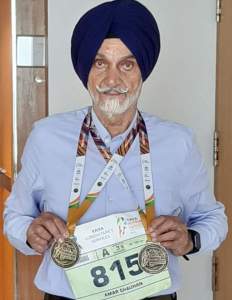
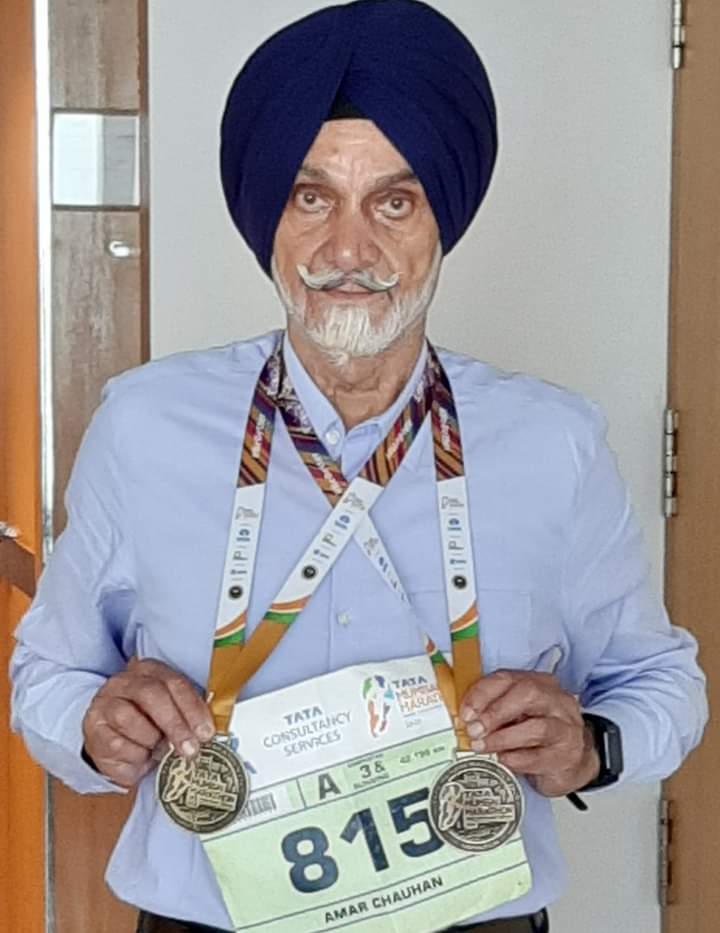
Amar Chauhan (Photo: courtesy Amar Chauhan)
Amar Chauhan
Septuagenarian Amar Chauhan is a regular podium finisher in his age category at running events across India, including the Tata Mumbai Marathon.
He divides his time between Chandigarh and Canada, where his sons live. He arrives in India sometime in September, in time to be ready for the Airtel Delhi Half Marathon. After a string of races across India, including the annual Mumbai Marathon, he heads back to Canada where he participates in a few races.
At 2020 TMM, Amar Chauhan completed the marathon in 5:04:54, winning his age category of 75 years and above. This time, he finished the run nearly an hour later than his 2019 timing at TMM (4:12:03). “ I ran slowly this year because of health problems. Sometime in December 2019, I had faced heart palpitations and had to undergo treatment,” he said.
Worried that he may run fast, his wife had arranged for a pacer from Chandigarh to ensure that Amar ran slowly. “ The pacer kept asking me to slow down and take breaks at some places. I could have finished the run in 4:30,” Amar – now 77 – said, seemingly amused at the idea of running with a pacer. He had no complaints about the arrangements at 2020 TMM. He carried dates and picked up water and energy drinks along the route from volunteers. This was his fifth age category win at Mumbai Marathon.
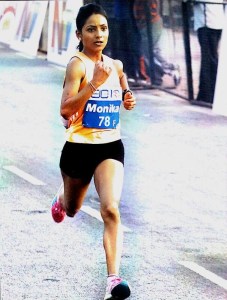
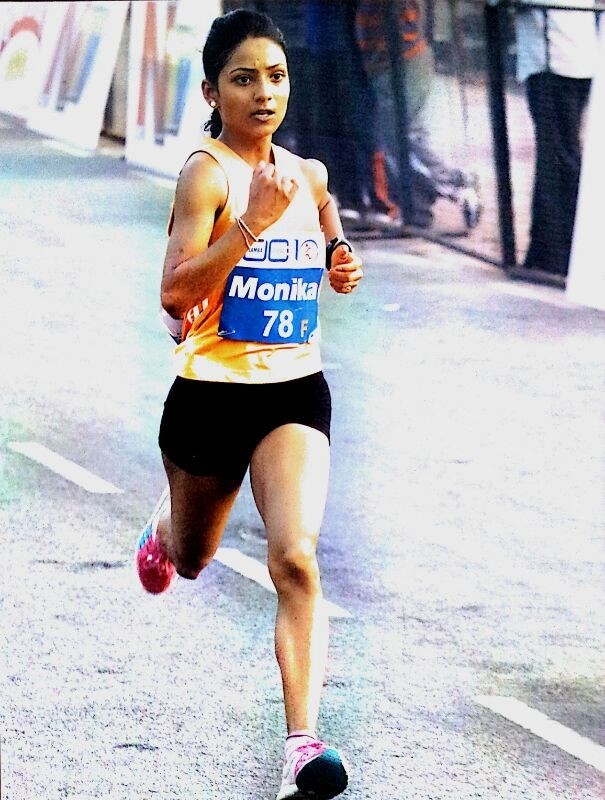
Monika Athare (Photo: courtesy Monika)
Monika Athare
Elite athlete Monika Athare, was out of action for over a year due to knee injury. She has just resumed racing. At the 2020 Tata Mumbai Marathon, she finished third in the women’s half marathon segment. She also placed first in her age group of 25-29 years. A national level athlete, Monika crossed the finished line in 1:18:31. It was not her best timing but was she happy to be running and back in contention. “ My performance at TMM 2020 has helped me regain my confidence. I was laid low by a serious injury in my knee,” Monika said.
The Nashik-based athlete has been actively involved in sports from childhood. She commenced her journey attempting 400 meters and 800 meters. She later moved to 3000 meters, 5000 meters, 10,000 meters and eventually shifted to the half marathon and the marathon. She represented India at the 2017 World Athletics Championships in London.
It was in December 2018, that she was hit by severe knee injury and was put out of action completely. “ I have been actively involved in sports for the last 18 years. Marathon training entails a lot of running,” Monika said. She was advised strengthening exercises as remedial measure. “ Strength workout helped me a lot and I have been able to get back to running,” she said. Monika trains at Ekalavya Athletics and Sports Institute in Nashik.
She will now focus on training for the Federation Cup National Senior Athletics Championships to be held in April 2020. She will be attempting the 5000 meters and 10,000 meters at the competition.
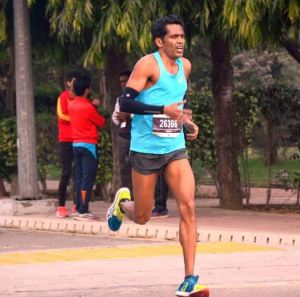
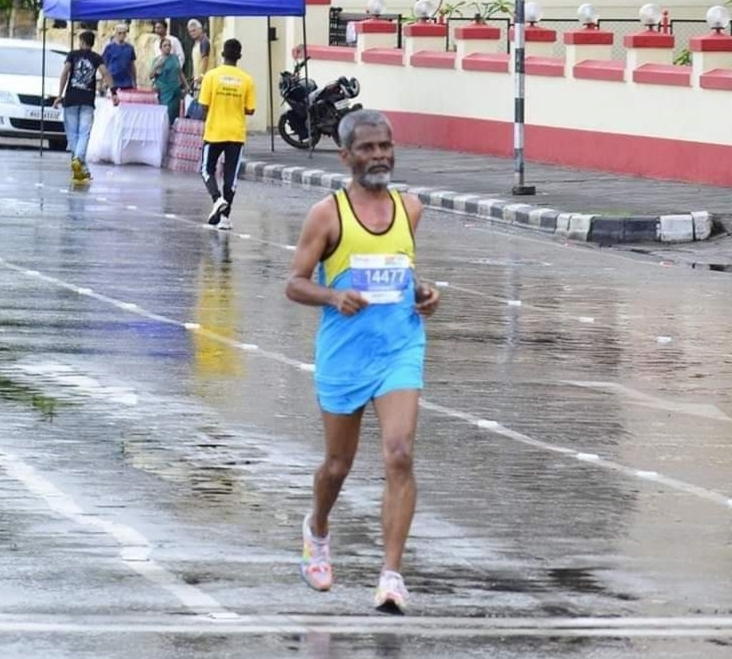
Mohamed Idris (This photo was downloaded from the runner’s Facebook page)
Mohamed Idris
“ The weather was fantastic. Coming from Chennai, I really felt it,’’ Mohamed Idris said of race day at the 2020 Tata Mumbai Marathon. In 2019, he had topped his age category for men (50-54 years) in the half marathon with timing of 1:24:38. This year he covered the distance in 1:24:33 but placed second, three seconds behind the category winner. “ It was a good race. I was feeling strong. Running the half marathon in Mumbai is always a privilege,’’ he said. Someone known to race a lot every year, Idris has a few races coming up in Chennai. But he is making a change to his aspirations. “ I want to focus on the triathlon. I did one in 2010 and haven’t gone back to it since. I plan to attempt the newly introduced Melbourne Ironman in November this year,’’ Idris said. For more on Idris, please try this link: https://shyamgopan.com/2016/12/30/life-retired-and-reinterpretted/
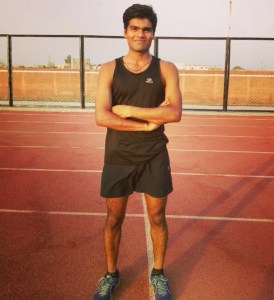
Nishu Kumar (Photo: courtesy Nishu)
Nishu Kumar
Twenty-four-year-old Nishu Kumar was a bit late to start his first full marathon at the 2020 edition of Tata Mumbai Marathon.
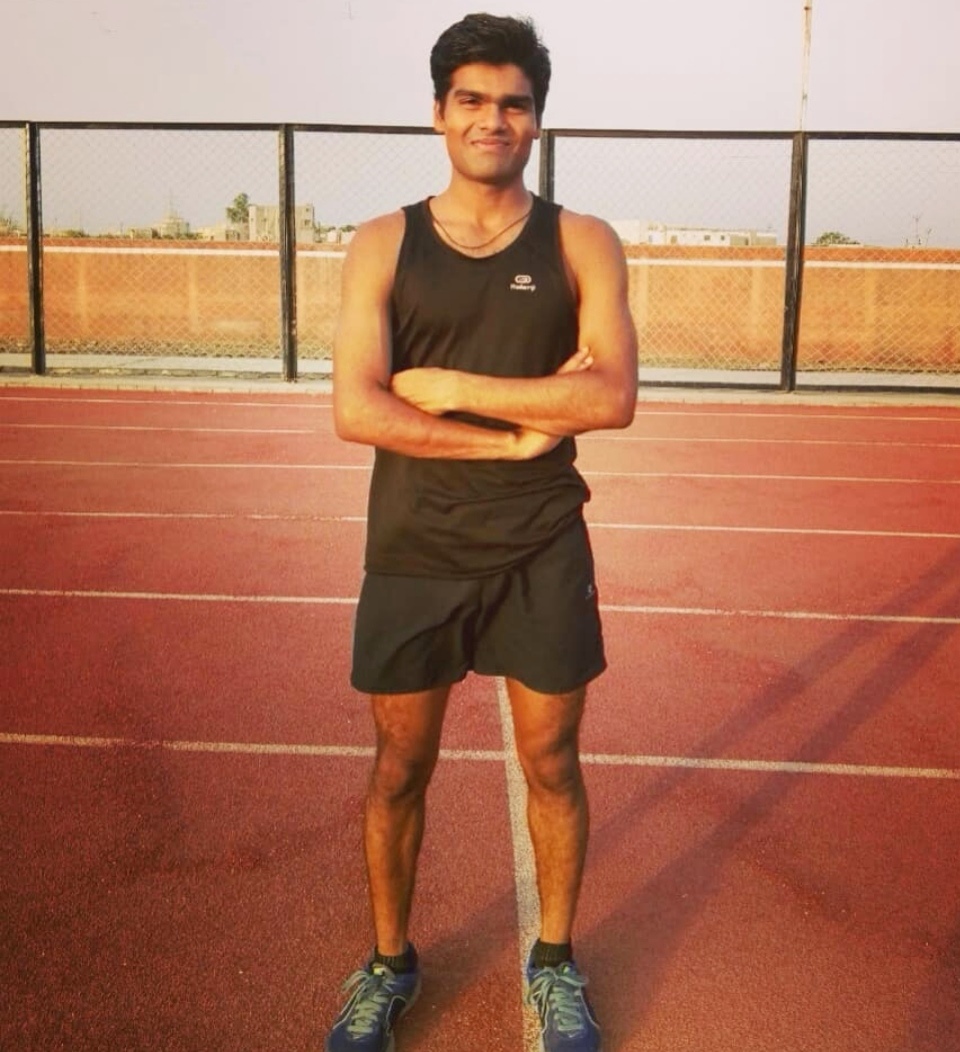
“ I got caught behind a big crowd of runners at the start of the race,” Nishu, a resident of Vadodara, Gujarat, said. At 2020 TMM, Nishu had a target of 2:36 hours for finishing time. But he ran into a wall of runners at the end of the race too and completed the run in 2:42:55. He won top honors in his age group of 18-24 years and eighth position overall among amateur male runners.
Nishu got into running about five years ago and has mostly been running 10km and 21km races. He was into cricket during his school years and later took up sprinting, participating in 100 meter and 200 meter-races. He trains under ultra-runner Sandeep Kumar, who has represented India in a couple of international ultra-running events. Having finished his graduation in electrical engineering, Nishu wants to do his MBA in sports management.
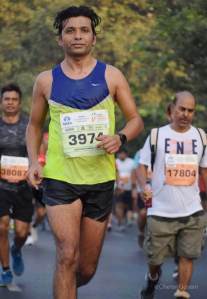
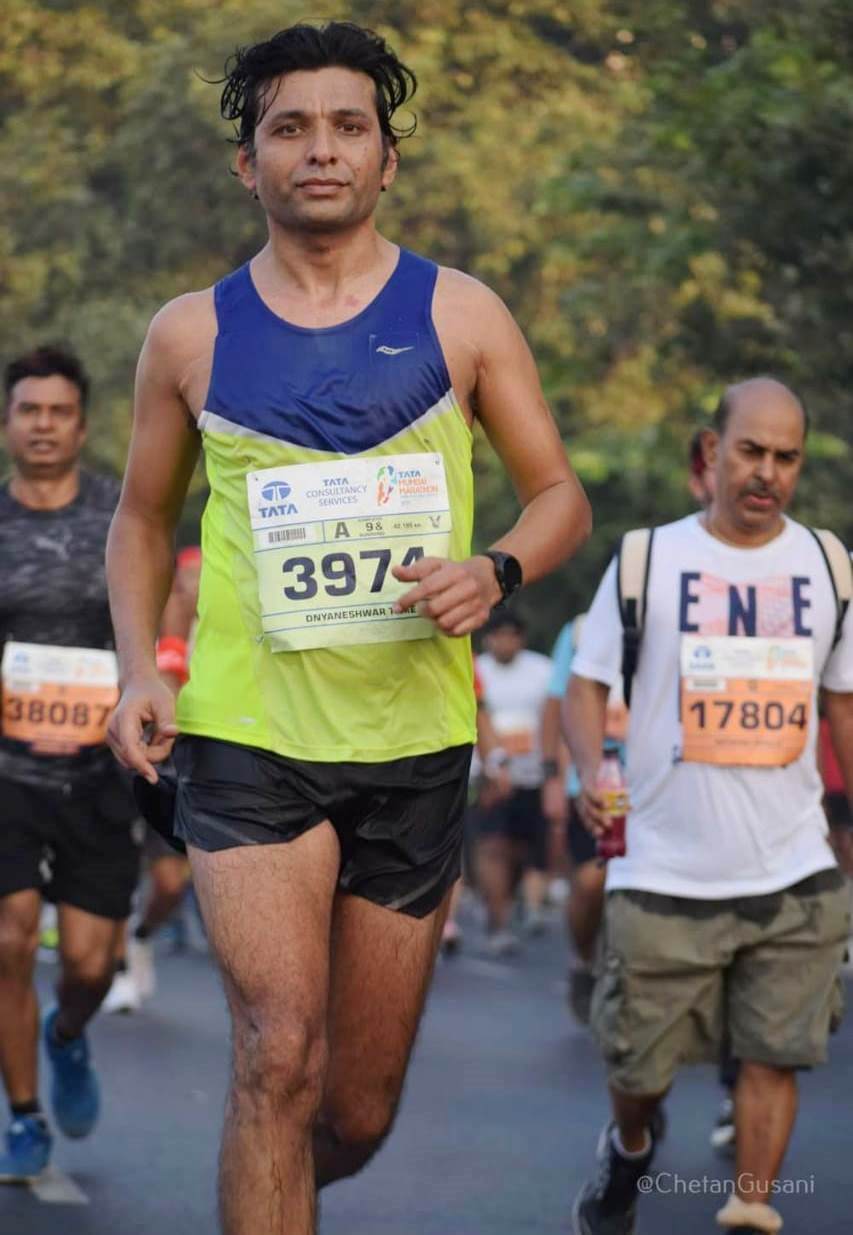
Dnyaneshwar Tidke (Photo: Chetan Gusani; photo provided by Dnyaneshwar)
Dnyaneshwar Tidke
Towards the end of October 2018, Dnyaneshwar Tidke felt discomfort in his right knee after a training run. An initial diagnosis had indicated the problem as ACL (Anterior Cruciate Ligament) injury. MRI scan later identified it as a meniscus tear and Dnyaneshwar had to undergo surgery in November 2018.
In January 2019, he started jogging slowly and over the next few days slowly increased his mileage. “ In February 2019, I did a 20 km run and felt quite comfortable. I decided to attempt the 2019 edition of Boston Marathon as I had already registered for the event,” But shortly thereafter, Dnyaneshwar met with a road accident resulting in a fractured scapula. He was out of action again.
“ I resumed my jogging in May. It was not easy as I had gained some weight due to lack of physical activity. It was a difficult phase for me. During my runs, I could feel niggling pains and aches,” he said.
Although he resumed his running, the overall volume was low. Despite that he got a podium finish in the 10k run at the 2019 Navy Half Marathon, held in November. A month later, he ran a half marathon in Pune and felt fairly confident to go into a full marathon.
“ At 2020 TMM, I had no target. I just wanted to go by feel. I ran the first half of the race comfortably in 1:29 hours. But during the second half I felt tired. I was low on energy,” he said. Dnyaneshwar finished in 3:06:56, getting third position in his age group of 45-49 years. “ It was overall a satisfactory performance as it was my first full marathon after surgery and fracture,” he said. For more on Dnyaneshwar, please try this link: https://shyamgopan.com/2015/04/11/the-constant-runner/

Kamlya Bhagat (Photo: Shyam G Menon)
Kamlya Bhagat
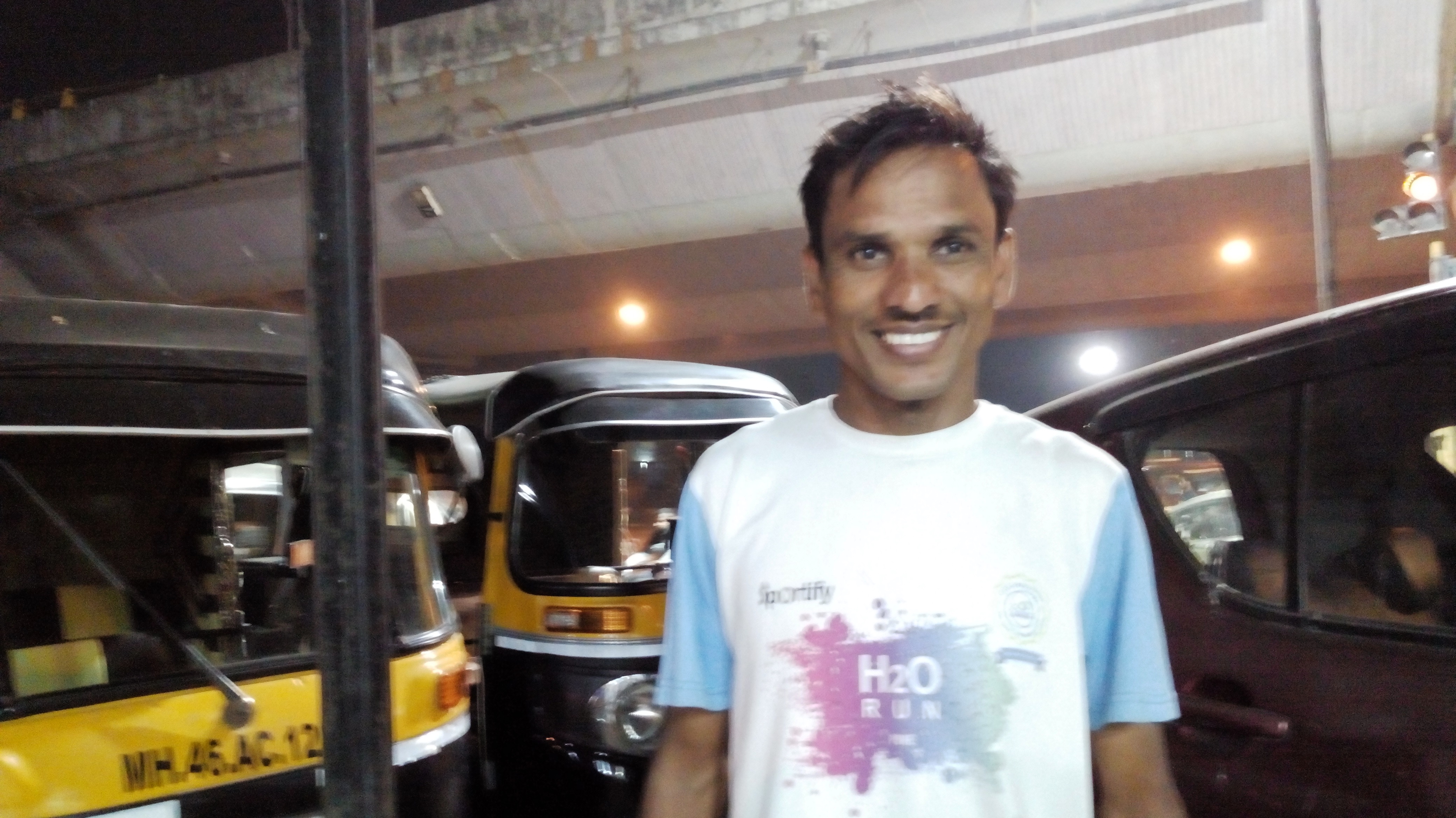
We are back at Visava Restaurant opposite Panvel bus depot, a longstanding assembly point for hikers and for this blog, venue to catch up with Kamlya Bhagat and his story in running. It is the Monday following the 2020 Tata Mumbai Marathon (TMM). According to Kamlya, he has run the half marathon at the event four times and ended up on the podium on all four occasions; twice first and twice second in his age category. The latest on January 19 saw him place second in the 35-39 years age category for men. Hailing from financially challenged circumstances and running to make additional money, Kamlya – he now works at a local school – races 3-4 times a month.
Race day this year began at roughly 2.30AM, which was the time he left home 10-12 kilometers away from Panvel town to join his friends driving to Worli in Mumbai for the half marathon’s start. They reached the venue around 5AM; Kamlya did a little warm-up and at the appointed time of 5.15AM commenced running. On his feet was his trademark improvised footwear – a pair of socks, each with an insole inserted inside. Kamlya had a good start. He recalled being out front for some time before a runner from a younger age group joined him. Together, they struck a fairly fast pace. Past 13 kilometers, Kamlya’s pace began to slacken. At around kilometer 16, a runner from his own age group caught up and progressively took the lead. Kamlya finished in 1:18:25 placing second in his age category. “ The race was good. The weather was apt for running and the new start time 15 minutes earlier than before worked well,’’ Kamlya said. The timing was an improvement over the 1:23:09 he registered in 2019, when he had placed second in the 30-34 age category. His personal best (PB) in the half marathon is 1:10, which he earned at a race in 2010 in Kharghar, Navi Mumbai.
Going ahead, Kamlya will participate in the 2020 edition of Tata Ultra Marathon in Lonavala, where he will run in the 35km race. He ran at Tata Ultra in 2018 and 2019. Both times, he got a podium finish in the 35km race; he was first (2:34:50) in 2018 and third (2:30:44) in 2019. Running in the 35km segment, Kamlya is slowly addressing a long held fear that his competence in the shorter distances (where he earns his prize money) may be compromised if he transitions to the longer races. While training for 35km, he puts in a few runs of 30-32km. But he is still hesitant to touch 40km although he suspects he is developing a desire to eventually try a full marathon. He holds himself back because committing to the full marathon typically entails greater expense. “ It calls for good training and a better diet. I eat what is made at home. I have no special diet; I don’t go to the gym. So far, whatever racing I have managed is within the parameters of what I can afford,’’ he said. Still, having come as far as 35km, who knows what the future holds? Meanwhile he is on the lookout for minimalist footwear (size 8) for running; something like Vibram Five Fingers. “ Regular running shoes weigh me down,’’ he said. For more on Kamlya, please try this link: https://shyamgopan.com/2016/01/19/kamlya-runs-his-first-scmm-and-gets-a-first/
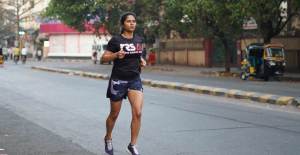
Tim Tim Sharma (Photo: courtesy Tim Tim)
TimTim Sharma
Before she got into running, Bengaluru-based fitness trainer TimTim Sharma was into equestrian sports. Starting at the age of nine, she stayed in the sport for ten years including participating in the Junior National Equestrian Championships. She lost her connection with sports when she moved to New Zealand for studies. A victim of unhealthy lifestyle – erratic eating and lack of physical activity – she had to take control of her life when laid low by digestive issues and multiple stress fractures.
Once she embraced fitness, it was running that helped her get back on track. But she ramped up distances too fast moving from 10k to half marathon and full marathon in a very short period, resulting in injuries. That put her out of action for some time. She chose that time to get into organizing sporting events as a consultant at Neb Sports. She also got involved in cycling and swimming, participating in bicycling events and Olympic distance triathlons.
TimTim is also into traveling. During a journey along the course of River Teesta, she got to spend time at Gangtok. “ From the place where I was staying I could see Kanchenjunga. There was something fascinating about the mountains. I ended up doing my basic mountaineering course from the Himalayan Mountaineering Institute in Darjeeling,” she said. She followed it up with the advanced course in mountaineering.
She resumed running with the 2019 edition of IDBI Federal Life Insurance New Delhi Marathon. She topped her age category (30-35 years) in the half marathon with timing of 1:39:11. In May, she ran the TCS World 10k in Bengaluru and secured a second position in her age group of 35-39 and overall 11th place among women runners with timing of 44:54 minutes.
At TMM 2020, she completed the marathon in 3:30:21 winning her age category (35-39 years) and finishing overall eighth position among women runners. In the weeks ahead, TimTim is likely to participate in the Maharashtra Police International Marathon and Tata Ultra, both events slated for February 2020.
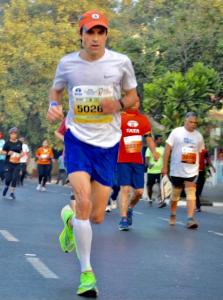
Ashok Nath (Photo: courtesy Ashok)
Ashok Nath
Based in Bengaluru, runner and coach Ashok Nath is a regular podium finisher at races. At 2020 TMM Ashok finished the marathon in 3:13:34 securing second position in his age group of 55-59 years. “ I neither train too much nor do I push too hard in a race,” he said. Given his responsbilities as coach and the time that role consumes, it is not always possible to put in the apt mileage and effort in his own training.
Ashok has been running for several years and has participated in the Boston Marathon and Comrades Marathon multiple times. He has already earned the six-star World Marathon Majors medal. At 2020 TMM, Ashok was not affected by the crowd of runners cited by many as a problem. “ At the start of the race, I did find some crowding and may have lost a minute negotiating passage between slow runners. But I did not face unusual crowds through the route until the last 500 meters. It was extremely crowded after the finish line,” he said.
The post-race management was executed badly, he pointed out. “ So many runners were finishing at the same time. The organizers should have foreseen this and managed accordingly,” Ashok said adding that such arrangements were totally unacceptable at a World Athletics Gold Label race.
Ashok is likely to attempt the New Delhi Marathon in February. Following that he will head for the London Marathon as he has qualified for the Abbott World Marathon Majors Wanda Age Group World Championships.
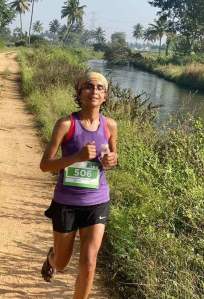
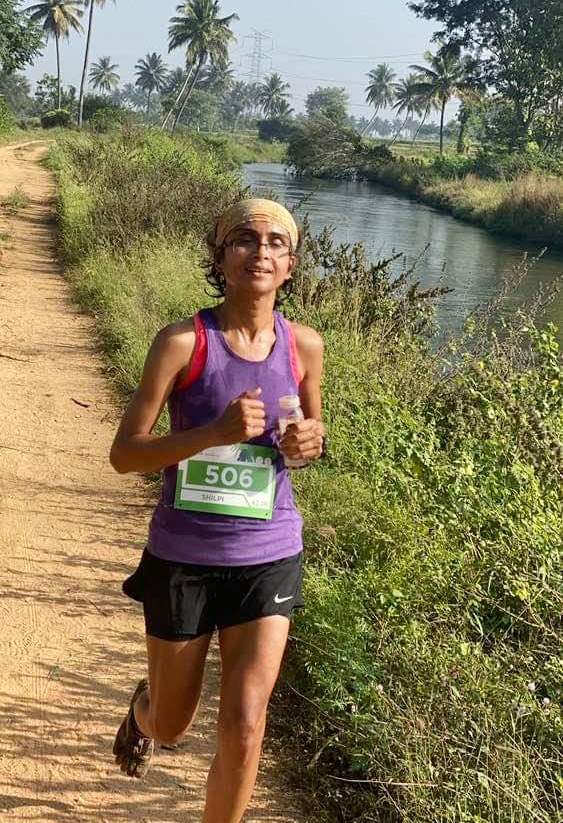
Shilpi Sahu (Photo: courtesy Shilpi)
Shilpi Sahu
A barefoot runner, Shilpi Sahu commenced her race at the 2020 Tata Mumbai Marathon, at a slow pace. She did so because of the big crowd of runners. “ Once midway I picked up speed as I felt quite good,” she said.
The Bengaluru-based runner had a target of 3:30 hours but well into the race she realized that she would not be able to achieve it. She finished the race in 3:32:21, a personal best (PB) for her. It fetched her the top podium position in her age group of 40-44 years and tenth place overall among amateur women runners. “ I also managed a four minute negative split,” Shilpi said. As a barefoot runner, she did find the road surface tough because of the ongoing metro construction work.
According to her, the organization of the race was very good but the use of plastic remained high. “ I hope TMM organizers think seriously about reducing single use plastic bottles for the 21 km, 10 km and the Dream run by at least 50 per cent and by 100 per cent at the venue. I saw many runners take a sip and throw away the bottle. In the process, there is plastic being dumped and water being wasted,” she said.
The refill option should be encouraged, she said.
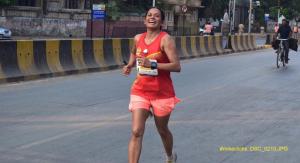
Chitra Nadkarni (Photo: courtesy Chitra)
Chitra Nadkarni
At the Adani Ahmedabad Marathon held in November 2019, Mumbai-based Chitra Nadkarni had secured top podium position in the age category of 51 years and above with timing of 4:09:11.
For 2020 TMM, she decided not to have a timing target as the race she is focused on is the 2020 Tokyo Marathon to be held in March. “ At TMM, I decided to run between the 4-hour and 4:15-hour pacers. The 4-hour pacer, Anirudha Athani, was very good. I kept pace with him for most part but could not manage to do so during the last two to three kilometers,” Chitra said. She finished in 4:01:12; it fetched her top podium position in her age group of 55-59 years.
“ I had a good run but the post-race arrangements were bad. It was chaotic and crowded at the finish line,” she said. She will now head for the Tokyo Marathon – it is one of the six World Marathon Majors – to be held on March 1, 2020. “ I am looking forward to my six-star medal,” she said. For more on Chitra Nadkarni, please try this link: https://shyamgopan.com/2017/04/08/starting-line-50/
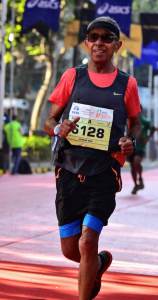
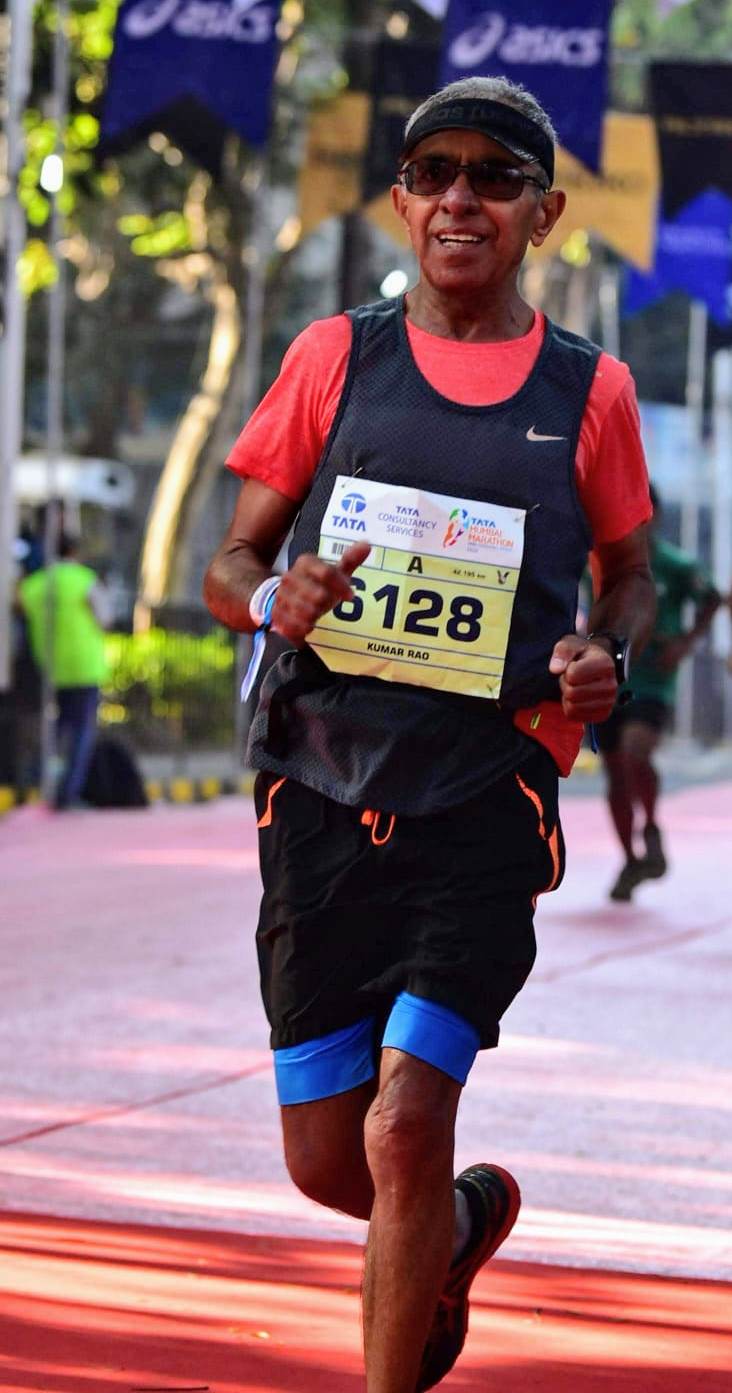
Kumar Rao (Photo: courtesy Kumar Rao)
Kumar Rao
Kumar Rao, 70, chose to make the 2020 TMM 2020 a training run for his upcoming participation in the 2020 Boston Marathon.
“ My plan was to run the first five kilometers as warm up, the next 30 as tempo run divided into three segments of 10km each and the last 7.2km as cool down run. Of the three segments of tempo run, I ran one of them at Boston target pace,” Kumar said.
He stuck to the plan for most part but stepped up the pace during the last two km.
Kumar had set a target of 4:15 as per his plan but finished in 4:12:28, securing the top podium position in his age group of 70-74 years. “ The podium has come as a bonus. I did not expect it,” he said. In December 2019, Kumar Rao had participated in Tata Steel 25k and won an age category podium with timing of 2.12.39. “ With TMM 2020, I have completed the Procam Slam,” he said.
In April 2020, Kumar will be running Boston Marathon for the second time. Last year, Kumar secured his personal best timing of 3:59:33 at Boston Marathon. He had followed it up with Big Sur International Marathon in California. Later, in September, he secured his six star World Marathon Majors medal after he completed all six marathon majors at Berlin Marathon.
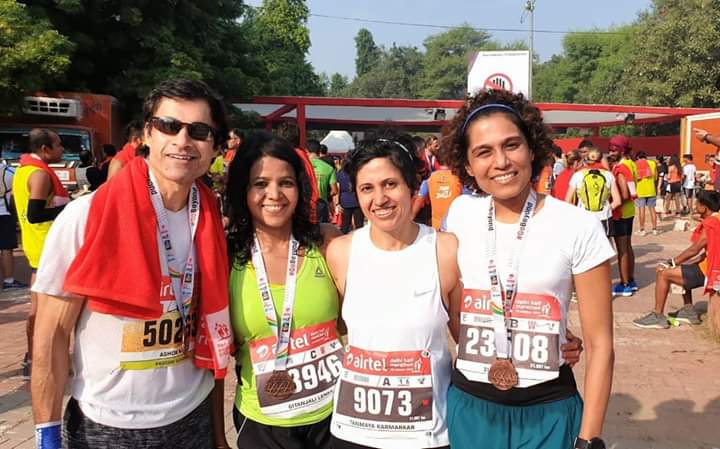
Tanmaya Karmarkar (Photo: courtesy Tanmaya)
Tanmaya Karmarkar
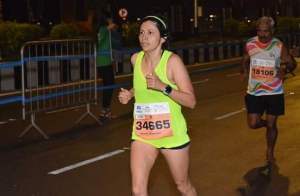
In the run up to the annual Mumbai Marathon, Tanmaya Karmarkar’s training was largely focused on the 2020 Tokyo Marathon. Nevertheless, she managed to put in some dedicated training for TMM. “ For the last one month, I focused on half marathon training,” the Pune-based runner said.
At Mumbai, she hoped to finish in around 1:38 hours, her personal best in the half marathon. She finished tad outside that mark in 1:39:26 and secured second position in her age group of 40-44 years. Her run progressed well but at the seventh kilometer she lost the cap of her water bottle and got distracted managing a bottle with water splashing out of it.
“ I could have done better but I goofed up a bit on hydration,” she said. Tanmaya found the arrangements at 2020 TMM fairly good and did not have the difficulties that many runners, who finished later, faced at the finish line. She will now focus her attention on training for the Tokyo Marathon.
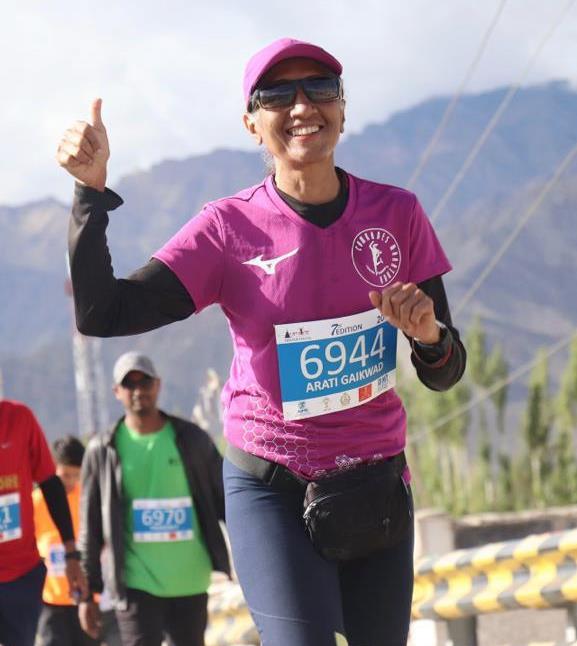
Dr Arati Gaikwad (Photo: courtesy Arati)
Arati Gaikwad
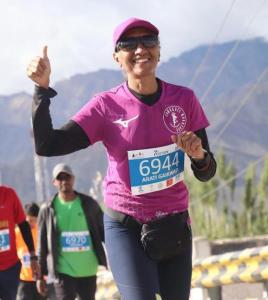
Sometime in May 2019, Dr Arati Gaikwad felt a tingling numbness in her left leg. “ I could not get up from my bed the normal way. I had pain in my right hip and a tingling feeling in my leg. I knew that the tingling feeling was not a good sign. It meant some nerve was getting pinched,” she said.
Arati and her husband, Dr Pravin Gaikwad, pediatricians and amateur runners (Pravin is also a coach; he is prime mover at Navi Mumbai based-Life Pacers), decided to consult an orthopedic surgeon for correct diagnosis of the problem. Following x-ray and MRI, it was diagnosed as congenital spondylolisthesis of L4 over L5. This is a spinal disorder in which the vertebra slips forward on to the bone below it.
Arati was distraught as she had to stop running. “ The first half hour after waking up was torture for me. I was worried if this problem would completely impact my physical activity,” she said. Thankfully, she was allowed to go for walks.
Typically, this condition is diagnosed in the thirties. The fact that Arati’s condition came to the fore in her fifties is a measure of her fitness level. Arati has been quite focused on physical fitness since her medical college days and has been actively involved in endurance sport including running, triathlon, cycling and swimming for the past several years.
The recommended line of treatment for this condition was strength training, core workout, stretching and a healthy lifestyle. “ Initially, I had to do half hour of stretching while lying on the bed before I got up,” she said. With consistent strength training, Arati was able to mitigate her pain.
“ At the time of registering for Mumbai Marathon, I was not sure if I could run a half marathon. That’s the reason I registered for the 10km race,” Arati said. She finished the 10km race at 2020 TMM in 58 minutes and 20 seconds, securing top position in her age category of 50-54 years.
“ I decided to go by feel and I enjoyed the run immensely. At some point during the race, I was overtaking many runners,” Arati said. To feel confident for 2020 TMM, she had attempted the 10km race at the Navy Half Marathon and a half marathon race in Navi Mumbai in December. She secured age category podium positions in both these races. For more on Arati and Pravin Gaikwad, please try this link: https://shyamgopan.com/2017/02/12/the-diligent-and-the-fun-loving/
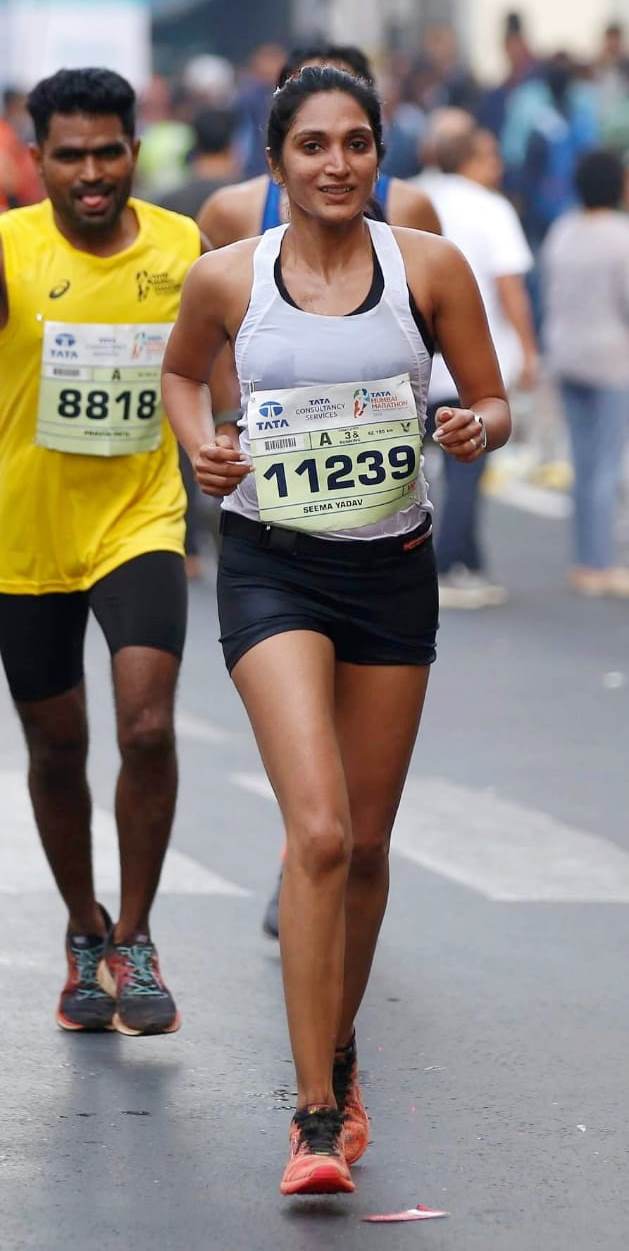
Seema Yadav (Photo: courtesy Seema)
Seema Yadav
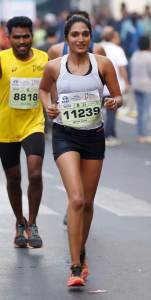
In October 2019, Seema Yadav was the first runner-up in the amateur women’s category at the 2019 edition of Airtel Delhi Half Marathon. Already plagued by injuries, Seema’s condition worsened after the Delhi run.
In April 2019, Seema had run the Boston Marathon with several injuries. She finished the race with a personal best timing of 3:26:46 but had to go off running for a while and focus on healing. Through most of 2019, Seema was battling injuries in her glutes, hamstrings and abductor muscles. She also suffered from extensor tendonitis. Her training for TMM 2020 was far from adequate. Tracking the advice of her physiotherapist, it was also intermittent.
“ I had to take this run easy so as not to aggravate my injuries any further,” Seema, a resident of Faridabad, said, adding. “ I ran at a very comfortable pace. I did not push my pace at any point during the entire distance of 42.2 km.” She finished in 3:32:38, securing second position in her age group of 40-44 years and finishing overall 11th among amateur women runners.
Seema believes she has potential to do much better in terms of timing. She also pointed to the emergent difficulty in Mumbai, navigating one’s passage through a sea of runners towards the last part of the race. “ The number of runners for the full marathon also increased this time,” she said.
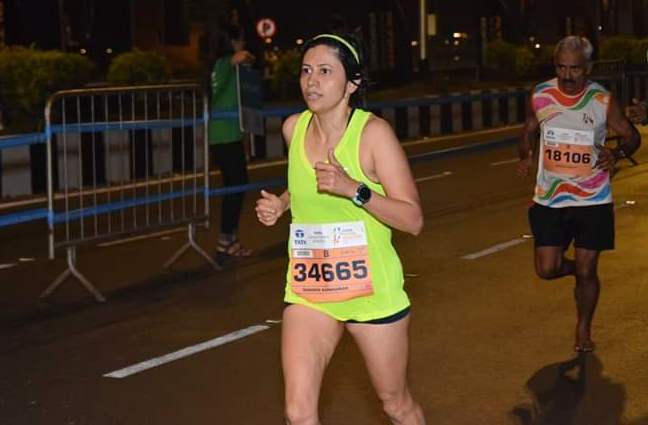
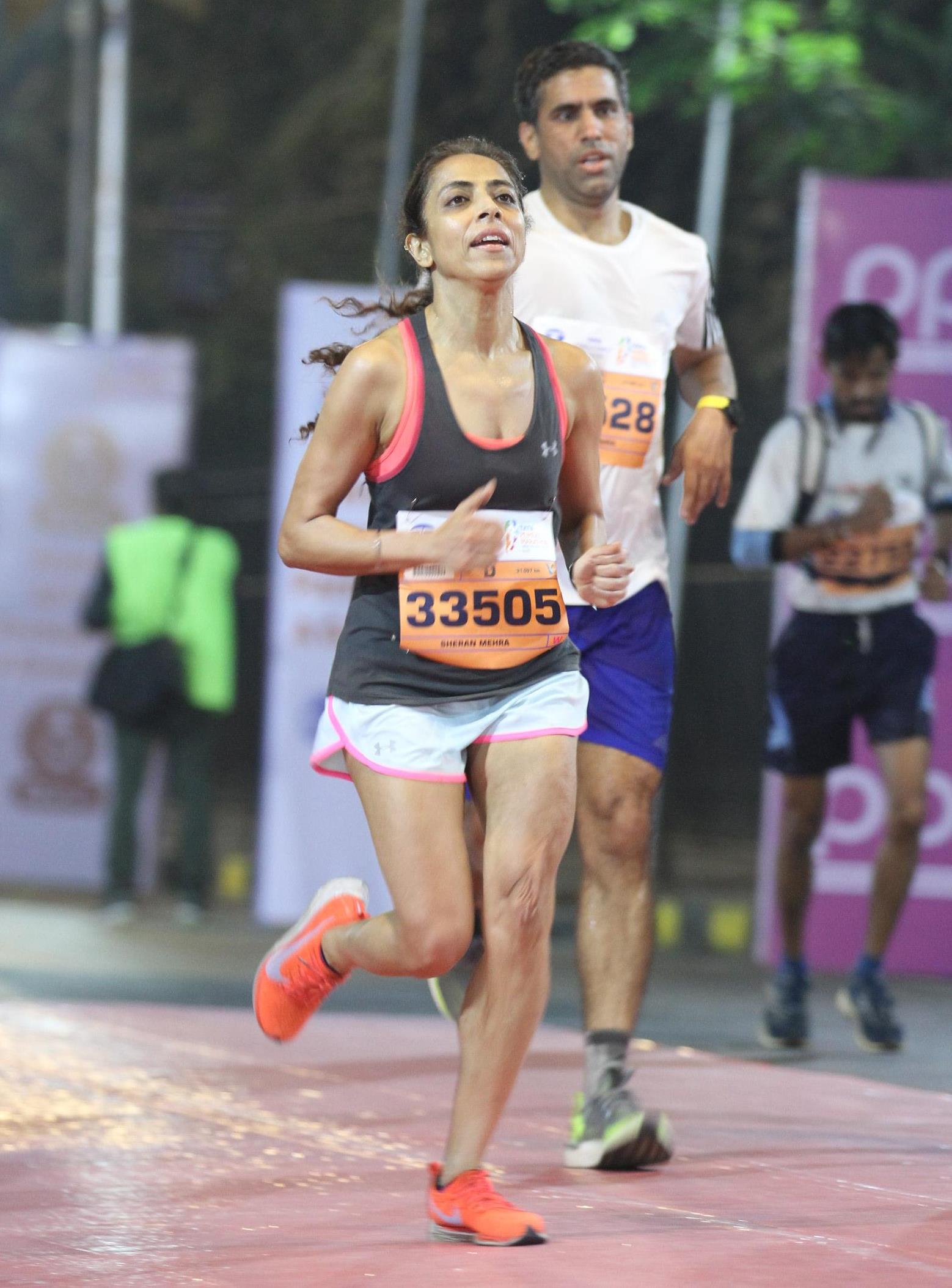
Sheran Mehra (Photo: courtesy Sheran)
Sheran Mehra
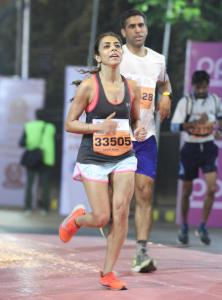
Sheran Mehra prefers to run the full marathon but her coach, Ashok Nath suggested that she opt for the half marathon in Mumbai and treat it like a training run for her upcoming race at the Tokyo Marathon.
“ I don’t like to run with targets. I just decided to go by feel. I started running comfortably and kept going on with a consistent pace,” she said. She was able to execute the second half of the race much better than the first half at TMM 2020. Sheran crossed the finish line in 1:43:24, a new personal best for her in the half marathon. She placed second in her age category of 45-49 years for women.
Sheran has been running for over 12 years. She was into sprinting during her schooling days at Bhopal and participated in district level events. “ I was active in sports through my school and college years,” she said. For a brief while sports came to a grinding halt because of injuries.
She resumed her fitness pursuit by joining a gym. “ My husband, Chandramohan Mehra, who is also a runner, is a fitness freak. Both of us were gym junkies,” she said. Her foray into running commenced when a colleague at her workplace prompted her to join him for a training run. “ I ran a distance of 7.5 km then. That’s how I got into running,” she said.
For many years she trained with Striders, a training group for long-distance running. Recently she also signed up with Bengaluru-based runner and coach, Ashok Nath. “ Initially, my focus was just running. Ashok Nath’s approach is more holistic. The accent is on overall fitness with adequate attention to strength training and nutrition,” she said.
She and her husband Chandramohan will be participating in the Tokyo Marathon in March this year.
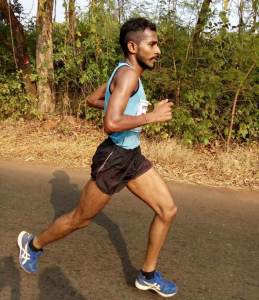
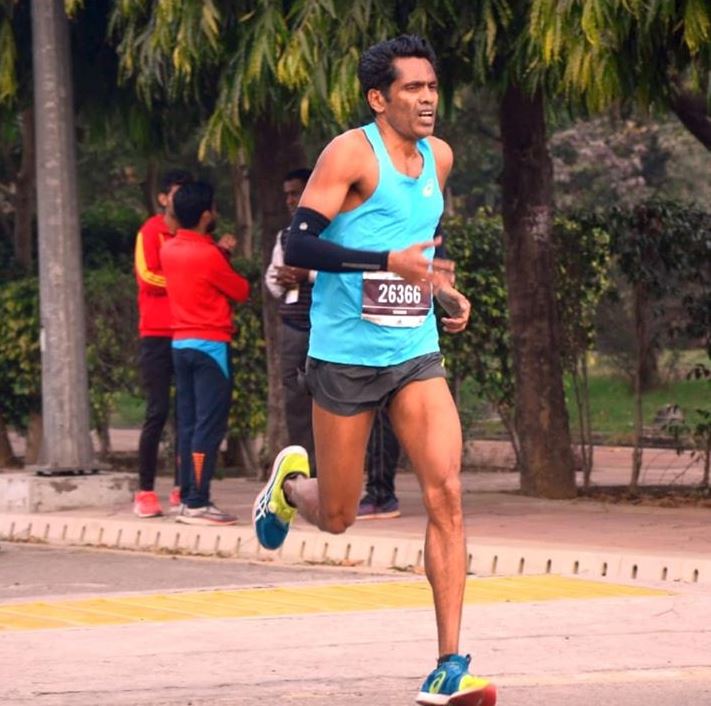
Anil Korvi (Photo: courtesy Anil)
Anil Korvi
Anil Korvi, an employee of Indian Railways, has been running for over 12 years. He started running during his college days commencing with cross country races. Later he moved to running the marathon.
His best timing in the marathon was 2:39:28, set in 2017 at the IDBI Federal Life Insurance New Delhi Marathon. “ I had a target of achieving sub-2.40 here at TMM. I started well and continued strong until about 33-34 kilometers. But I started to feel weak even before Peddar Road,” Anil said. He finished the marathon in 2:46:39, securing third position in his age group of 25-29 years and finishing overall 11th among amateur male runners. Over the last four to five kilometers, he too ran into a crowd of runners, a problem many sub-three-hour marathon runners faced this time.
Anil’s training for TMM was not adequate. “ I was training for a 10 km cross country race and followed it up a week later with the Vasai Virar Mayor’s Marathon,” he said. Anil has got Boston Qualifying (BQ) timings at the past few marathons that he has participated in but has not been able to travel overseas for a run. “ I have not yet found a sponsor who will support my travel for the Boston Marathon,” he said. That aside, he has been supported by brand HRX and more recently by Unived, a vegan sports nutrition brand.
Next month, Anil will be participating in the IDBI Federal Life Insurance New Delhi Marathon.
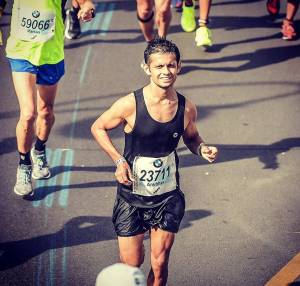
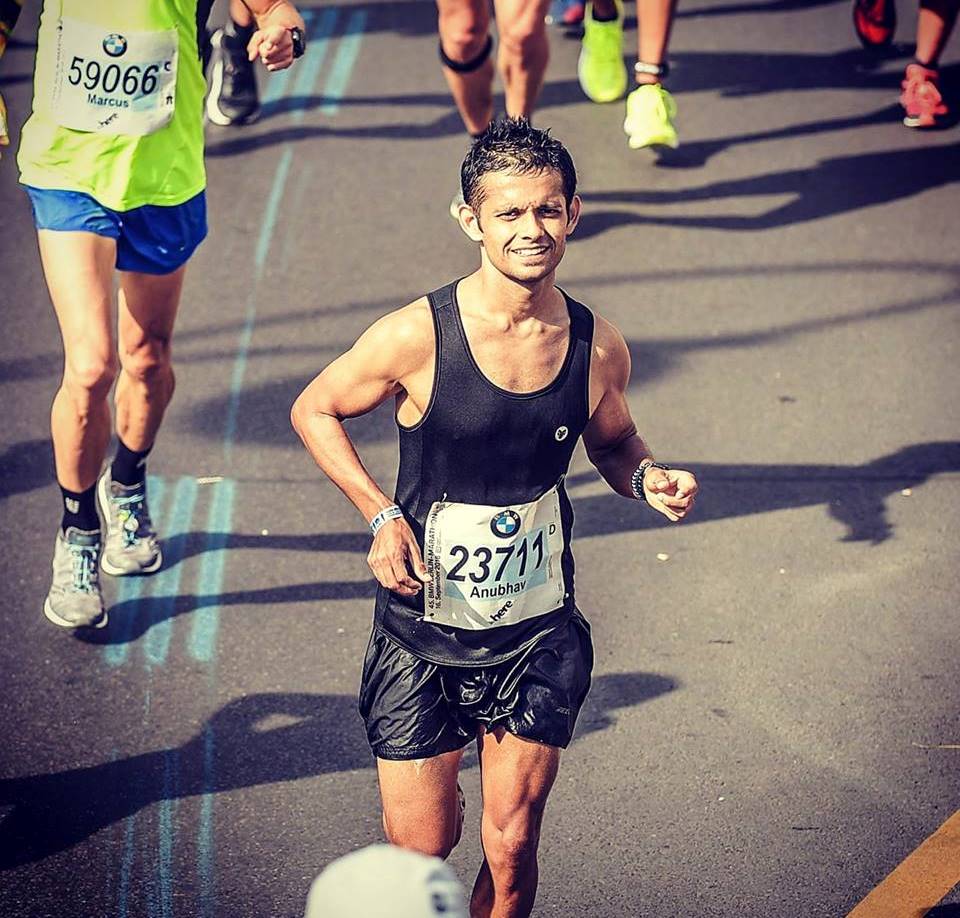
Anubhav Karmakar (Photo: courtesy Anubhav)
Anubhav Karmakar
Two days prior to Tata Mumbai Marathon 2020 Anubhav Karmakar sprained his ankle. He was in pain. He was not sure about joining the starting line of runners on the morning of January 19. Eventually he decided to go ahead.
Anubhav finished the marathon in 2:38:41, missing his goal of 2:36. He also missed the podium by 30 seconds. His overall position among amateur runners was fourth.“ I wanted to run faster splits in the final few kilometers. But I was not able to. There was a wall of runners and it was quite frustrating dodging between people through the last part of the course,” he said.
At the finish line, Anubhav did not feel spent as he had not been able to push as much as he wanted to because of the crowds. “ I am shocked that the organizers did not pay attention to this aspect,” he said.
For Anubhav, running a marathon helps him grow as a runner. He trains meticulously, tweaking his training plans as he nears race date. “ I am at that stage of running and training when I can definitely expect more gains in my timing economy,” he said. His attention will now turn to IDBI Federal Life Insurance New Delhi Marathon and later to the Boston Marathon, where he will be making his second appearance.
(The authors, Latha Venkatraman and Shyam G Menon, are independent journalists based in Mumbai.)