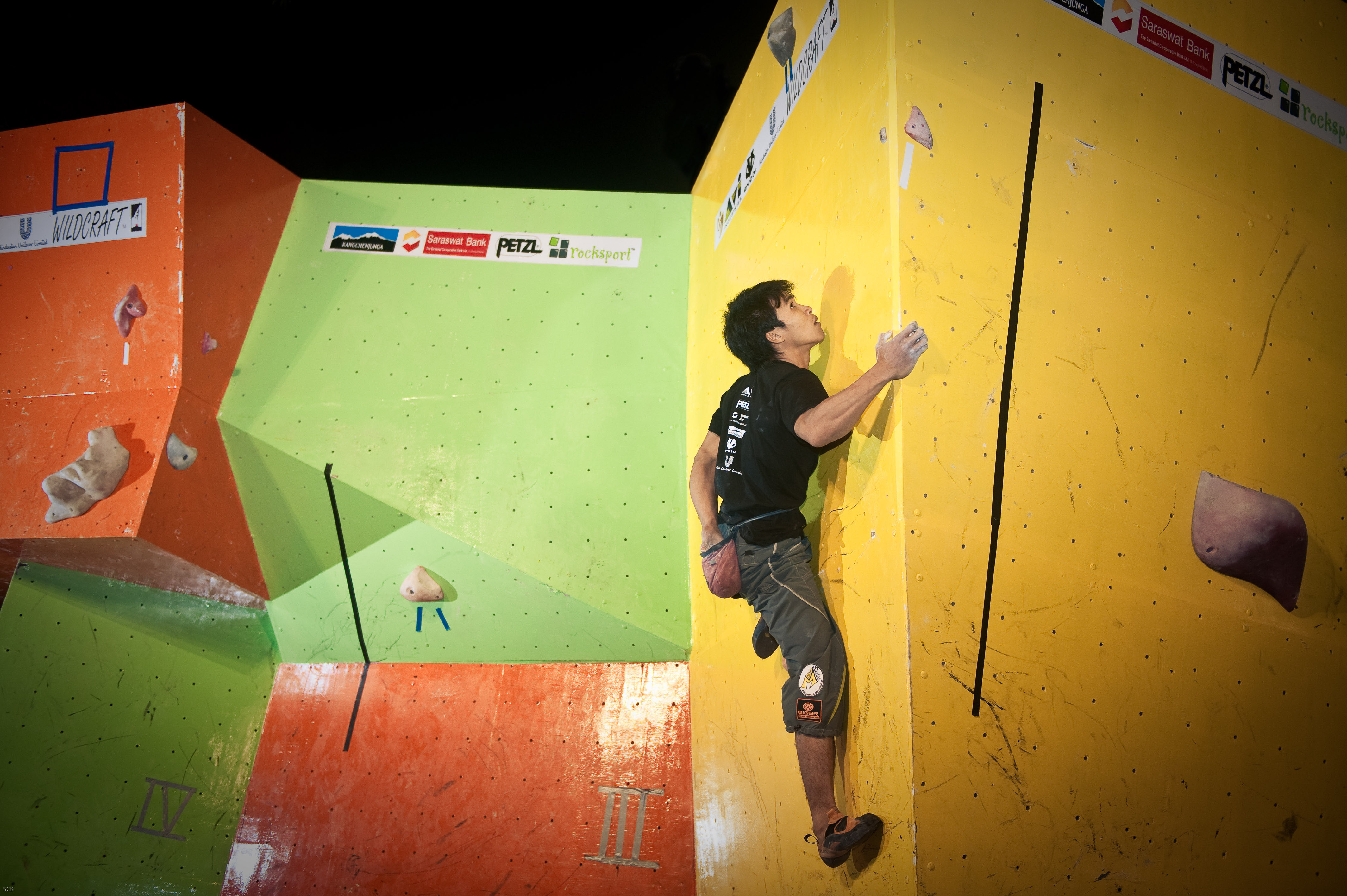
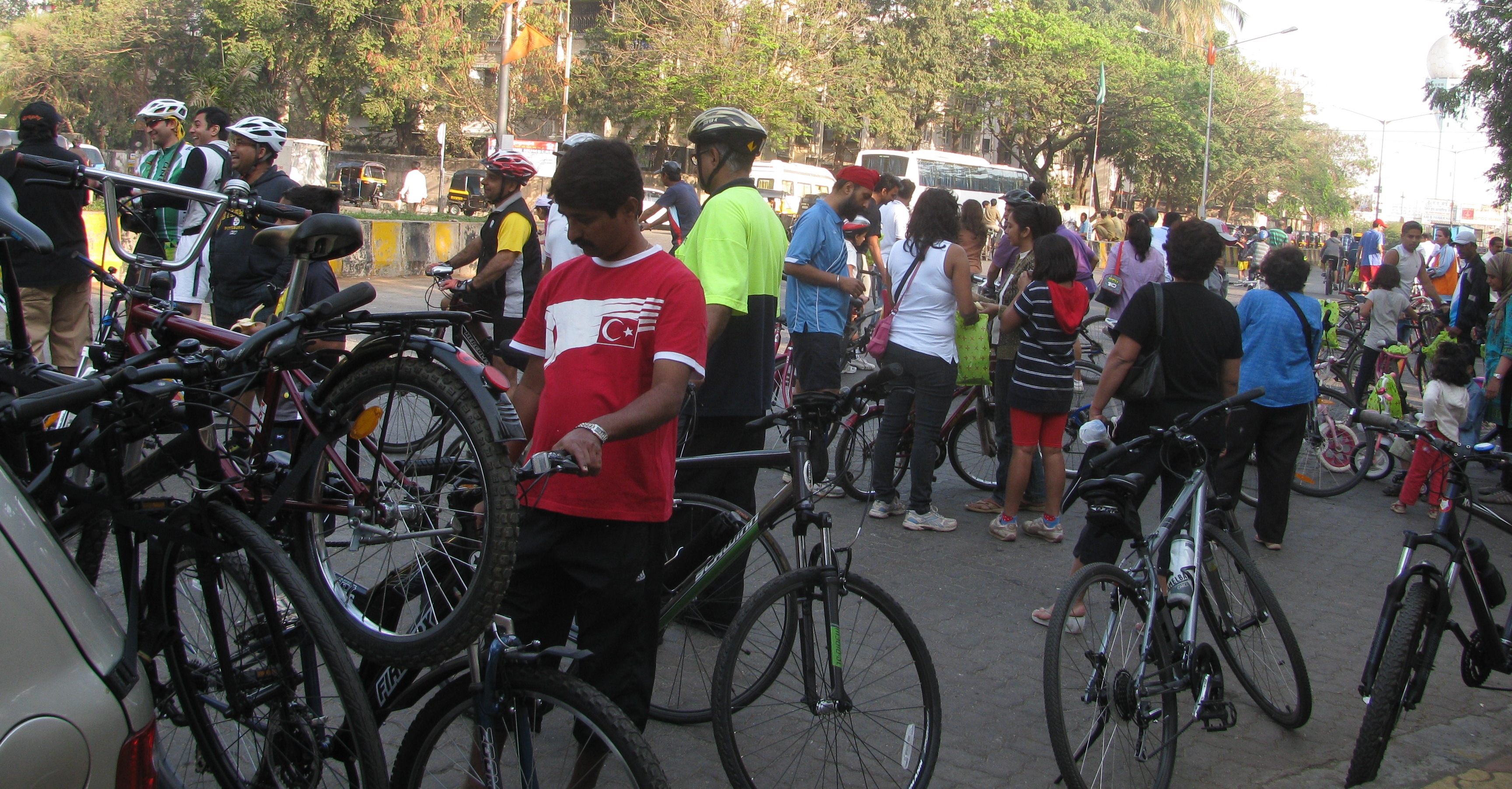
CLIMBERS IN THE BIG WALL MIRROR (PART TWO)

Illustration: Shyam G Menon

Illustration: Shyam G Menon

EXPLANATORY NOTES

Big wall climbing

When the first moves in modern rock climbing and alpinism happened in Europe, the Americans got left behind. There wasn’t a personal stamp for them in the sport’s evolution. In the mid 20th century, they focused their attention on El Capitan, a sheer rock face of around 3000ft in Yosemite. The race to climb El Capitan and the subsequent ideological confrontation between two schools of climbing – one advocating clean climbing with removable protection (that is, you use devices which you can keep taking off from the rock as you progress up a wall leaving little trace behind of the climbers’ passage), the other, prone to installing permanent bolts into rock to host the protective gear – was a famous chapter in the evolution of climbing. It birthed two American greats with contrasting approaches in rock climbing – Warren Harding and Royal Robbins (please see earlier post ` The Short Cut’ for details).

Although huge rock faces had been climbed already in Europe, El Capitan’s first ascent revived the interest in big walls. The debate on climbing style continued. The French bolted like crazy. But the Americans and the British, favoured climbing with removable equipment, one reason why traditional (`trad’) climbing is big in the US. While established long routes (especially bolted ones) may get speed-climbed later, exploratory big wall climbing can be equipment-heavy. It requires efficient equipment management and entails staying on ledges on the rock face being tackled, sometimes using portable hanging shelters called portaledges. The climbs are typically multi-day affairs. Big wall climbing at high altitude (as the Huber brothers did on Arwa), developed as an extreme version, for high altitude is tough environment to hike in, forget rock climbing. Rocky peaks in West Karakorum and Patagonia became iconic in the discipline. These include Pakistan’s Great Trango Tower (6286m) and other rock faces in its neighbourhood and Torre del Paine of Chilean Patagonia with its rocky peaks of modest elevation but tricky Patagonian weather nonetheless. In India, visually speaking, the Arwa peaks fit the big wall category beautifully. Through all this however the attraction to climb El Capitan rules strong as that is the de facto spiritual ground of the discipline. Even established big wall climbers from other geographies come to Yosemite to prove themselves on El Capitan’s routes. Thus the Huber brothers, despite climbs elsewhere, briefly held a speed record on El Capitan. I have come across Indian climbers who dream of trying El Capitan one day. That said, big wall climbing is at its classic best when it is exploratory for that is true climbing, that is when climbing is stretched to long affair and gear and knowledge of gear placement is tested. In practice, in the high mountains, a big wall may stop being strictly rock and strictly vertical to being mixed terrain and amalgam of gradients. Some extreme mountaineering routes therefore have the traits of rock climbing’s big wall.

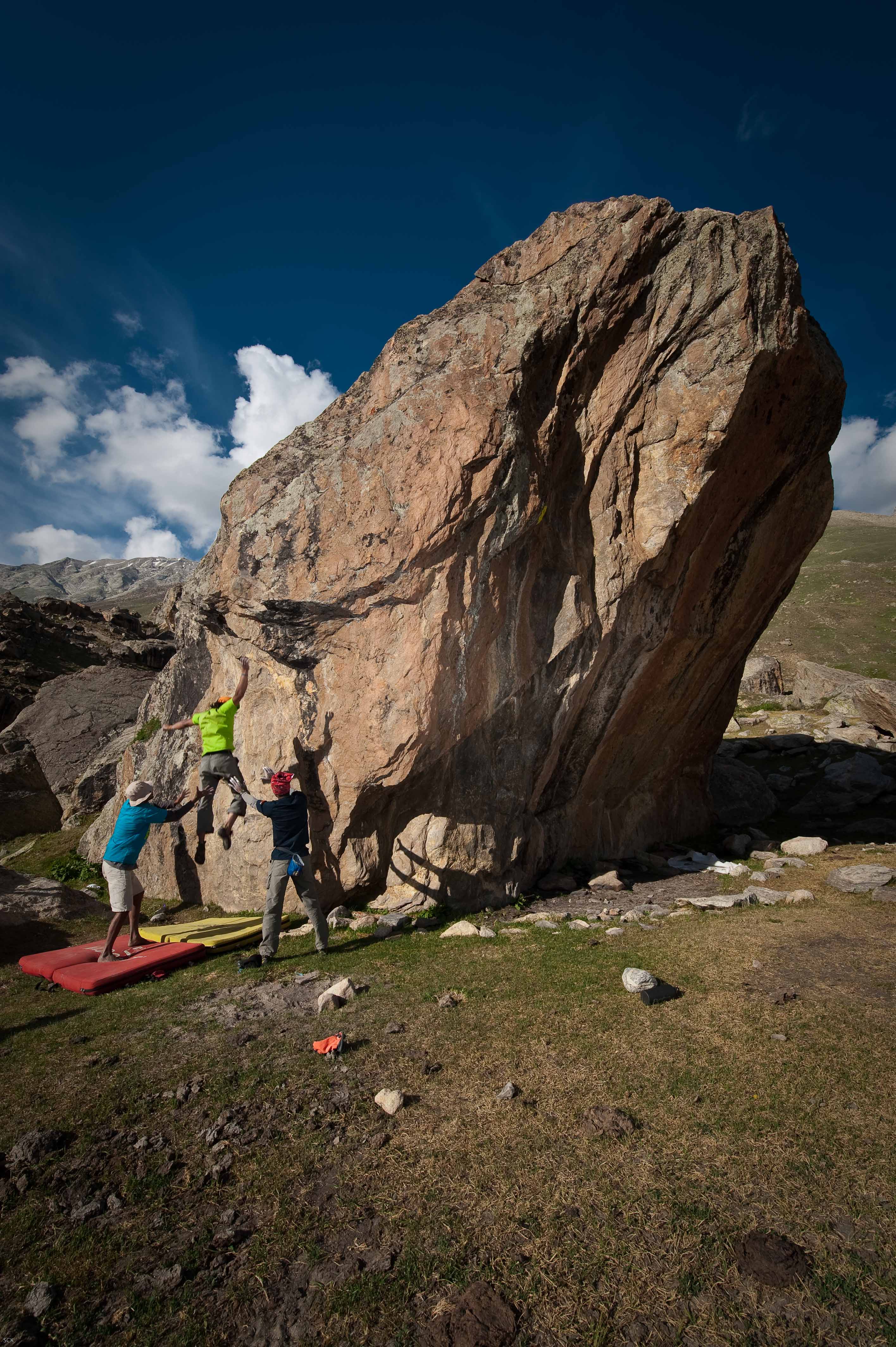
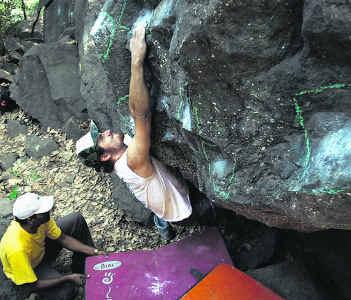
Bouldering in Miyar Nala (Photo: Sharad Chandra)

Bouldering in Miyar Nala (Photo: Sharad Chandra)

Types of climbing:

Bouldering: This is the minimalist form of climbing. The gear used is restricted to climbing shoes, chalk to keep the sweat off one’s hands and a crash pad to cushion falls. No ropes are used. As the name betrays, you climb boulders, typically up to fifteen or twenty feet high. Your friends `spot’ you as you climb to make sure that if you fall, you land on the crash pad. Since you don’t climb high, bouldering compensates by challenging you with very difficult moves, some requiring climbing technique, others, raw power.

Sport climbing: Sport climbing routes are longer than bouldering problems. Expansion bolts are drilled into rock to prepare a route. These bolts can take `quick draws,’ through which the climbing rope attached to your harness is passed as you ascend. The idea being – if you fall you will be stopped from going all the way down by the nearest quick draw and bolt. The other end of the rope is with your friend who is belaying. He feeds you enough rope to keep going up, monitors the feed and uses a belay device through which the rope has been passed to prevent the free end of the rope from quickly running out should you fall. Belay devices work on the principle of friction; some allow the belayer to manage this friction manually, others with auto-lock facility restrict the rope-feed to one direction thus automatically checking slack in the system should the climber fall.

Trad climbing: This style is characterized by the use of removable protection like cams (also called `friends’), choke nuts and pitons. The climbing style is near similar to sport climbing with your friend belaying you. On trad, you are more cautious than on a sport route because there is no previously installed protection on the route. As you climb up you look for features in rock, like cracks, to place the protection. Once the protection is placed, you attach a quick draw to it and then pass the rope through the quick draw. Once the lead climber has reached a rest spot, he anchors himself securely and belays the second climber up. As the second person does so – if it is a two-person team – he cleans the route removing all the gear that was placed as protection. This is clean, pure climbing. Unlike sport climbers, trad enthusiasts have to carry a lot of gear. Transferred to big walls, this work will also include gear-hauling for as you progress up a rock face you have to carry with you whatever you need for life and work further up.    

The club, the people:

Girivihar (www.girivihar.org) started life in 1954 as the Inter Collegiate Hiking Club of the Bombay University. In the mid-1960s, the name was changed to Girivihar to broaden the membership base to beyond the university. It is today Mumbai’s oldest mountaineering club with a track record of mountaineering in the Himalaya and trekking and rock climbing in the Sahyadri. Of late the club has also spawned an interest in cycling. Girivihar is notable for its regular itinerary of weekend activities (trekking or climbing depending on the season), annual outdoor training camps for school students and adults and an annual bouldering competition that sees participation from India and overseas. The club’s office bearers meet every Wednesday at a cafe in Dadar in the city. Girivihar was also instrumental in setting up and managing the climbing wall at Mumbai’s Podar College.

Franco Linhares is past president of Girivihar and most importantly, its longest serving. He is probably the oldest, consistently active rock climber in Mumbai. You will see him every other day on the Podar College climbing wall and at most weekend treks / climbs of the club save those occasions when he escapes to merry Goa or can’t get away from life with the climbing bug for the slower pace of a hike. A chemist by training and once employed with a MNC, he chucked it all up for a life in the Sahyadri and the Himalaya. Abhijit Burman aka Bong is an institution in Girivihar and the Mumbai climbing scene. An unforgettable character, he works as a technician at BARC. He has been central to many Girivihar projects. A mountaineer and cyclist, he appears to have transformed to being a mover of projects and their manager.

Shyam Sanap on Toro Peak (Photo: Sharad Chandra)

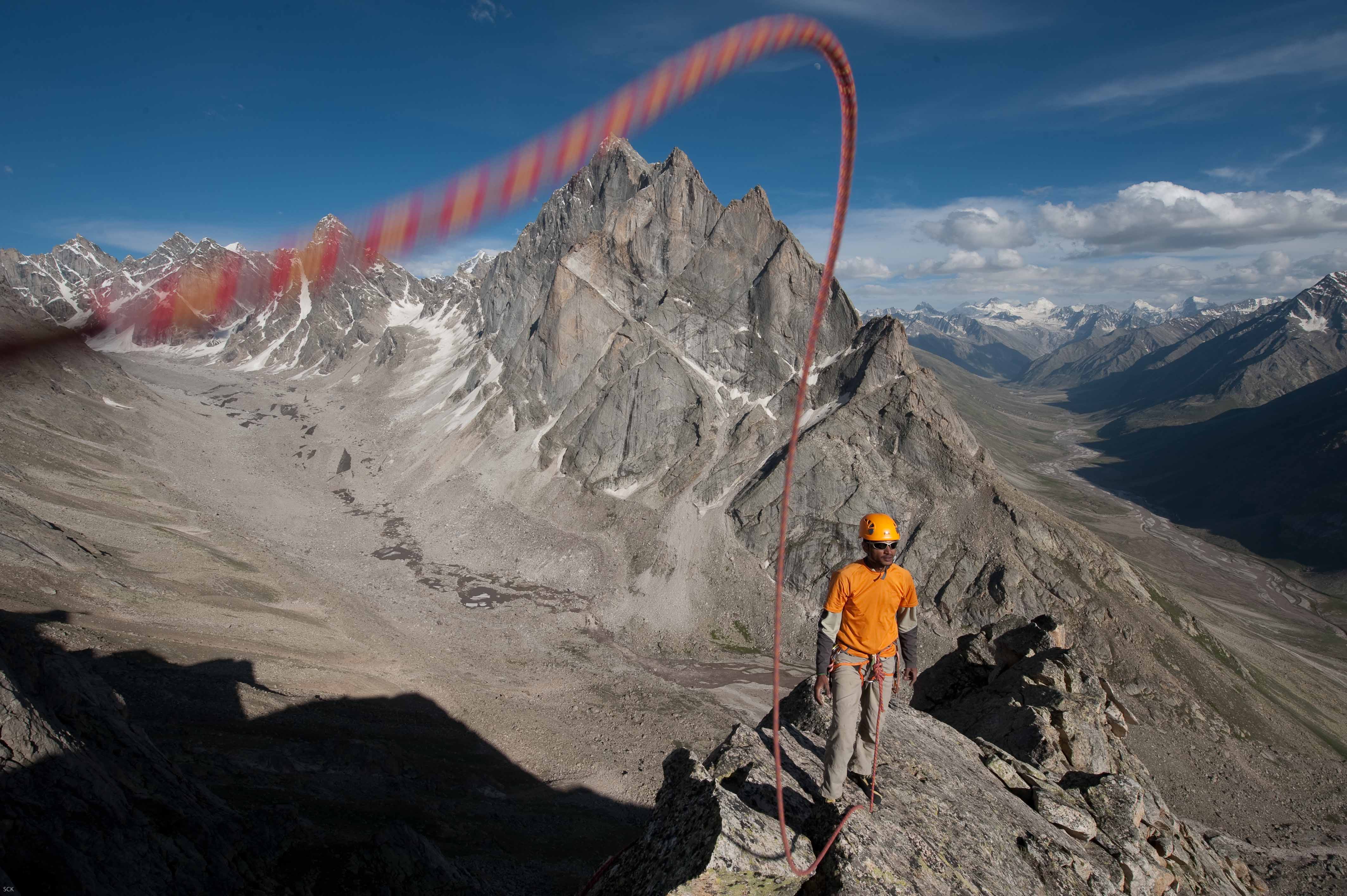
Shyam Sanap on Toro Peak (Photo: Sharad Chandra)

Years ago, Vaibhav Mehta etched his name into the rocks at Mumbai’s Borivali National Park, founding a climbing route aptly called `Finger Crisis.’ From them on, he hasn’t looked back. Originally not members of Girivihar, Vaibhav and his close friends – Shyam Sanap, Sandeep Varadkar, Mangesh Takarkhede (they originally belonged to a group called DARE) – was the energy missing in Mumbai’s sport climbing scene. They were the first hard core addicts of the sport, spending days obsessed with climbing-problems and blazing a trail difficult for others to emulate. Until the arrival of these youngsters, the prized pursuit in Mumbai’s rock climbing was ascending pinnacles in the Sahyadri. Climbing was largely trad climbing but leaning towards bolted routes given the nature of rock. Vaibhav & co fueled sport climbing. Now, as the big wall climbing-story shows, trad probably beckons. Vaibhav has ranked among the top sport climbers in India and more importantly, distinguished himself as a route setter for climbing competitions. This generation of climbers linked up easily with overseas rock climbers, particularly the French. Rather amusingly the most common encouragement in Mumbai’s climbing circles now, is “Allez!’’ Vaibhav ran a cafe and climbing gym in Leh for a few years. He now lives in France, visiting Mumbai in time for Girivihar’s annual climbing competition where he is usually the route setter.          

(The author, Shyam G Menon, is a freelance journalist based in Mumbai. He would like to thank Sharad Chandra and Franco Linhares for permitting the use of photographs from their collection.  An abridged version of this article was published in Man’s World magazine.)

THE CAVES OF MEGHALAYA

This story is written weaving two streams of thought.

One is in normal text; the other is in italics.

PLEASE READ FOOTNOTE AS WELL FOR UPDATE.
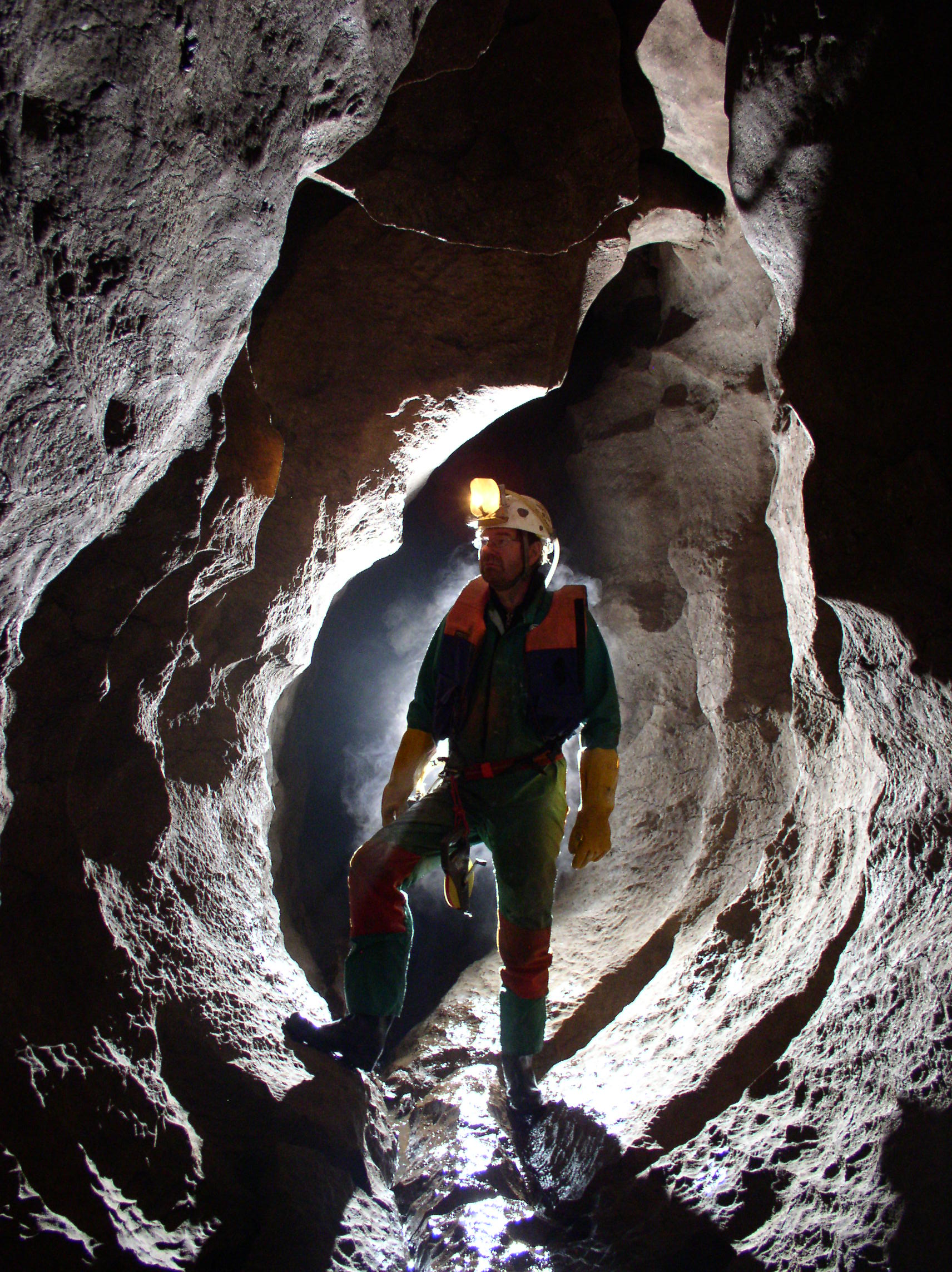
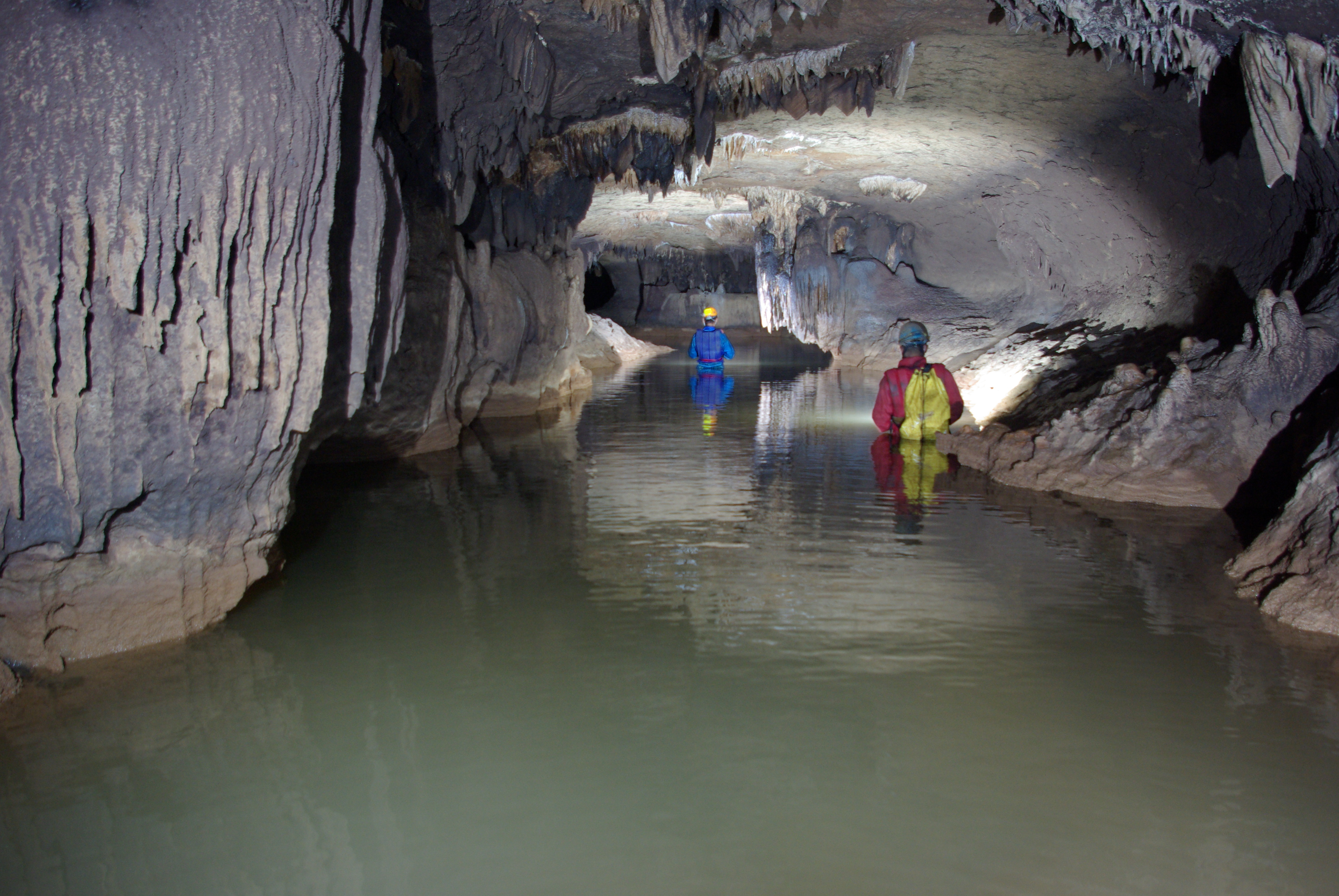
Below the ground in Meghalaya (Photo: Simon Brooks)

Below the ground in Meghalaya (Photo: Simon Brooks)

Many years ago in Meghalaya, North East India, a group of school students from Shillong were in Cherrapunji on a picnic.

Those days, Cherrapunji was famous for having the highest annual rainfall in the world.

Nearby was a large cave.

One of the boys, eager to explore the dark passage, sought company from his friends. None were ready. Dejected, he hung around. Given to reading, he was unhappy to be denied an adventure of the sort books talked of. Just then two boys from the locality turned up offering to lead him in. They made a crude hand held flame torch, walked the entire length of the cave and exited through a small shaft at its end to the other side of the hill. The boy finished schooling, graduated in physics from the local college, gave his bank test and became an employee of the State Bank of Mysore (SBM). For several years he worked in various parts of distant Karnataka, removed from family and friends in Meghalaya.

His appeals to be near home fetched him a transfer to SBM’s branch in Kolkata. But that didn’t satisfy for although Kolkata was closer to Shillong on the map than Karnataka, as a journey, home was still long way off. He sought to quit but the bank was reluctant to let him go for he was a good officer. Staying alone, work was his life. Eventually his relieving order came, just the day Prime Minister Indira Gandhi was assassinated. Back in Shillong, his qualifications and background could have got him a high profile job. Instead of that he accepted the post of CEO at a local bank passing through difficult times. Decades later, the Shillong Co-operative Urban Bank was in fine shape and Brian Dermot Kharpran Daly, 63, although of retirement age, continued to get extended tenure. It may have seemed SBM all over again, but then Shillong was home.

It was May, 2010.
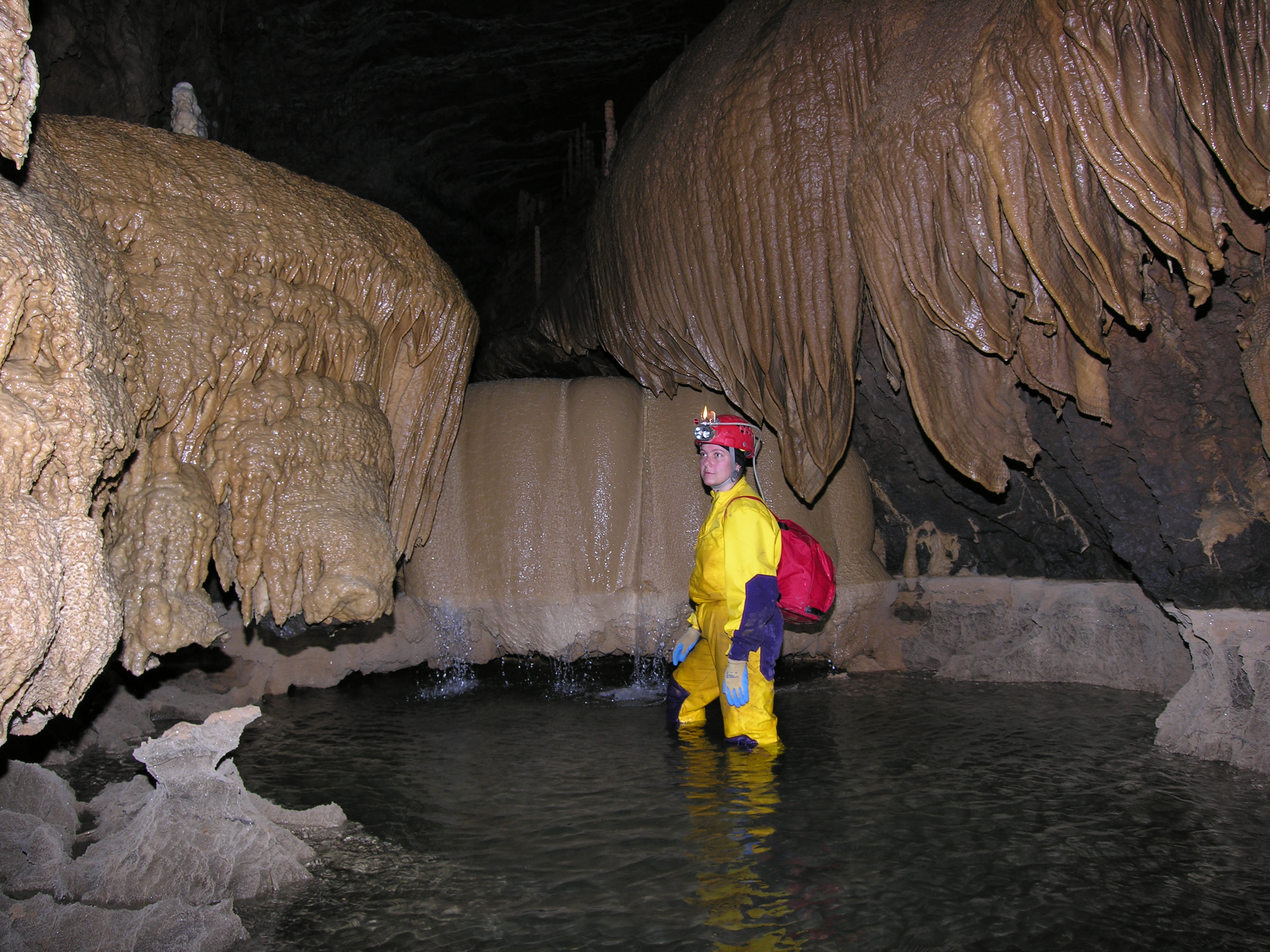
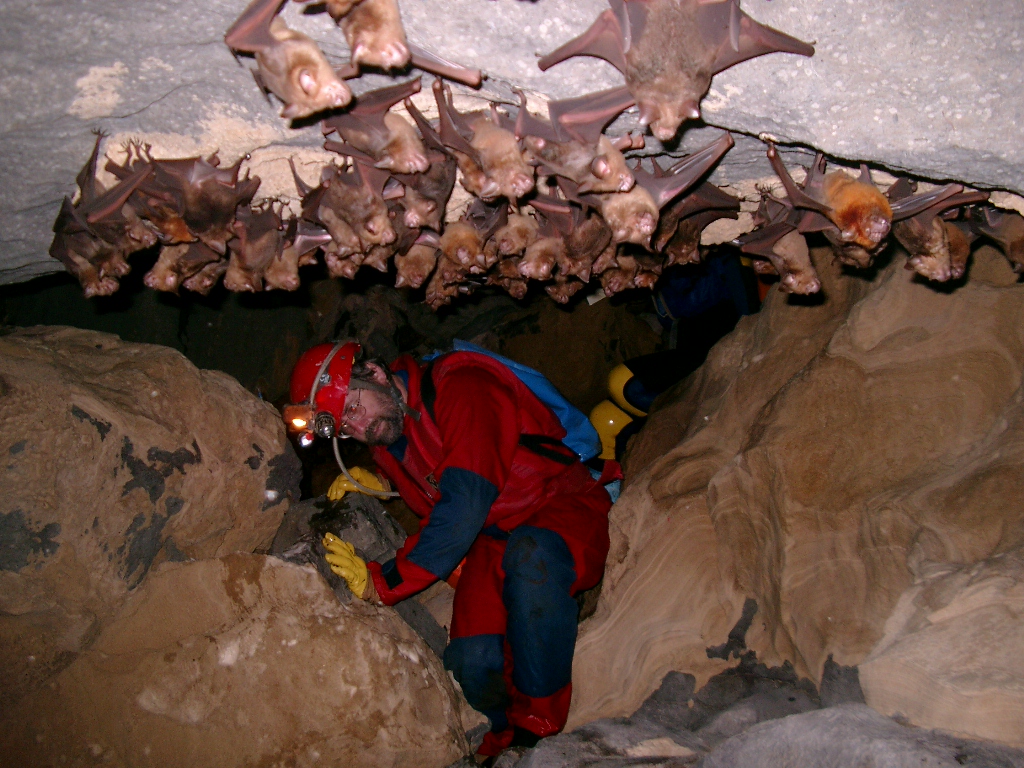
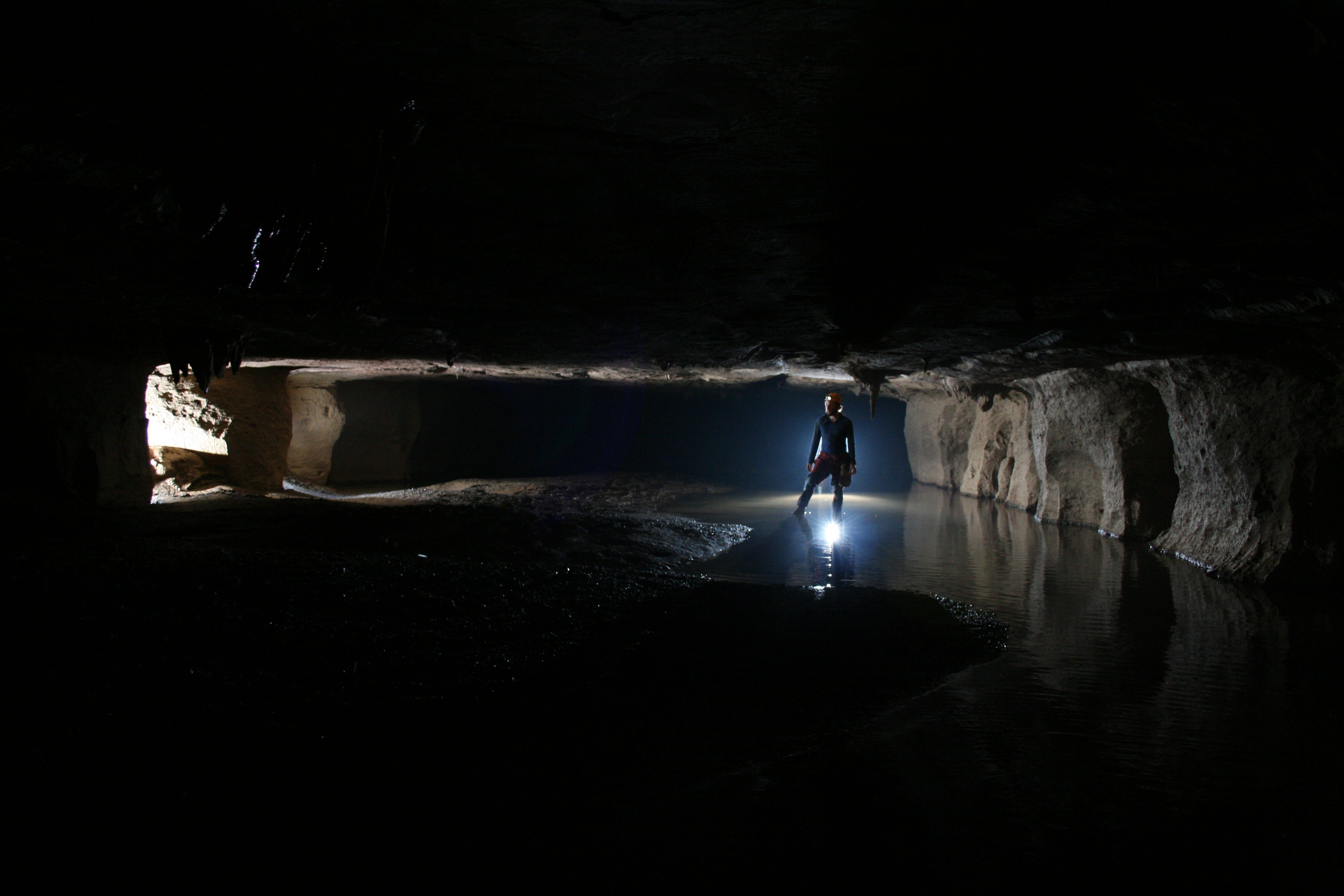
Inside a cave in Meghalaya (Photo: Simon Brooks)

Inside a cave in Meghalaya (Photo: Simon Brooks)

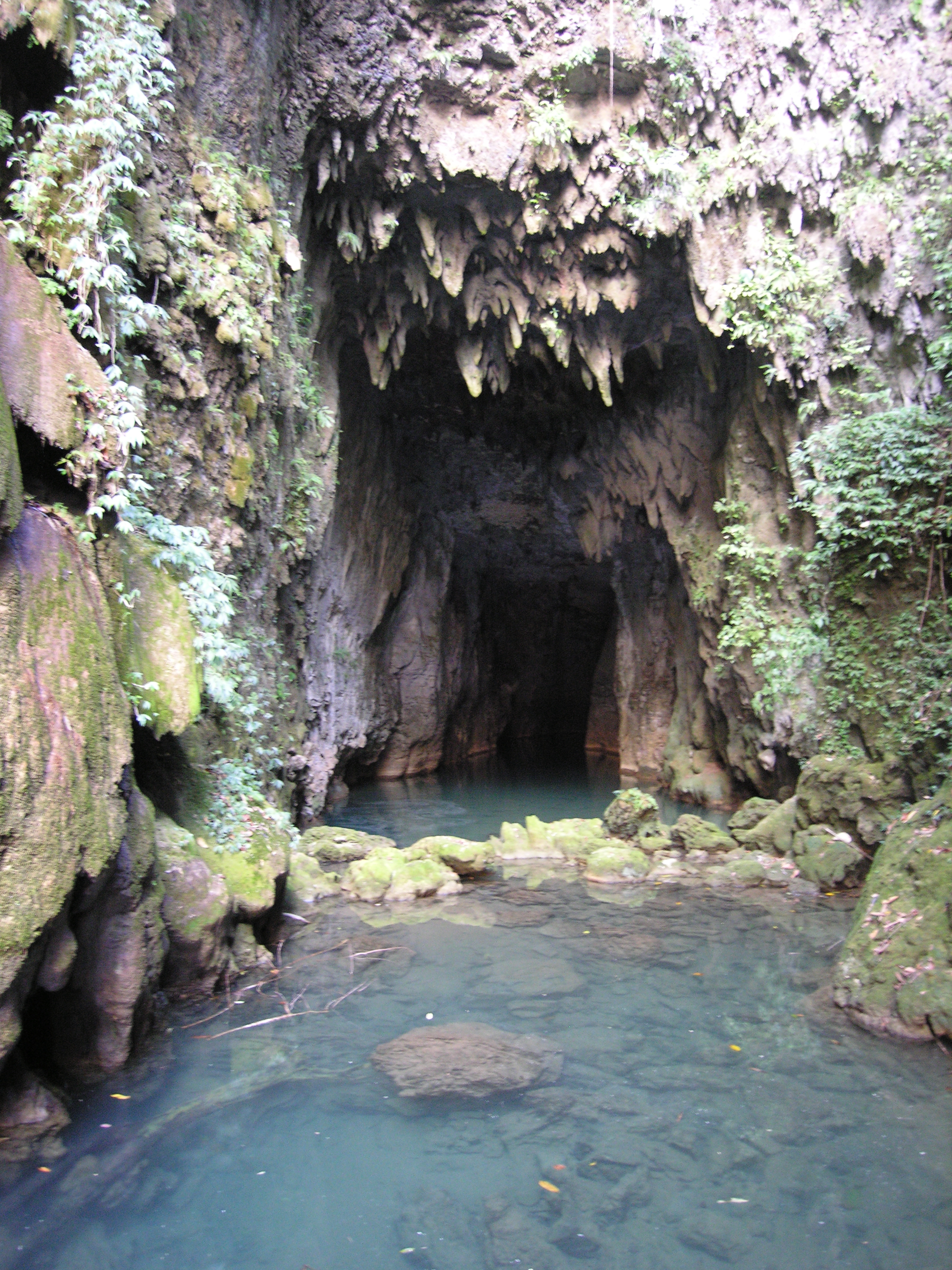
Meghalaya is home to the longest cave passages in India.

They run for several dark kilometers under the beautiful, green carpet of this land of hills and rains. “ Three factors – limestone, heavy rains and elevation – work in unison here to make these caves,’’ Brian, the state’s best known cave explorer, said. Limestone is easily eroded by water. Meghalaya still receives some of the heaviest rainfall in the world. Additionally, the hilly state has sufficient slopes for water to develop the kinetic energy needed to sculpt and carry off debris, leaving behind marvelous limestone caves. The caves now find mention on the state’s tourist brochures although entry into complicated systems is possible only with expert guides. At the time of writing this article, some 1200 caves had been reported, around 800 of them explored and roughly 360 kilometers of cave passages had been mapped, including India’s longest cave – Krem Liat Prah-Um Im-Labit System – as yet estimated to be 31 kilometers.

The exploration was continuing.

In India, Andhra Pradesh, Madhya Pradesh, Chattisgarh, Mizoram and Uttarakhand also found mention for caves. However when it came to the ten longest caves in India, all ten were in Meghalaya. Ranked for depth, nine were in Meghalaya and one was in Mizoram. That was how much North East India dominated in the subject. The study of caves or speleology was yet in its infancy in India. There was no university department or chair dedicated to the topic including at the North Eastern Hill University (NEHU). A few dedicated and seemingly networked scientists scattered nationwide maintained interest. The only institutional names in the field were the Raipur based-NGO, National Cave Research and Protection Organization headed by Dr Jayant Biswas and the Shillong based-MAA. Every year during Meghalaya’s dry months, expert cavers from overseas reached the state to explore its caves in league with the MAA. That’s how the underground map of the region evolved. Both the Indian Army and the Indian Navy had links with the MAA to partake in the adventure.
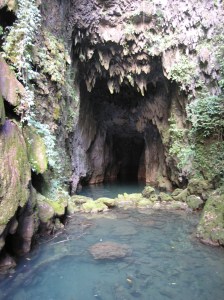
The entrance to a cave in Meghalaya (Photo: Simon Brooks)

The entrance to a cave in Meghalaya (Photo: Simon Brooks)

There is more to caves than adventure and geology. Darkness coupled with other changes to environment as one went deeper and deeper into caves, molds exclusive cave life, the study of which is called bio-speleology. Cave fauna typically falls into three categories: (1) Trogloxene – species which visit or take shelter in caves but do not complete their whole lifecycle there (e.g. bats, frogs, lizards) (2) Troglophile – species which live permanently in the dark zone but some of which can also survive in a suitable environment away from the cave. They could be called future troglobites (e.g. fish, salamander, crayfish and millipedes) (3) Troglobite – species which live wholly and permanently in the dark zone of caves. They are mostly blind, albinic and having extra sensory organs (e.g. same as for troglophile). Ilona Khar Kongar, scientist with the Zoological Survey of India (ZSI), said that there had been reports of fauna unique to Meghalaya’s cave systems. They awaited further study.

Caves are also known to hold fossils and in Meghalaya’s case, marine fossils going all the way back to a prehistoric age when the land was submerged by sea. Additionally, the region’s caves had become academically interesting from another angle – the several thousand year-old stalactites and stalagmites possessed details of past climate. For any curious mind therefore, these caves may seem the stuff of heritage. In Meghalaya however there was no such official declaration in favor of the caves and cavers like Brian were defending before authorities why this underground network of pitch dark passages was fascinating.
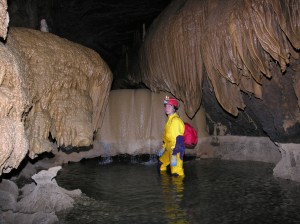
Inside a cave in Meghalaya (Photo: Rainer Hoss)

Inside a cave in Meghalaya (Photo: Rainer Hoss)

Somewhere in the early 1990s, Brian sought to spice up his life in Shillong with adventure. He thought of treks. But nothing really attracted. Born and brought up in Meghalaya, he knew there were caves around. He floated an organization called the Meghalaya Adventurers Association (MAA). The group started to explore caves. Shortly after the activity began, at one location, villagers spoke of a team of foreigners who had come looking for caves. Since caves were sculpted on rock that yields itself to shaping by water, tracking the distribution of such minerals helped locate cave-rich zones. Limestone is a fantastic cave-building medium. Deposits of soluble rock are called karst and in Meghalaya karst exists at the state’s southern portion, in an east-west line, curving to the north at the eastern end. The foreigners had done their homework. Brian’s inquiries showed that the British team included respected names from international caving. The MAA tied up with them and soon expeditions to explore the caves of Meghalaya began in right earnest.

The results would amaze anyone fascinated by the planet. Deep under Meghalaya are subterranean passages; gushing rivers, crystal clear ponds, natural rock dams and vast chambers you can only crawl into. “ People now come and tell me of caves,’’ Brian said. In 2004, he was awarded the Tenzing Norgay National Award for Adventure in the land category. However, leaving aside the cavers’ battle with the mining lobby, he wished that the younger generation responded more enthusiastically to caving. The reason for the low key response he saw till then probably lay in the nature of the challenge.
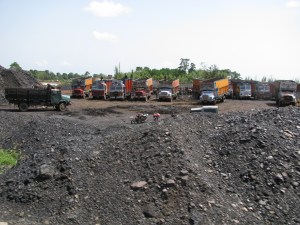
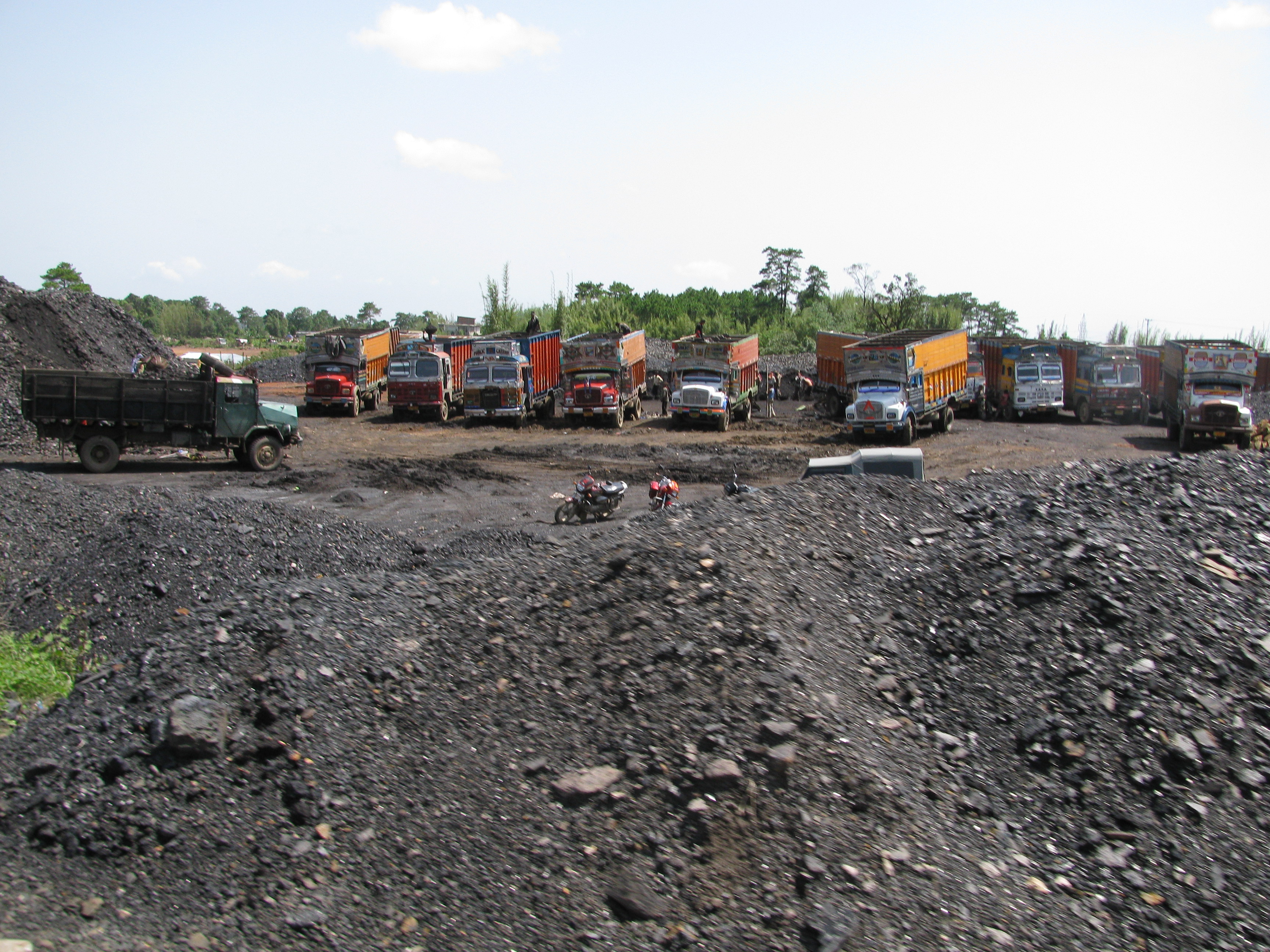
Near Lad-Rymboi (Photo: Shyam G Menon)

Near Lad-Rymboi (Photo: Shyam G Menon)

Mining was a well entrenched industry in Meghalaya.

H.H. Mohermen had lived in the thick of it.

Following a stint in London studying theology, he became a lone crusader for environment in the much mined Jaintia Hills. “ A relative who had served on the local hill council once told me that coal mining was allowed to grow unfettered because it resembled a cottage industry,’’ Mohermen said.

For a taste of Meghalaya’s mining country, I passed through Lad-Rymboi. Here pastoral Meghalaya took a hiatus. There was heavy truck traffic, the roads were awash in slush, grease stained automobile workshops repaired vehicles and a labor force of strangers roamed the town with numerous wine shops. Closer to Shillong, on the periphery of mining country one found the smallest unit of the coal business – tiny bunks typically managed by local women, selling excess coal dumped by passing trucks. Few years ago, the color of some rivers in the Jaintia Hills changed, dead fish turned up and in places, water became undrinkable. Hydroelectric projects complained that the water was corrosive. While activists attributed it to pollution from unchecked rat hole-mining, an official of the State Pollution Control Board said that given the high sulphur content of Meghalaya’s coal this was bound to happen even naturally.

Cave formation is a million year-old chemical process.

Indeed you can call a cave, a laboratory, with processes running at terribly slow pace. But it is undeniably chemistry; tamper with ingredient, quantity or concentration and you altered the experiment. According to Brian, that’s what mining did. To start with it deforested, causing soil erosion, sending soil down into caves and altering the cave’s drainage pattern. Coal mining also impacted indirectly – that same acidic water worrying humans on top, got down into the caves changing cave chemistry. With resident mining culture and wanting the modern motifs of economic growth, Meghalaya leveraged its limestone deposits to attract the cement industry.

That had direct impact on caves.

According to Brian, the attraction he felt for caving was that it wasn’t any one activity but a convergence of many – there was the adventure, the exploration, the science, the mapping, the planning, the skills and finally, the philosophy and literature you indulged in even away from caves. Brian had authored many articles on the subject; written books and compiled poetry. All this pointed to the need for an evolved mind; something rare in today’s world of adventure where everything is the stuff of snapshot success.
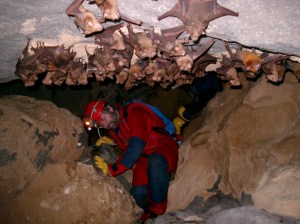
Negotiating bats; inside a cave in Meghalaya (Photo: George Baumler)

Negotiating bats; inside a cave in Meghalaya (Photo: George Baumler)

Further caving had its anxious moments. Once, Brian was injured by falling rock in a vertical shaft. Some caves didn’t have horizontal entrances; they had a shaft plunging into them. There was little room for escape should anything fall from the top. Shafts could be deep; India’s deepest at Krem Shrieh in Meghalaya was 97 meters (320 feet), several times longer than a single rope length and therefore requiring `pitches’ as in rock climbing. Lowering yourself into one of these passages could be tricky because they typically have narrow mouth and wider bottom. That meant a rope anchored at the top progressively stayed off the side leaving the abseiling caver wholly dangling on rope in a growing void.

On another occasion, in a cave with multiple entrances, a few cavers having entered through different passages met at a point. There, an experienced woman caver decided she wasn’t feeling well and retraced her steps. Somewhere she got lost in the labyrinth of passage ways. Her absence was noticed only after everyone had exited the cave complex. A search was launched and after several hours, she was located sitting crouched to preserve body heat, in utter darkness. Her headlamp was broken; the consequence of a fall. “ Hypothermia is a real danger in caves, particularly those with water and streams inside,’’ Brian said.
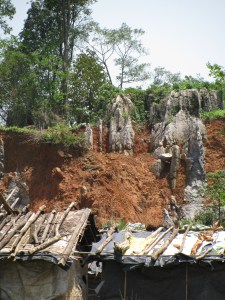
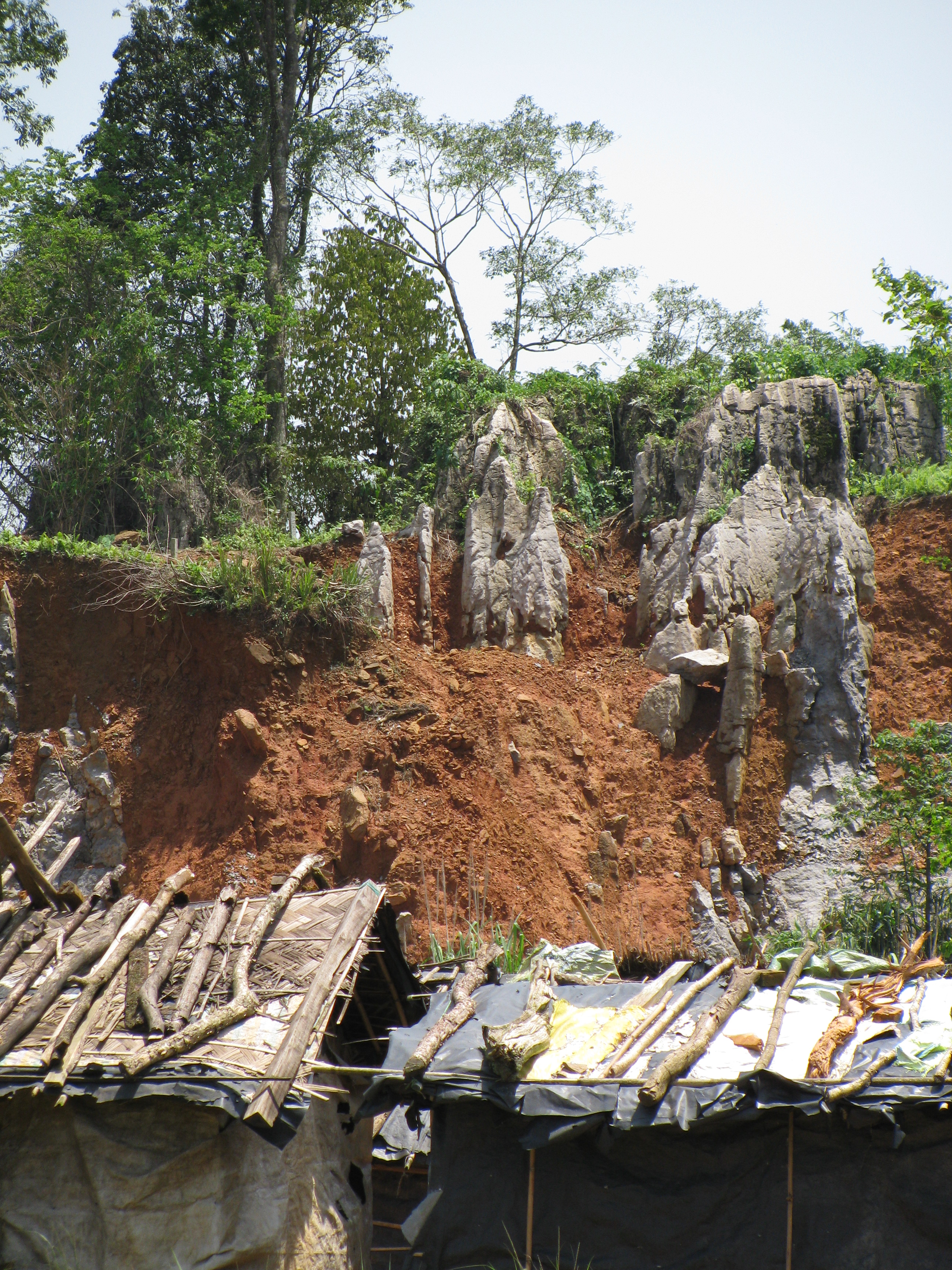
Limestone formations near the quarry in Lumshnong (Photo: Shyam G Menon)

Limestone formations near the quarry in Lumshnong (Photo: Shyam G Menon)

At Shillong, there were visible signs of the cement industry’s status in the North East.

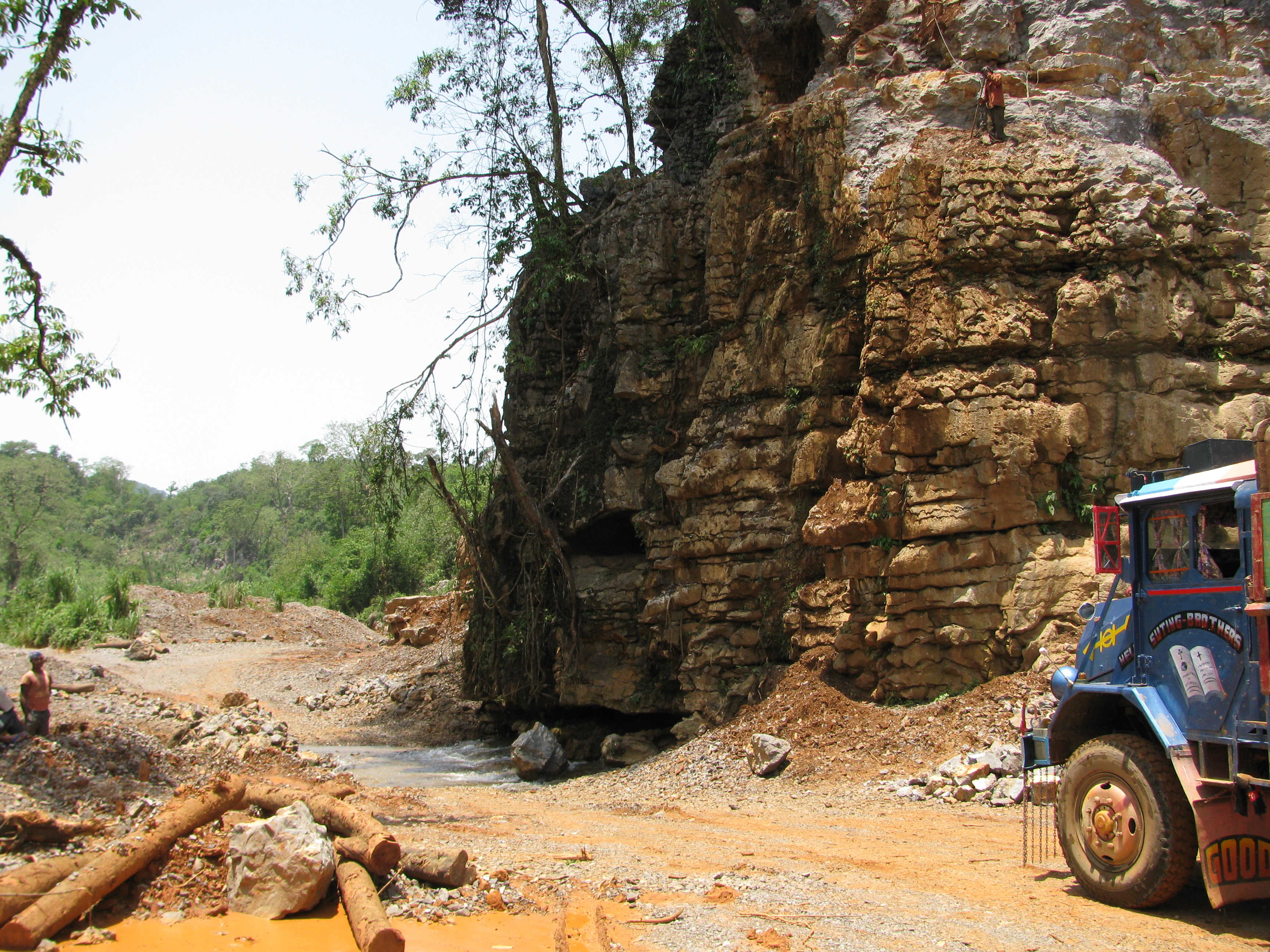
`Times change, Taj does not’ – said a hoarding for Taj Cement. Another one sponsored by Star Cement featured well known personalities like Bhupen Hazarika, Mami Varte, Sourobhee Debbarma and Lou Majaw, the Shillong singer famous for his devotion to Bob Dylan. Meghalaya’s cement companies were not big names nationwide; they were local giants. The lone cement multi-national that entered the state made a conveyor belt to ship the mined limestone to adjacent Bangladesh. Lumshnong, over 100 kilometers away from Shillong, was a couple of curves on the highway with a few shops and houses. Home to cement plants, a large limestone quarry loomed next to the highway here. If you looked at the stray rock formations behind the adjacent houses, you got an idea of what the quarry must have looked like originally – fluted, termite nest like outcrops of limestone. Now all that remained was a large crater. Jack hammers drilled away on its sides and trucks carried away the raw material. The crater floor was soggy mud. At one end, atop a rocky cliff, a worker was demolishing rock. Directly below, thirty feet or so, hugging the pit floor was a three feet high horizontal gash in the rock from which a stream flowed to the outside world. That, I was told, was one of the access points to the Kotsati-Umlawan System, at 21 kilometers explored till then, India’s second longest network of cave passages and its second deepest. At the other end of the pit, closer to the highway, piled up debris soaked and shifted by rains, had sealed off a claimed large entrance to the cave. Gregory Diengdoh from MAA hunted futilely for a third entrance, a vertical shaft, known to be somewhere around.

The fourth, an erstwhile `show cave’ for tourists where we went in, had become inexplicably muddy. Behind us, the sunlit entrance gradually diminished to button-size and at the first fork, altogether disappeared. We navigated with headlamps in pitch darkness. A thick film of slippery, gooey mud covered the floor, the cave’s boulders and its sidewalls. It was very slow, slippery going. Deep within, you heard the roar of the underground river. Not far inside the cave, I decided to wait for a dry month to progress further. It didn’t make sense to load the risk and risk at day’s end, was a personal assessment. The cavers though had a different explanation – although we were just weeks from monsoon and hence into sporadic showers, the excessive mud inside the cave could be due to river water periodically backing up as a consequence of blocked passages, courtesy the overhead quarrying.

Unproved, that was yet speculation.
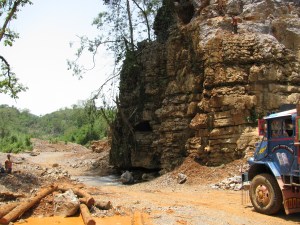
The quarry at Lumshnong. The stream, I was told, was one of the entrances to the Kotsati-Umlawan System (Photo: Shyam G Menon)

The quarry at Lumshnong. The stream, I was told, was one of the entrances to the Kotsati-Umlawan System (Photo: Shyam G Menon)

“ Somewhere thousands of miles away, not too far from the nation’s capital

A little posh town rose up from the desolate and barren land

It grew in width and length, it steadily grew in height

Where once the land was flat, today a mountain of flourishing complexes

A miracle indeed unfolds

As the buildings of Gurgaon tower to the sky, the limestone hills of Meghalaya

Leveled to the humble ground.’’

          Extract from a poem Brian wrote imagining the journey of Meghalaya’s limestone.

My visit to Lumshnong was in May 2010.

As of then, for a state so much into mining, Meghalaya which saw 24 chief ministers in 38 years did not have a Mining Policy. “ Every time we ask, they say it’s getting ready,’’ Patricia Mukhim, Editor, Shillong Times, said. In its absence, officials acknowledged that unorganized coal mining was subject to few restrictions, while limestone quarrying by large companies followed Central Government norms. At least that was the official explanation.

There was a Mining Policy taking shape.

The urgency for it was partly fuelled by Public Interest Litigation (PIL).

In 2006, realizing that it was only a matter of time before unbridled mining destroyed Meghalaya’s caves Brian approached Subhas Dutta of Kolkata, who had filed PILs before. With his help the MAA moved the Supreme Court. Such litigation was not new for Meghalaya. Local journalists recalled a previous lawsuit against the logging business. However unlike in logging, there was no interim stay on mining till the case was disposed of. The journalists and activists I spoke to attributed this to Meghalaya lacking an environment movement and the state’s peculiar land holding pattern; land was owned by the tribes. Protection of environment may work in a specific area (Samrakshan Trust in Garo Hills found mention as successful example). But another stretch of land was another tribe’s property and therefore their headache. This inhibited a larger environment movement.

While activists may want a movement, the mining industry – they said – dealt with specific tribal leadership. Theoretically, this appeared participative industry and the way forward. Two and a half months later, in August, even the central government, responding to the Maoist issue (extreme left movement largely based out of the forests and hill tracts of Central and East India), was recommending a participatory model that advocated sharing 26 per cent of a mining company’s profit with tribal communities. Yet it wasn’t that simple because to work properly, any model needed a learned, holistic view of development. That included a tribe knowing how much they were losing irreversibly and how much should be mined.

From inside a cave with headlamp switched off. The faint light in the distance is the entrance (Photo: Shyam G Menon)

From inside a cave with headlamp switched off. The faint light in the distance is the entrance (Photo: Shyam G Menon)

In Meghalaya, some of the stories I heard wasn’t pretty. There were occasions, I was told, when villagers seeing mines on their land exhausted, tried to encroach on someone else’s. Then, there was the story of villages with gates to fend off likely fights. One story was generic to the problem of land exploitation in India – that when the potential of a land was revealed, powerful people began to amass real estate anticipating profit.

I could not independently verify any of this background talk.

Nevertheless so much was clear – in a state with few opportunities, mining was prime opportunity. A casual perusal of academic studies on the state, available at Shillong’s book shops, underscored this point. Mining was a major source of livelihood in the state. When information spread of his opposition to mining, Brian’s caving expedition was once threatened with disruption.

Devoid of support by powerful masthead, `freelance journalist’ fell to the bottom of the media heap. When I called up a senior official in the state government requesting for an appointment, I was initially shouted at. Then he cooled down and gave me a time with cautionary advice – there was a Cabinet meeting and I may have to wait. I waited from 3PM onward at the secretariat. By 5PM or so, the visitors and staff left. The officer’s peon and I sat sharing jokes in an empty building. Around 6PM, the power failed plunging us into utter darkness, quite like being in a cave. I thought of my visit to the Kotsati-Umlawan System; how it had been pitch dark inside the cave with our headlamps switched off. An hour later, power returned to the secretariat. The peon and I laughed, seeing each other’s faces again. Close to 8PM, the official arrived. He was tired but spared time for the freelancer.

Entrapped in government bureaucracy, struggling to balance ecology and economic development, he vehemently insisted that caves could not be surveyed as the MAA had done. This was when caving had for long been an international pursuit and modern instruments permitted cave passages to be plotted (right up to 3D images if required) as the cavers proceeded. It illustrated the tenor of divide in Meghalaya in the name of mining. The same Brian had authored the book on cave systems published by the state’s Directorate of Information and Public Relations and one of his essays on caves was included as chapter for study in the state’s Class XII syllabus.

Still the MAA irked officialdom.

“ Shouldn’t we have economic development?’’ the government official asked.

I had no answer.

In the years following my Shillong-visit, this question would become a national dilemma. The matrix for viewing it at macro level was simple: India’s high population, the emergent scale of human needs and the scale based-model of global industry couldn’t do without exploiting minerals. At micro level, this combination of interests cut formidable imagery before anyone living in the lands due for exploitation by mining. Tribes and marginalized communities, living on those lands, hit back becoming villains in the eyes of those advocating industry from rich cities.

I knew why interest groups like cavers irritated government and industry. They were not even the owners of the land in question. They espoused interest in science, adventure, even aesthetics – all irrelevant to the daily reality of survival by money. But which was the higher philosophy and ethic – deciding human lifestyle by ownership of planet or doing so by fascination for planet?
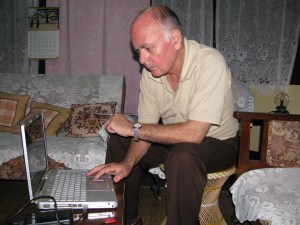
Brian Kharpran Daly (Photo: Shyam G Menon)

Brian Kharpran Daly (Photo: Shyam G Menon)

While the lay individual may presume that cavers go in leaving physical traces to identify the trail back that wasn’t always the case. “ I advise people to periodically look back and remember cave features for navigation because entry and exit points in subterranean chambers appear different when the direction changes,’’ Brian said. It was also important to never break team (there may be several independent teams exploring different parts of a cave, but each team should stick together) and systematically map the passage as one went along so that the data for navigation was available right there. A typical cave survey kit would have nyloflex tape measure, compass, clinometer (for measuring gradient), plastic coated cave survey book, pencil and GPS. Back at camp, a day’s survey data was processed with specialized software to generate a detailed map. A lot of this work had been rendered easier by the Disto-X, a device that measured distance, direction and inclination at one stroke. It could be linked to the cartographer’s PDA inside the cave itself, to make a detailed map. Interestingly, the cave explorer’s credo was not to always retreat but proceed with the faith that multiple entrances and exits existed For Brian, it was like a spiritual quest. A vast underground chamber glistening with cave pearls (sand particles covered in calcium carbonate) was like an audience with God.

State authorities, I spoke to, insisted that the mining industry followed Central Government guidelines preventing such work from anywhere near archeological sites. But then as of May 2010, none of the caves had been declared `heritage.’ Following the PIL, the state government commissioned studies by agencies like the Indian Bureau of Mines and the Central Institute of Mining and Fuel Research. From the documents I was shown, the first had given a clean chit to the impact of mining near the Mawmluh cave in Cherrapunji while the other said the Umlawan cave hadn’t collapsed and there was no adverse effect to caves in the Lumshnong area from blasting. In a paper on the Mawmluh cave published in Current Science (April 10, 2009 issue) Dr Biswas observing the influx of mining effluents into the cave through the river at its entrance had said, “ It could be presumed that the cavernicoles (cave organisms) belonging to the twilight zone of the caves are already under extinction.’’

Brian had the conservationist’s approach.

The ideal model in his eyes was to absolutely protect some caves in the interest of science and exploration. In the case of other caves, villagers could protect them as heritage with revenue from well managed tourism for upkeep. To the journalist tuned in to both sides, what stood out was the unbridgeable divide – the MAA sought strict conservation; the government responded with the language of mining standards. The reason for opposing Brain was comprehensible – how can human livelihood and economic development be held to ransom by a bunch of exotic caves hosting strange life? In their separate worlds, both sides cut logic. Somewhere in between was the sheer joy of beholding mammoth caverns underneath, their spectacular beauty and the world of trogloxenes, troglophiles and troglobites – inhabitants of a fragile ecosystem. Government officials said that a Central Empowered Committee of the Supreme Court had recommended the installation of an Expert Group to look into Meghalaya’s caves.
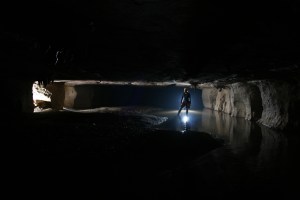
Cave exploration in Meghalaya (Photo: Hugh Penny)

Cave exploration in Meghalaya (Photo: Hugh Penny)

With a copy of the 2006 PIL not available, I asked Brian what his demand was. According to him, his wish was for a prioritization of the caves, listing out those that were important from an exploration and scientific point of view. They should be protected. As for the rest – he thought – local villagers could protect some caves and manage them as tourist attractions. He knew that the going would be tough even then because the Shnongrim Ridge in the Nongkhlieh area where caves proliferated was prized by industry for its limestone.

“ Wherever you mine in Meghalaya you are going to destroy caves. It is like Swiss cheese,’’ he said.

All this was in May 2010.

In September that year, it was reported that the Court had dismissed the PIL.

The news reports cited mining bodies in the state, welcoming the Court decision.

Brian’s son and daughter have joined him on caving expeditions. His son, a trained mountaineer, worked then with a leading Indian private bank at their branch in Jowai. Besides his passion for caves, Brian made one of the best homemade wines in Shillong. Strangely, here too, he learnt the ropes late, worked systematically at improving his craft and took the art to a superior level.

(The author, Shyam G Menon, is a freelance journalist based in Mumbai. He visited Meghalaya in 2010 to do this story. A slightly abridged version of this story was published in Man’s World [MW] magazine. A smaller story on Brian was published in The Hindu newspaper. The photos taken by Simon Brooks, Rainer Hoss, Hugh Penny and George Baumler were provided by Brian and have been used here with his permission. An April 2013 news report from Shillong, quoting Brian, said that 19 new caves had been discovered in the Jaintia Hills, taking Meghalaya’s total to 1350 caves with 887 caves spanning 387 kilometers explored. When contacted late August for this blog, Brian said that Meghalaya’s Mining Policy was passed by the state government in 2012. However its specific rules and regulations were still awaited. Aside from official mention of the need to protect caves, they haven’t been declared heritage yet. Brian retired at work in 2012. He became honorary Vice Chairman of the Shillong Co-operative Urban Bank, where his son also now worked. Brian’s new book on caves has been published. An overview of it can be accessed at http://sbpra.com/briandkharprandaly/) 

CYCLING’S SECOND YOUTH

March 2012.

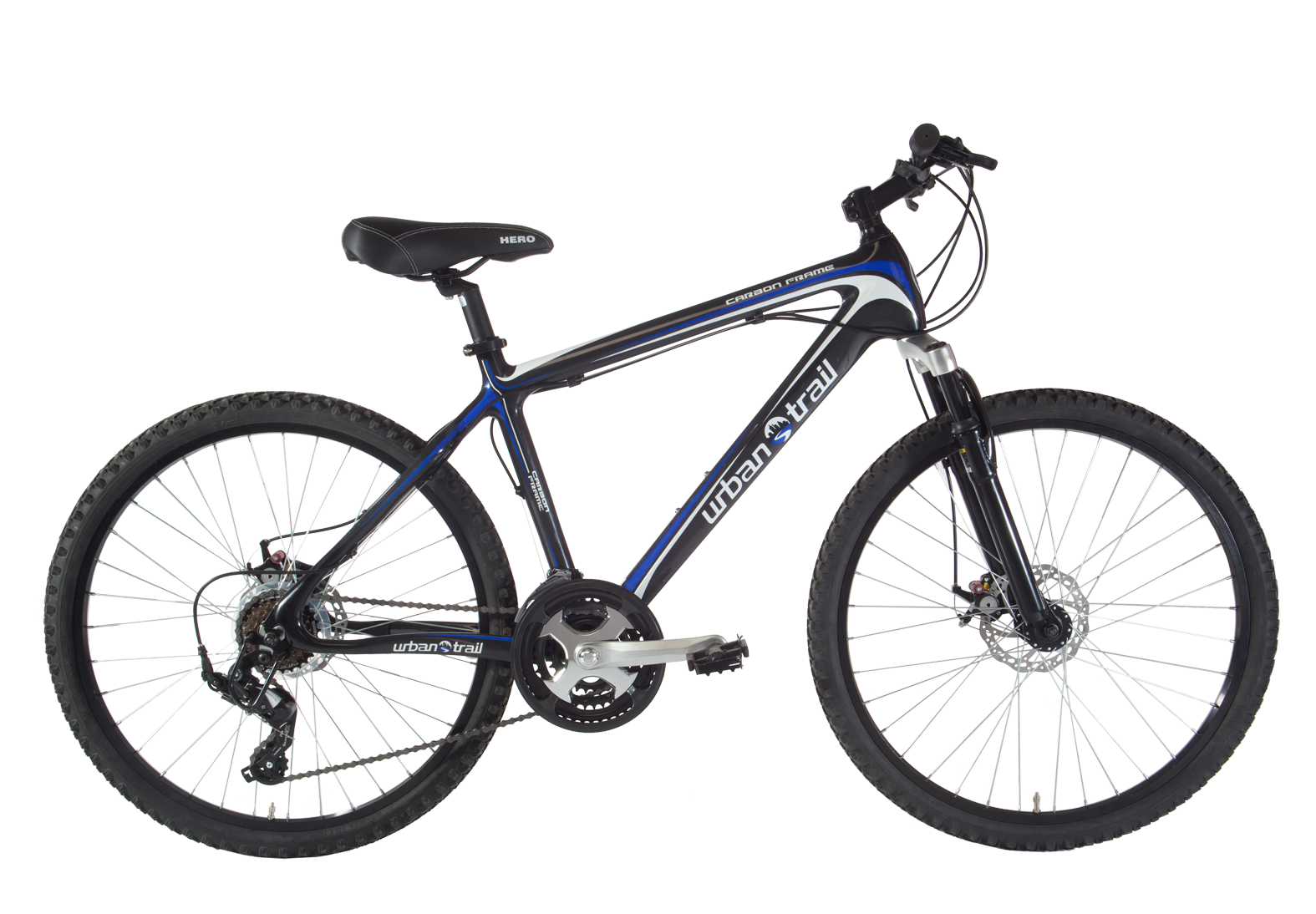
A month earlier, in mid-February 2012, Hero Cycles, the Indian player described as the world’s biggest manufacturer of bicycles, had announced a carbon fibre model called Red Dot, priced at less than Rs 50,000. Traditionally, cycles sporting carbon fibre-frames sell at the top of the heap. On the other hand, Hero’s offering was positioned at the top end of its just unveiled range of premium cycles called Urban Trail with prices spanning Rs 10,000 to Rs 43,000. “ It is important that we adapt ourselves to the changing times. The customer is also changing. The market is slowly shifting from livelihood oriented cycles to lifestyle oriented models,’’ Pravin V Patil, President, Urban Trail, Hero Cycles, said.

Photo: by arrangement.

Photo: by arrangement.

Hero Cycles showcased the traditional business of the larger group helmed by the Munjals. Patil described the company as closely held and cash rich. Around it a vast business empire had grown focused on India’s automobile revolution. Amidst that saga in motorcycles spanning the Hero Honda CD-100 to the Hero Impulse and much auto ancillaries in between, the cycle business had remained relatively low profile except for a heavy weight parameter – the tag of being the world’s biggest cycle manufacturer.

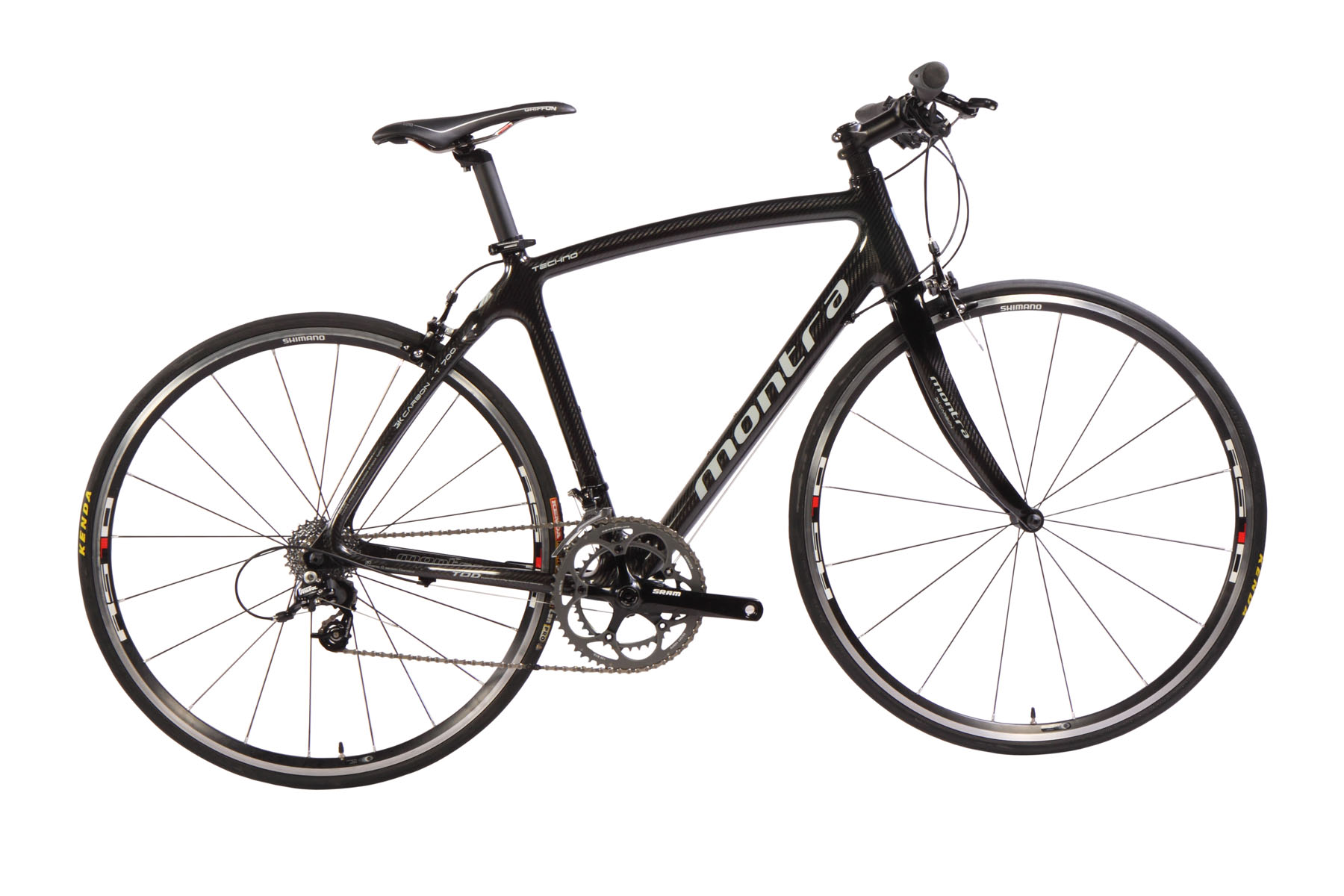
About a year before Hero announced Red Dot, TI Cycles – the other big name in India’s cycle industry with a 25 per cent domestic market share – launched its own premium brand called Montra. Compared to Red Dot, the Montra Techno carbon fibre bike was priced at Rs 71,000. Both outlined capability and purpose. As motifs shaping company profile in the media, these developments impressed.

But did they cut ice with the new Indian market, especially its discerning portion?

In a repeat of India’s automobile industry story, there were two contradictory yet convergent themes playing out. Big domestic manufacturers were attempting to convince a new generation of customers that they had what it took to capture the premium market’s imagination. The customers of this segment owed no particular loyalty to Indian companies. A sketch of this customer could be had from Internet chat rooms around cycling. The product ownership profile of several participants kicked off with Indian brand, followed by a churn of foreign brands. As with many things, when you aspired, made-in-India failed to keep pace.

The synopsis of a 2010 sector report prepared by Global Industry Analysts (GIA), available then on the web said that the world’s market for bicycles should exceed $ 77.7 billion by 2015. Asia-Pacific would be the largest growing market therein. According to TI Cycles, the entire Indian bicycle market was estimated at around 17 million units. The industry had 9 per cent growth rate in 2010-2011 on account of rising individual incomes and the higher aspiration level of the middle income group. Four players – TI, Hero, Atlas and Avon – accounted for 90 per cent of this market.

In that, the premium bicycle segment priced between Rs 7500 and Rs 15,000 was estimated at around 350,000 units per annum; the super premium segment – above Rs 15,000 – at 16,000 units. “ These segments are growing at a phenomenal level compared to the industry growth rate,’’ K.C. Ramamoorthy, General Manager (International Business), TI Cycles said. Although companies spliced the market differently, the reading was similar. In a presentation, Hero put the bulk of the domestic market in the Rs 2000 to Rs 6000 range with upward of Rs 6000 being the `mass premium’ and `super premium’ segments.

It was in these upper tiers of the market that the capabilities of Indian companies were getting tested. For decades the major players chasing volumes and catering to customers’ livelihood needs saw these categories as commercially irrelevant because the market was price sensitive. With volumes becoming habit for companies, another twist set in – large players wouldn’t venture into a business unless there was assurance of critical volumes. Simultaneously, as a new generation of customers grew up on a diet of rising affordability and access to information, the Indian brands seemed prisoners of their business model and stuck with traditional cycles while brand appeal shifted to the stuff of passion, performance and aspiration.  

Shiv Inder Singh (Photo: Shyam G Menon)

Shiv Inder Singh (Photo: Shyam G Menon)

Shiv Inder Singh, Managing Director, Firefox, was to the Indian bicycle industry what Maruti was to the Indian automobile sector – the wake up call to think differently. “ Where the Indian automobile industry was 20 years ago, that’s where the Indian bicycle industry is today,’’ he said over tea, February 2012, in Delhi. He provided an uncomplicated picture of the market. Broadly speaking, the Indian cycle market fell into two categories – a standard segment and a fancy segment. Anything unlike the standard cycle was called fancy although even in the fancy bracket, the components were typically standard. The fancy segment had grown to be roughly 50 per cent of the market with its real creamy layer composed of CKD imports.

Singh studied at Doon School and later at the Indian Institute of Technology (IIT) and the Indian Institute of Foreign Trade (IIFT). He worked in the export sector, mostly in textiles. From 1980 to 1983 he worked in Taiwan, in the clothing business of a Hong Kong based-group, sourcing from Taiwan, Korea, Hong Kong and Philippines. Then he shifted back to Delhi working for another Hong Kong based-company. In 1996, when that company shut down he started a partly owned outfit in league with the Kapoor Group, exporting lamp shades. He ran this for eight years till 2004. It was during his tenure in Taiwan that he met his current partner Pradeep Mehrotra. The latter sourced cycle components from Taiwan and China and had a manufacturing unit in Sri Lanka which assembled cycles and shipped them out. Those days, Mehrotra owned the Muddy Fox and Silver Fox brand of cycles in the UK market.

In 2005, Singh and Mehrotra started Firefox.

Firefox was launched with 36 models, ready and in stock. These imports were better looking and more contemporaneously designed than models in the Indian market; they were also costlier in a market described by its biggest players as price sensitive and range bound. To sell these bikes, a new retail experience was created. Stores had their interiors designed, store locations were carefully chosen. There were dedicated company outlets at Delhi, Chandigarh, Pune and Bangalore. Firefox also gave its dealers higher commissions. The dealerships had to subscribe to company approved retail design and stock only Firefox cycles. Several dealership enquiries were rejected. “ We didn’t do a market survey before all this because there was no precedent yet in the market on these lines,’’ Singh said. Further with a focus on children and young people, the company’s products and product details were displayed online. That had its problems too. Any shortcoming with the cycles got highlighted in Internet chat rooms and sometimes the fire-fighting took long to be effective.

Competition waited for Firefox to fold up.

It didn’t.

Couple of years later, Firefox began distributing Trek bicycles as well. That was probably the validation the industry needed. It was now time for the Hyundais, Fords, GMs, Toyotas and BMWs of the cycling world to arrive. Not to mention – time for the Tatas and Mahindras of the domestic bicycle industry to shape up.

Indeed one interesting thing when talking to senior executives from the cycle industry in India was how much they borrowed imagery and examples from the automobile sector. Historically several automobile manufacturers have marketed bicycles under their brand; among them – BMW, Mercedes Benz, Peugeot, Jeep, Hummer, Ducati and Honda. While I can’t speak for times gone by, the most likely reason for this in recent times – aside from the fact that a cycle with vehicle brand stamped on it provided cheaper, surrogate ownership of the automotive brand – was that the cycle showcased an automobile brand’s design and engineering ability with minimum clutter, not to mention environment friendliness. Compared to the automobile, the cycle was an easier accessed, tangible experience. Unlike automobiles, it was pollution-free.  Peugeot however enjoyed distinct reputation in bicycles. This French company, producing cycles since the late 19th century and winner of a record ten Tour de France titles, briefly relinquished its cycle business to Cycleurope. It appeared to be returning. In India, Firefox – a bicycle company – participated in the Delhi Auto Expo. That wasn’t wholly puzzling for the costliest cycles sold in India cost as much as an entry level mid-size car and the act of buying and selling at the upper end of the domestic bicycle market was being decided increasingly by customer and retail experience.

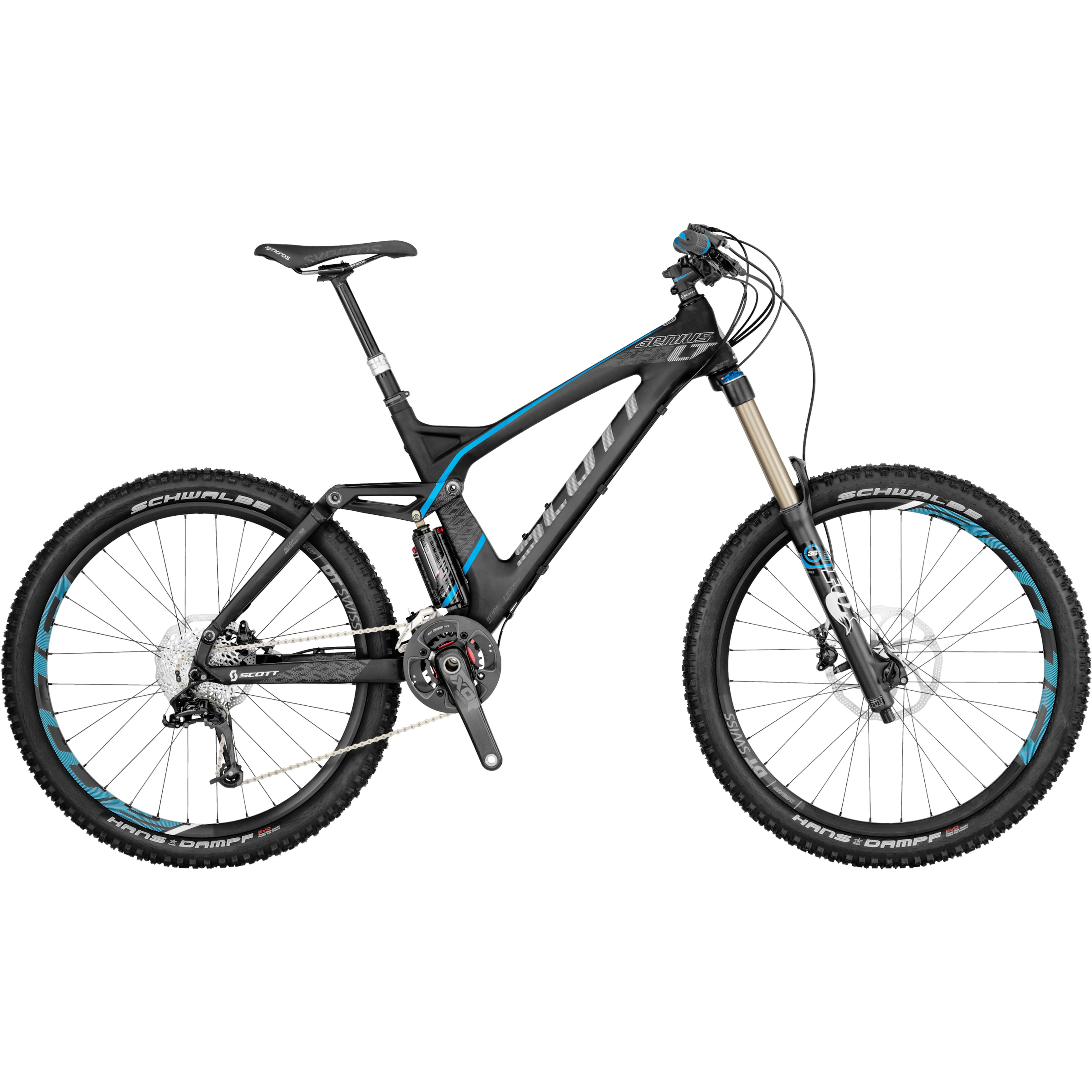
As of 2012 first quarter, customers from Pune and Hyderabad appeared to head the list for the most expensive bicycles bought in India. A Cannondale Jekyll Ultimate was believed to be at the top of the pile. In January 2011, a buyer in Pune paid Rs 650,000 for this model. One of the lightest bikes in the world, it was a versatile mix of uphill and downhill cycling capabilities. The rider could change from one mode to the other, in the process altering the geometry of the frame and his position on it. From Hyderabad, a customer dished out Rs 450,000 for a Trek Remedy 9.9. Early March 2012, a Scott Genius LT 10 worth Rs 425,000 was scheduled for delivery. All these models were full suspension carbon fibre frame-MTBs with top notch components. Earlier Scott India had sold an aluminium frame-Spark 40 full suspension MTB priced at Rs 216,000. Industry officials said that it would be erroneous to dismiss customers of this ilk as merely moneyed because some of the bikes bought had strength in specific applications. 

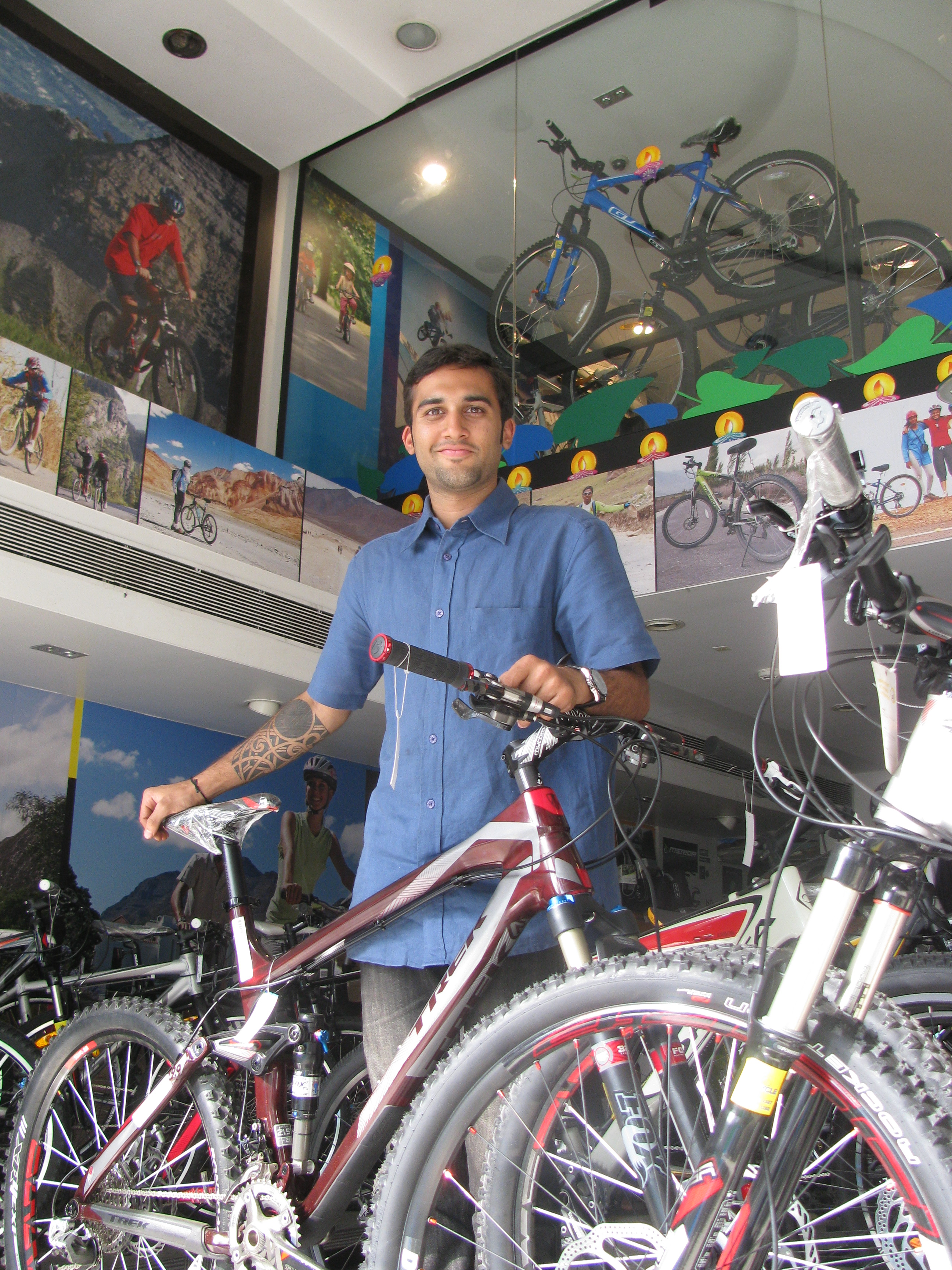
Lifecycle in Pune was probably India’s biggest multi-brand showroom for high end cycles. It had three floors of cycles; brands like Cannondale, Trek, Scott, Orbea, Bergemont, Merida, Giant, Firefox, Axis, GT, Schwinn, Bianchi, Fuji, Mongoose, Dahon and Huffy. Altogether 24 brands, said its owner. The walls had cases stocked with cycling accessories; at one end was a TV showing a video on cycling. Differently from Lifecycle but around the same DNA of passion for cycling, there were other such shops blossoming elsewhere in India too.

At the time of writing this article, TI Cycles was due to open a large Track & Trail Cafe – their version of high end retail experience – in Chennai. There was Rohan Kini’s shop with its delightfully irreverent name – Bums on the Saddle (BOTS) – in Bangalore. There was the hard core cyclist community around Venkatesh Shivarama in Bangalore. There was the first Track & Trail Cafe in Bangalore. There was Nachiket Joshi and Lifecycle in Pune. In Mumbai, there was Rahul Mulani and his shop Gear and Prabodh Keny, assembling cycles at his home.

Nachiket Joshi (Photo: Shyam G Menon)

Nachiket Joshi (Photo: Shyam G Menon)

Two cities in particular defined the Indian market for high end bikes – Bangalore and Pune. Both places were blessed by a matrix of old and new India. There was sufficient continuity of old fashioned commitment and passion plus a healthy dose of contemporary, youthful enterprise. Unlike Mumbai, real estate cost had not mono-cropped business imagination. Ideas stood a chance. Not to mention – disposable income, cycling clubs, communities and regular calendar of events around. Roughly similar across Bangalore and Pune, although not exactly so, was the local climate and topography. Bangalore had bearable climate year round. Pune had a harsh summer and distinct winter. At both cities, you could cycle off onto roads with less traffic and if it interested you, court hilly terrain.

The current drivers of cycling in Pune and Bangalore included those who were passionate about cycling when Hero and TI dominated what used to be a seller’s market. They struggled in that environment, first putting Indian bikes to punishing use and then researching and sourcing bikes unavailable in India to feed their passion. Consequently they didn’t bring to the table automatic respect for India’s big cycle manufacturers. They were not in awe of them. Across the new age cycle retailers I spoke to, there was a cool, guarded approach to Indian brands pushing carbon fibre cycles as motif of new found technological advancement. The manufacturer may be pushing something genuinely valuable but the point was – this market had questions, access to information and knew cycling. It chatted, discussed; there was even an Indian mountain bike magazine, `Free Rider.’ It was clearly not the old market. True, there will be those who buy to match peers or because they have money to splurge. Like this customer who called up asking for a bike costing over one hundred thousand rupees. The purchase was approved with photo of the bike dispatched via cell phone. The cycle was picked up by the customer’s driver. But even for this customer, rich enough to buy without seeing the cycle, it mattered who guided his choice. In this case, advisor had been an enterprise begun by cycling enthusiasts. That shift caused all the difference.

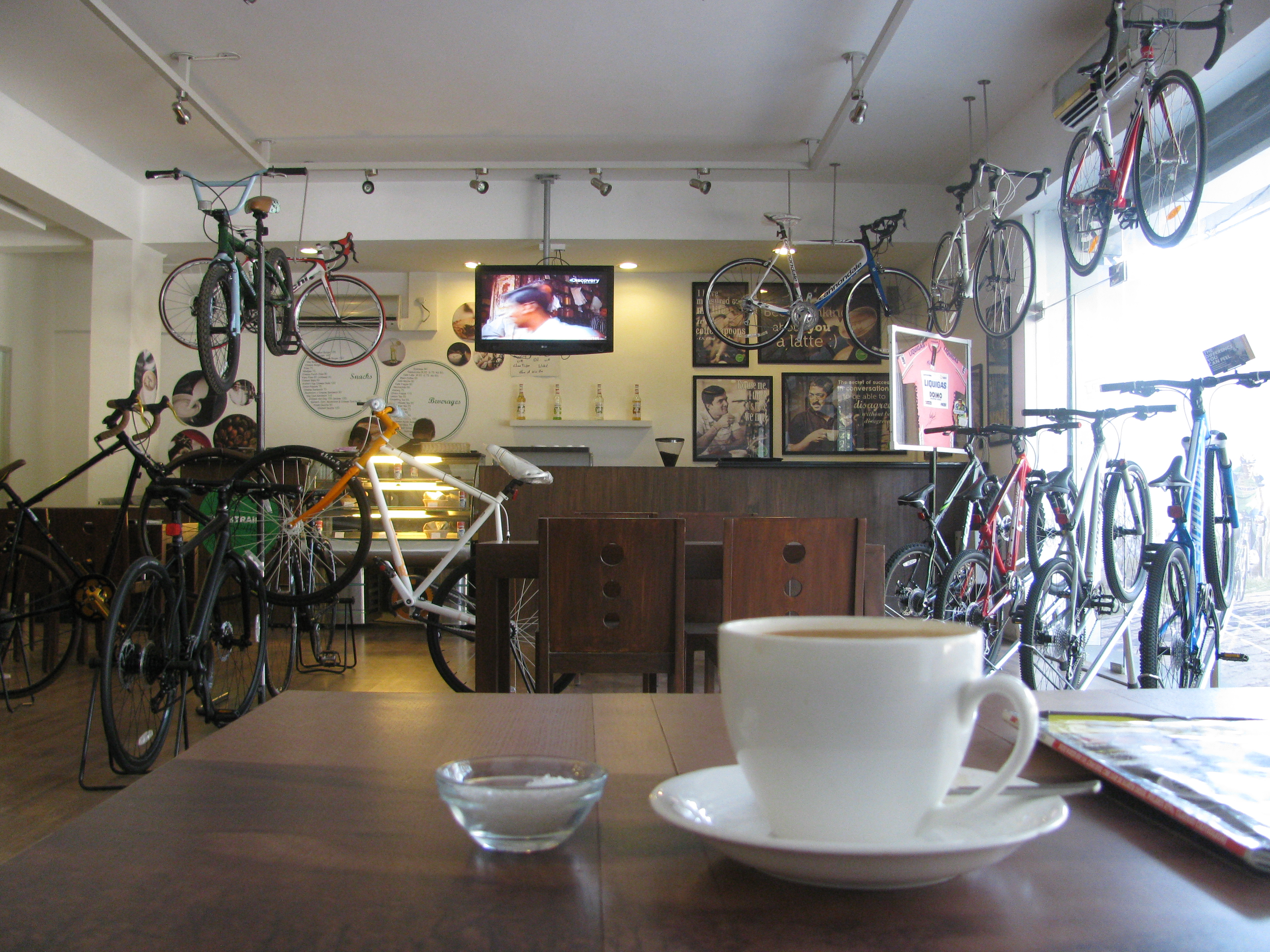
Bangalore's Track & Trail cafe (Photo: Shyam G Menon)

Bangalore’s Track & Trail cafe (Photo: Shyam G Menon)

Not surprisingly therefore, as much as a good product in this upmarket segment created a reputation for manufacturer, a bad product or a good product abandoned to bad after sales service created ill repute where there was none previously. The old approach to bicycle sales wouldn’t work. Bangalore’s Track & Trail Cafe stocked all the cycle brands that TI Cycles imported and distributed through its network. The best part of it was that it recognized a cycle as a creation and surrounded it with space to appreciate its design, geometry and engineering. You could take in all this with a cup of coffee in your hand, sip it and walk among the cycles, gaze at the posters on the wall or browse through the many books on cycling and magazines on the subject kept on the racks. The cafe served as a point of sale, played host to bicycle maintenance workshops and organized cycle rides. “ The Track & Trail Cafe serves as a platform for engaging like minded community members to make cycling a way of life through active company participation. The concept encourages users to browse leisurely,’’ Ramamoorthy said. Hero had planned Urban Trail showrooms. According to Patil, the top 200 dealers from Hero’s 2200 dealerships nationwide would sell Urban Trail models. There would be additionally, 30 company owned outlets, 30 franchise dealers and three experience centres for the Urban Trail brand in Delhi, Pune and Bangalore. That was the plan, when I met him.  

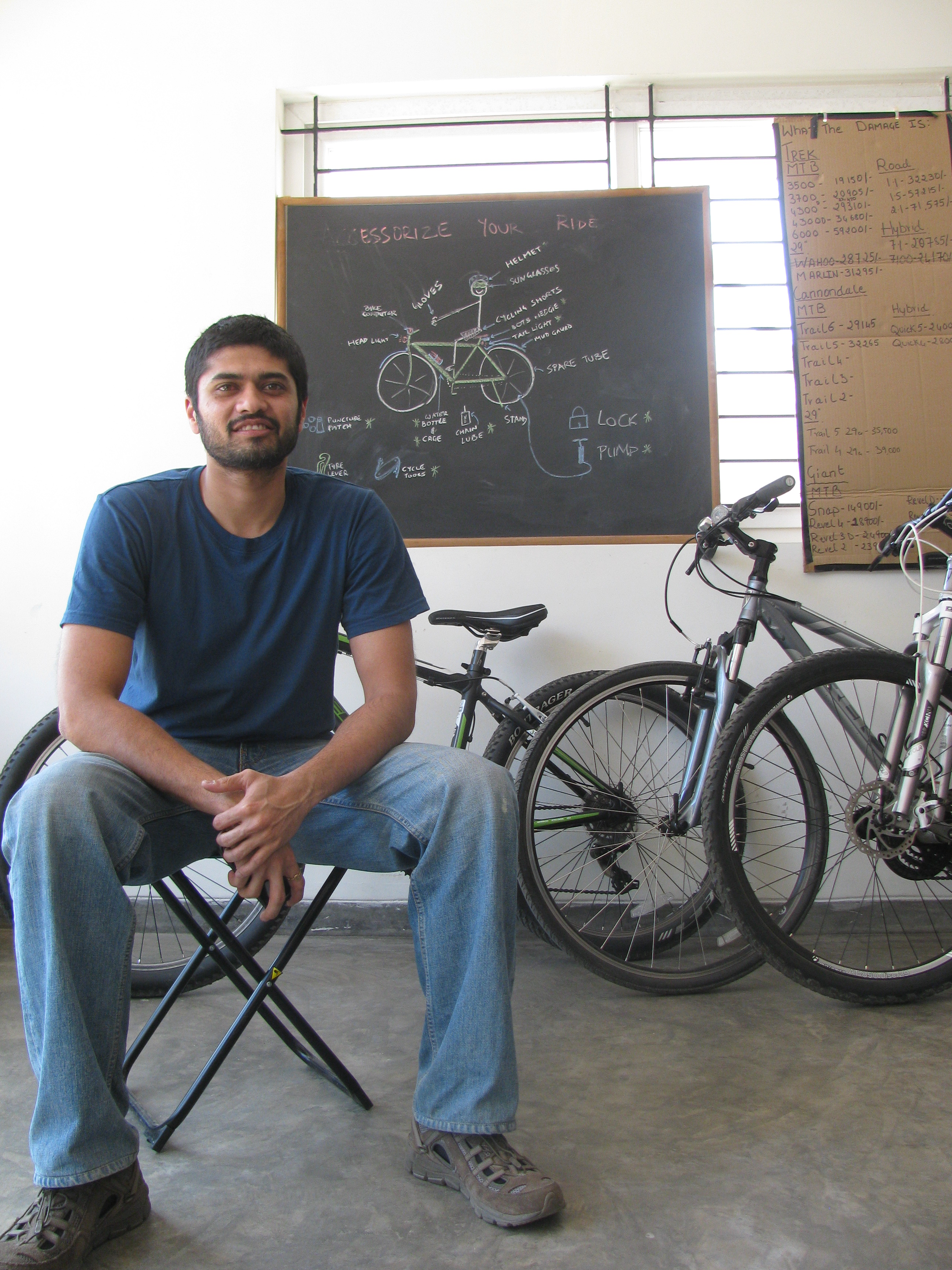
Rohan Kini (Photo: Shyam G Menon)

Rohan Kini (Photo: Shyam G Menon)

What interested was how the cycling community hadn’t yet (at the time of writing this piece, that is) migrated in strength to these new company sponsored platforms. It was early days. The shift was expected. Both Hero and TI already sponsored major cycling events. But as of then, the cycling community in places like Bangalore and Pune, clustered around individuals and clubs passionate about cycling. Notably, they remembered being under-served by Indian industry and drew people to them without necessarily having on offer all the material frills that the company spaces held.

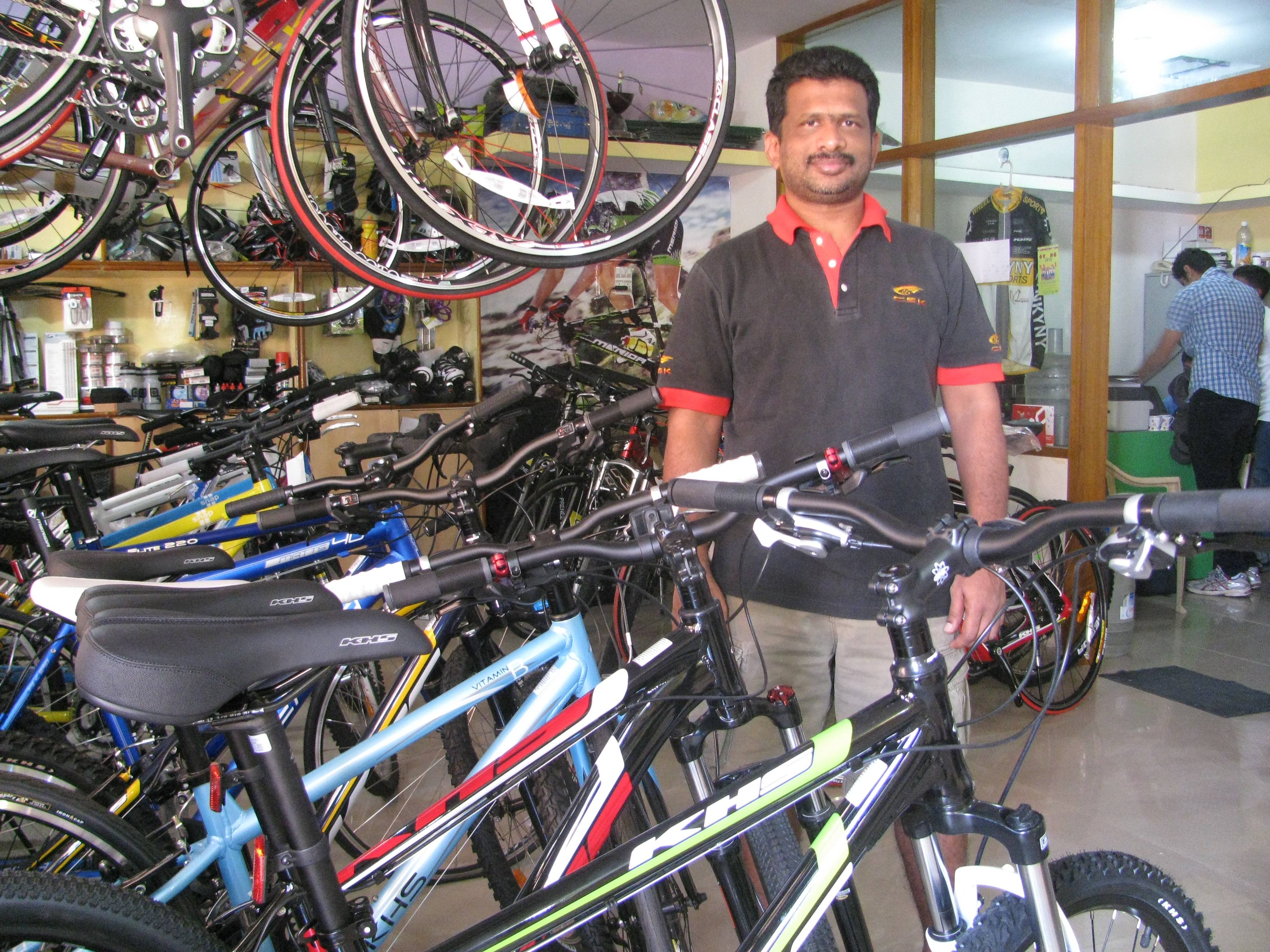
The best known cycling community in Bangalore was around BOTS. Rohan Kini saw his main job as managing the community and being an evangelist for cycling. Very different from the modern showroom space BOTS had acquired, was the first floor shop of Venkatesh Shivarama. It was packed with cycles. Imagine that – a first floor shop for something that runs on wheels? Yet the faithful arrived, for Venkatesh was perceived as an experienced, technically sound cyclist, an evangelist for cycling in his own way. He anchored a reputed cycling team and the assistants helping him at the shop were committed cyclists into racing. In Pune, Nachiket Joshi was crystal clear – his top priority was the community he had built around Lifecycle.

What was opening up in India in the form of a market for high end cycles was a classic chicken and egg situation. New product and market making were debuting side by side. To sell these cycles you required a culture that enjoyed cycling, understood what modern cycles did and wished to buy or promote them. That culture, starting with spreading the joy of cycling, was possible by nurturing communities. Unlike the old cycle shop owner who sold available products brusquely, the new age retailer of bicycles in India noticed customers. The premium segment’s growth rested on everyone’s evangelism for cycling. If cycling turned boring, they knew, the business would fail.

Rahul Mulani, who pioneered BMX in Mumbai years ago and started a cycle shop subsequently, provided a different yet equally involved view. He didn’t want to run a cycle shop. That wasn’t his aim. His aim was BMX. But what do you do when in BMX you were always thrashing your cycle and spare parts were so hard to come by in an India that ignored cycles for niche markets like his? He became an importer. More than one devoted cyclist and at least one dealer told me of cycles in the garage that served purely to be cannibalized for spare parts because import duties and exchange rate fluctuations hampered parts availability.

Venkatesh Shivarama (Photo: Shyam G Menon)

Venkatesh Shivarama (Photo: Shyam G Menon)

Of India’s two biggest cycle manufacturers, TI which claimed leadership in the special cycles-segment had in addition to its own product line-up opted to distribute imported cycles. Hero wanted to go it alone. “ I may at best seek a good designer, I have all the other capabilities,’’ Patil said. According to him Hero was targeting 35 per cent domestic market share in the premium bikes category to start with. Over time, the definition of indigenous cycle had become hazy. The standard cycles hailing in origin from the days of controlled economy, had fully localized production. As you moved up the pecking order and this machine called bicycle grew more complicated, the anatomy of the cycle became an international assembly. It transformed from a product wholly made at a factory in India or built with components from India to a product that was assembled from imported components. Uniquely in the global bicycle industry, some components were strongly associated with a handful of manufacturers. Example – Shimano and SRAM in gears. Aircraft manufacturers obsess with the design of planes’ wings for that is the critical piece of technology. Similarly, in cycle manufacturing, the bicycle brands controlled the geometry and technological specifications of the bike frame which was the heart of a given model of bicycle. The frames were unique for their rigidity, measurements, angles, thicknesses, welding and materials used. These attributes altered with intended application of bicycle. Thus the frame of a mountain bike was different from that of a road bike by more than just appearance. To the frame, components matched to performance and price point, were attached. The manufacturer then grew the brand DNA through a diet of field testing and performance. Dig deeper and you found that there was respect for independent designers, fabricators, testers and like. As you moved up the value chain in cycles, you encountered products defined more by design, engineering, build-quality and application.  Theoretically, these segments could be cost competitive in manufacture at modest volumes. If the volumes of such cycles in the Indian market slowly gained, that could eventually mean reason to manufacture them locally, which would be an interesting departure from the well entrenched worship for sales volume. In these categories defined more by performance than price, a critical, modest volume would do. What mattered was engineering excellence and craftsmanship. “ That would be an interesting development to watch out for,’’ Jaymin Shah, Country Manager, Scott India, the local arm of leading international bicycle brand, Scott, said.

Photo: by arrangement

Photo: by arrangement

The country to beat in this game was China. They manufactured the cycles sold by leading international brands and they did it efficiently at low cost. In early 2012, there was talk of South East Asian countries emerging as new manufacturing locations. Was this an exploitable crack? China itself had become low cost manufacturing destination for cycles on the back of Taiwan’s rising cost in cycle manufacture. It was only natural that cost-stories should migrate as economies prospered. According to an article on the Earth Policy Institute website, from 1995 to 2005, China’s bike fleet actually declined by 35 per cent to 435 million units while private car ownership doubled. Yet in 2008, China was still producing almost four fifths of the 130 million bicycles produced worldwide. If in 2012, names like Vietnam cropped up as cheap production bases, it shouldn’t surprise. Will Indian bicycle companies blessed with domestic market and gaining scale in niche segments, catch up and marry scale to technology for a swing at things? (As I edit this article for my blog, the rupee is at 64-65 against the dollar, begging an export culture.)

Patil said that scale was his primary asset. As the world’s largest producer of bicycles with 45 per cent market share in India, Hero had the capacity to source globally. That however begged a question in the eyes of observers – precisely because of faith in scale and because the cycle is increasingly an assembled product with brand identity divorced from manufacturing location, there needn’t be urgency for Indian manufacturers to produce high end cycles in India. Till costs compel otherwise (the sharp rupee depreciation of 2013 could be one), why not outsource, assemble the product and push the brand?  As said, such assembly was established industry pattern. It made no sense to keep reinventing the wheel. Except, the foreign bicycle manufacturers came across as more experienced and tested for unlike in India, they built brands around credible performance and not scale. You may be buying a mass produced brand. But it was traced to company with strong DNA in performance. Indian companies were yet far from acquiring such link. This made attempts in that direction very important, for unless you evolved by aspiration and imagination, the product – no matter how dominant the brand – would remain an unconvincing shell. The market never failed to argue – every year the foreign brands were at the races and something from those outings should be rubbing off on the brand as learning. DNA by performance – the market valued that in a bicycle brand.  

When I mentioned Indian carbon fibre cycles to one of the new age dealers, he quipped, “ do you know what grade and quality of carbon fibre that is?’’ How much of everything on the cycle is carbon fibre and how much isn’t? Evidently, the young man knew the material and its use on cycles well enough not to be felled by a claim. In contrast, he pointed out that many of the foreign brands newly into India had been at least once to Tour de France, not to mention won it. And just in case you thought that dealer’s quip was spot on, here’s another observation from another dealer – why can’t an Indian manufacturer be successful and iconic when many of the foreign brands despite their heritage and reputation have ended up being made in probably the same factories in China? Are you sure the old care and personalized attention which makes products distinct are still there in the foreign names?

It showed the possibility open to Indian manufacturers if they wished to genuinely try.

Photo: by arrangement

Photo: by arrangement

As of early 2012, the impact of all this was visible in select home brand-products near the Rs 10,000-price level in the domestic market, where design and quality had improved. “ Indian bicycle manufacturing had been bogged down on the price and mobility platform and had not made any investments as made by international manufacturers. We are slowly building capacity for alloy and carbon frame bikes and eventually other materials also,’’ Ramamoorthy said. Alongside new approaches to the market may be tried. TI Cycles for instance, was examining the scope to start a rental business for performance bikes at its Track & Trail Cafes. Its well located bike stores may also host this business, which provided the market an easier option to experience the new bicycles besides allowing cycling aficionados to continue their lifestyle when travelling on work.

Then on March 16, 2012, a game changer happened.

The premium cycles segment found mention in the Union Budget with the customs duty on imported cycles and bicycle-parts going up. Very broadly, this move spelt impact from price points like Rs 5000 – 6000 and upward in the market because models, right from children’s bikes, used imported components. What survived untouched was the mass market livelihood-cycle category, which incidentally wasn’t the growth segment of the market. The growth segment and what was evolving to be the next centre of gravity for the bicycle market, was the beginning level of the premium category taking to the market concepts like alloy frames and gears, which were not mass produced in India. Suddenly the very fun centre of the market had been choked by the Finance Minister! The budget was speculated to trigger two to three trends – the cost of imported cycles and cycles with imported components would go up; there was the likelihood of down-trading to cheaper technology as models strived to preserve price points and finally, there could be greater manufacturing in India to get over the higher import cost. None of this would have pleased cyclists left wondering why cycling – an activity that burns no imported oil or contributes to pollution – was penalized.

Photo: by arrangement

Photo: by arrangement

The budget left many cyclists angry. But in the months since, room to complain steadily eroded for it was life by game changers. The rupee at 64-65 against the dollar would have further reinforced protective barriers. The currency’s real exchange rate, some said, was yet away. Every generation has its challenges. The last one capped its imagination at ordinary bicycles. New generations defined by consumerism alone don’t make for a great generation. They must create convincing products. On the bright side, indigenous models in the premium segment have grown. TI’s Montra brand for instance, has spawned models at a pace not seen before in the market.

The field is wide open in Indian cycling’s second youth.

UPDATE: Mid September 2015, media reports said that Hero Cycles had acquired Firefox Bikes in an all cash transaction. The deal included distribution rights for Trek and other brands. 

(The author, Shyam G Menon, is a freelance journalist based in Mumbai. This article was written in mid-March 2012. Some rewriting and updating was done for this blog. However minutiae in context, as well as officials and product prices quoted herein may have changed since. Serious readers are requested to note that. The blog’s intent is – perspective.  A very abridged version of this article was published in Man’s World [MW] magazine. A portion of this material was also used for an article in The Hindu Business Line newspaper soon after the Union Budget of March 2012.)

FIELD HOCKEY’S FAMILY FESTIVAL

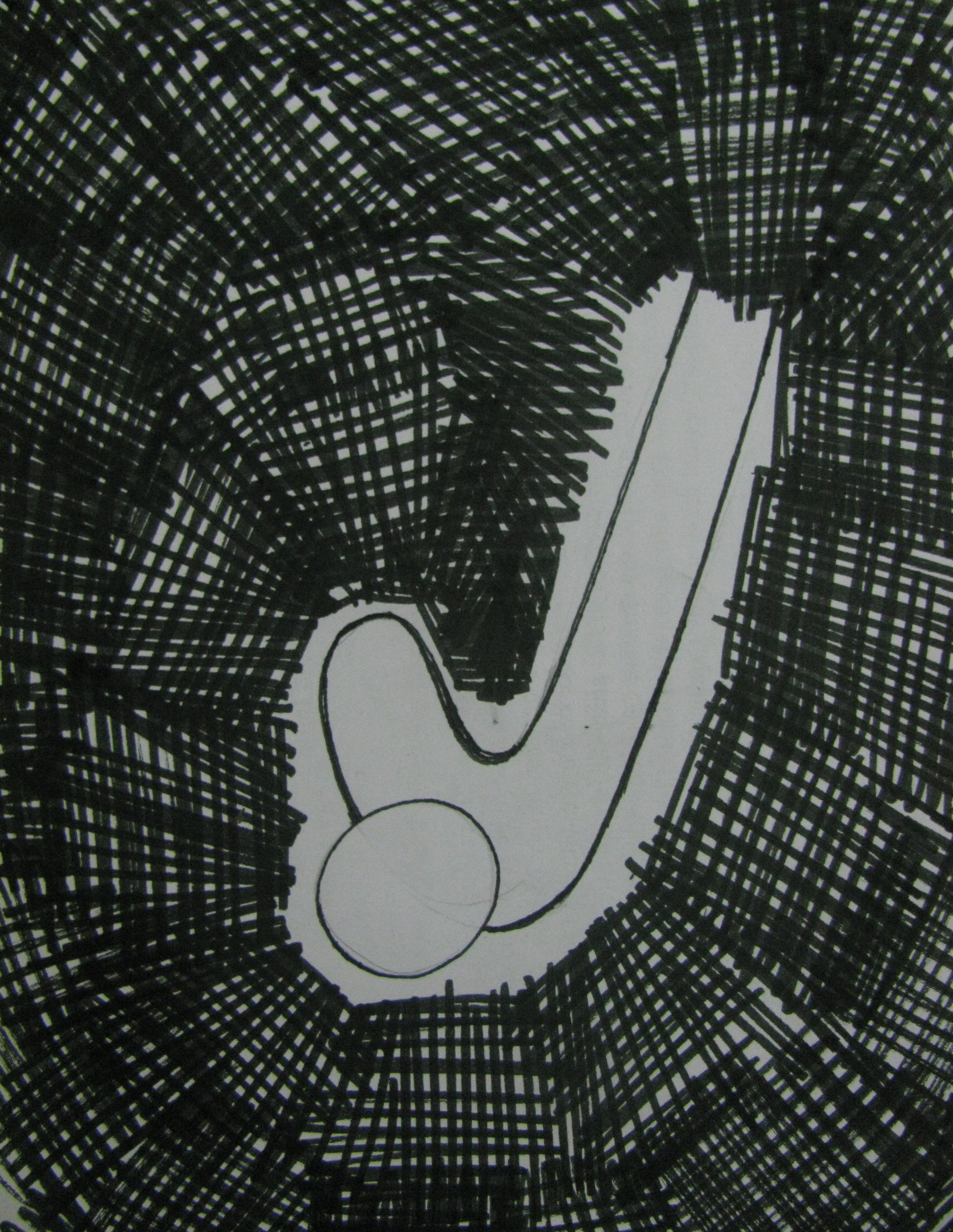
Illustration: Shyam G Menon

Illustration: Shyam G Menon

March 2010.

For a festival of its size and uniqueness, the banners announcing the mid-April start of the Maneyapanda Twenty Ten were both few and hard to find.

In sport loving Kodagu (Coorg, South India), it was the latest edition of a then thirteen year-old annual ritual using field hockey to preserve a tradition of closely knit families. Started in 1997 by a former senior manager of the State Bank of India as means to reinforce family ties, the festival had since grown to be the world’s biggest field hockey event. It was recognized for its scale by the Limca Book of Records. The Guinness Book eluded it reportedly due to its exclusivity – you have to be a Kodava to participate. But that didn’t take away any sheen from this festival, for the region had for years been a major talent pool for the national men’s hockey team. Family teams sometimes included former members of the Indian squad, even Olympians. Both men and women played alongside. An unmarried woman played for the family she was born into; a married woman played for the family she married into. The youngest player may be just out of his or her teens. “ This year the oldest players could be B.A. Nanaiah and C. Vasu, both nearing eighty. They used to be good hockey players,’’ S. Appaiah, Chairman, Sports Committee of the Maneyapanda family, said when I met him.

In Madikeri, C. A. Karumbiah’s office sat next to the greenest spot, a patch of astro-turf. Formerly with the Indian Air Force, he was now Administrative Officer of the local Sports Authority of India (SAI) complex. In his prime playing years, he had been in the national hockey camp. He had also played thrice – with son and daughter – for the family he belonged to, Chandapanda. The roughly 150,000-strong Kodava community maintained its roots in family. Everyone was traced back to a male ancestor and there was a tradition of ancestor worship. Men had names with two initials, the first denoting family and the second, father’s name. There were no historical records to explain the genesis of these patriarchal family names, called manepedas. So when engineer turned writer C.P Belliappa, who became a coffee grower at Athur near Gonicoppal, dwelt on the topic in his book, “ Tale Of A Tiger’s Tail & Other Yarns from Coorg,’ he dipped into imagination for a delightful little chapter. Suffice to say, family ties were very strong in this hill province. Disparities in well being aside, most families had a large ancestral house that served as a magnet for periodic get together. When these meetings happened twice or thrice a year, a hundred to two hundred blood relatives may congregate. The house also reserved quarters for those in a family who had fallen on hard times.

Like the origin of their family names, the Kodavas I spoke to were hard pressed to explain why hockey of all games became so popular in the area. An explanation for the prominence of sports could be attributed to the British influence in these hills inhabited by a warrior community, the area later becoming the center of coffee cultivation in India. If you look around, vignettes of British influence in the region surface, ranging from Kodagu’s love of sports to similar tendencies in Malabar down to a quaint two hundred year old tradition of playing cricket in Thalassery ascribed again to the region’s coffee planters.

“ In our community there was always respect for the soldier and the sportsman,’’ Karumbaiah said. At Madikeri’s `Coorg Cuisinette,’ recommended locally as an eatery to visit for traditional food, I ran into young Subbaiah and Varun Cariappa, the former proceeding from third to the fourth standard, the latter, from eighth to the ninth standard. “ We go for hockey practice at five in the morning,’’ Subbaiah said, pointing to a tradition of elders proficient in the game coaching youngsters. When reading up for this article, I also came across a news report of Kodavas in the US forming a hockey team. Karumbaiah reeled off the names of several Indian hockey greats from Kodagu – M.D. Muthappa, M.P. Ganesh, B.P. Govinda, P.E. Kalaiah, M.M. Somaiya, K.M. Kusha, Ammanda Vasu, Chengappa, M.S. Monnappa, A.B. Subbaiah, Vinod Chinnappa, Koothanda Poonacha, B.K. Subramani, Chepudira S. Poonacha. More recently there have been Arjun Halappa, Len Aiyappa, S.V. Sunil, Hariprasad, Raghunath and Vinayak. Some of these players returned annually to play for their families.

The man who tapped this talent to create a huge family festival was 74 years old when I rang him up. “ I am very happy the way this festival has evolved,’’ Pandanda Kuttappa said over the phone. According to Belliappa, the former bank manager’s idea was a brilliant one. “ By March, the harvest here is over and people are generally free till monsoon. That’s the ideal time for a hockey festival,’’ he said.

Illustration: Shyam G Menon

Illustration: Shyam G Menon

There appeared to be an estimated 700 to1000 families in the Kodava community. In the first inter-clan (okka) hockey tournament held in 1997 at Karada and funded by Kuttappa and his family, 60 teams showed up. In 2003, participation peaked at 281 teams. “ The family-hockey link works well because it is a team sport. It won’t work that well in something more individualist like athletics,’’ former international athlete Ashwini Nachappa said. Since it was an affair exclusive to the community, the festival’s administration was vested with the Kodava Hockey Academy (KHA) which had nothing to do with government agencies in the field. The umpires for the matches came from the mainstream Coorg Hockey Association. However, they too belonged to the Kodava community. Just as in international events, by the time one edition ended, the host family for the next edition was already identified and at work. While Kuttappa, who was President of KHA, had to dip into his own funds for the first edition, the tournament now had sponsors. But its implementation stayed ad-hoc and partly so for strong reasons.

At the government school in Ponnampet, where two hockey grounds were being prepared for the month-long festival, the mood was both professional and community service. Brigadier Devaiah oversaw preparations for the Maneyapanda family. According to him there was a reason for the festival shifting venues every year and not locating permanently at a fixed venue which would have made infrastructure efficient. In the distance one saw the Kunda Hill, sacred to the Maneyapanda family whose members lived in the vicinity. Many in the family had studied at this government school. “ It doesn’t have proper water supply. Alongside organizing the festival here, which would obviously need water, we also hope to leave behind a water supply infrastructure for the school,’’ the Brigadier said. On the other hand, every host family started its preparations from scratch. The KHA received several bids and usually selected the host family on the strength of prominence and capacity to implement. Once a family was chosen they proceeded to set up a core committee with sub groups handling specifics like finance, ground preparations, technicalities of the sport etc. Sadly however, work began every time from scratch with few documented practices from previous tournaments for template. Thus for Brigadier Devaiah, used to project execution in the army, the Ponnampet work was challenging. Work started from basics like collecting the addresses of all family members; collecting the addresses of women from the family who married into other families, working out the budget, requesting family members for funding (some contribute big, others small), informing the same to members married outside (their contributions were completely voluntary), readying the infrastructure etc. The overall budget for 2010 was Rs 50 lakhs.

For the finals due in May second week that year, the organizers were expecting a crowd of 30,000 people. Temporary stands were being constructed at the school ground. With one more ground nearby, two matches would be played simultaneously to expedite the knock out stage. There was space adjacent for several food stalls. Teams scheduled to play on a given day would play and return for further matches if required. “ Roughly twelve matches would be played every day,’’ Appaiah said. At Karumbaiah’s Academy for Learning & Sports in Gonicoppal, run by Datta Karumbaiah of the Maneyapanda family and his wife Ashwini Nachappa, I was told that around 185 families had submitted their entries for the hockey festival with a day still left for closing registration. The then Union Minister for Sports, M.S. Gill was expected for the April tournament as was the Air India hockey team for a friendly match. In Madikeri, C. A. Karumbaiah said that he had agreed in principle to using the SAI’s astro-turf ground for okka matches in the future. “ Since there is no age limit and many of the older players were groomed in the old style, there could be injuries if they play on fast moving astro-turf. But from quarter finals onwards, we are looking at good teams playing seriously. They should be able to handle astro-turf,’’ he said.

Illustration: Shyam G Menon

Illustration: Shyam G Menon

Despite its popularity, the family hockey festival was not the stuff that was tracked by committed talent scouts. The picture appeared to be one of the festival’s standing in sport being diluted by the festive flavor. More than hockey, it was an occasion for family members to meet, in some cases for the first time. It was also an occasion for match-making in the small community. As one person said, “ somebody might tell a young man: that’s the girl I told you about. See, that one in the red saree?’’ In a different context though, those sarees should intrigue Kodagu. The region’s prominence in hockey had been in men’s hockey. When it came to women, the talent pool today was up north and in the east. “ We need more women to come forward and play the game,’’ Karumbaiah of SAI said. That incidentally was a smaller problem in a larger trend becoming visible. Although talent scouts periodically visited interior schools to catch them young, great talent was slowly becoming rarity in Kodagu. Reasons were speculative and they ranged from smaller families with lesser children to so many other options available now for a person talented in sport.

However, that hadn’t dampened the intertwined model of family and sport.

Kodagu’s okka hockey festival was being emulated as model in the region’s taste for cricket and golf.

(The author, Shyam G Menon, is a freelance journalist based in Mumbai. This article was published in an abridged form in The Week magazine.)

LADAKH’S ICE HOCKEY

June 2009.

Ladakh couldn’t comprehend its mixed fortunes in ice hockey.

In India, the game was first played in Shimla during the British times.

But it fizzled out.

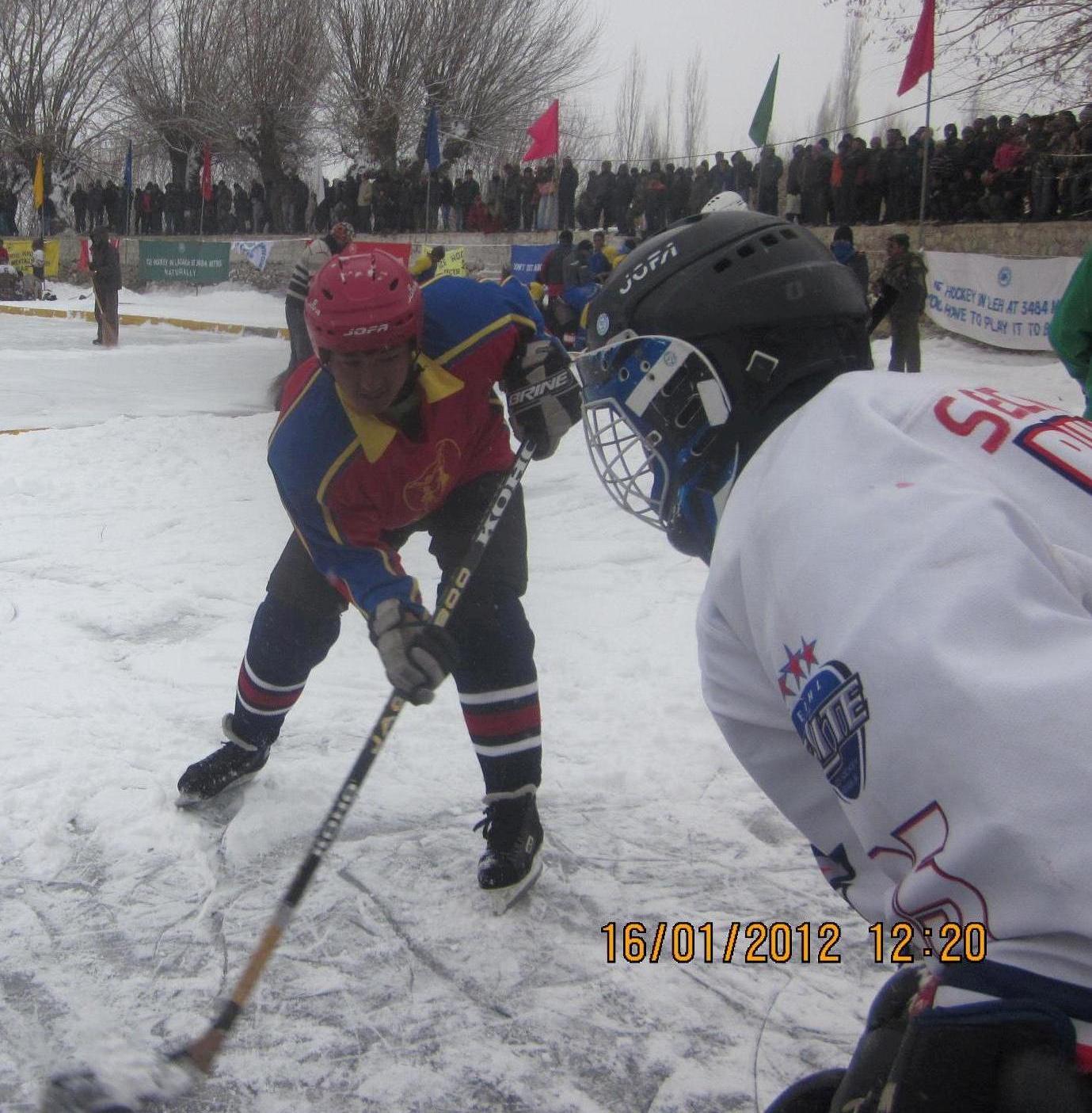
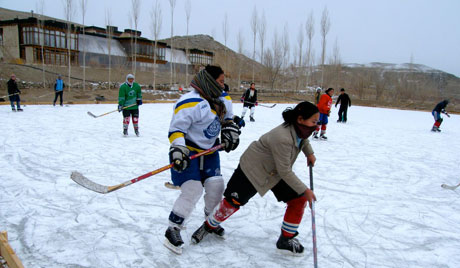
Ice hockey in Ladakh (Photo: courtesy Chozang Namgial)

Ice hockey in Ladakh (Photo: courtesy Chozang Namgial)

Then in the 1980s, some say earlier, the Indian Army started playing ice hockey at its remote, cold postings in Ladakh.

The Ladakh region has a severe winter. Dras, often cited as the coldest inhabited place in the country with altitude induced sub-Arctic temperatures sometimes plummeting to minus 45 degrees, lay in the adjacent Kargil district. Even today, a winter in Ladakh entails being cut off for months as regards access by road.  Water bodies freeze, the most famous and touristy of which is the annual freezing of the Zanskar River that makes the winter trek on it much sought after. In towns and villages, people live off stocks of food they carefully accumulated during the summer. Families gather around large decorated stoves which serve to both cook food and heat a room. The choice then looms of either restricting yourself to such life or getting out and doing something more active.

That’s where ice hockey fitted in.

When the army started the trend in Ladakh, ice hockey sticks were made from willow wood. The skates were locally fabricated and fixed to the soles of military issue shoes, tin cans were used for pucks.

It soon spread to other parts.

In Leh the game has been played for years on a frozen irrigation pond. The Ladakh Winter Sports Club (LWSC) was formed in 1985. It offered coaching and organized tournaments, slowly moving the game away from the army’s clutch and into civilian ownership. At present the military / paramilitary forces don’t anymore run the game but send their best teams to compete with that of the state and local clubs.

Equipment was a huge hurdle to cross for it had to come from abroad and was required in good quantities if the sport was to penetrate the remote hinterlands. Luckily with ice hockey’s ascent, it caught the eye of diplomats and expatriates staying in Delhi and Mumbai. Among them were Canadians. Through them Ladakh got the first real sets of ice hockey gear and several more of used equipment for dispersal to the interiors. “ Those days, it was difficult getting the gear cleared at customs. We lost one set,’’ Chewang Motup Goba, founder of Rimo Club, national champions in the sport, recalled.  He was also Vice President of the LWSC at the time I was writing this story. The game had state and national level competitions with an administering body – Ice Hockey Association of India (IHAI) – based in Delhi.

In March 2009, the national ice hockey team made its debut at the international level.

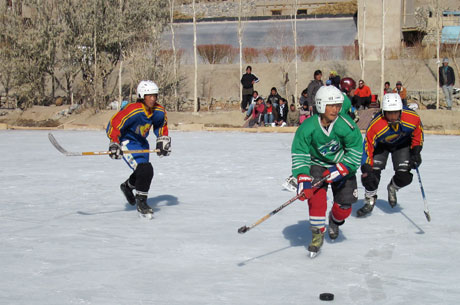
Ice hockey in Ladakh (Photo: courtesy Chozang Namgial)

Ice hockey in Ladakh (Photo: courtesy Chozang Namgial)

The team was wholly from Ladakh.

Shimla hadn’t been getting good ice for the previous 3-4 years and that led to its players being left out.

When Tundup Namgial turned up at the Leh View Restaurant for a chat, he was absolutely different from the typical skipper of an Indian team. He spoke to the point with a reluctance that hinted he would rather play or be lost in the folds of his Ladakhi landscape. At experiential education courses, my thoughtful journalistic persona has often found itself in spaces identified with the analytical, procrastinating, human company-loving type. Tundup Namgial reminded me of the active sort, which struggle to find the correct words because the active life is their equivalent of thought and conversation.

Some in Leh felt he should have spoken up at a certain press conference in Delhi when the national team was sent to Abu Dhabi to play in the Asia Challenge Cup. From the administrators of the sport they got team T-shirts. That was all. The team had no doctor; equipment kits were pieced together from the inventories of the army, Rimo Club and J&K Tourism. Stay and accommodation was courtesy the organizers. Travel cost would have been entirely the team’s onus had not the Jammu & Kashmir Bank agreed to sponsor tickets, reportedly at the behest of state Chief Minister Omar Abdullah.

At Abu Dhabi, the team featured in the opening game of the tournament. It was routed owing to lack of international experience and more significantly, the absence of an artificial rink back home. “ Nobody plays competitive ice hockey these days on frozen ponds,’’ Namgial said ruefully. Abu Dhabi in the desert underscored it and the behavior of puck on the ice of artificial rink was dramatically different from the way it slid on Leh’s frozen irrigation pond. Yet the tough lads improved with each fixture and exited the tournament earning the respect of other national teams. UAE won the championship that year.

The IHAI attributed the limited support it gave the team to both the niche stature of the sport in India and its own early days as an association. It hoped to get funding from the International Ice Hockey Federation. Both J&K Bank and Volvo, companies that sponsored the national team that went to Abu Dhabi, were expected to continue supporting for the next five years. “ We are also getting a coach from the ice hockey school in Finland to visit India this winter,’’ Mr Akshay Kumar, Secretary, IHAI, had said then.

Ice hockey in Ladakh (Photo: courtesy Chozang Namgial)

Ice hockey in Ladakh (Photo: courtesy Chozang Namgial)

Ladakhis love ice hockey.

Their women fought for equality in the game.

“ Our youth have nothing to do in winter but play ice hockey,’’ P.T. Kunzen, President then of the LWSC, said.

A national team and aspirants for it must train year round.

The Ladakh Autonomous Hill Development Council (LAHDC) was installing a second rink, a natural one again with hopefully an extended period of frozen existence as grace. That may increase the playing calendar by a month or two.

But where was the artificial rink that Ladakh badly needed for all it had contributed to the sport?

In 2009, thanks to an Uttarakhand initiative with central funding – a proper rink was coming up at Dehradun, in time for the South Asian Federation Winter Games. Teams from Himachal Pradesh, Delhi and Uttarakhand would thus find a rink close at hand. Meanwhile with the growth of shopping malls and such, recreational rinks have opened up or been announced as curiosity in several Indian cities. Late 2012, I would find a giant hoarding outside the Mumbai airport announcing that winter’s ice hockey tournament in Leh, sponsored by a leading hotel chain; months later in Kochi I would see a newspaper article about an artificial ice skating rick at a huge mall. In new India with no shortage of people and people packaged as market, there is no dearth of marketing to attract crowds. What is amiss is an understanding of sport and meaningful investment in it. Growing something patiently, organically – that is an art lost in these days of design by disruptive growth and utter impatience to reach where the Joneses have.

Thus in yet another one of the ironies of sport in India that artificial rink went many places, except where there is a readymade culture for using it.

Kunzen, Chewang Motup and Namgial were all at a loss to explain this situation.

They were sure Ladakhi players would travel to Dehradun for practice. Still the bad luck rankled. Against the backdrop of 60 per cent central funding for sporting proposals from the states, the IHAI felt Ladakh can get its rink if the state pushed for it. But the time I was in Leh, it didn’t seem simple. Gulmarg in the Kashmir Valley is a favored spot for the national winter games and all states humor Delhi to merit their share of opportunity. The question being posed in 2009 was – will the state risk Gulmarg’s fortunes for the sake of an artificial rink in Ladakh?

Illustration: Shyam G Menon

Illustration: Shyam G Menon

The only other alternative was to encourage in-line hockey – similar to using roller blades – during the summer and keep Ladakh’s talent engaged. Chewang Motup saw one silver lining. He said that the then union minister for sports was aware of Ladakh’s concerns. But today as I brush up the article for this blog, it is many months since the said union minister was shifted out from sports. In India, you can’t trust politics. Its notion of time – swiftly ending through human intrigue sometimes and carrying on eternally at other times – follows laws that are apart from the natural laws of physics.

Unlike in politics, a more natural form of time runs out on the playing field.

Namgial knew his time was up.

“ Another two or three years of playing, after that I plan to coach youngsters,’’ the captain of the Indian team said.

Hopefully by then, Leh should have an artificial rink.

Namgial is the only captain of an Indian team I was privileged to have tea with.

I met him a couple of times after this visit.

One of those meet-ups was memorable.

We were a group of journalists who had just landed in Leh to cover the Hemis Festival and write about a school run by the Drukpa Lineage. I ambled out from the airport to locate the vehicle assigned to pick us up. A large number of people stood waiting outside the building, most of them taxi drivers and chauffeurs of hotel owned-vehicles or lodge and home stay-owners come to collect their clients. In the crowd was a face that struck me as familiar. Eventually Tundup Namgial and I recognized each other. We shook hands, exchanged greetings. Later, we met for a chat on ice hockey at his house now sporting additional rooms for lodging tourists.

It is now August, 2013. I spoke to a friend in Ladakh few days ago. At the one place in India where ice hockey grew so much, an artificial rink wasn’t functioning yet.

Ladakh waits.

(The author, Shyam G Menon, is a freelance journalist based in Mumbai. This article was originally published in a shorter version in The Hindu Business Line newspaper in September 2009. It has since been tweaked a bit to reflect the times.)


A COMPETITION’S SOLO CLIMB

“ Bong, what’s happening?’’ the policeman asked exasperated.

It was late January, well past midnight and while the music system at the small venue hosting a hundred or so climbing aficionados had long died in tune with prevailing law, somebody staying nearby had complained against the clapping and cheering.

The big Bengali appealed to his Marathi friends, “ please, baath karna yaar.’’

Belapur has known its climbing crazies for years.

And even the crazies knew that climbing at 1AM was crazy.

It was the men’s final.

“ Ten minutes more, that’s all,’’ Bong said.

Mangesh nodded and went to mollify the cops.

Erstwhile rock climber, still trekker-mountaineer-cyclist and most important – technician at large – Abhijit Burman aka Bong is the soul of a climbing competition taking place in Navi Mumbai for the last ten years. In late 2003, in his tiny apartment choked by climbing gear and small climbing wall, Burman who works at the Bhabha Atomic Research Centre (BARC), shared his idea of an annual open climbing competition. Those days, there was no big event in Indian climbing comparable to overseas climbing festivals. Such festivals brought together the community. Fellow club members put up the prize money and in January 2003, the first edition of Girivihar’s climbing competition got off to an enthusiastic start.

Girivihar is Mumbai’s oldest mountaineering club. Starting life as the Inter Collegiate Hiking Club of the Mumbai (then Bombay) University almost six decades ago, it opened up so that more people could join. Along the way, it acquired its present name and structure. Over the half century of its existence, its members have trekked and climbed extensively in the Sahyadri hills of Maharashtra state besides undertaking several mountaineering expeditions in the Himalaya. It holds annual adventure and rock climbing camps to train young people. Currently, its activity continues with regular itinerary of hikes and climbs plus new pursuits like cycling added by interested members.

From an early edition of Girivihar's annual climbing competition (Photo: Sharad Chandra)

From an early edition of Girivihar’s annual climbing competition (Photo: Sharad Chandra)

Within a few years of the competition’s commencement in 2003, it attracted young climbers from Mumbai, Pune, Bangalore, Davengere, Bikaner, Delhi, Kolkata, Darjeeling and North East India. It coincided with a time when Mumbai saw a group of young climbers led by Vaibhav Mehta come to the fore. Given to full time-climbing, they soon became the competition’s route setters and manpower. 

The whole effort smacked of home grown enterprise.

Organizing it is still, as one senior club member put it an annual “fire-fight.’’

Once called India’s biggest open climbing competition (now there are more), the Belapur event is actually a tiny affair for climbing itself is small in India. Unable to afford artificial climbing walls, the BARC technician engaged carpenters to make temporary ones. Critics were several. Over time, the walls – the Girivihar competition focuses on bouldering – improved and the climbing contagion spread. Rules for judging followed international norms. On an average 50-60 participants turned up for the competition; in 2011 it touched 116. They compete in men’s women’s, boys and girls categories. There is also a small component of competing on natural rock at crags on nearby hills progressively lost to that classic Mumbai situation – slum encroachment.

Incidentally, when the competition began, the larger component was climbing on natural rock. But a combination of factors encouraged the drift towards artificially built walls. First, the approach and access to Belapur’s climbing crags was always through the scars of urbanism’s expanding fringes – slums, real estate lobbies, religious clans seeking real estate for places of worship, so on and so forth. There was a constant feeling of land, including the crags, being under siege from that sum total of everyone’s presence, climbers included – urbanism. It was the sort of politics, climbers had no appetite for and as for climbing, the imagination of India’s `settled’ world probably held no room for such mindless pursuits. Second, long climbing routes, secure enough for regular climbing and competition, were hard to come by in Belapur. Even today they are not many. But of boulders – there was no shortage.

Despite known interest in climbing and mountaineering, Mumbai never got its act together to put up a world class climbing wall. On the other hand, artificial walls for bouldering aren’t as capital intensive to build.

That’s what Bong, his architect brother Indrajit and Grivihar’s climbers set out to do.

Abhijit Burman aka Bong (Photo: Sharad Chandra)

Abhijit Burman aka Bong (Photo: Sharad Chandra)

Normally in India, we hesitate to present to the world our life and home built-solutions. This changed when foreign climbers passing through Mumbai started seeking out the local climbing community and joining in. Any apologetic tone about how the crags and the approach to it were, slowly faded. In retrospect, one could say that this discovery of climbing as leveller of disparities, contributed to the confidence Girivihar showed in dreaming up a competition on home built-bouldering walls. As they did at the crags, foreign climbers dropped by for the competition as well. Among them – a former world champion (Alex Chabot of France, he was the competition’s route setter in one year), members of the Iranian national climbing team and in 2012, current and former national team members of Singapore and Indonesia. Additionally there were several others who participated for the fun of it from Europe and the US.

India’s top climbers participated albeit erratically thanks to the politics of the domestic climbing circuit. Where prize money and funds once came from club and well wishers, sponsors stepped in – names from India’s outdoor industry like AVI Industries, Wildcraft, Adventure 18 and Rocksport, mainstream companies like L&T, Saraswat Bank and Hindustan Unilever and the agency which built Navi Mumbai – CIDCO. Internationally known climbing gear manufacturers – Petzl and Beal – provided money and equipment. The year Alex Chabot arrived, the French embassy expressed interest. In contrast to all this home grown activity in Belapur, neither Navi Mumbai nor Mumbai has yet a climbing wall of international standards.  

Some years ago, climbing’s apex body worldwide, UIAA, had a special initiative for youth. The late Roger Payne, at that time a senior UIAA functionary, was in Mumbai for a Himalayan Club-lecture. He impressed for both his enthusiasm for climbing and also his willingness to engage with other climbing enthusiasts. With him, there was no standing on ceremony and bureaucracy. Girivihar members met him to apprise him of the competition. The man was a pleasure to talk to. Payne gave the club members a patient hearing. Within weeks the Belapur competition was shortlisted for likely inclusion in UIAA’s calendar of events. The Girivihar team was thrilled. However, Indian administrators, overseeing national competitions for selecting the best, objected to a local climbing competition acquiring such profile and interacting directly with international bodies. They put their foot down.

That year although the competition ran as planned there was a pall of gloom at the organizers’ because the international recognition denied had been despite proven enterprise at Belapur. Some climbers speculated that the authorities were averse to foreign climbers participating in the competition; hence the cold shoulder. If so, it would be well to remember that young Indian climbers watch Internet and read climbing magazines to track a sport which acknowledges no here and there. Climbers from many countries meet at Indian climbing hotspots like Hampi and Badami. From such camaraderie is born open competitions like Girivihar’s.

From the 2012 competition (Photo: Shyam G Menon)

From the 2012 competition (Photo: Shyam G Menon)

“ May be its time we called a spade a spade,’’ Franco Linhares, former president of the club and still climbing in his sixties, said of the official attitude.

To its credit, the competition was back the next year and the year after that, each time hosting young, happy climbers from around the country and some from overseas.

At the venue in Belapur, the cops still hovered on the periphery.

Burman’s ten minutes were ticking.

“ Tomorrow’s headline: Competition outside, organizer inside’’ – someone joked pulling his leg.

Traditionally, the liveliest team at the competition has been Pune’s youngsters. With only hours now separating the men’s final on artificial wall from a new morning of competition at Belapur’s natural crags, one of  the seniors accompanying the team said, “ Bong, the kids don’t want to go to their rooms. They are saying, let’s go straight to the crags and sleep there.’’

Given the policemen around, the laughter was stifled into a mix of giggles and hushes.

It was quintessential climbing community.

All this was 2012.

The next year, 2013, marked the competition’s tenth anniversary.

In 2012, Vaibhav had said that Burman wished for an invitational Asia Cup for the competition’s tenth anniversary. Recognition from Indian authorities, if it came, was seen to be helpful. It posed two advantages. First, it would help secure sponsors. Funding is tough and every year, the competition typically ran a deficit with individuals bridging the gap contributing their own money. In 2012, Mangesh Takarkhede, who had been a winner at the competition in its initial years and now runs his own adventure services company, invested with Burman in the steel structure for building the competition’s walls. That checked one annually recurring cost. Second, recognition by the Indian Mountaineering Foundation (IMF) would likely fetch overseas participants travel concessions and such from their respective climbing bodies.

The invitational Asia Cup didn’t happen.

But as always in Belapur, in January 2013 too, climbers from various parts of India and overseas turned up.

There was no dearth of enthusiasm.

As for that home grown expertise in building climbing walls, Girivihar has since built a popular bouldering wall at the city’s Podar College. The wall is managed and maintained by the club.

(The author, Shyam G Menon, is a freelance journalist based in Mumbai. An earlier version of this article was published in The Hindu Business Line newspaper in May 2012. Those interested in hiking and climbing can reach Girivihar at www.girivihar.org)

NO SPACE FOR BMX

On Relief Road (Photo: Shyam G Menon)

On Relief Road (Photo: Shyam G Menon)

Above Relief Road, jet planes from the nearby Santa Cruz airport surged like unstoppable arrows.

Beyond the adjacent wall, at Juhu’s helicopter base servicing offshore oil platforms, the slower choppers hovered and took their time to decide direction before heading seaward at casual pace.

On the road a large collection of exotic cycles were parked – road bikes, mountain bikes, hybrids, folding bikes, children’s bikes and bikes with digital gizmos and gadgets that begged the brand name of cycle to be changed from classic cycle company to cell phone or computer brand.

Disinterested in that crowd were the BMX lot. Absorbed in their own stunts, they waited for the cycling community to finish its socializing and focus attention on the simplest, barest bikes around. 

Ten minutes later as they performed, the crowd seemed enthralled. What none realized and which outlined the character of BMX was that few of those BMX addicts considered themselves cyclists in the popular sense of the word.

A couple of them owned commuting cycles.

All lived at the deep end of an obsession for BMX.

Whatever else cycling meant, didn’t interest them.

They were BMX riders.

Starting in the US in the 1970s, BMX was a full medal discipline at the 2008 Beijing Olympics.

People, cycles, BMX, vehicles, Mumbai (Photo: Shyam G Menon)

People, cycles, BMX, vehicles, Mumbai (Photo: Shyam G Menon)

Mumbai has a small but dedicated BMX group.

The lot I met in mid-February 2012 included Dipak Panchal, Ronald Chudasama, Rajas Naik, Bharat Manjrekar, Shailesh Sawant, Hasmukh Parmar and Shahbaaz Khan. The youngest was 17; the oldest around 26-27. The oldest had taken time to mature in the sport. The youngest was maturing faster. They were among the city’s second wave of BMX bikers. The pioneers rode in the eighties. Rahul Mulani, respected by the new generation bikers for his continued commitment to the sport, was one of them. He started a cycle store, subsequently well known in Bandra, called Gear. It wasn’t his choice of business but there wasn’t another way to survive in a sport that consistently thrashed bikes amidst poor availability of spare parts. For some years, Rahul also organized an event called Gear Hang Five Series, which drew bikers from other regions – Pune, Chandigarh and Manipur – to compete.

The Mumbai competition was usually followed by a jam session permitting bikers to share their skills, ride and just enjoy BMX.

If you ask around in the extended Indian cycling community, Mumbai is remembered for its BMX groups.

However despite their interest the city’s BMX bikers had no place to practice. Some missed social acceptance. “ We are treated like clowns,’’ Dipak said. Several years ago his attempt at college education had ended as college drop-out and emergent BMX biker. Television with its programmes on extreme sports and X-Games played a role in shaping his passion.

After a stint working at a cycle store, he now advised the wealthy on what cycles to buy, how to maintain them and waited for someone to offer space for stunts.

“ Our biggest problem is space to practise,’’ Ronald said.

At his housing society, he was used to hard found space usurped by car come back to park and owner insisting that his vehicle on four wheels was more important than the youngster on two wheels.

BMX! (Photo: Shyam G Menon)

BMX! (Photo: Shyam G Menon)

“ Why can’t they convert one of the many cricket grounds into a BMX park?’’ Rajas, who specialized in stunts on flat surfaces, quipped.

“ No need for that,’’ Ronald intervened, “ an old dance hall or one of those unused basket ball courts would do. Can’t they allow us a few hours every day?’’ 

Not having a place to do stunts hurt.

Not having a place in society because they do BMX stunts hurt more.

At least two or three in the group had been picked up by the police and spent time in lock-up for doing stunts on the road.

“ The police think we are akin to those motorcyclists racing in traffic. We are not,’’ Dipak said.

Further, when foreigners performed stunts on BMX cycles in the city, people watched and clapped. “ We don’t receive such support from the same citizens,’’ Ronald said. Ask Rahul and he would tell you that right from his days as pioneer, space to practise had been genuine challenge. Even roads with less traffic are few in Mumbai. “ The Bandra-Kurla Complex (BKC) is good on Sunday. But that’s just one day,’’ he said of the city’s new financial district.

The contrast amused.

Money minded-Mumbai prayed for busy BKC bustling with people and money.

The BMX bikers liked it as built-up space bereft of people.

Different things fascinate different people.

Where did all this place Mumbai’s BMX community when compared to foreign bikers of the same age?

“ They are a thousand times better,’’ Ronald said ruefully.

After all, practice makes perfect.

Elsewhere in India changes were happening.

Chandigarh apparently had a dirt park now. But Mumbai – the city of abject congestion and severe population pressure – simply had no space to spare for irrelevant pursuits like BMX although it didn’t mind legions of new cars further congesting its streets. And where nothing but survival, rat race and success dominated, empathy for irrelevant pursuits withered.

BMX riders (Photo: Shyam G Menon)

BMX riders (Photo: Shyam G Menon)

Dipak said he cannot convincingly articulate his fascination for BMX.

BMX is what BMX does.

How can a practitioner communicate the intensity of engagement?

That also appeared to be what limited this community in interactions with resident cycle companies and new ones entering India. Talking to companies for support was a challenge because as Dipak put it, “ I am only a biker. I understand BMX, I don’t understand marketing.’’

Conversation over, I left them to their search for space.

Above, jet planes soared to meet limitless sky.

Below, those young men, their BMX cycles and Relief Road – all merged into crowded Mumbai.

(The author, Shyam G Menon, is a freelance journalist based in Mumbai. An edited version of this article was published in The Hindu Business Line newspaper in July 2012.)