AFTER RAAM, THERE IS RACE

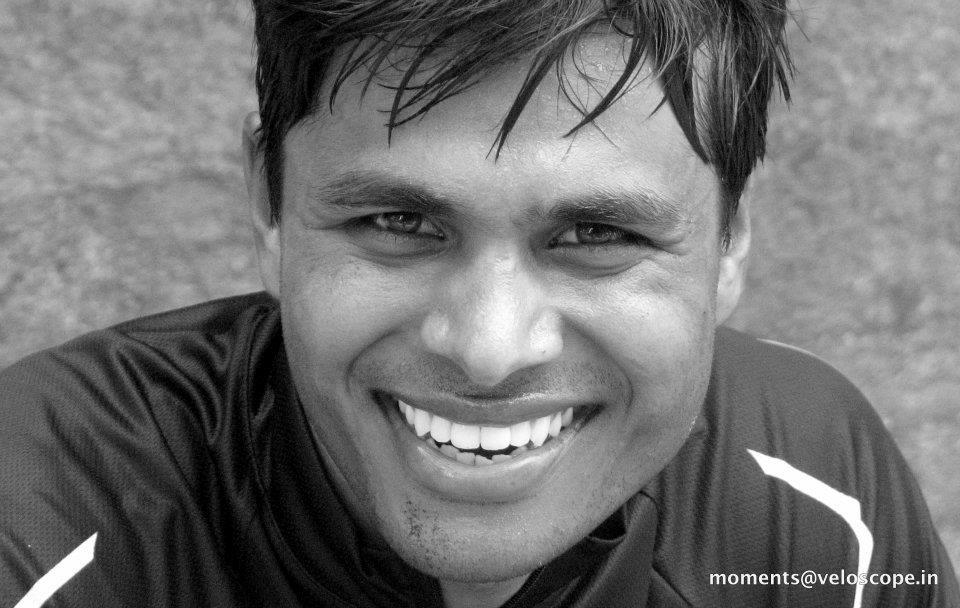
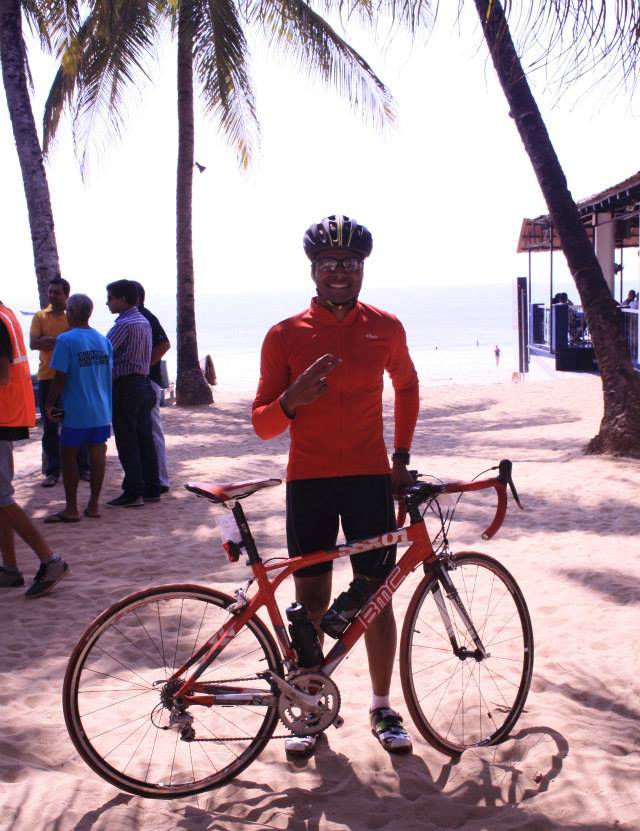
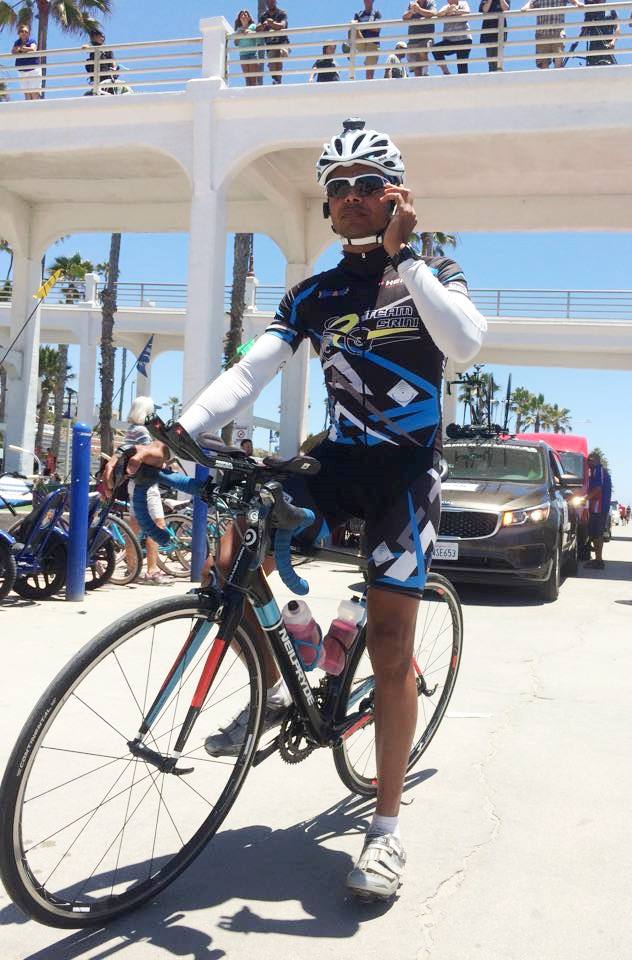
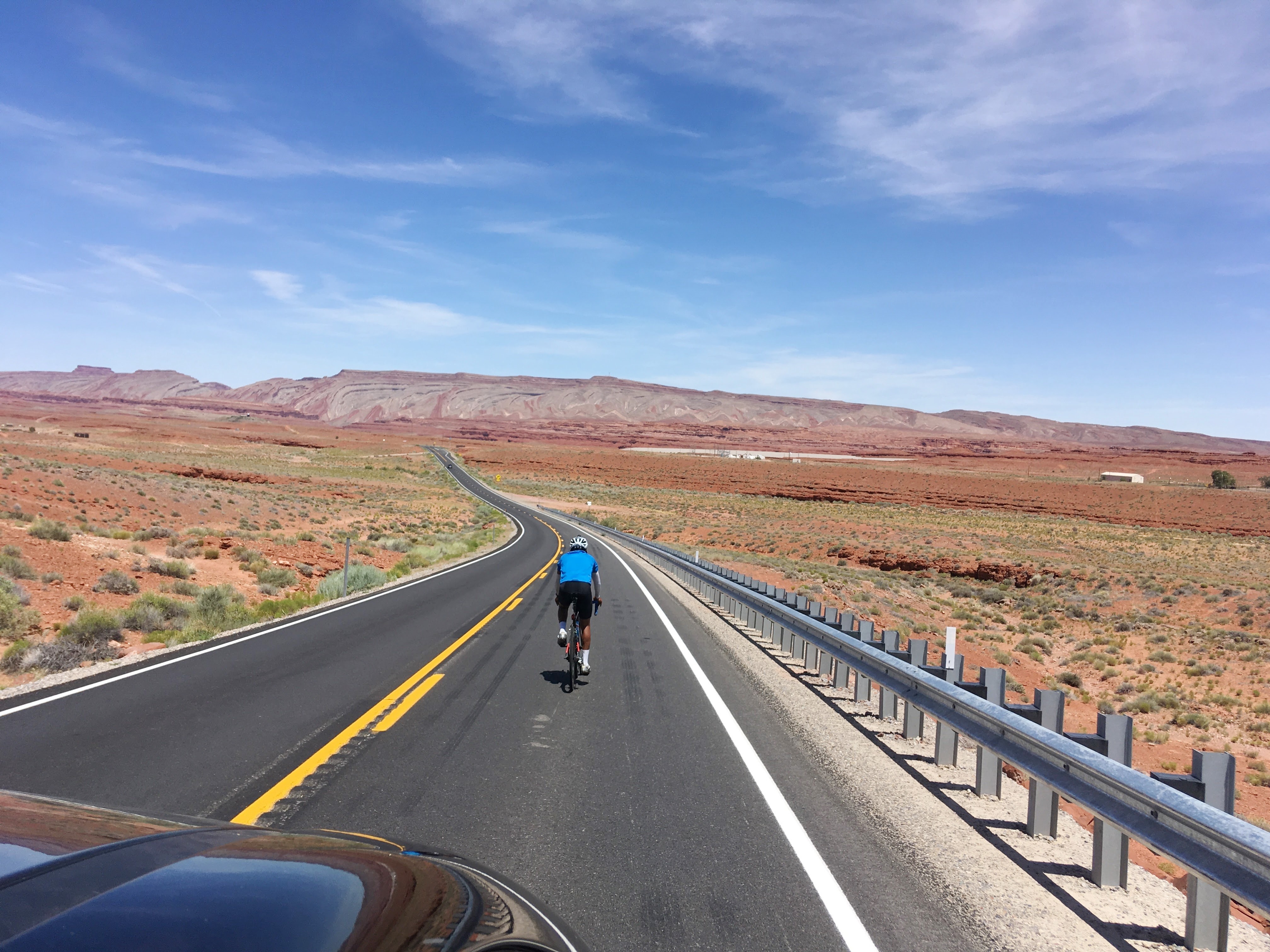
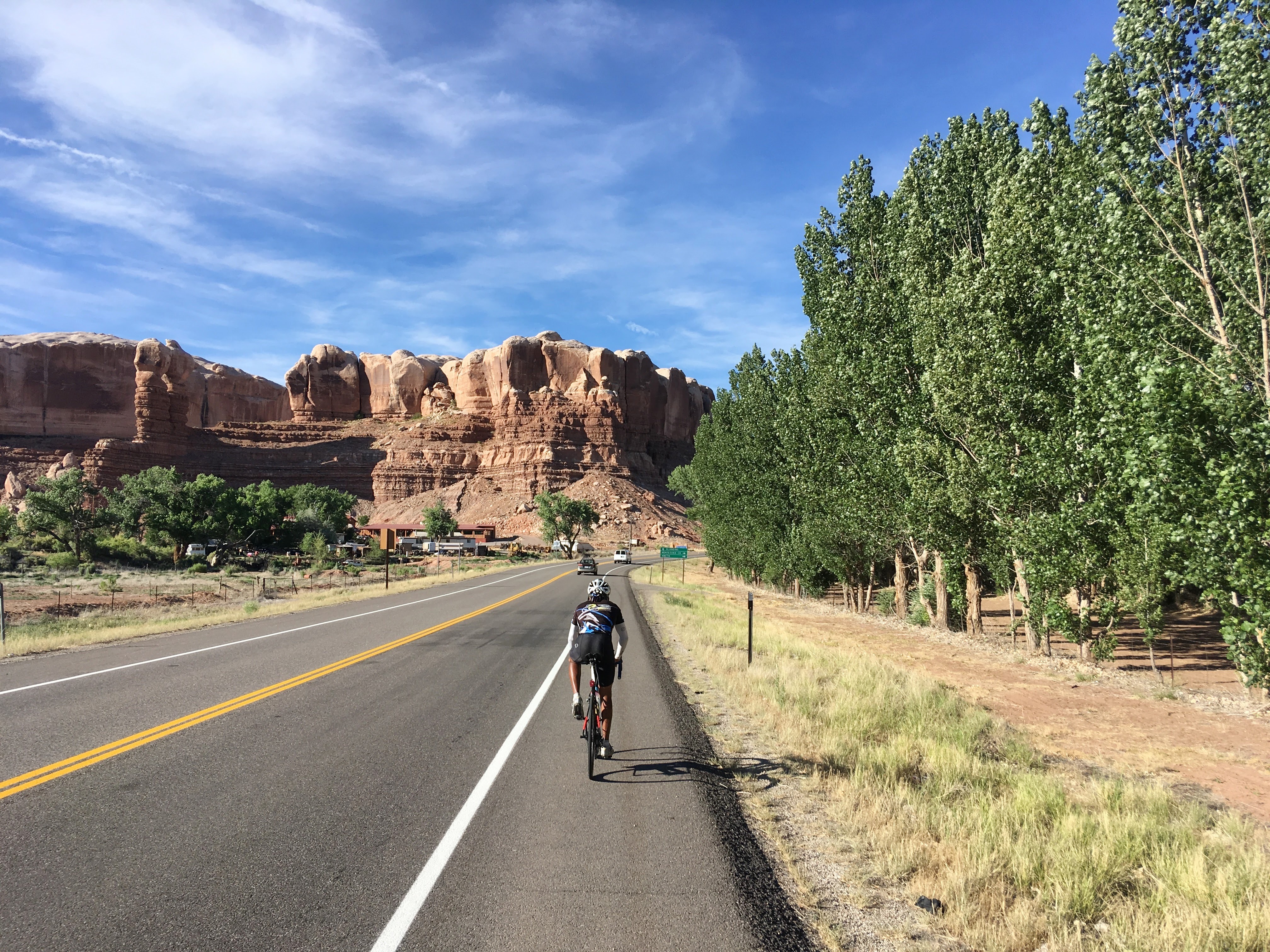
Srinivas Gokulnath (Photo: courtesy Srinivas / Facebook page)

Article on cyclist Srinivas Gokulnath, the first Indian to complete Race Across America (RAAM) in the solo category 

The car slowed down, took a second to assess safety and then continued on.

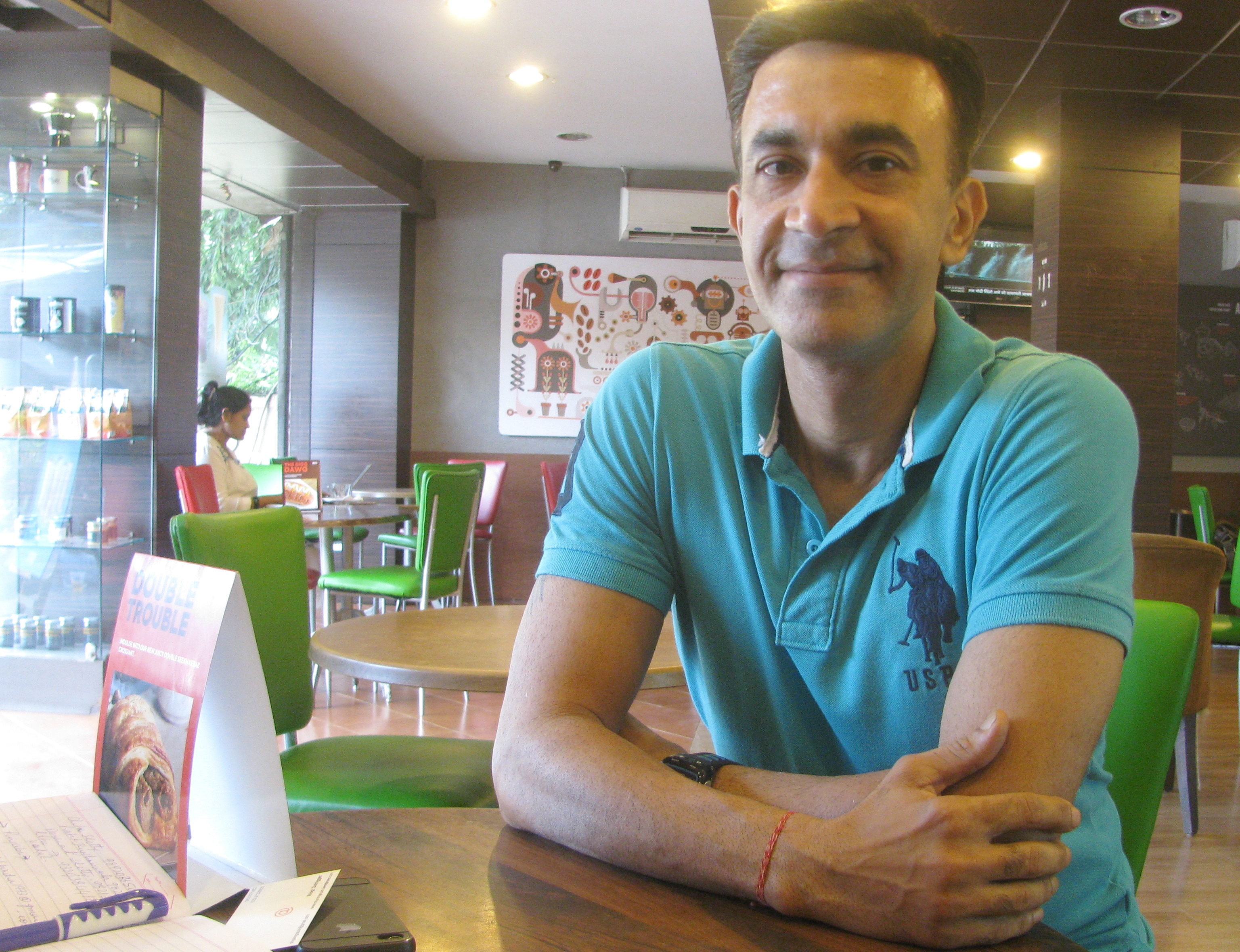
It was a move that reminded of railway level crossings. Except, this was a runway and hovering some distance from the car, to this side and that, were helicopters. It is not always that you drive across a runway in India. Where Lieutenant Colonel Srinivas Gokulnath lived and worked, it was daily ritual. We were at the army’s Combat Aviation Training School, built around Nashik’s old airport and runway. Meeting Srinivas had been on the agenda for some time.

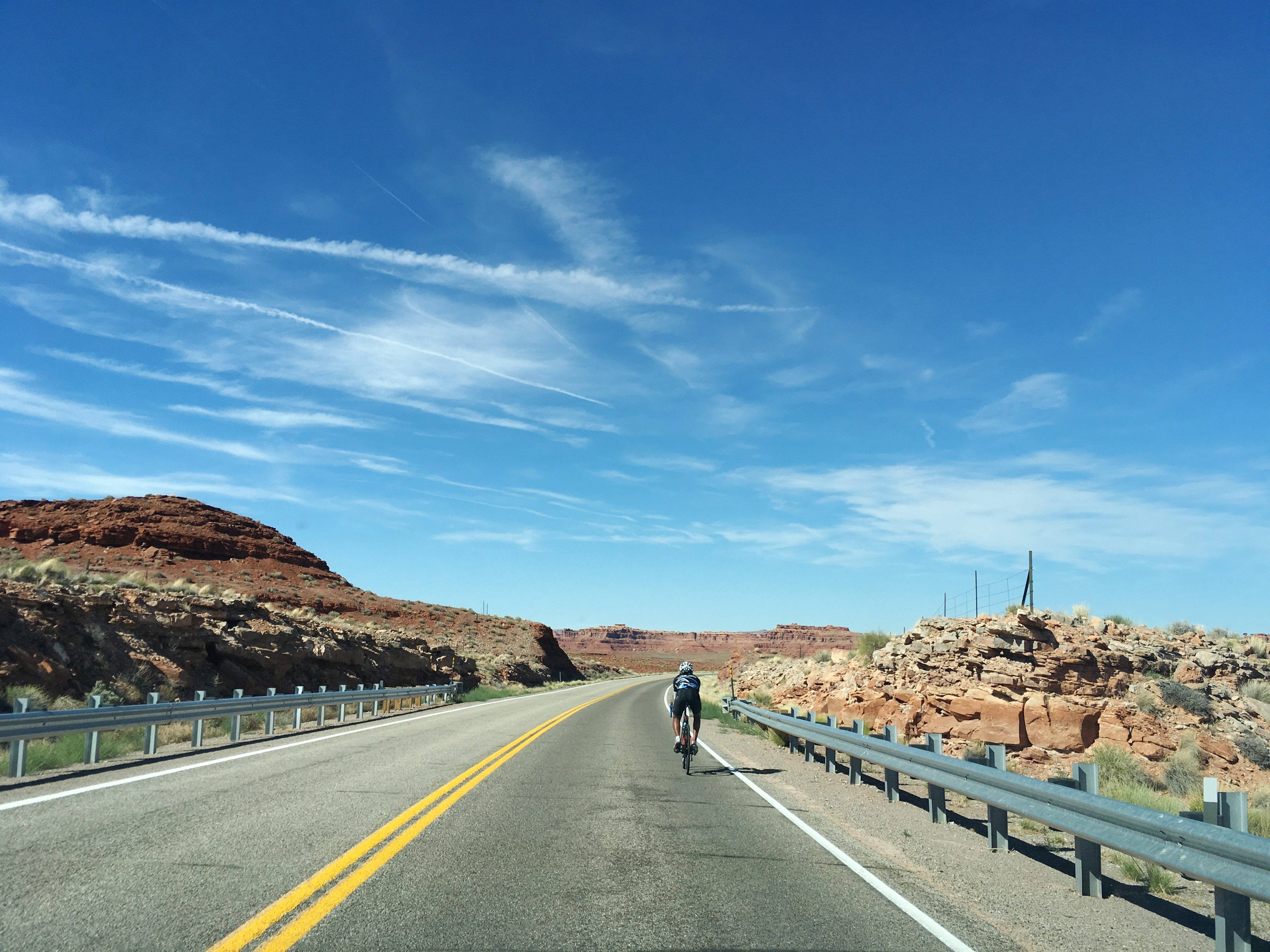
On June 13, 2017, three Indian cyclists had been among those assembled at Oceanside, California. They were registered to compete in the solo category of the Race Across America (RAAM), one of the most grueling endurance events on the planet. RAAM requires participants to ride some 4800 km from the US west coast to the east (it ends in Annapolis, Maryland) within a cut-off period of 12 days. It is a single stage race and riders could be on the saddle for as much as 22 hours a day, repeating it day after day in a merciless grind all the way to the finish line. The race features a mix of terrain. It starts at sea level, crosses mountains and zips across the flats of the North American prairie. It also tackles varying weather conditions typical of the country side it is passing through. Simply put the race gifts the rider a battering and tests his / her determination like few events do. That day in June, Samim Rizvi attempting his fourth RAAM, Srinivas on his second outing at RAAM and Amit Samarth were all on a quest to be the first Indian to complete RAAM in the solo category.

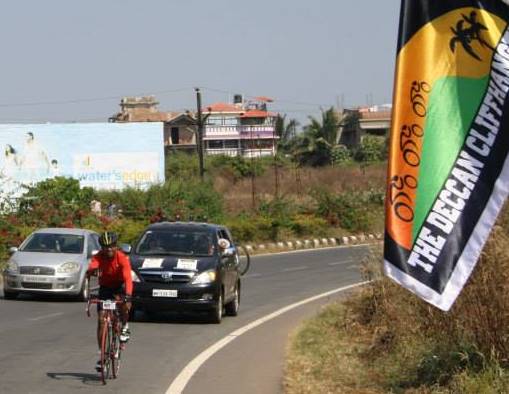
Cycling at The Deccan Cliffhanger (TDC), which served as qualifier for RAAM (Photo: courtesy Srinivas / Facebook page)

Although working in Nashik, Srinivas hails from Bengaluru. He was born in November 1980 and raised in that city. His father who was a metallurgist owned a bicycle. An active youngster who took part in games and athletics at school, Srinivas was attached to that cycle and it played host to many early outings. However there was nothing to indicate a serious interest in cycling, brewing. Srinivas went on to attend medical school and become a doctor. He worked for two years in Bengaluru; then he joined the Indian Army. The early years of an army officer’s posting are typically in areas that stretch his professional ability on the field. Srinivas was posted to Jammu & Kashmir (J&K) for four years. He also served on Siachen Glacier, known as the world’s highest battle field. Following this stint, he returned to Bengaluru to do his post-graduation in aerospace medicine. He had bought himself a single speed Hercules MTB and trips on it brought him in touch with members of Bengaluru’s cycling community. One of his friends suggested that he invest in a road bike. Then, in a twist of the sort seen in the lives of interesting people, that friend – Vijay – got Srinivas a road bike and told him that he can pay him back later. The bike was a Giant TCR 3. It is a model much respected by riders; the Internet has reviews in praise of it. Srinivas felt he should do justice to the road bike. He started riding long distance, sometimes touching 200-300 km. It was during this phase from 2009-2011, spent studying aerospace medicine in Bengaluru and taking the Giant TCR 3 out on spins, that Srinivas realized he had a fondness for endurance cycling. It was also at this point in his life that he got to hear of RAAM. He heard of Samim Rizvi attempting it. The idea of RAAM attracted Srinivas. But before RAAM, he wanted a domestic challenge. For that, he picked a cycle trip from Leh to Kanyakumari. It connected India’s north tucked beyond the main axis of the Himalaya to the southern tip of the peninsula. In 2012, Srinivas was posted back to J&K.

A troubled region, army postings to J&K can be restrictive. For doctor and emergent cyclist with road bike in tow, space to practice was limited. “ I couldn’t go out and train on the road. But there was a 2.8 km-perimeter loop of the garrison which was possible and I kept doing that,’’ Srinivas said. Meanwhile the planned expedition from Leh to Kanyakumari simmered at the back of his mind. Then and later, Srinivas would struggle with a paradigm problem in endurance cycling. Endurance based-activities typically take person out of the crowd and away into solitary existence. In army and economically resurgent India with its bank of potential sponsors of sport, `solitary’ and ` solo’ attract much less than `team.’ There is plenty of buzz these days about corporate team building and team based pursuits. Attempting something that is the stuff of lone battle fetches no support.

From TDC (Photo: courtesy Srinivas / Facebook page)

Assembling the building blocks of the Leh-Kanyakumari cycle expedition was Srinivas’s first tryst with the real paradigm challenge of what he had embarked upon. He understood that nobody was going to support him. So he largely invested his own funds. Being a multi-day trip he needed a support vehicle. Help came in the form of an enterprising villager from Sharifabad. This person hadn’t ventured beyond the Kashmir valley and wanted to see India. Owner of a Mahindra utility vehicle, he agreed to bring that along as support vehicle and pitched in to assist Srinivas. On September 2, 2014, the expedition commenced from Leh. Weather in the initial phase was bad; there was rain and snow. Back in Srinagar, there was flooding; they got news of this at Manali. The expedition pushed on. Two weeks later, on September 16, cyclist and support crew reached Kanyakumari. The trip was formally recognized by the Limca Book of Records as the fastest passage yet from Leh to Kanyakumari on a bicycle. One project done, the next one – RAAM – took hold.

Shortly after the Leh-Kanyakumari expedition, the army dispatched Srinivas to do a course in Pune. There he came to know of The Deccan Cliffhanger (TDC), scheduled for November 2014. On its Facebook page, TDC describes itself as a 400 mile ultra-cycling race from Pune to Goa. According to Srinivas, if you cycled 647 km at TDC in 32 hours, then you qualified for participation in RAAM. This was an excellent opportunity to move towards attempting RAAM. Unfortunately he was in Pune to do a course; he had no cycle with him. A friend in Bengaluru sent him a BMC road bike. Additionally, he asked around in the Pune cycling community and they responded loaning him a Merida road bike. He now had two bikes for TDC; one to ride at any given time in the race, the other for back up. A bunch of college students volunteered to be his support crew. Participating in TDC, Srinivas covered the required 647 km in 31 hours. He qualified for RAAM. “ For me, that TDC is special,’’ Srinivas said. From December 2014 onward, Srinivas’s RAAM phase officially commenced. It became an obsession. To train and prepare, he requested the army for posting to a peaceful area. His choice was Pune where the Army Sports Institute with its excellent training facilities is located. In July 2015, as sought, Srinivas was transferred from J&K. The army moved him to Nashik and the Combat Aviation Training School there.

At the start of 2017 RAAM (Photo: courtesy Srinivas)

Maharashtra’s geography is essentially a study of two main features – a relatively narrow coast sandwiched between the Arabian Sea and the hills of the Western Ghats, and the sprawling Deccan Plateau, which lay beyond the hills. Nashik, located 167 km north east of Mumbai, is an ancient pilgrimage center and in the present times, a major center of industry and agricultural produce. It is at a higher elevation than Mumbai next to the sea. Kasara, which is one of main outlying stations of Mumbai’s suburban railway network, is at an elevation of 915 feet. The next major halt from here, en route to Nashik, is Igatpuri by which time you would have climbed over the edge of the Western Ghats and reached 2000 feet in overall elevation. Igatpuri, now famous as a center for Vipasana meditation, has always been a favorite with trekkers in Maharashtra. One of the state’s classic treks connecting the hill forts of Alang, Kulang and Madangad, is staged here. The region is also home to the state’s highest peak, Kalsubai (5400 feet). Nashik is 47 km away from Igatpuri. It has an elevation of 2300 feet and given the combination of hills and elevation, a fairly temperate climate year round.

Mid-August 2017, my train from Mumbai reached Nashik on time. On the three wheeler ride from the railway station to the area in town called CBS, three things were quickly apparent. The terrain around had a spread-out feel to it; there was a sense of space. The roads were broad and traffic, still manageable, compared to the grind and gridlock congested Mumbai tends to be. There were cycles on Nashik’s roads. With its roads, availability of space and hills in the neighborhood, Nashik looked ideal to train in cycling and running. In 2015, two brothers from Nashik, Hitendra Mahajan and Mahendra Mahajan – both of them doctors – had become the first Indians to complete RAAM in the team category. Race in mind, riding hunched down on his road bike with focus narrowed to road and cadence, Nashik’s geographical blessings appeared to have eluded Srinivas’s attention. He didn’t feel distance cyclists owe as much, to where they are from as to whether they wish to train and excel at what they do. As strange as that perspective may seem, one needs to identify that faith in self as coming from an individual who moves around the country on work. In such predicament, the stuff of roots is in oneself, not in any place.

From 2017 RAAM (Photo: courtesy Srinivas)

At the Combat Aviation Training School, work load was high for the army doctor. However he managed to find time for training and trained systematically. Srinivas is the type who likes having a goal. It helps him focus. RAAM was goal. He trained 5-6 hours daily, morning and evening. But there was a problem. It wasn’t a training regimen properly structured for the needs of RAAM. Aside from the Mahajan brothers who he spoke to and got some idea of RAAM thereby, there wasn’t anyone else to help him devise training schedules or prepare a race strategy. Besides the Mahajan brothers had participated in the team category; Srinivas had enrolled in the solo category. The two are different. Plus there was the question of raising the funds needed to go to the US, have a support crew, support vehicle and participate in the race. Attending to funds, distracts from training and preparation. Old paradigm problem haunting him, Srinivas had no sponsors. He invested his own money; he also borrowed. Given the nature and stature of the race, he acquired a new road bike – a NeilPryde Bura SL. “ It was expensive but when I saw it at a shop in Mumbai, I immediately felt a link to it,’’ Srinivas said. According to information available on the Internet, NeilPryde Bikes, based in UK, is part of a Hong Kong based sports group by the same name that had longstanding presence in windsurfing before it entered the bicycle business. The Bura SL was launched in 2012 and revamped in 2016. Made of carbon fiber, it features NeilPryde’s lightest frame weighing in at 750 gm. For back up, Srinivas had a Polygon road bike. Polygon is a bicycle manufacturer from Indonesia. Its dealer in India is Bengaluru-based Wheel Sports, whose owner Venkatesh Shivarama is a former state level cyclist and a nodal figure in Bengaluru’s cycling community.

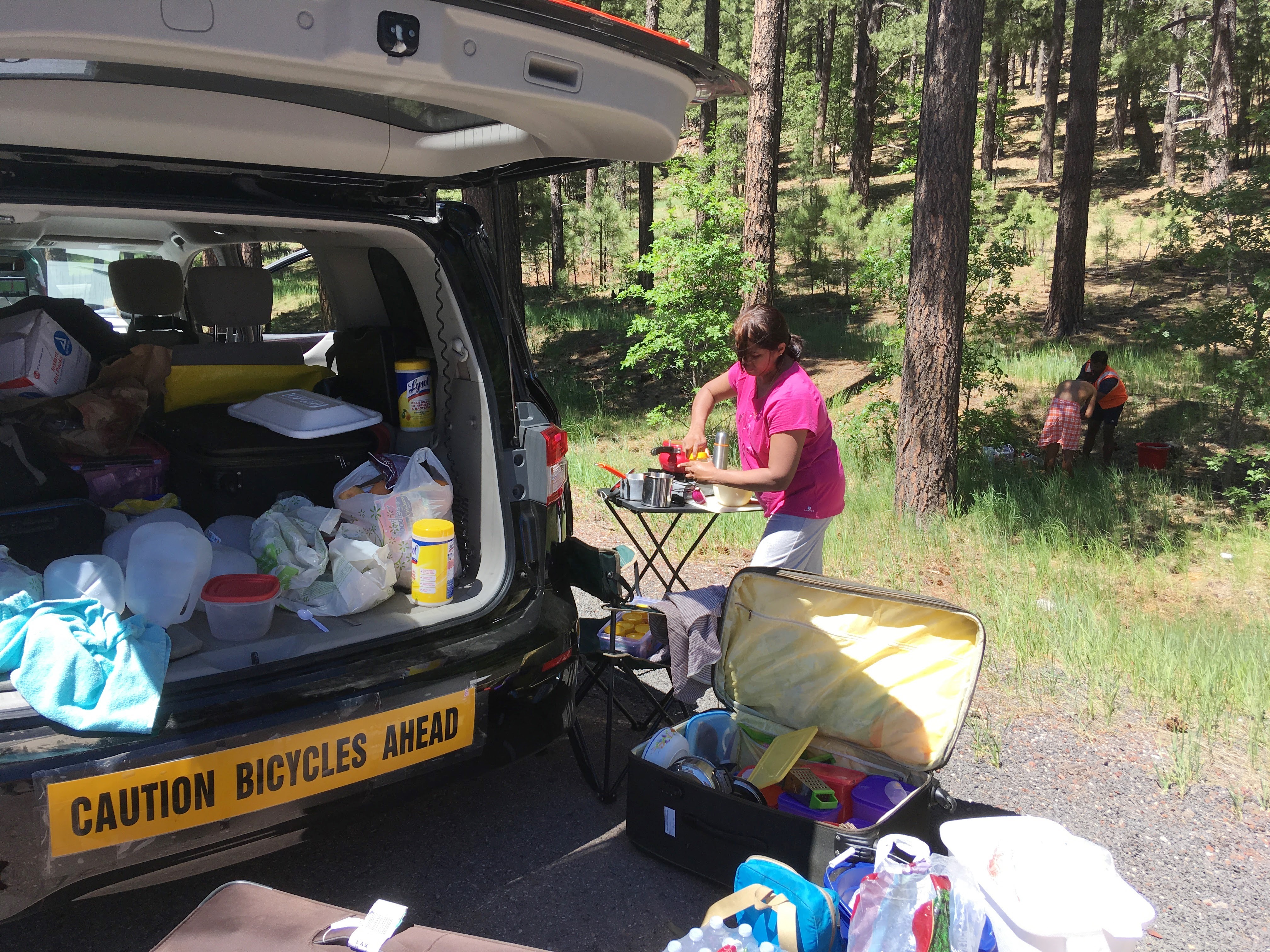
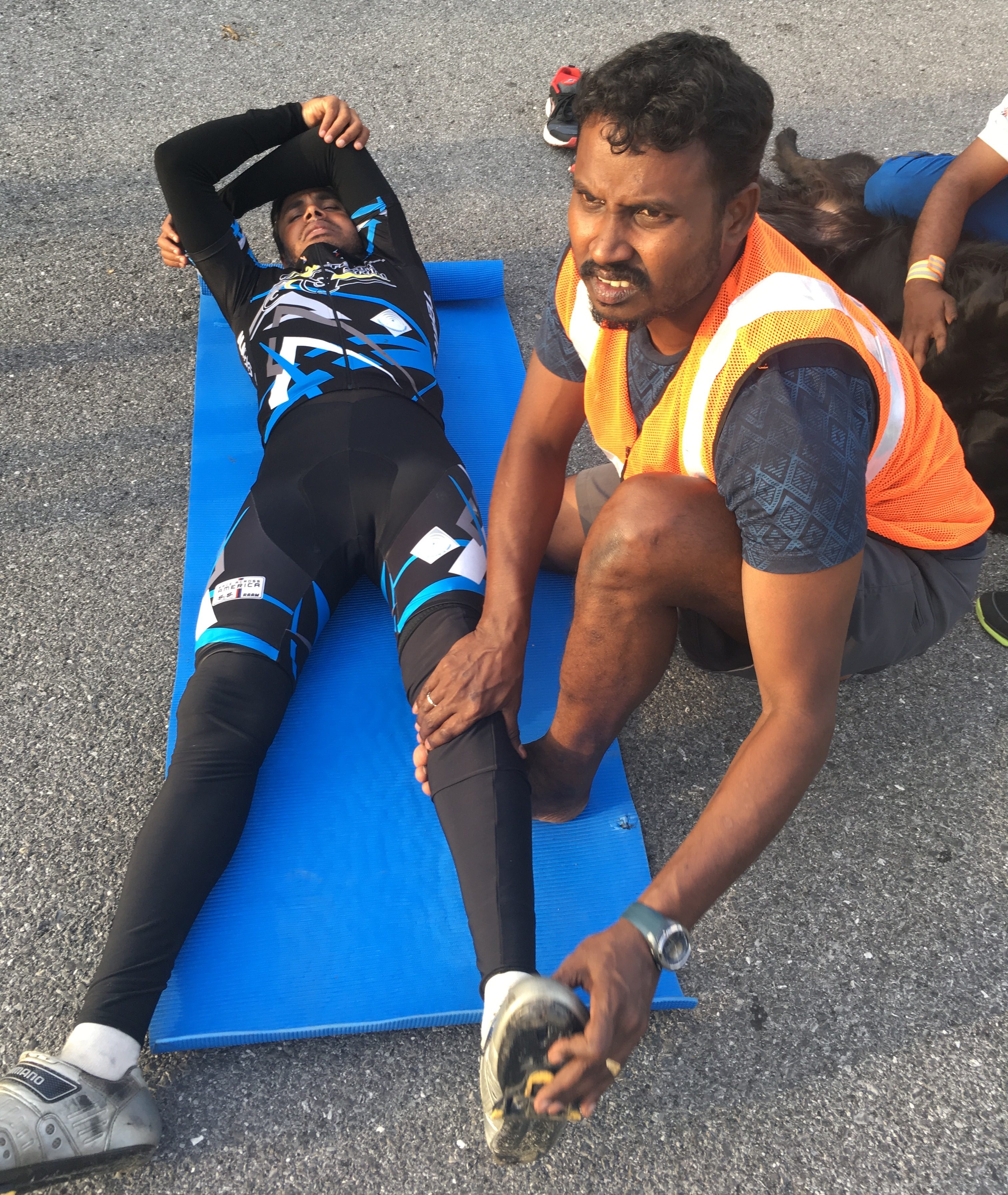
Amid the struggle to make it to RAAM, Srinivas had one significant help. His wife, Prafulla, also works as a doctor at the army base in Nashik. She decided to be part of his support crew. Prafulla had her own reasons for joining the crew. Like Srinivas, she hailed from Bengaluru. Unlike him, she had no background in sports in her growing up years. She does not cycle. When they met for the first time, Srinivas told her of his interest in cycling. She accepted cycling as part of the overall person, Srinivas is. “ One thing I was worried about was his safety,’’ she said. In J&K, Srinivas’s cycling happened within the garrison complex and army bases are well managed. Then he briefly took leave of that environment to cycle from Leh to Kanyakumari, a trip Prafulla wasn’t part of. By the time RAAM set in as obsession, Srinivas was training regularly on the highway. This worried Prafulla. Besides, races in ultra-cycling tend to push a person to the limits of what he / she can do. She felt that rather than worry about his safety from far, it made sense to be with him on his races. That’s what prompted her to join the support crew for RAAM. A doctor – that too someone who knows you well – in the support crew, is a definite asset. Srinivas had seven people in his support crew; six who travelled from India plus an old friend from school who was based in the US.  “ My focus in 2016 was to get to RAAM’s starting line. That I did. I was relieved when the race got underway,’’ he said.

From 2017 RAAM (Photo: courtesy Srinivas)

From 2017 RAAM (Photo: courtesy Srinivas)

The 2016 RAAM was an eye opener. “ My focus, which had been on reaching the starting line, wasn’t strong towards the finish. I was riding strong but not to race expectations. I didn’t have a strategy, no solid plan. I learnt by participating. In the thick of the race, I realized this is what RAAM is all about. I pushed myself to just 450 miles short of the finish. There was 26 hours remaining. But my mind started acting up and I succumbed to it,’’ Srinivas said. One of those unhappy with the outcome was Prafulla. She didn’t like the fact that they had thrown away 26 hours. She suggested that they take a look at the finish line, attend the post-race banquet and learn more. The team also decided that they would attempt RAAM again, the following year.

Gearing up for the 2017 RAAM, Srinivas and Prafulla began connecting with people who had completed the race before. One of them was Alberto Blanco, a former RAAM finisher. Back in 2011, riding a NeilPryde he had completed the race in fourth position earning the RAAM Rookie of the Year title. During this race Alberto had suffered a severe case of `Shermer’s Neck’ (complete shutdown of tired neck muscles). He cycled with a neck brace his crew fashioned from available materials, following onset of the problem. Incidentally, the history of Shermer’s Neck – a condition unique to ultra-cyclists – is strongly linked to RAAM. Michael Shermer after whom the condition is named was a finisher in the very first RAAM held in 1982 (at that time it was called Great American Bike Race). He returned for the 1983 edition and in that race, at about 2000 miles he discovered he was unable to keep his head up. He was forced to prop his chin up with the palm of his hand and keep cycling. He finished the race so. Despite enduring a great deal of pain till he finished the race, Shermer is said to have recovered fully within two days. Articles on the Internet say that Shermer’s Neck is usually reported within 300 miles to 1000 miles of a race and once it sets in, there is no way out except to cope with it. The brace Alberto’s crew fashioned, after he developed Shermer’s Neck, was meant to hold his head up because his exhausted neck muscles simply couldn’t do the job. In photos from the race, you see what appears to be a metal rod harnessed to cyclist’s waist and travelling up his spine and over his helmet, with a sling at its end to support the head. Alberto became Srinivas’s coach for the 2017 RAAM. Another finisher, Chris O’Keefe, took charge as crew chief. Chris had been a finisher in the 2016 RAAM, which he completed second in his age category. This time, Srinivas’s training had direction and a race strategy was being devised. There was analysis of the 2016 race to find out what had gone wrong.

From 2017 RAAM (Photo: courtesy Srinivas)

What remained unchanged however was sponsorship. Some brands supported but the bulk of the expense was met using Srinivas’s own money and loans provided by friends. Chris and others members of the support crew allowed Srinivas to borrow cycling accessories he needed. They also didn’t hesitate to extend financial assistance. Hired expertise is integral to many endurance events. For instance, runners going for the Badwater Ultramarathon in California’s Death Valley often avail the guidance of those who have successfully completed the race or crewed in it, for a fee. Srinivas described his relation with Alberto and Chris as more of an emotional-connect than a formal arrangement; it is a description which reveals the comfort he felt. The support crew was 11-strong, including four persons retained from the 2016 attempt. “ This time we had a strong team. I felt strong and my focus was sharp,’’ Srinivas said.

A punishing race like RAAM takes a toll on bicycle. Typically, there is a lot of wear and tear that happens in bicycle racing. Bottom brackets, chain and cassette – they have to be replaced as required in the course of the race. You have to have at least two bikes for RAAM. Some participants go in with three. Srinivas decided to acquire a new NeilPryde to use as back-up for the earlier one. He got in touch with the CEO of the company, who provided it at reduced price; the bike was again a Bura SL. The team’s bike mechanic in 2016 and 2017 was Venkatesh Shivarama. Venkatesh a former state level cyclist and manager of the national cycling team, met Srinivas during the latter’s days in Bengaluru, spent getting a hang of distance cycling. Races brought them together; Venkatesh is deeply involved in races. He is not as much a fan of endurance cycling as he is of racing. Venkatesh also owns and operates Wheel Sports, among Bengaluru’s best known bicycle shops. Committed to cycling, it was his affection and respect for Srinivas as a person and faith in his ability that made him volunteer to be Srinivas’s bike mechanic for RAAM in 2016 and 2017. According to Venkatesh, when it comes to the bicycle, RAAM is not as punishing a race as say – the Tour de France, where multiple stages with tight cut-off times, repeated day after day, take a considerable toll on a bike.  Given RAAM is a single stage race, the challenge is to cycle with very little rest and make it across the USA within the cut-off time of 12 days for solo cyclists. Further, what really inflicts damage on bicycles is riding off-road. RAAM is a road race and American roads are good. “ My daily task was to check the bike’s tyres and tyre pressure; ensure the tyres are in good condition. I had to make sure all the gear combinations and the Garmin GPS were working. Then there are the bike’s lights. When you are riding on the road, lights are very important. I used to replace them every 6-8 hours,” he said.

From 2017 RAAM (Photo: courtesy Srinivas)

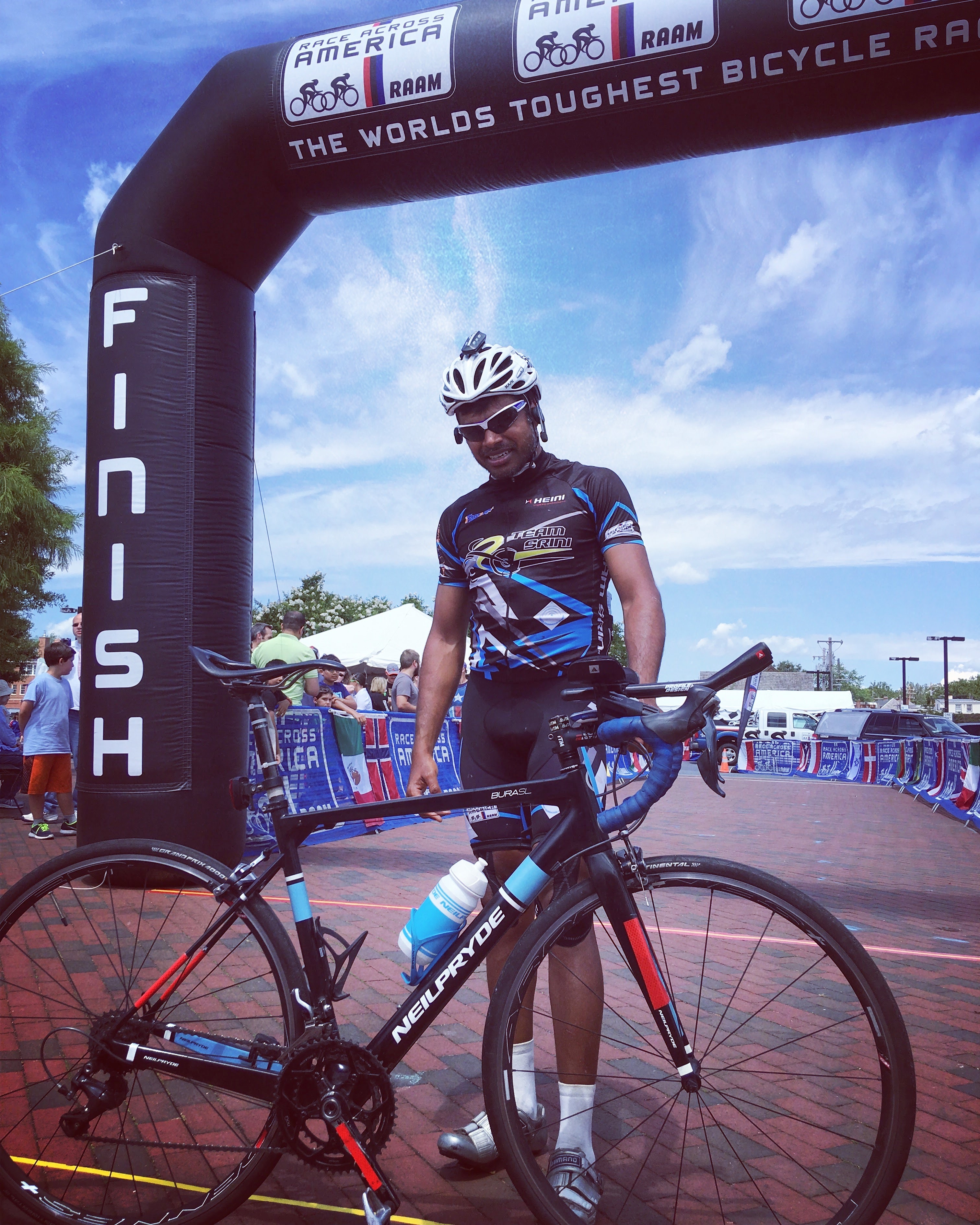
The 2017 race was a roller coaster. Although he started strong, somewhere past the 90 mile-mark Srinivas vomited three to four times. From thereon, his intake of food and fluids started dropping. His plan had been to sleep three hours during the day, every 24 hours. He took his first break for sleep at Salome in Arizona. However from time station five onward, his average speed began to decline and he was soon at the point where he himself told his crew members that he needed IV fluids. From being in the top 10, he had by now dropped to 27th position. “ Thereafter, it took me seven time stations to recover and get back to a semblance of riding normally. I felt recovered only by time station 16,’’ Srinivas said. Recovering well was critical. In endurance races, rider and crew feed off each other’s optimism. A struggling Srinivas had ended up making his crew lose faith in him. He had to regain their confidence. Cranking up their efforts, the crew fed him 450-500 calories and a liter of fluids every hour. About 10,000 calories and 20 liters of water were consumed every day. Everything was meticulously recorded. The hard work paid off. Towards the latter half of the race, Srinivas began registering negative splits or better speed in the concluding portions of a race. That was tremendously motivating, coming as it did after a couple of thousand kilometers covered on the road. He kept his focus from time station to time station, never thinking beyond the next time station on the course. “ I knew I was getting stronger towards the finish line,’’ he said. At one point in time, Srinivas improved his position in the race to almost seventh; he also overcame challenges, among them – a crash, the result of a pothole on the road. Tricky weather notwithstanding, his strength was on the flats. He flew along the prairies of Kansas. Eleven days, 18 hours and 45 minutes after commencing the race in Oceanside, Srinivas completed the 2017 RAAM in Annapolis, the first Indian to do so within cut-off time in the solo category. That June, Amit Samarth followed Srinivas to the finish line, becoming the second Indian to earn a solo finish at RAAM. Samim had to withdraw from the race in its initial phase itself.

Most people betray a sense of themselves in how they communicate. I got my first sense of Srinivas when I texted and called him up seeking an appointment. His text messages never exceeded two or three words; the conversations on the phone were short and to the point. During the interview, conducted in his office, his recollection of his life and his association with the world of words bordered impatience, as though he needed to get down and do something. Endurance cycling is a mosaic of distance and timing. I asked Srinivas if he would be happy pushing himself merely on distance like a touring cyclist does. No – he replied firmly. He needed to be pushed. He needed to ride hard. Only then would his energy get channelized, find release. Pushing the envelope is a must for what he sought as experience. That’s why grueling endurance races attract. His family has been supportive; they endured sacrifices. His wife became part of his support crew and when she does so – as at RAAM – their child is left behind in the care of grandparents. Further his training and periodic obsession with races, robs the family of adequate time together. “ No doubt, there is an element of selfishness I carry along, pursuing projects in endurance cycling,’’ Srinivas said.

2017 RAAM; Srinivas at the finish line (Photo: courtesy Srinivas)

RAAM done, Srinivas had set his sights on the solo category at the 2018 Race Across Europe (RACE). Prafulla was planning to be in the support crew. This race covers 4722 km across six countries. At the time of writing this article, it was scheduled to start at Boulogne sur Mer in France on June 30, 2018 and end at Tarifa in Spain on July 21. The 2017 RAAM had cost him around Rs 15 lakh as race expenses (many in the crew were self-funded), cost of training extra. RACE will cost around Rs 25 lakh; Europe is more expensive than America. As usual, Srinivas’s biggest worry in cycling even after finishing RAAM was sponsorship. It was eating his mind. He needed to be sure of his position by December 2017, if he is to feature at RACE the following year. “ I don’t know how some people manage to raise funds so well,’’ he said, pointing out alongside that a disadvantage he may have in this regard, is the transferable nature of his job. You are never long enough at any one place to socialize and network, build a community of friends. Supportive community and an ecosystem aware of sports, including endurance cycling, matter when it comes to finding resources for projects. As I took leave of him, these were the thoughts bothering India’s first solo RAAM finisher.

(The author, Shyam G Menon, is a freelance journalist based in Mumbai.)                      
BICYCLES: THE INDIAN MARKET CONTINUES TO EVOLVE

Illustration: Shyam G Menon

An updated bird’s eye view of the market for premium bicycles in India. This article is ideally read in conjunction with the earlier market overview posted on this blog in August 2013. 

The Indian market for bicycles, for long stuck in unappealing product lines and then nudged to change by the entry of Firefox and Trek, continues to evolve. The pace of change has been slowly picking up; according to those in the business, the biggest change has been the Indian customer. Disposable income has risen and many traditional bicycle retailers have moved up the value chain to selling premium bicycles. But the critical question is – how much share does cycling command in the customer’s growing disposable income? Given the worry over climate change and consequent relevance of environment friendly transport, cycling worldwide has a bright future. It is limited by inadequate infrastructure in developing markets and the continued low penetration of the bicycle as means of transport in very poor countries. In India, rising number of automobiles, unruly traffic and lack of roads with proper bicycle lanes has meant urban environments that are far from futuristic. Although news reports in 2016 said that 41 per cent of the country’s population is younger than 20 years of age and nearly half the population is aged between 20-59 years, the shortage of enjoyable space for cycling may affect the pace at which cycling grows. Till Indian life and urban planning appreciate physically active lifestyle and environment friendliness as core values, the true merit of cycling won’t be adequately experienced.

Globally, bicycles and products related to cycling are among biggest silos in sale of sports equipment. As per a market study done by Paris based-NPD Group, the global cycling market was worth 47.4 billion US dollars (including revenue lines like parts & accessories, footwear and cycling apparel) in 2014. The survey estimated that around the world roughly 133.1 million bicycles, including e-bikes, were sold. Another study by Persistence Market Research (PMR) – the main points of which are available on the Internet – said that the global market for bicycles is expected to expand by 37.5 per cent over 2016-2024, from 45.08 billion US dollars to 62 billion dollars. Asia-Pacific is forecast to be the most lucrative market. There are several such studies accessible online; period of study and forecasts vary but there seems to be general agreement on factors driving the market.

For the earlier overview posted in August 2013, please click on this link:  https://shyamgopan.wordpress.com/2013/08/24/cyclings-second-youth/

The categories

In India, the premium segment, where the bulk of the action has been, retains its fundamental segmentation into four product lines (segmentation as perceived by this blog for purpose of simplicity) – road bikes, mountain bikes, hybrids and other varieties like folding bikes, touring bikes and electric bikes. Road bikes, also called racing cycles in India, are truly performance category products. They are meant for speed. To this end they possess rigid frames, are built light and given the rider sits with a forward stance, demand a certain amount of competence on the part of the cyclist to be handled well. Mountain bikes have more moving components on them to cushion passage over uneven terrain and are typically geared for climbing. Hybrids straddle a mix of properties drawn from road and mountain bikes. A blended package of speed and some ability to tackle uneven terrain, they are now a product line, many Indian cyclists are taking to. According to the PMR study, hybrids are expected to account for the major slice of bicycle sales worldwide, going ahead. The category of folding bikes and touring bikes is still quite niche in India as are electric bikes. E-bikes can be pretty expensive. Still, according to the website statista.com, 32.8 million e-bikes were sold in Asia Pacific in 2016 with Western Europe a distant second at 1.6 million units. China was the biggest market. In several market studies, the e-bike segment has been forecast as a significant driver for premium bike sales, globally. A new, promising sub-category, which opened up in India would be that of stylish commuter bikes. They are typically partial to road bike in frame design but sport a straight handle bar eliminating thus the need for a hunched-over position while cycling.

Illustration: Shyam G Menon

The brands

In terms of market, the Indian story is roughly so: as Firefox tapped the market with its products and those of the American bicycle manufacturer -Trek, longstanding players like Hero Cycles and TI Cycles were forced to respond. Hero launched its new line of bicycles called Urban Trail (UT) and then proceeded to acquire Firefox. TI on the other hand, commenced its now well-known Track and Trail outlets, feeding them with a distribution pipeline offering foreign brands like Cannondale, GT, Bianchi, Mongoose, Ridley and Schwinn. It also launched an in-house brand – Montra – for the emergent premium segment of the domestic market. Put together, UT and Montra span MTBs, hybrids and road bikes. TI has also introduced Mach City, a line of practical, elegant and more affordable bicycles that can be used for commuting. Over time, some of these brands have expanded their product line-up; some have become focused. Both Trek and Cannondale have grown the variety in their product line-up for India while Mongoose has narrowed its portfolio to focus on BMX cycles. Among major brands entering the market after Trek’s early arrival and Track and Trail’s bouquet of imported models, were Giant, Scott and Specialized. Giant – one of the world’s biggest bicycle companies – partnered Starkenn and opened a series of showrooms with Pune as base. Specialized tied up with Bengaluru based-Bums on the Saddle (BOTS); they opened a flagship store in that city. Scott appears happy to sell through multi-brand outlets. Other foreign brands like Merida (incidentally one of the early entrants into India), Ghost, Focus, Fuji, Polygon, Bergamont and KHS – plus high performance niche brands like Merckx, Colnago, Pinarello, Cervelo and NeilPryde, which can be ordered – are also available in the Indian market. Not to mention, Rockrider and Btwin, sold by the French sports goods major, Decathlon. Even touring bike specialist, Surly, has dealers in the country. The Indian market also features electric bikes. E-bikes have cornered much attention overseas. But the significant market development domestically, post-Firefox, would have to be the advent of brands like UT, Montra, Kross and Mach City and what these brands and their product portfolios speak by way of promise for large Indian manufacturers going ahead. It is still early days.

26, 27.5, 29: battle of the twenty somethings

Against the above market scenario, trends carried over from the international bicycle market, made their presence felt. One trend that kicked up plenty of conflicting views, dealt with wheel dimension. Internationally bicycle tyre sizes are many. Until recently the average customer of a premium bicycle in India had to contend with two tyre sizes in the main – 26 inches (with room for width and tread variations therein) for mountain bikes and similarly, the 700c for road bikes and hybrids. The longstanding 26 inch size was both the leading dimension in mountain bikes and a favorite with cyclists into technical riding as it made overall bicycle size compact and maneuverable. Over a span of maybe two years, this dimension was faulted by bicycle manufacturers for less distance covered for every rotation of the crank, besides less surface contact and greater difficulty in rolling over obstacles.

One leading manufacturer pushed for 29 inch wheels (at which point technically speaking, a 700c tyre should also fit that mountain bike) as new standard; another promoted 27.5 inch. It wouldn’t be incorrect to say that this move – with no pressing demand from customers for it – caused confusion. YouTube videos exist in which industry representatives can be seen asking angrily, why customers can’t cope with change. Some manufacturers resorted to models that could accommodate more than one wheel size as though to hedge market risk. The problems were several. A bicycle is an aggregate of many parts, each connected to the next. When you alter the dimensions in one part, it cascades down the chain. Wheel size is a major change having immediate impact on a bicycle’s fork and the geometry of its frame. Given a big chunk of mountain bike users was running 26 inch wheels with matching fork and frame, what the manufacturers were pushing for had the capacity to leave existing users with outmoded designs they couldn’t easily modify to take on the new specifications. The transition to 27.5 inches and 29 inches caused anxiety with some chats on the Internet citing reduced fresh production of 26 inch tyres by reputed tyre manufacturers. Premium bicycles are not use and throw consumer products in India. Altering wheel size and potentially rendering an existing size obsolete affects users / customers in emerging markets like India because premium bicycles are still seen as an investment. In the premium segment of the Indian market, both 29 inch and 27.5 inch models are now on offer. The old 26 continues to be around.

Illustration: Shyam G Menon

The emergence of new generation bike builders

According to the NPD survey mentioned earlier, the composite of bicycle sales plus related revenue like parts & accessories, footwear and apparel would make cycling, the single biggest category in the global sports market. That’s a measure of the opportunity. Asia Pacific is portrayed as the market to look out for in the future and therein, India is a big market. Firefox’s biggest selling point when it debuted in the Indian market was how different its products were compared to the bicycles Indian manufacturers made. While big foreign brands followed and palpable difference by performance DNA set in, the next step – that of Indian cycling enthusiasts realizing in flesh and blood, the blue prints in their head, commenced. Pune based Psynyde Bikes – founded by committed cyclists – started out with custom built bikes. By 2017, they were in the market with a mountain bike called Furan,’ which they had designed themselves and got made overseas. Psynyde also makes bicycle components. Such developments are not to be discounted. If you trace the history of some of cycling’s iconic brands, you will find this is how their journey started. Are there more such stories brewing in India? Time will tell. Interestingly being a cyclist needn’t by itself make you good at the business of bicycles. One leading retailer described how he gets a lot of enquiries from people passionate about cycling, to join his team. Among the first things that can happen when a cyclist goes into business is that his / her personal time for cycling may go down as the business needs attending to. “ Cycling and managing a bicycle business are two different things. You have to be prepared to handle the difference,” he said. He thought Psynyde made the cut because Praveen Prabhakaran – one of its founders – had been at it for long. The Furan is the result of a long journey, patiently done. It wasn’t passion alone. It was also hard work, sustained for several years.

Aspiration grows but local environment limits

Finally, Indian cycling – as in what the cyclists are up to – has also evolved and come of age. There are people now travelling overseas to compete at races. Milestones coveted by the domestic cycling fraternity are being achieved. The first team-finish and the first solo finish by Indians at Race Across America (RAAM), one of the most grueling endurance races on the planet, have happened. A few years ago, Bengaluru based-Kynkyny Cycling Team was in the news for meriting sponsorship from Specialized (it is understood that sponsorship contract has since expired). Given aspiration is what pushes up benchmarks in any market, these developments will have an impact on what products / models can be sold in the Indian market or accessed from here. A good market also needs scale. Notwithstanding enterprising cycling groups and growth in available product line-up, cycling stays challenged by the lack of a proper bicycling environment in Indian cities given few to no bicycle tracks, growth in vehicular traffic and general contempt by motorists towards their non-motorized brethren on two wheels.

Try this for perspective: In February 2017, the media reported that as per figures released by International Data Corporation (IDC), the Indian market for smartphones registered shipment of 109.1 million units in 2016, a marginal annual growth of 5.2 per cent. Obviously smartphone manufacturers are not thrilled. This is the digital age and they would like stronger figures. Reports have indicated there is a migration issue in the market; smartphone prices are still high and Indians love value for money. Roughly two years earlier, in August 2015, media reports quoting IDC also forecast that by 2017 the Indian market for smartphones will be bigger than that of the US. This is the smartphone ecosystem in India. Not all digital technology is a blessing. Debating that or the growing specter of smartphone obsessed people isn’t the purpose of this article. What is clear is that cycling can work as an antidote for sedentary life. Theoretically, a problem and its solution should grow hand in hand, provided tax rates, infrastructure, policy – they don’t adulterate the market.

The Indian bicycle market has no sales figures of the sort comparable to the Indian smartphone market. Unlike the bicycle, the smartphone is an easy purchase, which once done, sits in your pocket. You don’t have to worry about storage space at home (although using it, you can cram your home with more consumables!) But the reason this comparison of two seemingly unrelated products, engages, is because their costs are near similar and the nature of lifestyle they inspire, contrasting. According to a news report in April 2017, the hot spot of the Indian smartphone market is in the Rs 10,000-20,000 price bracket (this roughly matches the lower strata of the Indian market for premium bicycles, where incidentally the bulk of the action for domestic manufacturers is). During 2015-2016, after four years of sluggishness, the average sale price of smartphones in India rose by four per cent. Two things strike you about the growing market for smartphones in India – the ability of wireless connectivity to overcome a physical world characterized by poor infrastructure, clutter and congestion; an exploding ecosystem of content and things to do using the smartphone. Juxtapose on this, what a committed cyclist and bike retailer I spoke to quipped, “ people spend up to a lakh of rupees on an iPhone.’’ What prevents them from spending so on bicycles, which are clearly products delivering good health and zero pollution? The biggest likely reason for this lay in the larger Indian ecosystem, still partial to sedentary life, unimaginative infrastructure, chaotic traffic and the rule of might is right. With a car or SUV, you can dominate. Unlike a smartphone, which opens doors to a virtual world, a bicycle is a refined way of living in what is still, the old physical world. If the bicycle has to have as much share in your disposable income as a smartphone, the attraction for cycling has to be that compelling. The cycling environment matters. “ Abroad also, there is a price you must pay to own the type of bicycle you want. But once you own it, you can cycle around, you can enjoy cycling,” the person I spoke to said.

Illustration: Shyam G Menon

The best civic authorities are yet able to serve up are fads like shutting down roads to traffic for a few hours every month to host healthy recreational activities including cycling. Once or twice a year, these authorities, companies and other interested sponsors also get together to organize a group ride for publicity. Photos taken and splashed in the media, cycling is back to where it was. In 2012, the government hiked import duties on bicycles. Now under the new Goods & Services Tax (GST) regime, bicycles and components merit 12 per cent tax while accessories lay scattered across the 12 per cent, 18 per cent and 28 per cent tax slabs. “ A bicycle helmet attracts 18 per cent tax under GST. I wish we are able to acknowledge the fundamental merit in bicycles and position cycling solidly for the future instead of treating it like this. For sure, GST puts a structure in place and that is good. But I don’t think cycling deserves the tax slabs it has been cast in. Why not five per cent?” a leading retailer said. If its any comfort – a May 30, 2017 report in Times of India, said, smartphones fell in the 12 per cent GST slab. In comparison to this Indian predicament, countries like Germany are building roads exclusively for cycling. In end-2016, Germany opened its first stretch of a 100 km-bike autobahn. That’s the equivalent of rolling out telecom network, of which we saw much in India. Cycling’s relevance for the future is clear. Question is – when will India take notice of it?

(The author, Shyam G Menon, is a freelance journalist based in Mumbai.)
2018 GOLDEN GLOBE RACE (GGR) / MEET THE THURIYA

Illustration: Shyam G Menon

Commander Abhilash Tomy KC, the first Indian to do a solo nonstop circumnavigation in a sail boat, gets ready to do another solo nonstop circumnavigation in his new boat, the Thuriya.

Nearly fifty years ago, in 1968, the first Golden Globe Race (GGR) had produced the first man to complete a solo nonstop circumnavigation of the planet in a sail boat.

That person – Sir Robin Knox Johnston – was also the only participant to finish the race. His boat, the Suhaili, was made of wood and built in Mumbai.

Many entrants didn’t make it past the Indian Ocean. One skipper, who deceptively hung around in the Atlantic, was never seen again. Only his empty boat was found; he is believed to have committed suicide. Then there was the French sailor, Bernard Moitessier in his 40 foot-ketch made of boiler steel, the Joshua. He could have given Sir Robin a fight to the finish but instead, opted to continue circumnavigating and eventually drop anchor at Tahiti, sailing a total of 37,455 miles in 10 months. The 2018 GGR seeks to recreate the ambiance of the original; 30 solo sailors, including specially invited participants –  will attempt solo non-stop circumnavigation on sail boats equipped with technology no more modern than what was available in 1968. The race will start from Falmouth in UK on June 30, 2018, and being circumnavigation, eventually end there. Talking to this blog, the evening his boat for the 2018 GGR, the Thuriya was launched at Aquarius Shipyard on Goa’s Divar Island, Commander Abhilash Tomy said, “ I am not allowed to have a computer aboard. I can carry a typewriter.’’

The last time I used a typewriter to author an article was way back in the early 1990s. Ever since, it has been the computer. And for the last several years, a computer with Internet connection, making instant reference to a world of information, possible. If forced to, I can still type an article on the typewriter. But the nature of thinking and forming sentences, the layering of a story, the ability to correct and revise on the go – all that will be different. Experientially, a journalist of the typewriter age is different from one of the Internet age. Experientially, today’s sailor working from sail boats supported by electronic devices is different from a sailor of 1968, who had none of these devices for back-up. What makes the 2018 GGR doubly difficult is that while the participants of the original GGR could equip themselves with the technology of their time, many among those heading for the 2018 GGR will need to abandon comfort zones they got used to and acquaint themselves with boats bereft of high technology.

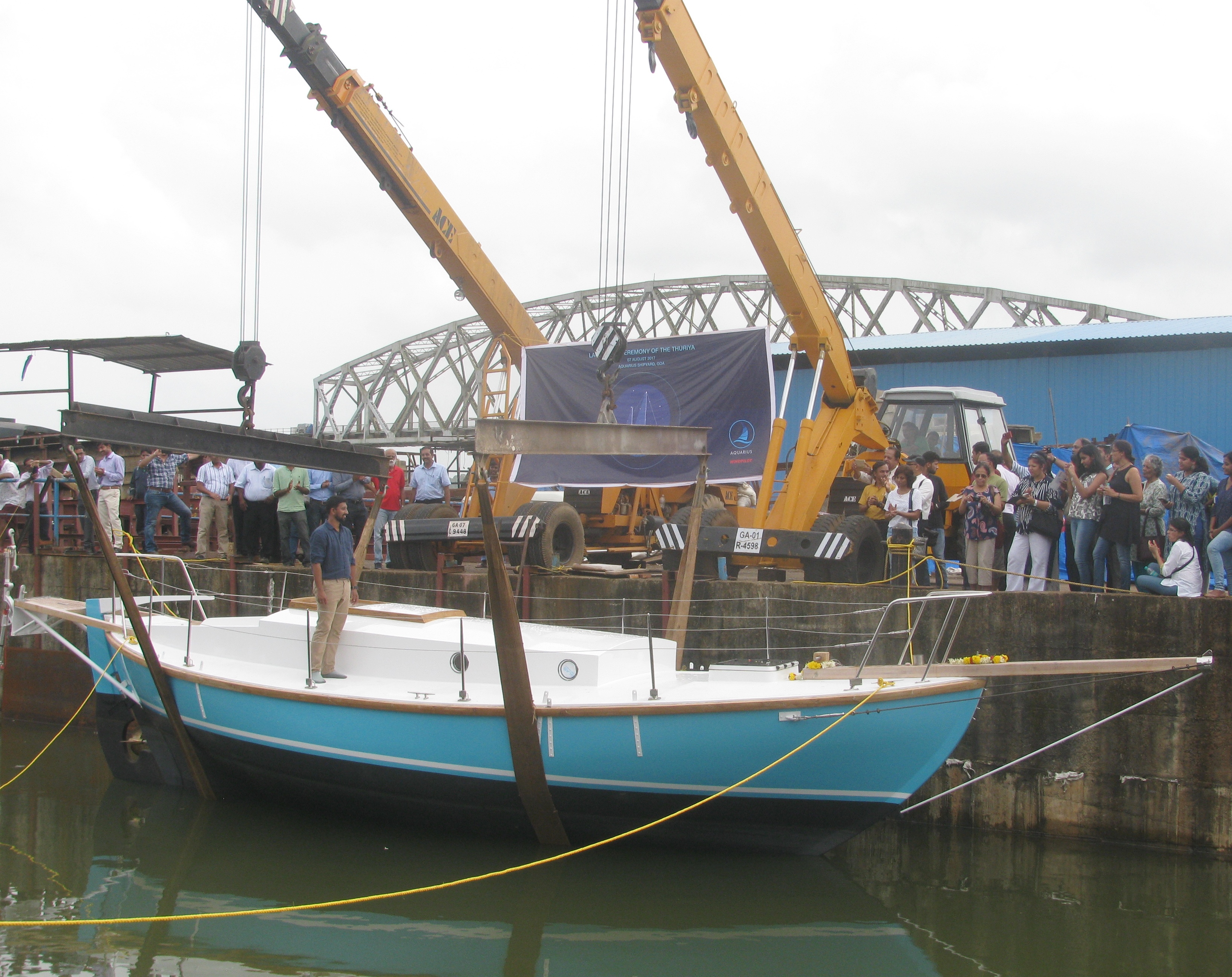
Abhilash with the Thuriya at Aquarius Shipyard, Goa; just before the boat’s launch (Photo: Shyam G Menon)

Abhilash was born in 1979. He belongs to the generation in India that grew up with computers and Internet. During the 2012-2013 solo, nonstop circumnavigation he accomplished on the INSV Mhadei – the first by an Indian – he had onboard the modern sloop (built by Aquarius), access to Internet and email, electronic maps, GPS and satellite phone. These are either absent or strictly regulated and meant for use under specified circumstances, in the 2018 GGR. According to the race website, every participant will get a standard Race Pack that will include a stand-alone satellite tracking system which the skipper cannot see but will be used for web tracking updates; a two-way satellite short text paging unit that will connect to race headquarters for 100 character-reports twice daily and a sealed box with a portable GPS chart plotter for use only in emergency. Denied access to modern technology, Abhilash will estimate his position at sea with a sextant; use printed navigation charts to plot his passage and gauge the submarine features of his neighborhood and rely on VHF and HF radio transmitters to communicate. In fact, so total is the clamp down on technology that even devices with inbuilt GPS like digital cameras, mobile phones and electronic watches are disallowed onboard in the race. Managing with the recommended alternatives is easier said than done.

Contemporary naval officers and sailors master the sextant during their training days. Thereafter it recedes to being an instrument you should know how to use; it isn’t what you use on an everyday basis for navigation, which is the stuff of computers and electronics. Abhilash, who is a naval aviator, will need to get used to the sextant again. And not just get used to it; he requires being good at it for it is all that stands between him and drifting off course in the world’s vast oceans. Further there is the question of which natural co-ordinates, usable with a sextant, the weather on a given day will allow sailor to see. Not to mention – don’t lose the sextant on small sail boat, no matter how harsh the sea. Speaking of which, no Internet onboard means no detailed weather reports from the outside world as well. Information on weather that is available as broadcast to mariners on HF and VHF radio will be the only reliable source. You can discuss weather conditions with passing vessels and fellow racers. But such meetings at sea are few on a circumnavigation route with much Southern Ocean involved. Getting weather from team managers will be unwise as it could be considered ` route-ing’ using information which is not generally available to the public. “ If the race management so decides they may give weather data to a specific boat, group of boats, or all boats. This would mostly be as a warning and not for improving performance,’’ Abhilash said. Challenges exist with the HF radio, the most easily comprehended of which is that unlike a telephone call that reaches intended person irrespective of where he / she is, radio communication is interactive only if both caller and receiver are available around their radio sets to connect. In planet of different time zones, this is not assured all the time. Similarly, the race has assigned a limit to how much fuel – for onboard engine – can be carried. The quest is to free up circumnavigation from its modern gadgetry, restore a touch of retro to it and make the ambiance match what the competitors of 1968 coped with. Doing so, you get a firsthand taste of what Sir Robin Knox Johnston and Bernard Moitessier accomplished. At the 2018 GGR, electronics are more with those overseeing the race from shore. The participants’ passage is monitored via satellite using these electronics. If things turn ugly and unmanageable at sea, Abhilash can open the sealed GPS onboard to determine his position. Doing so however, disqualifies him from the central category (the solo nonstop category) of the race. Onboard will also be a radio beacon; its activation indicating a given boat has most likely been abandoned.

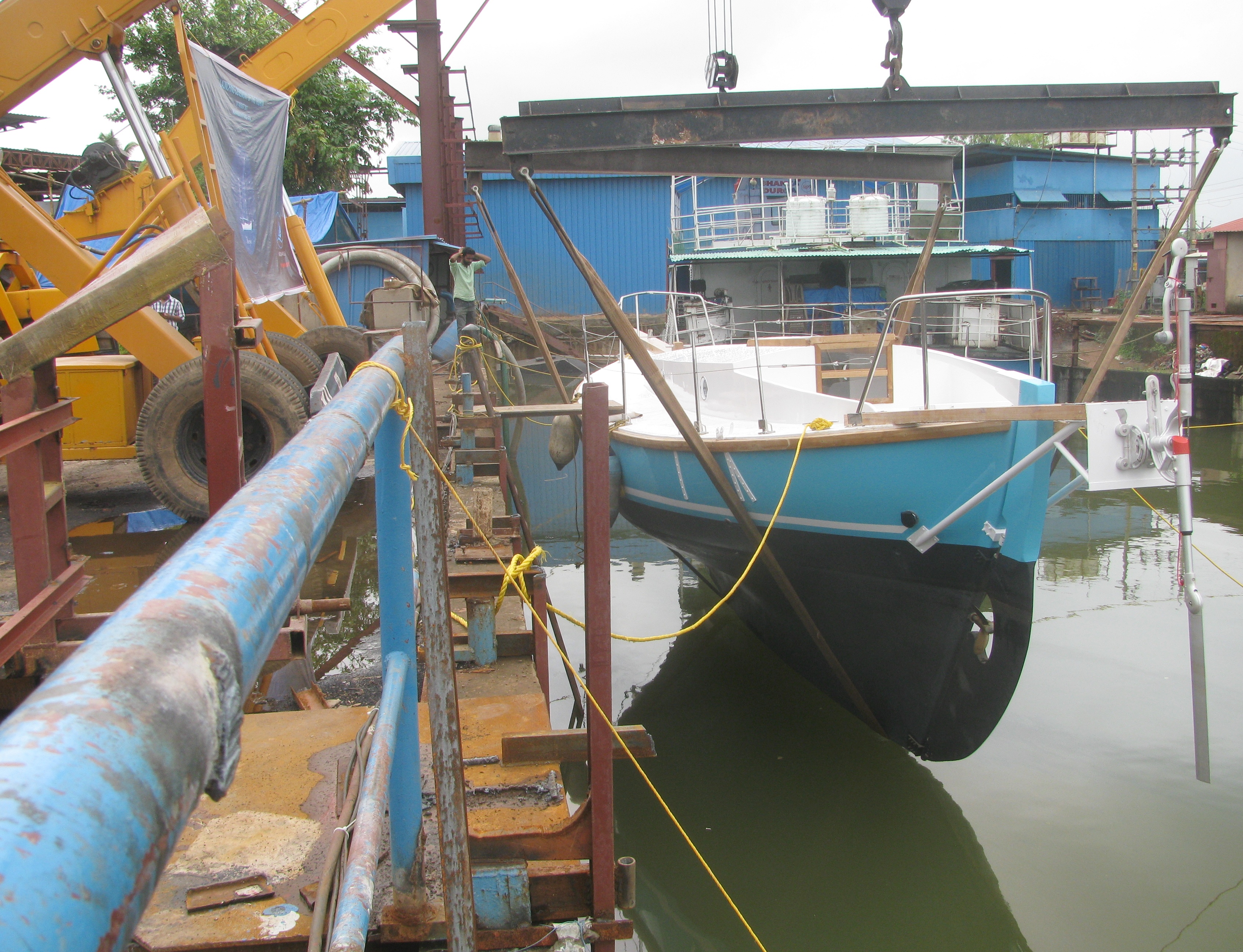
The Thuriya‘s launch ceremony in progress; Abhilash on the boat’s deck (Photo: Shyam G Menon)

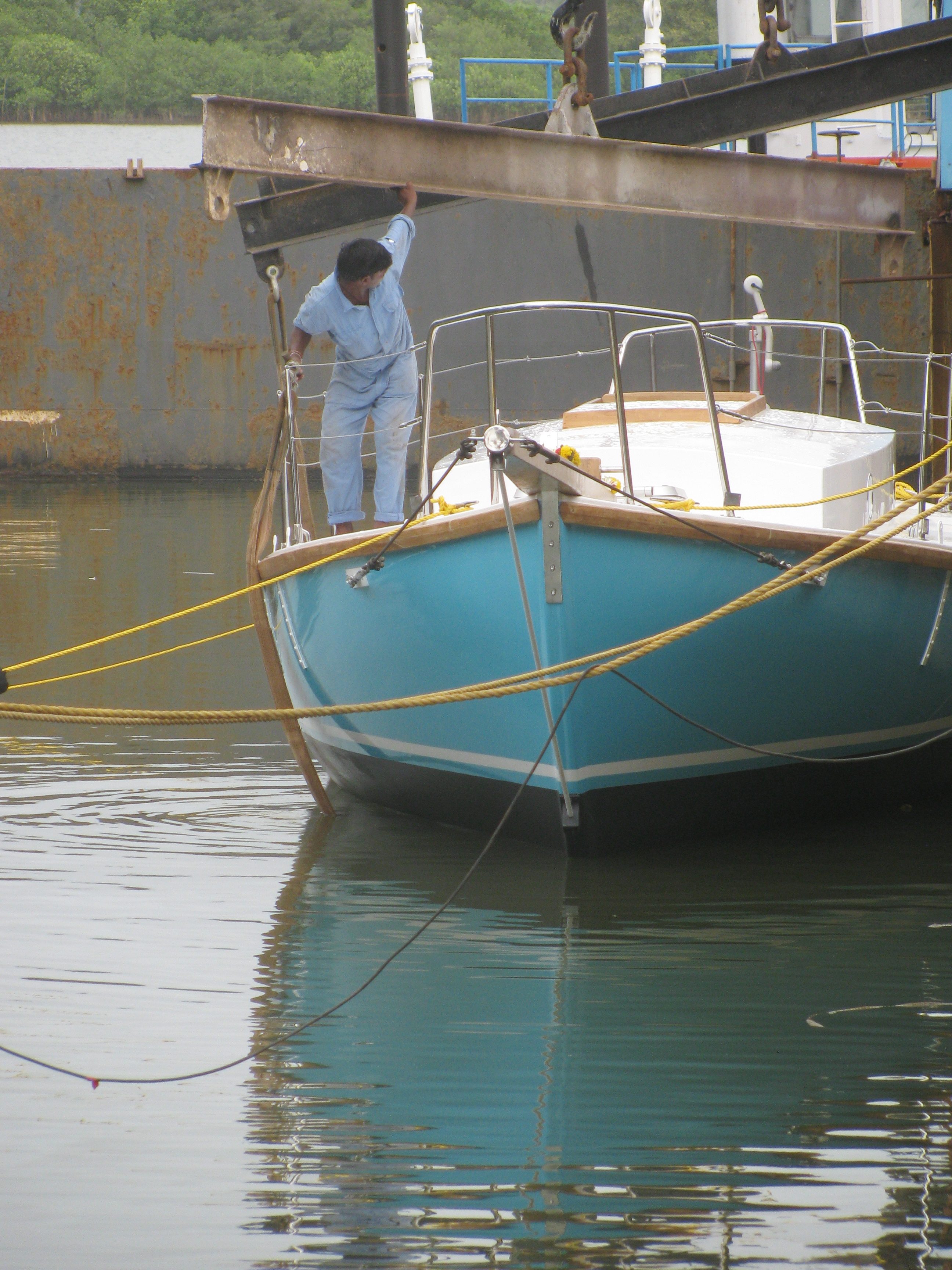
The Thuriya touches water (Photo: Shyam G Menon)

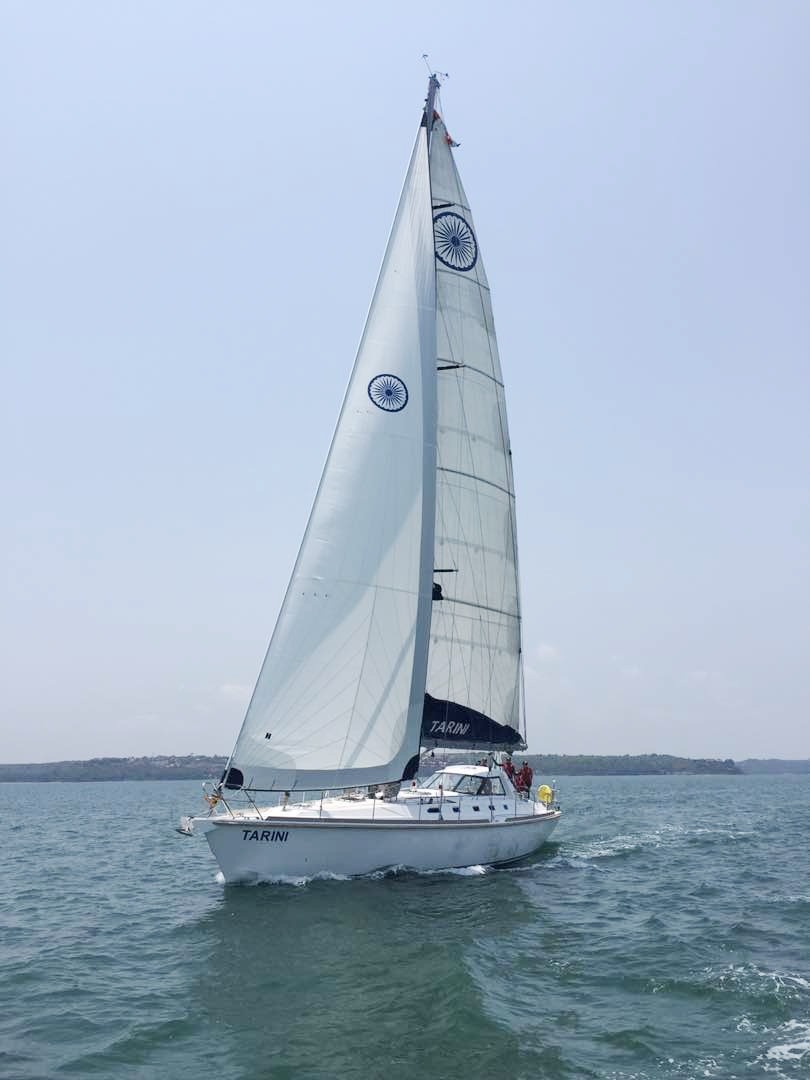
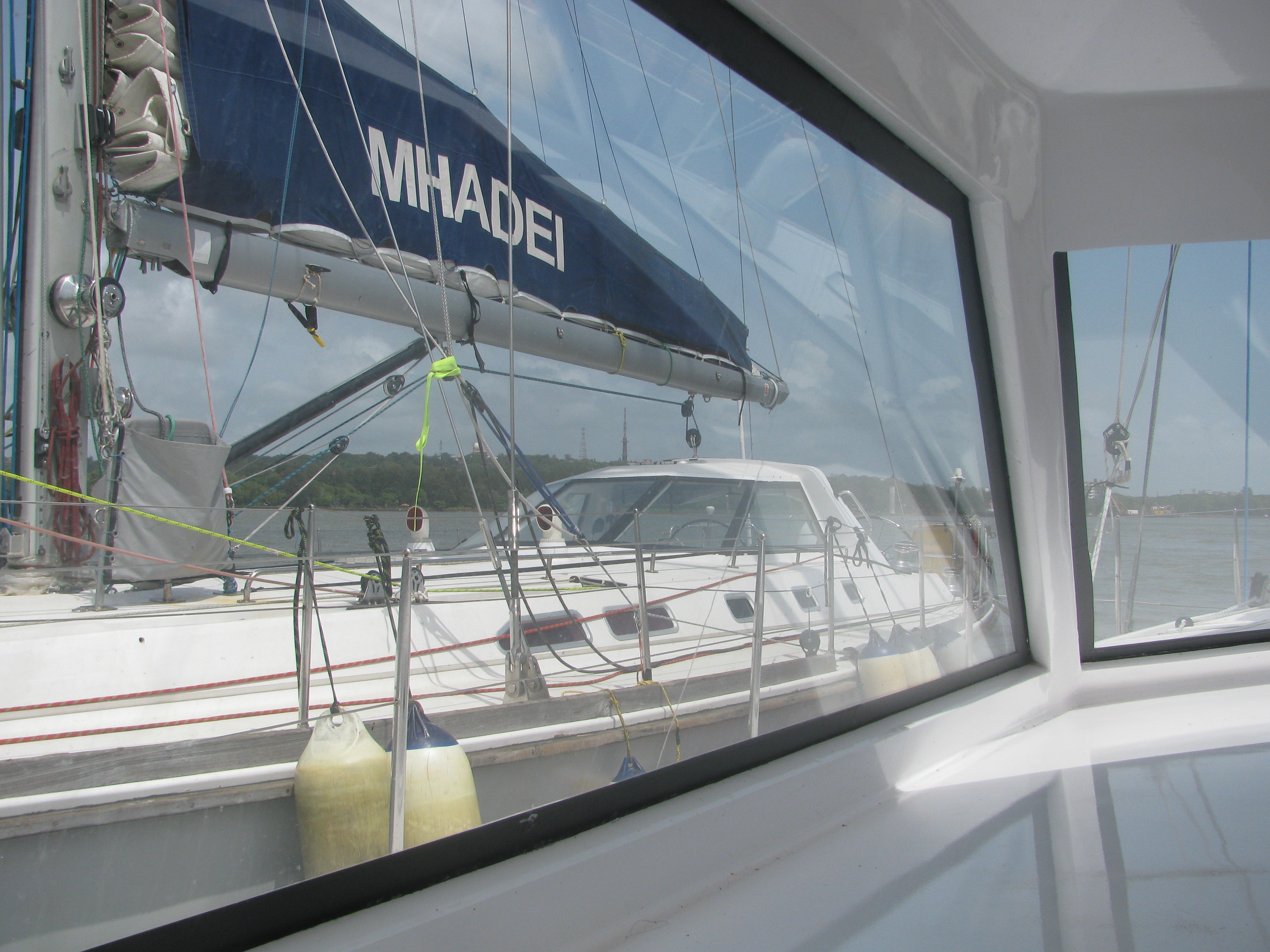
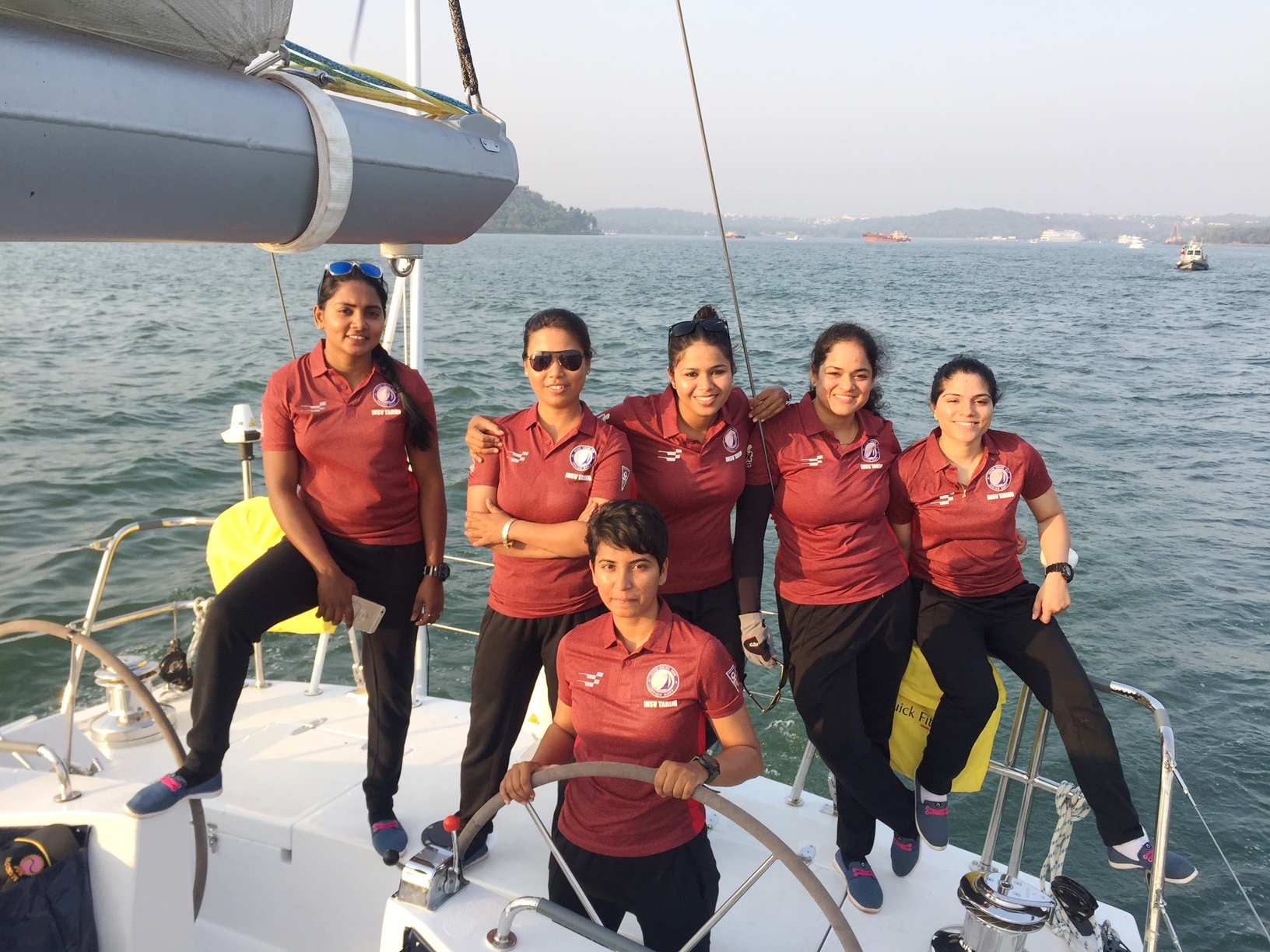
The evening of August 7, 2017, the Thuriya stood suspended by two cranes, inches above the Mandovi River’s water, let in at the drydock of Aquarius Shipyard. Every 15 minutes or so, a thundering sound – resembling that of an approaching helicopter – could be heard; it was the sound of trains passing by on the nearby bridge across the Mandovi. Aquarius is an unassuming yard predominantly making boats for the Indian military. It also caters to orders for boats from Indian state governments. The yard shot into limelight building the Indian Navy’s iconic sail boat – INSV Mhadei. A sloop, based on a Dutch design, it took two naval officers around the world on two separate circumnavigation voyages. The first was Captain Dilip Donde (Retd), who executed the first solo circumnavigation by an Indian. The second was Abhilash, who accomplished the first solo nonstop circumnavigation by an Indian. There are few boats around that have done back to back circumnavigations plus trans-Atlantic races and other voyages, as the Mhadei did. It is a testimony of her build quality and the care with which, former skippers like Dilip and Abhilash treated her that she did both these circumnavigations without any major problems. Aquarius later built a second sail boat for the navy, INSV Tarini, which is identical to the Mhadei and as of August 2017, was expected to depart shortly on the first circumnavigation of the world by a crew of Indian women. Despite tendering process that rewards the lowest bidder, Aquarius took on construction of sail boats because it is a demanding task. While most of us get carried away by the speed and flight of motorized craft, they are generally more forgiving of error in design and construction because the brute power of the engine compensates for such shortcomings (unless the idea is to build for a specific purpose, like very high speed to set a record). Harnessing wind is a different ball game. Here design and build quality genuinely matter; room for error is less. “ Making a sail boat is more challenging,’’ Ratnakar Dandekar, who owns Aquarius Shipyard, said.

When it came to a boat for the 2018 GGR, Abhilash made three notable decisions. First, he decided to build the boat in India, at Aquarius. He knew the yard would do a good job. Besides, the earlier two circumnavigation voyages had ensured that he, Dilip and Ratnakar, became a fine team. They understand each other well. For boat to sail, the organizers of the 2018 GGR had provided participants a variety of designs to choose from. They included Westsail 32, Tradewind 35, Saga 34, Saltram 36, Vancouver 32 & 34, OE 32, Eric (sister ship to Suhaili), Aries 32, Baba 35, Biscay 36, Bowman 36, Cape Dory 36, Nicholson 32, MKX-XI, Rustler 36, Endurance 35, Gaia 36, Hans Christian 33T, Tashiba 36, Cabo Rico 34, Hinckley Pilot 35, Lello 34 and Gale Force 34. One suggestion Abhilash received was that he buy a secondhand Saltram 36 and refit it to the retro norms of the 2018 GGR. This design of boat – originally called Saltram Saga 36 and designed by Alan Pape – is a classic long-distance cruising yacht. It is double ended (the fore and aft taper in similar fashion) and sturdily built. However locating good secondhand boats of said design overseas and then refitting them is both time consuming and likely, expensive. If the refitting is to be done at Aquarius, the boat would have to be sailed in from abroad, refitted and sailed to UK for GGR. If the refitting is done overseas, you don’t get any of the cost advantages attached to work done in India. The next option was to go in for fresh construction. So for second major decision, Abhilash resolved that the boat he would sail in will be a replica of the Suhaili. “ It was the only boat I could build in India and I was keen to sail a boat built in India. I had a conversation with Don McIntyre from race management. He said that for any other design, the construction would have to happen from the original mould. The only leeway was for the Suhaili replica, which could be built, brand new,’’ Abhilash said. The Suhaili’s design is called Eric 32; it was drawn sometime in the 1920s by William Atkin. The third decision was more personal. Abhilash had always wanted to own a classic sail boat. Few boats in circumnavigation are more classic and steeped in the discipline’s history than the Suhaili. Abhilash decided that he would be the owner of the new boat. By Indian standards, owning a boat costs a lot of money. Ever helpful, Ratnakar started constructing the boat for Abhilash in 2016, using his own funds. As the boat neared completion, Abhilash liquidated some of his investments and partly repaid Ratnakar; the idea is to repay fully in time. At around 5.56 PM on August 7, the blessings of the Gods sought, the cranes gently lowered the Thuriya and she kissed water for the first time.

The Thuriya; crane slings being removed after the boat has been floated (Photo: Shyam G Menon)

All boat designs strike a compromise between stability and speed, depending on the purpose for which the boat is being acquired. So far, the bulk of Abhilash’s sailing has been on the Mhadei, which is a sloop, based on a design called Tonga 56. The Mhadei offers stability but she also offers adequate cruising speed on long voyages. Her hull made of wood core laminate; she has one tall mast and two sails. To the lay person beholding her, she has the sleek lines of a modern yacht. Her cabin with angular windows, rise prominently from the deck.  She is not double ended; her aft ends in an angled chop. She has a bulbous keel, laden with lead to act as counterweight in the event of capsize. “ The Mhadei is a big sail boat. She has lot of space within. If you load the boat, the percentage weight difference is less. Thanks to its high volume, it can ride down a wave at decent speed. Her upwind performance is also good. You can sail well into the wind,’’ Abhilash said. On the flip side, her sails are big and it is near impossible for a lone sailor to change the mainsail. Being a big boat, breakdowns are also tough to handle.

The Thuriya is a ketch. Much smaller, her Eric 32 design is roughly half the length of the Mhadei and her cabin sits sunk into the deck, rendering the cabin’s external profile almost invisible from far. The smaller size of the Thuriya made her trickier to build, Ratnakar said. She will have shorter masts. But against the sloop’s single mast, the ketch has two and between them they offer three sails. This doesn’t mean the sail area is greater; what it means is that the ketch is capable of harnessing the wind more precisely for greater maneuverability. The Thuriya’s hull is double ended and visibly squat. This aspect of the Eric 32 relates directly to design inspired by Norwegian fishing boats and which Sir Robin consciously chose when it came to the Suhaili, for his priority in the 1968 GGR was a stable, safe boat. Speed is not the forte of Eric 32; the Suhaili is a slow boat, as would most likely be, the Thuriya. Unlike Mhadei, which has two steering wheels on deck, the Thuriya is steered using a tiller. “ I prefer a tiller over a wheel. You can sit and steer the boat. Besides the tiller’s connection with the rudder is direct, unlike in the case of a wheel, which entails gears and transmission,’’ Abhilash said. Compared to the Mhadei’s two electronic and one wind driver autopilots, the Thuriya has one wind driver autopilot, donated by its manufacturer: WindPilot. Below the waterline, the Thuriya has a relatively straight keel needing less draft. The boat’s overall dimension is perfect for solo sailor venturing long distance; it is a compact ecosystem with everything at hand.

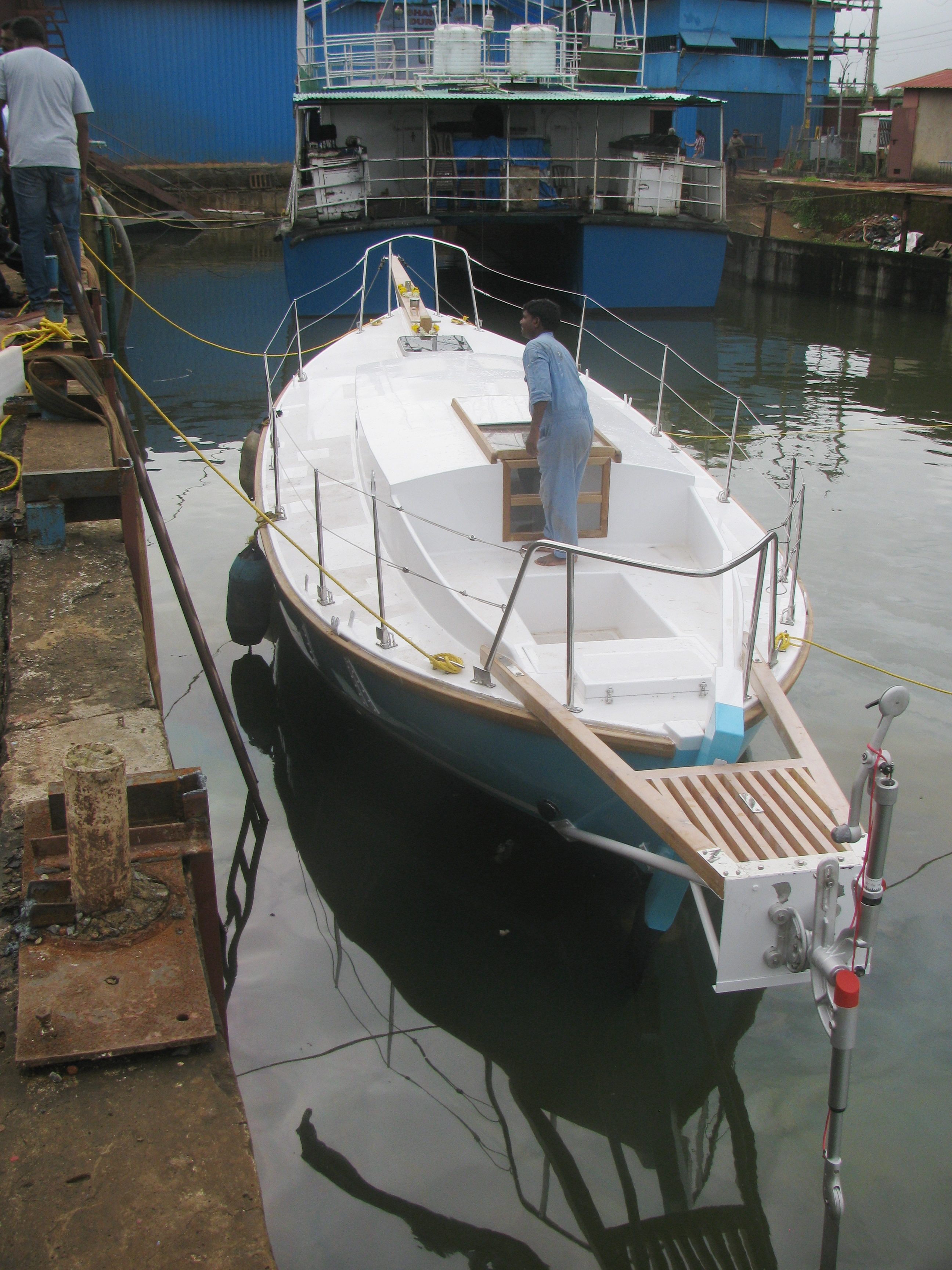
The Thuriya; view from aft, notice the small cabin, tiller and wind driver autopilot (Photo: Shyam G Menon)

On the flip side, a small boat cannot take a lot of weight and when you load it, the boat tends to slow down. “ The slower the boat, the more you need to carry because your voyage becomes longer. That’s an equation I will need to manage,’’ Abhilash said. Measured for length, the Thuriya is smaller than a modern 40 foot-marine container. From the bridge of a big ship with sizable real estate of deck stretching before it, small boats are difficult to notice. In their writings, sailors on small boats have highlighted the David-Goliath relation they tackle at sea, in world of ever growing ship sizes. Not to mention, the hazard of cargos and containers floating around after they fell off unnoticed from ships. Asked if the small size of the Thuriya and her lack of electronics added that much more pressure on solo sailor maintaining a watch at sea, he said that for most part the 2018 GGR’s circumnavigation route is still devoid of busy traffic. “ For example in the voyage on Mhadei, after crossing Sri Lanka, the first ship I saw was two and a half months later at Cape Horn. The next was one and a half months later, off Mauritius,’’ he said. Watch-keeping (staying awake, alert and on the lookout) requirements go up in and around shipping lanes and one problem is – ships are no more serious with watches as they used to be.

A special invitee for the 2018 GGR, Abhilash has rich experience in sailing and now, a boat. What he may be in short supply of is – time to get everything ready for the voyage. In the run up to his last circumnavigation, he had taken to living in the Mhadei to get used to the boat. Given shortage of time, it may not be possible to do that with the Thuriya. What he was certainly in short supply of at the time of writing this article was – sponsors. Between now (August 2017) and a month and half before commencement of the 2018 GGR, he needs to fit masts on the Thuriya (for which she has to first move past the low Panjim bridge to berths downstream from Divar), put her through her paces at sea, get a sense of her behavior, sort out teething problems, sail her to Cape Town on her first long voyage (and probably his, mimicking GGR norms), load her on a ship to the UK from South Africa and report as per schedule to the race organizers for formal introduction of boat and her skipper. Getting a sense of the Thuriya on the water is important for two reasons. First she is a ketch; there will be an element of transition to do from Abhilash’s previous experience on a sloop to handling a ketch. Second, the Thuriya is a replica of the Suhaili with one distinct difference. The Suhaili was made of teakwood. Repeating such construction in 2016-2017 would have been terribly expensive. The Thuriya is therefore made of wood core laminate, like the Mhadei. This makes her stronger and lighter. “ She could be a livelier boat,’’ Dilip, who will be the manager of Abhilash’s team for the 2018 GGR, said of the boat’s potential behavior on water. The use of wood core laminate for making a replica of the Suhaili is permitted by the race organizers. Going by the details available about participants on the race website, the most widely chosen design appeared to be Rustler 36, followed by Biscay 36, Endurance 35 and Lello 34. At one point in the run up to 2018 GGR, there were four Suhaili replicas planned, Abhilash said. As far as he knew, the Thuriya alone remains in the fray.

Expeditions go retro in a quest to relive original purity. Such instances are rare. Success in one’s time by all means possible, using everything that minimizes error and possibility of setback, is the dominant character of adventure in our crowded, competitive times. In mountaineering, alpine style climbing is an attempt to be light on the environment and also feel the challenge closer. But climbers still use the latest gear. Once in a while, in a documentary film of climbers from the past with contemporary climbers enacting days gone by, one sees the retro touch fleetingly. You could argue free soloing is retro because climbers dispense with gear altogether. But that isn’t retro; it is more defying risk. A whole expedition in retro style – that would be very rare although the rising aversion for consumerism has begun triggering a return by humans to simpler times. And as the sextant would show, simpler times are not exactly simple; they entail much work. I asked Abhilash if there are any trends emergent in the world of sailing, to go retro. According to him, current trends are all towards more and more expensive sailing. People aspire for costlier boats and yachts. Races are also getting more expensive. It is the full on, jazzed up version that sells. That said, retro allows sailing to be less expensive. It is also more challenging and given that, it may remain a niche pursuit by the adventurers among us.

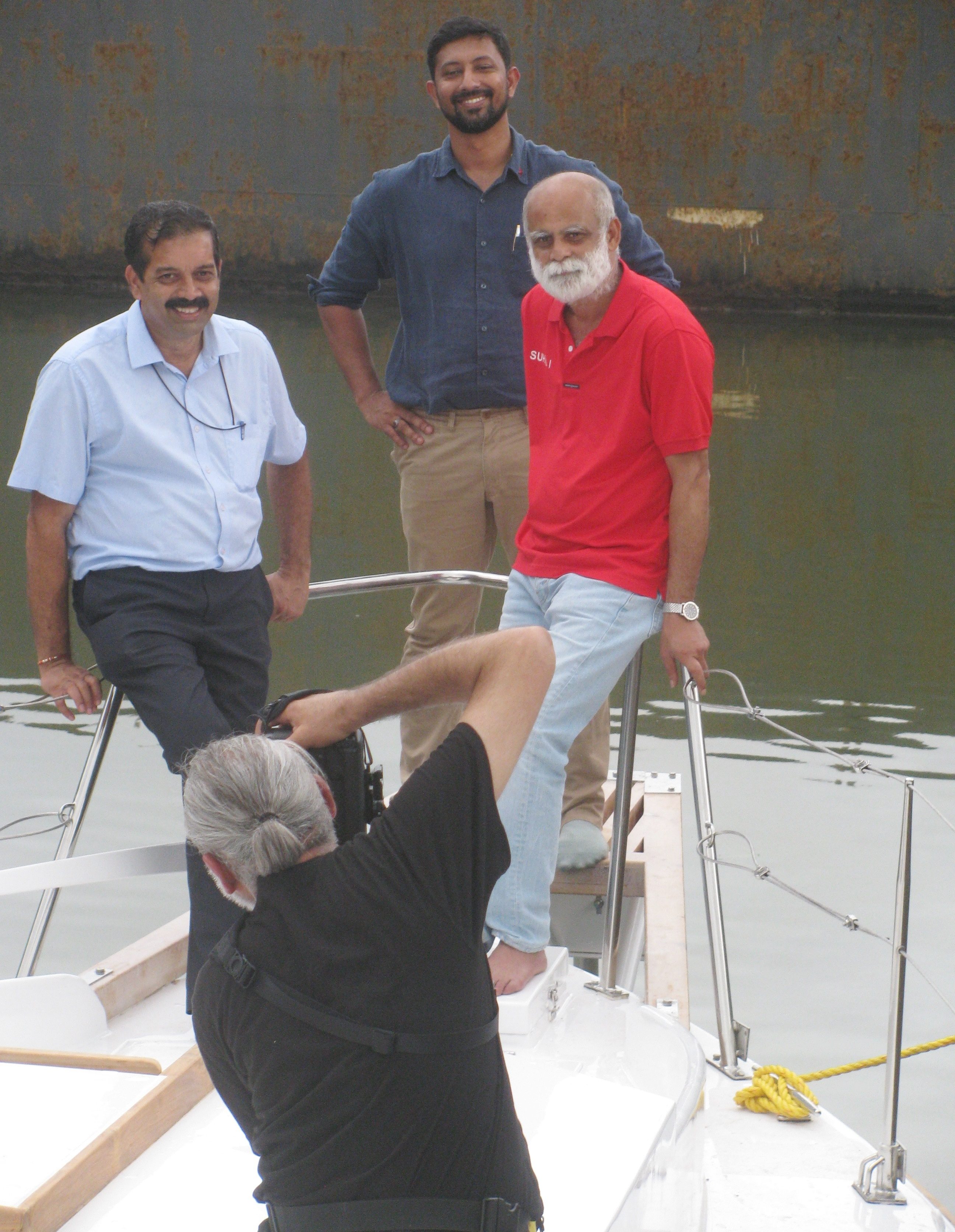
From left: Ratnakar, Abhilash and Dilip enjoy a photo session onboard the Thuriya (Photo: Shyam G Menon)

The 2018 GGR has parameters to differentiate finishers and provide a semblance of winner. Besides the Golden Globe trophies, Golden Globe plaques and total prize money of 75,000 pounds for distribution, those finishing before 15.00 hours on April 22, 2019 will receive a Suhaili trophy and refund of their entry fee. Anyone making a single stopover or forced to break the seal on their portable GPS chart plotter can remain in the race but will be shifted to the `Chichester Class’ (named after Sir Francis Chichester, who in 1966-1967 in his ketch, the Gypsy Moth IV, became the first person to achieve a true solo circumnavigation of the globe from west to east, via the three great capes; he made one stop at Sydney). They will get Chichester trophies provided they finish within aforesaid deadline on April 22, 2019. Anyone making two stops will be disqualified. “ In 1968, only one person finished GGR and he was the winner. In a race like 2018 GGR, you are a winner if you finish,’’ Ratnakar said.

(The author, Shyam G Menon, is a freelance journalist based in Mumbai.)

AQUARIUS: TALENTED BOAT BUILDER LIMITED BY MARKET

Ratnakar Dandekar (Photo: Shyam G Menon)

Ever since it built the INSV Mhadei, Goa based-Aquarius Shipyard has become a noted builder of sail boats in India.

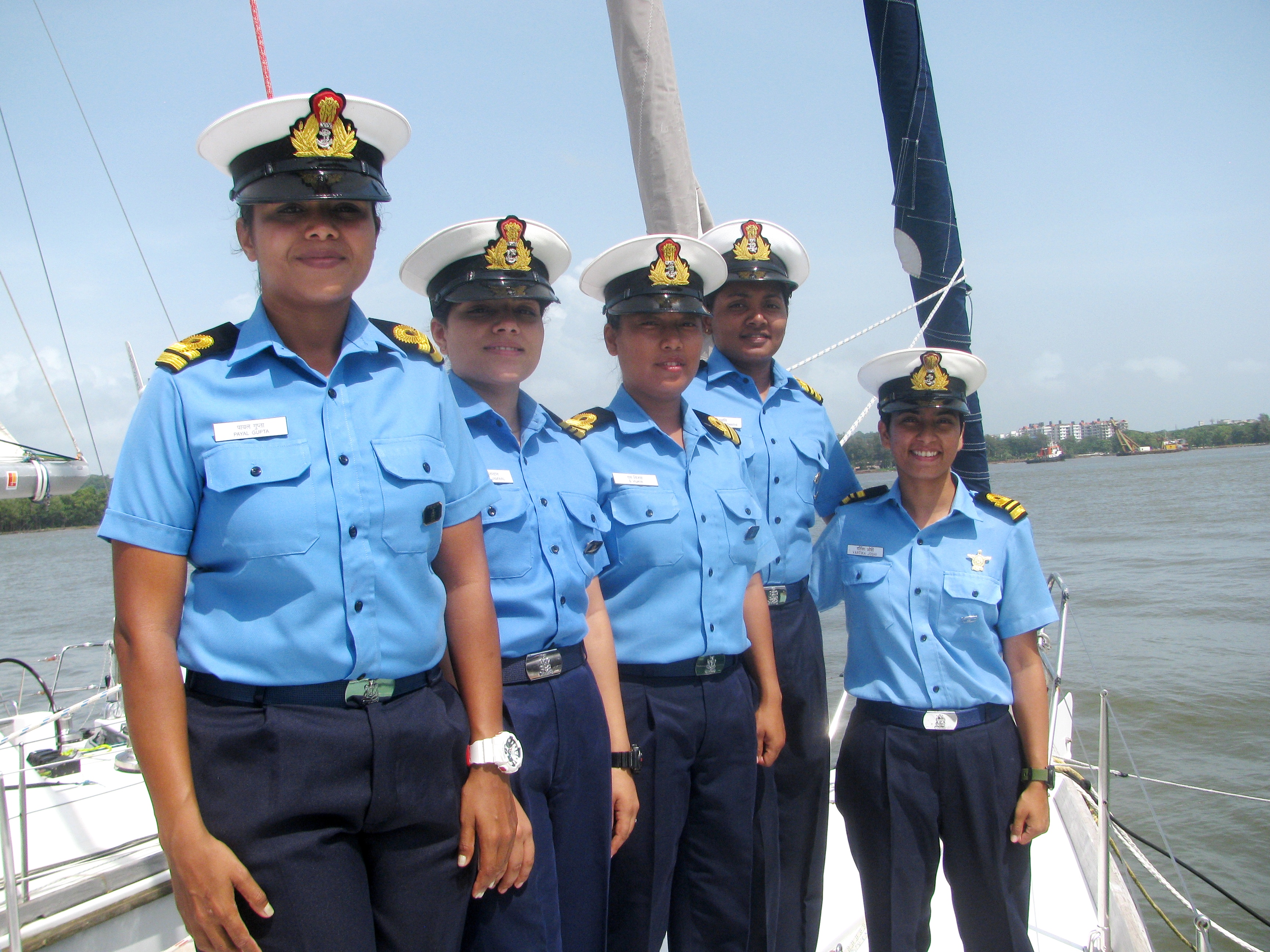
The Mhadei did two circumnavigations; she also participated in trans-Atlantic races and other long voyages. After the Mhadei, Aquarius built the Tarini, which is identical to the former. If all goes as planned, the Tarini is expected to sail sometime in August 2017 on a circumnavigation executed for the first time by an all-woman Indian crew. Both vessels are sloops, based on the Tonga 56 design by Van de Stadt of Netherlands. According to Ratnakar Dandekar, owner of Aquarius, there is a third Tonga 56 being built by the yard; this one for a private party in India. On August 7, 2017, Aquarius floated the ketch, Thuriya, built for Commander Abhilash Tomy KC to sail in the 2018 Golden Globe Race (GGR), which will be another case of circumnavigation; a solo nonstop circumnavigation.

Each of these voyages comes with post-launch support offered by Aquarius. While the 2018 GGR is a case of retro sailing with very low electronic technology onboard and strict race regulations in place, in the previous two circumnavigations of the Mhadei – India’s first solo circumnavigation and first solo nonstop circumnavigation – Ratnakar as builder, was available for online consultation whenever anything went wrong aboard. The yard is thus a rare repository of knowledge and experience on building a sail boat from submitted design and supporting long voyages at sea.

Yet this does not translate into bright market opportunity for Aquarius.

The main reason is that a market for sail boats and yachts is so nascent in India that it is almost nonexistent. Potential buyers are growing in tune with India’s rising GDP and increase in the number of wealthy individuals. But sense of adventure and genuine appreciation of sailing is lacking. Most people who can afford a yacht prefer to buy it from overseas as the intention is to own a vessel one can brag about. Brand and cost matter. As Abhilash, who will sail next year as part of the retro styled 2018 GGR, pointed out, Indian buyers seek expensive yachts and brands they can boast of. While that is the state of buyers, any hope of kindling a popular market for sail boats with appropriate models – similar to what the Maruti 800 did for motoring in India – is checked by the very limited interest in sailing in India despite the country’s 7500 km-long coastline. Sailing is still mostly a privilege of the navy, an organization with vast resources and the ability to own and deploy boats. In several countries, civilian sailing has acquired scale and respect with reputed sailors from the civilian domain. In India, the scene is completely different.

The Thuriya, just before her launch on August 7, 2017. This ketch, the latest sail boat built by Aquarius, is slated to do a circumnavigation over 2018-2019 (Photo: Shyam G Menon)

Developing the local market is important for sailing to take off. Globally, the big sailing markets are Europe and US, of which Europe is closer to India. But India is not geographically as close as Turkey and the Middle East are to Europe. Builders from there have been doing a good job, exporting sail boats. Lack of scale also impacts Indian builders. According to Ratnakar, because he builds with skilled craftsmen, some of the low cost advantages associated with India are lost. On like to like comparison – that is if you compare a one off build overseas with similar work by Aquarius – he will be cheaper. But the problem is, his cost for a boat tends to be high when compared to boats coming off serial production overseas. Serial production cannot happen without a market in sight. Finally, the segment of yachts he can service – basically the middle category placed between cheap boats and the truly expensive ones – has not been doing well internationally. Turkish and Middle East builders were well placed to cash in on the recessionary trend that hit the market, Ratnakar said.

Notwithstanding this predicament, Ratnakar wished to continue building sail boats. Economically it doesn’t make much sense. Given the sort of clients he caters to – mostly the Indian military and the country’s many state governments – winning an order is based on being lowest bidder. Economics takes precedence. What still attracts him to sail boats is, the challenge in building them. When a boat is powered by wind, the requirement for good design and excellent craftsmanship in construction rises to the fore. When the risk is further compounded by circumnavigation and solo sailing, the requirement for these attributes is even stronger.

“ There is more challenge in building sail boats,’’ Ratnakar said.

(The author, Shyam G Menon, is a freelance journalist based in Mumbai.)
PORTRAIT OF A PREDICAMENT

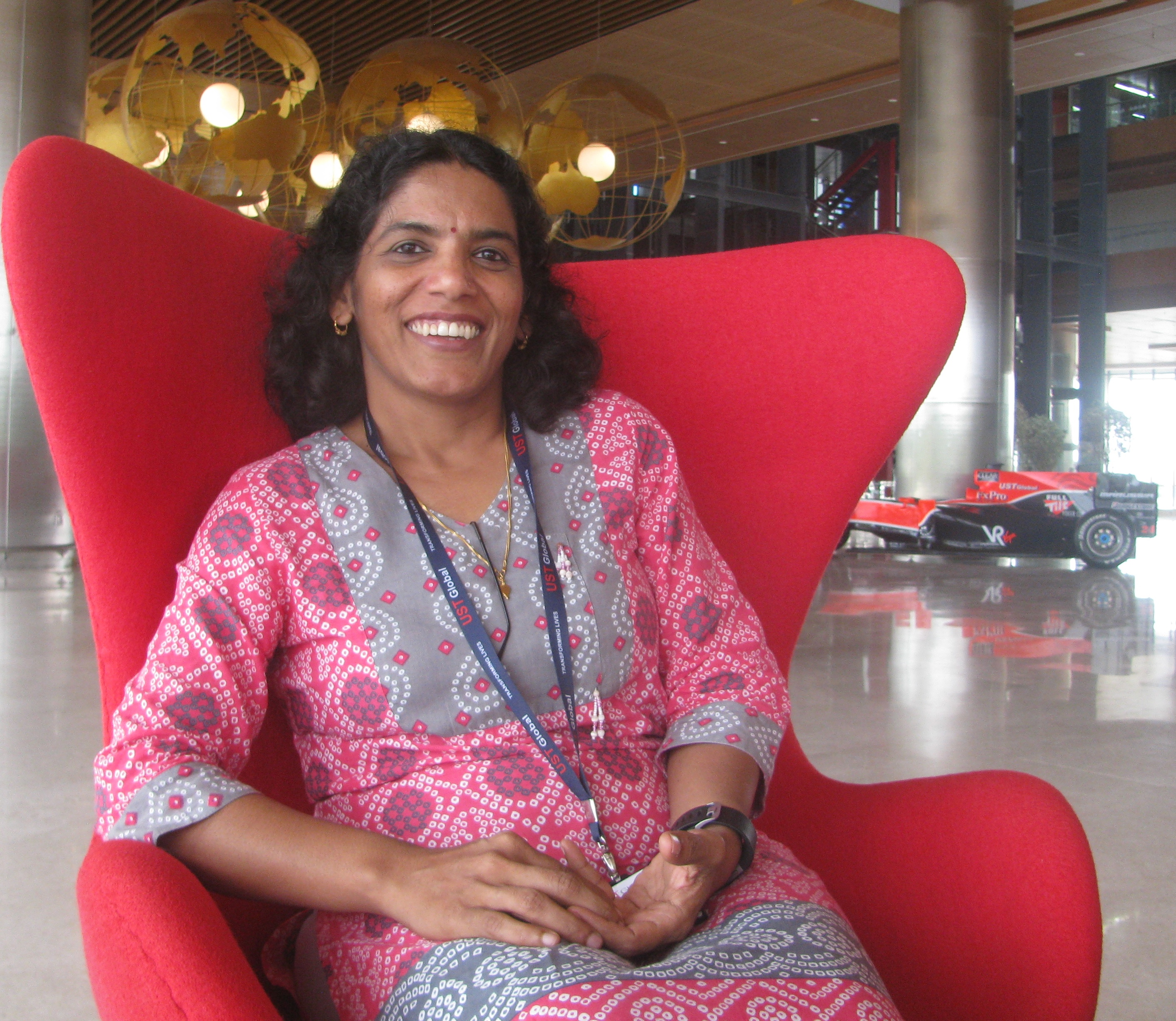
Hema Menon (Photo: Shyam G Menon)

Article on distance runner Hema Menon with a look alongside at what’s happening in Thiruvananthapuram, the southern-most capital city with a movement in amateur running.

Meals Ready – the board outside the teashop said.

I wasn’t exactly hungry. But given dietary restrictions rising elsewhere in India, my visits to Kerala had come to smack of guiltless indulgence in the cuisine I grew up with. I dove into the teashop, joining a small clientele of executives and techies who loved their food to be defiantly local or naadan, as you would say in Malayalam.

Twenty minutes later I had a full stomach; it was past 2 PM, there was a bus to wait for and not a tree for shade on the by-pass from Kazhakoottam to Kovalam. Perhaps I could walk, keep moving? Walk? Where you wish to go is some distance away. Who will walk in the blazing afternoon sun?-the waiter at the tea shop quipped, tucking up his mundu for added emphasis. How about hiring a three wheeler? They will fleece you. Why spend two hundred rupees when a bus will take you there for much less? Several minutes in the hot sun later, a bus appeared. It didn’t stop. The second one did. I got off at the assigned stop simply called `Infosys.’ Next to it was the building I required to go to – the office of UST Global. I was at Technopark, inaugurated in 1990 to welcome India’s IT revolution to Kerala; not to mention – winds of change to the state’s capital city, Thiruvananthapuram. In the 27 years since, Technopark has become a sprawling entity.

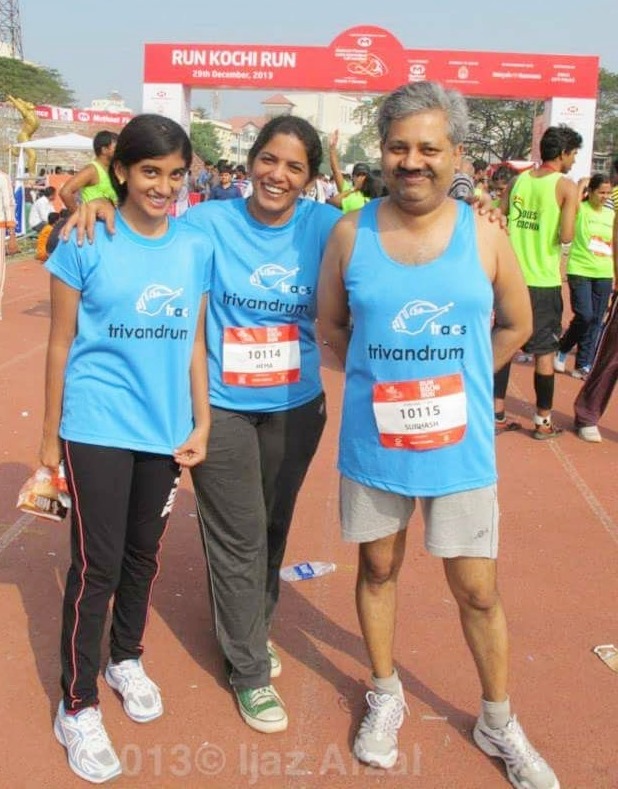
Hema with daughter Lakshmi and husband, Subhash, after their first run at an event – the 2013 Kochi International Half Marathon (Photo: courtesy Hema Menon)

The first time I ran some distance, was almost 30 years ago in Thiruvananthapuram. Good friend, Rajagopal, would come by early morning with Afzal and the three of us would run towards the city’s zoo and museum, where morning walkers congregated on a small circular road to walk in a furious whirl of flying fists, erect spines and thrust out-chests. Runners were very few. Thanks to their association with the National Cadet Corps (NCC), both Rajagopal and Afzal could jog well. Nerd on chicken legs, I soon dropped out. In my mid-forties and back to running, I was happy to see a runners’ group from Thiruvananthapuram at the half marathon in Auroville, Puducherry. Then one day, on a visit home, I decided to go running on Thiruvananthapuram roads and was delighted to see a modest number of runners, out early morning. Maybe those winds of change did blow after all, I thought as I walked past security to the UST Global office. Hema Menon was already there in the spacious lobby. Born 1969, the youngest of three children, she was from Thrissur. Her father worked at State Bank of Travancore (SBT-now merged with State Bank of India [SBI]); her mother was a science teacher. She studied in Thrissur; St Paul’s Convent, St Mary’s College and eventually, the government engineering college in that city, from where she passed out, a civil engineer.

For a few years, Hema worked with a housing development firm in Thrissur. In 1993, she got married; her husband Subhash had been a student of computer science at the same engineering college she studied at. Subhash worked initially with the IT company, Wipro in Thiruvananthapuram, and later, in Bengaluru. Work as civil engineer required Hema to liaison locally and she found that hard In Bengaluru given she spoke no Kannada. So she became a bank officer working with Federal Bank in the city. At that time, when things appeared to settle, Subhash was dispatched to France. Then he was sent to the US. Soon the family – they had a son by then – realized they needed to make a choice if they were to be together. Quitting her job and shifting to the US, Hema found that the mix of civil engineering and work at bank which she possessed, was irrelevant in that country. Meanwhile, the couple had another new arrival – a daughter. Against this backdrop, Hema commenced her masters in software engineering at the University of Texas, Dallas. She graduated with a job at Intervoice (now called Convergys). Starting out as a trainee, she rose to manage the line of business division in R&D. In January 2008, her mother suddenly took ill; her kidney was failing. Two weeks after Hema reached Kerala to be with her, she passed way. It was a shock. Hema had all along thought that between her father and mother, the former was delicate. In May 2008, she moved back to Kerala with her children. Both Hema and Subhash secured jobs at UST Global. The return to Kerala provided her three quality years with her father. In 2011, he passed away. “ I treasure those three years,’’ Hema said. But that wasn’t the end of such sorrows. Her father-in-law slipped into dementia. It was a condition that progressively deteriorated. A few years later, he too was gone. Subhash’s brother is Ramesh Kanjilimadhom, one of the founding members of the runners’ group – Soles of Cochin. Hema used to call him Forrest Gump. The brothers come from a family with history of diabetes. Subhash had diabetes; Ramesh was the only person in the family free of it. Then Ramesh had a terrible accident with fractures to his leg. “ The way he came out of it was amazing. That’s when I paid attention to his running,’’ Hema said. An Onam season, she joined Ramesh and his wife, Seema, for a run. It was fun running in the rain. But then, Hema was based in Thiruvananthapuram and Soloes of Cochin was in Kochi.

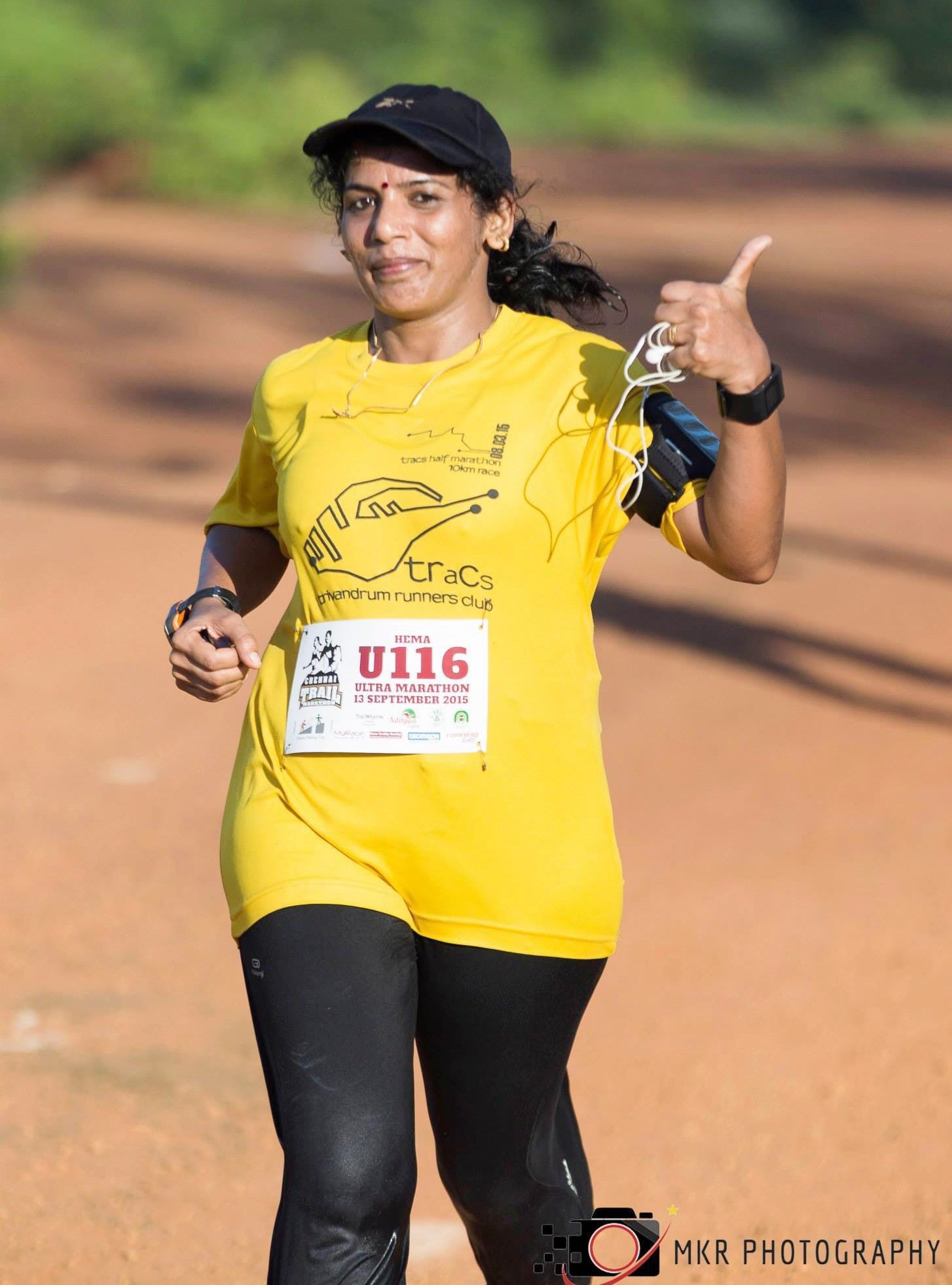
At the Chennai Trail Ultra (Photo: courtesy Hema Menon)

Thiruvananthapuram, previously known as Trivandrum, encourages curiosity for the world. Libraries, book shops, film societies, music societies, centers teaching foreign languages – they all exist. Decades ago, when Siddharth Basu’s iconic program Quiz Time was a national craze on television, the city had stunned the country putting two of its teams in the final rounds. One of Thiruvananthapuram’s book shops – Modern Book Center – is easily among the best in India. The variety of books it offers would delight any mind that refuses to be contained within the walls of ` native place’ or finds the market driven choice of books at stores elsewhere, boring. The unpretentious capital city with its state Secretariat besieged by half a dozen protests on any given day, is also home to one of India’s most talented rock bands – Avial. Yet notwithstanding this serious quest for universe, the city is so set and sure in its ways that if you returned there after seeing the world, it won’t be to breathe world into the city, it would be to live as Thiruvananthapuram does. This is a city that will stretch intellectually to accommodate an earthquake of an idea in the head. What it doesn’t wish to see is – the same manifested externally; there can be no ruffling the social fabric or established attitudes. There is a traditional perception of itself by itself that Thiruvananthapuram is reluctant to let go. In Kerala history too, while commerce dominated the proceedings of the northern kingdoms, it is the state’s southern kingdom – Travancore – that provided a sense of enduring state. When the north was invaded, it was the south that helped defend. On each visit to Thiruvananthapuram, I find it an enigma. I struggle to explain how a place that resists change shapes riveting minds. I knew quite a few. It is almost as if, the fuel for excellence is the unyielding environment. It exists to provoke the urge to rebel, search and thereby, excel. Which in turn I suppose, justifies the rigidity. It isn’t an exclusively Thiruvananthapuram story. Arguably this is true for Kerala – at once modern and conservative – with Kochi being to Thiruvananthapuram, what Mumbai is to Pune. “ Even though I lived here the past nine years, I am yet to understand the heritage of Thiruvananthapuram. There is a calmness here compared to other places,” Hema said.

At the 2014 Spice Coast Marathon (Photo: courtesy Hema Menon)

Around the time Hema did that first run with Ramesh and Seema, moves were afoot in Thiruvananthapuram to form a runners’ group. Abhayakumar N. S (Abhay) is an architect who is also partner at The Cinnamon Route, a restaurant on Pattom-Kowdiar road in the city. Until a few years ago, he was on the visibly heavy side, weighing 115 kg. His family has a history of cardiac problems. That weight had to go. He used to talk to people walking on that circular road at Thiruvananthapuram’s zoo and museum to know what their experience was in terms of weight loss and fitness. He also had a friend on Facebook who was a keen runner. This was how Abhay got into running; he jogged regularly at Mannanthala, a suburb on the MC Road linking Thiruvananthapuram with Kottayam. He complemented running with a vegan diet, making exception for fish. He shed 35 kg in three to four months. Abhay was a classmate of Seema, Ramesh’s wife. In Thiruvananthapuram, Abhay understood that to sustain his running he needed a helpful ecosystem of people, perhaps a runners’ group. Initially what he catalyzed stayed a circle of close friends. In November 2013, Trivandrum Runners’ Club (TRACS) commenced activities with a weekly 10km-run every Sunday from Kowdiar. In December 2013, Abhay ran the first Cochin International Half Marathon; this was followed by the full marathon at the 2014 Standard Chartered Mumbai Marathon (SCMM – now set to be called Tata Mumbai Marathon [TMM]). “ In March 2015 TRACS organized its first event in Thiruvananthapuram – a half marathon plus 10km-run. In November 2015, we hosted our first full marathon,’’ he said. The second edition of the Trivandrum Marathon was held in November 2016. Local authorities were supportive when it came to arranging these events, Abhay said. The next edition of the Trivandrum Marathon is planned over two days, with runners tackling the shorter 10km distance doing so on the first day; 21 km and 42 km will be on the following day. “ I can say TRACS started the sport at a popular level in the city,’’ Abhay said.

From the Chennai Trail Ultra or what Hema loves to remember as “ the one moment she got ahead of the boys” in that race (Photo: courtesy Hema Menon)

Among those who reported for TRACS’s first run in November 2013, was Hema Menon. “ I couldn’t run much but I remember saying that I plan to come every week. I went every week,’’ she said. Every Sunday, she drove from Kariavattom where she lived, to Kowdiar, to run 10 km. In December 2013, she participated in the 7 km-segment of the first Cochin International Half Marathon, the first event she was taking part in. By 2014, she had signed up her entire family for an event in Ohio, USA, with herself doing the half marathon. She completed the run in 2:31.

TRACS has its group run just once a week. Abhay put this schedule in perspective. “ Our message from day one has been: let’s try and get people to run 10 km. The focus is becoming healthy through running; it isn’t about timing and distance. We remain a very basic running group and we will continue to be so. We mentor to initiate people into running,’’ he said. He acknowledged that TRACS is different from Soles of Cochin, which has never hesitated to push the envelope. For those determined to push the ante, the TRACS-schedule / approach won’t suffice. For Hema, there was also another angle to address. She was driving perhaps 15 km into town to run 10 km. Alongside marking her attendance at the weekly Sunday runs at Kowdiar, Hema began running at Kariavattom and on the highway near Technopark. In due course, much of her running shifted that side. But there was a larger branching off happening at TRACS, which Abhay accepts as needed and normal. Dr Shankar Ram, a specialist in physical medicine was among those at TRACS wishing to push their limits. He and others commenced a break-away offshoot called Iten, named after the town in Kenya famous for its distance runners. Iten now hosts three practice runs every week – Wednesday, Friday and Sunday, with the latter reserved for a long run. Compared to the 10 km-weekly run TRACS stuck to, Iten ventures farther. They have run the 50 km from Thiruvananthapuram to Varkala. Once a month they also run 14 km to 21 km on the slopes of Ponmudi, a 3609ft high hill with forest and tea gardens, some 56 km away from Thiruvananthapuram. It is accessed by a steep road with 22 hairpin bends on it. Few cities have what Thiruvananthapuram offers; the proximity to Ponmudi for hill running, being only one example.

Finishing the 75km-discipline of the 2016 Javadhu Ultra (Photo: courtesy Hema Menon)

According to Wikipedia, the 2011 census pegged Thiruvananthapuram city’s population at slightly short of a million. Runners in Mumbai, a city of around 20 million people, speak in the main of two stadiums in the metro that have synthetic track for athletics – the University Stadium in South Mumbai and the Sports Authority of India (SAI) sports complex in Kandivili. The two locations are separated by approximately 30 kilometers. Mumbai with paltry infrastructure for athletics probably has the biggest amateur running movement in the country. It puzzles over why a large amateur base isn’t translating into strong presence in elite athletics. In contrast, in the heart of Thiruvananthapuram city and in tune with Kerala’s strength in elite athletics, you find synthetic track at two stadiums within hailing distance of each other – the University Stadium and the Chandrasekharan Nair Stadium. The latter’s track, easily visible from a city bus negotiating the adjacent road, hosted none every time I passed by. It was always an empty stadium. Roughly 15 kilometers away (no distance by Mumbai standards), at Kariavattom, is a big brand new stadium with synthetic track – Trivandrum International Stadium, legacy of the 2015 National Games held in the city. Where there used to be one Olympic sized pool open to the public years ago, there is now an entire swimming complex that has come up at Pirappancode, 22 km from Thiruvananthapuram. Kariavattom is also home to the Lakshmibai National College of Physical Education (LNCPE) which has its share of grounds for athletics, a swimming pool; it even has a velodrome for cycling. All these places are well connected by public transport. Yet they haven’t sparked a larger movement in amateur sports or pronounced desire to lead the active life. There are running and cycling groups and there is now a city marathon but it is happening so late and on a scale that is small compared to the size of some of these sports assets and how long they have been around. Just like all that you read and saw of wider world remains within the head, the idea of sport contained in these stadiums doesn’t move the city.

Unlike Mumbai, Thiruvananthapuram’s puzzle would be why so much sports infrastructure hasn’t inspired an interest in sport at large. On the other hand what I found freshly added to Kerala’s depiction on hoardings of gold, marriage, real estate, home appliances and similar images of settled success; was a rash of posters showing every locality’s topper in some exam or the other. Academics remain exalted. That plus, the state’s ageing demographic profile may partly explain why the amateur running scene is still nascent. But it can only partly explain, for a lot of the participation in amateur running, even in a city like Mumbai, is from the 30 plus age group. Meanwhile, the physical energy of the state’s youth, which can easily be channelized into endurance sports, continues to be spent on political clashes and such. Perhaps more worrying is that despite its known strength in sports and athletics, what is most visible in consumerist Kerala is a steep rise in that runners’ woe – privately owned automobiles. My Sunday visit to mist laden Ponmudi included a traffic jam on top.

With Soles of Cochin runners after an edition of the TCS 10K (Photo: courtesy Hema Menon)

Hema is a piece of Soles of Cochin, living 220 km away in Thiruvananthapuram. Her best memories in running are interwoven with Soles. Post Ohio, she did the Dream Runners’ Half Marathon in Chennai, completing it in 2:38. In 2014, she did roughly six half marathons. In October 2014 she did the half marathon in Bengaluru and despite a niggling pain she picked up at its end, went on to run the full marathon at Spice Coast, Kochi. Among those she met at Soles, were Paul P.I and A.P. Kumar. Signing up for a 50 km-run at the Chennai Trail Ultra, she ran it in the company of Paul, Kumar and Mathew Mapram. “ These guys made the run interesting for me. It was my first ultra,’’ she said. She ran the full marathon at SCMM in 2015 and 2016, following up the 2016 run (5:18) with the full marathon at Dubai (5:02) and the full at Wipro Chennai Marathon (5.30). “ Surprisingly I had no problem with recovery,’’ she said. But things did go wrong at the next event, a full marathon in Delhi. It was a nice course but she didn’t get it right. “ I nearly broke down,’’ she said. In July 2016, Hema signed up for the 75km-race at Javadhu Ultra. She practised with Soles of Cochin at Kulamavu in Idukki district. At Javadhu, she finished her race within cut-off time. “ Trail running is so peaceful. The problem in cities is traffic. I am not a fast runner and by the time slow runners are finishing at events, traffic begins to hit you. Trail makes the experience very different,’’ she said.

In October 2016, she signed up for the 80km-segment of Malnad Ultra. Then Paul and Kumar called up to inform that Mathew was attempting 110 km. So why shouldn’t they? The cut-off was 24 hours. All four committed to 110km. But on the day of the ultra, Kumar reported sick, Paul was injured and Mathew deciding to focus on a marathon in Bengaluru cut his distance short at Malnad. That left Hema alone for the full 110km with none of her friends for company. Malnad is a roughly 100 km-wide corridor running north-south in Karnataka’s west, sandwiched between the state’s sea coast and the Bayaluseeme region. It spans both the western and eastern slopes of the Western Ghats. These are richly forested hills; Karnataka’s highest peak – Mullayanagiri (6316ft) – is located in this belt. “ It was an amazing place,’’ Hema said of the ultramarathon’s route. Nevertheless, it was a tough run and at sections, where the route was through forest, she had to find somebody to run along with. At 5 AM with an hour left for cut-off, she completed the assigned 110km. “ Malnad changed a lot of things for me,’’ Hema said. She was due to run the full marathon at Bengaluru soon thereafter. But she withdrew from the full marathon so that the Malnad experience would linger longer. “ Peter Van Geit of Chennai Trekking Club does a lot of trail running away from cities. After Malnad, I understood what he was talking about,’’ Hema said. In January 2017, she ran the 71km-race at Munnar Ultra. According to her, ultras allow her to be at peace. “ You are not always running, you are with nature,’’ she said. She attributed her running to her ringside view of Ramesh’s recovery from accident, the infectious passion of Soles of Cochin, the influence of Seema and her hope that if she keeps running, so would Subhash; running helps check his diabetes. The time I met her at UST Global, Hema’s family was based overseas. Her son, having graduated in physics and math from Ohio State University, now worked in the US. Her daughter was studying cognitive science at the University of California, San Diego. ` It is time to make a choice again – India or US?’’ Hema said. Looking ahead, she said she would like to get a sub-five in the full marathon, eventually maybe a sub-four. She would also like to run the Boston Marathon after qualifying for it. None of this is to be confused with competitive instincts. “ There is plenty of competition at work anyway. Why bring that to running?’’ she asked.

With the Race Director of Malnad Ultra after finishing the 110km-run (Photo: courtesy Hema Menon)

On the way back from UST Global, I passed the Chandrasekharan Nair Stadium. I asked Abhay and Shankar about Thiruvananthapuram’s empty stadiums and the fledgling dimension yet, of the city’s interest in amateur sports. They felt it may have something to do with the local tendency to attach purpose to what we do. Elite athletics are so because they come with defined purpose. Your goal is to achieve, be the best. Amateur athletics have no purpose beyond recreational value. Pursuits without a purpose and trajectory to be the best, find little empathy in the state. I thought of those posters of rank holders. Most of them will be unheard of later. But right then with ridiculously high marks they fit society’s notion of achievement. “ In none of our passions, do we follow it for what it is,’’ Abhay said. The question is frequently posed: what’s the purpose? At his office within the Jimmy George Indoor Stadium, Shankar searched for more explanations to the mental wall denying as much social encouragement for the amateur athletics movement as elite athletics. He pointed out that in the recent past even as a larger amateur movement in sport eluded Thiruvananthapuram there has been an explosion of shuttle courts. Bengaluru owes a lot of its amateur running movement to the IT wave. That city has marathons and the Sree Kanteerava Stadium hosts extended endurance runs. Did Technopark and much travelled IT workforce make a difference to amateur sports movements in Thiruvananthapuram? – I asked. Neither of them felt so. Abhay in fact, had an interesting observation: those who shift to Thiruvananthapuram do so for the city and what it represents; not to question it.

(The author, Shyam G Menon, is a freelance journalist based in Mumbai.)
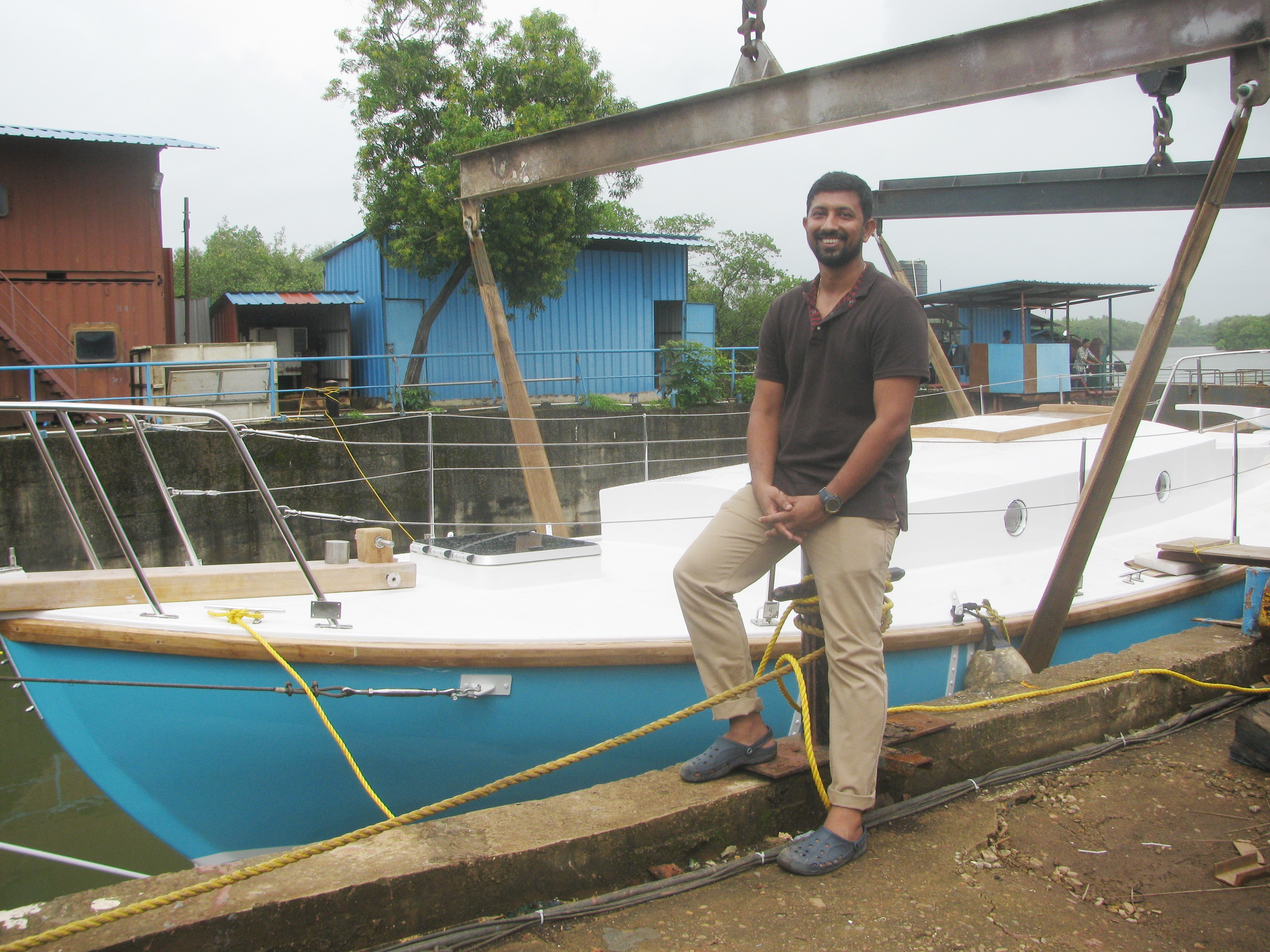
SEBASTIAN XAVIER OR WHAT OUR SWIMMING COULD HAVE BEEN

Sebastian Xavier at his house in Chennai; on the shelf, the Arjuna Award (Photo: Shyam G Menon)

Kuttanad is the region with lowest elevation in India.

On average it is seven feet below sea level.

Its origins are obscure.

One version says that it was forest reduced to ashes in a fire, inspiring the name Chuttanad, later corrupted to Kuttanad.

The place is an intense mix of water and vegetated land; rivers, canals and backwaters abound in the region. Human life tracks this ecosystem. Many houses still have waterfronts, families own canoes and until recently, it was common for everyday supplies and even letters, to arrive by canoe. Ever since a childhood visit to Thalavady faded to hazy memory of traveling by canoe, my only encounter with Kuttanad had been crossing the Thottappally Spillway near Ambalappuzha; part of many journeys between Thiruvananthapuram and Kochi via NH 47.  The spillway lets out excess water coming from upper and lower Kuttanad. As you crossed the spillway, you gazed inland and remembered: all that and beyond is Kuttanad. Early July 2017, it rained as the state transport bus from Thiruvananthapuram to Kochi, sped along NH 47. I had been instructed to get off at Haripad and take a bus for Edathua. There is a reason why you don’t sense Kuttanad on NH 47. It is a coastal highway and although the Thottappally Spillway separating the saline water of the estuary from the fresh water of Kuttanad is on the highway, as ambiance, it is the sea’s nearness which dominates. That receded as the bus to Edathua turned off NH 47 and made its way into the interiors. For a while now, I had wanted to see Edathua. It was a trip beginning in a conversation in Chennai.

The shelf with medals (Photo: Shyam G Menon)

Amateur runners love their medals. Some hang them from display stands, a collection growing over time. Never before had I seen a shelf like the one I saw that evening in Chennai. It was full of medals. To one side was the coveted Arjuna Award. At my request, Sebastian Xavier posed for a photo beside the shelf. He was easy to talk to. But getting him to talk about swimming wasn’t easy; it appeared a business he was done and over with. He enjoyed more his daily sessions on the shuttle court. We were first at his office at the Integral Coach Factory (ICF) in Perambur and then his house nearby. That’s where the conversation began; it continued to conclusion and curiosity for Edathua, on a ride into town on his newly acquired SUV.

Sebastian is among India’s best swimmers. He was the country’s fastest swimmer from 1989 to 2000 and his national record of 22.89 seconds in the 50m freestyle stood for thirteen years from 1997 to 2010. Born 1970, he grew up in Edathua. It was an ecosystem dominated by water. The Pamba River nearby was a natural swimming pool in Sebastian’s childhood. In land with a river, pond or canal at every turn, swimming was as normal for a person born here, as walking was for those in dry cities averse to wetting feet. “ It was routine to be out and if you found a river or water body across your path, strip, hold your clothes high in one hand and swim across,’’ Sebastian said. There was also another reason for the widespread and maybe, enforced acquaintance with water. This was a region that flooded easily in the monsoon. While these days, you have roads and multiple means to be saved, in days gone by, one had to take care of oneself. Knowing how to swim was hence a skill, core to survival. Sebastian’s father was a school teacher; his mother, a housewife. The family was large – they were eleven children, Sebastian was the tenth. The family house has swimming depicted on its gate. There’s a reason for it. While Sebastian and his younger brother, Antony S. Manamel, became well known competitive swimmers, his father in his schooldays had participated in swimming competitions. Swimming ran in the family. “ In my father’s schooldays, the prizes given out used to be a comb, a soap box…’’ Sebastian said. His own first swimming competition happened once he joined college; St Aloysius College in Edathua.

Edathua / Kuttanad (Photo: Shyam G Menon)

Edathua / Kuttanad (Photo: Shyam G Menon)

Edathua / Kuttanad (Photo: Shyam G Menon)

Edathua / Kuttanad (Photo: Shyam G Menon)

Kuttanad straddles three districts – Alappuzha, Kottayam and Pathanamthitta. Some 28 kilometers away from Kottayam town is Pala, one of the biggest settlements in the district. A prominent college here is St Thomas College. From St Aloysius in Edathua, “ Antony sir’’ used to take Sebastian and others to St Thomas College. “ They had a 50m pool. It had no tiles or anything like that. But it was the first swimming pool I saw in my life,’’ Sebastian said. St Aloysius didn’t have a pool. What it had instead was a kulam, which is how ponds are called in Kerala. Training in Edathua was a combination of swimming in the college pond and swimming in the Pamba River. The latter used to be periodically overseen by T.J. Thomas Thoppil, who was a coach with the university. Talent can’t be held down by limitations in local ecosystem. Sebastian gained selection to the university swimming team. Interestingly, his family was not happy with this development. It was his brother-in-law, Appream Thundiyil, who gave him the moral support and confidence to proceed. At an inter-university meet in Kolkata, the team Sebastian was part of, got silver in relay.

The Pamba River near Sebastian’s house (Photo: Shyam G Menon)

Theoretically, freestyle in swimming signifies the freedom to choose any stroke style for competitive swimming. The style most used is the front crawl, which delivers the greatest speed. Sebastian’s preferred genre has always been freestyle. It was nearest to the sort of swimming he grew up with and which, he could refine. There was no experienced swimming coach constantly observing wards and deciding what style suited who best. He went along with freestyle and ended up recognized in it. The choice of 50m freestyle however, was due to a specific reason. Fifty meters is the length of an Olympic-sized swimming pool. It is one lap. Longer distances in pool based-swimming are done using multiple laps. Sebastian had a weakness. He couldn’t efficiently somersault in water at the end of a lap and commence the next one. He would instead touch the pool’s end with his hand and turn around. Poor technique means time lost and in competition, efficiency and time are everything. On the other hand, compared to others around, he was blistering fast in a first lap. That’s how his shift to 50m freestyle, swimming’s equivalent of track and field’s 100m-dash, occurred. For many years now, Kerala has churned out good swimmers. The country’s first sub-one minute finish in 100m freestyle came from Kerala.

In 1987, Sebastian emerged first in 50m freestyle at the junior nationals. A year later, he joined the Indian Railways as an employee. His first national camp in swimming was after he joined the Railways. In 1988, he placed second in the nationals behind Khajan Singh. Hailing from Delhi, Khajan Singh was India’s most prominent swimmer at that time. He was known to sweep medals at the national competitions he participated in. In 1986, he also won a silver medal at the Asian Games, the first time since 1951 that India won a podium finish in swimming at the event. For Sebastian, 1989 was the turning point. That year at the SAF Games in Islamabad, Sebastian beat Khajan Singh to win gold. From then on for several years, Sebastian dominated the pool in disciplines he participated in, much the same way Khajan Singh had done earlier.

Illustration: Shyam G Menon

Sebastian’s chosen discipline – the 50m freestyle – has a history of presence at the Olympics that is younger than him. According to information on the Internet, at the games of the Third Olympiad held in 1904 in St Louis, USA, there was a 50-yard (45.72m) freestyle race in swimming, held in an artificial lake at Forest Park. Although Zoltan Halmaj of Hungary won the race, an American judge declared Scott Leary of the US winner, leading to a dispute. In the re-race, Halmaj won by a full stroke. The modern swimming pool – made to Olympic dimension – marked its debut at the 1908 London Olympic Games. Despite 50-yard race four years earlier in St Louis, there was no 50m sprint event in the pool at London. In fact, there was none for the next 80 years. Then in 1988, when Sebastian was 18 years old and joining the Railways as a promising swimmer from Kerala, the 50m freestyle was formally introduced at the Seoul Olympic Games. That year, 23 year-old US swimmer, Mathew Nicholas Biondi (Matt Biondi), picked up the first Olympic gold in 50m freestyle with a new world record of 22.14 seconds. But the man whose name would be most associated with the discipline was the Russian swimmer Alexander Popov aka “Russian Rocket.’’  He struck gold at the 1992 and 1996 games. Wikipedia has compiled the last 26 instances of world records established in 50m freestyle. It starts with the record set in 1976 by Jonty Skinner of South Africa; 23.86 seconds and ended (at the time of writing this article) with the 2009 timing of Brazil’s Cesar Cielo, 20.91 seconds. For eight years from 2000 onward, the record set by Alexander Popov ruled. Then over 2008-2009, timings sharply dipped to the current world record of 20.91 seconds. This dip coincided with the introduction of polyurethane swim suits, which have since been banned from competitions.

At 46 years of age in 2017, Sebastian Xavier is still fit and well built. He sports a shaven head, something he probably made a regular practice of, given he was losing hair due to extended exposure to chlorine at Indian swimming pools. Although above average in height, he isn’t what you would call – tall. If you probe excellence in sports, it can at times be rather disheartening. As competition heated up, sport started to ruthlessly favor those with physical gifts suited for it. The most obvious example is basketball; it has become a game of giants. In news from the swimming pool, the first depiction of a man built for the sport was probably the highly successful German swimmer Michael Gross. He was six feet, seven inches tall. More importantly, his long arms gave him a total span of 2.13 meters (six feet nine inches) that he was affectionately called `The Albatross’ by the media. By the time we reach Michael Phelps, the greatest swimmer yet, physical features are even more supportive of chosen sport. Phelps has a torso that is longer than his legs, which coupled with his big, paddle like-feet and reach, make him a phenomenon in the pool. Matt Biondi who won the first Olympic gold in 50m freestyle was six feet seven inches tall; Alexander Popov stood six feet five inches. The least Sebastian could have done in his days in the pool at the vanguard of a ruthlessness emerging in sport, was train hard and focus on technique. He had the talent. He needed a good coach; someone who noticed where Sebastian was placed in the sport and devised the best possible approach. In 1990, he experienced the benefits of good coaching first hand. That year, according to Sebastian, a German coach had come to train Indian swimmers at the invitation of Sports Authority of India (SAI). Thanks to that individual, Sebastian succeeded in cutting off at least 10 seconds from his timing in the 200m freestyle.

Illustration: Shyam G Menon

Unfortunately, the German coach was more aberration than new trend. Tracking the classical Indian story of how we treat the talented in our midst, Sebastian had to continue self-made. Years before, nobody advised him to shift from 100m to 50m; he noticed his limitation and decided to switch. Having moved to 50m freestyle, focused coaching still eluded him. Being a sprint event, the 50m freestyle is quite unforgiving. Sample for instance, Sebastian’s national record of 22.89 seconds in the 50m freestyle and Biondi’s first Olympic gold in that discipline with 22.14 seconds. There are dozens of top notch swimmers losing out in those sub seconds. That’s how closely placed and closely fought the 50m freestyle is. If you look at the discipline closely, there is the half of power packed swimming in water and there is the less highlighted half, but one that is absolutely critical – the dive into the pool, which is wholly a case of powerful launch from land, streamlined flight through the air and equally streamlined entry into water. “ The points to focus on are – good start and good finish,’’ Sebastian said. Unfortunately in Sebastian’s best days, there was no concept of specialization in Indian swimming. This is a trend in Indian athletics at a larger level. Country, state and employers – they all want to extract the maximum number of medals out of their athletes. Inevitably this results in athletes breaking specialization and participating in disciplines close to what one is doing. Medals won justify the practice. It is a vicious cycle. It is a completely different matter, if you view this from the perspective of training. To understand the specific training needs of 50m freestyle, one has to first accept that the 50m freestyle is different from other disciplines in swimming. If you don’t notice distinct disciplines in the first place, how will you notice the specific training needs in each? Incredibly at training camps, according to Sebastian, his daily swimming regimen and that of someone attempting the 1500m freestyle discipline; were kept the same. One was clearly sprint; the other clearly endurance – yet there was little distinction by officialdom.

Illustration: Shyam G Menon

At the 1994 national swimming competition in Goa, Sebastian participated in eight disciplines winning gold in all. His timing in the 50m freestyle qualified him for participation at the upcoming 1996 Summer Olympics in Atlanta, USA. He trained at Delhi’s Talkatora stadium. He trained as hard as he could. Yet again, he had no personal coach; none to point out his strengths and weaknesses in the pool. “ When you train for the Olympics, you should train with athletes whose performance pulls up your own. I was the national champion. I trained for Atlanta with the Delhi district swimming team for company,’’ Sebastian said. At the Olympics, Sebastian was eliminated in the first round itself. The eventual gold medalist in 50m freestyle at Atlanta was Alexander Popov. He became the only male swimmer in Olympic history to defend titles in both 50m and 100m freestyle disciplines. Popov had won gold in these disciplines at the 1992 Barcelona Olympics too. Participating in the Olympics is typically the pinnacle of any athlete’s life. It is so for Sebastian too. Except; he doesn’t talk much about it. I fished for details. I flashed that classic journalist question from our TV ridden-times: what did it feel like to be at the Olympics? “ I became an Olympian. I wasn’t otherwise satisfied,’’ he said. Asked what kept him going for so long despite the disadvantages he faced, he said, “ in the initial years it was tapping into a God given ability to swim well and leveraging the natural affection for water, life in Edathua and Kuttanad gave me. Later, there was support from family and my employer, the Indian Railways; every time you won something big there was an increment or promotion at work. I was thus moving from one competition to the next. Olympics was never in the plan. It just happened. But the reason I maintained my good performance in India for so long is that once you are national champion, you have to work hard to stay so. Those in second, third or fourth position have nothing to lose and only being better to gain. When you are on top it is that much more a challenge and you have to sweat it out to keep your lead. ”

It is now many years since Sebastian retired from competitive swimming. Back in Edathua, he has built a house next to his family home. The last nationals Sebastian took part in, was at Kolkata in 2003. He has also stopped swimming for his employer, the Railways. Besides the lack of a good coach, the varying standards of Indian swimming pools (now it is better) have taken a toll on him. In his time, pools rarely adhered to required water temperature and chlorine levels. High chlorine levels resulted in hair loss and affected Sebastian’s skin and teeth. During the peak of his career, he used to swim up to 10 kilometers in the morning and 10 kilometers in the evening. For five years, he played the role of a coach in swimming for the Railways. He is not keen on that role too. In the SUV he was driving through Chennai’s evening traffic, he was happiest talking of his daily rendezvous with the shuttle court. Swimming seemed distant, almost locked away.

The church at Edathua (Photo: Shyam G Menon)

The snake boat `Karuvatta’ (Photo: Shyam G Menon)

The bus to Edathua rattled on through the countryside.

Soon after we turned off NH 47 at Haripad, the geography Sebastian grew up in began revealing itself. A sense of low lying land took over for not only was the scenery increasingly featuring canals in it but most of the land around had also become giant puddles of water in Kerala’s season of rain. The courtyard of houses held a film of water, the land outside its gates had collected water and the road, the bus was on, stayed above it all like the snout and spine of a partially submerged crocodile. The landscape was lush green. Roughly an hour later, I passed St Aloysius College. It was still early days for the year’s newbies at college. At its gate, welcoming the freshly arrived was a picture of Che Guevara and the Malayalam term: chenkottah, meaning red fort. It was the handiwork of the left wing faction in student politics. I got off at the main junction in Edathua; Kerala lad lost to other parts of India and returned home in middle age, dressed for the rains in a pair of shorts. Around me, the world moved in mundu and pants. Sudhakaran, who came on his scooter to take me around for an Edathua-darshan, later told Sebastian: a person wearing shorts had come. Had he asked me, I would have explained: journalists start out in pants; as you freelance all you can afford is shorts.

It was a fine morning. My introduction as adult to Kuttanad could not have been better. Sudhakaran was a fine guide and being a political activist (I understood that later), someone who knew many people around. Our first halt was the local church, the picture of which I had seen on the Internet. Then, as we got back on the scooter and decided to target a place with the proverbial Kuttanad scenery of canoe and canal for a photograph, I beheld for the first time at close quarters, a snake boat. And it wasn’t just any, it was Karuvatta; a name I remembered well from news reports and commentaries of boat races in the past. The first boat race of the season was around the corner and the snake boat was being readied for it. These boats are a matter of pride locally. They are seen as mascots of a given locality and usually, owned fractionally by people from there. Sebastian’s family for instance, owned a share of St George. For the next hour or so, we rode through classic Kuttanad scenery; spent time watching the Pamba River from a small jetty on its banks (“ see, you must highlight that, this is what we do now,’’ Sudhakaran said angrily, as a plastic bag thrown into the river floated by), beheld the empty, long shed that protected St George (like Karuvatta, it too was out that day) and visited the house of Vincent with its fish farm. Seemingly content in that idyllic setting of green and waters holding a mirror to the monsoon sky, Vincent said he split his time between Oman, where he worked and Edathua.

Sudhakaran, Sebastian’s friend and my guide at Edathua (Photo: Shyam G Menon)

Before he took leave from near the Edathua bus depot, Sudhakaran took out a framed photo of his Chennai based-friend, at whose request he had played guide for me. The photo was part of a newspaper report celebrating a locality’s famous son. Sudhakaran had cut out the newspaper report and framed it. Earlier that morning, not far from the Pamba, he had shown me two houses. The older one seemed locked; the new one appeared completed. The former had a metal gate with figures of swimmers on it; the latter had the Olympic rings at its top. That noon, I boarded a bus to Alappuzha via Thakazhi and Ambalappuzha. In my mind, I had some idea of the place that shaped one of India’s best swimmers.

(The author, Shyam G Menon, is a freelance journalist based in Mumbai.)     
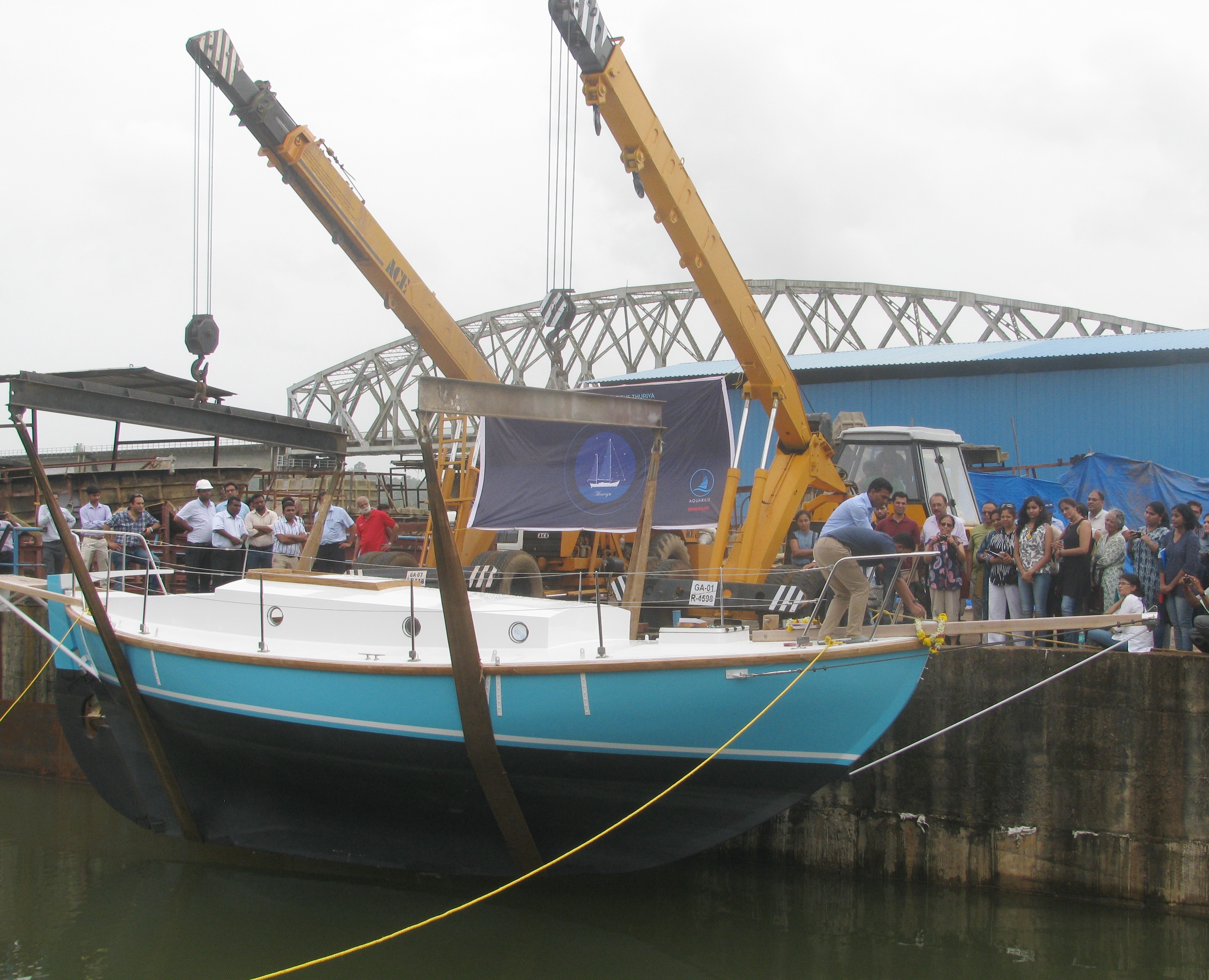
COUNTDOWN TO CAST-OFF: THE STORY OF TARINI BEGINS

Illustration: Shyam G Menon

The Indian Navy’s all-woman crew gets ready for a mid-August commencement of their circumnavigation trip

“ I am from a place surrounded by land and mountains. So, this is a dream come true for me,’’ Lieutenant Shougrakpam Vijaya Devi said.

Not far from the room she was in at the Ocean Sailing Node (OSN) of INS Mandovi, Goa, was the Mandovi River and further downstream, the estuary where the river met the Arabian Sea. Lieutenant Vijaya Devi, from the Indian Navy’s education branch, hails from Moirang Santhong Sabal Leikai in landlocked Manipur’s Bishnupur district. A post graduate in literature, she picked up sailing during her training days at the Indian Naval Academy in Ezhimala, Kerala. Good at handling Laser class boats; she was among those who participated in a selection process to be part of India’s first all-woman team of sailors attempting a circumnavigation in a sail boat. Lieutenant Vijaya Devi made the cut. She was selected. Late July 2017, she was one of five women officers at OSN (a sixth – Lieutenant Aishwarya Boddapati – was away for her engagement), busy getting everything ready for cast-off on the much awaited voyage.

Captain Atool Sinha, Officer-in-Charge, OSN, wanted the team to be all set by August 10. “ We are as per schedule for a mid-August departure,’’ he said. The voyage will have four stops – Fremantle in Western Australia, Lyttelton in New Zealand, Port William in Falkland Islands and Cape Town in South Africa.

Goa, late July 2017; five of the crew members of INSV Tarini on the deck of the yacht. From left: Lt Payal Gupta, Lt Cdr Pratibha Jamwal, Lt Sh Vijaya Devi, Lt Cdr Patarappalli Swathi and Lt Cdr Vartika Joshi (Photo: Shyam G Menon)

The idea of Sagar Parikrama was originally put forth by Vice Admiral Manohar Awati (Retd). To date, the project has seen the first Indian to successfully circumnavigate the globe (Captain Dilip Donde [Retd]) and the first Indian to circumnavigate the globe non-stop (Commander Abhilash Tomy). In interactions with this blog, Vice Admiral Awati had said that an Indian woman circumnavigating the world was always part of Sagar Parikrama. The navy got around to addressing this task once the solo non-stop circumnavigation was done.

Early December 2015, the INSV Mhadei – the Indian Navy’s sailboat with two circumnavigations and several long voyages to her credit – was tasked with a short trip. She was to proceed from her home base in Goa to Karwar; pick up materials needed for the upcoming February 2016 International Fleet Review (IFR) in Visakhapatnam (Vizag) and return to Goa. The iconic vessel had as its crew four woman officers – Lieutenant Commander Vartika Joshi, Lieutenant (now Lieutenant Commander) P. Swathi, Lieutenant (now Lieutenant Commander) Pratibha Jamwal and Sub Lieutenant (now Lieutenant) Payal Gupta. While Payal joined later, Vartika, Swathi and Pratibha had been the Mhadei’s crew since April 2015. They had started off their tenure by training in the basics of sailing at the navy’s facility in Mumbai followed by theoretical training in seamanship, communication, navigation and meteorology at Kochi. Following these stints, they had been at Goa, sailing the Mhadei, improving their sailing skills and getting to know the boat better. Besides supervised sailings and monitored ones, they took the boat out by themselves for short trips in the vicinity. In the initial phase, the all-woman crew was trained by Dilip Donde, a Commander then.

Goa to Karwar is a distance of approximately 40 miles by sea. Around 15:00 hours on December 8, the all-woman crew – with Lieutenant Commander Vartika Joshi designated as skipper – sailed the Mhadei out from Goa. Next morning 9.30 hours they reached Karwar. After picking up whatever was needed for the IFR, the Mhadei commenced her return leg to Goa on December 9, at 14.30 hours. December 10, 11.00 hours, the crew had the boat safely back in Goa. This voyage was executed fully by the all-woman crew; the first time they were completely in charge of the Mhadei. The second such voyage with all-woman crew handling the craft happened on the return from IFR, back to Mhadei’s base in Goa. This leg of the journey was also Lieutenant Vijaya Devi’s first outing in the boat at sea. In August 2016, the OSN was set up. Among other functions, the onus of training the all-woman crew for circumnavigation, rested with OSN. Following their return from IFR, the crew then took the Mhadei on a trip to Mauritius. This was followed by a trip to Cape Town and thereafter participation in the annual Cape to Rio Race. Two members of the woman crew, Lieutenant Commander P. Swathi and Lieutenant Payal Gupta, were included in the navy’s team for the race, which was led by Captain Atool Sinha.

The INSV Tarini (Photo: courtesy Indian Navy)

In the meantime, upcoming circumnavigation in mind, the navy had placed an order with Aquarius Shipyard (formerly called Aquarius Fibreglass) for a new boat, identical to Mhadei and based on the same Tonga 56 design by Dutch designer Van de Stadt. Once the all-woman crew reassembled after the sailings to Cape Town and participation in the Cape to Rio Race, they were assigned to oversee the construction of the new boat at the yard, as part of getting to know the boat that would eventually be their floating home for months during circumnavigation. On February 18, 2017, the new boat, named INSV Tarini, was inducted into service. She is identical to the tried and tested Mhadei, save upgradation in electronics (natural given the eight years that separate the two boats), some additional storage space and ergonomic improvements for better crew comfort. Dr Pratima Kamat, Professor of History at Goa University, had been associated with the naming of the Mhadei. According to the crew, her studies and writings inspired Tarini’s name too. Mhadei is the boat deity of the Mandovi River in Goa. Tarini draws her name from Odisha’s (formerly Orissa) Tara-Tarini temple in the state’s Ganjam district. The word Tarini means boat, it is also Sanskrit for saviour. There are also sculptural similarities between the Mhadei and Tarini deities.

In the world of boats, identical build does not however guarantee identical behaviour to the T. The materials used while constructing have to taste water and settle in. Every boat must be sailed in, tested and have its initial teething problems sorted out. A sense of its responsiveness must be had. For that, on March 3, 2017 – incidentally the anniversary of the Mhadei’s first sail too – the Tarini’s all-woman crew took her on her first voyage, a Goa-Mumbai-Goa trip. This was followed by Goa-Porbandar-Goa. Now it was time to try her out for rough sea conditions. The seas of the southern hemisphere can sometimes be a handful. The Tarini made for Mauritius. In July, she sailed back to Goa with the incoming south west monsoon; an act not as easy as it may seem in the imagination, for sailing with the wind without being totally at the wind’s mercy, requires skill. “ In downwind, the sail trim and boat’s feedback are less obvious than upwind. So one has to be very careful about keeping the boat balanced,’’ Lieutenant Commander Vartika Joshi, Tarini’s skipper, said. The later voyages of the Mhadei and all the voyages of the Tarini have been overseen by the Goa based-OSN. It is the OSN that will be nodal to upcoming circumnavigation too. On July 28, both the Tarini and the Mhadei were berthed alongside each other at the navy’s boat pool in Verem, Goa. One was a veteran of over 125,000 nautical miles sailed, two circumnavigations, 16 crossings of the Equator, six crossings of the Prime Meridian, two crossings of the International Date Line and a couple of Cape to Rio races, including the last one in which she surpassed her design speed to emerge one among a few boats finishing the race – all of this, in eight years of her existence to date. The other, was her younger twin, on the threshold of her first circumnavigation, the first leg of which would be from India to the seas south of Australia.

Sagar Parikrama continues; Mhadei seen from Tarini (Photo: Shyam G Menon)

“ That will be the first time as a team, we sail east on a major voyage. So far, we have always headed west,’’ Lieutenant Commander Vartika Joshi, said. Between the two – sailing east and sailing west – there are some differences. When you sail west, you mostly sail against wind and ocean currents. This is tough on the boat as it is getting constantly pounded. When you sail east, you sail with the wind and ocean currents. “ However during our first leg to Australia, we will have to sail against the wind and that would mean much pounding. After Australia, we would be entering the southern ocean that’s known for some of the roughest seas in the world. They say: beyond 40 degrees south, there is no law; beyond 50 degrees south, there is no God,” she said. Several weeks beyond Australia, past the Pacific Ocean and at the tip of South America, lay Cape Horn. In all of sailing, Cape Horn commands respect for it takes good sailing skills to traverse this stormy portion of the planet. Further at sea, it isn’t storms alone that worry. For a sail boat, windless days – those famous doldrums – can be as challenging as days with plenty of wind and waves. So just how well prepared is the navy’s all-woman crew?

One reason for the Mhadei heading west more often than she did east is that part of her refit used to happen at Cape Town. That’s where a lot of the maintenance work on her sails and masts get done. Go through the chronicles of this little boat and you will find Cape Town mentioned affectionately. Sailing westward with Cape Town among ports of call, therefore made sense. But south west and west are also good for training. The trips to Mauritius have served to an extent as introduction to the very northern periphery of the southern ocean. “ Besides, the Cape to Rio Race is ideal for training new crew,’’ Lieutenant Commander Vartika Joshi said. Lieutenant Commander P. Swathi pointed out how the Cape to Rio Race tested sailing skills on a smaller scale (as compared to circumnavigation); the dimension of a trans-Atlantic crossing. “ We got an opportunity to see all the sails of the Mhadei being used. We also changed sails in rough sea conditions,’’ she said. The longest the all-woman crew has sailed yet is 44 days. “ That,’’ Lieutenant Payal Gupta said, “ approximately matches the longest stretch of sailing at sea we will tackle on the circumnavigation.’’ According to Lieutenant Commander P. Swathi, although the crossing of the Pacific Ocean and Cape Horn to Falkland Islands beyond may appear the longest stretch of circumnavigation for any layperson staring at the atlas; that is not the case for an Indian circumnavigator starting off from the country’s west coast. It is the first leg to Australia that is the longest bit. “ But then the best of estimates in terms of how many days you need to tackle a given stretch, go for a toss if you face bad weather or windless days,’’ she said. Then she recollected reflectively something Captain Dilip Donde, told them from his experience: you can prepare and prepare but then one day, you must cast off prepared to face what comes your way. “ I think we are all excited about the upcoming voyage,’’ Lieutenant Commander Vartika Joshi said. Her colleague Leiutenant Commander Pratibha Jamwal added, “ If you add up all the sailings we have done since reporting for duty as all-woman crew, it is just a shade short of the length of a circumnavigation.’’ The real deal, now beckons.

The crew of INSV Tarini. In front: Lt Cdr Vartika Joshi. Back (from left): Lt Cdr Patarapalli Swathi, Lt Sh Vijaya Devi, Lt Payal Gupta, Lt Aishwarya Boddapati and Lt Cdr Pratibha Jamwal (Photo: courtesy Indian Navy)

Late July, the sun played hide and seek in the monsoon grey-sky above Goa. Occasionally it rained. At the navy’s boat pool, the Tarini was a picture of serenity. She bobbed up and down gently on the Mandovi, at times straining at her anchor ropes; the Mhadei berthed alongside served as rim of protection. The interiors of the new boat were identical to her older twin. A box of machine tools sat on a table; the table’s edge sporting a heavy steel vice, both intended for any technical work the crew may have to do. The boat will be the all-woman crew’s home for several months as they sail around the Earth. “ If we set sail by mid-August as hoped for, then we should be back in India sometime in April 2018,’’ Lieutenant Commander Vartika Joshi said. For the duration of that time, it will be the crew’s responsibility to keep their floating home shipshape and in good condition. “ It is true that each one of us have our strong points. But at any given time two people will be on watch and the others may be resting. This is done taking turns. There is no way you can stay comfortable knowing just your strengths. Each of us must know everything about the Tarini; how to keep it running properly,’’ Lieutenant Commander Pratibha Jamwal said.

Bougainvillea is a plant seen in many parts of India, including Goa. It has flower-like spring leaves near its flowers. The plant gets its name from the French admiral and explorer, Louis Antoine de Bougainville. The plant, a native of South America, was discovered during a voyage of circumnavigation undertaken by the explorer. What makes the plant interesting for this account is that Bougainville’s circumnavigation trip also saw the first reported circumnavigation by a woman. Jeanne Baret, although enlisted as valet and assistant to Philibert Commercon, the botanist who named the colourful plant, is also known to have been his housekeeper and likely, mistress. Since women were forbidden on French navy ships at that time, she came aboard dressed as a man. In that guise, she became the first woman circumnavigator, modern history speaks of. A glance through Wikipedia’s list of circumnavigations is enough to tell you how few and far apart circumnavigation by women have been. After Jeanne Baret’s instance in 1766-1769, the list’s next woman is Krystyna Chojnowska-Liskiewicz of Poland who in 1976-1978 became the first woman to do a solo circumnavigation. Close on her heels is Naomi Christine James of New Zealand accomplishing the first solo circumnavigation by a woman via Cape Horn, in 1977-1978. A decade later, in 1988, you have Kay Cottee of Australia who completed the first solo nonstop circumnavigation by a woman. Compared to this, on the male side of seafaring, the first circumnavigation stands to the credit of Ferdinand Magellan’s voyage over 1519-1522 (completed under the command of Juan Sebastian Elcano following Magellan’s death in the Philippines); the first solo circumnavigation is accomplished over 1895-1898 by Joshua Slocum and the first solo nonstop circumnavigation by Sir Robin Knox-Johnston in 1968-1969. Nearly 250 years separate the first circumnavigation and the first circumnavigation by a woman; that too, a woman who had to dress up as man to circumvent gender barriers governing entry to navy ships then. Circumnavigation is among the longest voyages out there. It is a test of skill and endurance. A team of Indian women setting out to circumnavigate the world will no doubt be keenly watched by nation and its navy.

Illustration: Shyam G Menon

Two of the all-woman crew, Lieutenants Payal Gupta and Vijaya Devi, are from the navy’s education branch. They looked forward to sharing their experiences at sea with their students. Years ago, when Sagar Parikrama was conceived by Vice Admiral Awati, this knowledge-sharing was to be among intended outcomes. Embedded in the mission was the goal to make stronger the Indian sailor’s comfort with voyages of long duration at sea. Captain Dilip Donde set a benchmark with the first circumnavigation by an Indian; Commander Abhilash Tomy set it higher with nonstop circumnavigation. The OSN seeks to build further on this track record. An all-woman crew is now set to embark on circumnavigation. It is a sign of sailing in India acquiring true dimensions at last, even as the sport continues to be a niche activity despite 7500km-long coastline. The sea is a great teacher. “ People and lives change at sea,’’ Captain Atool Sinha said. OSN, the organization he heads, aims to promote ocean sailing amongst naval officers. I asked Lieutenant Commander Vartika Joshi if the ` woman crew’ tag attached to the Tarini’s upcoming expedition and all the judgement and expectations that accompany it, weighed on her mind.

“ No, I don’t think about it. To the sea, gender doesn’t matter,’’ she said.

(The author, Shyam G Menon, is a freelance journalist based in Mumbai. For previous articles on Sagar Parikrama please click on `Sagar Parikrama’ in the categories section of the blog.)
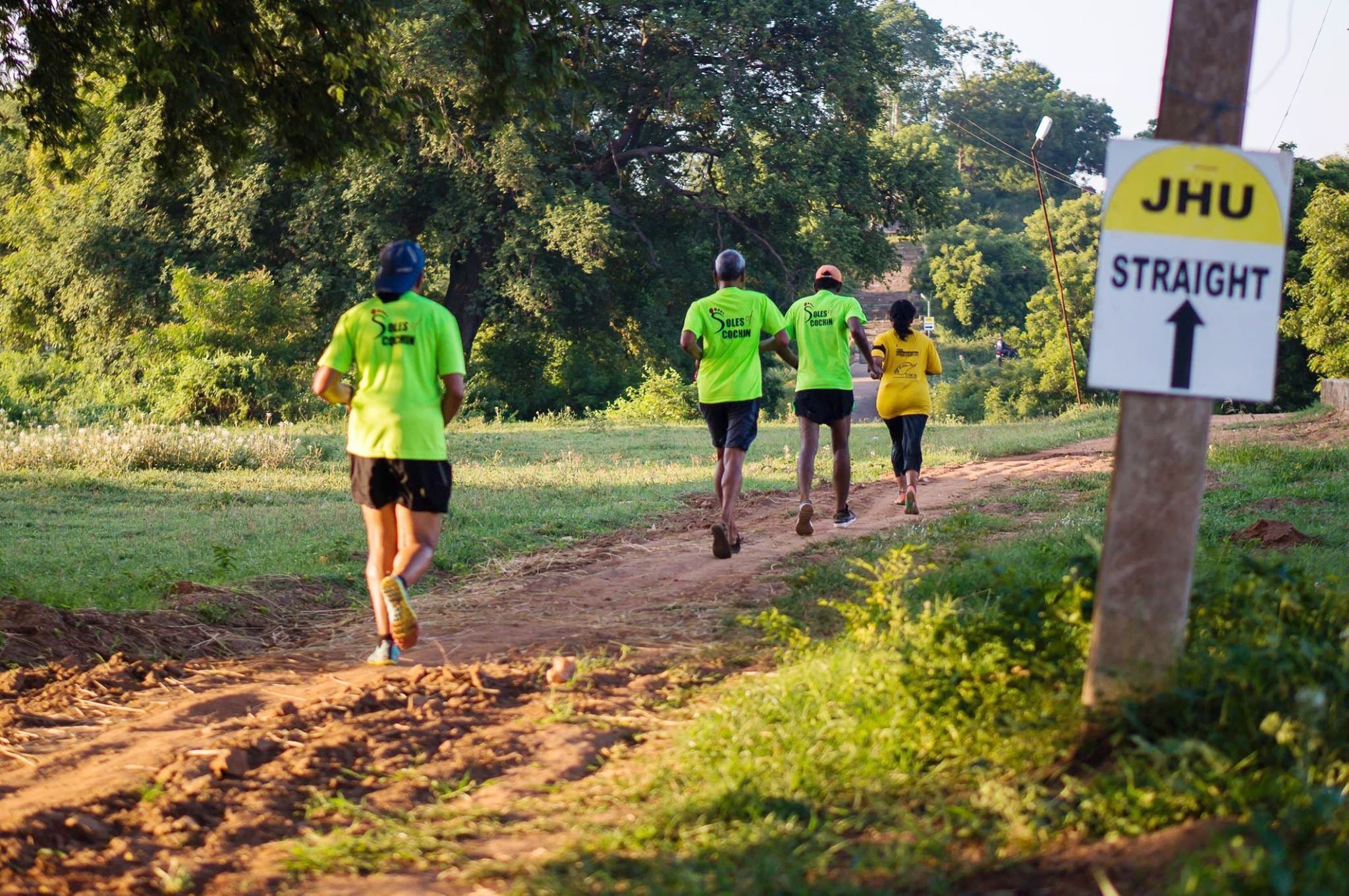
“ PAULETTAN’’

Paul P.I (Photo: Shyam G Menon)
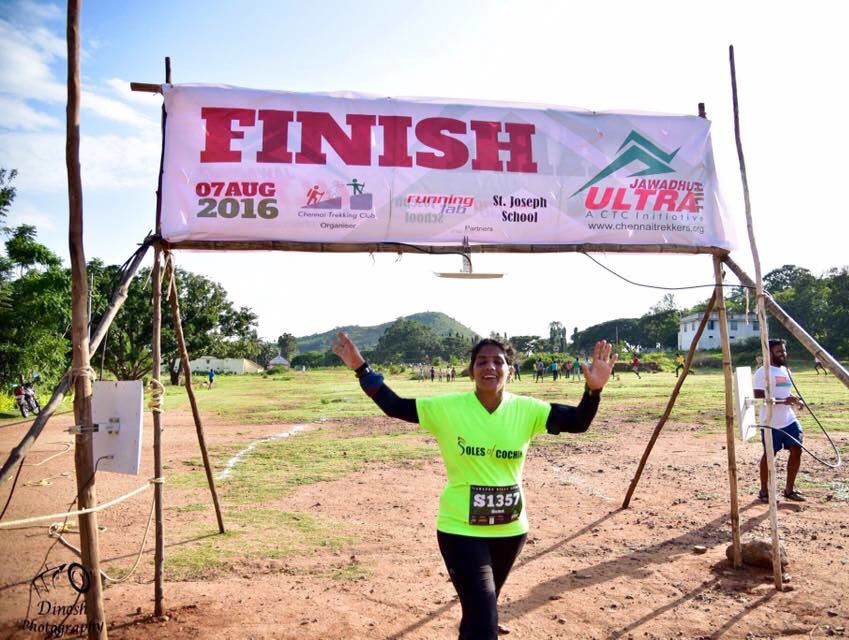
For long, Kochi has been synonymous with Kerala’s major port, backwaters and the export end of the region’s spice trade.

Sitting in town you wouldn’t imagine hilly terrain in the distance, unless you notice the stuff of Kochi’s historically famous commerce as ` hill produce’ and venture to find out where it’s coming from. One aspect of Kerala’s uniqueness, little appreciated amid all the consumerist excess being stuffed in, is that it is a narrow strip of land sandwiched between the sea and a spine of hills, about 500 km long. Even at the state’s widest part, in a couple of hours of travel, you can be at modest elevation from sea level and vice versa. In tapering portions like Thiruvananthapuram district, the hills are still closer. The high ranges don’t manifest suddenly. Between the lower lands with their backwaters, and the highlands, there is the portion signifying transition. Tucked in the south east part of Ernakulam district (where Kochi is), Neendapara in Kavalangad panchayat is part of the geography signaling the higher hills of Idukki district beyond. In Kerala, the predominantly hilly districts of Idukki and Wayanad are known for their distance runners.

From the 2016 Dream Runners Half Marathon in Chennai (Photo: courtesy Paul P.I)

“ Neendapara – that’s where I grew up,’’ Paul P.I said at his house in Kundanoor in the Kochi suburb of Maradu. Our appointment had been fixed closer to noon for the retired Kochi port officer had a long run that morning. The directions to his house were precise, distances conveyed accurately as only runners do. Still I lost my way. How can I screw up despite such clear directions? Maybe my running days are over and I no more see like a runner? – I thought; wrong Mr Paul before me, listening to the description of person I sought. “ Sure I am Paul but Paul who runs, he stays over there,’’ the helpful man said. On the steps leading to the house I next went to, was a pair of Vibram Five Fingers. This is it – I knew. Paul was born one of six children; his father, a contractor, died 30 years ago in a road accident. Neendapara is a hilly place. Paul’s family owned land. Tending it was a team of agricultural workers. Given that the workers did their daily work at scattered locations on the land, Paul remembers walking up and down the terrain to give them food. Those were the late 1950s. Road connectivity in the state wasn’t as much as it is today and Neendapara tucked away from better known Kochi and on the approach to the hills of Idukki, wasn’t exactly priority for public infrastructure. Paul attended school in Neriyamangalam eight kilometers away. He recalled that his tenth standard exams were a further 12 km away. School was his introduction to athletics; he used to run in 100m and 200m races. For pre-degree, Paul turned to Nirmala College in Muvattupuzha, a major town in the region.

From the 2015 Spice Coast Marathon (Photo: courtesy Paul P.I)

His father wanted Paul to be an engineer. Unfortunately, the youngster failed to clear one of the subjects in college. That failure hit him hard. He desperately wanted to fulfil his father’s wish. “ I joined Thyagaraja Polytechnic near Thrissur. It was the only option available to me to stay close to the engineering line. At the polytechnic, I studied well,’’ he said. Alongside he also kept his interest in sports alive. He used to participate in 5000m and represented the institution at inter-polytechnic sports meets. An active person, he also played hockey, basketball and that game once very popular in Kerala and since near vanished – ball badminton. Probably because Indian polytechnics have always been a poor cousin to mainstream colleges with their academic halo, there was none to train him for the 5000m. He had no coach. He figured out his own path. “ I was crazy about hockey and by my third year was captain of the polytechnic team,’’ Paul said. Before hockey sessions, he would run several rounds of the playing field to keep both interests – hockey and running – happy. After securing his diploma from the polytechnic, he joined Cochin Port Trust (CPT) as a tracer, precursor to being draftsman. Alongside, he also enrolled for the AMIE course in engineering offered by the Institution of Engineers (India). He passed this program, specializing in civil engineering. Given his new qualification, Paul moved to being a junior engineer at CPT. However his further promotion was delayed and stuck in litigation. For seventeen years he stayed a junior engineer. Eventually he won the case and was promoted with all arrears paid. “ I retired as superintending engineer,’’ Paul said.

At the 2016 Javadhu Hills Ultra (Photo: courtesy Paul P.I)

With Ramesh Kanjilimadhom; from a regular Soles of Cochin run near CUSAT in Kochi (Photo: courtesy Paul P.I)

Willingdon Island is the largest artificial island in India. Envisioned by Sir Robert Bristow, it is home to Kochi’s port and naval base. For many years, when he was with CPT, Paul stayed on Willingdon Island. He used to run every morning on the island. In 1999, he moved to Kundanoor on the mainland and took to running up and down the nearby bridge. Six years later, in 2005, he had a temporary setback. He suffered a road accident that left him with multiple fractures on one leg. Surgeries were needed and for a year till the rod that had been inserted into the shin was removed, he had to refrain from hard physical activity. Once the rod was taken off, he slowly got back to running. The legacy of that accident is still visible on Paul’s leg. In 2014, the Cochin Corporation organized the Cochin International Half Marathon. Paul was the only CPT employee running the half marathon besides the CPT Chairman. Paul completed the run in 2:35. Word got around of the port employee who completed a half marathon. Willingdon Island houses a whole port ecosystem. Not far from Paul’s office was the office of the Customs. Customs officers, Vijayan Pillai and Naushad Asanar were regular runners, who were also members of Soles of Cochin. They dropped by at Paul’s office to get him into Soles and enroll him for the first edition of the Spice Coast Marathon organized by the group. Paul enrolled for the marathon almost immediately. Naushad remembered that instance well. “ He enrolled offline. So I had to meet him later and collect the fee,’’ Naushad said. In November 2014, Paul ran the full marathon of the event, completing the course in 6:11. “ That was the first time I knew of such distances in running and distance runners who train dedicatedly to run the distance,’’ he said. Despite Kerala’s known strength in athletics at the all India level, Paul’s comment should not surprise. A peculiar aspect of the state’s athletics is the wall that exists between elite athletics and amateur pursuits, which are recreational in nature. Movements around the latter genre – like Soles of Cochin – are happening with considerable lag in Kerala compared to the pace at which the state earned a name in elite athletics.

From the Moolamattom to Vagamon run, which Paul organized for Soles of Cochin (Photo: courtesy Paul P.I)

In December 2014, on turning 60 years of age, Paul retired from service. In July 2015, he formally joined Soles of Cochin where he would subsequently become popular as “ Paulettan,’’ `ettan’ being a quickly said version of the Malayalam word `chettan’ meaning elder brother. Upon joining Soles, Paul’s running became more systematic and regular. “ I started running at least 50 km every week,’’ he said. Paul described a typical week with Soles. Sunday would be a run of 8-10 km, from the Kadavanthara stadium to the Kaloor stadium and back. On Tuesday, they would run 10-12 km from Edappally to the Cochin University of Science & Technology (CUSAT) via Thrikkakkara. Thursday featured hill running; the runners would proceed from CUSAT to the HMT factory and onward to the local medical college before returning to CUSAT. “ That would be around 10-12 km,’’ he said. On Saturday, the runners would start at Edappally and proceed sometimes to Thrippunithura, logging a distance of 21-25 km. “ With all this, I now run 60-70 km every week,’’ Paul said. According to Naushad, Paul was initially reluctant to join a runners’ group. He shied away claiming he didn’t run much. Invited to come along for a Sunday run, he cited his Sunday appointment with the church for excuse. Then he turned up for a run but wasn’t seen thereafter. “ Once he returned, he has been a regular at the group’s runs. Not just that, Paul is a very good organizer. There was a run we planned at Moolamattom and Paul took care of it completely by himself. Almost 100 people enrolled for that run, of which, nearly 80 turned up to run,’’ Naushad said.

From the 2016 Night Owl; 12 hour-run on Willingdon Island organized by Soles of Cochin (Photo: courtesy Paul P.I)

Shortly after he joined Soles, Paul ran the full marathon at Hyderabad finishing it in 5:35, a significant reduction in timing from the 6:11 of the 2014 Spice Coast Marathon. Then, “ Paulettan’’ began catching up on lost time. In 2016 he ran over a dozen full marathons, including an ultra. January 2016 was especially hectic. On January 3 he ran a full marathon in Salem. A fortnight later, he ran the full marathon at the Standard Chartered Mumbai Marathon (SCMM). Five days later, he was running the full marathon in Dubai and on January 31, he was in Chennai running the Wipro Chennai Marathon. Paul ran in the 60-65 years age category. He wasn’t getting any podium finishes; it was purely the love to run that kept him going from one event to the next. As of July 2017, the time we met for a chat, the retired engineer had run 19 full marathons since his first one in November 2014. He had also finished 24 half marathons. Of the 19 full marathons, three were ultramarathons – the Chennai Trail Ultra (50 km), the Javadhu Hills Ultra (75 km) and the Munnar Ultra (72 km). He said he owes much to the guidance he received from Ramesh Kanjilimadhom, among Kochi’s best known amateur runners and a founder member of Soles. In December 2016, Paul found mention in local newspapers for running 62 miles on his 62nd birthday, from the CPT office on Willingdon Island in Kochi to Neendapara, where he was born. “ It was fully backed by Soles of Cochin. There was a support car and other runners to keep me company,’’ he said. Running also gave him good friends. He remembered Hema Menon, at the time of writing this article, working in Thiruvananthapuram. Of the 19 full marathons he had run, 16 were with Hema, he said. Paul also ran `Night Owl’ a 12 hour-running event from 6PM to 6AM, organized by Soles.

Paul (back row, fourth from right) with his friends from Soles of Cochin (Photo: courtesy Paul P.I)

Looking ahead, he was planning to run the 100 km race at Javadhu in August 2017 and the 110 km race at the Malanadu Ultra in Chikkamagaluru. There is also the Vagamon Trail Ultra, which Soles is organizing and hopefully, a shot at Globeracer’s ` Run the Rann’ in February 2018. He had also registered for full marathons at Hyderabad, Bengaluru, Goa and Chennai. Such a schedule naturally brings up the question of injury. Paul has so far been free of any major injury sustained through running, except for a sprain during a half marathon in Coimbatore, which he got over in two months. However, cure for that was not easy. Exercise didn’t work. Disappointment gathered as others ran and he couldn’t. Then he approached a kalari (kalaripayattu is Kerala’s traditional martial art) center in Thrippunithura. Given they deal with martial arts for which one’s body must be kept adequately flexible, kalari centers have long had a local reputation in healing.  “ They gave me an oil massage for one hundred rupees and asked me to run the next day and report back. I had no problems thereafter,’’ Paul said, adding, many runners still find his story hard to believe. “ He is not like the rest of us. He is quite a hardy person,’’ Naushad said. Paul is also into yoga. “ At Soles, we have a runner and yoga teacher in Rajappan. Once a week he takes classes for us. I do yoga thrice a week,’’ Paul said. He follows no special diet but makes sure to stretch after every run. “ I don’t remember when I last saw the doctor,’’ he said encapsulating what running had done for him. According to Paul, he, Rajappan and Mathew Mapram (based in the US but reaching Kerala every year to run with his friends) are a prominent trio of senior citizens into running at Soles. Paul’s personal best in the full marathon was 4:56, set at the 2016 Run of Raramuri Tribe (TROT) in Bengaluru. Along the way, a few podium finishes have been there – there was a second place in his age category at a half marathon in Mysore; there was a third in a 10 km-race in Mangaluru. But he doesn’t care about winning. Podium is not why he came into running. He likes to run; period.

From the birthday run (Photo: courtesy Paul P.I)

Paul has three children; they live in Kochi and Bengaluru. Running the marathon in Bengaluru is a fine way of visiting his children settled there. However, as yet, he is the sole runner in his family. Initially they were opposed to his new found craze for running. Slowly the opposition faded and the family has since got used to the avid runner in Paul. In the way they initially reacted to running, his family wasn’t alone. It probably reflected a larger streak in Kerala, where doing something for no particular reason or achievement finds few fans. “ In the early days, people at large used to be critical of the amateur running scene. It was so till media made a difference,’’ Paul said. That 62 mile-run on his 62nd birthday was among things helping link people to runners. “ As news of the run was already out, I was offered cake by local people at several places I passed through,’’ he said. Asked why he was running, he would say that it was to spread awareness on distance running and to highlight the fact that age is just a number. That said, he conceded there is an unfortunate gap between serious athletics and the general population in Kerala. The state’s achievements in athletics hasn’t inspired a corresponding popular interest in the field that sees amateurs trying their hand at running, or those who do, being appreciated for the effort. Outfits like Soles of Cochin offer hope.

(The author, Shyam G Menon, is a freelance journalist based in Mumbai. Timings at races are as provided by the interviewee. Except the first photo, the rest have been provided by Paul or downloaded from his Facebook page and used with his permission.)                

“ I DON’T THINK THE COMBINED FORMAT IS A GOOD IDEA’’ – ANNA STOEHR

Anna Stoehr (Photo: courtesy Anna / photo credit: TVB Innsbruck)

You cannot talk of women’s climbing in recent years; be it competition climbing in general, the World Cup series of the International Federation of Sport Climbing (IFSC) or women in bouldering, without mentioning the name of Anna Stoehr. The Austrian climber, veteran of several wins at top climbing championships (she is a double world champion, double European champion and winner overall of the world cup in bouldering, four times), was away in South Africa, when this blog approached her with a request for interview in June 2017. That trip done, she responded: 

Can you tell us something about the recent climbs you did in South Africa?

We mostly climbed in areas that have been developed over the past years. My last visit was four years ago and a lot of development has happened since. We also brushed some boulders and did a couple of first ascents. Other than that I also climbed some classics which I had not done before, in already established areas.

You are one of the most experienced athletes on the competitive climbing circuit, including the IFSC World Cup and World Championship. What has kept you going in that circuit for so long? What do you like about it?

I always enjoyed competing- the excitement, thrill and nervousness are very special. I like the mental challenge of competitions as well as traveling the world with the Austrian climbing team and fellow competitors from all around the world.

Within the three main disciplines of climbing (lead, speed and bouldering), why did bouldering become your favorite? What attracted you to bouldering?

As a teenager I used to boulder, mostly outside. I was immediately quite successful in this discipline. But I also climbed at lead competitions and even did a few speed competitions when I was younger. In my opinion bouldering is much more creative than lead climbing. It is so complex and unique that you never find the same move again and you have to adapt very fast to different circumstances.

Games and team sports are more popular in India than individual pursuits like athletics or track and field. How popular is climbing in Austria? What brought you to climbing and did you have all required infrastructure to grow in the sport, available locally?

Climbing was not at all popular when I started. Nobody in my high-school class knew what it was. But that is exactly why I liked it so much from the beginning: It is not a mainstream sport and I always liked being outside. Climbing has become a way of life for me. Innsbruck has just opened a huge gym- so nowadays the infrastructure is perfect. Back in the days we may not have had the best infrastructure but we had the best team spirit and that is why we (Kilian, David, Jakob*, myself) were so successful.

Anna Stoehr climbing “ Steppenwolf” V13 (Photo: courtesy Anna / photo credit: Alfons Dornauer)

The perception in India is that without good climbing infrastructure here, we cannot hope to excel in the sport. For example: every year new types of holds and features are introduced overseas, which Indian climbers get to see for the first time only when they are at an international competition.  How do you address challenges like lack of familiarity with the latest trends in climbing infrastructure? If as you said, lack of world class infrastructure couldn’t keep you down, can you explain how you and your team mates used to work around that problem? 

I think it is definitely an advantage if you have good infrastructure. But it is not the only factor that matters. We worked around the lack of infrastructure by buying holds overseas. When we were at competitions in Japan or the USA, we always bought holds and brought them back to our gym. Even if big volumes were not possible due to the size of the wall, we brought holds and tried to adapt. We also made up for any inadequacy in infrastructure by having a big and very motivated climbing community, who pushed each other a lot.

If you were to be a talent scout looking for promising climbers who can be groomed for international competitions, what qualities would you look for in a prospective candidate? 

I think you can see a promising climber by the way he / she moves. There are differences in technique that can be seen from the outside, but of course there is a long way to go.

You have been winner of international climbing competitions and championships several times. Can you give us an idea of the level of commitment and dedication to the sport it took to reach you to the level of excellence you possess in climbing? When did you shift to being a full time climber, how many hours of training did you put in on a daily basis?

I have always been very dedicated. But I did not limit myself too much doing so because in order to be successful I need to be happy as well. I am not happy if I cannot see my friends because I am training too much or if I do not eat chocolate (for example). I became a full-time climber only one year ago, when I finally finished my university degree. I train five times a week, three hours per session if I climb inside. If I climb outside I climb all day.

You have had a fairly long and distinguished career in the sport, including in competition climbing. How did you sustain your enthusiasm for the format; how did you tackle injuries? When you did not perform well, what did you do?

For the past few years I have had problems with my fingers. That is why I am not doing the whole bouldering World Cup circuit anymore. It is too risky and I would not have enough time to climb outside. Nevertheless I am still competing because I actually like it a lot and I think it is fun! When I did not perform well I was upset at first, but then remembered why I was there in the first place. Competing is about joy – trying to solve a problem and being able to succeed eventually. You won’t be able to try and climb on world cup style boulders set by professionals every day. So it is better to enjoy the process.

Anna climbing “Meadowlark Lemon” V13 (Photo: courtesy Anna / photo credit: Kilian Fischchuber)

Given you have spent so many years in the competition climbing circuit, would you care to name some of the strongest climbers you have been up against? Are there any names in particular that you choose to remember because you learnt something from them?

I think we can learn from so many people. They do not have to be the best. I really enjoy learning from people who climb well; people having great technique, coordination and a dynamic style of climbing. I have been able to compete with so many talented women, who inspire me; be it Akiyo Noguchi’s never-ending motivation, Miho Nonaka’s great style, Olga Bibik’s dedication, Jule Wurm’s pure joy, Melissa LeNevé’s ability to not let go or Shauna Coxsey’s flawless performance.

As climber on stage how do you handle the competition around you? From what do you draw the energy to perform and compete?

I think as a climber you compete against the wall. You have to climb well in order to place well and not look at other athletes’ performances.

Which has been your finest moment on the competition climbing circuit so far? Which was your real low point?

Finest moment was winning the European Championship title in 2013 alongside my partner Kilian Fischhuber. My real low was getting injured before the World Championship in Munich in 2014 and not being able to compete.

Which has been the toughest title you won and why?

My toughest title is yet to be won.

Are you happy with the format of climbing chosen for the Olympics, wherein the best athletes across all three disciplines of the sport get medals? What is the format you personally prefer?

No not at all. I don’t think the combined format is a good idea. I personally prefer to have three gold medals, one for each discipline.

Given you still participate in climbing competitions do you look forward to being part of an Austrian Olympic squad in the year climbing makes its debut at the Olympics? Do you plan to try and qualify for the Austrian Olympic team when the time arrives?

I will definitely not compete at the Olympics.

Anna Stoehr (Photo: courtesy Anna / photo credit: Kilian Fischchuber)

In your eyes is it important that sport climbing be included in the Olympics? Or, is the sport doing well the way it is?

I think for some federations and athletes it is very important. Public funding sometimes depends on being an Olympic sport. I think I was very fortunate that I was able to compete in the Austrian team, because our federation is doing well and was always able to support their athletes.

Would you like to channelize your experience in competition climbing to be a coach for youngsters aspiring to compete?

Yes I would definitely like to work with youth at some point. I find it very inspiring to see the younger generation.

Away from competitions, you have done tough climbs on natural rock. Going ahead how do you plan to grow this side of your life?

I always enjoyed climbing outside, be it bouldering or sport climbing. One day I will stop competing but I will always climb on rock!

Do you have any plans to visit India for climbing?

Not yet.

*Jakob Schubert was part of the Austrian team, which participated in the 2017 IFSC World Cup in Bouldering held in Navi Mumbai, India.

(The author, Shyam G Menon, is a freelance journalist based in Mumbai. Please note: in the caption of photos showing climbing, the name in quotes is the name given to the boulder by climbers and the alphabet and number following it immediately signifies the grade of climb / difficulty.)

RAAM: FIRST INDIAN SOLO FINISH BECOMES A REALITY

Srinivas Gokulnath (This photo was downloaded from the cyclist’s Facebook page / no copyright infringement intended)

Srinivas Gokulnath and Amit Samarth have completed the Race Across America (RAAM).

They are the first Indians to finish within the official cut-off time in the solo category. According to reports, Srinivas completed the race in 11 days and 18 hours while Amit took 11 days and 21 hours. Solo cyclists have to finish the race within 12 days.

The third Indian participant in the solo category, Samim Rizvi, unfortunately ended up Did Not Finish (DNF).

India had its first proper completion of RAAM in 2015, when Hitendra Mahajan and his younger brother, Mahendra Mahajan – both of them doctors from Nashik – registered a successful finish as a two person-team. This year – 2017 – is the first time the country has solo finishers at RAAM. In 2011, Samim had managed to cycle the whole distance of the race but finished just outside the official cut-off limit of 12 days. The 2017 attempt was Samim’s fourth time at RAAM (for more on Samim please try this link: https://shyamgopan.wordpress.com/2017/05/23/chasing-a-10-day-raam/)

In the team category at the 2017 RAAM, one of the entrants was Sahyadri Cyclists. While the cyclists were four – Rajendra Nehete, Ramakant Patil, Sandeep Shewale and Pankaj Marlesha, the support crew included the Mahajan brothers with Hitendra Mahajan listed as crew chief. At the time of writing this article, they were past 3036.1 miles. Also continuing in the race was Andre Kajlich, the first handcyclist to qualify for the solo category in RAAM. He had covered 3021.9 miles.

RAAM is among the most punishing endurance races out there not just in cycling but across sports. Unlike the more popular Tour De France, RAAM does not feature daily stages. It proceeds at one go with the overall cut-off time, differences in terrain (the total climbing at RAAM aggregates to 170,000 ft), variations in weather and distance – a ride right across the United States – making it terribly challenging. Aside from riders managing their need for rest, there are no assigned rest days in this race. Simply put, RAAM is 30 per cent longer than Tour De France and has to be finished in roughly half the number of days (that said, Tour De France is a more intensely competitive athletic experience despite the lesser number of hours cycled every day. A reader of this blog pointed out, “ the athletic demands of a 3 week-Grand Tour are far greater, and intense, than those of RAAM, which whilst extremely tough is much more of a consistent effort dependent on managing one’s endurance resources.” There is thus, disparity in the physical demands of the two events making comparison difficult and potentially misleading). DNFs are common; even reputed cyclists including those with considerable experience at RAAM, succumb to it. This year one of those who had to DNF was 57 year-old Seana Hogan, among the most successful RAAM champions in history with six wins in the women’s category. She won it in 1992, 1993, 1994, 1995, 1997 and 1998 with timings that were at times better than what was registered by many in the men’s category. Her 1995 record of 9 days 4 hours and 2 minutes remains still the fastest solo finish among women. A RAAM legend, 2017 was Seana’s eleventh attempt. This year, the winner in the solo category for women was Sarah Cooper of the US.

Amit Samarth (This photo has been downloaded from the cyclist’s Facebook page / no copyright infringement intended)

The fatigue caused by near non-stop cycling could be felt by those remotely tracking RAAM via Internet. While the 1000 mile-mark was quickly reached by the leading group of cyclists – including Amit and Srinivas, the passage from 1000 miles to 2000 miles and beyond, seemed to take ages. An exception was Christoph Strasser who won the race this year. His progress was almost steady (for the update posted at the time Strasser crossed the finish line, please click on this link: https://shyamgopan.wordpress.com/2017/06/22/raam-christoph-strasser-wins-again-amit-and-srinivas-are-past-the-2250-mile-mark/).

When San Diego based engineer, G. Rajeev met Amit Samarth at the start of the 2017 RAAM as part of contributing a spot report for this blog, Amit had told him that he had previously crewed for Siena Hogan. In tough endurance races like RAAM, the support crew matters as much as athlete. A post on RAAM’s Facebook page said that Amit’s crew for 2017 appeared a family affair. The crew included his mother and wife; his seven year old-son was also along for the trip in the support vehicle, the post said. Besides being a cyclist, Amit is also a triathlete; in December 2016 it was reported that he had completed a full Ironman in Australia.

For Srinivas Gokulnath, 2017 was his second shot at RAAM. According to a 2016 news report ahead of his participation in the 2016 RAAM, Srinivas is a senior medical officer serving at the army’s artillery center in Nashik. A specialist in aerospace medicine, the Lt Colonel had earned a place in the Limca Book of Records by cycling from Leh to Kanyakumari in 15 days and 22 hours in 2014. His hometown is Bengaluru. In 2016, he gave up his attempt at that year’s RAAM at Oxford, Ohio after cycling 2460 miles (3959 km) in 11 days. As per information available on the Internet, his support crew for 2017 was headed by Chris O’Keefe (he completed RAAM, second in his category in 2016). Others in the crew included Srinivas’s wife Prafulla, his coach Alberto Blanco and Venkatesh Shivarama of the Bengaluru based-Wheelsports (for an earlier article featuring among others, Venkatesh, please try this link: https://shyamgopan.wordpress.com/2013/08/24/cyclings-second-youth/). A video featuring O’Keefe, on RAAM’s Facebook page, mentioned that Srinivas faced problems on day two of the race but had since clawed his way out of it.

Christoph Strasser, who won RAAM this year, is one of the best known cyclists associated with this event. He has won RAAM thrice before and holds the record for the fastest time – 7 days, 15 hours and 56 minutes. Away from RAAM, according to Wikipedia, he also holds the record for the maximum distance cycled on a road bike in 24 hours – 556.856 miles (896.173 km).

UPDATE: Team Sahyadri Cyclists has completed the race. They finished in 8 days, 10 hours and 16 minutes. At the time of writing this update, Andre Kajlich had covered 3106.9 miles.

(The author, Shyam G Menon, is a freelance journalist based in Mumbai. For the spot report from Oceanside, the starting point of RAAM, please click on this link: https://shyamgopan.wordpress.com/2017/06/17/2017-raam-gets-underway-a-spot-report/)