WHEN PRIZE MONEY DRIES UP

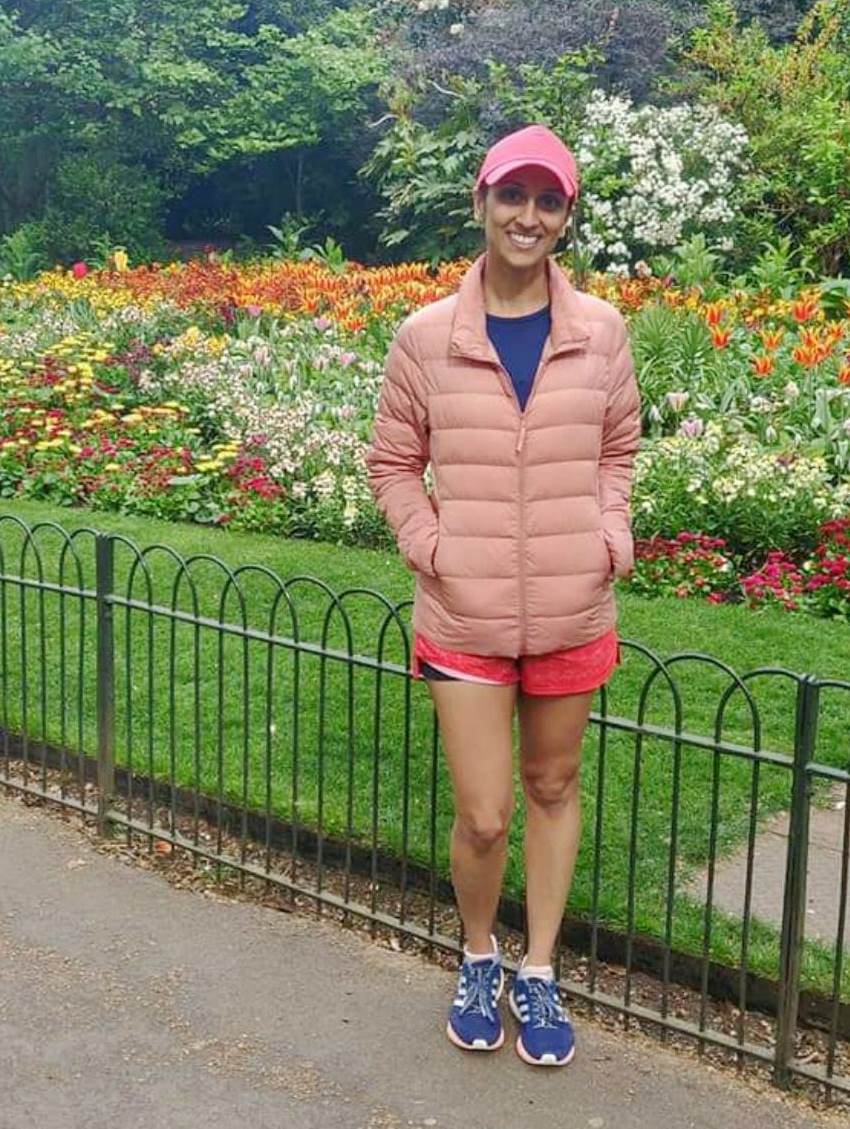
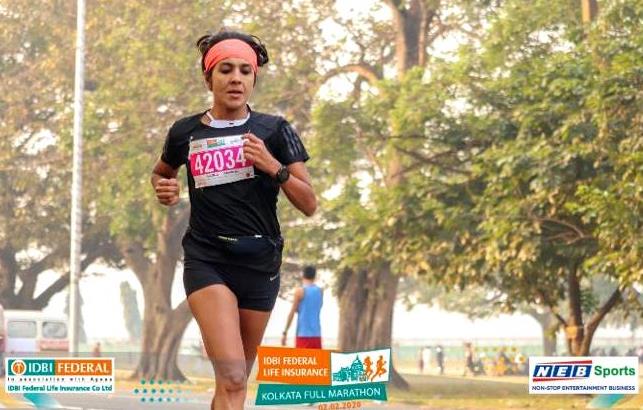
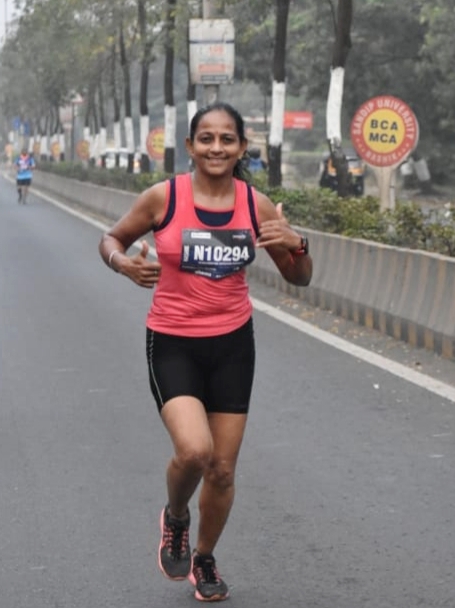
Pratibha Nadkar (Photo: courtesy Pratibha)

Road races have been cancelled or postponed due to COVID-19. Lockdown has meant challenging times for those who counted on races to win prize money and augment their income. For them, racing wasn’t just recreational running; it was part of livelihood.

Amateur runner Pratibha Nadkar had a cracker of a running season over the past six months. According to her, of the 28 events she participated in, she secured podium finishes in her age category at 26.

For Pratibha, the prize money translates into a a few months of reasonably good earnings. She depends mainly on prize money to survive. A resident of Mumbai, Pratibha started running little over three years ago. She started with runs over five and ten kilometers and then gradually progressed to longer distances. She followed a hectic training and racing schedule until the lockdown to combat COVID-19 forced her to stop running on the roads. Confined to her tiny quarters in a settlement in Chembur, Mumbai, she now follows online training sessions. “ In terms of money, I am comfortable for the next two months. I do not want to think about the scenario of an extended lockdown,’’ Pratibha said early April 2020. Even if the lockdown ends she could be staring at challenging times for there will be a time lag before races commence afresh.

Pratibha was a middle-distance runner during her school days at Ahmednagar. She ran distances of 800, 1500 and 3000 meters. “ I went up to national level but once school was over, my sporting activity came to a halt,” she said. Post-school days, Pratibha came under family pressure to get married. The resultant marriage ended in separation as her husband was an alcoholic. “ We separated when my son was barely 11 months old,” she said. Many years later her husband passed away in an accident. Left to fend for herself, she had to look for employment as house help. She later joined a troupe as a singer and did some stage shows to complement her income. Subsequently, she took to running and started enrolling for races. Quite often, she finished on the podium with corresponding monetary gains.

“ As stage shows began hampering my training to run, I reduced my appearances at shows. Also, stage shows started to dwindle. My focus shifted to marathon running. It was my only means to earn money,” Pratibha said. At the 2020 edition of Tata Mumbai Marathon (TMM), Pratibha ran the 10 km-race and finished third. Three weeks later, she ran the 10 miler at the Maharashtra Police International Marathon and finished in second position. “ I don’t have any sponsor. I pay and register for the races that I participate in. Many times, there was tax deduction in the prize money,” she said. She is hoping her 20-year-old son finds employment. “ There are some jobs that may open up due to the current COVID-19 outbreak,” she said hopefully.

Sabhajeet Yadav, a farmer from Dabhiya, Jaunpur in Uttar Pradesh, supplements his farm income with prize money earned from marathons. He has been podium finisher in his age category, multiple times, at TMM and other leading events. At the 2020 edition of TMM, Sabhajeet secured an age category silver in marathon. He confines his appearance to a few key races where his chances of age category podium are healthy. Contacted in early April, he was busy with the harvest of his wheat crop. “ Once the harvest is completed, I will have to store the surplus produce at home as the mandis (markets) are closed due to lockdown,” he said. “ It will be a while before I step out of my village to participate in marathons,” he said.

At Vikramgad, a little over 100 kilometers away from Mumbai, Dnyaneshwar Morgha was in the same boat. He is a regular podium finisher in the open category in the half marathon and shorter distances. Prize money augments his earnings from agriculture. Thanks to the family owning land, which they cultivate, they had enough to sustain through the lockdown. But selling agricultural produce in the market like before had become tough due to lockdown. The story was slightly different for Panvel-based runner and regular podium finisher in his age category, Kamlya Bhagat. He said there wasn’t much he could get from his patch of farm land. On the bright side, he was getting a small salary from the school he worked for. But there was prize money won in the months before lockdown that he hadn’t yet received. “ With no races now and for the months ahead, it will be tough,’’ he said.

Elite runner Jyoti Gawate will be short of earnings this year as several key marathons have been cancelled. At the 2020 edition of TMM, Jyoti had finished second among Indian elite women. Being an elite runner, her prize money is higher than that of amateur podium finishers. But even as she stares at a tough year ahead, there is prize money earned last year that is yet to be received. According to her coach, Ravi Raskatla, Jyoti was overall winner among women at a marathon in Mohali in 2019. The organizers have made no effort to pay the prize money of Rs 200,000. He said there is worry about the absence of earnings from running events, both in terms of unpaid dues and how the months to come will play out. He coaches a team of athletes, some of who secure podium finishes. “ Jyoti has been supporting some of these athletes,” he said.

Seema Verma (Photo: courtesy Seema)

Like Pratibha, Sabhajeet, Dnyaneshwar and Kamlya, there are runners, who participate in events with the aim of making a living from podium finishes or use the additional earnings to complement their regular income. For them, the lockdown and the way COVID-19 has derailed a whole running season is felt the same way others who lost jobs or had to temporarily shut down businesses experience difficulty.

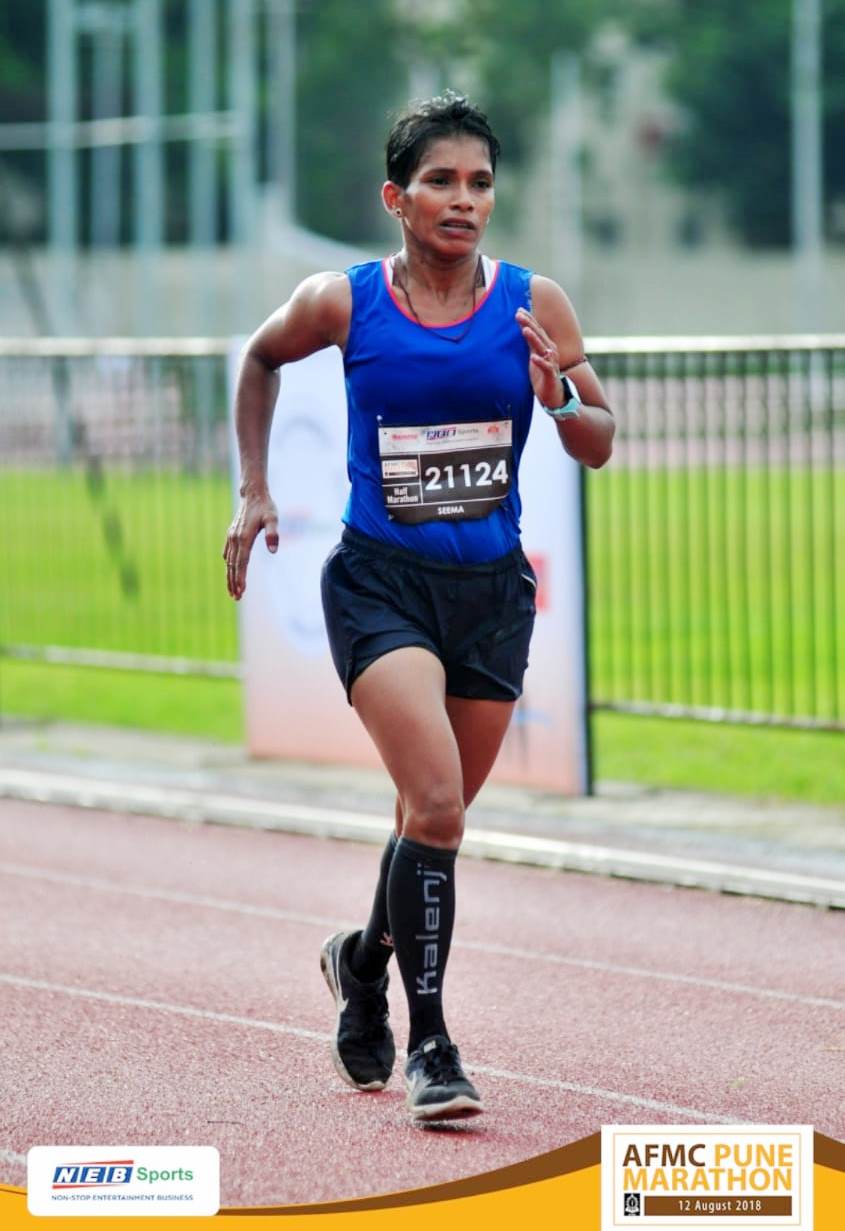
Seema Verma, a resident of Nalasopara, a distant suburb of Mumbai, is largely dependent on earnings from podium finishes. Abandoned by her husband some years ago, she worked as a domestic help for many years, before she commenced recreational running. The sport and its races was avenue to claw her way back into the daily game of survival. Past mid-March 2020, everything changed. By then COVID-19 was firm reality in India; the nation slid into lockdown. “ I never thought I would be in this situation. I cannot ask anyone for help as the scenario is bleak for all,” she said.

Given India’s harsh summer, the marathon season ends in February. It resumes in June (under normal circumstances) after a hiatus of three months with events designed around running in the rain. “ But, there are many small running events that are held through the summer months. They offer prize money of Rs 2000-5000. That is of great help to runners like me,” she said. All those summer races have dried up thanks to COVID-19. Early April, Seema was confined to her house and spending time on household work apart from working out indoors. “ I don’t think there will be any races for a long time. We may see some races towards the end of the year,” she said.

(The author, Latha Venkatraman, is an independent journalist based in Mumbai.)

THE RETURN OF RUNNING EVENTS: IT COULD BE A LONG WAIT

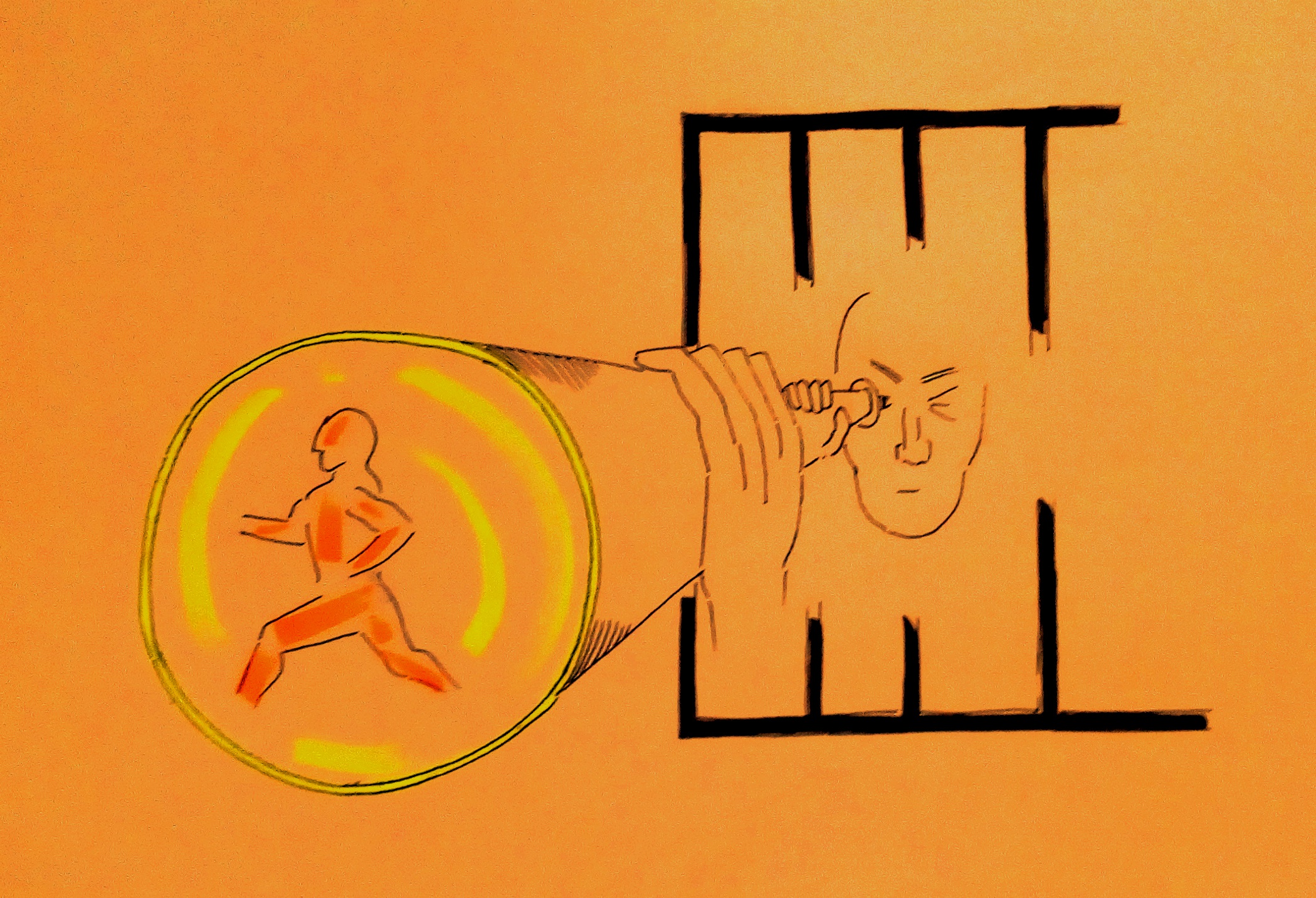
Illustration: Shyam G Menon

Towards the end of 2019, the domestic racing calendar was one of plenty. Mumbai based-race organizers You Too Can Run, has a database of annual running events. That alone showed approximately 1300 events in India. There are more. With lockdown caused by COVID-19, runners in hibernation and races cancelled or postponed, the optimistic time frame to recovery currently spoken of, is six months. Realistically, it could take longer for normalcy in the racing environment. “ It may be a long haul,’’ Sunil Shetty, senior runner who is also associated with NEB Sports, said. Additionally, at least one industry official said that like most sectors, the business around running may need to become lean to cope with the troubled times. It is a measure of direct impact. There is indirect impact as well.

Events have costs. A lot of these costs are met by sponsors. Sponsorships are typically part of a company’s marketing and image building budget. COVID-19 has arrived with warning of recession to follow. During recession, marketing and advertising expenses are among the first outgoes to be slashed by companies. Will every race organizer find sponsors? The situation is compounded by only informed guessing possible right now on how runners may re-emerge from lockdown. How much would COVID-19 have affected their appetite for mass participation events? Ashok Nath, Bengaluru based-runner, coach and mentor, felt that runners would welcome the return of road races, including new safety guidelines to adhere to. But their response would be proportionate to how safe the overall environment appears to be. Post lockdown, should any city suffer relapse to outbreak of infection that would be a concern for potential participants. Point is – if an organizer assumes the risk of meeting the costs involved to host a race and then ends up getting the cold shoulder from runners, it can be hurting.

Same goes for holding events in truncated format. For instance, post lockdown and still in the shadow of COVID-19, it would theoretically seem easier for authorities to approve an event with limited participation. Or say yes to a full marathon because that discipline typically sees limited participation (and is therefore better handled in scenario of cautious recovery) unlike the more popular shorter distances like the half marathon and less. However, it is the shorter distances that earn money for event organizers. Given costs to recover, truncated event is a bit like permission for airlines to fly with fewer seats on offer per aircraft. And just as that may translate to higher ticket cost, a major running event with sub-optimal participation may see altered fees unless the whole model sustains by some other means.

As COVID-19 spread worldwide, major international marathons were cancelled or rescheduled. Races that rescheduled came up with dates for fall 2020. Something similar is expected in the domestic calendar. Season specific events like monsoon marathons, may get cancelled if their windows are not deemed safe. From the rest, some may attempt dates in winter. Under normal circumstances, the fall season is a busy period for running in India. When rescheduled races land up in the same period, it could end up a tussle between the big events and the small ones, with the former likely favored by runners. Result – we may be in for a churn or what industry calls it: consolidation. “ Even ahead of pandemic, several races on the domestic circuit fell in what could be called the C category. In the months ahead, they will be the most vulnerable,’’ Venkatraman Pichumani of You Too Can Run, said. Enquiries with industry showed that most race organizers in India lack insurance cover for their event. “ Some of the big players take it. I would imagine that only about 10 per cent of races are insured,’’ an official in the know said. Not everyone agreed with the specter of consolidation. One race organizer said that in their quest to avoid crowding, runners may wish for a variety of options.

Then, there is the issue of event architecture in times scarred by COVID-19. A major development in the wake of pandemic has been social distancing. Marathons involve a large number of people. Most marathons have a couple of points where physical proximity happens. All races start with a holding area. While holding areas can be big, permitting people to spread out, the countdown to race’s commencement usually sees bunching of runners. The bunching happens because runners seek advantageous positions. At the end of every race, past the finish line, you are typically greeted by a couple of choke points. Runners get bunched while collecting their medals; they also get bunched when collecting their refreshments. Another concern is hydration; in fact, how aid stations operate. With COVID-19 protocols emphasizing hygiene, they will come under the scanner. Recyclable plastic water bottles may find fresh lease of life. It is also possible that runners may be encouraged to bring their own water (water bottles / hydration packs) in the early phase of events revival. Clearly, responsibility to keep participants safe will be heavy on race organizers. “ It will be a new environment at least for the next one year,’’ Chewang Motup, owner of Rimo Expeditions, organizers of the Ladakh Marathon, said.

Flashback / pack of elite runners from the 2019 edition of Tata Mumbai Marathon (Photo: by arrangement)

The larger question all this inspires is – when will conditions be suitable for the old confidence to return? At the time of writing, some states had just extended lockdown to the end of April. It is too premature to predict anything. “ There are matters of much greater priority for authorities to address before their attention can be sought for events like marathons,’’ Ashok Nath said. Two people we spoke to mentioned July end as earliest likely period when an assessment of the future may be possible. But even then, it isn’t enough that runners and race organizers feel hopeful. A lot rests on when authorities are ready to issue the statutory permissions every marathon requires. “ That is the important question,’’ Venkatraman Pichumani said. Much before running events, the world will have to reestablish its comfort with schools, colleges, offices, shopping malls, theaters etc. Further, as Sunil Shetty pointed out, major marathons are possible thanks to the support from other sectors like railways, civil aviation, long distance buses and hotels. They make it possible for many to participate. If these sectors are not fully operational it will leave corresponding impact on the participation at events. In a conversation featured in the post Lockdown & Me on this blog, Vijayaraghavan Venugopal, amateur runner and CEO of sports nutrition company, Fast & Up, had highlighted the cautious herd behavior that may characterize how events around running, revive. Meanwhile, TCS World 10K, the first major road race rescheduled in the Indian calendar following COVID-19, has been moved to September 2020. Roughly six months from now, that appeared the optimistic time frame for gradual revival in most people’s mind. By then more indicators would also be available for a clutch of major international marathons have been rescheduled to the September-October-November period.

Finally, there is a point, very valuable in an oblique sense. During crisis, we withdraw to what we actually are. If what we are includes the active lifestyle, the chances of its return are brighter for even authorities would imagine supportively. In today’s India, despite the virtues of active lifestyle, it is clearly minority. On March 27, 2020, in his open letter to the athletics community, Sebastian Coe, President, World Athletics, was spot on when he said, “ we should work with governments to re-establish sport in schools, rebuild club structures, incentivise people to exercise and get fit. This should and could be the new normal.’’ Events are the business end of running. Before planting the seed to grow a tree, nurture the soil.

(The author, Shyam G Menon, is a freelance journalist based in Mumbai.)

LOCKDOWN & ME

Nitendra Singh Rawat (Photo: courtesy Nitendra)

For now, the outdoor racing environment is in hibernation. India is in lockdown to combat COVID-19. Races have been cancelled or postponed and athletes (amateur and elite) are currently as much stay-at-home as anybody else. Improvising with what is available; strength training, catching up on rest – all these have become the name of the game.   

Nitendra Singh Rawat is among India’s top marathon runners. In the countdown to the earlier schedule of the 2020 Tokyo Olympics (it has since been postponed to 2021), he had informed fans of injury and his decision to withdraw from attempts to qualify for the Olympic Games. Contacted in early April, Nitendra was home in Uttarakhand. The effects of injury had subsided a lot and the army athlete was back to his work outs and strength training exercises. However, he was still far from return to the same workout loads as before. Besides with the ongoing spread of COVID-19 and the postponement or cancellation of major sports events, there is little clarity in the world of sport for athlete to chalk out a map for the way ahead. “ My home is in the hills. It is not a crowded place,’’ Nitendra said of his surroundings.
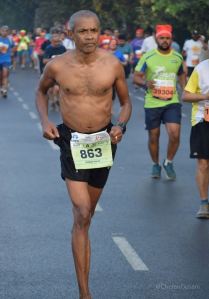
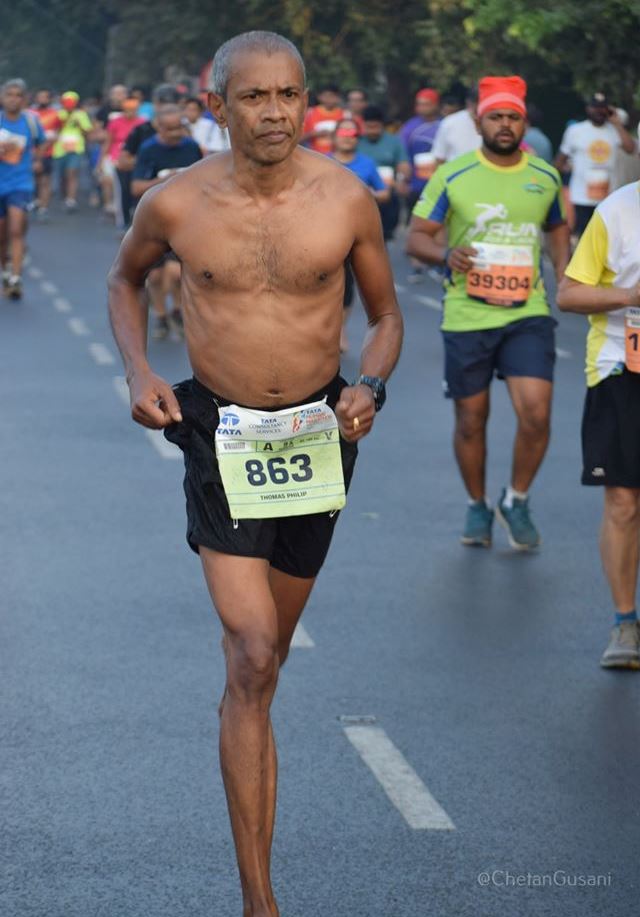
Thomas Bobby Philip (Photo: courtesy Chetan Gusani)

“ For those who really want to do something, there is opportunity still. You have to motivate yourself,’’ Thomas Bobby Philip said. Bobby is among India’s best-known amateur runners; he has had several podium finishes in his age category. Locked down in Bengaluru, he has been feeding the runner in him with strength training exercises and exercises that aid flexibility. Once a week, he treats himself to a cardio workout, going up and down the stairs of his house. “ I have also started doing some calisthenics. This is the first time I am trying it. I hadn’t done that before,’’ he said. As for motivation, besides digging within to find it, Bobby pointed to many pursuing the active lifestyle who have begun offering online workout sessions. “ So, it is an interesting time,’’ he said. But as regards the return of normalcy with events back on schedule as in pre-lockdown times, Bobby felt that may take a long time. “ We are not in a situation where the path is clear. There will be restrictions and challenges ahead,’’ he said.
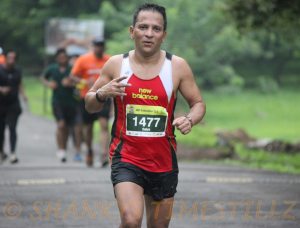
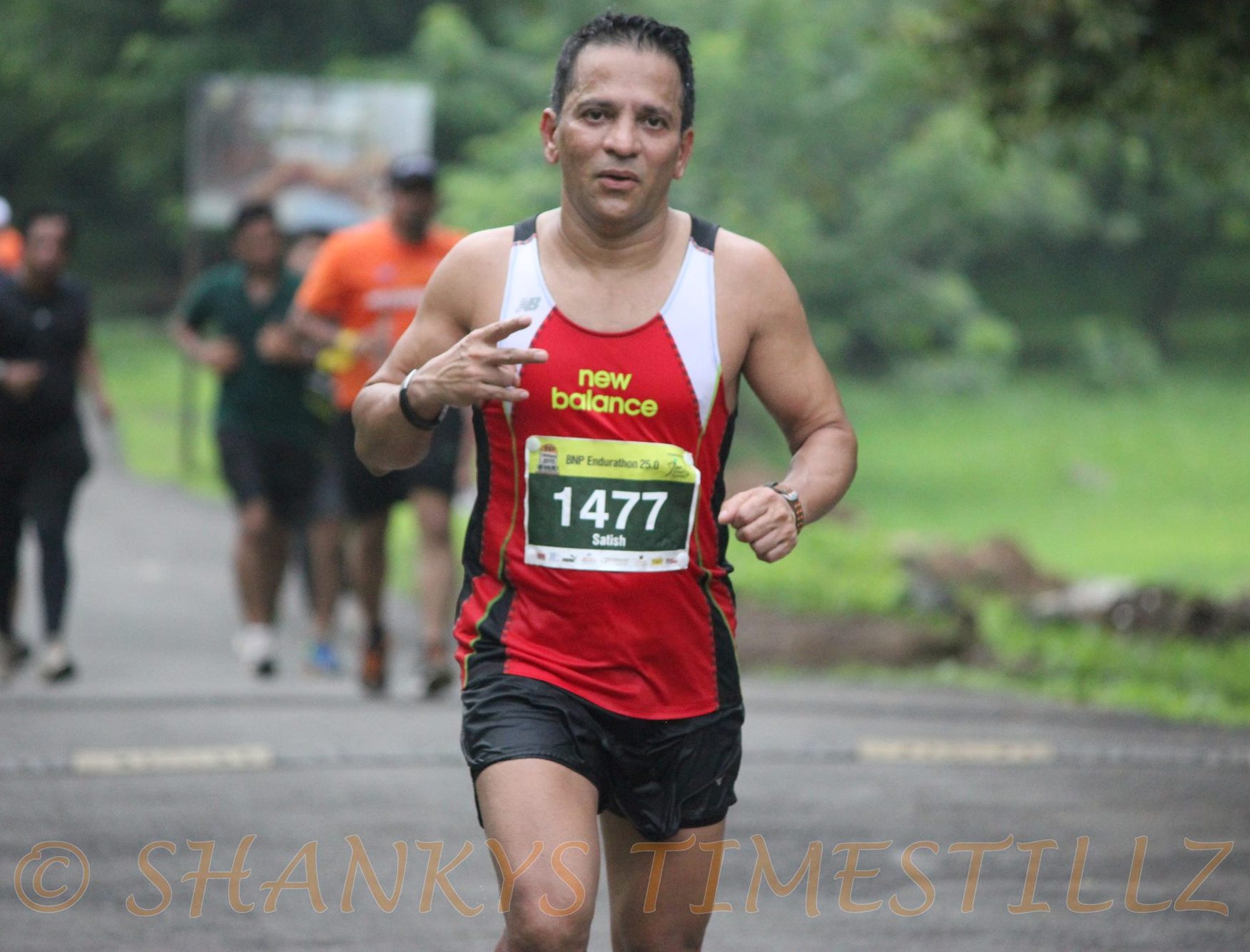
Satish Gujaran (Photo: courtesy Satish)

Satish Gujaran is a popular figure in Mumbai’s amateur running circles, especially with those planning to attempt the annual Comrades Marathon in South Africa. Satish has run the iconic event ten times. He used to provide coaching for those headed to Comrades but the lockdown has provided opportunity to further his online presence. In January 2020, Satish resigned his job and became the active face of an enterprise he and four others started: Karma Fitness (his existing coaching for Comrades was also brought under this umbrella). By February, the outfit was hosting sessions at Juhu beach in the city. Ever since lockdown commenced, Satish has been dispatching instructional videos every day designed to help people improve their fitness. “ We cater to both general fitness and fitness oriented towards running,’’ he said. According to him, response in these times of lockdown has been encouraging. He sends the videos to some 13 groups, each cluster having within it many individuals. The recipients are spread across 10-15 countries. “ They forward the videos further to their contacts. People seem happy to get it. I get feedback too; for example, somebody may ask for a specific type of exercise. We started sending the videos on the first day of lockdown in India. Initially, the videos were sort of mix and match. Now we are becoming systematic and more specific,’’ Satish said. He devotes an hour or two daily, to make the videos. It is shot early in the morning when natural lighting is apt or during other hours of the day with curtains used to control lighting. “ I live in a typical Mumbai flat. It is small. So there are limitations to what I can do under lockdown,’’ Satish said. The work keeps him busy. As for his personal workouts, Satish said that since he knows his body well, he either treats the exercises he does for the videos as his daily quota or sets some time aside for exercises of his own choice.
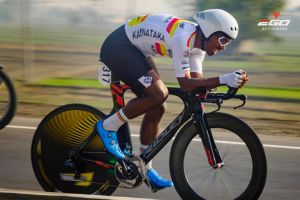
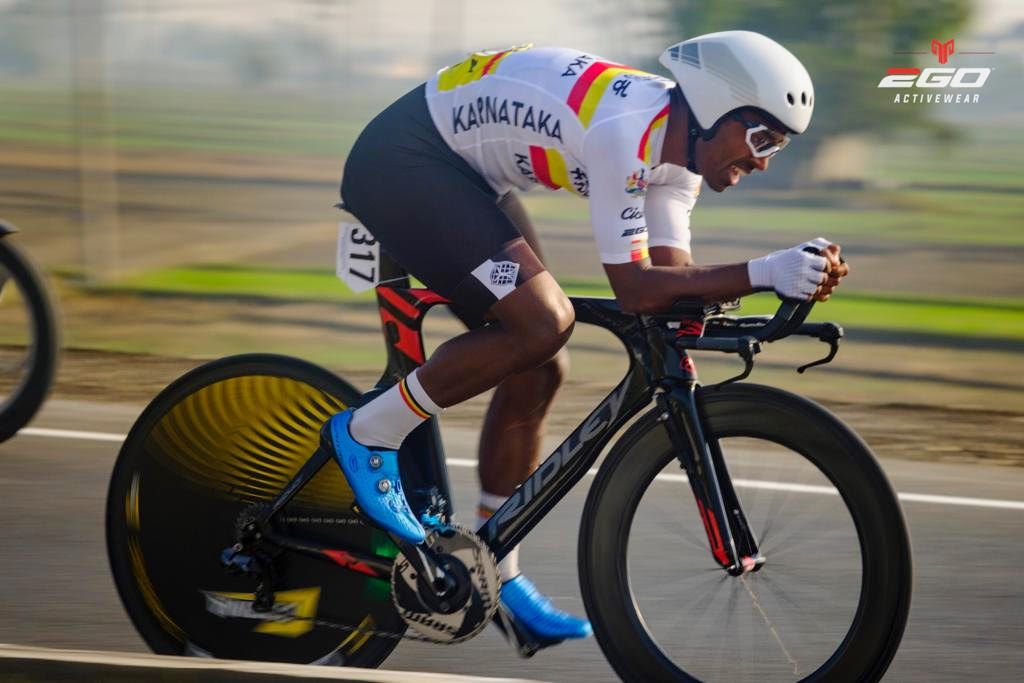
Naveen John (Photo: courtesy Naveen)

Naveen John is among India’s top bicycle racers. Cycling is mostly an outdoor sport and with India entering lockdown, Naveen has been restricted to being indoors in Bengaluru. “ For me as an athlete, it is out of question to stop my training,’’ he said. He turned to an e-racing platform called Zwift that allows cyclist to be indoors on a trainer and race using avatars against a global field. “ This e-platform has really taken off in the last few weeks. It had been there for some years but in the current situation, it is a kind of life saver,’’ Naveen said. He has been trying to get the athletes he coaches to also experiment with the platform. Their coaching sessions – including group rides – have gone online; it is all based on video calls now. At the heart of the whole transition is the trainer, a device that helps cyclist turn his regular road bike into a stationary cycle that he can still pedal. Naveen, who is known for his strict training, has reduced his overall workout volume. “ The good thing about training indoors is that the quality of work is better. There is no freewheeling or slowing down as in the outdoors, when you are on a trainer. It is steady, consistent power,’’ he said.

However, there is a drawback to the trainer. While one would assume that the contact of moving parts to the surface cycle is on (which contributes to resistance), is more while cycling outdoors, on a trainer, despite such contact reduced, the delivery of resistance is slightly imbalanced. “ The flywheel provides resistance in a certain portion of the pedal stroke. In the recovery stroke, the momentum of the flywheel carries you through,’’ Naveen explained. In turn this causes an imbalance in how muscles are engaged, with those muscle groups that usually come into play for the recovery stroke idling. Consequently the power you are able to produce while training indoors is 5-10 per cent less than what you can in the outdoors.

Naveen took some time to effect the transition to cycling indoors fully. It is a bit of a mental challenge. All athletes put themselves through suffering while training. “ The question: why are you punishing yourself? – it becomes real, a tough question to answer, when you are training indoors. One reason for this is that when you cycle outdoors, you are moving; there is world passing you by for motivation, variety and relief. The whole outdoors experience is also an aggregation of spiritual and chemical factors – there is the vitamin D, there is the sense of feeling good. All that is absent when training indoors. You have to rewire your motivational circuitry a bit,’’ Naveen said.

Finally, there is the issue of how much you push yourself because it is a fine line that separates over-training and compromising your immunity, and staying healthy. Naveen believes that while training for endurance is fine, it is the intensity one has to be watchful of. He has been advising his athletes to stick to a blend of 80 per cent endurance training (wherein you are below tempo pace) and 20 per cent at aerobic threshold. “ The feedback so far has been encouraging,’’ he said, adding that he was conditioned by experience to sense the immunity-compromised space that his body can slip into. “ I am aware of the negative toll it can take,’’ he said. He believes that most athletes are similarly wired to sense danger early enough and back off. As important as maintaining that 80:20 endurance to intensity ratio, is nutrition. In the early days of lockdown, Naveen said, it was tough sourcing proper nutrition and hydration. Preferred brands of sports nutrients were tough to get because e-sellers were having a hard time functioning. For the first time in several years, Naveen had to go back to basics and create his own mixtures for hydration. “ Things have since begun to improve, slowly,’’ he said. He is optimistic about life under lockdown. “ I tell myself that these challenging months are few in number compared to the nine years I have been a competitive cyclist so far,’’ he said.
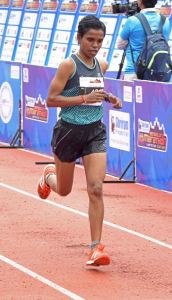
Jyoti Gawate (Photo: courtesy Jyoti)

With races cancelled or postponed due to the spread of COVID-19, elite runner Jyoti Gawate could lower the volume and intensity of her training. Summer in India is also off season in the domestic racing calendar. Her focus changed to maintaining fitness levels. In the wake of lockdown in the country, she along with a few fellow athletes and their coach Ravi Raskatla moved out of Parbhani city in Maharashtra so that they may continue their fitness regimen away from crowded environment. “ We have been staying on the premises of a temple about 15 kilometers outside of Parbhani. It is hilly terrain. We have cut back on our training because there are no races on the horizon,” Ravi said. They do as much physical conditioning as is necessary to keep the momentum in training, going. “ We buy vegetables from the villagers who grow them. We cook our own food. That way, we are able to keep costs down,” he said. At the 2020 edition of Tata Mumbai Marathon, Jyoti had secured second position among Indian elite women, finishing the race in 2:49:13 hours. In December 2019, she had won bronze in the women’s marathon at the South Asian Games with timing of 2:52:44.
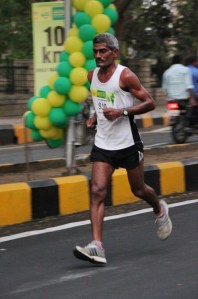
Sabhajeet Yadav (Photo: by arrangement)

“ I live on the edge of a village far away from crowds,’’ Sabhajeet Yadav, farmer and well known amateur runner said. Sabhajeet, who has been podium finisher in his age category, multiple times, at the annual Mumbai Marathon and other major events, stays in Dabhiya, in the Jaunpur district of Uttar Pradesh. Amid his attention currently focused on getting ready to harvest the wheat crop, he has been carrying out some light training.

Someone who participates in races to augment his regular income with prize money, he is worried about the absence of races for the few months ahead. In the wake of COVID-19, many races on the domestic circuit were cancelled or postponed. But it is due to a medical emergency capable of affecting all; so one has to accept it. In January, Sabhajeet had secured an age category podium at the 2020 edition of Tata Mumbai Marathon.

His son Rohit Yadav, a promising national level athlete competing in the javelin throw, is currently in Patiala. Rohit and Neeraj Chopra, national record holder in javelin throw, were in Turkey for training. “ They returned a day before lockdown and are now at the sports facility in Patiala,” Sabhajeet said.
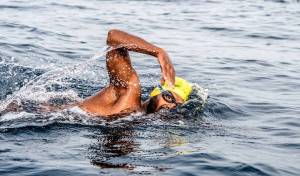
Rohan More (Photo: courtesy Rohan)

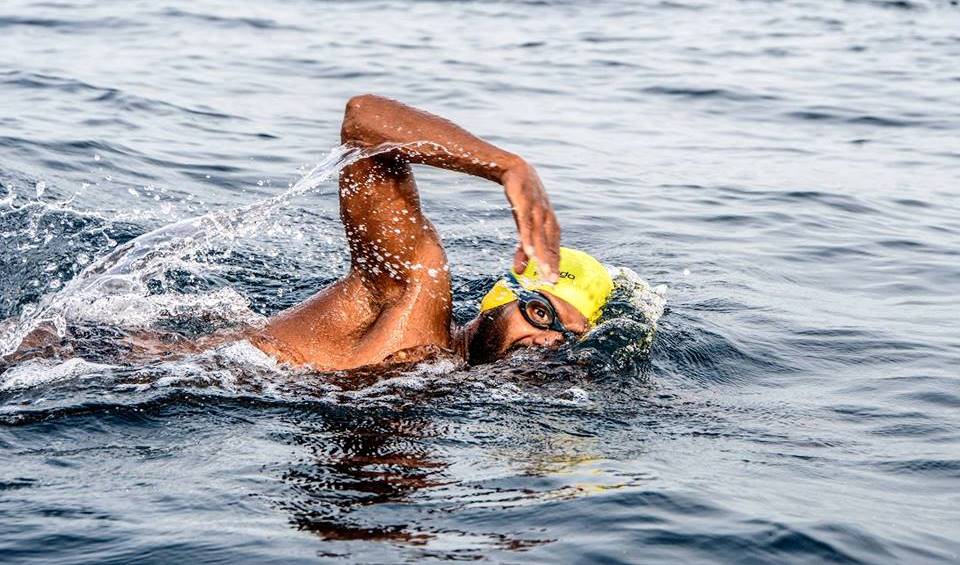
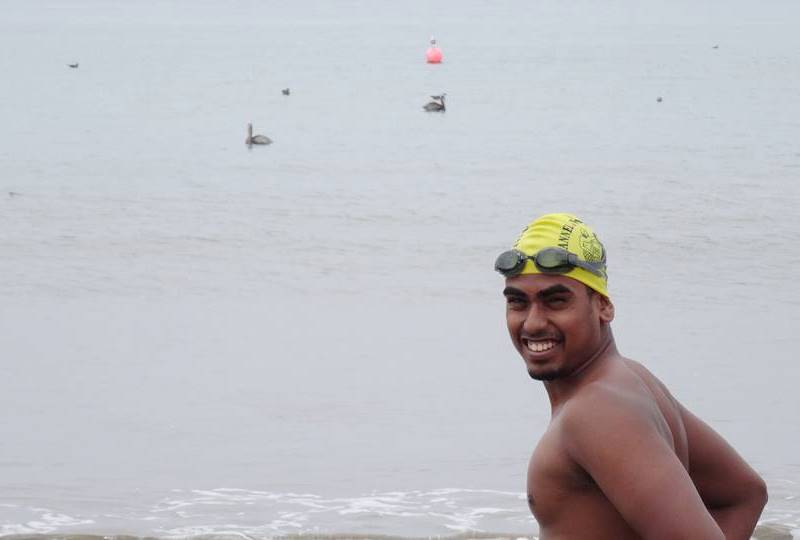
It was roughly two years ago, in February 2018 that Pune-based Rohan Dattatrey More completed the Oceans Seven challenge in long distance swimming. Same year, he was inducted as Honouree Swimmer Class of 2018 by the International Marathon Swimming Hall of Fame. With Oceans Seven and another challenge called Triple Crown, in the bag, Rohan had shifted his attention to attempting qualification for the open water swimming competition at the 2020 Tokyo Olympics. He couldn’t meet the qualification time but at the national open water swimming competition held in Shimoga, Karnataka in February 2020, he placed second. Over the next one month, India steadily slipped into lockdown, an outcome of which was – all swimming pools shut. Unlike in some other countries where water quality is good and people easily take to rivers, lakes and seas; in India, the swimming pool is the hub of swimming. For committed athletes like Rohan, who love water as medium for exercise and mental peace, there was an element of readjustment to do. “ I do miss the pool. But there is no point complaining because it was shut for a valid reason. It is the same case elsewhere too. Not to mention – the current predicament isn’t just about athletes, it is about everybody’s health,’’ he said. Rohan has no exercise equipment at home. But the new work-from-home routine and the overall economic slowdown has left him with more time on his hands than before. So he works out twice every day; mostly free hand exercises to maintain fitness. Following the evening session, he also meditates briefly. On the bright side, the postponement of the Tokyo Olympics has given him more time to try qualifying for the open water swimming competition at the Games. “ You have to stay positive,’’ he said.
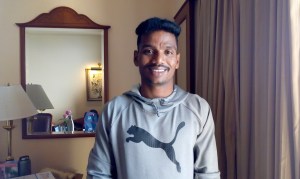
Srinu Bugatha (Photo: Shyam G Menon)

Srinu Bugatha was winner among Indian elites at the 2020 Tata Mumbai Marathon. At that time with most marathoners looking for opportunities to qualify for the Tokyo Olympics (as per earlier schedule before the event was postponed to 2021), Srinu had set his eyes on the 2020 Barcelona Marathon. As Spain got hammered by COVID-19, the Barcelona Marathon was among events postponed. In the weeks that followed, the disease spread in India as well causing the nation to resort to lockdown. An army runner usually training at the Army Sports Institute in Pune, when lock down set in Srinu returned to his hometown of Vizianagaram in Andhra Pradesh. According to Srinu, he has been continuing his training there as best as he can. He is doing his strength training albeit with no access to a gym as gyms are all shut. “ I do freehand exercises and core workouts,’’ Srinu said. Additionally, his mentor Vickrant Mahajan, said, the athlete is focusing on strengthening his mind and staying positive. You need those traits to do well in sports. The lockdown is good opportunity to take stock, reflect. On the bright side, the postponement of the Tokyo Olympics has opened up more time to train and qualify. With many marathons worldwide shifted to fall 2020, Srinu will be looking at events therein to attempt afresh, qualifying for the Olympics. “ The Barcelona Marathon has been rescheduled to October. We must stay positive and hope for the best,’’ Srinu said optimistically.
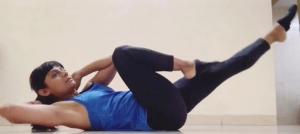
Priyanka Bhatt (Photo: courtesy Priyanka)

Mumbai-based ultra-marathon runner Priyanka Bhatt is part of the team representing India at the upcoming IAU 24-hour Asia & Oceania Championships at Bengaluru on July 18 and 19. Given the state of the world and major sports events cancelled or postponed, there is an element of uncertainty about the Bengaluru event as well. Priyanka was training despite that.

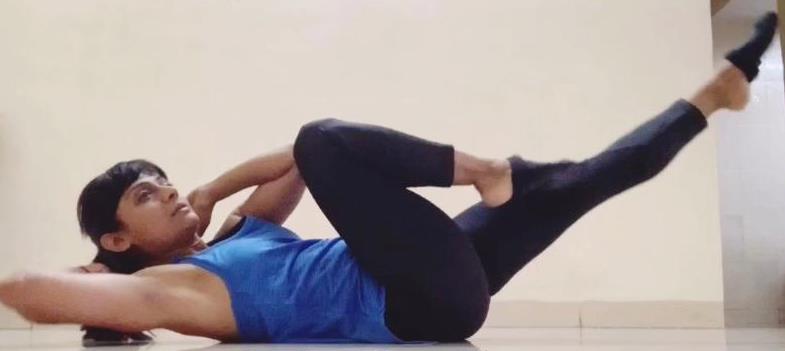
“ Obviously, you can’t burn as much calories in a home workout compared to a 40 or 50 km training run,’’ said Priyanka. She is using the current opportunity to build her strength. “ My workout is a mix of core, leg strengthening, HIIT, yoga and stretching,” she said. Strength, agility, functional training and flexibility often get neglected to some extent when the focus is on piling mileage for an ultra-marathon event, she said. Priyanka was part of the team that represented India at the 2019 IAU 24-hour World Championships held at Albi, France. She had covered a distance of 192.845 km during the 24 hours, securing a personal best.

At the current juncture, her workout ranges from about 45 minutes to an hour with 15 minutes of warm-up and cool down. “ I curate my own workout. I do a combination of exercises depending on what I have done the previous day,” Priyanka said.
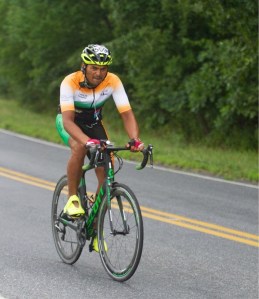
Amit Samarth (Photo: courtesy Amit)

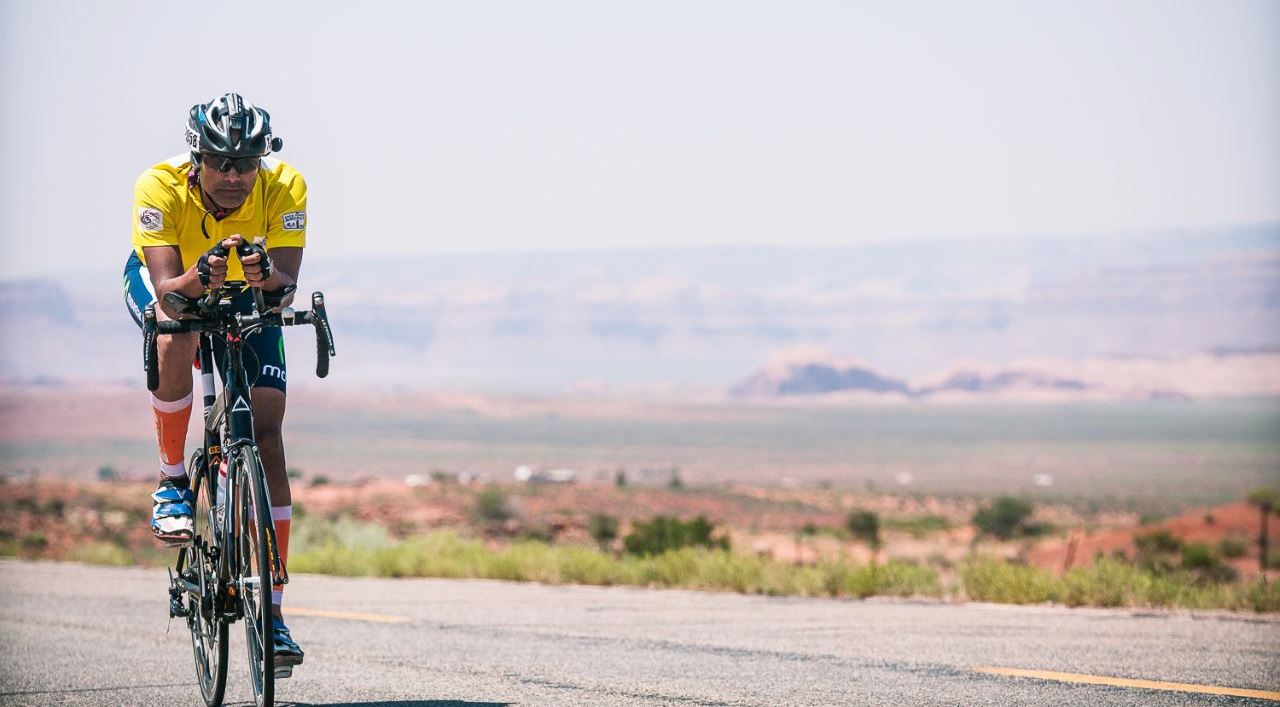
Amit Samarth is among India’s best known ultracyclists, having completed both Race Across America (RAAM) and the Trans-Siberian Extreme. Locked down in the city at India’s geographical center, he begins his day at six in the morning with a live work out session on Facebook, in which trainees from his sports academy and several others, participate. “ The academy has about 250 trainees. But the morning session on Facebook is open to all. I have been getting feedback from people overseas too,’’ Amit said. The session lasts between an hour to hour and half. However the hero of these days under lockdown seems to be the purchase he made roughly six months ago.

“ I used to have busy days that began pretty early. After finishing my work, it was typically late evening or night when I got around to cycling. My family and friends disapproved of me being out on a cycle in darkness. That’s how I bought the trainer six months ago. I wasn’t a major user of the device. But looking back, that now seems a lucky purchase because a home trainer is utterly useful for cyclist restricted by lock down,’’ Amit said. He has been using the training software: Zwift, mainly for customized rides and not for competing online. He conceded that the home trainer cannot replace the experience of cycling outdoors. “ It can be monotonous but I have the mental strength to endure that,’’ he said. Further the device has a few plus points. It eliminates distractions and allows cyclist to focus completely on the cycling. “ I maintain good speed, keep high cadence, try hill sections; the trainer automatically adjusts the resistance. Through all this, you don’t have to worry about traffic or getting a puncture. The mind-muscle co-ordination actually improves,’’ he said. And it seemed to be working well for him. “ Last week I covered 540 kilometers on my trainer,’’ he said. On the Sunday preceding this conversation, he did 200 kilometers in six hours 31 minutes. “ I started that session in the evening. By evening, the summer temperature in Nagpur becomes more tolerable,’’ he said.
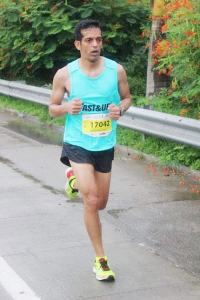
Vijayaraghavan Venugopal (Photo: courtesy Vijay)

At his house in Hyderabad, amateur runner Vijayaraghavan Venugopal’s quest is avoidance of boredom. There are strict restrictions in his locality. “ I have stopped running. Besides if you try doing it, I don’t think it will be a good example in these times,’’ Vijay said. His lifestyle is very different now. I try and do multiple things,’’ he said. According to him, he has devised a variety of exercises in small doses that can be done easily and many times through the day. The variety helps to keep it engaging. “ My daughter is more disciplined at keeping herself physically fit. So once every 2-3 days, I join her for a half hour of exercise. I also do stair workouts once a week,’’ he said. A keen cricketer in his college days, Vijay said he and his family have also been improvising indoor games, including cricket tweaked to the confines of their rooms. “ Basically anything to keep mind and body active,’’ he said.

CEO of a company in the sports nutrition space (Fast & Up), Vijay said that the lockdown period is challenging to any enterprise related to sports because the whole sector has come to a halt. He was hopeful that things should improve marginally going ahead. After all, difficult times notwithstanding, people have to be kept safe in isolation without significant damage to their jobs and the economy at large. At a company like Fast & Up, which straddles products catering to daily nutrition and those meant for more performance based-objectives; there has been some demand for the former courtesy people keeping their active lifestyle alive despite lock down. The priority therein would be to get underlying e-delivery systems functioning efficiently so that products reach customers at their houses. “ The next three months will be challenging for the space we work in. The idea will be to see how lean and efficient we can be in that while,’’ Vijay said.

However business aside, as regards any semblance of normalcy returning to running is concerned, he conceded six months may be a more realistic time frame. One reason for this was signals currently emanating from the domestic world of sports. There has been speculation of a whittled down Indian Premier League (annual cricket tournament) and very recently the annual TCS World 10K, which is treated by many runners as start of a new year of running, was assigned fresh dates in September. Given the spread of COVID-19, you will know the true state of affairs only when the next few months go by. “ It will be a very cautious, slow return to how things were. That is also how herd behavior unfolds – you wait to see a move, you wait to see if it is safe, you wait to see how those you know are responding, you test the waters and then, slowly the old movement restarts,’’ Vijay said.
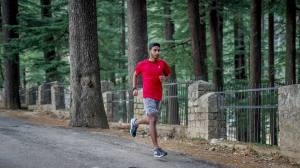
Kieren D’Souza (This photo was downloaded from the athlete’s Facebook page)

As someone who travels abroad every year to participate in ultramarathons, Kieren D’Souza has runner-friends in Europe and the US. “ In the US, they are still able to get in a run. But in Chamonix and Italy, they are allowed to be out only to buy groceries. My situation is somewhere between these two extremes,’’ Kieren said. For some years now, he has been living in Manali, part of a group of people – around ten of them – living on rent on two floors of a building with three. There is a small patch of land nearby where Kieren cultivates potato, herbs and kidney beans. Amid lockdown, he gets to step out there. “ Running pretty much stopped from a few days before lock down. I continue to do my work outs indoors,’’ he said. His day starts at around 7.30 AM, once the early morning chill of the Himalayan foothills has petered off. By 11 AM, he is on his trainer, a very basic one he acquired four years ago. For the next 2-3 hours he pedals. Post lunch, around 5 PM, he does strength training that addresses his legs, core and upper body. “ I have a bunch of basic equipment – some weights, pull up bar,’’ he said. Unlike many other ultrarunners in India, Kieren is unique in that he is a young person who set out to make a living from the sport. All his races till August have been cancelled by the respective race organizers and there is lack of clarity on when and how momentum in sports may revive. What COVID-19 and the lockdown may mean to sports and the travel industry is something that bothers him. Like other young people, he thinks about the economic situation forecast for the months ahead. “ Once the lockdown eases, I plan to tackle some pending projects,’’ he said. Meanwhile, he has learnt to bake. “ I make my own bread now,’’ he said.
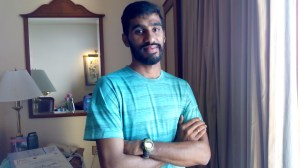
A.B.Belliappa (Photo: Shyam G Menon)

In January 2020, A. B. Belliappa had finished third in the half marathon at the year’s Tata Mumbai Marathon. As lockdown set in, the army runner hailing from Coorg in Karnataka took himself to a village in the state’s Hassan district, where he has been training to ensure his fitness levels don’t drop. Hassan has an average elevation of 3220 feet. “ I have been focusing on strength training and core workouts. The gyms are shut. So I train by myself,’’ Belliappa said when contacted. The logic he was following was simple. Since running is impossible now, he does his strengthening exercises in longer, stiffer doses. What supports this approach is that in the present circumstances, there is also more time available for rest and recovery. “ Although we are away, we can speak to our coaches when required,’’ he said.
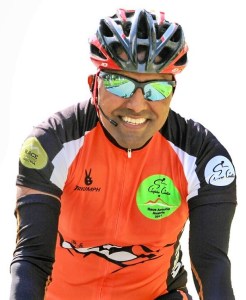
Lt Col Bharat Pannu (Photo: courtesy Bharat)

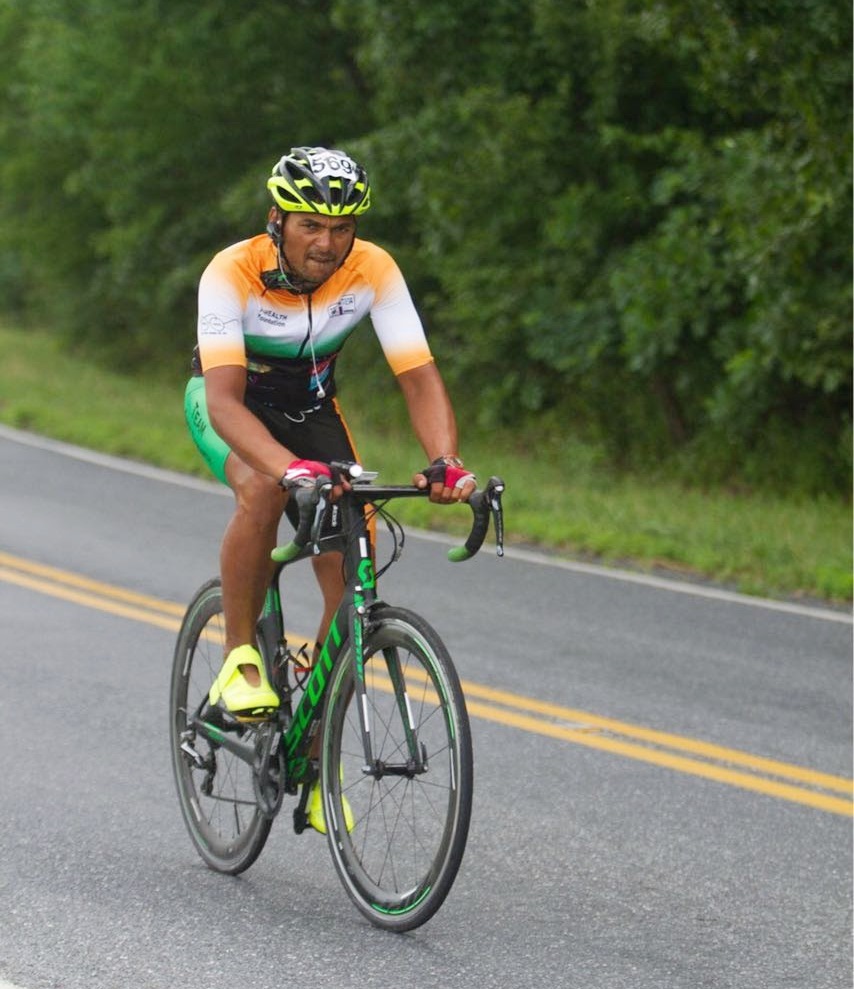
As the COVID-19 pandemic spread, Lt Col Bharat Pannu had a general sense of what to expect. The email of April 3, 2020 informing that the year’s RAAM had been cancelled wasn’t therefore completely surprising. Competitive athletes like a goal and RAAM had been Bharat’s for the last two years; his 2019 attempt had to be given up owing to injury. Ahead of the April mail from race organizers, he had kept alternatives in mind. He would aspire to do well in domestic bicycle races. But the lockdown in India added a new dimension – everyone, cyclists included, would have to be indoors. Committed cyclists like Bharat have trainers – devices that help convert a road bike into an indoor trainer – at home. With RAAM out of the picture, his training volume could be restored to normal levels. But the interesting thing was, as you talked to the army officer, you realized that his regular schedule was by no yardstick upset or compromised because he was limited to being indoors in Bengaluru. The training for cycling was going on as per plan. Every day (there is a day of rest too) he has a strength training session at home from 6AM to 8AM. The main difference was that the sessions were accompanied by a video conference call (on his phone) that allowed him and his friends to enjoy each other’s company as they worked out. “ We are a small group. Each day, one of us takes the lead in overseeing the session. We stay connected for the whole duration. In fact, we now feel we may not rejoin gyms after the lock down. This is working out pretty well, ’’ Bharat said, adding, “ sticking to your goals is important. Being flexible is even more important.”
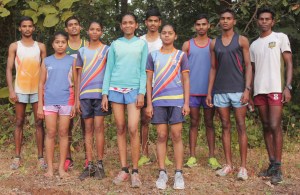
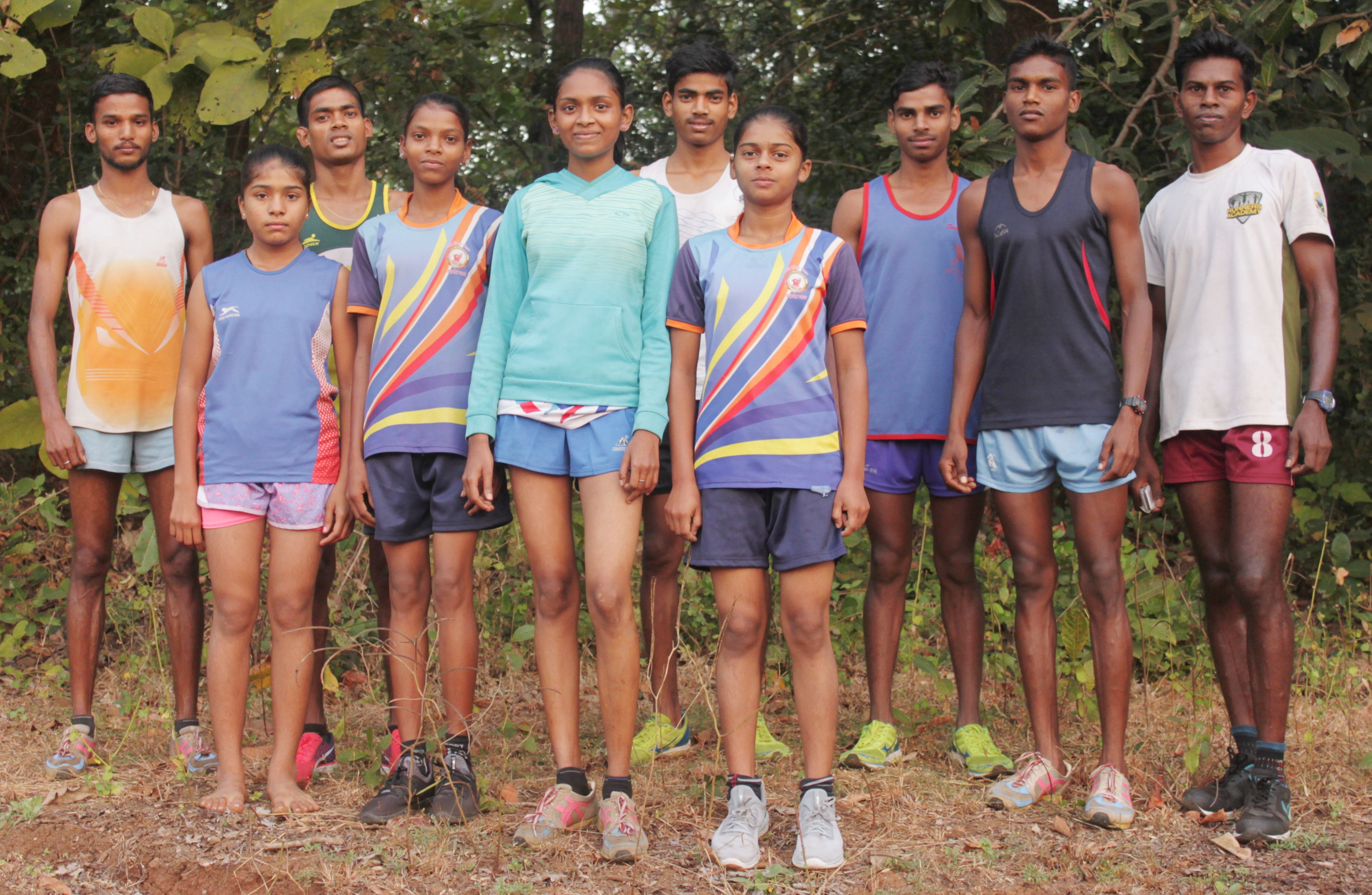
Vikramgad’s runners. Dnyaneshwar is in the back row, second from left. This photo was taken in 2017 (Photo: Shyam G Menon)

Dnyaneshwar Morgha is well-known when it comes to podium finishes in the open category at races in Mumbai. He typically participates in distances of half marathon and less. He lives in Vikramgad, a little over 100 kilometers away from Mumbai. It is mildly undulating terrain. From a sufficiently high point, you can see the hills of Jawahar in the distance. Dnyaneshwar’s main source of livelihood is farming. A very good runner, he participates in races for the prize money, which helps bridge deficit in agricultural earnings. Locked down at his village in Vikramgad, his training is currently restricted to what he can manage indoors. “ I do strength training and stretching for about half an hour, every morning,’’ he said. Thanks to agriculture, the family has food to sustain them. But the earlier income that used to come from selling agricultural produce in the market – that has been impacted by lock down. “ We manage,’’ he said, adding, “ the summer period is usually a lean season for races and the lockdown is happening in summer. I wonder how the rest of the year will be.’’
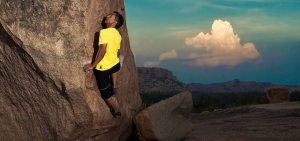
Franco Linhares (Photo: Sharad Chandra)

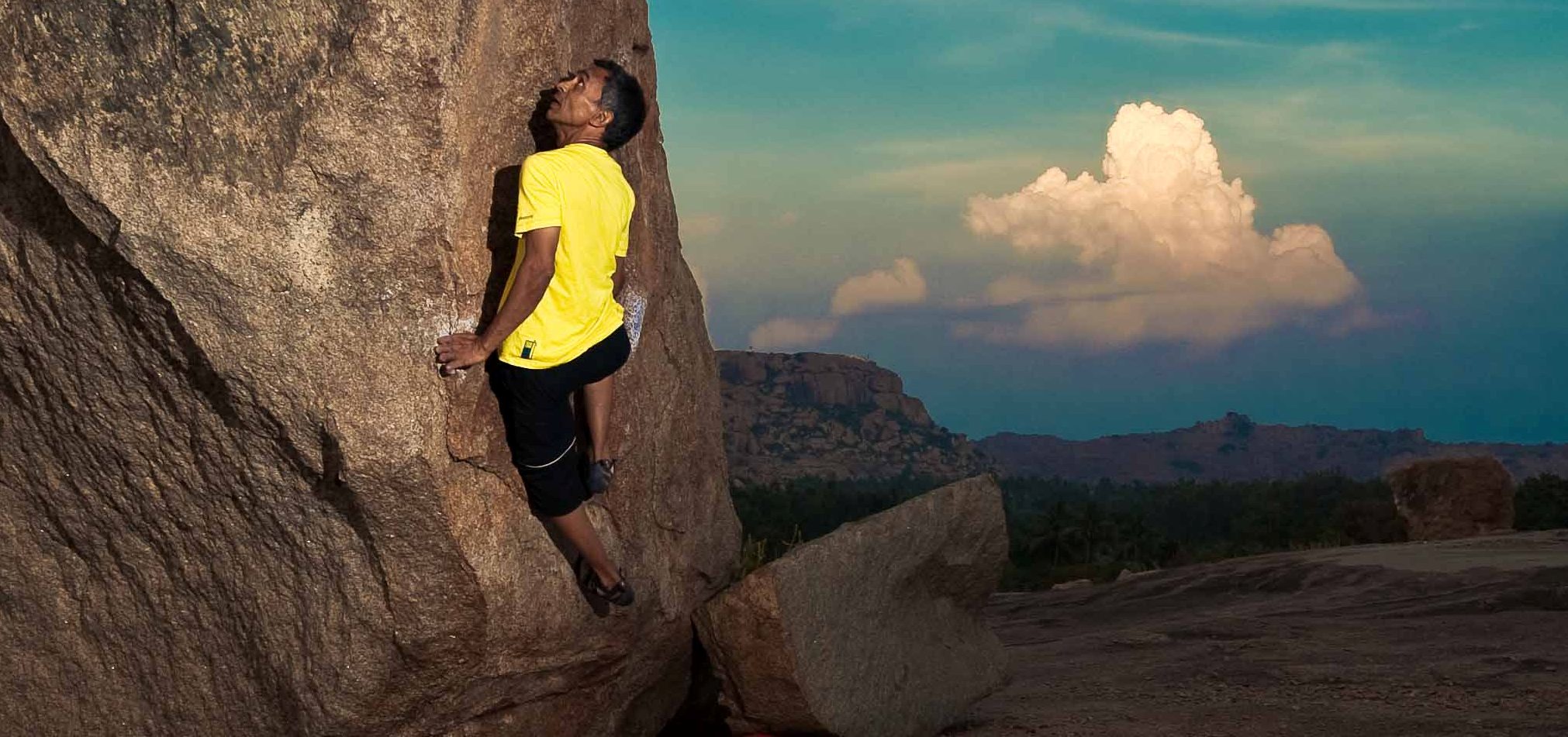
Franco Linhares enjoys a special place in Mumbai rock climbing circles. At 69, he is one of the oldest, most consistently active rock climbers in the city. Not just that, regular climbing kept his grades in the sport quite decent making him an inspiration for youngsters. Weekends found him at the crags of Belapur in Navi Mumbai; during the week he visited any of the artificial climbing walls that have come up in Mumbai. Committed to the sport, he is among the early ones who opted for voluntary retirement from work and set out to pursue their passion. Now locked down at his home, Franco has been working out twice a day; 40-45 minutes in the morning, same quantum of time to sweat in the evening. One reason he has been regular at his workouts is that it helps him keep his climbing muscles active. “ If I don’t do my exercises, I risk surgery at some injured spots,’’ Franco said. Additionally he has a finger board – a board with features built into it that climbers love to do pull ups on or hang from – at home to stay engaged. This year he had been paying special attention to strengthening his knees with a view to resume running. “ My goal was to start running by May 1. Given the present state of affairs, I doubt if that will happen,’’ Franco said. The knee exercises however continue.
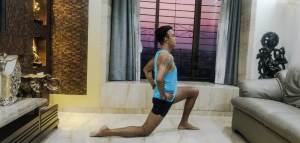
Girish Bindra (Photo: courtesy Girish)

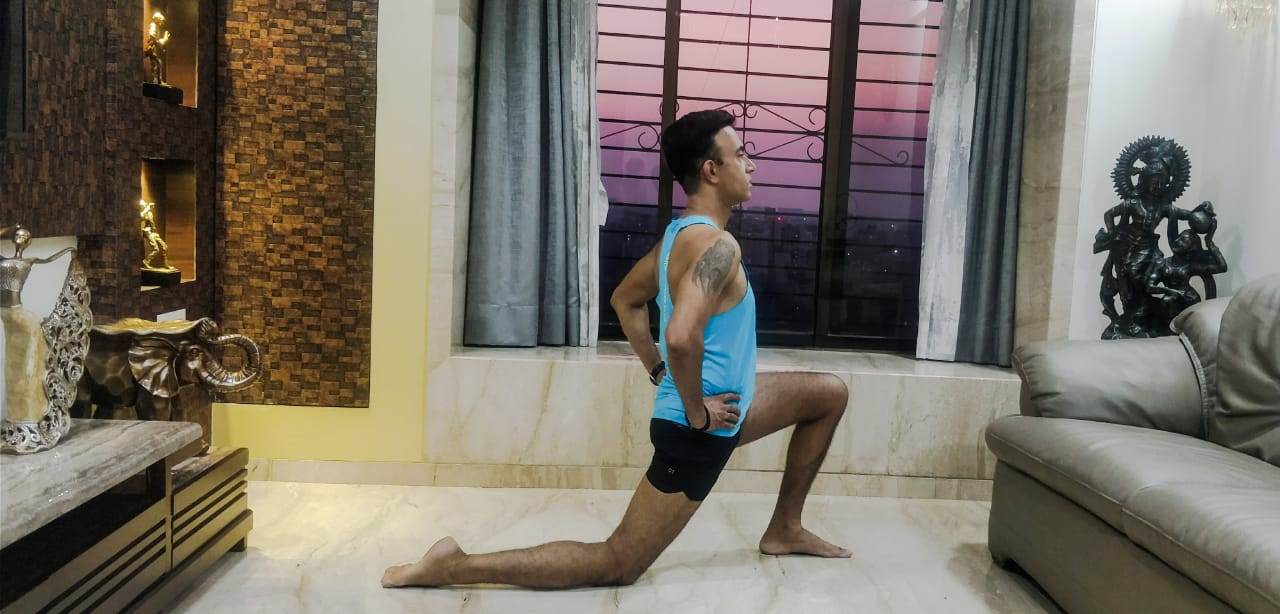
Locked down in Mumbai, Girish Bindra devises his own workouts covering various aspects of fitness – core strength, functional training, HIIT. He often ends his workout with a barefoot walk or run inside his house. He does heavy workout that includes HIIT two or three times a week and also takes a day off once a week.

“ It is very important to focus on food intake, hydration and rest,” Girish said. A coach for Asics, Girish said practitioners of home workout should be conscious when to stop. “ Each person has a different capacity,” he said adding that the period of being home bound should be used to assess one’s workout capability. “ Being home bound, my sleep has improved as I am not required to wake up early to head out for a run,” Girish said.
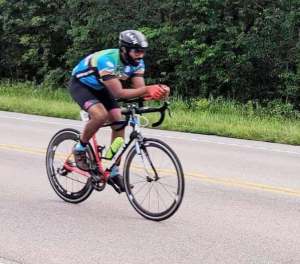
Kabir Rachure (Photo: courtesy Sapana Rachure)

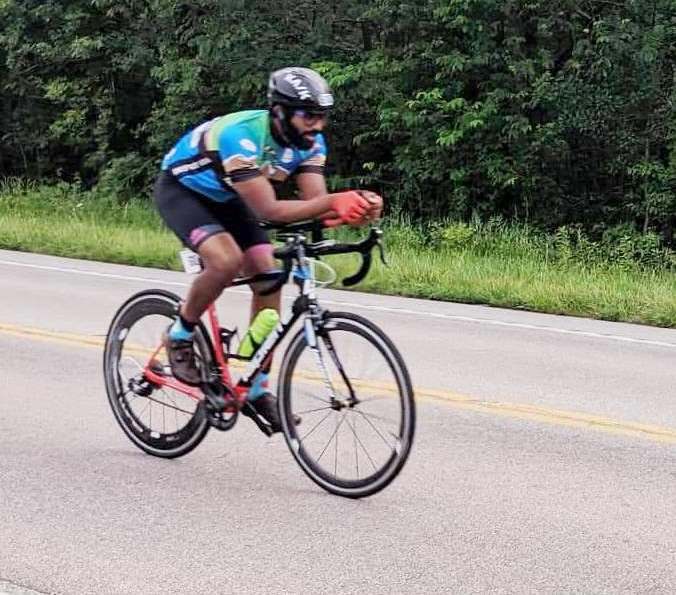
Navi Mumbai-based Kabir Rachure had successfully completed RAAM in 2019. He was planning another attempt in 2020. Then two things happened. India went into lock down; in far off USA, 2020 RAAM was cancelled. With the event he was focusing on taken off the racing calendar, Kabir reduced his training load. Meanwhile lockdown meant no cycling outside and resorting to trusted trainer indoors. His day under lock down starts late. He sleeps late, gets up late and by evening treats himself to an indoor cycling session of an hour or two on the trainer. “ If it is an hour, then I do high intensity training; if it is two hours, then I do low intensity,’’ Kabir said. He has been using Zwift for the past two years. However he does not indulge in any interactive online racing with others. Instead, he trains alone with rides customized to his needs. “ A few days ago, we did have an online group ride involving a few of us. That was done via video conferencing. Chaitanya Valhal took the initiative to organize it. It was interesting,’’ Kabir said. Someone who has been into physical fitness and gym visits for long Kabir’s strength training was now composed of free hand exercises done at home. With lockdown, gyms have shut.
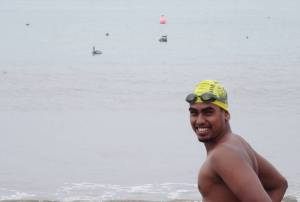
Shubham Vanmali (Photo: courtesy Shubham)

Shubham Vanmali is a young long distance swimmer with channel crossings and swims across straits to his credit, including pursuit of Oceans Seven. He conceded that swimming pools shutting down with resultant loss of access to water, impacted dedicated swimmers greatly. Water has a therapeutic effect. “ When pools shut, it wasn’t just the loss of physical activity. It affected you psychologically too. But then I cannot complain because at the moment there are people all over the world, who are affected so. It is something we have to cope with,’’ he said. When the lockdown started, the initial days were a struggle for him. His daily schedule went for a toss; he became a night owl sleeping at 6 AM and waking up at 5 PM. Then he realized he had to set things right. “ I got back on track. Now I sleep by 10 PM and get up at 5 AM. Managing my sleep schedule has emerged the most important thing for me,’’ Shubham, who lives in Navi Mumbai, said. By 6 AM, he commences a training routine. He does not have any exercise equipment at home. “ All I have are resistance bands, a stick and a skipping rope,’’ he said. But with some amount of creativity they suffice to train muscle groups critical for swimming. Sometimes the creativity goes beyond these three items. For instance, a laptop bag filled with stuff to be tad heavy doubles up as a kettle bell. A typical training session involves warm up, exercises and stretching. He does cardio workouts in the morning; strengthening exercises in the evening. After every three days of training, he takes a day off. A youngster aspiring for a career around his interest in sports, Shubham also devotes time to think about how best to prepare for the economically challenging times that lay ahead, past lock down.
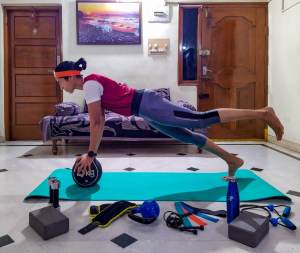
Ashwini G (Photo: courtesy Ashwini)

In February 2020, Ashwini G had secured a national best for women in the 12-hour run at the Tuffman Chandigarh Stadium Run. The Bengaluru-based runner covered a distance of 111.78 km. She had enrolled for the 100 km distance at Greater Noida Running Festival, which was to be held on March 14, 2020, and Ooty Ultra, slated for April 5. Both these events were cancelled.

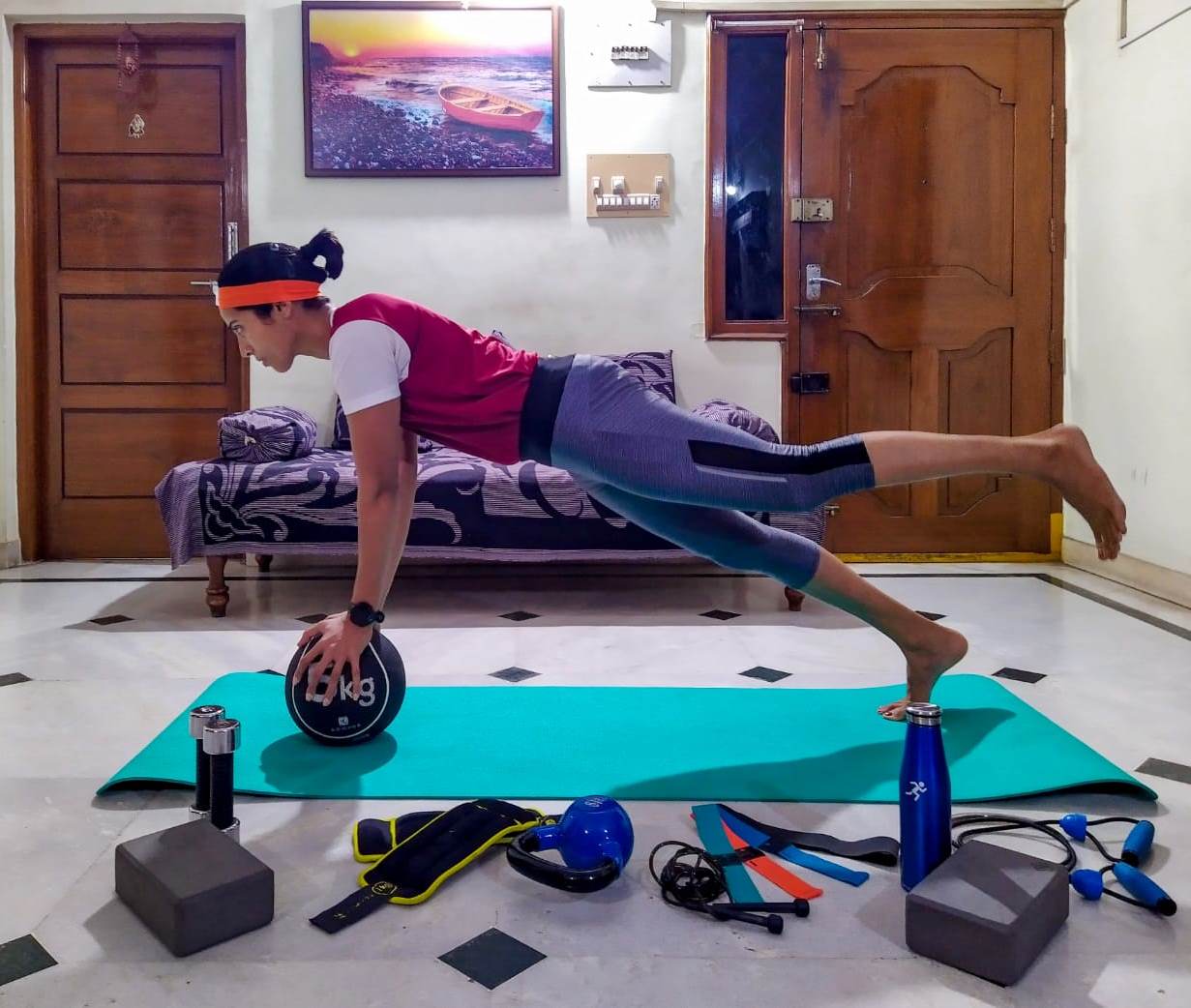
“ I have no event on the cards. I should now focus on strength. Running is easier to do. Strength training requires a lot of discipline and dedication,” she said. Within strength training, her focus is on building endurance as she is largely into ultra-distance running. “ I do two sessions daily and these are complementary workouts,” she said adding that her home fitness regimen includes resistance band workout, jogs, walks, working out with dumbbells, agility training and core workout apart from yoga and foam rolling.
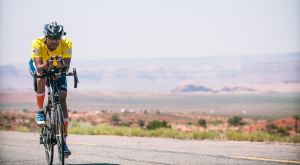
Dr Mahendra Mahajan (Photo: courtesy Mahendra)

For India, it was the Nashik based Mahajan brothers – both of them doctors – who opened the account at RAAM. In 2015, they had finished first among men under 50 in the two-person team category at RAAM. The brothers’ interests span cycling, hiking, mountaineering and running. When reached an evening early April, Dr Mahendra Mahajan was less than an hour from starting his daily workouts. “ We stay in a bungalow and are fortunate to have a gym on the terrace. We do our work outs together as a family,’’ he said. The sessions last between one to one and a half hours. “ The focus is mostly on strength training and exercises for the core,’’ he said. Sometimes, depending on his mood, the doctor works out twice a day. If that’s the case, then he tries to add variety and keep the sessions distinct. Two to three times a week, he cycles on the home trainer. He is an old hand at the trainer, having commenced using it in 2014. However, it’s a basic trainer and he is not on Zwift. “ With a basic trainer, it can sometimes be boring. But I manage with music or TV for company, to keep me going,’’ he said. He has also been using the time made available by lockdown to catch up on his reading – books on Everest feature on the list.

(The authors, Latha Venkatraman and Shyam G Menon, are independent journalists based in Mumbai. For more articles on the runners, cyclists, swimmers and climbers featured in this article, please type their name into the box assigned for search on the blog.)

“ IT IS A FINE LINE THAT SEPARATES LONELINESS FROM SOLITUDE’’

Illustration: Shyam G Menon

Two Indians, who spent months at sea, share their insight on managing isolation. Captain Dilip Donde (Retd) recalled vignettes from his 2009-2010 voyage, circumnavigating the planet in a sailboat, solo and unassisted. Lieutenant Commander Vartika Joshi spoke of how she and her crew tackled isolation during their 2017-2018 circumnavigation. Both voyages were part of the Indian Navy’s Sagar Parikrama project.

From midnight March 24, 2020, India was placed in a 21 day-lockdown to check the transmission of COVID-19, the disease that first surfaced in China in late 2019 and within a few months graduated to be a global pandemic.

The lockdown meant families, couples and those living alone confined to their houses. Isolation can be a strange experience. Our houses are homes because that is where we return to for secure rest and belonging after being out on work. It is a different sensation when that blend of in and out is replaced by a state of being in – housebound – permanently. Variety, often described as the spice of life, disappears in its familiar form and begs reinterpretation. The hours are felt as minutes and seconds; they sit heavy on your shoulders. Confined to limited space, your dwelling rises to meet you in myriad small details, all previously ignored because you weren’t there for long, like now. If you are staying alone, the solitary existence may corrode to loneliness. How do you cope with this?

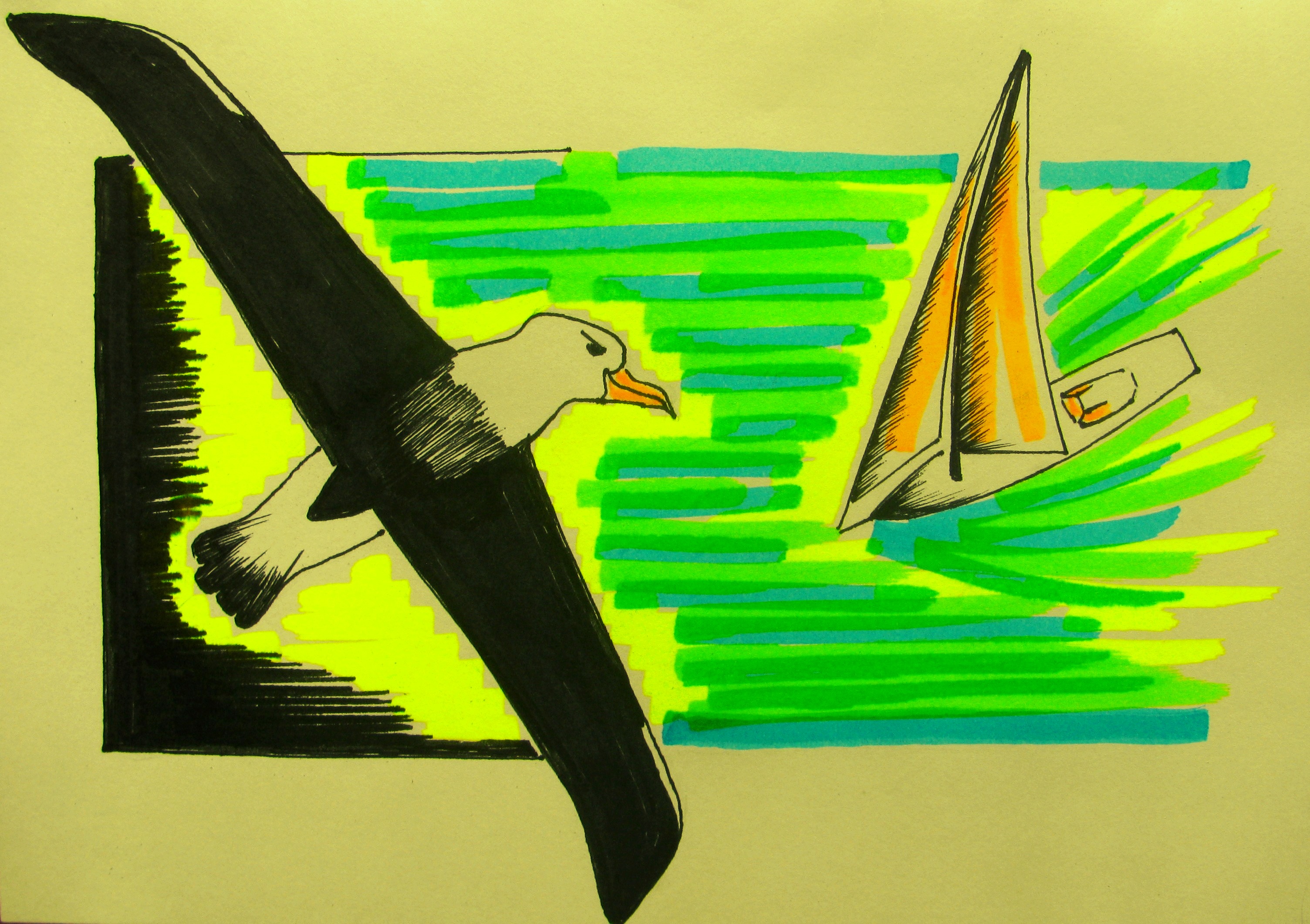
Captain Dilip Donde (Retd) was quick to respond to the subject. “ It isn’t much different on a boat,’’ he said. In 2010, he had become the first Indian to complete a solo unassisted circumnavigation of the planet in a sailboat, the INSV Mhadei. Seventy per cent of the Earth’s surface is covered by oceans and seas. It is a vast blue, big enough to isolate boats even when they are sailing under no strictures like completing a solo, unassisted circumnavigation in accordance with the rule books of the sport. Dilip who was serving in the Indian Navy then, didn’t have any prior expertise in meditation. Nor did he court such techniques on the boat to keep his act together.

What kept him engaged was the simple fact that when you are solo sailor afloat in a vessel at sea, ensuring that the vessel is in good condition and you are in good shape is pivotal to keeping the voyage alive. The sea is a dynamic, unforgiving medium, its dynamism ranging from its moods to its long term impact on the vessel you are in. You take care of the boat. The boat takes care of you. Such connection with the vessel in which you are afloat is viscerally felt at sea, even as the parameters of solo unassisted sailing allow you no human alongside for company.

“ There are plenty of things to do on a boat. There are repairs, maintenance work – they keep you fairly busy. You also need to rest adequately,’’ Dilip said. It is an observation many of us who have embraced routines under lockdown – like cleaning the vessel we live in; our house – would easily identify with. Once the boat related-tasks were taken care of, Dilip read a book, watched a movie or cooked himself a nice meal. “ Basically, you slow down your life, slow down the pace of everything you do,’’ he said.

Contacted in early April, Dilip was home in Goa, locked down like the rest of India. He felt that there was similarity between the lockdown experience ashore and what he had experienced at sea on his long voyages. Admittedly, there is one major difference. During a solo voyage on the vast blue, even if sailor is alone on his boat, the boat is moving. Your house on the other hand, is a very rooted entity that stays still in one place. You see the same views. That isn’t the case at sea, which is a convergent ambience of many natural elements in their free form. “ Every sunrise and sunset is different. Every day is different,’’ Dilip said. Still the fact remains that a voyage is a mix of diverse experiences and on those days of nothing but wide blue featureless sea, it is how you approach the stillness that matters.

Being alone on a boat does not have to automatically mean loneliness. “ It is a fine line that separates loneliness from solitude,’’ Dilip said. Loneliness comes with a sense of being mentally dragged down. Solitude on the other hand is different; it has the ring of something positive, something that you can work with. The key to coping with isolation, Dilip said, is changing that potential loneliness to solitude. Care for boat and care for self eventually become meaningful acts in solitude. At his home in Goa, Dilip has his mother for company during the lock down. “ On the boat, I was alone. I used to talk to the boat,’’ he said, adding, “ it is all in you.’’

Illustration: Shyam G Menon

Dilip’s voyage was part of the Indian Navy’s Sagar Parikrama project. It was conceived by the late Vice Admiral Manohar Awati, an inspiring naval officer who retired as Flag Officer Commanding-in-Chief of the Indian Navy’s Western Naval Command. The solo unassisted circumnavigation, which was Sagar Parikrama’s first major achievement, was followed by a solo unassisted non-stop circumnavigation by Commander Abhilash Tomy; that voyage spanned November 1, 2012 to March 31, 2013. In February 2017, the INSV Mhadei was joined by a sister vessel, INSV Tarini. Over September 10, 2017 to May 21, 2018, an all-woman crew from the Indian Navy successfully completed a circumnavigation on the Tarini. The crew was led by Lieutenant Commander Vartika Joshi. In terms of predicament, there is much that is similar between a crew out on circumnavigation and a family enduring isolation. Unlike journeying solo, one of the challenges here is handling multiple human beings in the confines of limited space. Since people react differently, it was very important for the crew to know each other, something their months of preparation and time spent working together on training voyages, gradually instilled.

“ Over time, we transformed to being more receptive of each other. Instead of talking more, you began to listen more. Eventually, we didn’t have to speak much to be understood,’’ Vartika said. According to her, an important aspect in such situation of crew aboard sailboat on voyage of several months, is remembering to honor each other’s need for personal space. It checks the ambiance from becoming too overbearing on self. As with solo sailing, routines addressing the boat’s need for repair and maintenance, count here too. That is unavoidable on a boat. “ It is extremely important to set a routine. If it isn’t there, you lose your sense of time. On a boat there are plenty of tasks and standard drills to do,’’ she said. At any given point in time, there has to be somebody keeping an eye on the boat and its surroundings. The crew takes turns to be on watch. Those not on watch, enjoy personal time. “ With crew around, the situation is different from solo endeavors in that we have to see each other for long and we have nowhere else to go. But remember – they are also the persons who will come to your assistance when you are in need of help,’’ Vartika said. She and her crew picked up the required skills during their training, which exposed them to potential situations and taught them suitable solutions. “ Any meditation and such – that was personal. Besides, what could be a better medium to meditate in than living amidst and listening to the ever changing sounds of the sea to soothe us mentally and emotionally,’’ she said.

(The author, Shyam G Menon, is a freelance journalist based in Mumbai.)
SEBASTIAN COE: CURRENT SITUATION CAN BE AN OPPORTUNITY TO REIMAGINE SPORT

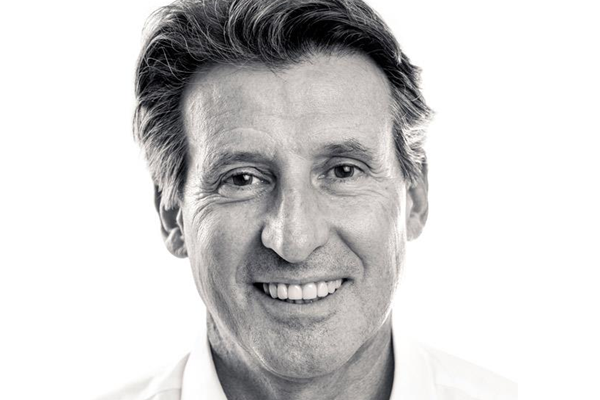
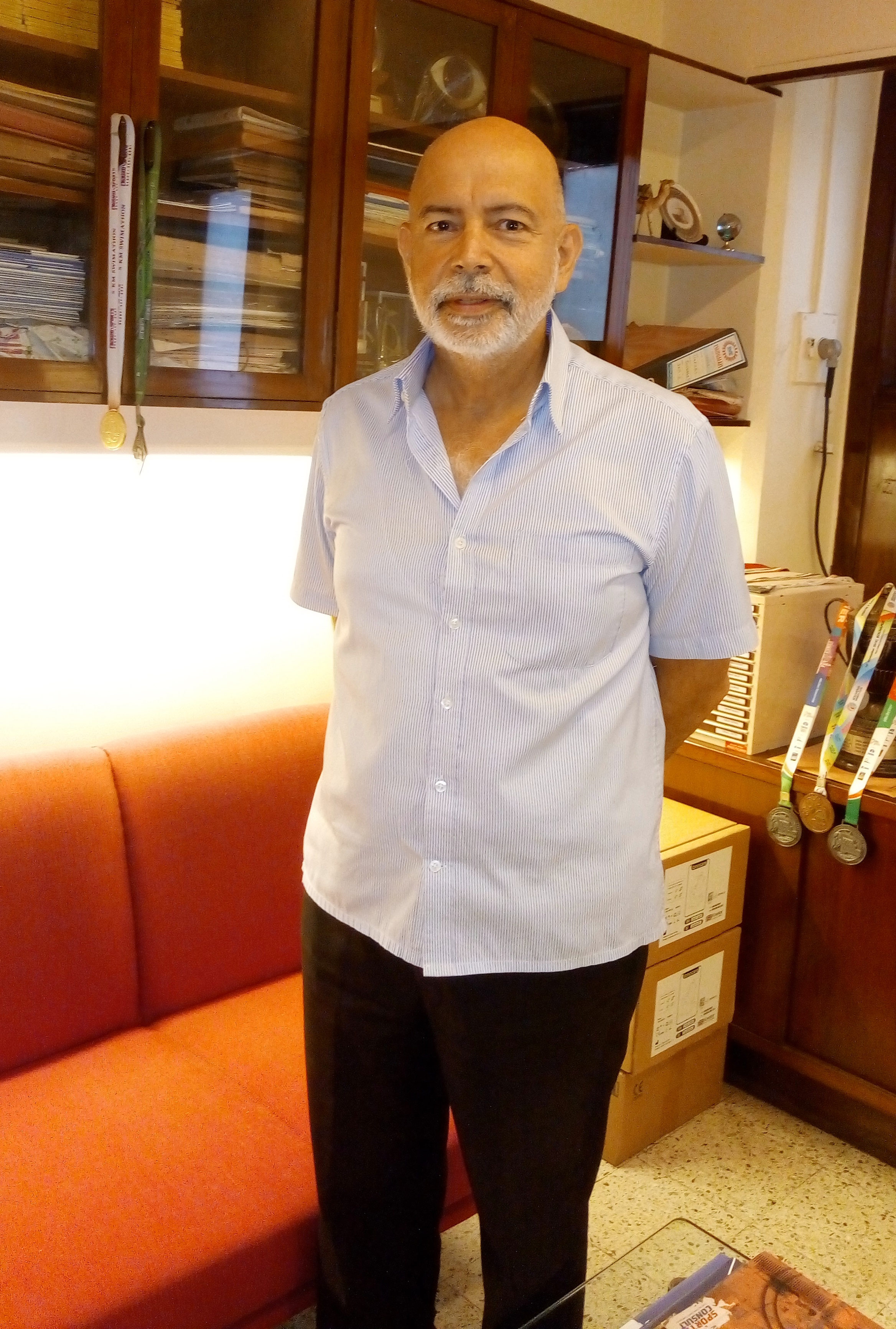
Sebastian Coe, President, World Athletics (this photo was downloaded from the World Athletics [then IAAF] website in February 2019. It is being used here for representation purpose. No copyright infringement intended)
“ We should work with governments to re-establish sport in schools, rebuild club structures, incentivise people to exercise and get fit. This should and could be the new normal.’’

Sebastian Coe, President, World Athletics, has said that the predicament the world currently finds itself in can be an opportunity to look at sports differently.

In an open letter to the athletics community, dated March 27, 2020, available on the website of World Athletics, Coe said, “ in sport we have a unique opportunity not to tip toe around things and tweak at the edges. We have the chance to think bigger, to rip up the blueprints and banish the ` that’s the way we’ve always done it’ mentality.’’ He felt that while the current priority is to tackle the pandemic, stay healthy and stay at home, in the long run, social distancing may actually bring the world closer as a community and sport can be right at its center.

“ The situation the world finds itself in today is a huge wake up call for all of us – as human beings, as businesses and as sport. We should capitalise on this and work out new ways of delivering events, create and plan new events that embrace the many as well as the few. We can use this time to innovate and extend our sport across the year. Rather than just focusing on one-day meetings and one-day road races at one end of the spectrum and 10-day extravaganzas at the other end, we should look at weekend festivals of running, jumping and throwing that take advantage of the Southern and Northern Hemisphere seasons. We should work with governments to re-establish sport in schools, rebuild club structures, incentivise people to exercise and get fit (I rather fancy more people are exercising this week – doing 15-minute exercise routines in their homes or going out for a daily walk – than they have probably done in the last month). This should and could be the new normal. We don’t have to do things the same way,’’ Coe said.

According to him the recent announcement by the Japanese Government and the International Olympic Committee (IOC) postponing the 2020 Tokyo Olympic Games was what athletes wanted. “ The focus of us all must be on the health and well being of ourselves, our families and our communities. And hard as this is for us in sport to say, sometimes sport needs to take a back seat,’’ Coe said.

The new dates for the Tokyo Olympics haven’t been announced yet. Once that is available, “ we will look at what, if any, impact that decision has on our World Athletics Championships Oregon 21,’’ he said. World Athletics, Coe noted, is currently focused on four priorities. First, it would like to get athletes back into competition as soon as possible, once it is safe to do so. “ We will continue to do whatever we can to preserve and create an outdoor season of one-day meetings in 2020, starting and ending later than usual, so athletes, when they are able and it is safe, will have access to competitions in every region. Diamond League events have been postponed up until June at this stage, as have Continental Tour Gold meetings, but we are mindful that our athletes need to compete at some point this year so they can benchmark their performances and adjust their training accordingly for an Olympic Games in 2021,’’ he said in the letter.

Second, World Athletics plans to expedite it’s review of the Olympic qualification process “ and release any changes to the process as soon as possible so athletes know where they stand. Last week all sports agreed to the IOC’s proposal that all athletes currently qualified for the Tokyo 2020 Olympic Games will remain qualified for next year’s event. In athletics the primary qualification avenue is by meeting the entry standards set out in March 2019. Once those places are allocated, the remaining athletes are drawn from the World Ranking list. As of today, all athletes who have met the entry standards for their event will remain qualified for the Tokyo Olympic Games in 2021. This is approximately 50% of the places. What is important now is that we develop a clear and fair process for the remaining athletes to qualify, given many events have been postponed. We will work with our Athletes’ Commission, our Council and the IOC to do this. We are also looking at how we can preserve an outdoor competition season this year with a series of one-day meetings on each continent that may begin as late as August and run to early October, so our athletes can get back in to competition as quickly as possible when it is safe to do so,’’ he said.

Third, there is the need to reorganize the global calendar of events, not just for the next two years which will see some major disruptions, but for the long term. We are committed to working with all sports to sort out the sporting calendar in 2021 and 2022 and this will take some time and compromises all round. We started a review of our own sport’s global calendar in February, bringing together a team from different aspects of our sport and from different parts of the world to review the range of events that happen every year on a national, regional and global level, ‘’ Coe said. According to him, World Athletics is looking to expand its one-day meetings and deliver high quality events in all parts of the world so that athletes do not have to travel across the world to compete and earn a living but can do so on their own continents and in their own countries.

Fourth, World Athletics has teams that are planning a new kids athletics programme; new events and competition formats, new partnerships to help get the world moving, new collaborations around sustainability, air quality and health and the use of new technology to highlight the talents of athletes and bring it home to millions of fans around the world.

The priority for all right now is to contain the pandemic, stay healthy and stay home. “ But where we can continue to drive our sport forward, we must,’’ Coe said, adding, “ the world will not be the same after this pandemic. It will be different and that could be a good thing. Going back to core human values, back to basics of what is important, redefining our purpose, is something we can all do on a human, business and sporting scale. We have heard a lot in the past week from governments, health care professionals, Prime Ministers and Presidents about social distancing and we are all practising it. But as I said at the beginning, although we may be separated physically during this period, my instinct is that ultimately this will draw us closer together, not further apart.’’

(The author, Shyam G Menon, is a freelance journalist based in Mumbai.)

“ THE IMMUNE SYSTEM IS VERY RESPONSIVE TO EXERCISE’’

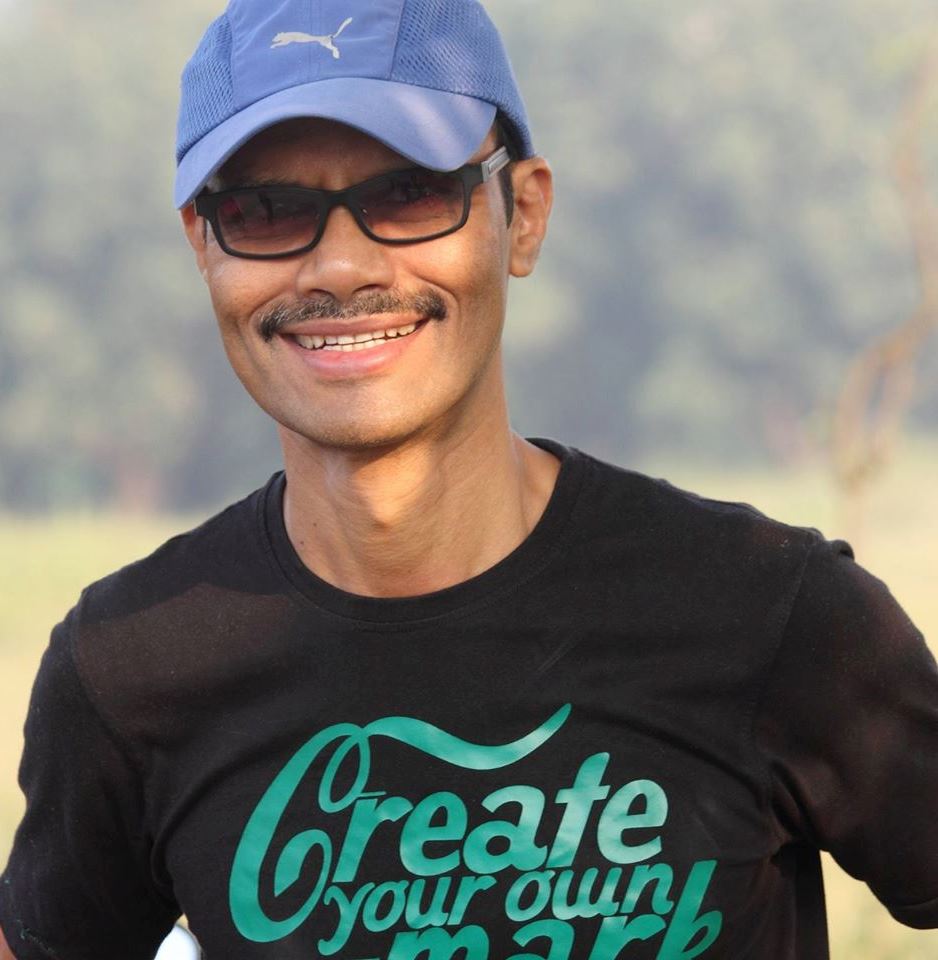
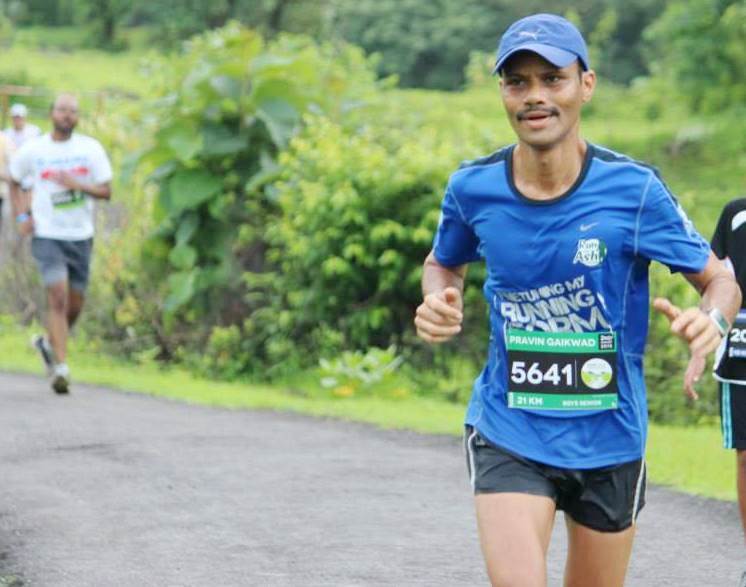
Dr Pravin Gaikwad (this photo was downloaded from the doctor’s Facebook page)

Dr Pravin Gaikwad is a well-known pediatrician in Navi Mumbai. He and his wife Arati, also a doctor, have been running a clinic in the Navi Mumbai suburb of Nerul for the past several years. The two are longstanding distance runners and triathletes. They have been frequent podium finishers in their age category at various events. In addition to being a doctor, Pravin heads coaching and mentoring at Lifepacers, a Navi Mumbai-based fitness group composed mostly of runners. On March 6, 2020, this blog spoke to Pravin on the importance of exercise and balanced lifestyle in maintaining good health, central to which is a strong immune system.

Is it possible to strengthen our immune system naturally? What should we do for that?

Very simply put, immunity is your defence against invading bacteria and toxins. It is the system involved in defending your body. There is still much to be known in this regard. The main organs involved include thymus, spleen, liver, lymph nodes, bone marrow; cells include T-cells, B-cells, some cytokine proteins, phygocytes – they are like scavenger cells, then those that are anti-inflammatory in function – there are so many things involved. Even the bacteria in the gut – microbiota – they help in immunity to a great extent. So, from a bird’s eye view, a lot of things are involved.

In Marathi, there is a saying: sainya pothavar chalta; it means an army runs on food. Similarly, the easiest way to strengthen immunity is nutritious food, naturally cooked and visually having a range of colors. There are of course more detailed technical specifications but the typical balanced diet we were all taught in school – in India we are fortunate that our ancestors have been following it for ages – if you follow that, the immune system will be good. Along with good nutrition, sleep is an important thing. If you compromise on sleep, you risk compromising your immunity due to factors like hormonal imbalance; so sleep and rest are vital. Third, physical activity is important for maintaining a healthy immune system. Stress is capable of compromising immunity and therefore ability to withstand stress – which physical activity can contribute to – helps strengthen immunity. Among things to avoid: smoking definitely impacts immunity. Alcohol beyond a limit also has the same effect. These habits have to be cut. Smoking is a big no; alcohol only in moderation if somebody wishes to have it. To my mind, these would be the natural ways of maintaining a healthy immune system – nutritious food, adequate rest and sleep, developing ways to withstand stress and avoiding bad habits.

Can you explain how regular exercise helps to fortify the immune system?

The immune system is very responsive to exercise.

The initial perception was that exercise causes problems in immunity. That view was based on studies of endurance athletes; it was found that their immunity can be a bit low. Later, it was found that immunity was better in these people while performing acute short term exercises. Research and data showed that generally less than 90 minutes of endurance activity a day, is definitely helpful. More than 90 minutes could also be useful but there are other angles to consider. Next would be the number of days. There is no mention that you should do this all days of a week. If you refer the recommendations of the World Health Organization (WHO) for maintaining a healthy lifestyle, what they say is: 150 minutes in a week plus two strength training sessions. That last recommendation – the strength training sessions – is something most of us neglect. My view of this is: the 150 minutes typically ends up as moderate physical activity because it will include warm-up and cool down. So the real overall time for exercise will exceed 150 minutes per week, I feel. You cannot increase your heart rate to 80 per cent of your maximum heart rate just like that. It has to be gradual. Otherwise there will be repercussions of not warming up properly. So to sum up, regular physical activity genuinely helps in strengthening immunity. It serves as adjuvant (a substance that strengthens the body’s immune response) to strengthening the immune system.

When there is earlier mentioned physical activity of less than 90 minutes the count of anti-inflammatory proteins, cytokines, neutrophils, phygocytes, NK (natural killer) cells, cytotoxic T-cells, immature B-cells – all this goes up. After a certain time, it comes back to normal. But what is important is that a summation effect occurs (summation effect in medicine is described as the process by which a sequence of stimuli that are individually inadequate to produce a response are cumulatively able to induce a nerve impulse). Over a period of time, immunity is found to be better.

The basic concept of any disease is inflammation. Acute inflammation is useful to the body; chronic inflammation is not. Inflammation can be caused by three things. First is trauma, second is infection and third is allergy. Chronic inflammation is caused by stress. Acute inflammation is caused by acute exercise; that is beneficial, over a period of time it develop the ability of the body to withstand the stresses properly. The body becomes stronger. Ultimately, that is immunity. Then, there are different patho-physiologies. One is that thanks to the summation effect, the immune systems itself becomes more active and capable of adapting better. Another thing to mention here is the microbiota. One third of these beneficial bacteria are the same in you and me. Two thirds is different. Initially it was learnt that the more diverse the bacterial flora, the better is our immunity. Then it was found that athletes have more diverse bacterial flora. One reason for this is that once you are into regular physical activity you tend to address your nutrition intake better. Besides diverse bacterial flora, good diet also leads to optimum vitamin levels.

One of the effects of regular exercise is that it helps reduce instances of obesity. In obesity, the fat cells can contribute to chronic inflammation and chronic inflammation can compromise immunity. Another angle is that of ageing; with age, immunity reduces. The process is called immunosenescence. When you age, the immune system gets progressively dysregulated. It raises susceptibility to various diseases. When there is regular exercise, there is delayed immunosenescence through improved regulation of the immune system. There is something called telomeres in our chromosomes. With ageing its length reduces. However in the case of those with regular physical activity, their telomere length has a better chance of staying normal. That is part of the anti-ageing effects of regular physical activity.

If you exercise or you run – especially run – everything else falls into place. You automatically give up smoking; limit your alcohol intake, take care of your nutrition, sleep and body composition. Just being into fitness, puts the other components into place. Having a goal catalyzes it.

Dr Pravin Gaikwad (photo: courtesy Pravin)

You mentioned about the WHO prescribed norms for exercise. You have rich personal experience as swimmer, runner and triathlete. What would you say is the apt quantity and quality of exercise for an average individual?

I would definitely insist on strength training sessions; at least twice a week. As we age our growth hormone levels decline. Testosterone level declines. Your muscle mass is going to decline. The fat mass will increase. Ultimately, the muscle is a furnace. This means that with the same diet, the same exercise – aerobic without strengthening – you still gain weight. When you strengthen your muscles, not only do you get the popularly known advantages like reduced chances of injury, improved balance and improved bone density; you also slow down the growth hormone decline. Talking of growth hormone, sleep and growth hormone is related. When you have good sleep, there is good growth hormone secretion. All this gives you that anti-ageing effect, more energy and combined with better muscle mass, the potential for a higher level of activity. So do strength training at least two days a week. It should be for the whole body. It can’t be that you are a runner and therefore you strengthen only your legs. Aerobic physical activity can be anything – running, swimming, cycling. I think, 30-40 minutes of such activity – as WHO says, moderate physical activity – with warm-up and cool down and with heart rate rising to 80-85 per cent of maximum heart rate, is good enough.

Now, there are those who wish to challenge themselves. Let’s take the marathon as example. One study showed there was 2-18 per cent increase in sickness level – particularly respiratory tract infections – was found in marathon runners two months before a race and 15 days after a race. We are subjecting ourselves to multiple stresses during those months leading to a race. After running a marathon, there are a lot of chronic inflammatory changes which occur in the body. In my own case, after a marathon I usually do HSCRP (Highly Sensitive C-Reactive Protein) test. The figures are usually high. Then it settles down. I generally run only one full marathon a year. I rarely run half marathons but I do quite a few 10-kilometer runs. It is those speed runs that are more important from a health point of view. Fast for one minute, then slow for one minute – like that some 6-8 times in one particular run, that will be enough exercise. Running for two hours, three hours – that is not really required; it can cause chronic inflammation. Studies show that when you start exercising, in the initial stage, you are contributing to improving your immunity. As you elevate exercise, the risk increases. In heavy exercise, the risk can go up by two to six-folds.

How do you decide severity of exercise? If you take any of the amateur athletes who are pushing themselves, how can they know if they are exercising beyond acceptable limit or not?

Let us talk of the elite athletes. They do severe exercise. But their bodies have adapted gradually to that level of exercise. This is what amateur runners often miss. Good coaches don’t increase mileage by more than 10-20 per cent a week. Every fourth week, you try to incorporate a cutback-week. Follow these routine things. Let me give you the example of Comrades Marathon. I did Comrades in 2018; myself and my wife, Arati. We did not do Comrades back-to-back. I might do it once more when I turn 60. Given Comrades entails lengthy training of 4-5 months, if you are doing it regularly, you may be erring on the side of greater inflammation. Overtraining may also not give you enough sleep. So to return to your question of what qualifies to be severe: if you are not getting up fresh, if you are not sleeping well, if you don’t have enough energy for the day, if your appetite is less, if you are falling ill, if your immunity is declining – those are all signals from the body telling you to cut down. A new runner, for three years at least, he should not run a full marathon. Also remember – running is a muscle-shortening exercise. With age and with constant running – it’s going to affect your speed. Some of the elite runners in the later part of their life, become triathletes. Swimming has the ability to restore muscles to their original length. Plus it involves a different muscle fiber; it also improves breathing.

I think, accepting your declining pace helps you sustain the act of running and enjoy it for more years. Throw off your watches and measuring devices and run. Go with the flow. Except when training for a race, I don’t resort to these gadgets. The longevity of physical activity and fitness is more important than results delivered by great pace. Unfortunately we are fascinated by that pace.

You spoke of the importance of mixing fast and slow running for meaningful work out. There are many people who prefer not to run and are instead into walking. Can they too leverage this blend?

It can be done. In terms of evolution, we are born to run. Once we get used to a certain level of activity, it is normal for the body to learn to use less calories to deliver the same outcome. You do a particular activity, you get some benefits. But later, you don’t. I have been running for years in Navi Mumbai. In that time I have seen many people walking religiously in the morning. But some of them are also gaining weight. That’s because their bodies have got adapted to the routine. They are no longer getting the benefit of walking. You can get the benefit by challenging yourself. There are simple things you can do. For example, you can change the time of your walk; sometimes walk in the morning, sometimes walk in the evening. That way, the body gets a bit shocked. Second, change the terrain. Go to the hills for a change; the body gets challenged in a different way. You can try brisk walking. People try aerobic walking too; you walk like you run. Normal walking burns 4-5 calories per minute. Aerobic walking will burn 8-10 calories per minute. You can introduce the Fartlek concept in walking. Or keep an app that collects data about your walking, if data is a source of motivation for you. Anything that can be measured can be improved upon. I feel somebody who can walk for 30 minutes should be able to run. And if you have been running regularly for three months, you can become a runner. The point is – whatever physical activity you are engaged in, you should challenge yourself a bit. Plus, don’t forget strength training. That helps you walk faster too.

What kind of effect does stress have on the immune system?

Stress impacts the immune system. Stress is of two types. There is the psychological type. Then there is the physico-chemical type which encompasses environmental stress, food, toxins we inhale etc. The body has a tenacious ability to adjust to the challenges in the environment. But if your immune system is compromised or you are under so much duress that the resultant stress is beyond your capacity to cope with, then it can manifest as disease. It can give rise to chronic infections, auto-immune diseases, inflammations and even cancer. I remember a study on anti-depressants used in the treatment of cancer. They don’t address the cancer per se; they address the stress factor. Beta blockers are medicines used to tackle the higher levels of hormones like adrenalin that can be triggered by stress. Prolonged chronic stress can result in more pro-inflammatory cytokines and health conditions thereof.

Dr Pravin Gaikwad (Photo: courtesy Pravin)

How important is rest and recovery in the scheme of things?

Seven to nine hours of sleep will maintain your growth hormones properly. Memory consolidation also happens during sleep. This is important for children. There was a time when school used to be from seven in the morning till twelve noon. You come home and sleep. That consolidates memory. Evening you play. Then you study, eat and sleep. You find something similar in elite runners. They train twice a day. For them, their sleep consolidates their training. Amateur runners, who hold down jobs and pursue their passion, are probably at a disadvantage here. If you can catch a nap some time in between, it helps. It should also be mentioned in this context that use of alcohol and excessive use of mobiles disturbs sleep pattern. If you want good performance, eventually it is about TNR – Training, Nutrition and Recovery. Recovery is where our muscles actually get trained. Then they perform better. On partially trained muscles if you exert, they will be prone to injury. Rest and recovery are the same things. It is very important. I can give you an instance from personal experience. My personal best in the marathon is three hours 38 minutes, which I got at the 2017 Mumbai Marathon. Some days before the event I developed pain in my left calf muscle. So I stopped everything. After 15 days of rest, a Thursday night, I ran around six kilometers to see how the leg held. On Sunday, I got my PB. That forced rest of 15 days helped. The body always gives you a signal of how it is feeling. You just have to listen to it. I also strongly believe in the seasonality of endurance activities. We were typically expected to peak in the winter months because that is when most of the events were held. But now there is an event every weekend. People participate. I feel we should not. Constant racing is not going to improve your performance. You have to give your body time to recover.

Herein, on the nutrition front, one study found that 30-60 grams of carbohydrates per hour for a marathon or any activity beyond 90 minutes, helps reduce the post-race inflammation. Polyphenols – found in fruits – also help similarly. Banana and good carbohydrate intake is thus good for your recovery.

There is the observation that you are good in-season depending on how well you trained off-season. What do you recommend for the off-season?

Mileage has to be less. I would put emphasis on agility, strength training, nutrition and making sure your weight does not increase too much. Don’t compromise on sleep. One hour of physical activity in this period is good enough.

In terms of the quality of running you do in the off-season: take it easy – would that be correct?

Take it easy. But then don’t run easy every time. Do simple things like – open up your strides for 20 seconds, recover for a minute and then open up again. Do that six to eight times. Cool down. Or you can do Fartlek with your friends around; that is enjoyable. Keep long runs fewer in number than when you are training for a race. Similarly reserve tempo runs for the time you are training towards a race.

(The author, Shyam G Menon, is a freelance journalist based in Mumbai.)

2020 TOKYO OLYMPICS POSTPONED

Illustration: Shyam G Menon

2021 World Athletics Championships may be rescheduled to accommodate new dates of Olympics. 2021 World Aquatics Championships too exploring similar options.

Please see update at the end of the article as well; new dates have been announced. 

The 2020 Tokyo Olympics has been postponed due to the COVID-19 pandemic.

It has been “ rescheduled to a date beyond 2020 but not later than summer 2021,’’ an official statement dated March 24, available on the website of the International Olympic Committee (IOC), said.

According to the statement, the decision followed a conference call between Shinzo Abe, Prime Minister of Japan and Thomas Bach, President, IOC. They were joined by Mori Yoshiro, the President of the Tokyo 2020 Organizing Committee; the Olympic Minister, Hashimoto Seiko; the Governor of Tokyo, Koike Yuriko; the Chair of the IOC Coordination Commission, John Coates; IOC Director General Christophe De Kepper; and the IOC Olympic Games Executive Director, Christophe Dubi.

“ In the present circumstances and based on the information provided by the WHO today, the IOC President and the Prime Minister of Japan have concluded that the Games of the XXXII Olympiad in Tokyo must be rescheduled to a date beyond 2020 but not later than summer 2021, to safeguard the health of the athletes, everybody involved in the Olympic Games and the international community,’’ the statement said.

It was agreed that the Olympic flame will stay in Japan. It was also agreed that the Games will keep the name Olympic and Paralympic Games Tokyo 2020.

Speculation about the 2020 Olympics – whether it will be held on schedule or postponed – had been in the air for a while. While the IOC maintained that the Games would be held on schedule with indication of rethink emanating only recently, some sports bodies and athletes clearly said that prevailing conditions were not ideal. Further, Australia and Canada announced that they will not be sending their squads to the Games if it was to take place over July 24-August 9 as scheduled earlier.

News reports on the postponement of the Games pointed out that the two major disciplines of swimming and athletics will be having their respective world championships in 2021. The 2021 World Aquatics Championships is expected to be held in Fukuoka, Japan from July 16 to August 1 while the 2021 World Athletics Championships is due in Eugene, Oregon, USA from August 6-15.

In a separate statement dated March 24, 2020, available on their website, World Athletics, while welcoming the decision to postpone the 2020 Tokyo Olympics, informed that they have been in talks with the organizers of the 2021 World Athletics Championships to reschedule the event if required.

“ World Athletics welcomes the decision of the IOC and the Japanese Government to postpone the Tokyo 2020 Olympic Games to 2021. It is what athletes want and we believe this decision will give all athletes, technical officials and volunteers some respite and certainty in these unprecedented and uncertain times, ‘’ the statement said. It added that World Athletics will “ continue to do whatever it can to preserve and create an outdoor season of one-day meetings in 2020, starting and ending later than usual, so athletes, when they are able and it is safe to, will have access to competitions in every region. This will help them benchmark their performances and adjust their training accordingly for an Olympic Games in 2021. In light of this announcement, we will also expedite our current review of the Olympic qualification system, in cooperation with the IOC, and release any changes to the process as soon as possible so athletes know where they stand.

“ World Athletics stands ready to work with the IOC and all sport on an alternative date for the Olympic Games in 2021 and has already been in discussion with the Organizing Committee of the World Athletics Championships Oregon 21 regarding the possibility of moving the dates of this highly popular worldwide event. They have assured us that they will work with all of their partners and stakeholders to ensure that Oregon is able to host the World Athletics Championships on alternative dates, including dates in 2022.’’

FINA, the international governing body for swimming, has also said it will explore flexibility regarding the dates of the 2021 World Aquatics Championships. In a statement dated March 24, available on FINA’s website, the organization said that following the joint announcement by the IOC and the organizers of the 2020 Tokyo Olympics, concerning the postponement of the Games to 2021, FINA will work closely with the host organizing committee of the 2021 FINA World Championships in Fukuoka, the Japan Swimming Federation and Japanese public authorities, to “ determine flexibility around the dates of the competition, “ if necessary and in agreement with the IOC.”

Update: New dates have been announced for the 2020 Olympic Games, recently shifted to 2021 due to the COVID-19 pandemic. The Tokyo Olympic Games will now be held over July 23-August 8, 2021 and the Paralympic Games from August 24 to September 5, 2021. This is as per a statement dated March 30, 2020, available on the website of the International Olympic Committee (IOC).

(The author, Shyam G Menon, is a freelance journalist based in Mumbai.)

A PHASE OF UNCERTAINTY

Illustration: Shyam G Menon

In mid-February 2020, the organizers of the Tokyo Marathon announced that the event would be restricted to elite athletes. This followed the outbreak of COVID-19 and its spread to multiple nations including Japan. Some days later, news appeared of the 2020 Seoul Marathon being cancelled.

At a press briefing of March 11, the Director-General of the World Health Organization (WHO) characterized COVID-19 as a pandemic. At the time of writing, the number of cases was over 220,000 worldwide. Nearly 9000 people had died. Among precautionary measures recommended has been restricting mass participation events. Contributing their bit to contain the disease outbreak, organizers of major marathons started announcing cancellation or postponement of events.

In the second week of March, the organizers of the Boston Marathon announced postponement of the event to September 14. Soon afterwards, London Marathon made a similar announcement, postponing the race to early October. Both these World Marathon Majors are usually held in April. Other major cancellations included the 56-kilometer Two Oceans Marathon in South Africa, Athens Half Marathon, New York Half Marathon. Several other marathons in Europe and the US have also been rescheduled. On March 16, the organizers of Swimathon Goa, an open water swimming race, decided to cancel the event. It was originally scheduled to be held over March 28-29.We spoke to some of those who had planned to attend the above said events; we also spoke to some currently training amid lack of clarity on what may happen to the event they are due to go for.

Deepti Karthik (Photo: courtesy Deepti)

Bengaluru-based Deepti Karthik was scheduled to run the Tokyo Marathon of March 1, 2020. Mid-February, the World Marathon Major, announced that it was restricting the race to elite athletes. Recreational runners were informed that their registration would be carried forward to the next year. Post 2020 Tata Mumbai Marathon (TMM) Deepti had stepped up her mileage in training aiming to go for the Tokyo Marathon. Notwithstanding the financial loss due to arrangements already made for travel and stay in Tokyo, once news of the cancellation sank in, Deepti decided to take a short break from her training.

She shifted her attention to the 2020 Boston Marathon. “ I was putting in a lot of mileage. I was running 80-85 km each week,” she said. But then, Boston got postponed. Forced to refocus her efforts and recalibrate her training schedule, she has now in her sights the TCS 10 K, slated for May 17, 2020 in Bengaluru. But past that event she is staring at a small pile-up on her plate. Deepti had also signed up for the 2020 Berlin Marathon. With the postponement of Boston Marathon, Deepti will now have to do two World Marathon Majors in two weeks.  Boston Marathon has been rescheduled to September 14 and Berlin Marathon is set for September 27.

Col Muthukrishnan Jayaraman (Photo: courtesy Muthukrishnan Jayaraman)

“ I have no choice but to run both the marathons. I guess I will take Boston Marathon as an easy run and go strong at Berlin. Boston has a tougher route while Berlin is flat,” she reasoned. If the situation does not worsen, Deepti hopes to resume her training for the two international marathons by early June. So far, she has completed three of the six World Marathon Majors – London, Chicago and New York City Marathon. This year a good number of recreational runners from India were slated to go for the Tokyo Marathon. The news of its cancellation came as a disappointment particularly because some of them were hoping to complete the World Major Marathon series in Tokyo.

Col Muthukrishnan Jayaraman, an endocrinologist with the Indian Army, was at the peak of his preparations for the Boston Marathon, when the year’s running calendar started to come apart. Now with news of the Boston Marathon being postponed to September, he is taking a break. “ I will go back to building my foundation and focus on strength training,” he said. “ My coach Ashok Nath has asked his mentees to do a self-assessment of their strong and weak points. Based on that we will have to work out our training plan,” he said. The army doctor hoped to resume his training in May and do one domestic marathon – either the Airtel Hyderabad Marathon or the AFMC Marathon in Pune, both scheduled to be held in August this year.

Apoorva Chaudhary is scheduled to run the 2020 24-hour Asia & Oceania Championships to be held in July in Bengaluru. Based in Delhi, Apoorva commenced her training sometime in mid-March. So far, thanks to the disease outbreak, her training has been muted. She plans to ramp it up from April though that would depend on how COVID-19 impacts the environment. “ I run solo and most of my training runs are done very early in the morning when there are few people on the road,” she said.

Anjali Saraogi (Photo: courtesy Anjali)

Kolkata-based Anjali Saraogi had qualified for the inaugural Abbott World Marathon Major Age Group Championships, which was to be held as part of London Marathon. She is also one of the runners representing India at the 2020 IAU 100 km World Championships to be held in the Netherlands on September 12, 2020. With London Marathon getting postponed to early October, Anjali has decided to give it a miss as her main event is the World Championships. At the 2019 IAU 100 km Asia & Oceania Championships, Anjali had set a new national best with her finish in 9:22 hours. “ I have decided to opt out of London Marathon as I will not be able to recover well after the World Championships and do justice to it,” she said. She plans to resume her training for the World Championships in April.

Sunil Chainani was in the midst of his training for Boston Marathon when the news of postponement came in. Now with the date of Boston Marathon moved to September 14, Sunil will have to participate in two marathons in a period of four weeks – Boston and Chicago. Chicago Marathon is slated for October 11, 2020. He has gone back to minimum essential training. “ I run for fun. Right now my focus is to stay fit,” Sunil, who lives in Bengaluru, said.

Zarir Baliwala (Photo: Latha Venkatraman)

It was not long ago that Zarir Baliwala, Mumbai-based businessman and recreational endurance athlete, decided that he will focus on swimming for a change. He decided to temporarily stop running and cycling and get ready for the Goa Swimathon, scheduled over March 28-29. He had just made the decision in his mind when the Maharashtra government acting to contain spread of COVID-19, announced closure of Mumbai’s swimming pools till further notice. Zarir was forced to reassess. Subsequently, the organizers of Swimathon also announced the cancellation of the event in Goa. “ I will now go back to running and cycling,” Zarir said.

For many Indian runners and triathletes focusing on national events, the current phase represents the quieter part of the calendar. Major domestic events have concluded and the new season will commence in three months. However for runners attempting international events – especially events under the World Marathon Majors – the calendar has turned topsy turvy. Between September and November, there are now five World Marathon Majors: Boston Marathon, Berlin Marathon, London Marathon, Chicago Marathon and New York City Marathon.

Ashok Nath (Photo: courtesy Ashok Nath)

Bengaluru-based runner and coach, Ashok Nath had signed up for the 2020 Boston Marathon. Subsequently, he also qualified for the inaugural Abbott World Marathon Major Age Group World Championships to be held as part of the 2020 London Marathon. Having completed Boston Marathon multiple times, he opted to give its 2020 edition a miss and focus instead on the London Marathon. The new revised schedule has cast a fresh spin. He feels there is a manageable gap between Boston and London but the Berlin Marathon, given it is too close to the London event may have to be run another year – that is, for those planning to attempt more than one of these events.

“ The running season in India concludes by end-February and the focus shifts to rebuilding the basics until it is time to commence race specific training. The first major race on the new calendar is the TCS 10 K in Bengaluru, in May,” Ashok said. Following that, India’s season of long runs and the now revised schedule of international marathons will unfold. Depending on how the virus outbreak plays out it may cast a shadow on how you prepare for the year ahead. The critical word is immunity. In these times, training has to be within manageable limits so as not to compromise one’s immunity, Ashok said. “ Long runs will lower immunity. Is that the right thing to do in the current situation?” he asked.

Samson Sequiera (left) with Poonam Bhatia (Photo: courtesy Samson)

The Comrades Marathon, the ultramarathon held annually in South Africa, is among major events in the running calendar. It has been steadily gathering a following in India. The organizers of the event are scheduled to review the situation on April 17, 2020, an official Comrades Marathon press note said. Indian runners attempting the 2020 edition of Comrades Marathon have been pressing ahead with their training. “ Training for Comrades is going on full steam so that we are not found lacking the training mileages required,” said coach Samson Sequiera, who heads a large Mumbai-based marathon training and fitness group called Run India Run.

Training for Comrades Marathon is strenuous. It includes three or four long runs spanning distance of 45 km, 55 km and 65 km. According to Samson, runners are practising self-restraint. They are taking care of their hydration and paying attention to rest given the current situation caused by COVID-19. A total of 35 runners from Run India Run have registered for Comrades Marathon (downhill version) this year. In all, approximately 330 runners from India have registered to run the 2020 Comrades Marathon. The race is scheduled to be held on June 15, 2020.

Satish Gujaran (Photo: courtesy Satish)

“ Runners slated to do Comrades are quite confused on how to take their training forward. Normally, April is the peak month of training for Comrades. We are scheduled to do the longest run of 65 km during the second week of April,” ultramarathon runner, Satish Gujaran, who completed Comrades for the tenth time in 2019, said. He felt, it would be better if the organizers announce their decision early so that runners can stop training and go back to basic fitness routine.  “ One option is to scale the training down now and pick it up after April 15 depending on what the situation is on the pandemic,” Satish said.

According to Ashok, it would be prudent to cancel all sporting events including those two months away such as the Comrades Marathon and TCS 10 K. Given the training for these events happen now, postponing or cancelling them will prompt amateur athletes to stop race-training and focus on fitness-based training.

Septuagenarian Kumar Rao was well into his training for the Boston Marathon, when COVID-19 began upsetting schedules.  He was aiming for a 3:50-3:52 hour finish, an improvement over 3:59, his time to finish last year in Boston. “ I was doing 85-90 km per week. Now, I have decided to scale back. This week I plan to do 35 km. I will eventually settle for 60 km per week,” he said.

Kumar Rao (Photo: courtesy Kumar Rao)

It also appeared practical; apt for these times. “ Considering my age, I think it is better for me to scale down. Initially, I was cavalier about this and continued training. I even did a glycogen-depleted training run,” Kumar said. Boston wasn’t the only major race overseas, on his plate. He had also registered for the New York City Marathon. “ I may have to go to the US twice; once for Boston Marathon in September and then again for NYCM in November. If my wife agrees to come with me, I may stay back in the US with my son for the period between these two marathons,” he pointed out.

Although he shuttles between India and the US, Kochi-based recreational runner Ramesh Kanjilimadhom hadn’t signed up for any major international event in 2020. He did think briefly of running in Paris but then didn’t pursue it. He felt that the shifting of major races to the September-October period could make for a crammed fall season calendar, particularly in the US. On the bright side, provided the disease outbreak tapers, the additional choices emergent for the fall season may prove interesting to runners.

For now, a whole planet of major events in sport is at the mercy of the virus.

(The author, Latha Venkatraman, is an independent journalist based in Mumbai.)

DOES THE MARATHON IN INDIA DESERVE SEPARATE OLYMPIC TRIALS?

Illustration: Shyam G Menon

On February 29, 2020 as the US held trials to choose its marathon team for the Tokyo Olympics, the situation in India was vastly different. No Indian marathon runner had yet qualified for the Tokyo Olympics via the most obvious and straightforward route – meeting the qualifying time (athletes can also qualify based on their ranking). Given end-May as cut off period for qualifying, three months remained.

What stood out in the scenario, were two factors. First, the qualifying time is stiff. For men, you have to break the longstanding Indian national record – two hours, 12 minutes – to qualify; in fact, go well past it. The best Indian marathon runner since Shivnath Singh is still more than a minute and 30 seconds behind the mark Singh set over four decades ago. In the case of women, the qualifying time for the Olympics is 2:29:30; the Indian national record is: 2:34:43. Second, unlike the Olympic trials of the US, there appeared none for the marathon in India, leaving top athletes to qualify at either the country’s premier marathons or if the dates don’t fit their training schedule or they are seeking a better course, then attempt qualifying at one of the races overseas.

So far, 2020 has proved a dicey year for mass participation road races abroad. Thanks to the ongoing Covid 19 coronavirus outbreak in multiple countries, events were trimmed or cancelled. At the time of writing, the latest casualty was the 2020 Paris Half Marathon, which stood axed. Prior to that, the Hong Kong Marathon of early February was cancelled, the Tokyo Marathon of March 1 was restricted to elite athletes and the Seoul Marathon of March 22 was cancelled. Athletes who had hoped to qualify for the Olympics at the cancelled events must find alternatives. Meanwhile, the trend of disease outbreak so far, has cast a shadow on the Olympics itself.

The two major marathons in India from the standpoint of Indian elite athletes are the Tata Mumbai Marathon (TMM) and the IDBI Federal Life Insurance New Delhi Marathon. The latter through association with the Athletics Federation of India (AFI), is also called the National Marathon. Despite not having a fast course and having crowd management issues and questionable weather, TMM has produced timings by foreign athletes that are faster than the Indian national record for men and women. As regards the National Marathon, the course is flatter and the roads decent, save for a small cobbled section. But the route has several U-turns capable of breaking momentum.

While the existence of Shivnath Singh’s 2:12 removes room for excuses in India, you can sneak in the question: do we have a course that meets required guidelines and is yet suited for a shot at breaking 2:12? In 2020, this question assumes prominence for a couple of reasons. First, if you want to qualify for the Olympics then a male athlete has to complete the marathon in 2:11:30, a real step-up for Indian marathoners. If that timing is deemed important to chase, then a good enough course in a right enough place (where weather conditions are favorable), to set your best athletes up for the opportunity, makes sense. It has to also dovetail suitably into athletes’ training schedules and the qualifying deadline of a given Olympic season. Second, even as some road races overseas are getting cancelled due to the virus outbreak and air travel to less affected regions also appears risky, India has so far (as of early March 2020) remained less impacted by Covid 19. Yet for lack of well imagined domestic Olympic marathon trials, we have this situation of our marathoners counting on overseas events with fast courses to qualify. As mentioned, some of these events have got cancelled. Besides, participating in these races entail expense while accessing them depends on the continued viability of aviation routes amid reports of the virus’s economic impact on airlines. So what stops India from having its own Olympic marathon trials? A race featuring the crème de la crème of India’s marathon talent on a suitable course approved by required authorities? It seems all the more relevant in 2020 given the unique global situation Covid 19 has got the planet in.

To the extent this blog inquired with professional race organizers, such a race in India to qualify for the Olympics is logistically possible. The race infrastructure (course length, timing apparatus etc) has to be properly approved. In terms of support and recognition by sports bodies, the backing of the concerned national federation – in this case AFI – has to be there. We have the meteorological competence to select appropriate dates for Olympic marathon trials. As for closing down a set of suitable roads (a fast course) for the purpose, please remember: city marathons are typically run on Sundays, early in the morning (not hours of peak traffic) and if the field is restricted to elites capable of coming close to the national record, you would have a very limited number of participants with the whole course restored to traffic in two and a half hours or less. Is that too much to ask, once every four years?

Such an event does not have to be the definitive platform for selection to the Indian Olympic marathon team. What it does is – it adds to available options, especially in an extraordinary year like 2020, when avenues to qualify stand restricted due to virus outbreak and India remains less impacted region. Further if established as regular practice, for amateur and elite alike, `Olympic trials’ is as much goal to aspire for as the `best,’ `biggest,’ `richest’ or whatever other attribute you may assign a regular marathon. A case worth mentioning in this context is the American ultrarunner Jim Walmsley. He qualified for the 2020 US Olympic Marathon Trials based on results secured at the Houston Half Marathon. At the trials of February 29, running his first full marathon, Walmsley finished in 2:15:05, placing 22nd. He didn’t make the team but it shows what Olympic marathon trials can mean. Based on what Indian elite athletes told this blog, the onus of organizing such trials is with the authorities. They have to be interested enough in the marathon to make options available in an Olympic year.

(The author, Shyam G Menon, is a freelance journalist based in Mumbai. The qualification details for the 2020 Tokyo Olympics mentioned herein, is as available on Wikipedia. This article is by no means a definitive piece on the subject; it seeks to provoke thought – that’s all.)

OUR REFLECTION IN PETER

Peter Van Geit at the talk in Navi Mumbai (Photo: Shyam G Menon)

It was a small gathering, just outside the shop floor of a major sports goods retailer in Navi Mumbai. Maybe 15-20 people at best; a couple of them were the retail chain’s staff. But that didn’t stop Peter Van Geit from speaking passionately about what he had been doing the past several months.

A Belgian national and former employee of tech giant, Cisco, Chennai-based Peter is well known in the Indian outdoors. He was among prime movers at the Chennai Trekking Club (CTC), contributed much to promoting the active lifestyle, helped clean up the city’s beaches, did excellent relief work during the Chennai floods and then got villainized when an unexpected forest fire killed several trekkers in Theni. That last incident from March 2018 was a tense chapter.

At CTC, one of the activities Peter and others embraced was ultrarunning. They would run for a few days covering a couple of hundred kilometers. In 2018, Peter commenced a personal project. Over 75 days, he ran (the right term would be fast-hiked) 1500 kilometers along trails and across some 40 high mountain passes in Himachal Pradesh and the then state of Jammu & Kashmir. This venture followed an earlier one in Vietnam, wherein he ran close to 2000 kilometers over hilly terrain. Then in 2019, running from the Uttarakhand-Nepal border towards Himachal Pradesh and Zanskar, he crossed 120 passes. The number includes little known routes taken by shepherds, who incidentally are his frequent refuge for food and shelter on these trips. Later that year, in a foray to the Maharashtra Sahyadri and the Konkan coast, he ran or cycled linking some 200 forts. Active on social media with his travel posts, Peter has a fan base. In January 2020, when Peter was in Mumbai to speak at the Himalayan Club, this writer shared a suburban train journey with him. He was quickly recognized by co-passengers and selfies taken.

At two presentations I attended this year, there was a slide that always drew laughs. It showed a small child sitting naked on a beach. “ That’s me. I was minimalist even then,’’ Peter would quip. He says traveling light makes him fast. On the trail, that means less stuff hauled around as he manages to either reach known shelter or camp light at lower elevation having already got past the high crux. That’s utter contrast with the regular. Consider this: a typical photograph of Peter from the Himalaya shows him in running shorts, a small backpack, a thin T-shirt and a pair of running shoes. The backdrop is high altitude; steep, snow clad, at times glacier, clearly cold. Other speakers at the same venue may have just presented slides of them and others in similar environment clad in multiple layers, armed with gear and heavy backpack. That would be the Himalayan experience of most in the audience too.

In the mutual admiration society we are, people flock to similar others. Peter gets applause but you wonder – was he accepted into the tribe? Much of the establishment sitting in judgement came up in a more structured fashion with outdoor courses done and rigid views of what defines a particular sport. They seem organization-builders; lovers of hive and the politics of the hive if we were all bees. Corporate – you could say, for imagery. Peter seems an activity-lover, happiest outdoors, happy to be afloat afterwards in a people’s durbar. In his heart warming short film, Peter stumbles, slips, gets his face liberally licked by a buffalo, does some sketchy river-crossings. Those formally trained in outdoor techniques will question some of his actions. Yet there he was, up in the mountains, doing a hybrid of running and high altitude hiking, most of the time solo. Solo is something few Indians like. Indians are all about groups. Further, where most of us make a whole annual trek out of one pass, he was polishing off a pass a day. For now in India’s world of hiking-mountaineering and running, the Peter-way is an outlier.

Here’s another vignette – Peter is a runner but now nurses little appetite for the organized marathons, ultramarathons and stadium runs that the majority of runners favor. He likes to be away from cities and crowds. When out in the Himalaya, he lives and eats with shepherds and at houses along the trail; he likes that simpler life. He navigates with digital map and GPS co-ordinates on his smartphone used offline and set to battery saving-mode. On the Konkan coast, confronted with the fort of Suvarnadurg located on an island a kilometer out in the sea, he just swam across to access it. The central values of his excursions appear freedom, solitude and living the life he wants. Accessible and easy to talk to, Peter may impress as anything from celebration of the outdoor spirit to bull in a china shop unintentionally smashing our gear laden surrogate commando self-image, with his minimalist approach.

Peter, in a Mumbai suburban train, en route to a lecture (Photo: Shyam G Menon)

To be fair, Peter’s journeys in India fell in a list of projects headed to the body of work he achieved. Long before digital became commonplace in India, in 1997, a team of Indian women completed a trans-Himalayan trek from Bomdila in Arunachal Pradesh to the Karakorum Pass. They crossed 39 passes above 3000m, 15 passes above 2000m and covered 4500 kilometers in 198 days. In the years that followed, at least one seasoned outdoorsman anchored a project seeking to thread a hiking route from Ladakh to the Uttarakhand-Nepal border, replete with GPS co-ordinates for independent hikers to use. More than five years ago, when the Himalaya was yet to be run as Peter did, this writer spoke of the project in waiting to an Indian ultrarunner. Nothing happened. Over August-October 2018, a team of three young Indian mountaineers hiked from Ladakh to the Uttarakhand-Nepal border crossing 27 passes (please try this link for their story:  https://shyamgopan.com/2018/11/13/a-long-walk-traversing-the-western-himalaya/). Then over 2018 and 2019, in two tranches, Peter crossed around 160 passes in the western part of the Indian Himalaya, visited 200 forts in Maharashtra and made the journeys available as digital resource. His own project, Peter has said, was initially spurred by data from a blog by Bengaluru-based trekker Satyanarayana; in the blog Satya used to document with GPS logs, the passes he visited.

It was two years ago that Peter resigned his job, did an Airbnb with his house and embarked on a new life of running around. At the February 2020 talk in Navi Mumbai, he spoke of young Indians he met during his long stay in the country, who were stronger athletes than him but whose promise faded with marriage and corporate life. The young people in the audience laughed. Peter’s face remained expressionless. “ It is not a laughing matter. Life is short and you live only once,’’ he said.

(The author, Shyam G Menon, is a freelance journalist based in Mumbai. For more on Peter please try these links: https://shyamgopan.com/2017/02/28/i-dont-have-time-isnt-a-valid-excuse/; https://shyamgopan.com/2019/03/22/running-in-the-himalaya-75-days-1500-km-40-mountain-passes-talking-to-peter-van-geit/)