THREE PEAKS AND A PASS

Illustration: Shyam G Menon

Illustration: Shyam G Menon

Mid-2015, I went looking for a certain café in Leh.

It wasn’t there anymore.

That café had provided a post script for an expedition.

Fresh from the trip, Punit and I were enjoying a cup of coffee there, when a group of young Indian climbers walked in. Seeing our sun burnt faces, they asked which mountain we had been on. “ Chamser Kangri,’’ I said enthusiastically. “ Oh, that one – that is an easy walk,’’ one of them said dismissively. The youngsters took their seats and huddled in talk, wrapped in a blanket of their youth. We looked at each other and sipped our coffee quietly. I licked my wounds.

Sometimes we find ourselves at a sweet spot, an intersection in universe crisscrossed by possibilities, which on given day works supportively for a person called you. The word for it is – luck. I had a lucky trip in 2011. Lucky not because I was in trouble and got saved or something like that but because, except for one unsavory incident three quarters into the whole trip, there was no trouble at all. The universe stood by me. I was right person passing through a right intersection at the right time. That year, when I decided to attempt Chamser Kangri, the correct approach wasn’t hard to guess. The then 43 year-old seaside dweller had best start with the less high Stok Kangri. I had climbed this 20,300ft high-peak in July 2009 and repeating it seemed a good way to acclimatize. It was a mountain often rubbished by Mumbai’s mountaineering circles for being a trekking peak, a non-technical ascent. I told nobody in Mumbai about my Stok Kangri plan. I climbed the peak with two Ladakhi friends for who the mountains are a way of life and debates of technical / non-technical ascents, a distant urban affliction. That was two years before.

Early August 2011, at Leh airport, the first thing I did was look toward Stok Kangri. Then I headed for guest house and work reporting La Ultra: The High, the ultra marathon held in Ladakh. This work gave me days in Leh, getting used to the altitude. As luck would have it, the ultra marathon story also took me across and back over the Khardung La pass, something useful when a Stok Kangri-climb is due. Ultra marathon work done, I joined a commercial trip to Stok Kangri. Of particular relevance to me was that the climb had been merged to a preceding multi-day trek starting near Leh, going up the Stok La pass and on to Stok Kangri Base Camp. This would help team members acclimatize. At my age and predominant existence as chair bound-journalist, acclimatization is everything. While that was a pleasant departure from my 2009 experience of hitting Base Camp straight with the climb thereafter, there was a shocking change in store.
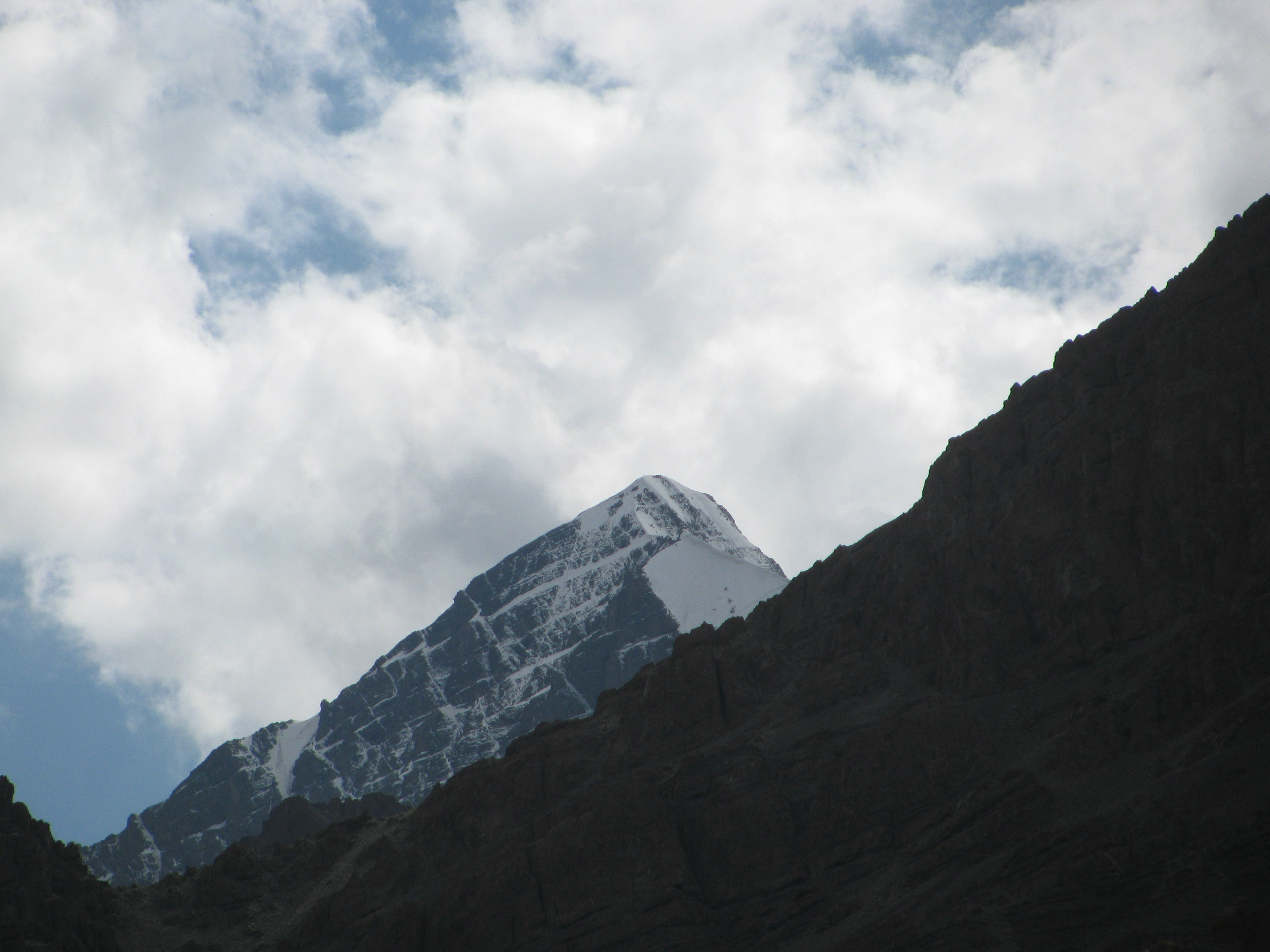
Stok Kangri (Photo: Shyam G Menon)

Stok Kangri (Photo: Shyam G Menon)

In July 2009, the base camp had three to four tents – a large parachute tent for canteen and probably three small ones, including mine, belonging to climbers. This time, it was a minor township of tents, big enough for us to designate a team member as ` Mayor of Stok Kangri.’ Unfortunately the town planning improvements he contemplated were frustrated by a steady stream of fresh arrivals compounding the township-look. Somewhere in the middle of that displaced urbanization, we left one midnight for the summit. Again unlike in 2009, there were many headlamps that night on the mountain and as dawn broke, climbers could be seen like segmented ant columns. Thanks to a spell of bad weather earlier, there was much unsettled snow near the summit and verglas (thin ice on rock) all along. In that condition it was tricky progress on the summit slopes. With the summit visible very close-by the team turned back to stay safe. I couldn’t agree more. On a commercial expedition, safety is paramount. Besides if you ask me, a summit that close, isn’t summit lost.

Back in Leh, I found that one of my Ladakhi friends from the 2009 Stok Kangri trip, who had agreed to accompany me to the 21,800ft high-Chamser Kangri, had backed out. He had personal work to attend to. The expedition seemed a non-starter because I don’t feel comfortable yet, hiking and climbing alone. There is always that thought of how to manage an emergency should anything go wrong. I prefer agreeable company. However ` agreeable’ is increasingly difficult to find. I sensed Chamser Kangri slipping away.
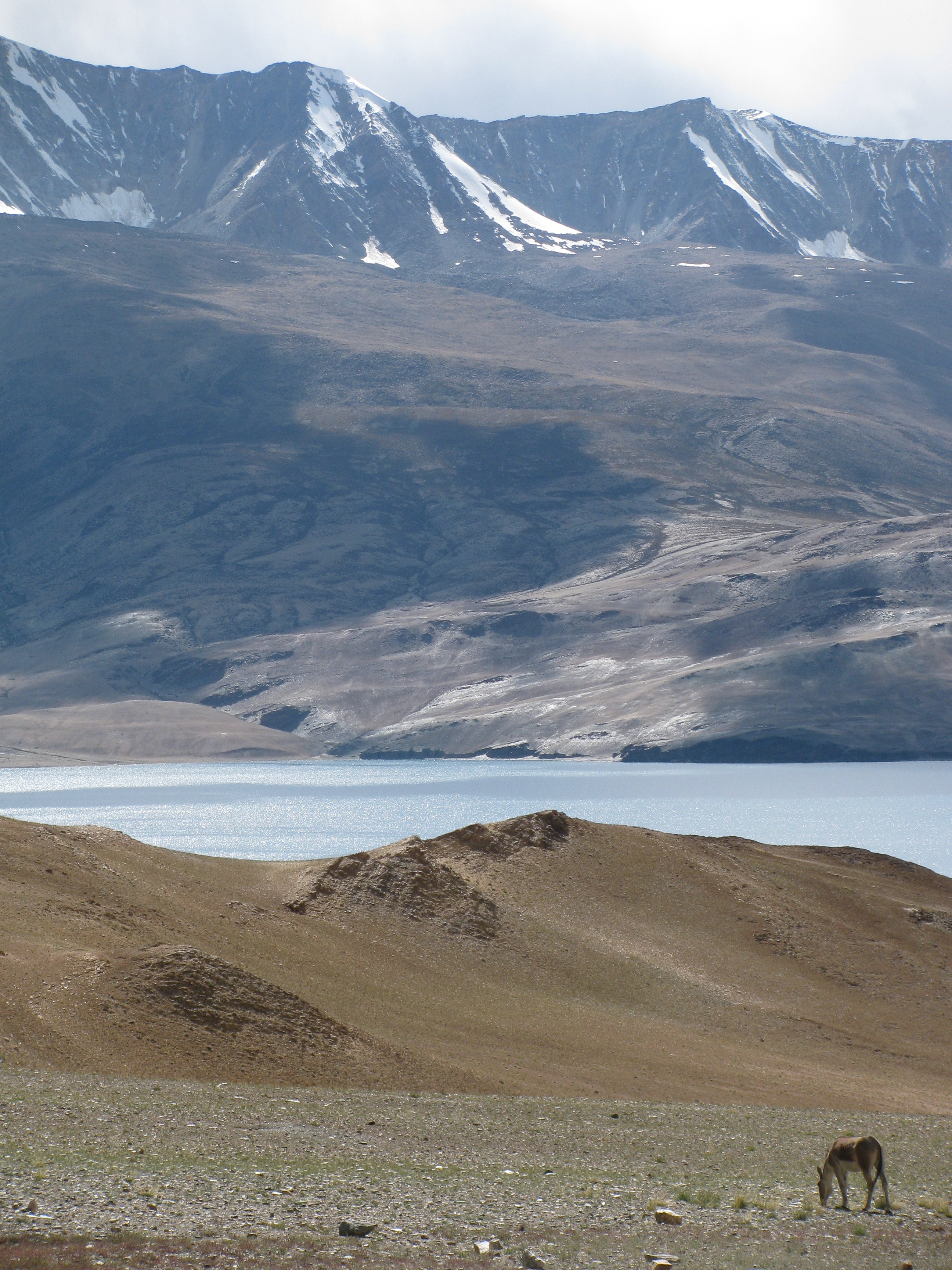
At bottom right corner - a lone kiang, Tso-mo-ri-ri in the backdrop (Photo: Shyam G Menon)

View from Base Camp: at bottom right – a lone kiang, Tso-mo-ri-ri in the backdrop (Photo: Shyam G Menon)

Then out of the blue, a call came. Punit Mehta, who I knew was trekking to Ladakh from Himachal Pradesh, was in town. His next trip was with a group from Bengaluru led by Dinesh K.S. Both Punit and Dinesh have worked as instructors at the National Outdoor Leadership School (NOLS), an organization I am familiar with. Dinesh’s expedition had a two pronged agenda – to partly go up the approach to Chamser Kangri and install a plaque in memory of a friend who died there on a previous expedition and then attempt the 20,600ft high-Mentok Kangri, a peak on the opposite side of the Tso-mo-ri-ri lake. It was soon obvious that a more efficient expedition would be one that continued up Chamser Kangri and attempted that peak instead of Mentok Kangri. Suddenly my plans appeared salvaged. The team was kind enough to count me in. I will always remember this meet-up with Punit and Dinesh as a miracle of sorts. In the countdown to leaving Leh for Tso-mo-ri-ri in south eastern Ladakh, Punit and I cycled to stay fit. It was my first taste of cycling at altitude and within days I knew, I had found a new interest.

On the Internet, you will find descriptions of Chamser and Lungser Kangri as easy peaks joined by a common ridge. My learning from the outdoors: don’t go by what someone else says; respect every mountain (that goes for Stok Kangri too). While most of the team headed straight to Base Camp, Punit and I elected to spend a night near Tso-mo-ri-ri and then hike along the lake’s edge before commencing the ascent to Base Camp. The night by the lake was pretty cold; my bivy sack (an all weather outer layer into which, you and sleeping bag can tuck in when camping without a tent) was covered in frost next morning.
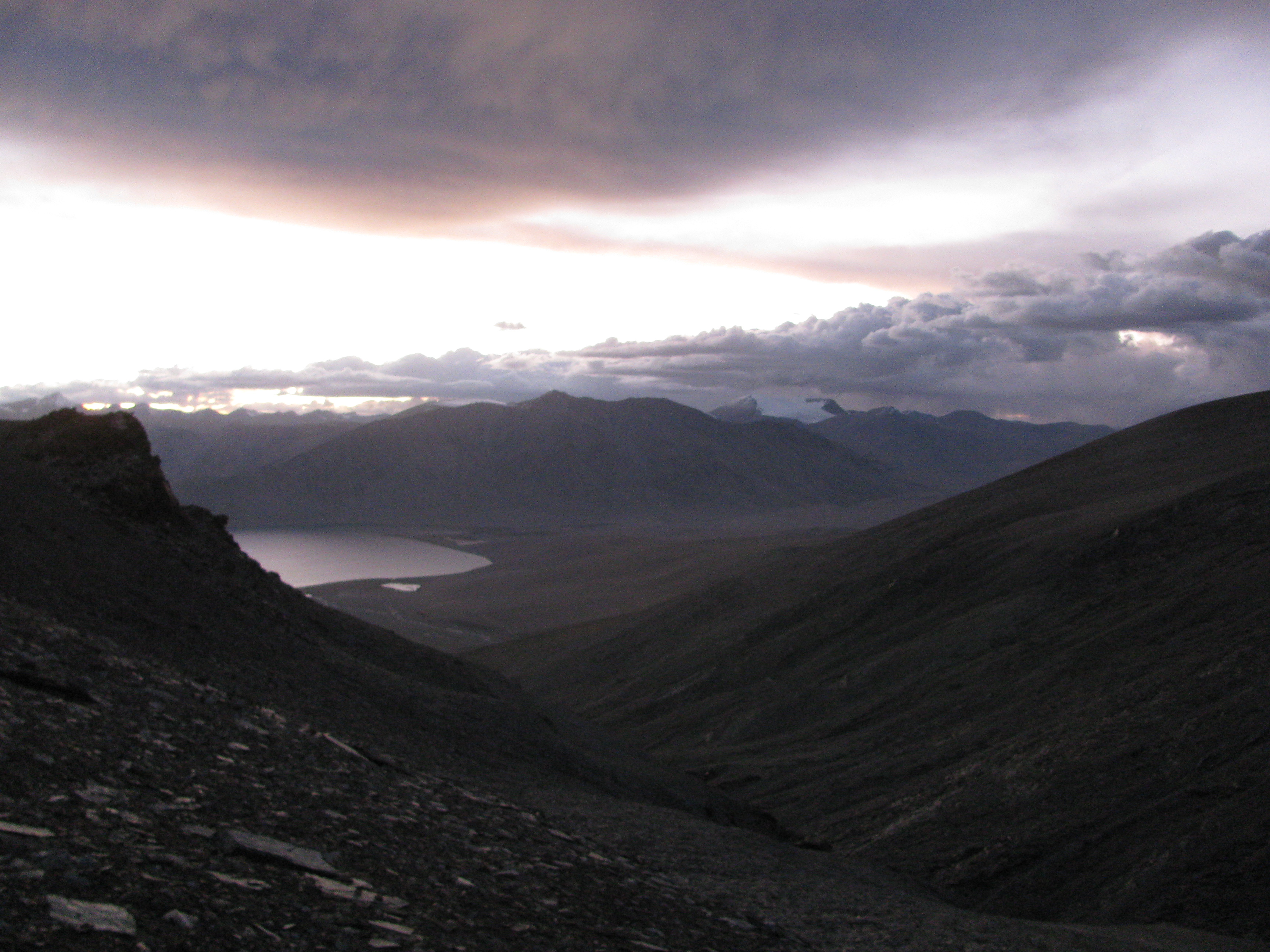
Broody evening at intermediate camp (Photo: Shyam G Menon)

Evening at intermediate camp (Photo: Shyam G Menon)

Chamser Kangri is not an impressive-looking triangular peak. It resembles more a beached whale. The hike to Base Camp tracking the contours of Tso-mo-ri-ri’s shoreline and then climbing up, was tad tiring; during the day Ladakh’s high altitude sun can be an unforgiving orb of bright light and warm sunshine. Camp was tucked some ways up from the lake’s shore, a couple of tiers of relatively flat, open space intervened between the lake and camp. On that flat land, at various times of day, a kiang or two grazed or ran around. The animal is also called Tibetan wild ass and is the largest of the world’s wild asses. In India, you find it in Ladakh. Over the next couple of days, we made our way up the mountain. After the installation of the plaque, two expedition members who had come mainly for that ceremony, returned to Leh. Of the rest, as we gained height, two developed altitude related problems despite a strict regimen of ascending and descending the mountain that Dinesh had maintained for the team.

The last of the altitude related evacuations happened at intermediate camp. Most people left. Kul Bahadur and I stayed behind. The expedition seemed near cancelled. Neither that day nor the next seemed to indicate fine weather ahead. Dark clouds gathered. The evening sky was spectacular but ominously grey, a deep shade of grey laced with the red of the vanishing sun. Something told me that if you wanted to attempt the summit, it better be soon for the window of opportunity appeared shaky. But we didn’t want to move this way or that without some word on how the rest of the team was. Personally for me, it was turning out to be one of my best expeditions. The support staff and arrangements for the trip had been put together by Punit and Tsewang Phunchok. We had motivated support staff in the form of a cook – Kul Bahadur, helper – Ram Bahadur and a young guide called Stanzin Chosgial. In addition to this encouraging ambiance, the preceding Stok Kangri climb, the cycling that followed and Dinesh’s insistence that we not break the fundamental mountain rule of working high and sleeping low – all had me well acclimatized and tuned to climbing. Both Kul Bahadur and I would have been sad had Dinesh and Punit decided that the whole team should retreat. I was feeling good; Kul Bahadur was in no hurry to go anywhere else, his heart was right there. It was the perfect frame of mind to proceed. Then, Punit and Stanzin who had gone to escort out those who were leaving, returned to join us at high camp. They brought me an unforgettable note from Dinesh wishing me luck and reminding me to climb safely for “ the mountain will always be there.’’ That same day we moved to still higher camp at 19,000ft at the base of Chamser Kangri’s sprawling summit ridge. It was below freezing by evening.
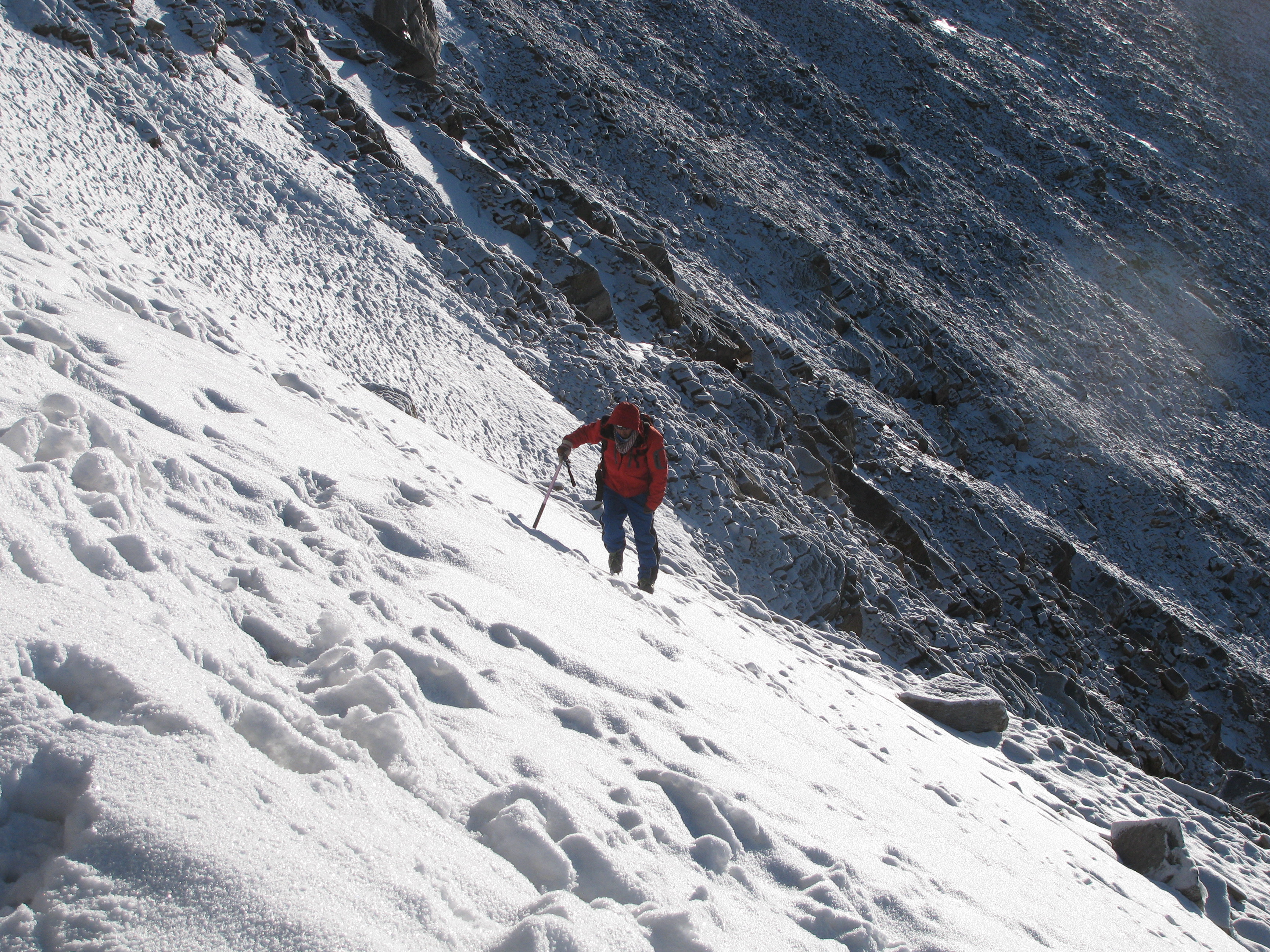
Stanzin on Chamser Kangri (Photo: Shyam G Menon)

Stanzin on Chamser Kangri (Photos, above and below: Shyam G Menon)
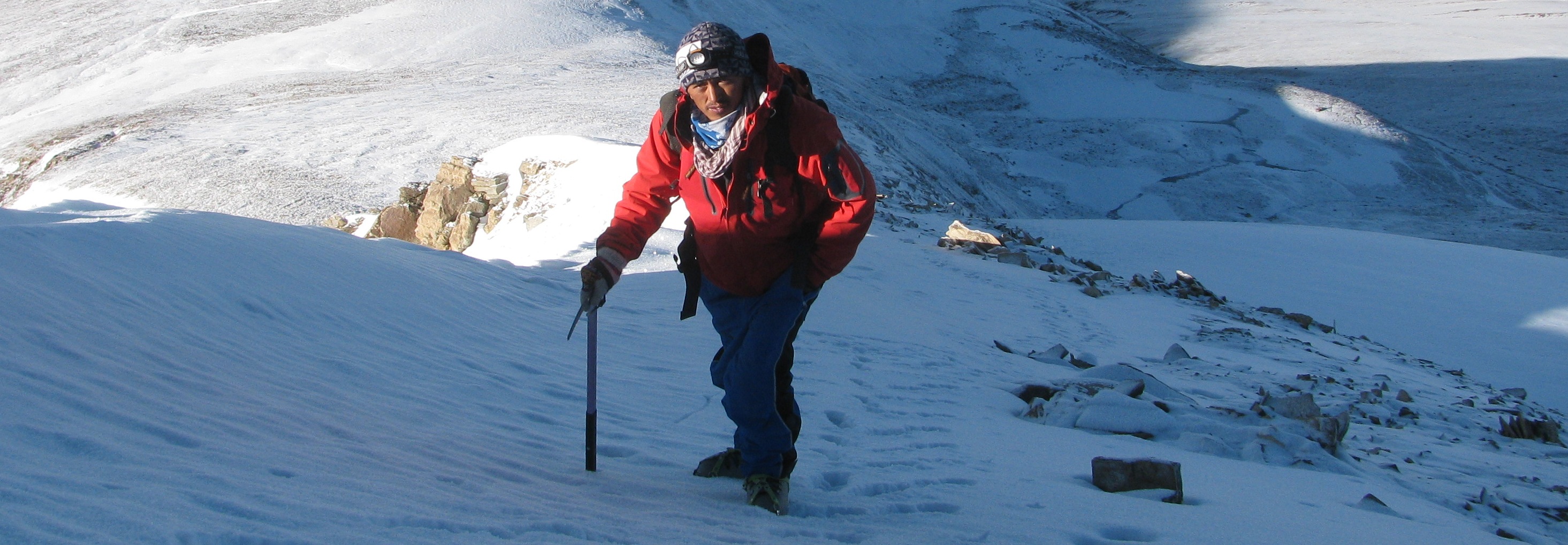
Stanzin on Chamser Kangri (Photo: Shyam G Menon)

Around 3 AM, Stanzin and I set off for the summit. Our progress was in darkness, immediate world lit by the beam from our headlamps. It was the first time on Chamser Kangri for both of us. So we followed our instinct, exploring and correcting the route as required. As the first sliver of sunlight pierced the horizon we reached the summit ridge. Measured by my very average physical fitness and technical competence, it had been a stiff ascent up rock and snow in plastic climbing boots but no crampons. A little way up the ridge the snow transformed to hard, wind-swept type. I sat down to wear crampons. This was followed by a stretch where we decided to court the well snowed-in side of the mountain, instead of the ridge. It was an engaging, snow clad mountain face. We ascended using our axes for support. The detour helped us gain height quicker than how it would have been had we stuck to the ridge. But the enjoyment was diluted by the subsequent steady plod, back on the ridge. It kept going on and on. “ When will this ridge end?’’ Stanzin asked. Amazingly when it did end after a long time, he simply called it quits. I was stunned by his decision. So near the goal and he gives up the chase?

I looked around. Next door, Lungser Kangri resembled a giant softie; there was so much snow. Far below Tso-mo-ri-ri was a serene blue. The scene was ringed by endless snow-capped peaks. Albeit in the distance, very prominent was a snow white pyramid and close to it a large rocky massif, which I was told, was the remote peak, Gya. The 22,420ft high-peak at the tri-junction of Ladakh, Spiti and Tibet is the highest in Himachal Pradesh and until some years ago most attempts to climb it had ended up on its sub-summits, not the main peak. My mind returned to Chamser. There were two highpoints visible – ten minutes of further plodding would bring me to a cairn, usually signifying summit. On the other hand, I had been told that the real summit was not the obvious one. Closer to where we were, a high ridge took off like a Mohawk haircut for the peak; one side was a plunge. Its apex wasn’t marked by any cairn but it seemed as high, if not higher than where the cairn stood. A trick played by perspective? I don’t know. I looked toward Stanzin. He had already taken out his prayer flags and was busy putting them up. It was a humbling experience for me to see him so capable of turning his back on a summit when the majority of us won’t be happy without gaining the highest point. Although he had climbed before in the neighborhood it was his first time too up Chamser Kangri. I got as far as I reached because he was with me. I moved independently but the awareness that there was another to assist should something go wrong meant a lot. Yet, unlike me, Stanzin wasn’t chasing a milestone.

Leaving him to his work, I set out along the high ridge. Less than forty feet from its faintly corniced apex I stopped. I am a timid adventurer who likes to preserve himself for God willing, more adventures. The point where I stopped seemed the edge of safe existence by my technical skills. I had come to love Chamser Kangri and it didn’t make sense to stand on its absolute head, its ` summit.’ Plus there was Stanzin below, who was already happy. A Ladakhi with more rightful ownership of the mountain than I, he was a picture of contentment without needing to stand on Chamser Kangri’s head. What is a summit anyway? – I thought. Am I here to pass one of those board exams where 100 becomes first and 99.75, is second? Summit this is – I said, and turned back.
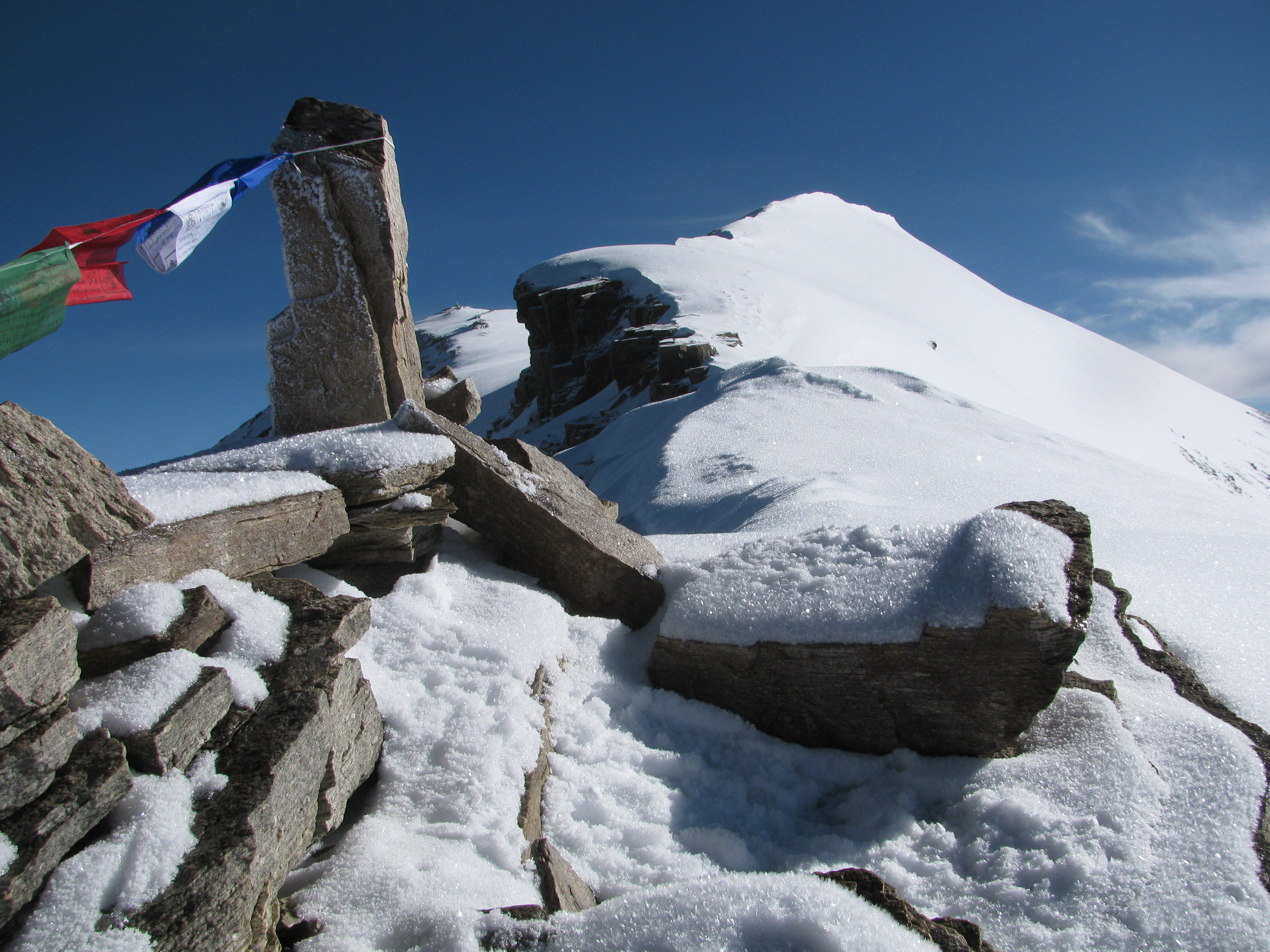
Stanzin's prayer flags with the highest point we reached on the trip in the backdrop (Photo: Shyam G Menon).

Stanzin’s prayer flags with the highest point we reached on the trip in the backdrop (Photo: Shyam G Menon)

We returned via a snow slope above the mountain’s glacier, a portion we mistook to be firm. It was the only stretch where we roped-up because our footsteps sent weird cracking sounds all across the brittle snow. It felt like slabs snapping underneath. The sun was also up, not a good time to linger around. Looking back, that stretch of brittle snow did cause a problem. Finding it unwise to continue along that portion, we were forced to abandon the seemingly comfortable line of descent we had originally seen and pick a more precipitous rock strewn-route down. As the rocks, which were glued to the mountain side by nightly ice dislodged in the rising heat of day, we had to avoid being one above the other. It was touch and go with more than once, a bunch of rocks sliding down with man surfing on top. Eventually, we reached the bottom and walked toward camp. Punit, who has unashamedly embraced hiking over climbing, had in the mean time done his own exploratory walks in the area. That strength – the ability to turn his back on a summit despite having been a climber, is something I respect Punit for. It doesn’t come easy if you have tasted climbing. With Punit, you discover a side of the Himalaya easily overlooked in the race to climb its prized heights – the immense sprawl of the range, home to many wonderful treks.

My original plan was – climb Stok Kangri, Chamser Kangri, Ladakhi and Shetidhar. The latter two were near Manali. After Punit left for Delhi, I continued my cycling, including one trip to Stok village, where I reached in time to see another group set off for Stok Kangri. I also fell in love with a particular cycle available at Summer Holidays, the shop where I rent cycles in Leh. It had been sold to them by a foreign tourist. I sought it out every day. Some cycles just match a cyclist’s anatomy and this was my long lost soul mate.

A week later, I was in Manali and soon thereafter at Iceland Hotel in Solang, where Khem Raj Thakur, had assembled a support group for the Ladakhi-Shetidhar leg. It was a young team of guides, cook and helper; once again a good team. But we had two problems. Just before reaching Beas Kund, a bitter quarrel erupted between me and one of my friends who had come along for the trip. It was to remain a lesson because high altitude is the last place where anyone should provoke or succumb to provocation. I succumbed to provocation. In turn the incident has made me resolve that doing something one can do independently however lowly in stature it maybe, is better than chasing an achievement with folks you can’t get along with. Second, while we had initially thought of attempting the two peaks because they are linked by a common ridge, we learnt late that camping on the ridge was discouraged as it is cold and windy. So we settled for just Shetidhar.

An early morning, we climbed the 17,500ft-high peak. It was a short, stiff climb, enjoyably essayed with ice axe, boots and crampons; no roping-up. The summit was corniced. We stayed off the cantilevering snow. Five and a half hours after we began the climb, we were back at high camp. Our assessment of the 17,600ft-high Ladakhi was not wrong – although connected by a common ridge, it was rather distant from Shetidhar and the climbing route wound around the peak. Climbing both Shetidhar and Ladakhi, back to back from high camp below, would have been exhausting and I was anyway beginning to tire from having been out for so long. It was now late September.
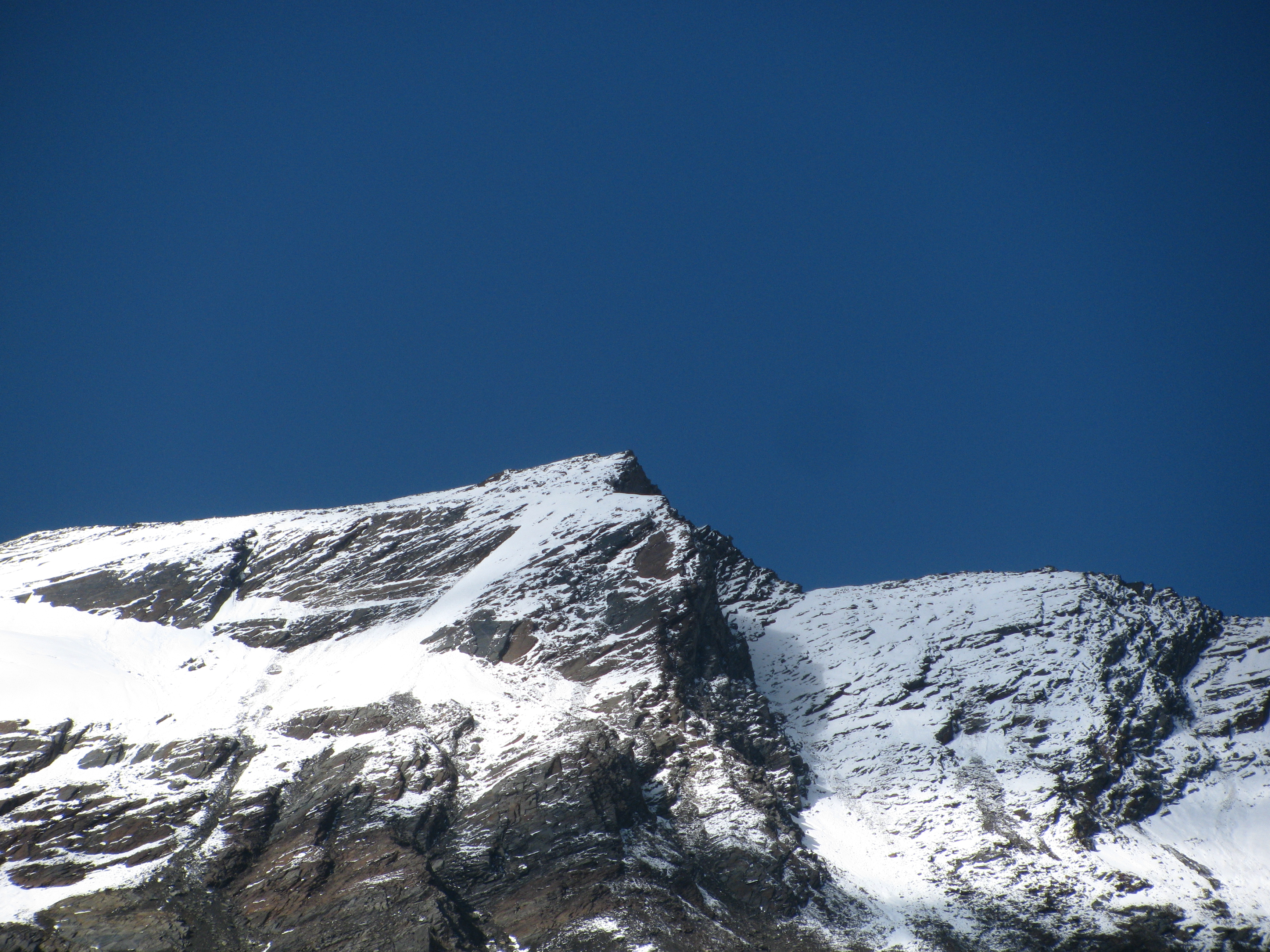
Shetidhar (Photo: Shyam G Menon)

Shetidhar (Photo: Shyam G Menon)

Here I must pause and say: I liked Shetidhar. The area where it stands is dominated by the immense rock wall and ice fortification of the 19,560ft high-Hanuman Tibba. Given its modest height Shetidhar does not receive the attention Stok Kangri gets. The latter is India’s busiest trekking peak and a money spinner for authorities because a lot of people come for the comparatively easy shot at 20,000ft it promises. Shetidhar on the other hand, packs into a small, sharp punch, a much better challenge – it has an evolved walk-in to high camp which you can make harder by carrying your full rucksack; its summit attempt is a swift affair but the snow slope is quite inclined and familiarity with climbing, therefore an asset. Compared to that Stok Kangri is a much longer haul on summit day with little else for challenge except climbing conditions and altitude. But like Everest, best known mountain and yet not the most difficult peak around, Stok Kangri’s height and accessibility attracts more people than Shetidhar. In Leh, veteran mountaineer Sonam Wangyal, who administers climbing permits in the area, had pointed out that nobody has any curiosity for Stok Kangri. It is plain request for permission to touch 20,000ft. Nothing illustrates the public’s obsession with height more than Stok Kangri’s neighbor, Golep Kangri, which is less than 20,000ft and unlike Stok Kangri, slightly technical at the top. Very few go there although both peaks share the same base camp. For most of us from the plains, our pursuit in the mountains too, is a distinction. It has only got worse in the age of high population and media. The two – population and media – has made the need for distinction, a contagion, highlighting saleable statistic at the expense of savoring an experience.

Few days after Shetidhar, we hired cycles in Manali for a final piece of action – cycling up the Rohtang Pass. It wasn’t our aim when we started out that morning but gradually we realized the pass was achievable. Unfortunately I had to stop six kilometers ahead of the pass because the road, which was being widened, was in terrible shape. There were bulldozers at work, too many waterlogged portions, plenty of mud and reckless traffic. I will try again another time.

The good fortune of the 2011 trip didn’t visit me again. While I have no control over luck, the more tangible reason was that I didn’t anymore have the money for extended trips. Mountains entail cost. I am no foreigner or Non Resident Indian with dollars in the bank; I am no rich Indian either. As my freelance journalism continued with matching shortage of resources to frequent the mountains, I have often looked at the 2011 trip – Three Peaks and a Pass, as I call it – as treasured memory. I have this sense amid resource crunch that it is as far as I will ever reach. Within that, the Chamser Kangri expedition was clear highpoint for the way in which things converged well for me. Two other instances from the outdoors have provided similar happiness – the time I ran from Munsyari to Kalamuni Pass and back and the occasion I was part of a cycle trip from Ranikhet to Lansdowne and beyond .
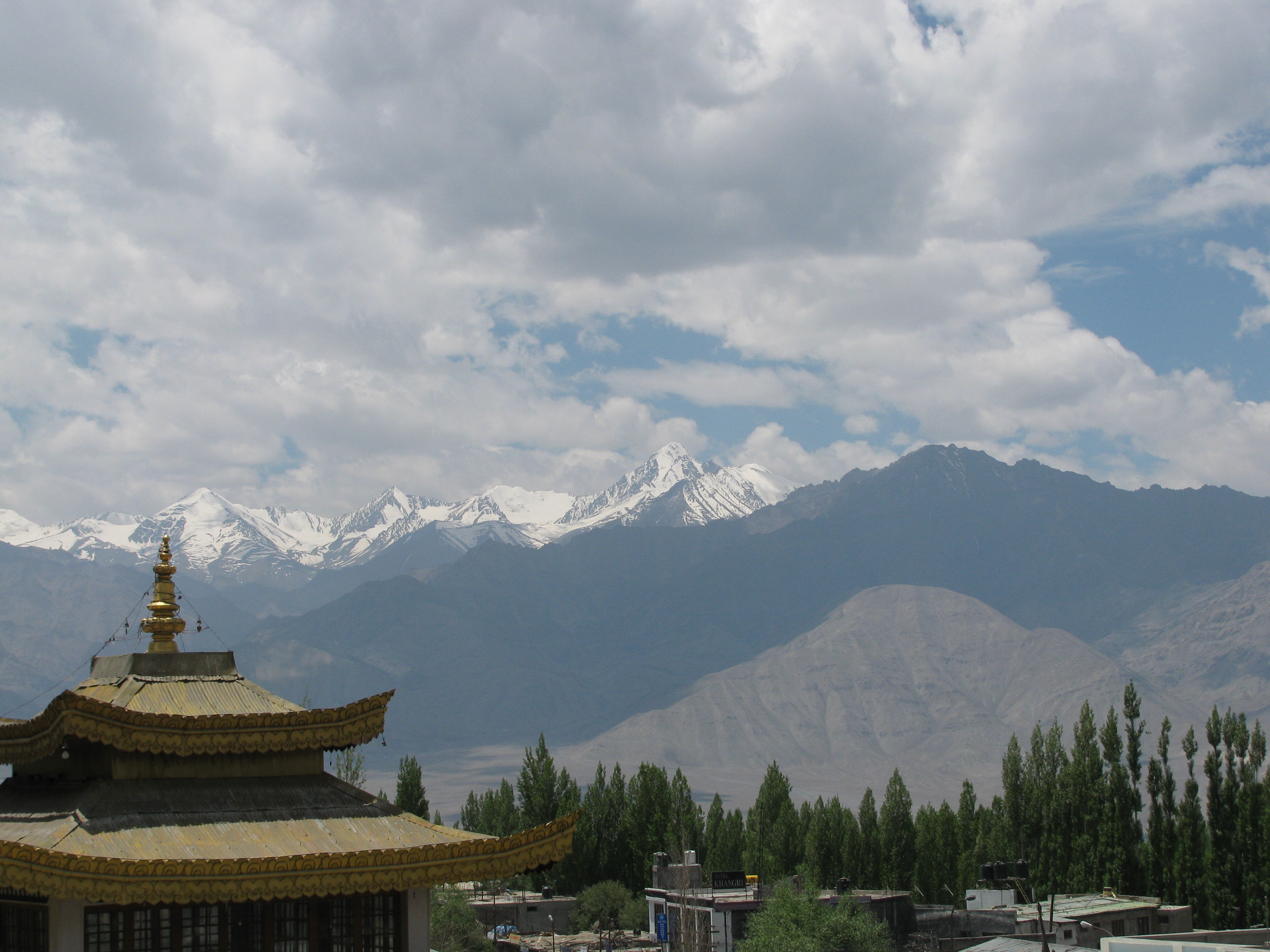
Leh, 2009 (Photo: Shyam G Menon)

Leh, 2009 (Photo: Shyam G Menon)

On subsequent visits to Leh, I learnt that Stanzin Chosgial had joined the security forces. Leh is growing, changing. Mid-2015, I went looking for a particular café; it wasn’t there anymore. That café had provided a post script for the Chamser Kangri expedition. Fresh from the trip and happy for it, Punit and I were enjoying a cup of coffee there, when a group of young Indian climbers walked in. Seeing our sun burnt faces, they asked which mountain we had been on. “ Chamser Kangri,’’ I said enthusiastically. “ Oh, that one – that is an easy walk,’’ one of them said dismissively. The youngsters took their seats and huddled in talk, wrapped in a blanket of their youth. We looked at each other and sipped our coffee quietly. As you age, you realize that happiness is an escape from human habits. I had the joy of the universe coursing through my veins, till measurement by human cluster busted the illusion. A mountain was climbed but it wasn’t hard enough to make the cut in the cluster. I licked my wounds. I wondered what the young climber would think of Stanzin. He grew up with the mountains in his backyard and when he got to the top of one, didn’t feel anything remarkably different for it. Stanzin, I suspect, could sense universe. The youngster at the cafe breathed verticality, physical strain and climbing’s grades. Maybe, he sensed universe in an utterly difficult climb. Are you blessed if you have to bloody yourself to sense universe or can do the same much earlier, on gentler terrain? I don’t know. All I know is that I prefer universe to people. For some time after his quip I wished that young man had spared me my freedom to exist, self esteem intact, in my own fantasy as mountaineer. Then something about my age, ageing and the pleasure of seeing the mountains differently each passing year, spoke to me. I was pretty fine a while later.

(The author, Shyam G Menon, is a freelance journalist based in Mumbai. An abridged version of this article appeared in MW magazine. For more on the 2009 trip please visit https://shyamgopan.wordpress.com/2014/12/23/twenty-thousand-feet/. For more on La Ultra: The High, please visit https://shyamgopan.wordpress.com/2013/10/19/an-ultra-marathon-from-the-sidelines/. For more on the run from Munsyari to Kalamuni Pass, please click on this link: https://shyamgopan.wordpress.com/2014/12/11/running-in-the-hills/; for more on the cycle trip in Kumaon please visit https://shyamgopan.wordpress.com/2014/12/31/the-ghost-who-writes/)
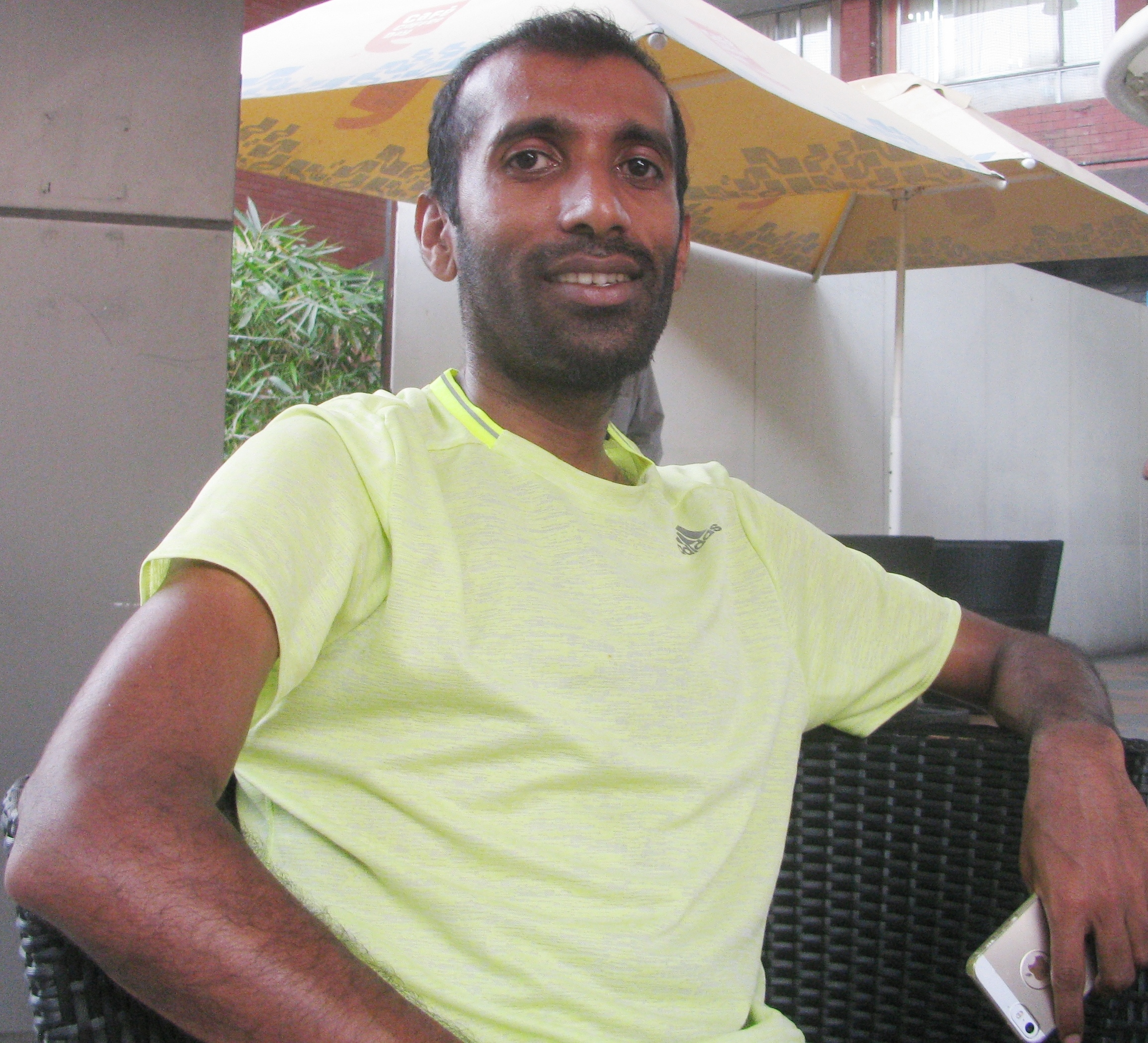
SEEKING FOCUS

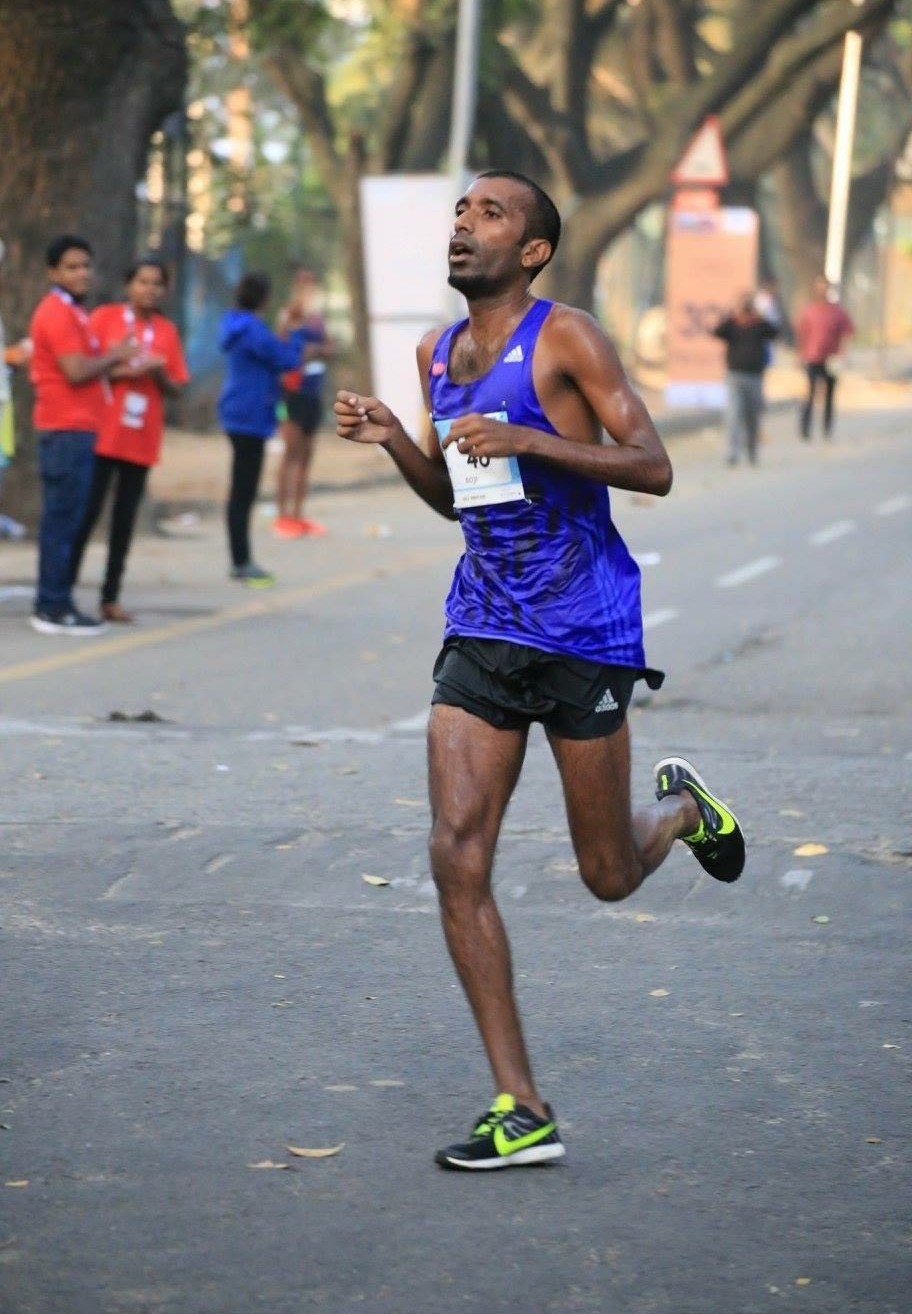
Soji Mathew (Photo: Shyam G Menon)

Soji Mathew (Photo: Shyam G Menon)

The first time I saw Soji Mathew run was at the 2016 Standard Chartered Mumbai Marathon (SCMM).

I was a spectator on the road connecting Churchgate and Marine Drive when the subject of this story flew past to finish fourth in the Indian elite category of the half marathon. A month after SCMM, we sat down to chat.

In school, Soji considered himself a fast bowler. His eyes lit up, talking about Courtney Walsh, Curtly Ambrose and Franklyn Rose. When children play they assume the names of their idols. Sometimes, it is their friends who choose a name. For anyone keen on bowling fast, the team to worship was, West Indies. He was called by the names of pacers from the West Indies. “ You know a fast bowler’s run-up? That and the general running around on a cricket field – that’s about all the running I did,’’ he said.

Born September 1981, Soji was an only child. His father worked many years with the Military Engineering Service (MES), eventually retiring from it. Home was Mavelikkara, a town in central Kerala. Altitude: approximately 40 feet above sea level. Seen on a map, Mavelikkara is not very far from Kerala’s Kuttanad region, famous for its paddy cultivation in fields lower than sea level. At 7.2 feet below sea level, Kuttanad is the lowest point in India. Life took a turn in eighth standard. During the state’s Onam festival, the youth organization at Mavelikkara’s Cherukole Marthoma Church held an annual running race of three to four kilometres. In Kerala’s rainy weather, the course was sometimes muddy, water laden. “ It was fun watching people run and arrive tired at the finishing line,’’ he said. Eventually, the move from spectator to participant occurred. Although Kerala has produced athletes, like the rest of Indian society, premium adhered clearly to a practical, ` well settled’ life. Cricket being national obsession is perhaps securely conformist. Anything off the beaten track, troubles. Eighth standard-student practising for a local run, elicited the usual questions: what do you get from this; what’s the point in this? That year he came first in the race at the church. “ I got a prize, a glass,’’ he recalled.

Parcels of reflected light, a procession of them, danced on his face as he spoke. It was the metro train passing by on its high perch, under the glare of the afternoon sun. The stainless steel coaches reflected sunlight. We were at a coffee shop on Bengaluru’s (Bangalore) MG Road, close to the metro line. He sipped his cappuccino. Onam falls in August-September. In October, a month after winning the race at the church, the boy participated in the selection process at school for entry into the district level sports meet. He ran a 3000m-trial and finished first. “ It surprised people because I beat the person who had been consistently selected for the discipline,’’ Soji said. Elation, if any, didn’t linger. School boy, wannabe fast bowler, he promptly forgot the whole affair. Life was cricket. Till one morning, dispatched by his mother to buy some meat in the market, he was cycling along when somebody stopped him and asked: weren’t you selected for the district meet? It is today. Go quickly! He was clad in shirt and lungi. Reaching the venue so, he was told to get ready. But he didn’t have a pair of running shorts. “ I borrowed somebody’s Bermudas – you know the big beach shorts. I wore that and ran. It was a 200m-track and we had to do 15 loops. I came first. That is the only time I wept for joy,’’ he said. It was the lone gold medal that year for his school in the event. His photo appeared in the local newspaper the next day. But he was denied entry to the state level meet as he was under-age.

Soji at the Bengeluru Marathon (Photo: courtesy Soji Mathew)

Soji at the Bengaluru Marathon (Photo: courtesy Soji Mathew)

From this stage onward, it was an equal divide between cricket and running. Every year he geared up for the local race at the church. Practice commenced in July, peak monsoon in Kerala. He would run through water. “ People found it odd, tad crazy,’’ Soji said. He ran in his dad’s army shorts, altered to his size. In ninth standard at school, he again won the church race and finished fourth in 3000m at state level in school. By the time he was in tenth standard, he had shifted to senior category and the 5000m, topping it at district level. He had no coach. He ran barefoot; he wasn’t from a wealthy family. But he trained with growing determination. He finished third in the 5000m at state level. Then a second turning point in life occurred, one that fine-tuned his focus.

In a cricket match, wherein he was bowler for crunch-over, he got smashed all over the field by the opposition. That ended the cricket-phase. His attention trimmed to focus on running. To do his eleventh and twelfth standards (those days it was called pre-degree), the runner shifted to Pamba College in the adjacent Pathanamthitta district. Having done well in running at school level, he got admission to college through the sports quota. “ As with many others, for me also college was a sudden flush of freedom. I became active in student politics, one of those assistants to union leaders, ’’ Soji said, mimicking the classic photograph Indians are so used to seeing; assistant leaning in from the side to be in leader’s photo. Amid new found freedom, in his first year at college, he was told that having been admitted via sports quota, he would have to participate in MG University’s upcoming cross country race. He bought a pair of PT shoes, his first running shoes. He participated in the event without any training and finished eighteenth. Luckily for him, those were days when colleges kept a look out for talented sportspersons. Despite the finish down in the pecking order, his running was noticed by officials from SB College, Changanassery. This was to prove the next turning point in his running career.

SB College offered him free education plus no mess fees, no hostel fees. “ That instilled a sense of responsibility in me. I had the urge to give something back for what they did,’’ Soji said. Mr Chidambaram – the college’s coach, was Soji’s first coach. He told the young runner: I will train you. But executing what you learn effectively is your onus. Soji shifted to SB College in his second year of pre-degree (today’s twelfth). That year he came first in MG University’s cross country race. He also placed second in the 10,000m at the university’s track and field meet. At the All India Inter University Athletics Championship in Amritsar, he finished fifth in the 10,000m. He continued at SB College to do his graduation (BA). In the first year, he topped the MG University cross country race, was seventh in cross country at the national universities meet, emerged first in 10,000m at MG University and fifth at national university level. In his second year of the degree course, he became the record holder in 5000m and 10,000m at state level in the under-22 age category, a category that no longer exists. That year he was however plagued by injury. Recovering from it, in his final year, he placed second at MG University in cross country and fifth at the national university level. He also won the 10,000m at MG University in 32:04 (according to Soji, a record that still stood as of February 2016) and finished first in 10,000m at the All India Inter University Athletics Championship held in Jamshedpur with a timing of 31:18.

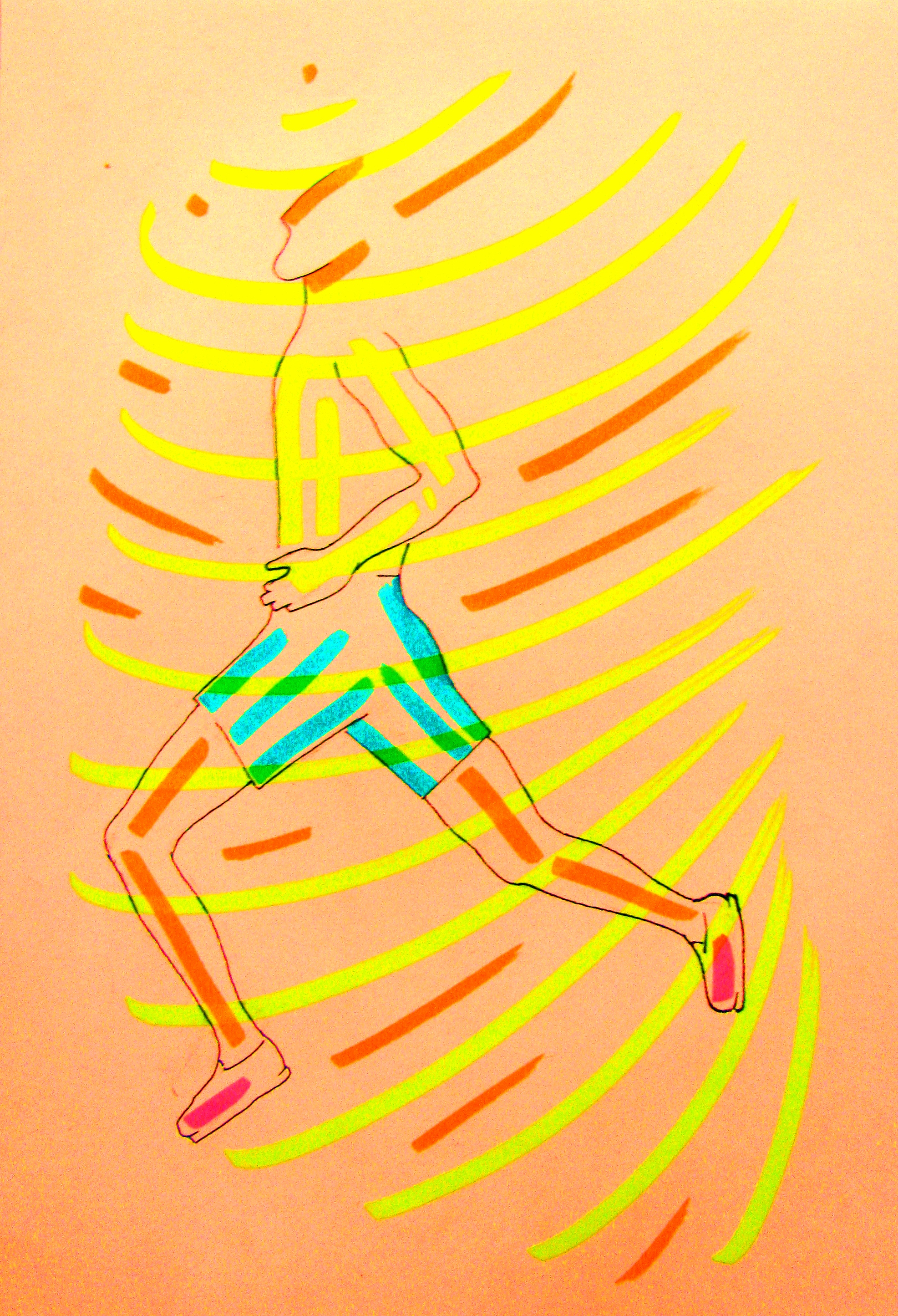
Illustration: Shyam G Menon

Illustration: Shyam G Menon

Following this outcome, Soji was called for the national camp by the Athletics Federation of India (AFI). It was a five month-camp, held at the high altitude training facility of Sports Authority of India (SAI) at Shilaru in Himachal Pradesh. Each person is unique; generalizations must be avoided. Still, generally speaking, hill people have good endurance. Some of India’s best distance runners hail from the hills. As do, some of the world’s best; Kenyan and Ethiopian runners are associated with their country’s highlands. The best training spot for distance running is a mix of altitude and fine weather affording long training window. World over, high altitude sports training centres typically straddle mid elevations, neither too high, nor too low. Data on the Internet places Shilaru at 2420m (close to 8000 feet) above sea level; Mavelikkara at 13m (43 feet) above sea level. For Soji, used to Mavelikkara, Shilaru was his first taste of running at altitude. He struggled initially (he did a mix of running and walking), then, slowly found his groove. At the cafe, the Shilaru experience reminded him of an observation from his school and early college days.“ Back then, we used to say in Kerala that none of us from the plains and coastal areas of the state can beat the distance runners of Idukki and Wayanad districts. They were typically the state’s best. Idukki and Wayanad are hill districts with plenty of ups and downs,’’ Soji said.

As part of the national camp, he had to run a 10,000m race in Chennai, where he finished second. Loyola College extended him an invitation to represent them at the A L Mudaliar Athletics Meet, an important event in the city’s sports calendar. Joining Loyola for his post graduation, Soji represented them in the 5000m and the 10,000m at the A L Mudaliar Athletics Meet. He finished first in both. In his first year MA, he also applied for a job at Southern Railways. That didn’t come through to his satisfaction. But Western Railways stepped in. He moved to Mumbai as a Ticket Collector (TC) in 2004. Sportspersons in TC roles are typically put to work on suburban trains or given station duty as that provides them time to train as well. Mumbai has one of the world’s busiest suburban railway systems. Soji checked tickets on the city’s western line. In 2005, following a fifth place finish in 10,000m at the Federation Cup, he was selected once again to the national camp. From 2005 to 2011, he was at the national camp on the strength of his performance in 5000m and 10,000m.

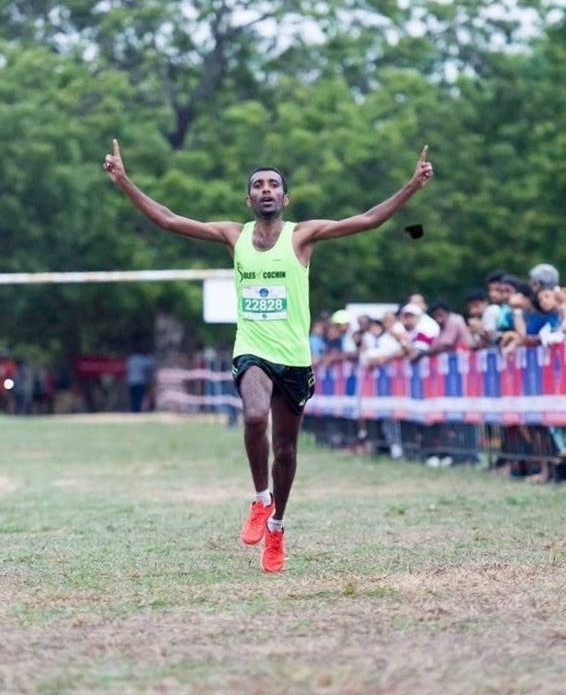
Soji finishing a race in Kochi (Photo: courtesy Soji Mathew)

Soji finishing a race in Pondicherry (Photo: courtesy Soji Mathew)

If you are an athlete training for 5000m and 10,000m on a regular basis, you are deemed in line to attempt a half marathon. The weekly training mileage you put in is adequate. The year Soji shifted to Mumbai had marked the debut of the Standard Chartered Mumbai Marathon (SCMM). It would grow to be India’s biggest marathon. In 2010, Soji ran his first half marathon at SCMM and finished second in the Indian elite category with a timing of 1:06:40. In 2011, he placed second in the Indian elite category again. In 2012, he won in the Indian elite category at SCMM, finishing first in the half marathon with a timing of 1:05:26. At the last SCMM in January 2016, he finished fourth. At the Vasai-Virar Mayor’s Marathon (VVMM), he was second in the half marathon in 2013 and 2014. Additionally, he has been third at the 2009 Airtel Delhi Half Marathon, first in the 2015 Bengaluru Half Marathon and first in the half marathon segment of the Wipro Chennai Marathon held in January 2016. His personal best in the half marathon was at the 2014 Delhi Airtel Half Marathon, which he ran in 1:04:58. Soji has run the full marathon twice. At the 2004 Travancore Marathon in Kerala, he placed sixth with a timing of 2:35 and at the 2010 Pune International, he placed third with a timing of 2:23.

Going ahead, Soji would like to focus more on the full marathon. For this he will need to increase his weekly mileage. He also believes he should gain strength (he is a thin, wiry individual) and train at altitude for a meaningful shift to the full. Now a Deputy Chief Ticket Inspector (DCTI) with the Railways, the basket of events this distance runner addresses for his employer is big. Besides the above mentioned podium finishes at various running events, he was also second in the 2009 World Railway Cross Country Championship held in Czech Republic. There is even a third place in steeple chase at the 2010 World Railway Track & Field Meet in Pune; that’s the only time he ran a race in steeple chase. All put together, his repertoire spans 5000m; 10,000m, cross country, half marathon and full marathon. Age naturally moves the athlete away from the shorter distances to the longer ones. Soji is currently well established in the half marathon. He knows that going ahead, he must move to the full marathon. That requires commitment to chosen discipline. He must focus. However, within the Railways, the inter division sports meets matter. They are prestigious events in which, athletes are expected to compete and bring laurels to their respective divisions. Courtesy this requirement, Soji has to tackle a basket of disciplines instead of focusing on a chosen few or even one. He wishes it were not so. In contrast, in the armed forces, from where many good distance runners emerge to dominate the marathons at Indian cities, you are allowed to focus and specialize.

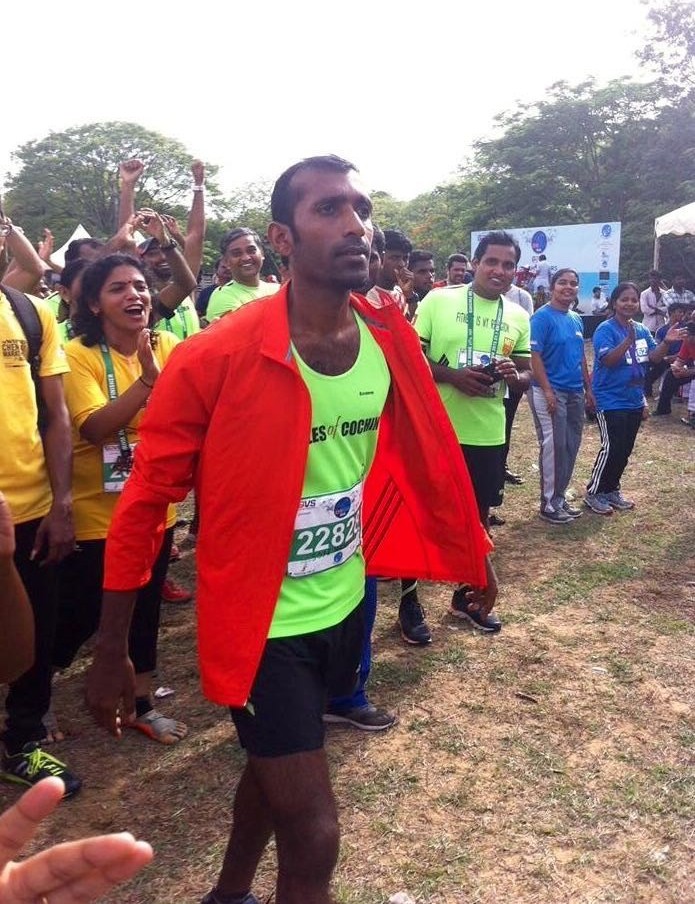
Soji at a race in Kochi (Photo: courtesy Soji Mathew)

Soji at a race in Chennai (Photo: courtesy Soji Mathew)

A seemingly quiet person lost to the world of running, Soji speaks with a stammer. We met after a series of phone calls over a few months, trying to figure out a mutually convenient instance. February worked for him – he was hanging on in Bengaluru (arguably the best Indian city for runners to train in courtesy its weather), busy season over, a month of relaxation to savour before training starts all over again sometime in March. I could sense that the runner in Soji wanted to continue in Bengaluru. He stayed in rented accommodation, away from the city centre and close to SAI’s training facility. It entailed cost – accommodation, athlete’s diet etc. Prize money won at races helped compensate some of the expenses. I asked if aside from the Railways, anybody else supported him. He said he received encouragement from the Kerala based-running group Soles of Cochin. They egg him to do better; suggest apt races, provide shoes. In world by specialization, we live in categories, judging ourselves by our performance within those severely competitive silos. When we met in front of the Deccan Herald office on MG Road, Soji had a question and he posed it sincerely, “ Why do you want to write about me? I am an average runner. There are many who are better than me.’’

(The author, Shyam G Menon, is a freelance journalist based in Mumbai. Please note: all race timings and the names of events are as recalled by the interviewee.) 

ABOUT A BICYCLE

Illustration: Shyam G Menon

Illustration: Shyam G Menon

A story from many years ago about the first bicycle I rode in the mountains:

It was a simple bicycle.

No gears, painted silver and red, odd size.

A person of average height traveled the road bordering our camp like a stiff Victorian gentleman. His knees nearly knocked against the handle bar to avoid which, he had to keep himself straight and proper on the seat. A tall person would have to be at the rear edge of the seat or off it on the luggage rack. The bright paint served to distract from the cycle’s manufacturing quality; the frame was heavy steel, the joints bore crude welding marks. It wasn’t a solitary specimen in remoteness. There were similar others in Mori, a settlement on the banks of the Tons River in the Garhwal half of Uttarakhand.

Dayal, who worked in the camp kitchen and owned the cycle, took good care of it. But there was only so much he could do to domesticate an animal rather wild from birth. When the cycle arrived, most of the male instructors at camp and the one or two ladies who could cycle were elated. Here was an engaging way to stay occupied after work, particularly if you weren’t the type who could keep on playing volleyball till eternity. I don’t like games. Squaring off to compete and then determining a winner and loser from the contest, never appealed to me. I think the value of competing must be understood in context. I am unsure of competition’s value as an ethic, in our crowded, congested times. At Mori, I used to run to keep myself fit. It provided solo time. But given a slightly weak left leg, cycling seemed better option than running. It was human-powered and not much different from trekking, you moved along taking in the ambiance. There was the Tons River always in sight by the snaking road, beautiful people and village children, who no matter how many cycles they had seen could never resist chasing one. Thanks to all this, the bicycle excited.

The cycle though, had other ideas.

It punctuated every trip with a slip of its chain.

You began the excursion with fanfare; a group of village children for escort. They would gather around in anticipation and then trot alongside, a laughing, giggling bunch of boys and girls. As the cycle started moving and you settled into a small procession on the road, the chain would slip dispatching the legs into a couple of quick spins. “ Gaya, chain gaya,’’ the older of the children would shout as break-down replaced procession for novelty. The two kilometers from camp to Mori usually featured at least a couple of such injuries to one’s pride. To their credit, the children were quite sympathetic to cyclist’s plight. They didn’t mock; they sat down on the road observing the cyclist put the chain back in place. When the job was done, they got up, happy to resume the procession. In due course it was possible to figure out who had been cycling from the grease on their palms. Following one too many chain-slips, the bicycle was hauled to the doctors. We stood in a circle around it, scratched our chins and put our heads together.  Its ailment was diagnosed as a sag in the chain. Everyone concurred. Its chain did have a sagged appearance like what happens to a man’s tummy after too much time with beer and idleness. “ Clipping a chain link should solve the problem,’’ cycling’s medics decreed. Mori didn’t have a cycle shop. But there was a man who fixed everything. He was the local go-to for anything in need of repair. Our cycle was admitted to his care. The quack clipped and the bike’s sagging, jingling belly popped right back in. The bicycle came back looking athletic, sudden run-away muscularity to its stance thanks to new belly-tuck.

Illustration: Shyam G Menon

Illustration: Shyam G Menon

What neither the quack nor Dayal – or for that matter any of us – knew, was that the cycle’s real issue was attitude. I am yet to hear of a psychologist for bicycles – a bike whisperer. We needed one for the bicycle was challenging our capabilities. The damned chain continued to slip, to the point that fewer people now courted the bicycle and those who did, returned unsure if the experience was best called cycling or greasing. We cycled slowly, delicately, Zen-like attention in each pound of pressure applied on the pedals. All focus was on avoiding a chain-slip. Rather unconsciously, a new world opened up. Where cycling had previously been an offshoot of daily exercise, thanks to the extra attention, it now became meditation. We became monks on wheels. Our mind withdrew from the world we were cycling through to total focus on neural pathway between brain and precisely exerted force underfoot.  The village children no longer ran alongside shouting. They walked solemnly like little priests for a new order of self realization and world peace. Wisdom on Wheels: The Cycling Monks of Mori – we may well have become that hadn’t a rebellion against pattern, as old as the universe, struck.

One day, the Zen Master in me lost his marbles. I got bored of being gentle and meditative. I metamorphosed into a head banging rock star. I wanted speed, I wanted the wind in my hair or more accurately the few strands of hair on my bald head, and I wanted to work up a sweat. The children were left behind as I zoomed off on the uphill road leading to Netwar. The bike lunged like a horse breaking into gallop. The trick was to cycle with full contact and uniform pressure on the pedal at all times. It was the jerk of a break-and-resume pattern that typically caused the chain to slip. Not far from camp was a steep uphill climb and although the simple cycle had no gears, I made it up without any erratic jerks to the pedaling. Out of sight of the children – they had given up their pursuit by now – and out of sight of the camp, I halted to allow my hard breathing to slow down. Ahead, a gang of soot stained workers were repairing the road. Road repair crews in the Indian Himalaya are a story by themselves. The bulk of these workers hail from elsewhere, typically the states of eastern India (not to be confused with north-east) and sometimes from Nepal. You find them working in small groups. The road repair crew on the road to Netwar stopped their work to check me out. My bulging eyes and hard breathing, no more resembled monastic peace. Aware of being studied, I pulled myself together and got back on the cycle. I went past the repair team, turned the corner and then, the bicycle gifted me a chain-slip. Problem corrected and cycle positioned on a clearly uphill road, I whispered a small prayer, then got  down to getting self on two wheels moving.

The chain held, it held for some time, it seemed to hold longer – that was when I suspected a tremor in the handle bar. Was it beginning to lower? I felt a slouch gain on me. As with most bikes, the cycle’s handle bar was gently curved, dipping at the centre and rising towards the ends. Slowly, ever so slowly but ever so surely as it always does when things go wrong, my shoulders dropped lower and lower in tune with a handle bar that had come lose. Undone from the central clamp, it was dropping down. My posture resembled that of a buffalo. Even with head raised, the crown of the head, horns and neck tracked a straight line to the animal’s spine. Aerodynamic – yes, but aerodynamic with dancing handle bar was surely no recipe for cycling. And the cycle’s handle bar was dancing; having slipped down, it kept swinging forward and backward, it was also sliding sideways. When it struck, the sideways slide made man on cycle lose sense of symmetry and with it, direction. You drifted into travel at angles. The only way out was to grip the handle bar dead center, where it joined the head tube, making sure there was equal lengths of steel to either side. Your palms served as central clamp. But that made you wobbly on potholed winding roads. The traction of uphill helped. Somehow, I made it to my destination, the first major bridge on the road, at best two kilometers from camp. There I took stock. I had no tools, nothing. The solution to check the slipping and sliding handle bar was to wedge something into the clamp holding it. I inspected twig after twig from the roadside till I found one good enough to jam into the clamp. It appeared to hold. I could spare my hands the onus of being clamp. Going downhill would also keep the chain problem sidelined. The world seemed good. However, I had gravely under-estimated the bike’s capacity for creativity.

Illustration: Shyam G Menon

Illustration: Shyam G Menon

Bonding with the cycle, the rattle from the road traveled up its rim and spokes like hot gossip. It darted up through the fork and onto the clamp designed to keep the handle bar in place. The twig started getting pounded. It threatened to dislodge. I pressed the twig in; the pressure broke it. Now I had no means to maneuver the twig in place. What remained of it inside the clamp was squashed and poised to get ejected as chewed up twig bits. I brought my hands as close to the bar’s center as I could in an attempt to keep it clamped in. That’s the beauty of a cycle. Everything about it is simple, when things go wrong you improvise. Nothing complicated, only very simplified complications, as the next problem showed.

I was going downhill, my hands on the center of the handle bar. It posed a simple question: do I quit using the brakes, which are located at the ends of the handle bar? As the bicycle and I gathered speed, I shifted hands to apply the brakes and the lose handle bar having ejected the squashed twigs, gifted me a slouched position. It happened suddenly as the tips of the handle bar dropped low with that central clamp loosening. Then I discovered another little devil in the bag of tricks opening up. The smart little cycle had a weak back brake and sharp front brake. If I wasn’t adequately tactful, the front brake would send me flying. Wonderful! By the time I reached the road gang I was a mess, anything but Zen and trying my level best to look composed. The workers looked at me curiously. Something about my apparent cool and calm must not have convinced. I don’t blame them; I was worried. I needed my composure badly because at camp, it wouldn’t be a road gang of rank strangers who I would never meet again in my life, to cope with, but a bunch of high school students I required to spend the next week with. They would be scrutinizing my descent. If I got off the cycle and pushed it, that would mean I had failed in something as simple as cycling. Thanks to relentless competition, today’s students speak just two words – winner, loser. Who wants a loser as teacher at camp? Perhaps I was forgetting myself. I too was once student in school thick with competition. We have forgotten – failure is the biggest teacher there is. Like a general returning victorious from battle, I had to reach camp on the horse’s back. Just short of the final downhill slope and before becoming visible from camp, I jammed two twigs in, kept one hand near the center of the handle bar and the other on the front brake-lever. It was getting dark, so nobody got a close view of the strange shifts to position I kept making to retain balance. We arrived in one piece. I quietly informed Dayal of the handle bar, parked the bicycle near the kitchen and withdrew to my tent.

Ravi’s struggle in contrast was more severe. But the outcome was top notch. He had mentioned of a unicycle long ago. The day he was expected at camp, I returned from a hike with students to see a blue unicycle on the ground near his tent – small single wheel about knee high in diameter with a straight fork attached to it. Now a fork isn’t born nasty looking. In this case, a slim seat was all that stood between the fork-end and that critical piece of the human anatomy resting on top. Not for me, I resolved, then and there. Historically, the unicycle was our bicycle’s cousin, many times removed. Long ago, when England was ruled by Queen Victoria, Dayal’s steed had a great-great-grandfather abroad called Penny-Farthing. It was one huge wheel in front with a small one behind; the cycle’s name derived from the way these sharply contrasting wheels resembled the penny and farthing of prevailing British currency. Since wheel size directly affected speed and distance covered, some truly large wheels were built. The rider, seated atop the front wheel, could be five feet above the ground.

Personally, I cannot fathom its design just as I cannot fathom the madness in balancing on one wheel. But that didn’t stop the blooming of penny-farthing fans. Sample these two – in 2007, long after the model had faded out, a gentleman was reported riding a penny-farthing around the world; another in California attracted attention from the local police because his five foot-high perch prevented him from stopping at traffic intersections.  Lights turn red, vehicles stop and there goes man on penny farthing right through it all! While the obvious question that should bother anyone staring at the penny-farthing would be how the hell you touch the ground, cycling history does admit to riders expressing discomfort over the rear wheel lifting off when braking sharply. That’s the only thing that bothered the devout. In retrospect it all appears to have been less about personal discomfort and more about a quest. For the outcome of rear wheel lifting off was the outrageously simple hypothesis – why not use just one wheel? See, I told you, cycling is all about simplicity. The unicycle was living proof of that – a seat atop a wicked looking-fork on a single wheel.

Illustration: Shyam G Menon

Illustration: Shyam G Menon

Ravi’s initial attempts were hardly cycling. Clutching the post of the volleyball net for support he would mount the unicycle and half a pedal later, be thrown off his seat at the tip of that straight fork.  Ten days of persistent practice must have gone by before he could cycle some distance. Then he shifted to the road. I was a bit jealous for the unicycle took away some of the villagers’ attention from bicycle and me. We realized that our fans were fickle. The children couldn’t take their eyes off the unicycle. Soon, Ravi’s brief one wheeled-forays into the world beyond camp grew into extended trips nudging the kilometer mark. Finally, he was ready to cycle all the way to Mori. I followed at a distance on the bicycle watching people stop and stare at unicycle passing by. In the following days, Ravi cycled much farther (he has since become accomplished at the unicycle; in Ranikhet where he lives, he is known as ` circus uncle’) but one incident stayed etched in memory. Ravi had just left Mori for camp and I was trailing behind when suddenly a youth hopped onto his bicycle, pedaled fast one way, whipped around, came back and attempted to whip around again – he went sprawling right there in the market place. His friends sitting at a nearby shop, laughed. “ What are you? You fall trying stunts on two wheels and that guy went by calmly on a single wheel!’’ somebody quipped.

I wonder what our bicycle thought of the unicycle. Animals can be jealous; they can put on a show. Never heard of cycles behaving so but with all that chain-slip, lose handle bar and funny brakes, I just can’t be sure any more. I was posted at Mori for close to two months. My days on the bicycle passed by with small enjoyable adventures. Before I left Mori, the universe however served up some sad news. As the camp was winding up, we heard that one of the members of the road gang died in a case of electrocution. An overhead electric line had snapped and fallen on the road.

(The author, Shyam G Menon, is a freelance journalist based in Mumbai.)

A TEACHER FROM LONG AGO

Illustration: Shyam G Menon

Illustration: Shyam G Menon

One day many years ago, when I was in school, a tall, bearded man became our teacher.

He taught us English.

In a stiff educational ambiance wedded to syllabus and academic performance, he sometimes came to class with the book he was reading. Small things like that, triggered curiosity. Compared to other teachers, he was young. Quite approachable and a bit of a misfit in those days of strict discipline at school, he was a hit with us. From the way he dressed, to his informal, relaxed style of talking while taking classes, the way he reminded us to be quiet, as opposed to commanding us – everything was different. Occasionally his reluctance to be assertive meant a slightly chaotic class but we were delighted to have a ` cool’ teacher. He didn’t work long at the school. His tenure was brief. He moved on.

Post college, I tried unsuccessfully to be a copywriter. In the desperate aftermath of losing that first job, I was accepted as student for a course in journalism. It was a case of grabbing what came my way to stay afloat. Months later, I found myself a journalist. I met my old English teacher just once after leaving school and that was several years ago. I was home in Thiruvananthapuram on holiday and his house then was a kilometre or less, away. In the years following that stint as teacher, he had become a prominent journalist. I called on him because I wanted to say hello to someone I respected in school and in whose chosen profession, I found myself in. He had worked at The Indian Express, Mathrubhumi, News Time, The Statesman, The Independent and India Today. He was also associated in between with BBC Radio. But what would make him a household name in Kerala was ` Kannadi’ (mirror), a popular programme he produced and presented for Asianet, a leading television channel in the state. He eventually became Editor-in-Chief of Asianet News. I met him in the early phase of ` Kannadi,’ as a student he had taught at school during his pre-journalist days. We didn’t meet again. In the years that followed I also disconnected my cable TV because the whole business of news and breaking news had become unbearable. Amid that, while travelling on work or at other people’s houses, once in a while, I caught snatches of ` Kannadi’ on TV. Early morning of January 30, 2016, I received a text message informing that T.N. Gopakumar was no more.

I remember T.N. Gopakumar as my old teacher. The deep, rough voice from ` Kannadi’ and that unmistakable style of sentence-delivery, was there even then but cast as my school teacher, it is a Gopakumar in a non-media setting I came to remember. Someone who was intellectually leagues ahead of his students, probably wondering what he was doing in our class and yet, amused by it. I was lucky to have a couple of teachers, whose impact exceeded syllabus. Gopakumar is one of them but with a difference. In his case, the impact is tough to articulate because it was both an impression and an impression over a short period of time. The closest I can articulate the impression would be – he made you want to grow up, have a head full of ideas and a book to read. News reports said he was called `TNG’ in media circles. For his students, he was ` T.N. Gopakumar sir’ or ` Gopakumar sir.’

He will be missed; not just by television viewers and the media fraternity but by his old students as well.

(The author Shyam G Menon is a freelance journalist based in Mumbai.)

THE ORDINARY LIFE

Illustration: Shyam G Menon

Illustration: Shyam G Menon

This is an old story, from a time when Badami was yet to have climbing routes of grade eight.

I noticed Badami when my rock climb failed.

A high rock face to climb trad-style, but few minutes into it my mind panicked. It fled into the `can’t-do’ zone, from there to the `why-do?’ and eventually the `won’t-do’ zone. I lost my confidence, packed up my rucksack and walked away to nurse my shattered ego. I had been climbing for close to a decade and yet I cannot do this? Perhaps this vertical business with challenges every second is not for me. It rankled, for up there, you are alone and have to work things out yourself. Having tasted climbing before, defeat hit me hard; exiled me into the realm of ordinariness. Who likes that?

Badami is one of the best places I have climbed in. When the light is right, it’s beautiful sandstone glows. From a climber’s perspective, I found the rock suited for my style and grade of climbing, which was beyond beginner level but still intermediate. The rock sported a variety of holds ranging all the way from painful pinches to thank God-jug holds. Above all, the rock had a gentle, sandpaper feel to aid friction. You found climbs to encourage the beginner; engage the enthusiast and obsess the expert. In a world where 9a was the toughest climbing grade yet, Badami had plenty of routes in the sixes and sevens. I was witness to an attempt by French climbers to open something in eight. The hardest I could manage on lead was a low six. Probably when in fighting form in the head and body, I could nudge that up to a mid six.

What I loved about Badami were two things – first, if you got tired doing long climbs, there was always plenty you could dig out from rock, to boulder; and second, this wasn’t a place that imposed a climbing style on you, here the rock allowed you expression. You just had to look around to find a line somewhere to call your own. Problem with me had always been the mind. It had a tendency to magnify failure, pick up that train of thought and flush the rest of the brain down the drain double quick. No matter how much I climbed – and I did quite a bit for the average Indian of my age – my mind remained the same. Its inability to perceive my strengths eventually crushed me. I tried disciplining it with positive thought, didn’t work; I tried distracting it with motivational reading; didn’t work. There were flashes of relief, but soon thereafter the slide to gloom and self deprecation would take over. I gave the condition a name – the crab. That’s how the head felt when the lows grabbed you with its pincers. And right then after the failed climb, I could feel the crab groping around upstairs for a strand of grey matter to torment.

Badami was dry, dusty. Climbing agenda gone, I began to see the town. Well over a thousand years ago, Vatapi as it was known then, had been the capital of the powerful Chalukya kingdom. In the Badami of today, you hardly suspected such a grand past. The ruins and temples on its edge had design, the town had none. It was a collage of powdery soil, congestion and the regular motifs of clustered human habitation. A demolition drive was on against illegal structures, the bulldozer furiously stirring up dust. Like elsewhere in this country of harsh realities, old glory dies hard and the name of the Chalukya kingdom’s greatest ruler, Pulakesi, showed up on a board or two. In the world below the boards with Pulakesi’s name, children asked for a school pen; not getting which, they sought a chocolate and failing that, a one rupee coin. There is even a climbing route called `school pen’ – so ubiquitous is the request! I began my exile from climbing with a visit to Banashree Restaurant. Upendra Kumar served me a plate of idli-vada. He was typically a very reserved person whose demeanor betrayed disinterest in matters other than his own immediate work. For some reason that day he enquired where I had been. Probably sensing a day not gone well, he recommended that I visit Badami’s archaeological sights and rattled off details as in a guided tour. He spoke in English; I could imagine him holding forth in one of those rock-cut caves, a group of foreign tourists tuned in gravely. In fact, he had worked as a guide before he became a waiter. At snack’s end, I paid the bill and offered him a tip. He declined it, saying, “ service is my duty sir.’’ He smiled, wiped his hands on a small towel, returned the towel to his shoulder and left. Red-faced with embarrassment, I suddenly realized you don’t have to climb or build empires, to be extraordinary. You just have to do a good job with whatever you are engaged in.

Illustration: Shyam G Menon

Illustration: Shyam G Menon

The day before, Lakshman had carried his situation with similar dignity. Hailing from Belgaum, the post graduate in social work lectured at a college in Badami. He was once selected for a job at one of the companies of Godrej in Mumbai but caught typhoid and couldn’t make it. Not one to waste time over the setback, Lakshman had then registered to study law alongside his job as lecturer. He was wandering around the town’s sandstone rocks, text book in hand, when he saw the group of climbers attempting routes in a discreet gap between high rock walls known to crag hoppers as Badami Deluxe. “ So, this is a game for you?’’ he asked, attempting what many people strain to do – read logic into the act of man courting the vertical. Popular belief is that everything has to finally boil down to a set of comprehensible urges, like why you play football or cricket. You know that the target driving all the physical activity on the field is to score a goal, take a wicket or score runs. In sharp contrast, climbing typically loses its wealth of dimensions when forced into paradigms of competition, fixed time and forced result. The times climbing gripped me the most was when personal universe shrank to a dialogue between self and rock. These are moments of near emptiness in the head or acute focus on the immediate. It is actually hard trying to explain why people climb rock or for that matter, endure the hardships that come with ascending a mountain. As regular life remorselessly patronizes the rat race, such pursuits as chasing endorphin or courting emptiness in the head or feeling good through alternative perspectives of life – they gather momentum. Tragedy however is that we bring rat race to the alternatives too. We are our worst nightmare. In my experience, the first move in climbing is akin to taking a chance. Thereafter, what keeps you in the game is a combination of your wish to taste what you are aspiring for and the knowledge that your limits can be pushed. You fail many times. In right company, failure is positive fun (right company, as always, is hard to find). No amount of watching climbing will put you adequately in the zone to appreciate what’s going on up there on rock for the amount of experience climbing shares with the observer is very limited. This is a doer’s sport. When you convert it into an arena based-event, the ones in the audience connecting convincingly to the moves on stage are climbers.

It is easy for climbing to thus get dismissed as a pretty selfish pursuit something reinforced by its own eccentric rituals like callused skin, fascination for climbing moves and the use of chalk almost as metaphor for clarity. Crimping or the art of pulling on nearly non-existent rock features hurts the fingers due to the inordinate strain it imposes on delicate joints otherwise used to easy tasks. Climbers merely tape up the joints with plaster to enhance local support and continue chasing their obsession, the pain buried by the mind’s fixation on the route and the encouragement of others with tape on their fingers. That’s why on most occasions climbers make sense to only their community. It is a tribal bonding that management consultants and marketing types like to showcase (rather incorrectly) for team building. But none of that would ever get close to what you likely feel when you are one of the real climbers. An authentic climber, I suspect, may not even be aware of the tribe. He / she is aware of just the rock, blissfully exhausting a lifetime’s supply of mental focus and physical energy on investigating why person shouldn’t stick to challenging rock face like a lizard and move up. From the rock climber tackling a boulder to one on a high face to the alpinist attempting a several-day challenge on snow and ice, there is a certain self imposed isolation that characterizes climbing and climbers. Climbers give off this attitude that they don’t require the rest of the world for company. I see it as the experiential impact of the sport they pursue, which is marked by focused attention on what is at hand, rarely what is around. When I was into climbing, this bonding by climbing came naturally to me. In exile, I saw it differently. Exiled, I wasn’t what was immediately at hand; I was part of what lay around. Climbers relate through the act of climbing and the world of climbing so overwhelmingly that nothing else intrigues for stimulation. When you drop off that world, climbers have no value for you. It is like a blip seen no more on radar. Now, try explaining all this to an observer asking why you climb. So I just nodded and smiled at Lakshman’s query. If he was earnest in finding answers for his question, the next time I came to Badami, I would find him a climber. If he wasn’t earnest, well I saved climbing from one more potential critic.

Illustration: Shyam G Menon

Illustration: Shyam G Menon

However, what struck me about Lakshman was something else. I have always been agitated by my inabilities; especially, if others could and I couldn’t. I never got my climbing peace engineered the proper way. For all the monastic tranquility I confer on climbing it is a thin line that separates the act of climbing from degeneration into a mentally self destructive engagement. Because it is a difficult art, failure is frequent. Courtesy the simple truth that you are either climbing or falling, there is no place for the ego to hide when failure strikes. Your friends may say it is okay if you failed, even you may counsel yourself so. But the inner self weaned on climbing’s harsh lexicon, knows YOU failed. That’s what happened to me that day in Badami. I let the pressure crack me up. Then someone else of my grade climbed the route smoothly. It burnt the failure in. I had always had problems leading on rock and that incident crushed me. I felt I didn’t deserve repeated failure after years given to the sport. Why was I still struggling, when every molecule in me wanted to climb? My failures told me in an unadulterated way – I was doing something wrong. I wanted help. I got none. The failures stayed. Looking back, I feel, climbing was for me a lot like being infatuated with a completely indifferent woman on the strength of maybe one incisive observation about you she made long ago. That one comment stays in your head for an eternity because it was honest and accurate. It is riveting enough to burn her into your mind but it is also true that there is a limit to how much burn a man can take. I get fed up after a while. I admired climbing for its unflinching honesty. I got exhausted of failing to attract its fabled flow. I stopped climbing.

Jacques Perrier seemed just the opposite of my frustrated self. To start with, this climber from France was almost sixty years old when I met him through my climbing club. The only time I saw him agitated was when he was bundled into a thickly packed mini-van headed for Badami. I was seated on the engine box next to the driver. Perrier, I am not even sure if he boarded that vehicle or took the next one. I do remember seeing him shocked on the road, beholding the van built on a narrow wheelbase with people stuffed inside and piled on the roof, his hands up in the air as the highly expressive French do when agitated. He may have hated that van passionately but he was passionately in love with rock. And it showed in each and every move he made at Badami, it was smooth, elegant and the way he gripped rock, I could write poetry on that if I had the talent. It was an act of love without the slightest strain showing on face or fingers. In a world where every tennis player worth the brand he endorsed, grunted his way to glory on court, Perrier was a silent artist weaving spell after spell on rock. He was at peace, happy to be doing what he was doing. Lakshman was the Perrier of another world, he appeared at peace with the universe, uncomplaining about his position on the ground while half a dozen crazies sweated, fought and extracted achievement from rock. He was content to be sitting there, books by his side. Before he left, he enquired if we needed help carrying our equipment down the steep gully we had come up. He may not climb but he certainly was a helpful human being. What more should any person be?

As I sipped tea at Banashree, the jackhammer’s rat-a-tat was relentless atop Ganesh Prasad, the small cellar-hotel where I used to have breakfast. The food at Ganesh Prasad was often explosively spicy but it was cheap and for those wanting to save money like me, the extra spice muted hunger. Dust and debris littered its entrance as the jumpy machine pounded concrete. Hit by compressed air flowing down a connecting tube, the jackhammer’s pile driver bangs the drill bit down onto the concrete surface. No sooner does it do that, a valve reverses the air flow retracting the pile driver and allowing the drill bit to relax. Then, the pile driver goes down again. In one minute, the jackhammer repeats this cycle fifteen hundred times. That’s some signature of demolition in a town, whose ancient rulers are remembered by their long surviving temples. Everything in life has two sides; where there is construction, there is destruction. Where there is empire, there are ruins. Where there is furious climbing, there is exile. By night, Ganesh Prasad had gaping holes up front and the hotel had temporarily shut down. Illegal the building may have been, but the cheap eatery had greeted the morning with South Indian devotional songs, recreating an ambiance from my childhood in Kerala when dawn arrived with songs from the nearby temple. Anand, our fruit juice vendor, had lost the facade of his shop to the bulldozer. Next morning as I stepped over the rubble for some lemon juice, he bore no sign of remorse. His family was large, seven brothers and sisters. They had three juice stalls in Badami. He would rather think of the promise for business in today than rue the damage inflicted. Life carries on. “ Some fresh lime?’’ Anand asked. “ Yes please,’’ I said.

Illustration: Shyam G Menon

Illustration: Shyam G Menon

The ordinary was balm for my soul fried by failed climbs. And as it soothed, so the ordinary seemed as courageous and extraordinary as the spectacle of climber on rock. I was discovering a side of the universe I hadn’t noticed before. However I sincerely hope the extraordinary visited eleven year-old Salim who sat watching our last day of climbing at Badami, sullen-faced. He lived with his mother, younger sister and brother. Salim quit school after five years to work at a local hotel. He worked from 7 AM to 9 PM, earning twenty five rupees. His mother washed dishes at the same establishment. The father, given to drinking, worked in Goa and often left the family to fend for themselves. You could sense anger and disappointment in the little boy. Now with strict laws in place, he could not work as well. “ Employers fear trouble if a small boy works,’’ he said. Listening to him, I felt my disappointments in climbing were trivial. Salim needed a king’s blessing or at the very least a bulldozer, to set right his life. The only king around had become a name on the odd signboard, the only bulldozer in town was too ordinary for the miracle he sought.

All this was long ago. Badami has since got climbing routes in grade eight, including the high eights. Back in Mumbai, I slowly withdrew from climbing and climbing groups. I did climb in Badami after the episode mentioned in this article but never as involved in climbing as it was previously. For most matters concerned, my exile from climbing continues. I haven’t yet regained my affection for rock climbing.

(The author Shyam G Menon is a freelance journalist based in Mumbai. For more on Badami please visit this link: https://shyamgopan.wordpress.com/2014/02/21/beyond-ganesha-part-one/ and navigate on from there for further reading.)

LADAKH RUNNERS DO WELL AT SCMM

Jigmet Dolma and Tsetan Dolker (Photo: Shyam G Menon)

Jigmet Dolma and Tsetan Dolkar (Photo: Shyam G Menon)

Nawang Tsering ushered me into the room I had been in before.

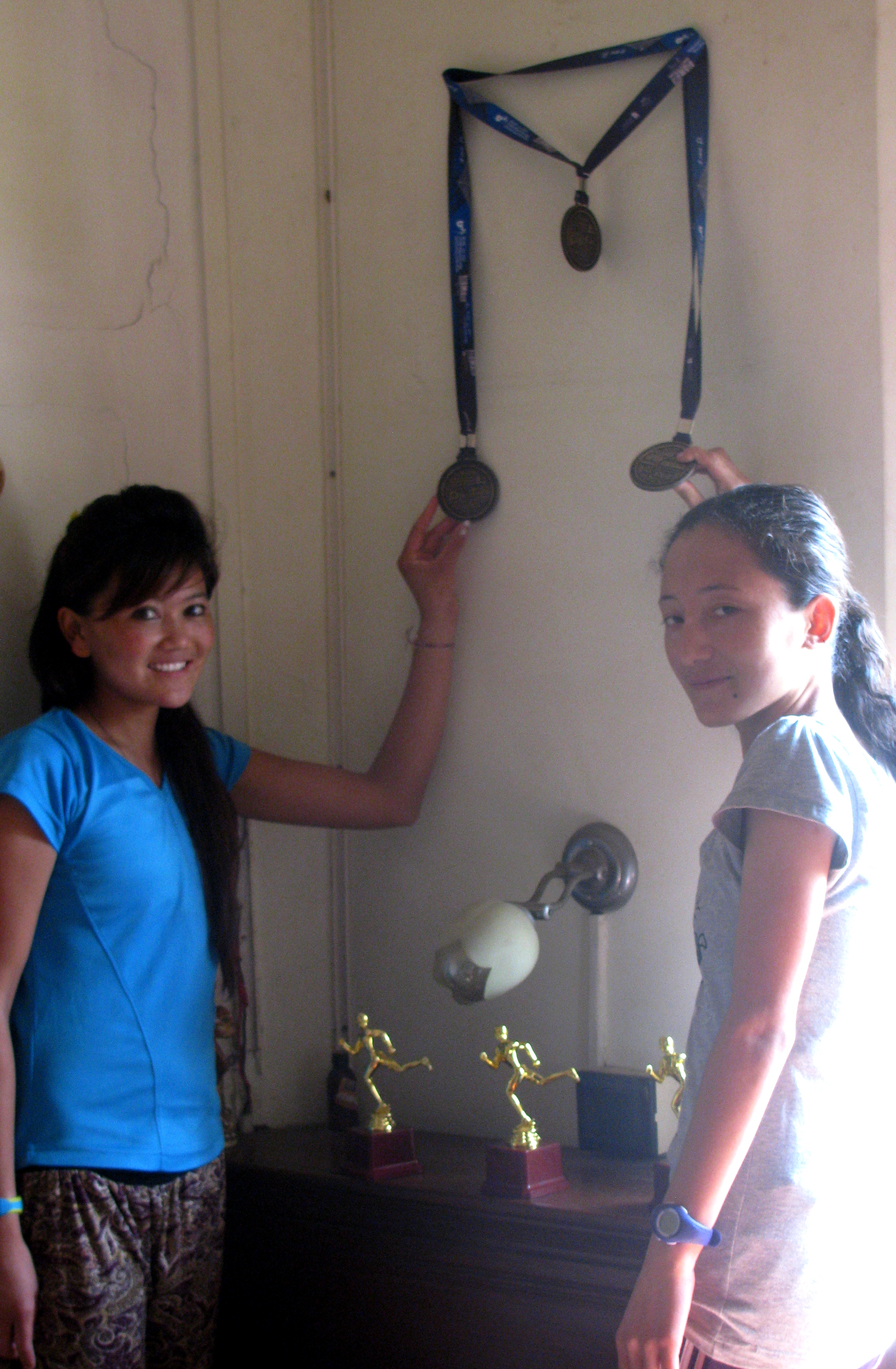
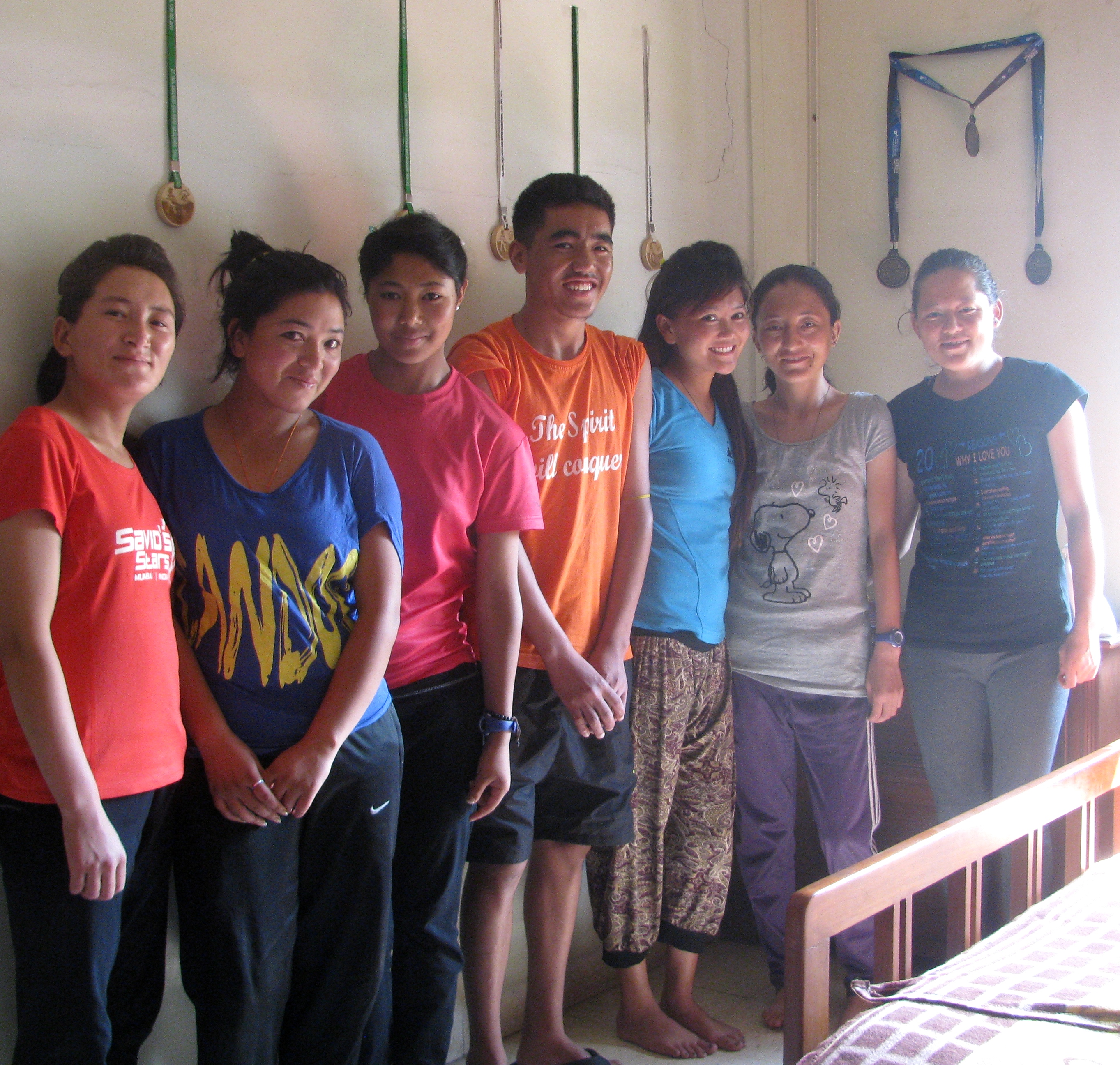
An open window to the east gifted ample sunshine. On the bed was a magazine on running. What had changed was a corner of the room. It seemed to have metamorphosed into a shrine of sorts – a runners’ shrine. The last time I was here, trophies from the Goa River Marathon (GRM) were placed on a shelf in the corner. Now, above the shelf was a line of finisher’s medals from both GRM and the just concluded Standard Chartered Mumbai Marathon (SCMM). A couple of medals that couldn’t be accommodated in this corner were hung at the next corner; sunshine-window in the middle. So far, it had been a fine outing for the team of young runners from Ladakh spending winter running in the warmer regions of the country. The medals and trophies marked their journey.

At the 2016 SCMM, Jigmet Dolma and Tsetan Dolkar finished third and fourth respectively, in the open category of the full marathon for women. They were apart by just two seconds at the finish. Jigmet finished in 3:27:46; Tsetan in 3:27:48. Sonam Choskit was placed 14th in the same discipline and category with a timing of 4:10:06. In the half marathon segment of SCMM, Tsering Dolkar (1:44:30), Diskit Dolma (1:47:35) and Stanzin Chondol (1:53:29) were placed 11th, 13th and 16th respectively in the open category for woman participants. Nawang (1:24:37) finished 23rd in the open category of the half marathon for men. Three of these runners had been at SCMM before. Jigmet was ranked second in the open category in 2015. But that year her timing was 3:45:21. At the 2016 SCMM, she was eighteen minutes faster. Tsetan last ran the full marathon at SCMM, in 2014. She was placed 26th in the open category completing the run in 4:15 (timing provided by Tsetan). That would mean, in 2016, she knocked off 48 minutes in her timing. Sonam ran the full marathon in 2015 in 4:44 (timing provided by Sonam). A year later, she had cut the timing by 34 minutes. “ They have improved well,’’ Skalzang Lhundup, the team manager said.

The improvement is not just between last year and now. On December 13, 2015, the team had participated in GRM securing six podium finishes, the first time many of them were doing so outside of Ladakh. All six podium finishers from GRM have improved their time at SCMM. Tsetan’s gain stands out.  From GRM to SCMM, both events separated by just over a month, she cut her timing in the full marathon by 38 minutes. Still, in terms of timing, there is a long way to go for this young team. On the Internet, the Association of Road Racing Statisticians (ARRS) has a page on Ladakh’s Rigzen Angmo. According to it, in November 1995, when she won the Bangkok marathon, her timing was 2:51:14. Her personal best, reported in February 1996, is listed as 2:45:42. Both these timings are considerably faster than the open category winner of the women’s full marathon at the 2016 SCMM (for more on Rigzen Angmo please click on this link: https://shyamgopan.wordpress.com/2015/09/28/the-spectator/).

The team (Photo: Shyam G Menon)

The team (Photo: Shyam G Menon)

For the past few months, Savio D’Souza, veteran marathoner and well known coach in Mumbai, had been overseeing this young team’s training (incidentally, Savio finished first in the 60-65 age category of the 2016 SCMM’s half marathon for men with a timing of 1:36:42). He was in Leh in September 2015, around the time of the Ladakh Marathon, to meet the runners and impart training tips. Besides this team of youngsters, the Indian Army’s Ladakh Scouts regiment had a clutch of runners participating in SCMM’s full marathon. Skalzang could remember the names of the Ladakh Scouts personnel at SCMM. The event’s website provided the following rank and timing: Padma Namgail (3:03:34; 8th out of 1126 finishers in the open category for men), Stanzin Norboo (3:05:42; 11 / 1126), Rigzin Norbu (3:12:51; 27 / 1126), Tsering Gyatso (3:19:05; 39 / 1126), Tsering Stobgais (3:12:02; 24 / 1126), Tsering Tondup (3:12:50; 26 / 1126), Tashi Paldan (3:16:57; 36 / 1126) and Fayaz Ali (3:36:57; 71 / 1126).

On January 24, Nawang Tsering and Stanzin Chondol will return to Leh for their board exams. The rest of the team hoped to stay on in Mumbai and participate in the Thane marathon before returning to Leh by late February. It will still be winter in Ladakh when they reach. “ We can continue doing our strengthening exercises, maybe manage a short run in the evening in February,’’ Jigmet said. Anything closer to regular running – regular as perceived by those used to cold and snow – that would have to wait at least till mid-March. The youngsters hoped that in 2016-17, the team will add more events to the itinerary, to visit and run at. This team of Ladakhi youngsters was assembled and supported on its trip by Rimo Expeditions. The company organizes the annual Ladakh Marathon.

(The author Shyam G Menon is a freelance journalist based in Mumbai. For more on the running team and the Ladakh Marathon please visit the following two links: https://shyamgopan.wordpress.com/2015/12/28/sunshine-running/ & https://shyamgopan.wordpress.com/2015/08/07/ladakhs-running-team/.)

A FIFTH WIN AT SCMM

Sabhajeet Yadav (Photo: Shyam G Menon)

Sabhajeet Yadav (Photo: Shyam G Menon)

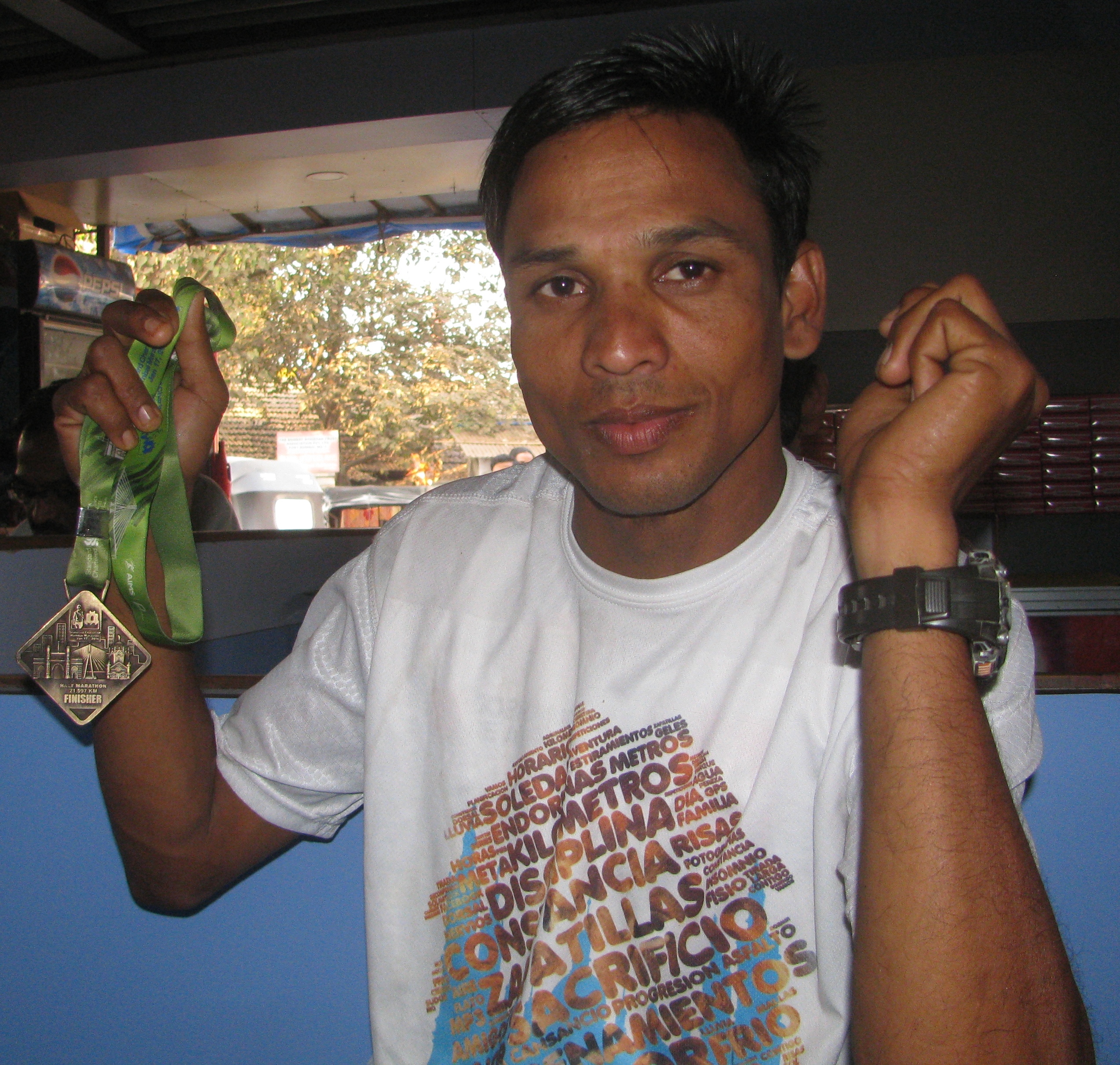
On the evening of January 15th, a person of medium height, athletic build and younger in appearance than his 60 years on the planet, got off a long distance train at Mumbai’s Kurla Terminus.

Hailing from a village in eastern Uttar Pradesh, he spent the night with village brethren staying in Sakinaka, a north Mumbai suburb. Next morning he made his way to South Mumbai where he collected his bib for the 2016 Standard Chartered Mumbai Marathon (SCMM). The following morning – early morning to be precise – SCMM’s full marathon was scheduled to commence from Azad Maidan near South Mumbai’s CST railway station. He had a title to defend and zero appetite for any potential vagaries in transport, should he attempt reaching the marathon venue from Sakinaka in the early hours of 17th. He asked around at the bib collection centre if there was some means to stay overnight at the venue or be accommodated close by. He was told there were no such arrangements for his category of runner. He returned to Sakinaka, picked up what he required and by evening, arrived at CST.

Sabhajeet Yadav then did what he had done before on some of his visits to Mumbai for SCMM – he slept at the railway station. On the night of 16th, as he spread out a bed sheet on the station floor he wasn’t the only runner doing so at CST. “ There were others,’’ he said. Most of them were like Sabhajeet, outstation runners finding hotel rooms an expensive proposition. Unlike those attempting sleep on its premises, a busy railway station never goes to sleep. “ I barely managed to sleep an hour. You are disturbed by people moving here and there. The police also kept waking us up,’’ he said. Early morning on the 17th, it was from CST that Sabhajeet reported for the SCMM full marathon. Three hours, 22 minutes and 30 seconds after he started his full marathon run, the farmer from Dabhiya finished first in his age category for a fifth time at SCMM (for more on Sabhajeet please click on this link: https://shyamgopan.wordpress.com/2015/11/28/a-farmers-dream/). He didn’t know right then that he had won. That was told him later in the afternoon by Bhasker Desai, the Mumbai-based businessman and runner who has helped Sabhajeet with event selection, registration and other details, for some years now.

Morning of January 19th; we were back at the cafeteria in Kurla Terminus. Sabhajeet’s return ticket on the Chhapra Express wasn’t confirmed yet and there were those passenger lists to check on the platform. But a chat on running couldn’t wait. Three cups of tea and a small snack quickly had, marked the minutes ticking by. “ This time the run went off smoothly. It was a very good run. I did not feel the distance at all. Only thing is I have been running a lot in the last few months. Perhaps if I had rested some more in between, my timing would have been better,’’ Sabhajeet said. As yet, his personal best was 3:15:38 at the 2014 Bengaluru (Bangalore) Marathon. All the same he was on the lookout for a couple of more races to run before the running calendar tapers off into the dead heat of the Indian summer. Then there was this brochure he was curious about – the Endurathon 54, due in February in Dadra & Nager Haveli. Sabhajeet had never run beyond a full marathon distance and 54 km was outside the marathon limit but not terribly so. It was eating his curiosity.

With a train to catch and a ticket to confirm before that, conversation had to be kept short. He rushed off to the platform while we rushed off for platform tickets. Minutes later, he phoned, “ S1, seat number 41.’’ It was a window seat; we found him there, in a crowded train with four people seated on most of the lower berths. “ I told the ticket examiner that I had come to Mumbai to run the marathon. He immediately marked me this seat,’’ Sabhajeet said. Some more conversation and then we took leave; until next time.

(The authors, Latha Venkatraman and Shyam G Menon, are independent journalists based in Mumbai.)    

KAMLYA RUNS HIS FIRST SCMM AND GETS A FIRST

Kamlya Joma Bhagat , January 18. 2016 (Photo: Shyam G Menon)

Kamlya Joma Bhagat (Photo: Shyam G Menon)

On the road opposite the bus depot in Panvel is a small restaurant called Visava.

During weekends, it is a well known meeting place for hikers headed to the nearby hills; a round of tea and snacks here is routine before boarding a bus to the drop off point for a hike. It was the day after the 2016 Mumbai Marathon aka Standard Chartered Mumbai Marathon (SCMM). We were in Visava, tucking into hot misal paav, discussing a piece of news that the staff and students of Namdev Bua Khutarikar Vidyalaya, a school in Taloja, were yet to know. For that matter, except runners in Panvel, nobody around probably knew what the school’s PT teacher had achieved the day before.

On Sunday, thanks to fellow runners who enrolled him for the event, Kamlya Joma Bhagat had run his first half marathon at SCMM. Not only had he not run at the event previously – SCMM is India’s biggest marathon and it’s richest in terms of prize money – he had also not seen it as a spectator. Panvel is slightly less than 50 km from South Mumbai, where much of the SCMM action is. Hailing from poor circumstances, Kamlya lived in Fanaswadi, a small village some distance from Panvel. His house when we visited him in the summer of 2015, was little better than a hut, composed of one room and a sit-out. Life had been tough. He ran despite the struggle and often, to address it, for races have prize money. Although 50 km is not a great distance, SCMM was peripheral to Kamlya’s predicament. Running is universal. But running events are typically in cities. Events are accessible for a registration fee; then there is the cost entailed in physically accessing the venue, staying in distant towns and cities. Most runners take this expense for granted. These days urban India has money. People regularly travel around running at various events. But what if – urban or rural – you don’t have that kind of money? “ This was my first time at SCMM. Others got me registered to run at the event, so I went,’’ Kamlya said of the 2016 edition (for more on Kamlya please see https://shyamgopan.wordpress.com/2015/06/12/half-or-full-thats-the-question/). From time to time, he has been supported by fellow runners; names mentioned in this regard included Chetan Gusani, Bijay Nair, Philip Earis and Dnyaneshwar Tidke.

Having been a runner since his high school and college days and having participated in some races, Kamlya knew that on a good day he could finish in the top 20 lot at an event. In fact, a couple of months earlier at the Bengaluru (Bangalore) Marathon, he had finished fifth in his age category in the half marathon. A regular runner averaging anywhere between 5-15km on his daily practice runs, Kamlya can run a half marathon at short notice. According to him, he is by nature a runner who is comfortable at speed; he has to consciously remind himself to run slowly when training. And because that is a conscious reminder, the moment he forgets it and drifts to comfort zone, he finds himself moving fast. That’s how Kamlya became a half marathon specialist. He wants to try running and finishing the full marathon. But not yet. He does not want focus on the full harming his ability in the half. Kamlya didn’t train specifically for the SCMM. There was nothing like months and weeks of preparation. “ With the SCMM in mind, I trained for two weeks, that’s all. Of that, during the second week, I trained only three days. The remaining days I rested,’’ he said.

Fanaswadi, June 2015 (Photo: Latha Venkatraman)

Fanaswadi (Photo: Latha Venkatraman)

On January 17, 2016, he left his house in Fanaswadi at 1 AM to reach Panvel and travel with other runners from there to Worli in central Mumbai, the starting point of the half marathon. Worli is close to the sea. Commencing there, the half marathon route goes over the Worli Sea Link – a beautiful bridge across a stretch of sea with SCMM being the only time of the year runners get to be on it – toward South Mumbai and the iconic CST Railway Terminus, near which the run concludes. “ I ran the first ten kilometres very well. Then I had to slow down a bit,’’ Kamlya said. Race details for bib number 18252 show that the first 5.5 km went by in 18:25 minutes; the 10.5 km mark was touched in 36:26 with an average speed of 17.3 kmph.

Grounded by injury and second time unlucky at running my first SCMM, I was walking toward Marine Drive early Sunday morning, when the first of the half marathon runners whizzed past near Ambassador Hotel. I took a couple of photos of the runners and then gave up for the sun hadn’t risen yet and my small camera wasn’t suited for photography in dim light; its flash was also too weak to throw a strong beam that far. I remember wondering: is Kamlya running this time? There was a point therein when I thought I saw him go by. Then I said: not sure if that is him. Kamlya said he concluded his race with a strong feeling that he had probably lived up to what he expected – a finish in the top 20. He left South Mumbai thinking so, no more, no less. Later that evening in Panvel, his friends broke the news: he had topped his age category (30-35 years) in the half marathon at SCMM with a finishing time (chip time) of 1:16:56. Event results show that he was first in his age category and 14th in a half marathon field of 11,805 finishers; 14th again among 9782 male finishers.

Kamlya said he is reluctant to talk about his milestones in running. For this reason, as of Monday, his colleagues and students at the school hadn’t been informed of what their PT teacher accomplished. “ I haven’t told them. I don’t like talking of these things myself. If others who appreciate running notice it and talk about it, that’s different, ’’ he said. “ Have you seen the earlier article we wrote about you?’’ I asked Kamlya. “ No, ’’ he said, “ I have no Internet.’’

 (The author, Shyam G Menon, is a freelance journalist based in Mumbai. This article has inputs from Latha Venkatraman.)

MHADEI GETS AN ALL WOMAN CREW AND A PLAN FOR 2017

Illustration: Shyam G Menon

Illustration: Shyam G Menon

“ What a man can do, a woman can do better.’’ – Vice Admiral Manohar Awati (Retd)

Early December 2015, the INSV Mhadei – the Indian Navy’s sailboat with two circumnavigations and several long voyages to her credit – was tasked with a short trip.

She was to proceed from her home base in Goa to Karwar, pick up materials needed for the upcoming February 2016 International Fleet Review (IFR) in Visakhapatnam (Vizag) and return to Goa.

The iconic vessel had as its crew four woman officers – Lieutenant Commander Vartika Joshi, Lieutenant P. Swathi, Lieutenant Pratibha Jamwal and Sub Lieutenant Payal Gupta. While Payal joined later, Vartika, Swathi and Pratibha had been the Mhadei’s crew since April 2015. They had started off their tenure by training in the basics of sailing at the navy’s facility in Mumbai followed by theoretical training in seamanship, communication, navigation and meteorology at Kochi. After these stints, they had been at Goa, sailing the Mhadei, improving their sailing skills and getting to know the boat better. Besides supervised sailings and monitored ones, they took the boat out by themselves for short trips in the vicinity. Their mentor – as well as mentor for earlier crews on this history-making boat – is Commander Dilip Donde, the first Indian to do a solo circumnavigation. It was his job to train an all woman crew for the Mhadei. He had seen the trainees at work; he was confident of their ability. When the trip to Karwar drew close, Donde asked, “ should I come along?’’ It seemed a fine juncture in the training process, for him to step back and have the crew take charge of the boat.

From left: Sub Lieutenant Payal Gupta, Lieutenant P. Swathi, Lieutenant Pratibha Jamwal and Lieutenant Commander Vartika Joshi (Photo: Shyam G Menon)

From left: Sub Lieutenant Payal Gupta, Lieutenant P. Swathi, Lieutenant Pratibha Jamwal and Lieutenant Commander Vartika Joshi (Photo: Shyam G Menon)

The woman officers decided to sail by themselves.  They had 2-3 days to plan everything. Goa to Karwar is a distance of approximately 40 miles by sea. Around 15:00 hours on December 8, the all woman crew – with Vartika designated as skipper – sailed the Mhadei out from Goa. Next morning 9.30 hours they reached Karwar. After picking up whatever was needed for the IFR, the Mhadei commenced her return leg to Goa on December 9, at 14.30 hours. December 10, 11.00 hours, the crew had the boat safely back in Goa. This quietly executed project by the four naval officers – Vartika, Swathi, Pratibha and Payal – is perhaps the first instance of sailing between two ports by an Indian all woman crew. For the navy, this is a small step towards something bigger.

The Mhadei is an interesting story. Based on a Dutch design, she was built at Aquarius Fibreglass, a boat yard on the river Mandovi, upstream from the naval jetty at Verem, the vessel’s current home. She shot into fame in 2009-2010, when Donde did his solo circumnavigation as part of Sagar Parikrama, a project conceptualized by Vice Admiral Manohar Awati (Retd). In 2012-2013, Lieutenant Commander (now Commander) Abhilash Tomy followed this up with Sagar Parikrama’s second chapter – the first solo nonstop circumnavigation by an Indian. In an October 2013 interview to this blog, Vice Admiral Awati, when asked what was next for Sagar Parikrama, said, “ I look forward to the first Indian woman circumnavigator, in my lifetime.’’ (For more on Sagar Parikrama please try this link: https://shyamgopan.wordpress.com/2013/10/27/sagar-parikrama-sailing-around-the-world-alone/)

The all woman crew taking the Mhadei out from her anchorage at Verem in Goa towards the estuary of the Mandovi and the sea beyond, on January 4, 2016. At this point she is using her engine. (Photo: Shyam G Menon)

The all woman crew taking the Mhadei out from her anchorage at Verem in Goa towards the estuary of the Mandovi and the sea beyond, on January 4, 2016. At this point the sailboat is using her engine (Photo: Shyam G Menon)

After Tomy’s trip, the Mhadei was doing her share of sailings around the Indian coast and away from it. This included the quadrennial race from Cape Town to Rio de Janeiro, which she had been part of before. The navy issued a signal seeking volunteer woman officers to sail aboard the Mhadei on the upcoming Cape-Rio race. Thus in November 2013, when she left Goa for Cape Town to participate in the Cape-Rio race, the Mhadei had Lieutenant Commander Shweta Kapur aboard as part of her crew. On the return leg from Rio de Janeiro to Cape Town, Lieutenant Commander Vartika Joshi joined in. On the Cape Town-Goa segment, Lieutenant P. Swathi was part of the crew. Subsequently on a sail from Goa to Port Blair, Lieutenant Pratibha Jamwal came aboard. On the Port Blair-Visakhapatnam-Chennai-Kochi-Goa return leg of this voyage, besides Vartika Joshi, Asst Commandant Vasundhara Chouksey of the Indian Coast Guard and Commander Sowjanya Sri Gutta also featured as part of the crew over various durations. For what the navy was gravitating to, the key was who would return to the Mhadei. While the woman officers had volunteered for specific sailings, the idea of long term association with the Mhadei hadn’t been in the frame yet. And long term association was what the navy was nudging things toward.

Commander Donde is clear that such long term association with a sailboat has to be voluntary. It is not a decision that can be wholly reasoned or calculated in the head; there’s a lot of heart involved for it is a commitment to the sea. In a sailboat, the duration of ocean voyages can be long. That time and whatever happens in that time must be endured. Sailing in a small boat, powered by wind, is far more difficult than being aboard a big engine powered-ship, where you have many hands for the various tasks. On big ships you also have systems in place. On a sail boat, each member of its small crew must be prepared to do everything that is needed to keep their home on water shipshape and afloat. Both sense of responsibility and the responsibilities are more.

Illustration: Shyam G Menon

Illustration: Shyam G Menon

Currently in the Indian Navy, woman officers don’t serve at sea. They work ashore. In branches of the navy like its aviation wing, some of them fly as observers aboard shore based maritime reconnaissance aircraft. When the call for long term association with the Mhadei came, Vartika, Swathi and Pratibha responded again. They had previous experience aboard the sailboat; they were also the voluntary returnees, returning because they wished to. Vartika who studied naval architecture, was previously working ashore with the navy on the ship design and construction side. Both Swathi and Pratibha were shore based air traffic controllers (ATC) with the navy’s aviation arm. All of them sought the sea. Payal, who joined later, is an education officer with the navy. Donde said it didn’t bother him that his woman trainees had no background in sailing or work at sea (except for the earlier stints aboard the Mhadei). On the other hand, he appreciated their chance to learn with no preconceived notions in the head, no previous baggage, nothing to unlearn. “ Unlearning is more difficult than learning. Here you have a clean slate,’’ he said. According to him, the sea is always throwing some challenge or the other at you that even an experienced sailor would be well advised to keep his ego in check and be open to learning. “ No two sailings are the same,’’ Donde said. As for gender, which is often made out to be a big issue on land, the sea gives no damn whether a person out sailing is a man or a woman. “ I am happy to work with this team,’’ Donde said.

Commander Dilip Donde and the crew at work aboard the Mhadei (Photo: Shyam G Menon)

Commander Dilip Donde and some of the crew at work aboard the Mhadei (Photo: Shyam G Menon)

When they first came aboard the woman officers had no idea of the terms used for each item and equipment on the sailboat. They have since learnt the terms, learnt to sail the boat and sail by themselves on short trips with nobody else supervising or available at hand for advice. There is a link between every boat and the people who sail it or imagine its expeditions. Vice Admiral Awati and Commander Donde have known the Mhadei from her design and build days. Her initial voyages and first circumnavigation were with Donde. Ahead of his solo nonstop circumnavigation, Abhilash Tomy in a bid to make himself comfortable with the sea and the vessel that would be his home for a few months, had taken to living aboard the Mhadei.  Now, there is a bond growing between the Mhadei and her new crew. Pratibha, Swathi and Payal said that in addition to being their workplace and the focus of their current official duties, the boat has become a hangout for them. During their after work hours too they (Vartika included) find themselves with Mhadei. Needless to say, they ushered in the New Year in her company.

Vice Admiral Awati responded by email. “ What a man can do, a woman can do better. I have long detested our tongue in cheek adulation of woman. We put her on a pedestal, then, show no qualms despoiling her or trying to murder her at birth. It is a devastating society for a woman. So what should I, who has no daughter, do? I have to do whatever I can to put the Indian woman in her rightful place vis-a-vis her man who has long patronised a patriarchal society and ensured its continued moral downfall. I hope you understand why I have worked my way to getting the first Indian woman solo circumnavigator on the records. Women have a crucial place in society. Women must outdo men in all spheres of activity except in the dispensation of violence. Naturally therefore, there has to be a woman or better still, women in Sagar Parikrama. Without her my concept of circumnavigation by an Indian is incomplete. The sea is the ultimate challenge to be faced and overcome in all its myriad moods. When an Indian woman sails solo around the world she will have achieved, attained a national hope,’’ he wrote.

The Mhadei near the Mandovi's estuary on January 4, 2016 (Photo: Shyam G Menon)

The Mhadei near the Mandovi’s estuary on January 4, 2016 (Photo: Shyam G Menon)

At least two more woman officers are expected to join the pool of sailing talent assembled at Goa, which has Vartika, Swathi and Pratibha as its core. Payal who is yet to do a long voyage will be looking out for that opportunity. One such chance will emerge in early February 2016, when after the upcoming IFR in Visakhapatnam, the all woman crew will take charge of the Mhadei and sail her back to Goa via Chennai and Kochi. In the meantime, the navy which had sought bids for a sister vessel for the Mhadei, is set to complete the process and place the order on Aquarius. The new boat, slated for delivery in January 2017, will be a replica of the Mhadei. In other words, training on the Mhadei will equip you to sail the new boat as well. If all goes as planned, then in August 2017 the Indian Navy’s all woman sailing crew will attempt its first circumnavigation – the first by an all woman Indian team – in the new sailboat, Captain Ashwin Arvind, Director (Sailing), Indian Navy said.

(The author, Shyam G Menon, is a freelance journalist based in Mumbai.)

IN LOVE WITH ULTRA RUNNING

Illustration: Shyam G Menon

Illustration: Shyam G Menon

In March 2003, at a hotel in Pune, a senior company executive checked his weight.

He had spent years in sales and marketing. That was his forte. It was life chasing targets; there was travel, quick decisions, coordination of teams and much socializing to keep the sales numbers growing. The job shaped you. At his feet, the weighing scale’s needle hovered wildly for a while, then narrowed its range and settled on the correct number – 88 kilos.

Sunil Shetty decided he must do something about it.

Born 1962 in Mumbai, Sunil grew up in the city, attending Fatima High School and then, Ruparel College, from where he graduated in statistics. Although good at mathematics, this wasn’t exactly the career progression he wanted, for this grandson of a gentleman who once ran a restaurant in Mangalore desired to be in catering. But his bid to be accepted at catering college, failed. So he went into statistics, commenced a career in sales and marketing, complemented his college education with an Executive MBA from IIM Calutta and somewhere along the way even met the late Thangam Phillip, who headed the catering college he couldn’t get into. She was guest at a function, the company he worked for organized. Sunil worked 20 years with Nestle India, then some more at Johnson & Johnson (J&J), all in sales and marketing, a line of work that brought on those two unwanted bedfellows – 36 inch-waist and 88 kilos on his feet.

The youngest of four children and raised in middle class values emphasising studies over sports, Sunil had grown up with an interest in football and cricket but no great presence on the playing field. In life ahead too, he embraced the popularly accepted practice of well settled life. It was so till the accrued weight of such existence settled atop that weighing machine in Pune. Sunil decided to take up running. Normally that is a major stretch for somebody at 88 kilos. But in Sunil’s case, he discovered he could run. “ I managed 2-3km comfortably on the first day itself,’’ he said.

Sunil Shetty; from the 2015 Total Sports 10k run in Mumbai (Photo: courtesy Sunil Shetty / photographer: Gaurav Choudhari)

Sunil Shetty; 2015 Total Sports 10k run in Mumbai (Photo: courtesy Sunil Shetty / photographer: Gaurav Choudhari)

Back in Mumbai, after a few days spent getting the feel of jogging, he bought a pair of Power running shoes from a Bata showroom. He ran roughly four days a week. When he was around 15 runs old on his new shoes, a gym opened in the housing complex he stayed in. He shifted to the gym’s treadmill doing 6-8km every day. Alongside, he started to eat and drink in moderation. “ I haven’t stopped anything. I still eat well and drink but the idea of moderation set in,’’ Sunil explained. Within days of him taking up running at the gym, his wife Sangeeta joined him. After 18 months of running on the treadmill – 6-8km every day, four days a week – he found that his waist size was down to 32 inches and his body weight, 64 kilos. Life however was work-home-family-work. Running on a treadmill in a gym in one of the world’s biggest and most populated cities, he still knew none in running. Those days Mumbai’s running scene was a shadow of the movement it is now. In January 2004, the month and year the city hosted the first edition of the Standard Chartered Mumbai Marathon – it would change the local running scene forever – Sunil left Nestle India and joined J&J.

J&J supported the NGO `Nanhi Kali,’ founded by industrialist Anand Mahindra in 1996. Thanks to this association, every year in time for SCMM, the company used to get 100 bibs, the availability of which was informed to employees over mail. Sunil would see this mail and let it pass for he had never thought of himself as a distance runner, who could tackle a marathon. However at the gym, he had this friend, five years senior to him, who walked 12km on the treadmill. That caught Sunil’s attention. He tried and found that he could run 12km. An amiable competition kicked up between the two, one walking, the other running; the distance rising alongside to 18km. Then, another friend suggested: why not try the half marathon at SCMM? In October 2008, Sunil looked up the Internet for training tips, enrolled for the event and ran his first half marathon at the SCMM in January 2009.

Sangeeta who had been as regular as Sunil in training at the gym, recalled that day. Sunil had asked her to wait at the finishing point (in 2009, the half marathon was from Azad Maidan to Mela Restaurant on Worli Sea Face and back) and expect him there about two and a half hours after commencement of the run. Sangeeta did as told. She witnessed some of the strong runners in the discipline finish in style. Then the better runners from the remaining lot strode in. Then the regular lot poured in. Then some of the senior citizens arrived. There was no sign of Sunil and it was past three hours. At 3:03 Sunil slowly walked in. “ He looked exhausted,’’ Sangeeta said. Sunil had found the run difficult. He cramped at around 12-13km and could only walk after that. He told Sangeeta, “ this is the first and last time I am running this distance.’’

That 3:03 hit Sunil really hard. Following the 2009 SCMM, Sunil went back to his daily treadmill run. But unconsciously and without any deliberate design, his regular 6-8km run occasionally extended to 10km; the distance was increasing. In October 2009, the annual mail about bibs from Nanhi Kali landed once again. It began tempting Sunil. Should he? Should he not? He spoke to Sangeeta. It was decided – they would both run; Sangeeta would do the half marathon, Sunil, the full. “ I promised myself I will train,’’ Sunil said. Like many others, he downloaded Hal Higdon’s training regimen and used it as a reference point. Training started late, only by October. As part of it, his four days a week on the treadmill was mixed with two days running on the road. Running the SCMM full marathon in January 2010, Sunil cramped at 26km and walked the remaining portion. He covered the 42km-distance with a timing of 6:03. “ I was not as dejected as I had been the previous year running the half marathon. So I decided that I will continue running the full,’’ Sunil said. Sangeeta, out on her first formal half marathon, finished it comfortably and in decent timing. Born 1967, she used to be into sports in her school days. “ I liked running after I got into it. It keeps me fit and makes me a more peaceful person,’’ she said.

Sangeeta Shetty; 2012 Kaveri Trail Marathon (Photo: courtesy Sangeeta Shetty)

Sangeeta Shetty; 2012 Kaveri Trail Marathon (Photo: courtesy Sangeeta Shetty)

Soon after the 2010 edition of SCMM – it was the first time they participated together in a running event; a format they have repeated since at many races – Sunil and Sangeeta embraced the discipline of regular running with SCMM for annual outing. By the January 2011 SCMM, Sunil’s timing for the full marathon had improved to 5:40. He was now cramping at much later stages in the race. In June 2011, he quit J&J. From September 2012 onward, he became officially self-employed. “ I now had more time with me,’’ he said. One of its side effects was greater trawling of the Internet for ways to improve his running. Gathering information is easy; running efficiently is tough. For the January 2012 SCMM, he trained targeting sub-five hour timing in the full marathon. It eluded him.

Striders is one of Mumbai’s running clubs. According to the Internet, it was started in 2006 by Praful Uchil and Deepak Londhe. Unknown to Sunil, his next door neighbour was Praful’s brother. When Praful visited, he introduced himself to Sunil and Sangeeta and realized that the two of them were runners. He mentioned of the upcoming Kaveri Trail Marathon (KTM), organized by Runners for Life (RFL). Sunil had heard of RFL. When he researched for more on KTM, the Bangalore Ultra popped up. A plan took shape – do the full marathon at KTM and follow it up with the 75km-run at the Bangalore Ultra. The first was in September; the second, in November. They began training systematically. Sunil ran his first KTM in 4:57. Sangeeta came first in the veterans’ category, her first podium finish. Later, in November that year, both Sunil and Sangeeta took part in the Bangalore Ultra. It was a loop of 25km in a forest composed mostly of Japanese Bamboo. The year Sunil ran it for the first time there were about 20 people in his age bracket, running the 75km-distance. Sunil finished in 10:23, earning first place in his category. Sangeeta finished first in her category in the 75km-run. A couple finishing so was reportedly a first for Indian running.

The Bangalore Ultra marked a shift for Sunil and Sangeeta. Not only did they feel ready for a 100km-race, they felt their appetite reducing for the shorter distances. “ One thing about us is that we rarely keep doing the same distance again and again. We wish to attempt the bigger challenge,’’ Sunil said. However, it is a qualified challenge and not to be mistaken with simply increasing the distance or making a race rougher and tougher. Sunil, for instance, does not fancy such challenges like running between cities that are far apart or engaging in self-supported, multi stage expedition type races. He firmly favoured well supported runs, well organized events with proper support facilities. “ I don’t want to torture myself,’’ he said. Talking of cut-off stages, both Sunil and Sangeeta said that they prefer a single stage with reasonable cut-off time. “ Multi stage and unreasonable cut-off times make you tense. You don’t enjoy the run. I try consciously not to run fast. I will not pay for a race that puts me under pressure. The moment the pressure comes, I may not perform well,’’ Sangeeta said. This is one reason the couple like ultra marathons. Unless the multi stage, competitive paradigm intervenes as spoiler, an ultra is an escape from the shorter distances loved by evangelists of competition.

Sunil Shetty; from a December 2015 practice run (Photo: courtesy Sunil Shetty / photographer: Tashi Ongya)

Sunil Shetty; from a December 2015 practice run (Photo: courtesy Sunil Shetty / photographer: Tashi Ongya)

For the 2013 Bangalore Ultra, Sunil and Sangeeta registered for the 100km distance-category. Sangeeta finished first in her segment; Sunil placed second. As a well known couple from Mumbai into running, Sunil and Sangeeta are often invited to run the shorter distances. But their heart is with the longer runs. In 2014, Sunil and Sangeeta attempted the 24 hour-run category in the Bangalore Ultra. The run started at 5AM on November 8th that year and ended next morning, 5AM. Sunil covered 138km to finish first in his category. Sangeeta covered 120km to place second in her category. Ram Venkatraman is a longstanding runner and one of the founding members of Mumbai Road Runners (MRR). “ Sunil and Sangeeta are the most respected running family in Mumbai, nay India today. Apart from being highly disciplined and dedicated to their craft, which results in Sunil Shetty getting a personal best in practically every race that he runs, they are also the most warm, loving couple that you could find. Sunil’s knowledge on endurance sports especially running is vast and he therefore lends a helping ear to any budding runner. Sunil was rightly awarded the Most Inspirational Runner at the MRR Awards 2014,’’ Ram said.

Sunil and Sangeeta have a daughter. The family stays in a leafy part of Powai in suburban Mumbai. Their apartment is in a housing complex, which is in turn part of a much bigger complex. On the perimeter of this large complex of many residential blocks is a sort of-circular road, which thanks to the unevenness of the underlying geography has ascents and descents. A full loop on this road is approximately 1.5km long.  This is daily training track for Sunil and Sangeeta, the laboratory for all those personal bests. It works in two ways. First, by running more and more loops you directly gain distance. Second, running loops toughens the mind to stomaching events like stadium based-endurance runs, where the biggest challenge can be monotony. Another aspect you notice when talking to Sunil and Sangeeta is that the mix of training and event-running – the proportion assigned for each – matters.  YouTube has an engaging documentary on the great American athlete Edwin Moses, wherein the champion hurdler points out that compared to the days of training he did in a year, the actual time he spent competing was very small. When you reflect on that observation, you sense the truth you miss on popular television, which focuses on victory. We remember Edwin Moses for the several times he was the best in a discipline concluding on track in under 50 seconds of top notch hurdling. Add it all up and Moses hurdling competitively can be counted in the minutes in a year. What we don’t see is the hours, days and weeks of training away from the glamour of high profile sporting events and the glare of media.

The road around the housing complex at Powai, which Sunil and Sangeeta use for training (Photo: Shyam G Menon)

The road around the housing complex at Powai, which Sunil and Sangeeta use for training (Photo: Shyam G Menon)

You find something of this in Sunil and Sangeeta. They are advocates of the requirement to train, they train regularly and even today, the number of events they participate in is modest compared to what many regular runners do. Further all the stretching of human potential, all the testing for enduring stress is done in the training phase. “ Both of us give our 100 per cent to training. I still don’t run more than four days a week and I do strength training for two days,’’ Sunil said. During off season the said strength training increases to three days – a wonderful pointer to how off season in the running calendar needn’t mean off season for runner. Once in three weeks, the couple try and do a 50km plus-run. To illustrate how he has prepared himself, Sunil said, “ at short notice, I can do 70-80km.’’ In an article in the Times of India following the 2014 Bangalore Ultra’s 24 hour-run, V. Anand pointed out that in the run up to the event, Sunil and Sangeeta had covered 1900km over five months, in training.

This kind of dedicated training yields two benefits. First, given all that goes into the training, the actual event becomes a mentally relaxed, enjoyable affair – as mentally relaxed and enjoyable as you can make it, that is. For, every discipline as it happens still has its own challenges. Second, the systematic build-up with care for building a solid foundation, promises less injury and potentially longer life in running. There are other details too. Sunil does not advocate the sprint finish; that finish with a flourish, you see many people do. According to him, his last two kilometres in a race are typically the slowest as this helps the recovery process. Finally, the couple don’t obsess with timing. “ One of the reasons we have been injury-free is that we are not obsessed with timing. This is the thirteenth year of our running, we are content with what we have,’’ Sunil said when we met him and Sangeeta over two sittings in Powai (it was November-December 2015). Neither of them was ashamed of Did Not Finish (DNF).  If the body says stop, they will. “ My body is more important,’’ Sangeeta said. Probe further – it is an outline of detachment and contentment that exceeds running and timing. “ I don’t believe that we need to provide for two generations after us,’’ Sunil quipped at one point in the conversation, a quip that is insightful of life in more ways than just making money. Including one in which, you find the time to run.

Sangeeta and Sunil Shetty (Photo: Shyam G Menon)

Sangeeta and Sunil Shetty (Photo: Shyam G Menon)

January every year, Sunil and Sangeeta sit together, check the year’s running calendar and shortlist the events they would like to participate in. Typically what they choose to participate in (they are invited for more) don’t exceed 4-5 races. “ Perhaps an ultra, two full marathons and a half,’’ Sunil said. By way of suggestion for young people, he said that if you are running two full marathons and two halves in a year make sure that one of each variety is run well. And if you want to get into an ultra, make sure that you run at least 4-5 full marathons before attempting an ultra – it should be a gradual build up to such distances, not a jump and a jolt. Unfortunately the popular trend is something else. Thanks to competition and the need to prove, contemporary life’s dominant flavour is impatience. “ I find people wanting to reach where we reached in 13 years, in two to three years time,’’ Sunil said.

So what is the future in running, the couple dream of? They do have running abroad in their list of things to do. But it is not a Boston or New York Marathon kind of aspiration. “ Something like – maybe a 100 miler?’’ Sunil said. He also has his rounds giving motivational talks wherein he encourages people to get into running, tells them that to get into fitness you just need to jog every day and not straight away tackle a formidable marathon. He advises them to look inside their own houses for company to run. “ I also tell them that if they manage to motivate one person a month to begin running, then it will start a chain reaction,’’ Sunil said. Now seasoned runners, both Sunil and Sangeeta are backed by Puma. Uniquely, despite such affiliation, one of the runs Sunil has been associated with (he is one of the founders) is an annual 10km-run called United V Run as 1 in which no prominence, no mileage by advertising is offered to sponsors. It would seem a counterweight of cleansing for all that happens as commercial running. “ Sunil and Sangeeta are a great inspiration for many Mumbai runners; individuals as well as couples. People consider them as role models. They are very down to earth, punctual and dedicated. I consider them very talented runners, friendly and always happy to share their knowledge,’’ Satish Gujaran, city based-ultra runner, said.

Sunil now weighs between 56-58 kilos.

Somewhere in Pune is a weighing scale that started it all.

Sangeeta Shetty / select races and timing:

Year          Event       Distance       Time              Remarks

2010           SCMM           HM              2:59               First timed race

2012           SCMM           FM               5:41               First FM

2012            KTM             FM               5:46               1st in veteran

2012              BU              75k               12:07             1st in veteran

2013              BU              100k             16:48             1st in veteran

2014              BU              120k             24hrs             2nd in veteran

2015    Spirit of Wipro    10k             60:08             1st position

2015    Spice Coast           HM               2:23             1st in veteran

Sunil Shetty / select races and timing:

2009           SCMM            HM              3:03                First timed race

2010           SCMM            FM               6:10                First FM

2012              KTM            FM               4:57                First sub-five hours

2012               BU               75k              10:23              1st in veteran

2013               BU              100k             13:38              2nd in veteran

2014               BU              138k             24hrs              1st in veteran

2015          SCMM             FM                3:53               First sub-four hours

2015              ILFS             10k      44:45(minutes)    1st in veteran

2015       Spice Coast         HM             1:39                1st in veteran

HM: half marathon, FM: full marathon, k: kilometre, SCMM: Standard Chartered Mumbai Marathon, KTM: Kaveri Trail Marathon, BU: Bangalore Ultra

(The authors, Latha Venkatraman and Shyam G Menon, are independent journalists based in Mumbai.)