JYOTI AND THE EIGHT MINUTES

Jyoti Gawate

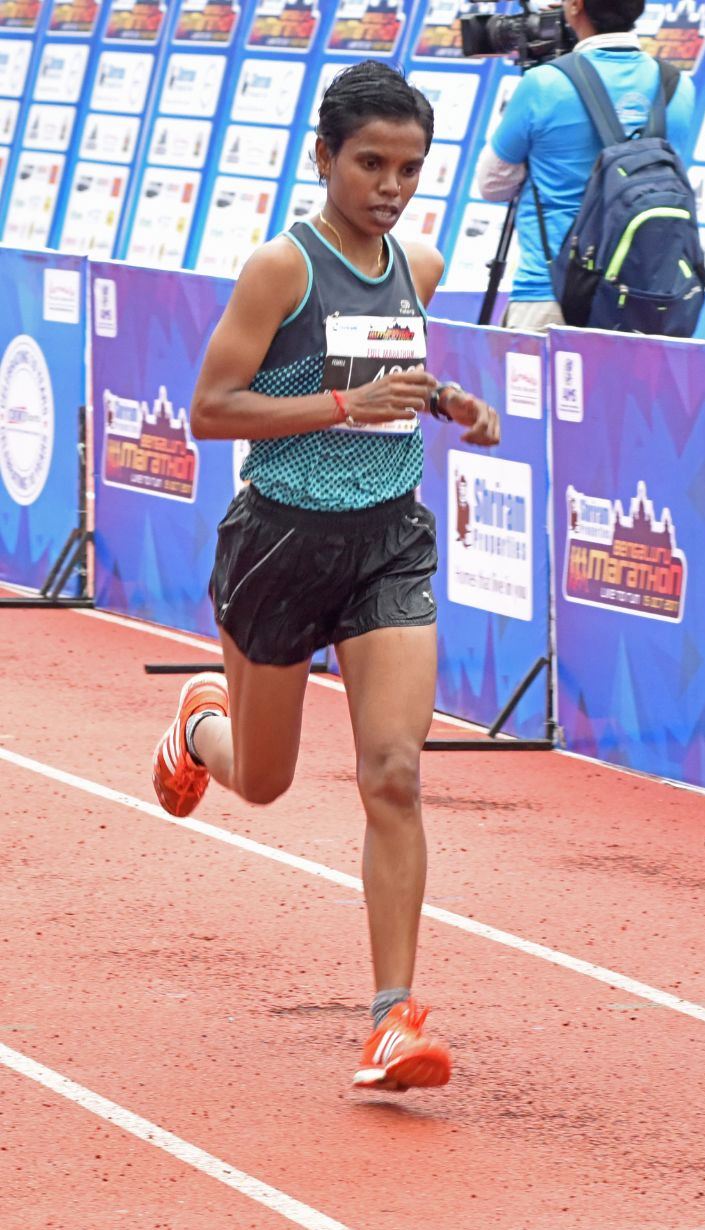
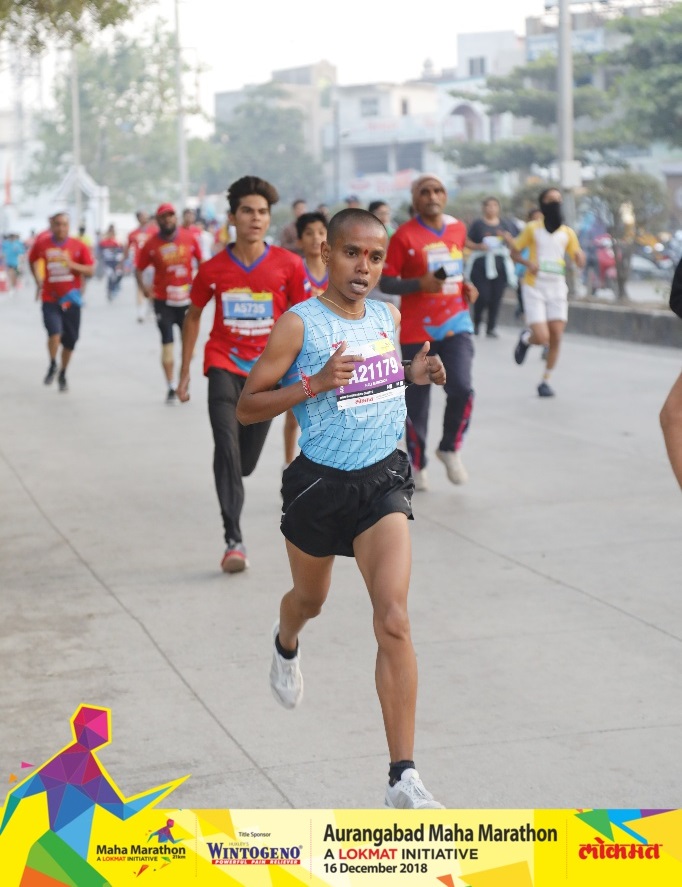
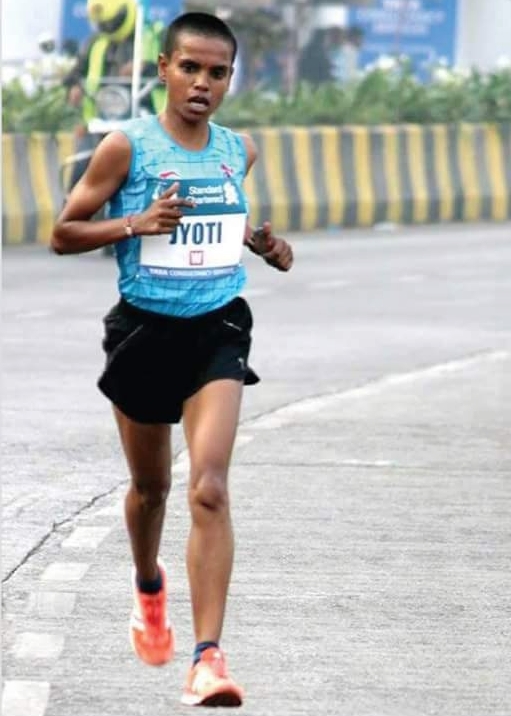
Jyoti Gawate has been podium finisher multiple times at the Mumbai Marathon, India’s biggest annual event in running. Focused on the marathon and lacking in resources, she trains back home in Parbhani with none of the facilities that grace elite coaching circumstances. Her’s is a story tinged by what if. What if she had the support and ecosystem others enjoy?   

On January 20, 2019, two runners – both around 32 years old and assigned to the Indian women’s elite category – lined up at the start of the year’s Tata Mumbai Marathon (TMM).

Their respective trajectories in sport were quite different.

In her 32 years, Sudha Singh had become national record holder in the steeplechase, Asian champion in the discipline and represented India at two Olympic Games. Given the marathon has for long been favored hunting ground of athletes specialized in running’s middle distance formats, she was also among India’s leading woman marathon runners. In fact, at 2019 TMM, Sudha who works with Indian Railways was the defending champion.

Jyoti Gawate on the other hand, was the winner among Indian elite women in 2017; she had finished two minutes behind Sudha in 2018 to secure second place. That year Mumbai’s Mid-Day newspaper summed up her predicament in a post-race report. She had won 15 of the 30 full marathons she participated in, including the Allahabad Marathon five times in a row. “ I am still jobless; what more can I do?’’ the paper quoted her as saying.

In every marathon, the start and the hours of running thereafter are pristine. No regrets; only goals, maybe even blank head. At the start line of 2019 TMM, there was a goal for Indian elites to run to. That edition of the Mumbai Marathon was widely perceived as among last chances to meet the timing required for participating in the IAAF World Championships due in Doha, Qatar, later in the year. For women, the cut-off time for Doha was two hours, 37 minutes. Sudha had a personal pacer – Vicky Tomar, a steeplechaser she trained with in the national camp. They knew each other’s style of running. The race organizers had provided Jyoti too, a pacer – Marius Ionescu, a Romanian long distance runner who had been to the 2012 London Olympics; he had also been winner and runner up at the Dusseldorf Marathon, his best timing there being 2:12:58.

The day was Sudha’s.

Jyoti Gawate

She completed the race in 2:34:55, a new course record. Jyoti finished second in 2:45:48, cutting five minutes from her timing at the 2018 Mumbai Marathon. According to her having Marius as pacer helped. At the start of the race, she had nursed mixed feelings about her prospects. On the one hand, she felt she could get to 2:40; on the other hand, she was worried if she would improve her timing at all. “ The pacer helped me a great deal. He chalked out the entire plan on how to run the distance. He helped me maintain the pace. I completed the first half in 1:20. After that my speed suffered a bit. But the pacer helped me maintain the speed during the second half of the race,” she said. The splits tell the story. Sudha ran the first two splits at 16.1 km / hour each and the last two in 16.3. For Jyoti, it was 16, 15.5, 15.4 and 15.3.

Jyoti managed a personal best. However, it was far from the remarkable result Sudha produced. Sudha became eligible for selection to the Indian squad for Doha; Jyoti didn’t. Contacted some days later, Jyoti was – as usual – back to training in Parbhani, the district in Maharashtra’s Marathwada region that she hails from. Her work was cut out – to knock off was eight minutes; that’s the gap between her new personal best and the qualifying time for Doha. She had one race left to accomplish it – the National Marathon Championships in New Delhi scheduled for February 24.

Born February 1987, Jyoti has been running the full marathon for the last ten years. In the very first marathon that Jyoti participated – Standard Chartered Mumbai Marathon (SCMM) as the Mumbai Marathon was known then – she finished the run in 3:12 hours and placed second on the podium in the Indian women’s category. The following year, she finished the race in 3:05:29 hours emerging winner among Indian women. Jyoti has been running the Mumbai Marathon for the past ten years securing top position among Indian women in 2011 and 2017 and second position in 2010, 2018 and 2019. Running marathons is livelihood for Jyoti. The prize money she earns from the races that she participates in helps her contribute to her family’s modest finances. Her father, Shankarrao Gawate, retired as a class four employee from government service. Class four-job in government service often refers to service as peon, sweeper and attender. Her older brother Ravindra works as a police constable. Her younger brother Kiran is yet to find proper employment; he too is trying for a job in the police. As part of formal education, Jyoti did her BA and B.P. Ed (Physical Education). In 2014 she secured employment with Mumbai Police but quit after eight days because she feared she may not get time to train for the marathon. “ I would have had to wait for one year to find out if I would be part of the sports team or not. I could not afford to lose time. In that period, my running career would have ended,’’ she said.

Jyoti has won many of the races she goes to. But long-term support has remained elusive. She hasn’t been able to get any job, brand support or sponsorship or for that matter, an invitation to join the national camp for the marathon. She tried for a job with Indian Railways, employer for many sportspersons. At age 25, she submitted her application for a job with them. She heard nothing. She hasn’t seriously pursued other avenues of work like being a sports teacher at a school. She is therefore forced to participate in races including 10k, half marathon and full marathon and earn money from podium finishes. A podium finish as elite athlete in some of the major marathons helps her get prize money bigger than what is offered at smaller races. Her elder brother supports the family. Jyoti’s earnings add to it. Life’s rigors shape character.

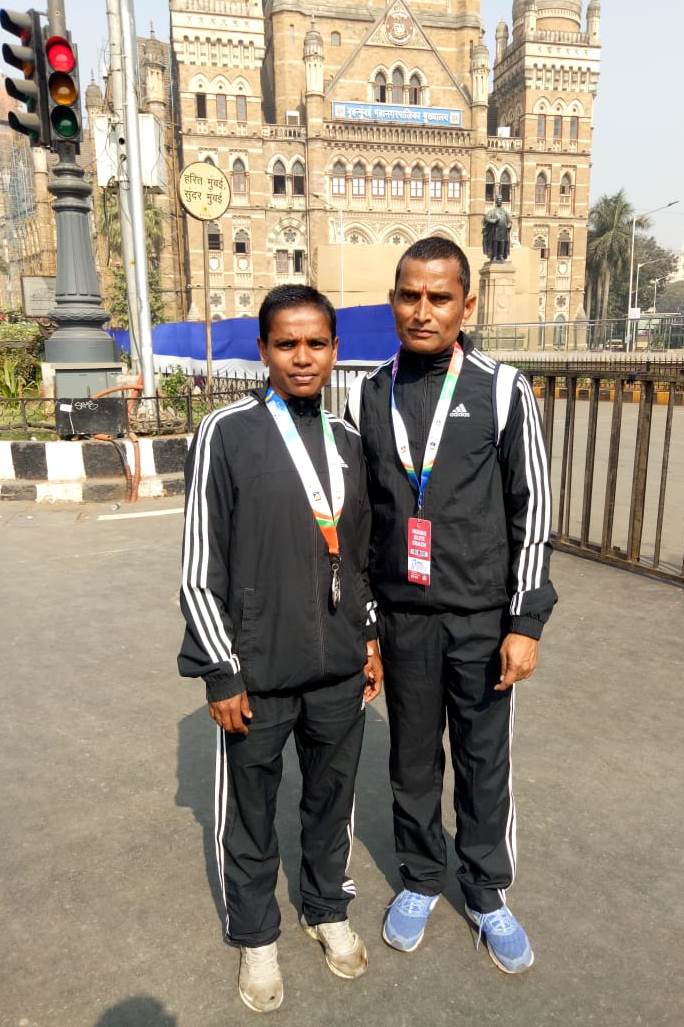
Jyoti with her coach Ravi Raskatla

At the Mumbai Marathon, Jyoti is a recipient of pre-race hospitality from Procam International, the organizer of the event, if she has been a podium finisher in the previous year. “ In 2011, she was offered accommodation at Trident Hotel in South Mumbai but she felt uncomfortable about staying there. She therefore stayed at the legislators’ hostel in Colaba,” Ravi Raskatla, her coach, said. Indeed for some years thereafter, whenever she came to Mumbai for the annual marathon, she stayed at the legislators’ hostel. For 2019, Procam arranged her stay at Hotel Supreme at Cuffe Parade. “We always travel by train from Parbhani to reach Mumbai for the race. We leave the morning after the race as we like to collect all the newspapers before heading back to Parbhani,” Ravi said outlining the pivots on which the annual outing hung. Travel by train, sleep, a marathon run, newspapers collected to keep memory of event and performance, alive – beneath the hype and marketing of modern day running that’s life stripped to bare bones that count.

Jyoti got introduced to running during her school days at Prabhavati Shala in Parbhani. She began running the middle-distance disciplines – 3000 meters, 5,000 meters and 10,000 meters. “ During my school days, I participated in some races but there was no structured plan to it. There was no training either,” she said. In 2003, she got into running more seriously. “ I enrolled for a 12k police run in Parbhani. That’s when I started training to run,” she said. Two years later she was spotted by coach Ravi Raskatla, who took her under his wings to train her.

“ Unlike many elite marathoners, who are also into other track and field events, Jyoti focuses on marathons,’’ he said. Of the 35 marathons that Jyoti had participated in by early 2019, she had won 16, ended in second position six times and in third place, thrice, he said. She has been a winner at multiple editions of the Allahabad Marathon, Hyderabad Marathon and Bengaluru Marathon. In 2011, she took part in the Asian Marathon Championships in Thailand and finished seventh among women with a timing of 3:17 hours. She was selected to run in Thailand because of her win at the 2011 Mumbai Marathon, where she was winner. The Athletics Federation of India (AFI) funded her trip and stay. In 2018, she ran the SCO Marathon in China finishing in ninth place with timing of 3:02 hours. It was AFI that invited her to run at the event. They also funded her trip. However none of this support – valuable as it is – ever progressed to an invitation to be in the national camp, something athletes dream of given the superior facilities in that ecosystem.

Jyoti now hopes to get closer to the required qualifying timing for Doha, at the National Marathon Championships, New Delhi. Dilip Patil is retired deputy commissioner (sales tax), and an ultra-marathon runner. He has participated in the New Delhi marathon before. “ The course there is much better and the weather is also pleasant compared to Mumbai,’’ he said. He has been running for the past 14-15 years. He has completed the Comrades Marathon in South Africa several times. Dilip is one of the organizers of the Amaravati Half Marathon, where Jyoti has been running and winning. “ Jyoti and a group of runners hailing from similar background like her come and participate in the Amaravati Half Marathon. We organize their stay for the race,” he said. Jyoti gets some financial support from individuals in Parbhani including doctors and businessmen but no sponsorships. In 2017, she approached a prominent state politician for assistance. He promised to help. She heard nothing thereafter. Dilip believes Jyoti will be able to reduce another ten minutes from her marathon timing if she has access to scientific training and proper nutrition.

We wrote to Matt Fitzgerald, the U.S. based coach, sports nutritionist and author of many books on running, about Jyoti’s prospects for improving her marathon timing over the next one year period. “ Jyoti can improve if she raced less, improved her diet and did some strength training. In the absence of these changes, I expect that any improvement she does experience in New Delhi will be due entirely to more favorable weather conditions and possibly if she finds herself on pace in the late miles,” he replied. With Delhi’s weather expected to be much better, Jyoti would be able to run about four minutes faster assuming everything besides the weather is the same, Matt said.

Jyoti Gawate

“ I don’t feel any pressure from the Doha qualification norms. My training is good and I am confident it will carry me through. In Delhi, the weather is much cooler; that should help me run better,’’ Jyoti said. Further, the race in Delhi starts at 6:30 AM as compared to Mumbai’s 7:40 AM start. Her coach believes she will be able to come within striking distance of the elusive mark, soon. “ She should be able to get to 2:40 at the National Marathon Championships,’’ Ravi said. The IAAF World Championships in Doha is not the only event out there to aspire for. In 2020, there is the Tokyo Olympics. Given there is considerable time to be lopped off before sub-2:37 is reached, the coach-ward duo is also looking at the possibility of enrolling this year (provided funds are found) for the London Marathon in April and Berlin Marathon in September to help achieve the qualifying time. “ Though Doha Championships would be out by then, hopes for 2020 Tokyo Olympics remain alive,’’ he said adding that the Berlin Marathon would be followed by another Mumbai Marathon and the National Marathon Championships. As per the rules of the International Association of Athletic Federations (IAAF), the qualification period in marathon for 2020 Tokyo Olympics runs from January 1, 2019 to June 29, 2020. However, it must be borne in mind that the selection process for elite events has been tightened by the IAAF; it is more than just timing now with athlete ranking and participation at multiple races also factored in.

Amid all the challenges she has faced, one factor that has been favorable for Jyoti has been the absence of injuries. “ She has not had any injuries in the last several years she has been running marathons,’’ Ravi said. Running as she does to make ends meet, Jyoti does not believe she is racing too much. On the contrary, every time she races she feels rejuvenated. “ I have to participate in races because the money I get so helps me buy shoes and food,’’ she said. Participating in high profile events like the Asian Championships, World Championships or Olympics is extremely beneficial for athletes like Jyoti. “ If I get into any of these, it is possible for me to get grade one job in government service,’’ she said.

(The author, Latha Venkatraman, is an independent journalist based in Mumbai. The photos used in this article were provided by Jyoti Gawate.)

LADAKH RUNNERS / FROM POTENTIAL TO PERFORMANCE

Jigmet Dolma (Photo: Shyam G Menon)

In seven years of participating at the annual Mumbai Marathon, Rimo Expeditions’ team of runners from Ladakh, have made it to the podium for elite Indian women, twice. The time taken by these women runners in the full marathon – they represent the new generation of runners from Ladakh – is yet to dip below three hours. But they are within striking distance despite the limitations in which they train back home. There is a sense of what’s next opening up in the program. Key to it is Indian sports authorities taking note of the improvements in performance made. Question is: will they?

Jigmet Dolma remembered the first time she ran in the elite category at the Mumbai Marathon.

She and fellow runner from Ladakh, Tsetan Dolkar, reported to the start line of the 2017 edition of India’s biggest marathon. It was a year when the field in Indian women didn’t have some of the prominent elite runners. But elite is nevertheless elite; the atmosphere is more purposeful, a sense of aim prevails. At such levels of competition, even relaxation is ingredient for enhanced performance. As runners warmed up ahead of battle, the duo from Ladakh felt nervous. “ I was a bit scared,’’ Jigmet said. But being underdog helps. Many runners who secured podium finishes in their career would recall the buoyancy afforded by that predicament. There are no expectations. You run free. That year Jigmet finished third in the elite category for Indian women. Tsetan completed the race in fourth position, the two separated at finish by a mere four seconds. Then, the uphill began. You have podium position to live up to.

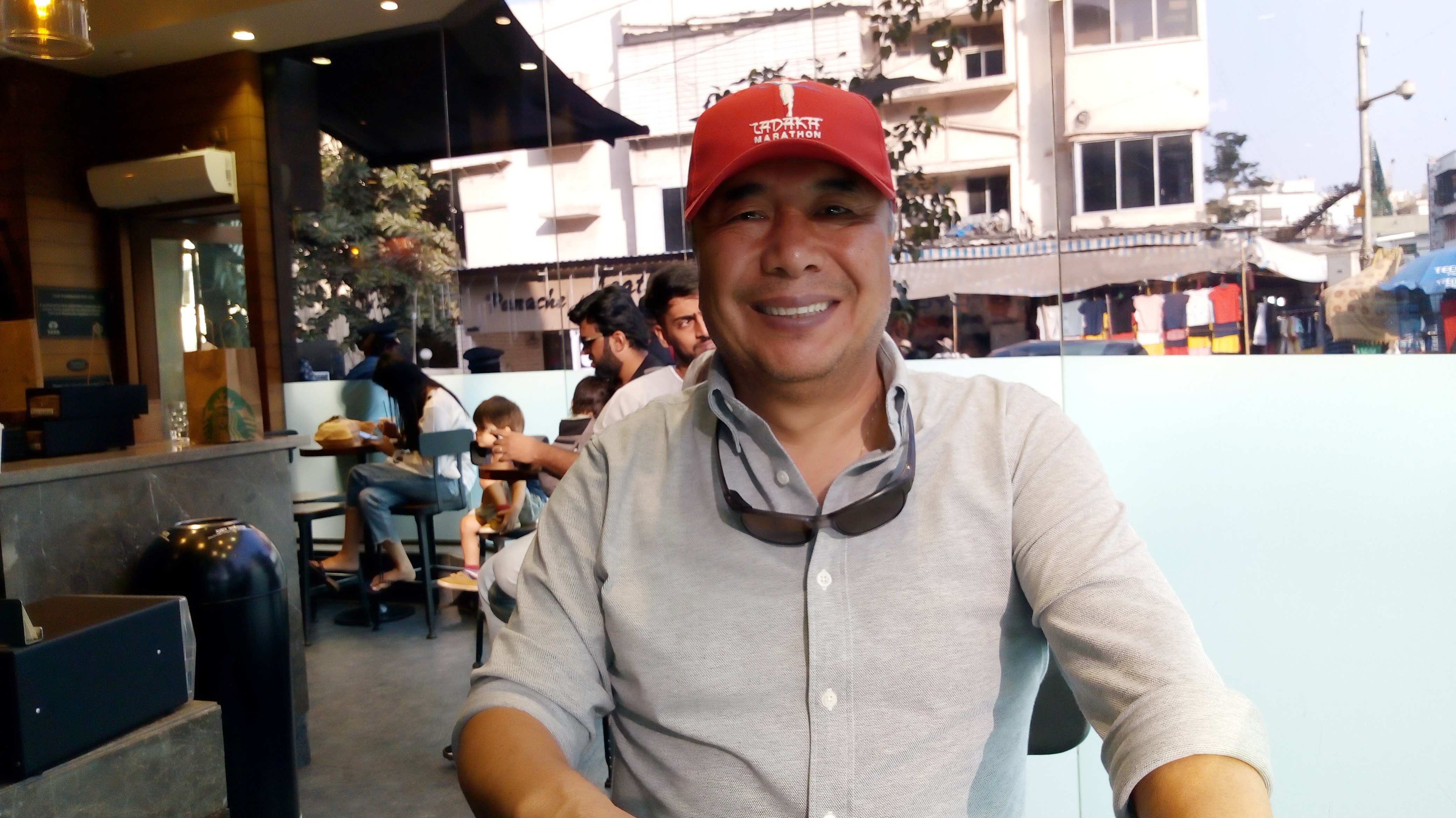
At a café in the Mumbai suburb of Bandra, some days after the 2019 Tata Mumbai Marathon (TMM), Chewang Motup put his project in perspective. Motup owns Leh based-Rimo Expeditions, among the best known adventure travel companies in India and organizers of the Ladakh Marathon. He started the Ladakh Marathon with a simple goal in mind. In distance running which counts on endurance, training at altitude is recognized as helpful. As location, Ladakh enjoys high average elevation; much of it is over 9800 feet high. Born to altitude, people from here should have a bank of endurance. Rigzen Angmo is good example. In the 1990s, she ran sub-three marathons, was podium finisher at national and international marathons. But that was years ago and a case, not repeated since in Ladakh. Motup wished to unlock the potential for endurance running in Ladakh by encouraging a culture of running. He also wanted to see local runners representing India at the Olympic Games. Hence the choice of the marathon for unlike the ultramarathon more easily associated with Ladakh’s mountainous landscape, the 42.195 kilometer-distance is firmly recognized as Olympic sport.

Chewang Motup (Photo: Shyam G Menon)

Hailing from Igoo village, Jigmet was into running while still at school. But it was the Ladakh Marathon staged in Leh at an elevation of over 11,000 feet that brought her (she used to run the half marathon) and Tsetan to local prominence. Although their early timings are quite slow compared to the pace at which marathons and half marathons are run in India’s cities, they were consistent podium finishers in Leh. Rimo Expeditions pioneered an annual program for Ladakhi runners – selected on the strength of their performance at the Ladakh Marathon – to travel to races at Indian cities with the Mumbai Marathon as main focus. “ My first visit to the Mumbai Marathon was in 2013,’’ Jigmet said. After a couple of years spent participating in the half marathon at the event, in 2015 (so she recalls), she ran the first full marathon of her life in Mumbai. “ I ran it at half marathon pace and ended up walking the last three kilometers to the finish,’’ she said outlining the lack of experience she had in races and race strategy then.

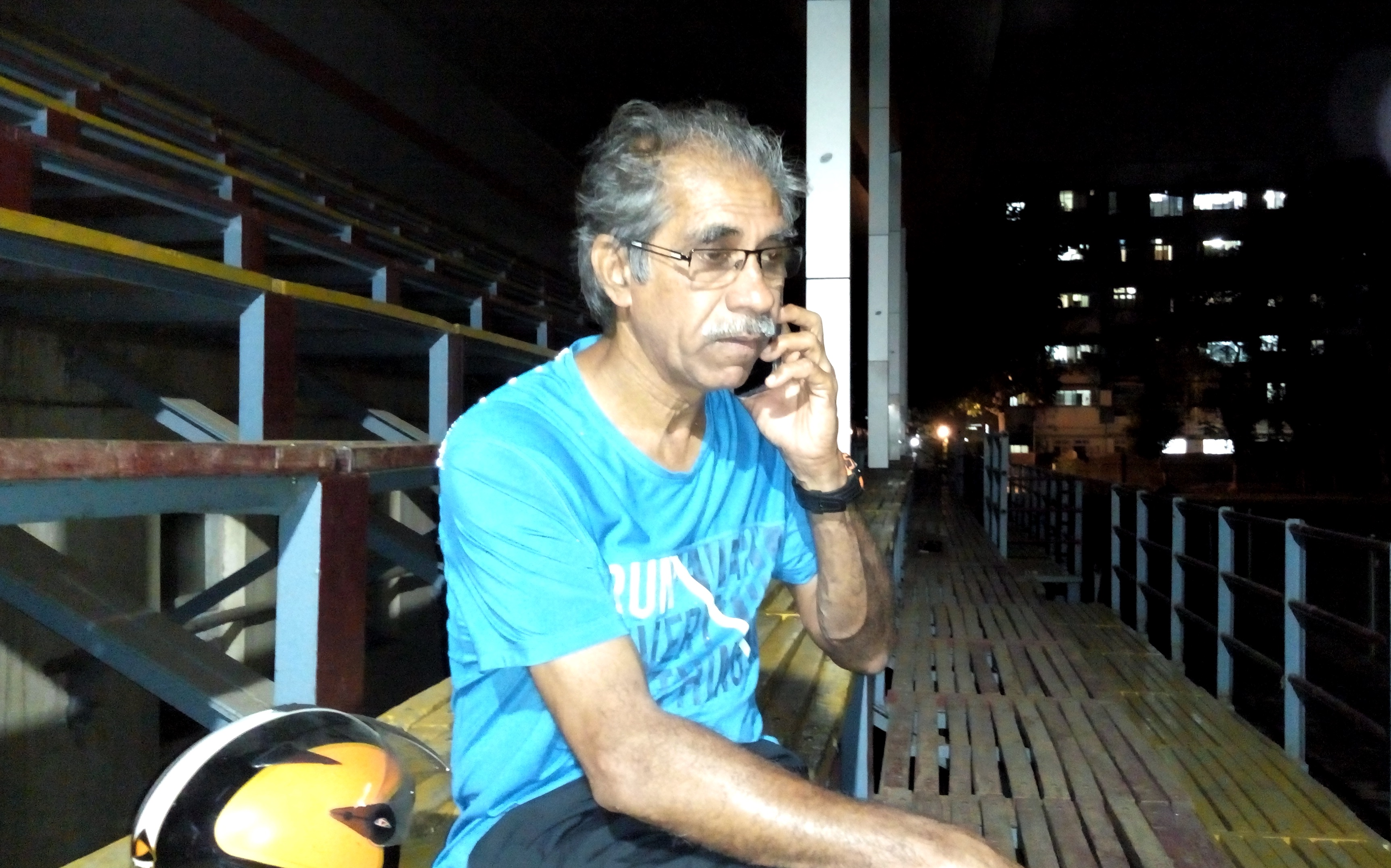
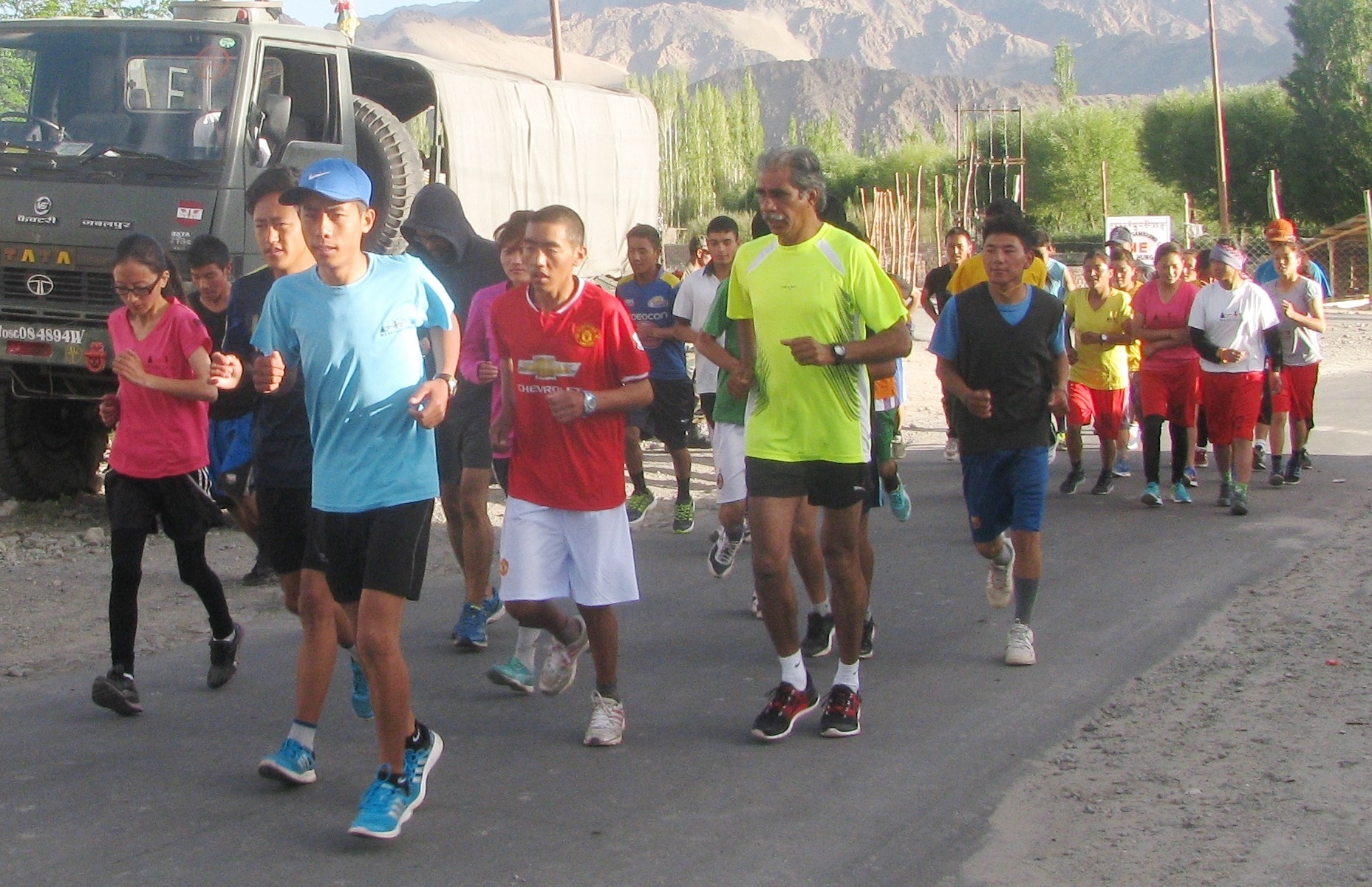
In the period that followed, Savio D’Souza – former national champion in the marathon and well known coach in Mumbai – was brought in to train the team. A structured approach was introduced. Given Ladakh’s cold winter with sub-zero temperatures, runners like Jigmet and Tsetan, begin their training in April. Around July, Savio visits them in Leh, gauges their standing, imparts tips and before returning to Mumbai, gives them a training schedule. “ We then keep in touch on the phone. They call me and tell me what they have been doing. The thing about them is – they are utterly dedicated. If it is too cold and they haven’t managed to run in the morning, they will run in the afternoon. I give them a training schedule, they follow it to the T,’’ Savio said. The intervention paid off. Between Tsetan and Jigmet, the latter was always the faster runner. Tsetan had completed the 2013 Ladakh Marathon in 4:54:05. By 2017, she was completing TMM in 3:14:42, four seconds behind Jigmet; both runners in the elite category for Indian women to boot. That was the year Jigmet finished on the podium for the first time in Mumbai.

A week had elapsed since 2019 TMM. It was late evening. At the Mumbai University’s athletic track, the hours of training had just concluded. “ Let me explain what happened in 2018,’’ Savio said. That year, the Ladakhi runners had failed to repeat their podium finish in the Indian women’s elite segment. “ The podium finish of 2017 was unexpected. Next year, it became a burden. Ahead of race their discussion was about who had turned up to compete in the elite category. If you run to defeat others, you end up running someone else’s race. You have to stick to your plan. But the whole thing was new for them. They were under pressure. When you run under stress, you commit mistakes; your race plan goes haywire. That’s what happened in 2018. Last year they got distracted by the elite runners. This year was different. They ran their own race. The attitude was – whoever comes, we are not bothered. Now we will do better,’’ Savio said. At 2019 TMM, Jigmet was back on the podium in the Indian women’s category; she placed third with a timing of 3:10:43, Tsetan finished fifth clocking 3:13:05. With podium finish secured for the second time, it appears both Motup and Savio have to contemplate: what next?

Savio D’Souza (Photo: Shyam G Menon)

Dr Aashish Contractor was Medical Director of the Mumbai Marathon from 2004 to 2014. Now Head of the Department of Rehabilitation and Sports Medicine at Sir H.N. Reliance Foundation Hospital, he produced a photo on his computer showing the Ladakhi runners from a 2018 visit to the hospital to assess their VO2 max level. “ VO2 stands for volume of oxygen – it basically tells you how much oxygen your body can consume while doing exercise. It is considered to be a gold standard of one’s cardiovascular fitness. For someone to do well on the world stage in long distance running, cycling, swimming, rowing or skiing – they must have a very good VO2 max. We tested six Ladakhi athletes. All of them had phenomenally high numbers, definitely world class,’’ Dr Contractor said. But it has to be seen in proper perspective. As the doctor put it, you can’t be a world class athlete without good VO2 max but high VO2 max does not automatically guarantee that you will be world class athlete. Between the two – potential and performance – lay other factors like circumstances; training, mental strength, diet, experience and strategy. VO2 max is therefore an indication of potential, especially endurance. “ That’s the most important attribute you can measure in a distance runner,’’ Dr Contractor said. At the apartment near Mumbai’s Chhatrapathi Shivaji Maharaj Terminus (CSMT), where the runners from Ladakh stay, Jigmet reflected on what she required to improve. “ My weaknesses are two. First, I am still slow compared to other elite runners. Second, I tend to run a marathon like a half marathon. My pace progressively drops,’’ she said. Figures prove her correct on the first and marginally correct on the second. At 2019 TMM, both Jigmet and Tsetan had pace across splits ranging from 13.1 to 13.5 kilometers per hour. This compares with Sudha Singh (winner among elite Indian women) who straddled 16-16.3 and Jyoti Gawate (second among elite Indian women) who ranged from 15.3 to 16. As regards splits, Jigmet was fairly consistent barring minor variations, which is actually good. Both Sudha and Jyoti had pacers. “ My goal now is to run a marathon in three hours,’’ Jigmet said. Savio wants her to get there on her own steam, without pacer.

“ Using the word speed can be misleading,’’ Dr Contractor said. All running involves speed. In a marathon you have to sustain decent pace for the two and half to three hours that the run lasts. This can be viewed as a case of endurance. But can high VO2 max – often cited to highlight endurance – be construed to also imply promise of maintaining good pace for the duration of a marathon? “ It is hard to answer it directly. Let’s put it this way – if you took a roomful of 50 people and you tested all for VO2 max and you made them all run five kilometers, it is likely that their performance would be in the order of their VO2 max roughly. If you train them all equally, they have the same circumstances in life – then again, the result would be the same. But if you take away those variables and everybody eats differently; lives differently – then there is the possibility that somebody with low VO2 max may beat somebody with a high VO2 max. Mental strength, how badly they want it – so much goes into it,’’ Dr Contractor said. In a competitive marathon, there are several elements at play – among them: endurance, race strategy and pace. Motup’s ongoing project is founded on the premise that Ladakhis have good endurance. Rimo’s team of runners brings that to the table. Not just that; team members couldn’t recall an instance of Did Not Finish (DNF) from their ranks, ever since they started traveling out to races in the plains. Both Motup and Savio said that no matter what difficulties they faced, the runners typically finished a given race. Between the two critical attributes – endurance and pace – pace would also seem an animal inspired in part by ecosystem. Endurance grows in you as part of location and lifestyle; probably why residents of hills and mountains end up with superior endurance compared to plains dwellers. Pace on the other hand – one can legitimately suspect – feeds off competitive circumstances too.

In Ladakh, there is only one marathon – the Ladakh Marathon. In a region with few popular initiatives in athletics, the Ladakh Marathon has been consistently topped by the likes of Jigmet and Tsetan. Given it is one of India’s most expensive marathons (acclimatization schedule forces long stay in Leh for participants) elite runners from the plains don’t turn up to participate even as a matter of curiosity to pitch their ability against high altitude. The event’s USP revolves around running in Ladakh, the adventure tourism destination. It has come to enjoy a high level of attraction among foreign runners with travel companies marketing packages around the annual marathon. It has also extended the local tourist season with hotels booked and high spending visitors – Indian and foreign – in town. Simply put – although local runners win the race comfortably, beyond a point neither the event nor the local ecosystem in running can serve as robust proving ground for the events of the plains because the required level of competition is absent. And without runners as good as you or better than you around, local runners needn’t feel compelled to push themselves. The ecosystem contrasts the circumstances runners from the plains hail from. But that is where Ladakh’s runners are for most part of the year; they come out to compete in city marathons for only around four months every year.

2015; Savio on a training run with Ladakhi runners during a visit to Leh (Photo: Shyam G Menon)

When they leave Ladakh for the plains in November, Rimo’s team of Ladakh runners – especially those running in elite category – make a jump to truly competitive environment instead of gradual transition. This was particularly felt in the run up to 2019 TMM because Delhi’s prestigious half marathon, which the team likes to run for accumulating race experience, got shifted to October. According to Savio, the team needs to participate in more races; there is also the need to have more races happening in Ladakh as that is runners’ home ecosystem. More local races contribute to bigger pool of local runners and hopefully thereby, greater competition for existing top notch runners in Ladakh. The breeding ground of most Indian marathoners is the middle distance categories (reference here being to 3000 meters to 10,000 meters) including the steeplechase. Indian elites like Nitendra Singh Rawat, T. Gopi, O.P. Jaisha, Sudha Singh and Lalita Babbar – all spent time in middle distance disciplines before coming to the marathon. It was true of the late Shivnath Singh too whose national record in the men’s marathon, set in 1978, was still standing at the time of writing. The great Emil Zatopek’s competence spanned 5000 meters, 10,000 meters and the marathon. Ladakh’s running calendar lacks a basket of middle distance races. Competitive ecosystem and middle distance – isn’t that where speed is picked up and ingested into potential marathon runner’s system? Both Sudha Singh and Jyoti Gawate (Jyoti who finished the full marathon at 2019 TMM in 2:45:48 hails from challenged circumstances) have more race experience than Jigmet. Sudha who has won medals for India internationally, has the ecosystem of the national camp – an assembly of India’s best – to train in. Further, both Sudha and Jyoti don’t have to worry about weather while training. “ When I go to Ladakh we do some speed training on the road. But road is not ideal surface as it can cause injury. Ladakh does not have an athletic track and so far, we haven’t been able to locate a good mud track. Further once the runners leave Ladakh for the plains, given races they are scheduled to participate in, we have to train conservatively making sure to avoid injury,’’ Savio said. Motup hopes he can pitch in to bridge the deficit with an array of treadmills to keep the momentum of training going on in Leh even in times of inclement weather. But the gap in infrastructure is clear.

A bit of a mystery in the story of Ladakh runners is the relation between altitude and distance running. Most people seem agreed on the link between altitude and endurance. But on the other hand, marathons have been increasingly won by those hailing from or training in mid-altitudes, not high altitude. India’s high altitude sports training facilities are also at these mid-altitudes as are the hills and mountains the elite runners of Kenya and Ethiopia belong to. Iten, the famous home of distance runners in Kenya, has an elevation of 7874 feet. Having said that, it must be pointed out that the Internet (to the extent this writer looked it up) did not specify a clear reason why training is set at this belt of elevation, apart from mention that it corresponds to where the best athletes currently hail from and also, where some of the high profile competitions are held, the latter likely in terms of threshold of elevation (for instance – Mexico City, location for the highest altitude at which the Summer Olympics have been staged so far, is at 7350 feet).

Rigzen Angmo with trophy after her win at the 1995 Bangkok Marathon (Photo: by arrangement)

For runners from Ladakh, the question is how to leverage their natural strengths, train and perform well at altitudes lower than where they come from. They need to marry endurance and pace. For this, do they train high (as in Leh) or train low? Can you simplistically conclude that if the middle altitudes are good for training in long distance running, then still higher altitudes would be better? “ No. Not necessary. You go very high, the air gets rarified; it is difficult to train. Living at altitude is beneficial. Everybody living at altitude will have those beneficial changes compared to you and me. But to be able to train – sometimes the altitude is so high that you get tired. Then training itself becomes difficult. How do you do your sprint workout and your long distance workout and all of that? I think there is a sweet spot as to what altitude is good to live and train at,’’ Dr Contractor said. The story of Rigzen Angmo is characterized by training stints outside Ladakh at gentler altitudes (please visit this link for Rigzen’s story: https://shyamgopan.com/2015/09/28/the-spectator/). Her personal best of 2:45:42 set in 1996, is looked up to by the runners from Ladakh. For dwellers of altitude, long stay away from elevation is a tricky quantum. One sensed unease in the runners when the question of extended stay in the plains was discussed. Apparently, such extended stay temporarily saps high altitude residents of some of their strengths at elevation. On return to Ladakh, they find themselves needing to adapt afresh. It isn’t a development the young runners seemed comfortable with.

Savio feels it is time the national authorities took note of this project, which has systematically dispatched runners to Mumbai since 2013 and secured podium finish in the elite category, twice. If they make it to the national camp or at the very least its proximity, the top Ladakhi runners will get the ecosystem to improve their performance further. They will have good facilities and most important, the good fortune of running with those currently better than them in the marathon. “ I wish the authorities took note of how far we progressed despite the challenges faced,’’ Savio said. Motup is acutely aware of the stage the project finds itself in. Rimo Expeditions has funded this journey as well as the Ladakh Marathon, from its own resources. As someone who wishes to see a Ladakhi at the Olympics, he wants more races in Ladakh – a sort of feeder system into the Ladakh Marathon, much the same way the best performers from the Ladakh Marathon find their way to TMM. But that deepening of running culture can’t be done by him alone. Ideally it should be a broader campaign involving local government. At a more immediate level, as a matter of strategizing next stage for the current team of Ladakh runners (including more time spent away from Ladakh if that is the need), one avenue open to him is to get aboard a strategic partner or sponsor for the Ladakh Marathon. Either such move frees up Rimo’s resources to invest more in the running team or whoever decides to partner the Ladakh Marathon, buys into the idea of sustaining and growing the running team as well. In today’s world of sports those willing to associate for visibility or gains in marketing are easily found. What’s tough is finding someone for the long haul of investing in a running team or a project to grow running and see it through. “ So far I haven’t met anyone convincing in this regard,’’ Motup said.

(The author, Shyam G Menon, is a freelance journalist based in Mumbai.)   

FOOTBALL WITH A DIFFERENCE / THE FAN WHO CYCLED TO MOSCOW FOR FIFA WORLD CUP

Clifin Francis (Photo: Shyam G Menon)

Mid-2018, a young man hailing from Thuravoor near Kochi, was in the news for cycling to Russia to see the FIFA World Cup. This is the story of Clifin Francis; what he did and plans to do next.

Azerbaijan is a small country in the South Caucasus region of Eurasia.

It has borders with Iran, Georgia, Armenia and Russia.

On the east it is bounded by the Caspian Sea.

In May 2018, a young cyclist from Kochi in South India made his way to the border of Azerbaijan and Georgia. The specific border crossing he chose was the one linking the city of Balakan in northwestern Azerbaijan to Lagodekhi, a town in Georgia, at the foot of the Greater Caucasus Mountains. It is a location visible on videos posted on the Internet. On the Azerbaijan side, the approach to the border is heralded by a big gateway. The cyclist, who had pedaled in from Baku, faced no problem leaving Azerbaijan. Officials put the exit stamp on his visa. Beyond Azerbaijan’s last check post is a bridge over a dry river bed, at the end of which is the entry to Georgia. With countries at both ends, you could ask: what nation are you on, on the bridge? At the Georgia end of the bridge, trouble awaited cyclist. Although his papers were in order the Georgians denied him entry. He pleaded. They stood firm. No, there was no entering the country. He retraced his steps to Azerbaijan. But with exit stamp already on his visa, he couldn’t return to the country he had just left. Clifin Francis sat there, stuck on the bridge. “ I was in no man’s land,’’ he said.
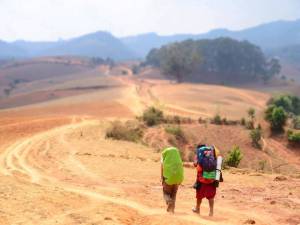
All you need in a backpack and a whole world to explore (Photo: courtesy Clifin Francis / Facebook)

Kochi, October 2018. It is nearly six months since that incident on the bridge. As the time of appointment approached, I left my hotel room and reached MG Road to meet Clifin. Born April 1990 in Thurvaoor, some 25 kilometers south of Kochi, Clifin attended school in Pattanakkad and later joined Kochi’s Model Engineering College (MEC) to study electronics and communication. “ I had no particular interest in sports in school. MEC changed my life. Unlike those brought up in Kochi and other cities, I came from a comparatively rural background. MEC taught me to dream,’’ he said. Passing out from MEC in 2011, Clifin joined Tata Consultancy Services (TCS) in Kochi, working with them for three years. While at TCS he took leave and traveled to Bangkok and Bali. At both these places, he met backpackers and was fascinated by their way of life and the stories they told. “ They were free and surviving with the basic amenities of life,’’ he said. This trip and lessons from it wasn’t the only undercurrent shaping his thoughts.
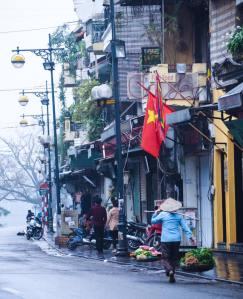
From the backpacking trip in South East Asia (Photo: courtesy Clifin Francis / Facebook)

Back in 1999, when Clifin was nine years old, living in Thuravoor and attending school in nearby Pattanakkad, a 21 year old-computer programmer in the US called Casey Fenton conceived the core idea of the nonprofit organization he would set up in 2003 – Couchsurfing. According to Wikipedia, Fenton once took a cheap flight from Boston to Iceland. He did not have lodging. So he hacked into the database of the University of Iceland and randomly emailed some 1500 students, seeking homestay. He got 50-100 offers and wound up staying with an Icelandic rhythm and blues singer. Today, Couchsurfing is a hospitality and social networking service accessed via website and mobile. Members can use the service to arrange homestay, offer lodging and hospitality. While at TCS, Clifin joined Couchsurfing. He hosted two travelers at his house in Kochi. One of them specialized in traveling overland. He inspired the young man from Thuravoor to contemplate border-crossing, wherein instead of flying in to destinations, you travel overland and cross borders as people did in era preceding commercial aviation. By then, the French sports goods chain, Decathlon, had opened outlets in Kochi. Fired up by thoughts of travel, Clifin visited Decathlon and bought tent, sleeping bag and a few other items.

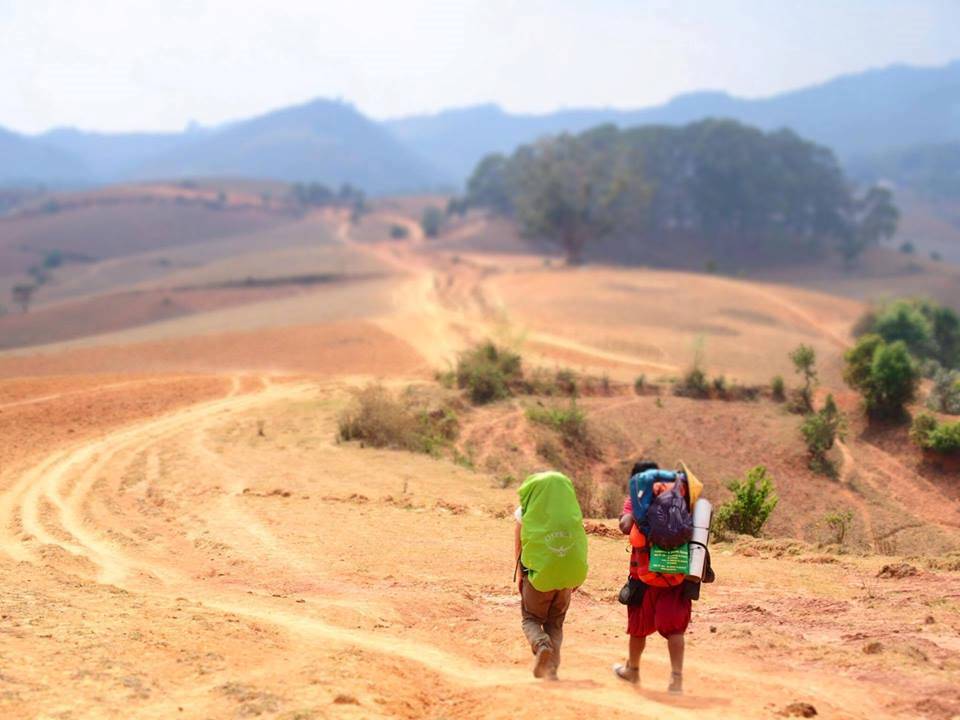
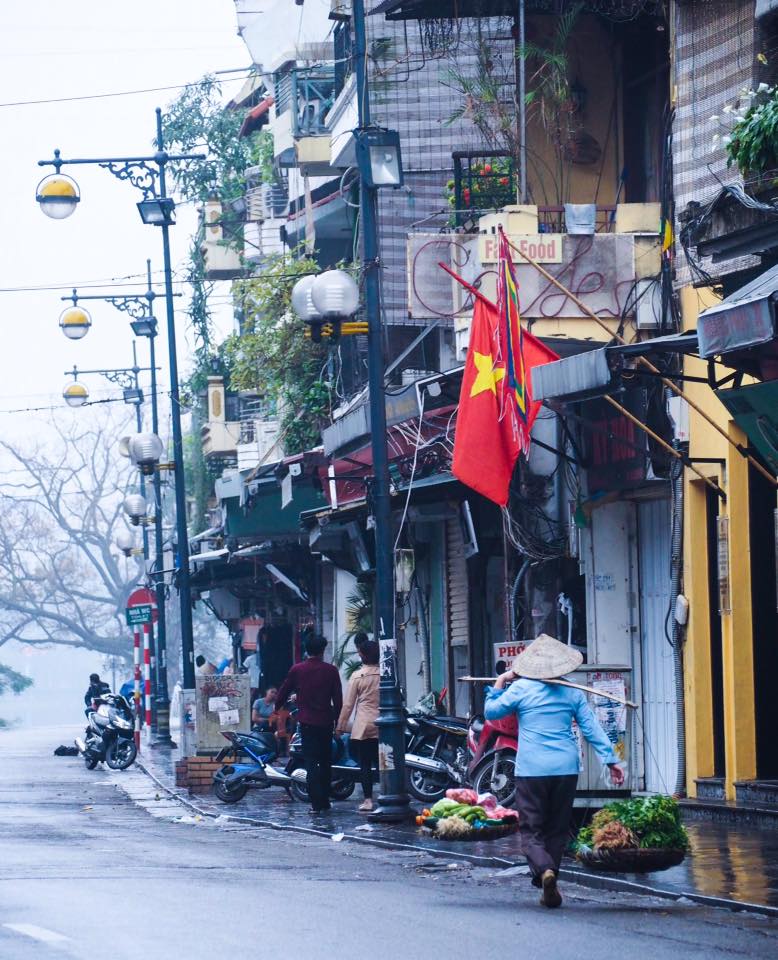
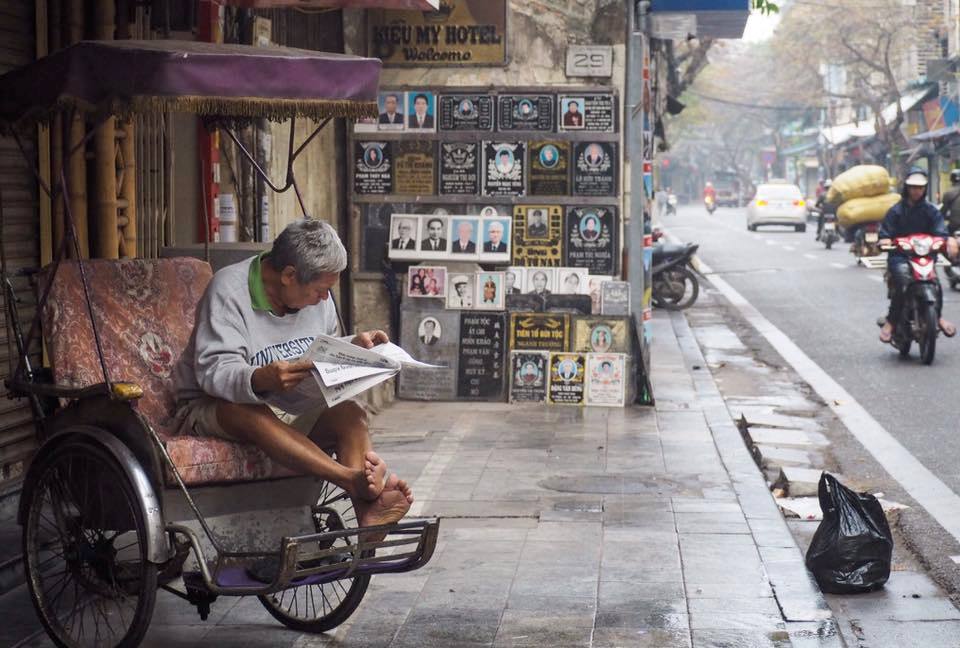
Dreams don’t die. They hibernate, nudging you gently, unconsciously to the true nature of your wiring. The typical Malayali life follows a pattern. Through school and college, academics dominate. Once done with that, career dominates. Vindication of time spent minting success, is well settled life replete with family, handsome bank balance, house (or houses), car et al; with of course address overseas prized above all else. Clifin wrote the Common Admission Test (CAT) to pursue a course in Master of Business Administration (MBA); according to him, his scores were good enough for admission to the country’s elite business schools. Friends recommended that Clifin go for MBA. However, he decided that he should take a break. So he resigned his job and spent six months backpacking through India. The trip took him to Hampi, Mumbai, Rajasthan, Varanasi and India’s North East. Then taking a leaf out of what the overland traveler had told him back at his house in Kochi, he crossed from Manipur in North East India to Myanmar and traveled on through that country to Thailand, Laos and Cambodia.
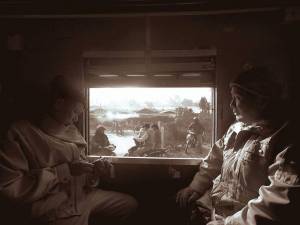
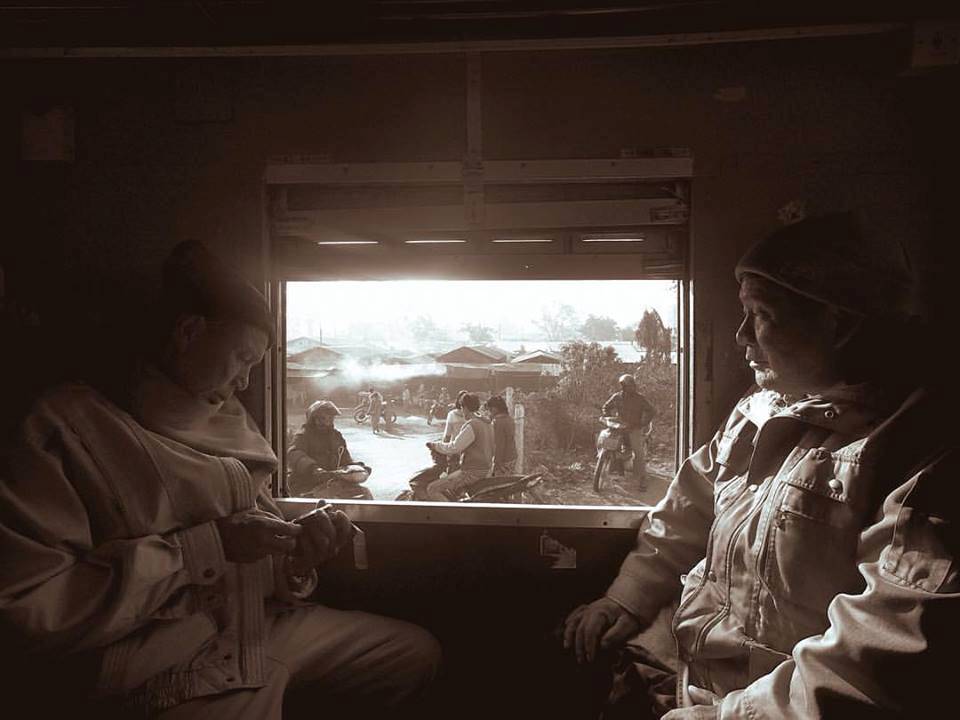
From a train compartment in Myanmar (Photo: courtesy Clifin Francis / Facebook)

On this trip he met a new type of traveler – those touring on bicycles. The cyclists he met included a person from Kerala, who worked in Bengaluru and was cycling in Laos. “ I felt I must try that lifestyle,’’ Clifin said. Thanks to traveling and the way he was doing it, his views about life changed. “ I realized the value of time. Money is not that important. You can tackle time in a cost efficient manner. You just have to choose the correct options,’’ he said. On his return from South East Asia, the erstwhile TCS employee decided that he will be a freelance teacher. It seemed better suited for the kind of life he sought. “ It is not like if you are an engineer you have to be one for life,’’ he said, taking a sip from the drink he had ordered. The café was a compact one, on the first floor of a building overlooking MG Road. Outside, Kochi had changed considerably. Through the glass windows one saw the pillars of the city’s new elevated metro. Across the road, the iconic cinema theater, Shenoy’s – by which name the locality was known and continues to be known – was under renovation to become a multiplex; the plot it stood on was shielded from public view by aluminum sheets.

For many youngsters in India, their education progresses towards a set of life defining tests. Thousands of students pass out from college / intermediate college every year and then confront a series of competitive exams to study professional courses like engineering, medicine, MBA, accountancy; even a shot at becoming bureaucrat in government or joining the armed forces. Not to mention, tests to qualify for studying abroad. Preparing students for the plethora of tests that abound is a big industry in India. According to their website, as of September 2017, Career Launcher had 200 test-prep schools in 100 cities in India. The brand was over two decades old by then. Post TCS and backpacking stint, Clifin joined Career Launcher as a freelance teacher teaching mathematics and logical reasoning to students wishing to appear for CAT. His daily work straddled two coaching centers in Kochi – he taught at the center in Kakkanad in the morning and the one at Ravipuram by evening. Alongside, an idea had been brewing in his head. It started sometime in 2015-16, before Career Launcher; on the flight from Bangkok to Kochi.
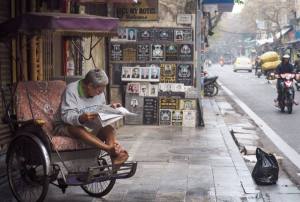
From the backpacking trip in South East Asia (Photo: courtesy Clifin Francis / Facebook)

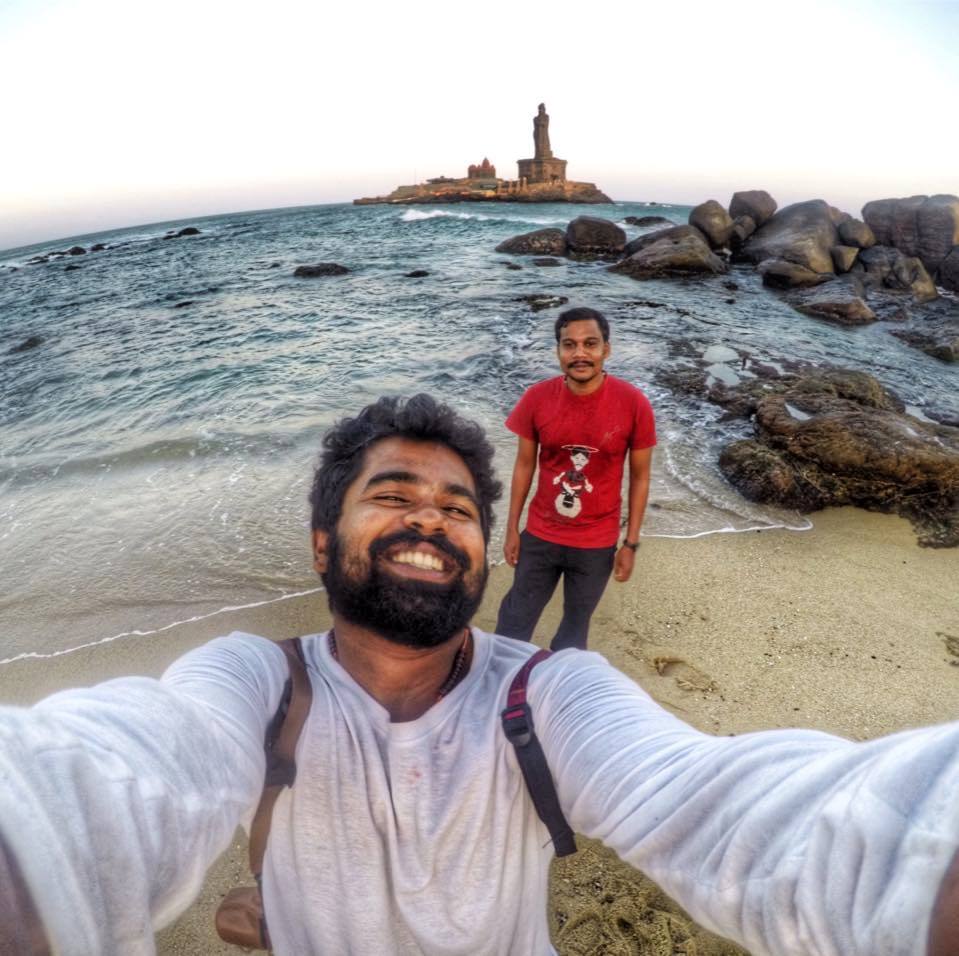
Football is a much loved game in Kerala. Local teams, football leagues and tournaments abound. Teams like Travancore Titanium, Kerala Police and FACT are remembered by old timers while the new crop includes Kerala Blasters and Gokulam Kerala FC. Once every four years, the FIFA World Cup becomes a craze across Kerala. People identify strongly with their favorite teams, some paint their houses in team colors, put up large billboards featuring football stars; you will even find colorful portraits of leading players drawn on the side of transport buses. Like most Malayalis, Clifin liked football. He used to watch important matches telecast on TV. Indeed, at his house in Thuravoor, the 1998 FIFA World Cup (held in France and won by the home team defeating Brazil 3-0 in the final) had seen his father buy a new TV. But TV was no more pinnacle of watching sport. With economic development and rising affluence, Indians have been traveling to major events like the football World Cup and the Olympics. The 2018 FIFA World Cup was due in Russia. Inspired by backpacking, the stories he had heard and the cyclists he met, Clifin wondered: how about cycling to Russia and watching the World Cup there? That would combine travel, cycling and his affection for football. He decided to take the plunge. He shared the idea with his friends. But they were skeptical. “ They said, I will reach Russia but not on a bicycle,’’ Clifin said. One of his friends, Namsheer Koraliyadan, thought differently. Hailing from Malappuram, Namsheer liked football. He met Clifin at MEC, where both did their BTech. The two bought bicycles; Clifin bought a Cosmic hybrid while Namsheer bought a Btwin MTB. They cycled on and off around Kochi and to nearby places. On one occasion, they rode all the way from Kochi to Kanyakumari, the southern tip of mainland India. In course of time, Clifin upgraded – he bought a Merida Crossway hybrid.
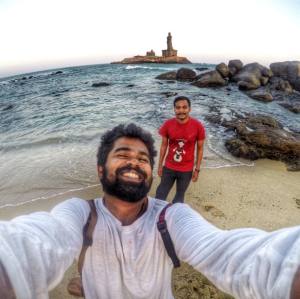
At Kanyakumari; Namsheer in red T-shirt (Photo: courtesy Clifin Francis / Facebook)

However there was a problem – it was tough getting the right size of bike; something that matters, when dreaming of riding long. On incorrectly sized bike, cycling long hours for several days can reduce cyclist to picture of suffering. Kochi’s drawback was that it didn’t have a facility to properly measure cyclist and match him / her to appropriate bike. “ My arms are short. That made me sensitive to size of bicycle,’’ Clifin said. He trusted Paul Mathew of The Bike Store to help him find the correct bike but beyond telling him the truth about the mismatch between his body size and bike frames available in town, there wasn’t much Paul could do. Meanwhile there was no shortage of audacity in planning the Russia trip. In October 2017, the FIFA U-17 World Cup was held in India (the Indian edition went on to see the highest ever attendance in the event’s history with 1,347,133 fans turning up to watch). According to Namsheer, Clifin and he planned on cycling to some of the U-17 venues and then, cycling on to catch the 2018 FIFA World Cup in Russia. They even contemplated cycling through Pakistan. “ We understood soon, that’s impossible for Indians,’’ Clifin told me at the cafe. Meanwhile, Namsheer got married and dropped out from proposed trip. Clifin looked at accessing Russia from Mongolia. He scrapped that idea because the distance – including China – was too daunting for rookie cyclist. He may end up taking longer than what a visa usually permits. Further, if instead of tackling China from its south eastern provinces up, he elected to cut across from Nepal, the cost would likely escalate because of Himalaya and Tibet in between. “ My budget was $ 1000 apart from cost of bicycle and I didn’t want to hurry while cycling. It is not a race, it is a slow, relaxed journey doing what I feel like,’’ he said.
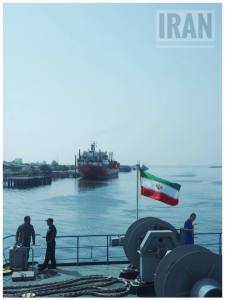
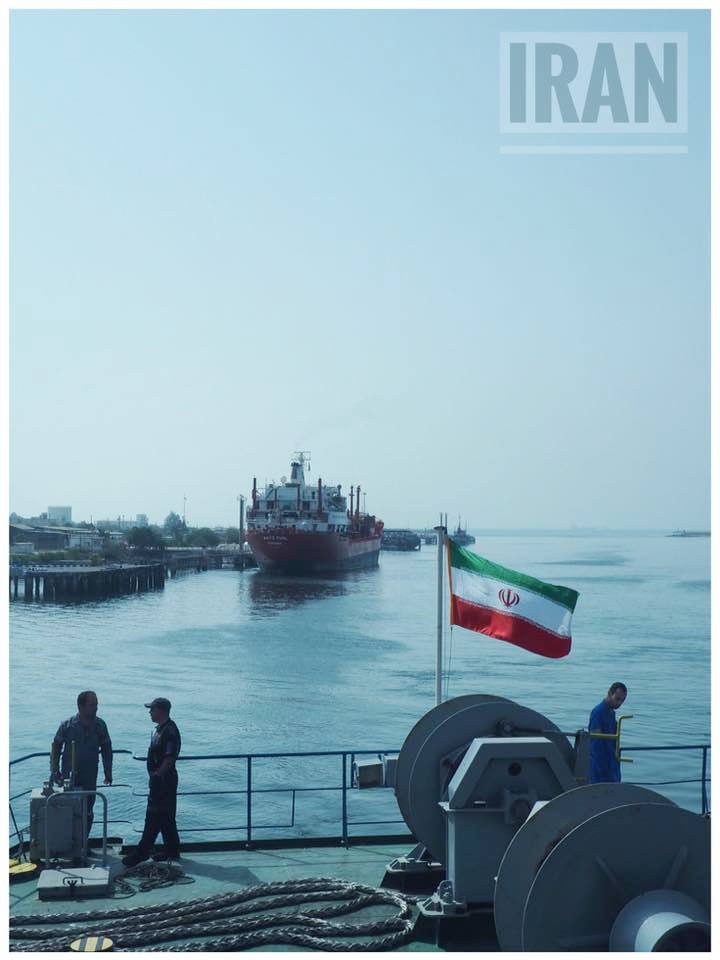
Bandar Abbas, Iran (Photo: courtesy Clifin Francis / Facebook)

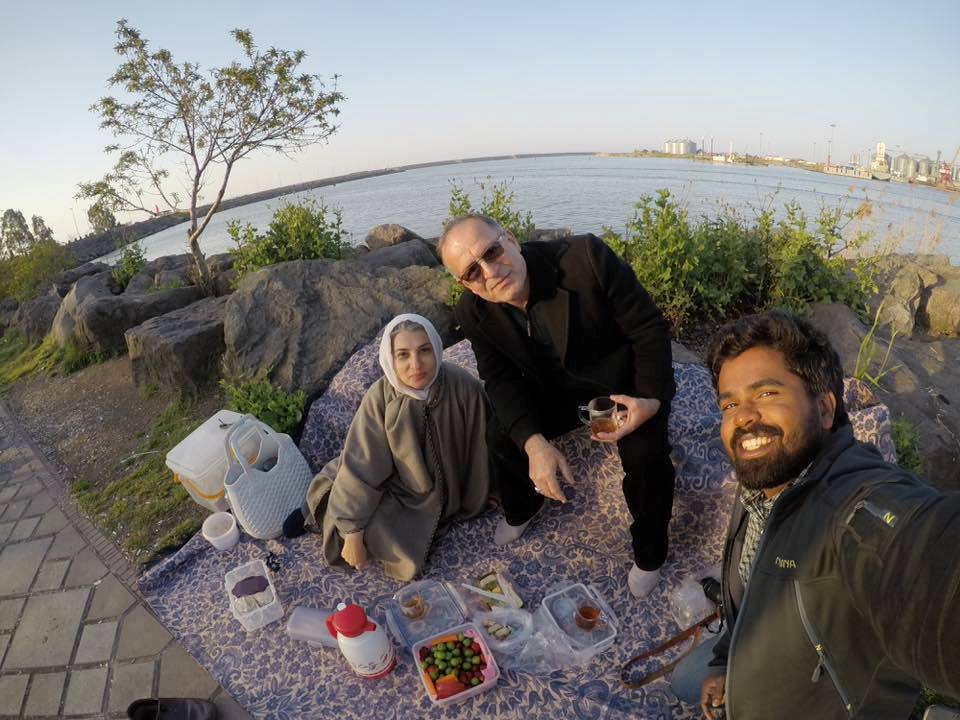
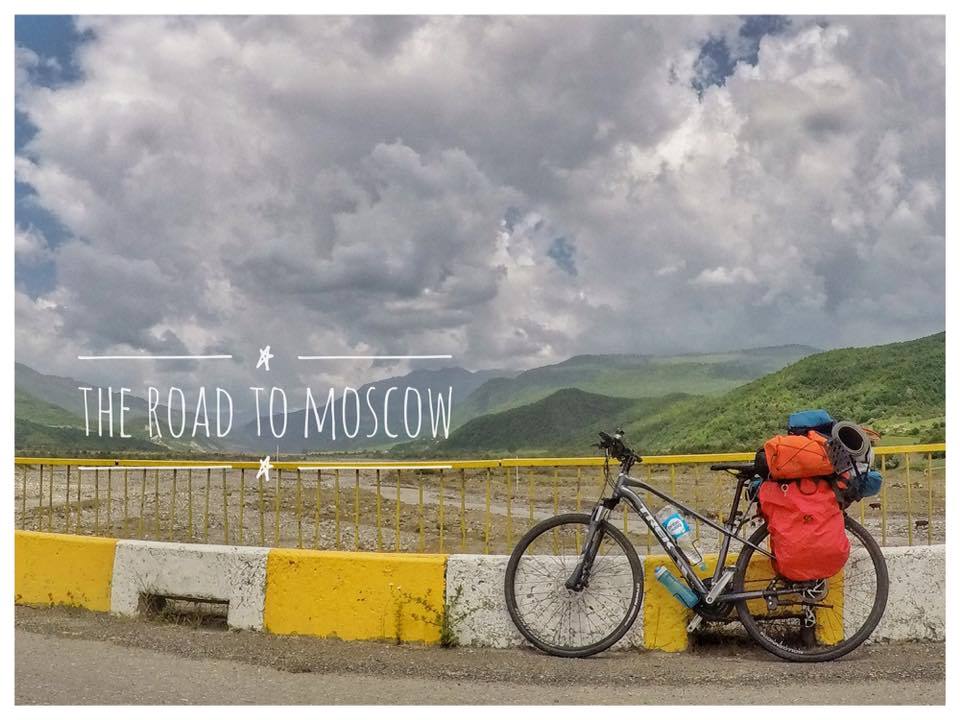
The alternative was to start cycling from Iran and reach Russia through Azerbaijan and Georgia. Both Azerbaijan and Georgia give Indians visa on arrival. End-February 2018, two of his friends dropped Clifin off at Kochi’s Nedumbassery airport. The long planned expedition was finally commencing although he still had no bicycle for the long ride. Namsheer recalled the sight. “ He had just a backpack,’’ he said. Aside from what he had packed for the expedition, Clifin carried with him a parcel his aunt had sent along for his cousin in Dubai. Clifin spent two weeks in Dubai. He visited as many bike shops as he could. Eventually, he bought a Trek DS-1 hybrid with 24 gears, front suspension and no lockout. In general, the Internet speaks of it favorably as a dual sport model, one that commutes well and also handles trails to an extent, provided you tackle uneven surfaces keeping in mind that it is not a MTB, but a hybrid. The shop did the bike fitting and Clifin dispatched pictures of him on the bike to Paul in Kochi for his approval. “ He replied – that’s a good one. That’s when I decided to buy it,’’ Clifin said. His friends then dispatched bicycle panniers and camping gear to him, from Kochi. Early March, Clifin and Trek, took the ship from Sharjah to Bandar Abbas, the port city in southern Iran. He had about 20 kilos on the bike – two paniers of 15 liters capacity each and a large backpack. Officials at the Iranian port were used to cyclists coming through. They welcomed him in. That day, the first day of his expedition, he got his first puncture. It is a window to Clifin’s nature.
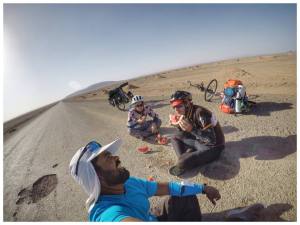
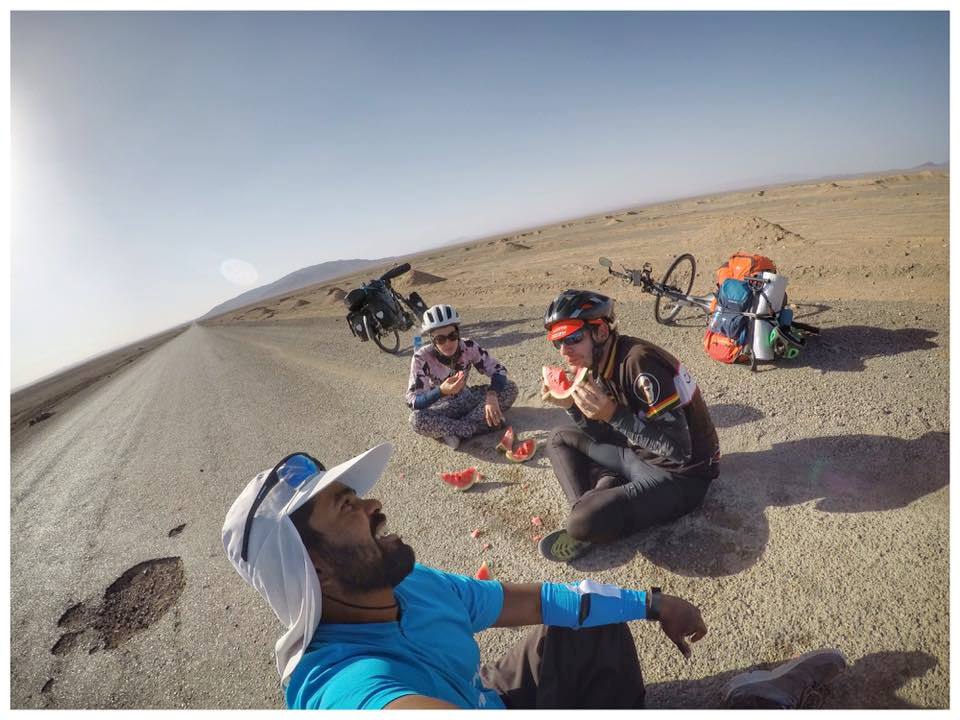
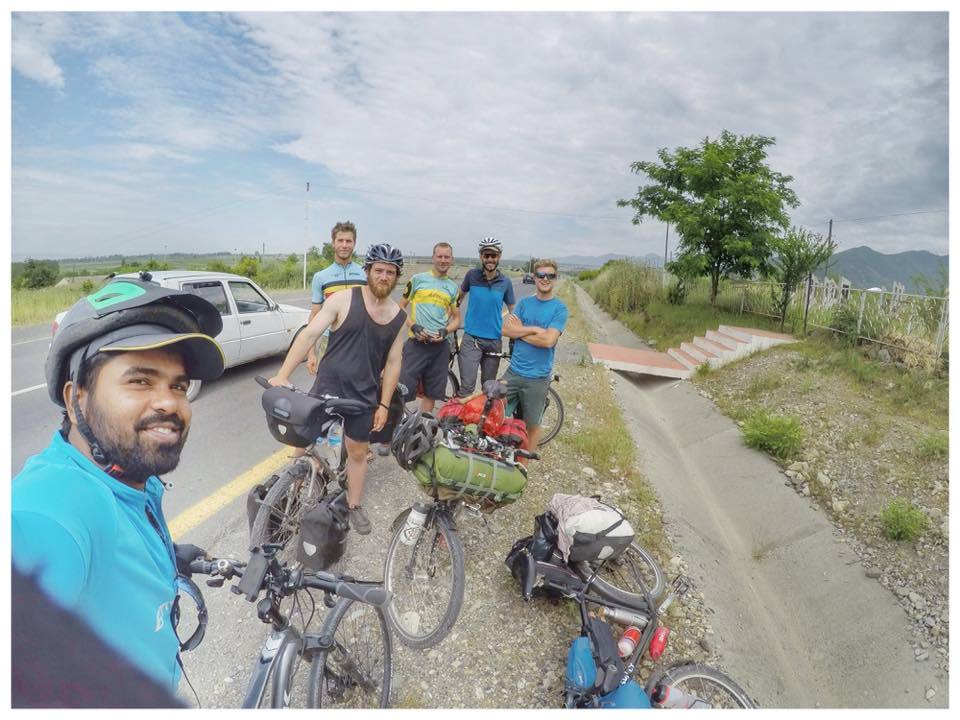
With fellow cyclists in Iran (Photo: courtesy Clifin Francis / Facebook)

Shuttling between his teaching assignments in Kochi, Clifin hadn’t found the time to train systematically for the long ride from Bandar Abbas to Moscow. He hadn’t learnt bicycle maintenance. When they got punctures on the trip to Kanyakumari from Kochi, Clifin and Namsheer had visited roadside mechanics to get things fixed. Strangely, none of that seems to have bothered Clifin. It is as though he views everything that unfolds – in whatever way it does – as life. “ I have no ego. I used to hitchhike. I think everyone should try hitchhiking. It takes away the ego. You try, try, try….people don’t stop to give you a lift. Who do you get angry at? What’s the point?’’ Clifin asked. So he rolled up his sleeves, got down to work and learnt how to fix a puncture that first day in Iran. It was good he did so for Iranian roads weren’t smooth everywhere and he had a day with five punctures to fix, all on the rear wheel.
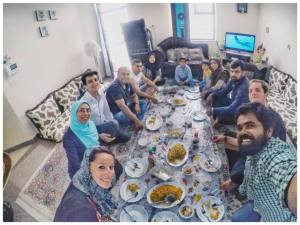
From Iran (Photo: courtesy Clifin Francis / Facebook)

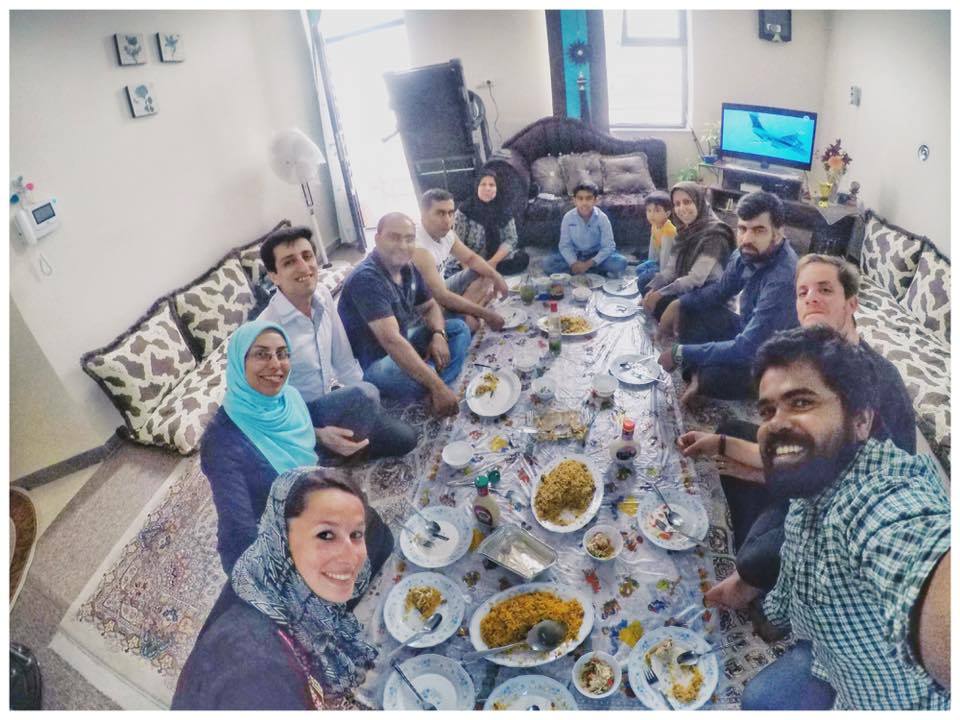
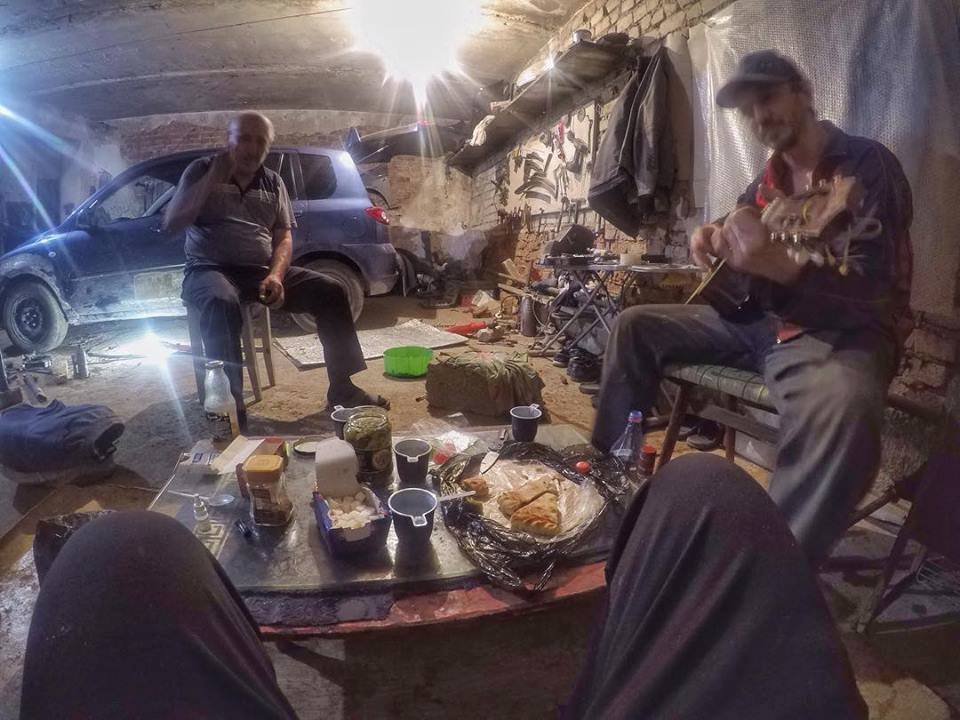
Other cyclists on the ship to Bandar Abbas had advised Clifin to take it easy on the road initially. They had a reason. The route Clifin was on could easily end up being deceptive for newcomer to cycling. Iran is one of the world’s most mountainous countries. The bulk of the mountains are in the west and Azerbaijan, the country Clifin had to be in next, lay to the northwest. A rookie cyclist starting from sea level at Bandar Abbas, may race off from start and overlook saving oneself for the rugged terrain to follow. It is wiser to treat distance and terrain with respect. Heeding the advice, in the initial phase of his tour, Clifin covered 50-60 kilometers every day. Then he slowly ramped it up, till on some days, he was touching 140 kilometers. “ People were really nice in Iran. They love football. They were happy to see somebody cycling to Russia for the World Cup. They asked me to support Iran’s football team at the event. The only problem in Iran was that it was dry country. I couldn’t get chilled beer!’’ Clifin said. Of the 45 days he spent crossing Iran, he stayed in hostels on only two occasions. All other days, he slept in his tent, at people’s houses or at mosques.
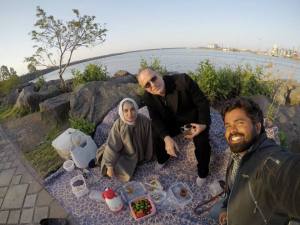
Rasht, Iran; the family he stayed with (Photo: courtesy Clifin Francis / Facebook)

Meanwhile back home in Kochi, Clifin’s expedition was becoming real to his friends. “ Not everyone thought he would do it. As the journey progressed, people started believing,’’ Namsheer said. By the time Clifin reached the Azerbaijan border, he had lost weight; he had also become sunburnt from days on the road. The officials at the Iran-Azerbaijan border took some time to approve his entry. Nobody was rude; they just took time. Landscape and culture was different in Azerbaijan. High point for Clifin was running into Siraj from north Kerala who runs a restaurant in Baku. “ Baku is a beautiful city,’’ Clifin said. He stayed with Siraj for a week enjoying the place and devouring Indian food. Azerbaijan is located in the South Caucasus region. Over one half of it is made of mountain ridges, crests and plateaus; the rest consists of plains and lowlands. Clifin covered Azerbaijan in a month’s time, including the time he spent in Baku. When he reached the Balakan-Lagodekhi border gate some 390 kilometers away from Baku, he was in the company of a German cyclist. “ They let the German cyclist through to Georgia. But I was denied permission by the Georgian authorities. I had the required visa and documents. They didn’t give me any reason for denying entry,’’ Clifin said. He was left stranded on that bridge.
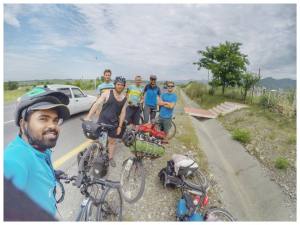
With other cyclists en route to Balakan-Lagodekhi border crossing (Photo: courtesy Clifin Francis / Facebook)

What saved him was a small but crucial gesture by the German cyclist. As they pass from one country to the next, it is normal for cyclists to buy a local SIM card for their cellphone. Clifin had bought one in Azerbaijan. Anticipating exit to Georgia (and new SIM thereafter), some 15 kilometers ahead of the Balakan-Lagodekhi border crossing, he gave his SIM to another cyclist for use in Azerbaijan. At the Georgia end of the bridge, as refusal of permission for him to cross unfolded, Clifin was without a local SIM in his phone. Luckily, before he entered Georgia, the German cyclist handed Clifin his Azerbaijan SIM card. Using that, Clifin was able to call up people at the Georgian embassy in Baku. But there was nothing they could do – they represented external affairs while the border crossing was handled by internal affairs. With no other option at hand, Clifin worked the cellphone and applied for an e-visa for entry back into Azerbaijan. All this time and for more that day, he sat parked on the bridge; neither in Georgia nor in Azerbaijan. People passing by asked him where he was headed and what happened. They gave him food and water. It was night by the time e-visa was received and he could return to Azerbaijan, stone’s throw away.
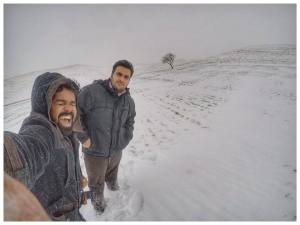
In Iran (Photo: courtesy Clifin Francis / Facebook)

“ It was an experience, waiting on that bridge. But not as bad as what happened to me in the desert in Iran. On the bridge, I knew I would get food and water. They won’t let me starve. So it was okay. The experience taught me patience,’’ Clifin said. Earlier in Iran, in a place he described as desert, he had got lost. There was no road. His GPS had stopped working. He cycled on looking for footprints or tracks. There was none for close to seven hours; there wasn’t a soul around. He started to panic. “ I realized, it was fear,’’ Clifin said. After those seven hours, a man showed up. Conversation was tough for the man spoke only Farsi. In utterly basic Farsi with some gestures thrown in for good measure, Clifin managed to indicate Bandar Abbas way behind, two weeks through Iran spent on the saddle and Russia ahead for destination. That was enough to find him roof for the night. He stayed in that man’s house.
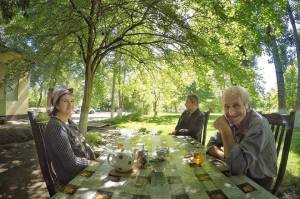
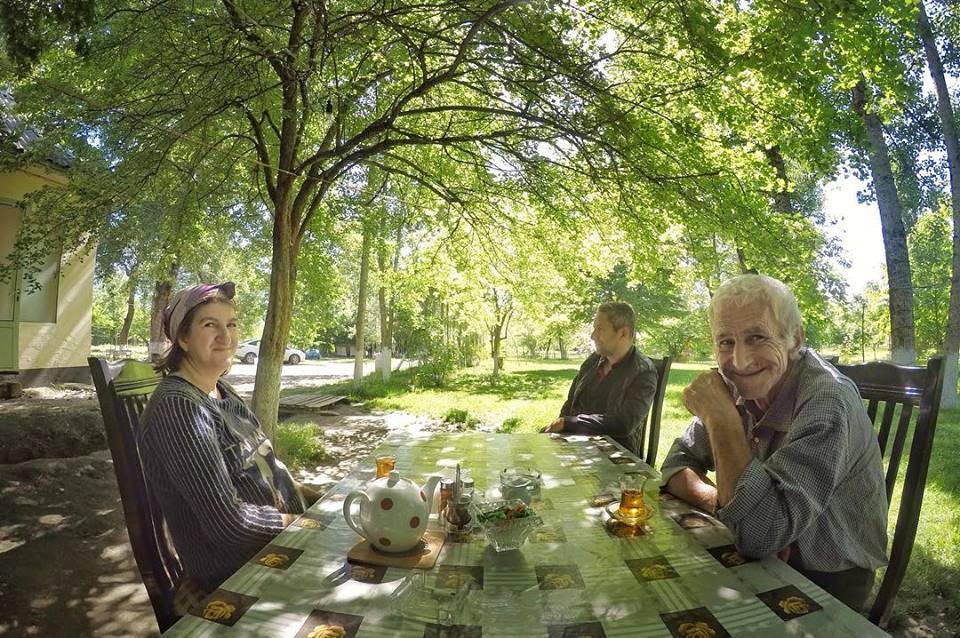
From Azerbaijan (Photo: courtesy Clifin Francis / Facebook)

From the bridge at the Azerbaijan-Georgia border, Clifin cycled back to Baku. He would now have to undertake another route to Russia; one that he had tried to avoid by opting for the Balakan-Lagodekhi crossing instead. It was temporary setback in a journey otherwise lit up by the humanity and good people he met on the way (his Facebook posts reflect the sentiment). Georgia’s denial of permission would stay imprinted in his mind. In a June 2018 article in Khaleej Times on alleged mistreatment of UAE citizens and residents at Georgia’s airports, Clifin’s experience at overland crossing also found mention. “ I heard several stories of issues that people faced trying to get into Georgia. So I went to the Georgian embassy in Baku first with all my paperwork, holiday insurance, hotel bookings, spending money etc and they told me it would be fine,’’ he is quoted as saying. As for what happened at the border, he told the paper, “ they just looked at my passport. They had no interest in seeing the paperwork I had. They were shouting at me in their language and they were very aggressive. I felt like I was targeted because of my nationality. They gave no reasons as to why I was turned away. I felt discriminated against. Why bother issuing e-visas for certain nationalities or asking for documented evidence if they are just going to refuse you entry?’’
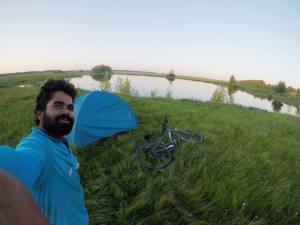
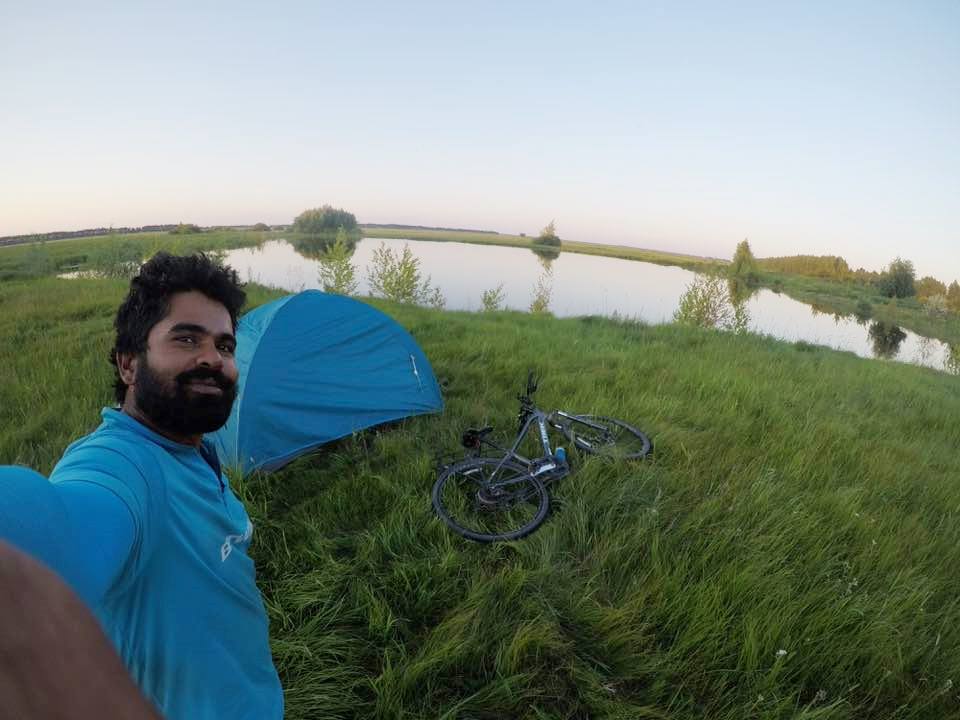
Camped in Tambov Oblast, Russia (Photo: courtesy Clifin Francis / Facebook)

Dagestan, officially called the Republic of Dagestan, is a federal subject of Russia located in the north Caucasus region. According to Wikipedia, Russia has 22 republics, 46 oblasts, nine krais, four autonomous okrugs, three federal cities and one autonomous oblast. A republic in Russia is nominally autonomous with its own constitution and legislature but is represented by the federal government in international affairs. Each republic is meant to be home to a specific ethnic minority. With an area of 50,300 square kilometers, Dagestan is a small republic. It is also the most heterogeneous of Russia’s republics, with the largest ethnicity constituting no more than 30 per cent of the population. Since the 1990s, Dagestan has witnessed Islamic insurgency and occasional outbreaks of separatism and ethnic tensions. The province is also close to Chechnya, a known trouble spot. On the map, Azerbaijan; Armenia, Georgia, Dagestan – they are all located on a strip of land sandwiched between the Black Sea and the Caspian Sea. The strip connects Russia to Iran. You can cross from Azerbaijan into Dagestan and thereby be directly in Russia. But Clifin wasn’t sure how safe it would be. That’s why he had elected to reach Russia via Georgia. Now with the Balakan-Lagodekhi border crossing shut to him, Dagestan remained sole possibility.
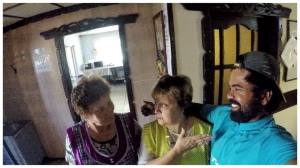
In Russia (Photo: courtesy Clifin Francis / Facebook)

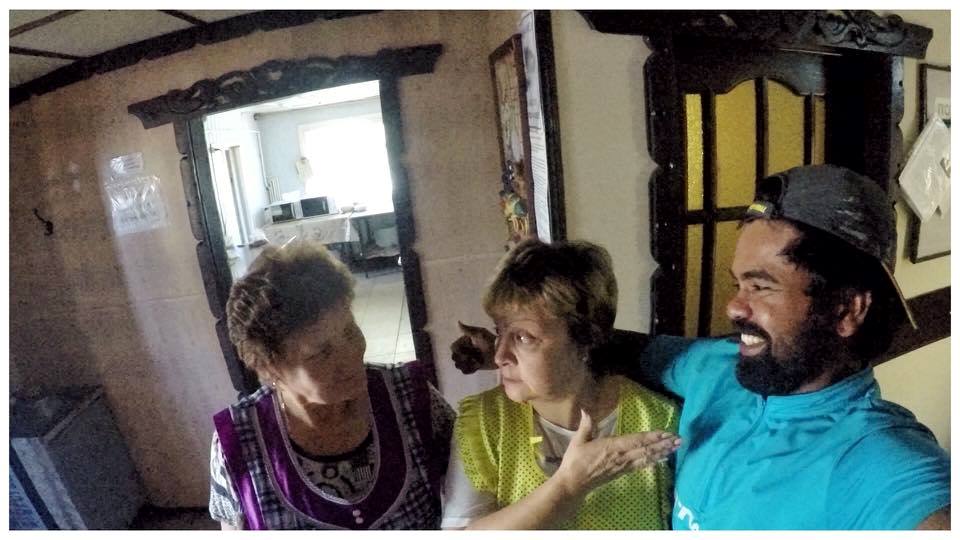
The new border crossing was 200 kilometers away from Baku. It took him three days to reach. “ I was scared in the beginning,’’ he said. After all, he had been turned back at the border with Georgia. Dagestan also had political and ethnic tensions within for visitor to think about. But once the guards saw his football fan ID (part of FIFA’s ticketing paraphernalia) and realized he was from India, they began asking him about Indian film stars, Amitabh Bachchan and Mithun Chakraborty. Clifin breathed a sigh of relief. He was thrilled when the electronically operated gates at the border parted and Russia loomed before cyclist. “ I felt really happy crossing the border here,’’ he said. Dagestan was also where he – Indian football fan cycling in from Bandar Abbas and on his way to Moscow for FIFA World Cup – got interviewed by a local TV channel. Result – here and there on the road, he was recognized.
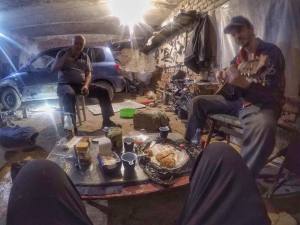
In Russia (Photo: courtesy Clifin Francis / Facebook)

It is over 2000 kilometers from Dagestan to Moscow. He covered it in a little over a month, securing details of best routes possible from local members of the Warmshowers community (founded in the US in 1993 as a hospitality exchange for bicycle tourists, Warmshowers had some 85,000 members worldwide by early 2018). “ This last stretch – the route from Dagestan to Moscow – was comparatively easy for me. The only problem was that the road wasn’t consistently good and at places, there was no cycle path. The people were nice and very relaxed. They were welcoming of stranger cycling through their land,’’ Clifin said. As per original plans, two World Cup tickets had been procured – one for him; one for Namsheer. But with the latter dropping out, his ticket was passed on to another friend from Kochi, Anand V.K. He was Clifin’s senior at MEC. But following a brief stint as software engineer in Bengaluru, Anand first attempted to join the civil services and later, shifted to coaching others for civil service exams. Eventually he joined Customs & Central Excise as an officer. Anand was originally part of Cliffin’s Russia plans but had withdrawn when he learnt that the idea was to cycle. Cliffin had stayed in touch with him during sections of the journey; especially after the incident at the Georgia border. Anand had batch mates in the civil service and friends of theirs stationed in Moscow helped verify how safe the Dagestan route would be.
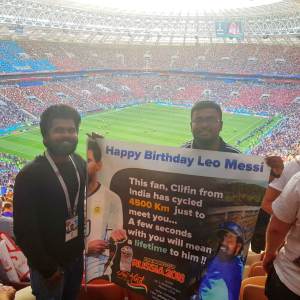
Clifin with Anand, at the stadium in Moscow (Photo: courtesy Anand V.K)

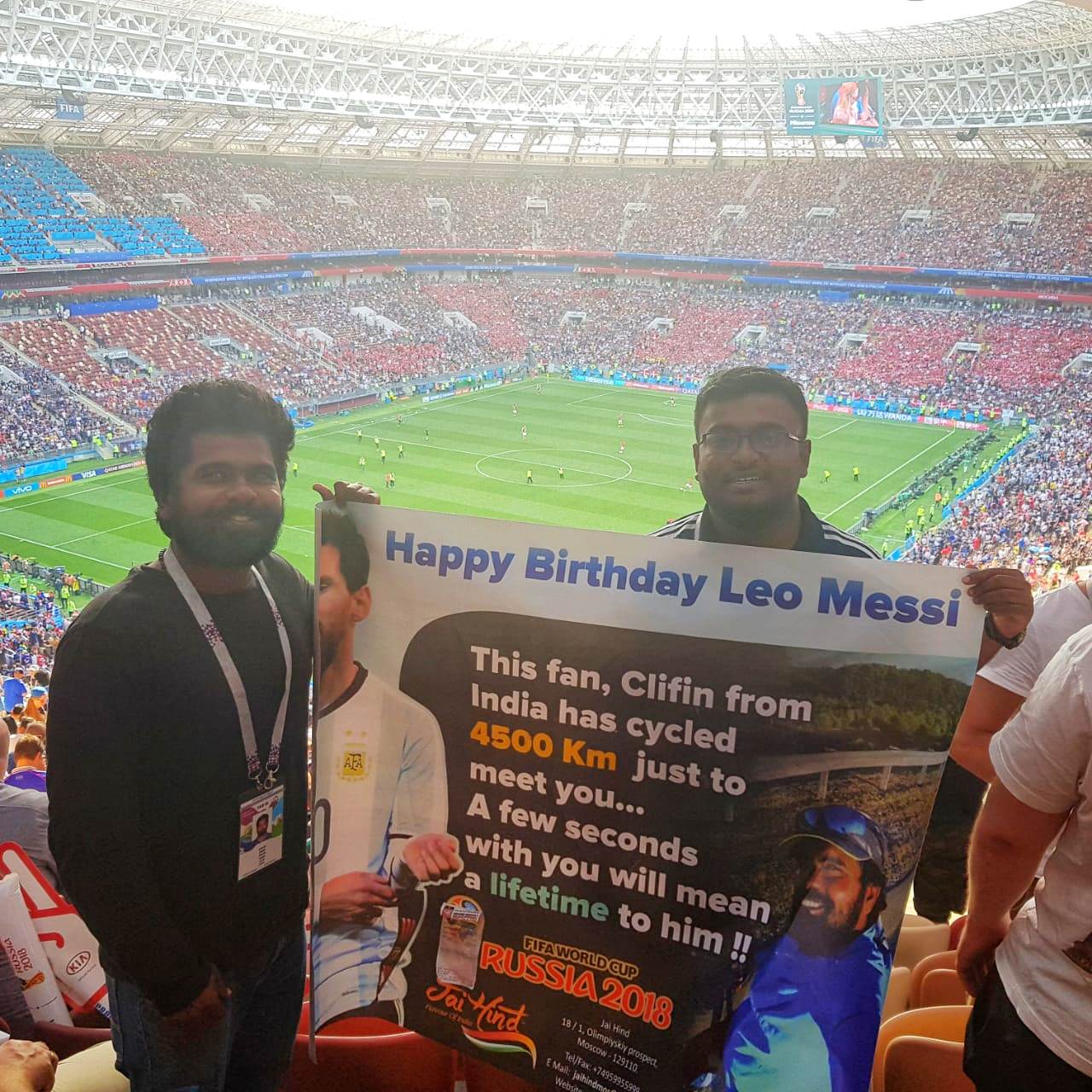
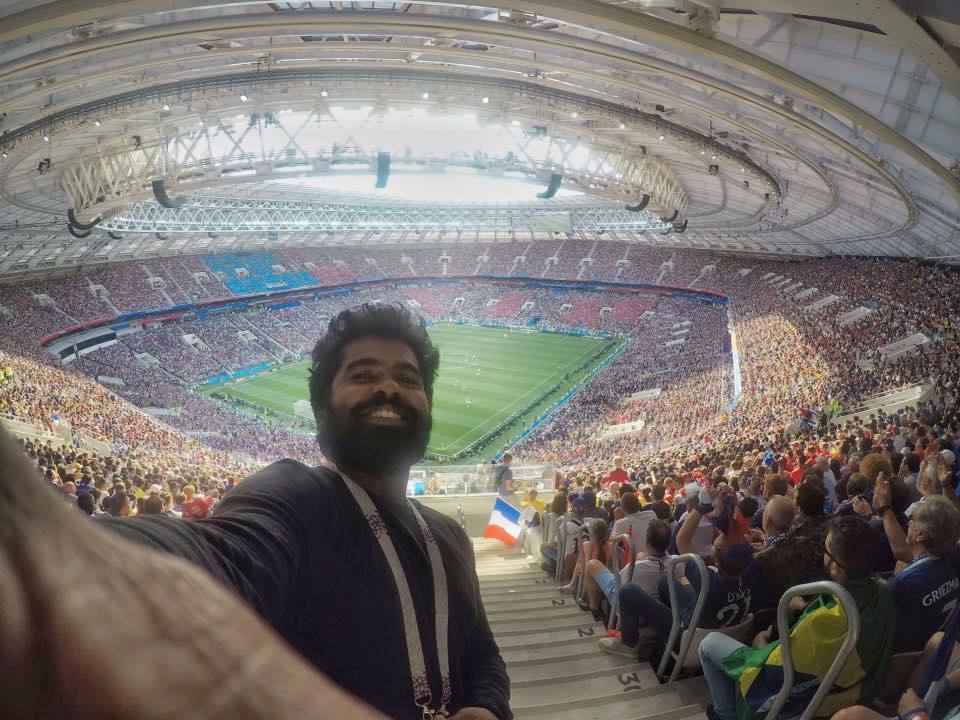
Anand reached Moscow on June 11 for the FIFA World Cup. He had booked accommodation at an Air BNB close to Red Square. From that day on, Clifin spoke to him almost daily apprising him of his progress. “ On June 24, all the others who were staying with me – four people in fact – left for Kazan to watch the Germany-South Korea match. It was around 6-7 PM and they were just leaving, when Clifin arrived on his bicycle,’’ Anand said. By now Clifin’s story had become well known. Somewhere during his ride through Russia, a friend who saw his periodic posts on Facebook had linked him up with a journalist. The story appeared on Manorama Online, a popular media website. The day after Clifin reached Moscow, there were interactions with the media in Moscow’s Red Square, following which he and Anand were invited for lunch at a leading Indian restaurant. On June 26, ticket in hand and carrying a printed poster expressing Clifin’s wish to meet Lionel Messi (which they hoped TV cameras would pick up), Clifin and Anand went to the stadium to see the qualifying match played between France and Denmark. It ended in a goalless draw. Clifin stayed in Moscow for the entire duration of the FIFA World Cup. He saw the remaining matches in the Fan Zone outside the stadium, where big TV screens had been installed. France won the World Cup beating Croatia 4-2 in the final. It was a disastrous World Cup for Argentina; they were knocked out by France early in the tournament. Clifin didn’t meet Messi.
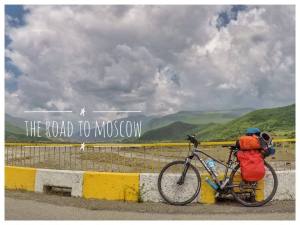
Clifin’s Trek DS-1 (Photo: courtesy Clifin Francis / Facebook)

Clifin’s Trek DS-1 held up fairly well through the whole journey. Besides his personal supplies and camping gear, he had carried along for the trip, 3-4 spare tubes, a puncture kit, a spare tyre, bicycle tools and a full sized pump. He had his share of punctures, which he learnt to fix on the go. Luckily most cities in the world have a cycling club. “ They helped in locating service centers for the bike,’’ Clifin said. For the return trip to India, a bike shop in Moscow dismantled the bike and packed it for him. “ I told them that I had cycled from Bandar Abbas to Moscow but did not know how to pack my bicycle,’’ he said, a mixture of embarrassment and laughter playing on his face. The flight from Moscow to Delhi took six hours. From Delhi, he flew to Kochi, where his friends – four of them, this time – came to the airport to receive him. “ He had informed us that given bicycle and luggage only two people should come,’’ Namsheer said. Clifin had been away for five months. He returned to work at Career Launcher.
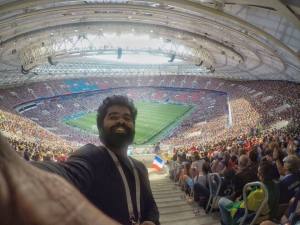
Journey’s end; June 26, 2018, France versus Denmark, at the stadium in Moscow (Photo: courtesy Clifin Francis / Facebook)

Clifin hopes to write a book on his journey. He also has plans, at a very nascent stage, for his next journey – cycle from Kochi to Japan for the 2020 Tokyo Olympics. “ I can cycle to Shanghai and take a ferry from there to Japan or cycle to Vladivostok via Mongolia and take a ferry from there. This time he wants to cycle for a cause. “ I want to give back for the love I got from people,’’ he said. Also planned, is documenting the trip. He has begun learning photography and videography. As he spoke, the `also’ list slowly grew – he must buy a new camera, he must find sponsors and yes, he would like a new bicycle; a proper touring bike. We had chatted for a long time and it was getting late. For a city of its size, Kochi seemed to retire early. Or maybe, as an autorickshaw driver would tell me: MG Road is no more where the action is; life has shifted to the suburbs. “ It is time for the last bus to where I live,’’ Clifin said as we shook hands and parted ways on a MG Road, rain swept and bereft of activity at that hour, except at its eateries.

(The author, Shyam G Menon, is a freelance journalist based in Mumbai. This article is based on a conversation with Clifin Francis.)                       

THE 6+6 FORMULA OF HAPPINESS

Illustration: Shyam G Menon

On my visit to Kerala, 6+6 was often reason for happiness. Will it stay so? I don’t know. I hope it does for it reminded of common sense in fashionably expensive times. 

From the highway as we turned into the road leading to the South Kerala tourist attraction, the ambiance changed; distinctly.

The surroundings were shaded, temperate and green.

The road we were on was unlike any other I had seen in these parts. It was well maintained with a proper footpath guarded by steel railing. Refined as it seemed, the atmosphere was also synthetic. Not that the mess of everyday Kerala is inspiring; just that you know an island of deliberately developed property when you see one.

For some reason the first thing I thought of as we beheld this place was Jurassic Park. The impression was strengthened when a posse of muscular men, clad in tight T-shirt and cargo pants, walkie-talkie in hand, waved down our autorickshaw at a junction ahead. “ Do you have tickets? It is booked online,’’ one of them said. Behind the guards and the access they regulated were the lower slopes of a hill with a huge rock on top. To be honest, the welcome had felt tad aggressive. But then gated properties are valued exactly for that. If you take away the barricades to entry, the exclusivity craved by those frequenting it, is lost. Degradation also happens faster when whole world goes in. There is an alternative. You can start at school level and teach every generation to tread light on nature, preserve beauty and appreciate solitude. That is however longer haul. Who has patience for it? Certainly not, when schools and colleges are factories in service of successful career. Given we hadn’t booked tickets online, we were politely guided to ticket booths nearby. A young man offered assistance. It seemed a junction waiting for business. All eyes were on us.

Now both my cousin Rajeev and I like to walk. Our idea of coming to this large rock, which everyone praised for a big bird sculpture recently installed there, was to walk around, eventually reach its top and enjoy the view. Although growing up in Thiruvananthapuram, we had never visited this rock earlier. In our fifties, we wished to catch up on what we had missed. At the ticket booth we sought price. Ticket price nudging Rs 500 and a strict no to going up the rock along old paths or newly created ones (you had to compulsorily take a short cable car ride) ended our original mission. Something about the whole affair – perhaps the ticket rate, the guards and the packaging of outdoors and adventure as spectacle – put us off. We decided instead to walk along the road, see where it takes us. Hopefully it went all around the rock’s perimeter offering us a glimpse of structures on top and lets us enjoy the idea of being free, devoid of boundaries and guards.

At some point on that winding road, we met a local resident parking his scooter before his house. Behind the building set in plantation like-ambiance, the rock loomed large. We chatted for some time about the rock that had now become a tourism project. We asked him if he had been on top and if so how it felt. “ Long time back it used to be our backyard and we would go there. The rock’s top is vast. The view from there is really nice. Now we also have to buy tickets,’’ he said laughing. According to him, all the planned services and attractions were yet to be in place. When they are, there will of course be a cost to experience them. “ What they are planning is supposed to be really good,’’ he said. We left it there. Staged stuff wasn’t our cup of tea.

The walk around the rock was relaxing. We imagined early morning hours and decided it was a promising place to run. About half of the distance to walk was on the well maintained road with paved footpath. It connected to a bigger road leading to the local bus depot some kilometers away. Here the traffic rose. From a curve on this road, we saw a temple like-structure on top of the big rock. If I was reminded earlier of Jurassic Park, now I was reminded of the movie, Bahubali. I liked Jurassic Park for bringing dinosaurs to life convincingly. But like the Jaws franchise and its dilemma of how much shark it takes to scare audience progressively losing their fear, it tired pretty soon. As for Bahubali, neither of the two films interested me; I saw them on night buses plying the Mumbai-Bengaluru route, breathing a sigh of relief when kings, queens and heirs concluded their fantasy and Volvo returned to being quiet. Somehow, in these years of decadence by human numbers, excess and vanity, larger than life isn’t an engaging paradigm for me anymore. On the other hand, smaller than life, quieter than life – they attract.

An hour – maybe hour and a half – later, we walked into Chadayamangalam’s bus depot, bought a glass of tea each along with dal vada from a nearby tea shop and sat down to savor it. We looked up from our glass and there, clear and free for all to see, was the bird atop the rock. It was without doubt an impressive sight. I don’t know if its destiny will be the same as Jurassic Park’s dinosaurs but this I know – for centuries that rock, just as it is, had existed brewing fascination. The question is therefore legitimate – what counts more, nature as it is or what we do to it? After the walk, the hot tea and vada felt good. Where we sat probably added to the feeling – we were seated on a large concrete block; tea shop counter behind us, bus depot in front, busy road to the side, people around, all of that open to sky and rock in the distance. It was the abject opposite of being larger than life. You were nobody.

That was when I discovered a wonderful formula in the neighborhood.  The glass of tea we were having – a full big glass, not the cutting measure of North India – cost six rupees, significantly less than Mumbai’s cutting chai. The vada cost six rupees too. In fact, according to the tea shop owner, there were other snacks to choose from as well and any of that had with tea, sold for six rupees a piece. Yet again, not the tiny portions sold for double the cost in northern cities; these were decently sized specimens. Chai and kadi (something to munch) – the combination sold for Rs 12. It satisfied my soul. Two days later in Thiruvananthapuram, I was treated to same formula at a small hotel near Vellayambalam; 6+6, no matter what snack from the designated lot you had full glass of tea with. The formula repeated again at the city’s East Fort bus stand.

It was nice to see small tea shops defying market trends even as big projects succumbed.

I sincerely hope some aspects of Malayali sensibility don’t change.

(The author, Shyam G Menon, is a freelance journalist based in Mumbai.)      
A LOSS / REMEMBERING THAKUR

Thakur (This photo was downloaded from the Facebook page of NOLS India and is being used here for representation purpose only)
This blog lost a good friend, the evening of October 16, 2018.

Thakur Singh, longstanding employee of NOLS India, passed away in a road accident in Ranikhet.

At the school, Thakur oversaw the maintenance of outdoor gear. Through the years, many batches of NOLS students and instructors have met him. He made sure that the gear and equipment, which every student expedition heading out to the field took with them, was in good condition. When they returned from the field, he made sure that all that was loaned from the gear room was accounted for, cleaned and maintained for use by expeditions to follow.

More important, as one of the senior hands around, he worked across functions in the early years of the school and saw it grow. His quiet nature concealed the experience he had gathered in his line of work. He was an asset to the school and a big help to outdoor enthusiasts – NOLS alumni and otherwise – who dropped by. You had a tent, jacket, sleeping bag, backpack, trekking poles, stove, boots, rope; any gear that required care and attention – you turned to Thakur for advice.

Mainly due to his commitments at home, Thakur rarely ventured into the outdoors, as in on a hike or trek. He typically kept a daily schedule that shuttled between work and home. Several years ago, I had the good fortune of hiking to Khati (in the Pindari valley) with him, camping there and returning the next day after attending a colleague’s wedding. He was a happy soul on that trip although he kept worrying whether we would get back to Ranikhet in time. It was only his second visit to the Pindari valley.

Thakur mostly stuck to the NOLS India base in Ranikhet, attending to his work and being Man Friday to anyone requiring assistance. He was quintessential person in the background; someone whose value you wake up to, only when he is gone. As I write this, I realize, I don’t have his photo.

Thakur will be deeply missed. He leaves behind parents, wife and three children. He was sole bread-winner of his family.

Our trip to Khati became material for a story on a road. Published in 2013, it was among the early lot of stories featured on this blog. Please click on this link to access that article: https://shyamgopan.com/2013/10/23/about-a-road/

(The author, Shyam G Menon, is a freelance journalist based in Mumbai.)

INDIAN NAVY AIRCRAFT SIGHTS THURIYA

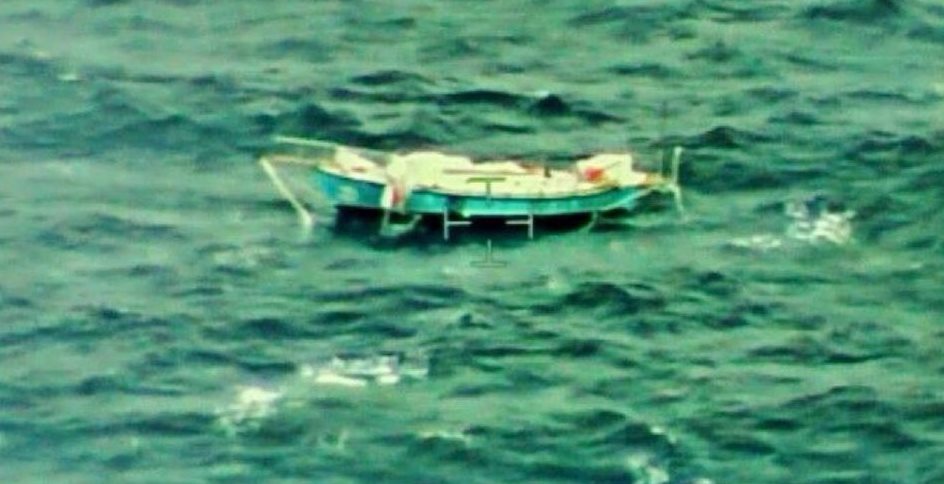
Thuriya adrift in the Southern Ocean; mast broken (This photo was downloaded from the Twitter handle of Indian Navy and is being used here for representation purpose only.)

An Indian Navy P-8I long range maritime reconnaissance aircraft has located Commander Abhilash Tomy’s sailboat, Thuriya, in the Southern Ocean, reports in the national media said today (September 23).

It may be recalled that the vessel was rolled and dismasted in a recent storm. Abhilash had subsequently reported severe back injury and inability to move around.

He has activated the Emergency Position Indicating Radio Beacon (EPIRB) and efforts have been underway to locate and rescue him. Thuriya and Abhilash were participants in the 2018 Golden Globe Race (GGR) entailing solo nonstop circumnavigation of the planet in a sailboat. It was Abhilash’s second such voyage. In 2013 he became the first Indian to do a solo nonstop circumnavigation in a sailboat.

Reports quoting an Indian Navy spokesperson said that the naval aircraft saw Thuriya adrift in the Southern Ocean, its mast broken and hanging alongside.

Further the official website of GGR informed that Australian authorities have dispatched an executive jet to the coordinates of the stricken boat. The aircraft will also overfly the boat of Irish skipper and GGR participant Gregor McGuckin, which too was rolled and dismasted in the storm. Notwithstanding an unreliable engine (likely due to fuel being contaminated when the boat was rolled and dismasted in the storm), loss of self-steering (he has to hand-steer now) and finding that the spinnaker pole he used to improvise a jury rig was bending in the strong wind, Gregor is attempting to motor-sail his way to Abhilash. The two are only 80 miles apart, the latest update on the GGR website said. Also expected to head Abhilash’s way is Estonian sailor and GGR participant, Uku Randmaa, who was 400 miles west of both Gregor and Abhilash.

Additionally, the French fisheries patrol vessel Osiris is heading to help Abhilash. Osiris has medical facilities onboard. Although he cannot move around and appears confined to his bunk due to the back injury, Abhilash has confirmed to race organizers that he can move his toes. In first responder circles, when assessing injury, the ability to move one’s body extremities is usually taken as a positive sign. Abhilash has indicated that he may need a stretcher when help arrives. Quoting Abhilash’s latest message to race organizers, the GGR website informed on September 22 (as an update to what it reported earlier the same day) that he can move his toes but is feeling numb and cannot eat or drink. The grab bag containing more emergency communication equipment remained difficult for him to access.

As per information on the GGR website, Australian authorities are also repositioning a search and rescue plane to Reunion Island to assist with the rescue efforts; this is in conjunction with the Anzac class frigate HMAS Ballarat, preparing to leave Perth for the area where Thuriya is. The Indian Navy has already sent INS Satpura and the tanker INS Jyoti to the southern Indian Ocean, where Abhilash is.

(The author, Shyam G Menon, is a freelance journalist based in Mumbai. Please scroll down or select from archives for more on Abhilash, Thuriya and GGR.)        

THE OUTDOORS AND THE LURE OF THE HIVE

Illustration: Shyam G Menon

A recent Court order that bans camping on Uttarakhand’s alpine and sub-alpine meadows has left trekkers and the outdoor industry confused. Confusion can be clarified. Of worry is trends inspired by commerce, noticeable in some of the responses to the ruling. As life becomes hive, the question is: to bee or not to bee?

Recently a friend needed assistance in articulating what the outdoors means and I found myself writing so:

Wilderness and open spaces are not merely part of human heritage. They are fundamental to the evolution of our aesthetics. One manifestation of such aesthetics inspired by nature is our idea of freedom. For some inexplicable reason, open spaces and wilderness with few humans in it, remind us of freedom; alternatively whenever we think of freedom, we imagine open space. We periodically yearn to be away and alone in the outdoors because we wish to reconnect with dimensions of existence denied us in the human cluster. Thus much before the outdoors is industry or industry to be regulated, it must be acknowledged as a side of us we are bound to go seeking, allowed or not.

To mindsets like the above, regulation is self-regulation and that is inextricably linked to education and awareness. The goal should be to create better informed practitioners of outdoor sports and adventure activity.

I reproduce the above here because of a recent Court order in the Indian state of Uttarakhand and responses to it I noticed on the Internet; in fact, with reference to my opinion on the matter, less because of the Court order and more because of the responses. Towards the end of August 2018, the High Court ruled that camping should not be allowed on alpine meadows, sub-alpine meadows and bugyals. It put a question mark on trekking in Uttarakhand because many treks – particularly long ones – require camping overnight. The order also set a limit on the number of visitors allowed at these locations.

News reports following the Court order said that the Uttarakhand government will challenge the ruling in the Supreme Court.

I leave it to the experts to decide what should be done.

What distressed me was some of the reactions in the wake of the Court order.

One big player in the outdoor industry lost no time in positioning large companies as environmentally responsible and small groups and individual trekkers as potentially irresponsible. To me, such posturing is unacceptable because there are exceptions to every generalization. There are lone trekkers and small groups of hikers who conduct themselves responsibly. Similarly, there have been big tour operators who defiled destinations by running hikes with large number of people or handled their garbage irresponsibly. Second, this argument of big operators as the most responsible ones around and therefore ideal model to support flies in the face of why we choose to be in the mountains in the first place.

My gut reaction when I saw the tour operator’s observation was: don’t compulsorily push me into a group. I come to the mountains for relief from the human hive and you are simply extending the reach of the hive when you insist I be in a group. That is not to say I am averse to groups. I am a meek fellow. Except on a handful of occasions, all my treks and climbs were with at least a friend or two. I have also hiked with groups and been on commercial treks; in the latter case, enjoying the comforts provided for I can’t handle frugality perennially. All through my life I have picked and chosen from a basket of options. What I wish to underline is that there is an element of getting away in most outdoor adventures. Outdoors, wilderness, open spaces and such have historically been a valuable counterpoint – even source of counter narrative – to life by clustering. What is the fun then, in forcing everyone into groups in the outdoors too? Why limit our choices?

The unsaid truth is – hive and group are good for business (not to mention – they are also politically fashionable these days). Companies love seeing us arranged in silos and seeming ready-made market. Before we know, the silo is swung by capital, technology and social media to the convenience of those controlling it. Such hijack of individual is overlooked. The danger implicit in this imagination resembles the tussle between personal freedom and nationalism. If you are going to put resources behind empowering anything, it should be personal freedom because that is innately fragile and typically, stands alone. Even a school student, aware of bullies and bullying, knows which side to support as a matter of principle. Somewhere in life as adults, we seem to forget this. However – and thankfully so – not everyone forgets.

Years ago, when I was introduced to hiking and climbing in Mumbai, my seniors at the climbing club talked of a book that was deemed essential reading. Its name – rather aptly I would think – was Freedom of the Hills. I didn’t read this book (it is there still on my shelf) but I read similar others. More than reading I was lucky to be with friends who liked the outdoors and respected it. Point is – nobody recommended an Outdoor Industry Handbook or How to be Hive and in the Hills At Once as essential reading for novice. My seniors were clear – the hills meant freedom. And because they are precious as abode of that freedom, you tread responsibly, you care for it. We went in small groups / expeditions and years before the Court order of 2018, were already carrying our trash back. It is my request to policy makers that individual hikers and small groups should not be automatically branded as irresponsible. Sometimes we hike alone or in small groups because we can’t afford commercial hikes or we simply wish for our own space. What you should emphasize instead, is good education about the outdoors so that anyone – traveling alone or traveling in group – is motivated as individual, to be responsible visitor in wilderness.

A commercial trek should not be anything more than an option. Much the same way, going alone or in a small group, should always be there as option. You can’t impose one option on everybody. The solution should be – no matter what option we choose (and the option we choose will vary depending on our state and stage in life), the environmental standards (and safety norms) expected of a trek must be met. Educate and train – that should be the way ahead. The hive will always tempt us with business models suiting its logic. But remember this – you will know the value of freedom only when you lose it. Even as I am yet to read it, I just can’t get over the name of that book: Freedom of the Hills. So apt. But for how long? – I wonder.

(The author, Shyam G Menon, is a freelance journalist based in Mumbai.)         

ROHIT YADAV: TRAINING ABROAD ON THE CARDS

Illustration: Shyam G Menon

With a new meet record under his belt, javelin thrower Rohit Yadav finds himself looking at an opportunity to train under former world record holder, Tom Petranoff, in the US.

Rohit Yadav, the promising javelin thrower from Uttar Pradesh, is on the cusp of a new chapter in his life.

Returning to competition after a one year suspension for alleged use of a banned substance, he secured gold at the National Youth Athletics Meet of July 2018 in Vadodara. He hurled the javelin to a distance of 77.41 meters, a new meet record. At the time of ban, Rohit held the national record in under-16 age category; he was also among top athletes worldwide in that segment. He has since moved into the under-18 age category, also called `youth’ category. Both Rohit and his father Sabhajeet Yadav, the well-known amateur runner, have consistently maintained that the family has no idea how the banned substance got into Rohit’s system. It happened over the period of a training camp in Allahabad.

Sabhajeet is a farmer from Dabhiya. Both he and his son were rattled by the ban. A consequence of testing positive for the banned substance has been the duo’s eroded faith in training camps. In the run-up to the National Youth Meet in Vadodara, Rohit’s training was therefore done entirely at his village. There is no proper training facility in Dabhiya. There is no gym. Everything has to be improvised. In the initial years of Rohit’s career, even the javelin had to be improvised. Eventually the family bought a javelin from Patiala. Sabhajeet has been winner multiple times in his age category at the Mumbai Marathon and several other running events in the country. Things changed comprehensively on the javelin front in March 2018, when Bhasker Desai – he is a Mumbai-based businessman and amateur runner who has been Sabhajeet’s benefactor for long – sponsored a competition standard, imported Nemeth javelin for Rohit. Late July Bhasker, Sabhajeet and Rohit were together in Mumbai to address steps required for the youngster’s growth in his chosen discipline. Prominent in their talk was Amentum.

Rohit Yadav (Photo: Shyam G Menon)

Amentum Sports is an upcoming sports management company that has elected to specialize in the emergent talent for javelin-throw in India. It has signed on several young athletes including Samarjeet Singh Malhi (senior category); Shivpal Singh (senior category), Vikas Yadav (youth / under 18), Runjun Pegu (women’s / under 20 category), Anand Singh (junior / under 20 category) and Sahil Silwal (junior / under 20 category). Also signed on is Rohit (youth / under 18). According to Siddharth Patil, a director of Amentum (he is founder of Coachkhoj, an outfit that connects talent in sports to relevant coaches), the company got interested in Rohit after the training camp episode, which cast him to a low point in life. As mentioned, Rohit was, at that time, both national record holder and among top ranked performers in his age category worldwide. Besides Siddharth, Amentum has three other directors – Aditya Bhargava, Vivek Gupta and Michael Musselmann, the latter a former Peruvian national record holder in javelin throw. Amentum is aligned with Throwing Zone Athletics a US company founded by former javelin throw world record holder, Tom Petranoff. His 1980 world record of 99.72 meters (further improved to 104.80 meters by the German athlete, Uwe Hohn, who now coaches star Indian javelin thrower Neeraj Chopra), which raised worries around how throws could be contained in the confines of a stadium, was among reasons for the competition javelin to be redesigned. Now retired, Petranoff is inventor of the turbo javelin. Sold under the brand name Turbojav, it is used mostly for practice sessions indoors. It is safer than the regular javelin. Petranoff’s company also organizes special clinics and video based-instruction for those well into the sport of javelin-throw.

In the period following his ban, as Rohit trained in Dabhiya, Musselmann and Petranoff offered remote guidance. The training schedule was dispatched to Rohit via smartphone. He followed the instructions and sent back videos of his throws for analysis by Musselmann and Petranoff. At a chat this blog had with Bhasker, Sabhajeet and Rohit, the youngster said that he had managed a throw of 83 meters during one of his training sessions in Dabhiya. Data from training session at Dabhiya cannot be considered reliable; it does not have any external validation as would be the case at an event. However coming as it does from athlete well versed in the discipline, the training data may be taken as indication of potential. At the time of writing, the national record was 87.34 meters. Siddharth said that Petranoff believes Rohit can excel with systematic training and improvement to technique. Interestingly, one of the things he needs to do is put on some weight. An athlete with no visible fat on self, Rohit’s nutrition is said to have suffered partly due to the family’s apprehension over what to eat and what not to, in the wake of the doping ban. Musselmann has been coaching Rohit since July 2017. In a letter of recommendation (wherein he mentions 83 meters as Rohit’s best throw in training), Musselmann noted: Rohit is ahead of Neeraj at his age. Neeraj managed to throw 73-74 meters at 17, so he is four meters ahead of him. In order to succeed, Rohit will need to gain muscle and strength and improve his throwing, but this requires special nutrition and more advanced training, with better equipment such as javelins that cost a lot of money, shoes and weight lifting gear that is expensive.

Sabhajeet Yadav (left) and Rohit (Photo: Shyam G Menon)

One event Rohit’s well-wishers hope he will make it to later this year is the 2018 Youth Olympics scheduled to be held in Buenos Aires, Argentina. For that, the national selectors have to take note of his return to competition and the distances he has been throwing the javelin to in the youth category. Following Rohit’s success at Vadodara, he is rated number one in India in his discipline in the youth category and correspondingly, number three worldwide. Meanwhile according to Siddharth, plans are now afoot to get Rohit to the US to train with Petranoff. The latter believes Rohit is a one of a kind athlete. “ You seldom find an athlete so talented with such a work ethic,’’ he said. In a letter of recommendation Petranoff has addressed to prospective sponsors, he observed: His (Rohit’s) work ethic is epic. Rohit is hungry and just needs some help to get to the next level. Amentum’s annual plan for Rohit (covering the next two years) includes a phase of training and competing in the US under the guidance of Tom Petranoff, a phase of training and competing in Germany under the guidance of Petra Felke (the only woman to throw a javelin more than 80 meters, Felke became Olympic champion in 1988 and broke the world record four times between 1985 and 1988) and then training the rest of the year monitored by Musselmann and Petranoff. For immediate focus, this program targets attempting to break the world junior record currently held by Neeraj Chopra. Long term goals include the 2024 and 2028 Olympic Games.

Alongside the effort to send Rohit abroad for training, options are also being explored to secure him a job in India; one that would have him on the rolls here but leave him free to train overseas. The move to train in US and Germany will take some time to happen for resources have to be put in place for it. A crowd funding campaign is on the cards to raise funds. “ Rohit also needs to become more familiar with English,’’ Bhasker said. But in javelin’s season of ascent in India ever since a phenomenon called Neeraj Chopra arrived on stage, nobody wants to leave any stone unturned for Rohit’s future. If you want to do something, this is the time.

(The authors, Latha Venkatraman and Shyam G Menon, are independent journalists based in Mumbai.)        

THE `PHAW’ OF FOOTBALL

Illustration: Shyam G Menon

The 2018 FIFA World Cup concluded on July 15 with France taking home the trophy. We wait another four years for the event’s next edition. Bulbul Rajagopal is a final year MA student in Kolkata, the city she grew up in. Here she writes about Kolkata’s craze for football and the ambiance that prevailed there this world cup season. Bulbul is reporting intern and contributor at this blog.  

“ Gabriel Jesus! Maybe if we all call out his name, Brazil might finally score…” groaned Tonoy Dutta as he scanned the screen hosting the group stage match against Costa Rica. Dutta, a student of class 12, was member of Dum Dum area’s Bondhu Bandhab Club in Kolkata. My quest to observe the city during the 2018 World Cup had led me to Kolkata’s outskirts where a local boys club was watching the match. Brazilian flags took much space in their club room, while the odd Argentine ones peeked out. Soon the arena was packed with more of Dutta’s friends, all fans of the Brazil national team. Bathed in the glow of the TV, their faces appeared enlightened. Watching their yellow and green-flecked gods dance on screen, they sat in revered silence before their religion – football.

Scanning the band of boys and old men – the former playing hooky from school due to the heat but mostly because of the World Cup; the latter come out of the woodwork only for the game – club regular, Rajat Basak, noted my bemused expression and laughed. “ Those who don’t even know the phaw of football [phaw denoting the phonetic ‘f’ in the Bengali script] can’t resist the charm of the World Cup,’’ he said.

Every four years, the arrival of the FIFA World Cup envelopes Kolkata – a city known for its long flirtation with the game – in an all too familiar buzz. Kolkata’s obsession with the game’s international proceedings began with what the city calls the “magic of Pele.’’ In the 1970s, television sets were scarce in the city. Communal viewings where entire neighbourhoods huddled over one TV set in a household or two, or even a local club room, were common practice. In spite of this, the 20,000-strong crowd that greeted the Brazilian football legend at the city’s airport in 1977 was testimony to their love for the game. By 2017, Kolkata had played host to both Diego Maradona and Lionel Messi — the latter’s visit drove 75,000 Calcuttans to swell the ranks in Salt Lake Stadium, one of the largest football stadiums in the world.

The footpath leading to Maidan Market (Photo: Bulbul Rajagopal)

Preparation for the World Cup is taken very seriously here. It is almost ritualistic. The altar for warm-up is the highly popular Maidan Market, which houses a collection of roadside stalls stacked high with jerseys and flags linked to teams in the World Cup fray. The occasional shirt loudly brandished with the face of Messi or Ronaldo is almost as desired. In the lead-up to the more popular matches, which in Kolkata are mostly the ones featuring Brazil or Argentina, frequent sights include parents inspecting the jerseys of favorite teams with their children, and school and college-goers rifling through the collection hoping for a decent bargain. This World Cup season, almost all store owners reported that their fastest-depleting stock were the jerseys of Argentina and Brazil. Being coveted items, these were priced the highest – about 450 to 500 rupees. For Aziz, one of the salesmen, a constant worry every season is the unsold jerseys of the less popular teams like England, even Portugal. “The public always keeps an eye out for internet updates and the original jerseys they see there. Then only do they come to us. As for myself, I am an Argentina fan,’’ he said. Asked for a reason, Aziz said laughing, “ because their jerseys sell the most.’’

Deep in the market stall upon stall catered to Kolkata’s football fever. Each hawker eyed every passerby beadily trying to guess which team they were loyal to in order to push their ware. Subhroneel Bose wove his way expertly through this maze. On acquiring a target, he studied the stock of Argentina jerseys, all bearing the number 10. Bose has been a regular here since the 2002 World Cup. Time had made him an experienced bargainer. He came away grinning excitedly with a jersey for 180 rupees. “ I’ve bought it for my football trainer, he loves Messi. I’m a die-hard Brazil fan actually. It causes frequent clashes at home since my father is an Argentina fan,” the college-graduate said. Such arguments are a regular feature when the tournament rolls in. Tushita Basu fell in love with football following the matches she played with her father. On a bad day, watching a match together kept the blues at bay. Though the father and daughter started out supporting different teams – Brazil and Spain respectively – Tushita felt “with age I’m becoming more like my dad. I want Brazil to win this year.’’

The Brazil-Argentina divide is one that splits Kolkata in two distinct camps. It is a generational one that is marked by the rise of technology as well. Though Pele had once reigned supreme here, by 1986, with television sets proliferating, the next generation could witness Maradona in all his ‘Hand of God’ glory. By the time his protégé Messi entered the scene, the fanfare for Argentina was set in stone. Though a friendly rift highlighted by the characteristic banter the game demands, this is hardly the first football-related fissure Kolkata has seen. The formation of the historical football teams of Mohun Bagan and (subsequently) East Bengal are symbols of the partition the state underwent when it split into West Bengal and East Bengal. The former stayed with India, the latter came under Pakistan (East Bengal would eventually become Bangladesh). The heavy flow of migrants into Kolkata (then Calcutta) sparked crisis over refugee settlement, identity and communal tensions. However, the first taste of football-induced victory for the Bengalis had nothing to do with the state’s partition – it was Mohun Bagan’s win over East Yorkshire Regiment for the IFA shield.

An alleyway in the Santoshpur area (Photo: courtesy Srijan Mookerji)

Both India, specifically West Bengal, and Bangladesh find common ground in their support for Latin-American teams like Brazil and Argentina. Shahid Imam, an advocate at Calcutta High Court believed that the Latin-American circuit had a huge impact on the playing style of Bengalis: “ It is heavily mimicked, especially the dribbling style. I am a strong supporter of the Brazil team,’’ he said. Imam belonged to a football team made up of lawyers. The football tournament organized by the High Court has no age limit but is open only to members of the bar association. Last year, 16 teams took part. Though it lasts only a day, “it is intense for those 24 hours,’’ the advocate said. The World Cup was a favourite among them as well with regular screenings conducted in the High Court Club tent, situated behind the East Bengal Club’s office. “Judges and advocates all come together to watch. While most of us are Brazil and Argentina supporters, there are quite a few Germany fans since this team has been winning for quite some time,’’ Imam told me.

In my years here, I have noticed that unwavering loyalty is characteristic of the average Bengali football fan. For the past few World Cup fixtures, Brazil and Argentina – both loved by Bengalis – have either clocked out early on or come very close to victory only to be denied it (a greater loss, in my opinion). In spite of this, the city does not budge from its loyalty: the teams’ losses are taken in stride, fans mourn with them with equal fervour as they do when they win. 2018 was no different. With Germany heading home in the group stages itself and Argentina knocked out, Kolkata’s hopes rested on Brazil for the semi-finals. But this too, became dream dashed. A pall of silence shrouded the city, punctuated with the odd joke that Kolkata now had entered a state of existentialism. Alleyways and streets in the city were dotted with flags of blue and yellow. One in Santoshpur was a sea of Argentina flags and resident Srijan Mookerji dubbed it to be “as quiet as a tomb for now.’’ Setting these flags up is a locality-centric event. It happens almost in the blink of an eye. As I waded through the crowd and the waterlogged streets of monsoon, I frequently overheard that there was now no point watching the football matches. This happens every time. It is pointless to pay heed to such statements because as with all those years before; come the World Cup final and the city would shake itself out of collective sulk to huddle around the screen, sides reluctantly picked.

Kolkata boasts eclectic football teams of its own. The Kasba Up-to-Date Club (KUTDC) is one of them. Almost all of its members are above the age of 40, the oldest being 54. Forty-four year old Sudipto Banerjee, club member and supporter of Germany since 1986, ensures that he buys the team jersey from Maidan every time around. So dedicated is Banerjee to the game that he and two of his teammates went to Russia for the group stage matches. Located in the titular Kasba area, KUTDC engages in football rivalry with the neighbouring Amra Shobai Club. “ This rivalry has been going on since my school days. But we play better and are older as well given ours is a pre-Independence club [set up in 1943],” he said. His club organizes screenings in the area as well, but mostly for the semi-finals and the final.

Kolkata sweetshop Balaram Mullick & Radharam Mullick partake in festivities around the World Cup with edible trophy, stadium and players (Photo: Bulbul Rajagopal)

These local or para clubs are deep-seated in the culture of Kolkata and the rest of West Bengal. Belonging to different localities, they make their mark for the community in two primary areas: the yearly organization of Durga puja and small football fixtures and screenings. Peppered all over the city, each has its own band of resident loyalists. Bondhu Bandhab Club usually rents out a projector for the entirety of the World Cup fixture to screen every single match. This year, however, the club had saved up enough to buy a Titan Chrome projector of their own. Bright sunny days do not deter their spirits when it comes to projection, because inside their club room is a small LCD TV they can depend on. The club is open to all and about forty people watch the screenings on an average. During the final, the number easily soars to over a hundred.

Football does not pertain to Bengalis alone in Kolkata. Going against the dominant trends in the city was the majority of the Armenian community. According to Armen Makarien, the Armenian College and Philanthropic Academy on Mirza Ghalib Street favoured rugby over football, as the latter has been played in their home country for the last 130 years. “But we have a formidable U-19 football team, and we follow the World Cup closely,” he said. Makarien – an Iran-born Armenian – supported the Iran national team, while most of the community in the College favoured Spain. “Armenians come to Kolkata from all over Europe and Asia. They prefer to support the countries they come from and call home. There are hardly any Brazil or Argentina fans here,” he said. N. Gopi of the Calcutta Malayalee Samajam had made football-loving Kolkata his home for the past 45 years. He hails from the equally football-frenzied state of Kerala. However, Gopi belonged to a generation that had seen Kolkata’s craze for football in better days: “That traditional spirit of fanfare is fading now, I feel. Everything has become so commercialized. The old enthusiasm is lagging. The craze everyone sees now is only half of what it used to be,” he said.

Subhroneel Bose scouting for the perfect jersey at Maidan Market (Photo: Bulbul Rajagopal)

Partaking in the football celebration was a typically male phenomenon and for a city where football is famously equated to life, women and girls do feel overlooked in this regard. Historically, one of the ways the British integrated the sport into Kolkata was through the setting up of football teams in colleges that were modeled on British public schools. Though the odd women’s team exists in colleges and universities here, the attention they get is minimal compared to their male counterparts. Local teams geared for women are practically unheard of. Rahman, a college student and footballer believed that women’s football “faces a vicious cycle. If you pull up statistics, you’ll find that women’s teams earn far less prize money than men’s teams. The visibility is also low since it is treated as a ‘masculine sport’.’’

When Rahman first started playing football, the primary reaction was one of incredulity. She was often branded as an attention-seeker. “Sexism and cultural barriers discourage women from taking up the sport,’’ she said. Rahman was on the lookout for amateur women’s football clubs in the city to hone her skills. Tushita too had been at the receiving end for her interest in the game: “To this day, I have male friends who would rather discuss the World Cup with another guy who is absolutely uninterested in football than ask me for my opinion,” she said. According to her Bengali women are stereotyped into being singers and dancers; the only sport assigned to them is swimming. “Maybe, if schools started coaching girls from a young age and there are at least two academies invested in women’s football, the scenario would change,’’ she said.

However, Kolkata also houses a team that uses football as tool to banish such stigma. The Durbar Mahila Samanwaya Committee, located in the Sonagachi area of Kolkata, is an organisation that fights for the rights and upliftment of sex workers. “Children of sex workers are stigmatized because of their mothers’ occupation. To counter this, we started the Durbar Sports Academy where football teams of U-13, U-15 and the second division thrive,’’ Chief Advisor Dr. Smarajit Jana, said. Avid World Cup fans, the children regularly watched matches in their club room with their trainers and coaches who explained team strategies to them. Their practice sessions at Baruipur drew the attention of local radio channel Red FM during the 2014 fixture; they organized an awareness programme called ‘Baruipur to Brazil’. For Jana who has seen numerous children being taunted and abused by others due to their mothers’ line of work, the progress these teams had made spoke volumes of how far they had come. They plan to integrate the teams with girls as well. In my interaction with the young footballers here, 18 year-old Milan Sarkar caught my eye. A player for the second division team, Milan was discovered by the Academy when he was nine years old; when a “footballer dada noticed me playing in a nearby field.’’ His mother was a sex worker and for the past few months, the family had been financially hard up. But Milan’s dedication to the game was impressive: “I work as a food delivery boy from 6:30 to 11 PM. I go for practice thrice a week,’’ he said. Practice for them started at 7 AM. It was not an easy feat given his schedule. However, the young right-back managed to see the positive side of the situation: “My shift ends just in time for the 11:30 match, those are the good ones, anyway,” he said. This year, both the U-13 and U-15 teams qualified for the I-League which shares the top spot in the Indian football system with the Indian Super League (ISL).

A section of the Maidan Market (Photo: Bulbul Rajagopal)

Even if the World Cup is a phenomenon that takes the city by storm only once in four years, football is a celebration enjoyed all year round. Come rain, hail or the beating rays of sun, there are very few entities deemed obstacles here in one’s quest to play football. Kolkata never faces a dearth of matches to participate in or even to simply watch from the periphery of its numerous playing fields. As the World Cup rolled in during the monsoon, numerous rounds of hot tea or pints and pegs of beer and rum were counted on by Calcuttans everywhere when matches proved to be nail-biting. With crowd favourites like Argentina, Germany and Portugal by way of Ronaldo knocked-out of this year’s fixture, an unusual silence pervaded the city. Entire stretches of roads had been painted with Messi’s face and club houses acted as shrines to Brazil and Argentina. Fanaticism has always been present in Kolkata and the decorations for the World Cup proved it. The tea shop and living quarters of Messi fanatic Shib Shankar Patra was doused entirely in Argentina colours, earning it local fame as ‘Argentina Tea Stall’. The reason was simple: love makes one do crazy things. The silence was merely the lull before the storm. Even if the preferred teams do not end up playing in the final, it was tough to pry the people here away from the screens because ultimately it is their love for the game that roars through the din.

In the lead-up to the Croatia-France final, viewing parties and outings were the talk of the town. As luck would have it, my TV at home gave out a few hours before kick-off. I was not too worried. Kolkata – Jadavpur University to be precise – came to my aid. University screenings are common in the city, and the camaraderie they trigger well known. I was welcomed that night by a crowd of 200 college students, a few street dogs that frequent the area and the perfume of rum and beer that pairs characteristically with a football game. The constant drizzle did not dampen spirits. The cloth screen and projector were well-protected and banter was on the rise. When the weather turned worse, the usual grumbling was absent; the students merely opened a festoon of umbrellas and life went on. It was almost midnight in Kolkata when French team began their festivities, but the former was awake as well. It was not the victory the city was hoping for, and remnants of its love for Argentina and Brazil remained as their flags were still flying in some areas. That Sunday night was the last vestige of the city’s final hurrah before the waiting period of another four years commenced, Monday morning.

(The author, Bulbul Rajagopal, is a final year MA student in Kolkata. She is reporting intern and contributor at this blog. On her own relation with the game, Bulbul says: I do not actively support any team or club, but I enjoy studying the styles of play. Often, I am biased towards certain teams based on a few players, which would explain my irrational support for Argentina during the 2018 World Cup. Irrational, only because the team was running on the fumes of glory past and the lion’s share of the pressure was weighed down on the shoulders of Lionel Messi. Even while I study the game, I consider it important to look beyond the touchline, towards the people who observe football. To my knowledge, no sporting situation triggers banter as amusing as football does. The game has a history of friendly banter becoming ugly, even morphing into racism. But true ribbing in football is infectious and when done correctly, it is witty. I find it fascinating when minor arguments break out amongst people in this regard. I also thrive on the camaraderie that football offers and demands. I grew up in Kolkata and in my 22 years here, believe this city is right up there on the global list of cities that make the phrase ‘football frenzy,’ real.)