“ RUNNERS HAVE TO LEARN TO COEXIST AND YET STAY DISTANCED’’ / THE NEW NORMAL WITH BHASKER DESAI

Illustration: Shyam G Menon

This is an article by invitation. Bhasker Desai, 68, is a Mumbai-based businessman and amateur runner. He has been in the US since mid-March 2020. Amid COVID-19, states there have had varying degrees of lockdown. In California, where Bhasker is at present, there is a shutdown; not a complete lockdown. At this blog’s request, Bhasker wrote in of running’s new normal as experienced there; he also applied his mind to imagining how the new normal may play out in Mumbai.

I am currently in San Bernardino County, southern California. This state has a shutdown but not a complete lockdown. One can venture out any time for a walk / run apart from drive down to pharmacies and grocery stores. Wearing mask and keeping safe distance of six feet is mandatory when out to pick essentials. But there are no such specific guidelines for runners who have access to trails, roads, sidewalks and parks, which they share with walkers and cyclists.

I go out for a run, twice a week; each session lasts 45 minutes to an hour. I run solo for I have no runner friends here. I see very few runners out and about. When I do find someone, it is usually another solo runner. There are walkers too, out for fresh air. They are typically seen in pairs, group of friends and quite often, a family of adults and children. Most of them wear masks. Where I live, I have yet to see runners wearing masks. I suspect they must feel uncomfortable wearing a mask and running. The mask gets wet from breath and sweat; breathing becomes tad difficult.

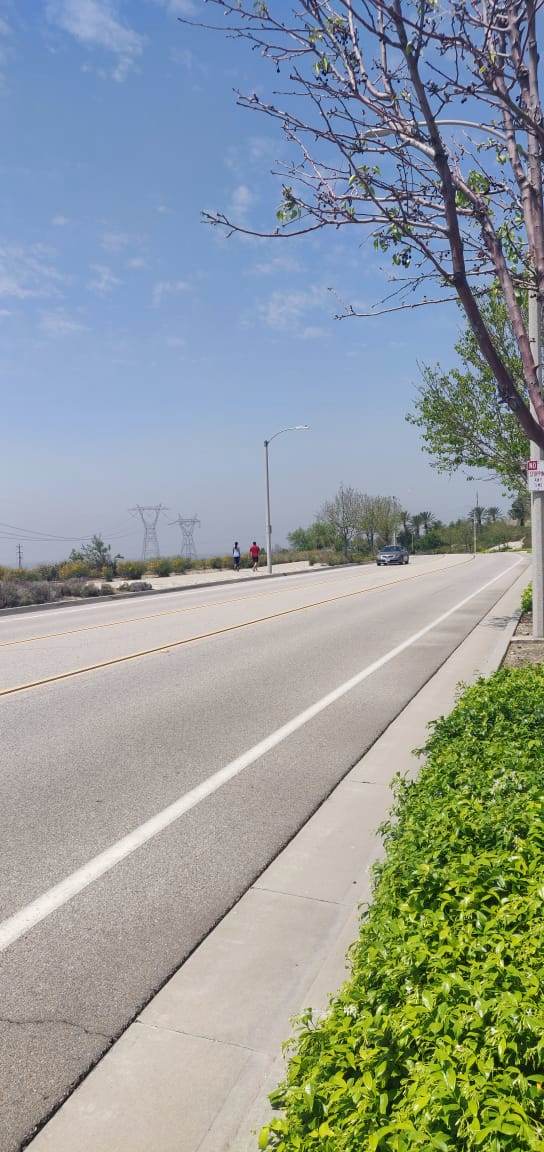
May 10, 2020: an empty street in San Bernardino County, southern California (Photo: Bhasker Desai)

In general, people wear masks when out. So I am unsure how welcome to others, the sight of runners not choosing to wear one is. After all, we do huff and puff more than them and that does not help alleviate the concerns of these times. However, every time I see passersby, I make sure I am more than ten feet away. I even jump to the edge of already empty roads (very few cars are out), let people go by and only then, get back on to the path. Some people wave to greet or show approval. When you are greeted so, for a moment it feels like old times! It reminds you of times when people joined you to enjoy the camaraderie; an unexpected running partner had for a short distance. But alas times have changed. For now it is only a smile and we move on safely, away from one another. The new normal sucks but it is a reality we must accept and not flout till this phase gets over…hopefully soon.

I think of Mumbai. The city is home to a big number of recreational runners. Personally I don’t see much social inequality in the sport. The running spirit encompasses all kinds of runners, slow, fast, young, old, rich and poor. That should be good news to start with as and when Mumbai opens up again for runners. Even the comparatively disadvantaged runners, we take them along with us to run side by side and support them in different ways. Till such time as COVID-19 becomes a thing of the past and there is a vaccine that cures, maintaining physical distancing (ten feet?) should be number one priority. So, when Mumbai reopens and permits resumption of running, remember to stay apart from each other. No rocket science there, it is the obvious thing to do for safety of self and others.

Solo running or running with a few friends you know are healthy – that may be your new normal. Make it mandatory not to touch one another. No hugs or handshakes to greet (namaste should work) and always, that physical distance. I agree it feels terrible. But self-preservation and precaution are essential in this new order. Seniors (I would say, those above 55 years) should be even more cautious, they should ideally run solo. They are a higher risk group and so should feel nothing bad at being isolated.

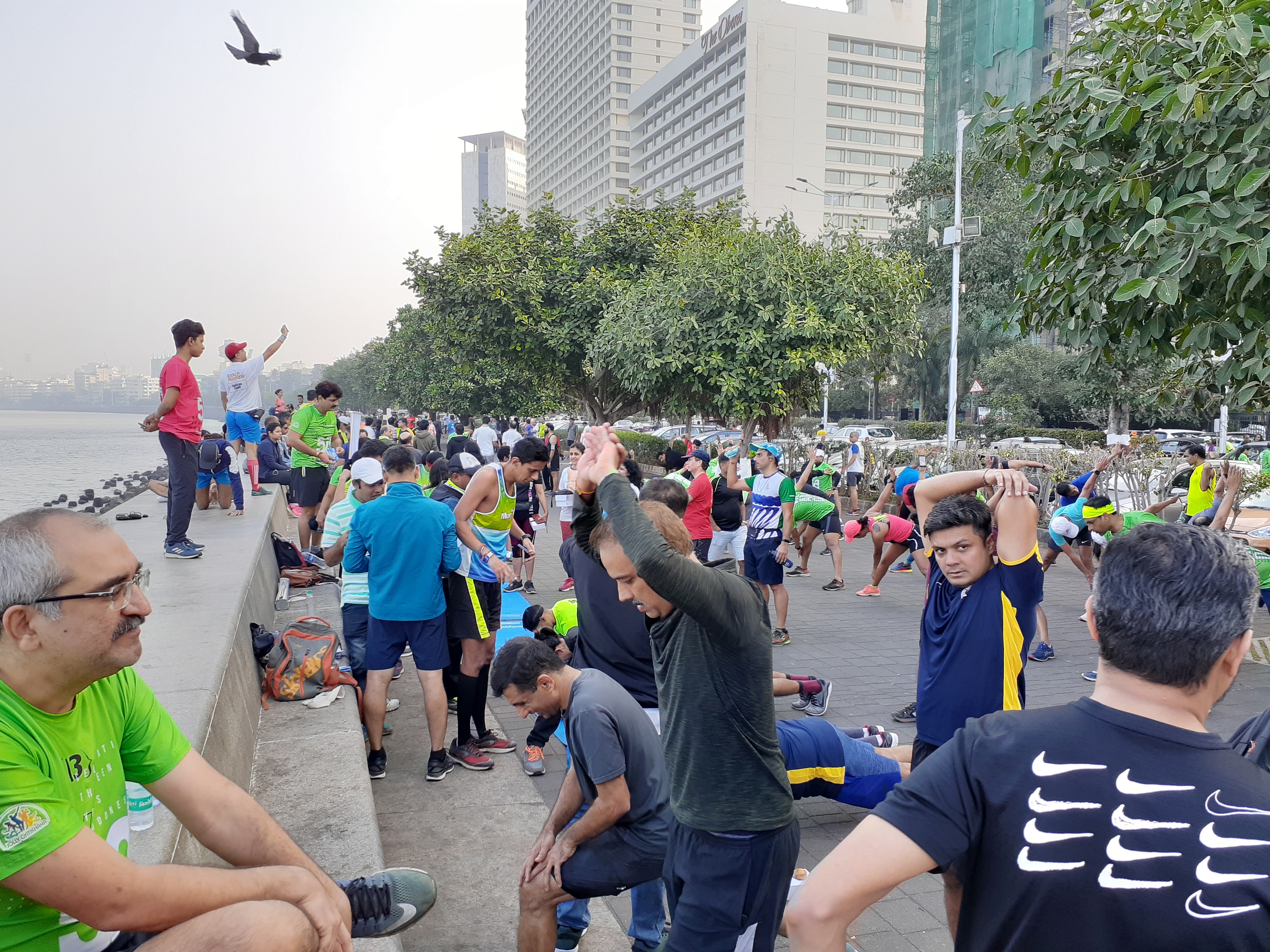
January 5, 2020: the old normal; runners from various parts of the city after their Sunday run at Marine Drive, Mumbai (Photo: Latha Venkatraman)

Mumbai is a thickly populated concrete jungle. That is its biggest challenge. Its community of runners too has grown rapidly. There are few free spaces to tread. There are only few green zones and limited sea fronts for runners to breathe fresh air and feel healthy. And with many people walking side by side, it adds to the crowding. Social distancing for runners in most cities in the US is not such a big challenge. North America has less people, more accessible free space, plenty of parks, running trails, sidewalks and special zones for extracurricular activities. There is no dearth of space to run freely and at the same time, keep physical distance from each other. Mumbai in comparison is no runner’s paradise. I suspect, similar challenges will be felt as regards the new normal in other Indian metros like Delhi, Bangalore, Chennai and Kolkata.

Good behavior by runners in Mumbai’s limited free space will be crucial if we are to check the spread of this lethal virus. Life style changes are on the anvil. Get ready to accept that you will not be running free spirited like before in the new normal. We runners are very gregarious and love to chat as we run. We won’t be able to continue that. It’s another change we need to accept to restrict spread of droplets. It means we have to count that much more on self-discipline and resilience to fall in line with the new normal, which Mumbai too must accept. Runners need to keep their ethics and spirits high, stay strong and united. They should not become weak and resort to protest (for space). Good behavior and sportsmanship are required if we are to thrive in the new normal. Where this doesn’t happen, government regulations and dos and don’ts may be imposed with potential penalty to defaulters. Is that the solution? I hope we don’t come to that stage. I hope we shoulder our responsibilities and make the things that provide us joy, happen, so that we live in peace and harmony. Perhaps team leaders, running gurus and running clubs like Mumbai Road Runners (MRR) can lead the way to formulate runners’ ethics and influence right behavior through proper guidelines. Runners have to learn to coexist and yet stay distanced. Notwithstanding what others can suggest, in the end, it will be the individual’s inner calling. So, this compliance is something we have to generate from within.

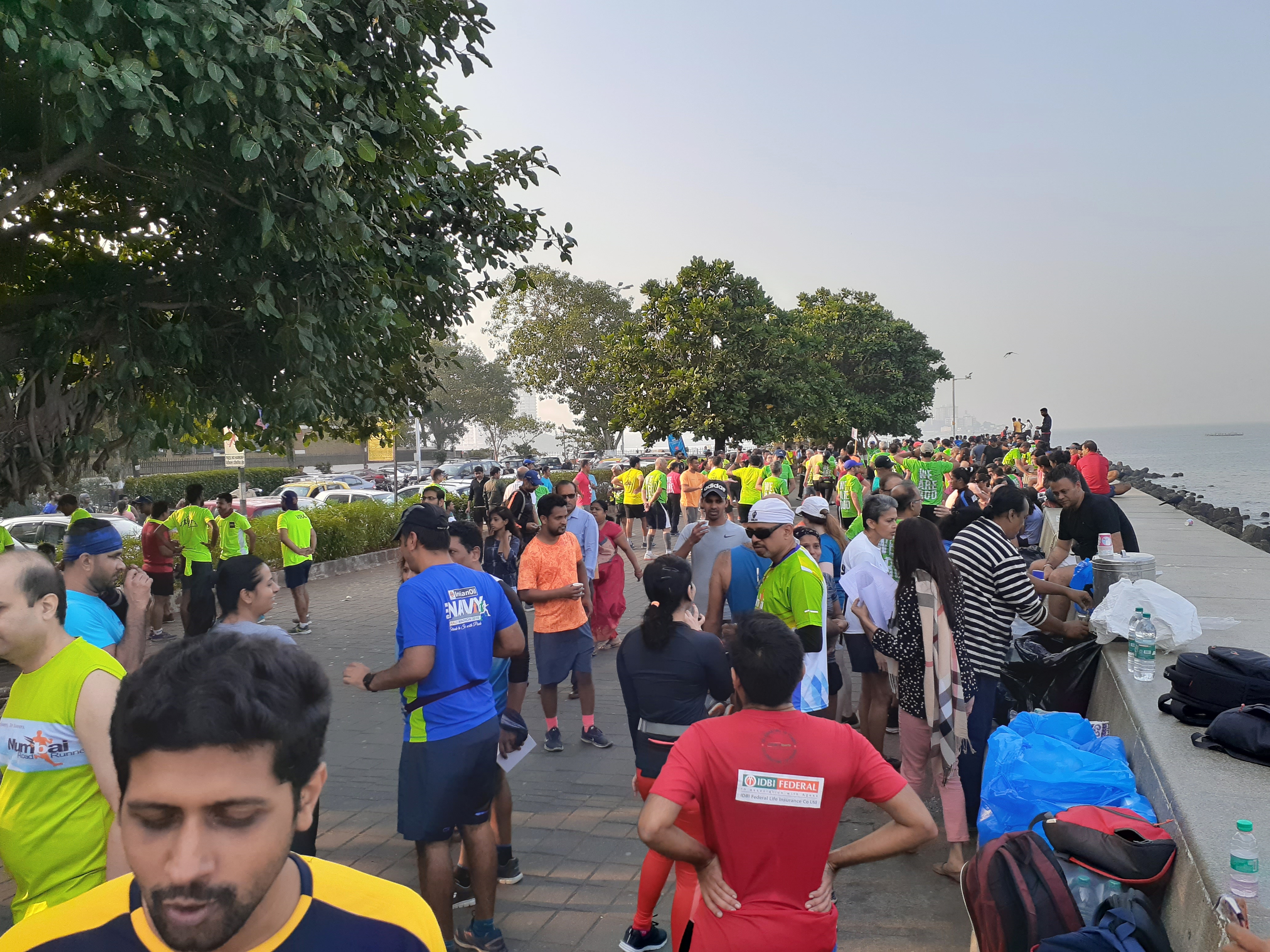
January 5, 2020: the old normal; runners from various parts of the city after their Sunday run at Marine Drive, Mumbai (Photo: Latha Venkatraman)

The other challenge in India will be for organizers of running events. Big ticket events like Tata Mumbai Marathon (TMM), Airtel Delhi Half Marathon – may have to take a back seat as participation in numbers like 30,000 and 40,000 can break down physical distancing and be a threat to human safety. Besides, till such time as they develop a runner-friendly mask, wearing a mask and running more than five kilometers may be irritating; you end up with a sweaty, smelly face cover.  Forget big events, even small ones with 500 to 1000 runners may prove unacceptable unless some solution like split timings for start or large enough space to run (we can’t imagine such luxuries in Mumbai) or some such impractical unfriendly way of going about organizing a race is evolved. Nothing comes to my mind except that for some time, let running events be on the back burner in big cities. In smaller places, far flung semi metros and towns, local small events can be a reality with just a few runners. In the end, running for us amateur runners is about health and happiness. So no world lost if for some time we don’t race and get another PB! I hope and pray that vaccine comes earlier than projected; a vaccine that cures and allows us once again to breathe next to our fellow runner.

(The author, Bhasker Desai, is a Mumbai-based businessman currently in the US. The write-up was edited by Shyam G Menon.)

WHEN PRIZE MONEY DRIES UP

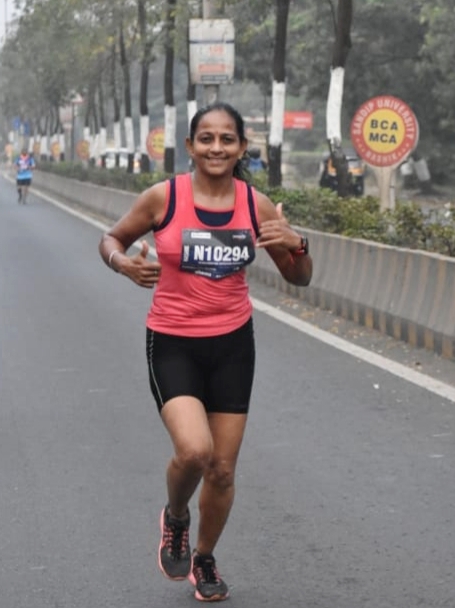
Pratibha Nadkar (Photo: courtesy Pratibha)

Road races have been cancelled or postponed due to COVID-19. Lockdown has meant challenging times for those who counted on races to win prize money and augment their income. For them, racing wasn’t just recreational running; it was part of livelihood.

Amateur runner Pratibha Nadkar had a cracker of a running season over the past six months. According to her, of the 28 events she participated in, she secured podium finishes in her age category at 26.

For Pratibha, the prize money translates into a a few months of reasonably good earnings. She depends mainly on prize money to survive. A resident of Mumbai, Pratibha started running little over three years ago. She started with runs over five and ten kilometers and then gradually progressed to longer distances. She followed a hectic training and racing schedule until the lockdown to combat COVID-19 forced her to stop running on the roads. Confined to her tiny quarters in a settlement in Chembur, Mumbai, she now follows online training sessions. “ In terms of money, I am comfortable for the next two months. I do not want to think about the scenario of an extended lockdown,’’ Pratibha said early April 2020. Even if the lockdown ends she could be staring at challenging times for there will be a time lag before races commence afresh.

Pratibha was a middle-distance runner during her school days at Ahmednagar. She ran distances of 800, 1500 and 3000 meters. “ I went up to national level but once school was over, my sporting activity came to a halt,” she said. Post-school days, Pratibha came under family pressure to get married. The resultant marriage ended in separation as her husband was an alcoholic. “ We separated when my son was barely 11 months old,” she said. Many years later her husband passed away in an accident. Left to fend for herself, she had to look for employment as house help. She later joined a troupe as a singer and did some stage shows to complement her income. Subsequently, she took to running and started enrolling for races. Quite often, she finished on the podium with corresponding monetary gains.

“ As stage shows began hampering my training to run, I reduced my appearances at shows. Also, stage shows started to dwindle. My focus shifted to marathon running. It was my only means to earn money,” Pratibha said. At the 2020 edition of Tata Mumbai Marathon (TMM), Pratibha ran the 10 km-race and finished third. Three weeks later, she ran the 10 miler at the Maharashtra Police International Marathon and finished in second position. “ I don’t have any sponsor. I pay and register for the races that I participate in. Many times, there was tax deduction in the prize money,” she said. She is hoping her 20-year-old son finds employment. “ There are some jobs that may open up due to the current COVID-19 outbreak,” she said hopefully.

Sabhajeet Yadav, a farmer from Dabhiya, Jaunpur in Uttar Pradesh, supplements his farm income with prize money earned from marathons. He has been podium finisher in his age category, multiple times, at TMM and other leading events. At the 2020 edition of TMM, Sabhajeet secured an age category silver in marathon. He confines his appearance to a few key races where his chances of age category podium are healthy. Contacted in early April, he was busy with the harvest of his wheat crop. “ Once the harvest is completed, I will have to store the surplus produce at home as the mandis (markets) are closed due to lockdown,” he said. “ It will be a while before I step out of my village to participate in marathons,” he said.

At Vikramgad, a little over 100 kilometers away from Mumbai, Dnyaneshwar Morgha was in the same boat. He is a regular podium finisher in the open category in the half marathon and shorter distances. Prize money augments his earnings from agriculture. Thanks to the family owning land, which they cultivate, they had enough to sustain through the lockdown. But selling agricultural produce in the market like before had become tough due to lockdown. The story was slightly different for Panvel-based runner and regular podium finisher in his age category, Kamlya Bhagat. He said there wasn’t much he could get from his patch of farm land. On the bright side, he was getting a small salary from the school he worked for. But there was prize money won in the months before lockdown that he hadn’t yet received. “ With no races now and for the months ahead, it will be tough,’’ he said.

Elite runner Jyoti Gawate will be short of earnings this year as several key marathons have been cancelled. At the 2020 edition of TMM, Jyoti had finished second among Indian elite women. Being an elite runner, her prize money is higher than that of amateur podium finishers. But even as she stares at a tough year ahead, there is prize money earned last year that is yet to be received. According to her coach, Ravi Raskatla, Jyoti was overall winner among women at a marathon in Mohali in 2019. The organizers have made no effort to pay the prize money of Rs 200,000. He said there is worry about the absence of earnings from running events, both in terms of unpaid dues and how the months to come will play out. He coaches a team of athletes, some of who secure podium finishes. “ Jyoti has been supporting some of these athletes,” he said.

Seema Verma (Photo: courtesy Seema)

Like Pratibha, Sabhajeet, Dnyaneshwar and Kamlya, there are runners, who participate in events with the aim of making a living from podium finishes or use the additional earnings to complement their regular income. For them, the lockdown and the way COVID-19 has derailed a whole running season is felt the same way others who lost jobs or had to temporarily shut down businesses experience difficulty.

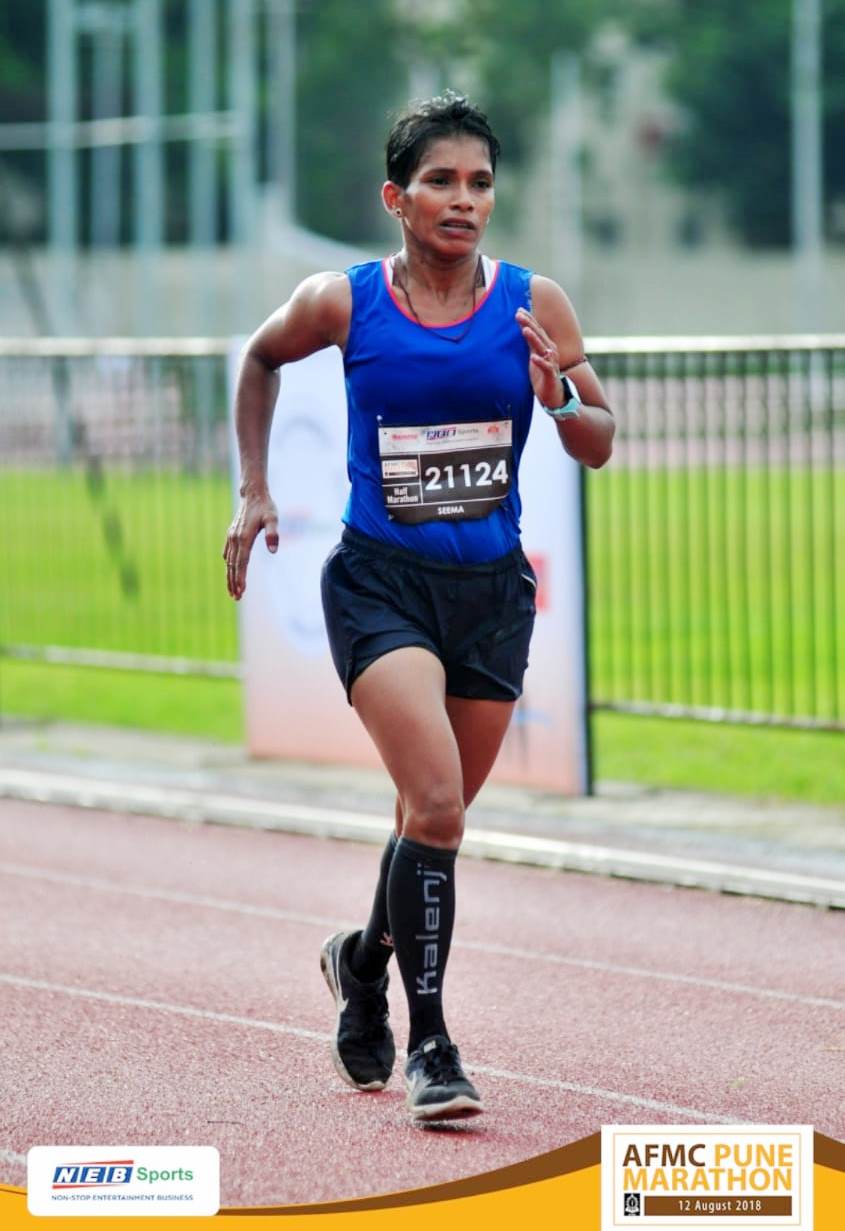
Seema Verma, a resident of Nalasopara, a distant suburb of Mumbai, is largely dependent on earnings from podium finishes. Abandoned by her husband some years ago, she worked as a domestic help for many years, before she commenced recreational running. The sport and its races was avenue to claw her way back into the daily game of survival. Past mid-March 2020, everything changed. By then COVID-19 was firm reality in India; the nation slid into lockdown. “ I never thought I would be in this situation. I cannot ask anyone for help as the scenario is bleak for all,” she said.

Given India’s harsh summer, the marathon season ends in February. It resumes in June (under normal circumstances) after a hiatus of three months with events designed around running in the rain. “ But, there are many small running events that are held through the summer months. They offer prize money of Rs 2000-5000. That is of great help to runners like me,” she said. All those summer races have dried up thanks to COVID-19. Early April, Seema was confined to her house and spending time on household work apart from working out indoors. “ I don’t think there will be any races for a long time. We may see some races towards the end of the year,” she said.

(The author, Latha Venkatraman, is an independent journalist based in Mumbai.)

THE RETURN OF RUNNING EVENTS: IT COULD BE A LONG WAIT

Illustration: Shyam G Menon

Towards the end of 2019, the domestic racing calendar was one of plenty. Mumbai based-race organizers You Too Can Run, has a database of annual running events. That alone showed approximately 1300 events in India. There are more. With lockdown caused by COVID-19, runners in hibernation and races cancelled or postponed, the optimistic time frame to recovery currently spoken of, is six months. Realistically, it could take longer for normalcy in the racing environment. “ It may be a long haul,’’ Sunil Shetty, senior runner who is also associated with NEB Sports, said. Additionally, at least one industry official said that like most sectors, the business around running may need to become lean to cope with the troubled times. It is a measure of direct impact. There is indirect impact as well.

Events have costs. A lot of these costs are met by sponsors. Sponsorships are typically part of a company’s marketing and image building budget. COVID-19 has arrived with warning of recession to follow. During recession, marketing and advertising expenses are among the first outgoes to be slashed by companies. Will every race organizer find sponsors? The situation is compounded by only informed guessing possible right now on how runners may re-emerge from lockdown. How much would COVID-19 have affected their appetite for mass participation events? Ashok Nath, Bengaluru based-runner, coach and mentor, felt that runners would welcome the return of road races, including new safety guidelines to adhere to. But their response would be proportionate to how safe the overall environment appears to be. Post lockdown, should any city suffer relapse to outbreak of infection that would be a concern for potential participants. Point is – if an organizer assumes the risk of meeting the costs involved to host a race and then ends up getting the cold shoulder from runners, it can be hurting.

Same goes for holding events in truncated format. For instance, post lockdown and still in the shadow of COVID-19, it would theoretically seem easier for authorities to approve an event with limited participation. Or say yes to a full marathon because that discipline typically sees limited participation (and is therefore better handled in scenario of cautious recovery) unlike the more popular shorter distances like the half marathon and less. However, it is the shorter distances that earn money for event organizers. Given costs to recover, truncated event is a bit like permission for airlines to fly with fewer seats on offer per aircraft. And just as that may translate to higher ticket cost, a major running event with sub-optimal participation may see altered fees unless the whole model sustains by some other means.

As COVID-19 spread worldwide, major international marathons were cancelled or rescheduled. Races that rescheduled came up with dates for fall 2020. Something similar is expected in the domestic calendar. Season specific events like monsoon marathons, may get cancelled if their windows are not deemed safe. From the rest, some may attempt dates in winter. Under normal circumstances, the fall season is a busy period for running in India. When rescheduled races land up in the same period, it could end up a tussle between the big events and the small ones, with the former likely favored by runners. Result – we may be in for a churn or what industry calls it: consolidation. “ Even ahead of pandemic, several races on the domestic circuit fell in what could be called the C category. In the months ahead, they will be the most vulnerable,’’ Venkatraman Pichumani of You Too Can Run, said. Enquiries with industry showed that most race organizers in India lack insurance cover for their event. “ Some of the big players take it. I would imagine that only about 10 per cent of races are insured,’’ an official in the know said. Not everyone agreed with the specter of consolidation. One race organizer said that in their quest to avoid crowding, runners may wish for a variety of options.

Then, there is the issue of event architecture in times scarred by COVID-19. A major development in the wake of pandemic has been social distancing. Marathons involve a large number of people. Most marathons have a couple of points where physical proximity happens. All races start with a holding area. While holding areas can be big, permitting people to spread out, the countdown to race’s commencement usually sees bunching of runners. The bunching happens because runners seek advantageous positions. At the end of every race, past the finish line, you are typically greeted by a couple of choke points. Runners get bunched while collecting their medals; they also get bunched when collecting their refreshments. Another concern is hydration; in fact, how aid stations operate. With COVID-19 protocols emphasizing hygiene, they will come under the scanner. Recyclable plastic water bottles may find fresh lease of life. It is also possible that runners may be encouraged to bring their own water (water bottles / hydration packs) in the early phase of events revival. Clearly, responsibility to keep participants safe will be heavy on race organizers. “ It will be a new environment at least for the next one year,’’ Chewang Motup, owner of Rimo Expeditions, organizers of the Ladakh Marathon, said.

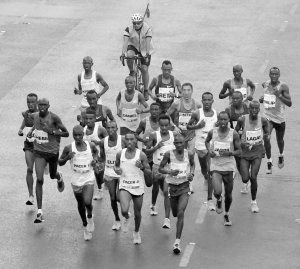
Flashback / pack of elite runners from the 2019 edition of Tata Mumbai Marathon (Photo: by arrangement)

The larger question all this inspires is – when will conditions be suitable for the old confidence to return? At the time of writing, some states had just extended lockdown to the end of April. It is too premature to predict anything. “ There are matters of much greater priority for authorities to address before their attention can be sought for events like marathons,’’ Ashok Nath said. Two people we spoke to mentioned July end as earliest likely period when an assessment of the future may be possible. But even then, it isn’t enough that runners and race organizers feel hopeful. A lot rests on when authorities are ready to issue the statutory permissions every marathon requires. “ That is the important question,’’ Venkatraman Pichumani said. Much before running events, the world will have to reestablish its comfort with schools, colleges, offices, shopping malls, theaters etc. Further, as Sunil Shetty pointed out, major marathons are possible thanks to the support from other sectors like railways, civil aviation, long distance buses and hotels. They make it possible for many to participate. If these sectors are not fully operational it will leave corresponding impact on the participation at events. In a conversation featured in the post Lockdown & Me on this blog, Vijayaraghavan Venugopal, amateur runner and CEO of sports nutrition company, Fast & Up, had highlighted the cautious herd behavior that may characterize how events around running, revive. Meanwhile, TCS World 10K, the first major road race rescheduled in the Indian calendar following COVID-19, has been moved to September 2020. Roughly six months from now, that appeared the optimistic time frame for gradual revival in most people’s mind. By then more indicators would also be available for a clutch of major international marathons have been rescheduled to the September-October-November period.

Finally, there is a point, very valuable in an oblique sense. During crisis, we withdraw to what we actually are. If what we are includes the active lifestyle, the chances of its return are brighter for even authorities would imagine supportively. In today’s India, despite the virtues of active lifestyle, it is clearly minority. On March 27, 2020, in his open letter to the athletics community, Sebastian Coe, President, World Athletics, was spot on when he said, “ we should work with governments to re-establish sport in schools, rebuild club structures, incentivise people to exercise and get fit. This should and could be the new normal.’’ Events are the business end of running. Before planting the seed to grow a tree, nurture the soil.

(The author, Shyam G Menon, is a freelance journalist based in Mumbai.)

LOCKDOWN & ME

Nitendra Singh Rawat (Photo: courtesy Nitendra)

For now, the outdoor racing environment is in hibernation. India is in lockdown to combat COVID-19. Races have been cancelled or postponed and athletes (amateur and elite) are currently as much stay-at-home as anybody else. Improvising with what is available; strength training, catching up on rest – all these have become the name of the game.   

Nitendra Singh Rawat is among India’s top marathon runners. In the countdown to the earlier schedule of the 2020 Tokyo Olympics (it has since been postponed to 2021), he had informed fans of injury and his decision to withdraw from attempts to qualify for the Olympic Games. Contacted in early April, Nitendra was home in Uttarakhand. The effects of injury had subsided a lot and the army athlete was back to his work outs and strength training exercises. However, he was still far from return to the same workout loads as before. Besides with the ongoing spread of COVID-19 and the postponement or cancellation of major sports events, there is little clarity in the world of sport for athlete to chalk out a map for the way ahead. “ My home is in the hills. It is not a crowded place,’’ Nitendra said of his surroundings.
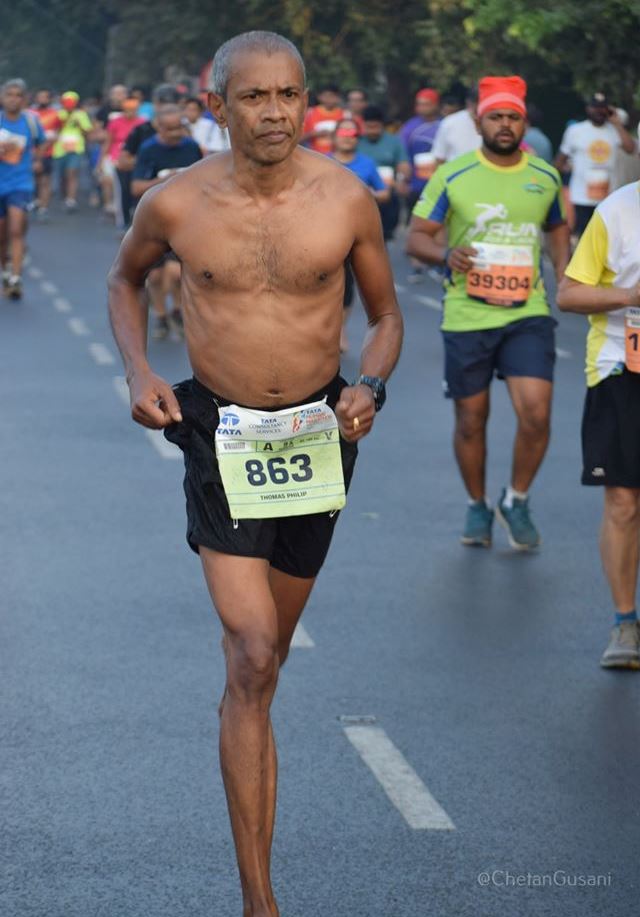
Thomas Bobby Philip (Photo: courtesy Chetan Gusani)

“ For those who really want to do something, there is opportunity still. You have to motivate yourself,’’ Thomas Bobby Philip said. Bobby is among India’s best-known amateur runners; he has had several podium finishes in his age category. Locked down in Bengaluru, he has been feeding the runner in him with strength training exercises and exercises that aid flexibility. Once a week, he treats himself to a cardio workout, going up and down the stairs of his house. “ I have also started doing some calisthenics. This is the first time I am trying it. I hadn’t done that before,’’ he said. As for motivation, besides digging within to find it, Bobby pointed to many pursuing the active lifestyle who have begun offering online workout sessions. “ So, it is an interesting time,’’ he said. But as regards the return of normalcy with events back on schedule as in pre-lockdown times, Bobby felt that may take a long time. “ We are not in a situation where the path is clear. There will be restrictions and challenges ahead,’’ he said.
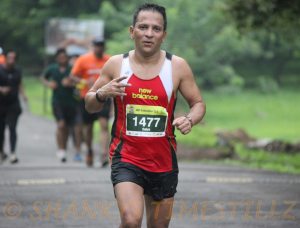
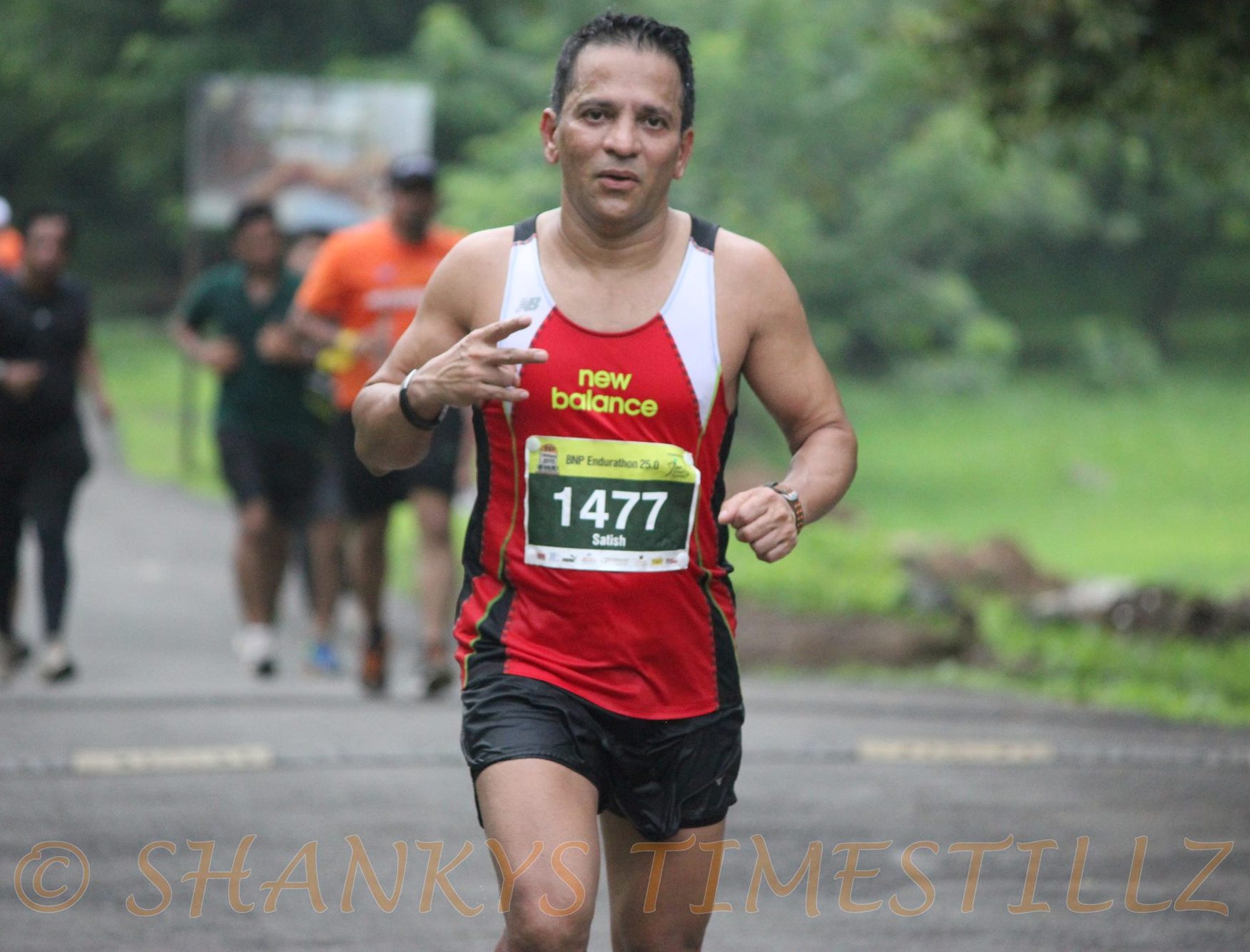
Satish Gujaran (Photo: courtesy Satish)

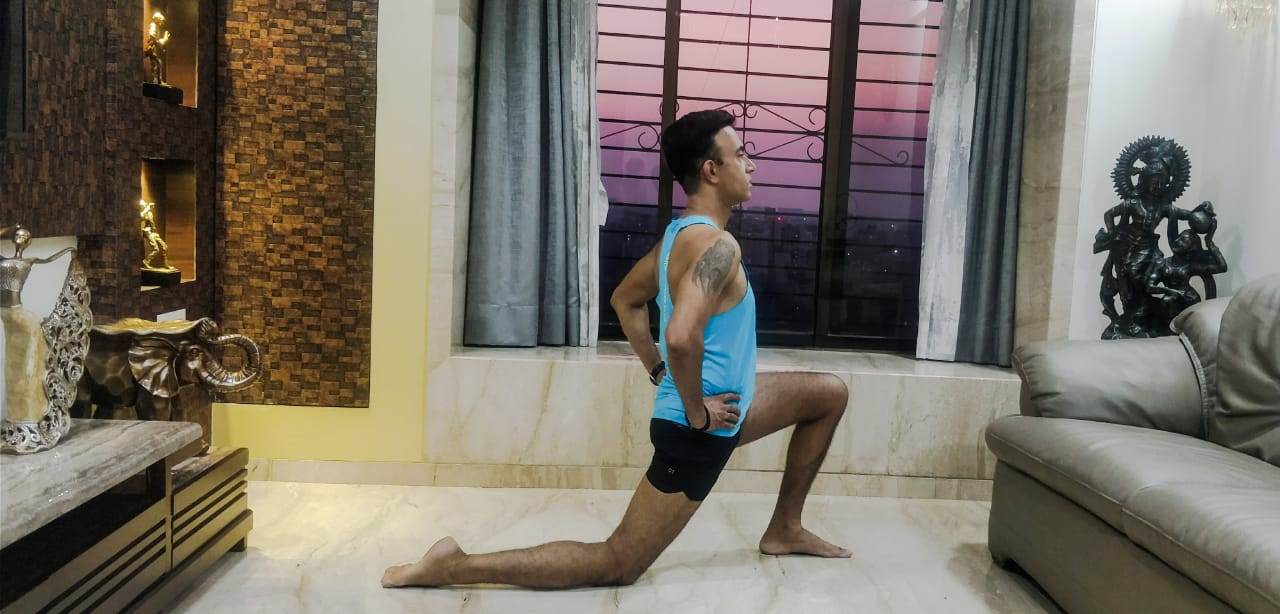
Satish Gujaran is a popular figure in Mumbai’s amateur running circles, especially with those planning to attempt the annual Comrades Marathon in South Africa. Satish has run the iconic event ten times. He used to provide coaching for those headed to Comrades but the lockdown has provided opportunity to further his online presence. In January 2020, Satish resigned his job and became the active face of an enterprise he and four others started: Karma Fitness (his existing coaching for Comrades was also brought under this umbrella). By February, the outfit was hosting sessions at Juhu beach in the city. Ever since lockdown commenced, Satish has been dispatching instructional videos every day designed to help people improve their fitness. “ We cater to both general fitness and fitness oriented towards running,’’ he said. According to him, response in these times of lockdown has been encouraging. He sends the videos to some 13 groups, each cluster having within it many individuals. The recipients are spread across 10-15 countries. “ They forward the videos further to their contacts. People seem happy to get it. I get feedback too; for example, somebody may ask for a specific type of exercise. We started sending the videos on the first day of lockdown in India. Initially, the videos were sort of mix and match. Now we are becoming systematic and more specific,’’ Satish said. He devotes an hour or two daily, to make the videos. It is shot early in the morning when natural lighting is apt or during other hours of the day with curtains used to control lighting. “ I live in a typical Mumbai flat. It is small. So there are limitations to what I can do under lockdown,’’ Satish said. The work keeps him busy. As for his personal workouts, Satish said that since he knows his body well, he either treats the exercises he does for the videos as his daily quota or sets some time aside for exercises of his own choice.
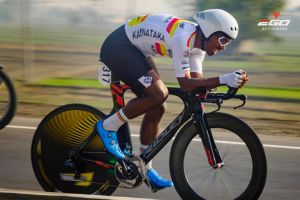
Naveen John (Photo: courtesy Naveen)

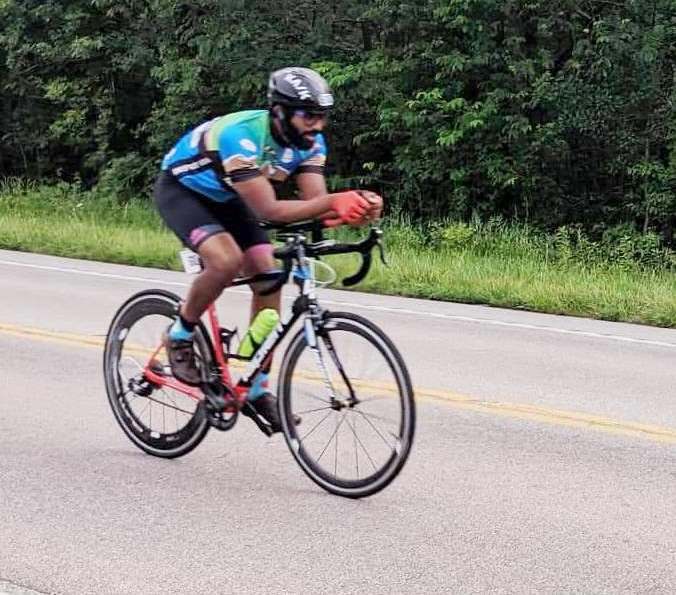
Naveen John is among India’s top bicycle racers. Cycling is mostly an outdoor sport and with India entering lockdown, Naveen has been restricted to being indoors in Bengaluru. “ For me as an athlete, it is out of question to stop my training,’’ he said. He turned to an e-racing platform called Zwift that allows cyclist to be indoors on a trainer and race using avatars against a global field. “ This e-platform has really taken off in the last few weeks. It had been there for some years but in the current situation, it is a kind of life saver,’’ Naveen said. He has been trying to get the athletes he coaches to also experiment with the platform. Their coaching sessions – including group rides – have gone online; it is all based on video calls now. At the heart of the whole transition is the trainer, a device that helps cyclist turn his regular road bike into a stationary cycle that he can still pedal. Naveen, who is known for his strict training, has reduced his overall workout volume. “ The good thing about training indoors is that the quality of work is better. There is no freewheeling or slowing down as in the outdoors, when you are on a trainer. It is steady, consistent power,’’ he said.

However, there is a drawback to the trainer. While one would assume that the contact of moving parts to the surface cycle is on (which contributes to resistance), is more while cycling outdoors, on a trainer, despite such contact reduced, the delivery of resistance is slightly imbalanced. “ The flywheel provides resistance in a certain portion of the pedal stroke. In the recovery stroke, the momentum of the flywheel carries you through,’’ Naveen explained. In turn this causes an imbalance in how muscles are engaged, with those muscle groups that usually come into play for the recovery stroke idling. Consequently the power you are able to produce while training indoors is 5-10 per cent less than what you can in the outdoors.

Naveen took some time to effect the transition to cycling indoors fully. It is a bit of a mental challenge. All athletes put themselves through suffering while training. “ The question: why are you punishing yourself? – it becomes real, a tough question to answer, when you are training indoors. One reason for this is that when you cycle outdoors, you are moving; there is world passing you by for motivation, variety and relief. The whole outdoors experience is also an aggregation of spiritual and chemical factors – there is the vitamin D, there is the sense of feeling good. All that is absent when training indoors. You have to rewire your motivational circuitry a bit,’’ Naveen said.

Finally, there is the issue of how much you push yourself because it is a fine line that separates over-training and compromising your immunity, and staying healthy. Naveen believes that while training for endurance is fine, it is the intensity one has to be watchful of. He has been advising his athletes to stick to a blend of 80 per cent endurance training (wherein you are below tempo pace) and 20 per cent at aerobic threshold. “ The feedback so far has been encouraging,’’ he said, adding that he was conditioned by experience to sense the immunity-compromised space that his body can slip into. “ I am aware of the negative toll it can take,’’ he said. He believes that most athletes are similarly wired to sense danger early enough and back off. As important as maintaining that 80:20 endurance to intensity ratio, is nutrition. In the early days of lockdown, Naveen said, it was tough sourcing proper nutrition and hydration. Preferred brands of sports nutrients were tough to get because e-sellers were having a hard time functioning. For the first time in several years, Naveen had to go back to basics and create his own mixtures for hydration. “ Things have since begun to improve, slowly,’’ he said. He is optimistic about life under lockdown. “ I tell myself that these challenging months are few in number compared to the nine years I have been a competitive cyclist so far,’’ he said.
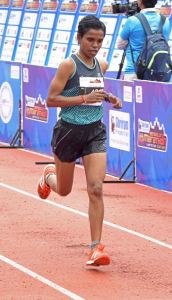
Jyoti Gawate (Photo: courtesy Jyoti)

With races cancelled or postponed due to the spread of COVID-19, elite runner Jyoti Gawate could lower the volume and intensity of her training. Summer in India is also off season in the domestic racing calendar. Her focus changed to maintaining fitness levels. In the wake of lockdown in the country, she along with a few fellow athletes and their coach Ravi Raskatla moved out of Parbhani city in Maharashtra so that they may continue their fitness regimen away from crowded environment. “ We have been staying on the premises of a temple about 15 kilometers outside of Parbhani. It is hilly terrain. We have cut back on our training because there are no races on the horizon,” Ravi said. They do as much physical conditioning as is necessary to keep the momentum in training, going. “ We buy vegetables from the villagers who grow them. We cook our own food. That way, we are able to keep costs down,” he said. At the 2020 edition of Tata Mumbai Marathon, Jyoti had secured second position among Indian elite women, finishing the race in 2:49:13 hours. In December 2019, she had won bronze in the women’s marathon at the South Asian Games with timing of 2:52:44.
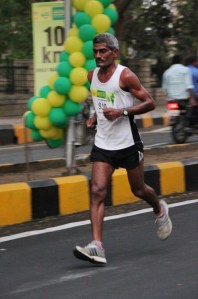
Sabhajeet Yadav (Photo: by arrangement)

“ I live on the edge of a village far away from crowds,’’ Sabhajeet Yadav, farmer and well known amateur runner said. Sabhajeet, who has been podium finisher in his age category, multiple times, at the annual Mumbai Marathon and other major events, stays in Dabhiya, in the Jaunpur district of Uttar Pradesh. Amid his attention currently focused on getting ready to harvest the wheat crop, he has been carrying out some light training.

Someone who participates in races to augment his regular income with prize money, he is worried about the absence of races for the few months ahead. In the wake of COVID-19, many races on the domestic circuit were cancelled or postponed. But it is due to a medical emergency capable of affecting all; so one has to accept it. In January, Sabhajeet had secured an age category podium at the 2020 edition of Tata Mumbai Marathon.

His son Rohit Yadav, a promising national level athlete competing in the javelin throw, is currently in Patiala. Rohit and Neeraj Chopra, national record holder in javelin throw, were in Turkey for training. “ They returned a day before lockdown and are now at the sports facility in Patiala,” Sabhajeet said.
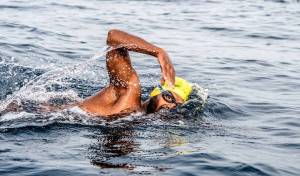
Rohan More (Photo: courtesy Rohan)

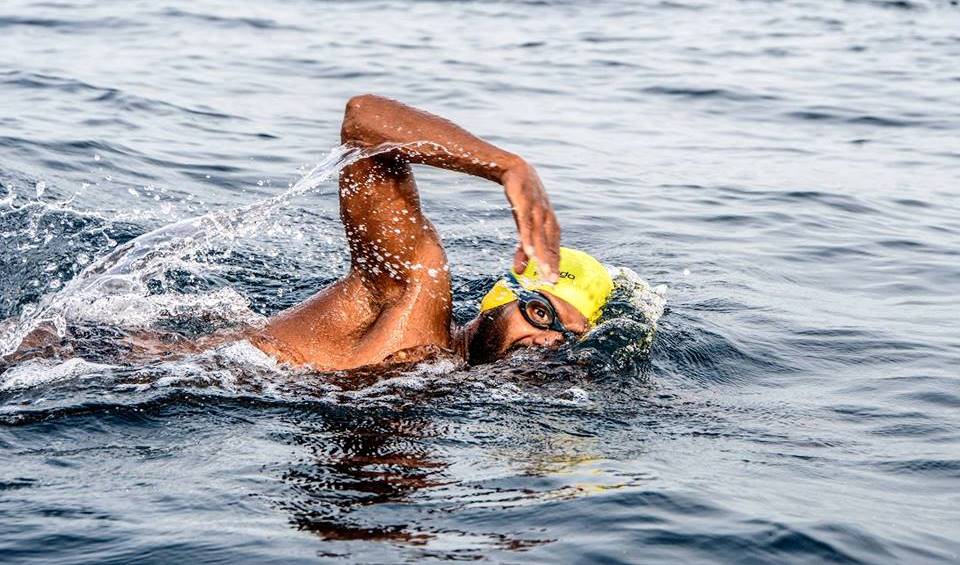
It was roughly two years ago, in February 2018 that Pune-based Rohan Dattatrey More completed the Oceans Seven challenge in long distance swimming. Same year, he was inducted as Honouree Swimmer Class of 2018 by the International Marathon Swimming Hall of Fame. With Oceans Seven and another challenge called Triple Crown, in the bag, Rohan had shifted his attention to attempting qualification for the open water swimming competition at the 2020 Tokyo Olympics. He couldn’t meet the qualification time but at the national open water swimming competition held in Shimoga, Karnataka in February 2020, he placed second. Over the next one month, India steadily slipped into lockdown, an outcome of which was – all swimming pools shut. Unlike in some other countries where water quality is good and people easily take to rivers, lakes and seas; in India, the swimming pool is the hub of swimming. For committed athletes like Rohan, who love water as medium for exercise and mental peace, there was an element of readjustment to do. “ I do miss the pool. But there is no point complaining because it was shut for a valid reason. It is the same case elsewhere too. Not to mention – the current predicament isn’t just about athletes, it is about everybody’s health,’’ he said. Rohan has no exercise equipment at home. But the new work-from-home routine and the overall economic slowdown has left him with more time on his hands than before. So he works out twice every day; mostly free hand exercises to maintain fitness. Following the evening session, he also meditates briefly. On the bright side, the postponement of the Tokyo Olympics has given him more time to try qualifying for the open water swimming competition at the Games. “ You have to stay positive,’’ he said.
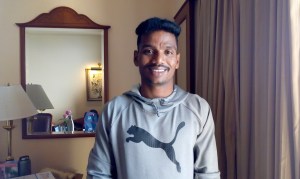
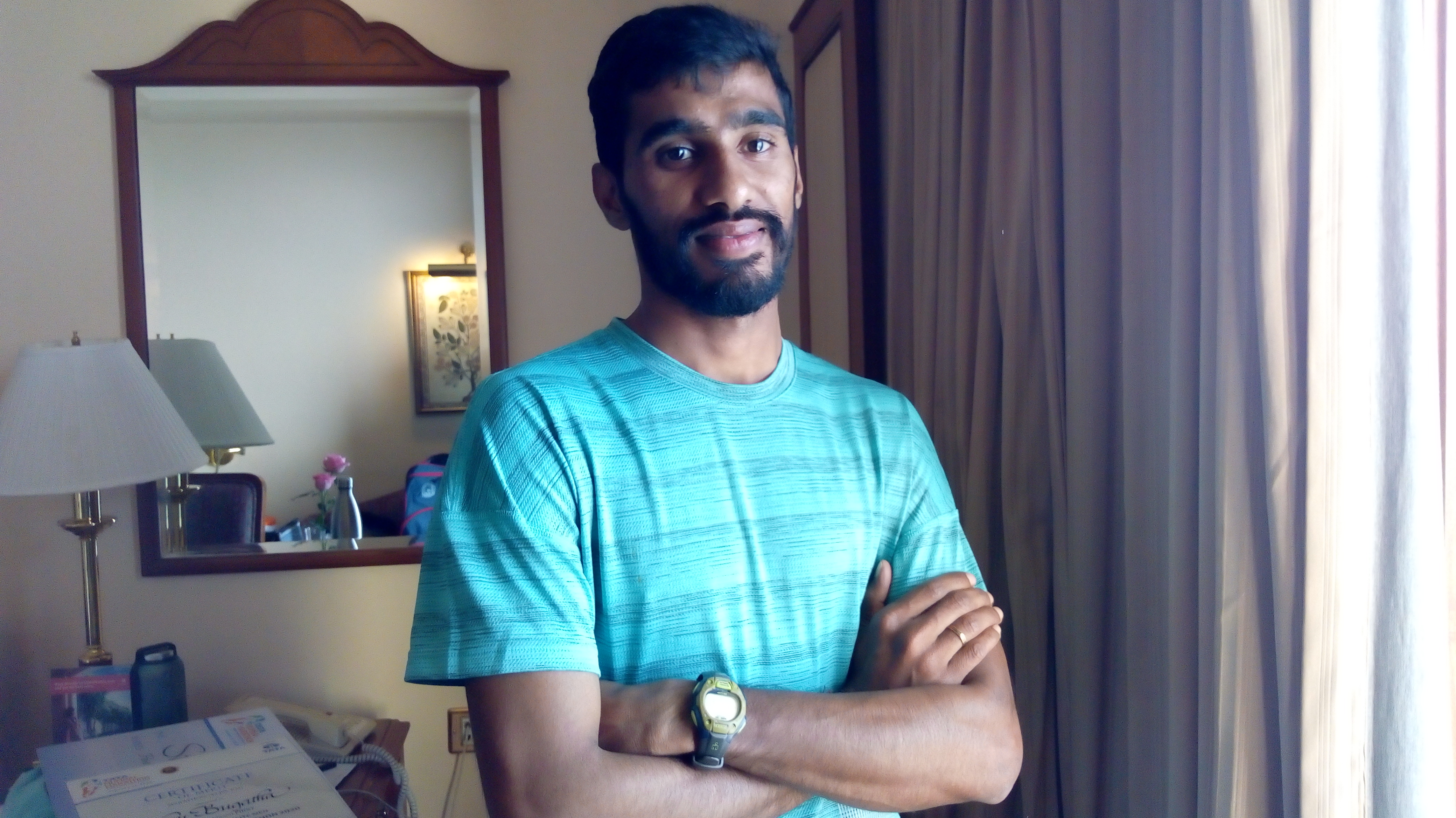
Srinu Bugatha (Photo: Shyam G Menon)

Srinu Bugatha was winner among Indian elites at the 2020 Tata Mumbai Marathon. At that time with most marathoners looking for opportunities to qualify for the Tokyo Olympics (as per earlier schedule before the event was postponed to 2021), Srinu had set his eyes on the 2020 Barcelona Marathon. As Spain got hammered by COVID-19, the Barcelona Marathon was among events postponed. In the weeks that followed, the disease spread in India as well causing the nation to resort to lockdown. An army runner usually training at the Army Sports Institute in Pune, when lock down set in Srinu returned to his hometown of Vizianagaram in Andhra Pradesh. According to Srinu, he has been continuing his training there as best as he can. He is doing his strength training albeit with no access to a gym as gyms are all shut. “ I do freehand exercises and core workouts,’’ Srinu said. Additionally, his mentor Vickrant Mahajan, said, the athlete is focusing on strengthening his mind and staying positive. You need those traits to do well in sports. The lockdown is good opportunity to take stock, reflect. On the bright side, the postponement of the Tokyo Olympics has opened up more time to train and qualify. With many marathons worldwide shifted to fall 2020, Srinu will be looking at events therein to attempt afresh, qualifying for the Olympics. “ The Barcelona Marathon has been rescheduled to October. We must stay positive and hope for the best,’’ Srinu said optimistically.
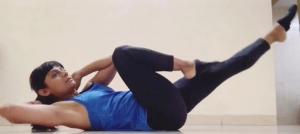
Priyanka Bhatt (Photo: courtesy Priyanka)

Mumbai-based ultra-marathon runner Priyanka Bhatt is part of the team representing India at the upcoming IAU 24-hour Asia & Oceania Championships at Bengaluru on July 18 and 19. Given the state of the world and major sports events cancelled or postponed, there is an element of uncertainty about the Bengaluru event as well. Priyanka was training despite that.

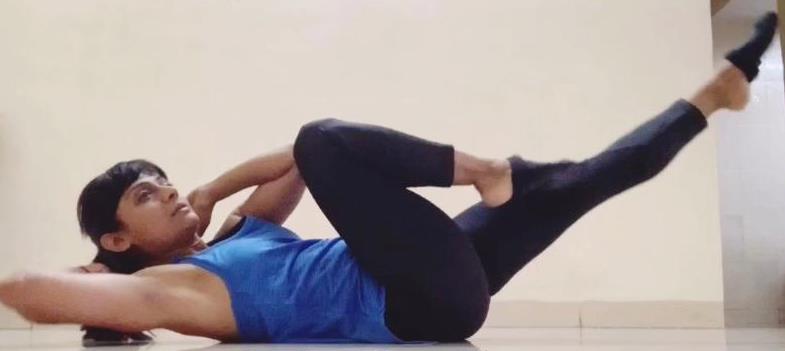
“ Obviously, you can’t burn as much calories in a home workout compared to a 40 or 50 km training run,’’ said Priyanka. She is using the current opportunity to build her strength. “ My workout is a mix of core, leg strengthening, HIIT, yoga and stretching,” she said. Strength, agility, functional training and flexibility often get neglected to some extent when the focus is on piling mileage for an ultra-marathon event, she said. Priyanka was part of the team that represented India at the 2019 IAU 24-hour World Championships held at Albi, France. She had covered a distance of 192.845 km during the 24 hours, securing a personal best.

At the current juncture, her workout ranges from about 45 minutes to an hour with 15 minutes of warm-up and cool down. “ I curate my own workout. I do a combination of exercises depending on what I have done the previous day,” Priyanka said.
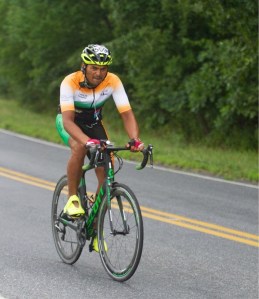
Amit Samarth (Photo: courtesy Amit)

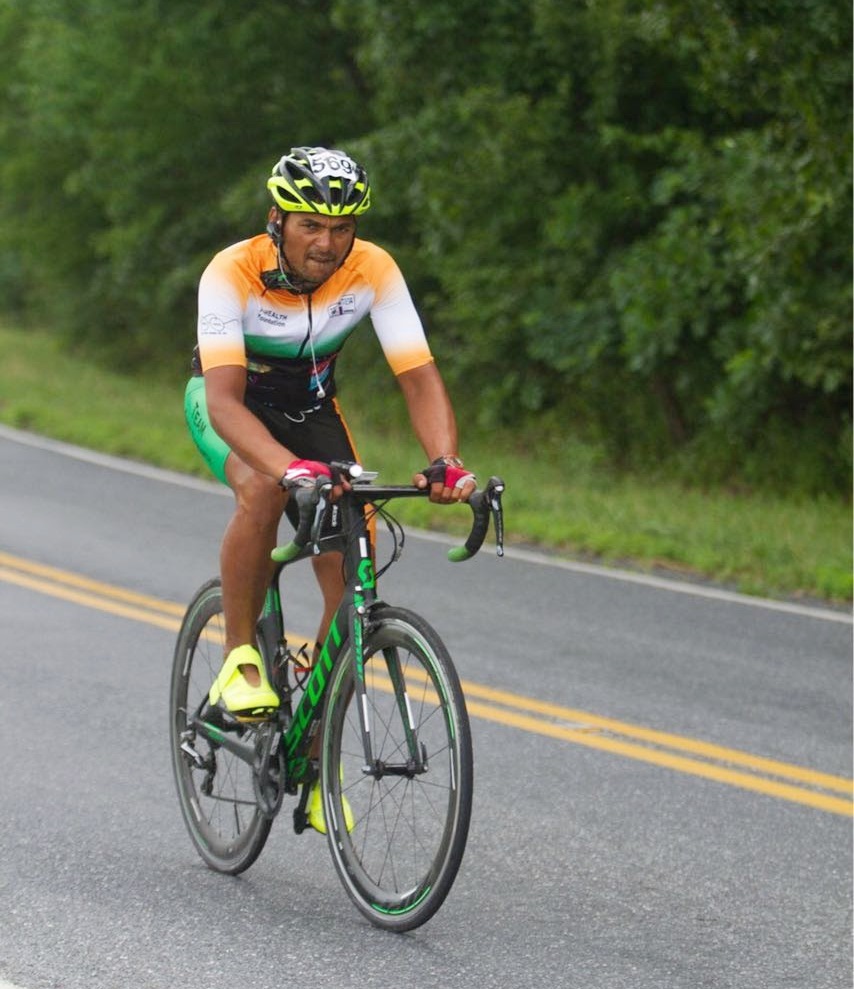
Amit Samarth is among India’s best known ultracyclists, having completed both Race Across America (RAAM) and the Trans-Siberian Extreme. Locked down in the city at India’s geographical center, he begins his day at six in the morning with a live work out session on Facebook, in which trainees from his sports academy and several others, participate. “ The academy has about 250 trainees. But the morning session on Facebook is open to all. I have been getting feedback from people overseas too,’’ Amit said. The session lasts between an hour to hour and half. However the hero of these days under lockdown seems to be the purchase he made roughly six months ago.

“ I used to have busy days that began pretty early. After finishing my work, it was typically late evening or night when I got around to cycling. My family and friends disapproved of me being out on a cycle in darkness. That’s how I bought the trainer six months ago. I wasn’t a major user of the device. But looking back, that now seems a lucky purchase because a home trainer is utterly useful for cyclist restricted by lock down,’’ Amit said. He has been using the training software: Zwift, mainly for customized rides and not for competing online. He conceded that the home trainer cannot replace the experience of cycling outdoors. “ It can be monotonous but I have the mental strength to endure that,’’ he said. Further the device has a few plus points. It eliminates distractions and allows cyclist to focus completely on the cycling. “ I maintain good speed, keep high cadence, try hill sections; the trainer automatically adjusts the resistance. Through all this, you don’t have to worry about traffic or getting a puncture. The mind-muscle co-ordination actually improves,’’ he said. And it seemed to be working well for him. “ Last week I covered 540 kilometers on my trainer,’’ he said. On the Sunday preceding this conversation, he did 200 kilometers in six hours 31 minutes. “ I started that session in the evening. By evening, the summer temperature in Nagpur becomes more tolerable,’’ he said.
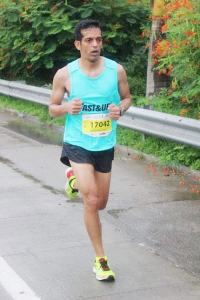
Vijayaraghavan Venugopal (Photo: courtesy Vijay)

At his house in Hyderabad, amateur runner Vijayaraghavan Venugopal’s quest is avoidance of boredom. There are strict restrictions in his locality. “ I have stopped running. Besides if you try doing it, I don’t think it will be a good example in these times,’’ Vijay said. His lifestyle is very different now. I try and do multiple things,’’ he said. According to him, he has devised a variety of exercises in small doses that can be done easily and many times through the day. The variety helps to keep it engaging. “ My daughter is more disciplined at keeping herself physically fit. So once every 2-3 days, I join her for a half hour of exercise. I also do stair workouts once a week,’’ he said. A keen cricketer in his college days, Vijay said he and his family have also been improvising indoor games, including cricket tweaked to the confines of their rooms. “ Basically anything to keep mind and body active,’’ he said.

CEO of a company in the sports nutrition space (Fast & Up), Vijay said that the lockdown period is challenging to any enterprise related to sports because the whole sector has come to a halt. He was hopeful that things should improve marginally going ahead. After all, difficult times notwithstanding, people have to be kept safe in isolation without significant damage to their jobs and the economy at large. At a company like Fast & Up, which straddles products catering to daily nutrition and those meant for more performance based-objectives; there has been some demand for the former courtesy people keeping their active lifestyle alive despite lock down. The priority therein would be to get underlying e-delivery systems functioning efficiently so that products reach customers at their houses. “ The next three months will be challenging for the space we work in. The idea will be to see how lean and efficient we can be in that while,’’ Vijay said.

However business aside, as regards any semblance of normalcy returning to running is concerned, he conceded six months may be a more realistic time frame. One reason for this was signals currently emanating from the domestic world of sports. There has been speculation of a whittled down Indian Premier League (annual cricket tournament) and very recently the annual TCS World 10K, which is treated by many runners as start of a new year of running, was assigned fresh dates in September. Given the spread of COVID-19, you will know the true state of affairs only when the next few months go by. “ It will be a very cautious, slow return to how things were. That is also how herd behavior unfolds – you wait to see a move, you wait to see if it is safe, you wait to see how those you know are responding, you test the waters and then, slowly the old movement restarts,’’ Vijay said.
Kieren D’Souza (This photo was downloaded from the athlete’s Facebook page)

As someone who travels abroad every year to participate in ultramarathons, Kieren D’Souza has runner-friends in Europe and the US. “ In the US, they are still able to get in a run. But in Chamonix and Italy, they are allowed to be out only to buy groceries. My situation is somewhere between these two extremes,’’ Kieren said. For some years now, he has been living in Manali, part of a group of people – around ten of them – living on rent on two floors of a building with three. There is a small patch of land nearby where Kieren cultivates potato, herbs and kidney beans. Amid lockdown, he gets to step out there. “ Running pretty much stopped from a few days before lock down. I continue to do my work outs indoors,’’ he said. His day starts at around 7.30 AM, once the early morning chill of the Himalayan foothills has petered off. By 11 AM, he is on his trainer, a very basic one he acquired four years ago. For the next 2-3 hours he pedals. Post lunch, around 5 PM, he does strength training that addresses his legs, core and upper body. “ I have a bunch of basic equipment – some weights, pull up bar,’’ he said. Unlike many other ultrarunners in India, Kieren is unique in that he is a young person who set out to make a living from the sport. All his races till August have been cancelled by the respective race organizers and there is lack of clarity on when and how momentum in sports may revive. What COVID-19 and the lockdown may mean to sports and the travel industry is something that bothers him. Like other young people, he thinks about the economic situation forecast for the months ahead. “ Once the lockdown eases, I plan to tackle some pending projects,’’ he said. Meanwhile, he has learnt to bake. “ I make my own bread now,’’ he said.
A.B.Belliappa (Photo: Shyam G Menon)

In January 2020, A. B. Belliappa had finished third in the half marathon at the year’s Tata Mumbai Marathon. As lockdown set in, the army runner hailing from Coorg in Karnataka took himself to a village in the state’s Hassan district, where he has been training to ensure his fitness levels don’t drop. Hassan has an average elevation of 3220 feet. “ I have been focusing on strength training and core workouts. The gyms are shut. So I train by myself,’’ Belliappa said when contacted. The logic he was following was simple. Since running is impossible now, he does his strengthening exercises in longer, stiffer doses. What supports this approach is that in the present circumstances, there is also more time available for rest and recovery. “ Although we are away, we can speak to our coaches when required,’’ he said.
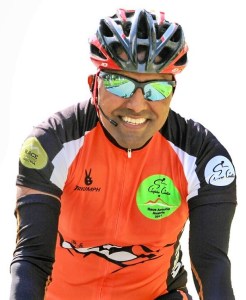
Lt Col Bharat Pannu (Photo: courtesy Bharat)

As the COVID-19 pandemic spread, Lt Col Bharat Pannu had a general sense of what to expect. The email of April 3, 2020 informing that the year’s RAAM had been cancelled wasn’t therefore completely surprising. Competitive athletes like a goal and RAAM had been Bharat’s for the last two years; his 2019 attempt had to be given up owing to injury. Ahead of the April mail from race organizers, he had kept alternatives in mind. He would aspire to do well in domestic bicycle races. But the lockdown in India added a new dimension – everyone, cyclists included, would have to be indoors. Committed cyclists like Bharat have trainers – devices that help convert a road bike into an indoor trainer – at home. With RAAM out of the picture, his training volume could be restored to normal levels. But the interesting thing was, as you talked to the army officer, you realized that his regular schedule was by no yardstick upset or compromised because he was limited to being indoors in Bengaluru. The training for cycling was going on as per plan. Every day (there is a day of rest too) he has a strength training session at home from 6AM to 8AM. The main difference was that the sessions were accompanied by a video conference call (on his phone) that allowed him and his friends to enjoy each other’s company as they worked out. “ We are a small group. Each day, one of us takes the lead in overseeing the session. We stay connected for the whole duration. In fact, we now feel we may not rejoin gyms after the lock down. This is working out pretty well, ’’ Bharat said, adding, “ sticking to your goals is important. Being flexible is even more important.”
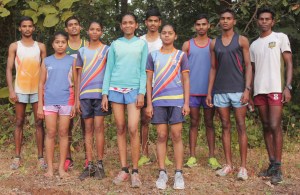
Vikramgad’s runners. Dnyaneshwar is in the back row, second from left. This photo was taken in 2017 (Photo: Shyam G Menon)

Dnyaneshwar Morgha is well-known when it comes to podium finishes in the open category at races in Mumbai. He typically participates in distances of half marathon and less. He lives in Vikramgad, a little over 100 kilometers away from Mumbai. It is mildly undulating terrain. From a sufficiently high point, you can see the hills of Jawahar in the distance. Dnyaneshwar’s main source of livelihood is farming. A very good runner, he participates in races for the prize money, which helps bridge deficit in agricultural earnings. Locked down at his village in Vikramgad, his training is currently restricted to what he can manage indoors. “ I do strength training and stretching for about half an hour, every morning,’’ he said. Thanks to agriculture, the family has food to sustain them. But the earlier income that used to come from selling agricultural produce in the market – that has been impacted by lock down. “ We manage,’’ he said, adding, “ the summer period is usually a lean season for races and the lockdown is happening in summer. I wonder how the rest of the year will be.’’
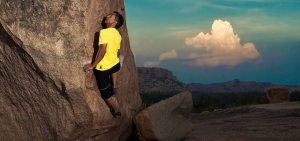
Franco Linhares (Photo: Sharad Chandra)

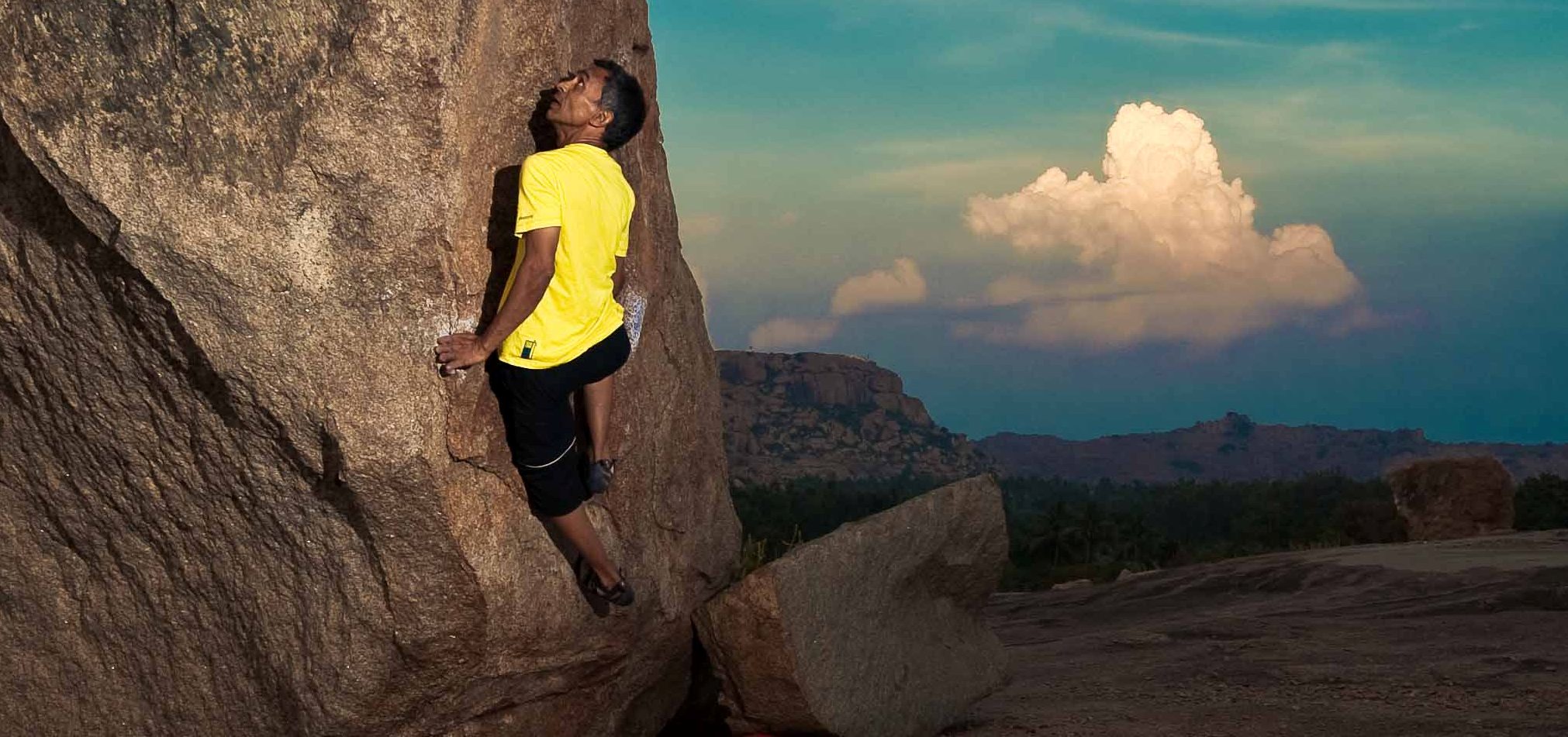
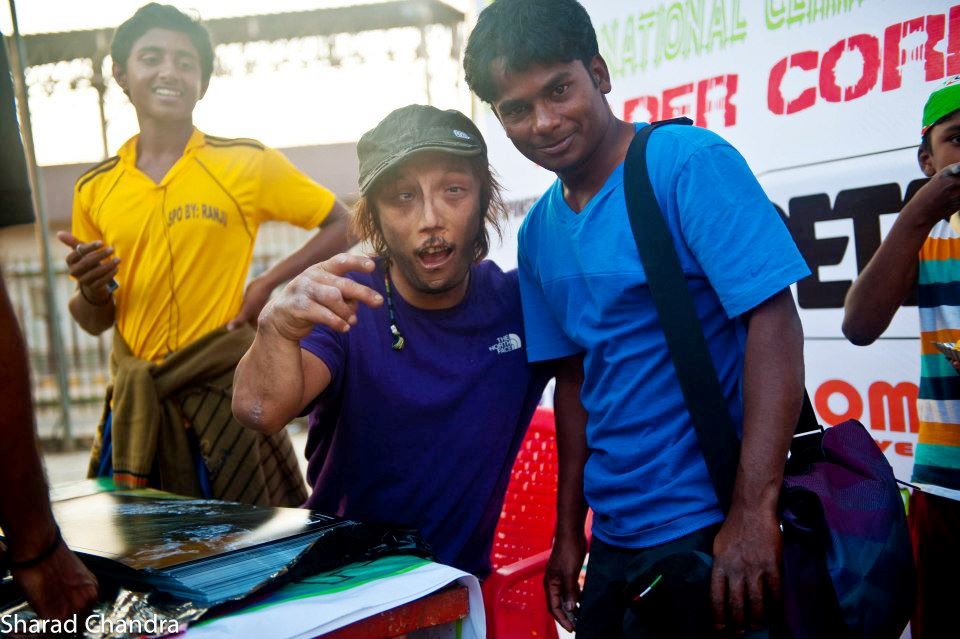
Franco Linhares enjoys a special place in Mumbai rock climbing circles. At 69, he is one of the oldest, most consistently active rock climbers in the city. Not just that, regular climbing kept his grades in the sport quite decent making him an inspiration for youngsters. Weekends found him at the crags of Belapur in Navi Mumbai; during the week he visited any of the artificial climbing walls that have come up in Mumbai. Committed to the sport, he is among the early ones who opted for voluntary retirement from work and set out to pursue their passion. Now locked down at his home, Franco has been working out twice a day; 40-45 minutes in the morning, same quantum of time to sweat in the evening. One reason he has been regular at his workouts is that it helps him keep his climbing muscles active. “ If I don’t do my exercises, I risk surgery at some injured spots,’’ Franco said. Additionally he has a finger board – a board with features built into it that climbers love to do pull ups on or hang from – at home to stay engaged. This year he had been paying special attention to strengthening his knees with a view to resume running. “ My goal was to start running by May 1. Given the present state of affairs, I doubt if that will happen,’’ Franco said. The knee exercises however continue.
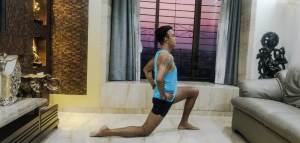
Girish Bindra (Photo: courtesy Girish)

Locked down in Mumbai, Girish Bindra devises his own workouts covering various aspects of fitness – core strength, functional training, HIIT. He often ends his workout with a barefoot walk or run inside his house. He does heavy workout that includes HIIT two or three times a week and also takes a day off once a week.

“ It is very important to focus on food intake, hydration and rest,” Girish said. A coach for Asics, Girish said practitioners of home workout should be conscious when to stop. “ Each person has a different capacity,” he said adding that the period of being home bound should be used to assess one’s workout capability. “ Being home bound, my sleep has improved as I am not required to wake up early to head out for a run,” Girish said.
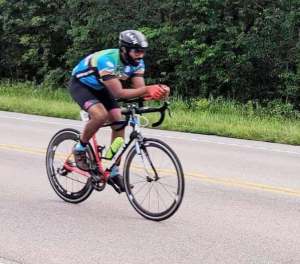
Kabir Rachure (Photo: courtesy Sapana Rachure)

Navi Mumbai-based Kabir Rachure had successfully completed RAAM in 2019. He was planning another attempt in 2020. Then two things happened. India went into lock down; in far off USA, 2020 RAAM was cancelled. With the event he was focusing on taken off the racing calendar, Kabir reduced his training load. Meanwhile lockdown meant no cycling outside and resorting to trusted trainer indoors. His day under lock down starts late. He sleeps late, gets up late and by evening treats himself to an indoor cycling session of an hour or two on the trainer. “ If it is an hour, then I do high intensity training; if it is two hours, then I do low intensity,’’ Kabir said. He has been using Zwift for the past two years. However he does not indulge in any interactive online racing with others. Instead, he trains alone with rides customized to his needs. “ A few days ago, we did have an online group ride involving a few of us. That was done via video conferencing. Chaitanya Valhal took the initiative to organize it. It was interesting,’’ Kabir said. Someone who has been into physical fitness and gym visits for long Kabir’s strength training was now composed of free hand exercises done at home. With lockdown, gyms have shut.
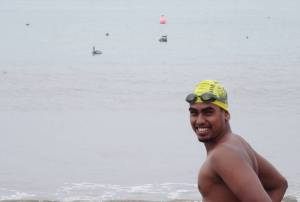
Shubham Vanmali (Photo: courtesy Shubham)

Shubham Vanmali is a young long distance swimmer with channel crossings and swims across straits to his credit, including pursuit of Oceans Seven. He conceded that swimming pools shutting down with resultant loss of access to water, impacted dedicated swimmers greatly. Water has a therapeutic effect. “ When pools shut, it wasn’t just the loss of physical activity. It affected you psychologically too. But then I cannot complain because at the moment there are people all over the world, who are affected so. It is something we have to cope with,’’ he said. When the lockdown started, the initial days were a struggle for him. His daily schedule went for a toss; he became a night owl sleeping at 6 AM and waking up at 5 PM. Then he realized he had to set things right. “ I got back on track. Now I sleep by 10 PM and get up at 5 AM. Managing my sleep schedule has emerged the most important thing for me,’’ Shubham, who lives in Navi Mumbai, said. By 6 AM, he commences a training routine. He does not have any exercise equipment at home. “ All I have are resistance bands, a stick and a skipping rope,’’ he said. But with some amount of creativity they suffice to train muscle groups critical for swimming. Sometimes the creativity goes beyond these three items. For instance, a laptop bag filled with stuff to be tad heavy doubles up as a kettle bell. A typical training session involves warm up, exercises and stretching. He does cardio workouts in the morning; strengthening exercises in the evening. After every three days of training, he takes a day off. A youngster aspiring for a career around his interest in sports, Shubham also devotes time to think about how best to prepare for the economically challenging times that lay ahead, past lock down.
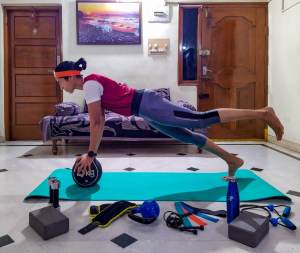
Ashwini G (Photo: courtesy Ashwini)

In February 2020, Ashwini G had secured a national best for women in the 12-hour run at the Tuffman Chandigarh Stadium Run. The Bengaluru-based runner covered a distance of 111.78 km. She had enrolled for the 100 km distance at Greater Noida Running Festival, which was to be held on March 14, 2020, and Ooty Ultra, slated for April 5. Both these events were cancelled.

“ I have no event on the cards. I should now focus on strength. Running is easier to do. Strength training requires a lot of discipline and dedication,” she said. Within strength training, her focus is on building endurance as she is largely into ultra-distance running. “ I do two sessions daily and these are complementary workouts,” she said adding that her home fitness regimen includes resistance band workout, jogs, walks, working out with dumbbells, agility training and core workout apart from yoga and foam rolling.
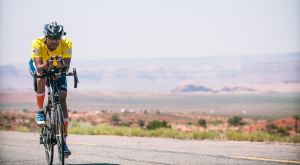
Dr Mahendra Mahajan (Photo: courtesy Mahendra)

For India, it was the Nashik based Mahajan brothers – both of them doctors – who opened the account at RAAM. In 2015, they had finished first among men under 50 in the two-person team category at RAAM. The brothers’ interests span cycling, hiking, mountaineering and running. When reached an evening early April, Dr Mahendra Mahajan was less than an hour from starting his daily workouts. “ We stay in a bungalow and are fortunate to have a gym on the terrace. We do our work outs together as a family,’’ he said. The sessions last between one to one and a half hours. “ The focus is mostly on strength training and exercises for the core,’’ he said. Sometimes, depending on his mood, the doctor works out twice a day. If that’s the case, then he tries to add variety and keep the sessions distinct. Two to three times a week, he cycles on the home trainer. He is an old hand at the trainer, having commenced using it in 2014. However, it’s a basic trainer and he is not on Zwift. “ With a basic trainer, it can sometimes be boring. But I manage with music or TV for company, to keep me going,’’ he said. He has also been using the time made available by lockdown to catch up on his reading – books on Everest feature on the list.

(The authors, Latha Venkatraman and Shyam G Menon, are independent journalists based in Mumbai. For more articles on the runners, cyclists, swimmers and climbers featured in this article, please type their name into the box assigned for search on the blog.)

“ IT IS A FINE LINE THAT SEPARATES LONELINESS FROM SOLITUDE’’

Illustration: Shyam G Menon

Two Indians, who spent months at sea, share their insight on managing isolation. Captain Dilip Donde (Retd) recalled vignettes from his 2009-2010 voyage, circumnavigating the planet in a sailboat, solo and unassisted. Lieutenant Commander Vartika Joshi spoke of how she and her crew tackled isolation during their 2017-2018 circumnavigation. Both voyages were part of the Indian Navy’s Sagar Parikrama project.

From midnight March 24, 2020, India was placed in a 21 day-lockdown to check the transmission of COVID-19, the disease that first surfaced in China in late 2019 and within a few months graduated to be a global pandemic.

The lockdown meant families, couples and those living alone confined to their houses. Isolation can be a strange experience. Our houses are homes because that is where we return to for secure rest and belonging after being out on work. It is a different sensation when that blend of in and out is replaced by a state of being in – housebound – permanently. Variety, often described as the spice of life, disappears in its familiar form and begs reinterpretation. The hours are felt as minutes and seconds; they sit heavy on your shoulders. Confined to limited space, your dwelling rises to meet you in myriad small details, all previously ignored because you weren’t there for long, like now. If you are staying alone, the solitary existence may corrode to loneliness. How do you cope with this?

Captain Dilip Donde (Retd) was quick to respond to the subject. “ It isn’t much different on a boat,’’ he said. In 2010, he had become the first Indian to complete a solo unassisted circumnavigation of the planet in a sailboat, the INSV Mhadei. Seventy per cent of the Earth’s surface is covered by oceans and seas. It is a vast blue, big enough to isolate boats even when they are sailing under no strictures like completing a solo, unassisted circumnavigation in accordance with the rule books of the sport. Dilip who was serving in the Indian Navy then, didn’t have any prior expertise in meditation. Nor did he court such techniques on the boat to keep his act together.

What kept him engaged was the simple fact that when you are solo sailor afloat in a vessel at sea, ensuring that the vessel is in good condition and you are in good shape is pivotal to keeping the voyage alive. The sea is a dynamic, unforgiving medium, its dynamism ranging from its moods to its long term impact on the vessel you are in. You take care of the boat. The boat takes care of you. Such connection with the vessel in which you are afloat is viscerally felt at sea, even as the parameters of solo unassisted sailing allow you no human alongside for company.

“ There are plenty of things to do on a boat. There are repairs, maintenance work – they keep you fairly busy. You also need to rest adequately,’’ Dilip said. It is an observation many of us who have embraced routines under lockdown – like cleaning the vessel we live in; our house – would easily identify with. Once the boat related-tasks were taken care of, Dilip read a book, watched a movie or cooked himself a nice meal. “ Basically, you slow down your life, slow down the pace of everything you do,’’ he said.

Contacted in early April, Dilip was home in Goa, locked down like the rest of India. He felt that there was similarity between the lockdown experience ashore and what he had experienced at sea on his long voyages. Admittedly, there is one major difference. During a solo voyage on the vast blue, even if sailor is alone on his boat, the boat is moving. Your house on the other hand, is a very rooted entity that stays still in one place. You see the same views. That isn’t the case at sea, which is a convergent ambience of many natural elements in their free form. “ Every sunrise and sunset is different. Every day is different,’’ Dilip said. Still the fact remains that a voyage is a mix of diverse experiences and on those days of nothing but wide blue featureless sea, it is how you approach the stillness that matters.

Being alone on a boat does not have to automatically mean loneliness. “ It is a fine line that separates loneliness from solitude,’’ Dilip said. Loneliness comes with a sense of being mentally dragged down. Solitude on the other hand is different; it has the ring of something positive, something that you can work with. The key to coping with isolation, Dilip said, is changing that potential loneliness to solitude. Care for boat and care for self eventually become meaningful acts in solitude. At his home in Goa, Dilip has his mother for company during the lock down. “ On the boat, I was alone. I used to talk to the boat,’’ he said, adding, “ it is all in you.’’

Illustration: Shyam G Menon

Dilip’s voyage was part of the Indian Navy’s Sagar Parikrama project. It was conceived by the late Vice Admiral Manohar Awati, an inspiring naval officer who retired as Flag Officer Commanding-in-Chief of the Indian Navy’s Western Naval Command. The solo unassisted circumnavigation, which was Sagar Parikrama’s first major achievement, was followed by a solo unassisted non-stop circumnavigation by Commander Abhilash Tomy; that voyage spanned November 1, 2012 to March 31, 2013. In February 2017, the INSV Mhadei was joined by a sister vessel, INSV Tarini. Over September 10, 2017 to May 21, 2018, an all-woman crew from the Indian Navy successfully completed a circumnavigation on the Tarini. The crew was led by Lieutenant Commander Vartika Joshi. In terms of predicament, there is much that is similar between a crew out on circumnavigation and a family enduring isolation. Unlike journeying solo, one of the challenges here is handling multiple human beings in the confines of limited space. Since people react differently, it was very important for the crew to know each other, something their months of preparation and time spent working together on training voyages, gradually instilled.

“ Over time, we transformed to being more receptive of each other. Instead of talking more, you began to listen more. Eventually, we didn’t have to speak much to be understood,’’ Vartika said. According to her, an important aspect in such situation of crew aboard sailboat on voyage of several months, is remembering to honor each other’s need for personal space. It checks the ambiance from becoming too overbearing on self. As with solo sailing, routines addressing the boat’s need for repair and maintenance, count here too. That is unavoidable on a boat. “ It is extremely important to set a routine. If it isn’t there, you lose your sense of time. On a boat there are plenty of tasks and standard drills to do,’’ she said. At any given point in time, there has to be somebody keeping an eye on the boat and its surroundings. The crew takes turns to be on watch. Those not on watch, enjoy personal time. “ With crew around, the situation is different from solo endeavors in that we have to see each other for long and we have nowhere else to go. But remember – they are also the persons who will come to your assistance when you are in need of help,’’ Vartika said. She and her crew picked up the required skills during their training, which exposed them to potential situations and taught them suitable solutions. “ Any meditation and such – that was personal. Besides, what could be a better medium to meditate in than living amidst and listening to the ever changing sounds of the sea to soothe us mentally and emotionally,’’ she said.

(The author, Shyam G Menon, is a freelance journalist based in Mumbai.)
OUR REFLECTION IN PETER

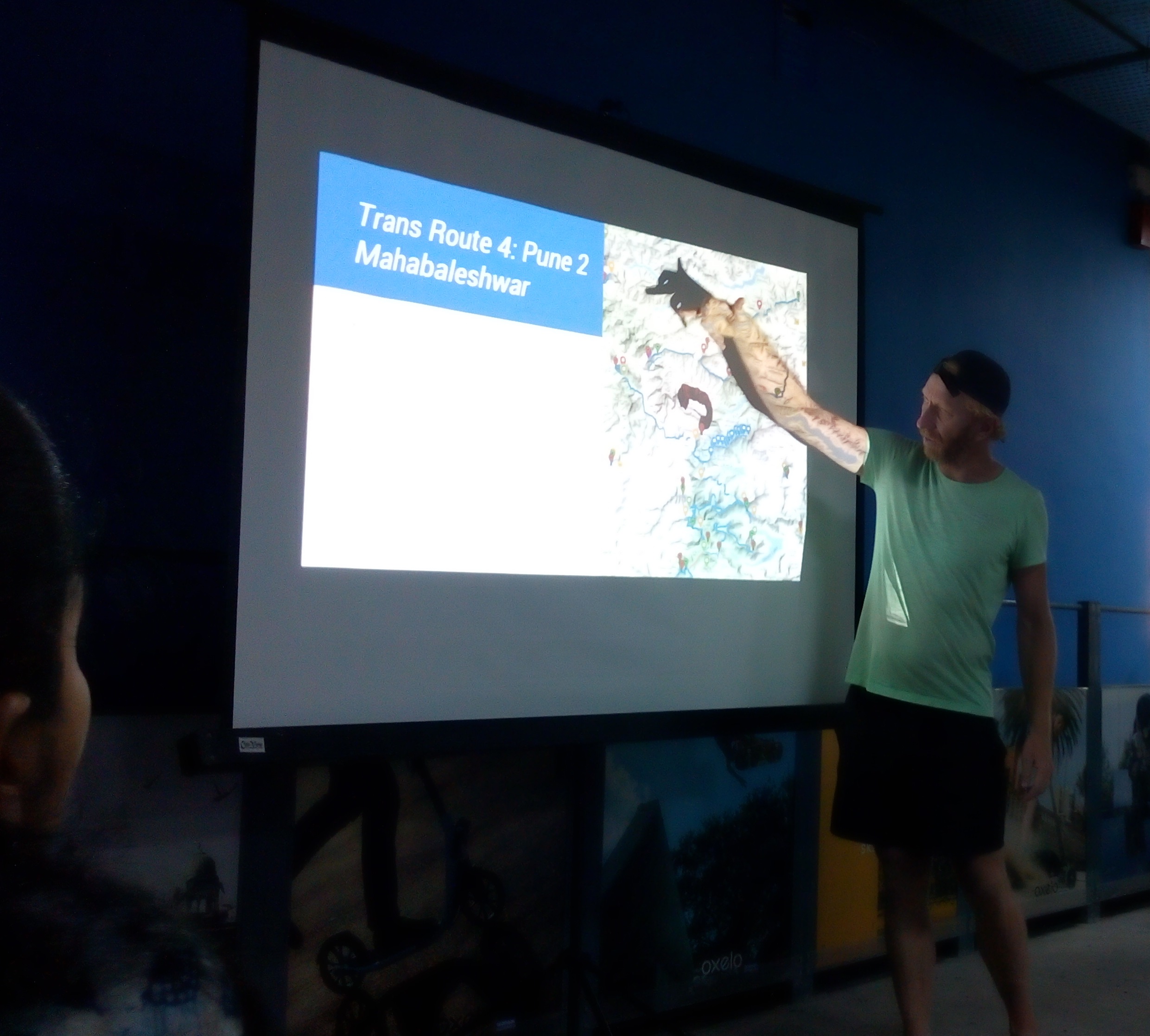
Peter Van Geit at the talk in Navi Mumbai (Photo: Shyam G Menon)
It was a small gathering, just outside the shop floor of a major sports goods retailer in Navi Mumbai. Maybe 15-20 people at best; a couple of them were the retail chain’s staff. But that didn’t stop Peter Van Geit from speaking passionately about what he had been doing the past several months.

A Belgian national and former employee of tech giant, Cisco, Chennai-based Peter is well known in the Indian outdoors. He was among prime movers at the Chennai Trekking Club (CTC), contributed much to promoting the active lifestyle, helped clean up the city’s beaches, did excellent relief work during the Chennai floods and then got villainized when an unexpected forest fire killed several trekkers in Theni. That last incident from March 2018 was a tense chapter.

At CTC, one of the activities Peter and others embraced was ultrarunning. They would run for a few days covering a couple of hundred kilometers. In 2018, Peter commenced a personal project. Over 75 days, he ran (the right term would be fast-hiked) 1500 kilometers along trails and across some 40 high mountain passes in Himachal Pradesh and the then state of Jammu & Kashmir. This venture followed an earlier one in Vietnam, wherein he ran close to 2000 kilometers over hilly terrain. Then in 2019, running from the Uttarakhand-Nepal border towards Himachal Pradesh and Zanskar, he crossed 120 passes. The number includes little known routes taken by shepherds, who incidentally are his frequent refuge for food and shelter on these trips. Later that year, in a foray to the Maharashtra Sahyadri and the Konkan coast, he ran or cycled linking some 200 forts. Active on social media with his travel posts, Peter has a fan base. In January 2020, when Peter was in Mumbai to speak at the Himalayan Club, this writer shared a suburban train journey with him. He was quickly recognized by co-passengers and selfies taken.

At two presentations I attended this year, there was a slide that always drew laughs. It showed a small child sitting naked on a beach. “ That’s me. I was minimalist even then,’’ Peter would quip. He says traveling light makes him fast. On the trail, that means less stuff hauled around as he manages to either reach known shelter or camp light at lower elevation having already got past the high crux. That’s utter contrast with the regular. Consider this: a typical photograph of Peter from the Himalaya shows him in running shorts, a small backpack, a thin T-shirt and a pair of running shoes. The backdrop is high altitude; steep, snow clad, at times glacier, clearly cold. Other speakers at the same venue may have just presented slides of them and others in similar environment clad in multiple layers, armed with gear and heavy backpack. That would be the Himalayan experience of most in the audience too.

In the mutual admiration society we are, people flock to similar others. Peter gets applause but you wonder – was he accepted into the tribe? Much of the establishment sitting in judgement came up in a more structured fashion with outdoor courses done and rigid views of what defines a particular sport. They seem organization-builders; lovers of hive and the politics of the hive if we were all bees. Corporate – you could say, for imagery. Peter seems an activity-lover, happiest outdoors, happy to be afloat afterwards in a people’s durbar. In his heart warming short film, Peter stumbles, slips, gets his face liberally licked by a buffalo, does some sketchy river-crossings. Those formally trained in outdoor techniques will question some of his actions. Yet there he was, up in the mountains, doing a hybrid of running and high altitude hiking, most of the time solo. Solo is something few Indians like. Indians are all about groups. Further, where most of us make a whole annual trek out of one pass, he was polishing off a pass a day. For now in India’s world of hiking-mountaineering and running, the Peter-way is an outlier.

Here’s another vignette – Peter is a runner but now nurses little appetite for the organized marathons, ultramarathons and stadium runs that the majority of runners favor. He likes to be away from cities and crowds. When out in the Himalaya, he lives and eats with shepherds and at houses along the trail; he likes that simpler life. He navigates with digital map and GPS co-ordinates on his smartphone used offline and set to battery saving-mode. On the Konkan coast, confronted with the fort of Suvarnadurg located on an island a kilometer out in the sea, he just swam across to access it. The central values of his excursions appear freedom, solitude and living the life he wants. Accessible and easy to talk to, Peter may impress as anything from celebration of the outdoor spirit to bull in a china shop unintentionally smashing our gear laden surrogate commando self-image, with his minimalist approach.

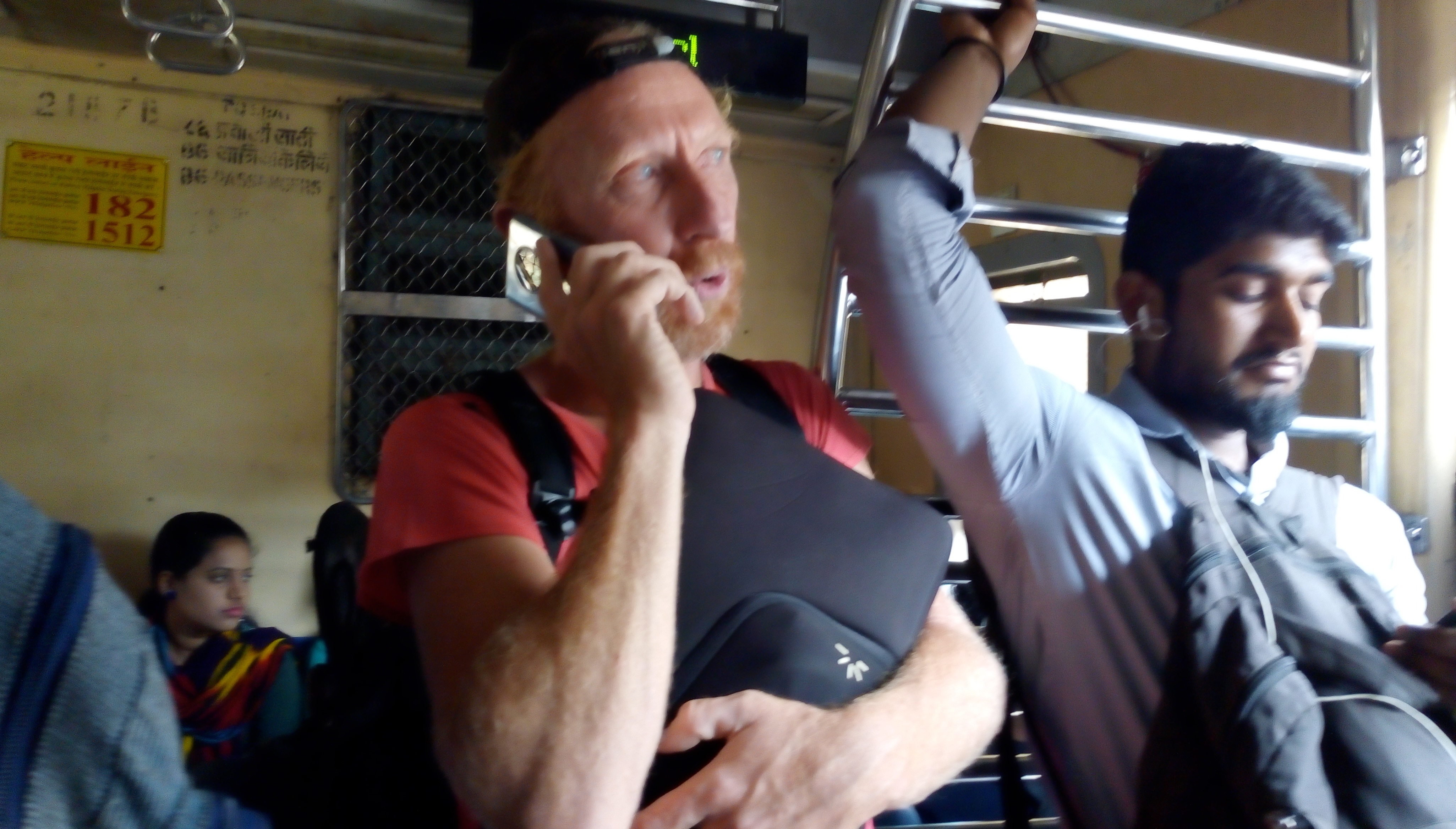
Peter, in a Mumbai suburban train, en route to a lecture (Photo: Shyam G Menon)

To be fair, Peter’s journeys in India fell in a list of projects headed to the body of work he achieved. Long before digital became commonplace in India, in 1997, a team of Indian women completed a trans-Himalayan trek from Bomdila in Arunachal Pradesh to the Karakorum Pass. They crossed 39 passes above 3000m, 15 passes above 2000m and covered 4500 kilometers in 198 days. In the years that followed, at least one seasoned outdoorsman anchored a project seeking to thread a hiking route from Ladakh to the Uttarakhand-Nepal border, replete with GPS co-ordinates for independent hikers to use. More than five years ago, when the Himalaya was yet to be run as Peter did, this writer spoke of the project in waiting to an Indian ultrarunner. Nothing happened. Over August-October 2018, a team of three young Indian mountaineers hiked from Ladakh to the Uttarakhand-Nepal border crossing 27 passes (please try this link for their story:  https://shyamgopan.com/2018/11/13/a-long-walk-traversing-the-western-himalaya/). Then over 2018 and 2019, in two tranches, Peter crossed around 160 passes in the western part of the Indian Himalaya, visited 200 forts in Maharashtra and made the journeys available as digital resource. His own project, Peter has said, was initially spurred by data from a blog by Bengaluru-based trekker Satyanarayana; in the blog Satya used to document with GPS logs, the passes he visited.

It was two years ago that Peter resigned his job, did an Airbnb with his house and embarked on a new life of running around. At the February 2020 talk in Navi Mumbai, he spoke of young Indians he met during his long stay in the country, who were stronger athletes than him but whose promise faded with marriage and corporate life. The young people in the audience laughed. Peter’s face remained expressionless. “ It is not a laughing matter. Life is short and you live only once,’’ he said.

(The author, Shyam G Menon, is a freelance journalist based in Mumbai. For more on Peter please try these links: https://shyamgopan.com/2017/02/28/i-dont-have-time-isnt-a-valid-excuse/; https://shyamgopan.com/2019/03/22/running-in-the-himalaya-75-days-1500-km-40-mountain-passes-talking-to-peter-van-geit/)             

NO COUNTRY FOR CHILDREN?

Illustration: Shyam G Menon

Global population is currently around 7.8 billion. While that number rises, there is no matching interest in the type of world we are creating. The questions facing our industrial edifice and consumerist lifestyle are enormous. It goes beyond plastic, which is merely tip of the iceberg. Fundamental questions about how we live; perhaps even – why we live, remain to be addressed. Nothing puts these questions in focus as much as imagining back from our children’s future does. Here’s what a commission convened by the World Health Organization (WHO), UNICEF and The Lancet said recently about the future we are gifting our children.

No single country is adequately protecting children’s health, their environment and their future, a report released February 19, 2020 by a commission of over 40 child and adolescent health experts from around the world has said. The Commission was convened by the World Health Organization (WHO), UNICEF and The Lancet and funded by the Bill and Melinda Gates Foundation.

The report, ` A Future for the World’s Children?, ‘ finds that the health and future of every child and adolescent worldwide is under immediate threat from ecological degradation, climate change and exploitative marketing practices that push heavily processed fast food, sugary drinks, alcohol and tobacco at children. “ Despite improvements in child and adolescent health over the past 20 years, progress has stalled, and is set to reverse,” former Prime Minister of New Zealand and Co-Chair of the Commission, Helen Clark, was quoting as saying in a press statement on the report available on the website of WHO. “ It has been estimated that around 250 million children under five years old in low- and middle-income countries are at risk of not reaching their developmental potential, based on proxy measures of stunting and poverty. But of even greater concern, every child worldwide now faces existential threats from climate change and commercial pressures. Countries need to overhaul their approach to child and adolescent health, to ensure that we not only look after our children today but protect the world they will inherit in the future,” she added.

According to the statement, the report includes a new global index of 180 countries, comparing performance on child flourishing, including measures of child survival and well-being, such as health, education, and nutrition; sustainability, with a proxy for greenhouse gas emissions, and equity, or income gaps. While the poorest countries need to do more to support their children’s ability to live healthy lives, excessive carbon emissions – disproportionately from wealthier countries – threaten the future of all children. If global warming exceeds 4°C by the year 2100 in line with current projections, this would lead to devastating health consequences for children, due to rising ocean levels, heatwaves, proliferation of diseases like malaria and dengue, and malnutrition, the statement said.

“ More than 2 billion people live in countries where development is hampered by humanitarian crises, conflicts, and natural disasters, problems increasingly linked with climate change. While some of the poorest countries have among the lowest CO2 emissions, many are exposed to the harshest impacts of a rapidly changing climate. Promoting better conditions today for children to survive and thrive nationally does not have to come at the cost of eroding children’s futures globally,’’  Minister Awa Coll-Seck from Senegal, Co-Chair of the Commission, was quoted as saying.

The report also highlights the distinct threat posed to children from harmful marketing. Evidence suggests that children in some countries see as many as 30,000 advertisements on television alone in a single year, while youth exposure to vaping (e-cigarettes) advertisements increased by more than 250% in the USA over two years, reaching more than 24 million young people. Professor Anthony Costello, one of the Commission’s authors, said, “ Industry self-regulation has failed. Studies in Australia, Canada, Mexico, New Zealand and the USA – among many others – have shown that self-regulation has not hampered commercial ability to advertise to children. For example, despite industry signing up to self-regulation in Australia, children and adolescent viewers were still exposed to 51 million alcohol ads during just one year of televised football, cricket and rugby. And the reality could be much worse still: we have few facts and figures about the huge expansion of social media advertising and algorithms aimed at our children.’’

Children’s exposure to commercial marketing of junk food and sugary beverages is associated with purchase of unhealthy foods and overweight and obesity, linking predatory marketing to the alarming rise in childhood obesity. To protect children, the independent Commission authors called for a new global movement driven by and for children. Specific recommendations include:

  • Stop CO2 emissions with the utmost urgency, to ensure children have a future on this planet
  • Place children and adolescents at the center of our efforts to achieve sustainable development
  • New policies and investment in all sectors to work towards child health and rights
  • Incorporate children’s voices into policy decisions
  • Tighten national regulation of harmful commercial marketing, supported by a new Optional Protocol to the UN Convention on the Rights of the Child.

“ This report shows that the world’s decision makers are, too often, failing today’s children and youth: failing to protect their health, failing to protect their rights, and failing to protect their planet. This must be a wakeup call for countries to invest in child health and development, ensure their voices are heard, protect their rights, and build a future that is fit for children.” Dr Tedros Adhanom Ghebreyesus, Director-General of the World Health Organization, said.

(The author, Shyam G Menon, is a freelance journalist based in Mumbai.)

THE WORLD CHAMPION WE OVERLOOK

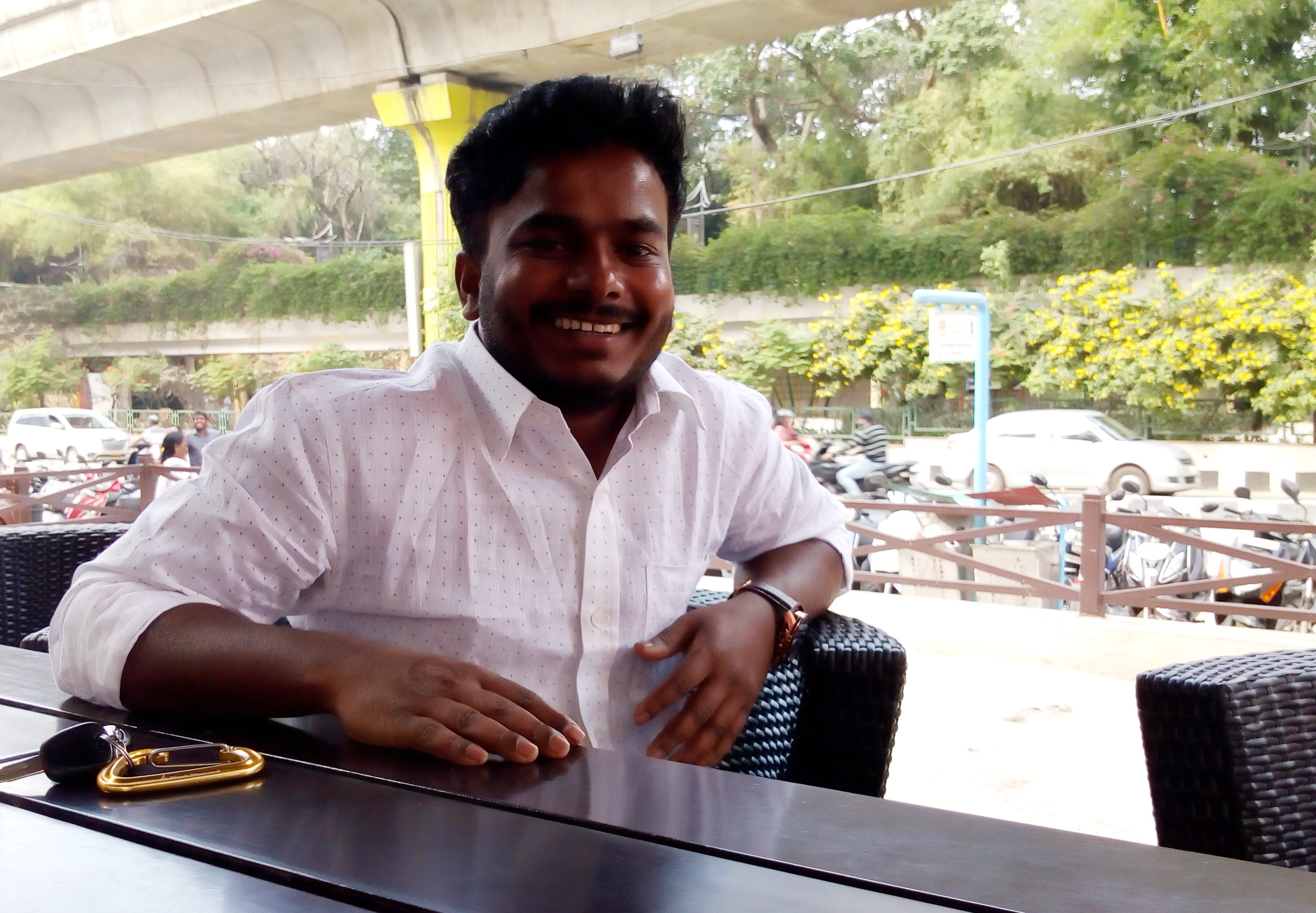
Manikandan Kumar (Photo: Shyam G Menon)

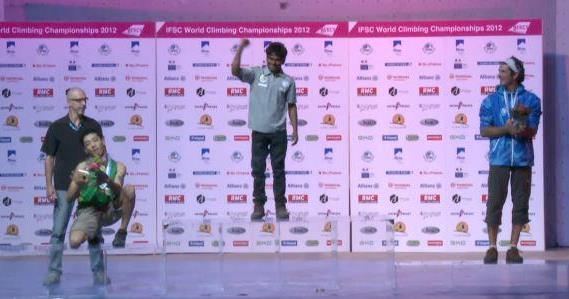
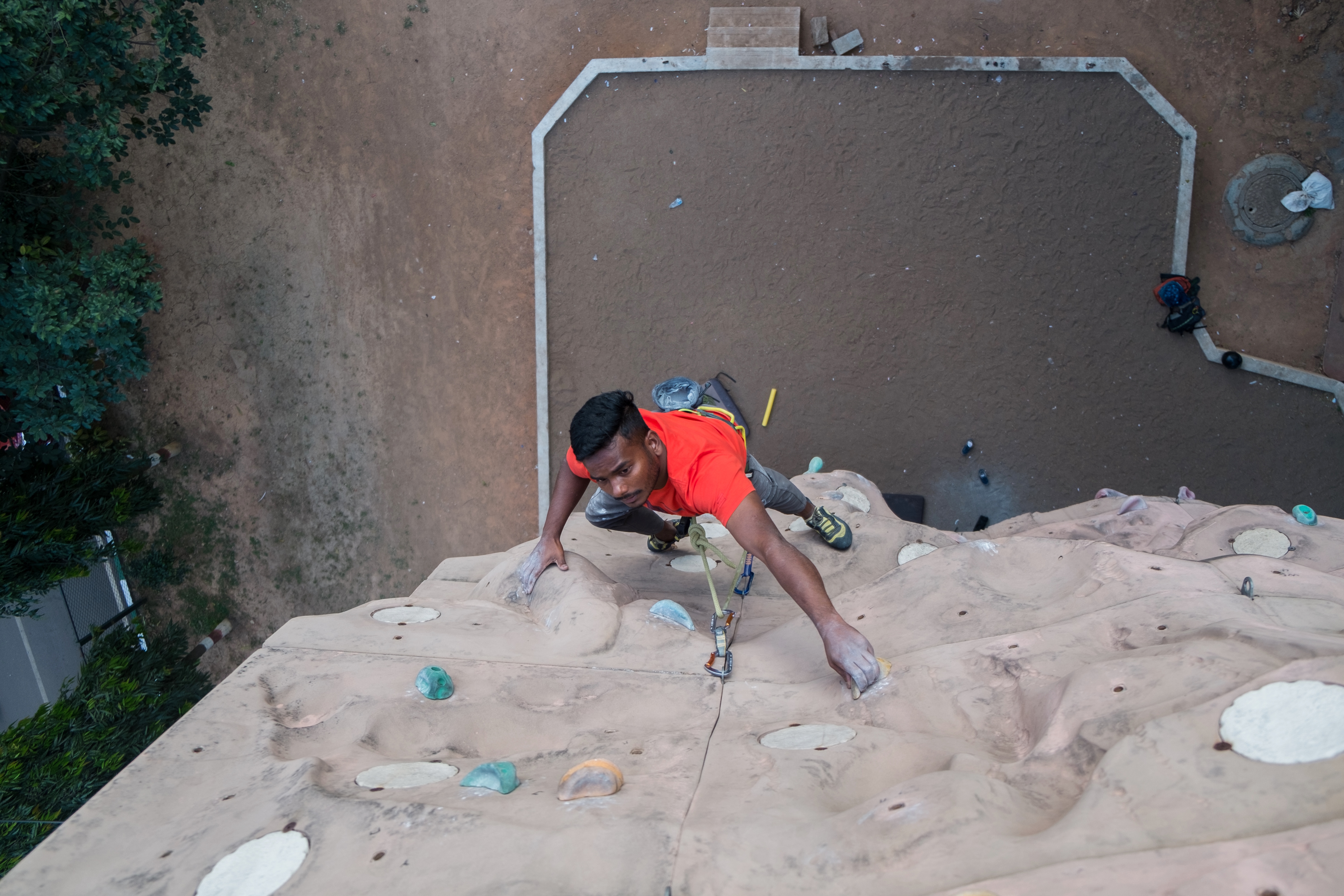
When this blog met him, Manikandan Kumar’s triumph at the 2012 IFSC Paraclimbing World Championships was over seven years in the past. He hasn’t been idle. There have been other podium finishes including three more at the world championships. What have been less than ideal are our system of encouragement and the resource-rich we call: sponsors.

There was palpable imperviousness to the negative and the pessimistic, in how Manikandan Kumar spoke. “ I believe in myself. I grew gradually in climbing. It wasn’t easy. You can ask anyone – I never complain,’’ he said. It was now years since Mani, as he is popularly called, burst on to the scene. For this writer, that moment happened one night at an outdoor school in Ranikhet, when Kuttappa (Kuttss) Bommanda showed up for dinner apologizing for his late arrival. “ I was watching Mani’s climb at the Paraclimbing World Championships on my laptop. He has won it!’’ Kuttss, an outdoor instructor from Bengaluru, said enthusiastically. The year was 2012. Mani had become India’s first world champion in paraclimbing; the country is otherwise a relative unknown in the top echelons of competition climbing. Aside from fellow climbers and officials linked to that circuit in sports, practically none in India knew him.

Seven years since, the environment for Mani and his ilk in climbing wasn’t much different. Sport climbing was slated to debut at the Summer Olympics in Tokyo by mid-2020. But the discipline wasn’t yet on the list of sports for the Paralympics that would follow. That meant, Mani, a former world champion and still among the best in his category worldwide, wouldn’t get a shot at the Paralympics. Why blame the Olympic movement? Seven years since Mani’s triumph at the Paraclimbing World Championships, India was yet to have a distinct paraclimbing program. “ I would like to change that,’’ Mani said, sipping coffee. It was November 2019. We were at a café on MG Road in Bengaluru.

Photo: courtesy Mani

Born 1986, Mani is the eldest of three brothers; their father worked as a carpenter, mother remained a home maker. He grew up in Malleshwaram, a suburb of Bengaluru. When he was around five years of age, Mani had an attack of typhoid. “ That was when my parents realized that my right leg had been affected,’’ Mani said. He began limping. General literature on the disease, available on the Internet, speaks of typhoid as fever caused by bacterial infection. However, you also find mention of rare neurological complications that impact a patient’s limbs and movement. In Mani’s case, the affected leg stayed weak in terms of musculature and strength. The boy loved sports, particularly football. Limp notwithstanding, he plunged in and played. “ I faced no discrimination. I played without thinking of my disability,’’ he said. Those years, climbing wasn’t at all in the frame.

In 2002, aged 16, Mani found himself at an outdoor camp in Ramnagaram organized by The Association of People with Disability (APD). Located roughly fifty kilometers away from Bengaluru, Ramnagaram has historically been a climbing hotspot. The camp participants were introduced to bouldering and rappelling. “ We climbed two to three boulders. I liked the experience. One of the instructors suggested that I try out climbing at the office of GETHNAA, which had a climbing wall right behind their building,’’ Mani said. GETHNAA stood for General Thimayya National Academy of Adventure. At this point, the climbing wall adjacent to the city’s Sree Kanteerava Stadium was still a couple of years away; GETHNAA’s was the only wall around. Mani’s opening stint at the GETHNAA wall was encouraging. “ I climbed three routes. I felt I should take up the sport,’’ he said. He started attending the climbing sessions there regularly. Among the instructors he met there was Keerthi Pais, who would become India’s best known trainer in the discipline. Not long after this foray into climbing, Mani also participated in a state level competition, in the regular category; there was no separate category for the physically challenged. “ I remember doing a dyno at that competition. I did it using my better leg. Everyone was appreciative,’’ Mani said laughing. The right leg was still quite weak. He was at the threshold of an engaging format of progression with that limb, for climbing by nature is a sport demanding three-point contact with the rock or wall being ascended.

Photo: courtesy Mani

In the sharp divide between staying perched or falling, there is little room to spare a limb to haul up a weak one. Yet in the initial days, that, was exactly what Mani often had to do – he had to lift his right leg with his hand and place it on the next foothold. None of this stopped him from making the first major decision of his life. Mani completed his tenth standard and gave up studying. “ I had no interest in studies. I wanted to make a career out of climbing,’’ he said. He did not have the benefit of money and wealthy parents. His family was struggling financially. He had no sponsors or well-wishers. All he had was self-belief.

In 2002, Mani went to Delhi to watch the national climbing competition. It left him wanting to qualify for the next edition of the event. At an open competition held thereafter at Ramjas near Delhi, he was the only climber making it to the final in his age group. “ I got an appreciation letter for that,’’ he recalled. Now the desire to excel was picking up. That year was noteworthy for something else too. Mani was among those featured in a documentary film on climbing. “ Facing the camera, I blurted out that one day I want to be a world champion. It’s still there in that video,’’ he said. In 2003, he participated in the zonal competition and ended up seventh or eighth, narrowly missing selection for the national competition.  However, he got a wild card entry, the condition being he would have to do a trial climb and prove his worth before the senior official overseeing sport climbing. That done and initial rounds too cleared, Mani found himself among four climbers from the South Zone who featured in the final. He finished last but won the best climber award.

In 2004, he was back in the final. In 2006 also, he qualified for the national competition (in India, the national competition is at the apex of a series of zonal competitions arranged below it in the hierarchy). That year, he started working as a coach under Keerthi Pais, reporting every day to the new climbing wall that had come up near Kanteerava Stadium. In 2007, Mani didn’t qualify for the final at the national competition; it was the case in 2008 too. But the coaching continued, including accompanying his wards (they were in the junior category) who had made it to the national competition, to their respective events. The coaching assignment brought with it a small salary. Additionally Mani worked at outdoor adventure camps. The income he thus made was useful for his family.

Mani with Philippe Ribiere at one of the editions of Girivihar’s open sport climbing competition at Belapur in Navi Mumbai (Photo: Sharad Chandra)

For over a decade in Mumbai, the city’s oldest mountaineering club, Girivihar, ran an open climbing competition. It would eventually lead to two editions of the IFSC World Cup in Bouldering (IFSC – International Federation of Sport Climbing) being held in Navi Mumbai in 2016 and 2017. Mani had been to these events. Among foreign climbers visiting the open competition held in Belapur was Philippe Ribiere from France. “ He is someone I respect,’’ Mani said. At age four Philippe was diagnosed with Rubinstein-Taybi Syndrome and has excelled at climbing despite that. He started climbing at six. To others climbing so having overcome physical challenges, he is important not merely as example to follow but also as among those inspiring the first international paraclimbing competition held in 2006 at Ekaterinburg, Russia. More such competitions were held in the years that followed. Then in 2011, the first paraclimbing world championships were held in Arco Italy, under the auspices of IFSC. Mani had been following these developments. He had faith in himself and there was also that old statement to camera: one day I want to be a world champion, which had come out naturally, to explore.

“ Between 2009 and 2011 – that is when I realized, this is my chance. I watched all relevant videos of paraclimbing. I used to take note of participants at these competitions. After the 2011 paraclimbing world championships in Arco, I decided that no matter what, I am going,’’ Mani said. He didn’t tell anyone of his resolve. He commenced preparations in January 2012. Sometime in July-August 2012, he had a conversation with the zonal chairman overseeing sport climbing in South India. He agreed to forward Mani’s candidature. The venue for the 2012 paraclimbing world championships was Paris. Registration done, Mani’s next challenge was finding sponsors to cover the expenses of his trip. Karnataka State Housing Corporation covered the cost of his flight tickets. For the rest, friends, students, the parents of his students – they chipped in. “ Somehow I managed,’’ Mani said. It was his first time overseas; Mani traveled alone. “ The process of flying out made me resolved – it is now or never. There is no way I will complain,’’ he said.

Photo: courtesy Mani

Given the variety of physical disabilities and the way they impact human performance to different extents, paraclimbing has several cub-categories for participants. The categories are awarded on the basis of medical documents and examination. In 2019, there were as many as eight sub-categories in the men’s section at the world championships. In 2012, only the second year of the paraclimbing world championships, there were four sub-categories – Amputee Leg PD, Arthritis + Neurological PD1, Visual Impairment B1 and Visual Impairment B2. Mani was in the second segment – Arthritis + Neurological PD1. Mani reached Paris two days earlier. He stayed alone in a dormitory and on competition day, took a train to the venue. The competition featured lead climbing. Mani cleared the qualifying round (he estimated the climbing grade therein at around 7b) and made it to the final. Philippe Ribiere was among the competitors; he didn’t reach the final that year, Mani said. The final featured six climbers: two from France and one each from Italy, Brazil, Hungary and India. Each climber had one shot at the route on the lead climbing wall.

“ I almost made it to the top. I fell short by four holds. After the climb, I knew I was in the top three but didn’t know I had won. It was the Brazilian coach who told me that. I dropped whatever I had and ran to the notice board to check. It was true. I was over the moon. I had achieved my dream,’’ Mani said. He spent another two days in Paris; he wanted to see the Eiffel Tower. Then he returned to Bengaluru. Family; friends, the media – they all turned up at the airport to receive him. “ It was the biggest thing that happened for India in competition climbing,’’ Mani recalled. A country hardly mentioned in sport climbing suddenly had a world champion in paraclimbing. Mani has since had podium finish thrice at the world championships – second place in 2014, third place in 2018 and third place again in 2019. He is typically lone participant from India. “ India and Hungary – we don’t have teams. Other nations send large teams supported by sponsors and funds to the paraclimbing world championships. France is really big in paraclimbing,’’ Mani said. In August 2019, he was among recipients (in the land  category, for the preceding year: 2018) of India’s annual Tenzing Norgay National Adventure Award.

Photo: courtesy Mani

One of the legacies of Philippe Ribiere’s push to hold a paraclimbing competition and the IFSC world championships that followed has been the emergence of more competitions – you could call it a circuit – where paraclimbers can participate. Mani has been active here and there are several podium finishes earned so. But it has indisputably been a pattern of ups and down; he won some, lost some and sometimes a setback or series of setbacks made him feel very bad. On the other hand, as Mani put it – even his idol, tennis great Roger Federer has had to deal with inconsistency in performance. “ If it can happen to him, it can happen to me. I just need to calm myself down,’’ Mani said. He does bouldering and lead climbing but his strength is in lead. The categories and rules of the sport have also got revised going ahead. At the world championships of 2018 and 2019, his category for participation was RP2. He continues to limp when walking but sustained climbing and pushing one’s limits has meant he no longer needs to free his hand and haul up that right leg. It is responding better. That said; his body strength is distributed differently from that of the average climber.

Mani has good upper body strength. One of the exercises used to train climbers features the campus board. It is usually installed at a slight overhanging angle and requires climber to ascend using handholds (typically horizontal wooden sections fitted on the board) with no footholds to support body weight. Climbers train to move sequentially, using one hand and the next; they also train to move explosively wherein they launch off using both hands and go for the next hold. “ My ability to campus is stronger than that of many normal climbers,’’ Mani said explaining how he compensates for the weak right leg. But his own success aside, he worries for paraclimbing in India because although there are physically challenged people who speak to him of foraying in that direction, few of them turn up later to climb. If they don’t turn up to climb and train, how can there be Indian paraclimbers? For now therefore, it is just Mani on the global map. He has been to five world championships so far (winning medals on four occasions). He would like to make that ten. He is also the first Indian climber to win gold medals in the US when he topped his category – neurological / physical impairment – at the 2017 and 2018 Adaptive National Championships conducted by USA Climbing. “ My ultimate goal is a medal at the Olympics. I am hoping that paraclimbing gets included in the Paralympics. I would like to keep competing till the 2028 Los Angeles Olympics. One way or the other, people always encouraged me. That was motivating. Further, if anyone says I can’t do it, that is bigger motivation for me,’’ Mani said. Aspiration is one thing; as is personal commitment. What about the means?

Photo: courtesy Mani

So far – notwithstanding four podium finishes at the world championships and several medals on the paraclimbing circuit – Mani has no steady sponsor. For his trips overseas, he now taps crowd funding. “ Funding has improved with each year. But it worries me that despite so many medals won, I still have to struggle to get backing,’’ he said. It felt strange hearing that for Bengaluru is home to wealthy IT companies (with CSR accounts to their credit) and IT professionals have been big in the pursuit of adventure sports like climbing. Adding to Mani’s frustration was that able bodied climbers of less achievement in competition climbing found sponsors in India. The anger was clear in his tone. He was willing to explore more zones of discomfort as regards his climbing but that question puzzled: why aren’t sponsors interested in him, a paraclimber? “ Why should I seek their sympathy? Will you sponsor me only if I seek your sympathy? I am not complaining. Why don’t you appreciate my hard work instead?’’ Mani asked on the subject. It was the only time in our conversation his wall of optimism showed cracks. Meanwhile his coaching continues and he lays much hope on two of his wards; the prayer is that at least one of them secures a podium finish at a world cup in the future. “ I want some able bodied climber to win a medal at a world cup or the world championships. It is a big task for Indian climbers. But with the right approach, it is possible,’’ Mani said.

(The author, Shyam G Menon, is a freelance journalist based in Mumbai. Please note: the years of participation at national and zonal climbing competitions and podium positions earned therein, are as stated by the interviewee.)             

ZIA

Zia Chaney (Photo: Shyam G Menon)

With a December 2019 personal best of 3:47:34, Zia Chaney has the eligibility to participate in the 2021 edition of Boston Marathon. Hers isn’t the regular running story. It is one of overcoming setbacks, not just once but thrice, all of them the physically and mentally draining sort.

Zia Chaney was used to the physically active life.

Born into a family settled in Pune for decades and growing up in the city, she had been into sports right from her school days. She was focused on the sprints – 100 and 200 meters – and hockey. Following studies, she moved to Mumbai and worked with Sony Music India as a product manager. Unable to pursue the sports she was already into, she turned to visiting the gym for alternative. She was committed to fitness; committed enough to make time for it despite busy work schedule. “ I found time to hit the gym during work hours,’’ she said, a pleasant winter afternoon in Pune.

Her love for the physically active life gained momentum after she moved to Chicago following her marriage in 2000. “ My husband Vishal Jain is a fitness enthusiast. I joined a gym in Chicago. We were there for five years. After I returned to Pune, I joined a local gym,” she said. We were on the balcony of her apartment, tucked into a quiet road in Pune. Unusually for the city located at an elevation of 1837 feet on the Deccan Plateau, the winter of 2019-2020 felt mild.

Photo: courtesy Zia

In 2010, Zia was detected with first stage breast cancer. She had to undergo mastectomy followed by chemotherapy and radiation sessions. Both these types of treatment can be physically exhausting. To rebuild her strength, she tried running on the treadmill. “ A friend suggested I run outside instead of indoors,” Zia said. Thus began her journey in running.  She started running in 2011 and a year later was training with a group of runners in Pune informally organized under Pune Marathoner’s Club. “ We were around 30 people in that group. Michael Francis, who was overall leader, encouraged us to train and enroll for the full marathon at the 2013 edition of Standard Chartered Mumbai Marathon. He ensured that we covered every facet of marathon training – hill repeats, short runs, long runs, strength training,” she said. Michael Francis – he is no more – was a name one came across in the story of some good amateur runners from Pune, among them Kavitha Reddy. Zia crossed the finish line of her first marathon – the 2013 edition of SCMM (now Tata Mumbai Marathon) – in four hours, 40 minutes and one second. “ It was a great feeling to finish that first major run,” she said. Running became an integral part of her life.

Wikipedia describes cancer as a group of diseases involving abnormal cell growth with the potential to invade or spread to other parts of the body. According to the website of the US based-Centers for Disease Control and Prevention (CDC), over 100 types of cancers affect humans, among them – breast and ovarian cancer. About five to 10 per cent of breast and 10-15 per cent of ovarian cancers are hereditary. It means cancer runs in your family and may be caused by change in certain genes that you inherited from your parents. A gene is the basic physical and functional unit of heredity. It acts as instruction and contains information to build and maintain cells. A gene is made of DNA; it tells the body what traits will be passed on from parent to child. As per the Human Genome Project information archive, the current consensus is that humans have between 20,000-25,000 genes. But the number has fluctuated a lot since the project began. BRCA1 and BRCA2 are tumor-suppressor genes critical to fighting cancer. “ When they work normally, these genes help keep breast, ovarian, and other types of cells from growing and dividing too rapidly or in an uncontrolled way. Sometimes a change or mutation occurs in the BRCA genes that prevent them from working normally. This raises a person’s risk for breast, ovarian and other cancers,’’ the CDC website said.

Photo: courtesy Zia

In 2013, not long after Zia completed her first marathon in Mumbai, medical tests provided discouraging news. She tested positive for anomalies in the BRCA gene. “ It turned out my father was a passive carrier,’’ Zia said. It put her earlier encounter with cancer as product of condition likely built-in and capable of return. She underwent her second cancer related-surgery in August 2013; this time her ovaries were removed as precaution. The test result and subsequent medical procedures affected Zia, who had begun enjoying running and had just completed her first marathon. Needing time to recover, she was forced to miss the 2014 edition of SCMM. But she refused to succumb to her predicament. There was a new fascination growing, one that also sought to harness the power of two other sports she liked – swimming and cycling; the triathlon. According to Zia, she likes activities that are goal oriented. It is known that training for the triathlon and getting down to actually doing one, entails discipline and adherence to goals. By the end of 2014 Zia attempted her first Olympic distance triathlon in Hyderabad. “ It went off very well,’’ she said. She secured a podium finish in her age category.

In 2015, a rejuvenated Zia was back at the start line of SCMM. The goal now was to progressively improve her timing. She finished the 2015 race in 4:05:52. She continued her appearance at SCMM the next year and in 2017 secured second place in her age group of 45-49 years, covering the 42.2 kilometer-distance in 4:05:05. Same year, she signed up for a workshop on running conducted by Bengaluru based-coach and mentor, Ashok Nath. Soon after that workshop, Zia left for Berlin to attempt the marathon there.  In September 2017, she ran the Berlin Marathon crossing the finish line in three hours, 57 minutes and 30 seconds. Her determination was paying off. The progress was clear – from four hours, 40 minutes and one second at 2013 SCMM to three hours, 57 minutes and 30 seconds at 2017 Berlin. Then cancer struck again.

Zia (far right) with from left: Ashok Nath, Gitanjali Lenka and Tanmaya Karmarkar (This photo was downloaded from Zia’s Facebook page and is being used here with her permission)

On her return to Pune, Zia went for her annual check-up. “ I had noticed lumps on my breast over the preceding few months but thought nothing of it. During the check-up, I pointed them out to the doctor. He too thought it would be nothing. Nevertheless, we scheduled a biopsy and my worst fears were confirmed,” Zia said. The relapse meant several rounds of chemotherapy and radiation, this time more in number and with greater intensity than the treatment she had endured before. According to the website of American Cancer Society, radiation therapy uses high energy particles or waves such as X-rays, gamma rays, electron beams or protons to destroy or damage cancer cells. Cancer cells grow and divide faster than normal cells. Radiation makes small breaks in the DNA inside cells preventing them from growing and dividing and causing them to die. Advances in radiation physics and computer technology during the last quarter of the 20th century have made it possible to aim radiation precisely. Radiation therapy however carries a risk. There is a small chance that it may cause another cancer. Consequently, use of radiation is a well thought out decision. Chemotherapy, on the other hand, employs powerful chemicals to destroy fast-growing cells in the body. It can have side effects during the treatment phase and for some time afterward. “ The first time cancer struck, I had to do four rounds of chemotherapy. The second time around, I had to do 16 rounds of chemotherapy and then follow that up with doses of radiation,” Zia said.

Between chemotherapy and radiation, Zia felt, the latter was more energy-sapping. She drove herself to the radiation sessions but was usually fatigued by the time a round of treatment got over. She persevered. The chemotherapy sessions started in January 2018 and continued till May. She lost all her hair. “ I needed to be strong to take the impact of chemotherapy and radiation,’’ she said. So in between, the chemotherapy and radiation, Zia worked out at the gym in her apartment complex. It was an abject challenge because each time the illness struck and treatment protocols kicked in, her fitness dropped drastically requiring her to work her way back from scratch. “ When your base line fitness falls steeply even a few minutes of running on a treadmill becomes a struggle,’’ she said. Zia found huge support from her family – husband, two daughters and her parents – and her friends. “ I never felt emotionally weak. Children don’t allow you that luxury. In fact, they helped me focus. My elder daughter took care of me during my relapse,” she said.

Photo: courtesy Zia

There were no races for Zia in 2018. Following her treatment, she spent a brief while with her husband and children in the US, convalescing. There she restarted her running. Then in August 2018, after she got back to Pune, Zia commenced training under Ashok Nath. He put her on a plan building basic fitness. She also continued with her swimming sessions; they worked as cross training compatible with her interest in running. At the 2019 edition of Tata Mumbai Marathon (TMM), Zia decided to opt for the half marathon. She secured second place in her age category of 45-49 years, completing the run in one hour 53 seconds. Training under Ashok Nath was helping her improve her running economy. That year at the Airtel Delhi Half Marathon (ADHM), Zia bettered her half marathon timing to 1:48:34. The performance boosted her confidence. Could she aspire for a Boston Qualifier (BQ) time, which makes runner eligible to participate in the iconic Boston Marathon?

In history, 1848 is sometimes called the Year of Revolution for the spate of political upheavals that swept across Europe. Across the Atlantic however, that year opened on a slightly different note. On January 24, James Wilson Marshall, a carpenter and sawmill operator, discovered gold at Coloma on the South Fork of the American River sparking the California Gold Rush. According to information on the Internet, the resultant rush of miners pursuing fortune, produced some 750,000 pounds of gold worth an estimated 14 billion dollars in 2014 but also left behind deep environmental scars. The river at its center – American River – is 30 miles long, stretching from origin in the Sierra Nevada Mountains to its confluence with the Sacramento River in the Sacramento Valley. Music lovers would remember it for Folsom Dam, in turn linked by name to the town of Folsom and Folsom Prison, inspiration for Johnny Cash’s hit song from the 1950s: Folsom Prison Blues. Today, the river is the main source of drinking water for Sacramento, capital of California and the seat of Sacramento County. Every year, the Sacramento Runners Association organizes the California International Marathon. According to Wikipedia, its course “ follows a historic gold miners’ round beginning at Folsom Dam, passing through suburban Sacramento and ending at the State Capitol.’’ The race starts at an elevation of 366 feet and concludes at 26 feet.

Photo: courtesy Zia

Zia decided to attempt her BQ time at the 2019 California International Marathon. “ Although the marathon’s course is net downhill, it has a lot of rolling hills,” Zia said of the race in December 2019. The weather was in the range of 8-9 degrees Celsius and route passed through picturesque countryside. “ The crowd support was very good,” she said. Sole cause for concern was her knee, which started hurting over the final 10 kilometers. Zia finished the run in 3:47:34. It was a BQ in her age group. Not to mention – a personal best for her. At the time of writing, she planned to register for the 2021 edition of Boston Marathon.

Given the emergent knee injury and requirement to rest the joint, Zia opted to stay out of the 2020 Tata Mumbai Marathon. At the door to her apartment, a lemon yellow Cannondale hybrid bicycle was parked. It seemed well used and well looked after, a stance of readiness to move in the machine betraying the attributes. The bike and swimming appeared her training for now and potential way out of knee injury. In fact against the backdrop of the knee issue, the triathlon appeared more sustainable to Zia. “ I will continue to do triathlons. But my heart is in running. The feeling after a run is amazing. I feel strong after running. It balances me completely,” Zia said, adding, “ as regards physical activity, there is no giving that up.’’

(The authors, Latha Venkatraman and Shyam G Menon, are independent journalists based in Mumbai.)

CHANGE OF MIND ON DENALI

Seema Pai (Photo: courtesy Seema)

In late June 2019, Seema Pai from Bengaluru reached the summit of Denali, North America’s highest mountain. She returned with many questions in her head and the desire to rethink the projects she was working on.

It all started unexpectedly with a hike in the Sikkim Himalaya in March 2015. That was when Seema Pai and her partner, Dinesh Kaigonahalli, met Sergei Chulkov, a Russian mountain guide. They agreed to meet again; hopefully in the Caucusus Mountains, the mountain system at the intersection of Europe and Asia. A few months after the hike in Sikkim, Seema and Dinesh had an enjoyable outing in Ladakh, trying out a hiking route they hadn’t been on before, in the eastern Nubra Valley. The trek involved three passes all above 17,500 feet in elevation. At its end, the duo decided to extend their outdoor experience to the Caucusus. It seemed appropriate in another way – they were well acclimatized from their stay and hike in Ladakh. Why waste that fitness with a return to the plains?

They flew to Moscow and from there, traveled to the resort town of Mineralnye Vody in Stavropol Krai where they met up with Sergei. Given their recent acclimatization to high altitude and the fact that its benefits stay on for a brief while, Sergie recommended that they attempt Mount Elbrus (18,510ft), the highest peak in the Caucusus. A mountain guide, he kitted them out for the trip. That was how Elbrus happened. With it, rather unexpectedly, Seema found herself looking at the possibility of attempting Seven Summits. It wasn’t something she sought. Elbrus happens to be among mountains constituting the Seven Summits challenge in mountaineering. She had just traveled to Russia and climbed it. So, how about trying the rest? First accomplished by American businessman Richard Bass in 1985, Seven Summits entails climbing the highest peak on each continent. The seven peaks are: Everest (Asia), Aconcagua (South America), Denali (North America), Elbrus (Europe), Vinson Massif (Antarctica) and Kosciuszko (Australia) or Puncak Jaya aka Carstensz Pyramid (Indonesia). That last choice depends on whether you view Australia as continent or tectonic plate; if latter then Puncak Jaya in Papua, Indonesia qualifies to be highest.

On Elbrus (Photo: courtesy Seema)

Belonging to Bengaluru’s early crop of woman rock climbers, Seema has been climbing, hiking and going on expeditions to the Himalaya for many years. A self-made person with multiple rebounds from testing predicaments to her credit she owned of a couple of shops selling outdoor gear in the city. In mid-August 2017, after another acclimatization trek in Ladakh, Seema and Dinesh flew to Tanzania. In less than a week they were atop Kilimanjaro (19,340ft), the highest freestanding peak in the world and the highest mountain in Africa. In early 2018, the two of them traveled to Argentina in South America, where Seema successfully climbed Aconcagua (22,841ft). All these ascents – Elbrus, Kilimanjaro and Aconcagua – were guided trips that were also supported (meaning – use of support staff) to varying degrees. It made the next expedition, Denali, stand out. Trips to Denali are mostly self-supported. It is only in the Himalaya and the mountains of Africa that clients are indulged with support services. In the world of hiking and mountaineering, respect is highest for people who do things by themselves. Seema was certain she did not want to be a tourist on Denali. She wanted an expedition in which, she did her share of hard work. There was also another angle at play here.

If you go through Wikipedia’s page on Bill Watterson, a sentence to remember is his observation that he works for personal fulfilment. Watterson is the creator of the popular comic strip: Calvin and Hobbes; first published November 18, 1985. Despite its success, Calvin and Hobbes had a syndicated run of only ten years, from 1985 to 1995. According to Wikipedia, Watterson stopped drawing the strip with a short statement to newspaper editors and readers saying that he felt he had achieved all he could in the medium. He is also known for his battle with publishers against merchandising his characters; something he felt would render his characters cheap. Amid the comic strip’s immense popularity even today, Watterson’s take on commercialization is, arguably, not as well-known. Seema is a huge fan of Calvin and Hobbes. In her childhood, she had been the strong-willed, independent sort with penchant for courting trouble. The story of the six year-old adventurous boy and his stuffed tiger had instant appeal. Among concepts that she latched on to was the idea of the transmogrifier, the cardboard box Calvin uses many times to transform himself and Hobbes into a variety of characters. She had long wanted her own cardboard box.

From the expedition to Denali (Photo: courtesy Seema)

Alaska has been an emblem for the world’s wilderness spaces. There are other places similar to it or near similar, but when it comes to imagining vast snowbound landscapes, polar weather and animal and human existence evolved in such circumstance, Alaska easily invades the brain. It is also true unfortunately that some of the results of human intervention – like oil spills; they too enter the frame. Alaska is home to North America’s best known mountain – Denali. For many years, the mountain was also known as McKinley, called so after William McKinley, 25th president of the United States who was assassinated in September 1901. Although its height is only 20,310 feet – significantly less than many of the peaks in the Himalaya – Denali is both a big mountain, among the world’s most northerly big mountains, quite cold and capable of attracting feisty weather conditions. There is also plenty of raw ascending involved given the walk-in starts at around 7000 feet on the Kahiltna Glacier. According to Wikipedia, the first verifiable ascent of Denali was in 1913, by Hudson Stuck, Harry Karstens, Walter Harper and Robert Tallum. Within the Seven Summits world, Denali is among the most demanding climbs because in addition to whatever it offers, the challenges are tackled with few of the luxuries of guided ascents. After Elbrus, Kilimanjaro and Aconcagua, as Seema knocked on Denali’s doors she knew a different experience waited. This would be her personal transmogrifier to become the sort of outdoorsperson she wanted to be.

In Bengaluru, along with her regular training, Seema commenced a special 24 week-program designed for the Denali ascent. The focus was cardio-vascular, core and strength training. Additionally she also pulled heavy tyres and periodically did stair workouts at an apartment block having 15 floors; her backpack loaded to almost 30 kilos. Then just before heading to the US, she and Dinesh spent two weeks in Ladakh. They hiked to two passes – Stok La and Ganda La – without much load; they carried just about five to six kilos of stuff in their backpack. The idea was to take it easy, provide a tapering, relaxed phase to all the hard work that had gone in. It was also a case of repeating the pattern they had resorted to before the previous peak ascents as part pf Seven Summits – Ladakh was ideal place to acclimatize ahead of expedition. Early June, they flew from Delhi to Seattle via Frankfurt. There they met Madhu Chikkaraju and Pranesh Manchaiah, climbers from Bengaluru who had previously been on Denali as part of faculty for a premier outdoor school. Seema had tied up with them for the Denali attempt. At Anchorage in Alaska, which they reached on June 16, they were also joined by Brian, who had come from Oregon. Seema’s birthday – her fiftieth – was celebrated at Anchorage in the company of her expedition team and friends from Sacramento, who showed up for the occasion. There was some final shopping also done at REI, Anchorage.

On Denali (Photo: courtesy Seema)

A few days later, the team proceeded to Talkeetna. “ It is a rugged place,’’ Seema said.  Here, the expedition’s gear and supplies were reviewed and repacked. Given an expedition proceeds setting up camps on the mountain and a load ferry precedes each camp, the supplies had to be repacked in plastic and dry bags so that they could be buried six to seven feet deep in the snow; each such cachet is identified with markers bearing the expedition’s name. “ Since there is nobody to help you haul what you take, every unwanted gram is left behind. You orient yourself for life based on essentials and what is relevant,’’ Seema said.

Talkeetna was where the final paperwork and briefing related to the expedition got done. The rangers who interviewed the team had already seen the climbers’ biodata. They had much respect for the altitudes of the Himalaya. But that didn’t stop them from checking whether the predominantly Indian team was aware of what it took to attempt Denali. They made sure the team members knew glacier mountaineering, that they knew the basics of climbing; they even asked how many trips Seema had made to the Himalaya given Bengaluru is in South India. Their focus was more on Madhu and Pranesh, who were the more experienced members and assuming responsibility for the rest. The region around Denali is a national park. The rangers gave a Power Point presentation on dos and don’ts; they also provided an overview of the route available for the season, prevailing conditions and how many attempts had happened as yet. The park service, responsible for maintaining the environment and ensuring visitors’ safety, provided sledges (to pull gear) and poop buckets (to collect and ship out human waste). You have to pay for these. “ The park officials were professional and articulate,’’ Seema said. The private expedition was given the name: Team Bengaluru. They would attempt Denali via the popular route – the West Buttress Route.

Indicative of the ice, wilderness and far flung settlements ahead, there were plenty of planes around in Talkeetna. They do the work of ferrying people and supplies to remoteness. Alaska is among regions that birthed bush flying, wherein the tough terrain that planes take off and land on offered few prepared landing strips and runways. It called for tough pilots, tough planes and much innovation. Bush planes are characterized by their ability to operate from short landing strips, large tyres to tackle bumpy terrain, undercarriage designed to host floats and skis and high wings that permit easy loading and unimpeded gaze downward for pilot and passengers. Alaska’s first bush pilot was Carl Ben Eilson, hailing from North Dakota in the US. Bush planes, pilots – they are as much part of Alaskan stories as nature and people are, in the region. Team Bengaluru flew from Talkeetna to Kahiltna East Fork Glacier. The Kahiltna Glacier is Alaska’s longest; it is 71 kilometers long. “ You are supposed to be dressed for life on glacier and ready for it from the moment you step on to the plane,’’ Seema said.

From the Denali expedition (Photo: courtesy Seema)

The plane dropped off the team and their gear, took on those waiting to go back and left. It was now down to four people, their supplies and a vast landscape. Backpacks weighed over 20 kilos; there was roughly 55-60 kilos of gear per head in total. The distance from East Fork at roughly 7000 feet elevation to Denali’s summit – 20,310 feet – is 29 kilometers. Sense of work to be done, sank in for reduced to the minimalism of so much stuff, a few humans and  nothing else around, one thing was clear – none of that gear is going to move unless human being hauls it. “ I am thankful that I put my butt on fire in Bengaluru, preparing for this expedition. You have to be fit if you want to attempt Denali as part of a self-supported team,’’ Seema said. It was the evening of June 19, 2019. Aside from two metal shelters, there was no other permanent installation at Kahiltna East Fork. It was just miles of glacier. You saw the lower portions of Denali; its middle and higher reaches remained unseen. The months of May, June and July form the traditional window to attempt Denali. Thanks to global warming, Seema said, late July is not recommended while late April-expeditions have begun happening. Although flying with Seema to Talkeetna, Dinesh wasn’t part of the climbing team. He was scheduled to return to India. Dinesh is among Bengaluru’s pioneers in rock climbing, a former NOLS instructor in mountaineering and one of the original founders of India’s popular backpack brand: Wildcraft.  Before leaving Talkeetna, he went for a cruise on the river. The settlement is at the confluence of three rivers – Susitna, Chulitna and Talkeetna. From the boat, he saw Denali in the distance. He recalls thinking how massive it seemed. Mt Foraker: Mt Hunter, Denali – they are all in the same area. But Denali towered above the rest.

Life on a giant glacier comes with its own protocols. There were assigned camping spots on Kahiltna East Fork and limits on how far you venture off the designated zone for there are crevasses. You respect the safety markers that have been put up; you also watch out for each other. Climbers heading to Denali stick to the assigned path, identifiable thanks to periodic markers and the footprints of those who went earlier. On vast, barren glacier with nowhere to hide, a pee-break or poop-break finds you going about your business while others look away to provide an illusion of privacy. Tents, easily set up on other types of terrain, can be installed on a glacier exposed to the wind only after sufficient snow has been shoveled off and a flat trough excavated for the pitching. With so much ice around, snow goggles are a must. Sleep is quite different from mountaineering in the Himalaya. The Alaskan year is divided into two halves of summer and winter. June is summer and in summer, daylight never goes off fully. “ You put a scarf on your eyes and try to sleep. I went to Denali like a student. You have to have humility. What I liked about Denali is that you can’t be competitive in this landscape. If you are still competitive, then you are spiritually zero. Nothing works here without team work,’’ Seema said. The first few days of load ferry is done wearing snow shoes, designed to prevent feet from sinking into snow. Back in Bengaluru, Seema had trained to pull sledges (that’s what the earlier mentioned tyres were for). Still doing it for real was a challenge. She hadn’t factored in how traction would be with snow shoes. On the approach to Denali, she elected to do her hauling in the backpack instead. The team used snow shoes and sledges till the fifth day. Then they were cached (buried) in the snow at Windy Corner to be retrieved on the way back. Past this point, Seem also stopped using both her trekking poles. It became a pole and an ice axe. Among the camps en route, the one at 14,200 feet was sizable. “ It resembles a colony and is just ahead of the actual climb up Denali. This camp has a medical facility with Gammo Bag to tackle altitude induced sickness,’’ Seema said.

On Denali (Photo: courtesy Seema)

Fixed ropes installed every season for the climb, commenced from this camp. Here the team also faced their first set of serious problems. To begin with a storm was forecast. Bad weather typically entails lasting it out for a fresh window to open up. That puts pressure on the team’s supplies. Then, one of the team members became unwell, apparently caused by altitude. The medical personnel advised that the individual descend for safety. He was relocated to camp at 11,000 feet. Simple as it sounds, in reality this wasn’t easy. In the thick of an expedition with work to do and summit to gain, altitude sickness is rarely acknowledged by patients. When it is established through external intervention, there is the issue of patient buying into it adequately and descending to safety. Finally in small alpine teams, when one person is taken out of the frame, the others have to pull that much more for there are only so many to get the job done. The diagnosis of altitude sickness and descent to safe camp to park the individual – all this happened alongside responsibilities parceled out and load ferry continued to set up higher camps. By now the body clock had gone haywire; in Denali’s blurred divide between day and night sleep was happening at hours distinctly odd by the habits of lower latitudes. And so one of the timelines read like this – team members after transferring their colleague to lower camp (where his condition started to improve) got back to the camp at 14,200 feet by 3AM. They rested till 3PM and then left for high camp at 17,200 feet – below Denali Pass – which they reached by 10.30PM. The weather was starting to go bad. They rested till 8AM, then, left for the summit at 10AM. The narrative may as well have been of one long solar day; sleep – a case of badly required shut eye and not world blanketed by darkness.

The summit push is divided into three parts – there is the Denali Pass, the summit slope and a large slushy snowfield, replete with the associated risks of glacier travel. The team moved efficiently, tackling Denali Pass in under-two hours. “ Summit day was 12 hours long for us. We reached the top of Denali at 5.50PM on June 28. Luckily for us, the weather didn’t worsen that day and the next. Having gained the summit, we got back to the camp at 11,000 feet and our friend recuperating there, by around 10PM,’’ Seema said. Reunited and briefly rested, they wound up the camp at 11,000 feet and descended to East Fork at approximately 7000 feet. Having returned to Bengaluru, Dinesh had been monitoring the weather in Alaska online. He saw the storm forecast. He also saw that around the team’s previously calculated summit window, conditions were holding and not deteriorating further. “ Up and down Denali in eleven days is admirable,’’ he said.

For Seema however, there were other thoughts taking root. The whole Seven Summits journey had been triggered unexpectedly. Once she launched into it, there had been the related big expedition-rigmarole of impressing sponsors, articulating purpose and marketing it. All of that to try and raise funds. A century ago, in times vastly different from now, George Mallory could say he wanted to climb Everest “ because it’s there.’’ Now, adventure finds support because it promises relevance for sale in human collective. Empowerment; no-limits, team work – such descriptions help market adventure, when it is actually a case of nothing but because-its-there and you wanting to try it. Bucket lists by fifty are perhaps no different. Or to be more precise – there is nothing wrong in wishing for something but if you want it to be a soul-cleansing experience alongside, then it has to be just that and not what impresses sponsors and human collective. Seema had Elbrus, Kilimanjaro, Aconcagua and Denali in the bag. Everest, Vinson Massif and Puncak Jaya remained. Denali in particular had come after much preparation. She had worked for it. It had been mission mode. And just when it delivered results, it also posed questions. What are you on a mountain for? “ I don’t want anything in mission mode anymore on a mountain. I want it to be a fuller experience of what it is like to be out there. On a normal expedition, one is happier. You have time. Mission mode, chasing an objective or ambition, does not offer opportunity to connect deeply to the experience, ’’ she said.

From the Denali expedition (Photo: courtesy Seema)

Denali done, Seema has been questioning her pursuit of Seven Summits. “ I don’t wish to go after the remaining peaks in Seven Summits. On the other hand, Denali has given me the confidence to attempt bigger peaks. Not tick them as some objective achieved. Woh race mein nahin lagne ka….’’ she said. Not to mention – Seven Summits is an expensive proposition and the peaks remaining to be climbed – Everest, Vinson Massif (in Antarctica) and Puncak Jaya (in Indonesia) – are costly affairs owing to challenges in logistics or the commercial enterprise they come wrapped in. Is mountaineering all about measurement by capacity to afford costly expeditions and logistics? In days of commercial expeditions like today, it would seem so. “ The problem in life is that sense of accomplishment easily transforms to self-obsession. I don’t want that,’’ Seema said. Back in Bengaluru, she has been reassessing her life. Alongside her business, Seema has maintained a presence in farming. The latter’s appeal has been growing. Denali was indeed transmogrifier.

(The author, Shyam G Menon, is a freelance journalist based in Mumbai. For more on Seema Pai please try this link: https://whynotat50.com/)