BOULDER 15

Photo: Shyam G Menon

Photo: Shyam G Menon

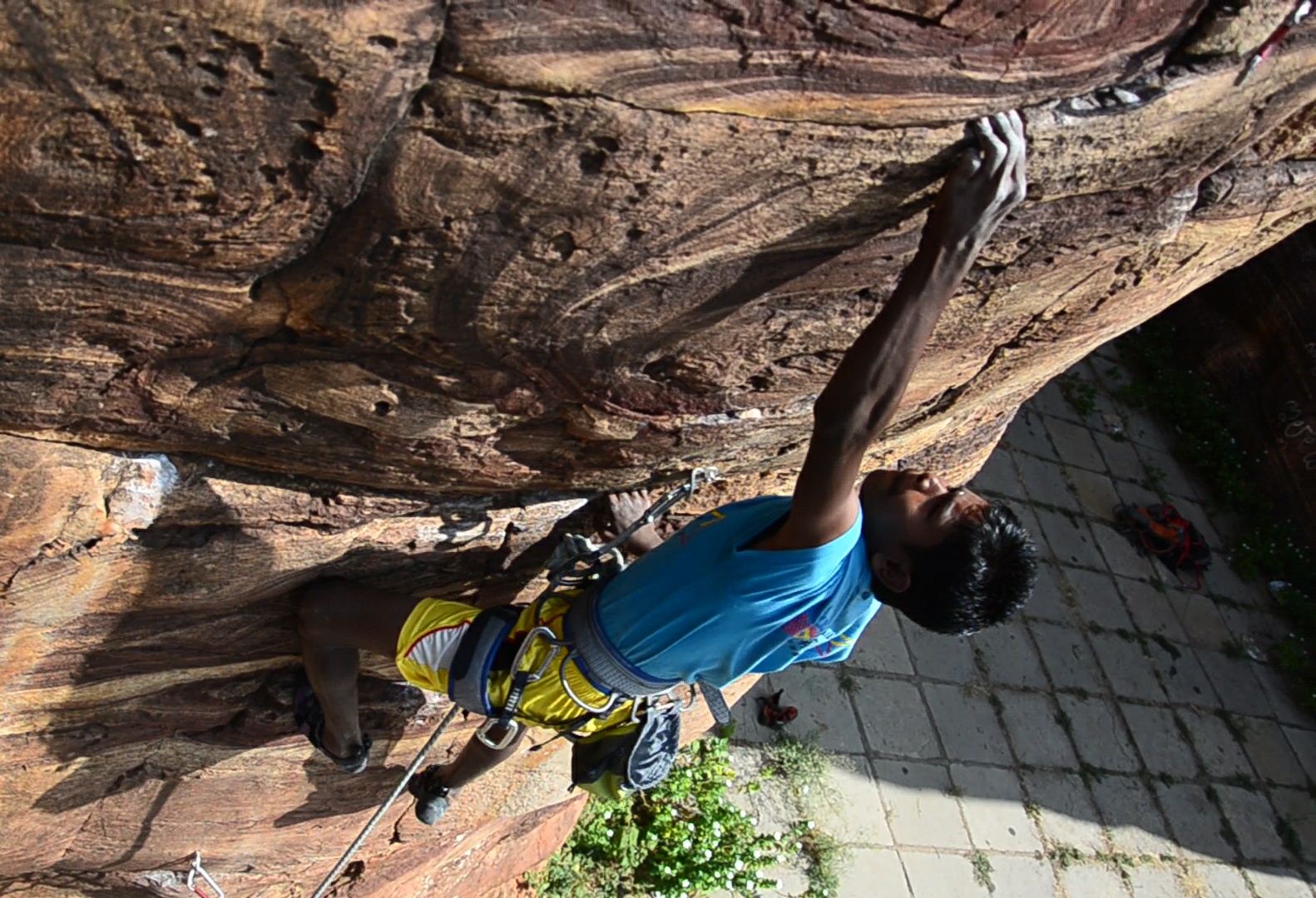
I came to know Boulder 15 a dozen or more years ago, when Girivihar, Mumbai’s oldest mountaineering club, popularized rock climbing in Belapur.

The place provided modestly long sport routes on rock faces and plenty of boulders – like Boulder 15 – to climb.

The boulders lay strewn around on the hillside, just past Artist Village. The converging valley had a right arm and a left arm as you faced it. To the right were the old climbing areas; to the left were the new ones. Boulder 15 was tucked in the woods to the left. The access to the old climbing area was through a growing slum. It was dirty access but had to be accepted as such for a roof over one’s head is everyone’s battle in Mumbai. As long as the rocks survived, the climbers were happy. Belapur’s was the Mumbai / Navi Mumbai area’s first properly developed crag with sport climbing routes and boulders graded for difficulty of climb.

Artist Village and the enclosed valley with hillsides hosting climbing crags are special for another feature. It has become a one stop shop for divinity. Many years ago, a couple of temples, a church and a mosque were all that God wanted. Then His appetite became voracious. There was a pattern – somebody would paint a small rock in holy colour; it would soon get coconuts and flowers placed before it, then a small roof would materialize and within months, a place of worship would assume shape. In the initial years of God’s hunger for land, the real estate gobbled up was away from the climbing crags. A good friend, who had purchased an apartment seeing the quietness and beauty of these hills, was soon disappointed. His large window began offering views of trees being cut and bulldozers in action. Today, on both arms of the valley, places of worship have come up. When the trend started, the climbers were worried. They speculated of approaching loss of places to climb. But they also knew – their freedom and rights are only as good as someone else’s.

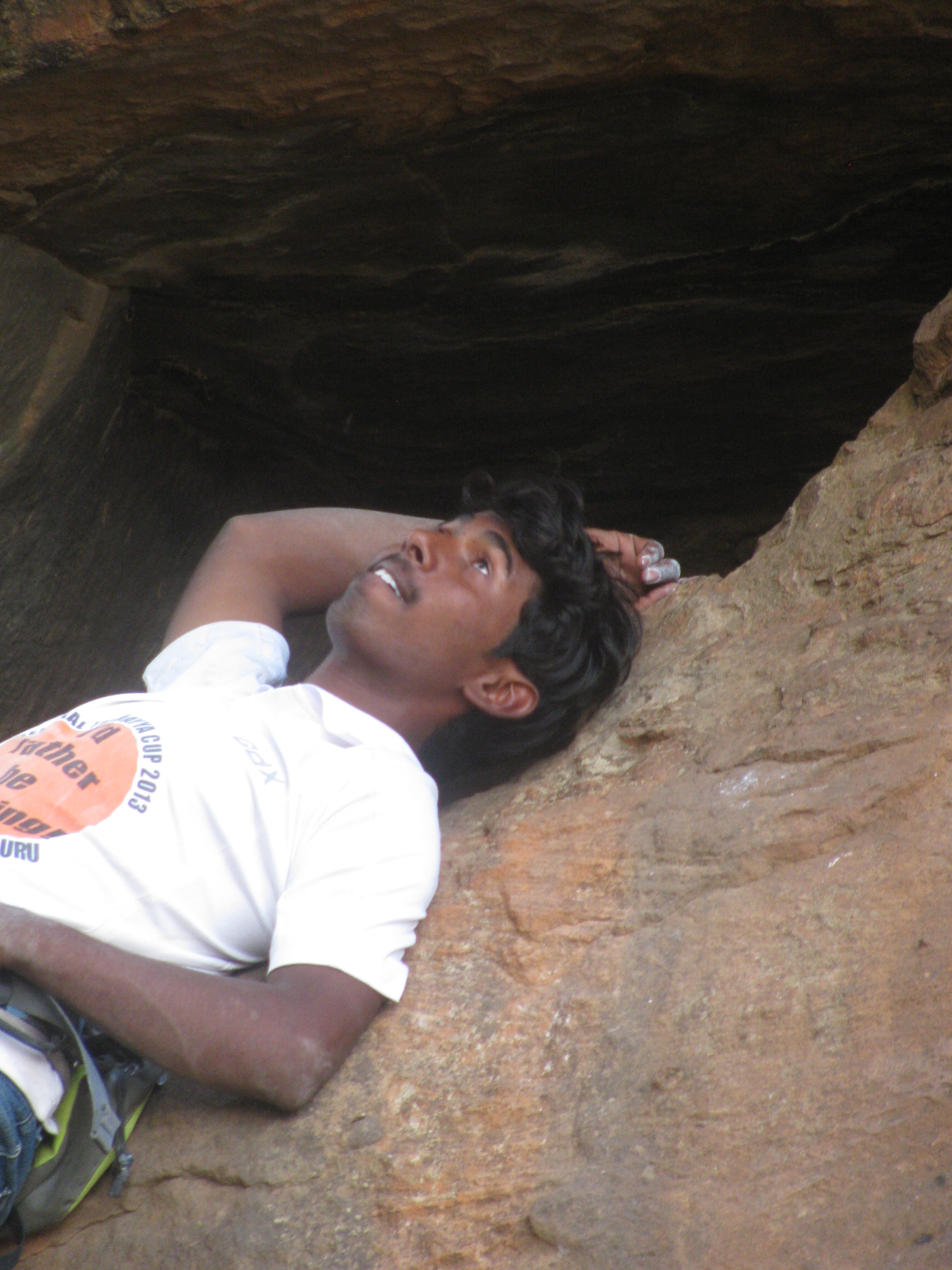
When a boulder is regularly climbed it acquires chalk marks. That’s how Boulder 15 used to be. Rock climbers love their rocks, seeing them as friends from an ancient past. Boulder 15 was a major attraction for climbers of beginner to intermediate grade. Overall, it is short, not exceeding perhaps six feet in height on the climbed side. But it provides a long traverse, the rock sharp enough to trouble the skin, an engaging pattern of hand shifts, carefully poised lunges and after all that – an exhausting pull-up to finish the route. It is a waltz in the park for experienced climbers. For those new to climbing and some months into it, Boulder 15 is engaging. I remained stuck in that intermediate grade of climbing; so Boulder 15 was a favourite.

Some weeks ago, after a break of several years from climbing, I returned to Boulder 15. More places of worship had come up on that hillside; several trees had been cut, others marked with paint as though awaiting sacrifice. Rather worryingly, twenty feet or so from Boulder 15, somebody had dug the foundation for a structure. By the next visit, couple of weeks later, Boulder 15 sported a large trident drawn with red paint.

Boulder 15 is not far from other boulders used for climbing. It acquired its name – Boulder 15 – because the climbing that happened in Belapur was enterprising enough to start one of India’s best rock climbing competitions more than 11 years ago. Each boulder used for competing was known by a number. Over time, as the encroachment on the hillside gathered momentum, the annual competition shifted to competing on artificial climbing walls. However, that was not before the local authorities promised to preserve the hillside as a “ nature park,’’ including empathy for climbing therein. Amid encroachment Belapur’s crags thus remained available for climbing even as elsewhere in Mumbai, crags faced pressure. Earlier this year, at an Udupi restaurant in Belapur, where a couple of us met for breakfast before heading out to climb, I recall chatting with climbers from Mumbai’s western suburbs come here to climb because they were denied access to their crags in Borivali. Despite its problems, Belapur had lingered an oasis.

What happened to Boulder 15 therefore disturbs.

On February 16, 2015, The Times of India published an article on the goings on. You can read it here: http://timesofindia.indiatimes.com/city/navi-mumbai/Illegal-shrines-slums-mushroom-on-Parsik-hills/articleshow/46257517.cms

It is understood that following the news report, senior officials from the local administration paid a visit to the hillsides in question for a first hand assessment of what had happened. Boulder 15 and other similar problems highlight a lacuna in Indian climbing. While safety regulations have been debated at climbing associations and government circles, there hasn’t been similar institutional support for ensuring continued, undisturbed access to climbing crags and the preservation of these crags. Crags near urban areas are particularly vulnerable.

(The author, Shyam G Menon, is a freelance journalist based in Mumbai)

EVEREST MAY GET COSTLIER

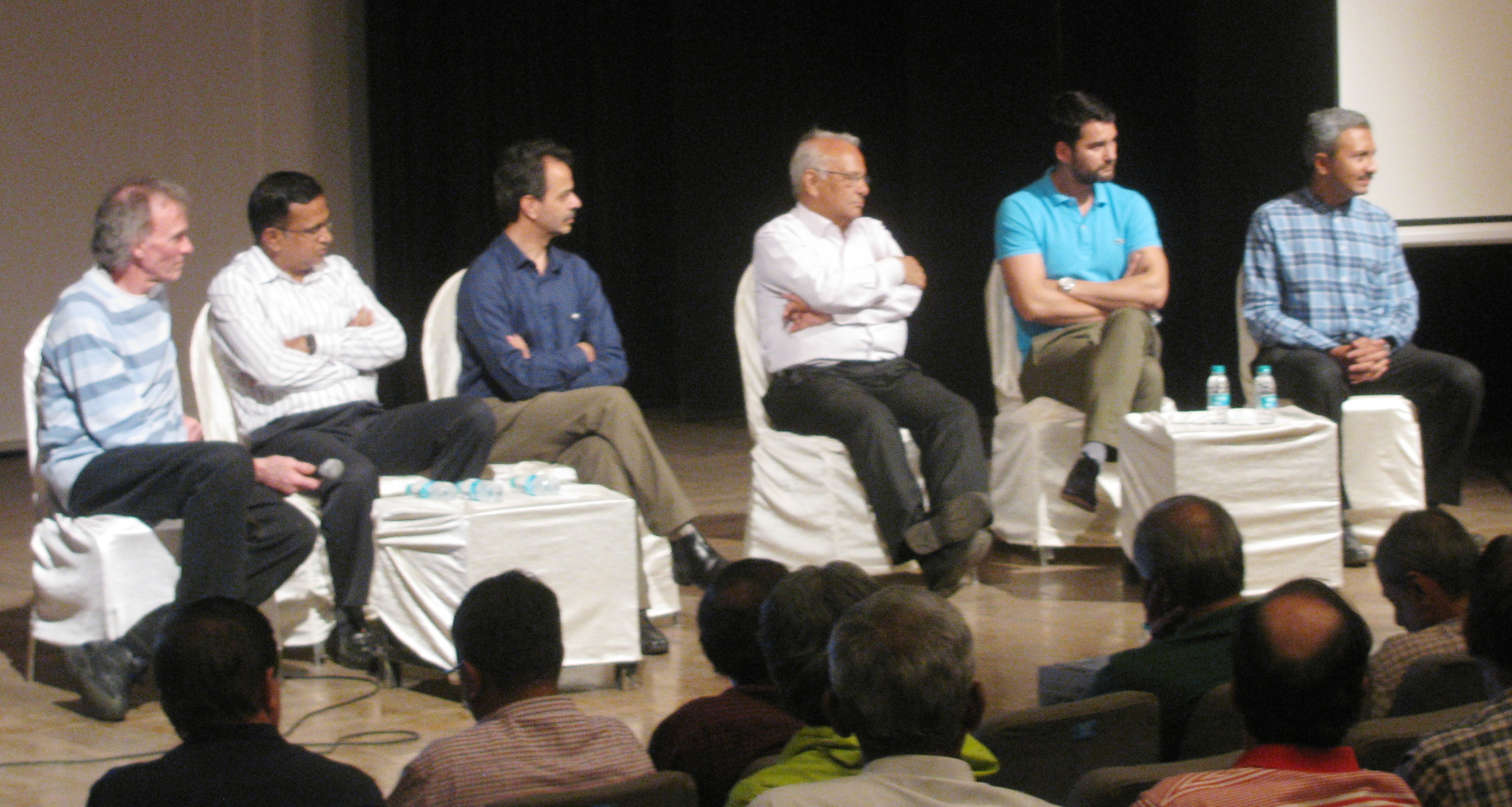
The Himalayan Club's panel discussion on Everest. From left: Lindsay Griffin, Umesh Zirpe, Dr Murad Lala, Harish Kapadia, Dawa Steven Sherpa and Divyesh Muni (Photo: Shyam G Menon)

The Himalayan Club’s panel discussion on Everest. From left: Lindsay Griffin, Umesh Zirpe, Dr Murad Lala, Harish Kapadia, Dawa Steven Sherpa and Divyesh Muni. Victor Saunders spoke via Skype, from England (Photo: Shyam G Menon)

Expeditions to climb Everest may become costlier in the future, Dawa Steven Sherpa, Managing Director of the Kathmandu based-Astrek Group, said.

The Astrek Group has in its fold, Asian Trekking, one of the best known names in organizing Everest expeditions.

Dawa based his views on the emergent need for better regulation on the mountain, underscored by recent events. A safer passage, which any regulation aspires for, could eventually mean more expensive expeditions.

In April 2013, there was an ugly episode when a small group of elite mountaineers climbing by themselves and a team of Sherpa mountain workers fixing ropes for many other climbers, had an altercation that led to a clash ( for that story, please see http://www.thehindu.com/todays-paper/tp-features/tp-sundaymagazine/whose-rite-of-passage/article4936209.ece). In April 2014, a year after the previous incident, there was a terrible avalanche on Everest that killed 16 Sherpa mountain workers on the spot with another person dying later.

According to Dawa, the first incident reported widely as a clash of conflicting climbing styles (unsupported alpine style versus commercial climbing format) actually had roots in the progressive evolution of the Sherpa mountain worker to someone conscious of his role and contribution to expeditions on the mountain. “ They no longer see Western climbers as above them,’’ Dawa said. It was a clash of egos; both sides saw themselves as elite in what they do. (Later he told this blog, news reports on the April 2013 incident were one sided and not sufficiently empathetic to Sherpa mountain workers because the community was not media savvy.)

At the same time, there is an element of accumulated grievance providing tinder. There is the competitive pressure of almost 2000 trekking companies in Nepal, all of them eligible to arrange Everest expeditions if they meet some basic criteria and very little of that criteria examining competence or accrued experience on the mountain. In the resultant race to quote low and secure clients for a shot at Everest, mountain workers’ salaries and working conditions take the hit. Thus, there are disgruntled mountain workers, mostly from the smaller companies. “ There needs to be a better way of deciding who is eligible to conduct expeditions on Everest and who is not,’’ Dawa said. The existing situation harbours danger. Besides, he pointed out, “ bad operators who treat their people badly are bad for the industry.’’

He said options that could be explored include positioning service providers in distinct tiers based on such factors as years of experience, nature of work done, staff strength, extent of training for staff, equipment quality etc, following which, a given agency in given tier could be matched with a suitable expedition. You could also create a structure to move up the ladder. However, completely questioning commercial expeditions for being a business or frowning down upon them is ill advised because many important shared services like search and rescue, availed by alpine style climbers too, are supported by the richer revenues from guided ascents. The two climbing styles co-existing together made sense.

Earlier Dawa had asked which expedition on Everest couldn’t be labelled commercial for under prevailing laws everyone climbing had to be associated with a trekking company and even alpine style climbers used porters to reach loads to the base of a mountain. One way to distinguish between the two would be to acknowledge as commercial, that expedition which wants every paying member or most paying members on the summit.

According to Dawa, surveys had shown that a majority of the Sherpa mountain workers lacked formal training but all of them had informally picked up skills as their mountain work was hereditary. With better industry regulation looming and logical at that, mountain workers have begun acquiring formal qualification to guide. Dawa said that 33 Sherpas now possessed international mountain guide certification; in another month at least seven more workers would similarly qualify. On the other hand, a qualified professional won’t work for a low salary. Also, some of the qualified mountain workers prefer to work as guides in the proper sense of the word. They decline to carry clients’ loads.

All this – from the likely shake-up within the 2000 odd trekking agencies to mountain workers improving their technical qualification – point to more expensive Everest expeditions in the future. On the client side, this weeding out could mean a drift back to technically competent climbers on Everest as opposed to anyone who can pay.

Fuelling the trend further is the frustration from accidents like last year’s avalanche. When the avalanche occurred and people died, of the more than 50 Liaison Officers who should have been around (they could have helped coordinate with government), only three were present. The concerned government minister visited eight days later, for which event some of the liaison officers made sure to be present. These actions were noticed by the community of mountain workers, provoking anger, Dawa said.

Dawa was speaking mid-February 2015, at the annual seminar of the Himalayan Club in Mumbai.

Providing an overview of the concerns of Sherpa mountain workers, he said that they saw their job on Everest as traditional and hereditary. They felt that risk rose with price war; the industry’s rules and regulations were not known well to its rank and file, government decisions were sometimes ad-hoc and not including mountain workers in the process, a professional rescue squad is absent, priority in rescue goes to foreigners, the mountain workers wanted a bigger share of the royalty collected from mountaineering to be ploughed back into the industry and there should be better employment conditions and better monitoring by government of the conditions on expeditions.

A panel discussion on what Everest climbs had come to be – featuring Victor Saunders, Lindsay Griffin, Umesh Zirpe, Dr Murad Lala, Harish Kapadia, Divyesh Muni and Dawa – witnessed heated debate around Zirpe’s successful leveraging of Everest’s popularity to raise resources for climbing 8000m peaks and Kapadia’s contention that many technically challenging climbs existed, often unexplored, in the less expensive smaller peaks of the Himalaya.

Interestingly, costs are lower to attempt Everest by routes other than the much climbed normal route; costs are also lower for climbs in the off season. There are few takers.

(The author, Shyam G Menon, is a freelance journalist based in Mumbai)

“ WE AS CLIMBERS, HAVE TO MAKE IT MATTER.’’

Vaibhav Mehta (Photo: Shyam G Menon)

Vaibhav Mehta (Photo: Shyam G Menon)

Speaking to Vaibhav Mehta on the proposed World Cup in bouldering, India’s first:

Vaibhav Mehta has been associated with Girivihar’s annual climbing competition at Belapur, Navi Mumbai, since its inception. He is the technical brain, route setter and in many ways, the raison d’être of the competition. It is hoped that next year -2016 – Navi Mumbai will host a World Cup in bouldering. Subject to the receipt of all required clearances from authorities, the event, once official, will be organized by the same team which worked behind the annual competition. Vaibhav – he works and lives in France now – was in Belapur recently. During two days spent discussing the World Cup project and catching up on climbing at the local crags with his friends, Vaibhav spared time to talk to this blog.

Excerpts:

The annual climbing competition organized at Belapur, Navi Mumbai, won’t be happening in 2015. Can you explain why this is so?

The whole idea of not having the competition this year is to move toward our longstanding goal – the World Cup. We have already done leg work in terms of meeting officials, preparing plans and creating initial documentation. Had we conducted the annual competition this year, then our efforts to put up the World Cup would have been compromised. It made sense to step back and think about the goal. The other thing is that even after conducting the competition for eleven years, resources remained a problem. Every year as the competition approached, it was a fire fight. We need to address resource-raising comprehensively. On account of all this a break was warranted.

In the world of climbing, we hear of World Cup and World Championship. How are the two different?

The World Cup in bouldering, which is what we are interested in, happens every year. It falls within a season of three to four months and includes six to seven World Cup events. The World Championship happens once every two years. The format is the same. Some venues strongly associated with the climbing culture, like places in Europe and within that, places from countries like France and Germany, tend to repeat more than other venues. That said, I would think that the International Federation of Sport Climbing (IFSC), is keen to promote the sport and would look at venues in regions where climbing is catching on. I am sure they are aware of India on the rock climbing map thanks to internationally known climbing locales like Hampi and Badami. They are aware of the potential.

File photo of the 2014 Girivihar competition (Photo: Shyam G Menon)

File photo of the 2014 Girivihar competition (Photo: Shyam G Menon)

At what stage are the efforts to bring a World Cup to Navi Mumbai? What specific disciplines will it cover?

The World Cup will feature bouldering. In terms of how far we have reached – we secured approval from the Indian Mountaineering Foundation (IMF); they have said they are willing to collaborate with Girivihar for the World Cup. The venue will be in Navi Mumbai. All the preliminary papers have been submitted to the IFSC. We are now awaiting their word. Should it be a go-ahead, then the real work towards organizing the event will commence.

One of Girivihar’s internal mailers on preparations for the World Cup spoke of selecting a team of Indian climbers and training them to participate in the event. Can you elaborate on what you have in mind?

When the IFSC awards you a World Cup, the host country typically gets a quota of ten climbers to participate in the event. We will try to find young, promising climbers and train them to compete with the best, at the World Cup. Most likely, the team will be jointly decided by the IMF and Girivihar. There is a reason for my saying so. At eleven editions old and a well documented exercise at that, the Girivihar competition has data on the performance of many climbers who participated, some of them repeatedly. I am not aware of similar data for bouldering, spread across so many years, with any other event in India. This is data that can be used as valuable reference material. And it must be used in conjunction with other relevant factors, like a climber’s ability to handle the stress and competitive spirit you find at elite competitions. We know from experience that we have some good candidates. If this approach is unacceptable, then another method would perhaps be to go by the performance of eligible candidates over the preceding three years, including how much the climber has improved. We could have a selection trial, a simple test where you set up a few boulder problems to gauge how the candidate climbs, the climbing style shown, the person’s attitude and very importantly, how the candidate reads the route and uses the available time. All this is critical from the perspective of a World Cup. What I will emphasise is that this selection should not ideally be only about a climber’s performance. It should also dwell on the climber’s promise and potential to improve for we are complementing team selection with a training process.

File photo of preparations for the 2014 Girivihar competition (Photo: Shyam G Menon)

File photo of preparations for the 2014 Girivihar competition (Photo: Shyam G Menon)

For training, we would love to send the selected team overseas, provided we have the money. I may be able to set the routes for selecting a team but I have no illusions about my abilities – at this stage, I am not good enough to be a coach. I can only guide. For the initial phase of training, we can possibly have an Indian coach. Or, we can have a foreign coach for the whole duration of training as the expertise of grooming climbers to world standards is anyway more overseas than here. The World Cup in Navi Mumbai is planned for May 2016. We hope for an intense training schedule and training camp that peaks for the World Cup. Ideally, the team selection should happen as soon as we get the IFSC clearance for the World Cup. The initial training should continue till mid-2015. After that, the team should focus on training specifically for the World Cup.

An event of this nature needs sponsors. They like to know what their support can translate into for a given sport. Can you explain what the proposed World Cup can mean for competitive climbing in India? Why does this World Cup matter?

Why this World Cup matters? I think we as climbers, have to make it matter. We have to make full use of this opportunity. It is fine to say that we organized a World Cup but it is even more important to clearly communicate the whole package, including its transference as inspiration to youngsters to get involved with climbing. There is definitely the promise of the World Cup having a multiplier effect on the popularity of climbing in India. If you have noticed, there is a climbing culture slowly growing. For example, in whatever modest way it may be, a lot of indoor climbing walls have come up. Imagine what can happen if these climbing enthusiasts also got to see the best in the world, in action. And the best in the world will come if you have a World Cup. As I said, there are around six to seven World Cup events every year. As you participate in each, you accumulate points in accordance with how you finish at each event and by year-end you have climbers with the most number of points. As this final tally matters, usually, the best climbers arrive for every competition. So far you saw them only on video. Now you see them climbing in real life. This should add to the potential multiplier effect of the World Cup on Indian climbing. Not to mention, the ringside view of top athletes that aspiring climbers here will get.

Vaibhav (Photo: Shyam G Menon)

Vaibhav (Photo: Shyam G Menon)

Can you tell us how the typical World Cup feels like?

Most of the countries hosting World Cups so far are well known in climbing. In these countries, a World Cup generates much interest in the local community. They take pride in hosting such a competition; they also wish to see their home team do well. In India, we will have to create that curiosity and interest. The question is – how well will the local community beyond the climbers themselves, respond? For that we are looking at specific events. Certain events during the World Cup and some that will continue after the World Cup to sustain the impetus. We are also looking at associated events that can happen during the World Cup; acts linked to BMX, skate boarding and slack lining.

You have been part of the Belapur competition’s organizing team for over a decade now. How useful will that experience be, particularly when it comes to organizing the World Cup?

Organizing the Belapur competition for eleven years has been a valuable experience. It has been trial and error but we have rectified our mistakes and improved considerably over time. This experience will definitely helps us in organizing the World Cup. Looked at differently – the upcoming event will be called a World Cup but at heart it remains a competition, which is what we organized for the last eleven years. However there will be challenges. The main one will be – scaling up the resources required to match the size and expectations of the World Cup. The overall budget is much bigger and within that details matter more than before. For example, previously we used to host half a dozen foreign climbers during the annual open competition. At a typical World Cup, there will be 20-30 of them and standards to be followed. We can’t compromise on standards.

(The interviewer, Shyam G Menon, is a freelance journalist based in Mumbai)

THE OTHER GANESHA

Ganesha Waddar (Photo: courtesy Ganesha)

Ganesha Waddar (Photo: courtesy Ganesha)

In India, the climbing route Ganesha (8b+) in Badami, is a pilgrimage for addicts of sport climbing.

As of January 2015, its reign as the hardest sport climbing route around was continuing albeit insecurely, for two other routes had emerged and their complete ascent was all that stood between them and the crown.

En route to Ganesha (aka Ganesh), before the path winds up to the crags of the Temple Area, in a house, the last one on the left and opposite the Mallikarjun School lives the other Ganesha.

The first time I met Ganesha Waddar showcased the strange coincidence of two similar names in the neighbourhood.

It was early 2014 and I was in Badami to write about the climbing around Ganesha 8b+.

As I approached the Temple Area, a youngster said hello.

“ Are you a climber?’’ he asked.

I laughed and gave him the accurate answer: I was once climber, now a shadow of it.

He introduced himself as a climbing guide of sorts and asked where I was headed.

“ I am going to Ganesha,’’ I said.

He smiled and pointed up the hill, to the side, “ right there.’’

He seemed a good sort to talk to.

“ What’s your name?’’ I asked.

“ Ganesha,’’ he replied.

That chance encounter stuck in my mind.

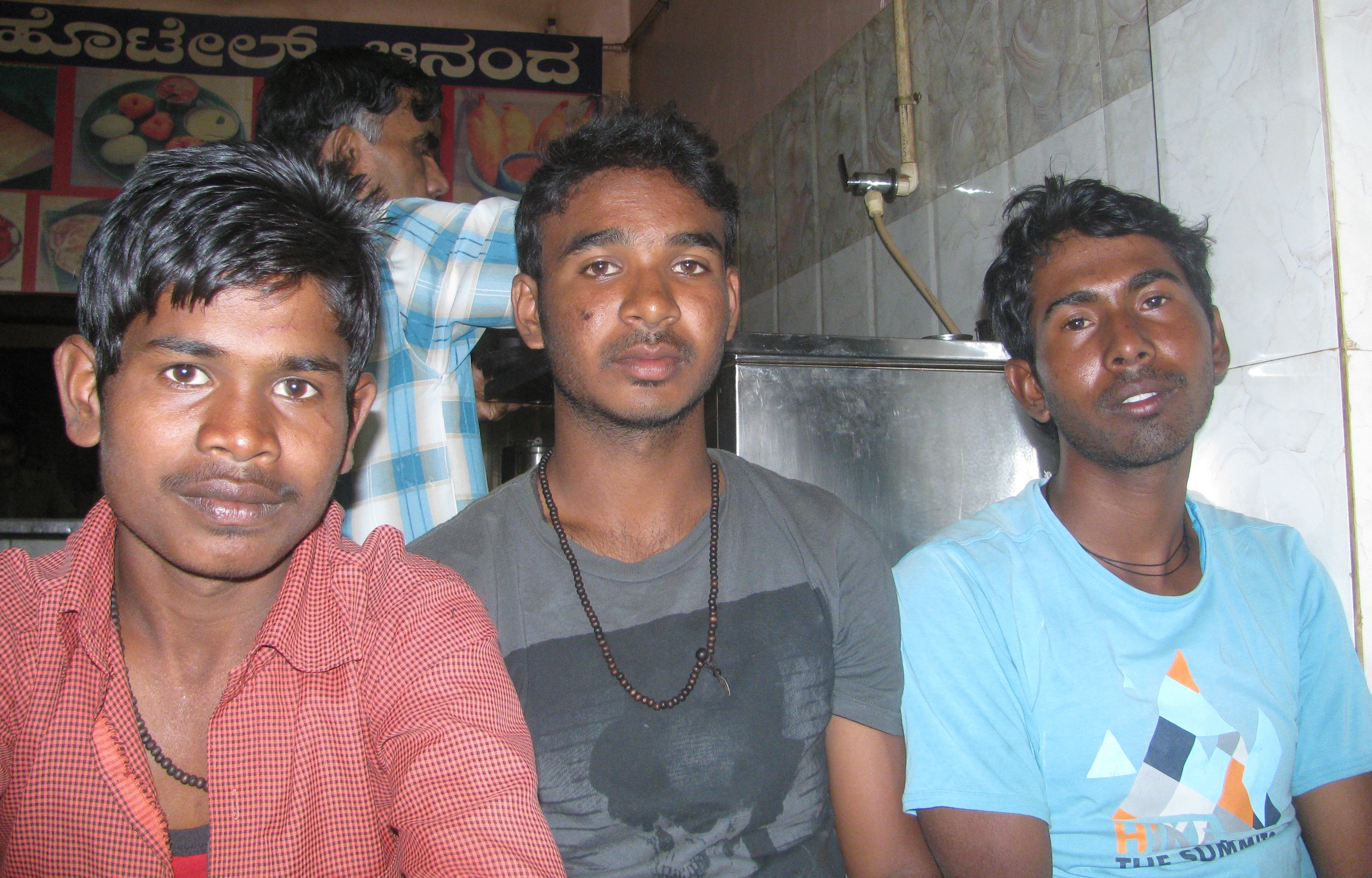
Manju, Shivu and Ganesha (Photo: Shyam G Menon)

Manju, Shivu and Ganesha (Photo: Shyam G Menon)

It was now January 2015; time to hear the story of the other Ganesha.

We were in a small, busy restaurant in Badami.

It was noisy outside; noisier inside. Not a great place for coffee, except, the coffee was really good.

Ganesha and Shivu Waddar, both 19, sipped the piping hot brew.

Ganesha is the youngest of four brothers. His father, who Ganesha said used to be a small time contractor doing civil work, died a year and half ago. The youngster, having completed studies till the tenth standard was technically into first PUC (pre-university course). However he had been away from studies for the past two years.

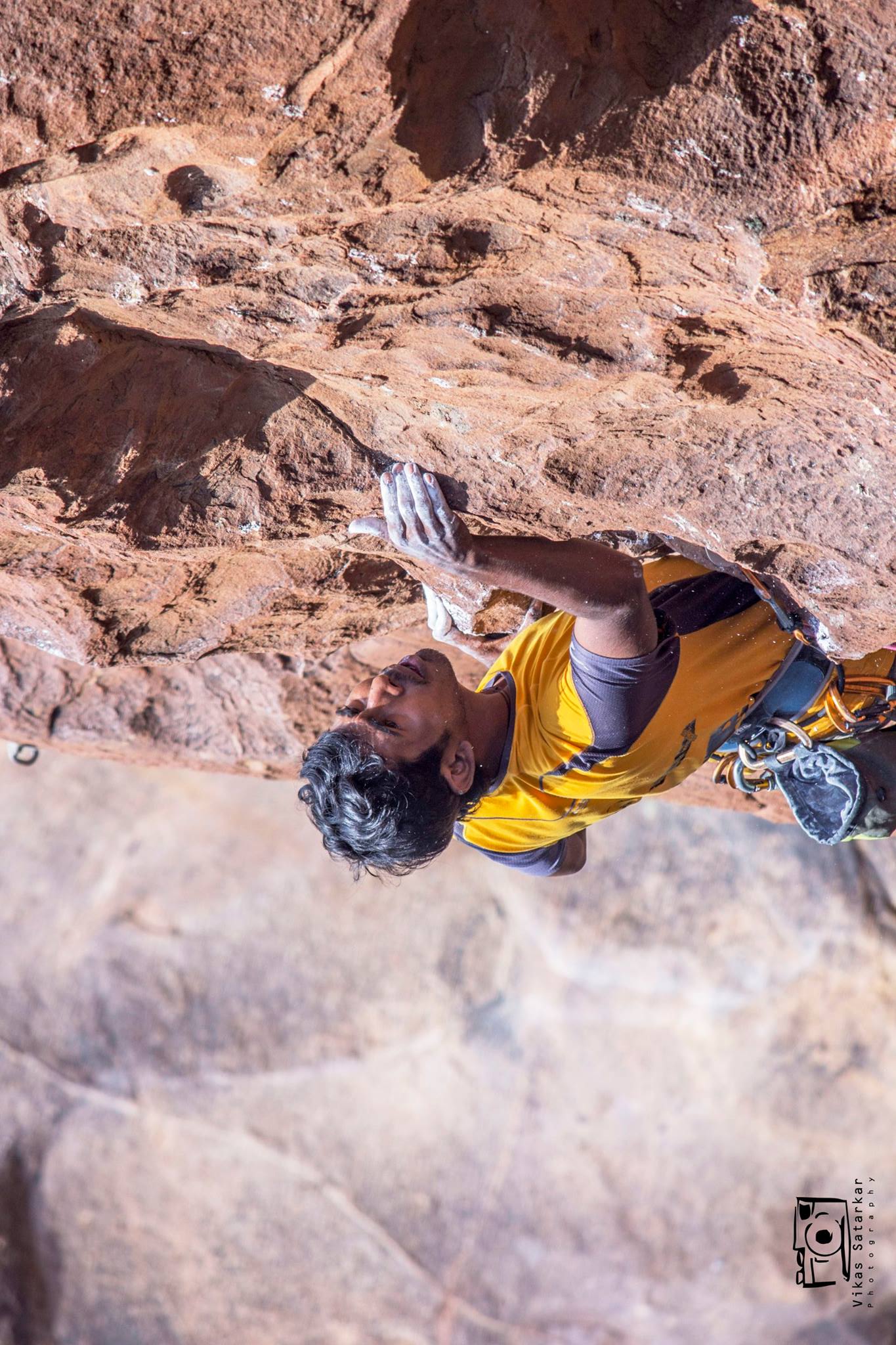
Ganesha in action (Photo: courtesy Ganesha)

Ganesha in action (Photo: courtesy Ganesha)

Situated as his house was on the local stairway to climbing’s heaven, Ganesha grew up seeing climbers. He used to follow them and watch what they did. “ Back then, my English was very bad. I couldn’t communicate. Eventually I managed to tell them of my desire to climb,’’ he said. The first climber who indulged this wish and got him started on climbing was an American. This was over three years ago. As I learnt late in the day, for better climbers knew it earlier than me, Badami has its crop of young, home grown talent. During a conversation with Kumar Gaurav, one of India’s best upcoming climbers, he had mentioned of Ganesha and Shivu, among others, as those he had climbed with during his training trips to Badami. They belayed Gaurav while he was visiting Badami and training alone.

It was evening and the restaurant was crowded. Ganesha had been trifle fidgety as though waiting for somebody. He now relaxed. A small, light youngster approached and sat down, the third person on the restaurant bench before me. Meet Manju Waddar.

Manju climbing (Photo: courtesy Ganesha)

Manju climbing (Photo: courtesy Ganesha)

By the time I reached Badami in 2015, Jyothi Raj’s film – Jyothi Raj alias Kothi Raj – had come and gone. Some of the climbers in town had seen it too. Based in Chitradurga and a regular sight climbing the fort walls there, Jyothi Raj’s story is well known in Indian climbing circles. According to Ganesha, it was Joythi Raj who advised him to participate in the south zone climbing competition, a move that at the very least would get the youngster out of Badami and into a bigger world. He competed in the 2012 south zone competition and finished a creditable fourth, sadly just outside the selection level for the national competition. The experience was slightly different for Manju.

He had moved to a house some distance from Badami. Manju, 16, used to be Ganesha’s neighbour; that’s how he got into climbing. His father too is engaged in civil construction work. Manju studied till ninth standard; his education has been erratic owing to financial strain. To make ends meet, he works in the construction line. Apparently, Manju was also nudged into participating in the south zone competition by Jyothi Raj. Manju finished third at the south zone competition and ninth at the nationals. He has a lingering fancy for competition climbing while Ganesha prefers a non competitive format.

Ganesha, during his course at HMI (Photo: courtesy Ganesha)

Ganesha, during his course at HMI (Photo: courtesy Ganesha)

In 2014 Ganesha did his Basic Mountaineering Course from the Himalayan Mountaineering Institute (HMI), Darjeeling. Poonacha Madappa, a well wisher then based in Bangalore, filled in his application form and provided funds. Foreign climbers provided trekking shoes and backpack. He finished his course with an `A’ grade. He would like to do the Advanced Mountaineering Course. He and Manju now feature on a website (http://climbingbadami.in/) offering help to visitors wishing to climb in Badami. It was set up two months ago (which would mean the closing part of 2014) by a Swedish couple who are into climbing. In Badami, Ganesha had helped them. Indeed days after I first met him in 2014, I saw him climbing with a visiting group of young climbers from India and overseas, leading a route and then setting up a top rope for them. The hardest route Ganesha has led was a 7a. He felt that Manju, who is a strong climber, should be around 7b. They often work together as a team. Shivu, 19, also helps Ganesha.

Over time, foreign climbers passing through have given Ganesha a small cachet of used equipment – some ropes, quick draws, helmets, harnesses. He would like to add to it some new equipment. Money remains an issue, although Ganesha periodically works, including work away from Badami.

Ganesha, early 2014 (Photo: Shyam G Menon)

Ganesha, early 2014 (Photo: Shyam G Menon)

Shivu would like to continue his studies.

Manju wouldn’t mind more competition climbing and hopefully, a job in climbing or one linked to it.

At my question on what he wished to do, Ganesha thought a while.

“ Two years back I didn’t have money. Now it is a little better. I wish to study and also improve my climbing,’’ he said.

That’s the story of the other Ganesha.

(The author, Shyam G Menon, is a freelance journalist based in Mumbai)

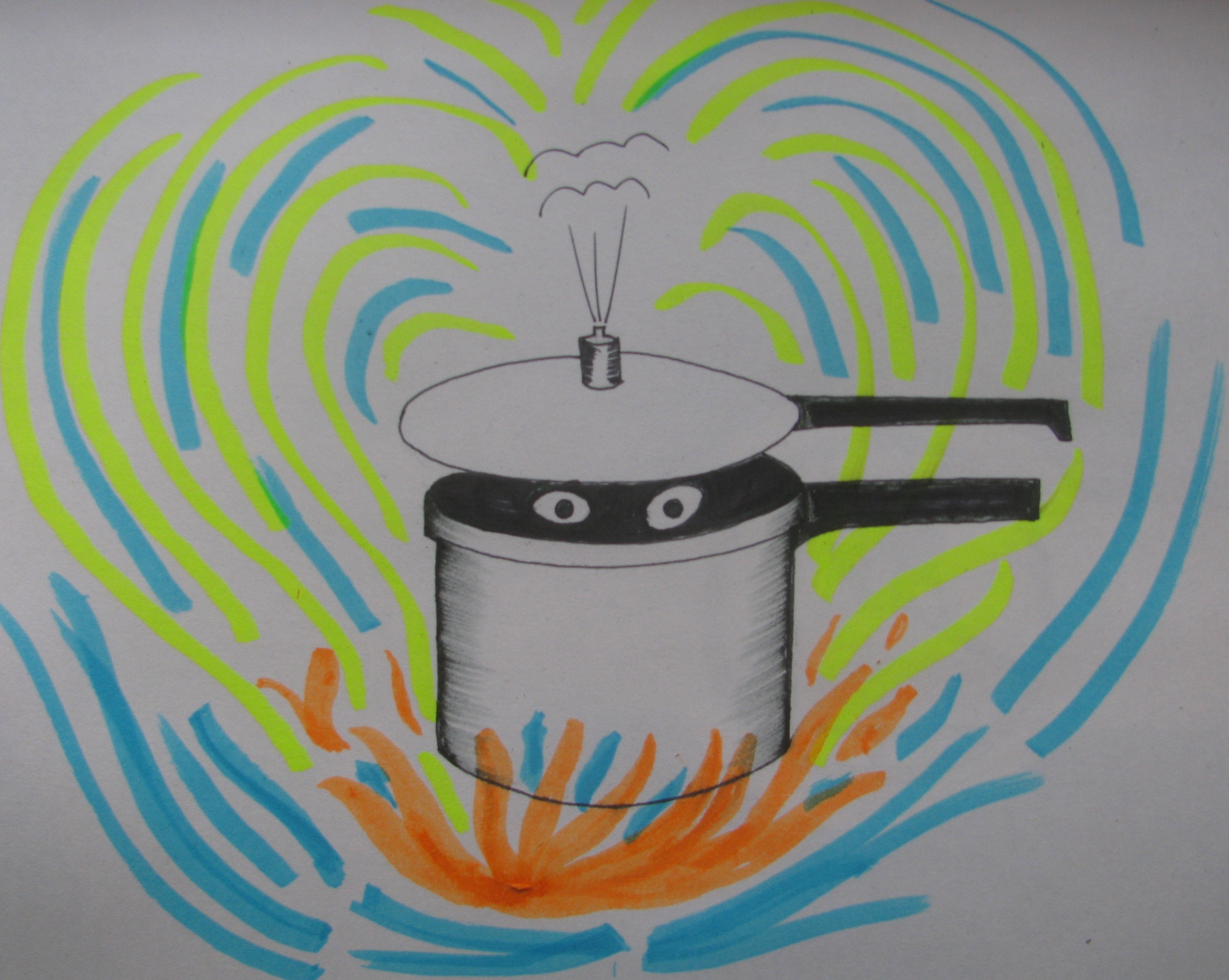
THOUGHTS FROM A PRESSURE COOKER

Illustration: Shyam G Menon

Illustration: Shyam G Menon

Among the rewards for being out in the mountains, is the night sky, occasionally clear enough to reveal a zillion stars.

Beyond one or two, I can’t identify the constellations. I like more, the immensity of Earth’s ceiling.

Sometimes I feel, the best news these days relate to that vast expanse above us – space.

Space attracts in a way different from before.

There is first the immediate reason – Indian endeavours in space have been generally rewarding in recent times. At a global level, the Rosetta mission’s landing on a comet was reported as the premier scientific achievement of 2014. Then there is the ` other’ reason, less spoken of but major hook for admiring space – space contrasts terrestrial life. Space exceeds measurement while the planet is real estate ruining imagination. Space engages body and soul. If you have no appetite for the trends shaping life on Earth, the stars are fine refuge.

It took a while for space to regain the limelight; and differently so. In the decades following the July 1969 moon-landing, the accomplishment of the Apollo 11 mission was never matched. Scientists and engineers may disagree. They may cite other achievements of equal or greater importance. But like the first ascent of Everest despite the many that followed, our fascination rests with Neil Armstrong & Co (as indeed Yuri Gagarin in 1961). I can recall only two other perspectives from exploration, triggering comparable imagination – the picture of Earth as seen from far (subsequently called Earthrise) and the many fantastic images science obtained for us by gazing into deep space. Home from far and ` the far’ from home. It put Earth and humanity in context. Much of what happened in space exploration since the first human footprint on the moon can be termed as consolidation. Far seeing telescopes, reusable vehicles and space stations were the dominant themes. As we consolidated our efforts in space, as we tested our capabilities in orbit around Earth for journeys longer than Apollo 11, the planet below steadily drifted into a morass, a sort of manmade social gravity and a terrible one at that. The closest I can describe its effect on the imagination is compare it to sticky glue; its main ingredient – insecurity.

Photo: Shyam G Menon

Photo: Shyam G Menon

In a mere 100 years or less from the first decade of the 20th century, human population increased seven fold. That is old news as is India’s eminence as the deep end of population. The danger is – it stayed news we refused to acknowledge adequately, triggering the bizarre tragedy of continued self inflicted damage. Consequently, in a case of bloated human predicament overshadowing the universe, nature remains multidimensional but our sense of self worth and happiness has shrunk to few dimensions, courtesy the pressure to survive. To compound matters, even as we notice the danger in our numbers, we still enshrine fertility, family, property ownership, success and such as proof of life well lived. It vitiates the rat race born from numbers. Add to this competition, violence, terrorist attacks, regressive religions, conservative communities and rampant consumerism taking its toll as pollution and climate change. It is a crisis of the imagination. Neither do we concede that our habits and social structures were born in less pressured times and hence likely unsuited now, nor do we wish to recalibrate our ways to changed environment. Isn’t zooming from one billion people to seven billion plus in a hundred years with all the corresponding social noise alongside, sufficient change in our environment to deem it fundamentally altered? And if it is fundamentally altered why are we still navigating it with old traditions? The problem in our approach is that our continued indifference to population and what population does, merely adds to the planet’s and this country’s collective insecurity. Our talent for seeing the obvious, for reasoning – are all increasingly countered by the insecurity and unreasonableness spawned by our numbers. What next?

That’s why it is important to tell people that more of us mean trouble for all in terms of a sense of life. Not hearing a word uttered so by anyone in a leadership role, I have given up hoping for a renaissance of the imagination. My world is awash in concerns of survival and money. Looked at as a product of human numbers, in 1969, we were around halfway to this situation. Even 1977, the year Voyager-1 left the planet, was some distance from where we find ourselves in. In direct proportion to how beleaguered terrestrial life seems, space appears the stuff of a freedom denied on Earth (I speak metaphorically). If you are a seeker, then you dream of freeing one’s imagination from humanity’s collective insecurity. Get rid of this manmade gravity, like a rocket breaking free from the Earth’s pull.

Slowly but steadily, there has been news of the post-Apollo 11 consolidation in space, giving way to hints of similar journeys and perhaps, longer ones. There is a pattern emerging. The established big players are pushing farther; new entrants are following where the pioneers went and the easier tasks are fetching interest from commercial players. At the still lower terrestrial level of popularizing science and science fiction, the media gave radical edge to its legacy baked by ` 2001 – A Space Odyssey,’ `Cosmos,’ `Star Trek’ and `Star Wars.’ Alfonso Cuaron’s 2013 film `Gravity’ was gutsy enough to depict space as it is. At $ 716 million earned (as of late January 2015, source: Wikipedia), Gravity is some distance still from the list of the world’s top 50 box office hits led by `Avatar,’ itself a story from another planet. The Star Wars franchise has three films in the list, including the oldest from 1977, incidentally the year Voyager-1 was launched.

Illustration: Shyam G Menon

Illustration: Shyam G Menon

In 1990, Voyager-1 took Earthrise leagues ahead by giving us the ` pale blue dot,’ an image of Earth from six billion kilometres away. Our farthest probe, Voyager-1 is now in interstellar space. That is a long way off. Wikipedia’s page for the probe fascinates with its estimation of where it may be 300 years from now. Sample this sentence: “ Voyager-1 will reach the Oort Cloud in about 300 years and take about 30,000 years to pass through it.’’ Thirty thousand years is older than human civilization; our earliest cave paintings are 35,000 years old. Imagining Voyager is a nice way to escape the troubles and insularity of terrestrial existence.

Perhaps the resurgent space exploration we are witnessing now (even the popularity of India’s Mars mission) is apt, for never before have we felt as pressing a need to question the human situation, maybe even escape it, as we do now. Ironically it is also true, decades spent worshiping the stomach probably makes the pursuit of the beyond possible. As the frontier of exploration, space technology stands on the shoulders of more mundane developments within the human rat race, to reach that far. Much like the heart; although located lower down, it is what supplies blood to the brain. Either way, we seem closer to appreciating the vastness above us for what it is.

1969 to now has been long enough time in the terrestrial pressure cooker.

Reading about what lay beyond the cooker’s lid or glimpsing it, is relief these days.

Latch on in your imagination, to a space craft and be borne out.

Seeing ourselves from far and the far from where we are, help restore humility and context.

(The author, Shyam G Menon, is a freelance journalist based in Mumbai. An abridged version of this article appeared in the Economic & Political Weekly)

THE GHOST WHO WRITES

Photo: Ravi Kumar

Photo: Ravi Kumar

It was winter, 2013.

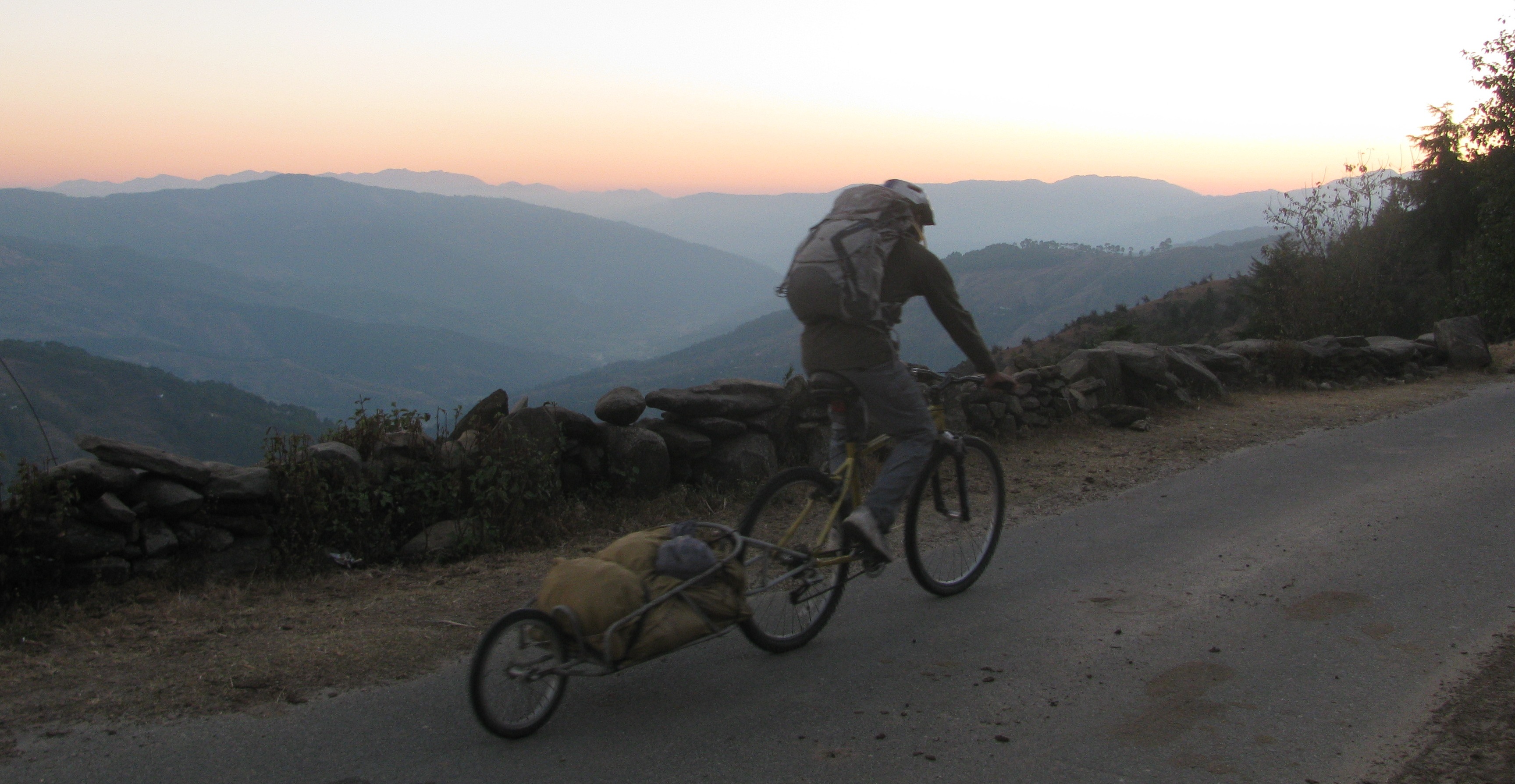
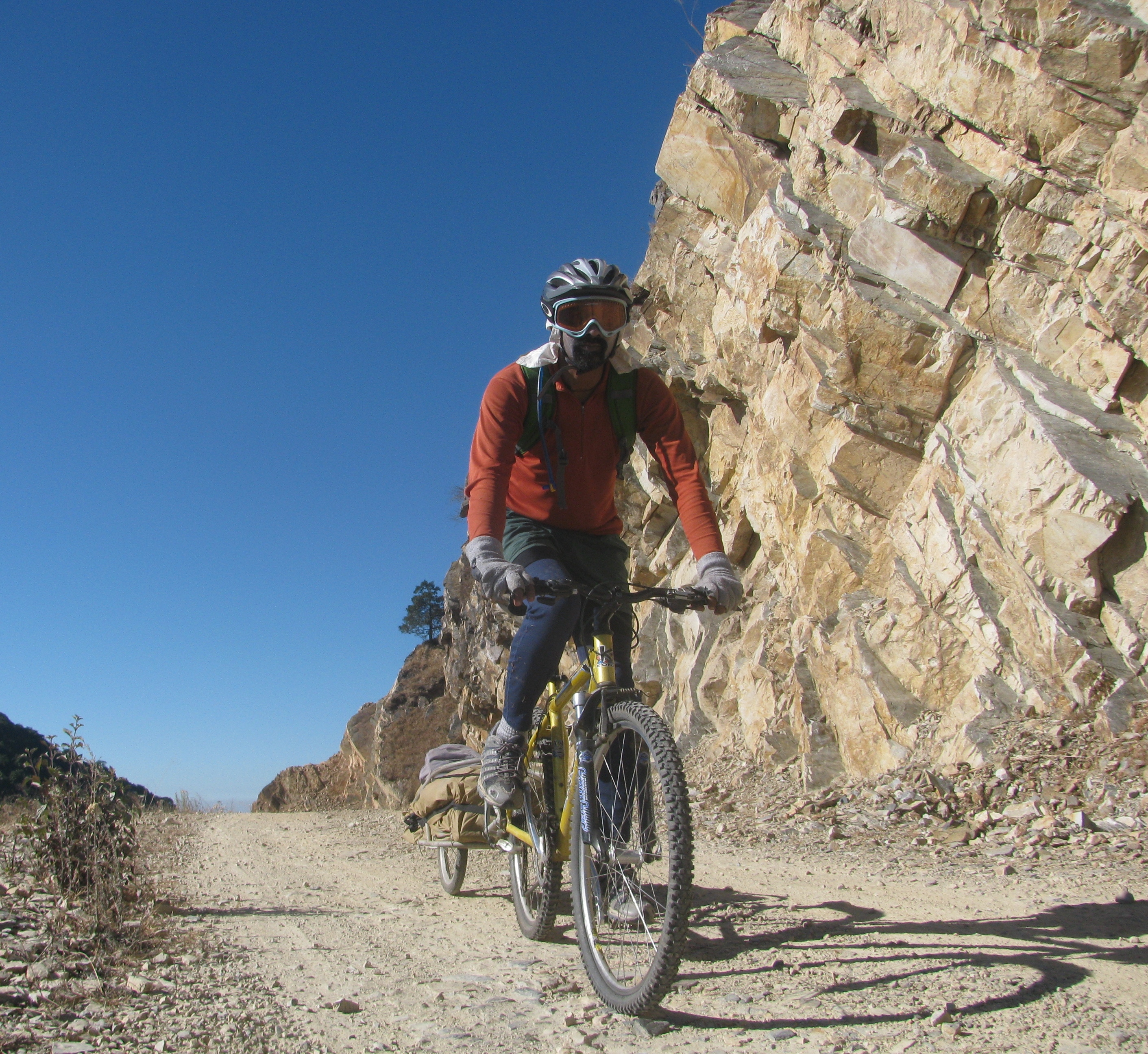
Cycling with trolley attached, is tough in Uttarakhand’s hills.

You have long uphill sections.

They seem a breeze when tackled in a car, jeep or bus.

To know what those roads actually are, you have to either run or cycle.

We took turns cycling the Kona, which hauled the trolley.

Ahead of Lansdowne we were having a particularly long day. As evening settled in, everything about our condition indicated that we had best halt somewhere. Problem was – there wasn’t any good place to stay or a clearing, quiet and sufficiently out of the way, for us to camp. We felt we might turn lucky if we pushed on. This we did on a very long ascent, half way up which, day transitioned to night and we found ourselves cycling with our headlamps on. Now that – is a very unwise thing to do in the mountains where the road-edge plunges hundreds of feet down. We knew this well. Eventually, at a turning on the road, we found a temple. But we had either run out of food or were exhausted enough to wish that somebody would feed us. We could see lights on a hillside some distance away. Ravi waited at the temple while I went ahead to look for a house and hopefully, a hospitable family who will cook us dinner.

I found both.

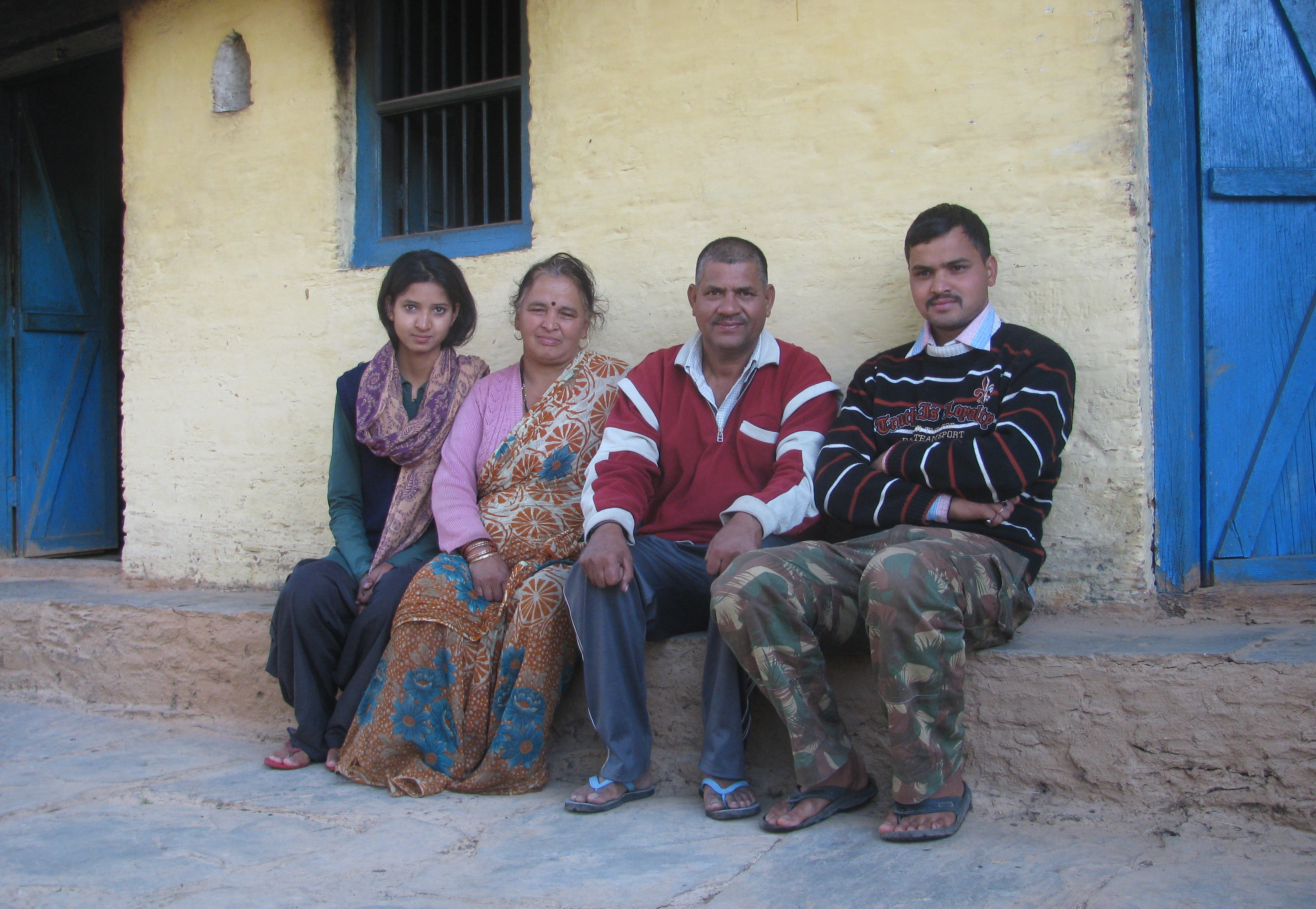
The family we stayed with (photo: Shyam G Menon)

The family we stayed with (Photo: Shyam G Menon)

Roughly a kilometre on from the temple, about fifty feet up from the road was a house with its light still on. I asked if there was anyone around. A dog barked. Then a man emerged from the house. He listened to my request. I knew it was unexpected and tabled too late. He initially offered dinner cautioning that there was nothing special available and we would have to eat what the family had. “ That’s very kind of you. It is more than what we wanted,’’ I said. After ten minutes of quizzing to make sure that we were genuine travelers, he offered us food and a room to stay in. He urged me not to stay at the temple and instead, stay in the spare room at his house. I fetched Ravi. We parked our cycles in the courtyard of the house. We had dinner, conversed with the family and slept soundly. After a hearty breakfast, we offered to pay. The man, a former soldier, accepted nothing. I remember what he told me when I first asked for food, “ you are travelers. I have also traveled on work. I know what it is like to be in an unfamiliar place. Get your friend, you can eat what we have.’’

God bless that family.

Photo: Shyam G Menon

Photo: Shyam G Menon

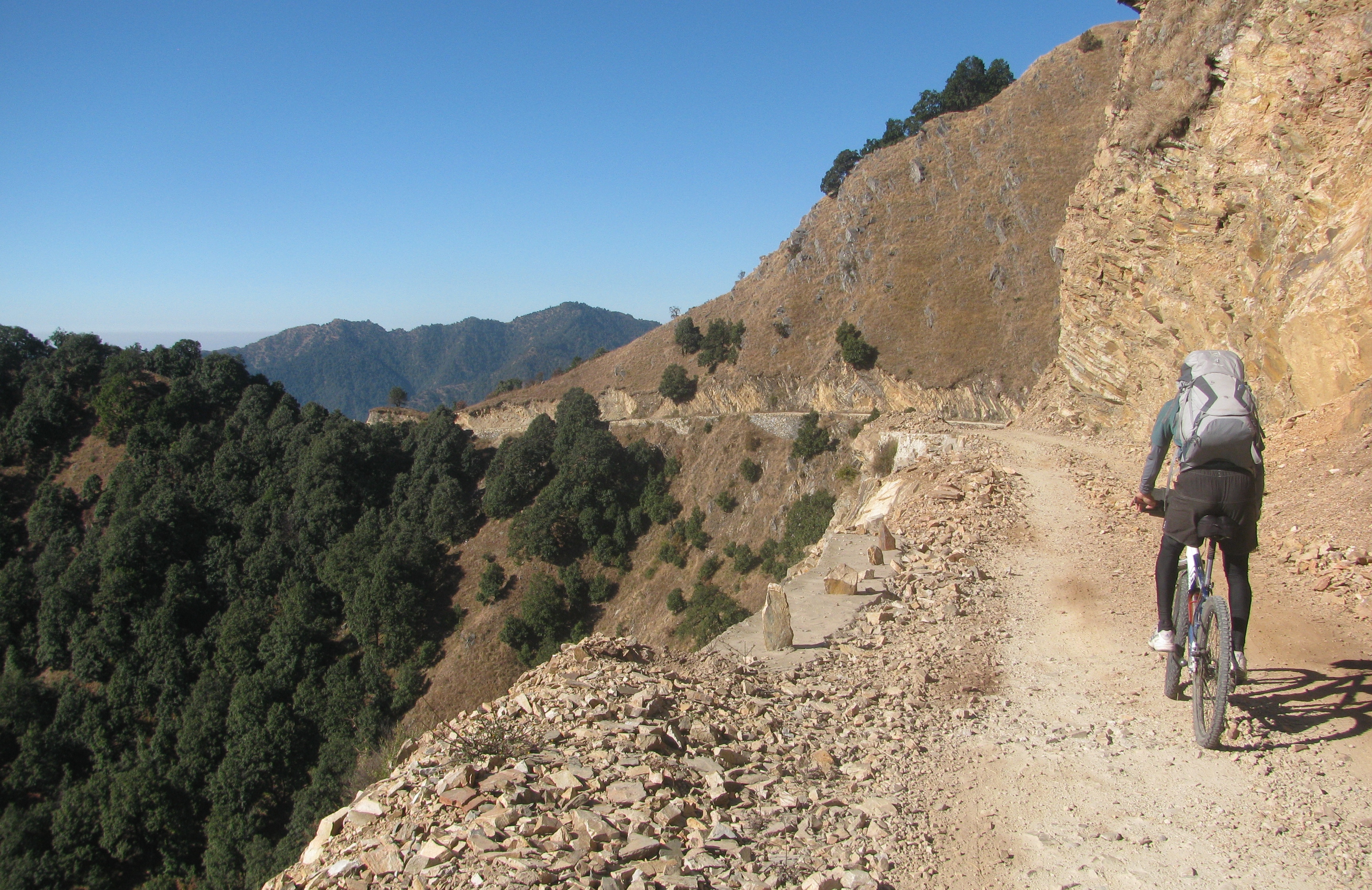
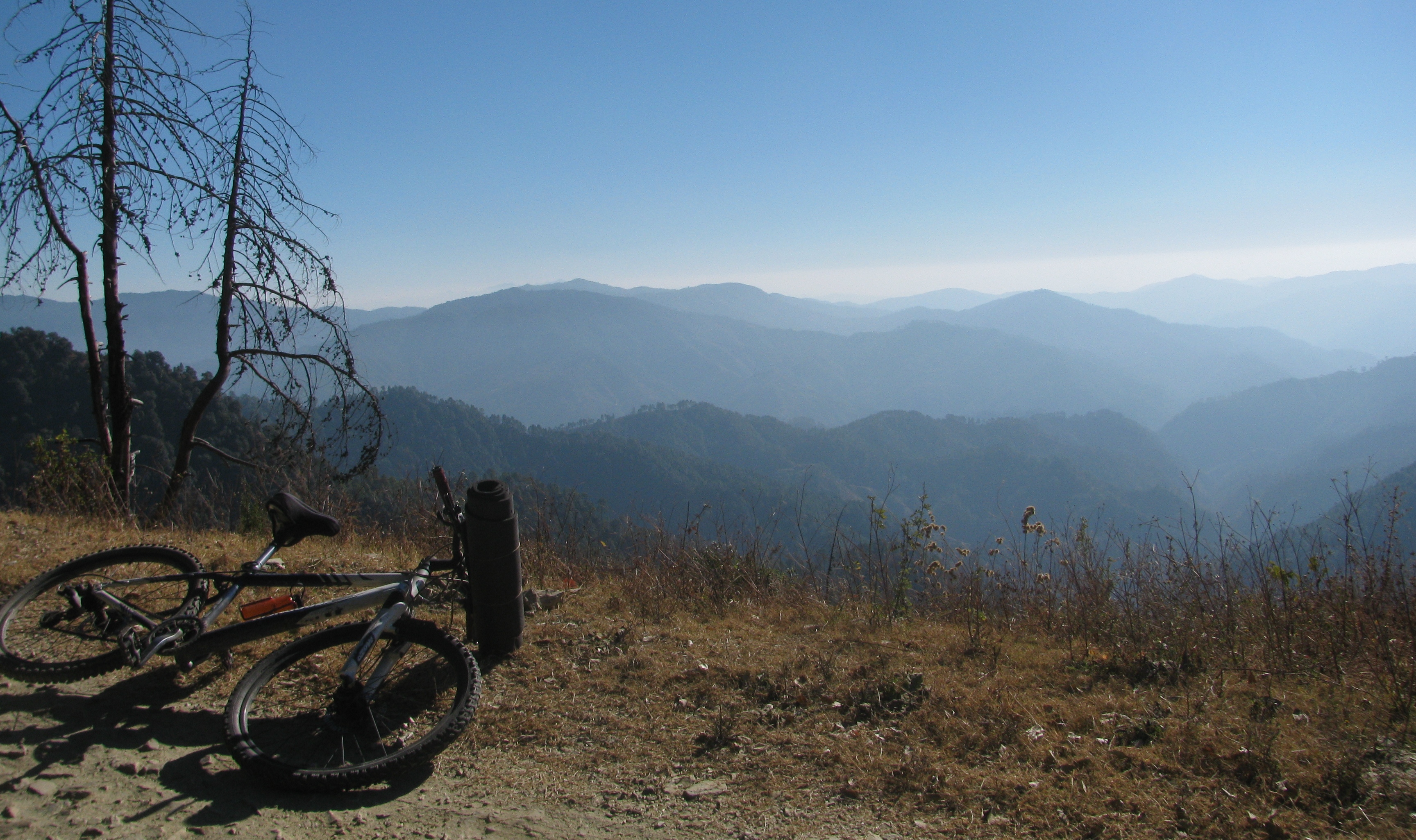
Sometimes a trip happens that is so enjoyable that you don’t remember to keep a diary and you can’t subsequently recall where you had been. This cycle trip was in that league. Not more than ten days. Approximately 350-400km covered in the hills; two mountain bikes, one trolley (attached to a cycle) with camping gear, stove, spare clothes, repair kit and food (essentially tea and coffee for the morning), two small backpacks on us. We didn’t have panniers. So this arrangement seemed best. Real cyclists may call us crazy. But we weren’t that real in cycling. We had no goals; we just wished for a nice, winding hill road with camping spot and tea shops en route. Besides, I suspect when one’s grounding is in hiking and mountaineering, some weight to haul, getting roasted by the effort, grinning through it and then laughing at the eccentric fool one is – it all adds to life. When the sun was unbearably hot, we stopped and slept in the shade. When a place seemed particularly beautiful, we stopped to marvel at it. When the road was well-made and there was no traffic, we relaxed into the ride. When a terribly rough side road assured to host great Himalayan views beckoned, we ventured forth thankful that our cycles had suspensions. We had destination but none so iron clad that we couldn’t let an instance lead to another – that seemed our trip.

The route was based on recommendations from Punit Mehta, a friend with abundant love for hiking. He had also travelled much on his motorcycle; the roads and side roads on our itinerary were his inputs. I am not a great navigator but I suspect we may have ended up adding a couple of sub-routes of our own. Anyways, the journey was from Ranikhet in Kumaon to Lansdowne in Garhwal and then through a forest road open to traffic, to Maidavan. If I remember correct, we went via Dwarahat, Thalisain and Peersain. The exit wasn’t quite near Ranikhet; it was a day’s drive away. Both cycles – a Kona and a Mongoose – old and well used, performed splendidly. They belonged to Ravi, whose collection in Ranikhet included recumbent bikes and unicycles as well.

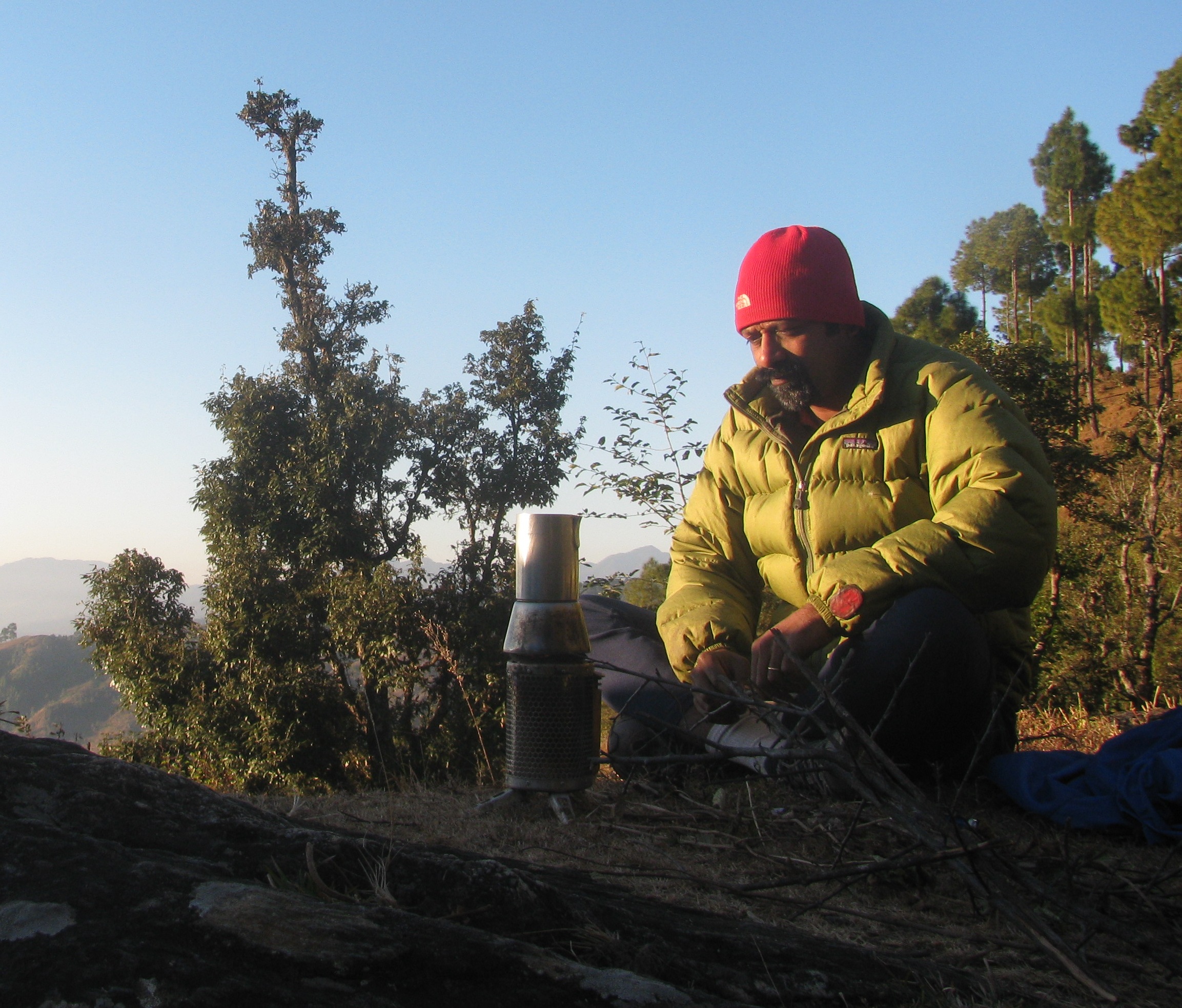
Coffee and Ravi (Photo: Shyam G Menon)

Coffee and Ravi (Photo: Shyam G Menon)

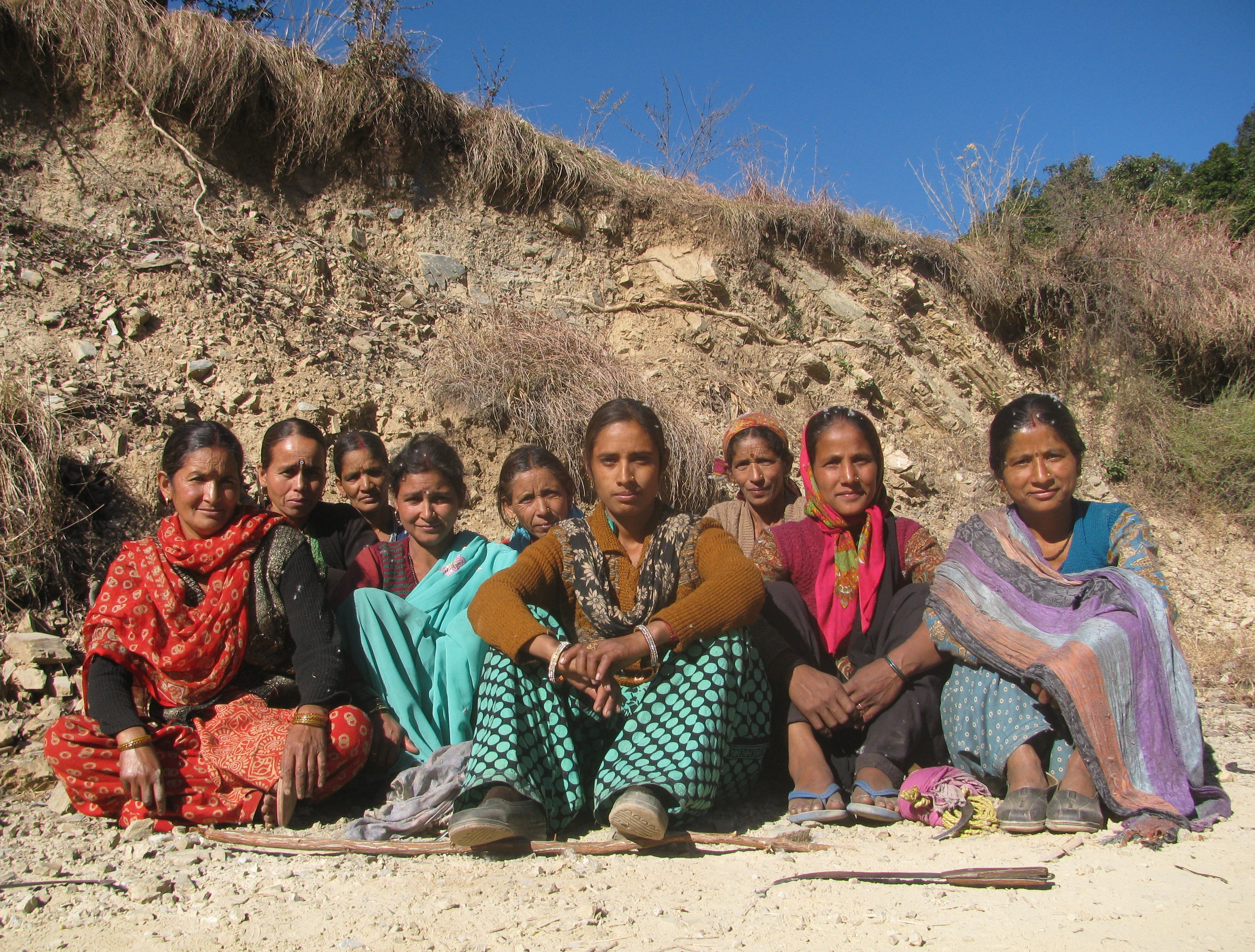
Self supported travel has two advantages. First it keeps cost low, provided nobody minds you camping around. Second, it lets you know places and people. Independence lets you explore and the moments of dependence – because you know clearly you are dependent and why – makes you grateful for help received. Good behaviour is half the job done on any trip or expedition. We had a couple of wonderful camps and tea shops that served us food. At some places we slept on a veranda or in a shed. In remote areas, the local shop may also be tea shop and traveler’s lodge. We caught up on news chatting with shop owners. In their lodge rooms, we met traveling salesmen and got a sense of rural marketing. We met women out cutting grass; seeing us they halted, struck up a conversation, inquired about our journey and sought a group photograph. We passed a hillside featuring many people trudging up to a local temple; got invited to the festival, got our share of sweets. An interesting aspect for me was that the two major towns linked by our route were the homes of Uttarakhand’s army regiments – the Kumaon Regiment and the Garhwal Rifles. The former is headquartered in Ranikhet, the latter in Lansdowne.

Our disappointments on the trip were probably just two. One fine day, Ravi decided that we would ask for a large citrus fruit called malta and get one free from somebody’s tree. It was to be the memorable postcard experience of tourism – you ask, a smiling face generously gives. We found two men seated near a cluster of malta trees. They pointed us to the owner, an old lady. Unfortunately she was in a grumpy mood. “ NO,’’ she said firmly. We dropped the malta plan. The other, was the curious case of some young men who looked at a pair of cyclists as a threat to their importance. While it was common to have youngsters quip that they had done similar trips or more, I was nearly unseated once when a youngster thrust his leg into my way as I cruised downhill. The people we could confidently engage with were retired military personnel. They had moved around the country on work and were at ease with strangers. I have always believed that the true gift of travel is how it takes you away from family and familiarity and makes you vulnerable. That state, bereft of ego, is when you know life.

The women we met, out cutting grass (Photo: Shyam G Menon)

The women we met, out cutting grass (Photo: Shyam G Menon)

There was one memorably amusing episode from the trip.

We were camped in a field just below a rough, unpaved road.

All around were hills.

There had been little traffic on the road the previous evening, when we arrived. So we had had dinner at a shop some distance off in town (a small junction to be precise) and cycled back to the relative isolation of the field. We put up our tent and fell asleep quickly; it had been a long tiring day.

Late in the night, an individual or two, walking along the road had shined a torch in our direction. It is not always that you see a tent in the adjacent field.

Early morning was tad different.

We heard approaching conversation and then an abrupt cessation of talk as the passersby discovered the tent. Both Ravi and I, were feeling too lazy to stir out so early and engage the visitors. So we stayed put in our sleeping bags, hoping that they would go by as the others before did.

But the sound of walking had stopped.

There was a brief silence.

Then voices were heard.

“ You see that – a tent!’’

“ Must be the cyclists who were having dinner at the shop last night.’’

Photo: Ravi Kumar

Photo: Ravi Kumar

The sound of soles on sand and gravel emanated as the visitors shuffled down the side of the road to the little clearing where the tent stood. There were mumbled comments and grunts, the usual accompaniment of checking things out.

I was now wide awake, half wondering whether I should step out and say hello, which is the best way to avert too nosey an inspection. The worry in such situations isn’t the inspection per se. It is the potential damage to camping gear, not to mention – our cycles kept outside. If someone can guide the curiosity it helps.

But I didn’t want to get out early on a winter morning. Besides it was that sweet spot when the cold of a night bidding goodbye met a hint of the sun. Both day and night were languorously mixed. I stayed put in the sleeping bag.

We could sense people close by, our worlds separated by mere tent fabric.

Then somebody said clearly, “ woh Keralawala thhand se mar gaya hoga (that person from Kerala must have died due to the cold weather)!’’

There was a round of laughter after it.

The sound of shoes started moving away.

Mongoose and the mountains (Photo: Shyam G Menon)

Mongoose and the mountains (Photo: Shyam G Menon)

It crunched sand and gravel climbing back up to the road.

Then it slowly faded as rhythmic strides.

Within the tent both of us had stifled our laughter at the comment till the visitors left. Now we got out of our sleeping bags and the tent laughing our heads off. Pronounced dead, I felt like a ghost, a happy ghost. Ravi got the stove going for the morning coffee. I took a photo of him at work; then stood there savouring the morning chill. That comment about me, hailing as I do from tropical Kerala (Mumbai where I live is also hot and humid), was my take away from this trip.

It’s nice to be still alive.

Once in a while I pinch myself to make sure I didn’t die in that tent.

Or maybe – I am the ghost who writes?

(The author, Shyam G Menon, is a freelance journalist based in Mumbai)

TWENTY THOUSAND FEET

Illustration: Shyam G Menon

Illustration: Shyam G Menon

“ How are conditions up the mountain?’’ I asked, lifting my head from the stoop caused by the heavy backpack.

“ Not bad, lot of snow,’’ the athletic foreigner returning from Stok Kangri said, “ it’s all about timing and acclimatization really.’’ He looked at me squinting from strain. “ Are you acclimatized?’’ “ Oh yes,’’ I replied vaguely, “ have been around in Ladakh for almost two weeks.’’ “ Well, good luck then.’’ He walked on. It took me a few seconds to straighten up, feel the backpack’s load transfer to my hips and proceed slowly up the trail. That pack had no business being so heavy. All it carried was personal gear – water, sleeping bag, plastic mountaineering boots, crampons and ice axe. Yet it felt dead heavy.

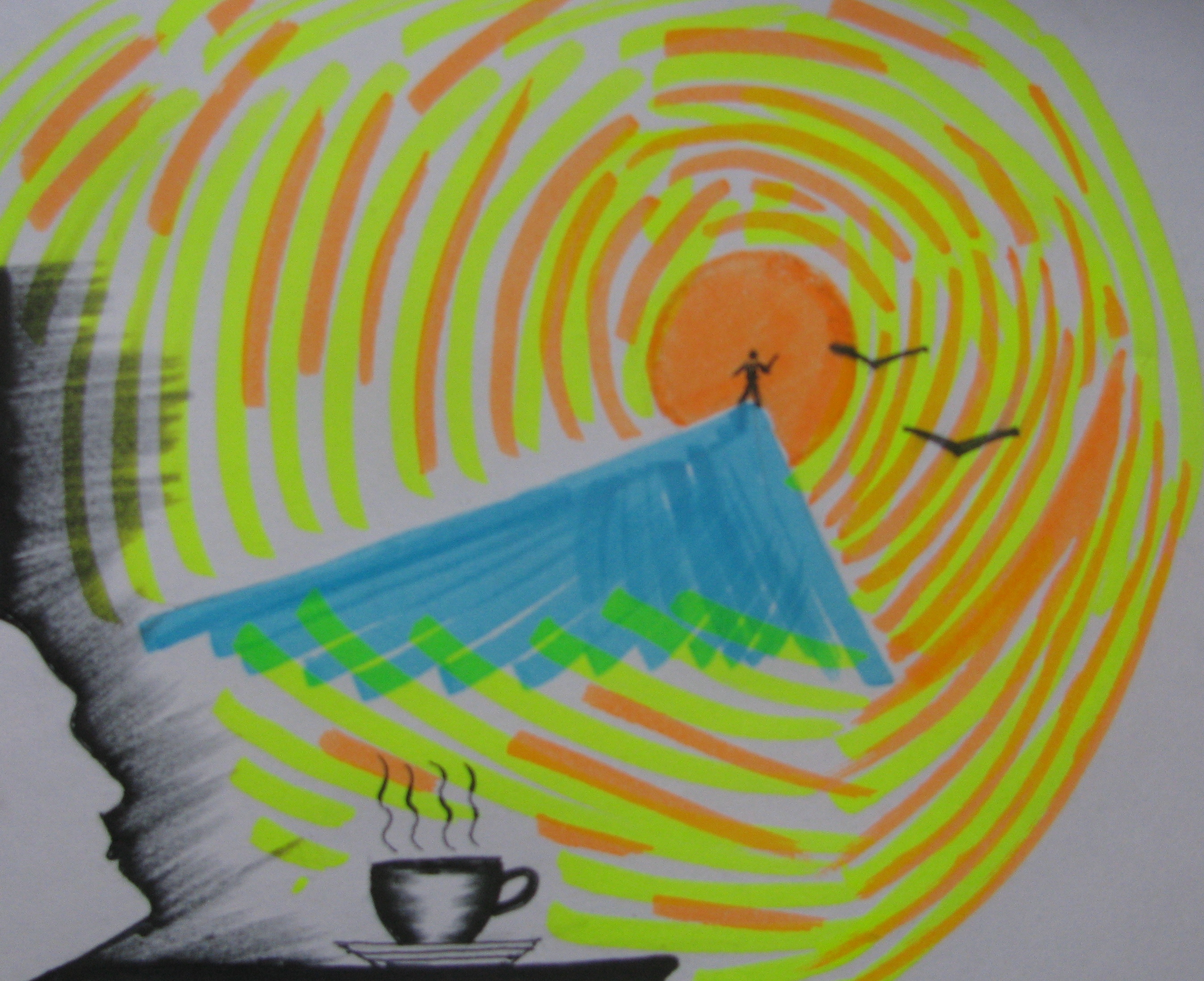
I was tired. The trail within ran back to Mumbai. Freelancing had changed my life. In times of inflation, my income reduced to a trickle. All I could do to keep the creeping sense of failure at bay was maintain another busy schedule around whatever I liked doing. Loneliness took hold. That was when Choszang Namgial, who I had worked with on a high altitude trek before, called up. He remembered my desire to visit Leh, attempt Stok Kangri. A Ladakhi, he was heading home in June to work the tourist season there. It appeared fine opportunity to find subjects for writing. Ladakh with few people in vast cold desert was engaging counterpoint to crowded Mumbai.

I met Choszang in Delhi. We traveled by road to Ladakh, via Manali. On reaching Leh, I walked around for several days, meeting people and learning about their life. I spent time with Choszang’s family at his village. In Leh, I sipped lemon-tea and gazed at Stok Kangri in the distance. There was nothing to my activity that qualified to be acclimatization of the sort mountaineers desire. I was a wanderer with pen and note pad. Then a chance emerged to visit Pangong Lake. It was a surreal place; an expanse of blue water surrounded by barren brown hills. Couple of tea stalls, a curio shop, tents to stay in; groups of motorcycle riders living that much published image of travel in emptiness. An early morning, I jogged along the lake side and scrambled up the nearby hill. It felt good. However, neither that exertion nor the days spent walking around Leh did anything to radically change my condition baked by sedentary journalist lifestyle. Having been on expeditions before, I knew I was going in ill prepared. I felt thankful that Choszang and his friend would be accompanying me to Stok Kangri.

The day before going to Stok village, we went with all relevant documents to the local mountaineering administrator, an elderly mountaineer of much repute called Sonam Wangyal. He had climbed Everest and also featured in those expeditions undertaken jointly by Indian intelligence agencies and Central Intelligence Agency (CIA) of the US in the 1960s, to Nanda Devi and Nanda Kot. Those were the years following China’s nuclear test in Tibet. The Nanda Devi expedition subsequently gathered controversy after it became known that a listening device powered by a radioactive fuel source, had been lost on the mountain. The story spawned media articles, books. Wangyal went over my papers. He wore a disinterested look on his face. It made me fear that the dreaded bureaucratic axe was about to fall on my request for permission to climb Stok Kangri. Then he suddenly looked up at Choszang and asked, “ He is Indian, isn’t he? Go…go…this is your country. Enjoy your climb!’’ The response delighted me. Mountaineering in India has long been wrapped up in permit raj and bureaucracy.
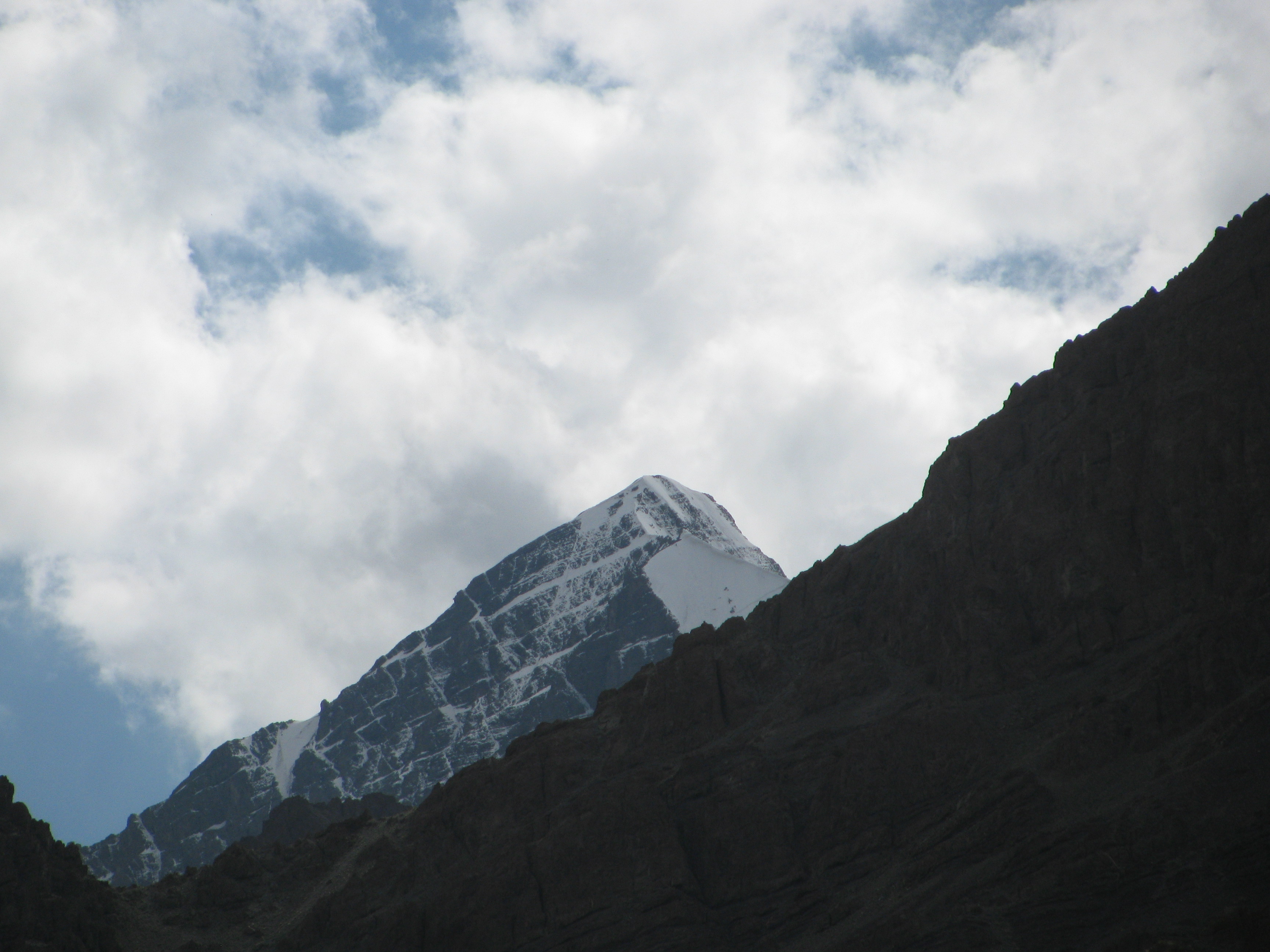
Stok Kangri (Photo: Shyam G Menon)

Stok Kangri (Photo: Shyam G Menon)

Ever since I got to the top of an 18,500 ft-high un-named peak in the Zanskar Himalaya with my climbing club in 2004, I had wanted to clear 20,000ft. Eventually, I decided on the 6153m-high Stok Kangri, often dismissed by mountaineers for being a non-technical peak climbed by many. In the macho world of climbing, `non-technical’ is a major differentiator. It means that a given climb doesn’t engage the use of much gear. That is like being a boy in shorts amid muscled men with boots, ropes, helmets, machined metal components and all. As if this wasn’t enough, Stok Kangri had been climbed by many availing guided ascents. Mention its name to climbers; they look down their nose and sneer. I never told anyone of my choice but the likely criticism nagged in my head. At my club for instance, what a person liked to do had long been superseded by whether the mission was significant and challenging from climbing’s perspective.

Looking back, I think I chose Stok Kangri for two reasons. First, my technical skills are limited; my physical fitness is more stretchable. So trysts with altitude made greater sense than agonizing over undoable vertical. Second, hanging out with climbers had dented my self confidence; battered my self esteem. A lot of it was my overactive mind. But some of it was definitely due to the climbing environment I was in. It wasn’t helping me. In fact, I had had to take time out and repair my self esteem. My Stok Kangri climb therefore commenced in Mumbai itself, erecting a protective barrier around my personal wish. Slowly I developed my defense – a person’s dream is a person’s dream and should be impervious to the comments of others. If others could be adamant about superlatives on vertical terrain and see that as sole perspective worth having, I had every right to enjoy the less than vertical! What I did not know was that in the thick of my rebellion, I was indulging my desire for distinction. It was vanity versus vanity. And in my case, a progressively tattered vanity for I was on the trail to Stok Kangri Base Camp (BC), hauling a heavy backpack of exhaustion. The cumulative effect of sedentary life, poor food intake, depression and a mind overactive through freelance writing – all had hit me.

Late in the evening I called it quits just short of BC. I was too tired to cover the remaining three hundred meters or so. We camped there. It was trifle funny for above the adjacent ridge we could see people moving around at BC. They must have wondered why a tent had been set up so close, yet far and definitely not at the same address as everyone else was. We formally moved to BC the next morning for a good rest. I needed rest. That day in 2009 I knew how much my life had changed since the earlier Zanskar expeditions. I felt something had drastically gone wrong. I could neither forget the job security I had left nor could I whole heartedly embrace the insecurity I had traded it for. I was the classic in-between case and dwelling on it in remoteness depressed me further.

Exhaustion however has a bright side. It is a great leveler; demolishes barriers, extinguishes pride. That and the general love for wilderness got me talking to the group of foreigners sharing the trail. At BC, we all met in one of those parachute tents that dot Himalayan trails, serving tea and food. The names have since dimmed in my mind, but there were people from Germany, England, US, Mexico and Netherlands. There was the former member of the British sport climbing team on her first foray to a 6000m peak. There was the former British banker, who had served in the property end of the business and seen it tank in the recession. He had then become a banking consultant to the shipping trade. But in the aftermath of the economic crisis triggered by sub-prime lending, banks became risk averse. Shipping on the other hand was a cyclical business. Eventually, he looked at his accumulated savings and said – let’s go climbing. That’s how he ended up at BC. One of the climbers had a particularly touching story. She liked climbing. After her husband fell ill, she had given up climbing to take care of him. Probably realizing the irreversibility of his ailment, the man later told her: don’t waste your life, live it. That’s the story as I recall it from imperfect memory. Early dinner done, everybody retired for a few winks of sleep.
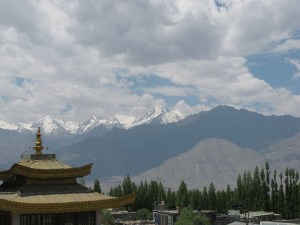
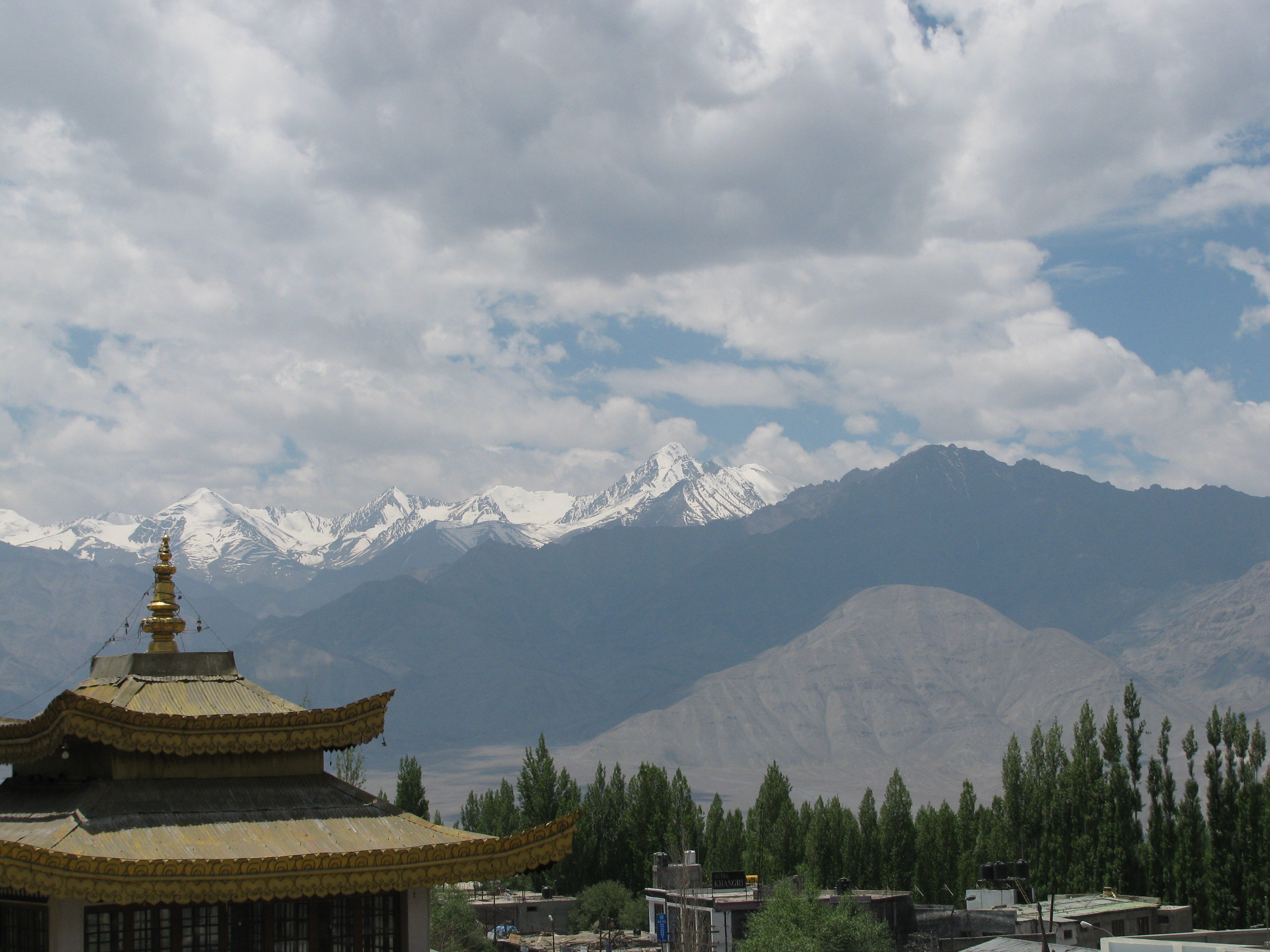
Stok Kangri; the view from Leh (Photo: Shyam G Menon)

Stok Kangri; the view from Leh (Photo: Shyam G Menon)

Past midnight we started for the summit, having dispensed with the idea of putting up an intermediate higher camp. It was snowing lightly and for me, rather cold. Within minutes of leaving BC, the water flow from my hydration pack froze. For the next four to five hours until the sun induced thaw, there was no water to drink. I could probably have drunk straight from the pack’s bladder but the one occasion I took my gloves off to adjust my trekking poles, my hands turned numb with cold. We kept a steady, slow pace. In a previous season, Choszang had climbed the peak nine times with clients. This season, he was already booked for another two. I wasn’t surprised when he told me that he wanted to do something else than just go up and down Stok Kangri and other trails in Ladakh.

Around day break, we found ourselves past the usual location of the intermediate higher camp and looking up the final slopes of the peak. To reduce my tiredness, Rigzin who was Choszang’s friend, had put my boots and crampons in his rucksack. We conferred for a while on the fate of that baggage. I was fairly adept at kicking and cutting steps on snow to ascend and on Stok Kangri I was anyway following Choszang’s lead. We had made decent progress. So we decided to forget the boots and crampons and left Rigzin’s sack on a rocky ridge to be picked up on the descent. By now the sun was up. With it came the reflected glare from snow and a new problem. I couldn’t find my sunglasses. Embarrassed I said, “ let’s call it off, no glasses.’’ Choszang and Rigzin looked at me astonished. I searched again; found the glasses. Momentarily, I must confess, I had wished that the lack of glasses would be viable excuse for great mountaineer to hide his exhaustion and be off this peak that many climbed. Now I was back in play.

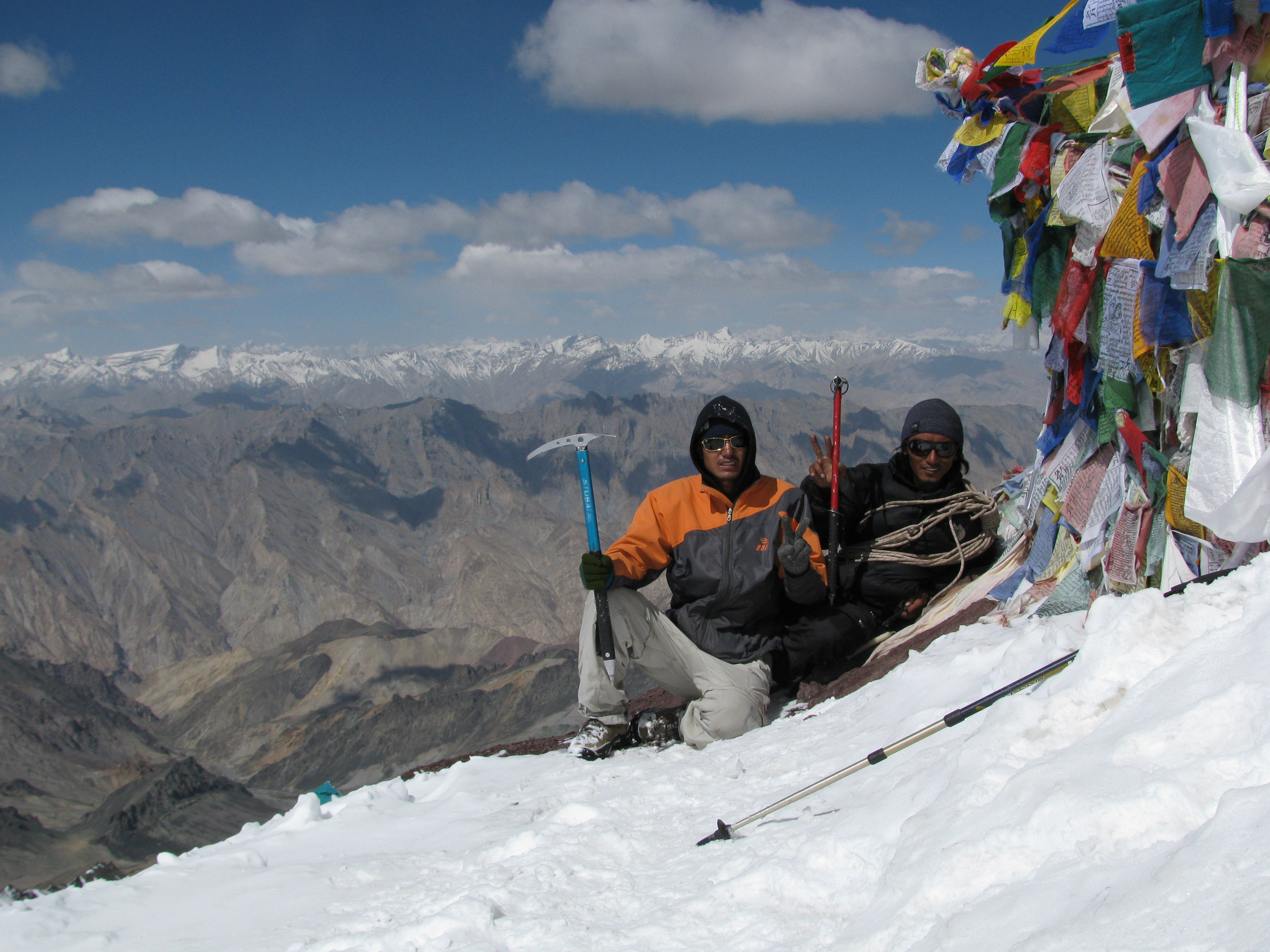
Atop the last shoulder of the peak, before its summit pyramid, we decided to make tea. My small MSR stove went to work, melting snow for water. That tea was rejuvenating. The next half hour was careful going. Verglas – a glassy coating of ice on rocks – can be quite tricky. At around 8.45AM Choszang and Rigzin greeted the summit with loud Buddhist chants and an offering of a prayer flag. The duo couldn’t resist flair in the summit photo; in went the unused rope and our ice axes. The summit had a low wall of wind beaten snow and rock, beyond it the other side of the peak plummeted in a severe fashion. In the distance one could see Leh, its airport. I felt nothing of that 20,000ft obsession in my head. There was no elation, just thoughts of descent. Coming off the summit pyramid, we stood at the edge of the peak’s main face. Getting up that had been a series of traverses; now it lowered off in one swoop. It was an inviting glissade of few hundred feet save the first quarter, which ran steep. We shot off on our butts using ice axes for brakes; it saved much time. Back in Leh, I got myself an airline ticket to Delhi and stared down from the plane at the sea of snow covered peaks wondering where in that wilderness my first summit in Zanskar would be. Three days later, I was in Mumbai with resolution taken to eat at any cost. Without food there is no climbing.

Most people come to Stok Kangri to access 20,000ft. It is as simple as that. In 2011, I reached the top a second time. In the months after my first trip, I had regularly worked in the outdoors. I was in much better shape. This time, I could go along as an unpaid help, serving a team of clients. We stopped some distance away from the summit as we felt the freshly deposited snow wasn’t well settled. On return, I spoke briefly to Sonam Wangyal about a new lot of over one hundred peaks opened up for climbing in Ladakh. They were yet to catch the fancy of climbers. Stok Kangri on the other hand, had become probably India’s busiest peak, a money spinner for authorities. Its attraction was the combination of a not-so-difficult climb and breaching 20,000ft. Indeed in 2011, the mountain’s base camp resembled a small city of tents. There were so many people out for an easy shot at distinction. Wangyal seemed tad disappointed by this limited appreciation of mountaineering. Next door to Stok Kangri is Gholap Kangri, which is slightly technical at the top and overall, below 20,000ft in altitude. Very few people go there. Everyone, including me, wanted 20,000ft. I listened to Wangyal. He was right. Vanity-climbs distort the purity of climbing.
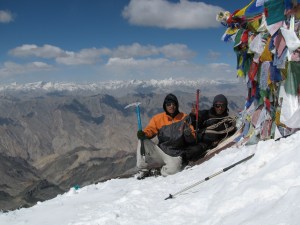
Choszang and Rigzin on the summit (Photo: Shyam G Menon)

Choszang and Rigzin on the summit (Photo: Shyam G Menon)

I didn’t tell that a few months after the 2009 climb, I was whipped by a 19,500ft-high peak in Uttarakhand, which I confidently went for having tasted 20,000ft on Stok Kangri. It was the first expedition I planned to a considerable extent. We got lashed by heavy rain, heavy enough to wash off approach trails and dump a lot of snow higher up. That delayed progress. It robbed us of adequate working days on the mountain. We reached high camp amid snowing. To reduce equipment weight at higher altitudes, I had left our second tent at lower camp. I crammed four people into a 3-person-tent at high camp. Short of space to lie down, I sat up much of the night. Outside, the snowing continued. Early next morning, one of us woke up too disinterested to proceed anymore. His boot laces had also frozen wire-like in the cold; they resembled the antlers of a deer. The remaining three, who went for the summit, were dismissed through a combination of difficult access, avalanching slopes (due to fresh snow) and no more days left to wait for the terrain to settle down. We turned back. It was a humbling experience. After that whipping, I stopped caring how high or low a mountain is. Every mountain region, every mountain therein – is unique. I also provide for time on the mountain and leave it to the peak to decide whether I should summit or not.

In one of my later trips to Ladakh, I came across signs of Stok Kangri’s traditional image in climbing, potentially changing. There were young Indian climbers, who spoke not of merely ascending the peak but ascending it by particular routes. Just as your fine day on a peak with summit gained is not how that peak is year round, every mountain feels different along its different climbing routes (Polish climbers in the Himalaya added winter ascents too, to the equation. For more, please visit https://shyamgopan.wordpress.com/2013/08/11/an-interview/). I am not a fan of speed climbing but I heard people talk of fast ascents up Stok Kangri. Months later on the Internet, I read about two young Indian women who climbed the peak alpine style with no porters or guides. These are all interesting departures from the norm. On my last visit to Leh, after a couple of days spent looking at Stok Kangri from town, I cycled to Stok village and had a cup of tea at one of the restaurants climbers frequented. I remembered Choszang and Rigzin, the trudge up the mountain and a cup of tea brewed high on its slopes. That was enough to make me happy. I then slowly cycled back.

(The author, Shyam G Menon, is a freelance journalist based in Mumbai. A slightly different and abridged version of this article was published in the anthology ` Aloft @ the Indian Himalaya’ anchored by Rana Chawla. Details about this book can be had at https://www.facebook.com/aLoftAtTheIndianHimalaya)

RUNNING IN THE HILLS

Illustration: Shyam G Menon

Illustration: Shyam G Menon

An evening in Ranikhet, four of us went for a run.

It was past 5 PM.

We made for one of the quiet side roads.

We ran past the holiday huts of the army, down a few bends to the first of the `Old Grant Bungalows’ on that road, called so for their origin in British India times. It had just rained. There was a light chill in the air. The leafy vegetation around, the trees lining the quiet road and the road itself gave off that typical post-rain smell. Several turns away at the entrance to the Chevron Rosemount hotel, one of their dogs barked to announce the approaching runners. Used to seeing runners on that road every morning, it first resorted to barking and then settled down by the roadside.

Two turns away, we passed the house of a friend who was a naturalist. Wonderful address for someone so – I always thought. We ran past the small trail cutting up the hillside, which we take when the daily run has to be kept short. This evening was different. We had resolved to run a longer distance, run the full length of the road and then turn off to Mall Road and Meghdoot Hotel.

Another turn went by on the quiet road; then another. Finally we went past Adhikari Lodge, an old bungalow reportedly owned by a Mumbai business family who visit Ranikhet on and off. Although there were houses here, this area, compared to other portions of the road, was trifle more densely green. Four pairs of legs hit the ground rhythmically in slow run. Wind in the hair; nippy air on the face, a breathing that said `I am breath,’ in the chest.

At the next turn, the first runner stopped. The rest of us caught up in one to two seconds.

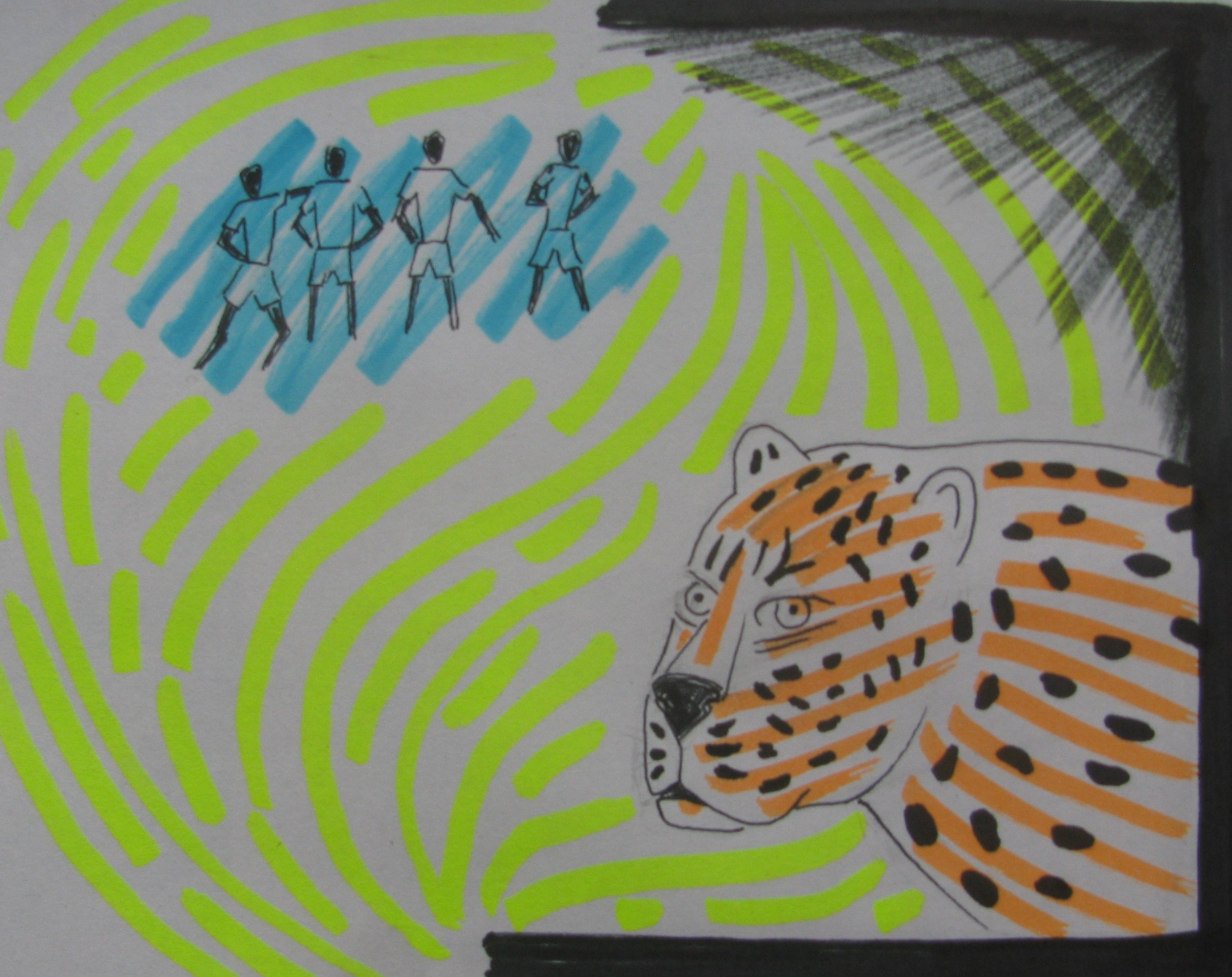
Walking diagonally across the sheltered road, with its back to us and seemingly no bother for its surroundings now invaded by humans – was a leopard. We watched it in absolute amazement. For all of us, it was the first sighting of a leopard so; free and unfettered. I suspect it was my shoe moving ever so slightly against the sand on the tarred road that created the faint noise – whatever, the leopard caught wind of something behind. It broke its leisurely walk to glance behind its left shoulder, sensed the four humans and in a couple of elegant bounds was up the other side of the road and lost to the dense vegetation between the road and the households beyond.

We stood there speechless.

It took a while for things to sink in.

Slowly, our awe struck faces broke into smiles. We shook hands.

Then we resumed our slow run.

Leopards are not unusual in Ranikhet. But here’s the key according to my friend Ravi – don’t go looking around for the animal. I know quite a few people, including me, who went looking for leopard and never saw one. It was as though the shy animal read your mind and stayed away or you were too deliberate that your search affected your prospects. You know, too desirous of what you want that you become this big solid mass disturbing the universe’s subtle arrangement. Expect nothing and lo and behold, the universe rewards you. Leopard was the last thing on our minds that evening we ran. We saw one!

Illustration: Shyam G Menon

Illustration: Shyam G Menon

I sometimes get outdoor work in Kumaon (the eastern half of Uttarakhand). That’s how I land up in Ranikhet, helping out at the India branch of the National Outdoor Leadership School (NOLS http://www.nols.edu). I have a regular running route; the earlier mentioned road; voila, my name for it – Leopard’s Walk. Past where we saw the leopard, that quiet road continues on; it skirts one side of the local tourist rest house property and eventually joins the road to the Jhoola Devi temple, in front of the West View hotel. From here you can either turn towards Meghdoot Hotel or take another quiet, isolated road, often carpeted by dry leaves and run all the way to the temple avoiding the main road. Some colleagues from the school choose to run further. There is a military check post at the temple and a stiff ascent of several kilometres that takes you to Chaubatia on top of the hill. The place is home to one half of Ranikhet’s sprawling military base. To my knowledge Ranikhet is one of the very few towns, maybe the only one in India that is home to two army regiments – the Kumaon Regiment and the Naga Regiment. Being military cantonment and located away from the normal Nainital-Almora route, Ranikhet has a quietness that is disturbed only by tourists and visitors. That’s why I like my morning run here. It is also why I rarely speak of it – for these days to speak of the solitude in some place is to invite its violation. Reduced shelf life is contemporary media’s gift to existence.

For a relatively small town, Ranikhet has many people running. Most obvious and most regular are the soldiers. They fall into three categories – two, I profile below and a third general variety closer to jogging for fitness than running. On the road, the first group typically manifests as an approaching rustle ahead of me or behind me. Either way, they whiz past for they seem to be a dedicated team of endurance runners. They commence a run together; warm up exercises, stretches et al and then progressively spread out in accordance with individual pace. However they are never so spread out that the tail end doesn’t see the leader; their average pace is pretty good. Their youth and fitness crunches me like a tank running above the head of someone in a lowly trench. I have also occasionally met a slightly slower lot, who like to remain clustered as a distinct group. They run like a herd. My deduction is – they are the boxing team. It is nice to think of all these probabilities as one gets overtaken, lapped, left in the dust and forgotten, all the while happy for it as the morning air is much cleaner than the average Indian city’s, there is very little traffic and the early morning hours are enjoyably cold.

Ranikhet’s civilian runners appear to fall into two categories. There are some who run regularly. More important – every now and then the number of civilians running goes up. When the numbers go up, you know bharti or army-recruitment is due. You find such preparatory running all over Kumaon; daily run done, candidates from everywhere converge at Ranikhet for that is where bharti happens. No army for me. I am the wandering, peace-loving middle aged soul, timid enough to avoid gladiators of all sorts and embrace a refuge, a trench. Much before I started running, I ran away – that’s the truth. Put an urban gladiator in front of me, I will run away again. I usually run alone in Ranikhet and when I have had company, it has been from the outdoor school. For some time, till he got married, Harish Singh was regular company. Indeed he was there when we saw the leopard. Twice, a local taxi driver with affection for running came running by and said – let’s go together. Narayan Singh (I think that was his name) was fine company for those two days. Once in a while, you see another visitor like me savoring the different ambiance of running in the hills. But that’s rare and I don’t blame those who choose to rest in their hotel rooms or go for leisurely walks instead. Fact is – the urban life is tougher, including the running therein. Back from the hills and running in Mumbai, I am exhausted in just one day coping with the heat and humidity; my respect for everyone sweating it out in the city.

Whether I like it or not, the urban trend of organized running is catching on in the hills. From Leh to Mussoorie and places in between, there are staged events with calendar dates, gladiators and all. But I am partial to the unnoticed variety wherein running (I call my version of it – trotting) becomes a means to get around. The enjoyment I have had from this is immense and seductive enough to leave me with shin splints; that classic outcome of overdoing things. Plus, the terrain is undulating; there are long ascents and descents. That adds to the strain, which you don’t notice till injury settles in, well and truly in love with your shin. Still, unplanned running is fun.

Once Ravi and I were in a car headed to Tehri for a conference. Our accommodation was at Chamba, which is up a hill from Tehri. It was a long drive from Ranikhet to Tehri and by evening, as we reached Tehri, Ravi was bored. He asked Dinesh, our driver, to stop the car and pulled out his unicycle. I changed to running shoes. We reached Chamba in style, a small traveling circus of sorts, runner in front; unicyclist behind. In Ranikhet, Ravi is often called ` circus uncle.’ Mountaineer, cyclist and outdoor educator, he maintains a small collection of cycles – MTBs, recumbent bikes and unicycles.

Several days before Chamba, I had another impromptu, engaging run, rather trot – from Ranikhet to Katpudia (please try https://shyamgopan.wordpress.com/2013/08/03/katpudia/ for a story on Katpudia), which is slightly less than half way to Almora. Near Majkhali, I met the army regulars. As always, they checked me out – who is this terribly slow, old chap trotting by? Fit as a fiddle, their pace was whiz-class; they crushed me, tank-like. New element was – at the tail end of the contingent was their coach, on a cycle, periodically shouting, “ bhaag!’’ Rush hour went by thus and my cocoon of quiet refuge in the hills (call it trench), returned. I trotted to Katpudia, had a cup of tea at the local tea shop and took the share-taxi back to Ranikhet.

The most satisfying run I have done in the hills so far was in Munsyari, from the town to Kalamuni Pass and back. The credit for getting me started on this goes to Love Raj Singh Dharmshaktu. As of 2014, he had climbed Everest five times besides ascending many other peaks in the Indian Himalaya (please visit https://shyamgopan.wordpress.com/2014/07/10/everest-to-the-east/).

Illustration: Shyam G Menon

Illustration: Shyam G Menon

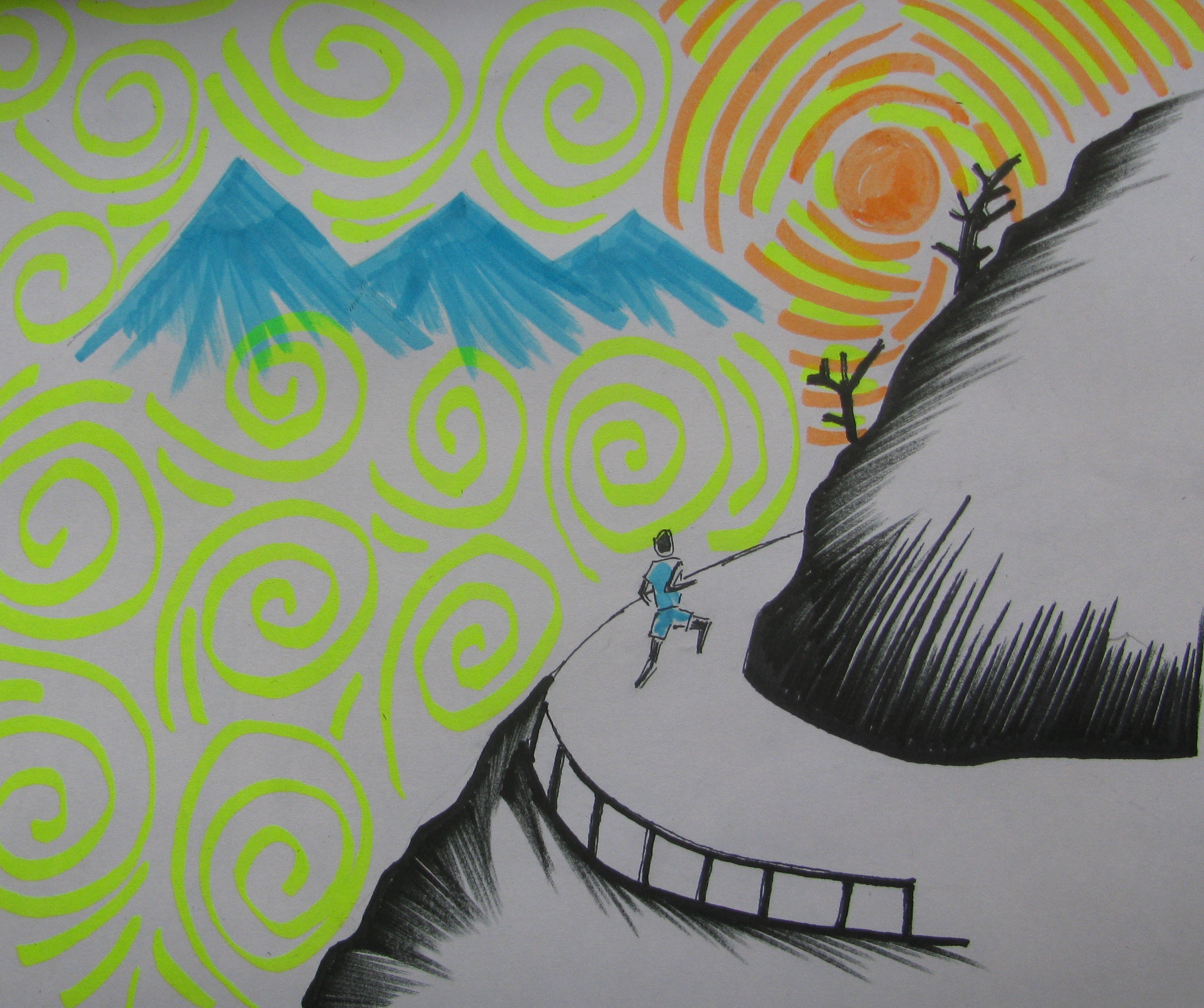
In June 2014, I was in Munsyari to write about Love Raj and every morning we used to run together. That season, our turn-around point had been Betuli Dhar, which is little over the half way mark to Kalamuni. Four months later, the whole route to Kalamuni and back, happened. It being late October, this was a much colder run with ones shoes getting wet six times in all as you have that many instances of stream-crossing (basically streams flowing over and across the road) to do. My face was numb from the early morning chill and cold. But as the sun rose over the Himalaya, I was blessed by sweet warmth. Blessed is the word, for every time I experience such sunshine in the mountains, I fold my hands in namaste to the sun. The preceding cold seemed just the right setting in retrospect – without cold, would you value warmth? In such life by opposites, is the joy of the outdoors. To see the leopard, you shouldn’t seek it. To run well, you should enjoy, not be deliberate. The best advice I ever received in the outdoors is this: if you are not having fun, then something is wrong.

My idea was to have a cup of tea at the tea shop near the temple at Kalamuni Pass and then run back to Munsyari. But the tea shop was closed. I heard voices at the temple and approached. A Rasputin like-baba and three others, were making rotis. They beckoned me in. “ Sit; sit, would you like a smoke?’’ the baba asked cupping his hands to show the usual technique for smoking charas. I laughed comparing my state and need with the offer. “ No sir, I don’t smoke. But a cup of tea would be more than welcome,’’ I replied. “ Roti?’’ he asked. “No, thank you, just tea,’’ I said. Fortified by that excellent tea, I ran back to Munsyari and the beginning of yet another case of shin splints that would have me off running altogether by December.

So I sit, grounded, in Mumbai.

But there is one good thing about shin splints and no running.

I write.

(The author, Shyam G Menon, is a freelance journalist based in Mumbai. The story of the leopard was published as a small piece in The Hindu Business Line newspaper and on the Facebook page of NOLS India. In terms of distances, it is roughly 15km uphill from the Tehri reservoir to Chamba; it is 15km uphill from Munsyari town [7000ft] to Kalamuni Pass [9000ft], up and down is 30km.)

HERMIT ON A BIKE

Illustration: Shyam G Menon

Illustration: Shyam G Menon

The forty something News Editor looked up from the articles he had been reading.

“ I liked the one on the biker. May be you could send that to our Deputy Editor who handles features,’’ he said.

It was now over a month since I had earned anything from writing.

A newspaper, which used to accept my articles, had shut down its opinion page. Everywhere else I sent my work, the feedback was – we run articles with quotes in it. Apparently, a quiet man passing through life and scribbling down his observations had no place in the media. Insistence on quotes was actually the more polite side of the media-treatment. Very often, the submitted article disappeared into a black hole of no response or elicited a much delayed sorry-I-forgot-was-busy kind of indifferent response. The News Editor seemed helpful and my fortunes may improve further if I got the Deputy Editor interested.

I pinned my hopes on Paul’s story.

Living alone in the outdoors is serious business. The year was 2008. I had been intrigued by the lone biker, camped out in the woods beside the Tons River in Uttarakhand. Probably that’s what put him in perspective for me – the biker as camper, as much alone and wrapped up in a world of his own as any hiker. Those days, it was quite common to open a typical automobile magazine and come across some account of high altitude travel that sought to equate the driver to a mountaineer or trekker. “ I pressed the accelerator and the engine strained to pull, in that rarified atmosphere,’’ rarely reminded the reader that the driver was inside a climate controlled cabin breathing normally, probably enjoying his favorite music and at best suffering a mild headache. Accompanied by glossy photographs of a car with high mountains for backdrop or the driver posing at Khardung La Pass, it sold the man behind the wheel as a fantastic example of adventure. The same individual would be a different case altogether, hiking up that pass with a loaded rucksack on his back. Then, the engine, chassis, torque, acceleration – everything is you. Who wants that? You can strain a lot less and sell it as high adventure when the industry in question is as powerful a marketer as the world of car manufacturers.

However, two wheels made the setting marginally different. True you still didn’t haul anything yourself, but at least you didn’t ride in climate-controlled comfort. The motorcycle is the modern day horse, the next best thing in movement to an adventure on a raft or bicycle. Adding to it was the talk in nearby Mori – Paul apparently camped at the same spot every year for a month or two. It was like an annual pilgrimage; same place, same spot. On a drive down the adjacent road, I waved to him. He didn’t respond reinforcing a leave-me-alone attitude. Alright baba, keep your peace, I said and moved on.

Peace? If you are a city journalist, that’s the toughest promise to keep to yourself and others. I told my friend Jeetu of my wish to meet this man. One day we mustered the courage to walk away from the road and into the woods where the biker was camped. The distinguishing feature around was a pair of large rocks, roughly twenty feet high, that sloped towards each other providing a crude shelter below. It was the most obvious place to camp but Paul Kramer was some distance away from there. A weathered Enfield Bullet, a hammock strung between trees and two to three clothe lines with faded, patched up garments hung out to dry – that was his home. Above the hammock an additional line had been tied ostensibly to support a plastic sheet as roof during rains. On the ground and near the bike, arranged neatly, were a steel mug or two, flask, plate, some spoons. The man was tall, broad shouldered and bald with big hands and weather beaten feet strapped into sandals. He wore layers of worn-out clothing and had a slow pace of talking in English. I sought permission to speak and for quite a while through my chatter, his demeanor betrayed the desire not to be intruded upon, to be left alone. It hung in the air, fading reluctantly as my monologue grew into a conversation and then a warm chat. That conversation hinted at the possibility of dropping by again. My friend Ravi had also seen Paul camped out in the forest and wanted to say hello. So another day, the two of us – Ravi and I – walked off the road and into the forest to spend some time with the traveler.

Illustration: Shyam G Menon

Illustration: Shyam G Menon

Paul was 62 years old then, from Cologne in Germany. A keen football fan and erstwhile club player, couple of decades back he had gone to South America to see a World Cup. From then on, he had been traveling. Save some years in between when he ran a restaurant in the Caribbean, which he later sold off. Eight years before I met him near Mori, he reached India and bought the Bullet in Delhi. He reckoned, he must have traveled right around the country at least thrice. His favorite states – Uttarakhand and Meghalaya. “ That’s my baby,’’ he said, pointing to the bike. Baby was a special reference. Reserved for a dog he once owned; the girlfriends he once had – when he called one by the name of the other, he quickly realized the value of calling them just `baby’ – and the bike he now rode.

It had taken him some time to access this spot at Sandra near Mori, for staying. Having done so, every year, he tied his hammock to the same two pine trees, put his feet up and amazingly, was able to happily spend his days watching the simplest of movements in the surrounding wilderness – a leaf falling, a bird flying, clouds drifting. “ I know it’s difficult for you to digest my life. You are from the city; have family and all. I don’t,’’ he said. Paul hadn’t married. He realized early that if he wanted to travel it was best to stay single. Neither did he yearn for crowds and cities. Having seen that plastic life abroad and knowing what was due here, he preferred to steer clear of Indian cities; except when football called.

The time I met him, Paul was hunting for a family with a television that may allow the biker to watch the 2008 European Cup. Germany was in good form (this was before they lost to Spain in the final) and he was willing to ride up to Shimla for a hotel room with a television if the situation so demanded. Eventually, he found a friendly family in Mori who allowed him to see the telecasts. Over the next few weeks, Ravi and I dropped by several times to spend time with Paul. Sitting on the ground while Paul talked from his hammock, you looked up and saw his daily perspective of the world. The pine trees rose like slender pillars into the sky, the branches at their apex swaying in the breeze. The rapids of the Tons, a river that hosts white water rafting, was a furious flow just beyond the lip of Paul’s camping ground. It was a calming mix – the sound of rushing water, swaying trees, passing clouds and verdant, often wet wilderness. “ There’s a strange energy here,’’ he said gazing at the pine trees and shrugging his shoulders. I revisited the question I had been asking myself ever since I met him – what would this man be, biker or hermit? He called himself a “ professional traveler,’’ a description loaded with the itch to move. In contrast, Paul seemed at the other end, at peace in a world he had slowed down to celebrate the details while everyone else rushed by without design. I could visualize my city self darting around like some sub atomic particle, hitting walls randomly while Paul sat unmoved in meditative peace. “ You smoke?’’ he asked, big hands extending a thin, carefully rolled cigarette. We politely declined for neither of us smoked. At night, the tiny camp changed texture. It was cloaked in pitch darkness. The faint glow of Paul’s kerosene lamp cut through the inky blackness, a slender flame in enveloping gloom.

Paul had little to offer – some Kashmiri tea, the cigarettes – but coupled with the place and his journey in life, the meet-ups became enjoyable moments for us. Slowly, Paul began waving back every time we passed by on the road. He dropped by at our camp for lunch. We brought him mangoes and the odd newspaper sporting football news. Sometimes the severity of survival bit too hard to permit sharing. Like the day, Paul got some fish from a local fisherman. Three small fishes, they whetted the big German’s appetite. He sliced them, lovingly poured olive oil and added green chilies to marinate. “ I want to offer them to you but they are just three you see,’’ he said apologetically.

Illustration: Shyam G Menon

Illustration: Shyam G Menon

When the time came for us to leave Mori, we decided to trek across the Rupin Pass to Kinnaur (for this story, please see https://shyamgopan.wordpress.com/2013/09/15/a-river-story-part-one/). Bad weather and landslides had ensured low fuel stock at depots in the hills. We desperately needed petrol for our camp stove. Paul spared a liter from his bike’s tank. The last time I spoke of him to Ravi was several days later, in the upper Rupin Valley. We had gone through rain and, on that day, lighting a fire – we wanted to save our petrol – had become a challenge. As the wet wood stubbornly refused to ignite, we spent a near full day laying this way and that in the mud, blowing our lungs out into the crude choola we made. When I got up to stretch my stiff limbs, I realized that I was tired yet happy. My pants were mud stained, torn, my T-shirt hung loose on a thin frame and I had a sweaty scarf around my neck. My feet, trifle swollen from altitude and dusty from weeks in the outdoors, looked weather beaten in the sandals I wore at camp. Just like Paul’s – I thought!

The Deputy Editor was a fidgety, young new generation-type who kept himself and others on the edge of their seats. There was some commitment phobia, I thought, to settling into a chair. It was the in thing at offices. Always look busy. Even if you are doing nothing, you have to be busy doing nothing. “ I am pretty busy right now. Send me your stuff, I am certain we can do something,’’ he said poised in half flight from his chair to somewhere in the swanky, air conditioned office. The articles I sent him the very next day sank into the usual media quicksand. I waited, mailed a couple of reminders. Almost three weeks later, he replied rejecting the whole lot including Paul’s story. As for the delay in delaying another’s journalist’s already delayed food coupon – well, he is an employed media person, not a wandering freelancer. He owed me no explanation. Did he read what I wrote? – I still wonder.

I thought of Paul and the absolute unhurriedness to his life, his ability to give every moment his full attention. That piece of forest bordering the river, the hammock, the bike – all were at best a curio to the unlived in media offices. It could be something to show off, use as embellishment in the news flow. Probably an article for the weekend supplement when the media product has to taste like a lazy cup of nice, warm tea. Weekend is the assigned time for life in the slow lane, when everyday traffic hurtling at break-neck speed on the highway to wealth and survival, pauses to notice dumb, stupid outdoors. They have a term for it – offbeat stories. I had asked Paul if he ever wrote about his travels. “ No,’’ he said, waving his hand dismissively. It conveyed his conviction in what he said. I remember gently touching upon the subject a second time. But he seemed to have buried it in his head, planted two pine trees and strung a hammock right across for the life unexplained.

After that Deputy Editor and some more years of freelancing, I understood why.

(The author, Shyam G Menon, is a freelance journalist based in Mumbai)